


Who we are
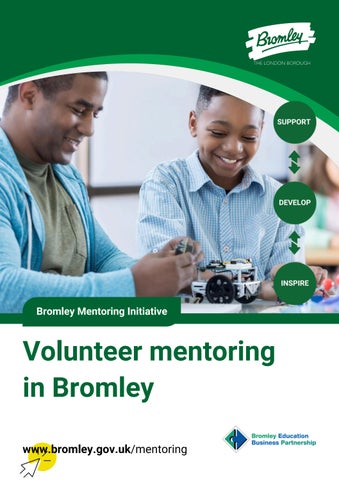
The Bromley Mentoring Initiative (BMI) is part of the London Borough of Bromley (LBB). Formed in 1999, we provide a multi-agency and borough-wide approach to mentoring children and young people. Our volunteer mentors offer early intervention support and develop trusting relationships with young people who may be experiencing difficulties in their lives and want to make a change.
What we do
We coordinate a number of mentoring programmes aimed at making a difference to a young person’s life. Referrals are accepted from a variety of agencies including:

Bromley primary schools (Year 6) LBB services (Social Care, Education Welfare Service, Virtual School, Personalised Education Service, Bromley Children Project, Youth Justice Service)
Bromley secondary schools (Years 7-13)
Specialist education provisions across the borough

Bromley Healthcare, Bromley Y, CAMHS, charities such as Living On Bereavement Service, Bromley Changes, Bromley & Croydon Wom ’ Aid www.bromley.gov.uk


What
are the aims of mentoring programmes?
Our mentoring programmes aim to help young people develop the skills necessary to raise achievement, promote social inclusion and support the development of employability skills. This is realised by supporting and encouraging them to reach their potential.
Who
are mentors?
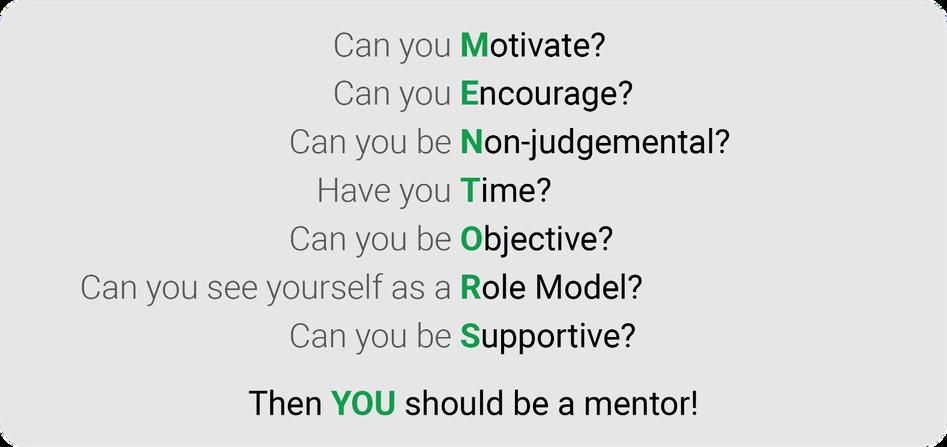
Anyone can volunteer to be a mentor irrespective of age, gender, social or ethnic background, career history or education. An effective mentor is one who has a genuine desire to make a difference to a young person’s development.
What do mentors do?
Mentors get to know the young person and value their beliefs and opinions. Mentors also motivate, encourage and advise the young person to:


Talk about their ambitions and hopes for the future
They discuss and listen to:


What do mentors and mentees talk about?
Anything and everything! There are no set rules as to what you should discuss.
Confidentiality
It is important that young people feel conversations are confidential. However, they must be aware from the outset that if something very serious comes out, the mentor would be obliged to discuss it with the mentoring co-ordinator.
Mentors are not alone if they encounter a problem. They receive support through regular contact with the BMI team.
What commitment is involved?
Commitment is varied but is usually as little as one hour a week.
Where do meetings take place?
Mentors usually visit young people in schools but some meet up in the community.
How long does mentoring last?
All mentoring relationships are set up on an individual basis with the needs of each mentee varying greatly. This makes it difficult to be precise about how long the support will last. We initially ask for one year’s commitment from a mentor to allow the relationship to establish in an unhurried manner.
The recruitment process
All prospective mentors are invited to submit an application form, attend an interview and complete an enhanced DBS application (Disclosure and Barring Service) This is a legal requirement and is in line with Bromley Safer Recruitment and Keeping Children Safe in Education.
Training and support for mentors
Full training is provided for mentors to ensure they feel confident about their role. Initial training is a one-day session, but in some circumstances additional training may need to be undertaken.
Regular support meetings are also organised so that mentors can meet and share good practice.