Department of Visual Arts VISA 4F06 Honours Exhibition
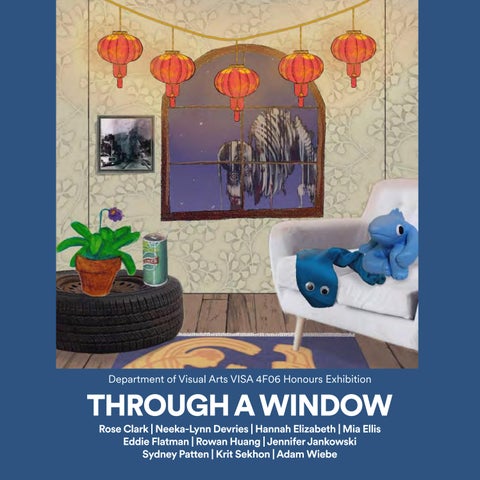
Department of Visual Arts VISA 4F06 Honours Exhibition
At the Marilyn I. Walker School of Fine and Performing Arts, we acknowledge that we are situated on the traditional lands of the Anishinaabe, Haudenosaunee and Attawandaron people. We acknowledge the immense harm done to First Nations, Métis and Inuit communities throughout Turtle Island and respect and affirm the Treaty Rights of all Indigenous peoples. We are committed to the ongoing processes of reconciliation and decolonization that result in meaningful work on this site. In recognition of a history that precedes us, we bring great care to the processes of creating, innovating and expressing that we undertake at the School.
In our commitment to moving beyond supremacy in all its forms, we honour the knowledge carriers, water protectors, the land and all living entities—past, present and future—that impress upon this space. We invite you to consider one thing you can actively do today to participate in making necessary change.
It is with great enthusiasm and gratitude that I acknowledge the creativity, talent and dedication that made this exhibition possible. The students represented in this catalogue have approached their final year with perseverance, strength and courage. Their commitment to their artistic practice has been inspiring and it has been a privilege to witness their growth and determination as they bring their work into the world.
I would like to extend my sincere thanks to Professor Donna Szöke for her support and thoughtful insights while teaching the first half of VISA 4F06. Donna brought tremendous energy to the group, fostering a collaborative and supportive environment that encouraged students to take risks, explore ideas and ultimately find their artistic voice.
I also want to recognize the many artists who generously shared their time and expertise through studio visits, lectures and informal conversations with the students. These meaningful exchanges, partly funded by the Walker Cultural Leader (WCL) Series, enriched students’ learning experiences and expanded our intellectual and creative community.
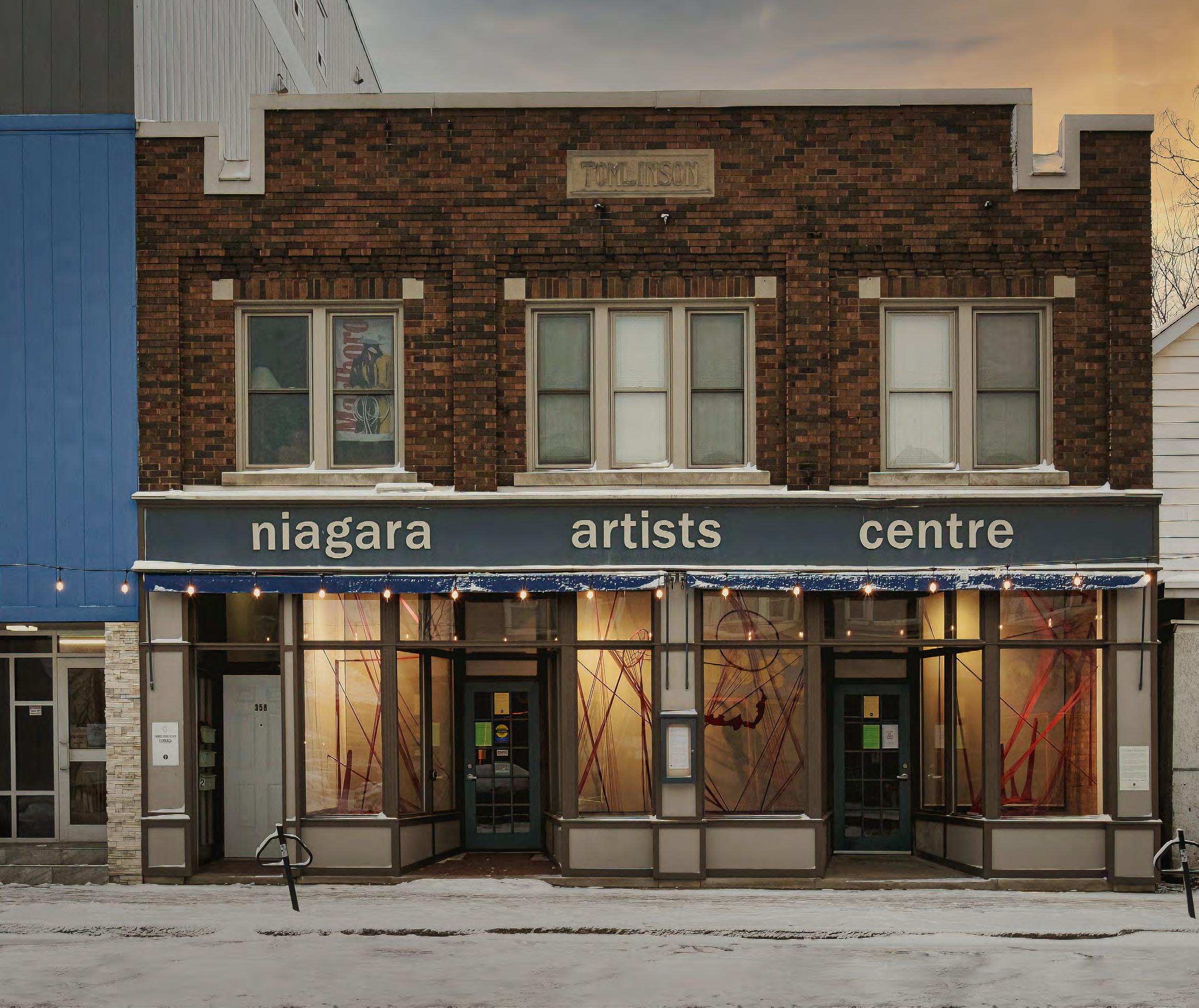
For more than fifty years, Niagara Artists Centre (NAC) has been a vital professional gallery that contributes enormously to the cultural life of the community. In 2021, Stephen Remus and Natasha Pedros from NAC welcomed our graduating students into their space for the capstone exhibition. This generous collaboration has strengthened the long-standing relationship between Brock University and NAC. Through this partnership, numerous students have had the opportunity to present their work at a professional exhibition, and NAC continues to champion emerging artists well beyond their time at Brock University. We are deeply grateful for their ongoing support.
This exhibition would not have been possible without the dedication and insight of an exceptional curatorial team. A special thank you goes to Matthew Ryan Smith, Curator & Head of Collections of Glenhyrst Art Gallery, who generously guided the students toward their final exhibition. Through studio visits and discussions, Matthew provided thoughtful feedback that challenged and encouraged the students as they refined their work. He also contributed the curatorial essay featured in this catalogue, helping to frame the themes that emerged through these conversations. These critical insights strengthened the exhibition’s intellectual rigour and offered invaluable support for students’ artistic development.
I would also like to thank VISA Gallery Coordinator and curator Sonya de Lazzer for her outstanding work organizing the Marilyn I. Walker School gallery for this exhibition. Her insights and thoughtful discussions with the students went above and beyond the call of duty. Preparators Matthew Caldwell and Alex Janecek were instrumental in ensuring that the students’ work was installed with professionalism and care at both Niagara Artists Centre and the VISA Gallery.
This Honours Studio exhibition reflects the dedication of a remarkable group of individuals who are deeply committed to our students’ success. I would like to thank the faculty and staff of the Department of Visual Arts, in particular Amanda Burk, Linda Carreiro, Rachelle Wunderink, Max Holten-Andersen and Sonya de Lazzer. Special thanks to Gilgun Doran for designing and producing this catalogue. Finally, I would like to acknowledge Rose Clark and Eddie Flatman for their significant contributions to this document and the work represented in the catalogue, as well as Sydney Patten for her exceptional work on the exhibition poster and cover design.
Troy David Ouellette Assistant Professor, Visual Art
By Troy David Ouellette
The works produced by the students in the 4F06 Capstone class have a dual scholarly and practical (research/creation) component. This combination of theory and practice yields potent, relevant inquiries with lasting potential. It is my hope to reflect on the wider importance of this to express the significance of cultural affect and, more importantly, its expressive manifestation in students' work in a world of diffracted histories. In this exhibition, we see a diversity of concepts and techniques that embody the contemporary condition, caught in the shifting registers of ideas and subject positions, all the while considering how work is seen through a window—diffracted and reflected. These tangled histories are often complicated, intersecting fragments, where memories are dispersed, re-articulated, and reconstituted in the present by the students tasked with making sense of a much larger puzzle. From environmental concerns to emerging identities, the calamity of abrupt change, ruminations on domesticity and alienation, and the role of humour in horror within cultural production, students faced the challenge of communicating these ideas to much wider audiences. These generative strategies of merging materials and ideas become the impactful work of our time. Each artist in this exhibition draws on personal memories from their lives, exercising intent and care in a world often fraught with neglect and apprehension, with the capacity to materially affect it. As I witnessed their ideas taking shape in paint, video, photography and sound (among many others), I couldn’t help but feel that I was in the midst of something extraordinary. Witnessing students begin their careers as professionals is not a small matter; it is not just about how they might influence other generations. For me, as an instructor, it became a matter of well-being, resistance, self-discovery, personal journey and thoughtful inquiry. In short, works were realized in the quiet affection in which they were created. In Cultural Theorist Sara Ahmed’s essay on "Happy Objects", she says that, “I want to consider happiness as a happening, as involving affect (to be happy is to be affected by something), intentionality (to be happy is to be happy about something), and evaluation or judgment
(to be happy about something makes something good). ”1 She suggests that Affect is what sticks, or what sustains or preserves the connection between ideas, values, and objects. After many critiques, presentations, artist studio visits and discussions within the class, I started to listen to the sounds of production, witnessing the magic of students hard at work reflecting, wondering and ruminating on the work being produced, as they sought to organize their inner thoughts, socialized selves, interpersonal, and internalized manifestations. It sets forth a study of personal memory and social production, focusing on the microsociopolitical effects of remembering and forgetting, and explores the connection between the narratives people use in identity construction or maintenance, all the while linking objects and emotions. I would contend there is also a process of connection and disconnection at work as ideas and objects pass, and we disconnect from a referent as it recedes in time. Consequently, in any given creative work, its lasting power resides in its ability to connect generationally, or, in environmental work, with non-anthropocentric entities that carry it forward. It may also be the case that many of the works generated throughout this exhibition are made manifest through feeling, just as they are thoughtful in their potential affective nature. I do not hold the view that these are mutually exclusive, especially given that the transfer of emotion or feeling can be articulated through myriad senses and creative combinations of materials, sounds, actions, et al.
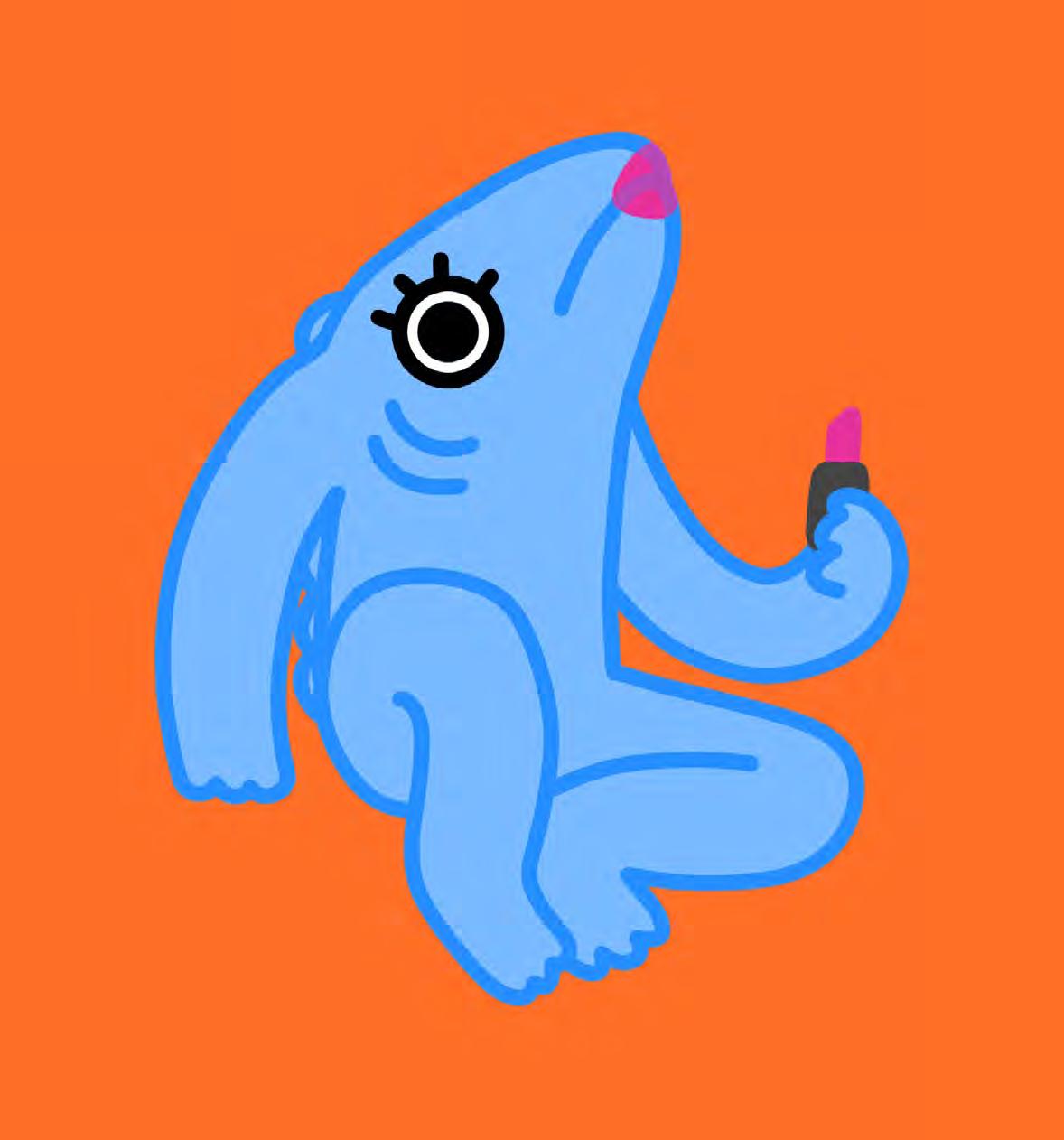
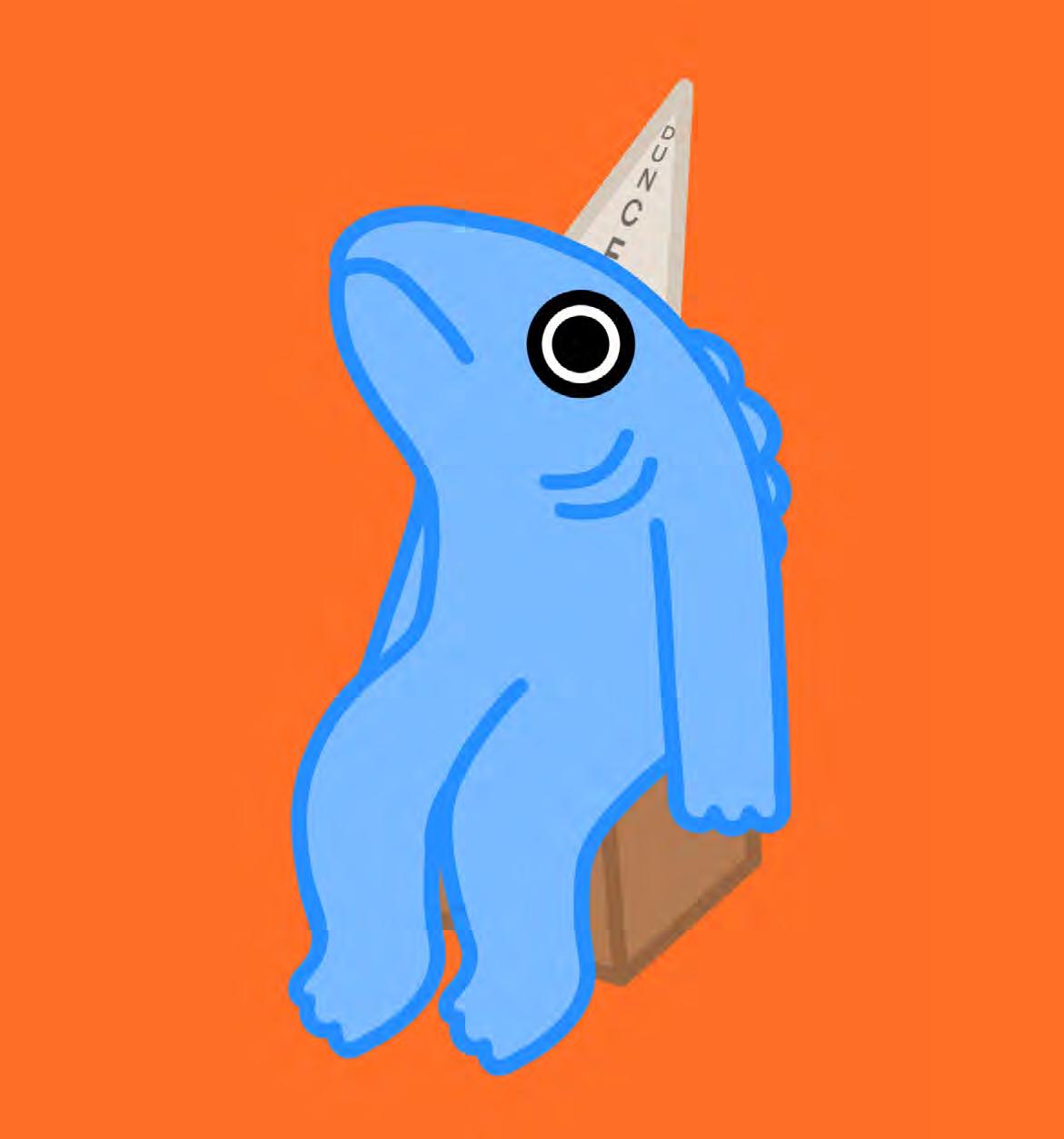
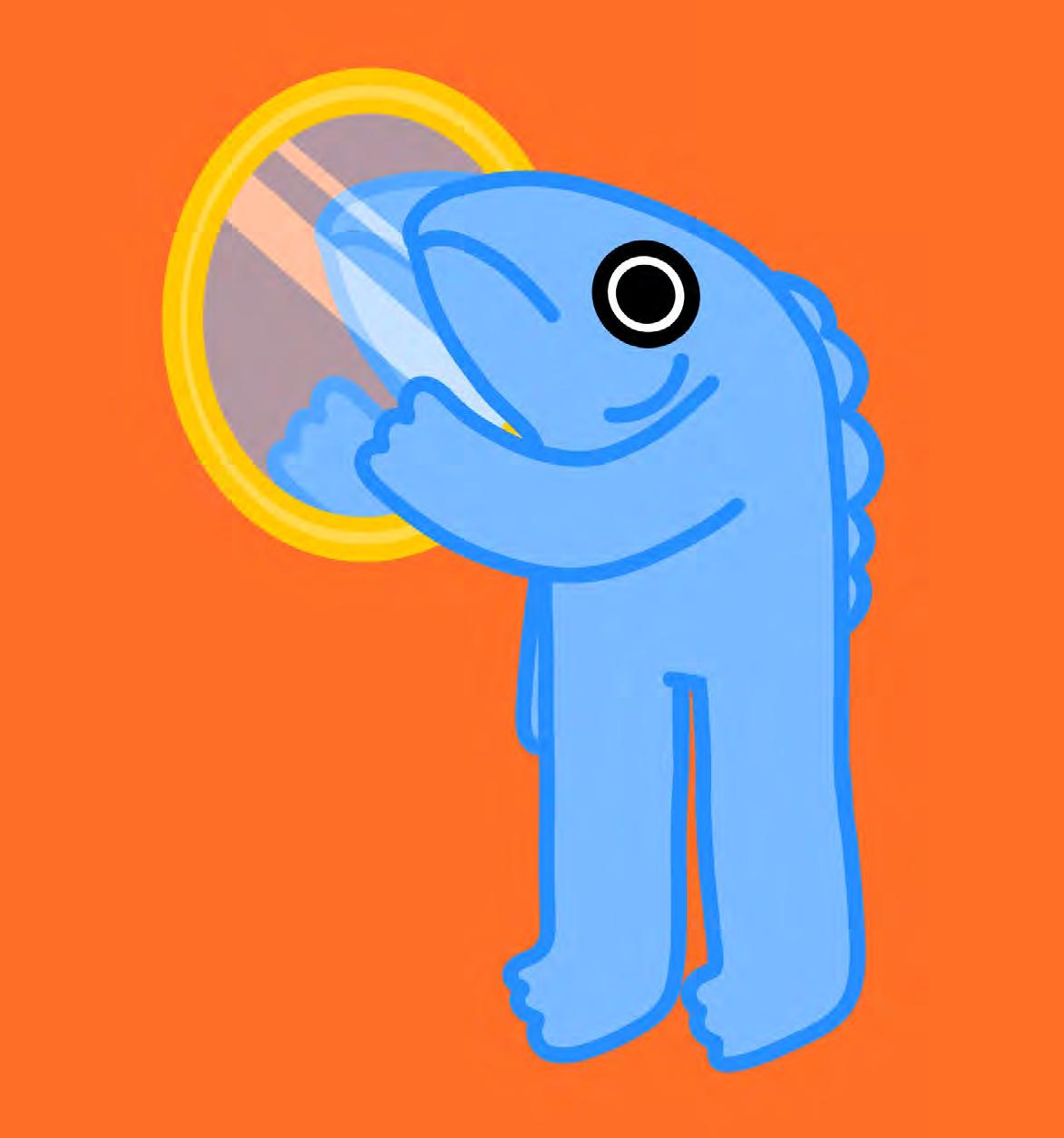
In Eddie Flatman’s animations, paintings and sculptures, we see quite clearly how identity might be moulded or shaped not only through the work itself but in the humour and lightheartedness of the creative act, even if that strategy suggests that one’s identity might be like a fish out of water with a possibility of never finding its way back out to sea. Flatman intentionally explores other mediums as a way to escape the endless need to create a unified style and instead embraces the differences expressed by working with various processes. The imperfect lines and the motion of the animations simultaneously create space for queer individuals and aesthetics. As a fish out of water, the plurality of identities comes to the fore as we consider individuals as complex and ever-changing. Eddie remarked in a recent essay that, “The reason I created my pink figures to begin with was that I was having a funky time with gender and wanted to make space for ambiguity.”2 This is not just an attempt at ‘normalization’ or
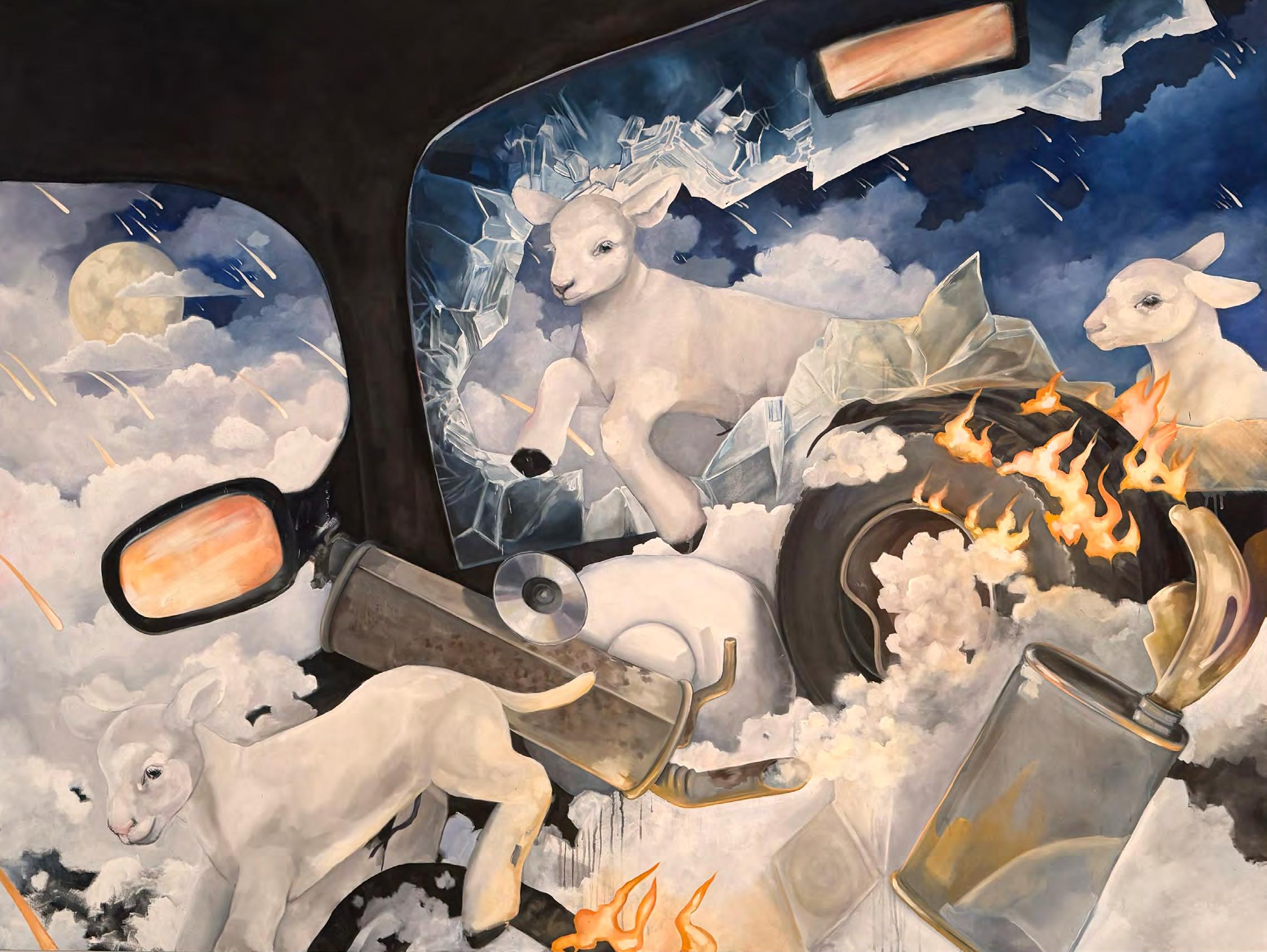
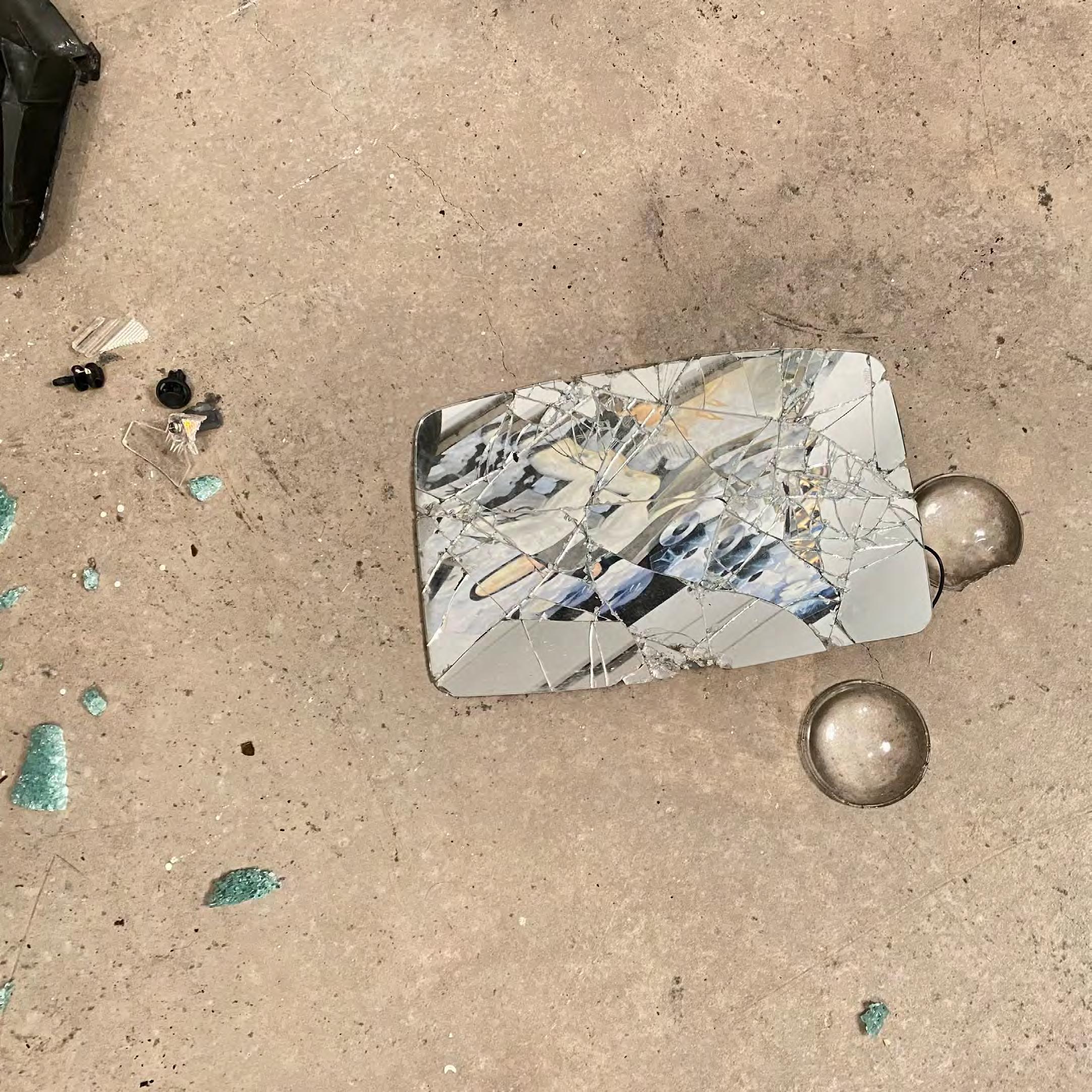
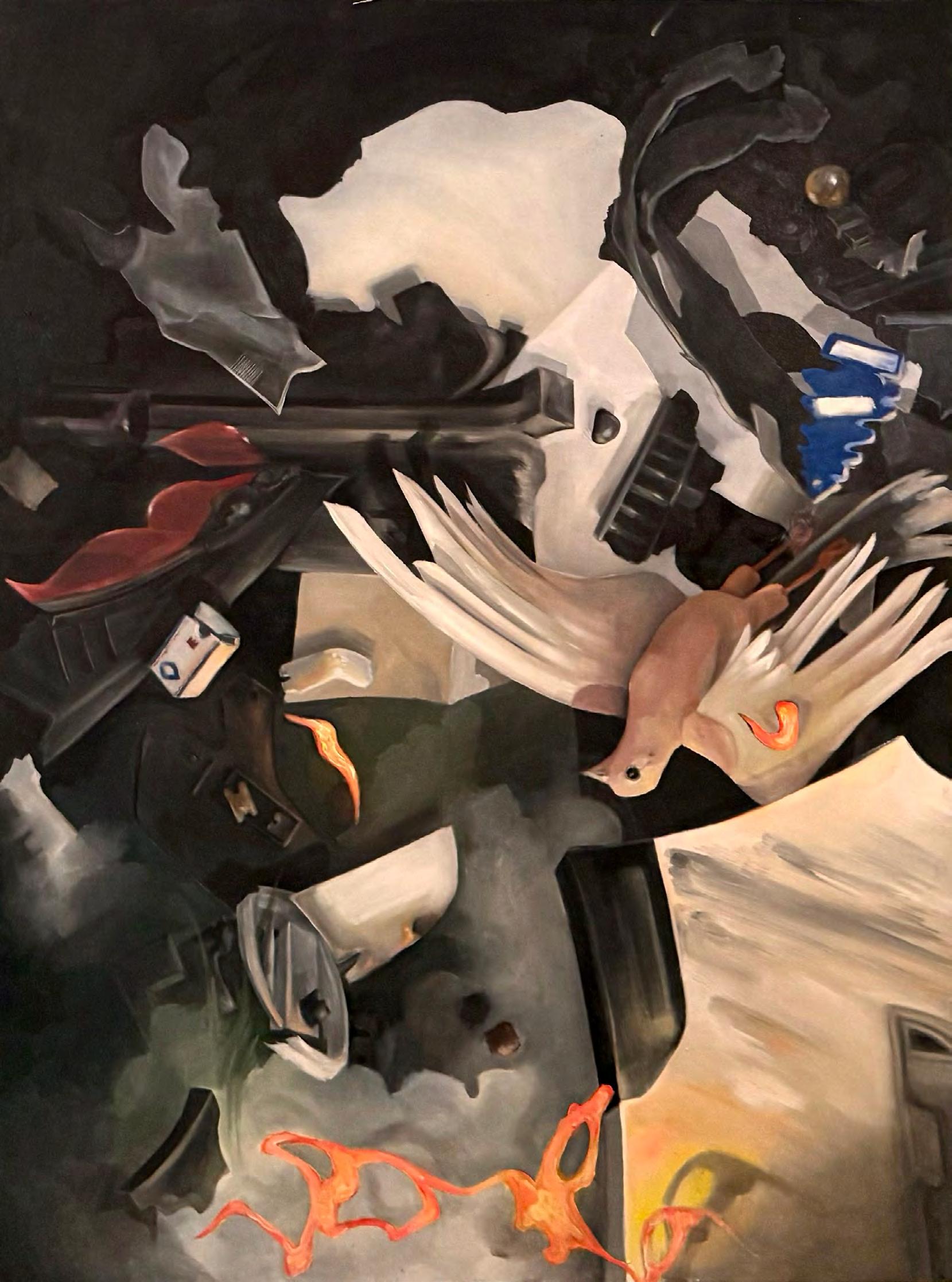
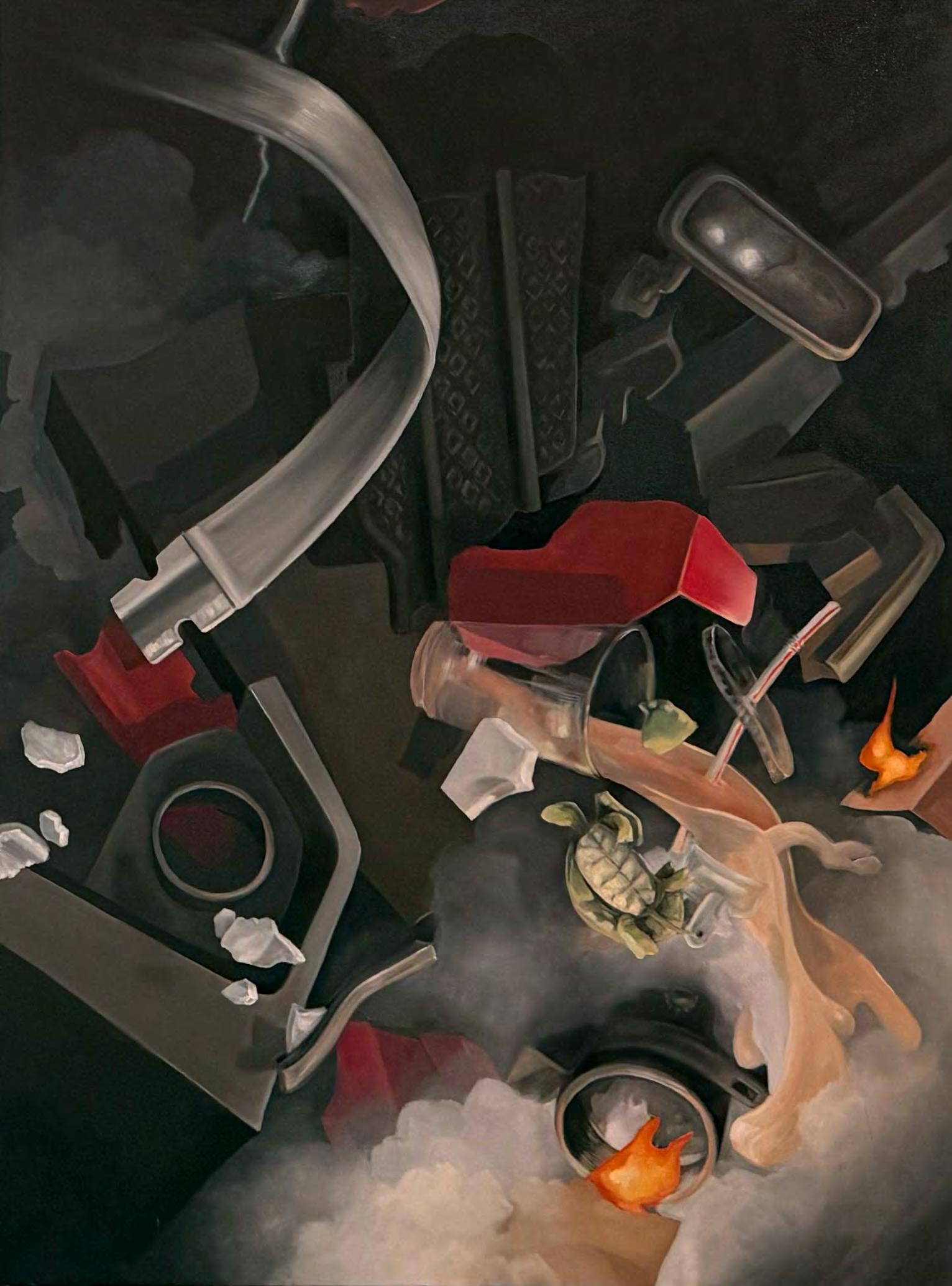
comfort in one's own skin: the use of the word ambiguity is compelling because it situates itself as always changing. The terms 'ambiguity' and 'normalization' are markedly different: normalizing means there is still a hegemony and control over perceptions; ambiguity means things are constantly deconstructed, creating agonism and antagonism as a process of change, even through humour, satire, or parody. This ambiguity carries over in Hannah Elizabeth’s painted works, where we see the violence of a crash. Car parts are strewn everywhere and even spill out sculpturally onto the floor, as if the overwhelming complexity of life and unpredictable circumstances spontaneously generate before our eyes. There is, at once, the representational construct (almost like a dream), and then the actual object, discarded and ruined by the road, picked up to emphasize loss and tragedy. Dreamlike images collide, challenging us to think about personal trauma. In this case, we do not know whether this is accidental or intentional. The frozen moment of impact startles us as we see lambs flying through a window, throwing us off-kilter. Symbolically and metaphorically, the images can be read in the temporal world through shifts in object relations, discourses, practices, and subject positions as they glide through our imagination from innocence to experience.
Neeka-Lynn Devries revels in the expressivity of creation in the codes, the almost infinite diversity of living organisms, and the ways existence and consciousness struggle and survive. She incorporates living organisms in different ways. Inspired by the natural beauty of the biological world, scientific and technological pursuits are fused with living organisms that populate our world, often unseen and unacknowledged. She points to an ecological reckoning as a way to consider complexity and our place in the existence of life on the planet, giving pause to contemplate how culture becomes a catalyst for change. Neeka’s interests are wide-ranging, encompassing new developments in scientific discoveries from epigenetics to morphogenesis and genetics. There is a definite kinship here with complex assemblages that consider everything from animal communication to the behaviour of microscopic entities, a non-anthropocentric approach desperately needed to focus on how interconnected we are with the biological, chemical, and broader physical world.
In Rowan Huang’s diverse body of work, his paintings, collages, and photography dovetail with pop
culture, surrealism, genealogy, family narratives, and Chinese calligraphy. Expressing his Taiwanese heritage, Huang infuses the work with subtle references and cultural specificity. He references Quantum Futurism to acknowledge that present endeavours bear on future outcomes and serve as catalysts for change. Familial traditions are interwoven throughout the handmade to speak to how family lineages shape future cultural practices and rituals as he references his Amah’s work as a seamstress. In Flex (2026), he depicts the ancient practice of tooth enhancement and blackening as a means to address aesthetics, body adornment, status and tradition. By intersecting and weaving together various narratives and cultural expressions, this inquiry yields works that are more than the sum of their parts, enabling the viewer to navigate the beautiful tapestries of life, as his tales unfold.
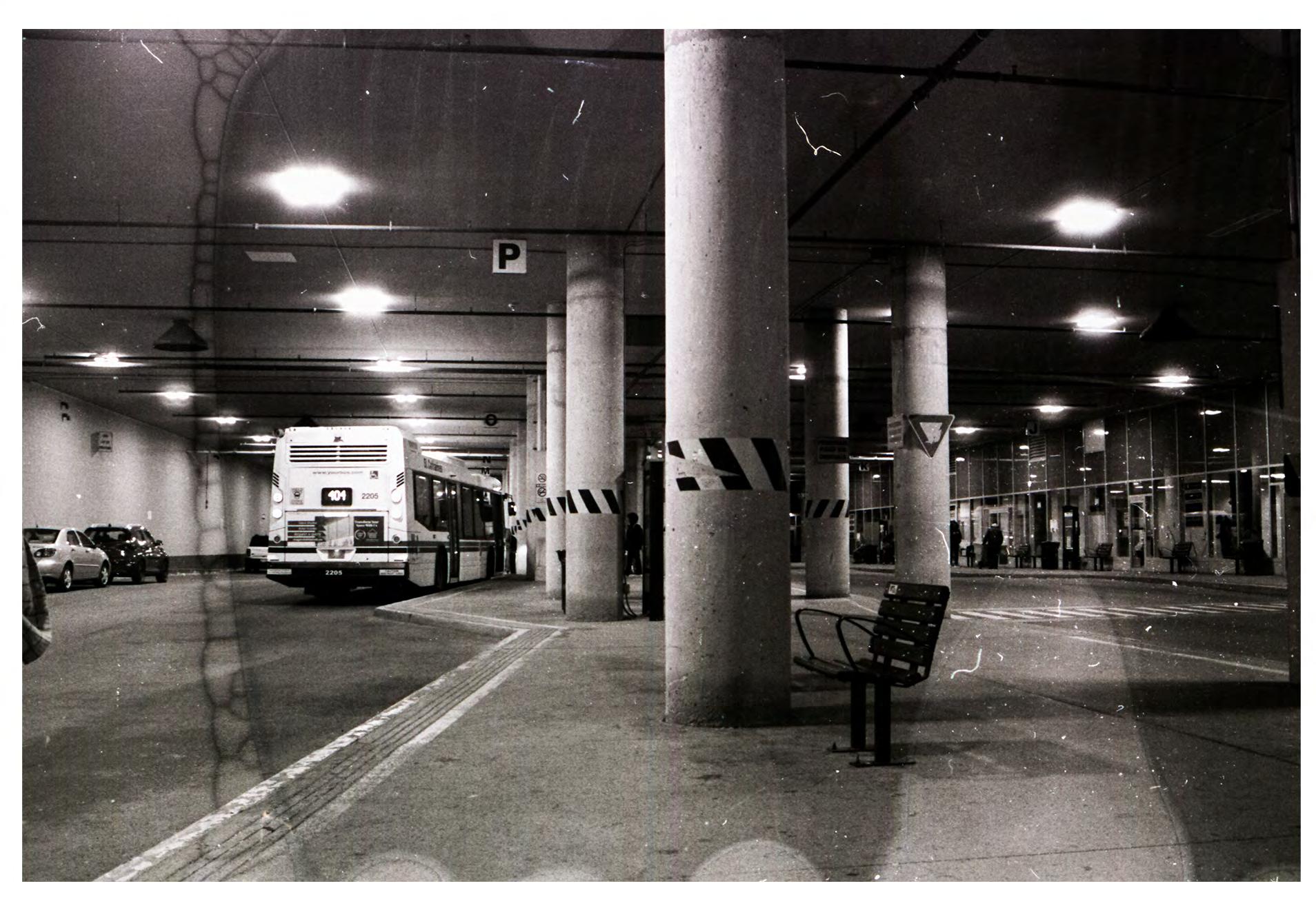
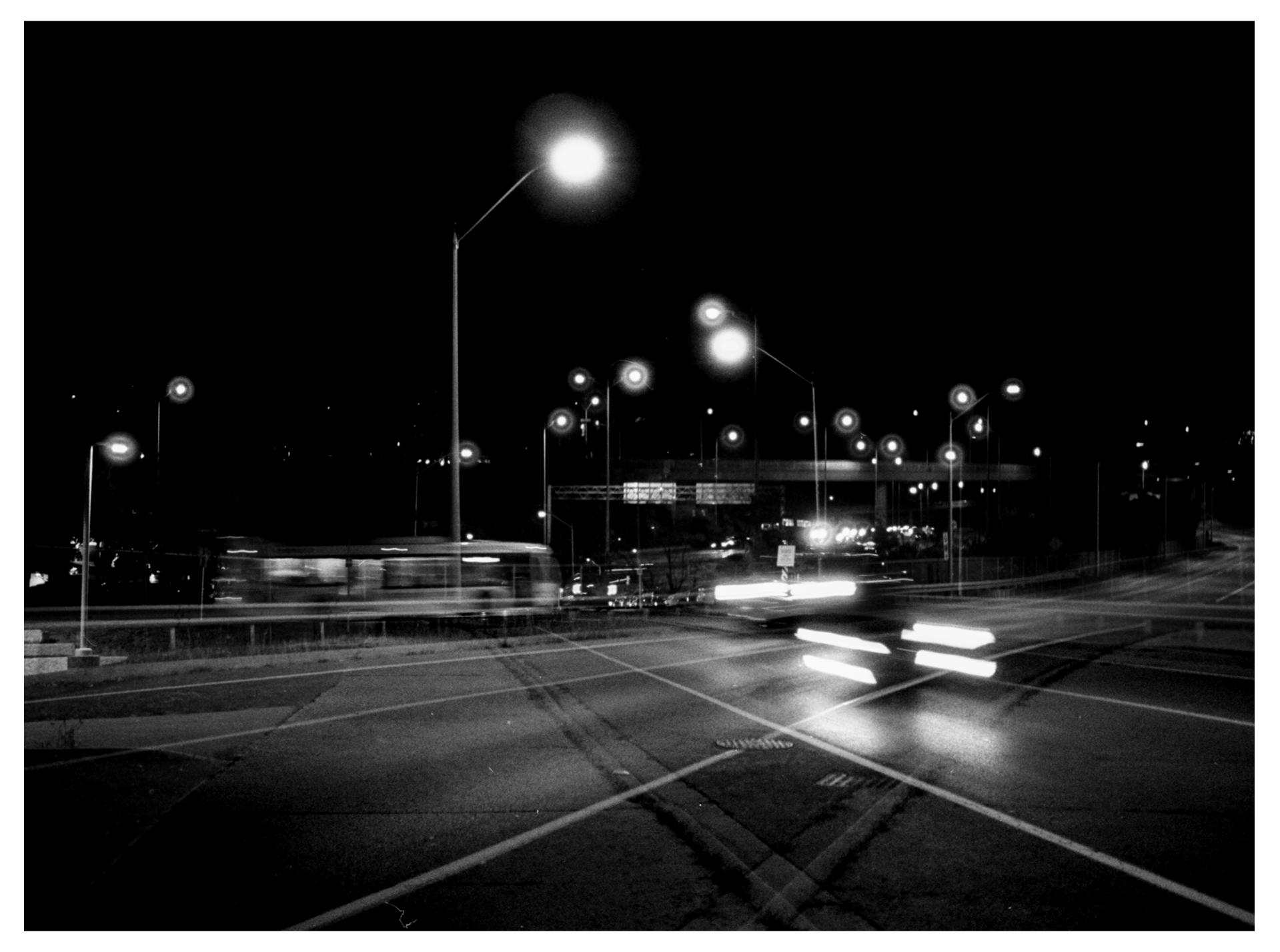
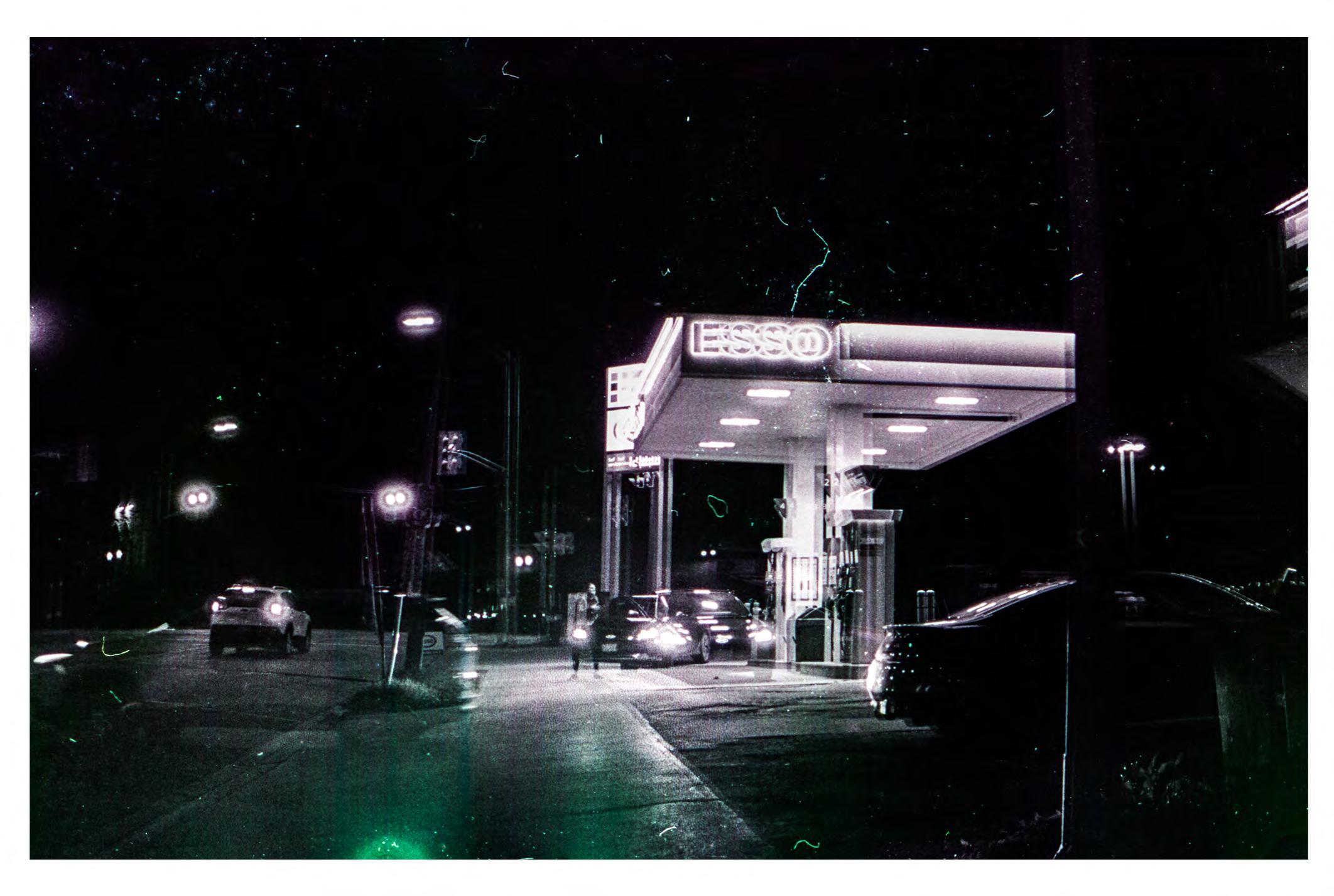
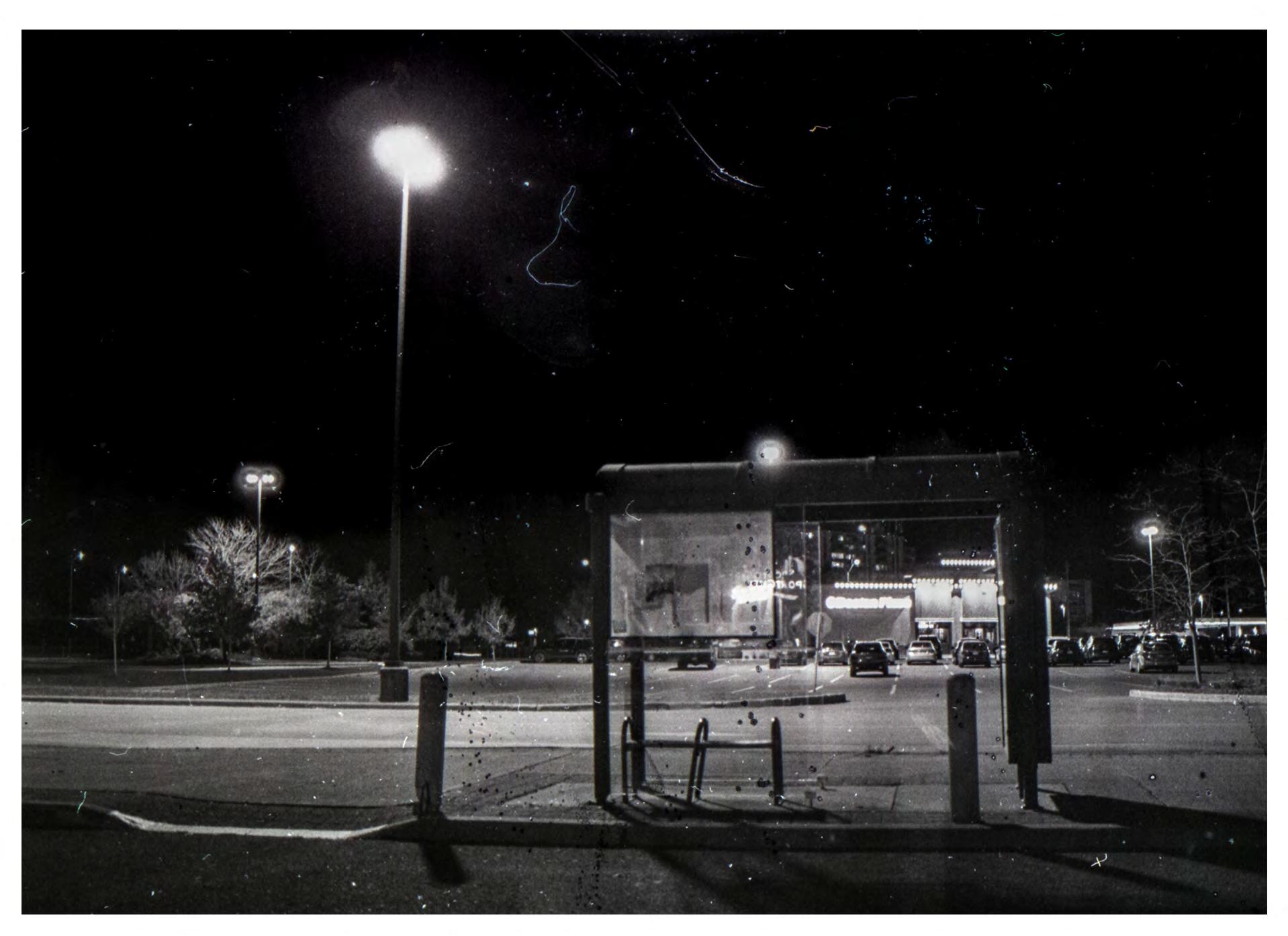
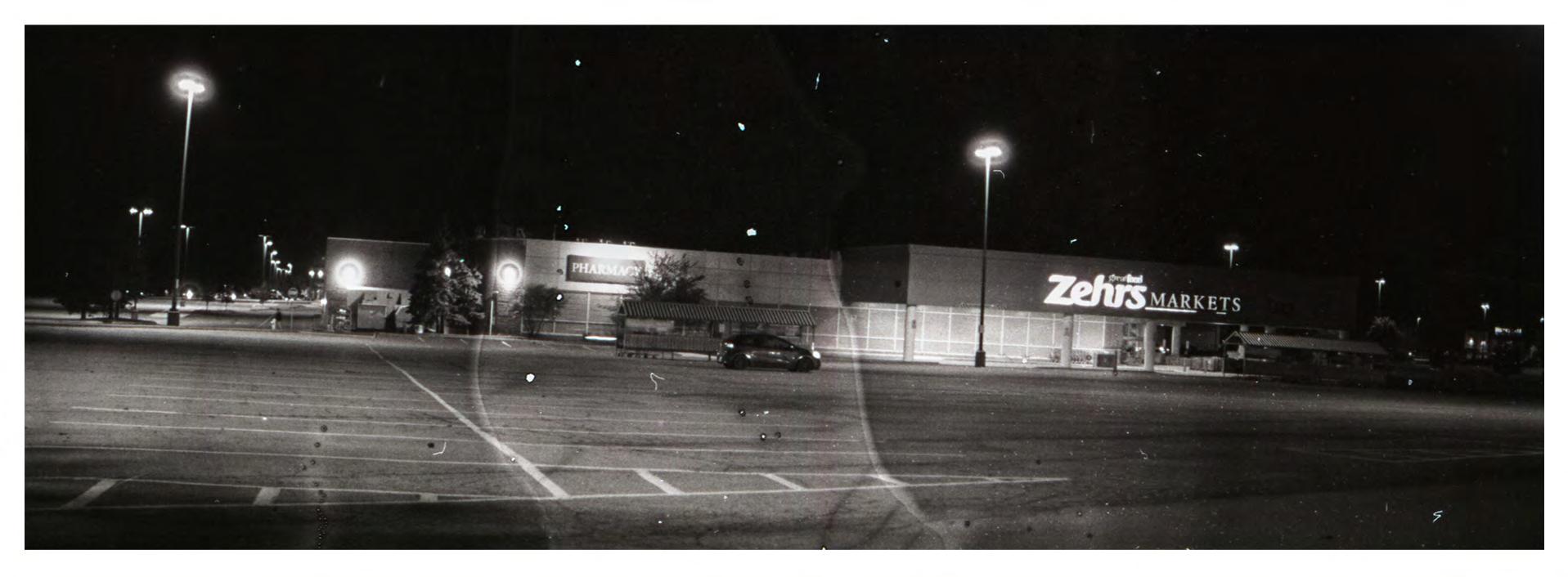
In Rose Clark's photographic work, we also see a focus on process and making. The chemical “soup” she employs to facilitate the work generates unexpected events within the photographs themselves, heralding surprises and championing happenstance. The compositions emphasize emptiness, negative space and nighttime settings that feel existential and eerie, allowing for heightened contrast without disrupting the overall quietness. This restrained stylistic approach reinforces the conceptual framework of photography, the medium suggesting the moment as impermanence, in which subjects become fleeting. This approach allows us to think about the connection between the development of the photograph and the disappearing subject of a vulnerable, poor image that circulates widely rather than being rare or unique. In “I am here, Can you see me?” (2025), Clark points to the subject who, all at once, is “exposed” but also ghost-like, one of the few nighttime scenes where the subject is more present. In the large-format photographs “Am I there?” or “Waiting” (2026), the spaces become eerie and devoid of connection, almost haunted, transitory and empty. Clark’s outdoor environments, depicted in black and white, have the same sparse traces, as if to say, “What if we weren’t here?” At the same time, the question itself gives a hopeful promise of reconnecting that only an artist might suggest through the medium. It is here where the light-reactive process of photography shines through.
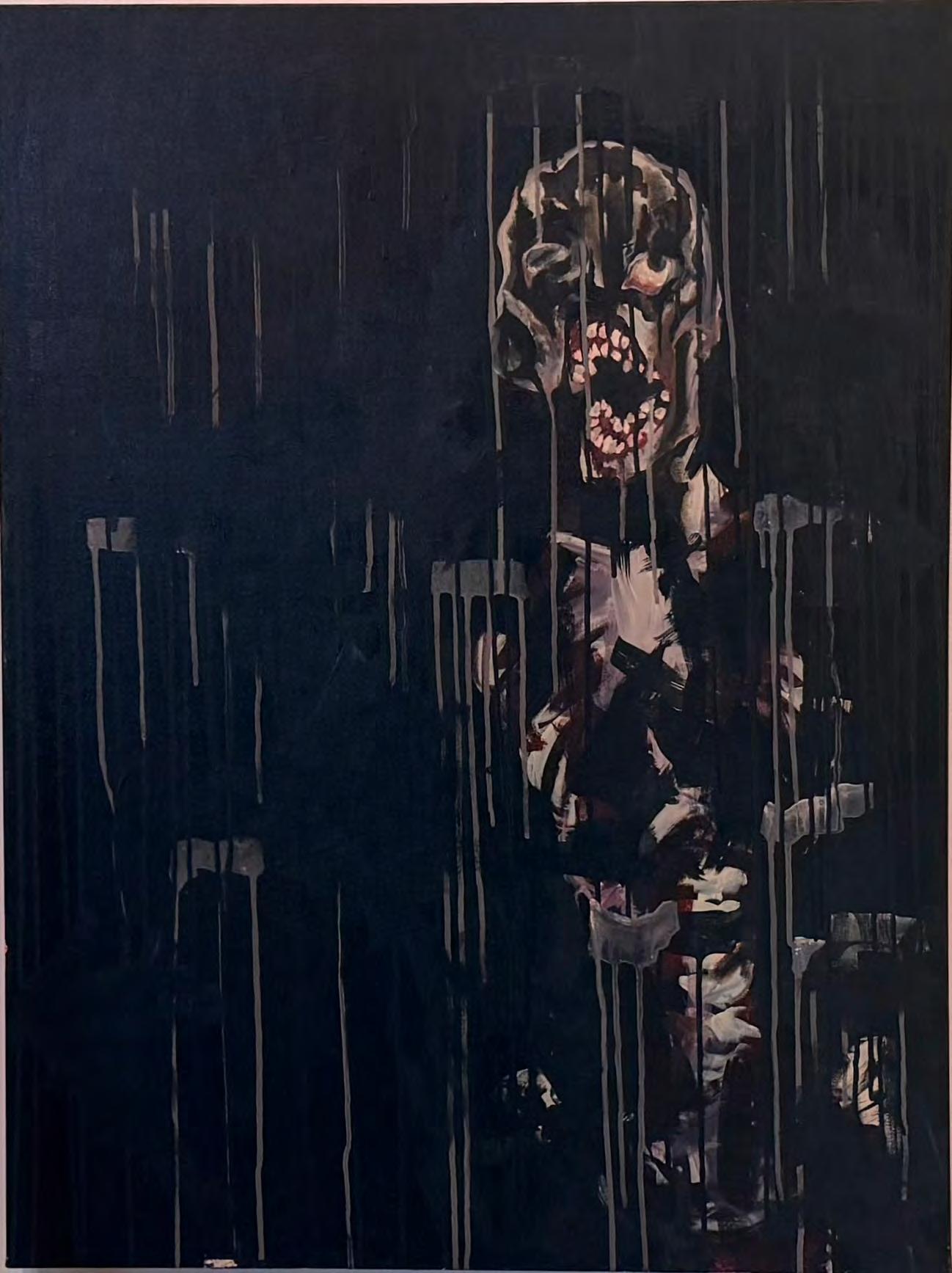
Mia Ellis’ paintings are very much related to Clark’s in that the depictions are also haunting. Drawing on popular horror genre themes, her work points to a fascination all
humans share with the abject, the strange, the unfamiliar, and even the morbid subjects that populate popular culture— subjects seen in Surrealism, Expressionism, and in works from science-fiction dreams. Many works throughout the history of art and popular culture have either taken a stance in response to distressing events or used them to reflect on prevailing subconscious themes and fears, such as Goya and Ensor. In contrast to specific events, Ellis consciously chooses nondescript spaces, eliciting fear of the unknown and of loneliness. And through the lens of childhood experience (horror and suspense movies, television, and popular culture), Mia extends this into paint, emphasizing the spaces that make us apprehensive and even scared. This is the moment of affect in which painting, in its own right, conveys a sense of unease and tension: where subjects create the physical reactions in us that psychoanalysis insists are part of the human condition.
Adam Wiebe engages with technology, connection, and proximity through various mediums to distill the philosophical ideas of relations and even free will. One aspect of the work considers art in an age of hyper-capitalism, where the subject in accelerated technophilia is alienated by the lack of personal, social, and cultural engagement, leaving us tied to economic and commercial interests. In an age when technology connects us instantly, yet leaves us feeling strangely distant from one another, culture becomes more important than ever. Culture carries memory, identity, and meaning across generations, grounding people in human experience that algorithms cannot replicate. Swamped by software programs that appear and disappear, with learning curves that eat up time in our lives, we live much more precariously. For Wiebe, the distance between things, thoughts, bodies, galaxies, and memories is foregrounded in different ways. Humour as a strategy brings things “down to earth,” giving a sense of irony, contradiction, self-reflection, bias and even insights into the human condition. His sock puppet paintings do this by juxtaposing momentary childhood imagination with the cosmic void, creating a contrast between meaning and meaninglessness.
In Krit Sekhon’s work, we notice a direct bearing on her Punjabi roots, themes revolving around family, history, and the difficulties of navigating cultures. An unbalancing of identity is evident when we consider intergenerational relocations, movements and interrelations. It is also problematized by structures of power that impose themselves
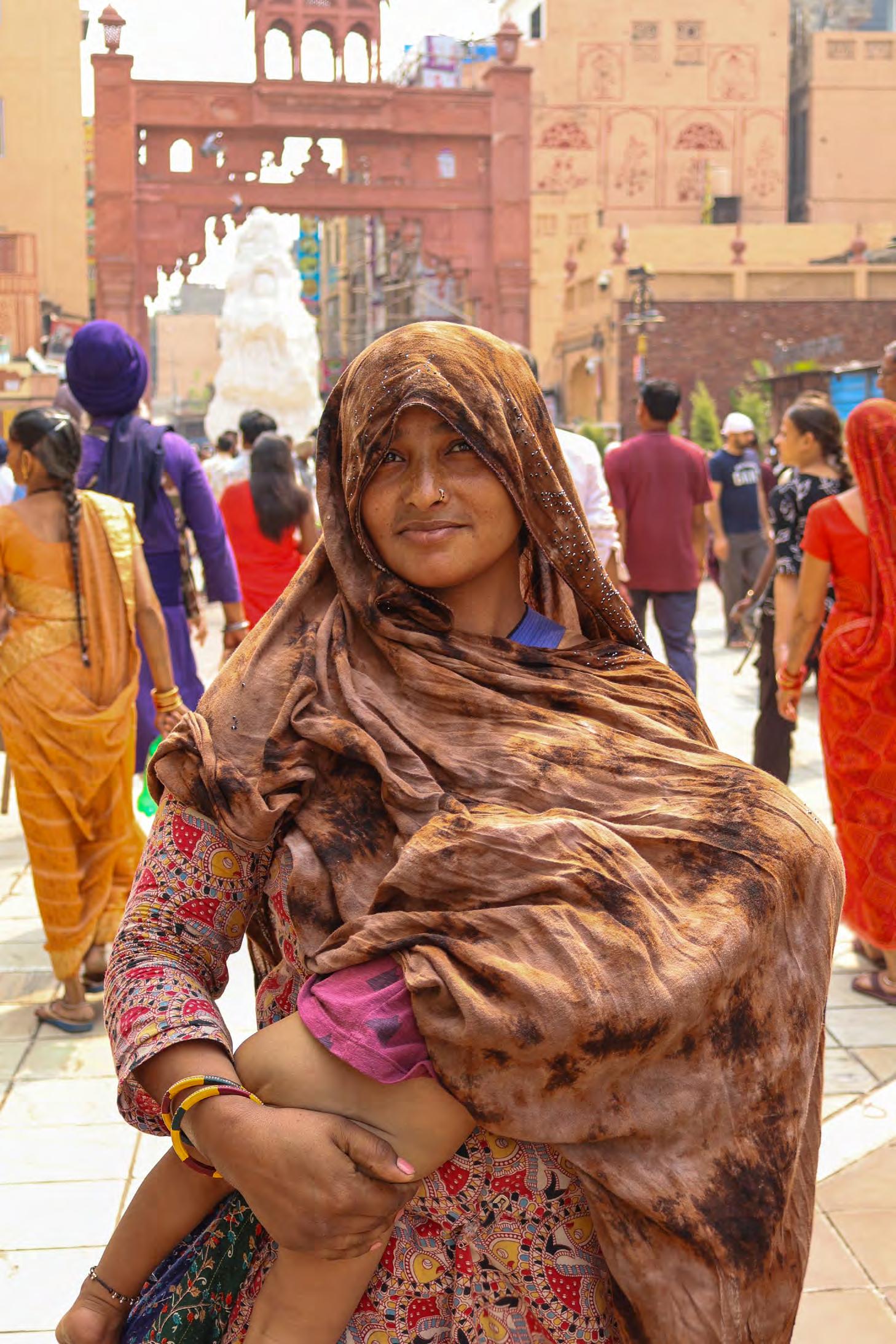
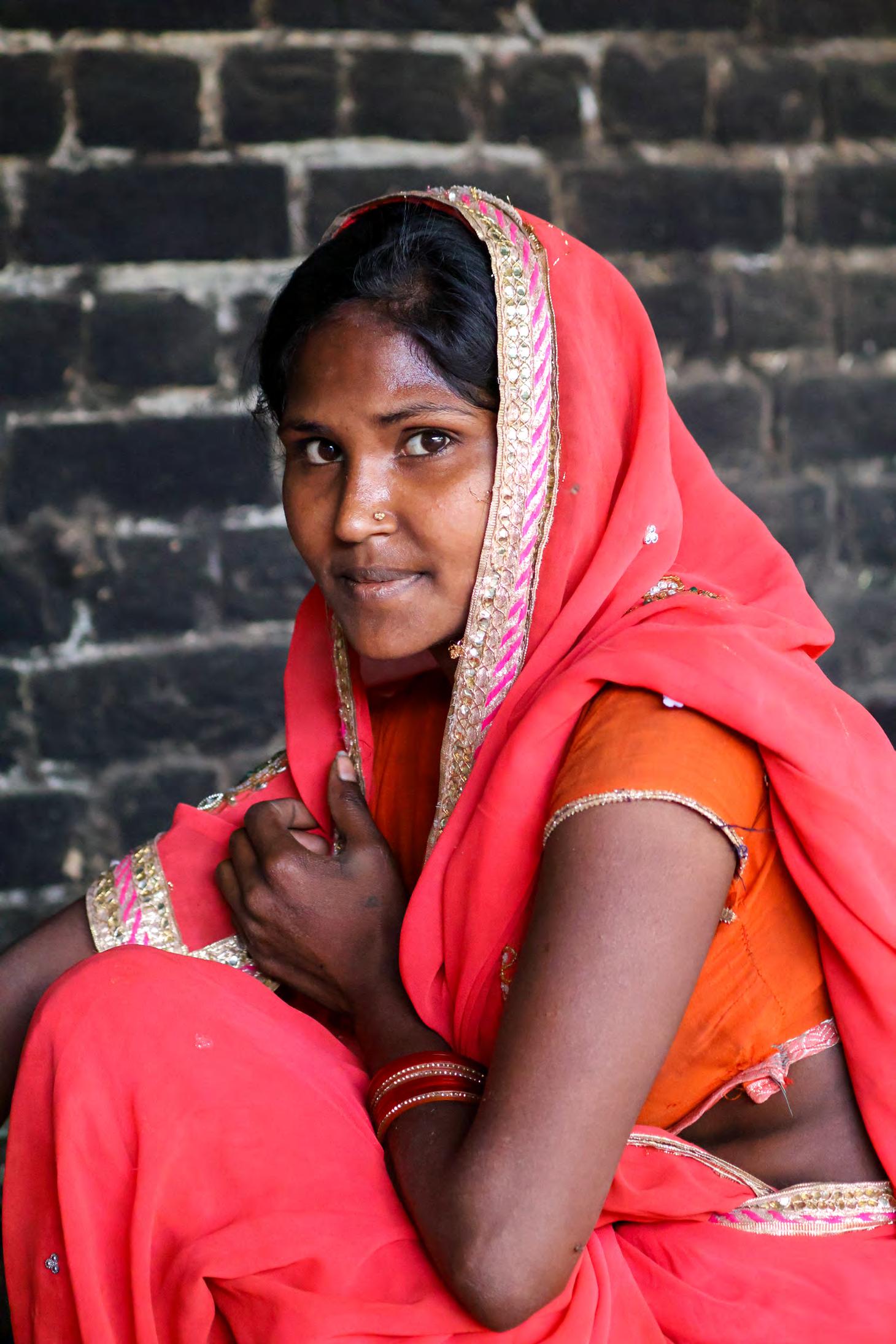
on others through colonization and war. In Kohinoor, (2026), Sekhon points to hegemonically created wealth through the British colonization of India and the theft of artifacts from cultures that were dominated and colonized. Diffracted histories and the complicated nature of cultural resistance as they relate to the politics of artifacts and the realities of oppression, is at the intersection of history and politics that shapes much of her work. She distilled several works chronicling her recent trip to India, through her Faces of Punjab series and the Semiotics of India (2026), showing the breadth of colour, chaos and culture captured through the photographic lens and through paint. In the latter, the cacophony of the street is evident, with a collage aesthetic that foregrounds the varied aspects of busy street life, in contrast to the quiet portraits in which figures gaze and pose for the camera.
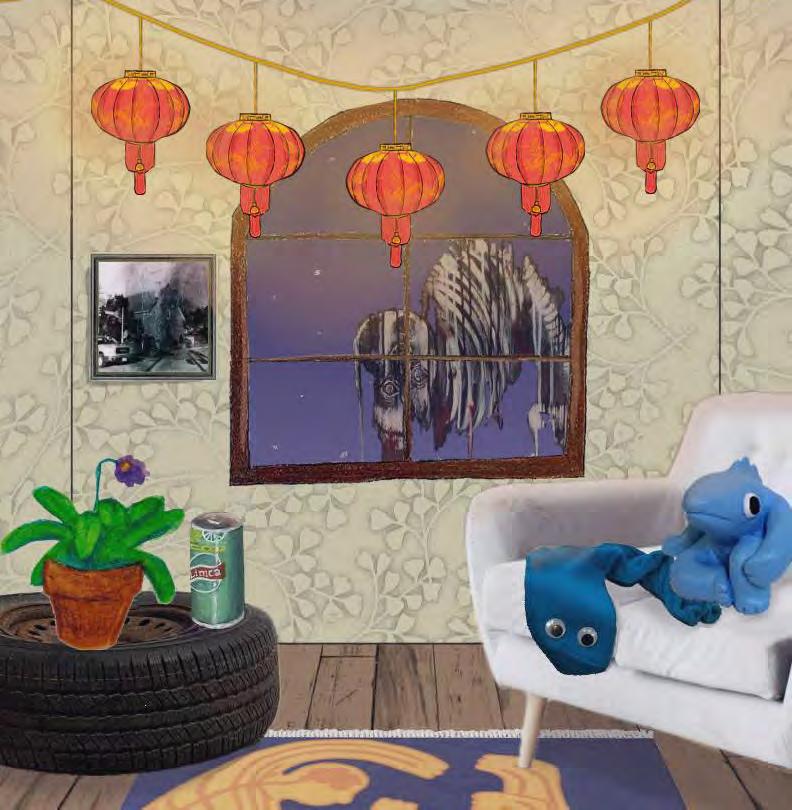
In Sydney Patten’s work, domestic house design and the way objects take on a life of their own feature prominently through depictions of various rooms and living spaces. Occupied spaces of everyday experience speak to notions of use, activity, personal experience and familial relations, but also the affective power of place and objects. In a time when much of life is increasingly digital and transient, the tangible presence of living spaces reminds us of the value of place, continuity, and personal connection. Indeed, the rooms we inhabit, the furniture we use, and the small objects we keep close all carry traces of our routines, memories, and identities; a worn chair, a photograph on a shelf, or a wellused table can hold stories that reflect who we are and how we live. As Patten makes the distinction between house and home, these connections are different: a home is imbued with habitation and the stories we tell—the formation of our lives and identities—whereas a house can extend into popular imagination. Home becomes a place where a specific domestic psychogeography is playing out on a daily basis.
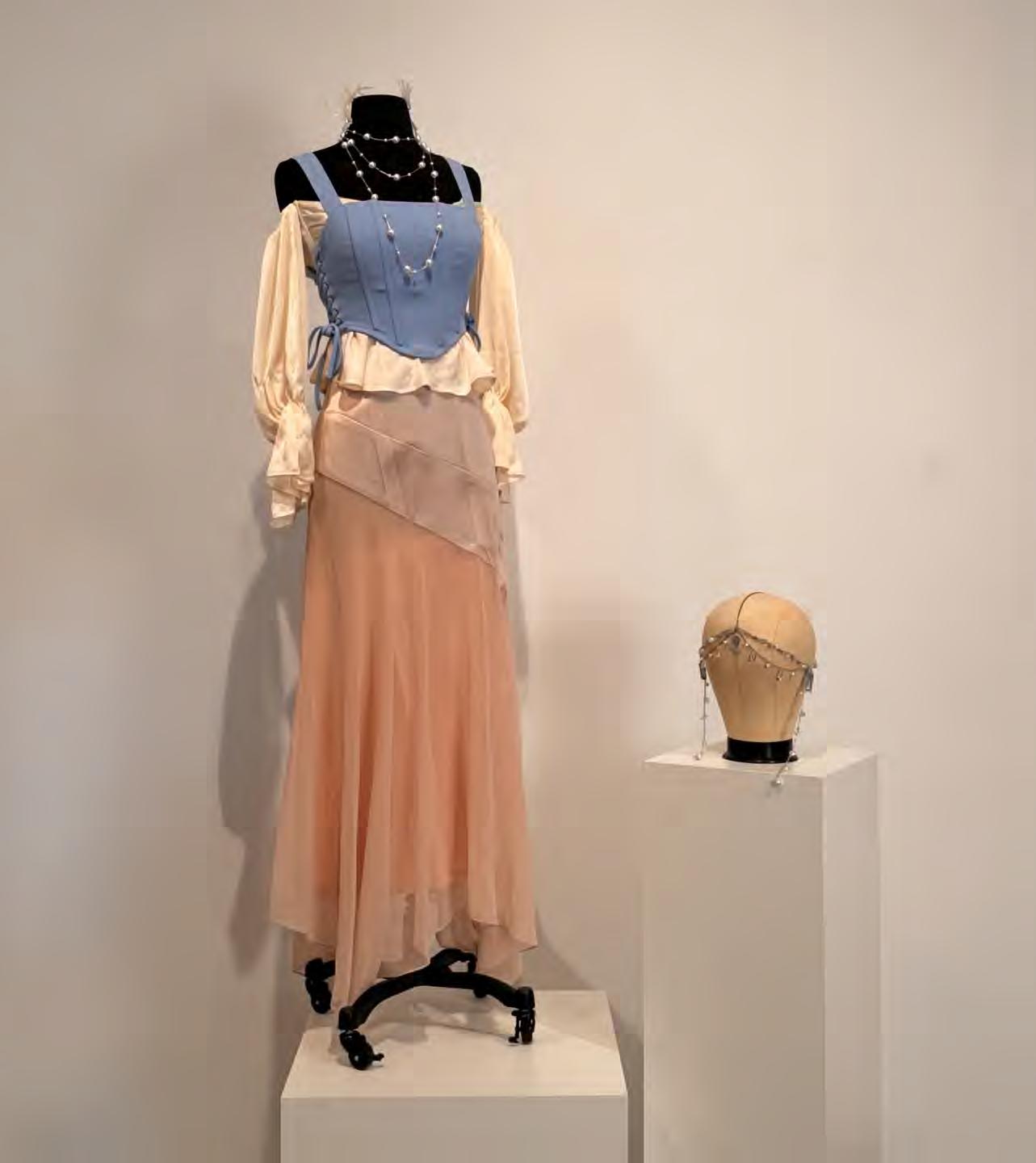
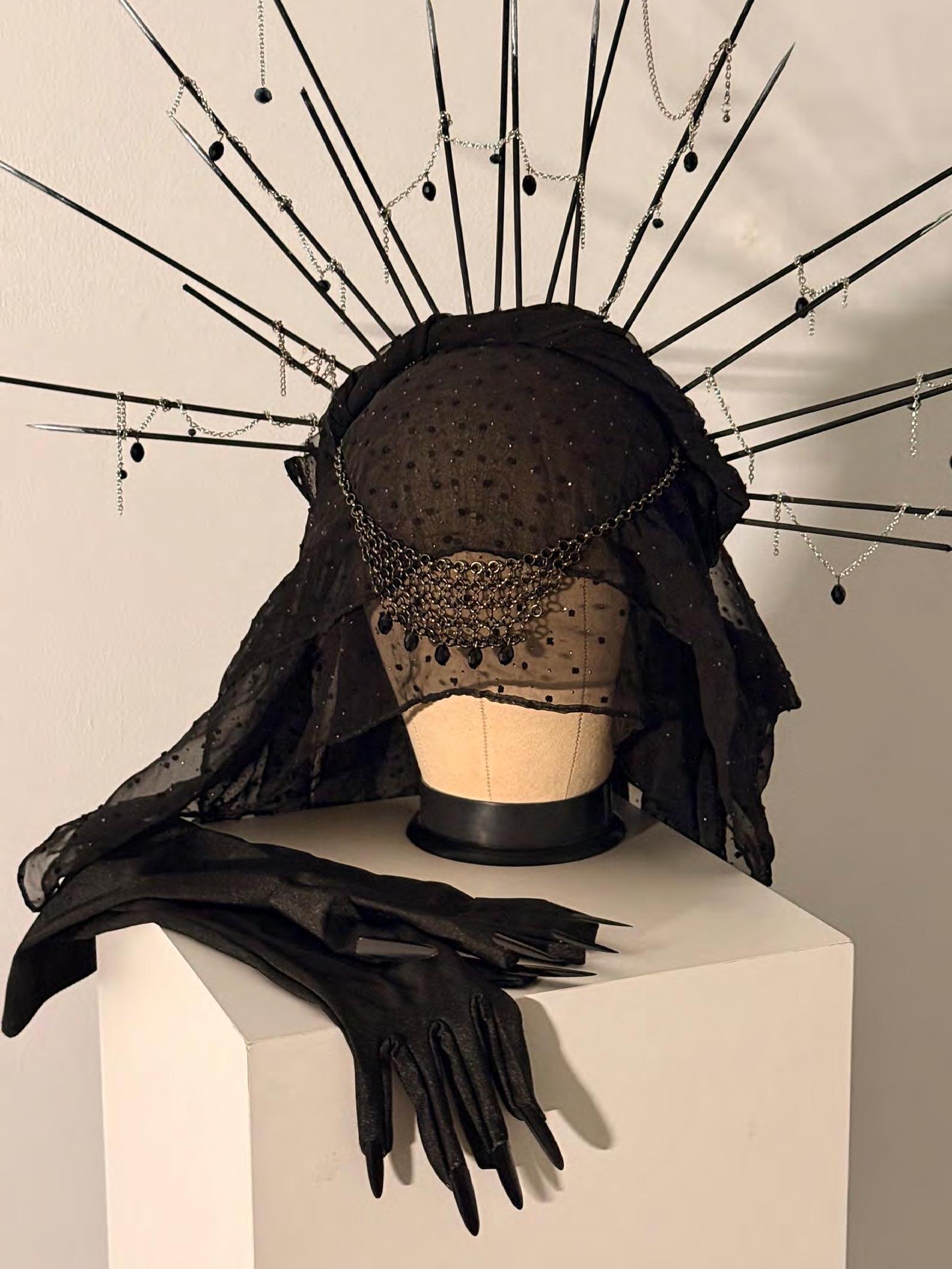
We see a similar theme in Jennifer Jankowski’s work. In Outgrown (2026), the idea of using domestic space as a place for daydreaming, contemplation and “celestial symbolism” is just as important as the familial exchanges that may play out daily. Jennifer emphasizes design in her characterizations as a site that signifies identity, dovetailing with her psychoanalytic video works that explore deeper feelings. In Black Hole Costume and Tidal Costume (2025), Jankowski emphasizes a feeling of being dressed, disguised,
and transformed as a marker for various identities to express themselves. As Jennifer remarks, “A big part of my process is analyzing themes through a fantasy lens. Instead of showing something exactly as it is, I transform it into something symbolic.”3 At the same time, there is an uncanny feeling one gets when viewing the work, in which various meanings are evident simultaneously. A disguise, or the idea of multiple identities, is always already in flux, whether through dress or makeup, and the relationship between acting, props and disguise sets up a set of relations where meanings are not easy to pin down.
Affect Theory scholar Teresa Brennan aptly points out in her text The Transmission of Affect that, “As a rule, affects can be sifted from feelings in everyday life through discernment, or through practicing cultural codes that suppress the affects, or through analysis. These embody living attention directed toward the other within and without. But feelings are less likely to be known when the heart is sealed, for the reason that the more the affects thicken and harden,
By Matthew Ryan Smith
It is not easy to conceptualize a medley of artworks that say so many different things in so many different ways under a single theme. The ten emerging artists that comprise the 2026 graduating exhibition Through a Window, may share the same studio space throughout the semester or engage in the same classroom discussions, but their creative activity flies on its own rhizomatic trajectories. Their work is wholly original and rigorously considered, spanning a breadth of subject matter, theories, and critical aesthetics.
The artists carry forward with them different lived experiences, ancestral homelands, identities, personal histories, mediums, and intentions. From stolen diamonds to queered animation, Gothic horror scenes to extraterrestrial sock puppets, Taiwanese grandparents to miniature houses, these fluctuations in content carry profound discursive meaning when brought together in the gallery space. Through
the more difficult discernment becomes. The hardening of the affects is a social affair, so their transformation requires political as well as personal attention.”4
Through this exhibition, we realize that the students have opened their minds to the many possibilities for conveying complex feelings and thoughts across many aspects of scholarship. We are fortunate to be open to experience work that covers so many themes. The promise of these thoughts and ideas is to contemplate them and convey them to others. Indeed, the conversations and interactions the students have had throughout their university experience have set them on a path of self-discovery, critical thinking, collaboration and engagement that will enrich their lives and create new lines of inquiry.
2.
3.
4.
the grammar of these shifting aesthetic experiments and innovations, we come to know the people and world around us a little better than yesterday.
German philosopher Georg Wilhelm Friedrich Hegel found immense value in the generative potential of difference—be they artworks, social systems, or ideas. It is, as he writes, “the root of all movement and vitality.”1 Hegel’s theorization of dialectical thinking proposes that the convergence between different things produces a kind of dynamic relationship rather than a fixed interpretation, one that leads to deeper truths and a higher framework of understanding. That is precisely what is happening in this exhibition. Of course, many of the artworks on display share commonalities, but it is also their distinguishable approaches that imbues the exhibition with radiant energy and meaning. Take, for example, Rose Clark’s photographic nightscapes of St. Catharines and surrounding regions that probe themes of isolation and loneliness through composition and material processes. These photos are manipulated through double exposures and chemical alterations instead of applying direct damage to the film itself. Whether in a vacuous bus stop, an empty Zehr’s parking lot, or beside a car-buzzed street, Clark’s images are manipulated to blur or abstract
details so that a pressure between reality and unreality lingers. Often a face or small detail remains, a tiny punctum onto which we, the audience, can project our own lived experience inside the narrative the image. George R. R. Martin writes “The night is dark and full of terrors,”2 yet here this fear is not only that of being alone with oneself at nightfall but also a disconnection from the places that supposedly define you.
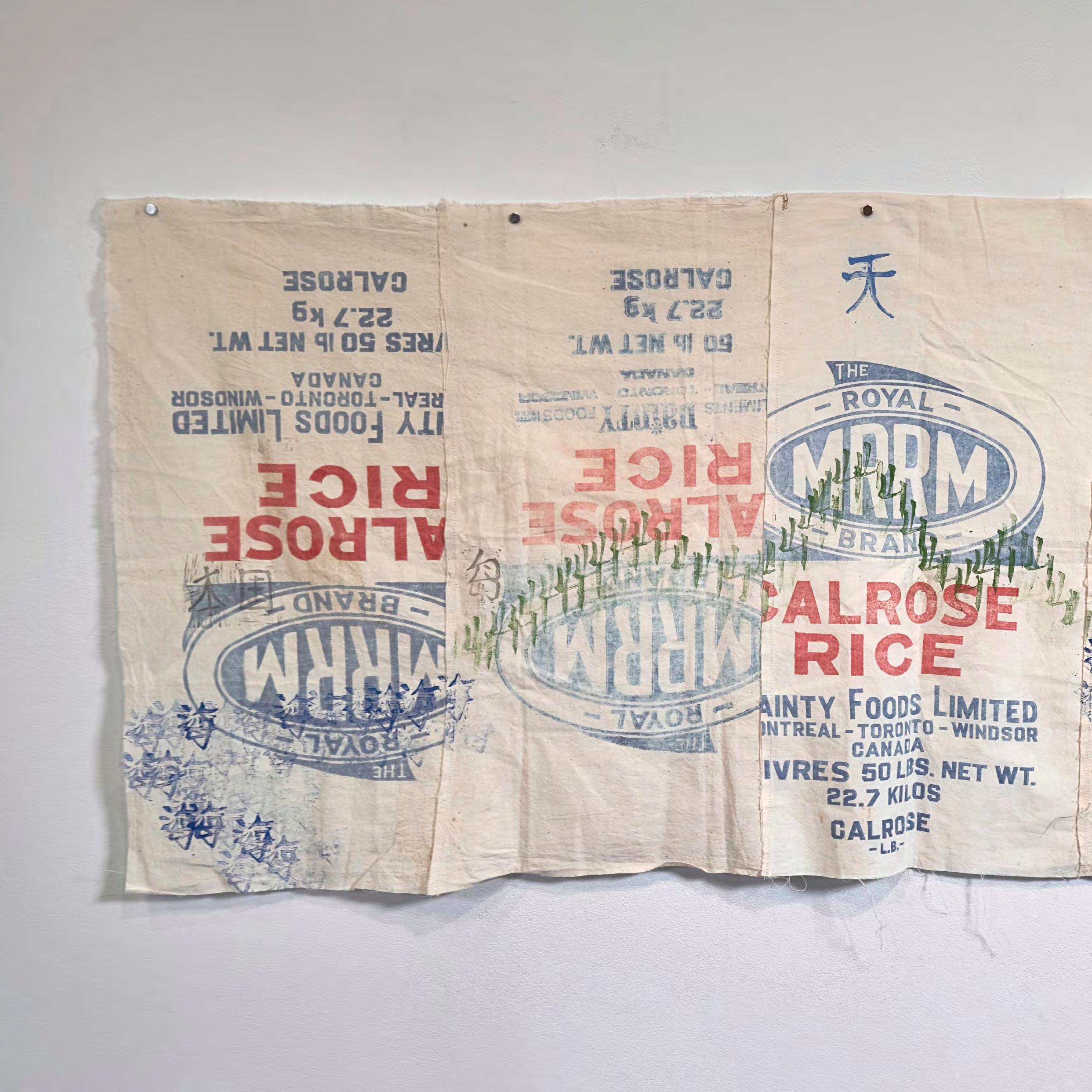
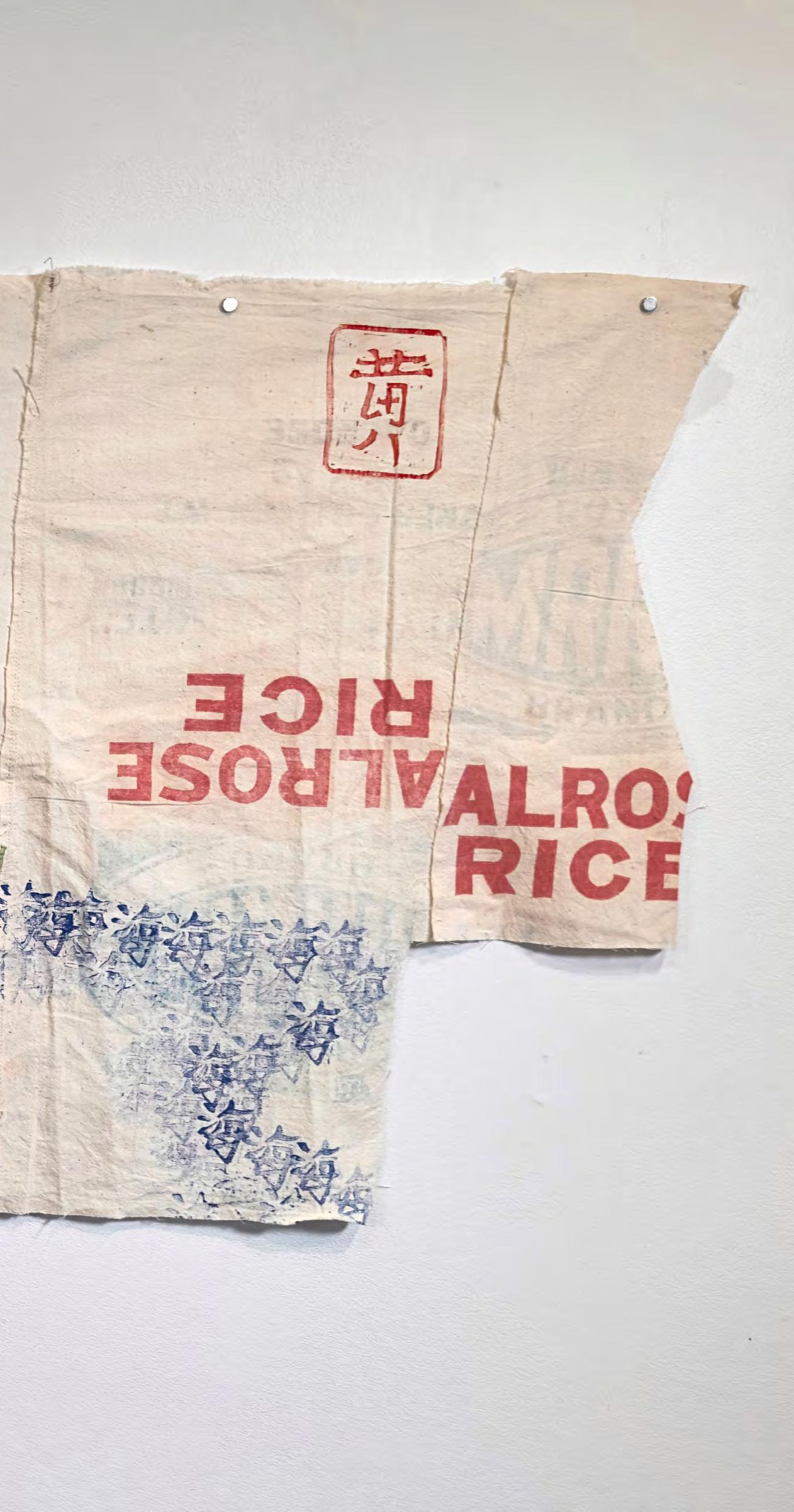
Moving from isolation to interpersonal connection, Rowan Huang offers a touching exegesis of familial love, respect, and commemoration. His work examines his family’s Taiwanese identity, their immigration experience in Canada, and the nucleus of their unfolding relationship. In Island, he appropriates Calrose rice bags and imprints linocuts to form the silhouette of his ancestral homeland of Taiwan, as well as Chinese characters for country of origin, island, heaven, and the Huang family name. The work remixes ready-made materials à la Andy Warhol’s seminal Brillo Boxes, yet with culturally specific references, producing a semblance of traditional Taiwanese landscape painting. These and other works are contextualized by the inclusion of beautiful fabrics that once belonged to Huang’s grandmother, grounding the work in an ethics of care and allowing him to nudge closer to her persistent memory.³ Ultimately, Huang proves that embarking on a sustained analytical study of family relations can be a fulfilling process of self-discovery.
While Huang looks to his ancestral heritage, Hannah Elizabeth’s work is informed by autobiographical narratives that intersect with trauma and the process of recovery.⁴ Elizabeth’s large-scale paintings, featuring ready-made sculptural objects, attempt to reconcile the past within the present. This project started with collecting random scraps and leftovers from car accidents, including mirrored glass, shards of plastic, and metal springs. These made their way into her paintings, alongside religious iconography, to create a discernable tension. In We Three (My Echo, My Shadow, and Me), meteors fall from a clouded sky as the background moon pokes through the distance. The audience’s perspective is from within a car, presumably in the moment of catastrophe. Glass shatters, mufflers are thrown, and CDs suspend in the air as three baby lambs gallop through the fractured front windshield. Elizabeth’s allegorical imaginaries may signal the chaos associated with personal loss, but they also look in other directions, toward personal agency and self-renewal.
As Elizabeth considers the implications of personal memory, Krit Sekhon researches the strata of cultural memory. Sekhon traveled to India for the first time in several years, capturing its sights and sounds through photography and video. Not only do these images serve as aesthetic
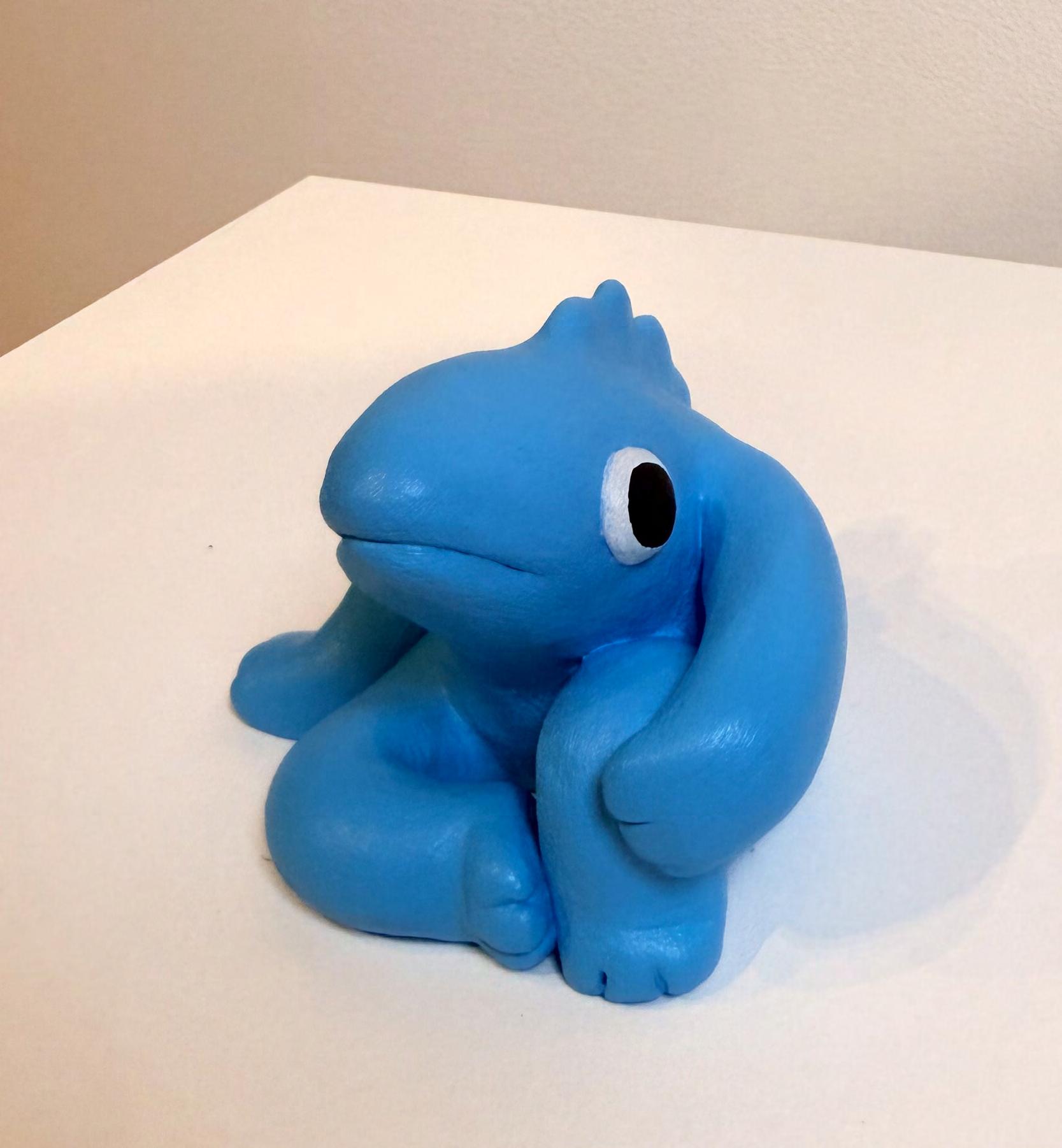
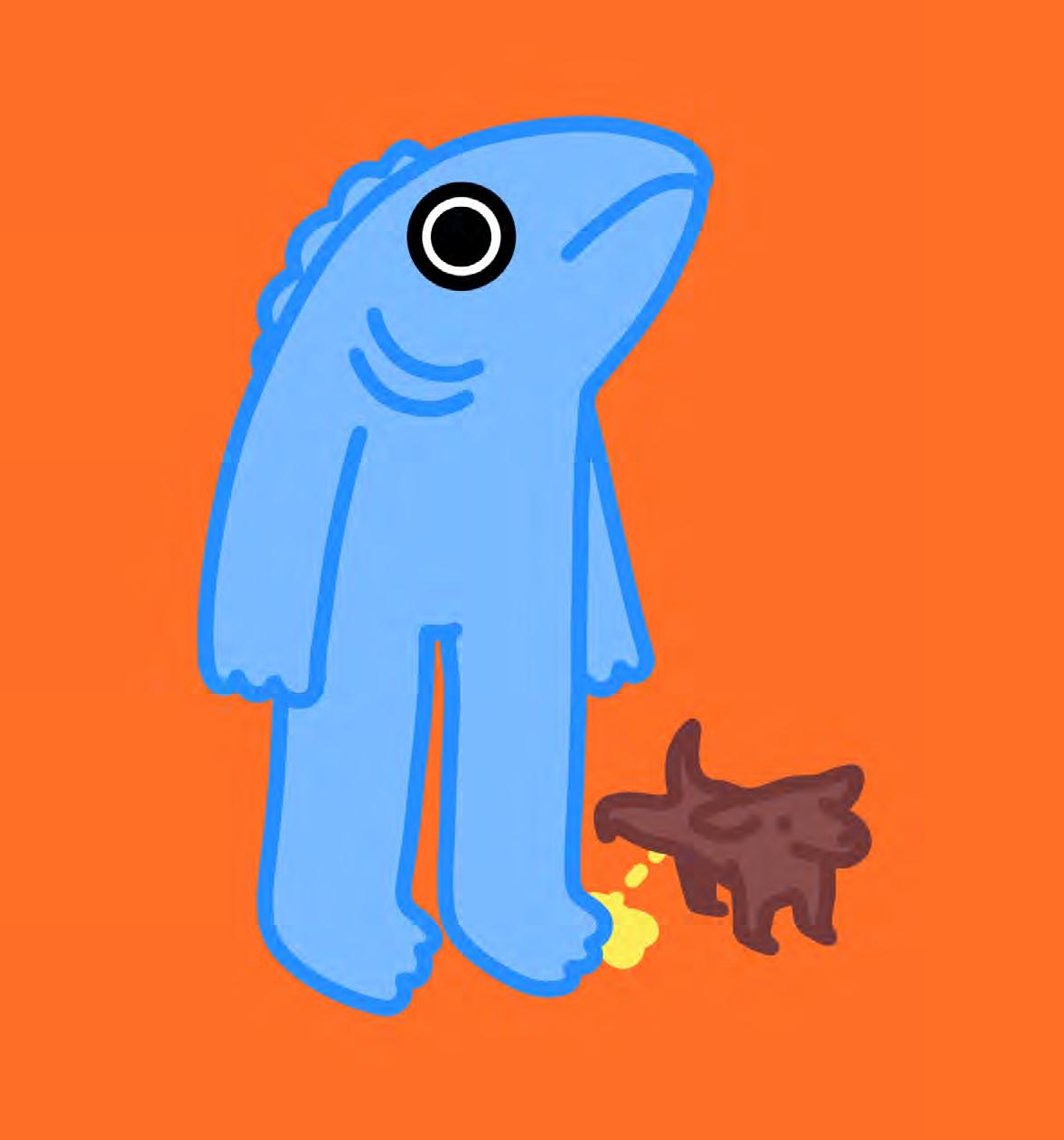
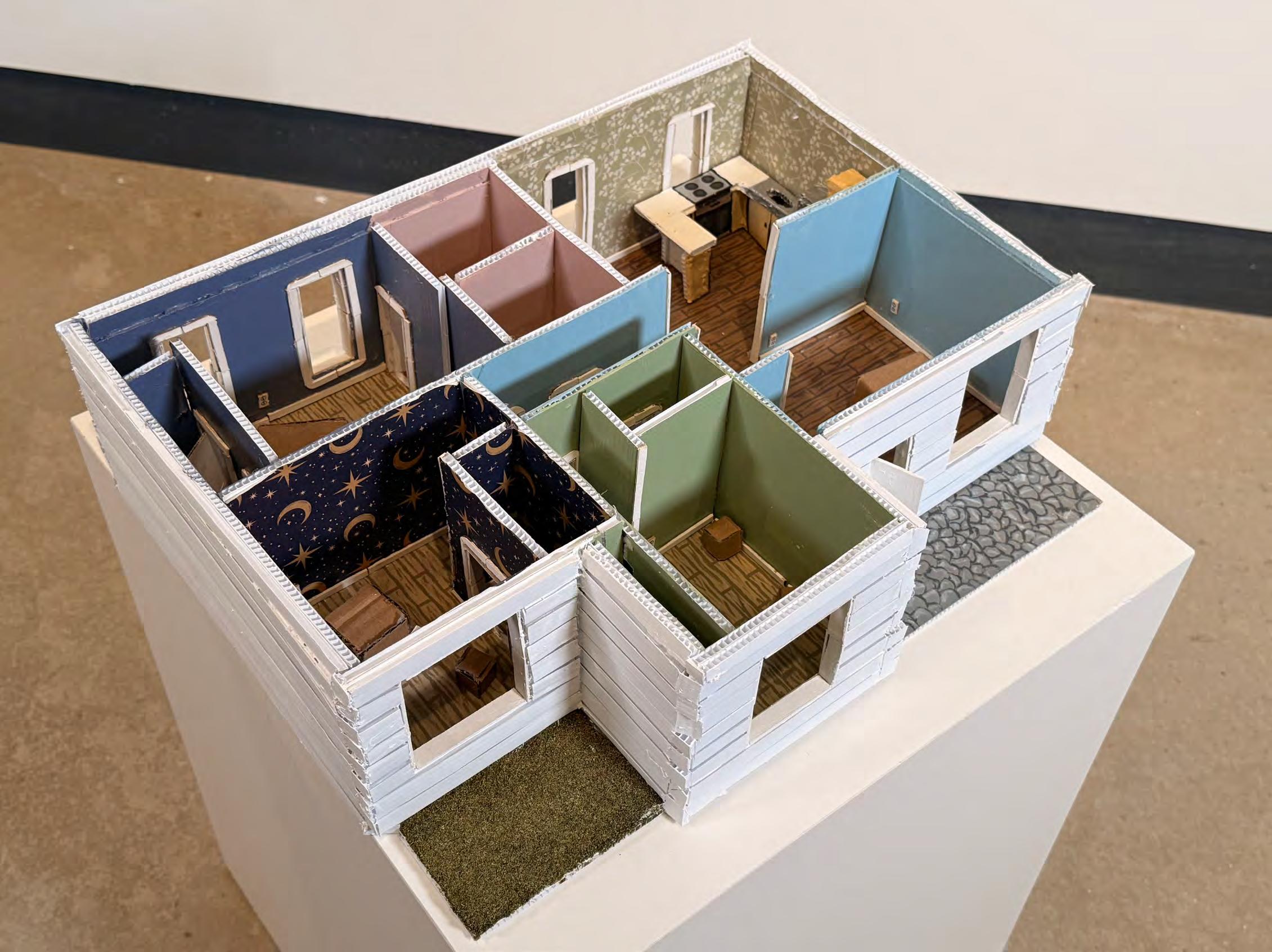
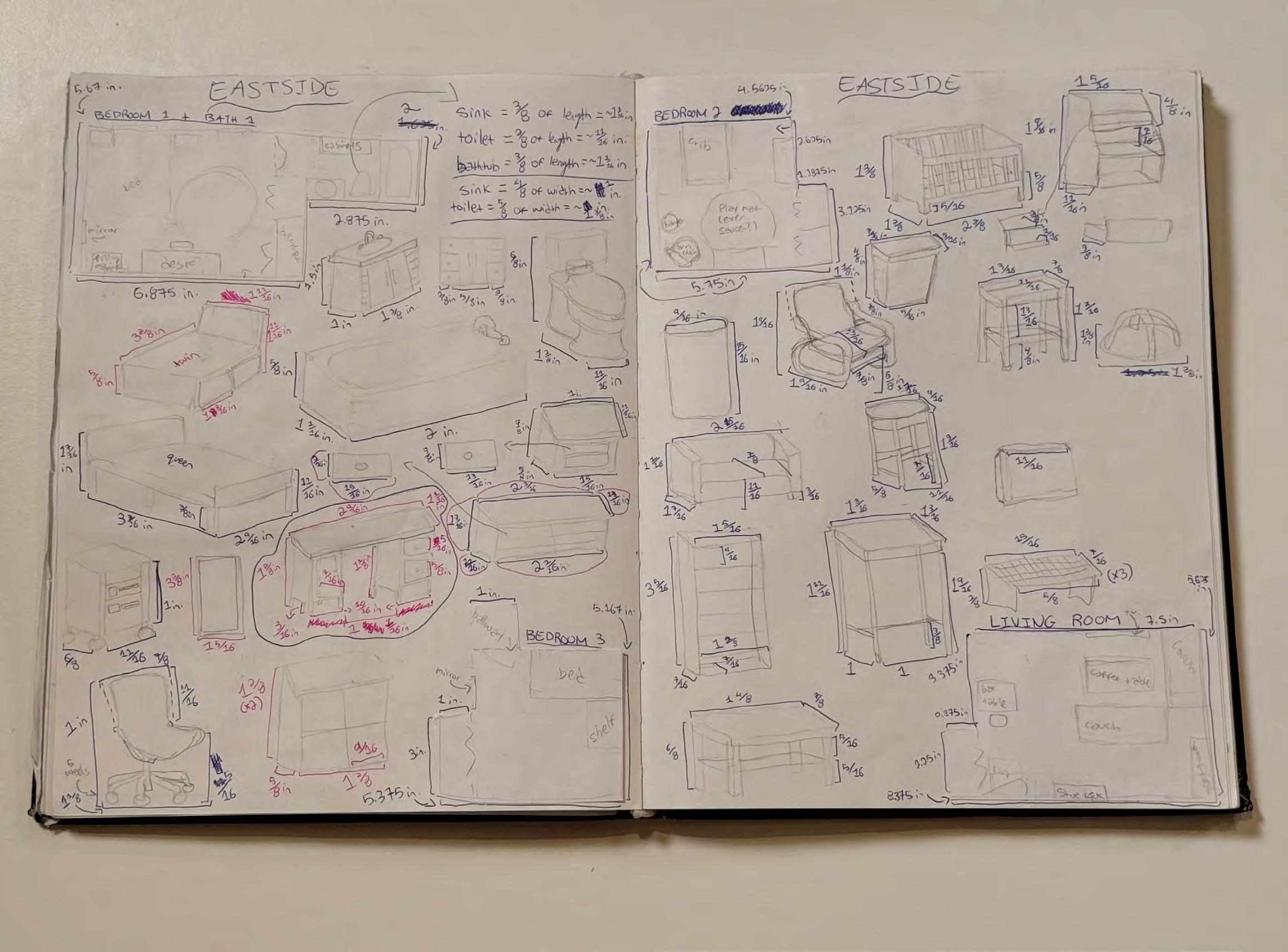
material themselves, but they are also expressed in a series of paintings such as Semiotics of India. They function as both memory and nostalgia, signalling both the artist’s lived experiences and a magnetism towards ancestral homelands. A sister painting, Kohinoor, gets to the marrow of India’s colonial history under British rule by representing the crown of the royal family. “Kohinoor” also happens to be the name of the diamond that was seized by Queen Victoria after she was proclaimed Empress of India in 1849, and it is prominently featured on the crown.5 The glowing symbolism of the bloodred background is not lost in a painting embroiled in the violence of empire. Together, the paintings speak to an India of past and present, one that remembers exploitation and repression, but simultaneously embodies hope for the future. Sekhon’s focus on photorealist representation is balanced by Eddie Flatman’s stylized digital drawings and animations. Their characters surface from personal explorations of gender, identity, and interpersonal connection. The mapping of queer identities within an illustrative aesthetic informs their project featuring Fish. In digital renderings, animations, canvas paintings, and cast ceramics, Fish is intended to portray the impression of a “fish out of water,” drawing parallels between queerness and marginalizing social structures.⁶ Culling inspiration from artists Ann Roberts and Sarah Legault, Fish also recalls the deadpan observations of Michael Domontier and Neil Farber alongside the rhythmic figuration of Keith Haring. In short, Fish is a character that examines queer identity and celebrates it, serving as a vehicle to explore the audience’s own determinations of self. While Flatman’s Fish delves into queer identity and selfhood, Sydney Patten attends to the gradations of the past, to core memories, and the relationships associated with feelings associated with “home.” Her project emerges from a sense of gratitude for the shelter provided by her family during her childhood.⁷ Through hand-made dioramas, projections, and preliminary sketches, she crafts each living space down to its furniture or appliance as a generative mode of storytelling. Eastside, for instance, is built at a 1:24 ratio and is based on the exact dimensions of a budget-friendly home designed by Riverland Construction Co. With every section of the house being cut and considered, the diorama is as much an aesthetic object as a meditative act, ruminating on the meaning of comfort, security, and care that make up “home.” In constructing sites for families to live, grow, and thrive, Patten attempts to make the everyday, vernacular lives of ordinary people monumental in a small but meaningful way. Whereas Patten elevates the everyday, Adam Wiebe scrutinizes the entanglements of vernacular life.
Spanning interactive installations and large-scale paintings accompanied by sound components, Wiebe’s practice digs into performativity, solitude, and the necessity of human connection. The ubiquity of hand puppets operates as a metaphor for the various masks we wear in vernacular life that distance us from who we truly are. They are, as he writes, a “fable warning” against these unnerving forces.⁸ In the esoteric space opera he has created, puppets appear in kaleidoscopic colours reaching up towards the heavens, colliding with epic celestial landscapes inspired by NASA satellite photographs. These are enhanced by critical soundscapes that echo an extraterrestrial sublime straight outta the Milky Way, adding an immersive experience to an otherwise visual event. Humour is a funny thing. It can be used as a defence mechanism and, paradoxically, can also reveal that life itself is absurd at times. Wiebe’s work wrestles both into a single manifestation.
As we find Wiebe employing humour as an instrument of storytelling, Jennifer Jankowski utilizes a cinematic mode of storytelling that embraces both static and moving images, encapsulating narrative arcs, conceptual design, characterization, and concept development. These are articulated through films, still images, paintings, and costumes—outputs that are reminiscent of and pay homage to the interdisciplinary work of Cindy Sherman. Like Sherman, Jankowski stages portraits using makeup and prosthetics to question the textures of close relationships. In When We Align, a photographic series of family portraits employs celestial symbolism to represent the volatility and vulnerability of intrafamily dynamics.⁹ Her brother, mother, and father feature prominently in the project, and its lingering presence is realized through the costumes themselves, which are displayed as installations that bridge fashion and sculptural objects. Bending reality into fantasy and even surrealism, Jankowski pictures the unceasing inevitability of change, transformation, and growth.
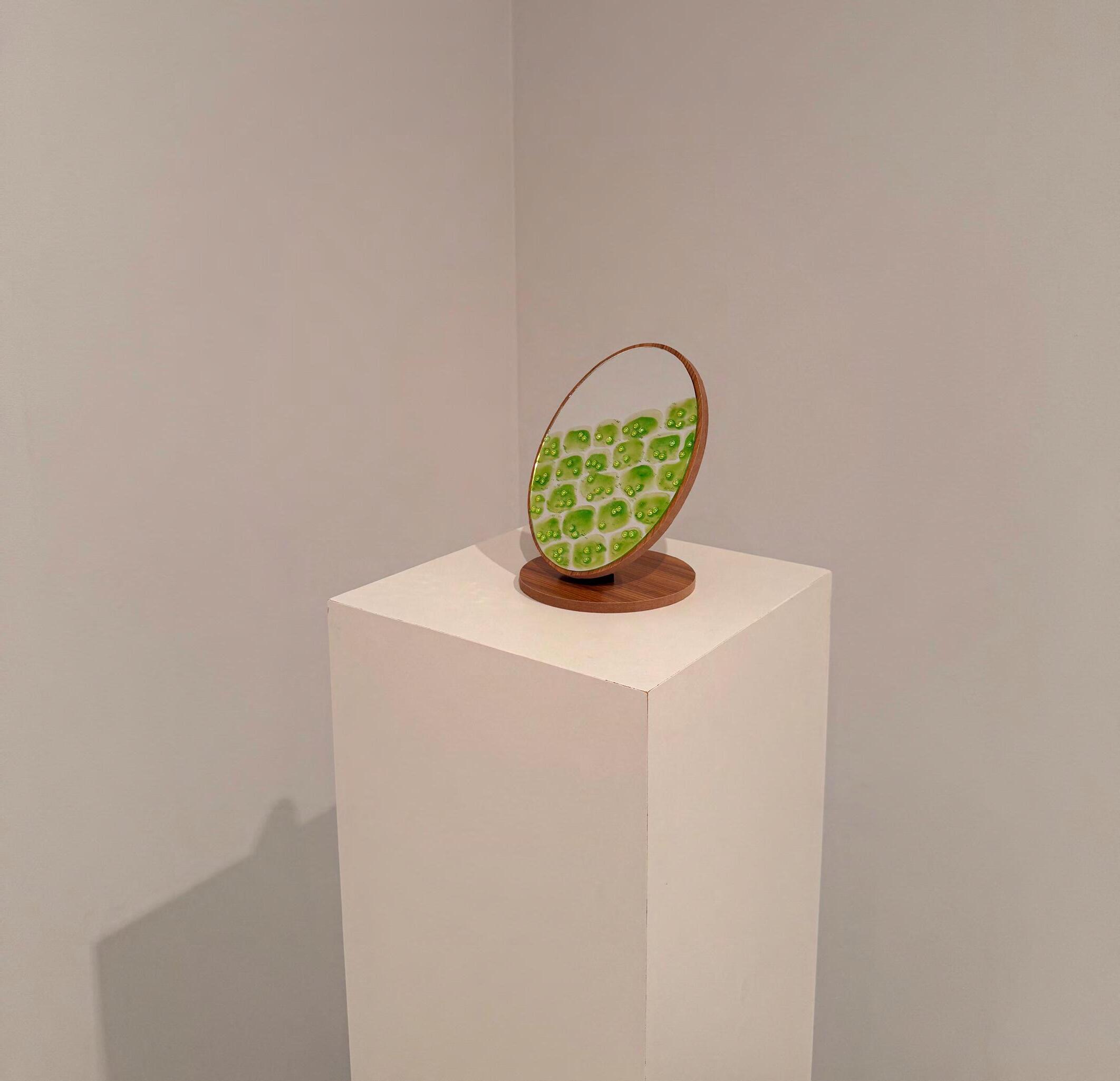
If Jankowski turns to the cosmos for divine insight, Neeka-Lynn DeVries heads in the opposite direction, investigating the extreme minutiae of flora and fauna that inhabit our planet. Her series of paintings titled Cross Cell Sections offers a hyper-magnified view of the internal architecture of such matter. Executed with pigment on a series of glass plates, they remain faithful to the scientific study of cross cell sections. Not only do they point to the underlying processes of living organisms that exist outside of our eye’s natural abilities, but they also harken back to the modernist abstraction of Wassily Kandinsky, Kenneth
Noland, or Yayoi Kusama. By exposing the cellular processes of the world around us, DeVries reminds us that there are forces operating unseen to the human eye, which we often fail to understand but can nevertheless stand in awe of. To this end, she is likewise concerned with articulating the spiritual dimensions embedded within biological material.10
In contrast to DeVries’ magnification of cellular forces, Mia Ellis explores base emotions embedded in the human animal. Ellis’s marked fascination with the Horror genre began at an early age and has followed her ever since.11 In this body of work, she pictures horrorscapes through decidedly dark, stygian colour palettes to affect senses of vulnerability and fear of the unknown. The supposed banality of images such as No Service, an everyday butcher shop, becomes supercharged when the audience skims over the crimson-red sign reading “fresh meat.” What exactly is being butchered and sold in Ellis’s vision? This painting stands next to the Gothic gas station titled Last Stop, glaringly devoid of all life and somewhat harmless if one can ignore the black billowing atmosphere behind the pumps. Ellis knows that the very best Horror creates tension through its lack of graphic, gory imagery. Doing so leaves room for the audience to project their own fears and trepidations, bringing them to life through the alchemy of the image.
When individual artworks share the company of other artworks in an exhibition environment, audiences perceive the myriad ways that they complement, reframe, or diverge, yet they ultimately help to make sense of each other. In Through a Window, we experience autobiographical narratives beside political advocacy, hand-made craft beside conceptualism, representation beside abstraction, and everything in between. These important conversations also extend to social experiences, historical conditions, and philosophical inquiries. “The truth is the whole,”12 Hegel writes to describe how the electric soup of ideas does not exist in isolation but through differences synthesized together. In the entirety of these artists’ creative variances, we arrive at new lines of flight, interpretive pathways, and forms of knowledge. Truth and understanding are relational.
1. Georg Wilhelm Friedrich Hegel quoted in Andrew W. Hass, Hegel and the Art of Negation: Negativity, Creativity, and Contemporary Thought (Bloomsbury Publishing, 2023), 88
2. George R. R. Martin, The Feast for Crows (Bantam Books, 2005), 899.
3. Rowan Huang, “VISA 4F06 Short Essay,” 2026.
4. Hannah Bourne, “VISA 4F06 Artist Statement, 2026.
5. Krit Sekhon, “VISA 4F06 Short Essay,” 2026.
6. Eddie Flatman, “VISA 4F06 Short Essay,” 2026.
7. Sydney Patten, “VISA 4F06 Short Essay,” 2026.
8. Adam Wiebe, “VISA 4F06 Short Essay,” 2026.
9. Jennifer Jankowski, “VISA 4F06 Short Essay,” 2026.
10. Neeka-Lynn DeVries, “VISA 4F06 Artist Statement, 2026.
11. Mia Ellis, “VISA 4F06 Artist Statement, 2026.
12. Georg Wilhelm Friedrich Hegel, Phenomenology of Spirit, translated by A. V. Miller (Oxford University Press, 1977),
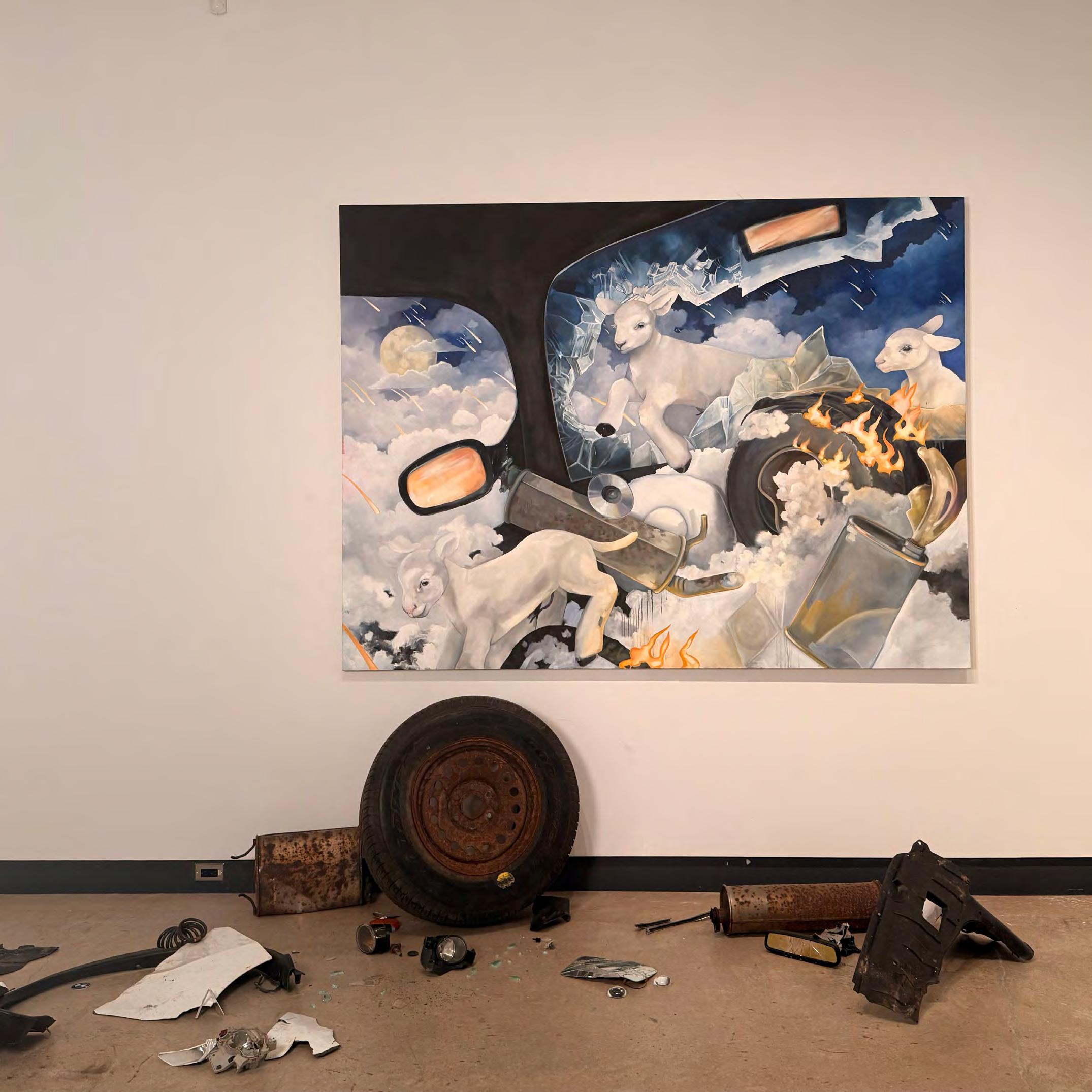
My process is impulse-led and intuitive—an intentional rebuilding of trust in my own instincts, which were thrashed as a girl growing up in the church. This approach forms the foundation of a rich conceptual practice that exposes the inner world of a trauma-informed life.
A pivotal moment in my personal development occurred in 2025, when I realized I was a lesbian at the age of 24 while married to a man and living in my Christian conservative mother’s house. My honours work freezes in time the loss of my faith, family and best friend as they all occurred. I began by collecting pieces of car crash remnants on walks near my family home. These fragments—headlights entangled in grass, shards of plastic and mirrored glass—became both sculptural material and referential objects for oil and acrylic paintings. The tension between impermanence and fixation, validation and invisibility, archives and forgetfulness, all surfaced throughout this process, already unknowingly creating nuanced visual allegories rooted in loss.
My paintings depict the moment of impact as being woken from a dreamland, of which was a permanent resident, while found objects grounded the work in something far more sinister. Dealing with complex trauma obtained through intense repression and discrimination, I work to blend the softness of dissociation and the grimy reality of perpetual fear and shame. The beating heart of my practice is both advocacy and personal relief. So, while a first-hand account of my own private life, my work reaches far outside of myself.
We
We
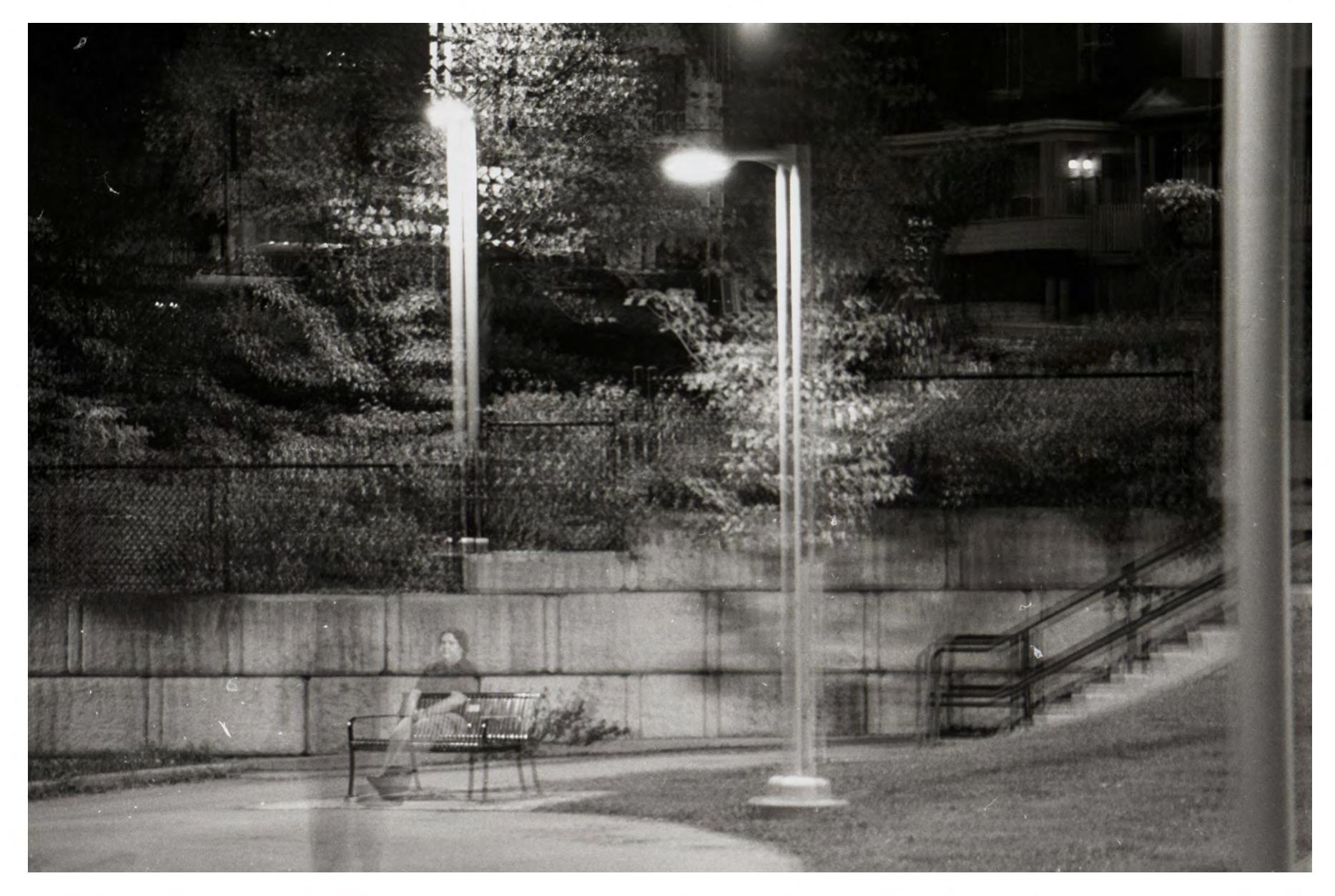
I am here, Can you see me? (2025). 35mm print, 96” x 63”
My practice explores isolation and the instability of perception through experimental analog photography. The work examines internal disconnection within familiar environments, transforming recognizable spaces into quiet, unsettled images.
Using film soup, double exposure and direct manipulation of negatives, I physically intervene in the photographic process. I invite unpredictability into the work, allowing chemical reactions, light leaks and material disruptions to alter the image beyond my full control. These alterations fracture the image surface and destabilize clarity, allowing distortion to function as a visual language. Rather than correcting imperfections, I embrace them. Through material experimentation, emotional states are translated into physical form.
The photographs seek to visualize moments of isolation that are often difficult to articulate. Instead of imposing a fixed narrative, I allow each image to evolve and speak for itself. The work does not illustrate specific events but creates a quiet atmosphere of suspension and subtle tension. Figures may appear partially present or obscured, and spaces feel both familiar and distant. This ambiguity reflects the experience of feeling unseen within environments that should feel safe.
The series unfolds as a body of images that reflect fragmentation, vulnerability and the desire to be seen without spectacle. Through material distortion and controlled instability, the work holds space for quiet emotional tension, allowing isolation to be felt rather than explained.
I
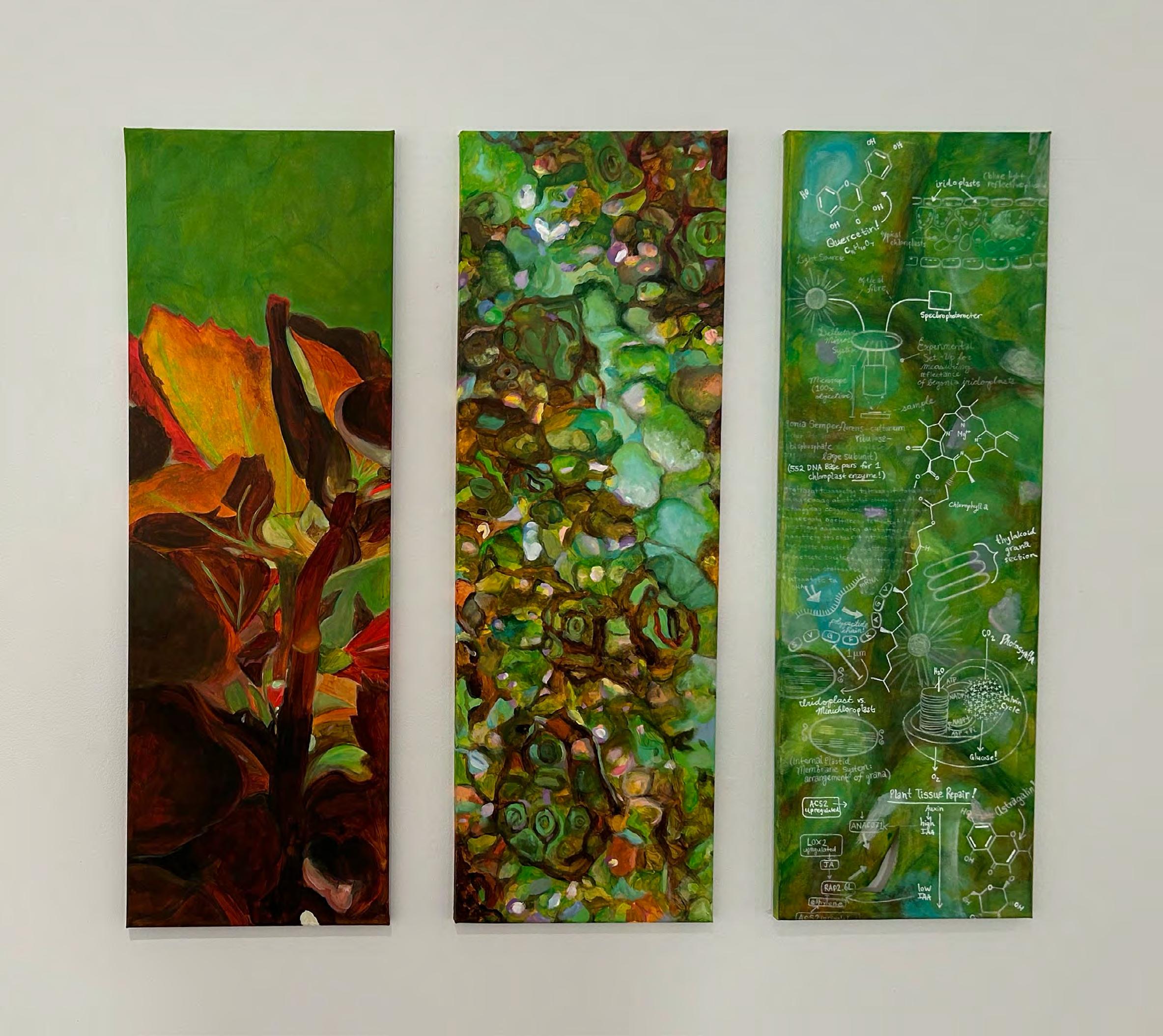
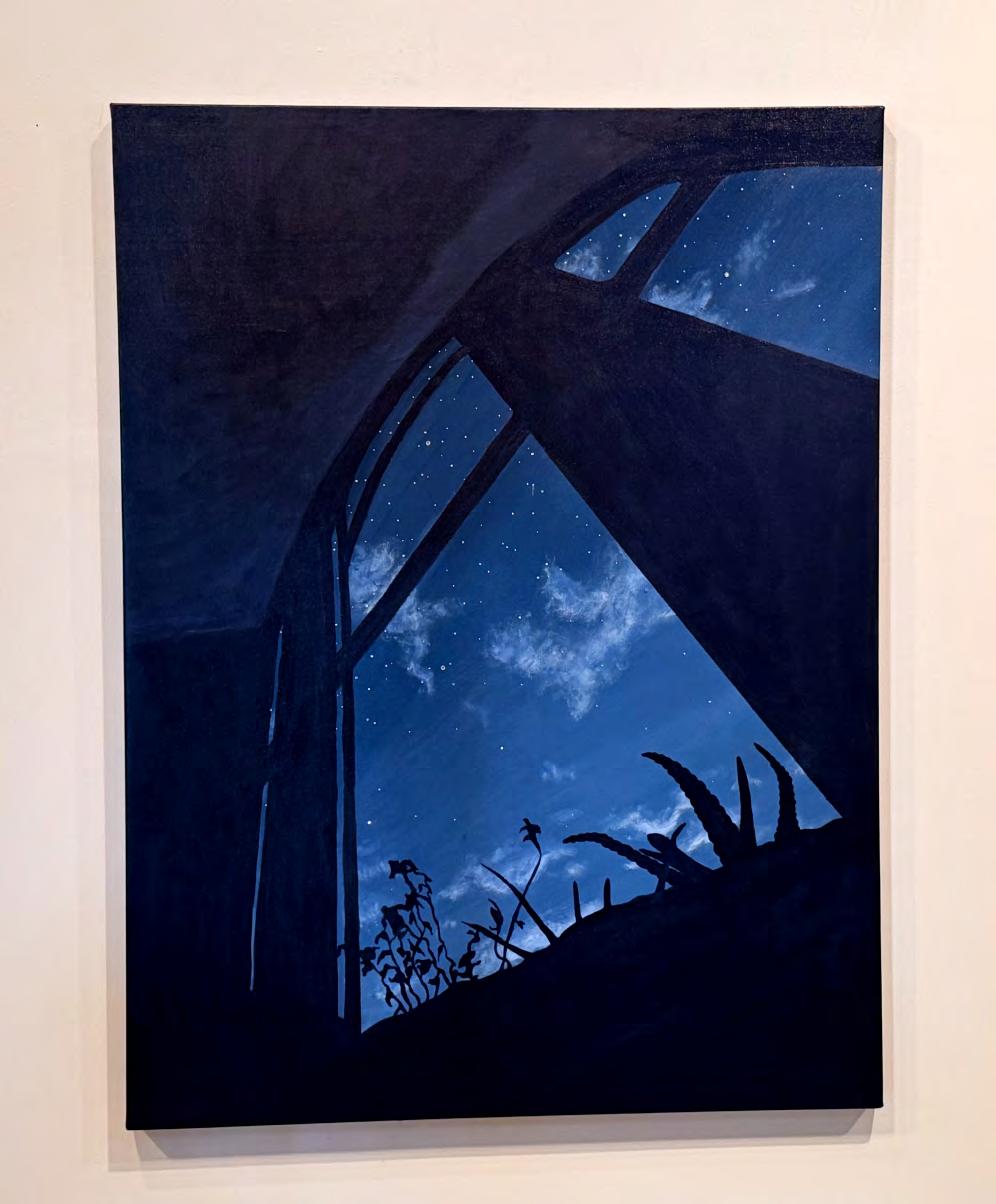
In my work, I gravitate towards simplistic or beautiful subject matter—the awe of everyday, small things. Recently, the beauty of biology has been my inspiration—microscopically small, and always present. Courses in biology (half of my degree) tell about these exciting intricacies—like the formation of 2000 to 100,000 receptor proteins (not including enzymes or hormones!) in each of your 37 trillion cells. These things have increased my awe and wonder in my faith as a Christian. As Louis Pasteur says, “A bit of science distances one from God, but much science nears one to Him”, which personally resonates with me.
Through acrylic and mixed media work, I seek to share the awe of these processes inside living organisms in a more precious, inspiring and hopeful light. Observing plants is a natural way we do this as humans. In a greenhouse or centuries-old forest, we feel what C. S. Lewis describes as “the Numinous;” that wonderful, eerie feeling that there is something more to life. A feeling in the human mind that does not go away throughout history and cannot be eradicated (though can be ignored) even in the most academic, rational minds.
I’ve felt this “numinous” feeling while sitting in a tree: I realized it was made of the same genetic material as me; the same molecules telling us both where and how to grow, held in our ‘magical,’ tiny cells. How does a plant grow from a dormant seed into a huge, unique-but-specific tree? Now, of course, the seed’s genetic material, made up of four different base pairs, is translated into proteins which form each multiplying cell’s characteristics (which is crazy in itself! How do all biology students not have their jaws dropped constantly?!). How do the cells know how much space they’re taking up in the world, to make the outline of their specific leaf shape? And how does a little flower have this petal shape here, or this one there, or this soft texture of a rose or the waxy one of a begonia? Why is a begonia sparkly? And how do these cells know how to express this colour here, but tell their neighbour they’re supposed to express yellow instead? And that yellow pigment molecule’s atoms are arranged in the exact right way to reflect specific light wavelengths, and, when extracted, also have anti-cancer and anti-inflammatory properties?
These wonders showing the world’s preciousness could go on and on forever. It’s so joyful! And exciting! And interesting! We all just have to crack our hearts (and minds!) open, a little, to see it.
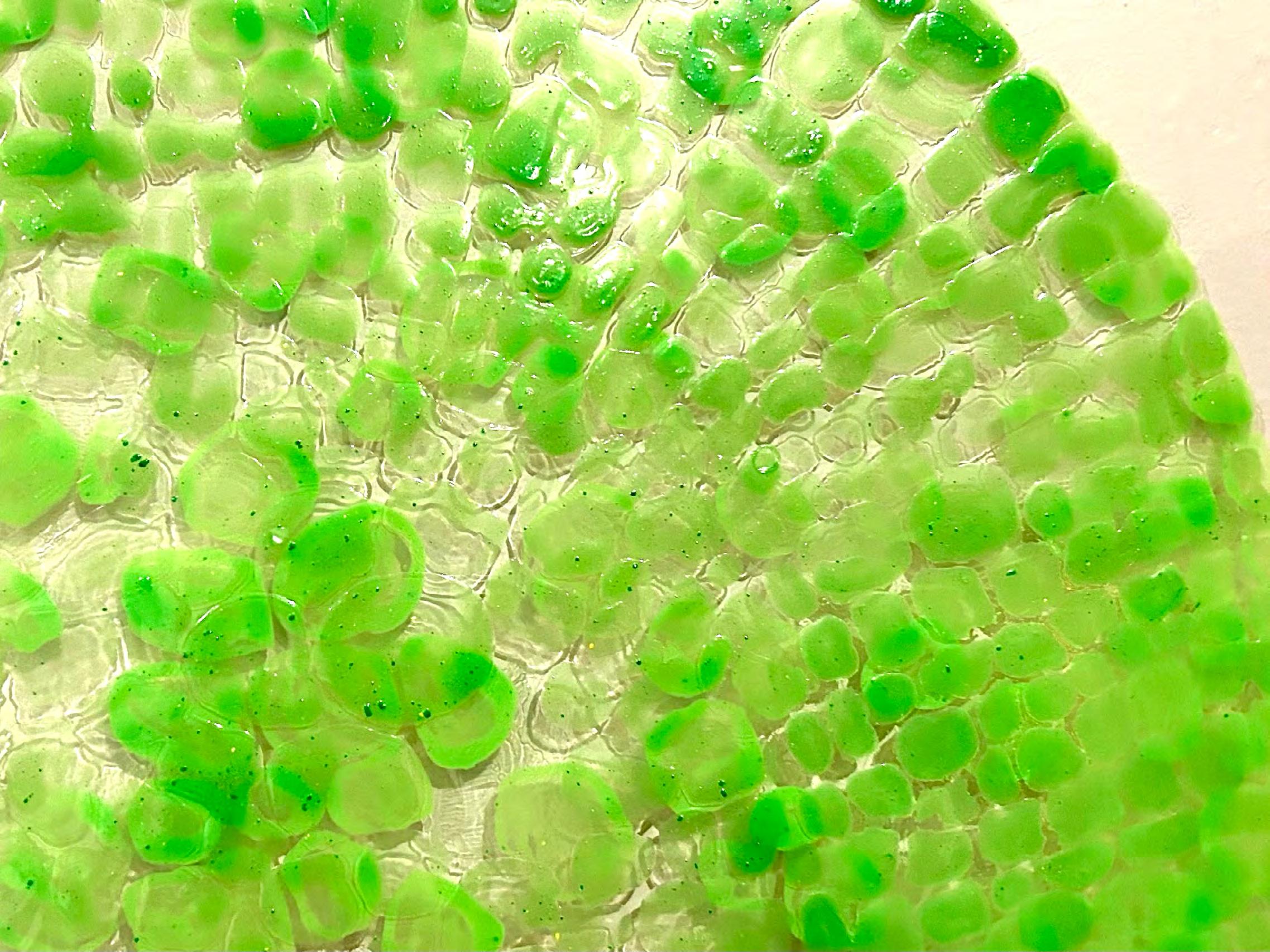
Cell Cross Sections (2026). Salvaged plexi glass pieces, glue, watercolour pigment, 11” x 14” each
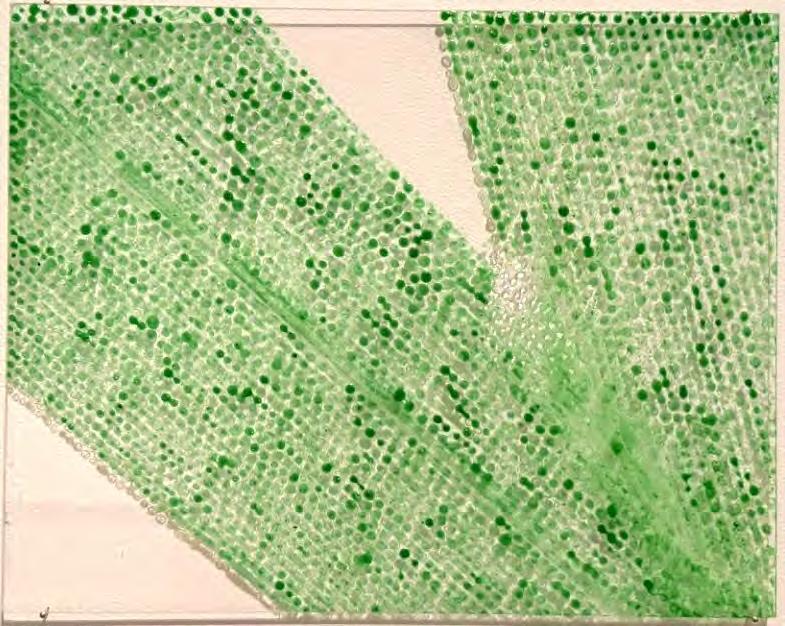
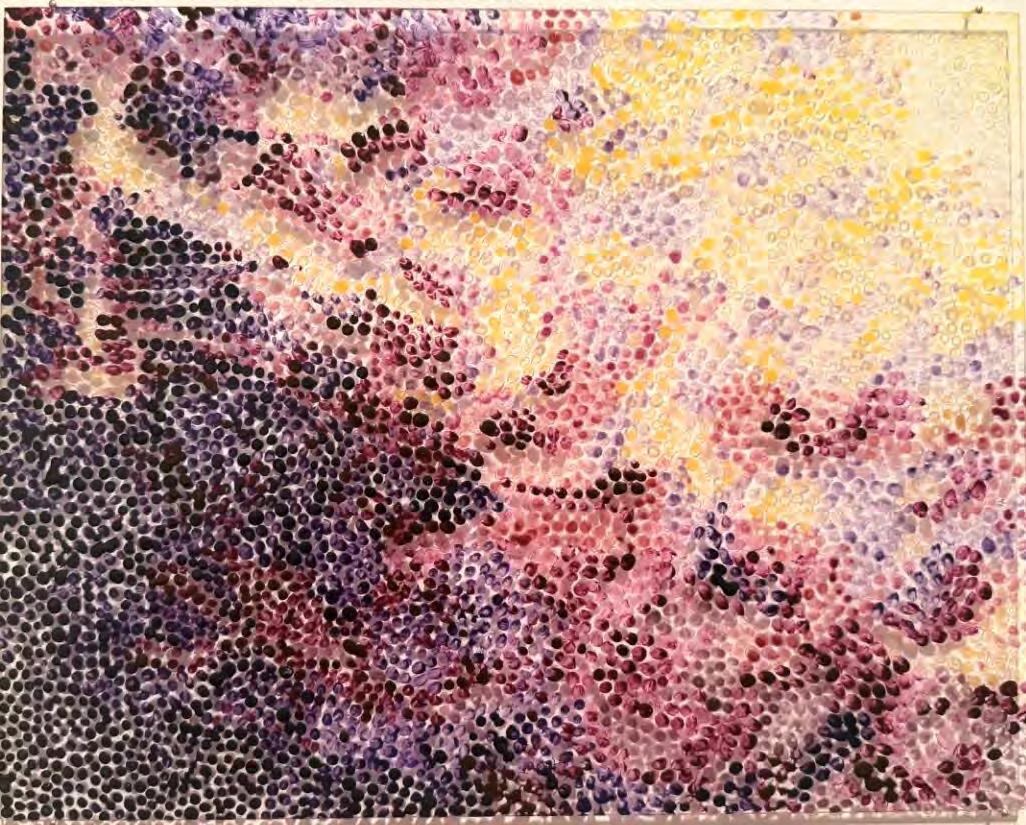
Cell Cross Sections (2026). Salvaged plexi glass pieces, glue, watercolour pigment
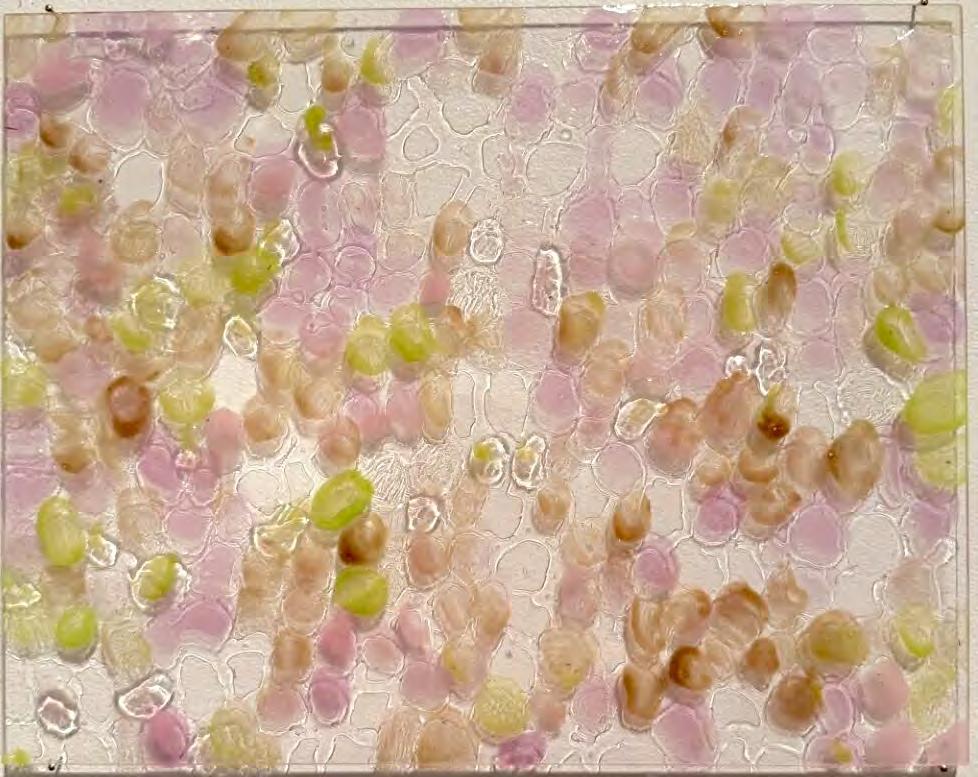
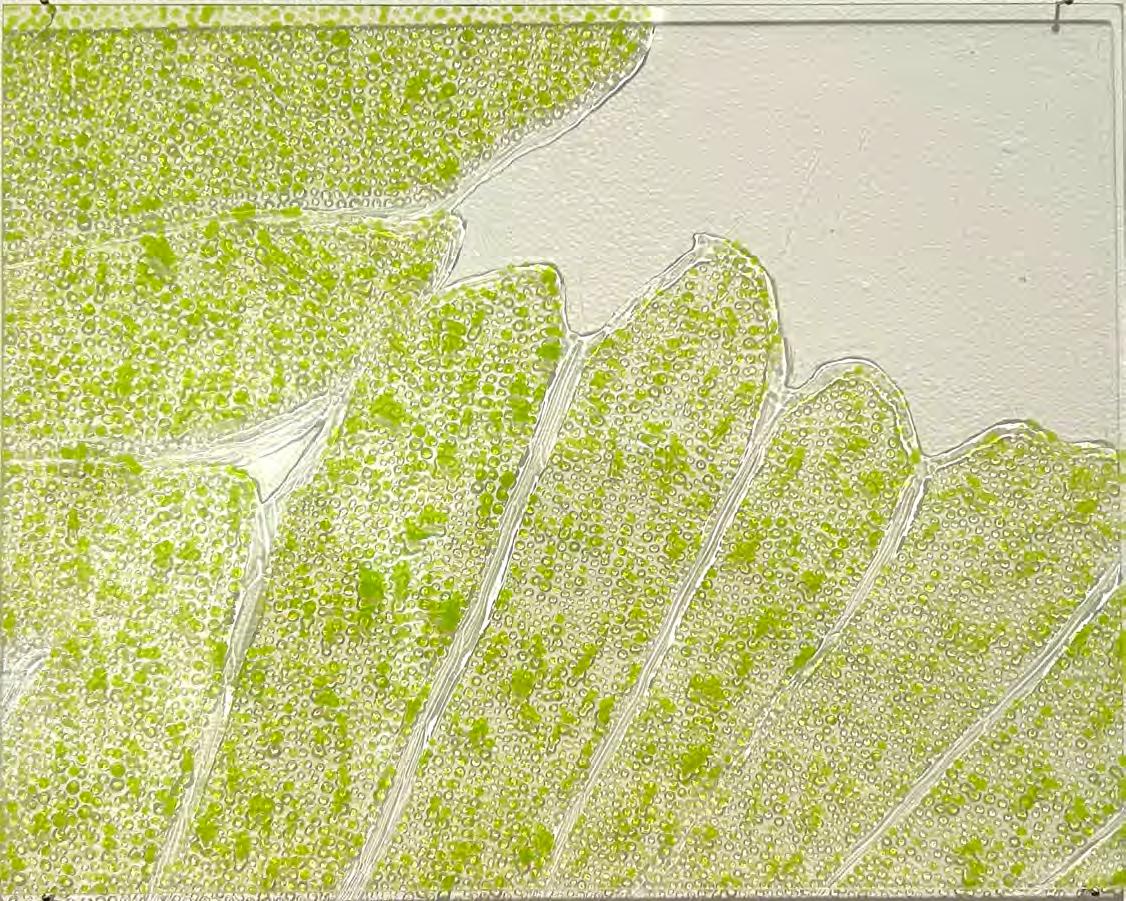
Cell Cross Sections (2026). Salvaged plexi glass pieces, glue, watercolour pigment, 11” x 14” each
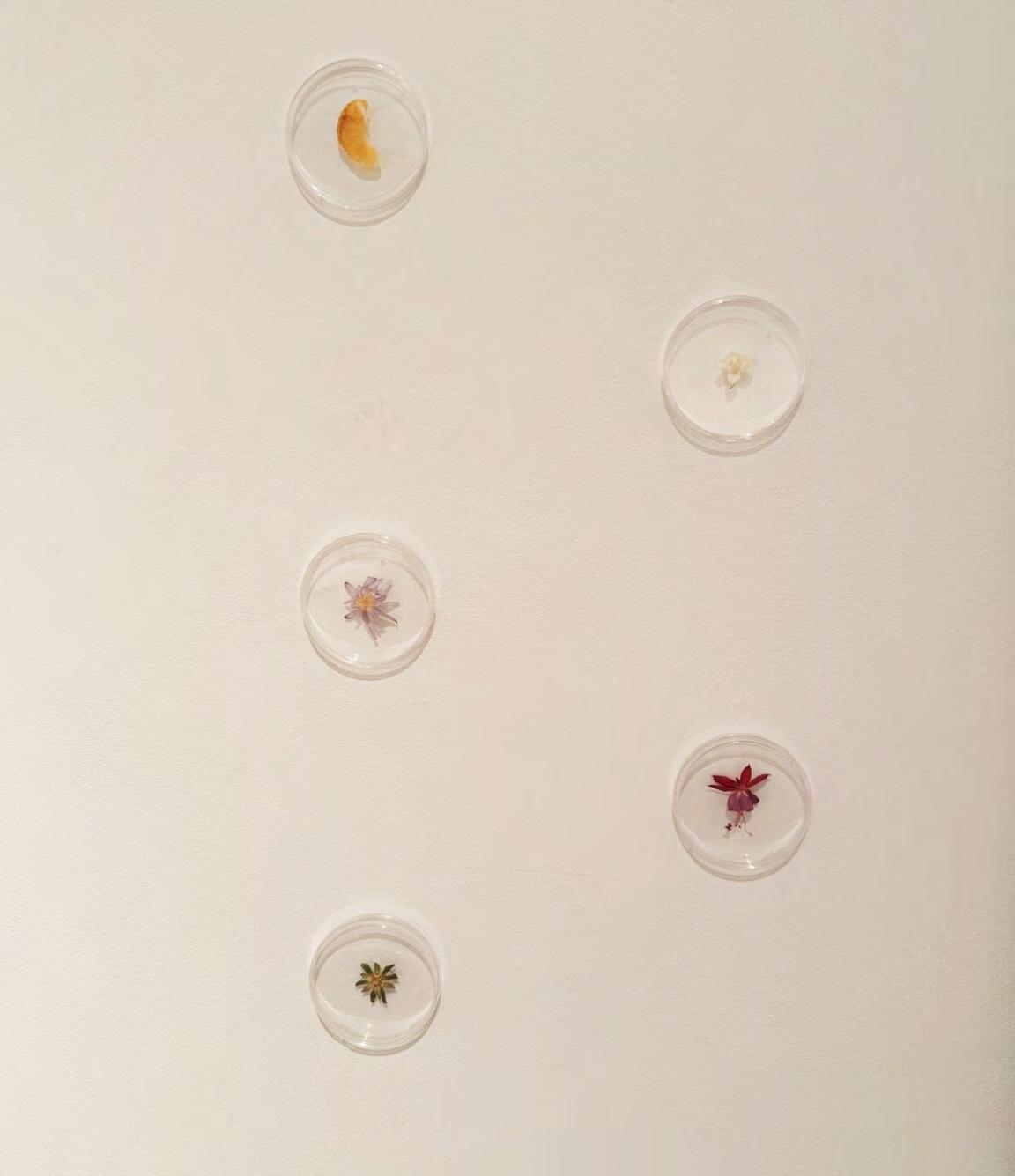
Natural Compounds (2026). Plant material, salvaged petri dishes from instructional lab on plant hormones, variable dimensions
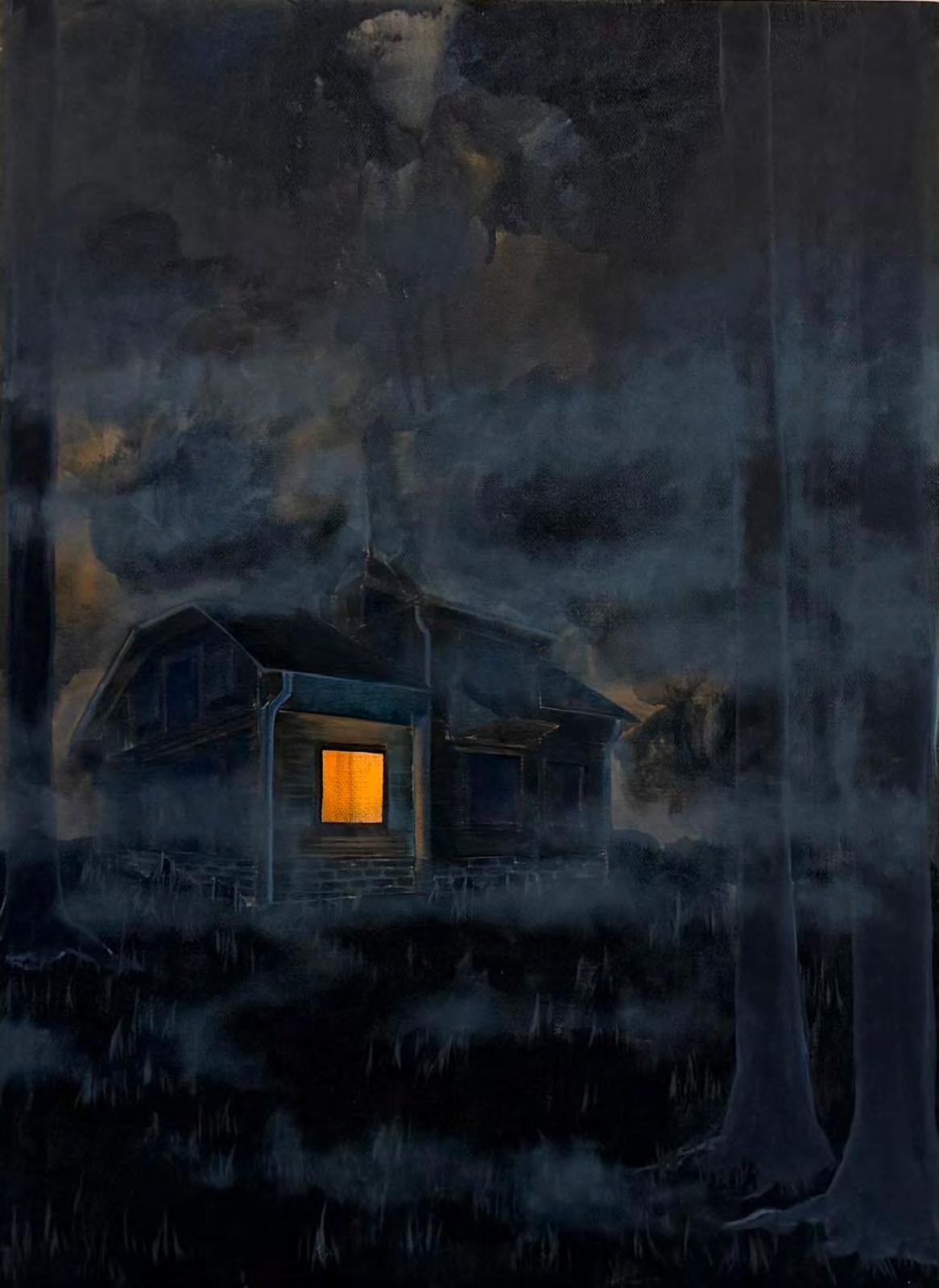
My practice is driven by my fascination with the thematic elements and visual styles of horror media. I started engaging with horror when I was 10, and this interest was fostered by my dad who let me watch scary shows and movies, much to my mother’s dismay.
Themes of isolation, alienation, vulnerability, the monstrous and the fear of the unknown are the main focus of my work. I use horror as the lens for these ideas because there is a versatility present in the genre that tackles endless ideas and themes, from the taboo to the mundane. I also have found that I am captivated by the visual style of horror movies, specifically the way colour and composition can create tension.
My work is influenced by how horror movies create tension and unease in viewers using implied vs. explicit means. I also take a lot of inspiration from literature, including gothic horror. I have gravitated to the use of oil paint as the main medium in my projects. I also have incorporated acrylic paint into my practice using vibrant underpaintings and a base layer that I put oil paintings overtop. The process I use when creating art begins with researching different topics that interest me or that I feel a connection to. Using uncomfortable or unsettling imagery and themes, I encourage viewers to project their discomfort and unease onto my paintings to help explore the vulnerability associated with being afraid or uncomfortable.
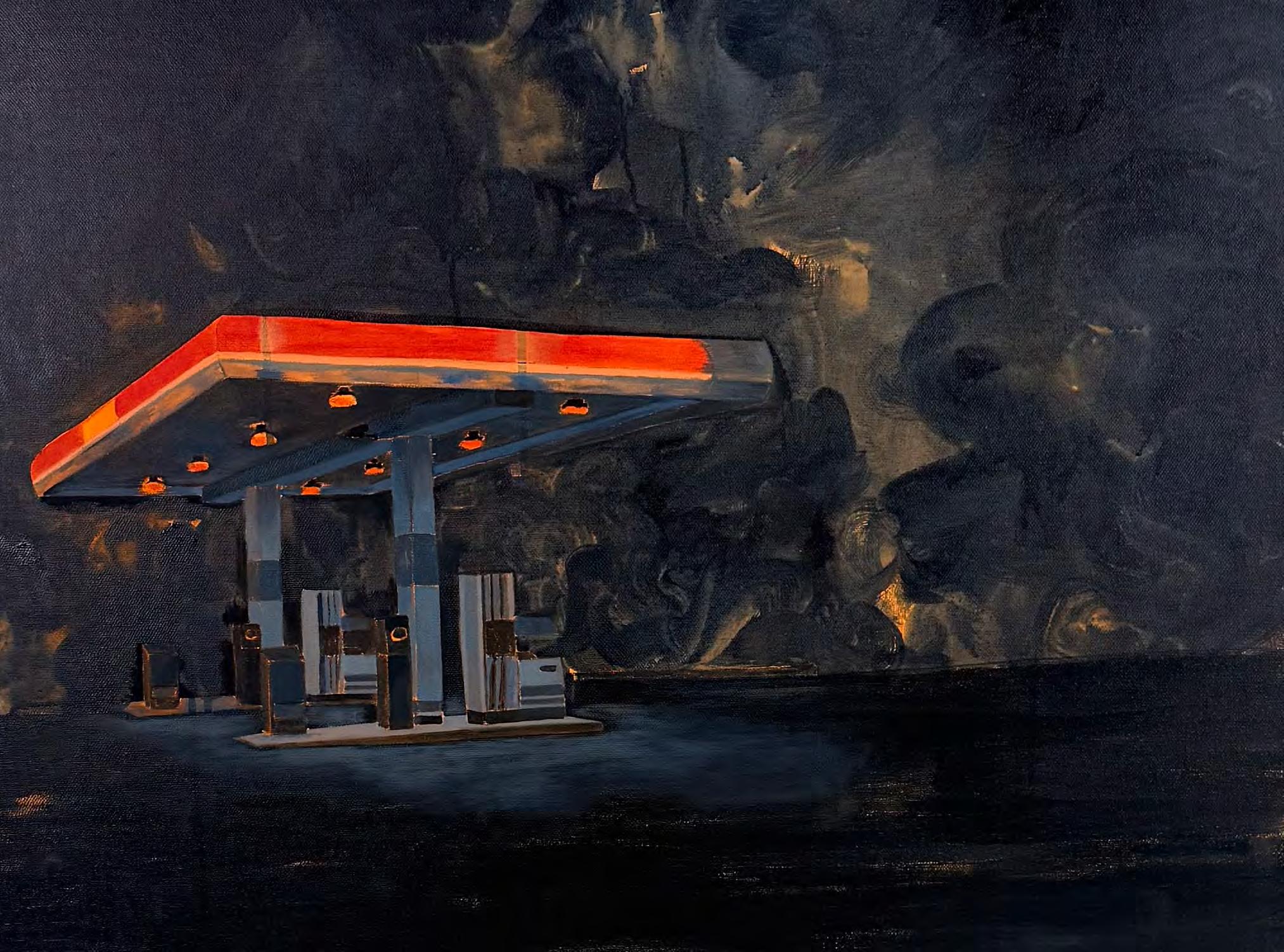
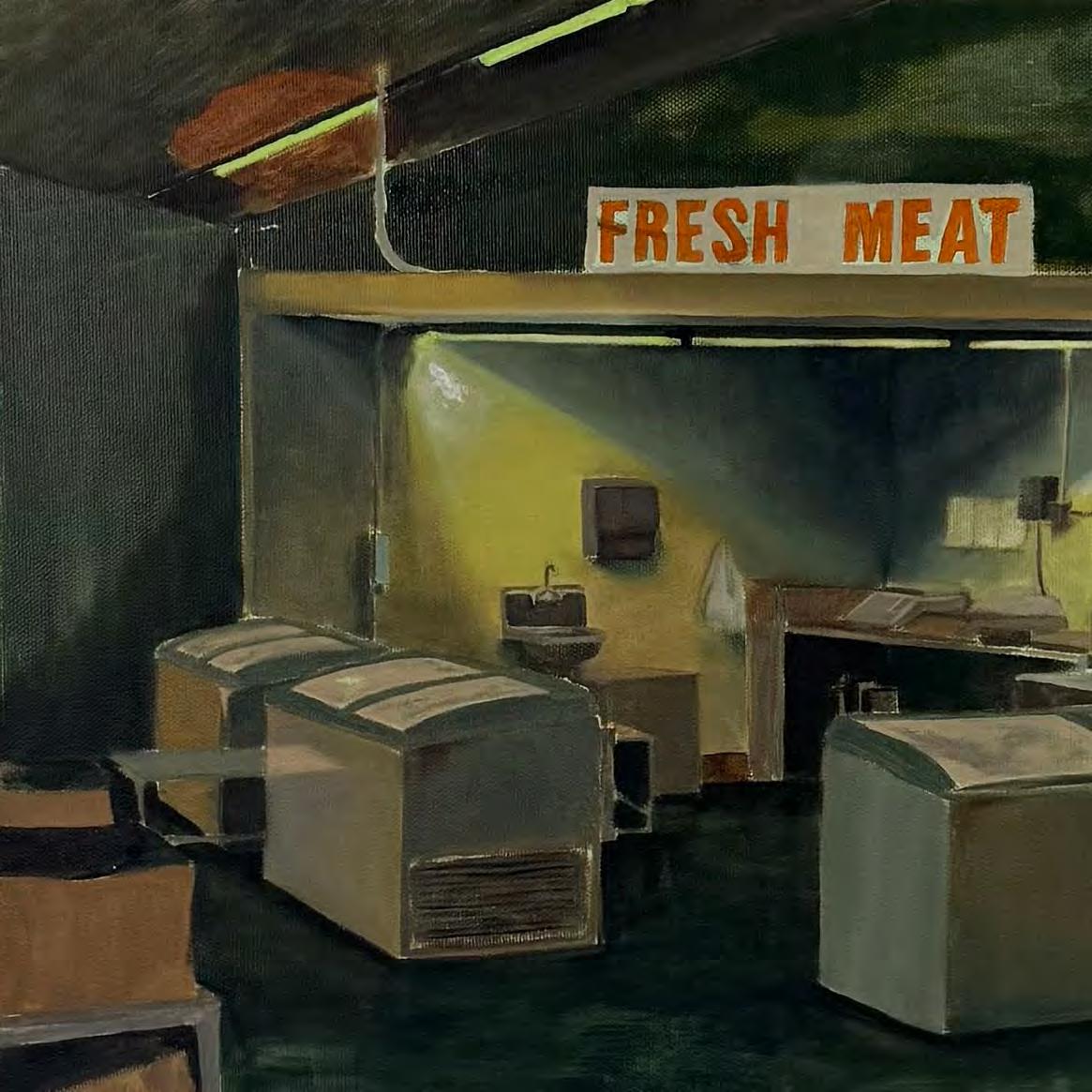
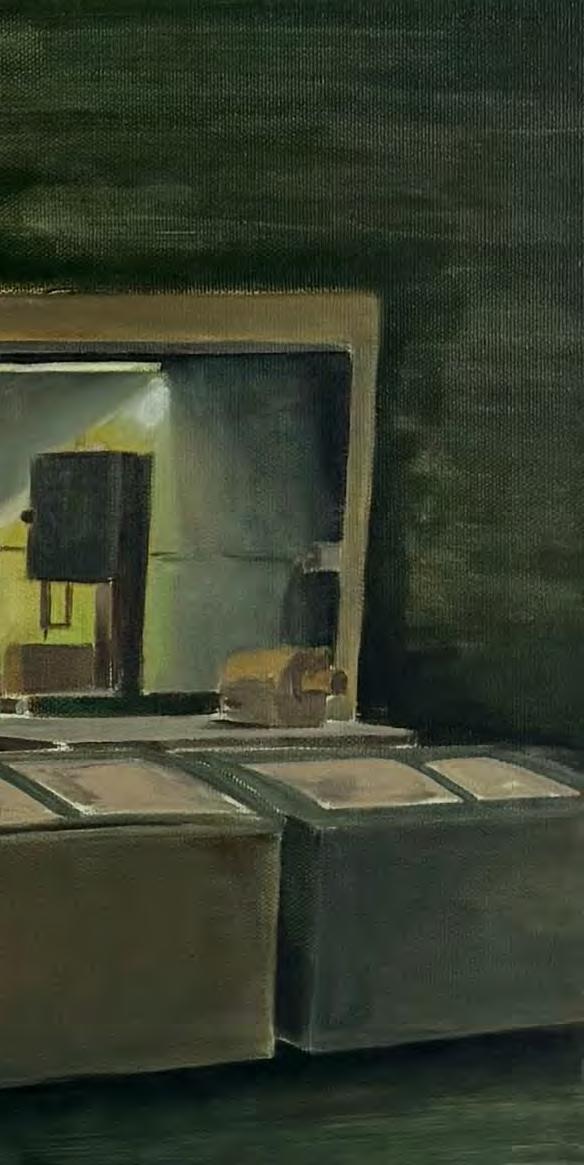
No Service (2026). Oil and acrylic paint on canvas, 18”
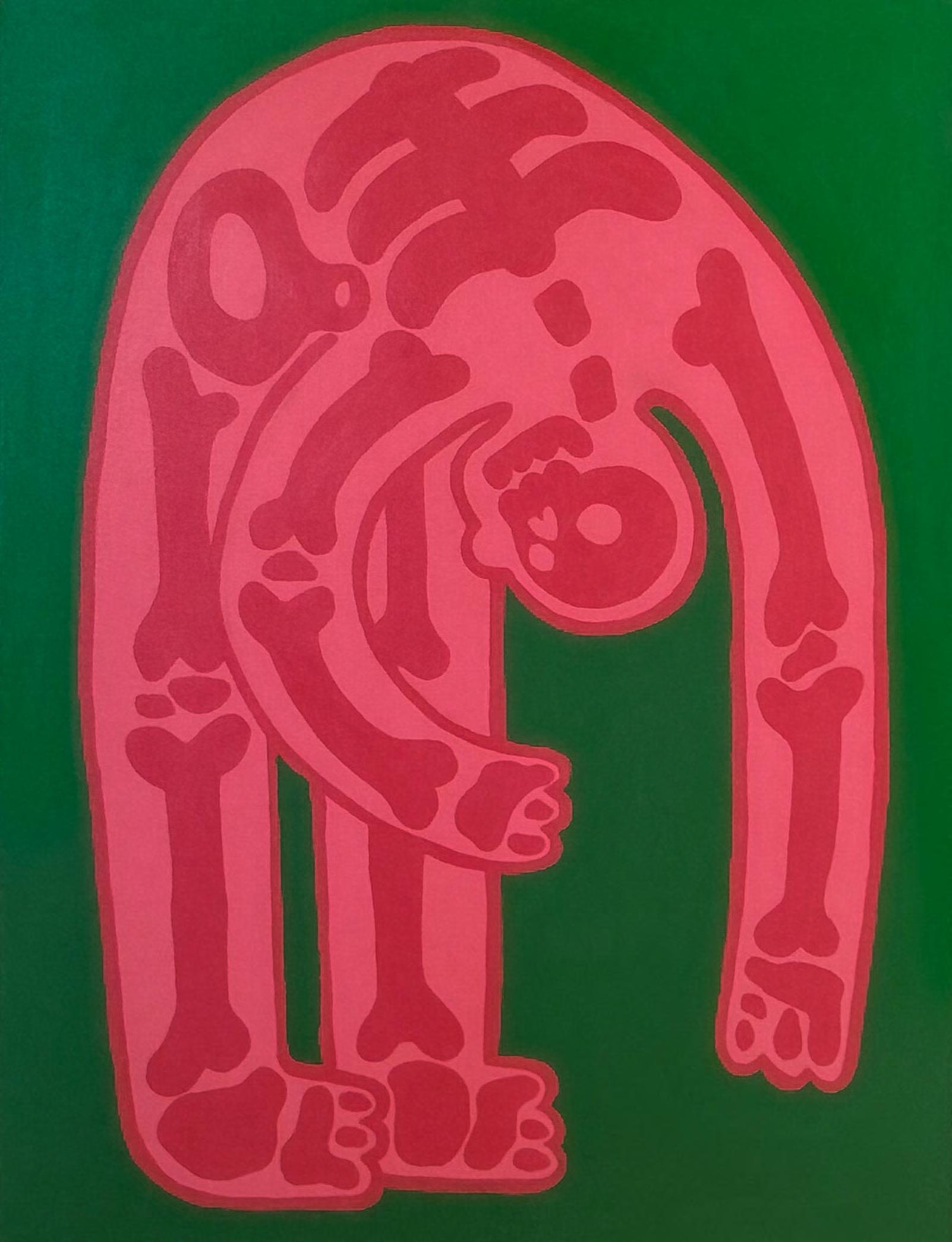
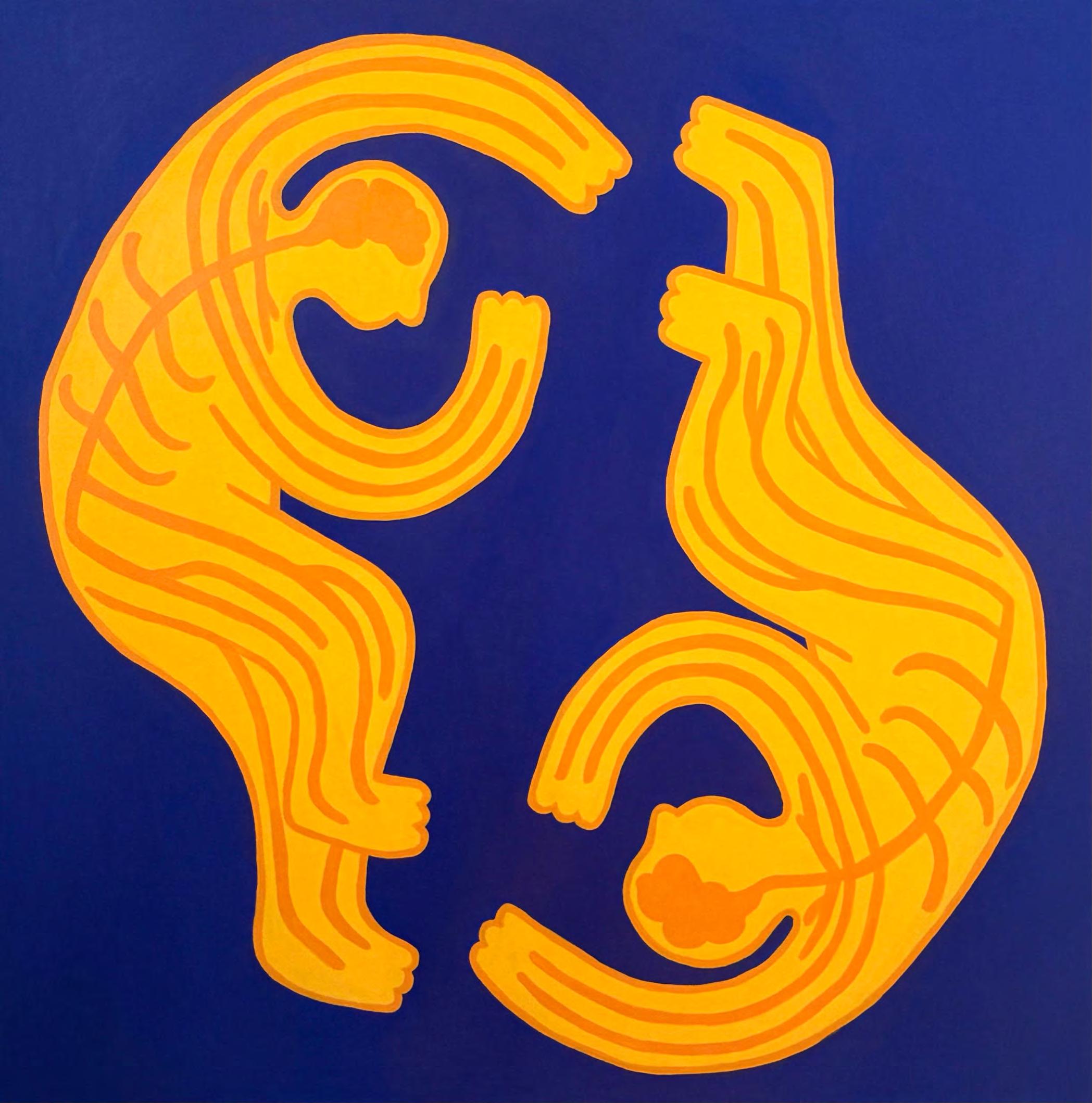
In 2021 I came out to my friends and family as nonbinary before heading off to university. I have been using my art as a way of exploring my queerness and any feelings I may have.
Bright pink figures with a simplified skeletons set against a bright green background; soft yellow figures with simple nerve pathways contrasted with a cobalt blue background. These ambiguous beings emerged from personal explorations of gender, identity and emotional connection. Their silhouette is left to a gender ambiguous form, with only their bodily systems left exposed. Each line is gone over multiple times to get a solid colour, creating blemishes and bumps, not seen from far away yet painfully obvious up close. Using these beings, I explore the interconnectedness of people and how their body language and composition can create a narrative of its own. Without the veil of the external body, how can you place or remove value? Ultimately, we are all just skin and bone with a limited time on earth, so why is it that the value of human life is so easily swayed?
After sitting with my pink and yellow people, I wanted to add another creature to this body of work, one that spoke to a wider range of emotions. For this, I decided to create Fish, a creature with the same style body as the other people I’ve been painting, only this time with a fish’s head. The fish, aptly named Fish, is meant to represent the “fish out of water” sensation. They are clumsy and seem generally down on their luck, yet still genuinely try their best to find out who they are. Instead of showing just human relations, I wanted to document feelings of disassociation and dysphoria.
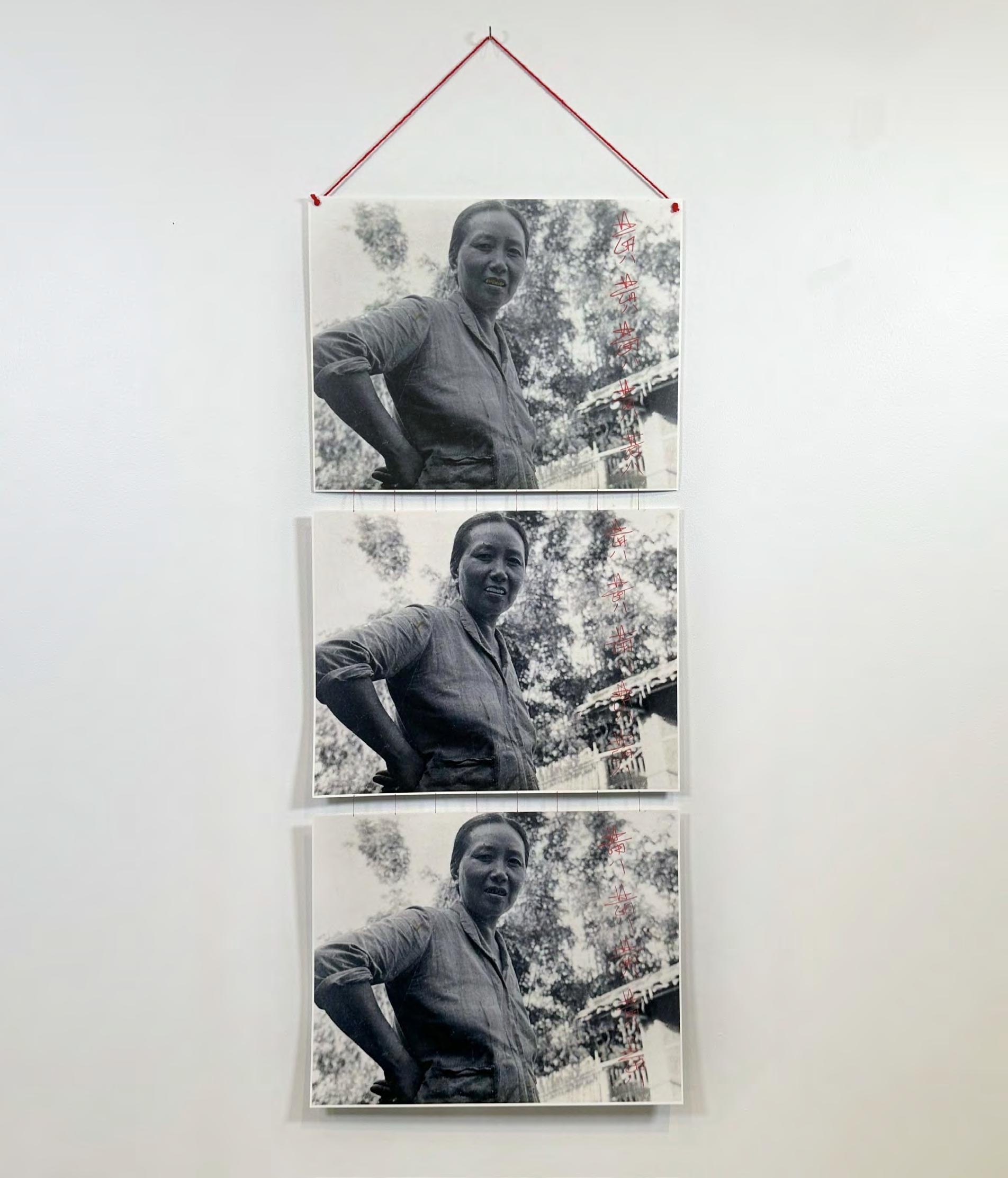
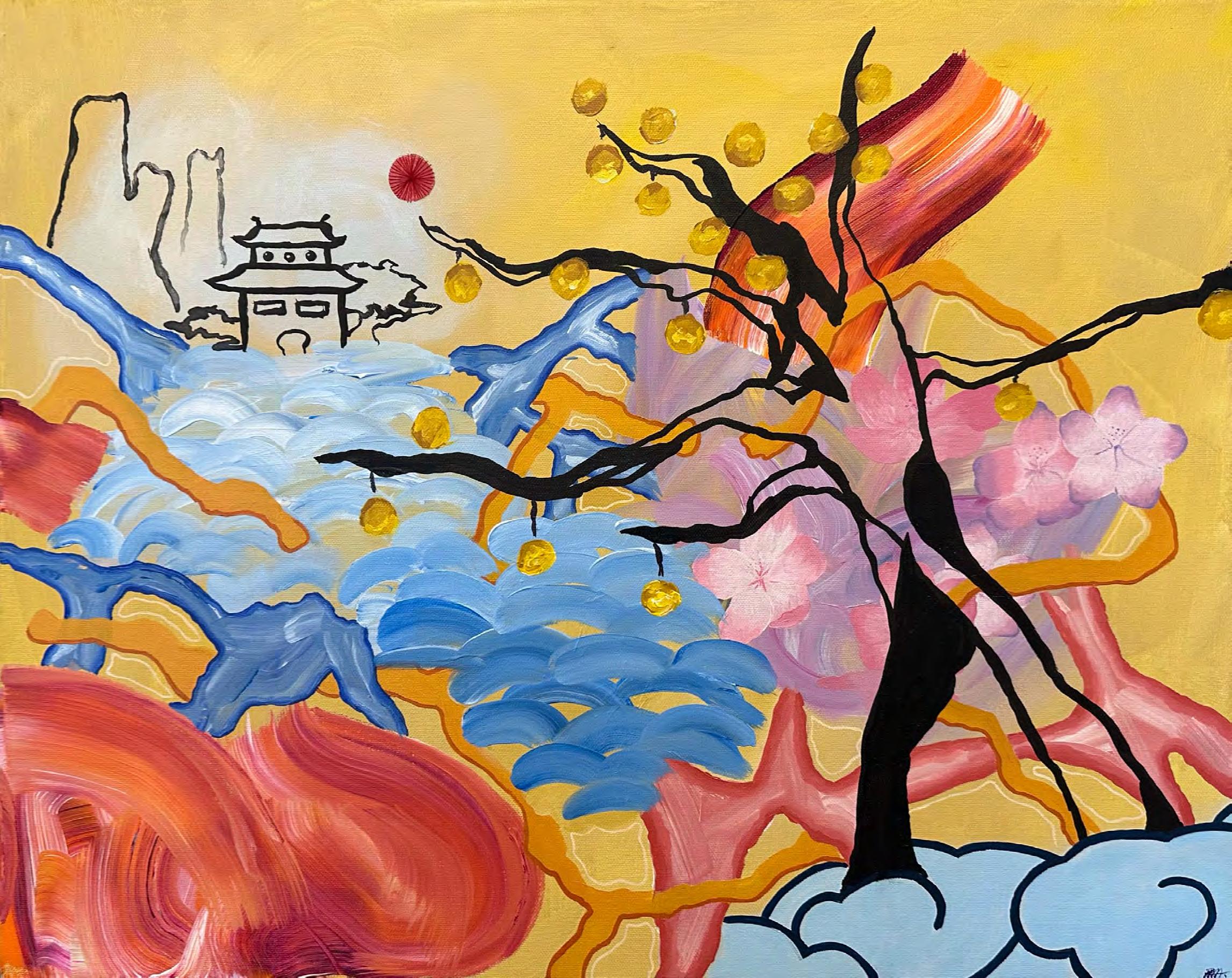
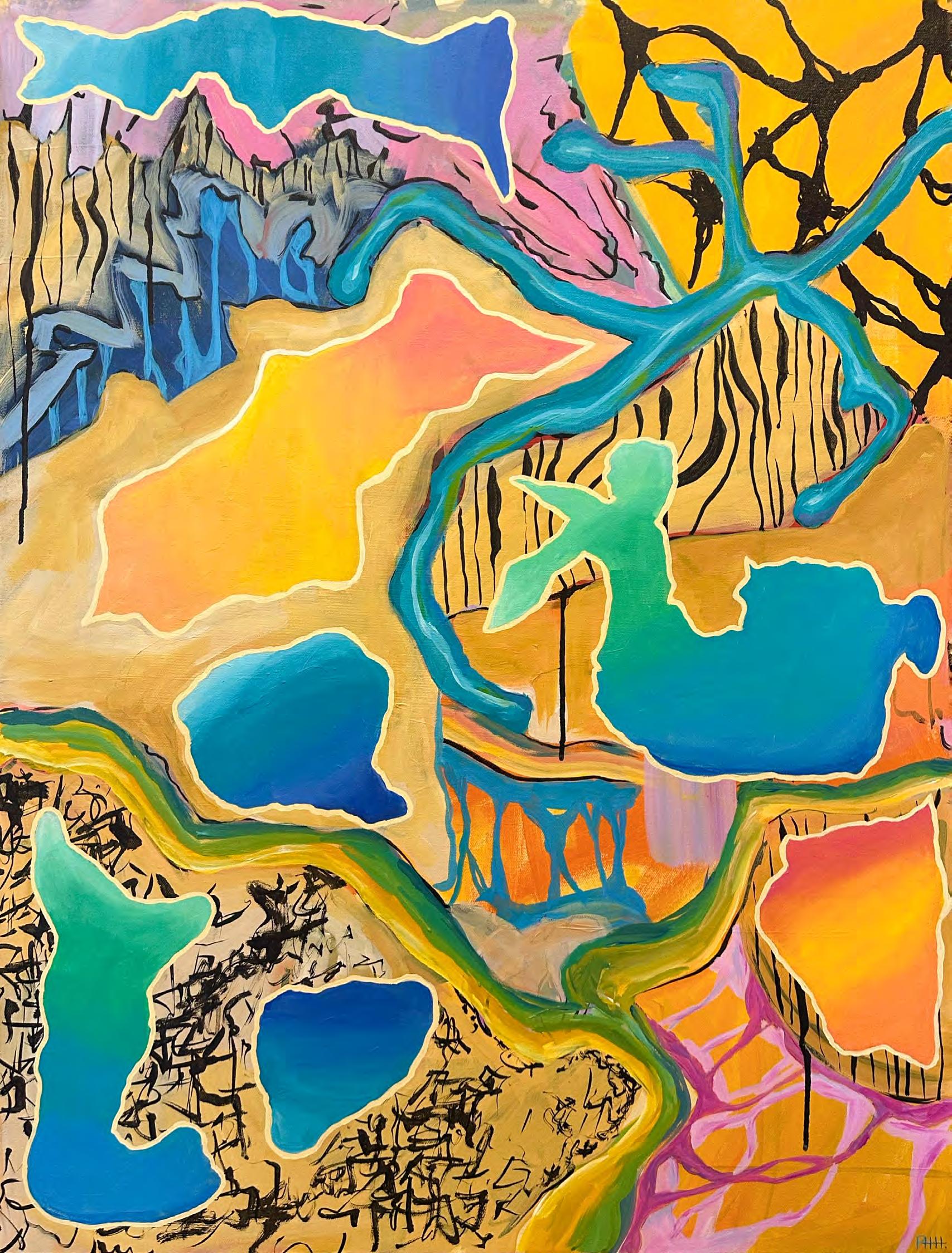
I am a multimedia artist who combines painting, collage, and photography to dissect themes of human nature, cultural reconnection, and pop culture. Through experimentation with narrative and material, I reflect on my lived experiences as a young mixed-race man in the twenty-first century and combine traditional Asian practices, including Chinese calligraphy, with contemporary themes such as pop art and surrealism, fostering a practice informed by both tradition and future-driven aesthetics. My work often challenges societal expectations, creating space for conversation among viewers, and my abstract work allows me to fabricate non-representational forms through colour and line, producing work that bestows a multitude of meanings depending on who gazes upon it.
My exhibition features several pieces that reflect on my Taiwanese heritage and my family’s immigration story, incorporating textiles from my Amah, a seamstress, as well as retouched photographs of my great-grandmother. The gesture of using these materials was the art itself, unlocking memories and new pathways to heritage and family history. The story of my Amah and Agong meeting has been translated into a stop-motion animation, highlighting the heartwarming tale that started it all in a unique, illustrative style. Other pieces include my signature abstract paintings that reflect my position in the contemporary art world, informed by all that came before me. The curation of these works and items offers the audience a glimpse into my family’s beautiful history and the process of reconnection I experienced over the past seven months.
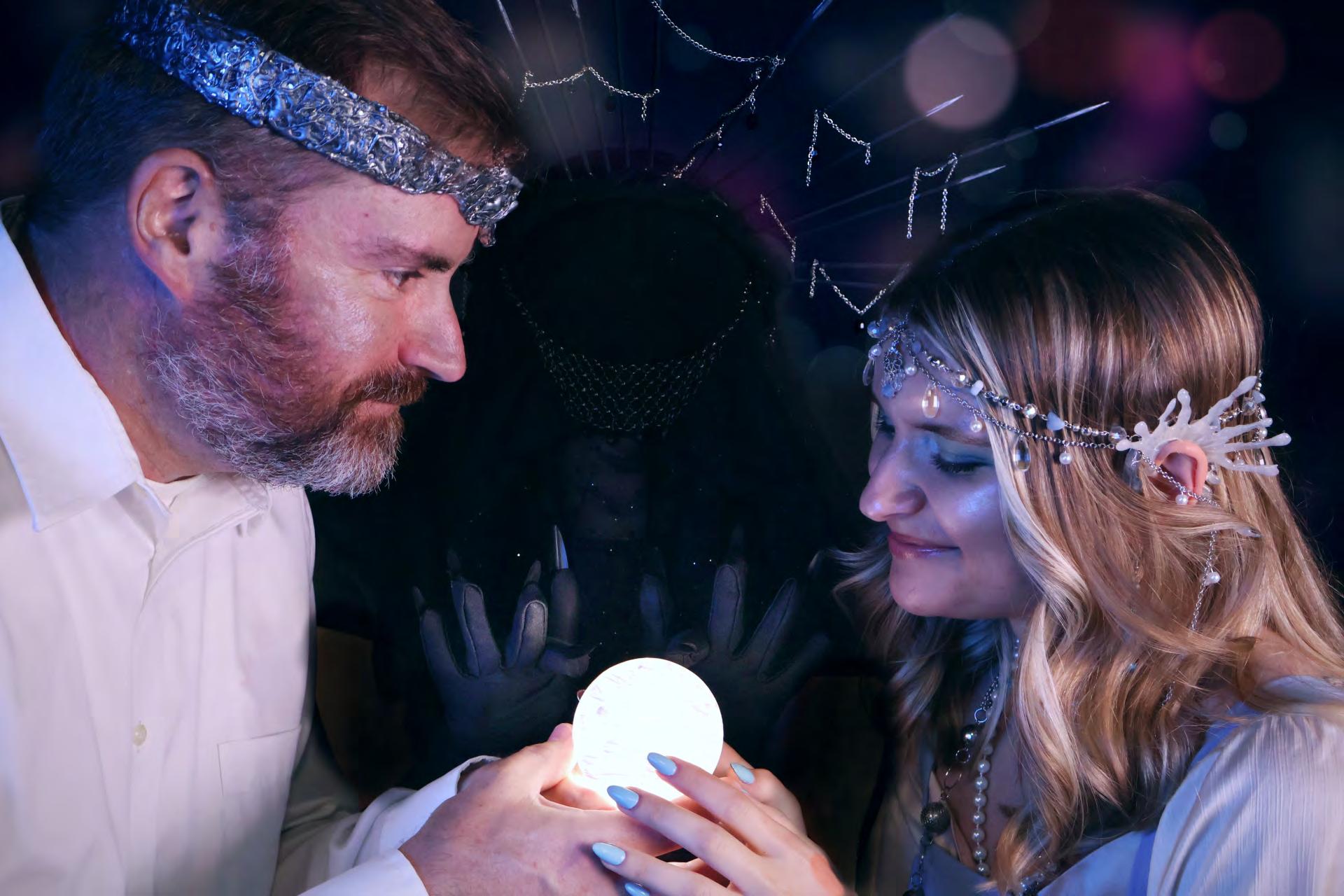
When We Align (2025). Photography, various dimensions
This body of work, consisting of When We Align, Dance of Death and Outgrown, explores personal history through a fantasy lens, where the surreal becomes a language for processing what feels too complex to confront directly. Working across photography, videography, painting and beadwork, I am drawn to the space where beauty and the grotesque coexist. Inspired by Cindy Sherman, I construct characters, environments and narratives that allow me to step both into and outside of my own experiences.
Each piece reflects on relationships from the past, holding space for grief, tension and transformation. When We Align examines the fragile and shifting dynamics of family, Dance of Death reflects on the quiet pain of leaving behind what I once felt I was meant to hold onto, and Outgrown confronts impermanence and the inevitability of change. Together, these works act as a form of processing, using visual storytelling to navigate themes of mental health, identity and the discomfort of growth.
This series marks a turning point. While it is rooted in reflection and release, it also opens toward uncertainty. Moving forward, my practice will shift its focus to the present and future, embracing the unknown while continuing to explore transformation and selfdefinition.
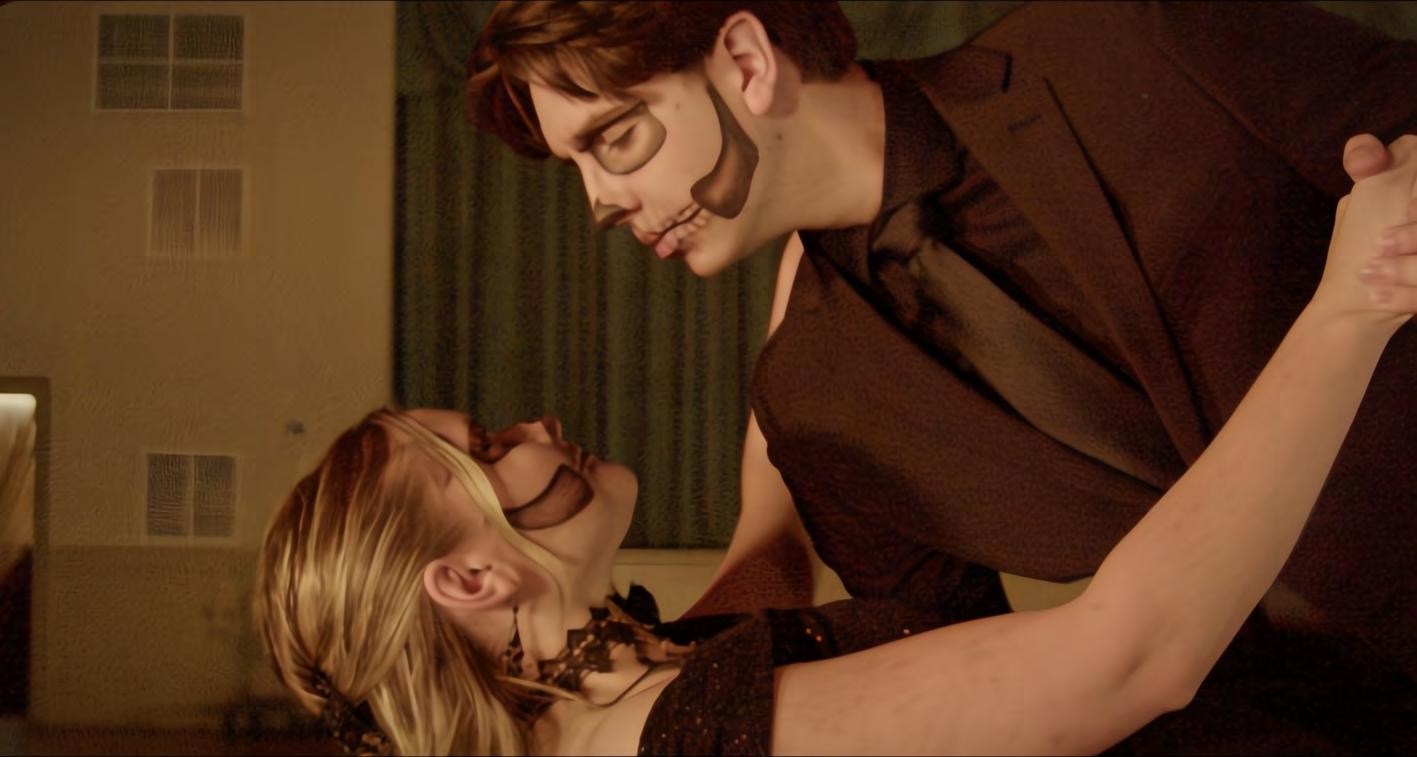
Dance of Death (2026). Videography, 3:43
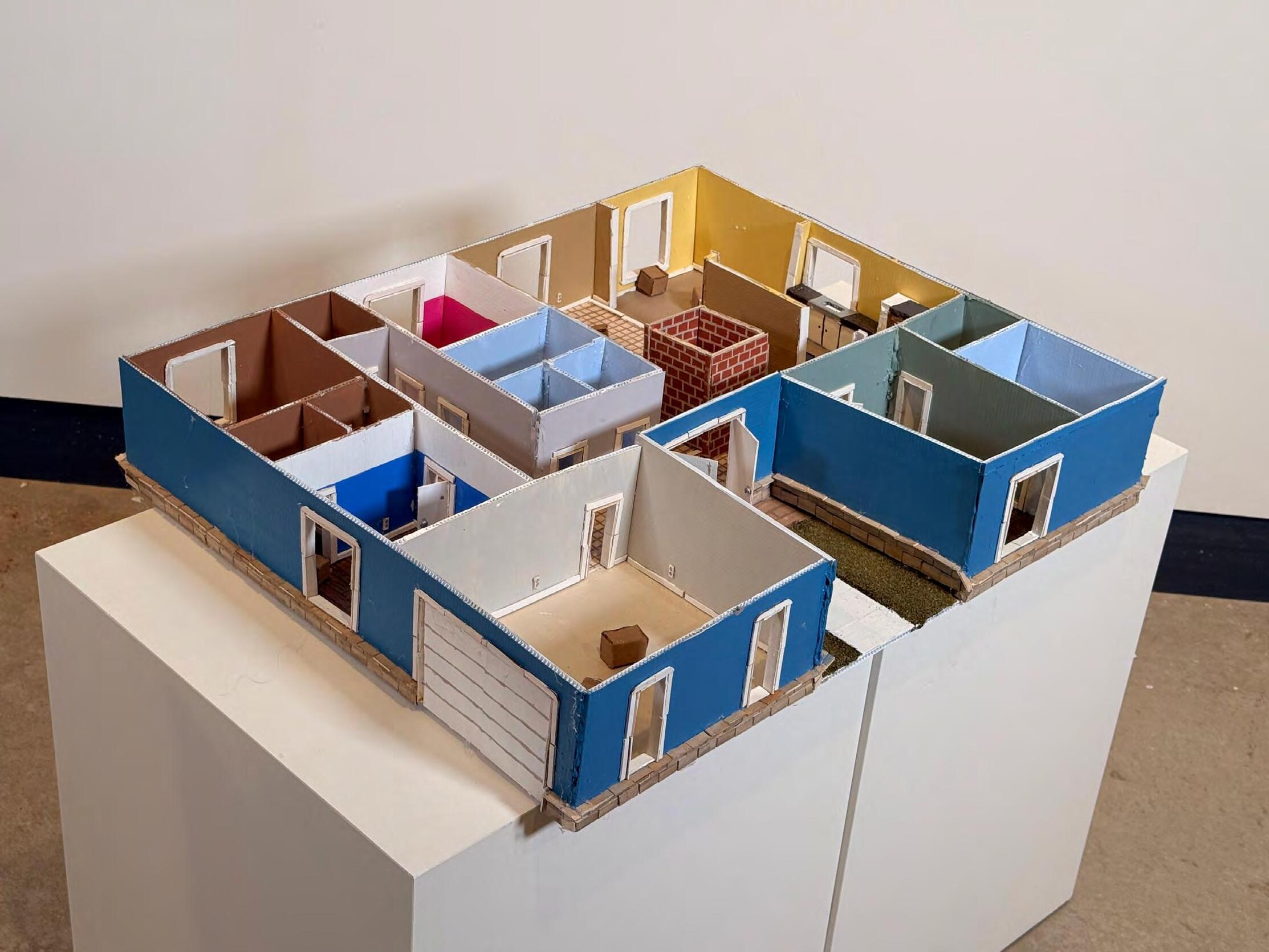
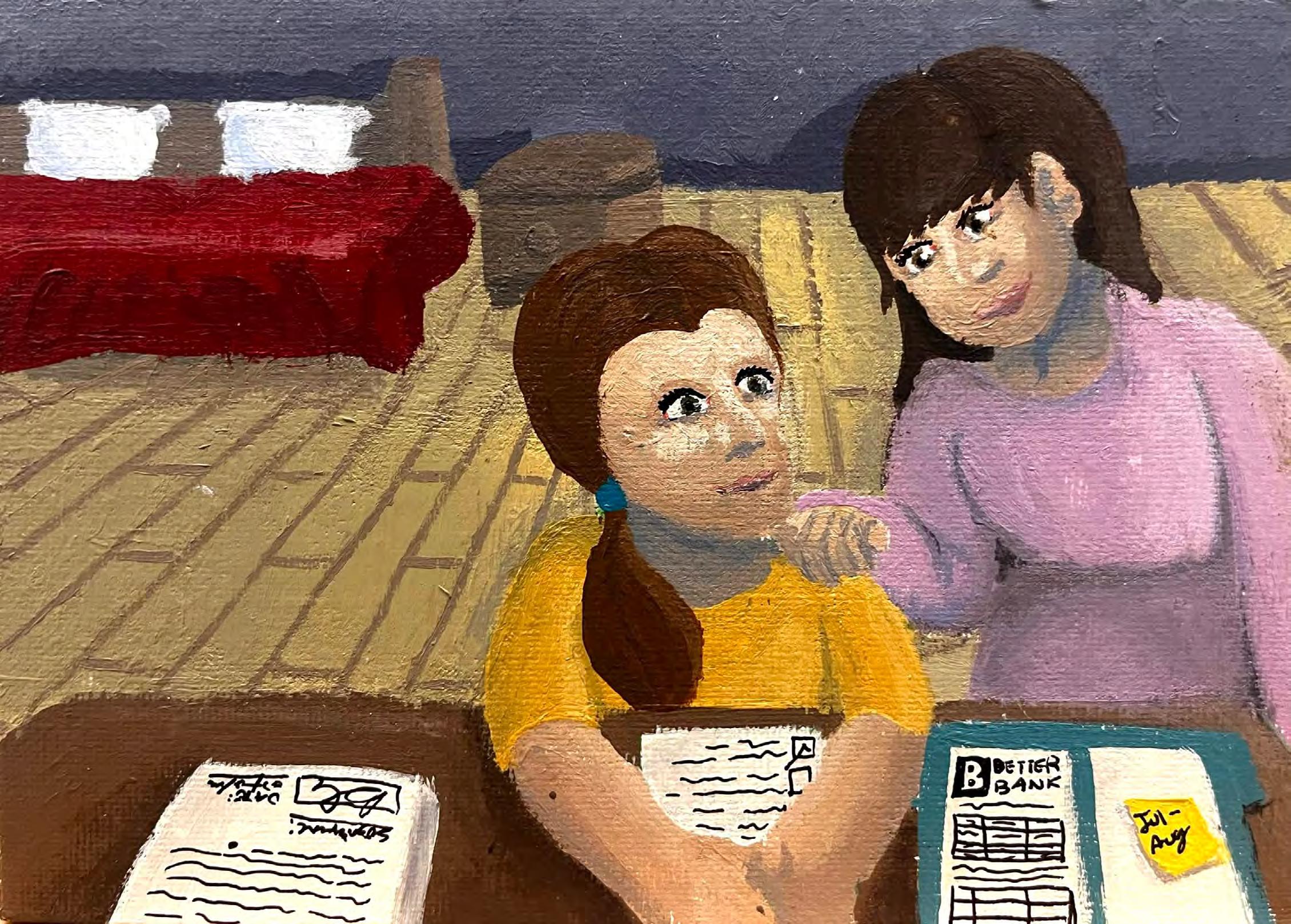
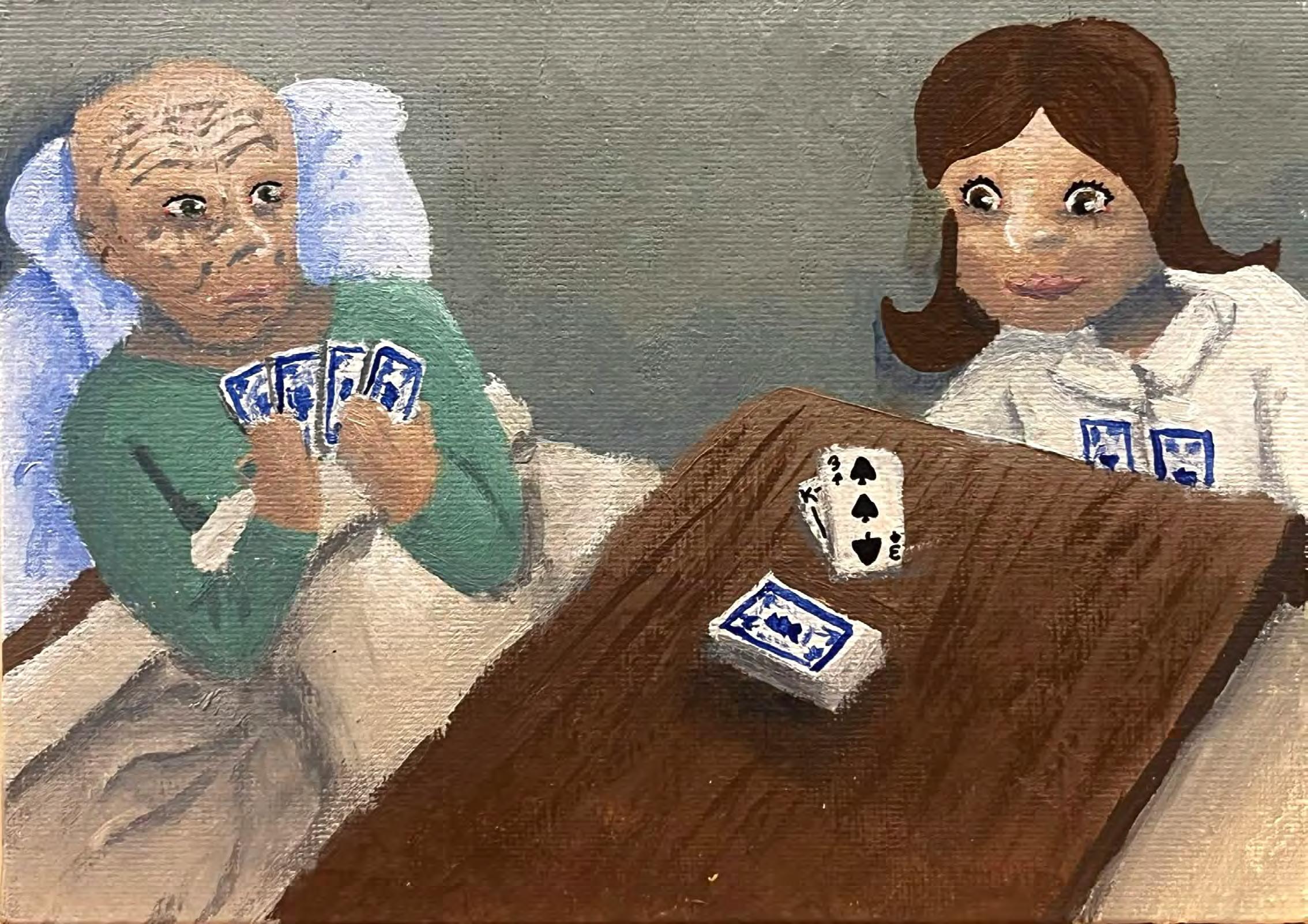
My work seeks to reflect upon the difference between 'house' and 'home', a distinction that is primarily in the mind. Moving frequently with my family has given me a deep appreciation for the core memories, trust and relationships that cause this perceived transformation. I have always found myself fascinated by what might go on in the houses I pass, and how special they might be to their inhabitants despite being just another building to me.
Each part of my process demonstrates the passion, care and familial connections that embody the idea of home. I am giving a voice to every decision and labour that goes into the making of a living space. In measuring, cutting, painting and placing every piece of my creations by hand, I reflect the gratitude I feel towards the places of respite that have offered me comfort from an ever-moving world. I share these experiences with my dedication to authenticity, love for my craft, and the inevitable quirkiness in the handmade.
Equally important to me is representing the families within the walls I have built, and how their stories are integrated with my own methods. Their stories are the same as my process, having built the houses they live in from scratch in order to cultivate the connections that make their homes matter. Their snapshots of simple memories show the joy in the simple moments of their lives, finding home in the presence and support of their loved ones, in the homes they built together.
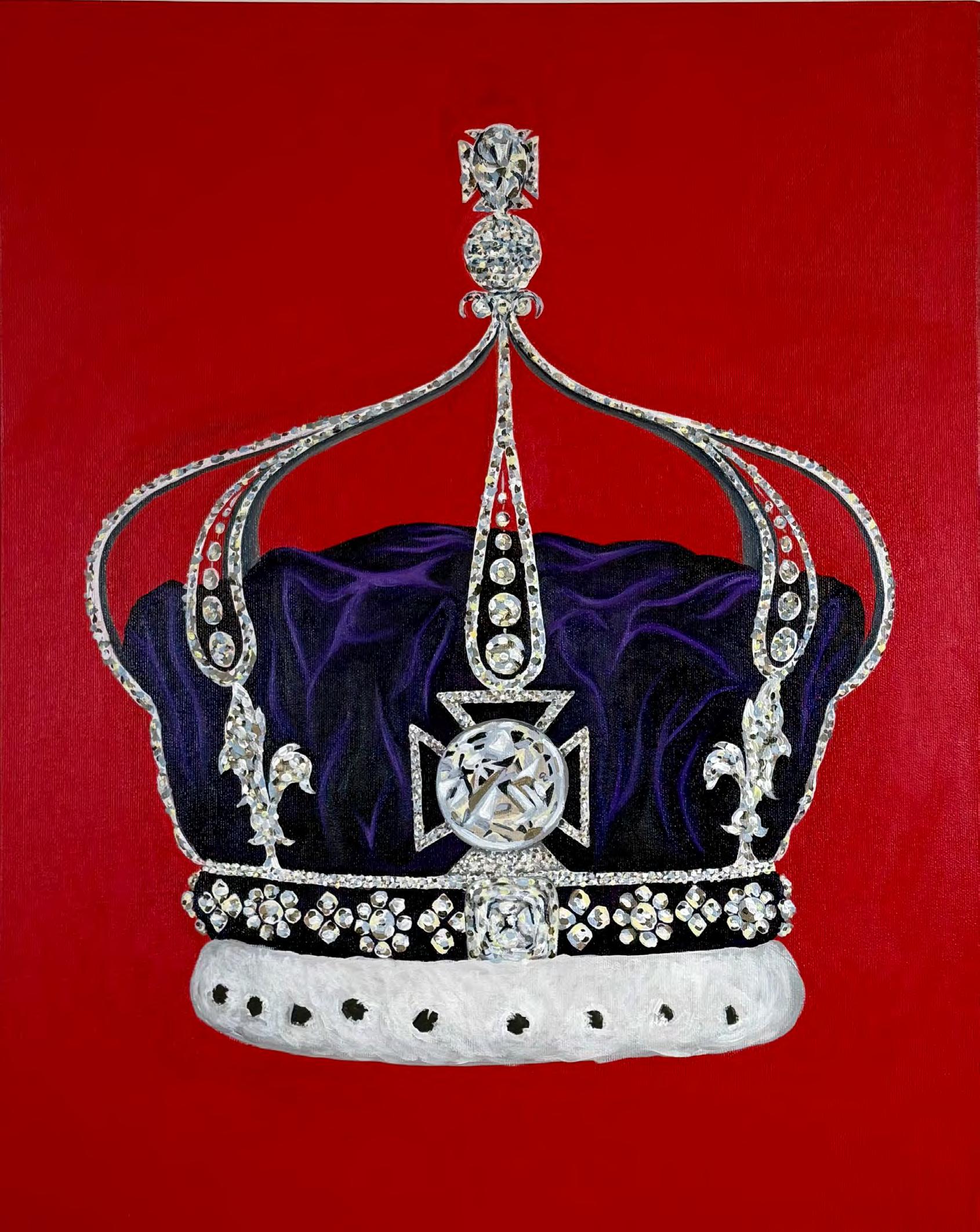
This body of work explores the research conducted grounded in my familial roots during a recent trip to India. Thanks to the generosity of the Medland and Green Inspiring Artists Bursary I was able to travel to my motherland after a long 10 years. I went with the intention to learn about the history of the land, my family’s connection to it and to get a taste of culture straight from the source. Creating this series was a way to interpret my experiences and memories from this trip.
I captured my journey through photography and video, using these images as inspiration for paintings upon my return to Canada. I hold a preference to acrylic painting on canvas, using big brush strokes and bold colour blocking which serves as an impressionistic approach to my practice. I use just enough detail to create representation in my paintings but stray from hyper realism, as my attempt to keep the work lighthearted and fun even when I work with heavy topics. A large inspiration for my work is Sarinder Dhaliwal, a Punjabi multimedia artist known for her colourful work which explores cultural heritage, history, family and memory through storytelling. Her watercolour and oil pastel work Indian Billboard served as inspiration for my piece Semiotics of India. Both capturing symbols and phrasing significant to Indian culture through a collage of images and text.
My experience from this trip serves as the basis for my work, but the topics vary from themes of colonialism to the colourful hustle and bustle of quotidian life. This body of work has become a means of interpretation rather than recollection. My travels and research serve to better understand myself and my privilege as the daughter of immigrant parents. I hope that my work kindles a sense of connection with other third-space individuals in the diaspora.
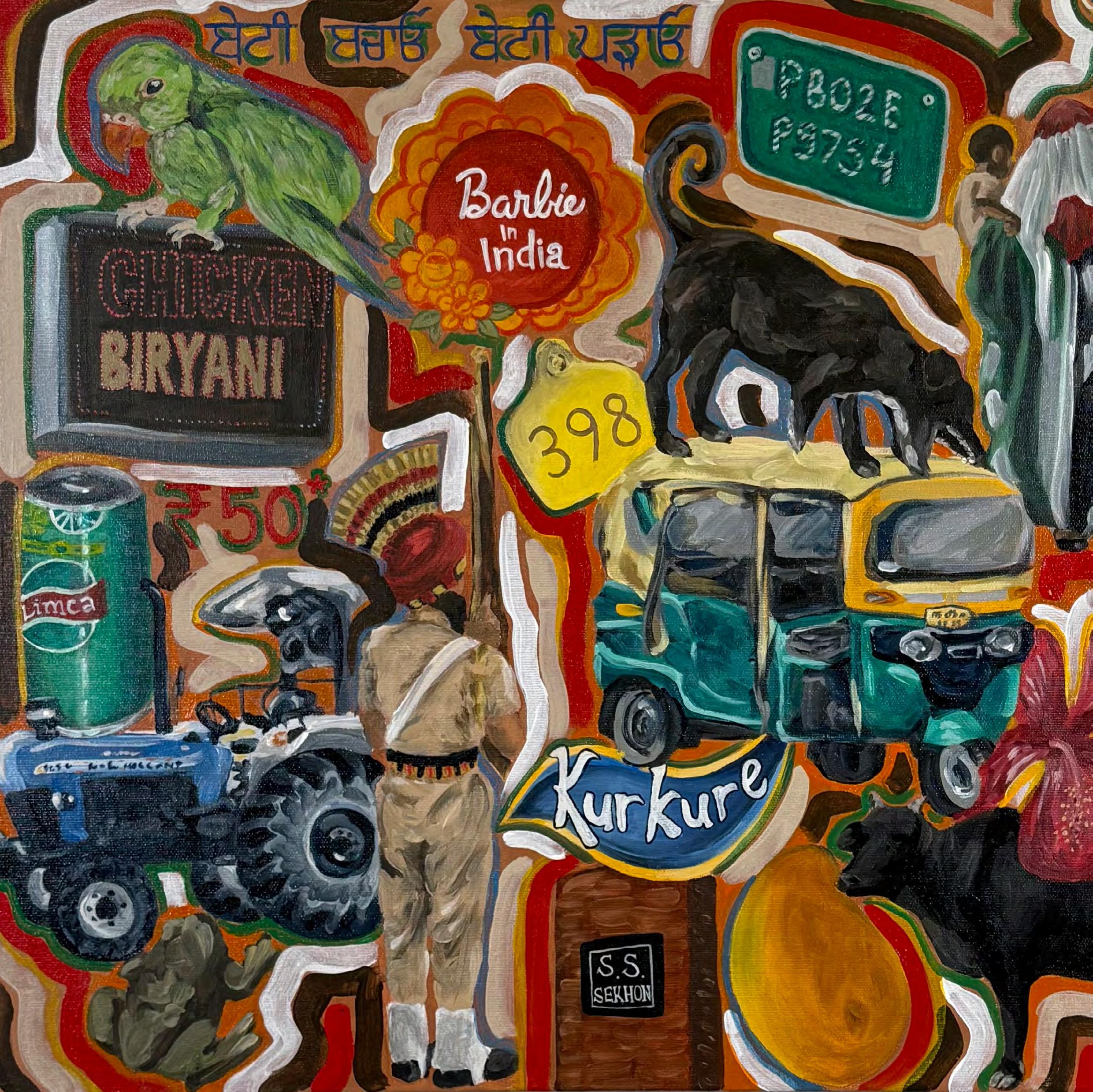
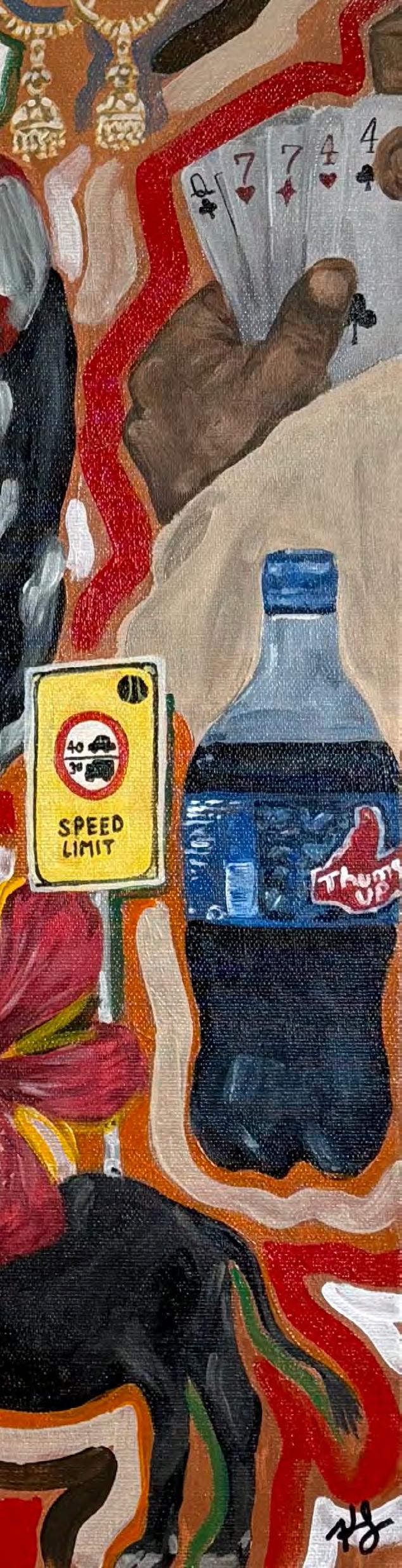
Semiotics of India (2026). Acrylic on canvas, 24”
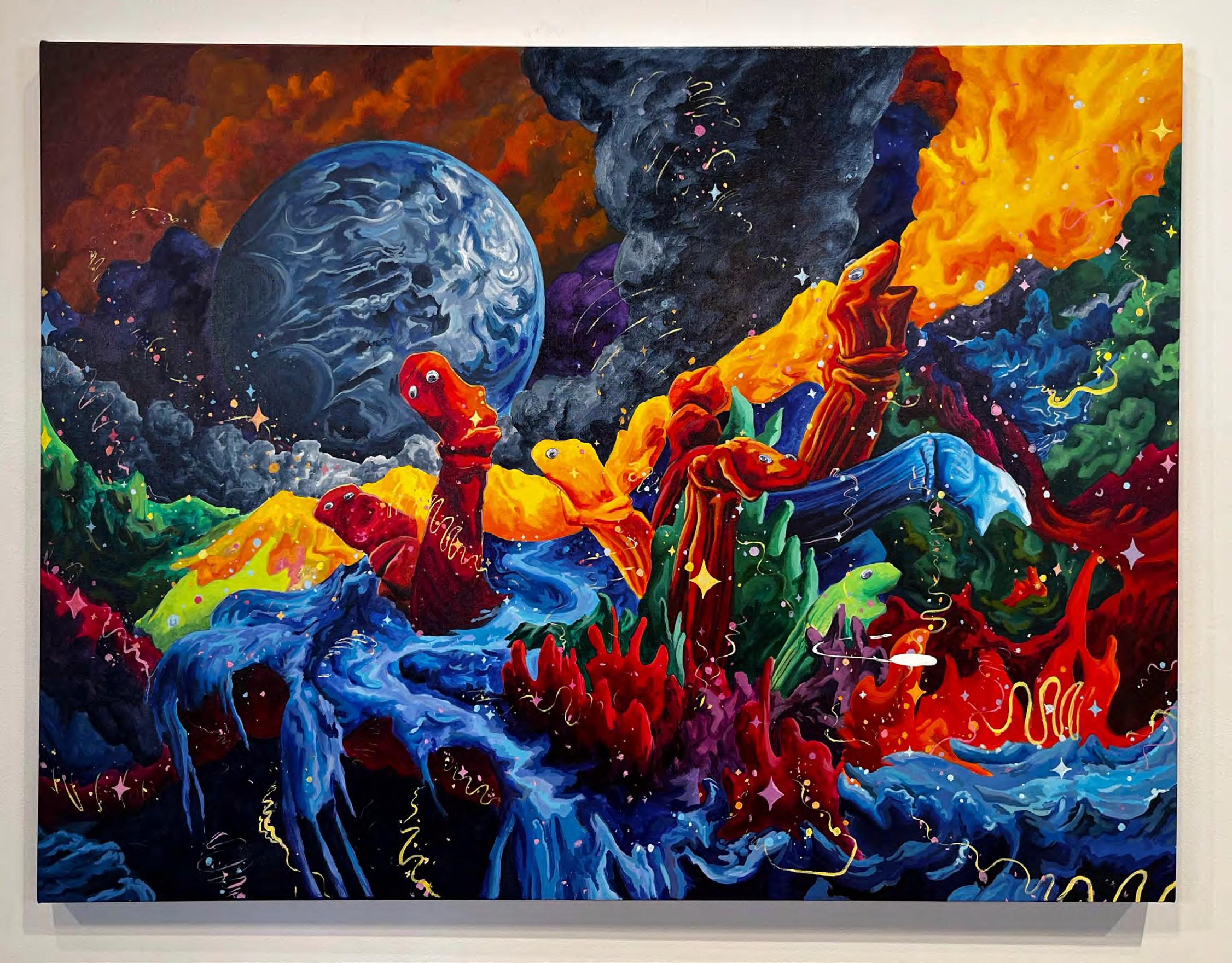
When socializing among other people, we all put on a sort of performance. Everything we say is in some way filtered through our understanding of social norms and what is expected of us. Personally, I filter myself through a mask of humour and that is why I find myself so drawn to sock puppets. By not presenting myself in a serious way, I’m able to hide from judgement, but that also means I struggle to truly connect. When we focus too much on this performance, we make every interaction about ourselves and put a distance between ourselves and the people around us. My work explores that struggle for connection from the perspective of sock puppets searching for a way through a vast, nebulous and confusing space.
Using grand compositions that draw inspiration from composite images of the universe, I aim to undercut the apparent importance and spectacle of those images with the silliness of the sock puppets. Brightly coloured acrylic paint and lighthearted imagery invite the viewer to wonder about the work’s meaning. Through the recording of instruments, synthesizers and field noise, I aim to build a sonic environment on top of the visual that immerses the viewer in an enhanced experience. The inclusion of several interactive sound pieces to engage the audience in collaborative moments seeks to break down the communicative barriers discussed in the paintings.
By dividing my practice between acrylic painting and sonic art, I’ve created a series of paintings that seeks to diagnose the issue of disconnection we face in the modern world while sonic compositions and installations force viewers to interact and connect with each other. Stemming from a love for all things off-beat and goofy, I’ve grown to love the use of sock-puppets in my work due to the many meanings that can be interpreted from them. Images of childhood innocence and delightful lightheartedness come to mind immediately, but upon further consideration there are also themes of isolation, hidden feelings and a lack of control over oneself. Trying to combine my passions for sound and painting together is a puzzle I have long been trying to solve and my recent experimentation with this fusion has resulted in a body of work that I’m very proud of.
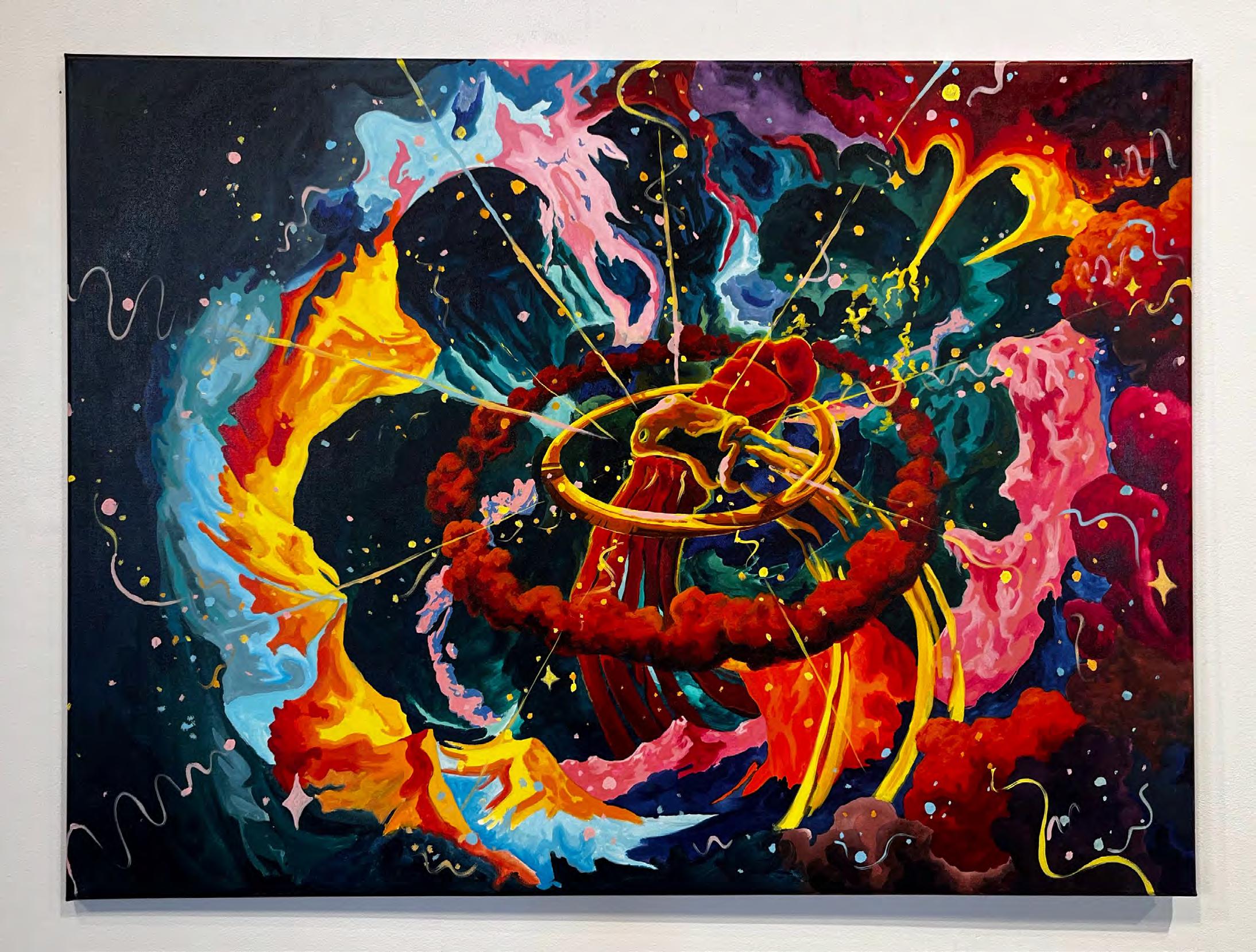
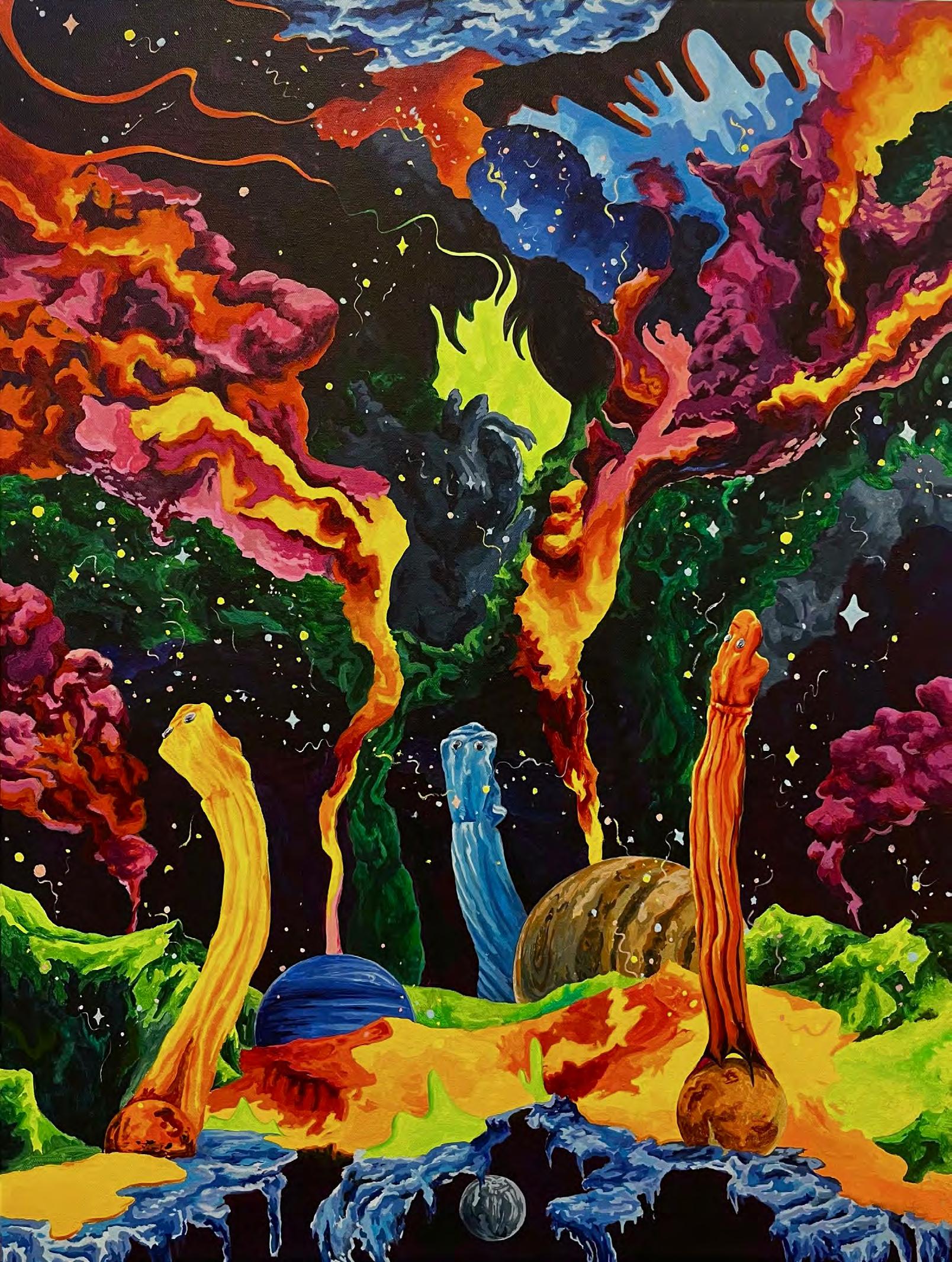
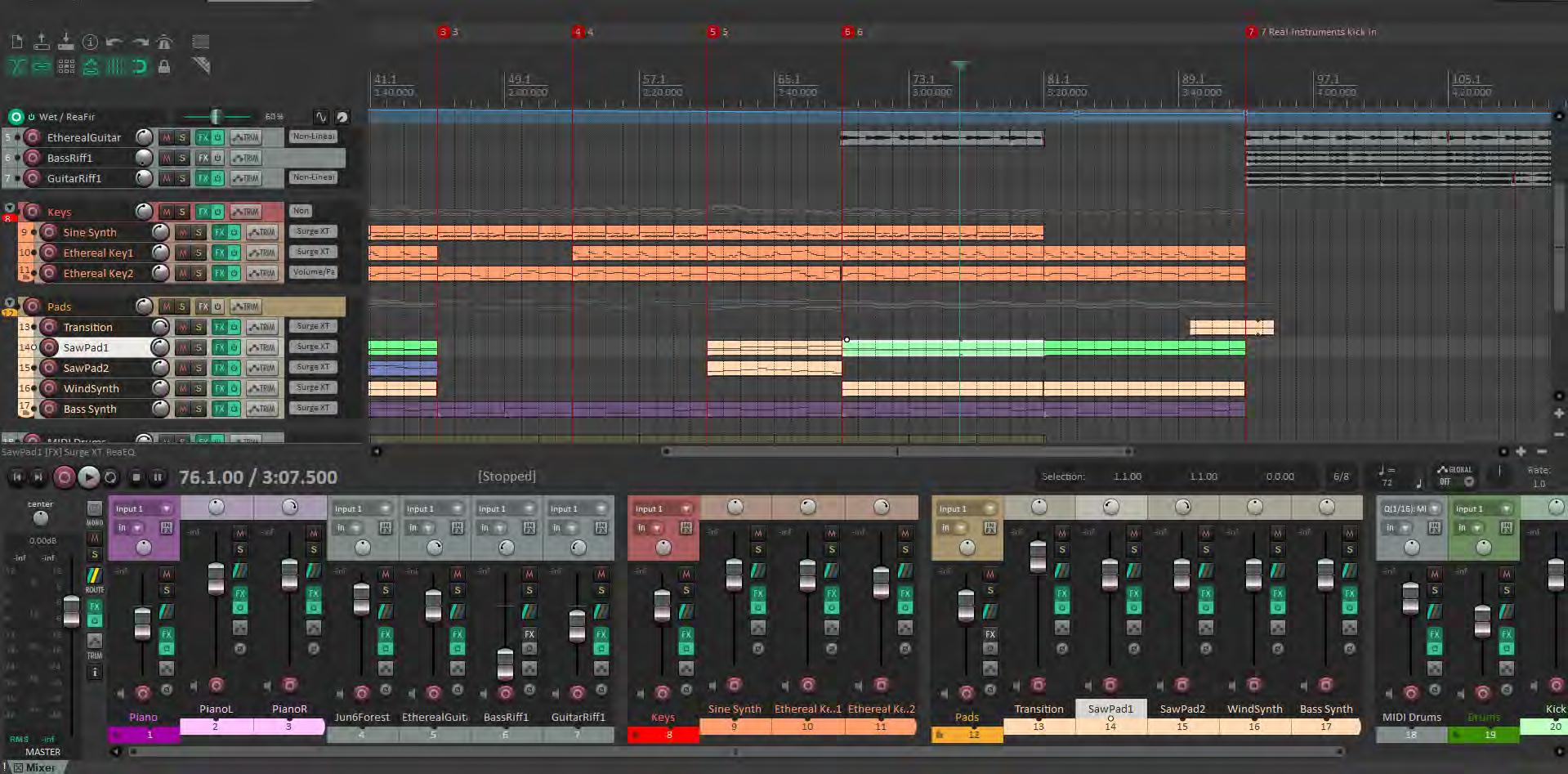
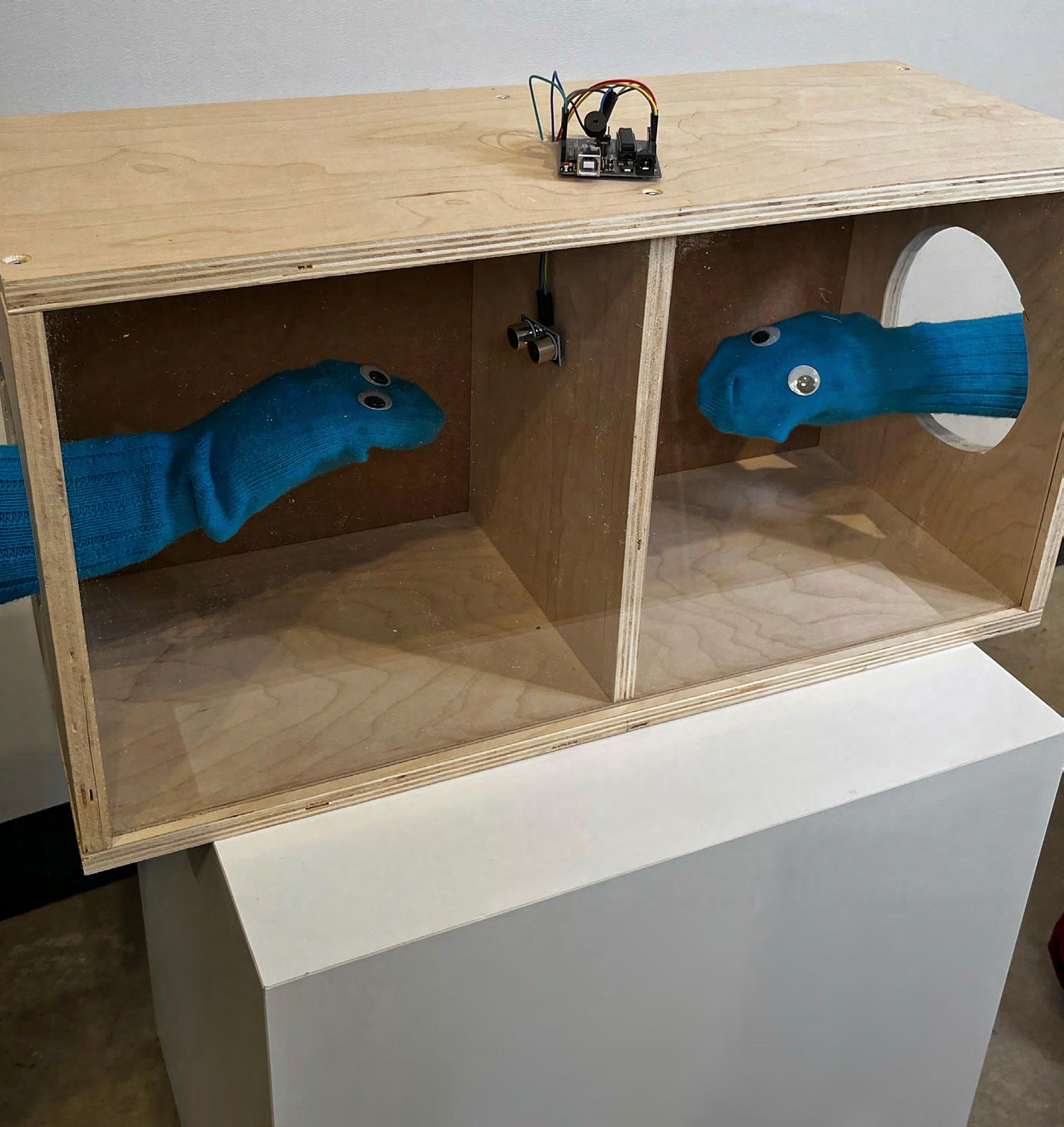
Connect Through A Barrier (2026). Plywood with plexiglas and electronic components, 13" x 10.5" x 24.5”
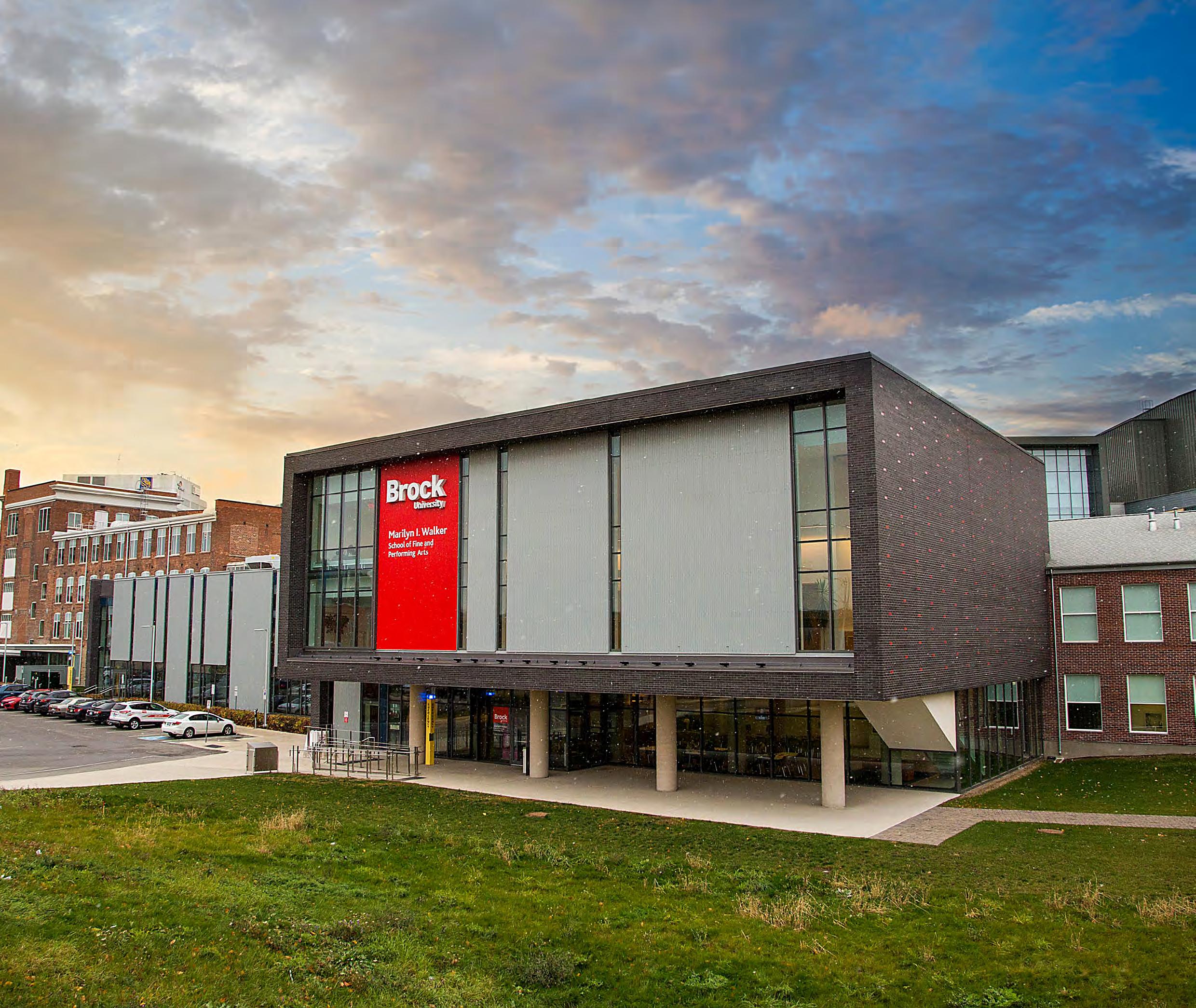
Marilyn I. Walker School of Fine and Performing Arts
15 Artists’ Common St. Catharines, ON T 905 688 5550 x4765 brocku.ca/miwsfpa
Niagara Artists Centre
354 St. Paul Street, St. Catharines T 905 641 0331 nac.org
April, 2026