




Jane Ryder, President
of the British Coatings Federation,
Vice President & General Manager at Sherwin-Williams
“The UK paints, coatings, printing inks and wallcoverings sector has consistently demonstrated resilience and adaptability in the face of major challenges. In the five years since the last British Coatings Federation Strategic Plan, we’ve tackled cost increases across our businesses, geopolitical and trade influences and uncertainty over the regulatory framework and challenges for raw materials. However, an additional constant challenge, albeit one that stands to bring with it significant opportunity, is how we address climate change. The coatings sector remains committed to accelerating progress towards meeting our Net Zero obligations..
In October 2021, the British Coatings Federation (BCF) Board of Directors pledged that our industry would achieve Net Zero carbon emissions by 2050. Five years on, that commitment is stronger than ever. BCF members have taken significant steps to embed sustainability into their operations, and this updated roadmap reflects the progress made and the actions required to stay on track.
BCF remains fully committed to supporting its members in this transition. Since the launch of the original BCF Net Zero Roadmap in 2023, it has expanded resources, updated guidance, and strengthened collaboration across the value chain. This 2026 edition sets out revised milestones aligned with the UK Government’s Carbon budget and Growth Delivery Plan1 and incorporates new best practices, technologies, and regulatory developments.
Our sector’s projected emissions trajectory shows that to meet our 2050 goal, we must achieve:
• 62% reduction by 2030
• 71% reduction by 2035
• 81% reduction by 2040, compared to the 2018 baseline.
These targets reflect updated data, strong early delivery since our initial baseline and the need for accelerated action. We also recognise that different sub-sectors face unique challenges and will progress at different speeds. Whilst we continue to make progress in meeting our own sector’s objectives, we also want to remind government and other stakeholders of the critical role coatings play in reducing resource use across the economy: extending the life of infrastructure; preserving food; protecting assets and enabling circularity in packaging and product design.
Our long-standing Coatings Care programme continues to provide a robust framework for measuring environmental performance, while PaintCare is driving circular economy solutions for leftover paint, with an ambitious target to recycle 75% of leftover paint by 2032, up from just 2% in 2025.
This roadmap is not static; it will evolve as new technologies, data, and policies emerge. It serves as a waypoint that allows us to reflect on our journey so far and plan for the road ahead.
The journey to Net Zero is complex, but our industry has made a strong start. Together, we will continue to innovate, adapt, and lead the way towards a sustainable future for coatings and related sectors.“
1 https://www.gov.uk/government/publications/carbon-budget-and-growth-deliveryplan
The British Coatings Federation (BCF) has revised its Roadmap to Net Zero, reflecting notable progress since 2023. With a firm commitment to Net Zero by 2050, the sector now targets a 62% emissions reduction by 2030, 71% by 2035, and 81% by 2040, compared to 2018 levels. Enhanced data collection has refined the emissions baseline to around 110,000 tonnes of carbon dioxide equivalent (tCO2e). Already, the industry has achieved a 41% cut in Scope 1 and 2 emissions by 2024, surpassing expectations. Further reductions will demand more complex, far-reaching measures across operations and supply chains.
Scope 3 emissions remain the sector’s greatest challenge, accounting for 97–98% of its carbon footprint, primarily from raw materials. Data quality is improving but remains inconsistent, underscoring the need for stronger supplier engagement and standardised reporting across the value chain. BCF is supporting members through expanded training, improved guidance and strengthened collaboration platforms. Initiatives such as the Road to Net Zero seminar, the launch of a new sustainability training module, and BCF’s membership of Climate Action for Associations (CAFA) are enhancing capability and fostering innovation. Meanwhile, the longstanding Coatings Care programme continues to drive improvements in resource efficiency, waste reduction and environmental performance across manufacturing sites.
Circularity is emerging as a major opportunity area for impact, with the PaintCare initiative set to transform leftover paint and packaging waste. The programme aims to increase reuse and remanufacturing levels from today’s 2% to 75% by 2032, underpinned by a nationwide collection and processing infrastructure. This aligns closely with wider sector trends, including regulatory developments such as Extended Producer Responsibility (EPR), increasing investor expectations for strong ESG performance, and rapid technological progress.
Despite strong early momentum, the pathway to Net Zero will require significant industry wide transformation and supportive policy conditions. BCF is calling on government to deliver long term policy stability and create a policy environment that supports the transition. Ensuring a functional, proportionate UK REACH system also remains essential to unlock sustainable innovation.
Looking ahead, BCF will expand its support for members. A major roadmap update will be published in 2030, supported by annual progress summaries. With sustained action, cross industry cooperation and clear policy support, the coatings sector is well positioned to continue delivering meaningful progress toward Net Zero while maintaining competitiveness and long term resilience.

Since the launch of the original Roadmap to Net Zero in 20232, the UK paints, coatings, printing inks, and wallcoverings sector has faced a rapidly evolving landscape shaped by economic, geopolitical, and regulatory challenges. Yet, how we address climate change remains the most persistent, and potentially transformative, issue for our industry.
This 2026 update reflects the sector’s ongoing journey, setting out revised milestones aligned with the UK Government’s Carbon Budget and Growth Delivery Plan3 and incorporating new best practices, technologies, and regulatory developments. The roadmap now targets a 62% reduction in greenhouse gas emissions by 2030, 71% by 2035, and 81% by 2040, compared to the 2018 baseline. These ambitious goals are informed by updated data and the urgent need for accelerated action, recognising that different sub-sectors will progress at varying speeds.
Globally, the momentum for climate action has intensified since 2023 and the UK’s Net Zero Strategy (Build Back Greener)4, first published in October 2021 and updated in April 2022, sets out the government’s statutory plan under the Climate Change Act 20085 to decarbonise all sectors of the economy and achieve net zero emissions by 2050. The strategy builds on the Ten Point Plan for a Green Industrial Revolution6 and is supported by a suite of sector specific policies. While covering the whole UK, the framework operates alongside devolved government plans, such as Scotland’s updated Climate Change Plan (2018–2032)7, Wales’s All Wales Plan: Working Together to Reach Net Zero8, and Northern Ireland’s Path to Net Zero Energy9 These combined strategies form a comprehensive roadmap for transforming energy, industry, transport, buildings, and the wider environment in line with the UK’s long term climate ambitions.
Of keen interest to the Coatings Industry, policy developments such as the Environmental Improvement Plan (EIP) 202510 and the forthcoming National Adaptation Programme (NAP4)11 reinforce the government’s commitment to integrating climate resilience into decision-making and supporting crosssector collaboration. Businesses are expected to play a central role, not only in reducing emissions but also in driving innovation, circularity, and resource efficiency across the economy.
This updated roadmap is designed to guide the sector through the next phase of its Net Zero journey. Where the first edition provided step by step guidance this version aims to offer milestones and signposts, showcasing practical resources and a renewed focus on collaboration. By working together, the industry can continue to protect assets, extend infrastructure lifespans, and enable circularity in packaging and product design, delivering both environmental and economic value for the UK and beyond.
However, the sector cannot move forward without a supportive policy environment and so to enable the sector to deliver on its Net Zero commitment the BCF calls on Government to:
1. Provide long-term policy stability to support major investment.
2. Replace the Industrial Energy Transformation Fund (ITEF) with a new industrial decarbonisation funding mechanism.
3. Introduce green capital allowances for low carbon investments.
4. Launch a “Help to Grow: Net Zero” scheme for SMEs.
5. Accelerate industrial access to hydrogen, Carbon Capture Utilisation and storage (CCUS) and nuclear technologies.
6. Invest in green skills pathways and apprenticeships
7. Deliver a practical, cost effective UK REACH system that supports innovation.

2 https://coatings.org.uk/page/NetZeroRoadmap
3 https://www.gov.uk/government/publications/carbon-budget-and-growth-delivery-plan
4 https://www.gov.uk/government/publications/net-zero-strategy
5 https://www.legislation.gov.uk/ukpga/2008/27/contents
6 https://www.gov.uk/government/publications/the-ten-point-plan-for-a-green-industrial-revolution
7 https://www.gov.scot/publications/securing-green-recovery-path-net-zero-update-climate-change-plan-20182032/
8 https://www.gov.wales/sites/default/files/publications/2021-10/working-together-to-reach-net-zero-all-wales-plan.pdf
9 https://www.economy-ni.gov.uk/articles/northern-ireland-energy-strategy-path-net-zero-energy
10 https://www.gov.uk/government/publications/environmental-improvement-plan-2025/environmental-improvement-plan-eip-2025
11 https://www.gov.uk/environment/climate-change-adaptation

Since the publication of its first Net Zero Roadmap in 2023, the BCF has made substantial progress in advancing its decarbonisation agenda and strengthening the evidence base underpinning the industry’s transition. As with the first edition of the roadmap BCF members have provided data across the paints, coatings, printing inks and wallcoverings industry and one of the most significant developments has been the enhancement of the baseline dataset, which was updated to incorporate a greater volume of historical submissions. This expanded dataset has provided a more accurate representation of sector wide emissions, improving both the reliability of reporting and the robustness of future projections.
The increased number of responses and enhanced data, including several members who have recalculated data since the original submission led to a review our baseline data. For scope 1 and 2, this increased from c. 100,000 tCO2(e) to just over 108,000 tCO2(e) for the baseline year, 2018, an increase of 9%. We have subsequently rebaselined all previous years and see an increase that varies from 3% to 9% across the 5-year period. It is anticipated that as we increase response rates in future years, we will continue to refine the data and so may see further changes in future editions of the Net Zero Roadmap.
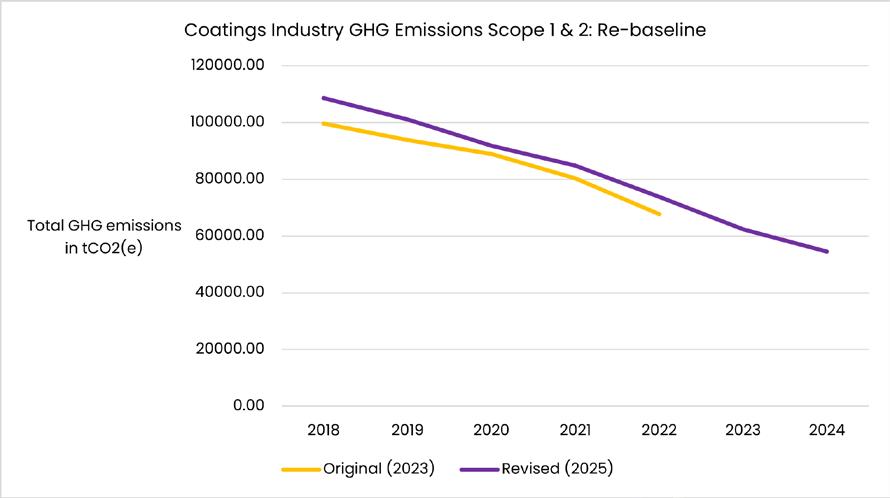

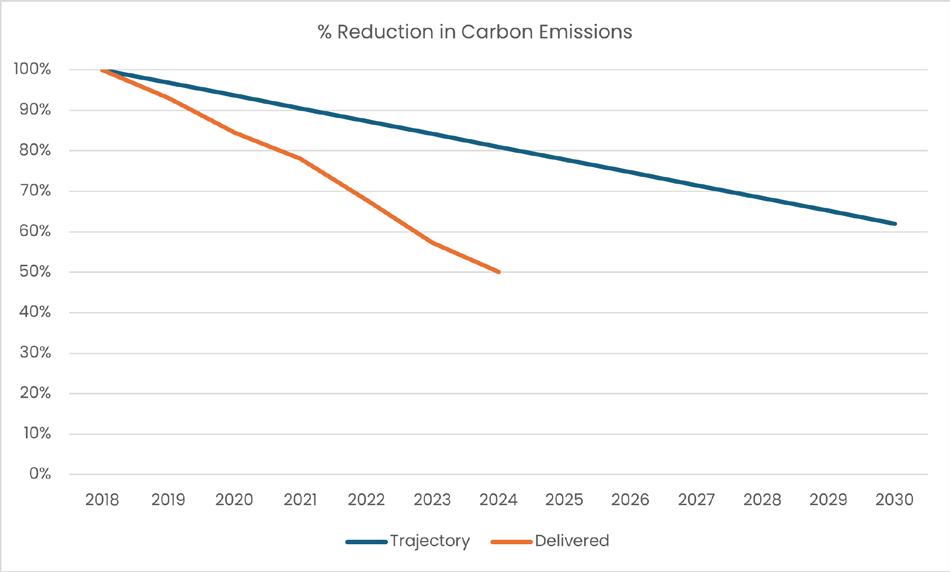
This improved dataset confirms that, based on a 2018 emissions baseline of 110,000 tCO2e, the sector has achieved a decisive and measurable downward trend in Scope 1 and 2 emissions. By 2024, scope 1 and 2 emissions had fallen to 55,000 tCO2e [DP6.1][ZS6.2], marking a 50% reduction relative to the baseline and leaving 50% of baseline emissions remaining. This achievement is especially notable because it exceeds the expectations set in the 2030 projection of a 38% reduction. These gains underscore the strong early momentum created through coordinated action, improved data quality and a sector-wide commitment to efficiency, optimisation and the adoption of relatively accessible decarbonisation measures.
However, the achievements to date also reflect the reality that many of the most straightforward or “low-hanging fruit” opportunities, those involving easily implemented efficiency improvements, incremental technology upgrades and readily available behavioural changes, have already been realised. As a result, the path ahead is likely to involve deeper, more complex interventions that require sustained investment, innovation and structural change across operations and supply chains.
Overall, while the sector’s progress has been both commendable and ahead of expectations, the next phase of decarbonisation will demand more transformative approaches. Continued success will rely on deeper technological
shifts, collaborative supply-chain engagement, and a willingness to tackle the more complex and capital-intensive aspects of the transition. The strong foundation established so far positions the industry well, but the journey ahead will require a new level of ambition, coordination and resilience.
It should be noted that the wallcoverings industry entails particularly high energy consumption during the wallpaper drying process, which substantially increases scope 2 emissions. This distinction is the key significant differentiator among sub-sectors within the BCF membership.
Whilst several members submitted scope 3 data, this remains limited and difficult to quantify, and the latest submission continues to show that this represents around 97-98% of our industry carbon footprint with an estimate of more than 2.5 million tonnes of tCO2e in the base year 2018.
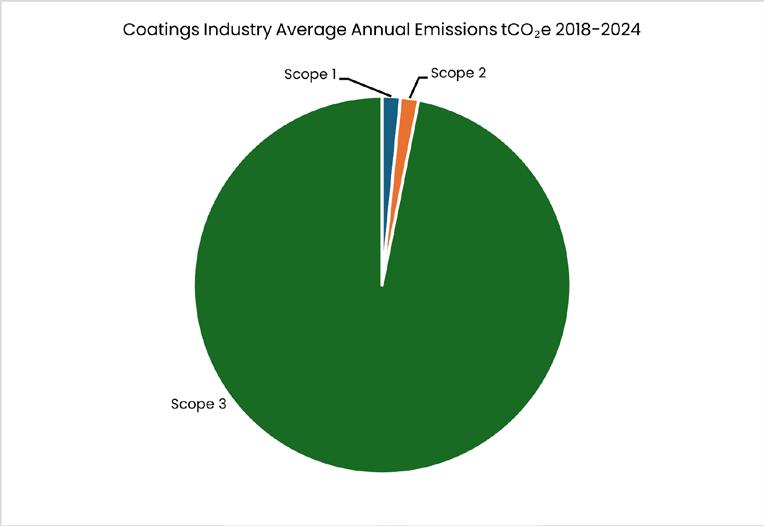
This remains a critical focus for decarbonisation across the value chain, particularly for the raw material suppliers, in order to reach Net Zero emissions by 2050. It also remains imperative that, as an industry, we continue to refine this data over time to fully appreciate our impact.

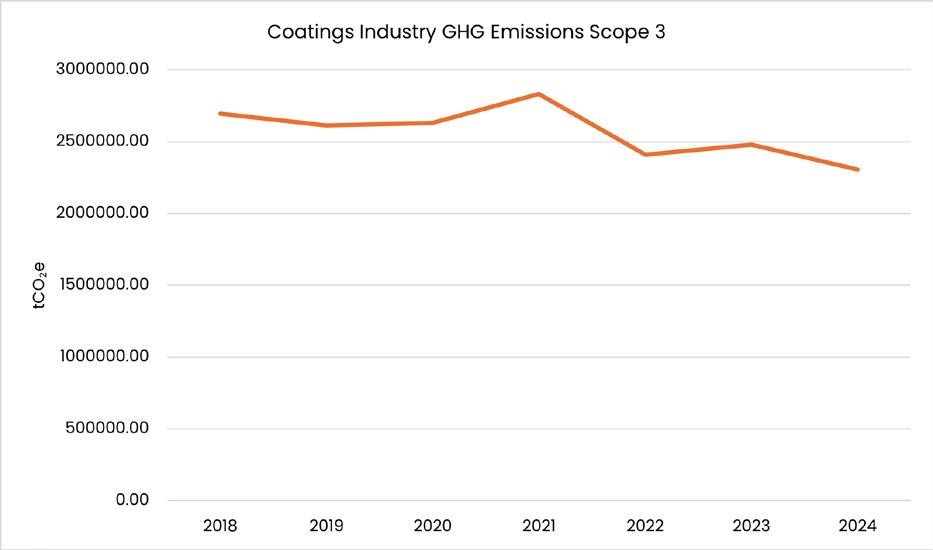
Raw materials remain the primary source of emissions within the paints, coatings, printing inks, and wallcoverings manufacturing sector, constituting the majority of scope 3 upstream emissions. These emissions arise from the sourcing, processing, and manufacturing of raw materials, as well as their distribution.

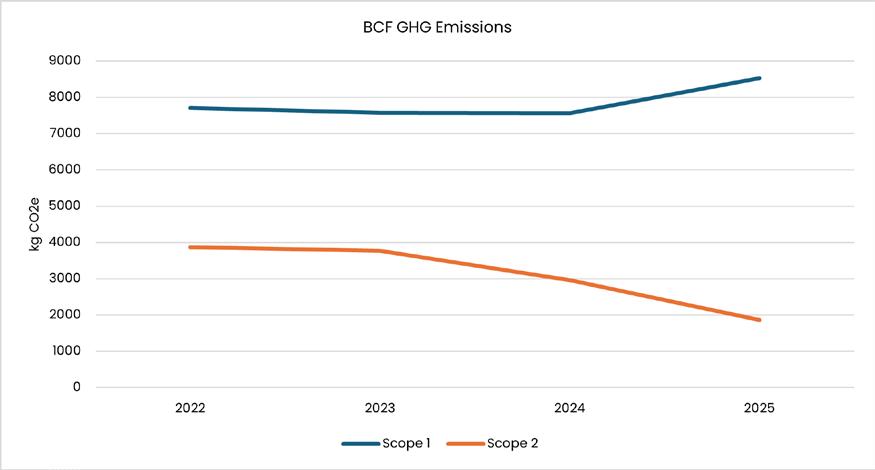
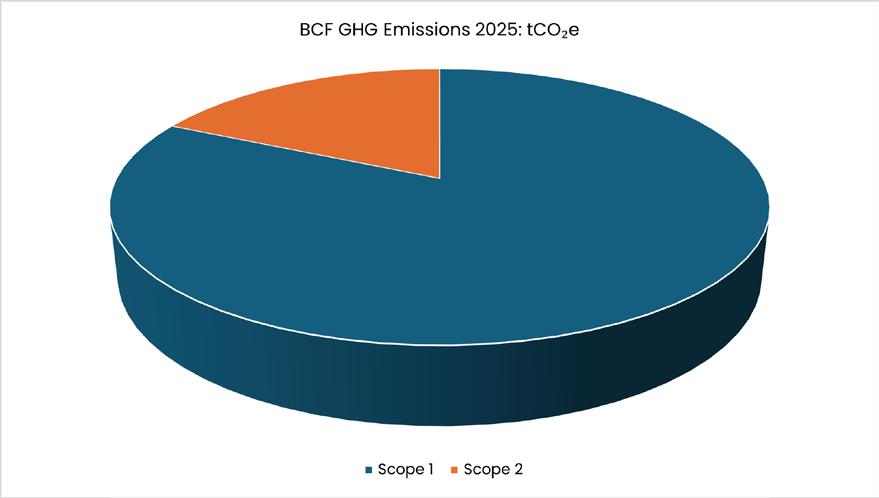
Despite the fact BCF is a small trade association, we do not want to be asking members to do anything we are not willing or able to do ourselves. As such, we have included a calculation of our own carbon footprint in the Roadmap, with particular attention given to Scope 1 and Scope 2 emissions. These two categories—covering direct emissions from owned or controlled sources (Scope 1) and indirect emissions from purchased electricity (Scope 2), provide a strong foundation for assessing operational impact and identifying opportunities for meaningful carbon reduction. By analysing performance across 2022 to 2025, we can see emerging trends that highlight progress already made, as well as areas that will benefit from future action.
Scope 1 emissions show a gentle downward trajectory from 2022 through 2024, however, 2025 marks a noticeable shift, with an increase of around 13% driven by a rise in heating usage. Moving forward, further data will be collected in order to develop more meaningful metrics around building usage.
In contrast, Scope 2 emissions demonstrate significant and sustained improvement, steadily falling year on year since 2022. Again, more insightful metrics will be developed here to establish targets, help shape further reductions and understand progress.
Building on this foundation, the next step will be to expand the footprint to include Scope 3 emissions. Initial focus will be placed on business travel and employee commuting, followed by a deeper examination of purchased goods and services. This broader analysis will help create a more complete picture of the BCF environmental impact and support the development of carbon reduction strategies.
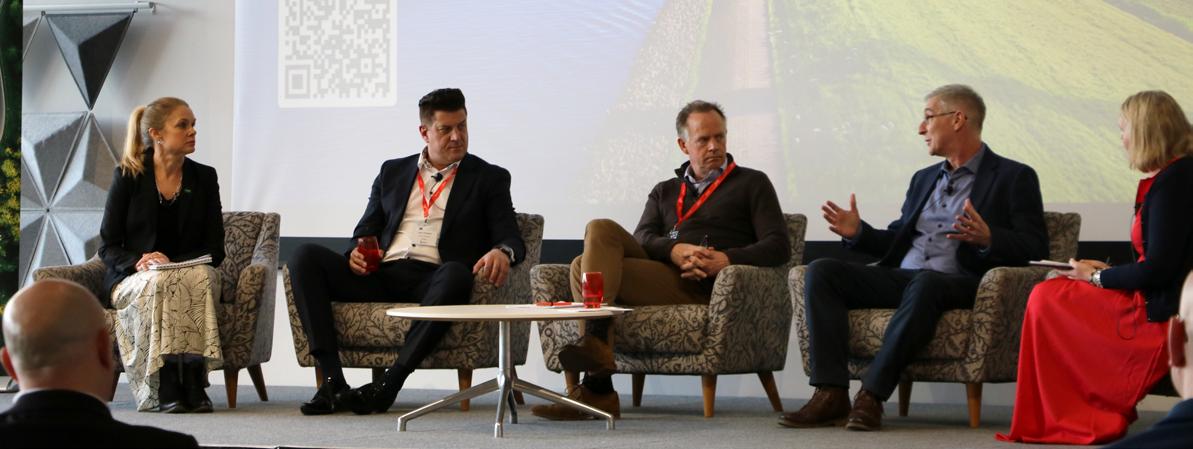
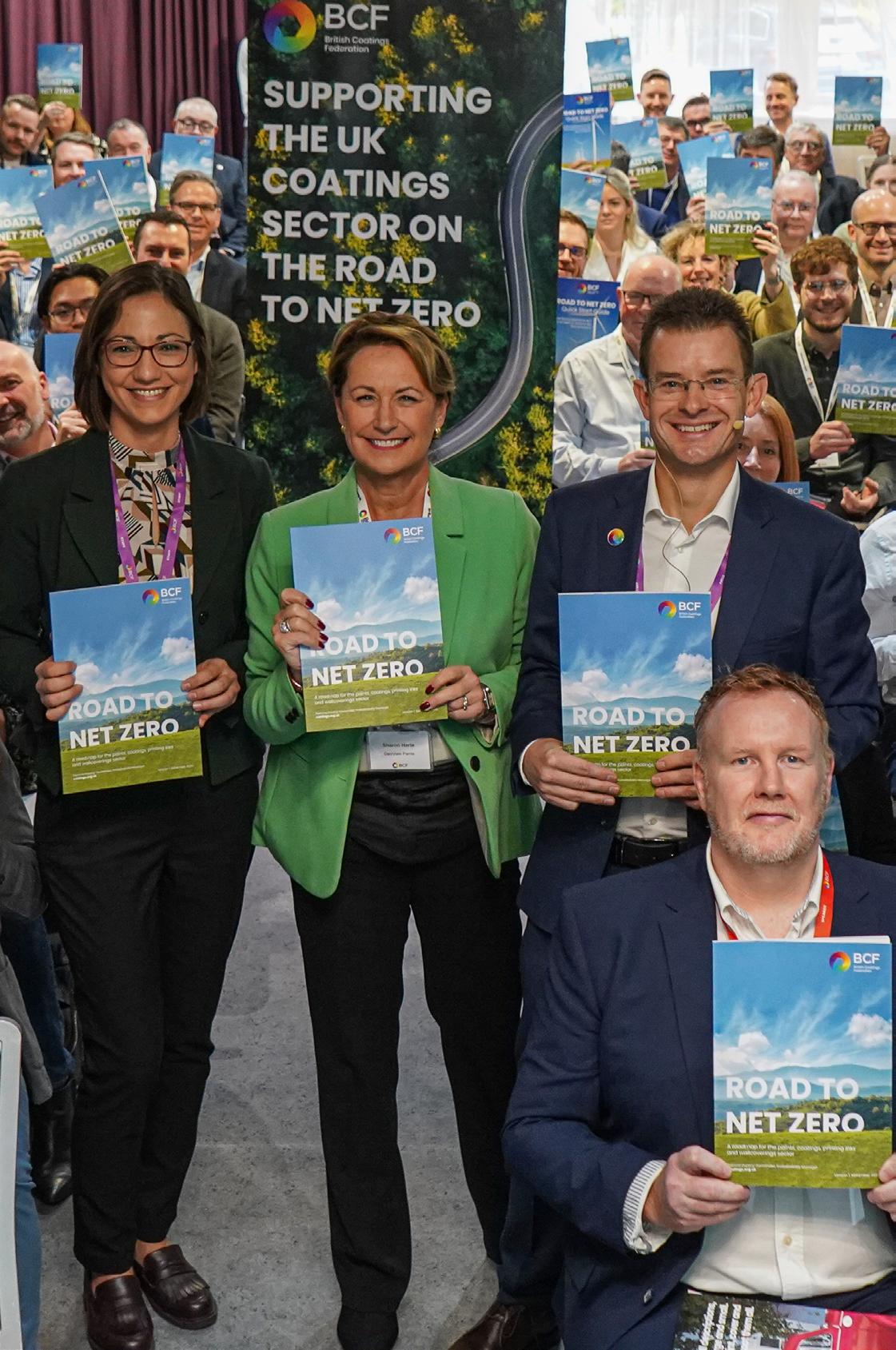
In March 2025, the BCF hosted its second Road to Net Zero seminar at the University of Warwick, where over 100 members gathered to discuss how to tackle Scope 3 emissions, which represent around 98% of the sector’s carbon footprint. The seminar built on the Net Zero Roadmap launched in November 2023 and placed a strong emphasis on collaboration across the value chain to achieve net zero ambitions by 2050.
Former BCF President Sharon Harte opened with reflections on the industry’s changing regulatory and political landscape, stressing the critical importance of collective action to maintain momentum towards net zero despite ongoing uncertainties.
Steven Hughes (Azelis) discussed the Corporate Sustainability Reporting Directive (CSRD)12 and its impact on upstream Scope 3 emissions. He emphasised the growing significance of transparent sustainability data, supply chain engagement, and industry-wide standardisation, referencing the Together for Sustainability13 initiative. Nicole Kenny (Cadent) followed with an overview of the UK hydrogen policy and highlighted opportunities for low-carbon hydrogen adoption within the coatings sector.
Jack Hocking (Jaguar Land Rover) shared JLR’s phased approach to decarbonisation, including process efficiency, renewables adoption, and strategic site planning, which led to a 30% emissions reduction alongside increased production. Gavin Ruddick (Steer Automotive) described initiatives such as waste segregation, “repair over replace” procurement, and supplier collaboration, all contributing to Scope 3 emissions reductions in vehicle refinish. A panel discussion explored supply chain engagement, data consistency, and consumer influence, with contributions from Tronox, Wickes, and the British Printing Industries Federation.
Jake Kingsley (Pack UK) presented on Extended Producer Responsibility (EPR), explaining its role in driving improved packaging design, innovation, and reduced landfill. The session highlighted DEFRA’s plans for a Circular Economy Taskforce14 and how EPR15 will impact decorative coatings via packaging taxes and take-back schemes. Panellists from the plastics and metals sectors discussed challenges and opportunities in recycling and circularity, with BCF’s PaintCare initiative cited as a promising model for industry-wide action.
Key themes from the day included the need for consistent and timely data collection to monitor progress towards net zero, and the view that success in reducing emissions relies heavily on collaboration throughout the value chain, including active participation from consumers. Furthermore, the adoption of innovative technologies and practices is essential to drive meaningful reductions in emissions across the sector.
The seminar demonstrated the sector’s commitment to addressing Scope 3 emissions and highlighted the importance of cross-industry collaboration, robust data, and innovation on the road to net zero.
12 https://eur-lex.europa.eu/legal-content/EN/TXT/?uri=CELEX:32022L2464
13 https://www.tfs-initiative.com/
14 https://www.gov.uk/government/groups/circular-economy-taskforce
15 https://www.gov.uk/guidance/extended-producer-responsibility-for-packaging-who-is-affected-and-what-to-do

The BCF has launched a new training module, “Coatings: Sustainability and The Road to Net Zero,” developed by The Coatings Training Institute. The comprehensive program is designed to help businesses and professionals in the coatings sector understand the critical concepts of sustainability, climate change, and the journey toward net zero emissions. The training covers essential terminology, the science behind climate change, and the impacts it has on both the environment and business operations. Participants will learn about the role of coatings, both positive and negative, in the sustainability landscape, and gain practical skills such as calculating and reducing their carbon footprint.
The module explores the broader context of sustainability, emphasising the triple bottom line: people, planet, and profit. It highlights why sustainability is increasingly important, driven by regulatory requirements, climate impacts, and growing consumer demand for sustainable products. The training provides a clear overview of climate change science, global warming, greenhouse gases, and the significance of net zero commitments, including the UK government’s legally binding targets and the coatings industry’s pledge to reach net zero by 2050. Real-world examples and industry achievements are showcased, such as reductions in carbon footprint, waste, and energy use, as well as innovations in product stewardship and circular economy practices.
Throughout the course, learners are encouraged to reflect on their own organisation’s sustainability journey, assess current practices, and identify opportunities for improvement. The training concludes with actionable guidance on measuring and reporting emissions, setting science-based targets, and developing carbon reduction plans. By participating in this module, businesses and individuals will be better equipped to meet regulatory demands, respond to market pressures, and contribute meaningfully to a more sustainable future for the coatings industry and beyond.
The BCF has officially joined Climate Action for Associations (CAFA)16, marking a significant step forward in its commitment to sustainability and climate leadership. As the UK’s trade association for the coatings industry, this move aligns with BCF’s ambition to support its members in reducing environmental impact and working toward netzero goals.
By joining CAFA, the BCF has gained access to expert guidance and tailored support to help shape and implement effective climate strategies. This includes practical advice and structured programs designed to accelerate progress toward sustainability targets. Membership also opens the door to a collaborative network of associations, enabling the BCF to share experiences, exchange best practices, and learn from peers across different sectors.
CAFA provides a wealth of resources, including toolkits, templates, and case studies, which will help the BCF deliver practical solutions to its members. In addition, the federation benefits from increased visibility and recognition as a climate leader, with opportunities to participate in campaigns, events, and initiatives which showcase progress and inspire industry-wide action.
Through CAFA, the BCF is also strengthening its voice in shaping climate policy and driving collective impact. The network’s end-to-end programme offers a clear pathway for associations to achieve certified net-zero status, positioning the BCF as a proactive leader in sustainable transformation. This partnership underscores the federation’s commitment to supporting the coatings industry in meeting environmental challenges and building a more sustainable future.
The BCF has been tracking the manufacturing performance of its members since 1996 via its Coatings Care programme and, over that time, has recorded significant improvements in production efficiency leading to reduced waste and use of landfill. This environmental programme demonstrates that the UK coatings industry cares about the health and welfare of employees, the safe operation of processes, and shows determination to contribute actively to a sustainable environment. It is a voluntary programme which provides an opportunity for members to benchmark their environmental performance against 45 KPIs and has over 35 UK coatings and printing ink manufacturing sites taking part.
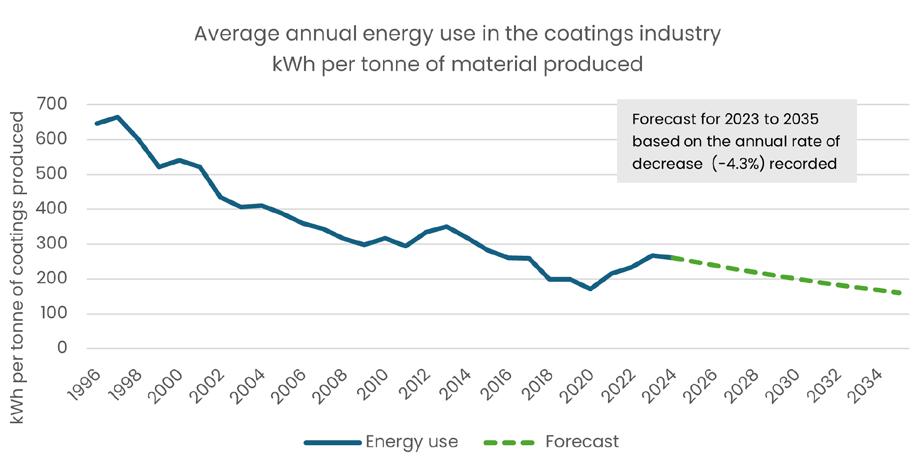
Coatings Care tracks industry energy use, which has declined since 1996 due to efficiency gains and is expected to decrease until shortly after 2035. Currently, data does not specify the proportion of energy from fossil fuels versus renewables. The next step is to gather this information and monitor the move toward greener energy, a key factor in reducing direct emissions and addressing climate change.
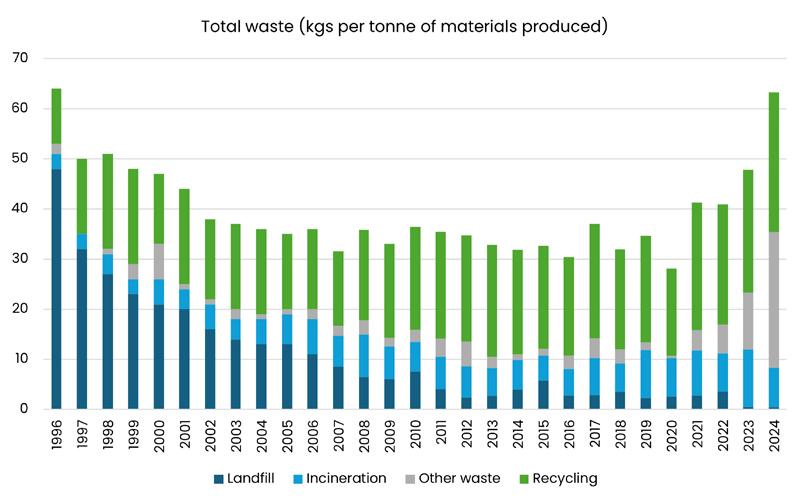
The coatings industry has taken steps to recycle more materials during production and to cut down on waste that is burned or sent to landfill. Since 1996, recycling rates have gone up, and landfill disposal has gone down. However, it’s still important to keep lowering the amount of material incinerated to meet the goals set by the Government Clean Air Strategy. Data for 2024 showed that 76% of the sample sent no waste to landfill in 2024 - a record high proportion. The latest collection also showed a significant increased the “other waste” category, with some sites reporting new waste disposal methods, such as anaerobic biological digestion being used on some waste products.
The coatings industry is undergoing a significant shift as sustainability becomes a core priority for regulators, customers, and investors. In the UK, new legislation is driving this change through measures such as carbon pricing and Extended Producer Responsibility (EPR)17. Carbon pricing mechanisms18 aim to reduce emissions by incentivising low-carbon production, while EPR places the responsibility for managing packaging waste on producers, encouraging the use of recyclable materials and supporting a circular economy.
Customer and investor expectations are also shaping the industry’s direction. Buyers increasingly demand coatings that deliver high performance while minimising environmental impact, favouring low-VOC and waterborne solutions. Investors are linking strong ESG performance to long-term value creation, pushing companies to adopt transparent sustainability reporting and integrate circular practices into their operations.
Global standards are reinforcing these efforts. Frameworks such as ISO 1400119 for environmental management and Science-Based Targets (SBTi)20 for emissions reduction are becoming widely adopted, guiding companies toward net-zero pathways and harmonising sustainability goals across markets.
Technological innovation is another key driver. Advances in low-carbon coatings and raw materials, including biobased resins, renewable feedstocks, and powder coatings, are reducing carbon footprints without compromising quality. Research into CO2-derived raw materials and mass balance approaches is enabling manufacturers to cut emissions while maintaining performance.
Digitalisation and AI are transforming efficiency in production and R&D. Predictive an-alytics, and automated formulation tools optimise resource use, reduce waste, and accelerate development cycles. Real-time quality control powered by AI further enhances sustainability and operational performance.
Finally, circular economy principles are gaining traction through initiatives such as paint recycling, solvent reuse, and the integration of recycled content into coatings. Sustainable packaging and closed-loop systems are becoming standard, reducing re-liance on virgin resources and minimizing waste throughout the value chain.
In summary, sustainability in the coatings industry is no longer optional; it is a strategic necessity. Regulatory compliance, stakeholder expectations, and global standards are converging with technological advances to create a future where coatings deliver durability, aesthetics, and environmental stewardship in equal measure.

17 https://www.legislation.gov.uk/uksi/2024/1332/contents/made
18 http://www.gov.uk/government/publications/factsheet-carbon-border-adjustment-mechanism-cbam/factsheet-carbon-borderadjustment-mechanism
19 https://www.bsigroup.com/en-GB/products-and-services/standards/ems-iso-14001-environmental-management-system/
20 ttps://sciencebasedtargets.org/
PaintCare is a UK-wide, industry-led stewardship initiative orchestrated by the British Coatings Federation to tackle the challenge of decorative paint and paint packaging waste. Each year, approximately 34 million litres of leftover paint and associated packaging, roughly 10% of sales, end up in landfill, incinerated, or disposed down the drain, costing local authorities an estimated £21 million annually.
Operating as a national voluntary product stewardship scheme, PaintCare aims to divert this paint and paint packaging from waste streams toward reuse, remanufacturing, and recycling. The goal is to increase the reuse or remanufacture rate of leftover paint from about 2% today to 75% by 2032 and paint packaging from 1% today to 42 % by 2032. The program is designed to fund itself through a levy added to each can of paint sold, effectively placing cost responsibility on producers and incentivising waste reduction.
Consumers will be able to drop off leftover paint at participating Household Waste Recycling Centres (HWRCs) and retail outlets, and tradespeople and contractors will be able to drop off their leftover paint and packaging at participating trade decorator centres. Collected paint is categorised into non-hazardous and hazardous streams. Non-hazardous paint is either redistributed for reuse and/or remanufacturing into new paint. Hazardous paint typically goes for incineration with energy recovery. Empty plastic and metal packaging will be recycled.
PaintCare plans to support a national network of collection points, and the possibility of creating sortation and processing centres across the UK. Currently only one in three HWRCs accept paint from Households across the UK. The scheme is working to bridge this gap, aiming for effortless access and consumer participation.
Built on collaboration across stakeholders, including government bodies, waste management services, community reuse organisations, and industry, PaintCare not only promises to reduce the environmental impact and waste management costs but also creates opportunities for social enterprises and job creation.
In essence, PaintCare is forging a circular economy for decorative paint and paint packaging in the UK, shifting from landfill dependency to regenerative reuse and recycling; ultimately transforming waste into a valuable resource.

Recent progress highlights the industry’s commitment and BCF’s effective focus on coordination, guidance, and dialogue with policymakers. Focussed resources have enabled members of all sizes to engage in the transition. This approach has led to measurable emissions reductions supported by data, while the updated baseline clarifies trends and emissions distribution, helping members prioritise high-impact actions.
Even with an increased baseline year, the industry has delivered a 50% reduction, ahead of the 2030 target. If we assume a linear projection, the gap to the 2035 target of 71% reduction from the 2018 baseline is modest. But the scale and nature of reductions needed to achieve that and beyond become more challenging, requiring a step change that cannot be achieved through incremental improvements alone.
It is envisaged that by the next iteration of the Net Zero Roadmap in 2030 will include a projection based on key milestones agreed by the industry.
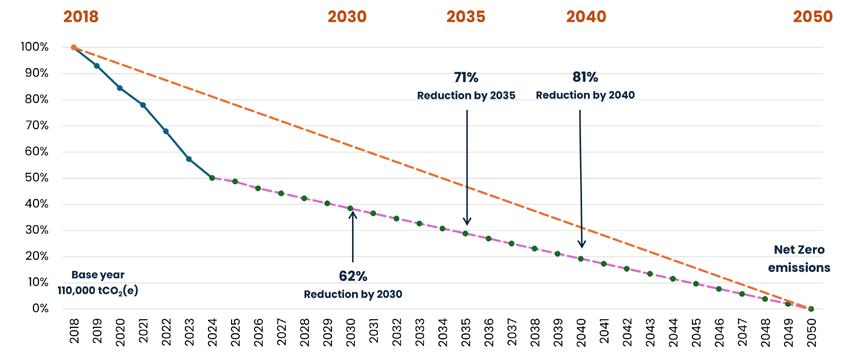
Alignment with UK Net Zero Strategy and sector-specific targets.
Original Projected emission levels to reach Net Zero (scope 1 & 2)
Revised trajectory for emissions Annual emissions 20182024 (scope 1 & 2)
The coatings industry’s transition to Net Zero cannot be achieved in isolation. With Scope 3 emissions accounting for the majority of the sector’s carbon footprint, meaningful progress requires deep collaboration across the entire value chain. This means engaging suppliers and customers proactively, fostering transparency, and driving innovation through strategic partnerships.
Upstream, reducing emissions begins with strong supplier engagement. Manufacturers must work closely with raw material providers to accelerate the shift toward low carbon alternatives. Working to standardised reporting frameworks, supports accurate emissions measurement and helps identify opportunities for improvement. Logistics optimisation is equally important; improving transport efficiency and adopting low emission freight solutions can significantly reduce environmental impact.
Downstream collaboration with customers is essential. By encouraging the adoption of more sustainable products, such as low VOC, longer lasting coatings, manufacturers can significantly influence lifecycle emissions. Providing technical guidance on efficient application methods helps minimise waste and energy use, while circular economy initiatives, including programmes like PaintCare, offer the potential to close material loops.
Innovation underpins all these efforts. Partnerships with research institutions, technology providers, and cross sector alliances enable the development of carbon neutral formulations, advanced curing technologies, and digital tools to track and manage emissions. Supply chain collaboration is therefore not just a compliance obligation but a strategic necessity. By engaging stakeholders throughout the value chain and investing in joint solutions, the UK coatings industry can accelerate progress toward Net Zero while strengthening its competitiveness and long term resilience.
Companies can support decarbonisation across the supply chain by clearly addressing the what, how, and why of their expectations:
• Be clear about what you are asking suppliers to do and outline specific steps for improvement.
• Consider how suppliers can deliver the required changes, which may involve co investment in new technology or providing better data, training, and tools to improve traceability and reporting.
• Help suppliers understand why it matters, demonstrating how decarbonisation strengthens supply chain resilience and supports their relationships with customers beyond your own organisation.
Sustainability frameworks and collaborative initiatives are crucial for strengthening supply chain sustainability, as they provide complementary tools that help organisations improve environmental and social performance through recognised reporting standards, robust disclosure platforms, structured management systems, and science-based emissions reduction pathways. By fostering greater transparency, consistency, and accountability across supplier networks, these approaches enable companies to track impacts more effectively and meet increasing regulatory and stakeholder expectations. Participation in such initiatives offers shared platforms for trusted data, common tools, and expert cooperation, which not only reduce duplication of audits but also expand access to a network of assessed suppliers. This collective approach drives cross-industry innovation, shared learning, and the adoption of safer chemicals and material alternatives, helping companies build more resilient and responsible supply chains while advancing long-term sustainability goals and reducing Scope 3 emissions.
This is just an example of some of the schemes available:
for Sustainability (TfS)
for Sustainability Initiative
Standardised supplier assessments, audits, Product Carbon Footprint (PCF) guidelines, tools, and training programmes for chemical supply chains.
ISO 14001
ISO 14001 Environmental Management Systems Standard
B Corp
B Corporation Certification (run by B Lab)
A globally recognised framework for environmental management systems (EMS) including requirements, guidance and certification.
A rigorous certification assessing social and environmental performance, stakeholder governance, and transparency.
Helps companies improve ESG performance across supply chains through shared data, collective action, responsible sourcing, climate protection, and harmonised sustainability standards.
Helps organisations reduce environmental impact, improve resource efficiency, enhance compliance, strengthen reputation, and embed continuous environmental improvement.
Supports organisations in embedding purpose, improving governance, demonstrating verified ESG impact, attracting employees/customers, and driving continuous improvement.
Planet Mark Sustainability Certification
SBTi
Science Based Targets Initiative
Independently verified carbon measurement, net zero certification, advisory services, reporting tools, and training.
Standards, tools, and validation services for science-based emissions reduction and net-zero targets.
Helps organisations reduce emissions, set net zero strategies, measure impact, engage stakeholders, and align with frameworks like SBTi and UNFCCC initiatives.
Supports companies in setting credible climate targets aligned with climate science, improving competitiveness, investor confidence, and strategic cohesion.
The BCF is shaping the future of the coatings industry through a strong focus on careers, workforce development, and equity, diversity, and inclusion (EDI), all essential pillars of sustainable business.
To address skills shortages and an ageing workforce, BCF launched its “Coat Your Future”21 careers strategy. This initiative promotes industry awareness through school outreach, careers fairs, and a dedicated online hub offering apprenticeships, job listings, and sector insights. By investing in talent pipelines, the industry ensures long-term resilience and innovation.
BCF also champions apprenticeships in the industry, helping members access government-funded programs across technical and business roles. These schemes foster lifelong learning and internal progression, reducing recruitment challenges and supporting sustainable growth.
In 2024, BCF introduced its first EDI Charter22, with members pledging to embed inclusive practices, appoint EDI champions, and report progress annually. Diversity drives creativity and problem-solving, strengthening the sector’s ability to adapt to global challenges.
Workforce development and inclusion are not just social priorities—they are integral to sustainability. A skilled, diverse workforce enhances innovation, improves retention, and builds trust with stakeholders who increasingly value strong ESG performance. By combining environmental goals with social responsibility, BCF is creating a coatings industry that is resilient, equitable, and future-ready.

The UK faces mounting challenges from climate change, including increased heatwaves, flooding, and supply chain disruptions. For businesses in the coatings sector, these risks threaten operational continuity, financial stability, and long-term competitiveness. To address these challenges, businesses must implement robust climate risk assessments and adaptation strategies; both as a matter of resilience and to align with the UK’s national climate adaptation policy.
Climate change introduces significant physical risks to manufacturing facilities, raw material storage, and logistics networks. Extreme weather events can damage infrastructure, disrupt production, and increase insurance costs. Without systematic risk assessment, businesses remain vulnerable to operational downtime and financial losses. Moreover, the coatings industry’s value chain is highly exposed. Approximately 98% of its carbon footprint lies in Scope 3 emissions, primarily from raw material suppliers. Climate-related disruptions in these upstream processes can cascade through the entire sector, making supply chain resilience a critical priority.
To mitigate these risks, businesses should adopt targeted adaptation measures:
• Infrastructure Resilience: Invest in flood defences, thermal control systems, and waterproofing to protect facilities from extreme weather.
• Supply Chain Diversification: Collaborate with suppliers to ensure climate-secure logistics and diversified sourcing strategies.
• Product Innovation: Develop coatings that enhance building resilience, such as heat-reflective or moistureresistant finishes, creating new market opportunities.
• Governance and Reporting: Embed climate risk management into corporate governance frameworks and disclose adaptation measures in line with best practice standards.
Under the Climate Change Act 2008, the UK government mandates sector-wide resilience planning through the National Adaptation Programme (NAP3). Businesses are encouraged to identify risks and implement adaptation plans. Industry alignment with these frameworks ensures compliance and positions companies as leaders in sustainability.
Implementing climate risk assessments and adaptation strategies delivers tangible benefits:
• Operational Continuity: Reduces disruption from extreme weather events.
• Competitive Advantage: Positions firms as innovators in climate-resilient products.
• Policy and Funding Alignment: Enhances eligibility for government grants and supports compliance with national climate objectives.

The transition to a Net Zero economy continues to present major structural and technological challenges for the UK’s paints, coatings, printing inks and wallcoverings industry. As the BCF progresses its sector-wide Net Zero Roadmap, credible and current policy support from government remains essential.
In the first edition of our Roadmap to Net Zero we set out a series of recommended “asks” to government, which remain valid:
1. Ensuring Long-Term Policy Stability for Industrial Investment
A stable, predictable policy environment remains fundamental to enabling the coatings sector to make the major capital investments required for Net Zero. Recent government publications, including the Carbon Budget and Growth Delivery Plan and the 2025 Investor Prospectus23, emphasise the need for clarity and consistency to unlock private sector funding across the transition to clean energy and industrial decarbonisation. This reinforces the sector’s call for long-term certainty to support planning cycles and ensure investment confidence.
BCF Recommendation:
Government should maintain strong, long-term policy signals across energy, infrastructure and industrial decarbonisation strategies to enable businesses to invest confidently in low carbon technologies and equipment.
2. Replacing the Industrial Energy Transformation Fund (IETF)
The Industrial Energy Transformation Fund (IETF)24, previously a critical source of support for industrial decarbonisation projects, closed permanently in July 2025. While existing projects will continue to completion, no successor fund is currently planned. This creates a significant gap in available support for energy efficiency upgrades, fuel switching, and process innovation; areas essential to reducing Scope 1 and 2 emissions in coatings manufacturing.
BCF Recommendation:
Government should introduce a new Industrial Decarbonisation Capital Support Mechanism to replace the IETF, providing grants or co funding to accelerate upgrades to low carbon technologies and processes.
3. Introducing Targeted Green Capital Allowances
23 https://www.gov.uk/government/publications/uk-net-zero-transition-investment-opportunities/investor-prospectus-accessiblewebpage
24 https://www.gov.uk/government/collections/industrial-energy-transformation-fund
With the end of the IETF, enhanced tax incentives play a more important role in enabling companies to invest in decarbonisation solutions, tailored to the scale of transition needed.
BCF Recommendation:
Introduce green capital allowances or enhanced deductions specifically for investments that reduce industrial emissions, covering energy efficiency technologies, electrification, low carbon process equipment and on-site renewable generation.
4. Supporting SMEs on Scope 3 Emissions and Net Zero Planning
SMEs form a substantial portion of the coatings supply chain and face particular challenges in measuring Scope 3 emissions and developing credible transition plans. The existing Help to Grow: Management25 programme remains funded through 2025–26 and demonstrates an effective model for supporting capability development among smaller businesses. However, no equivalent scheme exists for Net Zero skills or carbon accounting.
BCF Recommendation:
Establish a “Help to Grow: Net Zero” scheme offering SMEs vouchers or subsidised consultancy for Scope 3 assessment, emissions data tools, Net Zero planning software, and tailored decarbonisation advice.
5. Expanding Access to Low Carbon
Hydrogen, carbon capture utilisation and storage (CCUS), and nuclear, including small modular reactors, are critical enablers of industrial decarbonisation. Recent government strategies and infrastructure investments include major commitments to scaling these technologies, from the expansion of nuclear26 capacity to increased hydrogen production targets and significant funding for CCUS industries27
BCF Recommendation:
Government should continue accelerating deployment of hydrogen, CCUS, and modular nuclear, while ensuring affordable industrial access to these technologies through regional hubs, demonstrator projects and clear market frameworks.
6. Expanding Access to Green Skills and Workforce Training
Achieving Net Zero requires a workforce equipped with new skills in energy systems, low carbon chemistry, lifecycle analysis, and digital emissions data management. While government strategy increasingly prioritises clean energy job creation, dedicated green skills pathways for manufacturing remain limited.
BCF Recommendation:
Increase funding for apprenticeships, technical training and mid career upskilling in climate and sustainability fields, with specific pathways aligned to coatings sector needs; including process optimisation, energy management, chemical reformulation and circularity.
7. Delivering a Functional, Proportionate UK REACH Framework
Regulatory uncertainty under UK REACH remains one of the most significant barriers to innovation in sustainable materials. Proposed extensions to deadline requirements28 continue to reflect industry concerns over cost and feasibility and ongoing consultations on transitional registrations add further complexity.
BCF Recommendation:
Government should implement a long-term, accessible and proportionate UK REACH system that:
• Avoids unnecessary duplication of EU data packages.
• Reduces administrative burdens for sustainable and low hazard substances.
• Provides clear guidance and timelines for registrations.
• Ensures new sustainable materials can reach the UK market without disproportionate cost or delay.
25 https://www.business.gov.uk/
26 https://www.gov.uk/government/organisations/great-british-nuclear
27 https://www.business.gov.uk/campaign/innovating-clean-energy-europe/hydrogen-and-ccus/
28 https://www.gov.uk/government/consultations/uk-reach-extending-dossier-submission-deadlines-for-transitional-registrations/ outcome/summary-of-responses-and-government-response
Ensure all members, including new joiners, receive the latest materials.
Make roadmap and supporting materials widely available and pair this with proactive outreach, using digital channels, member networks, and sector events, to deepen engagement with members and wider stakeholders.
Continue regular webinars and seminars but broaden the focus beyond emissions reporting to include carbon reduction strategies, LCA methodologies, supplier engagement, and regulatory preparedness.
Enhance support for SMEs in calculating and reducing scope 3 emissions
Scale up hands on support programmes: explore simplified calculation tools, templates, and peer-group learning sessions to help smaller businesses generate accurate scope 3 data and identify meaningful reduction opportunities.
Continue gathering member emissions data but introduce more frequent data cycles and improved standardisation. Publish an updated roadmap in 2030, complemented by annual progress summaries and sector benchmarks.
Develop performance dashboards to flag members or sub-sectors needing further assistance.
Offer support packages including workshops, technical advice, and guidance frameworks.
Embed Net Zero and wider sustainability into all BCF governance structures
Ensure Council and Committee agendas consistently include sustainability metrics, progress updates, regulatory developments, and discussions on sector-level challenges and opportunities.
Develop innovation and best practice sharing platforms across the Sustainability and Environment Panel.
Work more closely with trade associations, chemical suppliers, logistics partners, recyclers, and downstream industries to remove decarbonisation barriers.
Prioritise joint initiatives on supply chain visibility, data sharing, and circularity.
Continue lobbying efforts to secure supportive regulation, funding mechanisms, and innovation incentives.
Build evidence-led policy positions demonstrating the sector’s needs and the potential economic and environmental benefits of decarbonising the coatings industry.
Track evolving UK, EU, and international reporting requirements. Provide early guidance to members to ensure compliance readiness, particularly around mandatory scope 3 disclosures and productlevel carbon footprints.

Establish a robust baseline covering Scope 1, 2 and relevant Scope 3 emissions.
Review emissions annually using consistent methodologies (e.g. GHG Protocol).
Track progress against internal reduction targets and identify year on year trends.
Ensure data quality through internal checks, third party assurance, or peer review where feasible.
Use annual reviews to inform investment decisions, operational improvements, and R&D priorities.
Establish clear, time bound emissions reduction targets aligned with UK net zero ambitions.
Assign senior accountability for climate and sustainability performance.
Embed net zero considerations into business strategy, capital investment decisions, product development and innovation.
Ensure data quality through internal checks, third party assurance, or peer review where feasible.
Regularly review targets to reflect improved data quality, technological advances, and policy changes.
Identify material Scope 3 categories (e.g. raw materials, packaging, logistics, waste).
Engage key suppliers to:
• Request primary emissions data where available.
• Encourage alignment with recognised reporting standards.
• Promote supplier net zero commitments and reduction targets.
Collaborate with suppliers on lower carbon alternatives, reformulation, and material substitution.

Document successful initiatives such as:
• Energy efficiency improvements.
• Fuel switching or renewable energy adoption.
• Low carbon product innovation.
• Supply chain collaboration projects.
Share case studies with BCF for dissemination via webinars, guidance documents and industry events
Assess climate related physical risks to manufacturing sites, supply chains and distribution and logistics networks.
Develop adaptation measures to improve resilience, such as:
• Flood and heat risk mitigation.
• Supply chain diversification.
• Business continuity planning.
Align adaptation planning with existing risk management and health & safety processes.
Review adaptation plans periodically to reflect evolving climate risks.
Submit agreed emissions metrics to BCF on an annual basis.
Contribute anonymised data to enable industry wide benchmarking and development of a credible, evidence-based sector pathway to net zero.
Use BCF feedback to understand relative performance and identify improvement opportunities.
Support continuous improvement of data collection frameworks led by BCF.
Actively participate in the BCF Sustainability Committee to:
• Share challenges and lessons learned.
• Contribute to sector wide initiatives and guidance.
• Monitor and engage with relevant external bodies (e.g. standards organisations, government forums).
Stay up to date on best practice, regulatory and reporting requirements, emerging technologies and funding opportunities.
Thanks to the BCF members for their contribution to this work, including the submission of their carbon emissions data and ongoing support of the Sustainability Committee.
Thanks to Whittle Industry Data for their insights and support on Coatings Care data and statistics.
Beckers • 55% absolute reduction of scope 1 and scope 2 carbon emissions by 2030.
• 50% intensity reduction of 3rd party logistics carbon emissions by 2030.
Fujifilm Net Zero carbon emissions by 2040.
Siegwerk Carbon neutral for scope 1 and 2 emissions globally.
• 50% of revenue from BSI Achiever class by 2030.
• Zero products from BSI Concern class by 2030.
• 100% of all new products from BSI Achiever class by 2030.
• 70% Renewable energy use by 2030
• Increase operational energy efficiency by 23% by 2030.
• 30% reduction of VOC emissions by 2030
• Zero landfill waste by 2030.
• 33% reduction in waste intensity by 2030.
• 50% reduction of water withdrawal by 2030.
• 100% of sourcing aligned with our Responsible Sourcing Strategy by 2030.
• Zero accidents by 2030.
• Address climate change
• Promote recycling of resources
• Biodiversity Conservation
• Ensure product and chemical safety
• Ensure 100% of their suppliers are committed to the principles of the UN Global Compact.
• Innovate and manage their portfolio so that 75% of all products and services sold enable reducing, reusing or recycling of packaging, renewable or recyclable packaging.
• Establish product environmental footprint data for 100% of their products.
• Be the trendsetter for the safest inks and coatings by proactively improving our products and setting new industry standards in consumer and environmental safety.
https://sustainability-re-port.beckers-group. com/index.html
https://holdings.fujifilm. com/en/sustainability/ plan/svp2030/environment
https://www.siegwerk.com/ en/sustainability/sustainability.html
Sun Chemical Net Zero carbon emissions by 2050.
• Set improvement targets for energy and water consumption, GHG emissions, and solid waste emissions.
• Measure and report these parameters, regularly, by site and by product.
• Establish actions to improve, then recheck and re-measure.
• A structured and robust approach to product development that includes risk management and eco-efficiency improvements as key criteria.
• An infrastructure for product stewardship that leads the industry.
• Proactive approach in working with suppliers, customers, and industry trade groups to promote best practices.
https://www.sunchemical. com/our-approach/
Sherwin Williams Reduce absolute scope 1 and scope 2 GHG gas emissions by 30%.
AkzoNobel Half carbon emissions by 2030.
PPG Reduce absolute emissions from its own operations (scope 1 and 2) by 50% by 2030 from a 2019 base year.
• Increase electricity from renewable resources to 50% of total electricity us-age.
• Reduce waste disposal intensity by 25%.
• 50% of revenue from sustainable solutions by 2030.
• 100% circular use of materials in our own operations by 2030.
• 100,000+ members of local communities empowered with new skills by 2030.
• Energy efficiency – improving the energy efficiency of equipment and installations, including LED and compressed air systems.
In addition to its science-based emission targets, PPG’s other 2030 ESG targets against a 2019 baseline are:
• 50% of sales from sustainably advantaged products.
• 15% reduction in water intensity at priority sites.
• 25% reduction in waste intensity.
• Reuse, recycle or recover 100% of process waste.
• $5 million additional COLORFUL COMMUNITIES® funding, with each project incorporating an element of sustainability, making the total investment $15 million since 2015.
• 100% of key suppliers assessed against sustainability and social responsibility criteria.
• 100% of employees go home safely each day.
• 5% annual reduction in spill and release rate.
https://corporate.sherwin-williams.com/sustainability.html
https://report.akzonobel. com/2022/ar/sustainability/our-approach-to-sustainability.html
https://www.ppg.com/sustainability/en-US
Axalta
Dacrylate
• 50% absolute reduction of scope 1 and 2 GHG emissions by 2030, sourcing at least 50% of electricity from renewable sources.
• Carbon neutrality in our operations by 2040.
• Reduce carbon emissions by at least 2.5% each year.
• Aim to reduce carbon emissions by 5% each year.
• 10% reduction of process waste, VOC emissions, and water use from operations (normalised to production).
• 80% of new technology and innovation developments will have a sustainability benefit.
• Increase by at least 20% the percentage of net sales from products, services, and tools that offer sustainability benefits to our customers, markets, and communities.
https://www.axalta. com/corporate/en_US/ sustainability.html
HP
• Carbon neutrality by 2030.
• Net Zero GHG emissions across HP value chain by 2040, beginning with supplies business achieving carbon neutrality by 2030.
• Reduce HP value chain GHG emissions 50% by 2030.
• Reach carbon neutrality and zero waste in HP operations by 2025.
• Protection of the environment by reducing the environmental impact of our business activity.
• Prevention of pollution through continually improving our environmental performance.
• Fulfilling our compliance obligations through working closely with our local authority.
• Continual improvement of the environmental management system to enhance environmental performance.
• Promoting environmental sustainability throughout the supply chain.
• Reach 75% circularity for products and packaging by 2030.
• Maintain zero deforestation for HP pa-per and paper-based packaging.
• Counteract deforestation for non-HP paper used in our products and print services by 2030.
https://dacrylate.co.uk/ sustainability/
https://press.hp.com/us/ en/press-releases/2021/hpinc-announces-ambitiousclimate-action-goals.html
Flint
Hempel
• Net Zero across scope 1 and 2 emissions by 2050.
• Reduce GHG emissions versus 2019 46% reduction in scope 1, 2 and 3 emissions by 2030.
• Hempel A/S commits to reduce absolute scope 1 and 2 GHG emissions 90% by 2026 from a 2019 base year.
• Hempel A/S also commits to reduce absolute scope 3 GHG emissions 50% by 2030 from a 2019 base year.
• Hempel’s sciencebased targets are approved by the Science Based Targets initiative (SBTi).
Jotun 50% reduced carbon footprint for scope 1 and 2 by 2030 (baseline 2017).
Trimite No specific Net Zero targets set.
• Bring sustainable innovations to the market.
• Ensure our products are designed for recycling.
• Help customers become more energy efficient and reduce waste.
• Deliver products and services that help customers reduce their own GHG emissions.
• Lower the carbon footprint of our core products.
• Using more sustainable raw materials.
• Zero waste to landfill by 2030.
• Reduce water use by 5% by 2030.
• Reducing CO₂ emissions in our own operations and in our value chain and switching to renewables.
• Pursuing resource efficiency and circularity and reducing harmful substances.
• Committed to health and safety and the promotion of diversity and inclusion.
• Promoting ethical behaviour and good environmental practices in our supply chain.
• Collaborating widely and pursuing effective partnerships.
https://www.flintgrp.com/ media/646066/flint-groupsustainability-brochure.pdf
• 70% Renewable electricity.
• 40% Female managers at Jotun headquarters.
• 30% Female managers globally.
• Zero fires.
• Zero injuries.
• Recognise that environmental and sustainable management is a business priority that should be integrated into all our processes, from the procurement of raw materials through to the manufacture and shipment of our finished goods.
• Promote the use of clean energy and reduce our carbon footprint across all our business operations.
• Develop an environmentally aware culture, providing the time and resources required to educate employees, consultants, contractors and stakeholders on our sustainability commitments.
• Contribute to the achievement of the ‘UN Sustainable and Development Goals’.
https://www.hempel. com/en-gb/inspiration/ sustainability
https://www.jotun. com/de-en/aboutjotun/sustainability/ sustainability-at-jotun
https://www.trimite.com/ sustainability/
Organisation Carbon reduction targets
Automotive (SMMT)
Aerospace (ADS)
Net Zero carbon emissions by 2050.
Builders Merchants Federation (BMF)
Net Zero carbon emissions by 2050.
Other commitments / key points
• The report lists the signatory members of SMMT that have committed to Net Zero by 2050 or before, providing the commitments per company in more detail.
• The report details the commitment to decarbonise the manufacturing process by using alternative greener energy to gas, which is currently used for the paint shop ovens. A point is made on the potential challenges to switching to hydrogen, which will require investment in new infrastructure but could also create process challenges, such as reducing paint quality due to the increased moisture that is created in the environment from using hydrogen.
• Lists the following initiatives needed to achieve Net Zero by 2050:
• 4.3 Million tonnes of carbon dioxide (MtCO₂) saving due to carbon pricing impact on demand.
• 3.1 MtCO₂ saving from better air traffic management and operating procedures.
• 23.5MtCO₂ saving from introduction of known and new, more efficient aircraft.
• 14.4MtCO₂ saving from sustainable aviation fuels.
• 25.8 MtCO₂ saving from effective market-based measures.
• The report makes reference to the role that new paint technology can have in achieving Net Zero, specifically paint that decreases drag due to being ‘ice-phobic’.
Link to roadmap
https://www.smmt. co.uk/wp-content/ uploads/sites/2/SMMTSustainability-Report-2021. pdf
https://www. sustainableaviation.co.uk/
• Halve GHG emissions by 2030.
• Net Zero carbon emissions by 2040.
British Plastics Federation (BPF) Eliminate avoidable plastic waste by 2042.
• Signatory to the SME Climate Commitment. https://www.bmf.org.uk/ BMF/News/BMF-commits-to-zero-carbon-operations
• The roadmap focusses on the recycling rates of plastic, which is an important aspect for other industries to reach Net Zero, rather than Net Zero for the plastics industry as a whole.
• The roadmap forecasts that, with the interventions detailed in the roadmap implemented, by 2030 there will be:
• 4 times more plastic recycling tonnage.
• 50 times less tonnage to landfill.
• 6 times more energy recovery tonnage.
https://bpf.co.uk/ roadmap#Report%20 isssuu%20iframe
British Retail Consortium (BRC)
Chemical Industries Association
To achieve Net Zero by 2040 for all retail products sold in the UK (Scope 3 emissions) by working with Government and the entire value chain.
• The roadmap details 5 pathways needed for the retail industry to achieve Net Zero:
• Pathway 1: Placing GHG data at the core of business decisions.
• Pathway 2: Operating efficient sites, powered by renewables.
• Pathway 3: Moving to low carbon logistics.
• Pathway 4: Sourcing sustainably.
• Pathway 5: Helping our employees and customers to live a low carbon lifestyle.
• Pathway 4 details the retail industry’s commitment to drive demand for emerging low or zero carbon materials through product innovation.
https://brc.org.uk/climateroadmap/
Confederation of Paper Industries (CPI)
To achieve direct Net Zero carbon emissions by 2050 and to support the reduction of indirect Net Zero carbon emissions by 2050.
Net Zero carbon emissions by 2050, focussing on scope 1 and 2.
• The report details how the chemicals industry is a strong contributor to tackling climate change, with innovative solutions enabling other areas of the value chain to reduce their carbon footprints; as well as decarbonising direct chemical manufacturing through the implementation of carbon reduction processes.
• The roadmap details several joint actions between Government and industry that need to be focussed on in order for the sector to achieve Net Zero, including the following:
• Action 8: Value Chain Collaboration in the UK pulp and paper sector. To collaborate with the entire value chain to identify and deliver improvements with regards to feedstock (both recycled and virgin), production and products.
https://www.cia.org.uk/ Media-Centre/Details/ The-UK-Chemical-Industry-An-Essential-Partner-in-Delivering-Net-Zero-2050
https://assets.publishing. service.gov.uk/government/ uploads/system/uploads/ attachment_data/ file/652141/pulp-paperdecarbonisation-actionplan.pdf
Food and Drink Federation (FDF)
To achieve Net Zero by 2040 by reducing the amount of embodied carbon from food and drink products sold in the UK (Scope 1, 2 and 3 emissions) by working with Government and the entire value chain.
Make UK To achieve Net Zero by 2050 across the UK manufacturing sector by working with government and the entire value chain.
• To achieve a 60% absolute reduction in CO₂ emissions by 2025 against the 1990 baseline.
• The roadmap encourages engagement with packaging suppliers to increase the recycled content of packaging and to identify the lowest carbon packaging formats that fulfil all functional requirements of the product.
https://www.fdf.org.uk/ globalassets/resources/ publications/guidance/ compressed_fdf-net-zerohandbook-final-111021.pdf
• To achieve a 67% reduction in scope 1 and 2 emissions by 2035 (compared to a 2018 baseline).
• To achieve at least a 90% reduction in scope 1 and 2 emissions by 2050 (compared to a 2018 baseline).
https://www.makeuk. org/insights/reports/ manufacturing-sector-netzero-roadmap
Military of Defence (MoD) Net Zero carbon emissions by 2050.
• By 2025 commercial contracts will be awarded with sustainability as an integral part of the decision-making process.
UK Steel (subsidiary of Make UK) Decarbonise ore-based steel production by 2035.
Water UK Net Zero carbon emissions by 2030, focussing on scope 1 and 2 emissions.
Cement and Concrete To achieve net negative, removing more carbon dioxide from the environment than is emitted to the atmosphere, each year, by 2050.
• The roadmap details the need to improve the quality of, and increase the utilisation of, scrap steel within the UK market.
• Further investigate the potential to use advanced coatings to support the development of steel with cutting edge properties designed to improve the maintenance, re-use and recycling of steel.
• The roadmap details the need for other actors in the supply chain to develop water efficient products and to increase the recycling rates of grey water to reduce wholesome water demand.
• The roadmap lists the following technology levers and their potential decarbonisation reductions for the sector:
• Indirect emissions from decarbonised electricity: -4% CO₂
• Decarbonising transport: -7% CO₂
• Innovation of low carbon cements and concretes: -12% CO₂
• Fuel switching: -16% CO₂
• Carbon capture, usage and storage: -61% CO₂
• Carbonation, the process of concrete absorbing CO₂ from the atmosphere: -12% CO₂
• Utilise the thermal mass properties of concrete and cement to efficiently heat and cool buildings: -44% CO₂
https://assets.publishing. service.gov.uk/government/ uploads/system/uploads/ attachment_data/ file/973707/20210326_ Climate_Change_Sust_ Strategy_v1.pdf
https://www.makeuk.org/ about/uk-steel/net-zerosteel---a-vision-forthe-future-of-uk-steelproduction
https://www.water.org.uk/ routemap2030/
https://thisisukconcrete. co.uk/TIC/media/root/ Perspectives/MPA-UKCRoadmap-to-Beyond-NetZero_October-2020.pdf
Net Zero guidance Link to guidance Description
BCF Roadmap to Net Zero and Quick Start Guide 2023
Carbon Offset Guide
Carbon Trust
https://coatings.org. uk/resource/resmgr/ webpage_files/net_zero_ roadmap/BCF_Net_Zero_ Roadmap_Digital.pdf
https://www.offsetguide. org/
https://www.carbontrust. com/
Circular Ecology Embodied Carbon – The ICE Database
Climate Change Committee
Gov.UK Policy paper ‘Net Zero Strategy: Build Back Greener’
Gov.UK Policy paper ‘Powering up Britain’
https://circularecology. com/embodied-carbonfootprint-database.html#. XKX_oJhKhPY
The Roadmap and Quick Start Guide focus on key actions companies need to take to begin or progress their own Net Zero journeys. They include action checklists to support members with reducing their carbon emissions, creating a Net Zero strategy or action plan.
The Offset Guide is for companies and organizations seeking to understand carbon offsets and how to use carbon offsets in voluntary greenhouse gas (GHG) reduction strategies. It is also an educational resource for technical experts in academia and Government.
Carbon Trust provides advice for businesses, governments and the public sector on strategy, risks and opportunities, target setting, carbon reduction plans and transitioning to a low carbon world.
The ICE (Inventory of Carbon & Energy) database is a useful source of embodied carbon data and is available for free from this page.
https://www.theccc.org.uk/ The UK’s independent adviser on tackling climate change.
https://www.gov.uk/ government/publications/ net-zero-strategy
https://www.gov.uk/ government/publications/ powering-up-britain
This strategy sets out policies and proposals for decarbonising all sectors of the UK economy to meet our Net Zero target by 2050.
Plans setting out how the Government will enhance our country’s energy security, seize the economic opportunities of the transition, and deliver on our Net Zero commitments.
Icon https://www.theicon.org.uk/ ICON exists to empower energy and environmental practitioners to achieve their full potential, both personally and in their workplace.
International Trade Centre (ITC) –SME Trade Academy
https://learning.intracen. org/course/info.php?id=326
Science Based Targets https:// sciencebasedtargets.org/
E-learning course: Becoming a Climate Resilient SME.
Science Based Targets (SBTs) provide companies with a clearly defined path to reduce emissions in line with the Paris Agreement goals.
SME Climate Hub https://smeclimatehub.org/ The SME Climate Hub is a non-profit global initiative that empowers small to medium sized companies to take climate action and build resilient businesses for the future.
Supply Chain Sustainability School https://www. supplychainschool.co.uk/ topics/sustainability/
The School provides free, practical support in the form of e-learning modules and training workshops, tailored assessments and action plans, benchmarking tools, networking opportunities, and access to thousands of online resources.
The Carbon Literacy Project
UK Business Climate Hub
United Nations Climate Change resources
United Nations Race to Net Zero campaign
https://carbonliteracy.com/ An awareness of the carbon dioxide costs and impacts of everyday activities, and the ability and motivation to reduce emissions, on an individual, community and organisational basis.
https://businessclimatehub. uk/
The UK Business Climate Hub is a collaboration between the UK Government, businesses and business groups across the UK. The Hub is the UK partner of the SME Climate Hub and provides Net Zero advice for SMEs in the UK.
https://unfccc.int/resources Includes access to climate change reports, webinars, podcasts, etc.
https://unfccc.int/climateaction/race-to-zerocampaign
Walmart Sustainability Hub https://www. walmartsustainabilityhub. com/ reporting#:~:text=Your%20 Sustainability%20Portal%20 account%20isn,and%20 other%20Private%20 Brand%20surveys
World Economic Forum Centre for Nature and Climate
https://centres.weforum. org/centre-nature-andclimate/home
Race To Zero is a global campaign to rally leadership and support from businesses, cities, regions, investors for a healthy, resilient, zero carbon recovery that prevents future threats, creates decent jobs, and unlocks inclusive, sustainable growth.
To participate in Project Gigaton™, the first step is to create a Sustainability Portal account. Once you’ve logged into your account, you can sign up for Project Gigaton, share your SMART sustainability goals, and report on your progress.
A multistakeholder platform that seeks to safeguard our global commons, and drive systems transformation for a sustainable future.
A starting location – the destination is Net Zero but what are the baseline emissions for the sector? The baseline data will allow us to track progress against our target.
Our solemn promise – the BCF
on behalf of our
PaintCare – a
The pathway to Net Zero – a waypoint to reflect on our journey so far and plan for the years ahead.
BCF will assist members to reach the waypoints and endpoints – providing resources on how to collect data or cut emissions, case studies, links to Government grants, and other relevant guidance.
Our Net Zero contribution –paints and coatings extend the life cycle of many products and infrastructure, delay their replacement, and contribute to energy efficiency.

This publication has been produced with due consideration to the environment. Paper used for this publication has been recycled - please recycle again after reading.