BRIO. is a student-founded publication that combines literary criticism with fictive works and visual art. In an effort to represent the wide spectrum of discourses that serve as the foundation of comparative study, the journal accepts submissions from any sources and in any language.
The discipline of Comparative Literature is based on the assumption that the study of single texts and cultures is enriched by a knowledge of the texts and cultures surrounding them. It views literature from a broad and inclusive perspective in which philosophy, anthropology, history, language, and literary theory come together, and where the visual arts, theater, and modern media suggest crucial comparisons. This journal aspires to embody those ideas.
A Note From the Editor-in-Chief
In Mandarin, a common idiom used to describe the process of undergoing subtle yet fundamental change is 水滴石穿, the phenomenon of dripping water penetrating the surface of a rock after a long time. What has no observable, instantaneous impact can invoke meaningful change when its duration extends beyond the instant and into the everyday. This idiom reminds us that the quotidian - the conglomeration of details that are often overlooked in the moment- is far more powerful than we think. Our daily interactions with ourselves, loved ones, and our surroundings leave their markings, and after a while, these footprints begin to erode and reshape our individuality in profound ways.
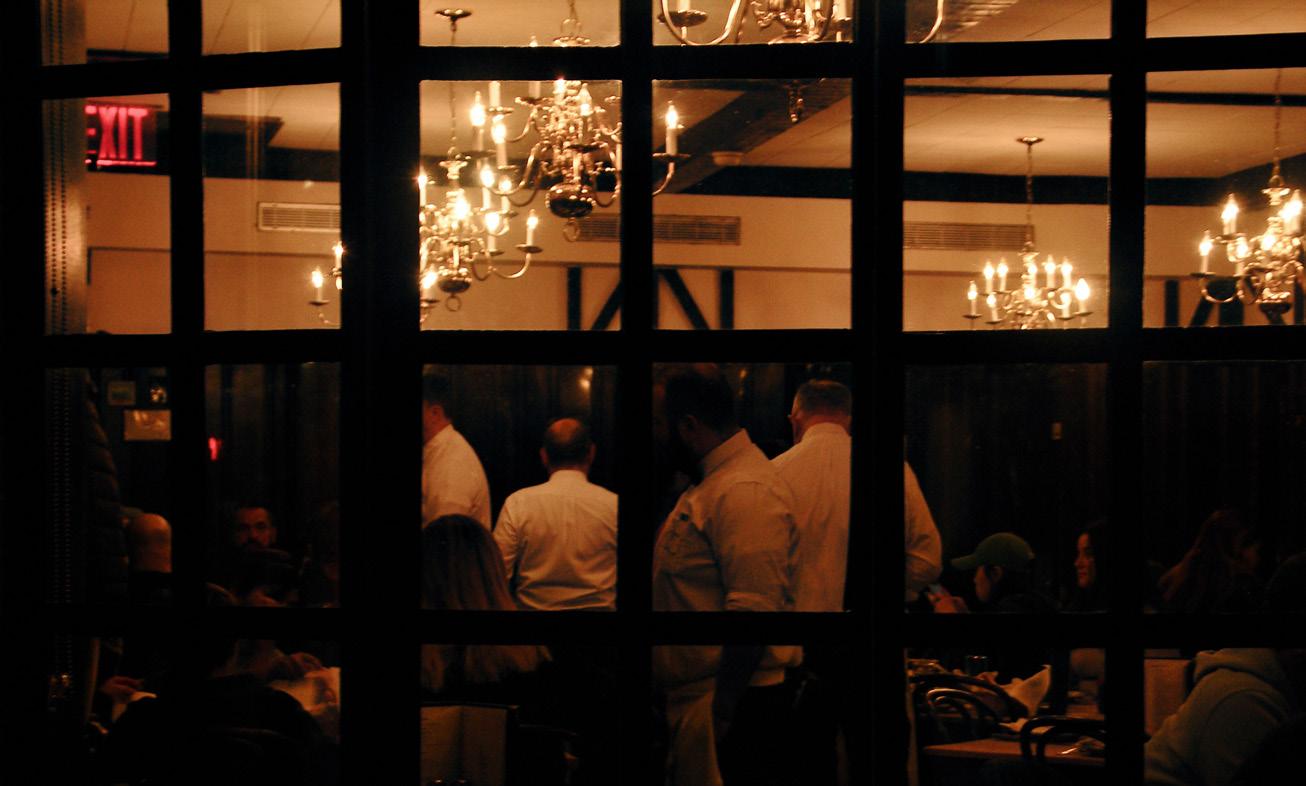
Our theme this spring, “Cotidiano”, refers to the everyday, the ordinary. We wanted to purposefully dedicate time and effort to examine fleeting glimpses in our daily lives that have been left unexamined and unnoticed for too long. In this issue of BRIO, there are conversations about reindeers, a haiku about kittens, a photograph of a gorgeous Williamsburg restaurant, and so many more exciting pieces of literature and art. We hope that these wonderful submissions can help evoke your own images of the “cotidiano”, the beautiful, powerful moments that bejewel our lives.
With Thanks,
Franklin Dong Editor-in-Chief
Tyler Arceo
Kenopsia
The subway skipped my stop. I stare at a sycamore tree. by Sophia Yoerks
The subway skipped all of my stops. Over and over, platforms rushed past; hair dancing in the wind, standing close to the gap, waiting; people on their phones, legs bouncing, waiting. I didn’t listen to the conductor over the speaker that day, so I waited to see where the express would end up. It, although inconvenient, was thrilling. I was leaving. I was gone. The train was taking me somewhere, and I didn’t know when it would end. With each burst of light came the darkness of the tunnel. I open my eyes, the wave washes over me.
I’m back at the creek; the light bounced of the water and left the soft bed in darkness. My windows are open, the heavy breeze falls in and lays on my blankets. The ground outside is still damp, my feet are still fighting the current. I walked under a sycamore tree and made you take a picture with me. You didn’t smile.
I’m back at the bar; I got kicked out so we stumbled around with the moon trailing slowly behind. The lamppost drowned out our footprints in the sky. A mattress leans on a building, the alleyway sat in darkness we longed for. I kissed you when the day went back to one. We decided where the uber would take us and got in. He let us aux. You were laughing, swaying in your seat. I couldn’t take my eyes of you. This is love.
I’m back at the chapel; the lights are of and my legs are crossed. People’s shadows walk past the stained glass, and while the window was slightly open, I only heard the prayer of your breath. I don’t normally pray, but I did that night. I was sitting on the floor, you on a pew, we move.
I’m back at the shore; you are warm. The sun brightens you the way you sometimes allowed me to. It’s perfect. We sit inside, we lay on the bed, my swimsuit dries on the chair. I am sticky with sunscreen, you are sticky with the sun. Salt seeps into my hair, into my skin. The sound of summer churns as we wade into the water.
I’m back at my apartment; the door opened, I heard the laundry running. I set out two bowls, two waters, and two spoons. My bed is not made, there’s no use, the blankets will fall to the floor soon. Infinity is hung on the wall, captured in a moment, stuck between frames. I love you is pinned to my corkboard. You’re doing work at my desk, your shirts are in my closet. I close my eyes.
I got off at Brooklyn Bridge City Hall and looked around. I want to see you getting off the car behind mine, maybe you sailed blindly down the same river as I did. I knew you won’t be here, but I still scan every face. I turned to exit the station. The platform smelled of piss and wet concrete, not the Christmas lights and laundry of your room. You know I think about you all the time. I kept walking, I climbed the stairs, the sun at the entrance washed over me.
I’m standing in a front yard of a house I do not know yet. The door is wide and wooden, the grass is green, cicadas are singing, there’s a tire swing on the tree by the road. It’s a sycamore tree.
Sycamore trees live at least 200 years but often average 500, they live forever for us, we live in our forever with them. As they age, the heartwood of sycamore trees decays first. After it becomes hollow, can it remember what it lost? Do the memories float around in the trunk or lay to rest beneath the roots?
There are no sycamore trees in the midwest. Years ago I woke up and didn’t know who I was, so I decided to go East. Time moved differently; I never saw you coming.
The sycamore tree’s bark is hard, for when it grows it does not expand like most trees. Instead, it sheds. When I began to decay, the mistakes and fights of the past fell to the ground. Before, I would have tried to convince myself that the pieces I had lost would still fit together. I didn’t know a tree rooted so deeply, hundreds of years–or families–in the making, could dance. I discovered they could when, for the first time in forever, I wasn’t afraid of the blood on my hands.
Sycamore trees live in moist, wetland-like environments, but they die when flooded for two weeks or more. When disaster comes, their strength, their wisdom, and their peace begins to fall between shades of water. Down at the end of the bend, I see my future waiting for me. A wide and wooden door, shockingly green grass, cicadas singing, a tire swing tied to the tree by the road. Nothing looked real to me before. We sat and watched the creek flow by. The creek took just as much as it gave.
After taking another subway back, I ended up at the park. The air is warm, my collarbones bathe, my eyes squint. Groups laugh loudly, their necks exposed to the sky, and couples intertwine their hands in secret promises. I sit in the fountain, yet to be reached with spraying water and pennies of summer, and watch. Washington Square Park doesn’t have sycamores. Elm, oak, maple, magnolia, and cherry shield me from the floor collapsing.
I don’t need the hardened pieces of me anymore, I let them fall with the flood. This time, you would let them go, too. You wouldn’t tear the skin from my bones or insult the blood pumping through my veins. One day we will wash up on the shore so distorted and disconfigured no one would guess who we could have been. We would wash our hands, put on our shoes, and walk away, hand in hand under eastern skies–our future at the bend.
Your creek had to come from somewhere, the water may not know where it is going, but it continues to flow. I go with it. The day I learn where it leads, the sycamore at the end of the bend will relievedly sigh. It had been a long time coming. Within its hollow trunk, forever dances. The hardness, the sky, the flood. It all led me home. The hardness of your mind, your brown eyes turning to blue, the ripples along your back. Beneath this tree, I think we can make it. Forever became our home.
I got home and sat in silence. The door didn’t open, but I still had to do laundry. I was leaving New York the next day. My mom picked me up from the airport and drove me ‘home’. Time is slow by the ocean, and there’s no way I can pick it back up. All I can do is wait on the shore. The moon instructs the tide to roll in.
It all began in water, it will all end in water. Flowing through us, taking time away. The waves are rough, the beach stretches far. Towels are spread out and the sun grabs at skin, dogs run up and down the coast chasing seagulls, I sit until the sun sets beneath the shoulders of the world. The sea is its own land. It takes and it gives. Children swept away and communities destroyed; it’s why I wasn’t allowed to go too far into the waves in Carmel. Pillars and stones that were once homes end up on the shore. You can try to piece it together, but even if you do, there’s no way to know where the foundation is. The sea whispers thousands of stories, stories whisper from the sea. Water, whether fresh or salt, ties it all together. They sing the same song, the one that buzzes through our bodies. It is the way music, voices, smell, and emotion is carried. Everything flows for a reason. Right at the end of the bend, where the creek meets the sea, the sycamore still stands. It is where time goes to rest.
Love is intentional, just like words, actions, reactions. We are made of what we make of our situations. Love is tulips blooming on my desk, listening to my favorite song, writing until words cease to have meaning. Love is knowing. Love is forgetting. Love is following. Love is walking away. The sycamore tree still stands, the creek still flows, and I still missed my subway stop. I walk to the other side of the platform that will take me back to where I need to go, I just might be a little late.
the estranged
by Meili Liang
the breath of the milling crowd on a winter night weaves into a scarf, with intricate, milky white patterns from creaking textile machinery.
Granny was no longer around. the news of her death voyaged across radio signals. you swallowed the moon. so common as accepting a holiday greeting. you wander alone, boots soaked by the muddy snow. bad culinary, so simply don’t cook. yet the taverns under your apartment taste bitter as a sigh. with a full moon, so be hungry. you didn’t return to your homeland, and this year either. thoughts of loved ones reduce to dining, napping, brushing teeth. these, the only familiars. rumors. bitter moon. many rumors regarding your homeland voyage across radio signals. though not knowing if they are mere rumors. snow only dirties, not a reflected mirror. and you thought about Granny. for both, you do not know, do not know. with whom you are supposed to be intimate all desolated in the tongues of others. you wrap the scarf among the whispers and contemplate the street above the bitter moon.
How Many Reindeer Are There?
by Dahlia Clark
Upon waking, there is a crook in the nape of my neck, as my dad would say. A bee’s sore sting, a little bit tight, this much sharp, all parts uncomfortable—a neck injury recipe. I thrust up from my bed, dizzy.
This damn pillow!
The $60 Martha Stewart pillow does not exactly live up to its exaggerated height. Why does this keep happening? Every pillow I use fails me. My face is heavy, and my body feels strange and light as I look for my slippers in the morning darkness.
I think I can hear the overture of my father’s voice, the sonorous boom ascending through my floorboards, the words impossible to make out. Charlie Brown’s parents.
I didn’t think he would be home today. He must have the day off, I think to myself. Then, the sound of multiple voices melting over one another.
Who’s here?
I begin to brush my hair.
It could be that one of the voices belongs to the TV.
I unlock my bedroom door, stumbling out into the middle room, the hodgepodge room, as we call it. Our little land that is littered with books and shoes, with empty cardboard boxes and old yearbooks, with time that clings to the walls, evidenced in the chipping paint and in the long line of record-keeping height marks.
I walk past the vacant guest room to the top of the staircase. One voice, now clear, comes charging up the stairs, my brother.
“This stupid state!”
He emphasizes each word slowly and with passion, like my high school French teacher. Though, I should mention her words were in French and never vulgar.
My eyebrows shift, holding up the rest of my face in surprise as I stand by, waiting for him to come up so that I may go down.
“Another ticket.”
He says, not to me, walking past me and into his room. He does not slam the door, and I take particular delight in that. There is nothing I hate more than the sound of doors slamming.
The January daylight is powerful, pulsing through every window, crashing up the staircase, chasing our school pictures on the walls. I squint while adjusting to the sight.
I am met by my dad in the dining room, writing something in his workbook, seated in the last chair on the right side of the table. Actually, my seat.
“Oh, you are here!”
“Yes, I have today off.”
I lean down, slinging my arm around the top half of his left shoulder, giving a little squeeze.
His big black glasses are situated on the tippy top of his strong nose, barely hanging on. Like a child inching closer and closer to the end of the high dive.
He doesn’t look up.
“What the hell kind of hug was that?”
A half-hearted hug physically, but not in any other way.
I am already in the kitchen, breaking out the bread for my breakfast toast and rummaging through the top cup shelf for a coffee cup. I had in mind the black Outer Banks mug, gifted from neighbors, who are not neighbors anymore, as they have moved to Georgia.
So then, why is it that we still refer to them as neighbors? If someone were to ask me how did you acquire this amazing Outer Banks mug? I would say, well, it was a gift from my neighbors. My face brightens with the thought.
“So what’s next? You make your breakfast and then go and read?” My dad says, still not looking up from the notebook. I look at him from the passthrough.
How many more mornings will there be like this?
“You know the routine. Making my famous breakfast now.” I say, trying to decide what fruits to get out.
The stairs creak with loud footsteps as my brother makes his way back down the stairs.
“Hey Dad, can you come here for a minute? I need to show you something.”
My dad makes his way into the bathroom, where my brother asks him to finish his laundry loads and follows up with instructions.
“So, wash it on cold, quick wash, and regular.”
“Oh my gosh. I don’t know if I know how to do that. I never do laundry. I have never used this new machine.
My dad complains—he is a certified complainer. Completely obdurate to technological advancement of any kind.
I am listening in from the kitchen, practicing the art of knife-slicing bananas thin enough so that they all fit on my toast. I usually acquiesce to the use of a spoon, as it is much more convenient.
But today? No, not today.
“Okay, yeah sure.” Dad finally agrees to do laundry duty.
“Where are you going to be? Are you going somewhere today?” He asks, more curious than confrontational.
I glance back at my toast, making sure it has not caught on fire. If I had a tally of how many times my toast caught on fire, well, “Oh Gosh,” as my dad would say.
My brother and Dad are making their way out of the bathroom, through the dining room, past the living room, and into the kitchen now.
My brother walks in first, eyebrows raised and still irritated about the ticket, I would guess.
“I’m going to be dashing all day.”
DoorDashing, he means.
“Oh, you’re dashing today,” Dad says, as if coming to a conclusion. There is an edge in his voice that indicates a certain sarcasm. The backdrop of my childhood.
“Dashing, Dasher, and Dancer!” he says, his green eyes opening up like a dark river.
The smile that comes to my face is instant. Magic.
Crossing the kitchen with recyclables to the garage, my dad is entirely amused with his joke, and I shake my head, laughing in compliance.
He is gone for a moment, and there are no sounds, save for the quiet boom of the news channel in the kitchen.
I think I’ll do raspberries and strawberries on the side today.
The kitchen door clicks, and my dad is back. I place five raspberries and three strawberries into the medium white strainer.
“How many are there?”
The sink water is scalding hot, as always, and I rip my hand away before turning to Dad. The light falls on top of him, rushing over his sandy skin. A chameleon in the sun, I think.
He clarifies himself.
“How many reindeer were there?”
He is still amused with himself.
“Santa’s? Oh, I think eight.” I am smiling again.
“Eight! Eight reindeer—”
“No, no, no! I think ten!”
“Ten reindeer!”
We are laughing, the light in the kitchen blazes against the walls, and the heat from the sun has made its way along despite the freezing cold outside.
“Dancer, Dasher, Rudolph!” he says.
We are listing the reindeer now.
“Oh, and I think, um, Prancer, Vixen! Don’t forget Vixen. Donner!”
We are laughing hysterically.
How could I ever describe this to someone?
It dawns on me that I cannot remember a time when he was not grey, not bald, not old. No, never a time when his right leg did not limp, always being dragged slightly behind the other, like an old dog on a leash. Now, there are streaks of white in his eyebrows. Well, the eyebrows that are left.
I am startled by the sudden stinging in my neck. My eyes hurt a little now, too, pressurized by impending tears. I turn away, as if there is some sort of strange perversion committed in the awareness of time.
“And you can be Rudolph,” Dad says, making his way back to the dining room.
He looks at me then.
“What happened?”
“I just burnt my toast.”
I balance my breakfast plate against my belly and my coffee mug under my chin. I meet Dad in the dining room. There is a cloud of white coffee steam flying from the mug.
A thousand little ghosts.
I bend my face down to the moist steam until the tip of my nose feels like sweat.
I look at him then, biting into the charred toast. “Surely you don’t think you’re Santa? You can be an elf.”
Outside, the snow has just started to spin, and the burnt toast is softened by sweet honey and damp fruit.
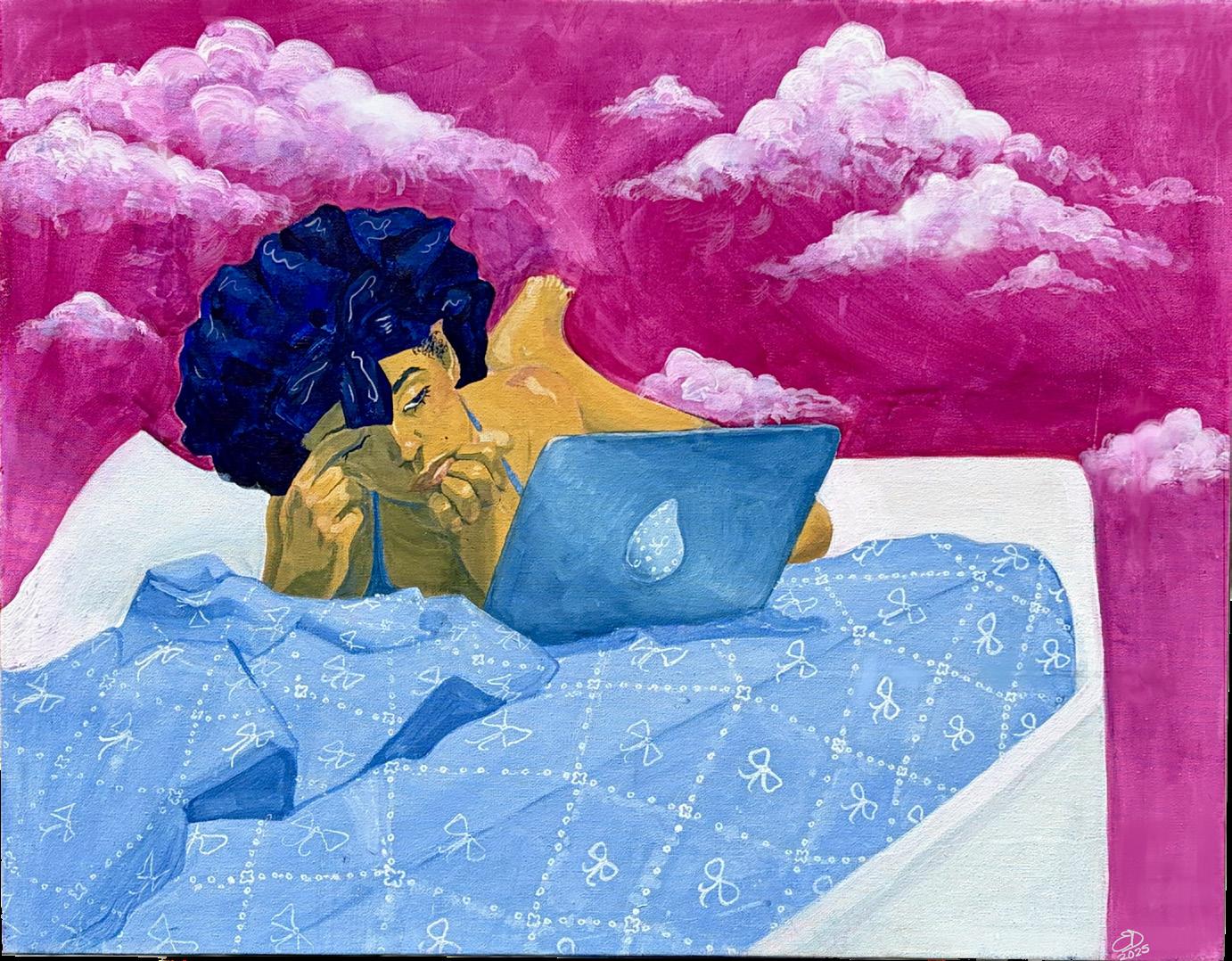
Just Laying Around Elizabeth Desjardins
Masha Ivanskaya
Vivid Dreams
Route B46
by Miki Raz
It was the last day of the City of Dreams and the first night of the City of Work. The world was upside down, and the sunlight was blocked by the entire solid earth above me. A cold wind tore every last leaf from its tree, crumbling to dust under pedestrians’ feet. I was approaching the bus stop.
A shadowy man, dragging a black garbage bag full of desire, struggled to balance a takeaway coffee on the thin cardboard edge of an open box. Before I even reached the pole, he floated towards me, coffee in an outstretched hand. Dhubankicoffee? he asked. It appeared in my hand before I said, ‘No, not really.’ He pulled a mostly burnt cigarette from behind my ear and held it out to me, his eyes wide above a slight smile, as if he was doing me a big favor. ‘I don’t want that either.’ I laid the coffee down on a passing ream of mist. ‘And I don’t have a lighter, if that’s what you’re asking.’
‘Do you know when the bus is coming?’ I asked. He responded with what I can only assume were humanity’s first words. We stood in silence. I scanned the bus stop information panel, he pulled out his own lighter. A satellite 3,000 miles away received location data from the MTA and sent it back down to my phone, he took a shallow drag and blew out an inordinate amount of smoke. ‘Two minutes,’ I told him.
From under his fingernail, he pulled out a flimsy, clear sheet of plastic. He dangled it a few inches in front of my face and mumbled incoherently. It was too close and too fast to read, but I could tell half was in English and half in Spanish, on either side of the sheet. It looked like a newspaper front page, with a picture of a woman on a stool taking up much of the space. I waved my hand and said, ‘Get that out of my face,’ to which he immediately obliged and did not apologize. We stood in silence again.
How tall are you? He blurted, looking at me through the side of his head.
‘Five nine’
How old are you?
‘Twenty two’
What’s your name?
‘Miki’
Who? he exclaimed, the eye bulging from his temple blinking thrice.
‘Miki,’ I repeated emphatically.
The bus came just in time to drown out his next question with the shuffling of its million metal feet over the cracked and salty ground. I stepped on, paid, and looked for a seat where I could avoid my new friend. I slipped into the last single seat along the window, just across from the back door, leaving him all the empty double seats in the back.
As he passed, he grunted a salutation and held out his fist. I touched my knuckles to his and said, ‘See you later. I didn’t turn to watch where he sat, but felt the bus settle to accept his choice and heard all the vermin aboard scuttle towards him.
I took the second half of the sandwich I had stashed in my pocket and bit into it. It was chicken milanesa, on a torta. (Acquiring this delicacy had been quite a struggle; I ordered a milanesa regular, prominently featured on the GUERRERO DELI CAFE menu, to which the sandwich man asked what I wanted on it. All the regular things, I said, which had been so good last week. He had no idea what I meant, and I didn’t either; I just ate whatever they gave me. I told him this and he “invited” me to watch him prepare the sandwich, and explained to me every ingredient and bread option. It was 12 dollars.) I gazed out the window and chewed thoughtfully, despite having almost no thoughts. I watched the buildings crawl past and crumble to dust behind us, the green metal pillars holding up the train above us
strain under their own weight, and every lonely coin collector, pizza degreaser, and laundry thief plod by on the sidewalk with heads so heavy their necks stretched an extra four feet. A man in the front of the bus flopped over across three seats, feet swinging in the air. The driver left the bus to its own devices and turned around to yell at him.
On the corner of the darkest street in the world, the bus stopped and kneeled to let the old woman in front of me off and pick up three new passengers, one of whom sat directly in front of me. His hat billowed out to an enormous size as his head expanded with the smell of my sandwich. Just as the doors closed, my old friend shouted from the back Open the door, stop, I’m getting off and numerous other interjections and profanities, somehow all at exactly the same time. He shuffled down the steps and gestured at my sandwich: Kivmedhlashtpiez. ‘No,’ I said with a forlorn look and tears spurting from my one good eye, ‘it’s my last piece.’ He turned and struggled to fit through the wide-open double door. The man in the hat turned to me: “Did he just ask for your sandwich?” ‘Don’t worry, I know him,’ I said with an eye roll, as if I had been dealing with him for years. He immediately jutted his chin at my new friend, and said, “What the fuck.” My friend, while struggling with the door, had so exerted himself that he immediately lost 40 pounds, and his sweatpants hung around his skinny knees. I looked back at the man in the hat and shook my head in disappointment, like the parent of an unruly child. Allowing his buttcrack to be cooled by the night air, my friend finally stepped into the street.
The doors shut and the bus continued. I finished the sandwich and cracked open my 99-cent can of non-carbonated, delicious and nutritious chemical death. I reached my destination, got off the bus, and threw my garbage on the ground where it was immediately ripped apart for spare parts by minute repairmen.
Restrooms
by Gabino Talisayon
As if to say, subtly, the homeless man surrounded by his invisible radius of yellow caution tape urinating into the shallow abyss of subway tracks is savage.
Meanwhile, I and the millions of my colleagues simultaneously unbuckle our black leather belts, unzip our brass flies, let out a collective breath as piss splatters onto urinal walls, the little sparkles rebounding onto the hems of our shirts, the backs of our hands, the fabric of our khaki pants—our bodies merging, obscuring, performing a singular, perverted ritual; each flush an absolution of sin and obscenity. Who’s to say that under those flickering yellow lights amidst the familiar melange of bodily excrement seeping through the damp floor, the peeling walls, our skin
—as if nature dictated the forces dragging our hands and bodies into those convulsive gestures—
who’s to say we must be human?
Who’s to say that we are more than dust, that we are conscious and alive?
Thankfully, on the way in, they were kind enough to remind us that still we must be men.
Watching Paint Dry
by Miki Raz
Painting with broad strokes (or broad brush) – making a general or sweeping statement, first attested 1808.
To paint someone into a corner - to force someone into a situation from which it is not easy to escape, first attested 1913. Like watching paint dry - an activity being particularly boring or tedious, first attested 1959.
The painter didn’t agree with any of these adages. A broad brush sounded like a more effective tool that could get the job done faster. Painting someone into a corner was no problem. Over many years, he had honed his craft to be able to paint in corners without making a mess. Watching paint dry was one of his favorite pastimes. He loved the way the color slowly shifted, becoming less shiny, more rich, and usually more brown, even for blue paint.
His assistant thought that the English language could use some more painting metaphors. He hadn’t popularized them yet, the phrasing not quite to his liking, but he knew the feelings he wanted to evoke. A layer of primer –an entirely different color– underneath makes the final color stronger… something about adequate preparation making a better outcome. Or maybe about how the best things have a contradictory layer underneath, complicating the beautiful surface. Blue tape, the novice’s crutch, helped avoid the mistake of getting paint on the wrong wall, but was a real hassle to pull off after the paint dried, and almost always left a residue or ripped off flakes from the intended wall… something about how something easier in the short run could result in problems later… beware of shortcuts already covered that, in much easier language. The repetitive motions of house painting evoked in him some sort of physical poetry that he could not express in words, only in the subtle ache of his arms at the end of the day and the fine mist of red splatters on his fingers.
Hardware stores do not carry every possible color of house paint. Actually, they only carry 5 types of translucent white, which have different sheens going from glossy to flat. Every color of modern house paint is created from a specific ratio of 12 different pigments squirted by a machine into this translucent white base and mixed together in a shaking machine. The assistant loves watching this process and flirts with the color expert, betting with her how much of each pigment will go into each color. He finds the machines and the color expert beautiful. The painter stops by the hardware every day to flirt with the color expert, too, but he never buys anything, doesn’t watch the machine. When people ask for his opinion on colors, he has a short answer. “It depends what you want,” he says. The color expert, on the other hand, can talk for hours about a single shade of green; the way it cancels out the orange in wood, reflects off porcelain, scurries aside when the sun streams in through the window, shouts when sprayed by water. “Color changes everything,” she says, slowly waving a pale green swatch under the bright overhead light, intently watching a customer’s eyes watch the light reflected off it. “You need to take everything in the room into account, let alone all the cultural references you might unknowingly be alluding to when choosing to paint it in your bathroom… I’d recommend SW 6466 Grandview.”
The color expert always wore all black. This was not out of fear of spilling paint on herself at work, but rather fear of standing out. She wished to wear bright colors but couldn’t quite figure out what shade went with her olive skin. The painter and his assistant were both very fashionable – they wore silver rings, colorful shoes, and wide-leg jeans. Their jackets were vintage: striped windbreakers or colorful corduroy with fluffy white linings. When on the job, of course, they had to change out of this raiment and donned instead white pants, long white button-downs, and tight white caps. The assistant was confused as to why the uniforms were white rather than black. Clearly they were meant
to protect their underclothes and hair from paint drops, but he hadn’t yet worked out why clients liked seeing paint splashed all over their work clothes. In all black, their mistakes would be less visible.
The painter charged 62 dollars an hour. This was the highest hourly wage he had ever received. In his youth, he flew transportation planes for the Air Force, then barely survived as an actor in New York, and started painting walls just to make ends meet. He eventually got sick of acting anyway, he didn’t like always pretending to be someone else. Clients often asked him if he painted as an artist as well, or only other people’s walls. He joked that he’d stretch his dirty dropcloths over wood and submit them to an art gallery. The assistant wholeheartedly believed that he would actually do this, and that any gallery would be lucky to display such works of art. He himself dreamed of being an actor in New York.
The assistant imagined the painter to be his mentor, unfathomably wise, and waiting for him to ask the perfect question before revealing to him all his knowledge. He knew the painter had a daughter who was a mistake and rarely lived with him, and that he often worked weekends. But this schedule was not strict; he never committed, just saying, “Yeah, I think I may come back tomorrow”. When he was finished with a house, he would leave his equipment there until he had another job, and the clients never seemed to mind. The assistant could only dream of being such a blade of grass in the wind.
They usually worked in silence. The painter didn’t mind music or conversation, but he never went through the effort of setting up a speaker or thinking of topics to discuss. The assistant brought a speaker with him, often trying to impress his boss with obscure music from foreign countries. Once, while painting someone’s new vacation home living room deep red, the painters listened to Beck’s entire discography. The assistant assumed the painter didn’t notice.
The assistant debated whether the painter was at peace or depressed – the only reasons he could imagine someone would be so resolutely silent.
One day, looking for a reason to break the silence, the assistant asked the painter for advice. “When I’m using the roller, how do I avoid the lines showing the path?” The painter didn’t stop rolling, and only the sticky khwek-khwak sound of the roller could be heard. “When you find out,” he said, “let me know.” And laughed, so quietly the assistant never heard.
Ode To My Lover
by Liepa Januskaite
All one could ask is to be oil on your scalp or lint in your belly button or chia stuck between your overlapping bottom front teeth.
As food stuffs stuck in your canines, I would swear to nourish you. Underneath your ingrown big toe is where I wish to make my bed.
I swear to worship you.
Your eyebrow piercing crust, bleeding hangnails, waxy ear ridges, top surgery nipple scar pus, I’ll nest in it all.
There’s not a humour of yours that I don’t admire.
Blood, phlegm, yellow, black bile — post dinner candy to immerse myself in.
All I could ask is to make home in your humours, or just the oil on your scalp.
Williamsburg Abdul Alsaidi
Louie & Luna
by Eva Salvatierra
I had a dream about my old cats last night. I couldn’t remember if they had died before they crossed into the snow globe of my Consciousness below freezing water
They were in the corner of our garage, on the table, meowing for food.
The orange sound made shock slice my stomach open –Had I forgotten to feed you for years?
Didn’t you run away from me?
Or I suppose I abandoned you in a building, so that would make it
A morally righteous surrender
If you are sad with walls, a floor, and a lock
At least you are inside
There were always maggots, fleas, and open carcasses, The insides of rats laid out like petals
Or gold earrings in my room
They were so proud and I was so revolted, unsurprised, And a little relieved
I was still their favorite
Since they liked so few things
Do you miss Palo Alto like I do? In uncomfortable static thumps? I recall the fear in Louie’s yellow eyes from his crate in the minivan. I remember years earlier, clutching him desperately at the vet
So he wouldn’t run away and I could feel his tiny heart
Escalating next to mine
My nose buried in his warm neck
They used to adore each other before we moved into our new house – Louie & Luna.
We found them with limbs intertwined in their bed in the basement
when we moved and thought we lost them – we were all so
Happy they weren’t injured (though dead would have been better for the bills) that the dark piss stains christening on the white rug hardly bothered any of us
That was the last time I can remember them when they didn’t hiss scratch and run from each other
They loved me separately, with a persistent and perplexing devotion; They took turns
On my lap, would run to me when I snapped
Did I become less of your person at fourteen than eleven?
When I learned how to close doors in the evening and take photos that weren’t of you,
And I jolt awake at 21 with a panic that you are dying somewhere in California
The place I took you in and left you for someone else, at a shelter on the side of a freeway
It is so cold in New York, the kind of chill that makes you long for fur
For closeness and understanding that occurs without Human speech
Did I mention that same night – I don’t know if it was before or after –
That I dreamt of him
That I was soft and not sparkly
And that the world purred beneath my arched heels began to fall as we embraced
He pushed away the bleeding body and the severed tail I didn’t have to present him the organs, I didn’t have to die giving away my stomach, or putting them on display,
I hope for a corner without a cage
That smells like steadiness but tastes like summer fruit
A collar and a screen door, no words and complete
Satiation
Like when I walked into the shelter and knew those cats were mine
g r e y
by Karsten Erskine
since it’s sunday, the schools are out of session, and cloud got the memo: rest a day. so fit it seemed to sit over madison. between evergreens he’s lodged, thick body blanket: grey wool, fat fingertips that stretch to forever through treetops. the cars have all taken ill. fever draws sweat that beads in droplets pooled on their faces. no sick day, a man drives on road unfolding while wheels find pavement, and headlights push in vain against the grey. since it’s sunday the air’s gone mute, and no one exists. alone, driver listens to rocks roar in whisper beneath four wheels and presses his foot into the gas until streetlamps ceases to issue from wet air.
Maggie by Liepa Januskaite
We can sit outside on my cracking loved white bench that matches the stretching white roses.
I hope you like the tablecloth It’s purple and pink with flowers, and I know you love flowers. I baked lemon bars yesterday and added extra sugar for your sweet tooth.
I don’t want to impose, you say.
Really, it’s no worries at all.
I watch you paint your nails the brightest shade of pink you could find. Our cheeks are nearing the same rosiness from the afternoon’s indirect sunlight and humidity, from which we are spared by an occasional hug of a breeze. Our laptops are draining battery and I keep moving the touchpad every time the screen sleeps, even though I know we will talk for another hour before comfortable silence falls.
We trip from mundane day recaps into lectures on politics, religion, and economics, as we always do. We fall into democracy, if you think that it exists these days, what it means to love one another when the world is hellbent on hatred, if platonic and romantic love can be distinguished.
I do not think there is a distinction. My friends are people I, in another universe, could imagine loving unconditionally, as a partner. I mean to say, my heart is aflame at the thought of being in your presence. You deserve love that is as kind, patient, and beautiful as you. I’ve spent my last couple decades deciding what my purpose in life is going to be, and because the answer is that I am here by chance, then it is by determination that I will love those closest to me, you, with ferocity that can undo individualism.
I beg of you, fill up your water bottle from my faucet, ask for my recipes, spill your nail polish and ask for my help to clean it up. Impose yourself, because your existence cannot be inconvenient. That’s so kind, you say. It’s just the truth.
Do you want to bake together tomorrow?
Because You’re a Cat Person
by Quinn Hochglaube
You date. You date the same person for a while. You become the same person after a while. And it wasn’t that you planned to date — the only time you ever planned to date was when you were trying to get back at that one girl from high school a long time ago. You think maybe that was the happiest you’ve ever been, but you know you are wrong. You’re happy now. And maybe, this is the happiest you will ever be. In the back of your mind, this truth, this promise, is always there. So you date. It hurts to hear: “How long have you been dating?”
We’ve been dating for this long. I’ve been dating this one person for this long. And I’m not bored. I am happy.
Can’t you feel the suburban white picket fence growing right through you? When you hold hands? When you kiss in the street? It’s pierced the skin of your sensibility, the very guts of your identity. You date. It makes everyone happy, all of your family, all of your friends. It makes them calm. You’re better when you date, when you have someone to think about besides yourself. When you have responsibilities. Even if those responsibilities really only consist of consistent sex and going to the other half’s corporate events. Birthday parties, engagement parties, baby showers.
You’re better. You’re not so depressed, so aimless, at least this is what your dad says. He says having kids did the same thing to him. It filled his extra time with countless tiny tasks, tiny shoes, tiny clothes, tiny things. Tiny hands groping for him so that the depression could not. Maybe you will have kids– but for now, you date. And it gets to be normal, you and this person. You date long enough to forget how much your parents hated her for not being the right religion and how much her parents hated you for not being the right race. And then you date long enough to remember: “Aren’t your parents racist?”
“Aren’t your parents antisemitic?”
“Oh my god, that doesn’t count. They’d never met a Jew before!”
“You grew up in LA. What do you mean they’ve never met a Jew?!”
“LA is giganti— you know what? I’m not talking about this right now.”
“Fine.”
Fine. Right. Fair point. You take the draw. You’ll take a lot of draws when you date the way you do, a lot of draws no one told you about. When you consider where to go to dinner, you’ll stay in instead and eat in silence. When you can’t decide whose family you’ll visit for Thanksgiving, you’ll stay in the city and meet up with that one friend you both share.
You take the draws and you date and you date and you forget why you even bother. You begin to wonder what your water bill would look like if she didn’t take such long showers, or maybe if there wasn’t a “her” to shower at your place at all. You weigh this against learning to sleep alone again, having to take out the trash by yourself, telling your friends, your family. You weigh her showers against not dating anymore. Or at least for a second, because ending one relationship means dedicating time to wait for another. You think again, it must not be in your nature to date — not like this, not for this long. When you lie awake at night, you wonder what she’ll tell her friends when this is over.
You think about everything you’ve been through with her and you imagine her telling that one friend she complains about endlessly: “I took him to the ER when he sliced his hand open the one time I let that fucking idiot try to make me dinner! I flew to fucking Montana to meet his family! I took care of him when he got the flu and wouldn’t get out of bed! And my mom never liked him and he lied about that promotion he was up for at work and his hands are too small and he doesn’t own a single pair of pants that fit him right and he gets car sick too easily and he’s gluten-free and a cat person and obsessed with Shakespeare and actually not that tall anyway and, God, I should have known!”
“I
should have known,” is what she’ll say. And she’ll have been right. Because you should have known too. But for now, you date.
pervert on a crowded bus by Charlize Chavez
I want to buy a ticket. Board the late afternoon bus. Touch my forehead to a cold frosted window as it rattles. Plug my ears with songs and chew the words in my mouth like gum. Then settle for the sides of my cheeks.
I want to think only of your unbecoming hand when I do Its chemical washed knuckles, cut fingernails, and thick hair running up to your wrist
I would love to imagine it balled into a fist.
Punching into everything that I eat and drink. Smashing through my piano key teeth and upside my accursed head. Everyone knows a bus ride is required to think nowadays. Only en route are we allowed to wallow in our overly processed misery.
It is the only time I may even dare to want your heavyweights for arms. I’ll pinch at my legs for indulgence in things that are indecent and unfair to me
Only I will know about this but maybe... the lady reading a bible across from me, a highlighter hanging from her lips like a cigarette, will somehow smell it on me.
Haiku for Charlie
by Karsten Erskine
Kitten on my chest; could I make a sound alike, two motors we’d be
The robot
by Eva Salvatierra
The robot came to me in the middle of the night
It asked the same question
I wish you were an alien, I said
The dew smells like wet dirt, invisible fairies, a sparkly orange shirt, inside out
My head was below sea water yesterday, I felt honest with myself but also less freshly bruised
The red horizon stretched and thinned before me
Potent and breathtaking, spoiling my appetite for vigilance I walked half a mile without feeling my feet
Circles can be beautiful and Violent
A hurricane is built through motion
I am sick right now, but I know the smell
Of the neck, right before the earlobe
Like when I know when my laundry is dry I only have a favorite color for a day at a time
The coastline bubbles and froths like Champagne
I hear the muffled sound of a UFO
With this fever, I enjoy the way the sun feels more Than anytime before Robots get sleepy around me
The photograph doesn’t look like the face I imagine I dream of the ocean and of outer space
Of ghostly foreign kisses with familiar faces
I am haunted by every singer, artist, lover, painter, Sea creature, And extraterrestrial
Don’t you understand?
I have been waiting my whole life to become you
You are the last thing before I sleep
You are the uncanny in the mirror
I have twisted my ankle in five different places
Gritting sand between my teeth as though that would make
Any prominent landscape chokes me and engrosses me – I don’t stutter when I cold plunge
please believe me
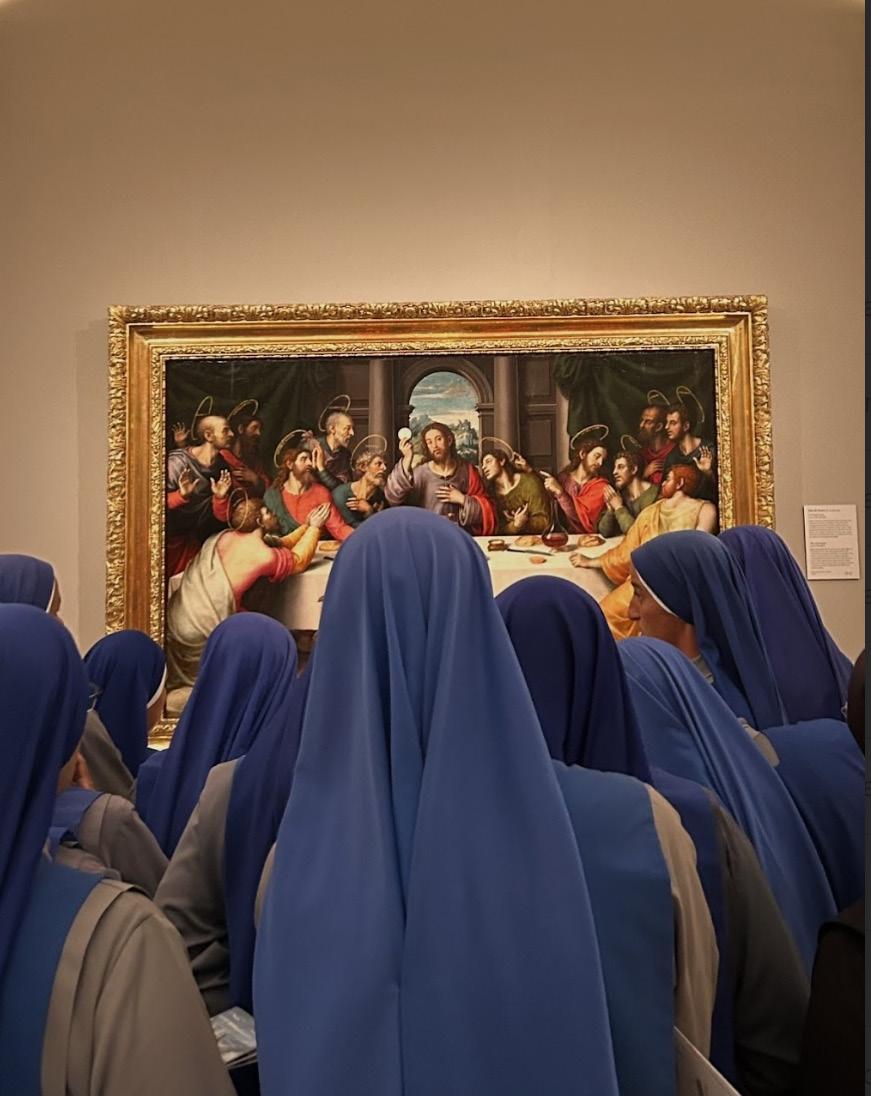
Leon Das Nuns and a painting
Are you listening? Sonic Resonance of Emmelie Prophète’s Cécé
by Marley Correll
“The Cité of Divine Power was essentially noise. Noises muffling other noises. Shots fired in broad daylight to frighten a shopkeeper who didn’t want to pay the fee to the gang of the moment that was extorting him, radios on full volume, each broadcasting a different program, neighbors arguing, screams of children getting beaten, skinny little kids running around, playing, handicapped because of some accident or another or because their parents had drunk too much alcohol or smoked illicit substances during pregnancy, and who endured the cruelty of their friends, far too many kids, which testified to the elevated birth rate, the products of short-lived love affairs, rapes, or a miracle of God himself even. Young women who prayed all day long maintained in all seriousness that the Holy Spirit had impregnated them, and recounted their dreams to wide-eyed lost souls so desperate they would believe anything. The unhinged (all too plentiful), the drunks, the junkies, people crippled by the last earthquake or the victims of gangs, the blind, the departed, the grieving, the preachers who shook God’s hand several times a day, vendors loudly selling their wares, the bony dogs who all looked the same sniffing everywhere in search of food, hopping along on three paws, one eye missing or with an infected wound because everyone let the stray dogs have it, for pleasure, out of habit, for something to do; throwing stones at them was a reflex shared by children and adults alike” (Prophète 40-41).
In her novel Cécé, Emmelie Prophète employs intricately crafted prose to convey the sonic world of Haiti’s capital, Port-auPrince. She situates the Cité’s sound as both a backdrop to and a representation of its daily commotion, building a relationship between readers and the text that is grounded in the senses. The block quote above acts as the primary influence for my audio project, Are you listening?, in its linguistic and formal representation of the
city’s cacophony. Here, Prophète builds a landscape of sound through exemplary language, emphatic repetition, blunt descriptions, and “noises muffling other noises.” Through its language and form, her writing paints a picture of the city as “essentially noise.” Are you listening? follows Prophète’s example, and puts into audio format the layered structure and somatic experience of her writing. Stacked one after another, the self-recorded tracks combine to create one landscape of sonic resonance in Cécé’s Portau-Prince.
My audio project comprises recordings of voices, laughter, objects clashing to the ground, knocks, footsteps, rainfall, whistling, humming, lawn mowers, wind howling, dogs barking, and other sounds stacked (and nearly indistinct) to build up a reflection of the Cité’s “usual racket” (Prophète 1). Importantly, though, Are you listening? does not seek to mimic or assume the sonic landscape of Port-au-Prince; indeed, this audio contains a “racket” of its own, filled with my voice and the voices of my neighbors, my clumsiness and the sounds of my home. My project, instead, provides an alternate medium through which listeners can become, albeit briefly, as entangled with noise as Cécé.
In the novel, Cécé’s front door is a physical barrier between her interior self and the city’s life outside. Though her walls are far from soundproof, there’s a palpable silence in her home after Grand Ma’s death. Cécé describes that she “didn’t know a house could be cloaked in so much silence,” and that it came “despite the occasional gunfire that still ripped through the night or wounded the day,” and even “despite the constant noise and chaos of the City, arguments between neighbors, prayer meetings held night and day…” (Prophète 20). This kind of silence is a feeling, and it represents her insolation and isolation within her noisy city throughout her grief. With this in mind, I begin my audio project with the opening of a door, an aperture into the noise that follows.
The rest of my project follows a sonic arc, a crescendo. It begins with only two overlaid tracks, then six, and then eight, until we ultimately reach the height of the work, at which there are 52 overlapping recordings. At this height of the composition, we hear
the ding of a text message notification, followed by a constant hum of typing on a phone keyboard. With the ding, each layered sound starts to drop off, eventually leaving only two tracks: one of footsteps and one of text-messaging. With a final ding of a text notification, the listener catapults into five seconds of total silence, a moment unpopulated by noise. My incorporation of this technology seeks to reflect Cécé’s use of technology as an escape from her life in the Cité, as a “link to the world [she] want[s],” to her “dream [life]” removed from the “real” one (Prophète 69, 70). When she is on her phone, the rest of the Cité may as well disappear. The entrance of the texting track removes and disconnects the listener from the previous noisiness, much like Cécé’s phone removes and disconnects her from her city.
I move through the world particularly attuned to sound, to the tone of my loved ones’ voices, to echoes, to spoken words, to drips of rain, to frustrated breaths, and the rhythm of my gait. Are you listening? draws on my care for all things sonic to represent and convey the somatic resonance of the noise in Emmelie Prophète’s Cécé. In its arc, composition, and somatic impact on its listeners, my sonic landscape ushers its audience into a world of sound, a landscape of noise that connects its listeners to Prophète’s setting, language, and prose.
Works Cited
Prophète, Emmelie. Cécé. Translated by Aiden Rooney, Archipelago Books, 2025. Marley Correll’s audio project is available in full at briojournal.com
A fantasy about finding home
by Hadeel Bahaar
When you speak your Arabic, the consonants so strong and unapologetic and harsh and offensive, they bring mine right out from their usual hiding spots After these five years of غربة five years of اعوج لساني, twisting my tongue in translation in the necessity of being understood. But you make me lose the fucking شوs and هيكs, you make me speak so thick and awful and offensive and sing-songy and whatever else they call our little dialect full of loan words from Persian and Hindi. All my Arab college friends wouldn’t understand half of what we say. I am here now, with you, and I let my mouth make the sounds my mother taught it one by one. You know I never had a lisp?
You tell stories the way my uncles do. I don’t understand how you get the setup and timing so exact, build the punchline tension so thick you could cut it with a knife, make the simplest story hilarious with the world’s most accurate impression of your past self. I wish I knew you then, I wish I knew you always, I wish we had met at one of the million times we were surely, surely at the same place at the same time, because Bahrain is way too small. There are no invisible strings in Bahrain, so I will find all the people we have in common, I will make us compare where we were at every day in our lives and count all the times we were so close, the times you were still a familiar stranger. I will write the world’s most boring and numerical foreword to our love story. With you I count and I date and I write down precious history.
I admit, there were a couple of boys before you, before I left. With fresh drivers’ licenses, they drove me around Bahrain, gave me summers to remember. We found hidden spots by the water, watched for police headlights in the side mirrors, and managed to not get caught. We moved through gentle hurt, contradictions,
shared anxiety of being known and therefore caught, soothed by sweet words and Ali Bahar playing in the background–it all felt like home. And now I have come back, an attempt to crawl back into my mother’s womb, apologize for leaving, اعاتبها على الي صار ask her why she stopped loving me as tenderly after I left and became who I am. I want to ask her why she stopped loving me as tenderly after I left and became who I am. Bahrain has just started to love me back, and I’m giving her the chance to. I want to love her properly. For the first time since I was eleven years old, I feel I can love وطني in a real way. And I need you to show me how. Take my hand on this journey back to a place that never quite took me in and help me find a little corner for us, sanctioned by a marriage, by being old enough together. My darling, I am so scared. I am so scared of this unknown, of these highways and cameras and eyes all over, I am scared to be seen and known by the people who love me the most, I am scared of being too loud and losing the love that touches my heart like no foreign other, the casual, easy affection like my mother’s and her mother’s.
My mother has kept my bedroom exactly the same since I left. Sit with me there, under the yellow nightlight, and stare at my ceiling with me, stay up because it’s summer, look at the pink jello thing stuck to the ceiling since I flung it on a lifetime ago, turn on my ceiling fan with a gold circle in the middle, and dream with me the way I dreamt of exile for so many years growing up. Love me with childhood innocence—I lost mine here at seven and sixteen and eighteen—and come with me to the soft places I found in the pandemic year before leaving. Drive with me aimlessly around Saar, a maze of curving suburb. It’s on the way to Manama, where we’ll go by the water, then over the new bridge to Muharraq and the new developments on new islands, eerie and never ending. Laugh at me not knowing my left from my right or my way around the streets I grew up on. Laugh with me, sit in my passenger seat, rewrite my rules,
and give me permission to be who I am. The old poems in your letters come with no hesitations attached, no guilt over the music, no “but” at the end of why I like you, no wall in between. No wall, so I fall and I fall and I fall. You love me. You love me with clear eyes, with intention, in the quiet where there is no timer ticking.
Take me to the water, and let’s pretend like the sea isn’t going anywhere, and that Bahrain can still claim its name. And maybe it actually could, maybe it’ll live within us, my sea and your sea, my love and your love, بحري
, no matter how metaphorical, no matter how long gone. I want to tell our kids about the old beaches as our parents did, about how they pushed the shore away, and the coral, and the fish. Let’s name our firstborn Lulwa. I want to be Abu & Um Lulwa, wouldn’t that be so sweet? The pearl died once; let’s keep her name alive so she doesn’t die a second time. Our love is an ordinary, supernatural-because-it’s-Bahraini kind of love, a love that slowly breaks down the hard parts of me like the Karbabad tide to the rocks. A love that is only the good of what we are, the evergreen old palm braving the sun for me to sit under her, the fiery pink Jahanamiya throwing her petals across the open space and in front of my grandmother’s door, the sweet red tea, the generous, the over-the-top, the forgiving, the familiar, the sing-songy and loud and offensive to foreign ears. A love I can call mine. A love where I will stay.
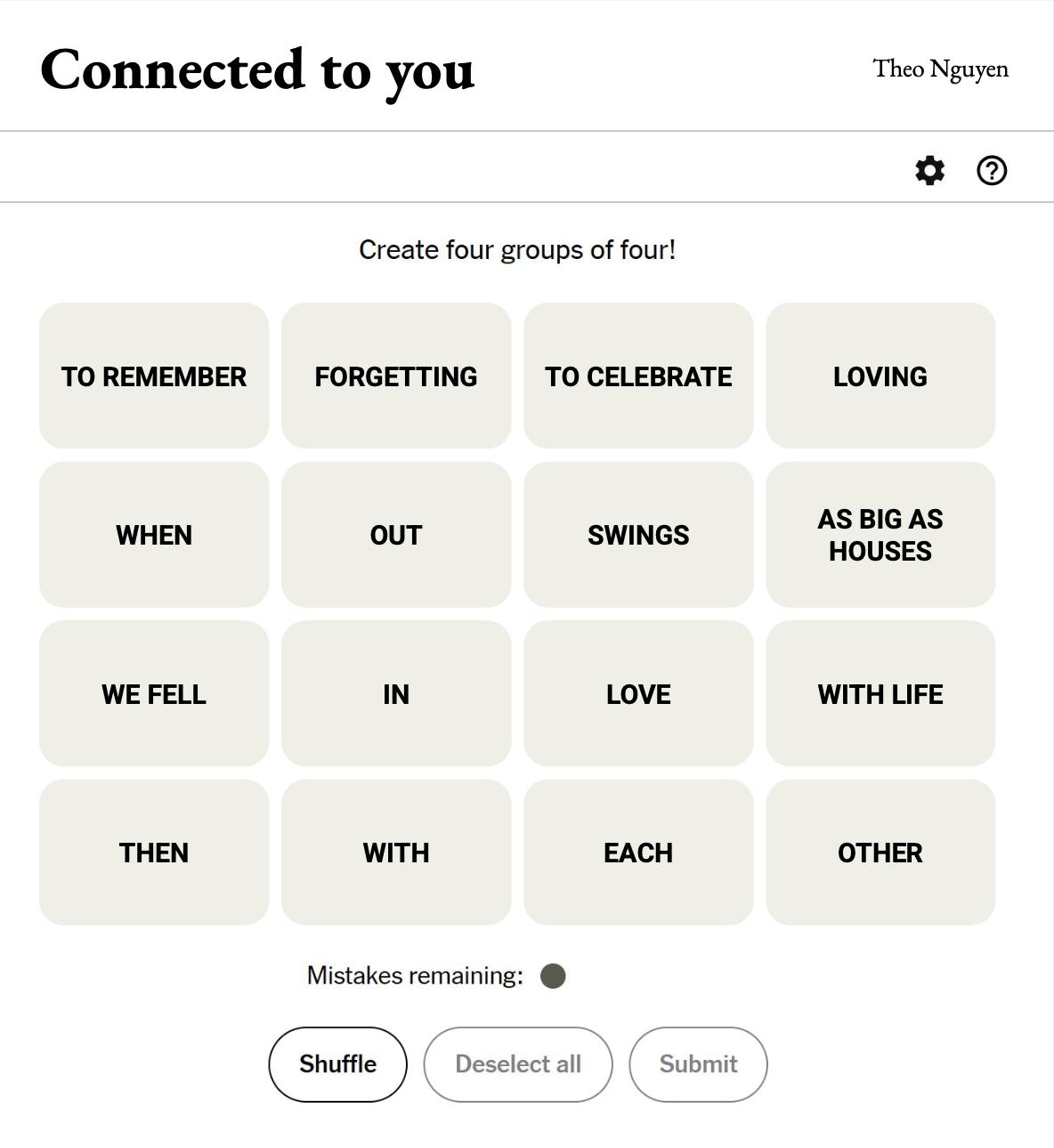
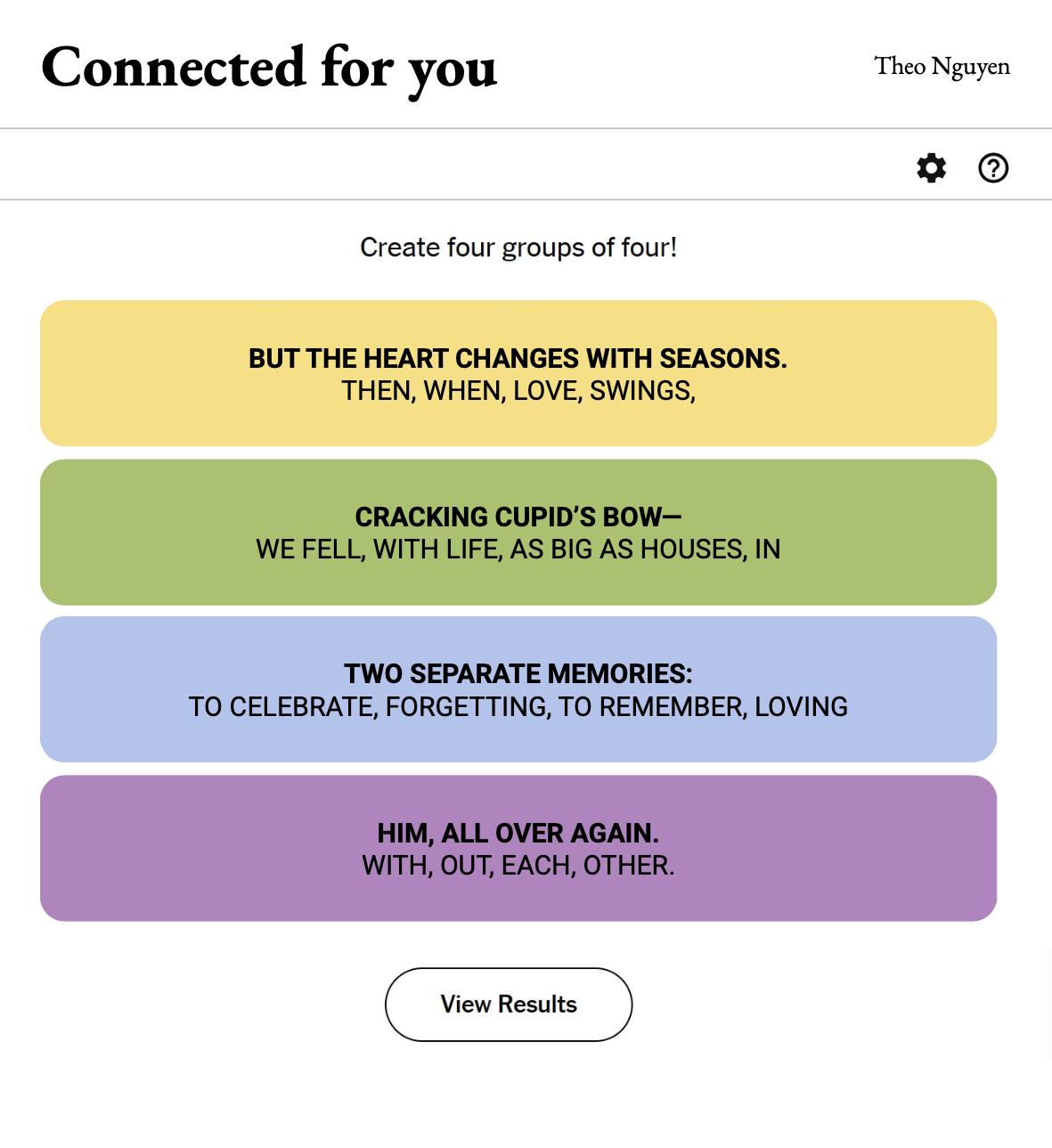
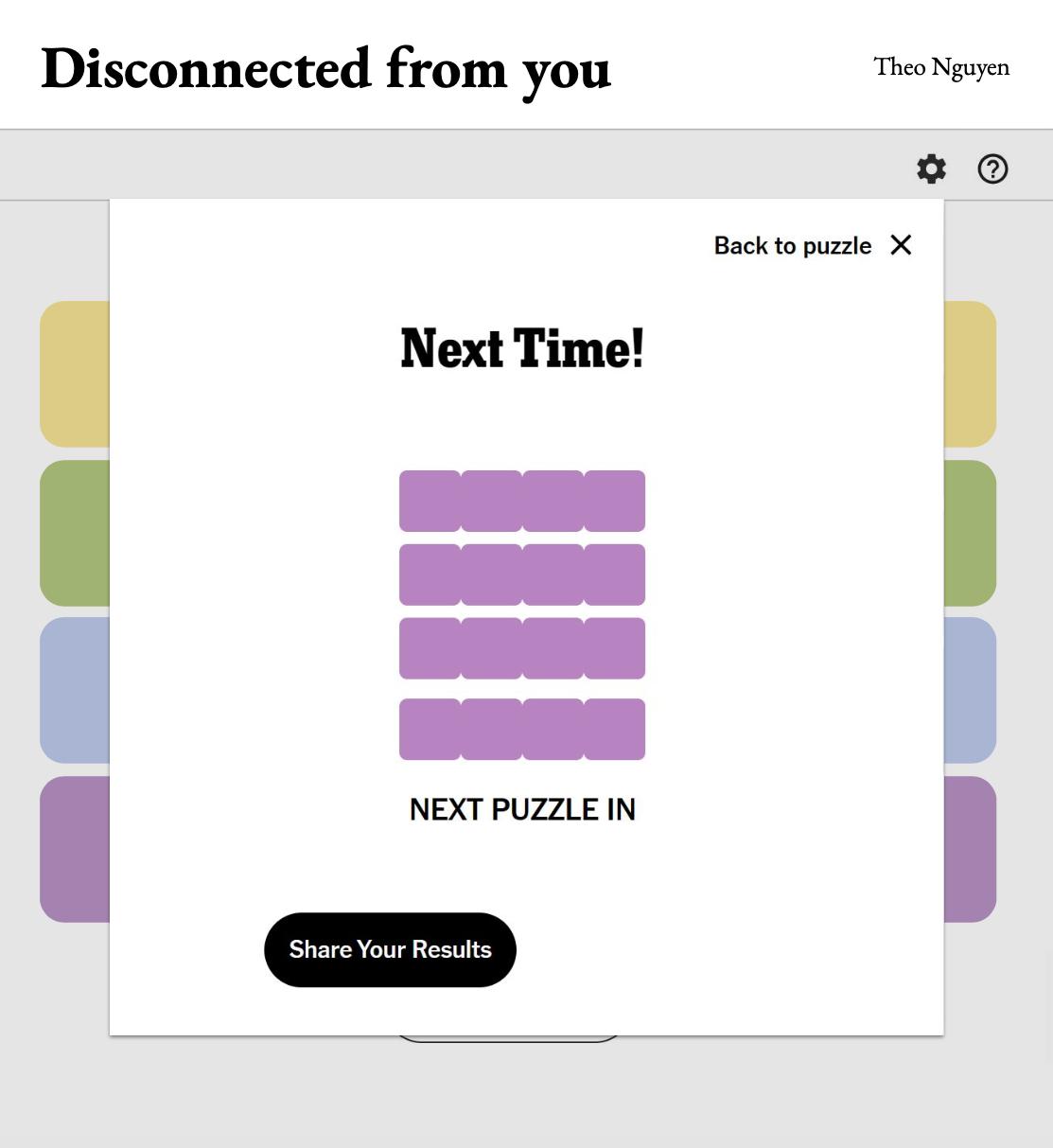
Missed Connections
by Theo Nguyen
Mia
Cover art by Crystal Lee.
Special thanks to A.M. Wild and Ethan Youngerman for their support.