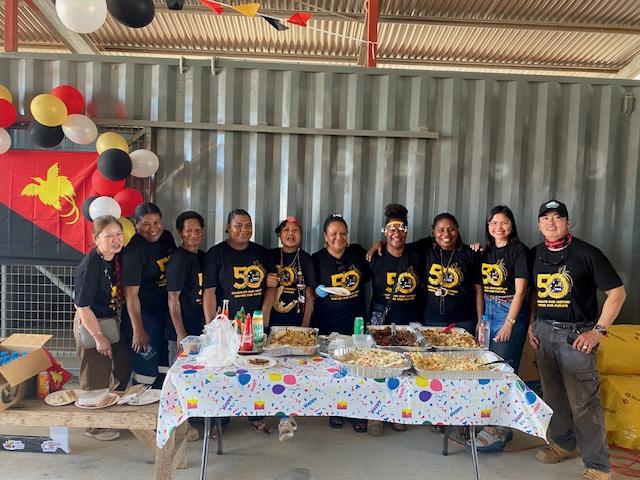
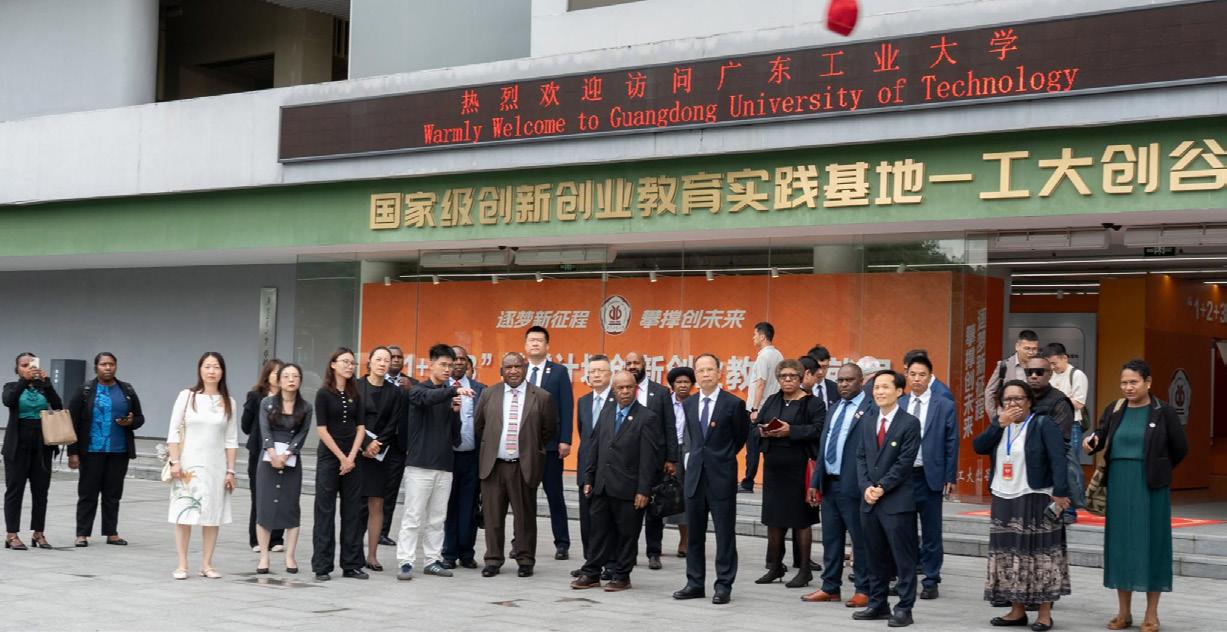
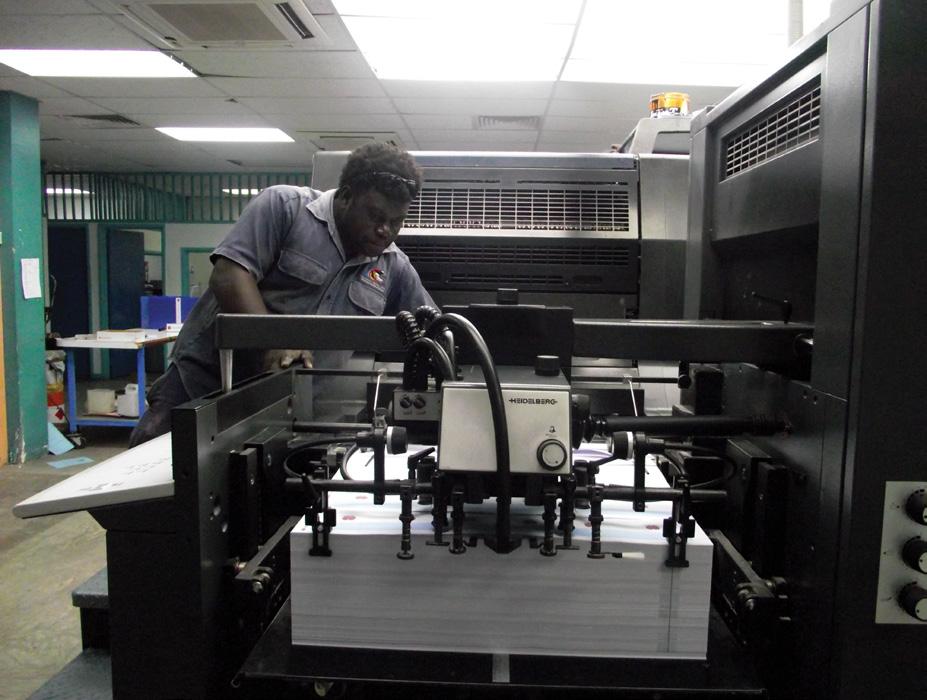
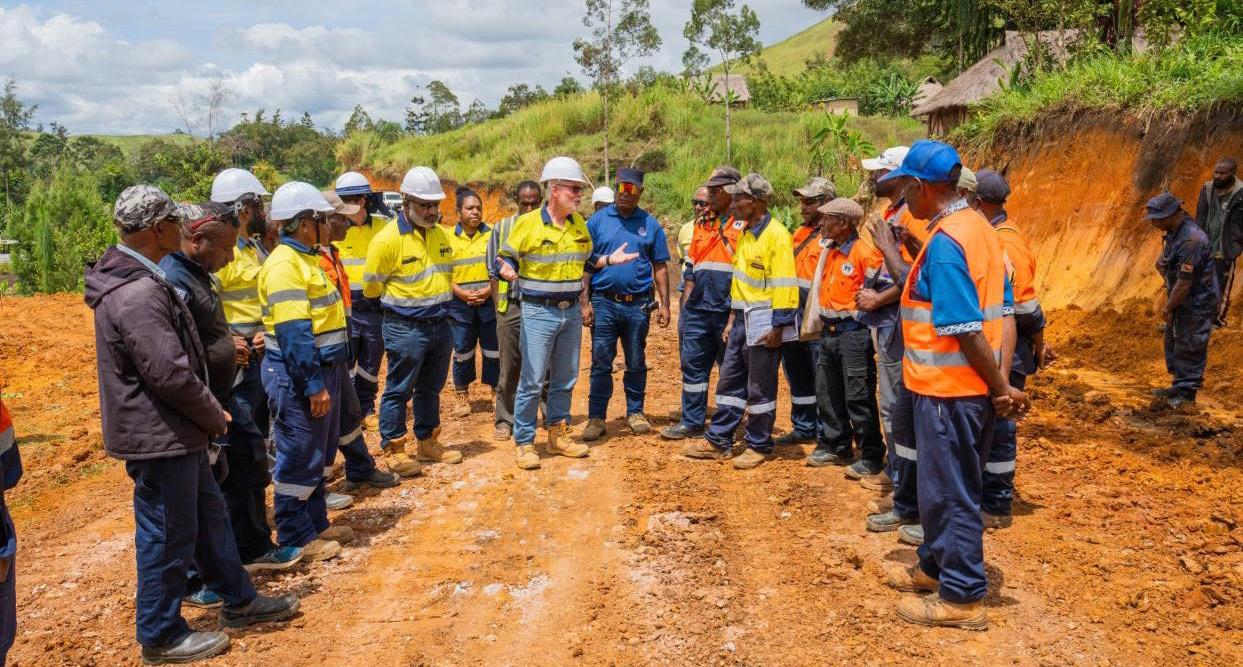
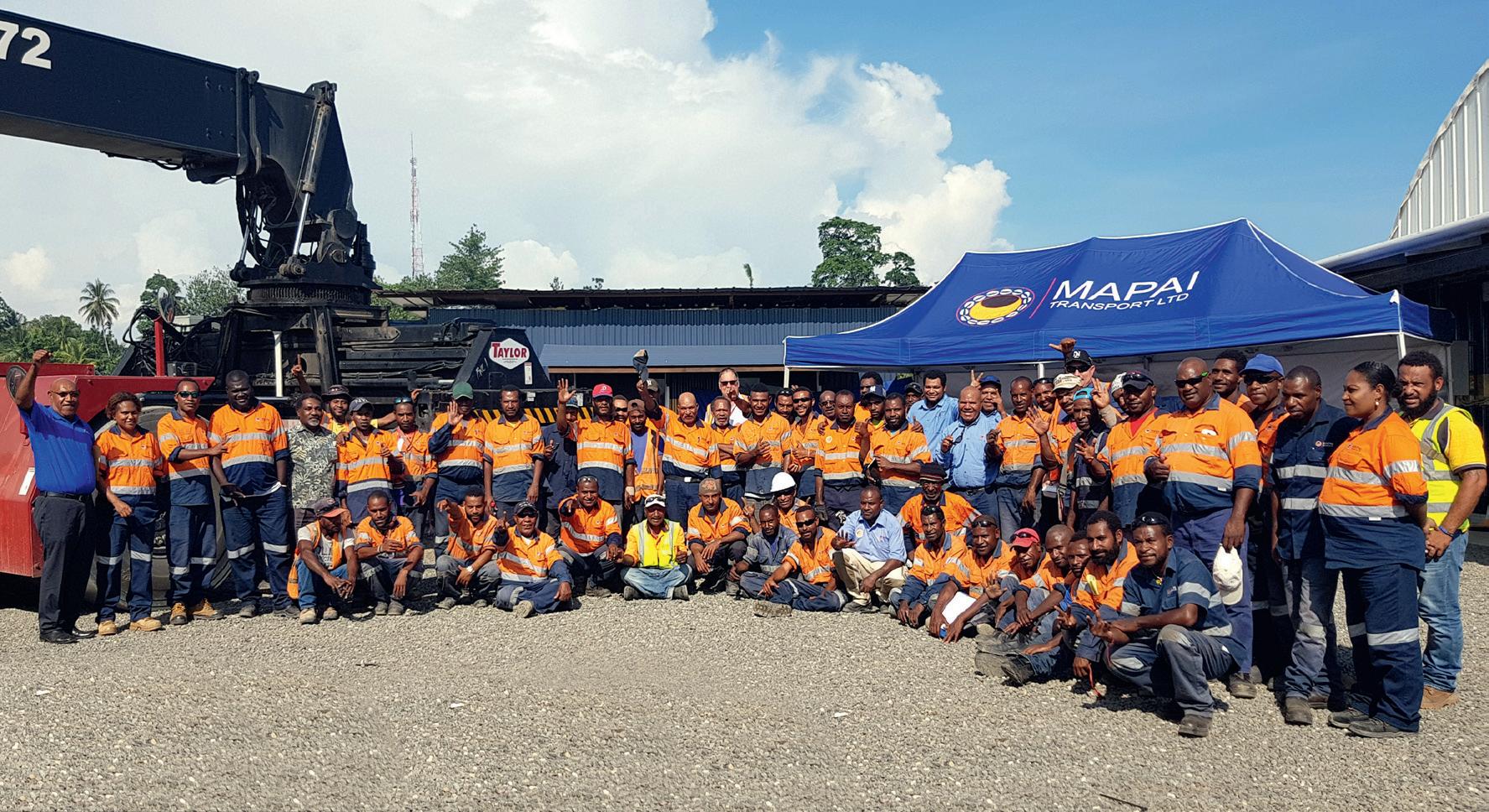
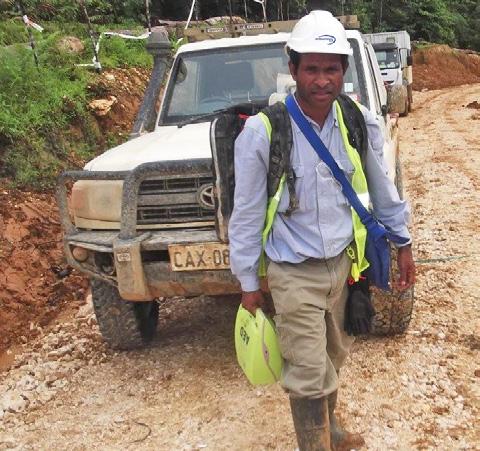
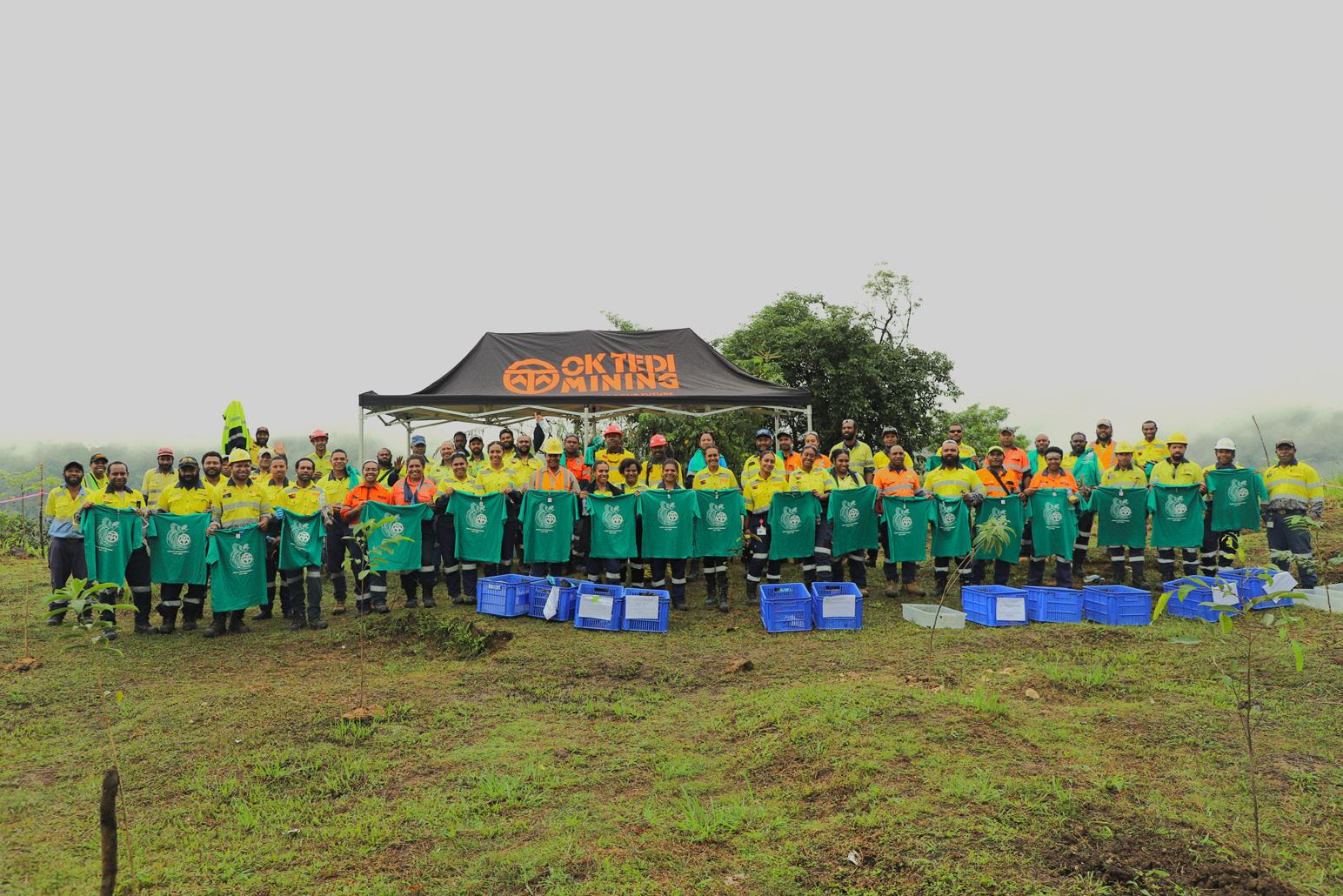
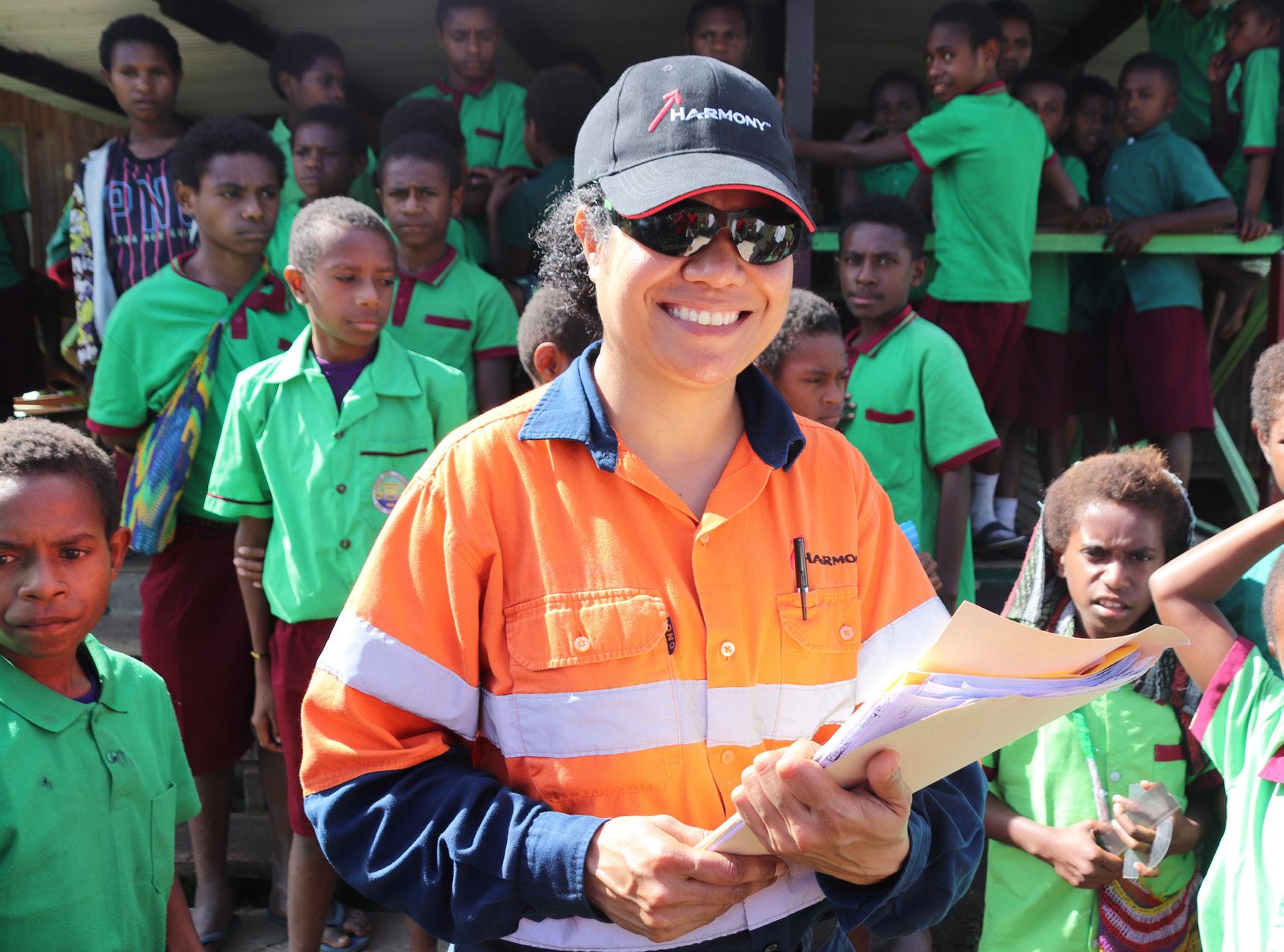
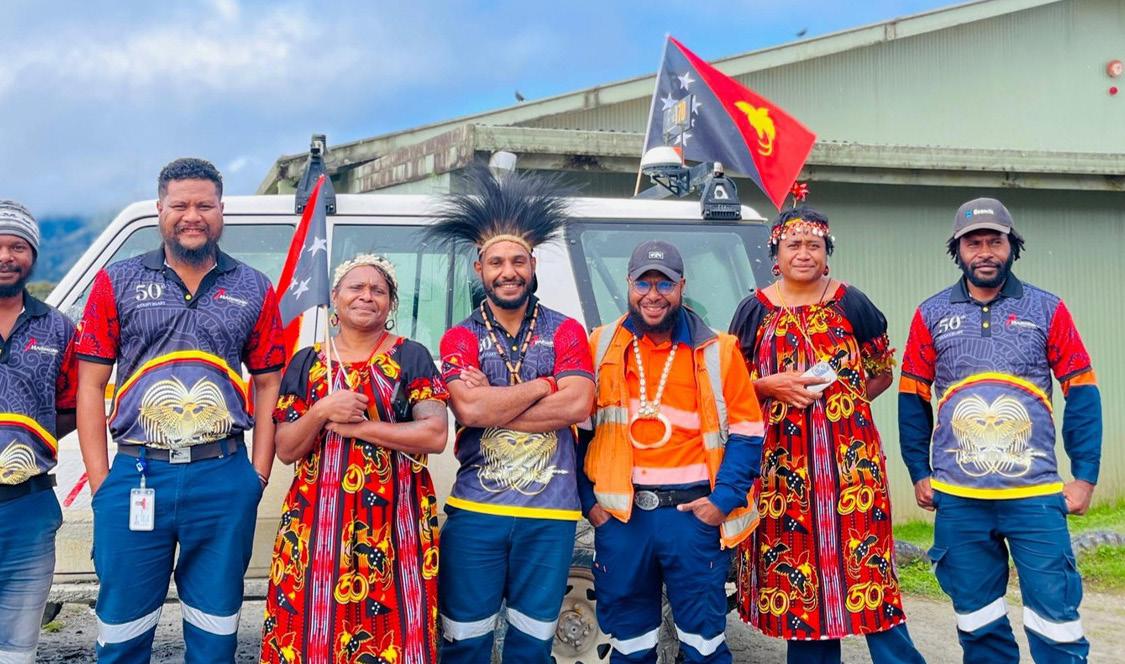
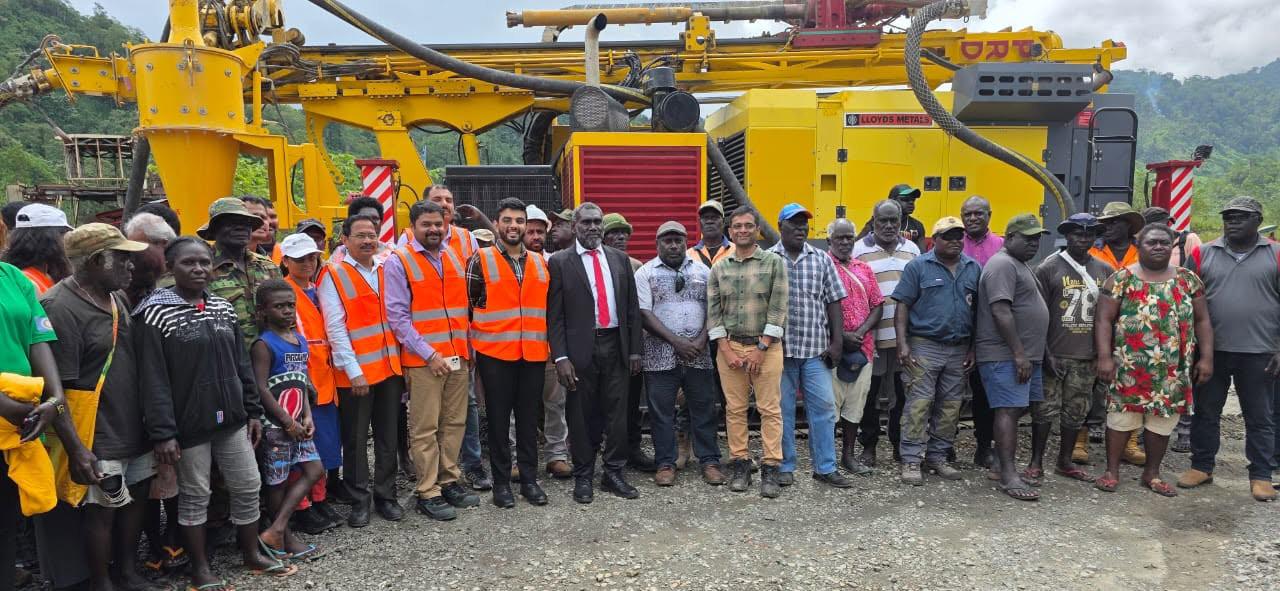
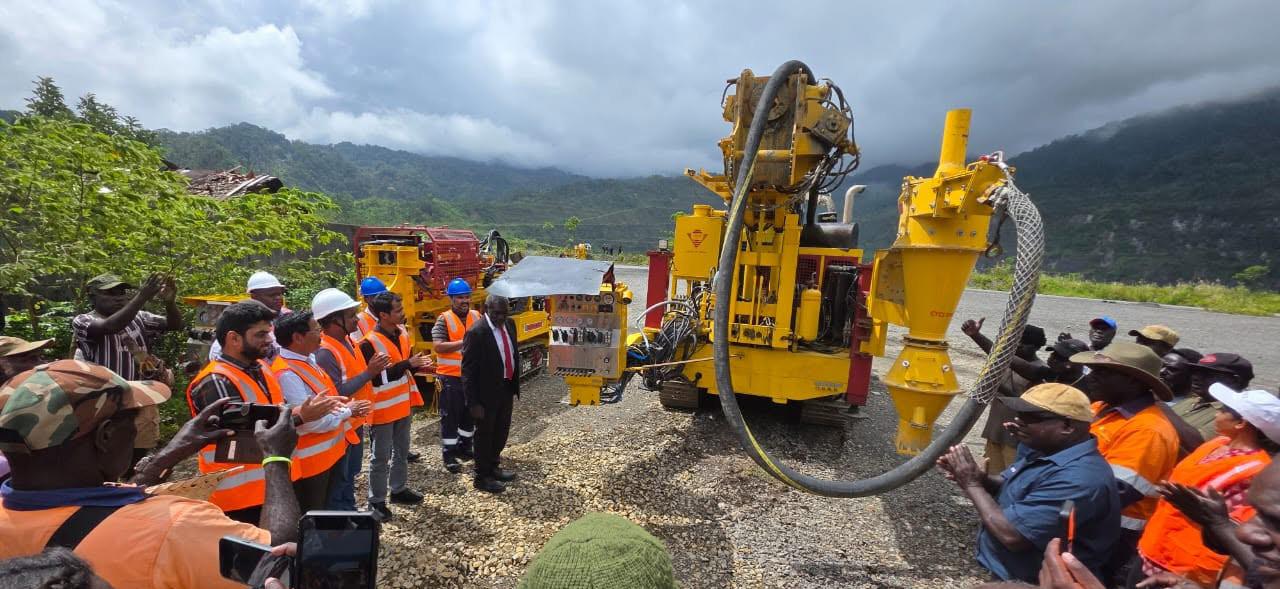
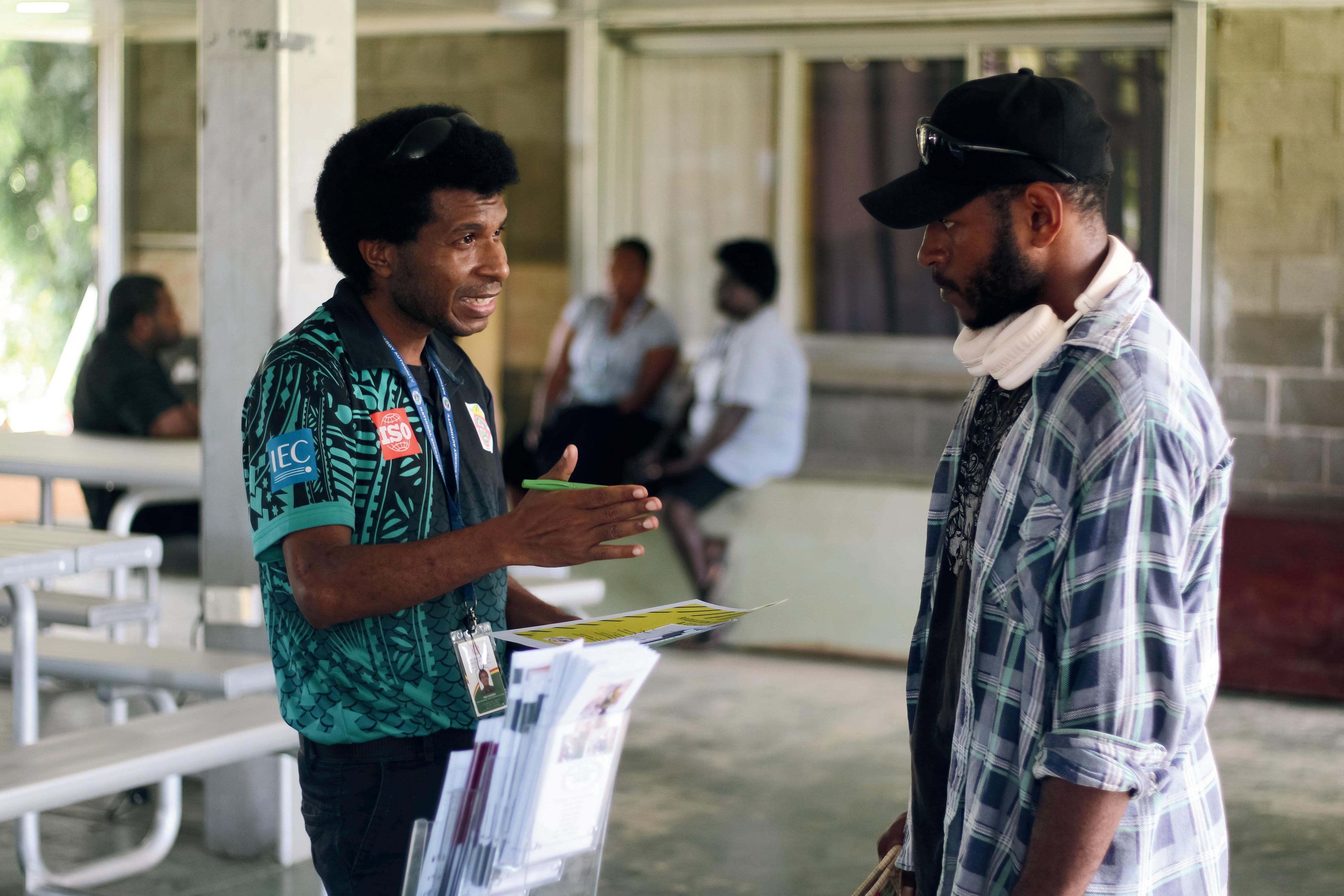
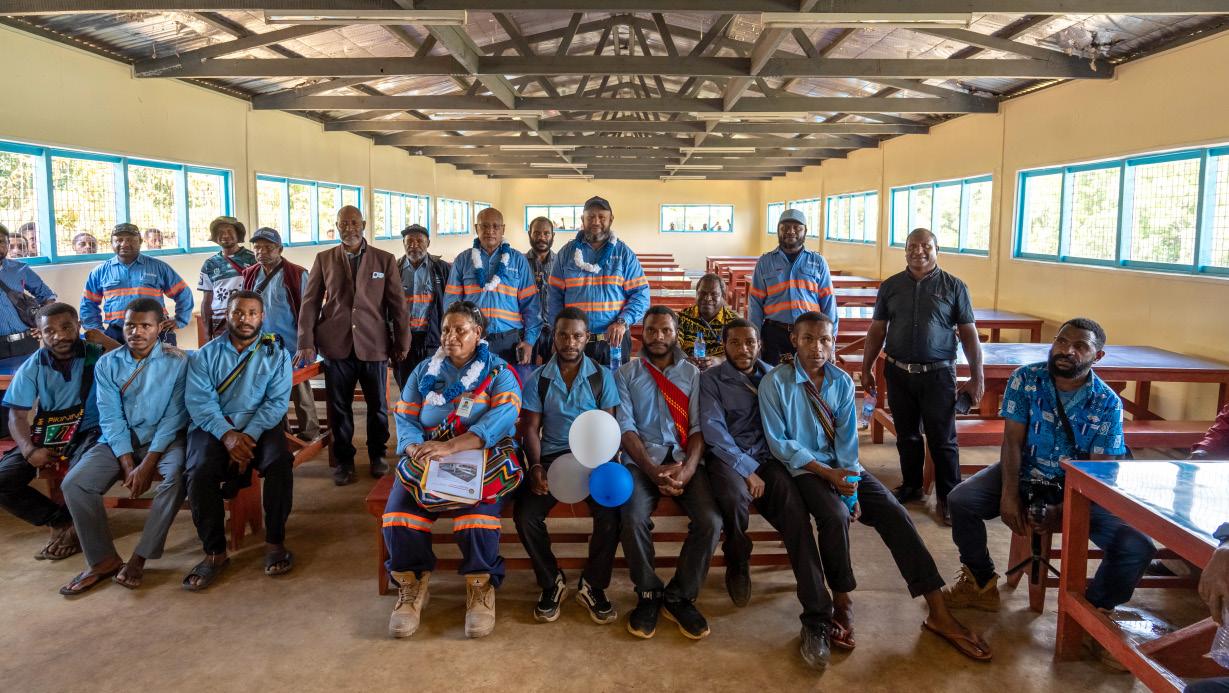
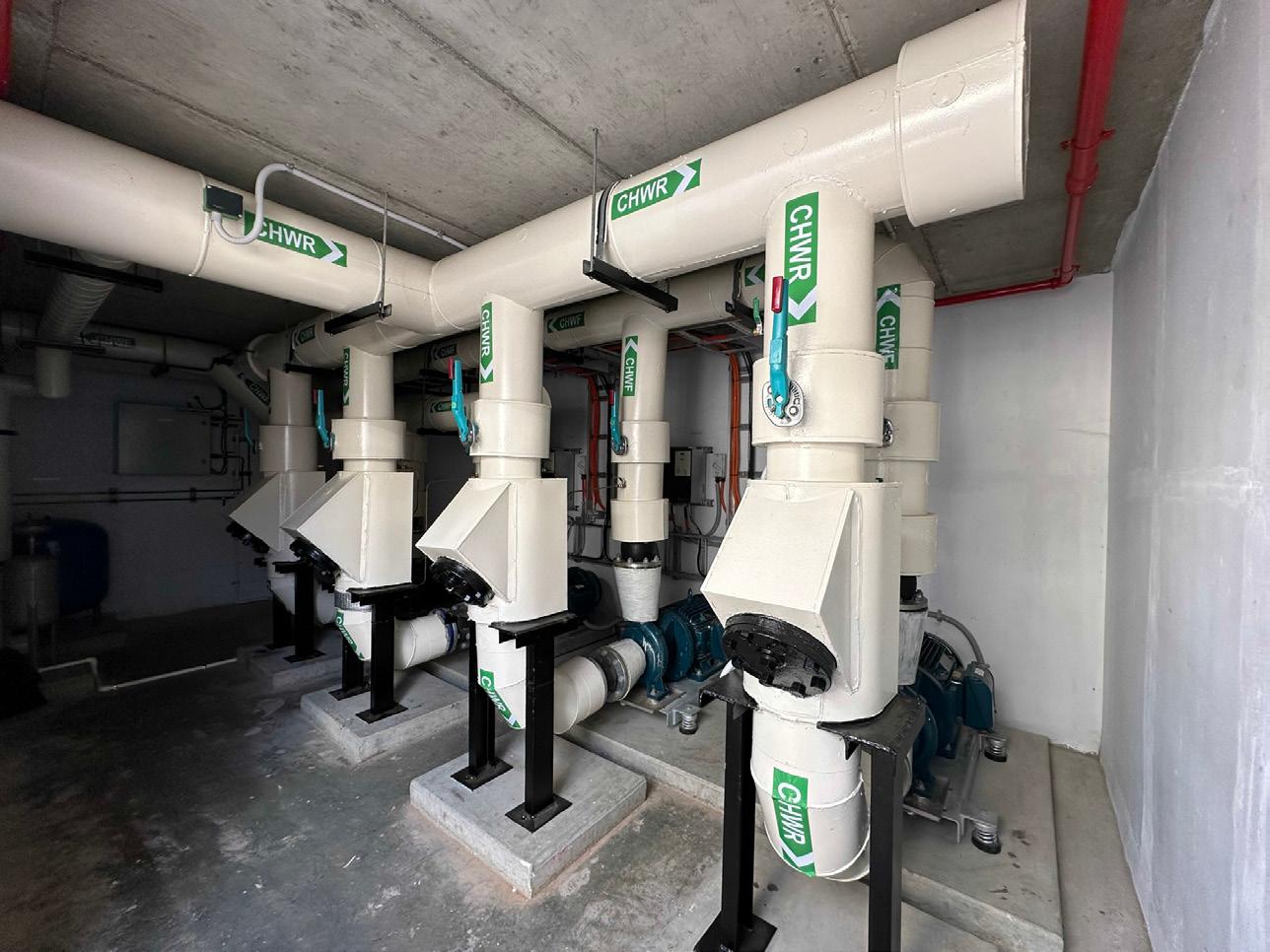
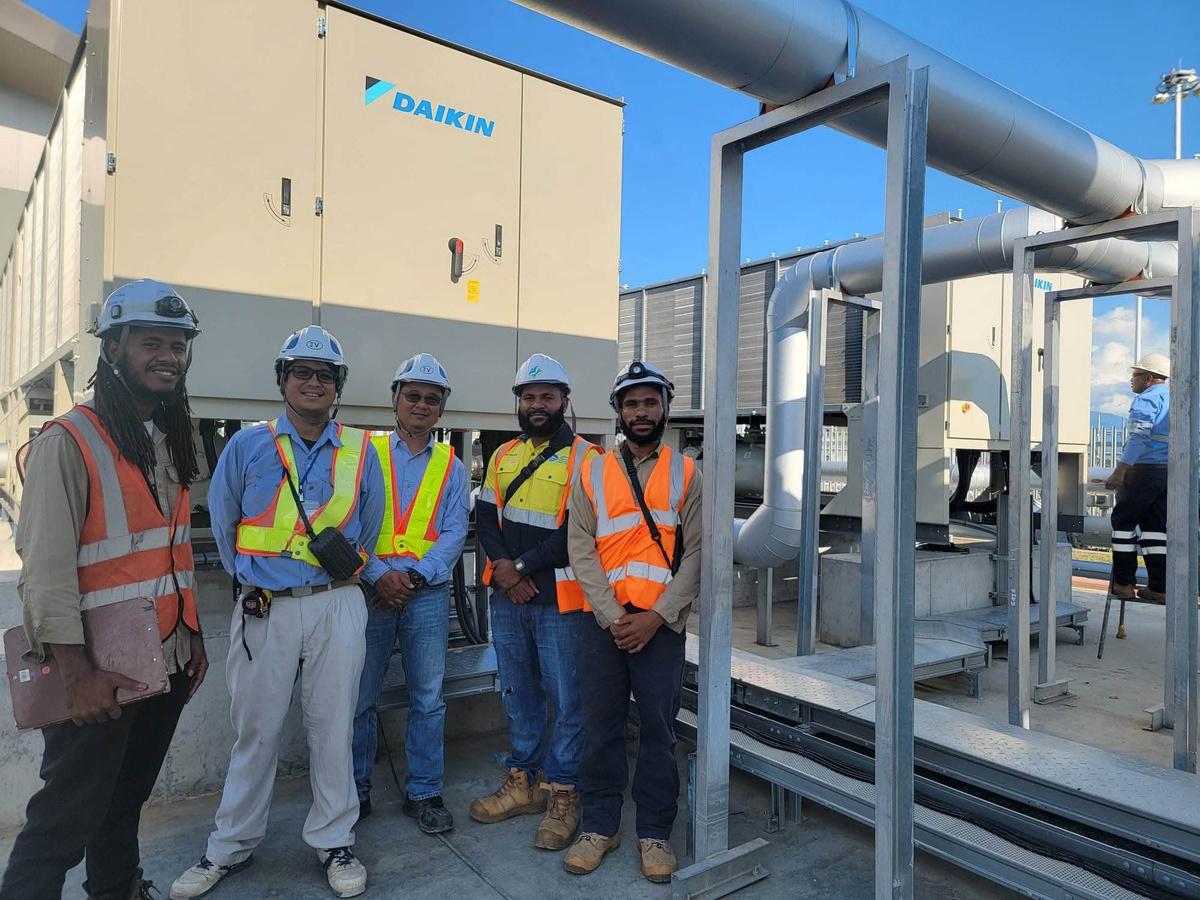
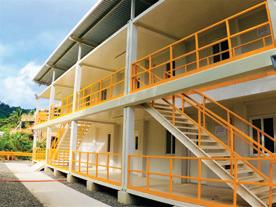
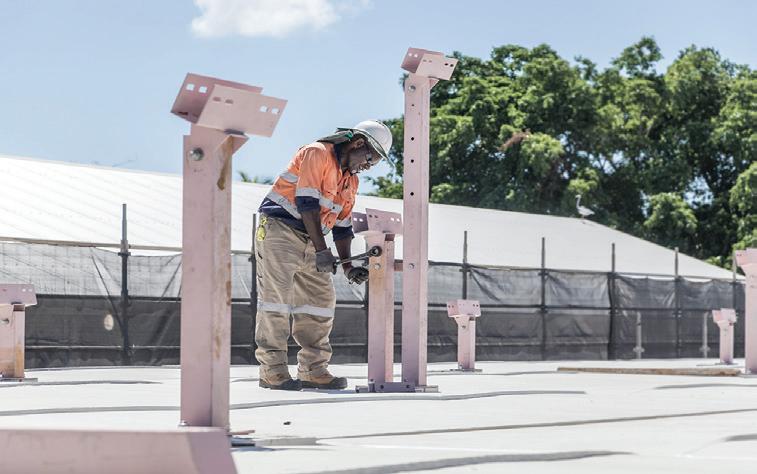
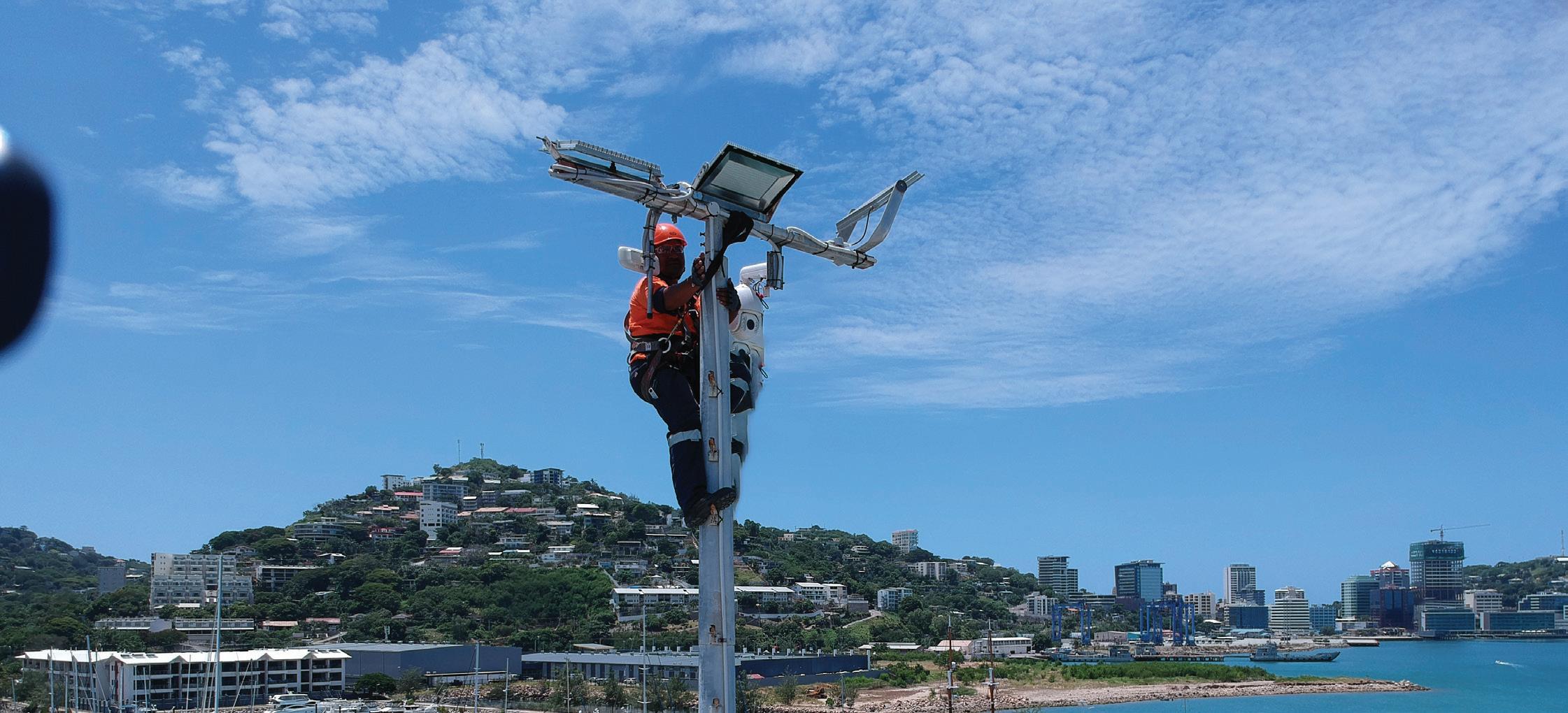
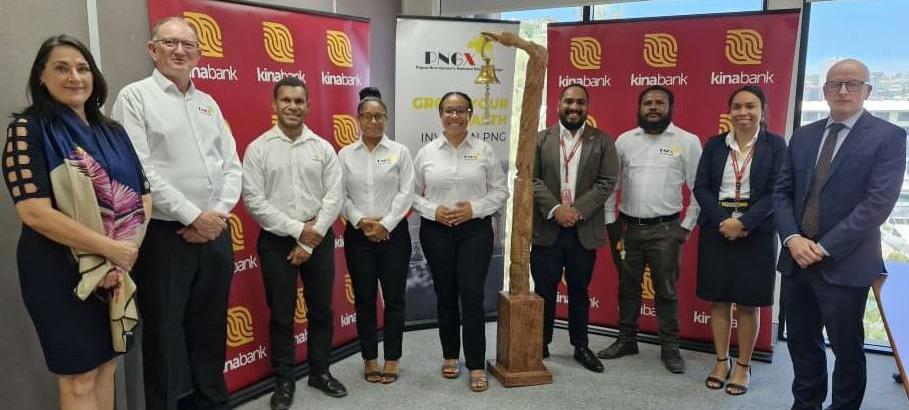
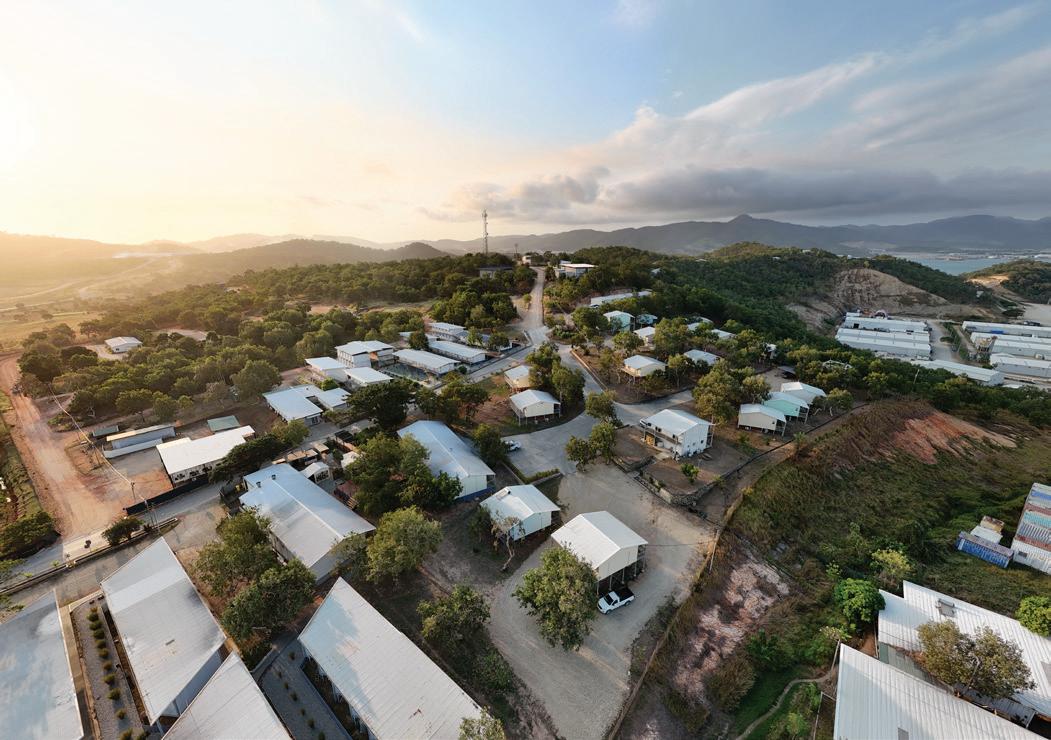
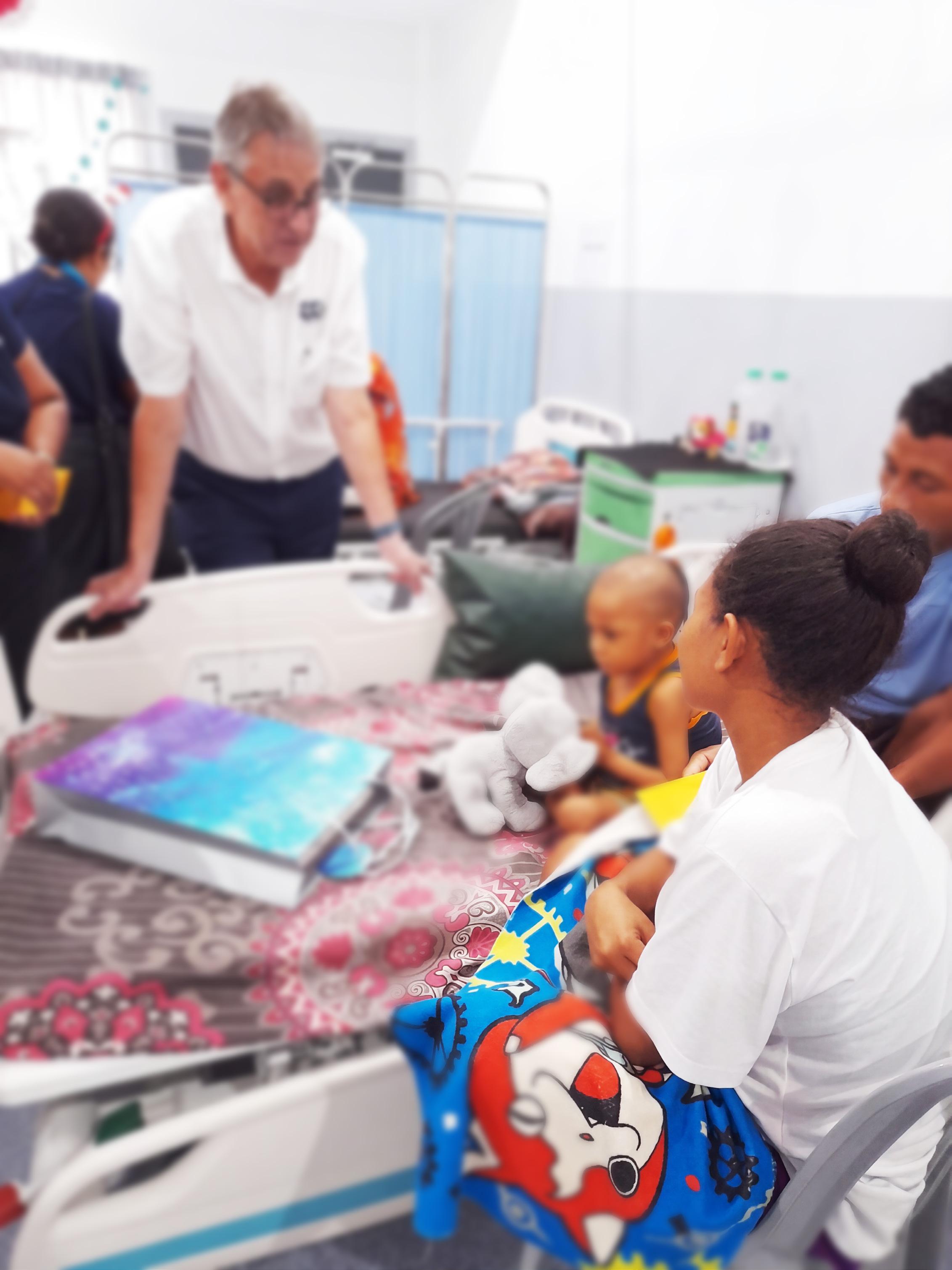
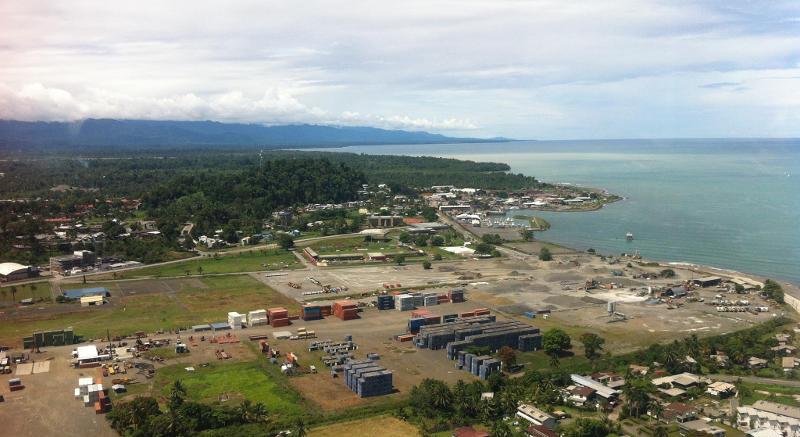
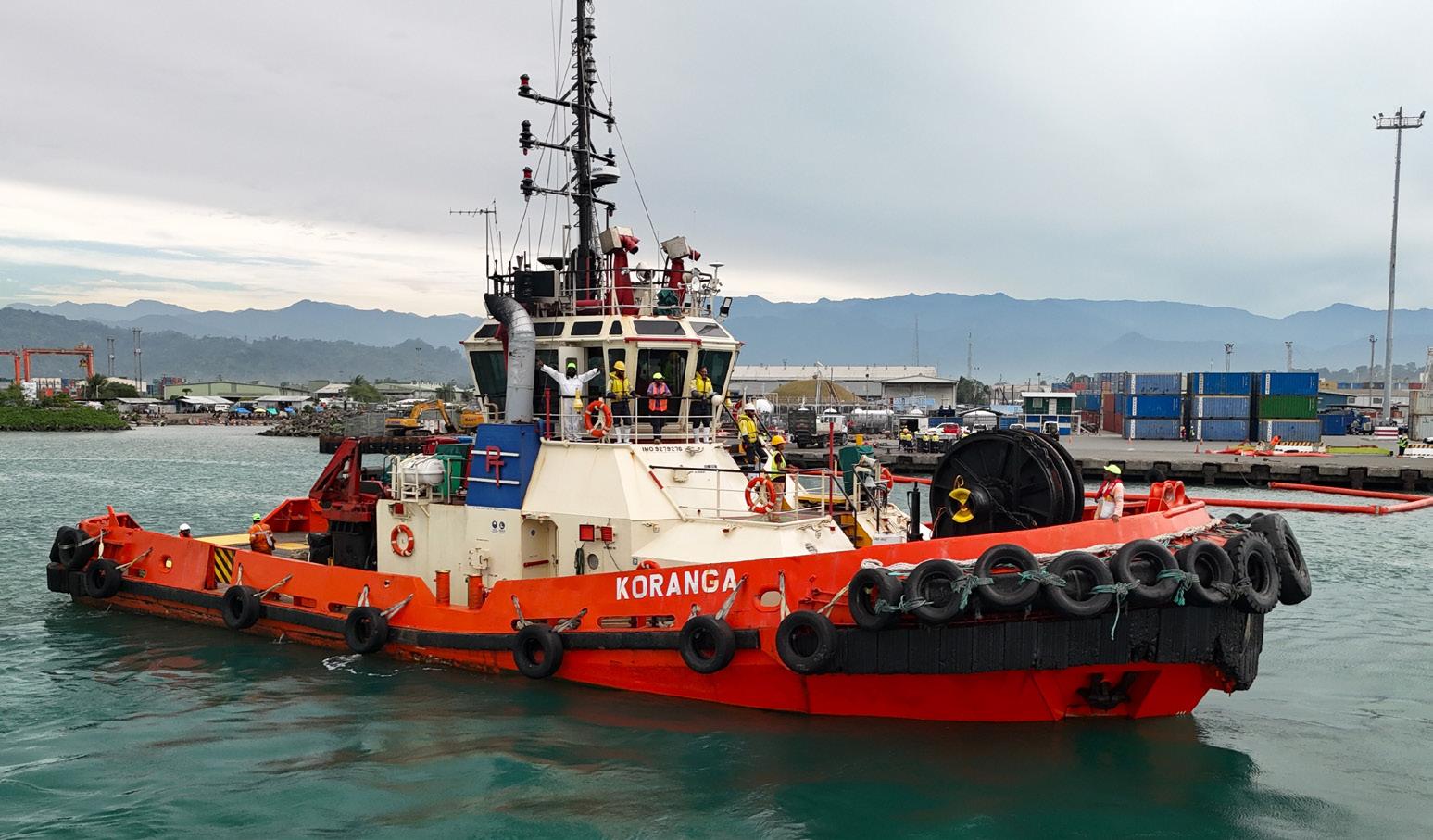
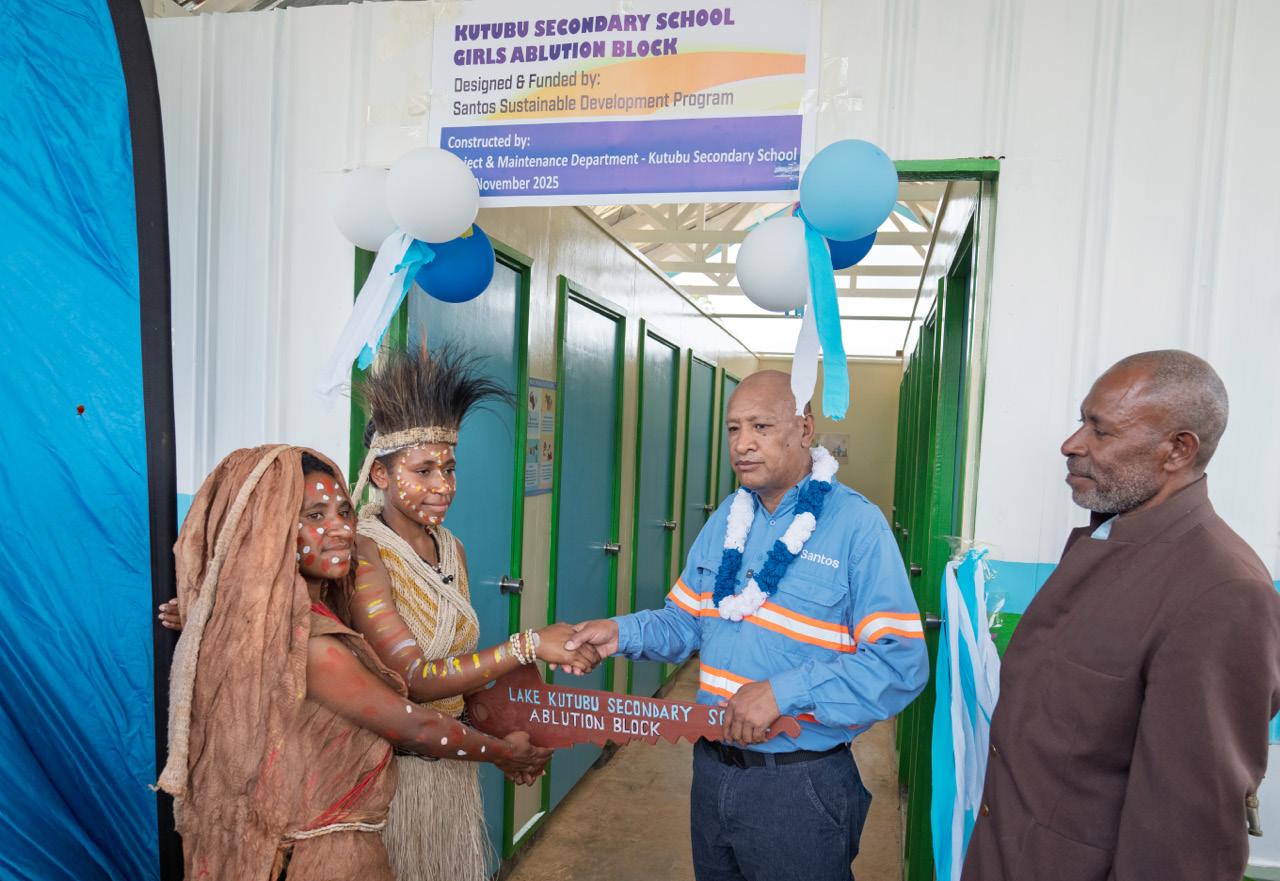
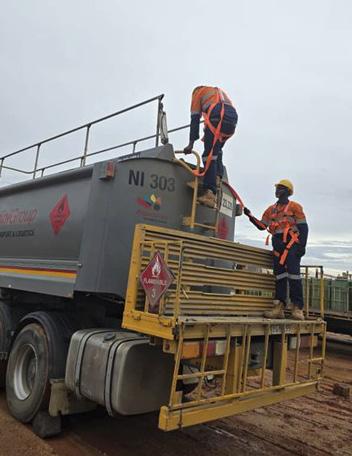
Landowner Company Trainees Complete Industry Skills Programme in Napa Napa > 160
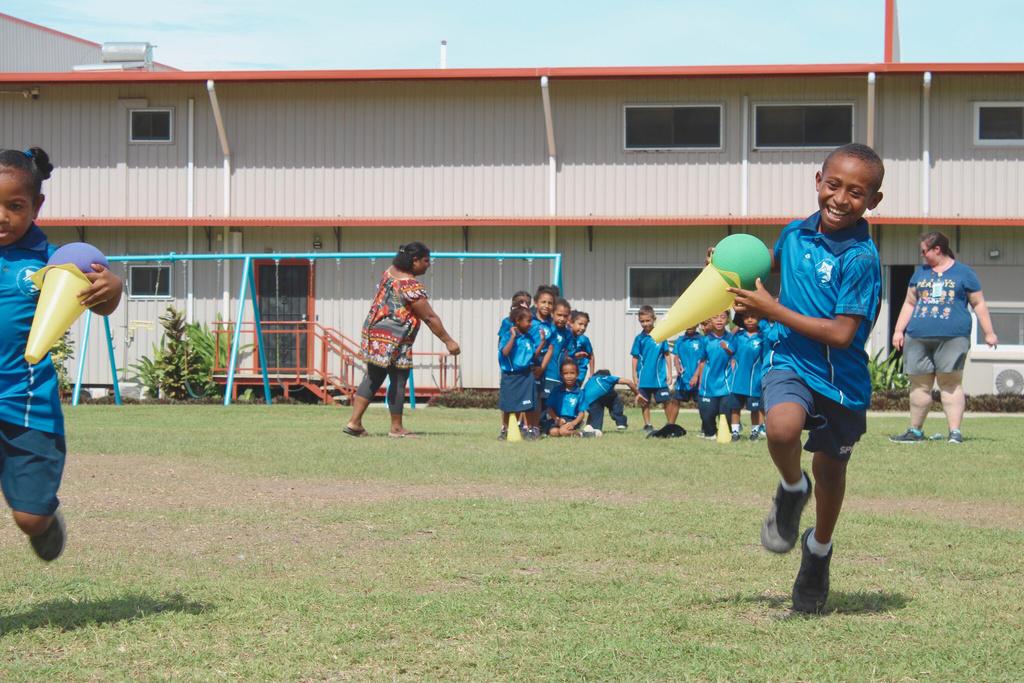
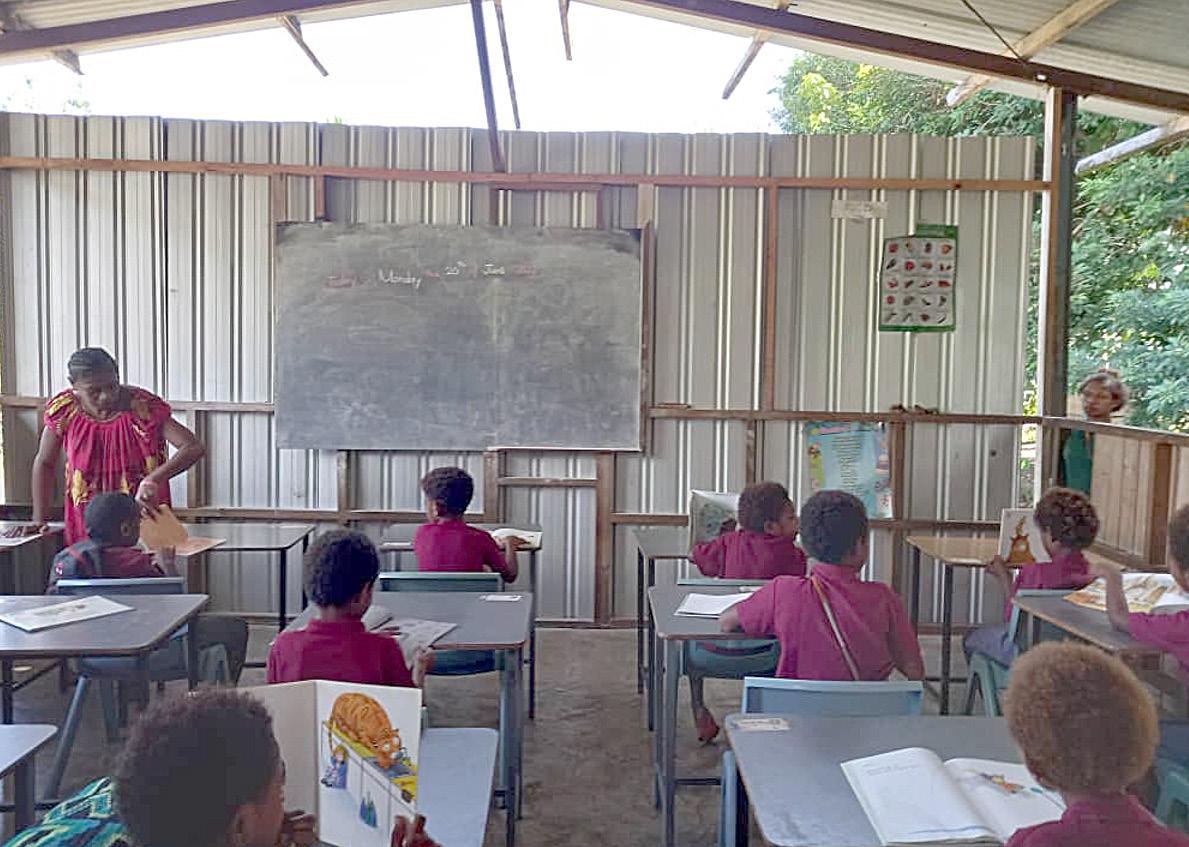
Project Skul Delivers Desks, Books and Hope to PNG Pupils via Classroom Learning Tools > 161
Petroleum Resources and Reserves: PNG in a Global Context
PETROLEUM ACCUMULATIONS
The words resources and reserves as applied to the presence of oil and gas deposits are often quite casually used without due regard for their actual meaning. This can clearly mislead people either by grossly exaggerating, or under-estimating the importance of an undrilled prospect, the potential oil and gas production of a field, or even the actual petroleum endowment of a nation. The latter can in turn lead to very serious economic policy errors by a government.
A country may be prospective for petroleum accumulations, but being prospective is only a statement of there being the potential for oil and gas to have accumulated into discrete subterranean pools, or accumulations, which may have the potential to be tapped by wells drilled into them. These accumulations have to be found first by field exploration and the drilling of wells, which are not easy tasks. Discovered accumulations then have to be evaluated for the quality of the petroleum that they bear and their extent, and only if
EDITOR’S NOTE: Michael McWalter, former Director, Petroleum Division and Adviser to the Government of Papua New Guinea, and erstwhile petroleum adviser to the Governments of Ghana, Liberia, Cambodia, Sao Tome, and South Sudan writes about the accounting and assessment of petroleum resources and reserves and the standards for such with reference to Papua New Guinea.
Michael McWalter is a certified petroleum geologist and technical specialist in upstream petroleum industry regulation, administration, and institutional development.
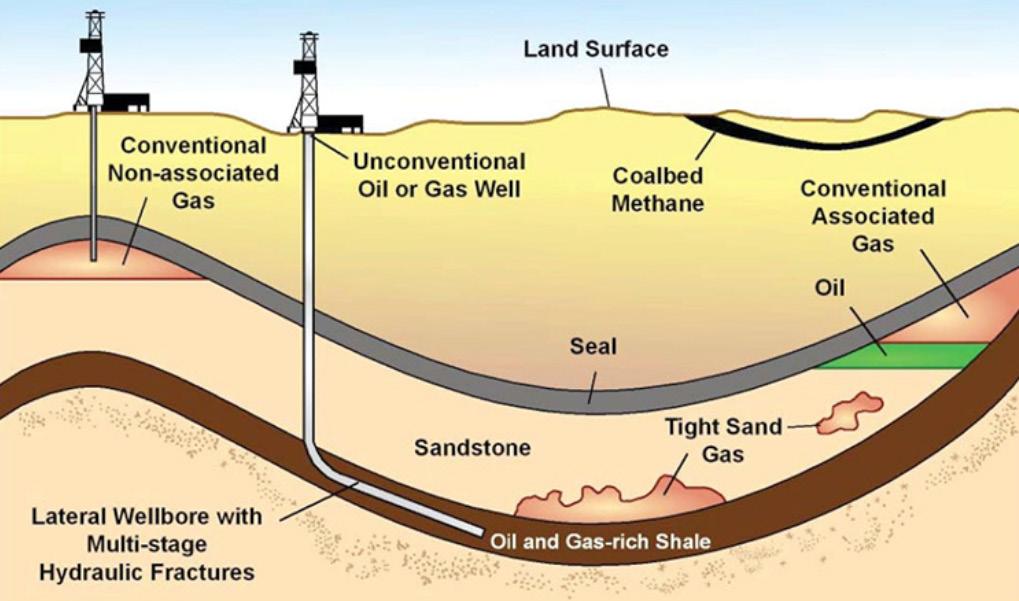
they are large enough, might they be considered for commercial recovery of that discovered petroleum. In this discussion, I only discuss conventional oil and gas accumulated in porous and permeable reservoirs, not oil and gas unlocked from less permeable strata by fracturing –shale gas and shale oil, or gas released from degasification of coal – coal bed methane.
DISCOVERY
Exactly what constitutes a discovery can be debated for hours by
petroleum technocrats. The Society of Petroleum Engineers defines a discovery as being a “petroleum accumulation where one or several exploratory wells through testing, sampling, and/or logging have demonstrated the existence of a significant quantity of potentially recoverable hydrocarbons and thus have established a known accumulation.” In this context, recoverable means that the hydrocarbons have to demonstrate that they are indeed moveable and are not just immovable residues.
Figure 1: Section through rock strata illustrating subsurface sources of oil and gas, after U.S. Energy Information Administration. Page
A significant quantity implies that there is evidence of a sufficient quantity of petroleum to justify estimating the in-place volume of petroleum as demonstrated by the drilling of wells into the accumulation and for evaluating the potential for future commercial recovery of that petroleum.
One should be cautious in the use of the term discovery. Discovery should not be translated into undue expectations of oil and gas field development and petroleum incomes. Development of any oil and/or gas accumulations only comes as and when there are proven to be adequate recoverable oil and/or gas reserves to warrant the expense and effort of development and production operations. Discovery is the first elemental step towards development, but it is only the initial identification of the accumulation of petroleum, the scope and dimensions of which has to be subsequently ascertained.
Interestingly enough, the Papua New Guinea Oil and Gas Act does not define discovery, though it does require the discovery of petroleum to be notified to the Government immediately and details of the same to be provided within three days. The licensee may then be directed to furnish “written particulars of the chemical composition and physical properties of the petroleum; and the subsoil in which the petroleum occurs; and any other pertinent matters.” Typically, the acid test of a discovery has been the testing of the discovery well to see if the petroleum will flow from the subsurface reservoir to the surface, though modern downhole tools can simulate such tests and provide a reasonable understanding of the petroleum content of the discovered accumulation and the ability of its reservoir to permit the flow of its contained fluids.
The evaluation of the results of an exploration well needs to be done most carefully. Full attention to the monitoring of the petroleum operations is essential to preserve the interests of the nation, not that the petroleum companies might mislead the government, but errors of interpretation and judgement do occur.
In one famous case in Papua New Guinea, a well-known operating petroleum company thought that it had made an oil and gas discovery. In an effort to keep up with its fiduciary duties to its shareholders and its Australian Stock Exchange listing requirements, it issued a press release announcing that it had made a significant oil and gas discovery of considerable thickness with well logs showing a gas cap overlying a respectable oil column. The company’s development geologist courteously delivered a copy of the press release to the author at the Government’s Petroleum Division at the Department of Petroleum and Energy together with a set of the well logs (which necessarily excited the author). After ten minutes of cursory review of the logs, the author announced to the company’s development geologist that the company had not discovered any oil or gas, but that the well had rather encountered reservoirs full of water. The press release was suitably endorsed and sent back to
the company’s managing director, who was stunned in disbelief. The company proceeded to evaluate the well the next morning with a full well test of the various supposed hydrocarbon-bearing reservoirs, but the well tests flowed only water. Such was not only a grave disappointment and embarrassment to the company, but also to the Government which naturally would have preferred a discovery.
A FIELD
In conventional petroleum reservoirs, a field is typically an area consisting of a single accumulation or multiple accumulations in a reservoir or reservoirs all grouped on, or related to, the same individual geological structural feature and/ or stratigraphic condition. There may be two or more reservoirs in a field that are separated vertically by intervening impermeable rock, laterally by local geologic barriers, or both. Aside from accumulation and reservoir, some jurisdictions
Figure 2: Testing of the Pasca A-4 well in the Gulf of Papua in 2019, after Twinza Oil Ltd.
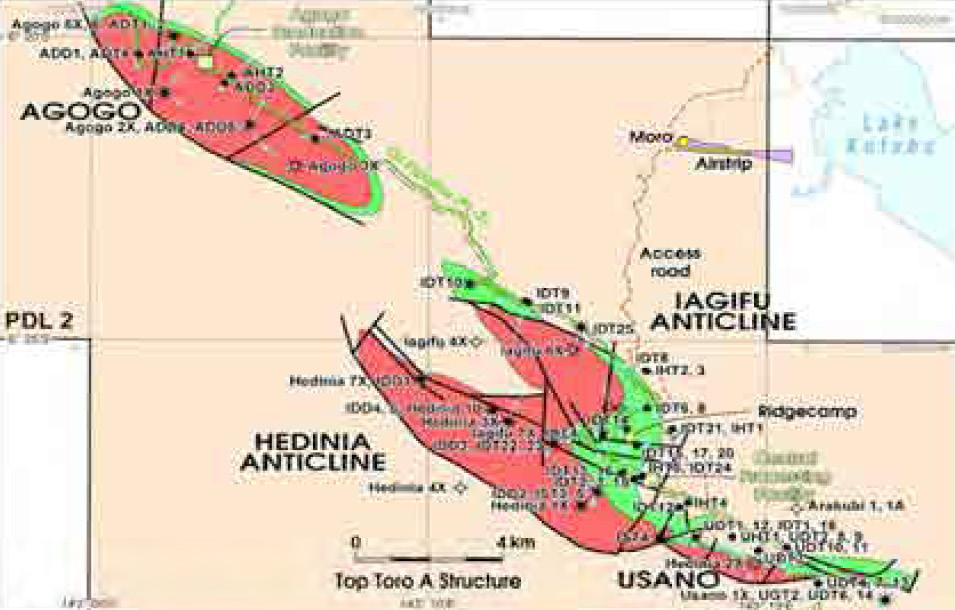
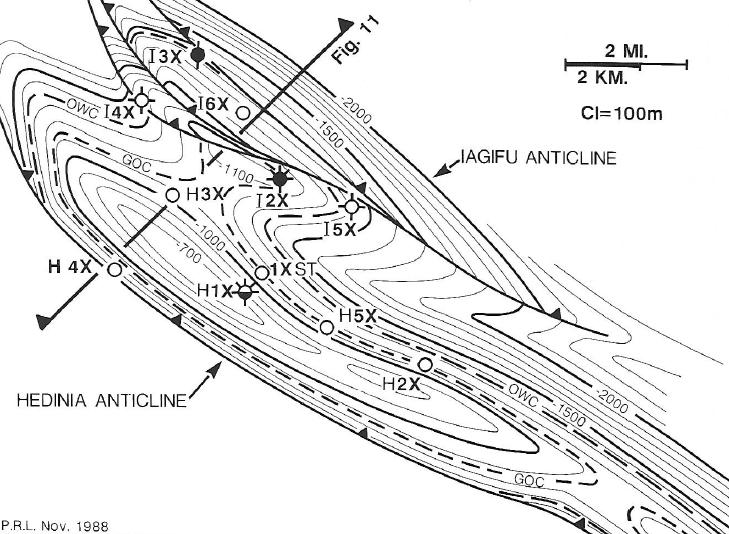
Figure 3: Map of the Kutubu oil and gas fields: Iagifu-Hedinia, Agogo and Usano, after Oil Search Ltd.
Own your home, power your
and bundle your needs into one simple repayment plan.
use the term pool. In Papua New Guinea, a petroleum pool is defined as a “naturally occurring discrete accumulation of petroleum.”
POOR ADVICE CAN BE MISLEADING
In one developing country, its foreign expert oil and gas advisers told the government that it had one billion barrels of crude oil. However, that estimate was only an assessment of the overall potential petroleum endowment of the country, if it might be realised through appropriate exploration and discovery. It was a probabilistic estimate based on an assessment of regional geological parameters that are conducive to the formation of petroleum accumulations. It was obviously dependent on the results of exploration which might, or might not take place. Moreover, the advice failed to define whether that was the amount of oil and gas that might be found in situ within the yet-to-bediscovered accumulations, or whether it would be the amount of oil and gas that might be recoverable, either technically or economically.
Alas oil, as we all know, is viscous and sticky, and does not flow easily. It also requires energy to flow to the surface, so only a proportion of all subterranean oil discovered is ever recovered. That estimate of the country’s oil endowment also only had a 50% probability. Subsequent exploration by oil and gas companies found just several accumulations of crude oil amounting to an aggregate 200 million barrels of oil-in-place. Oil-in-place is the petroleum that exists originally in naturally occurring accumulations, discovered and undiscovered, before production begins. However, the discovered oil was of high viscosity and density, and only 9% was found to be actually recoverable and potentially able to yield 18 million barrels of actual oil production for sale and use.
Politically, the President of the country had staked his national policies on the cited one billion barrels by multiplying that quantity by the then current price of crude oil of US$ 50 per barrel. Thus, he contemplated having a massive US$ 50 billion contribution to the nation’s economy, and maintaining
his popularity and position based on such. He told the people that the country would become a member of OPEC and everyone would have cheap gasoline and diesel. However, the reality was that the discovered recoverable 18 million barrels was quite difficult to win from the ground and the development and operating costs amounted to US$ 30 per barrel, leading to a net value of subsequent oil production being only US$ 20 per barrel for a total value of just US$ 360 million. The President then realised that the Government’s Production Sharing Contract more or less allowed the oil companies to keep 50% of the net value of the produced crude, so his government got just US$ 180 million. And this was spread out over twenty years providing an average income to the Government of just U$ 9 million per year, a far cry from the spectacular windfall of US$ 50 billion. The President was accused of misleading the people and was not re-elected in subsequent national elections.
There is no need for such grave errors. It is the duty of the petroleum technocrat, specialist or expert, be he or she: an adviser, a government official, or a company official to advise non-technical people appropriately, and with great caution. Politicians and others have their expertise, and we petroleum folks have ours; it is our job to communicate our findings to others with professional care and diligence.
In one West African nation, the author once had to tell the President’s Adviser that she was not qualified to talk about the potential oil reserves that some international company had been promoting to her boss, making the President overly exuberant and excited about future oil production. She was alarmed and annoyed when told that the country had no petroleum reserves, but only prospective petroleum resources that had yet to be discovered, may be. Some ten years later, those wells have yet to be drilled, and the country still has no proven oil reserves.
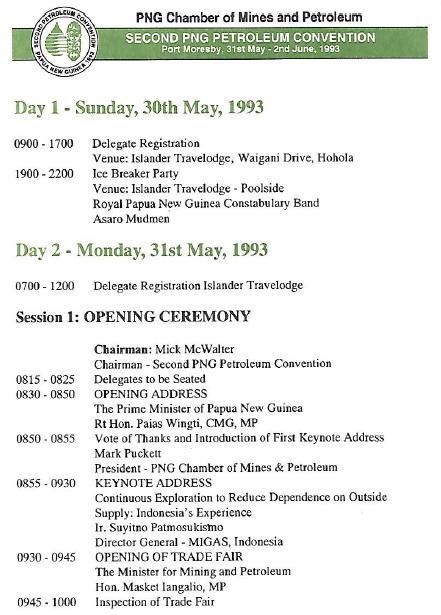
Figure 4: Extract from the Programme of
On another occasion in Papua New Guinea, when Chairing the Opening Ceremony of the Second PNG Petroleum Convention in May 1993, the author had to carefully and cautiously advise the then Prime Minister, the Rt. Hon. Paius Wingti, PC (next to whom, the author was sitting) that the enormous Indonesian gas reserve figures being talked about by our guest keynote speaker, Ir. Suyitno Patmosukismo, the then Director General of Indonesia’s Ditjen MIGAS, (an abbreviation for Minyak dan Gas Bumi, or Oil and Gas, and the State regulator of oil and gas) were not actual proven recoverable volumes of gas, but probabilistic estimates of potential undiscovered resources. This put our modest, but conservatively estimated proven recoverable gas resource identified by that time in perspective, and we felt less humbled! The Prime Minister was grateful, and the author had done his duty.
The mainstream media (newspapers, television and radio) often make mistakes in talking and writing about oil and gas resources and reserves, often needing specialist technical correction after promoting public misunderstanding. Sensational news sells better, one supposes. I shall not dwell on the many inaccuracies of social media in these matters.
Within the petroleum industry, we may also sometimes find speculation, especially by smaller oil and gas exploration companies that wish to talk up the petroleum resource potential of their exploration areas. Often this is done to make investment in their company seem more attractive. Whilst the larger integrated international oil and gas companies do not need to play such games, there are times when they might exaggerate the potential of undrilled leads and prospects to the non-technical minds of political leaders in an attempt to persuade them to consider favourable treatment and regulatory actions.
PETROLEUM RESOURCES MANAGEMENT SYSTEM
The petroleum industry has rules about such matters. The systematic reporting of petroleum resources has been developed progressively over nearly one hundred years. Today, the
Petroleum Resources Management System (PRMS) is highly developed, and subject to regular revision and update. It is published by the Society of Petroleum Engineers, and its Oil and Gas Reserves Committee. It has wide industry input and sponsorship from other industry organisations, such as the World Petroleum Council (WPC), and the American Association of Petroleum Geologists (AAPG), among others.
The PRMS provides a consistent approach to estimating petroleum quantities, evaluating projects, and presenting results within a comprehensive classification framework.
PETROLEUM
First of all, we need to be sure of what we are talking about. Petroleum is defined as a naturally occurring mixture consisting of hydrocarbons in the gaseous, liquid, and or solid state. Petroleum may also contain nonhydrocarbons, common examples of which are carbon dioxide, nitrogen, hydrogen sulphide, and sulphur, and in rare cases, non-hydrocarbon content can be greater than 50%. Interestingly enough, in Papua New Guinea, although the definition of petroleum is more or less the same, the Oil and Gas Act simultaneously refers to helium alongside petroleum. Helium was found in both the Barikewa 1 and Iehi 1 wells drilled respectively in 1958 and 1960 by Island Exploration Company and the Australasian Petroleum Company. Albeit in relatively low concentration of only about 0.1% in the discovered natural gas stream, it may one day yet
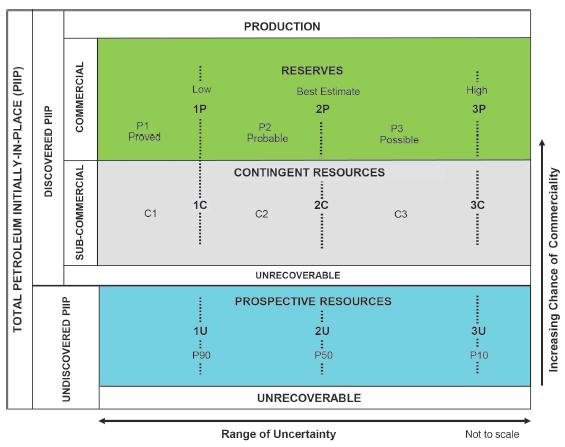
Figure 5: Resources Classification Framework, after the Petroleum Resources Management System (PRMS) of the Society of Petroleum Engineers.
have commercial value if the gas from these fields is ever produced for LNG production.
PETROLEUM RESOURCES
The term petroleum resources is used to encompass all quantities of petroleum both recoverable and unrecoverable naturally occurring in an accumulation on or within the Earth’s crust, discovered and undiscovered, plus those quantities already produced. Further, it includes all types of petroleum whether currently considered conventional or unconventional.
PETROLEUM RESERVES
Petroleum reserves are those quantities of petroleum anticipated to be commercially recoverable by application of development projects to known accumulations from a given date forward under defined conditions. Reserves must satisfy four criteria. They must be discovered, recoverable, commercial, and remaining (as of the evaluation’s effective date) based on the development project(s) applied. Reserves are recommended as sales quantities as metered at the reference point. Where the entity also recognises quantities consumed in operations as reserves these quantities must be recorded separately. Non-hydrocarbon quantities are recognized as reserves only when sold together with hydrocarbons or volume consumed in operations associated with petroleum production. If the non-hydrocarbon is separated before sales, it is excluded from reserves. Page 18 >
Reserves are further categorized in accordance with the range of uncertainty and should be subclassified based on project maturity and/or characterised by development and production status. The PRMS summarises this in its Resource Classification Framework. The horizontal axis reflects the range of uncertainty of estimated quantities potentially recoverable from an accumulation by a project, while the vertical axis represents the chance of commerciality, which is the chance that a project will be committed for development and reach commercial producing status.
PROVED, POSSIBLE AND PROBABLE RESERVES
In dealing with uncertainty of petroleum reserves, the PRMS classically uses the terms: proved, probable and possible.
Proved reserves are those quantities of petroleum that, by analysis of geoscience and engineering data, can be estimated with reasonable certainty to be commercially recoverable from known reservoirs and under defined technical and commercial conditions. If deterministic methods are used, the term “reasonable certainty” is intended to express a high degree of confidence that the quantities will be recovered. If probabilistic methods are used, there should be at least a 90% probability that the quantities actually recovered will equal or exceed the estimate.
Probable reserves are those additional reserves which analysis of geoscience and engineering data indicate are less likely to be recovered than Proved Reserves, but more certain to be recovered than Possible Reserves. It is equally likely that actual remaining quantities recovered will be greater than or less than the sum of the estimated Proved plus Probable Reserves (2P). In this context, when probabilistic methods are used, there should be at least a 50% probability that the actual quantities recovered will equal or exceed the 2P estimate.
Possible reserves are those additional Reserves that analysis of geoscience and engineering data suggest are less likely to be recoverable than Probable Reserves. The total quantities ultimately
recovered from the project have a low probability to exceed the sum of Proved plus Probable plus Possible (3P) Reserves, which is equivalent to the high-estimate scenario. When probabilistic methods are used, there should be at least a 10% probability that the actual quantities recovered will equal or exceed the 3P estimate. Of course, to be presented as a reserve the petroleum in question has to be discovered, recoverable, commercial, and remaining to be recovered based on a scheme of development to be applied. Where petroleum accumulations fall short of these criteria, they are generally considered to be contingent resources.
COMMERCIALITY
Discovered recoverable quantities of petroleum or contingent resources may be considered commercially mature, and thus attain reserves classification, if the entity claiming commerciality has demonstrated a firm intention to proceed with development. This means the entity has satisfied its internal decision criteria. This is typically the rate of return at or above the weighted average cost-of-capital or the hurdle rate. Commerciality is achieved with the entity’s commitment to the project and all of the following criteria:
a) Evidence of a technically mature, feasible development plan.
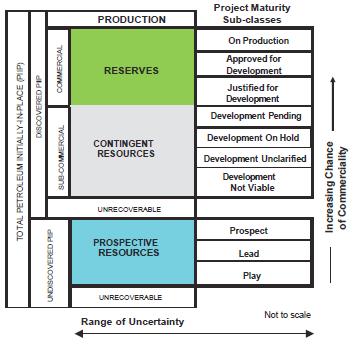
6: Subclasses of petroleum based on project maturity, after the Petroleum Resources Management System (PRMS) of the Society of Petroleum Engineers.
Page 16 Page 20 >
b) Evidence of financial appropriations either being in place
or having a high likelihood of being secured to implement the project.
c) Evidence to support a reasonable time-frame for development.
d) A reasonable assessment that the development projects will have positive economics and meet defined investment and operating criteria
e) A reasonable expectation that there will be a market for forecast sales quantities of the production required to justify development. There should also be similar confidence that all produced streams (e.g., oil, gas, water, CO2) can be sold, stored, re-injected, or otherwise appropriately disposed.
f) Evidence that the necessary production and transportation facilities are available or can be made available.
g) Evidence that legal, contractual, environmental, regulatory, and government approvals are in place or will be forthcoming, together with resolving any social and economic concerns.
One might consider the current status of the Elk-Antelope gas field which is to be developed for production gas as feedstock for processing as liquefied natural gas (LNG) by the renowned international oil and gas company, TotalEnergies.
In the context of the PRMS, the petroleum of the Elk-Antelope gas field is on the brink of becoming commercial, and thence considered as
Figure
petroleum reserves. The PRMS nicely demonstrates the transition of contingent resources where development is pending to reserves justified for development and then approved for development.
The fields currently contributing gas to the PNG LNG Project clearly have proved reserves which are either currently being produced or are to be produced. As such fields continue to produce gas their proved reserves are systematically depleted by that production. We term production as the total cumulative quantity of petroleum that has been recovered at a given date. Proved reserves may be replenished as the operating company obtains more and more information about the petroleum accumulation it is producing and their reservoirs. Reserves which previously had less certainty of recovery may migrate from the possible reserve category to the probable reserve category and likewise from the probable category to the proved category. This is not a certainty, but the phenomenon of reserve creep is often realised as production continues, reservoir knowledge and understanding of its behaviour are amassed and field experience expands, but not always. There can be equally disappointing outcomes.
PLAYS, LEADS, AND PROSPECTS
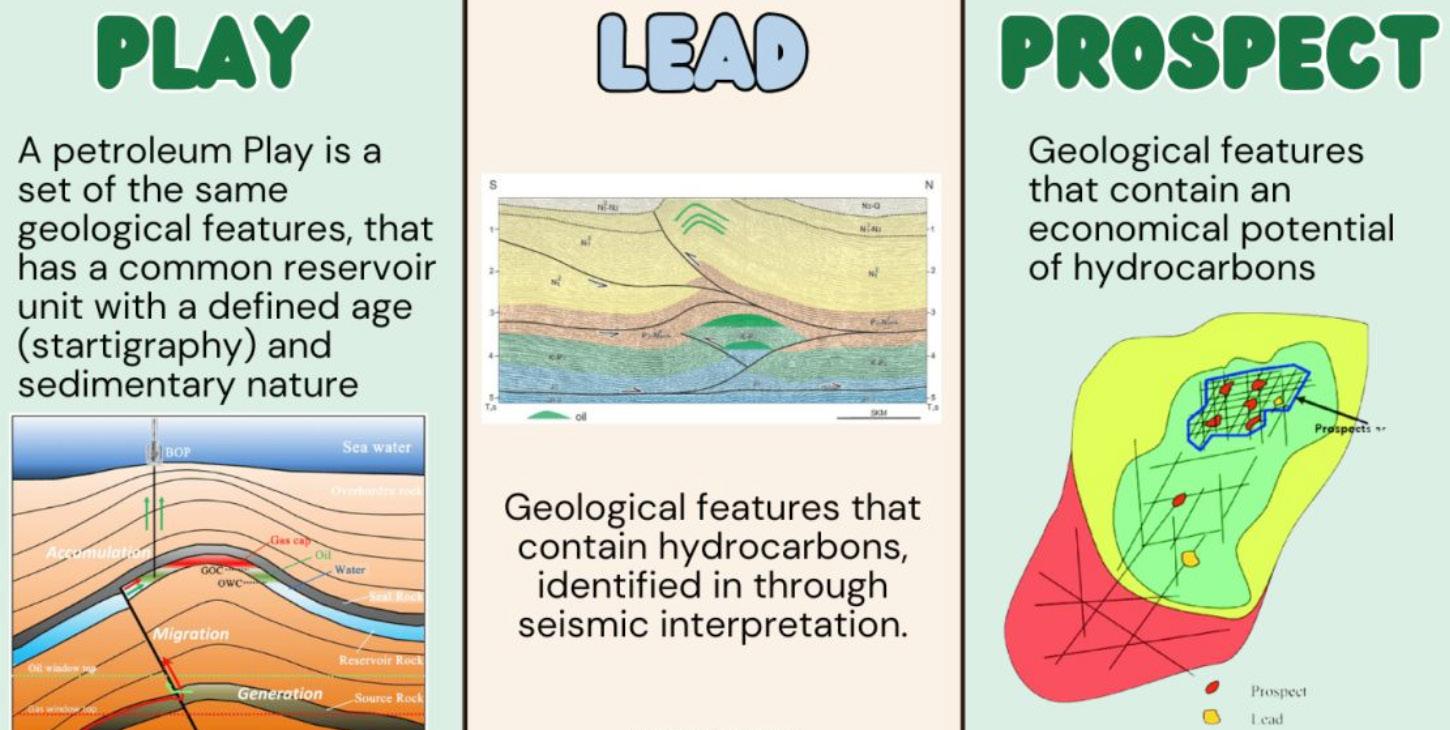
Oil companies will talk of checking out a play. A play is a geological argument used to justify exploration for hydrocarbons. Critical geological ingredients may be present in an area that may encourage the notion that petroleum accumulations might have formed within the subterranean strata. A sedimentary basin may have developed sometime in geological history within the strata of which buried organic material may have matured into oil and gas. The petroleum geologist will have ideas of possible trapping mechanisms which may have caused any generated petroleum to have accumulated in geological traps which would necessarily have to be formed before the petroleum migrated due to its buoyancy.
Geological, geophysical and geochemical are undertaken to identify potential structural trends
which may provide potential traps. These are often called leads. When such leads are examined more closely to ascertain that they meet all the criteria for formation of a petroleum accumulation, prospects may emerge which may be worthy of drilling to determine whether there might be a petroleum accumulation worthy of commercial production. Oil companies will drill their best and largest prospects with the hope of finding oil and gas. Alas, all parameters for the formation of an accumulation have to be present and with the correct timing, so often drilling is not successful. Subtleties of geological history and evolution of the geology of the area may preclude the prospect from bearing hydrocarbons. Sometimes perseverance is required as the drilling of several prospects provides more specific geological knowledge of the area, and eventually a discovery is made. There are so many cases where companies have drilled a series of well unsuccessfully, only to have a pleasant surprise eventually with a late discovery.
APPRAISAL
Once a discovery is made, the question everyone asks is, “How big is it?” This is a simple, but daunting question. A typical petroleum prospect in Papua New Guinea might need to be of considerable size to justify and warrant it being drilled in the first place. Take for example, the Iagifu prospect of the IagifuHedinia oil field, in production since 1992 as part of the Kutubu Project. Its pre-drill prospect structure was approximate 6 kms long by 3 kms wide, and ellipsoidal in shape covering an area of about 56.5 square kilometres. Consider that the drill bit that first entered the oil-bearing Toro Sandstone reservoir at 2,430 metres depth in the well was just 12-1/4 inches in diameter, or only 0.076 square metres or 760 square centimetres in area. That bit probed only just over a few billionth parts of the prospect, a minute portion of the prospect indeed. A discovery is nice, but it does not make a field. Sometimes there is not even a defined accumulation, if the discovery
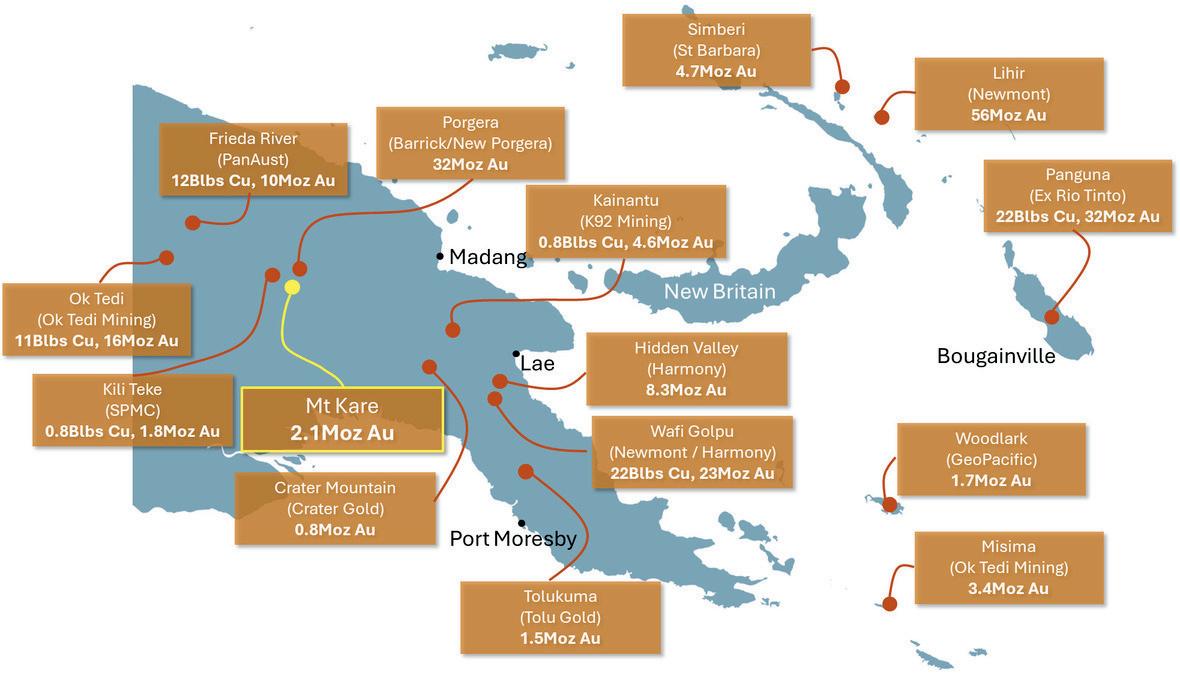
Mt Kare: Exploration Licence Application
Augustus has acquired ACM Contract Mining (PNG) Ltd, (ACM PNG) which holds the Exploration License Application ELA 2446 that covers the Mt Kare Project.
Mt Kare is located 15km from, and is geologically analogous to, Barrick (Niugini) Limited’s Porgera gold mine (33Moz Au).
Mt Kare is an alkali epithermal gold deposit, a rare class of gold deposit, that includes Porgera, Lihir (PNG) (47Moz Au), CadiaRidgeway (NSW) (>50Moz Au) & Cripple Creek (Colorado) (26Moz Au)
Augustus is actively pursuing pathways to secure the licence which may include: objecting to other license applications, and/or negotiating with other applicants
More than A$100m historically invested in exploration and mining studies including 454 diamond drill holes for 73,639m.
Why Mt Kare? Why PNG? Why Now?
Mt Kare is one of the largest undeveloped gold assets in Australasia
Chairman, Brian Rodan, has long standing relationships with local stakeholders and governmental authorities, developed over 15 years operating in Papua New Guinea.
Mineral Resources Authority of PNG Expected Minimum Criteria of the Applications:
tangible work programs necessary to advance the project into feasibility studies, backed by sound technical team with proven mine development record, and healthy financial standing.
Augustus Minerals strategy will focus on:
Rapid development of an underground adit to better drill, understand and develop bonanza grade zones.
Aggressive drilling program and advanced studies on structural geology and alteration geochemistry to understand and effectively target high-grade zones.
Rapidly advance mineral resource studies, feasibility studies and development pathways for both high-grade underground and open pit scenarios.
Why Mt Kare? Why PNG? Why Now?
Improved security situation.
Improved landowner relationships. Record gold prices.
Ref: Augustus Minerals Limited (ASX:AUG) ASX Announcement “Music Well Gold Project Exploration Update” on 18.11.24
Australia’s commitment to Papua New Guinea as a long-term strategic partner. Exec Chair, Brian Rodan, has strong working relationships with PNG Government and land holders in the Mt Kare developed over 15 years.
Mt Kare licensing process has been held up for over 10 years but is now advancing.
Warden is advancing the in-time applications former first in time applicant being removed AUG is second-in-line applicant with a fully valid application.
cannot be delineated or appraised by further drilling to map out the lateral extent of the accumulation across the geological structure which formed the prospect. There was an extraordinary discovery called Makas 1-X, which was drilled in the 1990s and which allegedly found an oil-bearing sandstone. The well ran into technical difficulties and had to be re-drilled, but when that new well encountered the reservoir sandstone, it was barren of oil. In this instance, appraisal refuted the supposed discovery.
Appraisal seeks to probe the full extent of a newly-discovered petroleum accumulation by the drilling of more wells into the prospect. This is done to gauge whether the accumulation contains enough petroleum to be able to sustain production on a profitable commercial basis. It is an important critical stage of petroleum development. The drilling of further wells on a discovery has to be encouraged and promoted, and if necessary, government regulators need to ensure it takes place.
The operating petroleum company may not wish to spend precious financial resources on appraisal immediately. It may have other competing or urgent investments. The Papua New Guinea legislation does not define the term appraisal of a discovery, but appraisal of a petroleum discovery is included in the rights of petroleum prospecting licensee. However, the government may direct the licensee to do such things as are thought necessary including the completion of wells, the conduct of drill stem or extended production tests for appraisal of a discovered petroleum accumulation. More specific appraisal requirements are contained either in legislation, licence conditions or production sharing agreements elsewhere. The Papua New Guinea Oil and Gas Act does enable the declaration of what is known as a Location over the specific block within which a discovery is made, and up to eight adjoining blocks (a block is 5 minutes latitude by 5 minutes longitude, or about 81 square kilometres at the latitudes of Papua New Guinea).
The declaration of a Location enables some degree of retention of
the licence area by the discoverer, but also importantly triggers the ability of the Government to require various investigations and studies as to assess the feasibility of the construction, establishment and operation of an industry for the recovery of petroleum from the location, particularly technical and economic feasibility studies relating to the recovery and transport of petroleum from the location and processing of the petroleum.
ESTIMATING THE RESOURCES
Once a petroleum accumulation has been found and appraised by the drilling of further wells which have shown that the petroleum can flow to the surface, the next big question is the size of the accumulation. Essentially, size of the accumulation it is a matter of size of the reservoir, and that in turn depends on the size of the geological structure that may have formed the trap within which the petroleum got trapped and has been found. Quite simply, the more petroleum bearing rock there is, the more petroleum will be in-place; we call this the bulk rock volume. In simple terms, this is the area of the reservoir times its thickness, though complexities of the geological structure and its shape make this considerably more complicated. Now, we must remember that in a conventional petroleum reservoir, the petroleum is located in the pores within the rock, a bit like water in a sponge. So, determining the porosity of the reservoir rock is a fundamental factor that has to be measured. A sample of rock can be obtained from the well and physical studies can be made of it to ascertain its porosity as a percentage of the rock, or electronic tools can be lowered into the well to measure physical properties of the rock from which its porosity may be calculated. Within the subsurface rock strata, water abounds, remnant from the time of deposition. When petroleum accumulates in a porous reservoir rock it, displaces the water, but not perfectly or completely. There is always some water left behind. Accordingly, a portion of the porosity of the rock still contains water depending on local subsurface geological condition. Again, measurements can be made of the reservoir rock in situ by special electronic tools to ascertain what
percentage of the pores is filled with water, and what percentage is filled with petroleum. This, we call the water saturation.
When petroleum flows to the surface from a reservoir, it is moving from a location of high pressure and somewhat elevated temperature to standard atmospheric conditions. Oil containing gas will shrink as it rises up the well to ambient conditions as the gas comes out of solution. There is also some shrinkage due to temperature change effects and expansion due to pressure relief. This volume change is called the shrinkage and is expressed as the formation volume factor, the ratio of the volume of petroleum at reservoir conditions to the volume at surface conditions. It typically ranges from 1.0 to 3.0.
In the case of gas, as it flows up the well, it will expand in classic response to the decrease in pressure and temperature from subsurface reservoir conditions to surface conditions. The gas formation volume factor is generally much lower, ranging from 0.001 to 0.01 reservoir volume per surface volume.
Multiplying these factors together, in broad terms, we get:
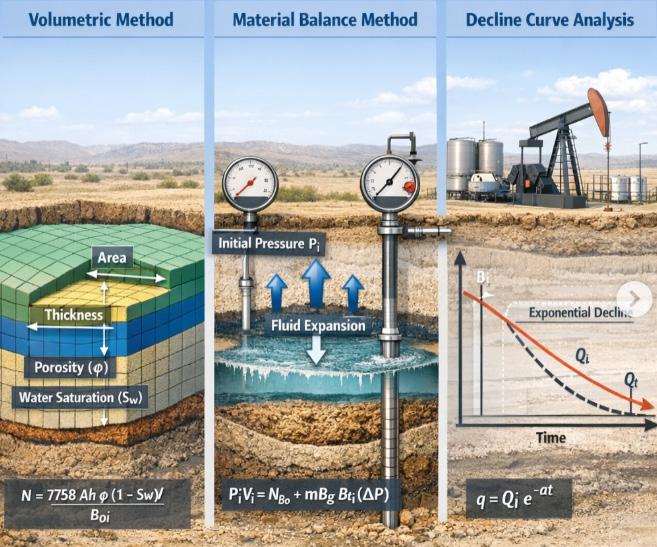
Volume of petroleum at surface = bulk rock volume x porosity x (1-water saturation)/ formation volume factor
This is what we call a volumetric method, which is adequate in cases where we have some idea of rock and fluid parameters. It is generally used in early stages of appraisal of an accumulation. Other methods are the material balance method in which the tracking of pressure changes is used to estimate remaining reserves, and decline curve analysis, which
Figure 9: Classical methods of petroleum reserve analysis after petroleum concepts on Instagram
Page 22
uses field production data trends to predict future output. Of course, this discussion is quite generalised, and there are many intricacies and additional dependencies.
Petroleum is normally a complex mixture of many different hydrocarbons. Oil most often contains hydrocarbon gases in solution and natural gases contain liquid hydrocarbons in solution.
Also, rarely are reservoirs undisturbed and quite often the very tectonic forces that created the geological structure within which the petroleum has been trapped may cause intricate faulting of that reservoir. This can often spoil the continuity of the reservoir and effectively break it up into many small pieces of reservoir some of which may not have been able to be charged with oil or gas. This often only becomes evident when infill drilling between the discovery and appraisal wells demonstrates such discontinuities. Faults identified in the wells within the reservoir rocks indicate localised tectonic displacement and what is called compartmentalisation. This is the case in the Kutubu oil fields which then required very careful placement of production wells to tap the oil-bearing parts of the reservoir. Sometimes water enters the petroleum bearing reservoir and flushes the hydrocarbons out of place leaving behind only a residual viscous smear of the original oil charge of the reservoir and the flushing waters. Such was the case in the Toro sandstone reservoir of the large Mananda anticline which showed excellent signs of bearing oil, but the primary charge had been flushed away leaving only a non-recoverable residue.
In some reservoirs, the porosity of the reservoir varies laterally due to changes in the original depositional environment of the sediments, or later mineralogical or chemical changes. The amount of water remaining in the reservoir pores can vary across a field, and hence the degree of fill of that porosity by hydrocarbons.
As one may realise, the assessment of the original oil-in-place or original gas-in-place can become quite tricky. Then, there is one more factor that is absolutely necessary for the oil and /or
gas to flow into the well bore; that is permeability.
Permeability is the ability of a porous material (such as rock) to allow fluids (either liquids or gases) or gases to flow through it. Permeability measures how easily fluids flow through the interconnected pores under pressure. High permeability allows easy flow, while low permeability restricts flow. The majority of rocks (more than 93%) have very little permeability and a small amount (2%) have fair to good permeability, the balance are considered to be poorly permeable or tight. From the 2% permeabilities range from 1 to 1000 milliDarcies (mD, the unit of permeability named after Henri Darcy). In the Hides gas field, the reservoir permeabilities of the Toro Sandstone reservoir range from 3 to 2,000 mD with the bulk of readings being between 30 to 150 mD. Such permeability would be said to be good. Both permeability and porosity are related and in the Hides gas field Toro reservoir, permeability broadly scales with porosity which ranges between 2% to 18%.
RECOVERY FACTOR
It is good to have an accumulation
full of hydrocarbons in a porous and permeable reservoir, but those hydrocarbons still need to be able to get to the surface to be able to be sold. They need to be recovered as oil and gas production. Exactly how much oil and/or gas may be recovered from a reservoir by production is not so easy to estimate. For oil and gas to flow into a wellbore from a reservoir rock and flow to surface requires energy. The flow has to combat gravity and frictional forces to get to the surface. So quite obviously the higher the pressure of the reservoir and the less viscous the petroleum is, the better it will flow. Measurements of reservoir pressure are therefore most important. In a gas field, the natural gas will fill its container, the reservoir and pressure within the connected reservoir will equilibrate. As the gas is produced, the reservoir pressure will decrease just like a balloon deflating until such time as there simply is not enough pressure to force the gas out of wellbore. That then is the technical end of production. A crude estimate of the recovery factor of a gas field may be expressed as 1 minus the
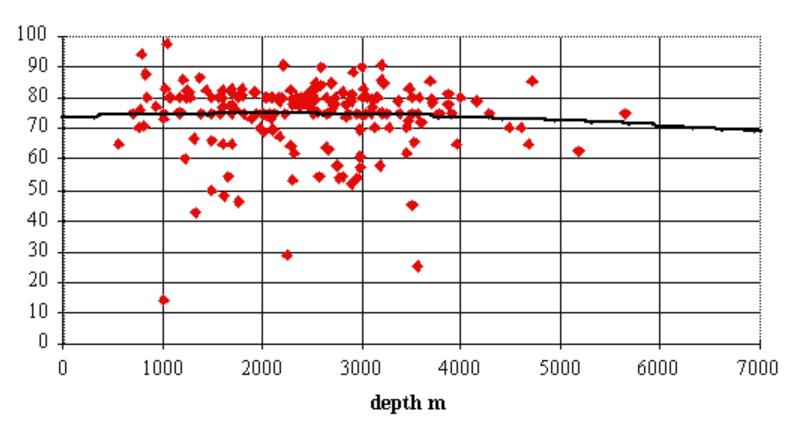
Figure 10: Recovery factor versus depth of gas fields outside the USA with larger than 1 trillion standard cubic feet of gas in place, after Jean Laherrère, International Energy Agency.
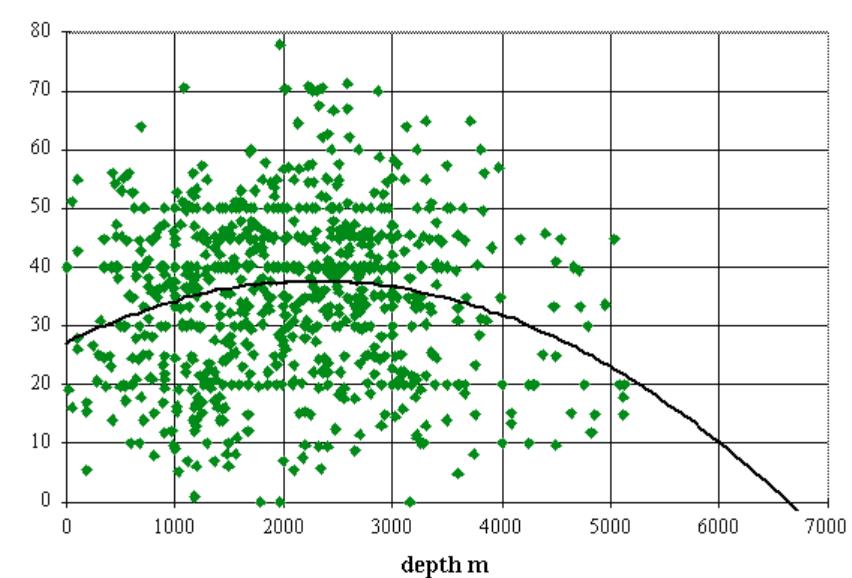
Figure 11: Recovery factor of 800 oil fields outside the USA, after Jean Laherrère, International Energy Agency
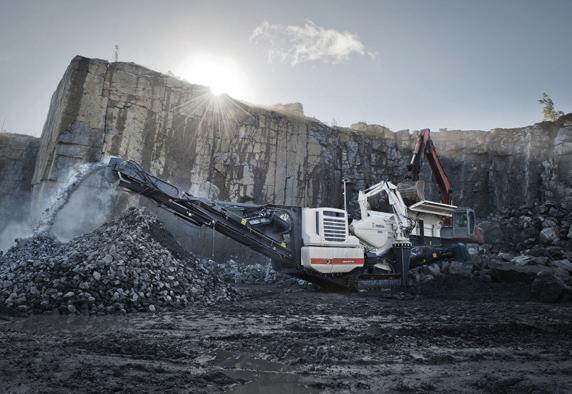
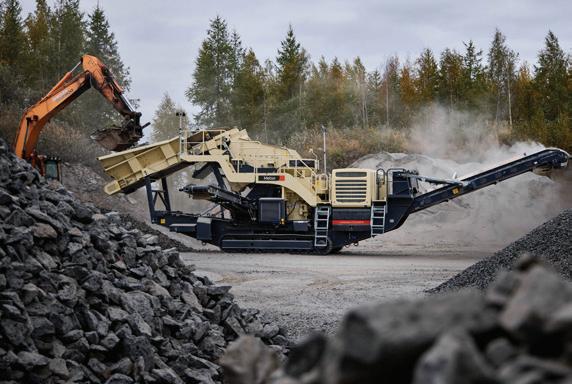
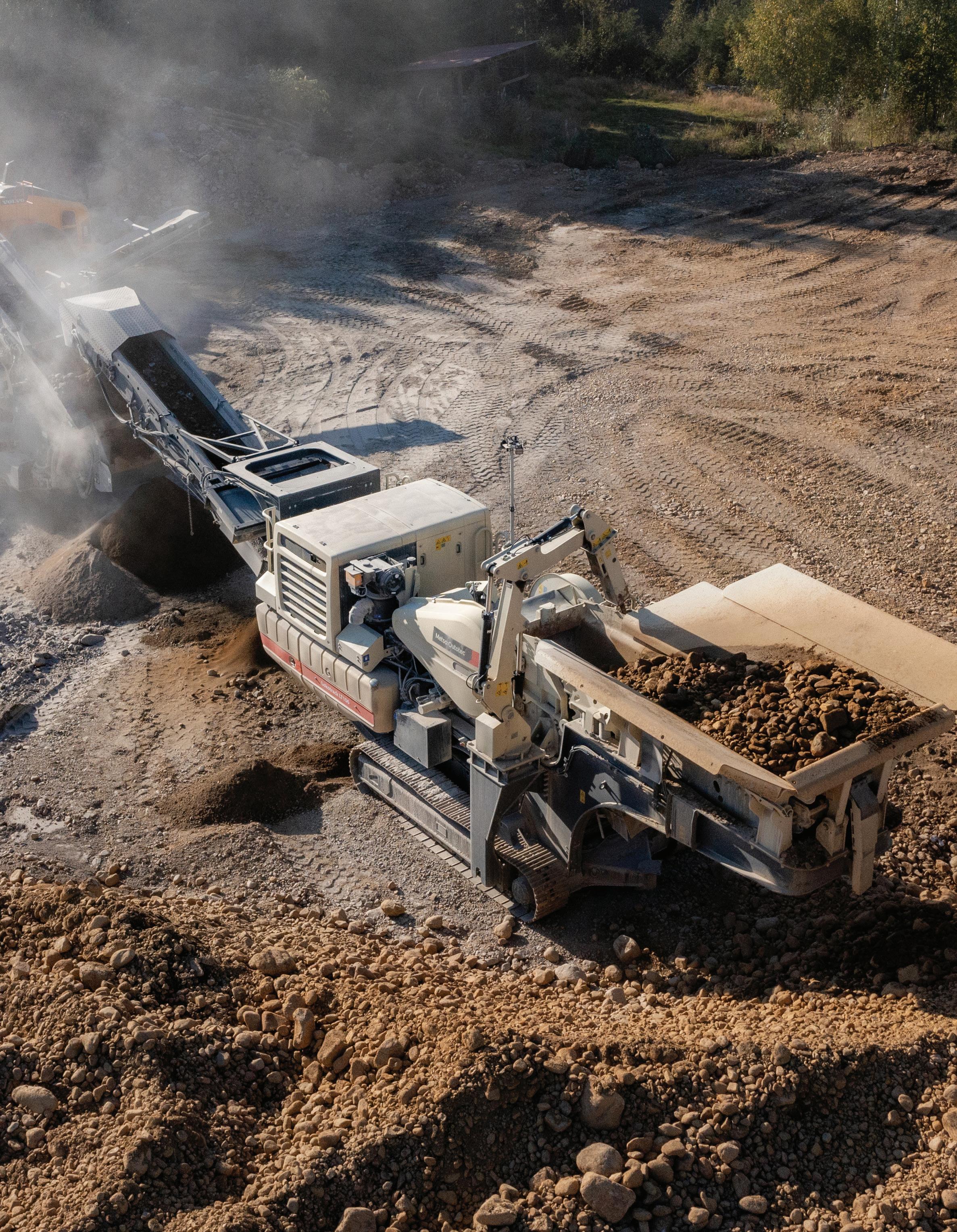
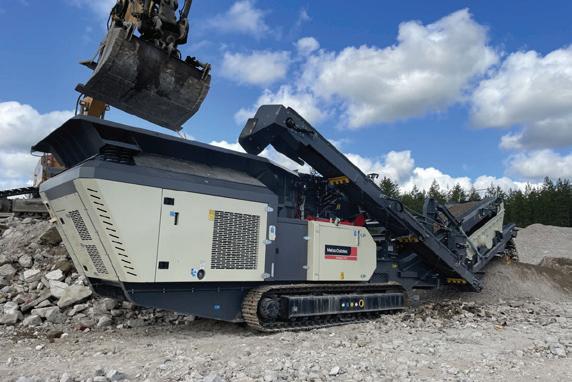
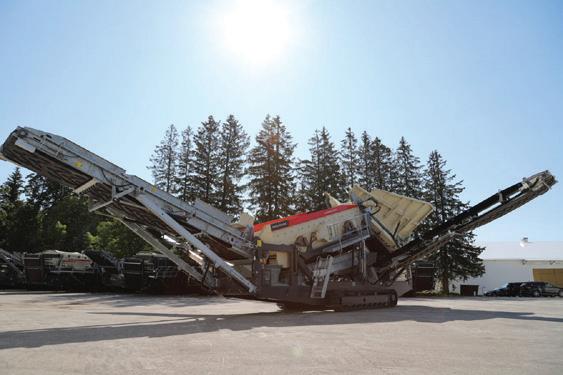
Complete Mobile Solutions for Crushing & Screening
Supplied by Tutt Bryant Equipment, the latest range of Metso and Nordtrack mobile equipment is built to deliver high-capacity performance, mobility and operational efficiency across quarrying, recycling and contracting applications.
The Metso Lokotrack LT106 provides reliable primary crushing with compact mobility, while the Metso Lokotrack LT200HPX delivers up to 40% more capacity thanks to its advanced pre-screen and proven HP200e cone crusher.
For contractors requiring flexibility, the Nordtrack I1011 combines powerful impact crushing with a compact footprint, making it ideal for recycling and demolition applications. Complementing the lineup, the Metso Lokotrack ST2.8 offers aggressive screening performance for sticky materials such as topsoil and recycled waste.
Backed by Tutt Bryant Equipment’s national support network, these machines are designed to maximise productivity, mobility and uptime across demanding operations.
reservoir pressure at abandonment divided by the initial reservoir pressure. Typical gas fields have high recovery rates of between 50% to 80%.
Of course, gas fills its container and has a very low viscosity; oil is quite different. It is viscous, a liquid and hence moves much more slowly. It does not fill its container as gas does. When a well penetrates an oil-bearing reservoir, the oil has to flow toward the borehole in response to a decrease in pressure caused by the well’s penetration into the reservoir. As the pressure differential between the wellbore and reservoir decreases with time, the oil becomes more and more sluggish. Lighter density oils move easier, but heavier density oils have a hard time. The amount of gas dissolved in the oil very much affects the ability of the oil to flow out of the well because as the pressure is relieved, the gas bubbles out of solution (just like opening a Coca Cola bottle) frothing up the oil and making the oil flow lighter and easier to ascend the well. The amount of gas contained per barrel of oil in solution is known as the gasoil ratio. In the case of the Kutubu fields, the oil was very gassy from the beginning, and so recovery of the oil was much easier. Indeed, there was so much gas produced with the oil that for many years the gas was reinjected back into the reservoir to help push the oil to surface. In this way, it was also effectively conserved until it too could be produced in the current PNG LNG Project.
Some oil-bearing reservoirs are linked in the subsurface to active aquifers which provide additional energy to help maintain the reservoir pressure for a longer period of time. Petroleum engineers and production geologists quite often devise water injection schemes to aid oil recovery in which massive amounts of water are pumped into the water lying below the oil to help it flow to the production wells. This is called water flooding.
Whilst the extent of gas recovery from a reservoir is more fundamentally connected to the change of reservoir pressure, the extent of oil recovery is not so readily estimated.
Elaborate reservoir models may be built describing the reservoir rock, reservoir fluids and their parameters to create simulations of flow through an array of production wells. These simulations can be correlated to actual flow of wells when tested and an overall assessment of likely recovery scenarios made.
Typical oil recovery rates are between 5% to 50% of the original oil-in-place, with an average often cited of around 30% to 35%.
Secondary recovery techniques like water flooding and gas injection enhance recovery to between 30 to 40%. Enhanced oil recovery (EOR) techniques may significantly increase recovery by the injection of heat, gases, chemicals to reduce viscosity and improve flow, but this comes at a cost.
ULTIMATE RECOVERY
As one produces a field, be it an oil field or a gas field, the resources that were estimated to be in place at the beginning of production are steadily depleted. The extent of the recoverable reserves is reduced by every additional amount of production, so the reserves of a field decline. Those reserves that have been recovered and those that may yet be potentially recovered are referred to as the estimated ultimate recoverable reserves of the field. This is the ultimate measure of the total potential commercial output of a field.
To talk of the reserves of a particular petroleum province and its fields one can only project into the future as those resources that were once reserves and have been produced are no longer such. The
estimates of reserves are estimates of the volumes of oil and gas that may be commercially recovered henceforth. A common measure of the utility of such reserves is the reserve-to-production ratio (R/P ratio). This estimates how many years the oil or gas will last at current production rates. It is calculated by dividing remaining proven reserves by the annual production rate. A higher R/P ratio indicates more years of supply remaining.
If one looks at the Statistical Review of Global Energy, the last edition that examines the R/P ratio was in 2020 providing statistics up to the start of Covid. Oddly, after that BP and then the new owners of this great and useful report found it necessary to omit the listings of oil and gas reserves and with that, the comparative R/P ratios, perhaps to mollify the notion that a world in energy transition would still be producing oil and gas for decades to come. Of course, circumstances change as we have seen in the dramatic actions of some nations in the first quarter of 2026. The picture is clear; a select few countries dominate oil production now and in the longer term. Their ability to produce oil into the foreseeable will depend on their access to markets, which if denied may render their reserves to be purely technical.
A similar story can be told for natural gas reserves. It is with respect to natural gas that Papua New Guinea earned a row in the statistics of the Statistical Review of Global Energy, having an assessed 0.2 trillion cubic metres of gas as proven reserves and an R/P ratio of 14.2 years.
Figure 12: Reserveto-production ratios of countries with more than one billion barrels of proved reserves and the USA as at preCovid pandemic in 2019 after Statistical Review of Global Energy.
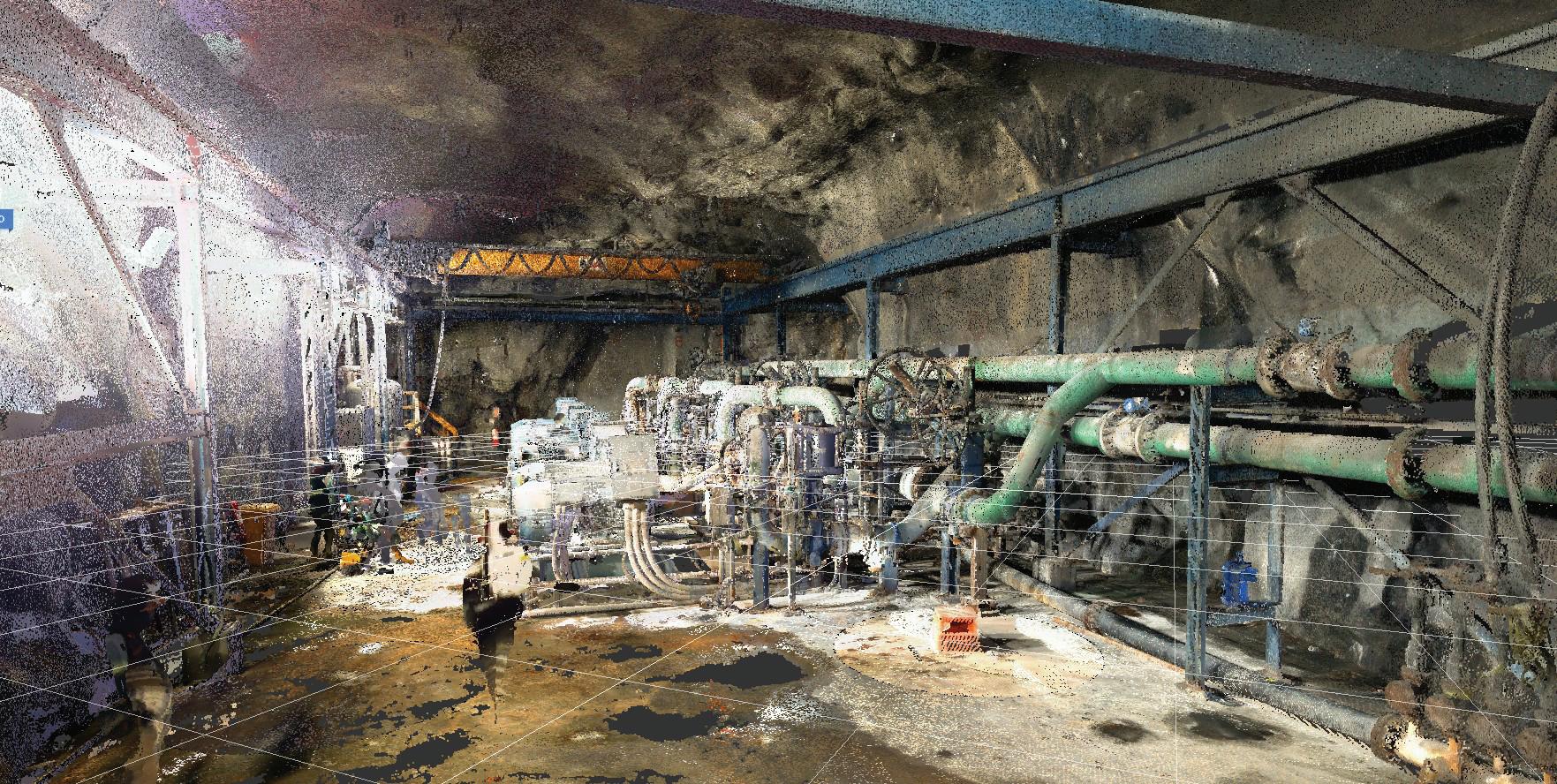
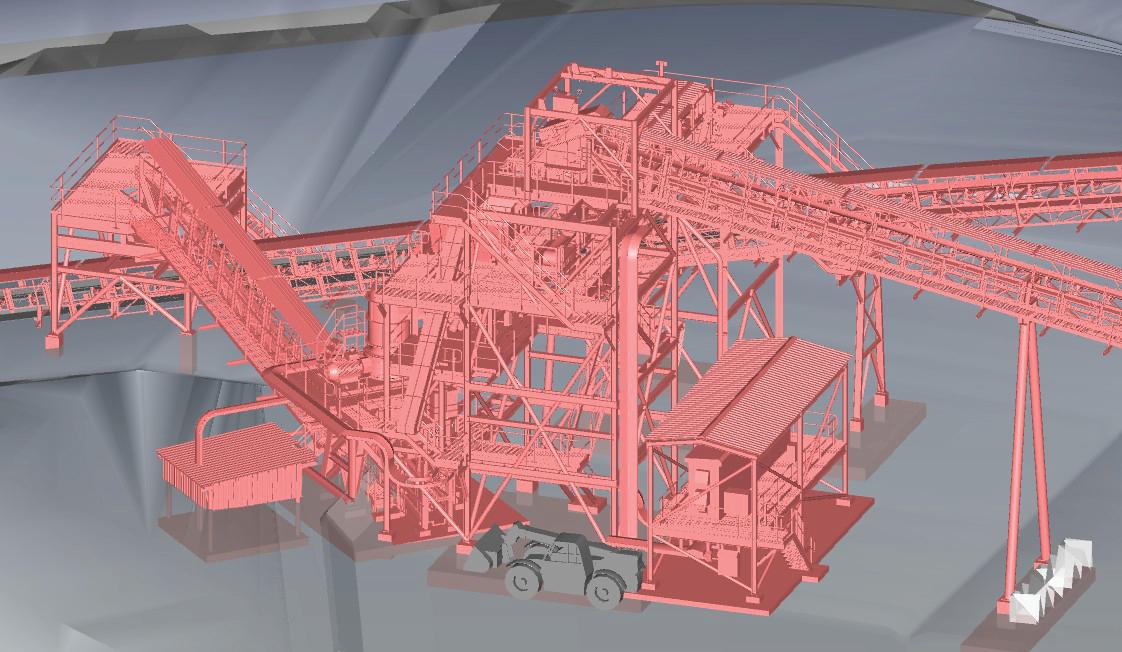
3D SCANNING
Field Name(s)
The summations are pseudo-summations only, not statistical aggregations and should be used as a guide only
< Page 26
Papua New Guinea has been producing oil and gas since 1991 when the Kutubu Project produced its initial oil as feedstock for the Project refinery and the Hides Project produced its initial gas as feedstock for the Porgera mine power plant. In 1992, full scale oil production began at Kutubu and in 2014 large scale gas production at Hides for the PNG LNG Project commenced.
Papua New Guinea’s discovered oil and gas fields are listed here together with their estimated ultimate recoverable resources and reserves, which includes production to date and remaining resources and reserves.
The extent of the future discovery of Papua New Guinea’s petroleum resources will depend entirely on investment in exploration and the necessary drilling of valid prospects. In turn, the extent of reserves will depend on investment in development where production
of those reserves may be assessed to be commercial. Without such further investment, we can only produce those resources and reserves that are remaining until they are depleted to the extent that we can, given considerable infrastructure limitations. Only successful exploration including the vital drilling of exploration wells will allow the above table to be augmented with Papua New Guinea’s yet to be found petroleum resources and reserves.
Figure 13: A list of oil and gas field discoveries in Papua New Guinea and their estimated ultimate recoverable resources and reserves (2C and 2P respectively) after David Manau, Secretary, Department of Petroleum and Energy (now Managing Director, National Petroleum Authority) modified and amended by the author from public information.
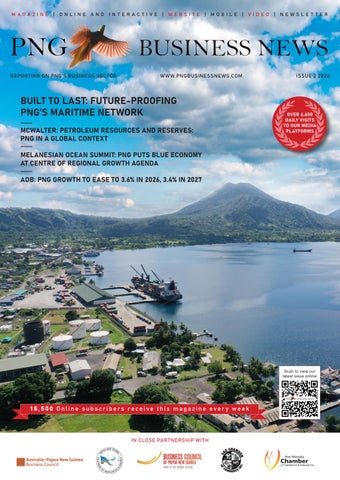
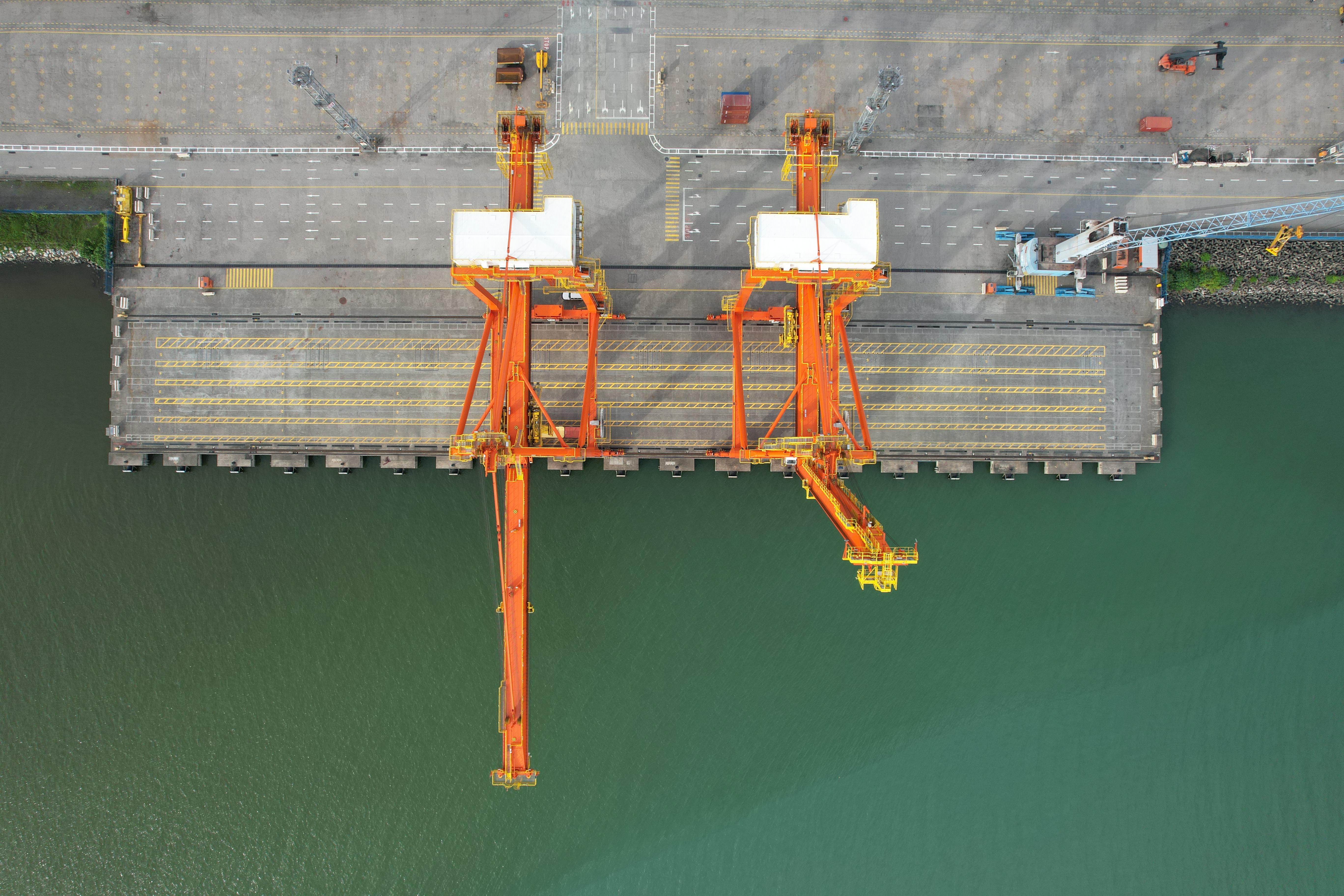
Built To Last: Future-Proofing PNG’s Maritime Network
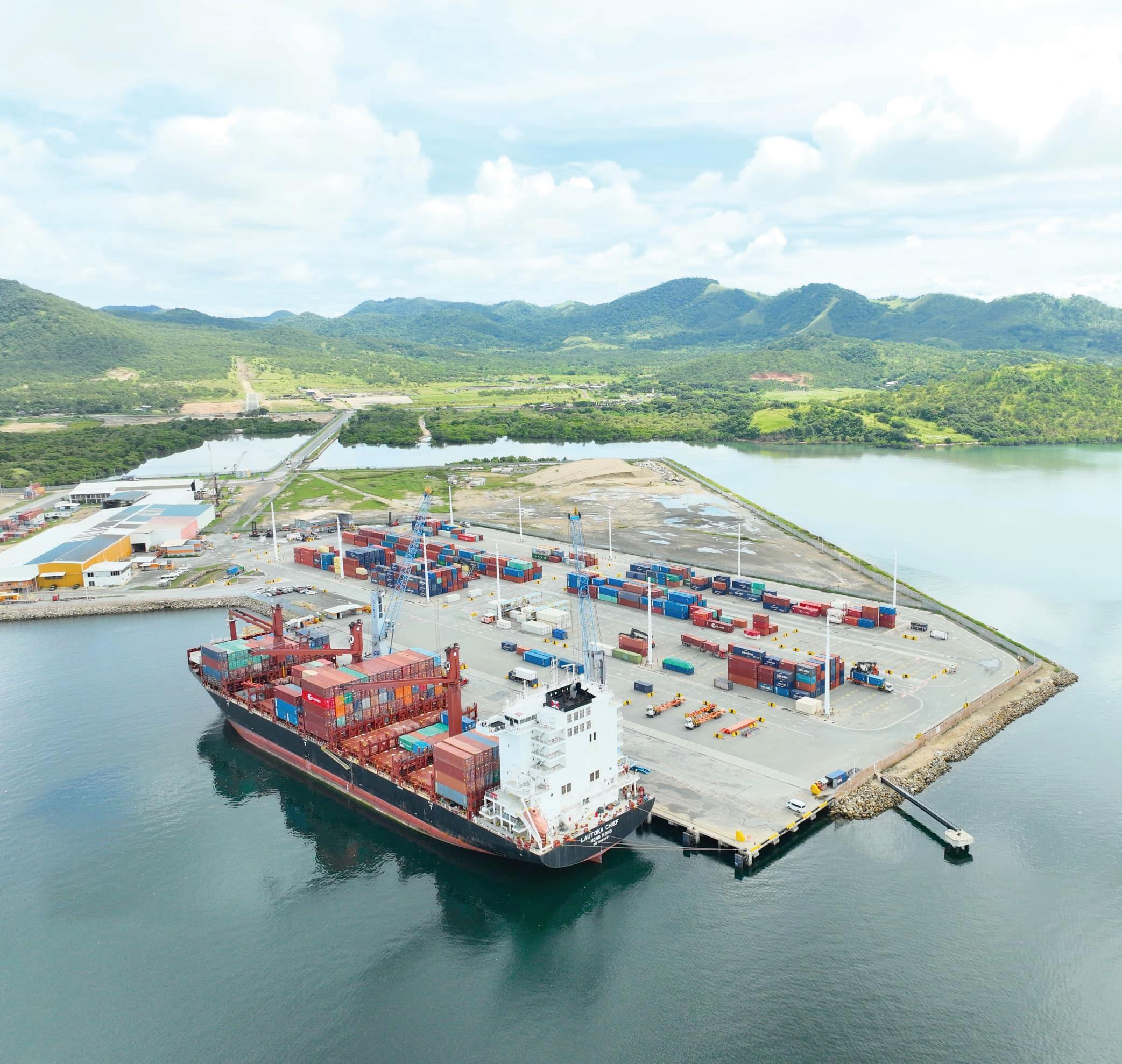
Papua New Guinea’s ports are more than gateways for cargo. They are the economic arteries of a nation. With a bold 30-Year Infrastructure Master Plan now being realised, PNG Ports Corporation is modernising its network to connect communities, attract investment and navigate towards the next generation of national growth.
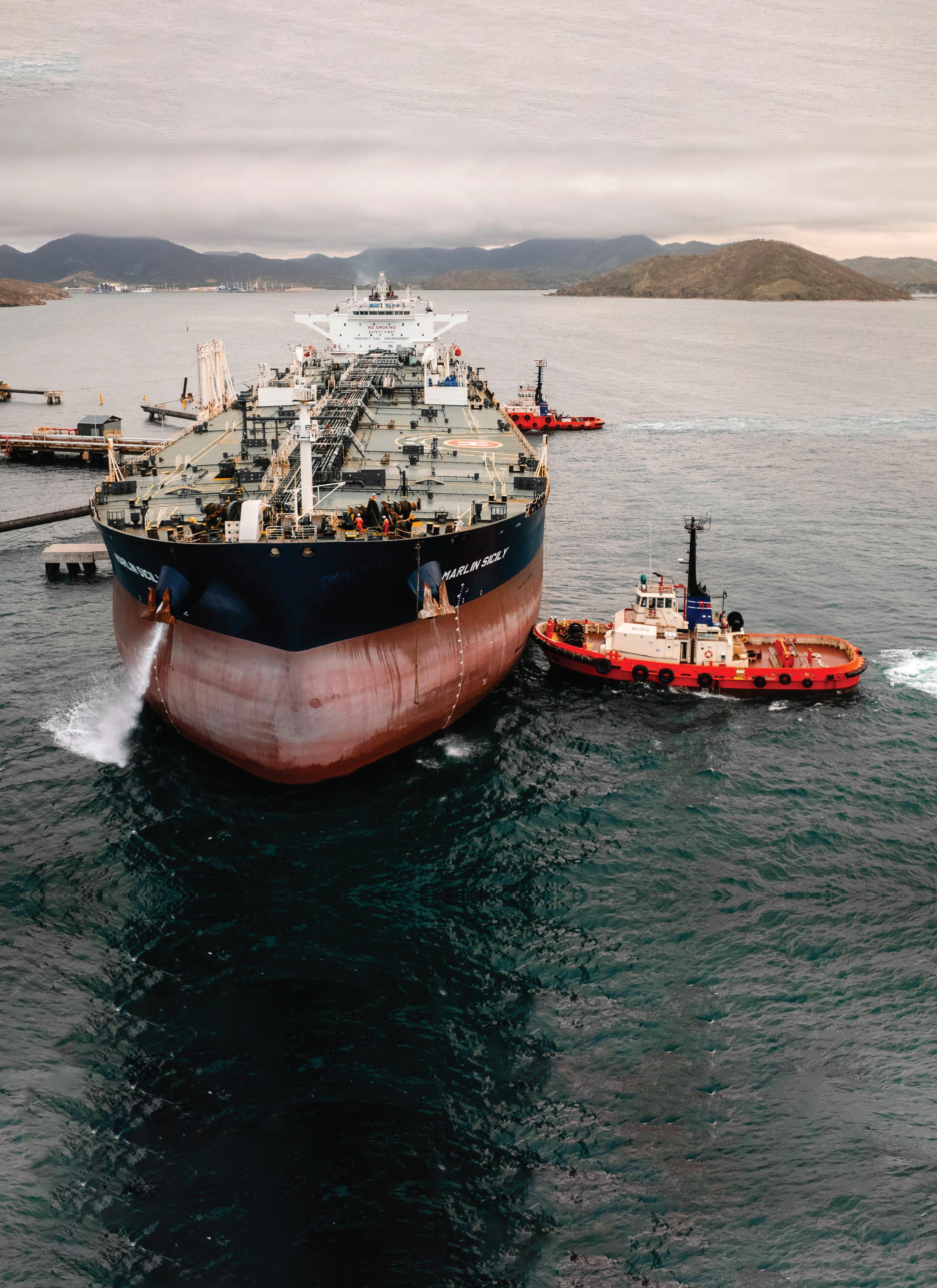
PNG Ports Corporation Limited (PNG Ports) manages 15 of the country’s 23 declared ports, handling 10.8 million tonnes of cargo in 2025 alone and underpinning an estimated K29 billion, or 22 per cent, of Papua New Guinea’s GDP. From rice and fuel to gold, copper and palm oil, almost everything that moves in and out of the country passes through a PNG Ports facility. Yet the infrastructure supporting this vital national role has long been in need of modernisation.
That is now changing. PNG Ports’ 30-Year Infrastructure Master Plan, described as the largest port upgrade program in the corporation’s history, is delivering transformative
investment across the entire national network. Backed by the Australian Government’s Australia-PNG Infrastructure Financing Partnership (AIFFP) contributing A$621.4 million (approx. K1.5 billion) and supported by the European Investment Bank (EIB) and Agence Française de Développement (AFD), the program is building resilient connectivity well into the future.
PNG Ports CEO Neil Papenfus says the program’s ambition stretches well beyond the waterfront.
“Our infrastructure program is not simply about repairing wharves. We are securing the economic future of every province this network serves, improving the lives of the Papua New Guinean people who depend on it, and positioning PNG as a serious player in Pacific trade and logistics,” Papenfus said.
KIMBE PORT: REHABILITATION UNDERWAY
The program is already delivering on the ground. Kimbe Port, PNG’s thirdlargest port and a critical gateway
for West New Britain Province, the country’s largest producer and exporter of crude palm oil, is the first port to undergo rehabilitation under the K1.5 billion Port Infrastructure Investment Program (PIIP), financed by the Australian Government through the AIFFP. Since works commenced in August 2025, the project has progressed beyond the halfway mark, generating local jobs and direct economic engagement for communities across the province. Lae Tidal Basin, Kavieng, Oro Bay and Daru are next in line for upgrades under the same program.
COMMUNITY SERVICE OBLIGATION PORTS
Of the 15 ports managed by PNG Ports, only three, Lae, Port Moresby and Kimbe, are commercially self-sustaining. The remaining 12 operate as Community Service Obligation (CSO) ports: facilities that would not be viable on purely commercial terms, but which perform an essential social function for the communities they serve. Ports such
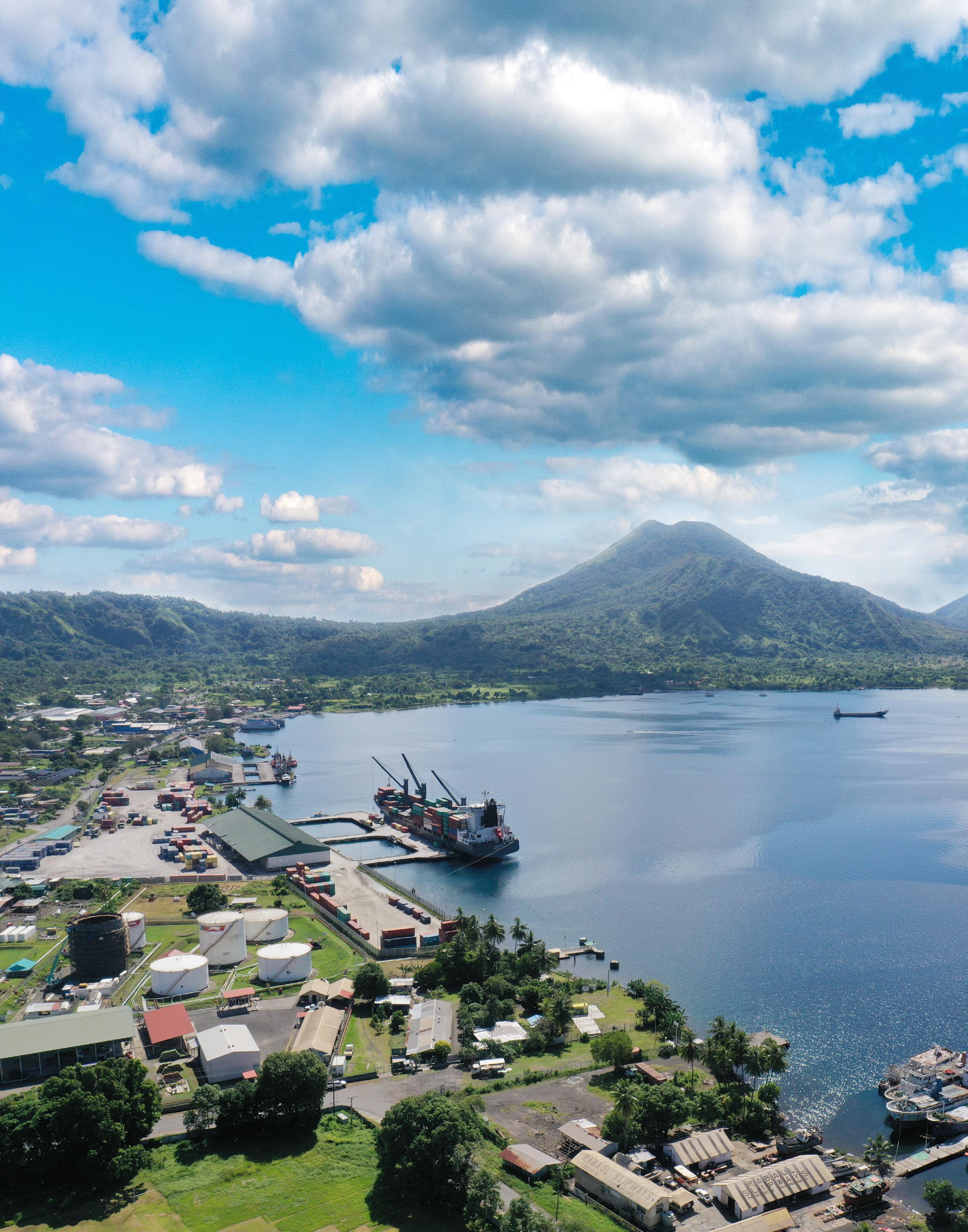
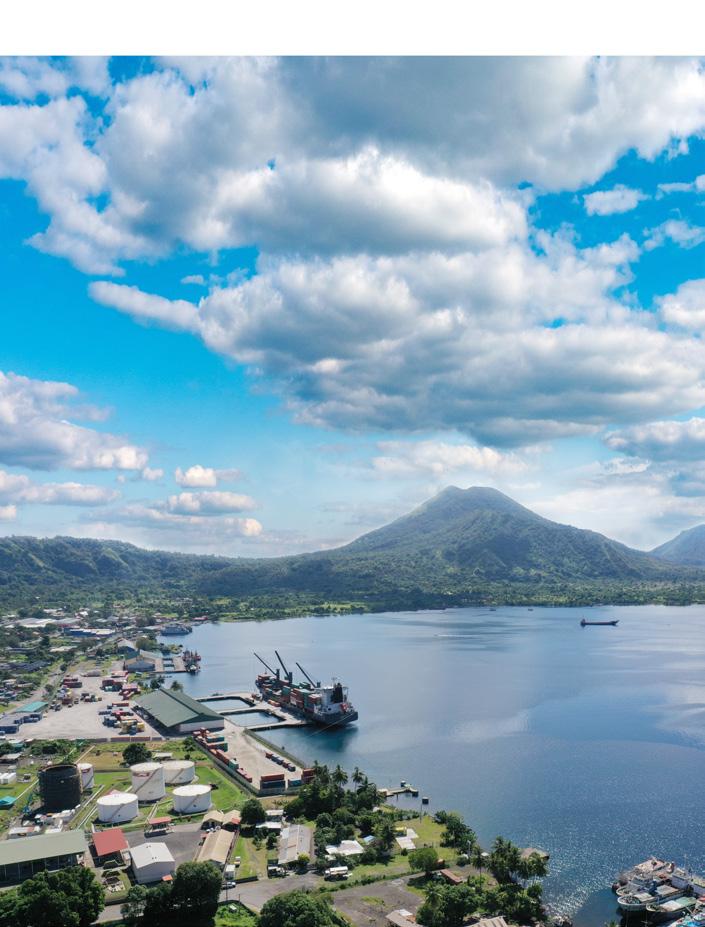
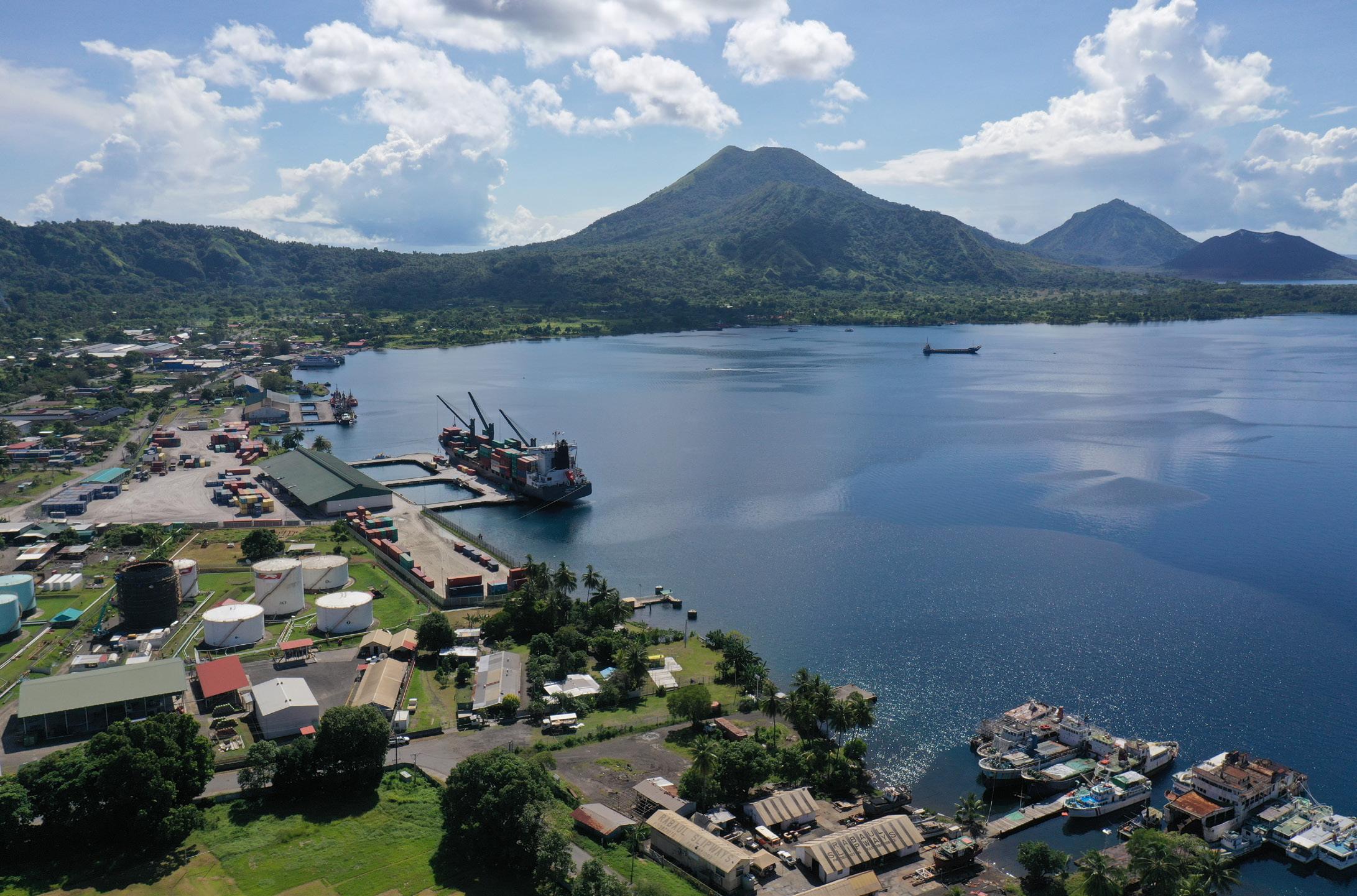
Rabaul Port is poised for transformation, with plans to pioneer a “green port” model for the Pacific incorporating solar energy and climate-resilient infrastructure.
as Daru, Aitape, Vanimo and Wewak are lifelines for remote and rural populations where PNG’s terrain makes road connectivity impractical. Without these ports, the cost of basic goods in these communities would escalate sharply, supply chains would break down and economic opportunities would wither. PNG Ports is working to ensure that the 30-Year Plan addresses both the physical upgrade of CSO ports and the development of sustainable funding pathways, including government support mechanisms, to keep these vital connections open and operational for generations to come.
A PACIFIC PIONEER: RABAUL’S “GREEN PORT” MODEL
One of the most significant projects in the infrastructure program is the rehabilitation of Rabaul Port, with financing agreements between PNG Ports and AFD currently underway. The project, valued at approximately €82.6 million and expected to be co-funded by a €16.6 million EU grant, a €24 million AFD loan and a €24 million EIB loan, will be the first initiative in PNG to combine an EU grant with European partner loans under the Global Gateway strategy.
The Rabaul upgrade will rehabilitate key berths, upgrade the overseas berth, and pioneer a “green port” model for the Pacific,
incorporating solar energy, advanced wastewater management, and climate-resilient infrastructure built to withstand rising sea levels and tropical storms. Construction is scheduled to commence in 2027, with completion targeted by 2030. The project is expected to create local jobs, reduce vessel waiting times, and strengthen Rabaul’s role as a regional import-export hub and redistribution centre serving some 300,000 residents of the East New Britain Province.
LAE INDUSTRIAL PARK: 350 HECTARES OF OPPORTUNITY
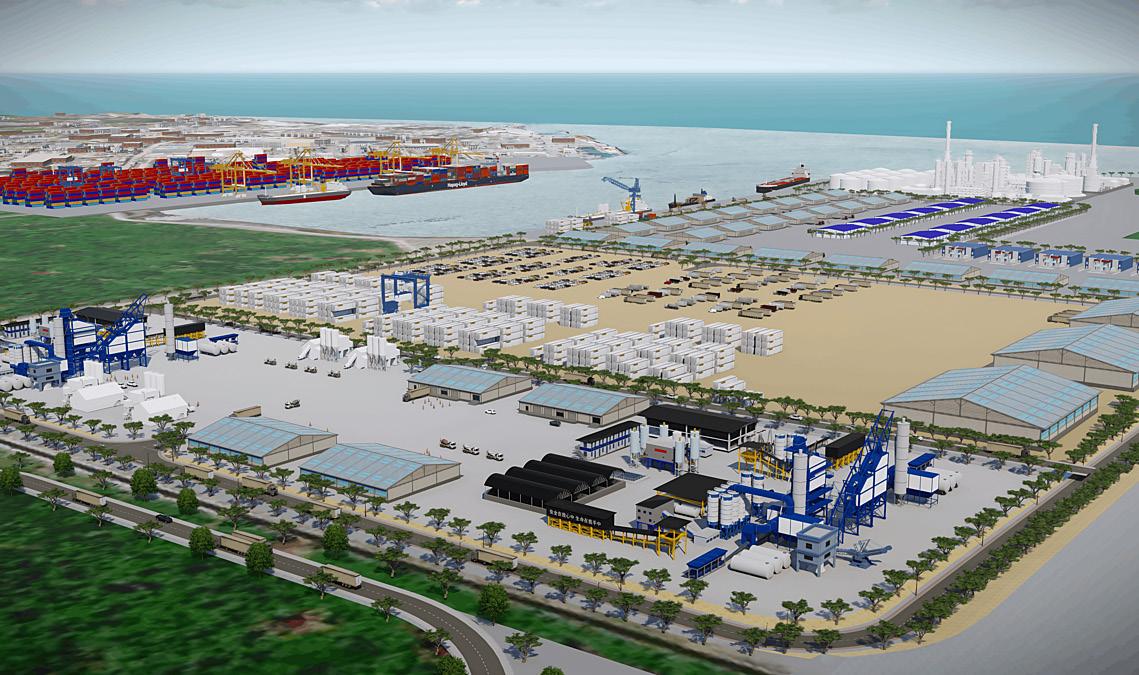
At the commercial frontier of PNG Ports’ growth strategy sits Lae Industrial Park, a 350-hectare worldclass industrial and logistics precinct located directly adjacent to Lae Port, PNG’s busiest international terminal. With 45 hectares already developed, including hardstand with container capacity, sealed internal roads, drainage and security infrastructure, the park is open for business while offering significant room to grow.
The National Executive Council (NEC) has granted concept approval for Special Economic Zone (SEZ) status at the Lae Port precinct, a major milestone that will ultimately deliver fiscal incentives including tax and customs concessions to park tenants. Targeted industries include agribusiness and onshore processing,
manufacturing, energy and utilities, and logistics and warehousing: precisely the sectors PNG needs to diversify its economy beyond primary commodities.
PNG Ports Chief Commercial Officer, Deborah Onga, describes the park’s appeal to investors as already tangible.
“Lae Industrial Park is a genuine investment-ready proposition. Businesses that locate here gain direct access to PNG’s largest port, proximity to regional shipping routes, and the flexibility to scale operations as their needs grow. With SEZ status on the horizon, the value proposition for investors will only strengthen, and we are ready to work with partners to bring that vision to life,” said Onga.
PNG Ports’ 30-year infrastructure plan represents a coherent and ambitious national vision, one in which Papua New Guinea’s ports are not simply maintained but fundamentally transformed into engines of economic growth, regional connectivity and community resilience. Critically, that transformation is also a matter of readiness. With a new wave of major resources projects on the horizon, PNG needs ports that are capable of handling the scale and complexity of next-generation industry. The infrastructure program is ensuring they will be.
Lae Industrial Park offers build-to-suit developments, scalable land parcels and adaptable lease terms, supporting a wide range of industrial, logistics, processing and export-focused operations.
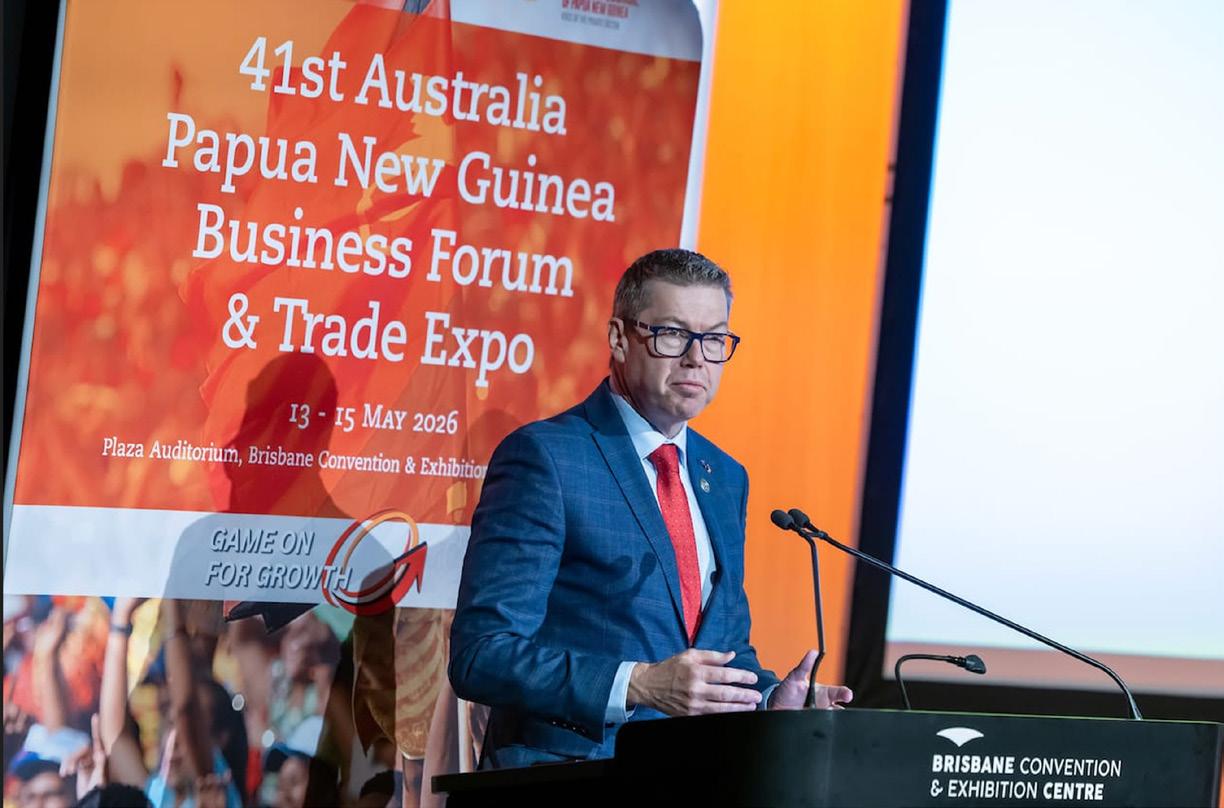
Leaders Highlight Investment, Infra, Economic Diversification at Australia-PNG Forum
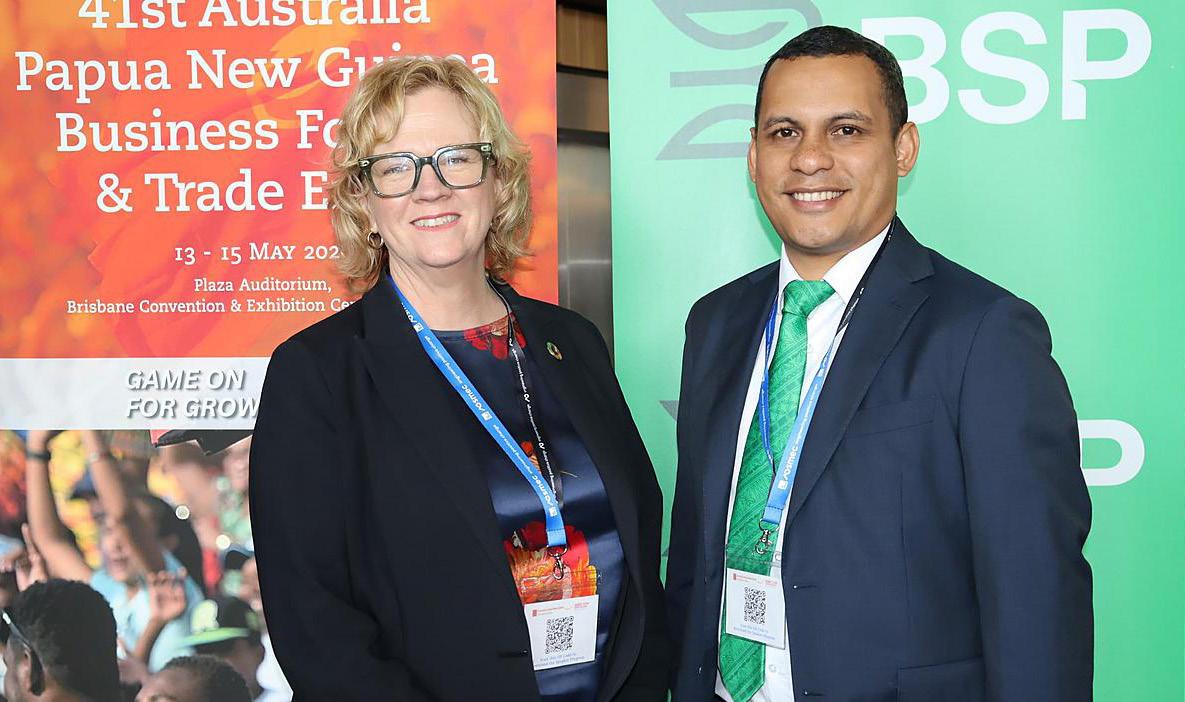
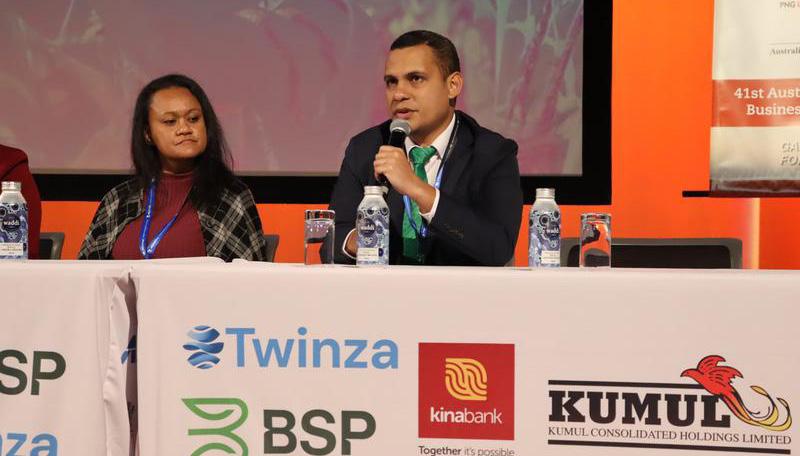
Papua New Guinea Prime Minister James Marape used a video address to the 41st Australia Papua New Guinea Business Forum & Trade Expo in Brisbane to reassure investors of the government’s commitment to business, economic reform and longterm growth.
He also urged companies to look beyond the country’s traditional mining and petroleum sectors.
Unable to attend the forum in person, Marape told delegates that his “thoughts, heart and support” were with participants gathered during Papua New Guinea’s 50th anniversary year.
He described the Australia-PNG relationship as permanent and deeply intertwined, repeating a line from his address to the Australian Parliament that the two countries were “joined at the hips”.
Marape thanked the business community for continuing to invest in Papua New Guinea and said the government remained committed to supporting investors and addressing policy issues affecting profitability and growth.
“We continue to place our appreciation to every businessman and businesswoman, every company that chooses to operate in Papua New Guinea,” he said.
“If there are any policy matters you feel we need to attend to that help and enhance your profit, we will attend to them.”
At the same time, he said investment and business success must also translate into broader economic benefits for the country.
“When the company wins, the government is able to roll back to the economy, make sure health is okay, education is okay, infrastructure is okay, including power,” he said.
The Prime Minister said PNG remained committed to free-market principles and an independent court system, while reforms were underway to strengthen dispute resolution mechanisms through additional judges, mediation and arbitration processes.
Marape said the economy had grown steadily since 2019, when it was valued at about K79 billion,
with annual growth averaging about 4 percent.
“PNG is much bigger than just mining and petroleum,” he said, pointing to opportunities in manufacturing, agriculture, logistics, fisheries and trade.
Marape also flagged plans to reduce corporate taxes as the economy grows toward his target of a K200 billion economy and encouraged investors to “look deep into PNG”.
INFRASTRUCTURE PIPELINE
ATTRACTS INVESTOR INTEREST
Infrastructure investment emerged as a major theme during the forum, with government agencies, development financiers and state-owned enterprises outlining major projects across transport, ports, energy and digital connectivity.
Rachael Thompson, Acting Head of the Australian Infrastructure Financing Facility for the Pacific, said the facility had committed A$2 billion toward 59 projects in 13 Pacific countries since its establishment in 2019.
Papua New Guinea accounted for 11 projects valued at about A$1 billion, including major port upgrades, road projects, rural electrification and digital connectivity initiatives.
“These projects include the A$621.4 million package to refurbish, replace and upgrade five ports,” Thompson said.
She added that AIFFP was also exploring support for Papua New Guinea’s digital ambitions through the Puk Puk Digital Connectivity Initiative.
Speaking on behalf of Kumul Consolidated Holdings, Chief Investment and Infrastructure Officer David Kitione said Papua New Guinea’s infrastructure agenda was being guided through a structured national framework.
“What we are presenting to you today are not aspirations,” he said. “They are the outputs of a structured, nationally owned infrastructure development process.”
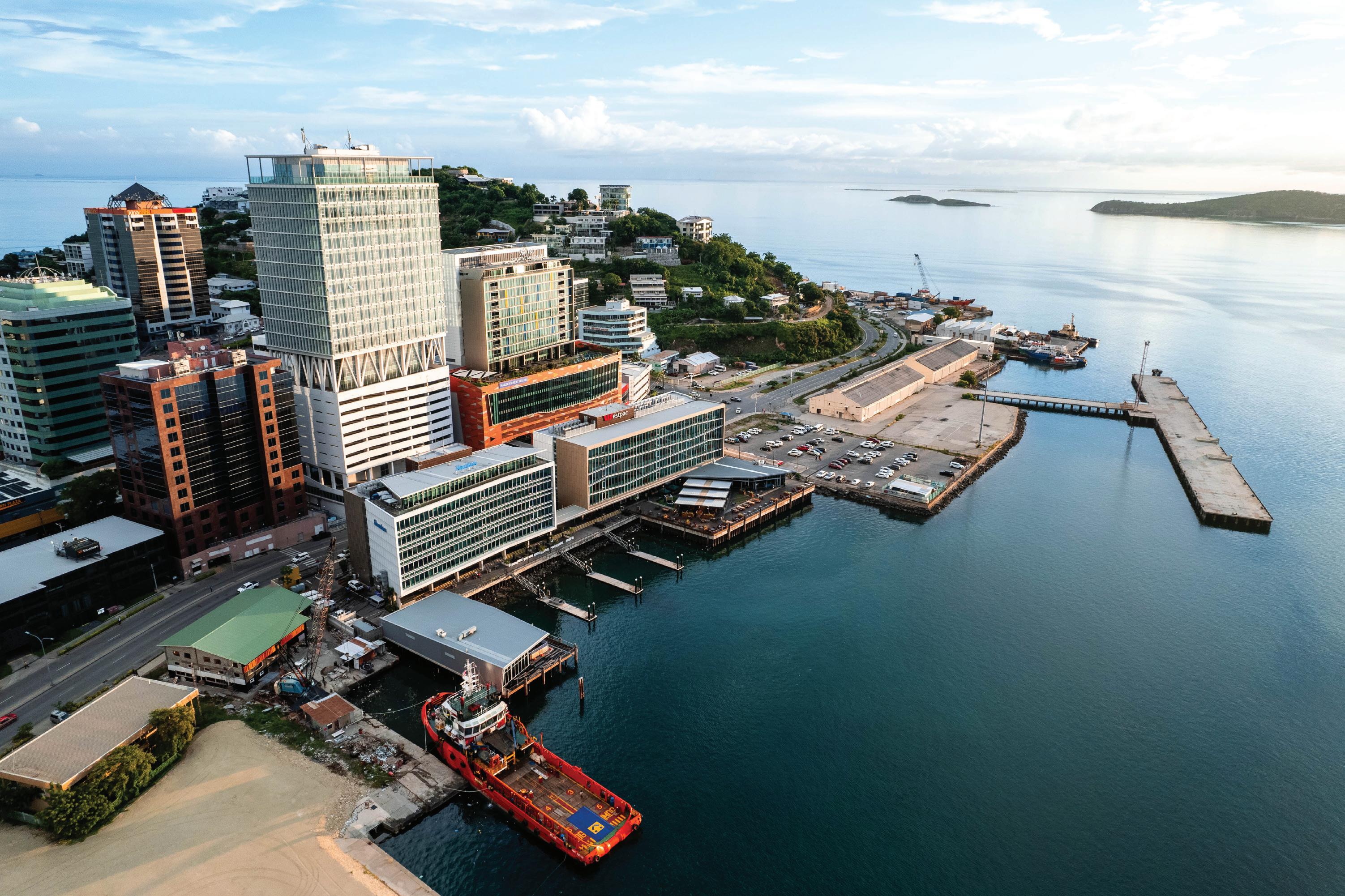
Kitione highlighted plans for the Portside Business Precinct in Port Moresby, describing it as a strategically planned waterfront commercial development aimed at attracting long-term investment.
PORTS SEEN AS CRITICAL ECONOMIC INFRASTRUCTURE
PNG Ports Corporation Managing Director Neil Papenfus said the country’s ports handled 10.8 million tonnes of cargo in 2025 and supported 22 percent of national GDP.
“When ports work well, supply chains work well,” he said.
Papenfus said the A$621 million port infrastructure upgrade program was the largest in the corporation’s history and was designed to rebuild infrastructure for the next 50 years.
Australia expands focus on digital connectivity
Australian Minister for Pacific Island Affairs Pat Conroy and Papua New Guinea Deputy Prime Minister John Rosso highlighted the growing scope of bilateral cooperation between the two countries.
Conroy said the relationship had entered a new phase built on trade,
investment and people-to-people links, in addition to traditional security cooperation.
Much of his address focused on telecommunications, which he described as essential to economic development.
Conroy said low internet penetration and high telecommunications costs continued to constrain business activity, education, healthcare and financial inclusion in Papua New Guinea.
He announced work on a telecommunications blueprint intended to create a more connected and digitally ready nation while improving cyber resilience and reducing connectivity costs.
Conroy also highlighted the potential role of low-Earth orbit satellite technology and new submarine cable infrastructure under the Puk Puk Digital Connectivity Initiative.
Rosso said Papua New Guinea and Australia were increasingly working together across law and order, infrastructure, labour mobility, land reform, digital systems and sport.
“When PNG grows, Australia benefits,” Rosso said.
Rosso also praised Australia’s willingness to listen and work as a partner. “We talk, they listen, they talk, we listen,” he said.
MARU CALLS FOR SHIFT TOWARD VALUE-ADDED INDUSTRIES
International Trade and Investment Minister Richard Maru used the forum to argue that Papua New Guinea needed to accelerate investment in sectors capable of creating jobs and expanding economic participation.
Maru said more than one million young Papua New Guineans remained unemployed despite decades of resource-sector development. “The resource sector is not the answer,” he said.
“We have to refocus on the non-resource sector. I’m talking agriculture, forestry, fisheries, manufacturing and tourism. That is the future for Papua New Guinea.”
Maru said Papua New Guinea’s economy remained too dependent on exporting raw materials and importing finished goods.
“We are still a major exporter of raw material. That needs to stop,” he said. “We need downstream processing. We need manufacturing. We need to create jobs.”
Maru said Papua New Guinea’s economy stood at about US$32 billion and argued that the country could no longer continue exporting raw materials while importing products that could potentially be produced domestically.
He pointed to Indonesia’s nickel processing industry as an example of how investment in downstream industries can generate large-scale employment.
Maru also revealed that Papua New Guinea would sign a Comprehensive Economic Partnership Agreement with China and said Asian markets would play an increasingly important role in future economic growth.
He encouraged Australian companies to invest in agriculture, hydropower, tourism, manufacturing and processing industries, saying the government was prepared to offer incentives including tax holidays and joint-venture opportunities.
AGRICULTURE POSITIONED AS PATHWAY TO INCLUSIVE GROWTH
East Sepik Governor Allan Bird argued that agriculture offered Papua New Guinea its strongest opportunity to achieve inclusive and sustainable economic development.
Delivering the Henry Kila Memorial Address, Bird said between 80 percent and 85 percent of Papua New Guineans live in rural areas and depend heavily on agriculture and fisheries, yet the sector contributes only about 25 percent to 30 percent of GDP.
“PNG’s best pathway to sustainable development lies in transforming its agriculture sector,” he said.
Bird said agriculture was not only an economic sector but also a critical foundation for social and economic development because it generates direct income for rural households while supporting food security and local businesses.
Using East Sepik’s cocoa industry as an example, he said targeted interventions had doubled production and helped expand cocoa cultivation across 19 provinces.
According to Bird, more than K1 billion had flowed directly to villages
through cocoa-related activity in recent years.
He also called for better alignment between infrastructure investment and production areas, saying roads, ports, storage facilities and shipping services should support regions where agricultural activity is growing.
Bird further urged reforms involving land access, investment protection, intellectual property and public-private partnerships to attract greater investment into agriculture.
Development partners outline financing support
Representatives from major development institutions also outlined ongoing support for infrastructure development in Papua New Guinea.
Laura Darlington, Assistant Secretary for Indo-Pacific Infrastructure in Australia’s Department of Defence, said defence infrastructure investment was generating economic opportunities alongside security outcomes.
“Defence infrastructure is not just about facilities,” she said. “It is about supporting the economic development of local communities.”
Darlington said future investment under the Defence Cooperation Program and the proposed Pukpuk Treaty would create opportunities for Papua New Guinea businesses and workers.
World Bank Senior Procurement Specialist Amin Saskai said the World Bank’s Papua New Guinea portfolio stood at approximately US$677 million across sectors including energy, transport, agriculture, education and water.
“Please engage with our clients,” Saskai told businesses attending the forum. “Let them know about the new trends.”
Asian Development Bank representative Leonardo Storni said Papua New Guinea’s infrastructure pipeline remained strong, particularly in transport and energy.
“We are trying to buy right, not buy cheap,” he said, referring to procurement approaches that place greater emphasis on quality and value for money.
Presentations during the forum covered investment opportunities in infrastructure, digital connectivity, ports, agriculture, manufacturing and downstream industries as Papua New Guinea marks 50 years of independence.
Your partner in safer, more efficient port, terminal and offshore operations across Australia and Papua New Guinea.
POMCCI Business Meeting: PNG’s ‘Five Ps’ Framework Highlights Economic Priorities
By: ROSELYN EREHE
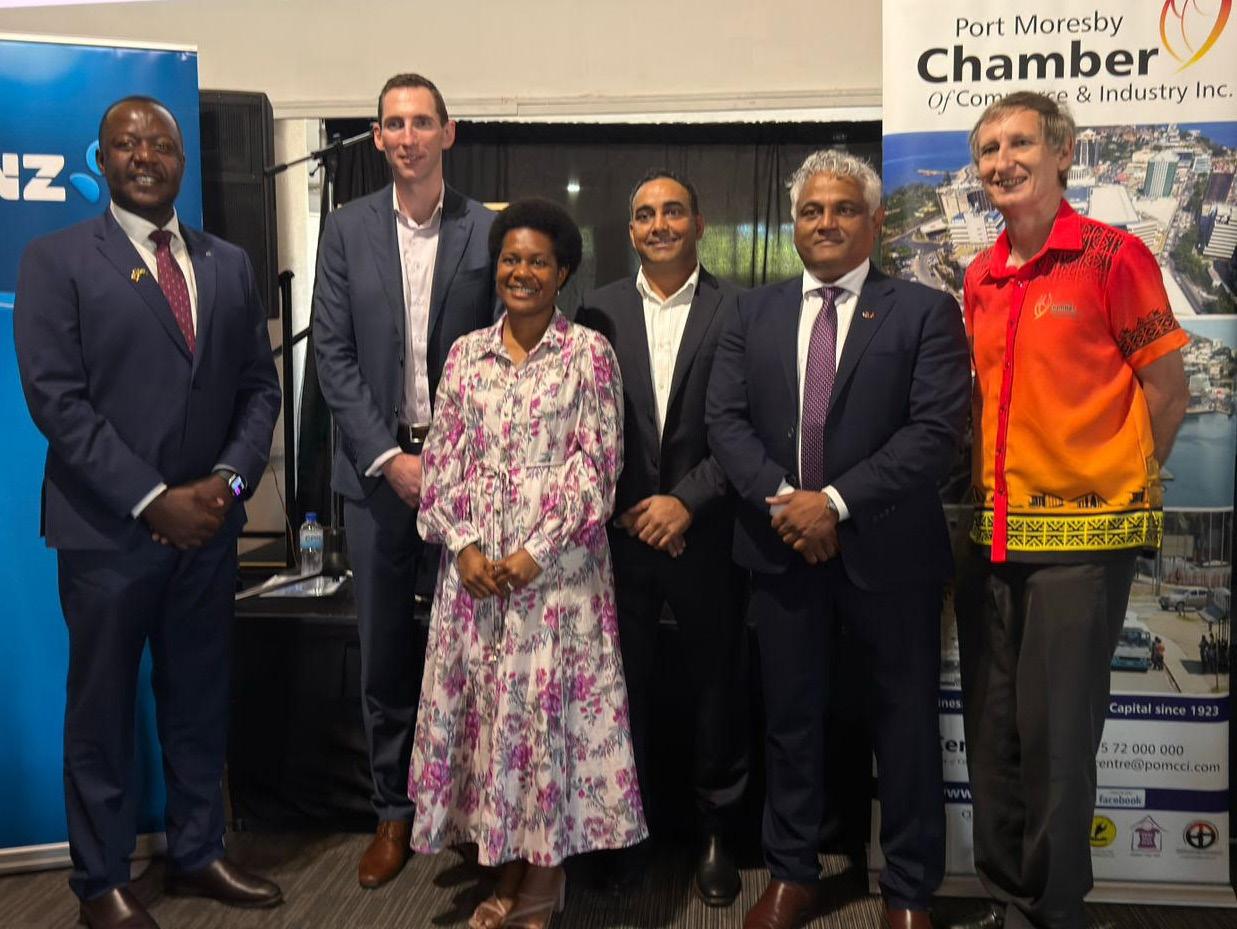
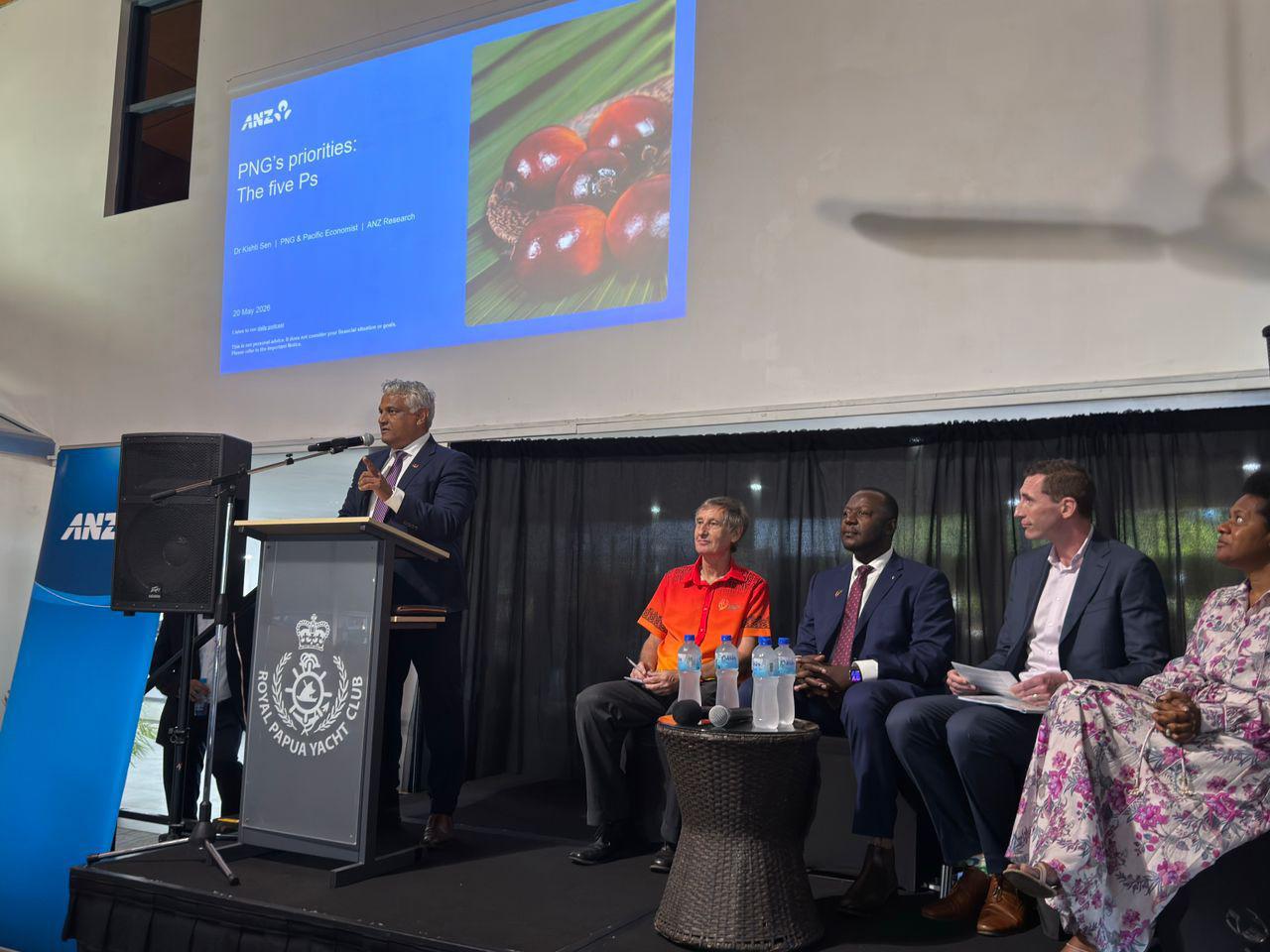
Papua New Guinea’s economic outlook, investment opportunities and long-term development priorities took centre stage during a business breakfast session hosted at the Royal Papua Yacht Club in Port Moresby on Wednesday, 20 May.
Leading economists and private sector representatives discussed the country’s future through a “Five Ps” framework — Petroleum, Policy, Projects, Produce and Partnerships.
The session featured ANZ PNG & Pacific Economist Dr Kishti Sen, who delivered a presentation outlining the major economic forces shaping PNG’s future.
A high-level panel discussion also brought together Deloitte PNG Managing Partner Herbert Maguma, ANZ PNG Country Head Andrew Betteridge, Port Moresby Chamber of Commerce and Industry (POMCCI) President Rio Fiocco, and Dentons Partner Wavie Leki.
Organisers from POMCCI described the event as a forwardlooking discussion focused on the opportunities, challenges and priorities facing PNG.
Strong participation from members of the business community reflected continued private sector engagement in the country’s economic direction.
PETROLEUM AND GLOBAL ENERGY RISKS
A key topic during the presentation was the impact of global petroleum market volatility and ongoing geopolitical tensions on PNG’s economy.
Dr Sen outlined ANZ Research scenarios relating to instability in the Middle East and the Strait of Hormuz, a critical global oil shipping route.
Under ANZ’s base-case scenario, a US-Iran agreement would reopen the Strait by June, easing oil prices to below US$100 per barrel while still leaving a geopolitical risk premium in place.
However, ANZ warned that prolonged conflict could trigger major global supply disruptions, potentially pushing oil prices towards
US$200 per barrel if international stockpiles are exhausted and infrastructure damage in the Persian Gulf region worsens.
The presentation noted that fuel supply in PNG remains secure for now, although stakeholders were encouraged to prepare for worstcase scenarios, including possible fuel rationing if global disruptions intensify.
GOVERNMENT FUEL INTERVENTIONS UNDER SCRUTINY
The “Policy” component of the framework examined government measures aimed at cushioning consumers from sharp increases in fuel prices.
According to the presentation, the PNG government introduced a PGK1 billion fuel stabilisation package to absorb rising costs for petrol, diesel and kerosene.
Data presented showed that between March and April 2026, fuel prices rose sharply before government intervention, with petrol prices increasing by K1.70 per litre, diesel by K3.25 and kerosene by K3.35.
To offset these increases, the government removed GST and fuel
excise taxes while also introducing direct subsidy payments to fuel importers.
The combined measures effectively returned fuel prices to March levels, with revised April retail prices set at K4.39 for petrol, K4.44 for diesel and K4.09 for kerosene.
Despite the intervention, the presentation questioned the longterm sustainability of the measures, particularly as the Papua New Guinea kina continues to weaken against the US dollar.
RESOURCE PROJECTS AND LOCAL ECONOMIC BENEFITS
Discussions also focused heavily on major resource projects and the broader economic contribution of PNG’s mining and petroleum sectors.
ANZ Research data presented during the session showed that PNG’s resource sector continues to generate significant value across the wider economy through direct and indirect employment and business activity.
The presentation estimated that the oil, gas and mining sectors collectively support more than 96,000 formal-sector jobs through direct, first-round and secondary economic effects.
Figures presented showed that oil and gas extraction contributes nearly one kina in economic value for every kina of final demand, while mining delivers similar multiplier effects through indirect economic activity.
Discussion under the “Projects” pillar centred on maximising local participation, ensuring broader economic benefits from resource developments and creating stronger linkages between large-scale projects and domestic industries.
CALLS TO EXPAND AGRICULTURAL PRODUCTION
Under the “Produce” pillar, Dr. Sen highlighted growing global demand for PNG’s agricultural exports and the need to expand downstream processing capacity.
The presentation noted that high commodity prices are encouraging increased planting activity, with more agricultural seedlings now being planted across the country.
However, several constraints continue to limit PNG’s ability to maximise export earnings, including inadequate downstream processing facilities and infrastructure that is not designed to handle high export volumes.
Participants heard that improving processing capability will become increasingly important as upstream agricultural production expands.
The discussion also reinforced the importance of agricultural diversification and value-adding industries as PNG seeks broaderbased economic growth beyond the extractive sector.
partnerships with Asian economies is opening new export opportunities for PNG businesses and producers, while regional cooperation remains critical to long-term economic resilience.
PRIVATE SECTOR ENGAGEMENT REMAINS STRONG
The breakfast session also featured discussions on investment confidence, leadership, policy
perspectives on the country’s operating environment, business confidence, financial systems, legal frameworks and the role of institutions in supporting sustainable economic growth.
POMCCI said the strong attendance from Chamber members demonstrated continued interest from the business sector in PNG’s economic outlook and future development priorities.
The event concluded with renewed
TRADE PARTNERSHIPS DRIVING MARKET ACCESS
The final pillar — “Partnerships” — focused on PNG’s growing trade relationships with regional and international markets, particularly across Asia.
ANZ Research data showed Australia remains PNG’s largest trading partner, with trade flows valued at more than PGK25 billion.
Other major trading partners identified during the session included Japan, China, Singapore, the United States, South Korea, Taiwan, Malaysia, Germany and the Netherlands.
Speakers noted that strengthening
Supply
Tanktainer Hire
Services
Bulk & Drum Fuel
Supply
Remote Fuel Site
Our efficient logistics operations ensure your fuel delivery arrives on schedule via our dedicated road tanker fleet or bunker pipeline or bulk marine in-hull supply Bunkering
Streamlined Fuel Ordering, Delivery and Management for your business
Depots in Lae and Por t Moresby
PNG Puts Blue Economy at Centre of Regional Growth Agenda During Melanesian Ocean Summit
By: ROSELYN EREHE
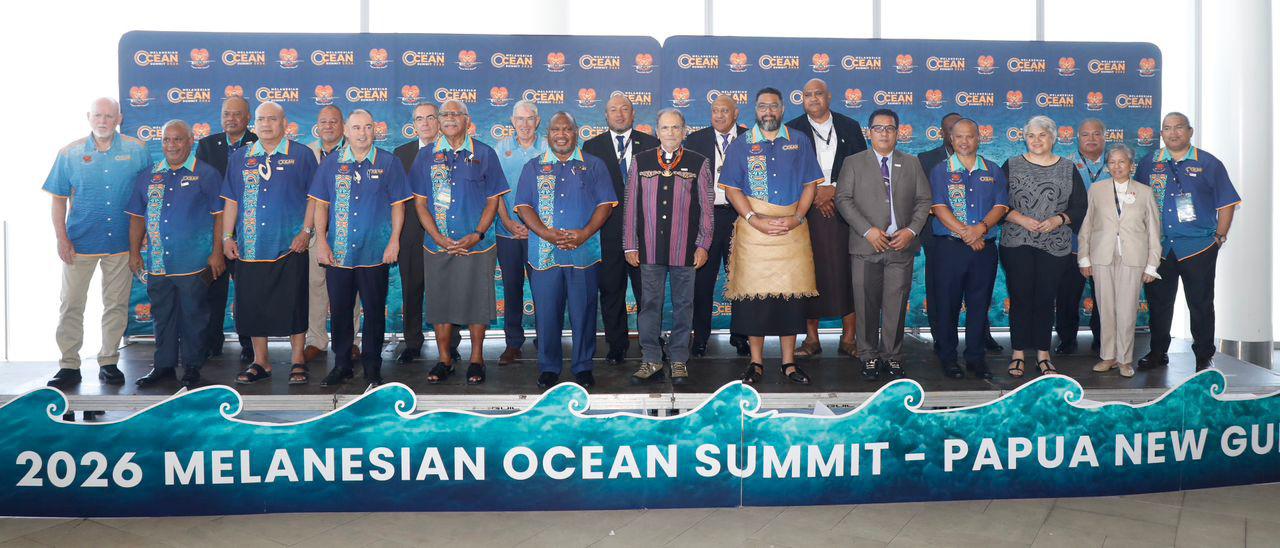
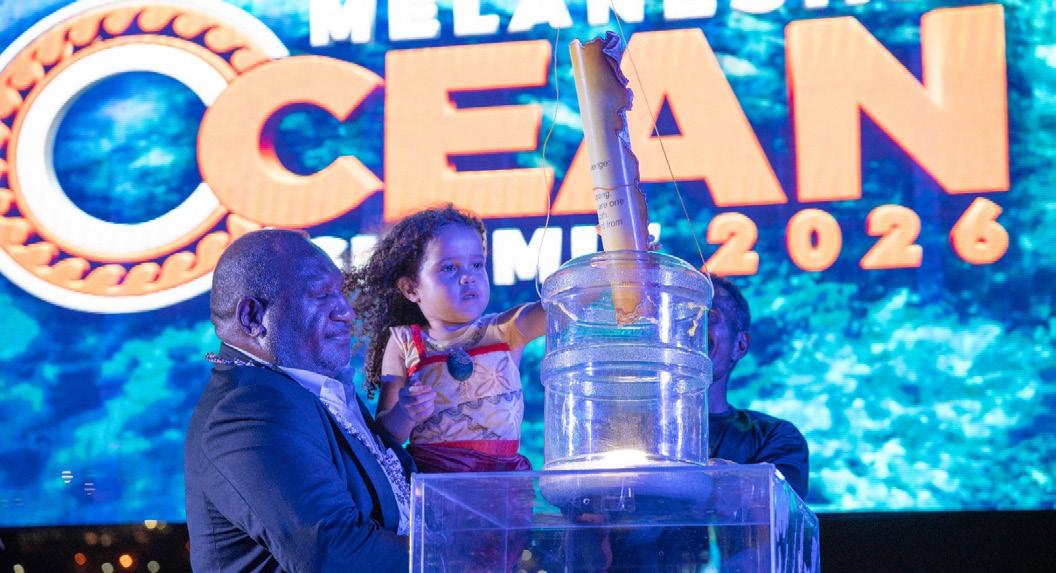
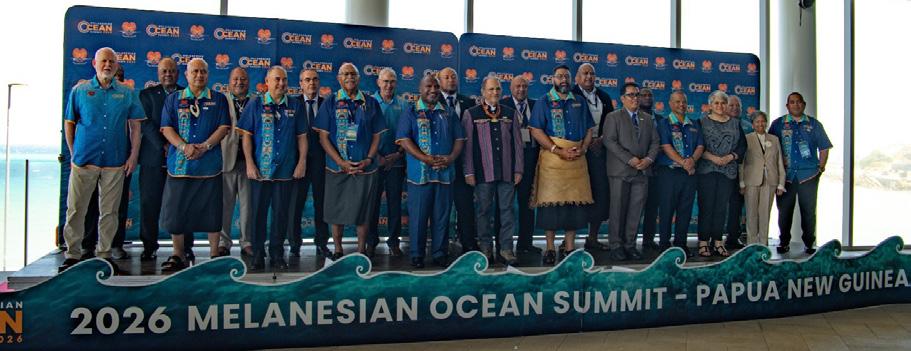
Papua New Guinea has strengthened its push to become a regional leader in sustainable ocean industries following the successful hosting of the inaugural 2026 Melanesian Ocean Summit at APEC Haus in Port Moresby from May 11–14.
The four-day summit was held under the theme “Ensuring Ocean Protection with Sustainable Ocean Economies.”
It brought together Pacific leaders, government representatives, researchers, development partners, and fisheries stakeholders to advance a regional strategy focused on marine conservation, fisheries development, climate resilience, and blue economy investment.
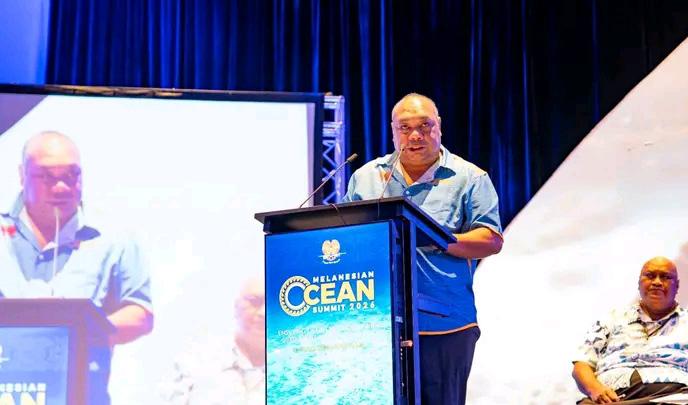
At the close of the summit, Hon. Jelta Wong, MP, the Minister for Fisheries and Marine Resources said the gathering had “transformed ambition into action, and solidarity into a shared Melanesian pathway for our ocean.”
Minister Wong said the summit demonstrated that Melanesian nations are increasingly viewing ocean protection and economic growth as interconnected priorities.
“Our ocean is not a frontier to be exploited, but a legacy to be stewarded,” he said.
A major outcome of the summit was renewed commitment to the Melanesian Ocean Corridor of Reserves (MOCOR), a regional framework designed to protect marine ecosystems while supporting economic growth, coastal livelihoods, and food security.
Leaders reaffirmed support for the global “30 by 30” conservation target, which aims to protect 30 percent of the world’s oceans by 2030, while emphasizing that conservation initiatives must also deliver direct economic benefits to Pacific communities.
Minister Wong said discussions throughout the summit reinforced the importance of building “resilient blue economies” supported by sustainable financing, stronger fisheries management, renewable energy
investment, and regional cooperation.
Business and investment opportunities linked to the blue economy emerged as a major focus throughout the summit.
Delegates discussed expanding sustainable fisheries industries, strengthening tuna value chains, developing blue carbon markets, improving marine tourism opportunities, and increasing climateresilient coastal enterprises across Melanesia.
One of the major economic initiatives highlighted was the East New Britain Initiative for tuna value capture, aimed at increasing downstream processing and boosting returns from PNG’s fisheries sector.
“The takeaway is clear: the blue economy must be people-centred, climate-resilient, and anchored in sustainable fisheries,” the Minister said.
PNG also announced that it will host the Pacific-Led Innovation Tuna Forum later in 2026 in Port Moresby, positioning the country as a regional hub for fisheries innovation and sustainable tuna industry development.
The summit emphasized that marine protected areas should not only serve conservation purposes but also function as economic assets supporting fisheries productivity, food security, tourism growth, and climate adaptation.
“MPAs are not just conservation tools — they are food security, climate resilience, and economic engines,” Wong stated.
Pacific nations including PNG, Fiji, Vanuatu, and Palau shared experiences on locally managed marine areas and traditional conservation systems that have delivered positive environmental and economic outcomes for coastal communities.
Ocean finance discussions also featured prominently during the summit, with leaders acknowledging that long-term marine protection will require stronger governance systems, improved institutional capacity, and diversified financing mechanisms.
Delegates reviewed existing Pacific financing models, including the Micronesia Conservation Trust, the Coral Triangle Initiative Fund, and Niue’s ocean conservation credits system, as examples of innovative funding approaches for sustainable marine management.
The Minister said the challenge facing the region was “not only mobilising money but building the systems to manage it.”
Leaders agreed that future
financing for MOCOR would require stronger governance structures and Pacific-led investment mechanisms capable of supporting enforcement, scientific research, and community resilience programmes.
The summit further highlighted the growing economic importance of blue carbon ecosystems such as mangroves and seagrass habitats, which contribute to climate adaptation, coastal protection, and national emissions reduction goals.
In the high-value fisheries sector, Melanesian countries agreed to strengthen cooperation on bêchede-mer management through coordinated licensing systems, stronger traceability measures, and regional branding standards aimed at increasing export value for sustainably sourced marine products.
The proposed Melanesian Bêchede-mer Ocean Alliance will work through the MSG Fisheries Technical Advisory Committee to improve
According to Wong, “a traceability and branding regime will capture the premium for verified Melanesian provenance — turning sustainability into direct economic return for our fishers.”
The summit also addressed the growing economic risks associated with climate change, with scientists warning that warming oceans are already affecting tuna migration patterns and coastal fish stocks across the Pacific.
To strengthen regional scientific capability, delegates committed to establishing a Melanesian Ocean Research Hub linking universities and research institutions across the region.
Maritime security and fisheries enforcement were also identified as critical economic priorities.
PNG announced plans to establish a national Fusion Centre to improve monitoring, surveillance, and compliance operations targeting illegal, unreported, and unregulated fishing activities, marine pollution, and transboundary maritime threats.
reaffirming regional cooperation against illegal fishing activities.
The summit additionally highlighted the role of Indigenous knowledge systems in sustainable resource management and economic resilience.
PNG committed K1 million towards establishing a National Cultural Research Fund and announced plans for an Institute of PNG Studies dedicated to cultural and traditional knowledge research.
Leaders concluded the summit by declaring that the Melanesian Ocean Corridor of Reserves had moved beyond the concept stage into a functioning regional framework capable of attracting investment, strengthening marine governance, and supporting sustainable economic development across the Pacific.
“The Melanesian Ocean Corridor of Reserves is not an aspiration — it is now a working framework, owned by us, designed by us, and ready to be financed and enforced by us,” the Minister said.
“Without enforcement, paper parks fail,” the Minister said, while
Vanuatu was confirmed as the host of the next Melanesian Ocean Summit in 2028.
Rondon
PAPUA NEW GUINEA’S GATEWAY TO GROWTH AND PROSPERITY
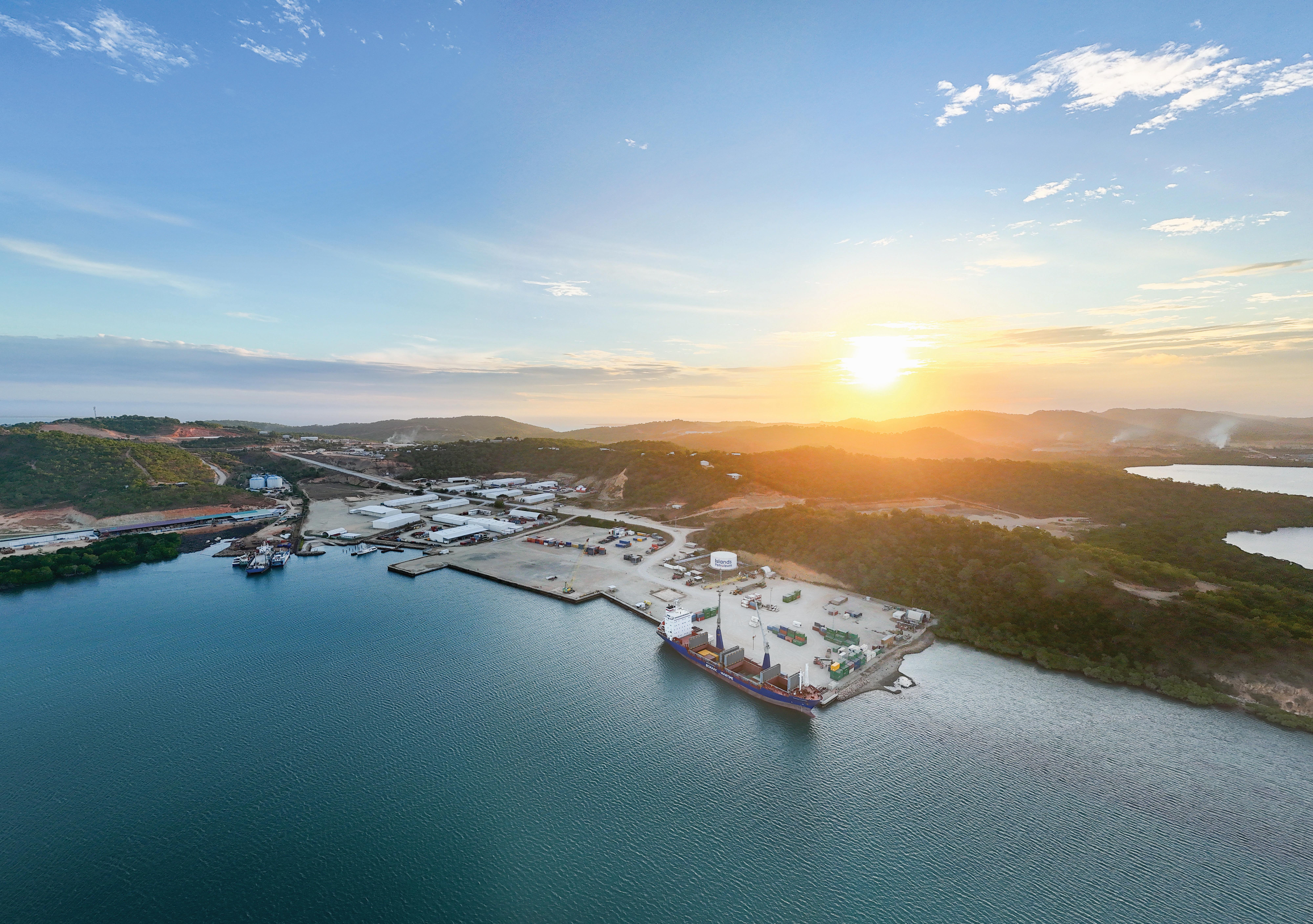
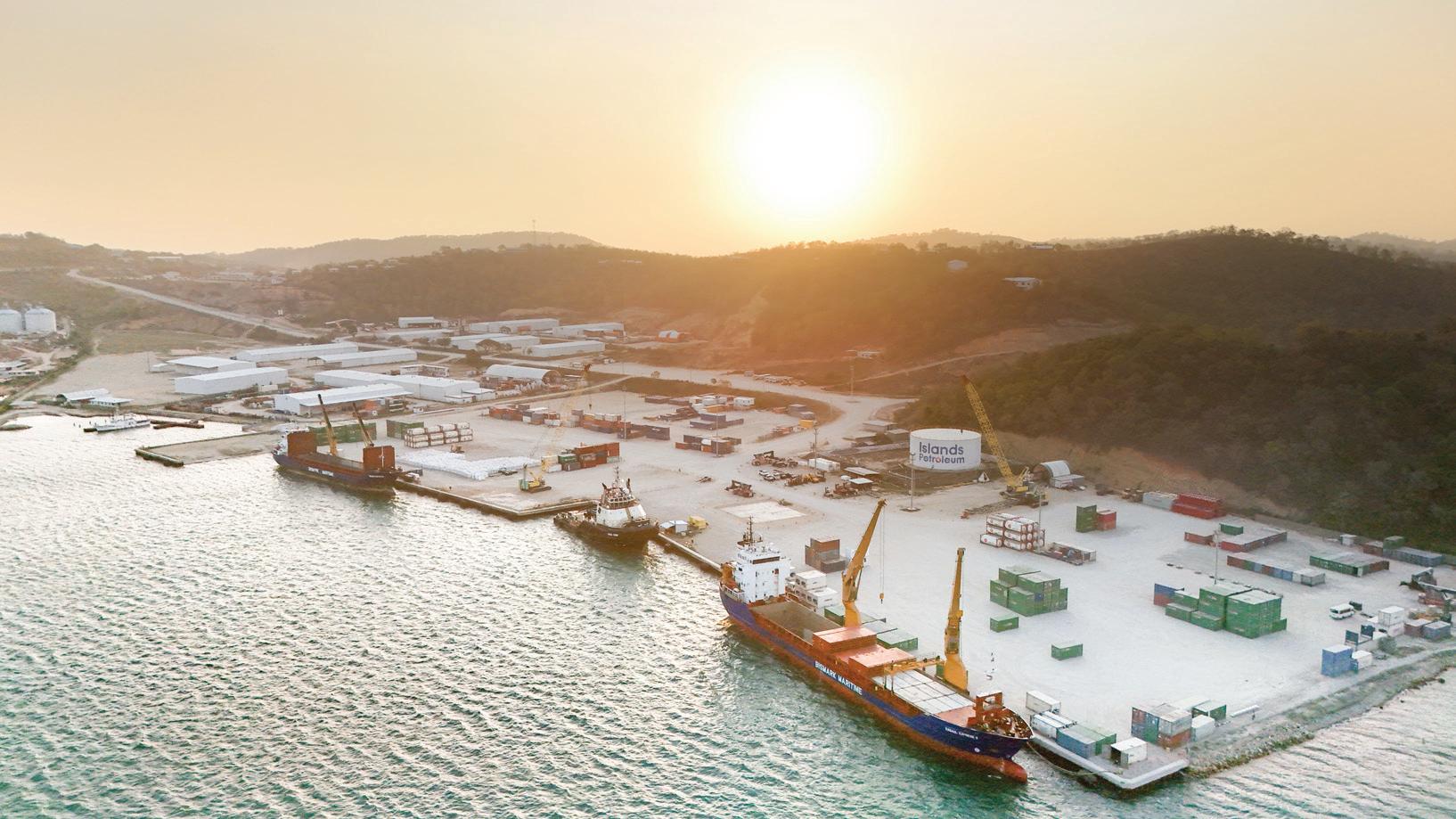
PNG Ports owns and manages a network of 15 ports scattered throughout Papua New Guinea.
Our port network includes the largest and most economically significant ports of Lae and Port Moresby – the nation’s two efficient and expertly operated international trade gateways
Also part of our network, are many smaller and far-flung ports central to the livelihoods, development and connectedness of remote communities.
Commercial & Industrial Property: Hundreds of hectares of prime waterfront land, buildings & port infrastructure
ADB, NCD Discuss Future Urban Development Investments for Port Moresby
By: ROSELYN EREHE
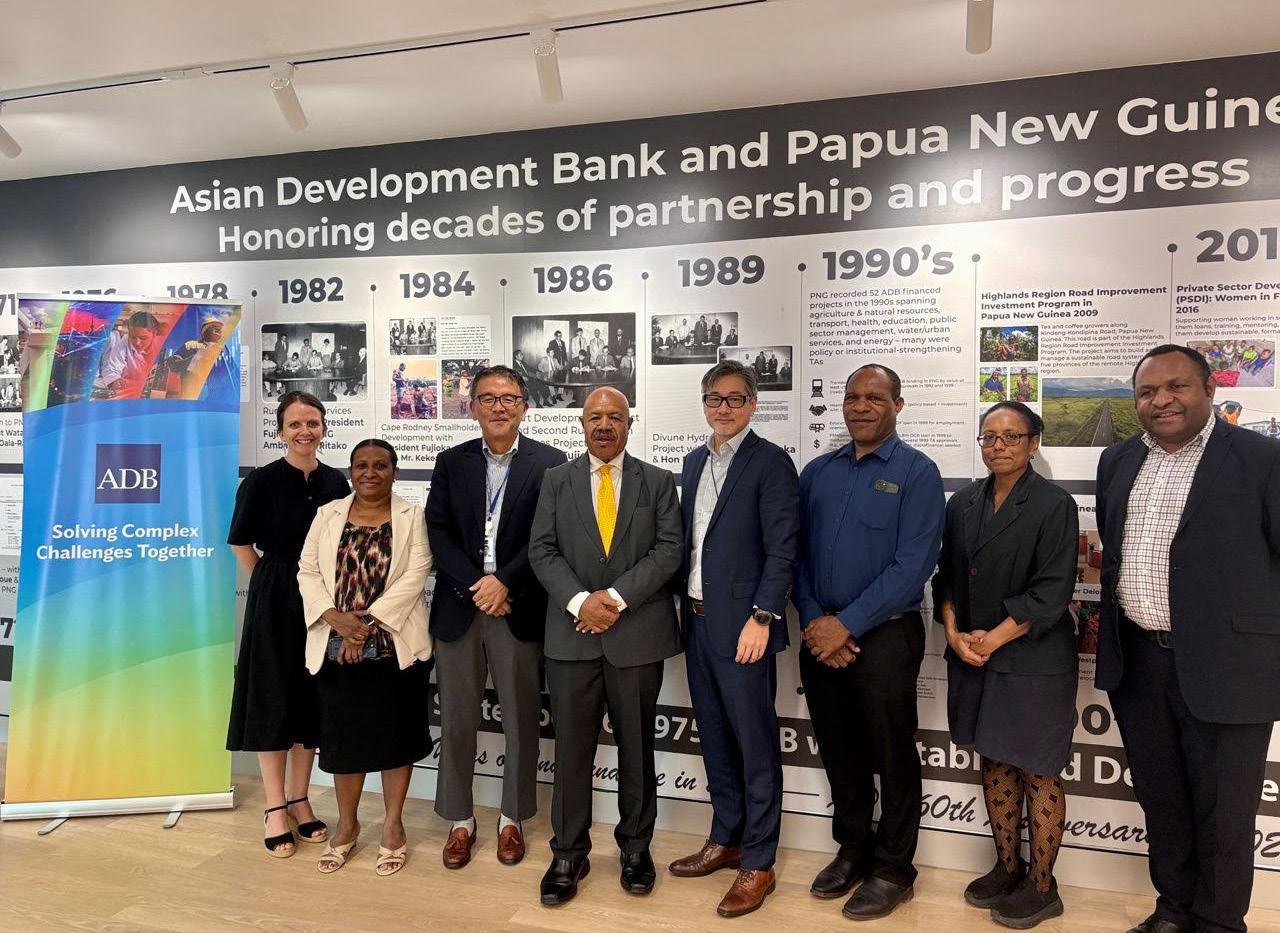
The Asian Development Bank (ADB) and the National Capital District have entered discussions on future urban development and infrastructure investment opportunities for Port Moresby.
This following a meeting between newly appointed ADB Country Director Takafumi Kadono and NCD Governor Powes Parkop on 13 May, in Port Moresby.
The courtesy orientation meeting focused on strengthening cooperation between ADB and the National Capital District Commission (NCDC) in priority sectors, including city transport, affordable housing, water and sanitation, urbanisation, and resilient infrastructure development.
Governor Parkop welcomed Mr Kadono and acknowledged ADB’s longstanding support for Papua New Guinea’s national and community development projects over several decades.
He said continued engagement with development partners such as ADB was critical to addressing the increasing urban challenges facing the capital city while supporting sustainable economic and social development.
“These include the city transport sector, urbanisation and affordable housing, water and sanitation projects, and resilient urban infrastructure initiatives aimed at improving the living standards of residents in the city,” Governor Parkop said.
The discussions also highlighted the importance of coordinated urban planning, sustainable infrastructure investment, and improved essential services to support Port Moresby’s growing population and future development aspirations.
Officials from ADB and the Governor’s Office attended the meeting, which concluded with both
sides reaffirming their commitment to maintaining strong relations and continuing dialogue on priority urban development initiatives in the NCD.
ADB is one of PNG’s major development partners and has supported infrastructure, transport, energy, water, and urban development projects across the country.
ADB and NCD officials stand together after discussing Future Urban Development Investments for Port Moresby. -Image supplied
ADB: PNG Growth to Ease to 3.6% in 2026, 3.4% in ‘27 on External Shocks, Structural Constraints
Papua New Guinea’s economic growth is forecast to moderate to 3.6% in 2026 and 3.4% in 2027, as external pressures and persistent structural constraints weigh on activity, the Asian Development Bank said.
In its Asian Development Outlook April 2026, the Manilabased lender said the outlook reflects spillovers from the Middle East conflict, including higher energy and commodity prices, disrupted shipping routes and tighter financial conditions across developing Asia and the Pacific.
Inflation in PNG is projected to edge up to 4.6% in 2026 from 4.4% in 2025, before easing to 4.0% in 2027.
Recent macro-fiscal reforms have improved underlying conditions,
greater exchange-rate flexibility and better foreign-exchange availability, which have supported import-dependent sectors and lifted private-sector confidence, the report said.
However, constraints including power shortages, security concerns, inefficiencies in public capital spending and limited skilled labour continue to dampen growth prospects, compounded by inflationary pressures.
“While mining is likely to remain a key growth driver in the short term, the Middle East conflict will adversely affect the non-resource sector, particularly as PNG remains dependent on imported diesel fuel for power generation,” ADB country director for PNG Takafumi Kadono said.
sector — accounting for about 70% of resource output — could see modest gains, depending on the duration of global supply disruptions.
Oil output and liquefied natural gas production are both expected to increase slightly in 2026, with LNG operations already near capacity last year.
Further upside could come from a final investment decision on the Papua LNG project and progress on other large-scale resource developments, which the bank said would provide a significant boost to economic activity.
To strengthen resilience against external shocks, the ADB said continued tax and policy reforms would be critical to improving revenue mobilisation and
Australia Flags New Digital Connectivity Push to Unlock K85-B Growth Potential for PNG Economy
By: ROSELYN EREHE
Australia has announced a major new push to support Papua New Guinea’s telecommunications and digital infrastructure sector.
Australian Minister for Pacific Island Affairs Pat Conroy outlined plans aimed at accelerating economic growth, expanding business opportunities, and improving nationwide connectivity in PNG.
Speaking at the 41st Australia Papua New Guinea Business Forum and Trade Expo on May 20, 2026, Conroy said digital connectivity would play a critical role in PNG’s long-term economic transformation.
Improved telecommunications infrastructure is expected to drive investment, reduce business costs, expand financial inclusion, and create tens of thousands of jobs, Conroy added.
The minister said PNG stood to gain significantly from investment in digitisation and telecommunications reform, citing projections that effective digital transformation could lift the country’s GDP growth to more than 4.5 percent between now and 2035.
According to figures outlined in his speech, this could contribute an additional K85 billion to the economy, create more than 130,000 jobs, and support the establishment of over 45,000 new businesses.
Conroy said widespread and affordable internet access had the potential to double PNG’s non-mining growth rate while transforming economic activity across all 22 provinces.
“We know that for PNG, investing in effective digitisation could elevate GDP growth to over 4.5 percent between now and 2035, adding K85 billion to the economy, driving the creation of more than 130,000 jobs and over 45,000 new businesses,” he said.
He described telecommunications infrastructure as essential for development rather than a luxury, saying affordable and reliable internet services were now fundamental
to education, healthcare, trade, investment, financial services, and business operations.
“Connectivity supports businesses, industries, and jobs, and helps inform, engage, and empower people,” Conroy said.
The Australian minister highlighted the significant digital access challenges currently facing PNG, emphasising that only around 36 percent of the population has consistent mobile coverage.
internet penetration is still at approximately 32 percent, largely concentrated in Port Moresby and Lae in Morobe Province, Conroy noted.
He said PNG’s internet penetration lagged every ASEAN and Pacific neighbour, while internet access costs were among the highest globally relative to income levels, placing services beyond the reach of more than 80 percent of the population.
“High service costs, plus expensive installation and maintenance costs, further limit access and industry development,” he said.
Despite those challenges, Conroy said improved connectivity could unlock substantial economic and entrepreneurial potential across PNG,
particularly in rural and regional areas.
He reflected on visits to marketplaces in locations including Wewak and the Highlands, where he witnessed what he described as the strong entrepreneurial spirit of Papua New Guineans.
“I’ve seen the spirit of business that is there and that needs to be harnessed by giving connectivity to the people,” he said.
“When it’s done well, it drives development. It reduces the divide between cities and rural areas, and it reduces costs for businesses.”
TELECOMMUNICATIONS BLUEPRINT LAUNCHED
A major announcement during the forum was the launch of the Telecommunications Blueprint process, a joint PNG-Australia initiative first agreed to during the Australia-PNG Ministerial Forum in Canberra last year.
The blueprint is intended to provide a long-term roadmap for building a “connected, digital-ready nation” by identifying reforms, investment priorities, and regulatory measures needed to improve access, lower
From left: Acting Minister for Information and Communication Technology Peter Tsiamalili Jr., Deputy Prime Minister John Rosso, and Australia’s Minister for Pacific Island Affairs Pat Conroy with delegates from Papua New Guinea and Australia during the 41st Australia Papua New Guinea Business Forum and Trade Expo in Australia.
telecommunications costs, and strengthen cyber resilience.
Conroy said the initiative would support digital growth across sectors including health, education, tourism, and trade, while helping PNG maximise the value of data capacity provided through the Australianfunded Coral Sea Cable.
The blueprint process will be led by former Australian Competition and Consumer Commission chair Professor Rod Sims AO alongside PNG Department of Information and Communications expert adviser Jack Tomon.
Conroy said Australia would provide a “complete package of support” to PNG, including additional assistance for capital expenditure and support in strengthening market settings and regulatory structures.
He noted that Australia’s own experience demonstrated that achieving universal connectivity, particularly in remote areas, required close cooperation among governments, regulators, and the private sector.
The minister also highlighted the potential role of low-earth-orbit satellite technology in improving internet access in PNG alongside subsea cables and terrestrial telecommunications networks.
“That’s what the Blueprint is all about: how technology, business, government, and regulators can
all work together to maximise connectivity,” he said.
NEW PUKPUK CONNECTIVITY INITIATIVE ANNOUNCED
As part of broader digital infrastructure cooperation, Conroy announced that PNG and Australia would progress work on exploring additional secure internet cable connections into Port Moresby through what Acting PNG ICT Minister Peter Tsiamalili Jr. has named the “Pukpuk Digital Connectivity Initiative.”
The proposed initiative is expected to build on the Coral Sea Cable infrastructure and strengthen PNG’s international data connectivity capacity.
Conroy said any future investment under the initiative would add to the approximately A$2.5 billion Australia has already invested in digital connectivity projects in PNG.
He further noted that Australia’s Infrastructure Financing Facility for the Pacific had committed more than A$1 billion to PNG’s critical infrastructure projects since 2019.
“These projects will in turn help grow PNG’s development, trade, investment, and our broader economic partnership,” he said.
Beyond telecommunications infrastructure, Conroy linked digital access to broader social and commercial opportunities, including increased participation in sports, education, and professional industries.
He referenced PNG’s planned entry
into the National Rugby League competition in 2028, saying affordable internet access would allow people in rural and remote communities to follow the PNG Chiefs and access wider opportunities connected to sport and sports administration.
The minister also used the forum to emphasise the evolving strategic and economic relationship between PNG and Australia following the signing of the PNG-Australia Mutual Defence Treaty and broader bilateral alliance arrangements last year.
He described the agreement as Australia’s first alliance since the ANZUS Treaty more than 70 years ago and PNG’s first alliance with another country.
Conroy said the relationship between the two nations was increasingly focused on practical economic opportunities in trade, investment, infrastructure, and digital development.
“The underpinning principle among all this is, yes, we make investments based on the priorities of the PNG government,” he said.
“The PNG government is putting skin in the game. The PNG government, under wise budget management, is making investments, and Australia is pleased to be a partner and supporter of what the PNG government says are its priorities.”
“This is a partnership of equals — a partnership of equals that is now a partnership of allies.”
Native Industries (Pagini Group) have operated in PNG for more than 40 years. Native Industries with its land owner joint venture companies at PRL 15, Kerema, Kainantu and Port Moresby offer a broad range of mining, oil and gas support services specialising in:
Transport & Logistics including bulk fuel distribution
Heavy Equipment Supply and Operation,
Remote Aviation Refuelling Services (Casa Part 144 approved),
Small Vessel and Landing craft Charter and operation;
Landowner Joint Venture
Operations and Management, Project managers
Refuelling specialist
Lifting specialists; Workshop managers
Health Safety and environment officer;
Multi skilled equipment operator
Heavy vehicle operators
Natives national and international work force ensures best practice is incorporated into our internal training programs which in turn develops the capability of our workforce.
For enquires please contact: andrew.johnston@paginigroup.com.pg or nathan.herbert@paginigroup.com.pg Tele:+675 7105 1793
‘PNG SMEs Need to Build Capability to Take Full Advantage of Coming Project Super-Cycle’
BSP PNG said small and medium-sized enterprises (SMEs) need to build capability to take full advantage of the opportunities that will be created through the coming super-cycle of PNG resource projects.
Speaking at the 41st Australia Papua New Guinea Business Forum Conference in Brisbane, BSP Head of Business Banking Raymond Logona said building capability was essential for PNG businesses to maximise the benefits arising from the country’s next wave of major resource developments.
“We know that in the next decade there will be major opportunities for PNG businesses as major projects are developed, such as the Papua LNG Project, the Wafi-Golpu Project, the Frieda River Copper-Gold Project, and energy projects in Bougainville and Port Moresby.
“Together, these projects present a super-cycle of opportunity for small and medium-sized enterprises in PNG. However, to take full advantage, businesses need to start working now on their business strategies and the capabilities required to support these major investments.
“BSP has recognised the opportunity to support our business customers. We launched our dedicated Business Bank last year and are investing K1.2 billion in a multi-year programme to modernise the BSP Group for growth.
“This includes upgrading our technology and digital channels and creating world-class products and services to support the growth of small and medium-sized enterprises.
“We are also investing through our partnership with Australian Business Volunteers (ABV) to deliver the YES GROW programme, which is designed to build capability among our SME customers so they can use new digital tools, manage cash flow, and make better use of finance to prepare for growth opportunities.
“For example, through our partnership with ABV, we currently have a YES GROW Business Development Programme workshop underway in Lae, with 18 local PNG SMEs from the agriculture, construction, electrical, transport, and retail sectors attending.
“This group joins more than 600 small businesses across PNG and the South Pacific that have strengthened their capability through the programme’s intensive training and personalised coaching.
“These skills are vital for businesses seeking to take advantage of the opportunities being created by PNG’s continued economic growth and the coming super-cycle of resource and infrastructure projects,” Logona added.
Logona was joined by ABV Chief Executive Officer Liz Mackinlay, who highlighted the achievements of the partnership.
“ABV is proud to be partnering with BSP to help SMEs transform their enterprises for sustainable growth, positively impacting the wider economy and supporting their families and communities into the future. We look forward to bringing the YES GROW Programme to Bougainville later this year,” Mackinlay said.
Since its inception in 2018, BSP’s partnership with Australian Business Volunteers has provided intensive,
practical training and personalised mentoring to more than 600 small businesses in the South Pacific, including 400 in Papua New Guinea across 19 sectors.
According to BSP, investing in the YES GROW initiative is a strategic response to the operational challenges facing small business owners and the local economy.
The YES GROW model, codesigned by ABV and BSP, is specifically tailored to address the realities of the PNG market, including foreign exchange pressures, rising costs, and infrastructure constraints.
Participants emerge from the programme with an advanced understanding of commercial requirements, improving their ability to navigate economic challenges, manage operations successfully, and achieve long-term business goals.
BSP was the Magic Diamond sponsor of the Forum Registration Desk at the 41st Australia Papua New Guinea Business Forum, which was held in Brisbane from Wednesday, 13 May, to Friday, 15 May 2026.
Australian Business Volunteers (ABV)
CEO Liz Mackinlay and BSP Head of Business Bank
Rayond Logona at the 41st Australia
Papua New Guinea Business Forum Conference in Brisbane.
BSP Head of Business BankRayond Logona, speaking at the 41st Australia
Papua New Guinea Business Forum Conference in Brisbane, Australia on Friday 15th May, 2026.
Prime Minister James Marape has reaffirmed Papua New Guinea’s strategic ties with China, calling for faster progress on the Frieda River mining project while seeking to significantly expand agricultural cooperation through Juncao technology during high-level engagements in Guangzhou.
During talks with executives of Guangdong Rising Holdings Group, Marape urged the fast-tracking of the Frieda River Project, describing it as a national priority with the potential to generate employment, export revenue and infrastructure development.
The project, one of the country’s largest undeveloped copper-gold deposits, is linked to the Chinese state-owned conglomerate through its ownership of PanAust.
Marape assured investors of full government backing and announced plans to establish a dedicated state taskforce to accelerate approvals and implementation.
He emphasised that resource developments must deliver broad-based benefits, including opportunities for landowners, local businesses and future generations, while meeting environmental and technological standards.
The prime minister also used the visit to reinforce Papua New Guinea’s long-standing diplomatic position, highlighting nearly 50 years of adherence to the One China policy and describing the bilateral relationship as one grounded in mutual respect and continuity since independence.
Beyond mining, Marape signalled a broader economic agenda, identifying agriculture, renewable energy, manufacturing and digital innovation as key areas for expanded cooperation with Chinese partners.
In parallel engagements, Marape met with Professor Lin Zhanxi and called for a major expansion of the Juncao partnership, which has been in place since 1997 and is credited with improving livelihoods and agricultural productivity in Papua New Guinea.
He said the technology has proven long-term value in supporting food
production and rural incomes and should now be scaled up to address emerging global pressures on food security driven by population growth, climate change and land constraints.
Marape warned that global population growth towards 10 billion by 2050 will intensify demand for food, water and energy, positioning Papua New Guinea as a potential regional food supplier if agricultural capacity is expanded through technology partnerships.
He said the country’s natural advantages — including fertile land, year-round rainfall and renewable energy potential — could support large-scale agricultural production for both domestic consumption and export to regional markets such as Indonesia, the Philippines and China.
Professor Lin highlighted that the Juncao programme in Papua New Guinea has become an internationally recognised model for poverty reduction and sustainable development, with plans to extend the technology into energy and industrial
applications, including biomass fuel and environmental management.
Marape welcomed these developments, saying expanded cooperation in agriculture, climate resilience and green industry could underpin long-term economic transformation and strengthen regional food security.
The engagements in Guangzhou form part of a broader push by Papua New Guinea to deepen trade and investment ties with China, its largest trading partner, while diversifying growth beyond extractive industries.
Officials said the dual focus on accelerating a major mining project and scaling agricultural innovation reflects a strategy to balance resource-led growth with sustainable, inclusive development outcomes.
The government indicated it will continue pursuing closer governmentto-government and business-tobusiness links with China, while ensuring that investments align with national priorities and deliver tangible benefits to Papua New Guineans.
Photo courtesy of the Official page of the Embassy of the People’s Republic of China in Papua New Guinea.
Celebrating 10 Years
of Biodiversity Partnership in the PNG LNG Project
On World Biodiversity Day, we’re proud to celebrate a decade of biodiversity partnership through the PNG LNG Project.
Over the past ten years, ExxonMobil PNG has implemented one of Papua New Guinea’s most comprehensive Biodiversity Conservation and Monitoring programs. Delivered through long-term partnerships with government agencies, conservation NGOs, universities, research institutions, and local communities, the program has made a significant contribution to biodiversity science, conservation outcomes, and National Protected Area objectives
Through this work, we’ve expanded knowledge of priority species and ecosystems within the PNG LNG Upstream Project Area –including the discovery and documentation of species.
The program identified over 20 new species and provided new data to the International Union of Conservation Network (IUCN) regarding PNG’s mammal and bird populations.
The program also represents one of the country’s most sustained conservation-focused community engagement and capacitybuilding efforts, directly supporting the Government’s vision to protect habitats, species, and Papua New Guinea’s unique environmental and cultural heritage.
In 2023 - 11 conservation deeds were signed by 100 clans in the lower Kikori area – the largest ever such initiative in PNG –demonstrating a strong, collaborative approach that integrates science and community participation with regulatory efforts.
To learn more, visit pnglng.com to explore a decade of social and environmental reports, along with biodiversity monitoring study publications that showcase this incredible work.
Dendrobium cuthbertsonii a high elevation orchid in Hides, Hela Province
France Sets 5B Euros Pacific Commitment at Melanesian Ocean Summit in Port Moresby
By: ROSELYN EREHE
France has reaffirmed its longterm economic, environmental and security commitment to the Pacific, outlining major investments and regional partnerships aimed at strengthening ocean governance, fisheries protection and the blue economy during the opening of the Melanesian Ocean Summit, held from May 11-14 in Port Moresby.
Speaking at APEC Haus on May 12, French Ambassador to Papua New Guinea Pierre Fournier, said France viewed ocean preservation as central to global economic stability, livelihoods and regional prosperity.
Addressing Pacific leaders, diplomats and delegates at the summit, Ambassador Fournier linked France’s Pacific engagement to outcomes from the Third United Nations Ocean Conference (UNOC3), held in Nice in June 2025, which France co-hosted alongside Costa Rica.
He said the conference resulted in the “Nice Ocean Action Plan,” a political declaration backed by voluntary commitments from governments and stakeholders aimed at improving ocean protection and sustainability.
“With the biggest ocean, the Pacific has the biggest impact on the implementation of this outcome,” Ambassador Fournier said.
He also highlighted international efforts to reverse ocean degradation, including commitments to protect at least 30% of the world’s oceans by 2030 and support for the High Seas Treaty, also known as the Biodiversity Beyond National Jurisdiction (BBNJ) Agreement.
According to the ambassador, the treaty would play a major role in supporting regional ocean corridor initiatives currently being promoted across the Pacific.
BLUE ECONOMY FINANCING A KEY FOCUS
Ambassador Fournier said financing remained one of the biggest challenges in ocean protection, noting that Sustainable Development Goal 14 — focused on life below water — remained the least funded of all UN Sustainable Development Goals.
He said the Blue Economy and Finance Forum held in Monaco helped
accelerate practical financing solutions for ocean conservation and sustainable marine development.
The ambassador also referenced recommendations from the “One Ocean Science Congress,” which brought together 2,000 international scientists ahead of the UN Ocean Conference.
Their recommendations, now incorporated into the Nice Ocean Action Plan, included improving scientific knowledge of the deep sea.
FRANCE’S ECONOMIC FOOTPRINT IN THE PACIFIC
France also outlined the scale of its economic presence in the Pacific through its territories of New Caledonia, French Polynesia and Wallis and Futuna, which collectively manage an exclusive economic zone covering 6.5 million square kilometres.
Ambassador Fournier said France spends an average of 5 billion euros annually in the Pacific through these territories, contributing to regional ocean protection and support for Pacific regional organisations.
He said France’s management of its Pacific territories positioned the country as a major contributor to the region’s sustainability, prosperity and security.
The ambassador added that France continued to support conservation, fisheries management and maritime cooperation through active participation in regional organisations.
FISHERIES SURVEILLANCE AND MARITIME SECURITY
France also detailed its operational support for Pacific fisheries monitoring and maritime security.
Ambassador Fournier said France supports the Pacific Islands Forum Fisheries Agency (FFA) through the deployment of navy vessels and patrol aircraft in regional operations, representing approximately 130 days at sea and 50 flight hours annually at a cost of 2 million euros per year.
He said French armed forces in the Pacific also organise the large-scale humanitarian assistance and disaster relief exercise “Croix du Sud” every two years.
The most recent exercise involved 2,000 personnel from 19 countries and territories across the Pacific, with operations extending from New Caledonia to Wallis and Futuna.
France also highlighted the role of Maritime Information Fusion Centres in New Caledonia and French Polynesia, which provide maritime monitoring and operational intelligence support throughout the Pacific.
MARINE PROTECTION AND RESOURCE POLICIES
Ambassador Fournier described France’s marine conservation initiatives in the Pacific as “exemplary,” highlighting major marine protected areas and resource management policies.
He said French Polynesia declared its entire 5 million square kilometre exclusive economic zone a marine protected area during the UN Ocean Conference in Nice, while Wallis and Futuna is pursuing a similar initiative.
In New Caledonia, the Coral Sea Natural Park, established in 2014, covers the territory’s entire 1.3 million square kilometre EEZ and includes
Marape Pitches PNG as Frontier Investment Destination to French Firms
Prime Minister James Marape has invited French investors, financiers and technology firms to expand into Papua New Guinea as the country positions itself for long-term growth driven by energy, infrastructure and industrial development.
Speaking during a high-level meeting hosted by MEDEF International in Paris, Marape told representatives from major French companies that PNG was entering a new phase of economic transformation as it marked its 50th anniversary of Independence.
Companies attending the meeting included Global Sovereign Advisory, Matière, Veolia, BPCE, Flying Whales and telecommunications company iBASIS, with discussions spanning energy, infrastructure, utilities, aviation logistics, healthcare and digital connectivity.
“The next 20 years for Papua New Guinea will be about building roads, roads, roads and bridges,” Marape said.
“We have major rivers, difficult terrain, and enormous infrastructure needs. We are open to innovative financing and strong private-sector partnerships.”
Marape said PNG was on track to return to a balanced budget next year for the first time since 2010, which he said would strengthen investor confidence and support long-term economic management.
The Prime Minister also promoted the Papua LNG project as one of
< Page 56
high-protection nature reserve zones covering 10% of the area.
The ambassador also pointed to New Caledonia’s adoption in April 2025 of a 50-year moratorium on the exploration and exploitation of mineral resources on its continental shelf.
REGIONAL PARTNERSHIPS AND SECURITY COOPERATION
France said its regional strategy would continue to focus on strengthening Pacific territories, expanding sovereignty partnerships and
the country’s largest investment opportunities, saying it could generate tens of billions of US dollars in economic activity over its lifetime.
“Papua New Guinea and national stakeholders will need to finance participation in the project, so we are already exploring options for raising funds — either independently or through partnerships,” he said.
Marape said PNG’s gas pipeline extended beyond Papua LNG, with the P’nyang project and several additional developments expected to sustain construction activity through to 2040.
He also confirmed that discussions were continuing with French energy major TotalEnergies and project partners regarding the Papua LNG final investment decision.
Marape said earlier project cost estimates had been revised down from about US$18 billion to closer to US$14 billion following rebidding processes and cost optimisation measures amid changing global economic conditions after COVID-19 and geopolitical instability.
French engineering company Matière outlined its ongoing work in PNG, including the construction of more than 20 bridges linked to PNG LNG infrastructure and involvement in the government’s Connect PNG programme.
The company also presented plans for more than 55 additional bridge sites nationwide.
Marape challenged the company to consider relocating bridge
supporting regional multilateralism.
Ambassador Fournier said France was also contributing to European Union capacity-building initiatives, including the CRIMARIO III IndoPacific maritime security project.
He noted that French maritime and air surveillance assets support broader Pacific efforts against transnational crime, including drug trafficking.
The ambassador cited recent seizures involving New Zealand, Australian and French authorities in New Caledonia, including 2.5 tonnes of drugs and 76 tonnes of cigarettes intercepted during separate operations.
manufacturing operations to PNG.
“If I give you clean hydro energy and reliable power, can you relocate bridge manufacturing to PNG?” he asked.
Discussions also covered publicprivate partnership opportunities in utilities and healthcare infrastructure, including financing options for the stalled Kimbe General Hospital project.
“Kimbe Hospital remains a priority project,” Marape said.
“We need modern hospitals across PNG. If financing below three percent with a reasonable grace period can be arranged, I am interested.”
French banking group BPCE also expressed interest in PNG’s financial sector, while aviation company Flying Whales presented heavy-lift airship technology aimed at improving cargo transport into remote regions without road or airport access.
Marape said aviation and telecommunications would remain critical to PNG’s future economic development, highlighting ongoing efforts to expand digital connectivity through Starlink and other satellite technologies.
“Telecommunications are critical for future economic growth and governance,” he said.
“PNG is open for business.”
In his closing remarks, Marape announced Papua New Guinea’s intention to establish an embassy in Paris, saying the move would strengthen diplomatic and economic ties between the two countries.
Ambassador Fournier commended Papua New Guinea for convening the Melanesian Ocean Summit, saying the initiative enabled Melanesian countries and regional partners to unite around shared ocean priorities.
He also reaffirmed France’s diplomatic and strategic relationship with Papua New Guinea, referencing PNG’s foreign policy white paper, which described France as both a friend and neighbour.
“We share the same vision; we share the same values. You can count on us,” Ambassador Fournier said.
Kimbe Port Upgrade Passes Halfway Mark as Major Construction Equipment Arrives
By: ROSELYN EREHE
The redevelopment of Kimbe Port has moved beyond the halfway stage, with a new shipment of heavy construction equipment and materials arriving in early May this year to accelerate one of Papua New Guinea’s key maritime infrastructure projects.
The latest barge shipment from Townsville delivered critical equipment for the next phase of works, including a 180-tonne crawler crane, a 180-foot barge for ground stabilisation activities, and more than 500 tonnes of precast concrete components for the wharf extension.
The PGK340 million redevelopment project is being delivered under the Ports Infrastructure Investment Program, funded by the Australian Infrastructure Financing Facility for the Pacific (AIFFP) in partnership with the Government of PNG and PNG Ports Corporation Ltd (PNG PCL).
The upgrade is expected to significantly strengthen Kimbe’s role as a major commercial and maritime gateway for West New Britain, improving cargo-handling capacity, operational efficiency, and access for larger vessels servicing the province’s agriculture, fisheries, and business sectors.
Construction works involve the demolition and reconstruction of sections of the existing wharf, including the installation of new piles and the extension of the wharf to 120 metres in length.
Australian High Commission Minister Counsellor for Economics and Infrastructure, Cate Rogers, said the investment reflected Australia’s continued support for PNG’s economic infrastructure development.
“This investment reflects Australia’s long-term commitment to working with Papua New Guinea to strengthen essential infrastructure,” Rogers said.
“Progress at the port in Kimbe is creating local jobs and helping improve the flow of goods and services, supporting the business and commercial needs of local communities.”
PNG Ports Corporation Ltd Senior Civil Engineer for Major Projects and Joint Implementation Unit Lead, Denmark Gimiseve, said the project had reached an important milestone as marine construction activities intensified.
“PNG Ports is pleased with the progress as works move beyond the halfway point,” Gimiseve said.
“The arrival of this equipment supports the next phase of construction, with local contractors and workers continuing to play an important role in delivery.”
The project is also generating employment opportunities for local engineers, equipment
operators, marine specialists, and tradespeople, while contributing to skills development within PNG’s construction and maritime industries.
Over the next six months, work will focus on completing the eastern wharf extension, advancing demolition on the western side of the existing wharf, and commencing ground stabilisation works using marine stone columns.
Once completed, the upgraded facility is expected to improve supply chain reliability, strengthen regional trade connections, and support longterm economic growth throughout West New Britain and surrounding provinces.
Barge arriving at Kimbe, Papua New Guinea. Image supplied.
Barge departing Townsville, Australia, en route to Kimbe Port, Papua New Guinea. Image supplied.
Connectivity Seen as Key Driver of Pacific Trade, Investment, Economic Growth
By: ROSELYN EREHE
Papua New Guinea has positioned transport and energy connectivity as critical pillars for economic transformation across the Pacific following the 6th Pacific Regional Energy and Transport Ministers’ Meeting (PRETMM), held in Port Moresby from May 4 to 8.
Chair of the meeting and PNG Transport Minister Hon. Miki Kaeok said the regional gathering focused on strengthening transport and energy systems to drive trade, investment, tourism and long-term economic resilience across Pacific Island economies.
Discussions centred on practical implementation measures, including safer ports and shipping systems, resilient power infrastructure, digital technologies to improve operational efficiency, and financing mechanisms to support communities and private sector growth.
Ministers and officials also explored regional investment opportunities and cooperative strategies to strengthen energy security and maritime connectivity amid rising operational costs and increasing climate pressures across the Pacific.
PRETMM 6 officially opened in Port Moresby following the Senior Energy Officials Meeting (SEOM 2026) and the Seventh Heads of Maritime Meeting (HOM 7).
Held under the theme “Scaling Connectivity for a Prosperous Blue Pacific,” the five-day meeting brought together ministers, regional leaders, development partners and technical experts from across the Pacific to discuss integrated solutions to transport and energy challenges affecting the region.
Minister Kaeok said connectivity was no longer simply about infrastructure development, but about creating direct economic opportunities for Pacific nations.
“Transport and energy are not isolated sectors of development; they are central pillars of economic growth, social inclusion, and regional resilience,” he said.
He said reliable maritime, aviation
and land transport systems remain essential to sustaining Pacific economies by supporting trade, tourism, supply chains and access to essential goods and services, particularly for remote communities.
For PNG and other Pacific Island nations, transport connectivity continues to play a strategic role in linking businesses and producers to markets while improving regional mobility and reducing logistical barriers.
At the same time, affordable and reliable energy access was identified as a major driver of business expansion, industrial growth and investment attraction.
“Energy powers our homes, businesses, industries, and public services. It is essential to improving quality of life and unlocking new opportunities for innovation, investment, and economic transformation across the Blue Pacific,” Minister Kaeok said.
A key outcome of the meeting was a regional commitment to pursue integrated transport and energy planning through cleaner and more sustainable infrastructure initiatives.
Discussions included low-emission maritime and aviation projects, the expansion of renewable energy infrastructure, and strategies aimed at improving energy security while reducing operational costs and climate-related risks.
Minister Kaeok said Pacific nations continue to face major development challenges, including
geographical isolation, climate vulnerability and the high costs associated with transport and energy access, all of which impact economic competitiveness.
However, he said regional cooperation and stronger partnerships were emerging as central solutions to overcoming these barriers.
“No single country can tackle these issues alone. The strength of the Pacific lies in our unity and our ability to work together,” he said.
The meeting also focused heavily on implementation, with ministers committing to practical outcomes that deliver measurable improvements in transport efficiency, energy access, economic participation and resilience across Pacific communities.
Minister Kaeok acknowledged Prime Minister James Marape for supporting the regional programme and promoting clean energy and connectivity initiatives across the Pacific.
He said the Marape Government’s commitment to strengthening transport and energy connectivity demonstrated Papua New Guinea’s dedication to regional cooperation, sustainable development and a more prosperous Blue Pacific.
Participating leaders reaffirmed the importance of maintaining momentum on regional connectivity initiatives to support long-term economic growth, resilience and sustainable development throughout the Pacific region.
Marape Sees Decade-Long Growth From Papua LNG, Wafi-Golpu Pipeline
Prime Minister James Marape said Papua New Guinea is poised for a prolonged period of economic growth and investment, underpinned by a pipeline of major resource projects led by Papua LNG, Wafi-Golpu and P’nyang.
Marape said the country’s energy sector would remain a central driver of economic activity over the next decade, generating employment, business opportunities, government revenue and broader economic benefits.
Speaking on the outlook for the country’s resource sector, the prime minister described Papua LNG as one of Papua New Guinea’s most important development priorities, saying the project’s eventual Final Investment Decision would pave the way for a series of large-scale energy developments.
“These projects will provide longterm construction activity, production opportunities, employment and revenue for Papua New Guinea,” Marape said.
“We’re looking at the next 10 to 15 years as a period of sustained energy sector activity, not only in construction
but also in long-term production and economic growth.”
In addition to Papua LNG, Marape cited the Wafi-Golpu copper-gold project in Morobe Province, the P’nyang gas project, Pasca A and other future petroleum developments as key investments expected to support economic expansion.
He said Papua New Guinea’s economy continues to be supported by major resource developments, particularly in the oil and gas sector, while agriculture and other nonresource industries remain important contributors to growth.
According to Marape, the nonmining and petroleum sector has been growing at approximately 4 percent, driven largely by agriculture, which remains the primary source of livelihood for most Papua New Guineans.
The Prime Minister reiterated his government’s commitment to securing a greater share of benefits from resource projects for the state, landowners and local communities.
“Our government is predominantly
known for the principle that we are fighting to take back more benefits for our country,” he said.
“This Pangu Administration has made it absolutely clear that we will not compromise on ensuring the State secures around or above 55 percent of the total benefit from our major resource projects.”
Marape pointed to the New Porgera Limited agreement as an example of the government’s approach to resource negotiations, saying the administration remains focused on increasing national participation while maintaining constructive relationships with investors.
“The resource sector industry knows very well our vision and where we want to take the country. We want to secure above 55 percent as the total stake for the State,” he said.
“I want to thank all resource developers, investors and partners for understanding our position. This is being achieved within our existing laws and through good, amicable negotiations that benefit all stakeholders.”
LOGISTICS | EQUIPMENT HIRE | PROCUREMENT
Huon Logistics Ltd based in Morobe Province has been in operation for 25 + years. Our practical solutions are designed to successfully meet client-tailored needs, and most importantly add value to every project for both the client and our company. We pride ourselves in a range of comprehensive strategies, management, and support for organizations both locally & globally.
CORE COMPETENCIES
consisting of Trucks, Side lifters, and Low-loader
Equipment Hire
Forklifts
Telehandler
EWP's
Front End Loaders
Water Trucks
Workshop fully flagged with expert mechanics
Light Vehicle Service Truck Service
Bus Hire
Light Vehicle Hire (Mine Spec)
Tilt Trays
Cranes (20T-250T)
Light Towers (Diesel & Solar)
Concrete Trucks
Container Hire and Fabrication 20ft/40ft and Flat Rack Container Hire
Site Office Rooms Ablution Blocks
client's requests.
’
Safety First’
PO Box 4602 Lae, Morobe Province
Section 353, Lot 23 Malahang Industrial Centre, Busu Road, Lae Morobe Province 411, Papua New Guinea
PNG Clears Path for Starlink Rollout After Court Ruling, Regulator Licence, Gov’t Push
Papua New Guinea has taken a decisive step towards the commercial rollout of Starlink services after a National Court ruling cleared legal barriers, while the sector regulator confirmed it has issued operator licences and senior officials called for coordinated implementation across government.
Prime Minister James Marape welcomed the court’s decision, which dismissed proceedings that had effectively stalled the licensing process, saying the ruling restores regulatory certainty and enables authorities to proceed with efforts to improve nationwide connectivity.
The National Court set aside earlier orders that had prevented the National Information and Communications Technology Authority (NICTA) from progressing with the licensing of lowEarth orbit satellite services.
The judgment reaffirms the regulator’s mandate to administer licensing decisions in accordance with Papua New Guinea’s legal and policy frameworks.
Marape said the outcome underscores the urgency of strengthening communications infrastructure, particularly in a country where geography and limited terrestrial networks continue to constrain access.
He pointed to recent natural disasters as evidence of systemic gaps in connectivity, especially in remote and rural communities.
“The government remains committed to ensuring that all Papua New Guineans have access to reliable and affordable communication services,” Marape said.
He added that satellite-based solutions such as Starlink can complement existing networks and accelerate service delivery.
The prime minister stressed that the government’s position is not to displace incumbent operators but to foster a more competitive and inclusive market environment.
He said Starlink’s entry should help drive improvements in service quality, pricing and coverage, while supporting broader economic participation through digital access.
Separately, NICTA confirmed it has formally granted operator licences to Starlink following a regulatory process
that included consultations on the introduction of low-Earth orbit satellite services in 2023.
The licensing decision enables Starlink to provide satellite broadband services across Papua New Guinea, subject to compliance with regulatory conditions.
NICTA said satellite connectivity is expected to play a complementary role to terrestrial infrastructure, particularly in areas where fibre and mobile networks are either unavailable or economically unviable.
The regulator has framed the move as part of a broader strategy to expand access, enhance network resilience and improve service continuity.
Chief Secretary Ivan Pomaleu welcomed NICTA’s decision and emphasised the need for a “wholeof-government” approach to ensure effective rollout and integration.
Pomaleu said coordination across state agencies will be critical to aligning Starlink’s deployment with national infrastructure priorities, including education, healthcare and disaster response systems.
He noted that improved connectivity could enhance the delivery of public services and strengthen the government’s ability to respond to emergencies.
He also highlighted the importance of avoiding fragmentation in implementation, urging government bodies to work collaboratively to maximise the benefits of satellite technology.
This includes ensuring interoperability with existing systems and aligning investments with longterm digital transformation goals.
The government has encouraged Starlink to engage with domestic stakeholders, including state-owned telecommunications provider Telikom PNG, to support integration with existing networks and prevent duplication of infrastructure.
Officials said such collaboration would help ensure that new services complement, rather than undermine, existing investments in the telecommunications sector.
The court ruling is also being interpreted by authorities as a reaffirmation of regulatory independence and due process.
Officials noted that all operators, whether domestic or international, are subject to the same licensing requirements and oversight mechanisms.
Marape reiterated that the government supports a rules-based approach to sector development, adding that investor confidence depends on transparent and predictable regulatory processes.
The combined developments — the court decision, NICTA’s licensing action and the call for coordinated implementation — mark a significant milestone in Papua New Guinea’s efforts to modernise its telecommunications sector.
Satellite broadband is expected to play a key role in bridging the digital divide, particularly in geographically isolated regions where traditional infrastructure deployment has proven challenging.
Authorities said improved connectivity will support not only economic growth but also social outcomes, including access to education, healthcare and digital services.
As implementation progresses, the government has indicated it will continue to monitor the sector to ensure that policy objectives are met, including affordability, service quality and equitable access.
< Page 64
Marape acknowledged that significant socio-economic challenges remain but said his government has stayed focused on growing the economy, increasing local participation in resource developments and ensuring Papua New Guinea receives a larger share of returns from its natural resources.
He said the successful development of Papua LNG in Gulf Province and Wafi-Golpu in Morobe Province would strengthen government revenues, improve foreign exchange reserves and create long-term economic opportunities.
“We get Papua LNG and WafiGolpu online and get more revenue into the country and ensure our foreign reserves improve for the Government, landowners and developers,” Marape said.
Adyton Revises Fergusson Island Investment Agreement with EVIH
Adyton Resources Corporation has signed an amended investment and development agreement with East Vision International Holdings Pte. Ltd. and East Vision Group Ltd. for the development of the Wapolu and Gameta gold projects on Fergusson Island in Papua New Guinea’s Milne Bay province.
The revised agreement replaces the original joint venture earn-in arrangement signed in May 2024.
It also restructures the pathway for East Vision International Holdings, or EVIH, to acquire up to a 50 percent interest in Fergusson Mining Pte. Ltd., formerly MR Exploration PNG Pte. Ltd., which holds the Fergusson Island projects.
Under the agreement, EVIH may invest up to US$9.5 million in the projects. Of this amount, US$8.5 million, referred to as the initial investment amount, will be used to fund project expenditures, while US$1 million will be paid directly to Adyton.
The company said US$500,000 of that amount was paid when the original agreement was executed in May 2024.
The amended agreement restructures EVIH’s investment into a two-stage funding arrangement centred on the development of the Wapolu project.
The initial US$8.5 million investment will fund the acquisition of mining and processing equipment, completion of a feasibility study, permitting and licensing requirements, maintenance of tenements and the commencement of operations at Wapolu.
Adyton said the project is targeted to commence operations with a nameplate annual capacity of 300,000 run-of-mine tonnes of gold concentrate by Jan. 31, 2027.
Under the revised structure, EVIH’s non-voting Class B shares in Fergusson Mining will convert into voting Class A shares once the initial funding obligations are completed and the Wapolu project commences operations and reaches nameplate capacity.
At that stage, Adyton and EVIH are expected to each hold a 50 percent interest in Fergusson Mining.
The agreement also requires an additional US$500,000 payment to Adyton within 90 days of the commencement of Wapolu operations.
If the required milestones are not achieved by May 2, 2027, any unconverted Class B shares may be cancelled without consideration.
Should the initial investment amount prove insufficient, EVIH may, at its discretion, provide Fergusson Mining with a shareholder loan of up to US$2 million carrying interest at 10 percent per annum.
The amended agreement also outlines a second-stage financing arrangement for the Gameta project.
The proposed development includes a definitive feasibility study and construction of a mining and processing operation with a capacity of at least 2 million run-of-mine tonnes annually.
Adyton said the second-stage development is expected to be financed through a loan facility from East Vision Group, EVIH’s parent company, with interest set at 8 percent per annum.
Interest and principal repayments would be prioritised from project cash flows before shareholder distributions.
As part of the transaction, Adyton has agreed to grant EVIH up to 4.5 million restricted share units under the company’s amended omnibus incentive plan.
The restricted share units will vest in three tranches tied to performance milestones at the Gameta project.
The first 1.5 million units will vest upon completion of the Gameta feasibility study to the satisfaction of Papua New Guinea’s Mineral Resources Authority by Dec. 31, 2026.
A second tranche of 1.5 million units will vest upon the granting of the Gameta mining lease, the CEPA environment permit and completion of all required landholder approvals.
The remaining 1.5 million units will vest upon the commencement of operations of the first of two 1 million run-of-mine tonne-per-year processing modules before May 1, 2028.
Adyton said the transaction is an arm’s-length deal and qualifies as an exempt transaction under TSX Venture Exchange policies. The company said no finder’s fees would be paid in connection with the agreement.
Adyton Managing Director and Chief Executive Officer Tim Crossley said the amended agreement provided a simplified structure for advancing the Fergusson Island projects toward production.
“This amended agreement simplifies the path to a 50/50 partnership with EVIH while preserving core funding elements to advance the Fergusson Island projects toward production,” Crossley said.
> Safe and reliable bulk fuel & dangerous goods experts
Safely moving the resources that power PNG.
> Dry freight & line haul transport
Dependable delivery — anywhere, anytime.
> Camp, catering & site services for mining & petroleum
Seamless, full-service support for on-site operations.
> Quality hospitality across all industries
Consistent, certified excellence in every meal and service.
> Property, warehousing & storage solutions
Space and infrastructure that keep industries moving.
> Innovative management & staff training
Building capability, leadership, and safety culture.
Augustus Builds PNG Gold Exposure While Advancing West Australia Drilling Campaign
Augustus Minerals is expanding its footprint across Papua New Guinea’s gold sector through licence applications and a strategic position in the approval queue for the Mount Kare Gold Project, while advancing early-stage drilling at its Music Well Gold Project in Western Australia.
The company’s dual-track strategy reflects a balance between near-term exploration activity in Australia and longer-term positioning in Papua New Guinea, where progress remains contingent on regulatory approvals and stakeholder processes.
MT KARE POSITIONING HIGHLIGHTS CONDITIONAL UPSIDE
Augustus’ wholly owned subsidiary, ACMPNG, is currently second in line to be considered for Mt Kare following the removal of a prior application from Papua New Guinea’s tenement register.
The project lies about 15 kilometres south of the Porgera Gold Mine and sits within the same regional mineralised corridor.
Mt Kare hosts a historical, non-JORC-compliant resource of approximately 2.1 million ounces of gold and 18 million ounces of silver, placing it among the larger undeveloped gold deposits in Australasia.
However, Augustus does not hold the licence, and its position in the queue means the project will only become available if the leading application does not meet regulatory or landowner requirements.
Under Papua New Guinea’s mining framework, the granting of development rights depends on approvals from the Mineral Resources Authority and alignment with customary landowners. As such, the Mt Kare opportunity represents potential upside rather than a secured asset.
TOLUKUMA CORRIDOR APPLICATION EXPANDS FOOTPRINT
In parallel, Augustus has applied for exploration licence ELA2955, covering roughly 1,900 square kilometres along strike from the
Tolukuma Gold Mine within the Papua New Guinea Mobile Belt — a 2,300-kilometre mineralised corridor known for hosting large gold and copper deposits.
The licence area lies within trucking distance of Port Moresby and near the historic Kodu copper-gold prospect, although no fieldwork has yet been undertaken and the application remains subject to approval.
WA DRILLING DELIVERS EARLY INDICATIONS OF BROADER SYSTEM
While its PNG assets remain at an early stage, Augustus’ most immediate activity is centred on the Music Well Gold Project, where the company has completed its maiden drilling campaign at the Clifton East prospect.
The programme comprised 11 reverse circulation holes for a total of 1,100 metres, representing the first drilling undertaken across the broader tenement area. Results from 4-metre composite samples returned multiple gold intersections, including:
• 16 metres at 1.46 grams per tonne (g/t) gold from 28 metres, including 12 metres at 1.91g/t
• 12 metres at 0.80g/t gold from 68 metres
• 32 metres at 0.90g/t gold from 40 metres, including 4 metres at 2.72g/t Gold mineralisation above 0.1g/t was intersected in 8 of the 11 holes, with drilling to date covering approximately 350 metres of a broader 1.2-kilometre trend defined by soil anomalies and high-grade surface rock chips.
Mineralisation is hosted predominantly within granitic rocks of the Bundarra Batholith, with associated dolerite and lamprophyre dykes interpreted to reflect structurally controlled systems.
Geochemical signatures showing a silver-bismuth-molybdenum-tellurium association and low arsenic levels are consistent with a granitic-related setting.
Surface sampling has returned highgrade rock chip results of up to 50.3g/t gold, supporting the prospectivity of the target area.
Mineralised zones are interpreted to dip moderately to the northwest, although true widths remain uncertain
as results are reported as downhole intervals.
FOLLOW-UP WORK TO DEFINE CONTINUITY
The current results are based on 4-metre composite sampling, with one-metre assays yet to be completed. These are expected to provide greater clarity on grade distribution and continuity and will guide follow-up drilling at Clifton East.
Additional targets across the Music Well project — including St Patrick’s Well, Black Cat East and Teutonic East — are scheduled for further exploration, with drilling planned through 2026.
Despite the encouraging early results, the company noted that current data spacing is still insufficient to prove the degree of geological and grade continuity needed to support a Mineral Resource estimate.
EARLY-STAGE PROFILE UNDERSCORES EXECUTION RISK
Augustus remains an early-stage explorer, with progress across both jurisdictions dependent on exploration success and access to funding.
Its approach — combining nearterm drilling in Western Australia with longer-term exposure to Papua New Guinea — reflects a typical junior exploration strategy aimed at balancing discovery potential with high-impact optionality.
OUTLOOK TIED TO DRILLING RESULTS AND TENURE PROGRESS
In the near term, investor focus is likely to centre on the pending onemetre assay results from Clifton East, which will provide a clearer indication of the grade profile and scale of mineralisation at Music Well.
At the same time, progress on Mt Kare and the Tolukuma corridor application will determine whether Augustus can convert its Papua New Guinea positioning into tangible project ownership.
For now, the company remains at an early stage, with its valuation closely tied to exploration outcomes and regulatory developments.
Geopacific DFS Outlines A$1.3B Post-Tax Value for Woodlark Gold Project
Geopacific Resources Ltd. has released the definitive feasibility study (DFS) for its Woodlark Gold Project in Papua New Guinea, outlining a long-life open-pit gold development with projected posttax net present value of A$1.3 billion at a gold price of A$5,500 per ounce.
The Australia-listed company said the DFS confirmed Woodlark as a technically and economically viable project capable of generating strong cash flow and rapid capital payback.
The project, located on Woodlark Island in Milne Bay Province, is wholly owned by Geopacific subsidiary Woodlark Mining Ltd. and is covered by Mining Lease 508.
According to the DFS, the project is forecast to produce an average of 100,200 ounces of gold annually over an 11-year processing life, with peak annual production of 116,900 ounces in year four.
The study outlines a production target of 35.6 million tonnes grading 1.07 grams per tonne gold for 1.23 million ounces of contained gold, underpinned by a JORC-compliant ore reserve of 34.3 million tonnes at 1.09 g/t gold for 1.2 million ounces.
Geopacific said the project would use conventional open-pit mining methods across the Busai, Kulumadau and Woodlark King deposits, with ore processed through a 3.5 million tonnes-per-annum conventional carbon-in-leach processing plant.
The DFS estimated pre-production capital expenditure at A$534.6 million, including contingency allowances and mining pre-strip costs, while total project funding requirements were estimated at
around A$650 million.
The company said the project was expected to generate post-tax net cash flow of A$2.52 billion and achieve payback approximately 18 months after first production.
Managing director Hamish Bohannan said the DFS marked a major milestone for the company.
“The completion of the DFS marks a major milestone for the Company and confirms Woodlark as a technically robust, long-life project capable of delivering strong margins and significant free cash flow,” Bohannan said.
The company said measured and indicated mineral resources account for 96 percent of material planned to be mined over the life of the operation, with the first three years of production almost entirely supported by measured and indicated resources.
already held key approvals and permits, including an approved environmental permit valid until March 2034 and executed landowner agreements.
further amendments would still be required to extend mine construction timelines beyond October 2027 and to extend Mining Lease 508 beyond its current expiry date in July 2034.
and extensions will be obtained.
advance discussions with financing partners and continue frontend engineering and permitting activities ahead of a targeted final investment decision by late 2026.
Construction is targeted to begin in late 2026, with first gold targeted for November 2028.
WHY WALK WHEN YOU CAN
Great Pacific Gold Outlines Expanded 2026 Drilling at PNG Wild Dog Project
Canada-listed Great Pacific Gold Corp. has provided an exploration update on drilling and fieldwork at its flagship Wild Dog Project in Papua New Guinea, outlining plans for expanded drilling across multiple epithermal gold-copper target areas in 2026.
The Wild Dog Project, located in East New Britain Province, hosts a series of interpreted epithermal vein structures extending across the broader Wild Dog structural corridor.
The company said six main target areas distributed across approximately 4.5 kilometres of interpreted epithermal vein structures were planned for drill testing this year.
At the Sinivit target, Great Pacific Gold completed approximately 3,000 metres of drilling across 18 diamond drill holes in 2025 and identified two high-grade ore shoots.
Results included hole WDG-08 from the Northern Sulphide zone, which intersected 8.4 metres grading 50.1 grams per tonne gold equivalent, including 59.6 g/t gold, 1.9 percent
copper and 59.6 g/t silver.
At the Southern Oxide zone, hole WDG-02 returned 7 metres grading 10.9 g/t gold equivalent, including 5.5 g/t gold, 3 percent copper and 68.8 g/t silver.
The company also reported drilling results from the Kavasuki target, where approximately 1,000 metres of drilling across seven diamond drill holes identified a broad mineralised zone from surface.
Hole KVH-03 returned 38.4 metres grading 2.23 g/t gold equivalent, including 2.4 g/t gold.
Great Pacific Gold said six additional drill holes totalling approximately 900 metres were planned at Kavasuki to test strike continuity to the north and south.
Elsewhere at the project, the company outlined ongoing exploration work at Magiabe, Mengmut, Morgan and the EK target area, which includes Elamaraka and Kargalio.
At Magiabe Main, historical drilling returned 4.4 metres grading 9.2 g/t gold and 37.9 g/t silver, while a 2026 channel sample at the newly identified Magiabe
West vein returned 8 metres grading 18.1 g/t gold equivalent.
At the Morgan target, 2026 mapping expanded the interpreted strike length to 850 metres, while a recent channel sample returned 19.3 metres grading 4.13 g/t gold equivalent.
The company said trench sampling completed in 2026 at the Mengmut target returned 4 metres grading 2.5 g/t gold, with further exploration focused on refining drill targets along the broader trend.
Great Pacific Gold chief executive Greg McCunn said the project continued to demonstrate district-scale exploration potential.
“The main epithermal target zone at Wild Dog continues to show districtscale potential with six main target areas distributed across approximately 4.5 km of interpreted epithermal vein structure planned for drill testing in 2026,” McCunn said.
The company said it planned to undertake a further 10,000 metres of diamond drilling between May and December this year to test priority
Paragon Haus, Ground Level (Huawei & Papua Finance Building) P.O. Box 642 Vision City, Waigani, Por t Moresby NCDC, Papua New Guinea.
K92 Advances Drilling at Wera Gold Prospect; Exploration Investment Ramps up in PNG
K92 Mining has reported encouraging results from its maiden greenfields exploration program at the Wera prospect in Papua New Guinea, where work has defined a large low-sulphidation epithermal gold system approximately 10 kilometres southwest of the company’s Kora and Judd deposits.
The company said the Wera system, first announced in September 2025, extends over an area measuring approximately 3.5 kilometres by 3.5 kilometres.
It lies within the same major north-north-east regional mineralised structural corridor that hosts the Kora, Judd and Arakompa deposits.
According to K92, the system remains open along strike in both directions, highlighting its potential for further expansion through ongoing exploration.
The prospect was identified through a combination of MobileMT airborne geophysical survey data and a review of historical exploration information.
Exploration activities at Wera commenced in July 2024, initially focusing on rock chip sampling and trenching programs. The company has since advanced the project to the drilling stage, with drilling currently underway.
Rock chip sampling has returned a number of high-grade gold results, including assays of 26.30 grams per tonne (g/t) gold, 25.06 g/t gold, 23.97 g/t gold, 22.06 g/t gold, 19.69 g/t gold, 19.23 g/t gold, 18.40 g/t gold, 18.03 g/t gold, 16.05 g/t gold and 13.83 g/t gold.
The Wera prospect forms part of K92’s broader exploration strategy within the Kainantu district, one of Papua New Guinea’s most prospective gold-copper regions.
The update comes as K92 continues to expand its operations at the Kainantu Gold Mine in Eastern Highlands Province.
In its recently released 2025 Sustainability Report, the company highlighted the successful commissioning of its new 1.2-milliontonnes-per-annum Stage 3 expansion processing plant during what it described as a landmark year for the business.
K92 said it invested US$18 million in exploration activities in Papua
New Guinea during 2025 and plans to increase exploration spending to between US$31 million and US$35 million in 2026.
The company said the planned investment is intended to support continued growth across its exploration portfolio.
The miner also reported employing approximately 2,150 employees and permanent contractors in Papua New Guinea at the end of 2025, with total workforce numbers, including temporary contractors and casual workers, reaching about 3,100.
Papua New Guinean nationals accounted for approximately 91% of the operational workforce.
K92 said it spent US$161.8 million on procurement from Papua New Guinea companies during 2025, representing 52% of its total annual procurement expenditure, while taxes and royalties paid or accrued in the country reached US$139.2 million.
The company also invested US$33.1 million in local joint ventures and reported ongoing progress on its first Infrastructure Tax Credit Scheme project, with the Konkua-Bilimoia road upgrade reaching 35% physical completion by the end of the year.
At its Kainantu operations, K92 reported zero reportable environmental incidents during 2025 and said it continued work on
hydropower improvements and solar farm engineering studies aimed at reducing greenhouse gas emissions.
The company said exploration drilling at Wera will continue as it seeks to further define the scale and continuity of mineralisation within the newly identified gold system.
K92 operates the Kainantu Gold Mine and is engaged in the production of gold, copper and silver, as well as the exploration and development of mineral deposits in the immediate vicinity of the mine, including the Blue Lake copper-gold porphyry project.
< Page 74
targets across the main epithermal target area.
Vice president for exploration Callum Spink said recent work at Elamaraka and Kargalio supported the company’s interpretation that Wild Dog represented an underexplored district-scale epithermal mineralised system.
Great Pacific Gold said it remained well financed through 2026 and beyond, with a cash position of approximately C$26.3 million at the end of the first quarter.
The company noted that reported drill intercepts represent core lengths and that true widths are not yet known.
THE DESTINATION FOR YOUR NEXT CONFERENCE OR EVENT
Loloata Island Resort offers fully equipped conference and meeting facilities, ideal for corporate retreats, strategy sessions, and incentive programs. The tranquil island setting encourages focus and collaboration, with tailored team-building experiences both indoors and outdoors. Loloata also integrates conservation into its guest experience, giving organisations the opportunity to participate in coral and mangrove restoration and our sustainability programs.
K92 Mining Posts Record Q1 Financial Performance; Kainantu Expansion Progresses
K92 Mining has reported record financial results for the first quarter of 2026, supported by strong operational performance and continued expansion activities at its Kainantu gold mine in Papua New Guinea’s Eastern Highlands Province.
The company reported quarterly revenue of US$236.3 million for the three months ended March 31, 2026, up 63% from the corresponding period last year.
Net income rose 66% year-on-year to a record US$116.6 million, or US$0.48 per share, while EBITDA increased 68% to US$179.9 million, or US$0.74 per share.
Operating cash flow before working capital adjustments climbed 64% to a record US$132.9 million, or US$0.54 per share.
K92 ended the quarter with record cash and cash equivalents totaling US$287 million, including a record net cash position of US$242.6 million.
Quarterly production totaled 46,743 ounces of gold equivalent, comprising 44,022 ounces of gold, 1.7 million pounds of copper and 38,845 ounces of silver, which the company said was in line with budget expectations.
Ore processed during the quarter rose 37% year-on-year to 142,017 tonnes, with a head grade of 10.9 grams per tonne gold equivalent. Metallurgical recoveries reached 95.1% for gold and 94% for copper,
exceeding or matching updated definitive feasibility study parameters.
K92 said the new 1.2 million tonnes-per-annum Stage 3 Expansion Process Plant continued to perform well following commissioning completed in December 2025.
The company also achieved record quarterly mine development of 3,007 metres, a 21% increase from the same quarter in 2025, including a new monthly development record of 1,067 metres in March.
After quarter-end, K92 reported another monthly record of 1,109 metres in April.
Quarterly total material mined, including ore and waste, reached 378,430 tonnes, while ore mined totaled 154,104 tonnes.
Record quarterly tonnes hauled to surface reached 410,356 tonnes, supported by the completion of the Decline-Incline Convergence Project and the commencement of surface truck operations in the Twin Incline.
Gold sales during the quarter totaled 44,854 ounces, alongside sales of 1.87 million pounds of copper and 41,467 ounces of silver. Gold concentrate and doré inventory stood at 12,318 ounces as of March 31, 2026.
K92 reiterated its 2026 annual production guidance of between 190,000 and 225,000 ounces of gold equivalent.
The company said 96% of Stage 3
expansion growth capital had either been spent or committed as of March 31, with the project remaining on budget.
During the quarter, significant progress was made on key expansion infrastructure projects, including the Underground Pastefill Plant, Surface Tailings Filtration Plant, Binder Blending Plant and Filter Cake Storage Facility.
K92 said first tailings filter cake production from the Surface Tailings Filtration Plant was delivered in late April, while commissioning activities continued.
The miner also reported progress across several underground construction and operational improvement projects, including the completion of the Decline-Incline Convergence Project in January and the Phase 3 Ventilation Upgrade in February, which increased primary mine airflow capacity by 75% to 350 cubic metres per second.
K92 chief executive officer and director John Lewins said the company was pleased to deliver record financial results while continuing to advance key expansion milestones at Kainantu.
“We are well positioned to continue executing on our growth strategy, advance the Stage 3 and Stage 4 expansions, and unlock the broader potential of Kainantu through exploration,” Lewins said.
Ok Tedi Taps Ben Burger as General Manager for Subsidiary Misima Minerals Limited
Ok Tedi Mining Limited (Ok Tedi) has appointed Ben Burger as General Manager of Misima Minerals Limited (Misima Minerals).
Burger was previously the General Manager Operations at Ok Tedi. He joined the company in 2024 during a period of significant organisational change.
During his tenure, he successfully established the new Operations Business Unit, provided strong leadership and strategic direction, and played a key role as a member of the Ok Tedi Executive Leadership Team (ELT).
Under Burger’s leadership, Ok Tedi Operations delivered strong performance outcomes from 2023 to 2025.
Managing Director and Chief Executive Officer Kedi Ilimbit said the appointment marks a significant leadership milestone in advancing the operations of Ok Tedi subsidiary Misima Minerals Limited.
“The results Burger and his team delivered in Operations clearly demonstrate his leadership capability. I am confident that his experience will be instrumental in leading Misima Minerals, a 100 percent Ok Tedi subsidiary, to become an operating mine within the next two years,” Ilimbit said.
Burger said he was honoured by the appointment and committed to delivering the Misima Project for the benefit of the Ok Tedi Group and Papua New Guinea.
“Misima Minerals represents a significant opportunity for Ok Tedi’s future, and I am proud to lead this next phase on behalf of the company,” Burger said.
“I look forward to working closely with our teams, stakeholders and partners to safely and responsibly progress Misima towards operations, aligned with Ok Tedi’s Vision and Growth 2050 Strategy.”
Ilimbit thanked Burger for his significant contribution to Ok Tedi Operations and wished him every success in leading Misima Minerals as part of the wider Ok Tedi Group.
In the interim, Alan Bong will assume the role of Acting General Manager Operations, in addition
to his current responsibilities at Ok Tedi as General Manager Strategic Business Development and Optimisation.
The appointment of Burger reflects Ok Tedi’s strong commitment to disciplined leadership, strategic growth and responsible stewardship of its subsidiary assets.
As Misima Minerals progresses towards operational delivery, this leadership transition signals a decisive step forward in
implementing the Ok Tedi Group’s long-term growth strategy.
With experienced executives in place and a clear pathway aligned with the Vision and Growth 2050 Strategy, Ok Tedi continues to strengthen its position as a resilient, future-focused organisation.
“Together, as One Team, Wan Pasin, we are building the leadership, capability and alignment required to secure Ok Tedi’s future and deliver sustainable value for Papua New Guinea,” Ilimbit said.
Ok Tedi Marks World Environment Day 2026 with Tree Planting, Community Sustainability Work
Ok Tedi Mining Limited (Ok Tedi) marked World Environment Day 2026 through tree planting and community sustainability initiatives across its operations, reinforcing its commitment to environmental stewardship, climate action and sustainable development.
Leading the observance, Ok Tedi planted more than 900 trees representing more than 30 native species in Tabubil and Bige.
The initiative promoted local biodiversity conservation while reinforcing Ok Tedi’s commitment to restoring and protecting the ecosystems in which it operates.
This initiative reflects the company’s hands-on approach to environmental ownership by combining rehabilitation, greenhouse gas (GHG) reduction, and environmental awareness to both employees and surrounding communities.
World Environment Day, established by the United Nations and observed globally on 5 June, provides a platform to drive awareness and action on pressing environmental issues. In PNG, it is formally recognised under National Gazette No. G600.
This year’s theme, Climate Action, aligns strongly with Ok Tedi’s 2026 focus, “Committed to Positive Climate Action,” reinforcing the company’s dual approach to mitigation— reducing emissions—and adaptation to the impacts of a changing climate.
Climate action remains central to Ok Tedi’s operations, the environment in which it operates, and the wellbeing of surrounding communities.
Rising temperatures, changing rainfall patterns, flooding, and drought present risks to infrastructure, workforce safety, and downstream riverine system.
These realities underscore the importance of responsible mining practices that safeguard environmental integrity while ensuring long-term operational resilience and the associated economic benefits.
Ok Tedi continues to align with PNG’s Climate Change
(Management) Act 2015, the National Climate Change Policy, and global commitments such as the Paris Agreement.
The company is also working towards achieving The Copper Mark certificate, an independent assurance framework for Environmental, Social and Governance (ESG) standards across the copper value chain.
Through its Growth 2050 Energy Transition Strategy, Ok Tedi is actively reducing its carbon footprint through additional renewable energy investments apart from the Ok Menga hydro power and progressing towards carbon neutrality by 2050.
At its Bige Operations, Ok Tedi’s commitment to climate action and environmental stewardship is demonstrated through one of its largest environmental management programs.
Each year, Bige safely manages approximately one million tonnes of piped pyrite concentrate and 17 million tonnes of dredged neutralised sand sediments recovered from the Fly River system.
Through strategic dredging, sediment is removed from the river to help mitigate downstream impacts, maintain river capacity, and support the long-term sustainability of ecosystems and community livelihoods along the Fly River corridor.
The operation also undertakes
progressive rehabilitation of completed storage areas, with approximately 30 hectares rehabilitated annually through the planting of more than 50,000 trees from a diverse range of native species.
These former tailings storage areas are progressively transformed into stable, vegetated landforms, demonstrating how responsible mine waste management can contribute to environmental restoration, biodiversity enhancement, and sustainable land use.
Beyond the tree planting and rehabilitation activities, Ok Tedi also marked the World Environment Day through a range of community sustainability initiatives aimed at environmental awareness and encouraging community participation. Activities include:
• Workplace Environmental Improvement Competition –promoting continuous improvement through awareness, inspections, and hazard identification.
• Environmental Recognition Awards – recognising teams demonstrating excellence and improvement in meeting environmental obligations.
• School Competitions (Tabubil and Kiunga) – engaging primary and secondary students through photo and essay competitions aligned to the Climate Action theme.
Images: Ok Tedi and business partners planting trees at Kam Street in Tabubil.
Where mining meets opportunity & impact
ABG Marks Panguna Unity with Customary Ceremony, Launches Drilling After 37 years
The Autonomous Bougainville Government (ABG) has marked a major milestone in the Panguna redevelopment process with a customary ceremony symbolising the unification of Panguna landowners and the official launch of a new drilling program at the historic mine site.
The “Tampa Ungko” ceremony was held in Panguna and publicly affirmed the support of the five major Panguna landowner clans for the ongoing redevelopment process.
The ceremony was led by ABG President and Mining Minister Ishmael Toroama and attended by senior Central Bougainville leaders, including Central Parliamentary Committee Chairman Justin Borgia, Bougainville Veterans Minister Junior Dake and Ioro Constituency Member David Miringtoro.
Representatives from Bougainville Copper Ltd (BCL), Lloyds Metals & Energy Ltd (LMEL), the ABG Department of Mining, and Central Bougainville veterans also attended.
As part of the customary proceedings, the ABG presented live pigs to each of the five clans as a gesture of goodwill, unity and recognition of customary landowner authority over Panguna land.
The event also honoured those who lost their lives during the Bougainville conflict and recognised the sacrifices made by communities in Panguna and across Bougainville.
During the ceremony, Central Bougainville veterans pledged continued support for the ABG and Panguna landowners in advancing redevelopment efforts peacefully and respectfully.
The Panguna Landowner Interim Council reaffirmed its commitment to work with the ABG, BCL and LMEL to progress redevelopment while continuing consultations on landowner concerns and outstanding issues.
Landowner representatives also urged individuals and splinter groups to stop politicising the Panguna issue on social media and instead engage through recognised landowner structures and dialogue processes.
Representatives of the five clans publicly declared their united support for the ABG and the redevelopment of Panguna, describing the Tampa Ungko ceremony as a symbolic
reopening of Panguna under unity and reconciliation.
The ceremony also coincided with the official launch of the Panguna EL01 drilling program by President Toroama, marking the return of drilling operations to Panguna for the first time in 37 years since the Bougainville conflict began in 1989.
Drilling activities under the EL01 work program are expected to commence following completion of operational preparations.
Leaders and landowners described the presence of an operating drill rig at Panguna during the ceremony as historic and symbolic of a new chapter for Bougainville.
The ABG said the redevelopment process would continue in accordance with the Bougainville Mining Act 2015, stakeholder consultations and respect for customary authority, peace and inclusive dialogue.
PROGRAMS & SERVICES:
Development and Publication of PNG Standards
Verification and Advice on PNG Standards
Calibration and Verification Services
Laboratory Accreditation Services
Certification Services
Standards Training Services
Licensing, Inspection, and enforcement of the use of nuclear/radioactive material & irradiating apparatus.
Pacific Lime and Cement Advances PNG Project, Targets 2027 Output
Pacific Lime and Cement Ltd. said construction of its Central Lime Project in Papua New Guinea has moved into the civil, foundation and structural phase, with the company maintaining its timeline for first production in early 2027.
In a disclosure dated April 30, the ASX- and PNGX-listed firm said key infrastructure and criticalpath activities progressed during the March 2026 quarter, with the project remaining aligned with its development schedule and approved budget.
The company reported that kiln foundation works had commenced, with reinforcement and formwork installed and concrete pours scheduled for late April. These works are central to the installation of kiln processing infrastructure.
On-site crushing and screening operations have also begun, improving the availability of aggregates and reducing reliance on imported materials, while bridge and road infrastructure linking the project site to Port Moresby continues to advance.
The company said Bridge 1 works have progressed into abutment construction following the completion of piling, while access to Bridge 2 has been completed to enable piling mobilisation.
The road being developed is expected to serve as a key logistics corridor connecting the company’s Special Economic Zone to the capital.
The project’s logistics backbone is being supported by ongoing wharf development, with fabrication and procurement for Phase 3 under way, alongside preparations for marine installation.
Shipment arrival preparations are also in progress ahead of installation works.
A concrete batch plant has been installed and is undergoing commissioning to support increased construction activity, while camp infrastructure is nearing completion to accommodate a growing workforce, now at 175 personnel.
Final commissioning of camp facilities is ongoing as the project moves towards full occupancy.
As the project transitions into more complex structural and critical-path activities, the company said construction sequencing and productivity are being actively optimised to maintain schedule consistency.
Managing director Paul Mulder said the project had reached “an important inflection point” as it transitions into structural construction.
“We have also achieved our first external product sales, demonstrating early revenue, port and wharf capability and validating our logistics and supply chain,” Mulder said.
The company added that operational readiness planning is under way, with heavy equipment, including a 150-tonne crane and additional machinery, already assembled and commissioned on site.
Pacific Lime and Cement said it continues to monitor global cost pressures linked to supply chains
and geopolitical factors but expects existing contingency funding to be sufficient to absorb potential impacts.
The company also confirmed it remains compliant with all regulatory requirements as workforce levels increase in line with construction activity and as the project advances towards commissioning.
The Central Lime Project is a cornerstone of the company’s strategy to develop Papua New Guinea’s domestic lime and cement industry, aimed at supporting infrastructure development, reducing import dependence and supplying materials to the broader Asia-Pacific region.
Pacific Lime and Cement said the project forms part of a broader integrated platform that includes industrial sands, forestry-based carbon credit initiatives and renewable energy, positioning the company to support lower-carbon inputs for the mining, resources and construction sectors in the region.
Sandvik Launches AutoMine® Aura, a First-of-itskind Automation Platform for the Future of Mining
Sandvik on 26 May launched AutoMine® Aura, a first-ofits-kind underground mining automation platform fully engineered for the future. The release represents the most significant evolution of AutoMine® since its introduction more than 20 years ago.
AutoMine® Aura transforms every layer of the AutoMine® platform, delivering full situational awareness with zero blind spots, enabling higher utilisation and consistent productivity in complex underground environments. The platform introduces a new navigation system with 3D perception — the most advanced and productive in the industry — which has been proven to move more than 15% additional material in one of the world’s harshest underground mines.
The platform integrates with existing networks and access control systems, eliminating the need for infrastructure changes. This evolution of the underlying platform enables mines to fully leverage future technologies while continuing to support current operations.
AutoMine® has achieved almost nine million hours without a lost time injury (LTI) since its launch, and safety remains foundational to its next generation. AutoMine® Aura builds on the proven safety principles and access control systems already in use today, while 3D perception and adaptive intelligence further enhance these capabilities. This strengthens safety in increasingly dynamic environments.
Operators also benefit from a wider, more intuitive interface that delivers full awareness of the mine environment. This enables the remote supervision and control of multiple machines, reducing exposure to dust, noise, vibration and other on-site hazards. The enhanced operator experience supports both safety and productivity, while also contributing to workforce development by transitioning operators into more technology-focused roles.
AutoMine® Aura will initially launch on underground loaders, with the platform set to expand across additional Sandvik product lines over time.
“AutoMine® is already a worldleading solution, proven across more than 140 mines globally,” said David Hallett, Vice President – Automation at Sandvik. “It has defined automation in mining for more than two decades across both surface and underground operations. With AutoMine® Aura, we have not built the next version; we have built an entirely new platform. The navigation system with 3D perception is the first of its kind in the industry, and the productivity gains — including moving more than 15% additional material — have been proven and validated at customer sites. This demonstrates what this technology means for our customers and for the future of mining.”
AutoMine® Aura will be presented to the global mining industry at Sandvik’s upcoming Future of Mining event in Tampere, Finland, from September 1–3, 2026.
SANDVIK GROUP
Sandvik is a global, high-tech engineering group providing solutions that enhance productivity,
profitability and sustainability for the manufacturing, mining and infrastructure industries. The company is at the forefront of digitalisation and focuses on optimising customers’ processes. Its world-leading offering includes equipment, tools, services and digital solutions for machining, mining, rock excavation and rock processing. In 2025, the Group had approximately 42,000 employees and revenues of about SEK121 billion across more than 150 countries.
BUSINESS AREA MINING
Mining is a business area within the Sandvik Group and a leading global supplier of equipment, tools, parts, services, digital solutions and sustainability-driven technologies for the mining and construction industries. Application areas include rock drilling, rock cutting, loading and hauling, tunnelling, ground support and quarrying. In 2025, sales were approximately SEK69 billion, with about 18,000 employees. For further information, visit mining.sandvik.
Redefining superannuation for Papua New Guinea
PacSuper is continuing to strengthen and modernise superannuation for Papua New Guinea.
The launch of our new Employer Portal, powered by PRIMS, PacSuper’s new administration system, marks an important step in that journey.
For employers, it means simpler administration, clearer visibility, and streamlined employee interactions. For members, it means stronger protection, accurate contribution allocation, and greater confidence in how retirement savings are managed.
Sandvik Strengthens Investment in PNG to Support Growing Mining Industry
Sandvik Mining is continuing to strengthen its presence in Papua New Guinea (PNG), reinforcing its long-term commitment to supporting the country’s growing mining industry through expanded facilities, increased operational capacity, enhanced logistics, and continued investment in people and local capability.
Sandvik has operated a local entity in PNG for more than five years. It has provided equipment, parts, technical support, and services to some of the country’s leading mining companies, including New Porgera Limited, K92 Mining Ltd, Lihir Gold Limited, Monier Limited, Morobe Consolidated Goldfields Ltd, Quest Exploration Drilling (PNG) Ltd, and Ok Tedi.
As the Sandvik fleet in PNG continues to grow, the company has expanded its facilities in Lae to improve service delivery, strengthen in-country support, and create a more stable and efficient operating base for employees and customers.
Sandvik’s Customer Support Centre in Lae now plays an important role in supporting PNG customers through service coordination, major component repairs, and future equipment rebuild cycles, while also improving working conditions for the local team.
Sandvik has now delivered and supports more than 40 units of equipment in PNG, including underground trucks, loaders, underground drills, surface drills, and rotary drills.
This growing installed base is supported through coordinated parts planning, local warehousing, component repair capability, and in-country resourcing, helping ensure responsive and reliable support for customers across the country.
“Papua New Guinea is an important market for Sandvik, and our continued investment reflects both the growth we are seeing in-country and our commitment to supporting customers with reliable, local service and technical capability,” said Andy Chirita, Head of Parts & Services, Sales Area Australia, New Zealand and PNG, Sandvik Mining.
The expanded Lae facilities and plans improve Sandvik’s ability to support customers through enhanced parts availability, component repair
capability, and future equipment rebuild cycles, while also providing improved long-term stability and working conditions for employees.
The site also supports coordinated parts planning between Lae and Brisbane, local warehousing, and incountry resourcing.
Sandvik Mining in Papua New Guinea now employs 24 people across its Lae and Porgera operations.
Alongside investing in its own workforce, Sandvik is also committed to helping upskill local Papua New Guinean talent more broadly through operator training, machine maintenance training, and the transfer of technical knowledge to build longterm capability in-country.
“Our investment is not only in Sandvik’s own people and facilities, but also in building capability in Papua New Guinea,” Chirita said.
“By strengthening local support and helping develop skills in-country, we are building a stronger foundation for our customers, our employees, and the longterm growth of the mining industry in PNG.”
Sandvik is also supporting customers in Papua New Guinea with its Remote Monitoring Service (RMS), which uses intelligent technology to help predict and prevent equipment breakdowns before they occur.
This improves reliability, reduces downtime, and supports more proactive maintenance planning.
Sandvik’s progress in Papua New Guinea includes securing long-term facilities in Lae, expanding workshop and warehouse capability, developing a national workforce, and strengthening the team supporting customers incountry.
These investments reflect Sandvik’s long-term commitment to Papua New Guinea and its ambition to be a trusted partner to the mining industry.
For further information, please contact Kate Bills, General Manager – Sustainability, Marketing & Communications, Sandvik Mining Sales Area Australia & New Zealand. Email: kate.bills@sandvik.com.
SANDVIK GROUP
Sandvik is a global, high-tech engineering group providing solutions that enhance productivity, profitability and sustainability for the manufacturing, mining and infrastructure industries.
The company is at the forefront of digitalisation and focuses on optimising customers’ processes. Its world-leading offering includes equipment, tools, services and digital solutions for machining, mining, rock excavation and rock processing.
In 2025, the Group had approximately 42,000 employees and revenues of about SEK121 billion across more than 150 countries.
BUSINESS AREA MINING
Mining is a business area within the Sandvik Group and a leading global supplier of equipment, tools, parts, services, digital solutions and sustainability-driven technologies for the mining and construction industries. Application areas include rock drilling, rock cutting, loading and hauling, tunnelling, ground support and quarrying. In 2025, sales were approximately SEK69 billion, with about 18,000 employees. For further information, visit mining.sandvik. com.
Simberi Project to Anchor St Barbara’s
St Barbara Limited expects its Papua New Guinea operations to underpin a sharp rise in group gold output, with the New Simberi Gold Project positioned as a key growth driver.
The company said its attributable gold production is projected to increase nearly fourfold to about 191,000 ounces by fiscal year 2030, from 48,000 ounces in FY27, representing a compound annual growth rate of 59% based on proved and probable reserves.
Growth will be anchored on the New Simberi Gold Project in Papua New Guinea, which forms a central component of the company’s longterm production outlook alongside its Canadian assets.
St Barbara said it is fully funded to execute its development pipeline, with group cash and bullion of A$504 million and listed investments of A$24 million following the completion of the Lingbao transaction on April 2, 2026.
Capital expenditure for the Papua New Guinea asset is expected to include about US$108 million for
the company’s 40% share in the New Simberi project over FY27–FY28.
The New Simberi project is projected to deliver about 100,000 ounces per year in attributable production over a 14-year mine life, with a life-of-mine all-in sustaining cost of about US$1,336 per ounce.
According to the updated initial life-of-mine plan, the project contains approximately 2.56 million ounces of gold, with payable gold estimated at about 1.95 million ounces over its lifespan.
Production is expected to ramp up as operations transition from oxide to sulphide processing, supported by upgrades to milling and flotation circuits.
On a 100% basis, output is projected to reach around 200,000 ounces by FY29 and peak above 250,000 ounces in the early 2030s.
The Simberi project’s development follows the final investment decision announced in April 2026 and incorporates a revised timeline, including an estimated six-month delay relative to earlier feasibility work.
St Barbara said its outlook reflects recently approved development plans, with the Simberi operation expected to provide long-term production visibility supported by its 14-year mine life.
South Pacific Metals Reports Gold-Copper Mineralisation at Ontenu NE Prospect
Canada-listed South Pacific Metals Corp., or SPMC, has reported results from its maiden drilling programme at the Ontenu NE prospect in Papua New Guinea, with mineralisation intersected in five of seven holes completed to date.
The drilling programme, comprising seven holes for 2,266 metres within the wider Osena Project area, targeted the Ontenu NE prospect along the Kainantu Transfer Zone — the same regional structural corridor hosting K92 Mining’s producing Kainantu goldcopper mine.
SPMC said drilling identified mineralisation across two zones — Onki and Jorkol — and two distinct mineralisation styles.
At the Onki Zone, hole ONED26-006 intersected 92 metres grading 0.34 grams per tonne gold from 67 metres, including 2 metres grading 5.74 g/t gold, 1.49 percent copper and 35 g/t silver from 119 metres.
The company said the interval included a peak re-assay of 9.92 g/t gold and 2.35 percent copper.
At the Jorkol Zone, hole ONED25-001 returned 4.5 metres grading 0.77 g/t gold, 0.14 percent copper and 19 g/t silver from 203.5 metres, including a 0.5 metre sample grading 3.16 g/t gold, 0.62 percent copper and 96 g/t silver with 602 parts per million bismuths.
The company said geological logging and geochemical data indicated the drilling had intersected an intermediate- to high-sulfidation epithermal system, with alteration and mineralisation signatures suggesting the productive parts of the system may remain untested at depth or along strike.
Chief executive Timo Jauristo said the programme had achieved several milestones for the company.
“We targeted and have been drilling Ontenu NE to confirm our concept that we have signatures of Kora-Judd style mineralisation on our ground — and the answer is yes,” Jauristo said.
“We have intersected
Building Businesses that Build PNG
Located in the heart of Port Moresby’s industrial and logistics zone, PORTSIDE Business Park offers PNG investors seamless accessibility through land and sea channels thereby offering strategic connectivity to domestic and global markets.
Measuring 38 hectares of secured prime land that is registered on a clear 99 year state lease, PORTSIDE is envisaged to become a premier economic hub for the benefit of Papua New Guinea.
Backed by PNG-based Steamships Limited, an ASX and PNGX listed entity, it will include quality facilities and features designed to cater for the needs of a wide spectrum of organisations.
PORTSIDE Business Park features:
Proximity to Motukea International Wharf
Supporting Retail Spaces
Built-to-Suit Warehouses
Industrial Flex Spaces Aggregate Storage
mineralisation in 5 of 7 holes; hit two high-grade Au-Cu intercepts within wider lower-grade halos; are developing a better understanding of the geology, structure and mineralisation in the area; and are compiling a geological model that will help guide future drilling towards more productive parts of the veins.”
SPMC said drilling would continue at Ontenu NE, targeting newly identified north-west trending structures at Onki, deeper levels beneath the interpreted silica cap and strike extensions at Jorkol.
The company also said drilling at Ontenu Central was expected to commence shortly following detailed mapping work.
SPMC said Ontenu Central hosts a two-kilometre zoned alteration footprint with a porphyry-style signature and a relatively shallow porphyry target interpreted beneath surface gold-copper anomalies.
Separately, the company announced the appointment of Octavio Garcia as exploration manager.
Garcia has more than 30 years of international mineral exploration experience, including previous roles
with Mt Isa Mines, Barrick and Xstrata, and prior exploration work in Papua New Guinea.
Tolu Minerals Spots New High-Grade Gold Structures Near Tolukuma Mine
Tolu Minerals Ltd. has identified two new high-grade gold-bearing vein systems near the Tolukuma Gold Mine, a development the company believes could support future resource growth close to existing mining infrastructure.
The discoveries, named the Fundoot Splay and Gulbadi Splay, were announced as part of the company’s ongoing near-mine drilling programme at Tolukuma in Central Province.
The findings form part of the opening phase of Tolu’s planned 75,000-metre-plus drilling campaign aimed at expanding mine inventory and improving resource confidence at the operation.
The most significant drilling result came from the newly identified Fundoot Splay, where drilling intersected 4.67 metres grading 42.76 grams of gold per tonne, including 1.3 metres grading 82.8 grams of gold per tonne.
The company said the result confirmed the presence of a previously unrecognised high-grade hanging-wall structure adjacent to the established Fundoot vein system.
At the newly recognised Gulbadi Splay, Tolu reported an intercept of 2 metres grading 16.94 grams of gold per tonne, including 1 metre grading 26.49 grams of gold per tonne.
The company said the structure was identified through a reinterpretation of existing geological, drilling and mining data.
Managing Director and Chief Executive Officer Chris Muller said the results strengthened the company’s understanding of Tolukuma’s growth potential.
“These results represent a pivotal moment in our understanding of Tolukuma’s near-term growth potential and reinforce our conviction that substantial additional value remains to be unlocked within the immediate mine environment and across the broader goldfield,” Muller said.
He said the discoveries demonstrated that significant highgrade mineralisation remained to be delineated close to existing mine infrastructure, potentially providing a shorter pathway from exploration success to future mine inventory growth.
According to the company, the Fundoot Splay lies about 50 metres into the hanging wall of the main Fundoot vein and remains open along strike and at depth.
Tolu estimates the structure has more than 250 metres of untested strike extent and over 150 metres of down-dip potential. Four additional drill holes have intersected the structure, with assay results still pending.
The Gulbadi Splay is interpreted to run sub-parallel to the existing Gulbadi trend and is located near a historically mined open pit.
Tolu said the structure has more than 240 metres of untested strike potential and over 180 metres of down-dip extension potential.
Strategic Global Sourcing
EXPAC delivers structured global procurement and integrated logistics solutions to mining, construction, industrial, government and commercial operations across Papua New Guinea and the Pacific.
With offices in Australia, Paua New Guinea, China, Europe and UAE, we provide direct access to international manufacturers and trusted supplier networks worldwide securing critical equipment and materials reliably and at speed
Our Chinese, European and UAE offices strengthens direct access to SE Asia, EU and UAE manufacturers and markets, enhancing global sourcing capability and reducing supply risk across multiple sectors
EXPAC AUSTRALIA
1 Magnesium Street, Narangba, QLD 4504
Tel: +61 7 3868 1591
Email: sales@expac com au
EXPAC PAPUA NEW GUINEA
Expac Port Moresby
PNG CR Compound, Baruni Bypass Road, POM 121
Tel: +675 7302 3422
Email: nenita@expac.com.au
Expac/HX Services Lae
11 Mile, Okuk Highway, Lae
Tel: 675 7915 1194
Email: sales@HXServices co
EXPAC BOUGAINVILLE
Section 350C China Town Road, Buka
Tel: +675 7395 7102
Email: evelyn@expac com au
Global Procurement
OEM & genuine parts sourcing
Aftermarket & alternative strategies
Construction & industrial materials
Capital equipment acquisition
Integrated Logistics
International airfreight
Sea freight
Multi-origin coordination
Structured shipment tracking
Operational Strength
180+ years combined experience
ISO-certified systems
Multi-currency procurement capability
Proven performance in remote environments
Products Sourced - But Not Limited to Mining Equipment & spare parts
Earthmoving Equipment & spare parts
Agricultural Equipment & spare parts
Electrical , plumbing & building supplies
Lubricants, tools, catering & ppe
EXPAC CHINA
Suite 1130, Chuangzhan Tower, 928 Xikang Road, Shanghai
Tel: +61 7 3868 1591
Email: sales@expac com au
EXPAC EUROPE/UAE
6 Floor, Meydan Road, Nad Al Sheba, Dubai th
Email: sales@expac com au
AUSTRALIA | PAPUA NEW GUINEA | CHINA | EUROPE | UAE
High Arctic Broadens PNG Services as Drilling Activities Prepare to Resume
High Arctic is expanding its presence in Papua New Guinea through a broader range of industrial services while preparing for the resumption of drilling activities later this year. This marks a new chapter for a company that has operated in the country for nearly two decades.
High Arctic’s corporate roots date back to 1993 in Canada, while its PNG operations commenced in 2007. Since entering the market, the company has drilled, worked over or abandoned more than 100 oil and gas wells and says it has grown to become a leading provider of remote work-site services in Papua New Guinea.
The company says it has recorded over nine years and accumulated 4.7 million work hours without a recordable incident, a world class level of performance.
Historically, High Arctic’s PNG operations have centred on two drilling rigs, one workover rig and the operation of a client-owned drilling rig. In recent years, however, the company has diversified its business to include equipment rentals, industrial equipment distribution, asset integrity and maintenance management, workforce training and most recently adding fire services.
RESTRUCTURING SHARPENS PNG FOCUS
Following the Covid-19 pandemic, High Arctic implemented a business restructuring that led to the establishment of High Arctic Overseas Holding Corp. The move enabled the PNG business to operate independently from its former parent company, High Arctic Energy Services Inc.
The company remains publicly listed on the Canadian stock market (TSXV-HOH) and is managed from Brisbane, Australia. According to High Arctic, the restructuring was undertaken to focus on its commitment to Papua New Guinea and support the ongoing development of the country’s resource sector and national workforce.
The company said the cyclical nature of PNG’s resources industry creates opportunities to apply
transferable skills developed through frontier remote drilling operations to a wider range of sectors, including mining, civil construction and commercial developments.
EQUIPMENT RENTAL BUSINESS EXPANDS
High Arctic has significantly expanded its rental equipment division, supplying equipment to customers across the mining, construction and logistics sectors. Its rental fleet includes cranes, telehandlers, loaders, four-wheel-drive vehicles, trucks, buses, camps, power systems, compressors, light towers, elevated work platforms, water pumps and HDPE composite matting.
The company said its rental offering provides customers with an alternative to major capital expenditure while reducing maintenance obligations and equipment procurement delays.
High Arctic recently announced a partnership with Atlas Copco’s Power Technique division, becoming the authorised distributor in Papua New Guinea.
Through its rental equipment division, the company now offers both sales and rental options for Atlas Copco power generators, energy
storage systems, air compressors, light towers, dewatering pumps and solar containers.
High Arctic said it also has access to technical support and product development resources from Atlas Copco’s Australian operations and global manufacturing network. The company plans to maintain stocks of commonly required equipment and spare parts, as well as developing a local skilled workforce in country aftermarket support.
According to High Arctic, the
partnership is based on a shared objective of delivering quality equipment and service and improving distribution channels throughout Papua New Guinea and operates through its Rental Equipment business headed up by General Manager Steve Macklin.
NEW FIRE SERVICES CAPABILITY
As part of its diversification strategy, High Arctic identified an underserviced need for dedicated fire preparedness in PNG. A Fire Services Division was established in late 2025 it provides fire protection solutions across PNG’s industrial, commercial and residential sectors.
The division’s capabilities include fire system design, installation, commissioning, inspection, maintenance and compliance certification.
Its fire protection offerings include centrally monitored fire alarm systems, emergency warning and intercommunication systems, sprinkler systems, fire hydrants, hose reels and pump sets along with gas, foam and water mist suppression systems.
High Arctic said the division is led by a General Manager Steve Bowman with 24 years of fire systems industry experience, including more than 15 years working within PNG’s mining and industrial sectors.
ASSET MANAGEMENT AND MAINTENANCE SERVICES
The company has long provided asset integrity and maintenance management services to its foundational customer in PNG. It is now offering preventive maintenance programmes, spare-parts planning, computerized maintenance management system implementation, maintenance manuals and standard operating procedures to the broader industry in PNG.
According to High Arctic, the division is designed to help customers improve asset reliability, reduce operational risks, maximise equipment uptime and support regulatory compliance.
The company also provides audits, technical assessments and workforce training programmes aimed at strengthening maintenance capability and operational performance.
DRILLING OPERATIONS SET TO RESTART
A key development for the company came in May 2026 when High Arctic renewed a long-standing drilling services contract with its principal customer in Papua New Guinea.
Later that month, the customer advised that drilling activities would recommence, prompting plans to remobilise personnel and equipment in July ahead of drilling operations scheduled to begin in the fourth quarter of 2026.
According to the company, the drilling programme currently includes four approved wells, with the potential for additional wells to be added in the future. High Arctic said the campaign could see Rig 103 operate beyond the current contract period.
The company said the recommencement of drilling would have a significant impact on stakeholders, particularly its domestic drilling workforce, many of whom have supported operations over the past two decades.
WORKFORCE DEVELOPMENT REMAINS A PRIORITY
PNG Industry Manpower Solutions (PIMS), which has been part of the High Arctic group since 2009, remains a key component of the company’s workforce development efforts.
PIMS is registered with Papua New Guinea’s Department of Higher Education, Research, Science and Technology under National Training Council registration number 182 and provides certified training programmes focused on workplace compliance and competency development.
The company said PIMS is increasingly focused on partnering with industry clients to strengthen workforce competence, maintain compliance and improve operational readiness through group-based certified training programmes.
The training provider is also seeking to support the development of future supervisors and leaders within PNG’s national workforce through tailored leadership development.
Since 2024, PIMS has coordinated a quarterly industry roundtable that brings together representatives from a range of PNG-based organisations and industries. According to the
company, the forum promotes open dialogue, shared insights and peer learning to support workforce development and continuous improvement.
LOOKING AHEAD
High Arctic said it will continue to develop the capabilities of Papua New Guinea’s national workforce while providing services across the country’s resource, industrial and commercial sectors.
The company said it is exploring additional diversification and investment opportunities that align with its business values and long-term objectives while maintaining its focus on quality performance and service delivery.
As it prepares for the return of drilling activities and expands its portfolio of industrial services, High Arctic says it remains committed to supporting the development of Papua New Guinea’s resources sector and workforce.
< Page 100
The company also reported encouraging results from face sampling associated with the recommencement of underground development on the Tolukuma lode.
Initial sampling from the 1560 Ore Drive returned several high-grade gold intervals, including samples grading 176.88 grams of gold per tonne, 122.22 grams of gold per tonne and 71.44 grams of gold per tonne. Additional fire assay results remain pending.
Muller said the face sampling results provided early operational validation as the company works to rebuild mining activity at Tolukuma.
The company noted that numerous assay results remain pending from drilling programmes at Fundoot, Gulbadi, Gufinis and Zine, which are expected to provide additional exploration updates in the coming months.
Tolu said discoveries located close to existing underground infrastructure could potentially accelerate the conversion of exploration success into future resources and reserves, although further drilling and evaluation will be required to determine the full extent and economic significance of the mineralisation.
Leading the Digital Frontier: A Woman at the Helm of ICT at ExxonMobil PNG
ExxonMobil PNG is proud to celebrate the incredible achievements of women thriving in the field of information and communications technology (ICT) across its PNG LNG Project operations.
Their success is a testament to their strength and resilience despite the challenges faced by women and girls in accessing ICT education and opportunities in Papua New Guinea.
As part of International Girls in ICT Day, ExxonMobil PNG is shining a spotlight on one of its female ICT stars, Niateng Pokanau. She is a Business IT specialist responsible for navigating an everevolving digital landscape and its growing demands.
At ExxonMobil PNG, Niateng — known as Nia — serves as Customer Experience Supervisor within the IT Department.
In collaboration with the wider IT team, she plays a critical role in ensuring that PNG LNG’s IT systems are protected through a robust and resilient cybersecurity framework.
Nia, who hails from Manus and Madang provinces, is one of 16 Papua New Guinean women in leadership roles at the PNG LNG Project.
With a staff of 10 reporting to her, Nia said: “Collaboration and teamwork are essential. They not only inspire learning and growth but also guide a team towards success.”
Nia recently led a team that rolled out EMPNG’s Cloud Managed Environment (CME) laptops as part of ExxonMobil’s corporate strategy to strengthen cybersecurity by providing a safer and more resilient digital environment.
“A resilient enterprise cybersecurity system is important in this evolving digital world to protect corporate data and digital assets against cybersecurity threats,” she said.
“Cybersecurity is not just about adopting new tools, but also about changing the way we work, think and interact, as well as how we
equip our colleagues and the next generation of leaders to embrace, adapt, strive and lead in a techdriven environment.”
Nia believes women in technology can inspire the next generation by breaking down stereotypes and helping to create a more inclusive and equitable industry.
“It’s about raising awareness, offering mentorship and empowering other women to succeed in tech because diversity brings different perspectives and ideas that drive innovation,” she said.
Nia studied Business Information Technology at the University of Technology in Lae, Morobe Province, following her father’s advice and foresight regarding the growing importance of technology.
Her career with EMPNG began more than a decade ago. She started as an IT Analyst before becoming Site Lead at two PNG LNG project sites.
Nia has also held two business roles outside the ICT field — as Digital Transformation Lead with the Operations Technicians Department and as Risk and Controls Advisor with EMPNG’s Risk and Controls team — before assuming her current role.
Nia said her eagerness to be part
of a dynamic team that leverages innovative technologies to create sustainable, reliable and affordable energy solutions continues to motivate her every day.
For girls aspiring to pursue careers in ICT, Nia’s advice is to embrace confidence and never stop learning.
“Seek out inspiring mentors, build your professional network and take on challenging projects with enthusiasm,” she said.
“Everyone’s unique perspective is not just valuable; it is essential. Each of us has the power to drive innovation and make a significant impact in the tech industry while helping to shape the future.”
Outside work, Nia is a proud mother of two boys and an avid softball player, a sport she has enjoyed since the age of 15.
An active member of the United Sisters Softball Club in Port Moresby, she was also part of the Port Moresby Women’s Softball Association team that represented the capital in the PNG National Softball Championships and the Brisbane International Friendship Series Tournament in 2018.
ExxonMobil PNG said it remains proud to support Nia and other women as they thrive in the ICT sector, drive digital innovation and contribute to the success of the PNG LNG Project.
Niateng “Nia” Pokanau (centre), Customer Experience Supervisor, with members of her team — Customer Service Analysts Brad Puy (left) and Sabi Baroro (right) — at the Information Technology Service Centre in ExxonMobil Haus, Port Moresby.
Kumul Petroleum Eyes Development of Smaller Gas Discoveries Amid Energy Transition
Kumul Petroleum Holdings Limited says it is seeking to advance smaller gas discoveries toward commercial development as Papua New Guinea moves to position itself within the global energy transition.
Speaking at the 41st Australia Papua New Guinea Business Forum and Trade Expo in Brisbane, Kumul Petroleum Chairman Gerea Aopi said Papua New Guinea still holds significant gas potential despite declining oil production.
“Whilst oil production has tapered off, PNG’s gas future is just beginning,” Aopi said.
“There is plenty of gas already discovered and a high likelihood of further gas discoveries in the next few years. PNG is not short of gas resources; however, we are short of time in the rapid transition towards renewable energy sources.”
Aopi said Kumul Petroleum is currently in discussions with other parties regarding licenses where gas discoveries have already been made,
including Petroleum Development License 10 in Western Province.
The chairman said the company wants to ensure that smaller gas fields are also progressed toward development in the years ahead alongside larger LNG projects.
As a 19.4-percent owner in the PNG LNG Project, Aopi said Kumul Petroleum welcomed the early retirement of project debt late last year.
“Our priorities are clear: This additional PNG LNG Project income will be used to meet our cash calls, repay outstanding loans, and develop the licences where we are Operator — Pandora, Kimu, Barikewa and Uramu — to commerciality and fund future investments, such as acquiring equity in the forthcoming Papua LNG Project,” he said.
Aopi added that one of Kumul Petroleum’s main priorities is securing Papua New Guinea’s maximum mandated equity position in the Papua LNG Project.
“Kumul Petroleum’s principal focus at present is ensuring that we are in
fact in a position to take up PNG’s maximum mandated equity position in the forthcoming Papua LNG Project and are able to carry MRDC in this shareholding,” he said.
According to Aopi, the key challenge for Papua New Guinea is not the availability of energy resources, but the speed and manner those resources are developed.
“The key message was not that PNG lacked the energy resources to drive growth but how the resources were developed and how soon,” he said.
Lupari Visits Kumul Petroleum Sites, Highlights Progress on Fuel Facility
Newly appointed Kumul Petroleum Holdings Limited director Isaac Lupari has inspected two major company projects, citing strong progress as the stateowned firm advances infrastructure tied to the country’s energy security and petroleum sector development.
Lupari on 2 May visited the Motukea Fuel Facility and the Caution Bay Training and Fabrication Facility, accompanied by acting managing director Luke Liria and acting chief operating officer Roge Kila.
“It is pleasing to see that these facilities are at an advanced stage of completion,” Lupari said, noting that the Motukea Fuel Facility is expected to reach mechanical completion within a week.
He said services have been connected and staffing completed, with commissioning scheduled for June and commercial operations targeted for August.
The Motukea facility has a storage capacity of 12 million liters of Jet A-1 fuel and was developed in response to
concerns over fuel security after supply disruptions when Puma Energy halted imports.
At the Caution Ba y site, Lupari said the training academy is structurally complete, while a Safe Live Processing Plant — previously located at the Kumul Petroleum Academy in Idubada — has been transferred to the site ahead of the next round of technical training.
A nearby 294-man accommodation camp has also been completed and is ready to support contractors involved in petroleum developments in the area.
Lupari said the Kumul Petroleum board is reviewing major project activities, including evaluating the most effective management structure for the facilities.
“These initiatives are aimed at supporting the development of the petroleum and broader resource industries in Papua New Guinea, while maximizing national content,” he said.
He added that the company is positioning itself for participation in
the proposed Papua LNG Project, with a focus on securing equity and contributing across multiple aspects of the development.
Lupari said Kumul Petroleum will continue to work with the government, industry partners and financiers to advance the project and drive longterm economic growth.
“Kumul Petroleum remains a cornerstone in the development and safeguarding of PNG’s natural resources sector, while contributing to national development goals,” he said.
Santos Approves Agogo Tie-in Project to Boost PNG LNG Gas Supply
Santos has announced a final investment decision (FID) to proceed with the Agogo Production Facility (APF) Tie-In Project in Papua New Guinea following approval by the PNG LNG joint venture, with first gas targeted in the second quarter of 2028.
The brownfield development will involve the installation of a new 19-kilometre pipeline linking the Santos-operated Agogo Production Facility to the existing PNG LNG gas pipeline system, together with the drilling of two new wells and associated modifications to production facilities.
Santos said the project is expected to deliver incremental production capacity of about 135 million standard cubic feet of gas per day gross, with Santos’ net share estimated at about 54 million standard cubic feet per day.
According to the company, Santos’ share of capital expenditure is estimated at about US$160 million, with gross capital expenditure projected at approximately US$400 million over three years.
The project will utilise existing
PNG LNG processing and export infrastructure as part of Santos’ strategy to maximise value from established assets and infrastructure in Papua New Guinea.
Santos Chief Executive Officer and Managing Director Kevin Gallagher described the APF Tie-In Project as a “highly valueaccretive investment” that aligns with the company’s disciplined capital allocation framework and supports Santos’ long-term production outlook.
“The APF Tie-In Project is a high-quality development with strong economics and a clear role in our strategy to build and grow portfolio production,” Gallagher said.
He said the project is expected to convert Santos’ 66 million barrels of oil equivalent of 2P undeveloped reserves into developed reserves while supporting a production plateau of about 12 years.
It has potential for production to continue beyond 2050 depending on reservoir performance, the company added.
Gallagher said the project is expected to generate an internal
rate of return greater than 50 per cent, with a payback period of less than four years from FID and approximately two years from first gas.
Santos Australia and PNG Chief Operating Officer Brett Darley said key regulatory approvals had been secured, required land access arrangements completed and all material joint venture approvals obtained.
Darley said the company would now focus on progressing detailed engineering design, awarding the two main construction contracts and developing a temporary construction camp ahead of targeted first gas in 2028.
He added that Santos would continue investing in community partnerships and resilience initiatives in the Highlands through the Santos Foundation and broader stakeholder engagement programmes.
Santos holds a 39.9 per cent interest in the PNG LNG joint venture. Other joint venture participants include ExxonMobil PNG Ltd, ENEOS Xplora, Kumul Petroleum and Mineral Resources Development Company.
Smart Solutions. Stronger Business.
Daltron delivers complete ICT solutions that empower organisations, protects assets, and drive business forward
BUSINESS SOLUTIONS
Strategic ICT solutions designed to modernise, secure and transform your business
Cloud Architecture
Cyber Security Services Managed Services
Microsoft Solution Stack
Unified Communications Multi-Vendor
TECHNICAL SERVICES
Reliable technical expertise and support to keep your systems running at their best
Networking
Cabling
Power
System
Servers
Engineering
PROFESSIONAL SERVICES
Expert-led services to plan, build and manage your ICT projects with confidence
Project Management
Data Centre Design & Build
ICT Infrarstructure & Network Implemenation
Applications Implementation
Scalable, Secure Data Centre Solutions
WEBSITE DEVELOPMENT
Creative, secure and high-performing web solutions that elevate your brand online.
Custom Web Development
Search Engine Optimisation
Database Development
Security & SMTP Integration
Responsive Design
Analytics Integration
Crown Hotel Elevates Port Moresby’s Culinary Scene with Rapala Restaurant Fine Dining
By: ROSELYN EREHE
In Papua New Guinea, one of Port Moresby’s most iconic dining destinations has been given a new lease on life, with Crown Hotel officially relaunching Rapala Restaurant, offering an elevated culinary experience that combines premium international cuisine, stunning harbour views combining local flavours and world-class hospitality.
Located within Crown Hotel, Rapala Restaurant has reopened following an extensive redevelopment and menu transformation, bringing a fresh approach to fine dining while maintaining the restaurant’s longstanding reputation among local and international guests.
The relaunch forms part of Crown Hotel’s ongoing commitment to upgrading its facilities and enhancing guest experiences since local ownership assumed management responsibility in November 2018.
Leading the new culinary direction is Executive Chef Arup Das, who joined Crown Hotel in December 2025.
Chef Das brings more than 15 years of international hospitality experience, having worked with some of India’s most respected hotel brands.
Having previously worked in PNG since 2022, Chef Das said the opportunity to lead Crown Hotel’s culinary operations and revive Rapala Restaurant was one he eagerly embraces.
“Rapala was once one of the city’s most recognised restaurants before COVID-19, and reopening it was a special assignment for me,” Chef Das said.
“Together with the management team, we developed a completely new menu, new presentations and a new dining concept focused on fine dining standards while creating something unique for Port Moresby.”
The restaurant officially reopened on 16 March 2026, introducing a carefully curated menu featuring premium ingredients, contemporary presentation and expertly matched wines.
A HERITAGE PROPERTY CONTINUES TO DEVELOP:
Crown Hotel holds a unique place in PNG’s hospitality history.
Originally developed during the years surrounding PNG’s Independence (1975) and commencing operations in 1978, the property has evolved through several identities over the decades, transitioning from Travel Lodge to Park Royal before becoming the Crown Hotel known today.
Now proudly operating as a 100% Papua New Guinean-owned hotel, Crown Hotel has undertaken continuous renovations and modernisation works over recent years, including upgrades to guest rooms, public spaces, furnishings and facilities.
Rapala restaurant represents one of the final major components of the hotel’s ongoing transformation.
According to Chef Das, Rapala Restaurant was pending to reopen for some time because they wanted to make sure they had the right culinary leadership and vision.
“We wanted to bring back a restaurant that people remembered and loved, while introducing a fresh fine dining experience that meets modern expectations.”
DINE AT AN AWARD-WINNING DESTINATION:
The revitalisation of Rapala Restaurant comes as Crown Hotel continues to build on its growing reputation within the hospitality industry.
The hotel has received approximately 12 awards over the past seven years and has again been nominated for the prestigious World Travel Awards, recognising its commitment to service excellence and continuous improvement.
For guests seeking a memorable dining experience in Port Moresby, Rapala Restaurant, fine dining offers a compelling combination of premium cuisine, waterfront views, personalised service and contemporary elegance.
A DINING EXPERIENCE DEFINED BY ITS VIEW:
While Port Moresby offers several well-known dining establishments, Crown Hotel believes Rapala Restaurant’s location sets it apart.
Perched above the waterfront, the restaurant provides uninterrupted views across Fairfax Harbour and the sea beyond, creating a setting that few other venues in the city can replicate.
“The ambience and seaside view are among Rapala’s greatest strengths,” Chef Das said.
“It creates a completely different dining atmosphere. Guests come not only for the food but for the overall experience.”
ERVICE & MAINTENANCE
ROJECTS
ETAIL
BUILDING MANAGEMENT SYSTEMS
MANUFACTURING
The waterfront backdrop has quickly become one of the restaurant’s most celebrated features, particularly during sunset dining services and weekend evenings.
PREMIUM INGREDIENTS AND SIGNATURE DISHES:
Rapala restaurant’s new identity is a menu built around premium imported meats, fresh seafood and innovative culinary techniques.
Guests can enjoy high-quality Australian-sourced Wagyu beef, premium seafood and carefully selected international ingredients, all prepared using contemporary cooking methods and elegant plating.
One of the restaurant’s standout attractions is its Lobster Thermidor, which has already emerged as a customer favourite.
Prepared using large premium lobsters and presented with refined flair, the dish has become one of Rapala’s signature offerings.
Other popular menu selections include:
• Wagyu beef steaks
• Pan-seared scallops
• Beef carpaccio
• Seafood bisque
• French onion soup
• Premium salmon dishes
• Chicken breast served with fresh guacamole
A range of vegetarian and dietaryspecific options
Chef Das said the menu balances familiar favourites with creative touches designed to surprise guests.
“We take classic dishes and present them in a different way,” he explained.
“The names may be familiar, but the presentation, flavour combinations and dining experience are uniquely Rapala.”
WINE PAIRING ELEVATES THE EXPERIENCE:
A key feature distinguishing Rapala restaurant from many traditional dining venues is its emphasis on curated wine pairings.
Throughout the menu, recommended wines accompany soups, starters, salads and main courses, allowing guests to enjoy a complete fine dining experience.
The pairing concept has been designed to complement flavours
while introducing diners to combinations typically associated with premium international restaurants.
“We wanted guests to experience more than just a meal,” said Chef Das.
“The wine pairings are carefully selected to enhance each dish and create a memorable dining journey.”
SHOWCASING PNG LOCAL INGREDIENTS:
While premium meats and specialty products are imported to ensure quality, Crown Hotel remains committed to incorporating PNG’s rich agricultural produce into its menu.
Local ingredients play an important role in Rapala restaurant’s culinary philosophy. These shows the restaurant is passionate about showcasing local produce.
Chef Das added, “In many dishes we use locally grown vegetables, herbs and ingredients, and we continue looking for ways to incorporate Papua New Guinea’s unique flavours into our menu.”
Some herbs are even grown on-site, while ingredients and vegetables such as sweet potatos, have been incorporated into selected dishes to provide a distinctive local touch.
The approach allows guests to enjoy international fine dining while still experiencing authentic Papua New Guinean flavours.
INVESTING IN PNG:
Crown Hotel’s success continues to be built on its people.
The hotel employs more than 200 team members, with only nine expatriate staff members across all departments.
More than 95% of employees are Papua New Guinean nationals, reflecting the hotel’s commitment to developing local hospitality talent.
Training remains a major focus, with international managers and chefs working closely with local staff to strengthen fine dining service standards, food preparation techniques and guest engagement.
Crown Hotel’s goal is to deliver world-class hospitality while showcasing the warmth and professionalism that Papua New Guineans are known for.
The restaurant’s reopening marks only the beginning of Crown Hotel’s
culinary evolution.
Management has committed to reviewing and refreshing menus regularly, ensuring guests continue to enjoy new dining experiences throughout the year.
Menus across the hotel’s various outlets—including the café, room service, bars and restaurants—are updated periodically, with Rapala restaurant expected to introduce seasonal menu changes every few months.
With its blend of international culinary expertise, Papua New Guinean hospitality and one of the city’s most scenic dining locations, Rapala restaurant is positioning itself as a must-visit destination for food lovers, business travellers and residents alike.
Whether enjoying a perfectly prepared Wagyu steak, indulging in the restaurant’s signature Lobster Thermidor, or simply watching the sun set over Fairfax Harbour with a glass of wine in hand, Rapala offers a dining experience designed to linger long after the last course is served.
TH663i
DD422i
Loloata Island Resort Supports Skills Dev’t Through Pacific Australia Skills PNG Launch
Loloata Island Resort proudly attended the official launch of the Pacific Australia Skills Papua New Guinea (PAS PNG) Program at Port Moresby Technical College in May.
The event brought together representatives from the Australian High Commission, military personnel, industry stakeholders, educators, government representatives, and participants to celebrate a significant milestone in technical and vocational education across the country.
The program aims to equip Papua New Guineans with practical industry-relevant skills that support economic growth and create employment opportunities.
Representing the resort at the launch were Executive Chef Neori Mokotanavanua, Hospitality Trainer Roa Vali and a few members of the resort’s culinary team who were at that time
attending a 3-weeks-long training participating in the program.
Their presence highlighted the resort’s investment in professional development and its belief that a skilled workforce is essential to delivering exceptional guest experiences.
“The training provided practical skills I can apply directly at Loloata, including workflow delegation, communication with staff and guests, and recipe costing,” said Aiku Pala, a Chef at Loloata Island Resort.
“Programs like PAS PNG are important for developing and upskilling young chefs, helping them build successful careers in the hospitality industry.”
A highlight of the visit was seeing members of Loloata kitchen team actively engaged in training sessions, developing practical skills that will strengthen service standards and support the long-
term growth of PNG’s hospitality industry.
Loloata Island Resort congratulated the Pacific Australia Skills Papua New Guinea Program and all stakeholders involved in making this initiative possible as it looks forward to the positive impact it will have on individuals, businesses, and communities across the country.
Executive Chef Neori (centre) and a few members of the resort’s culinary team while visiting the Aria Training Kitchen, Port Moresby Technical College.
SCHEDULES YOU CAN RELY ON.
CONNECTIVIT Y ACROSS PNG
CONTAINERS WHEN YOU NEED THEM.
For half a century, Consor t has proudly supported a diverse range of clients across Papua New Guinea’s energy and resources, construction, wholesale and transport sectors
As PNG’s leading coastal shipping provider, we remain committed to delivering consistent and reliable services to all our customers.
Weekly Sailings
Liner Shipping
Lea , Por t Moresby, Kiunga, Madang, Rabaul
Project Charters Cargo Consolidation
1 0-day Sailings
K i mbe , L orengau
Weekly Sailings
Door-to-Door Delivery
Fortnightly Sailings
L ae, Por t Moresby,
10-day Sailings
Kimbe, Kiunga Madang, Rabaul
Aoltau, Buka, Kavieng, Kieta, Oro Bay, Vanimo, Wewak
BPNG Pushes Emergency Liquidity Assistance Framework to Strengthen Financial Stability
By: ROSELYN EREHE
The Board of the Bank of Papua New Guinea (BPNG) has endorsed a new Emergency Liquidity Assistance (ELA) Policy Framework aimed at strengthening the central bank’s ability to respond to extreme shortterm liquidity pressures within the country’s banking system.
In a statement issued on 30 April and authorised by BPNG Governor Elizabeth Genia, the central bank said the framework forms part of standard contingency planning undertaken by central banks globally and is not linked to any current concerns about the health of PNG’s financial system.
“The banking system is wellcapitalised, with high levels of liquid assets held by all institutions,” the statement said.
BPNG said the ELA framework formalises the Bank’s approach to providing temporary liquidity support to eligible commercial
banks experiencing severe but shortterm funding constraints, consistent with its role under the Central Banking Act as the country’s “Lender of Last Resort.”
According to the central bank, the framework is designed to support overall financial system stability while ensuring that any emergency support is delivered in a prudent, controlled, and transparent manner.
The policy specifies that assistance would only be available to institutions deemed solvent and viable, with emphasis placed on safeguarding the broader financial system rather than supporting the survival of any individual institution.
The framework also outlines broad eligibility criteria, governance arrangements, and operational procedures governing how emergency liquidity assistance may be accessed.
BPNG stated that access to the facility would remain subject to strict conditions, including solvency requirements, appropriate collateral arrangements, and credible recovery measures by recipient institutions.
The central bank said the ELA Policy Framework complements its wider financial stability and prudential oversight responsibilities and enhances its capacity to respond effectively to emerging liquidity pressures across the financial sector.
BPNG added that it will continue engaging with stakeholders while developing supporting guidelines to ensure effective implementation and a consistent understanding of the framework.
“The Bank of PNG remains committed to maintaining a stable and resilient financial system that supports sustainable economic development,” the statement said.
CUSTOM PROMOTIONAL
MERCHANDISE
BOOST YOUR BRAND!
Looking for an impactful way to showcase your brand?
Promotional merchandise is a powerful and cost-effective tool to increase brand awareness, attract new customers, and leave a lasting impression.
At CTRL Print Group, we specialize in premium printing services for a wide range of promotional products.
From sleek, branded pens to stylish t-shirts, polo shirts, branded sunglasses. durable bags, and more, we ensure that every item reflects the quality and professionalism of your business.
High-Quality Printing – Vibrant, long-lasting prints that make your brand stand out.
Extensive Product Range – Pens, apparel, bags, drinkware, tech accessories, and more!
Custom Branding Solutions – Tailored designs to match your brand identity.
Fast Turnaround – Get your merchandise printed and delivered on time.
Bulk Order Discounts – Affordable pricing for small and large-scale promotions.
Whether you're preparing for an upcoming conference, expo, launching a new campaign or rewarding loyal customers, CTRL Print Group helps you create eye-catching merchandise that gets noticed.
Craig Bowden
PNG Launches New Green Finance Standards to Attract Sustainable Investment
Papua New Guinea has launched a new set of green finance standards and policy tools as it seeks to mobilize greater investment into climate-resilient development and strengthen the sustainability of its financial system.
The initiatives were unveiled during the Green Finance Summit 2026, which opened in Port Moresby on May 27 under the theme “Greening PNG’s Financial System.”
Bank of Papua New Guinea
Governor Elizabeth Genia said the country was moving beyond policy discussions and focusing on practical implementation of sustainable finance reforms.
“This year, we move the conversation forward — 2026 is not about introducing ideas; it is about implementation,” Genia said during the summit.
She said Papua New Guinea remained committed to building policy frameworks that encourage green investment, strengthen financial-sector resilience and support sustainable economic growth.
Among the key measures launched were Version 2 of Papua New Guinea’s Inclusive Green Finance Taxonomy, new standards for green loan classification and reporting, environmental risk policy guidelines for financial institutions and the establishment of a Green Finance Academy.
The summit brought together government officials, financial institutions, development organizations, investors and regional central bank representatives to discuss ways of expanding green lending, sustainable investment and climateresilient financing mechanisms.
About 250 participants attended the two-day event.
Chief Secretary Ivan Pomaleu said sustainable finance should be viewed not only as a climate initiative but also as a tool for economic development, job creation and financial inclusion.
“It is about jobs. It is about agriculture. It is about energy access. It is about infrastructure. It is about financial inclusion,” Pomaleu said during the summit.
Pomaleu said public funding alone would not be sufficient to meet Papua New Guinea’s development goals and called on commercial banks, pension funds and other financial institutions to increase investment in renewable energy projects, green small and medium enterprises, and resilient infrastructure.
The summit also highlighted Papua New Guinea’s efforts to strengthen its green finance architecture following the launch of the Inclusive Green Finance Policy in 2023 and the Green Finance Centre in 2024.
Officials said the latest reforms aim to improve transparency, reduce greenwashing risks and build market confidence in sustainable investment products.
ISAAC JOKEMA
HONLLY
QUALITY. INNOVATION. SUSTAINABILITY When Quality Makes a Di erence.
For over 70 years, TE (PNG) has been the trusted name behind Papua New Guinea’s progress, supplying and supporting the nation’s industries with world-class technology and local expertise.
From Communications and IT infrastructure to Hospitality Equipment, Security, Audio and Professional Broadcasting, and Electrical and Hardware Solutions, we bring together six specialist divisions, all under one roof, to help PNG businesses perform smarter, faster, and more sustainable.
Whether outfitting a hotel kitchen, securing families and businesses, or connecting remote communities, TE (PNG) delivers excellence backed by international partnerships and in-country technical support you can rely on.
Proudly PNG-owned. Globally connected. Trusted for generations.
Visit our showrooms in Port Moresby or Lae and chat with our friendly team to find the right solution for you.
Here’s to 50 & 70 Years
Celebrating 70 years of Providing Turnkey Solutions in PNG
PNGX Markets Limited Celebrates Listing of PNG’s First Wholesale Corporate Bond
PNGX Markets Limited, operator of Papua New Guinea’s national stock exchange, has celebrated the successful listing of the country’s first wholesale corporate bond, a 235-million kina 10-year unsecured subordinated bond issued by Kina Securities Limited (KSL) (PNGX Code: KSL361).
This landmark transaction represents a significant milestone in the continued development and diversification of Papua New Guinea’s capital markets, PNGX said.
The listing marks the first utilisation of the wholesale corporate bond framework introduced in 2022.
This reflects the combined efforts of PNGX, the Securities Commission of Papua New Guinea, and the International Finance Corporation to establish a fit-for-purpose regulatory and market structure for corporate debt issuance in Papua New Guinea.
The introduction of a wholesale corporate bond market provides issuers with an alternative source of long-term funding beyond traditional bank lending and equity issuance.
It also offers institutional and qualified investors access to new investment opportunities within the domestic market. It is expected to contribute to deeper capital markets, improved price discovery, and enhanced investor confidence.
“The listing of the Kina Securities corporate bond represents a milestone day for the Papua New Guinea capital market and for PNGX,” said PNGX Group Chairman David Lawrence.
“PNGX acknowledges the leadership of Minister for International Trade and Investment Hon. Richard Maru, and the support of the Securities Commission in establishing the regulatory framework underpinning the wholesale debt market, including the relevant exemptions and orders under the Capital Market Act 2015,” Mr Lawrence said.
“PNGX also recognises the substantial technical assistance provided by the International Finance Corporation in the design and implementation of the wholesale corporate bond market framework.”
The wholesale corporate bond
market is specifically designed for participation by eligible wholesale investors, including regulated financial institutions, institutional investors, qualifying companies, and high-net-worth individual investors who meet prescribed thresholds.
This structure ensures that investment decisions are driven by informed and sophisticated participants, facilitating efficient capital allocation while supporting market integrity.
The minimum initial investment size for the KSL bond was 250,000 kina, with a tradable parcel size of 50,000 kina face value in the PNGX secondary market. The wholesale corporate bond market is not open to retail investors.
The wholesale bond market framework allows for streamlined issuance processes by providing exemptions from certain prospectus and regulatory requirements under the Capital Market Act, subject to strict eligibility and structural conditions.
This enables issuers to access funding more efficiently while maintaining appropriate safeguards for investors.
The listing of KSL’s bond demonstrates the practical operation of this framework and establishes an important precedent for future corporate debt issuance in Papua New Guinea.
PNGX considers this development to be a foundational step in building a sustainable domestic bond market.
As the market matures, it is expected to support increased private sector investment, economic growth, and job creation, while also providing a
platform for the future introduction of green, social, and sustainable bonds.
PNGX acknowledged the ongoing collaboration between the Securities Commission, the International Finance Corporation, the Bank of Papua New Guinea, the PNG Green Finance Centre, and PNGX to further advance the development of the wholesale bond market with sustainable finance instruments within the domestic market.
< Page 120
International participants praised the country’s progress in developing a sustainable finance framework.
Dr. Ma Jun, chairman of the Capacity-building Alliance of Sustainable Investment, said Papua New Guinea could serve as a model for other island economies in the AsiaPacific region.
He said the organization was prepared to work with the Bank of Papua New Guinea and the Green Finance Centre to strengthen sustainable finance capacity and investment expertise across the region.
The summit was organized by the Green Finance Centre, a department under the Bank of Papua New Guinea, in partnership with the Agence Française de Développement, the International Finance Corp. and the Global Green Growth Institute.
Organizers said the collaboration would help accelerate the growth of credible green finance solutions and support the development of a more resilient financial system in Papua New Guinea.
Senior Economists Highlight Fuel Subsidy Risks, Kina Stability, Growth Opportunities
By: ROSELYN EREHE
Questions surrounding the long-term sustainability of Papua New Guinea’s fuel stabilisation measures, the future direction of the kina, and the readiness of businesses to absorb rising costs dominated discussions during the Port Moresby Chamber of Commerce and Industry (POMCCI) breakfast meeting on Wednesday, 20 May, at the Royal Papua Yacht Club in Port Moresby.
The discussion followed presentations on Papua New Guinea’s economic outlook by ANZ PNG & Pacific Economist Dr Kishti Sen, alongside a high-level panel discussion involving Deloitte PNG Managing Partner Herbert Maguma, ANZ PNG Country Head Andrew Betteridge, POMCCI President Rio Fiocco, and Dentons Partner Wavie Leki.
Discussions focused more directly on concerns raised by business leaders and participants attending the event.
Dr Sen and Mr Maguma responded to a range of questions relating to inflationary pressures, government intervention measures, foreign reserves, consumer behaviour and opportunities linked to major upcoming projects.
FUEL SUBSIDY MEASURES UNDER SCRUTINY
Responding to questions about the government’s fuel stabilisation package, Dr Sen said authorities had little choice but to intervene quickly because of the immediate impact rising fuel costs would have had on transport operators and households.
He emphasised that many public transport operators could not instantly adjust fares to match higher operating costs, creating additional pressure on consumers and businesses alike.
Dr Sen said the combination of fiscal support measures and monetary policy options gave Papua New Guinea greater room to manage shortterm inflation risks than many other economies facing similar pressures.
He argued that further depreciation of the kina during a period of elevated global inflation would worsen affordability pressures by increasing
the cost of imported goods.
“Depreciating the kina further is just going to add to inflationary pressures,” he said during the session. Instead, he suggested that maintaining exchange rate stability — and potentially allowing for a modest strengthening of the kina — could help reduce imported inflation, particularly for goods sourced from Australia and other international markets.
FOREIGN RESERVES REMAIN STRONG
One of the key questions raised during the session centred on whether PNG had sufficient foreign reserves to maintain exchange rate stability amid continuing global inflationary pressures.
Dr Sen assured attendees that the country’s reserve position remained healthy.
“There’s plenty of reserves,” he said.
He explained that improving commodity prices and stronger foreign exchange inflows had significantly strengthened PNG’s external position, while turnover in the foreign exchange market had also improved.
According to Dr Sen, these conditions made it increasingly difficult to justify continued downward pressure on the kina.
REVENUE COLLECTIONS SUPPORTING SUBSIDY MEASURES
Deloitte PNG Managing Partner Herbert Maguma provided further insight into how the government may be funding its current stabilisation measures.
Mr Maguma pointed to stronger-than-expected revenue collections by the Internal Revenue Commission and Customs, noting that both agencies had reportedly exceeded budget projections during the first quarter of the year.
He said improved collections had strengthened government revenues without the need for significant additional borrowing.
Mr Maguma also highlighted the government’s participation in petroleum investments through Kumul Petroleum Holdings, explaining that rising oil and LNG prices generate additional returns for the state through royalties and equity participation.
Spot FX - Same-day to T+2 conversions for international payments and receipts.
Global Currency Settlement - We settle in many major currencies worldwide via SWIFT and our correspondent network (e.g., USD, CNY, SGD, JPY, plus other major currencies).
FX Payments (Inward & Outward)End-to-end processing of cross-border transfers with competitive pricing and timely value-dating.
Market Insights & Rate Guidance - Daily views and tailored support to help clients manage currency exposures.
DEPOSITS & LIQUIDITY
Term Deposits - Attractive deposit rates with flexible tenors for SMEs, corporates, institutions, and government.
Money Market Placements - Short-term investment options for surplus liquidity.
Cash Management Account (Remunerated Current Account) - Earn interest on operational balances while retaining day-to-day payment functionality.
Liquidity Management Support - Cash-flow planning, cash positioning, and working-capital optimization.
INTERNATIONAL PAYMENTS & TRADE SUPPORT
Cross-Border Payments - Fast SWIFT processing of incoming and outgoing transfers in major currencies.
Trade-Related FX Support - Pricing and execution for importers/exporters; documentary trade facilitation via approved channels as applicable.
RISK & TREASURY ADVISORY
FX Exposure Monitoring - Identify, measure, and monitor currency risks stemming from cross-border flows.
Treasury Advisory - Support on pricing, cash-flow planning, investment of surplus cash, and policy best practice.
WHO WE SERVE
Retail, SMEs, corporates, exporters, importers, educational institutions, NGOs & churches, government agencies, investment groups and cooperatives.
WHY BANK WITH TISA TREASURY
Competitive FX pricing and broad currency coverage.
Attractive deposit rates across term deposits and our remunerated Current Account.
Fast SWIFT settlement through a growing correspondent network.
Dedicated Treasury team with actionable market insights.
However, he acknowledged that questions remained over whether the current level of support could be sustained over an extended period if global volatility persists.
BUSINESSES WARNED AGAINST PANIC BUYING
The Q&A session also explored how businesses and consumers may respond if uncertainty over fuel supply or pricing intensifies.
Drawing comparisons with behaviour observed during the COVID-19 pandemic, Mr Maguma warned that perceptions of scarcity could trigger panic buying and stockpiling.
He noted that concerns over possible fuel price increases had already led to longer queues at fuel stations over the previous weekend.
Businesses reliant on fuel for production, transport and energy generation may also attempt to increase fuel storage where financially possible, he said.
“If I was a businessperson and fuel was a key input into my oper -
ations, I would probably stockpile fuel if I had the capacity,” Mr Maguma said.
He warned that any future reduction in subsidy support would likely place additional pressure on operating costs across multiple sectors of the economy.
MAJOR PROJECTS EXPECTED TO DRIVE ECONOMIC ACTIVITY
While much of the discussion focused on inflation and fuel-related pressures, panellists also highlighted several major projects expected to generate economic activity over the coming years.
Mr Maguma said the proposed Papua LNG project remained a significant opportunity for the economy, with ongoing discussions involving landowners and project stakeholders continuing ahead of a final investment decision.
He also pointed to construction activity linked to PNG’s future National Rugby League franchise, including new accommodation developments and plans for a Centre of Excellence near Santos National
Football Stadium.
According to Mr Maguma, the sporting infrastructure projects are expected to create additional opportunities across construction, accommodation, tourism and hospitality.
He added that broader tourism opportunities linked to major sporting events could also support eco-tourism operators and small businesses across the country.
Throughout the discussion, speakers repeatedly stressed the importance of preparedness within the private sector.
Businesses, industry leaders and investors were encouraged to strengthen operational planning, closely monitor input costs and prepare for potential volatility in fuel prices and broader inflation trends.
Despite ongoing global uncertainty, panellists maintained that PNG remained well-positioned for medium-term economic growth due to its strong resource pipeline, improving revenues and major infrastructure developments currently underway.
We’re proud to be part of PNG’s investment future –contributing to PNG’s growth
Partnering for Investment, Partnership, Prosperity
7th - 11th December 2025 International
TISA Bank Unlocks Direct Yuan Settlement to Transform Trade in Papua New Guinea
TISA Bank’s launch of direct Chinese yuan (CNY) settlement in early 2026 marks a significant milestone for Papua New Guinea’s financial landscape.
The introduction of direct CNY settlement strengthens bilateral economic relations and supports Papua New Guinea’s fiscal stability. It also aligns with broader diplomatic efforts to deepen ties with China, PNG’s largest trading partner.
TISA Group Chief Executive Officer Michael Koisen said direct access to the yuan creates a more efficient “financial bridge” between the two countries, delivering benefits across both the public and private sectors.
According to Mr Koisen, the initiative will help reduce domestic demand for the US dollar, easing pressure on the Bank of Papua New Guinea’s foreign reserves.
More efficient currency settlement could also lower the cost of government-backed infrastructure projects financed by Chinese entities by reducing exchange-rate volatility and intermediary fees.
For major players in the mining, construction and retail sectors, direct access to the yuan is expected to improve operational efficiency and stability.
“Direct settlement speeds up the procurement process, and companies can pay Chinese suppliers directly in kina, with TISA Bank debiting their PGK accounts locally and settling the payment in Chinese yuan directly
to suppliers in China, bypassing the multi-day delays often associated with converting kina to USD and then to CNY,” Mr Koisen said.
Large PNG importers may also be able to negotiate better pricing with Chinese suppliers by paying directly in yuan, removing exchange-rate risks and conversion costs for Chinese exporters.
Through TISA Bank, businesses can now execute trade payments directly in Chinese yuan using competitive exchange rates.
The SME sector, which is often disproportionately affected by foreign exchange shortages, is also expected to benefit from the initiative.
Small businesses will no longer need to absorb double conversion costs from PGK to USD and then to CNY, making the procurement of inventory, tools and machinery more affordable.
In addition, SMEs that previously struggled to secure
US dollar allocations from larger commercial banks can now use yuan for trade transactions, helping to keep supply chains uninterrupted.
Mr Koisen added that many PNG SMEs source goods from Chinese platforms and wholesalers, and direct CNY settlement would make these smaller transactions simpler and more predictable in terms of final cost.
All transactions are processed through established SWIFT messaging channels, providing assurance around anti-money laundering and counter-terrorism financing controls, as well as regulatory oversight.
By facilitating this direct settlement link, TISA Bank is not simply introducing a new payment capability; it is also helping to build a more resilient trade ecosystem that supports broader goals of financial inclusion and national economic growth.
Boroko Motors is now the proud supplier of SANY equipment and machinery.
When it comes to the mining, construction, port and agricultural industries, we have everything you need to build your business and PNG into the future. Visit Boroko Motors to
TISA Bank, TISA Insurance Expand into Enga with New Wabag Branch at Dr. Samson Amean
TISA Bank Limited has formalised a lease agreement with the Enga Provincial Government to establish a new branch at the Dr. Samson Amean Commercial Centre in Wabag.
The agreement also enables TISA Insurance to operate from the same location, allowing both entities to deliver integrated banking and insurance services to the people of Enga Province.
Located next to the provincial administration headquarters in the heart of Wabag Town, the modern commercial centre provides a strategic base to improve access to financial services across the province.
TISA Group Chief Executive Officer Michael Koisen welcomed the partnership, describing it as a significant step in the group’s ongoing commitment to serving communities across Papua New Guinea.
“Leasing space at the Dr. Samson Amean Commercial Centre allows us to bring both TISA Bank and TISA Insurance closer to the people of Enga. This is about more than opening a branch; it is about building trust, supporting local businesses, and contributing to sustainable economic growth in the province,” Koisen said.
He added that the co-location of banking and insurance services would provide customers with greater convenience and improved access to financial protection.
Enga Provincial Administrator Sandis Tsaka said the agreement marked an important milestone for the province.
“The establishment of TISA Bank and TISA Insurance in Wabag will improve access to essential financial services for businesses, entrepreneurs, and residents. This partnership
will help drive economic activity, strengthen financial inclusion, and support long-term development in Enga Province,” Tsaka said.
The new presence is expected to expand access to financial services, empower local businesses, and support continued socio-economic growth across Enga Province.
PNG Advances Livestock, Food Security Agenda at 38th FAO Asia-Pacific Conference in Brunei
By: ROSELYN EREHE
Papua New Guinea, represented by the Department of Agriculture and Livestock (DAL), has taken a strategic position in shaping regional agriculture and food security discussions at the 38th Food and Agriculture Organization (FAO) of the United Nations Regional Conference for Asia and the Pacific (APRC38), held in Bandar Seri Begawan, Brunei Darussalam, from April 20–24.
The PNG delegation joined 46 countries to address pressing challenges across the region, including food affordability, climate resilience, and sustainable agricultural development.
With an estimated 1.2 billion people in Asia-Pacific unable to afford a healthy diet, the conference underscored the urgency of practical solutions that directly impact farmers, markets, and food systems.
DAYS 1–3: TECHNICAL ENGAGEMENT AND POLICY DIRECTION
The first three days of the conference (April 20–22) focused on technical sessions led by senior officials. PNG’s delegation, headed by Minister for Livestock Hon. Sekie Agisa, MP, and DAL Secretary Dr. Sergie Bang, actively contributed to discussions shaping the region’s agricultural priorities.
Key areas included agrifood systems, climate-smart farming, and trade frameworks affecting smallholder farmers. PNG officials emphasized the importance of strengthening market access and improving the affordability of nutritious food—issues closely tied to rural livelihoods.
Bilateral engagements also formed a critical part of PNG’s early participation. Meetings with FAO Deputy Director-General Beth Bechdol focused on enhancing Southwest Pacific cooperation and aligning global resources with national climate resilience priorities.
Further technical discussions with FAO’s Plant Production and Protection Division explored improving national seed systems, advancing farm mechanisation, and expanding irrigation to boost productivity.
Engagements with FAO’s Animal Production and Health Division reinforced PNG’s livestock policy direction, particularly through sustainable investment and the “One Health” approach, linking animal, human, and environmental health.
LIVESTOCK DEVELOPMENT TAKES CENTRE STAGE
A key highlight of the Senior Officers Meeting was Minister Agisa’s presentation during a special ministerial event for Small Island Developing States (SIDS), where he outlined PNG’s roadmap for livestock development.
The minister identified livestock as a central pillar of PNG’s food system, with a target to transition 600,000 rural households from subsistence farming into market-oriented enterprises.
Central to this vision is the proposed establishment of a Livestock Industry Development Authority, aimed at strengthening veterinary services and improving market pathways for smallholder farmers.
The strategy also prioritises inclusion, addressing barriers faced by women in agriculture and promoting youth participation through regional initiatives such as the Asia-Pacific Food Forum.
STRENGTHENING PARTNERSHIPS AND INVESTMENT
Discussions extended beyond formal
sessions, with Minister Agisa holding high-level talks with FAO DirectorGeneral Dr. Qu Dongyu and senior management. These engagements focused on expanding FAO support for PNG’s livestock sector, particularly in reducing reliance on imported livestock products.
Key challenges highlighted included the high cost and limited availability of animal feed, which continue to constrain domestic production.
The minister emphasized the need for increased investment, stronger partnerships, and improved supply chains to enable local farmers to operate profitable, sustainable businesses.
DAY 4: MINISTERIAL SESSION AND REGIONAL COMMITMENTS
The conference transitioned into highlevel ministerial discussions on April 23, marked by an opening ceremony attended by His Royal Highness the Crown Prince of Brunei. Regional leaders underscored the importance of ensuring stable and accessible food supplies.
FAO Director-General Dr. Qu Dongyu highlighted the need for collaborative partnerships, encouraging countries to share technology and expertise.
For PNG, this translates into practical applications such as improved weather data for farming and solarpowered storage solutions to reduce post-harvest losses.
Marape: West New Britain Road Corridor Shows Link Between Infrastructure, Agriculture Growth
Prime Minister James Marape said major road infrastructure developments in West New Britain Province are demonstrating how transport connectivity can stimulate agriculture and broaden economic participation across Papua New Guinea.
Speaking after travelling along the improving road corridor linking Kimbe in West New Britain Province and Kokopo in East New Britain Province, Marape said the expansion of oil palm developments alongside the road network showed how infrastructure investment could unlock economic opportunities for local communities.
“It is good to see that the new road, or the improved road we are doing from Kimbe to Kokopo, is taking shape,” Marape said.
“But more importantly for me, this Road is opening agriculture potential. It is encouraging to see oil palm growing along the sides of the road. This shows clearly that when government invests in roads, agriculture must expand alongside it.”
The Prime Minister said the road corridor is also creating opportunities for rural landowners, farmers, and local businesses to participate more actively in economic activity.
Marape also acknowledged the
< Page 134
PNG also participated in ministerial roundtables addressing “One Health” and the “Blue Transformation,” the latter focusing on sustainable fisheries and aquatic food systems as new drivers of food security and economic growth.
DAY 5: FOCUS ON INVESTMENT, HEALTH, AND FOOD SYSTEMS
On the final day (April 24), Minister Agisa joined the “One Health” panel, reinforcing PNG’s position that animal health is directly linked to the wellbeing of rural households and national food security.
Discussions also highlighted the need for increased rural investment, particularly in infrastructure such as roads and markets, to improve supply chains and market access for farmers.
efforts of the West New Britain Provincial Government, local districts, landowners, and oil palm stakeholders, including Hargy Oil Palms Limited, for supporting development initiatives linked to the national government’s infrastructure investments.
“I want all Provincial Governments to observe what East and West New Britain are trying to do. They are aligning road development with land access and getting their people involved in agriculture development,” Marape said.
According to the Prime Minister, the visible expansion of oil palm developments along the road corridor demonstrates how infrastructure projects can encourage productive use of customary land while generating income and employment opportunities for local communities.
“This is a clear depiction that some provinces are embracing the National Government’s development direction — where roads go, agriculture must follow,” he said.
“Five years ago, when I travelled this area, there was no sealed highway or extended oil palm areas as it is now. So, I am happy this economic development is taking place.”
Marape stressed that roads should not function solely as transport corridors, but also as catalysts
The “Blue Transformation” agenda further explored opportunities in fisheries and aquaculture, aligning with PNG’s potential to expand food production and create employment through its marine and inland water resources.
REDUCING IMPORT DEPENDENCE IN THE POULTRY SECTOR
A recurring theme throughout PNG’s participation was the need to reduce reliance on imported food, particularly poultry. High import volumes continue to drive up costs for consumers while limiting opportunities for domestic producers.
Challenges facing local poultry farmers include high feed costs, unreliable supply chains, and logistical constraints such as transport and storage. These factors make it difficult
for broader economic activity in agriculture, tourism, fisheries, forestry, and other productive sectors.
“May this road not be wasted. May this road become an agriculture road, a tourism road, a fisheries road, and a forestry road,” he said.
The Prime Minister said the Marape-Rosso Government remains committed to the Connect PNG program, which aims to strengthen national connectivity through modern infrastructure while ensuring that economic activity expands alongside infrastructure investments.
“The road investments we are making must translate into real opportunities for our people. Roads must connect our citizens not only to each other, but also to markets, jobs, services, and economic participation,” Marape said.
for local producers to compete with cheaper imported products.
Conference discussions linked these challenges to broader policy solutions, focusing on strengthening domestic production systems, improving infrastructure, and creating an enabling environment for agribusiness growth.
The conference concluded with the adoption of a regional report that will guide agricultural and food system priorities over the next two years.
For PNG, participation in APRC38 has reinforced its commitment to transforming the livestock sector, strengthening food security, and building resilient agricultural systems.
The outcomes of the conference are expected to inform national policies and translate into tangible support for farmers, agribusinesses, and rural communities across the country.
Energy Access Key to Unlocking East Sepik’s Cacao Export Potential, says Paul Eastwood
By: ROSELYN EREHE
Improving access to reliable and affordable energy will be critical to unlocking Papua New Guinea’s export potential, particularly in agriculture, British High Commissioner Paul Eastwood said during a recent visit to cacao farms in East Sepik Province.
Speaking after engagements in Wewak, Eastwood highlighted the province’s role as the country’s largest cacao producer — a key export commodity and a primary source of cash income for many households.
While noting the strong production base and commitment of local farmers, he identified energy constraints as a major barrier limiting growth across the value chain.
“Papua New Guinea needs to expand its export trade to grow its economy and raise living standards,” Eastwood said on April 27, citing remarks published by the UK in PNG – British High Commission.
He added that long-term economic progress will depend on the country’s ability to connect producers more effectively to international markets.
Drawing on discussions on the ground, Eastwood said producing export-quality goods and transporting them efficiently to overseas buyers remains a complex challenge, compounded by inconsistent energy supply.
At the farm level, limited access to dependable power reduces efficiency in processing and storage, directly affecting the quality and volume of cacao reaching markets.
This translates into fewer sales and lower incomes for farming households, as well as reduced capital for reinvestment, he said.
“The absence of reliable energy creates barriers at every stage — from production through to transport,” he said. “It ultimately affects the ability of farmers and businesses to scale up and compete.”
He added that many rural communities rely on lower-cost energy solutions, such as basic solar systems, which can be inconsistent and, at times, pose safety concerns. This limits the adoption of improved processing methods that could add
value to raw produce.
Despite these challenges, Eastwood struck an optimistic note, pointing to the resilience and determination of local farmers and leaders.
His visit included a stop at a cacao farm run by a local farmer, Maureen, where he saw firsthand the realities faced by smallholder producers working to keep quality and meet market demand.
He also met with East Sepik Governor Allan Bird and Provincial Administrator Samson Torovi, commending efforts to strengthen economic opportunities and improve services across the province.
“It’s clear there is strong leadership and a real drive to improve outcomes for communities,” Eastwood said, adding that such commitment is essential to translating potential into tangible economic gains.
Eastwood emphasised that expanding energy access —
particularly solutions that are reliable, secure and affordable — will be a key enabler for growth in the cacao sector and other export industries.
Improved energy infrastructure, he said, would support better processing, reduce post-harvest losses and enhance producers’ ability to meet international standards.
His visit reinforces the broader development message that while Papua New Guinea has significant natural and agricultural advantages, targeted investment in enabling infrastructure — especially energy — will be crucial to converting those advantages into sustained export growth.
Eastwood also acknowledged the strong sense of community and hospitality he experienced in East Sepik, describing it as a defining feature of his engagements and a reminder of the human dimension behind the country’s economic ambitions.
Port Moresby Tokyo (Narita)
Honiara
Port Vila
Nadi
Cairns
PNG’S LARGEST SELECTION OF VEHICLES
Port Moresby. Lae. Kokopo. Madang
Get on the road fast with the widest range of affordable and reliable vehicles. With locations PNG wide, pick-up and drop-off is easy.
dealerships in: Madang. Goroka. Alotau. Kimbe.
Ark to Deliver Santos Construction Camp
Ark Pacific has delivered fit-for-purpose and highquality prefabricated building solutions for PNG’s mining and oil and gas sectors for over 15 years. Its latest project is the supply of a turnkey construction camp for Santos’ Agogo Production Facility (APF) Tie-In Project.
The camp will support the construction of a new 19-kilometre pipeline connecting the Santosoperated APF to the existing PNG LNG gas pipeline. It is expected to remain in use for approximately two years while construction is completed.
Located in a particularly remote part of Enga Province, the camp will include 10 distinct types of buildings. These include accommodation facilities with a blend of senior and junior accommodation totalling 170 rooms, as well as an industrial kitchen and dining facility, medical facility, administration office, ablution facilities, laundry, gymnasium recreational facility, and security hut.
Although Ark Pacific is well known for its flat-pack buildings, the 73 units supplied for the APF Tie-In Project will be its modular ‘Ready Box’ product. Designed to arrive on site ready for installation, the buildings intend to reduce the amount of work needed in a location where every added construction activity can add complexity, cost, and time.
Ark Pacific General Manager Cass Ruka said the level of prefabrication was essential given the location of the project.
“It was very important for the client that we provide them with buildings that are able to be used from almost the very moment they arrive on site. Once the buildings are lowered onto their plinths there is not much more to be done than for them to be plugged in.”
Ark designed and manufactured the Ready Box units to Australian and New Zealand standards and are IEPNG certified. Australianlicensed plumbers and electricians were engaged to oversee quality
assurance and quality control for the Santos project.
The project also proves that supplying remote resource-sector infrastructure requires capabilities beyond building manufacture alone. Ark has sourced and supplied everything needed for the camp, including furniture, linen, and white goods, as well as power generators from France and water-treatment and wastewatertreatment facilities from the United Arab Emirates.
This global sourcing capability provides clients with a coordinated procurement pathway for the supporting infrastructure needed to make a camp operational. For project teams, combining these requirements through a single supplier can reduce interfaces, simplify logistics and support a more efficient installation process.
The logistics exercise will be significant. During July and August 2026, the modular units and ancillary products will arrive in staged shipments at Lae. From there, they will be unloaded directly onto nearly 100 trucks for the approximately 600-kilometre journey along the Highlands Highway to the project site.
At the end of the camp’s operational life, the modular buildings can be disconnected, transported, and reassembled elsewhere. This flexibility allows the buildings to continue providing value beyond their first project purpose.
Ark Pacific has spent over 15 years supplying prefabricated facilities for mining and oil and gas operations in Papua New Guinea. The Santos contract is in addition to its recent partnership with New Porgera Limited, including the supply of office and accommodation buildings to support recommissioning activities, with a large ablution block also in the pipeline. Moreover, Ark continues to supply a range of facilities to K92 and Newmont.
Ark’s building systems continue to improve and evolve in accord with client requirements and international standards. To learn more about Ark buildings in PNG, including its resource sector camp expertise and the advantages of its unique building systems: www. arkpacific.net
Ready Box building units ready for fit out on the factory floor – 73 of these units will form the construction camp for Santos’ APF Tie-In Project in Enga Province.
Nearly Five Decades of Innovation: Daltron’s Vision for a Connected Papua New Guinea
By: SHEHAN ZAHIR | Assistant General Manager – Sales & Marketing, South Pacific Region
Papua New Guinea is entering a new era of digital transformation. Across government, business, education and households, technology is becoming increasingly central to economic growth, productivity and connectivity.
As one of Papua New Guinea’s longest-standing ICT companies, Daltron is proud to play a leading role in supporting this transformation. For nearly five decades, we have evolved alongside the nation, continuously investing in technology, people and infrastructure to deliver world-class solutions to businesses and consumers throughout the country.
Today, Daltron operates through four strategic business divisions: Internet Services, Corporate Enterprise Solutions, Office Automation and Retail Technology. Together, these pillars provide a comprehensive technology ecosystem that enables organisations and individuals to thrive in an increasingly digital world.
STRENGTHENING CONNECTIVITY THROUGH ISP SERVICES
Reliable connectivity has become the backbone of modern business operations. Through our Internet Service Provider (ISP) division, Daltron continues to expand access to secure, reliable and scalable connectivity solutions for organisations across Papua New Guinea.
LEADING ENTERPRISE DIGITAL TRANSFORMATION
As organisations accelerate their digital transformation journeys, the need for visibility, resilience and efficiency has never been greater.
In 2025, Daltron strengthened its position as a leader in enterprise observability by introducing the SolarWinds Observability Platform to the Papua New Guinea market. This advanced solution enables organisations to gain real-time visibility into their IT environments, helping them improve performance, reduce downtime and strengthen operational resilience.
Our enterprise portfolio is supported by partnerships with some of the world’s most respected technology providers, including Nutanix, Aruba, VMware, HP, Cisco, Fortinet, OpenText, Citrix and Oracle.
We have also expanded our networking portfolio through strategic partnerships with Ruijie Networks, providing customers with advanced routers, switches and network infrastructure solutions designed to support growing digital demands.
DELIVERING SMART AND EFFICIENT WORKPLACES
Daltron is proud to be Papua New Guinea’s largest distributor, reseller and service provider of Sharp multifunction printer and copier solutions. Our dedicated team supports organisations across government, education, healthcare and the private sector with document management, workflow automation and managed print services that improve efficiency and productivity.
EXPANDING SECURITY AND SURVEILLANCE CAPABILITIES
As security requirements continue to evolve, organisations require increasingly sophisticated tools to protect their people, assets and operations.
Daltron has strengthened its surveillance and security portfolio through partnerships with global technology leaders such as Dahua, one of the world’s largest surveillance and security technology providers.
ONE OF PAPUA NEW GUINEA’S LARGEST RETAIL TECHNOLOGY NETWORKS
With a growing network of eight retail showrooms strategically located across the country, Daltron has established one of Papua New Guinea’s largest technology retail networks.
Our retail presence allows customers to access the latest innovations in computing, consumer electronics, office equipment and digital solutions, supported by knowledgeable local teams and comprehensive after-sales service.
INVESTING IN PAPUA NEW GUINEA’S FUTURE
At Daltron, technology is not simply about products and services. It is about empowering people, supporting businesses and contributing to national development.
Our continued investments in connectivity, cybersecurity, enterprise solutions, office automation, surveillance technologies and retail infrastructure reflect our confidence in Papua New Guinea’s future and its growing digital economy.
As the country continues its digital transformation journey, Daltron remains committed to delivering world-class technology solutions, building trusted partnerships and helping organisations across every sector achieve their goals.
The future of Papua New Guinea will be increasingly digital, connected and technology-driven.
Daltron is proud to be helping shape that future through innovation, partnership and long-term investment.
IEA Opens Applications for 2027 Teacher Induction Programme
The International Education Agency (IEA) of PNG continues to invest in the future of education in Papua New Guinea through its highly regarded Teacher Induction Programme (TIP).
The programme has become a leading pathway for qualified teachers seeking professional growth and the opportunity to join the IEA teaching community.
Designed for trained and experienced educators, the programme equips participants with the practical skills, professional knowledge, and confidence required to thrive in modern classrooms across IEA schools.
The TIP focuses on strengthening teachers’ understanding of IEA pedagogy, curriculum delivery, professionalism, and student-centred learning practices.
Through school-based teaching experiences, professional reflection, coursework, and practical assignments, participants are guided
to become highly effective educators capable of meeting the diverse learning needs of students.
A key strength of the programme is its emphasis on mentorship and practical learning. Participants work closely with experienced teaching mentors who provide guidance in classroom practice, lesson planning, assessment strategies, and professional growth.
Supported by the IEA Centre for Professional Development (CPD) team, the programme combines theory with hands-on experience to develop confident and future-focused educators.
The programme launch of the 2027 TIP Programme Recruitment also comes during a milestone year for IEA as the organisation celebrates its 50th Anniversary in 2026.
As part of the celebrations, more than 300 IEA teachers from schools across the country will gather in Port Moresby for the Whole Agency Conference from 8–12 June 2026
under the theme “Forward Focused Education: Inspire. Innovate. Lead.”
The conference will highlight IEA’s commitment to excellence in teaching whilst embracing digital innovation and future-focused learning practices.
It will also serve as a platform for the soft launch of the revised English and Mathematics curriculum, marking an important step in strengthening teaching and learning across the IEA schools.
As demand for quality education continues to grow across Papua New Guinea, passionate and committed teachers are encouraged to apply and become part of a programme that values excellence, collaboration, and lifelong learning.
Applicants must hold a Bachelor’s degree in Education and meet all programme requirements. Applications will be submitted online via a link that will be published on the IEA PNG Facebook Page and the IEA CPD Facebook Page.
2,167,976
1,102,193
Advertisers can opt to embed a YouTube video into their advert.
Readers can click on adverts which will take them to your company website
Keeping PNG Connected: JJ Ship Equip Agencies’ Role in the Maritime Supply Chain
In Papua New Guinea, shipping is more than a commercial activity — it is a national lifeline. In a country where geography shapes trade, mobility and access to essential goods, the maritime sector underpins connectivity between ports, businesses and communities.
Supporting this system behind the scenes is JJ Ship Equip Agencies Ltd (JJSEA), a company built on reliability, responsiveness and practical service to vessel operators across the country.
Established in 2015, JJSEA has evolved from a focused marine supply business into a broader maritime services partner.
Its operations now span key locations including Lae, Port Moresby, Rabaul, Madang, Kimbe and Buka, reflecting its role in supporting vessels across Papua New Guinea’s dispersed and often challenging routes.
Over time, the company has expanded beyond basic supply into ship chandling, equipment sourcing, technical coordination and safetyrelated support.
This shift reflects the realities of the local market. As JJSEA notes, “we have evolved in line with the practical needs of the market — supporting vessel operations through chandling, equipment sourcing, technical coordination, safety-related support and responsive service.”
In practice, this positions the company as more than a supplier. It acts as a support partner to vessel owners and operators who depend on timely delivery and coordination to maintain operational continuity.
The company’s core services include marine equipment supply, deck and engine consumables, safety equipment, mooring and rigging products, spare parts sourcing and technical coordination.
These services address both routine replenishment and urgent operational requirements, particularly where vessel readiness or sailing schedules are at risk.
Where specialised servicing is required, JJSEA works with a network of technical partners to ensure solutions are delivered efficiently.
A typical service request highlights the company’s approach. Operators provide vessel details, requirements and urgency, after which JJSEA verifies specifications, checks stock availability and coordinates delivery or sourcing.
“In practice, our role is to make sure vessel operators have a dependable local point of support in PNG, especially when time, logistics and operational continuity are critical,” the company explains.
For stocked items, turnaround is rapid; for specialised equipment, JJSEA manages procurement through its supplier network while maintaining communication with clients.
What differentiates JJSEA is its understanding of Papua New Guinea’s operating conditions.
“Vessel support here is not only about price and product — it is about timing, access, communication and follow-through,” the company says.
This local presence enables faster decision-making and more responsive service, particularly in provincial locations or time-sensitive situations. For example, when operators identify deficiencies prior to departure, JJSEA coordinates sourcing and delivery to minimise disruption and restore readiness.
Operating in Papua New Guinea presents inherent logistical challenges. Long domestic supply lines, remote locations, variable port infrastructure, weather disruptions and reliance on imported equipment all contribute to complexity.
“In many cases, the challenge is not simply obtaining the product, but getting the right product to the right vessel at the right time,” JJSEA notes.
The company addresses this through planning, supplier relationships and selective local stocking of high-priority items, ensuring that coordination and anticipation underpin its service model.
The broader maritime sector remains essential to Papua New Guinea’s economy but operates under pressure. Operators must manage geographic fragmentation, infrastructure constraints and rising
compliance expectations while maintaining reliable services.
In this environment, marine suppliers and ship chandlers play a critical role in sustaining the supply chain. As JJSEA puts it, “we are part of the support system that helps vessels stay operational, maintain schedules and manage risk.”
Since its establishment, JJSEA has grown steadily alongside these industry needs.
Its development is reflected in its expanded footprint and growing client base, which includes operators such as Consort Express, Pacific Towing, Steamships, Swire, P&O Maritime and Lutheran Shipping. Rather than a single metric, its progress is measured through service capability, responsiveness and longterm client relationships.
Looking ahead, the company’s priorities include strengthening inventory in key categories, enhancing technical response capabilities and expanding support in safety equipment and marine electronics.
It also aims to extend its service reach across Papua New Guinea to better support operators in remote and high-demand areas.
At its core, JJSEA’s role remains straightforward but significant. By combining local knowledge with practical service delivery, it helps ensure vessels remain operational, supply chains function effectively and Papua New Guinea stays connected.
BECOME A MEMBER TODAY!
The Papua New Guinea Chamber of Resources & Energy (PNG CORE) is a non-profit, leading industry association, representing the resources and energy sectors, along with related industries in Papua New Guinea.
Established in 1987, PNG CORE has evolved over the years, earning respect from the wider business community, civil society, the industry itself, and Government.
OUR ROLE
» Industry Representation
» Policy Advocacy
» Capacity Building
» Community Engagement
Vision & Mission Statement
Our strategic mission is to create the understanding, generate knowledge and forge relationships which empower Papua New Guinea to capture sustained nation-building benefits from its natural resources.
100+ companies including major resources and energy companies operating in Papua New Guinea and companies who provide support services to the industry.
Membership Categories:
Major mining, petroleum and energy companies in production, non-producing mineral, petroleum and energy operators including junior mineral, petroleum and energy exploration companies.
Companies who provide support services to the major operators or full members. E.g., drilling, testing laboratories, hydraulics etc
Companies who provide indirect services to the industry. E.g.,Stationary companies, Printers, cleaning.
PacTow Launches Towing Operations Customer Centre
Marine services provider Pacific Towing (PacTow) has taken a major step forward in modernising its operations and improving customer experience with the launch of its Towing Operations Customer Centre (TOCC).
Officially commencing last April, the TOCC is located at PacTow’s headquarters and tug base on the outskirts of Port Moresby.
General Manager Gerard Kasnari said the TOCC “serves as the ‘operational heart’ of PacTow’s business, bringing together all moving parts of the towage process into one central hub”.
The TOCC acts as a central point of coordination for agents, tugs, and line boats, managing vessel movements ‘by the minute’ to ensure precise dispatching and real-time oversight.
This level of coordination is already delivering a more organised and efficient operation across the fleet and Kasnari reported they are receiving lots of positive feedback as a result.
Overseen by Customer Operations Supervisor Yvonne Baelam and supported by a dedicated team who are contactable ‘24/7’, the TOCC has streamlined workflows and reduced manual processes.
A key initiative of the TOCC is an online Tug Services Request (TSR) form. A range of services –including harbour towage, mooring, and line boats – can now be booked for ports throughout PNG as well as in Solomon Islands using the online form.
Customers can now submit a service request in minutes rather than hours. The TOCC can review, action and approve the request just as quickly. Once approved, the same dashboard is used to schedule the service immediately and notify the responsible tug or team.
The elimination of paperwork, as well as the speed at which service requests can be made and approved, is an obvious benefit for customers. The new digital system eliminates the need for multiple entries which were often required due to schedule changes, improves billing
timeliness, and saves customers’ time.
It is one of several initiatives PacTow has introduced to provide a better and more consistent customer experience.
Baelam says: “A considerable operational benefit of our new online system, which also improves the customer experience, is that it gives us much better visibility across all bookings no matter whether they’re for PNG or Solomon Islands. This makes it easier to detect potential clashes, resolve them quickly and identify periods of significant downtime.”
When it comes to clashes – for example if there are multiple simultaneous movements scheduled in a port – PacTow communicates in real-time with its port community partners to highlight the issue for proactive resolution.
Baelam says “the Vessel Traffic Services (VTS) and others do a great job monitoring movements in each port. Since we’re also tracking the movement schedules for our customers, we act as an additional layer to highlight upcoming potential issues and contribute to finding solutions ahead of time”
For outer ports such as Kimbe, Rabaul and Madang, where there can be no vessel calls for up to five days, the improved schedule visibility afforded by the new online system is a huge bonus when it comes to maintenance and therefore improving fleet availability.
Baelam describes the “no vessel call” windows as “perfect opportunities” to perform preventative maintenance at these ports, as well as to rotate tugs into its workshops in Lae and Port Moresby.
PacTow’s invesment in establishing the TOCC is central to its transformation into a more customer centric organisation, one which delivers a more professional, digitalfirst service.
Kasnari reported that they “set out to improve customer experience into something seamless and centred around how we can serve their needs better, one interaction at a time.”
“While we still have plenty of work to do, I can confidently say that the TOCC has resulted in us being much more responsive, we’re able to solve customer problems faster, our turnaround times are quicker, fleet availability has improved, and our customers are happier.”
Pacific Towing is Melanesia’s largest marine services business. It employs more than 250 staff and has a fleet of 20 vessels. It provides a broad spectrum of marine services including towage, emergency response, commercial diving, life raft services, and salvage.
PacTow is part of a larger sea and land logistics group wholly owned by Steamships Limited. To learn more about PacTow: www. pacifictowingmarineservices.com.
PacTow’s TOCC acts as a central point of coordination for agents, tugs, and line boats, resulting in a more organised and efficient operation across its fleet - delivering real benefits for customers.
PNG Air, Papua New Guinea’s People’s Choice Airline, Partners with Post PNG to Bring Air Travel Closer to Every Papua New Guinean
PNG Air, Papua New Guinea’s People’s Choice Airline, has officially relaunched its partnership with Post PNG, expanding access to airline ticketing services through Post PNG’s trusted nationwide branch network.
The event, held at the Post PNG Brian Bell Plaza outlet in Gordons, brought together two of Papua New Guinea’s most recognised state-linked institutions in a shared commitment to serving the people of this nation.
For PNG Air, the People’s Choice Airline, this partnership is not just a business arrangement. It is a promise kept — a promise to keep Papua New Guineans connected to opportunity, essential services and one another, no matter where they are in this great nation.
THE PEOPLE’S CHOICE, CONNECTING OUR PEOPLE
As Papua New Guinea’s People’s Choice Airline, PNG Air has always believed that air travel should be accessible to all Papua New Guineans, not just those in major centres.
The relaunch of the PNG Air and Post PNG partnership turns that belief into action, making it easier for people across the country to purchase tickets from trusted, familiar Post PNG locations close to where they live, work and travel.
The first phase of the rollout begins in Port Moresby, with PNG Air ticketing now available at the following Post PNG locations:
• Post PNG Head Office – Kone dobu
• Eliseo Shopping Centre – Rainbow
• University of Papua New Guinea Campus
• Tabari Place – Boroko
• Waterfront Shopping Centre –Konedobu
• Eliseo Shopping Centre – 9 Mile
• Brian Bell Plaza – Gordons
Over the coming weeks, the rollout will expand nationwide across Highlands, Momase, New Guinea Islands and Southern Region Post PNG locations, bringing the People’s Choice closer to the people in every region of Papua New Guinea.
Post PNG Chief Executive Officer
Justin Worinu said the partnership reflects Post PNG’s responsibility as a state entity to serve all Papua New Guineans.
“As a state entity, it is our responsibility to ensure we continue to create important partnerships and bring access closer to our people. Providing services to our people is what our business focuses on, and with this PNG Air partnership we are excited to grow from strength to strength,” Worinu said.
PNG Air Chief Executive Officer Brian Fraser said the People’s Choice Airline is proud to make travel more accessible for every Papua New Guinean.
“At PNG Air, everything we do starts with our people. As the People’s Choice Airline, our focus is not just on getting passengers from one destination to another. It is about making travel easier, more accessible and more convenient for the people of Papua New Guinea.”
“By working together with Post PNG, we are bringing that promise to life through a network that communities already know and trust,” Fraser said.
PEOPLE’S CHOICE: BUILT ON RELIABILITY, SAFETY AND CONNECTION
The People’s Choice title is one PNG Air earns every day. The airline currently ranks 3rd among Oceania’s major airlines for on-time performance, alongside carriers such as Qantas, Virgin Australia and Singapore Airlines.
This reflects its unwavering commitment to the three pillars that define PNG Air: reliability, safety and keeping our people connected.
For PNG Air, being the People’s Choice is about more than a name. It is a daily commitment to every passenger who boards a PNG Air flight, to every community the airline serves and to every Papua New Guinean who relies on dependable air services to access
healthcare, business, education and family.
GROWING FOR THE PEOPLE: NEW FLEET, NEW CHAPTER
PNG Air is in an exciting period of expansion. New aircraft are arriving, routes are growing and services are deepening, all in service of the People’s Choice promise to keep Papua New Guineans connected.
Most recently, Mangi Kutubu completed its maiden flight, adding to a growing modern fleet that reflects the confidence being placed in PNG Air and in Papua New Guinea’s aviation future.
With this growth also comes a farewell. In the coming weeks, the People’s Choice Airline will begin phasing out the beloved Dash 8, an aircraft that has faithfully connected Papua New Guineans for decades. It has earned its place in the nation’s aviation story, and PNG Air bids it a fond and grateful goodbye. Its retirement makes way for a modern fleet built to meet the standards and expectations of today’s passengers and those of tomorrow.
Looking ahead, PNG Air remains committed to strengthening connectivity across the country through strategic partnerships, continued investment and a growing fleet designed to serve Papua New Guineans well into the future.
“We are proud to be the People’s Choice. Aviation plays a vital role in connecting communities, supporting business, improving access to services and creating opportunities for growth,” Fraser said.
“Through partnerships like this one with Post PNG, and through our continued investment in our fleet and network, we can keep delivering meaningful outcomes for the people of Papua New Guinea. This is who we are. This is what we do.”
We are proud to celebrate ten years of educational excellence. We exist to partner with moms and dads to help their children reach their God-given potential. With an emphasis on viewing the world through a Christian perspective, SPIA strives to help children grow spiritually, socially, and academically.
E A R S
PNG DataCo, Morobe Provincial Government Ink
Landmark Digital Transformation Agreements
PNG DataCo Limited, under Chief Executive Officer Paul Komboi, on 28 May has signed a series of strategic agreements with the Morobe Provincial Government (MPG).
This marks a major milestone in the province’s journey toward becoming Papua New Guinea’s leading digitally enabled sub-national government.
The agreements, signed at Parliament House as part of a broader multi-agency programme, include:
• A Neutral Host Towers Memorandum of Agreement (MoA) to expand telecommunications access across Morobe Province; and
• A Morobe Digital Government Services Platform agreement, including the rollout of an integrated Enterprise Resource Planning (ERP) system to modernise government operations.
Together, these initiatives form the backbone of the Morobe Digital Government Project, a transformative programme designed to improve efficiency, transparency and service delivery for citizens.
“Today’s signing represents a significant step forward in our shared vision with the Morobe Provincial Government to deliver inclusive, modern and transparent public services,” Komboi said during the signing of the agreements.
“Through these agreements,
DataCo will provide the digital infrastructure and platforms required to support Morobe’s transformation into a leading digital province in Papua New Guinea.”
The Digital Government Platform will integrate key government functions — including financial management, procurement, human resource systems and citizen services — into a unified, cloud-enabled ecosystem.
In parallel, the Neutral Host Towers initiative will support the rollout of telecommunications infrastructure into underserved and remote areas.
By enabling shared access to towers, the model aims to lower infrastructure costs and accelerate network expansion into regions traditionally considered uneconomic to serve.
Komboi emphasised the importance of connectivity in enabling digital transformation across the province, saying that “connectivity is the foundation of digital government.”
“Through our Neutral Host Tower model, combined with innovative satellite solutions such as Starlink, we will extend reliable internet connectivity to remote districts, schools, health facilities and government offices — ensuring that no community in Morobe is left behind,” he said.
The inclusion of low Earth orbit satellite connectivity solutions,
such as Starlink, will complement terrestrial networks and provide immediate coverage for remote communities outside the DataCo National Transmission Network fibre grid, supporting the full rollout of the Digital Government Platform across the province.
DataCo has been working closely with MPG leadership and technology partners to validate the project scope, initiate ICT discovery and align implementation planning, with strong support expressed by provincial leadership for the initiative.
“We commend the Morobe Provincial Government and the Governor for their bold leadership and commitment to digital transformation,” Komboi said.
“DataCo is proud to partner in delivering a future-ready platform that will empower communities, strengthen governance and drive sustainable economic development across Morobe Province.”
The signing forms part of a broader collaboration between MPG and key national institutions, reinforcing a whole-of-government approach to development and innovation.
PNG DataCo Limited is Papua New Guinea’s wholesale telecommunications and digital infrastructure provider, responsible for delivering high-capacity connectivity, data centre services and digital platforms to support the country’s economic and digital transformation.
PNG DataCo Limited and the Morobe Provincial Government sign a series of strategic agreements aimed at accelerating digital transformation across Morobe Province, including expanded telecommunications infrastructure and the rollout of a Digital Government Services Platform. The initiative marks a major step toward building Papua New Guinea’s leading digitally enabled subnational government.
PNGFP NiuHomes: Build Your Future, Own Your Home, Live Your Way
For many Papua New Guineans, owning a home is more than a goal... it’s a milestone. A place to build a future, raise a family, and create something lasting.
With NiuHomes from PNG Forest Products, that dream is closer than ever.
Whether you’re starting small or building something more substantial, NiuHomes offers a complete range of quality kit homes designed for PNG life.
Starting out? The Baset Range provides an affordable entry into home ownership, with 3- and 4-bedroom homes delivered to lock-up stage. You can complete the interiors in your own time—your budget, your style, your home. From K76,750.
Ready to move in? The Residential and Suburban ranges offer fully equipped homes designed for comfort and convenience. With inclusions like electricals, plumbing, tiles, joinery, ceiling fans, solar hot water and more, everything is considered—so you can settle in from day one. From K143,000. Looking for something more modern? The Contemporary Range brings bold design and elevated living to PNG’s towns and cities. The Komoa and Pacifica models combine clean architectural lines with spacious layouts and air-conditioned comfort—homes designed to impress and built to last.
For village living, the Haus Ples range delivers simple, practical homes that suit local lifestyles. High-set and low-set options provide comfort, functionality, and affordability, starting from K77,200.
And across every NiuHomes design, there is one promise: quality.
These are Papua New Guinea’s only preservative pressure-treated kit homes, engineered to meet strict PNG and Australian standards.
Manufactured in Bulolo using sustainably grown plantation timber and powered by renewable hydro energy, each home is built to withstand termites, rot and the demands of PNG conditions.
Because at the end of the day, a
Remington Technology, Don Bosco Tech School Sign MOU to Empower Youth, Upskill Workforce
Remington Technology and Don Bosco Technical School (DBTS) Gabutu have formalized their long-standing partnership through the signing of a 2026 Memorandum of Understanding (MOU) on May 28.
The agreement reinforces their shared commitment to advancing technical education and professional development in Papua New Guinea.
The strategic framework establishes a coordinated working relationship designed to leverage the strengths of both institutions, focusing on two primary areas:
Student Job Training with Remington Technology Limited: Remington Technology will host Don Bosco Gabutu students for workplace-based
training aligned with the institution’s academic calendar.
This will provide students with valuable hands-on experience within Remington’s operational environment across various technical trades.
Staff Training and Skills Development: Don Bosco Gabutu will deliver tailored professional development programs for Remington employees.
These customized training sessions will help ensure that Remington staff remain at the forefront of evolving industry standards.
The formal signing ceremony was attended by key representatives from both organizations, including DBTS Gabutu Principal Martin Dai, DBTS Gabutu Deputy Principal Kenneth Gonzales, and Remington
Group Chief Executive Officer Justin Kieseker.
Kieseker emphasized the importance of the ongoing partnership, noting that Remington’s continued investment in technical institutions is a cornerstone of the company’s mission to foster a highly skilled local workforce and create a better future for Papua New Guinea’s youth.
Santos Delivers Nearly K600,000 in Education, Sanitation Infra to Kutubu Secondary School
Kutubu Secondary School has marked a major milestone with the official handover of three new community infrastructure projects delivered by Santos, representing an investment of nearly K600,000 in education, water and sanitation facilities.
The projects were formally handed over by Santos Regional Manager Vagi Tamari at a ceremony held at the school this year, attended by students, teachers and members of the local community.
Speaking at the event, Mr Tamari highlighted the critical role that education, health and sanitation play in shaping opportunities for young Papua New Guineans and reiterated Santos’ commitment to sustainable partnerships with host communities.
“These projects are about investing in people – particularly young people – by creating a safe, healthy and enabling learning environment,” Mr Tamari said.
“Santos has delivered critical infrastructure to support your learning journey. I encourage students to take ownership of these facilities, maintain them well, and honour this investment by striving for academic excellence.”
Santos Sustainable Development
Supervisor Philip Makari outlined the scope of works delivered through Santos’ Sustainable Development Program.
The projects included upgrades to the school’s rainwater catchment system, maintenance and improvements to the student dining hall with new dining tables and six 9,000-litre water tanks, and the construction of a new female ablution block featuring six shower rooms and six septic toilets.
Kutubu Secondary School
Principal Bai Irabo highlighted the importance of the investment, which comes as the school celebrates its 27th anniversary.
“For many years, the school struggled with limited infrastructure,” Mr Irabo said. “These facilities – particularly the water tanks, dining hall upgrades and new female ablution block – will make a lasting difference to our students.”
Mr Irabo also highlighted the significant impact of improved sanitation facilities for female students, noting that inadequate infrastructure had previously contributed to girls discontinuing their education.
Speaking on behalf of the student body, Year 10 student Samantha Mora thanked Santos for its support
and acknowledged the importance of the projects in improving learning conditions at the school.
Kutubu Secondary School currently educates 553 students, including 137 female students, supported by 24 teachers, and serves communities across the Southern Highlands districts.
Delivered through a close partnership with the school, the projects enable Kutubu Secondary School to manage and deliver the works internally, strengthening local capacity, ownership and long-term outcomes.
The completion and handover of these facilities reinforce Santos’ ongoing commitment to community-led investment and building a better future for local communities.
ABG, Steamships Advance Collaboration on Land Engagement, Economic Development
The Autonomous Bougainville Government (ABG) and Steamships Trading Company (Steamships) have announced the signing of a Memorandum of Understanding (MOU) establishing a framework for collaboration between ABG institutions, traditional land custodians and Steamships.
The MOU follows a longstanding series of consultative engagements between traditional land custodians, key ABG departments and Steamships aimed at strengthening alignment on the land engagement process in Bougainville.
These engagements brought together the Office of the Chief Secretary; the Department of Lands, Physical Planning, Environment, Conservation and Climate Change; the Department of Community Government and District Affairs; the Department of Commerce, Trade, Industry and Economic Devel-
opment; and the Department of Justice and Legal Services.
They provided a platform to work together to address key land management matters.
This collaborative process will assist the ABG in sustainably developing land with titleholders and future developers, allowing the government to realise its full economic potential for the benefit of the people of Bougainville.
Steamships holds titles to properties in Central Bougainville acquired prior to the Bougainville Crisis.
Noting that this process commenced in 2021, the company reaffirmed its steadfast commitment to working through a structured and considered consultative process in partnership with traditional land custodians and the government to address the various complexities associated with undertaking such critical foundational work.
This collaborative process is guided by a focus on responsible investment, stakeholder engagement and alignment with Bougainville’s broader economic priorities.
As a responsible developer, Steamships emphasised that its future decisions will consider opportunities to support local economic participation, employment and sustainable development outcomes.
Representatives from the ABG and traditional land custodian groups welcomed the consultative and collaborative approach.
The formalisation of this framework marks a significant step in strengthening cooperation between government, traditional land custodians, the private sector and foreign investors as Bougainville continues its recovery and development journey toward independence.
Agroup of students from Buk bilong Pikinini’s Koki Library Learning Centre recently swapped classroom walls for the deck of a working tugboat, stepping into the world of maritime operations as part of a new partnership between Buk bilong Pikinini (BbP) and Svitzer PNG.
The partnership was launched through a K20,000 contribution from Svitzer PNG to support BbP’s School Library Re-establishment Program.
It combines literacy support with experiential learning opportunities aimed at broadening children’s understanding of future careers and industries in Papua New Guinea.
To mark the collaboration, students were invited aboard the Svitzer Venture tugboat for an educational excursion that introduced them to life at sea, and the role maritime services play in supporting trade, shipping, and the energy sector.
For many students, it was their first time boarding a working vessel.
During the visit, students met Captains Denys and Oleksandr, Chief Engineer Alexander, Officer Emmanuel, and other crew members, who guided them through different parts of the tug-
boat while explaining daily operations and onboard safety procedures.
The students explored the vessel’s Bridge, Engine Room, Deck, Crew Accommodation, and Galley, gaining firsthand insight into the technical and operational responsibilities involved in maritime work.
Crew members also explained how tugboats assist larger ships entering ports, support oil and gas operations, and respond to emergencies such as maritime firefighting operations.
The excursion concluded with lunch onboard prepared by the vessel’s chef, Catherine, adding to what organizers described as a memorable learning experience for the students.
Svitzer PNG officials attending the event included General Manager Dylan Sheehan, Port Manager John Whitfield, Lead People and Culture Partner Emma Yabsley, and Melbourne Port Manager Simon Riddle.
Representing Buk bilong Pikinini were Executive Officer Leanne Resson, teachers, and members of the organization’s head office team.
Sheehan said the company viewed education and community engagement as important parts of its long-term com-
mitment to Papua New Guinea.
“Svitzer PNG is proud to support and invest in the communities we operate in and specifically with Buk Bilong Pikinini in Port Moresby,” he said.
“We hope this partnership sees young children in Port Moresby not only given the opportunity to access much-needed learning materials and resources but also inspired to one day work in the maritime industry in PNG and internationally.”
Resson said the partnership addresses both literacy needs and student exposure to real-world learning environments.
“Schools across PNG are in dire need of quality library books,” she said.
“Students need books to enhance their learning, while books are useful teaching resources for teachers. Svitzer PNG’s contribution reflects its dedication to community engagement and education through the replenishment of school library books.”
She added that experiential activities such as the tugboat excursion can help inspire curiosity, confidence, and ambition among young students.
The K20,000 contribution will help fund School Library Kits and additional Page
on Port Moresby’s premier billboard
The city’s largest, most prominent digital billboard, located at Paga Point and facing APEC Haus, commanding undivided attention from a diverse range of vehicle and pedestrian traffic. The crowning jewel in any advertising portfolio, start here with any campaign.
Landowner Company Trainees Complete Industry Skills Programme in Napa Napa
Six trainees from Pagini Kainantu Limited and Jerilai Pujari Transport Limited have completed an intensive eightweek industry skills programme in Napa Napa, strengthening workforce readiness among landowner communities linked to Papua New Guinea’s resource sector.
The trainees were selected from communities associated with major resource developments across the country, with the programme designed to increase local participation in skilled roles within the mining, oil and gas industries.
Four participants — one woman and three men — came from communities within the Papua LNG Upstream Project Area in Gulf Province, while the remaining two were from landowner communities connected to the Kainantu Gold Mine.
During the programme, participants completed a range of practical and safety-focused modules, including camp living, occupational health and safety awareness, fire training, basic first aid and CPR/AED, lashing and securing loads, working at heights, excavator operations and roller operations.
According to the organisers, none of the trainees had previously undertaken the training modules offered during the programme, making the course a significant milestone in their professional development.
All participants received Class 7 learner permits and training logs from the Central Province Traffic Authority and were awarded Australian-standard Verification of Competency certificates upon successful completion of the course.
The training was delivered by certified instructors and combined classroom learning with practical field exercises aimed at reinforcing workplace safety, operational competency and industry readiness.
Steve Drennan, executive at Native Industries, said the initiative represented an investment in both people and communities.
“This programme is more than just skills training — it is an investment in our people and in the future of our landowner communities. For many of these young men and women, this is their first step into a
professional pathway, and seeing their confidence grow has been incredibly rewarding. Pagini Group is proud to support initiatives that lift capability, create opportunity, and ensure our communities are active participants in the nation’s major resource projects.”
The programme forms part of Pagini Group’s broader localisation strategy, which aims to develop a skilled and safety-competent national workforce drawn from landowner communities connected to major resource projects.
While the company has conducted more than 400 Verification of Competency assessments across its operations, organisers said the initiative marked the first fully integrated endto-end training programme delivered under the group’s own framework. Unlike stand-alone competency assessments, the course provides a structured development pathway, beginning with foundational safety training and progressing through practical equipment operation and nationally recognised certifications.
The initiative is intended to create job-ready candidates from communities that have historically had limited access to formal industry training, while also helping to standardise workforce competencies in line with Papua New Guinea and Australian industry standards. It also supports the company’s goal of strengthening community partnerships by creating greater opportunities for landowners to participate directly in operational roles.
Training supervisors commended participants for their commitment, discipline and progress throughout the eight-week programme.
In addition to technical training, the course emphasised teamwork, communication and professional conduct, skills considered essential for careers in operations, logistics, construction and resource-sector support services.
A key objective of the programme is to ensure communities hosting major resource projects benefit directly from employment and skills-development opportunities. The initiative also supports broader efforts to increase national workforce participation and reduce reliance on expatriate labour in technical and operational roles.
Two of the graduates have already
commenced operational work on site. With the programme now complete, the graduates are expected to be better positioned to enter the workforce and contribute to both their communities and Papua New Guinea’s resource sector.
Pagini Group plans to deliver a second course in the third quarter of 2026.
< Page 158
library books for schools supported by Buk bilong Pikinini across Papua New Guinea.
The organization said it hopes to continue expanding partnerships that combine literacy support with educational opportunities that expose students to industries and career pathways they may not otherwise encounter.
Project Skul Delivers Desks, Books and Hope to PNG Pupils via Classroom Learning Tools
Across Papua New Guinea’s remote regions, including many communities located alongside mining and resource corridors, access to quality education is still determined by one simple factor: whether a classroom has the most basic learning tools.
In many rural schools, students attend lessons seated on dusty floors without desks, books, or essential learning materials, while teachers are often required to deliver lessons without whiteboards, storage, or even basic stationery.
These limitations directly impact student engagement, literacy outcomes, attendance rates, and ultimately long-term economic participation within their own communities.
This is the gap that Project Skul (school), an initiative of Project Yumi, is designed to address. The program works by redirecting surplus, quality educational resources from Australia to underresourced schools throughout Papua New Guinea.
Furniture such as desks, chairs, bookshelves, whiteboards, and classroom learning materials, often discarded due to infrastructure upgrades in Australian schools or businesses, are collected, repurposed and delivered to communities where they are urgently needed.
By improving classroom environments, Project Skul supports increased student attendance and engagement, enables teachers to deliver more effective and measurable lessons, improves access to literacy and numeracy resources, and helps create safe and functional learning spaces that foster meaningful learning outcomes.
To date, Project Yumi has saved more than three million educational and health resources from landfill, delivered support to over 150 schools and health centres, and reached communities across 20 provinces throughout Papua New Guinea.
For industries operating in remote regions, particularly mining organisations with longterm community investment commitments, access to quality
education is widely recognised as a key driver of social stability, economic development, and future workforce readiness.
For both Australian and Papua New Guinean organisations operating across the mining and resource sectors, initiatives such as Project Skul present a practical opportunity to align Corporate Social Responsibility commitments with measurable environmental and social outcomes.
Each year, thousands of desks, chairs and classroom resources are disposed of across Australia due to refurbishment cycles, infrastructure upgrades or asset replacement programs, not because they are no longer functional, but simply because they are no longer required.
Through Project Skul, these quality surplus resources are diverted from landfill and delivered to underresourced schools throughout Papua New Guinea, where they can make an immediate and lasting impact.
By partnering with Project Yumi, companies can sponsor the fit-out of an individual classroom or support the broader delivery of the Project Skul initiative.
These partnerships contribute directly to global development priorities including United Nations Sustainable Development Goal (SDG) 4 – Quality Education; SDG 12 – Responsible Consumption and Production; SDG 10 – Reduced Inequalities; and SDG 17 –Partnerships for the Goals.
It also enables organisations to play a tangible role in improving access to education in the communities where they operate.
Project Yumi’s partnership model is built on collaboration with businesses, community organisations, and local stakeholders in both Australia and Papua New Guinea.
By sponsoring a classroom or supporting resource delivery through Project Skul, mining companies can contribute to longterm education outcomes, future workforce capability, community wellbeing and resilience, and environmentally responsible resource management within their host communities.
Education remains a foundational determinant of economic growth, employment readiness, and community resilience. Through partnerships that transform surplus into opportunity, Project Yumi is working to ensure that the next generation of Papua New Guinean students are not limited by a lack of desks, books, or safe learning environments, but empowered by access to education, creating stronger and more sustainable communities for the future.
The Quiet Force Behind the Melanesian Ocean Summit
PAPUA NEW GUINEA’S MOST ACCOMPLISHED EVENTS ARE INCREASINGLY THE WORK OF ONE AGENCY THAT PREFERS TO STAY OUT OF FRAME. WE WENT LOOKING FOR JUMP ENTERPRISES.
• 4 DAYS
• 600+ DELEGATES
• 20+ COUNTRIES
• 80+ SPONSORS, PARTNERS & EXHIBITORS
When the Melanesian Ocean Summit 2026 closed at APEC Haus in May, the applause belonged to the delegates, the speakers and the cause. The agency that had built the four-day event from the ground up was, characteristically, nowhere in the frame. You will not find Jump Enterprises taking the spotlight.
The Summit was a first for Papua New Guinea and one of the most significant regional gatherings the country has hosted. Held from 11 to 14 May 2026, under the theme “Ensuring Ocean Protection with Sustainable Ocean Economies,” it brought more than 600 delegates, 80 plus sponsors, partners and exhibitors, and over 60 speakers from over 20 countries across the Asia-Pacific into a single conversation about the future of the Pacific’s oceans. The questions and issues discussed were urgent and familiar to every nation in the room: how do we protect the ocean while sustaining the economies and livelihoods that depend on it.
What is less visible, and what interests us here, is how an event of that scale comes together. The answer, in this case, is almost entirely through the strategic planning and execution of tasks by Jump Enterprises. Working closely alongside the Melanesian Ocean Summit team, the agency drew on the client’s vision, its wants and its needs, and translated them into something the region could see and feel. Jump produced the Summit from concept through to closing night, taking the spectacle from a blank page to four finished days and holding together every moving part in between.
That partnership ran the full length of the project. Jump Enterprises shaped the idea itself: the brand, the visual language and the creative platform that gave the Summit its voice, including the Protect Our Oceans campaigns the agency developed to carry the message outside the event. From there the agency carried the weight of delivery: budget and financial management,
sponsorship, the exhibition floor, stage production, sound and vision, venue and logistics, catering, merchandise, and media and communications. When the main program ended each day, Jump Enterprises’ staff were still working, designing and staging the side events, official dinners and evening shows that turned a conference into an unforgettable experience.
To hold all of it to one standard, Jump coordinated a network of specialist partners, multiple teams and dozens of stakeholders, so that what delegates saw on stage, and what happened behind it, moved as one. It is the kind of coordination that is only even noticed when it fails, but at this Summit, all elements came together with synchronised precision.
“Great production is invisible by design. You remember the moment, not the machinery behind it”.
This is the point. Jump Enterprises does not promote itself. It takes on a small number of projects each year, and its work almost always carries someone else’s name. Ask the agency what it does and the answer is disarmingly modest: it delivers on its brief to make the client look good. There is something quietly radical in that position. Jump is a business that exists to raise the roof for others and keeps none of the applause for itself.
Jump is also far more than events. Behind the visible production work sits a strategic management team that handles the parts of a business the public never sees. This includes corporate and development plans, growth strategies, branding, sponsorship development, and end-to-end advertising campaigns built and run from first idea to final placement. It is also where the agency is at its quietest. Jump brings years of experience in crisis communication management and media management, and is respected for handling sensitive, high-profile projects, the steady, fast work of protecting a reputation, and a client’s voice, when a situation threatens to get away from it.
Perhaps the most telling is a program the agency built for itself. The Master Mentor Program that takes Jump into
the boardroom, working one-on-one with chief executives, boards and senior teams on the things that quietly decide how a business is received: how they present, how they write, how they hold a room. It is the whole Jump philosophy distilled. It wants its clients to be brilliant in the delivery of their knowledge and expertise.
At its core, Jump is built around a simple belief: helping others succeed.
There is another thread running through everything the agency does, and it may be the one closest to home. Jump is deeply interested in how organisations give back, in how business plays its part in building the nation. For companies that share that instinct, the agency designs community benefit programs, work it holds especially dear. It is a commitment Jump lives out in its own right, managing the Friends of POMGen program, the volunteer effort supporting Port Moresby General Hospital, and more recently establishing the Jokema Foundation.
“We put our heart into the work, and the same heart into giving back”.
If you are looking for a partner who can take an idea from concept to completion, the invitation writes itself: jump on board with this creative corporate team of specialists. Jump can be reached on +675 7400 5867, or at projects@jumppng.com.