


By Ali Rees
Stirling University student
Amelia Connolly, 23, has pleaded guilty to taking or making indecent images of children using AI.
The images depicted AI-generated children’s faces superimposed on top of images depicting “sexualised posing and
masturbation,” reported The Courier.
Three of the four images were rated Category B – the middle category on the scale of seriousness for indecent child images – and one was rated Category C.
Connolly’s home in Alloa was raided on December 5, 2024, when officers seized an
iPhone. The arrest took place later that month.
The case was heard in Falkirk Sheriff’s Court on April 1, 2026, where Connolly pleaded guilty.
Sherriff Simon Collins KC deferred sentencing to May to facilitate further investigation and social background reports on Connolly, who is a
first-time offender.
He also called for a Restriction of Liberty Order assessment, reports the Alloa Advertiser. An RLO is a Scottish community sentence requiring offenders to stay away from certain places for up to 24 hours, or restricting them...
CONTINUED ON PAGE 2
Ahead of the 2026 Scottish Parliament Elections, Brig has taken a look at what each par ty is offering students from Stirling, students studying at Stirling, and everyone else in the local areas. We spoke to pol iticians and party officials to figure out the details of their manifestos and how they can improve the lives of people who live, work, and study in the area.
An investigation from Global Justice Stirling reveals that the University of Stirling has been vi olating its Socially Responsible ii vestment (SRI) policy.
The University has been caught investing in a fund managed by JP Morgan, which invests in fos sil fuels. Two of JP Morgan’s top 10 investments are in the fossil fuel companies ConocoPhillips and Chevron.
Their SRI policy prohibits in vesting in fossil fuels, arms dealers and companies that violate international law. They are also looking into excluding investments in the border in dustry, such as detention cen tres and migration manage ment. The University of Stirling first made its investment policy commitment in 2019. However it could have since invested in fossil fuels indirectly through pooled funds. The loophole was closed last year. However, an FOI confirmed the University it is investing in JP Morgan Assets Managers, which, since 2015, has invested $431 billion in coal, oil and gas.
By Alex Paterson Editor-in-Chief
Well, this is my last print edi tion. Ever.
I am so happy with the variety of articles we have included in our final issue of the academic year. In particular, I’m proud of everyone for managing to get this all done during anoth er frantic deadline and exam season.
A huge thank you also goes to my deputy, Connor. We spent several hours poring over this print to finalise it and make our last edition something we can be proud of. I think, and hope, we have achieved that, and that you enjoy reading it.
As ever, the world is murky with war, corruption and fear. There is war in Iran, fuel emer gencies across the globe, and a pivotal election right here in Scotland, which will reveal the foothold (or lack thereof) fascism has in oor bonnie wee country. I hope our print edition once again brings some positive news into the world.
Interestingly, I thought I’d be more emotional writing my fi nal editorial before graduation. Brig has defined my university experience, and I’ll deeply miss the community we have built in this newspaper when I grad uate this June. But I’m not sad. Forgive the cliché, but instead I am excited. I am genuinely curi ous to see what the future holds for those of us graduating, those continuing their studies, and those joining Brig in the autumn of 2026. Whilst I may not be a member anymore, I’ll be watch ing Brig’s growth and expected accomplishments from afar. Finishing university has not snuck up on me; it feels like the right time to go. Maybe that’s just fatigue from working hard and completing my dissertation. Or, maybe it’s the sunny weather calling my name to the beer gar dens. Regardless, a celebratory glass will be raised to say fare well and thanks to Brig and our readers. Cheers, and cheerio!

www.brignews.com
/brignewspaper
@brig_newspaper
@brignewspaper
@brignewspaper
An investigation from Global Justice Stirling reveals that the University of Stirling has been vi olating its Socially Responsible ii vestment (SRI) policy.
The University has been caught investing in a fund managed by JP Morgan, which invests in fos sil fuels. Two of JP Morgan’s top 10 investments are in the fossil fuel companies ConocoPhillips and Chevron.
Their SRI policy prohibits in vesting in fossil fuels, arms dealers and companies that violate international law. They are also looking into excluding investments in the border in dustry, such as detention cen tres and migration manage ment. The University of Stirling first made its investment policy
commitment in 2019. However it could have since invested in fossil fuels indirectly through pooled funds. The loophole was closed last year. However, an FOI confirmed the University it is investing in JP Morgan Assets Managers, who, since the Paris Climate Agreement in 2015, has invested $431 billion in coal, oil and gas.
Global Justice Stirling’s investi gation says that the university has violated this policy by investing £58,038 worth in market value as of July 31, 2025.
The Sustainability Officer of the Student Union Erin Smith made a statement with Global Justice Stirling on Instagram. In the vid eo they said: "We are investigating this further and are working with
the SU to ensure that the university complies with its own policy.
We might need to use student pressure to ensure that the univer sity complies."
After a request for comment from Brig a University of Stirling spokesperson said: “We are com mitted to ensuring that our in vestment activities make a sus tainable, long‑term and positive contribution to the environment or society in general, and that these activities are aligned with the UN Sustainable Development Goals, as set out in our Socially Responsible Investment policy.
We work closely with our external investment managers to monitor adherence to the policy, which was developed in collaboration with the
Students’ Union. When our invest ments are held in collective funds, external managers carry out a detailed quarterly check of what those funds contain, and will rec ommend divestment if needed.”
JPMorgan Chase is the world's largest financier of fossil fuels. Bank Green, (an organization that follows the climate responsibility of banks and suggests greener al ternatives) gives the firm a Worst score for sustainability.
From Brig’s and Global Justice Stirling’s communications with the university, it is not clear how it plans to divest and prevent viola tions of the policy in the future.
By Isla Barker

By Ali Rees
CONTINUED FROM FRONT PAGE
...to certain locations for up to 12 hours per day, for up to 12 months.
Sheriff Collins said, “It’s an unusual case. The background, I suspect, needs to be investigated.”
Connolly is currently a student at the University of Stirling, on the Access to Education course. This one-year course runs from August to May.
As outlined by the University’s regulations, criminal charges or convictions of certain kinds must be disclosed before enrolment. These include sex offences.
A spokesperson for the University of Stirling said: “In line
with our policies and procedures, all applicants and students are required to declare relevant charges and convictions as part of the University’s admissions and enrolment processes.
“Appropriate action is taken by the University in response to all information provided through these declarations and students will be subject to our disciplinary process, where appropriate.
“We do not comment on individuals.”
Connolly is known to have been a member of the Stirling University Greens as well as the Disabled Students’ Advocacy group. The Greens Society is affiliated with Scottish Young Greens, a youth branch of the Scottish Green Party, which is open to children as
young as 12. Neither society responded when approached for comment.
A Students’ Union spokesperson commented, “We can confirm that having been notified of the outcome of a court case involving a student, the Students’ Union has put in place a suspension on the individual’s activity pending the outcome of University Disciplinary proceedings.”
Connolly has a website where she discusses her activities. These include a Roblox project called Moderly, which engages young children in ingame activities. Connolly is the CEO of the in-game company.
As well as information and links to the game, targeted at 9-15-year-olds, her website also includes links to her On-
lyFans, other “18+” content, and her TikTok account.
Since pleading guilty in court, Connolly has added a page to her website addressing the situation. She claims she is “emotionally immature” and paints the situation as a media witch hunt.
There are also multiple websites, beginning in November 2024, which claim to have evidence alleging Connolly frequently abused her power as the CEO of Moderly. Brig reached out to one of the sites, Cancel Connolly, for comment, but they said they are not prepared to make a statement at this time.
Amelia Connolly was approached for comment but did not respond. She has deleted her Facebook page but is still active on TikTok.
By Molly Shields
Stirling Council has recent ly been made way of reports of fake QR code appearing in car parks.
The fake QR code takes driv ers to a website that diverts to a website not affiliated with Stirling Council car parks. These QR codes have excessive fees at tached that motorists across the country have fallen victim to.
Stirling Council has inspected all council owned car parks and have removed any stickers that have been found. Regular mon itoring has been put in place to check for any new scam stickers that appear.
No QR codes are used for any of Stirling Council's official parking related apps. Anyone who sees a QR code appear in a Stirling Council car park can report it by emailing info@ stirling.gov.uk or by calling 01786404040.
Parking machines in Stirling take payment via card, coin, or contactless or digitally through the RingGo app. The RingGo app is the council's only online provider.
The official RingGO app can be downloaded on Apple or Android app stores.
RingGo will never ask users to scan a QR code to pay for park ing. RingGo uses a specific code sign posted within the car parks for users to enter in the app to pay for parking.
Additional information on pro tecting your self from scams is available via the RingGo web site: myringgo.co.uk .
If anyone has used a QR code at a Council owned car park is en couraged to contact their bank and report to Police Scotland on 101.

By Amelia Fryer News Editor
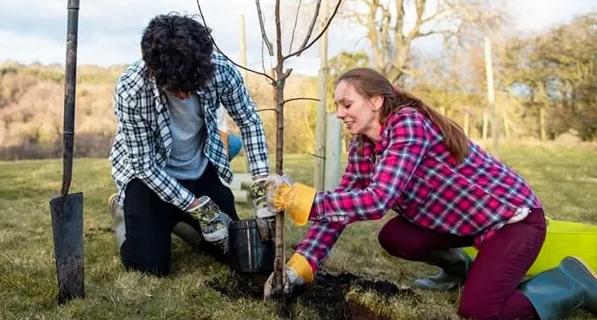
Volunteers and students of the University of Stirling came togeth er and planted 700 native trees within the university grounds on Spittal Hill on 15 and 16 April. This major success has greatly expand ed woodland cover on the cam pus, development of connectivity and the enhancement of campus biodiversity.
The Forth Climate Forest (FCF),
based at the University of Stirling, is the largest tree planting initia tive in the Forth Valley Area. FCF is working with land managers, communities and partner organi sations to plant 16 million trees by 2033.
The Big Tree Plant was organised by the Green & Blue Space from UoS, who strive for sustainability and zero waste by promoting these types of activities to students.
The Green & Blue Space website states: “The Green & Blue Space is
our Sustainability Hub and Green Office on campus, it includes pro jects such as our Fairshare cir cular economy programme, our Foodhive zero waste shop or our Community Garden & Orchard and it is lead by our students to deliver sustainability campaigns and ac tivities to achieve the change our campus and planet needs! “From zero waste products and sustaina ble lifestyle swaps to re purposing and re selling unwanted home ware, clothing and electronics,
saving them from landfill.”
On their Instagram page regard ing the Tree Plant, the Green & Blue space said: “A big thank you to everyone involved from our Green & Blue Space volunteers, to the @universityofstirling's Forth Climate Forest and BeConnected programme to @tcvscotland and our lovely community members for making this all possible! “This is only the start of our biodiversity projects with many more in the ho rizon, so stay tuned!!”
By Amelia Fryer News Editor
Paul Mooney has been appoint ed as the first Chair of the Stirling Visitor Levy Advisory Forum fol lowing a selection process.
Paul is currently the Area General Manager for Apex Hotels, which in cludes responsibility for managing the Apex Dunblane Hydro Hotel, and he has a wealth of experience in the Scottish tourism sector which spans 20 years.
He has been heavily involved in a number of leadership positions over the course of his career. First at Cameron House Hotel and then for nine years at Apex Hotels, where his positions have included Deputy General Manager, Group Operators Support Manager and Dual Site General Manager. Mooney was targeted as an ideal candidate for the role due to his extensive experience in leadership
roles within the tourism industry, and also his past in solidifying prosperous and collective working environments.
He has also displayed his skills in building communications and rela tionships with a number of stake holders and local communities dur ing a period as Chair of the Dundee Business Improvement District Proposal and while on the board of Developing the Young Workforce Tayside.
Following a competitive recruit ment process that took place in February and March, Paul was for mally approved in the role at the 2 April meeting of Council. As Chair, Paul will provide; independent, transparent, and effective lead ership to the Stirling Visitor Levy Advisory Forum. He will guide the forum in review ing, discussing and advising the council on the visitor levy scheme and how the proceeds should be
invested to benefit Stirling’s com munities and visitor economy.
Paul’s first task will be to assist council officers in appointing mem bers of the Visitor Levy Forum, with a deadline for applications of 12 April.
Paul said: “I’m hugely honoured to taking on this important role and can’t wait to get started. “The Stirling area is rich in history and culture, boasts outstanding natu ral beauty and is packed with vi brant, diverse communities where tourism is the key economic driver. It’s a wonderful place to work and I’m incredibly passionate about unlocking the area’s full tourism potential.
“The investment opportunities provided by the visitor levy could be transformational in growing our visitor economy and deliv ering benefits for visitors and communities.
“It’s crucial that we secure a broad
range of views from businesses, tourism operators and communi ties through the forum so that the levy is implemented fairly and de livers benefits across the Stirling area. “I look forward to helping cre ate a balanced and inclusive forum and would encourage anyone who is interested in being part of the fo rum to apply before the deadline of 12 April.”
The Stirling Visitor Levy Forum will have an independent chair and consist of representatives from a wide range of stakeholders including tourism organisations, accommodation providers, tourist attractions and other tourism busi nesses, together with Loch Lomond and the Trossachs National Park and community groups. It will be supported but not led by Stirling Council officers It is expected that the first meeting of the Stirling Visitor Levy Forum will be held no later than June 2026.

By Amelia Fryer News Editor
There have been a number of road closures in and around the Stirling area over the last couple of months.
Some of these roads are major routes into the city from some key residential areas, and the inevitable disruption has been evident over the course of March through to April.
Laurencecroft Road has been shut for roadworks to vehicles and pedestrians since January 5 2026 and is not set to reopen until November 23 2026.
Causewayhead Road has seen a number of temporary traffic light closures since Cornton Road was shut at the beginning of March. The traffic from the major route combined with the normal rush hour traffic has had a great impact on delays – with traffic resort ing to motorway travel to go from Bridge of Allan or one end of Stirling to the other to avoid further delays.
Cornton Road was and still is shut
following an emergency on March 9 2026, with no indication of how long there will be no vehicle access and when it will reopen.
The key route in Stirling follows the east bank of the River Forth, and is a key route for students living in John Forty’s Court, as well as Lyon Crescent and a number of res idents along the route.
The 54 bus route has also been af fected by the closure as it has been redirected through Causewayhead.
Midland Bluebird have said:
“Due to the emergency closure of Cornton Road the 54 service will operate a revised timeta ble and route. This will operate from Stirling Bus Station via Causewayhead Road to Bridge of Allan and into Cornton, terminating at Eastern Cornton Road.”
“In Cornton the bus will oper ate a clockwise route around the Cornton estate and at Johnston Avenue turn right and proceed back to Bridge of Allan and on wards to Causewayhead Road before returning to Stirling Bus Station.”
The service will not operate into the University grounds for the du ration of the closure. Wallace High School will still be serviced on ap plicable journeys.
Scottish Water has said: “A full closure is needed to allow repair work to be carried out safely.”
“In order to carry out a repair, a full road closure is required as the damaged sewer is approximately five metres below ground. Diversions are being clearly sign posted – including one avoiding a low bridge – and we would ask road users to follow them and allow ex tra time for their journeys.”
“It is too early to say how long the road closure will be in place. We will have a better idea once the damaged sewer has been exposed and surveyed. Access to local prop erties will be maintained and we will work as quickly as possible to complete our repairs.”
Read more information regarding road closures around the Stirlingshire and Clackmannanshire areas on the Stirling Council website.
By Connor Peebles Deputy Editor
Stirling council is gearing up to take over the Trossachs Explorer bus service for two years this sum mer, shifting it to a new year round service.
Though started by the Loch Lomond & The Trossachs National Park Authority in 2024, the new re newed service will provide tourists the opportunity to visit exciting areas in, and around, Trossachs. These will include Loch Venachar, Ben A’an and Loch Katrine Pier. On top of this the service will func tion as a vital route for those living between Callander and Aberfoyle.
From Monday to Sunday, with four return journeys a day, the service will connect to more pop ular services such as the 59 from Stirling and Callander, as well as
the X10A between Balfron and Glasgow.
The two year pilot service will cost the council £94,000 to run for a year. Funding was secured through a grant from Tactrant, however final approval will be made by Transport Scotland. During the two year period, the council will work alongside the National Park Authority to moni tor the success of the service. Their goal will be to see if the bus route running all year round is success ful enough to continue operating. At the end of the first year of ser vice, the council will provide a re port to the Environment, Transport and Net Zero Committee. A second report will be given after 20 months to determine if the two year ser vice has met their goals.

By Amelia Fryer News Editor
Miniature horse therapy is re turning to the University of Stirling on 18 and 25 April, and 2 and 9 May
2026 between 12pm and 2pm.
Lunar Eclipse EFL Therapy Horses
CIC is a non profit establishment that works to explore and bring out the deep natural connection
between people and horses in or der to consolidate spiritual healing, learning and personal growth.
Horses can bring about an im proved self esteem, a natural im provement of emotional regula tion and have also been proven to reduce stress levels and improve a person's calmness. Caring for horses in any way can be relaxing;
grooming, feeding and taking care of them feeds a feeling of responsi bility and achievement.
This is especially beneficial for those struggling with their mental health, as well as the stress of uni versity, hence the choice in dates to run across the exam period. The dates will however be weather dependent, and will not run if the
weather is poor. Attendees will be informed of cancellation no later than the morning of the event.
The organisation will be based on a first come first served basis as the horses will be on campus for a restricted time. Each slot will last five minutes, during which there will be the opportunity for pic tures. Those wishing to come will
meet around the small loch near the outdoor entrance to Haldane’s. Ensure to arrive early as there will be queues.
This event is running as part of the university’s BeConnected Programme which is designed to; help students enjoy their time at university, take a breather from studies/work, and meet new people.
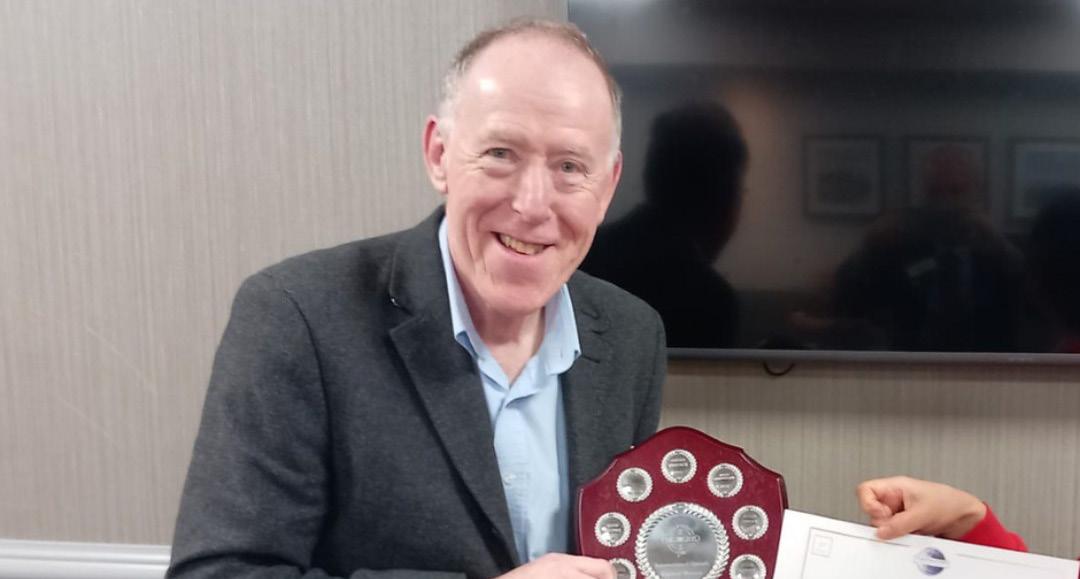
Gerry Dunn, a member of a public speaking club, the Stirling Speakers, won the Scottish Division Final of the World Championships of Public Speaking. He is a three time champion as he also won the online contest and the humorous speaking contest. He will now move on to the next round in Tralee, Ireland and if he does well there he will get the chance to participate in the world championship, which will be held in Vancouver, Canada.
The Stirling Speakers are part of the Toastmasters International
organisation, which offers various different clubs and resources to help public speaking. Gerry's been a member of this organisation for over 20 years.
His speech had a strong theme that clearly caught the attention of the audience and the eight judg es from around Scotland. In his speech, "This One Thing", Gerry outlined the importance doing things even if you don't think you've got talent, "You might have a talent you have not developed. Don't hold back because you are not as talent ed as others, if you work hard you can live out your dreams".
Over 140 countries and 10,000 competitors participate in World Championships Of Public Speaking
each year since 1938.
The Division Director of Toastmasters in Scotland, Ronnie Smith, said; "We hope that he can win at further levels and perhaps even become the World Champion Of Public Speaking. His speech reflects the experience of many people joining Toastmasters. A lack of talent in public speaking may be holding back their career. Toastmasters is the place to go to develop those skills."
The Stirling Speakers is open to anyone over the age of 18 who is keen to develop their public speak ing skills.
You can visit toastmasters.org for more information.
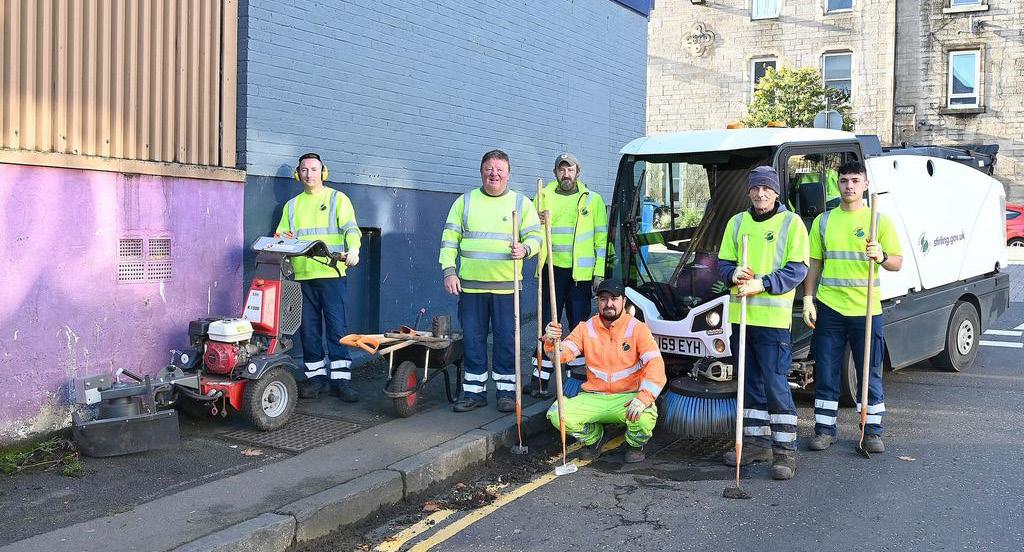
roadside littering.
A clean up drive will be taking place across Stirling on 30 31 May 2026, encouraging communities to get involved in maintaining lit ter free neighbourhoods.
The collective call to action sup ports the ongoing efforts of com munity groups, local litter picking organisations, and the council to keep Stirling as a safe and welcom ing environment. The event will also feature a campaign to tackle
More information about how communities can get involved in the new council wide event will be shared beforehand.
The clean up drive comes as litter pollution in Scotland is an increas ing issue. Keep Scotland Beautiful, a key stakeholder in Stirling Council’s clean up event, published data in 2025 showing that 88 per cent of people believe litter is a na tional problem in Scotland. Additionally, they found that 83 per cent of people stated that they
Holyrood’s Local Government, Housing and Planning Committee has urged the next committee to conduct a review of the Scottish Housing Regulator (SHR), a move that has been welcomed by Stirling’s local MSP, Evelyn Tweed.
Tweed previously introduced an amendment to the Housing (Scotland) Act 2025 that gave the right to appeal decisions made by the SHR’s First tier Tribunals. Back in 2025, she said that the amend ment was “about putting fairness and accountability at the heart of housing regulation. For too long, decisions with major consequenc es for housing providers, staff, and communities have been shield ed from independent scrutiny. A simple and inexpensive route to challenge these decisions is long overdue.”
A review of the SHR aims to in crease scrutiny of the organisa tion, which regulates social land lords and the homelessness and housing activities of local councils.
The new report, recommend ing the review, states: “We believe regular consideration each year thereafter on how the SHR has progressed areas of interest would be beneficial. We believe scrutiny of the SHR is an area where the appointment of an adviser to the Committee or the procurement of specialist research could add value.”
Tweed commented on the SHR: “Since the SHR’s inception, serious concerns have been raised with the Parliament, which is charged with overseeing it, about a culture of fear associated with regulatory interventions and the conduct of those acting on its behalf. This can stifle innovation and undermine community ownership.
“There are serious concerns that regulatory intervention... can place pressure on community based housing associations to merge with larger organisations. Around 20 have been lost over the past decade.
“When the SHR intervenes, ten ants are left footing the bill and, in some cases, communities lose con trol without clear evidence of bet ter outcomes. Yet Parliamentary scrutiny is not structured to get to the bottom of these issues, mean ing they too often fall through the gaps.
“Momentum must not be lost as Parliament moves into a new ses sion. While committees need flex ibility, public bodies that are ac countable to Parliament must be subject to a more structured and consistent approach to scrutiny.”
Tweed has been Stirling’s local MSP since 2021, prior to this she was an SNP councillor for the Trossachs and Teith ward. She ap peared in the “all women hit list” of SNP MSPs asked to step down for the 2026 elections to allow previ ous SNP MPs who lost their seats in 2024 to stand for Holyrood.
want more to be done to clean up and prevent litter.
Recycling and correct waste dis posal benefits will also be featured during the clean up event. The discussion aims to increase com munity pride across Stirlingshire, and enhance quality in our local environments.
Building local pride could be the key to defeating the root of Stirling’s litter issue. A YouGov sur vey for Keep Britain Tidy found that half of Scottish adults have admit ted to littering in the past year.
As commonly found litter typical ly takes generations to decompose, collection by hand remains the only option for its appropriate disposal, and for respecting Scotland's ur ban and remote environments.
Stirling Council will make the total amount of litter and recycla ble materials collected during the event available afterwards.
Communities interested in get ting involved and maintaining the litter situation on an ongoing basis can email cleanstreets@stirling. gov.uk for access to kit and equip ment free of charge.
The Labour Party’s candidate is Dr Kainde Manji. Kainde has lived in Stirling for over 22 years, first attending our university as a student, before working as a dementia researcher.
Background
As a life long Labour member, her connections with the party run deep. Her story with poli tics and the Labour Party began when she was just 13 years old, effectively at the beginning of Scottish politics post devolution.
She said: “My mum stood as a councillor in 1997, and I went out knocking doors with her for the first time then and just loved it. I loved speaking to people.”
Policy Focus
Manji personal experiences in her work and research also motivated her to get involved
in politics and advocate for change, particularly within the Scottish NHS.
“Seeing the failures of the health and social care system, really up close and personal… and so, I think, well I could try and get involved and fix some of the problems that I see happen ing,” she said.
Central to Manji's campaign is the value of local communi ties, particularly the rural areas within the Stirling constituency. She cites public transport as an example of where these commu nities have been left behind.
She said: “People told me that they wouldn’t put their kids on buses to Stirling because there’s no guarantee that there would be a bus to bring them back.
“Scottish Labour believes
strongly in municipalisation of bus services, so bringing them back under local authority… Again, to give communities much more control over the transport they’re able to get.”
Students
In terms of changes for stu dents, Kainde was scarce, since Scottish Labour had not pub lished a higher education man ifesto at the time of our inter view, and Stirling University does not fall within the Stirling constituency.
“We are committed to not
reintroducing fees in Scotland, but we are committed to ensur ing young people can achieve their potential in whatever area they want to go into,” she said.
On students as a whole, Manji told Brig: "Students are citi zens… many of you will have been let down personally by John Swinney the way he dealt with exam results from COVID… The most important thing: reg ister to vote, whether you’re vot ing at home or whether you’re voting here.”


Brig spoke to Stephen Kerr, the Conservative candidate for the Stirling constituency, on a range of topics, from education and employment to youth op portunities and overall trust in politics.
Education
Kerr strongly criticised the current education system that Scotland currently has and said that he believes in a posi tive learning environment. He is against phones in schools, be cause he says they are being
used for cyber bullying. Kerr believes that Scotland should respect teachers more and give them more work opportunities.
Kerr is also aware that not every student is an academic and be lieves that Scotland should care more about apprenticeships. He believes that the Scottish youth could do more with a more imaginative approach when it comes to education.
Employment
Employment was another key focus for Kerr. He highlighted
the importance of getting peo ple back into work and helping them out with qualifications and skill training, saying, “to govern is to set priority and em power people, especially young people”. Kerr stressed Scotland could be a “skilled nation” And that by helping people get back to work, Scotland could lower its reliance on the benefit system and help the economy.
Taxes
On taxation, he highlighted that Scotland had the high est taxes in the UK. He believes that lower taxes let people keep more of their money, this gives them a fighting chance to come out of poverty. He also said that the economy would benefit from a lower tax burden, which will increase tax revenue and allow
The Scottish National Party has always been defined by the issue of Scottish Independence. However, the party’s independ ence debate seems to have been reframed in recent years by centring on a return to the European Union and the sin gle market as the key selling points of independence.

First Minister John Swinney is attempt ing to win a majority at Holyrood, despite the voting system be ing designed to impede majorities. It was an SNP majority that led to the UK Government granting Holyrood the 2014 referendum.
Despite this precedent, UK Health Secretary Wes Streeting
stated on Sunday, April 12, that a referendum wouldn’t be grant ed, saying: “We are not going to introduce chaos into the UK by having an independence ref erendum. Absolutely not.” When pressed on what circumstances would secure a referendum, the secretary failed to clarify, stat ing: “Well, they're not having one.”
Deputy Leader of the SNP, Keith Brown, responded to the comments on Twitter/X, post ing: “The Labour Party is stick ing two fingers up at Scottish voters, and unwittingly mak ing the case for independence, by arrogantly seeking to deny democracy.”
However, when discussing securing a second referendum
for higher spending on the NHS and education system.
Stirling
On Stirling, Kerr spoke posi tively about the city, saying it is a “great place to live”. However, he did acknowledge that there has to be more access to affordable youth services, such as sport centres, swimming pools, and other community spaces. He also highlighted the need for more work opportunities, sug gesting that the youth could look into care work since we have an ageing population.
Other Parties
Kerr criticised several oth er parties and leaders, stat ing that “Reform is in sham bles”, the “SNP’s track record is abysmal”, “Keir Starmer is the worst”, the “LibDems aren’t strong enough”. On the Greens, he likened them to Reform, calling them extremist, and saying “one cheek is Reform
at the SNP party conference in October, Swinney said: “Nobody knows the tactics I’m going to deploy”, suggesting the First Minister may have additional plans up his sleeve.
Beyond Independence, the First Minister told Brig that “the politics of the SNP are about eradicating child poverty, grow ing economic opportunities, making the transition to net ze ro and strengthening our public services.”
Addressing the party confer ence in March, Swinney claimed the SNP will put the NHS first, continue to fight child poverty, and condemned the USA and Israel’s actions in Iran and Gaza, describing them as “illegal” and “unjustifiable”, and urging an immediate end to the violence. Housing has been highlight ed as another key issue for the
The University of Stirling is not in the Stirling constituency.
Instead, it falls within the Dunblane and Clackmannanshire constituency, which also includes Bridge of Allan and Alloa.
Meanwhile, Stirling town centre falls within the Stiring constituency, and both the university and city centre are inside the Mid Scotland and Fife electoral region.
A constituency search tool can be found on www.mygov.scot
and another is Greens”. Kerr positioned himself as a trust worthy alternative, saying he is the “real deal”.
He understood that while young voters might want to vote for more radical parties, he said there has always been a gradual shift toward prac tical, discipline based parties as people grow older, and that conservatism would be the best option for Scotland.
Remember to bring a valid photo ID if you are voting in person.
Polling stations are open be tween 7am and 10pm.
You get two votes one for each ballot paper. Mark an 'X' for the candidate you wish to vote for.
party, with Stirling MSP candi date, former MP and MEP Alyn Smith, telling Brig, “we have a housing emergency that’s just not been taken seriously.” Additionally, Housing Secretary Màiri McAllan has claimed that housing will be an “urgent issue at the election”.
Smith also highlighted trans port, specifically buses, and improving job opportunities for young people as key issuues for the party.
After almost 15 years in pow er at Holyrood, critics claim the SNP is responsible for the issues they’re campaigning on, but the party blames a lack of funds, with Smith highlighting con servative austerity measures and saying, “There’s just not enough money in the system, and [Westminster] controls all the big economic levers.”

The Scottish Liberal Democrats are looking confident ahead of the Holyrood election as the only party besides the SNP predicted to win more than one constitu ency seat, according to YouGov MRP polling.
Election Strategy
Party leader Alex Cole Hamilton appears to have em braced the unofficial party slo gan of “Change with fairness at
its heart”
The party is making big push es for a handful of constituency seats, but the overall strategy is based around targeting the second vote and picking up list seats.
Policy Focus
Many of the Liberal Democrats' key policies align with those of other major parties: a massive focus on supporting and bol stering the NHS, improving ed ucation, addressing the housing crisis and promising to revital ise public transport. Perhaps due to the parties' focus on the Highlands and Islands, priority has been given to the Scottish ferry services, which Cole Hamilton claims are in crisis fol lowing Caladonian McBrayne’s
announcement that ⅓ of their fleet is currently out of com mission, saying “John Swinney should be begging [the UK and EU] to deliver a Dunkirk style flotilla and help get our islands open.”
Sally Pattle, candidate for Clackmannanshire and Dunblane, and the party's spokesperson for mental health, described the party to Brig as, “Pragmatic, we pride ourselves on looking for the correct an swer. We’re not out for clickbait, we’re not out for shenanigans.”
She also told us that the party supports stronger connections, both within the UK and with Europe.
Pattle added that the Lib Dems are in the perfect position to put
Brig spoke to Mark Ruskell, the Scottish Green’s lead candidate for the Mid Scotland and Fife regional list, as the party did not stand a constituency candidate for Stirling.
Background Ruskell has been involved with the Scottish Greens for decades, first as a youth party member at the University of Stirling. He later rep resented Mid Scotland and Fife in the Scottish Parliament between 2003 and 2007, before being elected to represent Dunblane and Bridge of Allan in Stirling Council in 2012. He was re elect ed to the Scottish Parliament in 2016 and stood down from the
Last week, Stirling University’s Debate Society hosted a hus tings that invited representa tives from Reform UK, offering them the chance to make their case to students as to why they should vote for Reform next month.
For our last print edition be fore the May 7 Scottish Elections, Brig has reached out to local Reform representatives, again, to offer them the same chance as all other parties standing in Stirling, to make their case.
However , Reform UK can celled their University debate night appearance and the party chair for Mid Scotland and Fife failed to respond to our request for an interview. So, we've been forced to find out for ourselves
who is standing for Reform in Stirling?
Local Hustings Missed Rachael Wright is Reform UK’s Stirling candidate, whose local engagement has mostly been delivered via Facebook. She was scheduled to speak at Stirling’s Debating Society’s hustings alongside representatives from all other parties standing in the constituency. However, days be fore, she pulled out of the event, telling the society that she would be in Aberdeen. Reform UK had a press event in Aberdeen, where Richard Tice said that Reform UK would extract “every last drop” of oil from the North Sea, the same day as these hustings.
On the cancellation, the Debating Society President, Ismael Ahidar, said: “Reform
Council in 2017 to focus on his responsibilities as an MSP.
Election Strategy
On the lack of a constituen cy candidate, Ruskell said the party was “focusing in on the regional lists”, as they have a “really good opportunity” to elect two regional Green MSPs in Mid Scotland and Fife for the first time.
Policy Focus
Discussing the party’s track record, Ruskell pointed to legis lation from the Greens’ time in coalition with the SNP, includ ing “reforms that protected those in the private rented sec tor”, such as rent caps, and the free bus travel for under 22s. He said, if re elected, the party intends to expand this policy in
were set to attend our hustings event, which I feel was a really good chance for them to try and make their case to students at the university.
“Two days before the event the representative emailed to say they were unable to make it as they had been called to Aberdeen and wouldn’t be down in time.
“They then said they were try ing to get someone else to cover the event but, a day later, in formed us they were unable to do so. We moved on with what was a great event regardless.”
Cyber Conspiracy Spreading Wright shared a petition last October calling on local authori ties not to turn a Scottish former private school into “migrant accommodation”. Kilgraston School in Perthshire, a former
pressure on the SNP in Holyrood, “We pride ourselves on being co operative, it’s the sensible thing to do. We’re aware of our powers and what our constituents care about; we’ll support programs that align with those values, not just be opposition for opposi tion's sake.”
The party’s candidate for Stirling is Jill Reilly, who also serves as the party's spokesper son for social justice & care ex perienced young people. Reilly has over 20 years of experience working in project management across the private and public sectors, and is an active cam paigner for active transport, pledging to “prioritise decar bonising public transport.”
phases, first to under 25s, then under 30s.
He said that strengthening rights for renters and workers was also a large focus for him, especially in terms of ensuring a consistent quality of housing and access to collective bargain ing across different sectors.
Meanwhile, he was supportive of a four day work week with no loss of pay in the public sector, suggesting it improves produc tivity and employee health.
Scottish Independence
On independence, he said that the Scottish Greens “are still an independence supporting par ty” and will continue to “make the case for more powers for Scotland”. However, he rec ognised that on the doorstep, people were more interested in “day to day issues” such as “the cost of living crisis,
girls' boarding school and co ed private school, was never set to be turned into Home Office ac commodation, a rumour that the local council had to dismiss.
The council’s Facebook page posted a statement, including:
“If, and this is a big if at this stage, a building like that was to be used for this purpose, a Houses in Multiple Occupation (HMO) licence would almost cer tainly be required. Again, we’ve had no applications for this kind of licence..."
Wright's X account, despite appearing to be for campaign purposes, is private, but her Facebook is not. Here, we saw questionable responses to com ments that may explain her lack of engagement with students, likes on posts advocating for the UK to "get our country back"
Edward Jewsbury
Politics Editor
Emma Forbes Walker Politics Editor
Elliot Johnston
Features Editor
Jess Urquhart
James Mcintyre
Adara Kulug
precarious employment, poor quality of housing, [and] expen sive housing”.
He said: “Although independ ence would certainly bring... more powers to Scotland to en able us to invest… in more social housing and redesign the energy market, these are a little distant from the everyday concerns that people have right now.”
Zack Polanski and the English and Welsh Greens
He said that Zack Polanski and the English and Welsh Greens had taken the green movement into “a new space in terms of public support”, particularly on social media, and that mixed with the Scottish Greens’ track record in government, this had “all the ingredients for a great election result”.
and "stop the illegals". You can see these posts on our website. Reform UK have candidates standing in all 73 constituen cies and provides guidance for how to vote in all of these but none of them explain the cor rect voting system for Scottish elections. They have been ex plaining the Single Transferable Vote method, which is for local councils. The Holyrood election will use the Additional Member System.


By Lena Johnston
First year is officially over. No more 9am lectures. No more 5pm seminars. As far back as I can remember, the beginning of summer has always been the best time of the year. Being shoulder to shoulder with my friends in the back of the gym hall singing "Summer Holiday" by Cliff Richard and saying weepy goodbyes at the school gates meant the start of endless sunny freedom, and the end of early morning maths.
Now that I'm (technically) an adult, my summer plans, and my future plans, look different.
Firstly, summer starts in April, which gives me 4 months living back at home and away from all my wonderful friends that I've met this year. Going from Wednesday night socials in Fubar to Wednesday nights at home with my family feels like a failure, or at least like a colossal step down from my exciting new life back into my quiet old one. But really, I know it's not.
Freshers isn't supposed to last forever, and after a year I can confidently say that I'm not "fresh" or "new" to the student life at Stirling anymore. Saying goodbye to university for the
By Emma Christie
At 23 years old, I have been in education for all my life. The last four years at Stirling seem a small blip in my timeline, yet they are the most memorable, and that’s largely thanks to Brig
Looking back to my first year, I was a nervous teenager who wasn’t sure if university was for me. The content in lectures went straight over my head and the ‘excitement’ everyone told me I was supposed to feel fell flat as I drowned in assignments.
When I found Brig , things started to change.
The energy and love for jour nalism were huge presences in the room, and I left with new found feelings of admiration and intrigue which drew me back the following week.
I still questioned if journal ism suited me. The feelings of uncertainty grew into an
uncontrollable bundle of nerves until I listened to speakers at my first 'Big Brig' event. Brig alum ni, who once sat where I did and had the same doubts as myself, now stood in front of us students as accomplished journalists. Slowly but surely, the nerves bloomed into passion, and now I couldn't imagine myself pursu ing any other career.
Desperate to prove myself, I began writing about everything and anything, covering every desk over my four years with Brig . Unfamiliar faces at meet ings which once seemed so daunting, so professional, so put together and out of reach eventually came closer, and I found myself among them when I joined the committee in 2023.
Brig gave me the confidence to take a semester abroad while daunting, the opportunity to learn journalism from a differ ent perspective and write new stories squashed any doubts I had.
Last Friday (April 10), I, along side fellow Brig members and journalism students, submitted my final piece of coursework which marked the end of my journey in education. Thanks to the community that welcomed me, pushed me, challenged me, and supported me these last four years, I'm ready to face the big bad world, armed with the knowledge I've picked up through my time at Stirling. If any first years are reading this and resonating with what I've spoke about, I implore you to give Brig a chance. You don't have to be a journalist to join plenty of students from oth er degrees have done amazing work in Brig and it may make your journey at university that tad bit easier. I'll forever be thankful to Robbie and Alex who dragged me into those initial workshops and newsrooms. Cliché as it may be, I'm sure I've made friends for life through Brig
summer is saying goodbye to my first year accommodation, which I am, very honestly, more than happy to say goodbye to.
My sports club, my society, my friends and my course will all stay the same, and they will be waiting for me when I get back. So, now, it's time for the slight ly more serious second year. Flat hunting is first on the agenda. Hours of emailing various es tate agents and viewing win dowless, lifeless flats will pay off by the end of the summer... or so I hope. Next is work experience. Of course, like any self respect ing student, I have a part time job already. But unfortunately, working for a student media brand doesn't translate to sum mer work, so it's time for a new adventure.
Second year is just that all new adventures. This year, if I've learned anything at all, it's that new beginnings aren't as scary as they seem, and actually, they are so very exciting. University is the only time of your life when you can live a different life every year, and I can't wait to see what second year has to offer. After recharging in this (very, very) long summer, of course.
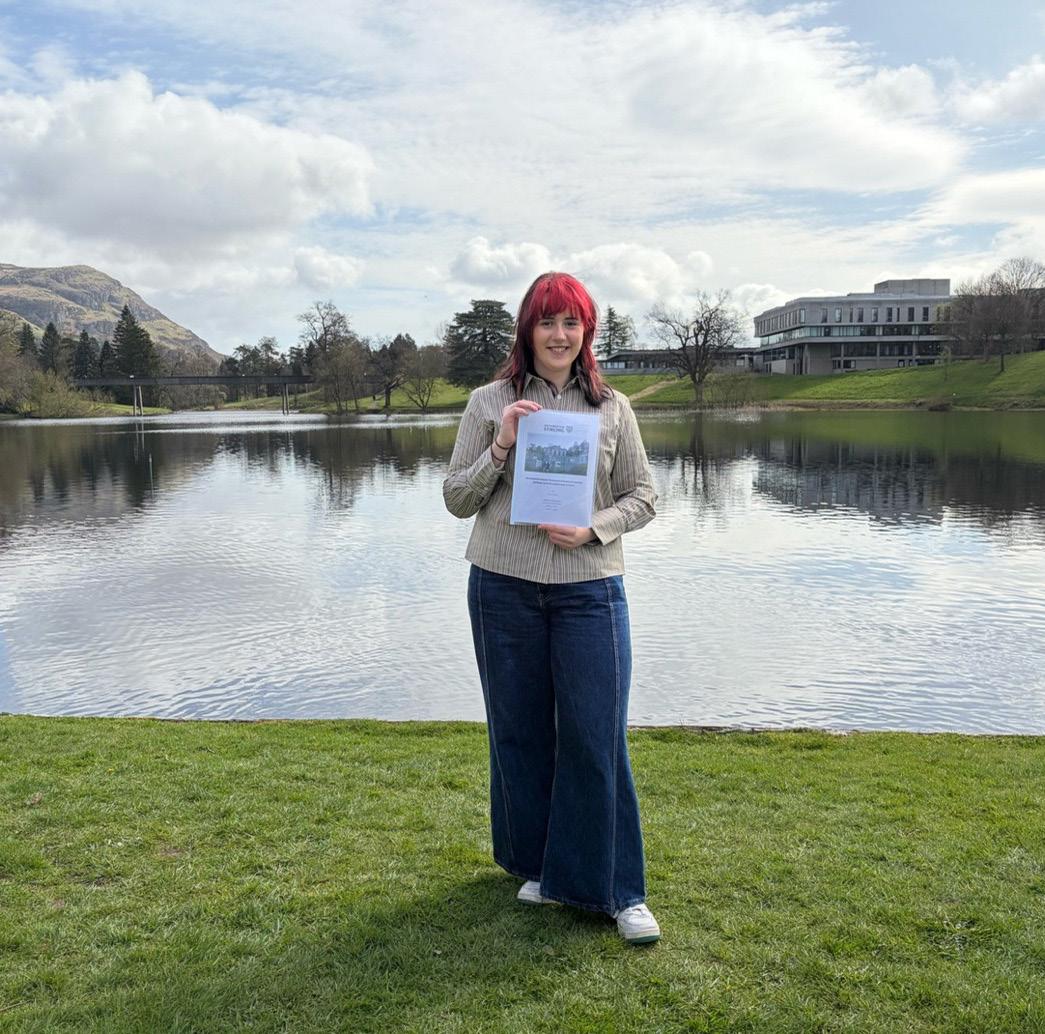

Somewhere between submit ting your final assignment and updating your LinkedIn bio to “graduate,” there’s a quiet real isation that no one prepares you for. What if your degree doesn’t actually matter?
For years we’ve been told uni versity is the most conventional way to finding a well paying job.
It didn’t really matter what you studied, just that you stuck it out for four years came out the oth er side with a certificate, (and at least one mental breakdown or identity crisis).
Obviously, if you want to be come a lawyer, doctor, teacher etc., you will need the specific degree for that job sector. But a
lot of graduate job listings don’t ask for specific subjects any more. Instead, they just want “a degree.” Any degree.
Which raises the obvious ques tion, If the subject doesn’t mat ter then why did we spend years specialising in one? Moreso, as more graduates enter an al ready oversaturated job mar ket, the premise of going to uni versity for a degree is becoming more unappealing. Are first class degrees pointless and why aren't employers hiring?
What is a First Class Degree?
Your final classification is ba sically just your average grade from third and fourth year, with your dissertation carrying an unreasonable amount of weight, (so no pressure).
They quietly ignore your worst module to turn your overall mark into a classification. If you’re sitting just below a higher grade, there’s also a chance they might bump you up.
The classification thresholds is: First class: 70. Upper second class: 60. Lower second class: 50. Third class: 40. The University of Stirling explain the marking scheme to their grade distinc tions on their website.
A First Class Filtering System
Some companies admit that they use the first class degree as a filtering system so that if too many people apply for the job, they can narrow down their op tions easier.
However, many companies now consider the background of the graduate to ensure that everyone has equal opportuni ty to succeed despite their up bringing or ethnicity according
to BBC news. This displaces the focus away from grade distinc tions and encourages a less pre dictable hiring strategy. Work Experience And Qualifications Some companies value work experience over degree qual ifications. Whilst Indeed.com, (a job seeking website), explain the importance of both qualifi cations and experience, young people are struggling to a achieve both. LinkedIn, (another job seeking website) also agree with this viewpoint and argue that balance is important.
However, the Chartered Institute of Personnel and Development (CIPD) surveyed UK employers to reveal the truth.
Degree requirements are being removed from some roles that previously demanded them. Most employers rank "relevant work experience" above degree classification when hiring. Attitude, aptitude and cultural fit often matter more than spe cific qualifications.
Many employers struggle to find graduates with practical workplace skills.
Graduates Can’t Find Jobs I spoke to recent midwife ry graduate from Edinburgh Napier University who is still struggling to secure a job in her field.
Twenty one year old anony mous graduate says: "I graduat ed in June 2025 from Edinburgh Napier University. I was told the UK were in desperate need of midwives, so the fact that I'm still unemployed is slightly concerning. I'm currently just enrolled in the NHS midwifery
bank and applying for random jobs until the NHS invite me for more interviews. It's hard find ing a job in a different sector be cause I'm told I'm over qualified because of my degree, yet not experienced enough in certain fields like hospitality or retail to beat the competition."
A new 2026 survey from the Royal College of Midwives shows one in three graduates haven’t secured a job!
If degrees that are direct ly linked to professions aren’t guaranteeing employment, then what exactly is the system doing? And yet, dropping out or choosing not to go at all still carries a weird stigma. So peo ple go. They commit. They get the degree. Then they’re stuck applying for the same jobs as everyone else.
Whether you love or hate the subject you chose to specialise in, degrees still teach valuable skills like critical thinking, time management, resilience. (How to write 2000 words the night before a deadline).
But things need to change. Job opportunities must become more accessible to graduates to incentivise students to complete their degrees. An alternative ap proach to helping young people would be placing a large focus on apprenticeships and intern ships. Young people do want to work, but the system is failing them.
By Emma Forbes Walker Politics Editor
By Amelia Fryer News Editor
A year and a half. That’s how long I’ve been mountaineer ing, and that’s how long I’ve been in the University of Stirling Mountaineering Club (USMC), and what a year and a half it has been. From being entirely unknown to the club and having no idea what a Munro was, to being awarded the unofficial certificate for best char acter/skill development in the club, I feel it’s somewhat fair to say I’ve made some decent progress, both in the sport and personally.
When I joined last September in my first year of university, I was absolutely terrified – of the mem bers, of the committee, of the hills, of the crags, and of how utterly en thralled I was and my strange gut feeling that this was what I should be doing; even though I had no idea what to do or how to do it, and didn’t really know anyone to help me.
So, clearly, 2024 me thought that running for a committee position
for a club I’d just joined for a sport I’d never done was an absolute ly wonderful idea, and one that couldn’t go wrong at all – how right I was. That decision to just take the plunge into the deep end and trust myself was one of the best ones I’ve ever made, with mountaineering I’ve never cared how scared I was; it has always been easy to just go for it. I’ve built so many relation ships over the last (nearly) couple of years, I think it’s quite funny how scared I was of the commit tee and people in the club when I first joined, because now I think of so many of them as my closest friends, and the people I trust most (which is lucky considering it’s my life in their hands, literally). I gen uinely think I’ve learned something from every single person in the club in one way or another, and I thank all of you for that, but I think more than anything, the mountains have taught me things about myself that I didn’t know I needed to learn. You tend to think a lot when the thing you dedicate the most of your time to involves a great deal
of quiet, isolation from society, and nothing but the mountain itself (that tends to be the case when you walk or climb hundreds of metres vertically).
My favourite thing is when I real ise how high I’ve climbed, and how far away from civilisation I am. I remember having so much pent up stress before climbing Ben Nevis last year, and when I reached a point on the track of being entire ly alone, and all I could hear was the river and the birds, I cried. And then I cried again when I noticed that I was higher than the clouds (in a literal sense).
I owe so much to mountaineering, and winning the silly little Ceilidh award for best character/skill de velopment also made me cry (I cry a lot, I know), but this time because I felt so seen. Most of the committee work I’ve done over the last couple of years has been a great deal of behind the scenes stuff, so I didn’t think anyone really noticed me. I also just didn’t think I was very no ticeable. To know that people think of me enough to notice my progress,
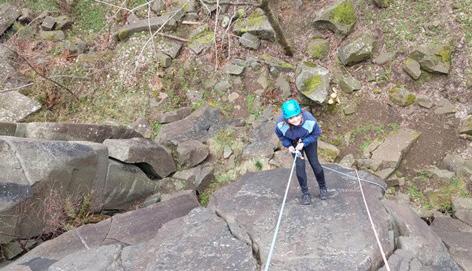
both in terms of my skill level and my personal development, means more than I think they’ll ever know. Sometimes in the week, I do stop and think that if I spoke to Amelia from September 2024, she would probably faint, probably cry, and most certainly not believe me. I had never been sporty, I joined an ex treme sport, got onto the commit tee, climbed actual factual moun tains, started climbing, learned
to abseil, and now lead climb and walk 30km days and am on the committee next year for the third year in a row – that’s bonkers. Even after I graduate in another two years (heaven knows where I’ll be by then), I will always be grate ful to this university's mountain eering club for giving me some of the greatest experiences, people, skills, and confidence that I could have ever asked for.
By Lucy Rossiter
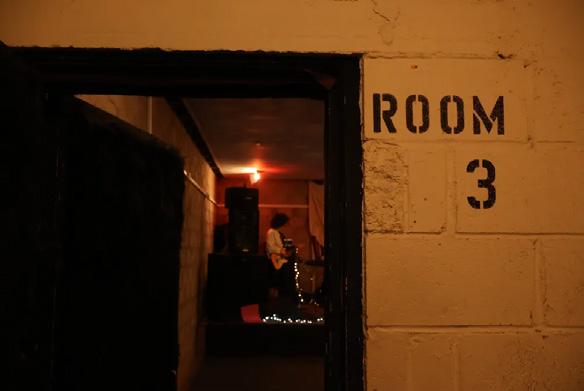
Sound of Community (S.O.C) is ‘a community promoter of sorts’ or ganised by Glasgow based Adam Duller and fellow musician Rory Jones, from Edinburgh. S.O.C’s first gig, a ‘genre clash’ between dif ferent Edinburgh and Glasgow bands was held at the audio lounge in Maryhill, a practice and recording space usually fre quented by Glasgow's hardcore bands. Duller met with Brig to discuss his hopes and ambi tions for S.O.C as a project, and the importance of community within the independent music scene.
Beginnings of S.O.C "me and Rory were at a party, and we realised we had so many connections in the music industry, and we thought, why not put on our own shows?
"We really want to bring togeth er different music communities, cause you've got the hardcore scene, the folk scene, electron ic, all the different kinda scenes, but they're all separated and in their own little bubbles, and we wanted to try bring them all together."
This desire to merge different scenes is what created ‘Genre Clash’, a gig lineup jumping be tween style and location, featur ing folk artists from Edinburgh, Glasgow indie, hardcore punk and ambient electronica.
The Venue "Audio Lounge is where my band practice all the time, so I've been coming here for about 2 years now."
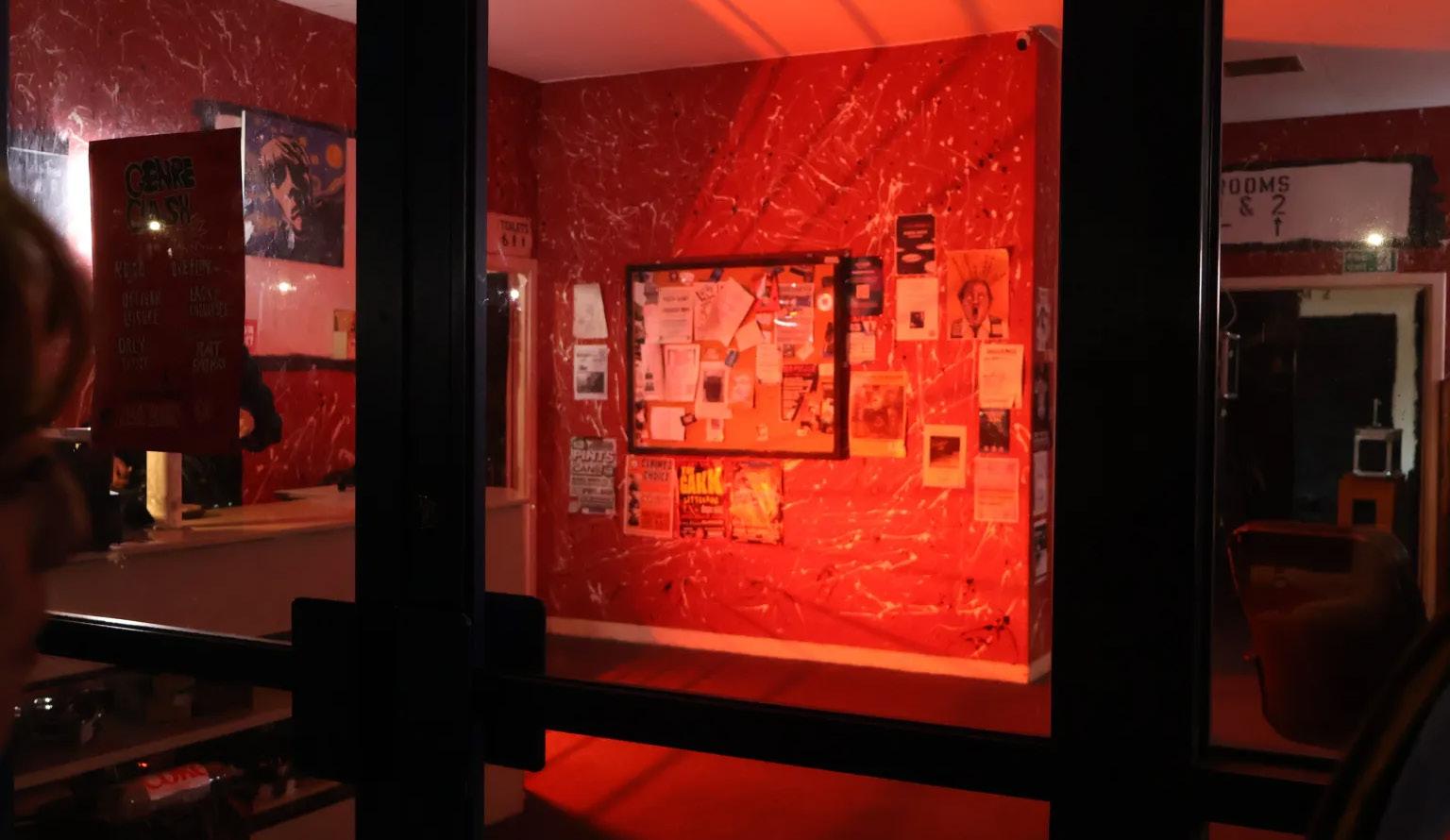
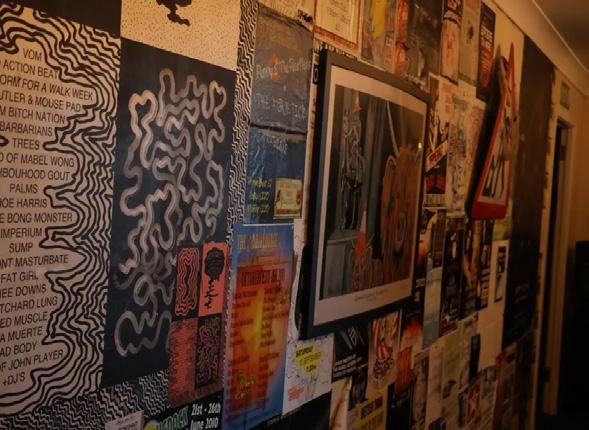
The corridors of Audio Lounge were covered in assorted posters and leaflets advertising local gigs, music lessons, photographers of fering services and bands hunting for new guitarists or singers. The gig itself was held in a practice room, with a decent stage and enough space to hold a fairly big crowd, which the gig had attract ed. By the time the third band were on, the room was packed.
Mutimedia Aspirations
Rory and Adam discussed their hopes to start involving local art ists with S.O.C, combining music and visuals:
"The plan is, each event a dif ferent artist will do a ‘takeover’ for that gig, they'll design the poster, and a zine for month for the gig, that's one of the ideas, a newsletter/zine."
"We just wanna find interest ing people that are up for putting on events with us! Like, if any one has any ideas, and maybe they don't know how exactly to get into the music scene, then we could help"
Mutual aid for Musicians
Sound of Community isn't just an events promoter. Rory and Adam talked about hopefully using their range of connections in Scotland's
music scene to reduce the costs of hiring studios or leasing equip ment, providing small independent bands with the means to record their own music, or put on shows.
"So, a percentage of the money made for the gig goes into a pot, and then any bands that work with us can say, maybe ‘we’re go ing on tour, we really need an amp’ or whatever, and we can say ‘no problem, we can help you, we’ve got the money.'"
Where else in Scotland are Sound of Community aiming to visit?
"We were thinking Dundee, or Aberdeen, there's a cool DIY scene in Dundee, specifically a ven ue called ‘hidden’.
"At the moment it’s just Glasgow and Edinburgh, be cause I'm based in Glasgow and Rory is in Edinburgh, so the sec ond gig will be in Edinburgh, prob ably late May or early June, and we're going to alternate between Glasgow and Edinburgh for each gig."
Further plans Adam and Rory talked about their ambitions for combining the performing arts and music in a new arts fusion event.
"When we’re back in Glasgow, in August, we’re hoping to do a day festival, it’s going to be a free event, with drag, puppets, and music."
"The idea is bands and music dur ing the day, and then an afterparty with DJs.
"I’ve got a couple friends who do like puppetry so we want to involve them"
Review
First up was Edinburgh based folk singer songwriter, Orly Taylor. Taylor’s folk influence could be seen throughout her set, in both her choice of Adrienne Lenker cov ers and her own original songs.
Taylor’s warm and natural stage presence paired with beautiful vo cals and intricate guitar made for a great opening act, the crowd clear ly enjoying themselves and singing along during Taylor’s cover of ‘Our House.’
Orly Taylor was followed by Glasgow band, Off Peak Leisure, who’s upbeat Britpop esque tracks had the crowd enthusi astically dancing as they played through their set, featuring a song dedicated to ‘Bobby Sands’, catchy guitar riffs and a heavy 90s indie influence in both their songs and their outfits.
After Off Peak Leisure was Adam’s own band, Lack of Knowledge, a ‘punk bit of everything’ a descrip tion they definitely lived up to, with their ear splittingly loud songs fo cused on unconventional subject matter: "This song is for anyone who always gets asked if they’re underage!"
The band had an intense stage presence, the crowd immediately responding to the heavy sound and a mosh pit quickly forming. Unfortunately, the gig was abruptly cut short when a member of the crowd was injured in said mosh pit, but up to that point the gig had been a great experience, showcasing a range of genres and musicians from across Glasgow and Edinburgh, and I personally am very excited to see what Sound of Community accomplishes next in their efforts to carve out an au thentic community oriented space in Scotland’s music scene.
By Connor Peebles Deputy Editor
Picture this: it’s the early 2000s in Dundee, rap is on the rise because of American acts like Eminem and Lil Wayne. Scotland doesn’t have a foot in the rap game at all, but could it?
Enter Silibil N’ Brains, the comedy rap duo created by Billy Boyd (Silly Bill) and Gavin Bain (Brains). A failed attempt at proving rap could function in Scotland that succeed ed in one area inauthenticity.
Famously, the duo were left high and dry after they went to a label audition in London. Having been laughed at, and brushed off as “The rapping Proclaimers” they knew something had to change if they wanted any form of success. That’s where their greatest scheme came from.
Nobody was going to take two lads from Dundee rapping serious ly, but people might be more willing to listen to a couple of Californians. So, the young Boyd and Bain be came two Californians by perfect ing a fake accent and lying their way to the top.
After getting signed to a lucrative record deal with Sony Records, the lads leapt at the chance to embody their new personas. Their deal was to release two singles and an album, a deal that was left unful filled due to the growing paranoia the boys faced. They had to keep up their lie at all times, in front of every single label executive, musician, and random person on the street that recog nised them. Their fear only grew larger as they were propelled fur ther into the limelight, from sup porting rap supergroup D12, to ap pearing on MTV, they were at risk of being found out at all times.
It all became too much for Boyd. He came to the only conclusion he could come to it was time to leave Silibil N’ Brains and return to Scotland.
Now, over twenty years since Boyd and Bain duped the record industry, Silibil N’ Brains story is immortalised in celluloid with di rector James McAvoy’s directorial debut California Schemin’. They’re a cautionary tale about fame, but you can’t deny that Bain and Boyd proved the hypocrisy of the music industry, and for that they’ll always be remembered.


By Maisie Nisbet
After taking the 90s British mu sic scene by storm, indie rock band James have transfixed fans for decades, with no intention of slow ing down. Formed in 1982, the band have had four top 10 hits on the UK singles chart and nine top 10 plac ing albums on UK albums chart, in cluding the much loved hits 'She’s a Star', 'Laid', and 'Sit Down'. Despite a break up in 2001, James have made a legendary comeback, tour ing since 2007, making new music and igniting stages around the world with their sheer talent.
Opening Band
Alternative rock band Doves opened the gig, perfectly setting the tone for the rest of the night with impeccable energy and excit ing the crowd with fan favourite songs like 'Black And White Town' and 'There Goes The Fear'.
Taking the stage
Introducing the band, a psyche delic, sci fi style monologue was accompanied by mesmerising graphics on the big screens, engag ing audiences until James took the stage with their electric presence.
Opening with their hit 'Tomorrow', the combination of two drum kits, multiple singers, and three guitar ists is proof that James is one of the most multi talented bands ever. It’s rare during concerts to see artists put down their guitars to pick up a
violin or a pair of drumsticks, but this is the norm for James every couple of songs. Chloe Alper and Debbie Knox Hewson particularly stood out, both drumming, singing, playing guitars and tambourines at different points which gave a fresher sound and added more lay ers to classic tunes.
Tim Booth’s Magnetic Energy
It is difficult to imagine any 66 year old putting the same im mense energy into gigs as they did 40 years ago, but not Tim Booth. Fans were hypnotised by his cool moves and spectacular stage pres ence, but also his authenticity. Booth kept it real, admitting when he made a “fuck up” and cracking jokes about things going wrong.
An admirable aspect of Tim’s hon esty were the tracks 'Greenpeace' and 'PS', which he dedicated to the disastrous events occurring in America currently. There is noth ing more refreshing than artists who, regardless of fame, clearly care about what’s going on in the world.
Audience Interaction
While standing on stage and play ing a set is the expected for artists, James break away from this nor mality, as Tim stated, the band is “afraid of nothing happening on stage”. Excitement and adrenaline filled the stadium as Booth stood
on barricades, dancing with fans and even a security guard while the rest of the band hyped up the crowd.
A moment in particular that audiences will never forget was Booth’s venture to the second level during “Say Something”, somehow managing to sing perfectly run ning up the Hydro’s deadly stairs and greeting fans in the seating areas. However, I think we all felt a little jealous of the lady on row C who Tim serenaded during 'She’s A Star'.
The set was complete with the iconic track 'Getting Away With It', prompting an epic stage dive from Booth. But the night couldn’t end there. Before you could say encore, James were back on, performing their hit 'Sometimes' and ending the night with 'Laid', leading to a full arena sing along.
Verdict
While a lot of artists lose their spark after performing consecu tively for a long time, James are no where close. Their infectious spirit and dynamic presence will impress audiences for years to come.
Luckily, if you missed this gig, tickets are still available for more dates of James’ UK and Ireland tour via Ticketmaster.
By Kristina Wikensten Music Co-editor
The European Parliament have voted to implement new legisla tion, strengthening copyright law regarding the use of Generative Artificial Intelligence in music production to protect the creative work of artists and rightsholders.
The Scotsman published an ar ticle in May 2025, revealing the Scottish publics’ perception of AI in music. In a representative sur vey of 2000 respondents, just over four in five Scots claimed to have
concerns of the increasing use of AI in music.
Some concerns expressed were a lack of financial compensation and protection for artists’ music, as well as a general decline in partici pation within creative fields. Some feared the overall consequences to the industry with increased com petition from AI generated music.
This March, the European par liament voted 460 to 71 to adopt recommendations made by MEPs, including harsher requirements in transparency and for proper
compensation for the use of artists’ music in genAI.
The official EU press release stated members of the European Parliament “want AI providers and deployers to provide an itemised list of all copyrighted works used to train AI…”.
The EU would enforce this through legal action related to cop yright infringement, should these requirements not be met.
The EP have requested the European Commission to cre ate further detailed regulation
through new licensing of the cre ative market. This would apply for the work of independent creators as well as smaller to average enter prises, such as record labels.
Additionally, they have also called for the option for rightsholders to deny the inclusion of their work in the use of AI training.
Rapporteur, from Axel Voss, from the European People’s Party, said after the vote:
“We need clear rules for the use of copyright protected content for AI training. Legal certainty would
let AI developers know which con tent can be used and how licenc es can be obtained. On the oth er hand, rightsholders would be protected against unauthorised use of their content and receive remuneration…”
Though the UK is not subject to the European Union’s AI legislation, it will still affect UK enterprises op erating outside of the country. This means they can face legal reper cussions if found in breach of the EU’s new AI and copyright legal framework.
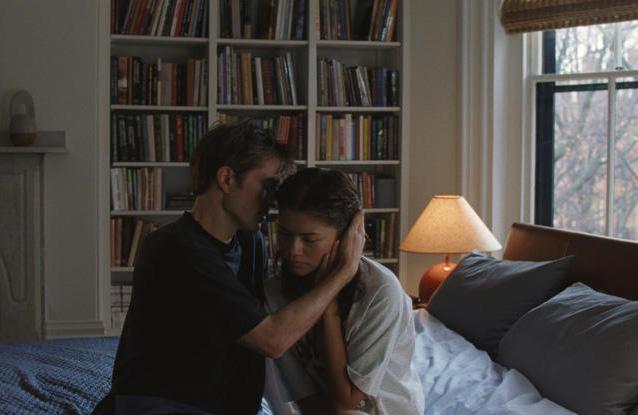
Starring Zendaya and Robert Pattinson, The Drama poses you a Pinterest perfect situation quickly struck with disaster a begrudg ing confession from Zendaya’s character that makes “drama” an understatement.
The film surrounds Charlie and Emma, two fiancées, weeks be fore their wedding, whose mar ried friends suggest confessing “the worst thing you’ve ever done” before tying the knot. All four of them tell some soul muddying sto ry, but one sticks out. If you go in spoiler free, you don’t know what Zendaya’s about to say until this dinner scene. And then, along with her fiancé and friends, you react.
If the quality of a good film is whether or not it makes you feel things (which in my opinion, it is), then The Drama is brimming with that quality. It had me laughing
with my shoulders, smacking my hand over my mouth in shock, and towards the film’s credits, I found myself sticking my head into my shirt and peering out of it to watch absolutely overwhelmed with cringe and anxiety.
It comes with a twisted sense of humour that had me obnoxiously bursting out ugly laughing at the back of the cinema. Whilst I didn’t see some other viewers wheezing like I did, maybe it’s all down to per spective, so it’s fair to say that the humour either lands with you or it doesn’t. Go in remembering that it’s a dark comedy.
The soundtrack’s big song is Inside Out by Jesse Rae, an artist from the Scottish Borders whose compilation album was limited to only 500 copies. Maybe I’m over thinking, but the song’s presence sums up an outside perspective of
and Charlie’s lives niche, funky, and effortlessly cool.
The Drama leaves you shocked into silence and turning to your friends with wide eyes and a nerv ous laugh as the cinema lights come back on. You question identi ty, culture, morality, and the basic fundamentals of right and wrong. What determines what counts as a bad action? Is it harm inflicted, or is it your intention? Is pretty privilege real? What makes you “even”? How much do you have to love a person to look past flaws? And if you love the current version of them enough, do their past ver sions matter? That’s just a few mor al questions you can ask yourself post A24, and you’ll end up coming up with even more.
By Jess Urquhart Secretary
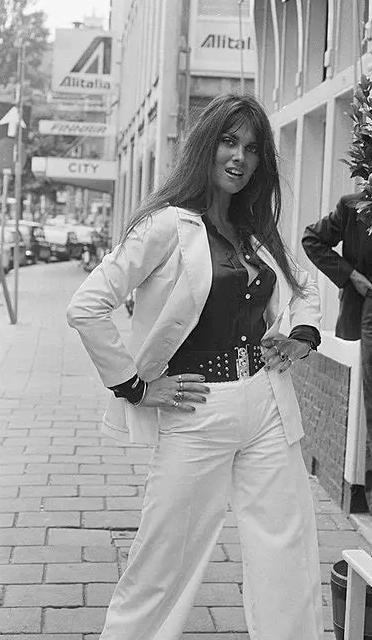
Caroline Munro is an English ac tress known for her many appear ances in cult horror, science fiction and action films in the 1970s and 80s. Her most mainstream role was Naomi in The Spy Who Loved Me (1977), however, horror aficio nados will know her from films such as Dracula AD 1972 (1972) and Captain Kronos - Vampire Hunter (1974), which she has credited as one of her favourite projects. She is the only actor ever signed to a long term contract by Hammer Films. However, she turned down the lead roles in many of their films as they required nudity. Munro's later

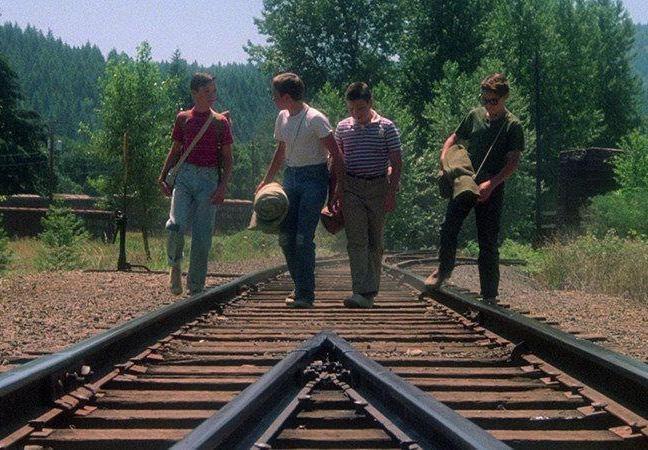
This year, the late, great Rob Reiner’s film, Stand By Me, turns 40. It’s a tale of overcoming per sonal challenges to realise our true potential, and finding fam ily amongst friends. If the com ing of age genre could only be defined by one film, it would be Stand By Me. True, the film is rather limited in its representation. It follows four young boys (Gordie, Chris, Teddy and Vern) in their search for another young boy’s dead body; not a particularly relat able experience for most view ers. What is relatable about this film, then, is that the themes it presents to the audience are universal. It is about being an outsider, but more than that, it is about feeling like an outsider. The characters and their emo tions undeniably drive the film. Even though they are on a mis sion to find the body, each char acter has their own challenge to face over the course of the film. They are underestimated, bul lied and forced to the periphery. They are hyper aware of how society views them, but despite this, they know who they are and what they want from life; they just need to figure out how to get there. The film is timeless exactly be cause of this. We can identify the feelings of each character and recognise ourselves in them, as we grow up, nostalgia gradually joins this feeling. If you watched Stand By Me at a relatively
work since the 90s has been main ly cameos, however, in September 2021 she started to prsent a Talking Pictures TV series, The Cellar Club where she introduces cult horror films and gives a personal per spective. She is also known for her appearances at conventions and panels.
By Ben Macswan Film & TV Co-Editor
young age, as I did, it is a re minder of all the emotions felt upon the first watch and how much has changed since then. Perhaps the voiceover from a middle aged Gordie adds to this further. He is reminiscing on his childhood, his friends, his own past, and in a way, he forces us to do the same.
As the film comes to a close, it is hard to hold back the tears. Despite the boys pushing each other to their limits for prac tically the entirety of the film, Gordie emphasises the impor tance of their friendship. Even though it eventually faded, as they followed their own paths in life, their friendship was key in forming his future and had an everlasting effect on him. It is said perfectly in the clos ing voiceover, “I never had any friends like the ones I had when I was twelve. Jesus, does anyone?” Perhaps it is the deeply com pelling performances or Rob Reiner’s ability to beautifully portray the human psyche, but Stand By Me is a film that has a soul. It is made with feeling, and this translates on screen. The beauty of this film lies in its ability to connect with audienc es of any demographic. Whether you are 12 or 40, Stand By Me is a film for lost souls everywhere, just trying to find their way
By Tess Bowen Film & TV Co-Editor

HorrorCon Scotland returned to the SEC on Sat April 11 for its biggest convention yet. Guests in cluded Caroline Munro, Tara Buck, Chi Lewis Parry & The Grimm Life Collective
Upon entering the convention, guests were instantly in another world. The convention had a lot of traders, including everything from posters, t shirts, plushies, figurines and even hot sauce, two stages for panels, a designated area for film studios and prop makers to show off their talents and a Dead By Daylight experience – which prom ised to be bigger than last year’s, however, Brig did not get a chance to enter the Realm this year as the queue was very long, so those plan ning on visiting next year should think about booking a queue jump pass or showing up earlier. Last year’s DbD zone was excellent though and I’m sure it was just as good this time around.
The panels kept attendees en gaged as fan favourite actors took the stage. Caroline Munro discussed her career in Hammer horror and Tom Lenk’s charmingly
awkward panel was full of fun quips and stories. The seating area had plenty of room and no body went without a seat which was good. The engagement with the audience was also high, with Q&A segments and a particularly funny incident involving someone dressed as a rat (or mouse?).
This writer could not possibly at tend without making a hole in his wallet. Enticed as I was by all the talented traders around, I picked up a bottle of Dr Ged’s Hot Sauce, which I’d also bought one of at the Halloween event. Their handmade, small batch hot sauces cater to all spice levels and tastes and they’re based in Glasgow which makes it even better! I also purchased the novel Night Shoot by indie author David Sodergren who was very approachable and friendly at his stall and spent time discussing all of his different books. That pleas ant atmosphere applies to all of the traders, including author Stuart Graham, Psycho Slaughterman and Dean of The Dead. A lot of the food traders also offered free sam ples, meaning you could taste a
variety of their products just out of curiosity or to try before you buy. HorrorCon Scotland impresses me every time and this was no dif ferent. It fills the space that was missing for Scottish horror fans and it’s always nice to return to your favourite authors or traders and have them remember you from before. There isn’t much to nit pick about; it was busier than before making navigation around the convention a little slower, but that’s not necessarily a bad thing and it’s nice to see the community growing. Roll on 2027 which promises to be even bigger.
By Ben Macswan Film & TV Co-Editor




Scottish icon, and “friend” of Brig Newspaper, James McAvoy has released his first directed feature film California Schemin’ a film that dramatises the shocking rise and disastrous fall of the Dundee comedy rap duo Silibil N’ Brains.
Their story is a cautionary tale about honesty in the face of overar ching corruption. To put the hypoc risy of the music industry on full blast, the young Billy Boyd (Silibil) and Gavin Bain (Brains) decided to pretend to be from California: as their accents had them turned away from potential opportunities.
The film follows this tale without deviating, only amplifying the lads dramatic change from wannabe’s to true musicians. Mcavoy’s styl ish directing falls in line with oth er recent music biopic’s like 2024’s Kneecap , his slickness lets the sto ry breathe in a way that fits the childish glee a story like this brings.
Unfortunately, the film crawls to a stand still as it reaches its mid point. We’ve seen the boys go from the scheme to a penthouse flat, from call centre to owning their own studio so what’s left? Well, their demise of course.
Bizarrely McAvoy holds the film on the boys partying for a majority of its runtime, the audience is only given a glimpse into the music they made. Of course it would be impos sible to include all the music Silibil N’ Brains made during their short stay in London, but including at least more than three could have provided a greater understanding as to what their music was actually like.
The music that is included works well enough within the context of the film. Tracks like Superman, Medicine, and Tongue Kung Fu are used, but other popular tracks like Losers and I Play With Myself are left out.
Praise has to be given to Samuel Bottomley and Séamus McLean Ross who played the doomed rap pers. Ross especially puts in a per formance that’s award worthy, capturing the paranoia and self ishness the real Gavin Bain faced
at the time. McAvoy himself stars as the manager of the group, his role is small but a few key lines are just as memorable as the songs of Silibil N’ Brains themselves.
Alongside them Lucy Halliday plays Mary, Billy Boyd’s girlfriend. The relationships between Mary, Billy, and Gavin are incredibly nat ural; it's hard to believe that they weren’t friends for years prior to the film's inception.
So the style is good, the acting is great, and the music rocks so what’s holding it back? Other than the previously stated pacing, the film fails to stick the emotional landing.
Silibil N’ Brains were on a doomed course from the beginning, theirs only so long that you can keep a lie as large as their hidden. When all is revealed it's slightly anticlimactic because you know what’s going to happen, there’s only one ending: no more rap music.
That’s not to say that McAvoy leaves the audience emotionally empty. There’s one scene at the end that changes the entire film preceding it: if the boys were just honest about who they were, their talents may have gotten the same fame.
As far as directorial debuts go, California Schemin’ is a great first attempt that is maddeningly close to greatness but that’s fitting considering the real story of Silibil N Brains. Maybe their story is just cursed to be just above average.
By Connor Peebles Deputy Editor




Isla Glen, The Courier’s Stirling reporter, graduated with a BA (Hons) in film, media, and journalism from the University of Stirling in 2023.
Former editor-in-chief of Brig Newspaper and contributor to Air3 Radio, Isla focuses on highlighting local issues and shining a positive light on Stirling.
EXPLORE MORE: DAILY STIRLING NEWS, MADE FOR YOU



















It’s that time of year again. Summer is right around the cor ner. This means suddenly everyone feels the need to have a ‘summer body’ in time for when the sup posed better weather appears. However, the most important part of summer is having fun. There is no need to worry about how you look or what people are thinking about you. Here is a summer rou tine that will help you to do exactly that! Prioritising a healthy mind and a healthy body is the key to an amazing summer.
Exercise That Makes You Feel Energised
Do exercise but only if it makes you feel happy and good about yourself. If something doesn’t make you feel good about yourself then it’s not for you Whether you enjoy yoga, walking
or going to the gym prioritise feel ing good without thinking of losing weight or how you look while doing it.
Wear Clothes You Want to
During the summer wear what you want to wear. Not what people expect you to wear. There is no such thing as outfits that are made for a specific body type. If the shoe fits, wear it! But if your uncomfortable please don’t! Remember clothes are meant to fit you, not the other way around.
Stay Away from Toxic Trends
We all know how bad social media can be sometimes. The best thing to do is to stay away from these unre alistic workout routines. The sum mer shreds that are supposedly meant to make you lose body fat in weeks is not healthy for your body or your mind. It won’t make
you feel amazing like it’s meant to.
Don’t Bad Mouth Yourself
We all have days where we don’t feel amazing about ourselves whether it’s something external like our stomach or something internal such as anxie ty. The main thing to do is try and get yourself out of that negative mindset. You can’t feel positive about your body image when it’s always in your mind to put yourself down. Instead find things that you do love about yourself that day and focus on the positives instead.
By Brooke Duffy

I had the most graphic, ungod ly sex dream about Vecna (as like the Henry form..yknow when he's hot) and now I'm refusing to watch stranger things with my family because he makes me feel so deeply uncomfortable yet strangely aroused. Does this make me a bad person? AITA?


I cannot lie, this has thrown me completely. I have been sitting on this response for months, unable to form a single opinion about it. There’s nothing morally wrong, I guess? I mean, Jamie Campbell Bower is an objectively attractive dude. But, like, the guy who steals children? Really? You should feel low key ashamed. Again, nothing particularly ‘bad’
about the situation, and I can see how it could make family view ing the tiniest bit awkward. Maybe find a new show to watch with your family, and finish Stranger Things (if you haven’t already) alone, in complete privacy. NTA, but very, very strange, and way too honest.



By Rae Archibald Arts Editor
Art is a global movement, but there are limits to participation when it comes to the art you see hanging in national galleries. You can hardly join in by painting emp ty space on the wall, or over a piece that has particularly moved you, or maybe one that you hated. Those limitations don’t exist however, when it comes to street art. That is not to say that street art does not have the power to also be made skilfully, or to make its viewers re act. It is to say that street art can be freeing, as it is up to the artist only where and why it should be displayed.
Writing this from Greece, I have been struck by the raw nature of the street art I have seen here. Particularly when it comes to cur rent political issues and the stanc es artists have taken on it. Greece is closer to the Middle East, with the island of Crete being approximate ly 601 miles away from Tel Aviv, the capital of Israel. That is only an hour and forty minutes flight. It is no wonder then that the Cretan people are opinionated when it comes to nearby conflicts.
An overwhelming volume of street art I have seen here car ries a united message – Palestine. This is not merely communicated through words, but also by using the colours of the flag. On the sides of roads, walls, near beaches and on the ground I have seen similar meanings. “Free Palestine, Free Gaza,” and a scrawling, “we feel you Palestine.”
This is of course not the only street art here, there are also beau tiful murals. However, what stood out to me was the relevance of this, the interconnectedness, but also the distinct Greek undertones. As well as tame messages there were radical allegations made about their participation, or lack of. The type of allegations that wouldn’t be displayed in a art gallery for tour ists to see.
There are also visible reactions happening with this street art. In one case at a beach, I saw that an other artist with differing opinions to the last one had decided to add their thoughts to a sentence that was intended to be complete. It read in red “Free Gaza,” with black paint then writing, “from Hamas.”
It reminded me of the street art I saw on my journey to Iceland in 2024. Many of the political state ments are the same, two years later, in a country approximately 2,787 miles away. There are many differences between the two coun tries, such as the language spoken, their leaders and their climates. One thing that brings them togeth er, is artists resolution to take to the streets to share their voice on global issues.
I saw a wide display of street art in Iceland’s capital, Reykjavik. In March the weather was similar to Scotland, giving a reminder of home as I walked the streets with my camera. A colourful and vi brant city, a painting of Albert Einstein and Tupac clinking beer glasses wasn’t completely out of place. On a white wall, which street artists could see as a blank
canvas, a large message had tak en occupancy. In Icelandic it read, “Frjals Palestina,” meaning “Free Palestine,” in English. This was complete with a large Palestinian flag, and a drawing of a girl in a hijab tightly holding a body bag in side of a cartoon heart, surround ed with urges for a ceasefire. As I saw this in March 2024 a ceasefire had not yet been declared. The first ceasefire and hostage release deal agreed between Israel and Hamas was on January 19 2025. These are also issues felt back home in Scotland, approximately 2,601 miles away from where I am currently am. A generator of wide discussion in the United Kingdom is immigration. Over the Edinburgh Christmas markets, a prominent church on Princes Street displayed a large art piece outside their building. It featured Mary holding the baby Jesus while they were standing in the water, with a boat in the background. The pair were drawn as immigrants, with halos over their face. Writing over it said, “All refugees welcome here,”. With an estimated three million visitors in 2023, this installation in 2025 is sure to have been an eye catcher. It can be easy to forget how issues are felt across the world when you are used to living in the bubble of your city, your university, your country. It can be easy to watch the news or see on social media what is happening in the world, but disre gard its true global impact. Street artists across Europe have taught me that even an action that can be seen as small, like writing on the ground, can have a large impact.


By Tess Bowen Film and TV Co-Editor
The sun is glowing, it’s reaching 30 degrees at the beginning of April, and I am studying in the South of France. Not far from the cultural hub of Marseille, I roam the streets of Aix en Provence, an ancient city founded by the Romans. What is most striking about this Southern city is its relationship with art.
As the birthplace of post impres sionist painter Paul Cézanne, a lot of the city’s cultural identity comes from its rich history and involvement with the arts. In fact, as I leave my flat every morning, I am faced with a view of the Sainte Victoire, a mountain painted by Cézanne more than 80 times, a con stant reminder of the city’s artistic history.
Having lived in Stirling for a few years, I am fairly accustomed to living in a city whose culture is deeply entwined with its history. Now, however, I get the chance
to experience this through a new lens: through art.
In Aix, you are immediately im mersed in the city’s cultural heritage. Walking the streets, you can trace the steps of Cézanne by following the gold crests on the pave ment that display a grand C next to his name. You can visit his workspace, the viewpoint where he paint ed so many of his paintings of the Sainte Victoire, a museum dedicat ed to his works, or even a cinema which takes his name.

All of this to say, art is ines capable. Art is the foundation of this city; its culture seems to be formed by its relationship with the art that was created here. It is something that transcends language barriers and cultural dif ferences, bringing people to a mutual lev el of under standing. These paint ings capture the beauty of the city through the eyes of someone who lived its history.
The history of Aix’s art scene does not stop at Cézanne, though.
Picasso is buried not far away from Aix en Provence at the Château de Vauvenargues, where he lived not too long before his death. The château holds a beautiful view of the Sainte Victoire, which Picasso loved deeply. And, of course, many beautiful pieces of Aixois art have found their way into museums, such as those of Louis Gautier.
With multiple museums dotted around the city, Aix is a city which recognises the significance of the art and artists that have emerged here. Each piece of art is an expres sion of cultural identity, integral to the preservation of history.
Though I would not necessarily consider myself educated on art and art history, I do feel like living somewhere with such a relation ship with art has greatly contribut ed to my appreciation.
In truth, it’s hard to ignore art when it is everywhere you look. It’s even harder to imagine living with out art around every corner.

Summer in Scotland typically means one thing: the Edinburgh Fringe. Whether you’re an Edinburgh local, or you’re getting the train down this August, you’ll know that the Fringe is the busi est and most exciting time of year. Making it through alive and well is a challenge for everyone, but it doesn’t have to be that way. Here are Brig’s Top 5 Tips For Surviving The Edinburgh Fringe. Stick to your budget. There are plenty of budget friendly shows,
even through it might not seem like it when you see the same ads for the same celebrity stand up every year. The Fringe offers a ‘pay what you can’ scheme, so if you only have £2 to see the show you want, you can still go along and support. Check that the show you want to see offers this when paying online, or search directly for ‘pay what you can’. Know where to go. Sometimes the noise can get a bit much, and you’re left confused, not knowing
what you want to see or where you want to go. Plenty of pubs around Edinburgh are the home to some fantastic fringe shows, which are especially perfect on a smaller budget. If you’re really lost, we rec ommend sitting around The Pear Tree, which has a beautiful beer garden for when you’re waiting in between shows. Or for smaller shows, the West Port Oracle has an excellent fringe venue, as well as some delicious cocktails. Book Ahead. The biggest shows
sell out quickly, so if there’s some thing you’re desperate to see, act fast and get it booked. Waiting around only means less tickets and less flexibility for you when plan ning ahead for next show day. Work smarter, not harder. Stay open minded when it comes to fringe recommendations, some times the best places to look are Edinburgh local Facebook groups like ‘EGG’ and the official Fringe Facebook group have people sell ing their tickets for less, and giving
good recommendations. Have fun! The Fringe is all about good comedy and good fun, don’t let the busy noise and all the mil lions of ads get to you. Sit down with a pint, and a mate, and enjoy. There is a reason the Fringe is the most famous arts festival in the world, so try and savour the chaos and get the most and the best out of the 2026 Fringe Festival.
By

By Ali Rees
The video games industry is big ger than film and music combined. That's a statistic that gets thrown around a lot, but it's worth sitting with, because it means that games are now one of the most significant cultural forces on the planet. And where there is cultural reach, there is power, and where there is power, institutions are going to try and get their hands on it.
The US Army figured this out a while ago, and if you’ve ever picked up a controller, the result is worth paying attention to.
The thing about propaganda is that it doesn't usually announce itself. It doesn't need to. The most effective kind is the kind that just feels like entertainment. A film you watch, forget, and move on from. A game you play for hours, feeling like you're just having fun, not re alising that the whole time you've been rehearsing a very specific set of values about how the world works.
What makes video games par ticularly useful for this is what they actually ask you to do. You're not watching a soldier in a film. You are one. You're making decisions, following orders, working within a military hierarchy, learning the rules of engagement. The persua sion isn't delivered through dia logue or plot, it's built into the me chanics themselves. A game that only offers military force as a solu tion to its problems quietly teaches you that military force is just how problems get solved.
This is the logic behind America's Army, the US Army's own free to play franchise which ran from 2002 to 2022. It wasn't made be cause someone in the army really loved gaming. It was made because
the army had missed its recruit ment targets and needed to reach people who weren't responding to traditional advertising.
The game required players to complete simulated versions of Basic Combat Training and Advanced Individual Training be fore they could access multiplayer the same stages real recruits go through.
The Rules of Engagement were strictly enforced in game, with penalties for stepping out of line.
The whole thing was a carefully engineered simulation of military culture, wrapped up in something enjoyable enough that millions of people downloaded it for free.
It was also extraordinarily effec tive. Players came away from the game feeling familiar with army culture, believing in its profession alism and moral clarity, and feeling like they might actually be suited to enlist. The army more than met its recruitment goals off the back of the game.
America’s Army might now be shut down, but the US military haven’t stopped using games as a recruitment tool – they’ve just changed how they’re doing it. Consider the more recent strate gy, which is considerably harder to swallow.
The army now employs soldiers, often combat veterans, to lives tream popular games like Fortnite, Call of Duty and Valorant on Twitch. These soldiers stream un der their own gaming handles, pre senting themselves as just regular people who happen to enjoy games.
The explicit goal, as stated by army personnel, is to plant a "seed of interest" in young people, includ ing children as young as twelve or
thirteen, in spaces with no paren tal moderation requirements. When this came to light, there was significant backlash from US legislators such as Alexandria Ocasio Cortez, and from the gam ing community. The army paused the streams briefly but when no legislation was passed, quietly re sumed them. They've also been caught banning viewers who ask questions about US war crimes in the chat, and running a fake give away that redirected entrants to a recruitment page.
This works so well because hu mans are so quick to develop para social relationships.
If you've ever watched a lot of someone's streams, you'll know the feeling: you feel like you know them. You trust them and look for ward to seeing them, but they don’t know you. It feels like friendship, but it’s not.
When the person you've built that kind of connection with turns out to be employed by the military and actively trying to recruit you, the line between community and insti tution has completely dissolved. Commercial games are doing something similar, even without direct military involvement.
Call of Duty and Battlefield have long maintained informal rela tionships with the US military, re ceiving access to equipment and expertise in exchange for broadly positive portrayals. These games are also quietly doing something more insidious, which is rewriting history.
They use fictional scenarios to retroactively justify real military actions, frame war from the per spective of the individual soldier without addressing any of the

By
What is friction maxxing?
geopolitical reality above, and con sistently leave out the parts that don't make for good gameplay, like civilian casualties, the psycho logical cost of combat, the long term consequences of military intervention.
War, in these games, is difficult and exciting and morally uncom plicated. That's not an accident.
None of this means that playing Call of Duty will make you want to enlist, or that every person who's ever fired a virtual gun is being radicalised. Players aren't passive: we push back, we critique, we en joy the mechanics while ignoring the message. The research consist ently shows that games don't cause real world violence, and audiences aren't empty vessels waiting to be filled with ideology.
But that's not really what this is about. The goal isn't to brainwash anyone in a single session. It's to normalise. To make military cul ture feel familiar, exciting, and like something that belongs in your world. To ensure that the idea of en listing feels less like a leap into the unknown and more like something you've already spent hundreds of hours doing.
Video games are extraordinarily good at creating that familiarity. They put you inside a perspective and ask you to live in it for hours. They reward you for succeeding within their systems and when those systems are designed by or in collaboration with an institution that has a very specific idea of who it wants you to become, the enter tainment and the ideology become very difficult to separate.
The army didn't get into gaming because it loves games. It got into gaming because games work.
Friction maxxing is choosing the less convenient option to get more satisfaction from the result. For example, writing a Mother's Day card by hand instead of using AI to give you ideas. Doing something the old fashioned way feels better than using an app to take the task off your hands.
I'm not suggesting you stop tak ing the bus, I mean plan an essay yourself without using AI. Imagine generating a piece of "art" with AI, you have done noth ing of note. It is worthless. You did not put in the effort to create some thing. Friction maxxing means putting in the effort to be human again.
Friction maxxing means taking back your agency. It means not relying on Copilot to improve your productivity, or Spotify to create a playlist that is supposed to tap into your emotions.
Instead of selecting delivery and having someone cycle in the rain to bring you your takeaway, collect it yourself. It can save you a fee and gives an unexplainable joy by walk ing in the city centre and picking up something you are excited for.
If you're navigating an unfa miliar area, it is ok to use Google Maps, but don't stare at your phone as you walk along the blue dotted path. Take a mental image of the map and put your phone away; it's safer and improves your naviga tion skills.
When you look something up, scroll pass the inaccurate and over simplified AI overview and read the results below. We did it be fore, so it's not impossible.
AI has been proved to reduce peo ples' cognitive abilities and critical thinking skills. So nip this in the bud before it's too late.
The more crutches you have, the more it hurts when they're kicked out from under you.
By Isla Barker Comment Editor
Losing my horse in Red Dead Redemption 2 made me realise something deeper about loyalty. My main horse was a palomino Morgan named Venus. I adore pal omino horses and she was perfect for me. However, in a twist of fate, I met my other horse. During a mission in Valentine I had to steal a horse to chase someone as Venus was outside whistling range. She was an American Standardbread buckskin who I would later name Mandy.
Because of this short bond, Mandy became my temporary horse. She even followed me back to camp without me noticing.
When I was dragging a certain unsavoury character in the Bayou Nwa (if you know you know) to feed him to an alligator, I was spotted by a bystander and the law descend ed on me. Venus was downed and while I tried to revive her I was shot by a lawman.
After the firefight I woke up in the mud with Venus' saddle and Mandy beside me. I was devastated. I hoped to keep Venus for the whole game as Arthur, she was the horse for me. There was no way to bring her back. Except there was; I tamed a similar horse on the other side of the map and she became Venus 2.0.
By Dylan Burt Gaming & Tech Editor
There’s something quietly fasci nating about the recent surge in job simulator horror games. On paper, the premise sounds almost mundane: repetitive tasks, sterile environments, and roles that mir ror everyday work.
Yet these experiences have struck a nerve, drawing in players at a rate that feels disproportionate to their simplicity. The question isn’t just why they’re popular, but why now.
horror as a genre. Historically, hor ror has always reflected the anxie ties of its time.
During the Cold War, there was a notable rise in alien invasion and science fiction horror, stories shaped by fears of the unknown, of infiltration, and of forces beyond human control.
attention.
That visibility helps amplify their reach, feeding back into their success.
But this didn't last. I lost Venus again in an ambush where there was no chance of escape.
I wasn't going to go through the process of replacing her again. That's when I realised that Mandy had been so loyal to me this whole time. She was reliable, strong and brave. I was trying so hard to re place a horse when I had a loyal one right in front of me. Even though I rode with her once, she showed the intense loyalty that a horse can show a person, and I had ignored that.
So Mandy became my main horse. Sure, my plans changed, but that's what life is all about. Especially as an outlaw. Now I roam the map with my new companion, and oca ssionally a temporary horse.
I understand that this is a video game, and my horse is not real, but you do develop an attachment to your horse. Not just because your bonding level increases the more you ride or feed it.
It is the same as any sentimental attachment to an inaminate, (or in this case computer generated) object. Mandy is my beloved horse now.
I miss Venus, but loss and embrac ing what you do after is a part of gaming and life.
Part of the appeal lies in familiar ity. Traditional horror often leans on the unknown, but job simulator horror turns that on its head.
It places players in spaces they already understand, offices, retail counters, and warehouses, and then introduces subtle distortions.
The routine is recognisable, even comforting at first. That famili arity creates a stable foundation, which makes the eventual dis ruption far more effective. When something goes wrong, it doesn’t feel distant or fantastical; it feels uncomfortably close to reality.
There’s also a deeper cultural lay er at play.
Work has become an increasing ly dominant presence in people’s lives, shaping not just how time is spent but how identity is formed.
Job simulator horror taps into that relationship, exaggerating the monotony, the pressure, and the sense of limited control that can come with modern employment.
Tasks repeat endlessly, systems refuse to explain themselves, and expectations shift without warn ing. These aren’t just game mechan ics; they echo real frustrations.
The horror emerges not from spectacle but from the slow re alisation that the situation is inescapable.
This is where the trend begins to connect to a broader pattern within
In periods marked by widespread illness or uncertainty around public health, zombie narratives surged in popularity, often focus ing on contagion, societal collapse, and the fragility of normal life.
These shifts are rarely coinciden tal. They reveal how horror adapts, using metaphor and exaggeration to process collective unease.
Seen in that context, the rise of job simulator horror feels less surprising.
Today’s anxieties are often quiet er but no less pervasive. Concerns around job stability, automa tion, burnout, and the blurring of boundaries between work and per sonal life have become increasing ly common. Rather than external threats, the fear comes from sys tems people are already embedded within.
Job simulator horror captures that shift. It doesn’t need monsters in the traditional sense because the structure itself becomes the source of tension.
Another factor in their popularity is how well these games translate to online spaces. Their design often revolves around contained, repeat able loops punctuated by unexpect ed disruptions.
This makes them particularly suited to streaming and short form content, where sudden changes in tone or reality can create memo rable, shareable moments. A small glitch, an unexplained instruction, or a subtle visual inconsistency can quickly become the centre of
There’s also a practical element in their simplicity. Job simulator horror tends to rely on straightfor ward interactions, sorting items, scanning objects, and completing basic tasks.
This accessibility lowers the barri er to entry, allowing a wider range of players to engage without need ing to master complex systems. The focus remains on atmosphere and pacing rather than mechanical challenge, which in turn makes the experience feel more immediate.
Ultimately, their popularity feels like a reflection of the present mo ment. These games take something ordinary and reveal its underly ing tensions, turning routine into something unsettling.
In doing so, they continue a long tradition within horror, one that mirrors the concerns of society, but they do so in a way that feels dis tinctly contemporary.and watch. That visibility feeds back into their popularity, encouraging more de velopers to explore the format.
Finally, there’s the simplicity of interaction. Job simulator horror tends to avoid complex mechanics, instead focusing on straightfor ward actions like sorting, scan ning, or assembling. This accessi bility lowers the barrier to entry, allowing more players to engage without needing to learn intricate systems. The horror emerges not from difficulty, but from the gradu al realisation that something is off. In the end, their popularity feels less like a trend and more like a reflection. These games don’t just scare players; they echo their rou tines, their anxieties, and their sense of repetition. That resonance is what makes them linger.
By Robbie McAvenue Head of Social Media
Have you ever outsourced your love life to a robot? Caught your self venting to ChatGPT about an argument between you and your boyfriend? Well you’d be part of 1 in 5 millennials and gen Z who go to AI for dating advice, according to a 2025 survey. And it is easy to see why: a chatbot is unbiased, availa ble 24/7, and always confidential.
Nia Asante, a 21 year old film stu dent at the University of Stirling, says that she uses AI as a “last re sort” in order not to overburden friends with boy problems. “I don’t wanna bother my friends with what I’ve got going on, or if I feel like it’s a petty issue… I don’t know, a lot of my friends are like, head strong, and they’re like man hat ers, so when I know it’s something small and petty, and I know how they’re gonna react, I kinda want an unbiased opinion. She continues, “I don’t want my friends hating my partner if I’m always going to them for advice on arguments. It’s like a third par ty that understands and helps me show up more because I don’t have to worry about solving problems as much.
“When I was on Hinge, I used AI to help me with the prompts, be cause at the time I couldn't think of things that weren’t basic. I didn’t want to use the same prompts and give the same answers as everyone else, so I’d go to AI to help me come up with good prompts or good an swers to other people’s prompts. I still wanted them to sound like me, but I’d just use AI and be like ‘Can you make this sound better for Hinge?’”
Using online dating apps like Hinge can be a long, demoralising process. But users stay hooked as dating apps introduce new fea tures tailor made to keep them coming back, exploiting their lone liness to make them buy premium upgrades like Tinder Gold, which can cost up to £30 a month. It is un surprising that 78 per cent of Gen Z are reportedly feeling burnt out from the endless swipe.
Dr. Ellen Kaufman, a research associate at Indiana University’s Kinsey Institute for gender and sex studies, said: “When we talk about dating apps, there’s also this gam ification element that really does
make the experience of online dat ing feel exhausting if you’re at it for a really long time. It can be very de humanising to be part of that game when all you’re trying to do is find somebody to watch TV with.”
Flirtini, which has a built in AI flirting assistant, reports that half of dating app users they surveyed have let their AI message dates for them at some point. A 2024 report by McCafe found that one third of daters had used AI to improve their profiles
Meanwhile, big name dating apps are cashing in on the AI boom, in tegrating it into practically every part of their interfaces.
Just last month, popular dating app Bumble announced that they were releasing a new AI agent, ‘Bee’ which is set to help users find new matches by learning more about them in private one to one chats, essentially cutting out the middleman of constantly swip ing. At the same time, Grindr, the world’s most used gay hookup app, has been testing an AI ‘wingman’ to help users come up with witty responses to messages and plan dates.
A new breed of AI dating start ups are focussed on stopping the swiping cycle. Keeper, a dating app that boasts 1 in 10 of its first dates leading to long term relationships, calls itself “the world’s most pow erful matchmaker powered by AI”, claiming its tech led “relationship science” can lead to lasting love.
One anonymous person said that their main use for AI on dating apps is to “decode toxic messag es on dating apps”. While using AI for romance might be harmless, and indeed helpful for spotting important red flags during the early stages of a relationship, us ers still need to tread carefully, because AI has a proven track re cord of over validation. A Stanford University study analysed 391,562 messages from 19 users who de scribed experiencing mental harm from chatbot use, finding that syc ophancy, or over validation, was present in 70% of the messages. By replacing advice from a good friend or close relative with input from an AI companion, we risk missing out on one of the most important merits of any healthy
relationship: being called out when you are in the wrong. Chatbot syc ophancy could be especially risky when it’s being used for things like solving conflict and drafting breakup texts.
Liars exist in cyber space as well. With so many tools at our dispos al, the risk of being deceived on a dating app by AI is higher than ever before. AI ‘Wingman’ apps like Rizz or Winggg allow users to send screenshots of chats with matches to their AI assistant and receive instant replies for each message, essentially letting your ChatGPT do all of the talking for you. Rizz’s CEO has said that singles aren’t the only people using it, as partnered people are also outsourcing inter actions with their boyfriends and girlfriends to AI, adding a layer of deception.
So, it’s no wonder that we’ve ac tually become less trusting that other people aren’t using AI. Three fifths (60 per cent) of current on line daters believe they've had a conversation with someone on a dating app that was written by AI, according to World Network, while
By Connor Peebles Deputy Editor

April 10 that was the dead line that marked the end of my time studying at the University of Stirling. It was a date I had memo rised for almost a year, but it was one I never expected to catch up to me so quickly.
From January to now I spent most of my time writing, or thinking about writing, my final project. So when I turned it in it felt like a part of my mind had just disappeared. After seeing that blast of confetti fill my phone screen when I submit ted my last piece of academic work, it felt like an anticlimactic way to mark the end of my time as a stu dent. But at least I’ve still got Brig , for now.
66.1 per cent of respondents to a survey I ran said that finding out a match had been using AI on a dat ing app would negatively impact their opinions of them.
“I think that anyone using AI to help write their messages is un ethical as it is not representative of the person they are. Especially with online dating where you don’t know the person, I think it’s impor tant that you are getting to know who they really are, and not what AI has made them out to be,” said one anonymous respondent.
Others thought that using AI sig nalled more about the user’s per sonality, rather than the feeling of being lied to. “Using AI tools to gain more attention on your profile in dicates a lack of effort into getting a relationship of any kind. If you're not willing to put in the effort de scribing yourself, how are you ever meant to put any effort into some one else?” Said another anonymous respondent.
So, daters, watch out. The person of your dreams probably isn’t using em dashes between every sentence.
During my time as a student I be lieve I’ve experienced close to the full breadth of what the true “stu dent experience” is. From messy club nights, razor thin assignment turn ins, and running around Stirling city centre dressed as a chicken, I feel like I’ve not missed out at all.
But I still feel like something’s missing.
I’m sure plenty of other fourth years are feeling the same as me. We’ve all spent the last four years working towards a degree that’s felt like forever away, but here we are. With graduation on its way as well, it just feels like another dead line. It’s been deadline, after dead line, after deadline, for all my adult life and I just need a break.
But I’d be lying if I said I didn’t feel at least a little bit guilty about this feeling.
All the time I’ve got now feels un earned; if I’m not writing for the university or Brig then what else am I supposed to do? Chasing a job with the degree I’ve earned is at the top of the agenda, but that hunt is almost as disheartening as the feeling of leaving university itself. So, what I’ve done since is what I’ve been doing for the last four years I’ve been writing. Not for Brig , but for myself. I’ve taken to writing fiction. None of it is good by any means, but I’ve secretly always wanted to be an author.

By Alex Paterson Editor-in-chief
Gardening is a quintessentially British pastime. Rain or shine (and more often than not, in the rain) Brits across the country are out tending their little patches of pride and joy. In particular, the older gen eration can often be seen spending summer afternoons weeding, wa tering and basking in the beautiful gardens they have sometimes spent years developing. And yet, for all its charm, gardening has struggled to win over younger people. Today’s “typical” gardener is often over 55, female and middle class, and that average age has only continued to rise over the past two decades. There are obvious reasons why gardening’s popularity is decreas ing. The cost of living crisis, cou pled with a cultural shift towards settling down later in life, means fewer people have a space to truly call their own. While 87 per cent of Brits technically have access to a garden, many of these are rented or shared. They don’t want to spend time beautifying their landlord or their rude neighbour’s space; they want their own.
Still, waiting for perfect circum stances may mean never starting
at all. Nearly half of Brits already own a houseplant, proving the de sire to nurture something green is alive and well. The next step is sim ply taking that instinct outdoors. While house plants often attract flies, spiders, and other creepy crawlies you may dislike lurking around your bedroom, outdoor plants can improve the local envi ronment by creating a safe, wel coming space for local wildlife. As a plus, native creatures often pre fer low maintenance plants, too. Lavender, hydrangeas, and shrub beries create lovely homes for hedgehogs, small birds, and a gar den’s best little helper: the bumble bee. These plants grow easily, take very little upkeep and provide a lovely fragrance to enjoy in warm er months. Arguably, they are easier and more beneficial than a house plant.
There’s also something to be said for working with, rather than against, the British climate. Grey skies and regular rain might damp en spirits, but they do wonders for plant life. With the right choices, even the dullest view can be lifted by bursts of colour. Your windowsill cactus is surely helping spark some colourful joy, but it will be undoubt edly nicer accented by some cheery
honeysuckle outside the glass. Or, perhaps you want to see your dinner outside your window? Growing your own food might sound ambitious, but it’s surpris ingly accessible. Squash, pota toes, lettuces and carrots are all relatively easy to grow in British climates and feature in many common meals. Alternatively, you could grow strawberries, currants or rhubarb if you have more of a sweet tooth. Growing food is a tra dition that stretches back to the Government’s “Dig for Victory” campaign during the Second World War, when gardens became vital sources of food. Whilst there is less of a necessity today, there is still a lot of joy and satisfaction. After all, supermarket radishes can’t com pete with the bragging rights of growing your own.
It does take a little time, some research, and a lot of crouching down to tend a garden. Although, what’s the alternative; spending another evening scrolling your phone, or another sunny afternoon wishing you had a nice to enjoy the weather? It’s never too late to start a new hobby; gardens grow every year. This spring, considering wel coming the British tradition of gardening.

By Isla Barker Lifestyle Editor
Welcome back to Cosy Corner. This edition focuses on how to be come more sustainable without overspending.
Yes, some sustainable alterna tives like organic food and clothes from slower fashion brands can be more expensive. But sustainability does not always carry a heavy price tag. The following lifestyle chang es are easy, cheap and effective. Reduce meat consumption I am not suggesting you become vegetarian or vegan complete ly. There is absolutely nothing wrong with that, but even going
meat free twice a week is great for the planet and saving money. David Attenborough even encourages it. Agriculture produces high emis sions and requires a lot of land. If everyone in the world reduced their meat consumption, we could save land and water use. Local action with global vision is what changes the world. Farmers can also benefit from this change, as it will reduce the pressure that inten sive, low profit livestock farming brings.
Going vegetarian also makes you more creative with cook ing. Many dishes can still hit the spot with plant based substi tutes. Also, vegetables can be rich
in protein, such as sweet potato and edamame beans. So, you can still maintain a balanced diet. Charity shopping or borrowing clothes
Some of my favourite clothes are from charity shops, and yours could be too.
SHEIN's low prices and range look tempting, but the quality is signifi cantly lower and contributes to the 92 million tonnes of textiles in land fill every year. SHEIN has also been under scrutiny for its treatment of workers with long hours, low pay and some cases of child labour. You can find higher quality clothing with SHEIN like prices at charity shops all over Stirling or your local
area.
By shopping second hand you contribute less to fashion waste and the demand for damaging fast fashion. Vinted, the online reselling shop, is another great place to start with its wider range from across the country. Choose trends wisely
These days trends come and go faster than they used to. We also see way more with the presence of social media. Some trends are worth following, but trying to keep up with all of them is impossible and expensive. Seasonal or limited edition merchandise are overpro duced to make profit, and most of it ends up in landfill when the trend
or season is over. When you see the cutesy knick knacks or themed shopping bags around Halloween or Valentine's Day, stop and think: what do I already have it? No one needs plates which match with the current month. Influencers act like they change their bedding according to which holiday is next, but that's because they're getting paid to do that. Owning less and shopping more wisely has nothing but perks. Cooking from scratch is more satisfying, charity shopping with friends supports good causes and buying what you need keeps your home clutter free. Read more at brignews.com

By Alice Pollard BRAW Co-Editor
The inviting scent of fresh coffee beans and salt floats on the wind through the top of Oban’s George Street. A few months prior, there was little here but the old cinema facade and a stench of stale alcohol. Now, there is a smart sign above an old shop: Anchor and Steam Coffee. Framed by the large window are goodies galore, and behind a cabi net of fresh bakes are two smiling faces: Aaron and Alfie.
It’s the time of year when young people across the globe face one of the biggest questions of their early twenties: what to do after graduation. Keep studying? Go to Australia for a year? Get a job and lock in on ‘real’ life? There’s no right answer, but sometimes, there’s one that sounds a lot more exciting than everything else – it’s just a matter of finding the balls to do it.
Alfie and Aaron relocated to Oban on Scotland’s rural west coast in September 2025, leaving behind their traditional career pathways.
Alfie, with a degree in biochemis try, and Aaron, with a Naval back ground, a pilot license, and a plan for air traffic control – one of the
best paid non graduate jobs – did not originally plan on opening a coffee shop in their early 20s.
Everything changed when Aaron got hit by a lorry and nearly lost his life in 2023.
Now, I have never spoken to someone who has been able to give a clear answer on the meaning of life, but someone who’s very nearly said goodbye to it all certainly of fers an invaluable perspective. Brig was lucky enough to chat with the couple about their relocation, new business, and advice for graduat ing students.
“I was born and raised in Stornoway,” Aaron tells me in his gently northern english accent, as I ask how they are settling into the quiet Oban community. “Yeah, the accent is funny, but when I come out in fluent Gaelic, they normally go quiet.”
Aaron and Alfie had been living in Luton prior to the move. Aaron had been working for Tui. “I made them millions and millions of pounds,” Aaron explained. ”You have to think, what is the point? I’m sitting here 12 hours a day making these
people money, and I had no take in it.”
However, the turning point came from another source. “Aaron was dying in hospital, and that’s when we decided to leave,” Alfie ex plained to me. Aaron continues; “We were thinking about setting up a coffee van or doing something random down where we were liv ing, but the prices were going up. You could tell the area was going downhill and going downhill rap idly. So then we looked at road options, moving to Italy, Spain, perhaps, then to set up a business. But visa wise, it would be next to impossible for us.”
Alfie takes over. “So, we found a commercial property in Oban, and we asked them if we could have it. They said yes. So we put an offer in on the house on the 27th of August, we made the brand and everything at the start of September. Within 29 days, everything was done.”
“But I kept almost dying, didn’t I?” Aaron chimes back in, curious ly nonchalant in the memory of his medical mishaps.
I tried and failed to suppress my
noisy curiosity in a futile attempt at professionalism. Alfie elaborat ed for me: “The reason we didn’t move was because we were waiting for Aaron to have iodine treatment for his thyroid. The thyroid treat ment has got two options: it either fixes you or fucks you. And with Aaron, it wrecked him.”
“That was a fun experience, to be fair, because you get full psychosis. So that was quite fun.” Contributes Aaron, merrily.
Fun though the psychosis may have been, the treatment marked their final straw. The boys’ employ ers were announcing redundan cies and restructuring, and they had come to the conclusion that the South was simply not good for their health. Anchor and Steam was born. But why choose a coffee and gift business in Oban, out of all things?
Alfie and Aaron are settling into Oban life, and their wee shop is becoming a local staple. After everything they have been through and the choices they have made, what is their advice to current young professionals and students heading out into the world as they navigate post grad pathways?
“The advice is, enjoy university, but don’t settle for just another corporate job. Value your personal life more than your work life,” says Alfie. “Always remember that if you work for a corporation, whatever you’re paid is pennies compared to what you’re making for them.” It’s Aaron who concludes the dis cussion. “You’ll just be a number. You want to be the number that just gets hit down by a bus tomorrow and die being nothing? Sorry, that was a bit intense…
“You’re here once, don’t forget it. It’s as simple as that.”
“We absolutely love making cof fee and selling local produce,” Alfie says. “We have come from a place where we didn’t even know our neighbours’ names until we left. I think it’s just a big push fac tor for us to come somewhere like this. Even though you’re so close to everything, to London, to major towns, I’ve never felt that isolated before. It’s not like you’ve even got a community of young people.”
By Elliot Johnston Features Editor & Head of Podcasting
Everyone’s university experience is different; the modules, the socie ties, the friends, and the all nighter assignments all look different for everyone. But what unites every one is what awaits at the end of our university journeys: the much re vered and reviled final project. Be it a dissertation, a written pro ject, or a showpiece, it’s the monu mental piece of work that will de fine your final year at university. Depending on how you handle it, it can be the best thing you ever work on, or it can bring you to the brink of death, or perhaps even both if your experience is as… tumultuous as mine.
Many of Brig’s own have just completed their final projects, and have been gracious enough to share some of their biggest do’s and don’ts to help ensure you have the best final project experience you can, or at least, make sure you know what you're in for.
The Do's Deputy Editor Connor Peebles was the first to lend his wisdom, advising students, “Get a bulk of your interviews done early on, the sooner you get those done, the better. Try to mark out days to not work on your project. Giving your self break time is so important.” Connor's do’s appear to have been the start of a trend, with several other writers spotlighting the im portance of good organisation and encouraging students to take time for themselves, away from the de spair of a deadline. Politics Editor Emma specifically recommended students, “actually plan out the di rection of the meetings with your supervisor so you're prepared for the discussion”, though there is something to be said for getting your supervisor's thoughts on your unfiltered stream of conscious ness. You might just stumble upon something you wouldn’t have oth erwise considered.
“Write as you research/inter view! It will help you identify gaps that you can fill before you finish researching/interviewing”, said Editor in Chief Alex Paterson. The chief’s strategy certainly paid
dividends for her, resulting in a project which was handed in days before the deadline and without ne cessitating a mad scramble, a feel ing I cannot relate to as I type this 12 hours from my own deadline and still 1,500 words short. But there's a reason I’m sharing Alex’s advice over my own tales of academic victimhood. Although I can defi nitely vouch for the effectiveness of Britney’s “Take breaks and drink lots of hot chocolate” strategy.
The Don'ts
“Don’t wait until late March to start writing it” was Food Editor Spencer’s blunt advice, which I would absolutely second as the fool who did wait until late March to start writing and very, very much misses sleep.
Politics Editor Edward had some slightly more tangible advice, say ing, “Don’t keep staring at a screen if nothing's flowing go for a walk or get some food.” Every university student is undoubtedly acquaint ed with the maddening effects a blank, blinking screen can have on the psyche; knowing when to just get up and walk away can save you a lot of anguish and exasperation.
For many, the worst part of their final project is the idea of it, of its monumental significance and in flated academic weighting. That idea can stop you before you even get started, so heed Connor’s ad vice, and “just don’t forget that it’s just another assignment at the end of the day, you’ve done plenty of those before this one is just a bit longer.”
Oh, and don’t do what Emma did; “Don’t ask ChatGPT to alphabetise your sources the night before it's due because it doesn't do a good job and makes the links to websites weird and cuts bits out. Also, if your job puts you in for an unfathoma ble amount of hours just because it's Easter RIGHT before your dis sertation is due, just phone in sick so you don't lose lots of marks for handing things in late.”
Wisdom of the Academic Weapons (and Victims)
As we move beyond our project and dissertation season, our writ ers delivered some final wisdom:
All the most important assignments necesitate three drinks; one for hydration, one for caffination, and one for fun.
Image credit: Elliot Johnston
“Make a timeline where you're finished a week early so you have procrastination time”
“Look at examples of similar dissertations and take inspi ration from their sources list. Don't book a driving test the day before your dissertation deadline.”
“It’s no different than any oth er assignment. Don’t be scared!”
“Save your work, and then save it again. Then make back ups of everything you are doing.”
“Just start writing something, you can figure the rest out later”
“Slay queen”
Words to live by…



By Emma Forbes Walker Politics Editor
On March 26, 2026, a truck car rying over 12 tonnes of KitKat bars mysteriously disappears while travelling across Europe amidst KitKat heist.
Nestle later reveals there are 413,793 missing bars. This in cludes limited edition Formula 1 KitKats.
The shipment had departed from a factory in central Italy where it was scheduled to dis tribute chocolate throughout Europe but never arrived at its final destination in Poland.
What makes the KitKat heist particularly striking is that both the truck and its contents appeared to vanish entirely.
Also, the incident happened suspiciously right before the Easter Bank Holiday weekend,
encouraging a warning from Nestle that there may be a Kit Kat shortage.
Prompting the question, was this a coincidence or strategi cally planned because the come dic timing could not have been better?
Was it all for Marketing?
Social media quickly turned the incident into a meme, high lighting how little the general public care about big companies and capitalism in general.
The lack of suspects for the heist ensured that everyone was taking their chance to joke about being the culprit.
Especially since April Fool’s Day lined up perfectly after the heist unfolded.
Many social media accounts joined in on the stolen kit kat memes by offering their con dolences to the company whilst simultaneously revealing they were adding new menu items
containing KitKats.
Big brands such as McDonald’s posted on their Instagram that they were releasing a KitKat fla voured McFlurry.
Social Media teams for Ryanair, Pizza Hut and Dominoes join in on the joke. Colgate even en courage the thieves to keep their teeth clean!
So, whether this was planned or not, the widespread impact the KitKat heist has for Nestle as a company brings more success than conventional adverts.
Stolen KitKat Tracker In response to the internet mocking the situation, Nestlé re lease a “Stolen KitKat Tracker,” on their website.
Each KitKat wrapper contains a unique batch code. Anyone scanning the batch numbers of the stolen chocolate would receive instructions on how to contact KitKat.
But so far, there has been no

Nothing feels like summer to me more than sitting by the creek with some tacos I spent way too much on and an iced coffee.
Tex Mex and Mexican food in the UK have never hit the spot for me. This was not a shock the UK is not exacltly known for its food, but the level of depravity which peo ple exhibit towards it has been. I have had people hand me a bag of blue Doritos and call it nachos, and people refer to black pepper as too spicy.
reported leads. It appears the general public are not snitching on the mastermind behind the KitKat heist.
Back in October 2025, Nestle threatened to cut 16,000 jobs over the next two years accord ing to BBC.
The job cuts could save the company £940 million annual ly. So it is safe to assume that Nestle will recover financially. And that some people may be rooting for Nestles downfall… Heists are Back in Fashion.
The recent Louvre Museum heist was mocked relentlessly by the internet last October 2025 for happening in under ten min utes in broad daylight.
The KitKat heist is proof that heists may be trending again, and that places may need to up their security.
It’s tough out here. I dream of great tacos; they might run you a reasonably sized cabin and your firstborn child, but it's so worth it for Xochi Tacos. P.S. If you are in the Seattle area this summer, you should absolutely check them out. While I am in no way Texan, Mexican, or even from a bor der state (well, I am, but it's the Canadian border), here is my South West/Tex Mex seasoning.
2 tsp Cumin
2 tsp Ground Coriander
1 tbsp Smoked Paprika
2 tsp mixed herbs
1 tbs Garlic powder
1 tbsp Onion granules
1 tbsp Chilli Powder
2 tsp of salt
All you gotta do is combine, and store in an air tight container until you are ready to use it.
By Spencer Haynes Food Editor
Over the past few years, the world has suddenly become fixated on vegan diets, with many swapping out a diet including meat for one without it. However, this narrative has quickly changed, and protein is back in!
People have thrown away their vegan diets for protein heavy diets. This is due to a rise in wellness cul ture, as many people have opted for a fitness journey in 2026. Protein is associated with wellness culture and is supposedly a huge part of staying fit and healthy. But is there a bigger concern within these food diet trends?
Conservative views tend to often mix with their food preferences. They feel the same way about un usual food and food that is ‘for eign’ to them as they do about minority groups. Their feelings on these kinds of topics usually come across negatively. This is why it of ten comes across that they are op posed to changes, e.g. a vegan diet. Conservatives will usually sway towards food sources, including meat. People with more traditional views will often resent change and resist it in society
These kinds of diets aren’t usu ally what’s best, as they can lead to food that is highly processed. A reason for this could be due to the marketing of protein in everything that’s in the supermarkets and so cial media now.
Have you noticed that every where you look in a shop, there will be protein labels? Due to the growing popularity of high protein diets, brands have adapted their products. Which, unfortunately, means suddenly everything seems to be high in protein, no matter what the product is. Whether it’s yoghurts, desserts, or boxed meals. It has become exhausting trying to do a weekly shop if you’re not ob sessed with getting your daily pro tein goals in. In reality, this stuff is not actually doing anything to help you achieve a healthy body, diet and lifestyle. Food that is labelled high in protein can be high in sug ar, fat and sodium, which will not be much help to someone trying to stay healthy. It is best to consume these in moderation.
One of the main reasons that high protein diets have become popular is due to a rise in wellness
culture. Now that summer is quick ly approaching, people will be try ing to get a ‘summer body,’ which is just a myth. This has led to health ier eating habits and social media leading everyone to believe the only way to become fit is by eating lots of protein products such as meat and eggs.
The cost of living doesn’t seem to be going down anytime soon, either. This means many people have swapped out a vegan diet for a meat one again due to vegan food seemingly being more expensive to buy. Which may not necessarily be true.
The final reason is convenience. There never seems to be enough time in the day to get everything you need done. This has caused people to buy easy meals to make, which, a lot of the time, are meaty products. Vegan meals can be as sociated with taking up too much time to prep and cook, which has caused fewer people to opt for a ve gan diet.
By Brooke Duffy

It’s no secret that I love walk ing; hillwalking and climbing have become a huge part of who I am – and I’ve learned the hard way that not being properly fuelled when doing these inten sive sports is beyond detrimen tal, and borderline dangerous.
Eating good food doesn’t just keep your body going with en ergy and the strength to keep moving, it also keeps your mind alive and everybody (especial ly those around you) in a good mood, particularly when you’re walking 30km+ or 10 vertically. So, here is a compilation of my favourite things to eat on the hill, on the trail, or at the crag (when the Scottish weather lets me out).
‘Sizeable’ may be a generous word, when I eat on the hill it’s usually in smaller quantities but more frequent, rather than a few larger stops. This lets me eat on the go, and ensures that I stay consistently fuelled rather than losing energy and forget ting to eat – I learned the hard way how dangerous that is.
So I suppose when referring to a ‘sizeable’ meal I’m referring to lunch, and for this I usually go with the blandest, simplest
yet effective creation known to man: a plain cheese wrap. Cheese is wonderful; I would write an entire article about how wonderful cheese is, but I’ll save that for another time. My point here is that cheese is great for fuelling energy (and being happy), and by having it in a wrap, you get some carbs without any soggy bread from condiments; love it or hate it, it’s effective.
Pasta is another dish I tend to pre cook for the hill. If I have pasta for dinner the night be fore, I tend to double it up and throw half in some Tupperware to pack away in my hill bag. I do this more for a day at the crag, carrying a tub of pasta around up a Munro or on a long flat walk isn’t something I would rec ommend, although maybe I just need to invest in a Thermos flask.
Snacks
Here is where it gets fun. I have picked up these snacks from many different places; some have been recommended by friends and seasoned moun taineers, some I had in the house when I forgot to go shopping, and some are just really nice
anyway, so why not take them up a higher altitude and enjoy them there?
Raw peppers. Whole. I will stand by this hill snack until the day I die. This was recommend ed to me by a good friend when I first started mountaineering; I thought he was absolutely bonk ers for just taking a whole bell pepper up the hill to gnaw on, but it was the epiphany I never knew I needed. The peppers need no explanation – just try it. Now to group my three favour ites together: biscuits, choco late, and most important of all: fruit pastilles. Dark chocolate is great for energy, it also hap pens to be the only thing I can stomach when I feel nauseous on the go. Biscuits again, speak for themselves, who doesn’t love a biscuit? Fruit pastilles are a niche one for me – I always buy the bags of only red and purple ones, and when it's really cold in winter or high up in the moun tains, they go hard and crunchy, would recommend.
By Amelia Fryer News Editor
By Deaglán Murray Sports Editor
The snow started to fall heavily as I made my way up the Devil’s Staircase, every step plunged my feet into further pain and my mind into questioning what I was doing, all whilst seemingly making no progress.
Every year, thousands of people set out to walk the 96 miles of the West Highland Way, last week, I was one of them.
Drawn in by images of dramat ic landscapes, peaceful lochs, and the promise of a fair yet rewarding challenge, I packed my boots and headed off.
On paper, it sounds simple enough, 96 miles from Milngavie to Fort William, broken up over sev eral days, with well marked paths and plenty of stopping points along the way.
And in many ways, it is exactly that. But there are parts of the ex perience that don’t make it into the brochures.
The first is just how relentless it can feel. It’s not always the big climbs that get you, it’s the accu mulation. Day after day of walking, often for seven or eight hours at a time, starts to wear you down in ways you don’t quite expect.
What begins as a scenic hike be comes something more physical, walking sticks become a common sight and walking in pain is some thing you have to get a hang of if
you have any hope of finishing.
Before going, I thought to myself, ‘how hard can it be? It’s only walk ing.’ And whilst that is true, walk ing with sore, wet, blistered feet is more a test of determination than anything else.
Then there’s the weather, some thing anyone in Scotland should anticipate, but never fully appreci ates until they’re in the middle of it.
One minute you’re walking along side a loch in perfect stillness, the next you’re pulling on waterproofs and questioning your life choices.
Another thing people don’t al ways mention is how mental the challenge can be. There are long stretches where the scenery bare ly changes and you’re just putting one foot in front of the other with no real sense of progress.
For a lot of people, myself includ ed, music becomes a major help here, with AirPods turning those quieter sections into something far more manageable.
The section past Loch Lomond is definitely the worst for this. The path ceases to be much of a path and you spend what seems like eternity fighting your way over huge tree roots, massive rocks, and constant changes in elevation.
It’s in moments like that where motivation dips, and you start to realise that finishing the walk isn’t just about fitness, but mindset.
The paths were actually the most surprising part of the whole walk for me, for such a well known and
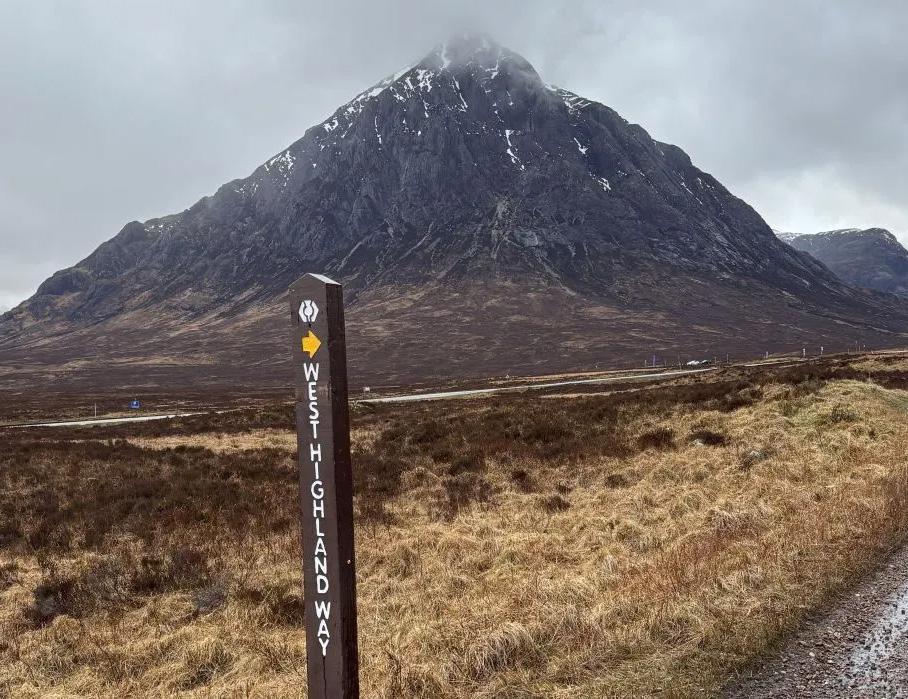
commonly walked route, they were rough, uneven and in some places almost non existent, which made things a lot harder.
But it’s definitely not all bad, there is plenty of amazing moments where every painful step pays off.
One of the things that makes the West Highland Way special is the sense of shared experience.
You start to recognise the same faces at different stops, exchange quick conversations, and update each other on your travels for that day.
The environments are warm, friendly, and welcoming, making
them perfect for relaxing after you reach your stop, or helping you to stay in a cheerful mood en route.
There are other moments that make everything else feel worth it too. A view that suddenly opens up after hours of walking, a stretch of quiet where it’s just you and the landscape, or even something as simple as reaching your bed at the end of a long day.
And then there’s the finish.
Arriving in Fort William comes with a strange mix of relief and disbelief. After days of walking, it’s hard to adjust to the idea that you’re done, that there’s nowhere
By Dylan Burt Gaming & Tech Editor
The University of Stirling Men’s Hockey Club has enjoyed a stand out year across every level, with success on the pitch matched by significant growth off it.
At the centre of that has been a remarkable campaign from the 2s, whose unbeaten run in both league and cup has defined one of the club’s strongest seasons to date. In BUCS competition, the 2s have been relentless. After ten matches, they went unbeaten with a perfect record of ten wins out of ten, scor ing 96 goals and conceding just six for a goal difference of +90. With their consistency matched by some extraordinary scorelines, including two 18 0 victories and a 17 1 result that rank among the biggest in club history, they earned their promotion.
Their cup run has followed the same pattern. Having already beaten last year’s winners, they secured their place in the final in St Andrews with dominant
performances, winning 6–1 and 7–0.
The 1s have also delivered a strong season following their pro motion to BUCS Prem North.
Competing at a higher level, they finished fifth in the table with three wins, three draws and two losses, scoring 19 and conceding 18. In a tightly contested league, they were level on points with Nottingham Trent and within touching distance of climbing further, underlining how well they have adapted.
There has also been clear pro gress from the 3s.
Competing in Tier 4, they finished third with four wins, one draw and five losses, picking up 13 points across the campaign.
While the goal difference reflects a challenging season at times, it marks a significant step forward for a side that was only recently re established, showing growing competitiveness and consistency. They also finished the season with more points than any other season since they were formed.
left to go and no need to drag your self out of bed the next morning.
The West Highland Way is often sold as a scenic escape, and it ab solutely can be. But it’s also tiring, unpredictable, and at times frus trating. It demands more than you expect, physically and mentally.
But that’s exactly why you should do it. It’ll push you further than you thought a walk ever could, shows you some of Scotland’s most beau tiful sights and leave you with a sense of accomplishment not much else can match.
Beyond BUCS, the Saturday side has also gone unbeaten, with pro motion looking increasingly likely.
One of the standout results of their season came in their furthest away fixture, where they secured a win despite travelling with just 10 players, highlighting the resilience running through the club.
Off the pitch, the club has contin ued to build.
Membership has increased by around 25 per cent this year, strengthening depth across all teams and reinforcing a strong re covery from post Covid numbers. This growth has supported the
re establishment of the 3s and cre ated a more sustainable structure across the club.
Financially, new sponsorship agreements alongside existing partnerships have allowed for in vestment in equipment, raising standards and improving player safety, particularly for the 1s.
Structural changes have also played a key role, including the in troduction of an umpire secretary to improve officiating standards and provide pathways for players to gain qualifications.
The club’s development has been recognised more widely through its
progression from Bronze to Gold on the StirScale within a single year, alongside strong engagement with training, workshops and mentor ing opportunities.
Charity involvement has also increased, with successful par ticipation in initiatives such as Movember and other student led campaigns.
Reflecting on the season, current President Robert Chalmers high lighted both the achievements and the journey behind them.
Looking ahead, incoming President Finn Sayers believes there is more still to come.
By Melissa Thomson Sports Editor
With the Women’s Six Nations well underway, Brig caught up with Stirling’s very own Women’s Rugby Club President, Brooke Barr.
Brooke began playing rugby early on in high school when she was of fered the chance to get out of a bor ing class and try out rugby instead. She was supposed to be looking af ter a bag of flour and pretending it was a baby, which she couldn’t be bothered with. So, when she was offered the chance to skip that class and try out rugby instead, she thought “I’ll come along, I’m get ting out of class.” And that was a decision that changed her life.
“Before that I didn’t play any sports, nothing seriously, and since then I’ve never looked back.”
Brooke didn’t hesitate to join the university rugby team she start ed at Stirling. Now, alongside her studies, her week consists of train ing twice a week, on Monday and Thursday evenings. On top of that the team have strength and condi tioning on a Tuesday ahead of their usual Wednesday fixture.
Like many other BUCS events, games are normally on a
Wednesday. These matches can take them across the country, which can add a little bit more stress trying to fit all the pre match activities in with the com mute. Brooke said: “Home games are definitely my favourite because I get a little bit more of a lie in, and I don't have to drive somewhere else.
“Nevertheless, home or away, we meet half an hour before our warm up, which is usually an hour before kickoff. We’ll get the tunes on in the changing room, get the morale and hype going, people are doing braids, people are putting ribbon in their hair, putting on the kit and hopefully someone good washed it otherwise it smells.
“And then we go out and play an 80 minute fixture, have post match teas, and then we go out!”
Their efforts aren’t for nothing.
SUWRFC perform very well on the leaderboards. In BUCS Women’s Rugby there are currently two tiers, Scottish Tier 1, and Scottish Tier 2, Brooke explained: “We have been in Scottish Tier 1 for three years now, we were battling relega tion for the past two years, but this year we came third, which is good!”
So when SUWRFC play their games, they play against other teams in
Scottish Tier 1.
On top of their improved table po sition, SUWRFC made it to the sec ond round of the National Trophy after a home win.
They then travelled to Liverpool to play their next game: “It was brutal to say the least. I think it definitely shows that there is a bit of a differ ence between English and Scottish sides. I think the English rugby is in a bit of a better spot compared to us, because they didn’t absolutely wallop us but they did put a good score past us.”
Despite not getting the outcome they wanted, SUWRFC remained proud of their efforts regard less. Brooke was awarded the President’s Award at this year’s Sports Ball, winning alongside SWURFC’s own Orla Duncan who won the Michael Stewart Memorial Trophy for Volunteer Coach of the Year.
SUWRFC isn’t all about celebrat ing wins and losses; it is also prides itself on its warm, approachable environment. Brooke said: “From my experience, and everyone I’ve spoken to, it’s an extremely inclu sive environment. You can take anyone from any background it doesn't matter if you've played a
By Deaglán Murray Sports Editor
For many football fans, the end of the domestic season brings a familiar feeling, a strange mix of relief and boredom. After months of weekend fixtures and midweek drama the silence of summer can feel oddly empty.
This year, though, there’s one very obvious reason to stay in vested, the FIFA World Cup, and more importantly, the return of the Scotland national football team to the global stage.
For the first time in over two dec ades, Scotland will be competing at a World Cup, giving Tartan Army fans a rare chance to see the na tional side tested against the very best.
It’s the kind of thing that chang es how the whole summer feels. Suddenly, beer gardens are packed for every group stage game, holi days are planned around fixtures, and the whole country gets behind the team.
But while the World Cup will dom inate headlines, it shouldn’t be the only thing on your radar.
One of the best kept secrets in football is that the sport never re ally stops, it just shifts location. Across Scandinavia or Ireland, for example, leagues run through the summer months, offering a completely different footballing experience.
Competitions like the League of Ireland, Allsvenskan, and the Eliteserien are in full swing when the Premier League goes quiet, providing fast paced, attacking
football often played in unique, smaller stadiums with intense local atmospheres and rivalries.
These leagues might not have the global profile of England or Spain, but that’s part of their appeal.
There’s less of the hyper com mercial feel, and more emphasis on community, youth development, and unpredictability.
It’s a dying breed of football in a purer form, and it’s perfect if you’re sick of corporate sponsors being jammed down your throat as you watch twenty two severely out of touch millionaires kick a ball around on a tv screen.
Further afield in the USA (who are hosting the World Cup alongside Canada and Mexico), Major League Soccer continues throughout the majority of the summer, offering a different kind of spectacle.
Probably the biggest of the sum mer leagues, it boasts a mix of established international stars and developing domestic talent, and has grown significantly in recent years, both in quality and popularity.
The time difference might make some fixtures less convenient, but the league’s entertainment val ue, and often high scoring games, make it worth dipping into.
The league builds towards a play off style finish too, similar to other American sports, making it easy to dip in and out without feeling like you’re missing much.
There’s also something to be said for using the summer as a chance to explore football more casually. Without the weekly pressure of fol lowing your own club, you’re free

sport before or not you can be literally anyone and you’ll be wel comed with open arms, I think that’s the biggest thing for me.”
Brooke added: “Sport is what has made my experience at university, it just isn't quite the same without that support network. People go above and beyond for each other… I think that university rugby kind of gets rid of that seriousness that you get everywhere else.”
Brooke’s advice for anyone consid ering joining SUWRFC or any oth er club is to just “take those chanc es. Do something that’s outside of your comfort zone, I mean I didn't

to watch games without stress and enjoy the sport for what it is.
You can even make a game of it, pick a team at random, follow their results with your friends, and see who comes out on top by the end of the summer.
Whether it’s tuning into a Swedish title race, catching a late night MLS fixture, or even turning to the east for Japan’s J League, it’s an opportunity to broaden your foot ball horizons.
Of course, the World Cup will re main the centrepiece. There’s al ways something about a major in ternational tournament that club football doesn’t quite replicate. And with Scotland involved, there’s an added emotional edge that makes every match feel personal.
But when the dust settles on those big games, the summer doesn’t have to end with it.
Football doesn’t disappear, you just have to look a little further. And in doing so, you might find a version of the game that feels just as exciting, even without the Premier League spotlight.
expect myself to run for president last year and I did.
“I think the biggest thing the club has given to me is my leadership skills, and working alongside other people cause it’s hard running a club, and I think a lot of the people that I look up to in club rugby are the people who run the club behind the scenes, I think that they are so important, and it is so nice to have women in those roles, because a lot of the time in club rugby it’s just run by men.”
So if you’re looking for a new hobby to try out, why not listen to Brooke and try women’s rugby?
By Alex Paterson Editor-in-Chief
On an unremarkable Tuesday evening, Abbeyview Bowling Club in Dunfermline has a couple dozen people casually chatting, observ ing and playing friendly games of lawn bowls. The atmosphere is relaxed, social; the senior citizens and middle aged men making up the majority of room are content edly enjoying a leisurely evening of the physically low demand sport. Among them, knowingly stand ing out, is Sophie McGrouther, a 22 year old woman with a self pro claimed passion for lawn bowls.
Again, unlike the others, she is not just here for fun. As the World Bowls Indoor Women’s Single Champion 2025, Sophie is here to train for upcoming competi tions, including the Glasgow 2026 Commonwealth Games. Although, when she first set foot on a bowl ing green, the stakes were nowhere near as high.
“I was ten when I first started playing bowls,” Sophie said, squint ing as she cast her memory back, “It was in a primary school taster session and I loved it.
"I just kept coming back from there.”
As Sophie got more involved in bowls, her pastime developed into something more competitive. Her skills improved, and her club en couraged her to enter competitions to grow her confidence.
So, Sophie competed in her first National Championship when she was 14. It was held in Northfield, Ayr and hundreds came from across the country to watch. Against all the older competitors also in the U25 singles category, Sophie took home the bronze medal.
“It was a huge whirlwind mo ment,” she reminisced.
“I had played against a lot of big names that I didn’t know, includ ing beating the current U25 team captain.
“I had a lot of support as I was the youngest in the field that year… it was a great introduction to playing under pressure.”
With a newfound motivation in her step, Sophie kept competing— and her trophy pile kept growing. In 2019, she won two gold medals in her first U18 international event. Later, she won the 2023 Scottish Indoors Ladies U25 Singles then won it again the following year. Also in 2024, she won the Bowls Scotland Ladies National Triples with the mother and daughter bowling duo Kara and Lynn Lees. Then, also in 2024, she flew to Hong Kong to compete in the World Bowls Junior Championship where she won bronze.
Finally, in April 2025, Sophie com peted in the World Bowls Indoor Championship in Aberdeen and earned her biggest title to date: the Women’s Indoor Singles champion.
Read more at brignews.com
By Melissa Thomson Sports Editor
Brig caught up with Stirling University’s Ladies Gaelic Football Club. We spoke to Rosheen Guinano, Ladies GAA’s Vice President. Rosheen described Gaelic Football as “a mix of different sports. There’s a bit of netball, a bit of foot ball, and it’s rough like rugby as well.” You are allowed to kick, run, and throw, but of course there are more detailed rules. You can gain points by scoring a goal like in foot ball, or throwing the ball through the uprights. “There is pushing and shoving, which makes it really fun, but you need a lot of endurance, but it’s so fun.”
Ladies GAA train twice a week. Once on a Tuesday on the astro pitches with their coaches, who have all played BUCS level Gaelic football before. They use this time to work on a few of their skills and then play some five a side games. Their second training is up at Airthrey on a Thursday where they really hone in on perfecting their kicking, passing, and shooting skills.
On a gameday, Ladies GAA will
all meet up and head down to uni together. Their kit will then be handed out, and they will go out and warm up before the game. Rosheen described the emotions on gamedays: “We get on the pitch and we just think that it's like the last game ever, that we’re playing for our lives, and we just go for it.”
Ladies GAA compete in Division Two alongside the University of Edinburgh, Glasgow Caledonian, and Heriot Watt. They will play these teams in rotation, playing both home and away.
Every year Ladies GAA take part in the BUCS British Championships. They played around three games of seven minute halves, before the semi finals, which Stirling won. That sent them to the final which they unfortunately lost, however they did take home the plate for the second year in a row.
Rosheen started playing Gaelic football because it felt like a home away from home: “It is a very tradi tional Irish sport, so I figured why not go for it. I was mainly going for the social aspect of it, but then I kind of fell in love with the game as well.” Rosheen has learned a lot

through her time as vice president: “it has been challenging at times, but I think it has improved me as a person. Especially with organisa tion and then communicating, and then planning things, like planning our dinners and dances and cham pionships and everything else! She also added that “Gaelic
By Brooke Duffy
Formula One has probably reached its highest level of popu larity in the past few years. The success of the Netflix show ‘Drive to Survive’ as well as an increase in female fans has been a huge part of this. However, the 2026 season brought in a set of new regulations which has drastically changed how the cars operate and how they are driven. This has been a huge topic of discussion within the motor sport’s community from fans as well as drivers. With many people being left frustrated and unhappy. The cars are now shorter than the 2025 regulations and the minimum weight for them has been reduced to 768kg compared to last years 800kg. Active Aero has also been introduced, which allows drivers to play around with the front and rear wing elements in different areas on track. This means that in the straights drivers can open the flaps and reduce drag.
Overtake mode has now replaced DRS. Overtake mode essentially gives drivers extra electrical ener gy when they are within one second of the driver in front to help with overtaking.
Drivers also have a Boost button which can also be used for over taking or for defence against other drivers. The Boost button optimis es the battery and engine power.
One of the biggest changes to the cars is the new power units. These are now an even split between elec tric and petrol. This has caused battery management to be crucial
in the races.
All of these different factors sound good in theory but in reality, it has just paved the way for poor strategies, insane battery manage ment and only one team having the capability of winning races.
One of the most exciting factors of the past two seasons has been the unpredictability of the race win ners. We’ve had drivers from mul tiple teams fighting for podiums. Like when Niko Hulkenberg got his first podium at the British Grand Prix last season.
We had a three way fight for the Driver’s Championship, and a new World Champion was crowned. Whereas this season it has been clear that Mercedes is going to dominate based on the races so far. No team has even been close to challenging them based on race pace alone.
Drivers can no longer push the cars to limit and are unable to drive them on the limit which has caused a lot of complaints from them.
Max Verstappen has probably been the most vocal about his ha tred for the new 2026 regulations. Before the first race had even be gun, he was criticizing the regula tions and has even threatened to leave the sport altogether.
Lewis Hamilton on the other hand, seems to be enjoying this
new way of racing. Which makes sense considering he has achieved his first podium with Ferrari this season. But he has admitted it’s not everyone’s cup of tea and that fans may struggle to follow the new regulations.
Other drivers that have shown distaste for the regulations include new World Champion Lando Norris and also Carlos Sainz who has com plained about safety issues.
During the previous race in Japan, Ollie Bearman suffered from a 50G crash after he was caught off guard by his speed. This caused him to crash into the wall, to avoid the car of Franco Colapinto and he got out of his car limping but was later declared fine by the medical centre.
However, this has caused safety concerns to be brought up by driv ers and fans regarding the situa tion. As the electrical power differ ences in each driver’s car was the factor that ultimately caused the crash.
The FIA have received a lot of backlash for this and are meant to be working towards solutions to prevent these issues. But it looks like this season will not be a fan fa vourite for many people and unless changes happen, more complaints will continue to be made.

football has helped me stay resil ient. There’s definitely a mental factor to it, just pushing myself as hard as I can, I’ve definitely grown from that.”
If you are considering joining Ladies GAA, Rosheen would urge you to go for it. “Everyone within the team, they’re all so nice and they take care of anyone; it’s a very welcoming community. There are loads of people who have joined who had never played or heard of the sport before, so it’s really inclusive.”
By Erin Hamilton
The iconic and traditional Scottish culture festival of the Highland Games is set to return this spring with events all across the country, where people will be guaranteed to find a local event somewhere nearby.
Set to begin on the May 10 in Gourock, the 2026 season of the games will run through to September 13 after conducting more than 60 events across the Highlands, Argyll and Bute, the Borders, Fife, Perthshire and Stirlingshire, with Bridge of Allan and Stirling to have their games on August 2 and 15.
The annual games are a recog nition of Scotland’s heritage and culture, which celebrates our his tory through hosting contests of ancient sporting with a unique but vibrant mix of music and dance.
It is renowned for its exciting array of medieval athletic games, from tossing the caber to hammer throw and tug o war among its strength based activities.
The games also welcome a range of field and track competitions, alongside numerous Highland dancing and bagpipe contests.
The generous and exciting selec tion of events is enjoyed by all ages alike and attracts thousands of Scottish and international visitors each year.
Although evidence linked back to the first event is limited, the compe titions have been traced back to a footrace ordered by King Malcolm III in the 11th century, while some researchers have suggested that it may have roots back to Ireland
circa 2000 BC.
The Games grew in popularity af ter the British government passed Act of Proscription in 1746 which was designed to squash Highland culture during the Jacobite up risings. This outlawed Highland culture for 40 years. After the Act was repealed, the Games became increasingly popular and connect ed communities across Scotland and soon received worldwide recognition.
The celebrations are not con fined to Scotland but across many continents. The first internation al Highland Games made their way over to New York in 1866, and over 200 games and gatherings are held annually across the USA and Canada as well as events also stretching over in Australia and New Zealand.
The most prestigious of the gath erings is the event in Braemar, which has royal origins and is attended each year by the royal family.
Many celebrities have attended the games across the years, with the likes of Billy Connolly, Robin Williams, Joanna Lumley, Ewan McGregor and Sean Connery being some notable attendees.
Tickets are available online months ahead of the events and can be accessed on different Highland Games websites, aver aging at £12 per adult and £6 per child or concession, with family op tions also available.
Booking in advance is often rec ommended to secure spots, howev er some tickets may remain availa ble at the gate on the day.
By Deaglán Murray Sports Editor
Professional wrestling is easy to write off from a distance, but a live EPW show in the Albert Halls a few months ago showed me just how much more there is to it.
It often gets dismissed with a sin gle word, “fake.”
It’s a criticism that’s both true and completely misleading. Yes, the outcomes are predetermined, and the rivalries are scripted. But what happens in the ring is very real.
The athleticism, the timing, and the physical toll on the performers are undeniable. In reality, wrestling sits somewhere between sport and theatre, a form of live storytelling told through movement, character, and crowd interaction.
That blend was on full display throughout the night in Stirling.
From the opening match, the au dience was already invested in the classic good versus evil dynamic.
El Eccentrico, a masked luchador, had the crowd on his side from the moment he stepped through the curtain, clapping along and en couraging chants.
His opponent, The Power Dragon, leaned fully into his villainous role, drawing boos before the match had even begun.
What followed was fast paced and energetic, but it was the crowd’s re action, cheering every comeback and groaning at every cheap shot, that brought it to life.
That sense of participation is a huge part of wrestling’s appeal. Unlike most sports, the audience isn’t just watching, they’re part of the show.
Wrestlers respond directly to chants, gestures, and even in sults, creating a feedback loop that makes every event feel unique.
It’s not unlike a football crowd, live gig, or even a pantomime,

where atmosphere can completely shape the experience.
The variety on display is another strength. Over the course of the night, the show moved seamlessly between different styles and tones.
One match might lean into comedy, the next into a more serious and dramatic tone.
A tag team contest featuring the crowd favourite pairing of Bobby Roberts and his much smaller partner played into their size dif ference, mixing humour with un derdog storytelling
Whilst a no rules hardcore match later in the night saw kendo sticks, ladders, and steel chairs come into play in a much more intense contest.
Even the villains, or “heels” as they’re called in professional wres tling, play a crucial role. Wrestlers like Hannah, the self proclaimed “Goddess,” thrived on provoking the crowd, mocking fans and rely ing on outside interference to se cure victory.
These exaggerated charac ters might seem over the top, but they’re essential to the storytelling.
Without them, there’s no one for the audience to rally against, and no emotional payoff when the hero
finally wins.
The night’s main event, a Royal Rumble style match, brought everything together. Wrestlers en tered at timed intervals, the crowd counting down each arrival in unison.
Favourites returned for one last appearance, and the match built towards a chaotic, crowd pleasing finale.
What makes wrestling, par ticularly at this level in Britain, so compelling is its accessibility. It’s close, interactive, and deeply community driven.
After the show, fans were invited to meet the wrestlers, a reminder that, despite the larger than life personas, those inside the squared circle share the exact same passion as those outside.
For those who have never experi enced it live, wrestling can be easy to overlook. But nights like this show why it continues to thrive. It’s not about pretending it’s real, it’s about appreciating what it actually is, a unique mix of ath leticism, storytelling, and crowd energy that you won’t quite find anywhere else.
Image Credit Above: Deaglán Murray
By Jess Urquhart Secretary
Short answer: It’s Scotland. It’s never sunny enough to play cricket. Whilst most BUCS (British Universities and Colleges Sports) competitions start in October, cricket started on Wednesday, when the club travelled across the border to Durham. The north of England tends to have more of a fan base for the sport, including the hometown of Stirling Cricket Club’s President. Eliot Bunn, who’s played cricket since he was five, says that the sport is “massive” in Leeds. He added, “In the whole county of Yorkshire, cricket’s massive, but it is everywhere in England, really”.
Despite this, the sport is growing in Scotland and in Stirling, with the University going from one team of 15 members four years ago, to 40 members with two men's teams and a women’s team today. Eliot said: “It’s definitely growing. Even the national team have had some recent success at the T20 World Cup, which has helped drive crick et”. Back in February, the Scottish national team beat Italy by 73 runs at the T20 World Cup in India, two days after beating the West Indies team by 35 runs.
The sport continues to grow thanks to Stirling’s international students, as players from countries where cricket is more popular con tinue to enrol at Stirling and join the cricket club. “So, the majority of the uni team do still tend to be people who aren’t Scottish. But you still see we’ve got a fair amount of Scottish players, but I’d say that there’s more of the club that aren’t [Scottish] than are”.
Other Scottish universities are
also seeing a growth in cricket popularity, as Heriot Watt has re cently started a cricket team, and Aberdeen has started its second team. “It’s definitely growing, and you can see that that’s not just from our university.” Scotland has always had a presence at UK wide competitions, as either St Andrews, the University of Edinburgh, or Stirling tend to compete “in that top league”.
Eliot says that the university and the Sports Union have been “bril liant” at supporting cricket as a small club, offering financial help for the teams to compete in wider competitions by paying for trav el and accommodation. “Leeds is a good five or six hour journey by coach, so the university has helped us with accommodation and finances.”
So, with popularity growing and help from the university available, why does cricket wait until people have started to go home for the summer to play competitively? Simple. It’s freezing out here.
“Cricket can't be played for the winter, it's a very summer orient ed sport. To be able to produce the pitches outside to be able to play on, you have to have good weather.” “That’s another reason why it's not very big in Scotland, it’s the weather. We do have an indoor season that goes, but it’s a very different game, like it’s six a side as opposed to 11 a side. It’s kind of there to keep clubs ticking over, but it’s certainly not the main point in your season.”
Cricket’s BUCS season lasts until the 27th of May.
By Deaglán Murray Sports Editor
Cheerleading is often overlooked within university sport, but for the athletes at Stirling it demands the same dedication, athleticism and trust as any other discipline.
Combining elements of gym nastics, dance and stunting, it’s a sport that requires precision and teamwork.
The club began their competitive season strongly, and their reac tion to the first competition says everything about the tone they’re trying to set this season.
“We were absolutely thrilled with how our teams performed at their first competition of the season,” a spokesperson for the club said.
“Every team did an incredible job, and we couldn’t have been happier with the results. It gave everyone a great boost of confidence as we headed into Nationals weekend.”
That early success wasn’t a coin cidence. The team placed a clear emphasis on preparation ahead of
their opening competition, focus ing not just on routines but also on building team morale.
Balancing training with univer sity commitments adds another layer of challenge, but also makes the achievements even more rewarding.
“We held a full club training ses sion ahead of Scotcheer, bringing all members together to support one another and boost morale,” they explained.
“We also shared a feedback form with the club to help us understand how everyone was feeling and to identify any issues or concerns be fore the first competition.”
Alongside technical preparation, the club also worked hard to build a supportive team culture. One ini tiative in particular stood out.
“During some training sessions, we ran ‘fill your cup’ activities, where each team member wrote anonymous positive messages for their teammates.”
That sense of encouragement and
togetherness carried into competi tion, and the results reflected the work put in behind the scenes.
“We were absolutely delighted to perform so well at our first compe tition of the season,” the club said.
“The results gave us a real confi dence boost and set a positive tone for the rest of the season.”
For the athletes, the key to success came from a combination of prepa ration, teamwork and mindset.
“A combination of consistent training, strong teamwork, and a really positive mindset helped the team deliver such a strong perfor mance,” they said.
“Building confidence in the lead up to the competition also played a big part in how well they per formed on the day.”
With the season now underway, the club has clear goals moving for ward. Rather than focusing purely on results, the team is aiming for consistent improvement and a pos itive experience across the season.
“This season, we’re hoping to

continue building on our strong start by improving with each per formance and growing in confi dence as a team,” the club spokes person said.
“Our goal is to hit clean, consist ent routines, support one another every step of the way, and ulti mately achieve the best results we can at Nationals while making the season a positive and rewarding experience for everyone involved.”
As the season draws to a close, the club can look back proudly on what they’ve achieved.
The club also secured numerous first place finishes across several categories and hosted two of their own showcases ahead of the final competition of the season.
Although it’s clear that for Stirling’s cheerleaders, the season isn’t just about competitions. It’s about building confidence, supporting one another and mak ing sure that every athlete leaves the year feeling stronger, both on and off the mat.


By Melissa Thomson Sports Editor
Are you free on April 25? Well, you’re not anymore; get in loser, we’re going to Stirling University Rugby 7s!
Stirling University Rugby Club (SURFC) is hosting their second annual 7s Tournament at Stirling County RFC. It will be a day filled to the brim with fun, sunshine, and good vibes and some rugby too.
Rugby is usually played with 15 players on the pitch at a time, whereas rugby 7s is only seven players. 7s is much faster paced, with two seven minute halves as opposed to the regular two 40 min ute halves. Instead of playing one game, each team will play multiple games in the group stage before the knockout style playoffs. Rugby 7s is growing in popularity globally, so why not get on the bandwagon now?
Brig spoke to SURFC Captain, Harvey Cameron Barr, and Social Media Officer, Grant Lindsay, who
are arranging the event. Grant talked us through what the day of fers. All three pitches will be in ac tion, with games starting at 11am.
Red Bull are providing student DJs by the bar until 6:30, and on that topic, not only is the clubhouse bar open, there will also be a beer tent outside. The Red Bull and Oddballs cars will be stationed be tween pitches, with Red Bull giving out freebies all day long.
Gaff Media will be providing zorbs on the warmup pitch, and there will be a raffle on pitch one. There will also be gazebos, tables, and chairs around all the pitches to make sure you stay comfortable all day.
And then, of course, there’s the rugby. With a mixture of men’s and women’s games running from 10am until 5pm, there is always go ing to be something to watch.
Harvey started the SURFC 7s Tournament last year: “It was kind of a spur of the moment decision. We didn’t do particularly well in
the league last year, and I wanted to keep the rugby going. I thought that as Stirling we are pretty cen tral, you know you’ve got Glasgow, Edinburgh, and Dundee all about 40 minutes away, and all the other places around us. Plus, we’ve got a great venue at Stirling County.”
Grant pointed out another rea son you should go to SURFC 7s: “Something at Stirling that we re ally miss compared to other unis is that we don't have a set varsity event. We don’t have something that we can all come together and support a team, or support Stirling. So that’s kind of where 7s come in. We’re aiming to have as many peo ple from the uni come down and support the event.”
As opposed to standard rugby, 7s is an all day event: “It’s pretty much an all day party. If you’re watching, you’re drinking from very early on. If you’re playing, you’re obviously not drinking but as soon as you get knocked out you’re pretty much on it straight away. It’s just a whole
By Dylan Burt Gaming & Tech Editor
The University of Stirling Men’s Hockey Club has enjoyed a stand out year across every level, with success on the pitch matched by significant growth off it. At the centre of that has been a remarkable campaign from the 2s, whose unbeaten run in both league and cup has defined one of the club’s strongest seasons to date. In BUCS competition, the 2s have been relentless. After ten matches, they went unbeaten with a perfect record of ten wins out of ten, scor ing 96 goals and conceding just six. FULL STORY ON P28
By Melissa Thomson Sports Editor
day of fun, it’s very unserious, it’s very social.”
Harvey is hoping that SURFC 7s continues to grow, like it has from last year to this year: “We’re really looking to expand it to not just uni teams, opening it up to clubs, and anyone that enjoys a bit of sevens and enjoys a bit of sun.”
Grant added that “we’re inviting women’s teams this year, so that’s going to expand the event far more.
“7s is a day for everyone, it’s not just for people who enjoy rugby or come along to the rugby every week; it’s for people who want to have a good time as well!”
Tickets are available on Fixr, and are free for spectators.
If you’re going along to watch, make sure to remember the dress code fancy dress. So whether that means you and your friends all wear a Hawaiian themed shirt, or you paint yourselves yellow and go as Minions, remember to have as much fun with it as possible!
Brig caught up with Stirling University’s Ladies Gaelic Football Club. We spoke to Rosheen Guinano, Ladies GAA’s Vice President. Rosheen described Gaelic Football as “a mix of different sports. There’s a bit of netball, a bit of foot ball, and it’s rough like rugby as well.” You are allowed to kick, run, and throw, but of course there are more detailed rules. You can gain points by scoring a goal like in foot ball, or throwing the ball through the uprights. “There is pushing and shoving, which makes it really fun, but you need a lot of endurance, but it’s so fun.”
FULL STORY ON P30