Options at 16
Guidance for pupils commencing the Sixth Form
Welcome from the Head of College

A very warm welcome to Brighton College (Singapore) Sixth Form!
The Sixth Form at Brighton College (Singapore) is a lively, intellectually ambitious community where curiosity is encouraged, confidence is nurtured and kindness is expected. You will be challenged to think independently, to question ideas with rigour and to pursue the subjects you love in depth, guided by expert teachers who know you well and want you to thrive.
Life here is about far more than examination success. You will find opportunities to lead, to serve and to shape our school’s culture, from mentoring younger pupils to contributing to clubs, societies and whole-college initiatives. In doing so, you will grow in confidence and learn how to make a positive difference to those around you.
Our Sixth Form offers a rich experience beyond the classroom. Debates, competitions, talks, co-curricular projects and carefully chosen enrichment will help you develop the habits of a scholar. You will also receive tailored guidance for life after school, from refining your academic interests and preparing strong university applications, to developing the personal and practical skills that ensure you succeed at university and beyond. Moreover, as part of the Brighton family, when you graduate from Brighton College (Singapore), you will join a global alumni community that opens doors to mentoring, networks and further opportunities long after you leave.
Most of all, we hope these will be two of the most exciting years of your education, years that broaden your horizons, deepen your interests and prepare you for the next step with purpose and excitement. We look forward to welcoming you to our Sixth Form and to everything you will bring to it.
Nick Davies Head of College

Curriculum Structure
The Co-Curriculum
Brighton College is unashamedly an academic school, and many of our pupils aspire to the very best courses at some of the world’s top higher education institutions. We also firmly believe that this is best achieved through a rich and varied curriculum, with sport, volunteering, leadership opportunities, critical thinking and entrepreneurship all deeply embedded in our Sixth Form curriculum.
All pupils will usually start the Lower Sixth pursuing four A-level subjects. It is our expectation that most pupils will drop one of these subjects either in December or June of the Lower Sixth, and continue with three subjects to completion at the end of the Upper Sixth. We believe that it is advantageous for pupils to study four subjects for at least a term for a number of reasons.
• Doing four subjects, even if only for a term, offers an academically enriching and broadening experience. It provides flexibility when pupils change their minds over which subjects to pursue in the Lower Sixth. This often occurs as pupils’ relative ability in, and enjoyment of, different subjects at A-level is often different to those at IGCSE and to their own perceptions
• Doing four subjects rather than three for just one term out of a six-term linear course (an overall increase in workload of around 5% across the two years of the A-level courses) should not have an impact on final attainment in those other subjects
If you wish to choose from the range of academic A-levels that we offer, we require that you have a good grounding across the IGCSE disciplines that you have taken. We take this to be an average (mean) of 7 in the 9-1 grading system across all IGCSEs taken and an A in the A-E grading system. Passing this threshold will ensure you enter the Sixth Form well prepared for the challenges that lie ahead.
There are also specific IGCSE grades required to embark upon Mathematics, the sciences and languages at A-level; these are highlighted in the subject profiles.
Life beyond lessons at Brighton College is busy! Alongside music, drama, dance, art and sport, there are also a large number of clubs and societies that occur during the two activity sessions in the day. These activities have been chosen to give pupils a chance to try something different. You may be interested in activities such as Debating Society and Model UN, or may instead enjoy attending Mindfulness or Creative Writing. Both sport and service are also integral to our Sixth Form experience, meaning that everyone can keep fit and give back.
Drama
Productions: Our Brighton Theatre Company calendar offers exciting productions, which range from strong ensemble pieces to smaller scale, pupil-led plays. Our productions would not be possible without busy teams behind the scenes, so there are opportunities for pupils to get involved in a variety of crucial technical roles, like stage management and lighting and sound design.
Drama beyond the classroom: Many of our pupils take LAMDA lessons annually and sign up for group, individual and paired lessons in Acting, Musical Theatre, Mime or Public Speaking, working towards certified grades. We also make regular trips to the theatre and organise opportunities for our pupils to work with local and international artists through a mix of workshops and Q&A sessions.
Music
At Brighton College, there are musical opportunities to suit all tastes and abilities. The music department actively encourages all Sixth Formers to be involved, whether experienced musicians or novices. Should you choose to be in the back row of your House Song entry or have the ability to lead the orchestra, there are musical activities to provide new experiences and enjoyment!
Many of our pupils learn to play a musical instrument and continue their participation in musical activities into the Sixth Form. Many musicians take Associated Board exams on their instruments.
Co-curricular groups rehearse weekly and as we have grown as a department, we have performed not only in the many events throughout the school year, but also at functions outside of school, including The British Club and at Eden Hall for The High Commissioner.
Sport
Sport is a core component of the curriculum at every stage of the school; this is no less the case in the Sixth Form, where regular physical exercise works in symbiosis with the mental exercise of pupils’ A-level. Our aim for Sixth Form sport is to cater for all abilities and enthusiasms, whether a pupil is a national athlete, or has not previously found a sport that makes them tick.
Within the timetable, pupils have weekly games sessions. In addition, those wishing to represent the College can take part in the competitive fixture list, which primarily happens during the school week.
Each term over the year, pupils are able to pick from a huge range of sports, including athletics, badminton, basketball, dance, football, netball, rugby, table tennis, tennis, touch, swimming and volleyball.
While we compete in a variety of sports, the most frequent fixtures are in touch rugby, football, volleyball, basketball, netball and badminton.
Duke of Edinburgh’s Award
The Duke of Edinburgh’s Award scheme is valued highly by both universities and employers. It allows you to be challenged mentally and physically, to try new skills or a sport, and to look proactively for opportunities to be a good citizen by getting involved in the community and helping others.
Pupils have the opportunity to complete their Silver and Gold Award during their two years in the Sixth Form.
The Super-Curriculum
Critical Thinking
All Lower Sixth pupils take a course in critical thinking which has been designed by the College in order to develop skills which will help in A-level exams, university entrance tests and at undergraduate level in the future.
Pupils study topics relating to the development of national and international identity, with a particular focus on social justice movements and current affairs. They do so with an explicit focus on academic skills such as the analysis of argument, presentation skills, reading skills, problem solving and spotting bias in sources.
It is assessed through a number of opportunities to produce written responses, projects, or presentations given on a topic of the pupil’s choosing.
Extended Project Qualification
All Brighton College Sixth Form pupils have the opportunity to take the Extended Project Qualification. It is a stand-alone qualification equivalent to an AS-level and all grades are available to pupils. To enjoy the course, you need a genuine desire to research a topic and to be able to do this independently. You will have a supervisor who will advise you and who will monitor your progress, but this course is primarily dependent on individual motivation for independent research and study.
In the Spring Term of the Lower Sixth year, pupils are invited to consider taking the EPQ. They will be required to submit an initial application stating the area they wish to study and why they would like to pursue that topic. They will then be assigned a supervisor, and given a login to ‘ProjectQ’, the online log book for the project. This is updated by the pupil, with the supervisor overseeing and signing off each component of the development of the project. The research should be completed during the summer holiday and the first draft presented to the supervisor at the start of the Autumn Term in the Upper Sixth year.
Following suggestions and advice, a final piece will be written and the essay should be around 5,000 words. In addition to the written aspect of the project, a presentation is given to a group which includes a mixture of those who could be expected to be conversant with the topic area and those new to it. The pupil will be expected to field questions. One of the most important aspects of the log book is the final reflection in which the pupil talks about what they have learnt by doing the project and passes on advice to future pupils.
There are no pre-requisites for an EPQ other than a passion for studying above and beyond the course in any of the subjects you are pursuing at A-level or the desire to explore a subject which you are planning to take at university.
Universities welcome the EPQ as it shows that a pupil has the ability to organise their work and to work with limited supervision, both attributes which are essential in a university pupil. However, myriad other enrichment opportunities are also on offer should our pupils prefer to focus their attention on essay completions, Olympiads, leading societies and other options.


Choosing Sixth Form Subjects
Deciding on which four (and later three) subjects to focus is notoriously tricky, particularly for those pupils whose interests are broad. However, there are three relatively simple questions which should be asked in order to frame discussions on which subjects to pick:
1. Which subjects are you good at?
2. Which subjects do you enjoy?
3. Which, if any, subjects are required in order to facilitate access to desired higher education options?
All three considerations matter, but the least emphasis should be placed on the third. Aspiring towards a particular degree course which may not align with the interests or abilities of the pupil all too often results in inappropriate subject choices being made. Ultimately, this will lead to fewer higher education options being open to a pupil in the end, as the single most important factor in university applications generally speaking is the grades achieved, rather than which subjects they are in. Our advice is therefore that you should not pick a subject because you think you need it; instead select a subject because it interests you, and because you think you’d be good at it.
The following pages outline the range of different subjects on offer at Brighton in the Sixth Form. Although we seek to offer the full range of subjects outlined in this booklet, pupils and parents should be aware that we may not be able to run subjects if insufficient numbers of pupils select them as a choice.
The Jump from IGCSE to A-level
Talking to your teacher about your particular abilities and interests is strongly advised, not least because many subjects have a big jump in the level of sophistication and challenge at A-level, and your teachers will be able to give you honest and constructive advice as to how you might navigate that jump. In addition, the style of study in some subjects can change significantly between IGCSE and A-level. Although the rigour of the IGCSE courses aids the transition, in many subjects there remains an acute jump in conceptual difficulty to A-level. It can be the case, therefore, that pupils find an A-level very challenging (and, hence, not very enjoyable) in a subject that they enjoyed and found relatively accessible at IGCSE. Since universities will make conditional offers usually based on three A-level grades – it is very important to bear this in mind when choosing A-level subjects. Pupils should pick subjects that, ultimately, are going to support their university aspirations.
With this in mind, we have, over many years, looked carefully at the IGCSE qualifications that pupils require, if they are to find particular A-level courses accessible. Where relevant, these requirements are highlighted in the subject pages that follow.
After the IGCSE results are published in August, there will be a period of a week when changes can be made to confirmed choices in light of known results. The school will always do its best to accommodate changes, although may not be able to guarantee all combinations of subjects at this late stage.
The Timescale
Before Christmas, all current Year 11 pupils will be asked to give an initial indication of which four subjects they would like to take in the Sixth Form. Pupils will be asked to choose five subjects in order of preference, numbering each one to indicate this preference. The fifth subject will only be allocated in case of timetabling restrictions and choices will be confirmed at the end of Year 11.
By January, after their IGCSE mocks, each pupil will have a clearer idea of which subjects suit them. Following this, there will be a Sixth Form Taster Week when current pupils can visit departments to discuss their options. The Year 11 Parents’ Evening follows in Spring Term and will give pupils and parents the opportunity to discuss their academic progress and ask any final questions about their subject choices before the final deadline for submission of options.
Sixth Form Choices and Applications to Competitive Universities
Many of the principles related to subject selection and university entrance can be found in a document published by the Russell Group accessible here: https://www.informedchoices.ac.uk/
It is worth pointing out, however, that successful applications to leading universities, Oxbridge included, very rarely hinge on subject selection. Primarily, they depend upon an extensive and developed interest in the course for which the pupil has applied. This can only be honed through wider reading and genuine engagement with the subject, above and beyond IGCSE and A-level course specifications. Further advice will be provided on this in the Lower Sixth, but it comes down to pupils demonstrating an academic interest, for its own sake. Successful applicants to the most competitive courses at Oxford, Cambridge, Imperial and others are always independent in their academic approach, and appreciate that their academic interests must be more holistic and well-rounded than IGCSE and A-level courses permit.
Between a third and half of each cohort at Brighton College UK usually applies to either Oxford or Cambridge and these two institutions have somewhat different application processes and requirements to other universities, albeit that many of the following points apply to other leading universities such as Imperial College, UCL, Durham, Bristol and Warwick. It is important to understand that applicants for Oxford or Cambridge must demonstrate an exceptional academic record. The first component of this record should be a string of 8s and 9s at IGCSE.
It is also worth being aware that ‘obvious’ subjects are often not required – for example, A-level Mathematics is more important for an undergraduate economics applicant than A-level Economics. However, applicants who have not chosen these subjects in a school where they are available will have to remember that they will need to be particularly well prepared to convince an Admissions Tutor of their interest in the course for which they are applying.
For those considering an application to the US, it is worth looking at a range of subjects which would allow you to demonstrate breadth, but in which you will also be able to succeed, alongside the extensive co-curricular endeavours expected.
A Broad Guide to University Course Requirements
All Brightonians tend to make an application to a higher education institution during their Sixth Form years or, in some cases, immediately after they have completed their studies (during a gap year).
Generally speaking, if you pick subjects you will enjoy, then you are keeping your options open for university. However, for certain courses, particular A-levels are specified; others may be preferred. As a general rule, you should take an A-level in any school subject you intend to study at university. Beyond this, some required or preferred subject combinations at A-level are listed opposite for possible degree subjects.
University Subject Requirements
University subject Typical A-level requirements
Accountancy Maths is recommended or required by some universities. There can also be IGCSE Maths grade requirements.
Architecture Art or DT often strongly recommended, as a portfolio of work usually has to be submitted. Maths and/or Physics can be beneficial, although most departments only require these subjects to IGCSE.
Art Art, followed by a foundation art course normally expected.
Biochemistry Chemistry is usually required, with Biology and/or Maths recommended.
Biological Sciences Biology usually required. Some top departments also require or recommend one of Physics, Chemistry or Maths.
Business No subjects normally specified.
Chemical Engineering A-level Maths, Physics and Chemistry. Further Maths is helpful on the most competitive courses.
Chemistry Chemistry A-level. Maths essential for some. Physics desirable.
Chinese Studies No subjects required, though Mandarin and / or History may be beneficial.
Classical Civilization No subjects specified.
Classics No subjects specified.
Computer Science Maths A-level frequently required. For Cambridge and Imperial, Further Maths and a physical science recommended.
Dentistry Biology and Chemistry usually required. Manual dexterity important.
Drama No subjects specified. These courses are often extremely competitive and extensive relevant practical experience is required.
Economics Maths is required at most universities. Further Maths is preferable for Cambridge and LSE. Economics strongly recommended.
Engineering Maths and Physics. Further Maths recommended, especially for Oxbridge and Imperial. DT can be useful.
English English Literature A-level is usually recommended, at least. History and languages can be good supporting subjects.
French French A-level usually required for single-honours, although there is more flexibility on combined programmes.
Geography Geography A-level is usually required or recommended.
History A-level History is specified by several and recommended for others.
University subject Typical A-level requirements
History of Art History, Art, English or a language recommended for Oxbridge, although they are not required for admission.
Human Sciences Biology often required. Maths, sciences or Geography can be useful.
Land Economy No subjects normally specified, but Geography, Economics and Maths are helpful.
Law No subject requirements although at least one subject which involves use of language and/or essay writing is advised.
Liberal Arts No specific requirements, although a bias towards arts subjects (e.g. English, Music, Theatre, History) is usually expected.
Mathematics Maths is required, with Further Maths highly desirable and Physics recommended.
Medicine Chemistry is required and Biology is advised at most medical schools.
Music Music A-level is strongly recommended or required.
Natural Sciences (Biological) Biology and Chemistry essential and Maths or Physics helpful.
Natural Sciences (Physical) Chemistry, Maths and Physics are advised. Further Maths recommended.
Oriental Studies A modern language required and evidence of commitment to this course.
Philosophy No subjects specified but a subject which demonstrates logical thought is highly recommended.
Physics Physics and Maths. Further Maths very helpful, especially for the more competitive courses.
Politics No subjects specified, though Politics would be helpful.
Product Design Most universities recommend DT, and it is often well supported by Physics or Art.
Psychology Often no specific requirements. The most competitive, and scientific, courses will require two of the following subjects: Psychology, Biology, Chemistry, Physics or Maths.
Spanish An A-level foreign language is required, which sometimes has to be Spanish.
Theology No subjects specified.
Veterinary Science Chemistry and usually Biology are required. Some courses have a preference for either Maths or Physics as a third A-level.
Art and Design (Pearson Edexcel)
The A-level Art, Craft and Design course builds on the knowledge, skills, and understanding developed at IGCSE, encouraging pupils to think imaginatively, experiment confidently, and explore the visual world with curiosity and purpose. This broad-based qualification allows pupils to investigate ideas through a wide range of materials, techniques, and processes, developing both creative and critical independence.
Through personal inquiry and sustained practice, pupils will refine their ability to analyse, evaluate, and communicate visual ideas effectively, while deepening their understanding of art and design in contemporary and historical contexts.
Course Overview
The course encourages pupils to develop their creative practice across two-dimensional, three-dimensional, and time-based media. Learners explore the relationships between fine art, craft, and design through multi-disciplinary and cross-disciplinary study, gaining experience that reflects the diversity and innovation of the creative world. Artists, craftspeople, and designers are inspired by ideas, materials, and processes from across creative disciplines.
Pupils are encouraged to adopt a similar approach, taking risks, experimenting, and combining materials, techniques, and concepts in new and original ways.
Throughout the course, pupils will explore and develop skills across a range of disciplines, including painting and drawing, printmaking, sculpture, fine art textiles, and design crafts. For Component 1: Personal Investigation, pupils must produce work across at least two distinct disciplines drawn from different endorsed titles. For Component 2: Externally Set Assignment, pupils may choose to specialise in one or more disciplines of their choice.
Assessment is divided into two components.
Component 1: Personal Investigation (60%) involves a sustained, focused body of work supported by written material of at least 1,000 words. This allows pupils to explore personal themes, develop a distinct visual language, and demonstrate technical skill and conceptual depth.
Component 2: Externally Set Assignment (40%) requires pupils to respond to a given theme through preparatory studies culminating in a final outcome produced during a supervised 15-hour practical examination.
Beyond A-level
Pupils will develop sufficient skill for the study of art to be rewarding in its own right, while also gaining an essential foundation for a wide range of creative and academic pathways. The course provides excellent preparation for progression into higher education within the visual arts, including Fine Art, Architecture, Illustration, Graphic Design, Fashion, Photography, and Product Design, as well as related fields within media and design.
Art is widely accepted for entry to arts and humanities courses at universities and is also recognised as a valuable supporting A-level across many other subject areas. In addition to creative expertise, pupils cultivate transferable skills such as critical thinking, independent research and creative problem-solving, qualities that are highly regarded in both the creative industries and a broad range of professional career s.
Biology (Pearson Edexcel)
After 3.7 billion years of evolution, more than seven billion Homo Sapiens currently share the planet with an estimated 8.7 million other species of organism. Never has an understanding of biology been more important. A-level Biology is concerned with all aspects of life, from the interaction of organelles that drive cellular processes to the pivotal influence of plants and animals on the global carbon and nitrogen cycles; from understanding the complexities of human health and physiology, to just why conservation of biodiversity is vital to both the survival of the human race and the planet. We endeavour to instil an appreciation of the diversity and complexity of biology that will inspire pupils beyond the syllabus and encourage them to be independent and curious biologists with an awareness of the challenges and innovations in the subject in the 21st century.
The department aims to deliver a balanced course with a strong practical emphasis to underpin theoretical understanding and equip pupils with the skills and knowledge necessary to achieve outstanding examination results in biology.
Key Components
We follow the Pearson Edexcel International A-level Biology specification. In the Lower Sixth, pupils explore the structure and function of key biological molecules, the importance of nutrition, and how cells and transport systems maintain life. Broader themes of human health and environmental conservation encourage critical thinking about global challenges.
In the Upper Sixth, pupils advance to topics including energy, environment, microbiology, immunity, respiration, internal regulation, and co-ordination. They also study the nervous system, alongside gene technology, connecting fundamental biology with modern medicine and biotechnology.
These topics are examined through six papers with three papers taken at the end of Lower Sixth and three taken at the end of the Upper Sixth. Questions include a mixture of multiple choice, structured and extended responses. One paper in each year is focused on the planning and evaluation of practical experimentation.
Beyond A-level
Biology is a topical A-level which can lead to degree courses in new and expanding fields such as genetics, pharmaceuticals, biotechnology, conservation, and applied biological research. It is also essential for applications to medicine, veterinary sciences or dentistry.
Course Requirements
Business (CIE)
This course is designed to provide pupils with a deep and broad understanding of how businesses operate in a changing world. The syllabus helps pupils appreciate the nature and scope of business, the role it plays in society, and how decisions are made within organisations. It encourages critical thinking: pupils not only learn business theory, but also explore how it applies in real-world contexts, analysing organisational challenges in dynamic external environments. This qualification prepares pupils for further study and careers in business, management, finance, entrepreneurship and related fields.
Course Overview
The A-level is assessed by Cambridge and is examined through four written papers.
Paper 1: Business Concepts 1
This paper introduces the foundational principles of business. Pupils respond to a series of short-answer questions that assess core knowledge and understanding, before completing one essay from a choice of two. This allows pupils to demonstrate their ability to build sustained arguments, apply concepts to real-world situations, and evaluate contrasting viewpoints.
Paper 2: Business Concepts 2
Paper 2 focuses on the application of business theory to practical situations. Pupils tackle two compulsory data-response questions, each based on stimulus material such as charts, extracts or case information. These questions test analytical skills, interpretation of business data, and the ability to make justified recommendations based on evidence.
Paper 3: Business Decision-Making
This paper uses a pre-released case study, enabling pupils to engage in deeper preparation and research before the examination. The questions test pupils’ ability to analyse complex business scenarios, apply quantitative and qualitative tools, and evaluate strategic choices. The emphasis is on decision-making, weighing up business risks, and justifying recommended courses of action.
Paper 4: Business Strategy
The final paper moves into the highest level of strategic thinking. It consists of two extended essay questions, each based on a case study provided in the exam. Pupils are expected to demonstrate strong evaluative skills, synthesising concepts across the entire course to assess long-term strategies, organisational change, leadership, and external environmental challenges. This paper rewards critical judgment and the ability to frame sophisticated, well-supported strategic arguments.
Beyond A-level
Those with a Sixth Form background in business will often go on study this at university (or related subject such as management), but this is certainly not exclusively the case.
Chemistry (Pearson Edexcel)
Chemistry is the study of the elements: the 92 naturally occurring types of atom that account for all the matter in our universe. From knowing the atomic structure of these elements, chemists can describe how they react and predict the structure and properties of the molecules and compounds they form. Chemists exploit the properties of substances for the benefit of humankind. Indeed, chemists synthesise new compounds and molecules that exhibit the exact behaviour required for a specific function. From medicines to cosmetics to touch-screen phones to the clothes we wear to the food we eat to the houses we live in to the fuels we burn, chemists make the lot! By analysing the molecules in distant stars and planets, chemists lead the search for extra-terrestrial life. By developing new drugs, chemists are at the frontline in the battle against diseases such as cancer and HIV. Chemistry is the middleman of science: it shares the mathematical logic of physics and the natural beauty of biology. And chemistry is fun: who could forget the explosion of a hydrogen balloon, the screaming death of a jelly baby, a flaming bubble of methane, or the depth-charge reaction of potassium and water? Chemistry at A-level is inspiring, engaging and challenging.
The chemistry department is committed to a teaching approach which combines a significant emphasis on problem solving and practical work, where experimental observations inform scientific thinking, with a thorough grounding in the underlying conceptual basis of chemical ideas. This is especially true of the A-level, in which pupils complete a series of core practicals, which are designed to develop a deep love and mastery of experimental work.
Course Overview
We follow the Pearson Edexcel International A-level specification. The first year of the course builds on topics introduced at IGCSE including structure, bonding, energetics and group chemistry.
Organic chemistry expands with a deeper exploration of halogenoalkanes and alcohols. Many extension opportunities are provided and pupils are actively encouraged to participate in competitions such as the RSC Olympiads.
The second year of the course builds on pupils’ prior knowledge of kinetics, equilibria and organic chemistry. In addition, several new and engaging topics such as transition metal chemistry, organic nitrogen chemistry and NMR spectroscopy are introduced. Pupils are encouraged to participate in extension and enrichment work.
Beyond A-level
A-level Chemistry is a prerequisite for entry to degrees in: biochemistry, biological sciences, chemical engineering, chemistry, dentistry, medicine, natural sciences and veterinary science.
Course Requirements
None.
Course Requirements
At least an A or grade 7 in Chemistry IGCSE and an A or grade 7 in Maths IGCSE.
Chinese (Mandarin) (Pearson
Edexcel)
Mandarin is the most widely spoken language in the world, and as such studying Chinese A-level is suited to any pupils who have an appreciation of the language, literature, film, culture, current events, and social issues of the Chinese - speaking world. Given the continued growth of China’s economy, Chinese is also an excellent choice for pupils interested in fields such as business, finance and law.
Additionally, the language is playing an increasingly important role in the fields of education, academia and politics.
Pupils opting for this course will need to be driven from the outset as the Edexcel A-level is a significant departure from the IGCSE.
Course Overview
The A-level draws on the following four themes:
• Changes In Contemporary Chinese Society
• Chinese Culture
• The Evolving Chinese Society and The Impact Of The Reform
• Opening Up Policies in China in 1978
Pupils also study works of Chinese literature and films in Mandarin, about which they are required to craft analytical essays in Chinese. The qualification comprises of the three papers, all taken in the summer of the Upper Sixth.
Paper 1 – Listening, Reading and Translation (40%): This paper draws on vocabulary and structures across all four themes. The paper is written in Chinese, and pupils are required to answer in Chinese, except the last translation task. Section A involves listening to recordings of spoken Chinese, section B is a reading assessment based on a variety of text types and genres where pupils will respond to comprehension questions, and section C is a translation into English.
Paper 2 – Written response to works and translation (30%): This paper is written in Chinese and pupils are required to answer in Chinese. Section A requires pupils to translate an unseen passage from English into Chinese, and sections B and C ask for a written response to either two literary texts or one literary text and one film.
Paper 3 – Speaking (30%): Pupils have a conversation with the examiner for approximately 20 minutes. Task 1 involves pupils discussing one theme from the specification based on a stimulus, and task 2 requires pupils to present and discuss an independent research presentation.
Computer Science (CIE)
The overall aim of Cambridge International A-level Computer Science is to equip you with a deep understanding of how computer systems work and how to design, build, and evaluate computational solutions. This course develops your ability to think logically, solve problems systematically, and apply computational thinking techniques to real-world scenarios. You will study how data is represented, how hardware and software operate together, how modern communication systems function, and how intelligent technologies and algorithms are designed. Alongside this theoretical understanding, you will also cultivate strong practical programming skills, enabling you to design, develop, test, and evaluate robust software solutions.
Course Overview
The key concepts for Cambridge International A-level Computer Science are:
Computational thinking
Computational thinking provides the foundation of the subject. You will learn to analyse real-world problems using skills such as abstraction, decomposition, and algorithmic thinking. These skills enable you to express solutions as clear, logical steps that can be implemented using a range of programming languages and technologies. At A-level, this extends into understanding recursion, algorithm efficiency, and advanced problem-solving strategies used in industry.
Programming paradigms
Understanding how to write effective programs is central to this course. You will study a range of programming styles, including procedural, object-oriented, low-level, and declarative programming. Through practical tasks, you will learn how to structure programs, manage data, apply algorithms, handle exceptions, and build modular, maintainable software. At A-level, you will explore deeper programming concepts such as file processing, class design, recursion, and algorithmic complexity.
Communication
Course Requirements
At least a B or grade 6 in Mandarin as a First language IGCSE.
At least an A or grade 7 in Mandarin as a Second language IGCSE.
Modern computing relies on the ability to communicate data securely and efficiently. You will learn how networks function, the role of protocols, and how data is transmitted across LANs, WANs, and the internet. Topics include IP addressing, network topologies, routers, packet switching, cloud technologies, and the differences between wired and wireless communication. At A-level, you will also study protocol stacks, HTTP/FTP/SMTP, and how routers manage packet-switched communication across global networks.
Computer architecture and hardware
You will study how computer systems are designed and how components such as the CPU, registers, memory, buses, and peripherals work together to carry out instructions. At A-level, this progresses to RISC vs CISC processing, pipelining, parallel processing architectures, virtual machines, flip-flops, Boolean algebra, Karnaugh maps, and hardware-level optimisation techniques.
Data representation and structures
All digital data must be represented efficiently and processed accurately. You will learn how numbers, images, sound, video, text, and complex data structures are encoded in binary. At A-level, this extends to user-defined data types, hashing, floating-point representation, normalisation, binary trees, dictionaries, and the analysis of algorithm complexity using Big O notation.
Beyond A-level
Studying Computer Science opens pathways to a wide range of degrees and future careers. Many pupils progress to subjects such as Computer Science, Artificial Intelligence, Software Engineering, Data Science, Cyber Security, Games Development, Information Systems, or Computer Forensics. Increasingly, joint honours degrees such as Computing with Mathematics, Business, Economics, Robotics, Media, Psychology, and many others reflect the interdisciplinary importance of digital technologies across all sectors. Even if you choose not to pursue Computer Science at university, this A-level equips you with highly valuable transferable skills: computational thinking, logical reasoning, data literacy, creativity, problem-solving, ethical understanding of technology, and digital fluency. These skills are essential in STEM fields, research, engineering, economics, finance, design, and many modern industries.
Course Requirements
All pupils should have achieved at least an A or grade 7 in IGCSE Mathematics (or equivalent). It is also a strong advantage for pupils to have studied IGCSE Computer Science (or equivalent) before, but this is not a strict requirement as not all schools can offer it. If you are a pupil in this position, you should talk to the Head of Department.
Design and Technology (CIE)
A-level Design and Technology provides a dynamic learning experience for pupils based on academic and practical training. The course of study encourages pupils to develop and sustain creativity and innovative practice, recognise and overcome challenges and constraints when working towards the production of high-quality products and develop a critical understanding of the influences on product design from a contemporary and historical perspective. It also helps pupils to develop an understanding of contemporary design and technology practices and to use digital technologies and information handling skills to enhance their design capabilities.
Course Overview
The course consists of two externally examined papers and an internally assessed project: Principles and Problem Solving are the two written examinations worth 50% of the qualification. The Iterative Design Challenge is internally assessed but externally moderated and accounts for the remaining 50% of the qualification.
In Principles of Design and Technology, pupils will develop their knowledge and understanding of a wide range of materials, and processes used in product design and manufacture. They will develop an understanding of contemporary industrial and commercial practices applied to designing and manufacturing products and management systems used in production.
Mathematical and scientific principles are an important part of designing and developing products and pupils will be expected to apply these principles in both course components.
The Independent Design and Make Project are the best bit! Pupils will undertake a substantial design, make and evaluate project which will test their skills in designing and making a prototype product of their choosing. With a client in mind pupils will identify a problem and design context from which they develop a range of potential solutions and then realise one through practical making activities. Pupils are highly encouraged to use creativity and imagination when applying iterative design processes to develop and modify designs, and to design and make prototypes that solve real-world problems, considering their own and others’ needs, wants, aspirations and values. There are no limits to project selection beyond time, workshop resources and the individual pupil’s ideas.
Design and Technology combines well with a range of other A-level subjects, it complements Mathematics and Physics.
Beyond A-level
Design and Technology gives pupils a solid foundation if they are considering a career in product design, engineering, industrial design, or architecture. Over the two years, pupils will put together a portfolio of work that will be examined and is also invaluable for interviews with universities and sponsors.
Drama and Theatre (Pearson Edexcel)
A-level Drama and Theatre offers the opportunity to take a challenging and complete course of study that broadens your experience, develops your imagination, fosters creativity and promotes a complete understanding of theatre and performance. You will spend much of your class time on your feet, discovering new ways of engaging with a live audience and bringing a script or idea to life with originality and precision.
Course Overview
We follow the Pearson specification, consisting of three components.
The first – Devising Theatre – is internally assessed but externally moderated, and worth 40% of the A-level. Pupils participate in the creation, development and performance of a piece of theatre based on their own interpretation of a performance text and skills and techniques of a theatre practitioner. The practical work is supported by a working portfolio which is created alongside the work to document the process.
The second component – Text in Performance – is externally assessed by a visiting examiner or online. It is worth 20% of the qualification. Pupils will develop and demonstrate theatre – making skills, appropriate to their role as a performer or designer. They will explore how they realise artistic intentions in performance. For this unit Pupils will prepare a monologue/ duologue performance and a group performance.
The third component – Theatre Makers in Practice – is a written examination of 2 hours 30 minutes and is worth 40% of the qualification. For this written exam, pupils will consider how production ideas and dramatic elements are communicated to an audience from the perspective of a director, a performer and a designer. Pupils will critically analyse and evaluate their experience of live performance and practically explore texts in order to demonstrate how ideas for performance and production might be realised from page to stage. They will also consider the methodologies of practitioners and interpret texts in order to justify their own ideas for a production
Theatre Visits
We will visit the theatre numerous times throughout the two years and offer workshops and performance opportunities to the pupils both in and out of school.
Beyond A-level
Universities value drama pupils because they demonstrate a wide variety of skills. They have strong communication and presentation skills, with the confidence to be innovative and creative. They are effective problem solvers and decision makers, able to work excellently in groups, and are very sociable people. Careers where a drama degree is advantageous include theatre, TV, film, media, PR, marketing, advertising, social media, journalism, therapy, charities, social work and teaching. Significantly, drama is seen to develop skills that are excellent in all workplaces, such as business and the law.
It is not necessary to have studied Drama at IGCSE, although a B or grade 6 or above in IGCSE Drama is recommended, and a strong record in English is desirable. Course Requirements
Economics (Pearson Edexcel)
Most of you reading this will not really know what the subject of economics is all about. Many new pupils think that it is all about money and hope that taking the subject will help them make money in the future! Undoubtedly, economics at A-level and beyond is a useful stepping stone on the road to careers in finance, accountancy, banking or business generally, but the subject itself has a lot more to it than just ‘money’!
At the heart of economics is the concept of scarcity. Societies have to decide how to distribute resources, given that there is not enough for everyone to have everything they want.
Should resources be allocated by the market (the infamous ‘law of supply and demand’) or should the state take charge in the name of ‘distributive justice’? Most economies are based on a mix of these two methods.
Course Overview
During the Lower Sixth you will cover micro-economics (individuals and firms) and macro-economics (issues like inflation and growth).
On the micro side, you will concentrate on ‘markets’. This is where you study the supply and demand curves and their outcomes in terms of price and output. You will also analyse ‘market failure’; situations where markets are not the most efficient way of allocating resources. For instance, what would happen if there were no state schools? Would ‘education’ be allocated efficiently to all children?
Or who pays for industrial pollution? Governments often have to step in to handle issues like this where the law of supply and demand does not give the best answer. On the macro side, you will address some of the big questions that you will often hear debated on the national news. Why is inflation so high at the moment? Why is the exchange rate (how many pounds you get for a dollar or a euro) so important to the UK economy? Does it matter that the UK imports more goods than it exports?
In the Upper Sixth you stick with the micro/macro division, but take these two areas of the subject to new levels. Quite a lot of the macro-economics will be a global application of the basics covered in the Lower Sixth. One interesting addition is the area of finance.
You will have the opportunity to learn about the turbulent events that shook the international banking sector in 2008. Upper Sixth economics also looks at some more controversial questions. Is monopoly a good thing? Is industry in the UK competitive? What can be done about ‘unfair’ competition? What are the main propositions of Modern Monetary Theory?
Beyond A-level
A-level Economics is a valued subject, both by universities and employers, due to the fact that, like history and politics, it requires analysis and evaluation. One of the greatest attractions of the subject is that it gives you an understanding of current affairs. There is no other subject of which you can confidently say that issues covered in the classroom feature in the broadsheet newspapers daily. A further attraction is the long-term employment prospects it can offer, with people with A-level economics working in almost every sector imaginable.
English Literature (Pearson Edexcel)
A-level English Literature is an exciting two-year course that will develop your knowledge, understanding, and appreciation of literature across a range of literary periods and contexts. You will analyse and interpret texts more closely than ever, with added focus on textual comparison and the appreciation and evaluation of alternative interpretations. You will fine-tune your skills in discussing the contextualisation of literary texts within their cultural and/or socio-historical framework. The course will also help you hone your critical reading and writing skills in preparation for any university degree.
Course Overview
You will study up to eight texts, spanning the three genres of prose, poetry and drama, and a variety of time periods from as early as the 16th century to the present day. This combination of older and very modern literature provides pupils with a thorough grounding in canonical literary history, and through comparison, threads are explored between texts, allowing pupils to understand how literature through time has used the written word to respond to our universal human concerns.
The A-level is assessed by examination only, two at the end of Year 12 and two at the end of Year 13. In the Lower Sixth, pupils start the course by studying a Poetry and Prose unit made up of post-2000 poetry and a novel, and a Drama unit where one pre-1900 play and one post-1900 play are studied. In the Upper Sixth, pupils work towards the next two examinations, with one unit focusing on Poetry and Prose and another on delving into Shakespeare and pre-1900 poetry.
English Literature complements other arts and social science courses and provides a lively contrast to courses which are largely mathematical or scientific. Many of our pupils also study history, politics, psychology or mathematics, but there is take-up from across the academic spectrum.
Beyond A-level
Many of those who take English in the Sixth Form go on to read the subject at university, but we like to feel that those who don’t nonetheless learn to read books - and the world in general - with greater perception and sensitivity. We hope to stimulate a long - lasting interest in literature and to make the habit of reading a regular and pleasurable one. As a subject which emphasises creativity, disciplined thought and communication, a qualification in English literature provides many opportunities to progress to a wide range of courses in the arts and humanities at degree level. It is also welcomed as a qualification for many careers, especially those that prize good communication skills such as law and journalism.
Requirements
Course Requirements
None, at least a B or grade 6 or above in both English literature and language is recommended.
French (Pearson Edexcel)
Studying French at A-level allows pupils to explore the literature, film, art, and history of France and the wider French-speaking world. The course is designed to develop linguistic confidence, cultural understanding, and analytical skills, enabling pupils to participate in debates, give presentations, and interpret authentic written and audio materials. Pupils are encouraged to keep up to date with current events, social issues, and cultural developments across the Francophone world.
Through the study of technological and social change, pupils will examine diversity and the benefits it brings to modern societies. They will also explore key themes such as artistic culture, heritage, cinema, crime, political engagement, and power within Frenchspeaking countries. In addition, the course delves into how the past continues to shape contemporary Francophone communities.
Pupils will study both literary texts and film and will have the opportunity to carry out independent research on an area of personal interest related to the French-speaking world. Language learning takes place in meaningful contexts, always linked to real issues and authentic sources.
Course Overview
The Pearson Edexcel A-level structure provides a clear and logical progression from International IGCSE French.
The A-level is assessed by examination only, two at the end of Year 12 and two at the end of Year 13. Pupils will be assessed in all four skills at the end of each year.
Throughout the course pupils will develop their listening, reading, and writing skills through four broad topic areas: Youth matters, Lifestyle, health and fitness, Environment and travel, and Education and employment. These include themes such as family and friendships, technology, sport and wellbeing, tourism and climate change, and school life and careers – providing a rich and relevant linguistic and cultural foundation. They will then continue developing their linguistic skills through deeper discussion of Technology, society, and ethics in the French-speaking world.
Pupils wishing to complete the full International Advanced Level qualification must therefore complete all four units.
Beyond A-level
Many of those who take French in the Sixth Form go on to study languages at university. Most universities also offer languages in conjunction with other disciplines, and therefore it is possible to combine the study of a language with another subject such as law, business, or international relations.
Geography (CIE)
We live in an increasingly globalised society where almost everything we do has a link to another part of the world; the world in which we live is likely to change more in the next 50 years than it has ever done before. Geography as a discipline draws on the political, economic, and scientific to understand space and place in modern times. The A-level course ensures that you will emerge as a well-informed and skilled geographer, tackling big questions such as how population change can be managed to achieve sustainable development, the role of policies and politics in shaping migration patterns, the implications of ageing, youthful and declining populations on economies and societies and how cities can become more sustainable in the future. The scope of the specification is far broader than at IGCSE, but nonetheless aims to build upon the knowledge acquired at that level.
The A-level Geography course incorporates both human and physical disciplines with studies at local, regional, national and global scales. The main focus at A-level Geography is to investigate the challenges facing humanity today – many of which will continue to be a challenge long into the future - and to focus this knowledge on a range of places. To do this we apply theoretical models to the real world and therefore practical fieldwork is also essential.
Course Overview
We follow the Cambridge International A-level Geography specification, which provides a balanced study of both physical and human geography, examining the dynamic relationships between people, places and environments. The course combines scientific and social science approaches to explore contemporary geographical issues at a range of scales, from local to global. Assessment is through four examination papers, all externally assessed and together forming 100% of the final qualification.
Physical geography, which focuses on environmental processes and landscape dynamics, is assessed through two written papers. These cover key topics such as hydrology and fluvial geomorphology, atmosphere and weather, and rocks and weathering, along with the application of these concepts to fieldwork and data interpretation.
Human geography, which explores the social, economic and political aspects of the subject, is also assessed through two written papers. Core themes include population change, migration, and settlement dynamics, as well as options investigating economic transition, environmental management, and global interdependence.
Fieldwork
Fieldwork and investigative skills are integrated throughout the course, and pupils are expected to apply geographical theory to real-world contexts through the analysis of maps, data, and case studies.
Beyond A-level
Employers value geographers because whilst studying the subject they accrue a wide range of skills. They have strong communication and research skills, with the ability to select and interpret a breadth of material. They are effective problem solvers and decision makers, able to present facts, ideas and arguments into concise reports and demonstrate well-rounded, flexible thinking. Careers where a geography degree is advantageous include: management and environmental consultancy, international development work, the civil service, geopolitics, and civil engineering but equally many geography undergraduates have gone on to careers in law, accountancy, finance, banking and many other areas.
Course Requirements
Course Requirements
None, although the majority of pupils will have Geography IGCSE with at least a grade 6 or higher.
History (CIE)
History in the Sixth Form is designed to enable you to broaden your historical knowledge, and also to learn invaluable skills that will train and discipline your mind. Historians should possess the facility both to imagine the world of the past, and to explain why it developed as it did. They should be intolerant of easy answers, and willing to investigate their own assumptions and preconceptions as well as those of people in the past.
History is a subject that can give enormous pleasure, and most people opt to study it because of their fascination with the ways in which human beings have shaped the world around them. We have selected topics that we think will be distinctive on a university application and enable our pupils to get a breadth of historical understanding of international relations in the 19th and 20th centuries.
History in the Sixth Form is also about developing your own ideas about the past through wider reading and independent study.
However, we do not expect you to reach the high analytical standards demanded at A-level overnight, and we also structure and teach the syllabus carefully so you develop the necessary logic and discipline to succeed across all your A-level topics.
Course Overview
We follow the Cambridge International A-Level History specification, which offers a broad and in-depth exploration of key developments and themes in modern world history. The course encourages pupils to analyse historical events, evaluate differing interpretations, and develop a critical understanding of the past. Through studying political, social, and economic change across a range of periods and regions, pupils gain insight into how societies have evolved and interacted over time.
Assessment is through four written examination papers, all externally assessed and together forming 100% of the final qualification.
Papers 1 (historical sources) and Paper 2 (outline study)
• International option: International history, 1870-1939
• Imperialism and the emergence of world powers, c.1870-1918
• International relations, 1919-29: conflict and cooperation
• International history, 1929-39: the rise of extremism and the road to war
A-level - Paper 3 (historical interpretations). The origins and development of the Cold War.
A-level - Paper 4 (depth study)
International option: international history, 1909-94
• The Soviet Empire in Eastern Europe, 1953-91
• End of minority rule in South Africa and Zimbabwe, 1948-94
• The route to independence: Malaysia and Indonesia, 1909-67
We have chosen to study the International option for its academic rigour, global scope, and relevance to university-level study. The ambitious syllabus mirrors the intellectual expectations of leading British universities. Its focus on major international themes, such as imperialism, the interwar years, and the Cold War, provides pupils with a strong foundation for degree courses in History, Politics, International Relations, and related disciplines.
Equally, the course offers global relevance for pupils studying in Singapore. By examining imperial expansion, the decline of empires, and the path to independence in Southeast Asia and Africa, pupils will engage directly with themes that shaped both regional and world history, giving vital perspectives in a multicultural, internationally focused environment. History goes well with any combination of subjects, and can be mixed with languages, social sciences or natural sciences just as easily. It helps to combine History with at least one other subject that involves essay writing, as this gives an opportunity to practise and consolidate skills, but it is not essential.
Beyond A-level
Every year Brightonians have won places to study history at Oxford or Cambridge universities, and we have an exceptionally strong programme to cater for those who want to read the subject at university. History is a highly regarded subject by universities and employers because of the disciplined analysis of evidence, critical awareness and intellectual integrity that producing ‘good history’ requires. It is well known that a History pupil will have learnt to process and think about information clearly and critically, and this gives them a valuable head start in their chosen degrees or careers. None, although the majority of pupils will have History IGCSE with at least a grade 6 or higher.
Course Requirements
Mathematics and Further Mathematics (Pearson Edexcel)
Mathematics has been part of the development of many great civilizations – it is rightly called both ‘The Queen’ and ‘The Tool’ of the Sciences. On the one hand, mathematicians solve mathematical puzzles for the same reasons that mountaineers climb Everest, that cyclists enter the Tour de France, or indeed that wordsmiths take on the Times crossword; for the sheer sense of satisfaction when the challenge is overcome.
The applications of mathematics surround us in our everyday lives: mobile phones, traffic lights, the weather forecast, even the layout of supermarket shelves. Clearly, it complements a wide range of other A-levels, and is particularly useful in subjects which have some mathematical assessment, including Physics, Chemistry, Biology, Computing, Geography and Psychology.
Mathematics is available at two levels within the Sixth Form; Mathematics and Further Mathematics, which are 8 and 12 periods per week, respectively. There is also an accelerated maths/further maths set available for the most able mathematicians, who complete the course on 10 periods per week, and can complete up to three other A-levels.
While both mathematics courses focus mostly on the core elements (algebra, trigonometry, calculus and series) which underpin the subject, pupils will also study applied modules in statistics and mechanics.
Course Overview
A-level Mathematics and Further Mathematics build on ideas from IGCSE, but with an increasingly abstract focus, demanding ever more sophisticated levels of algebraic manipulation. The concept of calculus is introduced and developed in detail. Those pursuing further mathematics are doing two A-levels in the subject, and as a result it is usually offered in two of each pupil’s four timetable ‘blocks’ meaning that half of their lessons will be in the subject. All examinations in all courses are taken at the end of the Upper Sixth.
Beyond A-level
Pupils who study mathematics at A-level go on to study a wide range of subjects at university. Further Mathematics is advantageous for entry to degrees including engineering, physics, chemistry, computer sciences, and more mathematically-based economics courses. Most pupils studying Biology, Economics, Medicine, and Physiology will have completed at least an A-level in single Mathematics.
The analytical and logical skills developed in the study of A-level Mathematics are also valuable preparation for courses even where there may be little explicit mathematical content, such as law.
Course Requirements
At least a grade 7 in IGCSE Mathematics is expected for Mathematics and Further Mathematics A-level. It is possible to do A-level Further Mathematics without having studied additional maths at IGCSE, but this can be a very challenging option. Excellent algebraic understanding is the key to success at any level beyond IGCSE.
Music (Pearson Edexcel)
Music is both a creative and an academic subject which requires active participation in performing, composing (both free and in the style of other composers) and listening, as well as historical and analytical study of composers and their work. For those who are looking to pursue other interests as an academic study at university, music is often the subject choice for a creative topic in an otherwise purely theoretical curriculum. For those who wish to go on to study music in higher education, the subject can be studied with many others: sciences, modern foreign languages and social sciences are all possible.
Course Overview
Component 1 – Performance 30% of final qualification
In this component, you will develop your skills as a musical performer. You can perform on any musical instrument or sing and will have the opportunity to take part in ensemble performances, as well as performing solo. You will perform a recital to an invited audience, lasting a minimum of 8 minutes. This is recorded and externally marked.
Component 2 – Composition 30% of final qualification
This unit encourages pupils to develop their composition skills leading to the creation of a composition portfolio. Pupils can choose either of the following options, in terms of weighting.
Two compositions, one of which must reflect the musical techniques and conventions associated with the Western Classical Tradition and be in response to one of four briefs set by the exam board. The second composition is a free composition. Total time must be at least 6 minutes in length.
Component 3 – Listening and Appraising 40% of qualification
This unit tests all the knowledge, understanding and skills you have developed across the whole course. Pupils will study six areas of study, each with two set works, except for the Popular Music and Jazz, which will have three.
• Vocal Music
• Instrumental Music
• Music for Film
• Popular Music and Jazz
• Fusions
• New Directions Beyond A-level
Many pupils continue to read music at university or music colleges. In recent years, several Brightonians have been awarded choral scholarships to Cambridge and Oxford, whilst others are studying at the country’s leading conservatoires.
Those that study music for A-level acquire a broad range of transferable skills, which are highly desirable for a range of degrees at leading universities.
Physical Education (Pearson Edexcel)
The aims and objectives of this qualification are to enable pupils to:
• develop theoretical knowledge and understanding of the factors that underpin physical activity and sport and use this knowledge to improve performance
• understand how physiological and psychological states affect performance
• understand the key socio-cultural factors that influence people’s involvement in physical activity and sport
• understand the role of technology in physical activity and sport
• refine their ability to perform effectively in physical activity and sport by developing skills and techniques and selecting and using tactics, strategies and/or compositional ideas
• develop their ability to analyse and evaluate to improve performance
• understand the contribution which physical activity makes to health and fitness
• improve as effective and independent learners and as critical and reflective thinkers with curious and enquiring minds
Course Overview
Component 1: Scientific Principles of Physical Education
• Written examination: 2 hours and 30 minutes
• 40% of the qualification 140 marks
Content overview
• Topic 1: Applied anatomy and physiology
• Topic 2: Exercise physiology and applied movement analysis
• Biomechanics is embedded within the content of Topics 1 and 2.
Component 2: Psychological and Social Principles of Physical Education
• Written examination: 2 hours
• 30% of the qualification 100 marks
Content overview
• Topic 3: Skill acquisition
• Topic 4: Sport psychology
• Topic 5: Sport and society
Course Requirements
At least grade 6 or a B in IGCSE in music and at least grade 6 standard on one instrument.
Course Requirements
None, although having an IGCSE in PE can be advantageous.
Physics (Pearson Edexcel)
Physics is often regarded as the most fundamental of the natural sciences with its far-reaching principles. For centuries, physicists have gradually unlocked the mechanisms of our infinitely complex universe, building the foundations on which modern society is built. The study of physics at A-level will ultimately allow you to admire and begin to comprehend the complexities of nature and her awe-inspiring beauty.
Such appreciation requires far more than the superficial topic-based study adopted at IGCSE. Success at A-level requires an in-depth understanding of many fundamental concepts which can only be achieved through a rigorous academic approach.
Course Overview
We follow the Pearson Edexcel International A-level specification. In the Lower Sixth, pupils study traditional topics such as mechanics, materials, waves and electricity. A substantial amount of time is also devoted to ensuring pupils are equipped with sound experimental skills, where a strong emphasis is placed not only on recording accurate results, but estimating the uncertainties associated with their measurements. As practical work is embedded in the fabric of the course, pupils gain a thorough theoretical and experimental understanding of the topics.
In the Upper Sixth, some of the more abstract topics of classical physics are covered. By studying gravitational, electric and magnetic fields, pupils can appreciate the principles of ‘action at a distance’ and the interactions they describe. As well as studying more advanced principles of mechanics, pupils are introduced to the underlying concepts behind nuclear physics, where mass-energy equivalence and radioactivity are studied in depth. Pupils will also be introduced to the laws of thermodynamics, some of the most fundamental laws of nature, and apply these to real-world systems such as engines and refrigerators. The course concludes with cosmology and a look out across the universe. Once again, in Upper Sixth, a strong emphasis is placed on experimental work where pupils are introduced to new techniques to help analyse more mathematically demanding physical relationships.
Assessment takes place at both the end of Lower and Upper Sixth through three written papers at the end of each year. The third paper covers practical skills and data analysis.
Physics could be studied alongside many combinations of other subjects such as Mathematics, Further Mathematics, Chemistry, Biology, Computer Science, Design and Technology, Economics and Business Studies.
Beyond A-level
Apart from its importance as a subject to be studied in its own right (there are numerous openings for physics graduates in very many areas of research, both academic and industrial), physics at A-level is a necessary qualification for many scientific and engineering courses in higher education.
Politics (Pearson Edexcel)
With both UK and global politics undergoing rapid and perhaps long-lasting change, there has never been a more exciting or necessary time to study politics! From the US Supreme Court’s decision to overturn Roe v. Wade to the UK government’s response to the COVID-19 pandemic, politics pupils will be able to understand, analyse and evaluate current events, considering why they happen and the impact they have. Importantly, pupils will be able to place current developments in a wider political and ideological context, to think about where politics will go next and to identify possible solutions.
Politics is ultimately about the distribution of power in society and the means by which disputes are resolved. The focus is primarily on UK and US politics since 1945, with an emphasis on contemporary political developments. There are plenty of opportunities to get involved in debates in lessons and pupils will have the time and space to develop their own political perspectives. The goal is to be able to critically evaluate a wide range of arguments from different viewpoints, not just those that pupils agree with; to become politically scientific rather than necessarily politically partisan.
Course Overview
The A-level course is divided into three papers, each worth one third of the marks for the course.
Paper 1: UK politics
Pupils will study democracy and participation, political parties, electoral systems, voting behaviour and the impact of the media on elections in the UK. They will also investigate the core political ideas that underpin the UK political system by studying conservatism, liberalism, and socialism.
Paper 2: UK government
Pupils will study the constitution, parliament, Prime Minister and executive, as well as the relationships between the branches of government. In addition, they will choose to examine one strand of political ideology in depth: anarchism, ecologism, feminism, multiculturalism, and nationalism.
Course Requirements
At least an A or grade 7 in Physics IGCSE and an A or grade 7 in Maths IGCSE.
Paper 3: Comparative politics (USA)
In the final paper, pupils will study US politics including the US Constitution, Congress, the presidency, the Supreme Court and civil rights, and democracy and participation. Furthermore, this final section of the course specifically calls upon pupils to compare and contrast UK and US politics, and to use different theoretical approaches to enhance their analysis.
Beyond A-level
The politics department runs activities beyond the A-level course: there are regular trips to London for conferences and visits to places of political interest (e.g. Parliament). The department also runs a broad-based extension programme, with a focus on political ideologies.
An A-level in politics is strong support for a wide range of degree subjects such as law, international relations and sociology, all of which require high level analytical and evaluative skills and an ability to write concisely and coherently whilst taking full account of the context of modern society in which the issues are based. Every year, a high proportion of A-level pupils progress to university study in a degree related to politics.
Course Requirements
None.
Psychology (CIE)
Psychology is a science: the traditional definition is ‘the scientific study of mind and behaviour’. In other words, it covers a vast expanse of knowledge and a wide range of phenomena ranging from the activity of a single nerve cell to our social interactions in a complex socio-cultural environment. Its roots lie in the fundamental questions of philosophy but the development of psychology as a discrete discipline has brought with it an increasing emphasis on scientific method and empirical research.
Despite all these developments, people often view psychology as mere common sense. However, whilst our first instincts in interpreting behaviour are often useful, one often finds that when tested out these theories are not valid interpretations of our world. Psychology is challenging both academically and personally, and involves an individual journey which will broaden your outlook, challenge assumptions, make you think, increase self-awareness, introduce you to contemporary topics and issues, develop transferable skills, link theory and practice, and complement other studies.
Course Overview
Paper 1: Approaches, Issues & Debates
Short-answer and extended response, focus on core studies, the four approaches, and issues and debates.
Paper 2: Research Methods
Scenario-based questions, short answer, plus design-based questions.
Paper 3: Specialist Options (Theory & Evidence)
Pupils answer questions from two specialist options – short answer and structured essay.
Paper 4: Specialist Options (Application & Research Methodology)
Based on specialist option content, includes stimulus-based questions, design-based questions, and essays.
This course introduces pupils to psychological concepts, theories, research methods, and the application of psychology to real-world issues. It is designed so that pupils with no prior background in psychology can begin the subject.
The course encourages learners to think like psychologists –exploring key issues, debates, evidence, ethical considerations, and the links between psychological theory and everyday life. It helps pupils develop skills in interpretation, critical thinking, analysis, evaluation, research design, and application of psychology.
Beyond A-level
Many of the pupils who study psychology at A-level go on to complete a BPS accredited degree course in the subject.
From this they can progress to being professional psychologists (clinical, educational, occupational, sports, research, forensic) or to qualify as a lawyer, move into management or any of a variety of careers that make use of their ability to communicate, to analyse data and to understand people.
Spanish (Pearson Edexcel)
Studying Spanish at A-level allows pupils to explore the literature, film, art, and history of Spain and the wider Spanish-speaking world. The course is designed to develop linguistic confidence, cultural understanding, and analytical skills, enabling pupils to participate in debates, give presentations, and interpret authentic written and audio materials. Pupils are encouraged to keep up to date with current events, social issues, and cultural developments across the Hispanic world.
Through the study of technological and social change, pupils examine diversity and the benefits it brings to modern societies. They also explore key themes such as artistic culture, heritage, cinema, crime, political engagement, and power within Spanishspeaking countries. In addition, the course investigates how the past continues to shape contemporary Hispanic communities.
Pupils will study both literary texts and film and have the opportunity to carry out independent research on an area of personal interest related to the Spanish-speaking world. Language learning takes place in meaningful contexts, always linked to real issues and authentic sources.
Course Overview
The A-level qualifications in Spanish are modular in structure, offering pupils a clear and flexible progression route.
The qualification can be awarded on completion of two units (Units 1 and 2) and will assess all 4 skills: listening, reading, speaking, and writing.
The qualification is awarded upon completion of all four units in the specification and will assess all 4 skills: listening, reading, speaking, and writing.
The course content is relevant, contemporary, and intellectually stimulating, covering a broad range of cultural and social themes across Years 12 and 13.
In Year 12, pupils explore topics such as Youth Matters, Lifestyle, Health and fitness; Environment and travel; and Education and employment.
Course Requirements
At least a grade 6 (or equivalent) in Science and Maths.
Beyond A-level
Many pupils who take Spanish in the Sixth Form go on to study languages, international relations, law, business, or economics at university. The skills developed through the study of Spanish –linguistic precision, analytical reasoning, cultural awareness, and communication – are highly valued in higher education and by employers worldwide.
Course Requirements
In Year 13, this foundation is extended through deeper discussion of Technology, society, and ethics in the Spanish-speaking world. At least grade 7 in Spanish IGCSE.
A-level Exam Boards
Subject Name Exam Board
Art and Design Pearson Edexcel
Biology Pearson Edexcel
Business Cambridge
Chemistry Pearson Edexcel
Chinese (Mandarin) Pearson Edexcel
Computer Science Cambridge
Design and Technology Cambridge
Drama and Theatre Pearson Edexcel
Economics Pearson Edexcel
English Literature Pearson Edexcel
French Pearson Edexcel
Geography Cambridge
History Cambridge
Mathematics Pearson Edexcel
Further Mathematics Pearson Edexcel
Music Pearson Edexcel
Physical Education Pearson Edexcel
Physics Pearson Edexcel
Politics Pearson Edexcel
Psychology Cambridge
Spanish Pearson Edexcel
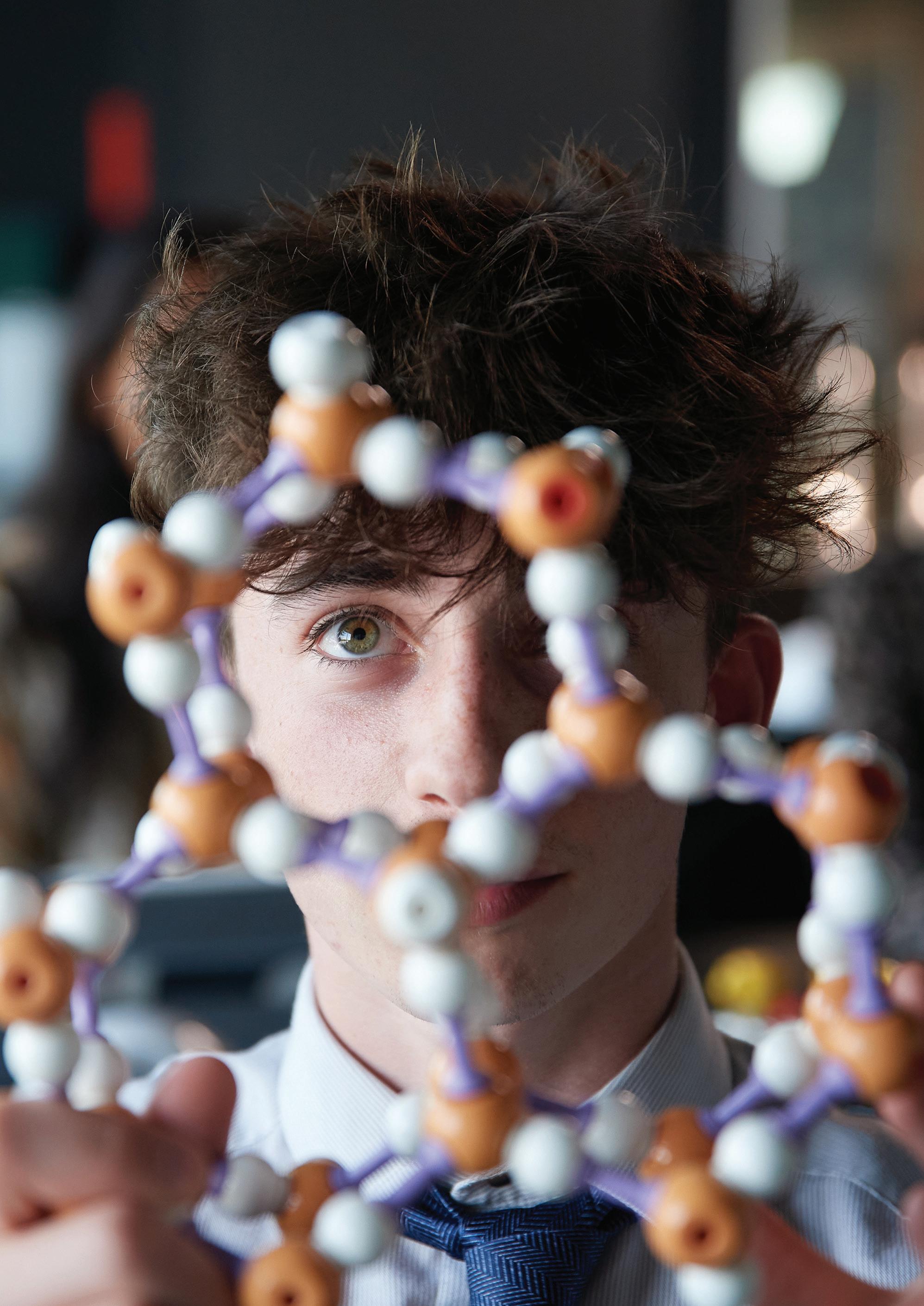
Brighton College (Singapore) 1 Chuan Lane
Singapore 554299
+65 6505 9790 brightoncollege.edu.sg

For more information or to book a personal tour please scan QR code or contact us at admissions@brightoncollege.edu.sg
©Brighton College (Singapore) Pte Ltd | PEI Registration Number: 201904884D
Period of Registration: 14 October 2023 to 13 October 2027. THE SUNDAY TIMES