Welcome to A Level Economics
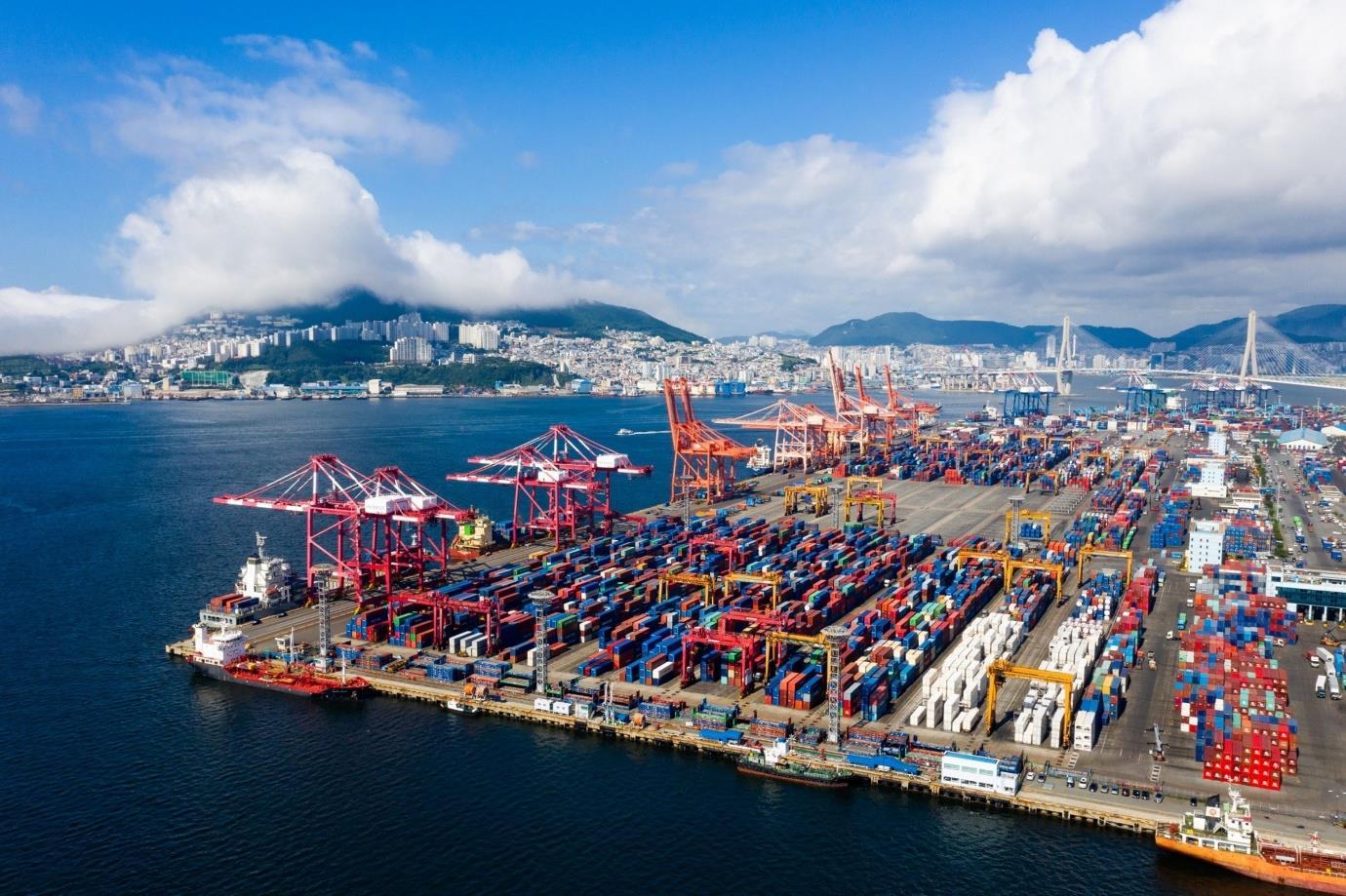
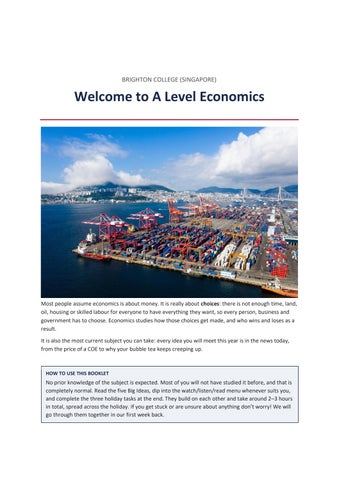
Most people assume economics is about money. It is really about choices: there is not enough time, land, oil, housing or skilled labour for everyone to have everything they want, so every person, business and government has to choose. Economics studies how those choices get made, and who wins and loses as a result.
It is also the most current subject you can take: every idea you will meet this year is in the news today, from the price of a COE to why your bubble tea keeps creeping up.
HOW TO USE THIS BOOKLET
No prior knowledge of the subject is expected. Most of you will not have studied it before, and that is completely normal. Read the five Big Ideas, dip into the watch/listen/read menu whenever suits you, and complete the three holiday tasks at the end. They build on each other and take around 2–3 hours in total, spread across the holiday. If you get stuck or are unsure about anything don’t worry! We will go through them together in our first week back.
Big Idea 1: Scarcity: the problem behind everything
Why can't a country as rich as Singapore give everyone a car?
Resources are limited; human wants are not. Economists call this scarcity, and it is where the whole subject begins. Singapore is the perfect classroom for it: roughly 6 million people share just 730 km² of land, so roads, homes, reservoirs, ports and parks all compete for the same space. That is why the government deliberately limits the number of cars on the road.
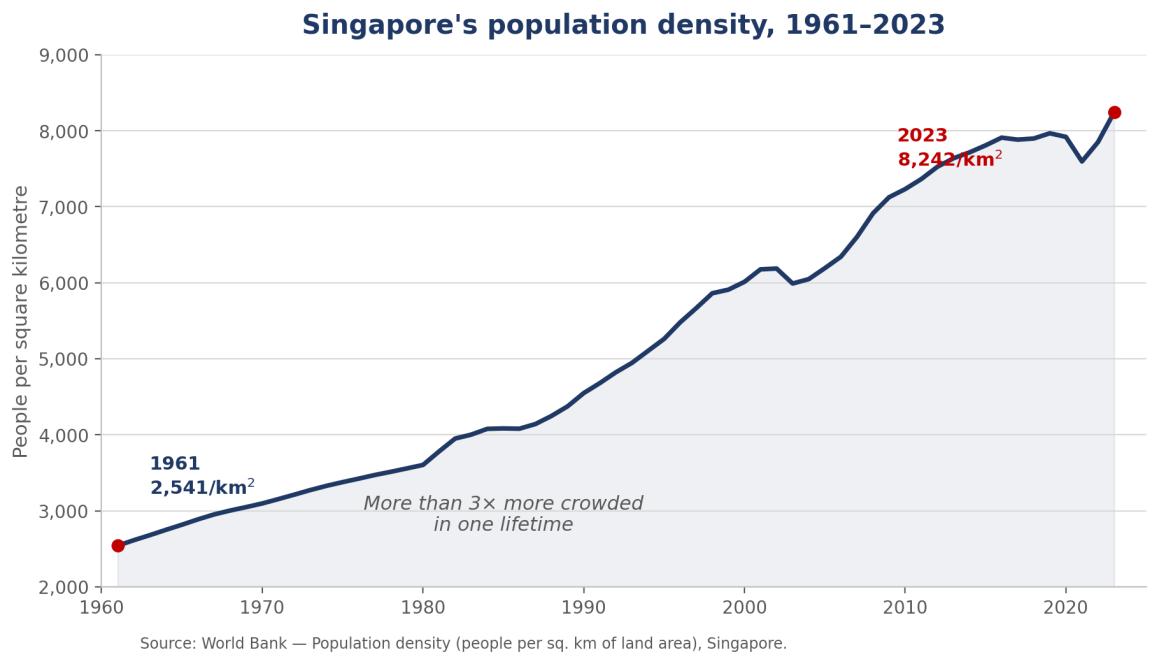
Scarcity in one line: Singapore now squeezes about 8,200 people into every square kilometre, more than triple the 1961 figure, onto an island that barely grows. More people, the same land. (Data: World Bank.)
SCARCITY IN ACTION
Scarcity is not just land and oil. When Taylor Swift played six nights in Singapore, millions of fans chased a fixed number of seats: the ballots, queues and eye-watering resale prices were scarcity in action. Whenever there is not enough of something to go round, someone (or something) has to decide who gets it. That is what this subject studies.
Big Idea 2: Opportunity cost: what you give up
What did your last bubble tea really cost you?
The true cost of anything is the next best alternative you gave up to get it. Your S$4 bubble tea could have gone towards a Grab ride or savings; a government that builds a new MRT line gives up whatever else that money could have funded. Economists draw this trade-off as a production possibility curve (PPC), which shows the maximum combinations of two things an economy can produce, and what must be sacrificed to get more of one of them.
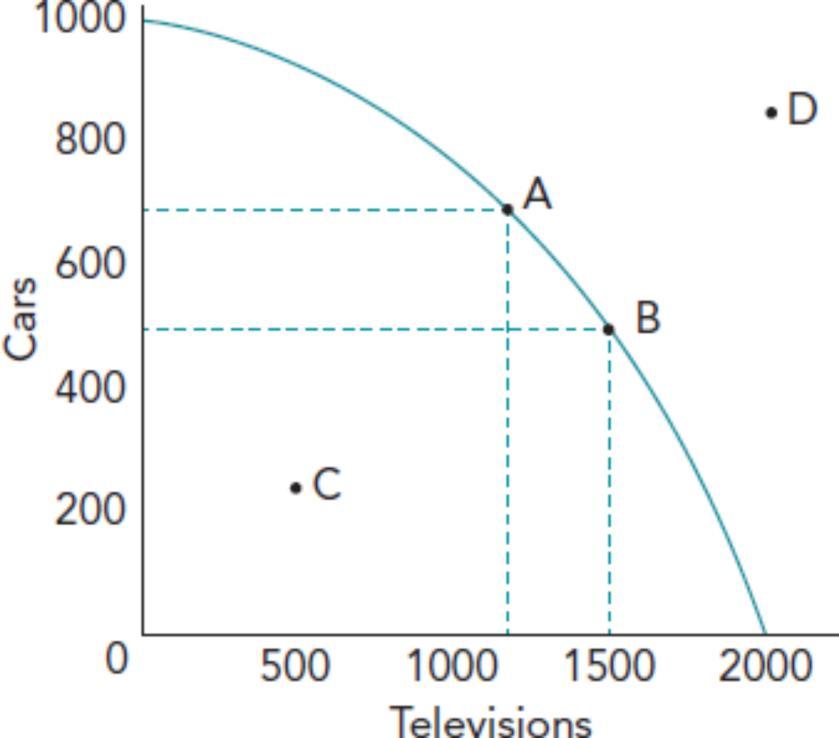
A production possibility curve. Moving from point A to B means giving up televisions to make more cars opportunity cost made visible.
CLOSER TO HOME
You have just made one of the biggest opportunity-cost decisions of your life: choosing your A Levels. Picking Economics meant not picking something else, and you will never know how that other course would have gone. The same logic applies to a S$15 cinema ticket (three hawker lunches not eaten) and to a government building an MRT line. Economists simply make the trade-off visible.
Big Idea 3: Supply, demand and price: the COE story
Why does a piece of paper cost more than the car?
Prices are not set by accident. They emerge from the interaction of demand (how much buyers want at each price) and supply (how much sellers offer at each price). Singapore's Certificate of Entitlement is the cleanest example anywhere in the world, because the government fixes the supply of new car permits. The price is then set almost entirely by demand.
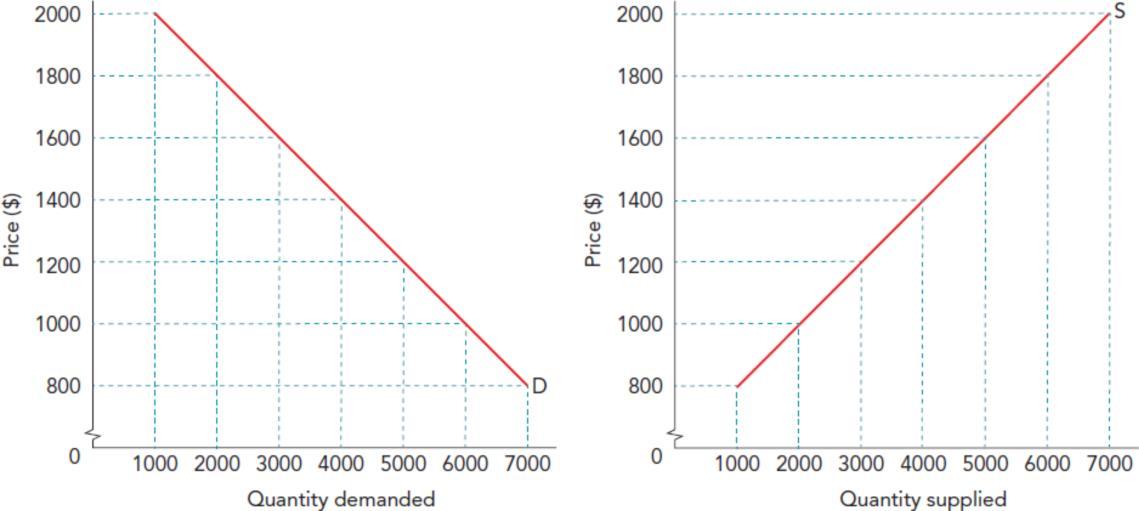
Demand slopes down (buyers want more as prices fall); supply slopes up (sellers offer more as prices rise). Where the two meet sets the price.
RIGHT NOW IN THE WORLD
A Category B COE reached about S$129,500 in May 2026, often more than the price of the car itself: fixed supply plus strong demand equals a soaring price. UK version of the same story: Oasis fans queued online for £148 reunion tickets and watched the price jump past £350 before they reached the front. 'Dynamic pricing' is just demand doing its work, live.
Big Idea 4: Markets vs governments: who should decide?
Should the state set the price of energy, housing, or healthcare?
Most prices are left to the market, but markets sometimes produce outcomes society dislikes: prices too high for the poor, pollution nobody pays for, too few hospitals. Governments then step in with taxes, subsidies, price caps, or by providing things directly. Every real economy is a mixed economy; the argument is about where to draw the line.
Let’s compare the UK and Singapore. The UK caps what energy suppliers can charge households. Singapore subsidises the HDB flats most people live in, yet auctions the right to own a car to the highest bidder. Same toolkit, different choices.

SPOT IT YOURSELF
You can watch the line being drawn in your own life: capped bus and MRT fares, but freely floating bubble tea prices; subsidised school places, but resale concert tickets at whatever the market will bear. Every one of those is somebody's decision about when the market should rule and when it should not.
Poland in the early 1980s. When the government fixed prices instead of letting the market work, shelves emptied.
Big Idea 5: The macroeconomy: inflation and interest rates
Why is everyone talking about the price of oil again?
Zoom out from single markets and you reach macroeconomics: inflation, unemployment, growth and trade for the economy as a whole. The headline issue of 2026 is inflation, the rate at which average prices rise, and what central banks do about it with interest rates
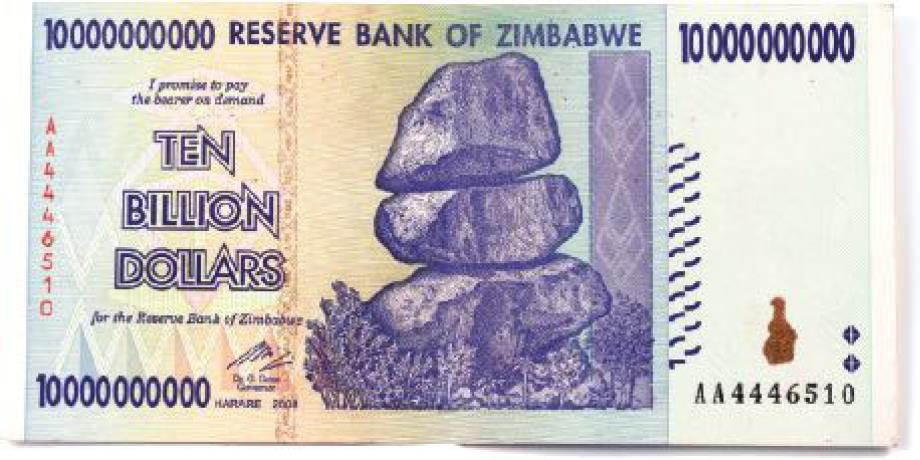
A ten-billion-dollar note from Zimbabwe that bought almost nothing an extreme case of inflation, the macro story behind today’s interest-rate headlines.
RIGHT NOW IN THE WORLD
Why has a UK supermarket shop risen roughly 40% since 2021 while Singapore's prices have barely moved? Why does conflict in the Middle East show up at the petrol pump within weeks? And why might the Bank of England raise interest rates because of it? By October you will be able to explain the whole chain, from a tanker in the Gulf to the price of your lunch.
Watch, listen, read: your summer menu
Pick what interests you; nothing here is compulsory. All are free or easily available.
Type Visual
Recommendation
Why
Watch How the Economic Machine Works, Ray Dalio (YouTube, 30 min)
The best half-hour introduction to how an economy fits together. Animated and clear.
Watch Crash Course Economics (YouTube)
Fast, funny 10-minute episodes. Start with #1–#5: scarcity, opportunity cost, supply and demand.
Watch Money Mind, CNA (TV/YouTube)
Singapore's weekly money and economics programme, full of local examples you will recognise.
Listen Understand: The Economy, BBC Sounds
Made for complete beginners: inflation, interest rates and GDP in 15-minute episodes.
Listen Planet Money / The Indicator, NPR
Story-driven economics; The Indicator episodes are under 10 minutes.
Read The Undercover Economist, Tim Harford
The classic starter book: why coffee costs what it does, written with zero jargon.

Read Freakonomics, Levitt & Dubner
Economics applied to everything from sumo wrestling to crime. Very readable.

Read BBC News (Business/Economy) and The Straits Times / CNA
Ten minutes of headlines a few times a week; you will use news stories in essays all year.
Your three holiday tasks
The three tasks form one project about prices in the world around you. Tasks 1 and 2 gather your evidence; Task 3 turns it into your first piece of economics writing.
Task 1: Price detective (about 10 minutes a day for one week)
Choose five prices you can observe: e.g. a McDonalds meal, bubble tea, a Grab ride on the same route at two different times of day, a litre of petrol, and one supermarket item. Record them for a week in a simple table.
Note anything that changes, and guess why. (Hint: when a Grab fare jumps in the rain, that is demand and supply working in real time.)
Task 2: The COE investigation (about 45 minutes)
Look up the most recent COE bidding results (search 'COE results'; premiums were around S$124,000–130,000 in May 2026). Then answer in a few sentences each: (a) Why does Singapore limit the number of cars? (b) Who benefits and who loses from such high COE prices? (c) What do you predict would happen to the price if the government doubled the number of COEs issued?
Task 3: Your first economics paragraph (bring to the first lesson)
Using your evidence from Tasks 1 and 2, write 150–200 words answering: 'Should the government control the price of one of the things I tracked? Why or why not?'
There is no right answer; we want one clear argument supported by something you actually observed. This will be the starting point for our first discussion in September.
Fifteen words to know before Term 1
You will meet all of these in your first term. Skim them now; they will feel familiar later.
Scarcity
Opportunity cost
Factors of production
Demand
Supply
Market
Equilibrium price
Price mechanism
Mixed economy
Microeconomics
Macroeconomics
Inflation
Interest rate
GDP / economic growth
Exchange rate
Unlimited wants but limited resources; the fundamental economic problem.
The next best alternative given up when a choice is made.
The resources used to make things: land, labour, capital and enterprise.
How much of a product buyers are willing and able to buy at each price.
How much of a product sellers are willing and able to sell at each price.
Any arrangement that brings buyers and sellers together, physical or online.
The price at which the amount demanded equals the amount supplied.
The way price changes act as signals that allocate scarce resources.
An economy where both markets and the government allocate resources.
The study of individual markets, consumers and firms.
The study of the whole economy: inflation, growth, unemployment, trade.
A sustained rise in the general level of prices (UK CPI was 2.8% in April 2026).
The cost of borrowing money and the reward for saving.
The total value of what an economy produces, and its rate of increase.
The price of one currency in terms of another.