OUTDOOR
Photo courtesy of Sunbrella



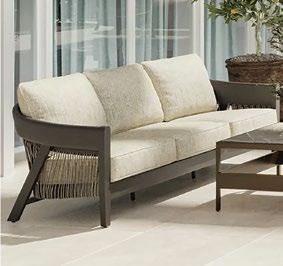
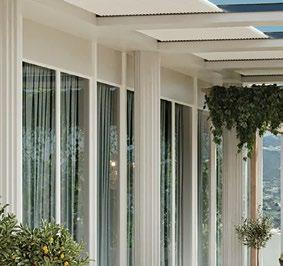
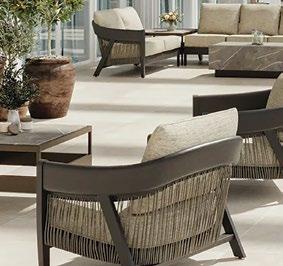

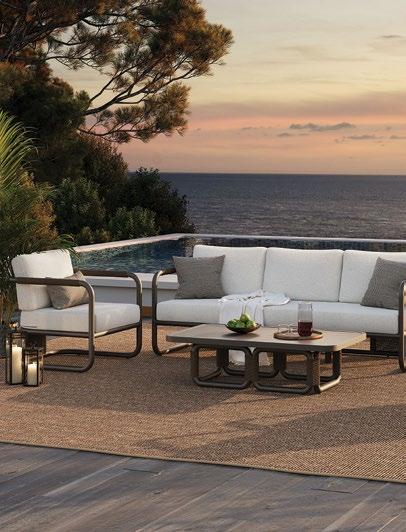
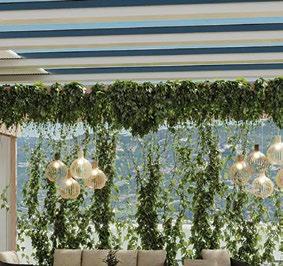
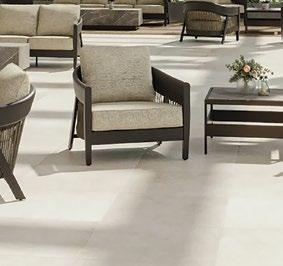



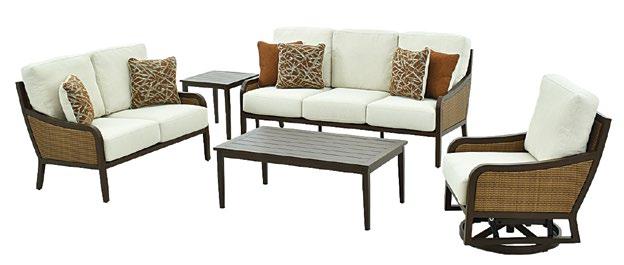

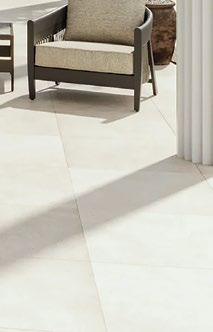



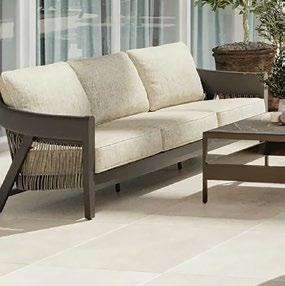

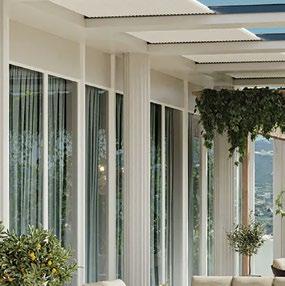
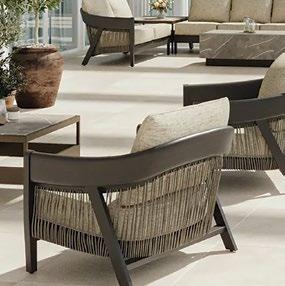

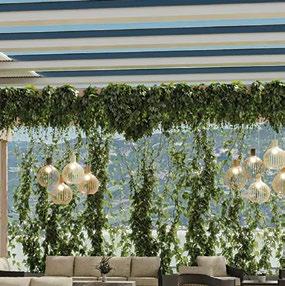
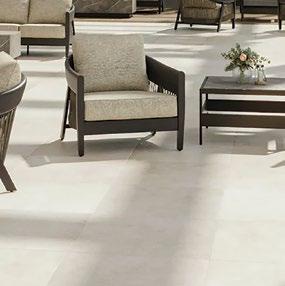


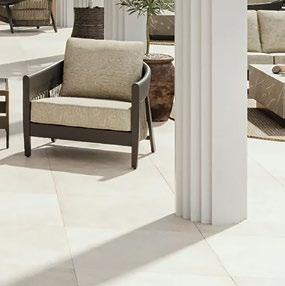
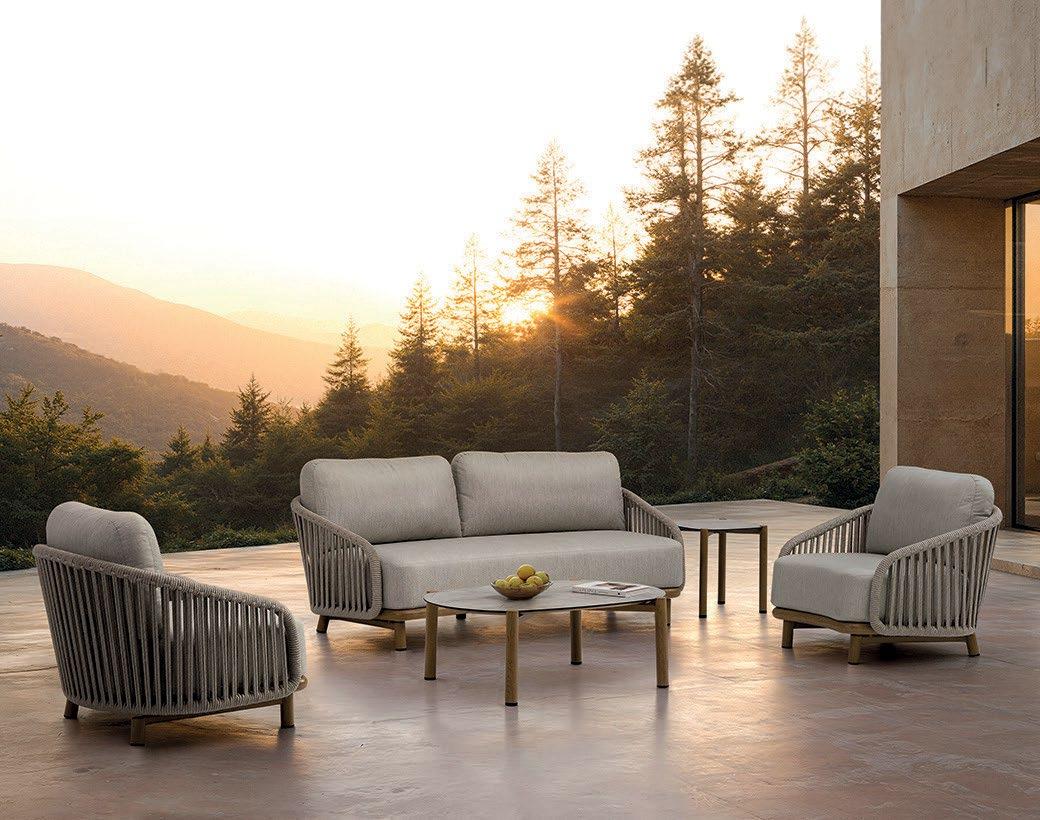
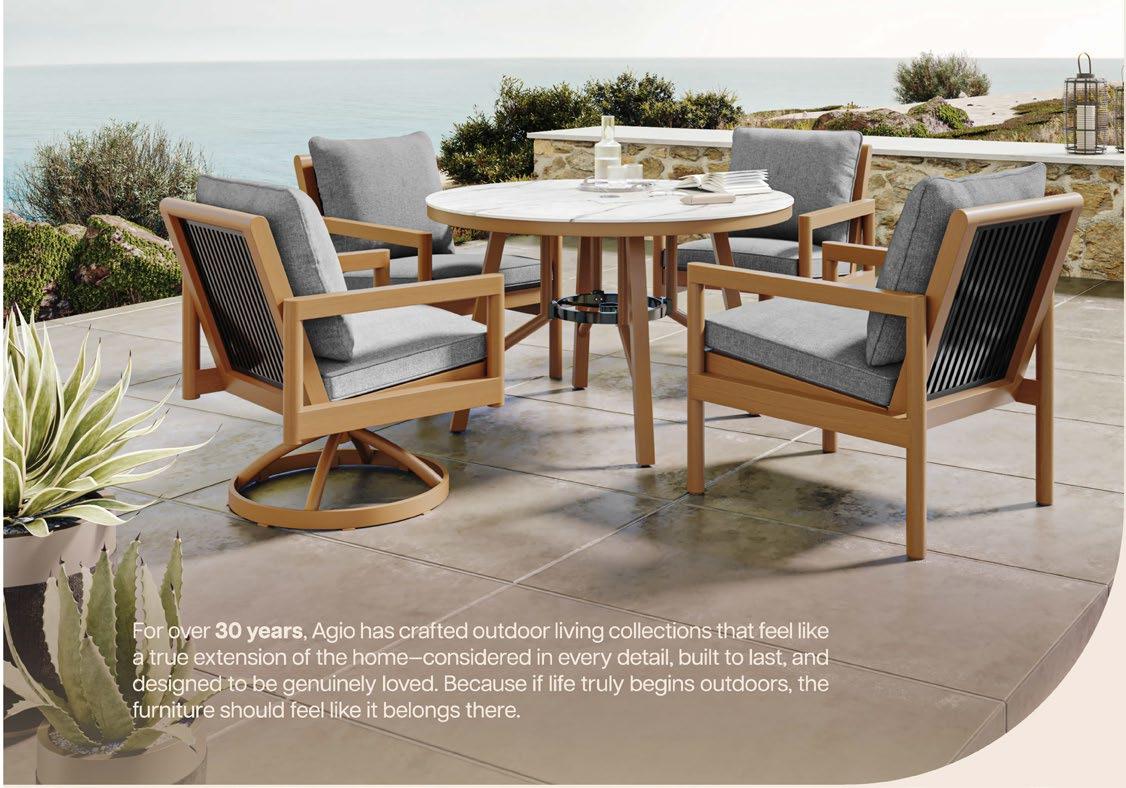
Agio’s Sheffield collection combines rope detailing with the company’s proprietary Resysta material, reflecting growing consumer demand for natural-looking outdoor furnishings that offer durability and reduced maintenance requirements.

BROADER SCOPE AS CATEGORY EVOLVES
By Spencer Musick Senior Editor



ATLANTA — Although soft consumer sentiment is touching every corner of the furniture industry, the casual segment appears to be overperforming against this downward gravity.
It’s clear that consumers are still considering their outdoor spaces as an integral part of how they use their homes. No longer a periphery afterthought, the outdoors has become a way of living that encompasses recreation and entertaining as design trends that blend indoor and outdoor spaces continue to evolve.
The category has clearly followed its consumers, evolving beyond traditional patio furniture as suppliers across the value chain invest in new products that incorporate function, mixed materials and outdoor accessories.


That shift will be on full display this week at Casual Market Atlanta, where manufacturers are using this summer's introductions to showcase how the category is widening to find new growth avenues. Material moves
As consumers place greater emphasis on durability, ease of



Vendors target wider range of products to provide dealers with new solutions

ownership and long-term value, outdoor suppliers are increasingly broadening the materials they bring to market.




For luxury outdoor manufacturer Jensen Outdoor, that evolution is reflected in a product strategy that extends well beyond the company’s traditional wood roots. While the supplier remains closely associated with ipe, President Bryan Echols said consumers increasingly expect a broader mix of materials and styling options.
“We've always offered some woven product, but we're definitely leaning into consumers' appetite for mixed materials,” he said. “While Jensen has long been known for ipe, we're working to broaden our identity and be viewed as a complete outdoor source.


“We're not moving away from our roots, but we do want customers to understand that we can serve a much wider range of outdoor


Bryan Echols, Jensen Outdoor
needs.”
That broader identity includes continued investment in teak, highlighted this market by the introduction of a new collection designed by John Caldwell. Echols said retailers have increasingly sought teak products that feel approachable and versatile while still maintaining a distinctive design perspective.
“We're continuing to strengthen our wood story with another teak introduction this year, including a new collection from John Caldwell,” he explained. “Consumers have come to rely on us as more than just an ipe supplier, and they've been asking for teak products that are approachable and versatile. True to Jensen's style, they'll still have a distinctive design point of view while remaining highly marketable.”



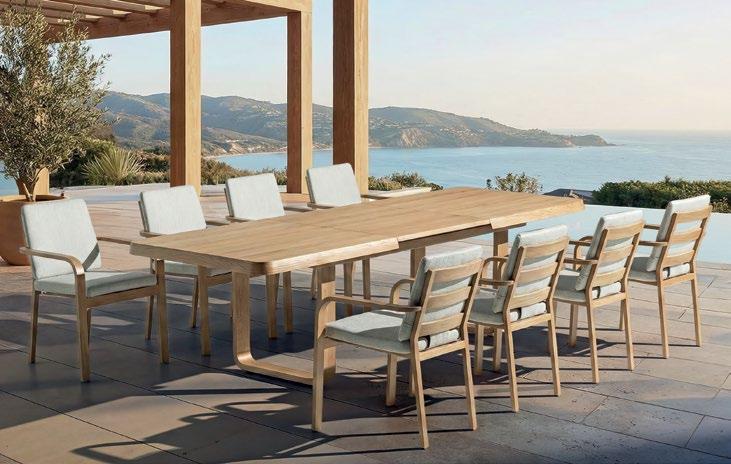
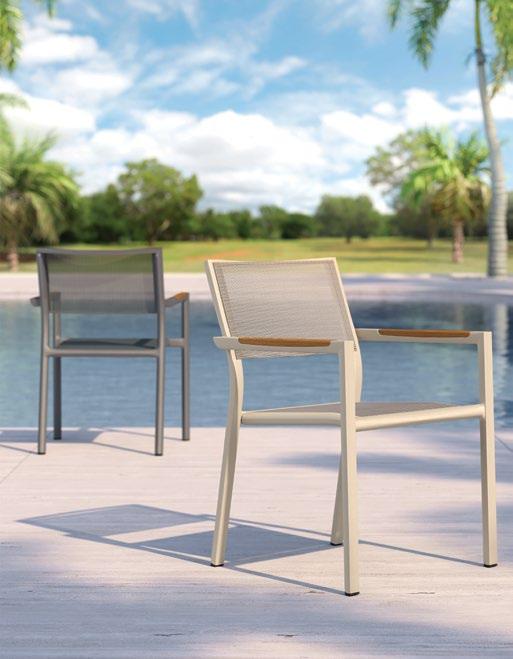
Jensen Outdoor’s Breeze dining chair pairs aluminum construction with ipe wood accents, illustrating the supplier’s continued expansion into mixed-material designs while maintaining ties to its wood furniture heritage.
said Todd Wingrove, vice president of sales. “It's influencing all of our new introductions because consumers are looking for authentic materials and natural aesthetics without the upkeep that often comes with them.”
Wingrove said advances in manufacturing have expanded the company's ability to shape and apply the material across a wider range of products while maintaining the look consumers expect from natural wood.


This strategy also extends to a new woven deep-seating collection being shown in Atlanta called Umbra. Marketing Manager Phillip Crowe described the collection as an intentionally approachable introduction designed to bridge both woven and wood aesthetics, featuring chocolate-brown ipe accents and clean transitional styling.
“Based on our experience, these types of digestible woven collections tend to resonate strongly with retailers and often become a consumer's first introduction to Jensen,” he said. “Sometimes it's a gateway into the brand, and other times it's exactly what they're looking for.”
Crowe added that maintenance expectations are increasingly influencing purchasing decisions, creating opportunities for mixedmaterial collections that offer consumers greater flexibility.
“We recognize there are consumers who want a more care-agnostic product, so collections incorporating woven and aluminum materials can serve as an accessible entry point into the brand,” he noted.


Low-maintenance appeal
The same desire for versatility is influencing material choices throughout the outdoor category. While consumers continue to gravitate toward natural aesthetics, many are seeking products that deliver the warmth of wood without the maintenance requirements traditionally associated with it.
That trend has helped drive demand for Resysta, Agio’s proprietary material made from rice husks that replicates the appearance of wood while offering enhanced durability outdoors.
“Virtually every division of Agio is being driven by Resysta right now,”

“We've become so sophisticated in the way we can bend and shape the material over aluminum that it allows us to deliver the wood looks consumers want while maintaining durability and performance,” he explained.
Beyond maintenance benefits, Wingrove said the material provides retailers with a compelling sustainability story as well.

“Not only do we believe we have the best wood look and texture, but we also have a compelling sustainability story that dealers can tell their customers,” he said. “You're not cutting down trees, and the maintenance requirements are virtually nonexistent compared with traditional wood products.”
Agio is pairing those performance attributes with a lighter visual direction that company executives say is increasingly resonating with consumers.
“Our strongest-performing products over the last several years have been Resysta collections, and we're continuing to build on that momentum,” said Jim Kemp, vice president of product development. “We're introducing several new collections in Atlanta that emphasize wood-inspired aesthetics while showcasing the texture and color capabilities of the material.”
Kemp said many of the company’s newest introductions reflect broader design trends taking shape throughout the home furnishings industry.
“We're seeing design preferences shift toward cleaner, simpler forms,” he noted. “Consumers are responding to thinner profiles, lighter wood tones and a more natural aesthetic that feels softer and less visually heavy.”
The
hospitality connection
The same durability and maintenance concerns shaping material choices are also driving growing interest in hospitality-grade construction. As consumers increasingly view outdoor furniture as a
Phillip Crowe, Jensen Outdoor
Todd Wingrove, Agio
Jim Kemp, Agio


outdoor environment we're designing for. Those projects are creating demand for a different style of outdoor furniture than traditional residential applications.”


long-term investment, many suppliers say residential buyers are beginning to prioritize the same performance characteristics that hotels, resorts and multifamily developments have valued for years.
For Zuo Modern, which serves hospitality, commercial and residential customers, those expectations are becoming increasingly intertwined.
“I think consumers are making better purchasing decisions today,” said CEO Luis Ruesga. “They're looking beyond price and paying more attention to materials, construction and whether they can trust the manufacturer behind the product.”
While most shoppers may never encounter hospitality industry terminology, Ruesga believes they have become far more knowledgeable about performance attributes and product longevity.
“Consumers may not use the term ‘hospitality grade,’ but they understand durability,” he explained. “They know aluminum won't rust, and they know acrylic fabrics won't fade. The terminology may be different, but the expectations are very much the same.”
Part of that shift, he said, can be traced back to the extraordinary demand surge during the pandemic years, when supply shortages pushed large quantities of lower-quality products into the marketplace.
“In many cases, consumers ended up with furniture that didn't last more than a season or a year, especially outdoors,” Ruesga stated. “That experience educated consumers and made them more careful about where they buy and which brands they trust.”



Ultimately, Ruesga sees all of these trends converging around a common goal: helping people spend more time outdoors.
“The products we're developing are really geared toward outdoor living and shared experiences,” he said.
“Whether it's a resort, an apartment community or a residential backyard, people want outdoor spaces that feel inviting and functional.”
Accessories ascendant
The continued trend toward outdoor living among consumers has also spurred new demand for functional accessories complementary to how they are using these spaces.

As outdoor environments become extensions of the home, suppliers are increasingly looking beyond seating, dining and occasional furniture to identify adjacent opportunities. That includes products designed to solve everyday challenges while helping consumers create more comfortable outdoor experiences.

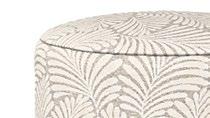
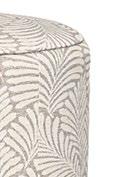
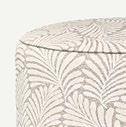
Developed through Telescope Casual’s partnership with Wugs, this weighted outdoor poof is designed to stay in place in outdoor environments, highlighting the growing role of functional accessories in the casual furnishings category.
One example comes from Telescope Casual, which launched a partnership this spring with Wugs, a weighted outdoor rug designed to prevent common issues such as curling edges and wind displacement.
Vice President of Sales Matt Pisani said the product has generated an immediate reaction from both retailers and designers because the value proposition is so easy to understand.
“What’s so impressive about Wugs is that it’s a genius idea wrapped in a very simple design,” Pisani said. “Every time we show the partnership to retailers or designers, they immediately understand it. It’s one of those introductions that feels obvious in hindsight because it addresses a real everyday frustration for outdoor living consumers.”
Those changing expectations are influencing product development decisions at Zuo as well. Rather than focusing solely on traditional residential seating groups, the company is investing in products that can work across multiple applications.
“For Atlanta, we're focusing on more resort-oriented pieces,” Ruesga noted. “We've introduced about five different double lounges because that's where we're seeing demand, not just from resorts but from a broader range of commercial and residential projects.”


Growth in multifamily development is providing another source of opportunity. Amenity-rich communities increasingly require outdoor furnishings that balance aesthetics with commercialgrade durability.
“We're seeing significant growth in multifamily construction,” he said. “Developers are building communities with shared amenities such as pools, recreation areas and fitness centers, and that's the type of

The collaboration reflects a broader shift occurring throughout the outdoor category as suppliers seek ways to help consumers create complete environments rather than simply furnishing a patio.
“Consumers continue to blur the lines between indoor and outdoor living,” Pisani explained. “They want the same comforts and conveniences outdoors that they enjoy inside, whether that’s lighting, power, shade, heating or accessories that make spaces more functional and enjoyable throughout the year.”
As a result, functionality is becoming just as important as aesthetics in determining which new products gain traction with consumers.
“Beautiful design is important, but if a product can’t perform outdoors, it misses the mark,” Pisani said. “The best innovations are often the ones that quietly solve problems and improve the customer experience without adding complexity. Those kinds of solutions can become an important part of outdoor design because they enhance how people actually use their spaces.”
Luis Ruesga, Zuo
Zuo Modern’s hospitality-grade Lychee lounge seating reflects the increasing crossover between commercial and residential outdoor design, where consumers are placing greater emphasis on durability, performance and long-term value.
Matt Pisani, Telescope Casual
OUTDOORTRENDS




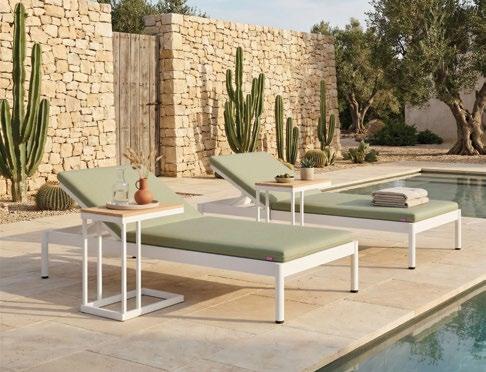
A: Sunbrella by Glen Raven | Fabrics shown left to right: Nurture White, Refresh Canyon, Cast Desert, Shelter Surf, Nuance Teak, Assemble II Teak, arranged on Exhale Driftwood
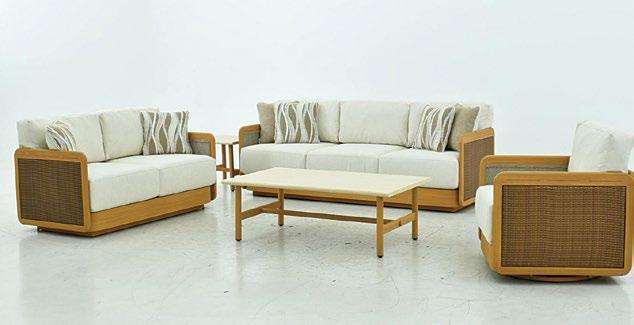
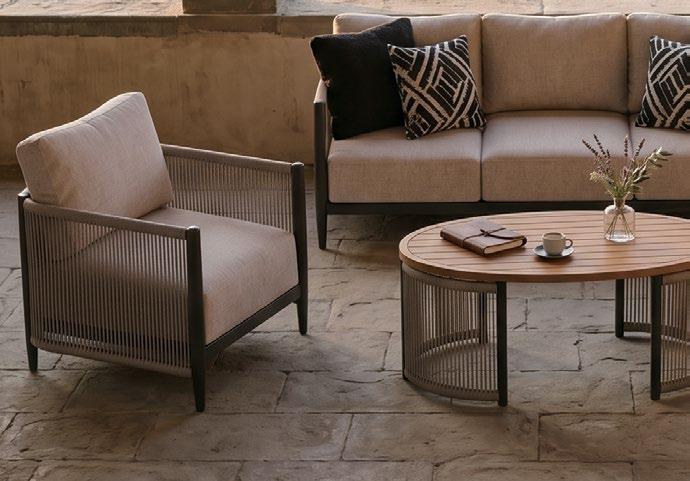
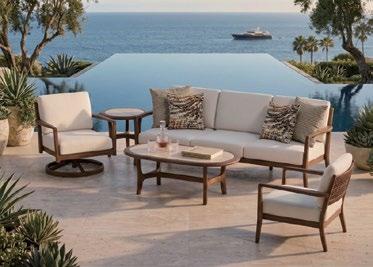
B: SALON BY AMERICAN ECO-LIVING | With the look of teak but made with the durability of aluminum with resin wicker inserts, this collection is so cool and comfortable.
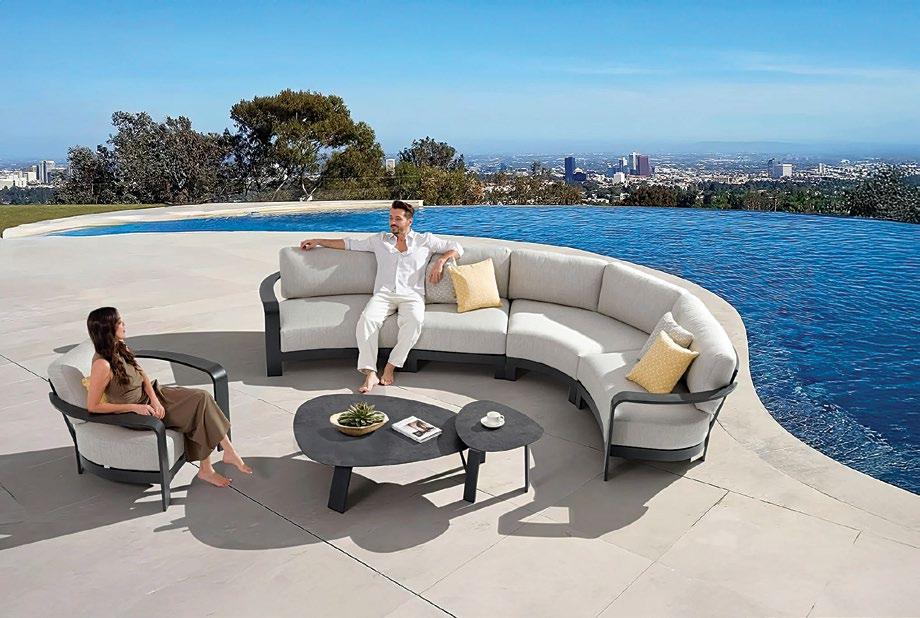
C: COUTURE Jardin | Jardin's new SO CHIC Collection with ALUwood Ebony Wood finish.






AMERICAN ECO-LIVING
Sees Strong Momentum Ahead for Outdoor Living as Consumers Invest in Home
Q&A
What's driving growth in outdoor living today?
Growth is coming to the outdoor living category for many reasons. First, with the price increases for fuel related products, we are going back to more staycations instead of travel. Investing in your Outdoor space, or your own backyard, is now much more affordable than a family road trip vacation. This applies not only to outdoor furniture and accessories, but also to BBQ grills and outdoor kitchens. Save money….cook and eat at home more often. Second, with the slowdown in the real estate market, people are planning to stay where they are longer than they may have originally planned and are putting money into their existing real estate, rather than waiting for their next move, that has been delayed. And, with all the stress of today’s “current events”, folks are looking for a “happy place” to chill and relax. What better place …than your outdoor space?
and Outdoor Spaces
“ What good is getting a sharp price and seeing great designs if the supplier can’t ship on time. Timing and supply chain is critical in this industry.”
certified. We also use artificial wood look products other than HDPE , lots of resin wicker that can be recycled and solution dyed fabrics that also can be recycled. We want to do our share to be eco-friendly.
What advice would you give retailers looking to maximize outdoor sales?
Which product categories are generating the most excitement and demand?
HDPE products, whether items like Adirondack chairs or full collections are taking off. We make our own HDPE lumber. Consumers love the look and durability it offers. Aluminum furniture that looks like wood is also driving a lot of business. Today’s technology has given us the tools to replicate wood looks without the care and maintenance that natural wood may require. Finally, European influenced designs are now getting traction in the USA. It’s taken a long time, but the demand is greater than ever before.
How is your company incorporating sustainability, durability, and performance into product development?
The name of our company is American Eco-Living. You can say ECO is our middle name! Our HDPE is used from recycled materials. Our wood products are FSC
A few important things to do. First, partner with a reliable supplier. What good is getting a sharp price and seeing great designs if the supplier can’t ship on time. Timing and supply chain is critical in this industry. Relationships and customer service is top of mind within our organization. Second, don’t dabble in this category. Commit to enough floor space and give the category the real estate in the store it deserves to tell your customers you are a great option for them to spend their money. Then, provide a great visual experience and excitement in your store. Who wants to see rows of furniture with no creativity, vignettes, or color? Boring is out-color is in. Everything doesn’t have to be brown, neutral, or grey. And then marketing is key. Those who market and reach their consumers are those who maximize their opportunity.
What should the industry be watching over the next 12 months?
Unfortunately, there is a lot of uncertainty when it comes to tariffs, freight rates and supply chain related issues. But we all must press on, make quick decisions and be ready to do business. Our company leadership have been in this industry for a long time and has seen many changes. Most importantly, the outdoor category has been one of the most resilient furniture categories in tough economic times. So, watch economic indicators, consumer confidence, tariff changes, and freight rates but partner with a supplier that can give you the merchandise mix and on time shipments that you need. Then watch your customers in your store place their orders! We are ready!!


ICFA CREATES MORE VALUE
Association bolsters networking, education, experience at Casual Market Atlanta
By Spencer Musick Senior Editor


ATLANTA — With summer Casual Market Atlanta, the halls of AmericasMart will again play host to suppliers, retailers and designers aiming to capitalize on continued consumer interest in outdoor spaces and lifestyles.
While the casual segment remains a bright spot in a challenging economy, retailers are carefully managing expenses and making more deliberate buying decisions.
This all begs the question: What is the value of an in-person wholesale market in these circumstances?
International Casual Furnishings Assn. Executive Director Siri Scott answered that question for Furniture Today, stating that attendees this July will meet a market experience that is about more than just procuring product and that is greater than the sum of its parts.
Market as an investment
"Our focus for 2026 Casual Market Atlanta is demonstrating how attending market supports a business beyond simply buying product," Scott said. "Product is easier to view year-round, so today's value lies in everything else market provides."
While product introductions remain a core attraction, Scott said today's retailers and designers are increasingly looking for information, relationships and business insights that cannot be replicated through a digital catalog or virtual presentation.
"We're emphasizing the complete package — experiencing products firsthand, hearing directly from manufacturers and gaining peer-topeer learning and networking opportunities that simply can't be replicated elsewhere. Market is an investment in the future of your business."
That emphasis on business development extends to several educational and networking initiatives designed specifically for retailers.
"We're replacing the traditional retail roundtable with a breakfast


discussion on the second day of market, giving retailers an opportunity to share what they're seeing with consumers, discuss products and merchandising strategies, and learn from peers after spending time in the showrooms."
Momentum from outdoor living
Scott said the ongoing strength of the outdoor category is tied not only to furniture sales, but also to broader consumer interest in creating functional and personalized outdoor environments.
""Consumers increasingly think in terms of outdoor living rather than individual furniture pieces, prompting retailers to expand into grills, outdoor kitchens, lighting and other complementary categories. Scott said shoppers value the convenience of creating complete outdoor spaces in one place."
That same thinking is influencing how Casual Market Atlanta itself is evolving. In addition to traditional furniture and accessory resources, organizers are working to expand the range of complementary products available to attendees.
Scott said ICFA and Casual Market Atlanta are expanding temporary exhibits to include more complementary outdoor lifestyle products based on dealer feedback, helping retailers source more of the categories they need during a single trip.
Focus on experience in Atlanta
Because Casual Market Atlanta follows the FIFA World Cup, ICFA has worked with AmericasMart and hospitality partners to provide preferred hotel options, transportation guidance and attendee resources. Scott said organizers will communicate logistics well in advance while also offering recommendations for restaurants, attractions and events so attendees can make the most of their visit to Atlanta.
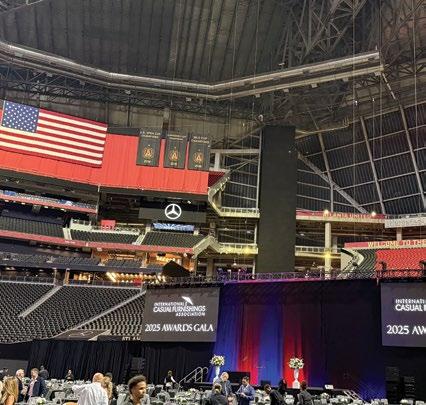
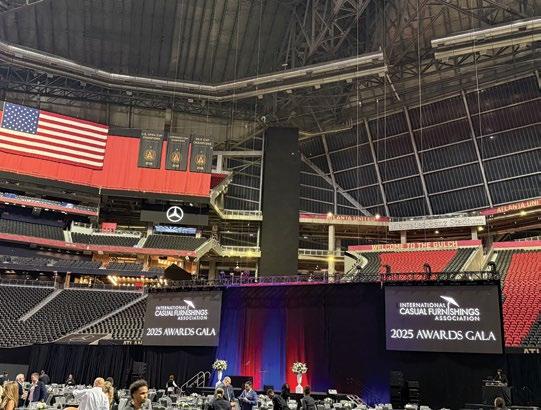
Last year’s ICFA Awards Gala was set at the Mercedez-Benz Stadium in Atlanta.
Siri Scott, executive director, ICFA









REGULATION NATION: The Rules Reshaping Outdoor Furniture
By Ray Allegrezza Editor Emeritus




Uncertain weather, housing slowdowns, rising freight and raw material costs, supply chain disruptions and uneven consumer spending have long been part of doing business in the outdoor furniture category.
Today, however, many executives say another challenge is climbing their worry list: regulation.
From PFAS restrictions and packaging laws to chemical disclosure requirements, sustainability mandates, California's Proposition 65 and tariff uncertainty, outdoor furniture manufacturers increasingly find themselves navigating a growing web of compliance issues that can influence everything from product design and sourcing decisions to packaging, pricing and long-term supply chain strategy.
If outdoor furniture executives had to identify one regulation keeping them awake at night, many would point to PFAS.
Often referred to as "forever chemicals," PFAS restrictions are forcing manufacturers to rethink materials and sourcing strategies while navigating a patchwork of state regulations. PFAS chemicals have come under increasing scrutiny because they can persist in the environment and have been linked by some studies to potential health and environmental concerns, prompting lawmakers in several states to restrict their use in consumer products.
But PFAS is hardly the only concern.
Industry executives also cite packaging laws, chemical disclosure requirements, sustainability mandates, Proposition 65 and tariff
uncertainty as factors reshaping how outdoor furniture is designed, sourced, manufactured and sold.
"The question is no longer whether regulations will affect the outdoor furniture business," said John Pinion IV, director of sales for Lloyd Flanders. "The question is which regulations will have the greatest impact and how prepared companies are to respond."
Pinion ranks PFAS as the industry's greatest operational challenge over the next three to five years.
"Outdoor furniture is built around performance," he said. "Consumers expect products that can withstand the elements. As PFAS regulations continue to evolve, manufacturers are being forced to evaluate materials, testing requirements and supplier certifications while navigating a patchwork of state-by-state regulations."
The challenge extends beyond compliance, requiring manufacturers to identify PFAS throughout their supply chains, find acceptable alternatives and maintain the performance consumers expect.
For Rory Rehmert, president of the Castelle division of Brown Jordan, PFAS restrictions are far more than a theoretical concern.
"It caused a lot of problems," Rehmert said.
He noted that reformulating finishes and fabrics often resulted in color shifts that required extensive testing. Existing inventories also created logistical headaches as some states allowed products to continue shipping while others did not.
"You wouldn't think that taking a simple chemical out of an outdoor finish would change the finish, but it did," he said.
Yet Rehmert was quick to point out that PFAS is simply the latest chapter in a much longer regulatory story.
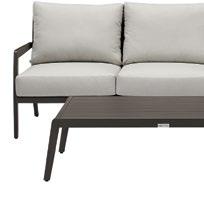
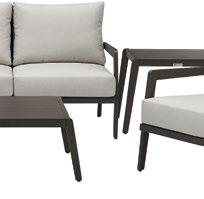
Armen Living's mix of imported and domestically produced products provides flexibility as regulations evolve.
He cited California's Proposition 65 as one of the earliest examples of a regulation that forced manufacturers to alter labeling practices, review materials and increase compliance efforts.
"You didn't mention Prop 65, and I know that's old news, but that's a big one too," Rehmert said. "That caused a lot of problems."
"It's just one of those crazy hurdles that gets thrown in front of you," he added.
The experience highlights a reality many outdoor furniture manufacturers now face: Regulations rarely arrive one at a time. Instead, new requirements are layered on top of existing obligations, creating additional complexity and cost.
Henry Vanderminden IV, president of Telescope Casual, said the company was able to navigate PFAS regulations with relatively little disruption thanks to early warnings from industry associations including the American Home Furnishings Alliance and the International Casual Furniture Association and proactive action by suppliers.
The only PFAS-related issue Telescope identified involved performance treatments used on Sunbrella fabrics. Vanderminden credited Glenn Raven, Sunbrella's parent company, for moving quickly to eliminate PFAS treatments while maintaining the fabric's performance characteristics.
"We complied with it because we could see it was coming," Vanderminden said. "Sunbrella did a fantastic job."
While PFAS proved manageable, Vanderminden expressed greater concern about emerging EPR packaging regulations.
Like other executives interviewed for this story, he said the biggest challenge is not necessarily the goal of the regulations, but understanding exactly what will be required.
Telescope recently sent employees to industry training sessions focused on EPR compliance, yet many questions remain unanswered.
"We're going to have to pay the cost of that," he said. "And eventually the consumer buying our furniture is going to be paying the added cost."
Packaging regulations are creating another area of concern.
Extended Producer Responsibility, or EPR, laws are expanding across multiple states and could require companies to assume greater responsibility for the packaging materials they place into the marketplace.
Rehmert said Castelle began evaluating its packaging as soon as it became aware of the emerging requirements.
While much of the company's packaging already complies, some materials do not.
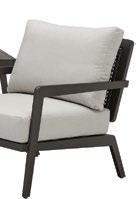
"Our corrugate is totally recyclable, but our foam padding inside is not," he said. "Now we're going through the process to determine what we can replace that with."
The challenge, he added, is ensuring compliance without sacrificing product protection.
"We're known for very, very good packaging. What we don't want to have happen is lose our reputation."
For Terri Lee Rogers, vice president of sales at O.W. Lee, packaging regulations have become the issue generating the most uncertainty.
The company largely worked through the PFAS transition by managing inventory and taking advantage of exemptions available for certain outdoor products.
"The PFAS issue, I hope, is behind us," Rogers said. "The new one with EPR is throwing me for a loop."
What troubles Rogers most is the lack of clarity surrounding requirements that vary by state and continue to evolve.
"It's very hard to comply when you don't know what you're supposed to comply to," she said. "One day it's this, the next day it's that. This state says this, this state says that."
Rogers said industry associations have worked hard to provide guidance, but many questions remain unanswered, including registration requirements, reporting obligations and exactly where responsibility falls between manufacturers, importers and retailers.
"I don't know if I'm exempt. I don't know if I'm not exempt," she said. "Honestly, I'm scared to register because I don't know what I'm getting into."
Like other executives, Rogers worries that some proposed packaging alternatives may sound good in theory but fail to account for the realities of shipping large, heavy outdoor furniture products.
"We can't ship our furniture with minimal packaging and expect it to arrive undamaged," she said. "It's not practical."
Some manufacturers have chosen a different approach: eliminating potential compliance issues before they become problems.
George Schwartz, vice president of compliance for Linon Home Decor, said the company has worked proactively to remove PFAScontaining materials from its products rather than trying to navigate a growing patchwork of state regulations.
"One of the things that's happening in the states is they're trying to piggyback on CPSC and ASTM laws," Schwartz said. "We've tried as best we can to eliminate anything that could cause us problems, so we no longer have anything with PFAS."
Schwartz said the strategy mirrors the company's earlier response to formaldehyde regulations under CARB and TSCA standards.
Rather than reacting to each new state requirement individually, Linon relies on extensive third-party testing and close collaboration with suppliers to ensure products comply with both current and emerging regulations.
"We make sure every new product passes testing through legitimate
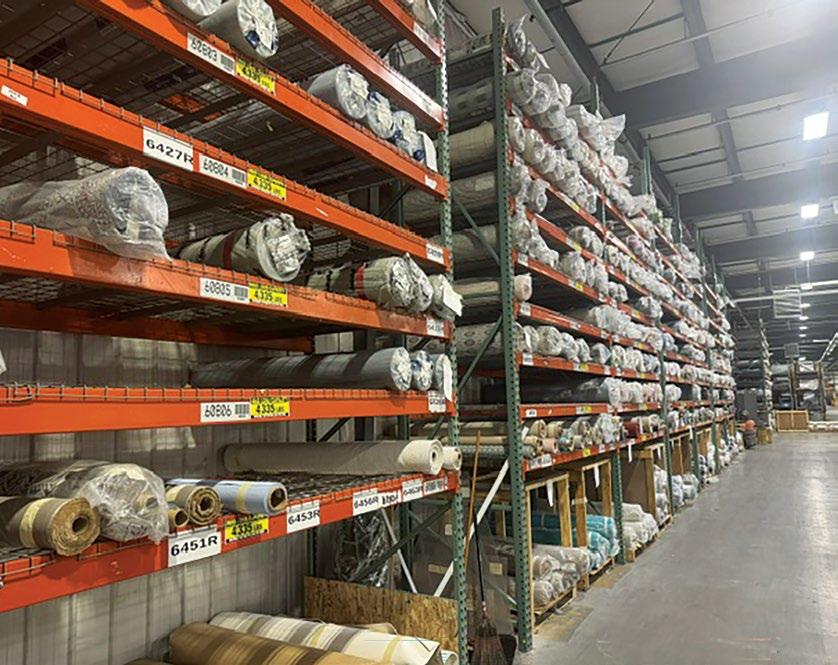

third-party labs," he said. "We can't test separately for every state law that comes along. We'd go bankrupt paying testing fees."
The same philosophy has guided Linon's response to packaging regulations.
"We have to satisfy the regulations without increasing product damage or defects," Schwartz said. "You can't solve one problem and create another."
Pinion ranks EPR packaging laws as the third most significant regulatory challenge facing the industry because of the reporting requirements, compliance tracking and administrative burdens they are expected to create.
Chemical disclosure requirements and sustainability mandates are also drawing increased attention. Manufacturers increasingly must document and verify materials used throughout their supply chains while also preparing for potential recycled-content and environmental compliance requirements. Pinion believes these issues carry both compliance and reputational risks as retailers and consumers demand greater transparency.
California continues to play an outsized role in many of these discussions.
Holly Lightfoot, director of product development and showrooms at Armen Living, noted that many regulations affecting outdoor furniture frequently originate in California before spreading elsewhere.
"As a California-based company, many of the stricter regulations begin within our state, which tends to be more sensitive and focused on sustainability," she said.
Lightfoot said Armen Living's mix of imported and domestically produced products provides flexibility as regulations evolve.
Still, she believes uncertainty itself may be the industry's greatest challenge.
"The continued uncertainty in the design, retail and market is impeding growth and is the biggest impact in the next three to five years," Lightfoot said.
While PFAS generated the most discussion among executives interviewed for this story, tariffs remain a significant concern.
"The honest truth is that the regulations keeping us up at night are the tariff regulations," said Luis Ruesga, president of Zuo Modern.
"While other new regulations can ultimately be good for consumers and the environment — and we can always adapt to those — tariffs are completely out of our control."
Ruesga noted that outdoor furniture production remains heavily concentrated throughout Southeast Asia, creating uncertainty as governments continue to debate future tariff levels.
Pinion ranks tariffs second only to PFAS in terms of likely industry impact, noting that changes in trade policy can rapidly alter landed costs, pricing strategies, margins and sourcing decisions.
Retailers and suppliers are not the only industry stakeholders keeping a close eye on the growing number of regulations affecting outdoor furniture.
Jill Erwin, founder and principal designer of Just Jill, said staying informed has become part of serving clients because designers are often the final link before products enter consumers' homes.
"Our clients trust us to make informed recommendations," Erwin said. "That means we need to understand the regulations, the materials being used and any compliance issues that could affect the products we're specifying."
Taken individually, none of these regulations may fundamentally alter the outdoor furniture business.
Collectively, however, they are reshaping how products are designed, sourced, manufactured, packaged and sold.
From PFAS and Proposition 65 to EPR packaging laws and tariffs, compliance is becoming a larger part of everyday business decisions.
The result is an industry increasingly being asked to balance innovation, performance, affordability, sustainability and regulation all at the same time — a challenge many executives believe will only intensify during the remainder of this decade.
Pictured here is some of the fabric used by Telescope Casual. After March 1 of 2024, all shipments received from Sunbrella were PFAS free and were marked with an obvious florescent green label stating that.
WHEN PFAS RULES HIT HOM:
How One Retailer Got Caught in the Crossfire
For Kyle Johansen, executive vice president
For outdoor furniture in particular, PFAS restrictions proved especially disruptive because many performance fabrics and weather-resistant materials historically relied on treatments containing the chemicals. While much of the industry has since shifted toward PFAS-free alternatives, Johansen's experience illustrates how quickly regulatory changes can ripple through supply chains, inventories and retail operations.
And he believes PFAS may only be the beginning.
Kyle Johansen, HOM Furniture




of merchandising and marketing at HOM Furniture, Minnesota's PFAS (Per- and Polyfluoroalkyl Substances) ban wasn't an academic policy debate.
It was a warehouse full of outdoor furniture that suddenly couldn't be sold in the company's home state.
"We didn't even hear about the law from the state," Johansen said. "We heard about it from a customer."
Minnesota's restrictions on intentionally added PFAS chemicals took effect Jan. 1, 2025, prohibiting the sale of a range of products containing the substances, including certain outdoor furniture. The timing created a major challenge for retailers because outdoor buying decisions are often finalized months before products arrive on showroom floors.
Outdoor furniture retailers typically place orders in late spring and summer for merchandise they expect to sell the following season. By the time HOM became aware of the law, many of those purchases had already been made.
"We make our outdoor buys in May, June and July and then sell it in March, April, May, June and July," Johansen said. "The PFAS thing came through, and we didn't even hear about it until the end of September. January 1 the law went into effect."
Unlike many retailers, HOM had an escape hatch.
Because the company operates stores outside Minnesota, it was able to transfer affected merchandise to locations where the products could still be legally sold.
"We were fortunate to have six stores not in Minnesota where we could move that product," Johansen said. Even so, the financial impact has lingered.
What was intended to be one season's worth of inventory suddenly became enough inventory for multiple seasons. HOM is still working through some of that merchandise by aggressively discounting it in stores outside the state.
"We started it last year and we're doing it again this year," Johansen said. "Customers in those locations are getting one heck of a deal right now."
Johansen believes the biggest frustration wasn't necessarily the regulation itself but the lack of transition time for retailers and suppliers.
He argues that existing inventory could have been grandfathered in or retailers given additional time to comply before the law took effect.
"It would have been fine if the state had either grandfathered old merchandise in or given retailers more time," he said.
The experience highlighted what many in the furniture industry see as a growing challenge: a patchwork of state-by-state regulations that can create significant compliance burdens for manufacturers and retailers alike.
Johansen is now closely watching Minnesota's implementation of Extended Producer Responsibility, or EPR, packaging regulations, which are designed to shift more of the cost and responsibility for packaging waste and recycling from municipalities to manufacturers and retailers.
The goal of the legislation is to encourage the use of more recyclable packaging materials and reduce waste. But Johansen worries the practical realities of compliance remain largely undefined.
"We don't even know exactly what we're going to have to report yet," he said.
Among the unanswered questions are how companies will be required to measure and report the amount of cardboard, plastic, foam and other materials used in packaging and how much time businesses will be given to comply once final rules are established.
Furniture retailers face unique challenges because many products require substantial packaging to survive long supply-chain journeys without damage.
"Furniture is being called out because we use a lot of packaging," Johansen said. "But the packaging is necessary, so the furniture survives the shipment."
Like many large furniture retailers, HOM already recycles significant amounts of cardboard and packaging materials. Still, Johansen worries that new reporting and compliance requirements could create additional costs and administrative burdens at a time when retailers are already navigating a difficult operating environment.
Adding to those concerns are new federal reporting requirements involving juvenile furniture and children's products.
Beginning this year, importers of covered children's products must provide additional information to the Consumer Product Safety Commission, creating another layer of compliance and documentation requirements.
For HOM, the issue is manageable because juvenile furniture represents a relatively small portion of its business. But Johansen views it as part of a broader trend toward increased reporting and regulatory oversight.
"It's just more reporting," he said. "It's another thing companies have to stay on top of."
Taken individually, Johansen said, most regulations can be addressed. The challenge comes when businesses are simultaneously navigating PFAS restrictions, packaging mandates, product reporting requirements and other state and federal regulations that continue to evolve.
"The key is how much time they give us to comply," he said. "If manufacturers have to redesign packaging and retailers have to change processes, that doesn't happen overnight."
For Johansen, the lessons learned from the PFAS experience are clear. The furniture industry can adapt to new regulations, he said. What businesses need is clarity, consistency and enough time to make the transition.
Without that, the next compliance challenge could prove just as disruptive as the last.



By Ray Allegrezza Editor Emeritus





FROM BAR STOOLS TO BACKYARDS:
Why Armen Living Made the Move Into Outdoor

HIGH POINT — When Armen Living entered the outdoor furniture business in 2020, the move may have surprised some retailers.
After all, the California-based company had spent decades building its reputation indoors, becoming one of the furniture industry's bestknown resources for contemporary bar stools and casual dining furniture.
But according to Holly Lightfoot, director of product development, the decision wasn't a dramatic departure from the company's roots. It was a calculated response to changing consumer lifestyles and a recognition that outdoor furniture was becoming one of the industry's most attractive growth categories.

"Outdoor furniture had been a growing segment of the furniture business for quite a few years," Lightfoot said. "The company, led by president Kevin Kevonian, saw the opportunity to expand into a segment that was growing and expanding at a really nice clip."
The move represented the latest evolution for a company that has been family-owned for more than 40 years.
Today, Armen Living sells to many of the nation's Top 100 furniture retailers, independent furniture stores and a wide range of e-commerce accounts. Historically, the company has focused on contemporary indoor furniture, with bar stools becoming one of its signature categories over the past decade.
Outdoor offered something different. It offered growth.
And it offered an opportunity to leverage the company's design capabilities in a category that was beginning to look less like traditional patio furniture and more like an extension of the home itself.

"What was happening is consumers were beginning to want the same style and design outdoors that they had inside their homes," Lightfoot said.
That trend accelerated dramatically during the pandemic.

As consumers spent more time at home, they invested heavily in renovations, upgrades and new furniture. Patios, decks and outdoor living areas suddenly became as important as living rooms and family rooms.

Armen Living saw an opportunity.
Rather than entering the market with traditional outdoor furniture, the company set out to create collections that reflected indoor styling, comfort and aesthetics.
"The whole idea was not to offer traditional outdoor furniture," Lightfoot said. "We wanted to offer consumers outdoor products that were more commensurate with what they would want indoors."
That philosophy continues to guide product development today.
If a retailer walks through the Armen Living showroom, they'll find an assortment designed to appeal to a broad range of consumers and lifestyles.
The line is anchored by two primary construction stories.
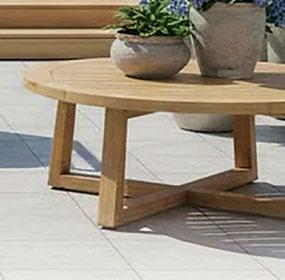
The first is a collection of eucalyptus furniture. Armen uses kiln-dried eucalyptus that is treated, sealed and engineered to withstand outdoor conditions while resisting splitting, cracking and warping.
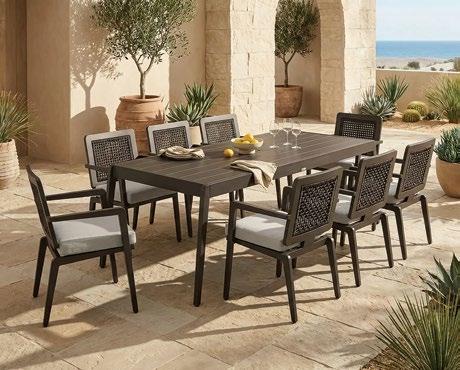
The second centers on powder-coated aluminum collections
Brampton Sectional
featuring extruded aluminum frames paired with performance fabrics.
Across both categories, the company places significant emphasis on fabrics.
"We use everything from traditional olefins up through highperformance acrylics and spun polyesters," Lightfoot said.
The goal is to create products that deliver the softness, texture and appearance consumers expect from indoor upholstery while maintaining the durability required for outdoor environments.
The collections also span a wide range of price points and footprints.
Smaller bistro-style dining sets can retail for under $400, while larger sectional groups can reach $5,000 or more at retail.
"We try to offer a lot of flexibility," Lightfoot said. "No matter how much space someone has, they can find something that works."



products across multiple websites in seconds, exclusivity matters.
Retailers want products that can't be easily price-shopped.
Consumers want something they haven't already seen everywhere else.
That creates opportunities for both retailers and suppliers.
"It's huge at retail to have something customers haven't seen everywhere else," Lightfoot said.
The company's outdoor ambitions expanded further late last year through its acquisition of Uwharrie Outdoor Living.
The North Carolina-based manufacturer produces handcrafted outdoor furniture made from kiln-dried pressure-treated pine and HDPE polymer materials.
The acquisition gives Armen Living something increasingly valuable in today's market: a domestic manufacturing story.

Motion furniture has also become an important part of the assortment.
Many of Armen Living's deep seating groups include swivel or swivel-glider options, while several dining collections incorporate motion seating as well.
While the company sources products globally from countries including Vietnam and China, one of the differentiators Lightfoot points to is Armen Living's commitment to inventory.
The company warehouses the collections it shows in High Point and Las Vegas, giving retailers the ability to test programs without committing to large container purchases.
For some retailers, that flexibility has become a significant advantage.
"We've been able to help customers create small outdoor galleries and test the category," Lightfoot said. "That's one of the benefits of having inventory available in the warehouse."
The warehousing strategy also supports one of the company's larger goals: growing both existing and new customer relationships.
The outdoor category has helped Armen Living sell more business to current indoor accounts while simultaneously opening doors with specialty outdoor retailers that may never have considered the company previously.
Perhaps even more important, however, is the role design plays in the company's strategy.
Lightfoot said Armen Living has increasingly focused on exclusive product development rather than relying on readily available designs.
"I do all the product development myself, and we have an in-house designer," she said. "What we've been bringing to market over the last several years has really been unique styles that are only available from us."
In today's retail environment, where consumers can compare
"It is all bench-made and handcrafted in North Carolina," Lightfoot said.
The addition not only broadens the company's outdoor assortment but also introduces Armen Living to new customers looking specifically for American-made products.
Likewise, existing Armen Living customers are gaining exposure to a premium domestically produced outdoor line they may not have previously considered.
Looking ahead, Lightfoot believes outdoor furniture's growth story is far from over.
She points to a housing market where many homeowners are choosing to stay put rather than move, investing in upgrades and renovations instead of purchasing new homes.
Outdoor living spaces continue to be a major beneficiary of that trend.
Consumers increasingly view patios, porches and backyards as extensions of the home rather than separate spaces furnished as an afterthought.
Armen Living is positioning itself accordingly.
At the recent High Point Market, the company introduced its Solara outdoor kitchen program, allowing retailers to create complete outdoor living environments that include kitchens, dining areas and deep seating groups.
The move reflects a broader shift taking place throughout the category.
Outdoor furniture is no longer simply about putting a few chairs on a patio.
It is about creating fully integrated living spaces.
And for Armen Living, a company once best known for bar stools, that evolution has opened the door to an entirely new growth engine.
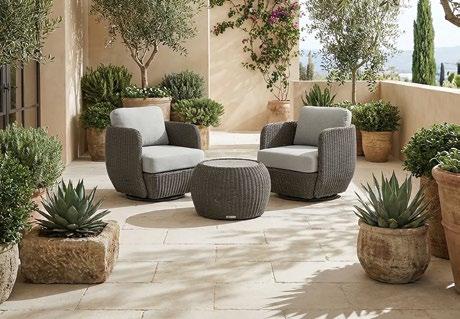
Amira 3-Piece Set, with two roomy cub chairs and coordinated coffee table
Avila Living & Dining Collection
Events, Summer Casual Market
Atlanta, July 21-23
Tuesday, July 21
Pink Out 2026
8:30 a.m., Casual Markt Kick-Off, B1, F8, Oasis Meeting Space
5 p.m., Kick-off Party & Rock Out for Pink Out, B1, F2 Lobby
Wednesday, July 22
9 a.m., Retail Breakfast & Key Topic Conversations, B2, F9, The Gardens
1 p.m., Open Air: Elevated Living with Luxe, B1, F8, Oasis Meeting Space
4:30 p.m., ICFA Women’s Leadership Network - Bring a Buddy Mixer, B1, F2, ICFA Lounge (RSVP requested)
6:30 p.m., Summer Social at Your 3rd Spot (RSVP required; bus transportation provided)
Thursday, July 23
9 a.m., ICFA Member Benefit Support with Candy Chase, B1, F2, ICFA Lounge
2 p.m., Cheers to Success - Close Market with a Toast, B1, F2, ICFA Lounge
Events, Fall Casual Market Atlanta, Sept. 15-18
Tuesday, Sept. 15
8:30 a.m., Casual Markt Kick-Off, Building 1, F8; Oasis Meeting Space.
8:45 a.m., Design Trends Talk & Tour, B1, F8, Oasis Meeting Space
4 p.m., Retail Roundtables and Happy Hour, B1, F8 Oasis meeting Place (RSVP required)
7 p.m., Retail Dine Around Group Dinners
Wednesday, Sept. 16
8 a.m., Breakfast Seminar, sponsored by ICFA Women’s Leadership Network, B1, F8, Oasis Meeting Space
6:30 p.m., ICFA Awards Gala: Celebrating the Casual Furnishings Industry
Thursday, Sept. 17
8 a.m., ICFA Member Benefit Support with Candy Chase, B1, F2, ICFA Lounge
4 p.m., Casual Cocktails
Friday, Sept. 18
9 a.m., ICFA Member Benefit Support with Candy Chase, B1, F2, ICFA Lounge
2 p.m., Cheers to 2027 – Toast to Future Success, B1, F2, ICFA Lounge
Casual Market Atlanta, future dates:
2026: July 21-23 and Sept. 15-18
2027: July 13-15 and Sept. 14-17















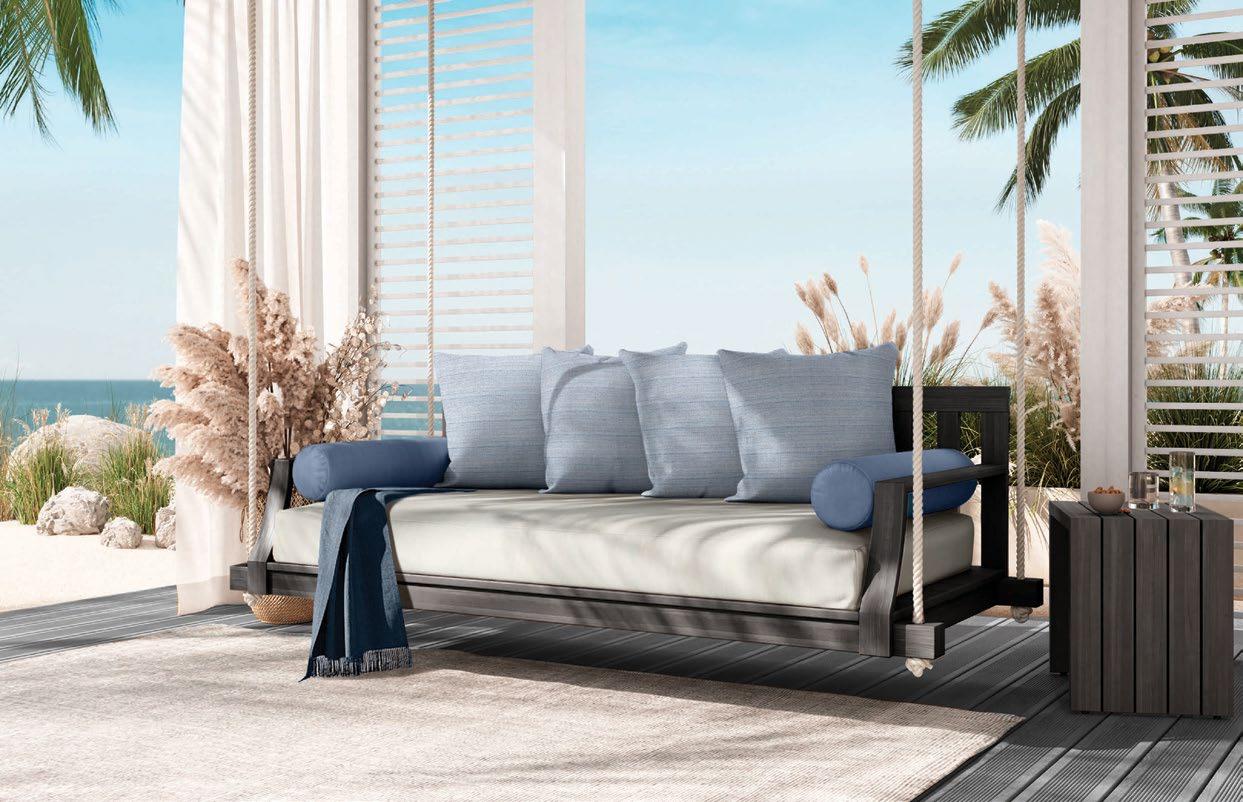


PHOTO: