
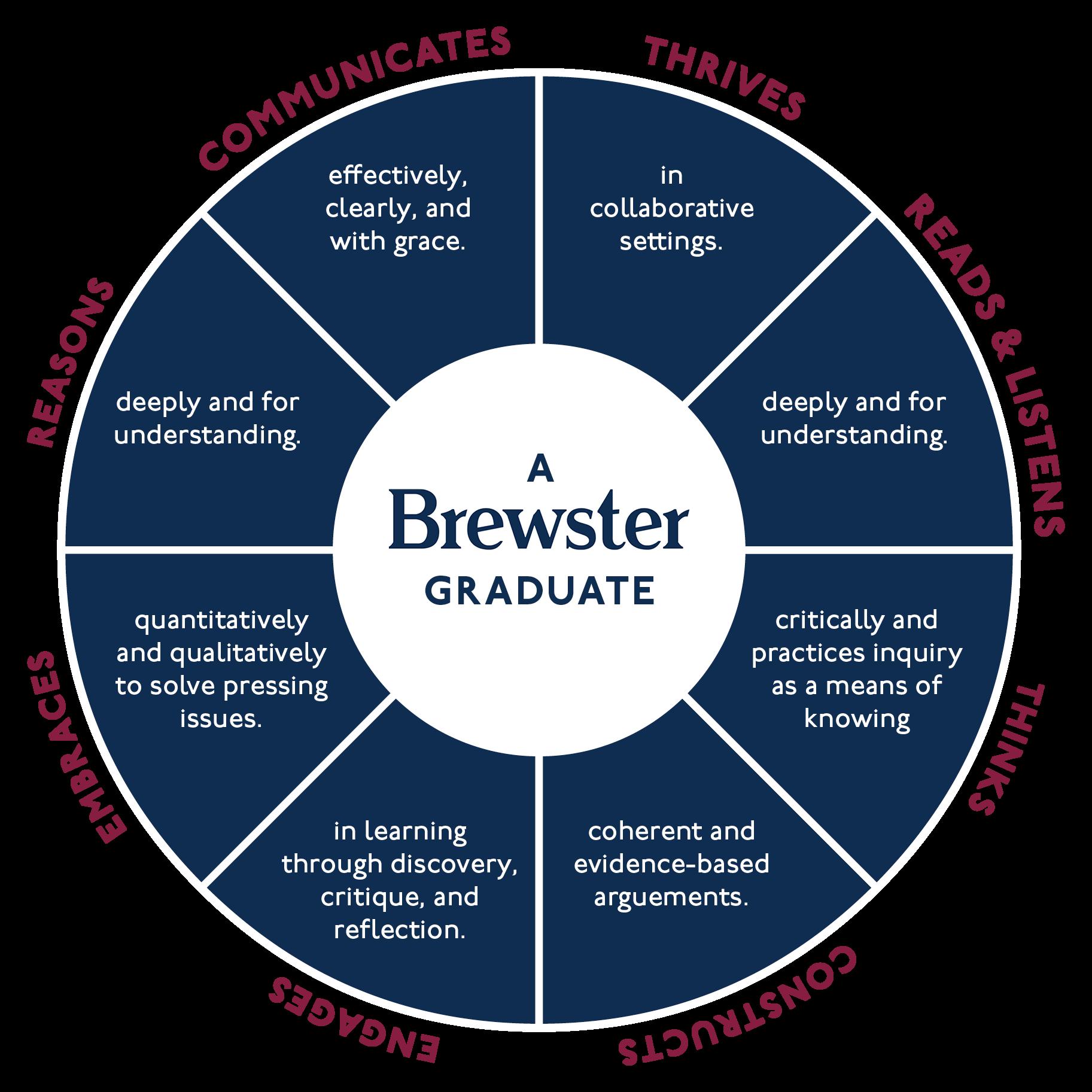
Our Portrait of a Graduate is an aspirational framework that allows us to “prepare diverse thinkers for lives of purpose.” It specifies skills and dispositions that permeate all of our courses and programs described in this Program of Studies. Combined with content knowledge specific to each academic discipline, these skills and dispositions help foster future-ready members of their communities who can take on a myriad of challenges and contribute to building a more sustainable, just, and peaceful society.
Students are admitted to a specific Brewster graduating class and are expected to fulfill Brewster Academy’s graduation requirements according to their assigned class. While enrolled at Brewster, students are expected to complete one course each year in English, history/social science, math, and science During their final year, seniors and postgraduates may elect to concentrate in an area of interest by taking two courses in English, math, science, or history/social science in lieu of courses in another discipline. At least one English course is still required every year. Postgraduate students will receive a Certificate of Completion upon satisfactory completion of five credit units.
● Successful completion of at least two years of a world language taken during high school (three or four years strongly recommended) unless circumstances support a waiver from this requirement;
● Successful completion of at least one year-long course in art;
● Successful completion of annual Interim Studies experience and accompanying demonstration of learning.
Because Brewster strives to serve a diverse community of learners, these graduation minimums may be modified on occasion These modifications are student-centered and require prior approval of the academic dean in conjunction with relevant faculty and administration.
Each student must register for a minimum of five full courses unless otherwise advised. To satisfy graduation minimums, most students enroll in six courses. Students are expected to enroll in one course in each of the core disciplines (English, history and social science, math, and science)
Enrollment in two courses in the same discipline requires department chair approval and can only be accommodated if there is space available. When there are more requests than there is space, preference for enrollment is given to students enrolling in the course at grade level.
The curriculum at Brewster is designed to meet the diverse learning needs of all students and to ensure that each individual advances their academic knowledge and skills In each course, teachers design and implement a variety of differentiated instructional strategies to ensure that students are appropriately challenged and that they master discipline-specific competencies. In non-AP courses, students are placed in instructional groupings, the design of which is aimed at
varying levels of scaffolding of the content and skills so that students meet the desired learning outcomes Our instructional groupings carry a weighted average to bring equity to the GPA on the student transcript
Students enrolled in Advanced Placement courses are required to take the College Board Advanced Placement Examination in May; Brewster arranges registration for these exams, and the student covers the testing fee for each exam For more information on academics at Brewster, please visit the Community Handbook (Academics section)
Below is an example of course selection for each grade (does not include Advanced Placement courses, which are offered in various disciplines to students in grades 10-12/PG, or Instructional Support offerings).
9
10
Kyle Reynolds, Department Chair
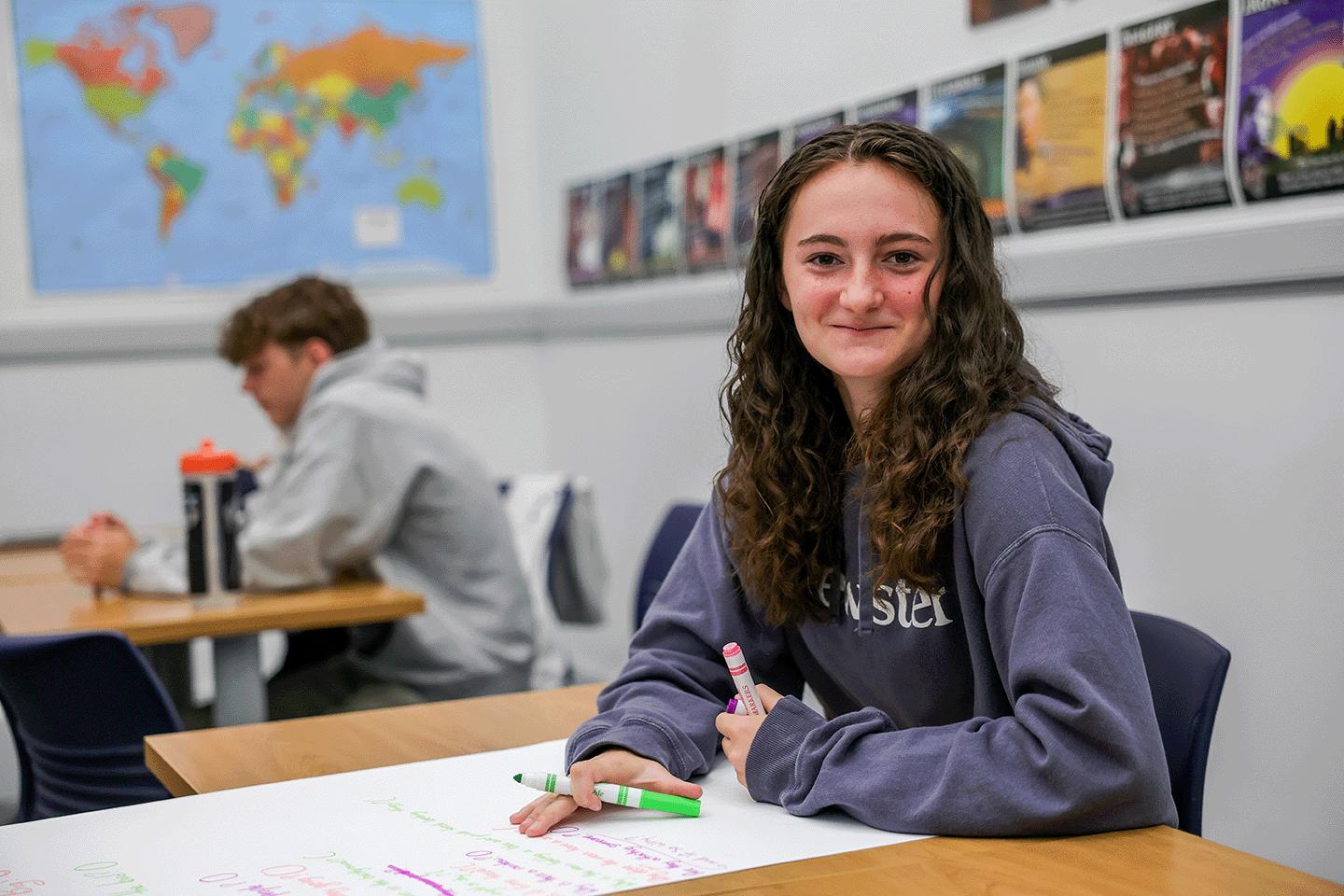
Hermann Hesse claimed, “Without words, without writing, and without books there could be no concept of humanity.” The Brewster English program aims to help students understand a “concept of humanity” by considering the meaning and power of words, writing, and literature. Brewster’s program provides a sequential, intentional curriculum that develops reading, writing, and communication skills Students read literature insightfully and write purposeful and engaging essays about themselves, their world, and the texts All courses ask students to consider ethical dilemmas, evaluate personal and political actions, and discover their own questions about humanity.
The English program facilitates students’ development through small classes, culturally relevant teaching practices, and a combination of groupings that create an effective and engaging learning environment. Paramount in this educational process is the effort of teachers to meet the individual needs of students. The curriculum includes a variety of assignments designed to allow students
both the opportunity to practice and demonstrate their skill development. Brewster recognizes that students enter courses with different skill levels and develop these skills at different rates For recommended students, Advanced Placement courses are offered, including AP Seminar, AP English Language and Composition, and AP English Literature and Composition.
In this 9th-grade course, students read, think, and write about a variety of literary classics, including a range of poetry and prose The major texts for the course are The House on Mango Street by Sandra Cisneros, Shakespeare’s Romeo and Juliet, and Haroun and the Sea of Stories by Salman Rushdie. Using these texts and others, students develop their abilities to read, react, and respond to literature. Key summative writing assessments include personal vignettes based on the style of The House on Mango Street, a character analysis in Romeo and Juliet, and a personal narrative developed from a portfolio process Overall, students learn how to use their own writing to understand themselves and their ideas.
In this sophomore-year course, students focus on reading, thinking, and writing about fiction, poetry, and drama. To help understand the purpose and significance of literature they read, students discover and explore interdisciplinary contexts, form opinions, make connections, and ask and answer their own questions. Readings include a selection of short stories, Laurie Halse Anderson’s Speak, George Orwell’s Animal Farm, Shakespeare’s Much Ado About Nothing, and poetry from the 16th Century to today Throughout the course, students develop and improve their skills of communication by practicing active reading strategies, employing discussion techniques, writing regular personal reflections and formal compositions that are both creative and analytical, presenting on their findings, and producing multimedia projects AP exam.
In this junior-year course, students study 20th-century and current American literature. Throughout the year, students will analyze, discuss, and respond to diverse works of American poetry, essays, narratives, drama, nonfiction, and fiction Readings include F Scott Fitzgerald’s The Great Gatsby and Tim O’Brien’s The Things They Carried, poetry from the Harlem Renaissance, as well as more contemporary short stories. As they navigate varied American perspectives, students will hone their analytical, persuasive, and creative writing skills. This course strives to challenge students’ understanding of American society as a whole, as well as their concepts of identity, belonging, and community
Literature presents an opportunity to study our sense of ourselves and where we are headed When we conceive of the future, what visions do we have, and do we seek to enact those visions or avoid them? The future is not like the weather we don’t just wait for it to happen, yet it also sits outside our full control. What do our stories of today and the past suggest about how we create "the future"? Our current moment feels especially consequential, a moment that seems to be radically reshaping our sense of the future Along with a study of contemporary visions, students will study the history of the future, reflecting on what past eras have imagined when they pictured our present. What concerns did they have about us, and which became a part of our reality? Although this course is structured as a study of literature, we will also examine how storytelling itself has changed and continues to change. Through research, discussion, and creative work, students will grapple with one of the most compelling questions of all: what does the future have in store for us?
In this writing-intensive course, students focus on the genre of the essay Throughout the course, students read exemplary texts and focus on analyzing the techniques that writers use to engage and persuade the audience, and they work to employ these techniques in their own writing. Techniques that receive significant attention include structure, language, rhetoric, using outside sources, and wit. As they read, students practice and refine their active reading strategies and focus on analyzing how and why writers design their essays and employ particular techniques As they compose, students make consistent use of the writing process, continually practicing and refining their pre-writing, drafting, revising, and editing skills. Additionally, students frequently practice their peer review and feedback skills, which are integrated into the writing process. Students create and collect a portfolio that includes both expository and persuasive essays that make intentional use of techniques relating to structure, language, and rhetoric
What makes a play so compelling to watch and understand? Why is drama such a powerful way to get a point across? This course begins with the origins of storytelling on the stage as we know it today, exploring the practices of Greek theatre and Shakespeare, before moving into the creation of a message in plays such as Ibsen’s “A Doll’s House” and Miller’s “Death of a Salesman”. Finally, we will look at modern drama that comments on the society from whence it came, such as Hansberry’s “A Raisin in the Sun” and Kaufman’s “The Laramie Project”. Plays are not just words on a page or actors on a stage, and assignments
will go beyond simply reading and writing about them, examining how diction, staging, and direction can make or break a playwright's message.
What are the many ways we tell our stories and convey our ideas? How is the way we see a learned skill and something that can be developed? In this course, students will study a variety of stories in a variety of media Along with exploring some traditional ways of storytelling short stories, plays, and poems students will study visual and multimedia forms as “texts,” reading and interpreting with the same language employed when considering literature. The class will consider the relationship between the written word and the visual world, in how we see and understand, and in the power of narrative and its shape Students will discover how stories surround us, hiding in plain sight, and how to better interpret those stories. This class is also for anyone curious about how two- and three-dimensional art, multimedia forms, video, and film have a place at the table in an English classroom.
This college-level course is intended to prepare students for the AP exam in English Language and Composition. Throughout the course, students will practice writing using a variety of rhetorical patterns, and they will approach writing as a process that places significant emphasis on pre-writing, drafting, revising, and editing Students will read and carefully analyze a broad and challenging range of texts to develop their understanding of literary and rhetorical elements and techniques. In May, they will take the AP exam.
In the first three modules of this college-level course, students will undertake a comparative study of the short story with a focus on the essential elements of fiction, begin a year long meditation on lyric poetry, and give serious consideration to an Aristotelian understanding of the tragic form in Sophocles’ Oedipus Cycle. In the subsequent module, students will turn their attention to the centrality of Shakespeare to our imagination in Macbeth, Othello, and King Lear Our final module examines the genre of the novel with a particular focus on Toni Morrison’s Beloved In May, students will take the AP exam in Literature and Composition. Particular attention is given to daily quizzes and tests that prepare students specifically for the national exam. Throughout the year, students will continue to hone their mastery of the writing process and develop their ability to write effective essays
The AP Capstone Seminar course presents students with opportunities to engage in an in-depth study of real-world or academic issues or problems, analyzing them from multiple perspectives
The overarching theme of the course focuses on exploring the complexities of one’s multiple and evolving identities, an individual’s roles in, relationships with, and responsibilities toward their local and global communities in an effort to broaden one’s understanding of citizenship. Ultimately, the goal of the course is to help students answer the essential question: What Makes a Citizen?
Exposure to multiple perspectives and content from different disciplines allows students to appreciate, better comprehend, and engage in conversations on civic identity formation and development, and discuss, analyze, and evaluate ideas associated with engaged citizenship in local and global contexts. Throughout the year, students practice critical reading, writing, and research skills in an effort to craft, communicate, and defend evidence-based arguments in collaboration with others or in their independent work Developed skills are applied as students research topics of their choosing for the multipart AP exam.
Jonathan Browher Department Chair
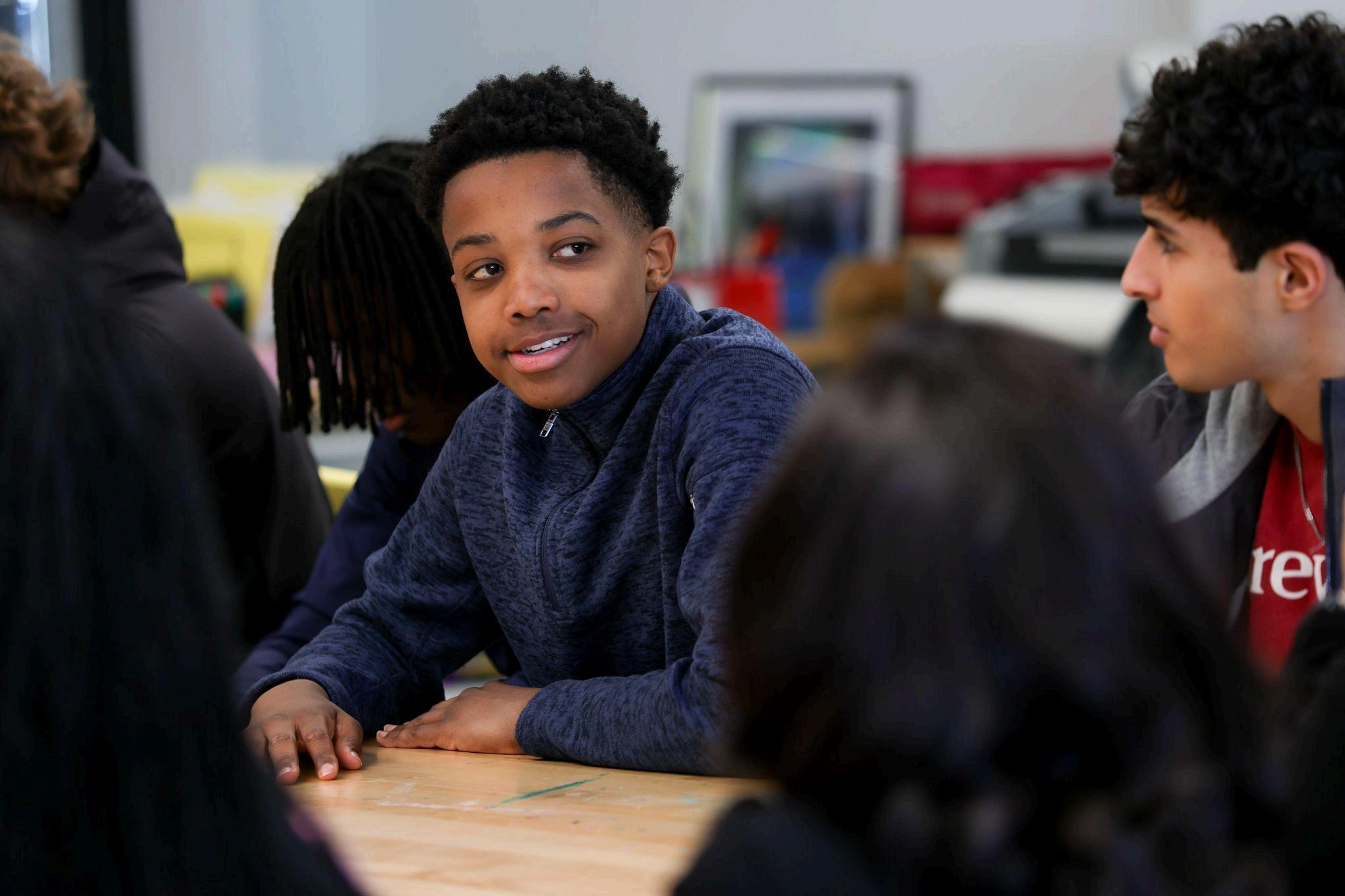
Courses in the History and Social Science Department provide students with opportunities to engage in the study of the past and the present in order to have the skills necessary to think critically and independently Through close reading and analyses of a variety of primary and secondary sources, students learn how to critically engage with texts, interpret them, consider multiple perspectives, and develop informed arguments supported by evidence. Class discussions and other small group work provide opportunities to practice civil dialogue, deep listening, and perspective-taking Research and writing skills are integrated into all of our course offerings and through careful scaffolding and frequent feedback, students become competent researchers, critical thinkers, and effective writers and speakers. Additionally, our economics and psychology courses provide students with opportunities to learn, analyze and interpret data, and apply their learning to their lives.
The 9th grade history course exposes students to the complexity and beauty of ancient and classical worlds Students read and discuss excerpts from Hindu and Buddhist texts and study works of art and architecture to meaningfully construct their understanding of the past. They then embark on an exploration of the Roman Republic and Greek and Roman Empires, the study of which is linked to an investigation and comparison of two Abrahamic religions: Judaism and Christianity The year concludes with a study of Islam and its expansion into North Africa and parts of Europe The 9th grade Interim Studies Experience to Cadiz, Spain at the end of winter trimester, provides students with opportunities to connect their knowledge about the ancient world, societies and religions to exploration and study of Spanish cities, culture, history and language. Throughout the year, students learn how to read closely, select evidence from primary sources, and use it to support their claims in writing and in speaking
The Topics in Global History course provides students with the skills & tools necessary to study in-depth historical subjects & developments across a global scale of time & space Students will navigate the causes, consequences, & connections of historical events that have shaped societies across Asia, Africa, the Americas, and Europe, from the Crusades to the postmodern era. They will be encouraged to draw connections between past and present global challenges, & explore how people & institutions respond. Additionally, students will reflect on their civic responsibilities, considering how they can positively impact their local communities while thinking & acting as informed & considerate global citizens As part of an authentic learning experience, students will actively engage in debates, collaborative projects, and mock trials, strengthening their public speaking, critical thinking, and collaborative research & inquiry.. Students will learn essential skills for historical study, such as the use of primary and secondary sources, determining & assessing historical points of view, and developing & substantiating original, historically defensible arguments, all while cultivating their own capacity for critical & independent thinking
The United States History course empowers students to become critical and independent thinkers, as well as engaged and well-informed participants in civic life, by studying, analyzing, and evaluating the history of the United States, its institutions and its peoples. This includes the structure, function, and powers of various levels of government, the ways in which Americans have actively participated in civic life throughout history, and how students themselves can be active and empowered citizens Through a series of authentic and practical assessments, students will become more active and informed civic participants and historians This course spans American
Origins, from independence to the Civil War to the social and political dilemmas of the 20th and 21st centuries This program of study offers students a historical and contemporary examination of the freedoms provided and extended to all Americans over time into the present day, and how they are interpreted and applied. Students will cultivate and practice the essential qualities and competencies required to live a life of purpose in the 21st century, such as media literacy, independent research, independent analysis and evaluation, use of sources, problem-solving, and collaboration
The Advanced Placement World History course instills in students the skills and habits necessary to engage in advanced-level history coursework. Students analyze and evaluate advanced historical topics, themes, and interpretations of Modern World History in the form of argumentation in writing and debate, dialogue, and personal reflection Students cultivate their understanding of world history from c. 1200 CE to the present by learning to make connections and to craft historical arguments through the use of appropriate evidence, including primary & secondary sources, as they explore the evolution of world systems & peoples over time Thematic learning objectives include Social Interactions (SIO), Political Systems and Governments (GOV), Interactions between Humans and the Environment (ENV), Cultural Developments (CDI), Economic Systems (ECN), and Technology and Innovation (TEC). In May, students take the AP World History: Modern exam.
The Advanced Placement U.S. History course is designed to provide students with the skills necessary to analyze and evaluate advanced historical topics, themes, and interpretations of U.S. History in the form of argumentation in writing and debate, dialogue, and personal reflection. The course is divided into nine units that span the pre-Columbian era to the present day Thematic learning objectives include American and National Identity (NAT), Politics and Power (POL), Work, Exchange, and Technology (WXT), Culture and Society (CUL), Migration and Settlement (MIG), Geography and the Environment (GEO), and America and the World (WOR). The course incorporates the learning objectives of a college 100-level survey course with the skills development of a 200-level seminar in order to offer an authentic college-level course and college-preparatory experience to qualified students In May, students take the AP exam in U S History.
AP Macroeconomics grapples with classical economic models and concepts Students will examine economic performance measures, economic growth, and the global economy in addition to practicing how to integrate high-end analytical thinking skills with advanced writing and research skills. There is a strong emphasis on economic modeling, to demonstrate understanding and mastery of Supply, Demand, Fiscal and Monetary policies. Students begin modeling basic supply and demand scenarios and then move into more complex economic modeling of national economies, inflation, unemployment, recessions and economic expansion The course incorporates the learning objectives of a college 100-level survey course in order to offer an authentic college-level course and college-preparatory experience to qualified students. Students enrolled in this course take the AP exam for Macroeconomics in May.
AP Human Geography is a yearlong seminar that serves as an introduction to human geography or cultural geography. The content is presented thematically rather than regionally and is organized around the discipline’s main subfields: economic geography, cultural geography, political geography, and urban geography The approach of the course is spatial and problem oriented Case studies are drawn from all world regions, with an emphasis on understanding the world in which we live today. Historical information serves to enrich analysis of the impacts of phenomena such as globalization, colonialism, and human–environment relationships on places, regions, cultural landscapes, and patterns of interaction Students will see geography as a discipline relevant to the world in which they live; as a source of ideas for identifying, clarifying, and solving problems at various scales; and as a key component of building global citizenship and environmental stewardship. Students enrolled in this course take the AP exam for Human Geography in May.
The AP Psychology course provides students with an introductory psychology framework for college-level content and skills, as recommended by the American Psychological Association (APA) Introductory Psychology Initiative These skills include Social Science Practices such as Research Design, Data Interpretation, Concept Application, and Evidence-based Argumentation The Framework is organized into five content-based units, including - Biological Bases for Behavior, Cognition and Development, Social Psychology, and Mental and Physical Health. This framework integrates key skills throughout the course that students need to be successful in subsequent courses in psychology
Advanced Placement Research* (only for students who have completed AP Seminar)
AP Research, the second course in the AP Capstone experience, allows students to deeply explore an academic topic, problem, issue, or idea of individual interest Students design, plan, and implement a yearlong investigation to address a research question. Through this inquiry, they further the skills they acquired in the AP Seminar course by learning research methodology, employing ethical research practices, and accessing, analyzing, and synthesizing information. Students reflect on their skill development, document their processes, and curate the artifacts of their scholarly work through a process and reflection portfolio The course culminates in an academic paper of 4,000–5,000 words (accompanied by a performance, exhibit, or product where applicable) and a presentation with an oral defense. [From AP College Board].
*Can be taken for English or History/Social Science credit
Laws and Citizenship in Action
Laws and Citizenship in Action is a yearlong elective that explores the ways in which American society and its justice system are rooted in, and shaped by, constitutional principles, and the roles the government and citizens play in sustaining a constitutional democracy Resources include the textbook Street Law, 11th Ed, as well as ongoing partnerships with attorneys, judges, law enforcement, and policymakers. In the first trimester, students will become active practitioners in understanding and interpreting the Constitution and its key amendments, which define citizens' rights and government powers They will apply constitutional principles and precedent to contemporary legal issues, using past and current Supreme Court cases to conduct mock trials and debates, and will participate in a simulation of the legislative process. In the second trimester, students will investigate how these principles are implemented by the Executive Branch and law enforcement. This includes the historical context and present-day perspectives on major topics in criminal justice, such as immigration, mandatory minimums, capital and juvenile punishment, and policing methods In the third trimester, students will design a capstone civic action project on a law related issue of their choosing, applying research methods, critical analysis, and civic reasoning to propose and execute solutions to real world challenges. Through case studies, moot court exercises, debates, deliberations, and performance-oriented projects, students will gain a deeper understanding of law, power, and responsibility in a constitutional democracy, all while developing and empowering their own sense of civic identity
Psychology of the Human Brain seeks to provide students with a strong introduction to college-level neuro-psychology. The course allows students to dissect and evaluate human
behaviors and their impact on the world around them by exploring the behavior, function, and anatomy of the human brain This includes how parts of the brain jointly control & influence the behaviors of humans Students will cover this journey through three trimester-long sections: Introduction to Psychology and the Human Brain (fall), Social Psychology and the Human Brain (winter), and Positive Psychology & the Inner Cosmos (spring). This program offers a wide range of assessments, including hands-on activities, competitive games, essay writing, gallery presentations, technological expressions, debates, personality research, and the use of a variety of education-based gaming platforms This program of study allows students to apply course knowledge toward a greater understanding of themselves and the world around them.
This year-long course blends aspects of practical application of economics with theoretical approaches The fall trimester (Economics in Everyday Life) focuses on understanding how economics shapes daily life. After a brief overview of global economic concepts, students engage in project-based learning tied to life after high school. Topics include budgeting, car purchasing (buying, financing, or leasing), credit management, financial instruments, retirement accounts, and the stock market The winter trimester (Business Organization & Entrepreneurship) explores economic issues related to business, including finance and organization. Students examine inflation and its effects on local and global economies. Through entrepreneurial projects, they create investment pitches, identify funding sources, assess hiring needs, and develop products. Additionally, students build resumes, write cover letters, and practice interview skills In the spring trimester (Classical Economic Theory and Globalization), students study global economic interconnections through trade and investment. Topics include international trade models, government policies, currency exchange rates, and their effects on trade. The course also covers development economics, inequality, and public sector issues like health care and environmental economics Activities include discussions, simulations, debates, and research
Adam Moore, Department Chair
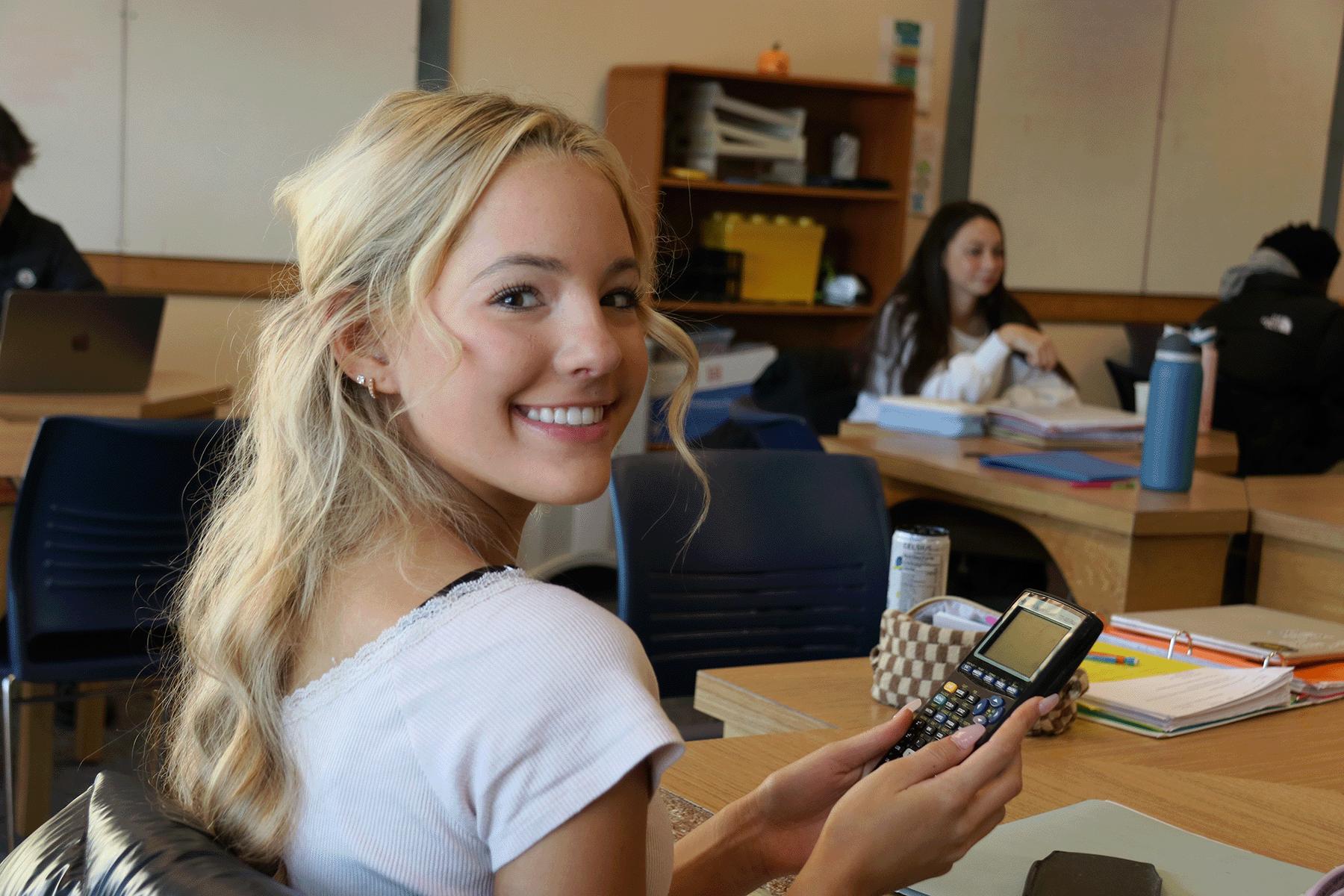
The Mathematics Department grows student understanding and appreciation of mathematics from theoretical and practical perspectives by using mathematics to describe the patterns of our world Students self-direct their mathematical pathway towards Function Analysis and Calculus or Statistics and Data Science. A four-year mathematics progression is expected; Geometry, Algebra 1 and Algebra 2 are required for graduation. All courses feature small, student-centered classrooms that explore application problems that foster responsible and efficient use of graphing calculators, a variety of online technologies, and connections to the physical world
Through the experience of collaborative problem solving with technology, students develop a toolkit of visualization and investigative tools along with their progress in specific course content. The mathematics courses at Brewster provide students a full range of college preparatory skills developed through cooperative learning environments aligned with best teaching practice This department strives to meet the needs of individual students in each moment of their
understanding, in order to grow mathematical confidence, knowledge, and ability so every student has the skills and desire to meet their personal goals
This course explores the concepts of point, line, plane, distance, angle, surface, and curve, and how we can model our physical world. Students build language and reasoning skills through comparisons of lines and planes, circles and spheres, areas and volumes Applications to real-life situations emphasize connections between geometric ideas and provide students with a background to practice and demonstrate the variety of geometric skills and visualizations developed in the course. Successful completion of this course prepares for an Algebra course suited to their experience
This course explores number systems, arithmetic operations, common representations, and the patterns variables follow in algebraic operations. Students build understanding of algebraic expressions, solving and graphing linear equations, solving, graphing and interpreting systems of equations, and operations with polynomial expressions Students are introduced to representations of quadratic equations, and students practice multiple methods for solving quadratic equations and develop visual skills through graphing quadratic, polynomial, and inverse functions. Successful completion of this course prepares students for Algebra 2.
This course continues the study of algebraic functions and processes from Algebra 1, with a detailed treatment of quadratic, polynomial, and rational functions. A combined graphical and analytic approach to these functions identifies characteristics, like minima and maxima, and patterns, like end behavior Solving equations with quadratic, polynomial and rational functions explores the real and imaginary number systems. Students complete an introductory study of exponential and logarithmic functions, with applications to interest, depreciation, and natural models of population growth and decay. Successful completion of this course prepares students for Statistics and Precalculus
This course reinforces the analysis of the major function families introduced in the Algebra sequence Additionally, this course introduces trigonometric functions, probability and descriptive
statistics. Lessons and assessments in this course are infused with lab activities and projects that foster a hands-on, data-based approach to understanding key mathematical concepts
Students regularly use technology, databases, and online applications to facilitate their understanding of topics presented within the course. Successful completion of this course prepares students for Statistics or Precalculus.
This course introduces major themes of data science and data representations applicable to most college majors. Students explore topics in descriptive statistics, sampling and experiment design, probability, discrete and continuous random variables, and the normal distribution Students apply statistical analysis to inference procedures, including sampling distributions, confidence intervals and hypothesis tests for single random variables Successful completion of this course prepares students for AP Statistics.
This course develops understanding of the patterns of algebraic functions, introduces trigonometric functions, and builds the foundation of mathematical analysis required in the study of calculus. Students explore the characteristics of polynomial, rational, exponential and logarithmic functions, including domain, range, intervals of increase and decrease, zeros, inverses of functions, asymptotes, and end behavior, using graphs and analysis Students complete a thorough study of trigonometry including evaluation of expressions, graphing functions, demonstrating identities, and solving trigonometric equations. With the toolkit of elementary and transcendental functions, students examine rates of change and investigate limits in preparation for the study of calculus. Successful completion of this course prepares students to take a Calculus or a Statistics course suited to their experience and goals
This course exposes students to a comprehensive list of calculus topics, at a moderate pace, with emphasis on project-based learning Topics include limits, derivatives, applications of derivatives for optimization and related rates, integration, and applications of integrals for calculations of area and volume. Applied problems are drawn from the broad range of the natural sciences, engineering, and technology. Successful completion of this course prepares students for AP Calculus AB or a Statistics course suited to their experience and goals
This course introduces students to key computing concepts and programming skills applicable to all computer programming languages. Students will build skills for iOS application development with the language Swift and through Swift Playgrounds. Students will develop practical experience with the structures of apps including maps, tables, games, navigation, photos, and camera Throughout the course, students will have the opportunity to modify existing programs and develop unique designs for implementation. The course follows the general outline of AP Computer Science Principles and uses resources recommended by the College Board.
This course develops the fundamental programming skills from the Computer Programming course. Students will grow their skills with computer programming by analyzing, writing and testing code using variables, control structures, polymorphism, and object-oriented design. Java is the fundamental programming language for this course where students work both individually and collaboratively to expand their flexibility and focus to meet programming objectives.
This course develops the four themes of statistical science, Descriptive Statistics, Sampling and Experimentation, Probability, and Inferential Statistics, at a rigorous pace and depth that is aligned with the College Board AP Statistics curriculum. Problem solving, analysis, pattern recognition, interpretation, and critical thinking are central skills developed through this course. Students will explore data technologies, using graphing calculators in daily class activities, and learn to operate data software and interpret a variety of common data outputs Successful completion of this course prepares students for the AP Statistics exam in May, with the potential to earn college credit for Statistics I. Enrollment requires a summer assignment, a teacher recommendation, and completion of Precalculus or Statistics.
This course encompasses a rigorous study of differential and integral calculus that is aligned with the College Board Advanced Placement Calculus AB curriculum. Students explore key concepts such as limits, derivatives, and integrals, applying them to linearization, optimization, related rates, and motion analysis Additional topics include Riemann sums, integration techniques, and applications to area and volume. Applied problems are drawn from the broad range of the natural sciences, engineering, and technology. Successful completion of this course prepares students for
the AP Calculus AB exam in May, with the potential to earn college credit for Calculus I. Enrollment requires a summer assignment, a placement test, and teacher recommendation
This course develops the concepts of differential and integral calculus, studied in Calculus AB, while introducing students to parametric, polar, and vector functions, formal limit definitions and integrals, approximations, and series analysis Students work extensively with advanced integration techniques, their applications, summation notation, improper integrals with strong emphasis on convergent and divergent series. Applied problems are drawn from the broad range of the natural sciences, engineering, and technology. Successful completion of this course prepares students for the AP Calculus BC exam in May, with the potential to earn college credit for Calculus II Enrollment requires a placement test and teacher recommendation
Michelle Dodge, Department Chair
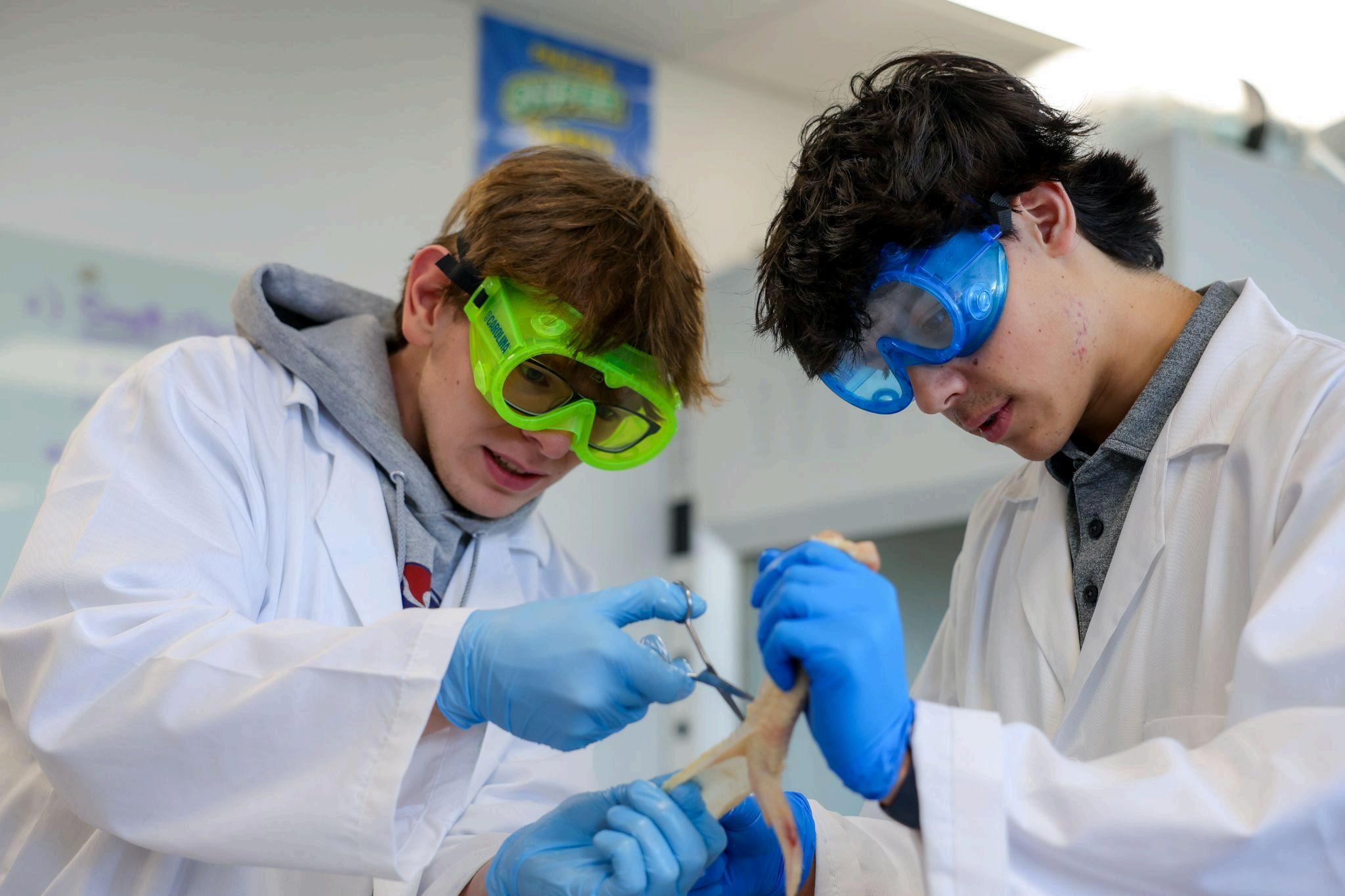
At Brewster, Science students acquire the skills needed to face the challenges of a rapidly changing modern world, now and in the future In all science course offerings, students enhance their understanding of content to develop the skills and mindsets needed to become critical thinkers and problem-solvers. Students develop essential scientific processes, including formulating questions, forming hypotheses, conducting experiments, collecting data, and analyzing results. By utilizing evidence and reasoning derived from data, students are encouraged to critically assess and form well-supported perspectives on scientific issues Core concepts that span the science disciplines such as: cause and effect, structure and function, scale, and interactions among systems are embedded in the overarching course experiences, and time for self-reflection and metacognition are valued. Each course utilizes essential questions to guide the learning process. Students will be given opportunities to engage in the collaborative process using inquiry-based experiences, authentic application of content, and practice of skills
Before graduation, students are expected to complete biology, chemistry, and physics. After completing these three courses, students may continue with other science electives
What does it mean to be living? Biology is a laboratory science course that offers a comprehensive exploration of living systems with the cell at its focus. Students will investigate the structure and function of cells and their organelles, mechanisms of cell transport, body systems, genetic inheritance, and the process of evolution and natural selection Throughout this course, students will engage in a variety of activities designed to develop their problem-solving, inquiry, and science skills. As students explore biological concepts, they will also build their curiosity, creativity and collaboration skills as they learn how understanding Biology is key for understanding human health and current issues Students are given a variety of opportunities to demonstrate their knowledge and the skills they acquire Students build models, conduct laboratory activities, engage in experimental design and analyze data, and apply knowledge to case studies. This course will provide students with an overview of the life sciences and will serve as a foundation for future science coursework
Chemistry is often called the central science as knowledge of this discipline allows for better understanding of life and physical sciences. Chemistry is a hands-on laboratory course where students develop scientific skills by conducting experiments, analyzing data, and presenting findings in formal reports Students explore topics such as the scientific method, matter classification, atomic structure, periodic trends, chemical bonding, molecular structures, and chemical reactions. The course also covers stoichiometry and real-world applications of the mole concept. Later in the year, students will talk about real-world applications such as thermodynamics, kinetics, and systems in equilibrium Through this process, students enhance their critical thinking and collaborative skills, working together to approach problems and think like scientists. Assessments include quizzes, labs, and tests, allowing students to connect chemistry concepts to their everyday lives and foster a deeper understanding of the material. 17
How can Physics be used to understand and explain the world around us? Physics is a lab science course that is intended to challenge students to develop critical thinking skills and gain an appreciation for the physical world around them. Students typically work collaboratively in the classroom and in the laboratory environment to learn kinematics, dynamics, momentum and energy, while also developing key lab skills In the lab, students use a variety of sensors to collect
data, and use spreadsheets and graphing programs for analysis. New concepts are typically introduced through collaborative lab activities Once students have collected and organized data into tables and graphs, they are then tasked with the challenge of developing relationships and equations through discussion and graphical analysis. Students then apply this new understanding to increasingly complex problems. Skills are further developed as students originate, plan, and carry out experimental projects. Each module of study ends with a written exam and module project
In this lab-based science course, students will grow their understanding of how the body functions Students will engage in group discussions and collaborative activities that include creating models, conducting experiments, collecting and analyzing data, and drawing conclusions all in an effort to answer fundamental key questions: How does the body function to maintain health? What happens if there is a malfunction? What lifestyle choices can be made to promote one’s health? Students will consider a variety of case studies and will utilize critical thinking skills to make decisions Each trimester will explore the body with a thematic approach: Support and Movement, the Body in Action, The Human Machine: What Flows Within, The Three R’s: Regulation, Response and Reproduction. Anyone interested in pursuing a career in the health field should consider this introductory course.
This course teaches students to navigate the nighttime sky, using telescopes to observe the moon, nebulae, and star clusters. By exploring the sky, students gain insight into natural phenomena like seasons, moon phases, and celestial motions. Weekly nighttime observations include setting up telescopes, astrophotography, and viewing deep sky objects. Hands-on activities with planispheres and telescopes help students identify constellations and locate astronomical objects Key topics include the celestial sphere, seasonal changes, and solar movement. The course covers the Moon’s geography and impact on Earth, as well as the Sun and other stars. A scaled solar system model illustrates planetary relationships. Astrobiology fundamentals are also explored, including the search for exoplanets. This interdisciplinary approach combines philosophy, chemistry, and planetary science By the end of the course, students will appreciate the cosmos, operate telescopes, and recognize seasonal constellations, gaining a deeper understanding of astronomy’s exciting frontiers.
How does human activity impact freshwater ecosystems and their biological processes? This course examines the biology of freshwater systems, beginning with the study of water's origin, movement, and physical properties, and how they relate to ecosystems such as lakes, rivers, and wetlands Students will explore biological concepts like water chemistry, nutrient cycling, and 18 the role of microorganisms, using Lake Winnipesaukee as a living laboratory Students will investigate human impacts, including eutrophication, invasive species, and the effects of climate change on different communities, with a focus on understanding biological interactions and their consequences on ecosystem health. Students will be able to make connections between biology and ecology by exploring the diversity of life in freshwater ecosystems, including the organisms that inhabit the local watershed, such as macroinvertebrates and aquatic plants Students will apply their knowledge by engaging in fieldwork and examining how humans can help restore and protect these ecosystems through sustainable practices.
AP Biology is an upper-level science course that explores biological concepts, processes, and applications through inquiry-based learning and critical thinking. The course is structured around four Big Ideas. Evolution explains life’s diversity and unity through natural selection, where genetic variations influence survival and adaptation A diverse gene pool ensures species resilience in changing environments Energetics examines how organisms acquire and use energy to maintain homeostasis and sustain life. Efficient energy use is essential at individual, population, and ecosystem levels. Information Storage and Transmission focuses on genetic inheritance and how DNA transmits information across generations. Genetic variation promotes adaptability, while environmental factors influence gene expression Systems Interactions explores complex biological interactions at molecular, cellular, and ecosystem levels, ensuring stability and response to environmental changes. Students develop essential science practices, including explaining biological concepts, analyzing visual data, designing investigations, using statistical tests, and constructing evidence-based arguments. Through labs, projects, and real-world applications, students gain scientific literacy, problem-solving skills, and a strong foundation for academic and career success in the biological sciences
Advanced Placement (AP) Chemistry is a laboratory science course that will introduce students to more advanced chemical concepts at an accelerated rate The overarching goal is to prepare students to take the AP exam in the spring, but in a deeper sense students are preparing for
college level chemistry. In AP Chemistry students will have the opportunity to build their understanding of chemistry as they further explore the concepts of (1) scale, proportion, and quantity; (2) structures and properties of substances; (3) transformations; (4) energy; and (5) equilibrium. Throughout the course students will develop critical thinking skills, experience a variety of laboratory equipment and techniques, and develop science skills that will prepare them for college-level science courses. Students enrolled in this course must have successfully completed Chemistry at the accelerated level and complete or concurrently enroll in Physics Students will need to receive departmental approval
Advanced Physics is an AP-level course that closely follows the AP Physics 1 curriculum with additional topics It is a second-year physics course that is designed for students who have shown strong interest in the field At the end of the course, students will be able to demonstrate an in-depth understanding of selected physics concepts and improve their critical thinking and problem-solving skills. Lab work and data analysis is a major part of this class. Students will develop the skills needed to record and synthesize data and information from general observations and experimental work at an advanced level Topics include but are not limited to, advanced Newtonian mechanics (including circular and rotational dynamics), fluid mechanics, electricity, and sound & waves. Students enrolled in this course must have successfully completed Physics and Pre-Calculus at the accelerated level and receive department approval.
This course is designed to prepare students to view the world as an engineer, finding solutions to everyday problems. Students are introduced to the Engineering Design Process and practice implementing it in a variety of problem-based projects. Through individual and collaborative work, students will explore computer aided design (CAD), 3D printing, automation, reverse engineering with a goal of developing creative, effective solutions for real world application This course will encourage students to approach complex problems with ideas aimed at solutions and will empower students to design, document and share their innovations with their peers. This course is designed for students looking to explore applications of mathematics and technology for real world applications using the Engineering Design Process, and for students looking to develop problem-solving skills in an authentic environment with life-long relevance
This course introduces students to the basic concepts of robotics using a hands-on and experiential approach Students will explore three main themes: design, fabrication and
construction, and programming. The course will provide students with opportunities to explore 3D printing using computer aided design (CAD) software to fabricate parts for specific intention, to design feedback loops and overall programming structures by which robots achieve their ultimate desired goal. Students will consider design and fabrication in the first trimester, construction and programming in the second trimester, and testing and refinement in the third trimester.
Margarita Proulx, Department Chair
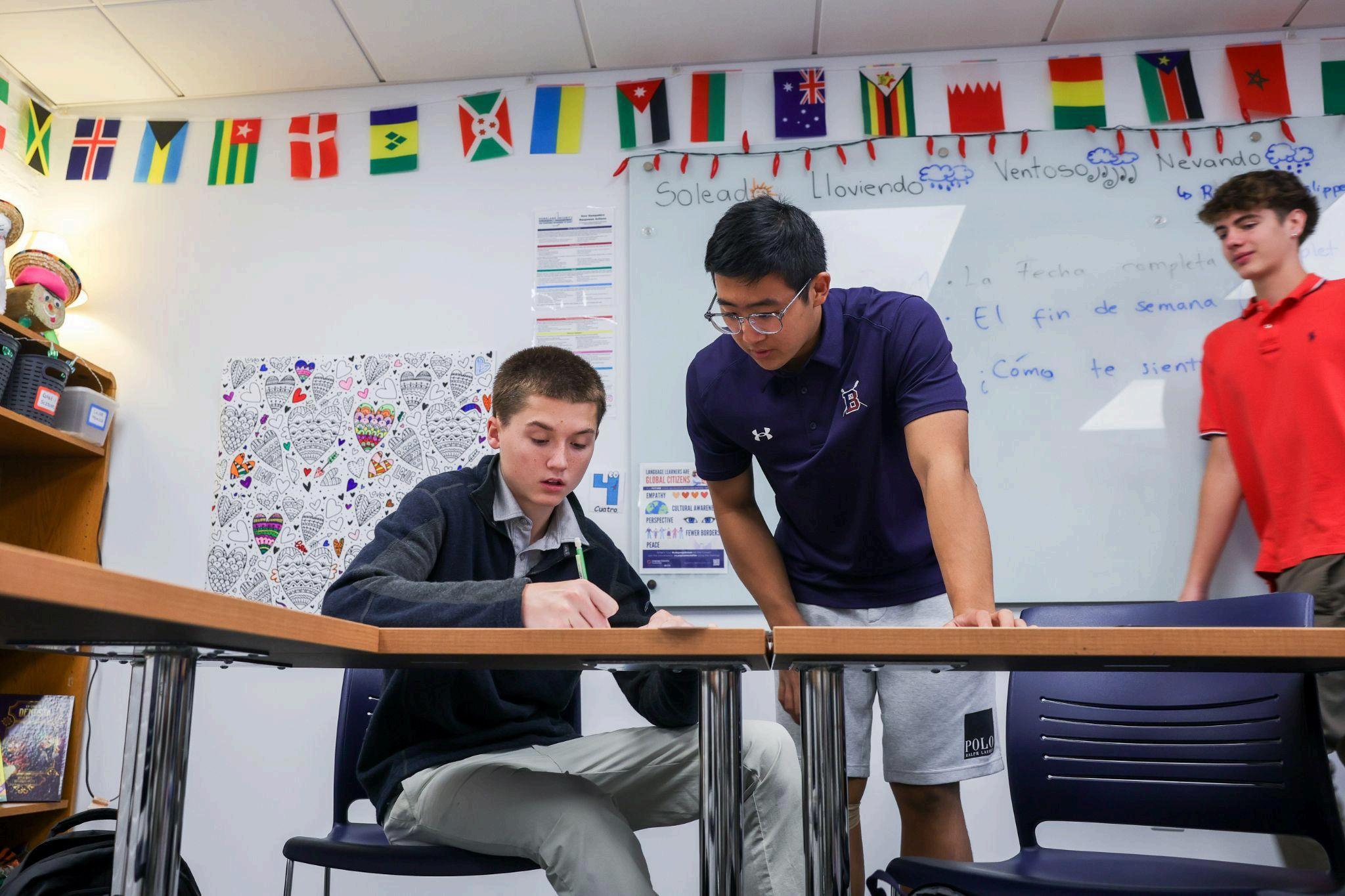
Ludwig Wittgenstein once famously posited that “The limits of my language are the limits of my world ” Keeping his posture close to heart and mind, the World Languages Department aims to promote an understanding of the breadth of the human experience through learning opportunities that build multilingual proficiency; and foster an appreciation and respect for the products, perspectives, and practices of the people whose languages are being studied; and thoughtfully participate in diverse communities, both at home and around the world.
Brewster offers students three modern languages: French, Spanish, and Mandarin Chinese At all levels, the world language is the language of the classroom and students are asked to engage in all three modes of communication: interpersonal, presentational, and interpretative. Leveraging the ACTFL framework, the World Languages Department is committed to a proficiency-driven, student-centered approach to language learning, and students’ progress and growth are regularly benchmarked Students who have begun the study of a language before coming to Brewster will
be required to take a placement test. Student placement from year to year is at the recommendation of the department Determinations will be made based on the scope and sequence of Brewster's language curriculum and with the student’s best likelihood for success in mind.
Who are we? Who are our neighbors? What does it mean to be human? And how do we make sense of our world? Leveraging these foundational human investigations as a point of departure, Roots invites students to embark on a linguistic and cultural adventure through the study of high-frequency vocabulary and essential structures. In this course, students will engage in formulaic, simple interactions about their immediate surroundings; respond to different situations that they may confront on a day-to-day basis; and learn strategies to cope with the gaps in their comprehension Through a variety of activities and the use of adapted and authentic materials, students will also learn how to communicate about themselves and others and seek practical information. By the end of the course, students will aim to achieve a proficiency level of novice-mid to novice-high as defined by the ACTFL The class is conducted in French to the greatest degree possible to develop aural-oral competency
What role do shared experiences and traditions play in shaping our understanding of home and cultural identity? In what ways do our personal experiences shape our cultural perspectives and sense of community? Keeping these essential questions at the forefront of this course, Footprints continues students’ investigation of linguistic and cultural understandings, focusing on consolidating skills, expanding communicative abilities, and cultivating sensitivity to diverse perspectives and practices. Students engage in conversations, express thoughts and opinions, and narrate personal experiences with increasing confidence on familiar topics Through the use of curated texts and media, students will explore themes of identity, community, and everyday life in the Francophone world. By the end of the course, students will aim to achieve a proficiency level of novice-mid to intermediate-low. The class is conducted in French to the greatest degree possible to develop aural-oral competency.
What defines “home”? Is it people, a specific place, or the memories made during a certain period of time? And how do we find it? With these questions in mind, Pathways aims to deepen the learner’s understanding of the Francophone experience and continue to develop their proficiency across all three modes of communication: interpretive, interpersonal, and presentational Students
will learn to begin to meaningfully create with language; communicate about and compare events, places, and people; expand upon familiar topics; and broaden their writing and reading skills to help set the stage for enhanced literacy in the target language By the end of the course, students will aim to achieve a proficiency level of novice-high to intermediate-low as defined by the ACTFL. The class is conducted in French to the greatest degree possible to develop aural-oral competency.
What do solidarity, stewardship, and community look like? Do communities shape individuals, or do individuals shape communities? What is humanity’s proper relationship with the natural world? And what obligations and responsibilities do we have to others and our planet? In pursuit of these essential questions, Viewpoints is designed to bring students to a basic degree of independence in the language as they continue to explore diverse cultural products, practices, and perspectives in the Francophone world, and build proficiency across all three modes of communication: interpretive, interpersonal, and presentational. In this course, vocabulary and idiomatic structures are expanded upon, aiming to consolidate students’ ability to navigate straightforward social and personal contexts By the end of the course, students will aim to achieve a proficiency level of intermediate-low to intermediate-mid as defined by the ACTFL. This course is conducted entirely in French.
What is the relationship between language, place, identity, and culture? What does it mean to be Francophone in a world increasingly defined by constant change, uncertainty, intricate connections, and blurred lines? And how has the Francophone experience changed over time? Journeys will address these questions as students continue to unpack the complex stakes of the French-speaking world while also challenging themselves to grow towards greater autonomy in the language Moving towards the consideration of more abstract concepts and ideas, the course will provide students with all the necessary linguistic tools to begin to support critical opinions and further explore and unpack the rich mosaic of French-speaking countries through reading, discussion, and writing about diverse texts and media. Assessment focuses on the student’s ability to transfer those linguistic skills to meaningful cultural contexts through written and oral work By the end of the course, students will aim to achieve a proficiency level of intermediate-mid to intermediate-high as defined by the ACTFL. This course is conducted entirely in French.
The Modern Francophone Experience is a seminar organized around the study of texts, current events, and cultural topics under the umbrella of the six College Board-designated AP French Language themes. The course will be conducted exclusively in French, and students will hone their interpersonal, interpretive, and presentational modes of communication and expression.
Students will leverage an extensive range of authentic francophone material to engage in higher-level discussions, collaborate with native speakers, make real-world connections, and unpack issues relating to the broader Francophone experience. Over the course of the academic year, students will select a French-speaking country of focus and create a digital portfolio with artifacts that showcase students’ knowledge of the area as well as demonstrate their language proficiency, intercultural literacy, and overall growth By the end of the course, students will aim to achieve a minimum proficiency level of intermediate-high as defined by ACTFL This course is conducted entirely in French.
Roots provides an introduction to the language and invites students to embark on a linguistic and cultural adventure through the study of high-frequency vocabulary and essential structures. In this course, students will begin to develop novice-level proficiency in the language as well as the cultural competence needed to appropriately engage in everyday communication in Chinese. Students will be linguistically immersed into the Chinese phonetic system (Hanyu Pinyin Romanization), simple grammatical structures, the simplified Chinese writing characters, and daily conversation through drills, songs, and Chinese social media. Students will constantly use WeChat (a combination of Amazon, Uber, Facebook, and Instagram and one of the most popular online communication tools in China) for in-class and homework assignments to connect to the real world By the end of the course, students will aim to achieve a proficiency level of novice-low to novice-mid as defined by the ACTFL The class is conducted in Mandarin Chinese to the greatest degree possible to develop aural-oral competency.
Pathways builds upon the linguistic and intercultural competencies of the Roots experience Learning topics include making appointments, giving comments on someone’s work, diary and letter writing, shopping and exchanging clothes, writing emails, and arranging travel/transportation plans Students will use WeChat to develop their cultural understanding and language skills By the end of the course, students will aim to achieve a proficiency level of novice-mid to novice-high as
defined by the American Council on the Teaching of Foreign Languages. The class is conducted in Mandarin Chinese to the greatest degree possible to develop aural-oral competency
Mandarin Chinese: Viewpoints
Viewpoints continues to build upon the knowledge, skills, and dispositions acquired from previous years with a special focus and emphasis on speaking and writing in Chinese and project-based assignments about Chinese culture Students will have daily speaking and writing exercises, including bi-weekly oral interviews, daily conversation drills on different topics acquired from the first two Mandarin classes. By the end of the course, students will aim to achieve a proficiency level of novice-mid to novice-high as defined by the American Council on the Teaching of Foreign Languages. The class is conducted in Mandarin Chinese to the greatest degree possible to develop aural-oral competency
Mandarin Chinese: Journeys
Journeys focuses heavily on speaking and writing in Chinese and project-based assignments about Chinese culture Increased use of authentic materials is employed as more sophisticated 23 aspects of language and culture are explored Students will have daily speaking and writing exercises, including bi-weekly oral interviews, daily conversation drills on different topics acquired from the previous Mandarin classes. Additionally, students will be assigned to research and deliver presentations (in both English and Chinese) about Chinese culture. By the end of the course, students will aim to achieve a proficiency level of novice-high to intermediate-low as defined by the American Council on the Teaching of Foreign Languages The class is conducted in Mandarin Chinese to the greatest degree possible to develop aural-oral competency.
Who are we? Who are our neighbors? What does it mean to be human? And how do we make sense of our world? Leveraging these foundational human investigations as a point of departure, Roots invites students to embark on a linguistic and cultural adventure through the study of high-frequency vocabulary and essential structures. Students will engage in simple interactions about their immediate surroundings; respond to different situations that they may confront on a day-to-day basis; and learn strategies to cope with the gaps in their comprehension Through various activities and the use of adapted and authentic materials, students will also learn how to communicate about themselves and others and seek practical information. By the end of the course, students will aim to achieve a proficiency level of novice-mid to novice-high as defined by ACTFL The class is conducted in Spanish to the greatest degree possible to develop aural-oral competency
What role do shared experiences and traditions play in shaping our understanding of home and cultural identity? In what ways do our personal experiences shape our sense of culture and community? Keeping these essential questions at the forefront of this course, Footprints continues students’ investigation of linguistic and cultural understandings, focusing on consolidating skills, expanding communicative abilities, and cultivating sensitivity to diverse practices and perspectives Students engage in conversations, express thoughts and opinions, and narrate personal experiences with increasing confidence on familiar topics. Using adapted and authentic texts and media, students will explore themes of identity, community, and everyday life in the Spanish-speaking world. By the end of the course, students will aim to achieve a proficiency level of novice-mid to intermediate-low The class is conducted in Spanish to the greatest degree possible to develop aural-oral competency
What defines “home”? Is it people, a specific place, or the memories made during a certain period of time? With these questions in mind, Pathways aims to deepen the learner’s understanding of the Spanish-speaker experience and to develop their proficiency across all three modes of communication: interpretive, interpersonal, and presentational. Students will learn to communicate about and compare events, places, and people; expand upon familiar topics; and broaden their writing and reading skills which will set the stage for enhanced literacy in the target language By the end of the course, students will aim to achieve a proficiency level of novice-high to intermediate-low as defined by the ACTFL. The class is conducted in Spanish to the greatest degree possible to develop aural-oral competency.
What do solidarity, stewardship, and community look like? Do communities shape individuals, or do individuals shape communities? What is humanity’s proper relationship with the natural world? And what obligations and responsibilities do we have to others and our planet? In pursuit of these essential questions, Viewpoints is designed to bring students to a basic degree of independence in the language as they continue to explore diverse cultural products, practices, and perspectives in the Spanish-speaking world, and build proficiency across all three modes of communication: interpretive, interpersonal, and presentational. In this course, vocabulary and idiomatic structures are expanded upon, aiming to consolidate students’ ability to navigate straightforward social and personal contexts By the end of the course, students will aim to achieve a proficiency level of
intermediate-low to intermediate-mid as defined by the ACTFL. This course is conducted entirely in Spanish
What is the relationship between language, place, identity, and culture? What does it mean to be a Spanish speaker in a world increasingly defined by constant change, uncertainty, intricate connections, and blurred lines? And how has the Spanish-speaking experience changed over time? Journeys will address these questions as students explore the complex stakes of the modern Spanish-speaking world while also allowing for a continued expansion of autonomy in the language. Moving towards the consideration of more abstract concepts and ideas, the course will provide students with all the necessary linguistic tools to begin to support critical opinions and further explore and unpack the rich mosaic of Spanish-speaking countries through literature, art, and engaging discussions Assessment focuses on the student’s ability to transfer those linguistic skills to meaningful cultural contexts through written and oral work. By the end of the course, students will aim to achieve a proficiency level of intermediate-mid to intermediate-high as defined by the ACTFL This course is conducted entirely in Spanish
Global Voices is a seminar organized around the study of texts, current events, and cultural topics under the AP Spanish themes: global challenges, science and technology, contemporary life, personal and public identities, family and communities, and beauty and aesthetics The course will be exclusively in Spanish, students will hone their interpersonal, interpretive, and presentational modes of communication and expression. Students will leverage an extensive range of authentic material to engage in higher-level discussions, collaborate with native speakers, make real-world connections, and unpack issues relating to the broader Spanish-speaking experience. Over the course of the year, students will select a Spanish-speaking country of focus, create a digital portfolio with artifacts that showcase students’ knowledge of the area as well as demonstrate their language proficiency, intercultural literacy, and overall growth. By the end of the course, students will aim to achieve a minimum proficiency level of intermediate-high as defined by the ACTFL. This course is conducted entirely in Spanish.
Elizabeth Baker McClain, Arts Department Chair
The Fine and Performing Arts Department at Brewster views art education as an important and integral part of the curriculum We believe coursework in both the fine and performing arts affords students an accessible mode of self-expression, a window into the experiences of others, and an opportunity to strengthen empathy.
Fundamentals of Art is offered exclusively to 9th grade students. Each trimester they will work with a different Brewster art teacher and focus on one of three disciplines within our arts program: Music, Theater, Art, and Photography Moving through each trimester-long experience with their cohort, students will be better prepared for the topics and techniques in the higher
level art courses here at Brewster, and will get a better sense of their interests within the breadth of programs offered within the Arts
Open to Juniors and Seniors, this full-year performing arts course is designed for students looking to continue their growth across performing arts disciplines of their choice. Student-driven in nature, the course gives participants the opportunity to build on their skills as performers and complete a capstone performance showcasing their work Students in this course are encouraged to enroll in the Arts Signature Program and are required to participate in performance opportunities throughout the year. Prerequisites for Advanced Performing Arts include a demonstrated engagement in the arts and a minimum of one year in other performing arts courses
Students in their Junior or Senior year will engage in a full year, portfolio arts course to continue their growth in mediums of their choice This is a student-driven course that will give participants the opportunity to build out their portfolio, and complete a capstone project curating, and designing an art exhibit of their own work. Students in this course are encouraged to enroll in the Arts Signature Program. Prerequisites for Advanced Fine Arts include a demonstrated engagement in the arts with a minimum of one year in other fine arts courses.
This course is designed for singers or instrumentalists who wish to gain and develop their performing skills in a group-oriented, critique-based setting. Students practice independently for portions of each class and come together to sing or play their music for each other in a critique setting at least once per week Students are expected to bring these skills to each performing opportunity throughout the school year such as coffee houses and all-school assemblies
Audio
It is an introduction to Midi sequencing and Audio Recording. This is a hands-on class designed to give the student a thorough understanding of digital music and midi interface This course will introduce the concepts of creating digital audio and midi sequencing through the use of software applications. Students will also learn mixing, EQ methodology and mastering as well as production
and engineering tactics. The end of the term will culminate in a finished recording designed entirely by the student
This class will develop beginning guitar and ensemble techniques through daily practice and rehearsal. In addition to ensemble skills, students will develop the notational and theoretical concepts of music essential to performing within a group Reading standard musical notation will be essential to cover this material; however, no prior reading experience is required
This course is for the aspiring pianist, from beginners to advanced players Students will delve into the foundational elements of piano playing, focusing on essential skills such as music literacy, basic notation, rhythms, time signatures, and intervals. Whether you ' re starting from scratch or seeking to refine your technique, this course offers a supportive environment where each student can progress at their own pace. Beyond mastering the fundamentals, piano will encourage students to take their playing to new heights through an individualized program of study
This course is open to any student who enjoys group singing. Rehearsals focus on developing vocal technique, musical literacy, and the styles and principles of presentation Chorus pulls its repertoire from rock, jazz, classical, pop, theater, television, and movies Members will learn to improve their vocal singing with an emphasis on good technique, ear training, sight-singing, theory, and rehearsal methods, all the while strengthening their ability to listen and harmonize clearly.
This course begins with basic acting methods. Students select a monologue, analyze the script for themes, and develop an understanding of and empathy for their character. Once familiar with their scripts, students begin memorizing and presenting their monologues to the class for direction and feedback In the winter, the course explores various physical performance techniques Students create, implement, and perform physically expressive characters and scenarios, focusing on spatial awareness and body control. The course also examines the use of fight and violence in theatrical contexts. In the spring, students study the development of theater, dramatic literature, and major theatrical movements and styles, from the ancient world to the present This includes a survey of Western theater, starting with the ancient Greeks, continuing through the development of English-language theater, and concluding with contemporary
American theater. Non-Western traditions, such as Islamic and East Asian theater, are also explored
In the fall, students learn to analyze scripts for theatrical design. They develop skills to dissect and interpret scripts, focusing on production elements such as staging, design, and audience impact, so by the end of the term, students are able to critically analyze scripts and apply their insights to bring them to life on stage The course also provides an overview of theater buildings and spaces Students select a specific structure and script, then develop a storyboard/moodboard. In the spring, students explore the essential role of costumes in storytelling. They learn the creative and technical processes behind designing costumes that reflect characters, time periods, and themes Topics include fabric selection, pattern drafting, garment construction, historical costume influences, and modern design trends Students engage in hands-on projects and focus on research, artistic expression, and ensuring the comfort and movement of actors within the design.
This yearlong course introduces students to a range of sculptural techniques, combining wheel-throwing, hand-building, and mixed-media approaches Students will develop foundational skills in working with clay to create technically sound pottery & sculpture while also exploring diverse materials and their properties in sculptural projects. Emphasizing both aesthetic and conceptual choices within a contemporary context, the course encourages creativity, problem-solving, and personal expression As students advance, they will refine their control of the medium, experiment with sculpture techniques, and gain independence in their artistic practice. Projects range from traditional ceramic forms to innovative mixed-media creations, with opportunities for critique and self-directed exploration.
This yearlong course introduces students to a diverse range of drawing and painting techniques, including pencil, color pencil, charcoal, watercolor, acrylic, and printmaking. Emphasizing color theory, composition, and technique, students will explore visual storytelling design. Through hands-on projects and critical analysis, students will cultivate creative growth, refine their artistic voice, and build a strong foundation in traditional media Strong emphasis is placed on planning, sketching, color theory and critique.
The course introduces the basics of fashion design and clothing production In the fall, students learn about the fashion design process, from research and figure sketching to alterations and garment construction. They explore design thinking and problem-solving strategies as they experiment with form, material, and shape through projects such as upcycled fashion, recycled fashion, and pattern construction. In the winter, students continue their work in fashion design, with the opportunity to learn jewelry fabrication basics In the spring, students explore textile design, including both the creative and technical aspects of fabric design They experiment with techniques such as knitting, crochet, weaving, and needle felting. The course also focuses on sustainability and innovation in textile design, encouraging students to critically examine environmental impact.
Students will be able to demonstrate mastery in camera settings and compositional rules to produce their own desired photographic results. Students will be able to use film cameras to expose and develop black and white film Students will learn mastery of using the darkroom to enlarge and develop black and white prints
Students will have the skills necessary to conceptualize an object in three dimensions and build that model Students will understand how to 3D print that model and how to use 3D software to engineer a product and 3D print a prototype. Students will then learn how to conceptualize a 3D environment and an animation. Then, they will be able to model the shapes in 3D, create the animation in 3D, and render that animation to produce a short animated segment or a short video.
Students will demonstrate a thorough understanding of camera techniques, applying them to produce their own desired photographic results. They will also show proficiency in digital software such as Photoshop to further enhance their photos and achieve greater results In addition, students will learn to properly expose film, complete film processing, and enlarge final prints By the end of the course, students will have the skills and confidence to shoot on film and process their prints from start to finish, capturing the same caliber of photos as working professionals.
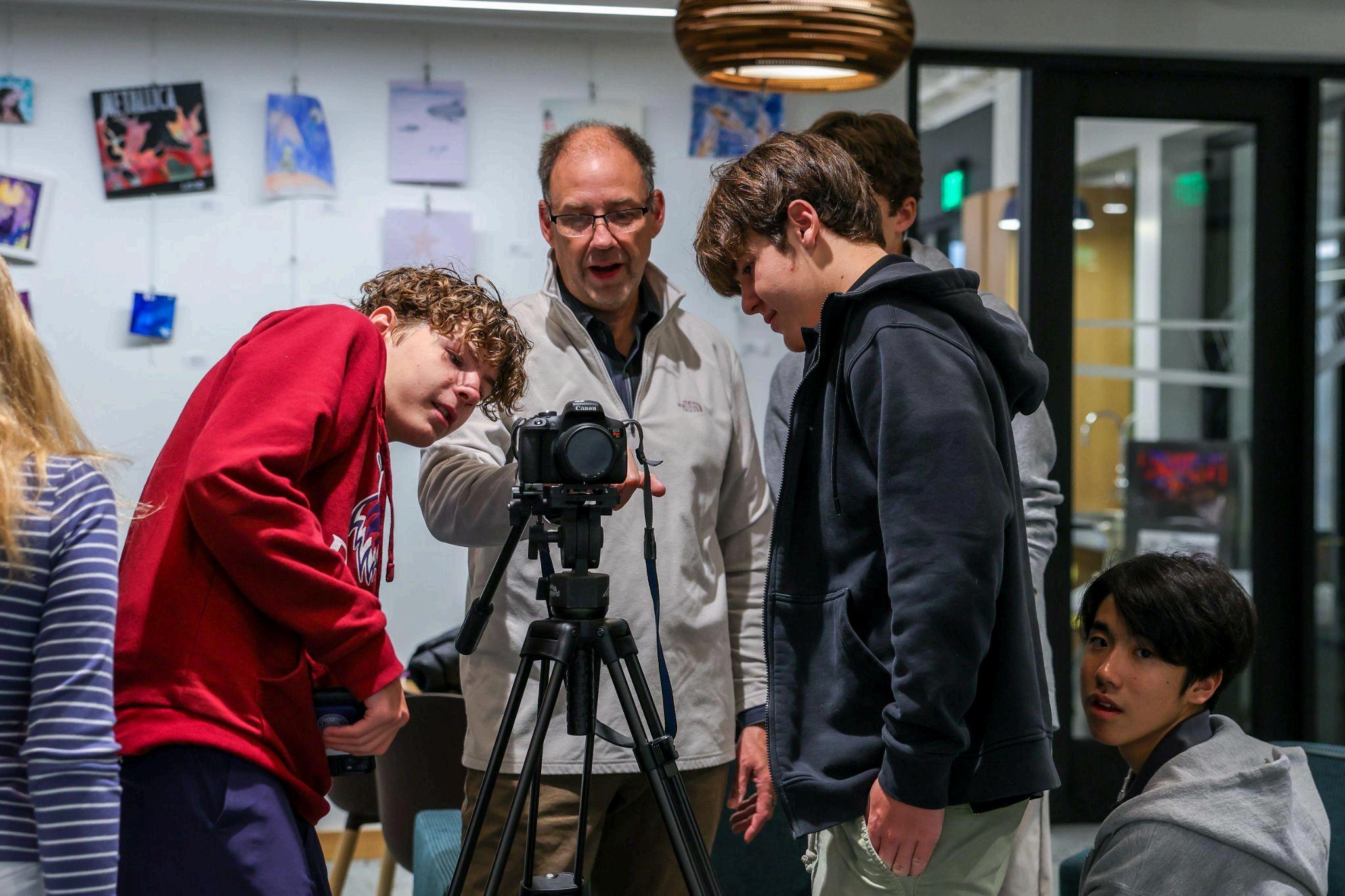
Over the course of the program, students will learn the professional practices and techniques used in cinematography. They will begin by reading a short story, adapting it into a script, and then working in groups to produce a film. Through hands-on experience, students will explore shot composition, camera movement, and the use of motion to provide context, mood, and storytelling in movie making They will also learn how to effectively edit their films, incorporating visual effects and sound design to better convey their film's message By the term's end, students will leave with a full working knowledge of these techniques, which they will apply in producing their own complete film.
The Advanced Placement (AP) Art and Design program includes three distinct, full-year courses AP 2-D Art and Design, AP 3-D Art and Design, and AP Drawing each aligned with introductory college-level studio experiences. This rigorous, inquiry-based program is designed for highly motivated students who are ready to engage in advanced artistic study and produce a cohesive body of work for submission to the College Board Throughout the year, students develop a portfolio grounded in sustained investigation, practice, experimentation, and revision. Emphasis is placed on exploring a personal concentration and theme, allowing students to deepen both their creative voice and technical skills. As they work, students build craftsmanship, persistence, and flexibility, gaining a strong understanding of the artistic process from concept to completion
NOTE: Advanced Placement Art and Design is particularly beneficial for students interested in pursuing art-related careers. Students may use their portfolio in the college admissions process to help them pursue studies in fine arts, design-related fields, film, animation, engineering, architecture, art education, and scholarship opportunities
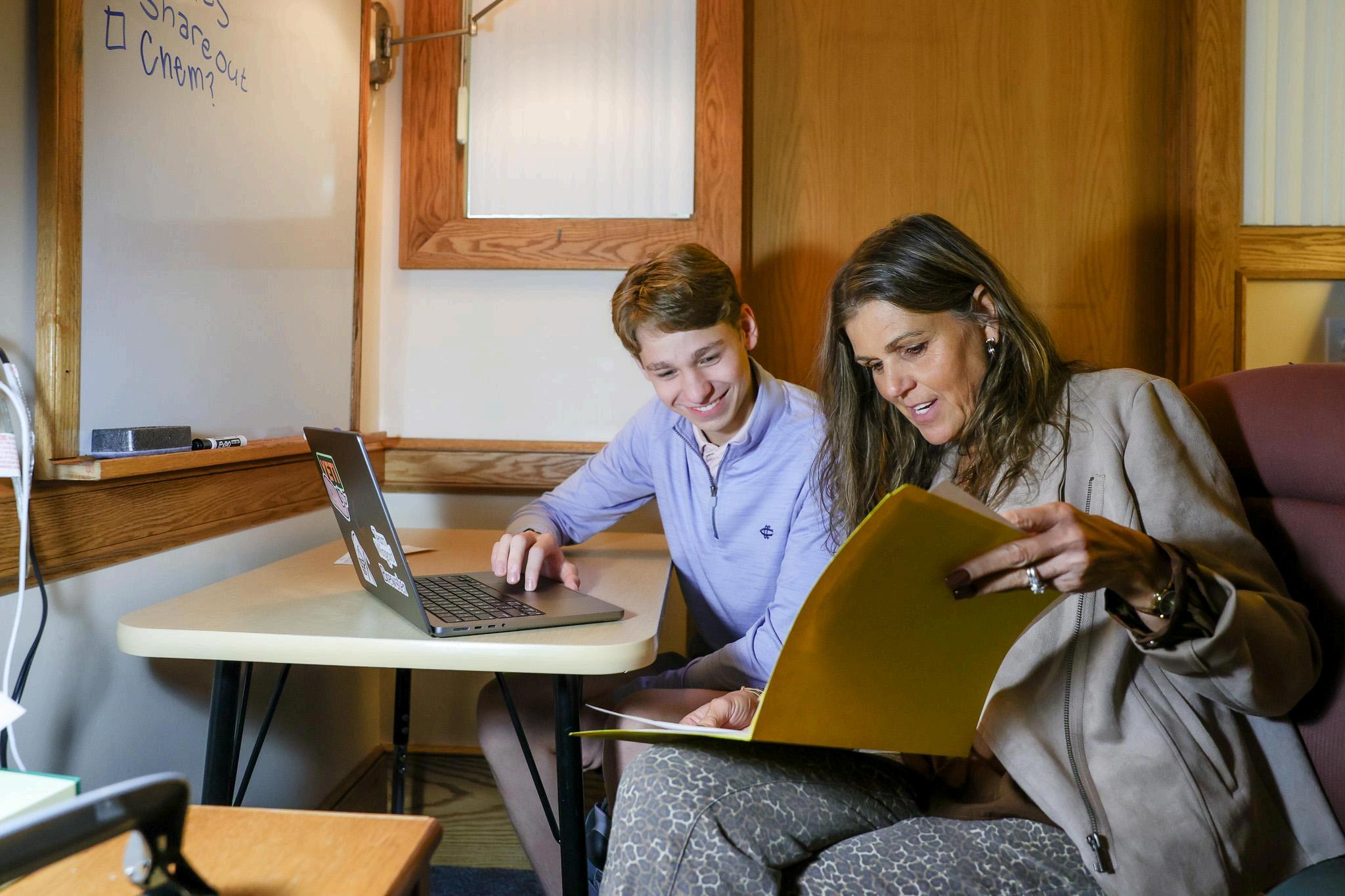
Brewster’s Academic Support programs help students become confident, independent learners who can meet high expectations with growing self-awareness and skill. Through personalized instruction and teacher collaboration, students learn how they learn best and develop tools to advocate for themselves and progress at a high level through their courseload.
Academic Support includes both Instructional Support (IS) and English Language Learning (ELL), each with its own structure and goals within a student’s overall course of study. These programs guide decisions about class placement, skill development, and ongoing progress, creating a framework in which students build skills over time and demonstrate growth and readiness for more advanced work Through these intentional structures, students gain confidence in navigating increasingly challenging academic demands as they prepare for life beyond Brewster.
Alicia Wingard, Instructional Support Department Chair
The IS faculty employ advanced techniques in assessment, instruction, and consultation to provide academic support for students. The IS faculty members are committed to providing the assistance necessary to maximize student performance in the Brewster curriculum and fulfill a student’s potential for academic success. In pursuit of this goal, active collaboration is sought among students, parents, and teachers
The Comprehensive Support Plan (CSP) is Brewster’s most comprehensive plan and is for students whose needs require frequent, ongoing involvement with a teacher This plan includes meetings with a teacher and one other student three times a week with a focus on determined learner goals, classroom support, and progress monitoring Students in the CSP receive intensive assistance with study and organizational skills, reading, and/or writing. The best practice approaches employed by the program are integrated with the delivery of the subject curriculum in all areas
The Instructional Assistance Plan (IAP) is for students who require additional support to maximize success in the Brewster curriculum. This plan includes meetings between the student and teacher twice a week, classroom support and monitoring, as well as individualized instruction in study and organizational skills, reading, and/or writing The best practices approach employed by the program is integrated with the delivery of the subject curriculum in all areas
The Transitional Assistance Plan (TAP) is for students who have demonstrated a level of independence and are looking for increased consistency. The student’s needs are monitored weekly to ensure the skills and strategies they have learned are being applied within their curriculum with a high level of consistency This plan is designed for the student and teacher to meet once a week to review progress and provide the student with feedback that assists in accomplishing the goal of independence from a support plan.
Participation in the Academic Support Program normally is determined during the admissions process where the individual’s file undergoes an extensive and thorough review. If participation in
the program is indicated, the specific plan will then become a part of the course of studies for that individual upon admission to Brewster
The IS plan continues throughout the year as a pass/fail credit course. At the end of each trimester, the student’s growth is evaluated, and based on the achievement of the learning target goals, a change in plan may be recommended for the following year.
When determining the specifics of a student’s instructional support plan, a variety of aspects may be considered, such as:
● Review and Needs Assessment – A careful review of the student’s past performance and the identification of strengths and needs by instructional support and subject teachers takes place
● Profile – A learning styles profile is determined.
● Goal Setting – Students, faculty, and subject teachers meet at the beginning of each year (or more frequently as necessary) to develop a set of personal goals.
● Best Practices – The teaching strategies and adaptations used in instructional support sessions and classes are matched with the student’s needs The use of best practices is monitored to ensure progress.
● Individualized Meetings – 1:2 meetings within the academic day provide individualized instruction in learning skills and strategies.
● Evaluation – An evaluation plan monitors how well the program is being implemented both in classes and instructional support sessions and determines the progress of goals
● Collaboration – Weekly meetings between instructional support teachers and subject teachers allow for frequent opportunities to adapt and adjust the student’s curriculum.
● Technology – Brewster’s use of technology enhances the instructional support program by offering seamless integration of learning tools
Margarita Proulx, World Language Department Chair
The ELL program integrates multimodal approaches to language acquisition and instruction Students’ cultural heritage and knowledge of other languages are leveraged as resources to design and implement a program that is tailored to individual needs, interests, and strengths. Student progress is reviewed on a regular basis by the full teaching team.
The ELL Program offers three levels of support:
1. Comprehensive Language Program;
2. Language Assistance Program;
3. Enrollment in core classes with Instructional Support (IS).
Comprehensive Language Program (CLP)
This program offers three courses and supports students with practicing and advancing their English language skills.
CLP Language
In this course students practice grammar basics, paragraph writing, newspaper skills, and the basics of academic writing skills. This course focuses on developing the level of language proficiency that will allow students to step closer to managing work in mainstream classes.
CLP Culture
By exploring themes in geography, culture, and history, and focusing on reading and oral presentation skills, this course provides students with skills to thrive in the U.S. high school system The content material and skills closely connect to mainstream classes so as to facilitate a greater success with transition to core academic classes
CLP Communication
This course provides students with opportunities to practice speaking and listening to English, and exposes students to practice of introductions, directions, interview skills, and speech presentation
This program has two courses and supports students with intermediate English language skills
This course provides a bridge into mainstream English courses and is designed to allow student acquisition and practice of skills they will encounter in their core classes The themes are writing skills and reading a variety of texts for meaning and meaning-making Throughout the year, students practice reading and writing skills.
The themes of the course are aligned with elements of the United States’ history and culture, and connect to topics studied in mainstream academic classes. Students work primarily on reading for research, writing non-fiction pieces, and oral presentations.
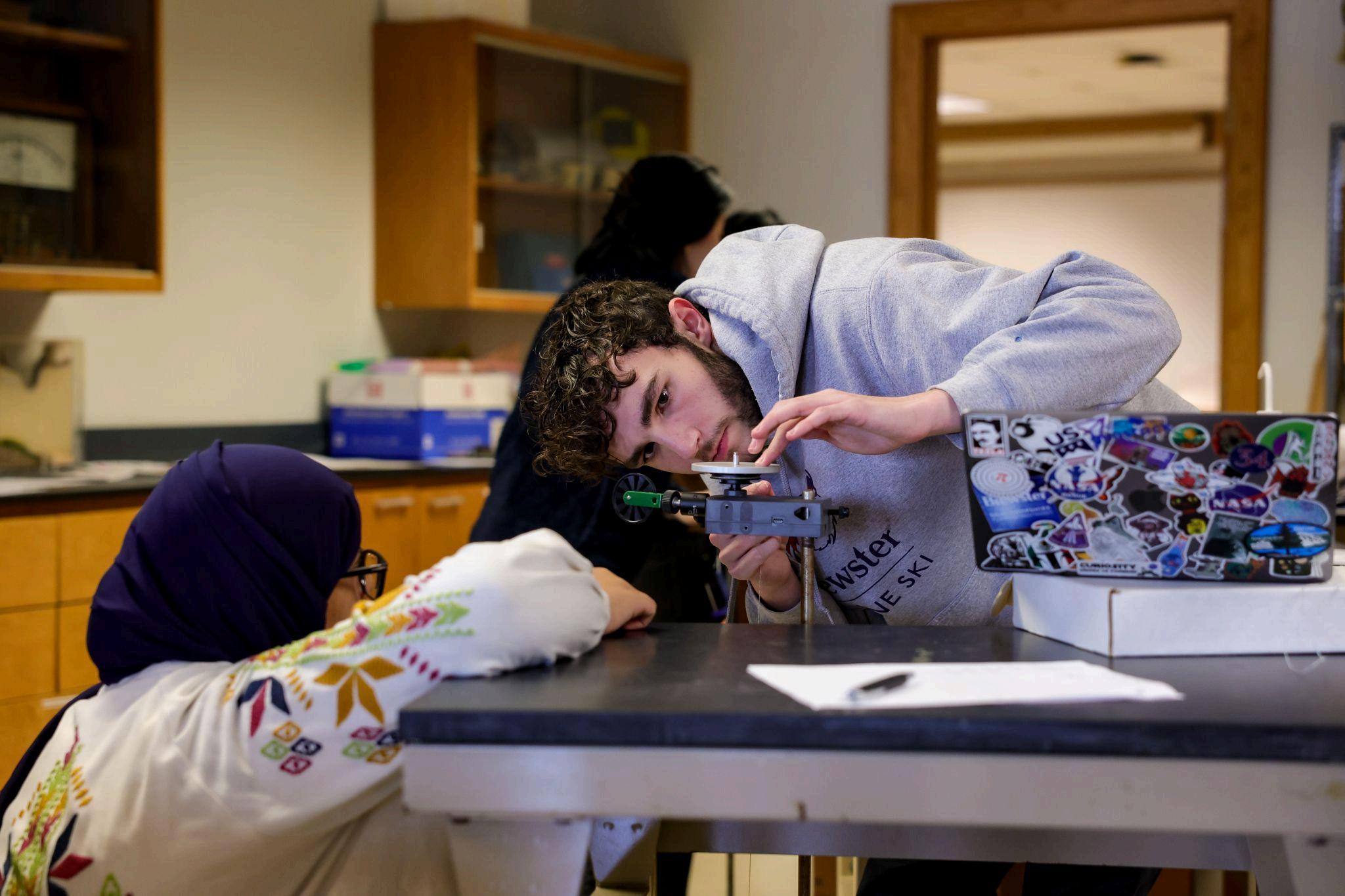
Brewster’s Scholar Programs invite students to pursue a sustained, cohort-based exploration of their interests across STEM, the arts, and global studies Through intentional coursework, on- and off-campus experiences, and reflective practice, scholars deepen their understanding of themselves and others while learning to apply their knowledge in authentic contexts. Together, these programs nurture curiosity, creativity, and civic responsibility, preparing students to contribute thoughtfully and meaningfully to their communities
Each Scholar Program has its own clearly defined requirements and competencies that guide students’ experiences. From course selection and co-curricular engagement to capstone-style work, these expectations help scholars build depth in their chosen area while demonstrating growth, commitment, and readiness for advanced study
Advisor: Nikita Duling
The Global Scholar Program offers juniors, seniors, and PGs opportunities to engage in courses, experiences, and interactions that will deepen their understanding of themselves, others, and help them develop ways to act on behalf of their local and global communities Through cohort-based experiences, participation in on- and off-campus activities, and thoughtful engagement in their coursework, students develop a greater understanding of what it means to be an engaged, informed, and empathetic citizen.
Students pursuing a two-year pathway, will:
1. Take at least three AP courses in the English and History/Social Science departments, including AP Seminar and AP Research; three or four years of World Language courses;
2 Engage in at least two immersive learning experiences approved by the program;
3 Demonstrate sustained club and/or community engagement leadership;
4. Regularly document and reflect on their learning and growth through GSP Portfolio.
Students pursuing a one-year pathway, will:
1 Take at least two AP courses in the English and History/Social Science departments, including AP Seminar, OR one AP and three History/Social Science electives; three or four years of World Language courses;
2. Engage in at least one immersive learning experience approved by the program;
3. Demonstrate sustained club and/or community engagement leadership;
4 Regularly document and reflect on their learning and growth through GSP Portfolio
Global Program Competencies
1. Examine local, global, and intercultural issues
2 Understand and appreciate the perspectives and world views of others
3 Engage in open and effective interactions across cultures
4. Take action for collective well-being and sustainable development
Advisor: Liz Baker McClain
The Arts Scholar Program offers students opportunities to experience various modes of artistic expression, advance visual and performing art skills, and develop and deepen their appreciation of and curiosity for art As they engage in different courses and experiences, students develop an understanding of themselves through the exploration of their own identity as well as the perspectives and worldviews of others.
To successfully complete the Arts Scholar Program, a student will:
1 Take a minimum of one full trimester of art per year;
2. Participate in a minimum of one immersive art experience;
3. Engage in five service hours within the arts community per year (11th & 12th grade);
4. Complete a minimum of one full year Advanced Fine Arts or Advanced Performing Arts;
5 Deliver a senior capstone project showcasing their culminating work in their advanced courses
1 Create: I can apply knowledge from a variety of cultural contexts to examine, reflect on, and plan works of art in progress
2. Present: I can use technical elements to increase the impact of a design or performance.
3. Respond: I can analyze what is seen, felt, and/or heard in an artistic piece to develop criteria for my own artistic choices.
4 Connect: I can describe how cultural perspectives, community ideas and personal beliefs impact an artistic piece, and how others perceive it
Advisor: Meaghan Shaw
The STEM Scholar Program offers juniors, seniors, and PGs opportunities to design, create and embed ideas into their community Students will be working in a cohort to participate in on- and off-campus activities that enhance their understanding of how STEM affects their lives and can contribute to informed problem-solving. Students will practice applying sustainable STEM practices by expanding their existing knowledge and building their problem solving mindsets.
To successfully complete the STEM Scholar Program, a student will:
● Complete at least four years of math and four years of science;
● Demonstrate an interest in STEM experiences by doing at least one of the following:
● Engage in a STEM immersive experience;
● Compete at any STEM competition;
● Attend and/or present at a convention;
● Complete an additional science, math or engineering elective;
● Lead a STEM activity in the community;
● As a cohort, curate a STEM project and present it to the community.
● Scientific Inquiry: Communicate scientific processes and demonstrate an ability to use patterns, relationships, and tools to problem-solve
● Technological Literacy: Develop proficiency with technology, learn how to use tools and software to create and problem-solve.
● Engineering Design: Apply engineering principles to design, build, and improve systems, structures, or products
● Mathematical Proficiency: Demonstrate an understanding of mathematical concepts and apply them in new contexts.
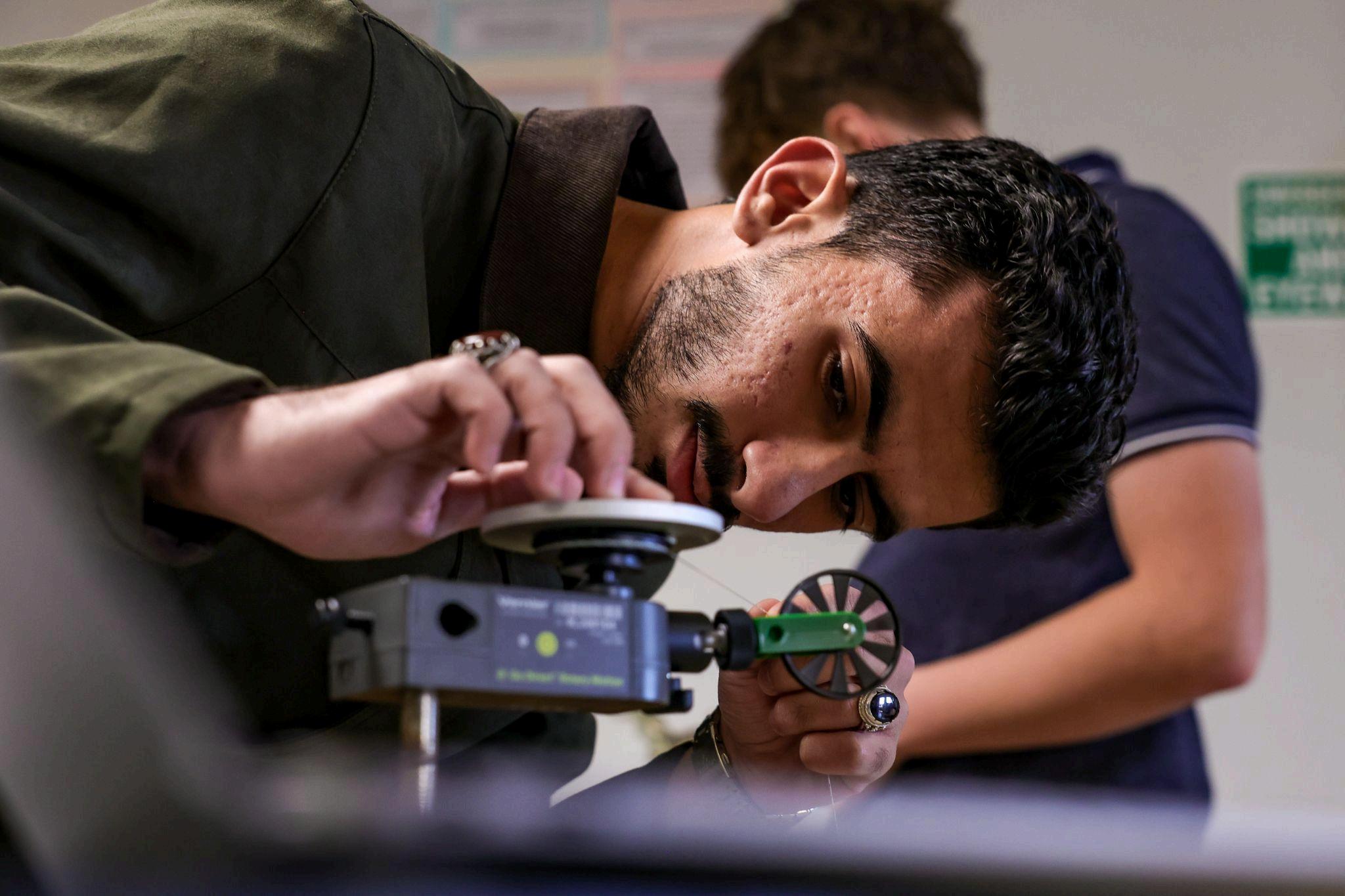
Curriculum
Tom Owen, Director of Teaching and Learning towen@brewsteracademy.org 603-569-7117
Graduation Requirements, Course Requests/Approvals:
Katie Gardner, Assistant Head of School for Academics kgardner@brewsteracademyorg 603-569-7126
Course Selection Process, Transcripts: Margaret Enos, Registrar menos@brewsteracademy.org 603-569-7202