
Painting Pompeii
Painters, Practices, and Organization


as the result of a highly standardized training system, a ‘community of practice’, or informal trust networks, rather than by long-term collaboration. We should also consider the seasonal and uncertain nature of demand, leading artisans to favour disintegrated production strategies based on complex subcontracting networks to avoid incurring the fixed costs connected with the establishment of large and integrated firms.41 The evidence provided by sites such as the so-called Casa dei Pittori al Lavoro in Pompeii enhanced our understanding of painters’ organization and division of labour, but it is not conclusive. 42 I will use the terms ‘team’ or ‘group’ rather than ‘workshop’, especially considering the debatable assumptions linked with the latter. 43
Workforce Organization, Division of Labour, and Specialization
Given the nature of Roman wall painting, it is difficult to find evidence of it s production, especially since painters worked in situ and using perishable materials. There is, however, one r enowned funerary relief from Sens showing a stylized representation of what a team of painters at work might have looked like (Figs 1.1–1.2).44
The relief shows four men working simultaneously, each carrying out a d ifferent task: one is mixing the plaster in the right corner while another is spreading it on the wall using a trowel, meanwhile the painter is drawing using brush and palette, and a figure on the left, possibly the contractor, is examining a scroll. These four figures are a lso characterized by different outfits: the two unskilled workers mixing and spreading the plaster are dressed in short tunics with rolled sleeves, while the two professionals wear long robes. According to Uffler, this distinction might reflect different social conditions, separating slaves from freeborn and freedmen.45 It could, however, also reveal different degrees of expertise and training. The men wearing short tunics could b e assistants or apprentices, while the more skilled and experienced artisans might be identified thanks to their long robes, a difference reflecting the needs and practicalities of work.
Evidence from unfinished wall decorations also suggests that painters operated in teams. This is mostly found in Pompeii, and the most representative one is the Casa dei Pittori al Lavoro, together with the Casa del Sacello Iliaco (I, 6, 4),46 the Casa del Labirinto (VI, 11, 8–10),47 and the Villa of the Papyri in Herculaneum.48
The investigation of the Insula 12, Regio IX, launched in 1987 under the direction of Antonio Varone, uncovered two different buildings, both under
41 Hawkins 2016; 2017; Holleran 2012, 35–49. More on this below.
42 Varone 1995; 1998; 2002.
43 More on the proof for recurring collaborations between painters and the economic sustainability of the workshop model below. The term ‘workshop’ between inverted commas will be maintained when citing other scholars who used it.
44 Musée Municipal, Sens, inv. no. J 115. On a fragmentary relief depicting a similar scene found at Reims see Allag 2023.
45 Uffler 1971.
46 S ee Strocka 1984.
47 S ee Strocka 1991.
48 S ee Guidobaldi and others 2009, 151–53.
maintenance after being affected by the earthquake which hit the Vesuvian area in ad 62.49 The southern building, which is located on Via dell’Abbondanza at numbers 6 and 7, is the Casa dei Casti Amanti; the northern building, at number 9 of the western alley delimiting the insula, is called Casa dei Pittori al Lavoro. The main rooms of this house cluster around a central peristyle, and one of these, room (12), was still being painted when Vesuvius erupted (Fig. 3.6). 50 The archaeo logical evidence preserved in this room clearly shows which tools and techniques were employed by professional decorators. Among the objects found in the house there were amphorae, used to store the lime employed in the preparation of the plaster, bronze compasses, and paint cups. However, it is the study of the walls that led scholars to important conclusions about the procedures employed in the decoration of a room. In room (12) the upper area of the walls had already been fully decorated, while the middle zones of the western, eastern, and northern walls were still incomplete. All of these surfaces, however, had already been covered with the intonachino, the finest layer of plaster on which the pigments were applied. The zoccolo, on the other hand, was totally devoid of plaster, thus demonstrating how painters proceeded horizontally when decorating a room. The unfinished middle zone also shows that, within these horizontal bands, decorators proceeded by completing individual vertical areas or panels. The observation of the unfinished walls of this room allows us to draw further conclusions about the organization and distribution of tasks within a team of painters. In the middle zone of the east wall all three panels had already been painted, together with one of the two interpanels with architectural perspectives, while on the remaining one there was only a preparatory drawing, consisting of a few incised guidelines. The square at the centre of the middle zone, where the mytho logical panel was to be painted, has no plaster. The archaeological evidence suggests that the plaster, initially applied to the entire area to save time, was later removed in that section. 51 It is logical to assume that this area had been set aside for a specialized

painter, who was responsible for the figurative elements of the decoration. At the time of the eruption, this very same pictor was working on the figure panel of the north wall, where a preliminary sketch in yellow ochre had already been traced (Fig. 3.9).
The evidence seems to point to a clear division of labour, with different tasks progressively executed by the artisans involved. According to Varone, one decorator was applying the monochromatic background to the north or west wall, while a second one worked on the architectural views on the east wall, where his colleague had completed his job. Lastly, a specialized painter realized the figure panels once everything else was done. 52 To this we must add the decorative details overpainted a secco or mezzo fresco on the north and south walls. According to Esposito they were painted by the same craftspeople who executed the panels and interpanels, whereas Béarat used the archaeo logical evidence to argue that two more decorators were at work in the room. 53 Neither of these suggestions, however, take into consideration the workload required to complete the whole decoration, nor the size of the room or the practicalities linked with the painting process.54
52 Varone 1995, 133.
53 Esposito 2009, ch. II, 25; Varone and Béarat 1997, 212–13.
49 Varone 1995; 1998; 2002; Varone and Béarat 1997.
50 Varone 1995, 124–25.
51 Varone 1995, 131.
54 An in-depth analysis of the times, materials, and workforce involved in the production of the painted decoration of room (12) of the Casa dei Pittori al Lavoro is presented in Chapter 3.
The evidence from the Casa dei Pittori al Lavoro, however, highlights a clear distinction between the artisans who painted the walls and those who executed the figure panels. Scholars tend to refer to these painters as pictores parietarii and pictores imaginarii , after Diocletian’s Edictum de pretiis. 55 Yet this is a late source, and it refers to a period when the decorative schemes of early imperial wall painting, characterized by a mixture of architectural and figurative motifs, had been almost completely abandoned. It is therefore likely, as Andersen claims, 56 that the term pictor parietarius in Diocletian’s Edict was generically used to describe a craftsperson whose job was to paint and decorate walls, while the pictor imaginarius was a portrait painter. It is preferable to discard these retrospectively applied terms in favour of more apt denominations, such as decorator and figure painter, which clearly describe the two different activities carried out by these artisans. It should not be forgotten, however, that figure painters did not exclusively paint the figure panels, for they could also participate in the overall decoration of a room by painting the socalled flying figures or other figurative elements included in the general compositional scheme.57 In view of all this, it is clear that some kind of workforce organization based on the division of labour existed, and that it required a collaboration between differently specialized craftspeople. This notion has been commonly used by scholars to argue for the existence of stable and structured organizations or ‘workshops’.
Identifying Specific Teams of Painters: Previous Approaches and their Limits
Many scholars have examined the Pompeian evidence trying to detect and isolate the output of individual ‘workshops’. This has usually been achieved by means of stylistic and compositional analysis and thanks to the identification of painters’ hands, and the most interesting results were those reached by Beyen, Peters, De Vos, and Esposito.
Rather than considering Roman painters as abstract artistic personalities, completely ignoring the productive aspects of their trade, Beyen linked the artisans he identified with specific ‘workshops’, to which he attributed the
55 Graser 1940, 338.
56 Andersen 1985, 113, but see also Calabi Limentani 1958, 66 and Bragantini 2004, 131.
57 Esposito 2007, 159–62.
wall decorations of individual buildings.58 The issue with the scholar’s method is that it moves from the assumption that such ‘workshops’ existed, rather than proving it thanks to the author’s analysis. Thus, Beyen interpreted what he perceived as an overall stylistic similarity among the works of different figure painters as proof that they belonged to the same team, rarely focusing on other decorative details, such as architectural elements or candelabra. Moreover, the scholar’s reasons for attributing specific wall decorations to a ‘workshop’ are not always thoroughly discussed, as lamented by the author himself. 59 Still, it is to Beyen that we must ascribe the first identification and characterization of the famous ‘Vettii workshop’, which laid the foundations for later studies.
Peters’s study of the wall paintings of the Casa dei Vettii, on the other hand, mainly focuses on the identification of recurring decorative systems and ornamental details, which in turn allow him to recognize the activity of at least one ‘workshop’. 60 His analysis proceeds from one room to the next, highlighting the affinities in their decoration, especially focusing on the compositional analysis of the lower zones and lateral panels, where, according to the author, the painters could work more freely.61 Peters also aims his attention at the way specific decorative elements were repeatedly executed — architectural perspectives, candelabra, tendrils — and especially the palmettes, which he comes to identify as the hallmark of the ‘Vettii workshop’. 62 According to the scholar, the painters of this ‘workshop’ were well-versed in the realization of a wide range of decorative schemes, which they skilfully employed and combined to reflect the role and function of the space they were decorating.63
The scholars mentioned so far focused their analyses on richly decorated houses whose decoration was likely executed by skilled artisans who could satisfy the requests of the local elite. Mariette de Vos, on the other hand, investigated lower-class houses and identified
58 Beyen 1951.
59 ‘It is, of course, only possible to give the bare outlines of my study in the few pages at my disposal here. […] All argumentation, all “proofs” must, as a rule, be omitted.’ Beyen 1951, 44.
60 Peters 1977, 96.
61 Peters 1977, 105 and 107. Of a similar opinion is also Allison (Allison and Sear 2002, 82).
62 Peters 1977, 117.
63 This in turn is used to argue that such a variety of models could only be the consequence of a fully developed Fourth Style, thus dating its origin well before the earthquake of ad 62, after which the Casa dei Vettii was repainted (Peters 1977, 123).
to the late Third Style (c. ad 25–45). My analysis focused on the 116 figure panels found in these buildings, together with the twenty-two flying figures, busts, and imagines clipeatae that are still visible. The scrutiny began with a review of all Third Style paintings, but the analysis of the early and middle Third Style did not lead to the identification of specific groups or to certain attributions, thus the decision to focus on the late period, especially since it offers a higher number of paintings to examine.
The analysis of late Third Style paintings in Pompeii led to the identification of at least five different groups of subjects showing some remarkable similarities in style and technique. Together with these more clearly identifiable groups, two more could be recognized, however the affinities shown by their paintings are less sound and the results inconclusive.10 In the following section these groups will be presented and my attributions assessed, later moving onto considerations on their meaning and geo graphical distribution within the city.
Each of the following groups comprises figure panels and other figurative elements, mostly flying figures, whose close examination led to the identification of recurring ‘patterns’ in the representation of human figures, from small details such as the way of painting hands, feet, and facial features, to more general observations on the rendering of anatomy, drapery, and movement. Despite these similarities, asserting that each group corresponds to the work of a particular painter is still problematic, for they may simply point to a specific style shared, for example, by ‘master’ and ‘apprentices’.11 In particular, the dating of the paintings within one of these groups seems to point to the presence of two painters sharing a similar style, probably a ‘master’ and an ‘apprentice’ given the period of time elapsed between the two wall decorations.12
10 See Orpheus painter (?) and Cassandra painter (?).
11 By using this termino logy, I am not referring to a highly structured and hierarchical relationship akin to the one characterizing the medieval or Renaissance apprenticeship model, nor am I necessarily implying a master–pupil sort of relationship. The words ‘master’ and ‘apprentice’ are more loosely intended as designating two painters who appear to show a similar style, whereas the activity of the former can be dated to an earlier period. In some cases, the terms are used to describe two contemporary artisans, one showing more dexterity or working in main rooms, whereas the other appears less skilled or is usually found in secondary rooms. When used to characterize the painters I identified, ‘master’ and ‘apprentice’ will be always used between inverted commas. It necessarily follows that the term apprenticeship, when applied to Pompeian painters or to the ancient world more generally, is to be more widely intended as a process of skill transfer (see more below, Chapter 4, p. 96).
12 See below, Punishment of Cupid painter.

2.1. Paris and Helen, cubiculum (c), Casa del Sacerdos Amandus. Reproduced with the permission of Ministero della Cultura — Parco Archeologico di Pompei.
Bellerophon Painter
I, 7, 7 (Casa del Sacerdos Amandus)
Triclinium (b): Hercules and the Hesperides; Fall of Icarus; Polyphemus and Galatea; Perseus freeing Andromeda
Cubiculum (c): Paris and Helen (Fig. 2.1); Amorino
I, 8, 8 (Thermopolium di Lucius Vetutius Placidus)
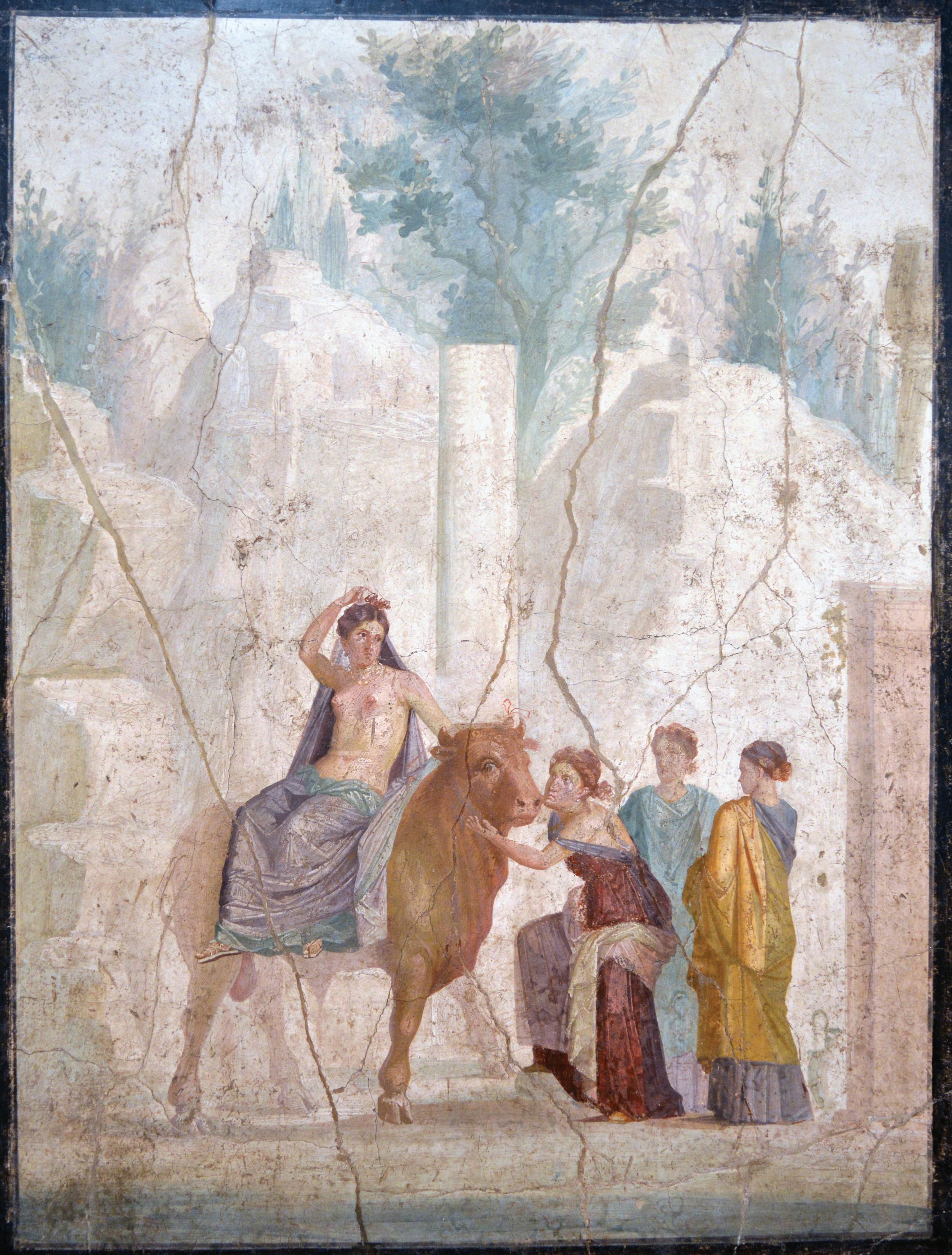
Triclinium (10): Bellerophon harnessing Pegasus (Fig. 2.2); Europa and the bull
Uncertain attributions
VII, 1, 25–47 (Casa di Sirico)
Triclinium (8): Aeneas wounded (Fig. 2.3)
I, 2, 6
Triclinium (m): Theft of the Palladium
The works attributed to the Bellerophon painter correspond only partially with the paintings Richardson ascribed to the Boscotrecase Painter. 13 The issue with Richardson’s attributions is that he included one painted panel which belongs to the early Third Style, together with one that can be dated to the later Fourth Style,
13 Richardson 2000, 36–54.
Figure 2.2. Bellerophon harnessing Pegasus, triclinium (10), Termopolium di Lucius Vetutius Placidus. Photo by the author. Reproduced with the permission of Ministero della Cultura — Parco Archeologico di Pompei.

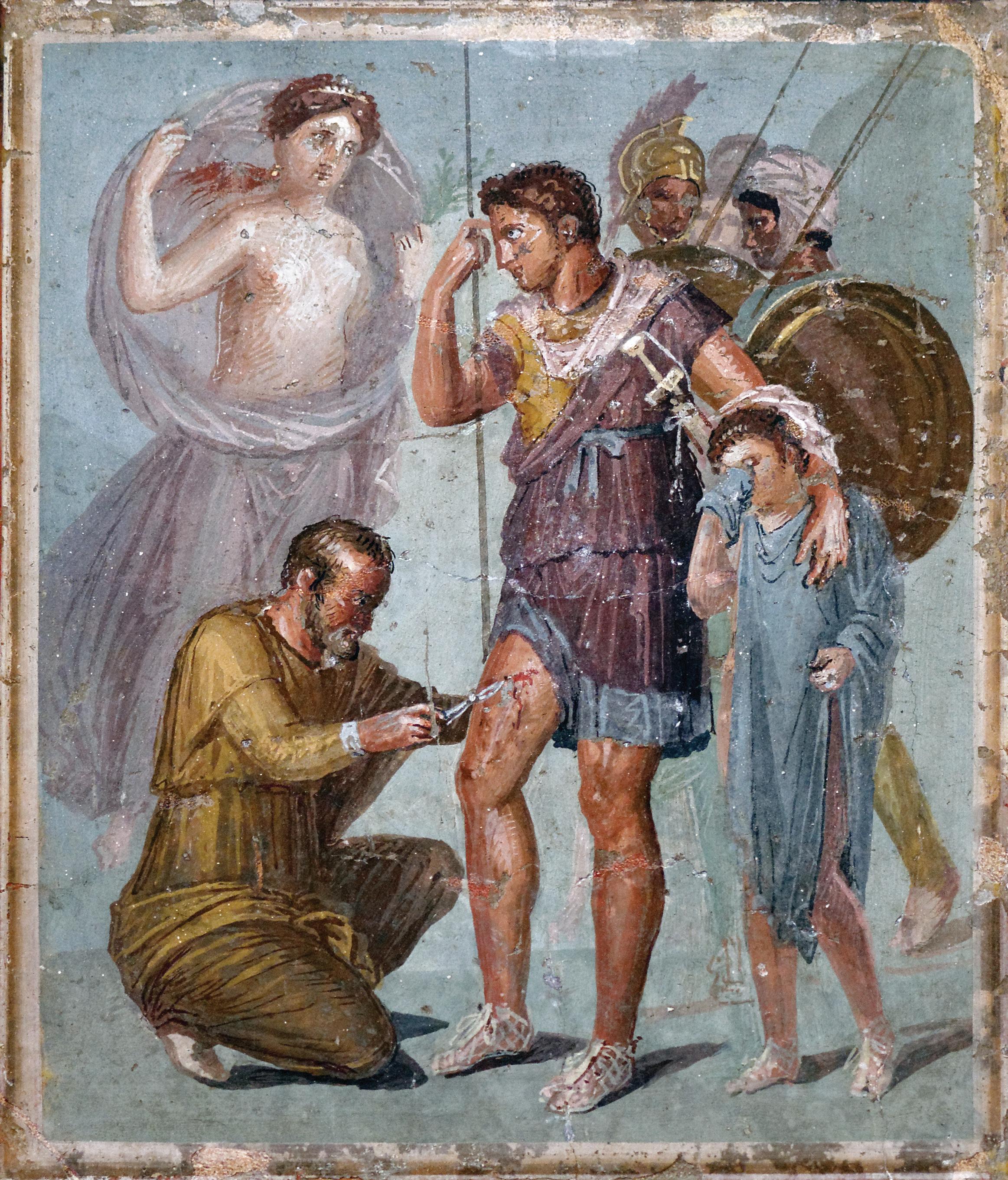
Figure 2.3. Aeneas wounded, triclinium (8), Casa di Sirico. Naples, Museo Archeologico Nazionale. Photo by the author. Reproduced with the permission of Ministero della Cultura — Museo Archeologico Nazionale di Napoli.
along with a few paintings bearing no resemblance to those of the Bellerophon painter, together with some that cannot be adequately compared, given that they represent landscape scenes with very small figures. Most importantly, all of Richardson’s paintings were clearly made by a different hand than the one working in the Villa di Boscotrecase. Ragghianti, on the other hand, highlighted the affinities between the ‘Perseus freeing Andromeda’ in the Casa del Sacerdos Amandus and the ‘Aeneas wounded’ in the Casa di Sirico, attributing them to the Maestro di Amandus,14 to whom, however, he also ascribed a variety of landscape paintings offering no real comparison with these two subjects, as well as the two panels in cubiculum (5) of the Casa di M. Lucretius Fronto. These paintings, however, bear no strong resemblances to those of the Bellerophon painter and a detailed stylistic analysis led me to assign them to a different painter.15
Paintings attributed to the Bellerophon painter are characterized by oval faces with almond-shaped eyes in female figures, more roundish ones in male characters. The noses are rather big, straight, and with a flat root, with a pointed tip and large nostrils. Hair is wavy, curls are carefully painted using a thin brush, and female hairdos are moderately voluminous. The chin is slightly receding, concave, and pointed in profile, more so when the character’s head is bent down, whereas it is rounder when they are staring ahead. The most distinguishing feature of these paintings, however, is the way the male body and especially its mid- and lower sections are painted. Both male and female bodies have wide hips and round bellies. This feature is particularly surprising when observed in male characters, whereas it is quite common in female figures. In this group of paintings, it can be detected when turning to the Paris in the Casa del Sacerdos Amandus and the Bellerophon in the Thermopolium di Lucius Vetutius Placidus. Moreover, men’s bodies are rather muscular, with a clearly delineated linea alba and external oblique muscles. Legs too are rather thick and muscular, calf muscles are accentuated, especially in profile, where they are sometimes depicted with a peculiar, almost drop-shaped outline. Thighs appear thicker in profile than in frontal view. Glutei are accentuated in both male and female figures, and the ankles are not particularly thin. Limbs are quite long, sometimes disproportionately so, like Helen’s arm in the Casa del Sacerdos Amandus.
Hands are slender, with long fingers showing round tips, often with a peculiar, slightly upturned final digit, as can be observed in the ‘Hercules and the Hesperides’ or the ‘Paris and Helen’ in the Casa del Sacerdos Amandus and in the ‘Bellerophon harnessing Pegasus’ from the Thermopolium. Feet are characterized by thick toes and the hallux is not separated from the other toes. The rendering of drapery is careful, with many clearly defined but slightly rigid folds. Highlights and shadows are painted with thin, quick, short, and clearly delineated parallel brushstrokes. Sometimes thicker strokes are used when rendering light effects, as is particularly clear when observing the ‘Bellerophon harnessing Pegasus’. In the same panel Pegasus’s wing joint is comparable to that of the amorino in the cubiculum (c) of the Casa del Sacerdos Amandus.
The ‘Europa and the bull’ is in the same room as the ‘Bellerophon harnessing Pegasus’ but, since it is poorly preserved, it is difficult to attribute the two paintings to the same hand, especially because it is almost impossible to compare facial features. However, scholars who studied them seem to agree on the fact that they were painted by the same artist,16 and indeed there are affinities in the rendering of drapery and human anatomy, while the oddly expressive and almost human eyes of the bull are akin to those of Pegasus. The closest comparison between the ‘Europa and the bull’ and the other paintings is offered by the female figures in the ‘Hercules and the Hesperides’ in the Casa del Sacerdos Amandus, even though the noses in the ‘Europa and the bull’ have a slightly rounder tip and hairdos seem more voluminous. Unfortunately, no close comparisons can be found for the peculiar folds at the hem of the tunics.
As for the subgroup of further possible attributions, both the ‘Aeneas wounded’ in the Casa di Sirico and the ‘Theft of the Palladium’ in I, 2, 6 share some features with the paintings of the Bellerophon painter, but not enough to unquestionably assign them to this group. The ‘Aeneas wounded’ shows many similarities with paintings in the Casa del Sacerdos Amandus and Thermopolium di Lucius Vetutius Placidus, such as the male profile, the slender hands, the thick and muscular legs, and the ren-
14 Ragghianti 1963, 75–76.
15 See below, Bacchic painter.
16 See La Rocca and De Vos 1976, 219–20; Bastet and De Vos 1979, 79–80; Tella 1989, 108. They all attribute the two paintings in the triclinium (10) of the Thermopolium of Lucius Vetutius Placidus to the same painter and De Vos even ascribed the decoration of this room to the same team working in the Casa di M. Lucretius Fronto, although I did not find any real evidence for this attribution and assigned the figure panels in the Casa di M. Lucretius Fronto to a different painter (see Bacchic painter).
the eye socket’s depression and the protruding cheekbones. Other similarities can be found in the rendering of drapery and the careful way of painting curls, together with the human body, whose legs appear longer when bent and the character is seated. Hands too are distinctive, for they are characterized by not too slender fingers with rounded tips and oddly ‘segmented’ thumbs, whose phalanges are all bent at slightly different angles rather than creating one continuous horizontal line. Finally, the bull in the ‘Rape of Europa’ and the one in the ‘Jason and Pelias’ are identical.
Moving to the Casa del Bracciale d’Oro, its two recomposed panels offer many close comparisons with the paintings found in the Casa di Giasone. In the ‘Poet and woman’ the poet’s sturdy frame and his face, with dilated eyes, straight and narrow nose, and tiny mouth, are similar to Pelias’s. The hands and especially the thumb are akin to the ones found in the Casa di Giasone, and the rendering of drapery is comparable. The profile of the woman standing on the right is similar to that of the nymph on the right of the ‘Pan and the nymphs’. The panel depicting two women and a man, instead, offers less precise analogies, although the way of painting the hair, the shape of the faces, and the noses, straight and with large nostrils in three-quarter view, are consistent with those of the Jason painter.
Among the additional works which might be attributed to the Jason painter, the female faces in the ‘Drunken Hercules’ from the Scavo del Principe di Montenegro are close to the ones in the Casa di Giasone, especially since they show the same sinuous outline in threequarter view. The rendering of hair and female hairdos too are comparable, together with the

way of drawing hands. Drapery is painted in a similar fashion, as becomes clear when confronting Omphale in the ‘Drunken Hercules’ and Europa in the ‘Europa and the bull’. With regard to male anatomy, the best comparison is the one between Perseus in ‘Perseus freeing Andromeda’ and Pan in the panel painted in the cubiculum (g) of the Casa di Giasone. Both show a muscular but still slender frame, with defined but not too accentuated pectoral and abdominal muscles, legs are sinewy and not too thick, the knee is well drawn and the ankle is thin, feet have a similar shape. Perseus’s messy and carefully drawn hair and slightly pointed ear are akin to Jason’s in the Casa di Giasone. Their profiles too are similar, especially the protruding nose with a slightly defined root and the brow. Despite all these similarities, however, it must be mentioned that the figures in the Scavo del Principe di Montenegro are lither than the ones in the Casa di Giasone, limbs are more elongated, and characters show a less sturdy frame. It is, therefore, possible that the panels in the Scavo del Principe di Montenegro and those in the Casa di Giasone were painted by two different painters with a similar style.
As for the figure panels from cubiculum (e) in the Casa di Giasone, despite being poorly preserved they still display some similarities with those in the triclinium (f) and cubiculum (g) of the same house. When examining male hairdos, it becomes apparent that in all paintings they are characterized by short locks of hair on the forehead, as can be observed when confronting Paris or the man in the top left corner of the ‘Medea and her children’ with Jason or Nessus. Female hairdos too are similar, as can be seen when comparing Phaedra’s and Europa’s. Moreover, the way hands and drapery are painted is similar in all panels, as can be observed when confronting Medea’s and Europa’s tunics or the hands of Medea’s children with those in the ‘Rape of Europa’ or the ‘Jason and Pelias’. Lastly, the face of the man in the ‘Medea and her children’ is extremely similar to Pelias’s. Unfortunately, the poor state of the panels from cubiculum (e) does not allow us to determine with the required degree of certainty whether they were painted by the same figure painter working in the triclinium (f) and cubiculum (g) of the Casa di Giasone or by a different painter with an extremely similar style, thus these three figure panels were only tentatively assigned to the Jason painter. Being able to determine if the same artisan painted all panels in the Casa di Giasone or not would have been useful in assessing the size and organization of the group operating in this building.
If the same figure painter worked in all the rooms then we are dealing with a rather small team, but if there were at least two figure painters, then we can assume the team was larger and better organized. If this were the case, and given that all the panels were painted in a similar style, we might even conclude that this is evidence for the existence of some sort of apprenticeship system, meant in the broader sense of a more or less formal transmission of knowledge and skills. Indeed, if an ‘apprentice’ worked in cubiculum (e), they must have been close to completing their training. This is evidenced by the fact that this painter was allowed to work alone in a secondary room that, while being more private than the others, was still clearly staged for contemplation. 29
The choice of subjects ranges from rather common ones (‘Paris and Helen’, ‘Hercules and Nessus’, ‘Rape of Europa’) to more unconventional ones (‘Phaedra and her nurse’, ‘Medea and her children’, ‘Achilles and Polixena’). Even within the Scavo del Principe di Montenegro we see both the frequently painted ‘Perseus freeing Andromeda’ and an uncommon ‘Drunken Hercules’, which later became more customary in the Fourth Style.
Since it is completely lost, not much can be said about the wall decoration of the Scavo del Principe di Montenegro. The two painted panels from the Casa del Bracciale d’Oro come from an unknown room and very little can be determined about their context, yet they seem to have been part of a richly decorated space, while the house itself clearly belonged to a wealthy and cultured owner, probably a member of the ordo equestris 30 As for the Casa di Giasone, the painter operated in the two main rooms opening onto the courtyard: the large triclinium (f) and the cubiculum — probably an oecus — next to it. Cubiculum (e) was slightly more secluded, for it could only be accessed through room (d). All in all, this artisan seems somewhat eclectic when it comes to the choice of painted subjects and at the very least competent, probably even proficient, mainly working in primary rooms and houses belonging to the top quartile.
29 See Bergman 1996, 207–08.
30 Romizzi 2006, 33–34.
Punishment of Cupid Painter
VII, 2, 23 (Casa dell’Amore Punito)
Tablinum (f): Punishment of Cupid (Fig. 2.10); Mars and Venus
VII, 4, 56 (Casa del Granduca)
Tablinum (11): Punishment of Dirce
Uncertain attributions
VI, 17, 19–26
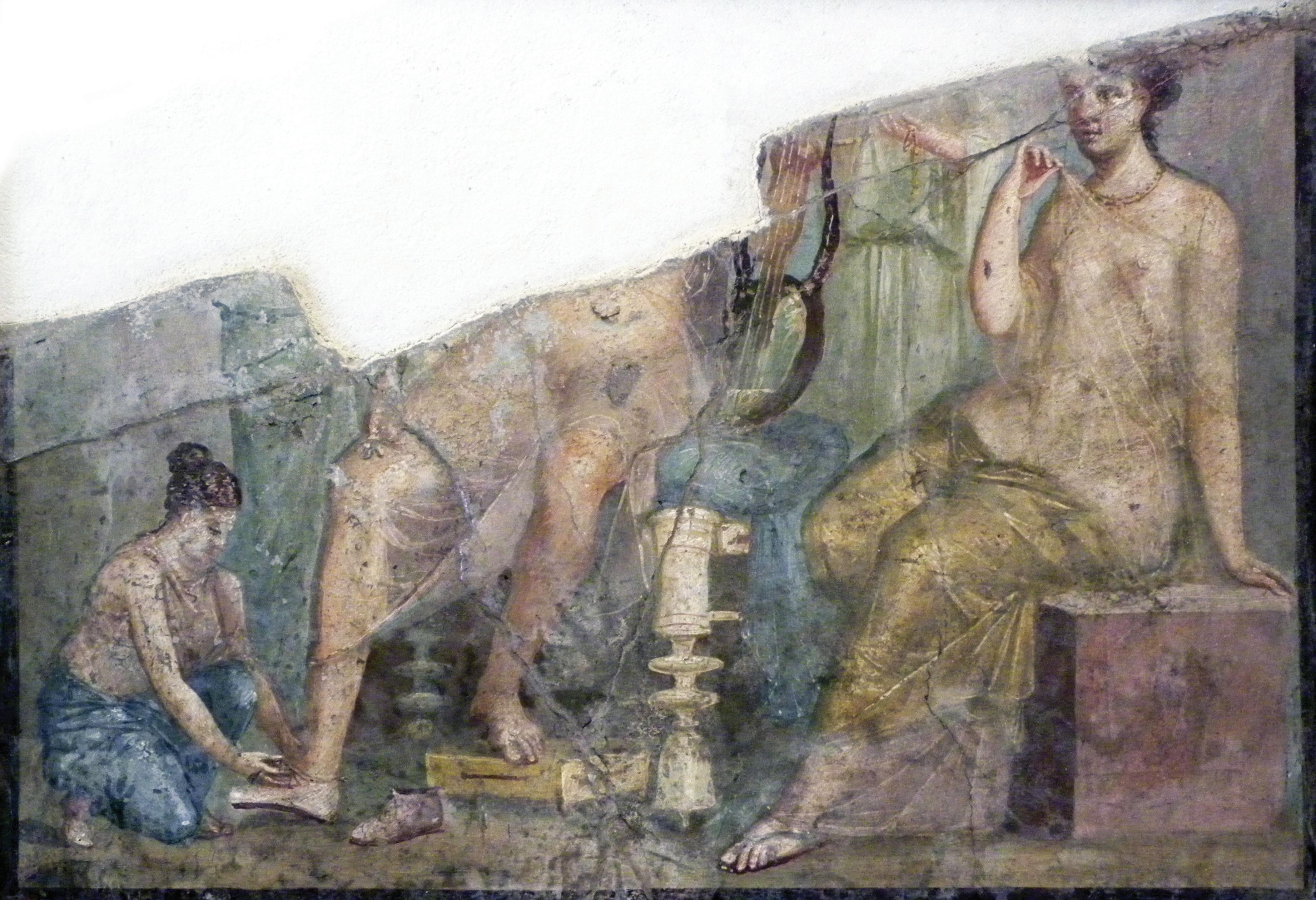
Unknown room: Music lesson (Fig. 2.11)
Several scholars pointed out how the paintings in the Casa dell’Amore Punito and those in the Casa del Granduca share many similarities in style, and both Richardson and Ragghianti attributed them to the same hand. 31 All the paintings here attributed to the Punishment of Cupid painter are characterized by oval faces with almond-shaped and heavy-lidded eyes, thin and straight eyebrows, and a rather long, straight, narrow nose with an extremely flat root, rounded tip, and larger nostrils in profile than in frontal view. Bodies appear proportionate and lean, if slightly rigid, limbs are long — most notably the arms — and legs are slender, especially calves and ankles. Hands are slender and slightly too big, with really long and tapered fingers. They can sometimes appear almost glove-like, because bent fingers tend to look rigid, as if they did not have a strong grasp. The closest comparison is the one between Venus’s right hand in the ‘Punishment of Cupid’, the left one of the woman with Mars on the opposite wall of the same room, and Dirce’s left hand in the ‘Punishment of Dirce’. The rendering

31 Richardson 2000, 29–34; Ragghianti 1963, 68–74.


subject that we could hardly expect to find in the domus of a member of the municipal elite belonging to an aristocratic family.122
Yet another example is offered by the Casa del Poeta Tragico (Fig. 2.57), a house of more modest dimensions but richly decorated.123 It has been argued that the dominus’s desire for self-promotion led him to fill the building with painted panels whose themes were inspired by the function and different viewing mode of each room. 124 In the atrium, usually decorated with exempla virtutis , gods, or panels celebrating the glorious past of Rome,125 are the ‘Wedding of Jupiter and Hera’, the ‘Delivery of Briseis’, and an uncertain scene, possibly ‘Helen boarding Paris’s ship’ or the ‘Delivery of Chryseis’. The subjects fall within the typical range, even though they are not placed in chronological order. In the tablinum (8), marital love is celebrated through the episode of Admetus and Alcestis, and the theme of fides is also reiterated in the main reception room, the triclinium (15), where rather popular scenes are depicted. 126 Since the same exact combination can also be found in the triclinium (h) of the Casa di L. Cornelius Diadumenus, it is hard to tell whether they were selected by the patron or suggested by the artisans working in the house, especially since the domus in its entirety appears to have been decorated with little originality.127 The cubicula showed frequently repeated representations, mostly linked with the theme of love: ‘Venus Piscatrix’, ‘Ariadne abandoned with amorino’, ‘Narcissus’, ‘Apollo and Daphne’, ‘Europa on the bull’, ‘Phrixus and Helle’, ‘Venus with amorino’.
122 On the significance of Priapus in the Casa dei Vettii see Kastenmeier 2001, arguing it was hidden from the main entrance and only meant to be seen by the familia, invited guests, and business associates.
123 Together with the Casa di Meleagro and the Casa dei Vettii, this is one of the houses in Pompeii with the highest number of figure panels. Its plan measures less than 500 m2.
124 Romizzi 2006, 49; Bergmann 1994.
125 Often episodes from the Trojan cycle.
126 ‘Nest of amorini’, ‘Diana and Callisto’, ‘Theseus abandoning Ariadne’.
127 The ‘Theseus abandoning Ariadne’, ‘Diana and Callisto’, and ‘Nest of amorini’ in triclinium (15) appear each four times in Pompeian Fourth Style paintings, the ‘Admetus and Alcestis’ from the tablinum (8) three times. As for the lost pictures which decorated the cubicula, we have twenty ‘Venus Piscatrix’, sixteen appearances of ‘Ariadne abandoned with amorino’, forty-three ‘Narcissus’, eleven ‘Apollo and Daphne’, fifteen ‘Europa on the bull’, eight ‘Phrixus and Helle’, and four ‘Venus with amorino’ in Pompeii. All figures are drawn from Romizzi 2006 and Hodske 2007.
In this specific example, the patron’s agency can probably be linked with the decision to lavishly decorate the whole house with a high number of figure panels, and possibly also with the presence of many different painters at work in rather close quarters. The analysis of the surviving paintings allowed me to identify at least three different figure painters respectively working in the atrium, in the tablinum and peristyle, and in the triclinium. Yet another painter might have worked in the cubicula, but since the panels are lost it is impossible to verify this theory. This considerable workforce, especially when compared with the dimensions of the house, appears peculiar and might have been in response to the owner’s desire to complete the decoration quickly. At the same time, the apparent prominence given to the atrium over the reception area, where a less skilled figure painter was at work, could be the result of the layout of the house, lacking the usual triclinium at the end of the peristyle and only provided with a more modest opening on the right side of the garden. The resulting division of labour cannot be straightforwardly attributed to the painters, for once again it was probably at least partly inspired by the patron.
This specific case study draws our attention to the main issue with any analysis trying to focus on the matter of agency: visibility. When we notice something peculiar or uncommon about the painted decoration of a building, we tend to attribute it to the patron. This includes the choice of subject and the interplay between different panels, the overall decorative programme, the particular emphasis given to specific parts of the house, or the presence of an apparent ‘propagandistic’ or socio-political message. It is sensible to assume the owner played an active role in shaping his domestic space, especially since the Roman house was perceived as an extension of the dominus’s persona. The painters’ input, on the other hand, is harder to detect, for we cannot simply assume that, whenever a painted decoration or decorative programme is not atypical and we are not able to discern the patron’s ‘personal touch’, then it was the result of an irresolute or uneducated customer who would only offer some general guidelines and submit to the artisans’ experience and know-how to select a few suitable subjects among the most fashionable ones. At the same time, it would be wrong to explain the repetition of certain subjects or their recurrent combination observed throughout Pompeii in terms of ‘workshop’ repertoire. We can hardly expect patrons, especially wealthy ones with very specific ideas about how to decorate their own house, to put up with the lack of skills of a painter or group of

painters and to be forced to curtail their projects due to a lack of flexibility on the artisans’ part.
The frequency with which certain mytho logical episodes appear in Pompeian houses is more aptly explained as originating from current trends and more or less conscious processes of imitation and assimilation of models, trickling down from the aristocracy to the non-elite. 128 There must have been some pre-made combinations painters could submit to an undecided customer and in whose realization they were well versed after repeated performances, but the appearance of uncommon and even unique icono graphies proves these craftspeople could ply their skills to meet the customer’s demands. We should, therefore, imagine the design and creation of painted decorations not as a unilateral process but rather as the result of the interplay between different factors — socio-political, economic, cultural, architectural — and the creative exchange and interaction between painters and customers, one in which either of the two could play a stronger role depending on the situation.
As said above, painters probably had more control over technical and productive matters, even if it is virtually
128 On the social diffusion of house-decoration, especially wall painting, see Wallace-Hadrill 1994, 143–74. On luxury as a social process and social emulation models see Douglas and Isherwood 1980; Morris 1987. On non-elite patronage see Hackworth Petersen 2015.


that this process could take a relatively long time,25 so we can assume this was not done on site, but slaked lime was directly purchased and mixed with the aggregate when required. Apprentices or unskilled labourers would have performed this step in the background, thus only slightly affecting total production times. Average mixing times can be extrapolated from Pegoretti’s Manuale Pratico, where he states that 3.25 hours are necessary for a labourer with one assistant to mix 1 m3 of plaster, then 2 more hours for one labourer to sieve the mixture.26
Pigments
Colour cluster analysis offers a non-invasive tool to gauge, if only roughly, the quantity of pigments needed to paint a wall. Delamare estimated that about 100 g of pigment were necessary to paint 1 m2, a figure confirmed during the realization of the Saint-Savin experimental fresco.27 I moved from the results of Béarat’s mineralogical and physico-chemical analyses of the colours found in the small cups abandoned in room (12) of the Casa dei Pittori al Lavoro.28 He identified eleven colours and thirteen different pigments; certain colours appeared more than once and were produced using different pigments and mixtures depending on their use.29 Among these eleven colours, blue and the resulting pale blue could only be identified in the mythological panel that was about to be painted in the centre of the north wall, thus the number of colours used to decorate the rest of the wall was nine.
Colour cluster analysis was applied to detail pictures of the north wall of room (12), selected because its painted decoration was almost complete (Fig. 3.7). The software used for the task groups similar colours together and derives a set of colours that are representative of the analysed image, listing them in the form of percentages.30 I then calculated the painted surface by multiplying the percentages by the total area of the analysed section of the wall. To account for the presence of overlapping layers of colour, background colours were assumed to cover the whole surface of the corresponding wall zone. Areas showing a white background were not considered, for in these cases painted details were applied directly on the last layer of fine plaster.
25 Vitr., De arch., vii.2.5.1–2; Plin., HN, xxxvi.55.
26 Pegoretti 1864, 234.
27 Delamare 1983, 74; Barbet and Coutelas 2002, 39.
28 Varone and Béarat 1997, 208.
29 See Varone and Béarat 1997, 211.
30 Image Color Summarizer v.0.76. The number of colour clusters is inputted by the user.
As already observed, the upper zone of the north wall in room (12) is lost and the plinth was still to be painted, however, they have been tentatively reconstructed by observing other rooms within the Casa dei Pittori al Lavoro; the best matches were identified in room (4). A reconstructive drawing is presented in Figure 3.8. A preliminary analysis showed that the most common colours were red, black, and white, which required c. 830 g of hematite, c. 600 g of carbon (soot), and c. 390 g of aragonite and dolomite, respectively. 31 Ochre was used to produce both yellow and probably also pale red through heating,32 c. 120 g were employed. About 120 more grams of green (celadonite and/or glauconite) were also necessary to paint the wall, while only 25 g of red lead, used to produce the orange, were detected.
This estimate does not consider the mytho logical panel in the centre of the wall, which at the time of the eruption was in the preliminary phase of its realization: the painter working on it had traced a detailed sinopia and was just starting to paint the light blue background in its upper part (Fig. 3.9). Unfortunately it is hard to guess which scene it represented, for the panel is partly hidden by an irregular patch of plaster, but it is possible to recognize a seated and robed figure on the left and at least one, but probably two more characters standing on the right. Given the blue background, the whole scene was probably set outdoors. It could represent the famous episode of the wrath of Achilles, the hero on the right about to draw his knife but stopped by Athena, the king seated on the left in a defensive pose. To estimate the pigments needed to complete this panel, five figure panels were selected and the results of their colour cluster analyses were used to obtain an average of the colours employed. The selected samples are all intact and well preserved, representing open-air scenes with two or more characters.33
31 Since some of the highlights painted in mezzo fresco were presumably lost or still to be realized at the time of the eruption, there was a risk of underrepresenting the colour white, which was added to other colours to obtain different hues. To correct that, an additional 14 per cent of the surface of the whole wall — corresponding to the area of the two interpanels — was added to the detected amount of white pigment.
32 A small pot was found in room (12), inv. no. 41615 (see Varone and Béarat 1997, 204).
33 The selection comprises the ‘Bacchus and Ariadne’ and ‘Alexander and Roxane’ from the Casa del Bracciale d’Oro (Fig. 2.13), the ‘Sacrifice of Iphigenia’ from the Casa del Poeta Tragico (Fig. 2.32), the ‘Perseus freeing Andromeda’ from the Casa dei Dioscuri, and the ‘Io and Argos’ from the Casa di Meleagro (Fig. 2.61).

3.3. Casa dei Pittori al Lavoro, room (12), north wall: pigments and their amount (with figure panel).
34 Light blue was considered as composed of 1/5 blue and 4/5 white.
35 Pale green was broken down in its components assuming a 1:2 ratio between green and white.
36 The colour purple was calculated as if obtained by mixing 1/5 blue with 4/5 red.
Figure 3.8. Casa dei Pittori al Lavoro, room (12), north wall (reconstructive hypothesis). Drawing by the author.
Table 3.4. Casa dei Pittori al Lavoro, room (12), north wall: pigment grinding times (with figure panel).
In the Roman world, wall paintings were one of the most pervasive art forms, adorning buildings of all levels, from public spaces and elite houses to far more modest dwellings. Yet despite the very visual nature of their work, Roman painters have remained largely invisible to history. This book attempts to rectify this situation by shifting the focus from the paintings themselves to the people who realized them, looking beyond the bright colours and imaginative forms to investigate the materials, production practices, and choices underpinning artistic decisions.
Taking Pompeii as its starting point, this volume reconstructs what it meant to paint for a living, and asks if it was actually possible to make a living as a painter in the Roman world. Wall paintings are investigated stylistically but also from an ethnological and economic point of view. Broader comparisons across time and space, combined with a quantitative analysis of the labour involved in making wall paintings, allow the author to assess this art form as an economically-embedded practice. Through this unique approach, the volume exposes the social and economic forces underlying craft production, and offers new insights into the lived experience of Roman artisans.
studies in classical archaeology
This series provides in-depth research into all aspects of the material culture relating to ancient Greece, Rome, and the neighbouring communities of the Mediterranean and the Near East. Comprising monographs and edited collections, the series takes a focused approach to a broad range of topics. It offers new insights into both the Classical world and its broader geographical and chronological contexts, exploring regions and time periods that have often been considered peripheral —whilst retaining an emphasis on the understanding of material culture from the perspective of classical archaeology.