
SAINTANNE VILLAGE


Saint Anne Village Inc.

Our Daily & Weekly Enrichment Offerings
• Alzheimer’s & dementia-focused care designed for safety, comfort, and meaningful engagement
• Cognitive based activities including arts, crafts, games, and guided social interaction
• Daily stretching and chairyoga exercises to support mobility and wellbeing
• Weekly music and singing sessions with a visiting musician
• A beautiful, secure outdoor compound ideal for walking and fresh air
• Gated patio space for outdoor gatherings and supervised relaxation
• Daily animal-assisted therapy to promote joy and emotional connection
• Weekly intergenerational programs with toddlers, middle school, and high school students


is a non-profit, state-licensed adult day care center dedicated to supporting individuals living with Alzheimer’s, dementia, and other cognitive challenges. Since opening our doors in late 2016, we have continued to thrive as a trusted resource for families in our community.
Our program is built on stability and compassion. With our original director still leading the organization and a team of longterm caregivers, we provide a consistent, nurturing environment where participants flourish through daily socialization, structured activities, and attentive supervision.
While our primary mission is to offer a safe, loving space for adults with cognitive impairments, we are equally committed to supporting their families. We provide respite care, guidance on navigating the progression of memory-related diseases, assistance in locating financial resources, and referrals for longterm placement when home care is no longer possible.
Saint Anne Village exists to uplift both our participants and the families who love them—offering community, continuity, and compassionate care every step of the way.
Recognized by Kaiser, Sutter and John Muir Memory Care Programs
How to protect yourself against common phone and internet scams
There are numerous scams being carried out over the internet or phone that target senior citizens. In 2024, the latest year with records, the Federal Trade Commission said that “older adults”, age 60 and over, reported $2.4 billion in monetary losses to fraudulent schemes, up from $600 million in 2020. Unreported losses could total more than $10.1 billion.
Why are seniors so often targeted by scams? According to Seana Fippin, founder of internet technology company Red Box Business Solutions Inc. in Brentwood, it’s because of money and perceived naivete.
“Scammers specifically engineer their attacks around psychology, not only technology,” Fippin said. She added that seniors are “often targeted because attackers believe that they have a higher net worth, and are generally more trusting.”

remote access to your computer so that they can “fix” the nonexistent problem, which they use to charge a bogus fee for their alleged services. Sometimes, they may claim that your account has been hacked and that they need you to transfer money to them so they can protect it, or that you need to enter your bank account or credit card information on a website to dispute payment for a supposed subscription that costs hundreds of dollars.
These scams can be avoided if one remembers the advice of the FTC: no real tech support company will call, email, or text you to notify you of a problem on your computer, nor will a real security popup require you to call a phone number to resolve a problem. If any of these things are true about a supposed tech support contact, it’s probably fake.
Grandparent scam
Tech support scams
Despite the rising prevalence of fraud, there are ways to protect yourself against some of the most common scams, according to the National Council on Aging website, which lists the five most common scams targeting seniors.




Tech support scams often begin with a false popup on your computer or a call or text from a supposed technician, claiming that there is a problem with your computer that they can fix. Fake technicians often request
The most common scam affecting older people, according to the National Council on Aging.
This scheme involves a scammer calling or emailing their target while posing as the recipient’s relative, or a person claiming to represent a relative of the recipient, and asking for money. Common reasons for needing money include hospital bills, lawyer’s fees, and bail.
see Scams page 10B

CONNOR ROBLES
Adobe Stock photo
Despite the rising prevalence of fraud, there are ways to protect yourself against some of the most common scams.




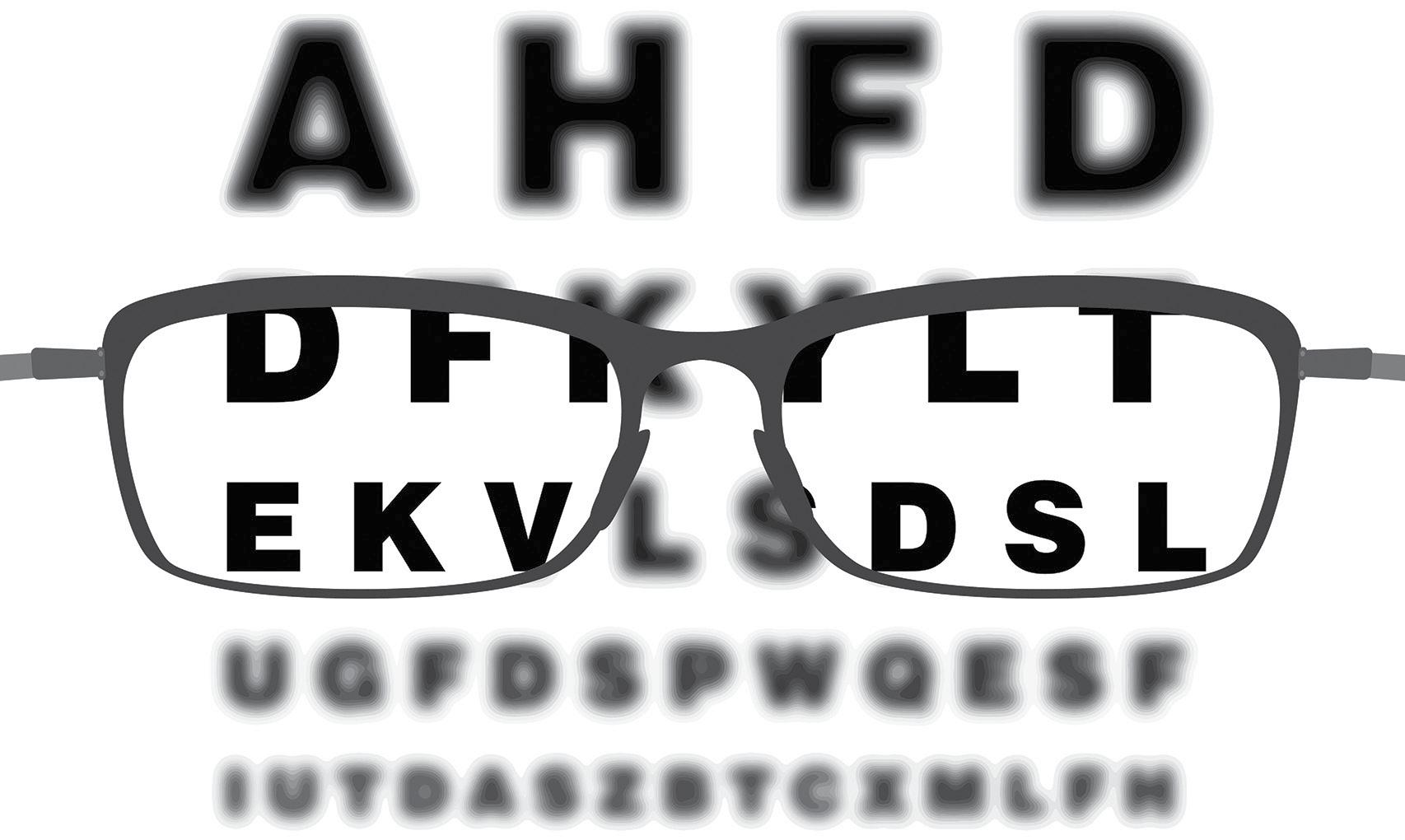
Signs of age-related changes to vision
ACarlie Diaz, manager at California Eye Clinic said normal changes to vision are presbyopia (difficulty focusing on close objects), dry eye syndrome (excessive eye watering or burning), and increased light sensitivity.
“These are typically expected and can be manageable, though they can be frustrat-








TAYLOR SHEPHERD
Photo courtesy of Adobe Stock
Skin conditions can be prevented by reapplying sunscreen every two hours while outside, seeking shade, and avoiding midday hours where the sun is the strongest.

Tips for treating common age-related skin conditions
Skin conditions can appear in various forms, shapes, and sizes for older adults. Knowing the signs and how to prevent them can protect skin damage down the road.
“Age spots can mean a lot of different things to a dermatologist,” said Dr. Robert Beer at Balfour Dermatology, 221 Balfour
Road in Brentwood. “They include a group of mostly benign things. We separate them into their specific names such as lentigos (age/liver spots), seborrheic keratosis (a waxy, wart-like texture), ephelides (freckles), and telangiectasias (spider veins).”
Beer said that these benign spots do not have to be treated.
“Most people decide to get them
see Skin page 7B

MIKE’S ESTATE PLANNING MINUTE
By Michael J. Amthor, Esq.

ESTATE PLANNING OFTEN STARTS WITH A WILL
Estate planning often starts with a will, but a truly complete plan involves much more than one document. A comprehensive estate plan addresses not only how assets are distributed, but also financial management, health care decisions, digital property, business interests, and practical guidance for loved ones.
Leaving gaps can lead to confusion, delays, or disputes. While California’s probate process provides structure, it does not automatically resolve personal or family complexities. A coordinated set of documents ensures your wishes are honored and your family has clear direction during difficult times.
The foundation of estate planning includes three core legal documents: a will, a revocable living trust, and a durable power of attorney. A will directs probate property distribution and names executors or guardians. A living trust allows assets to transfer privately and efficiently without court oversight. A durable power of attorney authorizes someone to manage finances if you become incapacitated, avoiding the need for a conservatorship.
Health care planning is equally important. An advance health care directive lets you appoint a medical decision-maker and outline treatment preferences, while a
HIPAA release allows trusted individuals to access medical information.
Modern estate plans also cover digital assets such as online banking, email, cloud storage, cryptocurrency, and social media. Clear access instructions and a designated digital representative prevent accounts from being lost or inaccessible.
Business owners should consider succession planning to ensure smooth transitions through family transfers, sales, or buy-sell agreements.
Tax considerations may apply for high-value estates, though California has no separate estate tax. Long-term care planning is also critical, as Medicare does not cover custodial care and Medi-Cal requires advance preparation.
Finally, practical tools like a letter of instruction can provide helpful details such as account information, contacts, and funeral wishes. Because life changes over time, regular reviews keep an estate plan accurate and effective.
Overall, comprehensive estate planning provides clarity, control, and peace of mind while reducing stress for loved ones.
If you have questions on this or any other estate planning topic, call me at (925) 516-4888. Golden Legacy Law Group, 1181 Central Blvd. Suite A, Brentwood www.goldenlegacylaw.com – Advertorial

TAYLOR SHEPHERD




























Protect The Ones You Love

We know that talking about your final arrangements can be difficult, so we’ve created Caring Decisions, a free one hour seminar. Join us to discover why pre-planning is a wise and thoughtful choice for both you and your loved ones.





Please scan QR code or call (925) 757.4500 to register and reserve your seat.

Se Habla Espanol
treated because with time, they continue to get larger, and occasionally can change into something more serious,” he added. “Prevention is the key that most people desire.”
Beer suggested sunscreen to prevent these skin conditions. “This means reapplying sunscreen every two hours while outside, seeking shade when you can, and avoiding midday hours where the sun is the strongest.”
Beer said there are also many preventive treatments that can have beneficial effects such as younger looking skin. “These include using a retinol product, and for some people, considering getting a micro dermabrasion, laser, or a specialty peel.”
He added that these can help remove the spots before they can be seen.
Beer noted the importance of recognizing the signs of skin cancer -- any spot that changes in shape, size, or color, and occasional itching.
“The preferred shape we like to see in a mole is round or oval,” he said. “Either way, they should be symmetrical if you tried to fold it over onto itself.”
Beer said size is important too as an increase in size means the mole or spot is growing.
“As far as color change, this could really be any color,” he said. “We think about a brown mole that turns darker or black. That’s the most common change, but almost all colors have been
We can help guide you on what to pay attention to, prevention recommendations, and find any spots that might be a problem later.
– Dr. Robert Beer Balfour dermatology
described including spots that turn white, red, or blue.”
Beer emphasized the importance of yearly skin exams by a dermatologist in California. “We can help guide you on what to pay attention to, prevention recommendations, and find any spots that might be a problem later.”
Balfour Dermatology Assistant Office Manager Bethany Collins said insurance would ‘typically’ cover these exams. “We are in network with most PPO and HMO insurances. Skin Checks, and in-office procedures are billable through insurance.”
For more information, visit http:// www.skinquestion.com/ To comment, visit www.thepress.net.
SOLD OUT, BUT THE NEED CONTINUES: WHY CAREGIVERS STILL NEED US BECAUSE HOME IS WHERE THEIR HEART IS
By Nikki Lopez, Caring Haven
Caregiver OneCall is honored to announce that the upcoming All Our Love for Caregivers Gala is officially sold out. Every seat now represents someone who recognizes a truth many caregivers live with daily: the responsibility of caring for another person can be both meaningful and overwhelming, and no one should have to carry that weight alone.
Across the country, millions of family caregivers provide support without training, relief, or consistent emotional backing. Many are awake at all hours managing medications, responding to behavioral changes, or making critical decisions with little guidance. In those moments, isolation can feel immediate and profound.
That is why Caregiver OneCall exists.
Through free 24/7 telephone support, caregivers can reach a calm, compassionate voice whenever they need it most, including the quiet and often difficult


Move smoothly from room to room. • Emergency safety features.
• Can Include easy-to-use remote controls • Custom slings available for all sizes and preferences.


hours of the night. This work does not end when the gala concludes. Community support is what allows these lifelines to remain open and accessible. Learn more, donate and/or volunteer at www.caregiveronecall.org.
While event attendance has reached capacity, there is still a meaningful way to stand alongside caregivers today.
The silent auction is now open and offers an opportunity to extend your impact while bidding on thoughtfully curated items and experiences. Proceeds directly support ongoing services that help caregivers navigate stress, uncertainty, and exhaustion with real-time support.
The auction closes February 28 at midnight
Participate here:
https://www.zeffy.com/en-US/ticketing/allour-love-for-caregivers-silent-auction
Because caregivers deserve care too.

– Advertorial





What seniors can do to safeguard their mental health
eniors may not have come of age in a world where mental health was prioritized, and thanks to that aging men and women may not recognize where their mental health is suffering and what they can do to combat such problems. Recognition of the importance of mental health is a step in the right direction, and seniors also can consider these strategies to safeguard their mental health.
Recognize your vulnerability. The World Health Organization notes older adults are uniquely vulnerable to potential mental health problems because mental health is shaped by numerous variables, including earlier life experiences and some notable stressors related to aging, such as a decline in functional ability that can cause psychological distress. Seniors also are more likely than others to experience adverse events like the loss of a loved one or even a loss of purpose, which can affect anyone upon retirement. Recognition of this vulnerability may be enough to compel seniors to seek advice and assistance on how to safeguard their mental health from age-related stressors.
Take time out if you’re a caregiver. The WHO notes that many older adults serve as caregivers for spouses with chronic
health conditions, including dementia. The Alzheimer’s Association reports that studies have found that 70 percent of caregivers report feeling stress related to coordination of care, while two in three caregivers have difficulty finding resources and support for their needs. Seniors who have taken on caregiving duties for a loved one must protect their own mental health by taking time out to care for themselves as well. Work with family members to share responsibilities when caring for a loved one. If family members cannot pitch in, then work with local government agencies to alleviate some of the stress of caregiving.
Make a concerted effort to socialize. A 2025 report from the WHO indicated that roughly one-fourth of all older adults are affected by social isolation and loneliness. Social connection can significantly improve mental health and provide a sense of life satisfaction while improving quality of life. Seniors are urged to prioritize socialization. Many community-based groups, including government offices, run programs designed specifically to facilitate socialization among older residents. Take advantage of such programs whenever possible. Seniors living alone also may want to consider relocating to communities exclusive to people age 55 and over, as such developments typically offer an array of socialization opportunities to residents.








–Metro Creative
ing,” said Diaz.
Abnormal changes that require monitoring include cataracts (clouding of the eye), glaucoma (damage to the optic nerve), Macular Degeneration (straight lines look wavy), and Diabetic Retinopathy (floaters or dark spots occur).
Diaz added that these conditions “are not a normal part of aging and require medical intervention to prevent vision loss.”
“Patients tend to develop cataracts in their mid-60s,” said Diaz. “Cataracts are usually formed from UV (ultraviolet) light exposure and this causes vision to decrease.”
Diaz said standard changes in vision start with a decrease in the best correct vision. “Patients will complain of blurry or hazy vision. This is particularly noticed while driving at night or watching television.”
Other early warning signs for cataracts are poor night vision, light sensitivity, faded colors- things may look yellow or less vibrant, and frequent prescription changes. Since patients generally notice blurry vision from cataracts, Diaz said it is recommended that patients have annual dilated eye exams with an eye doctor to monitor progression and ocular health. These exams are covered by insurance.
Unlike the noticeable signs of cataracts, signs of glaucoma can often go unnoticed.
“Glaucoma causes peripheral vision loss and is difficult for patients to become aware of the signs because they do not experience issues with central vision blur or any pain,” she said.
She added that 2-3% of patients can develop glaucoma over their lifetime.
Glaucoma is often called “the silent thief of night,” Diaz added that “it has no pain and no symptoms in the early stages. Once vision is lost to glaucoma, it cannot be removed.”
Signs of glaucoma are peripheral vision loss, halos around lights, acute symptoms such as sudden severe eye pain, headaches or nausea.
Diaz said the goal for those in their 50s is early detection. “Many of these conditions are treatable before permanent damage occurs.”
Preventative strategies for vision-related conditions include:
♦ Regular eye exams (most critical step)
♦ UV Protection
♦ Nutrient-rich diet (kale, spinach, fruits, nuts)
♦ No smoking
♦ Manage chronic health conditions.
♦ Keeping diabetes and high blood pressure under control.
♦ Protective eyewear such as safety glasses during sports or home repairs.
♦ Exercising regularly
Diaz emphasized seeking immediate care if someone known in this age group experiences the “curtain” effect (a dark shadow over vision), spots in their field of vision, eye pain with nausea, or a sudden loss of vision.
For more information, visit www ca-eyeclinic com/brentwood







Interior,




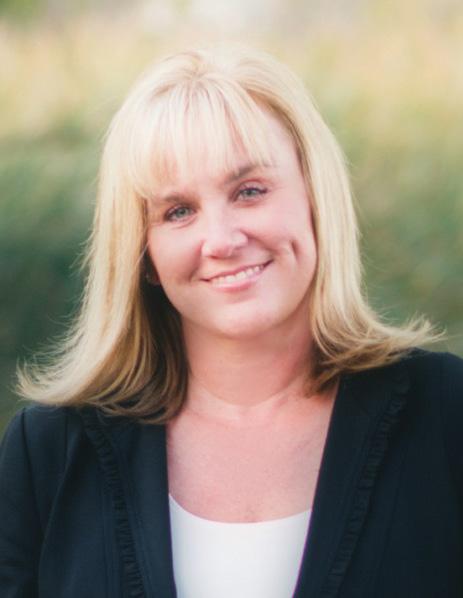


Attorney Anne Hydorn offers personalized elder law and estate planning services for seniors and families in Brentwood, East Contra Costa County, and the Central Valley. She is known for her compassionate approach, careful listening, and thoughtful guidance, taking time to understand each client’s goals and
unique family dynamics. As a woman in business, Anne helps families protect assets, navigate long-term care considerations, and plan ahead so loved ones are supported when unexpected events occur. To make planning easier, she also offers inhome visits for added flexibility and convenience. Call now
To learn more about how I can assist your family! (925) 391-8630 anne.hydorn@hydornlaw.com





In recent years, this type of scam has become even more effective thanks to AI technology, which can be used to falsify a relative’s voice over the phone.
To avoid falling victim to this scam, the National Consumers’ League recommends treating any urgent request for money, especially through wire transfer, as suspicious, and contacting the relative who supposedly asked for money yourself to verify that they made the request.
Financial services scam
The scammer poses as a financial institution, such as a bank or debt collector, and asks for personal information, supposedly to secure a compromised financial account. Skilled scammers can create fake email addresses and caller IDs that mimic those of legitimate institutions.
The best way to avoid this type of scam is to never share personal data such as account logins with people you don’t know or whose identity you cannot verify. Call the institution yourself, if possible.
Government impersonation scam
Similar to a financial services scam, which hides behind the legitimacy of an existing institution, the scammer pretends to be a government employee with agencies such as the IRS or Social Security Administration, claiming that the victim has not paid their taxes, or that they need the victim’s personal information to continue paying out Social
Security checks. The money disappears, and the personal information will be used to commit identity theft.
If someone claiming to be from the government contacts you and demands money or personal details, the FTC recommends that you contact the agency they claim to be from and ask them directly whether they need something from you.
Romance scams
Also known as online dating scams or catfishing, these schemes involve the scammer creating a fake profile on a dating app or social media and matching or otherwise contacting the victim with false words of love and care; they may “love bomb” the victim with gifts and flattery. Once the victim has been lulled into a false sense of security, the scammer asks for money, often more than once; they may ask for discreet wirings, or store gift cards, and spin tales of a difficult time in their life to garner sympathy. Sometimes, the scammer may request intimate photos for blackmail purposes.
There are several ways to avoid being catfished, according to the National Council on Aging; these include comparing the details on a person’s profile with things they have told you, searching their name online to ensure that they are a real person, checking to see if their profile is empty of any interactions or photos (a sign of a scammer), not giving personal information until you’ve met someone in person, and even simply telling someone you trust about your situation and seeing what they think.








Travel tips for the over-50 crowd
Travel has long been viewed as a positive hobby that can pay short- and long-term dividends. Some of those benefits may surprise even the most devoted jet-setters.
For example, a joint study from the Global Commission on Aging and the Transamerica Center for Retirement Studies found that women who vacationed twice a year had a considerably lower risk of heart attack than women who vacationed once every six years. The same study noted men who did not take an annual vacation had a 30 percent greater risk of heart disease than men who did vacation each year.
Traveling after 50 may necessitate a slightly different approach than it did when individuals were younger. Though adults over 50 can reap the same travel-related rewards they did when they were younger, some additional safety measures may be necessary at this point in travelers’ lives.
♦ Determine vaccination requirements if you plan to travel overseas. The Health In Aging Foundation (HIAF) urges older travelers hoping to go overseas to identify vaccination requirements in countries they plan to visit. Make this part of your early planning, as the HIAF notes some countries require vaccinations be administered at least six weeks prior to entry. Information regarding travel-related
vaccinations can be found on the Centers for Disease Control and Prevention website at https://wwwnc.cdc.gov/travel/page/travelvaccines.
♦ Get a pre-trip medical checkup. A pretrip medical checkup can ensure adults over 50 are healthy enough to travel. A doctor visit also can be a great opportunity to update vaccinations and discuss medications. It can be tricky to manage medications when crossing time zones, and travelers can work out a schedule with their physicians to ensure they don’t miss any doses. This also can be a good time to renew prescriptions to ensure you don’t run out while away from home. Work with your physician and pharmacist to create a list of prescription and over-the-counter medications you take, which the HIAF notes will make it easier to get through customs and get replacement medicines should you need them while traveling.
♦ Beware of deep-vein thrombosis (DVT) and how to avoid it. The Mayo Clinic notes DVT occurs when a blood clot forms in one or more of the deep veins in the body, typically in the legs. Lack of movement is a risk factor for DVT, which can affect immobile travelers during long flights, train rides or road trips. DVT risk can be reduced by getting up and walking around when allowed to do so on long flights or train rides. If you’ll be driving long distances, make frequent pitstops to get out of the car and stretch your legs.
–Metro Creative

more hours in the day. Happy hours, not fixing-thehouse hours, of course. Please call or visit our website for more information. Then prepare to seize the day.
(925) 807-2415 • merrillgardensbrentwood.com 2600 Balfour Road, Brentwood, CA 94513



BRENTWOOD SENIOR ACTIVITY CENTER





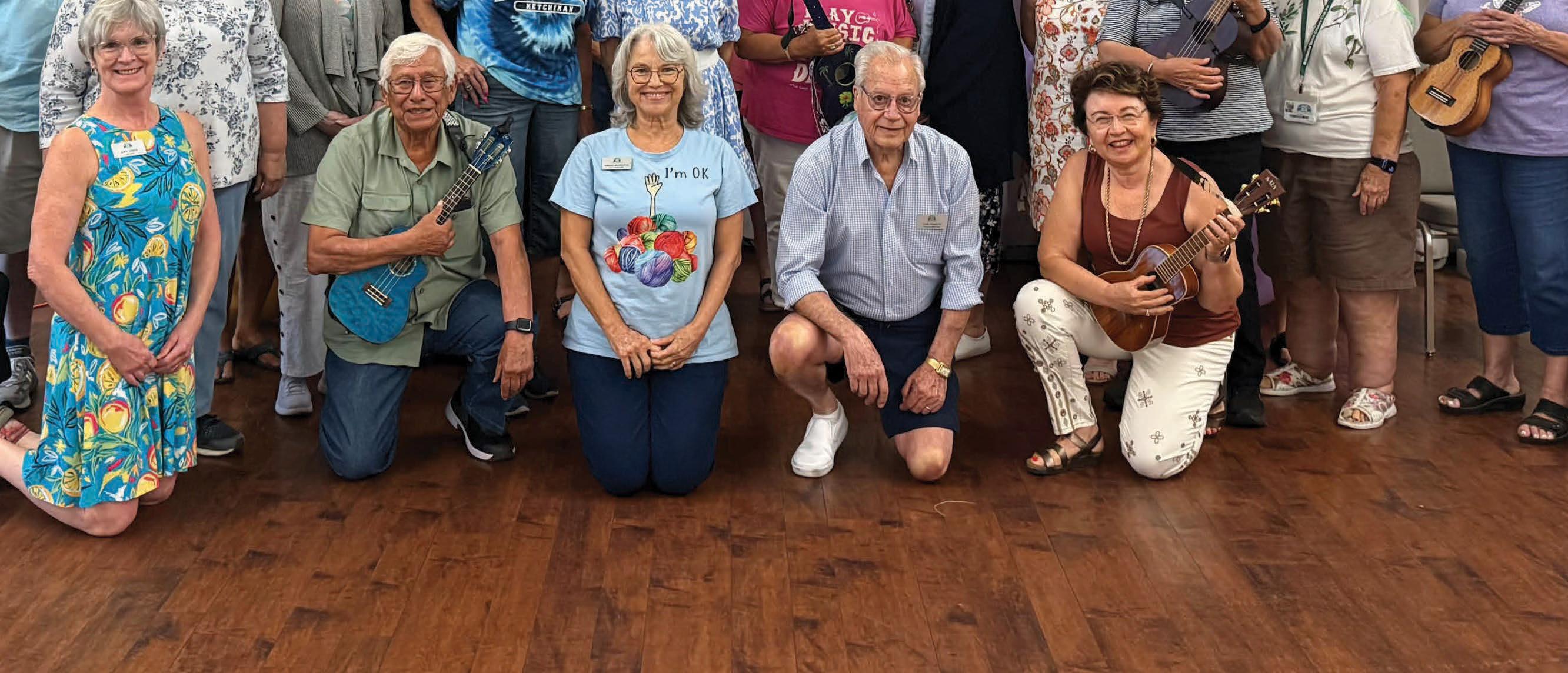
The Brentwood Senior Activity Center is open for activities geared towards adults ages 50 and better! Weekly classes include fitness, art, music, friendship, and more!

Free Game Social takes place every Friday from 1:00pm to 4:00pm.





The Café Costa lunch program serves meals
Monday - Friday from 11:00am to 1:00pm.
193 Griffith Lane Brentwood, CA 94513
Monday-Friday, 8:30am-5:00pm (925) 516-5380 brentwoodca.gov