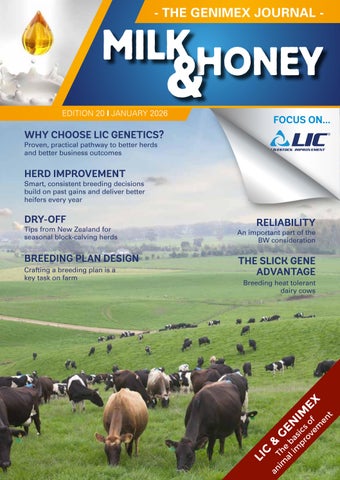
- THE GENIMEX JOURNAL -
EDITION 20 I JANUARY 2026
FOCUS ON...
WHY CHOOSE LIC GENETICS? Proven, practical pathway to better herds and better business outcomes
HERD IMPROVEMENT
Smart, consistent breeding decisions build on past gains and deliver better heifers every year
DRY-OFF
RELIABILITY
Tips from New Zealand for seasonal block-calving herds
An important part of the BW consideration
BREEDING PLAN DESIGN
THE SLICK GENE ADVANTAGE
an
C
&
im Th G al e b E im as N pr ics IM ov o E em f X en t
Breeding heat tolerant dairy cows
LI
Crafting a breeding plan is a key task on farm
Contents FOCUS ON...
4
WHY CHOOSE LIC GENETICS
7
LIC’s KIWICROSS™ BREEDING STORY
8
HERD IMPROVEMENT - THE FUTURE LOOKS EXCITING
10
THE BASICS OF ANIMAL IMPROVEMENT: LIC NZ & GENIMEX
12
PLANNING FOR A SUCCESSFUL DRY-OFF PERIOD: TIPS FROM NZ FOR SEASONAL BLOCK-CALVING HERDS
14
BREEDING PLAN DESIGN – SOME COMMONLY ASKED QUESTIONS
EASTERN CAPE | Hendrik Bezuidenhout Cell: 083 458 1709 | Email: hbez@telkomsa.net
16
RELIABILITY – AN IMPORTANT PART OF THE BW CONSIDERATION
SOUTH & EASTERN CAPE | Johan Müller Cell: 082 807 1548 | Email: muller@capegs.co.za
18
SHORT GESTATION LENGTH
20
BREEDING HEAT TOLERANT DAIRY COWS: THE SLICK GENE ADVANTAGE
SOUTHERN CAPE | Willem van Lingen Cell: 082 375 1252 | Email: willemvanlingen@telkomsa.net
21
BREEDING WORTH
EAST SOUTHERN CAPE | Shawn Buckley Cell: 082 828 8481 | Email: ebuckley@telkomsa.net
22
LAMENESS IN DAIRY COWS
- MANAGEMENT GENIMEX OFFICE Tel: 081 818 5352 | Email: info@genimex.co.za | www.genimex.co.za Chris Cloete Tel: 081 818 5352 | Cell: 082 807 1433 | Email: chris@genimex.co.za
- SALES REPRESENTATIVES -
GAUTENG, SOUTHERN MPUMALANGA & NORTHERN KZN Ferdi Myburgh Cell: 060 858 2122 | Email: ferdi.myburgh.11@gmail.com
KZN MIDLANDS | Britt Stanton Cell: 082 575 9387 | Email: britt@genimex.co.za EAST LONDON | Dave Swift Cell: 083 440 7291 | Email: swiftfamily@discoverymail.co.za EASTERN CAPE | Elizna Erasmus Cell: 071 605 9317 | Email: elizna@genimex.co.za
2
FOCUS ON LIC
No portion of this newsletter may be reproduced in any form without the written permission of the publisher. Views and opinions expressed in Milk & Honey are those of management and any relevant information seemed fit to project Genimex views and interests in the dairy industry. They can accept no liability of whatsoever nature arising out of or in connection with the contents of the publication. Many of the articles placed have been edited. Complete article are available from the editor. GENIMEX | Milk & Honey | JANUARY 2026
Foreword BY CHRIS CLOETE
I do however ask: if the product we are importing is so wrong why do we have so many successful and repeat clients that have been using our (LIC and Genimex) product for years?
In August of this year Genimex, or as the company is registered “Genetic Actions International cc” will have been trading for 30 years. From a very small, and humble start the company has grown to be a leader in the supply of genetic material to the South African dairy industry. I clearly recall when the late Errol Dicks and I resigned from the local AI company we were given 6 months and we would be asking for our jobs back. It is very important to acknowledge the role that a team of very loyal and capable agents have played in making the business what it is today. These ladies and gentlemen are at the coal face. They drive the miles making sure that you, our valued client, gets the semen you require on time. The Genimex team of agents really do care and share in your success. The success of you, our loyal client is really important to us because without the long term profitability of your business we would not be around. We started the business with a number of suppliers but over time and understanding what the market wants we now have two suppliers of genetic material. This being the 20th edition of the Genimex newsletter Milk & Honey I feel that it is time to split the publication into two where I will focus on the products from Viking Genetics and Livestock Improvement NZ (LIC) in different publications. Both of our suppliers have many similar objectives and long term goal. The main one being that they are both farmer owned and driven by a common goal that is the requirements of the their members. Obviously the financial success of their members is of cardinal importance to them and we can draw from what they do for their owners. By splitting the publication I am able to focus on the unique characteristics of each organisation.
For those of you that are hearing that other semen agents are now supplying/selling semen from New Zealand into SA I have to agian ask: Have their Medium Stature Holstein bulls that they have sold for years done what they promised the industry? We knew they would not and now they are thinking they should pick up some bulls from NZ. Let them do what they want to. Of course there will, like in any large industry, be those that think they know better and find some following in the industry. However, let me state what our approach is to supplying semen into South Arica to the herds that are serious about breeding cows that produce and reproduce on a pasture based system. These dairymen want cows that eat grass (grass must be a large part of their diet) and not cows that sleep on expensive pastures and eat feed that arrive in a truck, making the feed company rich. With Genomic proofs being the buzz term everyone thinks they can just get some DNA from a perceived top sire, have the SNP’s done, enter the data into a small insignificant reference population and get into the market with self acclaimed top sire. Not as simple as that. Reliable genomic proofs are based on an accurate, large data base/reference population. The Genomic proofs need to be validated by having a large, unbiased and organized progeny testing program. That is the only way that using Genomic proofs are sustainable. LIC NZ is particularly good at this. Genimex together with LIC NZ:1. Will NOT sell semen based on parent averages. That is so old, we are long past that. To do so today in an insult to forward thinking dairymen. 2. Will sell semen of Genomic proven sires as LIC NZ has access to a very large and accurate reference population. 3. Will sell LIC semen of daughter proven sires that have been through their large, unbiased and structured progeny test program. The progeny test program also serves to validate the data of the Genomically proven sires. The two programs have to be seen as a whole.
Livestock Improvement Corporation NZ or LIC NZ is by far the largest supplier of semen in New Zealand and has not become that by chance. They have focused on the needs of the pasture based dairyman’s requirements. They work with the milk buyers and actively work on supplying genetics that will produce cows that are profitable, calve in a strict season and produce the kind of milk that the milk processors require.
4. We do not support the sale of sires that have extremely high milk figures BUT are negative for fertility.
Some interesting statistics.
Last but not least, a very big thank you must go to Trina Dunning and her team at LIC’s International Department for all the support we get with organising semen supplies and the sending out the shipments so timeously. Then too for their assistance in putting together this edition of Milk&Honey. Without the help from the International team these publications just would not happen. It really is a pleasure working with Trina and her team.
In New Zealand 82% of cows are on milk recording (3 842 000 cows) data as published by Dairy NZ. LIC NZ has 160 progeny test herds that have to comply with strict rules in order to ensure the reliability of the data. Each daughter of a progeny test bull has her parentage validated before her data can be included into the data base. LIC NZ conducts approximately 3.6 Million inseminations annually with fresh and frozen semen. We at Genimex have been criticized over the years for the LIC NZ product that we supply into the industry. You have all heard the comments, no need for me to repeat them. GENIMEX | Milk & Honey | JANUARY 2026
5. We acknowledge that cows bred for a pasture based system have to fit into a strict season or seasons. Fertility is non-negotiable and we will continue, as we have over many years, selecting for this low heritability trait.
I hope you enjoy reading through the information presented and can see why we at Genimex are and have, for nearly 30 years, been excited about bringing this product into South Africa. Chris Cloete FOCUS ON LIC
3
LIC GENETICS
Kapy Macown, International Sales and Marketing Support LIC
Why Choose LIC Genetics
In an increasingly competitive dairy landscape, genetics is one of the most powerful levers a farmer can pull to lift productivity, strengthen resilience, and improve profitability. LIC (Livestock Improvement Corporation) brings more than a century of farmer led innovation to that task.
With its deep scientific capability, rigorous sire proving programme, and unrivalled scale, LIC offers South African farmers a proven, practical pathway to better herds and better business outcomes. Here’s why LIC genetics stand out—and how they translate into value on South African farms. Farmer owned, farmer focused LIC’s foundation as a farmer owned cooperative matters. It carries a responsibility to deliver value where it counts: on-farm. Decisions are considered carefully by balancing the needs of farmer shareholders, and the organisation’s priorities (genetic merit, fertility, efficiency, and reliability) by ensuring they align with day to day realities rather than theoretical models. For South African farmers this gives assurance that LIC is built on a strong platform dedicated to genetics, services, and data tools designed to be practical, measurable, and commercially relevant. Scale that delivers quality and reliability Few organisations in global dairy operate at LIC’s scale. In New Zealand, LIC conducts approximately 3.6 million inseminations annually—around three out of every four cows—backed by more than 100,000 straws dispatched per day during the peak of the season and a network of up to 1,000 AB Technicians. This scale is not just a statistic; it’s a quality assurance mechanism. High volumes enable robust logistics, repeatable processes, and continuous improvement. For South African farmers, that translates into reliable supply, consistent performance, and a service model honed by decades of seasonal pressure. Complementing insemination services is LIC’s end to end laboratory infrastructure. Each year, the Animal Health laboratory processes 2.2 million samples, while the GeneMark lab handles 600,000 genomic and related samples. LIC’s herd testing service analyses 11 million milk samples annually, providing an evidence rich foundation for 4
FOCUS ON LIC
selection decisions. The result is a data ecosystem in which every sample tightens the feedback loop between genetic prediction and real world performance. A sire proving programme built to find the elite Genetic progress depends on choosing the right sires—and LIC’s sire proving scheme is renowned for its scrutiny and selectivity. The pipeline begins with around 20,000 of the best cows in the country analysed from the database. From here, contract matings are organised to produce around 1,700 bull calves screened genomically each year. From there, about 140 of the best are advanced for proving, and about only 10% ultimately graduate to market. That funnel is intentionally narrow: it ensures that only elite bulls—validated by both genomic information and real herd performance— reach farmers. The proving programme is amplified by embryo and contract mating work. Each year, LIC organises 5,000 contract matings and produces over 2,500 embryos to enhance the breeding of the next generation of elite bulls. This disciplined, multistage selection process improves the quality of that next generation, and gives farmers confidence in LIC’s breeding scheme. Innovation that drives faster genetic gain LIC’s R&D focus targets the traits that matter most on farm: fertility, efficiency, robustness, and sustainability. The programme spans genomics, reproduction, animal health, and climate relevant traits such as heat tolerance. Notably, the adoption of genomic selection has materially accelerated progress; LIC reports that genomic technology lifted annual genetic gain from about 9 gBW (2012–2016) to about 16 gBW (2017–2020), and more than 50% of straws since 2021 have been from genomic bulls. For farmers, that means today’s sires are not only better than yesterday’s—they get better, faster.
GENIMEX | Milk & Honey | JANUARY 2026
LIC GENETICS
Kapy Macown, International Sales and Marketing Support LIC
Genomics Is Providing Farmers With Faster Genetic Improvement -3
-2 2021 Mated
-1 2022 Bull born
1 2023 Used in SPS & to create bulls
2 2024 marketed for the 1st time and SPS calves born
3 2025 SPS heifers mated
4 2026 heifers calve down
5 2027 end of first lactation
2028 Marketed as a daughter proven bull
Genomic bulls
Faster genetic improvement with genomics 2012 - 2016 2017 - 2020
9 gBW
Use of genomic bulls 50.3%
16 gBW
Average genetic gain per annum South African herds face diverse pressures—heat events, variable pasture conditions, and farm sustainability issues. LIC’s work on genomics and heat tolerant genetics in particular, aligns closely with these pressures, offering pathways to herds that can perform consistently in challenging conditions while keeping pace with productivity expectations. Efficiency: converting feed to milk—profitably At the heart of LIC’s breeding philosophy is production efficiency: more kilograms of milk solids per kilogram of liveweight. In practical terms, the most efficient cows produce more, weigh less, conceive more reliably, and emit less per unit of output. LIC’s long term focus has lifted production efficiency from about 55% in the early 1990s to around 80% today, underscoring a sustained, compound improvement in how effectively cows turn feed into saleable milk. For South African farmers coping with rising input costs and tight margins, this matters. Efficient cows require less feed to achieve the same (or better) output. They also tend to have superior fertility, reducing empty rates and replacement costs. Over time, those efficiencies accumulate—helping with the cost of production, making on-farm tasks more manageable via predictable conception and calving and strengthening the farm’s overall resilience. Data as a decision engine Better genetics start with better information. LIC supports data driven decision making through herd testing, genomic profiling, and economic modelling. The philosophy is simple: measure, rank, act. •
Herd testing: Individual cow milk sampling identifies top performers and under achievers. This granularity enables precise culling and breeding decisions.
•
Animal health and genomic testing: Disease, pregnancy, and genotype information reduce uncertainty and improve selection accuracy—especially useful when rearing replacement heifers from the best dams.
•
MINDA to rank and report: LIC’s herd management software (MINDA) helps farmers rank animals and visualise herd structure by genetic merit, making selection lists and mating plans clearer and more objective.
These services feed into our breeding programme making it more accurate and robust, ultimately leading to better bull selection decisions that benefit South African farmers. Also, LIC places a strong emphasis on validation. Frequent updates to evaluations ensure that breeding values remain current, transparent, and trustworthy. As the volume and diversity of GENIMEX | Milk & Honey | JANUARY 2026
data grow, the accuracy of predictions improves, sharpening the reliability of on farm decisions season after season. Translating LIC’s strengths to South African conditions While LIC’s heritage is New Zealand, its solutions travel well—especially to pasture based systems common across South Africa. Here are four practical ways South African farmers can leverage LIC genetics: 1. Target fertility first Improved conception underpins everything—calving pattern, lactation length, and replacement planning. Selecting sires with proven fertility traits shortens calving spreads, reduces nonproductive days, and stabilises production curves. 2. Prioritise feed to milk efficiency In regions where pasture growth varies by season and water availability, efficient cows deliver more milk solids per kilogram of liveweight. LIC’s focus on efficiency helps farmers protect margins when feed is tight or costly. 3. Plan for heat stress Heat events depress intake and reproduction. Genetics with better heat tolerance can mitigate performance dips and support steadier reproductive outcomes across warm periods. 4. Build replacements from the top of the herd Breeding your best cows with elite LIC sires over successive seasons will lift the herd’s average genetic merit through your replacement heifers, compounding gains in production and fertility. A practical roadmap for adoption To capture the full value of LIC genetics, treat breeding as a managed, data rich process rather than a seasonal purchase: •
Establish a clear breeding objective: Define the balance of traits you need—production, fertility, efficiency, robustness—anchored to your farm’s system and market.
•
Measure routinely: Commit to measuring milk production and where possible, health screening. The more often you measure, the sharper your selection decisions will be.
•
Rank and select: Rank animals by genetic merit and lifetime performance. Mate the best cows to the best sires; use beef or SGL dairy semen strategically on the bottom end.
•
Review annually: Revisit results each season, updating trait priorities and sire selections in line with farm performance and conditions. FOCUS ON LIC
5
LIC GENETICS
Kapy Macown, International Sales and Marketing Support LIC
The bottom line LIC’s combination of cooperative purpose, industrial scale capability, rigorous genetics, and data first decision support gives South African farmers a dependable partner for herd improvement. The organisation’s track record—millions of inseminations, tens of millions of milk samples analysed, and a sire proving scheme that markets only the top ten percent—creates a simple, compelling proposition: genetics you can trust, backed by systems that deliver.
For farmers intent on building herds that are efficient, fertile, and fit for a warming climate and evolving market expectations, LIC genetics offer a practical, proven route to progress. With clear objectives, routine measurement, and disciplined selection, the benefits compound—animal by animal, season by season—into a more resilient, more profitable dairy business.
WHY USE LIC?
Long history – improving the lives of NZ dairy farmers for more than 100 years.
The scale of LIC is immense • Inseminate approximately 3.6 million cows in NZ – 3 out 4 cows • 11 million milk samples analysed by our herd testing service • More than 100,000 x straws dispatched per day during the peak of breeding season
Farmer-focused – farmer owned co-operative meaning we have a strong responsibility to our farmer shareholders to ensure they are at the heart of everything we do.
• Up to 1000 AB Technicians employed during breeding season • 2.2 million samples analysed by the Animal Health lab each year • 600,000 samples analysed by our GeneMark lab each year
World renowned sire proving scheme and breeding programme • 5000 contract matings organised each year • Over 2,500 embryos also created to help generate the next generation of elite bulls • Genomically screen 1,700 bull calves • Around 140 new bulls are then brought to LIC for proving
World class research • Heat tolerant genetics and other variant research • Lower methane emitting animals • Genomics • Data and machine learning • Reproduction • Animal Health
• Approximately only 10% graduate to be marketed
Strong focus on breeding for efficiency and improving genetic merit
Data is essential to help farmers build resilient, profitable herds
• Around 55% production efficiency in the early 1990’s when comparing kgMS per kgLWT. Today, that figure is around 80%.
• The volume of data in New Zealand’s dairy industry is already immense and will continue to grow.
• Genomics powering genetic gain; 9gBW from 2012-2016 compared to 16gBW from 2017-2020. More than 50% of straws since 2021 have been from genomic bulls. • The best cows are more efficient at turning feed into milk – they produce more, weigh less, have a fertility advantage, and are more emissions-efficient. • Farmers can pull several levers to improve genetic gain: - Herd Testing – sampling the milk from individual cows in their herd - Anima Health testing – disease, pregnancy and genomic testing - MINDA to rank their herd – produce reports to identify top genetic merit animals
6
FOCUS ON LIC
• Herd testing, genomic profiling, and economic modelling all contribute to increasingly sophisticated evaluations. It represents an unprecedented opportunity: every new dataset enhances the accuracy of predictions and improves the reliability of breeding decisions. • LIC thoroughly validates the data so when released, it represents the best possible estimate of genetic merit, designed to help farmers make the most informed decisions for herd improvement. • Frequent changes in evaluation data helps us ensure that the information guiding you as farmers is transparent, current, and trustworthy. And most importantly, it ensures herd improvement, generation after generation.
GENIMEX | Milk & Honey | JANUARY 2026
KIWICROSS
Casey Inverarity – Product Manager, International
LIC’S KIWICROSS™
BREEDING STORY
KiwiCross™ bulls are now a mainstream breeding choice in New Zealand, but their journey began over 20 years ago. In 2000, LIC began progeny testing with a clear vision: to introduce crossbred bulls into the LIC Sire proving scheme (SPS) programme – driven by the needs of New Zealand farmers. THREE KEY REASONS DROVE THE INTRODUCTION OF CROSSBRED BULLS TO THE SPS PROGRAMME: Crossbreeding popularity – By 2000, crossbred cows in NZ had already organically grown to 20% of the cow population. Farmers were keen to take advantage of profitability gains from the ‘medium’ sized cow that offered hybrid vigour and efficiency on pasture. Combining Holstein Friesian (protein, yield) and Jersey (fertility, fat) traits produced desirable intermediate phenotypes. Simplified mating management – Some farmers sought an easier mating management option than back crossing between the parent breeds, some wanted more uniformity within the herd than seen with back-crossing, while others wanted to use flexible breed splits to customise their herd for maximum efficiency. Without strict breed percentage rules, they could lean towards Jersey or Friesian traits to suit their farming systems. Genetic gain - LIC saw the opportunity to advance genetic gain in the growing number of crossbred herds by utilising the emerging pool of elite crossbred cows as bull-mothers. By widening the pool of elite cows and bulls, selection intensity could increase. NZ’s across-breed evaluation system in Breeding Worth (BW) allowed easy comparison of crossbreds and purebreds; it was simply a matter of registering a crossbred sire for genetic evaluation. WHAT HAS HAPPENED SINCE? The national trend toward crossbred cows has steadily continued. By 2024/25, over 61% of NZ dairy cows were crossbred, including many genetically elite crossbred dams. (See Figure 1.) KiwiCross bulls enabled three genetically elite bloodlines as sires of sons and are now firmly part of LIC’s suite of breeding programmes. In 2005, KiwiCross bulls accounted for 14% of LIC inseminations. Sire Proving Scheme (SPS) farmers praised the lively and robust calves that reared easily and milked just like the other crossbred cows. Popularity grew and by 2024, crossbreed sire usage in NZ was within 3% of GENIMEX | Milk & Honey | JANUARY 2026
Holstein Friesian (HF) sires. Today, 79% of HFxJ semen is used over crossbred cows, with many farmers adopting steady KiwiCross bull breeding programmes. Figure 1. Breed Composition of NZ Dairy cow population New Zealand 0.4% 7.5% 7.6% Holstein-Fresian / Jersey Crossbreed Holstein-Fresian
23.4%
Jersey 61.1%
Ayrshire Other
Source: NZ Dairy Statistics, 2024-25
The LIC KiwiCross bull breeding programme has now surpassed the Holstein Friesian programme in scale, driven by market demand. LIC’s SPS programme includes about 60 Holstein Friesian, 35 Jersey and 65 KiwiCross bulls. Crossbred programmes can utilise bull sires across breeds with fewer restrictions with inbreeding or breed percentages compared to the purebred breeding programmes. On the bull-father side, KiwiCross sire usage in the breeding programme has increased over time with the emergence of genetically superior crossbred sires. By 2025, KiwiCross SPS crossbred sires will represent 88% of the sires of sons, with the remainder equally split between Holstein Friesian and Jersey sires. The original vision for the KiwiCross bull breeding scheme has proven successful, delivering elite bulls from a rapidly expanding crossbred population. The future looks exciting for KiwiCross bulls!
FOCUS ON LIC
7
HERD IMPROVEMENT
Joyce Voogt, International Technical Manager LIC
HERD IMPROVEMENT -
the future looks exciting For decades, South African farmers have bred resilient, efficient, high-performing herds tailored to their specific goals and environments. Within these herds, the superstars stand out. These superior animals are highly production-efficient, partitioning a greater proportion of their daily feed intake towards milk production and less towards maintenance. They are easy-care, healthy, quick to get back in calf, and display excellent conformation. Smart, consistent breeding decisions build on past gains and deliver better heifers every year. Farmers using LIC genetics can take pride in the steady progress visible in their cows compared to those milked in years gone by. Herd improvement rests on four pillars: elite AI bulls carrying the traits desired, better cows breeding the next generation, top merit replacement heifers in the pipeline, and strong reproductive performance. Farmers who focus on these pillars achieve faster genetic gain on farm, resulting in increasingly efficient and productive herds. Genetic selection pressure is increased on farms using targeted breeding of top merit bulls to their better cows, and beef to their lower end. On the sire breeding side, the rate of genetic gain in LIC sires is accelerating too. There have been breakthroughs in genomic modelling and gene discovery work, while reproductive technologies such
8
FOCUS ON LIC
as embryo transfer both shorten generation interval and increase the pool of elite sires to select from. All this effort is reflected in genetic gain figures. An LIC study across New Zealand herds reported an almost 40% faster rate of genetic gain in herds where more than 80% of progeny were sired by LIC bulls compared to herds with less than 20% of progeny. A separate study of 600,000 mature lactating cows in milk revealed a strong relationship between genetic merit and phenotypic performance. The study reported a 0.4kgMS increase for every 1gBW point increase. Breeding the best bulls AI sires have the largest genetic influence on a herd and are the key to rapid advances in genetic merit to help meet future challenges. Genimex works closely with LIC’s product specialists, to bring their best bulls to the South African market. LIC’s breeding scheme efforts have driven exciting genetic trait trends in young bulls entering the LIC Sire Proving Scheme. These bulls are evaluated using the Breeding Worth index, which measures production efficiency and robustness. Each year, the cream of the crop enter LIC’s elite bull teams. Additional emphasis is placed on traits such as fertility and udder quality, while other important traits like capacity and temperament are also considered.
GENIMEX | Milk & Honey | JANUARY 2026
HERD IMPROVEMENT
Joyce Voogt, International Technical Manager LIC
Breeding from the best cows
Rearing the best calves
Opportunity to accelerate genetic gain from cows exists in every herd. An LIC study (Table 1) highlights the opportunity within age-groups across current New Zealand herds, revealing an exciting outlook for dairy producers. With genetically superior heifers replacing their mothers and lifting performance year after year, today’s top quartile performance could become tomorrow’s average, and eventually the bottom quartile.
The pipeline of heifer calves in New Zealand is also showing increased rates of genetic gain. An LIC study of heifer calves reported that average genetic gain rose from 17 gBW points per year in 2014-2018 to 23 gBW points per year in 2019-2023.
Past experience brings confidence for future gains. Over the last 30 years, the average annual milk solids production per cow in NZ has risen from 270 to 414 kgMS, with an estimated 60% of that being due to genetic improvement. The LIC study shows the opportunity is there for the taking - and process can be accelerated by targeting superior cows for breeding replacements, and using SGL Dairy™ and Beef options to generate extra revenue from the lowest-ranked cows. Table 1. Cow phenotypic performance when ranked by milk solids production quartile within herd, NZ 2023/2024 season. Ranked # by KgMS Animals
Avg KgMS
Avg gBW
Avg KgMS/
Avg MS/d
Q1
173247
563
143
1.12
2.12
Q2
179656
506
104
1.01
1.94
Q3
182986
466
76
0.93
1.81
Q4
176521
405
39
0.82
1.61
712410
485
90
0.97
1.88
+158kgMS +6kglwt
Young stock management plays a vital role in herd improvement. It starts with ensuring the right calf is kept as a replacement through accurate record keeping, careful calving-mob management and DNA parentage verification. Avoiding mix-ups reduces the risk of inbreeding or accidentally rearing dairy beef or SGL dairy calves as replacements. Once selected, excellent rearing prepares replacement heifers to get in calf quickly at 15 months of age and calve down in optimal condition at 24 months, allowing them to express their full genetic potential once in the milking herd. Reproduction supporting genetic gain Better reproductive performance gives farmers more options: increased conceptions for the straws used, extra AI heifer calves to select from, the ability to target semen use, fewer empty cows and greater flexibility for discretionary culling. Genetic (Figure 1) and phenotypic fertility trends are positive in New Zealand. Industry statistics show the top quartile of farms now average 78% 6-week in-calf rate.
Source: lic.co.nz.
Figure 1. Relationship between Fertility gBV and reproductive phenotypes 90 80 70
2024 Season 6 Week In-Calf Rate
Percentage
60 50
2024 Season Not In-Calf Rate
40 30 20 10 0
-10
-9
-8
-7
-6
-5
-4
-3
-2
-1 0 1 2 Fertility gBV
3
4
5
6
7
8
9
10
Source: LIC, 2025
Reproduction is complex. The results seen on farm are due to a combination of the cow’s genetics, her environment, and the way she is managed. While fertility has low heritability, it is essential for achieving good on farm outcomes and is correlated to phenotypic performance, (Figure 1). Phenotypic results improve as Fertility gBV increases.
GENIMEX | Milk & Honey | JANUARY 2026
Investing in the right genetics is a key breeding decision. Focusing on the best available genetics today will set your herd up for a strong future. Together, LIC and Genimex remain committed to providing South African farmers with the very best bulls to support this goal.
FOCUS ON LIC
9
BREEDERS EQUATION
Casey Inverarity, International Product Specialist LIC
THE BASICS OF ANIMAL IMPROVEMENT:
LIC NZ & GENIMEX
Genetic gain is widely understood in global dairy breeding – and while the formula is simple, the progress it delivers is steady, cumulative, and incredibly powerful over time.
Genimex is privileged to draw directly from the world leading genetic engine of LIC New Zealand, giving farmers access to the same disciplined breeding approach that has transformed the national herd in New Zealand.
Proven LongTerm Genetic Progress Over the past 30 years, LIC has delivered outstanding improvements in milk solids across all our main breeds in New Zealand.
Holstein Friesian Progress Trait
30 Years Ago
Today
Fat %
4.1%
4.8%
Protein %
3.3%
3.8%
Elite LIC Friesian bulls now exceed 9.6% total milk solids.
Crossbred Progress Trait
30 Years Ago
Today
Fat %
4.9%
5.5%
Protein %
3.8%
4.1%
Elite LIC KiwiCross bulls now exceed 11% total milk solids.
These gains underline the power of sustained, disciplined breeding paired with rigorous data.
10
FOCUS ON LIC
GENIMEX | Milk & Honey | JANUARY 2026
BREEDERS EQUATION THE GENETIC GAIN FORMULA
Casey Inverarity, International Product Specialist LIC
2. Accuracy of Selection Accuracy is only as good as the data behind it — and LIC’s data set is unmatched. • New Zealand has the world’s largest recorded crossbred cow population.
Genetic gain is governed by a few essential levers. While we can’t control everything, the areas we can influence make an enormous difference.
LIC NZ’S BREEDING STRATEGY LIC’s breeding goals are clear and strongly aligned to pasture based, cost efficient dairy systems. The aim is to breed cows that convert feed into farmer profit — cows that are productive, fertile, healthy, and easy to manage. Key goals include: • High genetic merit (high BW) • Strong pasture based efficiency (high production per kg liveweight)
• 82% of NZ cows are herd tested annually. • LIC operates one of the last major progeny testing schemes globally, ensuring genomic predictions remain reliable and validated — a responsibility to its farmer owners. • The Sire Proving Scheme consists of: -
160 herds
-
79,000 cows
-
Around 11,000 daughters from progeny test sires each year
• Every daughter has: -
Confirmed parentage
-
Full herd testing
• Longevity (average > 4.5 lactations)
-
TOP (Traits Other than Production) classification
• Good temperament and fast milking speed
-
Liveweight measurement to validate production efficiency measures
• Aggressive grazers • Excellent fertility (high 6 week incalf rate)
• Strong, durable udders By breeding:
This robust data underpins the accuracy of LIC’s genomic evaluations and ensures farmers receive predictable, reliable performance.
• Holstein Friesian: moderate size for efficiency
3. Generation Interval
• Jersey: slightly larger than traditional NZ Jersey
Shortening the generation interval fast tracks genetic progress.
• Easy care cows suited to commercial systems
• KiwiCross: consistent, balanced all rounders The focus is not on producing bigger cows, but better cows — animals that stay in the herd, get in calf consistently, and deliver more production from grass.
THE LEVERS OF GENETIC GAIN WE CONTROL 1. Selection Intensity LIC applies extremely high selection pressure: • From 4.5 million dairy cows and young stock, less than 1% qualify as potential bull mothers. • These cows must be herd tested at least three times per year, calve as two-year-olds, recalve as three-yearolds within the bounds of New Zealand’s tight mating lengths, and maintain strong fertility. • Each year, approximately 1,700 young bulls are genomically tested. Of these around: -
145 enter the progeny test program (9%)
-
15 graduate as daughter proven bulls (1%)
-
7 are selected as sires of sons (0.5%)
This intensity is one of the key drivers behind LIC’s world class genetics. GENIMEX | Milk & Honey | JANUARY 2026
LIC does this through: • An aggressive embryo transfer (ET) programme accelerates the turnover of elite genetics by guaranteeing that LIC can screen bull calves from the most elite yearling females in the industry. • Extensive use of genomically tested young sires, reducing the time between genetic improvement and onfarm impact. The result is faster gain, earlier access to superior genetics, and a more progressive national herd.
IN SUMMARY Genimex is proud to bring LIC’s proven genetic engine to South African farmers. With disciplined selection, unmatched data accuracy, and cutting edge genomic and ET programmes, LIC continues to deliver cows that thrive in pasture based systems — fertile, efficient, robust animals that return profit year after year.
FOCUS ON LIC
11
DRY-OFF
Joyce Voogt, International Technical Manager LIC
Planning for a successful dry-off period Tips from New Zealand for seasonal block-calving herds Everyone needs some annual leave, including dairy cows. Cows use their dry period ‘resting period’ to recover from one lactation and prepare for the next. During this time the udder involutes (shuts down milk production and sheds milk-producing epithelial cells), and then redevelops (replenishes and activates new mammary cells), producing colostrum ready for the next calving. The dry-off period allows farmers to focus on: • treating existing udder infections and managing drug withholding periods
Keep good records Quality records inform good decision-making and are essential for managing drug withholding periods. They help determine which cows can be dried off without treatment, which may require treatment, and which should be culled. Record for each cow
• preventing new mastitis cases
• expected calving date and confirmed conception date, (early-aged pregnancy test)
• feeding cows to reach target body condition scores (BCS) by calving
• age, health events, and BCS
• transition management of close-up cows DairyNZ’s SmartSAMM guidelines provide a practical framework to help New Zealand dairy farmers plan for dry-off. Much of the guidance will be applicable for pasture-based block calving herds elsewhere, but you should consult your own advisors to determine what is relevant to your situation. Here are some key points. Plan ahead with your veterinarian advisor A tailored plan can be developed with your vet, who may: • review somatic cell count (SCC) and mastitis history • score teat end damage • identify cows for antibiotic dry-cow therapy (DCT) • decide if internal teat sealants (ITS) are appropriate • discuss targeted culling • make dry-off management, treatment recommendations
12
FOCUS ON LIC
• individual SCC and clinical mastitis cases • lab culture results • treatment history and response • treatment withholding periods Choosing dry off dates Cows need a long enough dry period to allow the udder to fully repair and rejuvenate (at least 6-8 weeks), reach body condition targets by calving (NZ BCS 5.5 for first and second calvers, and 5.0 for older cows), and fully comply with withholding periods for treatments administered at dry-off. Traditionally, a minimum dry period of 40-60 days is recommended, but producers should also consider BCS gain requirements and antibiotic withholding periods. DairyNZ recommends a minimum 42-day dry period regardless of BCS. When considering antibiotic treatment withholding periods and timing of dry-off, remember to allow for at least ±14 days distribution of births around expected calving dates* to reduce the risk of cows
GENIMEX | Milk & Honey | JANUARY 2026
DRY-OFF
Joyce Voogt, International Technical Manager LIC
calving inside their withholding period. This range should also be applied to cows in calf to SGL Dairy™ semen.
each cow still needs to be assessed individually and fed appropriately to reach her target BCS.
(*99.7% of calves are born within ±14 days of their expected calving date according to an LIC study Winkelman and Spelman (2001)).
Under NZ conditions, cows do not usually gain weight in the 10 days after dry-off, nor in the 30 days before calving. Rising 3-year-olds are still growing and require more time. The DairyNZ table (Table 1) estimates dry-off time requirements based on age, feed type and bodycondition, allowing for these periods when cows are not gaining condition.
Body condition score and dry-off date Dry-off timing and feeding during the dry period directly affect body condition score (BCS) at calving. For blockcalving herds, managing cows as a group is efficient, but
Table 1. Drying off time based on cow BCS and time to calving to achieve target calving BCS. Body condition score
Days cow needs to be dry before calving
Mature cow
Rising threeyear-old
Autumn pasture with limited supplements or crops
Autumn pasture and/or high-quality crops supplement fed above maintenance
3.0
3.5
160
120
3.5
4.0
130
100
4.0
4.5
100
80
4.5
5.0
70
60
5.0
5.5
42*
42*
*DairyNZ recommends a minimum dry period of 42 days for all cows irrespective of BCS. Source: Body condition scoring. The reference guide for New Zealand dairy farmers. Version 3, 08/2024. Accessed Sept 2025.
Managing dry off Milk yield at the time of dry-off can affect post-dry-off milk leakage and the incidence of mastitis. Farmers can use targeted management strategies for cows at different production levels to help minimise these risks. DairyNZ SmartSAMM yield-based dry-off guidelines are summarised in Table 2.
Feeding strategies are recognised as the best way to encourage drops in milk yield in cows still producing over 10 litres daily. Avoid outdated practices like intermittent milking or reduced milking frequency. These increase mastitis risk and bulk milk SCC. Work with your farm advisor to develop a tailored feed plan for the entire dry period.
Table 2. Guidelines for a yield-based approach to dry-off strategies Production Industry Guideline (litres/cow/day) <5L/ day
Can be dried off immediately, to avoid rising SCC due to natural cell shedding
5-10 L/day
Should dry-off without excessive milk leakage, if management post-dry off encourages involution.
>10L/day
Encourage yield drops and udder involution through diet before dry-off. Drop daily dry matter intake by 30-50% in the 1-2 weeks before dry-off, removing concentrates (if present) in the last week of lactation, while providing enough feed for maintenance of the 6–8-month pregnant cow.
Source: SmartSAMM Guideline 16, 2013
Treatments and hygiene • Correct administration matters. To reduce the risk of introducing infection, trained staff should hygienically administer treatments, following product instructions and spraying teats after treatment.
over this time. Monitor for signs of mastitis or discomfort, and seek veterinary assistance immediately if infection occurs. Once udder pressure eases, shift the nutritional focus to helping cows gain body condition as required. Don’t forget the milking plant
• Prevent errors. Clearly identifying, separating and managing treated cows into treatment mobs, along with good treatment records helps avoid their accidental milking.
Before the next lactation, inspect and maintain your milking equipment. A full milk quality and mastitis review can help identify problem areas - especially if SCC levels are high.
After drying off, move cows to clean, dry paddocks (or barns). Minimise stress and ensure access to clean water. Avoid bare soil, effluent-sprayed areas, and feed pads for 7–14 days, feeding cows a maintenance diet
A well planned and executed herd dry-off reaps rewards, helping set the stage for healthier cows, lower mastitis rates, and improved productivity in the next lactation.
GENIMEX | Milk & Honey | JANUARY 2026
FOCUS ON LIC
13
BREEDING PLAN DESIGN
Joyce Voogt, International Technical Manager LIC
BREEDING PLAN DESIGN – SOME COMMONLY ASKED QUESTIONS
Crafting a breeding plan is a key task on farm. It will shape your herd for years to come and also has immediate effects. The plan determines the number of replacement heifer calves, your service bull requirements, and may deliver extra days in milk or produce surplus dairy beef calves for sale or rearing. A mating plan covers many areas, including the AI and natural mating period lengths, the number and type of semen straws ordered, heat detection strategies, logistics such as semen storage and delivery, and the personnel responsible for inseminations. Ordering enough semen straws and ensuring sufficient service bulls are on-farm for the natural mating period helps avoid undesirable outcomes, such as too few replacement heifers, high numbers of empty cows, or operational stress during mating. A good plan keeps the end goal in mind and includes built-in buffers. Key numbers to think about include • replacement heifer requirements • number of service bulls needed • whether AI will need to be extended to cover returns from synchrony programmes, bull power failures, or a planned restart of AI at the end of the natural mating period You may also need to consider rollover cows, yearling mating plans, heifer sales or purchases, cows pregnant to AI that might be culled, losses during pregnancy and rearing, or any plans to change herd size. Historic results or local industry benchmarks can help with estimates. The guidance below is based on NZ studies, but should be adapted to your local situation. Your professional advisors can help tailor it to your farm.
How many inseminations will you need for your AI replacement requirements? Start by working out how many incalf heifers you’ll need in three years. Expected herd size in 3 years × desired replacement rate = incalf heifers needed. So, 400 cows × 25% replacement rate = 100 incalf heifers. Allow for losses prior to first calving. Research suggests rearing about 10–15% extra heifers to allow for deaths, discretionary culls and empties, but your farm’s number may differ. Next, calculate the required semen straws. Straws required = heifers required × straws required to generate an in-calf heifer A common rule of thumb is about 5 conventional semen straws required to produce a 24-month-old in-calf heifer. LIC guidance uses 4.9 straws per heifer on average, so to achieve 100 heifers calved you’d use around 490-500 straws. For beef on dairy calves the guidance is lower at around 2.2 straws per calf reared to weaning. These figures assume typical pregnancy rates, losses and mortality in New Zealand*. Figures vary between farms, so check with your advisor and adjust for your situation. How many service bulls do you need? Bull power requirements should consider: • the number of open cows in the herd at natural mating start, • recommended bull: cow ratios, and • bull health, temperament, type and size.
14
FOCUS ON LIC
GENIMEX | Milk & Honey | JANUARY 2026
BREEDING PLAN DESIGN
Joyce Voogt, International Technical Manager LIC
Table 1. Daily herd stock bull requirements by estimated cows open DairyNZ service bull in-herd requirements - double for the bull team Likely % of herd pregnant at start of bull mating No. cows in the herd or mob
30%
40%
50%
60%
70%
80%
100
3
2
2
2
2
2
200
5
4
4
3
2
2
300
7
6
5
4
3
2
400
10
8
7
6
4
3
500
12
10
9
7
5
4
600
14
12
10
8
6
4
Source: DairyNZ,2024
Recommended Ratios For cows, 1:30 two-year-old bulls: non-pregnant milking cows in the paddock at any time. (see Table 1),
For yearlings, 1:20 yearling bulls: non-pregnant heifers (excluding synchrony returns)
Double the numbers in milking herds to allow for two teams, one working and one resting, switched out daily. Plus allow for some spares, in case bulls go lame or get sick. Example: 60 open milking cows 2 bulls in the paddock + 2 resting = 4 bulls, plus spares.
Good bull management is important to get the best out of your service bulls. For tips and advice check out the DairyNZ InCalf book or Dairy Australia’s ‘Bulls Power Up Handbook’.
Mating length decisions Table 2. Not-in-calf rate by 6-week in-calf rate and mating length NZ. Estimated not-in-calf rates by mating length and 6 week in-calf-rate 6-week in-calf rate
Total weeks of mating (AB period plus bull mating period) 9
10
11
12
50%
34%
30%
27%
24%
55%
30%
26%
24%
23%
60%
26%
23%
21%
19%
65%
22%
19%
17%
16%
70%
19%
17%
15%
14%
75%
19%
15%
13%
12%
80%
13%
12%
11%
10%
Source: DairyNZ, 2024
Final empty rate is driven by early incalf rates, mating length and bull performance, (Table 2). In New Zealand the average mating length is 10–11 weeks. Some farmers extend mating by a couple of weeks, restarting AI and using LIC’s SGL DairyTM semen at the end of the service bull period to reduce empties while keeping the calving pattern tight. Be wary of stopping mating too early; short mating lengths, especially if combined with low 6-week incalf rates, can push up empty rates. Keep an eye on early mating period performance; early indicators help you adapt the plan, if necessary. InCalf targets are a 90% 3week submission rate target (daily submissions of about 4.3%) and >64% 2-24 day non-return rate. If you have concerns or are unsure, seek professional advice.
GENIMEX | Milk & Honey | JANUARY 2026
A flexible approach can be helpful when things do not go as expected. Tweaks may include extending or restarting AI for a short period to generate more replacements. You might also use AI to cover synchrony returns or target some SGL Dairy semen to compact next year’s calving pattern for the later mated cows. Your Genimex breeding consultant will be more than happy to discuss options with you. A good breeding plan prepares for the expected, has a backup for the unexpected, and is monitored and adapted along the way - setting your herd up for great results. Here’s to mating success! *Assumptions and papers are available on request.
FOCUS ON LIC
15
RELIABILITY
Joyce Voogt, International Technical Manager LIC
RELIABILITY –
AN IMPORTANT PART OF THE BW CONSIDERATION Choosing bulls to sire the next generation of replacements is a complex decision. This bull or that bull? A team of five bulls or ten? Should you opt for daughter proven sires, genomic sires, or a combination of both? Breeding Worth (BW) is a key measure BW Rel BW of genetic merit - and alongside it sits 327 90 another very important figure - Reliability.
Figure 1. Progression of reliability % with additional phenotypic records.
What is reliability? Each trait has an associated reliability figure which indicates the amount of information contributing to an evaluation. Measured on a scale from 0 to 100%, reliability reflects the confidence in the data behind the genetic merit estimation; the higher the percentage the more confidence that the figure will not have large changes as more data flows in. The more information (ancestry, progeny, and animal’s own) contributing to the BW estimate, the higher the reliability figure will be, and the more confidence there is that the BW figure represents its true genetic merit. Figure 1 shows the increase in reliability for individual bulls with increasing amounts and sources of information. The x-axis shows the largest potential change, up or down, in BW given the level of reliability. The expected range of movement narrows as reliability increases. By the time the bull is fully proven, potential changes are much smaller.
Source: dairynz.co.nz. Accessed 8/12/2025
Reliability grows with data Bulls with only ancestry records have low reliability, around 30%. When evaluated using LIC’s genomic screening, their gBW reliability increases to 55-60%, comparable to that of a well-proven cow. Once a bull has about 33 in-milk daughters contributing records, his reliability reaches 70% and he is considered ‘daughter proven’ - becoming eligible to enter the Ranking of Active
16
FOCUS ON LIC
Sires list. Over time, as his daughters contribute more data across multiple lactations and more daughters are added, reliability can rise to the ‘well-proven’ status of about 85%. Fully proven bulls with a reliability score of 99% have over 10,000 daughters contributing data and their expected BW shifts are very small.
GENIMEX | Milk & Honey | JANUARY 2026
RELIABILITY
Joyce Voogt, International Technical Manager LIC
Figure 2. Potential true BW spread for an animal of 30% versus one of 90% reliability. 90% reliable
0 20 40 60 80 100 120 140 160 180 200 220 240 260 280 300 320 340 360 380 400 420 440 460 480 500 520 540 560 580 600 620 640 660 680 700 720 740 760 780 800 820 840 860 880 900 920 94960 980 1000
30% reliable
Breeding Worth Source: LIC.co.nz. Accessed 8/12/2025
LIC genomics - early and ongoing reliability boosts LIC’s proprietary genomic evaluation tool, LIC GE, uses a unique SNP panel to analyse the entire New Zealand dairy population. It combines information from all breeds and animals simultaneously in a single-step evaluation and reports gBW. LIC’s genomic predictions provide an early boost in reliability in its young bulls and improved predictions of later-expressed traits such as fertility and survival. Ongoing collection of daughter phenotypes and genotypes is essential for good genomic predictions, enlarging the genomic reference population and keeping it up to date. Why reliability matters when looking at bull proofs. Figure 2 illustrates the spread of the potential true BW for two bulls with identical BW but very different reliability figures. One bull, with 30% reliability, is based on ancestry data only, while the other, at 90% reliability is well-proven with around 100 daughters. Which bull would you have more confidence in to accurately reflect his true BW and genetic merit? Knowing the correct ancestry has been assigned, and insights into the genes an animal carries, increases confidence in early estimates of genetic merit. Parentage verification ensures the correct dam and sire are assigned to the animal. Genomic evaluation assesses which genes the animal received from its parents - those associated with good or poor performance. Breeding based on ancestry information alone have been rendered completely redundant with the power of LIC genomic evaluation in LIC’s elite dairy genetics breeding programmes. LIC’s genomic evaluation model leverages shorter generation intervals to accelerate genetic gain - identifying genetically elite animals earlier and with greater accuracy, increasing selection pressure and enabling both males and females to enter breeding programmes without waiting years for daughter proofs. While reduction in generation interval has huge benefits for the rate of genetic gain in the AI bull breeding
GENIMEX | Milk & Honey | JANUARY 2026
programme, it’s important to also think about the practical application of young bull teams on-farm. Genimex offer South African farmers the certainty that comes with LIC’s well-proven bulls as well as the latest genetics from the next crop of elite genomically evaluated sires. Using a team of bulls Breeding strategies vary amongst producers, and Genimex breeding advisors are skilled at incorporating reliabilities in breeding plans to achieve good outcomes. Smart breeding strategies can lift team reliability, manage re-ranking risk, and utilise up-and-coming bulls earlier. Incorporating a selection of genomic bulls alongside daughter proven bulls is one approach. For those wishing to leverage genomic bulls more heavily, adjusting the bull team size is an effective strategy. Picking an adequate number of genomic bulls means that the team gBW delivered will match the team gBW expected, effectively mitigating the effect of any movements at an individual bull level. Selecting more bulls will further increase the team gBW reliability but may overly compromise genetic gain by including lower ranked bulls. Finding the sweet spot between gBW gain and target number of bulls will ensure that the risk versus reward is balanced appropriately, while maintaining genetic diversity across the herd. Table 1 provides estimates of team gBW reliability under increasing numbers of young genomic bulls. Table 1. Estimated team gBW reliability for vaired numbers of young genomic bulls Number of Young Genomic Bulls Team gBW Reliability (%)*
1
2
3
4
5
6
55
78
90
95
98
98
(*approximations only) The team approach is a fundamental principle of balanced breeding. Getting this balance right helps manage individual variation while breeding the best cows for your future herd. Whatever approach you choose, we are here to help.
FOCUS ON LIC
17
SHORT GESTATION LENGTH
Joyce Voogt, International Technical Manager LIC
SHORT GESTATION LENGTH Using the short straw for long-term gain
Farmers across South Africa have been reaping the rewards of using LIC ‘s innovative short gestation length (SGL) semen options to maximise herd productivity, improve profitability, and streamline calving management. With SGL Dairy™ semen delivering an average of 12 more early-season days in milk and additional post-calving recovery time, both farmers and their later-mated cows benefit. LIC’s SGL Beef options generate a beef-on-dairy calf without the compromise in days-in-milk typically associated with beef breeds of longer gestation lengths.
allow for more voluntary culling to improve herd quality, support growth in herd numbers for farmers in expansion mode, and reduce the need to use extended lactations in herds with multiple calving blocks. Figure 1. 6-week in-calf rate by calving pattern (in 3-week blocks)
Why SGL? Seasonal block calving herds typically have only 12 weeks between their planned start of calving and their subsequent mating start date. It’s a busy time, with cows needing to calve down, resume cycling and have a pre-mating heat before next mating start date, to optimise herd reproductive efficiency. Later calving cows, (> 6 weeks after the planned start of calving), do not fare as well in the next mating period, (see Figure 1). They have less time to recover before the next mating starts. Every extra day helps increase their chances of calving earlier next year; LIC’s SGL Dairy semen, on average, gives these cows 12 extra days’ recovery time - a significant boost. Strategies for its use can vary widely across farms. Some farmers target later-calved or later-mated cows, focusing on recovering calving pattern and maximising days in milk. Some reduce the final empty rate for their herd through extending their mating season by 12-days using SGL Dairy AI, while avoiding an extended calving pattern next season. Lower empty rates help reduce cow wastage, 18
FOCUS ON LIC
A shorter calving period is the end-goal for other producers. These farmers may use LIC’s SGL Dairy semen in the last 12 days of mating to condense the end of calving the following year. Some customers integrate SGL dairy and beef semen more widely across their breeding plans to generate extra value from cows not bred for replacement dairy heifers. Farms that have gone all-AI can deploy these products over the time that service bulls would otherwise be used, reducing danger to staff and gaining milking days next season. GENIMEX | Milk & Honey | JANUARY 2026
SHORT GESTATION LENGTH
Joyce Voogt, International Technical Manager LIC
The science of gestation length Natural genetic variation in gestation lengths exists in cattle. The average gestation length of dairy cattle is around 282 days, with a spread of ±14 days around the expected calving date. Beef breeds generally have longer gestation length than dairy breeds. While gestation length is also influenced by non-genetic factors such as calf gender, dam age and multiple births, genetics plays a major role. The trait is highly heritable, with genetics explaining around half of what you see on farm. The strong genetic component means breeders can selectively shorten the gestation length of a pregnancy.
For example, a cow mated to a bull with a gestation length breeding value (GL BV) of -20 days is expected to calve approximately 10 days earlier than if she was mated to a bull with a GL BV of 0. The biggest gains in days-in-milk can be achieved with LIC’s SGL Dairy semen, (Figure 2). The product is the result of an LIC breeding programme that today delivers a bull team that reduces average gestation length by up to 12-13 days on farm. It is important to remember that the ±14 days natural spread around expected calving date still occurs.
Figure 2. The use of SGL semen tightens the calving period, resulting in more days-in-milk and increasing the chances of pregnancy when joining arrives
Long history brings confidence The SGL Dairy breeding scheme began in 1999, as a genetic solution to support late-calving cows. The SGL progeny test programme, launched in 2001, provided confidence in calf viability and welfare. Upon release, the product was eagerly adopted by New Zealand farmers. It has since become a popular tool, with sales doubling between 2017 and 2022 as farmers incorporated it into their breeding plans. Demand remains strong.
LIC’s Short Gestation Length (SGL) sires provide farmers with a unique tool, and our customers are using them to enhance herd performance in a variety of ways. Talk to your Genimex breeding advisor about how a tactical mating plan - using premium replacement semen alongside SGL dairy or beef options - can help you achieve your herd improvement goals and increase income the following year.
LIC SGL Herefords are the result of a long-standing relationship between LIC and leading NZ stud, Shrimpton’s Hill Herefords. Owners, John and Liz McKerchar, recognised the benefit of a shorter gestation beef bull for production of dairy-beef calves, beginning their SGL breeding programme in 2001. It proved very popular with dairy producers and by 2019 they had sold their millionth straw. Irish farmers also report satisfaction with the product, noting that calves tend to arrive 10 days early, are very easy-calving, and produce highly marketable offspring.
Get more detailed information on specific conditions and tips on use of the product from page 5 of Genimex’s New Zealand Handbook & Sire Catalogue, (Edition 29, July 2025).
GENIMEX | Milk & Honey | JANUARY 2026
Note: The Fresian Jersey cross (FJ) offspring are indistinguishable from the offspring of KiwiCross sires but are unsuitable as dairy replacements as they are bred solely for gestation length.
FOCUS ON LIC
19
SLICK GENE ADVANTAGE
Gemma Worth, Research Associate, LIC
Breeding Heat Tolerant Dairy Cows:
THE SLICK GENE ADVANTAGE As temperatures rise globally, heat stress in dairy herds is becoming more common. Sustained hot conditions above 22°C compromises both animal welfare and productivity, through increased body temperature and respiration, particularly in high metabolism lactating cows. Heat stress results in reduced feed intake, milk yield, fertility, and calf birth weights. The heat load is the result of a combination of solar radiation, ambient temperature, and the metabolic load of grazing and walking to and from the milking parlour. There is natural variation amongst cattle in heat tolerance. Zebu (Bos indicus) breeds thrive in tropical climates but produce less milk. Breeders have made use of this by crossbreeding Zebu with Holstein (Bos taurus) to improve lactation while gaining some thermo tolerance from the Zebu - though maintaining all desirable traits across generations is difficult. The discovery of the ‘SLICK1’ gene in Senepol cattle, a Caribbean Bos Taurus beef breed known for heat tolerance, opened a door for developing a genetic solution in New Zealand dairy animals. LIC scientists characterised the causative genetic variant, developed a test and began introducing SLICK into New Zealand dairy genetics in 2014. Animals carrying at least one copy of the gene have a sleek coat, short hair, and improved ability to regulate body temperature under heat load. In the breeding programme, LIC has focused on maximising genetic merit (Breeding Worth) while gathering data on
20
FOCUS ON LIC
lactation performance, liveweight, coat characteristics, and heat and cold tolerance of SLICK offspring. Trial work is ongoing to develop a robust understanding of the phenotypic impact of the SLICK gene and its potential to improve the welfare of pastoral dairy cows across a variety of climatic conditions. If progress continues as expected, farmers will be able to use high genetic merit SLICK KiwiCross™ sires by 2029, producing offspring that will have a significant improvement in animal welfare and production during heat stress events. Research to date shows: • Lower body temperatures: SLICK carriers show rectal and rumen temperatures 0.5–1.0°C lower than nonSLICK cows in summer, with no differences in winter. • Improved milk yield: Studies in Florida and Puerto Rico found higher summer milk production in SLICK carriers. • Genetic merit: After several generations, LIC has produced sires with high Breeding Worth (BW) and minimal Senepol content (1/32). With climate change increasingly impacting dairy farming, LIC scientists are advancing their quest to breed cows that are more tolerant to heat to improve animal welfare and productivity. The SLICK gene could be a hugely valuable tool for improving the overall wellbeing of dairy cows at pasture, both in New Zealand and around the world.
GENIMEX | Milk & Honey | JANUARY 2026
BW COMPARISON
Published with approval from Dairy NZ
BREEDING WORTH Why compare bulls
Which bull is the best for my herd?
No two bulls are the same. Two bulls can have the same BW but will have reached it through different strengths.
In the table below Bull A has superior milk production traits while Bull B has superior Fertility, Somatic Cell and BCS. Out of these two bulls, the best bull for your herd is the one that fits your breeding objective.
A
B
BW
$546/75
$546/75
Trait
BV
BW Contribution BV X EV
BV
BW Contribution BV X EV
Milk fat (kg)
67
$353
55
$290
Protein (kg)
45
$319
38
$270
Milk Volume (L)
699
-$80
866
-$100
Liveweight (kg)
41
-$69
58
Total Production BW contribution ($) Fertility (%)
$523
-$97 $363
1.5
$9
6.8
$40
Gestation length (days)
1.3
SCC (score)
-0.09
-$3
-8
$10
$4
-0.75
$35
Functional survival (%)
2.5
$5
4.4
$58
BCS (score)
-0.02
-$3
0.33
%58
Udder overall (score)
0.2
$11
1.2
$32
Total Robustness BW contribution
$23
$183
COMMENT ON THE USE OF THE BW IN THE SA MARKET By Chris Cloete
In the above explanation of the breeding worth it clearly indicates that a lot of thought needs to go into the use of BW as a single trait selection tool. Where do we stand with this in South Africa? I cannot recall as to how many time I have been tasked with the development of a South African BW. To follow each request I have not been able to develop one, even though it seems simple. The challenges are three fold:1. The large number of milk buyers all with different payment structure. 2. Selecting the traits that are important in SA to be used in the SA BW 3. The inability to allocate an economic value to the traits that make up the SA BW However, let’s go back to the BW, we know it is based on science and economics and look at the two bulls illustrated in the article as published by DairyNZ. Would the ideal bull not be one that has the Production traits of Bull A and the Robustness traits of bull B? The bulls that over time have proved to be the most popular and made the biggest impact for us here in South Africa, are bulls similar to the “Ideal” bull combining the production traits of bull A and the robustness traits of bull B. GENIMEX | Milk & Honey | JANUARY 2026
So where does this lead us? I have on numerous occasions said that breeding an efficient herd of cows that produce and reproduce off pastures is quite simple and rather boring. Forget the WOW as promised by semen agents. Identify realistic breeding goals. Annually select the bulls from a population that has a similar production system. Genotype Environmental interactions are real. Bulls do not work everywhere they re-rank according to the production system the daughters are milked in. Select bulls according to the traits that you see as important. Keep to your breeding goals, it takes 10 to 12 years to change a herd to where you want it to be. Finally, I see the following traits as important when selecting bulls from LIC to use. • Moderate milk with high components • High fertility • Good udders • Good capacity
FOCUS ON LIC
21
LAMENESS
Joyce Voogt, International Technical Manager LIC
LAMENESS IN DAIRY COWS
Lameness in herds is a focus for dairy producers in all farm systems around the world, although the types of lameness, risk factors and incidence rates vary widely. Lameness affects cow wellbeing and reduces milk production, body condition, and fertility performance, while also increasing the risk of culling. Additional frustrations include the time and money spent treating lame cows and trimming hooves, milk losses when antibiotic treatments require withholding, and disruptions to rotation plans when paddocks near the dairy are needed to accommodate lame cows. The cost breakdown of lameness in New Zealand herds is shown in Figure 1. Figure 1. Cost breakdown of lameness in New Zealand herds.
Preventing lameness is the key to reducing its impact, as cows that experience a single case are at greater risk of future lameness. Getting on top of the problem starts with identifying the number and causes of lameness in the herd, so good records are important. The seasonal pattern and nature of injuries can reveal a lot about the on-farm risk factors, which can vary significantly between farms, farm systems and countries. Names of conditions vary globally, so the International Committee for Animal Recording (ICAR) has published a Claw Health Atlas to help standardise foot lesion recording. DairyNZ’s farmer guide, ‘Preventing and Managing Lameness’ contains excellent information relating to lameness under New Zealand conditions. There are five main conditions associated with lameness in New Zealand. Most are traumatic in origin including the two most common conditions - white line disease and sole lesions (bruises, abscesses and ulcers). The third most common condition is foot rot, an infection of the soft tissue between the claws following trauma. Hoof wall cracks (from poor conformation or damaged coronary band) and digital dermatitis (a contagious bacterial infection) are less common.
Source DairyNZ.co.nz. Accessed 20/1/26
22
FOCUS ON LIC
Environment and management factors, interacting with cow factors, play the largest part in lameness incidence on farms.
GENIMEX | Milk & Honey | JANUARY 2026
LAMENESS The biggest opportunity to reduce lameness lies in addressing environmental and management risk factors. Environment and management factors Any trauma to the hoof increases the risk of lameness, such as twisting and stress on the claws in yards and on tracks, or walking on sharp, rough or uneven surfaces. Repeated insults weaken the white line, allowing dirt and stones to enter. Wear and tear from long walks or prolonged standing on concrete can reduce sole thickness, making the sole more vulnerable to bruising and puncture. Wet weather exacerbates hoof trauma by softening the claw horn, increasing the likelihood of damage. Lameness due to hoof damage caused during a wet spell can appear up to 8 weeks later. Rain also damages track surfaces, washing away fine surface layers and exposing harder, rougher base rock. Mud can contain fine gravel and larger stones which lodge in the weakened white line, get trapped between claws, breaking the skin and letting infection in, or can puncture the sole, especially if carried onto concrete yards. Resulting injuries include: bruising, white line disease, foot rot, ulcers and sole penetration. Damage to the coronary band between claws can lead to distorted subsequent claw horn growth, and medial cracks. Key mitigations to prevent lameness include minimising standing time on concrete yards, reducing daily walking distances, and maintaining good infrastructure – such as well-surfaced tracks, adequate yard space and track width, and calm, unpressured stock handling with correct use of backing/top gates in the milking facilities. Some New Zealand farms with long walking distances use once-a-day milking regimes, or close and distant paddock rotations to reduce lameness risk. Nutrition is usually not a significant factor in pasture dominant diets, however, when diets contain 40% or more starch or sugar supplements, the risk of rumen acidosis and laminitis increases, and a nutritionist should be consulted.
GENIMEX | Milk & Honey | JANUARY 2026
Joyce Voogt, International Technical Manager LIC
Cow factors: Cows are most susceptible to lameness for 8 weeks after calving due to relaxation of ligaments in the body that occurs at calving, including in the feet. Thin cows, old cows and first-calving heifers have poorer sole cushioning, and are at higher risk of lameness, so need careful management. Genetics plays a small part; and interactions are complex and poorly understood. New Zealand studies have found Jersey and Jersey x Friesian cows to be at lower risk of lameness than Holstein Friesians. Although genetic variation exists both within herds and between sires, progress through breeding is expected to be slow because lameness traits have very low heritability (UK estimates about 0.03; NZ about 0.04– 0.06). This means only 3–6% of the variation in lameness incidence is explained by genetics. Attempts to use linear type traits such as leg and foot conformation have shown weak associations with actual lameness. Preventive hoof trimming studies in New Zealand have showed some delay in time to clinical lameness but no overall reduction in incidence. Lameness investigations are by no means simple, or the same across every farm. Risk factors can stem from the cow, the farm system, management practices, and the environment. While prevention remains the primary focus, early detection and timely treatment significantly improve recovery and reduce the negative impacts of lameness. If lameness is a concern in your herd, working with your veterinary advisors to develop a tailored plan can help reduce incidence and speed recovery. Much more information on approaches to lameness in New Zealand is available on the DairyNZ website at https://www.dairynz.co.nz/animal/lameness/
FOCUS ON LIC
23
BEACON
• Clearly shows timing of oestrus • Ideal for moulting cattle • Can be applied in adverse weather with supplied glue. • Timing feature minimises false positives
BEACON
• Progressive indication of heat cycle duration • Timing feature minimises false positives • Identify more cows in heat • Secure and easy to apply self-adhesive system
BULLING BEACON®
BULLING BEACON™ BULLING BEACON®
GENIMEX PATCHES
SCRATCHE™ ON APPLICATION | 1 MOUNTING | 3-5 MOUNTINGS | OVER 5 MOUNTINGS Indicative results dependent upon the amount of bulling activity that has occurred.
• Secure and easy to apply self-adhesive system • Highly visible from any angle • Progressive indication of heat cycle mounting activity • Economical and reliable • Available in 5 colours
www.genimex.co.za