10-YEAR STRATEGIC PLAN
2026-2036


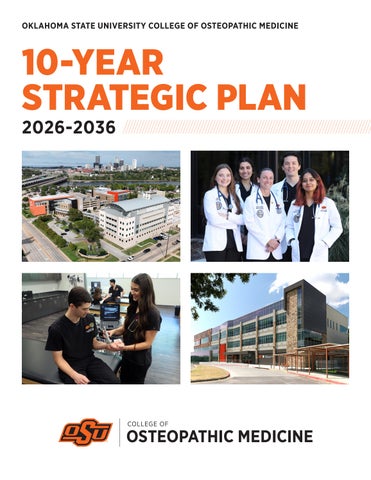
2026-2036
OSU-COM will continue to achieve educational excellence by strengthening the existing academic program. We recognize that educational models should adapt to changing times and new modes of learning. We will adjust our curriculum to maximize educational impact and student outcomes. We will also evaluate how best to leverage on emerging learning technologies to deliver courses to meet the educational needs of our students. OSU-COM will adopt the following strategies to strengthen our existing academic programs.
The continued evolution of innovative technologies has modified how information is learned and applied in healthcare settings. To secure OSU-COM’s position as a leader in medical education in an increasingly competitive landscape, we must embed innovation into our curriculum and into our instructional culture. We will prioritize the following technological areas:
• Online delivery platforms
• Lecture recording systems
• Integrating artificial intelligence
• Simulation
OSU-COM will implement and evaluate artificial intelligence (AI), digital and e-learning platforms, along with other advanced technologies, to support evolving models of active learning in medical education. OSU-COM will also explore the integration of advanced 3D technologies, including the Anatomage Table and augmented reality, to enhance anatomy education. These tools will enable students to visualize and interact with the human body in layered, three-dimensional formats, strengthening understanding of anatomy and physiology beyond traditional cadaver-based instruction. Expanded access to these technologies will reinforce learning outside of scheduled lab experiences and support more active, self-directed engagement.
Simulation-based learning currently takes place at OSUCOM. The hospital simulation center and the clinical skills simulation center in the Tandy Medical Academic Building provide medical residents and students with the opportunity to work on manikins and with standardized patients to hone their clinical skills. Recently, a temporal lab has been added to the simulation suite for otolaryngology. This will not only benefit graduate medical education (GME), but also better prepare medical students for the competitive landscape of this specialty. We will leverage the simulation area to also prepare for other residency and fellowships that are projected for the next 10 years including, but not limited to: ophthalmology, neurology and neurosurgery.
We will develop new and innovative courses and training methodologies to bolster existing programs. We will review existing tracks every five years to examine effectiveness of the track, to determine whether any curricula adjustments are needed to meet changing market demands and societal needs.
We will continue to innovate and bolster our three identified COM tracks (Rural Medical, Tribal Medical and Urban/Underserved Medical). We will continue to improve enhanced workforce readiness for underserved areas. We will work to match the right students with the best incentives and curricula to improve their experience through specific clinical rotations.
We will continue to support and grow the minor in Global Health. This experience enhances experiential learning for our medical students and exposes them to international health experiences and cultures in resource-deprived countries.
1 continued from p. 2
At OSU-COM, we are highly attuned to the importance and value of interprofessional learning. Our medical, doctoral, master’s and certificate students contribute to the academic vibrancy of our campus. We have strengthened the learning and collaboration opportunities between medical, physician assistant (PA), athletic training (AT) and graduate students and residents, and have incorporated experiences for these students to interact with other students in a variety of health profession programs. Interprofessional collaboration is based on the premise that when providers and patients communicate and consider each other’s perspective, they can better address the varied factors influencing the health of individuals, families and communities. OSU-COM promotes interprofessional collaboration to better prepare medical students, residents and allied health professionals for their future careers on healthcare teams. Collaboration and teamwork can be best achieved when students from different professions learn early on to work together in their training. An example of the envisioned interprofessional collaboration can be demonstrated through our plans to create the OSU Center for Sports Medicine and Human Performance (CSMHP). CSMHP will integrate clinical care assets that exist with OSU-COM, OSU-ATC, and OSU Medical Center (OSUMC), the teaching hospital for OSU-COM.
Since Fall 2020, our OSU-COM has welcomed 165 entering medical students each year between the Tulsa and Cherokee Nation campuses. The mission of OSU-COM is to train primary care physicians for rural and underserved Oklahoma. At a time when rural Oklahoma faces a severe shortage of primary care physicians, carrying out OSU-COM’s mission of recruiting and training tomorrow’s primary care physicians for rural and underserved Oklahoma is more important than
ever. Oklahoma suffers from a severe shortage of primary care physicians, especially in rural areas of the state. In 2026, only one out of 77 Oklahoma counties did not have designation as a primary care health professional shortage area by the Health Resources and Services Administration. This primary care physician shortage has contributed to the state’s poor health status. In 2026, the United Health Foundation ranked Oklahoma’s overall health among the worst in the nation. In 2024, Oklahoma ranked 47th in the nation in overall health according to the United Health Foundation. OSU-COM receives anywhere from 4,000 to 5,000 applications for medical school each year. The goal of OSU-COM’s recruitment and enrollment strategy is not to increase the overall number of applications, but to encourage the right profile of students to apply to medical school – students from Oklahoma who are interested in primary care and rural health. OSU-COM will prioritize medical school students who are Oklahoma residents. To conduct OSU-COM’s rural and primary care mission, OSU-COM will continue to implement a targeted recruiting strategy to attract rural and primary care minded students from Oklahoma to select OSU-COM for their medical education. We will amplify our recruiting efforts for OSU-COM by implementing the following recruitment strategies:
• Strengthen alliances with strategic educational partners: feeder universities, tribal nations, FFA and 4H
• Grow our 3+1 admissions programs
• Expand the Freshman Med Bound program
• Define standards for gaining an interview to OSU-COM for students who meet its mission
• Recruit non-traditional students
• Bolster medical scholarships
• Recruit proactively via high school pipeline programs
• Implement targeted marketing strategy to reach rural demographics
Student success is foundational to the educational mission of OSU-COM. The achievements of our students drive our commitment to excellence in education and inform continuous improvement across all academic programs. OSU-COM recognizes that students thrive when they receive comprehensive support both inside and outside the classroom. Accordingly, the institution promotes student success through coordinated academic, personal and professional support systems. The Office of Academic Success (OAS) provides a comprehensive portfolio of services designed to foster academic achievement, holistic development and professional readiness. The Office serves as a central hub that supports students in becoming effective learners, engaged members of the OSU-COM community, balanced individuals and competent professionals.
OAS provides targeted academic resources that empower students to overcome challenges and achieve their educational goals. Academic counseling and support services are available to medical students. OSU-COM students receive instruction in effective study strategies, test-taking skills and preparation for board and licensure examinations. COM students collaborate with academic advisors to design individualized academic pathways that align with career objectives and personal goals. An early warning system has been implemented to identify students who may benefit from additional academic support or who may be at risk of delayed progression or non-completion. This initiative-taking approach allows for timely intervention and tailored support.
Strategic Priorities for Curricular and Learner Development (2026–2036) include:
• Develop an internal operating plan for curricular development that aligns with accreditation standards and modern instructional delivery models.
• Expand simulation-based education as a core component across health-related disciplines.
• Integrate artificial intelligence and advanced learning technologies to support both struggling learners and high-performing students.
• Strengthen preventive health concepts across all educational systems.
• Develop concentrated transition boot camps and workshops to support progression into medical school, graduate programs and residency.
• Enhance in-training and in-service examination preparation for residents.
• Host interdisciplinary resource fairs to connect learners with academic, professional and wellness resources.
OSU-COM is committed to supporting students’ professional success and career readiness. The Career Development Office, housed within the OAS, assists students in defining career goals and developing the skills necessary to secure meaningful employment or residency placement.
In addition to individualized advising, the Career Development Office oversees programs that promote professionalism, workforce readiness and career advancement.
• Reinvest in professionalism initiatives with measurable outcomes, including reductions in conduct concerns and improvements in attendance, timeliness and professional attire.
• Expand coursework and programming focused on professionalism, communication and interpersonal relationship skills.
• Collaborate with prospective employers and residency directors to promote OSU-COM graduates.
• Implement GME liaison roles to strengthen coordination between students and residency programs.
• Increase faculty engagement from GME programs in student professional development.
• Expand simulation experiences that integrate students and residents in shared learning environments.
• Develop structured mentoring programs pairing students with alumni and industry leaders.
• Build and maintain centralized databases for internships, employment opportunities and alumni networking.
OSU-COM will make targeted investments in teaching resources to sustain excellence in education. As student enrollment expands, faculty and staff capacity will grow accordingly to maintain instructional quality and student support. To support planned enrollment growth, OSU-COM anticipates hiring additional faculty members and additional professional and support staff. The institution will also expand the use of postdoctoral fellows, research assistants and graduate assistants to support teaching and instructional delivery. Investments in information technology and facilities infrastructure will further strengthen the instructional environment.
The opening of the Tandy Medical Academic Building in Fall 2017 addressed OSU-COM’s longstanding instructional space needs. However, future expansion will require enhanced distance learning capabilities. OSU-COM will invest in dependable, high-capacity distance education infrastructure to ensure seamless instructional delivery across sites.
Faculty are the most critical institutional resource at OSUCOM. Sustained excellence in teaching requires ongoing professional development, leadership growth and institution-
al support. Through the Offices of Curricular Affairs, Instructional Design, and Academic Technologies, OSU-COM will continue offering in-person workshops and online professional development opportunities. These initiatives will help faculty enhance instructional effectiveness, remain current with pedagogical innovations and adopt emerging teaching and learning technologies.
OSU-COM will establish a Digital Learning and Resource Center to support technology-enhanced education and collaborative learning. This center will house the Medical Library, which will be redesigned to meet the interactive and digital learning needs of modern students.
Library spaces will be configured to support small-group, team-based, and interprofessional learning, enabling medical and graduate students to collaborate effectively. The Digital Learning and Resource Center will also support immersive educational technologies, including the Anatomage Table and augmented reality-based learning tools, to enhance visualization, engagement and experiential learning.
Expand Residency and Fellowship Programs in partnership with Saint Francis Health System.
• Develop new accredited primary care and subspecialty programs to meet Oklahoma’s healthcare needs, particularly in rural and underserved areas.
• Pursuing additional ACGME-accredited programs in the following specialties:
» Neurology.
» Sports Medicine.
» Pediatric Emergency Medicine.
» Pulmonary Critical Care.
» Physical Medicine and Rehabilitation.
» Ophthalmology.
» Dermatology.
Strengthen Osteopathic Recognition
• Maintain and expand osteopathic recognition across all core programs.
• Development of osteopathic faculty.
• Integrate osteopathic principles and practice into curricula for programs without formal recognition.
Enhance Recruitment and Retention
• Implement targeted pipeline programs to attract medical graduates to Oklahoma-based residencies.
• Expand partnerships with rural hospitals, tribal nations and community health organizations to improve visibility and retention.
• Identify weaknesses in programs that are resulting in higher attrition/disciplinary action.
Improve Quality of Programs
• Increase opportunities for faculty development.
• Identify and strengthen curricula to better prepare residents for clinical practice .
• Identify asynchronous modular education that can be integrated to reduce burden on programs and program directors to facilitate return to the bedside.
Optimize Funding and Resource Allocation
• Advocate for federal- and state-level funding and explore Medicaid-based support models to address GME funding shortfalls.
• Continue to work on securing grants and external funding to sustain program growth, quality and innovation.
OSU-COM will foster a vibrant research culture that: unlocks scholarship potential, promotes innovation, encourages collaboration and rewards excellence. This culture will emphasize a “One Health, One Mission” mindset that propels both graduate programs and the medical college through the next 10 years.
• Increase the number of faculty engaged in sponsored research activities (i.e.: PI/CoPIs for research).
• Increase peer-reviewed publications on rural and underserved health topics.
• Grow annual externally funded research (direct costs and including clinical trials).
• Continue and strategically expand annual seed grant program.
• Implement new Office of Vice President of Research (OVPR) discretionary matching grant reserve, focusing on graduate student stipend support.
• Expand partnerships with clinic/hospital sites to co-produce research that measurably improves access to care (community impact).
• Increase external visibility via invited/plenary talks, national conference presentations, service on grant review panels and national media features.
publications
Rural/ underserved publication share
External research funding (direct costs)
PURE/Experts; ORCID; department reports Research Office + Library
publication topic coding; library analytics Research Office + Library
Office Active federal awards Number of active federal grants (e.g., NIH/HRSA/NSF)
OSU-COM will invest in people by: enhancing and expanding research mentorship programming, strengthening internal support systems needed to enable the research community to obtain the resources and training needed to develop research concepts, to secure internal and external funding, to execute research plans, to track outcomes, to manage grants and to gain recognition. OSU-COM will also support faculty and student research endeavors by providing library research support services and expanded availability, accessibility and utilization of electronic databases such as open access journals for mining and analyzing health-related information and outcomes.
Primary 2026–2036 objectives:
• Enhance structured research mentorship program, with strategic focus on NIH SEP programs.
• Increase annual grant submissions, success rates for investigator-led research proposals.
• Deliver grantsmanship/research training workshops and identify and support a certified grantsmanship instructor, enabling more frequent and cost-effective workshop delivery.
• Ensure medical students complete a defined research experience and expand resident research-in-progress presentations.
• Expand library-enabled research, conduct systematic or scoping reviews and increase utilization of e-resources.
OSU-COM will build the infrastructure needed to support translational research, moving novel treatments along the entire spectrum of therapeutic development. This will leverage strong public-private partnerships, cutting-edge clinical trial infrastructure and OSU’s growing research enterprise to accelerate the discovery and deployment of novel and precision therapeutics. With a focus on addressing the most urgent health challenges facing Oklahomans, the bio incubator and clinical trials hub will serve as a catalyst for innovation, connecting academic investigators, clinicians, industry partners and community stakeholders to position Oklahoma as a leader in health innovation.
• Grow the centralized clinical trials hub achieving ≥25 new trial activations per year by 2031 and ≥35 by 2036.
• Increase rural/underserved enrollment across trials.
• With industry leadership, help secure IND/IDE submissions via academic–industry collaborations.
• Scale the bio incubator to yield patents and licenses/options to support the Oklahoma labor force and economy.
Office + Community Sites
logs Research Office + Industry Partners
OSU-COM will responsibly and strategically build an intellectual infrastructure that equips our community to engage with AI thoughtfully, ethically and creatively. This includes cultivating subject-matter experts across relevant research domains, establishing interdisciplinary AI innovation teams and developing clear policies and guidelines that promote academic integrity, data privacy and the safe use of AI in research by faculty, staff and students. Through these efforts, OSU-COM will position itself not simply as an adopter of AI tools, but as a leader in shaping how artificial intelligence can be leveraged to advance rigorous science, improve practice in medicine, improve health outcomes and serve the public good.
Primary 2026–2036 objectives:
• Establish governance committee; publish and implement AI governance policies.
• Establish interdisciplinary AI innovation teams.
• Stand up secure, FAIR (Findable, Accessible, Interoperable, and Reusable)-compliant research data infrastructure; publish datasets to institutional repositories.
• Integrate responsible AI methods into research workflows across all relevant departments.
OSU-COM healthcare delivery, OSUMC and all subsidiary entities of the OSU Medical Trust will undergo a strategic review of operations and organizational structure and responsibilities to optimally align critical functions with appropriate senior leadership to maximize efficiency and drive results.
OSU-COM will deliver superior patient care in an academic health center environment that advances physician led care and osteopathic principles. Patients will receive care from multidisciplinary teams utilizing the latest technology and evidence-based approaches to clinical care. This care will be augmented through cutting edge research, virtual care, Project ECHO and clinical service expansion at OSUMC and other strategic partners. Our clinical expansion efforts will highlight the following priorities and partnerships:
OSUMC continues to serve as OSU-COM’s primary teaching hospital. With an approved $200 million expansion of the hospital, OSU-COM is positioned to expand alongside anticipated growth of the hospital.
While the OSUMC will continue to serve as the primary training site, OSU Physicians will provide care in additional hospital training sites, including a Level 1 trauma center, to maintain the educational oversight needed for students and residents.
OSU Medicine will continue to expand its primary care network to better support OSUMC and specialty care expansion. Specific priorities for primary care expansion will include:
• Collinsville: OSU Medicine will open an outpatient clinic in Collinsville by 2027. This state-of-the-art clinic will feature primary care, urgent care, specialty physician care, labs and imaging.
• South Tulsa: OSU Medicine will open an expanded outpatient clinic in South Tulsa. This state-of-the-art clinic will also feature primary care, urgent care, specialty physician care, labs and imaging.
• Integrated Care Center/Telehealth Institute: OSU-COM will develop the Integrated Care Center/Telehealth Institute that will serve as a primary teaching location for family medicine, pediatrics and OB/GYN. This re-imagined facility will encourage care integration between primary care specialties, behavioral medicine and other medicine
sub-specialties. Additionally, the facility will allow for the incorporation of the latest developments in virtual health and AI into our physician training curriculum.
• Collaborative Care Model with Behavioral Health and Primary Care: OSU Medicine primary care clinics will partner with the Department of Psychiatry to offer innovative models in collaborative care that will provide comprehensive, whole patient care and meet the requirements of Medicare and commercial payers.
In addition to expanding its primary care footprint, OSU-COM will continue to expand its focus on specialty physician care training with focus in the following areas:
• OSU Behavioral Health: OSU Behavioral Health will play a leadership role in the development, training and expansion of the Oklahoma Psychiatric Care Center.
• OSU Sports Medicine/Orthopedics: OSU-COM will continue to expand its excellence in orthopedic training through the continued recruitment of full-time faculty. OSU Orthopedics will establish itself as a leader in delivering cutting edge training and clinical care through partnerships with OSU Athletics, local-area professional sports programs and local-area high schools.
• Primary Care Specialties: Primary care specialty training and clinical service is foundational to OSU-COM’s mission OSU will continue to invest in the key primary care specialties of family medicine, internal medicine, pediatric medicine and OB/GYN medicine.
• Addiction Clinic Merger with Research: The OSU addiction clinic will merge with the research efforts at the Hardesty Center for Clinical Research and Neuroscience to develop and integrated clinic that delivers the highest level of clinical care while offering access to research protocols and clinical trials.
• Other Key Programs: OSU-COM will continue to support clinical expansion and training in key established specialty physician training programs that include emergency medicine, cardiology, general surgery and osteopathic manipulation.
In addition to expanding the clinical footprint on the OSUMC, OSU will expand strategic partnerships with the Veterans Administration, community health systems and our tribal partners
The establishment of the James Mountain Inhofe VA Medical Center adjacent to OSUMC allows for a synergistic bond between OSU Medicine and the Veterans Administration This relationship will continue to be enhanced through expanding joint faculty hiring beyond the existing relationships in cardiology, general surgery, orthopedics and OB/GYN, to include specialty care service line planning that strengthens and compliments both organizations.
Our partnerships with tribal nations will continue to be instrumental in helping us improve the health outcomes of rural Oklahomans Many tribal nations are in rural areas, and their communities experience significant disparities in health status especially in addressing chronic conditions such as diabetes and cardiovascular diseases
OSU will collaborate closely with our tribal partners to ensure that their tribal health systems will have access to 1) our human capital (medical learners and physician faculty) and 2) our resources such as our hospital simulation center and clinical expertise Helping tribal communities lead healthier lives will be critical to furthering our goal of improving the health outcomes of rural Oklahomans
Our Office for American Indians in Medicine and Science will continue to work with tribal nations to build a sustainable American Indian physician workforce pipeline
OSU will expand on its current tribal partnerships which include:
• Cherokee Nation: In addition to our medical school partnership with the Cherokee Nation, OSU will provide needed support for hospital and outpatient care including areas such as emergency medicine, orthopedics and cardiology.
• Muscogee (Creek) Nation: OSU currently partners with the Muscogee Nation by providing support for inpatient and outpatient cardiac care at the Council Oaks Hospital. OSU is also partnered with the Muscogee (Creek) Nation through our OB/GYN department and have established a collaborative relationship with the Okmulgee Indian Health Center for labor and delivery care at OSUMC. Continuing to grow services through this relationship is a priority.
• Choctaw Nation: OSU will continue to strengthen our relationship with the Choctaw Nation through a first-ofits-kind virtual hybrid clinic. The clinic, located in southeastern Oklahoma, operates with a limited onsite staff, while healthcare providers remotely manage patient care through innovative virtual technology. Open to tribal and non-tribal citizens, the clinic is designed to meet the needs of those requiring same-day care but don’t need emergency room services. We expect to grow this model with the Choctaw Nation and potentially other tribal organizations.
Saint Francis has and will continue to be an important strategic partner for both clinical and educational expansion opportunities for OSU. Currently, Saint Francis serves as an important training site for pediatrics, cardiology, interventional cardiology, GI fellowships, OSU’s ER residency, OB/GYN and orthopedics. In the future, additional programs will include pulmonary critical care, advanced cardiac subspecialities, neonatology and other specialty physician training. Saint Francis serves as OSU’s Level I trauma strategic partner and will continue growth initiatives through a formal academic affiliation agreement.
Our medical learners will continue to complete clinical rotations and residency programs through hospitals, private rural clinics and federally qualified healthcare centers (FQHCs). In addition to hosting and employing our medical students, many of these healthcare partners have been participating in Project ECHO sessions. As we roll out virtual medicine clinics and virtual monitoring services, many of these healthcare partnerships will become consumers of such services.
With the construction of the Oklahoma Psychiatric Care Center, a mental health hospital will be located on OSU’s academic medical campus for the first time. The development of new residency programs and services beyond psychiatry, including emergency medicine and internal medicine, will be pursued.
OSU will cultivate strong relationships with critical state healthcare agencies such as the Oklahoma Health Care Authority, Oklahoma State Department of Health, Oklahoma Department of Mental Health and Substance Abuse Services, and Tobacco Settlement Endowment Trust. These state agencies provide significant public funding for many of OSUCOM’s patient care, clinical teaching and residency programs.
OSU-COM will continue to promote exceptional patient care through supervised patient care provided by our residents, medical students and PA students. We will collaborate with health systems, hospital partners and the State of Oklahoma to ensure graduate medical education meets the physician workforce needs of Oklahoma. We will also continue to develop partnerships with health systems, hospitals and clinics to establish a plethora of clinical rotation opportunities for our medical students. In addition to supporting our existing residency programs, OSU-COM will evaluate the expansion of fellowship opportunities in the areas of neurology, pulmonary critical care, neonatology, ophthalmology, sports medicine and cardiology subspecialties.
The Institute of Virtual Care and Innovation
The Institute of Virtual Care and Innovation will be the central hub for all virtual care and digital health activities at OSUCOM. Its purpose is to innovate, evaluate and implement virtual care models and technologies across the state. It will operate under three primary tasks.
OSU-COM will establish a comprehensive, statewide virtual care ecosystem that delivers high-quality, patient-centered care across various settings and specialties, making OSUCOM the primary virtual care provider for Oklahoma.
KEY INITIATIVES:
• Statewide Direct-to-Consumer Virtual Care Expansion: Fully launch and expand a direct-to-consumer model for all Oklahomans, including specialty e-consults and proactive health management, with seamless integration of virtual and in-person care.
• Advanced AI-Powered Workflows: Implement AI-driven Clinical Decision Support Systems (CDSS) for real-time, evidence-based treatment and integrate data from wearables/sensors for AI-powered population health and chronic disease management.
• Comprehensive Virtual Services: Expand tele-specialty consults for rural facilities, increase tele-emergency and critical care partnerships with rural EDs, and significantly grow the tele-behavioral health ecosystem (psychiatry, counseling and addiction services).
OSU-COM will become a leading research institution for virtual care and digital health, particularly in rural health applications, generating evidence-based models that inform best practices and advance the field.
KEY INITIATIVES:
• Rural Virtual Care Innovation Lab: Design and implement pilot programs leveraging new technologies in rural settings and conduct rigorous health outcomes and economic impact studies to evaluate effectiveness and cost-efficiency.
• Advanced Data Analytics & AI/Machine Learning Research: Research AI/ML algorithms for predictive analytics in population health and explore/validate the integration of AI tools for diagnostic and therapeutic assistance within the provider network.
OSU-COM will embed virtual care and digital health competencies into the core curriculum for all OSU-COM students and provide robust continuing education for current healthcare professionals, preparing them to lead in the evolving healthcare landscape.
• Integrated Virtual Care Curriculum: Integrate virtual care concepts as a longitudinal thread for all students (DO, PA, Nursing), expand simulation and experiential learning (including VR/AR) and introduce the Tele-ED training model for APPs.
• Rural Health and Technology Immersion: Incorporate and expand telehealth-specific clinical rotations for rural settings, equip residents to be rural technology leaders and train future rural hospital administrative leaders via a Rural Administrative Fellowship.
• OSU Medicine Project ECHO Expansion and Innovation: Continuously invest in and expand the number, scope and technology integration of Project ECHO service lines to enhance knowledge sharing.
5 continued from p. 13
OSU-COM will perform a feasibility study to evaluate the establishment of Clinically Integrated Network (CIN) across Oklahoma to empower independent rural hospitals with the resources and shared services needed for sustainability and enhanced patient care. This will create a coordinated system of high-quality, value-based care throughout the state.
A pilot project using an AI-driven app for nursing case management will be initiated to improve population health in Oklahoma. The app integrates advanced smartphone technology to collect a wide range of biometric and behav-
Collinsville clinic development
Integrated Care Center and Telehealth Institute Facility
Construction and opening of a new multi-specialty clinic in Collinsville
Implement statewide direct to student virtual care network
Construction of a replacement clinic for the Healthcare Center that integrates FM, peds, OB/GYN and behavioral health and serves as the home for the Telehealth Institute
Establish a relationship with the Oklahoma Department of Education to create a statewide network of virtual care services in Oklahoma schools
AI-driven health interventions
Behavioral health integration
Track and evaluate the number of AI-driven health interventions initiated by nursing case management app
Deployment of the collaborative care model to primary care clinic with OSU Medicine
ioral data. This comprehensive system not only focuses on managing chronic diseases but also identifies subtle trends and early warning signs that might otherwise go unnoticed.
This technology holds significant promise for addressing the pressing need for improved health outcomes among Oklahoma’s rural populations, where chronic diseases disproportionately affect communities By empowering virtual nursing teams with actionable insights, the app fosters proactive interventions, potentially preventing the progression of undiagnosed conditions. This innovation could represent a transformative step in reducing disparities and improving overall health and well-being in Oklahoma rural communities.
No current operations in Collinsville Operations with 1-2 primary care providers, urgent care activity, and rotating specialists with 2,500 primary care lives under management
Current Operations in HCC
20,000 current students in districts with services
Funding identified and construction plan developed
Full operations with 3 primary care providers, urgent care activity and rotating specialists with 6,000 primary care lives under management
Fully operational replacement clinic by 2036
Epic patient encounters VP of Healthcare Delivery
Establish relationships with school districts with a total student population above 250,000 by 2031
Maintain relationships with school districts with a total student population above 250,000 by 2036
Facility records Asst. VP for Facilities
Oklahoma State Department of Education
No current targets or measurements Monthly reporting Monthly reporting Case management app
Executive Director of Strategic Initiatives
Executive Director of Strategic Initiatives
No current clinics 100% participation by primary care clinics by 2031
Maintenance of 100% participation by primary care clinics by 2036
Clinic collaborative care encounters
Chair, Dept of Psychiatry
Engagement with key audiences plays a key role in advancing the mission of the OSU-COM. From alumni and donors to legislative officials, healthcare partners, patients and Oklahoma middle, high school and undergraduate students, a steady cadence of communications and outreach events allows CHS and OSU Medicine to remain top of mind. A successful engagement strategy incorporates input from and participation with a wide range of stakeholders across the institution to ensure a dynamic, creative and integrated approach is maintained.
With input from CHS leadership and led by the office of External Affairs, OSU-COM will design a comprehensive marketing and communications strategy that speaks to the following audiences:
• Prospective students (elementary/middle/high school; undergraduate)
• Current students
• Alumni
• Donors
• Stakeholders and partners
• OSU A&M Board of Regents
• Legislators
• Patients and prospective patients
This comprehensive marketing and communications plan will include the following tactics:
• Paid advertising: print, digital, outdoor, radio and television
• Email marketing
• Direct mail marketing
• Development of collateral materials
• Social media
• Earned media with news outlets across state, regional and national outlets
External Affairs will work with OSU Brand Management to incorporate key messages and themes from the system-wide campaign The Code Calls, as well as develop additional smaller campaigns localized to CHS needs for key audiences.
To create a pathway for students who could someday potentially fill much-needed roles in Oklahoma’s health care industry – particularly in rural and underserved areas – OSU-COM will engage both undergraduate and elementary/middle/ high school students with the following outreach strategies:
1. Operation Orange
Operation Orange is the well-established outreach brand designed to engage and raise awareness among high school students about the programs offered at OSU Center for Health Sciences. The goal is to increase representation of underserved, rural and urban students in medical programs and retain them in Oklahoma communities.
• Collaborate with Rural Health AHEC team to maintain consistent, year-round awareness in their five locations: Tahlequah, Durant, Stillwater, Enid and Lawton
• Target regional university career fairs and recruitment events
• Collaborate with regional STEM Alliance organizations in Lawton and Tulsa
• Utilize the new mobile SIM van when available for these events
• Engage with current students to maximize their impact on prospective students as ambassadors and volunteers
2. Sponsorships & Partnerships
OSU-COM will continue to sponsor a variety of existing STEM-focused events targeting high school and middle school students, including:
• Tulsa Discovery Lab sponsorship
• K-12 STEM conferences
• FFA Annual Convention
• Oklahoma Statewide Science Fair
Alumni from the OSU-COM are a vital audience who can support the institution in many ways. Serving as role models and mentors to the next generation of Oklahoma physicians is a key avenue for engagement. Working with the OSU Alumni Association, we have contacts for alumni living and working in key rural communities across Oklahoma, including Ada, Durant, Woodward, Lawton, Stillwater, McAlester, Enid and Cleveland. Engaging these alumni as we develop rural outreach and mentorship strategies will be essential to our success.
In addition, COM alumni represent a key audience for donor support. Working with the OSU Alumni Association and the
OSU Foundation, we will engage with this alumni community in a variety of ways, including:
• Distributing “Vitals,” the annual CHS impact report.
• Sending a quarterly alumni update email newsletter.
• Hosting a reception at the AOA annual conference, OMED.
• Hosting “Orange Connections,” a smaller alumni gathering in a specific city.
• Inviting them to attend “Orange Impact,” the bi-annual CHS-specific fundraising event.
• Distributing the “Scope” email newsletter.
Strong relationships with our communities and the patients we serve are at the heart of the mission at OSU Center for Health Sciences. With that in mind, we will enlist the following strategies to ensure continued success:
OSU-COM strives to be a collaborative partner on every initiative we undertake. Strategic partnerships with public and private entities, including local foundations, Native Oklahoma tribes and city, county and state agencies provide ongoing support for our goals and create opportunities for growth. OSU-COM will seek new partners while maintaining existing relationships to create mutually beneficial opportunities.
This partnership includes healthcare organizations where our rotations, residencies and fellowship programs are located throughout Oklahoma. Continual communication, requests for feedback and support from the OSU Medicine brand will keep the institution top of mind with those health care providers and community members.
Community service is also central to the mission of OSUCOM. OSU-COM engages in service to our communities near campus and across the state in several ways, including:
• Student club community service projects.
• Annual health fair at the Center for Individuals with Physical Challenges.
• Yearly service day with the Staff Advisory Council.
• Service hours during OSU-COM student orientation.
• Campus-wide support of Tulsa Area United Way.
• Table sponsorship at numerous fundraising events throughout the year
• Outreach to support a wide variety of nonprofit organizations in the Tahlequah community
• Providing campus assets to community partners (e.g., waiving rental fees for facility usage, etc.)
A strong institution is made up of individuals who believe in our mission and live it out daily. Engaging, attracting, and retaining talent is core to providing optimal student experience on campus and high-quality patient care in our clinical settings. Communication channels are important to convey career development opportunities and benefits as well as the OSU-COM culture and mission.
Current students are another vital group to engage when attracting future talent to OSU-COM. CHS External Affairs will continue to work with Human Resources and CHS leadership to ensure messaging through our advertising campaigns, earned media opportunities, social media channels and events are optimized to assist in employee recruitment.
Across the Tulsa metropolitan area and other locations in northeastern Oklahoma, the OSU Medicine brand is reflected through our teaching hospital, OSU Medical Center and our OSU Medicine clinics. Ongoing marketing communications targeting physician referrals and new patients are a core pillar of the strategy outlined above in Part One.
Total CHS social media followers Followers on all social platforms owned by CHS (Facebook, Instagram, LinkedIn, X, YouTube, TikTok)
High school students reached in Oklahoma Students attending Operation Orange events
OSU-CHS website user engagement Users clicking, scrolling, commenting, sharing or spending considerable time on a page
Dennis Blankenship, DO (Faculty)
Jason Beaman, DO (Faculty)
Jeff Hackler, JD (Faculty)
Chuck Thurman, DO (Faculty)
Carrie Gilstrap, DO (Faculty)
Amy Harrison, MS (Faculty)
Jen Volberding, PhD (Faculty)
Mousumi Som, DO (Faculty)
Sara Bradberry, EdD (Staff, Tahlequah)
Eden McDowell, SGA Admin VP (Student, Tahlequah)
Kelly Murray, PharmD (Faculty Senate)
Dawn Underwood, PhD (Staff)
Randall Davis, PhD (Faculty)
Lora Cotton, DO (Faculty)
Deena Wheeler, PhD (Faculty)
Kent Smith, PhD (Faculty)
Kyle Simmons, PhD (Faculty)
David Wallace, PhD (Faculty)
Gerwald Koehler, PhD (Faculty)
Nedra Wilson, PhD (Faculty)
Julie Croff, PhD (Faculty)
Amber Hood, DFS (Staff)
Kelsea Schultz, Class President (Student, Tulsa)
Micah Hartwell, PhD (Faculty Senate, Tahlequah)
Eric Polak, MBA (Staff)
Mike Shea, DHA (Staff)
Damon Baker, DO (Faculty)
Lora Cotton, DO (Faculty)
Sara Coffey, DO (Faculty)
Erin Brown, DO (Faculty)
Amanda Foster, DO (Faculty)
Aaron Lane, DO (Faculty)
Tim McKay, DO (Faculty)
Mike Thomas, MD (Faculty)
Jen Wilson, DO (Faculty)
Amy Harrison, MS (Faculty)
Bill Schloss, (Staff)
Karen Muse, (Staff)
Melissa Cox, (Staff)
Brandi Van Blarcum, Class President (Student, Tahlequah)
Heather Rector, DO (Faculty Senate)
Monica Collington, (Staff)
Bill Schloss, (Staff)
Natasha Bray, DO (Faculty, Tahlequah)
Doug Nolan, DO (Staff, Tahlequah)
Angela Bacon, MD (Staff)
Brenda Davidson, DHA (Staff)
Nicole Farrar, DO (Faculty)
Leroy Young, DO (Faculty and OOA)
Bavette Miller, PhD (Faculty)
Mathew Finny, MHA (OSUMC)
Ashley Adkins, DHA (Staff)
Brad Anderson, DO (Faculty)
Eric Polak, MS (Staff)
Kevin Holmes, (Staff)
Becca Floyd, (Staff)
Madeline Rowe, SGA President (Student)
Julie Dionne, DO (Faculty Senate)