CONNECT
The official magazine of the College of Arts and Sciences
A CHALLENGE MET COLLEGE FACULTY, STAFF AND STUDENTS PLOW THROUGH A YEAR OF CHANGES LIKE NO OTHER

A CHALLENGE MET COLLEGE FACULTY, STAFF AND STUDENTS PLOW THROUGH A YEAR OF CHANGES LIKE NO OTHER
24
On the cover
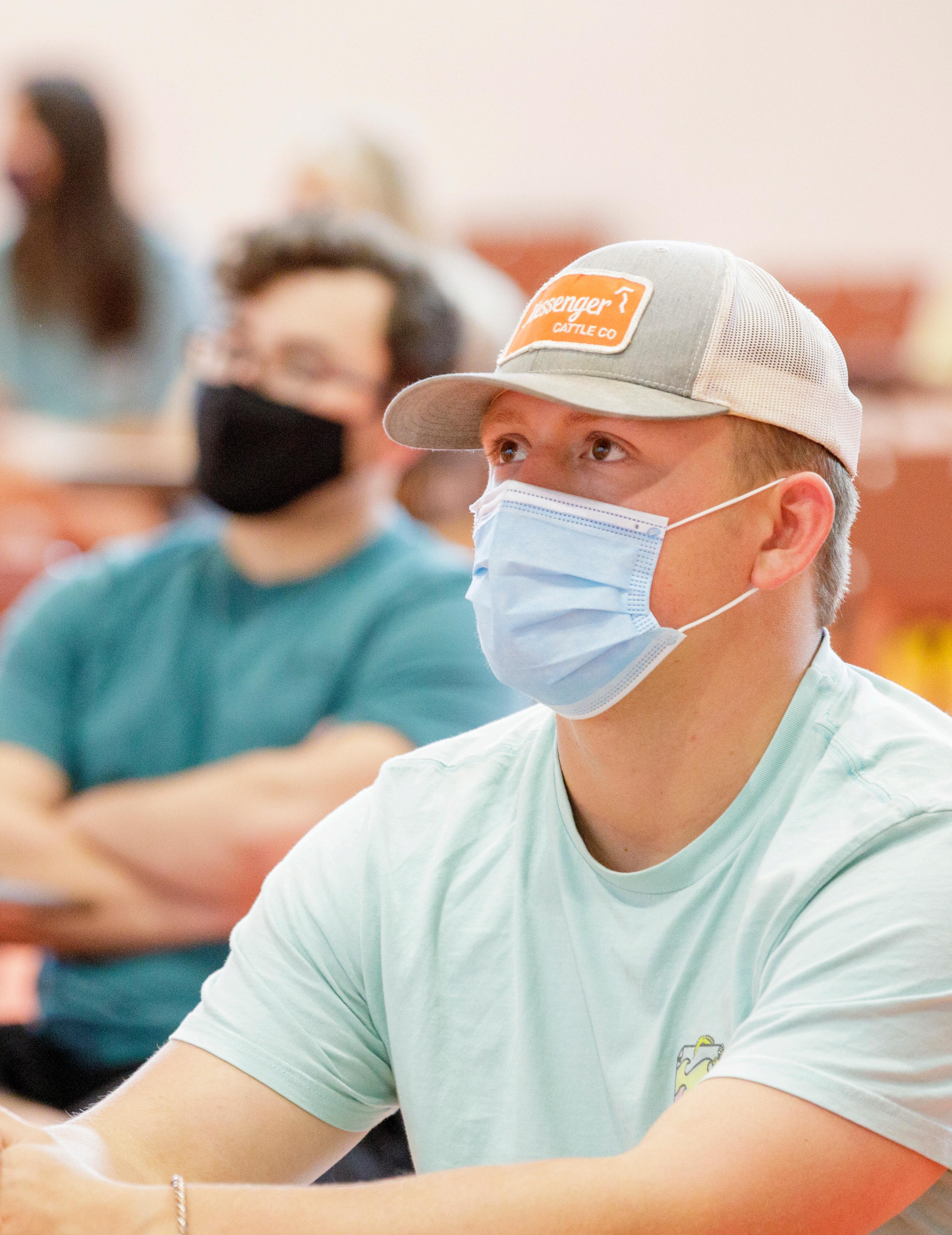
CAS students, faculty and staff members had to make considerable changes to continue learning in the year and a half of the pandemic, but they were able to overcome the challenges.
(Photo by Gary Lawson)
8
Senior diversity officer named
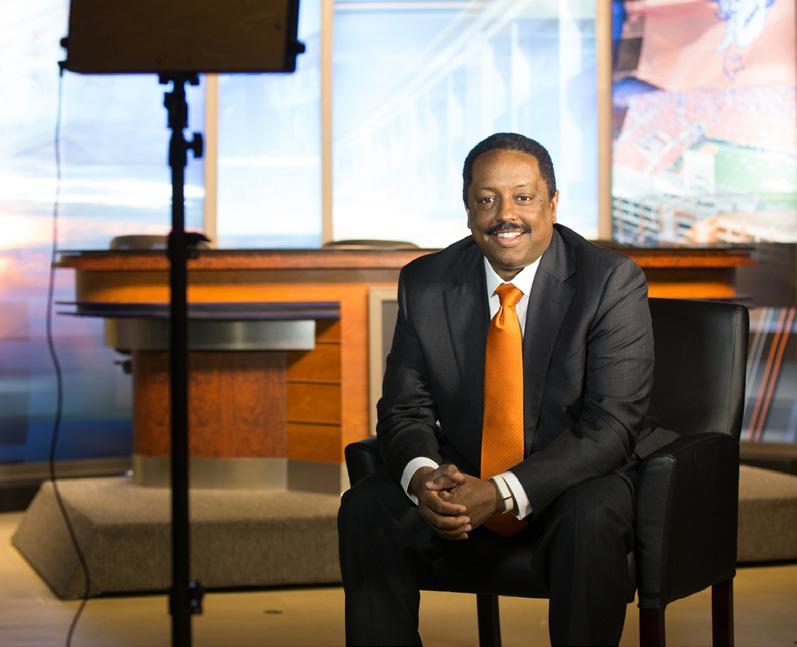
The College of Arts and Sciences has promoted Craig Freeman to assistant dean to focus on diversity, equity and inclusion — and OSU-Tulsa.
14
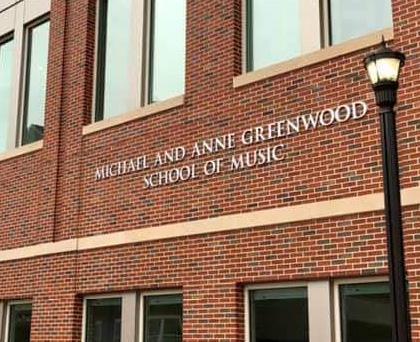
The newly opened Greenwood School of Music building, a stateof-the-art facility, is among the finest performing arts complexes in the nation.
18 Student researchers
We highlight a few student researchers in the College of Arts and Sciences who are already making impacts with their work.
32 Hall of Fame
Philip Erdoes is the lone inductee into the College of Arts and Sciences Hall of Fame for 2021.
COORDINATOR OF COMMUNICATIONS
Jacob Longan ’05, ’13
EDITOR
Dorothy L. Pugh ’83
DESIGN
Codee Classen ’17
Dave Malec
PHOTOGRAPHERS
Gary Lawson ’83
Phil Shockley
Jason Wallace ’03
WRITERS
Rachael Eaton
Lonna Freshley ’09
Elizabeth Gosney ’21
Harrison Hill
Samantha Homann ’19
Ellie Melero ’21
Kelli Norton ’19
Kyle Stringer
COLLEGE OF ARTS AND SCIENCES
DEAN
Glen S. Krutz
ASSOCIATE DEAN/OUTREACH
Bobbi Kay Lewis ’93, ’03
SENIOR DIRECTOR OF DEVELOPMENT
Laura Ketchum
YEARS INDICATE OSU CAS GRADUATES
OSU, Stillwater, OK 74078-1035; Phone 405-744-5371; email: eeo@okstate.edu has been designated to handle inquiries regarding non-discrimination policies. Any person (student, faculty, or staff) who believes that discriminatory practices have been engaged in based
and
or
complaints of possible violations of Title IX with OSU’s Title IX Coordinator 405-744-9154.
at a
of $4,492/4,851/
Dear CAS Family,
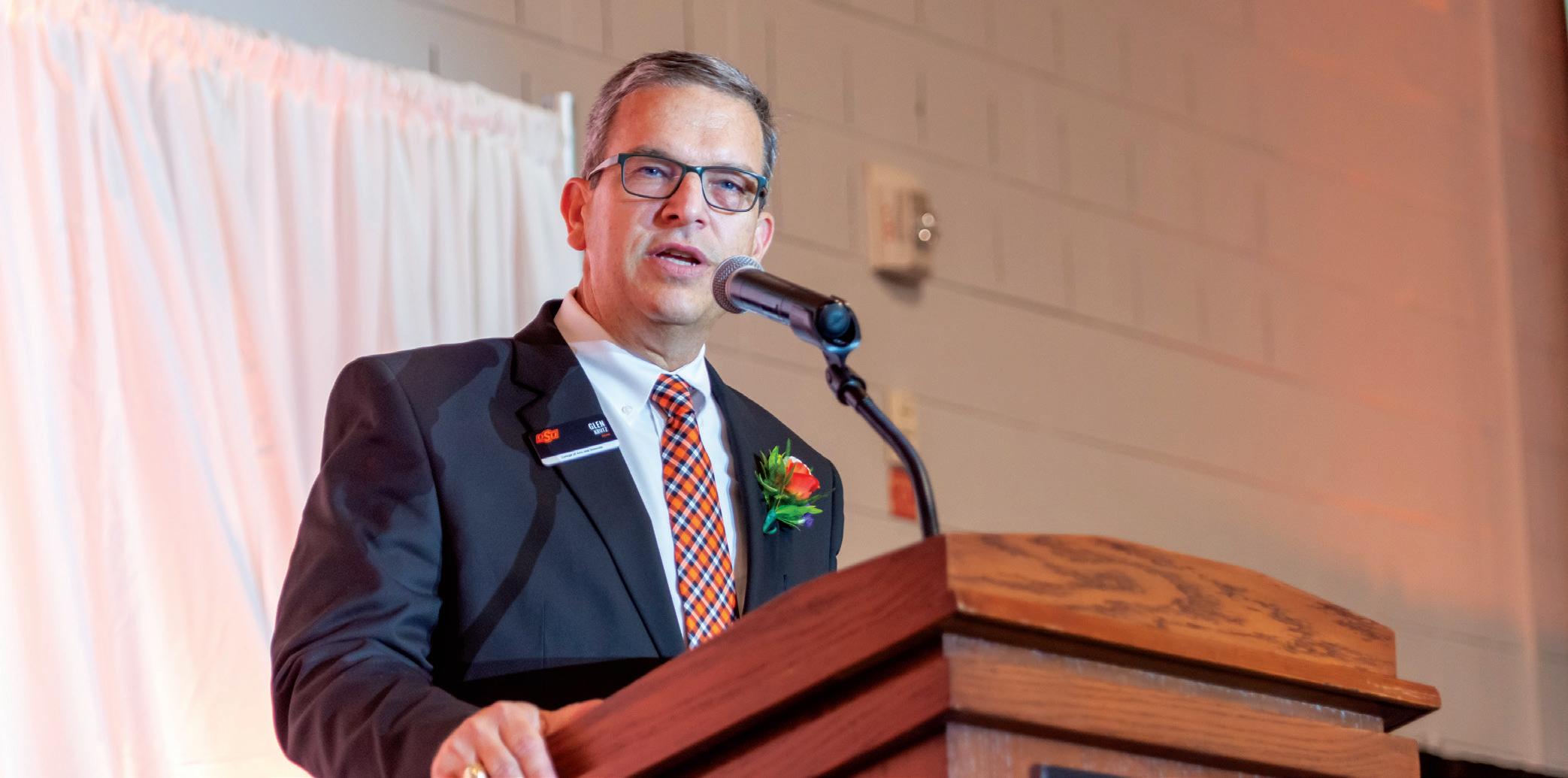
We are back as the fall semester begins. Our college and university overcame many unique challenges over the past year, and you’ll read about a few of them in this magazine. We know there will be many unique challenges this year, but we are confident that our administration, faculty, staff and students will help us to overcome those as well.
If you missed it, we underwent a major change in OSU’s leadership with the retirement of President Burns Hargis and the promotion of Dr. Kayse Shrum. President Hargis was only the second OSU alumnus to take on that role, leading the transformation of the university from March 2008 until his retirement on July 1, 2021. Dr. Shrum is also an OSU grad, having earned her D.O. at the Center for Health Sciences in Tulsa. She became president there in 2013, making her Oklahoma’s youngest and first female dean and president of a medical school. Now she is the first female president for the entire OSU System and the first woman to lead an Oklahoma public research institution. I’m writing this letter just a month into her tenure, and I can already tell she is leading this university to an even brighter future.
At the college level, we’ve also had a couple of major changes. We added an assistant dean position that will serve as senior inclusion officer. Professor Craig Freeman, director of the School of Media and Strategic Communications, is fulfilling that role. You can read more about that beginning on Page 8.
Another change in the dean’s office is that Dr. Tom Wikle is stepping down as associate dean for academic programs after 21 years, though he remains as a professor in the Department of Geography. I want to thank him for everything he has done in the dean’s office, starting before most of our current students were born!
We are thrilled to announce his replacement is Dr. Andrew Doust, who was serving as head of the Department of Plant Biology, Ecology and Evolution. He brings stellar energy and intellect to this role, and his wonderful Australian accent and sense of humor will be a welcome addition as well.
Finally, we are planning a golf scramble scholarship fundraiser for April 25 at Karsten Creek. We will share more information about that in the coming months, and I hope to see you there.
Go Pokes!
Glen S. Krutz, Ph.D. Dean, College of Arts and Sciences Professor of Political Science Puterbaugh Foundation Chair
“Our goal is to cultivate an interdisciplinary research community dedicated to critical questions related to infectious disease and endemic/pandemic studies.”
GLEN KRUTZ, DEAN, COLLEGE OF ARTS AND SCIENCES
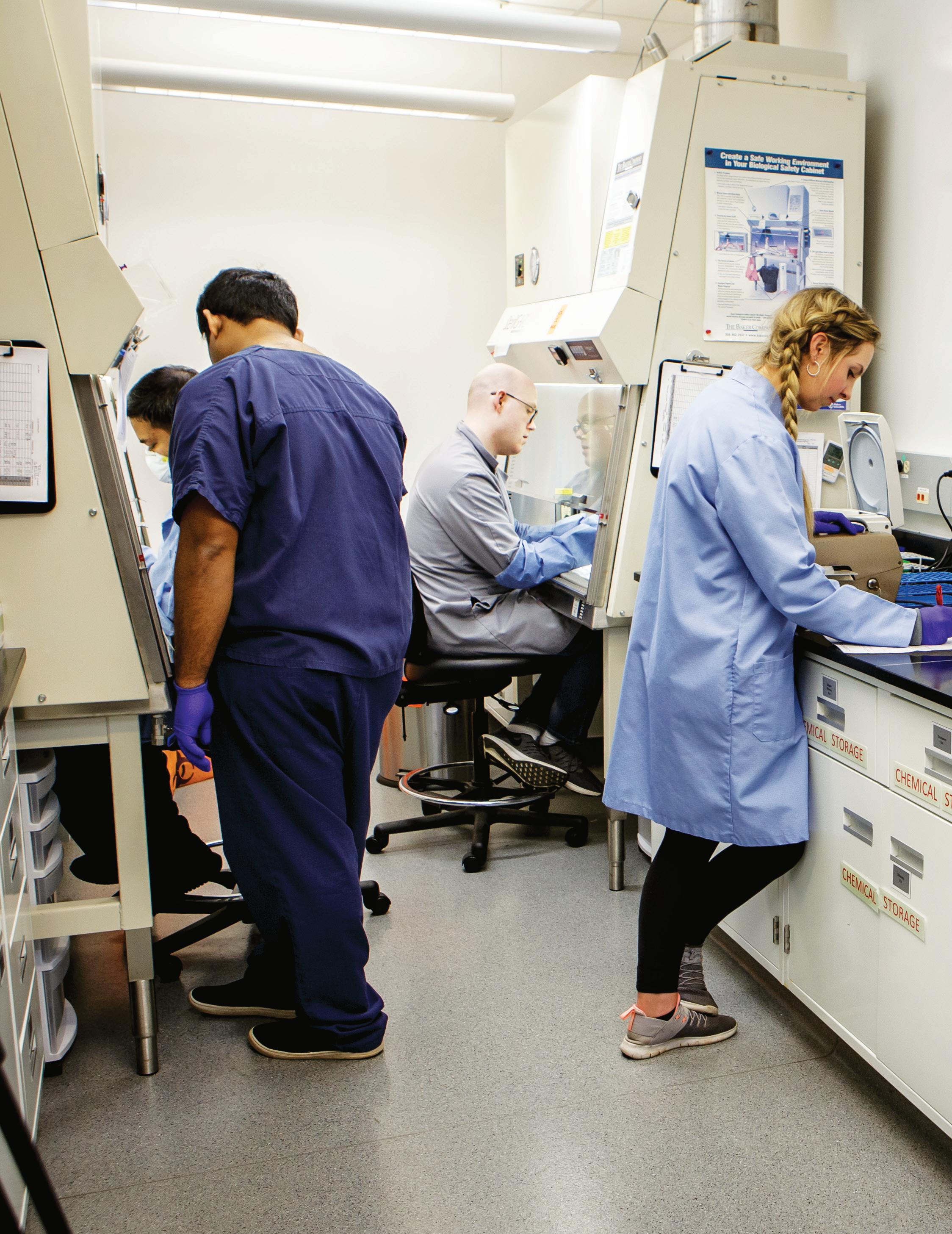
One of the most important functions of a land-grant institution such as Oklahoma State University is to conduct research that benefits everyone. For example, our faculty are studying the COVID-19 pandemic with two main goals. First, they are looking for ways to accelerate the end of this pandemic. And second, their work can help to mitigate the effects of the next pandemic — whatever it is and whenever it happens.
This work is boosted by the new Stillwaterbased Oklahoma Pandemic Center for Innovation and Excellence.
According to its website, the OPCIE “was established in October 2020 by Gov. Kevin Stitt to better protect Oklahomans from future pandemics. The loss of Oklahoma lives and economic devastation caused by COVID-19 brought to the forefront the importance of investing in our state’s public health infrastructure, testing capability, research endeavors and commercial partnerships. The OPCIE builds partnerships between public and private entities to bridge the gap between laboratory and clinical practices and creates improved public health responses, incorporating the unique needs of Oklahoma’s rural, urban and tribal communities.”
This effort is further enhanced by the addition of six CAS faculty hires over the next year, each with a relevant area of research expertise.
“I am very pleased with the outstanding scholars we are adding to the CAS faculty for this effort,” said Dean Glen Krutz. “Our goal is to cultivate an interdisciplinary research community dedicated to critical questions related to infectious disease and endemic/pandemic studies. I’m confident we have found a great group to boost that, and they will collaborate well with the faculty we already have doing great work in such an important area.”
The first three hires began this fall. They are Tao Hu, Juwon Hwang and Rebecca Kaplan.
Tao Hu joined the Center for Geographic Analysis at Harvard, where he was a post-doctoral fellow. He utilizes geospatial big data and spatial statistical models to study public health, social inequality, and human activities, including estimating racial segregation of minority groups and disparities in testing site access, exploring human mobility trends across different land uses during the pandemic, and revealing national public opinions via big social media data.
He conducted research on public health before COVID19 was first discovered in his hometown of Wuhan, China. He was already working at Harvard at that time. But the interest in his work has certainly increased during the pandemic.
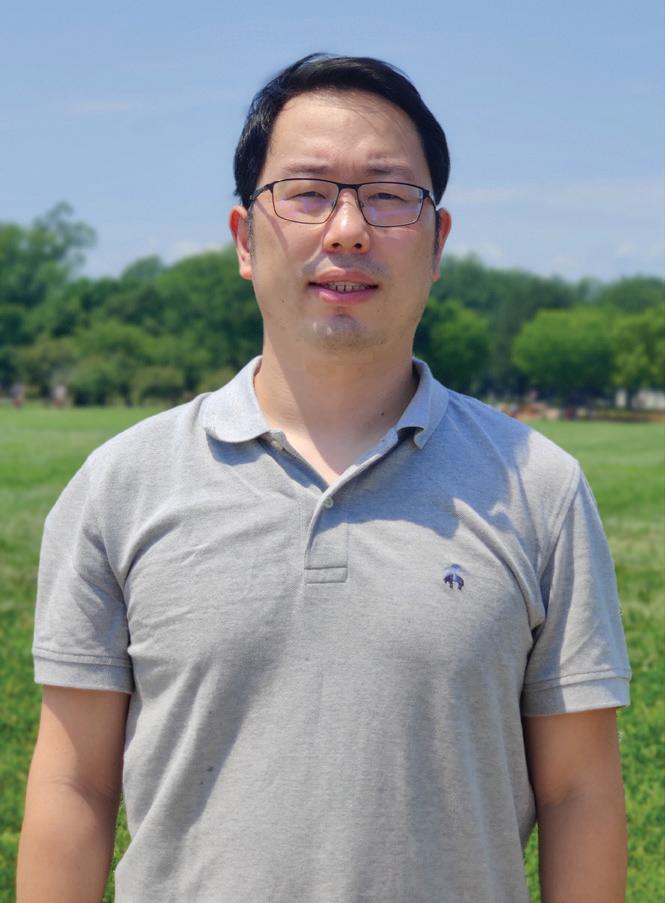
“The past two years, I have been working on a spatial-temporal data-sharing a nd management platform that helps researchers to access open data, facilitate collaborative reproducible, replicable, and generalizable research,” Tao said. “It is very helpful for researchers across the globe to have free access to pandemic- and health-related data.
“It is very helpful for researchers across the globe to have access to pandemic- and health-related data.”
TAO HU
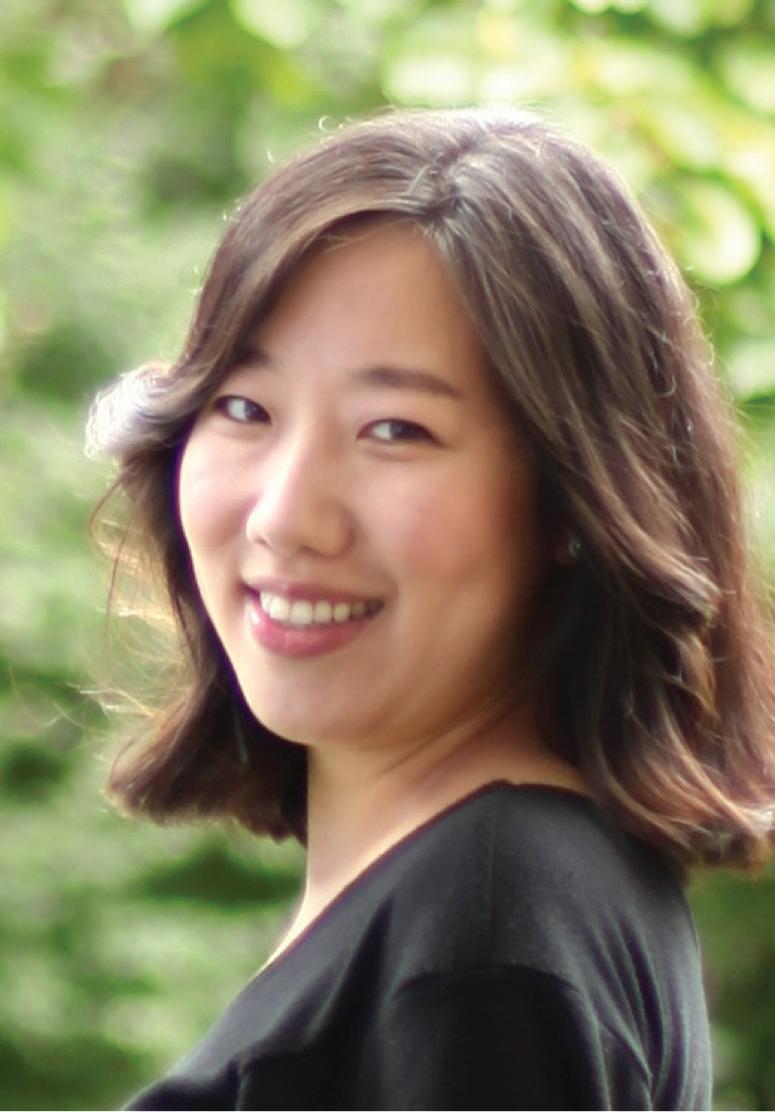
That’s why our shared COVID-19 datasets on Harvard Dataverse have been accessed a nd downloaded over 500,000 times from more than 150 countries since February 2 020.”
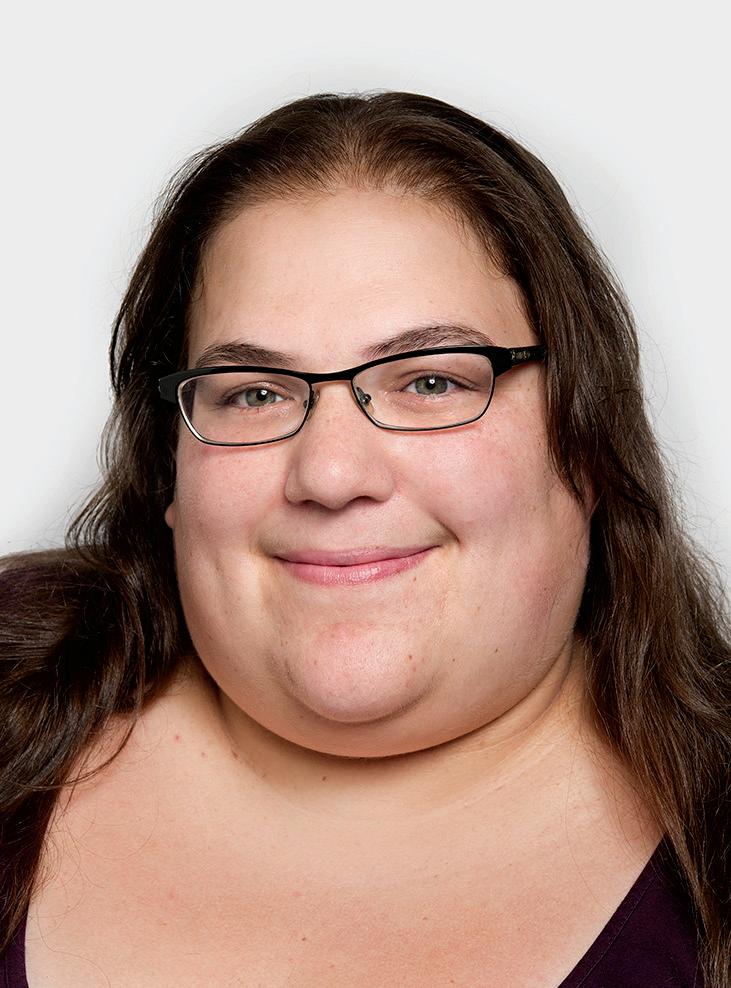
Juwon Hwang joins the School of Media and Strategic Communications after her Ph.D. work at the University of Wisconsin. Her focus is investigating health behaviors related to infectious diseases, especially vaccinations for COVID-19, seasonal influenza, swine flu/H1N1 and children. She is particularly interested in public perception of the COVID-19 vaccine and how messaging influences attitudes about it.
“What CAS has done by making these hires is to put people together in one place to work together to contribute to society,” Juwon said. “That is unique, ambitious and compelling. It is an honor to be part of this.”
She has previously studied the swine flu pandemic, which ran from June 2009 to August 2010, with the purpose of understanding what inspired people to get vaccinated and why some people were hesitant.
“I look at the psychological perceptions of people and whether they focus on side effects or efficacy of the vaccine,” Juwon said. “After COVID19 hit, of course that drew my attention. I wanted to know why people were so horrified and scared of the COVID vaccine. Everything was changing so quickly on social media. I found that a lot of people were so swayed by
“What CAS has done by making these hires is to put people together in one place to work together to contribute to society.”
JUWON HWANG
conspiracy theories and unverified information, or misinformation. I’m also looking at why some people change their minds and get the shot after previously being hesitant.”
Rebecca Kaplan has moved to OSU’s Department of History from the Science History Institute in Philadelphia. She specializes in the history of animal health, public health and One Health. Her ongoing project on brucellosis in the U.S. extends beyond the history of medicine, drawing together concepts from environmental history, history of science and technology, social movements, agriculture, American politics and public policy, and the fields of animal studies, bacteriology and epidemiology.
She is passionate about producing work that serves the general public, and the COVID-19 pandemic provides a perfect opportunity to do that.
“Nobody wants their work to be important because something horrible happened,” Kaplan said. “It would have been great to go my entire life without a global pandemic. But since it did happen, let’s take advantage of the moment and do the most good we can with our work right now. For example, we know that people aren’t good at understanding risk. This is our moment to educate and use research to work on that. We need to strike while the iron is hot and make sure that we don’t just keep our discoveries locked up in academic spheres.”
She calls her new position at OSU “a dream job” because of the effort to put together collaborators at a university that has history as well as comprehensive science fields — including both a veterinary school and a medical school.
“At a lot of schools, I’d be slotted in the history department, and they wouldn’t even want me to talk to the sciences,” Kaplan said. “People tend to get siloed at universities. But when you
work in something like the history of medicine, you can’t be siloed. Your work will suffer. You have to talk to people on all sides. That’s really important, because it makes the work better.”
In January, CAS will bring in two more new hires.
Patrick Stephens is coming to the Department of Integrative Biology from the University of Georgia. He focuses on the application of statistical modeling and machine learning to ecological and evolutionary questions that are generally macroecological in their scope. His current research focuses on zoonotic diseases, host-parasite interactions and the biodiversity of freeliving organisms.
Also, Lucas Martins Stolerman will come to the Department of Mathematics after a research fellowship at Harvard Medical School/Boston Children’s Hospital. He studies infectious disease dynamics using mathematical modeling and data analysis to understand and predict epidemic outbreaks. His recent research has included developing automated data-driven methods for COVID-19 and dengue forecasting.
And the last piece of this faculty puzzle will arrive at OSU in August 2022.
Merle Eisenberg will join the Department of History after completing a postdoctoral fellowship at the National Socio-Environmental
Synthesis Center. He studies pandemics in the context of historical transformations through the dynamic interaction between human societies and the environments they occupy. His current research tracks the development of the Justinianic Plague as a pandemic based on how it was framed by doctors, scientists and colonial administrators at the turn of the 20th century.
“These six researchers are each going to do great work,” Krutz said. “Through collaboration with other incredible researchers across CAS and all of OSU, they will truly make a difference by helping society prepare for the next pandemic. I can’t think of a better way to fulfill the land-grant mission.”
“We need to strike while the iron is hot and make sure that we don’t just keep our discoveries locked up in academic spheres.”
REBECCA KAPLAN
These days, if you’re a researcher focusing on American politics, public opinion, science communication, misinformation, and both health and environmental policy, it makes sense that you’d be in demand.
And that’s exactly where Dr. Matthew Motta, an assistant professor in the Department of Political Science, finds himself.
Of course, his expertise is in demand when a presidential election is coming up — or when there are differing views about what happened in a recent election. He is called upon for discussions about views on global warming and conspiracy theories such as flat-Earthers and Q-Anon. And his research subjects include vaccine hesitancy, obviously important in the era of COVID-19.
Academics live by the motto “publish or perish,” which means they write papers for scholarly journals as often as possible, and Motta is no exception. But he also believes part of his job is to work with the media and share his research findings in ways that will get the attention of the general public.
“I have always thought it was important to let the taxpayers know what I’m doing since my salary and my research are both supported by public funds,” Motta said. “But more than that, if my research can make lives better, then I have an obligation to communicate the findings to the press and those who have the power to pull the levers to make change. It’s a natural consequence of studying important topics.”
In the past year, he has appeared on, been featured in or written for The Atlantic, BBC, Bloomberg TV, Bloomberg’s Prognosis Podcast, CNN, The Conversation, KJRH, KOKI, KTUL,
National Geographic, NBCLX, The New York Times, NPR, Scientific American, the United States of Care, The Washington Post and Vox. He was also featured on the Pokes PodCAS on Episode 43: “Misinformation and Why It Matters.” (Listen at okla.st/mottapodcast.)
“I’m not sleeping a lot, but if there was ever a time to go hard, this is it,” Motta said. “I want to do everything I can to improve other people’s lives, and an important part of that is making sure that my research is getting out there where it won’t only be seen by academics.”
Kristen Baum, the College of Arts and Sciences’ associate dean for research, praised Motta’s efforts.
“One of our goals as a land-grant institution is to conduct research that benefits Oklahoma, the nation and the world, and to share that research with the public,” Baum said. “Matt is passionate about conducting and sharing research, and his research has a clear and direct benefit to people. Matt’s ability to share his research in an engaging and informative way has brought a lot of positive attention to the college and OSU. We are very fortunate to have him as a faculty member.”
Much of his work covers misinformation and conspiracy theories, including why people seek information that only supports what they believe. And his research shows that many people overestimate how much they know about many topics — and even having the facts doesn’t mean that someone will stop believing in fringe ideas.
“For example, if you want to know something about the curvature of the Earth, ask a flat-Earther,” Motta said. “They know everything there is to know about it, because they need to in order to reject the understanding that most people have about the shape of the Earth. Often it’s the most informed who are the least likely to change their minds.”
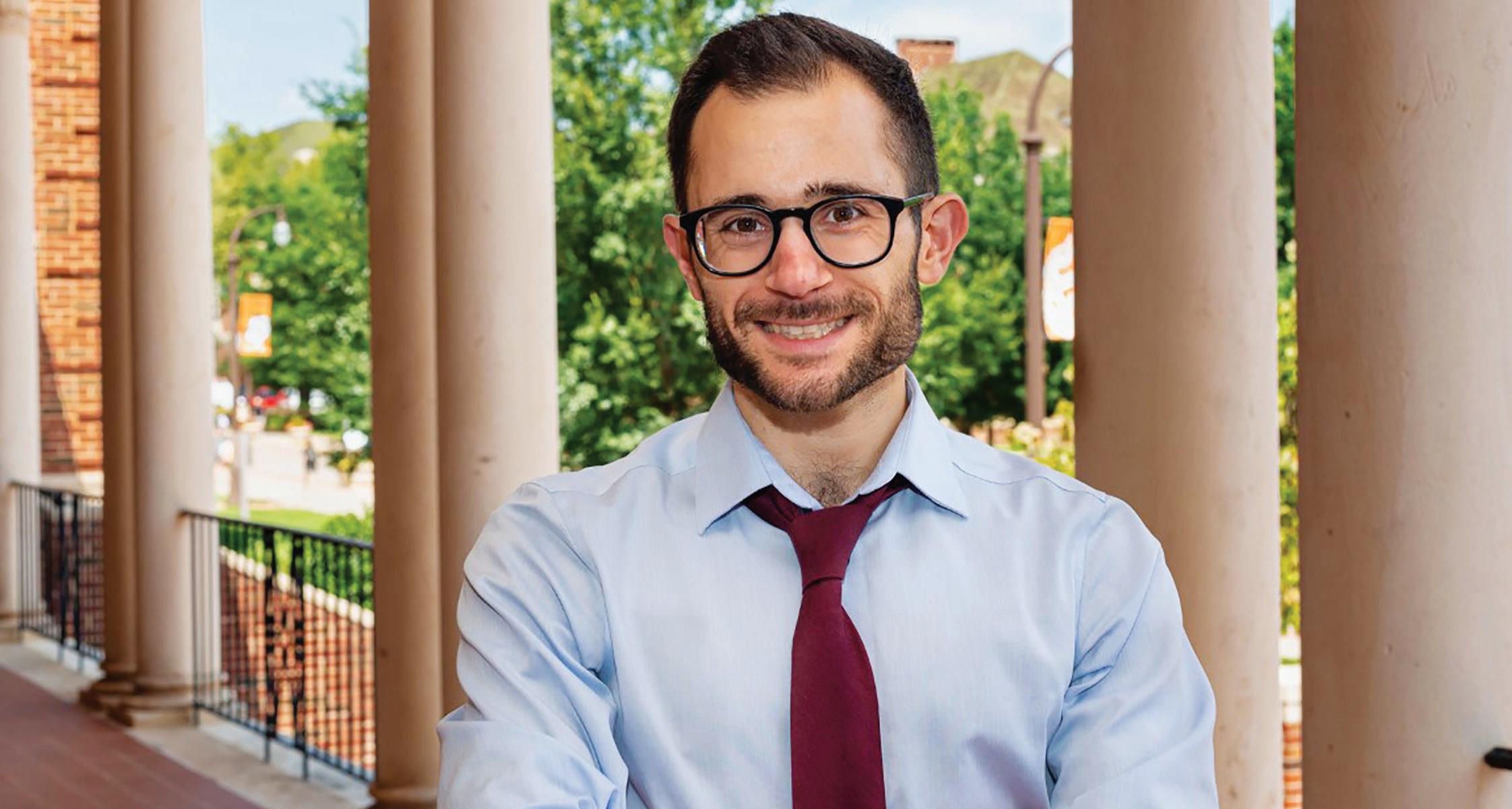
Dr. Matthew Motta
For some, the motivation to find, believe and share misinformation is connected to their belief in a conspiracy theory. And people with “conspiratorial ideation” tend to believe one conspiracy theory after another.
“People are very bad at coping with uncertainty, so conspiracy theories are a powerful way of coping with things,” Motta said. “They explain things, and for some people, having any answer is better than no answer. Admitting that we don’t know something is very uncomforting. The difference is whether we turn to conspiracies to fill that void.”
Motta said most misinformation and conspiracy theories are harmless. For example, an insistence that Lee Harvey Oswald didn’t assassinate President Kennedy doesn’t typically lead to extreme actions. But as the COVID-19
pandemic made clear, a refusal to believe the doctors and scientists touting the safety and efficacy of vaccines can directly lead to actions that result in deaths that were preventable. And cases like that are why he does what he does.
“Because I’m researching topics getting so much attention right now, some people say, ‘Wow, 2020 and 2021 were great for you, weren’t they?’” Motta said. “No, they weren’t, because I’m a person first. I’m somebody living through one of the greatest human tragedies in our lifetime. That brings me no joy. But I am happy that my research can contribute to a better understanding of this pandemic and more effective ways to get out of it. That includes the opportunities I’ve had to talk to policymakers or people close to them, to help influence ways they think about trying to get people vaccinated.”
“People are very bad at coping with uncertainty, so conspiracy theories are a powerful way of coping with things. They explain things, and for some people, having any answer is better than no answer. Admitting that we don’t know something is very uncomforting.”
DR. MATTHEW MOTTA
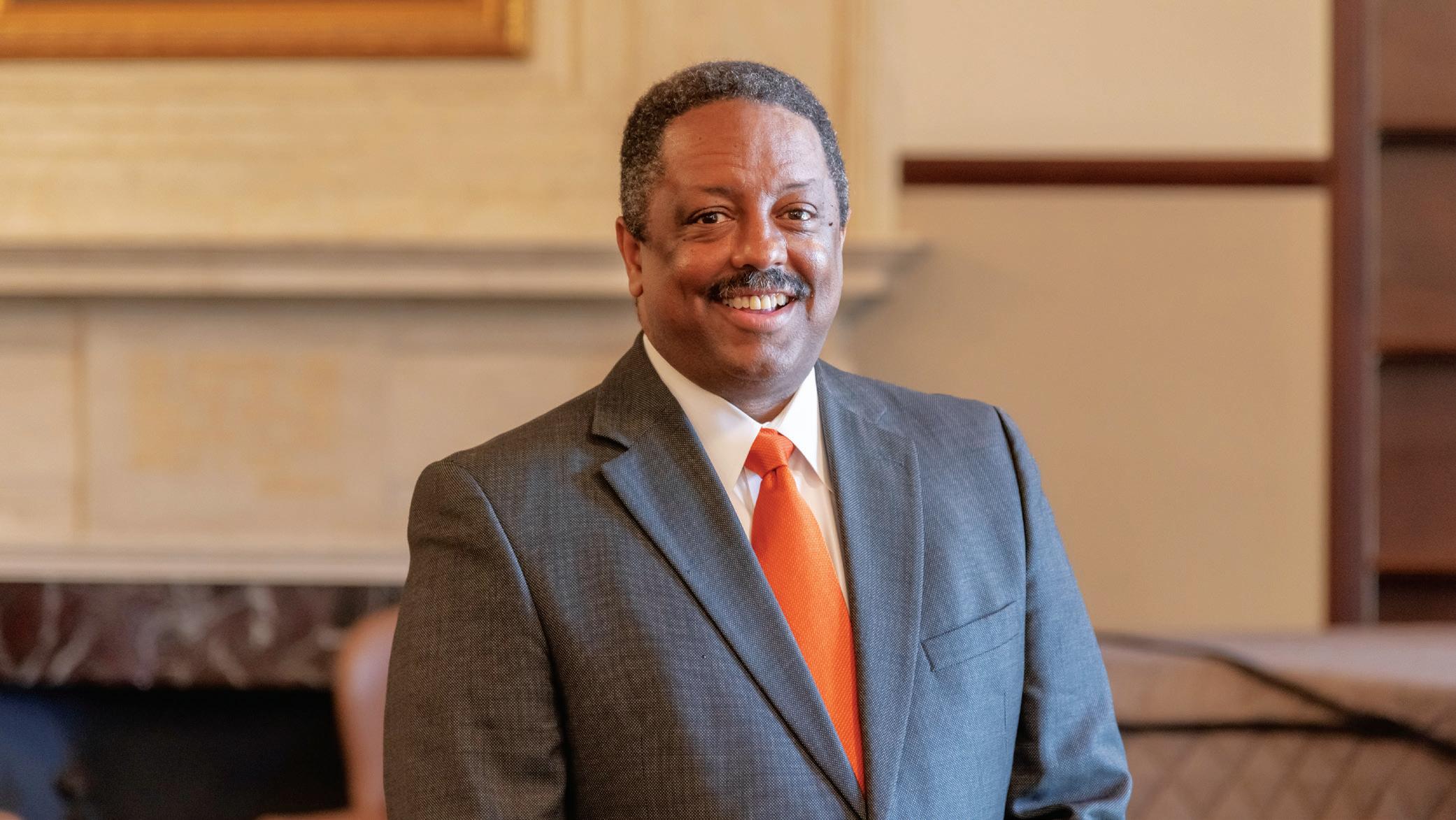
The College of Arts and Sciences at Oklahoma State University is showing its commitment to diversity, equity and inclusion by going above and beyond.
In the spring of 2020, Dr. Jason F. Kirksey, vice president and the chief diversity officer at OSU, recommended that every college name a senior inclusion officer to broaden and deepen the university’s commitment to diversity.
CAS has gone further, promoting Craig Freeman to assistant dean to lead these efforts, along with focusing on OSU-Tulsa.
“This decision by Dean (Glen) Krutz to not simply answer the call, but to also elevate the position to his cabinet, establishes a precedent that hopefully others across the university system will soon follow,” Kirksey said.
“I am certainly pleased with the appointment of Craig Freeman. However, as a two-time alumnus of CAS and an associate professor of political science, I am especially proud of this demonstrated commitment to moving OSU forward by my home college.”
In the position, Freeman’s goals will include developing resources, expanding culture and collaborating with department heads on best practices in diversity, equity and inclusion. He will continue as director for the School of Media and Strategic Communications and add assistant dean responsibilities.
“Working for the dean in the college, fortunately diversity, equality and inclusion are already in our DNA, but we need to highlight that culture more,” Freeman said. “What we now are able to do is to
more thoughtfully deliver that culture to our faculty, staff and students. It’s making sure that everyone at OSU feels respected, welcomed and engaged in the social and academic life of the college.”
Originally from Philadelphia, Freeman started writing for a local paper at 15, finding a passion for storytelling. He earned his bachelor’s from Johns Hopkins University and a law degree from Louisiana State University and practiced for a few years in Baton Rouge before realizing his heart was in education.
“Educators had a remarkable impact on my life,” Freeman said. “I wanted to help our future generations of storytellers by giving them the opportunity to try things and learn from mentors. This way students learn more, and our community benefits.”
He joined the faculty at LSU as an associate professor for 14 years before moving to OSU. Here, he has focused on building curriculum to respond to the ever-changing media market. Under Freeman’s leadership, the school has added three options: advertising and public relations, entertainment media and social media.
“In order to grow, we have to meet students where they are,” Freeman said. “And that’s what I hope to help do at the OSU-Tulsa campus. Tulsa is one of the keys to success in the college. You look at the physical location of the Tulsa campus, and we are on sacred ground. We are at the top of historic Greenwood, we are on Native land and a mile from a significant Latinx community. So the city of Tulsa depends on us to bring these three constituencies together to provide outstanding
educational opportunities for these communities and the greater community of Tulsa.”
CAS programs offered at OSU-Tulsa are critical to increasing the number of Tulsans with bachelor’s degrees.
“As we continue to develop new degree programs tailored to the area’s economy and interests, we also are committed to serving the community,” said Dr. Pamela Fry, president of OSU-Tulsa. “In his new role, Craig Freeman will bring much knowledge and experience to these endeavors, and we look forward to working closely with him to expand access and pathways to higher education, particularly for those populations that have been traditionally underserved.”
Freeman is eager to tackle the new challenges of the position.
“We are committed to providing outstanding educational opportunities for folks around the state and the Tulsa region, and that expands from the youngest students to the oldest learners,” Freeman said. “We know it’s a community that works as hard as Cowboys always do, so we are trying to bring great educational opportunities to those hard-working people in our community there.”
Freeman began his three-year appointment July 1.
“It’s a privilege to have the opportunity to serve the college on this level,” Freeman said. “The support I have from my colleagues will serve our community well. I look forward to helping grow the Cowboy family intellectually, geographically and culturally.”
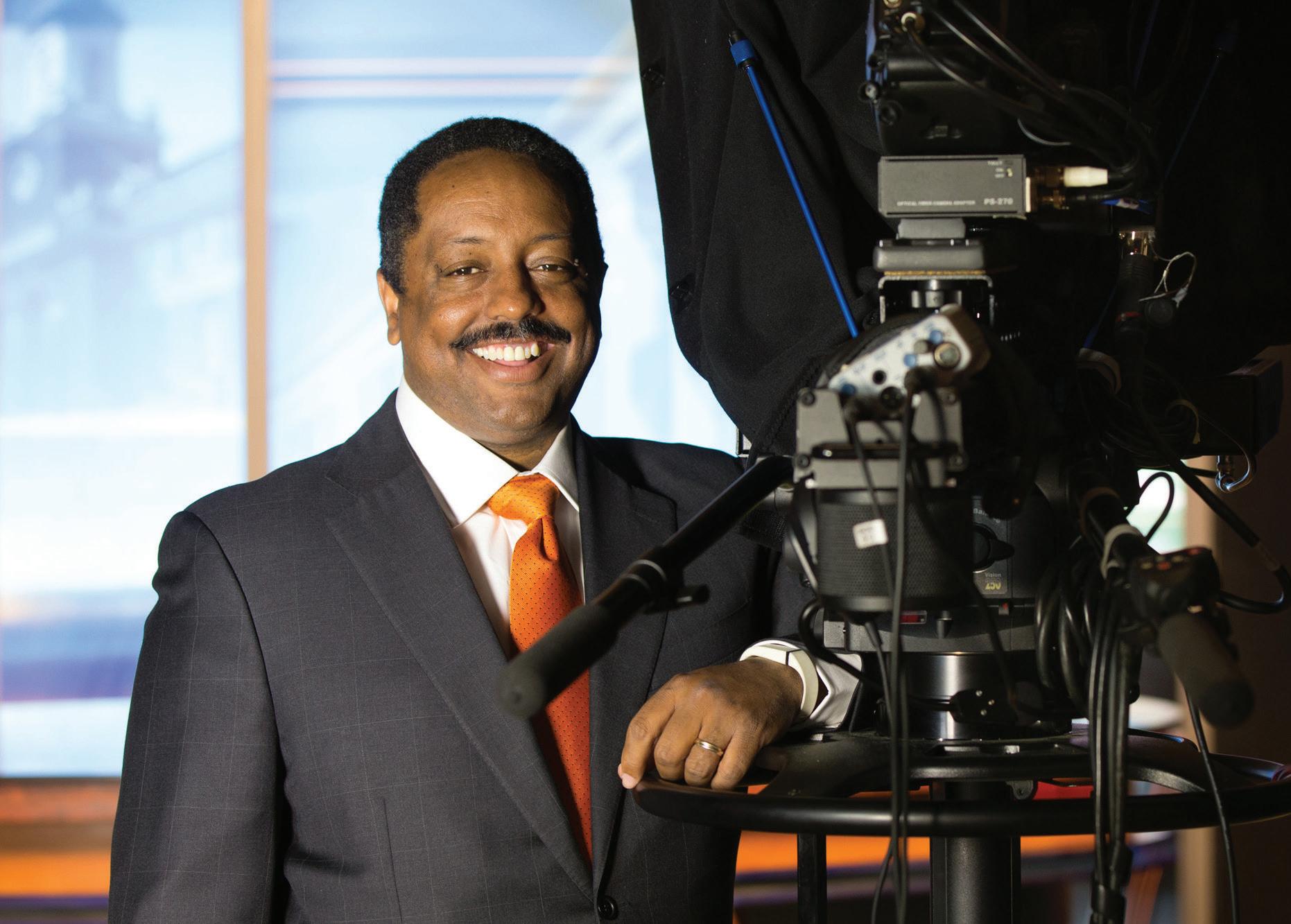
“I wanted to help our future generations of storytellers by giving them the opportunity to try things and learn from mentors.”
CRAIG FREEMAN

New OSU collaboration aims to improve global access to groundwater
COLLABORATION BETWEEN OKLAHOMA STATE UNIVERSITY AND THE NATIONAL GROUNDWATER ASSOCIATION AIMS TO IMPROVE ACCESS TO GROUNDWATER AROUND THE WORLD BY ADDRESSING A PROJECTED SHORTFALL OF GEOSCIENCE WORKERS.
CAPTURING GROUNDWATER IS NOT POSSIBLE WITHOUT A PROPER WORKFORCE OF WATER-WELL DRILLING CONTRACTORS AND PUMP INSTALLERS WHO ACCESS AND DELIVER GROUNDWATER FOR DRINKING WATER, IRRIGATION AND INDUSTRIES.
NGWA University Powered by OSU is creating a series of groundwater training courses delivered online with classroom and field courses being developed for the future. The program will offer career development opportunities for industry professionals, university students and entry-level workers, and it can prepare them for rigorous certification exams or could lead to university degrees. These courses will improve the safety and skills of drilling industry members and systematically address the critical shortage of professionals in the industry.
OSU President Kayse Shrum called this program “a wonderful example of how we fulfill the land-grant mission.”
“We look for opportunities to address the modern issues facing our state, nation and world,” she added. “OSU has a long history in groundwater education, so we understand that 98.5 percent of the drinking water available to people is in the ground. We are proud to collaborate with the NGWA to address this issue.”
National Groundwater Association CEO Terry S. Morse, CAE, CIC, said many knowledgeable and experienced geoscientists are aging into retirement.
“Even prior to the COVID-19 pandemic, the field was projected to face a shortfall of 135,000 workers by 2022,” Morse added. “We need to train the next group of people who will manage groundwater and operate these rigs. That is obviously a serious problem, not just for the industry, but for everyone considering that access to clean water increases life expectancy by 20-plus years. So NGWA was compelled to address this problem, and OSU will help us meet this challenge.”
Dr. Todd Halihan, a professor in OSU’s Boone Pickens School of Geology, agreed, noting that 44 percent of Americans rely on water from wells provided by the groundwater industry.
“Groundwater is the most stable water resource and doesn’t suffer from evaporation like surface reservoirs. People don’t realize how much groundwater research and infrastructure is here in Oklahoma from federal and university researchers, and industrial partners in drilling and consulting,” Halihan said. “It just makes sense to establish this collaboration between OSU and NGWA, a win-win for both their association and our university, and it will benefit countless individuals who rely on groundwater.”
The first course in the new program is Drilling Basics Online, a series of five, eighthour sessions developed with the collaboration of industry professionals, scientists, engineers and experts in online education. The course covers the skills and competencies tested for on groundwater drilling exams.
Up to 5,000 people are expected to participate in this course in just the first two years, and it has unlimited capacity to accommodate high volumes of participants at any given time. Because it is self-paced and delivered entirely online, it is ideal for the nondrilling days of workforce employees as well as for those working from home and the currently unemployed.
Dr. Caitlin Barnes, director of NGWA University Powered by OSU, called it a wonderful collaboration.
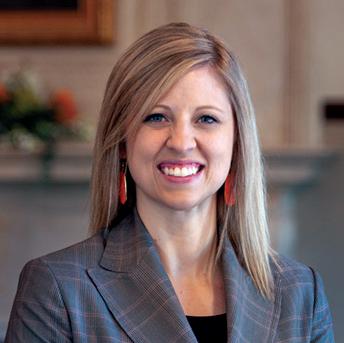
“NGWA has an excellent vision for addressing a serious problem, and we are proud to be part of it,” Barnes said. “They already have training materials and industry experts, so through OSU’s existing infrastructure in outreach and innovation in online education, we can help reach new audiences and make this training accessible in a way that it hasn’t been before. Enrollees can participate anywhere and anytime.”
“It just makes sense to establish this collaboration between OSU and NGWA, a win-win for both their
association
and
our
university, and it will benefit countless individuals who rely on groundwater.”
DR. TODD HALIHAN
The initial funding for the program is in place, thanks to the generosity of Robert C. Keyes & Associated Environmental Industries Corp., Franklin Electric, PumpsOK, and David Traut & Traut Cos.
Because groundwater issues are global, NGWA University Powered by OSU is designed to allow international participation. For example, some funding has already been secured to offer the curriculum in Spanish. Other languages will be added.
The program is also in the process of making all content keyboardaccessible to meet the needs of a diverse audience.
While Drilling Basics is entirely online, more courses are being created to prepare participants for other certification exams. In fact, NGWA University Powered by OSU plans to unveil a total of five before the annual NGWA Groundwater Week in December.

Unlike Drilling Basics, some of the courses will require hands-on experience. To address that need, OSU will be hosting workshops locally and is pursuing partnerships with universities across the country to host more.
Another way OSU is addressing groundwater issues is to increase interest in and awareness of geoscience for students before they even reach college. The new digitized Awesome Aquifer kit includes online components that allows K-12 students to participate in virtual exercises such as manipulating the water table and visualizing aquifer recharge. Teachers receive physical kits that allow students to take turns with other exercises such as pouring water on rocks and noting the reactions.
“The digital version of the kit alongside the physical version allows us to reach more students than ever,” Barnes said. “It reduces certain barriers, like access to supplies, and creates a game-like educational experience. We want it to be easy, fun and entertaining while teaching about groundwater concepts. We want students to understand these concepts before they get to college. We want them to understand that access to groundwater is a long-term solution to fresh water access, and that pursuing a career in this field is as fun and interesting as it is crucial to our society.”
Donors can help fund the development of NGWA University Powered by OSU courses, or purchase Awesome Aquifer kits for schools. For more information, visit cas.okstate.edu/ngwa. For questions, contact Caitlin Barnes at caitlin. barnes@okstate.edu.


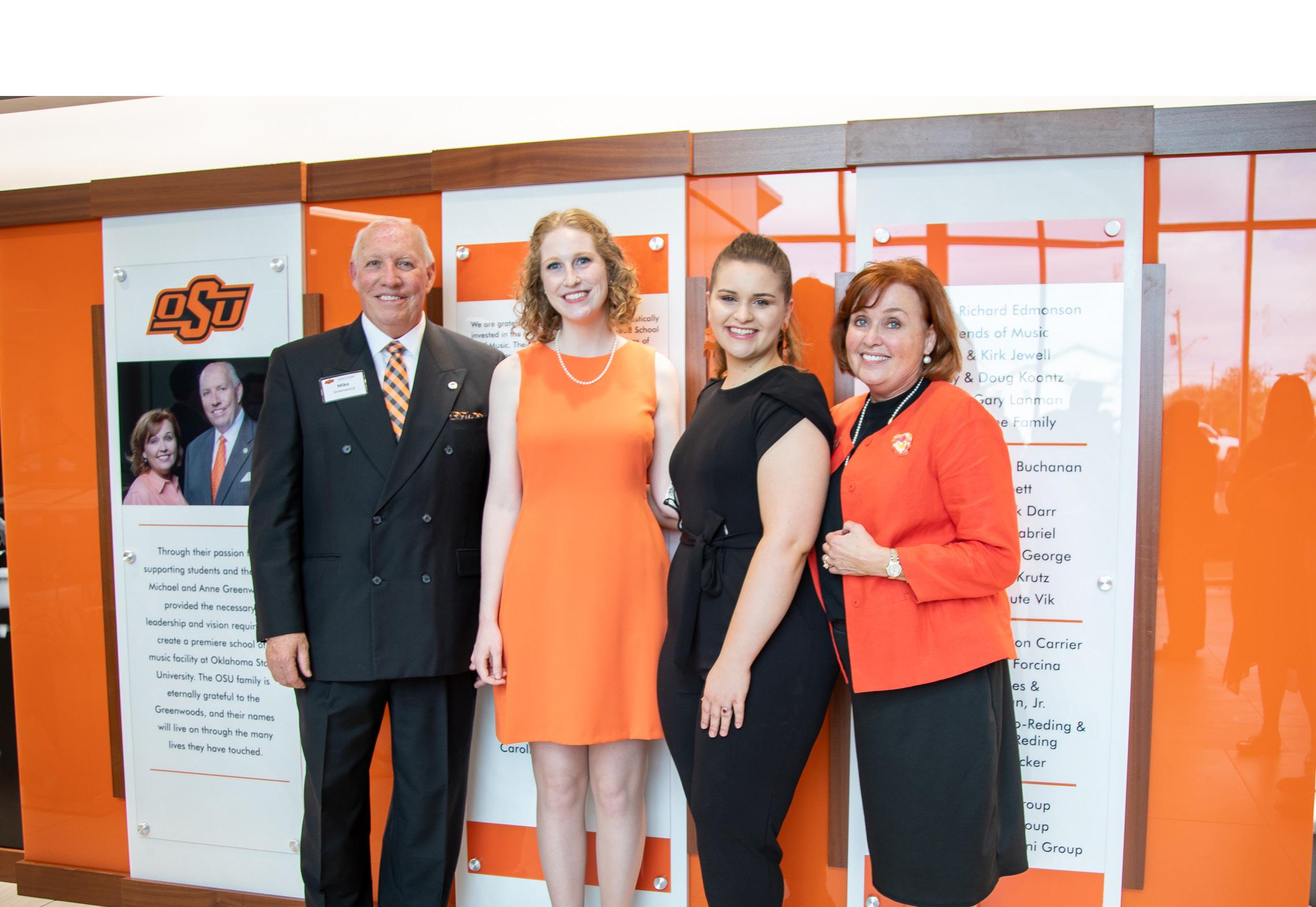

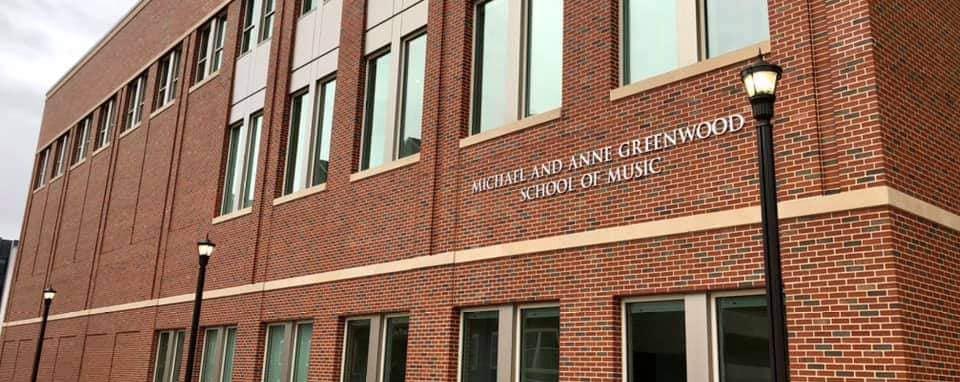
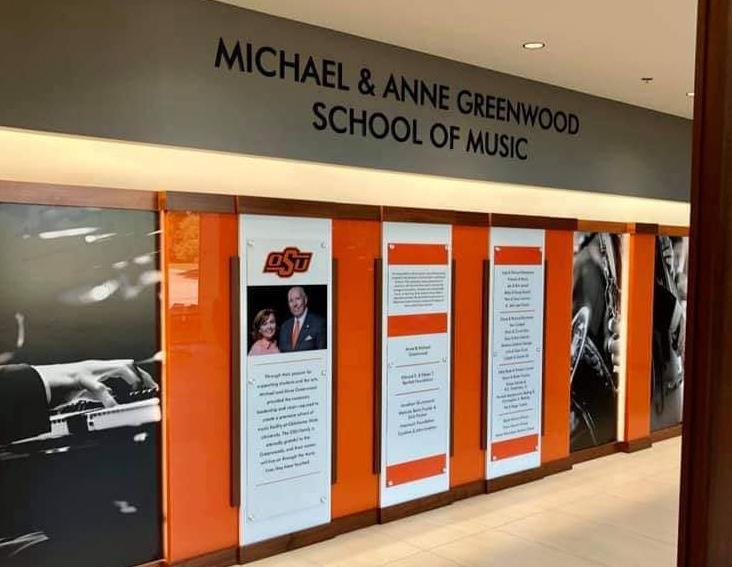
They are performing a new song of joy at Oklahoma State University’s newest addition, the Greenwood School of Music building.
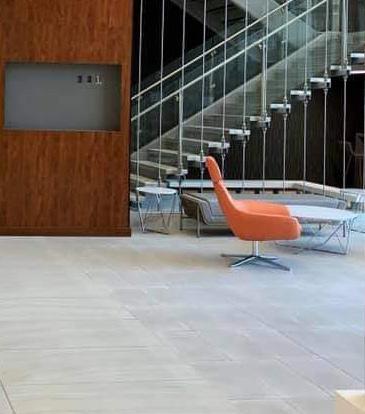
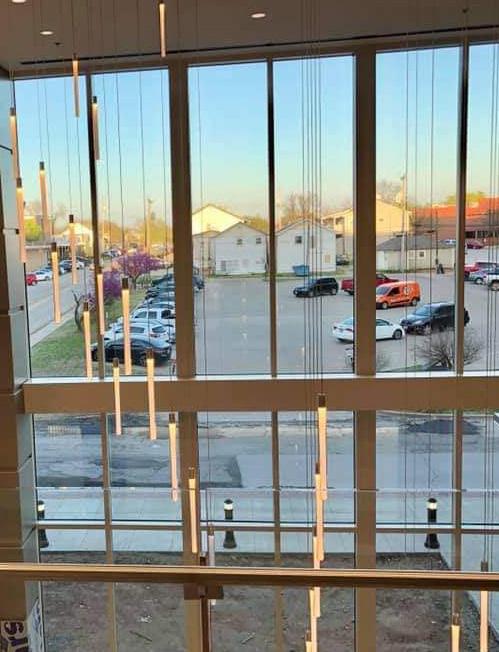
This state-of-the-art facility, attached to The McKnight Center for the Performing Arts, is among the finest performing arts complexes in the nation.
“The Greenwood School of Music building significantly elevates the stature of our program and positively impacts every facet of teaching, learning and performing,” said Dr. Jeffrey Loeffert, a professor and director of the Michael and Anne Greenwood School of Music.
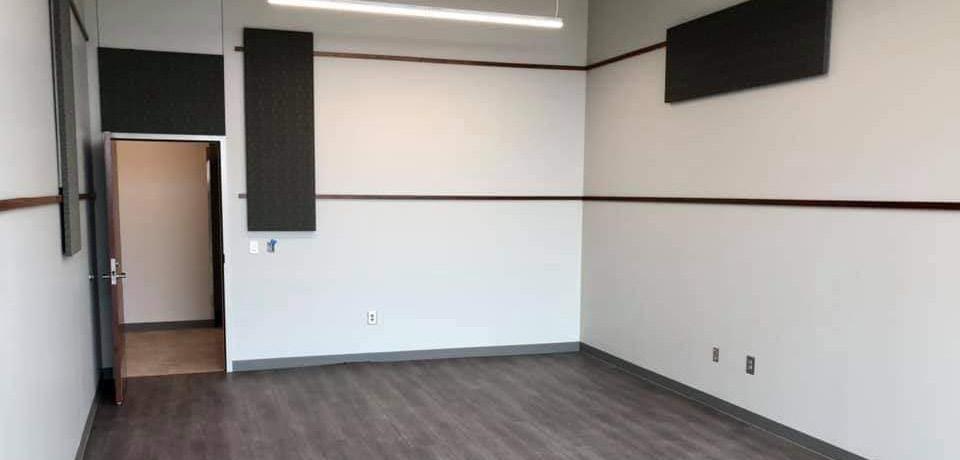
“The attention to acoustical detail in the facility is truly remarkable,” he said. For example, every instructional room was designed to optimize the acoustics via sound paneling, curtains, angular walls and floated floors.
“Aside from being an aesthetically beautiful building, it is also among the most functional and sophisticated music schools in the nation,” Loeffert added.
Students have access to three large ensemble rehearsal rooms, two classrooms, a chamber music room, a seminar room, a percussion instructional suite, 34 instructional studios and 25 practice rooms. In addition, the Greenwood School of Music also boasts a media lab, a recording studio and two digital audio workstations. Further adding to its appeal, this facility was designed to stand the test of time and should provide students with adequate facilities for music education for many years down the road.
“Through visionary spaces like the recording studio, the media lab and the digital audio workstations, we can ensure that our students will be prepared to meet the ever-changing
landscape of the workforce in the performing arts,” Loeffert said. “We will also uphold scholarly excellence through state-of-the-art classrooms, a seminar room, in-house academic advisor offices and an in-house music library.”
Michael and Anne Greenwood were inspired to make the lead gift for the building because they are all about helping students. And they are thrilled with how the facility that bears their name turned out.
“At last, students and faculty alike have a space worthy of their great talent,” the Greenwoods said. “Beck Design made a beautiful building plan and despite a pandemic, it all came together beautifully! Much was done by those who worked hard to get this building finished. It allows so much more for the students and faculty. And as a bonus, it’s attached to The McKnight Center for the Performing Arts, which is ideal!”
“It was our hope that we could provide the lead and others would follow ... and did they ever!”
MICHAEL AND ANNE GREENWOOD
Along with the Greenwoods, spaces in the building are named for these donors:
Edward E. and Helen T. Bartlett Foundation
Jonathan Drummond
Malinda Berry Fischer and Dick Fischer
Inasmuch Foundation
Caroline and John Linehan
Judy and Richard Edmonson
OSU Friends of Music
Jan and Kirk Jewell
Betsy and Doug Koontz
Pam and Gary Lanman
K. John Lee family
Diane and Richard Buchanan
Ken Corbett
Shari and Chuck Darr
Sissy and Bob Gabriel
Barbara Gabriel George
Julie and Glen Krutz
Lisbeth and Gaute Vik
Mike Bode and Preston Carrier
Dawn and Blake Forcina
Diane Staines and R.E. Graalman Jr.
Pamela Montemurro-Reding and Christopher A. Reding
Pat & Roger Tucker
OSU Band Alumni Group
OSU Choir Alumni Group
Music Education Alumni Group
The Greenwood School wouldn’t have been possible without the incredible level of personal investments by alumni and leadership. It is thanks to these remarkable supporters that this facility can cultivate and ensure the success of OSU’s performing arts.
“It was our hope that we could provide the lead and others would follow ... and did they ever!” the Greenwoods said. “We cannot ever properly thank the donors who stepped in with their support. This is without a doubt a group effort, and it’s all for the students. We could not be more happy and proud to have made a difference for OSU.”
Oklahoma State University
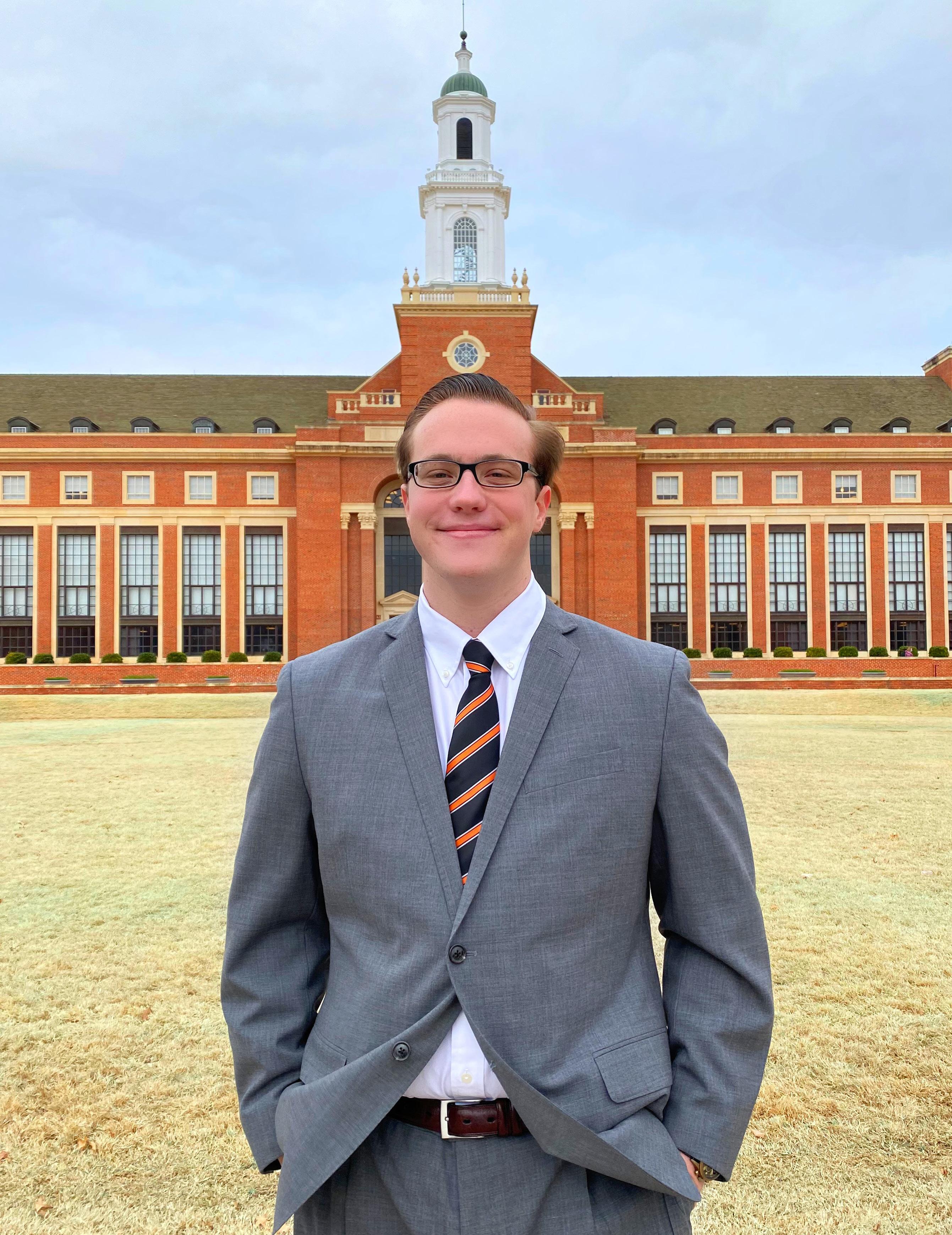
senior Jack A. Edwards has built his undergraduate career on the pillars of involvement and leadership. The Texas native is pursuing a dual degree in political science and psychology and is on track to graduate in three years despite being involved in countless organizations and research.
“I love the way the government is structured,” he said. “I love the way it functions. That has always been super interesting to me, and I’ve always had a passion for the law. I think political science and psychology degrees are really good stepping stones to law school, which has always been my endgame.”
Edwards plans to make his way straight to law school after he graduates in May 2022. Then he hopes to practice law for a few years with a goal of prosecuting for a district attorney’s office. Eventually, he would like to transition into public politics toward a more hands-on role in national leadership. OSU has helped him gain countless leadership experiences to use in pursuing his goals.
“My time has been defined by College of Arts and Sciences involvement and Student Government involvement. My launch points my first semester were the Freshman Representative Council, or as it’s now known First Year Representative Council, and the CAS Ambassador program. They came together when I became an SGA senator representing the College of Arts and Sciences,” Edwards said.
He also served on the executive teams for the CAS Freshman Student Council and as president of CAS Ambassadors. Last spring, despite the global pandemic, he was elected the SGA president.
“I found what I love, what I’m passionate about, what gets me up in the morning. I’m going to pour 100 percent of myself into just that.”
JACK EDWARDS
“I think it started in the Freshman Representative Council. I met a good friend, Alex Bias, and also got to intern under the existing SGA president. I got to get a really up-close look at what the job would entail and it just inspired me and reaffirmed what I wanted to do.”
Edwards ran his campaign with Bias, who will be his vice president in the coming year. Their campaign was based on the word RISE — resources, inclusiveness, stability and engagement.
With multiple policies under each word, they had plenty of campaign ideas to discuss. They used Instagram and GroupMe in their campaigning, individually reaching out to thousands of students for feedback and adapting their campaign to what was important to their audience.
In the end, their strategy won. Some of Edwards’ key goals for the future focus on helping students learn about key resources on campus including things like mental health services, financial need, career guidance and food pantries.
“We have so many of those resources out there,” he said. “What we really want to focus on this next year is engaging the students and making sure
that they know those resources are out there. Another way we want to do this is by interacting with the college student councils.”
Edwards wants to utilize the various college student councils to help connect even more with the student population.
Connecting with students has been different due to the pandemic that changed our world. Edwards was only in his second semester when it hit, forcing him to take his studies online and lose out on traditional experiences such as college internships. Yet he took the down time in stride, taking summer courses and prepping for his LSAT early. His diligence in the rough patches will allow him to graduate early.
Edwards’ last year at OSU will no doubt be busy, but he looks toward it with excitement. In the next year he will help shape the future of OSU and leave yet another mark on both the people working alongside him and the university as a whole.
“I found what I love, what I’m passionate about, what gets me up in the morning. I’m going to pour 100 percent of myself into just that.”
Minor | Chemistry, Geology
Class of 2021
Katy, TX
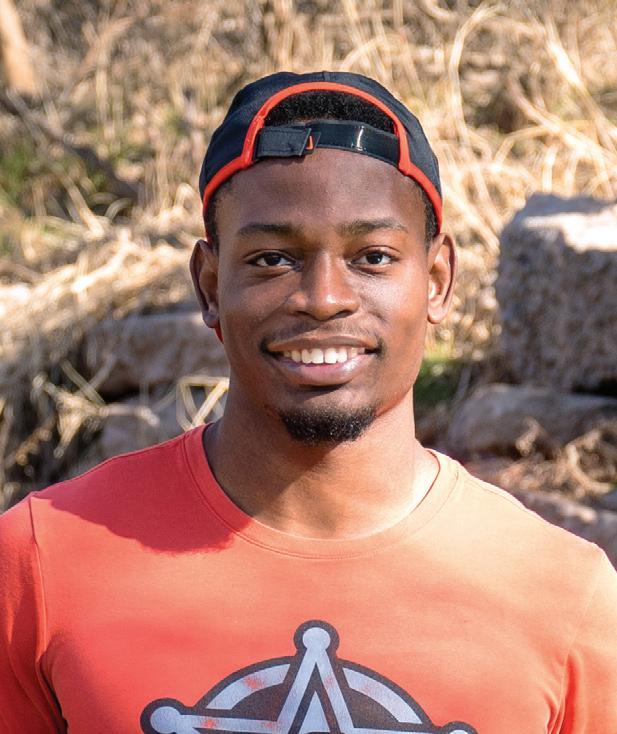
How did you get started researching ?
I came to OSU wanting to do research, so I emailed five professors in my first semester. I started by doing a literature review for a soil microbiology professor. That project was my introduction to thinking like a researcher.
Research Impacts
One of my current projects is centered around the description of a new genus and species of foraminifera living on the seafloor of the Pacific Ocean. My research advisor, Dr. Ashley Burkett, and I will be naming the new genus and species!
Recent Research Activities
I was just awarded an NSF Graduate Research Fellowship and will soon submit three manuscripts for publication. Most recently, I was an intern working with the Mars 2020 Perseverance Rover at the NASA Jet Propulsion Laboratory.
Future Plans
Starting in Fall 2021, I will be a Ph.D. student at Caltech in geobiology.
Minor | Chemistry
Class of 2021 Garland, TX
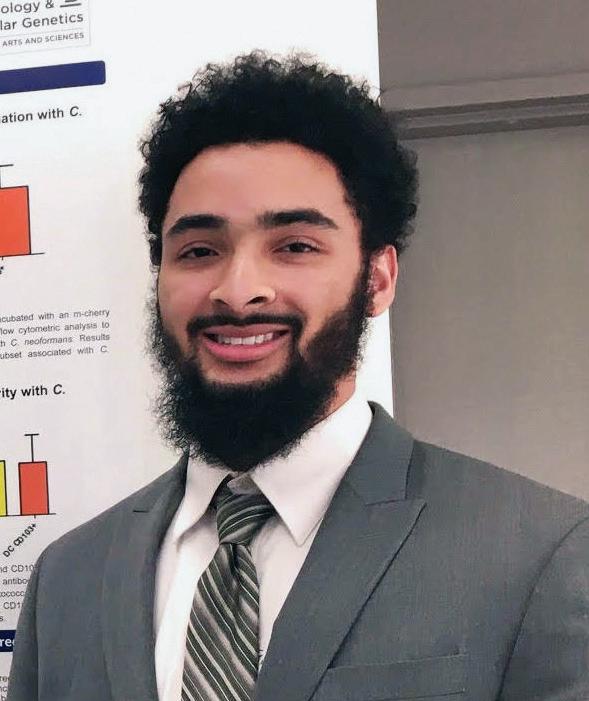
How did you get started researching ?
I joined the Oklahoma Louis Stokes Alliance for Minority Participation (OK-LSAMP) early after I arrived at OSU. It connected me to a research internship on campus. I later joined the lab fully and began developing experiments. I realized what research entailed and where my collegiate career could go. Each day in the lab, I learned that my passions and goals were attainable.
Research Impacts
Cryptococcus neoformans is an opportunistic fungal pathogen that causes cryptococcal meningitis, leading to more than 180,000 annual deaths. Understanding the mechanisms of antifungal activity allows us to develop therapeutics to immunocompromised individuals around the world. Dr. Karen Wozniak is my research advisor.
Recent Research Activities
As an undergraduate, I have presented at nine conferences, including at the national level. I am now co-authoring a manuscript for publication.
Future Plans
I plan on attending graduate school for biomedical sciences to obtain a research-based master’s degree in immunology and infection.
Third Year
Twin Falls, ID
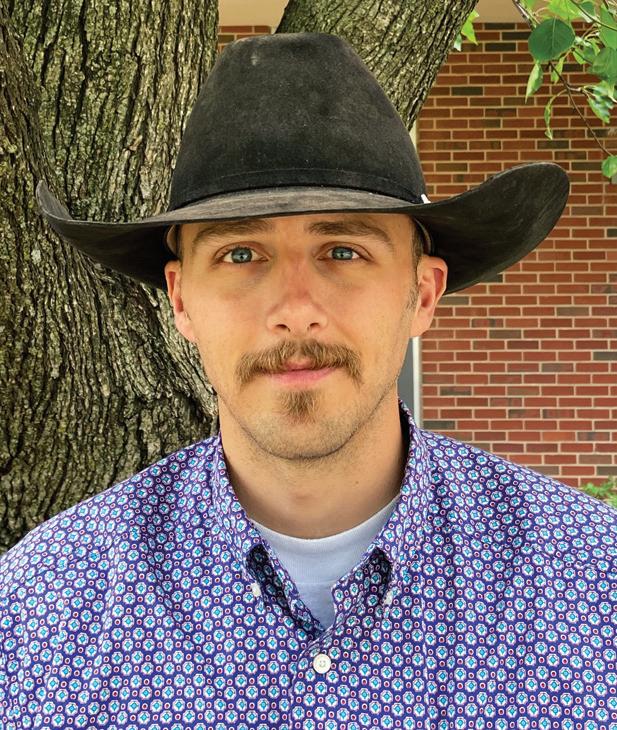
How did you get started researching ?
My path to physics began while I was deployed with the Marines, reading works by great physicists during down time. After noticing the interfering waves in the wakes of two warships, I realized that I wanted to expand my physics knowledge. I met my advisor, Dr. David McIlroy, during my second week of college. I began working on a project involving IED detection technology, which held special meaning for me — some friends had sustained IED injuries. I came to OSU with Dr. McIlroy to start my Ph.D.
Research Impacts
I am seeking to develop novel 2D lenses in the field of non-linear optics. I am exploring new configurations of a substance made up of gold and silicon. I am exploring the energetics that led to meso-textured materials, then developing their optical properties.
Recent Research Activities
I have one manuscript nearly ready for submission and another in preparation. We have a provisional patent filed on the metalens material produced in our lab. I also recently presented at the American Physical Society’s Texas Division virtual conference.
Future Plans
I would like to get a job at Idaho National Laboratories as an applied physicist. I would also like to offer physics outreach in rural communities. I was in college when I took my first physics course. I think we can do better to bring physics to children sooner.
| History
Third Year (Final) Edgewood, NM
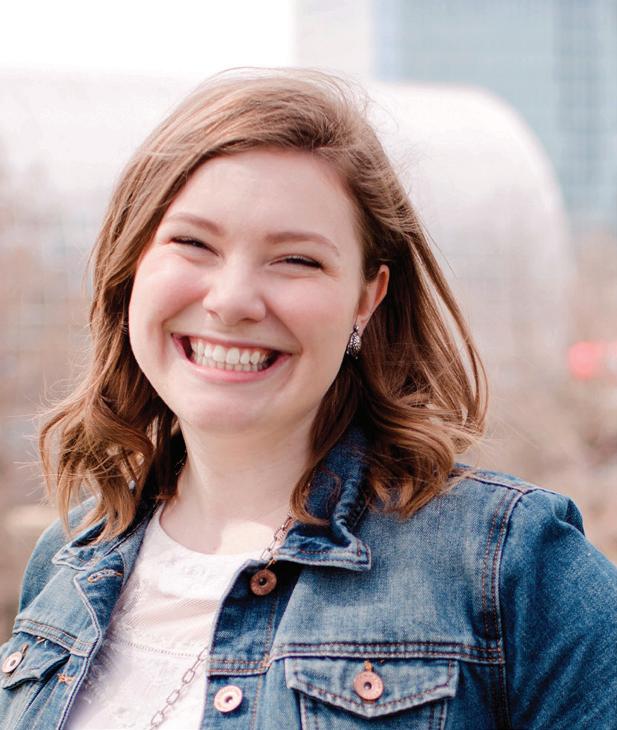
How did you get started researching ?
I started as a Freshman Research Scholar and completed three Wentz Grant projects while I was an undergraduate at OSU. I am thankful that I applied for those grants because they allowed me to develop valuable research skills early on, as well as narrow down my research interests.
Research Impacts
Currently, I focus on women’s experiences in the postremoval Choctaw female education system (18311861). This important topic shows the agency of the Choctaw people to invest in their children’s future and strengthen their nation in their new lands. My research advisor is Dr. Laura Arata.
Recent Research Activities
I recently defended my master’s thesis, which I am really proud of. I am hoping to turn one of the chapters into a published article.
Future Plans
I love history, and I intend to continue research. Next, I am excited to spend time in student affairs as an admissions counselor. I will be helping students start strong and pursue their dreams.
Fourth Year
Houston, TX
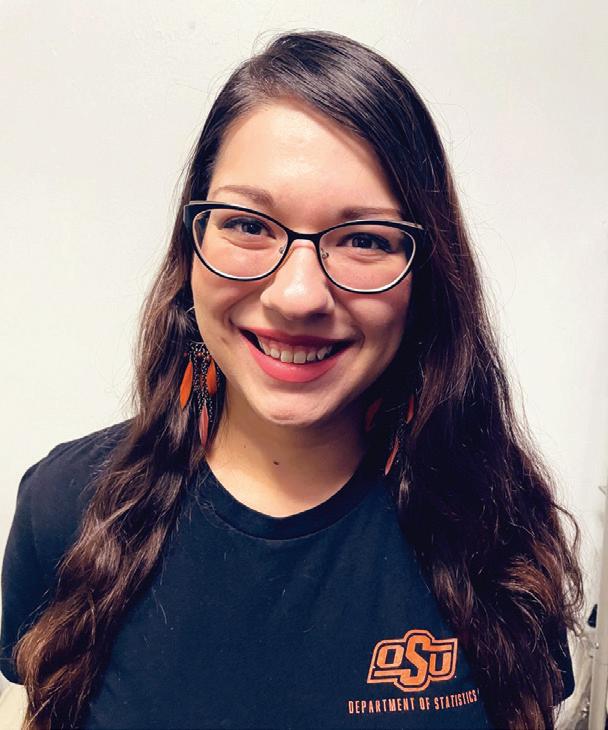
How did you get started researching ?
A few years ago, I collaborated with Dr. Lisa Slevitch from the School of Hospitality and Tourism Management on a study that was later published. This opportunity inspired me to grow my publication list, so I looked for a graduate student position as a research assistant. I was offered a position within the Center for Health Systems Innovation at OSU, which brought me many more research and publication opportunities.
Research Impacts
My research involves analyzing medical-related data with the goal of innovating ways to improve health care decision-making. One of my projects will help medical professionals understand COVID-19 impacts on their patients.
Recent Research Activities
I recently finished a study on determining the most important risk factors associated with fatal COVID-19 encounters. This work has been featured on multiple media outlets such as KOSU radio and KWTV/Oklahoma’s News 9. This study is now pending publication.
Future Plans
Teaching has been my passion since I started graduate school; my future goal is to be a statistics professor. I plan to continue my research and inspire future students just as my mentors have influenced me here at OSU.
Minor | Pre-Pharmacy
Class of 2022
Edmond, OK
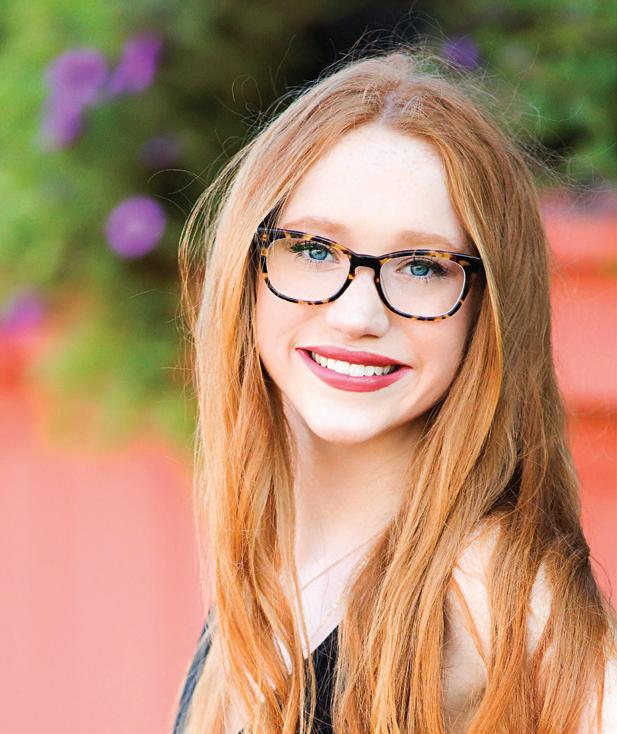
How did you get started researching ?
In high school, I was not sure what research entailed, but my curiosity led me to the Freshman Research Scholars program. I thought it would be a great way to connect with students and faculty. This program led me to meet my mentor, Dr. Heejin Yoo.
Research Impacts
I study amino acid biosynthetic genes in plant effector-triggered immunity in Arabidopsis. This is important because discovering the contribution of amino acids during plant immunity will provide beneficial information for crop yield and management in agriculture.
Recent Research Activities
I was named the Spring 2021 Plant Biology, Ecology, and Evolution Outstanding Senior and awarded a 2021 Women’s Faculty Council Student Research Award.
Future Plans
I plan to attend pharmacy school to obtain my Doctor of Pharmacy (Pharm.D.) degree.
Researchers aim to prevent harmful algae blooms using novel materials
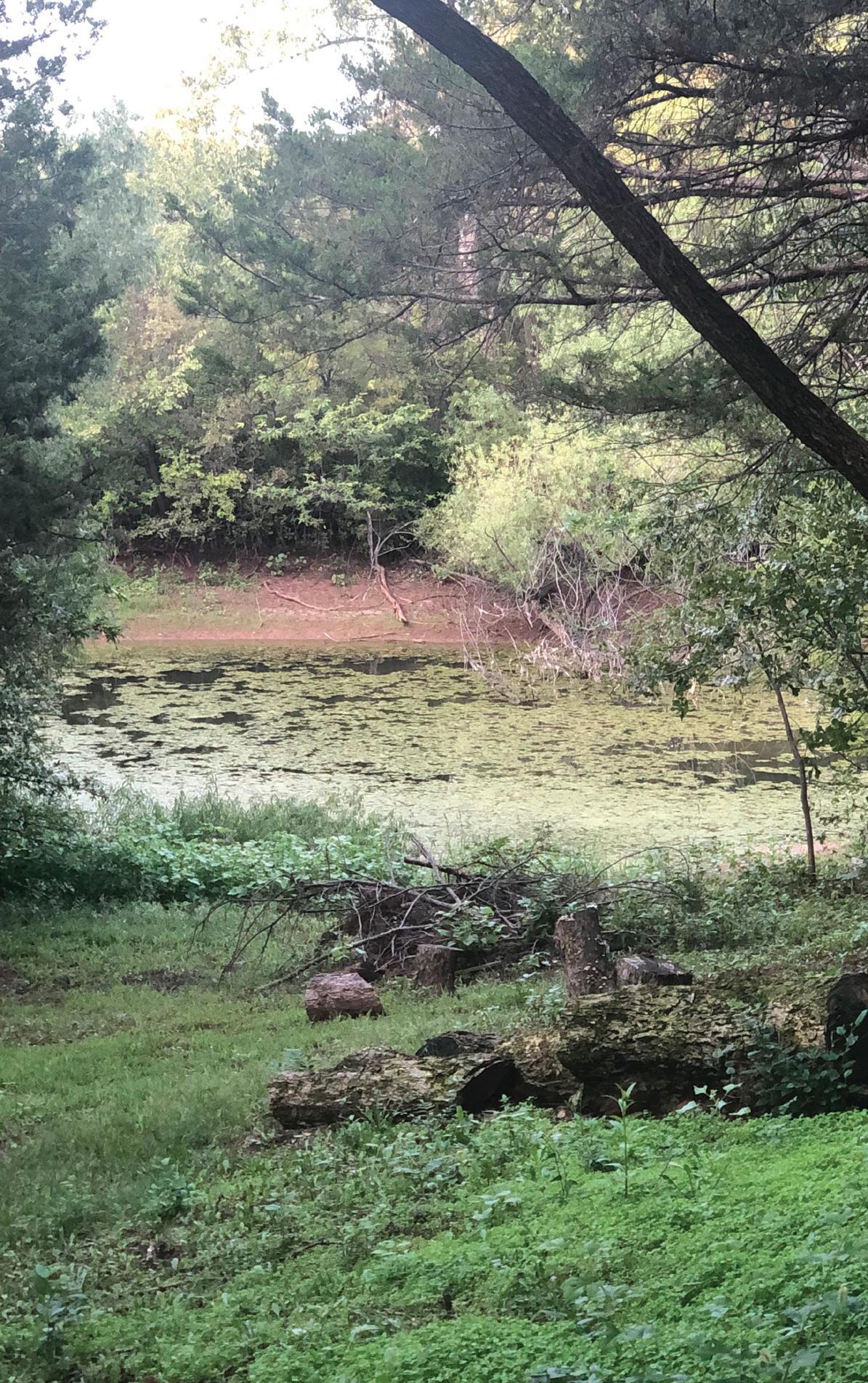
Harmful algal blooms are a growing problem in water across the nation, but OSU researchers may have one piece of the solution thanks to groundbreaking research and new funding.
A pair of researchers are focusing on developing novel materials that could prevent the growth of algae blooms and recycle the nutrients, creating an environmentally friendly cycle.
“The objective of the research is to develop a novel technology for sustainably and economically preventing harmful algal blooms in farm watering ponds,” said Dr. Allen Apblett, a professor in the OSU Department of Chemistry. The research is focused on algae in waterways affected by fertilizer runoff.
Some fertilizers wash off fields and into farm ponds and waterways, which then feeds algae, creating harmful algal blooms. Algal blooms can create dangerous toxins.
“People don’t really understand what causes them to actually start producing the toxins,” Apblett said. “But the easiest thing is, if you don’t let them bloom, then they don’t grow, then they don’t produce the toxin.
“We already know what causes algae, and that is food. So, the goal is to have a practical solution [to prevent feeding the algae].”
For plants, food comes mainly in the form of nitrogen, phosphorus and potassium. Too little nitrogen and phosphorus will limit the growth of plants.
The solution, the team hopes, will come in the form of a granular substance, designed to absorb nitrogen and phosphorus.
“As we identify ponds that are prone to overgrowth of algae, what we plan to do is remove the nutrients that algae need to grow and load them into a material that essentially then becomes fertilizer,” Apblett said. “So rather than fertilizing algae, we’re going to fertilize crops for people and animals to eat and leave our water pristine.”
“The objective of the research is to develop a novel technology for sustainably and economically preventing harmful algal blooms in farm watering ponds.”
ALLEN APBLETT
Reclaiming those lost nutrients from fertilizer runoff also means less fertilizer will need to be produced.
“If we can capture lost nutrients and … recycle them, then we can cut down on the deleterious impact that we’re having on the environment just to procure fertilizer,” Apblett said. “Without [fertilizer enhancing crop yields], we’d have to look around and figure out what small percentage of humans is going to survive because, without fertilizer to produce food, we can’t maintain our population.”
The material is essentially porous granules that binds the nutrients to it. Once the material is loaded with nutrients, it can be dried and applied to lawns and crops.
“The way to treat a pond would be to run water through columns [containing these materials], although we have a trough-based system, system that was designed by a local company in collaboration with OSU,” Apblett said.
Once the water has run through these systems, purified water would go back in the pond and all the nutrients would remain in the columns or troughs, where they can be used again to grow crops, Apblett said.
“We’ve also recently demonstrated that the presence of these [materials on a field], even after they delivered the nitrate and phosphorus will prevent fertilizer runoff,” Apblett said. “So, if somebody applies a soluble fertilizer, they’ll capture those nutrients again and release them slowly.”
This project is being funded by a 2020 grant from the U.S. Environmental Protection Agency to research how to prevent and control algal blooms. As one of seven awarded this grant, the team’s research is unique.
“A lot of people take different approaches [to treating algae blooms],” said Nicholas Materer, a professor and chair of the OSU Department of Chemistry. “And that’s one thing good about
science — everybody can take different approaches, and we figure out which one works the best.”
No matter what, the research is still engaging.
“It’s really exciting to do something new,” Materer said. “You don’t want to do the same reaction, the same chemistry over and over again. So we like to find problems. And once you work on these new problems, you get to understand the problem and get to meet the people involved, so there’s also a human side to it.”
Hopefully, this new technology will be a solution to improve water and fertilizing methods across Oklahoma and the nation.
Once the team finishes their tests, the next step is applying this material to larger projects.
“I think that Nick and I would be happy to work with others,” Apblett said. “We want to look specifically at getting this optimized for farms and do a pilot test.”
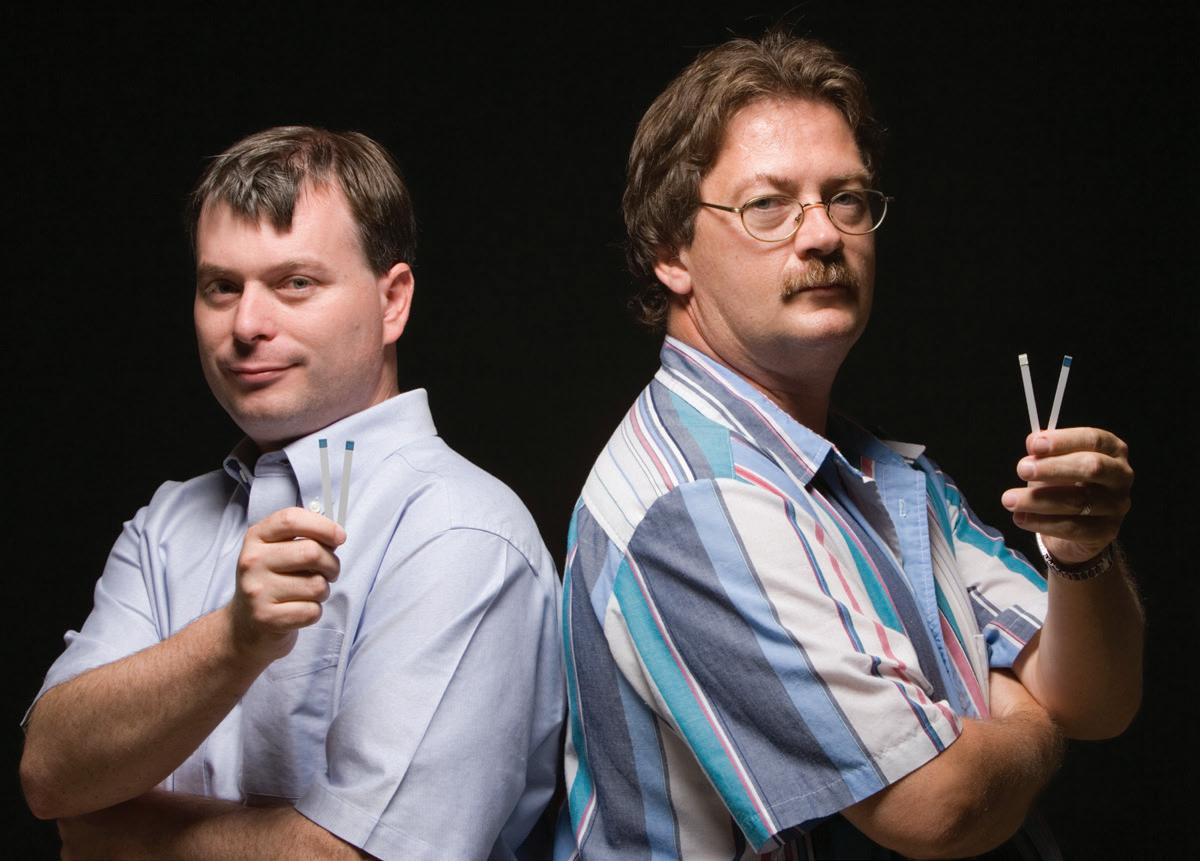
Nicholas Materer and Allen Apblett
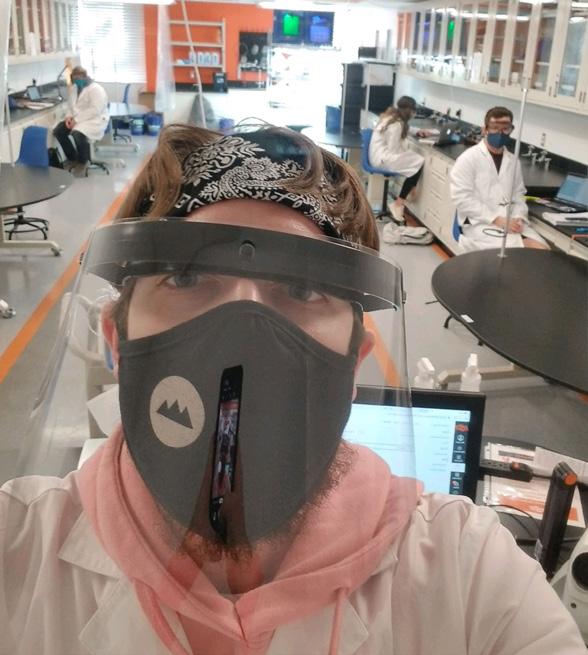
When OSU initially shifted its classes online for two weeks following 2020’s spring break, most thought things with the still-new coronavirus would resolve and in-person classes would resume in plenty of time for finals. Instead, courses remained virtual, and OSU faculty, staff and students finished the semester from home.
In the College of Arts and Sciences, not everyone was working remotely, though. Associate Dean for Research and Facilities Dr. Kristen Baum, for example, dealt with ordering supplies, rearranging classrooms, developing recommendations and protocols, and otherwise bringing CAS into compliance with universitywide COVID-19 procedures.
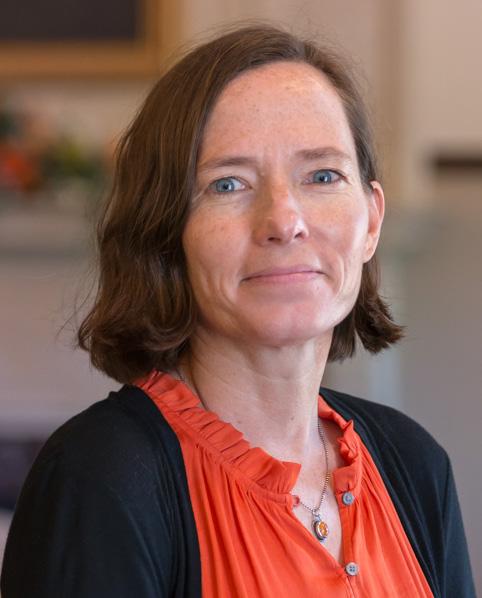
“One of the roles I played within the college was trying to reduce some of the burden on departments by providing resources at the college level,” said Baum, who credited others
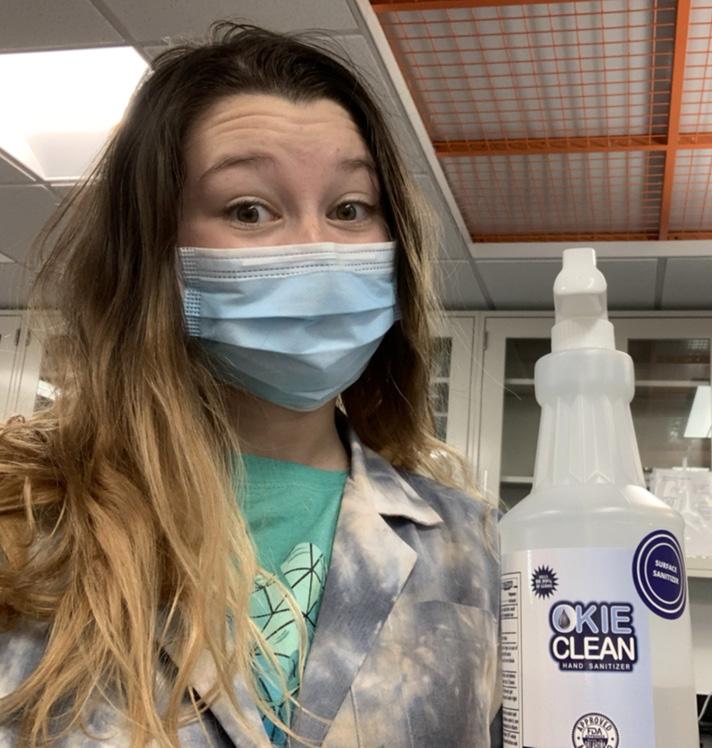
with helping her and the college adjust to safety guidelines. “It was just such a frantic time trying to find what you could — masks, hand sanitizer, Plexiglas — but so many different people across campus rose to the challenge. … Everyone was contributing.”
Over the summer of 2020, Baum helped prepare CAS for students’ return in the fall. Spreadsheets, memos and meetings were the name of the game.
“There were so many moving parts, but we had great communication among units on campus,” Baum recalled.
“There for a while if I just picked up the phone and called, everyone shared everything they knew, from colleagues in CAS departments to purchasing to facilities management to other colleges across campus. Collectively, you can come up with much better ideas and solutions when you talk with people.”
Thanks to the efforts of Baum and her colleagues — and the cooperation of students — the College of Arts and Sciences avoided any major COVID19 outbreaks during the 2020 school year. The university returned to full in-person classes this fall.
“There’s nothing like being in the classroom with the students,” said Dr. Gabriel Cook of the Department of Chemistry. “I think the past year and a half has taught us that there are other ways to deliver material and with the right tools they can be extremely helpful and beneficial … but I look forward to seeing all the students back in the hallways and back in their seats again.”
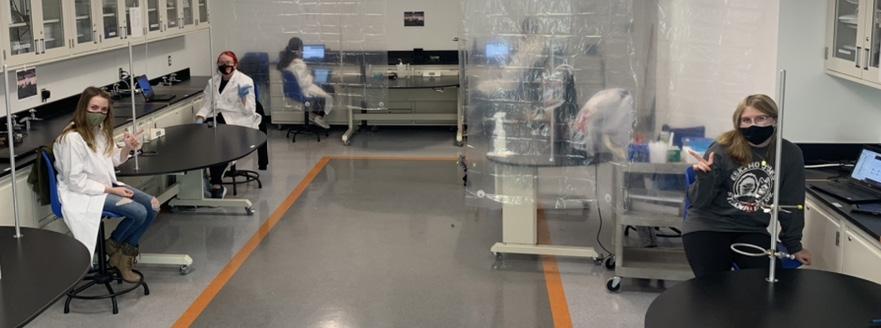
Like many professors, Cook had to figure out how to give lectures and conduct lab work with students. Instead of having 170 students in an elbow-toelbow lecture hall, Cook taught in the Colvin Recreation Center gymnasium — the size of four basketball courts. And to keep at least some on-campus labs as part of his class, he “reduced the number of students in each lab period so that we could spread them out,” he said. “This afforded all of the students the chance to do at least four experiments in person during the semester.
“All of these classroom changes, for better or worse, allowed us to continue teaching and kept our students learning, even in these strange and uncertain times,” he added.
“We’ve come to understand that things aren’t going to be perfect, but putting in the effort is worth it, and now we know we can get through anything.”
Dr. Donald French of the Department of Integrative Biology encountered similar challenges, including how to continue with a course-based undergraduate research experience, or CURE model of instruction.
“This involved having students collaborating in teams to conduct multi-week experiments that they designed,” French said. “The challenge was to continue to provide this collaborative, authentic experience
where students would continue to gain experience in the use of laboratory equipment.”
The solution happened “almost overnight,” French said, with instructors teaching each other how to use collaborative authoring tools to enable easy document sharing and video conferencing with students.
“The instructors then served as the hands in the lab while the students directed them and monitored the data collection over the internet. It was amazing to walk into a lab of experiments running and the instructor walking from station to station to converse with each team by videoconference.”
That was spring 2020. By fall 2020, half of each four-person lab team
came in to do hands-on experiments while their counterparts participated simultaneously via webcam.
“I wish I could say there were no technical difficulties or stressful situations, but overall I can say that students produced work of the same caliber as pre-pandemic,” French said.
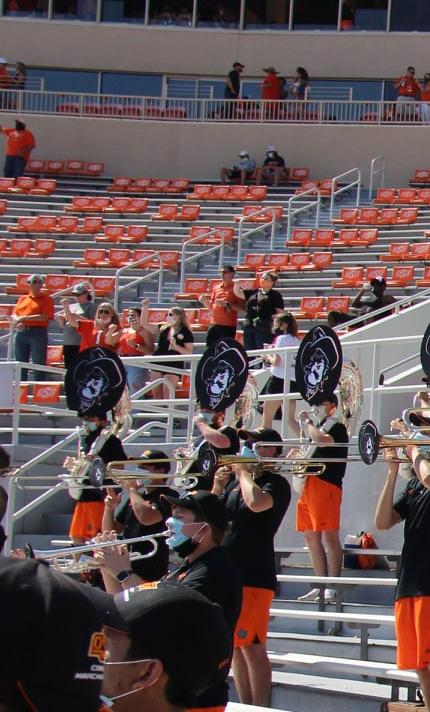
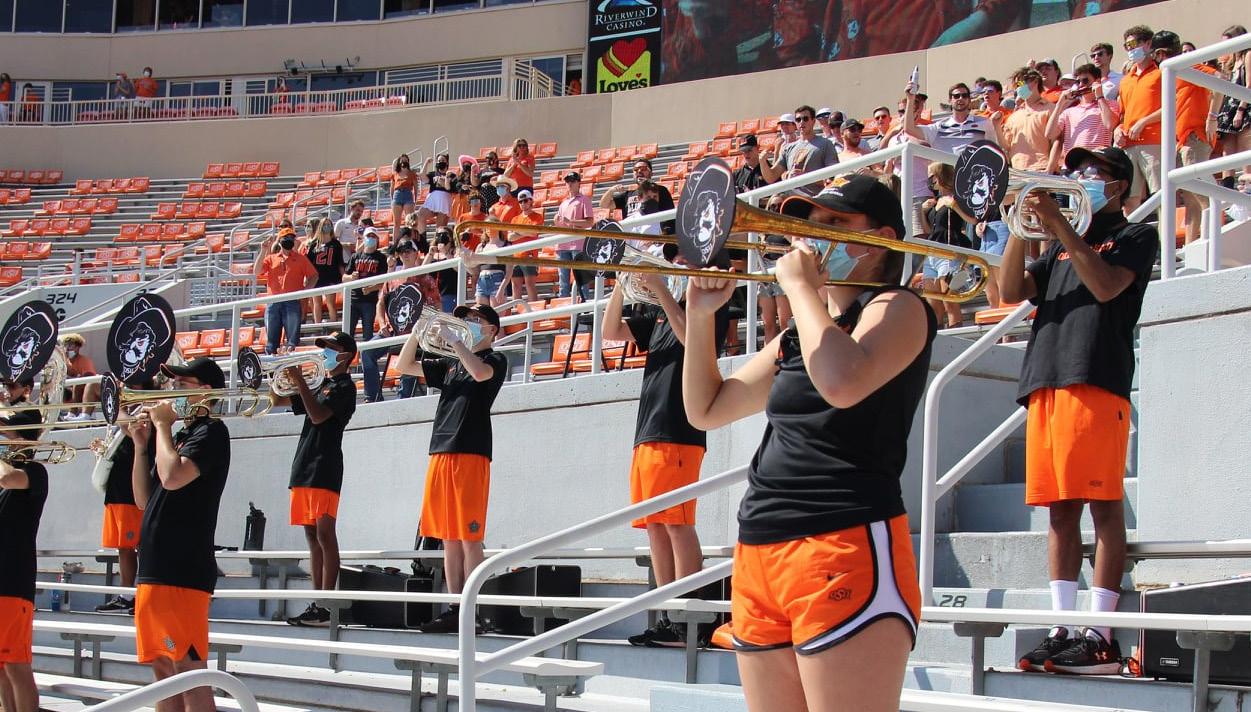
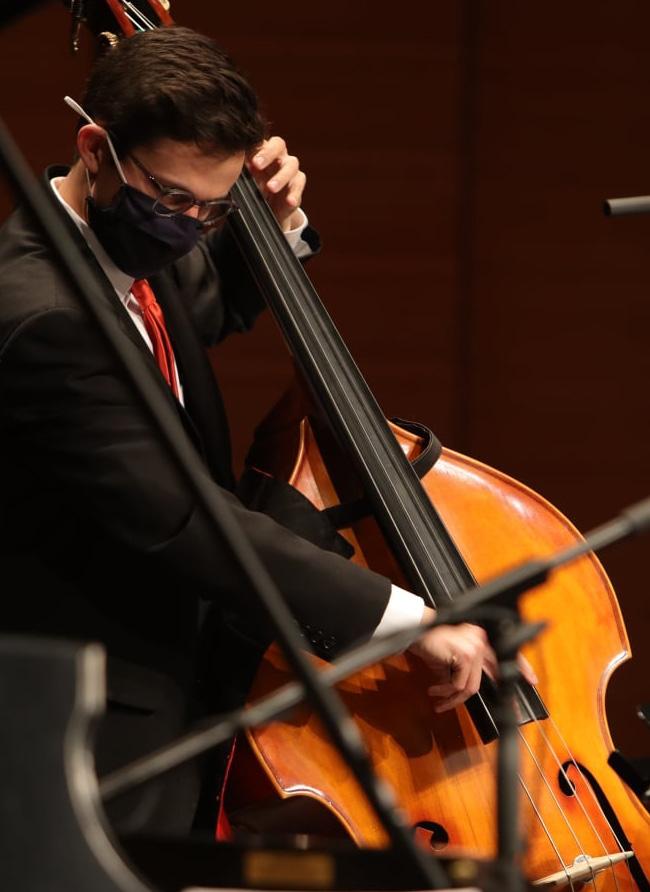
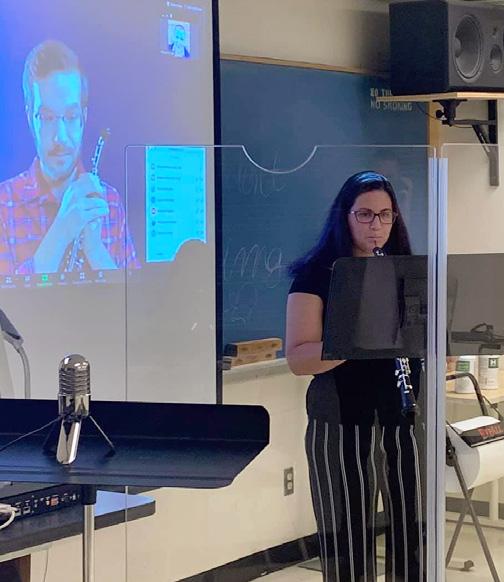
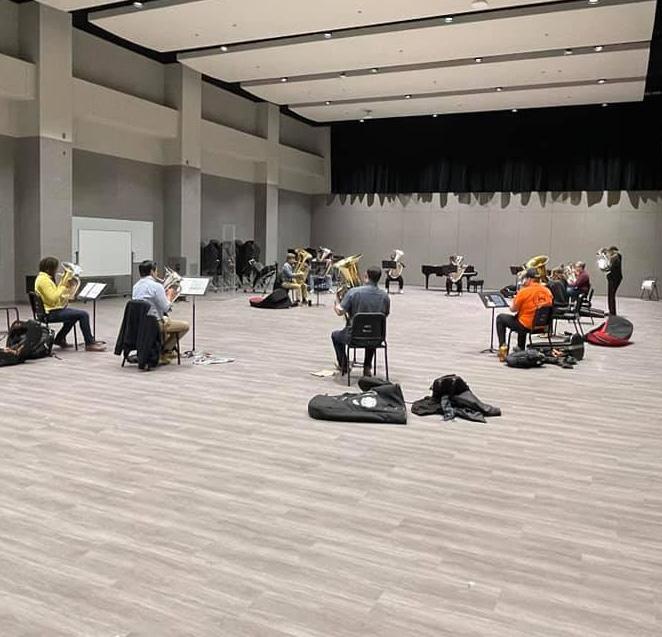
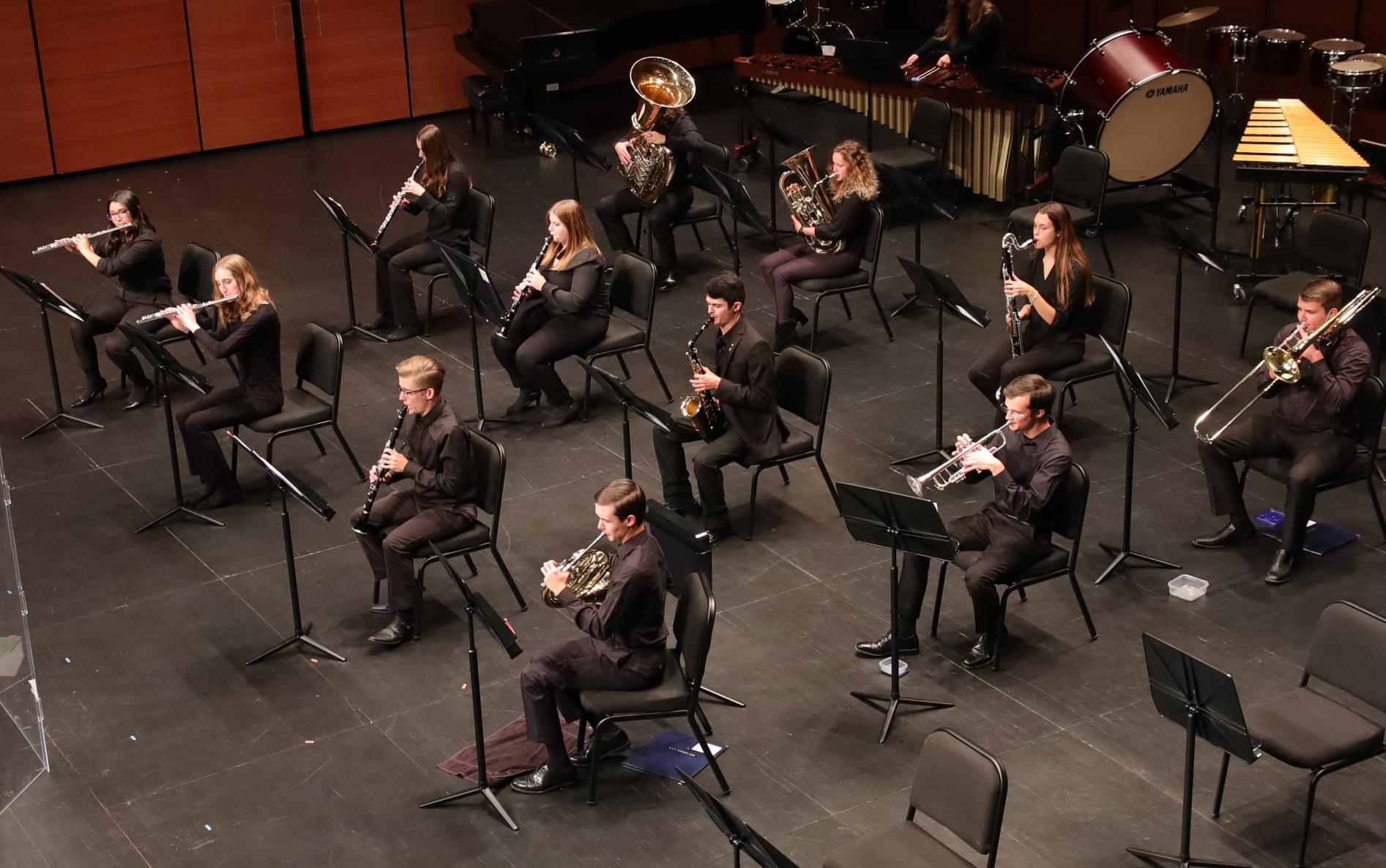
In addition to webcams and the ever-present face masks, departments utilized supplies ranging from disinfecting sprays, UV-C lighting and HEPA air filters to USB microphones, specially designed vocalist masks and musical instrument covers — the latter three applying, unsurprisingly, to the Greenwood School of Music.
Dr. Jeffrey Loeffert
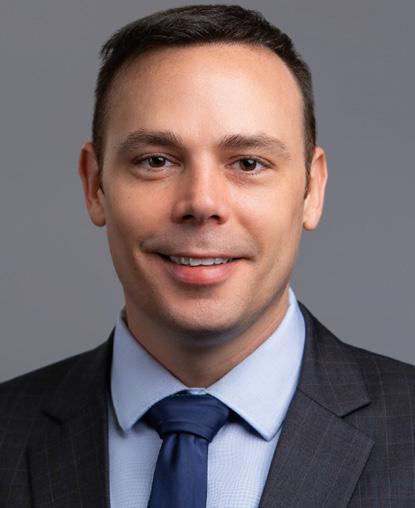
“The COVID19 pandemic had a profound effect on every aspect of music instruction,” said Greenwood School of Music director
Dr. Jeffrey Loeffert, who worked with CAS leadership to procure funding and equipment that helped the department’s unique teaching situations. “I mostly feel very lucky that no Greenwood School of Music students, staff or faculty became severely ill as a result of COVID-19. … We must be committed to taking the lessons learned during this period to ensure that we are more capable and efficient than we were previously, and we are poised to do that. We can and are doing things that we did not think possible even a year ago.”
Because the Greenwood School of Music has such an outward-facing presence, with regular concerts and performances open to the public, Loeffert and his department got creative with how that visibility could continue. They partnered with OState.TV to livestream concerts, continued developing the Greenwood School of Music app and found a way to do some in-person performances.
“Our opera faculty, Professors Steve Sanders and April Golliver-Mohiuddin, began the Pokes’ Pop-Up Performance Series, which includes a large flat-bed trailer that is appropriately outfitted with a stage setup and a power generator to allow for live outdoor performances anywhere we can park a trailer,” Loeffert said, adding that venues spanned from Hideaway Pizza to the Lowe’s parking lot.
“When our students look back at this year, they will remember instructors who were committed to helping them achieve at their maximum potential despite the difficult circumstances,” Loeffert continued. “Really, what better lesson could there be? We do not find a path to success — we create a path to success. Our aim is to serve our students, and even a pandemic will not stop us from meeting our instructional mission.”
While CAS faculty and staff were instrumental in ensuring the mitigation of COVID cases while continuing research and instruction, the college’s students valiantly adapted to changes as well. Jacob Burch-Konda, a cell and molecular biology master’s student from Kingsburg, California, took his lead from Dr. Tyrell Conway, head of the Department of Microbiology and Molecular Genetics.
“He mentioned that our department should serve as kind of a role model for the campus community when it came to following COVID-19 precautions,” Burch-Konda said, citing the professors’ and students’ relevant knowledge of pathogens. “I think we definitely delivered on that.”
Burch-Konda’s research on calcium signaling in the human pathogen Pseudomonas aeruginosa was one of many experiments across campus that couldn’t be put on hold, which motivated him to stay healthy and forge ahead with the work regardless of the obstacles.
“We had a culture of trying to minimize risk and protecting those around us,” Burch-Konda said. “This pandemic has taught me that students and professors are quite resilient and can work through almost any challenge. It’s encouraging to know that our studies and research didn’t have to come to a complete halt even under these crazy circumstances. After working through COVID-19, I think I’m more confident that I can tackle any tough scenario down the road.”
Megan Hays from Bartlesville, Oklahoma, shares that conviction. The triple major in chemistry, psychology and biochemistry wasn’t thrown by the physical distancing in the lab where she worked to replicate an organic synthesis and then isolate compounds — “We’re
already decently spread out,” she said — but the limited interactions with advisors proved challenging.
“We could only contact our advisor through email … so the graduate students really banded together to help each other and me in identifying the issues and offering solutions,” Hays said. “I developed more confidence in the lab. Since there wasn’t always someone in the lab to help, I had to trust myself to make the right decision and go through with it.”
As a researcher who could do most of her work from home, mass communications graduate student Kelli Norton wasn’t as significantly affected by the pandemic restrictions. The Bixby, Oklahoma, native utilized video conferencing with her team of Media Ecology and Strategic Analysis (MESA) Group researchers as they analyzed interviews and articles, noting that the distance actually brought them closer together.
“Because we were separated, we had to make an effort to make time to help each other,” Norton said. “When we were able to meet safely, it was special. You could tell we wanted each other to succeed. When you are in a research group like MESA, everyone wants the project to do well. Everyone is walking toward the same goal.”
The idea of a shared goal also translates to the hundreds of students and professors within the 24 departments of the College of Arts and Sciences. Although the pandemic is not yet over, the lessons learned during the first 18 months promise to continue into the future.
“I think we’ve become more understanding as teachers and students,” Cook said. “College is hard enough without having to deal with a pandemic. ... I think students sometimes forget that we, as faculty, want our students to learn and to be successful. We’ve come to understand that things aren’t going to be perfect, but putting in the effort is worth it, and now we know we can get through anything.”
Oklahoma State University’s College of Arts and Sciences recognizes and honors some of our outstanding alumni whose accomplishments and service are tangible evidence of their distinction at an annual celebration. We postponed the 2020 event due to COVID19, but we will hold the 2021 edition on Sept. 24.
The College of Arts and Sciences honors and celebrates alumni who embody the qualities that make Oklahoma State University an extraordinary place to learn and grow. The inductees are CAS alumni who are recognized by their department as Distinguished Alumni for demonstrating excellence and leadership in their careers and making significant contributions through distinguished service.
The College of Arts and Sciences recognizes alumni who bring distinction to Oklahoma State University through extraordinary achievements in their fields of discipline and have demonstrated records of distinguished service. These individuals are chosen annually by representatives from each CAS department to receive this prominent award.
The College of Arts and Sciences recognizes alumni who have graduated in the past 10 years (undergraduate or graduate degree) and have already reached major career milestones, shown exemplary service to the community, and/or a proven commitment to volunteerism.
On the following pages are information and photos recognizing the 24 Distinguished Alumni, one Rising Star and one new Hall of Fame inductee.
For more information and to nominate an individual, visit cashonors.okstate.edu
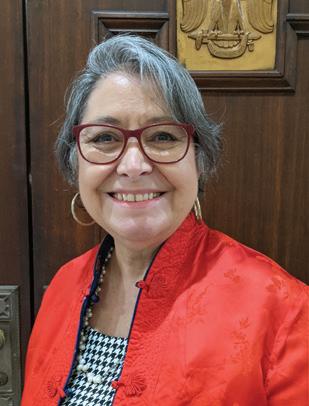
Dr. Isolete De Almeida
Art, Graphic Design and Art History
1983 BS, Art
1985 MS, Industrial Arts Education
1994 Ed.D., Curriculum and Instruction
Distinguished Alum
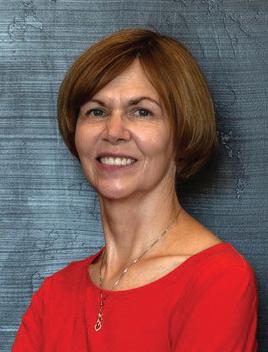
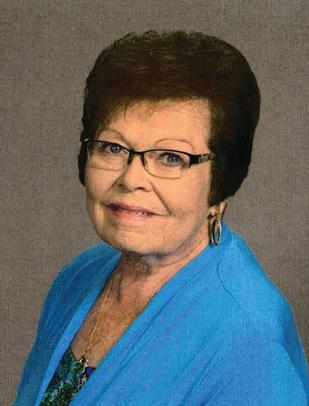
Dr. Karen Bintz
Chemistry
1986 MS, Chemistry
1992 Ph.D., Chemistry
Distinguished Alum
Connie Stiegler
Communication Sciences and Disorders
1967 BS, Speech
Distinguished Alum
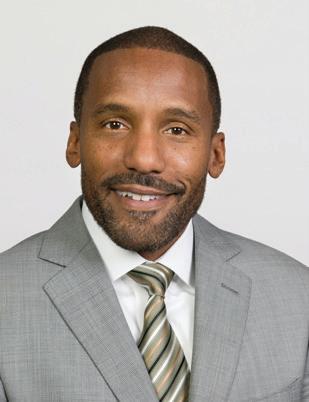
Derric Driver
Computer Science
1989 BS, Computer Science
Distinguished Alum
Patricia Walker
Boone Pickens School of Geology
1984 BS, Geology
1986 MS, Geology
Distinguished Alum
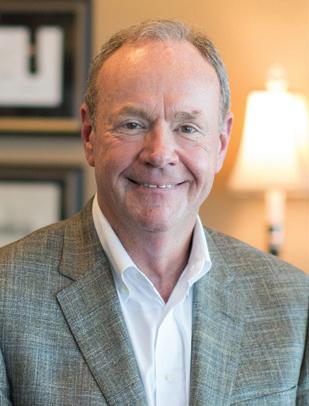
David Littlefield
English
1975 BA, English
Distinguished Alum
Kimberly Summe
History
1990 BA, History
Distinguished Alum
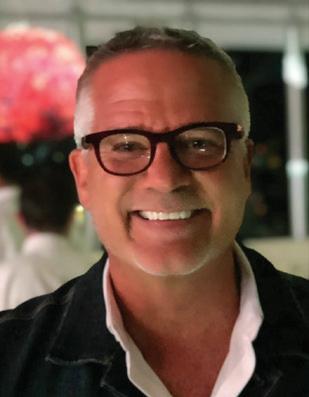
Philip Erdoes
Integrative Biology
1985 BS, Biology/Biomedicine
Hall of Fame
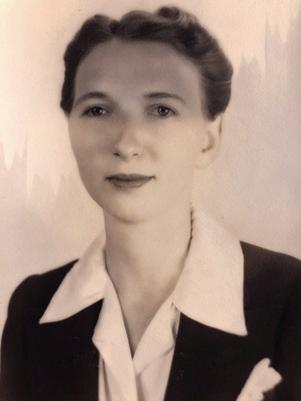
Helen Freudenberger
Holmes
English
1936 BS, English
Distinguished Alum — Posthumous
Cathy Schillinger
Languages and Literatures
1997 BA, German
2003 MBA
Distinguished Alum
James Cooper
English
2011 MS, English
Rising Star
Tracy Burris
Geography
1991 BS, Geography
Distinguished Alum
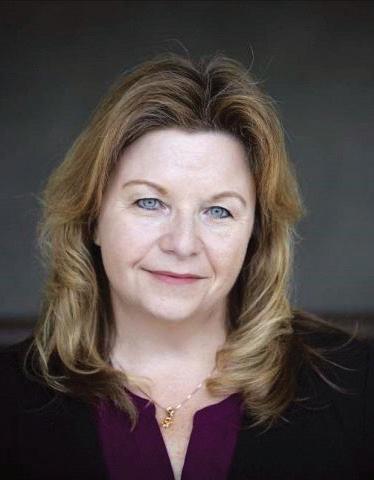
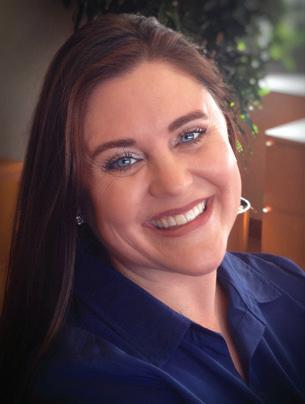
Charlene Leubecker
Mathematics
1987 BS, Computer Science BS, Math
Distinguished Alum
Brooke Williams
School of Media and Strategic Communications
1998 BA, Journalism and Broadcasting
Distinguished Alum
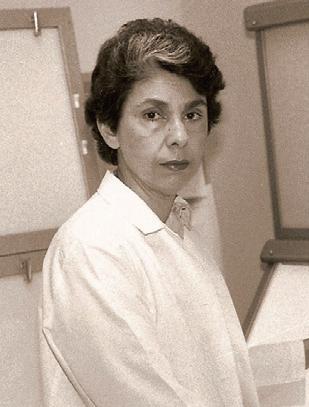
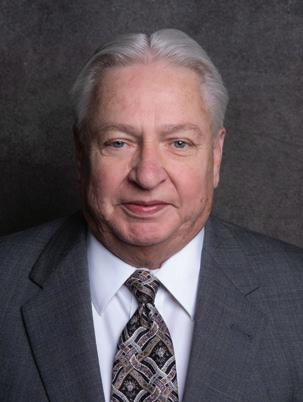
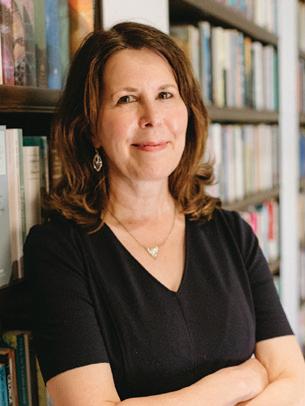
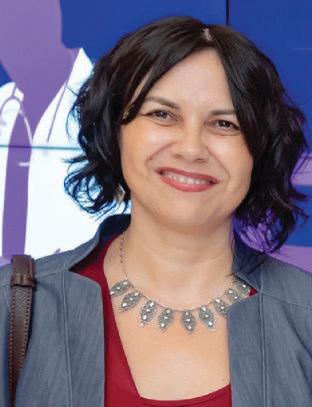
Dr. Helen Ramey
Microbiology and Molecular Genetics
1956 BS, General Science
Distinguished Alum
Dr. Robert Henry
Greenwood School of Music
1972 BS, Music
Distinguished Alum
Dr. Kathleen Laster
Psychology
1977 BS, Speech Communication
1995 MS, Community Counseling
Distinguished Alum
Dr. Audrey Bilger
Philosophy
1982 BA, Philosophy
Distinguished Alum
Col. Teresa Parker
ROTC, Aerospace Studies (Air Force)
1979 BS, Economics
Distinguished Alum
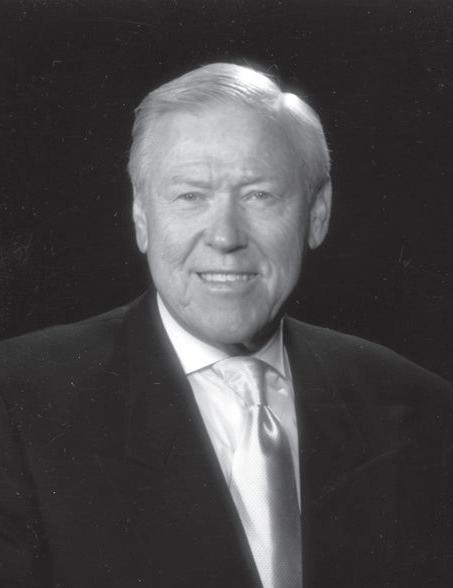
Dr. Larson Keso
ROTC, Military Science (Army)
1953 BS, Pre-Med
Distinguished Alum
Dr. Ramona Gaza
Physics
2004 Ph.D., Physics
Distinguished Alum
Dr. Marty Matlock
Plant Biology, Ecology and Evolution
1984 BS, Agronomy
1989 MS, Botany
1996 Ph.D., Agricultural Engineering
Distinguished Alum
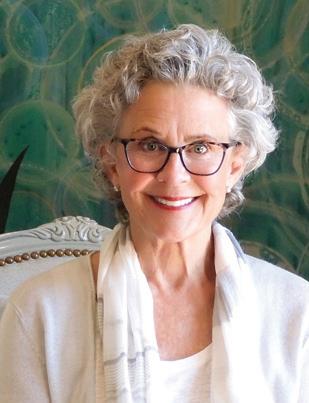
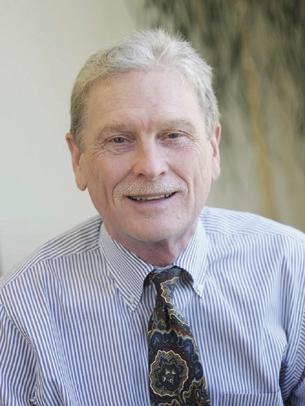
Lerri Cooper
Sociology
1976 BA, Sociology
Distinguished Alum
Marsha Williams
Political Science
1971 BS, Political Science
Distinguished Alum
Dr. Tim Coburn
Statistics
1975 MS, Statistics
1980 Ph.D., Statistics
Distinguished Alum
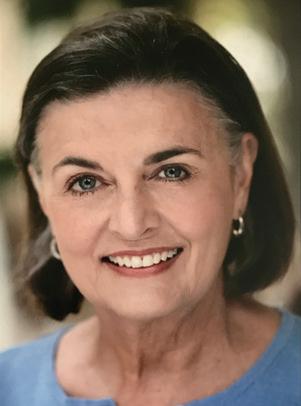
Jane Willingham
Theatre
1968 BA, Speech
Distinguished Alum
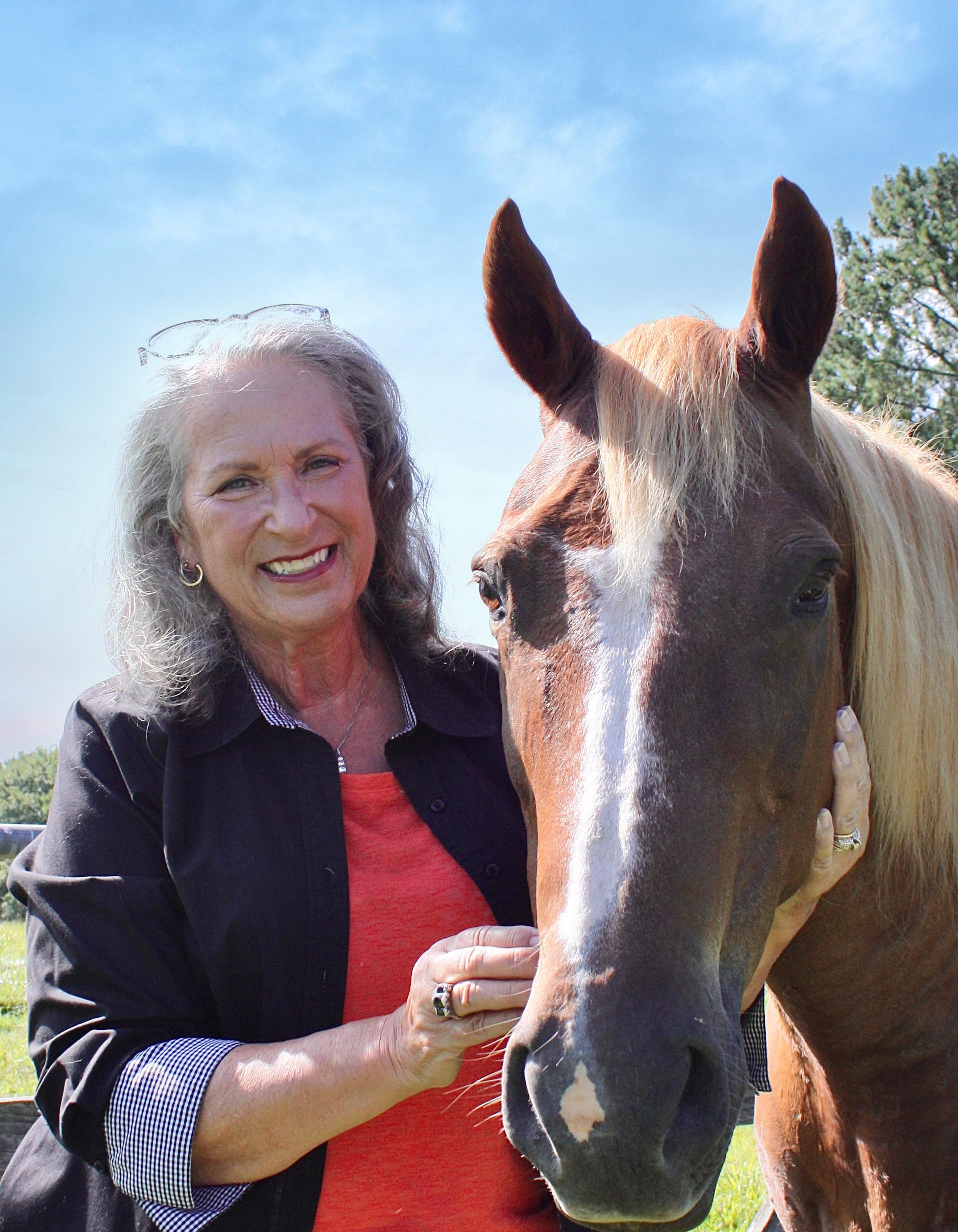
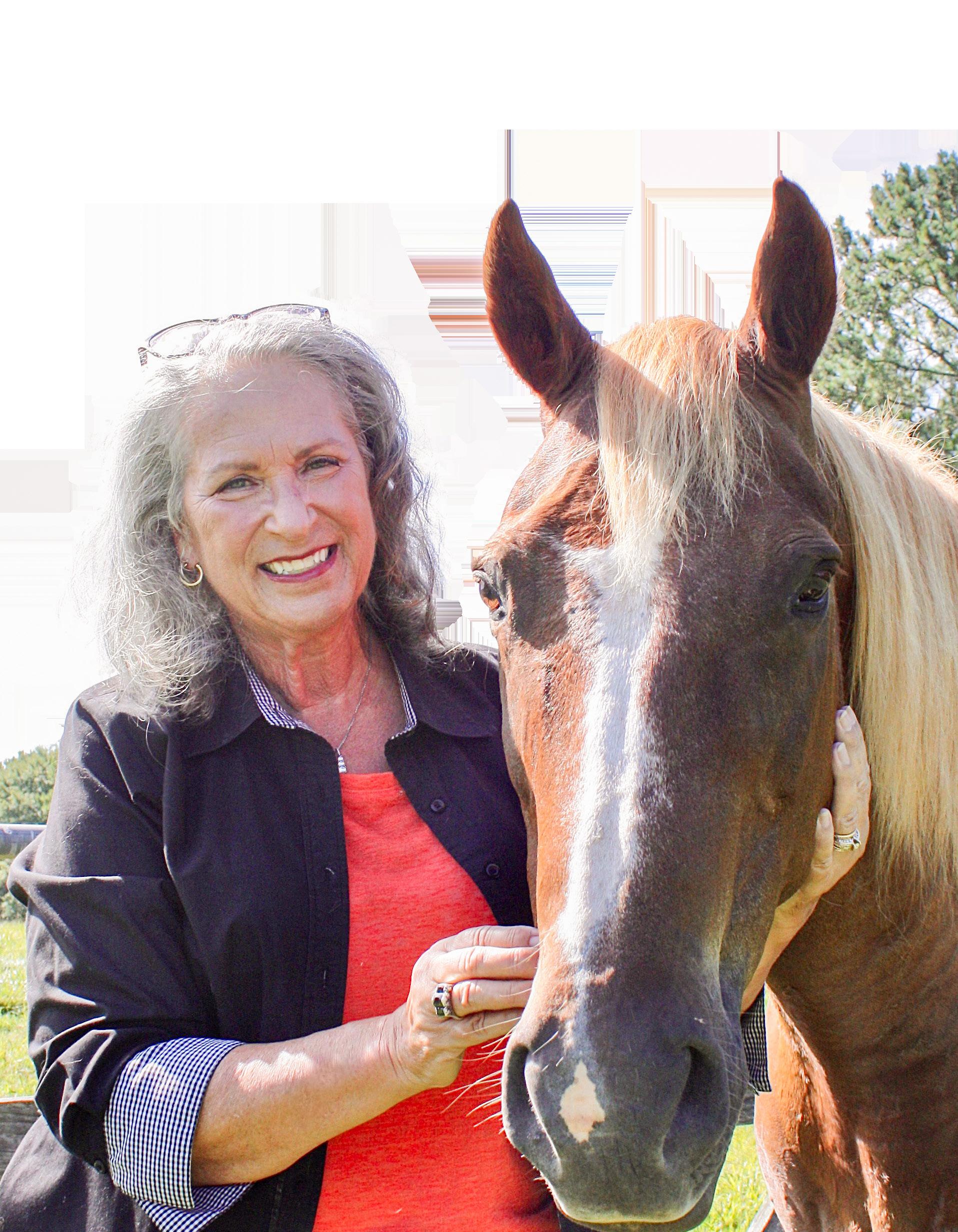
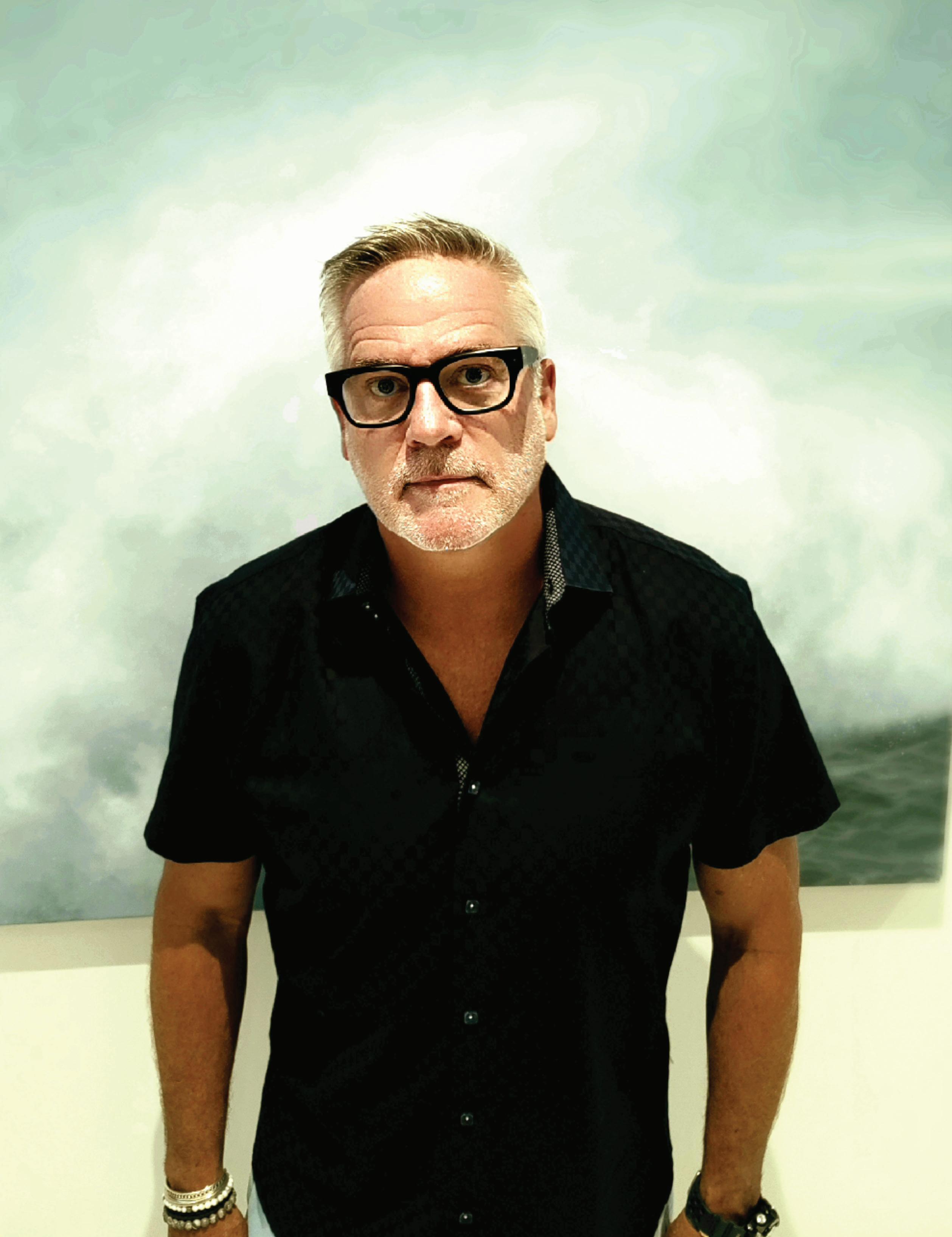
Philip Erdoes is the lone inductee into the College of Arts and Sciences Hall of Fame for 2021.
“Philip is richly deserving of this honor,” said Glen Krutz, dean of the College of Arts and Sciences. “When you read the criteria for the CAS Hall of Fame, it sounds like a description of him. He embodies the qualities that make OSU an extraordinary place to grow. He demonstrates excellence and leadership in his career, and he makes significant contributions through distinguished service. We are so proud that he is part of the CAS family.”
Erdoes completed a 1985 biology/biomedicine degree in OSU’s Department of Integrative Biology, followed by a J.D. with honors from the University of Oklahoma College of Law and an MBA at Harvard Business School. He is also a member of the Sigma Nu Fraternity.
Today, he is CEO of the New Traditionalists, a U.S. furniture manufacturer, as well as chairman and CEO of Bear Cognition, a data analytics company. He is also managing partner of Last Rodeo Studios, a film production and investment entity, and Bear Ventures, which invests in a broad range of industries, including tech, manufacturing, design, media, analytics and logistics. He serves on the board of directors of AlefEdge (a MEC company), the national board of TEDx, and the Dean’s Advisory Board for Harvard Business School. He is also a member of the Council on Foreign Relations.
The Erdoes family regularly contributes to children’s charities, including Fabretto Children’s Foundation, UNICEF and Robin Hood, a New Yorkbased anti-poverty organization. Importantly, Erdoes and his brother – Peter, a 1982 marketing
alumnus whom Philip describes as “the loud dude at the game” – have established an ongoing scholarship fund for the OSU-OKC President’s Leadership Council.
“The support given by Philip Erdoes has had a monumental impact on the students of OSU,” said Christina Troxtell, who administers the scholarship as director of student engagement at OSU-OKC. “It has allowed our students the opportunity to focus on their education. These students have an opportunity to be active in their classes and be involved in the community. In a turbulent time, this generosity has greatly reduced the financial stress and burdens faced by many of our students during the pandemic. It has been amazing to see the transition of our students from brand-new college students to campus leaders.”
The Erdoes brothers grew up in a workingclass Oklahoma City neighborhood, where they graduated from Northeast High School. It was that upbringing that led to their interest in community efforts that make a difference in the lives of lowerincome students.
“We grew up without much, so we totally understand the financial struggle college can be,” Philip Erdoes said. “We want to help those with huge potential who just need that extra lift. We figured if we could help alleviate that struggle for a set of special students, we should. Or, as I like to say, ‘Play offense, or don’t play.’”
The scholarship recognizes outstanding students who demonstrate talent and distinguished achievement in leadership, citizenship, service and communication with a full tuition waiver for up to 15 credit hours for a full school year.
“Our biggest hope is that these kids go on and do great things and then turn around and help the next generation,” Philip Erdoes said. “Break one cycle, create another. Reach out and help. It’s easy. It’s simple. Show people what OSU really means. Cowboy up!”
Philip and his wife, Mary, CEO of JPMorgan Asset and Wealth Management, live in New York City with their three daughters, Mia (18), Morgan (17), and Mason (14). Peter and his wife, Kim, serve on the OSU Foundation Board of Governors. Philip’s niece, Erin, and nephew, Dirk, both attend OSU.
Sarah Hoyt’s scholarship changed the course of her life — now she wants to do the same for future theatre students
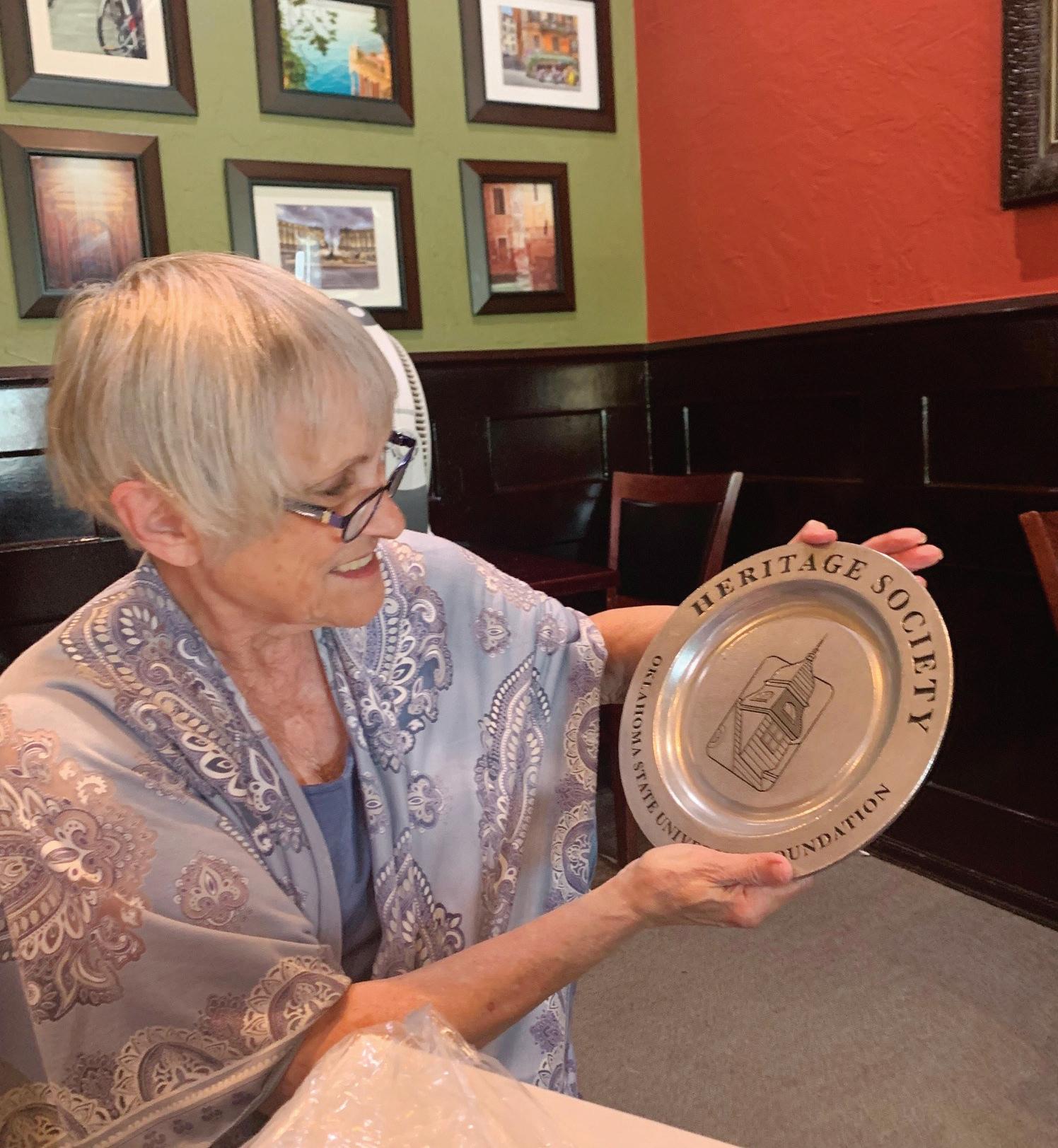
Theatre has given Sarah Hoyt so much in her life. Now the 1966 alumna is looking forward to giving future thespians the same opportunities she was afforded by creating the Sarah K. Hoyt Endowed Scholarship in Theatre.
Hoyt’s interest in theatre and performing started before she was even in school. She grew up as the only girl in her neighborhood in the Detroit suburb of Livonia, Michigan. She wasn’t allowed to play with the boys there, so she built her own world using her imagination.
“I made stories that I acted out with my puppets, and then I had paper dolls and I drew and painted on them to design their clothes,” Hoyt said. “I had a dollhouse that I redecorated over and over again with the sofas, chairs, lamps and other things I’d cut out of the Sears catalog.”
Turns out Hoyt was cultivating her lifelong love for theatre and getting her first taste of performance and costume and set design.
When other little girls moved into the neighborhood, Hoyt gladly welcomed them into her homegrown theater. Together, they expanded on what she had done with puppets and dolls to put on skits that mimicked the soap operas their moms listened to on the radio.
She earned her first principal role in kindergarten.
“I got to play the fairy godmother in Cinderella , and that was a lot of fun, getting to go around and sing her songs,” she said.
Throughout her early childhood, the lure of the stage grew. She was drawn by the endless possibilities as well as the lessons that scripts and performances presented. She jumped at the chance to be in drama class at Harding High School.
“There’s always something to learn from the script that you’re reading,” she said. “There are so many new things you’re exposed to. You are constantly learning and doing something with good company and good guidance.”
Much of what she learned had application away from the stage.
“Learning a role can show you that your emotions are OK. It’s OK to be sad or to be angry … as long as you realize what you do with those emotions,” Hoyt said. “Theatre teaches you that for every wrongdoing, you get payback, and that can be an important lesson.”
Hoyt was set to attend the University of Oklahoma once she graduated. That was until her performance as Lady Thiang in The King and I pulled back the curtain on a life-changing opportunity.
In the audience was Vivia Locke, a member of Oklahoma State University’s theatre faculty. Locke offered Hoyt a full scholarship to OSU one day after the performance.
“We left the next week to enroll, and I got to chat with Ms. Locke about my responsibilities and what was expected of me,” Hoyt said.
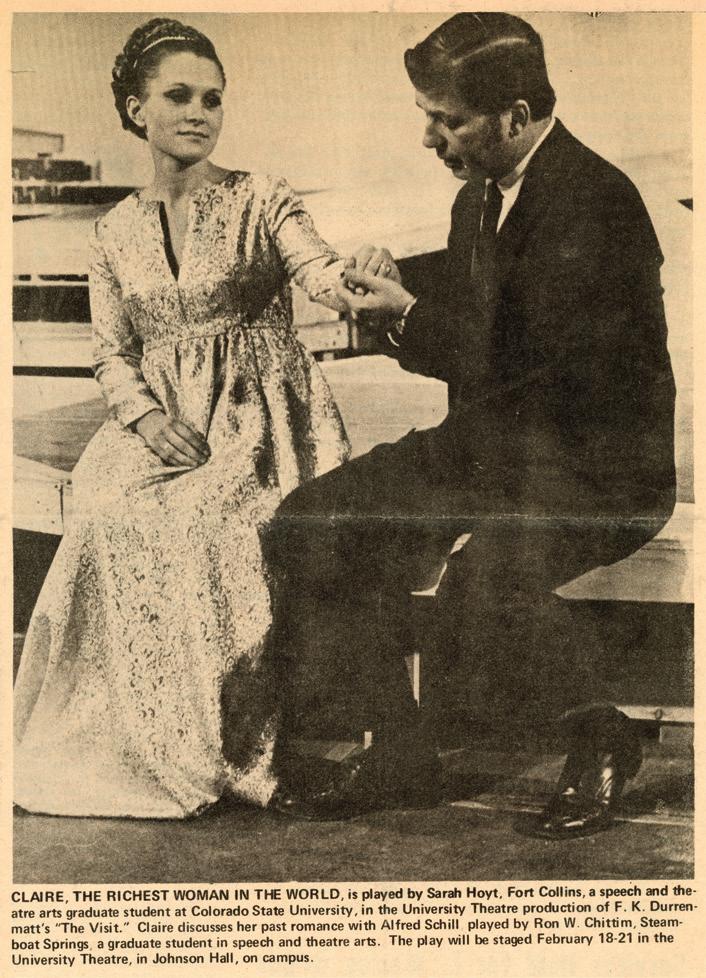
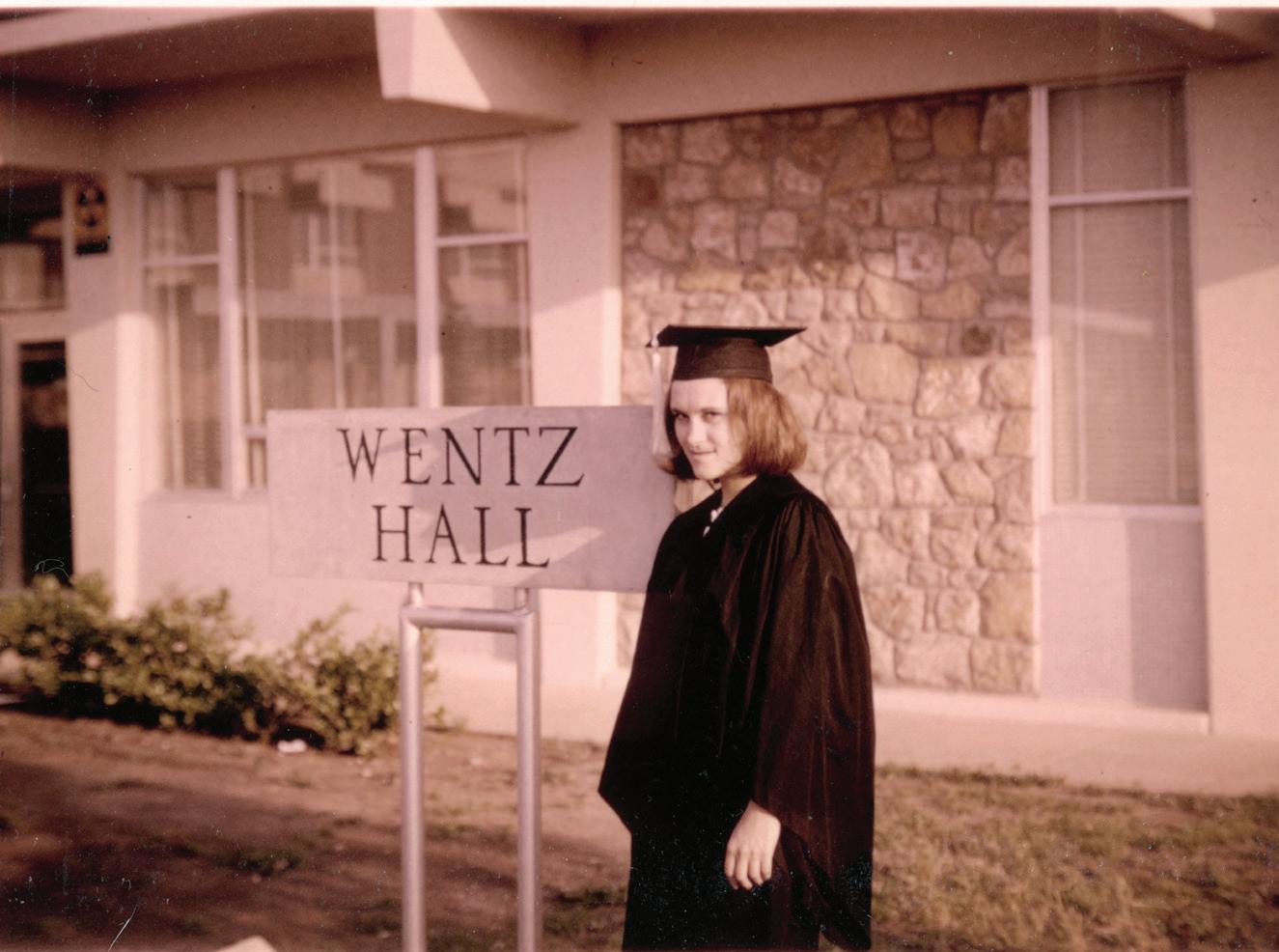
Locke became her mentor and was central to Hoyt’s experience at OSU. As a senior, Hoyt directed a production of Everyman at St. Andrew’s Episcopal Church. It was at one of the rehearsals that Locke gave Hoyt advice that she still remembers decades later.
“Vivia said that the big secret of theatre is to just keep it simple,” Hoyt explained.
She carried that advice through her graduation in 1966 and her master’s degree at Colorado State University.
She returned to Oklahoma in 1977 and taught English and theatre at high schools in Perry and Oklahoma City.
Theatre taught her the importance of understanding the history behind whatever book, play, poem or any other piece students are reading. This concept made her a better English teacher, she said, recalling a specific student performance of Riders to the Sea . The one-act play is set in Northern Ireland, and she had her students studying Celtic culture and early 1900s history.
“I taught the kids the correct accent, the mourning process in Celtic culture and all the important aspects from that time period that needed to be portrayed correctly,” Hoyt said. “Theatre is a great way for students to understand the importance of learning about the world around them.”
Throughout her teaching career, Hoyt used theatre to positively shape her students’ experiences and lives by allowing them to express their creativity through having fun with their own ideas.
“I came in one night for rehearsal and they were fooling around as characters from Star Trek,” she said. “They were playing Captain Kirk, Mr. Spock, Sulu and a few other characters from the show. It was very creative, and they were having fun and enjoying what they were doing, which is what it’s all about.”
Apart from inspiring creativity and learning, Hoyt made sure to prepare her students for the work that life would require of them.
Hoyt retired in 2006 after 34 years of teaching. She enjoyed working with so many incredible students but knew that many of them were not able to pursue theatre into college because of financial circumstances.
“There are a lot of kids out there who were just like me,” she said, adding that Locke changed her life’s trajectory by offering her a scholarship. “They don’t have the opportunity to continue on with theatre financially, so when I had the chance to create this scholarship, there was really no choice, I just knew I was going to do it.”
Hoyt’s scholarship will be funded through her estate, but she is already donating additional money to the fund and will get to meet the first recipient of her scholarship in the fall of 2022.
Hoyt hopes this scholarship will be transformative for the OSU Department of Theatre and allow the recipients to do what they are passionate about.
“My goal isn’t for them to become the next Helen Mirren or Lin-Manuel Miranda,” she said. “I just want them to be able to choose their own path. Everybody needs that opportunity.”
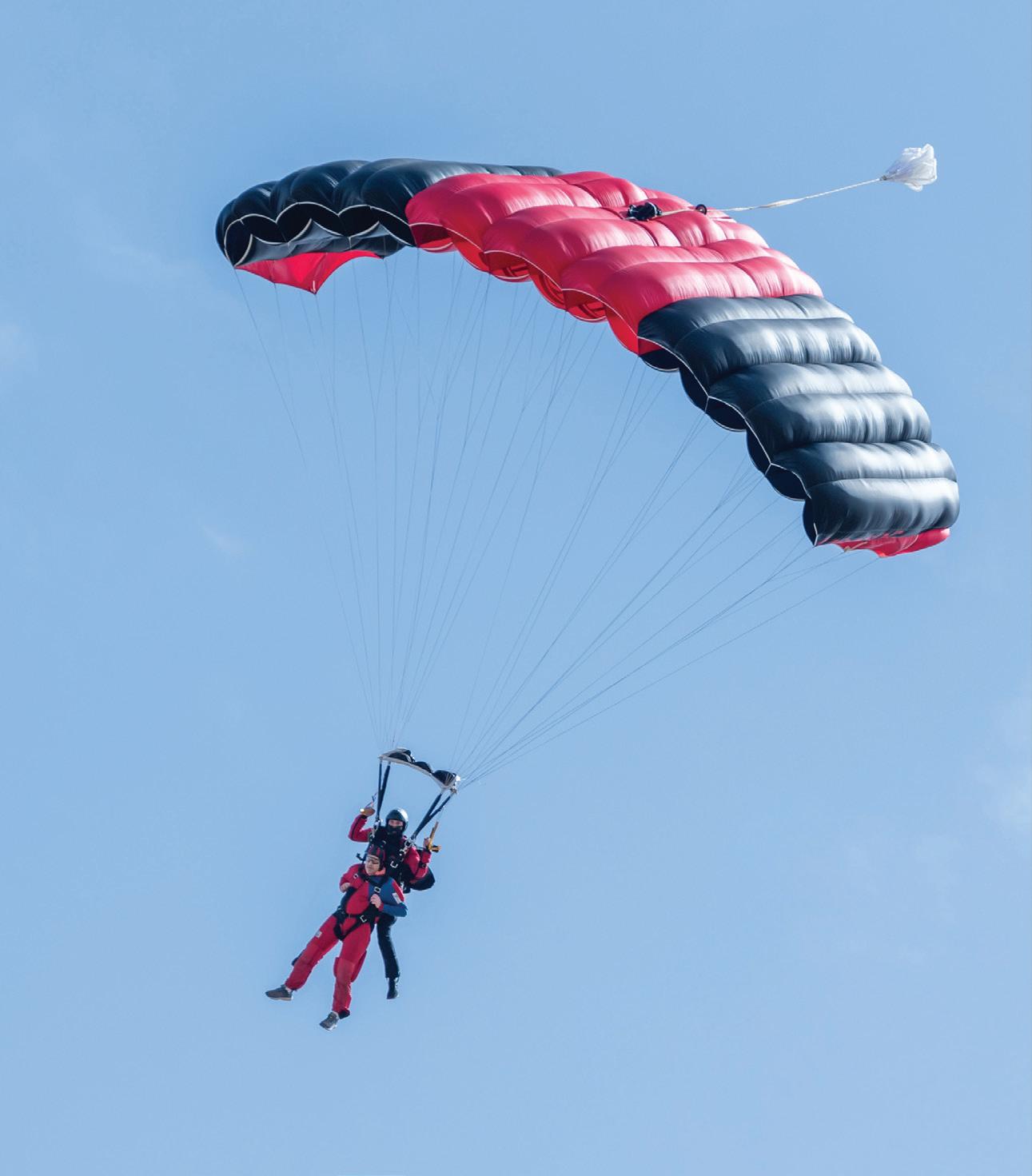
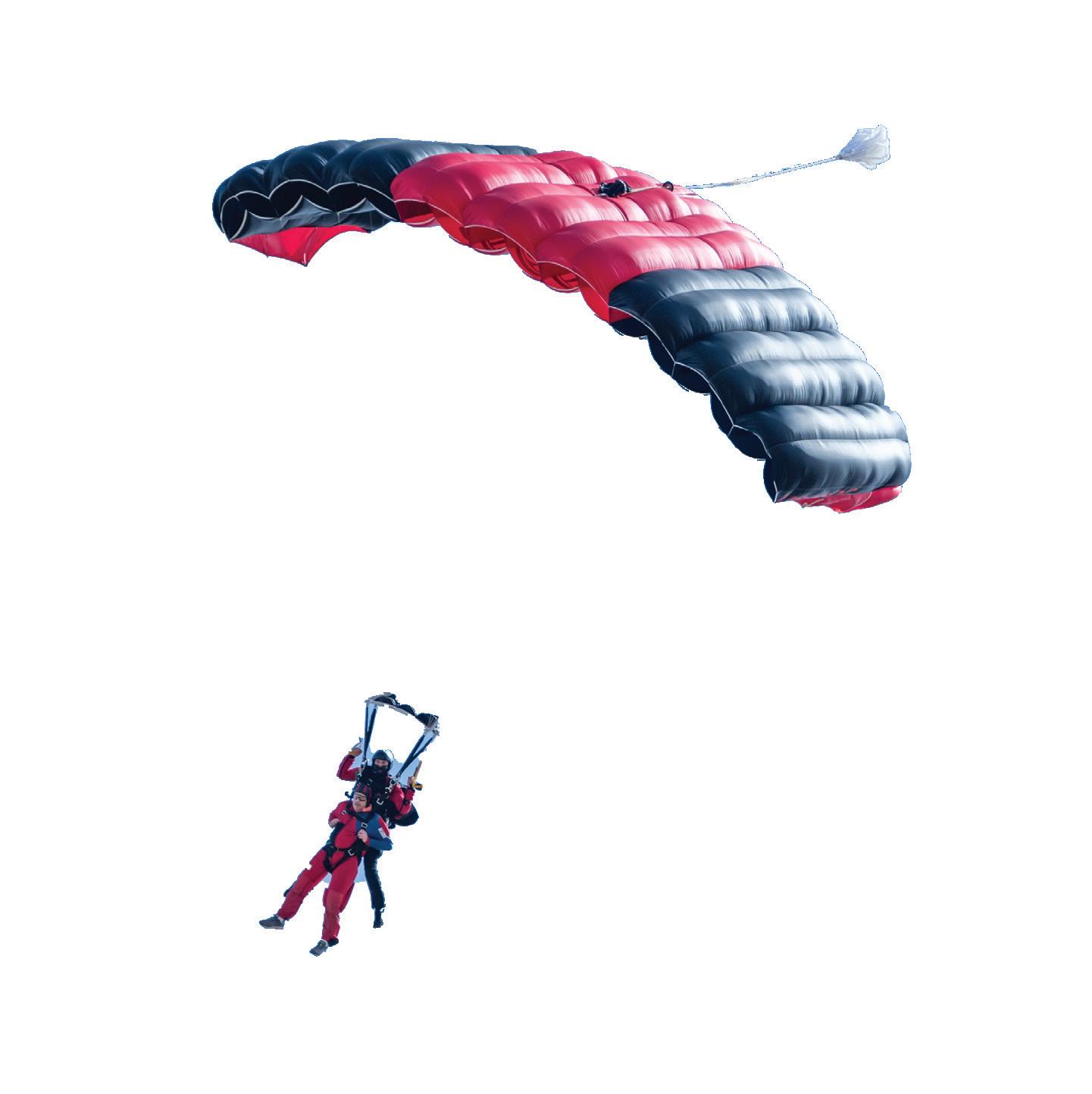
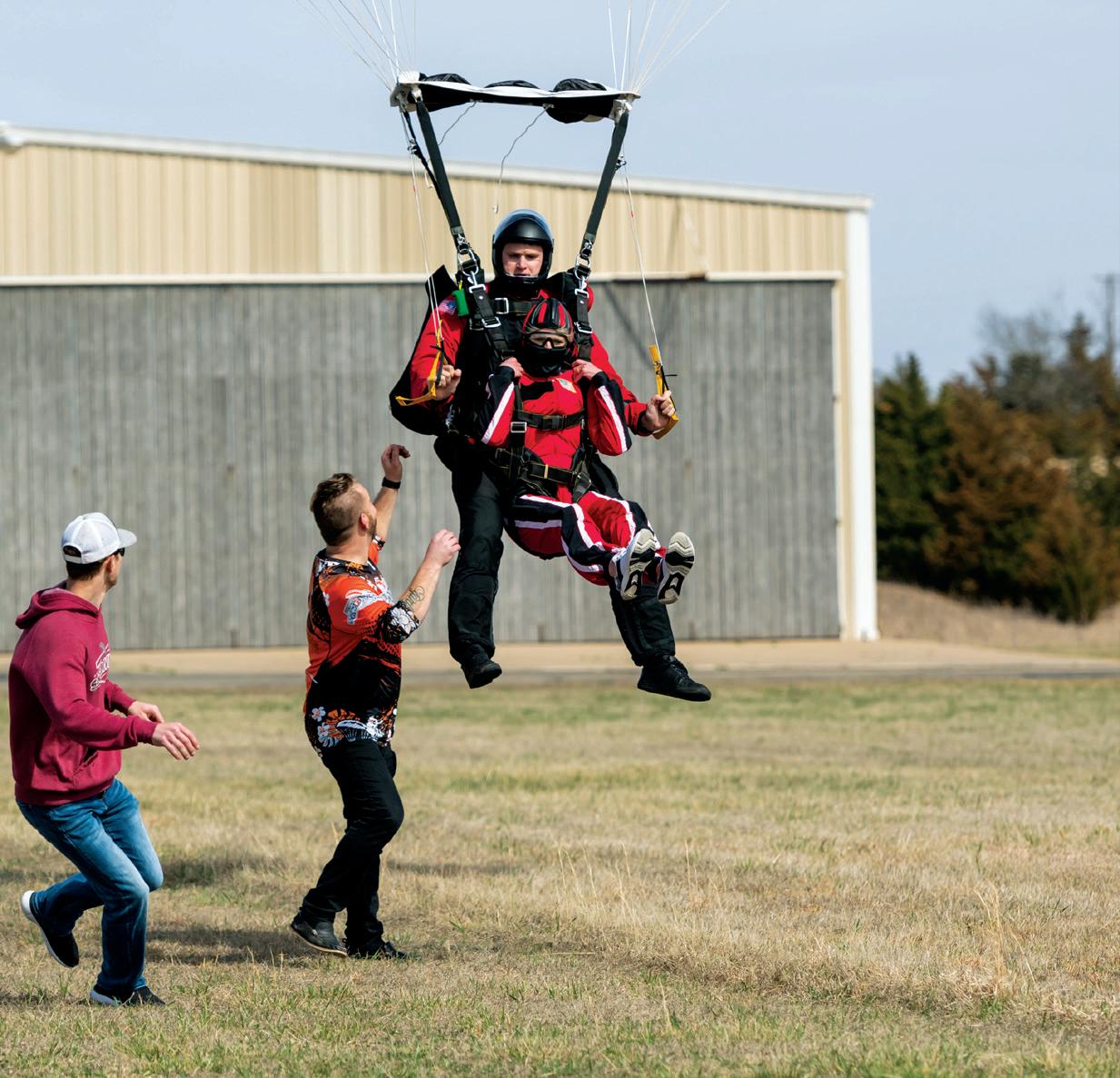
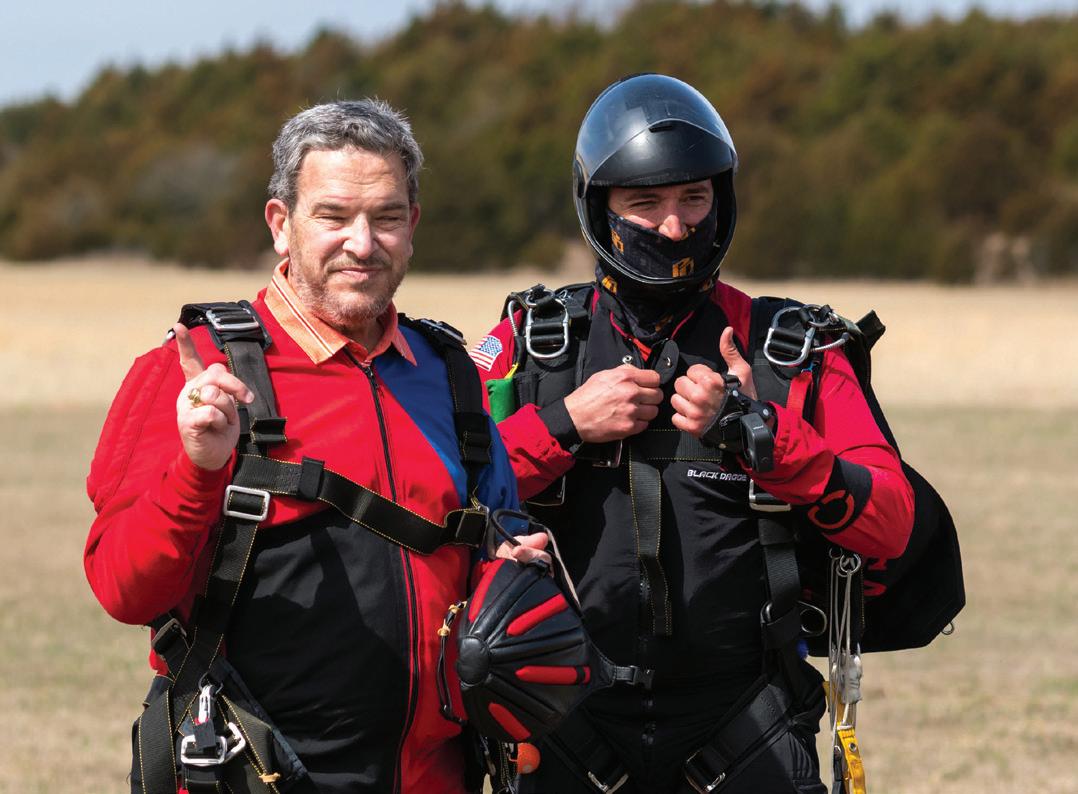
CAS Dean Glen Krutz performed a tandem skydive March 14 with the OSU ROTC Cowboy Battalion, Army Black Daggers, OSU leaders and OSU alumni. The event was a show of appreciation for those who support the Army ROTC program, advocating for the value of military service. To watch a short video about the day, visit okla.st/deanskydive.
Biology majors Kate Kouplen and Kayli Nail received honorable mentions in the 2021 Udall Scholarship competition, which recognizes college students who demonstrate outstanding leadership, public service and commitment to issues related to Native American nations or the environment. Both Kouplen (Delaware Tribe) and Nail (Chickasaw Nation) received their honors in Native health care.
OSU’s Ethics Bowl Team, sponsored by the Department of Philosophy, competed in the Association for Practical and Professional Ethics’ (APPE) Intercollegiate Ethics Bowl in February, making it to the quarterfinals alongside teams from Harvard, Stanford, West Point and other prestigious schools. This was the team’s second appearance at nationals in its five-year history.
Dr. Matthew Cabeen of the Department of Microbiology and Molecular Genetics was awarded $1.7 million by the National Institutes of Health to study how the bacterium Bacillus subtilis senses and responds to stress. The five-year grant will enable Cabeen and his team to gain “a bottom-to-top understanding of environmental stress-sensing, from the sensor proteins in these complexes to the fitness and survival of a whole cell population,” he said.
Dr. Jimmie Weaver from the Department of Chemistry received a five-year, $1.8 million grant from the National Institutes of Health in February, becoming one of only six people in Oklahoma to ever receive the award. Weaver’s research area is organic synthesis, and the grant will finance his research group over the next five years by supporting about 3,200 hours of undergraduate research, 20 years of graduate student salaries and tuition and other costs associated with conducting research.
The Department of History and the Edmon Low Library hosted a first-of-its-kind monthly live book talk series through 2020-21 titled, “Why It Matters: Talks on the American Past.” Each of the five books was published in 2020 by an OSU history professor, four of whom were first-time authors. In the field of history, “books are the gold standard for scholarship,” said Dr. Sarah Griswold, history professor and the series’ organizer. “They take years to do, so we wanted to celebrate them.”
Earlier this year, Department of Integrative Biology professor Dr. Elizabeth McCullagh helped relaunch the Gage database that she co-created in 2018, which addresses a lack of diversity on scientific panels. The site — gage.500womenscientists.org — is a resource for connecting underrepresented people in STEMM not only to each other, but also to journalists, conference organizers and others in need of expert opinion.
The Guthrie Scottish Rite of Freemasonry recently renewed its partnership with OSU’s Department of Communication Sciences and Disorders by donating $283,574 to the OSU Speech-Language-Hearing Clinic. The partnership began in 2018 when the Guthrie Scottish Rite Foundation moved its speech and language clinic operations to Stillwater’s campus and gave an initial $182,411 to the department.
146
CAS now has 146 majors and major options, including five degrees that are available completely online. The college recently added the online History and Sociology programs to the previously established options of Psychology, Computer Science and Multidisciplinary Studies. For a traditional degree, new majors are a BFA in acting, a BFA in musical theatre, a BA in American Sign Language and a BS in geophysics.
99%
Because CAS houses the core subjects, our faculty and staff truly serve the entire OSU system. For example, we had 29,000 general education enrollments from 13,500 unique students. That represents two-thirds of the OSU undergraduate student body. CAS gen ed enrollments included 4,096 new freshmen, which is 99 percent of OSU’s new freshman class.
$
13M
On average, CAS faculty secure about 220 grants per year, totaling $13 million for research, outreach and teaching.
5,882
With 5,882 students, CAS continues to be the largest college at OSU.
17
In 2020-2021, 11 of 52 Seniors of Significance and six of 22 Outstanding Seniors were CAS students.