CONNECT
The official magazine of the College of Arts and Sciences
ENHANCING INCLUSION
THE RENAMING OF MURRAY HALL IS JUST ONE STEP TO MAKE CAS AND OSU MORE WELCOMING

ENHANCING INCLUSION
THE RENAMING OF MURRAY HALL IS JUST ONE STEP TO MAKE CAS AND OSU MORE WELCOMING
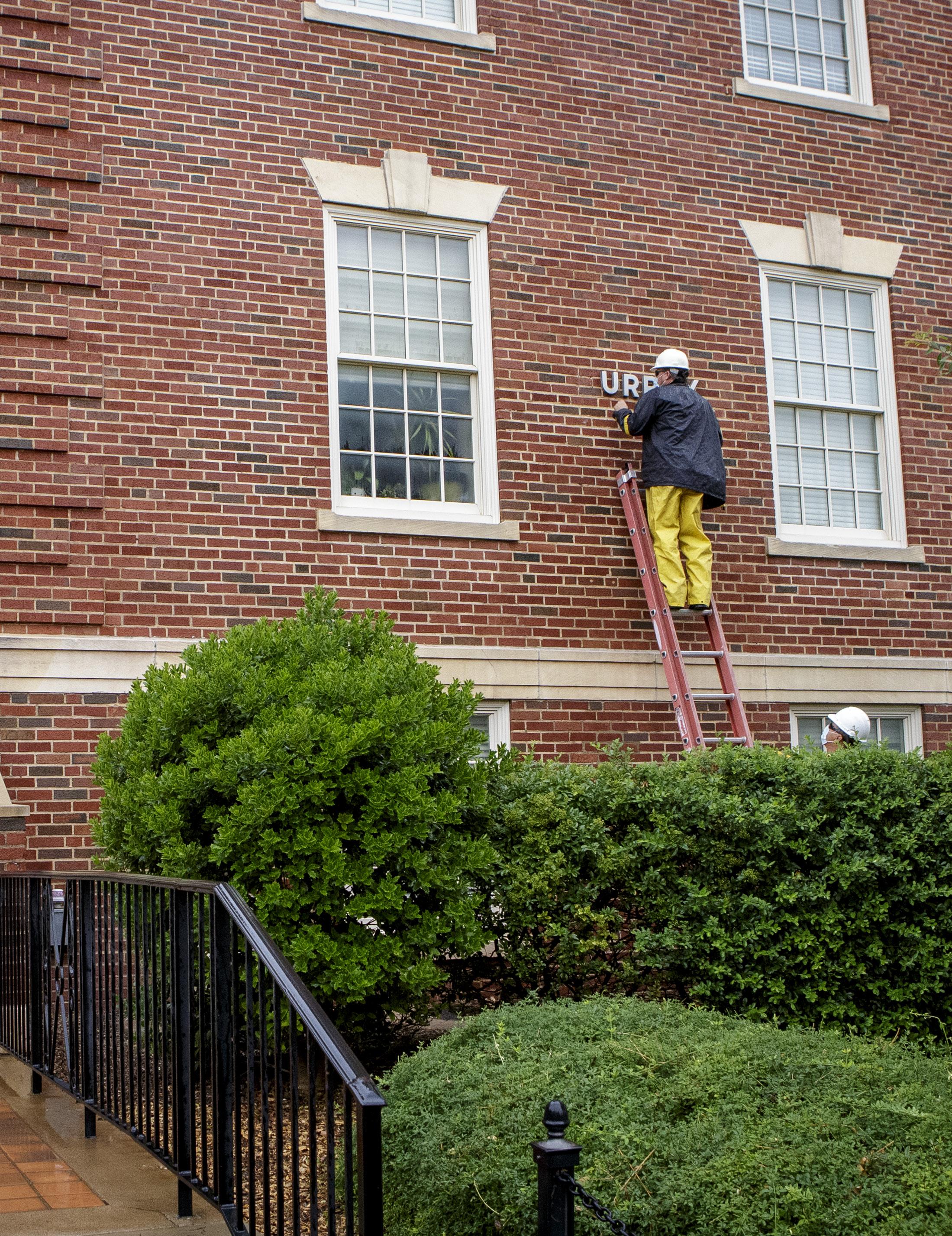
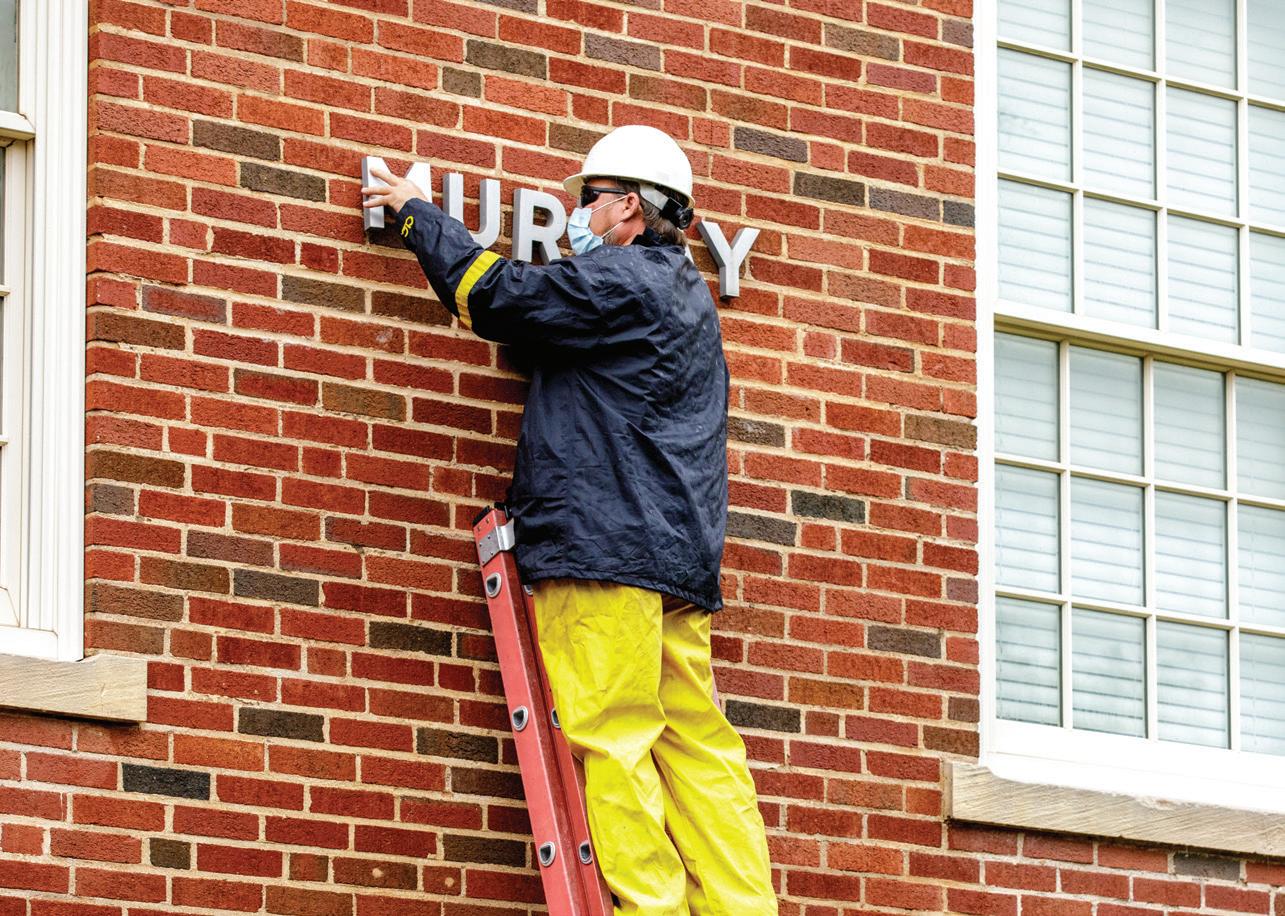
Work to “un-name” Murray and North Murray halls began the day the Regents approved the change. OSU and CAS are striving to make our campus more diverse and inclusive. (Cover photo by Gary Lawson)
the Tulsa Race Massacre
OSU students and faculty are using a variety of methods to commemorate and tell the story of the 1921 tragedy.
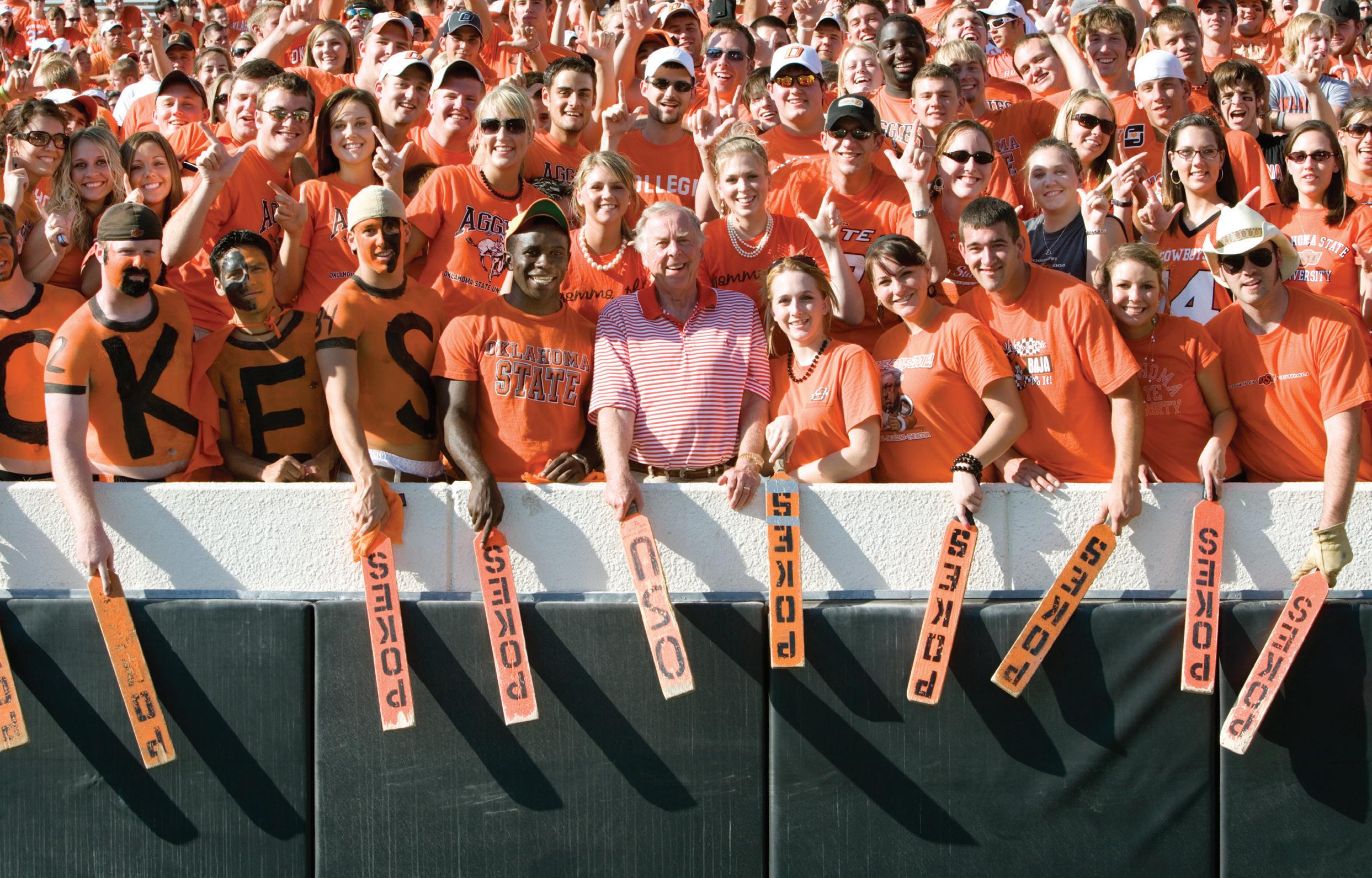
The College of Arts and Sciences had a special relationship with Boone Pickens, and we honor and remember him in this issue.
Three CAS freshmen are new Oklahoma State Scholar Society fellows.
email: eeo@okstate.edu has been designated to handle inquiries regarding non-discrimination policies. Any person (student, faculty, or staff) who believes that discriminatory practices have been engaged in based on gender may discuss his or her concerns and file informal or formal complaints of possible violations of Title IX with OSU’s Title IX Coordinator 405-744-9154. This publication, issued by Oklahoma State University as authorized by the College of Arts and Sciences, was printed by Modern Litho, at a cost of $4,492/4,851/ October 2020/job #8426. College of Arts and Sciences cas.okstate.edu
COORDINATOR OF COMMUNICATIONS
Jacob Longan ’05, ’13
EDITOR
Dorothy L. Pugh ’83
ART DIRECTOR
Valerie C. Kisling
DESIGN
Dave Malec
PHOTOGRAPHERS
Gary Lawson ’83
Phil Shockley
Jason Wallace ’03
WRITERS
Kendra Carlson ’01 , Elizabeth Gosney, Harrison Hill, Samantha Homann ’ 19, Lonna Freshley ’09 , Zach Kluver, Kyle Stringer
COLLEGE OF ARTS AND SCIENCES
DEAN
Glen S. Krutz
ASSISTANT DEAN/OUTREACH
Bobbi Kay Lewis ’93, ’03
SENIOR DIRECTOR OF DEVELOPMENT
Laura Ketchum
YEARS INDICATE OSU CAS GRADUATES
At this time last year, I was only a couple of months into my tenure as dean. Even then, I knew I had made the right decision in coming to both CAS and OSU. What I didn’t know was how many unique challenges 2020 would bring, due in large part to the COVID-19 pandemic. I’m so proud of the way our leadership, faculty, staff and students have responded to this once-in-a-lifetime situation.
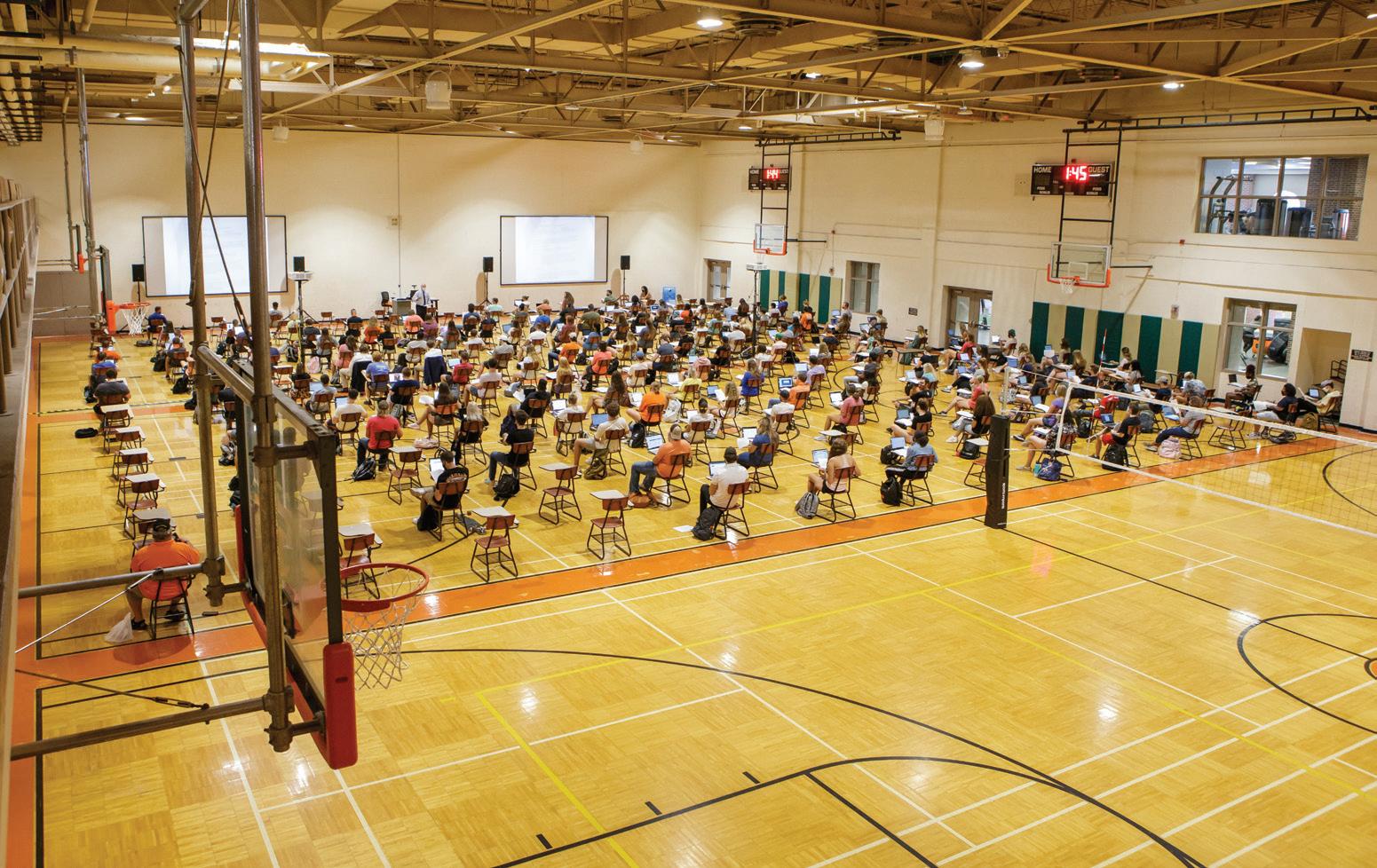
Last March, we transitioned entirely to online classes after spring break, allowing students to continue learning from home and our faculty to continue their teaching and research on a campus that had plenty of room for social distancing. And it gave us time to think of creative ways to make it all work this semester, when most students have returned for face-to-face classes in rooms much larger than normal. Small classes are being held in large lecture halls, and large classes are in even bigger spaces such as indoor basketball courts.
We continue to offer high-quality virtual classes, and we now have a new program to extend such opportunities to an even broader audience. Cowboy Concurrent Online benefits high school students looking to get a jump-start on college. The program increases accessibility for general education credits through reduced cost and broadening beyond physical location. Rural Oklahomans can participate just as easily as those who live near community colleges and universities.
We have utilized funds from both the Puterbaugh Foundation Chair and the Dean’s Excellence Fund to get this program started, and we have almost 400 students from 55 of Oklahoma’s 77 counties enrolled in 25 sections in six courses.
That is just one way that we are fulfilling the land-grant mission. You can read about many other ways we are doing so in this magazine. And while I enjoy bragging about what our faculty, staff and students are doing, I know it wouldn’t be possible without your support. Thank you for all that you do to help us Connect, Achieve and Succeed!
Sincerely,
Glen S. Krutz, Ph.D. Dean, College of Arts and Sciences Professor of Political Science Puterbaugh Foundation Chair
OSU researchers may soon be able to detect COVID-19 in water at treatment facilities
The water flowing from your sinks, showers and even toilets may become a key part of monitoring the spread of COVID-19.
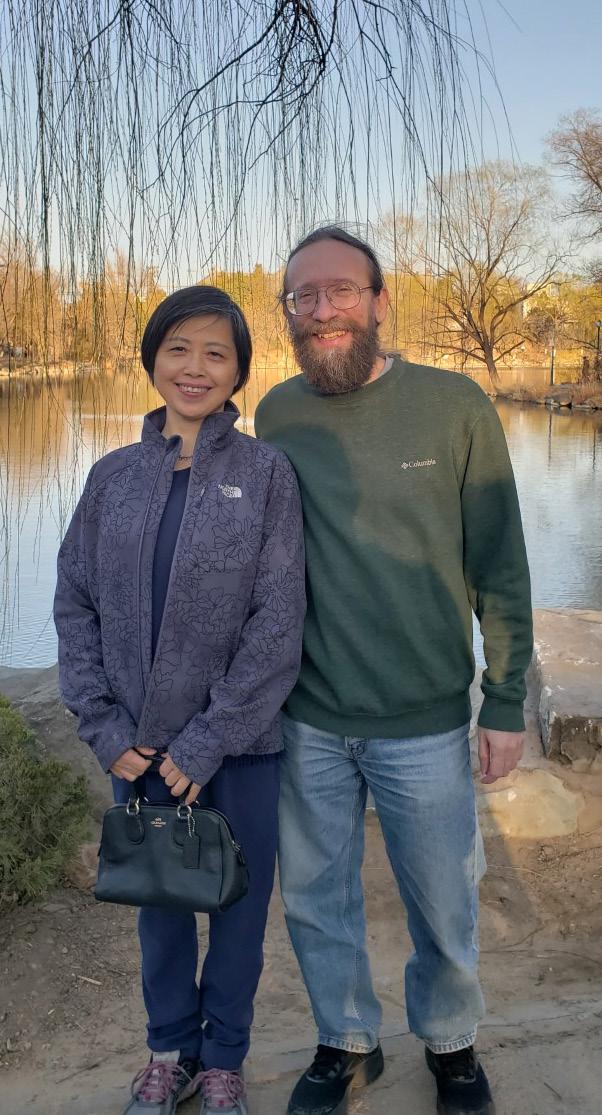
With a team of researchers, Dr. Wouter Hoff, an OSU professor of microbiology and molecular genetics, is working on a method to use wastewater in an early warning system for rising COVID-19 cases.
“The personal story is just a little bit too close for comfort,” Hoff said. “I had just finished a sabbatical leave partially in the Netherlands and partially in China.”
Hoff’s wife, Dr. Aihua Xie, a professor in OSU’s Department of Physics, is from China, and he has friends, family and collaborators there as well, he said.
“We were in Beijing and then in Shanghai, and we left Shanghai, maybe Jan. 7,” Hoff said. “So it was just before the pandemic exploded.
“Then I read this story, this proof of principle in a Dutch newspaper, and it had very clear promise.”
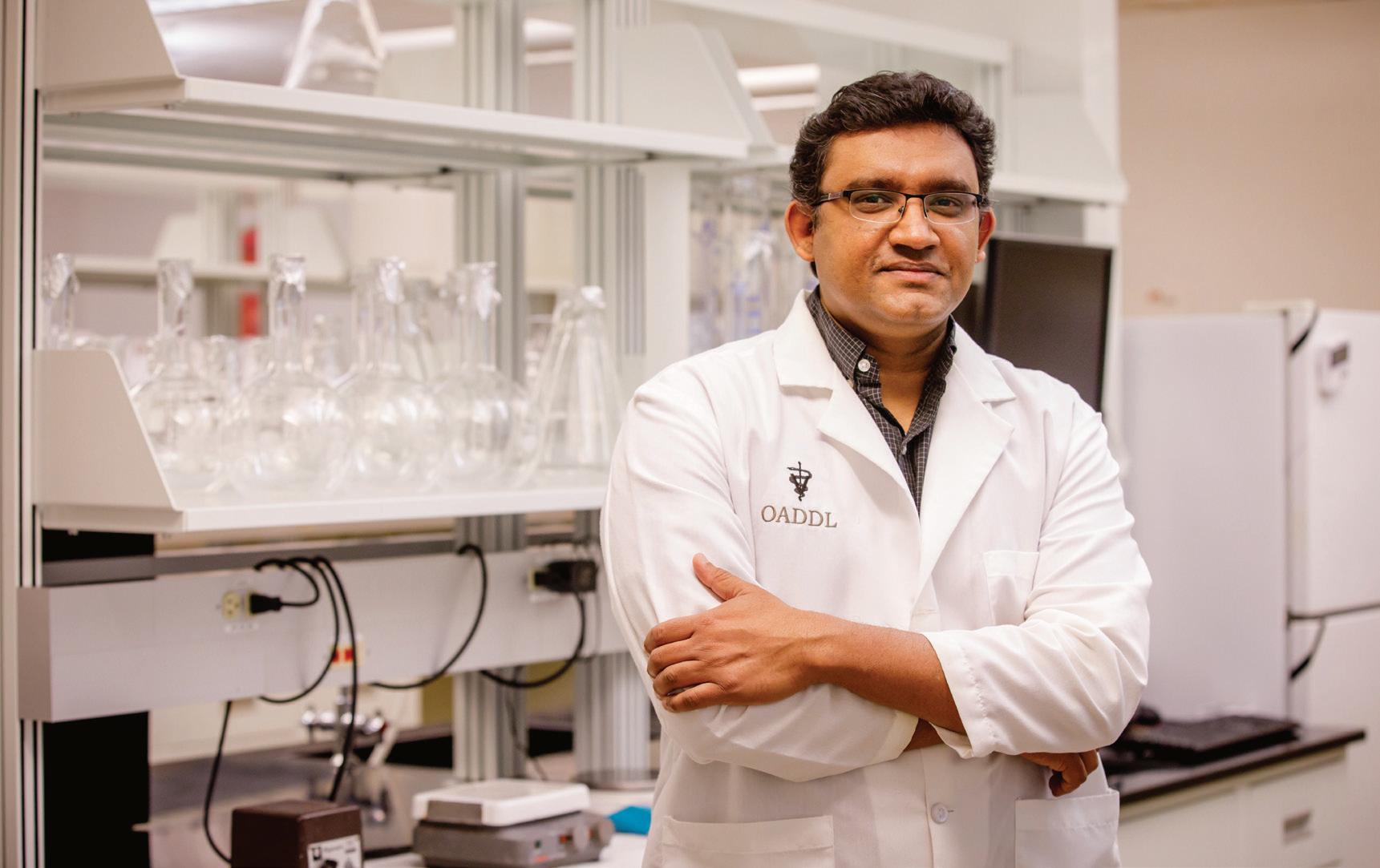
Hoff translated the story, which was focused on testing wastewater to monitor for viral loads, from Dutch into English and shared it with Dr. Akhilesh Ramachandran. Ramachandran is an associate professor in the Oklahoma Animal Disease Diagnostic Lab in the College of Veterinary Medicine and an expert in diagnostic microbiology. Together, they decided to try the idea here in Stillwater.
“In the Netherlands, they found that wastewater testing for the virus is very effective and it can also serve as an early indicator,” Hoff said.
Some people call this biosurveillance, Hoff said, but this method could be used to keep an eye on the level of other viruses like the flu.
“Before [people] develop symptoms, or maybe they’re asymptomatic, it looks like they’re still shedding the virus,” he said. “And everybody uses water and brushes their teeth and uses the bathroom. So it’s a continuous finger on the pulse of how many viruses are being shed.”
Wastewater treatment is a two-step process. Water that comes out the tap goes through a water purification plant beforehand and becomes wastewater after it is used.
“All of the wastewater from Stillwater, well, where does it go? We don’t just dump it in a river,” Hoff said. “Stillwater has a wastewater treatment plant where, through microbiology, there are processes to make that water safe to dump in the environment.”
Samples of that water could be regularly taken and tested for the presence of RNA molecules using very sensitive tools.
“One can measure wastewater for specific types of RNA,” Hoff said. “In this case, we would use the RNA from the coronavirus.
“I think the issues now are mainly technical. How does one get enough sensitivity? And how can one accurately convert a reading into how many virus molecules are in a gallon of water? And what does that mean for Stillwater?”
At the very least, the team knows trends can be measured, Hoff added. He was hoping to have the system working just before the fall semester began.
“We would then have some sort of baseline of what the current water load of virus particles is,” Hoff said. “And then one could keep an eye on it [for trends going up or down].”
Ramachandran is one of the leaders in Oklahoma’s COVID-19 testing efforts, so he is already familiar with the processes.
“There are no special tools,” Ramachandran said. “We will be using the same PCR protocols that we use for testing clinical samples.”
The only difference will be clinical samples usually have a higher concentration of virus, he added.
“Water samples will have to be filtered and concentrated to improve detection probability of viruses,” Ramachandran said. “Since we are already testing thousands of samples, a few additional water samples are not going to affect our workflow.”
This will be especially helpful to monitor COVID-19. The issue is in how the virus acts.
“If a virus is incredibly lethal, the risk that it spreads typically is pretty low because everybody dies and the virus dies out,” Hoff said. “But if the lethality is high enough to be a big problem, but not enough that it wipes out the whole village instantly, so to speak, infection starts. And if it’s highly infectious, then it’s the most dangerous.”
The last pandemic comparable to the current COVID-19 crisis was the Spanish flu. There is good news today compared to that outbreak, though.
Currently we are doing roughly 20 times better at controlling this virus than we did the Spanish flu, Hoff said.
“This wastewater testing is to hold on to those gains, basically, to keep the number of people who will get seriously sick or die of this virus as low as possible,” Hoff said. “We hope that this can be a warning system.”
Dr. Akhilesh Ramachandran, an associate professor in the Oklahoma Animal Disease Diagnostic Lab in the College of Veterinary Medicine.
The world changed drastically in 2020 in unprecedented ways, challenging students everywhere.
Gemma Schmidt was an Oklahoma State University freshman studying political science and Spanish when the virus hit. She was president of the CAS Freshman Student Council and was recently elected a freshman coordinator on the main CAS Student Council.
“I have a harder time retaining information and applying myself in my classes when learning online instead of in person. For the most part, I try to keep myself as busy as possible and keep an optimistic attitude when times get tough,” she said.
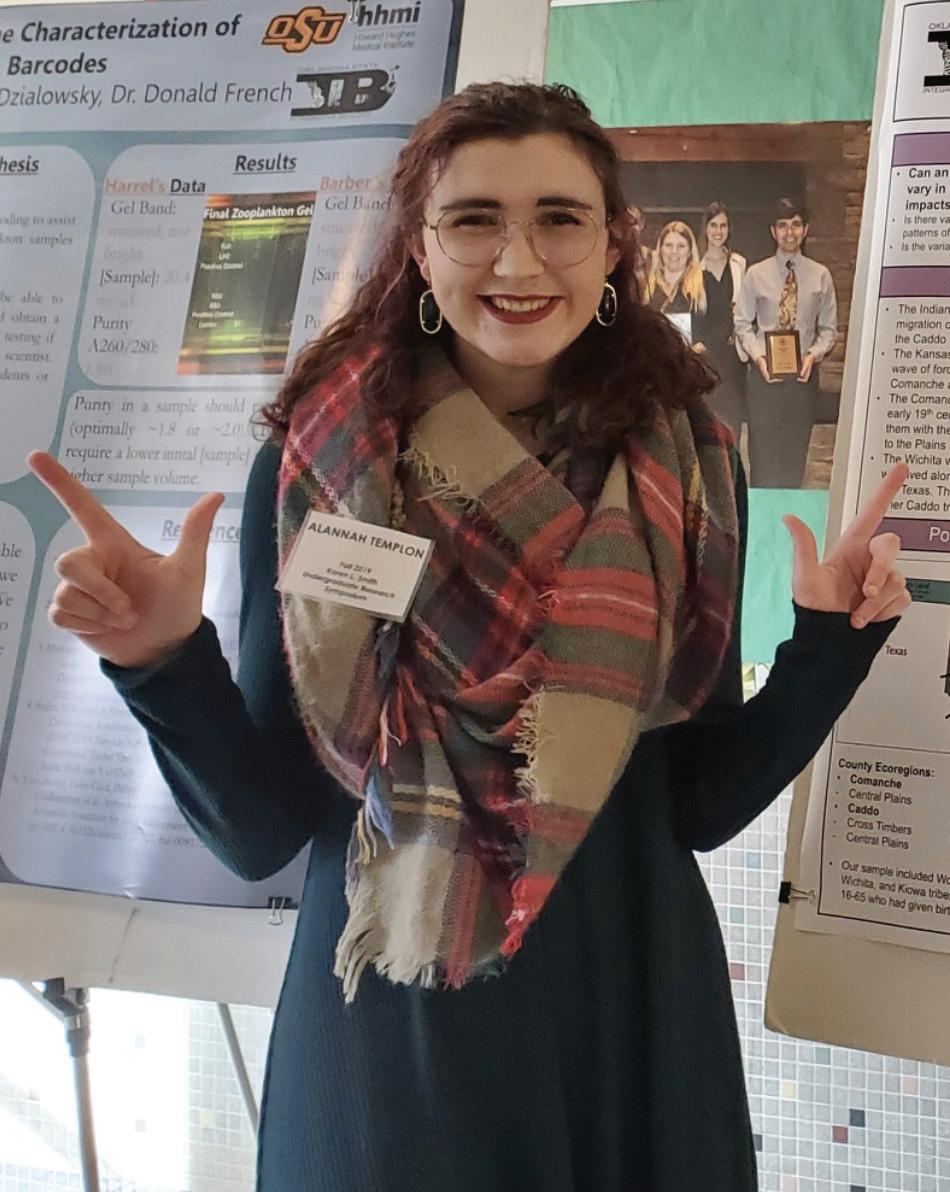
Alannah Templon was elected as CAS Student Council president during the chaos. Even though she found the transition to online classes difficult, she thanked her professors and teaching assistants for making the best of the situation. Templon was involved in research at both OSU and the University of Oklahoma last spring.
“Since my research at OSU is conducted entirely online, I have been able to continue my research during the pandemic. The professor I work with, a grad student and I have been able to hold meetings over Zoom through the end of the school year and during the summer,” she said. “My research that I had been conducting at OU, however, has been postponed indefinitely since March.”
Both Templon and Schmidt were part of organizations that had to adapt. While many events were canceled, others became virtual. The CAS Student Council moved the annual Three-Minute Thesis competition online. Student Council elections were held virtually. Some organizations like Frontier Mosaic, an undergraduate literary publication, and the OSU Dance Company had to cancel their events.
And when graduation was postponed, many seniors struggled with ending their college career in such a manner. Adam Glover, a creative writing major, graduated in May.
“Honestly, I still haven’t felt like I’ve graduated because I did what I’ve done every finals week: finish my last assignments, turn them in and await the next semester,” Glover said. “Without a ceremony to really celebrate my last four years at OSU, it feels like I haven’t actually graduated yet.”
“Without a ceremony to really celebrate my last four years at OSU, it feels like I haven’t actually graduated yet.”
— ADAM GLOVER
Glover was abroad when the pandemic hit the United States.
“I was in Europe for spring break when countries began to go on lockdown. It was not a moment I would want to live through again because of how scary it was to see the world descend into chaos and not be anywhere near home,” he said.
Countless students got involved in helping their friends, families and communities. Templon focused on helping her friends and family stay positive with encouragement and virtual meetups. Schmidt donated to local organizations to help those struggling to make ends meet. Glover packed meals for factory workers in New York. Even among so much uncertainty, CAS Cowboys focused on helping others.
Samantha Shafer, a 2019 microbiology graduate, began working for the National Institutes of Health after graduation. Research played a huge role in her undergraduate career, ultimately becoming a passion of hers.
“I did research in Dr. Matthew Cabeen’s lab, which was one of the best decisions I ever made. Working in his lab is what helped me realize that I wanted to do research as my career,” she said.
Shafer was interested in health care, especially how the body deals with bacteria and virus invaders.
“I initially decided to join the NIH because I wanted to focus on more translational style research that involved patient care,” Shafer said. “At the NIH, I normally work on autoimmune disorders that are thought to be genetically linked. This ranges quite a bit from investigating a specific patient mutation and how it causes a disease to conducting genetic screens that identify possible genes that might cause disease, which is something very similar to what I was doing in Cabeen’s lab.”
When COVID-19 hit the United States, Shafer’s job changed. She self-quarantined at home, planned
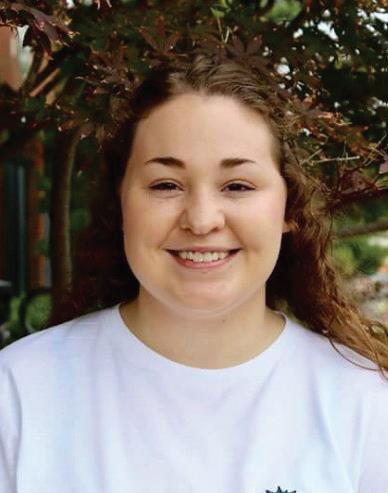
future experiments online and analyzed data from past experiments. She also volunteered at the NIH COVID-19 testing sites and has been helping on a project to understand a viral protein produced by COVID-19.
“It has been very humbling working at the testing site and on the COVID project. I have seen the huge number of people coming through and needing testing, which can feel overwhelming knowing how far we are from a vaccine,” Shafer said. “At the same time, I have been able to see how collaborative and efficient scientists at the NIH and all over the world are being to get good research done at really impressive rates.”
While it wasn’t how she had imagined her first year of work, Shafer has taken in every moment since the pandemic started with a researcher’s eye.
“As a young scientist, it has been an amazing learning opportunity to see what research looks like under these circumstances,” she said.
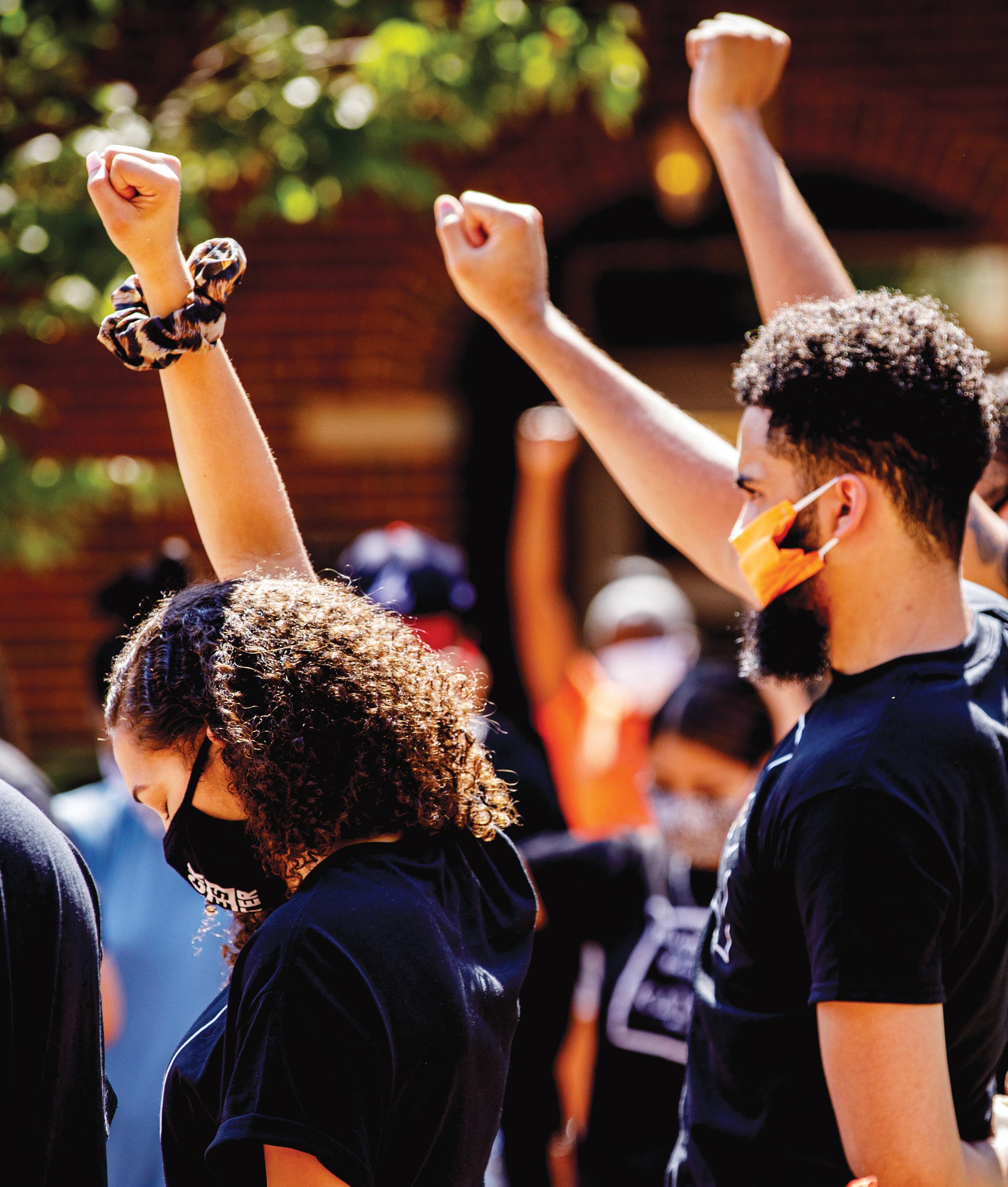
College of Arts and Sciences works to provide a warmer welcome to all
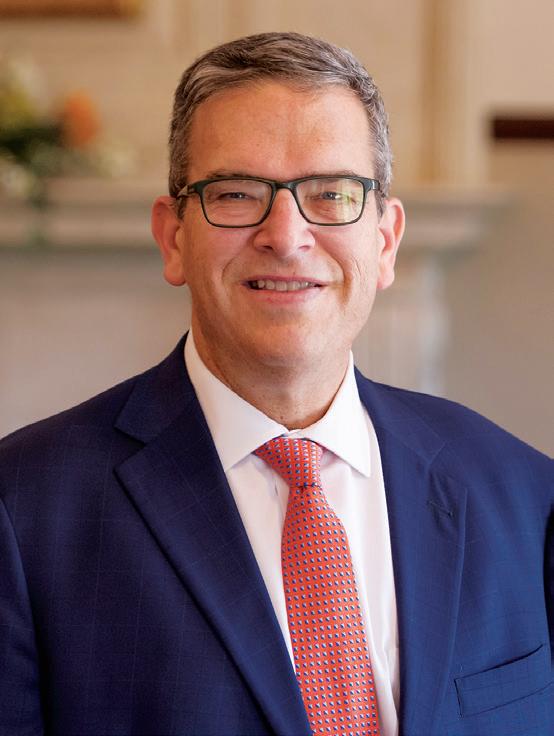
“There is strength in diversity and a depth to a more diverse environment that helps everyone.”
Glen
Krutz
Dean, College of Arts and Sciences
Long before the social unrest that swept the nation during 2020, the College of Arts and Sciences’ leadership team was focused on increasing diversity, equity and inclusion.
“I want to make sure that CAS is a place that provides equality of opportunity for all,” said Dean Glen Krutz. “Having a more diverse environment in CAS and within our departments improves the college, the educational experience and what we can do as an organization. There is strength in diversity and a depth to a more diverse environment that helps everyone.”
As Krutz’s statement underscores, diversity is valuable not just because of the moral implications, but also because it creates more productive organizations. For example, Dr. Scott Page from the University of Michigan developed simulations that showed that “able and more diverse” groups solved problems better than “very able” homogeneous groups. Similarly, a study by Scientific American found that socially diverse groups are better at solving complex problems because their people bring new information and viewpoints, which leads group members to “anticipate alternate viewpoints and to expect that reaching consensus will take effort.” These findings have been supported by studies from Tufts University, Credit Suisse Research Institute and McKinsey Quarterly, along with others.
“Along with other areas, diversity of thought matters,” said Kim Loeffert, CAS Faculty Fellow for Diversity and Equity and assistant professor of music theory in the Greenwood School of Music. “There is a reason that top-10 companies are
looking to hire diversity. It’s because diversity of thought and experience leads to innovation. And as a land-grand university, we serve the population of Oklahoma, which is diverse.”
In addition, studies show diversity benefits students in many ways. The American Council on Education says, “Education within a diverse setting prepares students to become good citizens in an increasingly complex, pluralistic society; it fosters mutual respect and teamwork, and it helps build communities whose members are judged by the quality of their character and their contributions.” According to the Century Foundation, “Students who interacted with racially and ethnically diverse peers showed significant gains in cognitive skills, such as critical thinking and problem-solving.”
Krutz added, “It improves our educational environment, our education itself and our experience. People learn more, become more empathetic, and upon leaving a more diverse environment, are able to make more of a difference in the world.”
From fall 2010 to fall 2020, CAS increased the racial diversity of its student body from 25.5 percent minorities to 35.3 percent.
Similarly, from 2016 to 2019, CAS’s faculty became more racially diverse — from 56.1 percent minorities to 58.2 percent — and more female — from 40.5 percent to 42 percent.
Krutz said, “We have been increasing our student diversity in CAS. To make those students feel more included and comfortable, we want them to see people who look like them.”
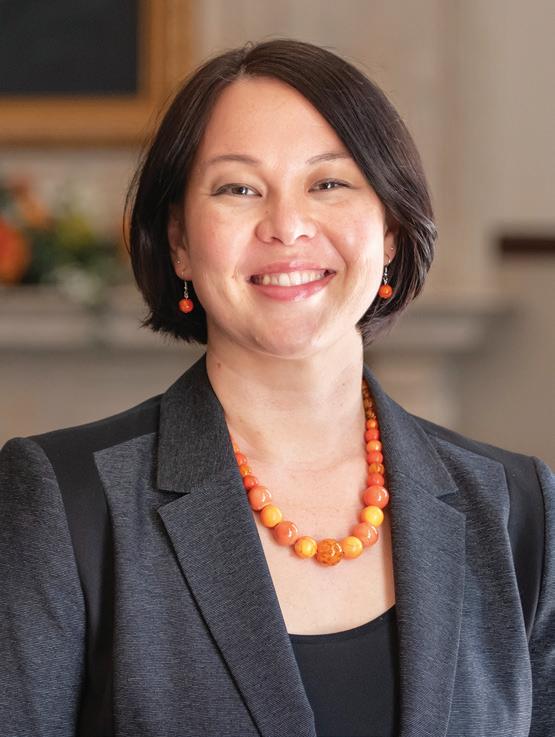
“Having my position specifically tasked with being an advocate for diversity and equity is as much about the message that it sends, that this matters to us.”
Kim Loeffert Faculty Fellow for Diversity and Equity
Kim Loeffert’s position as the Faculty Fellow for Diversity and Equity includes a two-year appointment on the CAS Leadership Team. She and the rest of the eight-person group regularly discuss ways to increase diversity, equity and inclusion across the college.
“Everyone on the leadership team is really equity-minded,” Loeffert said. “In most of the cases where you might expect my position could be needed, the Leadership Team is already asking the right questions. Having my position specifically tasked with being an advocate for diversity and equity is as much about the message that it sends, that this matters to us.”
Another way the leadership shows that equity matters is by designating half of the College of Arts and Sciences Community Engagement Grants for equity-focused projects. This funding supports faculty members’ community-engaged research and scholarly activities.
One of Loeffert’s tasks is to lead the Equity Advocates Council, a group of 29 CAS faculty and staff members engaged in implicit bias training. They work to support diversity, equity and inclusion efforts through educational workshop facilitation, resource compilation and the creation, update and review of pertinent policies and procedures. They act as repositories of campus and community resources and seek to listen to and learn from under-represented groups and to amplify marginalized voices.
One way Equity Advocates address their goals is by ensuring the college’s hiring process is as fair as possible. That includes examining job descriptions to create a diverse, qualified applicant pool, rather than crafting them with certain people in mind.
“We all have biases that we are often unaware of,” Krutz said. “That leads to mental shortcuts, and those tend to break toward people in the majority. That could be something as simple as where they went to school or other aspects. If you eliminate those, you give everyone a fairer chance to be considered. So we are working toward making everything as merit-based as possible.”
One strategy to decrease bias is to have application materials without the name of the candidate so that they don’t provide a cue that leads to bias.
“That’s quite a development,” Krutz said. “Before I came here last year, I wasn’t aware of such a well-organized approach. That really impressed me. … If you asked someone about inclusivity in hiring 10 or 15 years ago, they would talk specifically about who was being hired. That’s an important piece, but it’s also important to look at how people feel when they are hired. We want to make people feel welcome, and the search process is a big part of that.”
The Equity Advocates Council serves the college in other ways, including being a resource for people within each department who have questions.
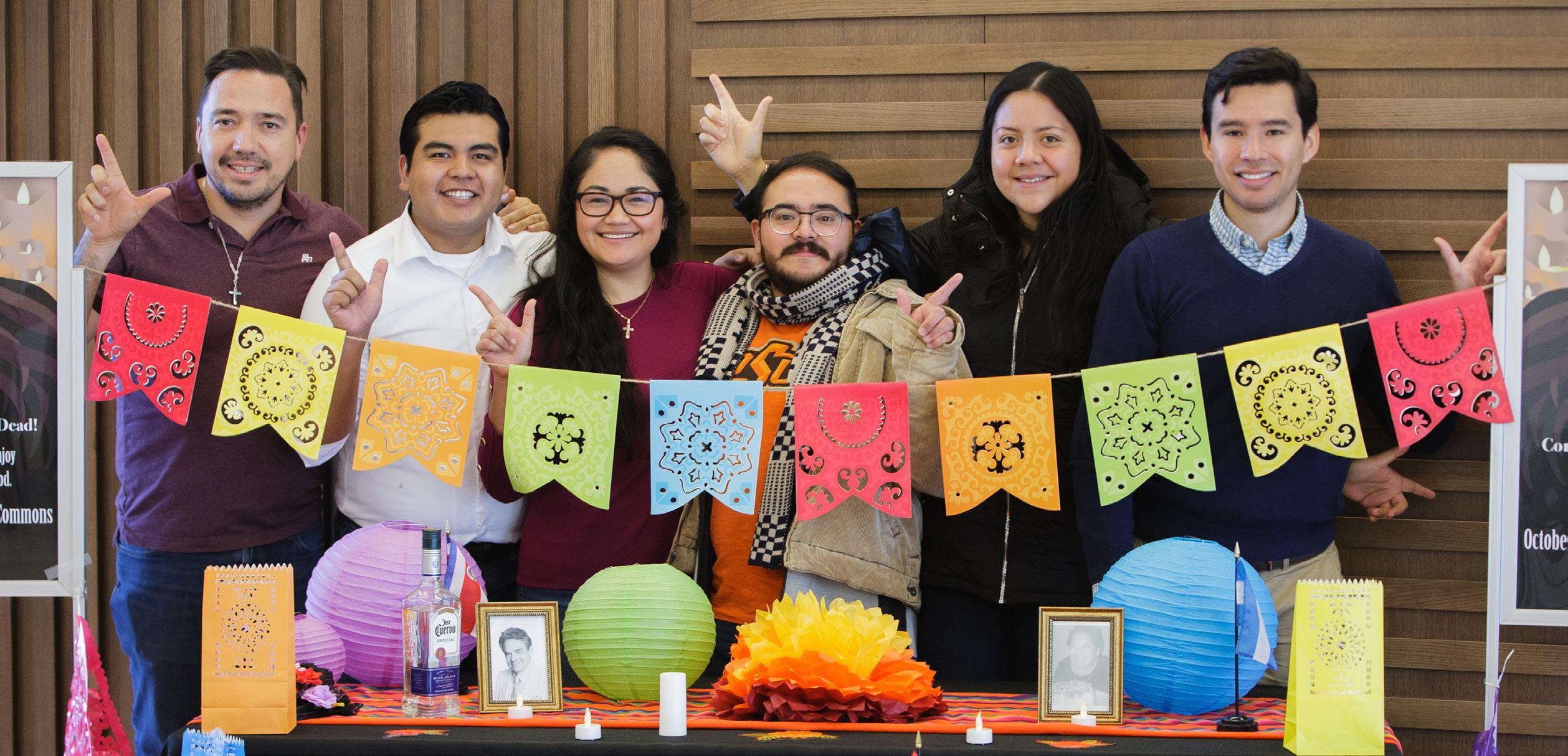
“A lot of what we do is to direct people to offices and resources already on campus but not as widely known,” Loeffert said. “We are compiling a resource list, both for on-campus support systems and within the community.”
As the program enters its second year, council members are also establishing who they are and how they can help. Faculty or staff who would like to speak to an Equity Advocate can find them at cas.okstate.edu/equity_advocates. People should contact the Equity Advocate from their unit or reach out to Loeffert.
“Both CAS and OSU as a whole have an increased focus on matters related to diversity, equity and inclusion,” Loeffert said. “There are a lot of initiatives going on in the background that maybe not everyone is aware of.”
For example, OSU employees and students are required to participate in a training session called “Fostering and Promoting a Culture of Diversity & Inclusion at OSU.” OSU has also launched the Inclusive Excellence Advisory Board, for which Loeffert is CAS’s representative.
Loeffert said she is pleased by the support she sees across CAS for issues related to diversity, equity and inclusion.
“The thing I wish most people knew is that those in leadership roles are really trying,” she said. “There is not one single, easy answer, but the Dean’s Leadership Team is trying, the Equity Advocates are trying. Everyone wants to do what’s right.”
DIVERSITY is differences in racial and ethnic, socioeconomic, geographic, and academic/ professional backgrounds. People with different opinions, backgrounds (degrees and social experience), religious beliefs, political beliefs, sexual orientations, heritage, and life experience.
EQUITY is the provision of personalized resources needed for all individuals to reach common goals. For example, the goals and expectations are the same for all students, but the supports needed to achieve those goals depends on the students’ needs.
EQUALITY is the provision of equal treatment, access and opportunity to resources and opportunities. Essentially everyone gets the same thing, regardless of where they come from or what needs they might have.
INCLUSION describes the active, intentional and ongoing engagement with diversity — in people, in the curriculum, in the co-curriculum, and in communities (intellectual, social, cultural, geographic) where individuals might connect.
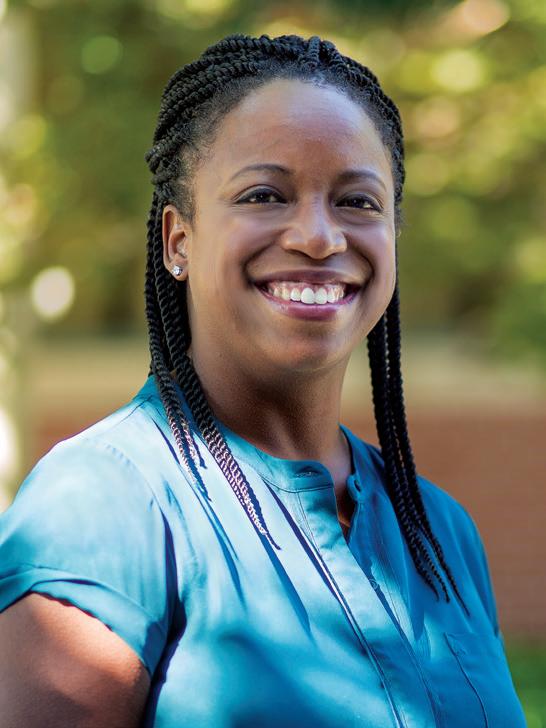
“When nonprofits are thinking about partnering with someone on issues related to diversity or the Black experience, I want the center to be one of the entities they are constantly thinking of.”
Erica Townsend-Bell Director, Center for Africana Studies
The growth and support of the Center for Africana Studies is yet another way OSU and CAS are helping to promote diversity and inclusion. It recently hired a new director in Erica TownsendBell, an associate professor of political science who has been at OSU since 2012.
“I am concerned with and tend to support questions about equity and inclusion in all of my work,” Townsend-Bell said. “I thought it might be a role where I could advance that work and spread awareness, so that led me to throw my hat in the ring.”
The center is a primary scholarly resource for the study of Africa and its Diaspora. It offers a minor in African Studies and provides students with scholarship and study abroad opportunities. It focuses on all aspects of the social, political, economic, religious and cultural developments and changes related to the African Diaspora, particularly as it relates to North America.
“We are going to continue building on what it has been doing,” Townsend-Bell said. “We have the minor, and there is space to expand the accessibility of our teaching and create some community base. We can do that through noncredit offerings as well as potentially engaging in a certificate program that lets those who are interested in Africana studies secure some additional credentials. We will be growing our footprint on campus in terms of creating a headquarters for students and faculty to have a home.”
The center is housed in 103 Life Sciences East on the Stillwater campus, where it will be expanding. It is also adding a second location on the OSU-Tulsa campus, which is in Tulsa’s Greenwood
district. That is the site of the May 1921 Tulsa Race Massacre. As you can read more about beginning on Page 12, OSU is memorializing that tragedy in various ways this year.
“I’m excited to see a real interest and a lot of initiative to help OSU-Tulsa become a strong community partner and continue to speak to how to engage with communities,” Townsend-Bell said. “We should think about it historically and not remember it as only this place where this tragedy occurred. We need to think about how we engage in this contemporary community now, which includes OSU-Tulsa’s partnership with Langston, a historically Black college.”
She added, “When nonprofits are thinking about partnering with someone on issues related to diversity or the Black experience, I want the center to be one of the entities they are constantly thinking of. We want to have the expertise to address broader initiatives, both within the community and the university. We want to really think through and create programming and opportunities to utilize the resources that already exist to expand the work in both Stillwater and Tulsa.”
That said, the academic work is also very important. Townsend-Bell wants it to be a vibrant hub for research engagement.
“We want a workshop for faculty and graduate students in particular to present and share their work,” Townsend-Bell said. “We want to continue the tradition of really wonderful speakers and create possibilities for routine research and symposia.”
She describes this as an exciting time to be leading the Center for Africana Studies.
“Questions about diversity, equity and inclusion are hard and thorny,” Townsend-Bell said. “They will remain so, because people have to be willing to engage in the discomfort that comes from raising these questions. That is part of the challenge. An additional part of what this moment brings is some real energy and investment in doing that work. I’m excited for the center to be a part of it, within the local community, regionally, nationally and internationally. These conversations flow out in a variety of ways that we can’t foresee. I’m honored to be chosen and I’m looking forward to working with a wide variety of people.”
The university took a much more visible step in promoting inclusion by changing the names of Murray Hall and North Murray in June. The buildings were named for Oklahoma’s ninth governor, William H. Murray, who had no ties to OSU and was openly racist. He called for segregation, supported Jim Crow laws and advocated for Jewish people to be relocated to Madagascar.
Both buildings exclusively house CAS departments, but changing their names required a vote by the OSU/A&M Board of Regents. President Burns Hargis presented the recommendation to the board, which unanimously approved it.
“We have reached this important point thanks to the commitment and concern of many, including our Student Government Association, faculty, staff, alumni and Board of Regents,” Hargis said.
“To remove the name, the university followed a thorough, deliberate process that began last March. I want to thank all those involved in that work. Oklahoma State is committed to removing systemic racism and embracing our responsibility as an institution of learning and finding solutions to inequality and injustice. Removing the Murray name is one such step.”
He added that OSU wants “to totally eliminate any racism on this campus, actual or symbolic.”
Krutz said he was “extremely proud of OSU for making this happen. It was unanimous at all levels, and it was the right thing to do. Especially for folks who are Black or Jewish, it was hurtful to be in that building. He said they were inferior. There is an anger and sadness to that.”
Loeffert added, “I’m thankful that they did it, and that it was unopposed. There was widespread support for this change in the end.”
The former Murray Hall is being called the Social Sciences and Humanities Building, and North Murray is the Psychology Building for now.
OSU STUDENTS PREPARE TO COMMEMORATE THE TULSA RACE MASSACRE WITH UNIQUE STORYTELLING OPPORTUNITIES
As the centennial of the Tulsa Race Massacre approaches, students in Oklahoma State University’s College of Arts and Sciences are preparing ways to commemorate the Black Tulsans who were affected while also educating others about the event.
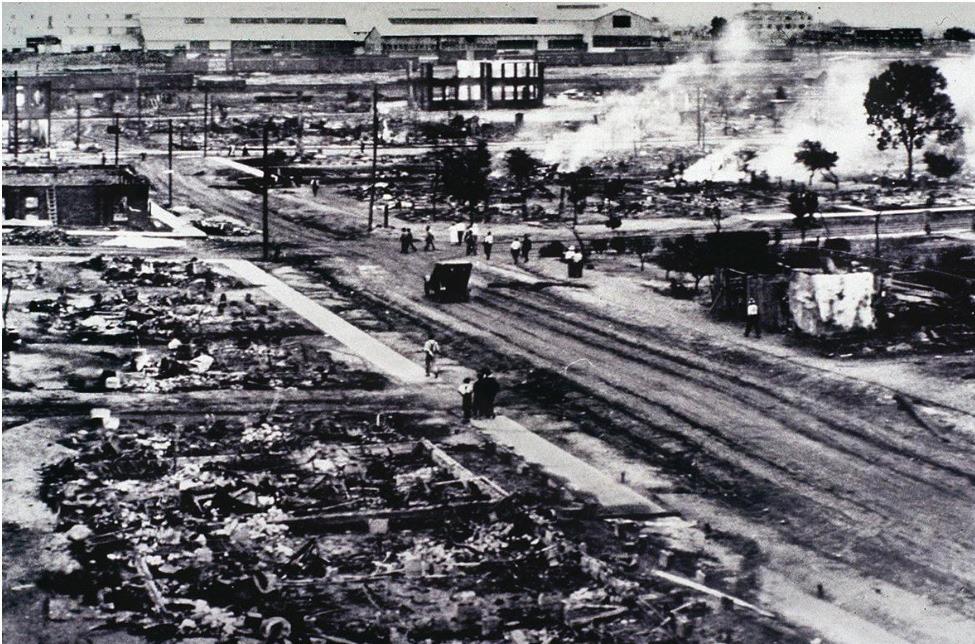
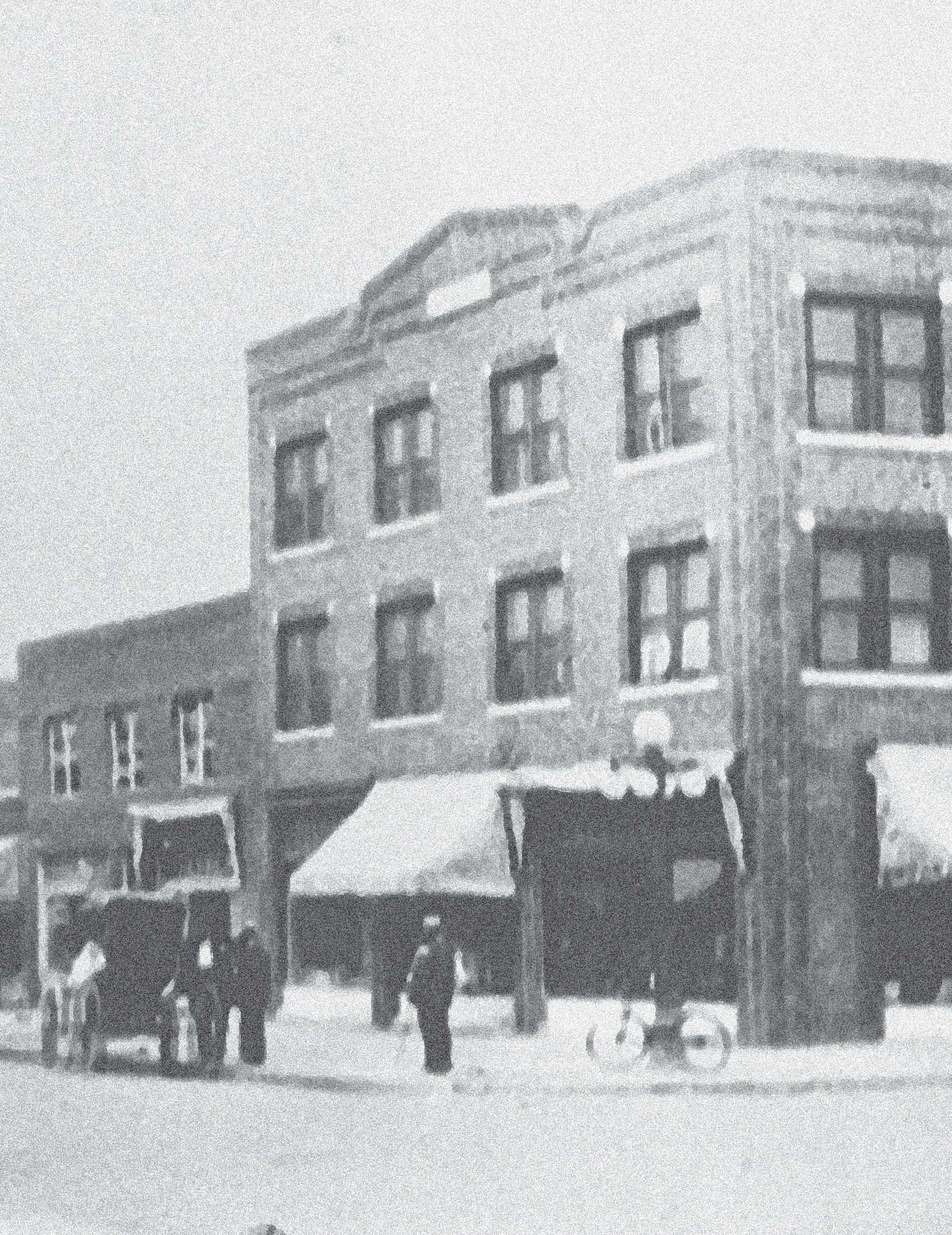
The massacre was triggered on May 31, 1921, when 19-year-old Black shoe-shiner Dick Rowland accidentally fell into white elevator operator Sarah Page. Rowland was taking the Drexel Building’s elevator to the top floor to use the Black restroom. Page screamed and alleged she was assaulted by Rowland, later recanting her claim. Out of fear, Rowland fled. Over the next 17 hours, Tulsa erupted into violence and was set aflame, devastating the area known as Black Wall Street.
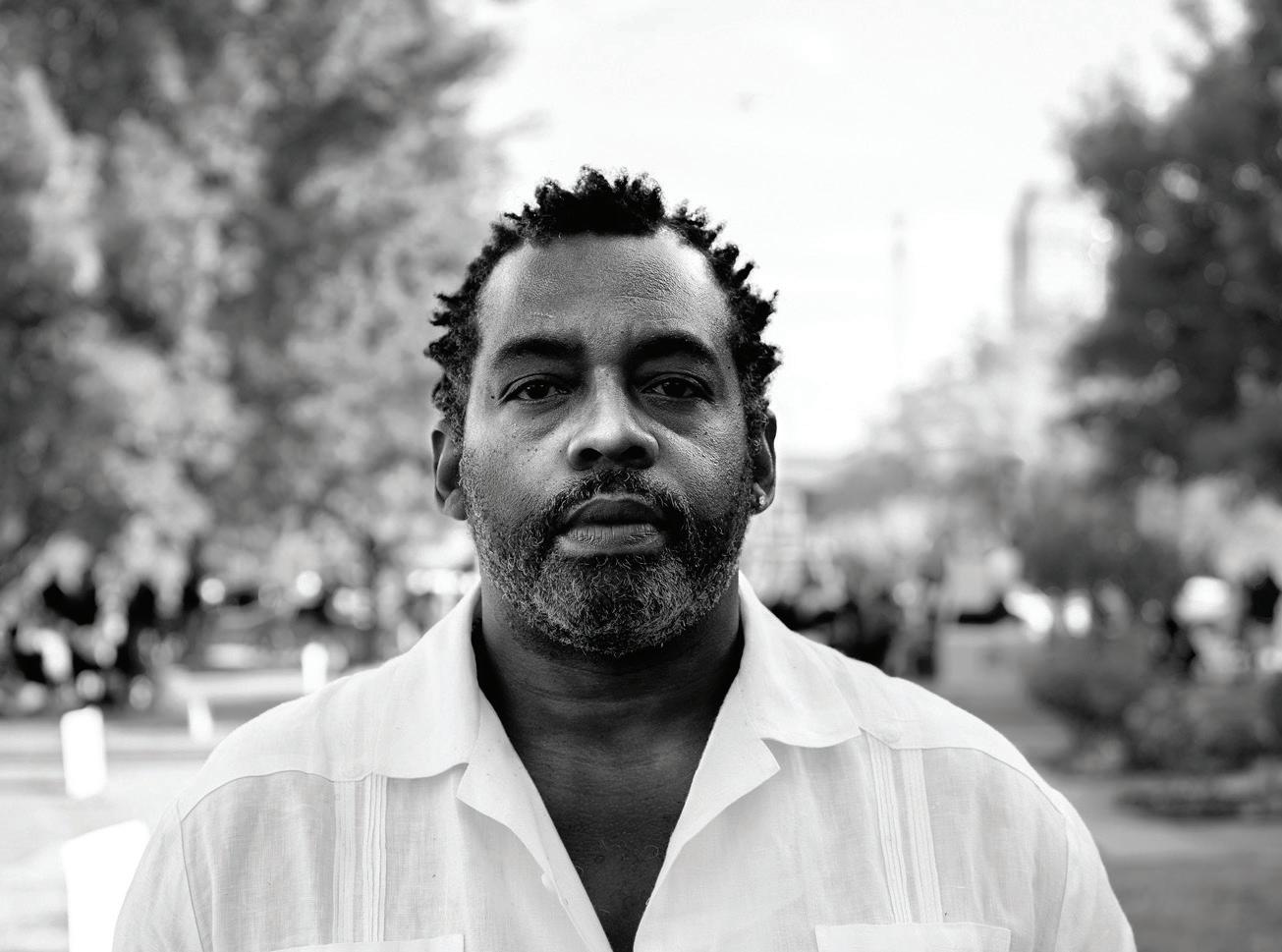
“Greenwood was a booming community for Black-owned businesses,” said Quraysh Ali Lansana, interim director of the Center for Truth, Racial Healing and Transformation; writer in residence for the Center for Poets and Writers; and adjunct faculty member in the Department of English and Center for Africana Studies. “They were literally going from rags to riches. In Greenwood, Black citizens owned everything because they came to that land largely via land allotments from post-Civil War treaties that were granted to the Choctaw, Creek, Chickasaw, Seminole and Cherokee tribes. It’s important to emphasize how the district came to be in order to get a real understanding.”
Tulsa’s Greenwood District was one of America’s most prominent and successful concentrations of Black-owned businesses in the early 20th century. It became known as “Black Wall Street” before it was devastated during the Tulsa Race Massacre on May 31 and June 1, 1921.
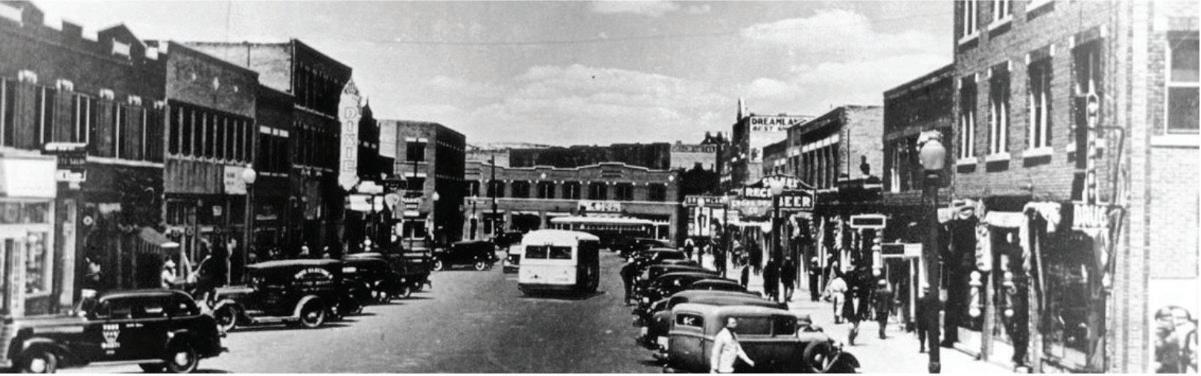
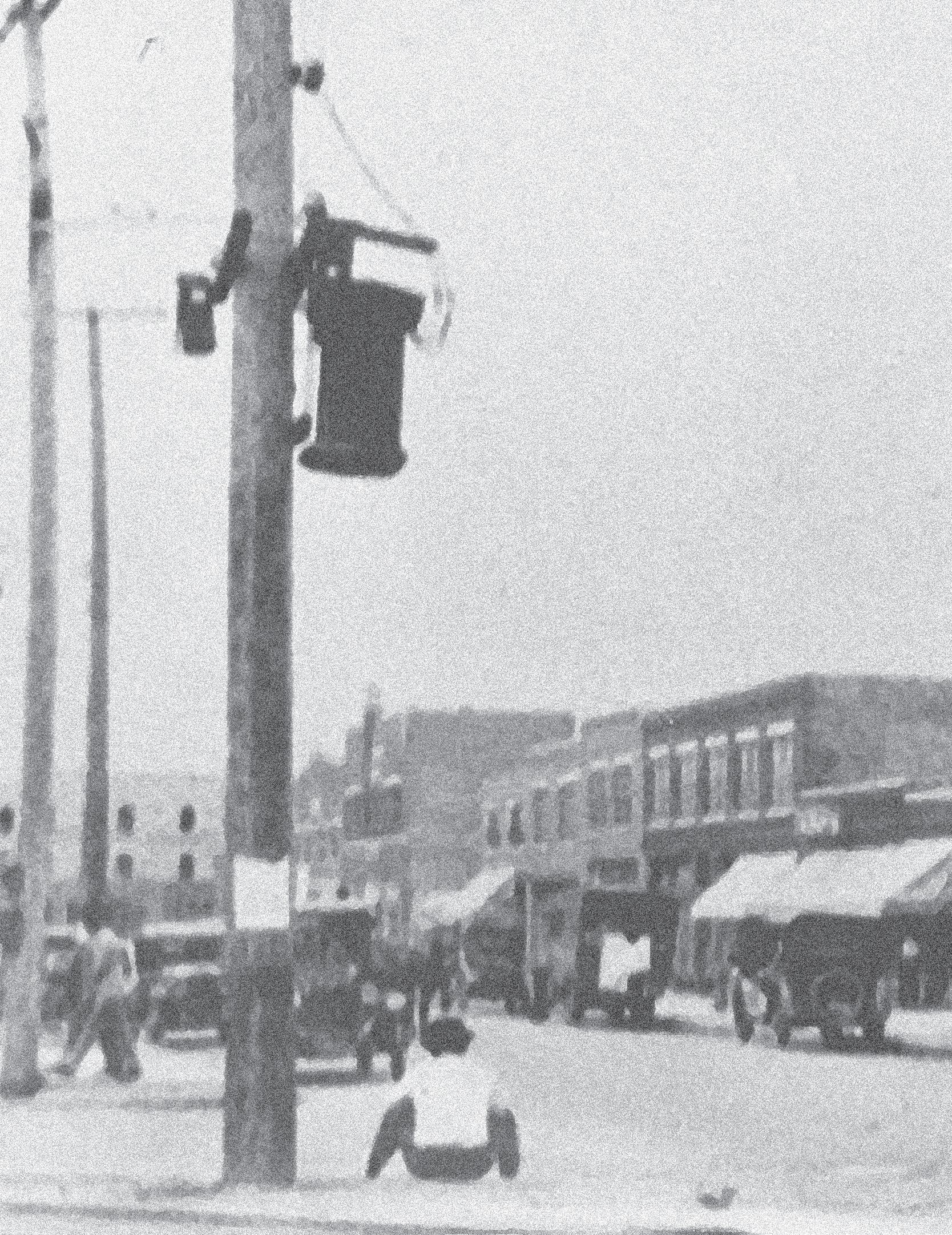
Sharing the full history is part of the centennial projects CAS students are creating. Students and faculty members from computer science, geography, history, media and strategic communications, political science and theater are compiling information to build a comprehensive view of the massacre.
“It’s a part of our obligation as a land-grant institution to the people of Oklahoma to help them understand Oklahoma history,” said Craig Freeman, director of and professor in the School of Media and Strategic Communications. “This is about providing a sound educational experience for the people of Tulsa, the people of Oklahoma and the people of America; there’s not a better place for people to get this information than from the College of Arts and Sciences students.”
The faculty and students are working together on different facets of the educational experience. Students from the School of Media and Strategic Communications are working on a magazine that will detail the history of the event and the rising of Greenwood today. In addition, SMSC and theater students are shooting a documentary to highlight parts of the massacre and the events that followed.
For the SMSC students, the opportunity also includes working with National Public Radio. Thanks to alumnus Doug Mitchell, students will be able to further share this story.
“Doug has been amazing in helping our students find opportunities nationally through Next Generation radio, which scouts talent for the next generation of diverse broadcasters,” Freeman said. “The program will take place the week after Mother’s Day. We’re going to have amazing professionals and students from here as well as from all over the country coming to Tulsa to do those stories, which will then hopefully appear on NPR during the week leading up to the race massacre anniversary.”
In addition, the media students will get realworld public relations experience by reaching out to media outlets to promote the projects on morning shows across the U.S.
“In Greenwood, Black citizens owned everything because they came to that land largely via land allotments from postCivil War treaties that were granted to the Choctaw, Creek, Chickasaw, Seminole and Cherokee tribes. It’s important to emphasize how the district came to be in order to get a real understanding.”
QURAYSH ALI
LANSANA
The Tulsa Race Massacre left up to 300 dead, more than 800 injured, and 35 city blocks in ruins.
E Oklahoma Pl E M.ar$1ta11S!
Elatimer Pl E LaUmerSI
Lan~on University- Tulsa • E Joh11-HCC1lr.F.1~11kl,,._-s1Vd OIUahoinaSU. untv.rsay n.1sa
Mt. Zion Baptist Church
OsagePralrleTrall OETA • Evans Antube site • VernonAfrican Methodist EpiscopalChurch John HopeFranklin <g ReconclllatlonPark •
ONEOKReid
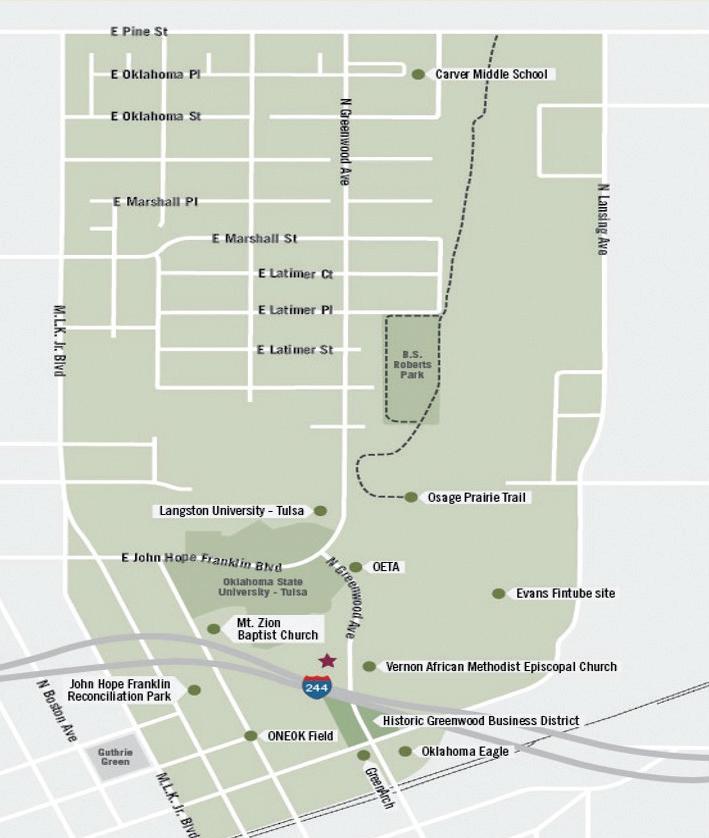
A map of Tulsa’s Greenwood area, with a variety of landmarks highlighted.
Historic GreenwoodBusiness Distlict
OklahomaEagle r
Other projects will be in the media push, including one that Sean Thomas has been working on since June 2020. Thomas, a geography doctoral student, is creating an extensive map spanning from 1920 to the mid-1950s that focuses on the Greenwood District and some of the surrounding area.
“My current interests are cultural and historical geography, especially the geography of memory and social justice issues and B lack geographies,” Thomas said. “Geography of memory is statues, memorials and museums that shape discourse to define collective identities.”
Through this project, Thomas is able to show the transformation of Greenwood.
“I’ll not just be looking at the 1921 massacre, but also at Greenwood overall,” Thomas said. “Greenwood rising, or the rebuilding after the massacre, will allow me to critically look at the geography of memory and how the space is turning into a healing process rather than the finding of an identity for a collective.”
The map will also help visual learners understand the area affected by the massacre.
“I’m really trying to recreate a 1920 map of historic Greenwood based on the old land plots and use records to assign ownership,” Thomas said. “From there, I can plot the main points of 1921.”
According to his research, the massacre took place in key areas around Tulsa: the Drexel building; the Tulsa County Courthouse, where Rowland was held for safety and where the shooting began; and the Dreamland Theater, where many members of the Black community gathered and organized during the chaos. The theater was burned down during the massacre. At another location now known as the Tulsa Theater (previously the Brady Theater), white vigilantes assisted by the National Guard detained Black citizens from Greenwood during the massacre. All of these areas help to paint a full picture of the events.
The mapping is crucial to comprehending the aftermath of the Tulsa Race Massacre, according to Freeman.
“After 1921, you saw Black families going back into that neighborhood and what really killed Greenwood was not the race massacre but the highway,” Freeman said. “You see racism again coming back with people saying, ‘Let’s put this highway (Interstate 244) directly through the Black neighborhood.’ That was strategic.”
Education about the massacre extends to the OSU classroom as well. Lansana is teaching Black Wall Street: Greenwood’s Evolution and Reawakenings, 1850-Present for the second time this fall. The course discusses how Black Oklahomans came to live in the area, Oklahoma statehood, World War I, the increased number of lynchings after the war and then covers Jim Crow before touching on the massacre.
“I emphasize all of those elements and aspects of what was happening in the country and then what was happening in Oklahoma to provide a richer context for the remarkable construction of the Greenwood district and then to its profound destruction,” Lansana said.
Beyond the destruction, Lansana wants part of the focus to be on the reawakening of Greenwood, the overcoming of those obstacles and Black excellence before and after the Tulsa Race Massacre.
Part of what was once Black Wall Street is now Oklahoma State University-Tulsa. OSU-Tulsa has been working to bring attention to this history, which wouldn’t be possible without the support of the university leadership, Freeman said.
“[OSU-Tulsa President] Dr. Pam Fry has been really understanding about the things that we need to do to make the Tulsa campus a place for Tulsa and the state to recognize this significant
event,” Freeman said. “I think her leadership and her vision about the Tulsa campus has been really helpful for the city of Tulsa as well as for Oklahoma State. On a local level at the Stillwater campus, I’m grateful to be able to work for and with Dean Glen Krutz, who is willing to allocate resources and support for this project. This could be underrepresented under different leadership. The dean has been really helpful in finding ways we can work together and finding resources to make it happen.”
The university continues to support these social changes. This summer, OSU moved to change the name of CAS buildings Murray Hall and North Murray. William Murray, a former governor of Oklahoma, was a bigot known to use racial slurs openly, including in his campaign slogans. The building’s name was under debate for years, but in June, the Board of Regents took decisive action, unanimously approving the removal of Murray’s name from campus.
The project may also include an app to be developed by computer science students that will coincide with Thomas’ mapping work. The goal is to create geofencing around the Greenwood district for people to be able to see pictures of previous building and theater students’ reenactments.
“OSU has made a lot of strides to bridge the gap of social injustice from the renaming of Murray Hall to erecting the statue of Nancy Randolph Davis, OSU’s first African American graduate,” Freeman said. “There’s still a long way to go, but with this project and the help of our OSU leadership, I think we are making strides in the right direction to recognize the descendants of the race massacre and African American students on
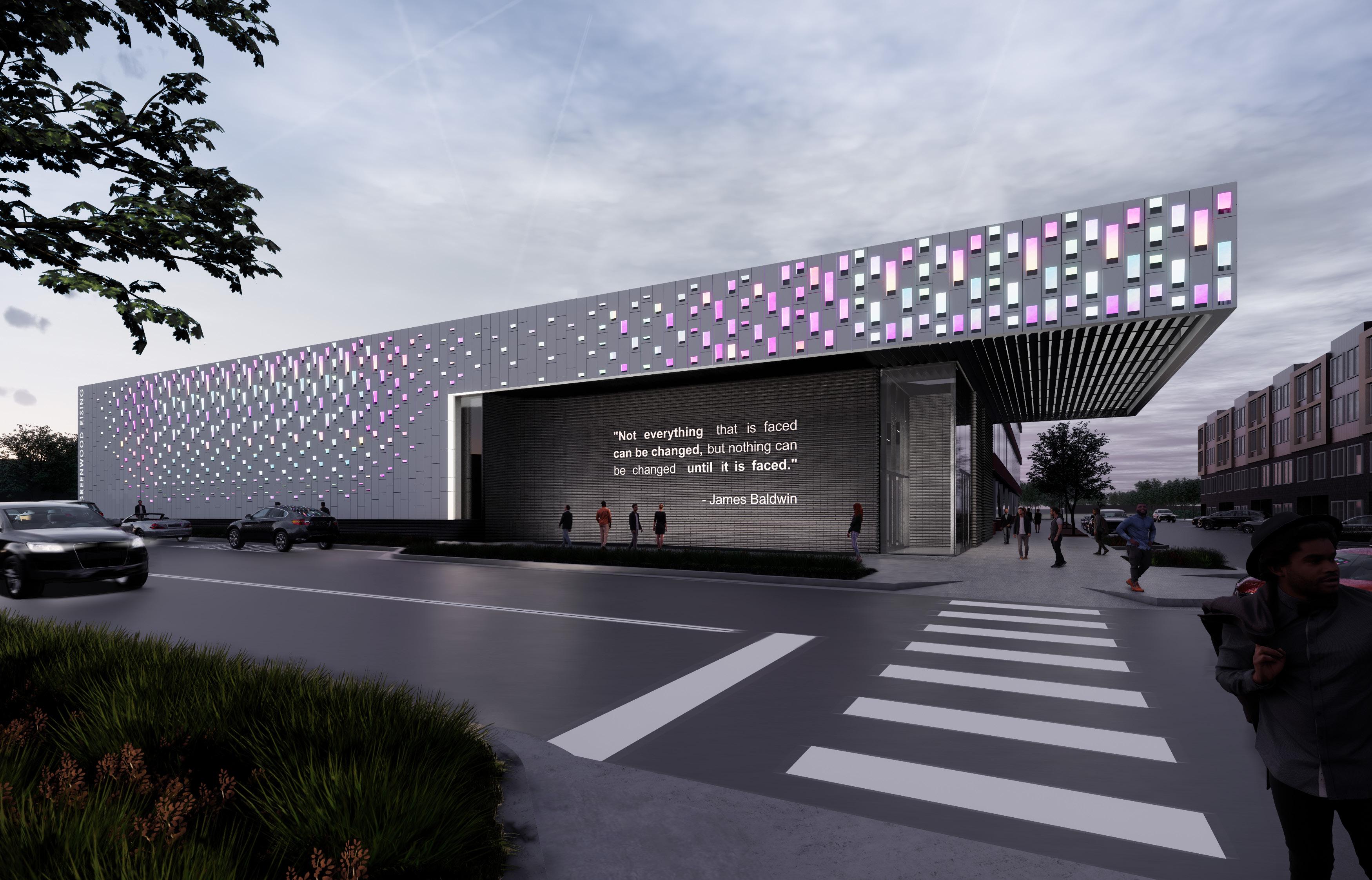
Greenwood Rising, a new history center, is being built at Archer and Greenwood. This rendering of the center is looking south from that intersection.
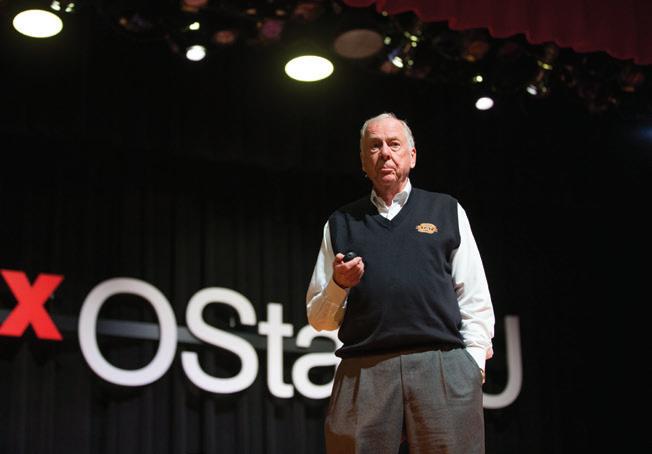
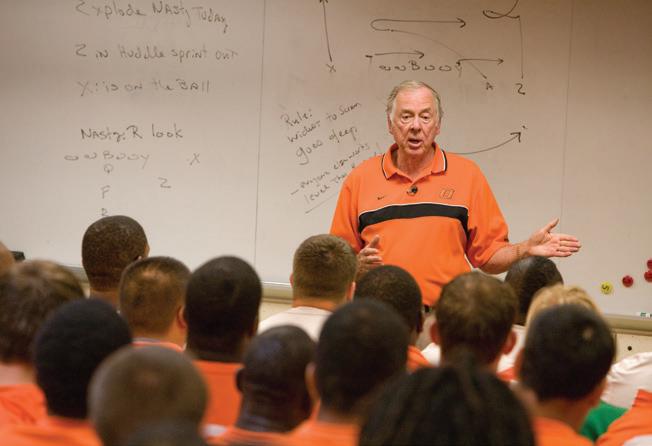
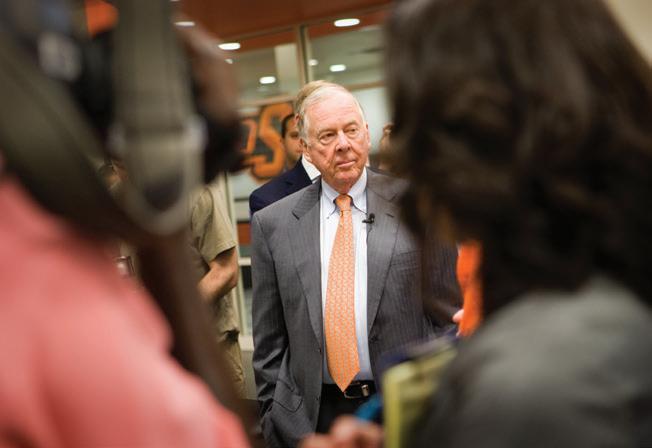
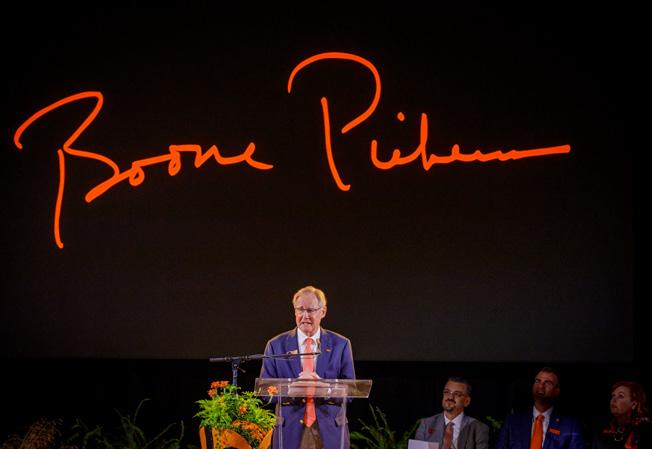
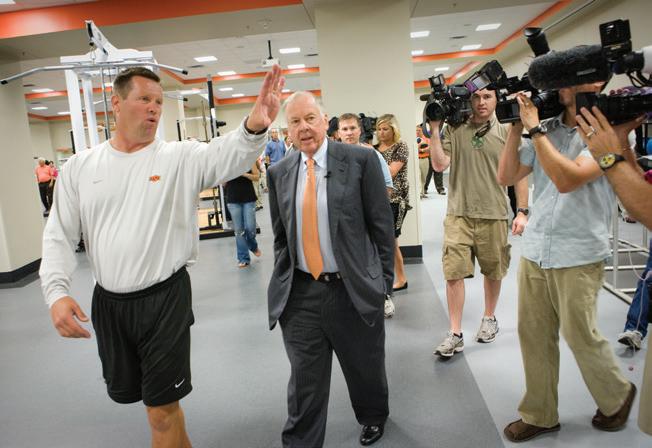
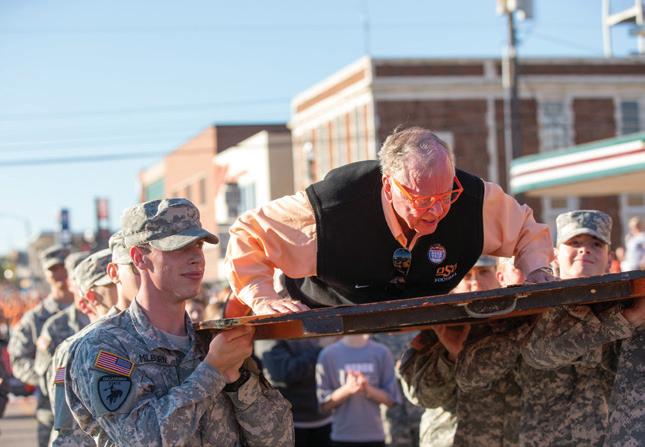
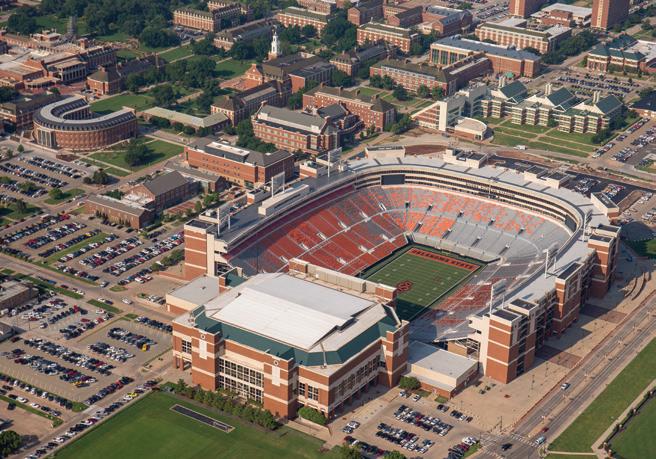

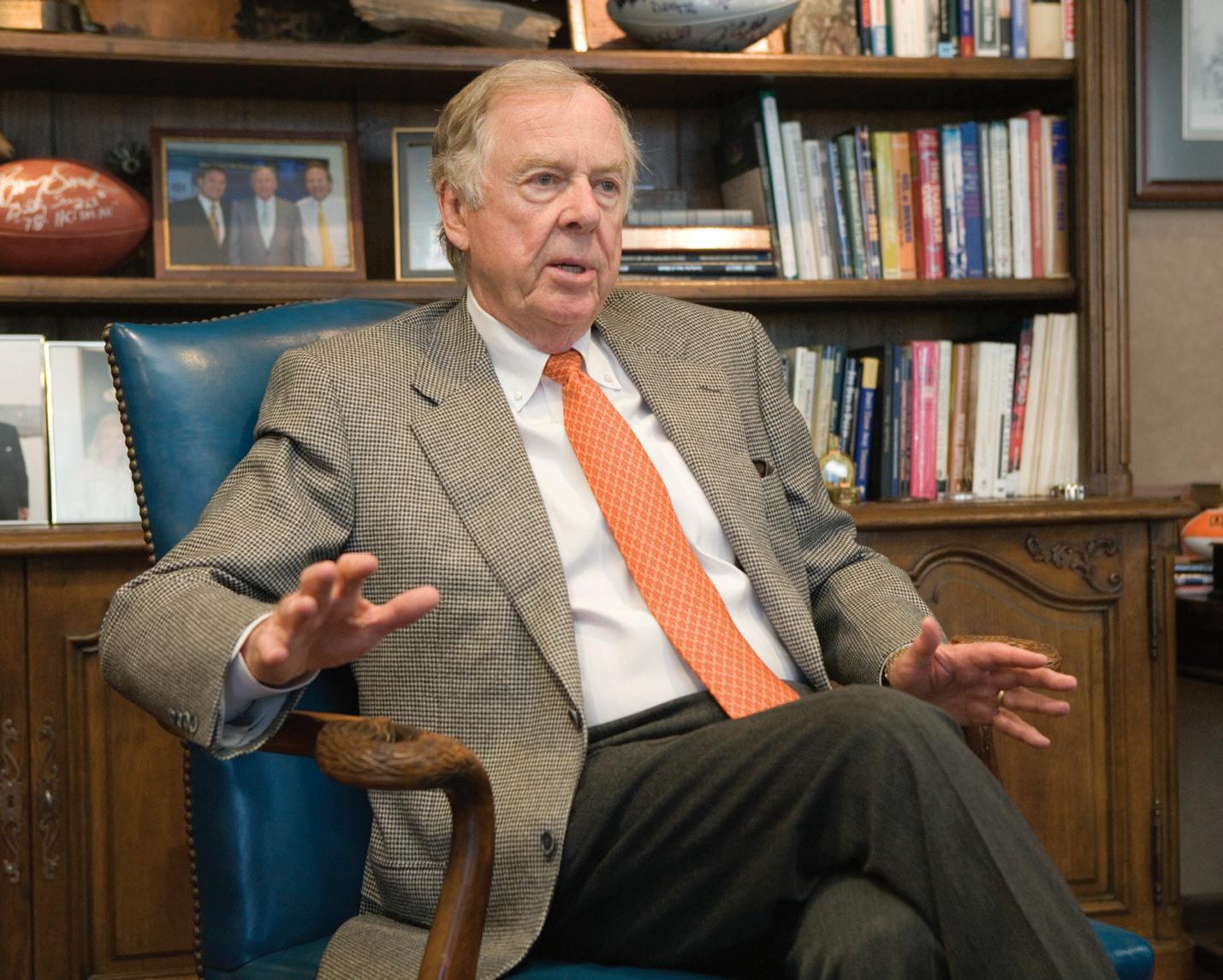
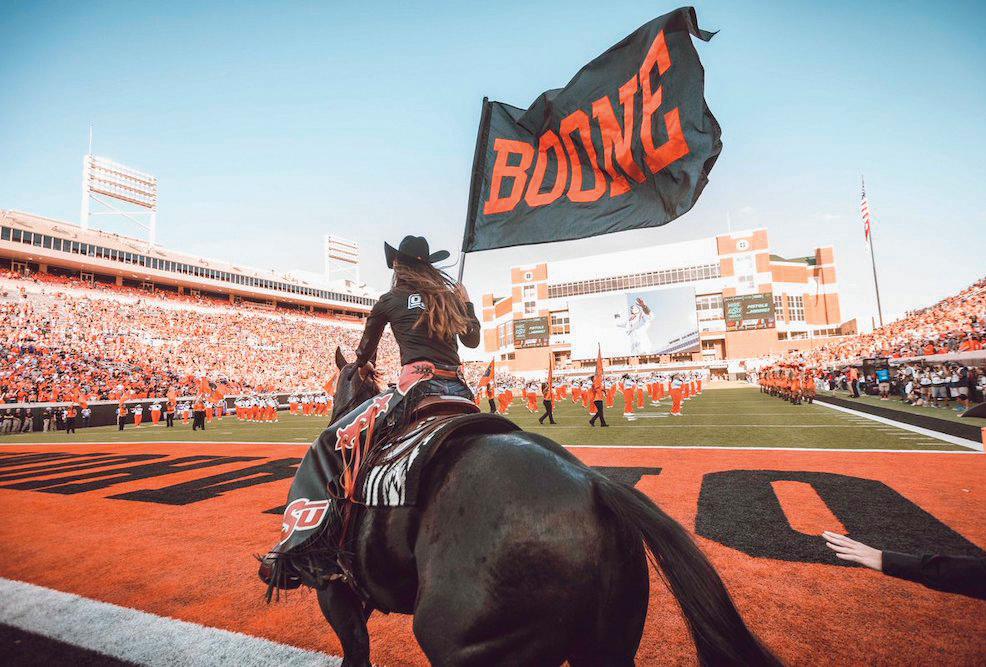
Because our annual CONNECT magazine had already gone to press at the time of T. Boone Pickens’ passing one year ago this September, we were unable to publish anything about his life and legacy in the 2019 issue. With immense gratitude for him, we do so now.
On Sept. 11, 2019, OSU’s ultimate Cowboy, T. Boone Pickens, passed away at the age of 91. In a final message, the Oklahoma State geology graduate, energy tycoon and philanthropist wrote, “This Depression-era baby from tiny Holdenville, Oklahoma — that wide expanse where the pavement ends, the West begins, and the Rock Island crosses the Frisco — lived a pretty good life.”
To his family, friends and thousands of OSU students who have benefited from his generosity, Mr. Pickens’ life wasn’t just good. It was extraordinary.
“He transformed America in many ways, and he sure enough transformed Oklahoma State,” OSU President Burns Hargis told the crowd at Mr. Pickens’ Celebration of Life in 2019. Over the course of his life, Mr. Pickens gave more than $652 million to the university and prompted thousands of others to donate.
“Since [2008], we have now raised over $2 billion in cash and pledges,” Hargis said. “With 70,000 new donors, our endowment here at the university has more than doubled, and we’ve added about 200 new $1 million-plus donors. So clearly Boone’s impact, his
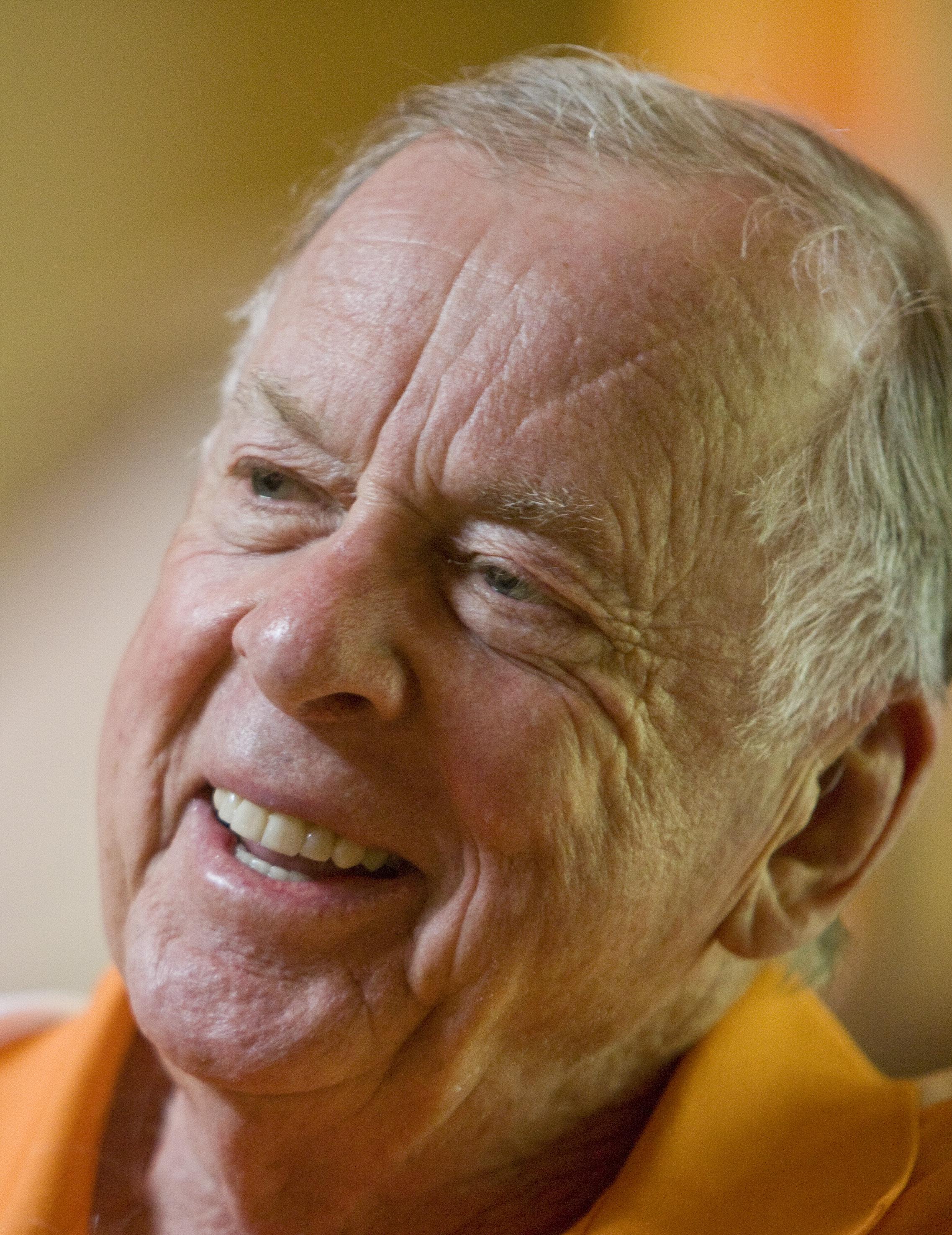
inspiration, has gone way beyond his own gifts. He really has inspired our university forever.”
Among those Mr. Pickens inspired were Michael and Anne Greenwood. The couple’s donations have benefited OSU in countless ways, especially in the College of Arts and Sciences with the Michael and Anne Greenwood School of Music. Anne Greenwood spoke at the Boone Pickens Celebration of Life, recounting a story from 2008 when she and her husband took his advice to give to OSU sooner rather than later.
“Now, because of Boone, Mike and I have the chance to see the difference we can make. And it’s extraordinarily rewarding,” she said. “Mr. Pickens always gave with the hope that his gifts would inspire others to join him, and they absolutely did.”
Long before becoming OSU’s biggest philanthropist, Mr. Pickens was a young boy with a paper route in Holdenville, learning from the words and deeds of his family members.
“If I had to single out one piece of advice that’s guided me through life, most likely it would be from my grandmother, Nellie Molonson,” Mr. Pickens wrote in 2019. “She always made a point of making sure I understood that on the road to success, there’s no point in blaming others when you fail. Here’s how she put it: ‘Sonny, I don’t care who you are. Some day you’re going to have to sit on your own bottom.’”
Coupling this advice with a strong work ethic and thirst for competition, Mr. Pickens graduated from Oklahoma A&M in geology in just three years after transferring from Texas A&M. He chose to change schools after his $25-per-month basketball scholarship was canceled, a move that Texas A&M’s 12th Man Magazine listed among the Aggies’ top mistakes. According to an assessment made by a Texas A&M basketball coach, however, the decision may have been warranted.
“That coach told me one time, ‘You can’t run fast enough to scatter leaves,’” Mr. Pickens often recalled.
Mr. Pickens moved on from basketball and by the time he was 35, he had founded Petroleum Exploration Inc. and Altair Oil. He consolidated them with his other holdings to form Mesa Petroleum, then the largest independent oil company in the United States. More acquisitions followed and in 1997, Mr. Pickens established the hedge fund investment company BP Capital.
As his wealth grew, so did his generosity. In 2006, Mr. Pickens made the largest single donation to an NCAA athletic program to the tune of $165 million to OSU. He gave $9.4 million in 2008 to what is now the Boone Pickens School of Geology. He signed the Giving Pledge in 2010, joining a list of billionaires that included Warren Buffet and Bill and Malinda Gates in committing the majority of their wealth to philanthropy. Also in 2010, he pledged $120 million toward undergraduate scholarships and graduate fellowships, which resulted in more than 2,600 donors giving an additional $73.6 million. And in 2008, Mr. Pickens made a $100 million challenge gift for faculty endowed chairs — money that inspired $68 million in additional donations and was matched by the state’s endowed chair program.
“Endowed chairs and professorships allow us to recruit and retain the very best faculty to Oklahoma State University,” said College of Arts and Sciences Dean Glen Krutz. He added that Mr. Pickens’ donation “created more generous chairs and professorships and incentivized donors to give, since they knew their named professorship would essentially be tripled.”
Through it all, Mr. Pickens credited his mother for instilling in him the desire to help others. “For most of my adult life, I’ve believed that I was put on Earth to make money and be generous with it,” he wrote.
“Boone taught us to dream big and he definitely led the way. All of us who have chosen OSU will continue to honor Boone’s legacy.” ANNE GREENWOOD
Although Mr. Pickens is gone, Anne Greenwood sees his example of generosity living on through others.
“He reminded all who love OSU that you don’t have to be a huge donor to make a difference,” she said. “Every OSU alum who chooses to give back is making a change for the better for OSU. They are establishing a legacy of giving back to this university. I believe Boone’s legacy will live on for years to come.”
Camelia Knapp
Krutz echoed her sentiments: “Mr. Pickens’ gifts have been truly transformational for the College of Arts and Sciences. Yet his legacy in CAS is bigger than his donations in terms of affecting our psychology as a college. Boone had a swagger, a relentless drive for excellence, a rigor of sorts. That has rubbed off on CAS, leaving us more confident and ambitious than we would be otherwise.”
One of CAS’s 24 departments is the Boone Pickens School of Geology — a “crown jewel in the college,” according to Krutz, thanks to Mr. Pickens’ support. The department not only bears the name of its biggest benefactor, but it also uses as its motto a final word of wisdom from Pickens: “Up.”
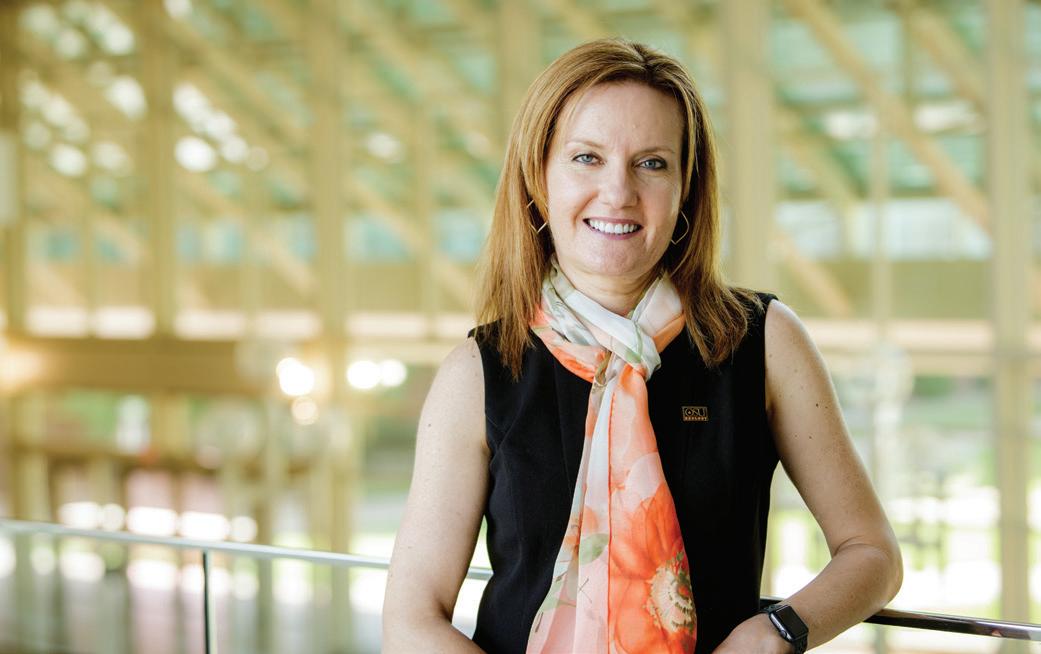
“Mr. Pickens was really a leader among the alumni and a great mentor,” said Dr. Camelia Knapp, head of the Boone Pickens School of Geology. “He was a visionary man with a plan, and he wanted us to be just like him.”
Curricular changes are among the ways that the Boone Pickens School of Geology is moving “Up,” Knapp said. The school has added three new geoscience options for the bachelor’s degree in
geology, a secondary teacher certification, dualdegree programs for those seeking bachelor’s and graduate degrees simultaneously, and it has received federal funding for projects involving unconventional hydrocarbon resources and carbon storage.
“Mr. Pickens cared about our students,” Knapp said. “He wanted to know what opportunities our students have for employment. He knew that his geology degree served him well and wanted future generations to have similar opportunities.
“More than anything, Mr. Pickens was a most generous man. We not only have the strongest football program and best sports facilities in OSU’s history, but we also have the most scholarships, best faculty, best labs and classrooms and most innovative programs across the OSU campus thanks to his generosity and leadership.”
Knapp paraphrased some oft-repeated counsel from Mr. Pickens, who attributed it to his father: “A fool with a plan can beat a genius with no plan.”
Thanks to Boone Pickens, his alma mater has both genius and a plan as its students and faculty move forward into a new decade.
“Boone taught us to dream big and he definitely led the way,” Anne Greenwood said. “All of us who have chosen OSU will continue to honor Boone’s legacy.”
Alumnus takes his penchant for helping others from classroom to courtroom
Oklahoma State University alumnus
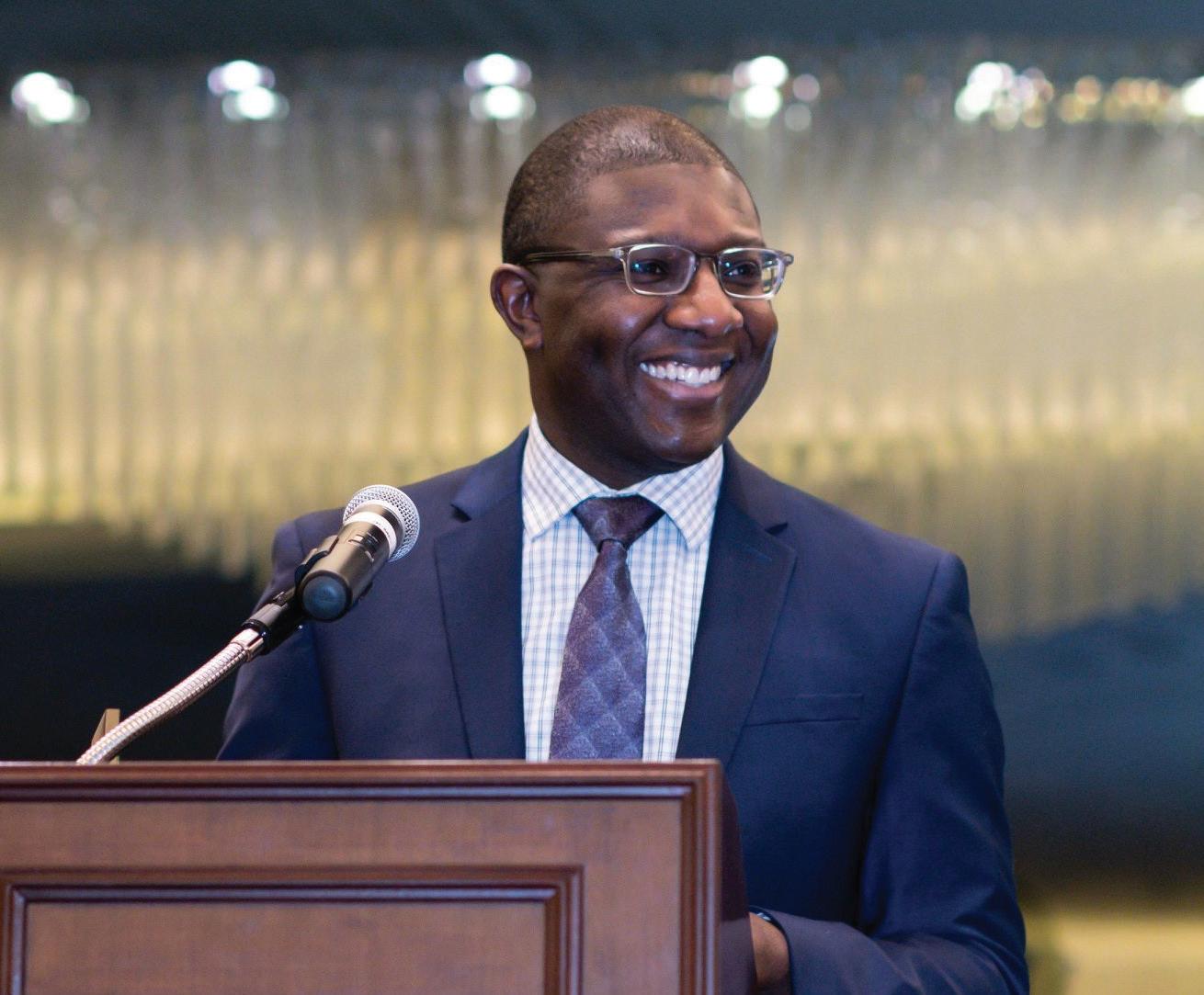
Mario White’s goal of giving back to the community lead him to first teach high school math and now to serve as a county judge.
“A motivating factor for me is to try to contribute back,” White said. “You know I went to public school. I went to Oklahoma School of Science and Mathematics. I went to OSU. I had academic scholarships. I’ve always felt it’s important to try to give back to the next generation.”
The environment was one reason why White chose OSU.
“I knew that I wanted to go into math, and I really didn’t have a strong desire to move out of state at the time,” he said. “I looked at both OSU and the University of Oklahoma, and there was something about Oklahoma State that really kind of drew me — I really liked the math department.
I was impressed with the programs they had, the faculty who were there and the attention they gave.”
White entered college knowing he wanted to major in math but after taking a class on Western civilization with Dr. Neal Hackett, he decided to also major in history.
“I knew I wanted to be a math major,” White said. “I took a lot of advanced math classes at OSSM, and I … came into OSU so far ahead of the curve in terms of math classes. I had a lot of elective credits, and so I took a Western civ class. Dr. Neal Hackett was the instructor, and I really like the class. I liked his teaching style, and it just sort of spurred me to take another class and then another class and then before I knew it I thought, ‘Well, I could actually do a major in this as well.’”
After graduating from OSU, White moved to Dallas and took a teaching certification class to teach math. He taught for three years, with his last two years at the magnet School for the Talented and Gifted.
“That was really cool to kind of be able to teach in an environment with students who were regular high school students but they were academically gifted,” White said. “Not everyone was gifted in all areas. I had some students who struggled in math but were really great in other areas. It was a really neat environment. Those students, like any high school students, definitely had their quirks.”
White left teaching to attend the University of Wisconsin for a juris doctorate. At first, he thought he would work for a government agency or be a prosecutor. However, White became active on the UW mock trial team and had two professors who were instrumental in training him in trial advocacy and a driving force for his becoming a public defender.
“Two of my mock trial coaches became judges,” White said. “One, who was a public defender, talked about her job. That motivated me to become a public defender. Even though I loved the work, as the years progressed, I felt that I wanted to do something else.”
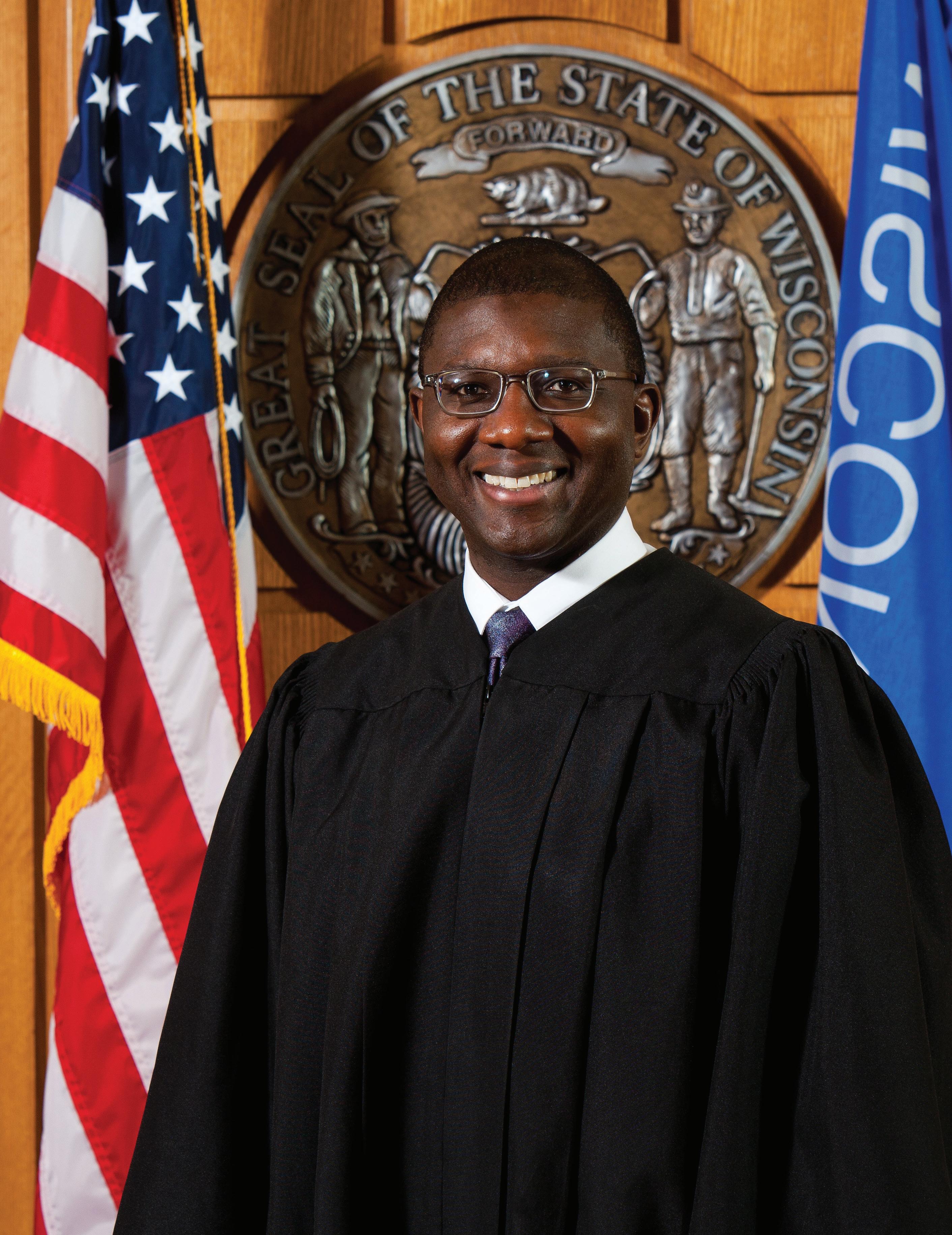
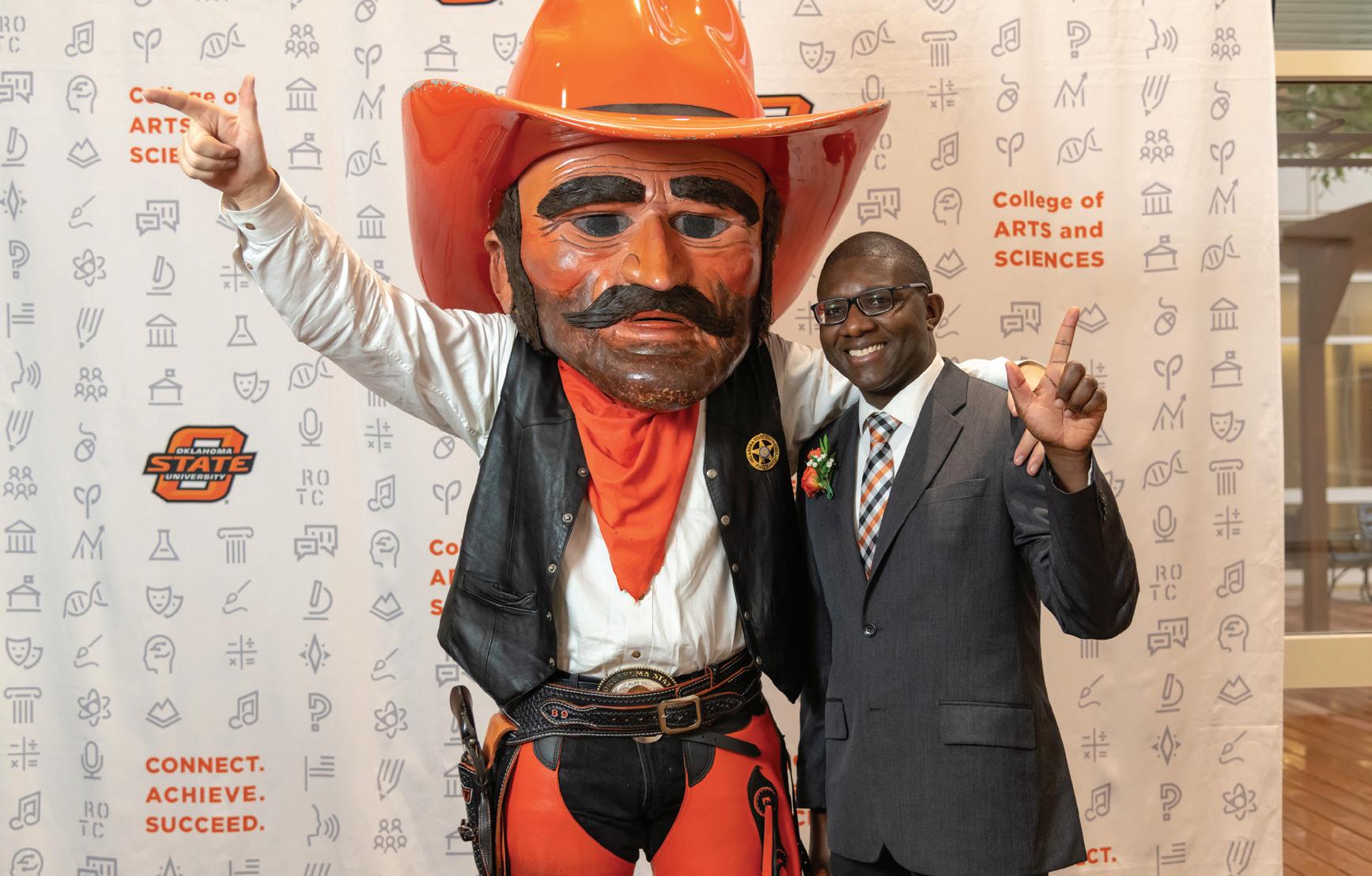
White spent 10 years with the Dane County Public Defender’s Office in Madison.
“I wanted to do a job that I had passion for. A lot of people are not able to do the job that they love,” he said. “I was fortunate. I loved being a public defender. I loved working with others whom I admired who were able to find that inner fire to continue doing that kind of work. That is something that really pushed me in that direction.
“The biggest motivator for me is just wanting to continue doing public service and this may sound clichéd but I want to make the world a better place as much as I can in the sphere of influence that I have.”
In 2018, the circuit court judges hired White as a court commissioner. In June, Wisconsin Gov. Tony Evers appointed him as a Dane County Circuit Court judge.
“I am thrilled to have appointed Judge White, as I believe he will bring a much-needed source of understanding and perspective to the bench,” Evers said. “His experiences as a court commissioner and an accomplished public defender, as well as a teacher and adjunct professor, will enrich the judicial process. I am confident he will ensure swift, fair and compassionate justice for all he serves.”
Dane County Circuit Judges Rhonda L. Lanford and Ellen K. Berz released a statement that added, “Mario White is a superb addition to the Dane County judiciary. White understands the role of a
judge and understands the need for all who come before the court to be heard. He brings a wealth of knowledge, experience and integrity to the bench. We are confident that he will ensure justice for all.”
White, who also teaches trial advocacy at UW and is a mock trial coach, enjoys being a judge because he recognizes the greater ability to make changes on a larger scale.
“As a defense attorney, you have an opportunity to help the client you represent,” White said. “It’s sort of one client at a time. Judges see a wide range of cases, a wide range of people. They have the ability to influence policy when it comes to areas dealing with access to justice both in civil and criminal justice reform. One of the things that I want to try to do is to use that platform to try to improve access to justice.”
White has relied on advice given to him while he was at OSU by his math advisor and professor Lisa Mantini. He’s still in touch with her.
“I was in her office,” White said. “I remember her saying to me, ‘Mario, your mind is like a pizza dough. You have to constantly stretch it. Otherwise it just kind of pushes back on itself.’ What I take from that is the idea that it’s important to always do something that can challenge you, to not stay in a place where you’re just complacent because you start to just kind of get used to that. You don’t grow. You don’t expand. That experience, that statement is something that has stuck with me for a long time.”
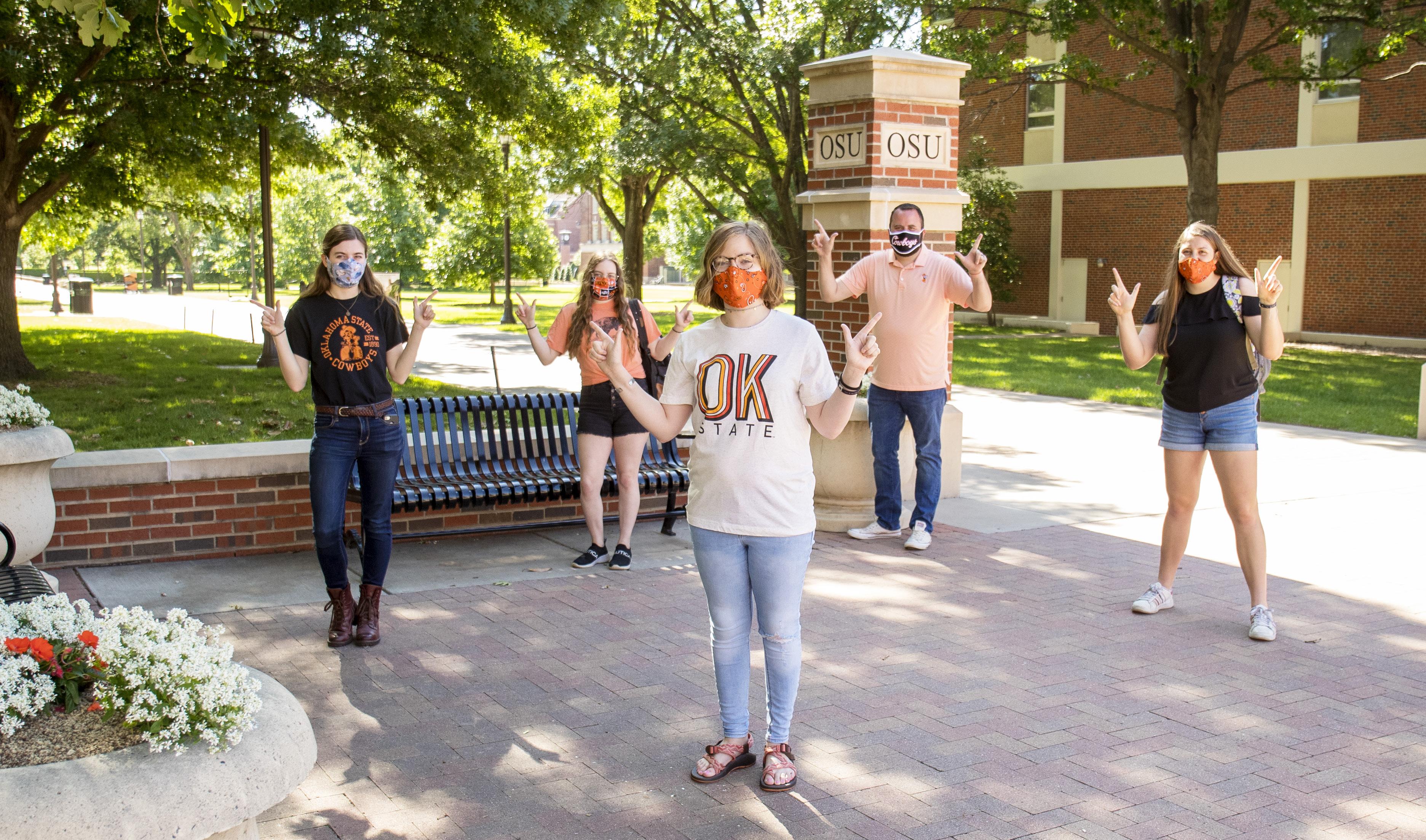
The Cowboy Family comes together when things get tough, and this moment in history is no different. The repercussions of COVID-19 are still building, and many OSU students and their families face financial uncertainty because of the global pandemic. Requests for emergency funding and needbased scholarships are at an all-time high. So, too, are the opportunities to make a difference through the Brighter Orange, Brighter Future scholarship campaign.
Together, we can make sure the Oklahoma State University Cowboy Family stays strong.
Oklahoma State University’s College of Arts and Sciences recognizes and honors some of our outstanding alumni whose accomplishments and service are tangible evidence of their distinction. Arts and Sciences alumni awards include Hall of Fame induction, Distinguished Alumni recognition and the Rising Star award.
The College of Arts and Sciences honors and celebrates alumni who embody the qualities that make OSU an extraordinary place to learn and grow. Inductees are College of Arts and Sciences alumni who are recognized by their department as Distinguished Alumni for demonstrating excellence and leadership in their careers and making significant contributions through distinguished service.
The College of Arts and Sciences recognizes alumni who bring distinction to OSU through extraordinary achievements in their fields and have demonstrated records of distinguished service. Representatives from each department of the college choose the recipients of this prominent award.
The College of Arts and Sciences recognizes alumni who have graduated in the past 10 years and already reached a major milestone in their careers, displayed exemplary service to the community, and/ or proven their commitment to volunteerism.
he 2019 Hall of Fame Ceremony was held Sept. 27 in the Wes Watkins Center on the Stillwater campus. The 2020 ceremony has been postponed due to the COVID-19 pandemic.
FOR MORE INFORMATION AND TO NOMINATE AN INDIVIDUAL, VISIT CASHONORS.OKSTATE.EDU.
Tamey Anglley
B.A. Music ’01, M.M. ’03
Alex Bagby
B.S. Statistical Mathematics ’83
Ruth Baruth
B.S. Sociology ’73, M.S. Psychology ’75
Frank Bright
Ph.D. Chemistry ’85
Tom Brown
M.A. History ’71, Ph.D. History ’74
Martha Burger
B.S. Medical Technology ’73
Greg Casillas
B.S. Geology ’83
Val Castor
B.S. Geography ’85
Peter Exline
B.S. Philosophy ’69
Bernard Fuemmeler
M.S. Psychology ’98, Ph.D. Psychology ’01
Scott L. Huston
B.S. History ’76
Bob Martin
B.S. Computer Science ’92, MBA ’97
Ronda Chapman McKown
B.S. SMSC ’89
Julie Nash
B.A. English ’91
Alan Prather
M.S. Botany ’90
Ron Schaefer
B.S. Communication Disorders ’72
Michelle Shinn
B.S. Physics ’78, M.S. Physics ’80, Ph.D. Physics ’83
Dana Stone
B.A. German ’78, B.A. French ’78
David Swank
B.A. Political Science ’53
James Truscott
B.S. Hotel and Restaurant Administration ’62
Clay Turner
BFA Graphic Design ’80
Brent Butcher
B.S. Sociology ’09
Maddy Cunningham
B.S. Multimedia Journalism ’16, B.A. Theatre ’16

ARDOTH A. HASSLER
B.S. Mathematics ’72
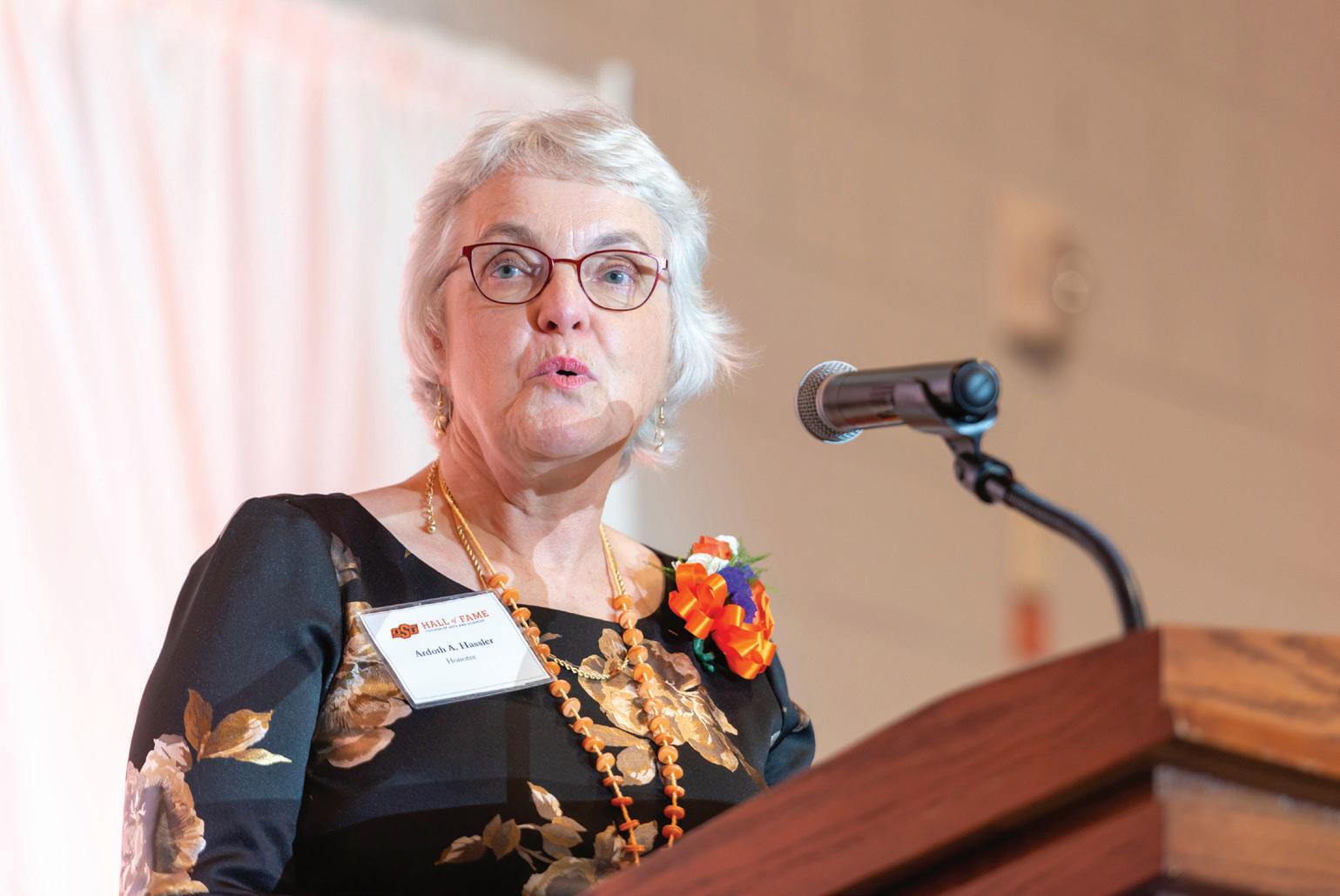
AArdoth A. Hassler earned a bachelor’s in mathematics from OSU, followed by a master’s in biostatistics from the University of Oklahoma Health Sciences Center.
Hassler began her career as a scientific programmer and during the next 45 years, she was a leader in computing and information technology in higher education.
During her career, Hassler had broad responsibilities relating to academic computing, support for research, and user services; policy, planning and budget; information security; information systems; and headed
institutional research. An Oklahoma City native, she worked at the OUHSC and the (now) University of Central Oklahoma. Hassler moved to Maryland in 1979 to serve as head of computing at the Catholic University of America. She moved to Georgetown University in 1995 and retired from there as associate vice president for University Information Services after 22 years. From 2007-2011, Hassler was on loan to the National Science Foundation as a senior IT advisor. Her work included establishing cybersecurity best practices for large research facilities. Hassler was a longtime member of the American Statistical Association
and the Association for Computing Machinery, which she joined as an OSU student. She has over 75 presentations and publications, and served on the Boards of the InCommon Federation, Seminars in Academic Computing, and more. She also led and/or participated on committees for EDUCAUSE, Internet2, SAC, ACM SIGs, and the NSF Annual Cybersecurity Summit.
In retirement, Hassler enjoys choral singing, quilting, volunteer work, traveling and hiking with her husband, James M. Short. She makes and donates several Quilts of Valor and Quilts for Kids annually. Hassler and her husband have one son, Kyle Hassler Short.
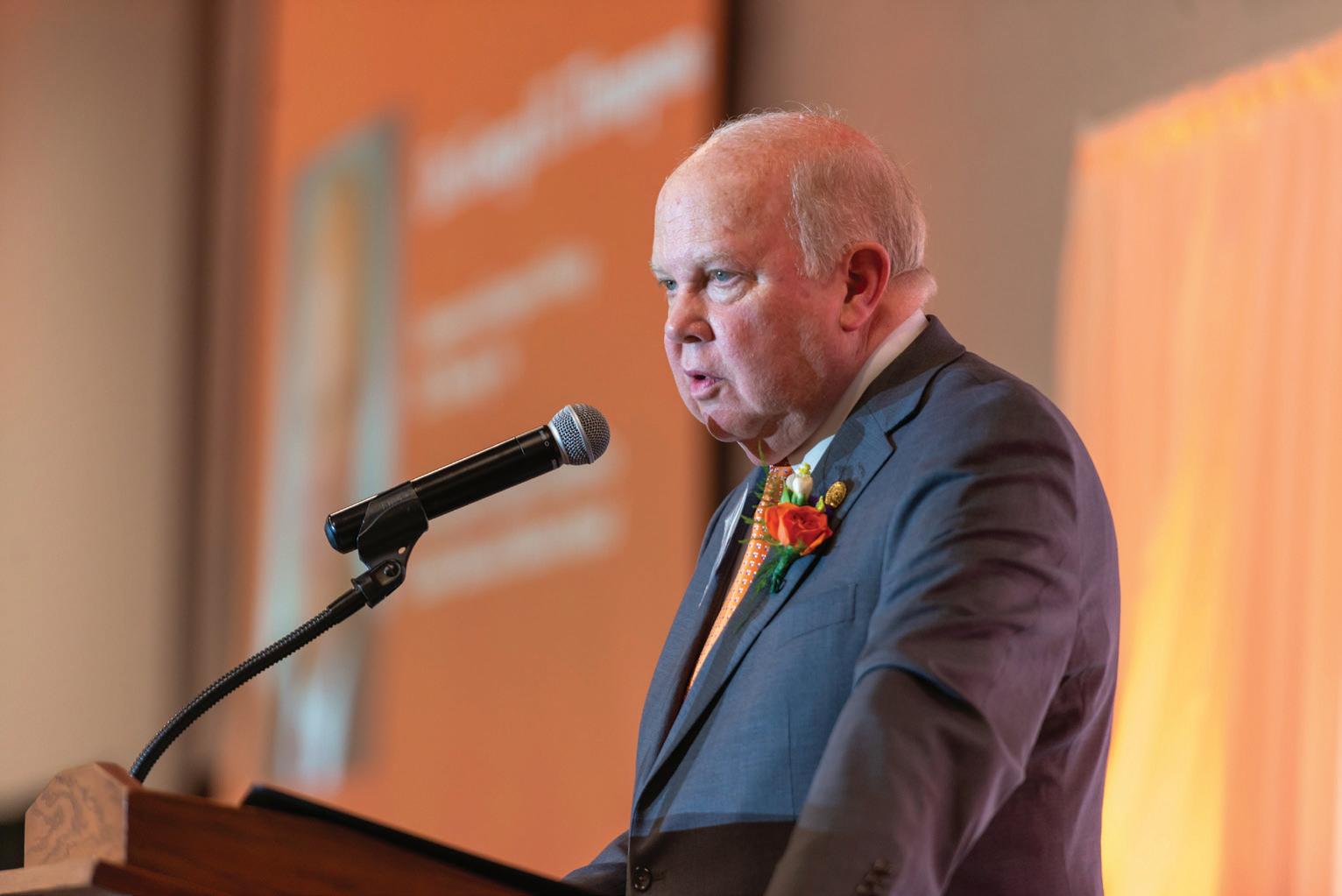
GGeorge H. Thompson, M.D., is the past director of Pediatric Orthopedics at Rainbow Babies and Children’s Hospital and professor emeritus of Orthopedic Surgery and Pediatrics at Case Western Reserve University in Cleveland. He was raised in Oklahoma City and graduated from OSU in 1966 and the University of Oklahoma School of Medicine in 1970. He did orthopaedic surgery residency at UCLA Medical Center (1970-1972; 1974-1977). Following residency, he was a fellow in pediatric orthopaedic surgery at the Hospital for Sick Children in Toronto, Ontario, Canada (1978) and then joined the faculty at Case Western in 1979. He was the director of the division of pediatric orthopedic surgery from 1987 until 2019. Currently, he is the executive editor of the Journal of Pediatric Orthopaedics, the president and CEO of the SICOT Foundation, chair of the
Shriners Hospital for Children Medical Advisory Board, and the Scoliosis Research Society Historian. He is the immediate past president of the International Federation of Pediatric Orthopaedic Societies and SICOTUSA, the past president of the Ohio Orthopaedic Society, the Pediatric Orthopaedic Society of North America, the SRS, and past deputy editor of Pediatric Orthopedics of the Journal of Bone and Joint Surgery American Thompson has received numerous awards including the UCLA Outstanding Surgical Intern Award, the American Orthopedic Association North American Traveling Fellowship, the POSNA Arthur H. Huene Award, the SRS Lifetime Achievement Award, the UHCMC Distinguished Physician Award, and the POSNA Distinguished Achievement Award. He has had 175 visiting professorships or guest lectureships. He has published 193
GEORGE H. THOMPSON B.S. Physiology ’66
peer-reviewed articles, 99 chapters in textbooks and edited five textbooks. He has presented more than 1,000 regional, national and international lectures. Although now retired from clinical practice, he remains very busy academically. His replacement at RBCH will hold the newly established George H. Thompson, M.D. Endowed Chair in pediatric orthopedic surgery. Prior to retirement, he was chosen as an inaugural member of the POSNA Hall of Fame. He was also selected to lead the 2019 SRS Traveling Fellowship. Most recently he became the interim chief medical officer for Shriners Hospital for Children.
Thompson has been happily married to his wife, Janice (’67) for 52 years. They have four children and seven grandchildren. They are avid collectors of 18th and early 19th century American antiques and decorative art.
Donors Bill and Diana Beaulieu help OSU strengthen its relationship with the Oklahoma Aquarium
The Oklahoma Aquarium and its Foundation Board have been working closely with Oklahoma State University and donors Bill and Diana Beaulieu to create new intern programs and engineering projects for OSU students. Together, they are laying a path that will propel students to greater success in their careers.
The Beaulieus are not OSU alumni, but their two children are.
The entire family has embodied what it means to be a Cowboy and, thanks to the parents, the connection between OSU and the Oklahoma Aquarium, located in Jenks, has never been stronger. Bill Beaulieu is chair of the Helmerich Research Center Advisory Board, and Diana serves on the Oklahoma Aquarium Foundation Board. The two have been instrumental in creating and funding many internships and student-oriented opportunities with the aquarium.
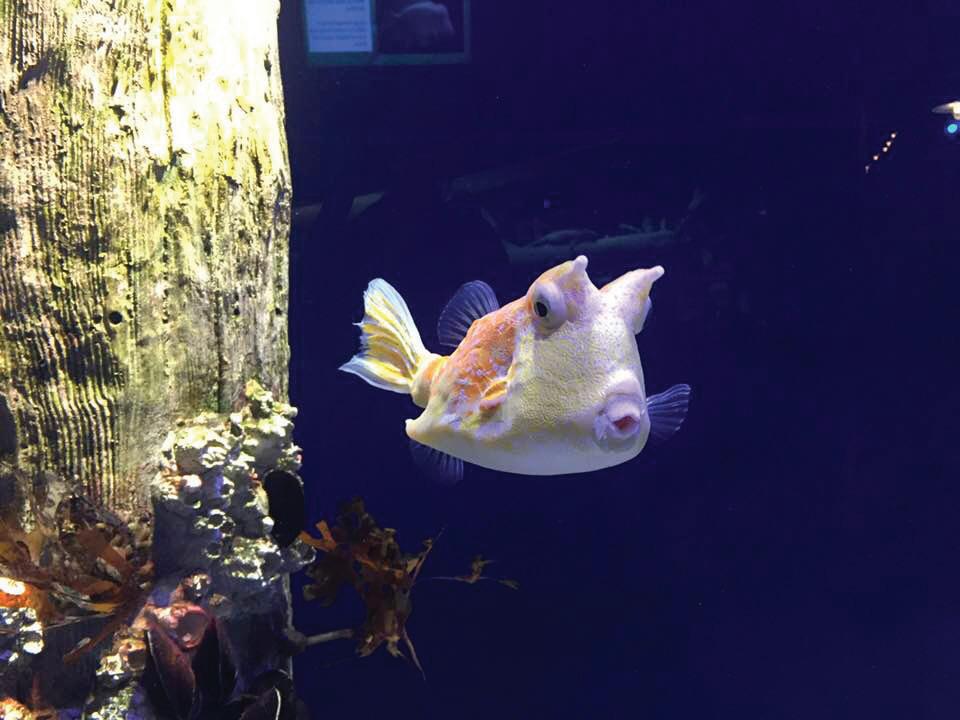
The Beaulieus fund a research intern position that allows an OSU biology student to work with the aquarium’s director of education and research, Ann Money, on research projects.
“From our experience, internships are an essential part in the education of students and in their preparation for postgraduate work or employment,” Bill Beaulieu said. “Diana and I have the long-term goal of supporting education, and we have found ways to do that through interns who are being educated in fields we have a strong interest in.”
Money said that being able to offer paid internships creates the opportunity for more students who could benefit and learn from the experience. The Beaulieus funded a position held by Lindsey Duncan, a 2019 microbiology graduate.
“My internship at the Oklahoma Aquarium was a huge opportunity for me to dedicate my time to research I was working on with Ann Money,” Duncan said. “They were very generous and checked in on me many times throughout my two years in the internship to see how I was also doing in school and in my personal life.”
They also inspired others to support internship positions, like the one that recent graduate Hallie Moss held. Moss, a 2020 environmental biology and ecology and conservation biology graduate, spent the past three years as the research intern with the aquarium.
“The majority of internships available to undergraduates, specifically undergraduates in science fields, are unpaid,” Money said. “This limits the experiences for students who are unable to afford the travel and time away from paying jobs.”
Having internships funded by donors such as the Beaulieus creates incredible opportunity and impact for students.
Bill said he was inspired to connect OSU-Tulsa with the Oklahoma Aquarium after a behind-thescenes tour, where staff members shared several ways they wanted to improve processes and existing procedures.
“This sparked an idea of pairing the Oklahoma Aquarium’s needs with the OSU senior design project requirements,” he added.
“I think internships like this are so important because they teach you things that you can’t learn in a classroom but are so important for the workplace,” Moss said. “I finished my undergraduate degree in May 2020, and I already have three years of experience working at an aquarium. That’s so incredible to me, and I just feel

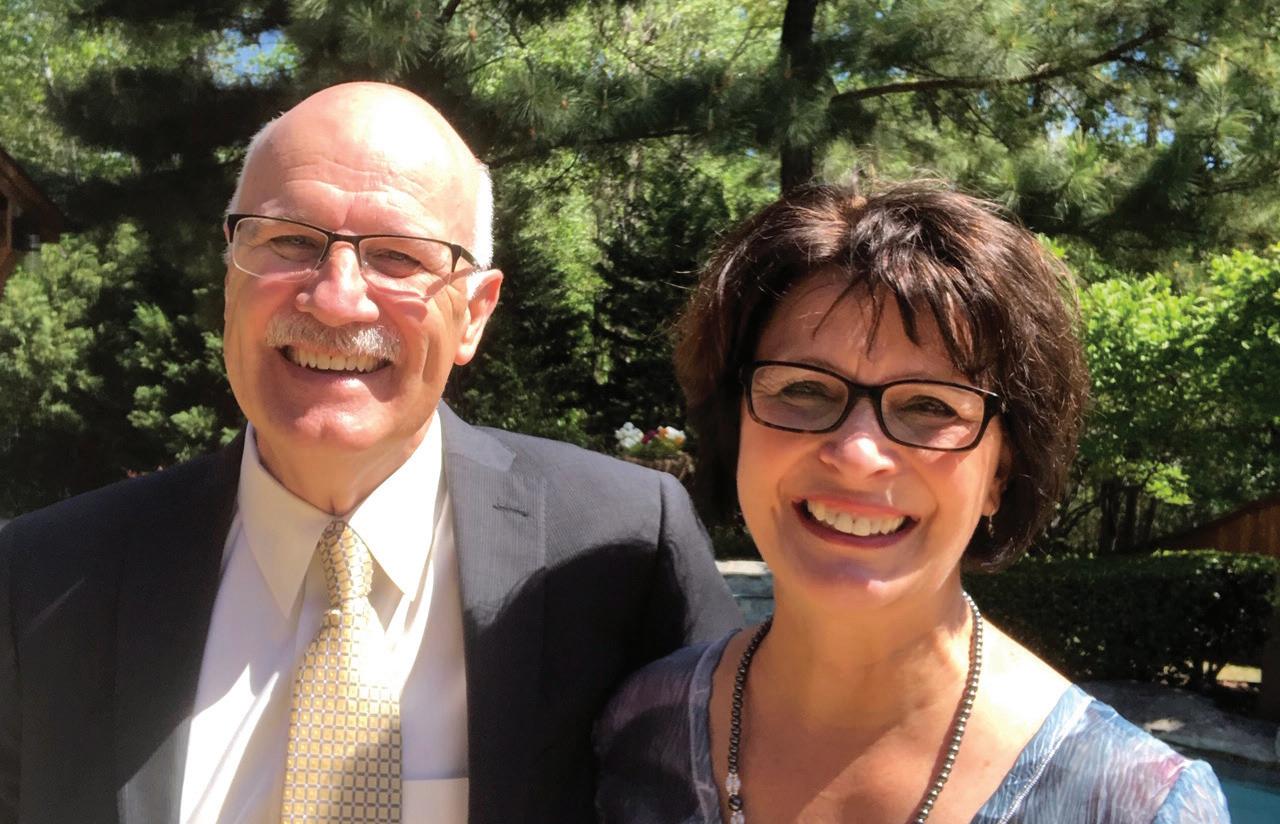
so lucky that I even had this opportunity in the first place.”
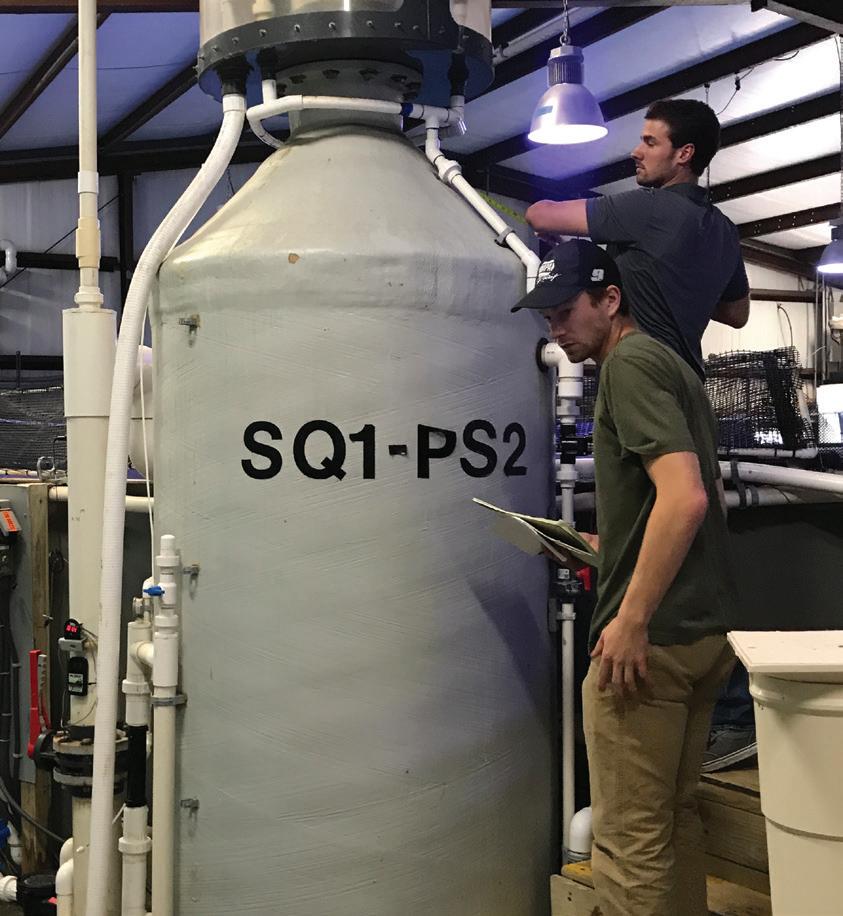
Along with internships, the Beaulieus helped secure a partnership between the aquarium and senior design engineering students at OSU. Seniors in Tyler Worden’s classes spent their final semester working on various engineering projects to improve the aquarium.
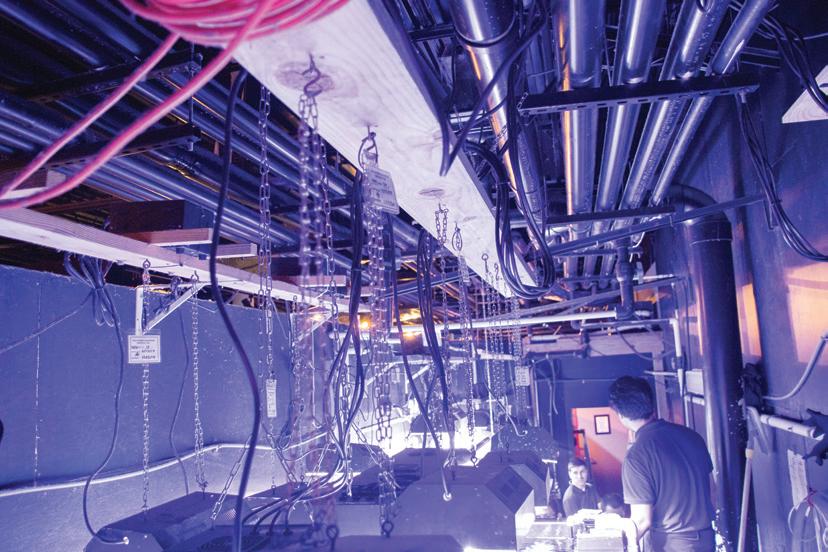
In March 2020, the Oklahoma Aquarium Foundation Board voted to fund two of the group projects completed by senior design students. The first was a system for maintaining lights on the shark tank, and the second was a platform for the protein skimmers. These projects will improve the safety and efficiency of the aquarium.
In the last year, the Beaulieus also developed and funded an engineering intern position that mirrors the one created for research. This position will assist with communication between the aquarium and student teams — collecting data and information on their projects while implementing them.
The partnership between OSU, the Oklahoma Aquarium and the Beaulieus has benefited all level of students. The next critical scientific breakthrough or aquatic engineering marvel may very well be realized through this continued partnership.
To support OSU and its partnership with the Oklahoma Aquarium, contact Laura Ketchum at 405-385-0701 or lketchum@osugiving.com .
The Oklahoma State Scholar Society is only a few years old, but it has already amassed a membership of some of the best and brightest young minds in the state. Each year, 50 semifinalists are chosen based on a minimum GPA of 3.8, minimum ACT score of 27, OSU application essays and leadership résumé. Through a series of phone and in-person interviews, five students are offered OSSS fellowships and receive up to $74,500 in scholarships, including a onetime study abroad stipend. This year, three of the five OSSS fellows have declared majors within the College of Arts and Sciences: Makinley Kennedy, sports media and political science; Sarah Short, plant biology; and Meg Jackson, political science and music.
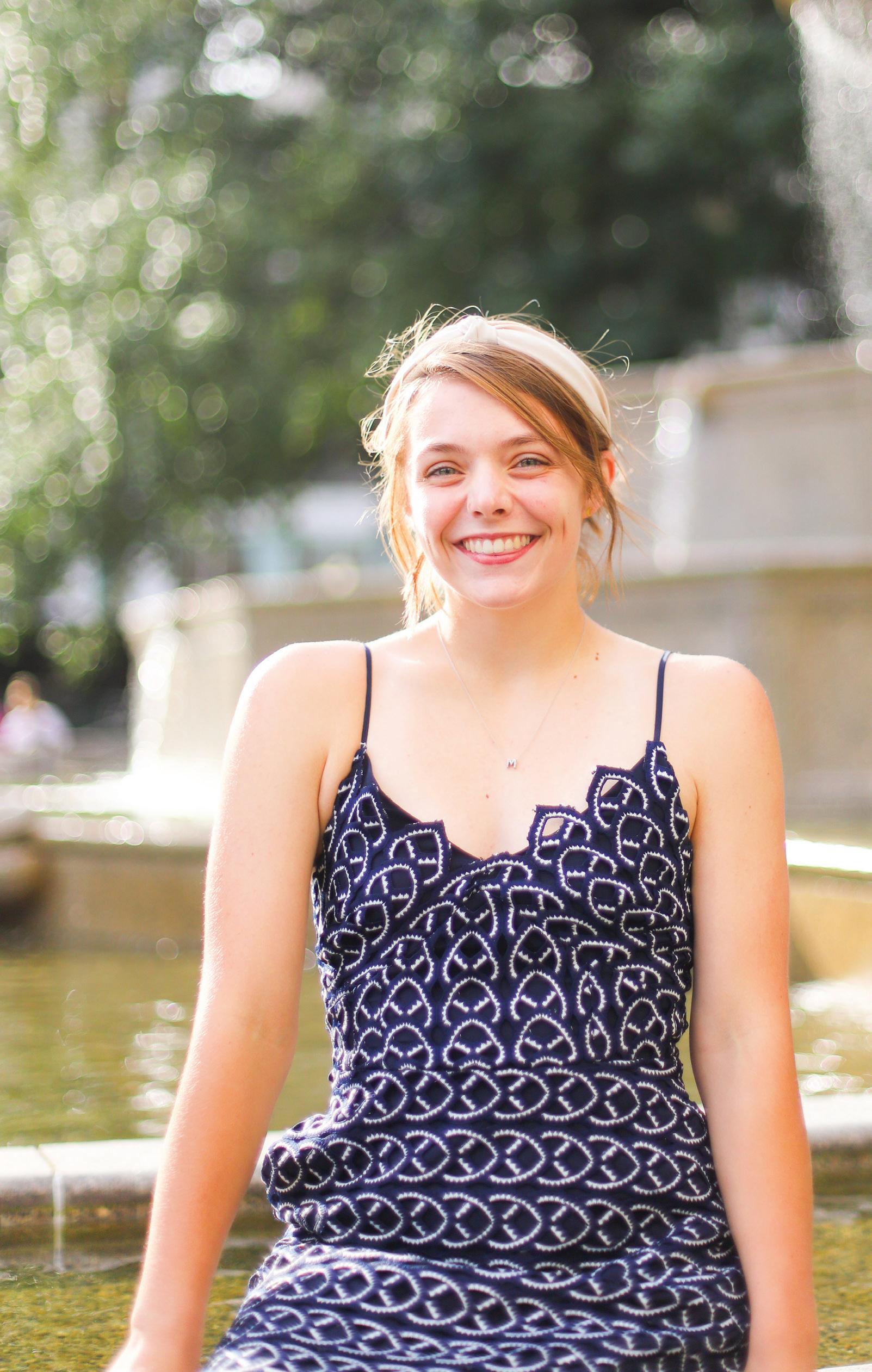
When Lawton, Oklahoma, native Makinley Kennedy received an email from OSU telling her she was an Oklahoma State Scholar Society semifinalist, she was surprised.
“I honestly I thought it was a hoax,” she said.
But she was soon interviewing on Stillwater’s campus for a chance to become an OSSS fellow. A short while later, she received another dose of unbelievable news.
“It’s so vivid in my mind,” Kennedy said. “I was on my couch watching TV when I got a text message with a video of President Burns Hargis saying, ‘Congratulations, you’re a fellow.’ I rewatched it because I thought, ‘I didn’t hear that right. That’s not right.’ But it was!”
The MacArthur High School graduate applied to two schools besides OSU in playful rebellion of her Cowboy heritage.
“My whole family has gone to OSU, so I thought, ‘I’m not going to OSU. That’s the expected thing,’” Kennedy said. “But we bleed orange. It’s ‘Go Pokes’ all the way.”
She is studying political science and sports media, with her interest in the latter stemming from a lifetime of attending OSU games and participating in “every sport in the book,” from pole vaulting to cup stacking. During her freshman year of high school, she found an affinity for public speaking and realized she could combine it with her love of sports.
“I had the opportunity to be in a speech contest in front of a panel of judges and about 1,000 people,” Kennedy recalled. “I went on the stage and felt so at home. From then on, I knew that when I did sports media in college, I would want it to be in a speaking position.”
While the OSSS fellowship will fund Kennedy’s ambitions toward dual degrees, she said the benefits of being a member of the society are more than monetary.
“It allows you to build relationships with people who have the same
interests and goals in life,” Kennedy said. “It gives you this community of people to depend on.”
As Kennedy joins her new college community, she is quick to give credit to her existing one made up of family, friends and educators.
“I feel like it’s a testament to the hardworking people of Lawton — I
wouldn’t be here without my teachers and my parents,” Kennedy said.
“To know that a girl from Lawton, Oklahoma, can do something like this and represent her community in such a way makes me really proud. And it will allow me to put back into others the work that was put into me — to show them that hard work does pay off.”
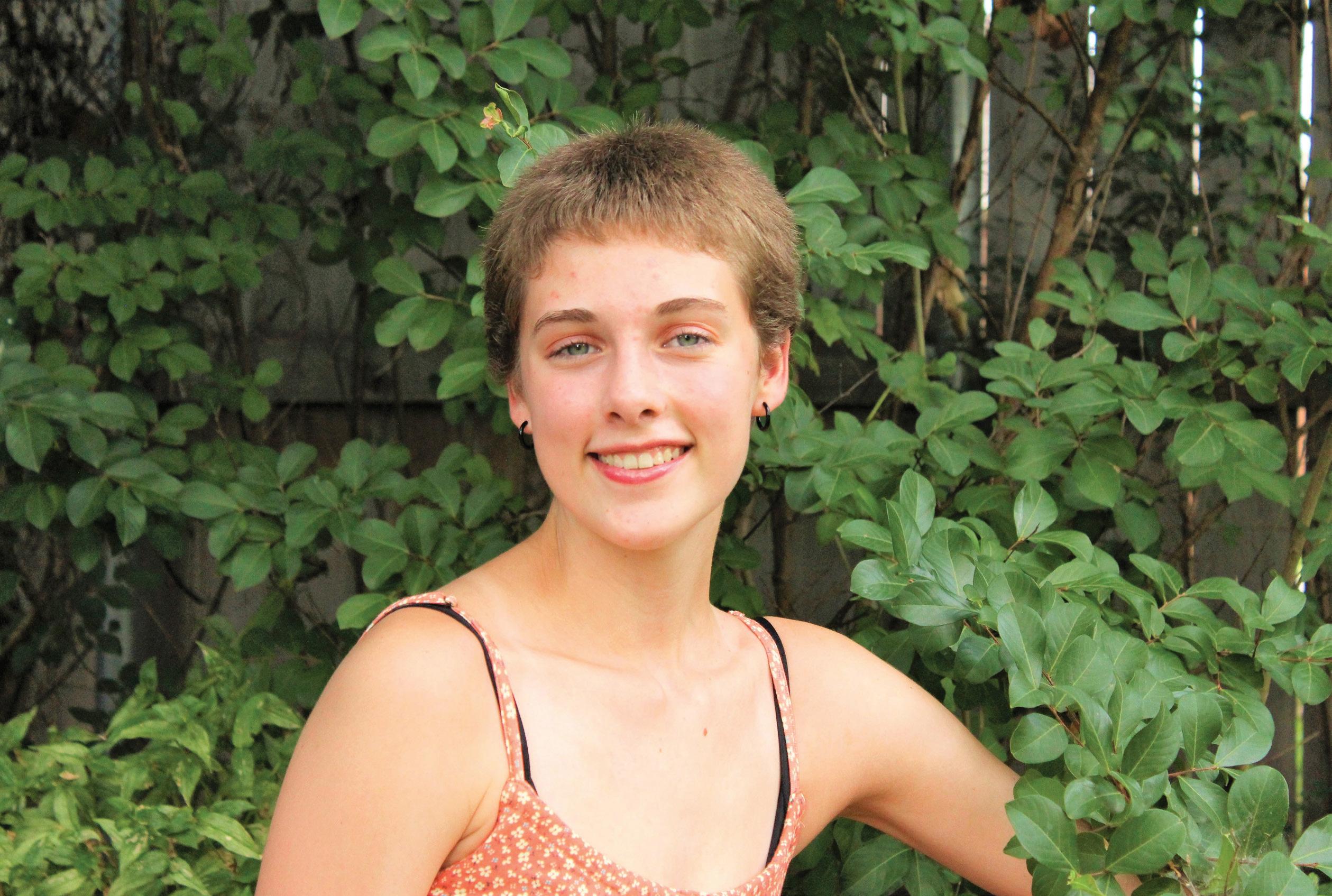
Incoming freshman and OSSS fellow Sarah Short had a plan early in high school to become a doctor. She hopped between classes at Edmond Santa Fe High School and Francis Tuttle Technology Center, preparing for a future in the medical field.
“But then I got through the year and realized I hated it,” Short admitted. “It’s so competitive and stressful. So I took a botany class junior year, loved it and decided to make a career of it.”
Following in the footsteps of her environmental scientist grandfather who also studied at OSU, Short is majoring in plant biology in the College of Arts and Sciences.
“I just love the thought of using plant biology with a minor in environmental science to study sustainability,” Short said, citing the influence of a high school environmental science class.
“Our teacher taught us about realworld issues,” she said. “We learned about doing things more sustainably in small, local communities to try to revert some of the damage that’s happening today.”
Short learned that composting, planting gardens and investing in local farms and produce are simple ways to help the environment — a passion that contributed to her selection as an Oklahoma State Scholar Society fellow.
“When they sent me an email saying I was a semifinalist, I immediately sent a screenshot of it to my mom,” she said. “We kind of freaked out about it and then I said, ‘Well, now I have to start prepping for interview questions.’”
After what Short described as a nerve-wracking interview process, she was selected as one of just five OSSS fellows for the 2020-21 school year. The news made it easy to decide between OSU and the University of Oklahoma, where she also had scholarship offers.
“Plus, I just came to love OSU more,” Short said. “The campus, and the whole environment, has a really friendly feeling to it.”
When asked about who has helped her achieve her goals, Short was unequivocal in her answer.
“Definitely my parents,” she said. “They’ve always said, ‘Whatever you want to do, we’ll support you emotionally. We’ll make sure you find something you really love in college.’”
Her family’s advice and encouragement prompted her own words of wisdom for students looking toward college.
“Don’t be too hard on yourself,” Short said. “It’s possible that you won’t get straight As and that’s OK. It works out. As long as you’re getting yourself to where you want to be, that’s all that matters. Even now I have to take a step back and realize I’m doing really well! It’s just hard to see that sometimes.”
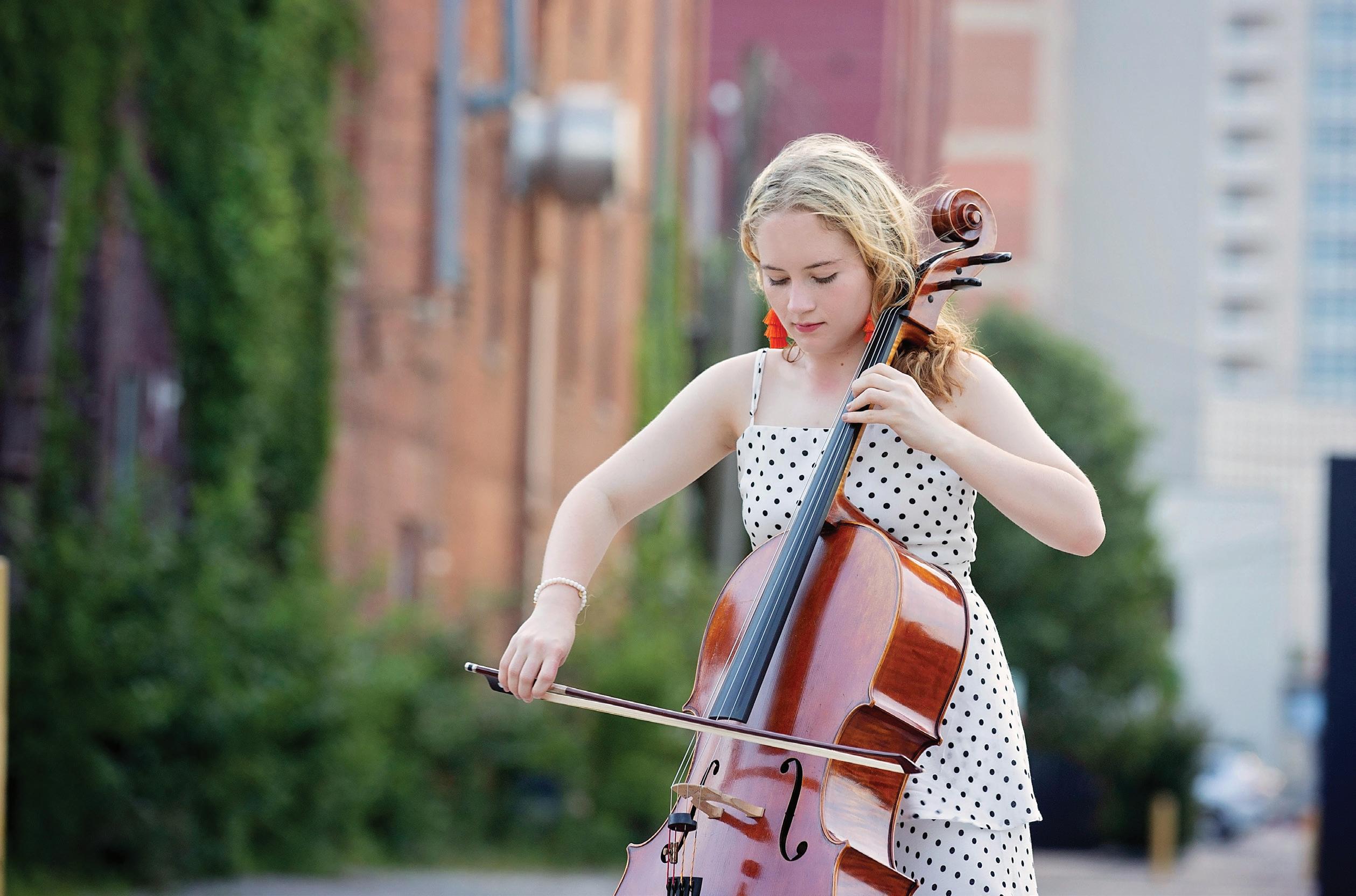
Third-generation OSU student
Meg Jackson was a Cowboy fan from day 1. The Edmond North High School graduate said her parents brought her home from the hospital in an OSU cheerleader outfit and have taken her to OSU football games since she was 6 months old. So when it came time to apply to college, Oklahoma State was obviously on the list — but so were 11 other schools.
“I wanted to make sure I saw all my options before I committed,” Jackson said.
It didn’t take long for her to choose OSU, though. In mid-March, Jackson was selected as an Oklahoma State Scholar Society fellow.
“Most of the acceptance letters from other schools didn’t come out until the end of April, but I didn’t even check them all after I got the scholarship at OSU,” Jackson said. “I was done. I was committed to OSU.”
Jackson is a pre-law student majoring in political science and music (cello) with the goal of becoming a constitutional lawyer. Her interest in politics and law began early, thanks to her mom.
“Ever since I was young, she has explained current events and taken me to vote with her,” Jackson said. “I have a whole scrapbook full of ‘I Voted’ stickers that I got with my mom. I was probably the only fifth-grader who could tell you the current polling data.”
In 2018, Jackson was able to participate directly in the political process by meeting with legislators and attending legislative sessions at the Oklahoma Capitol during the teacher walk-out.
“From there, my interest in politics snowballed into a passion,” Jackson said.
She volunteered on a gubernatorial campaign, participated in student council and still carries a copy of the Constitution for impromptu debates.
“I can’t even tell you how many times I’ve been sitting in class and someone’s tried to argue with me, saying I don’t know what I’m talking about,” Jackson said. “Then I would whip out my pocket Constitution and say, ‘Yes I do. And here’s the exact clause you’re trying to reference.’
“The sad truth is that when you’re small and a girl and you’re talking about politics, a lot of people don’t take you seriously,” continued Jackson, who is 4-foot-8. “People try to underestimate me all the time, but I like to think I make up for it with my voice and my passion. I have to know my stuff more than other people do, but I think it makes me better.”
Jackson carries that drive for improvement into her freshman year at OSU along with one final thought:
“I’m just really proud to call myself a Cowboy — officially.”



















































































CAS continues to be OSU’s largest college. make up more than 24 percent of OSU’s Fall 2020 enrollees, and more than 45 percent of all OSU credit hours are in CAS.











We added four new majors minors across the college.




Incoming CAS freshmen higher than their peers class on the ACT (25.6 vs. 24.7) and SAT (1173 vs. 1142), and have higher high school GPAs 3.62).













































































Sugar is crystallized sunlight
Sugar is crystallized sunlight
— Andrew Doust Episode 9
How and when the COVID-19 pandemic might end How and when the COVID-19 pandemic might end
Why everyone but you talks funny
Why everyone but you talks funny
— Jennifer Rudd Episode 32
— Valerie Freeman Episode 14 What is the smartest animal? What is the smartest animal?
Staying sane while staying home
Staying sane while staying home
— Thad Le ngwell Episode 19
— Jason Bruck Episode 4
Finding fame on a dare and chickens in the bathtub
Finding fame on a dare and chickens in the bathtub
— Adley Stump Episode 12