CONNECT
The official magazine of the College of Arts and Sciences
OPPORTUNITIES AHEAD
NEW DEAN GLEN KRUTZ SHARES HIS VISION FOR THE FUTURE


The official magazine of the College of Arts and Sciences
NEW DEAN GLEN KRUTZ SHARES HIS VISION FOR THE FUTURE
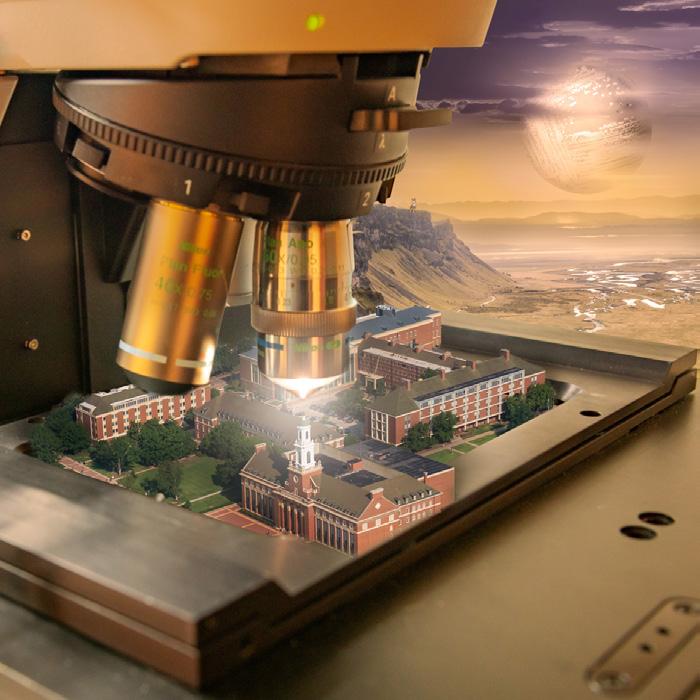

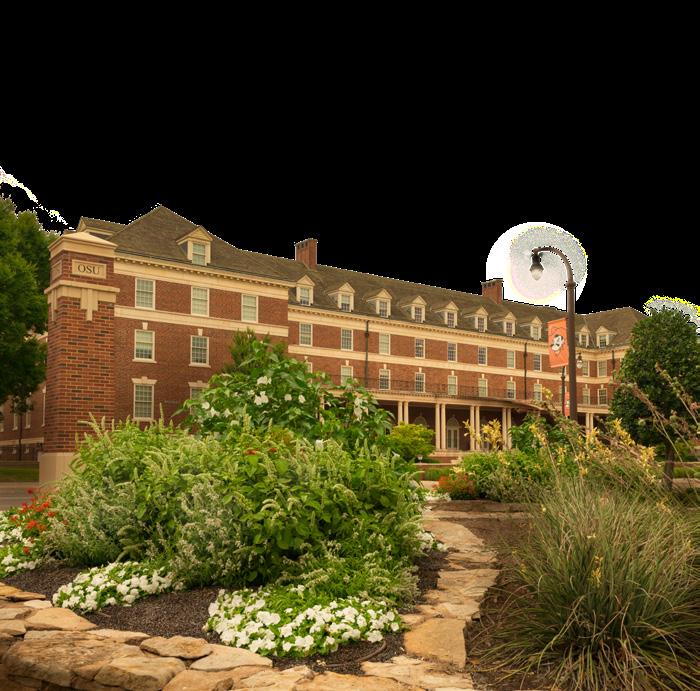



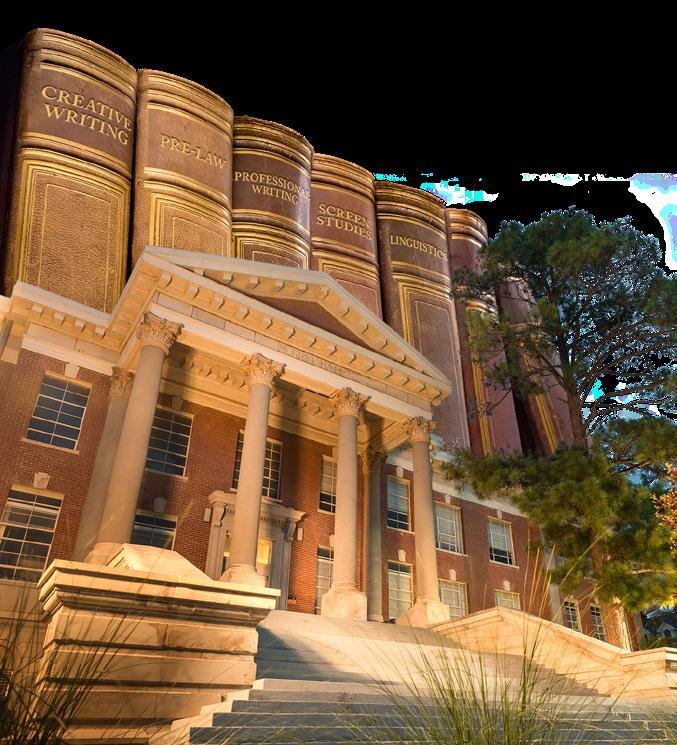
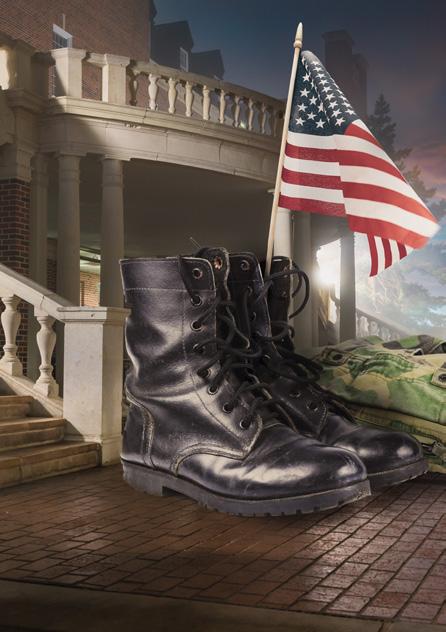
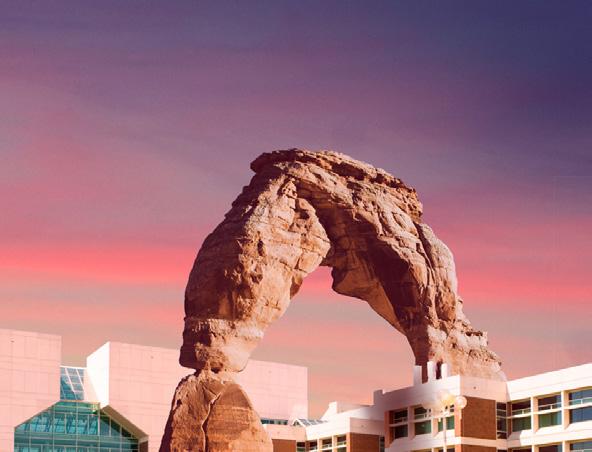
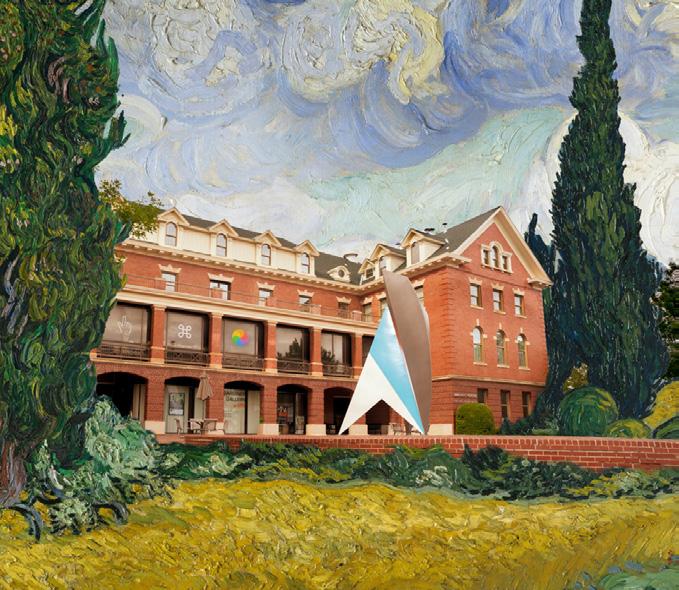
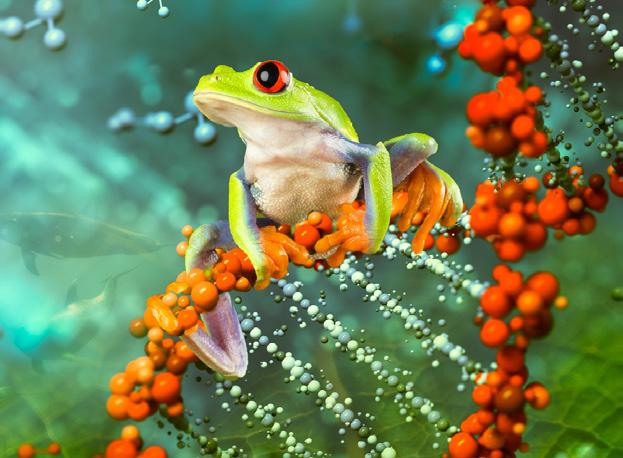
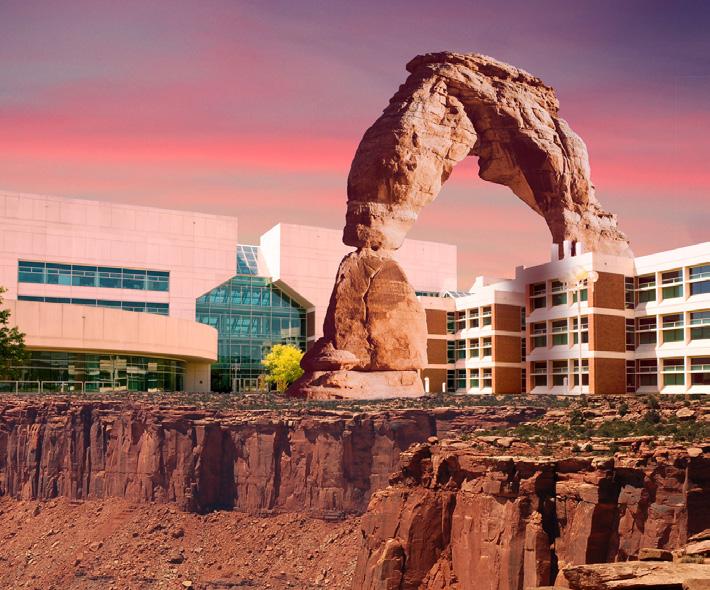
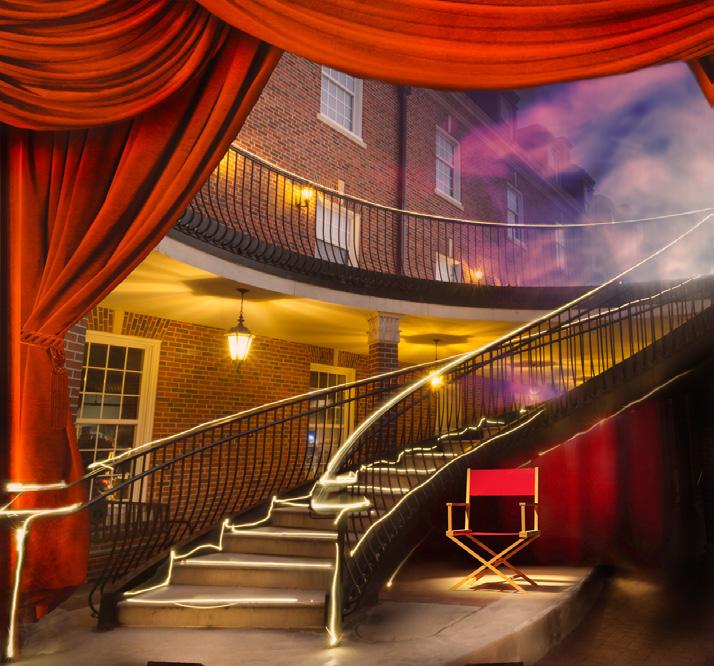
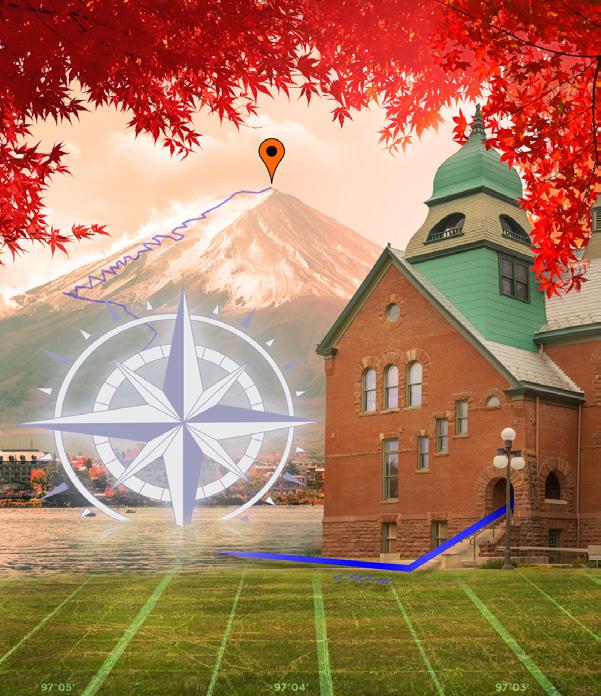
This series of images celebrates the 24 departments that make up the College of Arts and Sciences at Oklahoma State University.
Each image reflects the curriculum and other themes affiliated with the referenced department. Prints of all 24 are also on display on the second floor of Life Sciences East.
Navigate to the CAS website to see a larger version of the image as well as the source photos and written information about the symbolism and other relevant details.
cas.okstate.edu/department-photos


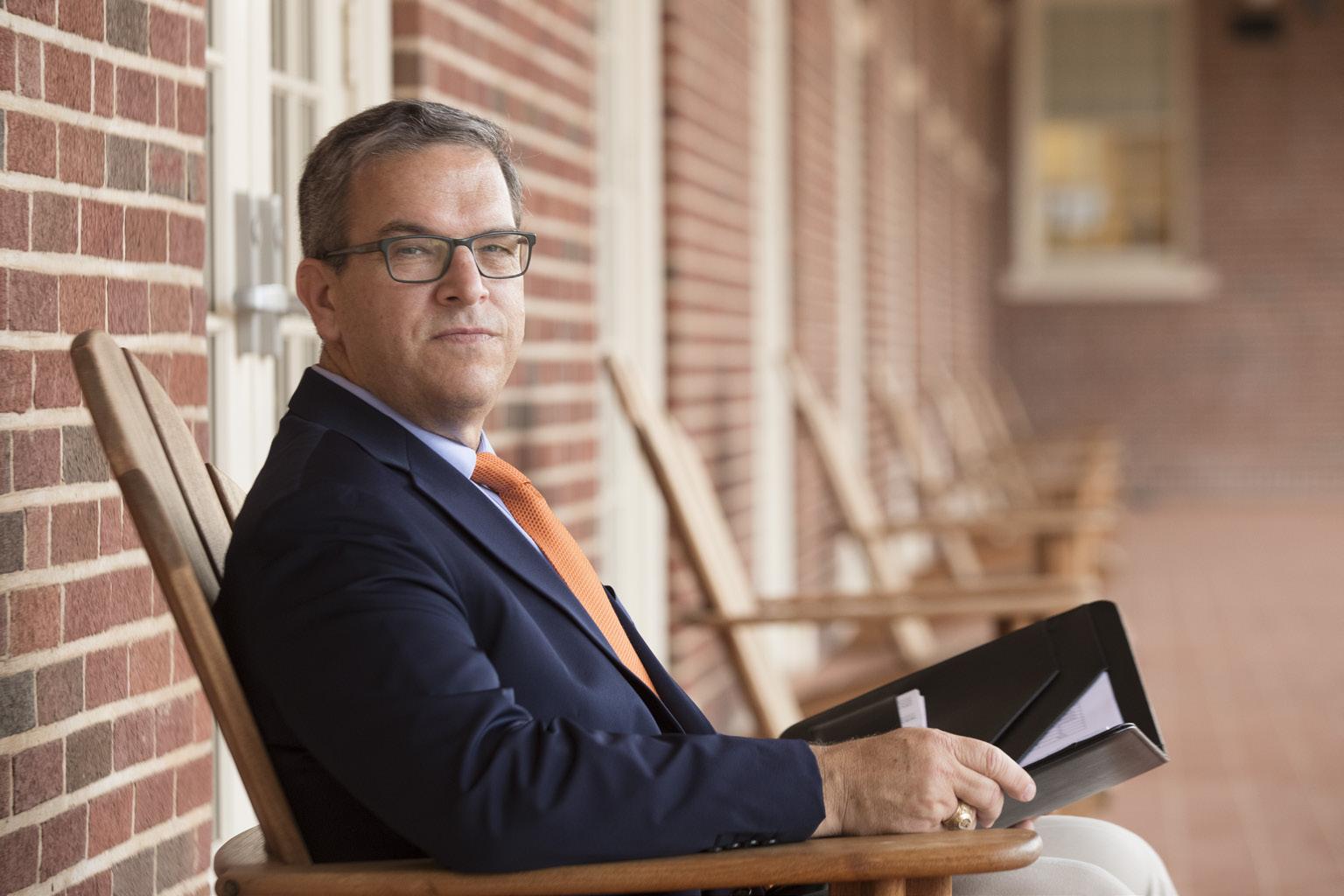
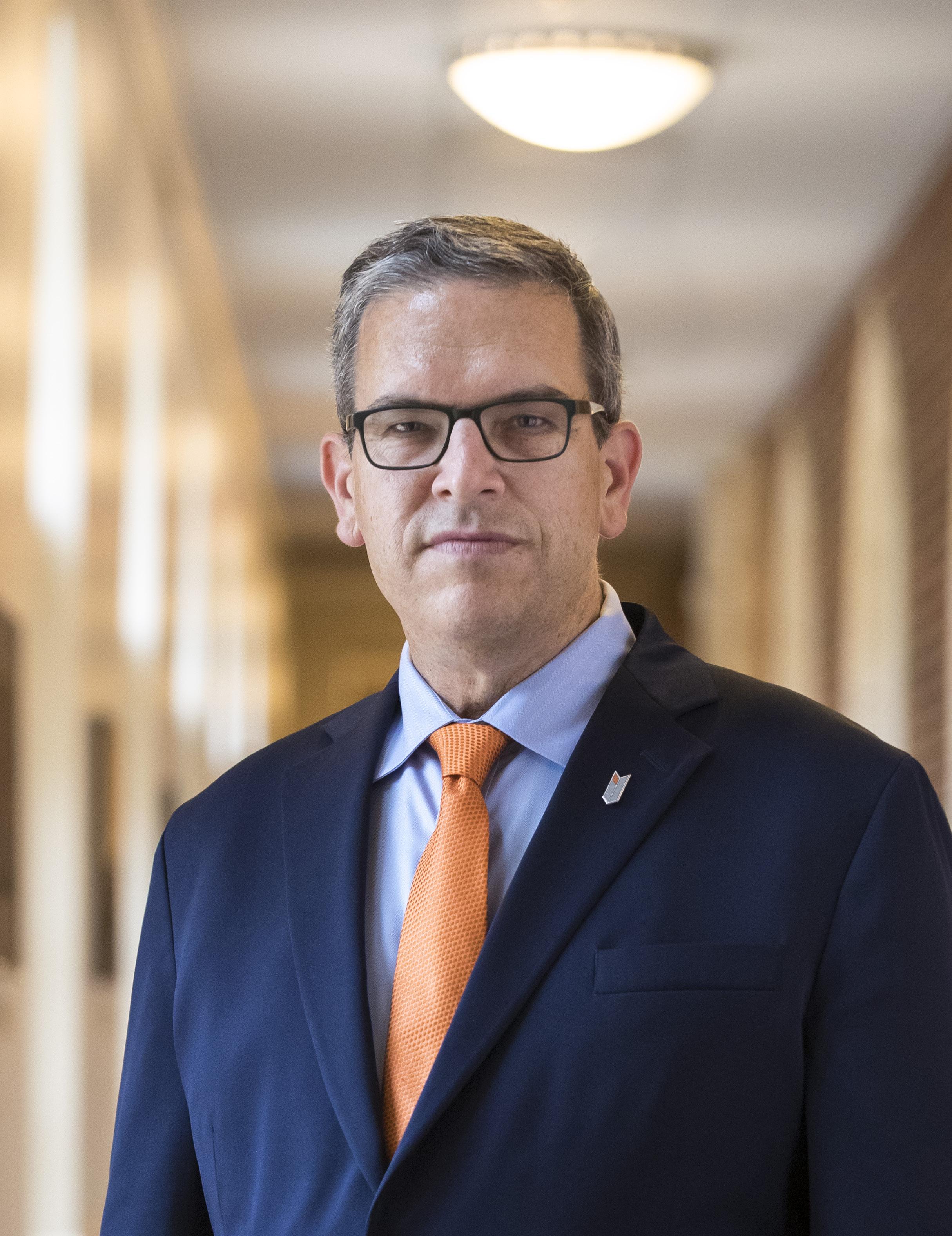
I am writing this letter less than two months into my tenure as dean of the College of Arts and Sciences. There’s a high probability that I haven’t met you yet, and you are still guessing how to pronounce my last name (it rhymes with “roots”). So I still have a lot to learn about CAS and OSU, including gaining a full understanding of the students, faculty, staff, alumni and friends who make this such a successful and friendly place.
One thing I know for sure is that OSU’s reputation for friendliness is well-earned. I have been fortunate to work at several universities known for nice people, but this place takes it to another level. Speaking of which, most universities take their school colors seriously, but OSU takes that to another level as well. I’m building up my orange wardrobe — which I love — so that I fit in with everyone else around here.
I am also certain that I am extremely proud to lead OSU’s largest college and the intellectual heart of this great American land-grant university. I have read quite a bit about Justin Morrill, who proposed the land-grant system in the 19th century because he wanted students in the heartland to get high-quality educations, just as their peers on the coasts could. He was quite vocal about these institutions being more than agricultural and mechanical trade schools. He wanted them to teach critical thinking and a grounding in the essential nature of humanity and living in the modern world to add depth to the educational experience. I am sure he would be proud of what OSU and many other land-grant institutions have become due in significant part to their offerings in the arts and sciences.
This magazine is full of stories showing CAS and OSU have a lot to be proud of. There are even a few pages with a little more information about me, my background, and most importantly, the things I’m focused on helping our college accomplish.
I look forward to meeting many of you at college events to discuss the state of CAS, and what is in store for the future. I am also available by email at gkrutz@okstate.edu
GO POKES!
Glen S. Krutz, Ph.D. Dean, College of Arts and Sciences Professor of Political Science Puterbaugh Foundation Chair
The College of Arts and Sciences has a new dean — Dr. Glen Krutz — who shares his background as well as his vision and hopes for the college. (Cover photo by Phil Shockley) 8
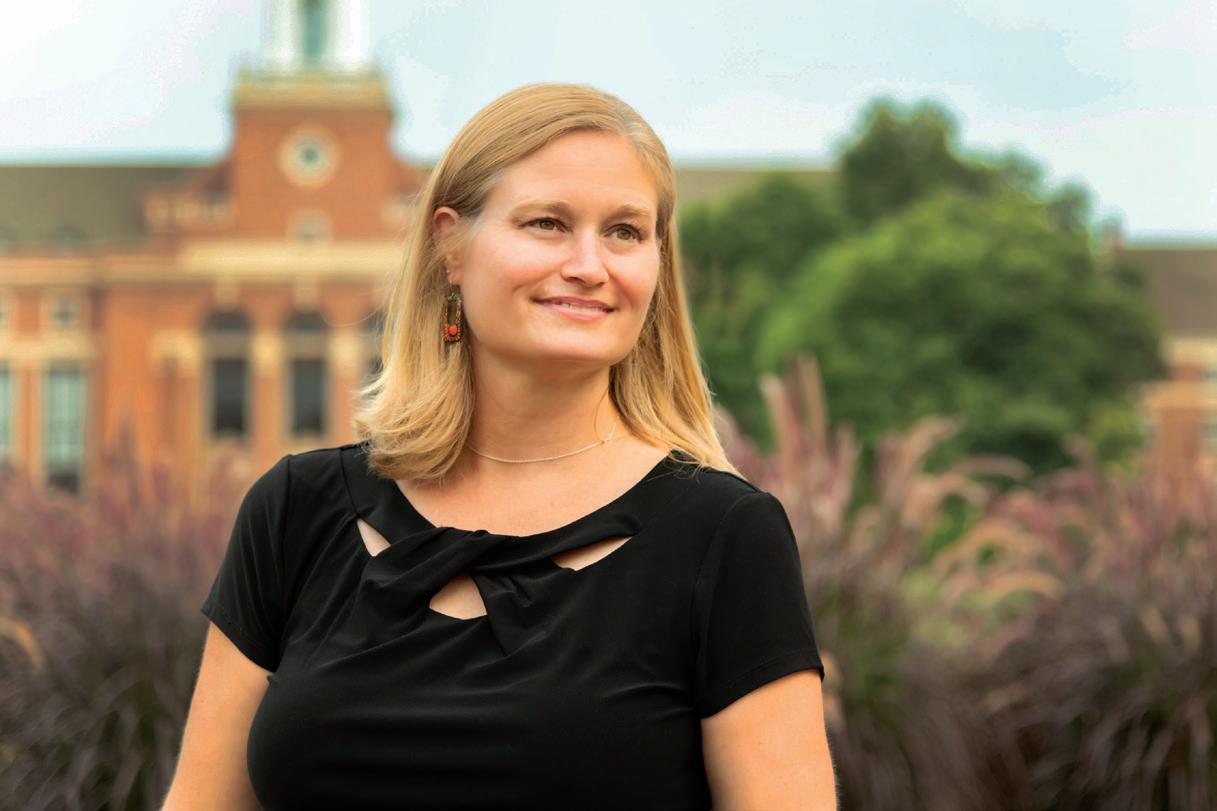
Dr. Tamara Mix shares her passion for sociology as she takes the position of head of the department.
It’s true that there’s more to life than work — but majoring in liberal arts subjects often means you can work in a field that brings your passions to work.
Dr. Jason F. Kirksey has come a long way from his childhood in Denver to being an alumnus of Oklahoma State and the university’s vice president of diversity and its chief diversity officer.
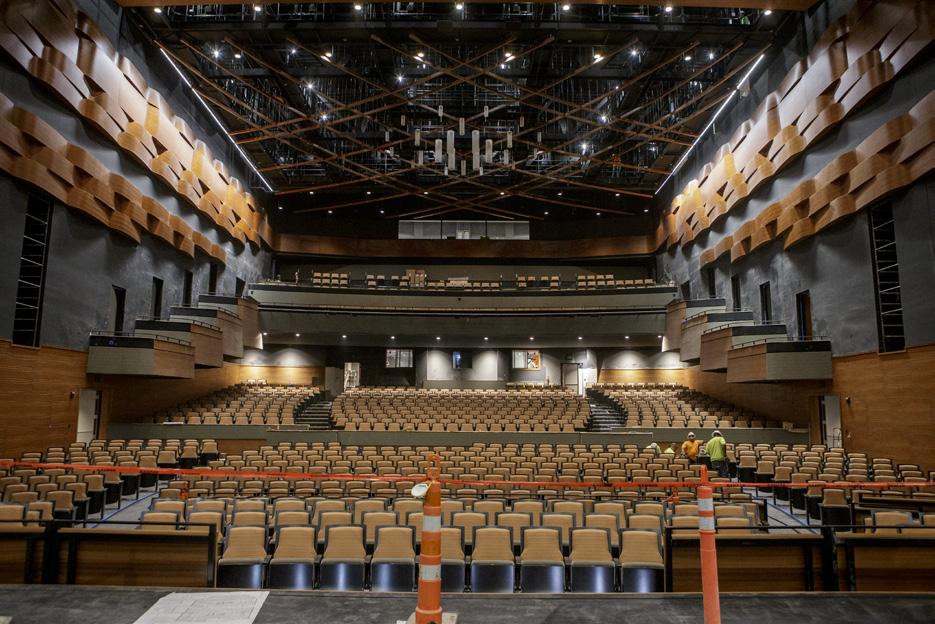
The McKnight Center for the Performing Arts is preparing for its grand opening as we go to press with this issue — and it will be simply amazing.
COORDINATOR OF COMMUNICATIONS
Jacob Longan ’05, ’13
EDITOR
Dorothy L. Pugh ’83
ART DIRECTOR
Valerie C. Kisling
DESIGNERS
Valerie C. Kisling
Jason Wallace ’03
Lucas Hess ’16
Ella Powell
Michael Molholt ’13
PHOTOGRAPHERS
Gary Lawson ’83
Phil Shockley
Jason Wallace ’03
WRITERS
Jacob Longan ’05, ’13 , Kendra Carlson Brown ’01 , Lorraine Chen ’18 , Lonna Freshley ’09 , Zach Kluver, Kevin Sharp, Kyle Stringer
COLLEGE OF ARTS AND SCIENCES
DEAN
Glen S. Krutz
ASSISTANT DEAN/OUTREACH
Bobbi Kay Lewis ’93, ’03
SENIOR DIRECTOR OF DEVELOPMENT
Laura Ketchum
YEARS INDICATE OSU CAS GRADUATES
Stillwater, OK 74078-1035; Phone 405-744-5371; email: eeo@okstate.edu has been designated to handle inquiries regarding non-discrimination policies. Any person (student, faculty, or staff) who believes that discriminatory practices have been engaged in based on gender may discuss his or her concerns and file informal or formal complaints of possible violations of Title IX with OSU’s Title IX Coordinator 405-744-9154. This publication, issued by Oklahoma State University as authorized by the College of Arts and Sciences, was printed by Modern Litho, at a cost of $4,601/6M/
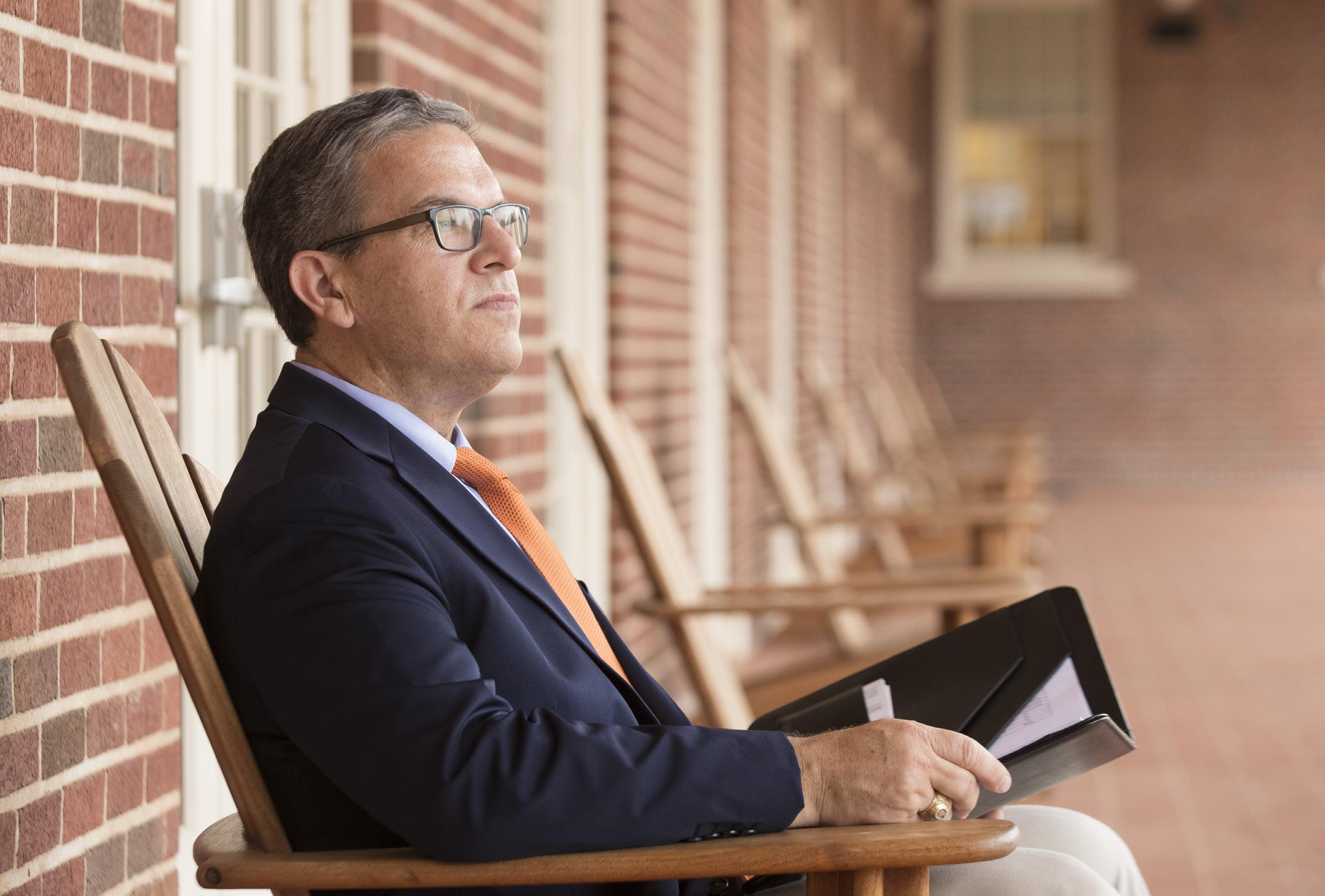
New CAS dean Glen Krutz sees opportunities in classes, research and more
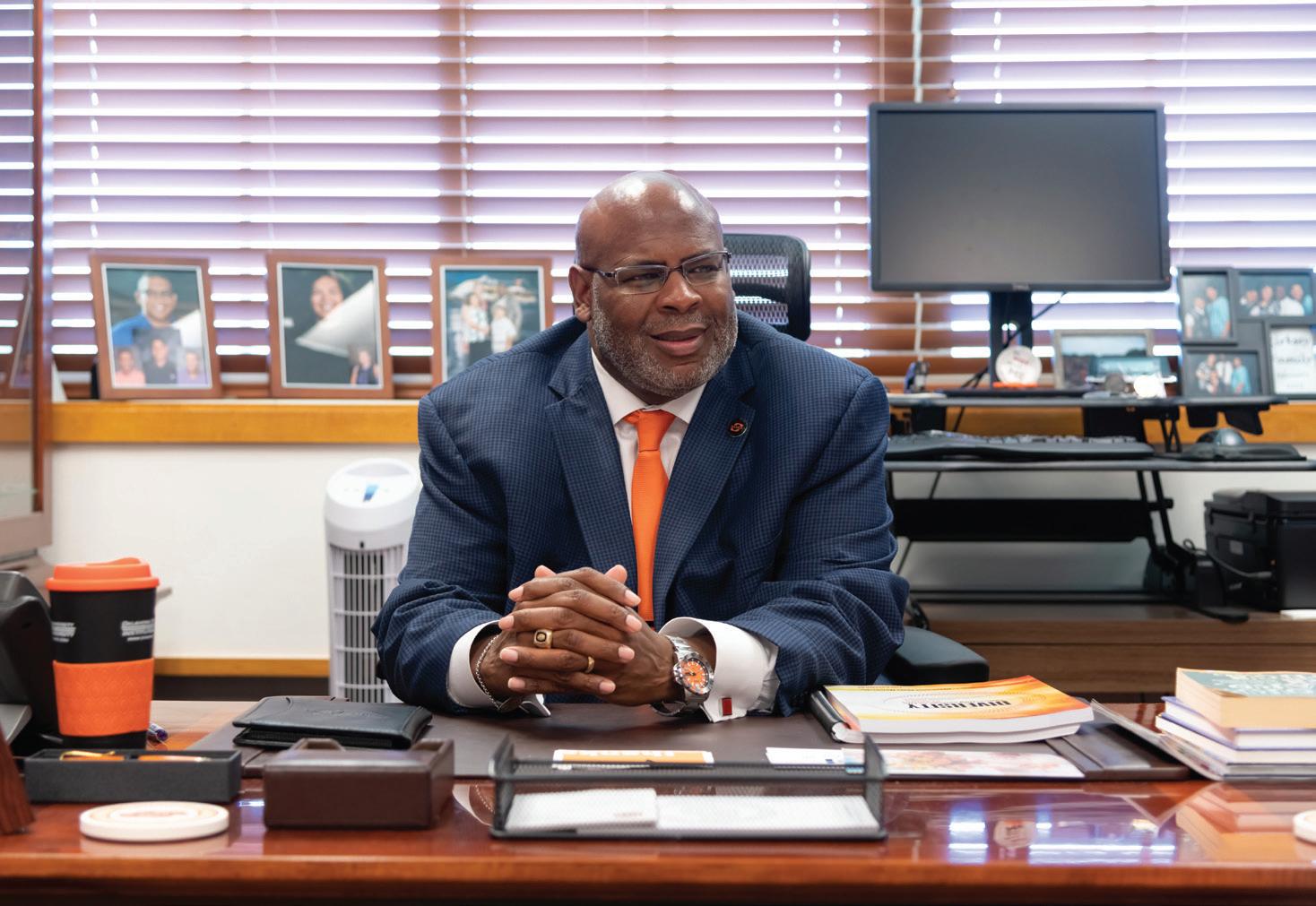
Glen Krutz wasn’t looking for a job when he heard about OSU’s search for a new dean for the College of Arts and Sciences, but this was too good of an opportunity to pass up.
“It is rare for large college dean positions to come open at major universities,” said Krutz, then the University of Oklahoma’s senior vice provost. “I talked to some people whose opinions I respect, and they thought it would be a good fit. When I came to Stillwater, I really liked the vibe. I liked the hard questions the hiring committee asked and what they said about OSU. It was a delightful exchange during an interview that would normally be stressful, not fun.”
The new dean of CAS enjoys both teaching and research. He was drawn to the opportunity to get “closer to the action” going on in classrooms and research facilities that comes with the position.
“I am also looking forward to building relationships with faculty, staff, students and alumni,” Krutz said. “In fact, I’ll need to be in contact with all of those groups regularly to be a good dean.”
His path to a career in higher administration began at the University of Nevada, Reno, where he completed a degree in political science and speech communication in 1990. He was named the outstanding senior of his graduating class at Nevada, which, like OSU, is a land-grant institution.
Because he was considering a career in politics, his first job after graduation was as a U.S. Senate staffer for Nevada’s Richard H. Bryan from 1990-1991.
“I really liked Washington, D.C.,” Krutz said. “It’s a beautiful city that should make all Americans proud. And I would say that over 90 percent of the people I worked with were good people who wanted to do the right thing for the country. I always say that good-hearted people with a servant’s ethic should consider going into politics. But when you work in the Beltway, you figure out pretty quickly whether that’s the career you want. I knew within 10 months that I loved D.C., but I didn’t want to be a lifer.”
Krutz returned to Nevada to work in what is now the Nevada System of Higher Education from 1991-94. He also completed his master’s degree in public administration and policy at Nevada in 1993. His thesis was awarded high distinction.
Then he moved on to Texas A&M University, another land-grant institution. There, he earned a doctorate in political science, with specializations in American politics, public policy and administration, and quantitative methods in 1999. He won the George W. Kunze Prize as the top graduating Ph.D. across the campus, and his dissertation, Explaining Institutional Change: The Rise and Impact of Omnibus Legislating, won
“A strong CAS leadership team is so important, and I’m fortunate to have such an outstanding group there. They will be major assets as we set out to increase student success and the impact of our stellar faculty as both teachers and researchers.”
two national awards from the American Political Science Association.
He joined the faculty of Arizona State University from 1999-2002, directing the ASU-inWashington program, spending summers in D.C.
That led to his tenure at OU, where he worked from 2002 until joining OSU on July 1. In Norman, he was a professor of political science, associate and acting director of the Carl Albert Congressional Research and Studies Center, and vice provost for academic initiatives.
He has won numerous teaching awards and mentored five Truman Scholars, a Rotary International Fellow, a Boren International Fellow, multiple Rhodes Scholar finalists and two Marshall Scholar finalists. His former MPA students dot the cities, state agencies, tribal governments and non-profit agencies of Oklahoma and North Texas. He has directed five Ph.D. students, all of whom graduated.
“The thing I’m proudest of is my work with students,” Krutz said. “Second would be writing three books.”
In 2001, building on his dissertation, he published Hitching a Ride: Omnibus Legislating in the U.S. Congress
“When I worked on Capitol Hill, I noticed that as the congressional session was coming to a close, these gigantic omnibus bills — massive packages of many bills together — were passed relatively quickly at the end of a sessions just as time was running out,” Krutz said. “I looked into the academic literature, and it always measured congressional productivity by focusing on the number of bills passed. That violated what I saw with my eyes, which was these big bills with 50 or 70 bills lumped together. Is that really the same?”
In 2009, he joined a former grad school colleague, Jeffrey Peak, to write Treaty Politics and the Rise of Executive Agreements: International Commitments in a System of Shared Powers
“We were examining how presidents increasingly use executive agreements to codify international agreements with other countries instead of using treaties, which require two-thirds approval from the Senate,” Krutz said. “That can have major implications, because they can be undone by the next administration, just like the Iran nuclear deal that Trump pulled us out of. And over 90 percent of America’s international agreements today are done in that manner.”
When the Obama administration established the Iran nuclear deal in 2015, The Daily Show with Jon Stewart contacted Krutz and Peake to better understand the context, leading to two sketches on the show.
In 2016 he was “content lead” for OpenStax’s American Government. OpenStax offers free,
downloadable textbooks as an alternative to the increasingly expensive textbooks used in most classes.
“This came from my experience teaching a large introductory American government class,” Krutz said. “Every semester, I’d have students come up to me and say, ‘I’m short on money and I can’t afford the textbook. Do you have any extra copies?’ So I started bugging OpenStax about creating one on American government. Finally they said, ‘We’d like to do this. Can you help us?’”
Krutz wrote the chapter on foreign policy and recruited colleagues to write other chapters based on his 15-page detailed outlines for each.
“It feels really good to have that out there in the market,” Krutz said. “Students are benefitting from that.”
Benefiting students is a big focus for Krutz, who strongly argues for the transformative power of higher education based on his own experience as a first-generation college graduate. His background also makes him passionate about increasing scholarship support.
“Scholarships increase access to CAS and OSU in a way that just wouldn’t be there otherwise,” Krutz said. “They help through the lifecycle of a college student’s career, increasing persistence and retention of students all the way to graduation. Ultimately, they allow students to graduate with less debt, which is an enormous benefit.”
His main priority at CAS is to improve student success. He hopes for accomplishments similar to what he oversaw at OU, where enrollment grew while student quality increased, freshman retention rose to more than 90 percent for three straight years and retention to senior year rose to 81 percent.
“I would also like to help faculty be more impactful,” Krutz said. “I like to talk about faculty as teacher-scholars. They have a nice synergy with their teaching and research together. I know I’ve gotten some of my best research ideas from teaching, and my teaching improves when I bring my research into the classroom. CAS will be at its best when faculty are focused on being excellent in both areas as well as service and community engagement.”
One way Krutz can enhance such work is his position as the Puterbaugh Foundation Chair. The endowment produces annual funds to support efforts that provide public goods through teaching, research and community engagement.
“It’s really quite an honor,” Krutz said. “I’m just elated that I have an endowed chair. Jay Puterbaugh was very successful in the business world, and he set up the Puterbaugh Foundation in McAlester (Oklahoma) to support a variety of purposes, including medicine, education and the sciences.
He had a real passion for the liberal arts, foreign languages and international travel. So I’m thinking about that and learning more about him as I decide the best use for these funds.”
He added, “A strong CAS leadership team is so important, and I’m fortunate to have such an outstanding group there. They will be major assets as we set out to increase student success and the impact of our stellar faculty as both teachers and researchers.”
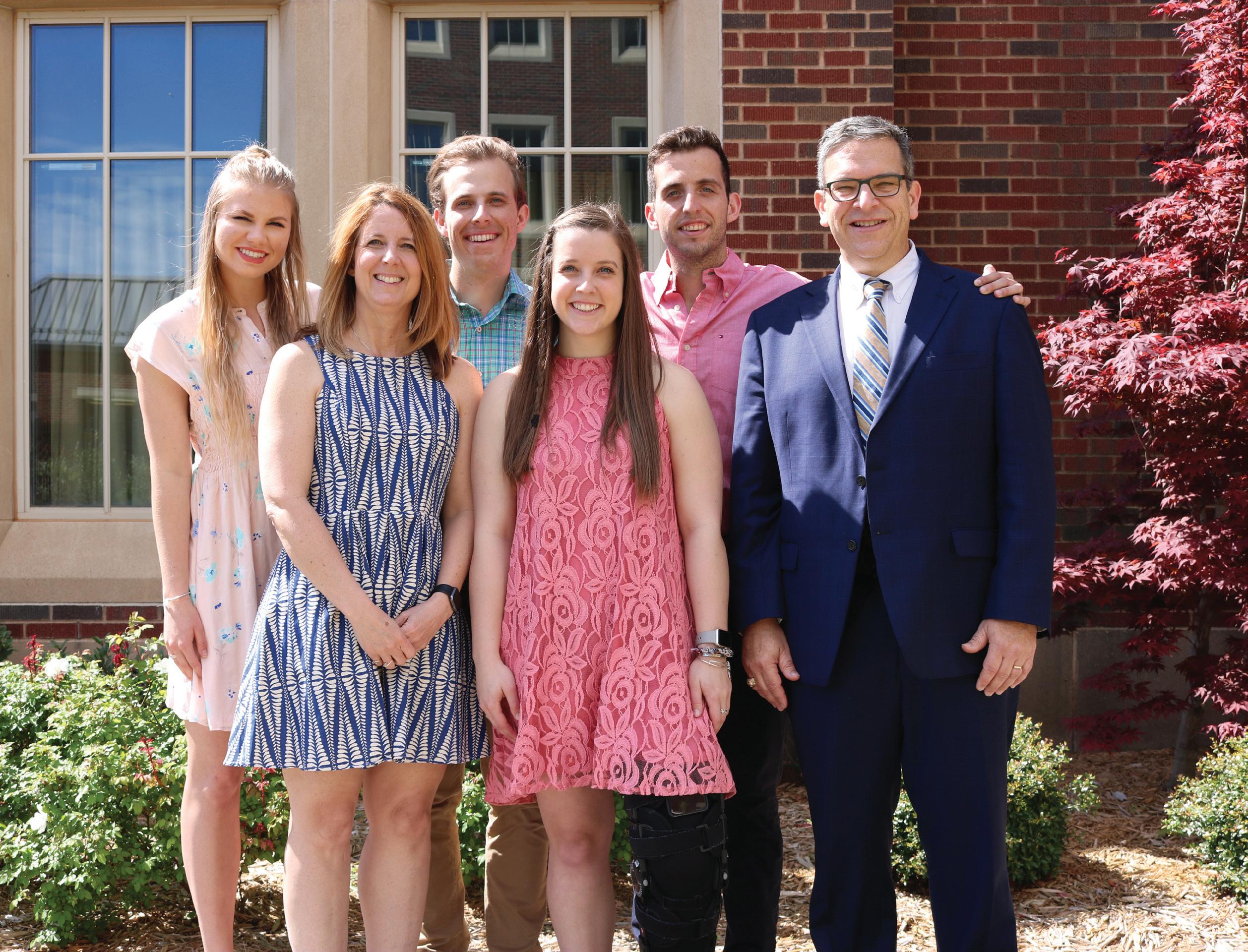
Krutz’s wife, Julie, is coding lab manager at OU’s Center for Risk and Crisis Management. They have three grown children. Matthew, 25, is a second-year medical student at OU’s College of Medicine and husband to Dominique, 24. They met as undergrads at the University of New Mexico. Ryan, 22, is a first-year law student at Saint Louis University. And Rachel, 20, is a psychology junior at Colorado College in Colorado Springs.
Tamara Mix, Ph.D., believes most people would find sociology fascinating if they understood it. The new head of Oklahoma State University’s Department of Sociology is happy to explain the discipline, her passion for it evident in her voice.
“We are interested in studying human relationships and the social structures that result from those relationships,” Mix said. “As sociologists, we consider group dynamics, group behaviors and relationships with larger social structures such as our educational system or our
government system. Many sociologists focus on application — considering how we can employ sociological theories and methods to understand and at times make positive change in the world around us.”
Tom Wikle, Ph.D., is the associate dean of academic programs for the College of Arts and Sciences. He is “excited to see Dr. Mix step up to lead” the department she first joined in 2005.
“Dr. Mix is an award-winning instructor and environmental sociologist whose fieldwork has
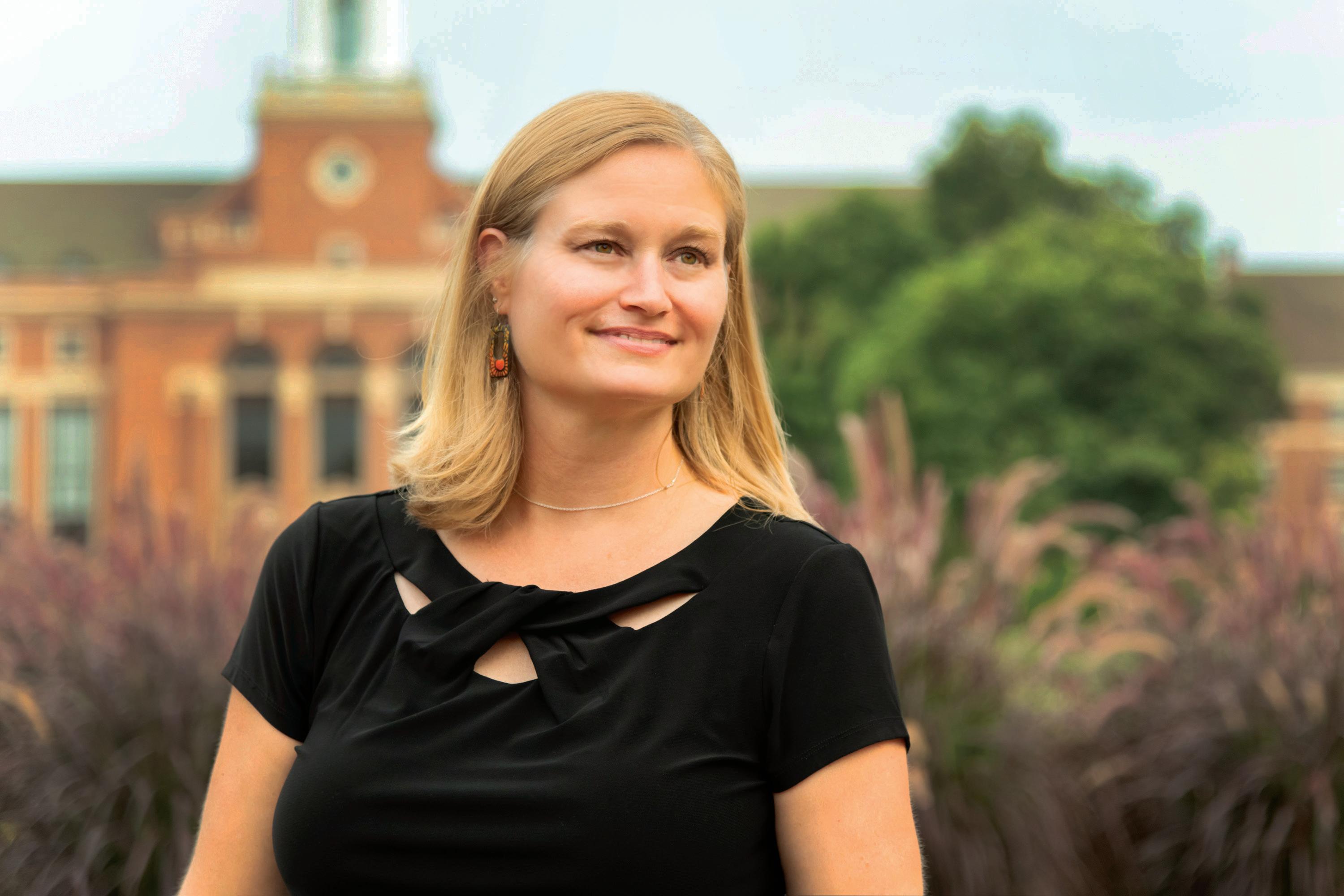
explored a wide range of community-based topics and problems,” he added.
While we may not think about it in these terms, everyone engages with social structures all the time, Mix said. Sociology helps us understand how to relate to institutions that are larger than ourselves, including at the local, state, national and global levels.
“Are some people more vulnerable?” Mix asked. “We use tools to help understand and assess that. We’re working hard to engage our students: ‘How can students gain critical-thinking skills and tools to be able to employ them later on with whatever their career choices are?’”
The department conducts research in five specialty areas: criminology and deviance; social psychology; social inequality; environmental sociology; and social movements. While some faculty members may focus on one area, most have engaging research projects that cross several.
For example, Mix’s main area of research is environmental justice, situated in environmental sociology, which she connects with inequality and social movements. Lately, she has been doing a lot of work in the area of food justice, which relates to inequitable conditions people experience in gaining access to and procuring food.
She recently published a book, Meet the Food Radicals, with Bailey Norwood, Ph.D., an agricultural economist in OSU’s College of Agricultural Sciences and Natural Resources. The book presents diverse insights from 27 people working across the broad spectrum of the existing food system. For example, one source is an undercover operative for PETA, and another works in big cattle production. Others include an individual who created a mobile market serving food deserts, a person working in gene editing, and someone who teaches mindful eating for yoga and other practices.
“We wove their stories together as though they were at a dinner party,” Mix said. “In a setting like that, most people are going to be a little more civil about disagreements. This format gave us an
opportunity to explore their ideas in conversation with one another.”
Examining differences of opinion and experience is nothing new for Mix, who was born in Thailand while her parents worked for the U.S. State Department. She also lived in Africa, Panama and the Philippines, and traveled all over the world before her family settled in Virginia just before she completed high school.
“Seeing significant disparities in equality in different countries had an impact on me,” Mix said. “You could see the shift in inequality moving from single-family homes to elite homes with manicured lawns to poverty-stricken slums with lack of water access — just on the route from home to school.”
That experience played a part in her decision to study sociology at James Madison University in Harrisonburg, Virginia, followed by a master’s and doctorate at the University of Tennessee, Knoxville. Her first faculty position was at the University of Alaska Fairbanks from 2002 to 2005, just prior to her move to Stillwater.
As she begins her tenure as department head, Mix is looking forward to helping sociology progress.
“I plan to work with our faculty and staff to maximize our existing strengths, develop strategic goals and set a path for our future as a department at OSU,” Mix said. “I’m interested in collaborative vision-setting and intend to emphasize recruitment and retention of both undergraduate and graduate students.”
For art history professors such as Jennifer Borland and Louise Siddons, teaching students the real-world implications of what they are doing is an ongoing challenge.
As Siddons put it: “How do the past and the present continually collide in a project? How do we teach our discipline in a more engaging way?”
The pair’s friendship goes back 20 years to their graduate-school days at Stanford. So, naturally, they talk often, and their conversations about a then-new piece of public
art in downtown Stillwater led to a collaboration and unique opportunity for their students in the fall of 2016. Borland and Siddons wanted to share their experience and encourage other art historians to try similar projects at their own institutions, so they wrote an academic article that was published in a new journal, Art History Pedagogy & Practice
In “Yay or Neigh? Frederic Remington’s Bronco Buster, Public Art and Socially Engaged Art History Pedagogy,” the professors wrote about what happened when Siddons’ History of American Art and Borland’s Art History Survey II classes examined various issues related to the city’s placement of an enlarged replica of the 1894-95 sculpture in the center of a roundabout at 10th Avenue and Main Street.
“This was a chance to do something really cool,” Borland said. “It was the opportunity to start exercising the student role in class in a different way.”
Borland and Siddons didn’t know what would happen with this experiment in examining a local art installation that wasn’t created with the intention of academic exploration. The professors empowered their classes to make decisions and find relevant information throughout the semester.
“We had the students reach out to various people, but there wasn’t any one person we could go to and say, ‘This is something we want to use in our project,’” Siddons said. “The city of Stillwater was as helpful as possible, but they can only be so helpful when you can’t answer their questions because you don’t even know where this is headed yourself.”
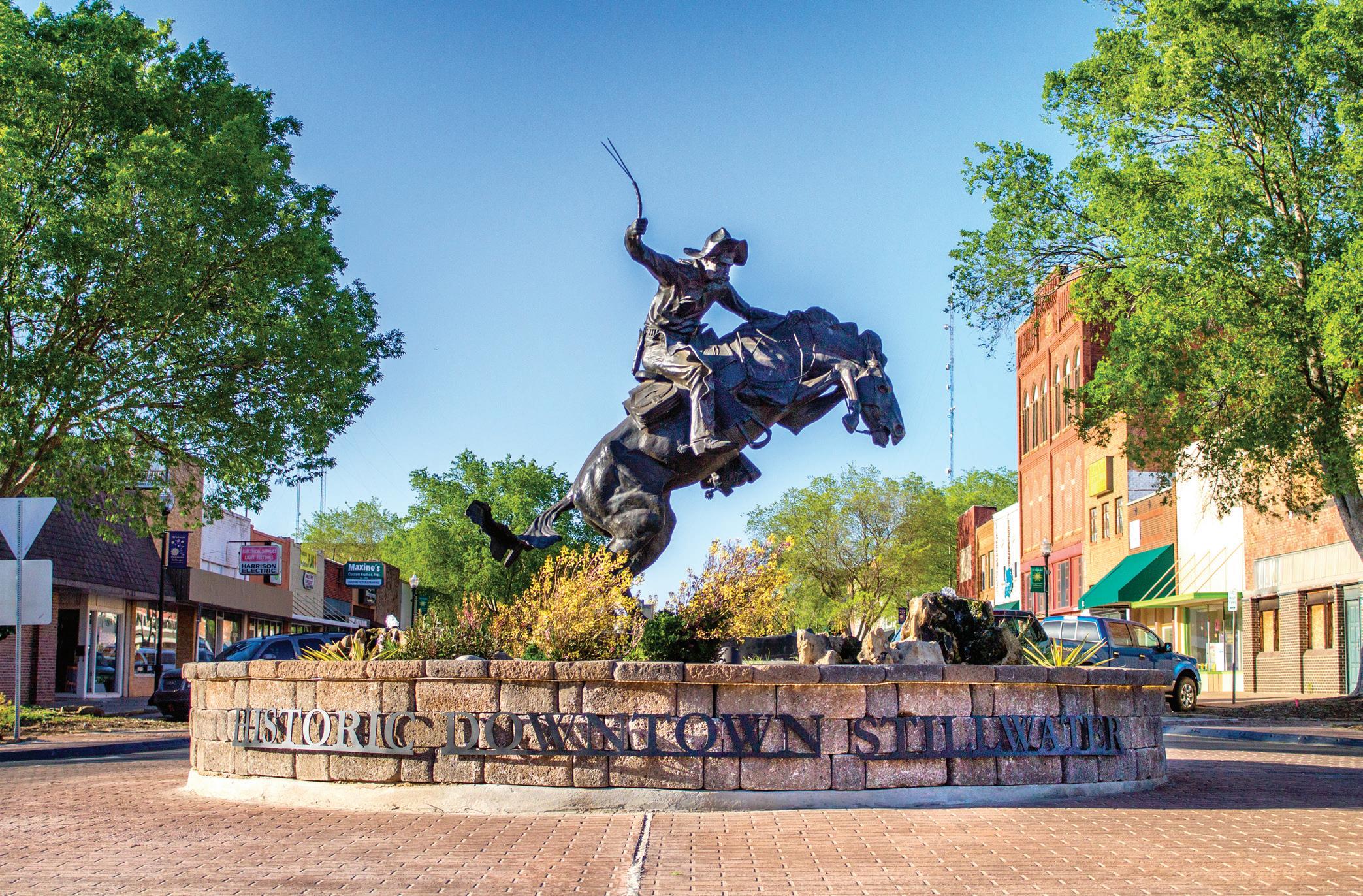
There were plenty of questions to consider. For example, who chose that sculpture? Who funded it? The students learned that Stillwater’s Business Improvement District recommended it to the City Council and subsequently paid for it.
But other questions were harder to answer: What message did the community receive from the sculpture? Did the man on the horse allude to the OSU Cowboys, the Stillwater Pioneers, the land run or something else? There were discussions about the local history of cowboys, as well as those who felt excluded by the imagery. They also questioned why a copy of a well-known work with no connection to the state was chosen instead of commissioning an original piece by a local artist.
“The biggest thing for me was for the students to think about what message this sculpture conveys about Stillwater and to think imaginatively about what
the alternatives could have been,” Borland said. “That wasn’t part of the assignment, but we wished by the end that we had done that more.”
The classes wrote a short survey to gather information about the community’s knowledge of and feelings about the sculpture. They chose a game day Saturday to collect responses from community members downtown. To draw attention, increasing participation and dialogue, the students held signs and chanted their own range of opinions from celebratory to skeptical.
That portion of the experiment made the students the most nervous, and some community members had strong reactions to what they saw as a protest rather than an academic exercise. But it was also what students wrote the most about in their evaluations of the classes, and they generally considered it a valuable learning experience that was different than what they typically do.
And to the end, they were still expressing varied opinions about the Bronco Buster
“They did research and presented it to each other,” Siddons said. “That sculpture is not particularly nuanced, but the more research they did, the more nuanced it became. For example, I had students showing historic photos of Stillwater because they wanted to make the case that this was similar to images that were being produced about Stillwater at the time of its settlement. We had students researching how you cast a bronze sculpture because they happened to be artists, and they wanted to know how the thing got made.”
She added, “As art historians, our lives are spent asking questions. Our whole jobs are why, why, why. That’s productive learning, to have those conversations, and the students didn’t always agree with each other.”
A degree is vital to success today. But research shows passions pay off in the long run, too
Most people reading this understand the value of a college degree. Studies consistently show that higher education is a great investment even when simply considering the cost of attendance compared with higher lifetime earnings.
As the Pew Research Center puts it in “The Rising Cost of Not Going to College:” “On virtually every measure of economic well-being and career attainment — from personal earnings to job satisfaction to the share employed full time — young college graduates are outperforming their peers [who have] less education. And when today’s young adults are compared with previous generations, the disparity in economic outcomes between college graduates and those with a high school diploma or less formal schooling have never been greater in the modern era.”
Some have suggested that the numbers, especially disparities in starting salaries, mean college students should ignore disciplines they might enjoy studying and instead focus on the STEM fields. For example, an engineering graduate will almost always earn more than a history graduate in entry-level jobs in their fields. So, isn’t it obvious which major is the better choice for modern students?
Actually, if a particular student is not passionate about engineering, the answer is no.
Richard Detweiler, president of the Great Lakes Colleges Association,
“Technology alone is not enough — it’s technology married with liberal arts, married with the humanities that yields us the results that make our heart sing.”
— STEVE JOBS
studied the career paths and civic activities of 1,000 college graduates across several decades. He found that the pay gap between business and engineering majors and the rest of the group decreased over time and eventually disappeared. Also, those who took more than half of their coursework in fields unrelated to their majors were 29 percent more likely to exceed $100,000 in annual incomes. That figure rose to 72 percent for the oldest group, probably because such individuals had the ability to adapt to changing circumstances over the course of their careers.
A 2018 study by the American Academy of Arts & Sciences reinforces previous studies showing the pay gap between humanities graduates and their engineering peers narrows over time. It also found the groups are equally satisfied with their careers.
A 2013 Association of American Colleges & Universities national survey of business and nonprofit leaders found “more than 75 percent of employers say they want more emphasis on five key areas: critical thinking, complex problem-solving, written and oral communication, and applied knowledge in real-world settings.” Also, “80 percent of employers agree that, regardless of their major, all college students should acquire broad knowledge in the liberal arts and sciences.”
OSU College of Arts and Sciences Dean Glen Krutz said, “CAS teaches the
soft skills. The arts and sciences provide a framework for people to understand the world around them. Once people have jobs, that framework helps them think critically to become leaders and move up. The depth that students receive having a CAS experience makes them more impactful employees, citizens and community leaders when they go out in the world. It makes them more successful.”
Celinda Reese-Melancon, director of undergraduate studies in the Department of Psychology, teaches a career development course for psychology majors. She has also worked with dozens of undergraduate students in her research lab, and most get jobs straight out of school and do very well for themselves.
“Today’s world requires collaboration, critical thinking, understanding of diversity, and effective communication,” she said. “These are exactly the skills that departments in the College of Arts and Sciences help students develop. Personally, I encourage students to think broadly about the career they want when they are freshmen, but when they are sophomores, they need to start tailoring their coursework and experiences to help them be marketable when they graduate. Through classes, leadership opportunities, research experiences and community-based volunteer placements and internships, CAS graduates are ready for a variety of employment
settings that will allow them to pursue their passions and advance so that their earnings increase as their experience does.”
Tamara Mix, head of the Department of S ociology, agrees.
“People need to have the social sciences,” she said. “We need history. We need art appreciation classes. We need those things to become better people and to be people who have full and happy lives.”
She teaches an introduction to sociology course and asks the students what they learned that will help them in the future. Their responses underscore the value of an education in the liberal arts and sciences.
“They say, ‘People are different than me.’ ‘I learned about group behavior. I learned about how my behavior changes in relation to others.’ ‘I learned about negotiating. I learned about all of those human dynamics and social dynamics that are invaluable.’”
As Steve Jobs said, “Technology alone is not enough — it’s technology married with liberal arts, married with the humanities that yields us the results that make our heart sing.”
Dr. Jason F. Kirksey details the path that has brought him to leading OSU’s diversity initiatives
He was in first grade in Denver when his father decided he and his brothers would be bused to a better school in a predominantly white neighborhood.
“Pretty much my entire K through 12 career, I was one of the few black kids in class,” he remembers. That experience guided Dr. Jason F. Kirksey to where he is today as OSU’s vice president of Institutional Diversity and chief diversity officer.
“Diversity and inclusion are exciting, but what really excites me the most is seeing Oklahoma State University grow and move forward as an institution,” he said. “Not just in terms of diversity and inclusion, but that’s certainly an important part of it. As we grow and advance in our commitments to diversity and inclusion, we get better as an institution. So you can imagine Oklahoma State has a pretty special place in my heart.”
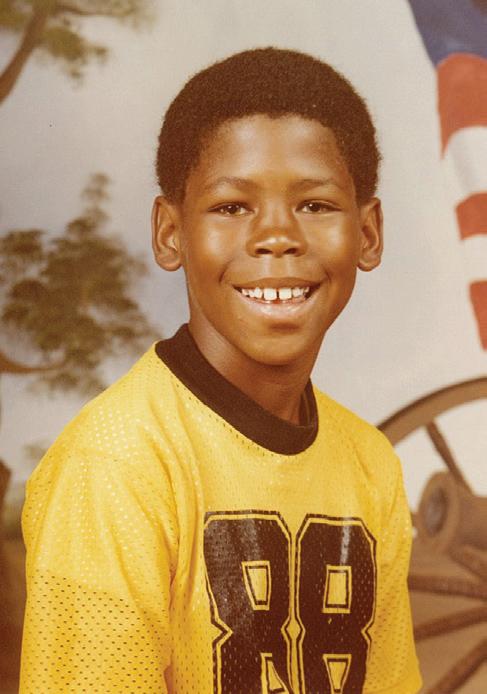
Kirksey came to OSU in 1985. His oldest brother, Mario, received a football and track scholarship from Jackson State University in Mississippi. His middle brother, Vincent, considered OSU, but also decided to attend Jackson State.
Kirksey, though, knew he wanted to play Big 8 football. He was an offensive and defensive lineman. However, the University of Colorado didn’t recruit a lot of players from Denver Public Schools. His mother was from Okmulgee, Oklahoma, where his grandmother still lived. He had $20 for college applications so using $10, Kirksey applied to OSU, where he was accepted and played football as a walk-on.
After a year on the football field, Kirksey realized he was better in the classroom. He earned bachelor’s degrees in political science and economics and a master’s degree in political science from OSU. At the time, OSU didn’t have a doctoral program in political science, so on the advice of his mentors, he went to the University of New Orleans.
“As I was finishing there, a position opened here in political science,” he said. “It worked out well, so the circle closed in the way it was supposed to.”
Kirksey accepted the Hannah D. Atkins Endowed Chair teaching position and became the first African American at OSU to hold an endowed chair.
Kirksey is motivated by his parents, especially his mother, who spent the last 15 years of her working life with two full-time jobs as a janitor and then cleaned houses on her day off.
“That instilled in me a work ethic and an understanding that I’ve got a responsibility to more than myself,” Kirksey said. “Life isn’t always easy and with hard work comes great things, and she worked immensely hard. She got a chance to come and sit in on one of my classes. I lectured the entire hour without using a single note. She told me it was the proudest moment of her life.”
His father was committed to ensuring that he and his brothers received college educations. Together, as a team, his parents ensured that happened.
“I went from a poor, first-generation, inner-city black kid from out of state to a graduate student to junior faculty, senior level faculty and now a senior level administrator.”
Kirksey has seen a lot of change in his 10 years as chief diversity officer.
“It has changed in ways that everyone associated with OSU, the OSU family and community have a sense of pride about. We’re doing things that not many schools have ever done and certainly not in such a short amount of time. We’re talking about a decade. There has been an absolute transformation.
“At OSU we are doers, and we don’t just talk about diversity and inclusion. Other folks are talking about what we do, and that means something. It means we are doing something special.”
OSU President Burns Hargis said Kirksey’s work and that of his office is pivotal for OSU’s future.
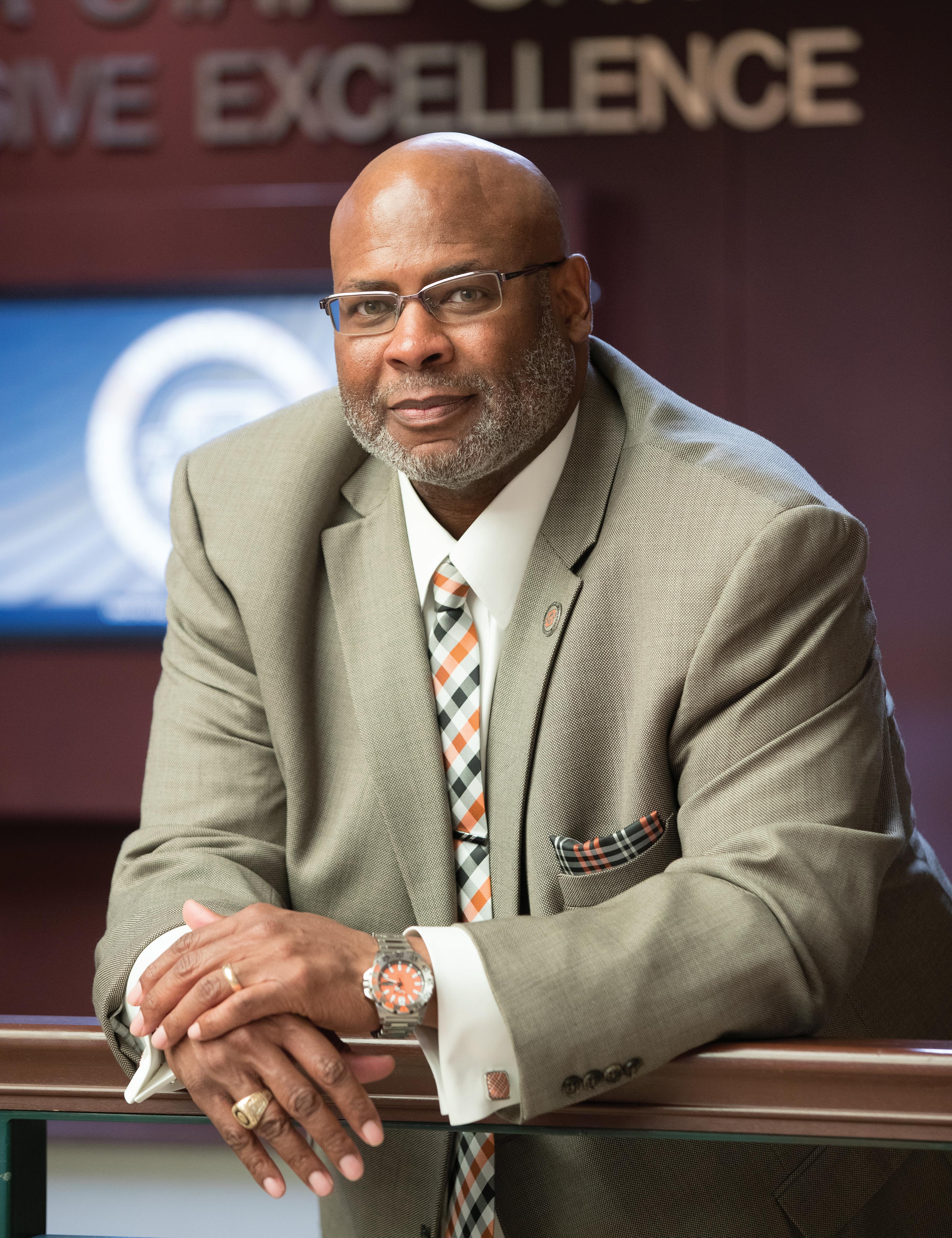
“Jason is focused on our priorities and supporting our all-important student recruitment efforts. He also is familiar with our faculty, staff, students and programs,” Hargis said. “He has implemented a number of innovative programs and made important strides in the university’s diversity efforts. He empowers all of us at OSU to think and act in ways that embrace and promote a more inclusive world.”
OSU’s dedication to diversity and inclusion is created by open-minded, supportive leadership.
“We can either be set up to be open and welcoming and respect and value and accommodate every individual who shows up on this campus, or we can say, ‘No, we don’t want these people or that group or this group,’” Kirksey said. “To our credit, we have great leadership who recognize that as a land-grant institution, our responsibility is to fulfill the land-grant mission and improve the quality of lives for citizens of the state, nation and world. And of course, we start with the state.”
Kirksey, who has been teaching 24 years, tells students their first job may not be in Oklahoma City, Dallas or Chicago — it may be in Beijing or Dubai. That is why the designated diversity course requirement is so important.
“Having the president, provost, Board of Regents, administrators, deans and vice presidents who get it and recognize that having a strong and significant sustained commitment to diversity and inclusion is integral to the success of OSU,” he said. “It’s imperative that students we graduate
have some experience to go out into life because our goal is to produce students who are socially, culturally and globally competent, and not just be competitive but successful as they go out into an ever-shrinking, globally competitive world.”
Kirksey, who has secured $9.9 million in National Science Foundation funding over the past five years, said, “We’ve got some great numbers and wonderful awards. We’re the most highly decorated institution in the nation in vastly prestigious diversity and inclusion awards. That’s something that is very significant. And again, we all should be proud, but also understand that it doesn’t mean we’re done. There is a lot of work to do.”
Kirksey tells his students: “Education is not a spectator sport, and you’re going to leave a legacy here at OSU. It’s up to you to determine what that legacy is and how you want it to grow.
“When we talk about creating a culture of inclusion, it’s an opportunity to continue the work that my predecessors and others have done to make OSU an even more special place to learn and live and grow and work and that’s an important message for our students, but it’s also an important message for us as administrators and faculty and staff and community members to realize where we stand and the opportunities we have.”
Kirksey met his wife, Kim, at OSU and credits her help for much of his success with school and in his career. They have two children: Kaitlyn, an OSU senior and SGA president, and Garrett, an OSU freshman.
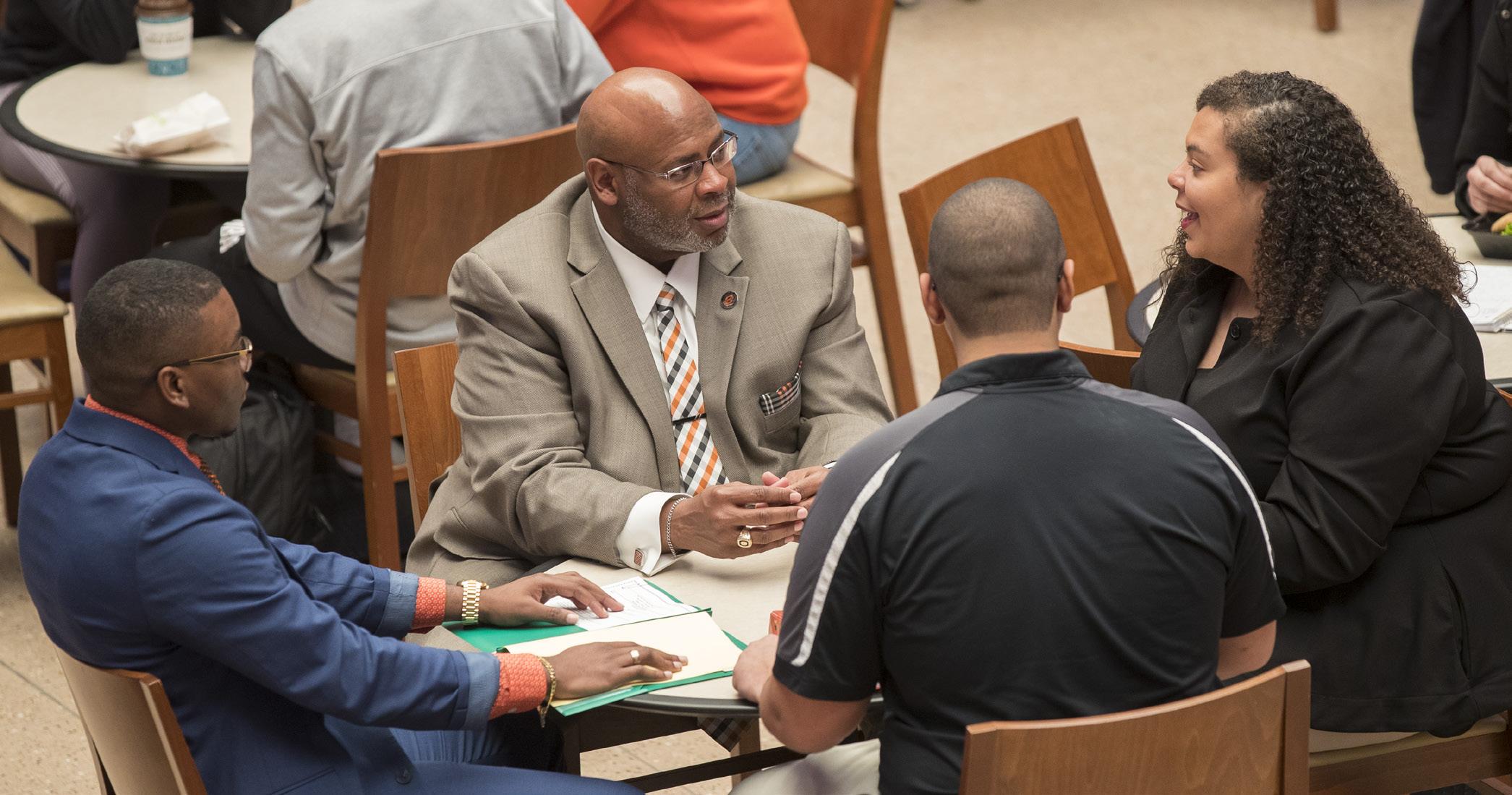
Artist and NBA Star
Major: Studio Art
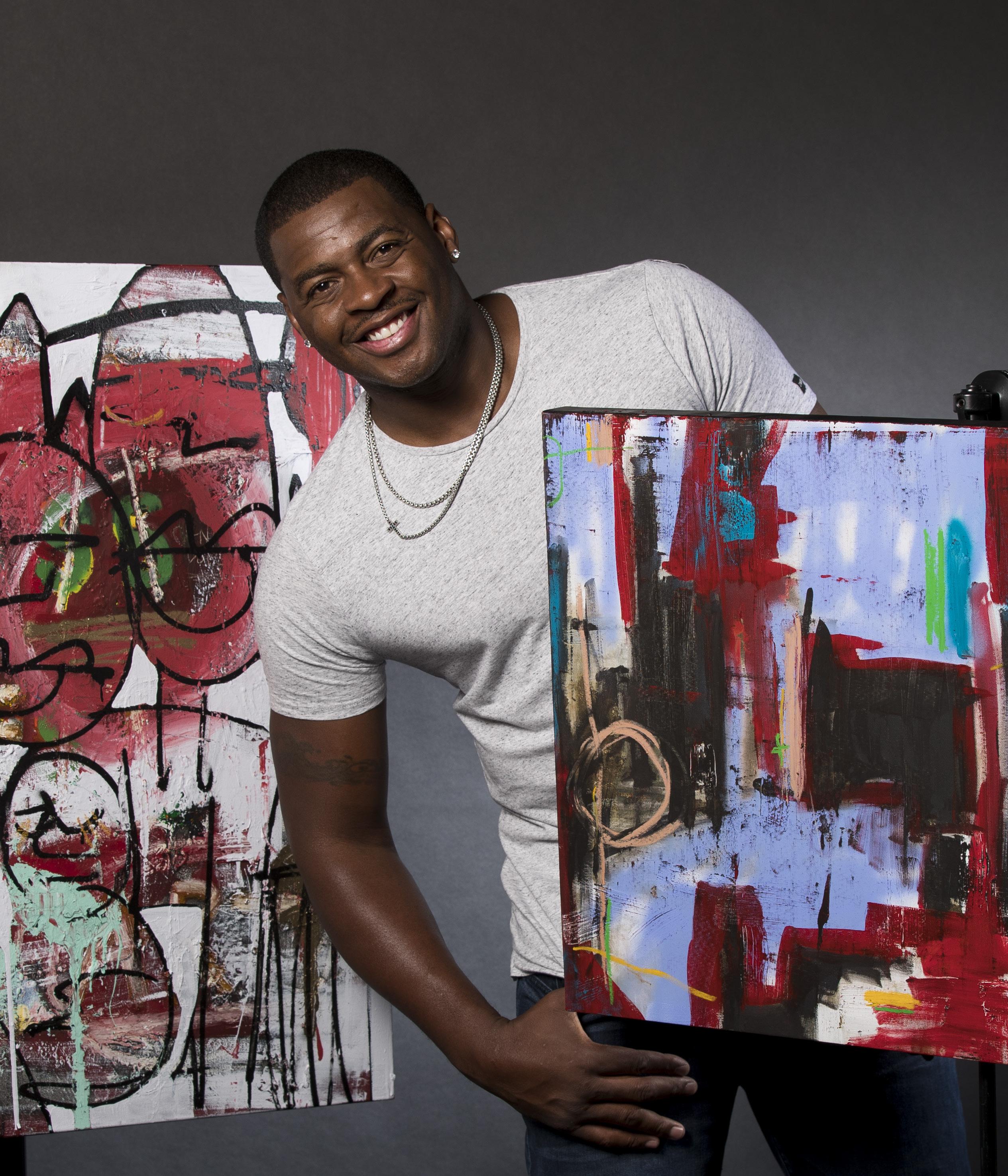
“My College of Arts and Sciences education helped me become the well-rounded and creative man I am today.”
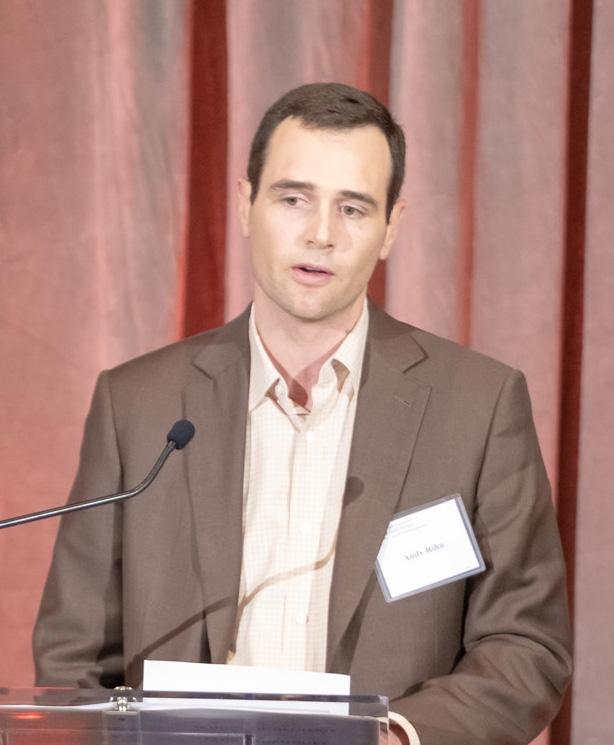
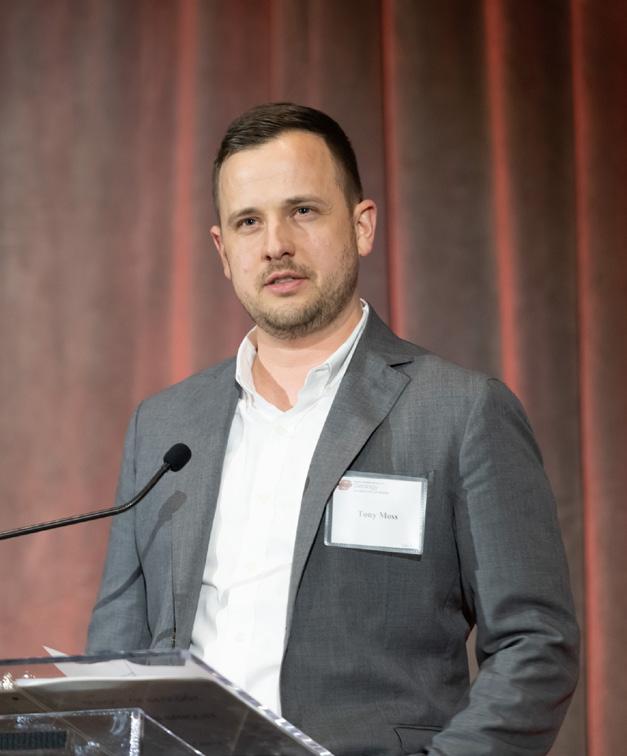
The 2019 Boone Pickens School of Geology Spring Banquet was highlighted by guest speakers from Continental Resources, including Oklahoma State University alumni Andy Rihn and Tony Moss, as well as Continental President Jack Stark.
Continental Resources, an Oklahoma City oil and natural gas company, has built a connection with OSU over the years through internship programs and the hiring of many OSU graduates.
When President Jack Stark joined Continental Resources 27 years ago, it was having trouble attracting experienced talent to its headquarters in Enid, Oklahoma. This led to Stark contacting OSU nearly 15 years ago, establishing the successful internship connection between the company and the university.
“Continental has definitely been the beneficiary of alumni from OSU,” Stark said, adding that many of the interns and graduates who come from OSU are very skilled and knowledgeable.
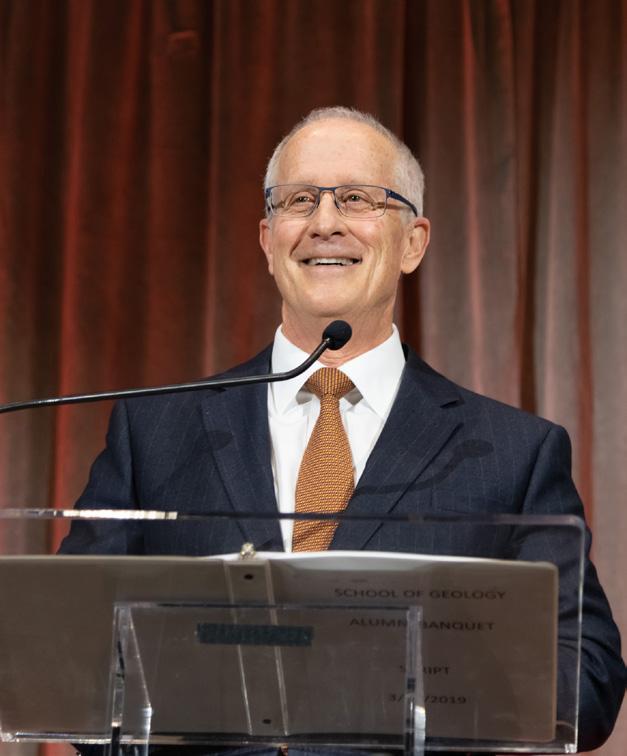
This connection guided Andy Rihn and Tony Moss to their current positions as geologic managers with the company. Each was honored and excited to return to their alma mater and speak during the banquet.
“Having the opportunity to speak to students and alumni was exciting for me,” Rihn said. “I believe it is important that students hear from companies and individuals who are making a difference and having a positive impact in the oil and gas business. It shows that opportunity is out there as a result of the education they earn while at OSU.”
Moss added that the School of Geology does an excellent job providing experiences and mentorship to prepare students to hit the ground running in their careers. “The education I obtained at Oklahoma State provided the foundation for the success I’ve enjoyed throughout my career,” he said.
Both Rihn and Moss were named to the Forbes 30 Under 30 list in energy in 2011.
Kylie Hagerdon didn’t start at OSU on the pre-med path, but by the time she graduated in spring 2019, she had an $80,000 merit-based scholarship to the University of Oklahoma’s College of Medicine in Oklahoma City.
The Choctaw, Oklahoma, native began as a physics and chemical engineering major with a passion for helping people. She discovered she really enjoyed the chemistry portion of her program and wanted to focus on that, combining it with physics. But what kind of career could she have with a double degree in chemistry and physics?
Then she began volunteering at Stillwater Medical Center, and it became clear: She wanted to go to medical school.
“That’s where I fell in love with the atmosphere, the problem-solving aspects of medicine,” Hagerdon said. “The entire essence of medicine kind of drew me in.”
Chemistry majors are among the most highly accepted applicants to medical school as the program prepares students to think critically and exposes them to lab sciences. Adding a physics degree gave Hagerdon a different perspective. Through physics, she learned how to connect ideas with reality and find the best solution. This combination made her an attractive candidate for medical school.
“In the application process, they will recognize that Kylie is good at critical thinking and problemsolving based on her academic background,” said Dave McIlroy, head of the Department of Physics. “Being a physician requires you to get analytical information from the patient, and sometimes that includes problem-solving to understand what issues a patient has and how to address them.”
Hagerdon knew the importance of involvement outside of the classroom and took part in numerous organizations on campus and volunteered every chance she could. In the classroom, she thrived in
both programs and through the Honors College. She enjoyed the complexity of the subjects and the connections chemistry and physics offered.
“That kind of knowledge is going to help me tremendously when thinking about pharmaceuticals or neurology,” Hagerdon said.
Both chemistry and physics are maledominated areas of study, which forced her to speak up for herself. There were instances where her opinions in classrooms were dismissed, but Hagerdon believes that experience will serve her well in the medical field.
“Working in these fields, I have gained confidence that I know what I’m talking about,” Hagerdon said. “So I am really grateful that physics and chemistry has given me that background. It’ll continue in medicine, especially when I am expected to have the confidence to not only talk to my patients in a manner that sounds thorough, but also to my colleagues — and that is something that is important for women in all male-dominated fields.”
Hagerdon utilized OSU’s campus resources to start her medical school application process. She made appointments with Career Services to pick apart her résumé and discuss the pros and cons of different medical schools. At the pre-professional office, staffers helped her start her application and gave her tips on how to stand out among the numerous applicants.
“Career Services was instrumental not only to my path, but why my path mattered, and that was really important,” Hagerdon said. “All the professors, the advisors and the pre-professional office at OSU were there to help me find my voice. Especially coming from science, where we may not all be good at finding our voice and putting it on paper, they really helped me and made a huge difference.”
Hagerdon is already making plans for after medical school. She hopes to have a focus in neurology and be involved in policy making and
increasing access to health care. One of her goals is to show people how to find resources for health care. She also hopes to help people who have felt discrimination, giving them equal access to care.
“It’s important that I have equal access and be welcoming for my patients.” Hagerdon said. “I’m going to be in school for a long time, and that’s OK. I am looking forward to getting to a point where I can help people more than just physically. I want to heal physically and mentally.”
Although she has a long road ahead of her, the OSU family believes she can make her goals a reality.
“Kylie is the full package and OU Medical will be lucky to have her,” McIlroy said. “If future students can emulate her, the sky’s the limit.”
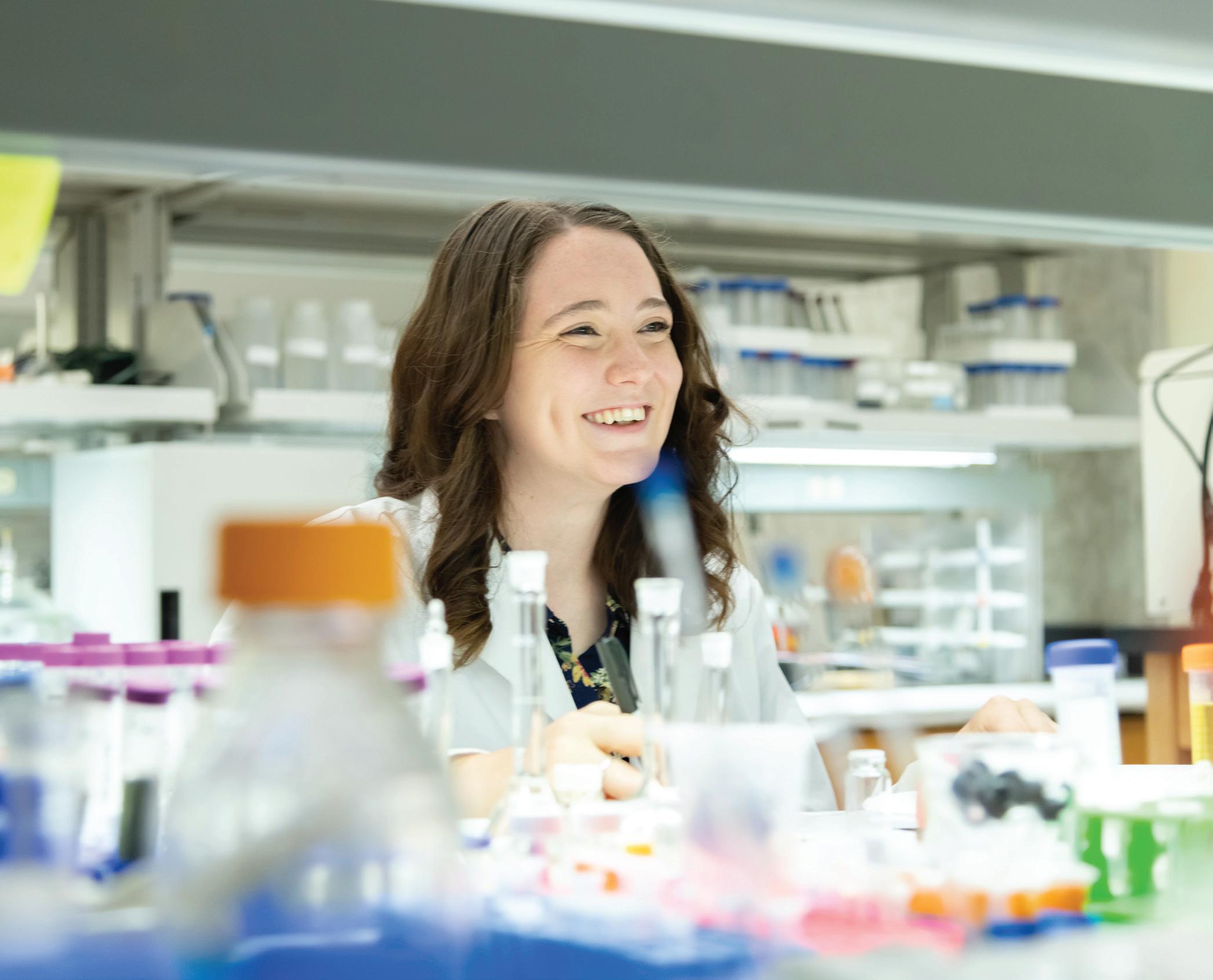
Kylie Hagerdon utilized Career Services and the pre-professional office to choose the right path for her future as a physician.
College’s online degree programs attract new interest — and applause
The prevailing mental image of a college classroom is an image of rows of students crowded into desks, listening to an instructor deliver the lesson of the day.
Oklahoma State University is looking to change that.
The College of Arts and Sciences has four online degree programs. Two generalist programs offer a bachelor’s in multidisciplinary studies and a bachelor’s in university studies. The Department of Computer Science will offer an undergraduate degree beginning in the spring. And the fourth, the Department of Statistics’ master’s in applied statistics, has been in existence for several years. In 2018, the statistics program was ranked second on Affordable Colleges Online’s list of Best Online Master’s Degrees in Statistics, and fifth on Best College Reviews’ list of Best Master’s in Applied Statistics online programs.
Joshua Habiger, Ph.D., is an associate professor and the new graduate coordinator in the Department of Statistics. There’s a lot of interest in the master’s program, he said.
“I’m getting at least an email a day about it,” Habiger said. “In our field, there is a lot of demand as data science takes off. That is definitely a highdemand industry, and this degree gets your foot in the door for a job.”
The online degree paths are designed for students who may not be able to take traditional courses because of location, circumstances or finances. With a student body of over 35,000 spread across five campuses and representing all 50 states
and 120 countries, OSU is seeking to open its doors even wider.
Blayne Mayfield, Ph.D., oversees the new computer science program.
“We are a land-grant institution, and one of our charges is to educate the people of Oklahoma,” Mayfield said. “This program will allow us to help a lot of students whom we might otherwise not be able to.”
Habiger calls flexibility the main advantage of online programs.
“You can watch the lectures on your own time,” Habiger added. “You can do the homework after work or on the weekends.”
Cara Brun, a student adviser with CAS, agreed.
“Working or distance students can benefit from having access to a reputable program on a flexible schedule,” she said.
Habiger noted that the online coursework is identical to the content in traditional classes.
“These classes are all offered in person as well,” Habiger said. “The online students do the same homework assignments and take the same exams as their peers on campus. There is a stigma out there that online courses are easier, but it is not any less of an education. And this program can prepare you well for any industry setting where you need to work with a lot of data. We are in the middle of the information era. It’s a really valuable skill to be able to synthesize information and learn from data. This degree provides you with those skills.”
“Working or distance students can benefit from having access to a reputable program on a flexible schedule.”
— CARA BRUN, STUDENT ADVIS0R

Along with the opportunities offered by a fully online degree program come new challenges and complications.
“The students who take online or distance classes are much more likely to drop out than ordinary students, given the lack of the personal connection to the school and the instructor,” Mayfield said. “And many faculty simply don’t realize the difficulty of teaching an online class. It is so much more than just putting a video lecture and your PowerPoint slides online. It requires continual interaction with the students to keep them engaged.”
The College of Arts and Sciences has implemented several new features to facilitate and assist instructors in designing online courses. Instructional designer Caitlin Barnes, Ph.D., works with faculty to transition curriculum into an online format. The college also recently constructed the CAS Multimedia Studio, where faculty members
record lectures and multimedia producer Donovan Potts professionally edits the videos to create stunning, high-quality educational content. With OSU’s new learning management system, Canvas, the college’s online education is more streamlined and accessible than ever before.
“CAS Outreach and Communications is doing everything they can to help facilitate online instruction,” Barnes said. “It’s exciting to see CAS expanding its reach to truly distant learners through fully online programs.”
The Department of Computer Science, for example, is offering a new online course Mobile App Development with additional electives in the future such as Intro to Computer Security and Video Game Development.
“Colleges and universities can either say, ‘No, we’re going to stick to the old-fashioned way,’ and continue to alienate potential students,” Mayfield said. “Or we can move forward with the future.”
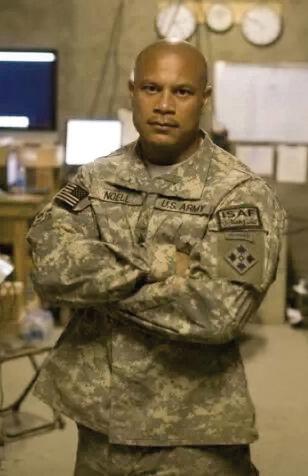
When Chris Noell’s best friend and mentor took his own life, Noell wanted to understand why.
So, the veteran of both the Marines and Army with five deployments decided to come back to school and major in psychology and philosophy.
“His name was Chris too,” Noell said. “I looked up to him, and I never saw it coming. So, when he did that, I realized I could be vulnerable too.”
He added, “War is a philosophical problem, and I want to be able to understand that.”
From a psychological perspective, Noell wants to explore “the unfamiliar territory of mental health in the armed forces” and help his fellow veterans who are struggling to adjust to life after combat.
“You give them some tough love and put your arms around them,” Noell said. “Be able to recognize it, that’s the important part.”
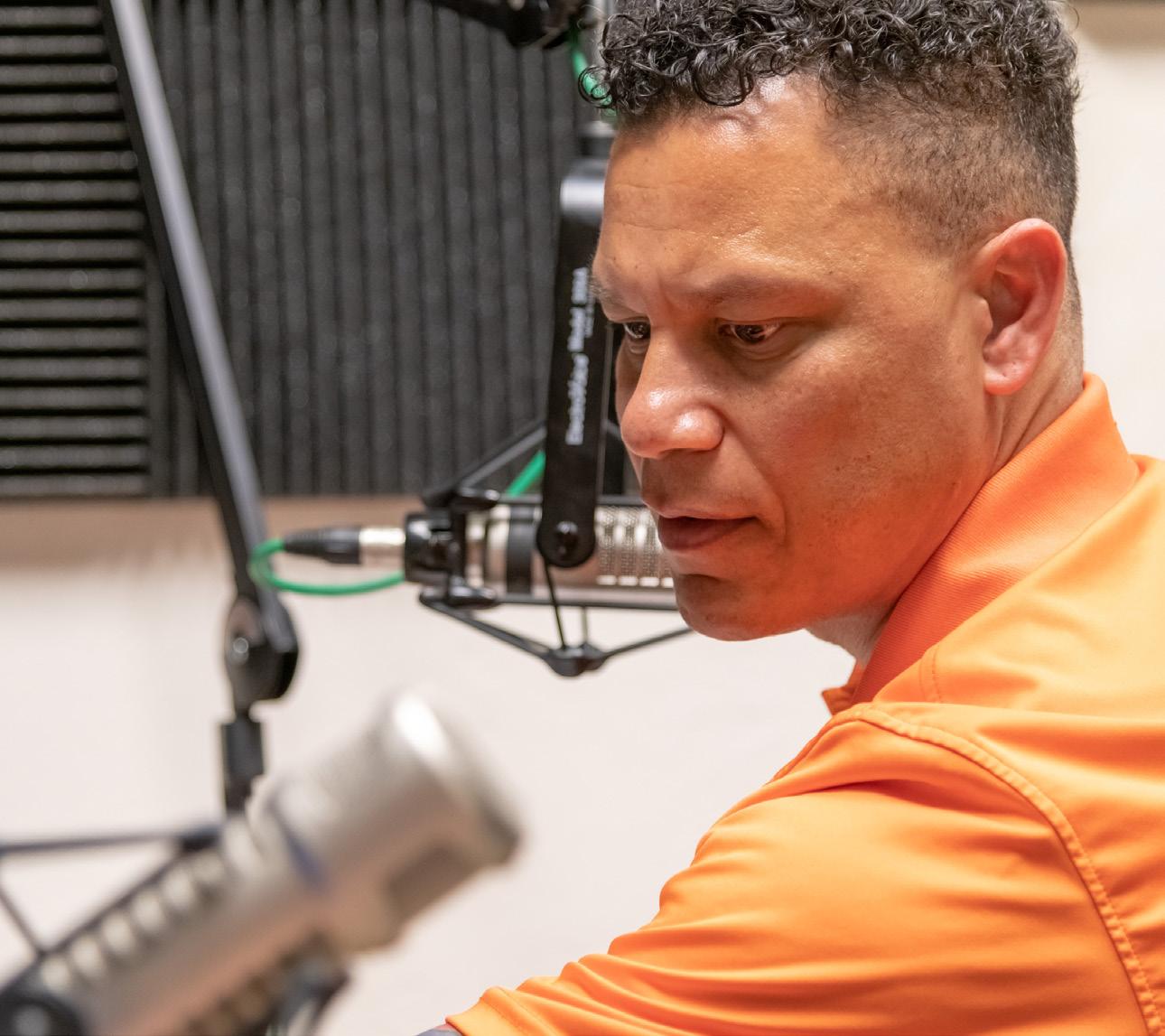
To reach and inspire others, Noell started the Heart of a Volunteer: Veterans Podcast. He invites veterans and active duty military members to share their stories with topics focusing on the transition from military to civilian life for veterans, getting an education and just taking care of themselves.
“I don’t control what they say. I just steer the way, it’s more organic,” Noell said. “We don’t have to dwell on bad things, but it’s important to talk about those who sacrificed because that matters.”
During the conversations, which are often explicit, people explain why they chose to serve, details of their service and how the lessons they learned are affecting their lives. Noell encourages guests to discuss whatever they want, and wants veterans to reach out to each other to help with the transition. He hopes to bring in professionals to
help highlight altruism and volunteerism, evolution and historical knowledge of warfare and service, business, health, education and employment.
Noell thinks philosophy has “more of a place in a veteran’s mind and processes.” He believes it’s essential to develop and communicate that philosophy to veterans to help with psychological distress through the podcast.
The podcast focuses on many issues veterans face during transitioning — mental health issues, career changes, substance abuse and other coping mechanisms.
“I joined the Army a month after I got out of the Marine Corps,” Noell said. “If I could do it again, I might do it differently. I should have stayed out.”
“When you’re surrounded by people you know and who know how to do their jobs, it’s like a tribe,” he added.
Since the death of his friend, Noell has worked hard to find an effective coping mechanism to help veterans transition to civilian society. He explained how quickly trauma-caused chaos can take over a person’s mental state to the point where he or she can’t overcome it.
“I think everybody who has gone [to combat] has had a life-altering situation,” Noell said. “Everybody had some trauma from it. I want to put something good in front of veterans and propel them forward.”
Combining his military experience and education, Noell has an idea to build a resource center for veterans in need — whether physical, emotional or anything in between — to “be somewhere for someone.” But first, he needs
to build a network that allows him to recruit professionals who will volunteer for work like this.
Noell joined the armed forces immediately after graduating high school. He served 17 years in the Marines and four years in the Army before retiring. Noell was an Airborne Ranger (ABN RGR) and a Company First Sergeant (1SG/E-8) with deployments to “some of the most austere environments on the planet,” such as Bosnia, Iraq and three tours in Afghanistan.
LISTEN TO THE PODCAST AT heartofavolunteer.podbean.com OR @HOVPodcast ON FACEBOOK
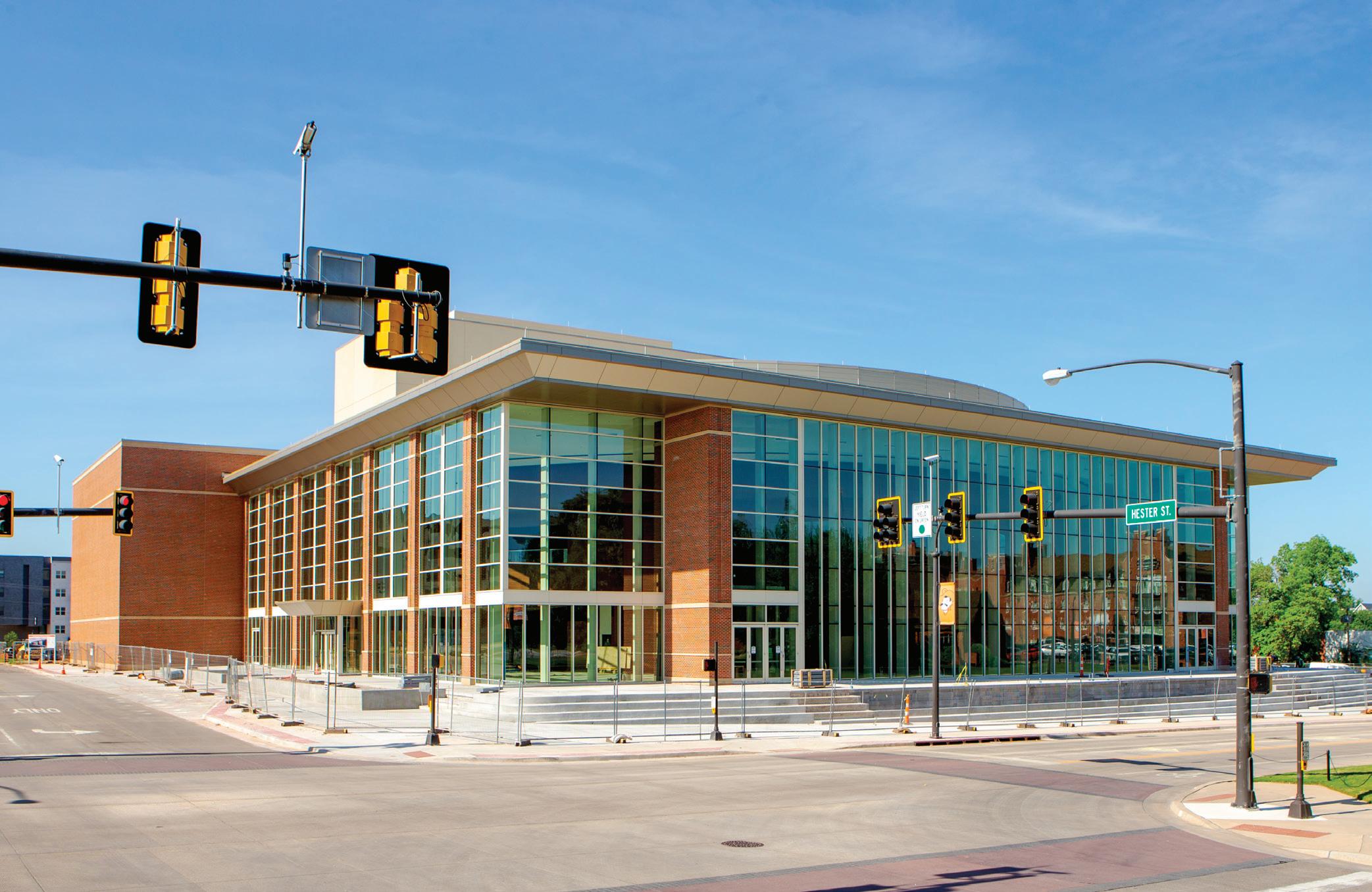
After almost three years of construction, palatial glass and steel concert hall The McKnight Center for the Performing Arts at Oklahoma State University is on the verge of opening. And for its first performances, it has a lineup so impressive one could be forgiven for thinking New York’s Carnegie Hall had been suddenly teleported to Oklahoma.
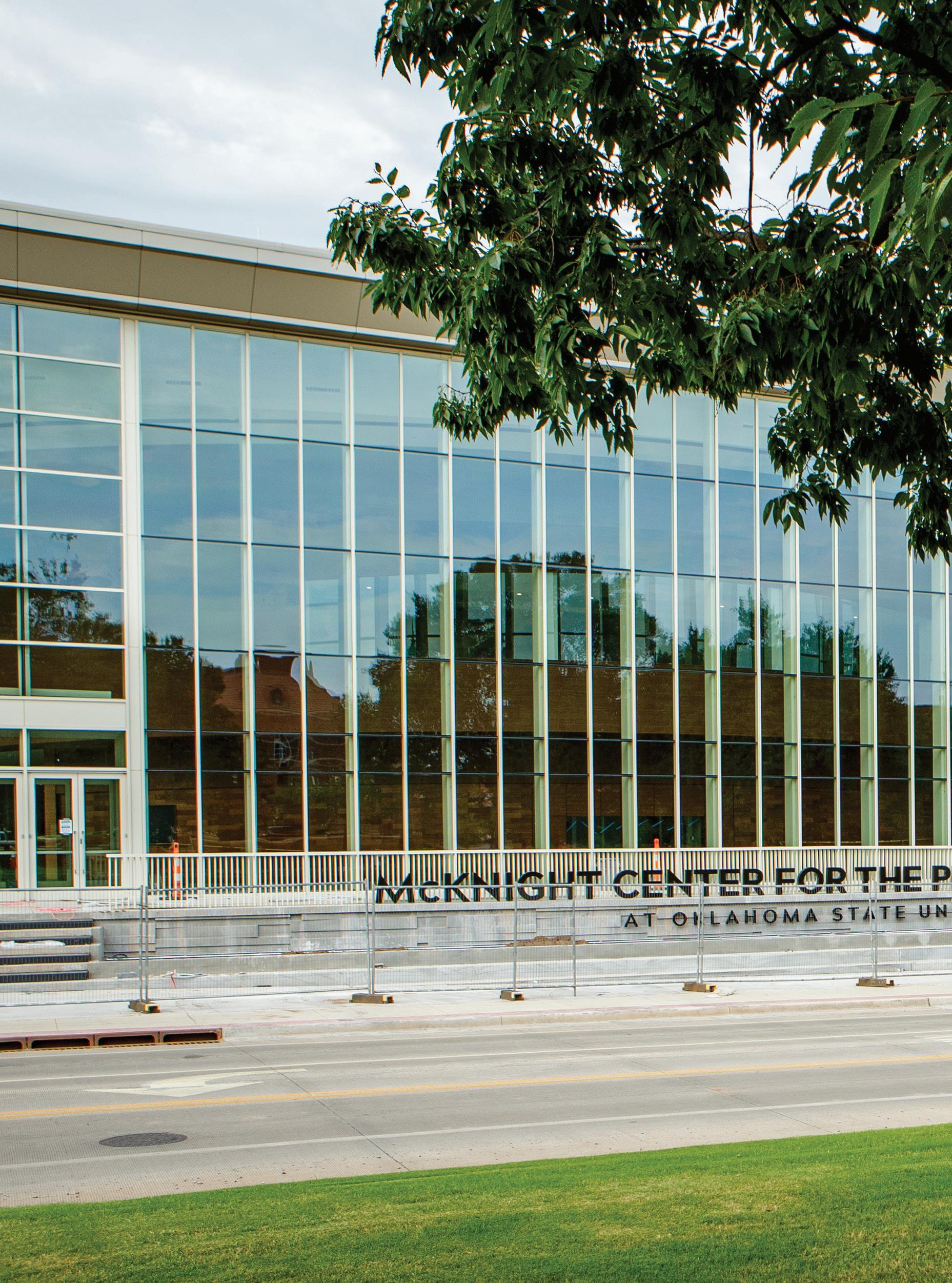
The opening will begin Oct. 11 with the renowned New York Philharmonic, which has not performed in Oklahoma in over 30 years. The Philharmonic will also lead a master class that will be free to students and the public.
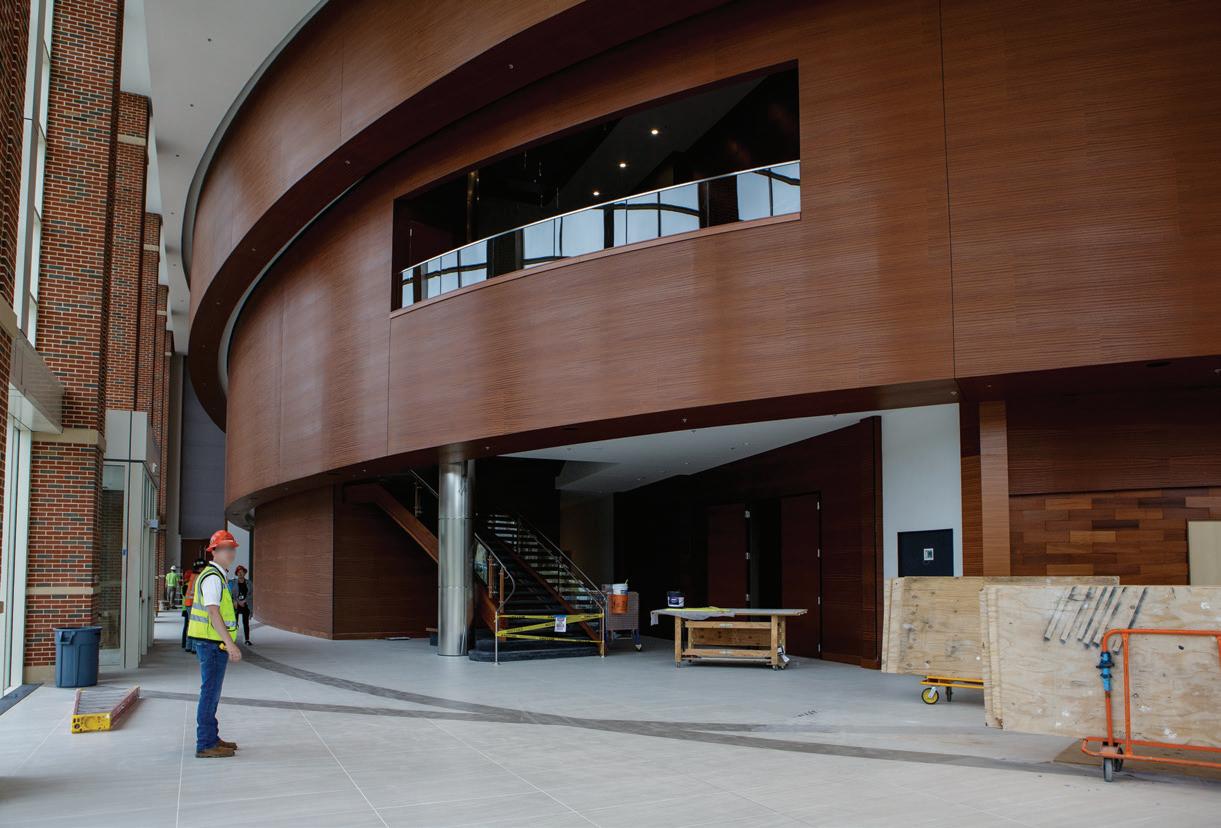
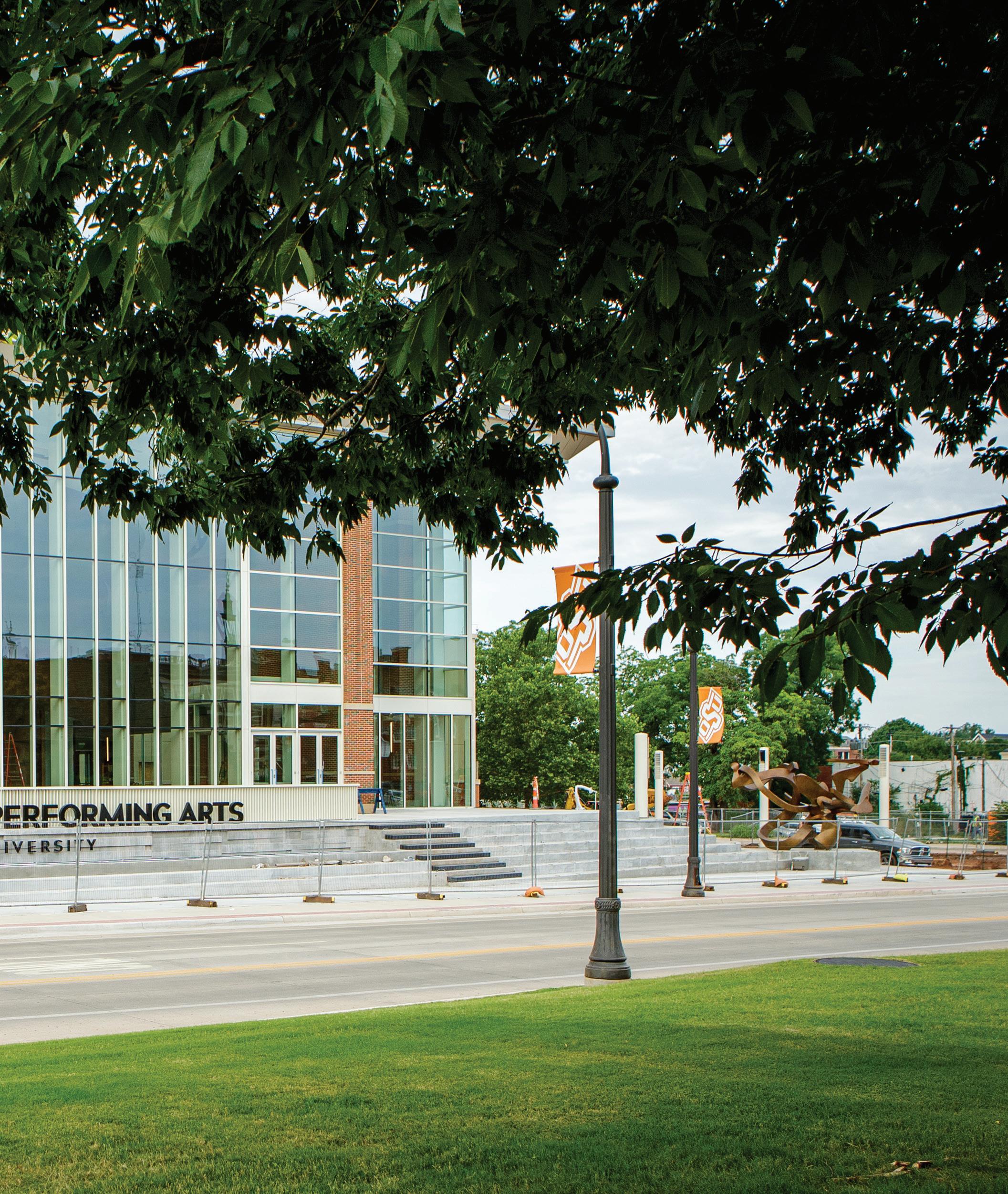
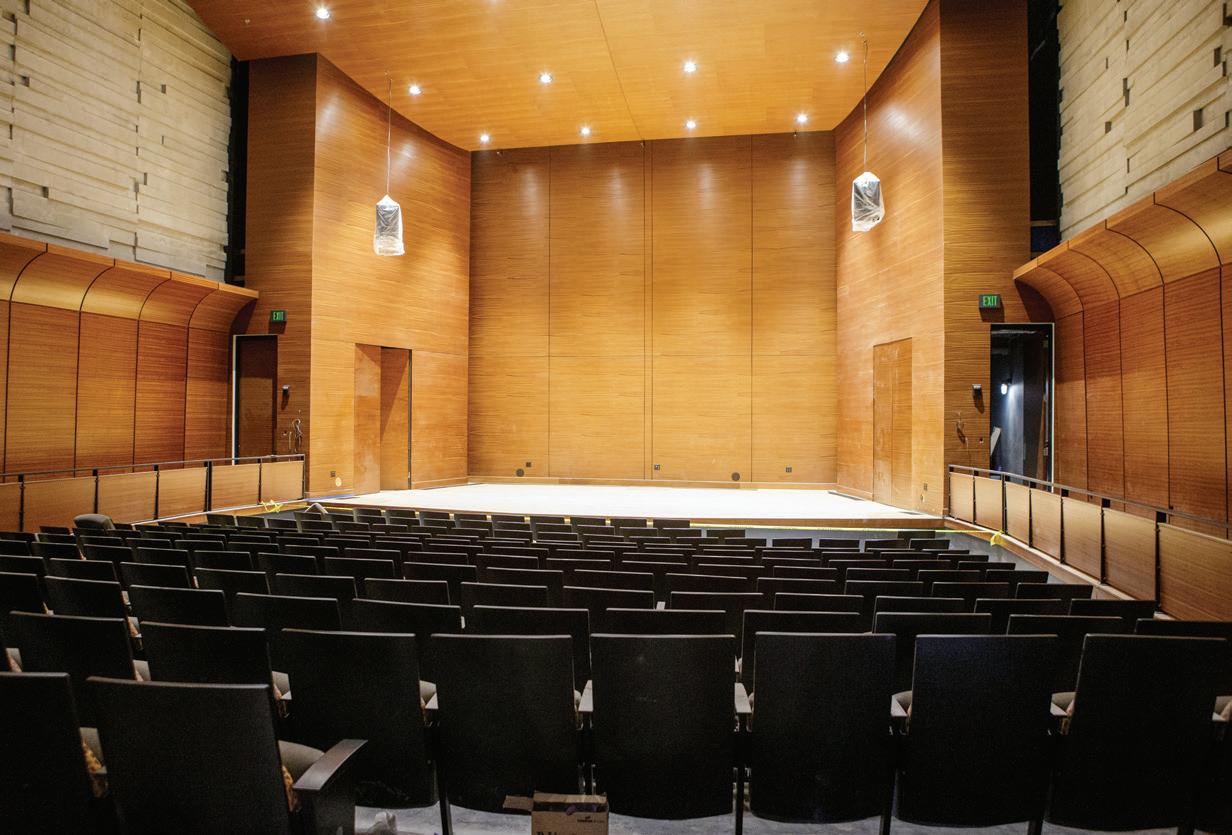
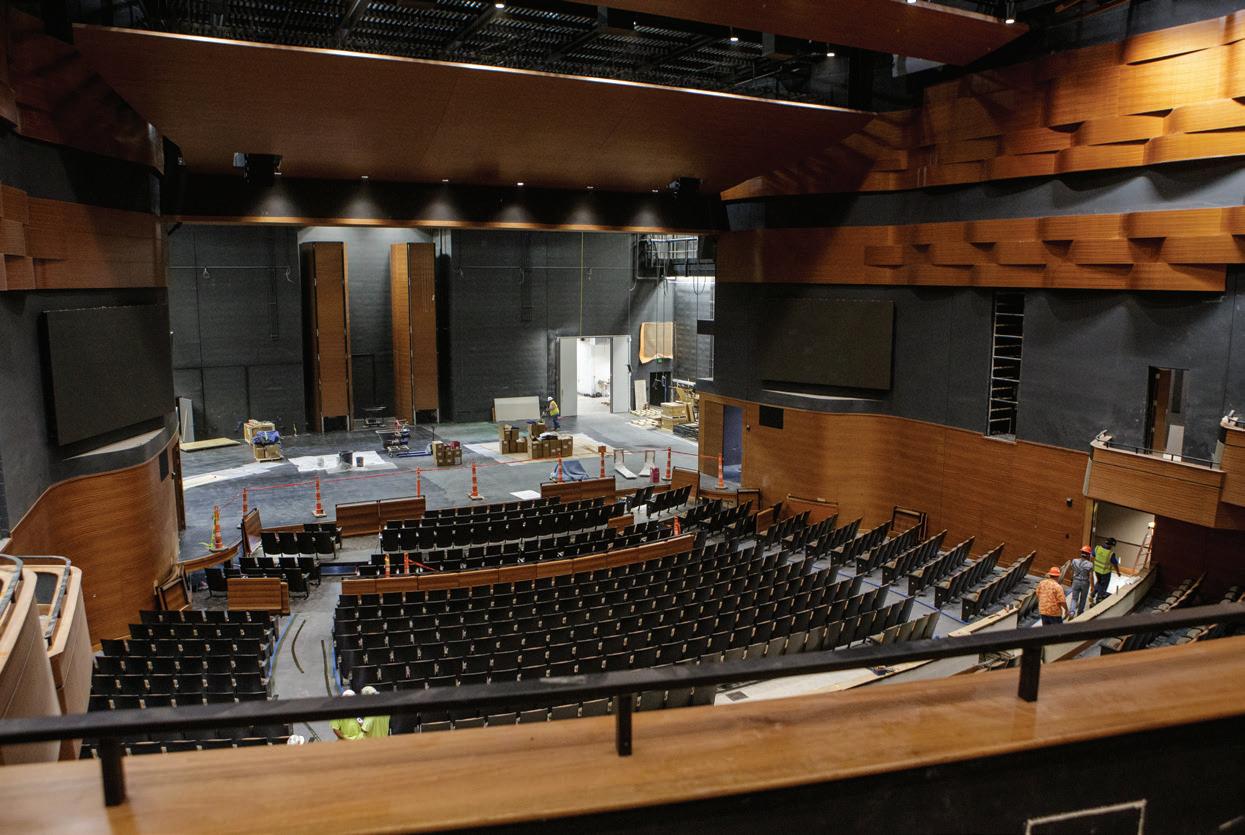
The list of top-tier talent doesn’t end there. Philadelphia-based classical pianist Jonathan Biss and celebrated opera singer (and OSU graduate) Sarah Coburn will both headline events at The McKnight Center in late 2019 and early 2020.
“(The McKnight Center) is a huge project by Oklahoma State, and a wonderful investment for the arts not just at the university, but also for Oklahoma,” said Jeffrey Loeffert, director of the Michael and Anne Greenwood School of Music.
“The New York Philharmonic is one of the top orchestras in the entire world, and that they’ll be coming to Stillwater is something really special.”
The McKnight Center programming will expand the reach of the performing arts within the state.
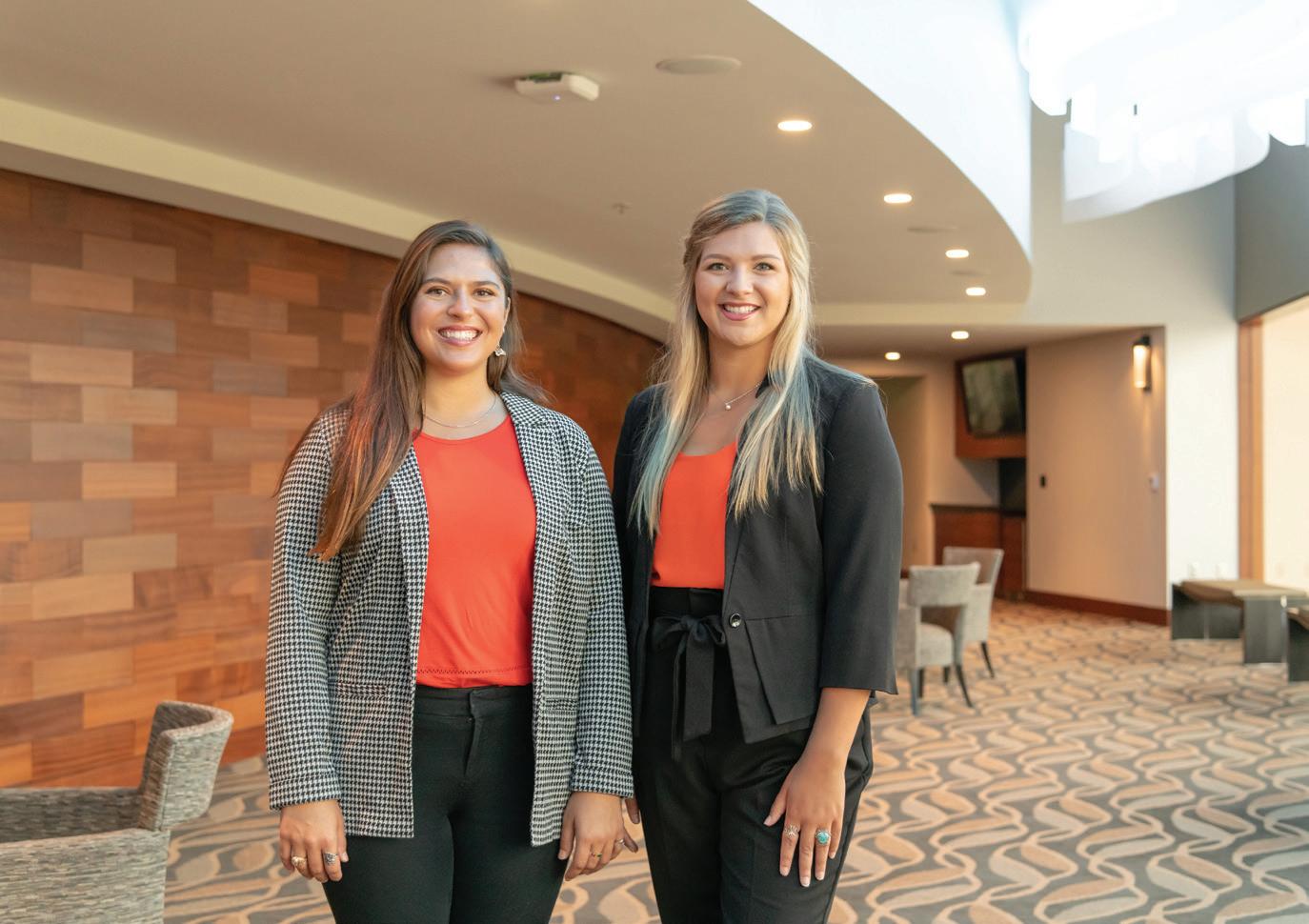
“I think it will definitely bring Stillwater forward as a place for big names to come and attract people from smaller towns in Oklahoma,” said Ali Lewis, a student intern at The McKnight Center.
OSU President Burns Hargis also emphasized the important role that the center will play in bringing the arts into more locations in Oklahoma.
“The McKnight Center will be a beacon of art and culture for this region and will provide a space for families and community members to engage with and experience some truly exceptional performances,” Hargis said.
Lewis and fellow McKnight Center intern Carly Nash believe the new facility will help Oklahoma communities by promoting music and musical education. Those are things they say can be hard to access, particularly in rural areas.
“I come from a small town in southwest Oklahoma that doesn’t really have music classes,” Nash said. “Everything I learned going through high school was through a college professor.”
The completion of The McKnight Center also brings new opportunities for students and faculty to perform at a state-of-the-art venue. And with that comes great community interest about hosting recitals and public events.
“I would say we’re booked almost every single day until June of next year,” Nash said. “It’s insane.”
Although the center will mostly be used for musical performances, there are also some events that theater-goers will enjoy. On Halloween, the center will host a showing of the silent version of The Phantom of the Opera starring Lon Chaney with live organ accompaniment, and in December, it will host a live version of Rudolph the Red-Nosed Reindeer: The Musical
The McKnight Center will supplement the existing Seretean Center for the Performing Arts as a more exclusive and modern facility and will spearhead the revival of the arts at OSU. In particular, the Greenwood School of Music will benefit from a massive increase in resources for students.
“At present, the Greenwood School of Music has really outstanding faculty and we have really outstanding students, but we’ve felt a degree of constraint based on the size of facilities,” Loeffert said. “With the opening of The McKnight Center and the impending opening of the new Greenwood building, that really changes everything for us.”
The details for the second season of the McKnight Center are still under wraps, but many students and faculty expect it to be just as high quality as the first season.
“We already have such a great season right now, I think it’s only going to get better from here,” Lewis said.
Despite all the excitement about the construction’s completion, Nash stressed that the building itself wasn’t The McKnight Center’s most important addition to OSU.
“It’s not just a building where we bring in a bunch of shows,” Nash said. “It’s a group of people who came together with a passion for the performing arts and want to improve it and make everything better and help make the community and the campus even better.”
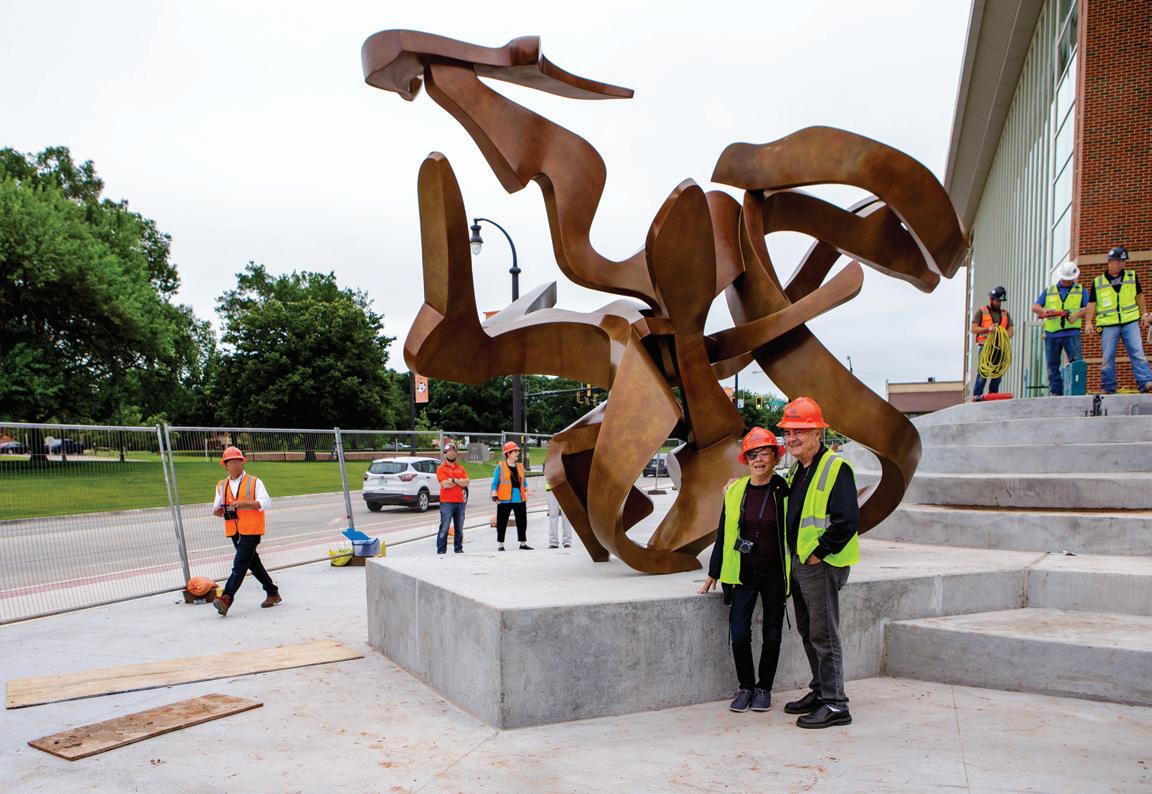
Bill Barrett’s DNA IV sculpture, 12 feet high and 18 feet wide, greets patrons at The McKnight Center. Standing in front of it are Barrett and his wife, Debora.

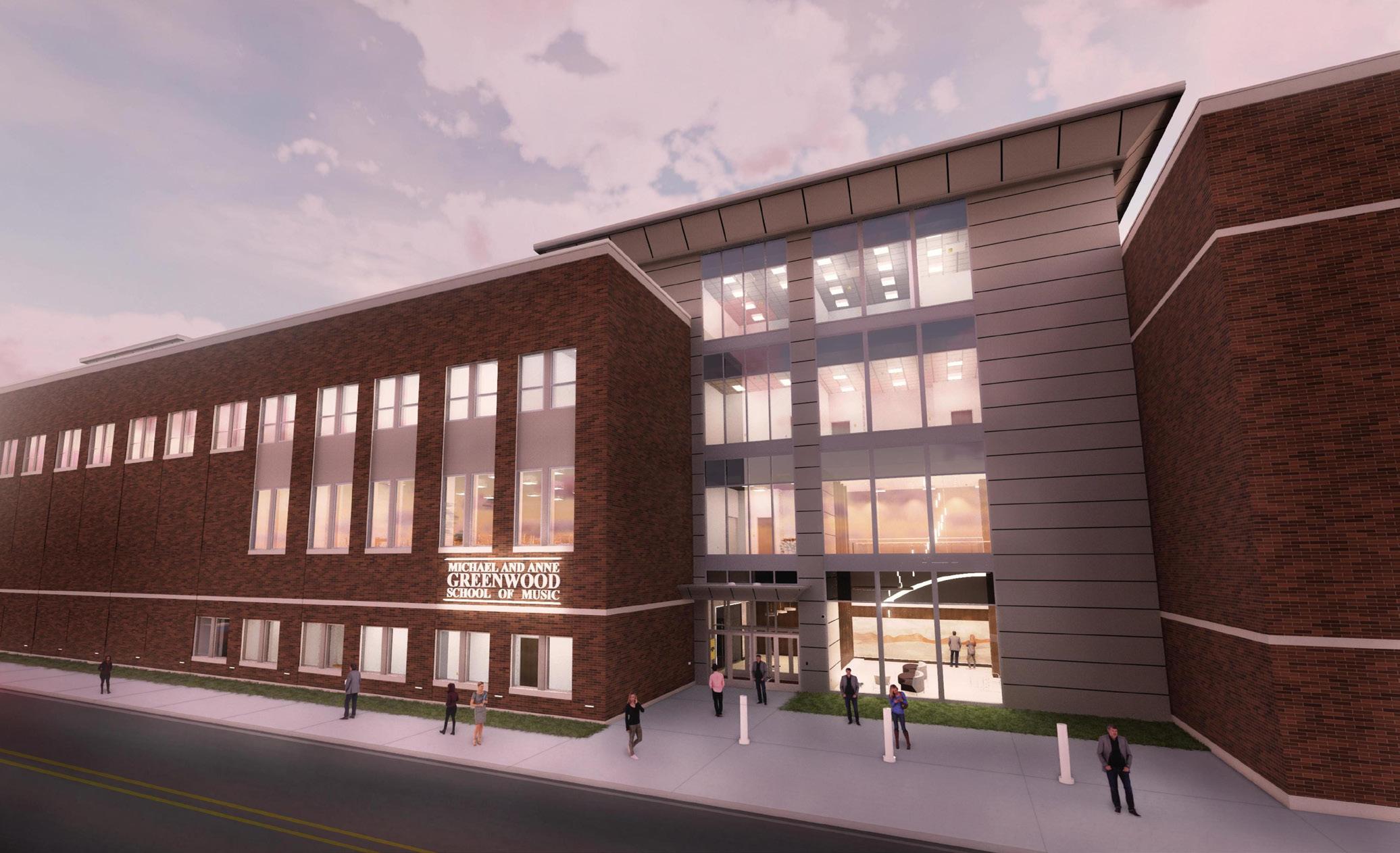



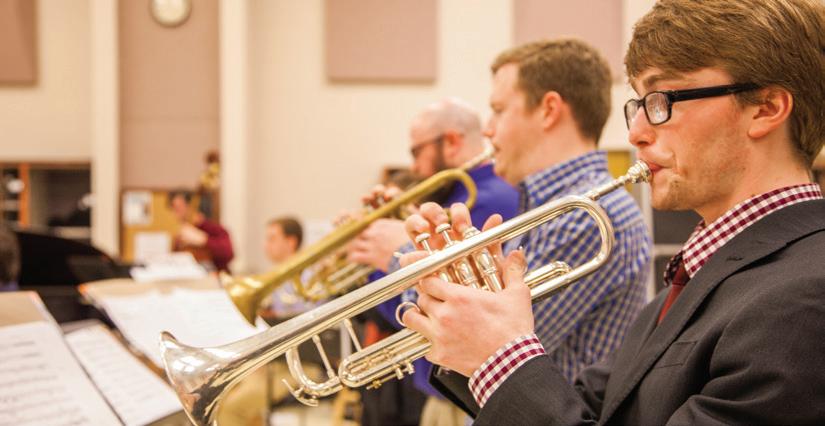



Excellence is a tradition at the Greenwood School of Music, and you can contribute to our growing legacy! Construction continues on the new state-of-the art facility, connected to The McKnight Center for the Performing Arts.
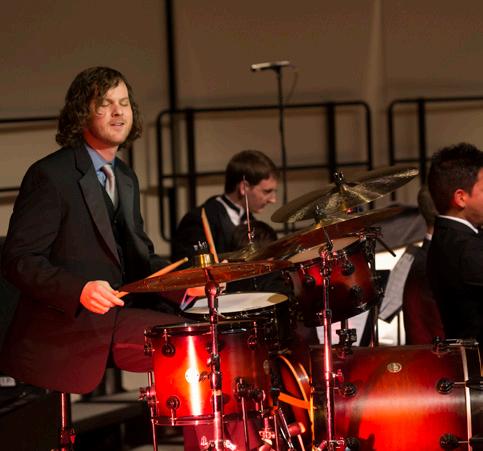
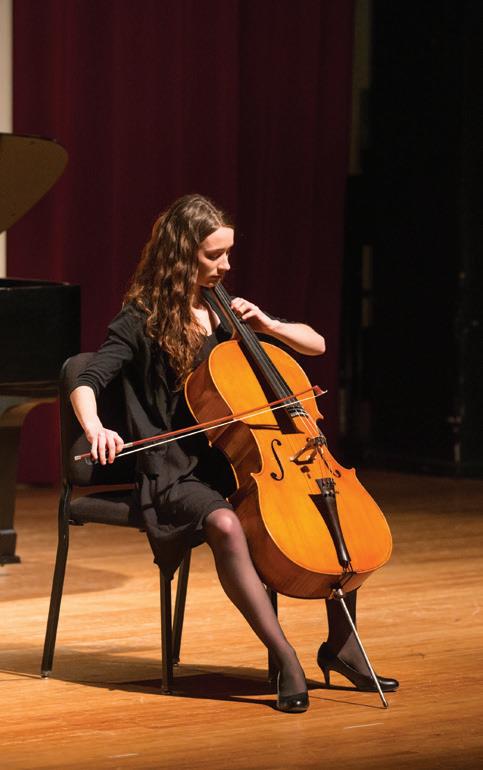
Your support will help create experiences students can only get at Oklahoma State and elevate the already stellar education provided by our highly talented and experienced professors.
To make a gift or learn more about how you can support the Greenwood School of Music, contact Laura Ketchum, Director of Development & Team Lead – College of Arts and Sciences, at 405.385.0701 or lketchum@OSUgiving.com, or visit: OSUgiving.com/Greenwood
Every year, Oklahoma State University’s College of Arts and Sciences recognizes and honors some of our outstanding alumni whose accomplishments and service are tangible evidence of their distinction. Arts and Sciences Alumni Awards include Hall of Fame induction, Distinguished Alumni recognition and the Rising Star award.
The College of Arts and Sciences honors and celebrates alumni who embody the qualities that make OSU an extraordinary place to learn and grow. Inductees are College of Arts and Sciences alumni who are recognized by their department as Distinguished Alumni for demonstrating excellence and leadership in their careers and making significant contributions through distinguished service.
The College of Arts and Sciences recognizes alumni who bring distinction to OSU through extraordinary achievements in their fields of discipline and have demonstrated records of distinguished service. Representatives from each department of the college choose the recipients of this prominent award.
The College of Arts and Sciences recognizes alumni who have graduated in the past 10 years and already reached a major milestone in their careers, displayed exemplary service to the community, and/ or proven their commitment to volunteerism.
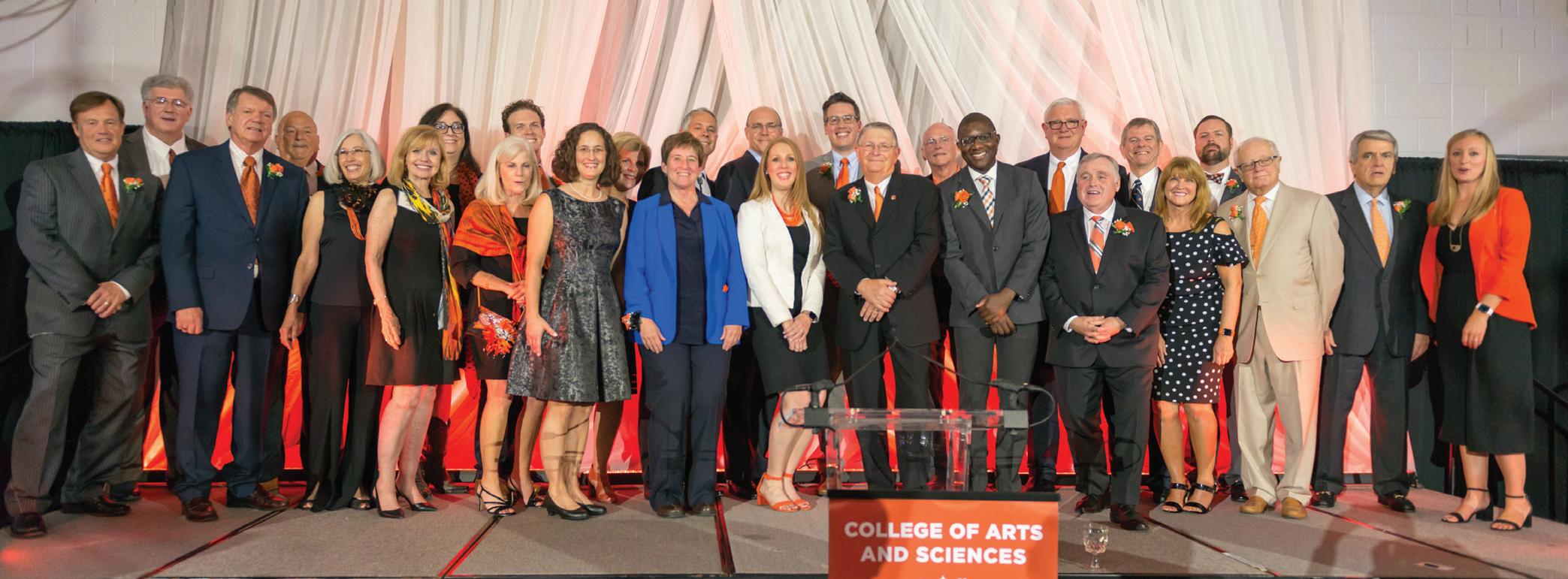
n the following pages are information and photos from the 2018 Hall of Fame Ceremony, held Sept. 21 in the Wes Watkins Center on the Stillwater campus.
FOR MORE INFORMATION AND TO NOMINATE AN INDIVIDUAL, VISIT CASHONORS.OKSTATE.EDU.
Ann Ackerman, Ph.D.
B.S. Mathematics ’72
John Alberts
B.S. Sociology ’87
Carol Alexander
B.A. Spanish, B.S. Journalism ’86
David Allen
B.A. Philosophy ’89
Vicki Baker, M.D., MPH
B.S. Physiology ’79
Paul Bohannon
B.A. Political Science ’72
Joe Carroll
B.S. Computer Science ’86
Tom Cason
B.S. Biological Sciences ’72, M.S. Biological Sciences ’74, Ph.D. Botany ’77
Alvin Cobb
B.A. History ’65
Jeanie Cooper
B.S. Speech/Theatre, ’66
John David
B.S. Broadcast Journalism ’68
Chris Fore, Ph.D.
M.S. Psychology ’94, Ph.D. Psychology ’97
Michael Grim, Ph.D.
B.S. Speech Pathology ’86
Deborah Huff, M.D.
B.S. Microbiology ’80
Will Joyce
B.A. English ’01
Colte Julian
B.A. Music ’06
Mike Kuykendall
B.S. Geology ’82, M.S. Geology ’85
Sherry Marshall
B.S. Physics ’92
Mark Miller
M.S. Geography ’72
Gilbert Sanders, Ed.D.
B.S. History ’67
Sonya Terpening
B.S. Art Education ’77
Mario White
B.S. Math, B.A. History ’02
Theodore Wagener, Ph.D.
M.A. Psychology ’05, Ph.D. Psychology ’10
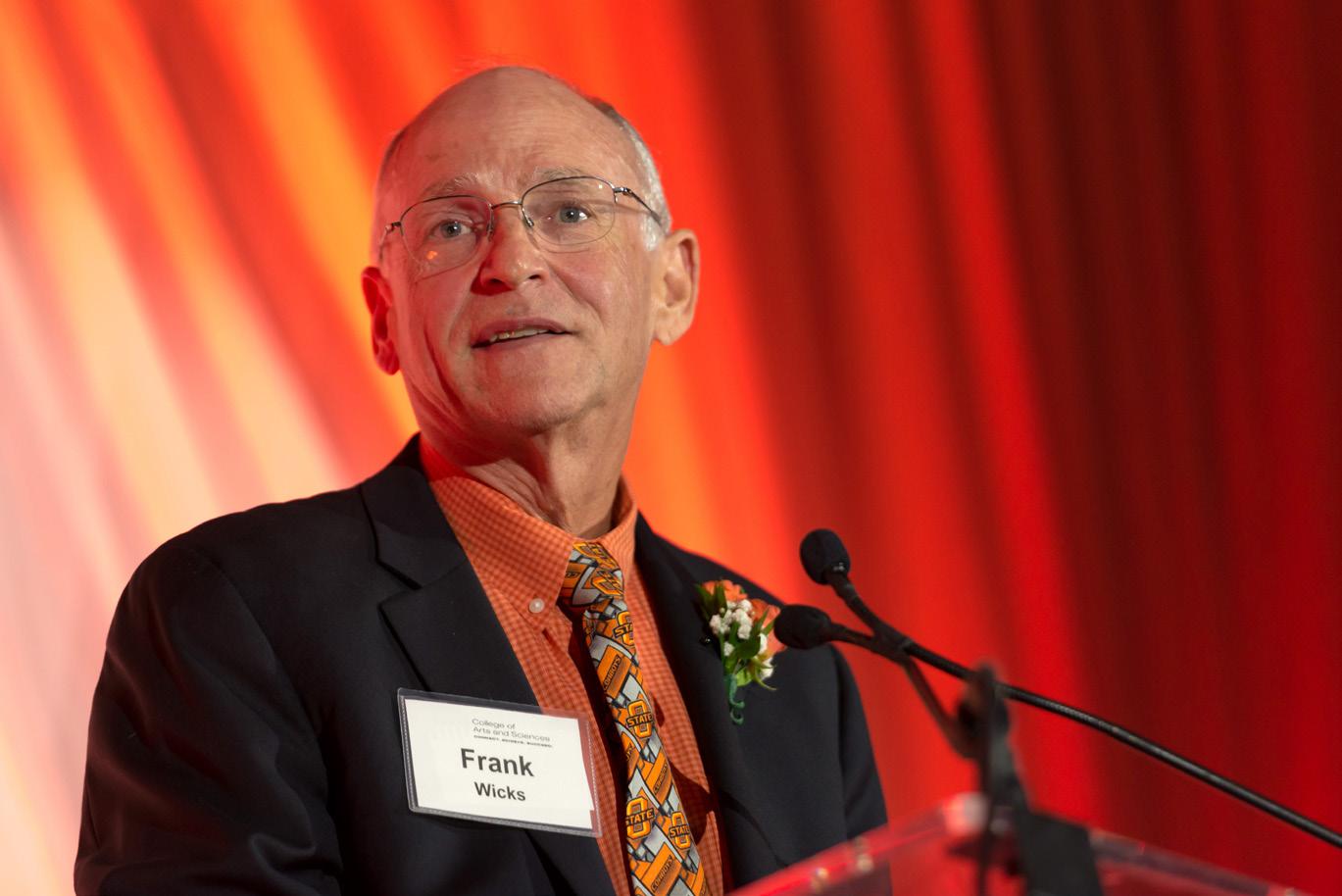
FRANK WICKS
Retired Executive Vice President and President of Applied Markets
Sigma-Aldrich Corp.
B.S. Microbiology ’75
Ph.D. Biochemistry ’78
Frank Wicks earned two OSU degrees — a 1975 bachelor’s in microbiology and a 1978 doctorate in biochemistry.
At OSU, he was very involved in the leadership of the Navigators, a campus religious group. Upon graduation, he and his wife, Elvesta, moved with their daughter to Colorado Springs to teach part-time at the University of Colorado-Colorado Springs and work for the Navigators at the U.S. Air Force Academy. The following year, they moved to Boulder to work for the Navigators at the University of Colorado.
In 1982, Sigma-Aldrich Corp. of St. Louis hired Wicks as a chemist in research and development, and in 1994, he became president of the Sigma Chemical division. Sigma-Aldrich was a publicly traded life science company with 10,000 employees in over 40 countries. It was the premier provider of research chemicals with over 200,000 chemicals used by universities,
pharmaceutical and industrial companies. Wicks assumed a brief role in 1998 as vice president of worldwide operations. The following year, he went through Harvard Business School’s Advanced Management Program. Then he and the company’s chief operating officer developed a strategy that was the basis for the company’s revenue tripling to almost $3 billion by 2015.
Throughout his career, Wicks filled the following roles at Sigma-Aldrich:
• president of Sigma Chemical
• vice president, worldwide operations
• president of scientific research
• president of fine chemicals
• president of research
• executive vice president and president of applied markets
He was known as the company’s culture leader, with a focus on the value of the individual and core values of respect and dignity; led multiple acquisitions and integrations; launched major marketing and rebranding
campaigns; hired and developed seven of the 15 key leadership team members; and developed and implemented database marketing and pricing systems. During his 30-plus years with Sigma-Aldrich, Wicks earned a reputation for making a significant impact to the company. Merck Kga bought Sigma-Aldrich for $17 billion in 2015.
Wicks also served on the advisory boards of Chemical & Engineering News and the International School of Business at St. Louis University. He is vice chairman of the board of trustees of Covenant Theological Seminary of the Presbyterian Church in America and serves on the board of directors of CASS Information Systems.
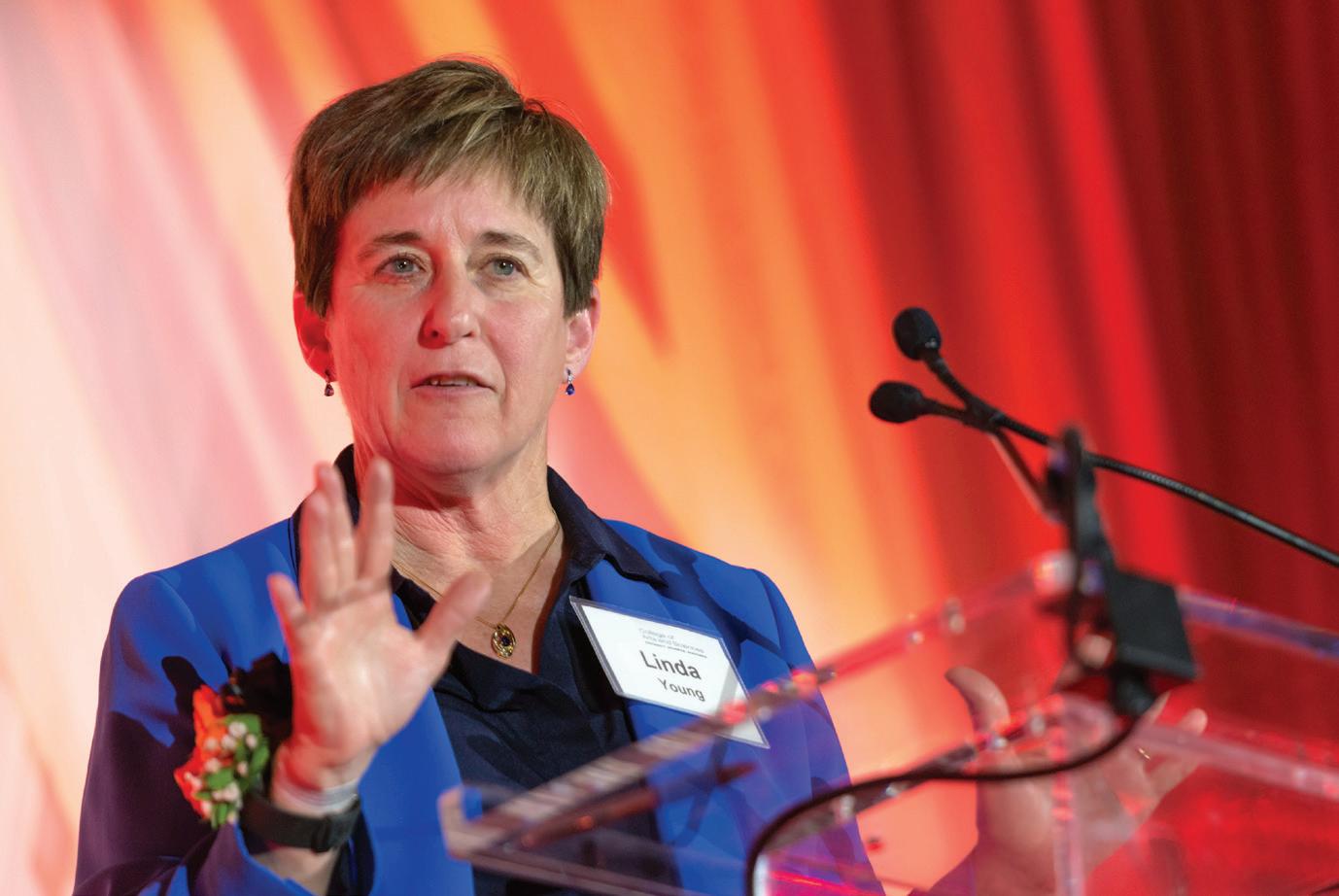
By the time Linda J. Young completed her OSU statistics doctorate in 1981, she had built the foundation for a career in research at the intersection of statistics and the sciences, particularly the agricultural sciences.
For over 25 years, Young served on the faculty of land-grant universities: OSU, the University of Nebraska and the University of Florida. At each institution, she collaborated with agricultural and other scientists on the issues challenging agriculture practice and productivity — the control of such major pests as tobacco bollworms and budworms in Oklahoma cotton; the use of new management practices to limit lepidopteran resistance to Bt-corn in Nebraska; and early identification of citrus greening, a disease decimating the citrus industry in Florida. These three examples — and their potential economic impacts on agriculture in those states — highlight the importance of the problems to which Young has brought statistical thinking, experiment
design, and data analysis and interpretation.
Young has authored or co-authored three books on statistical methodology and has more than 100 publications in over 50 different journals about statistics and other subjects. She has served as editor of the Journal of Agricultural, Biological and Environmental Statistics. Young has held a broad range of offices within the professional statistical societies, including president of the Eastern North American Region of the International Biometric Society, vice president of the American Statistical Association, chair of the Committee of Presidents of Statistical Societies, member of the National Institute of Statistical Sciences’ Board of Directors, and member of the Statistical and Applied Mathematical Sciences Institute’s Governing Board. Young is a fellow of both the American Statistical Association and the American Association for the Advancement of
Chief Mathematical Statistician and Director of Research and Development
National Agricultural Statistics Service of the U.S. Department of Agriculture
Ph.D. Statistics, 1981
Science, and an elected member of the International Statistical Institute.
In 2013, Young became mathematical statistician and director of research and development for the USDA’s National Agricultural Statistics Service. She works to improve the methodology underpinning NASS collection and dissemination of data on U.S. agriculture and to lead NASS researchers in formulating, solving and implementing statistical research that furthers this aim.
With her husband, Jerry H. Young — an OSU alumnus and retired faculty member — Young raised three children: John, Shamar and RaQwin. All are avid OSU supporters.

$2.76 M in scholarships awarded for 2018-2019
1,180 CAS graduates 2018-19, a record
1,134 CAS graduates 2015-16, previous record
CAS honors degrees, up from
two years ago
undergraduate degree
minors
CAS has added new degree programs in six areas:
American Studies — American Indian Studies, Business Essentials, Pre-Law
Geography — Business Essentials
Global Studies — Business Essentials, Pre-Law, Pre-Ministry
Philosophy — Ethics and Business Essentials
Psychology — Pre-Occupational Therapy, Pre-Physical Therapy, Business Essentials
Statistics — Actuarial Science, Business Essentials, Data Science.
Seven of the OSU Alumni Association’s 15 Outstanding Seniors for 2018-19 were CAS students:
Danya Brewer, psychology
Emily Dawn Fry, biological science
Caroline K. Graham, microbiology/ cell and molecular biology and biochemistry
Savannah Martin, microbiology/ cell and molecular biology
Sarah Oliver, biochemistry
Amairani Perez Chamu, American studies
Alma Delfina Rios, biochemistry
In August 2018, the Department of Communication Sciences and Disorders hosted a threeday Parkinson’s disease boot camp. More than 50 participants attended the free event, which was funded by a College of Arts and Sciences Community Engagement Grant. Feedback from the event was instrumental in creating partnerships between different OSU departments to build a free, community-based program for people with the disease and their family members. Stillwater CANe (Communication, Arts, Nutrition and Exercise) Project recently received funding from the Parkinson’s Foundation and American Speech-LanguageHearing Association. As part of the project, in partnership with the Stillwater Public Library, a singleday educational event was held in August 2019, with 59 attendees.
Dr. Anna Zeide’s first book won the James Beard Foundation Book Award. Canned: The Rise and Fall of Consumer Confidence in the American Food Industry topped the category of Reference, History and Scholarship.
The OSU Army ROTC cadet Ranger Challenge won the Task Force Plains competition in October at Camp Gruber, Oklahoma, beating seven other schools from Oklahoma and Arkansas. The two-day competition included more than nine miles of ruck marching, marksmanship, grenadethrowing proficiency, weapon disassembly and assembly, military communication, tactical combat casualty care, land navigation, improvised explosive device identification, one-rope bridge assembly and navigation, and an obstacle course. The next weekend, OSU placed third in the bridge-level Ranger Challenge at Camp Bullis, Texas.
Dr. William “Bus” Jaco, the Grayce B. Kerr Regents professor of mathematics at OSU, is being inducted into the Oklahoma Higher Education Hall of Fame this year.
Dr. Charles I. Abramson of the Department of Psychology is one of fewer than 20 people inducted into both the Oklahoma Educators Hall of Fame and the Oklahoma Higher Education Hall of Fame.

Juniors Christopher Jones (geology) and Jeffrey Krall (microbiology/cell and molecular biology and biochemistry) both won a 2019 Barry M. Goldwater Scholarship.
Arielle Farve and Miranda Stiles, both School of Media and Strategic Communications students, were among the Native American Journalists Association’s 11 Native American Journalism Fellows. Farve also received a $10,000 Facebook Journalism Project Scholarship.