How Smart Division Turnarounds Help Businesses Grow Again By
Brandon Jones Davidson

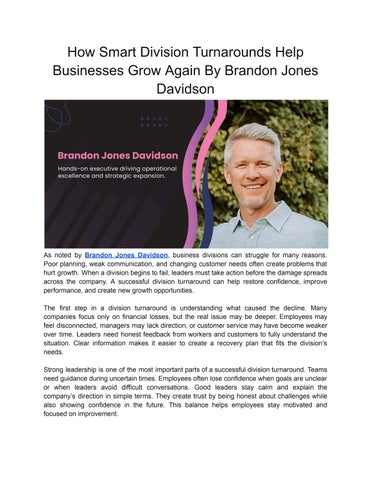
As noted by Brandon Jones Davidson, business divisions can struggle for many reasons. Poor planning, weak communication, and changing customer needs often create problems that hurt growth When a division begins to fail, leaders must take action before the damage spreads across the company. A successful division turnaround can help restore confidence, improve performance, and create new growth opportunities
The first step in a division turnaround is understanding what caused the decline. Many companies focus only on financial losses, but the real issue may be deeper Employees may feel disconnected, managers may lack direction, or customer service may have become weaker over time. Leaders need honest feedback from workers and customers to fully understand the situation Clear information makes it easier to create a recovery plan that fits the division’s needs.
Strong leadership is one of the most important parts of a successful division turnaround Teams need guidance during uncertain times. Employees often lose confidence when goals are unclear or when leaders avoid difficult conversations Good leaders stay calm and explain the company’s direction in simple terms They create trust by being honest about challenges while also showing confidence in the future. This balance helps employees stay motivated and focused on improvement
A division turnaround also requires clear and realistic goals Trying to fix every problem at once can create confusion and stress. Smart leaders focus on the most urgent issues first. They may improve customer support, reduce delays, or increase product quality before expanding into larger projects. Small improvements can build momentum and encourage teams to keep moving forward. Employees become more engaged when they can see progress happening around them
Customer satisfaction plays a major role in any division turnaround Customers quickly notice when service quality drops Delayed responses, poor communication, and inconsistent products can damage trust. Businesses must show customers that positive changes are taking place. Listening to customer concerns and solving problems quickly can improve loyalty Happy customers often share positive experiences, which helps rebuild the company’s reputation
Employee training is another important part of long-term success Workers need the right skills to support new goals and systems. Training programs help employees feel prepared and valued They also create stronger teamwork across departments During a division turnaround, businesses should encourage learning and improvement at every level of the organization
Technology can also improve results during a division turnaround Modern systems help businesses manage data, track performance, and improve communication Better tools allow employees to work more efficiently and reduce costly mistakes. Companies that combine technology with strong leadership often recover more quickly from difficult situations
A division turnaround takes time, effort, and patience. Results may not appear immediately, but steady progress creates lasting change Businesses that stay focused on leadership, communication, and customer trust can recover from setbacks and grow stronger than before. A struggling division need not remain weak With the right strategy, it can become one of the company's strongest assets