![]()


By Stephanie Davis
o od and beverage has officially graduated from “nice to have” to “can’t ignore.” What were once add-ons have become meaningful revenue drivers for centers of all sizes, not just those with full-service kitchens or big footprints. Whether it’s a simple menu executed well or a more elevated offering, F&B now plays a bigger role in the business of fun.
This month is our annual food and beverage issue. We’ve packed it with practical, real-world insight from contributors who understand the realities operators face every day. No matter what type of food or beverage operation you’re running, I’m confident you’ll find ideas, reminders, and a few “we should probably try that” moments worth bookmarking.
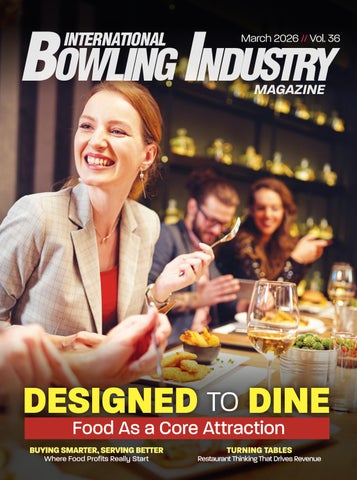
Our cover story, "Designed to Dine," takes readers inside Pinheads Entertainment in Indiana, where food and beverage is a main anchor. At Pinheads, full-service dining, including lane-side service, work seamlessly alongside bowling, arcades, and special events. COO Ryne Barr shares how treating food as a brand pillar, not a concession, has helped the operation drive longer stays, stronger loyalty, and traffic that comes in specifically to dine. It’s the kind of approach that inspires a different way of thinking about food.
Sheryl Bindelglass, aka Sheryl Golf, tackles one of the biggest pressure points operators are feeling right now: rising food costs. In her article "Buying Smarter, Serving Better," she introduces a Group Purchasing Organization (GPO) that many operators might not realize is available to them. The buying power of this GPO is making a significant impact for entertainment venues that take advantage of it. From there, she outlines the systems that separate average food programs from profitable ones, reinforcing that food doesn’t need to be complicated, but it does need to be treated like the attraction it is.
David Wallace of Turfway Entertainment builds on that idea in his "Turning Tables" article, showing operators how
borrowing proven restaurant strategies can immediately improve food and beverage performance inside bowling centers and FECs. He breaks down practical ways to engineer menus for profit, speed up bar service during peak times, and use limited time offers to create excitement and sales, without adding complexity or stressing staff. It’s a valuable reminder that you don’t need a massive kitchen overhaul to drive better results.
Not every food and beverage lesson comes from the kitchen. Cameron Linder from Western Bowling Proprietors Insurance brings a dose of reality with his "Fall-Out-of-YourChair Claims" article, a surprisingly eye-opening look at how everyday furniture can turn into major liability issues whether they’re in your restaurant or bar, or anywhere in the building. His real-world examples matter just as much as what’s on the menu.
Taken together, these stories reinforce the same takeaway: food and beverage isn’t a side project anymore. It’s a core part of the guest experience, a key driver of revenue, and an area where small improvements can deliver outsized returns.
Here’s to tightening systems, raising standards, and treating F&B like the attraction it already is.

s always, we love hearing from you. If your center has news, ideas, or lessons worth sharing, drop us a note. The best stories in this business are still being written, and we want to share them with the industry.•
– Stephanie Davis, Publisher & Editor stephanie@bowlingindustry.com


USBC-CERTIFIED, PBA-APPROVED DUAL-PURPOSE STRING PINSETTER FEATURING THE 360 TOUCHSCREEN CONTROLLER
Boost ST is in a class by itself. As the industry’s proven USBC-certified, PBA-approved dual-purpose string pinsetter, Boost ST supports league and tournament play while handling the demands of high-volume open play. Advanced sport technologies—including Precise String-Length Optimization, an intuitive touchscreen interface, and the 360 Controller—elevate performance, safety, operational efficiency, and the bowler experience. The world’s only cloud-enabled string pinsetter, Boost ST is ready to evolve with your business. Compatible with any major scoring system—and even better with Sync.
When I started writing for IBI, there were a handful of people I knew I wanted to interview at some point. Not because they had the loudest voice in the room, but because they consistently showed up with insight that actually helped operators run better businesses.

Sherry Howell, Brand Engagement Director at CenterEdge Software, was at the top of that list. What’s always impressed me about Howell isn’t just her understanding of how systems and software should work, it’s how hard she works to help operators understand why they work the way they do, and how to use them day to day to improve business. She sees patterns across the industry that most people never get a chance to see, and she's always been generous about sharing what she learns.
So, when conversations started turning toward food and beverage, and how critical it’s becoming for all types of amusement locations, I knew she was a good person to talk to. Whether owners love it or hate it, food and beverage is no longer just something you offer because guests expect it. It's increasingly a driver of where guests choose to spend their time and money.
"Guest expectations are just different now," Howell told me. "People are more food-aware than they were five or ten years ago. They notice quality. They notice the presentation. And most importantly, they notice inconsistency.” That shift is happening everywhere, not just in traditional restaurants. Guests walk into FECs and BECs with the same expectations they bring to other dining experiences. They want food that feels thoughtfully done, drinks that feel special, and service that doesn’t slow the whole visit down. The pressure is real.
“If you think about guest experiences, it really comes down to reducing friction,” Howell said. “It’s a hassle to go somewhere


else, but guests will if your offering isn’t up to snuff. Once they’re in the building, they’re ours to keep or ours to lose.” Just a simple acknowledgement that dining is an integral part of a guest’s outing can help you begin to shift how food and beverage fit into the overall business model.
Dwell time doesn’t need much explanation for operators. When guests are comfortable and engaged, they stick around. When they’re not, they head for the exit. “When food and beverage is working, guests don’t feel like they’re on a clock,” Howell said. “They relax, order another drink or snack, and start thinking about what’s next instead of when they need to leave to make a reservation or beat the dining rush elsewhere.”
That’s where F&B quietly earns its keep. It changes the rhythm of the visit. A pause between games. A quick bite that turns into another. Those extra minutes turn into extra purchases, a more pleasant experience, and over the course of a week, a month, or a year, they can make a significant impact.
» Inconsistency: Despite its importance, F&B is also where many venues struggle. “One of the biggest issues many operators face is inconsistency,” Howell said. “The concept might be great, but execution varies depending on the day, the staff, or how busy the building is. This causes many problems because guests become dissatisfied when orders aren’t what they’re expecting, food costs rise when recipes are out of sync, and you have more potential for waste and theft.”
» Misaligned Concept: Another common mistake is chasing ideas that don’t fit the venue. “A trendy food concept might sound exciting,” she said, “but if it doesn’t align with your brand, guests, or operational reality, it’s hard to sustain long-term.”

» Leadership Gaps: And then there’s the complexity piece, something operators often underestimate.
“Running a profitable kitchen or bar takes the same level of discipline as maintaining attractions or marketing the business,” Howell said. “Ordering, prep, training, consistency — all of it matters.”
Howell was clear that profitability is built behind the scenes. “Inventory control is foundational,” she said. “If you don’t know what you’re using, what you’re wasting, or what you’re running out of, margins disappear fast.”
Inventory discipline isn’t just a big-facility problem; it's often a small-facility blind spot. "Smaller venues sometimes think inventory tracking is only for big operations," Howell said. "But knowing par levels, tracking recipes, and understanding food costs protects margins at every level." The goal is the same no matter the size of the operation: more control and fewer surprises.
When inventory isn’t dialed in, consistency disappears. Food costs creep up, waste increases, and guests notice. “Guests don’t know why something was unavailable,” Howell said. “They just remember that something they wanted wasn’t available.”
Inventory visibility also helps operators spot issues that are harder to see day to day. When usage doesn’t match sales, it can point to over-pouring, mis-portioning, or simple misuse, all of which eat away at margins if they go unchecked.
Without a clear understanding of ingredient costs and portioning, operators can unknowingly underprice popular items or watch margins erode during busy periods. Disciplined inventory management makes it easier to adjust pricing with confidence and protect profitability without sacrificing quality.
When tech supports F&B instead of complicating it, operators spend less time chasing problems and more time improving the guest experience.

“The biggest value is visibility,” Howell said. “Understanding what’s selling, how food impacts overall spend, and where things break down.” That visibility disappears when systems don’t talk to each other. Operators are forced to guess, and guessing gets expensive. Howell’s advice is straightforward: “Look for solutions that combine lines of business, such as sales, order placement, inventory management, and labor, all in one place. If you do that, you’re able to make decisions faster because it’s easier to see where you need to focus efforts to make an impact.
Today’s tools help sharpen instincts by showing operators what’s actually happening in their F&B operation, including:
• How much guests are really spending on food and drinks.
• Which menu items consistently perform well, and which do not.
• How F&B holds up during the busiest times.
• Where small changes to menus, pricing, or staffing can improve flow and profitability.
The result is a smoother system in place for staff and a more seamless experience for customers, without adding unnecessary complexity. F&B is now part of how guests judge the entire experience. “Guests remember how the visit made them feel,” she said. “F&B plays a huge role in that.”
MINDSET THAT MAKES THE DIFFERENCE
For operators looking to improve F&B, Howell emphasized that progress doesn’t always require a massive rebuild. Sometimes, it is as simple as streamlining or reworking key menu items, offering craft cocktails, beers, or mocktails, or taking a look at food presentation. Sometimes, outside help can be part of the answer. “The restaurant industry is tough, and there’s no shame in bringing in expertise,” Howell added. “A fresh set of eyes can help identify issues that are easy to miss when you’re in it every day.”
When I asked her what advice she’d give operators right now, her answer was simple: treat food and beverage like the core business it has become. When F&B gets the same discipline and attention as attractions or staffing, it stops being a headache and starts pulling real weight in the guest experience and the bottom line. That shift is what separates venues that struggle from those that run better, more profitable operations.
And, wouldn’t we all want that?•

Brian Duke is an industry consultant who helps companies boost sales, strengthen connections, and stay competitive in family entertainment. A veteran of the FEC and arcade world, he is known for his big personality, deep industry know-how, and ability to connect with just about anyone. When he is working with IBI, Brian focuses on uncovering great stories, connecting with standout suppliers, and helping us shine a brighter light on the FEC side of the business, all while keeping things fun and real. Contact Brian at brianduke2012@gmail.com.


Need a New Attraction? You already have one, you just might be underestimating it.
O ften, bowling and FEC operators spend endless energy on lanes, arcades, VR, and other attractions, but overlook the biggest hidden attraction in the building: their food program. Guests come for fun, but they stay longer, spend more, and return more often when your food is a star.
Think about it. Every customer needs to eat. That money is either going to be spent in your center or at a restaurant down the street. Why give it away?
Yes, food and beverage can feel more complicated than games or attractions. Hiring cooks can be trickier than hiring cashiers. But there are amazing people out there who are passionate about food, and with the right structure, your food operation doesn’t have to be a headache, it can be a profit powerhouse.
Of course, rising food costs are squeezing margins, but that’s only part of the problem. Too many centers I see are losing money by offering guests food that’s simply unforgettable. “Eh” food quietly pushes guests to eat somewhere else.
When food is treated like a side project instead of a real business, operators feel it twice: higher costs going out and lost revenue walking out the door. That’s why fixing food and beverage today starts with controlling costs and raising the bar on execution.
Let’s start with a strategic buying solution.
One of the biggest missed opportunities I see is how centers
By Sheryl Bindelglass
buy their food. As costs escalate, the most profitable operators aren’t cutting quality or shrinking portions. They’re leveraging buying power. That’s where a Group Purchasing Organization (GPO) comes in, but not all programs are created equal.
A good GPO will cut your cost of goods by 10–15% without forcing you into contracts, membership fees, or confusing rebate structures. The GPO I recommend to my clients negotiates $10 billion in food annually, which means you get the buying power of a giant chain without being one. Operators using it are seeing dramatic savings, within that 10–15% range directly off their cost of goods, with no menu changes required. That’s significant, instant bottom-line impact!
Unlike many GPOs out there, this program:
• Doesn’t lock operators into restrictive contracts
• Has no confusing rebate games or hidden fees
• Doesn’t force vendor or menu changes
• Delivers savings that show up immediately on the bottom line
And once purchasing is under control? That’s when food really starts to shine.
It’s not usually bad ingredients. It’s not always slow ticket times. The biggest killer? Average food, served without imagination.
One center I worked with treated food as the lowest priority. Sadly, their burgers had become the punchline of their own staff meetings. During my first visit, I ordered one to see for


myself, and the plate looked like an 8-year-old had tossed it together. A half-on, half-off bun. Fries dumped on a round plate like an afterthought.
The next day I tried it again. Same burger. Same price. Half the fries. Inconsistent. Forgettable. Uninspired. That’s not a kitchen problem; it’s a systems problem.
Here’s the good news: turning that situation around isn’t rocket science. In this center, we made just three changes. No new staff. No new ingredients. And sales went up 28%, with higher profits. W hat changed?
• P LATING STANDARDS. Bun open. Lettuce and tomato stacked neatly. Burger centered. Fries served upright in a cylinder for height and style. A pickle angled perfectly on a rectangular plate. Suddenly, the same food looked fresh, intentional, and crave-worthy. Guests really do eat with their eyes.
• V ISUAL SYSTEMS. Photos of every plated dish were hung in the kitchen. Consistency became the rule, not the exception.
• M ENU FOCUS. Items that didn’t sell were cut. Ticketto-table time sped up. Guests aren’t looking for a twohour fine dining experience. They want good food, fast, without waiting 45 minutes for an appetizer.
T he result? The food stopped being a weakness. It became a reason to stay. So, remember, the power of presentation is a real strategy, so don’t ignore it.
T URNING FOOD INTO AN ATTRACTION
H ere’s the mindset shift once your fundamentals are in place: your food is not just a necessity. It’s an attraction.
• B RAND IT. Don’t just sell pizza - sell the Strike Zone Supreme or The Gutterball Giant. Fun names stick in guests’ minds and encourage upsells.
• B UNDLE IT. Create “Food + Fun” packages: bowling plus a burger and soda, arcade credits plus a pizza. It simplifies choices and locks in food revenue up front.
• T HEME IT. Kids’ birthday parties? Offer a birthday sundae that’s Instagram-worthy. Leagues? Make “Wing Night Wednesdays” a ritual. Seasonal specials keep menus exciting and give guests a reason to come back.
• M ARKET IT. Feature your best-looking dishes on social media. A n appealing photo of a sizzling pizza can generate hundreds of dollars in extra sales if it gets people hungry before they even arrive.
I regularly hear this staffing complaint: “We can’t find kitchen people.” Here’s the bold truth: it’s no harder than finding
managers or arcade techs. The key is to look for people with a passion for food rather than relying only on “anyone who can flip a burger.” Train your team to take pride in presentation. Incentivize speed and quality the same way you incentivize upselling at the register. Food people are out there, and many are looking for exactly the kind of steady, creative environment your center can provide.
W hen you elevate your food and beverage program, three things happen:
1 . GUESTS SPEND MORE. A $10 pizza becomes a $14 combo with style and upsells. A family of four who used to leave for dinner now eats in-house, adding $50–$70 to their tab.
2 . GUESTS STAY LONGER. Food keeps people from walking out after their game. They hang around for dessert, another drink, and maybe one more round of bowling.
3. GUESTS COME BACK. “That place has great nachos” is as powerful a reason to return as “That place has great lanes.” Word of mouth doubles when the food is part of the story.
Family entertainment is about memories. The same way a strike feels bigger under cosmic lights, food feels better when it’s presented with care. Don’t let your kitchen be the weak link in an otherwise great guest experience.
Treat your menu as an attraction. Simplify. Present beautifully. Bundle creatively. Buy smart. And above all, make food a reason for guests to stay, not an excuse for them to leave. Remember a guest comment like, “That place has great food,” is just as powerful as, “That place is fun.” The most successful centers today are destinations, not just places to bowl or play games.
So, if you’re asking what new attraction to add this year, take a closer look at your kitchen, and how you’re buying for it. The next profit center is already in your building. After all, food is already an attraction, you just have to treat it like one.•
To learn how other centers are achieving meaningful savings through this well-structured GPO, email sheryl@sherylgolf.com with “GPO” in the subject line or call 732-991-5644.

Sheryl Bindleglass, aka Sheryl Golf, is the founder of Sheryl Golf, a nationally recognized business enhancement firm serving the golf, recreation, family entertainment, and retail industries. Her mission is to deliver practical, easy-to-implement solutions that boost profits, streamline operations, and keep core customers happy, entertained, and coming back for more.


By Cameron Linder
Each year, patterns emerge in the insurance business. Some are serious—fires, shootings, the usual nightmares. But in 2024, one trend stood out above the rest:
Cars. Running. Into. Buildings. Seriously. We handled 18 claims in an 18-month stretch starting in 2024 where a car drove straight into a bowling center. At one center, it happened twice, in two different locations.
I don’t know what’s causing bowling centers to suddenly wander into traffic, but something’s gotta be done. The good news with car-crash claims is that there’s usually an auto insurer involved to help pay the bill.
Now, a new trend is appearing, and this one doesn’t involve vehicles. It involves something every center already has inside the building: the furniture. Over the last 14 months, brokenchair claims have become a recurring problem, and those “just a chair” claims add up fast.
• In one case, a guest injured their back and head when the bolts fastening the chair to the floor sheared off, sending them backward. That one’s easily a $200,000 claim.
• In another, a person cut off their fingertip when it got trapped between the chair base and the wooden seat. That’ll likely land around $40,000.
• One woman was “thrown” to the floor when the seat cushion detached from a plush chair, causing her to fall face-first and break her nose. Call it $25,000.
• In another case, the chair simply fell apart (loose bolts again) when the customer sat down. The fall fractured their hip. Best-case scenario? $100,000.
• Then there was the table. You know the kind — the swinging chairs that are attached to a center post of the table. Loose bolts ripped straight out of the floor,
catapulting two women onto the ground like bowling pins. There goes another $100,000.
Broken-chair claims are hard to defend. From a guest’s perspective, sitting in a chair is a reasonable expectation of safety. When something that basic fails, liability becomes tough to argue, especially if maintenance records are thin or nonexistent or if there’s no video.
Here are a few basics that can save you a whole lot of money (and headaches):
1
. Do a monthly inspection of all chairs. Check seat cushions, tighten bolts, and look for nails or sharp edges that could cause injury. And document the maintenance.
2. Keep the chair. If a chair breaks and someone gets hurt, do not throw it away. That chair is evidence.
3. Preserve video footage. We’ve successfully defended claims where video showed guests leaning way back on chair legs before the failure.
Do these things, and you’re far more likely to avoid premium increases that’ll make you fall out of your chair. Because in this business, it’s rarely the flashy stuff that gets you.
It’s the loose bolts. •
CHAIRS DON’T LOOK DANGEROUS… UNTIL THEY ARE
Why these claims hurt more than you think:
• They often involve head, back, or hip injuries
• Medical costs escalate quickly
• Video is frequently missing or overwritten
• Small equipment failures can look like big negligence

Bowling has always been personal for Brad Peterson. He grew up in his family’s center, became a competitive bowler, and was later nominated for induction into the North Dakota Bowling Hall of Fame. When he and his wife, Leisha, purchased Strike Zone in Williston, North Dakota, in 2015, they set out to run a center bowlers could truly rely on.

So when it came time to make major equipment decisions, it wasn’t something Brad took lightly.
“We’re a league-heavy house,” he said. “We host a lot of tournaments, including the biggest state scratch tournament in North Dakota. Whatever we did had to respect the game.”
Strike Zone’s 24 lanes are busy with leagues Monday through Thursday and host tournaments that draw bowlers from surrounding states and Canada. Weekends are packed with open play and birthday parties, keeping the lanes in near-constant use.
For years, the Petersons relied on 1958-era free-fall pinsetters but keeping them running grew harder every year. “Labor is tough to find here, especially for back-end work,” Brad said. “Things could be fine on a Friday, and by Monday morning we’d have six or seven lanes down.”
Parts costs only added to the pressure, climbing to $20,000–$25,000 a year. “The machines just weren’t sustainable anymore,” Brad said.
The Petersons approached modernization cautiously, paying close attention to how closely any new system mimicked free-fall play. “I needed to bowl on them myself,” Brad said. “I wanted to understand what our league and tournament players would experience.” That made the decision easier. “There really wasn’t much difference at all,” Brad said.
They moved forward with Boost ST String Pinsetters and completed the installation in December 2024. Knowing some bowlers might be skeptical, the Petersons focused on transparency, inviting league players behind the lanes to see how the system worked. “Once they understood it and bowled on it, the concerns disappeared,” Brad said.
Since the upgrade, Strike Zone hasn’t seen any drop-off in league or tournament participation. In fact, it’s grown. “We added a new
By Stephanie Davis
ladies' league on Thursdays—eight teams we didn’t have the year before,” Brad said.
The impact showed up quickly, with changes Brad could see across several key areas:
• Consistent lane availability: “Having all 24 lanes running all the time has made a noticeable difference. On weekends, we’re full, and we’re not losing revenue to breakdowns.”
• Lower labor needs: With fewer staff required in the back end, the Petersons reinvested those savings into their team. “We’ve been able to increase wages and keep good people.”
• Reduced energy usage: Overall energy consumption dropped, even after a utility rate increase. “We can’t help but think about how much higher the bill would have been with the old machines.”
• Less heat behind the lanes: The older equipment generated significant heat. “Now our AC units behind the lanes barely run. The units back there didn’t even kick on last summer.”
Leisha was quick to notice the difference in sound. “It’s much quieter now,” she said. “You can be on lane 24 and hear people talking on lane seven or eight.” With less background noise, they were able to turn the music up, something guests have loved.
Safety improved as well. “It’s safer for our staff, which gives us peace of mind,” Leisha added. With less time spent behind the lanes, the risk of injuries has dropped significantly, and staff can focus on guests instead of equipment. “About 95% of the time, the machine takes care of most issues on its own.”
That reliability has given the Petersons something they didn’t have before: time away from the center. This winter, they spent time in Arizona, something that wouldn’t have happened a few years ago. “That flexibility is priceless,” Brad said.
“We have a turnkey operation now,” Brad said. “When we decide to sell someday, the next owner won’t have to worry about finding a mechanic. That makes the business easier to take over and adds real value.”

In the end, the biggest gains weren’t the ones the Petersons planned for. The reliability and freedom to step away proved just as valuable as the operational savings, if not more.•


By Ryan Vasko
At some centers, food fills time. At Pinheads Entertainment in Indiana, it fills the building.
On a busy evening at Pinheads, which operates two locations in Brownsburg and Fishers, the scene doesn’t resemble the traditional bowling center of decades past. Servers weave between lanes delivering cocktails and plated entrées. Families settle into a full-service restaurant for dinner while kids drift in and out of the arcade. A couple lingers at the bar, debating whether to hop onto one of the bowling lanes humming just steps away.
This fluid blend of dining, socializing, and play is no accident. At Pinheads, it’s one of the main reasons guests walk through the door.
Operating at that level, however, comes with its own set of challenges. Running a full-scale food and beverage program inside a high-energy entertainment venue is fundamentally different than operating a standalone restaurant, and worlds apart from managing a simple snack bar. Service must flex around games, events, leagues, and fluctuating guest flow, all while maintaining restaurant-level expectations for food, timing, and hospitality.
Pinheads operates multi-attraction entertainment venues that blend bowling with arcades, leagues, private event spaces, and social experiences. The goal is to give guests multiple ways to engage, stay longer, and come back.

“People are looking for experiences that are memorable,” said Ryne Barr, COO of Pinheads.
“It’s multifaceted, and food and beverage play a huge component in that. We look to bring value, but value doesn’t always have to mean cheap or inexpensive.”
As entertainment centers across the country look for new ways to grow revenue, build loyalty, and differentiate themselves, Pinheads offers a compelling model; one that treats food and beverage not as a concession, but as a core brand pillar.


For much of bowling’s modern history, food service followed a simple, transactional playbook. Hungry guests ordered at a counter, waited for their food, and returned to the lane. That approach worked when visits were short, game-focused, and largely transactional. Today’s centers operate in a very different environment.
“When you look at it as a holistic experience, the traditional bowling model was very task-oriented,” Barr said.
As guest behavior shifted toward longer stays, more social experiences, and maximizing time together, that model began to show its limits. The rise of hourly bowling only amplified the issue, making interruptions like leaving the lane to stand in line, feel like a poor use of paid time and a disruption to the overall experience.
From Pinheads’ perspective, the solution was to invert the model entirely. Rather than asking guests to adapt to the kitchen, the kitchen adapts to the guest. “In a full-service model, we’ve got servers at the lanes and bring what they want to them,” Barr explained. “That allows the guest to focus on the experience rather than managing transactions.”
Pinheads’ in-house restaurant, Alley's Alehouse, operates as a legitimate casual dining experience. The menu features thoughtfully plated entrées, elevated burgers, and a curated cocktail list, supported by a kitchen that leans into restaurant-driven execution.
That distinction becomes clear once you see what’s coming out of the kitchen:
• Mamisake Bone-In Wings: Bone-in wings layered with soy and sake flavors, finished on the grill and seasoned with a savory umami profile.
• Sesame-Crusted Tuna: A seared, restaurant-style entrée that relies on proper technique and quality ingredients, not fryer speed.
• Bone Marrow Chimichurri Burger: A smash-style burger layered with sautéed onions, house-made sauces, and premium toppings, finished with rich bone marrow butter.
It’s a far cry from hot dog rollers and bright-yellow cheese on nachos. But this mindset reflects a long-held belief within the organization. “We’ve known this at Pinheads for going on 15 years now,” Barr said. “Quality food and beverage, if done right, can generate its own revenue just for people coming in for lunch or dinner.”
In other words, bowling, or other attractions don’t have to be the main draws. The food itself can bring people through the door.

Delivering that level of food and beverage experience takes more than upgraded recipes or better equipment. It depends on having the right people in place and the operational discipline to support them.
At Pinheads, food and beverage roles are treated with the same seriousness they would have in a standalone restaurant, because guest expectations are just as high.


“If we’re hiring directly into a server or bartender role, that previous background is required,” Barr said. “There are real challenges and complexities that come with operating a full-service bar and restaurant within a family entertainment center.”
Unlike traditional restaurants, service teams work inside a constantly moving environment. Guest flow shifts between bowling, arcade play, events, and walk-in dining, sometimes all within the same hour. Staff need to stay focused, adapt on the fly, and maintain consistent service even when the building is at full energy.
Finding people who can thrive in that setting, and giving them the structure to succeed, is a critical part of making the food and beverage program work.
Behind the scenes, Pinheads treats its menu as a living document, guided by data and guest behavior rather than intuition alone.
The company reviews its menu twice a year, typically in the spring and fall, evaluating sales performance, food costs, and guest response. Items that consistently rank in the top ten are rarely touched, and signature cocktails remain bar staples.
“That stability matters,” Barr noted. “Guests come back expecting certain things.”
At the same time, chefs are given room to experiment through seasonal features and limited-time offerings. This balance allows Pinheads to innovate without destabilizing operations, resulting in a menu that feels fresh but reliable, an important distinction for repeat guests.
Pinheads offers a range of promotions and programmed experiences, from wine dinners and music bingo to kids-eat-free nights, happy hours, and speakeasystyle events. But Barr is quick to stress that no single promotion is driving the business.
For us, it’s not about specific promotions moving the needle,” he said. “It’s about the overall experience. Customers know they have no shortage of options.”
Rather than relying on deep discounts or short-term traffic drivers, Pinheads focuses on consistency, atmosphere, and service quality. Promotions function as extensions of the brand experience, not corrective measures.
That philosophy carries into how Pinheads markets its food and beverage program.
• Online reviews are treated as a key driver of word-of-mouth and dining decisions.
• Professional food photography helps position Alley's Alehouse as a legitimate dining destination, not just a bowling-side restaurant.
• OpenTable integration allows guests to find and book the restaurant the same way they would any standalone concept.
• Smart SEO strategies ensure the restaurant shows up where diners are already searching.
The goal is to make Alley's Alehouse discoverable and appealing to guests who are looking for a place to eat, whether or not entertainment is part of their plan. In many cases, guests arrive for dinner first and discover the rest of the building organically. A couple may stop in for a meal and return later with friends to bowl. Parents enjoy dinner while kids spend time in the arcade. Guests who didn’t plan to bowl on their first visit often do so on the next.
That natural cross-traffic strengthens the entire business, not just the restaurant.
For center owners considering an elevated food and beverage program, Barr’s advice is straightforward. “If you’re going to commit, you have to be all in,” he said. “Is it going to go perfectly? Probably not. Are you going to make mistakes? Yep. But you learn from those mistakes.”
“Eventually, you’ll find yourself with an elevated food and beverage offering that you can be proud of,” Barr said.
Half-measures, he warns, often lead to disappointment. Treating food and beverage as an obligation rather than its own business can drain resources without delivering meaningful returns. The payoff for full commitment, however, extends beyond revenue.
For operators looking to future-proof their centers, the takeaway is clear: when food earns its place at the table, the entire business gets stronger. •

Ryan Vasko is a writer based in Portland, OR, with 20 years of experience as a journalist, speechwriter, and marketer. Growing up in his family’s bowling center, Ryan spent significant time bowling with his dad and grandpa and working at the center. His dog is a good boy.

By David Wallace
For decades, food at bowling centers and FECs was purely utilitarian. It existed to extend dwell time. It was simply fuel to keep bowlers bowling and gamers gaming. If food and beverage sales broke even, it was considered a win.
That mindset doesn’t hold up anymore.
The old “snack bar” mentality is leaving serious money on the table. Today’s guests are conditioned by fast-casual brands, craft cocktail bars, and elevated casual dining. They expect quality, even in a relaxed, entertainment-driven setting.
The good news? You don’t need a Michelin star, a massive kitchen expansion, or a total operational overhaul to meet those expectations. By borrowing a few proven strategies from the restaurant world, you can turn your F&B program into a real profit center, without wrecking your flow or stressing your staff.
Let’s look at three areas through a restauranteur’s lens that can help turn tables and profits faster: your menu, your bar during peak times, and how you create excitement without adding complexity.
In a successful restaurant, a menu is more than just a list of items, it’s a carefully designed sales tool. Menu engineering is about maximizing profit, not just volume. And in an entertainment setting, where speed of service matters, less really is more.
The “Golden Triangle” Studies show guests’ eyes naturally land in three spots on a menu: the center, top-right, and top-left. Don’t waste that prime real estate on low-margin items like mozzarella sticks. Instead, feature your “stars” here: high-margin, high-popularity items such as a signature burger or loaded nacho platter.
Restaurants live by this rule. If you’re buying pulled pork for a sandwich, it should also show up on a pizza, in tacos, and on loaded fries. To the guest, the menu feels big and exciting. To the kitchen, inventory stays tight and manageable.
Remove the “$” symbol and the leader dots (………) that connect items to prices. It’s a simple psychological trick that softens the pain of paying and keeps attention on the food description instead of the cost.
ave the Right Equipment for Peak Times
A great menu vision falls apart fast if your kitchen can’t keep up. Once ticket times push past a 12- to 15-minute wait time, guest patience evaporates and the experience takes a hit. Make sure your equipment and layout support volume during your busiest hours.
uarterly
Menus shouldn’t be set in stone, they should be reviewed quarterly. Drop poor sellers, introduce a few new items, and use the opportunity to make modest price increases on about 25% of the menu. Doing this in small, regular adjustments is far easier for guests to accept than one big price hike.
now
A 16-inch pizza may have a solid margin, but if it feeds four people at $22, that’s only $5.50 per guest. Compare that to individual flatbreads priced at $12–$15 each. Same ingredients, higher per-person revenue.
Seating Matters
Comfortable seating keeps guests around longer, and longer visits mean higher checks. Use square tables whenever possible. The

average group size is six, and square tables are easier to push together than round ones. Chairs with backs also encourage guests to settle in, not rush out.
Pro-Tip: I f an item consistently takes longer than 8–10 minutes to prepare during a Friday-night rush, it needs to be simplified or taken off the menu.

T he bar is often the highest-margin area in a center, but overly complex drink tickets can bring service to a crawl. If a bartender is spending three minutes muddling mint for a mojito while a league waits on beer, revenue is leaking. Smart bars solve this with batching and presentation.
P re-Batching for Speed
D on’t mix every cocktail from scratch. Pre-batch the spirits, syrups, and shelf-stable juices for your most popular drinks before the shift starts. When an order comes in, it’s a fast pour over ice with a splash of soda or a fresh garnish. This keeps flavor consistent and cuts service time from minutes to seconds.
Note: Only do this in high volume bars where you know you will go through the product, otherwise it will sit and end up being tossed out.
V isual Value = Higher Prices
Presentation matters. You can often charge $2 more for the same drink simply by elevating how it’s served. A “Lane 10 Lemonade” in a crystal old-fashioned glass with a sugared rim or candy garnish feels premium compared to the same drink in a plastic cup.
S ignature Pitchers
B owling is social so lean into it. Offer cocktail pitchers like margaritas or rum punch. They boost check averages instantly and save bartenders multiple trips to the well.
3. THE POWER OF “LIMITED TIME ONLY” (LTO)
Restaurants love LTOs because they tap into FOMO—the fear of missing out. Big brands use seasonal items to drive traffic during slower periods, and entertainment centers are perfectly positioned to do the same.
T he Instagram
D esign one item specifically to be photographed. Think a towering cotton candy platter on a pizza pan, a milkshake topped with a sparkler, or a burger with a black bun. These types of items create user-generated content. When guests post it, they’re doing your marketing for you.
Want to try a new spicy wing sauce? Run it as a March Madness special. If it flops, it’s gone in a month. If it sells out, it earns a permanent spot. No long-term commitment required.
LTOs don’t require new inventory. A heart-shaped Valentine’s pizza is just a standard pie with a different form. A St. Patrick’s shake is vanilla soft serve with green coloring and mint syrup. It feels special to guests while staying easy on operations.
A pplying a restaurant mentality to your operation leads to stronger food and beverage results. It sharpens decision-making, improves flow during busy moments, and helps centers capture more revenue without disrupting operations.
W hen you engineer your menu for profit, streamline the bar for speed, and use LTOs to create excitement, food and beverage stops being an afterthought. You’re no longer feeding guests just because they’re hungry—you’re feeding them because it’s part of the experience. And in a world driven by Millennials, Gen X, and Gen Alpha, experiences are everything. •


has over 25 years in operations and has successfully opened 85+ properties to date for independent and franchised businesses. Dave is a speaker at industry conferences and events.

“The UBA has helped us have a drastic increase in competitive bowling with an age group we have unsuccessfully attempted to target over the past 10 years.”
Tab and Tracy Golding, Northside Lanes, Winston Salem, NC
“We love hosting UBA events. The bowler’s spending on food and beverage is significant, filling slots during slower times for us. Their tournament staff is easy to work with and is always a pleasure to host.”
Bill Cornell, owner High Point Bowling Center, High Point, NC
“The UBA has been hosting events at Triad lanes for many years. The UBA directors running the events are always helpful, ensuring we have everything we need for successful events. Our employees love hosting the UBA because of the atmosphere it brings into the center.”
Robert Klein, GM, Triad Lanes, Greensboro, NC
“The UBA has been a tremendous asset to our center—bringing in new guests, increasing off-peak revenue, and growing our league base. Their events run smoothly, boost food and beverage sales, and generate amazing word-of-mouth buzz.”
Jared McPherson, General Manager, Bowl America Shirley 727
“The UBA bowlers come ready to bowl, eat and drink. Even though they are extremely competitive and have large prize funds, their philosophy is bowl and party, which equals excellent food and bar sales during UBA events. I highly recommend building a strong relationship with the UBA.”
Kathy Kubinak, General Manager, Laurel Lanes, Maple Shade, New Jersey


Weekends take care of themselves. It’s the middle of the week that keeps operators up at night. For most centers, Tuesday and Wednesday often mean lighter traffic, shorter visits, and a bar that clears out faster than anyone would like. Everyone understands the challenge: it’s finding solutions that don’t require extra staff, live hosts, or complicated logistics.
While looking for unique stories for our annual food and beverage issue, I came across a recent blog post from AMI Entertainment Network highlighting a multi-venue trivia initiative in Panama City Beach, Florida. While trivia isn’t a new concept in this industry, what was different was how it was being used.
Rather than treating trivia as a single-location event, a group of bar operators in the area organized their own recurring trivia tournament that spanned multiple venues. Guests weren’t just playing trivia inside their favorite bar; they were representing it. Scores were combined, standings were shared, and each location became a “home base” competing against others in the market.
It created a dynamic shift. Trivia stopped being just an activity and became a point of pride. Guests showed up for their place. They wanted their bar to win, and mid-week visits became something guests planned for, not something operators had to hope for.
Participating locations reported revenue gains of up to 30%, but the real takeaway wasn’t the number. It was how grassroots competition turned casual guests into

By Natalie Fernandez
loyal regulars and transformed slow mid-weeknights into something people planned around.
To better understand what made the Panama City Beach initiative work, we spoke with Joshua Giles and Jill Fisher of AMI Entertainment Network.
They point to two proven ways trivia drives results. The most common approach is always-on trivia, where guests can play anytime they’re in the building; whether they’re killing time, waiting for friends, or taking a break between games.


“Our experience here at Chatham Bowlerama with New Center Consulting, Inc. was very professional.
New Center Consulting, Inc. usually only deal with 10 pin, duck pin and candle pin scoring systems and pin setters. Glenn and his crew where excited for the challenge of getting the very old Mendes 5 pin machines at our centre to work with their scoring system.
It has been well worth changing the scoring system to Touch Score. Simplicity is the best way to describe Touch Score, ease of use for league bowlers and public bowlers a like.”


“We here at Chatham Bowlerama would suggest New Center Consulting, Inc. for installing Touch Score scoring system.”


The second approach, scheduled trivia tournaments, is where trivia becomes a true destination. This is the model the Panama City Beach group adopted. Multiple venues align around a single trivia night each week, most often Tuesdays, allowing guests to compete not just against others in the room, but against neighboring bars. Scores are shared, standings are posted, and friendly rivalries take shape.
As Fisher explains, “There’s something powerful about people being proud of their bar. They want to beat the bar down the street, and trivia gives them a fun way to do that.” What often starts as a simple trivia night quickly becomes social. “People trash talk, they compare scores, and they come back week after week,” she adds.
No matter which approach operators choose trivia functions as a traffic and revenue driver. As Giles points out, the value isn’t transactional, it’s behavioral. “Trivia isn’t a direct revenue stream like a jukebox or an arcade game. It works because it gets people to stay longer and spend more while they’re there.”
Even with minimal promotion, venues often see incremental gains, whether that’s an extra round ordered or a longer stay at the bar. “You don’t need to sell a lot of beers or wings to cover the cost of trivia,” Giles adds. “If you bring in 30 or 40 people on a slow night and they stay for a couple of hours, the math works pretty quickly.”
Across markets, Giles reports that the venues seeing the strongest results all share one trait: they never move trivia night. It’s the same night, at the same time, week in and week out. That consistency turns trivia from a promotion into a habit that they plan around.
Over time, those weekly trivia nights develop their own momentum, fueled by regular players, social chatter, and the simple satisfaction of showing up to something familiar. When guests know exactly when trivia happens, mid-week visits become predictable instead of uncertain.
While trivia can create value in different formats, the strongest revenue gains in Panama City Beach came from its use as a scheduled, multi-location competition. In that model, trivia wasn’t just happening inside one bar, it connected multiple venues on the same night and gave guests a reason to represent their place.
That’s how locations in Panama City Beach saw meaningful revenue lifts, not because trivia charged admission, but because the tournament format gave guests a reason to show up mid-week, stay longer, and make a night of it.
For skeptics who say trivia underperforms, the issue is rarely the game itself. More often, it’s visibility. Operators sometimes assume that simply turning trivia on is enough. In reality, guests need to know it exists. Trivia is low effort, but it still requires intention.
Getting trivia to stick is largely about making sure guests know it’s happening.

“The good news is, promotion doesn’t have to turn into another weekly task,” Fisher says. “With tools like on-screen prompts, QR codes, and rotating screen messages built into the trivia platform, venues can keep trivia visible without pulling staff away from everything else.”
Many locations reinforce that visibility with simple reminders like table tents or a quick social post, so guests begin to associate the same night each week with trivia. For locations running recurring tournaments, sharing weekly winners or standings keeps the competition top of mind and gives guests a reason to come back.
• Pick one night and stick to it. Consistency matters more than creativity.
• Promote it just enough. Use in-house screens, table tents, and a quick social post so guests know trivia exists.
• Lean into competition. Friendly rivalries, standings, or even a tiny trophy can be enough to keep guests engaged. “We’ve seen venues compete for a tiny trophy or just recognition online,” Giles says. “People like to win, even if the prize is small.”
In the end, the success in Panama City Beach wasn’t about trivia alone. It was about how operators used it to create identity, competition, and loyalty, one mid-weeknight at a time. By turning trivia into something guests felt proud to be part of, these venues transformed slow nights into standing plans and casual visitors into regulars.
When guests show up to represent their place, you’re no longer filling seats. You’re building community and repeatable revenue. •


With BES NV Identity, centers can personalize the look and feel of BES NV quickly and easily. Include logos and center color schemes on customer touchpoints including the SuperTouch console and overhead monitors for a fully branded experience throughout the customer’s time on the lane.
Identity is a great way to display branding in the different areas of the BES NV scoring system and provides another simple but effective way to customize for holidays and special events.

The Ultimate Bowling Entertainment Experience from QubicaAMF


By Brandon Willey
Food and beverage programs operating inside bowling or entertainment centers don’t run like traditional restaurants; that’s where food waste can quietly get out of hand. There are no reliable reservation schedules or predictable rushes, just weather shifts, birthday parties, league nights, and group events that can swing demand from “dead” to “wrecked” in half an hour.
David Wallace, from Turfway Entertainment, puts it simply: food waste goes far beyond COGS. It shows up in labor spent setting up and breaking down the kitchen, prep time for product that never sells, and the ongoing demands of hiring, scheduling, inventory, cost controls, and oversight. It also ties up storage with slow-moving inventory, creates spoilage and quality rejects, and kills throughput when the line gets slammed, and staff are fixing inconsistencies instead of cooking to a standard.
The good news is that this chaos is manageable and can be highly profitable when systems are built for reality. If you tighten the system, you don’t just throw less away; you generate more profit from the same volume.
Wallace says many teams talk about waste in vague terms, “We toss a lot of produce,” or “Wings are killing us,” but that kind of information isn’t actionable. “To reduce waste,” he explains, “you have to define it in a way managers can communicate, and kitchens can control.” In entertainment center kitchens, waste typically falls into three categories:
• Spoilage: Expired, improperly stored, or over-prepped product that quietly builds up and often isn’t discovered until someone cleans out the walk-in.
• Trim or Production Waste: Poor yields, recipe variance, sloppy portioning, and avoidable prep errors, such as inconsistent trimming or managers' “freestyling” recipes.
• Plate Waste: Over-portioning, unpopular menu items, remakes, comps, and returns—often driven by expectation gaps, unclear menu descriptions, unrealistic photos, or inconsistent execution.
The biggest mistake in waste reduction is building a tracking system that only works on slow days. If it falls apart during a Saturday rush, a birthday party wave, or a short-staffed shift, it’s not a real system. That’s why the smartest approach is to keep it simple with a one-page daily waste log that lives in the kitchen, not buried in a spreadsheet no one opens.
The log should capture only the information needed to make better decisions: the item wasted, how much, why it happened, where it happened, which shift, and a manager’s initials. If logging takes more than 20 seconds, it won’t happen during real service. Ownership also matters; one person logs the waste, another reviews it, and a third acts on it. When everyone owns it, no one does it.


• A
• A
• A
• A
• Something
• How


• Over-prep: Points to par levels and forecasting issues
• Expired: Signals purchasing, rotation, or storage breakdowns
• Quality reject: Highlights execution or product handling problems
• Wrong hold temp: Flags training gaps or equipment issues
• Returned: Often tied to expectation mismatches or consistency problems
• Dropped: Indicates workflow, speed, or line organization issues
• Over-portion: Signals missing controls or unclear standards
• Event no-show: Reflects forecasting and communication breakdowns
The final piece is cadence and should mirror how the operation actually runs. Quick daily checks, weekly pattern reviews, and monthly menu and purchasing adjustments to adjust pars and ordering based on what the data is really showing.
F ood menus tend to grow over time, and before long, the kitchen is full of one-off ingredients that only serve a single item. That’s where waste hides. The goal of cross-utilization is to reduce unique SKUs by building flexible menu components, without making the menu feel repetitive. As Wallace notes, “Being deliberate about cross-utilizing products when building your menu allows you to buy in bulk and save real money on the front end.”
S tart by defining a core set of ingredients that can naturally span shareables, handhelds, salads, kids' items, and party platters. Cross-utilization works best when it feels purposeful, not forced. Think sauces, proteins, cheeses, pickles, slaws, and fried items that belong in multiple places. This improves sell-through, simplifies ordering, and reduces the risk of inventory that moves only when a specific item is ordered.
A practical framework for menu planning:
• 1 protein → 3 applications
e.g., grilled chicken for salads, wraps, and sliders
• 1 sauce base → 4 variations
A base aioli that becomes garlic herb, chipotle, lemon pepper, etc.
• 1 prep → 5 placements
Slaw, pico, or pickled onions used as a topping, side, garnish, platter component, and salad add-on)
Generous portions don’t build loyalty, but consistency does. In entertainment environments, portions often vary by cook, shift, and rush, and that variance ends up as waste. As Wallace explains, “When someone heavy-hands cheese, sauces, or protein, you’re not just losing margin, you’re creating inconsistency that leads to remakes and returns. Tight portion control improves food cost, ticket times, training, and execution.”
Portion control only works when you rely on tools that hold up in real operations. That means recipe-specific scoops and ladles, pre-portioned bags or cups for high-volume items, and clear visual standards at the line using photo build cards. Then aim those controls at the items that drive the most loss—high-cost, highvariance products like proteins, cheese, sauces, fries, and wings.
TIP: Verify portion weights daily. Over time, scales get ignored, and portions creep. A little extra here and there adds up fast, and fixing it delivers immediate savings.
Waste often starts the moment someone says, “We always prep X.” Wallace warns that this mindset doesn’t work in entertainment centers, where demand swings by daypart, league, party, weekend, and seasonal spikes. “Pars shouldn’t be tradition,” he says. “They should be living forecasts, built around those patterns.”
He recommends a two-tier prep strategy: keep true high-velocity items ready to sell when speed matters and hold everything else ready to fire—proteins portioned and marinated, sauces batched, and vegetables prepped so items can be finished quickly without overcommitting.
Pars should be reviewed weekly, taking into account school schedules, promotions, parties, events, and last year’s trends. Managing prep at this level requires clear control points: smaller batches made more often, defined hold-time and discard rules, refresh triggers that signal when to cook again, and last-call prep limits that prevent end-of-night over-prep. When pars reflect reality, kitchens stop cooking out of habit and start cooking to demand.
Wallace stresses that weekly inventory reviews are the foundation of controlling food costs. He recommends tracking a simple formula each week:
Beginning Inventory + Purchases − Ending Inventory = Product Used
When compared against sales, this snapshot shows where food dollars are really going and quickly exposes shrinkage or process breakdowns. Used consistently, this approach turns waste reduction into a marginexpansion strategy rather than a one-time cleanup.
“Better forecasting leads to smarter prep. Smarter prep reduces spoilage and remakes. Tighter portioning improves consistency and speed. Cross-utilized menus simplify inventory and improve sell-through. Purchasing gets cleaner. Storage gets lighter.” And suddenly, more of what you buy becomes what you sell.
The best operators don’t treat waste as an occasional cleanup project. They treat it like any other KPI: track it, review it, adjust the system, and repeat.
It’s time to dig in.

Brandon Willey, ICAE, is co-founder of the LBX Collective and Premier LBX Group, co-host of The LBX Daily Show, and founder and CEO of Hownd. Brandon has an intense passion for the attractions industry and extensive knowledge of location-based entertainment. Brandon is the former chair of IAAPA’s FEC Committee and now sits on the North American Manufacturers and Suppliers Committee. You can connect with him at LinkedIn.com/in/bwilley.


www.funtimefootwear.com
support@experthosiery.com
Expert Hosiery is a premiere supplier of high-quality socks to bowling centers and FECs. We pride ourselves in lifetime relationships. Socks variety includes white bowling socks, glow socks, theme socks, and custom logo socks. Our customers are our best testimonials! For orders, call, email or order online 24/7. LAYMON HUGHES HOSIERY
www.laymonhugheshosiery.com
laymonhughes@bellsouth.net
Being a BPAA preferred vendor we are proud to say we are an American family owed manufacturer of quality USA made socks. We are proud to offer many styles of bowling and skating socks to family entertainment centers around the USA and overseas as well. We do not have any minimum orders. Every size center can customize their order each time. We also do custom orders for your center or for special events throughout the year.

www.avscompanies.com
sales@avscompanies.com
Providing best-in-class arcade and vending equipment with decades of unparalleled service. AVS Companies is the trusted choice for world-class amusement solutions.

BETSON ENTERPRISES
Sales Department
www.betson.com/bowling
800.524.2343 Sales@betson.com
Betson Enterprises is the leading worldwide distributor of arcade equipment, parts, and service. A family-owned business offering revenue-generating solutions to its clients since 1934, Betson offers concept-to-completion solutions that maximize the profitability of our clients’ investments.

www.p1-ag.com
GetAnswers@genda-americas.com
At Player One Amusement Group, we specialize in the sourcing and distribution of quality amusement and vending equipment for both commercial and retail customers. We provide end-to-end Total Solutions, from the design and planning of the space, to equipment selection, to best practices for merchandise and redemption counters. Each business is unique so P1AG customizes the appropriate services to meet your business needs.
www.newcenterconsulting.com
ghartsho@yahoo.com
www.steltronicscoring.com
Info@steltronicscoring.com

Michael Postema
231.343.2043
The leader in the bowling industry for over 130 years, Brunswick Bowling provides products, services, and industry expertise for new and existing bowling centers.
Sales Department
www.brunswickbowling.com
Info@brunswickbowling.com
www.qubicaamf.com
804.569.1000 info@qubicaamf.com
QubicaAMF is the world’s largest manufacturer of bowling and mini bowling products. With our innovative products, we will help our customers fully unleash that potential to extend the bowling population, to reach the younger generations, to increase their spending, frequency of visits—and your revenue.

Sales Department
800.732.3770
www.intercardinc.com
Sales@intercardinc.com
Intercard introduced cashless technology to the amusement industry and has been leading the way for 30+ years. Award winning cashless systems from Intercard increase customer spending and satisfaction and boost revenues by up to 30% at entertainment centers worldwide.


Joe Peplinski
970.376.3349
www.pursepegsllc.com
info@pursepegsllc.com
Bowling alleys can install Purse Pegs to their dining tables to provide guests a clean, secure place to hang their valuables while they bowl and dine. This small addition improves comfort, keeps walkways clear, and prevents belongings from getting dirty or damaged on the floor. Purse Pegs enhance the customer experience, making your venue more inviting and accommodating. It’s a simple upgrade that shows attention to detail and encourages repeat business through thoughtful, practical design.
Jon Holecz
203.671.1496
www.drinkslowandlow.com
jholecz@cooperspirits.com
Slow & Low is an award-winning lineup of ready-to-serve Old-Fashioneds, crafted for speed, consistency, and serious barquality. Ranging from 80 to 100 proof, it’s the ultimate plug-and-pour solution for high-volume accounts looking to serve premium cocktails without slowing down.


Bob Langley
www.bowlingcenterinsurance.com
robert.langley@bbrown.com
Helping You Is What We Do Best! With 30 years of experience and over 300 centers nationwide, we’ve mastered the art of insuring entertainment venues from bowling centers and movie theaters to axe throwing, roller skating, go-karts, mini golf, and more. Comprehensive policies include property, general liability, liquor liability, wind/hail protection, and Workers’ Compensation. As part of the sixth-largest (Independent Insurance) Broker in the U.S., we offer competitive quotes tailored to your needs. Contact us today and let’s get your coverage started!
TILTON, THOMAS & MORGAN INSURANCE PROFESSIONALS www.ttminsurance.com
W. Tyler Compton
866.233.0266 tcompton@ttminsurance.com
Tilton, Thomas & Morgan Insurance Professionals has been insuring bowling and family entertainment centers for over 40 years. We support state and national organizations, including many state bowling associations and the BPAA. Through our years of experience and working with hundreds of proprietors across the country, we have developed a specialized program to ensure our clients have the correct coverages at a competitive price. We love insuring FUN, so call us today to see how we can help you!


www.wbpiprogram.com Cameron Linder
contact@wbpiprogram.com
WBPI is the largest bowling center insurance program in the nation with more than 35 years of experience and 400 insured centers. Exclusively endorsed by eight state bowling proprietors associations, our staff of insurance partners and professional bowlers provide staff training, insurance education, advocacy, and business advice. No one fights harder for you! Contact us today for a competitive insurance quote!
Decibel
controlled
and
video, lighting, show control and special effects systems, including augmented and virtual reality, 3D and 4D interactive theaters, for various entertainment, corporate, hospitality, retail and institutional groups.
PARTY DIRECT
Nancy Dye
www.partydirect.com
317.694.8413 nancy@partydirect.com
Elevate your party experience with Party Direct! From exquisite place settings to captivating decorations, delightful party favors, and premium tableware, we’ve got you covered. With our wide range of high-quality products, competitive prices, and hassle-free shopping, Party Direct is your ultimate destination for all your party supply needs. Create memorable celebrations effortlessly. Party Direct is your one stop source for all the party supplies you need to increase guest satisfaction and profitability!

Shelly Berry 800.900.7695
www.noveltybowlingstuff.com
sales@noveltybowlingstuff.com
Sierra Products is your exclusive source for bowling parties, including party favors, supplies and novelties. Bowling birthday party supplies include bowling pin sipper bottles, mini bowling pin candy containers, bowling coin banks, bowling party cups, napkins, novelty souvenir cups and much more. Most of our items can be personalized with your company’s logo, phone, website, etc.

Sales Department
800.638.6000 ext. 306
www.aaglobal.com
gclothier@aaglobal.com
A&A Global has been delivering fun since 1938, helping businesses turn joy into revenue. With reliable, strategic support and a full range of toys, candy, novelties, and custom programs, we design the right mix to drive traffic, build loyalty, and create real results.
800.272.6375


www.bmimerchandise.com
Sales@bmimerchandise.com
At BMI Merchandise, we’re in the business of fun—and we take it seriously. For over 30 years, we’ve been a recognized leader in the amusement industry, providing innovative redemption products and services. As an industry pioneer and technologyforward company, BMI helps family entertainment centers improve efficiency and profitability. We offer a constantly evolving mix of redemption merchandise featuring the hottest brands and licenses, all integrated with advanced technology. Beyond merchandise, we deliver innovative technology solutions, including our proprietary AMRS™ system—a 360° solution designed to streamline operations and maximize profits through design, planning, installation, and fulfillment.
Corporate Sales
888.887.8738
www.sureshot-redemption.com
Sales@sureshot-redemption.com
Sureshot is your ultimate destination for retail merchandise and redemption prizes. We feature a comprehensive assortment across all major categories, coupled with exceptional customer service, competitive pricing, and premium quality products. Discover our ongoing additions of unique items year-round. We also offer custom logo programs, automatic merchandise replenishment, assortment planning, and planogramming services. Trust Sureshot Redemption to consistently meet your needs with precision and reliability, especially with our Free Freight program. Call or email us for details!
Redemption Plus is your go-to partner for all things redemption! From designing and merchandising exciting redemption centers to offering expertly crafted training resources and a broad selection of trend-worthy prizes, we’ve got you covered. With a fresh approach and top-tier service, we simplify your operations so you can focus on wowing your customers with unforgettable experiences!
Hutch Costello
401.996.9489
www.rinovelty.com
HCostello@rinovelty.com
Rhode Island Novelty has been in business since 1986 and is the leading Prize provider for the Redemption industry, offering the best case pricing, product selection, and performance. We keep it simple so you can focus on keeping your guests happy. With unmatched variety and value, partnering with us means saving time, reducing costs, and providing prizes that keep guests coming back again.


The #1 chosen string machine by proprietors.


Hear about John’s experience
"I have just south of 300 league bowlers. A lot of them say, ‘I really don't see a difference.’ I think they'll notice more of a difference from house to house versus my free-fall to string from last year, because it's so similar and they appreciate that. It's so nice to not have to deal with all the problems that free-fall machines have. It’s a win-win-win all the way around.”
John Law, Owner, Chetek Lanes, Chetek, WI
5 SANCTIONED LEAGUES
300 LEAGUE BOWLERS
6
LANES OF EDGE STRING PINSPOTTERS