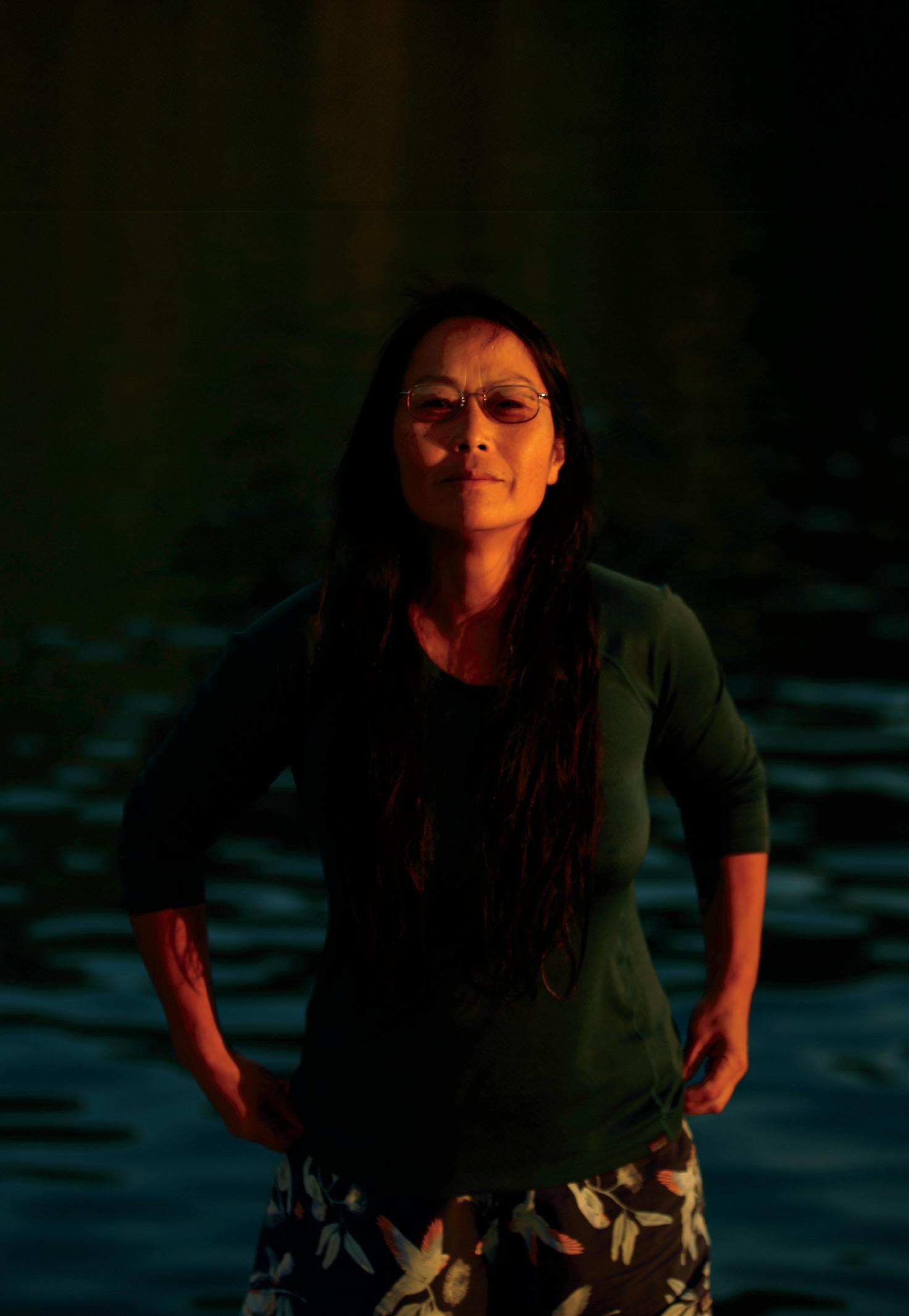
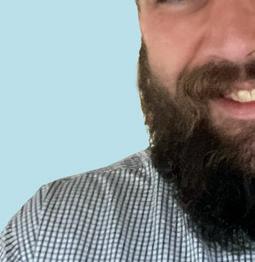
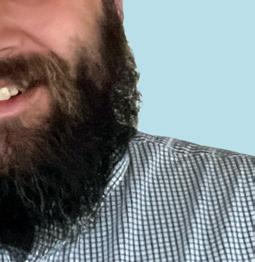
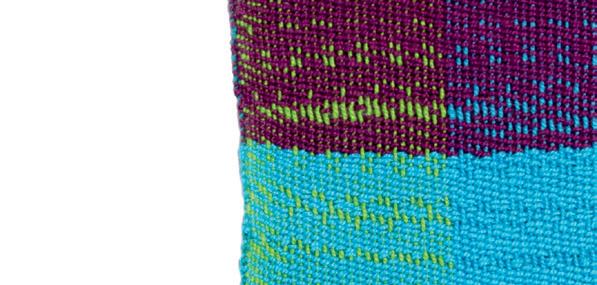
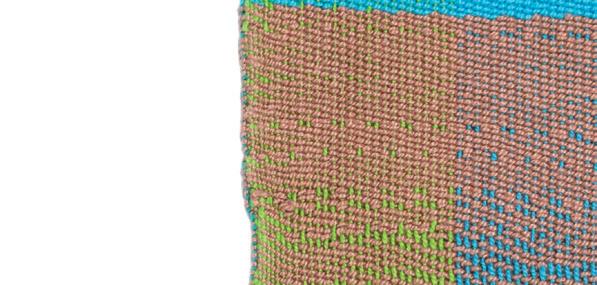
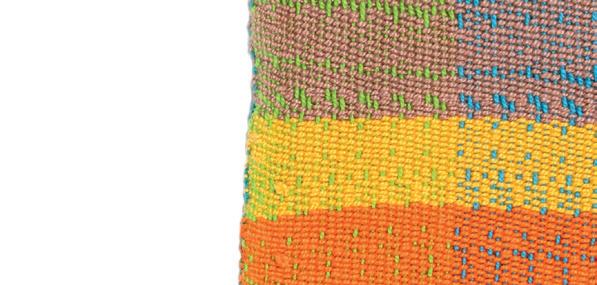
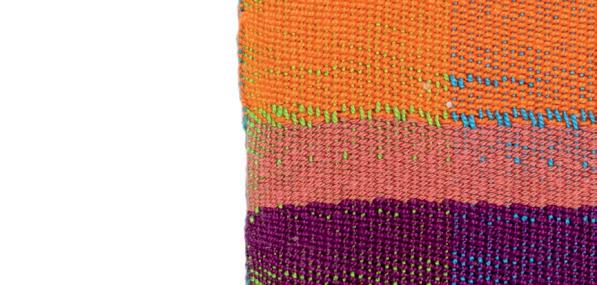
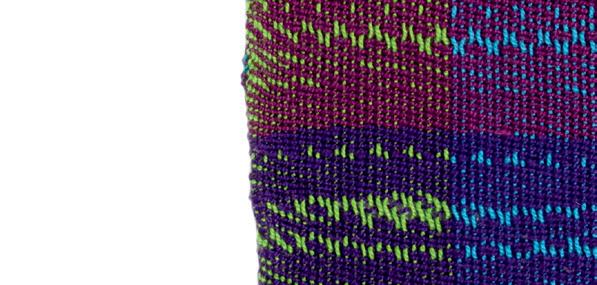
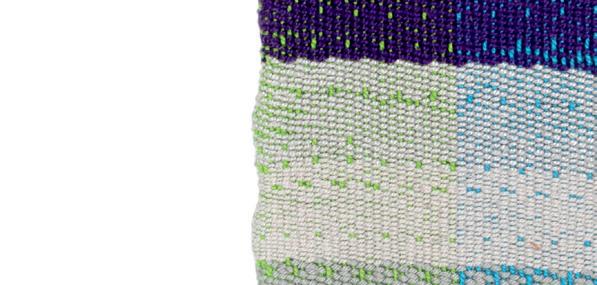
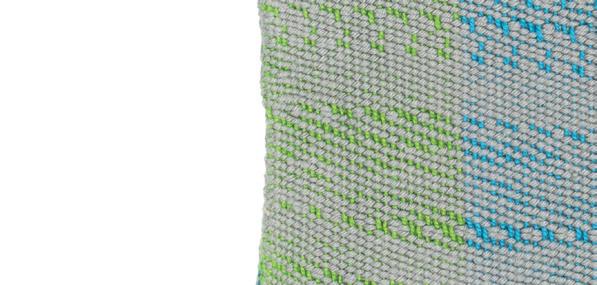
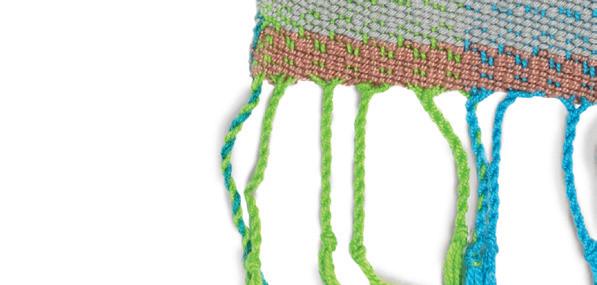
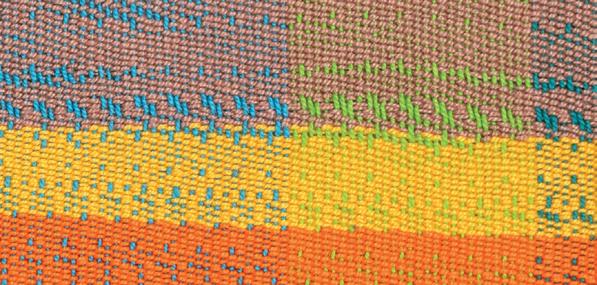
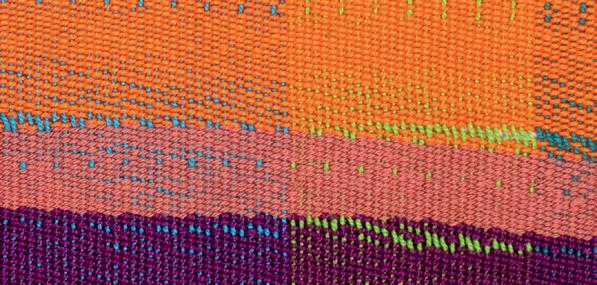
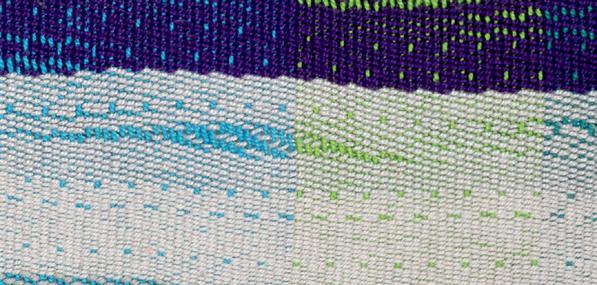
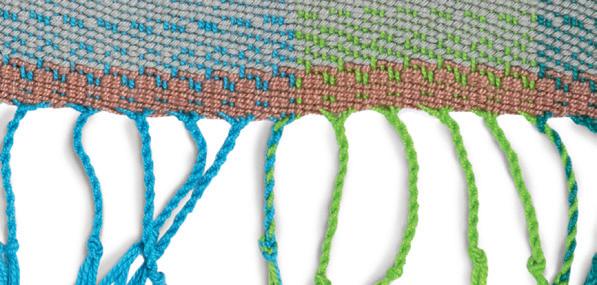
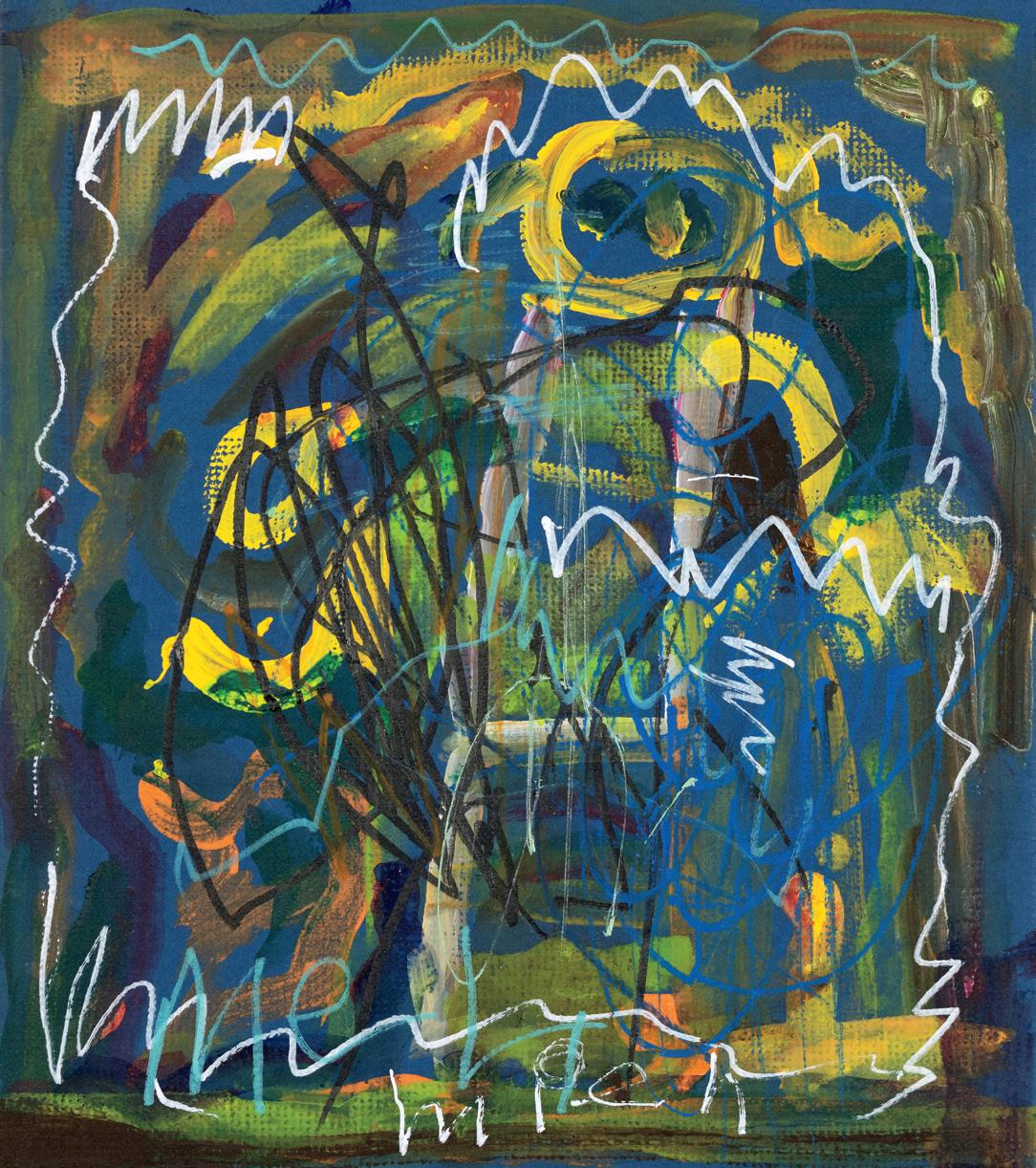
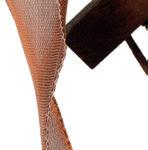
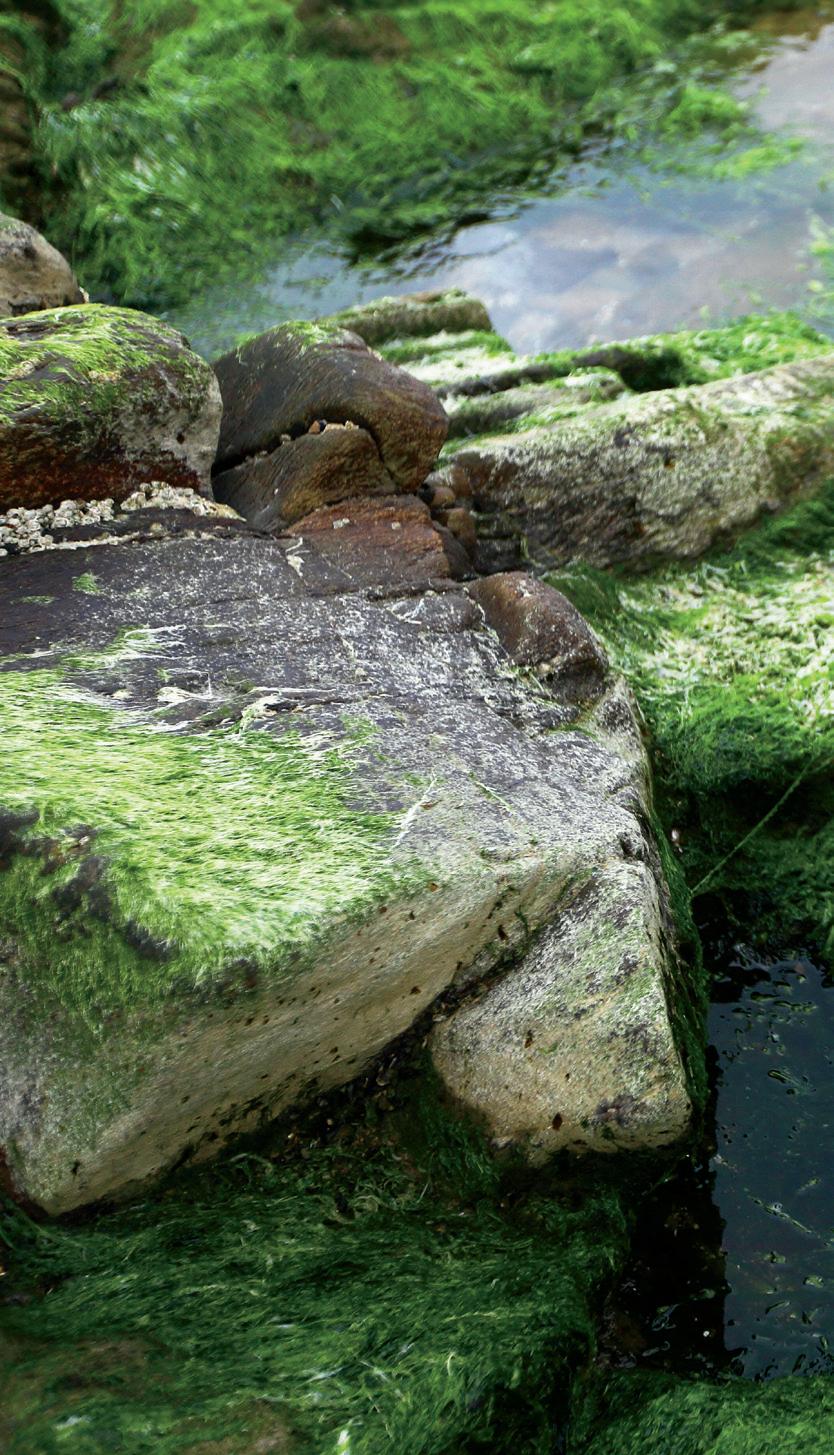
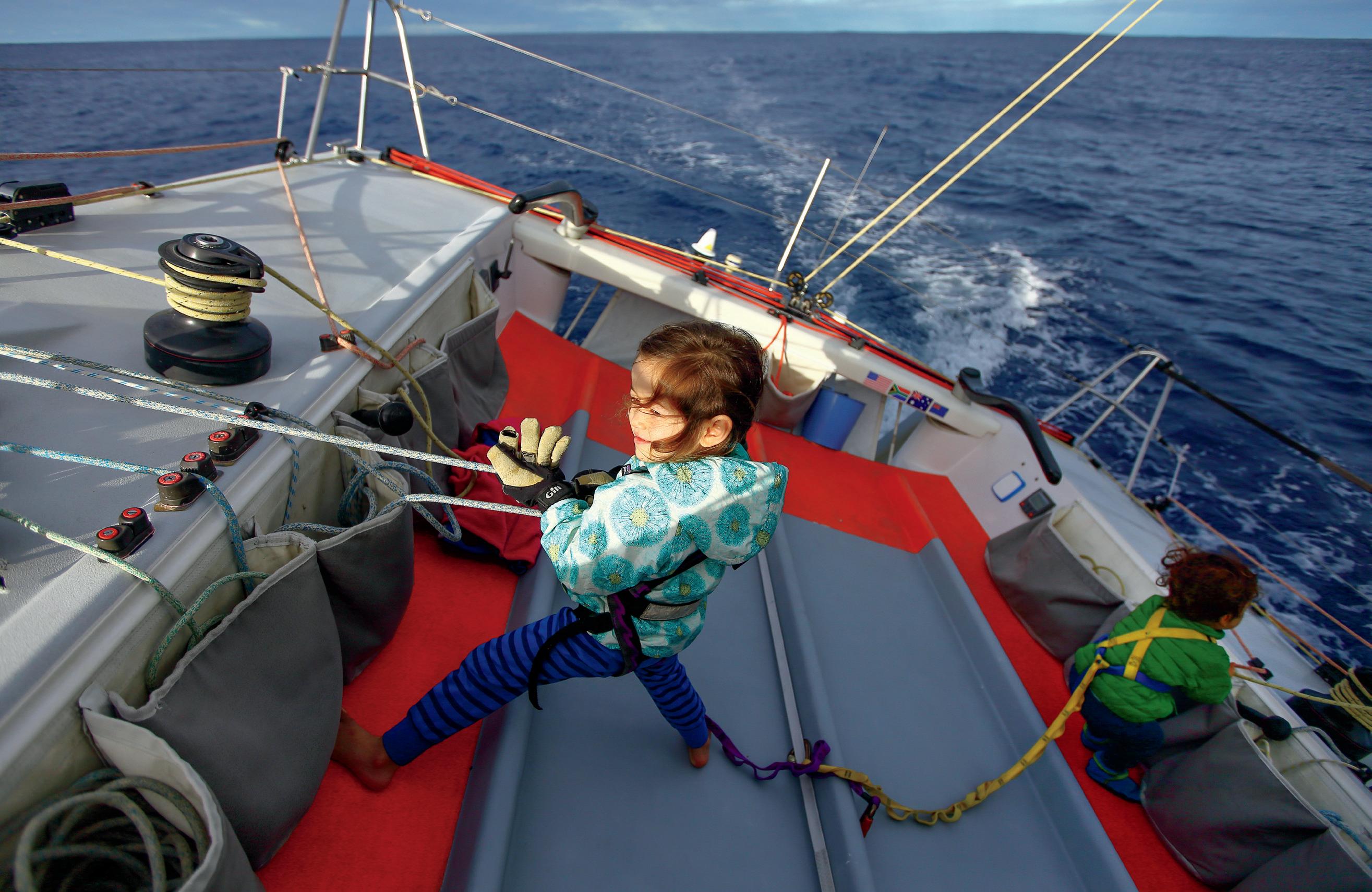
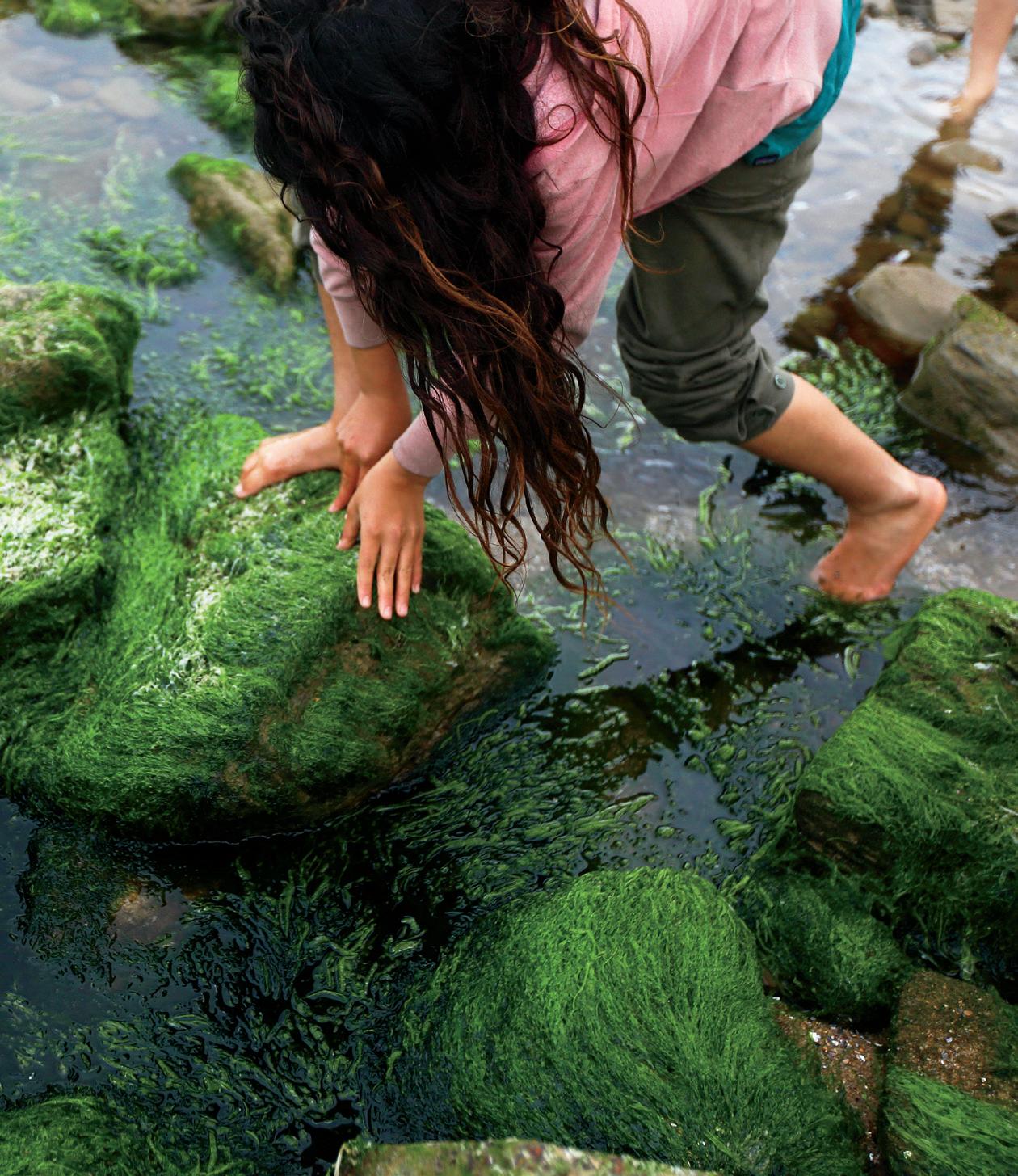
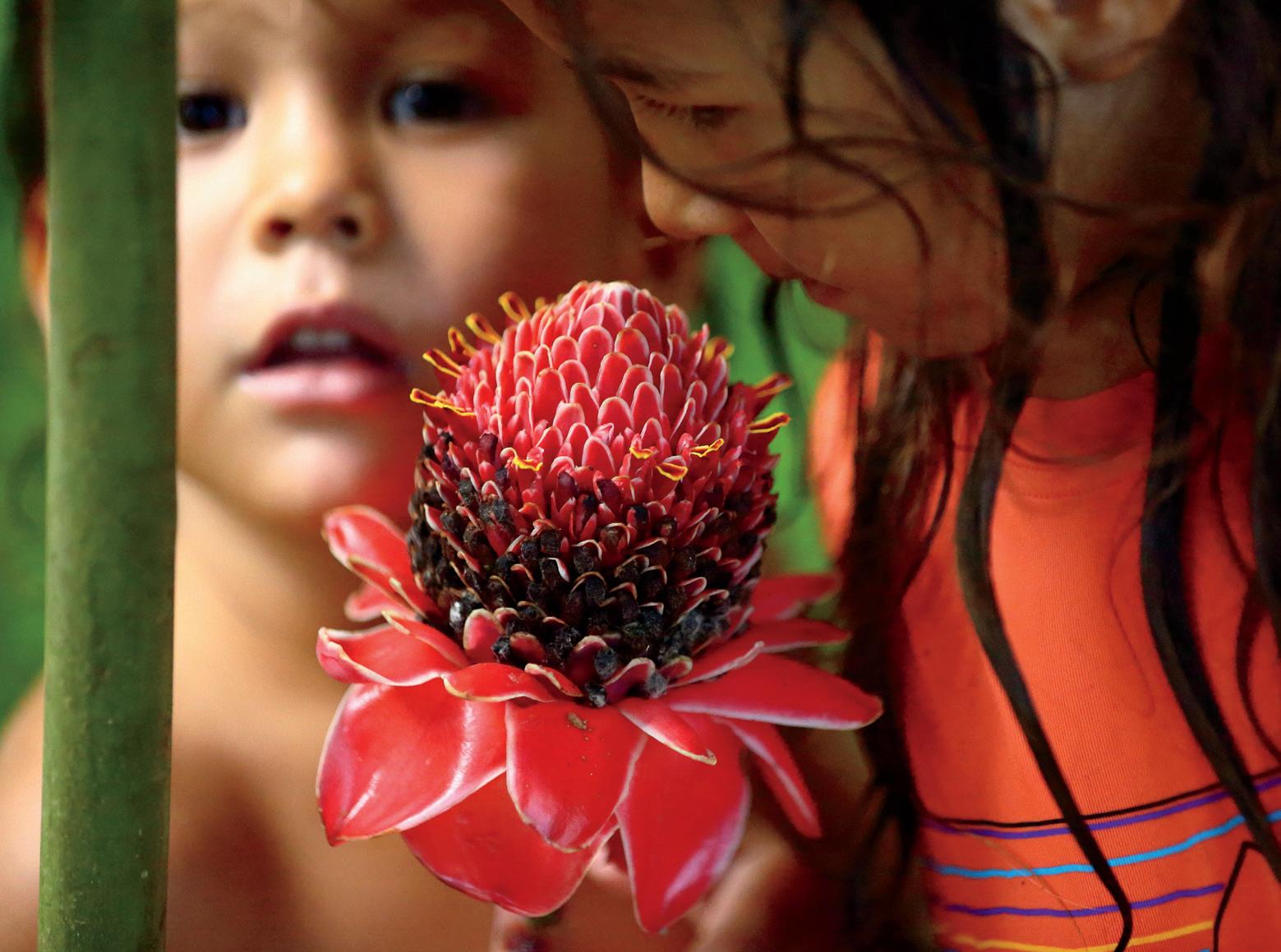
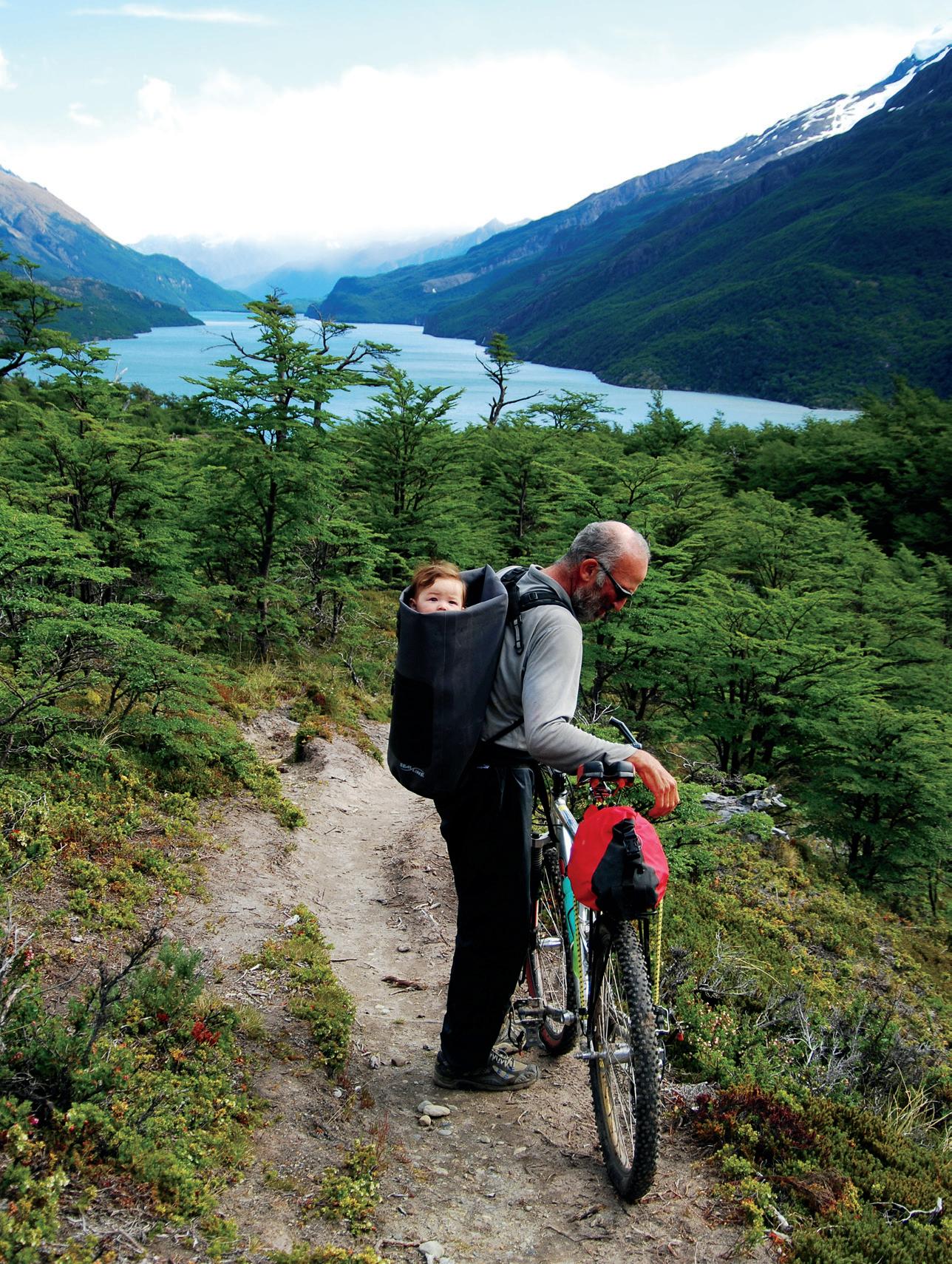
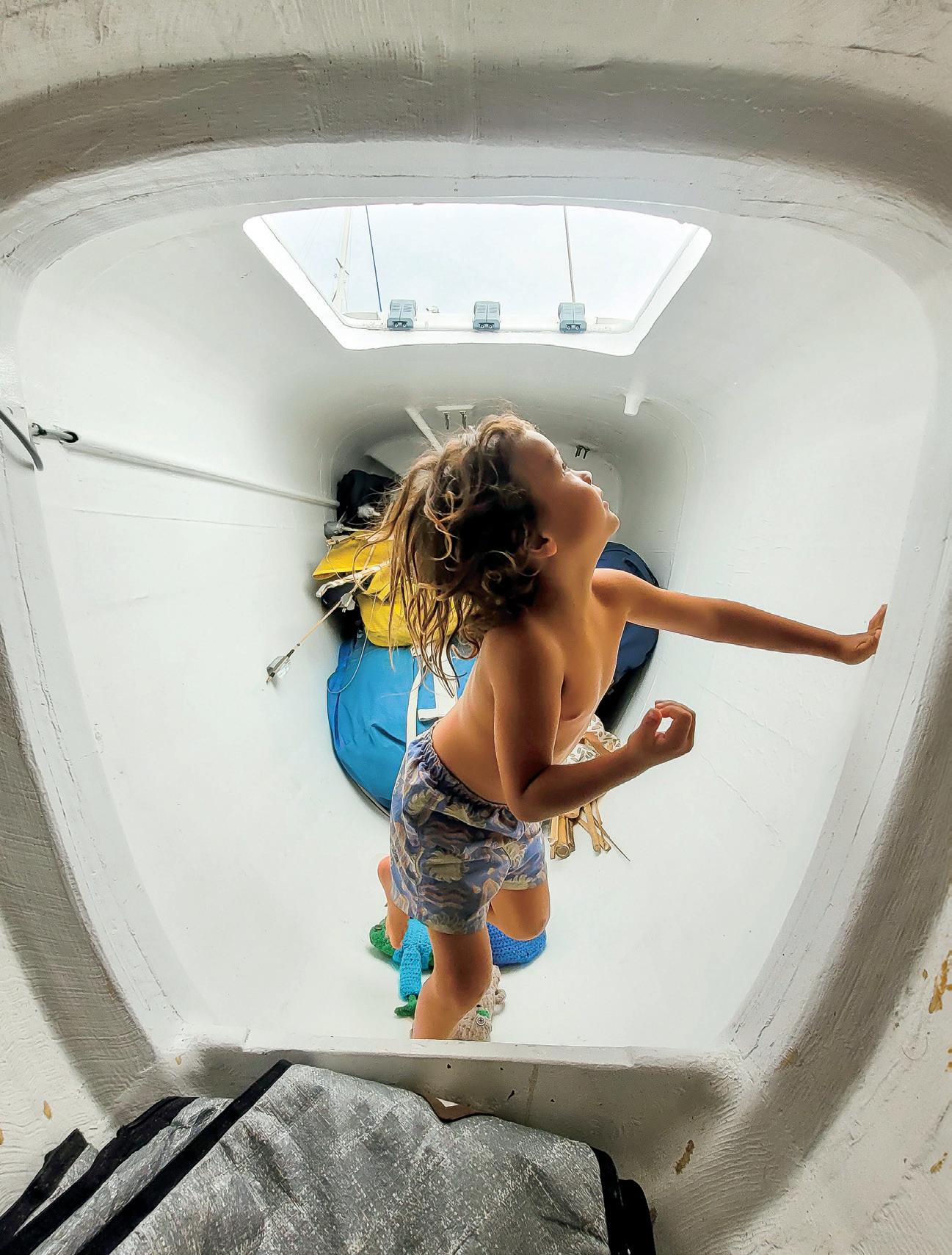
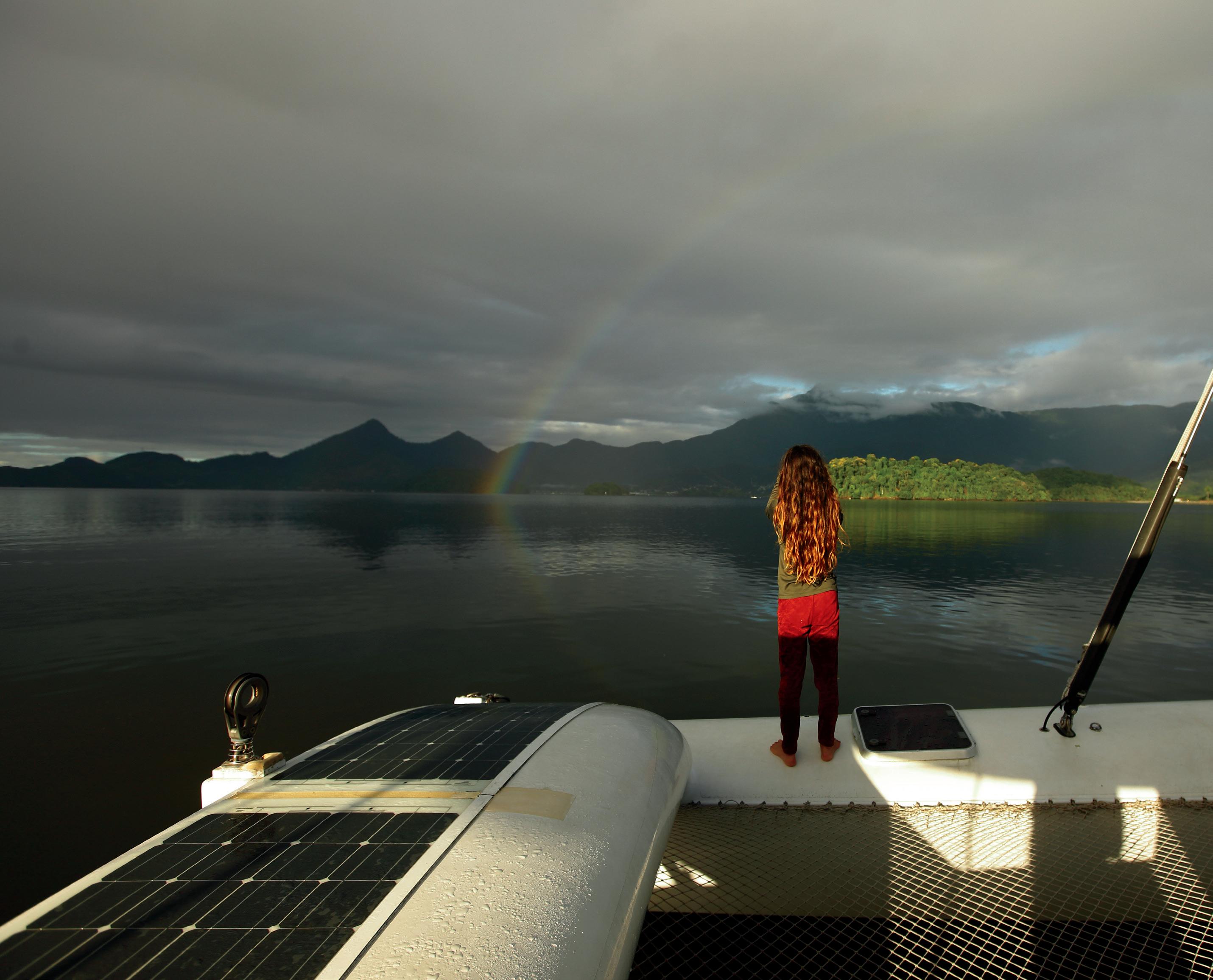
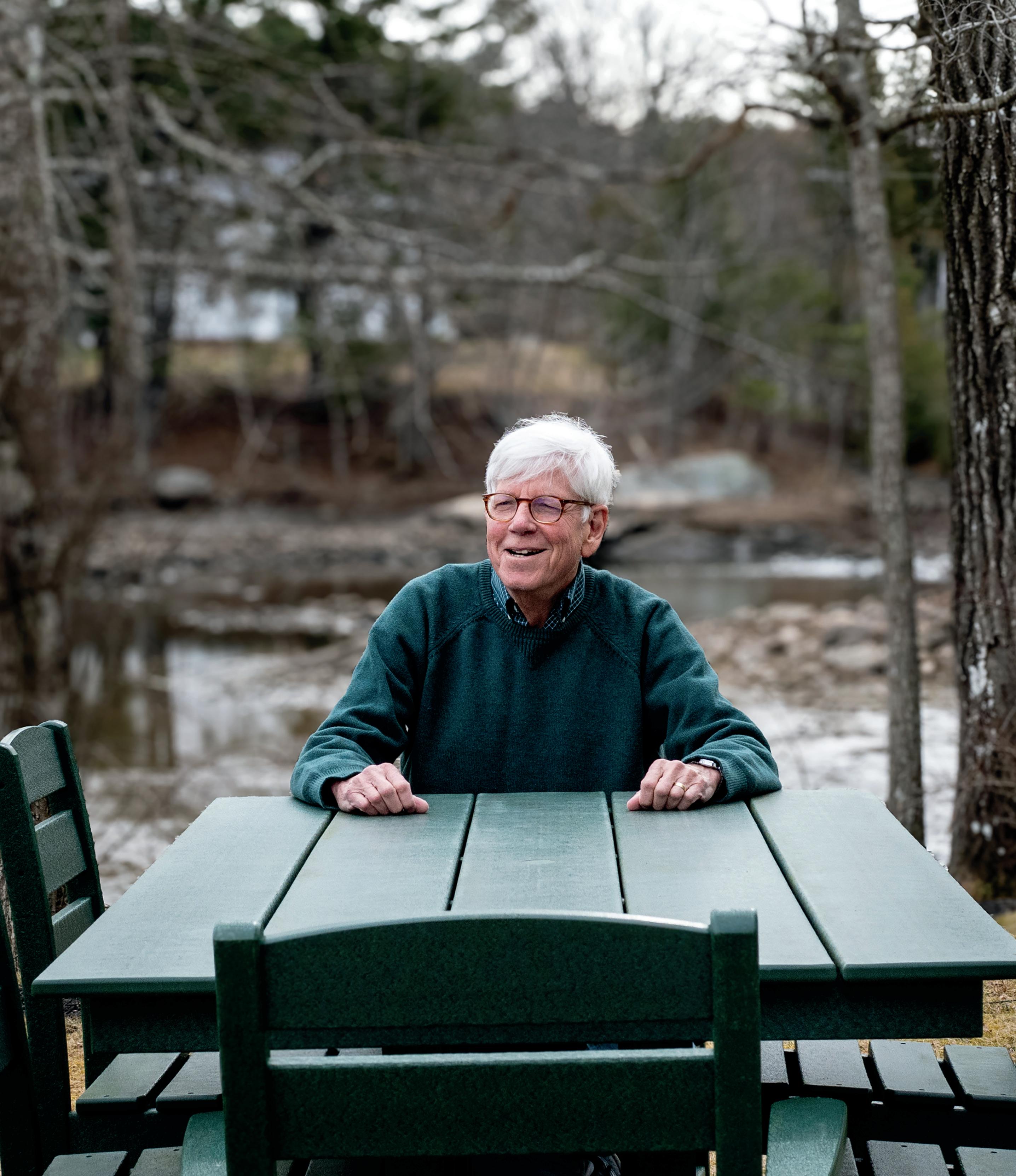
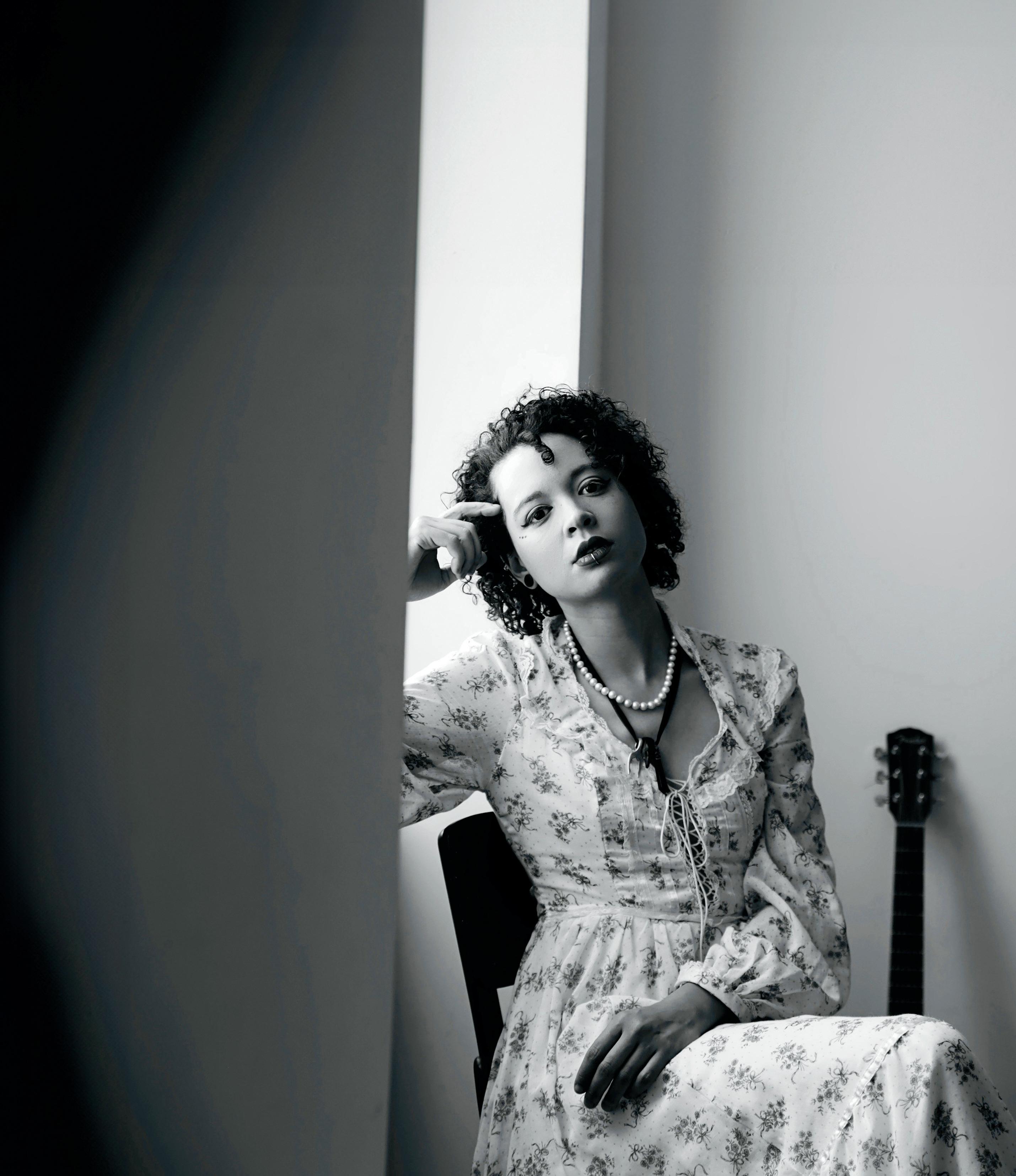
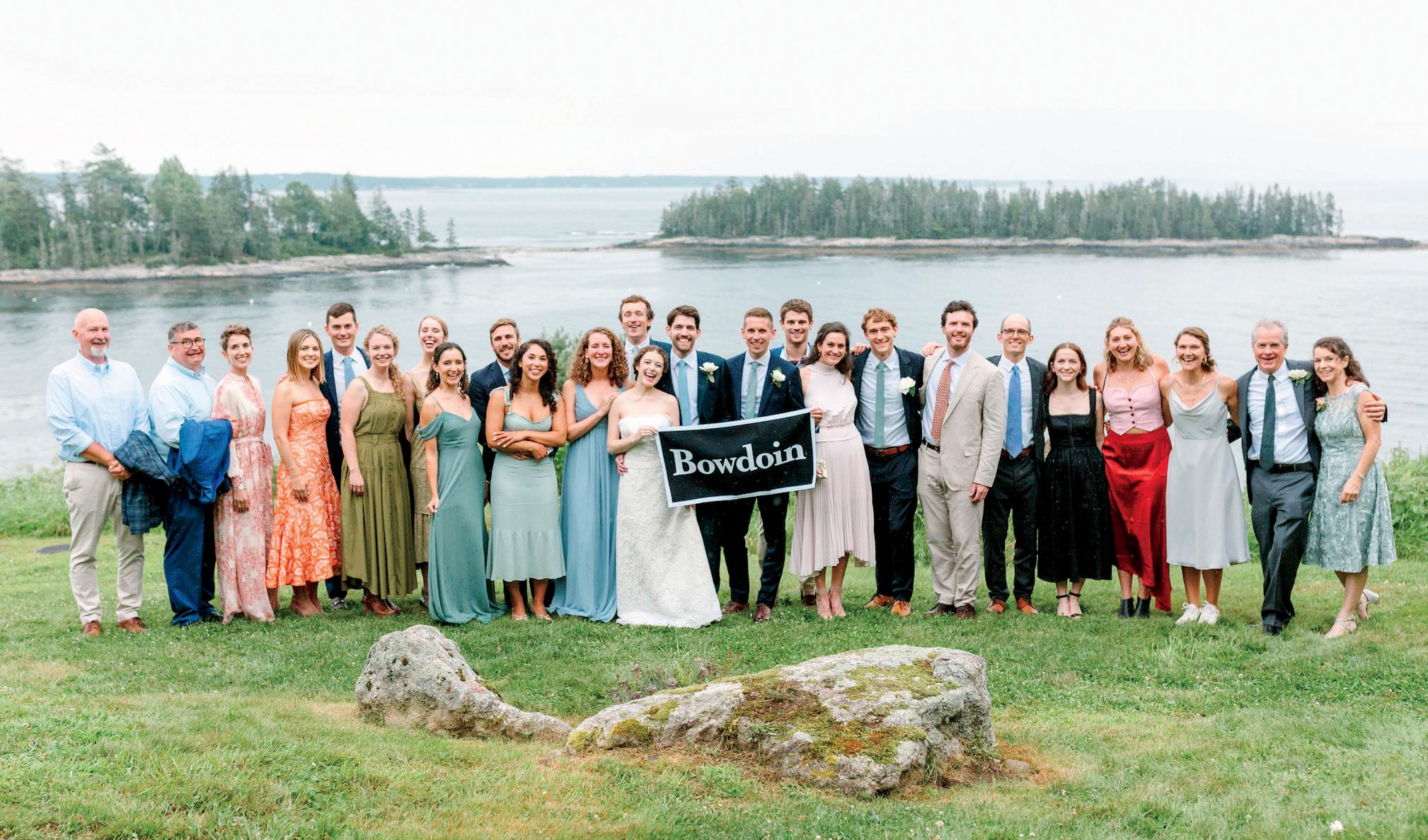
Somira Sao ’99, who was born in a Khmer Rouge work camp and came to Maine as a child, is a mom of six and professional writer and photographer who sails the world with her family. Tormentina, her oldest, took this photo.
22 Who Gets Greenland?
Arctic anthropologists Susan Kaplan and Genevieve LeMoine remind us that the voices of Inuit should have priority in talks of who governs Greenland.
24 A Gift of Views
Brunswick photographer Leon B. Strout left a vast collection behind when he died. His son, Roger 1923, donated them to Bowdoin, but they remained nearly inaccessible until new generosity brought them fully to light.
34 Bloom
In every stage, from bud to bloom, flowers communicate our deepest feelings and remind us of the fragility and beauty of life.
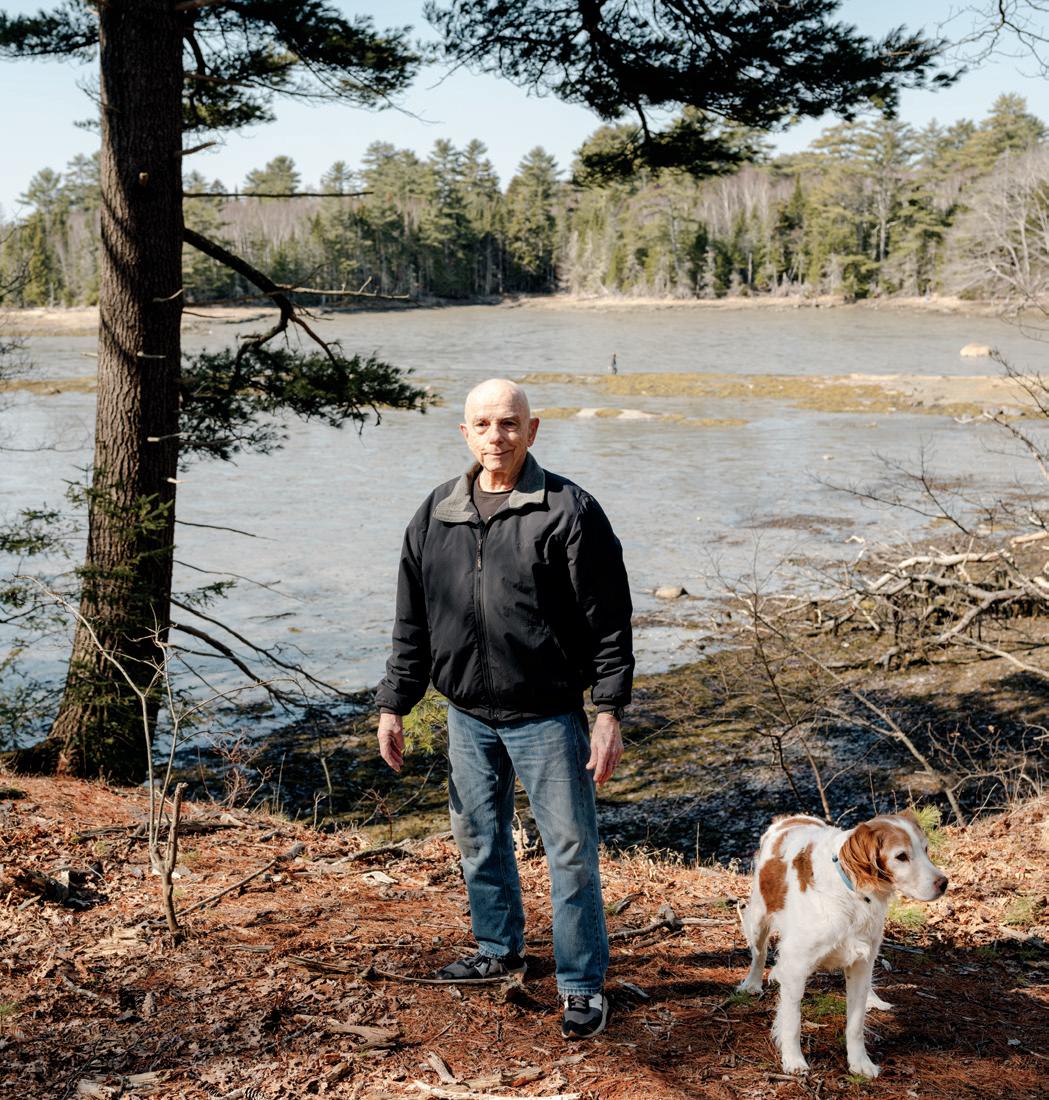
5 Colorful Clammer: Pete Hope ’62 is the author of Stuck in the Mud, a history of Maine’s clamming industry.
7 Dine: Bowdoin Dining shares a summery salad with corn, cucumbers, and blueberries.
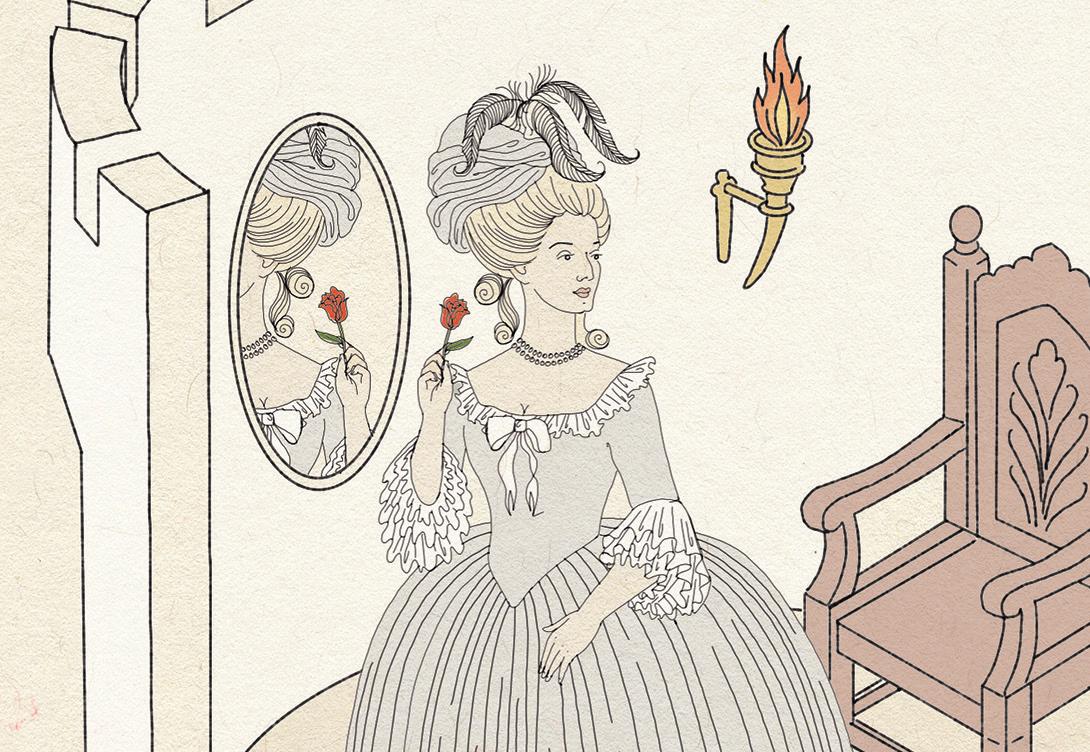
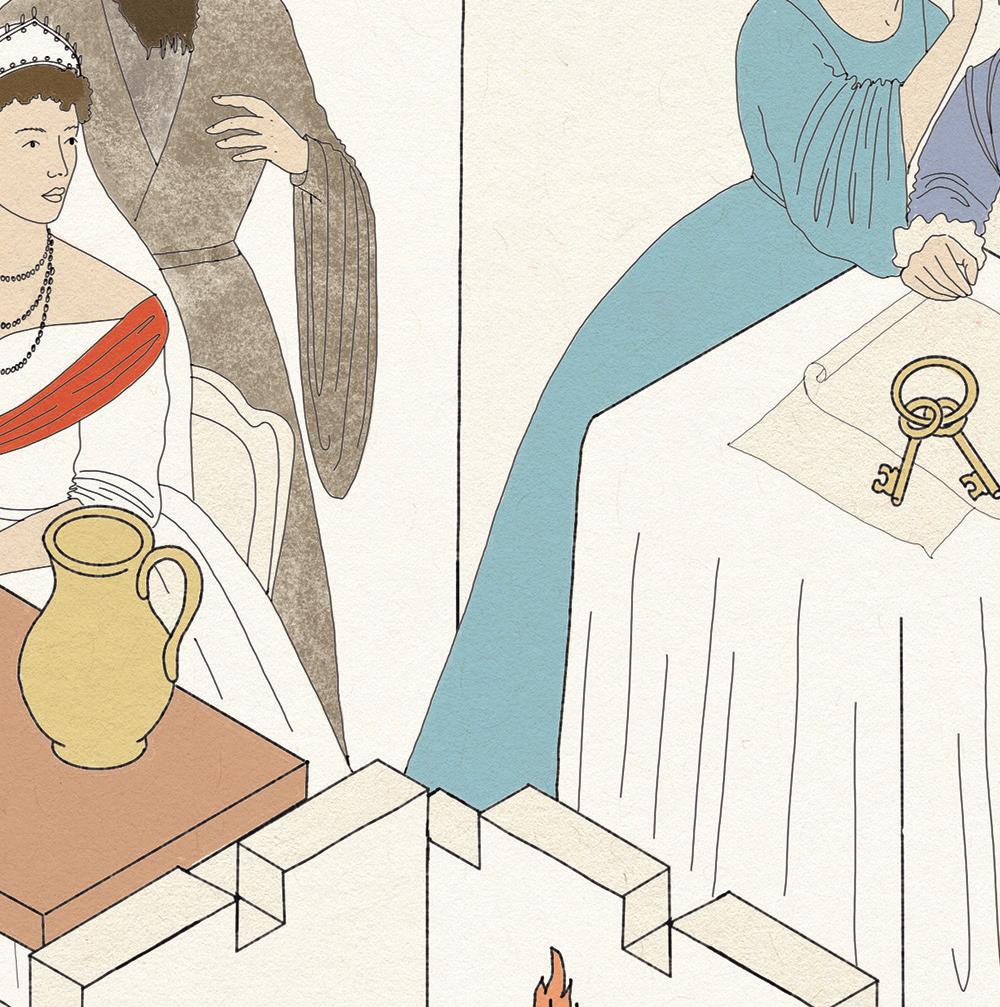
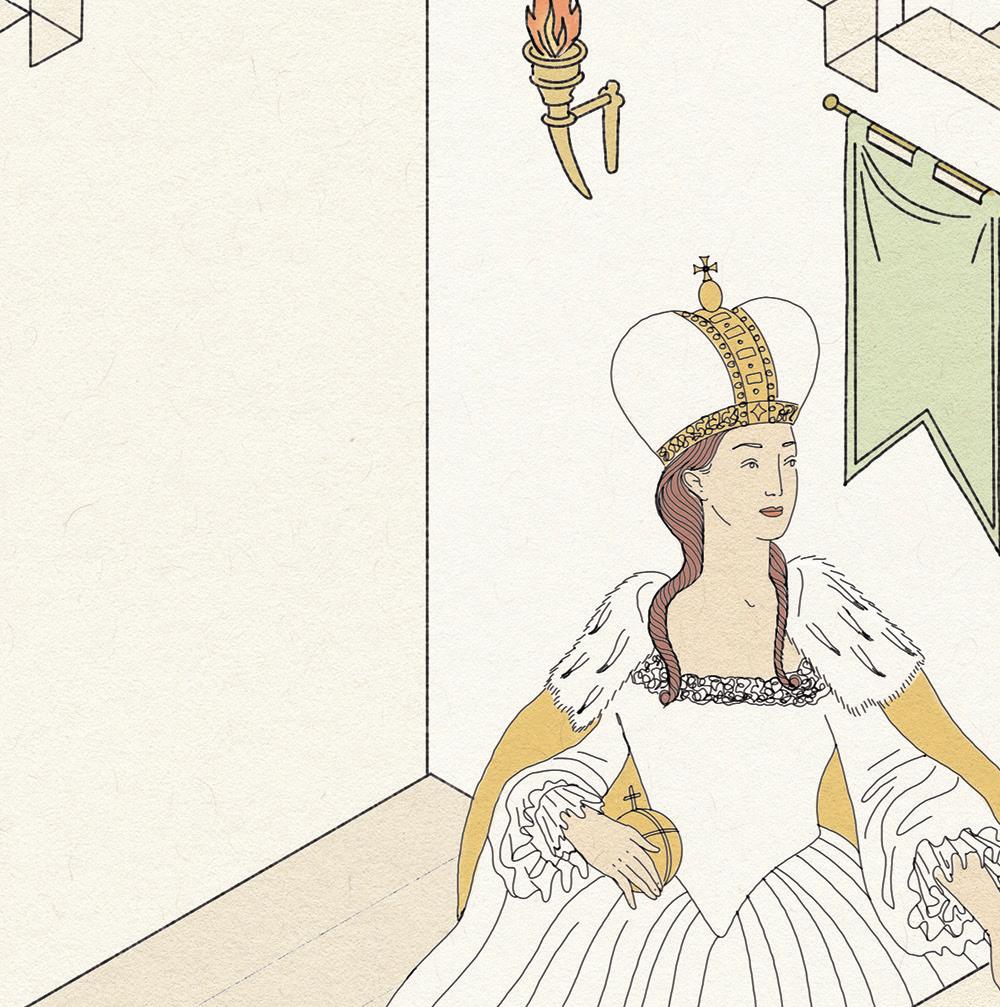
8 It’s Reigning Women: In his new book, history professor emeritus Bailey Stone ’68 explores royal women in Europe’s most dramatic revolutions.
14 What a Kick: Standout men’s soccer player Tyler Huck ’26 has signed with Hearts of Pine, Maine’s new professional soccer club.
18 Taking Shape: One year in, the Hastings Initiative for AI and Humanity has already become a striking presence at the College.
50 Learning from History: Allen Wells, a specialist in Latin America, has written a book about a new area of study for him—Bowdoin’s past.
FIRST LIGHT, FIRST LOOK
On May 9, 2026, the College dedicated its repositioned and refurbished observatory, named for Benjamin W. Hill-Lam ’13, a physics and astronomy major who went on from Bowdoin to work in the Johns Hopkins Energetics Research Group and who died in a rock-climbing accident in 2021. The gift from Hill-Lam’s father that made possible the renovation and relocation of the observatory also provided for a new telescope, and Assistant Professor of Physics Fe McBride and former lab instructor and founding member of the Southern Maine Astronomers Paul Howell have been installing, calibrating, and readying the telescope for use.
On April 18, the official “first light” image from the telescope, a picture of Jupiter, was revealed. First light is the first use of the telescope for observational purposes and is like the telescope’s “birthday.” On April 22, in the moment shown here, Ava Biasotti ’26 became the first to observe the moon with Bowdoin’s new eighty-centimeter telescope. Follow @bowdoinobservatory on Instagram for beautiful images of the night sky and news about community observing sessions.
Photo by Fe McBride
Awed by Daggett
I WAS PLEASED to read John Cross’s tribute to Athern Daggett [Whispering Pines, Winter 2026].
Mr. Daggett profoundly affected my Bowdoin experience, and I remember him fondly. He was a fount of wisdom. Mr. Daggett was my initial academic advisor, and I met him to select my first-year courses. I confess that I was awed by both the office in Hubbard Hall and by the man. As we discussed a schedule for my first semester at Bowdoin, I asked his advice: should I complete my English requirement by
taking a literature course or one on expository writing? He paused for a moment and then said solemnly, “That depends on whether you want to read what other people have to say, or you want other people to read what you have to say.” I chose the latter, which led me to an incredible writing seminar with Larry Hall. I remain indebted to them both.
Mark W. Anderson ’74
FUN WITH HOMOGRAPHS
I glanced at your latest [Winter 2026]. After not finding anyone I knew, I saw at the end that you called out Lewiston for having so many sewers [“Maine’s Sole Story”]. I remind you that a clean town is a healthy town—I liked Lewiston a lot when there. ;-)
Paul B. Johnson ’78
ON THE END OF FRATERNITIES
The piece about the passing of President Emeritus Robert Edwards [“Passing of a President,” Winter 2026] refers to a message from President Zaki to the campus in which she refers to his creation of a Commission on Residential Life, which was to me rather farcical. Edwards’s persona undoubtedly drove the commission to implement an agenda designed to eviscerate fraternities and supplant them with a College House system. It was nothing more than a solution in search of a problem.
Allow me to share my only experience with President Edwards. During the 1980s and 1990s, I was president of the Bowdoin Club of Minnesota. I received a call from the alumni office informing me that President Edwards and Blythe were coming to the Twin Cities and asking me to recommend a venue. The die
had already been cast to eliminate fraternities and was top-of-mind. I asked the alumni office to request time for a Q&A with the president on the issue. Instead of fielding questions, President Edwards abruptly stated after his remarks that he and Blythe needed to leave, ducking the issue completely.
Virtually everyone with whom I conversed at my 50th Reunion in 2025 was either a Beta brother or someone I recognized as belonging to another fraternity. I realized during the weekend the value of lifelong friendships developed as a fraternity member. I regret that, due to Robert Edwards’s anti-fraternity animus, current and future Bowdoin students will be unlikely to witness the same benefit of that belonging.
Mike Hutchinson ’75
CORRECTIONS
We mistakenly listed Bob Whelan ’83 as a contributor to the new book by Chris Potholm ’62. The contributor is Bob Whelan of the Class of 1962.
An editing error resulted in the wrong class year for Athern Daggett in John Cross’s Whispering Pines. Daggett’s class year was 1925, not 1825.
With apologies to his friends and family, we note that we misspelled the name William Hays ’55 in the Remember section. It is Hays, not Hayes.
MAGAZINE STAFF
Editor
Alison Bennie
Designer and Art Director
Melissa Wells
Managing Editor
Leanne Dech
Senior Editor
Doug Cook
Design Consultant
2Communiqué
Contributors
Adam Bovie
Jim Caton
John Cross ’76
Cheryl Della Pietra
Rebecca Goldfine
Sophaktra Heng
Scott Hood
Janie Porche
Tom Porter
On the Cover: Illustration by Anna Godeassi (front) and photograph by Somira Sao ’99 (back)
BOWDOIN MAGAZINE (ISSN: 0895-2604) is published three times a year by Bowdoin College, 4104 College Station, Brunswick, Maine, 04011. Printed by Penmor Lithographers, Lewiston, Maine. Sent free of charge to all Bowdoin alumni, parents of current and recent undergraduates, members of the senior class, faculty and staff, and members of the Association of Bowdoin Friends.
Opinions expressed in this magazine are those of the authors.
Please send address changes, ideas, or letters to the editor to the address above or by email to bowdoineditor@bowdoin.edu. Send class news to classnews@bowdoin.edu or to the address above.
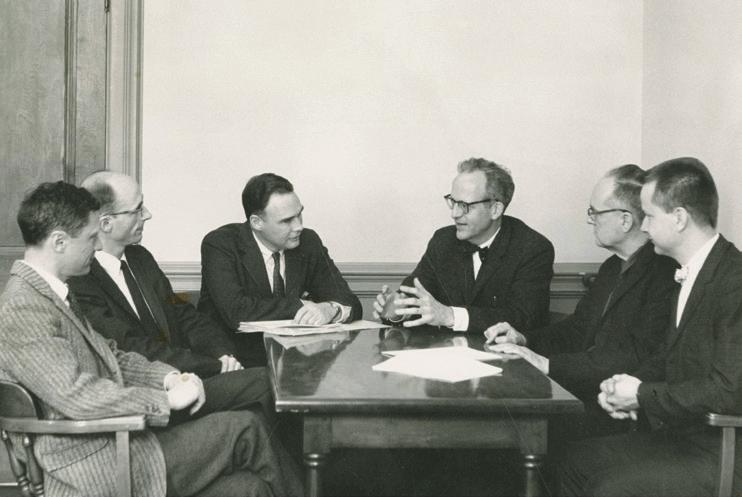
Daggett (second from right) at a meeting of the Senior Center Council in 1964.
COLORFUL CLAMMER
I loved maritime history—John Paul Jones and Stephen Decatur were early heroes. A teacher in prep school told me I should major in history, which I did. I got my MA at BU but didn’t have a clue what I would do with it. I ended up teaching for thirty-three years.
My dad was a poultry farmer, and I started on the payroll when I was twelve, then I decided that maybe there was a better career. My freshman year in college, Ed Myers, the father of aquaculture in Maine, got me digging clams. No one showed me the ropes. A wholesaler I was trying to sell them to told me I had to wash them.
When I retired from clamming, I built a house on the farm where I grew up, with lumber I milled myself from the woodlot. From my deck I can see where I started clamming in 1958. I got involved in local history and wrote eight books, mostly histories of Bristol communities. The history of clamming was an untold story about Maine’s fishery that always gets the short end of the stick. The only Maine fishermen less esteemed than clammers are worm diggers.
I met my wife on a blind date at my first homecoming. Forty-five years and some other people later, we got married at the family farm. People from my past would be amazed I finally admitted that clamming, fish and game, and driving laws applied to me.
I have been an avid organic gardener since 1965, and my wife and I still are. I have been a lifelong firearms collector, shooter, and hunter. I gave up deer hunting when I lost my hearing. An old woodsman friend told me there would come a time when I decided I had shot enough deer. He was right, but I sure would miss bird hunting with my best pal, my Brittany spaniel, Harrington.
For more from this interview, visit bowdoin.edu/magazine.
PHOTO: TRISTAN SPINSKI
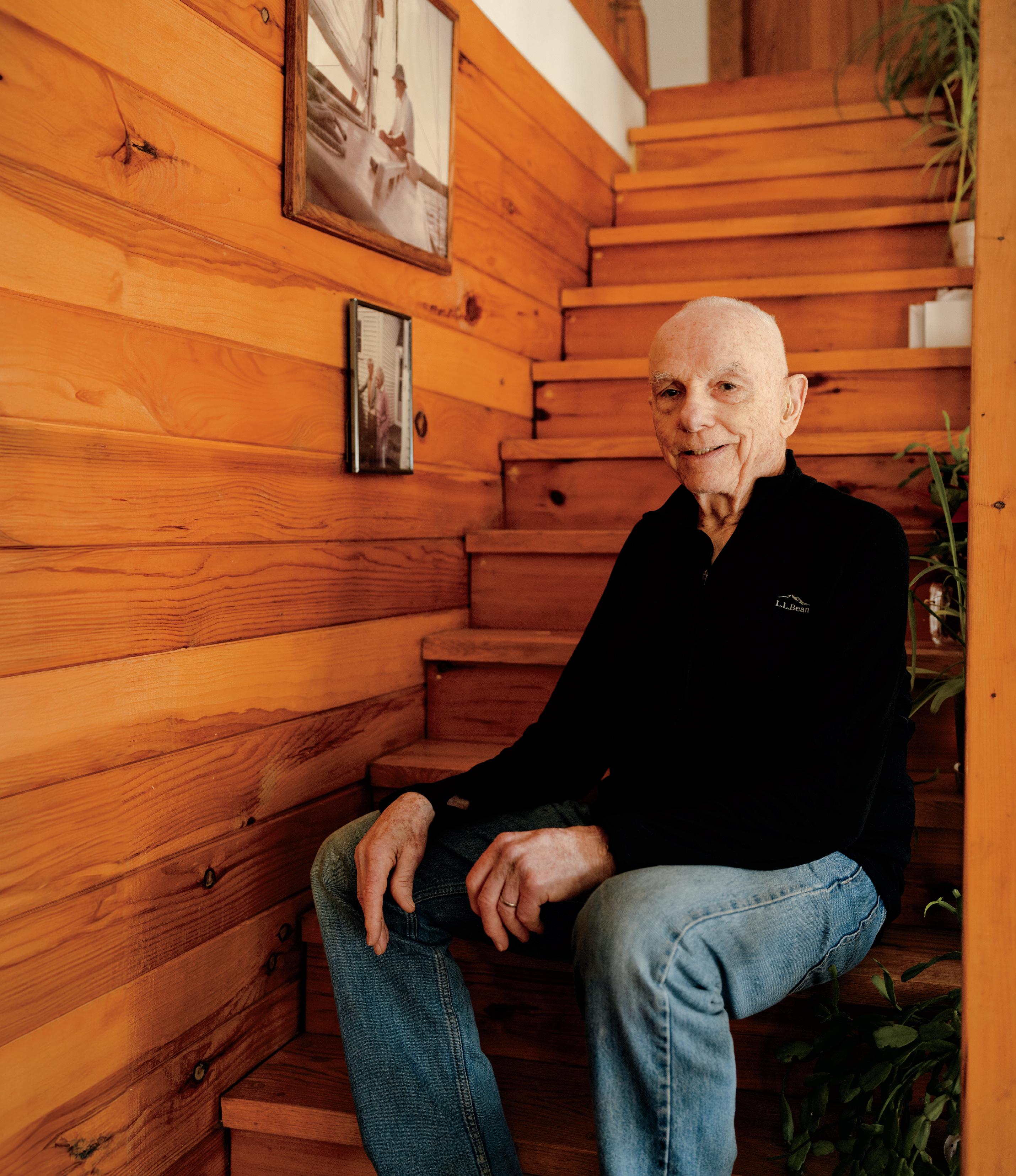
PETE HOPE ’62
Pete Hope ’62, who wore hip boots under his commencement robe and had a pet crow as a kid, is the author of Stuck in the Mud, a history of Maine clamming.
FROM BOWDOIN AND BEYOND
EVERLASTING ESTEEM
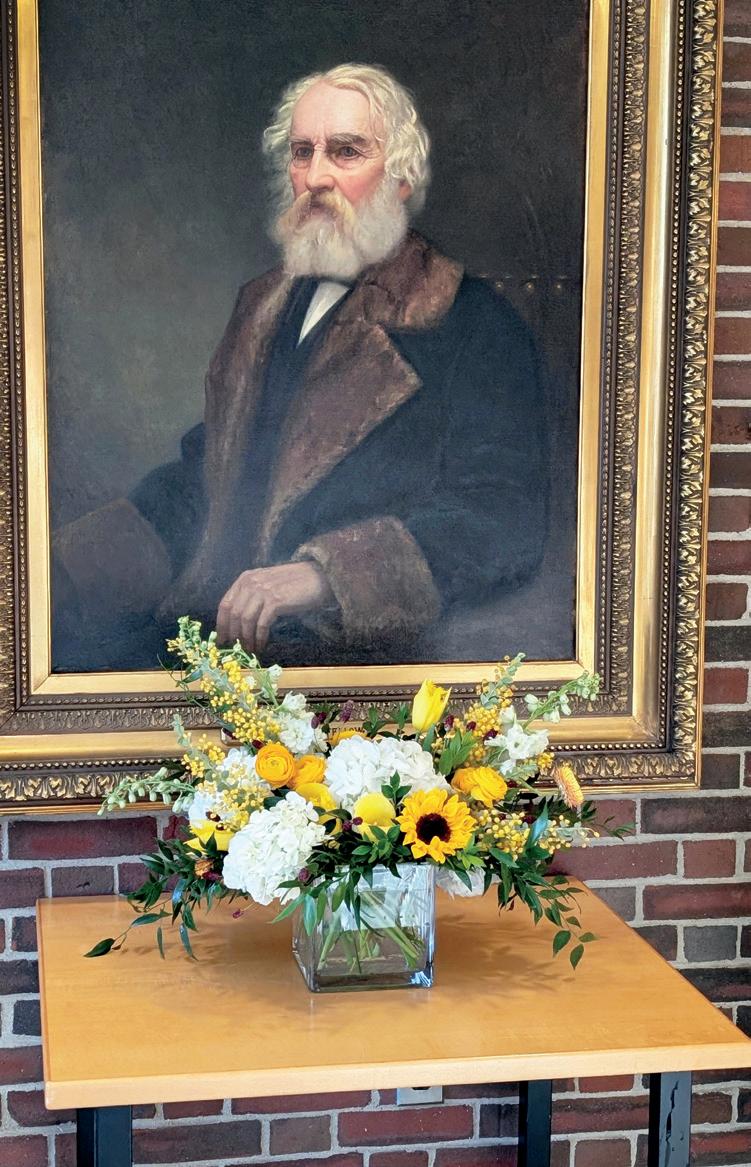
In Hawthorne-Longfellow Library, Henry Wadsworth Longfellow’s presence isn’t just literary—it’s perennial. Each February 27, Longfellow’s birthday, a bouquet of flowers is placed beneath his portrait in honor of one of Bowdoin’s most illustrious alumni, thanks to a fund established by Director of Theater Emeritus Ray Rutan ’51, who died in 2019. This year, rather than being discarded, the bouquet was carefully dried and preserved for a second tribute—on July 4, a date that connects to Longfellow’s deep engagement with American identity and history. The poet, who graduated in 1825 and later returned to Bowdoin as a professor, helped shape the idea of America through his many patriotic poems, including the famous “Paul Revere’s Ride” and “O Ship of State,” with its timeless line, “Our hearts, our hopes, are all with thee.”
Connections
Name a Canyon? Bowdoin Can
After hiking 300 miles upriver in Canada, Austin Cary and Dennis Cole found the falls they were looking for and named the canyon below them for Bowdoin.
IT’S COMMON PRACTICE on college campuses across the world for leaders and generous alumni to have buildings named for them. It’s less common for alumni to honor their alma mater by naming a twelve-mile-long feature of the landscape for their college. On their 1891 scientific trek to Labrador, Canada, Bowdoin alums Austin Cary Class of 1887 and Dennis Cole Class of 1888 beheld the majesty of the canyon that Churchill Falls emptied into and decided to do just that. (They also named a nearby mountain—Mount Hyde—after the Bowdoin president of the day, William DeWitt Hyde.) The area had previously been explored by both the Indigenous Innu and European traders, but the 1891 expedition—which was made up of Bowdoin alumni and faculty—was the first to try to map it.
These days, the canyon stretches out alongside a small part of the 1,200-mile Trans-Labrador Highway (fully paved as of 2022) that connects much of rural Newfoundland and Labrador, and the flow of the river through it has been reduced to a trickle by the Churchill Falls Generating Station, a hydroelectric underground power station that sits upstream of the waterfall. Even so, nearby residents and adventurous passersby alike still manage to get out and appreciate Bowdoin Canyon, which hosts a 1.8-mile public hiking trail with breathtaking views of the falls, as well as opportunities for giant brook trout fishing.
Bowdoin Canyon in Churchill Falls, Labrador
Honor
A birthday bouquet from Flowers and Herb Maine
Dine
Corn, Cucumber, and Blueberry Salad
Recipe by Bowdoin Dining
Our social media team often sees posts from alumni around the country who are hosting send-offs for new students or other Bowdoin-related celebrations. Often those parties feature polar bear cakes, lobster, or the Bowdoin log, but recently this Bowdoin Dining favorite salad caught our eye—it’s the perfect introduction to the deceptively simple and highly delicious food that awaits every new Polar Bear.
6 ears fresh corn, shucked
1 English cucumber, chopped
1 cup fresh blueberries
¼ cup red onion, diced
1 jalapeño pepper, seeded and finely diced
¼ cup cilantro, chopped, divided
2 tablespoons fresh lime juice
½ tablespoon lime zest
2 tablespoons olive oil
1 tablespoon honey
½ teaspoon ground cumin
Lightly steam the ears of corn, cool them until safe to handle, and cut off the kernels. (Alternatively, you can cut off the kernels first and then lightly blanch them—in either case, make sure the corn does not overcook and stays crisp.)
Combine the corn, cucumber, blueberries, onion, jalapeño, and all but 1 teaspoon of the cilantro in a large bowl.
In a small bowl, whisk together the lime juice, zest, olive oil, honey, cumin, and remaining 1 teaspoon of cilantro.
Toss the dressing gently with the corn mixture. Allow to marinate for 1 hour, refrigerated. Garnish with additional lime if desired.
Bowdoin Dining Services serves meals made from scratch by a staff of talented culinary professionals.
DID YOU KNOW?
Cucumbers really are cool. The inside of a cucumber can be up to 20 degrees colder than the air temperature outside. The phrase “cool as a cucumber” comes from that discrepancy, and it’s one of the reasons (they also have antioxidants and lots of water) that they work so well to soothe puffy eyes.
Did You Know?
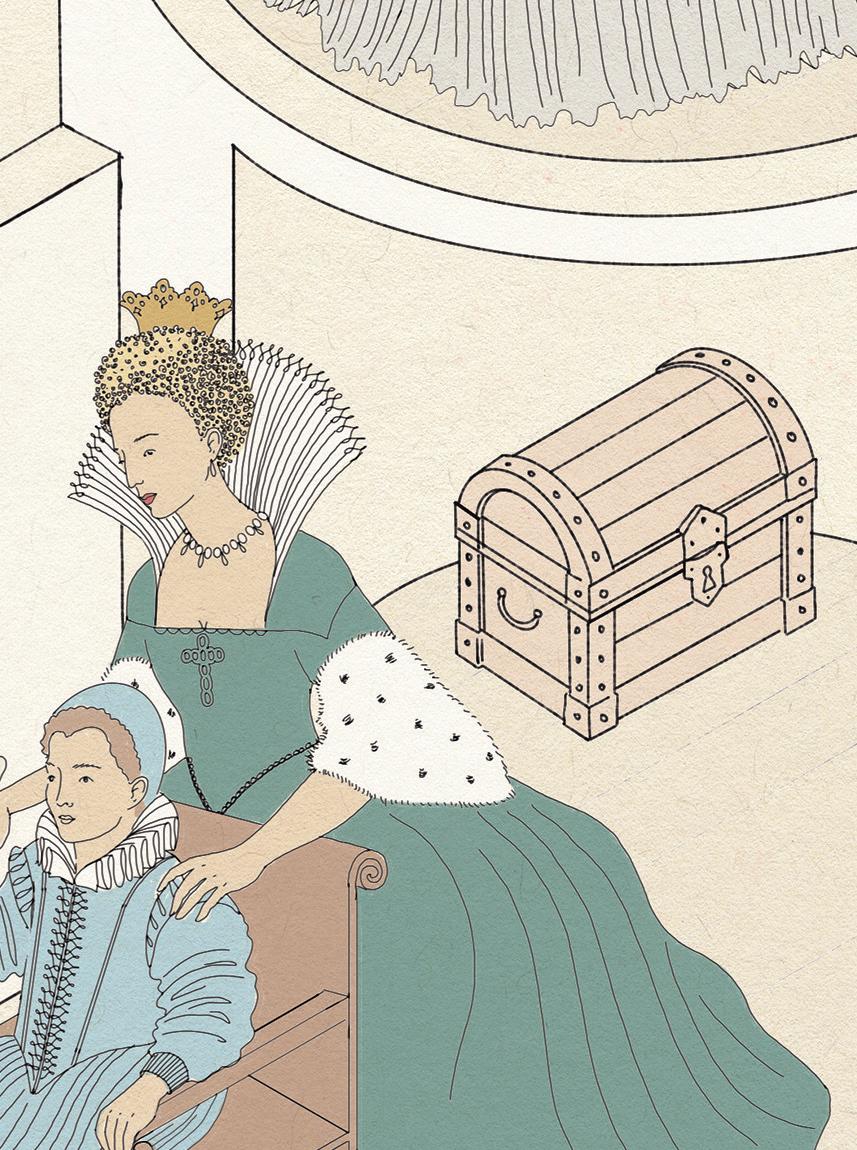
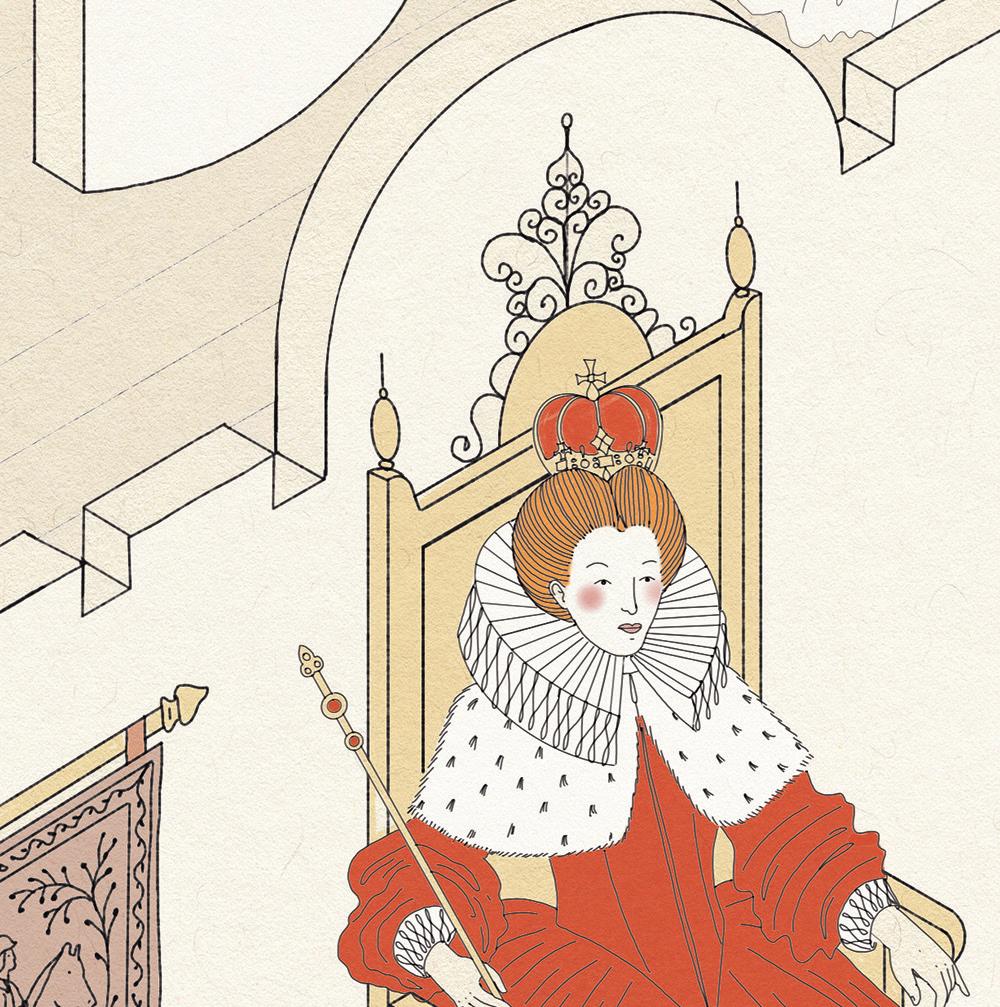
It’s Reigning Women
History professor emeritus Bailey Stone ’68 explores women in Europe’s most dramatic revolutions.
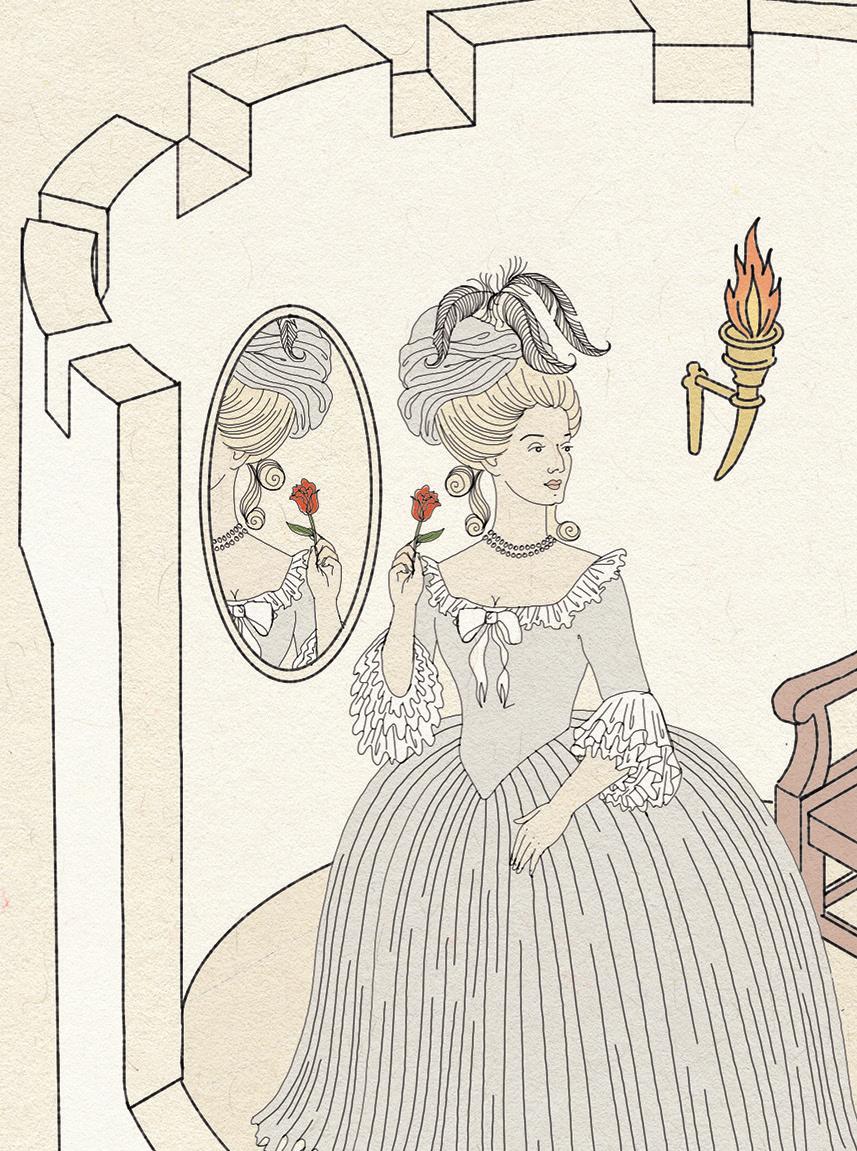
Illustration by Harriet Lee-Merrion
You might be forgiven for thinking you know a thing or two about European queens. Around every cultural corner, there’s a reference to Marie Antoinette, who gets a shout-out in everything from the Queen song “Killer Queen” to Pixar’s Toy Story (a reference to a toy that lost its head). Elizabeth I inspired art and culture over four centuries—whether as muse for Edmund Spencer’s epic poem “The Faerie Queen” or a character in a 1954 Superman comic.
They might be the most ubiquitous, but Catherine de’ Medici was the main character in a recent television series, Catherine the Great was just played in a movie by Elle Fanning, and Tsarina Alexandra and Henrietta Maria have plenty of moments of their own.
MARIE ANTOINETTE
Many hear her name and think of her imperious brush-off: “Let them eat cake!”—words she never said. She did have extravagant tastes and hair and a reputation for being spoiled and vain, though, and misogynist critics’ charges of moral corruption became part of her undoing. She was publicly blamed for France’s debt, and her secret counsels with Louis urging escape hardened revolutionary opinion against the crown. She was executed by guillotine in 1793.
But over the course of a long career teaching European history—mainly at the University of Houston, where he was known for his fabulous lectures—Bailey Stone ’68 couldn’t find a text that told a scholarly story of gender in these revolutions.
So he wrote one. In Women in the Great European Revolutions, Stone discusses the perspectives, political roles, and fates of both famous and working-class women in the 1640 English Revolution, the 1789 French Revolution, and the 1917 Russian Revolution. In one chapter he contrasts the disastrous careers of three queens with the political acumen of three others. We’ll start with them.
CATHERINE DE’ MEDICI
She governed as regent for three sons who ruled as king but were young, frail, or degenerate, and her sustained power shaped and stabilized French politics across decades even as she consciously performed the role of Queen Mother. She was an admirer of the astrologer and seer Nostradamus, who foretold her husband’s accidental death in some detail, and she is said to have brought Italian dining etiquette—and the fork—to France. As regent, she led during a time rife with religious conflict.
ALEXANDRA FEODOROVNA
Russia’s humiliation at the hands of Germany in World War I led Russians to execrate Alexandra as “the German woman.” Turning to the mystic Rasputin to help with her son’s hemophilia was an error. The Russian people thought he was a charlatan and hated his growing influence on the imperial family. Rasputin was murdered, Tsar Nicholas abdicated, and Russia fell into civil war with the Lenin-led Bolsheviks. Alexandra and the rest of her family were executed after being held captive for seventy-eight days.
ELIZABETH I
Elizabeth I was a naturally pale redhead who made her face whiter with lead-based makeup that did horrible things to her skin and health, and her looks were further marred by teeth rotted by the sweets she loved. Her father Henry VIII went through six wives in a frenzy to secure a male successor, but his only legitimate son died at fifteen. Elizabeth, who never married, ruled successfully for nearly forty-five years. Her nickname “The Virgin Queen” gave rise to the US state Virginia.
HENRIETTA MARIA
A Catholic with French Bourbon origins, born in what is now the Louvre, Henrietta Maria had both religion and national identity against her in a country seething with anti-Catholic paranoia. It didn’t help that she pushed forcefully for arms and support and encouraged alliances with Catholic powers as a successful diplomatic and military agent for the king. It was said that having so many children “advertised to the nation” her undue influence on Charles I.
CATHERINE II
Catherine’s accession to power in 1762 constituted an unusual—and lethal—“turning of the tables.” She didn’t much like her husband, Czar Peter III, and she connived to have him arrested and took over as ruler when he was killed. Her fate contrasts sharply with Feodorovna’s, illustrating the difference between a sovereign and a vulnerable consort. A champion of the arts who amassed an impressive art collection, she was inoculated against smallpox when it was a new, controversial treatment.
Always Improv-ing
Learning to think on his feet has led Jared Littlejohn ’15 to teach New England’s premiere hoop-shooters to do the same.
YOU MIGHT ASSUME that when Jared Littlejohn ’15 was headhunted by a professional basketball team, his recruitment was built on a life of passion and hard work. You’d be right—just not in the way you’d expect. Fortunately, if there’s anything Littlejohn has learned from almost thirty years of acting and improv (his mother says he started at age three; he contends it was probably more like five), it’s to recognize—and act on— unforeseen “offerings” from the world: “Something unexpected is going to come at you. What are you going to do with it?” Knowing what to do with it was exactly how Littlejohn found himself giving private improv lessons to the Boston Celtics after connecting with a member of the organization at an improv event. Littlejohn was pleased by how seriously everyone in the organization took the lessons, and he tries to reflect that
thoughtfulness and respect in how he approaches all his clients. That’s something he says he took away from his time at Bowdoin: the way in which so many of his professors embodied what he dubs “human professionalism”—a grounded sense of vulnerability and interpersonal connection that accentuated their ability to do their jobs as educators.
To Littlejohn, improv isn’t just about making people laugh. “You want to build an adaptive mindset and be able to adjust on the fly,” he says of the skills he teaches, stressing their universal applicability to life. He recently founded Move Forward Improv, a company focused on musical improv, with creative partner Kyle Winslow Smith, and believes that the long-lasting quality of his lessons is what’s most valuable about them: “How do we give people skills that won’t break on them? That’s what I’m excited about.”
TAPPING TRADITION
An annual late-winter rite at Bowdoin is the tapping of campus maple trees to make delicious, natural syrup for the dining halls and Smith Union café, where it is added to special maple lattes—while it lasts. A companion tradition is the syrup taste test, when Bowdoin organic gardener Lisa Beneman sets up a table in Smith Union with unmarked samples of Bowdoin syrup and store-bought imitation syrup, and invites students to figure out which is which. After making their guesses, students are treated to a bowl of vanilla ice cream with a small pour of the campus syrup.
Many students can identify the natural stuff right away. “My family would only buy the real syrup, from Trader Joe’s,” said Gabriel Vasquez-Jaffe ’28, who is from Indiana. Shibali Mishra ’26, from Nepal, had never tried maple syrup until she got to Bowdoin. At the taste test, she was momentarily flummoxed, but ultimately guessed correctly, saying, “The real syrup tastes slightly of blueberries.”
Sweet Stuff
Alumni
Student Life
Culture Quiz
What do boba tea, Bad Bunny, and the Brooklyn Dodgers have in common? They were all answers at the Center for Multicultural Life’s first trivia night at Magee’s Pub. CML ambassador Anjelica Manzo-Valenzuela ’28 created the questions, drawing from wide-ranging pop and global culture to campus traditions to reflect the breadth of Bowdoin’s student body. She started with music she loves before challenging herself to research other international categories. Questions included:
1. Who was the first woman inducted into the Rock and Roll Hall of Fame?
2. Which K-pop group was the first to headline Coachella in 2023?
3. Which two artists collaborated on the 2018 Spanish-language hit “MIA”?
4. The drink bubble tea, also known as boba, originated in which country in East Asia?
5. Each fall, this Bowdoin celebration, hosted by the South Asian Students Association, highlights South Asian culture with music, dance, and the festival of lights.
6. What was this year’s theme for the Black Student Union Ebony Ball?
7. What “coming-of-age” tradition is re-created and celebrated by Bowdoin’s Latin American Student Organization toward the end of the school year?
8. Which country has won the most Men’s FIFA World Cups?
9. Which team did Jackie Robinson, the first Black player in modern Major League Baseball, play for?
10. Which WNBA player set the record in 2024 for most points scored in a single season, surpassing 1,000 points?
Feathering the Nest
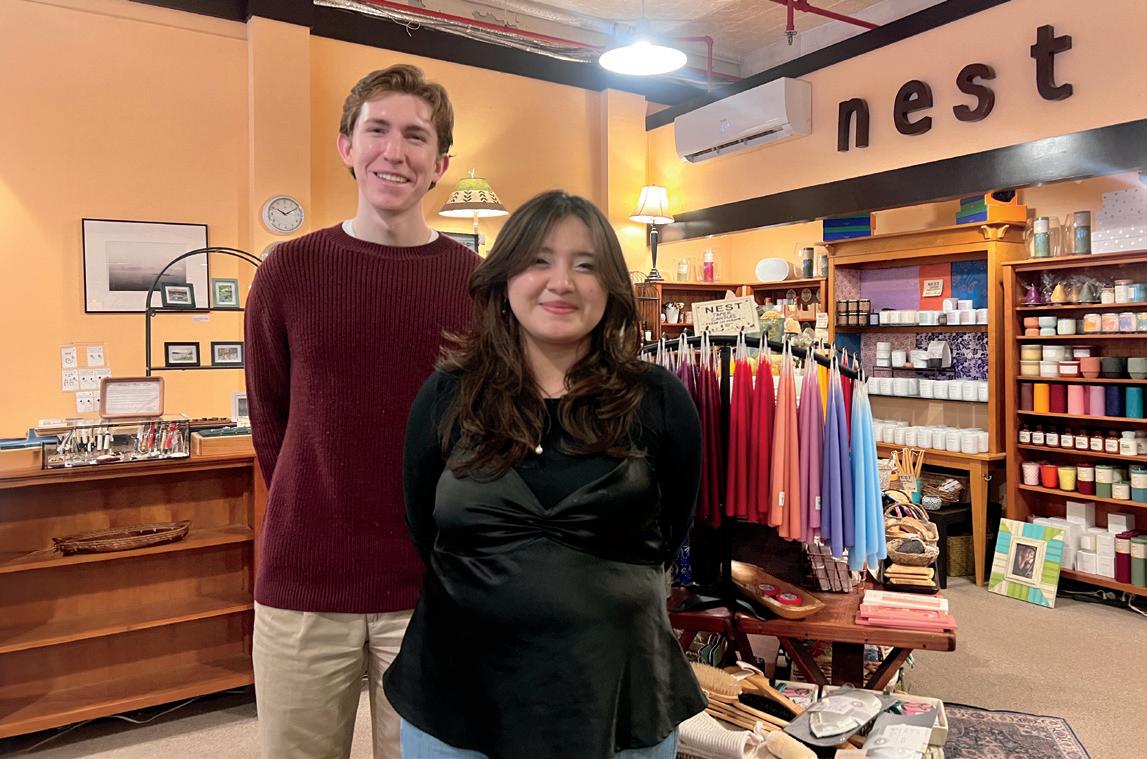
Bowdoin offers so many campus jobs that students don’t often work in town. Except at Nest.
LAST AUGUST, Ben Vinocur ’28 had been planning to apply for a campus job in the library. Instead, he was recruited by the owner of Nest, a downtown gift shop, during a visit there with his mother.
“My mom loves the store,” says Vinocur, who is from Las Vegas. After Ben and his mom walked into Nest, the two began chatting with owner Lisa McKee, who bought the store in 2025. Within minutes, McKee asked Vinocur if he wanted a job. He started working part-time shifts soon after.
“As much as I love Bowdoin, it’s nice to remember there is a whole town right next to us and to be part of that community,” he says.
McKee has recruited two other Bowdoin students the same way: Juliet Cisneros ’27 and Emalee Ro ’28. “Lisa just started talking to me and asked, ‘Do you want to work here?’” Cisneros recalls.
“Diversity and demographics inform our design,” McKee says, explaining why she reaches out to college students. “Hiring them helps us stay relevant.”
Cisneros says McKee asks her advice on what Bowdoin students—and even younger customers—might like to buy. When Cisneros suggested phone charms, she had to explain to McKee what they were.
McKee, who previously had a corporate job in California, says she doesn’t want the students to stay behind the registers. She wants them involved in customer service, social media, branding, inventory, and layout. “I want them to be able to leverage this job for whatever they want to do in the future,” she says.
McKee also just likes having younger staff around. “Every day they remind me to be open and to keep learning,” she says.
Community
Vinocur and Cisneros at work in Nest
Answers: 1. Aretha Franklin; 2. BLACKPINK; 3. Drake and Bad Bunny; 4. Taiwan; 5. Diwali; 6. Renaissance noir; 7. Quinceañera; 8. Brazil; 9. Brooklyn Dodgers; 10. A’ja Wilson
Forward
On the Shelf
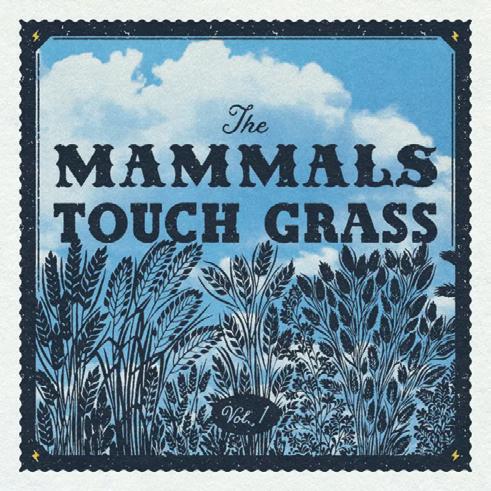
Touch Grass Vol. 1 & 2
The Mammals
MIKE MERENDA ’98 (Humble Abode Music)
Mike Merenda ’98 says his band, The Mammals, makes “music for a world that is forgetting how to listen.” Their newest release contains songs “rooted in land, kinship, and the urgent need to reconnect with the world beneath our feet.”
To Eve
SARAH DICKENSON SNYDER ’77 (Nixes Mate Books, 2026)
Collaborators Through Time: How Humans Partnered with Nature, Technology, and Each Other
ALEX BENTLEY ’92 and Michael J. O’Brien (Bloomsbury, 2026)
The Symmetry of the Dream
MICHAEL KENT ’80 (Boundless Books, 2025)
The Riddle of the Trees
MARC PERLMAN ’98 (Koehler Books, 2026)
Investing
Real-World Dividends
Bowdoin has launched a fundraising drive to formally support a studentmanaged investment enterprise established to replicate the real-life experience of working in finance. Dubbed the Arctic Fund, the initiative provides economics students with the business smarts to secure top jobs in the world of money management.
“When we started this venture, we faced a number of hurdles, but we found a way to make it happen,” said Ben Korengold ’27, an economics and government and legal studies double major.
In the fall of 2023, Korengold, along with classmates Khush Patel and Franco Ruocco—all of them newly arrived first-years at the time—hit upon the idea of launching a student-run investment fund. They started small (with just a few thousand dollars), but over the next eighteen months their investments grew by more than 40 percent, outpacing the S&P 500 and the Russell 3000 index.
In the fall of 2025, the College officially endorsed the Arctic Fund, enabling it to accept and manage gifts from donors under the guidance of Bowdoin’s chief investment officer and the senior vice president for finance and administration, Matthew Orlando.
“This is the first time that Bowdoin students interested in finance careers get the opportunity to build and manage an actual portfolio,” explains Orlando. The investment strategy is to focus on undervalued companies in the Russell 3000 index with strong fundamentals. “We hope that the alumni community will recognize the value of this experience and make a donation to the Arctic Fund,” he adds.
Math and economics double major Patel says the goal is to raise a six-figure sum by the end of the spring semester. All gifts will go directly to the fund as principal and will be invested for growth, with a percentage of earnings utilized for student learning opportunities. “This will mean more outside speakers, more events, and, crucially, more recruitment opportunities.”
After sitting through a stock presentation given by the students, Boston-based investment professional Mitch Glazier ’73, one of the fund’s external advisors, said he was “blown away” by their level of sophistication and professionalism.
FISH SCHOOL
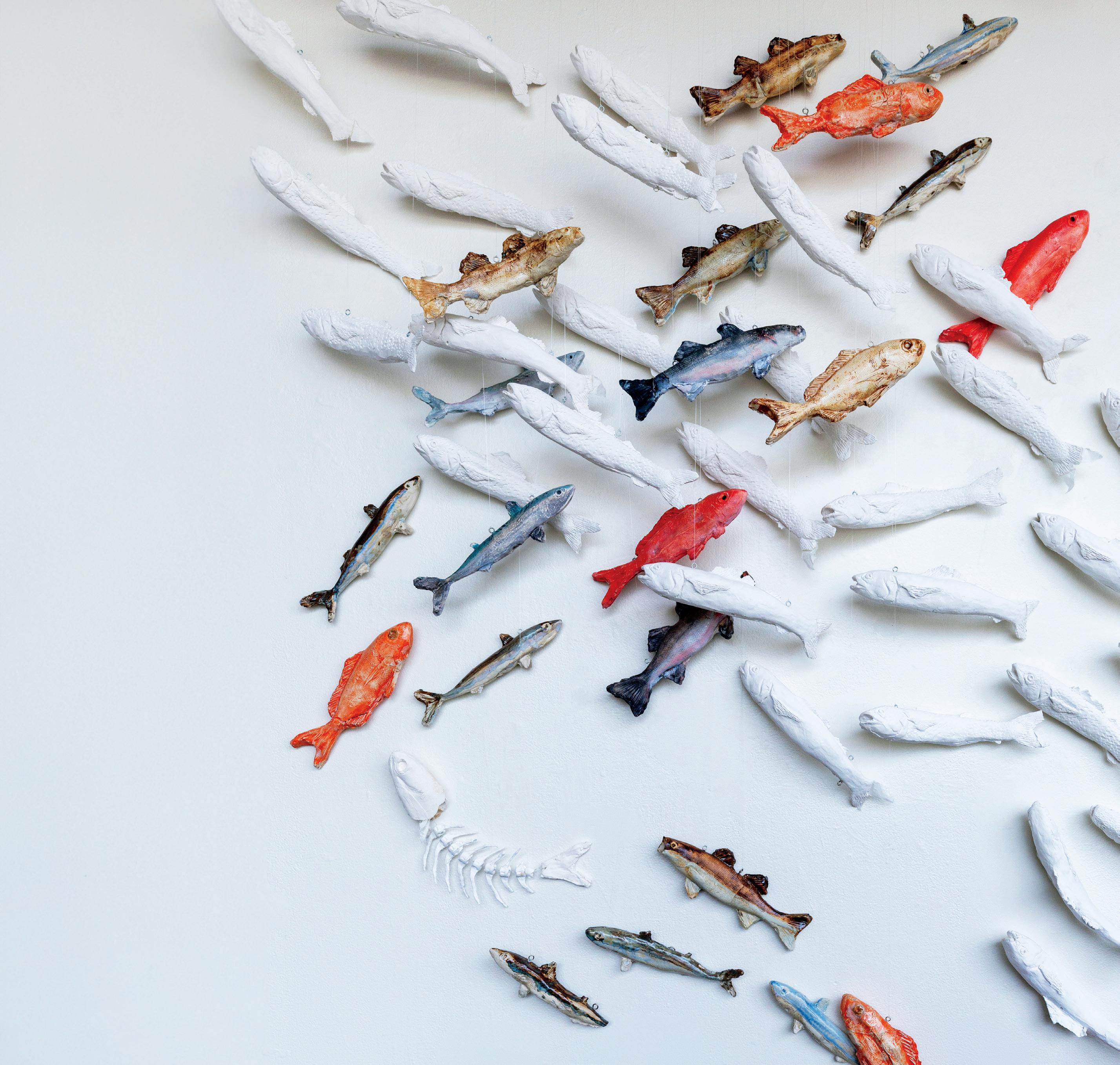
Art The galleries of the Visual Arts Center known as “the fishbowl” often feature student art. Currently on view is a work that feels particularly at home, The Wisdom of Crowds, by Ada Potter ’26. Potter began her piece by purchasing three fish—a Northern red snapper, a European sea bass, and an Atlantic mackerel—from a Portland market. She made the colored fish from those three, pouring plaster to make molds and using slip, or liquefied clay, to create a shell and hand tools to bring them to life. The plaster fish came from one she carved out of oil clay and coated with liquid rubber to make molds of sculpted fish swimming in two different directions. Potter says she was inspired by the murmuration of starlings and elver migrations she saw growing up in Maine. “The individual melts away to create the whole. I am interested in this balance between single organisms and their collective illusion, both breathing with vital, frantic life.”
PHOTO: ANDREW ESTEY
Visual arts and environmental studies major Ada Potter ’26 created a school of fish.
Athletics
What a Kick
Tyler Huck ’26 juggled the end of his senior year with the start of a professional career in soccer.
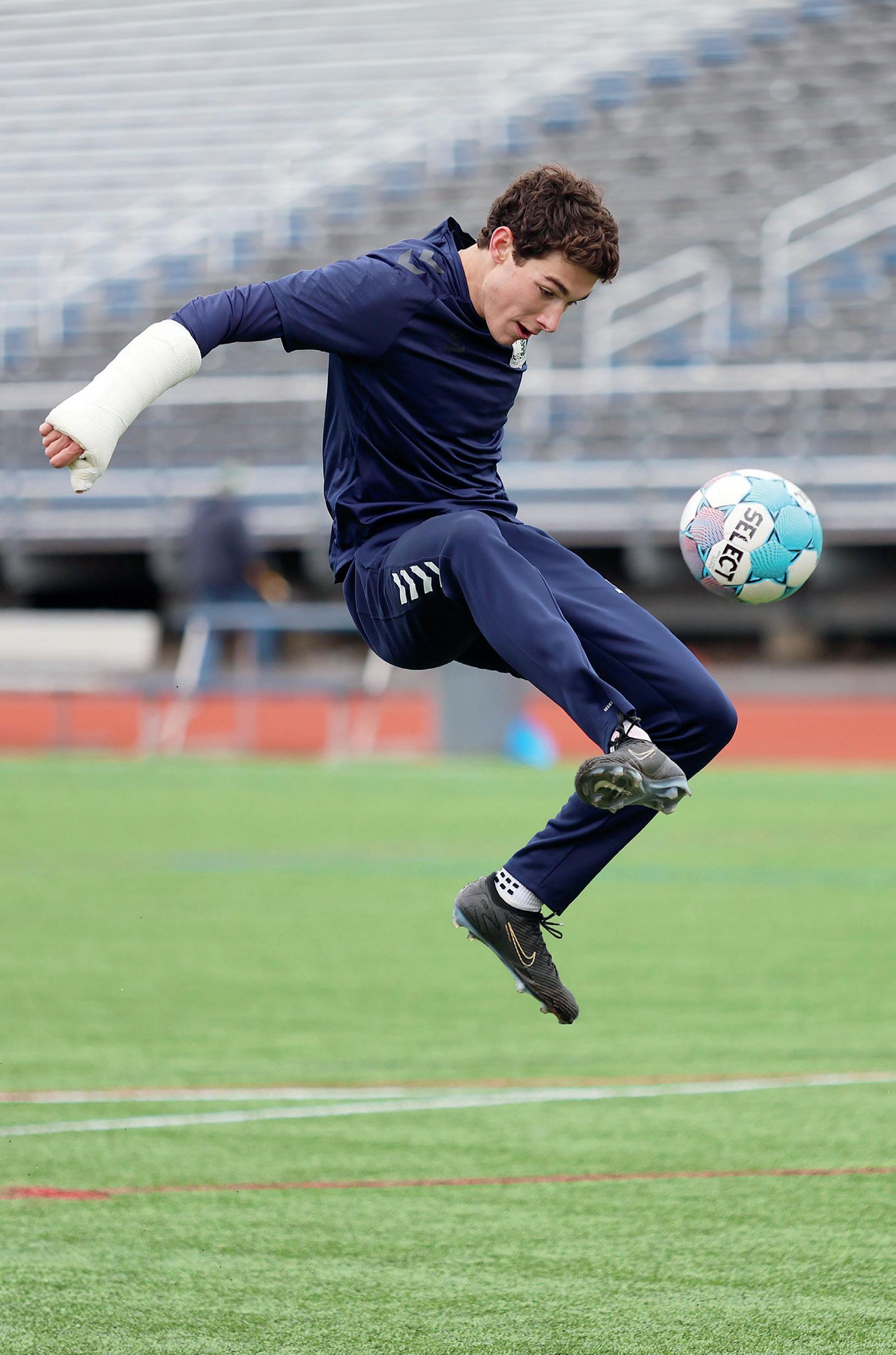
THE SPRING SEMESTER was a balancing act for soccer standoutturned-professional footballer Tyler Huck ’26: training in the morning, classes in the afternoon, and soccer matches as part of the Portland Hearts of Pine woven in between. It’s a fitting routine for a player who has seamlessly bridged the worlds of student and professional athlete. The Ross, California, native arrived at Bowdoin in 2022 and wasted no time establishing himself as a cornerstone of the Polar Bears soccer program. As a first-year, Huck started in eighteen of twenty games, tallying four goals and three assists en route to NESCAC Rookie of the Year honors. By the time he wrapped his collegiate career, Huck had amassed thirty-four goals and nineteen assists, along with three First Team All-NESCAC selections and the 2025 NESCAC Player of the Year award. Off the field, he made history as Bowdoin men’s soccer’s first CSC Academic All-American First Team selection in twenty-five years. Now signed with the Hearts, a new USL League One team in its second season, Huck will be bringing that same kick to the professional field.
PHOTO: DEREK DAVIS
Maine’s professional soccer team, Hearts of Pine, announced in March that they had signed Bowdoin midfielder Tyler Huck ’26.
Arts
Lights, Camera, Lobsterman
Senior physics major Grace Lott is bringing her directorial debut—a feature-length mystery film shot in some eerie corners of Maine—to campus this spring.
Lott, who is from Manhattan, has always had an eye for detail. As a kid, she used her gift to learn as much as she could about science. As a physics major at Bowdoin, she applies her attention to mind-boggling problems in quantum physics and relativity. While these challenges consume a lot of time inside the classroom, outside of it she gravitates toward filmmaking.
Knowing her time at Bowdoin was ending, she decided to apply for a scholarship to support her big plan—a feature-length movie titled Lobsterman. She successfully secured $3,000, which she has used to “make a low-budget film look high-end.”
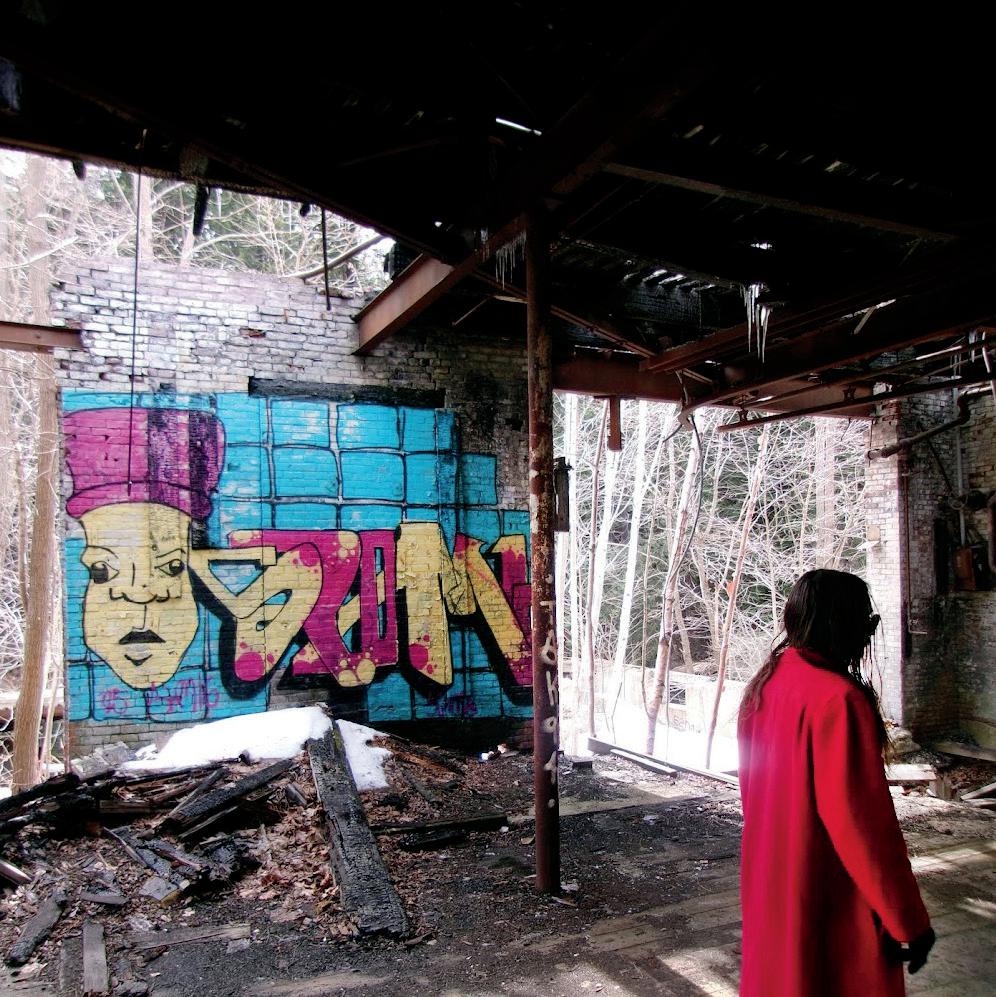
This spring, she shot the film in several locations around Maine, with the main sequence of events taking place near Waterville, at a site selected for its graffitied walls and abandoned storefronts. The spot gave Lott just the eeriness she envisioned.
Her goal was to make the film using all Bowdoin student talent, and she has written, produced, and directed Lobsterman with help from Jeremy Tewari ’26. Tewari, Daedalus Arnold ’27, and Nathan Bukowski-Thall ’26 are the main characters.
Although the synopsis is under lock and key, Lott did share that her story, which she hopes to premiere at the end of the semester on campus, is about “two characters who meet a mysterious third person and the events that follow.”
Act Like You Love It
Ayana Johnson’s provocative and joyous approach to climate activism book inspires a musical project, campus concert—and dance parties.
“HER VISION for what environmental advocacy looks like has inspired much of our recent work,” says Sophie Davis, artistic director of the midcoast Maine musical and artistic collective Halcyon String Quartet. “Ayana [Bowdoin’s Roux Distinguished Scholar] has a way of centering climate solutions in a conversation that is exciting and empowering and yet urgent and honest,” adds Davis.
Halcyon’s latest project, The Future Is Here, is a multimedia work informed by Johnson’s collection of essays and conversations tackling the climate issue that includes audio excerpts of Johnson reading from What If We Get It Right? Halcyon teamed up with singer/songwriter Alisa Amador for a performance of the piece during a symposium put together by Senior Lecturer in Environmental Studies Eileen Johnson and featuring climate activists and faculty, staff, and students from Maine colleges and universities.
“The symposium and concert were designed to bring people together to talk about ways we can collaborate in addressing the impacts of climate change on Maine,” says Eileen Johnson, who retires this summer after twenty-four years at the College. “It has been a wonderful way to wrap up my time here at Bowdoin.”
In addition to listening to music, What If We Get It Right? is inspiring people to get out on the floor this spring. As part of the launch for the paperback version, dance parties were held in venues as varied as the La Brea Tar Pits of Los Angeles, the Brooklyn Botanic Garden, and Wolfe’s Neck Farm in Freeport, Maine.
Faculty
A location in Maine chosen for its slightly eerie vibe
Pursuits
Calling It
Economics professor Erik Nelson brings a lifelong love of baseball to the diamond.
BY DAY, Professor Nelson studies the economics of ecosystems—impressively quantifying tradeoffs, modeling land use, and weighing the costs and benefits of biodiversity. By night (and on plenty of spring afternoons), he is out standing in another field altogether, calling balls and strikes. Nelson, who specializes in environmental economics, is very much at home on a baseball diamond. He took in his first Major League Baseball game at age three, and in the decades since has seen more than 150 Minnesota Twins games with his now-eighty-four-year-old father. Four years ago, after hearing about Maine’s umpire shortage—and once his son could manage his packed sports schedule on his own— Nelson stepped behind the plate and has since taken on a steady slate of games, from youth leagues to travel teams to a men’s sixty-plus league, umping about three times a week from April through August. Nelson says umpiring provides a respite from his daily routine, a chance to meet people, and the opportunity to use his knowledge of baseball. Whether in a classroom or behind home plate, he says, clarity, confidence, and fairness are the real rules of the game.
Sound Bite
“Trained to run boldly through strange forests and to flush out wild beasts in the hills, I was not ever accustomed by heavy chains to be held.”
Community FROM GUARD TO GRAD
Anthony Reed, an IT specialist at Bowdoin, received his diploma at Commencement after taking classes here for the last seven years. A computer science major and cinema studies minor, Reed started his first job at Bowdoin
fourteen years ago as a security guard for the Museum of Art. When he transferred to campus security, he offered to build a couple of applications for them, and when an IT job opened up, Reed applied. His supervisor, Jeff Doring, immediately encouraged him to return to college. Reed had already completed three years at Framingham State University, and he needed sixteen classes to earn a Bowdoin degree. But first he had to be accepted. “As an employee, you have to apply and matriculate like any student,” Reed said. Now he has a new goal: to keep doing good work at Bowdoin. “I have absolutely loved every minute I have worked at this College,” Reed said. “The College takes care of the community, and there is no other place I want to work.”
Fresh Eyes
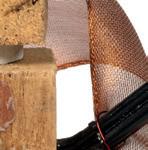
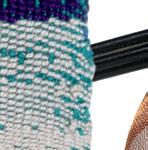
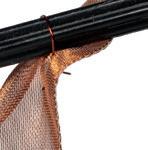
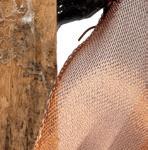
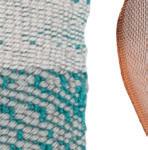
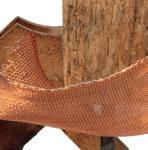
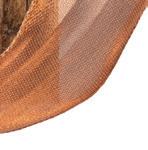
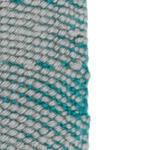
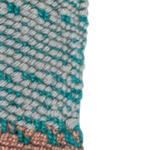
One of Bowdoin College Museum of Art’s summer shows this year honors the fiftieth anniversary of Spindleworks Art Center, a program of Brunswick’s Independence Association, whose mission is to assist individuals with intellectual disabilities in obtaining full and inclusive lives in their community. The exhibition showcases works on paper, painting, sculpture, poetry, weaving, and music together with dance and film. Celebrating Independence! runs May 20 through August 16, 2026.
“For fifty years, Spindleworks artists have demonstrated the transformative power of creative expression,” said cocurator Mya Benally ’26.
On View
PHOTOS: TIM GREENWAY
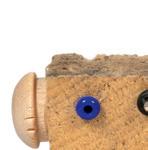
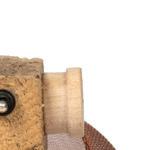
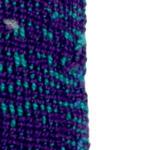
Clockwise from left: Striped Wall Hanging, 2025, textile by Micah Webbert; Woman, 2024, mixed media on board by Mitch Pfeifle; Dancer, 2025, mixed media by Sophie Jacobs.
$88,435
$50M
5
Students hired as Hastings Summer Fellows who will spend time working on AI-related projects.
The largest gift in Bowdoin’s 232-year history, from Netflix cofounder Reed Hastings ’83, created the Hastings Initiative for AI and Humanity, with the aim of ensuring students graduate well prepared to lead in a world shaped by AI.
4
Fellows (two postdoctoral and two postbaccalaureate) hired to work explicitly on the Hastings Initiative.
By the Numbers
Taking Shape
One year in, the Hastings Initiative for AI and Humanity has already become a striking presence at Bowdoin. What began as a bold idea that a liberal arts college could, with the right investment, contribute significantly to one of the most transformative technologies of our time is now showing up in classrooms, conversations, and collaborations across the College. If you’ve been on campus, you’ve probably felt it: events drawing crowds, faculty weaving AI into their teaching and research, students asking big questions about ethics, equity, and impact. There’s an understanding that this isn’t just about learning new tools, it’s about being at the forefront of what it means to learn, create, and lead in a rapidly changing world. Behind the scenes, the initiative has also been building for what comes next— expanding opportunities, supporting new ideas, and connecting people across disciplines.
Awarded to faculty, staff, and students for AI research, skills development, and creative work as of March 2026.
38
Grants awarded to faculty, staff, and students for AI-related projects.
6
10
New faculty positions across a range of disciplines are being funded. Three have been filled so far—in philosophy, anthropology, and neuroscience. These will begin in Fall 2026, apart from the neuroscientist, who will start in Fall 2027.
7
Remaining positions will be announced soon, with the hiring process due to get underway in the fall.
9
Talks by AI experts brought to campus.
$1,000
Student grants are part of a new program to support students interested in exploring and developing AI research, creative work, and skills.
Students recruited as Hastings Ambassadors to serve as peer educators and campus researchers and play an active role in shaping how students engage with AI at Bowdoin.
Giving
MODERN MAN
A lifetime of collecting meets a meaningful moment. The Bowdoin College Museum of Art (BCMA) exhibition Creating the Modern: Works on Paper from a Recent Gift by Howard M. Haimes ’76 celebrates an important gift of modern artworks from Haimes, who spent more than forty years building this collection. It features eighteen works created between 1893 and 1947, a period defined by sweeping global change. As industrialization accelerated and travel expanded, artists responded with bold departures from tradition—embracing abstraction, rethinking representation, and exploring unfamiliar landscapes. With works by major figures including Henri Matisse, Paul Gauguin, Wassily Kandinsky, and Josef Albers, the exhibition captures the restless energy of a generation intent on redefining art’s possibilities. Curated by Taylor Dunn, a graduate student at Howard University who interned at the BCMA in 2025, the exhibition is aligned along a central theme of the making of modernism through experimentation and exchange. Timed to coincide with Haimes’s fiftieth reunion, the gift is an effort to ensure the works remain seen, studied, and shared in a show that is both a tribute to artistic transformation and a personal homecoming.
Staff
This Rocks
Bowdoin carpenter and mineral enthusiast Mike Fischer discovers a significant pocket of gem-quality tourmaline in midcoast Maine.
A MINERAL ENTHUSIAST for nearly four decades, Mike Fischer enjoyed one of the biggest finds of his amateur mining career in September 2025, when he struck gold—or, to be more accurate, tourmaline. A lot of it.
Beloved by artisanal jewelers, tourmaline is the Maine state mineral and is composed of many different elements that all come together to form what can be a very rare and beautiful crystal, explained Fischer. “It’s a dream come true to be the first person to find this pocket,” he added, referring to the four-foot-by-two-foot, two-foot-deep cavity he uncovered using a handheld pneumatic chipping hammer.
The discovery was made in a recently reopened quarry in Georgetown, Maine, about twenty miles east of the Bowdoin campus, an area Fischer has been mining for twenty-five years, and where he has hosted at least five field trips for Bowdoin students. “It was the first pocket of tourmaline found at this site in forty years,” said Fischer. “It’s a significant find.”
The Maine Mineral and Gem Museum in Bethel clearly agreed, buying up nearly the entire pocket, some of which also went to the American Museum of Natural History in New York City and the Smithsonian National Museum of Natural History in Washington, DC.
Fischer is hopeful of finding more of the mineral at the Georgetown site. “When you find
one pocket, you’re almost guaranteed to find more nearby,” he said. “So, the journey continues.”
The value of tourmaline varies widely depending on its color, clarity, and rarity, and Fischer stresses that he and his fellow mineral hunters don’t mine to get rich.
“We do it for the thrill of the hunt, the joy of discovering something that’s been in the ground maybe two hundred million years, taking it out, and sharing it with others.”
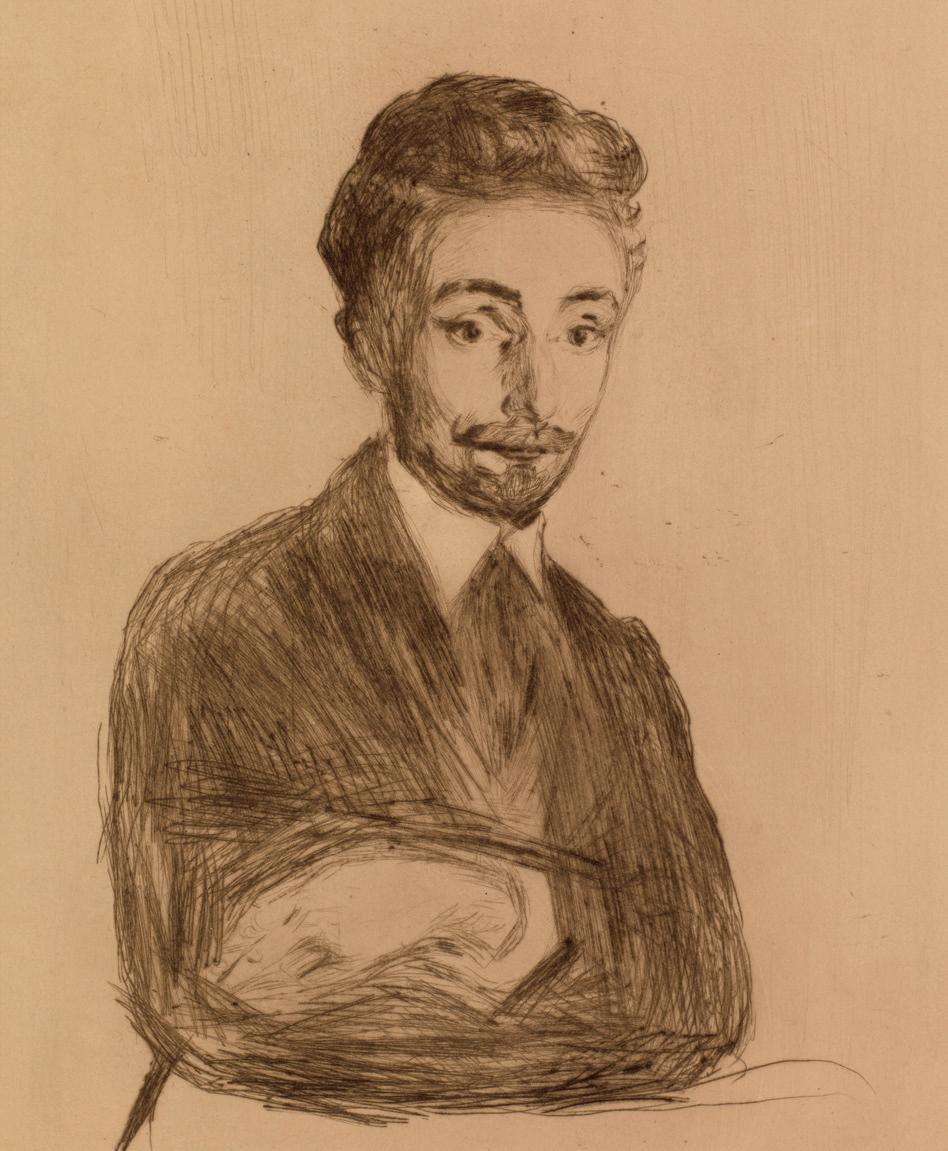
Bildnis Hele Rode, etching by Edvard Munch
POWER WALK
Each March, Bowdoin Public Service in Washington brings a group of civic-minded sophomores to DC for a week to inspire them with an up-close view of government jobs.
This year, its ninth, the McKeen Center program added two new stops: the Supreme Court and the Pentagon. “We want to show students all the ways they can serve,” said BPS director Wendy Van Damme. Other destinations included the Treasury and State Departments, Maine’s congressional offices, and the Peace Corps, among many others.
Students don’t just tour buildings, they meet with officials—including many alumni—in judges’ chambers, senators’ offices, and historic Capitol spaces, like the Budget Appropriations Room.
“I felt like a celebrity!” said Noa Nasoff ’28, part of this year’s cohort. “Behind locked doors at the Supreme Court, I had to pinch myself and ask, ‘Am I dreaming?’”
They also come prepared, researching each host to ask informed questions. Sumaya Abdulle ’28 pressed Senator Susan Collins on an apparent shift in her War Powers Resolution voting record. “This took a lot of workshopping and practice,” Abdulle admitted, “because I didn’t want to seem like I was disrespecting her role.”
For many participants, the biggest revelation is how accessible DC careers are. “It was comforting to see how many young people were working as aides and staffers,” said Ben Vinocur ’28. “As long as you take the first jump, you can land there.”
Passions
Cool, Cool, Cool
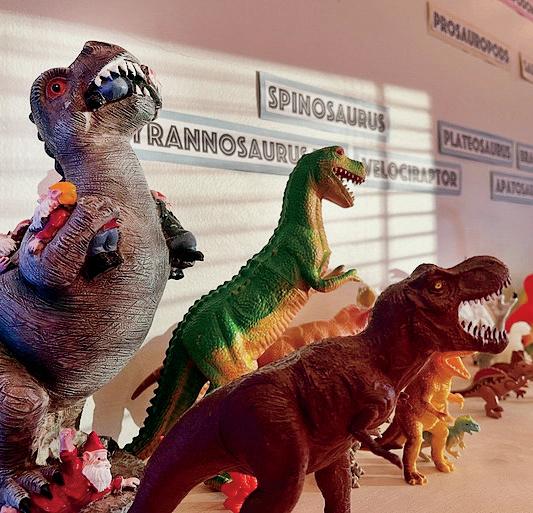
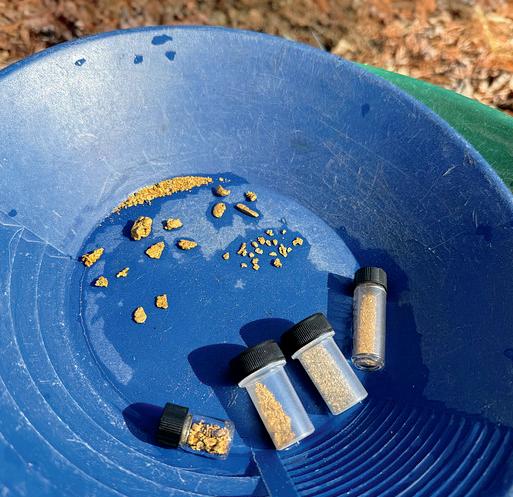
Envisioned as a kind of schoolroom “show and tell,” the new Cool Things Club at Bowdoin invites staff to come together to share things they love and why— their hobbies, interests, treasured objects, and more. The contributions are inspiring, creative, and sometimes a little offbeat.
JOE ANDERSON, who founded the Cool Things Club and runs the campus events office, confessed at the inaugural meeting to being a diehard Swiftie—in case there is anyone still unfamiliar, this is a Taylor Swift fan—and in his ardor, he has constructed a replica of Swift’s head from pieces of chewed pink bubblegum, topped with a wig of bright blonde hair. He also has a large (and growing) dinosaur collection. “Over the past few years, I’ve been trying to do a better job of exploring the things I’m actually excited about, whether they seem cool or not,” he said.
NATHAN NIELSEN’s zeal for finding gold has taken him to Virginia, California, Alaska, and throughout New England. What the OneCard technician loves most about gold panning is spotting that telltale glint at the bottom of a streambed and knowing he’s the first person to lay eyes on the nugget. Plus, the hobby gets him outside in beautiful places, and—as he points out—who doesn’t like shiny things?
SOPHAKTRA HENG in the communications office pledged at the start of the year to record the break of day every morning for a full year. She calls it “collecting sunrises” and says it’s pushing her to stick to healthy habits—going to bed and getting up early to “seize the day.” She posts each sunrise, usually from a beach in southern Maine, as a photo or video to her social media account, @allinthemoments, where followers can share in the soothing sounds of waves, wind, and gull cries.
Careers
Supreme Court building
Connections
A STAND-IN FOR BOWDOIN
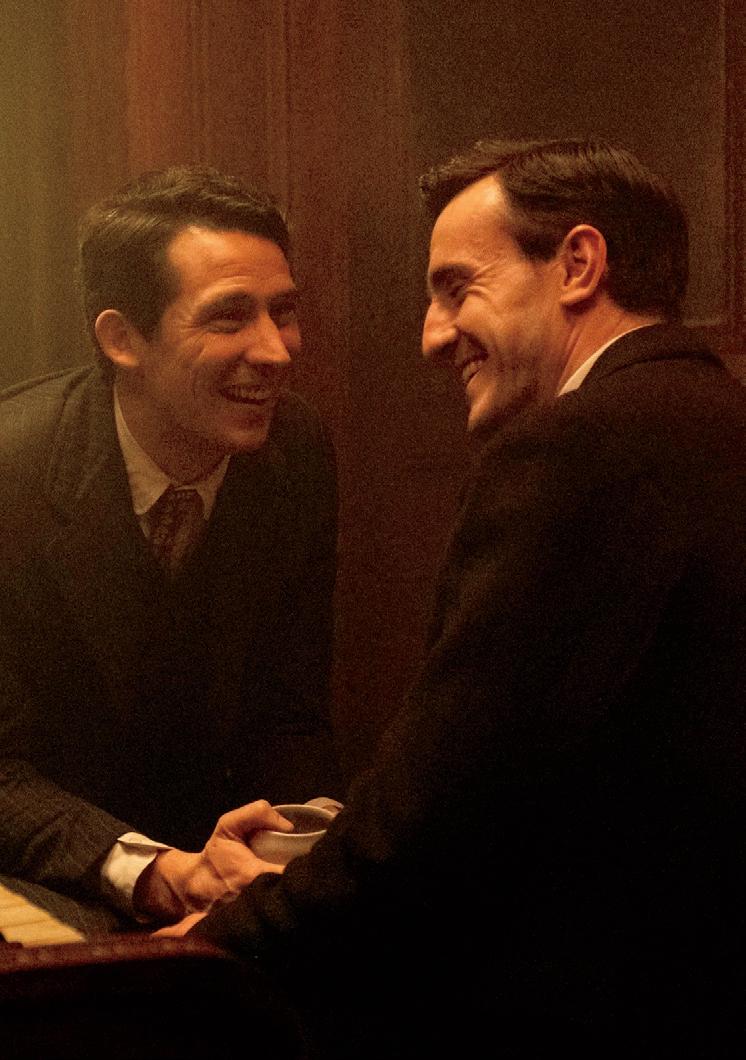
Bowdoin and the Maine woods share the stage in The History of Sound, a film adapted from writer Ben Shattuck’s acclaimed short story of the same name. Starring Paul Mescal and Josh O’Connor, the film traces a tender romance between two early-twentieth-century music students who spend a summer documenting folk songs across rural Maine. Though filmed in New Jersey and abroad, it is at Bowdoin where O’Connor’s character, David, invites Mescal’s Lionel on a journey across the state, collecting songs on wax cylinders, the earliest sound-recording technology. Decades later, the recordings are rediscovered in Brunswick, reviving long-buried memories. Shattuck, who once lived along Maine’s coast, says he toured Bowdoin as a high school student and drew on those experiences to create a setting where landscape and story intertwine. The film was released in theaters in the fall and is now streaming on Amazon Video and Apple TV.
Campus
That’s the Spirit
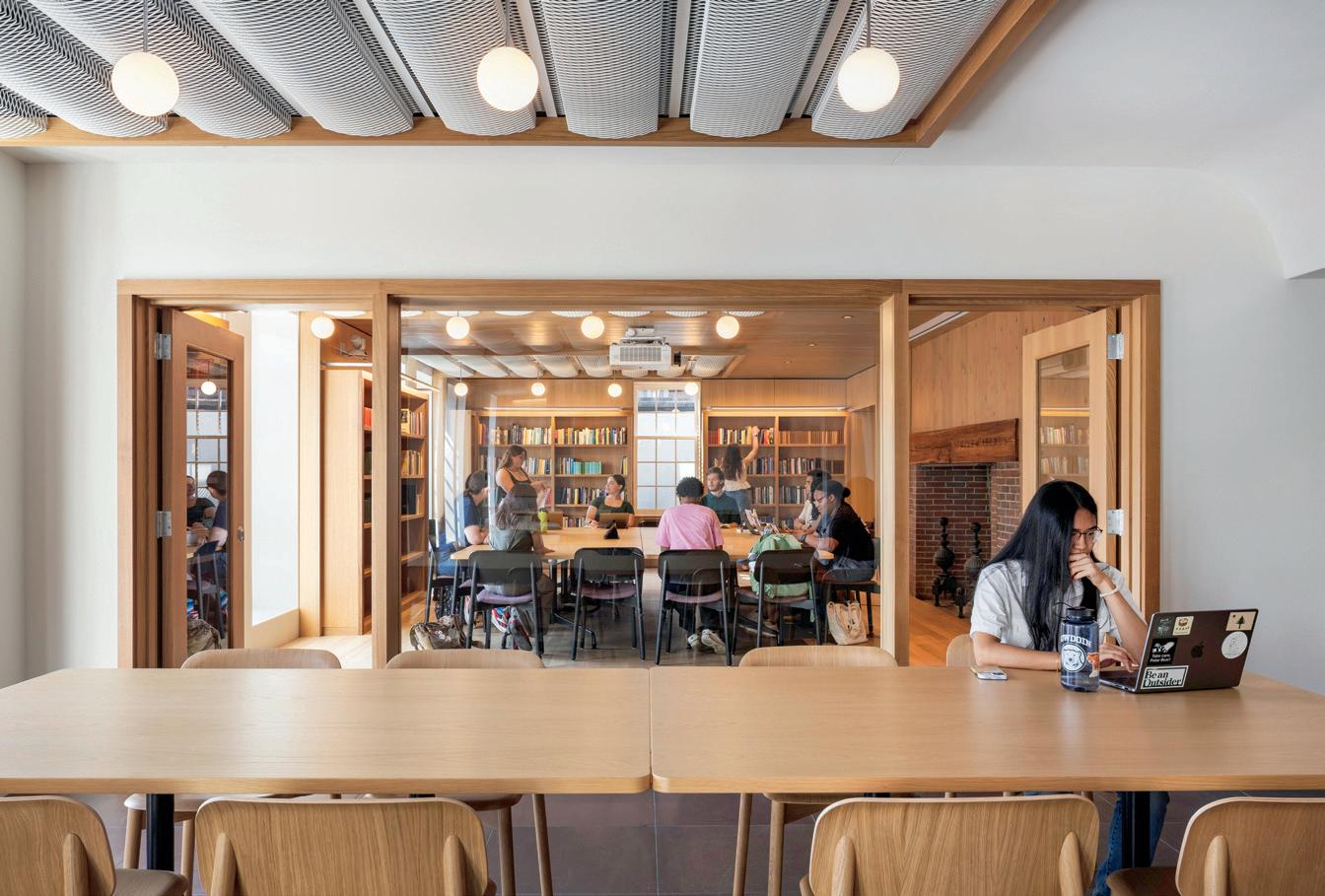
SITUATED ON the lower level of the newly renovated Sills Hall, the Peucinian Room is described as “intentionally Luddite, with limited technology and no modern writing surfaces.”
“Modernizing the Peucinian Room’s instructional equipment while concealing it to retain the room’s aesthetic was an important goal,” says Capital Projects Manager Sharon Ames. Efforts were made to reuse or replicate some original features, she explains. “Salvaged wood was used for the fireplace wall; the wood ceiling is new material finished to match the original, while the fireplace mantel, brick, and andirons remain.”
It’s all about honoring the spirit of the group for which the room is named. The Peucinian Society was founded in 1805, taking its name from the Greek work for “pine-covered” (the society’s motto, translated, is “We always have the whispering pines”). It is one of the nation’s oldest literary societies and the oldest student organization at Bowdoin, though it was inactive for more than a century before being revived in 2007.
Today the society holds well-attended weekly debates—or disputations, as they’re known—concerning statesmanship, culture, and political thought. These gatherings are held in Mass Hall due to the number of people they attract, but the society’s student leadership, called “the council of eight,” meets in the Peucinian Room, which has its own library, before the weekly disputations, says council president Mark Mateo ’26. “The room remains—as it was before the renovation—a great place for our members to study and hang out outside of the classroom.”
Since it is intentionally tech-free, the Peucinian Room is used primarily as a space where students and tutors can engage face-to-face. Senior Classics Lecturer Michael Nerdahl has his students hold Roman-style “civil suits” in the space, where they play the role of senators. He says it was important that the College keep the spirit of the room alive, despite its modernization. “It’s still identifiable as a place of learning, debate, collegiality, and growth.”
O’Connor and Mescal in The History of Sound
A view into the new Peucinian Room
Who Gets Greenland?
Arctic anthropologists Susan Kaplan and Genevieve LeMoine remind us that the voices of Inuit who live in Greenland should have priority in any talks of who governs the world’s largest island.
IN JANUARY 2026, the White House announced the intention of the US to acquire Greenland. In the avalanche of media coverage that followed, information about the Inuit of Greenland, who make up 90 percent of the island’s population, was largely missing.
Bowdoin College has a long history of involvement with the Indigenous communities of Greenland, including our own work over many decades. Bowdoin faculty, staff, student, and alumni involvement in Greenland goes back to Professor Paul Chadbourne’s 1860 expedition to study the natural history of the region. Other Bowdoin-associated expeditions followed, including the well-known work of Robert E. Peary (Class of 1877) and Donald B. MacMillan (Class of 1898), whose combined involvement in the area spanned from 1886 to 1954.
Since its opening in 1967, the Arctic Museum has built on the relationships Peary and MacMillan established with families in Greenland, including organizing a reunion of Greenland and American Peary descendants, inviting Inuit elders to campus, studying the island’s changing environment, and hosting high-level diplomatic delegations from Greenland. As a result of these interactions we have learned about Greenland’s quest for selfdetermination and want to help tell that story. We wrote a piece for The Conversation to provide historical context about who Greenland’s Indigenous people are and how they are governed; what appears here is a lightly edited version of that essay, used with permission.
GREENLAND’S INUIT have spent decades fighting for self-determination. The Kalaallit (Inuit of West Greenland), the Tunumi (Inuit of East Greenland), and the Inughuit (Inuit of North Greenland) together represent nearly 90 percent of the population of Greenland,
which totals about 57,000 people across 830,000 square miles (2.1 million square kilometers).
We are Arctic anthropologists working in a museum focused on the Arctic and its people. One of the areas we study is a land whose inhabitants call it Kalaallit Nunaat, or land of the Kalaallit. Known in English as Greenland, it is an Indigenous nation whose relatively few people have been working for decades to reclaim their right to self-determination.
For nearly five thousand years, northwestern Greenland—including the area that is now the US Space Force’s Pituffik Space Base, formerly known as Thule Air Force Base—was the island’s main entry point. A succession of Indigenous groups moved eastward from the Bering Strait region and settled Siberia, Alaska, Canada, and Greenland.
Approximately a thousand years ago, the ancestors of Inuit living in Greenland today arrived in that area with sophisticated technologies that allowed them to thrive in a dynamic Arctic environment where minor mishaps can have serious consequences. They hunted animals using specialized technologies and tools, including kayaks, dog-drawn sleds, complex harpoons, and snow goggles fashioned from wood or bone with slits cut into them. They dressed in highly engineered garments made from animal fur that kept them warm and dry in all conditions. Their tools and clothing were imbued with symbolic meanings that reflected their world view, in which humans and animals are interdependent. Inughuit families who live in the region today continue to hunt and fish, while navigating a warming climate.
At Qassiarsuk in south Greenland, around the time Inuit arrived in the north, Erik the Red established the first Norse farm, Brattahlíð, in AD 986. He sent word back to Iceland to encourage others to join him. Numerous Norse families followed and established pastoral farms in the region.
As Inuit expanded southward, they encountered these Norse farmers. Inuit and Norse traded, but relations were sometimes tense, and Inuit oral histories and Norse sagas describe some violent interactions. The two groups maintained distinctly different approaches to living on the land that rims Greenland’s massive ice sheet. The Norse were very place-based, while the Inuit moved seasonally, hunting around islands, bays, and fjords.
As the Little Ice Age set in early in the fourteenth century, and as temperatures dropped in the Northern Hemisphere, the Norse were not equipped to adjust to the changing conditions. Their colonies faltered, and by 1500 AD had disappeared. By contrast, the mobile Inuit took a more flexible approach and hunted both land and marine mammals according to their availability. They continued living in the region without much change to their lifestyle.
In Nuuk, the modern capital of Greenland, an imposing and controversial statue of missionary Hans Egede commemorates his arrival in 1721 to establish a mission in a place he called Godthåb. In 1776, as trade became more important, the Danish government established the Royal Greenland Trading Department, a trading monopoly that administered the communities on the west coast of Greenland as a closed colony for the next 150 years.
By the nineteenth century, some Kalaallit families who lived in Nuuk/Godthåb had formed an educated, urban class of ministers, educators, and writers, although Danish colonists continued to rule. Meanwhile, Kalaallit families in small coastal communities continued to engage in traditional economic and social activities, based on respect of animals and sharing of resources.
On the more remote east coast and in the far north, colonization took root more slowly, leaving explorers, such as American Robert Peary, and traders, such as Danish-Greenlandic Knud Rasmussen, a free hand to employ and trade with people.
Earlier US administrations had periodically showed an interest in Greenland; however, the US formally recognized Denmark’s claim to the island in 1916, when the Americans purchased the Danish West Indies (now the US Virgin
Islands). And in 1921, Denmark declared sovereignty over the whole of Greenland, a claim upheld in 1933 by the permanent Court of International Justice. But Greenlanders were not consulted about these decisions.
WORLD WAR II brought the outside world to Greenland’s door. With Denmark under Nazi control, the US took responsibility for protecting the strategically important island of Greenland and built military bases on both the east and west coasts. US efforts to keep military personnel and Kalaallit apart were not entirely successful, and some visiting and trading went on. Radios and broadcast news also spread, and Kalaallit began to gain a sense of the world beyond their borders.
The Cold War brought more changes, including the forced relocation of twenty-seven Inughuit families living near the newly constructed US Air Force base at Thule to Qaanaaq, where they lived in tents until small wooden homes were built.
In 1953, Denmark revised parts of its constitution, including changing the status of
Greenland from a colony to one of the nation’s counties, thereby making all Kalaallit residents in Greenland also full-fledged citizens of Denmark. For the first time, Kalaallit had elected representatives in the Danish parliament.
Denmark also increased assimilation efforts, promoting the Danish language and culture at the expense of Kalaallisut, the Greenlandic language. Among other projects, the Danish authorities sent Greenlandic children to residential schools in Denmark.
In Nuuk in the 1970s, a new generation of young Kalaallit politicians emerged, eager to protect and promote the use of Kalaallisut and gain greater control over Greenland’s affairs. The rock band Sumé, singing protest songs in Kalaallisut, contributed to the political awakening.
In a 1979 Greenland-wide referendum, a substantial majority of Kalaallit voters opted for what was called “home rule” within the Danish Kingdom. That meant a parliament of elected Kalaallit representatives handled internal affairs, such as education and social welfare, while Denmark retained control of foreign affairs and mineral rights.
However, the push for full independence from Denmark continued: In 2009, home rule was replaced by self-government, which outlines a clear path to independence from Denmark, based on negotiations following a potential future referendum vote by Greenlanders. Selfgovernment also allows Greenland to assert and benefit from control over its mineral resources, but not to manage foreign affairs.
Today, Nuuk is a busy, vibrant, modern city. Life is quieter in smaller settlements, where hunting and fishing are still a way of life. While contemporary Greenland encompasses this range of lifestyles, Kalaallit are unified in their desire for self-determination.
Susan Kaplan is professor of anthropology and director of the Peary-MacMillan Arctic Museum and Arctic Studies Center.
Genevieve LeMoine is curator for the PearyMacMillan Arctic Museum.
The original version of this essay, edited lightly here, appeared in The Conversation on January 27, 2026.
PHOTO: THOMPSON GRAHAM
In the 1970s, a new generation of young Kalaallit politicians in the city of Nuuk emerged, eager to gain greater control over Greenland’s affairs.
In 1937, Roger Strout of the Class of 1923 and his two sisters were clearing out their father’s apartment at 200 Maine Street in Brunswick, and the task facing them was daunting. Leon B. Strout had been a studio and commercial photographer in Brunswick for five decades, and he had left mountains of negatives and prints behind. Some were of the College, so Roger thought Bowdoin would be a good home for it all. And it was—safe and secure, but also dark and nearly inaccessible. Now, thanks to the family’s generosity and two years of focused work, Strout’s views and vision have fully come to light.
A GIFT OF VIEWS
BY CARL LITTLE
Opening spread:
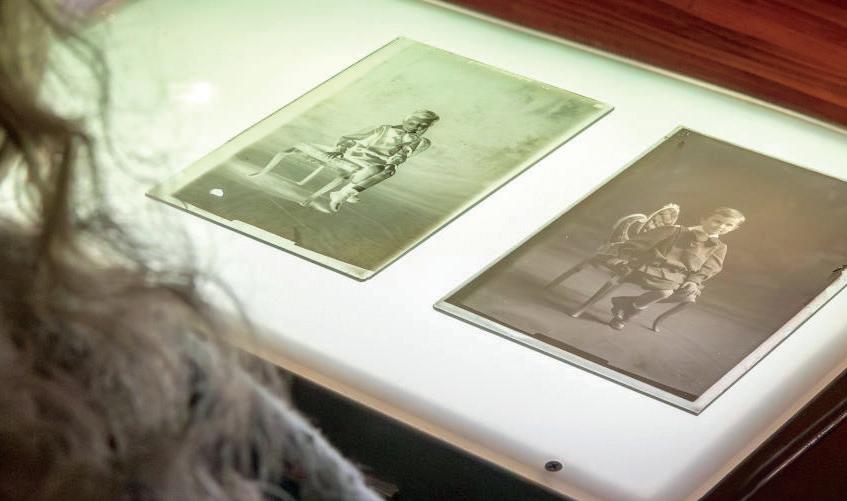
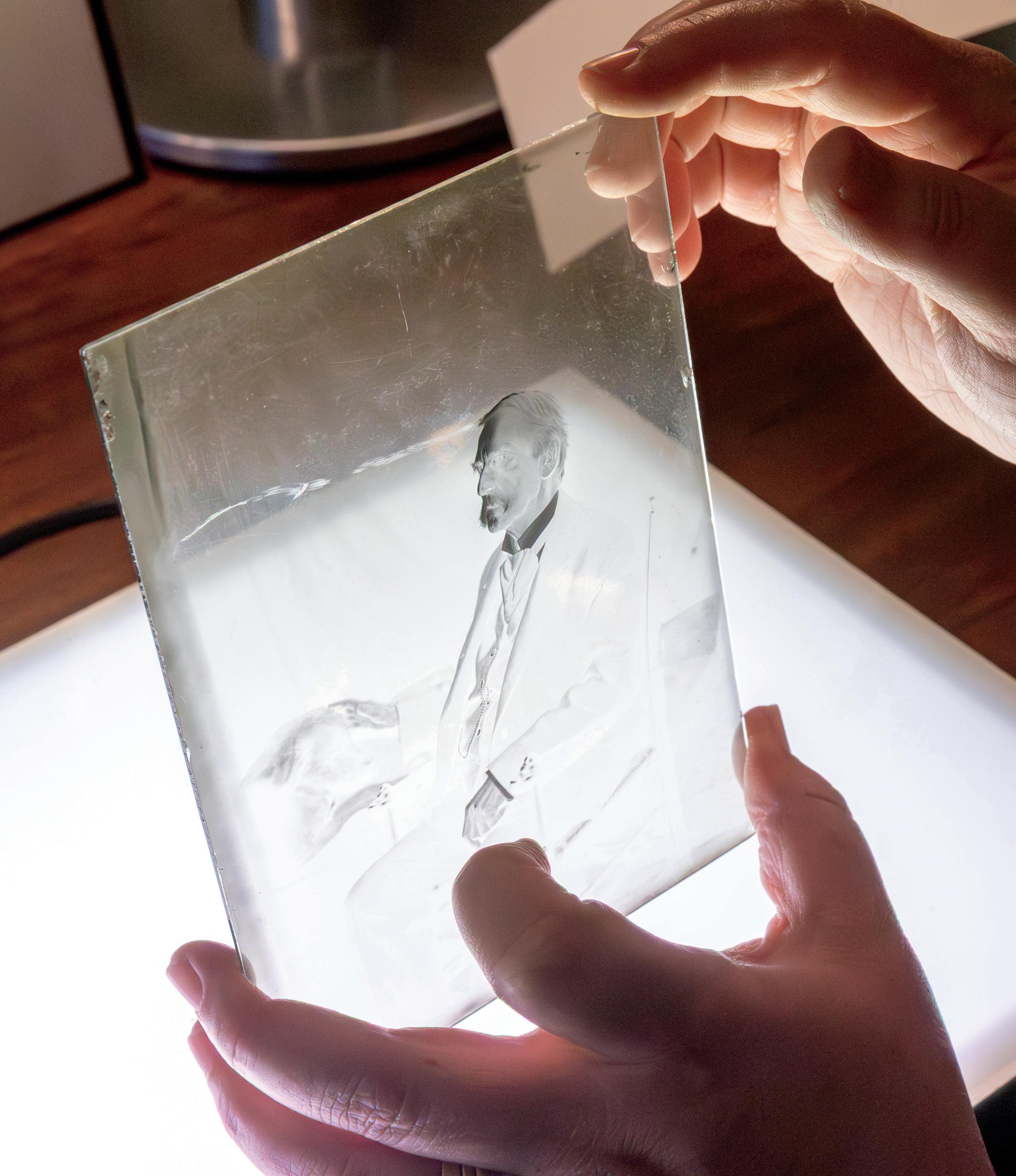
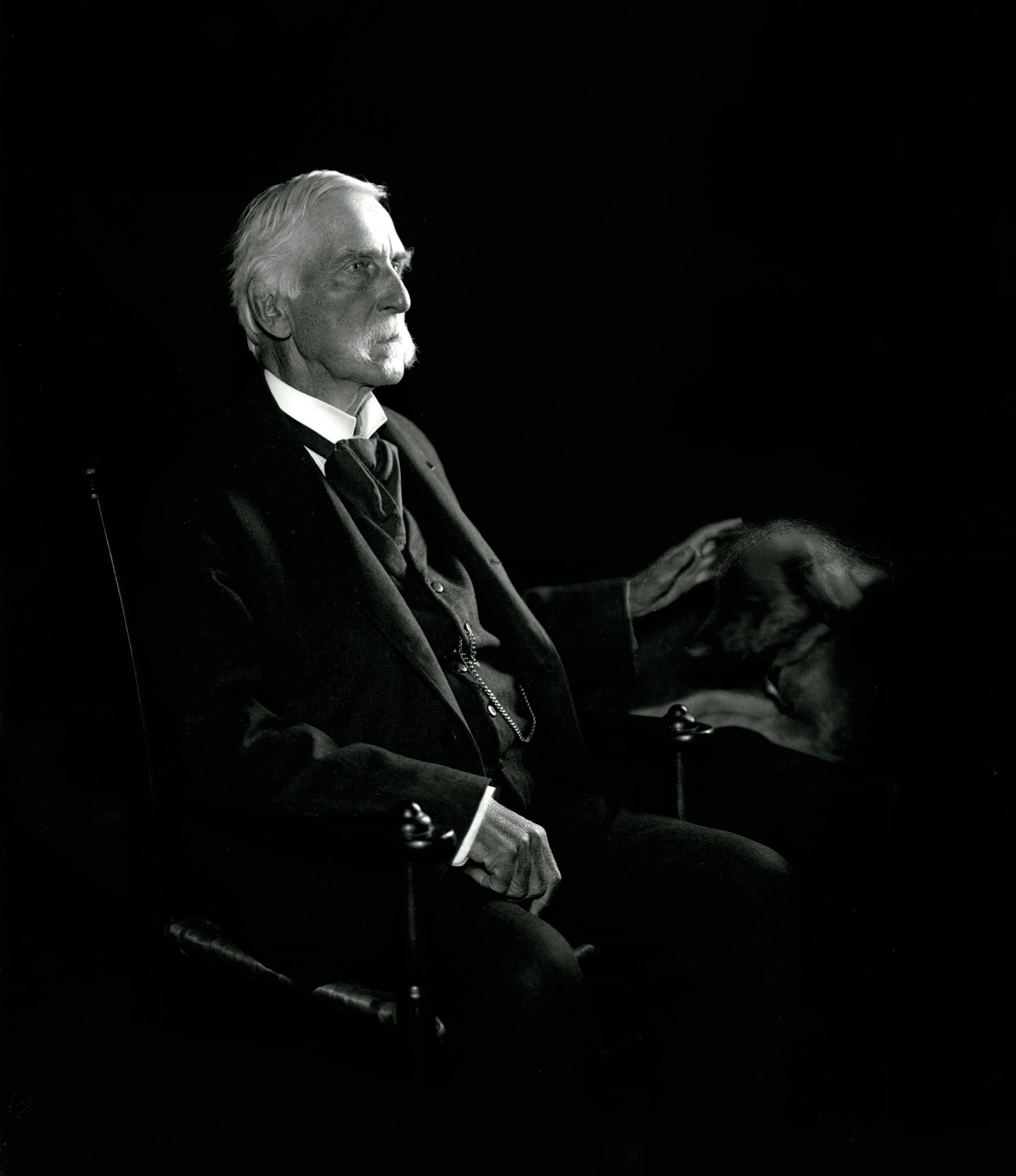
TPortrait of Civil War general and past Bowdoin President Joshua Lawrence Chamberlain with his dog, Tiberius Caesar (right), and the glass negative (left), 1911.
Below:
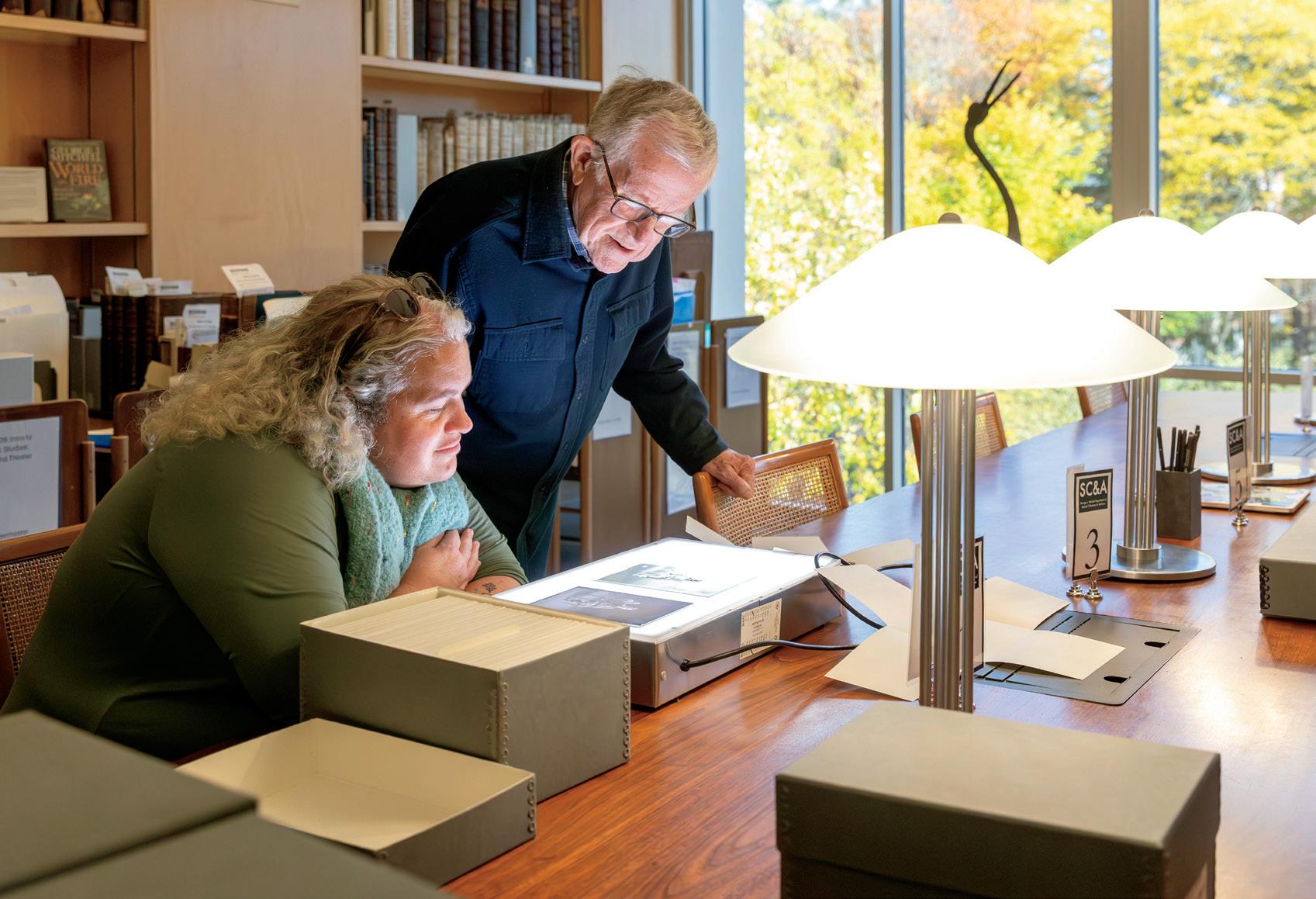
Libby Bischof and Ben Strout examine an object from the collection in the archives reading room.
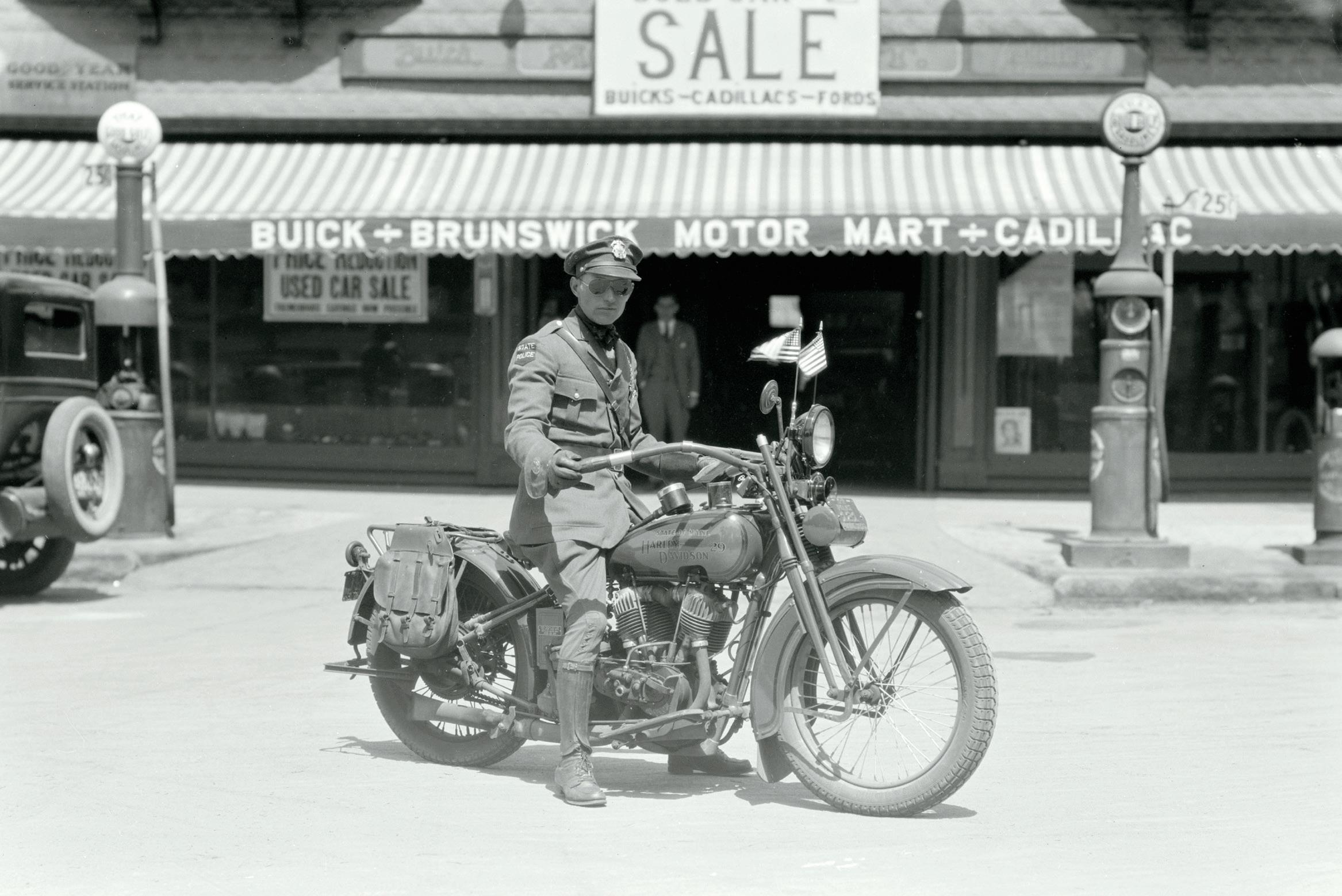
Opposite page, top: Brunswick police officer on a motorcycle in front of the Brunswick Motor Mart, a building that now houses Bull Moose Music.
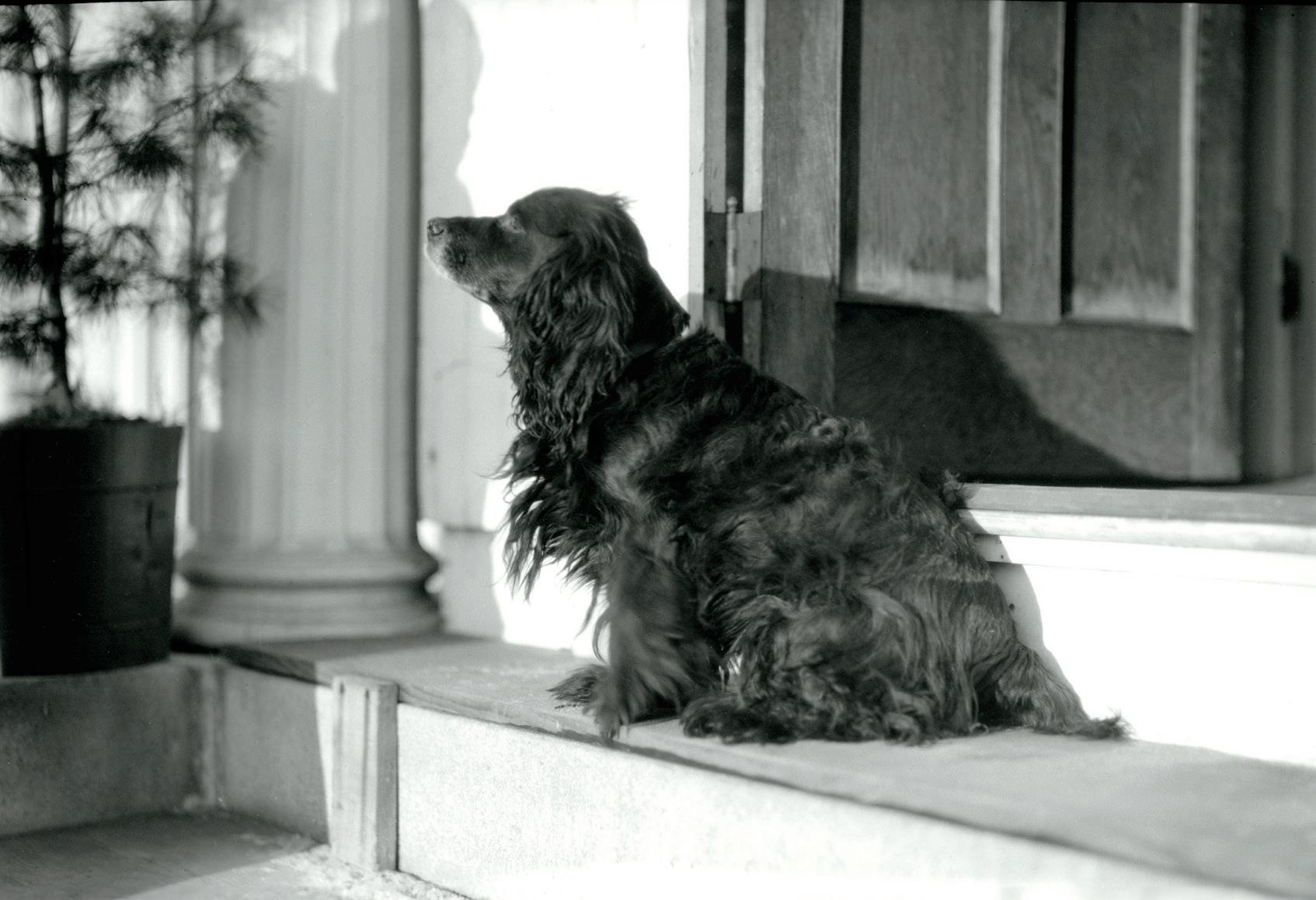
Opposite page, bottom: Portrait of Byng, a cocker spaniel owned by President Kenneth Sills. Several dog portraits appear in the collection.
THE HISTORY of Maine photography is a shifting universe. We believe we have the roster squared away—Lewis Hine, Berenice Abbott, Eliot Porter—and then one day we learn, through new research, that Gertrude Käsebier, Clarence White, and other twentieth-century photography giants spent time in Maine.
Now it is time to make room in that pantheon for Boston-born, Maine-based Leon Bertram Strout (1869–1937). Thanks to a team of researchers, archivists, and historians at Bowdoin’s special collections and archives, this little-known studio photographer from Brunswick is finding—and impressing—a new audience. While some of his images are familiar—the College has reproduced several over the years as holiday cards and the like—Strout’s work overall, asserts archivist Anne Sauer, is not, adding, “But we’re going to fix that.”
The story of how the Strout collection of more than 5,000 film and glass-plate negatives and 1,000-plus black-and-white prints came to Bowdoin dates back to 1937, the year the photographer died. His son, Bowdoin alumnus Roger Strout 1923, happened to be in Brunswick at the time after three years of sailing around the world. Obliged to settle his father’s estate in short order, he donated the collection to Bowdoin. The archives included many photographs Leon had taken of Bowdoin and
its campus, students, and events, making the College, Roger thought, the logical repository.
The library accessioned the collection, stabilizing and securely storing it. The “securely” part was extra important: most of the negatives are cellulose nitrate film, which can be volatile. Now that they are digitized, the library keeps those negatives in freezer storage due to their flammability and the risk of deterioration.
The collection remained stowed away until the 1980s, when the library received a Maine state preservation grant to conserve the negatives. They rehoused everything, moving fragile film into acid-free paper sleeves. The funding also paid for duplication of some of the negatives, which meant copying them and then converting the copies into interpositive transparencies (scanners did not yet exist).
The funding also provided for a person to sort through the images, many of which lacked labels. As Sauer explains, Strout was still active as a photographer when he died, and he hadn’t identified many of his photographs. Categories included locales—Bowdoin, Brunswick, Bath, Poland Spring, and others—and subjects, among them, farm life and World War I cemeteries in France.
Fast-forward to fall 2023. Seated at the reference desk, archivist Sauer took a call from California, from a man named Ben Strout. He was coming to Family Weekend, he told her, to visit with his grandchild, a senior at the College. He was hoping to be able to see his grandfather’s photographs while on campus. Absolutely, Sauer replied.
When the weekend rolled around, Ben, his daughter, Kristin Strout—it was her child who was enrolled at Bowdoin—and other family members arrived at the reading room to look at a sample of the collection. “They were wowed,” Sauer recalls. She also helped them locate the resting places of ancestors in the Brunswick area and find Strout’s former farm on River Road.
Sadly, the tragic shootings in Lewiston in October of that year limited the family’s viewing, as everything closed down while police looked for the shooter. Before she headed home, though, Kristin stopped back at the library to say that she wanted to do something to make the
Thanks to a team of researchers, archivists, and historians, this little-known studio photographer from Brunswick is finding—and impressing—a new audience.
Strout collection more accessible. She recognized, says Sauer, that the only way the photographic materials would be usable was if they were fully digitized and there was someone dedicated to cataloguing the holdings.
The Strouts’ offer of financial support “broke it open” for the library, Sauer says. They hired Katie Perry, an experienced researcher and archivist, to focus full time on curating the collection. Spending time with the photographs, Perry was able to make connections, to identify subjects and date individual images. Now every photograph in the collection has a descriptive caption, and all the images can be found online.
Perry became a discerning detective. Formal portraits of unnamed young men led to searching the archives of The Bugle, the Bowdoin yearbook,
between 1920 and 1937. There were several matches with photos in the Strout collection.
Strout also photographed renowned Civil War general and Bowdoin president Joshua Chamberlain, Class of 1852. Chamberlain’s portrait shows the distinguished aging general seated with his dog, Tiberius Caesar. The dimly lit image provides a stark contrast to the portrait Strout’s photography mentor A.O. Reed made of a much younger man.
The collection also includes a number of portraits of other dogs, including the huskies of Arctic explorer and 1898 Bowdoin graduate Donald MacMillan and a black cocker spaniel named Byng who belonged to President Kenneth Sills. According to Byng’s obituary in the 1933 Bugle, students loved the dog.
Strout’s many photographs of Bowdoin include various buildings under construction, among them the Walker Art Building, Moulton Union, Curtis Pool, and Sargent Gymnasium. Some campus views ended up in Bowdoin publications, including course catalogues. He also took wideangle shots of Commencement and photos of artworks for faculty member slideshows.
In March 2025, archivist Perry held an outreach event at the library (which the staff called “Stroutreach”) displaying a selection of Strout photographs, some labeled, some not. The event led to several research leads and to general excitement about the collection. The gathering also resulted in further Strout family connections and the acquisition of additional materials.
YOU MIGHT CALL Leon Strout the photographer laureate of Brunswick. Working from his studio at 200 Maine Street, he documented diverse aspects of the city and its environs, creating a wide-ranging inventory of images.
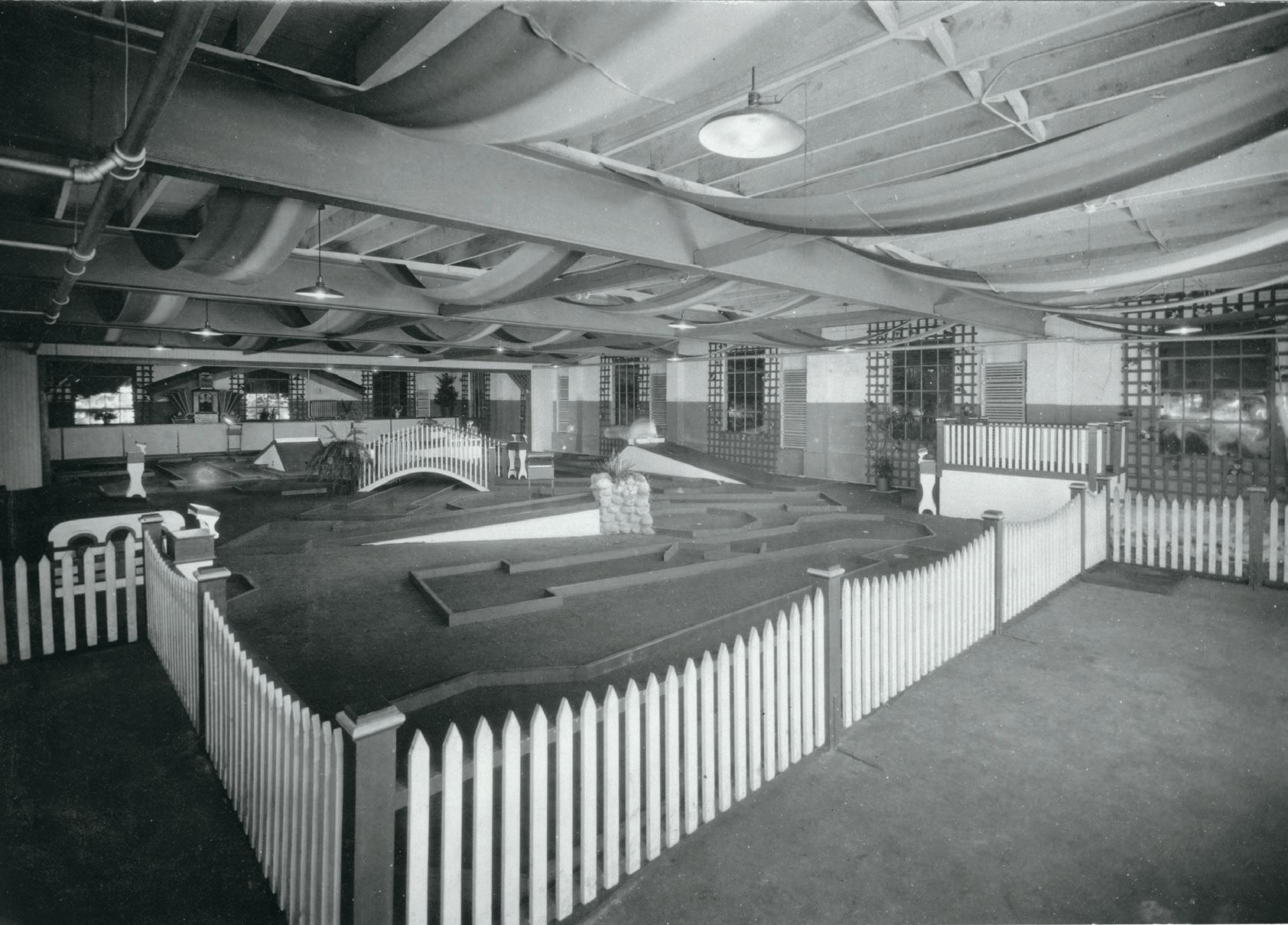
Bringing to mind the photographer Walker Evans, Strout often focused his camera on the signage of various establishments, including the Citizen’s Laundry store, the Great Atlantic Grocery Store, and First National Bank. He covered events such as a parade on Maine Street and a student art show at the high school. Albeit unintentional, some of the images have a surreal quality, such as a photo of a hand placing a letter in a postal box and another of an indoor mini-golf course.
A favorite Strout subject was bridge construction. He recorded the building of the Carlton Bridge between Bath and Woolwich, the Black Bridge between Brunswick and Topsham, and the Cribstone, or Bailey Island, Bridge that connects Bailey and Orr’s Islands. His photos often appeared in The Brunswick Record, sometimes without proper credit.
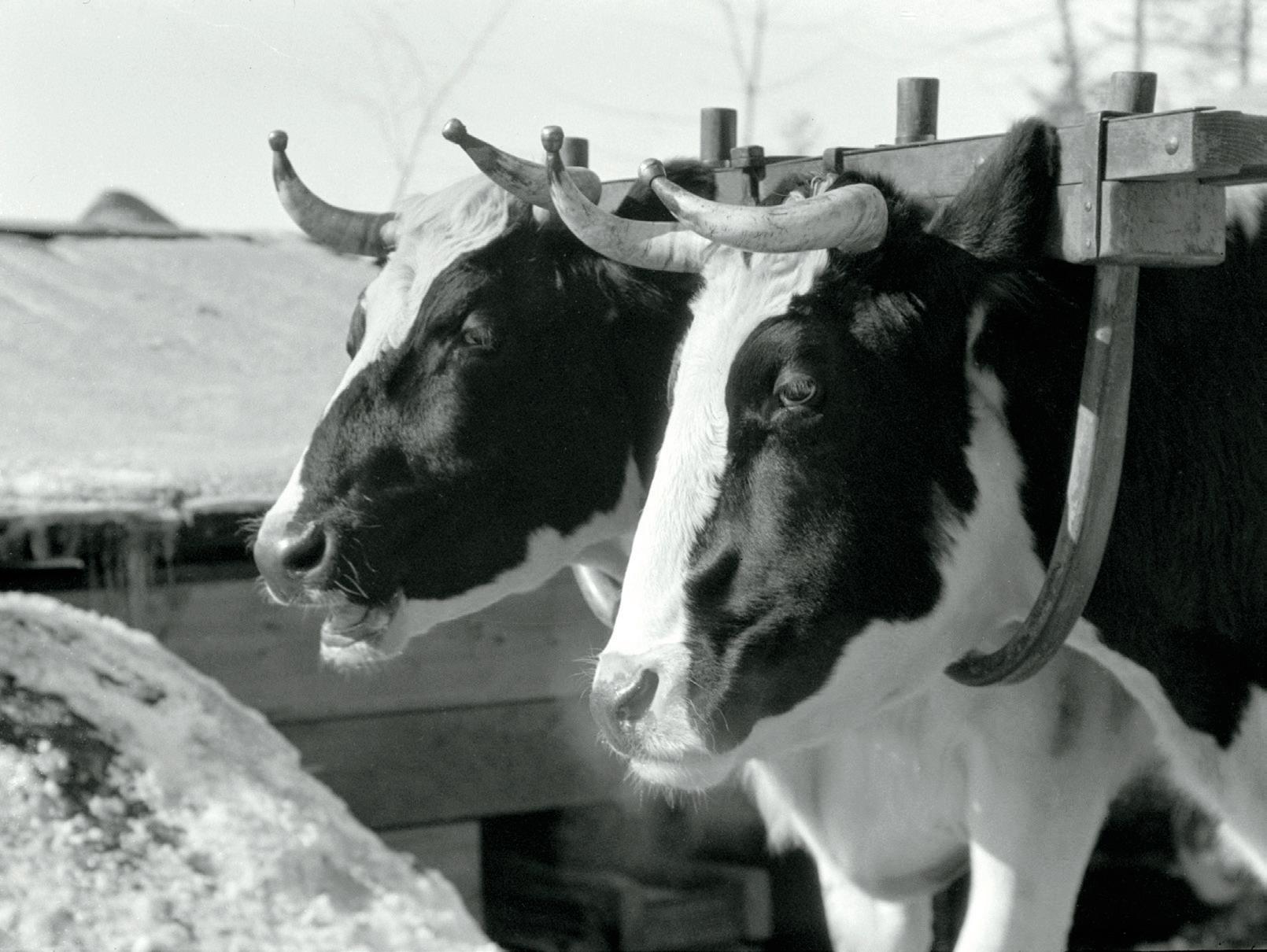
At one point, Strout had tried his hand at farming, only to return to a more promising career behind the camera. During his brief years in this enterprise, he made many views of his family’s homestead. Area farms hired him to photograph prize bulls and other livestock. The Long Branch Sheep Farm in Bowdoinham was a regular client.
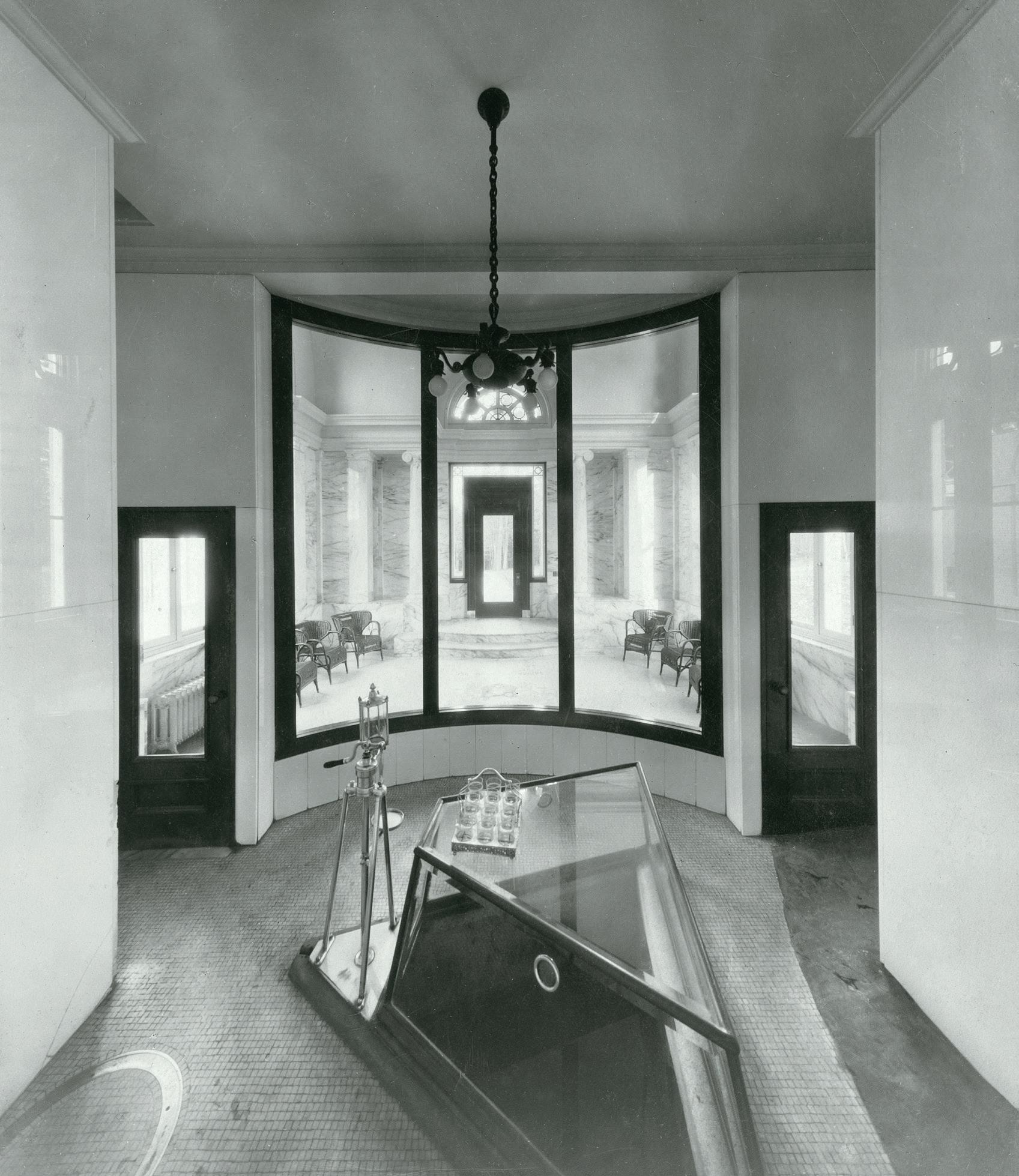
Farther afield, one of Strout’s largest accounts was the Poland Spring Resort in Poland, Maine. Over the years, he maintained a studio at the famous spa, taking photographs of the grounds, including the chapel-like Poland Spring watersource building, and visitors in all seasons of the year. One photo offers an aerial view of people forming the word “rotary” in a field.
Strout used an Auto Graflex Junior, a compact, portable single-lens reflex camera produced by Folmer & Schwing, a division of Eastman Kodak.
He took photographs in a variety of sizes, with negatives ranging from two-by-three inches to eight-by-tens and panoramic shots measuring from two-by-seven to five-by-fifteen inches. He carried on correspondence with Kodak and other camera manufacturers, sharing process challenges and seeking guidance.
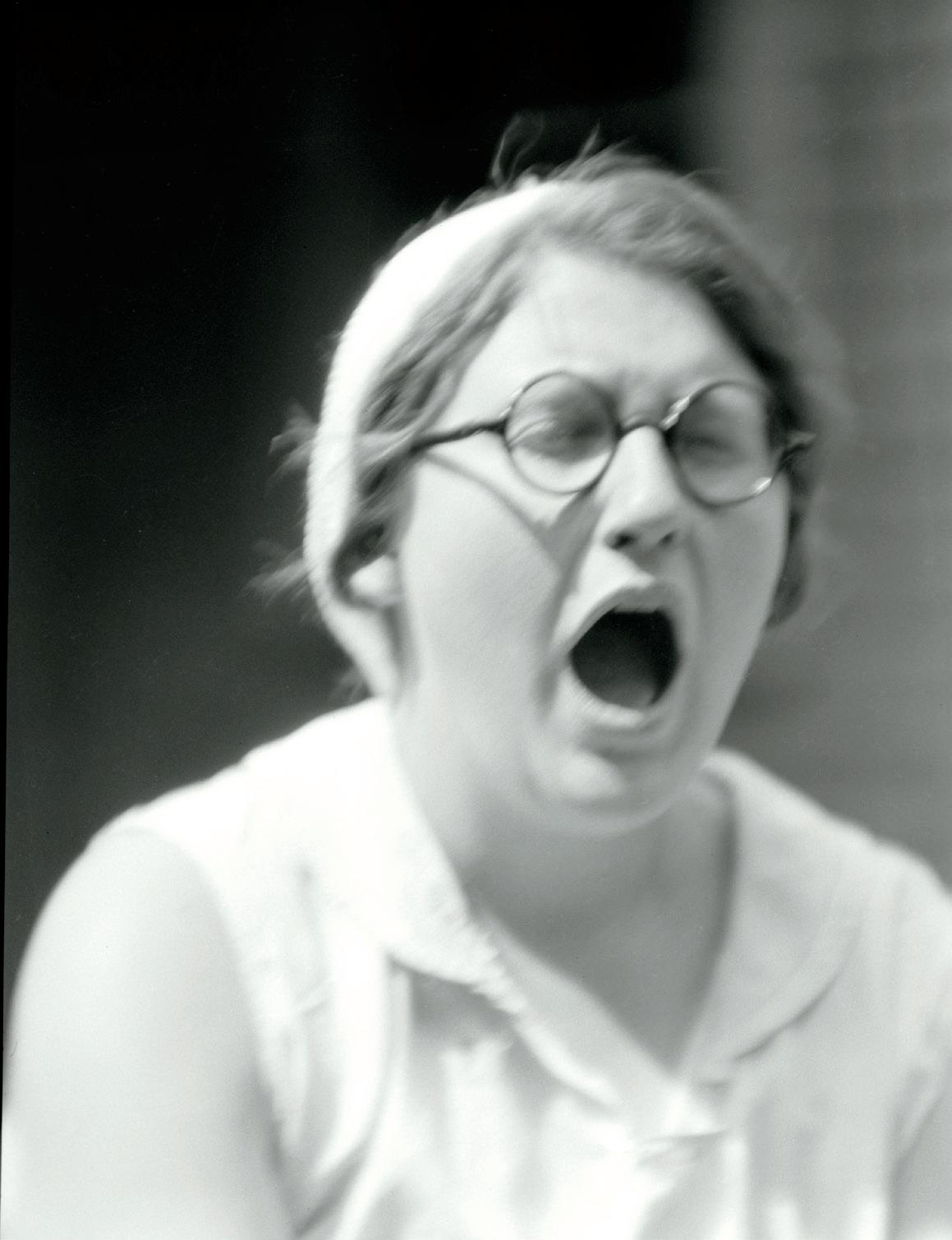
While a lot of work has been done to catalogue the collection, many mysteries remain. Who is the woman caught yawning in several photos? What is the setting of the photograph of a group of young women holding stringed instruments? Where was that indoor mini-golf course?
IN ADDITION TO an exhibition of Strout’s work in the library that will be on show through June 2026, the College is publishing a book highlighting his life and work. In her lead essay, Libby Bischof, coauthor of Maine Photography: A History 1840–2015 and executive director of the Osher Map Library in Portland, contextualizes Strout in the history of photography, both in Maine and writ large. “He fits squarely into what a late nineteenth- to early twentieth-century photographer would be doing,” she notes, “but he’s better than just a studio photographer.”
Opposite page, top:
A photo showing the source building at the Poland Spring Resort, where Strout spent extended periods in residence (1915–1918 and 1920–1923) working in an on-site studio.
Opposite page, bottom:
A deposit being made at a dropbox built into the wall of the First National Bank on Maine Street in Brunswick.
Above, left: Some of Strout’s photos don’t have easy explanations, such as this one of a woman yawning.
Above, right:
As a commercial photographer, Strout often took photos of local businesses, including this indoor mini-golf course in Brunswick.
PHOTOS: LEON B. STROUT
Through papers donated by another branch of the Strout family, Bischof has been able to connect him to F. Holland Day (1864–1933), the famed pictorialist photographer. Day invited Strout to exhibits at his studio in Boston on several occasions. Bischof believes Strout may have been scouting other studios for ideas for his own business. He was, in her words, “living the tension between amateur and professional.”
Bischof also sees an aesthetic connection. Some of Strout’s earlier work displays the moody atmosphere of the pictorialists, evidence that he was more than a simple documentary photographer. “Strout’s pictorialism carries through his work in France and up to 1920, and then it dies,” she explains.
in the Hyde Athletic Building at Bowdoin. Taken in the 1910s and ’20s, these “strength portraits” were made in natural light. “They’re very much of the period,” says Bischof, explaining that any college at the time would have been celebrating what she calls “the culture of masculinity.” She believes the illustrative photos might have been made for a guide to executing the various exercises.
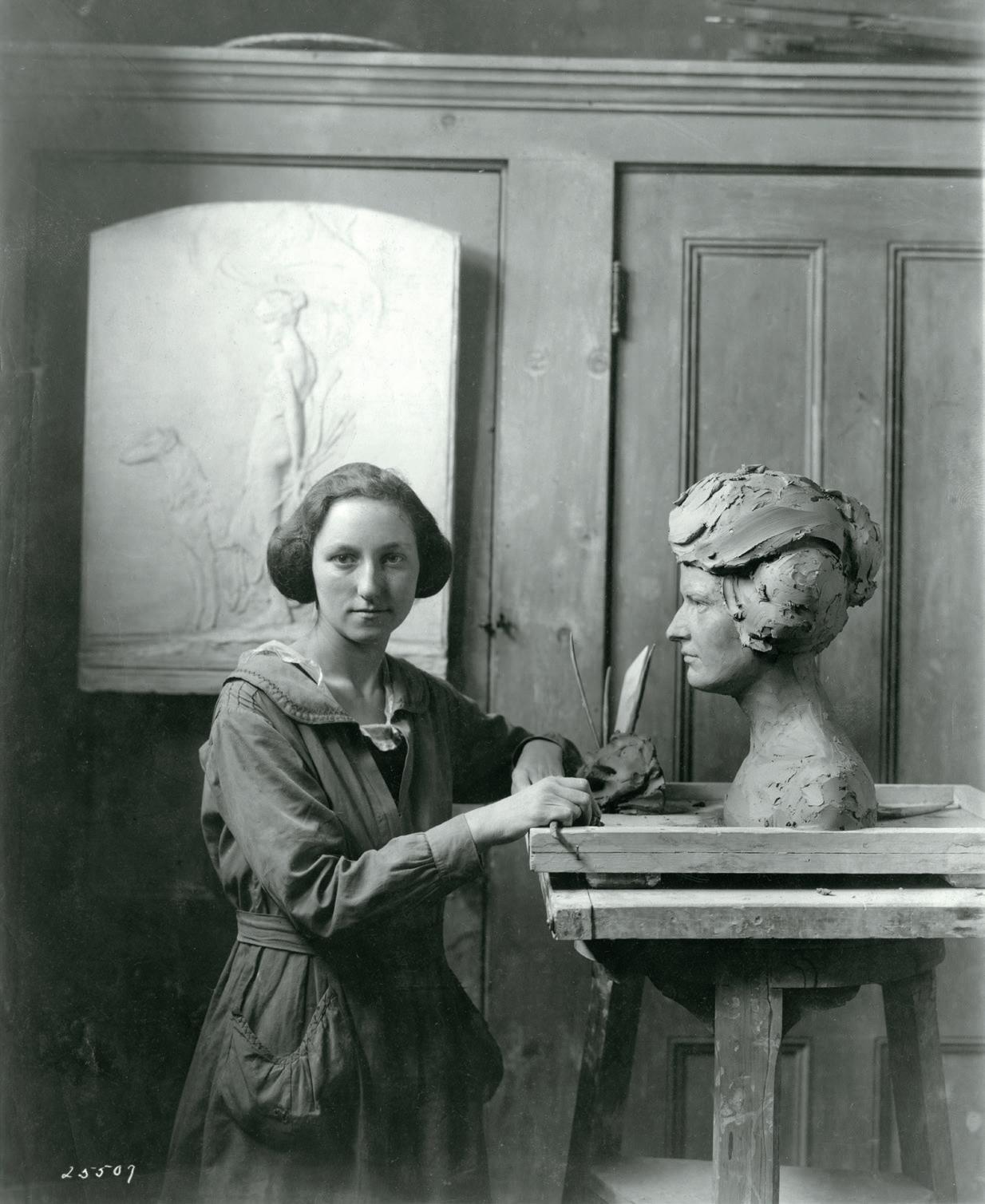
One of Bischof’s favorite images shows a young woman in a smock posing with a clay bust at the Massachusetts Normal Art School. The lighting and her face half-turned toward the camera bring Vermeer to mind.
in Thiaucourt, France, 1919.
Opposite page, right:
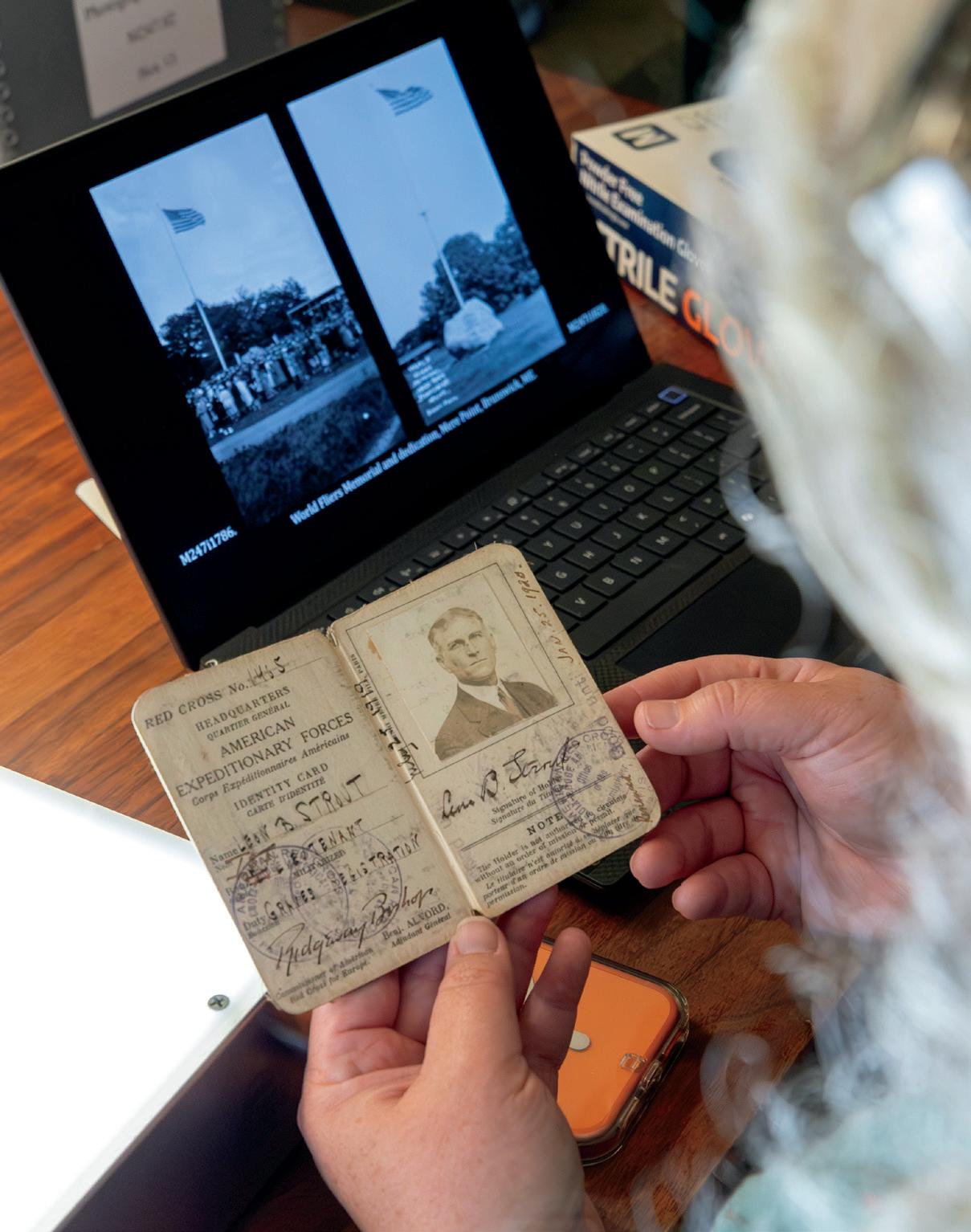
Strout’s identification card from his time in France documenting graves of fallen soldiers.
Strout’s work was “all over the place,” Bischof acknowledges. In addition to the Poland Spring Resort, he had contracts to photograph summer camps in Maine, the cottages on Mere Point in Harpswell, and weddings. She also mentions his “weird side hustle” photographing cattle. He shared photos of wildlife with Thornton Burgess (1874–1965), author of such beloved children’s books as Old Mother West Wind
At one point, Strout made a series of photographs of athletes working out in the gymnasium
Bischof admires Strout’s industriousness. He was an all-around studio photographer who knew how to take portraits, single and group. His “real photo” postcard business thrived. Kodak had come out with a camera that would expose a postcard-sized negative that could be printed onto a blank card. People prized these photo postcards for their detail and for capturing everyday life on film.
A note on the back of a 1935 photo of a woman named Mrs. Malett seated on a couch in a living room highlights Strout’s business transactions. She has written, “I think this one
Above, left:
Oxen hauling logs in one of many photos Strout took of local farms and farm animals.
Above, right:
An art student at the Massachusetts Normal Art School in Boston.
Opposite page, left:
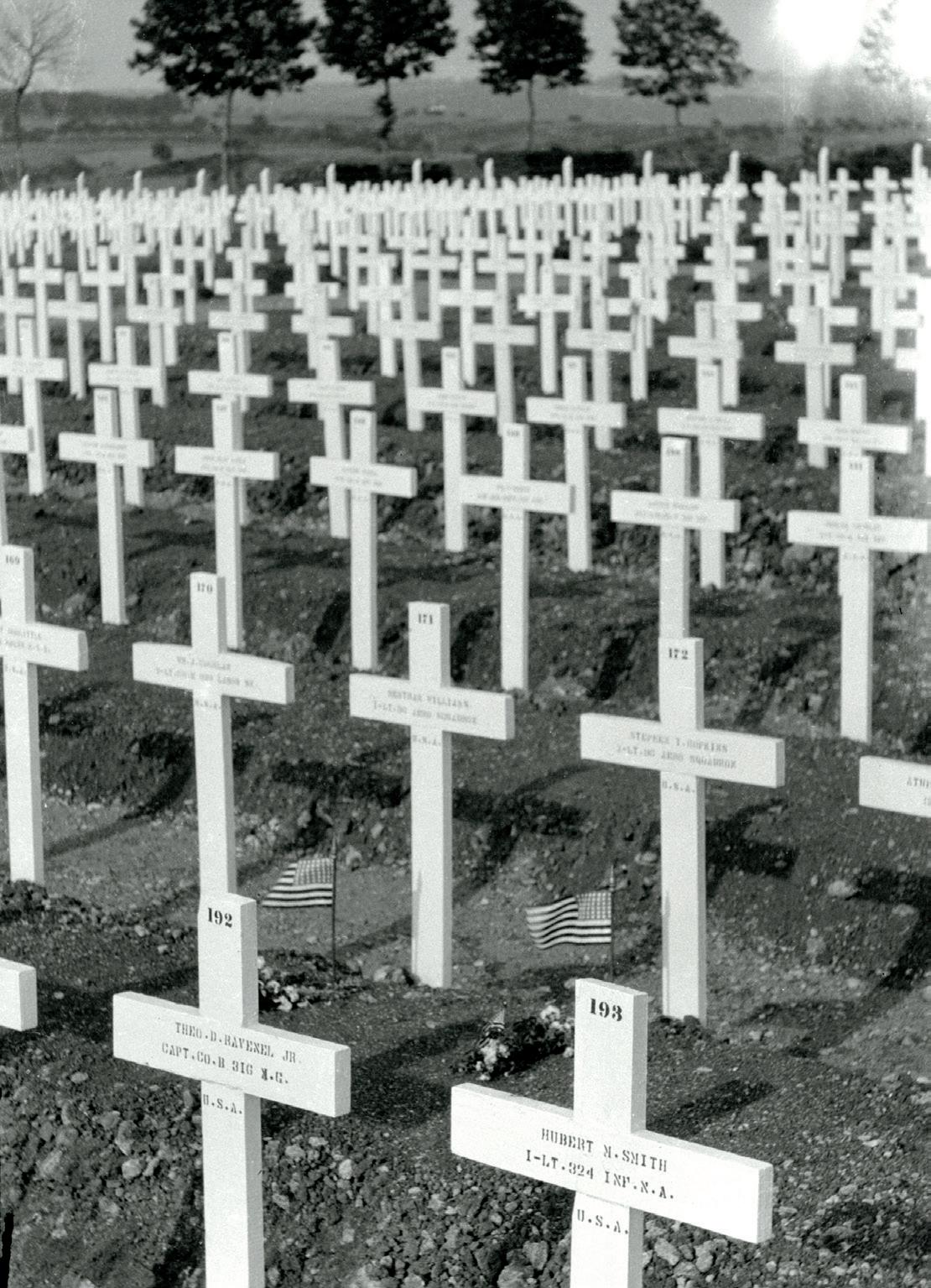
Strout was one of eight volunteer photographers chosen by the American Army’s Graves Registration Bureau to document the graves of American soldiers killed and buried abroad. Shown here are some of the more than four thousand graves at the St. Mihiel American Cemetery
STROUT IN FRANCE
MUCH OF Leon Strout’s work is undated. The photographs he took in France in 1919 are an important exception. This body of work—more than 500 images—represents his most significant historical contribution and a point in his life where he intersects with a larger global story.
Kat Stefko, special collections and archives director and interim director of the Bowdoin Library, did a deep dive into this period. She recounts how Strout doggedly lobbied to be one of the volunteer photographers commissioned by the American Army’s Graves Registration Bureau to document the final resting places of fallen soldiers “for loved ones back home.” He even lied about his age to land the assignment.
One of eight volunteer photographers chosen, Strout served as an American Red Cross lieutenant from January 4, 1919, to November 23, 1919. The library archives include photographs
of the temporary graves of fallen servicemen at many different cemeteries in the French countryside. Rows of white crosses stretch into the distance, with names of individual soldiers visible on some of them.
Among the cache of photos are several of an unidentified woman who drove for the American Red Cross’s Motor Corps. Members of the all-female Corps helped rebuild France after the war. “They delivered mail, transported medical and other supplies,” notes Stefko, “and served as chauffeurs ferrying passengers in the sidecars of motorcycles or other vehicles.” Strout’s portrait captures the woman’s “sense of self-assuredness and bravado.”
According to Stefko, Strout traveled some 13,000 miles across France, in a Ford Model TT or camionette. The car carried his bulky camera equipment but also provided accommodation
on his road trips. He picked up hitchhikers, “from peasants to soldiers,” and documented his travels, capturing both city scenes and bucolic landscapes, some of them recalling the Barbizon paintings of Jean-François Millet (1814–1875).
While the Graves Registration assignment was rather grim, it proved seminal in Strout’s career, writes Stefko, “allowing him to focus his craft for nearly a year on documentary photography.” She praises his “mastery of light and shadow, a thoughtfulness and creativity in the framing of his images, and a deep consideration for the subject matter and the story or history he wished to convey.”
These photographs represent a major part of Strout’s legacy and deserve special attention. As art historian Bischof puts it, “Someone is going to write their dissertation about the Grave Registration work.”
Sauer finds it extraordinary that the collection came to the library so long ago, was cared for all those years, and is now seeing the light of day.
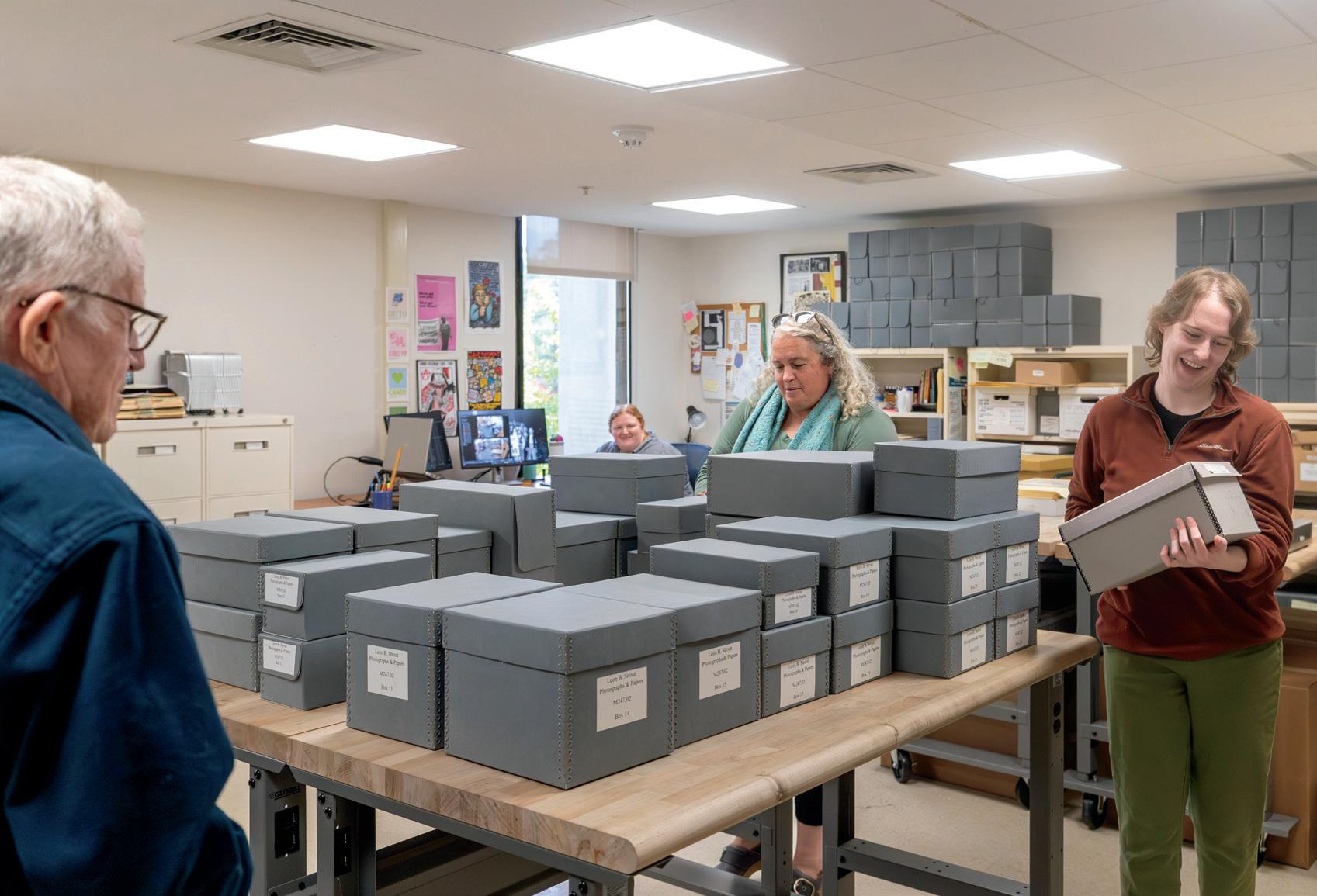
Left: Archivist Emma Barton-Norris works in the special collections and archives processing workroom while Ben Strout, Libby Bischof, and Katie Perry review the newly rehoused Strout materials.
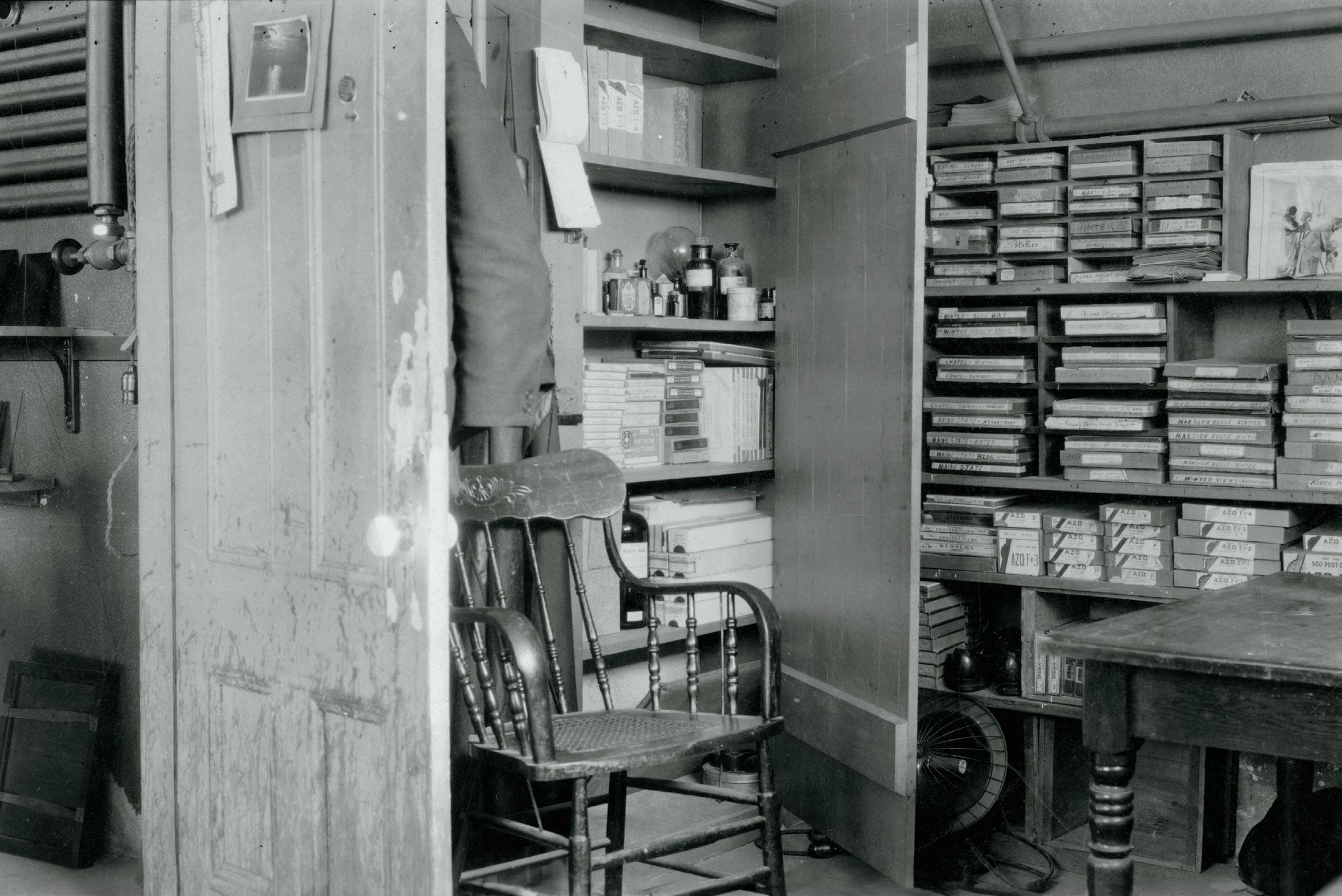
Below: Strout’s studio at the Poland Spring Resort.
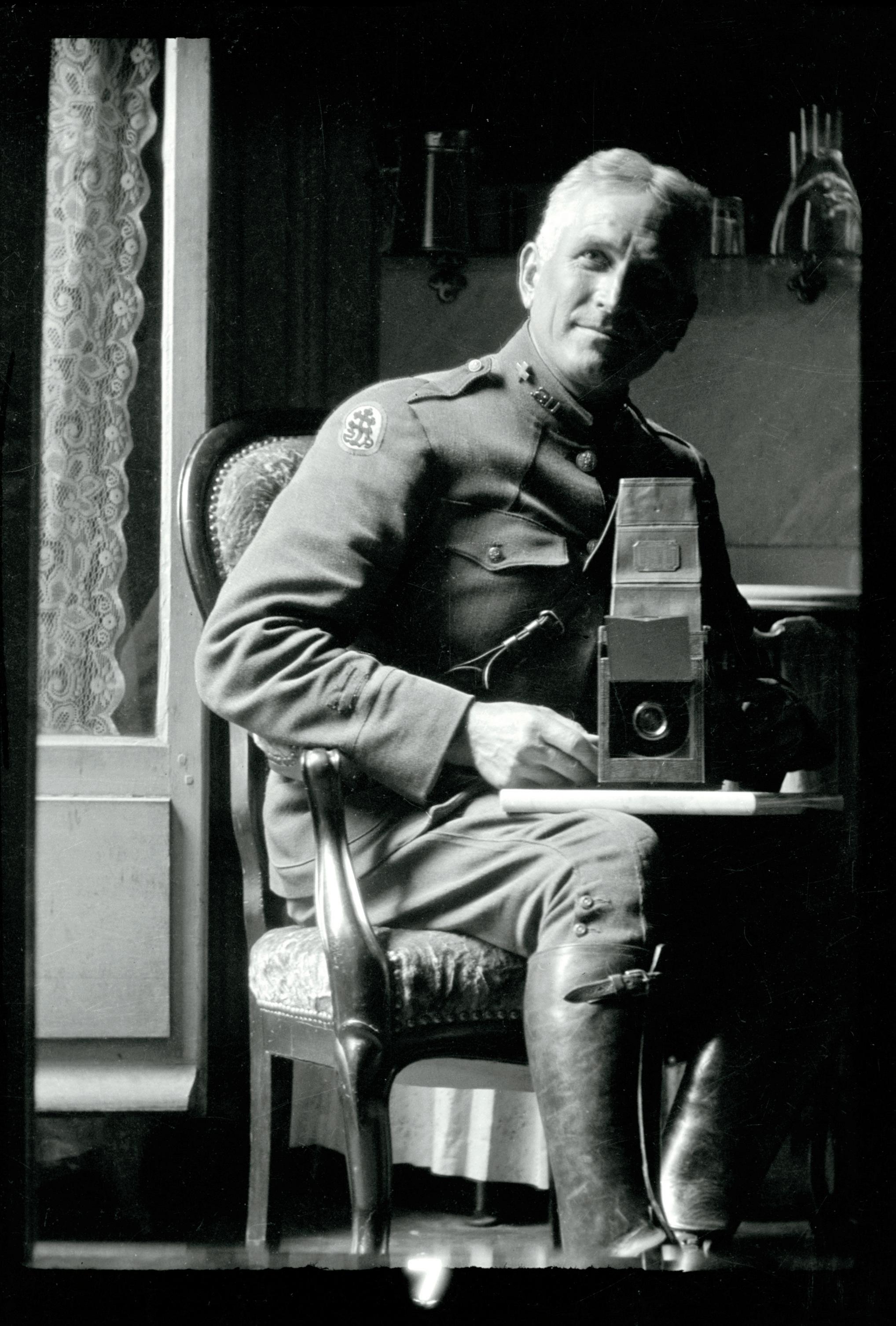
Opposite page: Self-portrait of Strout, wearing his Red Cross uniform, with his camera, an Auto Graflex Junior, 1919.
will do. 2 doz printed on greeting cards. Cannot sit for picture now—no suitable clothes.”
Bischof mentions a sad aspect of Strout’s life. He and his wife, a librarian, divorced in 1914. She subsequently kept him from his three children, so he only saw them on the sly. In a telegram he sent when he was applying to the Red Cross photo position in France in 1919, he asks, “Can you use a thorough, healthy, and vigorous 48-year-old portrait pictorial commercial and news expert and hardened to all weathers, used to construction and repair?” Then he writes, “No dependents.” This document sat in a Brunswick basement until the library staff helped uncover additional materials through their outreach.
In the end, notes archivist Sauer, Kristin Strout and her father, Ben, deserve the credit for activating the photography collection. She finds it extraordinary that the collection came to the library so long ago, was cared for all those years, and is only now seeing the light of day. It was, she states, “this long-term hope for the future that one day we’d be able to do something with it.”
Interviewed by Rob Caldwell on the popular 207 WCSH-TV show in November 2025, Kristin recounted how she and her father thought the photographs were “amazing” and should be made available to everyone. Toward the end of the segment, Caldwell says, “Until someone invents a time machine, photos are the best thing we have.” Strout’s photographs provide that time machine, bringing the past into focus through a well-aimed and nuanced lens.
Strout died the same year as another Maine photographer, the much-heralded Chansonetta Stanley Emmons (1858–1937), best known for her images of rural New England. With the efforts of the Bowdoin Library, will Strout attain a similar fame? Bischof calls the project “recovery work.” Regarding Strout’s photographs, she asserts, “We’ll get ’em out in the world.”
Carl Little has written books, essays, and articles on a number of photographers, including Barbara Goodbody, Jeffrey Becton, Nicholas Nixon, Rose Marasco, and David Etnier. In 2021, the Dorothea and Leo Rabkin Foundation presented him with a Lifetime Achievement Award for his art writing.
Across time and space, flowers communicate our deepest feelings, at times unknown to us.
BY MICHAEL COLBERT ’16 ILLUSTRATIONS BY ANNA GODEASSI
THE FIRST TIME somebody asked me what I wanted to be when I grew up, I said, “A florist.”
This is a story I often forget, reinterpreting my own history to occlude my early affinity for plant life. But, growing up in the suburbs of Massachusetts, I would go on daily walks with my mom, pointing at weeds along the road, and ask, “Can we pick this one?” I always felt proud of our bouquet of dandelions, displayed cheerfully on the kitchen counter.
Though I, for a handful of reasons, might omit my first professional dream from my personal history, people like me have been enchanted by the colors and contours of the world’s flora for centuries.
“Flowers, and plants more generally, have been used since the Paleolithic to decorate, to provide color and fragrance; and they’re early subjects of representations in art,” says James Higginbotham, associate professor of classics. Higginbotham studies ancient Greek and Roman colonies and traces humankind’s floral fascination back centuries.
“Going back to the Neolithic, and afterward, we see plants like the crocus or the rose frequently represented in art in the Aegean world.”
After life on the Greek island of Santorini was destroyed by a volcano in the Bronze Age, scholars were unable to translate the writings its people left behind. However, they can look to frescoes preserved on the walls of Santorini homes and make sense of pictures of women collecting crocuses in the field and laying them at the feet of a goddess. The island of Rhodes takes its name from the rose—rhodos in Greek— and the flower adorned the coins they used beginning in the fourth or fifth century BCE. Across the Ionian Sea in southern Italy, roses bloomed twice a year in Paestum, enchanting the Romans into cultivating the flower for use in perfumes, wines, and garlands, and their cultural cache then blossomed into yet another life in art. The roses still bloom twice annually in Paestum, and Higginbotham has a statue fragment of a female bronze arm holding a lotus blossom in her hand.
“Flowers were used on funerary monuments,” Higginbotham says. “They could decorate a home. They were part of everyday use, and they could be manufactured or manipulated into
perfumes and pigments that people would use to decorate clothes and their bodies.”
As crocuses and roses ascended in the cultural imagination of ancient civilizations, they attained a certain gravity, and within that a kind of divinity. As beacons of the ecosystem, they could augur the future.
“If ancient peoples like the Minoans or the Mycenaeans saw in a flower a manifestation of divinity, then when those did not grow at the right times, that would be a bad omen,” Higginbotham says.
Making concrete the connection between flowers and divinity is the story of Persephone, one of the most famous tales from Greek and Roman mythology. While picking flowers with companions on the hillside, Persephone was abducted by the god of the underworld, bringing desolation to the earth. Demeter, goddess of agriculture and the harvest, combs the earth searching for her daughter, finding that she’s fatefully eaten pomegranate seeds while in the underworld. Persephone must split the year between the worlds above and below, and the Greeks and Romans had their story of the seasons. “Just as the sun, hidden, before, by clouds of rain, wins through and leaves the clouds,” writes Ovid.
“To a degree, we still rely on those cycles,” Higginbotham says. “Flowers wither and die, then disappear. The appearance of a blossom is the expectation of something to come and the vivid and colorful bloom. There is something that is evocative in that particular cycle.”
The whole of life is contained in a flower’s blooming. In their emergence and decay, they remind us of the fragility of beauty and life, a dance that has seduced humanity into this artistic and cultural symbiosis.
“You look at wall decorations at houses of Pompeii, and flowers are everywhere,” Higginbotham says.
Empress Livia’s villa at Prima Porta outside of Rome has an entire room adorned with garden frescoes depicting flora at their peak bloom, seeking to capture and preserve each flower’s beauty at its best moment. As a source of dye, plants provided a delicate channel to beauty. “A plant pigment is often not as durable,” Higginbotham says. “It was something that you
would apply knowing it would fade. You would understand that you would have to renew it or retouch it at certain times.”
In Flora et Fauna: Nature in Ancient Mediterranean Art and Culture, an exhibit he curated for the Bowdoin College Museum of Art, Higginbotham invites visitors to bring deep attention to flowers as essential to each work of art.
“They’re ubiquitous,” he says. “Flowers and plants are ever-present in ancient art but almost completely overlooked, because they’re used as background. They are things to frame. They’re festoons and wreaths.”
Yet their abundance reveals that removing them from the composition would mean that something would irrevocably change. Flowers are fundamental to the essence of the whole.
A SENSE OF PEACE
Flowers can cause our protagonists to transcend, from Virginia Woolf’s Clarissa Dalloway to Super Mario. Or take the opening of Toni Morrison’s The Bluest Eye: “Quiet as it’s kept, there were no marigolds in the fall of 1941.” What feels like nature’s affront to humanity is explicated in the following sentences as an affront to nature, then as a phenomenon beyond our control: “We thought, at the time, that it was because Pecola was having her father’s baby that the marigolds did not grow. A little examination and much less melancholy would have proved to us that our seeds were not the only ones that did not sprout; nobody’s did.”
In Akira Kurosawa’s 1990 film, Dreams, a young boy follows the specter of a girl into his family’s former peach orchard. When he pursues her, the dolls of Hinamatsuri—a Japanese holiday to celebrate the health of young girls—come to life, scolding him for the disappearance of the trees. The dolls respect his tears at the culling of the orchard and resurrect the trees for him for but a moment, in a shower of petals.
Thirteen years later, flowers find a less favorable treatment in Sex and the City when Charlotte famously calls carnations “filler flowers.”
Regardless of which side you take in the carnation debate, one thing is clear: flowers are a potent vessel for projection and expression. Higginbotham’s Flora et Fauna explores how
The whole of life is contained in a flower’s blooming. In their emergence and decay, they remind us of the fragility of beauty and life.
central flowers were to the fabric of ancient life, and they still are, as anyone who attends a wedding or a funeral today is likely to see.
During her tenure on the style team at Martha Stewart Weddings, Erin Furey ’07 worked on gorgeous events that were featured in the magazine, meeting some of the best florists from around the world. As her team saw how powerfully flowers could transform a couple’s day, they began to think about ways they could share their expertise in alternate settings.
“We had this idea to find a place that feels meaningful in a different way, where we could apply the skills we used for weddings,” Furey says. “And flowers are one of the components that we bring to celebrations of life and memorials.”
Thus was born Going Out in Style, her funeral and memorial styling business. Furey and her collaborators, Colleen Banks, Naomi DeManana, and Cassidy Iwersen, launched their business around the idea that “one’s final celebration should be an expression of their individuality
and honor all that they held sacred and loved in life.” Going Out in Style, which was featured in Business Insider and Harper’s Bazaar, partners with clients to plan bespoke ceremonies complete with invitations, catering, party favors, and, of course, personally significant floral arrangements. Making funerals more personal responds to a gap that Furey and her partners identified in how these celebrations are typically planned.
“When I talk with people about this, every single person comes with their own tale of a memorial or a celebration of a person they loved that doesn’t reflect the person,” Furey says.
“‘This isn’t what they would have wanted. This is not them.’ And they wish that they could have done something different to honor and celebrate that person.
“We believe that we can help people to celebrate their families and loved ones in a way that’s more reflective of them,” she adds. “It doesn’t necessarily have to cost more money. It doesn’t have to be harder if you have someone there to
help you, asking questions about who they were and what they would have wanted.”
Though many people might find the idea of planning their final party, well, morbid, Furey finds the taboo softens when they begin talking about it.
“A lot of people say, ‘Oh no, I would never want to preplan my own funeral,’ and then they start talking about what their funeral should be like. It’s amazing.”
Conversations with individuals or their families about what they would like can ease the weight of what comes next. Furey recounts a meeting with a woman who had a terminal illness. They sat down at a restaurant and began discussing what she envisioned.
“I wrote down all the things she wanted, including her favorite flowers, what she loved, and what they meant to her because they grew in her grandma’s garden and she played with them as a kid, or they were at her wedding,” Furey says. “It was such a warm, beautiful conversation.
Of course, there were tears, but I think it gave her some peace to think and talk about it.”
When a friend’s mother passed away at a young age, Furey found that discussion about what her mother would have wanted similarly became a source of comfort.
“No one knows what to do when somebody dies,” she says. “Everyone says, ‘I don’t know how to respond. I don’t know what to do.’
Giving people a job or focus can be therapeutic and occupy their brains in a way that, I think, feels productive, rather than swirling or avoiding all of those things.”
When asked about her own affective associations with flowers, Furey recollects summer days in her grandmother’s backyard, hiding out in the cool dirt beneath a canopy of hydrangeas, or watching colonies of ants work by her peony bushes.
“Like food, flowers bring such a sensory and emotional element everywhere they are,” Furey says. “When you ask people about moments
in their lives or their family traditions, they so often discuss the smells and tactile experiences—the beautiful sunsets, the smell of a tomato growing in the garden, the flower crowns they used to make with their siblings as a kid. Food and flowers are so deeply associated with those memories. Those sensorial elements last in our memories.”
Like Higginbotham, Furey also finds that flowers’ encapsulation of life and death deepens our attraction to them.
“A flower changes and evolves and then dies, and it’s just such a poignant, symbolic thing to incorporate into these life moments,” she says. “One thing that I’ve learned from some of my floral mentors is that, in a beautiful arrangement, representing the entire life cycle of a specific bloom inevitably makes it more beautiful—from bud to just about to open to fully open, and one that might even be overly open and fully exposed—it gives so much more depth and life to an arrangement.”
AGAINST EFFICIENCY, TOWARD COMMUNITY
The floral industry today looks much different than it did two thousand years ago. In a global agricultural system, folks can now go to the grocery store in winter and buy sunflowers grown in the opposite hemisphere. Nevertheless, Furey sees a movement in the floral industry toward locally sourced and seasonal products. Just as people support local farms or join community supported agriculture (CSA) programs, more folks are starting to take stock of the flora available to them at different times of year.
About four miles down Harpswell Road from campus, Bowdoin couple Courtney Mongell ’01 and Ryan Ravenscroft ’99 founded Mare Brook Farm as a community-minded endeavor. The couple had followed the corporate grind in Boston and relocated to Brunswick in 2017 in pursuit of a different life. Growing up involved in his family’s farm in western Pennsylvania, Ravenscroft had long dreamed of working in sustainable and local agriculture.
While at Bowdoin, Brunswick truly felt like home for both Mongell and Ravenscroft, and they spent their time getting out to Land’s End and Pott’s Point. When they found the land on Harpswell Road, they started growing vegetables and flowers on a modest scale. While working at Mid Coast Hunger Prevention Program (MCHPP), Ravenscroft took a master gardener class through the University of Maine’s extension program.
At the onset of the COVID-19 pandemic, Ravenscroft saw an opportunity for MCHPP to purchase food directly from local farms and launched the Farm to Pantry program. Their support was twofold, sustaining farms through economic uncertainty and providing food to Mainers in need.
“Nobody knew what was going to happen to the farms that year,” Ravenscroft says. “At the food bank, we were able to raise funds to buy directly instead of depending on those farmers to donate.”
Meanwhile, at Mare Brook Farm, they started beta testing with different perennials and annuals. He and Mongell both saw another opportunity for community engagement.
Flowers can communicate tangible emotions or memories, and they can take the intangible and make it tangible.
“We bundled up bunches of flowers and started delivering to all of the police stations, fire stations, and hospitals,” Mongell says. “We would leave them outside with little messages, or our son would draw a picture.”
“We’re not lawyers, or doctors, or veterinarians,” she adds. “We couldn’t do anything that we felt was going to make a tangible impact, beyond trying to spread a little joy or comfort through flowers.”
This potential for connection motivated them to commit to their flower-growing enterprise. The expressive capacity of a daisy or a sunflower feels instinctual, universal. In Minnesota’s Twin Cities, Furey runs another venture, Bud Buds, which sources seasonal flowers and styles weddings. In their wreath-making workshops, Furey sees a real hunger for togetherness.
“People are craving connection, community, and making things with their hands,” she says. “The workshops are just a joy and a wonderful break from staring at Zoom screens all day.”
This appetite for community is central to Mare Brook’s story. On a gray March day, I meet with Mongell and Ravenscroft inside the farm store, a few weeks before the season begins. They sell specialty cut flowers, holiday products, and seedlings in a space with a Bowdoin touch—old mailboxes from Smith Union that they found at Portland Architectural Salvage decorate the wall behind their counter. Mare Brook is still closed for the season, but a couple walks in during our conversation, hoping to buy a gift for a friend.
“Two or three people have been stopping by a day for the last week and a half,” Ravenscroft says. “It’s great.”
Beyond crafting specialty arrangements for weddings and supplying local restaurants with vegetables and edible flowers, one of their largest programs is their CSA. Many people buy CSAs as gifts, and they select a certain number of bouquets for pickup throughout the year. Mare Brook came up with their own spin on the program model.
“Since we’ve started, we’ve had a buy-onegive-one option,” Mongell says. “If they buy a CSA through us, we donate companion bouquets to people of their choice. It’s always been first responders, veterinarians, teachers, nurses, and frontline health care. It was this idea that you get to enjoy flowers, let’s honor someone else by giving them some flowers too, and then let them know who they’re coming from and why, if they want to.”
“Flowers are transcendent,” she adds. “They give you a sense of time and place. They can communicate tangible emotions or memories, and they can take the intangible and make it tangible. Flowers have an ability to say things without you having to say much. If it’s a condolence flower, if it’s a joyful flower, for a lot of people, it breaks the ice and makes people comfortable because it’s natural, there’s texture, fragrance, color, and vibrancy.”
Both Ravenscroft and Mongell have their personal favorites, too.
“I really like daffodils,” Ravenscroft says. “They’re so bright at that point when the winter is ending. People see them, and they’re so hopeful. This winter was whatever it was, but the daffodils have come out.”
Mongell finds hope in her favorite as well.
“Peony tulips break through the gray. They break through the cold,” she says. “No matter what’s happening in February or March, seeing colors and knowing that everything came from a bulb that was shipped from Holland, planted by our family or team, grew in our house or tulip shed, and then was able to work its magic across thousands of miles—it’s really, really cool.”
That local magic is a source of profound inspiration for the team at Mare Brook. While a global floral industry can create the illusion of beauty and ease, Ravenscroft sees a new, solid foundation growing today built upon less conventionally rewarded principles.
“The world had built itself on increasing efficiency and reducing redundancy,” Ravenscroft says. “That takes all the neat stuff out. It takes the fun out of the world, and it’s not a great move when things go sideways.”
Mare Brook is one of the founding members of the Maine Flower Collective, which connects buyers and growers throughout the state and simplifies logistics and distribution for smaller farms. And working in tandem with other growers brings Mare Brook back to its core mission—to connect in a community with other people.
They tour me around two greenhouses. By the end of next week, about 35,000 tulips will bloom. Courtney and Ryan send me home with a half dozen tulips, their stalks bundled tightly in wet paper towels. I’m visiting Portland from New York, where I moved after living in Maine for years—both eagerly and with a deep sense of loss—finding a particular sadness in that I’d no longer see my four-year-old niece on a weekly basis. When I get back to my sister’s house, I rifle around in their kitchen cabinets, find a mason jar, and pour warm water into the glass. By the time they get home, and before I leave, the tulips start to yawn open in pink, yellow, peach, red, and white. I feel proud the way I did when I was a kid with my dandelions. These I didn’t pick, but they’re something I can leave behind.
Michael Colbert ’16 is a writer and editor based in Brooklyn, New York. He earned his MFA at UNC Wilmington.
Anna Godeassi is an Italian illustrator and artist. See more of her work at annagodeassi.it.
Somira Sao ’99 was born in a Khmer Rouge work camp during Pol Pot’s occupation of Cambodia and came to Maine as a three-year-old child with her family through a refugee resettlement program. She is now a mom of six who sails around the world, writing and photographing her travels as a professional photographer and freelance journalist. When they had their first child, she and her husband made a pact to keep traveling. Their first sailing adventure as a family was in 2011 when they left Portland, Maine, and sailed across the Atlantic to Cherbourg, France, with a toddler and a new baby. They have been sailing and living on the water ever since.
NAVIGATING LIFE
IIN THE PITCH-BLACK of a moonless night, I stood in the cockpit of our fifty-foot trimaran, Thunderbird. We were surfing fast, moving south at 10–12 knots off the coast of St. Vincent and the Grenadines. Leaning forward, I scanned the horizon for lights, marine traffic, and signs of an approaching squall, simultaneously reading the movement and sounds of the boat. Wind speeds averaged 24 knots, sometimes gusting to 30.
My watchmate was my fifteen-year-old son, Raivo—second-oldest of our six children, fourteen years of life at sea under his belt. He sat in the shelter of the cockpit bubble, observing wind instruments, boat speed, sail shapes, and autopilot performance. Few words passed between us, but there was comfort in each other’s presence—a quiet, steady trust that had been building since his early childhood. Night watches were one of the few times, in the floating home we eight shared, where quiet could be found amid the darkness and the white noise of the sea.
Extraordinary happiness exists when we are in motion like this. Different from the happiness of arrival—of having gotten somewhere—it is the joy of being underway, of doing the work, of being fully inside the experience. I find it in small, recurring moments: changing light in the first minutes before and after sunrise, encountering marine wildlife, the feeling of working as a team on a sail change, children and adults finding their places, doing their jobs, the boat moving better for it. Watching a squall build on the horizon, seeing the wind before we feel it and plotting a route through it together. These are not transcendent. They are just life, lived at a frequency that makes you feel it.
Time moves differently when every week brings a new anchorage, a new island, a new problem to solve, the mind has to keep building itself.
Neuroscientist David Eagleman, whose research on time perception has shown that novelty is the primary yardstick by which the brain measures the sense of time, puts it simply: “If you want to slow down time, seek novelty.” Novel experiences force the hippocampus and prefrontal cortex to work harder, encoding memories with more density and detail—which is why a week in an unfamiliar place can feel as long as a month of routine.
Our children are not necessarily smarter for having lived this way. But they are, I think, wide awake to their lives, this world full of firsts. This wakefulness is its own kind of intelligence, and time moves differently.
Even after all these years and ocean miles, it still blows my mind to move through the world like this—as a mother, wife, photographer, and sailor, choosing the platform of sailing to teach our children, experience the world, and transform our reality.
What began as a simple promise to my husband when we were expecting our first child—to keep traveling even as we became parents—had turned into something far wilder and more committed than either of us had anticipated.
The ocean gave us a framework for everything else. You cannot control nature. You cannot schedule it, negotiate with it, or bend it to your plans. A squall arrives at three in the morning if it wants to, forcing you to reef the sails. What you do control—and this has become the quiet philosophy of our whole family life—is when you go, where you go, and how you move through what you are given. We read the forecast, we wait for the window, we study the sky, we watch the swell, and we go when the sea allows.
This principle bleeds off the water for us into every corner of our parenting.
People ask about school. It’s always the first question. The answer doesn’t map cleanly onto a traditional model. What I can say is this: James and I have decided that we will each teach the things we know best, and we have chosen carefully who teaches the rest.
For me, it has always been teaching my children through the camera. Photography is not specifically the skill I’m passing on—it is a way of seeing that I am sharing. To observe nature, light, texture, pattern, shape, color; to notice the quality of light in the landscape, the geometry of a reef, the expression that crosses a stranger’s face. Making a photograph is the act of letting something beautiful enter some deeper level of consciousness—of saying, “I was here, I saw this, it mattered.” What doesn’t matter to me is what happens to the image after. Hard drives crash. Boxes of prints get lost in moves. What matters is the act of deep attention, the feeling of genuine appreciation for that tiny moment.
A squall approaches off the coast of Rio de Janeiro, Brazil, on New Year’s Eve in 2020.
Opening spread: Sailing on Anasazi Girl between Portland, Maine, and Cherbourg, France, in 2011. The trip was their first as a family.
Above:
WHAT YOU DO CONTROL—AND THIS HAS BECOME THE QUIET PHILOSOPHY OF OUR WHOLE FAMILY LIFE—IS WHEN YOU GO, WHERE YOU GO, AND HOW YOU MOVE THROUGH WHAT YOU ARE GIVEN.
Below:
Tormentina, four, and Raivo, one, on day twenty-nine of a 2012 thirty-day nonstop passage between Simons Town, South Africa, and Fremantle, Western Australia.
Top, left:
Pearl, twelve, explores tide pools along the coast of La Paloma, Uruguay, in 2024. The algae is harvested and used to make seaweed fritters called buñuelos de algas
Top, right:
Sunset light and reflections in the port of La Paloma, Rocha, Uruguay.
That is what I try to give my children: a reason to stop and look, to observe things in nature and humanity in a deeper way.
James’s gift to them is different. He has built, over decades, a platform for understanding the world firsthand. A lifetime adventurer—guiding clients up 6,000-meter peaks, a pioneer of Ouray ice climbing, forerunner of adaptive sports programs in Norway and Breckenridge, and more— he brought to sailing the same methodical, riskaware intelligence he spent years developing in the extreme mountain environment.
He came from an era of climbing and skiing where people made summits and ascents and did not talk about them. He had been buried in an avalanche, taken a ground fall off a rock face, and lost many friends in the mountains. When he felt he had escaped the odds one too many times, he turned to sailing.
He taught our family how to navigate the sea, yes, but also roads and rivers, trains and buses, borders and bureaucracies.
We have been able to choose our children’s teachers deliberately: athletes, climbers, sailors, artists, filmmakers, poets, scientists, engineers, designers, boat builders. Professionals. Passion followers. People at the top of their game who have not made peace with mediocrity. We want our children to feel what it is like to be in the presence of someone completely alive in their work.
One resource we have that no generation of traveling families before us did is the internet— it has transformed what an education outside of school can look like. If one of the boys becomes obsessed with celestial navigation, he can go as deep as he wants, as fast as he wants. If a daughter wants to understand the biology of the reefs we anchor over, the resources are there. The internet gives our children the ability to follow their curiosity wherever it leads—and that, in our experience, produces a different kind of learner.
To raise children in this way does not map onto any chart I had for my life. I’ve navigated six pregnancies and prenatal care—two children born in the States and four in foreign countries. Tormentina is seventeen; Raivo is fifteen; Pearl is thirteen; Zan is ten; Jade is seven; and our
youngest, Atlas, is five—three girls and three boys, their genders alternating with each arrival.
As a family we have made two trips around the world in the last seventeen years: first traveling by bicycle, van, canoe, horseback, trains, buses, ferries, and planes; the second by sailboat on a monohull. For the last seven years we’ve been on a trimaran, ending up in South America through the pandemic years before arriving in the Caribbean in May 2025. The children have grown into strong, natural athletes—rock climbers, skaters, free divers, and surfers, each drawn to the search for their own way of moving through the physical world. We are gravitating next toward Panama and the Pacific, though as always, we stay focused on one voyage at a time.
None of this has been without interruption. A few years ago, James was diagnosed with cancer. The program stopped. We paused everything—the passages, the planning, the forward motion—and turned our full attention to his treatment and recovery. It was a reminder, sharp and clarifying, that managing risk is not only about weather windows and sea state. It is about knowing when to stay put, when the bravest thing you can do is drop the anchor and wait. He recovered. We kept going. But the experience deepened something in all of us—a more
conscious gratitude for the ordinary miracle of a healthy body, and a more honest reckoning with what it costs to live at this pace. The physical and mental well-being of every member of the family is the foundation.
My family escaped Cambodia under Pol Pot. In 1975, my parents were forced from their home in Phnom Penh with almost nothing—soldiers told them to pack a few belongings and leave. They were marched out of the city and never returned. What followed in the forced labor camps of the Khmer Rouge stripped away everything else: their identities, professions, freedom. They learned that nothing is permanent, that everything familiar can vanish in an afternoon. I was born in 1977, in a commune called Damrei Slab in the Kampong Svay District—in a hut with a dirt floor inside the camp. There were no doctors, no anesthesia. Miraculously, my mother and I both survived. My parents credit my arrival as a reason they managed to stay alive. My newborn presence softened the hearts of the villagers who ran the camp; they secretly smuggled extra food to my parents, and my father climbed sugar palms at night to tap them for juice to feed me when my mother was too malnourished to produce breast milk. My life was a silver lining during that period of
suffering—a motivating force to keep living and moving forward.
They endured a total of four years under this communist regime before escaping altogether. Once across the border, we lived in refugee camps in Thailand and the Philippines before being relocated to Maine when I was three years old. We landed at the Portland Jetport in November 1980. They rebuilt from nothing: learned English, found jobs, bought their first bicycles, car, and eventually a house—slowly building a life. They raised us in a quiet rural town, sent money home each year to family in Cambodia, and in 1991, the three of us became US citizens.
I carry my parents’ capacity for release—not as a wound, but as a tool. What they passed on to me was not the trauma of their experience, but its practical core: you can begin again. You can build something from very little, if you have the knowledge, strength, and willingness to try. When I encounter tougher moments of life and motherhood, I find both refuge and humility in knowing that nothing I have faced comes close to what my parents carried.
That is what James and I have tried to pass on to our children. We have given them a minimalist life—not as deprivation but design. Carry
only what you need. Know how everything works. Repair what is broken before replacing it. Practice beginning again. Boredom and scarcity are the mothers of creativity—the less you have handed to you, the more inventive you become. This is as true on a boat as it is in life.
We are not trying to prepare them for hardship. We are trying to prepare them for change—change is the only certainty. James and I are not retired. We have worked throughout our children’s lives to keep this life afloat. But we have worked with them as witnesses to the up-and-down reality of being self-employed, the pressure of keeping a family fed and healthy, of keeping a boat seaworthy. Life moves forward. How do you move with it? How do you leave a positive wake?
James and I have never tried to escape the world. We have only tried to get closer to it—to nature and to genuine human connection— and the love for our children pulls us forward more powerfully than any wind.
Photography had been a quiet love of mine from childhood. My parents buried a few precious photographs in Cambodia, and they were eventually sent to us in Maine. Those salvaged black-and-white images were sacred objects. I understood early that the camera gave me a way
of holding a moment still. By the time I was at Bowdoin, I had found in photography something that felt like a calling—the alchemy of light and shadow, a moment made permanent.
When I met my husband, James Burwick, in Portland in 2005, he was refitting an Open 40 race boat at the Maine Yacht Center, preparing to sail it solo around the world. He was unlike anyone I had known: fearless, methodical, high-energy, with an ability to solve complex problems and connect genuinely with anyone he met. His work of art was the project itself. I visited his boat, wanting to make his portrait before he left. What began as a friendship became an unexpected romance. There was a significant age gap—I was twenty-eight, and he was fifty-one—but he pointed out to me that Alfred Stieglitz and Georgia O’Keeffe had twenty-three years between them too. “Let’s have an epic love affair like they did,” he said.
James set off that December on a winter passage to Bermuda and arrived with a broken mast. I flew down to meet him—a glimpse behind the curtain of what this kind of life required. We said goodbye with no expectations. Our lives continued on separate tracks. He repaired and sailed nonstop to South Africa as I was preparing for something of my own: a
long-overdue return to Cambodia, the country where my own story had begun.
I landed in Phnom Penh in December 2006, more than twenty-three years after I had escaped Cambodia with my parents. The month I spent there was transformative. A strange emptiness I had carried unconsciously all my life began slowly to fill: with understanding, with extended family I had never known, and with history and culture I had been separated from.
When I landed back in Maine in January 2007, something had shifted. The familiar rhythms of Portland felt different. I quit my job, gave away most of my belongings. When James called from his satellite phone with news of another broken mast off Cape Leeuwin, I swallowed my fear. I bought a ticket for Perth with a plan to go to Australia then onward to Cambodia to make a new life.
Below, right: The youngest crewmember, Atlas, at four— on Christmas Day 2024—inside one of the ama compartments that are used for storage but double as in-port berths and playgrounds.
Top, left: Atlas, four, and Jade, six, take in the beauty of a torch ginger (Etlingera elatior) growing near the family’s anchorage in Saco do Mamanguá, Paraty, Brazil, in March 2025.
Top, right: Clouds that appeared in Ilhabela, Sao Paulo, Brazil, just after a fast passage along the South Atlantic coast from Uruguay.
Below, left: James and five-month-old Tormentina in 2008, on Paso dos Lagos, a famous border crossing between Chile and Argentina that can be made only on foot, by bicycle, or on horseback.
WHAT MATTERS IS THE ACT OF DEEP ATTENTION, THE FEELING OF GENUINE APPRECIATION FOR THAT TINY MOMENT.
Once James reached Fremantle, I was there to meet him. He sailed on to New Zealand; I flew to Cambodia. I received the contract I had been hoping for: documentary work for the Australian Red Cross, photographing HIV/AIDS programs, water and sanitation projects, and their landmine survivors’ program.
Meeting amputees and telling their stories was the most meaningful and demanding photographic work I had done. I found out my photos would be exhibited in a show in Phnom Penh then travel to twelve cities across Australia to raise mine awareness and help fund continued support for survivors. I felt I was finally doing something with meaning.
It was during these months—moving back and forth between Cambodia and meeting James in port between his solo passages—that something between us crystallized. Our paths had moved organically together, in love, with mutual support for our goals in parallel. We decided to try to have a child.
When I got pregnant, James looked panicked. Then I panicked. He made me promise we wouldn’t stop traveling just because we were about to become parents. Yes, I promised, we would not stop.
James completed his solo circumnavigation, rounding all three great Capes and finishing in Bermuda. I was there in ports and at the finish line to meet him. We returned to the States in my last month of pregnancy, seeing my family and friends and heading out on a road trip through places that had shaped James—the mountain ranges of Colorado, Montana, and Wyoming.
We stopped in the Tetons, where James had spent ten years as a mountain guide. We found a rental in Jackson Hole less than two weeks before my due date. Our daughter Tormentina was born there in July of 2008—healthy, loud, and perfect. The global financial crisis of that year arrived at almost that moment. We were left with a choice: stop moving and start worrying or do what we had promised.
Within weeks, we had assembled mountain bikes, panniers, an expedition tent, and singletrack cargo trailers (one customized for the baby), and we were bound for Chile, planning to cycle high-quality dirt roads along the Carretera Austral.
Then an email arrived from the Australian Red Cross: the exhibition of my work had done well, and they wanted me to return to Cambodia to revisit the landmine survivor beneficiaries and meet new ones. I wanted badly to bring Tormentina, but some of the work was in active mine clearance areas. It wasn’t safe.
For the first time, I felt the tension between being a mother and a working photographer— as if one identity was beginning to crowd out the other just as my work had started to feel truly meaningful. This is a real weight that many women know.
The first time I photographed the landmine survivors, I had been too timid to ask my subjects to pose—I was intimidated by the intimacy the work demanded. Now I felt ready to go deeper, to make the images I hadn’t been brave enough to make before. Losing that chance stung.
James helped shift that. He introduced me to Jane Sievert, head of the photo department at the outdoor clothing company Patagonia. When we told her about our plan to cycle South America with Tormentina, she lit up. That conversation quietly reset what I understood my life as an adventure mother could be.
“I’m going off watch,” said Raivo. Sensing I was somewhere else, Raivo said sternly, “Mom, are you awake? Don’t fall asleep.” He went below to wake my oldest daughter—my wild seventeen-year-old who had spent her first year of life living in an expedition tent.
Tormentina appeared on the deck, sleepyeyed, ready to take her place beside me. Even half-asleep, she had that magic glint in her eyes—the light I had spent my life as a photographer in search of, the fire I most wanted to protect and nurture in all my children.
I smiled at my oldest—grateful for her, for James, for my parents, for all of it. She was just on watch with me, as she had been so many times. She sat there—sleepy, ready for anything, inspiring, beautiful, amazing, no idea the catalyst she had been in my life as a mother. My oldest child and I sailed on together above the sea, moving fast through the night.
Somira Sao ’99 (Instagram: @somirasao) is a writer, professional photographer, sailor, and mother of six. She majored in biology and visual arts at Bowdoin.
Above:
Tormentina, twelve, takes in the sky after some rain in December 2020 at Ilha Grande Bay, Rio de Janeiro, Brazil.
Roger Howell Jr. Professor of History Emeritus and specialist in Latin American history Allen Wells has spent a couple of years of his retirement digging into a new area for him—Bowdoin’s history. His new book, From Piety to Pluralism: A History of Bowdoin College, is forthcoming.
Learning from History
We’re talking about Bowdoin history, but let’s start with yours.
Bowdoin is the second and last job I ever had. I taught for nine years at Appalachian State University. They had about 12,000 students, with a very heavy teaching load, four courses every semester. With a teaching load like that, it’s hard to get research done, so after nine years, I began applying for jobs. The Bowdoin job came open, and it was like a miracle. I had never set foot on a small, liberal arts college campus until I came to Bowdoin for the job interview. I got the job, and I was here thirty-one years. I retired in 2019.
What surprised you most as you worked on the College’s history?
We think of these liberal arts colleges as liberal, and I had always thought that Bowdoin was a progressive institution in its history and its DNA. I couldn’t have been more wrong. From the beginning, with McKeen’s vision making no room for the region’s first inhabitants, and then for the lion’s share of its history, Bowdoin was a conservative institution, and the faculty were very conservative in their outlook. They were suspicious about newfangled educational initiatives, and they held fast to a traditional view of what courses and majors should be offered. It was very surprising to me that it really wasn’t until the 1960s and 1970s that Bowdoin was dragged into the modern world, and even then, it struggled to do that.
What pulled you deeper into the archives?
When you’re doing research, you stumble upon one thing, and then you go down a rabbit hole. All of a sudden, I was finding stuff about really interesting people who either attended Bowdoin or were involved with it in some way, even tangentially. I was learning new stuff every day, so it was fascinating and fun.
Where did that lead?
It led all over. For example, I had always known that [John Brown] Russwurm was the first African American student to come here, but I didn’t know much about him. Once I started reading, I realized he was a transnational figure—born in the Caribbean, educated in North America, and then spending the bulk of his life in West Africa. The more I learned, the more I realized how complicated people’s thinking could be in that era, including on abolition and colonization.
Following those threads led me to discover there were other Black students on campus during the nineteenth century, connected to the Medical School of Maine, which was affiliated with Bowdoin from 1820 to 1921. What they experienced on campus was not always easy. Their after-Bowdoin lives were absolutely fascinating. Two became surgeons during the Civil War. Out of 186,000 Black enlistees, there were eight surgeons who treated Black troops, and two were Bowdoin graduates from the medical school.
There was also the first student of Latin American ancestry, a medical student, Salustiano Fanduiz. Fanduiz practiced medicine here in Brunswick for seven years after he graduated, and then went back to his native Dominican Republic, where he became one of the leading practitioners of public health.
What do you mean when you describe this work as “historical recovery.”
Historical recovery is recovering histories about something that hasn’t been told before. That is what this book is. It talks about people, institutions, aspects of the College’s history that have been either overlooked or neglected in past histories. Most Bowdoin histories have been top-down—about the institution and its
leadership. Recovery works from the bottom up. It tracks aspects that are buried in the archive that need to be excavated. It brings to life parts of the College that may have been overlooked, not necessarily intentionally.
Why is that important?
Because it helps us understand our present. Not because the present is a replica of the past, but it tells us where we were and how we got there. Therefore, we should be able to improve on where we are. I think Bowdoin has been a work in progress from the get-go. We’ve had moments where we’ve gone backward, or we have regrets, and we’ve had to learn from those experiences. Studying the past offers us a window on that. If I didn’t believe that, I wouldn’t be a historian. I believe it in my bones.
Some of these examinations of the past can feel like a critique. This doesn’t.
I think it is uplifting. Of course, we have to recognize what was done and where it came from, and there are parts of this institution’s past that aren’t the most edifying. But there are also aspects of our past which are surprisingly uplifting and give you faith in the institution. I was terrified when I started since it was not my specialty, but I’m so glad I worked on this project.
What are you going to do next?
I think I’m going to retire.
Allen Wells came to Bowdoin in 1988. A New Yorker and diehard Mets fan, he earned his MA and PhD at the State University of New York at Stony Brook and his BA from SUNY Binghamton. His new book can be found online at bowdoin.edu/bookstore.
For more from this interview, visit bowdoin.edu/magazine.
Whispering Pines
Doing the World’s Work
The life of Bill Margolin ’67 is a reminder that still waters run deep.
SUMMER IS that all-too-brief interval between Reunion and the August arrival of the Class of 2030 for Bowdoin’s 225th academic year. Summer in Maine conjures up images—of vacations, cookouts, blueberries, hiking, beaches, boating, and summer camps. For Bill Margolin of the Class of 1967, summers meant the West End House Camp in Parsonsfield, Maine.
By way of background, Boston’s West End was a workingclass community that reflected infusions of racial, ethnic, and religious diversity from several immigrations. In 1906, a group of boys sought the assistance of philanthropist James Storrow in establishing a club to promote their welfare. Storrow paid for the construction of the West End House Club (WEHC); in 1908, he purchased land on Long Pond in Parsonsfield for use by the club in the summer months. Following World War II, federal money was available for urban renewal projects, and forty-six acres of the West End in Boston were cleared for development between 1958 and 1960, displacing 2,700 families. After searching for a new location for the WEHC, the club moved to the
Allston-Brighton section of Boston, which had a diverse and underserved population that mirrored that of the West End. The club was nonsectarian, and its membership was, and is, continuously enriched by people arriving in the area from around the world.
Bill Margolin was a thirteen-year-old camper at the West End House Camp in 1958, and he returned each summer, first as a camper and then as a staff member. Bill entered Bowdoin with a love of languages, and he petitioned the Recording Committee to allow him to major in Russian. Bill left Bowdoin in his junior year and enlisted in the Army for four years. He was stationed in Germany, where he monitored communications, giving him a front-row seat to the Warsaw Pact invasion of Czechoslovakia in 1968.
Bill returned to Bowdoin in 1970 and completed his degree requirements in December of 1971. Three days later, he was working for the WEHC, an association that continued for more than half a century. In 1973, he became executive director. Under his leadership, WEHC became a boys and girls club, and he paved the way for the establishment of the West End House Girls Camp on Long Pond, which opened in 2011.
I visited the Camp several times with Vin DiCara ’72 (who knew Bill from their Boston Latin School days) and Bill’s 1967 classmate Cal Mackenzie. It was clear that Bill and his wife, Bryna Leeder, were beloved by campers and staff alike. Bill had been diagnosed with a form of Parkinson’s disease in about 2007, and he relied on Bryna’s help, a wheelchair, and a golf cart to keep tabs on what was going on—and, between the dining hall, gymnasium, playing fields, and waterfront, there was a lot going on. At any given moment, Bill might be sitting across a chessboard from a homesick camper, meeting with staff, or planning “Old Timers Week” (an end-of-season opportunity for “alumni” to stay at the camp).
Bill loved history, and in his spare time he collected ephemera, such as postcards, trading cards, and political pins. For fifty years, he edited and published Collectors’ Classified, a magazine for buyers and sellers of collectibles. Bill could see history—writ large or small—in bits of ephemera; in a parallel sense, he could recognize the unique gifts and potential in each individual he met.
Bill died in July of 2025, after a life devoted to uplifting those around him. His love for his work, his generosity of spirit, and his modesty placed him among the foremost of those who do the world’s work.
John R. Cross ’76 is secretary of development and college relations.
CATHARTIC ART
I don’t jaywalk. I’m not sure if this is because of time spent in Germany, where it is seemingly strictly verboten, or because of a desire to not draw attention to myself. Probably both.
I come from a lineage of humans who have been silenced: for being female, for having darker skin, for being a version of “other.” I give voice to those stories through songs, poetry, journalism, and painting.
I started writing for local magazines and papers as a teen while living in Las Vegas, and I found joy in the local music scene. When I started to play shows myself—either solo or with a band—success was realized when my performance resulted in tears from the crowd. My performance is an act of catharsis and an offering of catharsis to others: embracing feelings and vulnerability in a public space. Our time on this plane is fleeting, and I use that time wisely: to create, love, improve.
I took a few years off between my freshman and sophomore years. When I returned, unsure how my age would translate, the community embraced me in beautiful ways. My first tattoo was a memento mori, inspired by cemeteries around campus—undisturbed quiet for a Professor Collings reading assignment.
My studies in German allowed me to move to Berlin and work for a publishing house, not only as a writer, but also as a translator of children’s books. My stint with WBOR made transitioning into a position at NPR Berlin a bit easier. From my campus postal carrier to the music and German departments to student activities, they all helped me transition—a version of comfortably.
My time at Bowdoin made me realize that community might look different from what you expect.
For more from this interview, visit bowdoin.edu/magazine.
A writer, singer, musician, model, and painter, Lauren Napier ’14 performs as Punk Rock Doll.
LAUREN NAPIER ’14
PHOTO: JR PHOTOGRAPHY
ALUMNI NEWS AND UPDATES
Connect
1957 Logan Hardie:
“The only news I have is that I am still alive and able to sit up and take nourishment. Other than that, it is good to be alive. Sherrie and I are keeping the west alive with good Bowdoin recommendations. Most of our friends don’t know where Maine is, let alone Bowdoin College. Hope all is well with the rest of my remaining classmates. Make it a great year!”
1963
Fred Knudsen:
“Finding no entry for the Class of 1963 in the Connect section of the Winter 2026 edition, I write to confirm that some of us are still around. In our day, the enrollment was just 800 or so men, and most of us belonged to and dined in one of the twelve fraternities. Mine was Delta Kappa Epsilon, whose house is now the admissions office. The new ‘senior center’ was being built almost in our backyard. Chapel attendance was compulsory, and we sang ‘Rise, Sons of Bowdoin.’ Smoking was permitted in the classrooms, and dissection tables last used by the Maine Medical School were still to be found tucked away on the fourth floor of Adams Hall. The curriculum included Army ROTC, which I elected to take, and was thus qualified for an interesting year of postgraduate study of Vietnamese rice paddies in 1967. I last visited the campus in 2013 for our 50th Reunion, and it was great fun reuniting with guys I’d literally not seen for half a century. Of course, much had changed since we left. New buildings had been erected, and others had been remodeled or repurposed. Memorial Hall had gained a modern theater (thanks to our classmate Barry Wish). Hubbard Hall was no longer the library, and the room in Maine Hall I’d occupied
as a sophomore had been converted to a ladies’ bathroom, reflecting perhaps the biggest change of all. Yet, for all that, it was still the Bowdoin I’d known those many years ago, complete with ivy and all its memories, even if the words to the school song had been changed (hopefully, Phi Chi’s still in her ancient glory). My sincere best wishes to all my classmates.”
1971 Reunion
Richard Schuberth: “Good news. I am about to begin a program for obtaining my license as a clinical psychologist.”
1973
From rediscoveringfanon.com. George Khaldun has co-executive produced the film Rediscovering Fanon, a documentary that “explores the enduring truths of race articulated by Frantz Fanon (1925–1961)—the revolutionary psychiatrist and anti-colonial thinker born in Martinique, educated in France, and practicing psychiatry in Algeria—whose writings inspired The Battle of Algiers and shaped the Black Panther Party. The film spotlights the peril of Black lives under systemic racism in the United States and across the globe. Featuring interviews with Fanon’s daughter, Mireille Fanon-Mendès-France; his son, Olivier Fanon; and leading scholars such as Professor Lewis R. Gordon and Dr. Alice Cherki, the film revisits tragedies from Trayvon Martin to George Floyd and the January 6 Capitol attack. It reflects on Fanon’s life while underscoring his fierce opposition to racism, his call for liberation, and his vision of a new humanity. Blending interviews, archival footage, dramatizations, and music by Tupac Shakur and Nina Simone—along with an original score
Remember
The following is a list of deaths reported to us since the previous issue. Full obituaries appear online at: obituaries.bowdoin.edu
Richard E. Herrick Jr. ’50
February 21, 2026
Robert W. Osgood III ’50
February 1, 2026
W. David Verrill ’50
February 18, 2026
Claude B. Bonang ’52
February 21, 2026
Benjamin P. Coe ’52
March 21, 2026
James W. Beattie ’53
January 13, 2026
Loring G. Pratt ’55
January 12, 2026
Richard W. Taylor ’55
February 23, 2026
William G. Thalheimer ’55
November 7, 2025
Lawrence C. Johnston ’56
November 17, 2025
Henrik P. Porter ’56
March 12, 2026
Barrett L. Gilchrist ’57
December 20, 2025
Paul I. Kingsbury Jr. ’57
December 27, 2025
Stephen G. Johnson ’58
January 20, 2026
Guy M. Davis ’59
December 22, 2025
Michael Karavetsos ’59
December 18, 2025
David A. Kranes ’59
December 16, 2025
Bruce D. Nelson ’59
February 12, 2026
Sheldon F. Goldthwait Jr. ’60
January 31, 2026
William F. Reid Jr. ’60
May 12, 2025
Robert T. Spencer ’60
January 30, 2026
David M. Smith ’61
December 31, 2025
Newton S. Spurr ’61
March 1, 2026
David B. Titus ’61
January 23, 2026
Franklin R. Ciaccio ’63
February 14, 2026
Asa H. Jewell III ’63
February 22, 2026
William J. Fahrenbach ’65
March 14, 2026
Charles I. Wallace Jr. ’65
December 17, 2025
Robert B. Pirie ’66
March 11, 2026
Leon A. Dickson Jr. ’67
March 6, 2026
W. Frank Morgan Jr. ’67
February 15, 2026
John H. LaChance ’68
February 21, 2026
Charles W. Roberson ’68
February 16, 2026
Thomas W. Roulston ’68
December 24, 2025
Dominic A. Femino Jr. ’69
March 26, 2026
Thomas E. Harvey ’70
February 27, 2026
Richard G. Kimball ’72
February 27, 2026
Thomas A. Wright ’74
December 16, 2025
R. Victor Fields ’75 December 1, 2025
Alan L. George ’75 March 21, 2026
Robert W. Lawson ’75 December 15, 2025
Edward S. Allen ’76 December 22, 2025
David B. Stockwood ’76 January 20, 2026
Susan S. McLean ’79
January 2, 2026
Robert K. Winans ’79
January 31, 2026
Robert W. Hoedemaker Jr. ’80
February 25, 2026
Lee B. Silverman ’86
December 27, 2025
Russell C. Crandall ’94
February 20, 2026
Daniel A. Pearson ’94
January 21, 2026
Charlton W. Wilbur ’95
January 14, 2026
Erik A. Sprague ’02
January 4, 2026
HONORANDS
Frederick Wiseman H’04
February 16, 2026
GRADUATE
Samuel M. Blackham G’64
January 22, 2026
FACULTY/STAFF
A. Lynn Bolles
February 8, 2026
Otto Emersleben
December 29, 2025
Carol Schneidewind
January 12, 2026
Bowdoin obituaries appear on a dedicated online site, rather than printed in these pages. Updated regularly, the improved obituary format allows additional features that we can’t offer in print, specifically the ability for classmates, families, and friends to post photos and remembrances.
Connect
Berson ’75, director of college counseling at the
Larry Lippmann, Barry Wish, and Alan Schiller—three 1963 classmates—got together on the east coast of Florida to enjoy their enduring Bowdoin friendship.
Bob Bass ’79, Peter Roland ’78, Peter Moore ’77, and Muzzy Barton ’75 took in the FIS Nordic World Cup races at the Mt. Van Hoevenberg complex in Lake Placid, New York, in March. Hank Lange ’75 and Greg Johnson ’77 were also at the event but missed the photo op. Bob said, “We watched three days of Olympic-level skiing—it was awesome!”
Andy Holman ’81 and Larry Bock ’81 at the 1981 Bowdoin Academy Awards when their production, Dustbunny, a short film they worked on together, won in the category of best sound.
by jazz pianist Lafayette Harris—this independent social justice documentary revives Fanon’s revolutionary humanism for a new generation.”
1975
Gail Berson: “I hosted a deans’ panel at the lycée [Lycée Francais de New York] for our Y10 and Y11 families. I do it annually, and this year I was delighted to welcome Logan Powell ’96, dean of admissions at Brown.”
From a Wesleyan University online news story, March 24, 2026. Karen Freedman will receive an honorary degree from Wesleyan University during their 194th commencement ceremony on May 24, 2026. Freedman is the founder and president of Lawyers For Children. Since graduating from law school, Freedman has dedicated her legal career to serving children and young adults. Lawyers For Children opened its doors forty years ago, and since that time has represented over 100,000 children and young adults. Freedman has created several projects at the organization to serve particularly vulnerable young people in the foster care system. These include initiatives on behalf of LGBTQ+ youth, young people who have been sexually trafficked, children living in homes where domestic violence is present, youth aging out of foster care, young people requiring specialized educational advocacy, youth charged in delinquency petitions, and unaccompanied minors seeking asylum and safety in the US. Freedman was previously a staff attorney with the juvenile rights division of the Legal Aid Society and a law clerk in the US Court of Appeals for the Second Circuit. She earned her JD from New York University School of Law, where she was a Root-Tilden-Kern Scholar and
a Hays Civil Liberties Fellow. In 2022, the National Association of Counsel for Children honored Lawyers For Children as the outstanding children’s law office in the United States.
1981
Reunion
Andrew Holman: “In 1981, my roommate Larry Bock and I created the short film Dustbunny, and in 2014 Larry helped me get my company, Inmedix, started. Inmedix is a medical diagnostics company pioneering the field of stress biology through its FDA–cleared CloudHRV platform. Sadly, Larry passed in 2016, but not before setting me on the entrepreneurial path to FDA clearance of CloudHRV in 2025 and a commercial launch this summer of 2026. Larry was a famous biotech entrepreneur (founding Illumina, ARIAD, Pharmacopeia, NanoSys, Calliper, Neurocrine, etc.). Our friendship at Bowdoin led to our breakthrough discovery of stress as a missing vital sign in chronic illness care. Larry was the first Inmedix board member and guided me during its early stages. Not all entrepreneurs are aware of every helpful connection, but they should lean into whatever they may not have considered. I never expected Larry to have eagerly helped me get off the ground. It’s a great Bowdoin story to bring a missing vital sign for stress to medicine to drive far better health care outcomes. Stress is real. Stress is biology. Quantifying it with clinical precision and blocking it is the convergence of remarkable science and the common good.”
Cito Selinger: “On April 3, I had the very great honor of attending the dedication in my name of the community room at Winter Landing in Portland, an affordable housing project I worked on. This is a high point in
Gail
Lycée Français de New York, posed with Logan Powell ’96 during a deans’ panel Gail hosted at the school. Powell is dean of admissions at Brown University.
my career. My sincerest appreciation to the folks at Community Housing of Maine for this honor. It’s a privilege to work with such smart, dedicated, and hardworking folks. Deepest thanks also to all the staff at Curtis Thaxter who have helped build our affordable housing and community development group.”
1983 Harry Lanphear: “I am honored to be serving as board chair for Make-A-Wish Maine. Every critically ill kid in Maine gets a wish—about ninety kids every year. It gives them hope and allows the family to focus on something other than the serious illness they are dealing with. It is the most rewarding nonprofit work I have ever been involved with.”
1992 Alex Bentley: “I just published a new book with Bloomsbury Press (2026, with Mike O’Brien): Collaborators Through Time: How Humans Partnered with Nature, Technology, and Each Other. The book takes a long view of human history, arguing that what makes humans distinctive is not individuals but traditions—forms of intergenerational collaboration with other species, social groups, inherited knowledge, and increasingly with technology. Drawing on archaeology, cultural evolution, and data science, the book traces this pattern from early Homo and Neanderthals through agriculture, cities, trade networks, and global information systems, culminating in artificial intelligence as our newest collaborator rather than a rupture from the past. I have previously written general-audience books (MIT Press) on cultural evolution and technology; my new book is illustrated and has implications for how we think about AI today.”
1998 From Marc Perlman: “Marc Perlman has written a spy novel, The Riddle of the Trees, which [was] published in March. He also continues to practice law in New York.”
2000
From a Burlington City Arts (BCA) online exhibit summary, March 26, 2026 Ben Butler has completed a new public art installation at the Patrick Leahy Burlington International Airport in Vermont. “Composed of thousands of vertically stacked, recycled rough-cut wooden sticks, VERT MONT transforms sweeping Green Mountain vistas into a richly tactile, low-relief landscape. Across multiple panels, the work evokes shifting seasons, light, and weather, while the reclaimed wood’s natural grain, scars, and imperfections carry the traces of its former life, grounding the landscape in lived history. Encircling the viewer in a mountainous panorama, the installation celebrates Vermont’s natural wonder and reflects a commitment to sustainable building practices.”
Adam Zimman: “I coauthored a book, Progressive Delivery (IT Revolution, November 2025), discussing the impact of technological jerk and how the builders of technology can better support delivering the right product at the right time for the right user.”
2003
From a Piscataquis Observer news story, March 26, 2026. Kristi Ouellette has been named one of ten new inductees to the Maine Basketball Hall of Fame for 2026. Six legends of the games and two teams are also slated to join the hall’s prestigious membership. Ouellette, a 1999 first team Bangor
ABOUT TOWN
Working for the town of Harpswell has given Kristi Eiane ’83 opportunities to love and shape her Maine community.
I LIVED in the “Bowdoin bubble” and rarely ventured off campus. When I did, it would be Reid State Park or Mere Point. After meeting my husband, who had long-standing roots in Harpswell, I was hooked. When our children were young, I was looking for work close to home, so when I learned of an opening at the Harpswell Town Office, I applied. I had always been interested in local government and have childhood memories of accompanying my father to town meetings in my hometown of Thomaston. I was hired to take minutes for the select board and to administer assistance programs. My eyes were opened to a multitude of issues, and it appealed to me that so many could be solved at the local level. Over time, I became the town administrator. Living and working in the same town for over thirty years has allowed me to build and maintain meaningful relationships. It’s rewarding to get to know people, help them resolve issues, and see results firsthand. Divisive issues can be tough—you often run into friends and neighbors with strong opinions, and they don’t hesitate to let you know what they think. Working in this form of government has kept me grounded and close to the people who are being served, but I do sometimes question if we are doing enough at the municipal level to support our fishing industry, address housing affordability, and preserve the qualities that make Harpswell such a special place.
For more from this interview, visit bowdoin.edu/magazine.
Kristi Eiane ’83
Catching Up
Connect
BUILDING THINGS
A trip with Professor Nancy Jennings to a Maine island led Mike Felton ’00 to a lifetime focus on hands-on learning.
AFTER GRADUATING, I moved to Vinalhaven, an island off Rockland, Maine, to teach. I lived on the island for almost ten years and became the “school leader” (like a principal) at the age of twenty-five. I saw the impact law and policy had on our school and community, so, in 2009, I left the island to attend the University of Washington School of Law in Seattle. After law school, my former superintendent called to say he was working with St. George, a fishing community that had withdrawn from a regional district to create its own district; they were looking for a superintendent. During my tenure we partnered with the regional technical high school to develop the nation’s first preK-12 career and technical education (CTE) program. Rather than adding a shop class, we integrate CTE across grade levels and disciplines. With help from local businesses and tradespeople, we have five-year-olds cutting boards with saws, fifth-graders learning to weld and 3-D print, and seventh-graders building underwater remotely operated vehicles. Last summer, we opened the GRACE Innovation Center that allowed us to expand programming for students and begin offering adult education. We are reimagining education and rural economic development by rooting innovation in people, place, and community.
For more from this interview, visit bowdoin.edu/magazine.
Daily News All State selection, has her name etched in Lewiston High School basketball lore. She is the all-time leading scorer (1,335 points) and rebounder (747) in Blue Devil history. At Bowdoin, she cemented her legacy as one of the all-time great Polar Bears, scoring 1,449 points and leading the College to three NCAA appearances. She was also named All New England Division 3 and All NESCAC three times each. The induction ceremony will take place on August 16, 2026, at the Cross Insurance Center in Bangor.
2005
From a Harvard Law online
news story, January 14, 2026. Noel Roycroft, director of the transactional law clinics, was named an assistant clinical professor at Harvard Law School, effective Jan. 1. Roycroft joined Harvard Law School in 2018 as a clinical instructor and has been instrumental in developing curriculum, training and supervising students, and representing clients in the transactional law clinics. She brings deep experience in a range of transactional legal areas, including business and nonprofit formations, mergers and acquisitions, contract drafting, review and negotiation, commercial leasing, intellectual property, and arts and entertainment law. Harvard’s Transactional Law Clinics provide pro bono legal assistance to small businesses, entrepreneurs, and community organizations in the Boston area. As director, Roycroft maintains the clinic’s focus on community economic development, frequently providing trainings and workshops in partnership with community, nonprofit, and government groups. A skilled transactional lawyer, Roycroft also supervises and guides the work of
students in the clinic’s array of practice areas: business and nonprofit; entertainment; and the community enterprise project. Prior to joining Harvard Law School, Roycroft served as an associate in the corporate department of Ropes & Gray, where she was a member of the firm’s asset management group. She focused her practice on representing investment products, their boards, and managers in transactional, regulatory, and compliance matters. She also provided pro bono representation for sealing and expunging criminal offender record information (CORI) and assistance with individual education plan (IEP) negotiations. Before her work at Ropes & Gray, Roycroft was a fellow and associate counsel with the national office of the Lawyers’ Committee for Civil Rights Under Law, where she provided litigation support in the areas of education, voting, predatory lending, and employment. Prior to law school, Roycroft worked in the Massachusetts House of Representatives in a variety of positions, including as chief of staff to a committee chair and state representative. She also has experience working in the nonprofit sector in fundraising and development and served as an AmeriCorps member with Roxbury Youthworks Inc.’s Female Focus Initiative. Roycroft received her JD, summa cum laude, from American University’s Washington College of Law.
2007
From a National Resources Council of Maine online news story, April 8, 2026. Justin Strasburger has been selected by the board of directors of the National Resources Council of Maine (NRCM) as the next executive director of the state’s leading nonprofit, nonpartisan organization
Mike Felton ’00
Catching Up
PHOTO: JACK SULLIVAN
dedicated to protecting Maine’s environment. Strasburger joined NRCM in April after nearly two decades in impact-driven nonprofit leadership, including, most recently, as the first executive director of Full Plates Full Potential, where he oversaw strategic growth in the organization’s mission and passage of a landmark food security law. He serves as board president of the Maine Association of Nonprofits and previously was the development committee chair at Teens to Trails. Strasburger’s commitment to NRCM’s mission is driven by deep personal roots in Maine’s outdoors. His years spent wilderness tripping at Camp Kieve in Nobleboro, time passed at his family’s remote camp near Jackman, and time as an Outing Club leader at Bowdoin College helped shape the values he holds today. This connection to the land is why he and his wife chose to raise their family in Maine and why, as a father of two young Mainers, he’s so excited to lead NRCM at this time. Strasburger’s arrival coincides with the organization’s focus on the future, building off a sixty-seven-year history that began in 1959 with a group of Mainers rallying to create the Allagash Wilderness Waterway. NRCM has led statewide coalitions that passed a first-ever Maine Trails Bond, a first-in-the-nation Extended Producer Responsibility for Packaging law, and a landmark offshore wind law. The group collaborated with local partners to establish the Katahdin Woods & Waters National Monument and restore the health of the Penobscot and lower Kennebec Rivers for sea-run fish. Moving forward, NRCM is drawing on its strength as a statewide membership organization to actively listen to and amplify the voices of people in all parts of Maine.
2011 Reunion
From a University of Massachusetts Amherst online news article, January 16, 2026. Maina Handmaker has been named a University of Massachusetts–Amherst groundbreaking graduate student. The environmental conservation PhD student is conducting research to protect the whimbrel, working in collaboration with scientists, conservation managers, and practitioners around the Western hemisphere. Whimbrels are an incredible species of migratory shorebird, which make an unfathomably long journey from their breeding grounds in the Arctic to the northern coast of South America. But this species has seen its numbers decline by nearly half over the past three decades. Handmaker’s research is having a real-world impact, including directly influencing the South Carolina State Legislature’s 2024 vote permanently closing Deveaux Bank to public recreational access during the nesting and migration season for seabirds and shorebirds, including whimbrels. Handmaker—who originally hails from Louisville, Kentucky—has been rewarded with a National Science Foundation Graduate Research Fellowship for her success as a scientific researcher. In addition, her distinctive background in visual arts and science communications has made her adept at building public support for conservation through compelling outreach efforts. She has given nine formal presentations on her research over the course of her PhD, and she won the best student oral presentation award at the centennial meeting of the Association of Field Ornithologists. Her work has been spotlighted in an op-ed in The New York Times, a feature on CBS News Sunday Morning, and stories in
Cito Selinger ’81 stands in front of the plaque commemorating the dedication of the community room at Winter Landing in Portland, Maine, in his name. Winter Landing is an affordable housing project Selinger worked on. He describes the dedication as “a high point” in his career.
Edna T. Peacock, Reid Winkler, Kate Belmont Hastings, Sarah Wilke, and Sean Leary—all Class of 1994—held a mini “Pacific Northwest reunion” at Katie’s home in Seattle. Katie said, “We laughed all night.”
Josh Magno ’11, Khalil LeSaldo ’11, Martha Clarke ’11, Zulmarie Hatch ’11, Connie Rutledge ’10, and David Yoon ’11, got together in Chicago in March in celebration of friendship—and Zulmarie’s birthday!
Connect
Ready for the Rapids
Life’s journey is like a river. Sometimes it rolls along easily, and other times it’s a wild ride through unpredictable currents. No matter what’s around the bend, you can find peace of mind by ensuring provisions are in place to deal with what may come. Periodically review your beneficiary designations and estate plans to ensure that everything is up to date and reflects your wishes. Make sure you’ve selected a trusted person who knows where everything is and can carry out your wishes. Timing and coordination will get you where you want to go.
Call Stephanie Ward Ball ’94, director of gift planning, with your estate planning questions.
numerous regional media outlets. She also cocreated an enthralling story map that illustrates—through pictures, videos, and maps—the amazing migration journey of three individual whimbrels and the network of people across the hemisphere who are working to study and protect this species.
2013
John Bohorquez: “I’m excited to share a recent project that fellow Bowdoin alum Isaiah Bolden ’15 and I teamed up on. We participated in a multinational cohort of coral reef scientists and other experts to investigate global strategies to conserve coral reefs—bridging science, policy, and implementation for lasting impact at regional levels. As part of this effort, we partnered with the New York Climate Exchange to host a dedicated side event at the UN Oceans Conference in Nice in June 2025. The initiative reflects a broader institutional collaboration through The Exchange, where Stony Brook serves as the anchor institution and Georgia Tech is a partner (and where Isaiah and I are on the faculty, respectively), helping connect academic research with global policy and practice. The work was later published in the journal npj Ocean Sustainability. An example of two Polar Bears meeting and collaborating ‘in the wild!’”
2015
From a Chester County, Pennsylvania, Vista Today online news story, March 19, 2026. Cailey Oehler is helping Chester County, Pennsylvania, Opportunities Industrialization Center (OIC) students gain confidence, skills, and opportunity through her work in English as a second language (ESL) and adult education. Oehler
was recognized as part of Women’s History Month in March, when OIC used the occasion to highlight the growing influence of women in the workforce—particularly entrepreneurs—while also celebrating the dedicated educators and staff members who help strengthen local communities every day. The nonprofit was spotlighting the contributions of its own staff members, including Oehler, whose work supports adult learners across the county. Serving as student support coordinator, in-house professional development specialist, and part-time ESL instructor, she plays a multifaceted role in advancing the organization’s mission. Fluent in both Spanish and English, she assists students enrolling in GED and ESL programs, while also helping educators enhance their teaching strategies through ongoing training opportunities. Oehler’s background includes a bachelor’s degree in Spanish from Bowdoin College, TEFL (teaching English as a foreign language) certification, and experience as a medical, legal, and education interpreter—skills that make her a valuable resource for both students and colleagues. Oehler describes teaching ESL as an opportunity to build meaningful connections with adults from diverse cultural and professional backgrounds. She notes that many students are already multilingual and bring unique perspectives into the classroom. For instructors, she says, the experience can be equally enriching, offering the chance to learn from students while supporting their personal and career goals. Chester County OIC’s ESL program reflects this commitment to accessibility and community engagement. Classes are offered at six locations throughout the county, along with virtual learning options
to accommodate different schedules and needs. Tutoring services are also available through a satellite site at the Chester County Library’s main branch. To meet growing demand, the program relies on a mix of paid educators and more than seventy volunteers who provide individualized support to adult learners. The organization also offers training for individuals interested in becoming volunteer tutors, helping expand opportunities for residents seeking to improve their English language skills. As Women’s History Month highlights the broader impact of women in business and education, Chester County OIC leaders say the dedication of staff members like Oehler demonstrates how local efforts can create lasting change. By supporting workforce development, lifelong learning, and community connection, the organization continues to empower individuals—and the region—to thrive.
2017From Jessica Del Duca: “Jess and Amanda [Kemble, University of Puget Sound ’17] returned to where their story began. After meeting abroad in Europe in 2016, they came back years later to celebrate a wedding weekend full of celebration, food, and music with their closest family and friends in Spain’s beautiful Costa Brava.”
From a Yale Law School online news story, March 26, 2026. The Arthur Liman Center for Public Interest Law has announced that Emma Roberts will join the 2026–2027 cohort of law fellows starting in the fall. The fellows will be working to lessen the challenges of accessing the legal system and vindicating rights. Including this new cohort, the Liman Center has, since its inception in 1997, supported more than 220
graduates of the Yale Law School for these yearlong fellowships. This year’s fellows will focus on issues related to safety and security for workers, immigrants, criminal defendants before and after trial, individuals making choices about reproduction, and states’ efforts to protect their residents. In addition, two current fellows will have extensions to continue their efforts on behalf of tenants and on behalf of freedom to express gendered identities. Fellows will be hosted by organizations in California, Colorado, Connecticut, Massachusetts, Missouri, New York, Pennsylvania, Texas, and Washington, DC. Roberts will join the Federal Defender’s Office for the District of Connecticut. Her project will focus on decreasing pretrial detention through improving access for defendants to services to support their pretrial release. After graduating from Bowdoin College with a bachelor’s degree in sociology, Roberts worked as a Fulbright English teaching assistant in India, an organizer on various political campaigns, and a barista. At Yale Law School, she was a member of the Mental Health Justice Clinic, a student director of the Liman Center, and a board member of the Yale Civil Rights Project. Roberts is currently clerking for a judge on the US District Court for the Southern District of Texas. Through the work of faculty, students, and fellows, the Arthur Liman Center for Public Interest Law at Yale Law School aims to improve the ability of individuals and groups to obtain fair treatment under the law. Since 1997, the center has launched hundreds of public sector legal careers, undertaken innovative research to generate meaningful change, and supported communities in the hopes of contributing to a more just legal system.
Me: Tall, attractive column with a head for numbers.
Loves: To reconnect with old friends, dance at weddings, and celebrate life’s victories of all sizes.
Seeking: Fulfillment through updates from liberal arts graduates with very busy and beautiful lives.
• Are you moving to a new city?
• Manage to keep a houseplant alive?
• Had a “small world” moment 2,000 miles from campus?
We can’t make class news without you— email classnews@bowdoin.edu.
1. Tim Katlic ’08 and Laura Goodall (Columbia University ’11) were married on September 6, 2025, in the First Congregational Church Los Angeles in Los Angeles, California, with a reception at The Ebell of Los Angeles. Pictured: Pat Pierce ’08, Ken Akiha ’08, Owen McKenna ’07, Tim and Laura, John Hall ’08, Steven Bartus ’08, Thompson Ogilvie ’10, and Tyler Lonsdale ’08.
2. Caitlin Shaffer ’16 and John Izzo ’15 were married on July 29, 2023, in Georgetown, Maine. Pictured: Scott Kennedy ’87, John McQuillan ’87, Elizabeth McQuillan ’00, Emily Carr ’16, Chris Carr ’16, Sophie Sawyers ’16, Frannie Gurzenda ’16, Carolyn Veilleux ’16, Tristan Van Kote ’15, Sage Mikami ’15, Sasha Kramer ’16, Kevin Hoose ’15, Caitlin and John, Avery Wentworth ’15, Christian Sleeper ’15, Alana Carpenter ’16, Will Ossoff ’15, Nate Niles ’15, Mike McQuillan ’15, Harper Scott ’16, Hannah Feuer ’16, Christina Sours Molina ’16, Web Shaffer ’87, and Elizabeth Shaffer ’87.
3. Perrin Wheeler ’07 and Rush James (University of Missouri ’08) were married on April 26, 2025, in Central Park, New York City. Pictured: Brooke James ’06, Emma Wheeler ’15, David Wheeler ’74, and Perrin and Rush.
4. Tessa Westfall ’18 and Jono Gruber ’17 were married on October 4, 2025, in the Catskills, New York. Pictured: Julia Conley ’18, Ben Sickle ’18, Harriet Fisher ’17, Leah Howard ’18, Kenny Shapiro ’17, Eliza Goodpasture ’18, Jesse Newton ’18, Tess Trinka ’18, Caroline Montag ’17, Andrew Cawley ’17, Lillian Eckstein ’18, Sam Chase ’16, Sophie DeBruijn ’18, Tim Sowa ’14, Penelope Lusk ’17, Julian Andrews ’17, Tucker Gordon ’17, Charlie Campbell-Decock ’17, Laura Plimpton ’17, Joe Seibert ’17, Risa Fox ’20, Michael Butler ’17, Cameron de Wet ’17, Danny Mejia ’17, Jacob Russell ’17, Matt Goroff ’16, Justin Ramos ’17, Maya Norman ’17, Hannah Hodess Delancy ’17, Paul Delancy ’17, Jesse Weiss ’17, Clare Geyer ’17, Kelsey Gallagher ’17, David Gruber ’11, William Goodenough ’16, and Tessa and Jono.
5. Jessica Del Duca ’17 and Amanda Kemble (University of Puget Sound ’17) were married on August 31, 2025, in Costa Brava, Spain. Pictured: Carrie Goodrich ’17, Rachel Baron ’17, Amanda Milloy ’17, Jessica and Amanda, Nicole Sadowsky ’17, Yasmine Hayre ’17, and Nicole Sekula ’17.
6. Nicole Sadowsky ’17 and Bennett McLaughlin (Gonzaga University ’14) were married on November 1, 2025, in Rancho Santa Fe, California. Pictured: Yasmin Hayre ’17, Amanda Milloy ’17, Carrie Goodrich ’17, Nicole and Bennett, Sarah Bonnarens ’17, Amanda Kemble Del Duca, and Jess Del Duca ’17.
7. Charlotte Kleiman ’15 and Sol Vitkin (University of Rochester ’16) were married on September 20, 2025, in Croton Point Park, New York. Pictured: Sabrina Worth Ortega ’15, Leah Kahn ’15, Sol and Charlotte, Craig Hupper ’83, Stephanie Lynn ’82, Libby Szuflita ’15, Calley Oehler ’15, and Sarah Haimes ’15.
8. Sunita Chepuri ’14 and Zachary Levonian (Carleton College ’14) were married on July 26, 2025, in Snohomish, WA. Pictured: Tim Locke ’14, Noah Gavil ’14, Allie Dupont ’12, Andres Botero ’13, Wiley Spears ’14, Casey Stewart ’14, Shannon Grimes ’14, Sunita and Zach, Matthew Leiwant ’14, Monica Das ’14, Kate Kearns ’14, Hongbei Li ’14, Sarah Holm ’14, Zoe Karp ’14, Michael Walsh ’14, Jen Helble ’14, and Dana Hopkins ’14.
9. Tanu Kumar ’12 and Bryce Lednar ’11 were married on July 28, 2019, in Leesburg, Virginia.
Pictured: Sam Frizell ’12, Peter Braunohler ’11, Katie Stewart ’12, Kaitlin Raymond ’11, Mike Mitchell ’11, Lauren Speigel ’12, Michael Hannaman ’13, Jake Shorty ’12, Andrew Coleman ’11, Tanu and Bryce, Julie Coleman ’11, Mikyo Butler ’10, Sam Read ’09, Annie Sneed ’12, Sam Epstein ’11, Sophie Kelmenson ’11, Linda Kinstler ’13, Emma Nathaniel ’12, and Valerie Wirtschafter ’12. Also in attendance but not pictured: Tom Delehanty ’12, Colin Ogilvie ’12, Robert Fisher ’11, Brian Wu ’11, Curtis Morrill ’12, Caroline Ciocca ’12, and Skyler Redford ’12.
Here
Regalia originally meant items that belonged to royals, like crowns, robes, and the other trappings of kings, queens, and other members of the monarchy or ruling class. Academic dress indicated membership in a specific group as well—among the educated. Today, when alumni come back to campus sporting matching hats, pins, T-shirts, or tote bags, that too signifies belonging.
Gear Up
From 1905 to 1920, reunioning classes competed heavily with each other to make an impression with their class costumes over the weekend. Some classes wore clown suits, some dressed as Uncle Sam—and many, including the Class of 1904’s Mikado-inspired garb, would be considered cringe-worthy or a little creepy by today’s standards.
Full costumes faded away, but the tradition of a special item or hat for each member of the class present at reunion remained and persists today. So-called swag includes everything from T-shirts to tote bags emblazoned with class years and Bowdoin marks.
Academic regalia dates to medieval times and the very beginning of academic institutions. In the United States, academic dress began in colonial New York, at what is now Columbia College. As the custom grew, a group of representatives from Princeton, Columbia, New York University, and Yale met in 1893 to design a uniform practice for all American colleges and universities. The resulting intercollegiate code was accepted by nearly all American colleges and universities in 1895, and further details were added in the 1930s by the American Council on Education.
There is a code to the regalia that can be read through the cut of the sleeves on the gown and the stripes on the sleeves, which indicate the level of the degree, and especially the hoods, which signify the discipline of the wearer’s highest degree and the institution from which it was earned.
In 2005, alumni relations director Kevin Wesley ’89 decided to offer special pins celebrating Bowdoin’s 200th Commencement to alumni coming to the ceremony, and director Rodie Lloyd ’80 kept it up in the years that followed. To create a visual identity for marching alumni, who do not wear academic regalia, all are given straw hats with a wide hatband on which to affix the pin. Alumni who march collect a new pin every year—this year’s celebrates the dedication of a restored and enhanced observatory named in honor of Benjamin Hill-Lam ’13.
The hat pins used now drew on an earlier tradition that dates from at least 1907 until the early 1940s, with a pin that depicted a campus building, a distinguished alumnus, or an event, with a ribbon attached that had the alumnus’s class year. The 1907 pin celebrated the centennial of Henry Wadsworth Longfellow’s birth, the 1920 pin marked 100 years of Maine statehood, and the 1926 pin honored 1826 graduate Seargent Prentiss, a lawyer, Mississippi state representative, and gifted orator.
The Class of 1950, who called themselves Bowdoin’s Biggest and Best, joined an already-solid alumni hat tradition when they chose—along with clickers that made them “arrive like a plague of locusts wherever they went,” says John Cross ’76—to wear straw boaters at all their reunions. At one point, remembers Cross (who celebrates his own 50th Reunion this year), they also gave out canes.
Commencement and Reunion were held for many years at Bowdoin on the same weekend. When the events were split in 1987, local alumni continued the tradition of marching in the parade with the graduating class on Commencement morning.
Caps and gowns for the graduating class were first worn at Bowdoin’s Commencement in 1890, before the system that allowed observers to “read” the garments was established. In one year—1970—no Bowdoin seniors wore regalia at their Commencement, in a continuation of sorts of that spring’s student strike to protest the bombing of Cambodia.
Caps are an official component of the suit of regalia, but many choose self-expression for that part of the costume. For many years, Commencement attendees at Bowdoin could spot Ray Rutan ’51, director of theater emeritus, in his big, bicorne feathered head gear.
For several decades, pins highlighting a campus landmark or alumnus were distributed at Commencement. One hundred years ago, the pin featured Seargent
a member of the class from one hundred years before that.