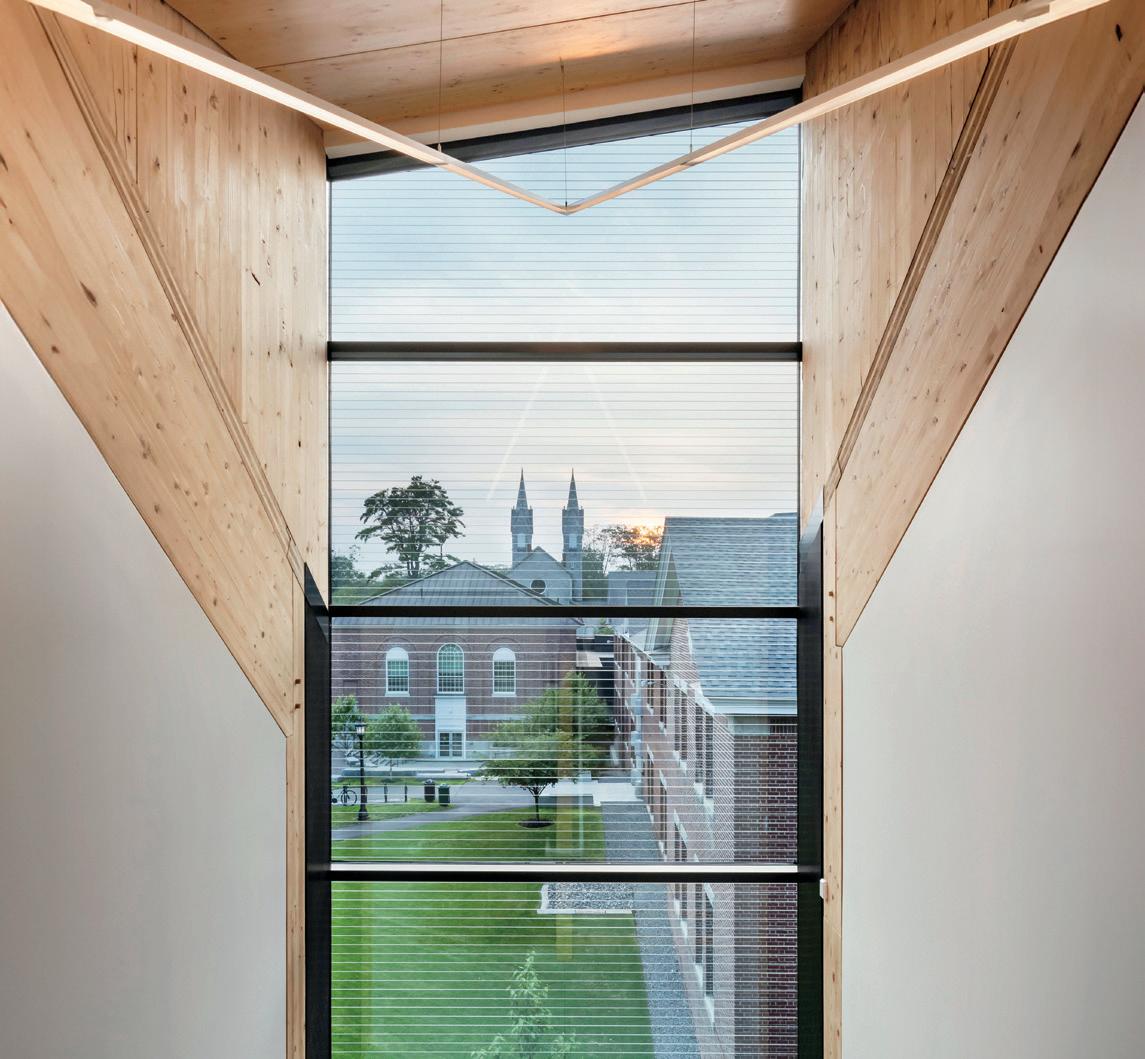
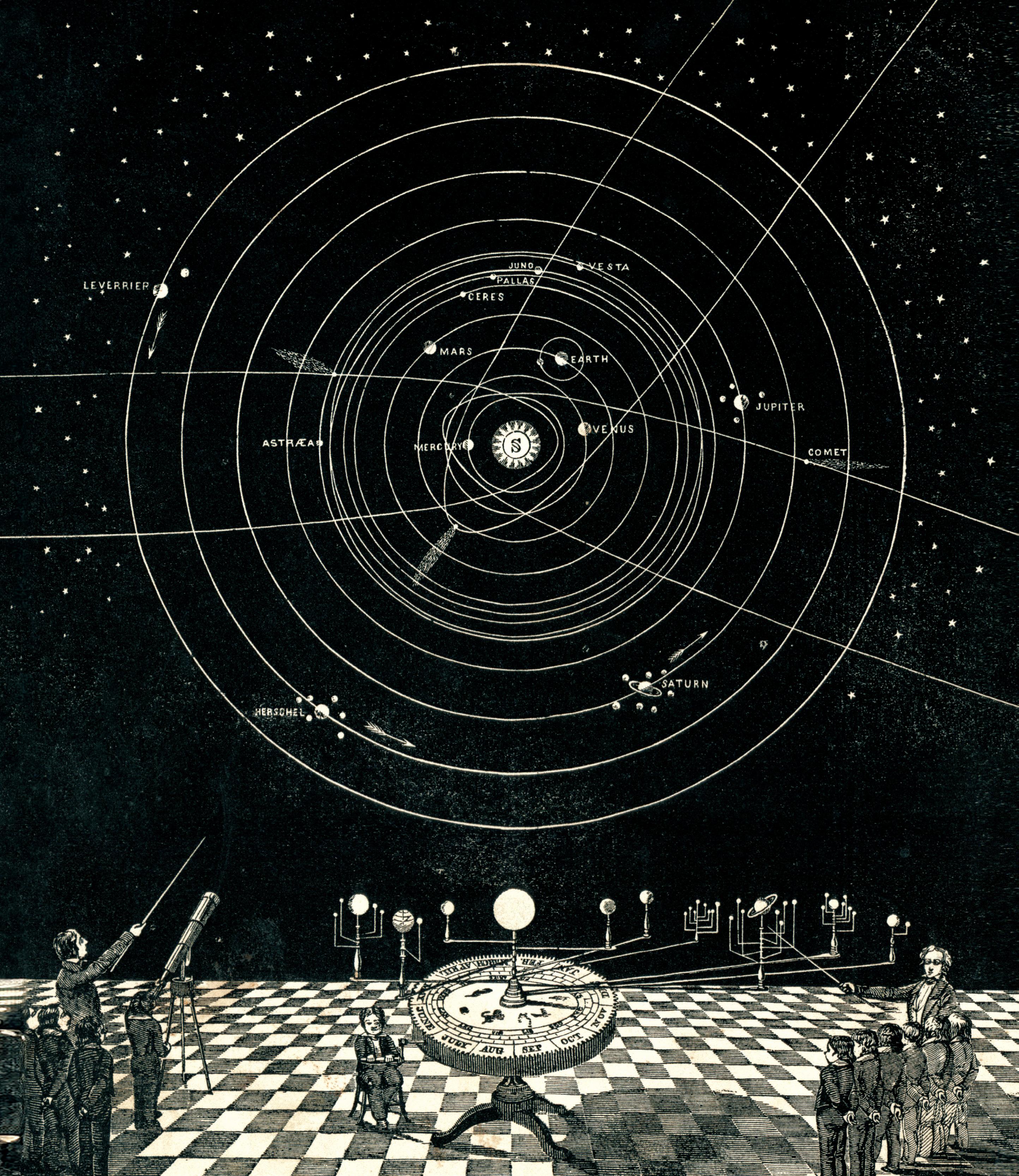
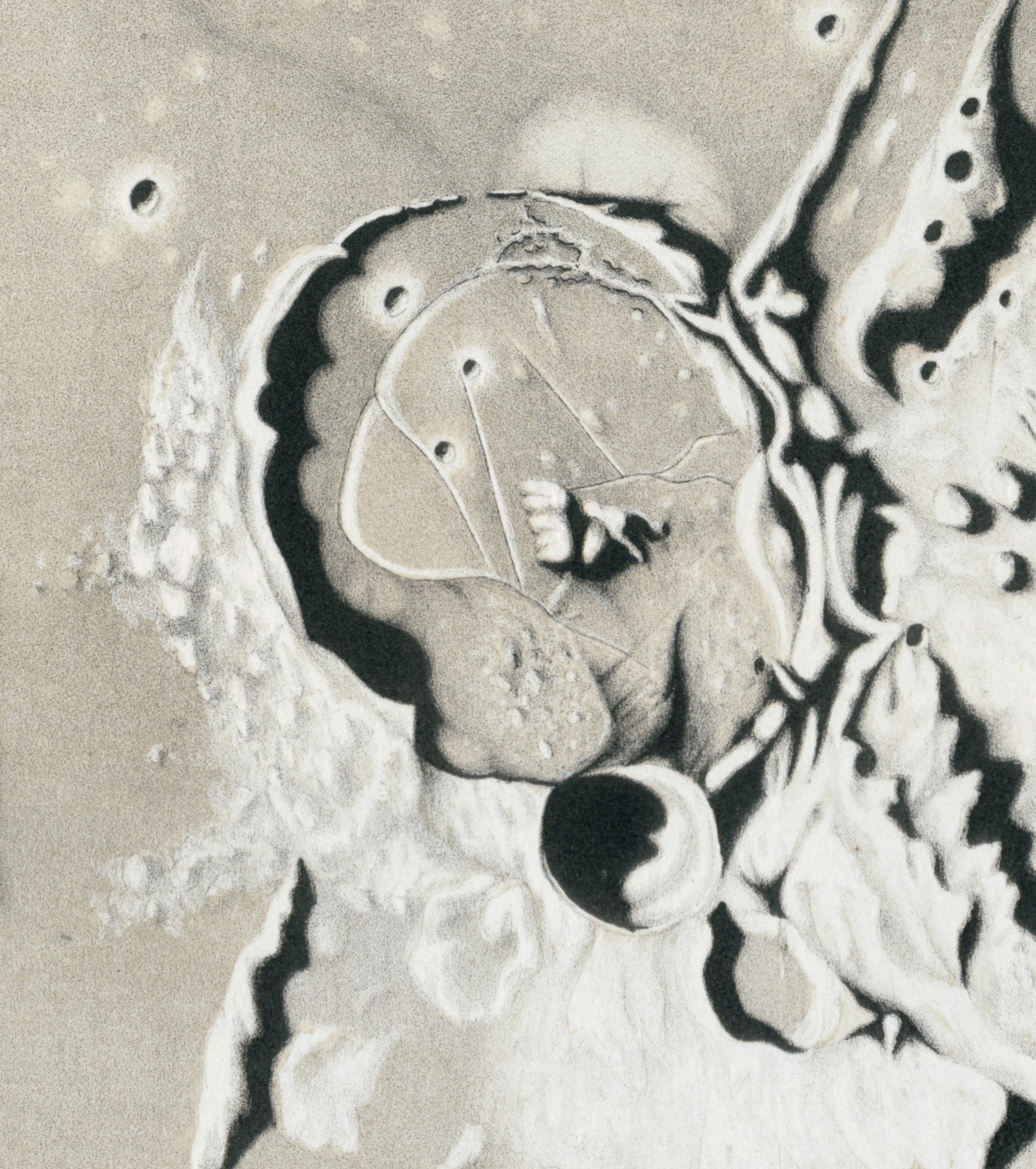
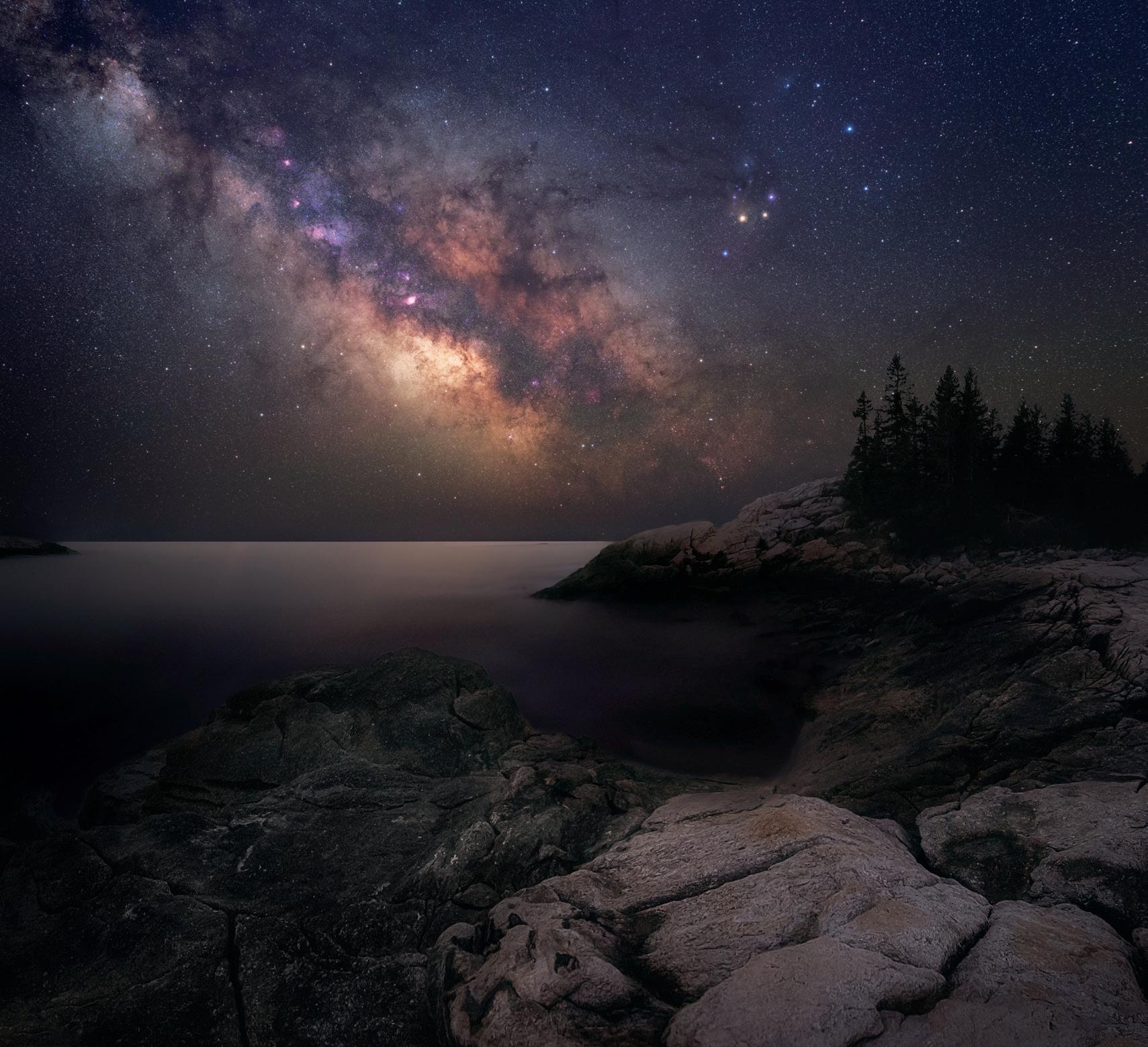
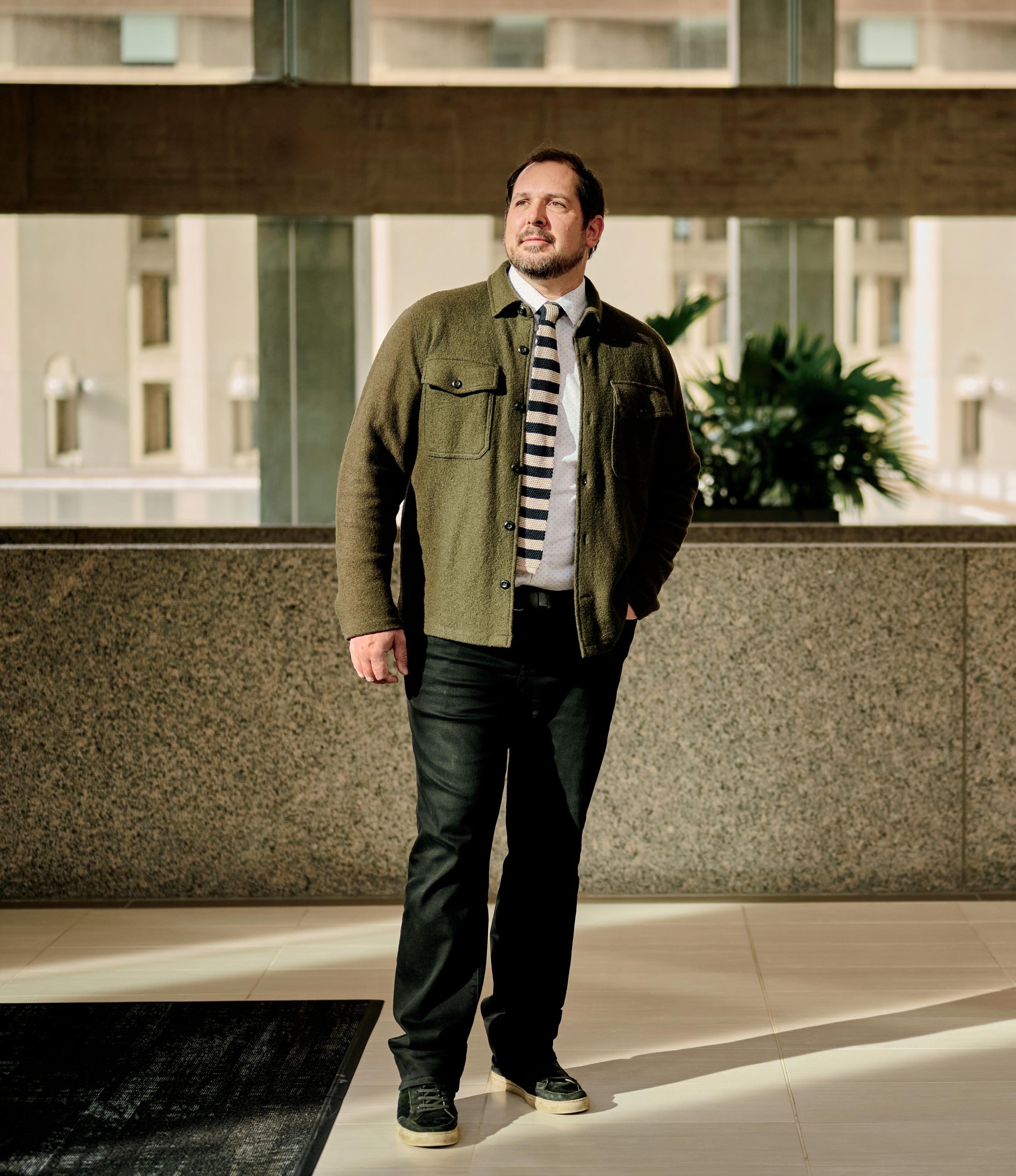
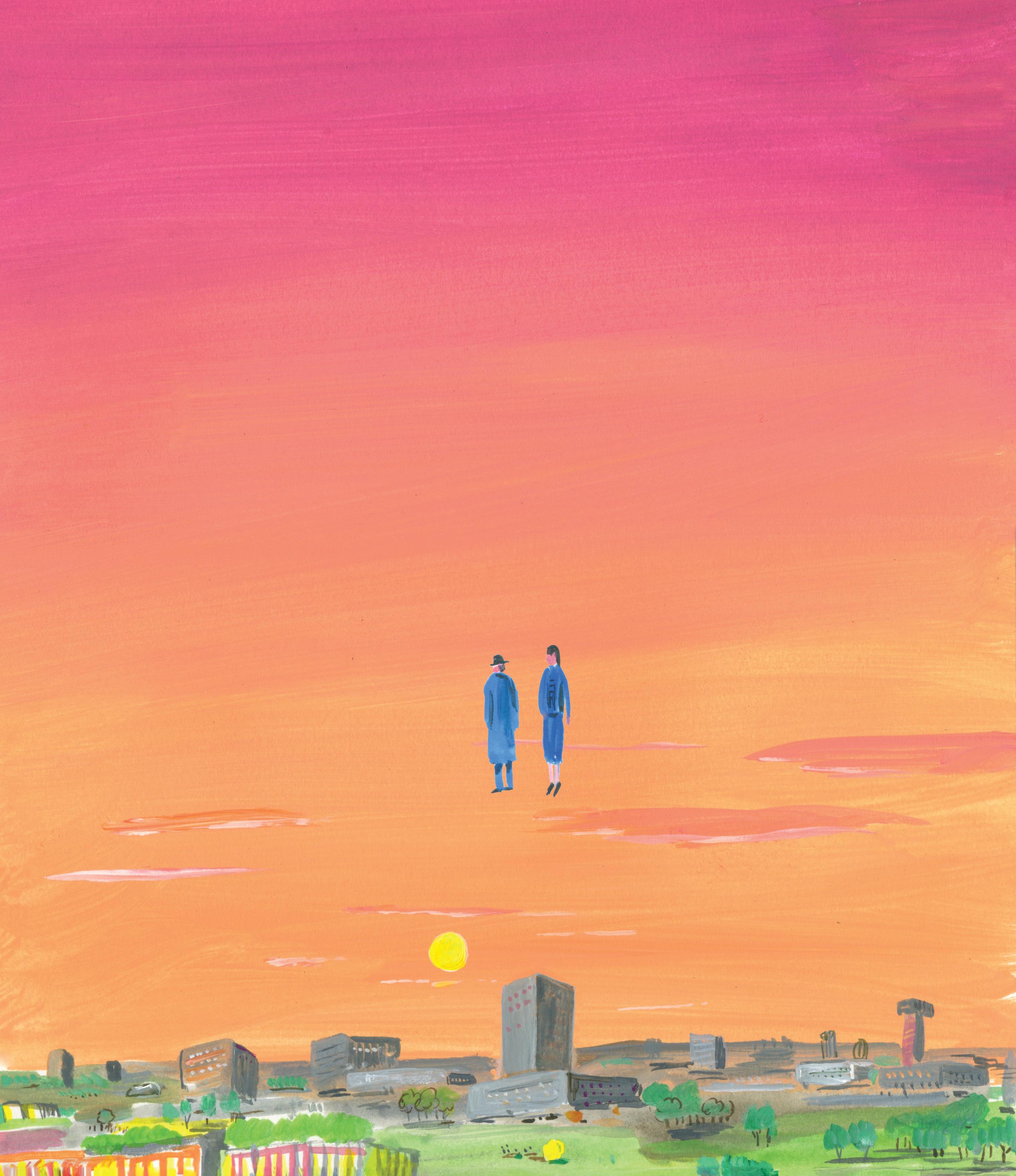
From our earliest recorded days, humans have looked up to the heavens. After two years of renovations and a move, the refurbished Ben Hill-Lam ’13 Observatory is ready to play its part in our contemplation and wonder.
20 The Play’s the Thing
Isabella Ardell ’26 on what she learned from four years of intramurals about competition, friendship, and finding joy in imperfection.
22 Here to Hope
Public health expert Jeffrey Hom ’04 is using every tool he has to save the people and streets of his hometown.
30 I Found a Theater
Savannah Horton ’17 and other grown theater kids talk about the conduit of emotion that runs between actors and audiences and how theater serves as a hearth for humanity.
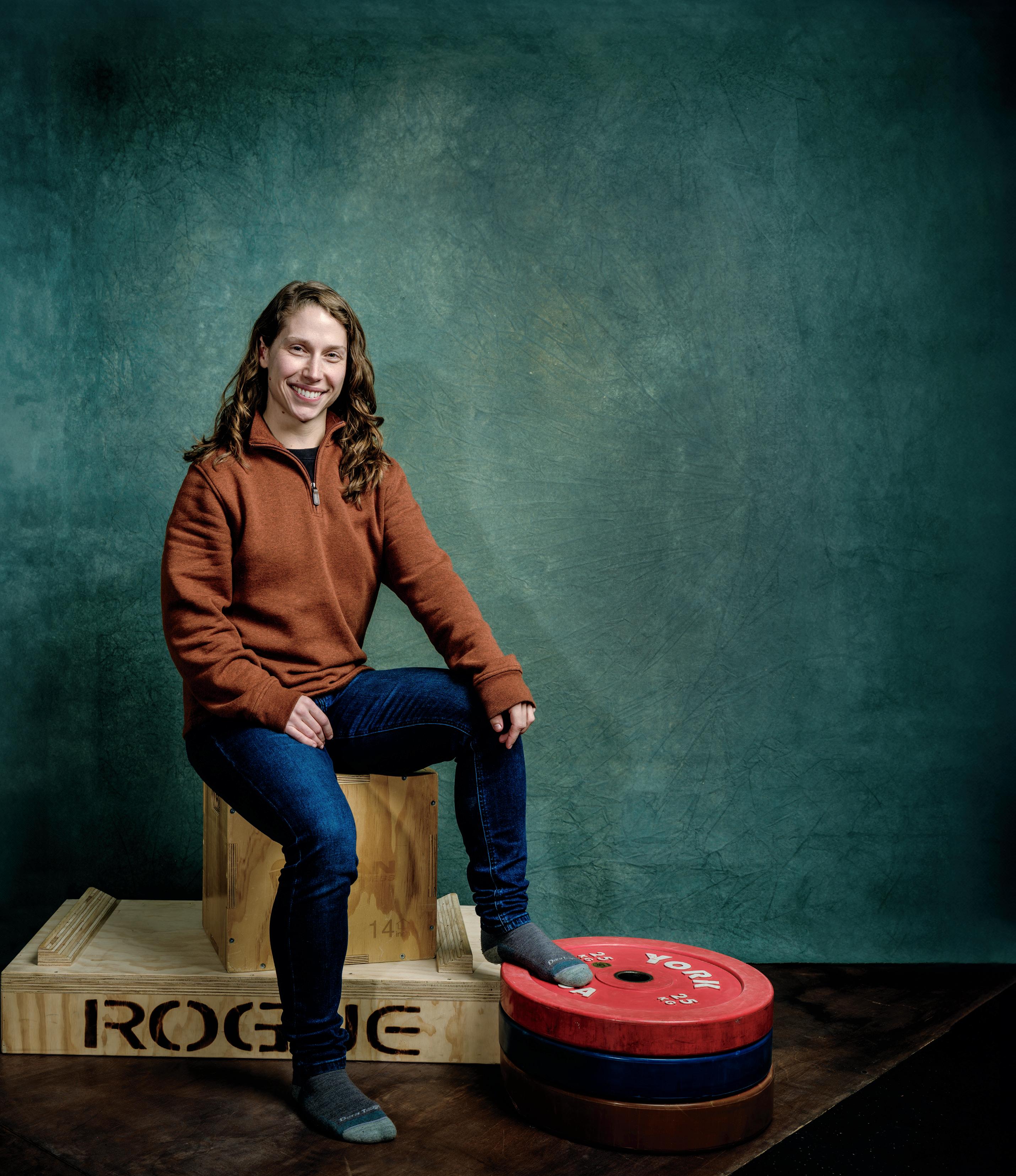
5 Discipline and Dedication: Elsbeth Paige-Jeffers ’10 has a day job in university administration and a side venture as a world champion masters weightlifter.
7 Dine: Dean for Academic Affairs Jen Scanlon shares a recipe for Irish soda bread from one of her two grandmothers named Rose.
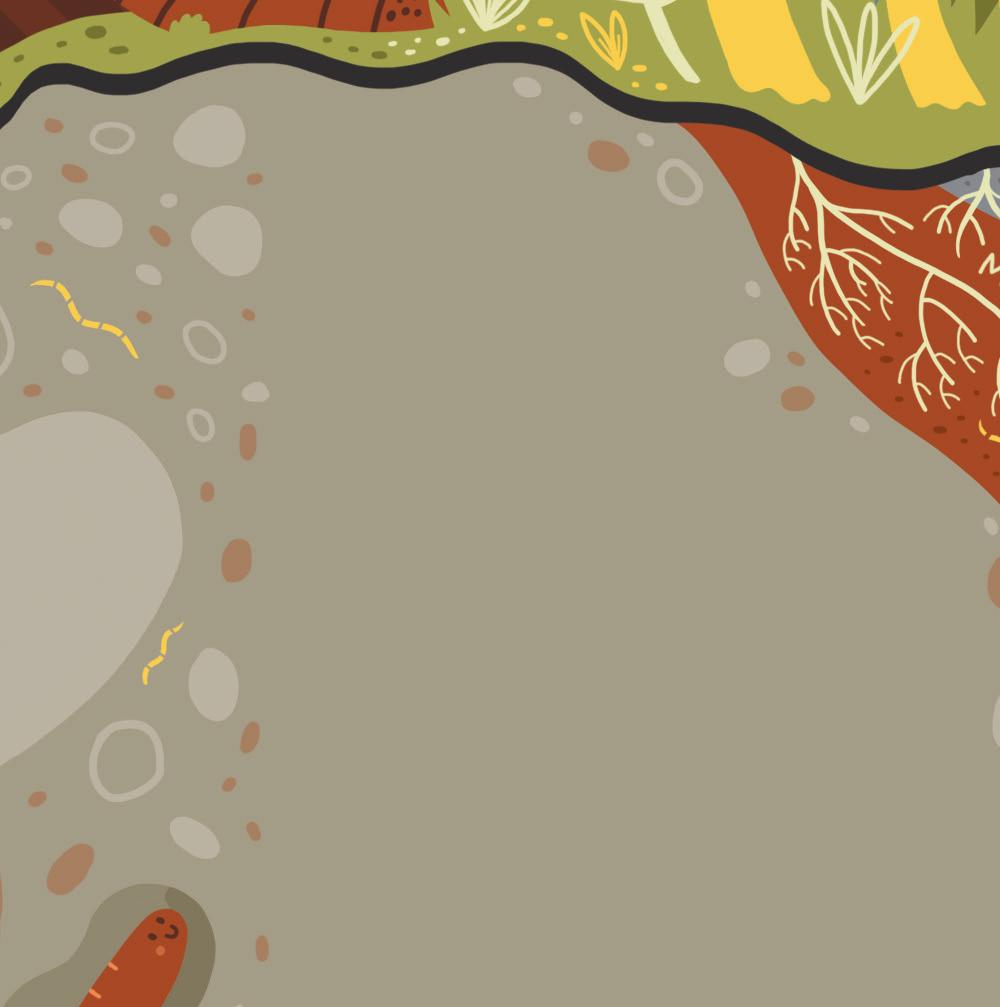
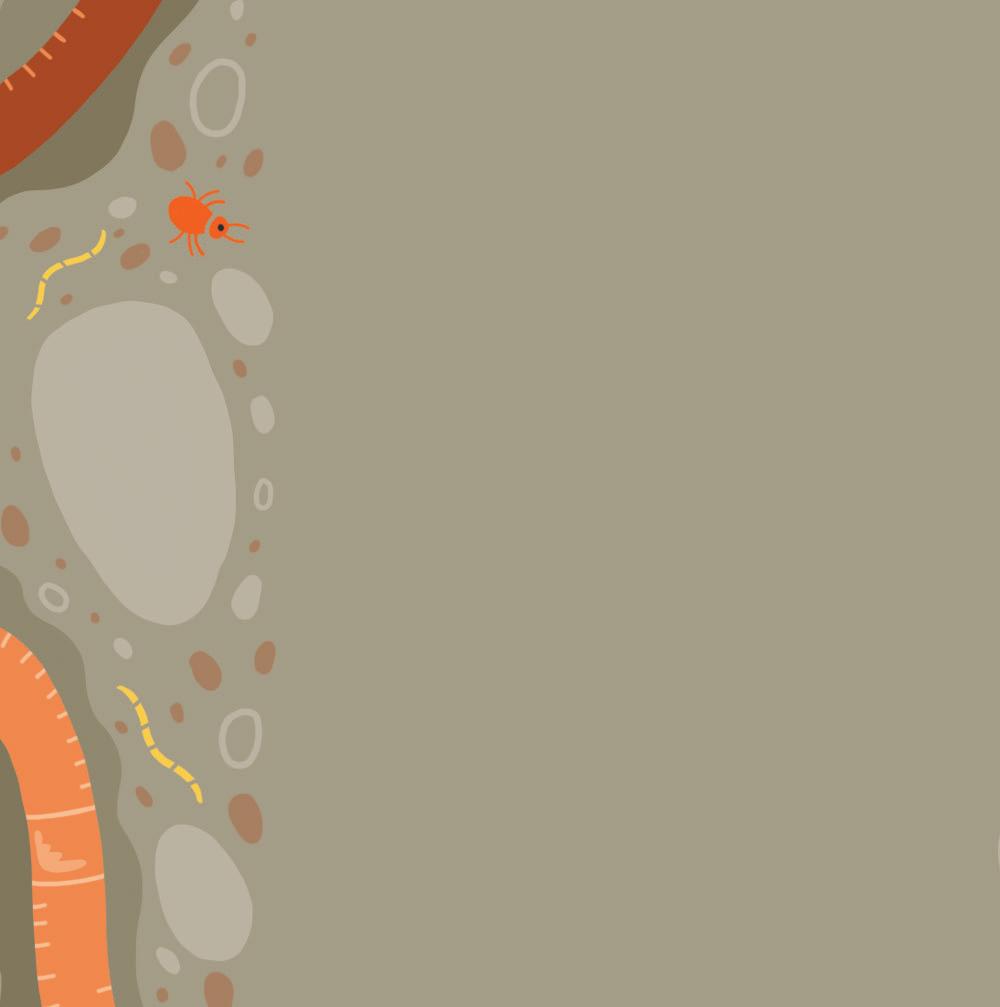
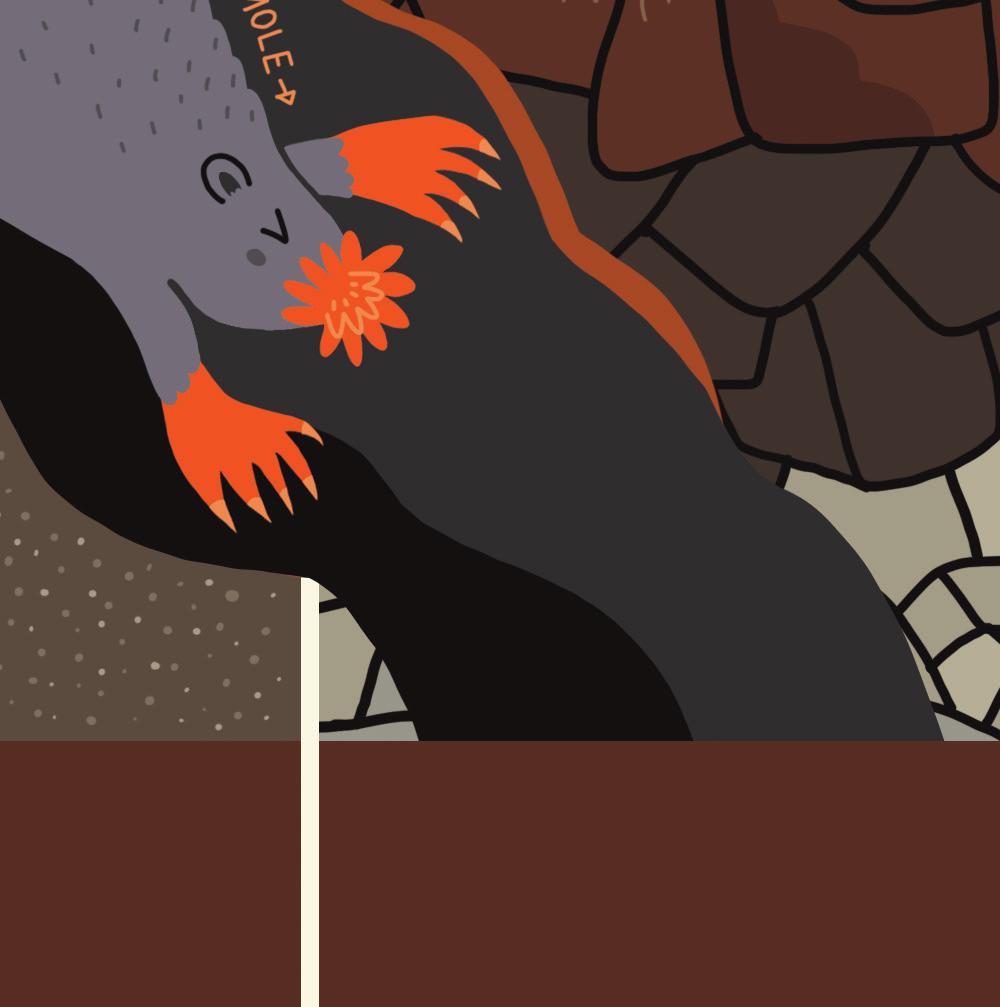
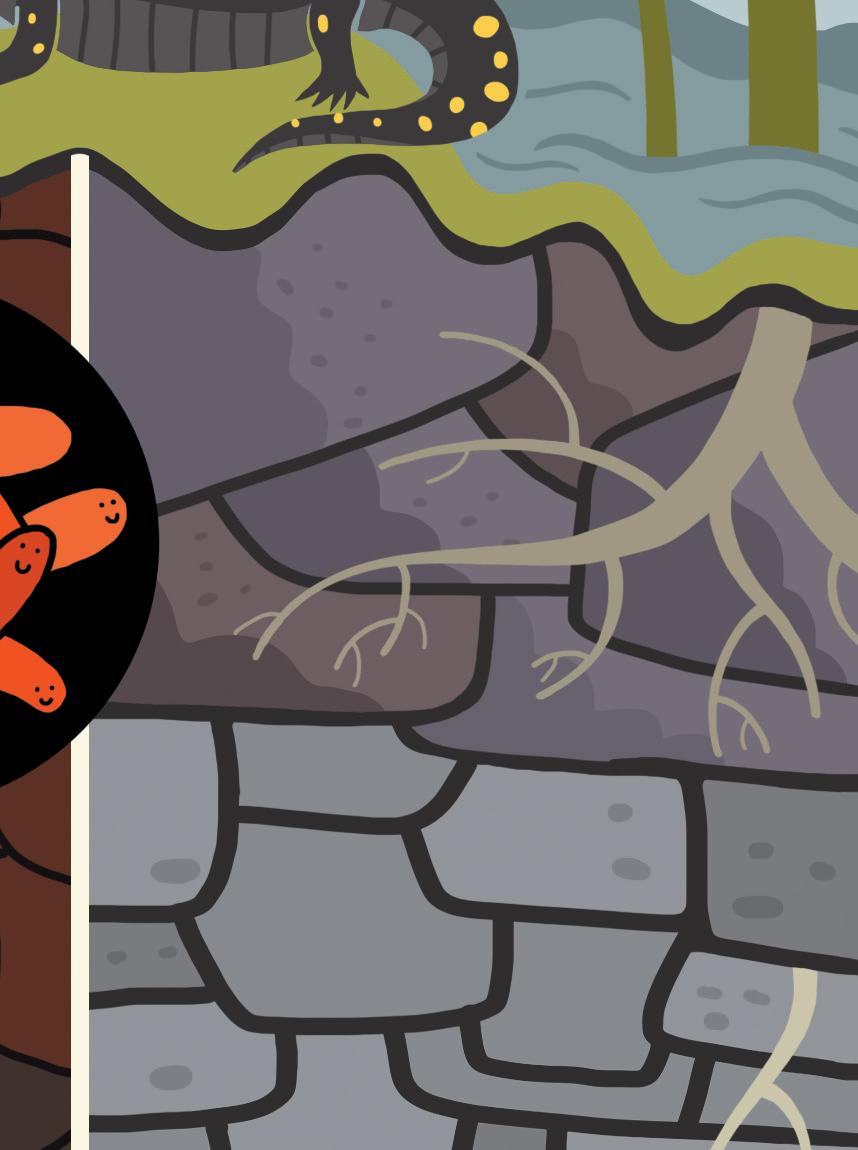
8 The Dirt on Soil: Visiting Assistant Professor of Earth and Oceanographic Science Trang Nguyen on Bowdoin’s new soil library and what it reveals.
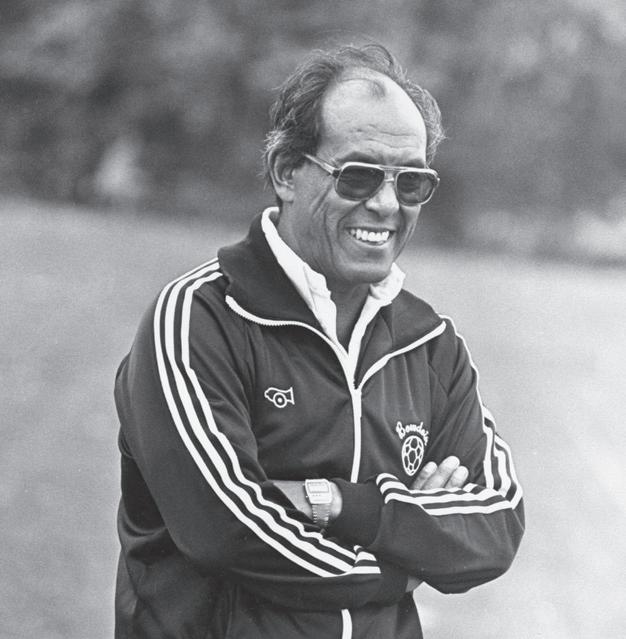
11 Passing of a President: Saying goodbye to Bowdoin’s thirteenth president, Robert H. Edwards, who died at the end of November.
18 Time Flies: In April, library staff will reveal the one hundredth plate during its monthly page-turning of Audubon’s magnificent double-elephant folio.
48 New Rules: Media and technology expert and author John Wihbey ’98 on AI’s power to shape and influence media and communications.
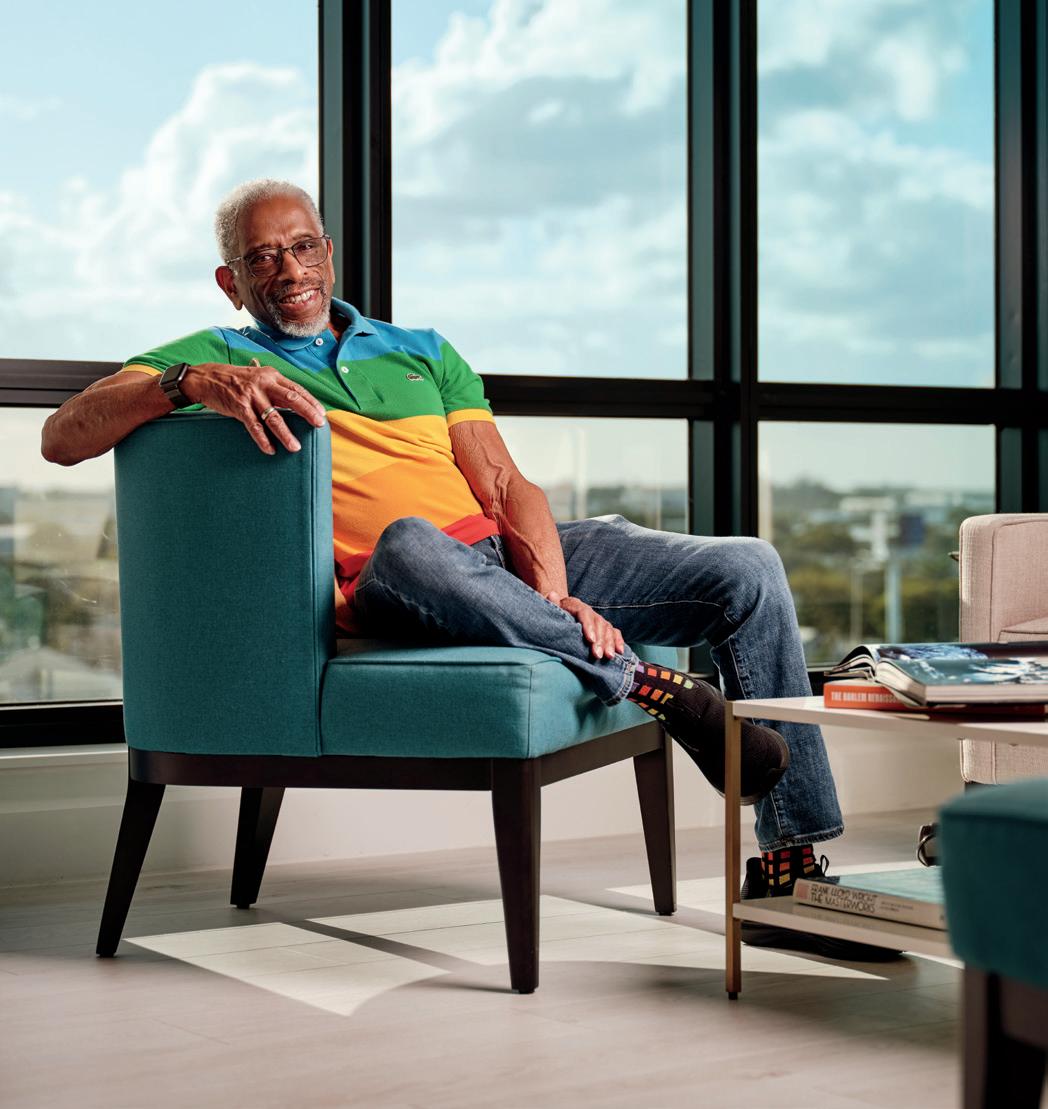
Jon Clayborne ’69 returned to a love of performing after twenty-five years in library work.
Dan Coyne ’98 makes the common good a focus of his work at the United Way.
A FLOOD AND A FAREWELL
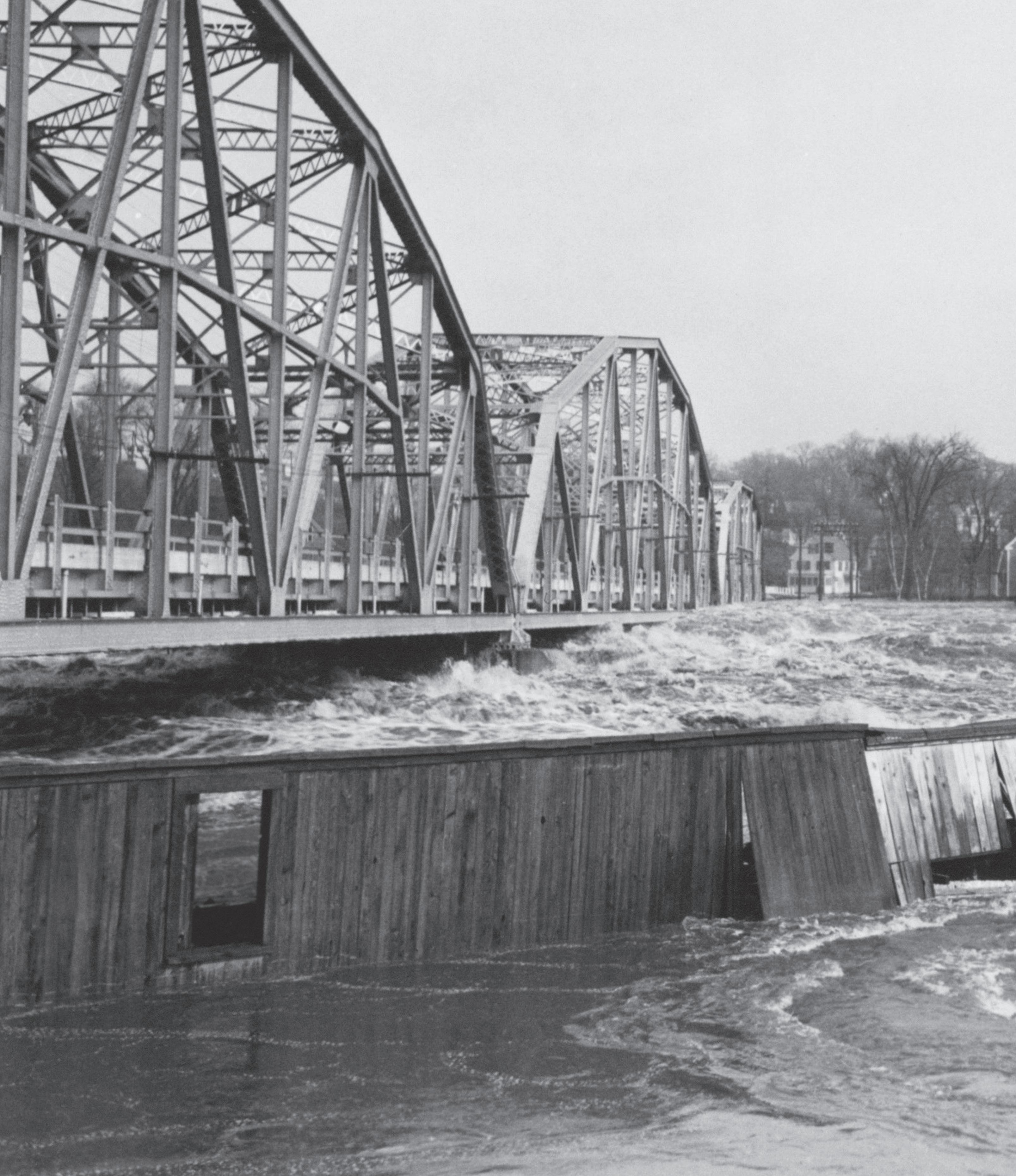
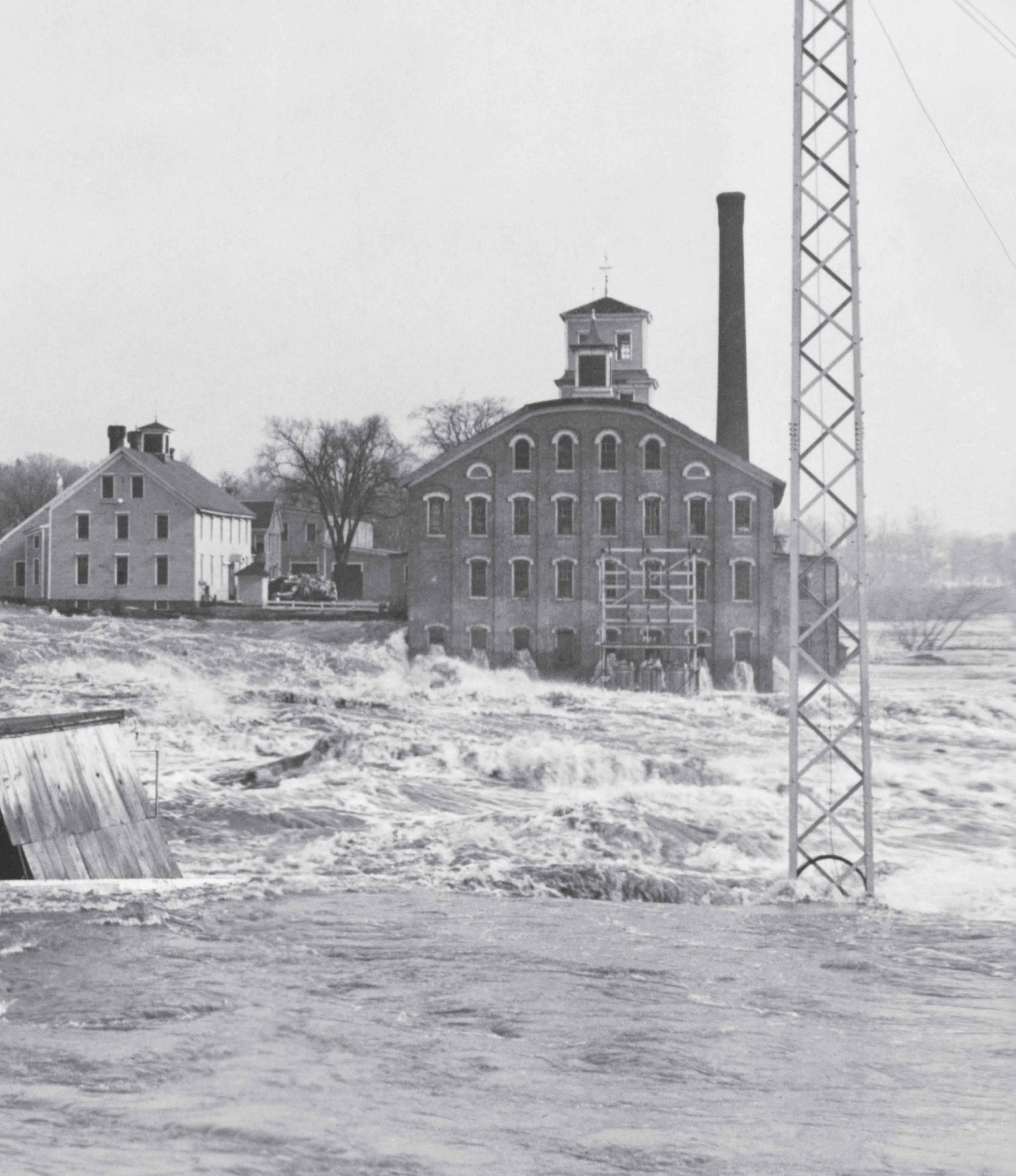
The Frank J. Wood Bridge ninety years ago, when the Androscoggin River overflowed its banks during the Flood of 1936—one of the worst ever recorded in Maine—on March 12 of that year. Constructed just four years earlier, the bridge was not seriously damaged, although the flood damaged both the Swinging Bridge upstream and the railroad bridge below. A long and harsh winter, heavy rains, and an early thaw all contributed to the historic and destructive conditions. A new Frank J. Wood Bridge opened to traffic in December 2025, and the old three-truss bridge is currently being dismantled.
Photo courtesy Pejepscot History Center
Charlie Strikes a Chord
I GRADUATED from Bowdoin almost sixty years ago and have had little to do with the college since. But I get the magazine and usually browse through it. When I caught the name “Charlie Butt” [“A Suitcase of Stories” Fall 2025] I came to an immediate stop, read the article, and ordered the book. I was never a swimmer or soccer player, never attended those sporting events, never conversed with Charlie, never shook his hand—but as a student I was aware of Charlie Butt. I don’t know why. I just generally knew who Charlie was and that he was someone to respect. The only reason I can think of was perhaps through interactions with my fraternity brothers, some of whom were swimmers—when you talked Charlie Butt, you talked quality and warmth.
I do remember in my junior year I passed Charlie on a campus path, walking in opposite directions, and he greeted me with warmth and his full-throttle smile. Over my years at Bowdoin I passed thousands of others on those pathways. Charlie is the only one I remember. Charlie’s dangerous escape from Shanghai and Catie’s commitment to document his journey and challenges struck a chord with me, as both my parents escaped danger at young ages. My father traveled on foot from Armenia from nine to fifteen, without parents, across Russia during the Russian Revolution—via Siberia—to Vladivostok to come to the US. At just five or six, my mother traveled with her mother from Armenia and sailed to Ellis Island, where they were refused entry into the US as they did not have a sponsor. They headed back to New York Harbor, my mother crying, intending to jump hand-in-hand into the ocean. They were saved by a good Samaritan attorney who saw my mother’s tears, spoke to them, and arranged for an Armenian family in Detroit to sponsor them. My parents divorced when I was four. As they became elderly, I wanted to capture their stories, but I was too late. When I learned of Charlie’s Way, I immediately connected. Thank you to Catie Butt for so capably presenting her dad, such a beautiful person. It was thoroughly enjoyable to learn so much about all that Charlie overcame with such determination and goodwill. And it brought with it a memory of the forever Charlie smile!
Bruce Alemian ’66
HELLO AGAIN
In the student response I delivered on James Bowdoin Day in October of 1970 (published in the Bowdoin Alumnus, November 1970), I lamented the fragmentation of Bowdoin’s students into cliques and the lack of social and intellectual interaction between them. My suggested start to a solution was the revival of “the Bowdoin Hello.” I was glad to see John Cross
take up the topic again in your Fall 2025 edition. It is with some sorrow, however, that I note the need to do so.
Gordon Grimes ’71
NOTES TO NAYDENE
In response to our featuring her in the Fall 2025 issue, piano instructor Naydene Bowder writes: To all my wonderful Bowdoin “piano children” out there: I would love to hear from you.
Please send a few words to me at nbowder@bowdoin.edu.
Naydene Bowder
CORRECTION
In the Fall 2025 issue, we incorrectly referred to the BrunswickTopsham Land Trust Farmers Market as the Brunswick Farmers Market. The venue for the Bagel Bake-Off won by Jeff Mao ’92 was the Brunswick-Topsham Land Trust Farmers Market.
MAGAZINE STAFF
Editor
Alison Bennie
Designer and Art Director
Melissa Wells
Managing Editor
Leanne Dech
Senior Editor
Doug Cook
Design Consultant
2Communiqué
Contributors
Jim Caton
John Cross ’76
Cheryl Della Pietra
Rebecca Goldfine
Sophaktra Heng
Micki Manheimer
Martin Mbugua
Janie Porche
Tom Porter
On the Cover: Illustrations by Robert Nicol
BOWDOIN MAGAZINE (ISSN: 0895-2604) is published three times a year by Bowdoin College, 4104 College Station, Brunswick, Maine, 04011. Printed by Penmor Lithographers, Lewiston, Maine. Sent free of charge to all Bowdoin alumni, parents of current and recent undergraduates, members of the senior class, faculty and staff, and members of the Association of Bowdoin Friends.
Opinions expressed in this magazine are those of the authors.
Please send address changes, ideas, or letters to the editor to the address above or by email to bowdoineditor@bowdoin.edu. Send class news to classnews@bowdoin.edu or to the address above.
PHOTO: GEORGE J. MITCHELL DEPARTMENT OF SPECIAL COLLECTIONS & ARCHIVES
Charlie Butt
DISCIPLINE AND DEDICATION
I have been a competitive athlete throughout my life—rowing, wrestling, rugby, and horseback riding. I found weightlifting while living in northern Maine and playing on a Canadian rugby side. Word spread in our small town of a woman weightlifting in a tiny rural key club, which led to an introduction to my first coach. I medaled in my first meet after only three months. After moving south and training with my current coach, I have qualified for four consecutive senior national championships and have become a masters national and world champion.
After a variety of jobs using my degree in visual arts and French, including as a graphic designer for L.L. Bean, I found I was most professionally and intellectually enriched in academic settings. I earned a second undergraduate degree, master’s degree, and graduate certificate from the University of Southern Maine. I now work at Southern New Hampshire University, where I provide project management, quality assurance, and technical support for online course content.
My sports and work involve discipline and dedication. Committing to the demanding creates space for joy and serendipity. Research might be tedious, but learning can be ecstatic. Difficult training can be draining, but competition is exhilarating. I take pride in the way I approach a challenge, not merely in the outcome.
I chose Bowdoin somewhat by instinct. I felt enriched by the visual arts community, who made it easy to immerse myself in art. I loved the beauty of campus—in Maine, if you want to see a shooting star, just find the nearest body of water at night and look up. I deeply value the ability to be still in nature that Maine offers. I have a green thumb, and I still have two plants dating back to college.
For more from this interview, visit bowdoin.edu/magazine.
PHOTO: JASON PAIGE SMITH
ELSBETH PAIGE-JEFFERS ’10
A competitive athlete growing up and a member of the crew and rugby teams at Bowdoin, Elsbeth Paige-Jeffers ’10 has a day job in university administration and a side venture as a world champion masters weightlifter.
FROM BOWDOIN AND BEYOND
Grit
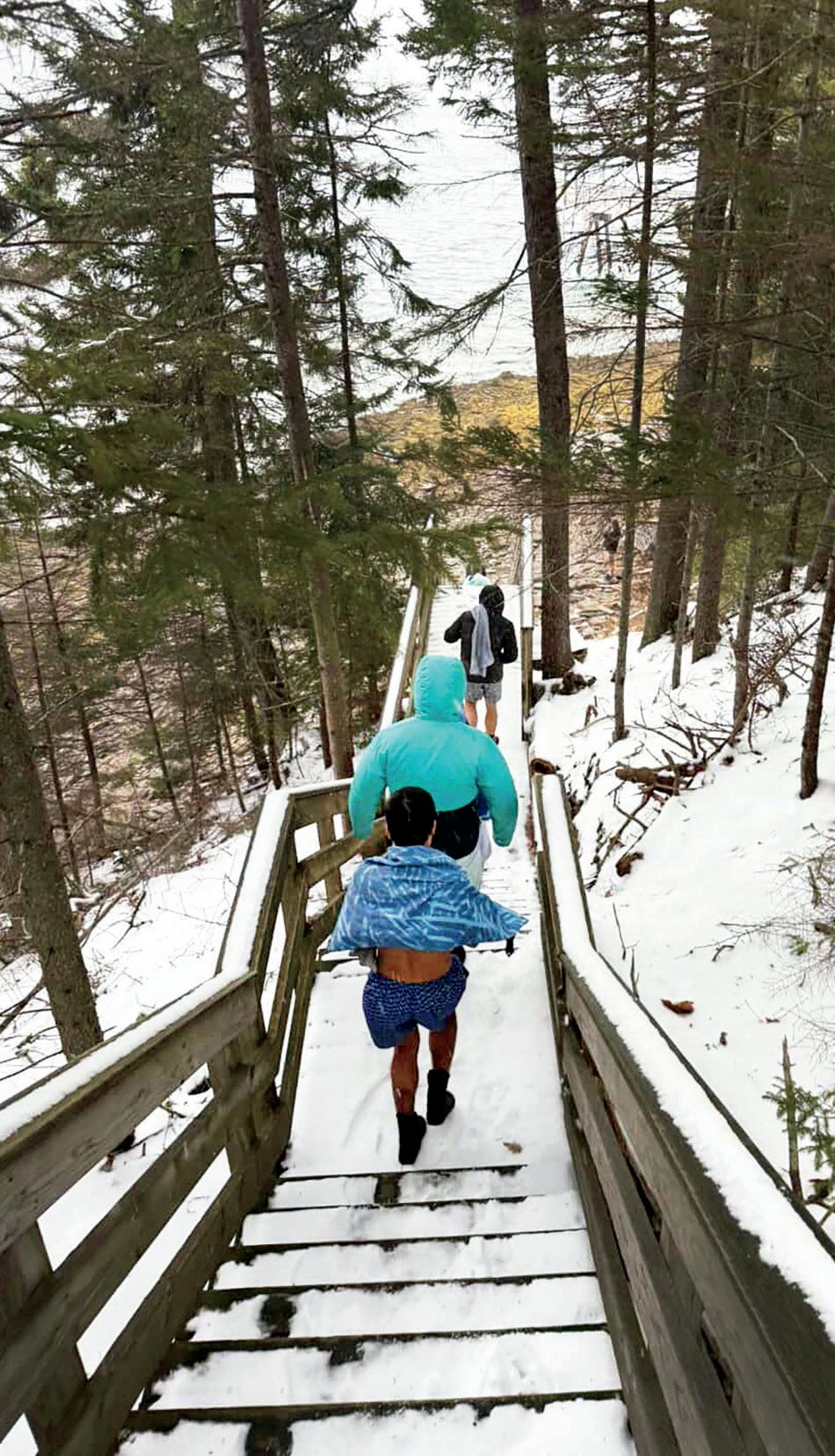
TAKING THE PLUNGE
Though no one can pinpoint when the tradition began, the Schiller Coastal Studies Center “polar plunge” is not just an entrenched part of the Coastal Studies Semester curriculum now, it’s practically a requirement. Each day throughout the fall semester program, students take a dip in the ocean, no matter where they are—Harpswell, Hurricane Island, Kent Island—or how frigid it is, right through December. Christina Korn ’28 said she and the rest of this fall’s cohort saw it as making the most of their time by the ocean. “Also,” she joked, “I guess it shows the power of peer pressure—no one wants to be the one to quit first!”
Environment
Avian Haven
Bowdoin joins a statewide bird safety initiative.
THE THWACK is unmistakable—that blunt thud of a bird flying into glass. Fatal strikes take place a billion times each year in the US, making windows a leading killer of birds, second only to cats.
Brandon Tate, visiting professor of chemistry and environmental studies at the College, has been working with some of his students to find ways Bowdoin might address the epidemic. As part of this, the College has joined “BirdSafe Maine,” a statewide effort to minimize the harm that human-built environments cause both year-round and migratory birds.
Later this year, a Bowdoin group will attend a BirdSafe symposium in Portland focused on what colleges and universities can do to monitor and remedy bird strikes, said organizer Christine Maher, biology professor and interim dean at University of Southern Maine.
Other changes have already begun. Bowdoin has drafted new policies to incorporate bird-safe features into future construction projects, including more visible windows and less visible lighting. Bowdoin will also plant a new pollinator garden this spring, drawing lots of birds along with bees, butterflies, and other pollenizers.
Dylan Berr ’26, who is researching bird collisions on campus, said the overarching goal is not just to make buildings bird-friendly but also to understand “how we can support all the birds moving through here.”
Bird-safe glass in the John and Lile Gibbons Center for Arctic Studies.
Heading to Harpswell Sound for the daily dip.
DID YOU KNOW?
Caraway seeds aren’t seeds; they are the fruit of the caraway plant, a member of the parsley family. Their use— as a condiment, an ingredient in love potions, a medicine to reduce bloating, and even a form of currency—goes back thousands of years.
Dine
Irish Soda Bread
Recipe by Jennifer Scanlon
Both of Dean Scanlon’s Irish immigrant grandmothers were named Rose, but she only knew and has recipes from her mother’s mother. “I carry their name as my middle name and keep this recipe close, never letting more than a year go by without baking this bread for people I love,” she says.
St. Patrick’s Day is an obvious good day to bake this treat, but Rose’s bread is a winner any time of year.
4 cups flour
½ cup sugar
2 tablespoons baking powder
½ teaspoon baking soda
1 teaspoon salt
1 cup raisins
2 heaping tablespoons caraway seeds
2 tablespoons butter, melted
2 eggs
2 cups buttermilk
Butter for serving
Preheat the oven to 350 degrees. Butter and flour a large cast iron frying pan or other oven-safe baking dish.
Mix the flour, sugar, baking powder, baking soda, salt, raisins, and caraway seeds in a large mixing bowl.
In a medium bowl, whisk together the melted butter, eggs, and buttermilk.
Using a spatula or wooden spoon, fold the wet ingredients into the dry mixture until there are no dry spots.
Spread the dough evenly into the prepared pan and bake for 60 minutes, until the bread is golden brown and the center is cooked through. Cool for at least ten minutes before slicing and serve with plenty of butter.
Jennifer R. Scanlon is the John S. Osterweis Professor of Gender, Sexuality, and Women’s Studies and senior vice president and dean for academic affairs. She is the author of Bad Girls Go Everywhere: The Life of Helen Gurley Brown and Until There Is Justice: The Life of Anna Arnold Hedgeman. She will step down as dean at the end of the 2025–2026 academic year and return to teaching after a year’s sabbatical.
Did You Know?
The Dirt on Soil
Bowdoin adds a soil library to its long list of collections and specialized libraries to explore.
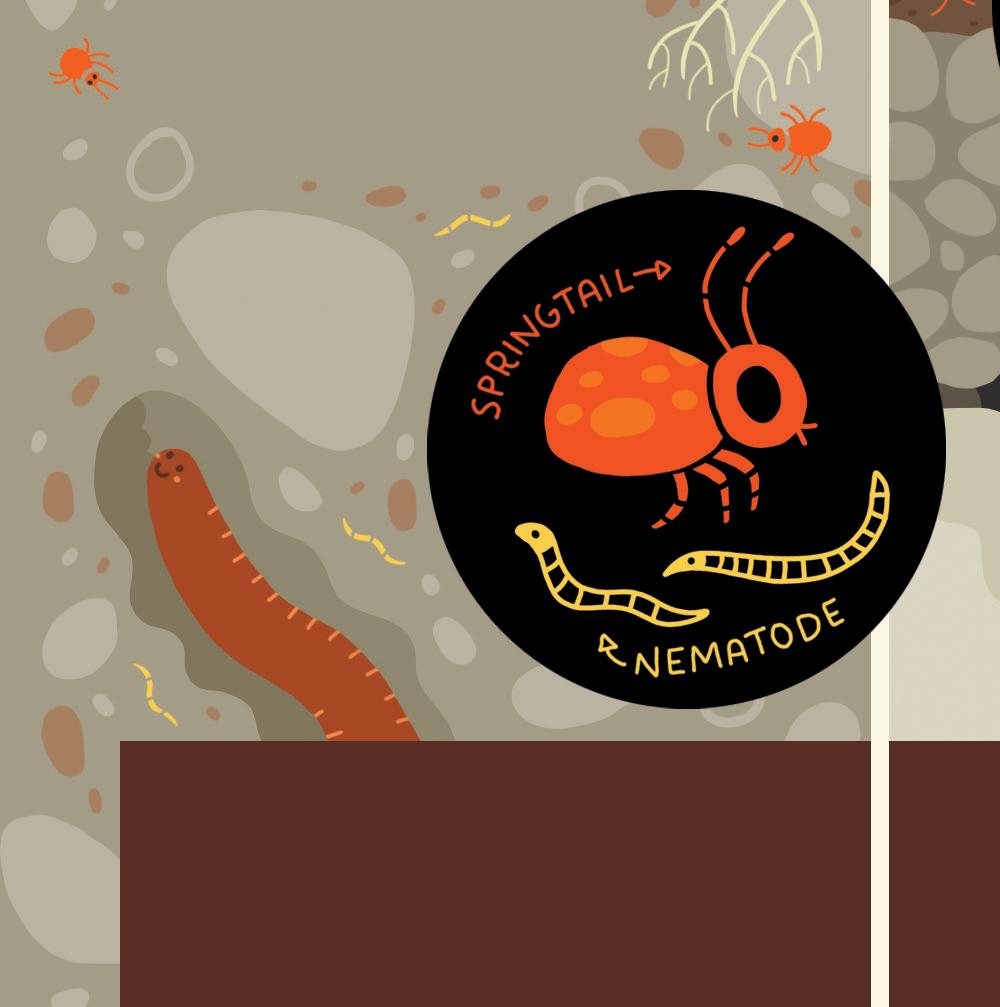
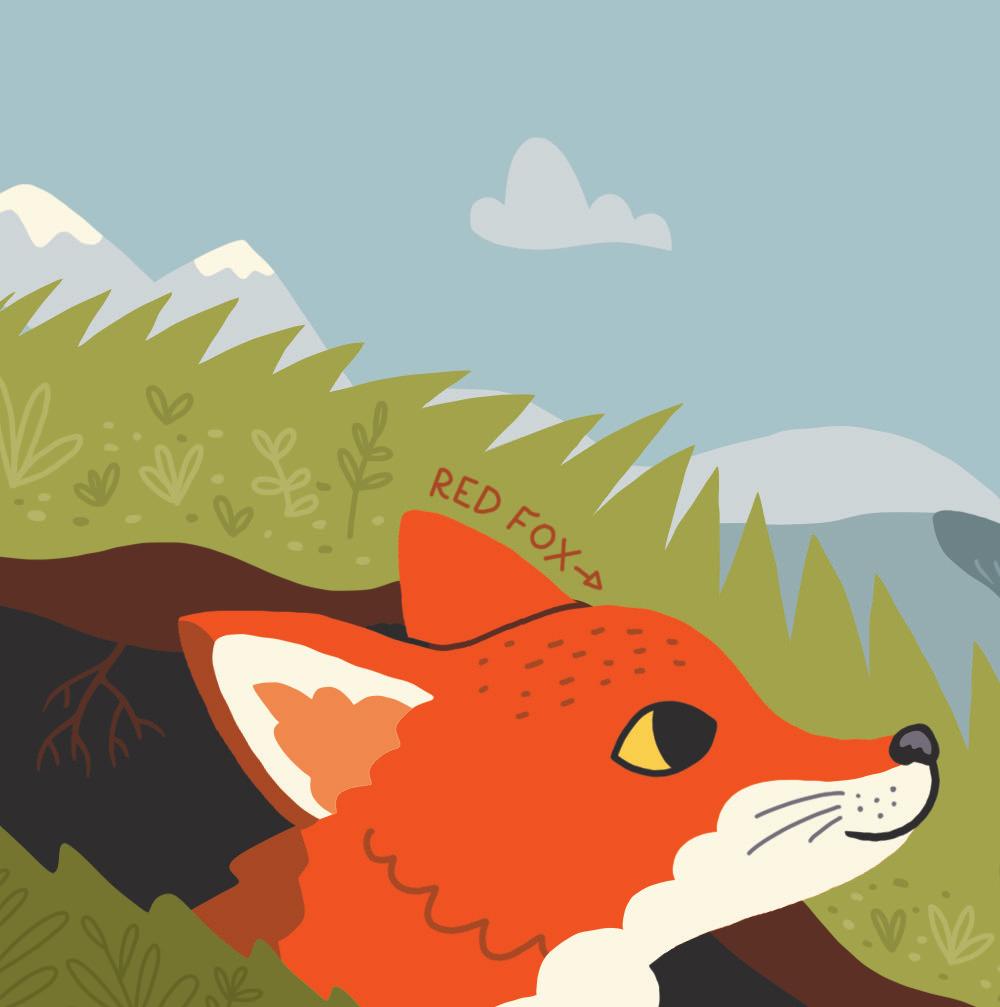
Illustration by Rachel Ignotofsky
Soil scientist Trang Nguyen planned to tramp around Maine collecting soil samples for a class she would be teaching as a visiting professor. But then she was gifted a trove of samples tucked away in the USDA’s Natural Resources Conservation Service office in Dover-Foxcroft, where they had been for more than fifty years.
A cup contains 200 billion bacteria and over fifty miles of fungi, and we have identified less than 10 percent of the microbes that live in soil and process its nutrients.
Despite the long storage, the soils are vibrant—rusty orange, chocolate brown, slate gray, frosty white—and perfectly suited for learning about soil properties and formation and the vast array of life found underground.
Soil colors are affected by organic matter, minerals, moisture, and oxygen. Waterlogged or poorly drained soil tends to be bluish or gray. Some have what Nguyen calls a “cake layer”—a white, frosting-like layer between a darker layer and an orange layer—that is unique to Maine’s cool, humid climate. The white layer forms when material from the rich top layer leaches down due to precipitation in a highly acidic environment, like a pine forest, and the orange layer is where all the material and minerals end up.
BERKSHIRE
Exposure to soil is good for us, likely because some of it mingles with our gut microbiome, helping to diversify it and make it healthier.
Soil is the largest, most biodiverse habitat on Earth. It teems with fungi, bacteria, archaea, viruses, algae, mites, beetles, earthworms, plants, mammals, and reptiles.
CHESUNCOOK
Soil plays a big role in carbon cycling—the amount of carbon it stores is two to three times more than what’s stored in plants and the atmosphere combined.
Maine’s soils were formed 11,000 to 15,000 years ago, which is very young in geological time. Soils derived from granite, the dominant rock in coastal Maine, tend to be sandy and acidic.
BRAYTON
Formed in dense till, it is found in depressions of glaciated uplands and at the base of hillslopes. Most areas are forested with a mix of coniferous and deciduous trees.
Most of today’s antibiotics— including streptomycin, the first drug to be successful in treating tuberculosis— originated from compounds produced by soil bacteria.
Soils—of which Maine has more than 150 types—differ based on their parent material, vegetation, terrain, climate, and whether the area faces the sun or not.
The meaty flavor of Impossible Burgers is possible due to a soybean protein that can only be made with the help of the soil bacteria rhizobium.
In Maine, most parent materials were transported by glacial meltwater and consist of glacial till (a mix of sand, silt, clay, and rock), glacial outwash (coarser material like sand and gravel), or marine sediment (finely textured soil with lots of silt and clay).
CROGHAN
Formed in deltaic or fluvial glacial deposits— the sediment found at the mouth or lower end of a river—this soil is found on sandplains and is good for blueberry production, hay, corn, and oats due to its acidity and well-draining consistency, which allows it to remain moist but not waterlogged.
Nguyen’s students have made soil maps of their hometowns to assess possible land-use projects based on soil properties. One studied the feasibility of growing low-bush blueberries in Western Maine; another explored an area near their grandmother’s house to determine its suitability for a retirement home.
WONSQUEAK
Found most often in swamps, with trees like white cedar and tamarack, and many shrubby understory plants like pale laurel and bog rosemary, this soil is formed in the mantle of decomposed material.
Formed in silty marine sediment, it is found in salt marshes and supports salt-tolerant plants like cordgrass and sea lavender, which in turn support coastal wildlife, fish, and crustaceans.
GOULDSBORO
On the Shelf
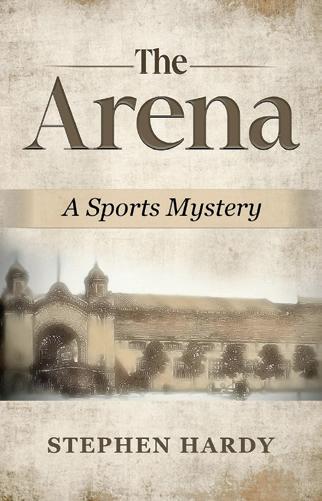
The Arena: A Sports Mystery
STEPHEN HARDY ’70 (Independent, 2025)
Stephen Hardy’s new book, a prequel to 2022’s The Commissioner: A Sports Mystery, is set in 1916 in the old Boston Arena, where the Towne siblings who work at the arena receive information that leads them and their allies to race against time—in battles with the wounds of war, grief, gender and racial discrimination, and corruption.
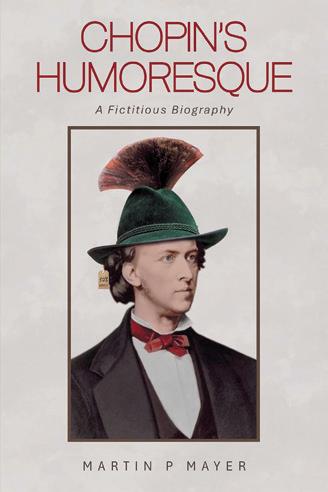
Chopin’s Humoresque: A Fictitious Biography ; Handel’s Triumph of Time: A Novel ; and The Madness of Mrs. Tchaikovsky
MARTIN MAYER ’76 (Xlibris, 2025)
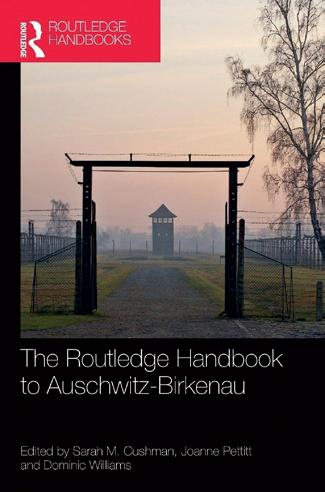
The Routledge Handbook to Auschwitz-Birkenau
SARAH M. CUSHMAN ’90 (Routledge, 2025)
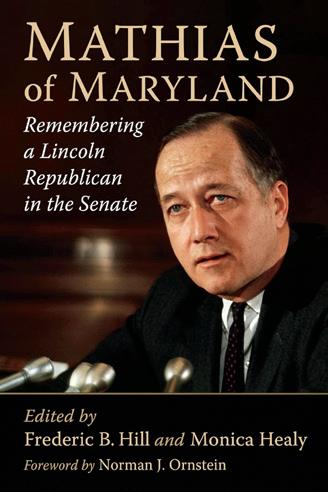
Mathias of Maryland: Remembering a Lincoln Republican in the Senate
FREDERIC B. HILL ’62 (McFarland, 2024)
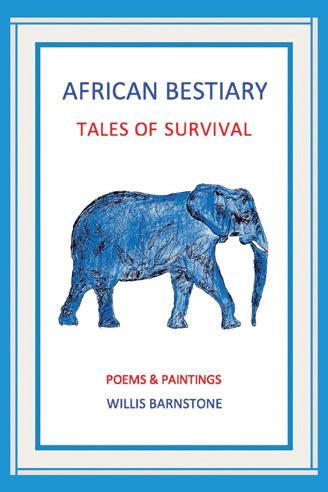
African Bestiary: Tales of Survival: Poems and Paintings
WILLIS BARNSTONE ’48 (Simon & Schuster/ Black Widow Press, 2025)
POWER PLAY
From the opening faceoff to the final buzzer, music is an essential part of the Bowdoin athletics experience—setting the tone, fueling momentum, and turning ordinary moments into electric ones. Whether it’s a familiar anthem after a goal, a bass-heavy beat during a time-out, or a sing-along classic that unites the crowd, the right song can change the feel of a game in seconds. Among the most-played at Polar Bear athletic events last year, these songs have become ingrained in the soundtrack of game days.
“Joker and the Thief” by Wolfmother (2006)
The opening track on the men’s soccer playlist, this song has accompanied the Polar Bears’ entrance at every home game since at least 2021. It works: Bowdoin has gone 27-8-9 at home over the past five seasons.
“Turn My Swag On” by Soulja Boy (2008)
The men’s lacrosse goal song during the 2025 season, its familiar hook rang out roughly 186 times at Whittier Field—once for each Polar Bear home goal—including a broken-record-like twenty-eight plays during a 28–3 NCAA Tournament win over Rivier.
“We Are Family” by Sister Sledge (1979)
The Bowdoin women’s basketball “win” song since the mid-2010s, this celebratory anthem played sixteen times at Morrell Gym during the 2024–2025 season, capped by a dramatic 62–59 victory over Colby in the NESCAC Championship game.
“Sunday Bloody Sunday” by U2 (1983)
The field hockey team’s entrance music—and its unmistakable opening drum riff—has spelled trouble for visitors to Ryan Field for twenty-five years. In that span, the Polar Bears have won eight NESCAC titles, four NCAA Division III championships, and (with a little help from Bono and the Edge) are a perfect 19–0 in home NCAA Tournament games since 2000.
“The Star-Spangled Banner” by the US Marine Corps Band
For obvious reasons, the most-played song each year—and the version of the national anthem heard before every Bowdoin home sporting event.
Arena Rock
Our Town
Building Community
A contribution from the College helps create outdoor learning experiences at four schools in Brunswick.
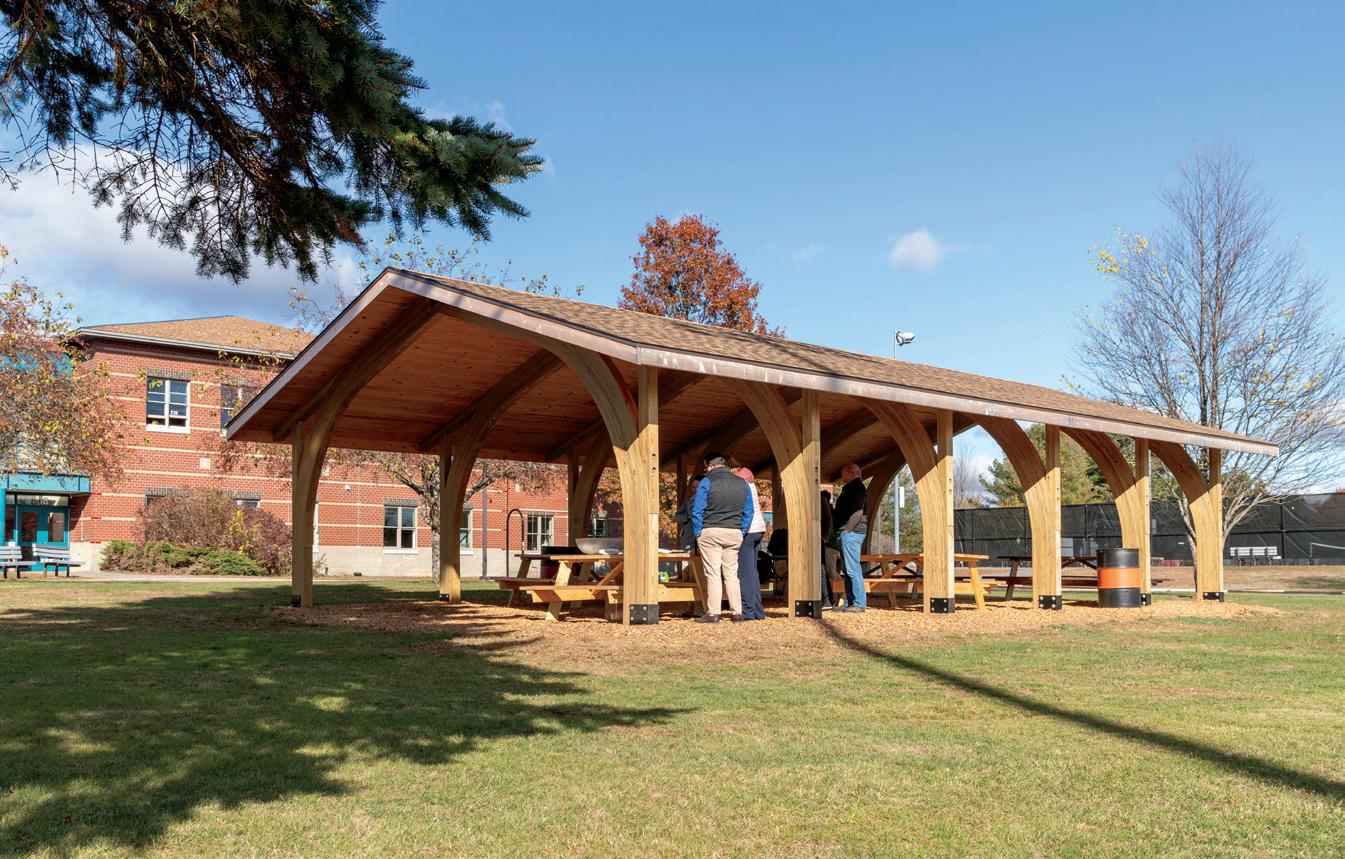
THE BRUNSWICK School Department recognized Bowdoin with gratitude this fall for its support in providing new outdoor pavilions at each of the four schools in the district. Over the last year, with funding from the College, the school department installed wooden pavilions at Kate Furbish Elementary, Harriet Beecher Stowe Elementary, Brunswick Junior High, and Brunswick High School.
“The use of outdoor learning spaces expanded significantly during the pandemic and proved to be highly beneficial for both students and staff,” said Phil Potenziano, superintendent of the Brunswick School Department. “These new pavilions now provide each of our four schools with permanent, covered outdoor learning areas—something that previously required temporary tents. They are also regularly accessed by the community after school hours.”
At a dedication ceremony this fall, it was revealed that plaques reading “Celebrating teaching and learning in the natural environment, courtesy of Bowdoin College” have been affixed to all four structures.
“The Brunswick School Department is incredibly fortunate to have Bowdoin College as a trusted and generous partner,” Potenziano said. “Beyond this project, we benefit from Bowdoin students who volunteer in our schools, serve as student teachers, and participate in programs such as Multilingual Mainers, among many other collaborations. This partnership continues to enrich our schools and our community.”
Since its construction, the pavilion at the high school has become a go-to spot for athletes, who use the space as they get ready for practice, and the one at the Stowe School has become a popular venue for students’ weekend birthday parties.
Leadership
Passing of a President
Robert Hazard Edwards, Bowdoin’s thirteenth president, died in Newcastle, Maine, on November 30, 2025, at the age of ninety. In a message to the community about Edwards, President Safa Zaki wrote, “During his eleven years as president, from 1990 to 2001, Bob shaped the College we know today—through his steady leadership, his global perspective and foresight, and his commitment to the liberal arts as a force for the common good.” Edwards was awarded an honorary degree by Bowdoin in 2001, and in 2013, the College dedicated the Robert H. Edwards and Blythe Bickel Edwards Center for Art and Dance in the renovated former Longfellow Elementary School building. President Zaki’s full message about President Edwards can be read in the Office of the President section of the Bowdoin website.
For more, visit bowdo.in/R_Edwards.
Robert H. Edwards, May 26, 1935–November 30, 2025
The new pavilion at Brunswick High School.
$491,696
Amount given away by students since 2001. The goal is to surpass half a million this year.
214
Total grants made since 2001.
$50,000
25th anniversary goal to give away this year.
$36,000
$200,703
Amount raised by students. The rest has come from the original program funder and the endowment.
127
Total organizations funded since 2001. Areas of emphasis include the environment, arts, equity, education, and health.
52
10
Nonprofits supported in the 2024–2025 academic year. Forty-three applied.
By the Numbers
Growing Generosity
For the past twenty-five years, students have raised and disbursed money to support local nonprofits through the McKeen Center’s oldest program, a yearlong philanthropic initiative called Common Good Grant (CGG). To mark its anniversary in 2026, CGG hopes to break records and push past the $500,000 given away since its inception.
Mike Poor ’64 first financed the CGG in 2001 to offer students the experience of working for a charitable foundation, and to give them insight into how local communities address the problems facing them. The twenty-five participating students split into two teams: one fundraises and the other solicits and reviews grant applications.
Chris Zhang ’25 joined CGG his senior year. “It was inspiring to see what was going on around us in the landscape of nonprofits,” he said.
Poor has set up a CGG endowment that—along with students’ annual fundraising—has helped to meet the growing needs in surrounding communities, said McKeen Center director Sarah Seames. “Our goal is to celebrate the twenty-fifth anniversary and to increase awareness of the program so organizations know that we are a resource, and to hopefully connect more students, donors, and alumni.”
Amount given away in grants last year, with $16,626 of that raised by students. (The total requested was $150,000.)
59
Proposals for funding have been submitted by nonprofits this grant cycle, a record number.
Individuals made donations to the program last year, giving between $20 and $3,000. Many are CGG alumni.
400
Students participated over the length of the program, with a cohort of twenty-five this year.
Alma Mater
SINGING FOR THEIR SUPPER
Convocation, the ceremony marking the start of the academic year, came with a fun challenge. Jim Hoppe, senior vice president and dean for student affairs, said from the stage that if a group of first-years came up to him and sang “Raise Songs to Bowdoin,” they would be treated to dinner, on him, at a restaurant of their choice in Brunswick. “I had originally said the first group of five, but I ended up being sung to by more than forty people,” Hoppe said, adding that the singers’ energy and enthusiasm were irresistible. “The first group approached me before I even got off the steps in front of Pickard.” Hoppe said he had a great time taking them all out in small groups, learning about their hopes and fears, why they picked Bowdoin, and what they wanted to accomplish during their time on campus. “We had a small reunion that many were able to attend the last week of classes, when I got to learn more about how the first semester had actually played out for them,” said Hoppe. “I’m looking forward to getting to know them all even better over the next few years.”
Alumni Life
Road Show
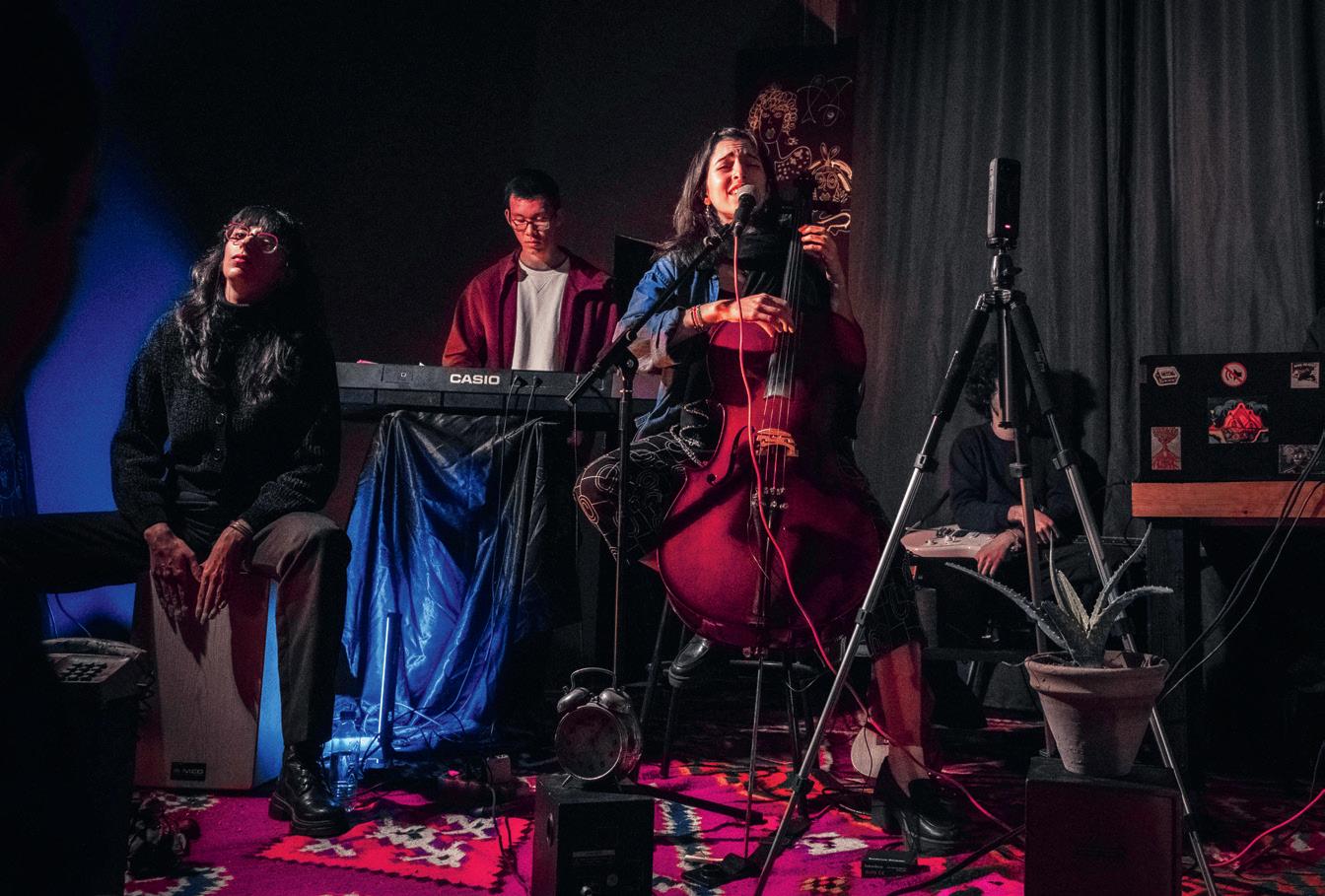
Serendipity brought Selima Terras ’26 and Brian Liu ’25 together in North Africa for a musical moment.
“I’M STILL in awe of how all of this worked out. Yay, life!” said Terras. The anthropology and environmental studies major took to social media to share her excitement after hanging out with Liu for three weeks in her native Tunisia.
Acclaimed concert pianist Liu, who majored in computer science and math, “serendipitously landed” in the North African country last December while on his Watson fellowship, explained Terras, who, due to visa problems, is unable to return to the US and so is completing her degree overseas. She and Liu spent time “exploring our shared interest in music, composition, and space creation,” explained music minor Terras, who plays the piano and the cello and composes.
The duo played in two concerts that Terras had organized as part of her community concert series, she said. They performed two of her original songs, with piano arrangements by Liu. “It was wonderful introducing Brian to my community and vice versa,” she said. They put on a final concert in Rabat, Morocco, alongside 88 International Music, an international touring group with whom Terras has long been associated. Liu performed a Chopin nocturne, while Terras played two of her compositions in Arabic. “It was wonderful to be part of Brian’s Watson journey,” said Terras, who, after completing a semester in Tunis, is now studying away at NYU Shanghai to finish her degree.
Liu, meanwhile, continues his global Watson odyssey, which is also taking him through Europe, Asia, and South America. For his project, he is combining technology, artistic expression, and community-building to explore how music can be a catalyst for healing, unity, and social change.
Bowdoin musicians Liu and Terras performed together far from campus.
A Rink Recast
A visual arts professor finds artistic potential in some old hockey benches destined for the dump.
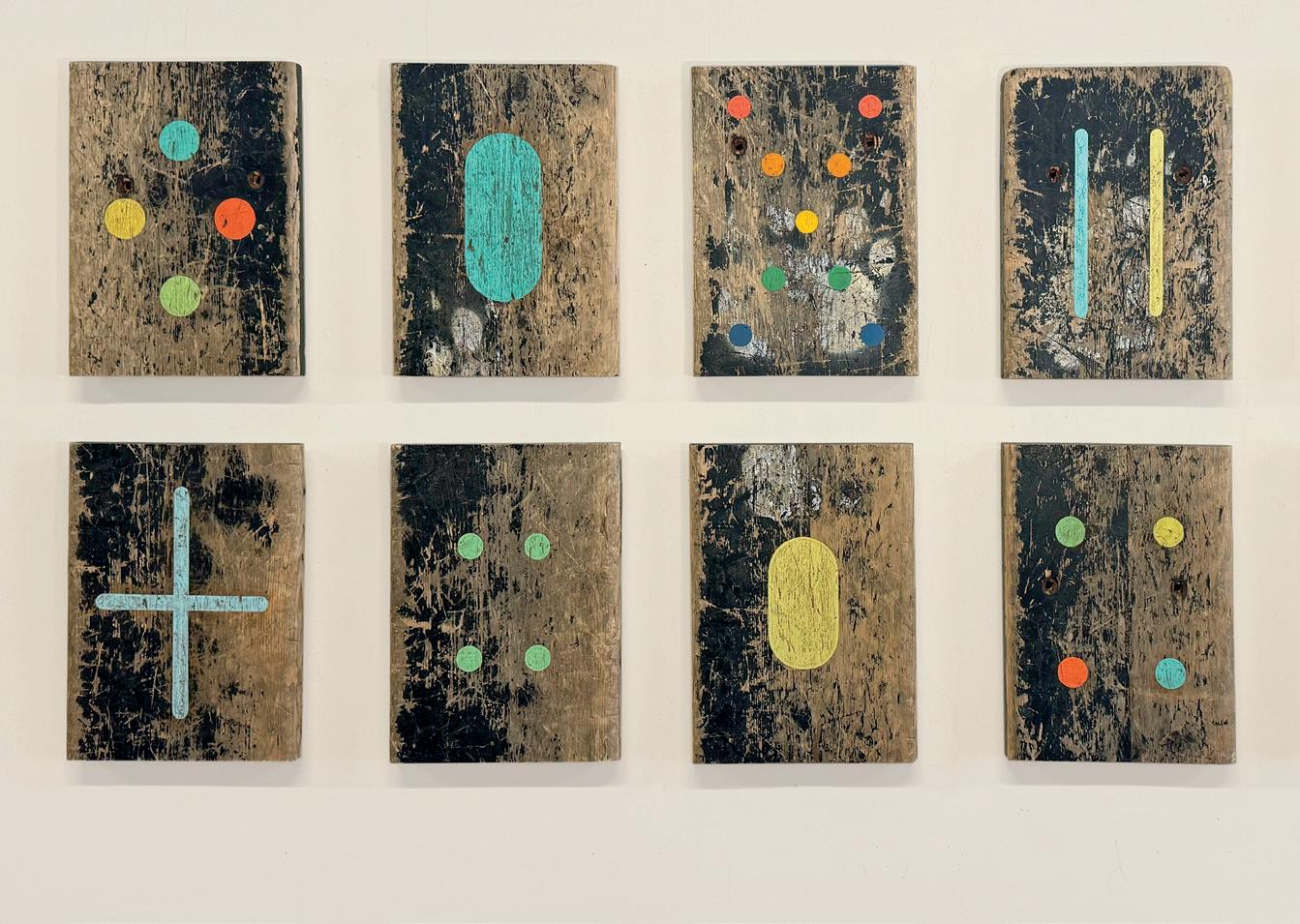
IT WAS back in 2008, recalls Mark Wethli, when he happened to be on hand as the historic Dayton Arena—home to the Bowdoin hockey team for fifty-two years—was being taken down. His eye was caught by the team benches, which he rescued to see what he could make out of them.
“They were made of spruce and quite long, but for easier handling I cut them into shorter lengths. I had an idea I’d paint on them but nothing more,” recalls the A. LeRoy Greason Professor of Art Emeritus.
The pieces of the players bench then sat in his basement for sixteen years. Early in 2024, having recently retired from Bowdoin after nearly four decades, Wethli— a renowned painter and public artist—returned to the project.
“An idea began to crystallize, and I cut the bench segments further to make fifteen-by-eleven-inch panels. They were once painted black, with white polar bear paw prints every so often, but had been heavily worn through use and from players standing on them in skates. Some also had rusty bolt holes.”
Wethli says he chose to add as little as possible to the boards to make “the kind of contemplative object that might help center the viewer in these divisive times.”
Given one of Bowdoin’s other symbols, the sun, he says, “I decided to name all but two of them for planetary and solar relationships, like Aphelion and Perigree.”
The first ten pieces in the series, rich in Bowdoin lore, were sold after going on display at a gallery in Maine in 2024, after which Wethli made ten others. There’s only enough material to make a few more, Wethli says. “After that, fini.”
Fair Play
Aubrey Brick ’05 is a key player in documenting how athletes will be selected to represent the US at the Olympic and Paralympic Games. Brick says going to law school at Drexel was an important step in her career. She worked for the Consumer Financial Protection Bureau and spent several years in compliance for college athletic programs before taking her current job—for the last three years she has been associate director of selection procedures for the United States Olympic and Paralympic Committee.
When it comes to choosing athletes, says Brick, there’s a notable difference between Team USA and most other countries’ teams: “Here, all the national governing bodies, like US Soccer and US Ski and Snowboard, must document and justify how they pick their Olympic and Paralympic teams.” Brick’s job involves collaborating with these organizations to develop athlete selection procedures for Team USA. “It’s all about ensuring fairness and transparency,” she explains, so athletes know in advance what they need to accomplish to be selected.
With the Winter Games, one athlete Brick is especially thrilled to follow is gold medal-winning Paralympic skier Jake Adicoff ’18, who is expected to represent Team USA in his fourth Winter Games. “To have a fellow Bowdoin grad achieve such heights is amazing!”
Alumni
Eight of the ten remaining pieces of art that retired professor of art Mark Wethli has made from part of the old team benches at Dayton Arena.
Benched
“There’s nothing more powerful than the power of example.”
—MAYOR OF NEW YORK CITY ZOHRAN MAMDANI ’14, SPEAKING WITH ABC’S JONATHAN KARL ON JANUARY 25, 2026
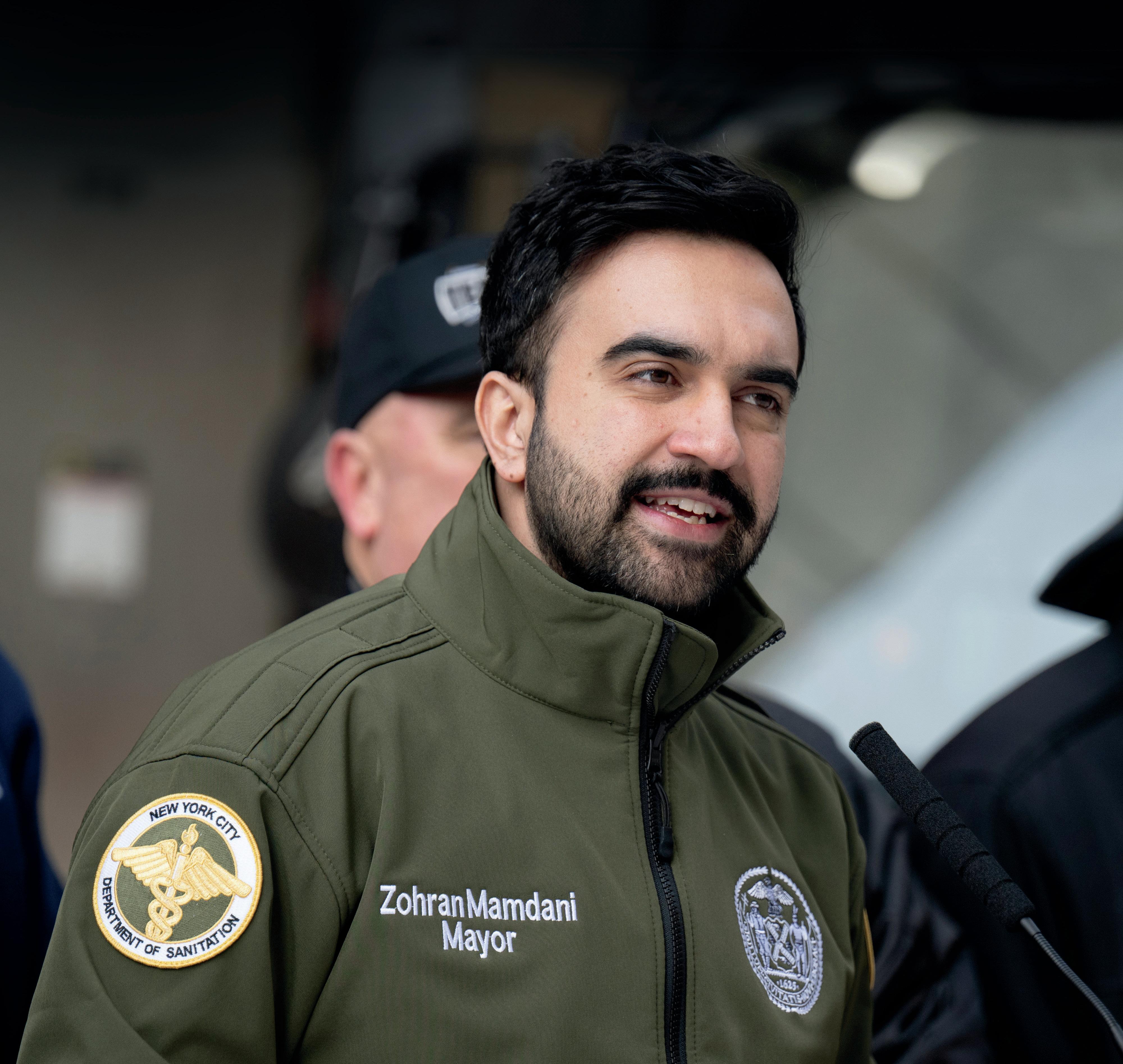
Zohran Mamdani ’14 holds a press conference on New York City’s storm preparations at the Spring Street Salt Shed along the Hudson River on January 24, 2026.
Herbal Tee
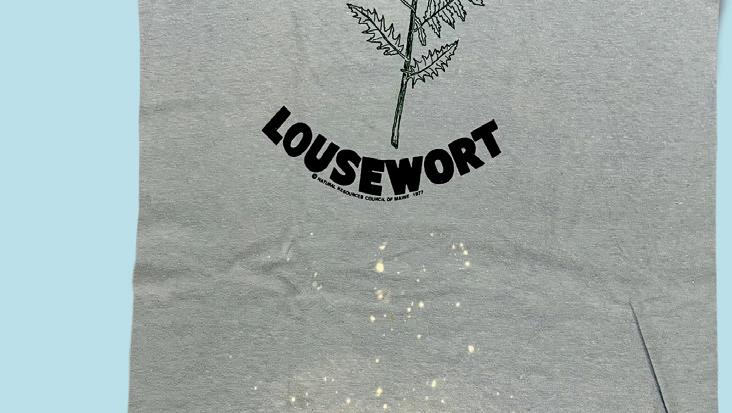
Amid all the treasures in Bowdoin’s special collections—safely tucked away with the rare books, papers, important documents, and digital materials—is a simple gray T-shirt emblazoned with a line drawing of a plant and its identifying words: Furbish lousewort. Painter and amateur botanist Kate Furbish discovered the wild snapdragon in 1880. The herbaceous perennial’s habitat is quite particular—bordering on finicky. It’s found only on a short stretch of the narrow, shady, damp, sloped banks of the Saint John River in Maine and New Brunswick and requires specific disturbances such as ice scouring and spring flooding to clear away competing vegetation. From the 1940s until the mid-1970s, the plant was feared extinct. Signs of its existence resurfaced, only to be threatened when word spread in 1976 that the proposed $900 million Dickey-Lincoln hydroelectric dam on the upper Saint John would submerge 88,000 acres of riverbank and forest and cause the Furbish’s lousewort, one of the first species listed on the Endangered Species Act, to become extinct. Instead, it became a rallying cry for environmentalists. The Natural Resources Council of Maine created and sold the lousewort T-shirts to raise funds and awareness to fight the dam project. After a decade-long battle, the Dickey-Lincoln project was canceled and in 2023, the plant was downlisted from endangered to threatened. Today, the Furbish’s lousewort can still be found on the banks of the Saint John, as well as among the 1,328 breathtakingly beautiful botanical illustrations Kate Furbish gifted to Bowdoin in 1908.
Pros Who Mend Pros
Health Care Behind every professional sports team is a dedicated crew of medical professionals. Meet three Bowdoin alumni who help some of North America’s top athletes stay or get healthy.
KEVIN RAND ’81’s forty-one-year career in baseball took him from the New York Yankees minor league system to Major League Baseball’s Detroit Tigers, where he became senior director of medical services. A renowned athletic trainer, Rand is grateful that as a Bowdoin student-athlete he came under the influence of fabled coaches “Stump” Merrill and Mike “Big Daddy” Linkovich, who helped launch his career. Highlights include winning the 1997 World Series with the Marlins. “My life in baseball has been an amazing ride.”
ANTHONY SCHENA ’93 is in his ninth season as both team physician and chief medical officer for the Boston Celtics. Combining his team duties with his regular work as an orthopedic surgeon—particularly during playoffs—can be a challenge, says Schena, but it’s well worth it. “It has been an incredible experience, especially for someone who grew up out of Boston.” His highlight? Winning the 2024 national championship and riding through Boston on a duck boat.
WILLIAM D. REGAN JR. ’77 is head team physician for the Vancouver Canucks hockey team. He joined them in 2000, after serving as orthopedic surgeon for the BC Lions Canadian football team and Canadian basketball’s Vancouver Grizzlies. “Like anything in life, the most challenging things we do are also the most rewarding. This is no exception,” says Regan, who as a championship-winning Bowdoin hockey player was coached by the legendary Sid Watson. “It all began for me at Bowdoin College.”
Flora
Dining
MORE CHEESE, PLEASE
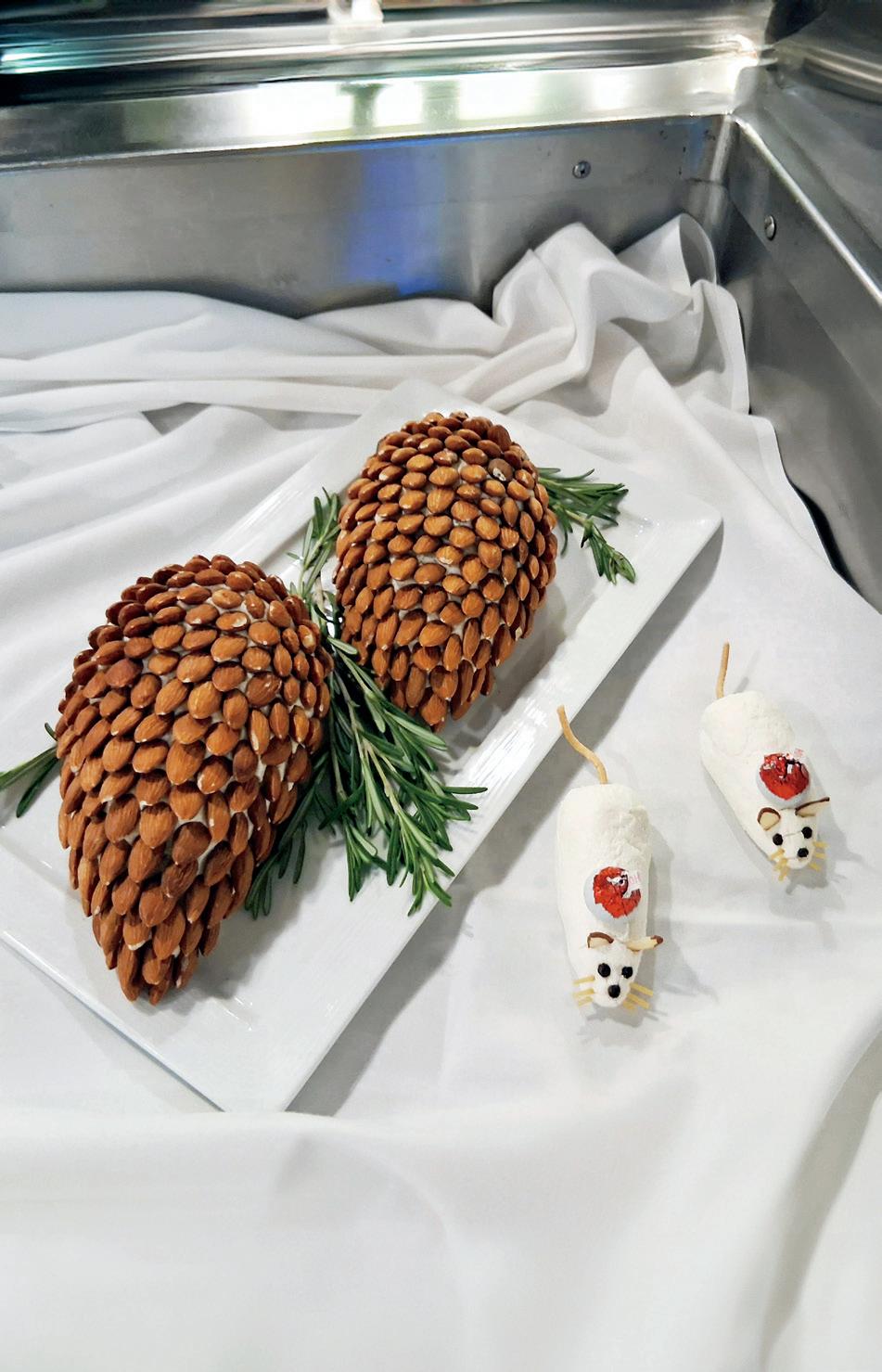
Anita Ericson-York is Bowdoin Dining Services’ artist-in-residence—sculpting in a unique medium. She’s behind all the eye-catching edible displays set up for many of Thorne’s major meals, like Thanksgiving and the annual locavore dinner. Often, the centerpiece is a carved fortypound block of cheese or a brightly colored watermelon. To make these, Ericson-York has designed a series of reusable stencils depicting thematic objects like the state of Maine, a polar bear, the Bowdoin “B,” a turkey, and a cornucopia. Tending to details, she might add whiskered goat-cheese mice popping in and out of the cheese or top it off with cheeseball ornaments dusted in turmeric, paprika, dillweed, and sesame seed powder. “It is fun,” she said. “One of the best parts of my job.”
Connections
Ode to a Mountain Range
A subrange of the Appalachian Mountains in Maine’s North Woods is named for a Bowdoin luminary.
YOU MAY RECALL Henry Wadsworth Longfellow’s poignant sonnet “The Cross of Snow,” in which the poet uses the image of a distant mountain with a cross of snow on its side as a metaphor for his enduring grief after the death of his wife. Or maybe you recall the Alpine environs of his famous poem “Excelsior”—or maybe you just think of Longfellow as, well, a mountain of literary talent. What you may not know is that Longfellow is officially part of Maine’s mountainous landscape. In 1959, the Maine Legislature
voted to give special designations to various mountains and ranges in the state. When they did so, a subrange of the Appalachian Mountain system within the North Maine Woods region of northwestern Maine was named the Longfellow Mountains in honor of the poet, born in Portland in 1807, who would go on to become one of thirty-seven members of the Bowdoin Class of 1825.
Poems like “Paul Revere’s Ride,” “The Song of Hiawatha,” and “Evangeline” made Longfellow a cornerstone of American literature and helped define the nation’s identity. The effort to honor that contribution with a swath of westcentral and northwestern Maine did not take off in quite the same way. The official name of the range never caught on with the public, but since the group contains many of Maine’s most majestic mountains —Katahdin, Sugarloaf, and Saddleback, to name just three—you may have unknowingly hiked or skied in a place that honors Bowdoin’s famous poet.
Ericson-York likes to add to her cheese carvings with goat cheese mice and pine cones with scales made from almonds.
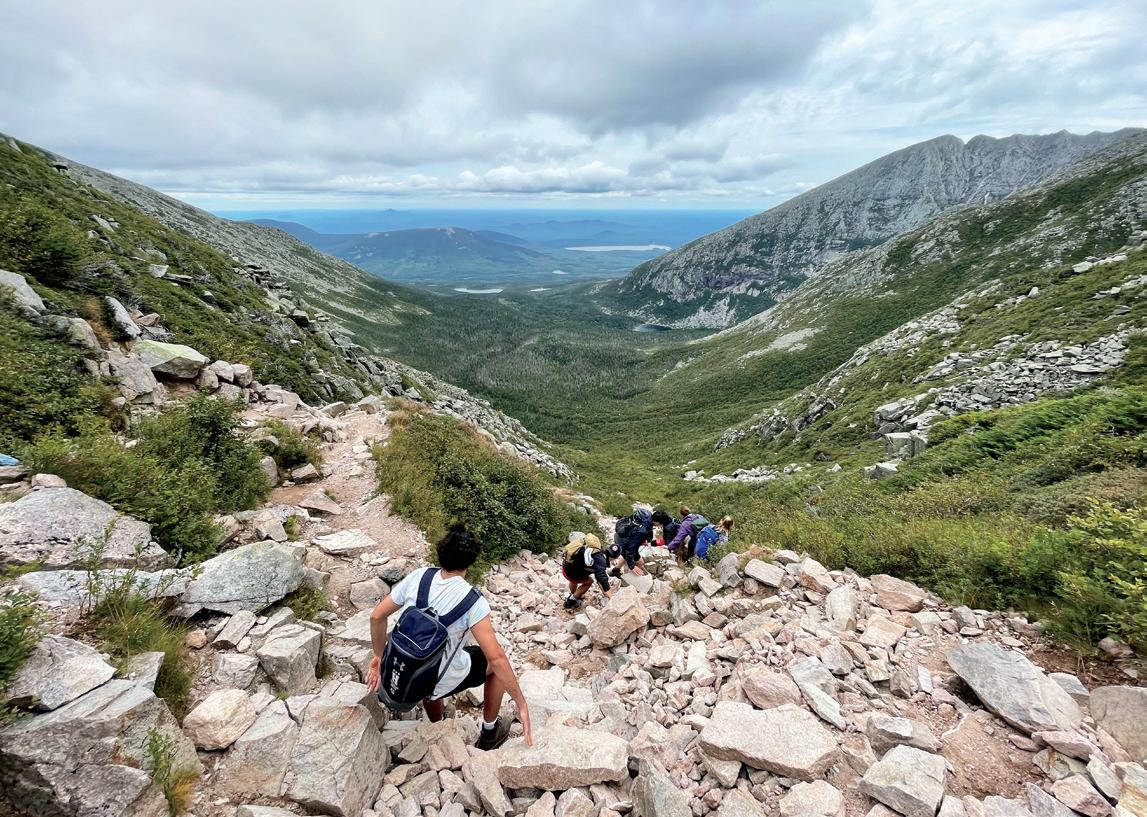
Students in the Longfellow Mountain range on an orientation trip.
Traditions
TIME FLIES
Special Collections is celebrating the tenth anniversary of its monthly The Birds of America page-turning. One of only 120 copies of John James Audubon’s The Birds of America still believed to exist is on permanent display in Bowdoin’s special collections and archives (SCA). Bowdoin received its copy of The Birds of America in 1955 as a gift from Roscoe H. Hupper, a member of the Class of 1907 and the Board of Overseers, in memory of his mother, Mary Alden Hupper. Within this monumental work are life-size depictions of 489 species of American birds reproduced from Audubon’s paintings on jumbo sheets that are around 26 by 39 inches—hence the big book’s designation as a double-elephant folio. SCA began the practice of publicly flipping the page on the first Friday of each month in 2016. Library staff roll out the book from its glass-topped case and carefully, with very clean hands, turn the page to reveal a new bird of the month. The works, published in large, four-volume sets in London and Edinburgh between 1827 and 1838, were not always bound the same way, so each month’s revelation is truly a surprise to everyone—including the librarians. The big reveal for the tenth anniversary year is in April, when the hundredth plate, the last in volume one, is turned before a new book is started.
Baltimore Oriole, sporting the colors of the coat of arms of seventeenth-century Lord Baltimore, plate 12 from John James Audubon’s The Birds of America.
Good Book Hunting
Katherine Churchill ’16 has amassed a small but growing collection of pre-1950 books about Bowdoin.
ONE OF her favorite volumes is a 900-page history of the College, published in 1882. “This one is cool because it has short biographies of all the alumni, some with portraits. It’s basically a ‘who’s who’ of Bowdoin alumni,” Churchill said.
While the book covers welltrodden ground, like illustrious graduates Nathaniel Hawthorne and Henry Wadsworth Longfellow, it depicts many others who “went to school, got married, went on to live in Maine, and had these lovely quiet little lives.”
Churchill, a writer and scholar of medieval literature, started collecting old books about Bowdoin when she was an undergraduate. When she and her friends had a free Saturday, they would leave campus for “wandering road trips around Maine.”
During an excursion to Camden, they stopped at a little store, where Churchill picked up an 1800s edition of a Longfellow novel. “It’s a pretty mediocre edition, nothing special,” she admitted, noting that Longfellow’s popularity means many early printings of his work still exist.
But the discovery stirred the first inklings of a collecting habit. “I think it is a really human thing to collect,” she said. “It helps us figure things out about our stories and the stories we’re involved in. When we collect, we’re putting
the pieces together—there’s a narrative aspect to it.”
Churchill describes this work as a “knowledge-creation project,” one enhanced by being aware of who or what is being included or excluded.
“I have thought a lot about what it means to be nostalgic for ‘the good ol’ days’ of campus life, when I could never have been part of that picture,” she said. These musings have shaped her recent focus: collecting works by women who were connected to Bowdoin but not enrolled there. She has her eye on a first-edition work by Harriet Beecher Stowe, who lived in Brunswick from 1850 to 1852, when her husband taught at Bowdoin.
Film Fun
STUNT DOUBLE
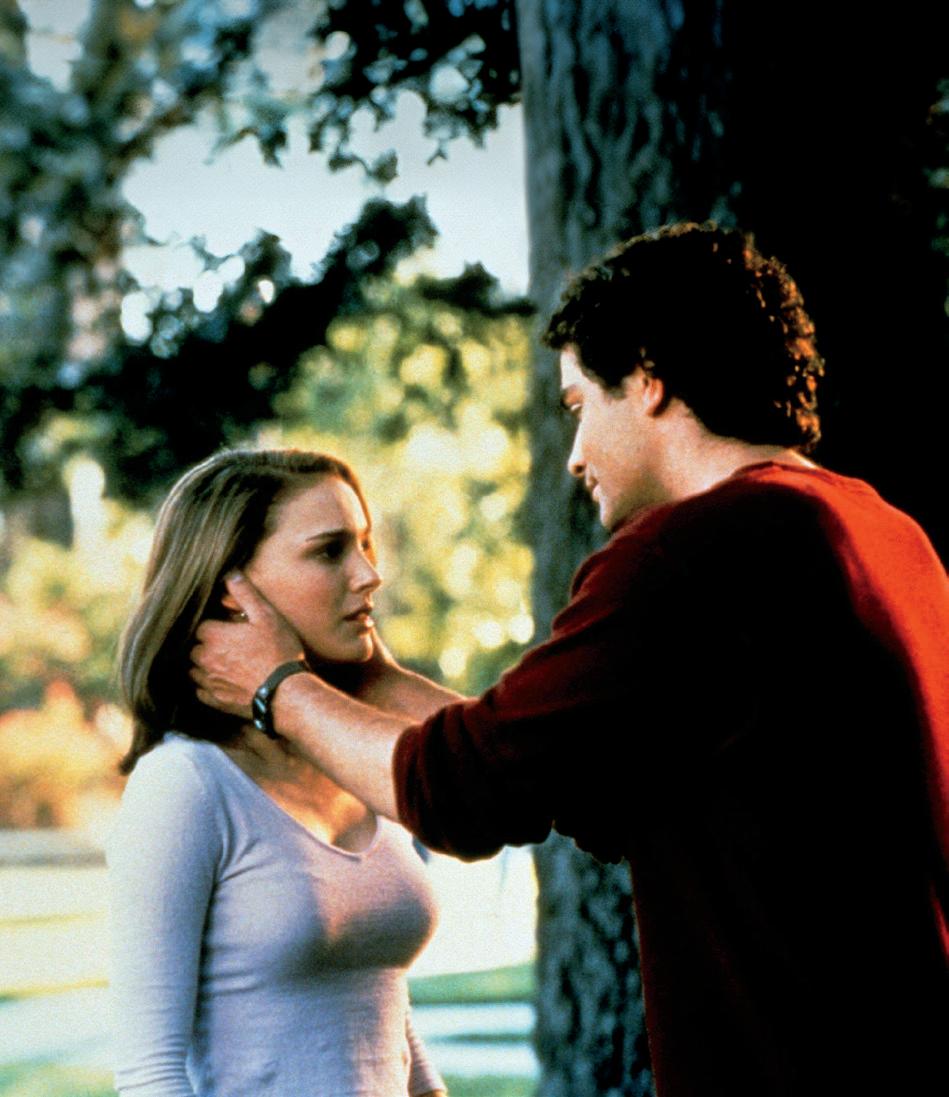
A Natalie Portman film with a somewhat unsatisfying Bowdoin ending celebrates its silver anniversary. It has been twenty-five years since Natalie Portman’s character Novalee Nation gave birth to Americus, also known as “the Walmart baby,” in the 2000 film Where the Heart Is, in which Bowdoin is the setting for the movie’s climactic scene. If you haven’t seen it, we offer the spoiler alert that it is on Bowdoin’s campus that Novalee finally professes her love for Forney, the boyfriend she had let slip away. Those of you who have seen the film may recall not recognizing your alma mater as the camera swirled around the movie’s main characters in that final scene. That’s because, although Bowdoin is referenced in dialogue, the scene wasn’t shot in Brunswick but instead in Waco, Texas, on the campus of Baylor University. A coproducer for the film told The Baylor Lariat that the studio chose to film in Texas because “Baylor has the kind of old-fashioned brick buildings that are reminiscent of New England colleges, which is what we were trying to replicate.” The film, based on the best-selling 1995 Billie Letts novel by the same name, also starred Ashley Judd, Stockard Channing, and Joan Cusack and featured a cameo appearance by Sally Field.
Biblio Fan
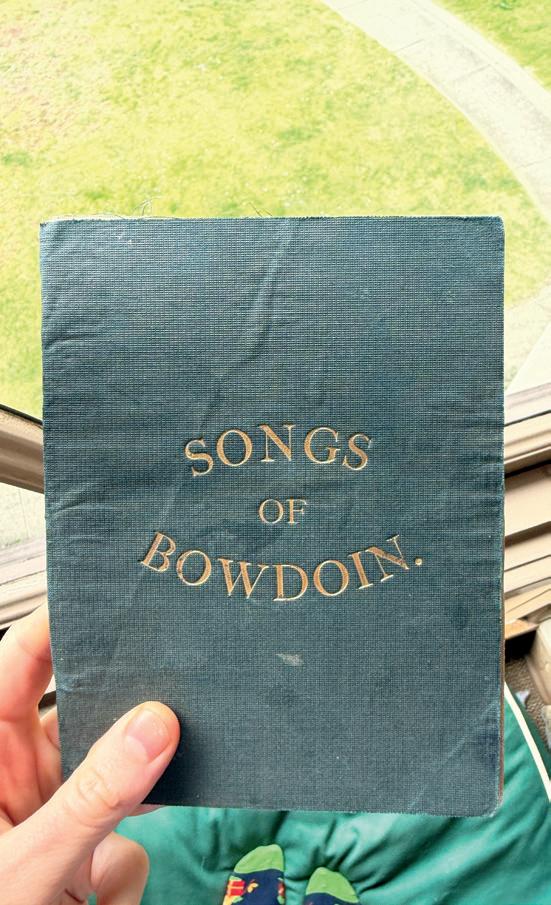
A pamphlet of Bowdoin songs from the 1870s.
Natalie Portman and James Frain in Where the Heart Is.
The Play’s the Thing
Isabella Ardell ’26 reflects on four years of intramural sports and what she learned about competition, friendship, and finding joy in imperfection.
MY FIRST FALL at Bowdoin, I wanted to play intramural soccer. I had played a bit in high school, but I was not that good. That wasn’t my main problem, though. My main problem was that I didn’t know enough people to field a team. So I did what I could: I knocked on doors on my floor until I got lucky and saw someone with a soccer ball. He was on the men’s club soccer team and, importantly, he knew other people who could kick a ball in the right direction. We showed up to our first game with enough bodies and a team name that made us laugh: the Pyramid Schemers. I don’t remember who came up with it or why it stuck, but it did. What I do remember is that we won. Then we kept winning. By the end of the season, we had claimed the intramural soccer championship. Riding that high, we figured: why stop there? Winter came, and we moved to ice hockey. Same team, different sport, same result. Championship again. Sophomore year rolled around, and we did it all over—soccer in the fall, hockey in the winter. No such luck dabbling with basketball, but we claimed two more championships later. At that point, it felt almost inevitable, like we’d stumbled into some kind of intramural dynasty purely by accident. Then junior year happened. Everyone scattered abroad for different semesters, in different countries and different time zones. The Pyramid Schemers went on indefinite hiatus. I wondered if we’d ever get the band back together.
WE DID, during our senior fall, for soccer. But something had shifted. We were all back on campus, technically, but we were also busier than we’d ever been. Night classes, senior commitments, thesis deadlines, job
applications—all the things that make senior year feel like you’re simultaneously sprinting toward the finish line and trying to savor what’s left. People were less available. Games were squeezed between everything else demanding our attention.
We didn’t win the championship this year. For the first time since we’d started, we fell short. But here’s the thing: it didn’t devastate me the way I thought it might. Somewhere along the way, intramural sports had stopped being about winning and started being about something else entirely.
I’VE BEEN THINKING a lot lately about what distinguishes play from competition, and how rarely we give ourselves permission to exist in that in-between space, especially as women. In most of the athletic spaces I’d occupied before Bowdoin, there was always an endpoint, a metric, a ranking. You were either good enough to make the team, or you weren’t. You either
won, or you lost. The scoreboard was what told you your worth.
Intramurals offered something different—a space where the stakes were simultaneously real and not real at all. We kept score, yes. We wanted to win, absolutely. But we also knew that showing up mattered more than our skill level and that the person who’d never played hockey before was just as essential to the team as the one who’d grown up on skates. There was a competitive aspect for sure; we weren’t out there just going through the motions, but it was competition wrapped in permission to be imperfect, to be learning, to be there purely because it was fun. So much fun.
There was still adrenaline, still the rush of a close game, still the satisfaction of a goal or a good defensive play. But underneath it all was this baseline of ease, this knowledge that whether you were brilliant or terrible on any given night, you were still welcome, and you’d still play. If you wanted in, you were in.
Sometimes the most meaningful things are the ones you choose simply because they make you feel more like yourself.
MY FIRST YEAR, my experience with intramurals was intentional in a way I didn’t fully appreciate at the time. I was actively trying to build something—a team, a friend group, a place to belong in this new environment. I wanted to replicate the feeling of being part of something, of having people who expected you to show up. It worked, probably better than I could have hoped.
But now, senior year, standing on the other side of that intentionality, I’m confronted with a different question: How do I carry this forward? In a few months, I’ll be moving into the next phase of life, whatever that looks like, and there won’t be a convenient intramural sports system waiting for me. There won’t be an email telling me when my games will be or a built-in group of people who show up at the same time every week to do something purely for the joy of it.
When prospective students ask me about my athletic involvement at Bowdoin, it is easy for intramurals to come up. I try not to oversell it—I’m not some IM sports evangelist—but I do tell them the truth: it’s actually fun. Fun in the way that makes you forget to check your phone, fun that gets you up to walk to the field at 10:30 p.m., fun that leaves you slightly sweaty and completely present, and fun that doesn’t require you to be good at anything in particular, even if it sometimes helps.
I’ve talked to people over the years who have drifted from team sports, often because they felt they weren’t good enough, or because they assumed everyone else was taking it more seriously than they were. And I get it—there’s vulnerability in showing up to something you’re not naturally skilled at, especially when you’re surrounded by people who seem to know what they’re doing. But that’s exactly what makes intramurals valuable. It’s one of the few spaces
left where mediocrity is not just acceptable but expected, where half the team might be learning the rules as they play, where someone will absolutely trip over their own feet at a crucial moment and everyone will laugh, including them.
HERE’S WHAT I’m starting to realize, though: this particular flavor of competition—playful, structured enough to matter but loose enough to breathe—is astonishingly rare outside of college. We were good at soccer and hockey. Some of us were better than others, of course, but we all brought something. What made intramurals special wasn’t that we were bad at sports; it’s that we got to exist in this middle ground between casual pickup games and serious athletic commitment. We cared about winning, showed up consistently, built real team chemistry. But we also knew that this wasn’t our whole identity or even the largest part of our Bowdoin experiences. It was just… well, Monday, Wednesday, and occasionally Sunday nights.
The Pyramid Schemers gave me that. Three and a half years of those nights where the only requirement was showing up. Most games we dominated. Some games we barely won. Some games, especially senior year, we barely had enough people to field a full team. But we were there. We kept showing up.
The lack of structure, paradoxically, sort of created its own kind of structure. We didn’t have mandatory practices or coaching staff or performance reviews. We had a group chat, a game schedule, and a collective understanding that this mattered to us, even if we couldn’t always articulate why. That informality meant we had to choose it, week after week. Nobody was making us be there. We wanted to.
WE’RE BACK for ice hockey this winter, senior year, one last run at a championship. The team looks a little different now; people’s schedules are more complicated, commitment levels vary, we’re all managing different levels of senioritis. I don’t know if we’ll win. Honestly, I’m not sure it matters.
What I do know is this: I’ll remember the particular kind of exhaustion that comes from playing a sport you’re only moderately good at but deeply enjoy. I’ll remember the elaborate celebrations after mediocre goals, the fun we had.
More than that, I’ll remember what it taught me about building the kind of life I want to live after Bowdoin. Not everything needs to be excellent. Not everything needs to have a clear purpose or outcome. Sometimes the most meaningful things are the ones you choose simply because they make you feel more like yourself.
When I leave campus in May, I won’t be able to take the Pyramid Schemers with me. But I can take this: the knowledge that it’s worth seeking out spaces where joy matters more than skill, where showing up is enough, where you’re allowed to be imperfect and still belong. I can take the muscle memory of choosing play over perfection, of building community around shared laughter and shared excellence.
The Pyramid Schemers played and won countless games that mattered and didn’t matter in equal measure. We showed up for each other, week after week, year after year, because we chose to. Somewhere in all that, we figured out how to hold competition and joy in the same hand, how to care deeply about something while knowing it’s ultimately just a game, how to create space for play in a serious world, and how to be part of something bigger than ourselves without losing ourselves in the process.
That’s the thing about intramural sports that nobody tells you—it’s not really about sports at all.
Isabella Ardell ’26 is a sociology major with an economics minor who has worked at Bowdoin as an admissions intern and research associate and is a cofounder of the Philippine Society and social captain for the alpine ski team. She is from Houlton, Maine.
BY ALYCE MCFADDEN ’20 PHOTOGRAPHS BY TIMOTHY ARCHIBALD
HERE TO HOPE
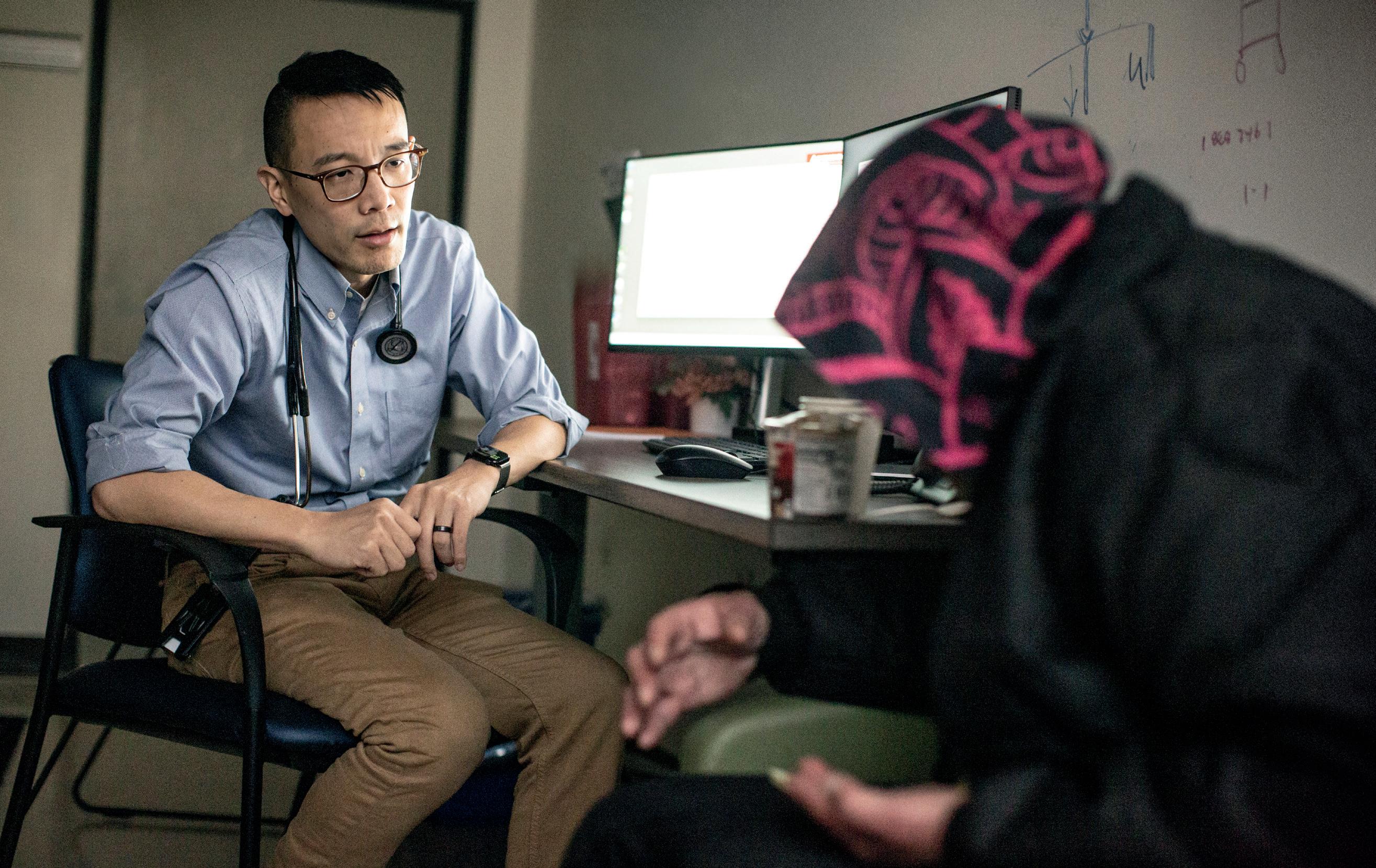
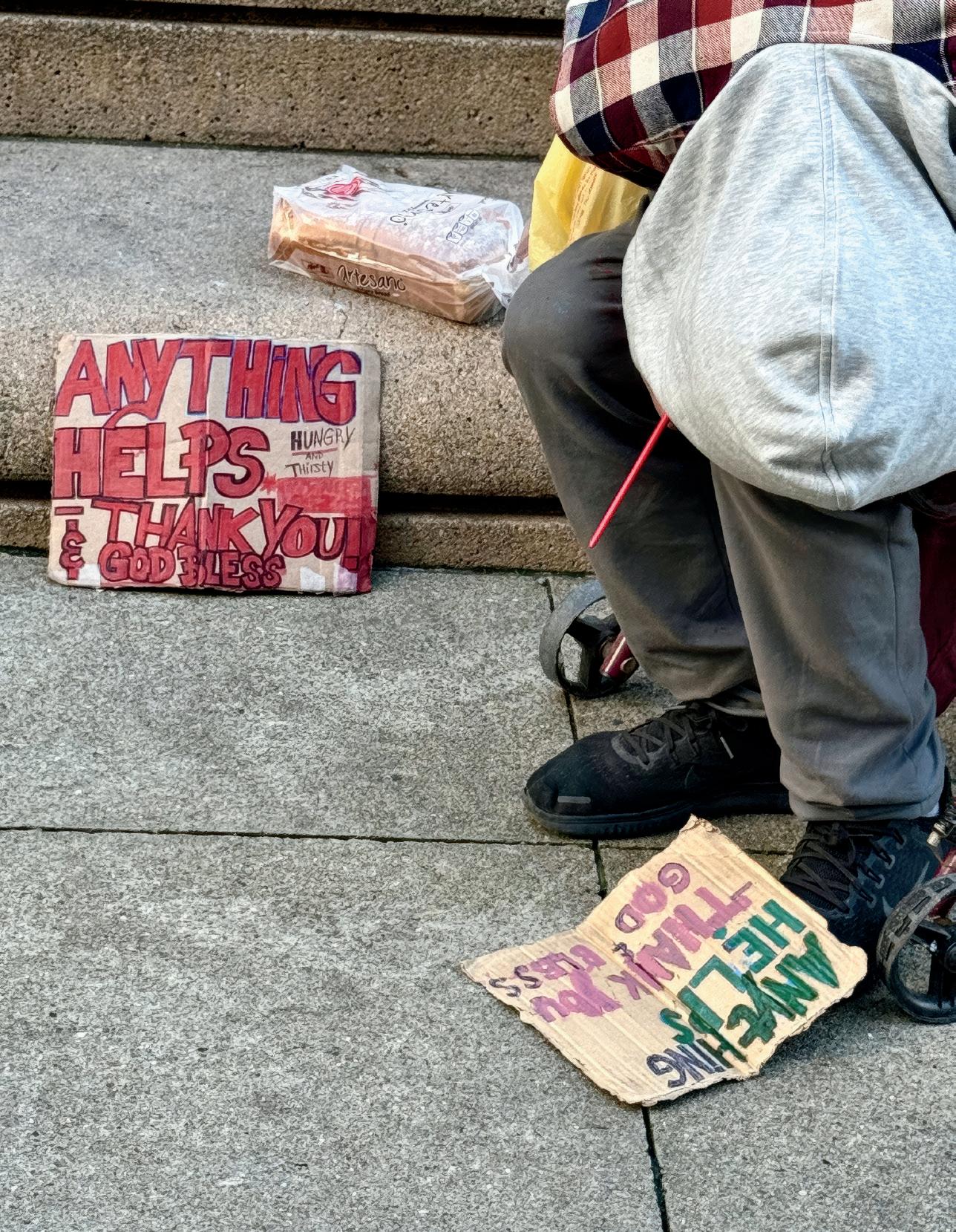
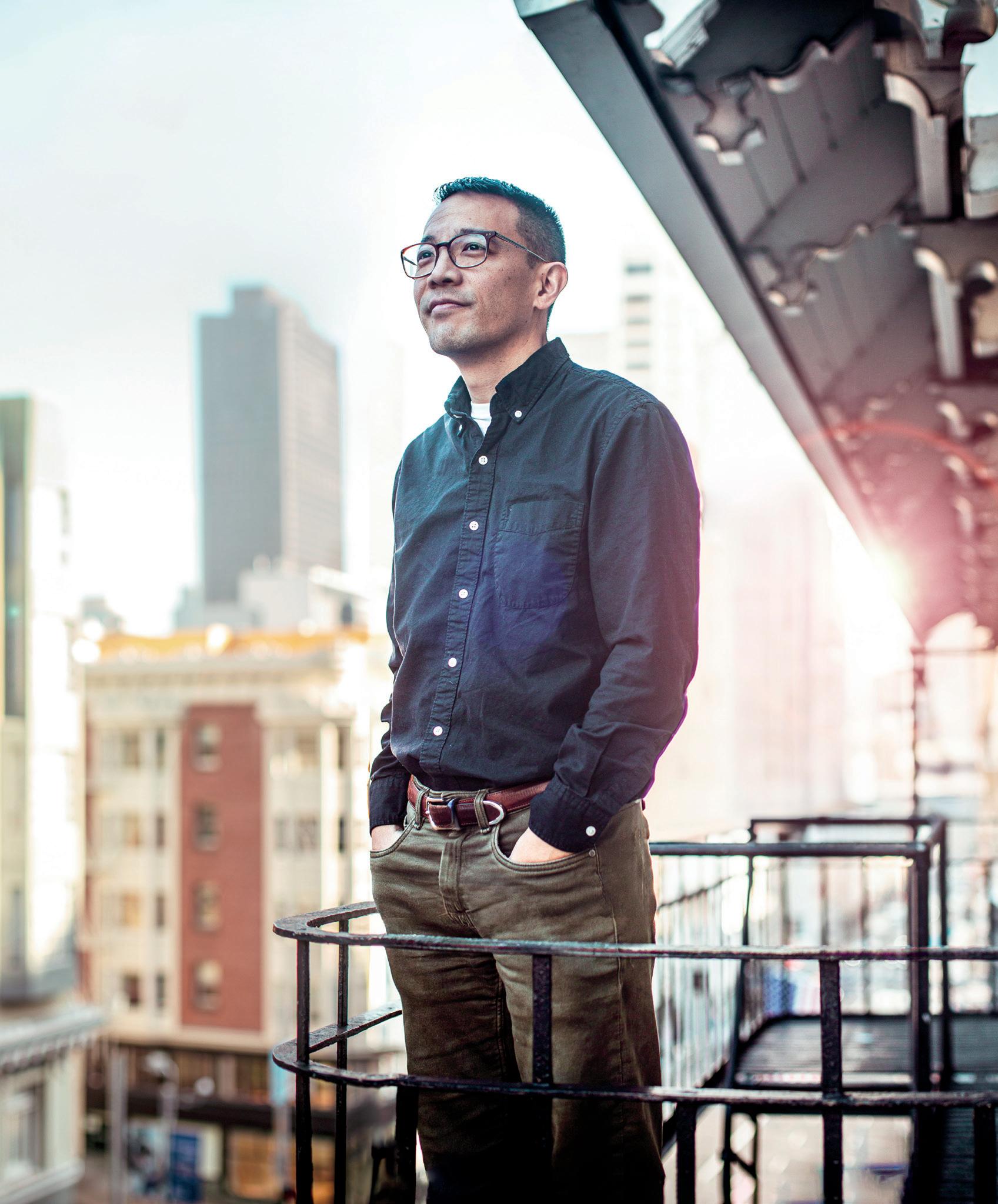
Jeffrey Hom ’04—physician, public health officer, recipient of Bowdoin’s Common Good Award—is a native of San Francisco, a city known for crisis-level overdose deaths and an infiltration of fentanyl, and streets with evidence of both the drugs and the homelessness that often accompanies them. A Harvard-trained doctor, art history major, and scientist in San Francisco’s Department of Public Health, Hom is determined to use every tool at his disposal in the fight.
Opposite page:
Below:
A stack of buprenorphine, a medicine used to treat opioid addiction, in Hom’s clinic.
TTHE CLINIC on Howard Street is warm and inviting on a brisk San Francisco morning. Small, framed paintings hang on exam room walls, quiet chatter fills the waiting room with a gentle hum. Soft January light filters through shaded windows.
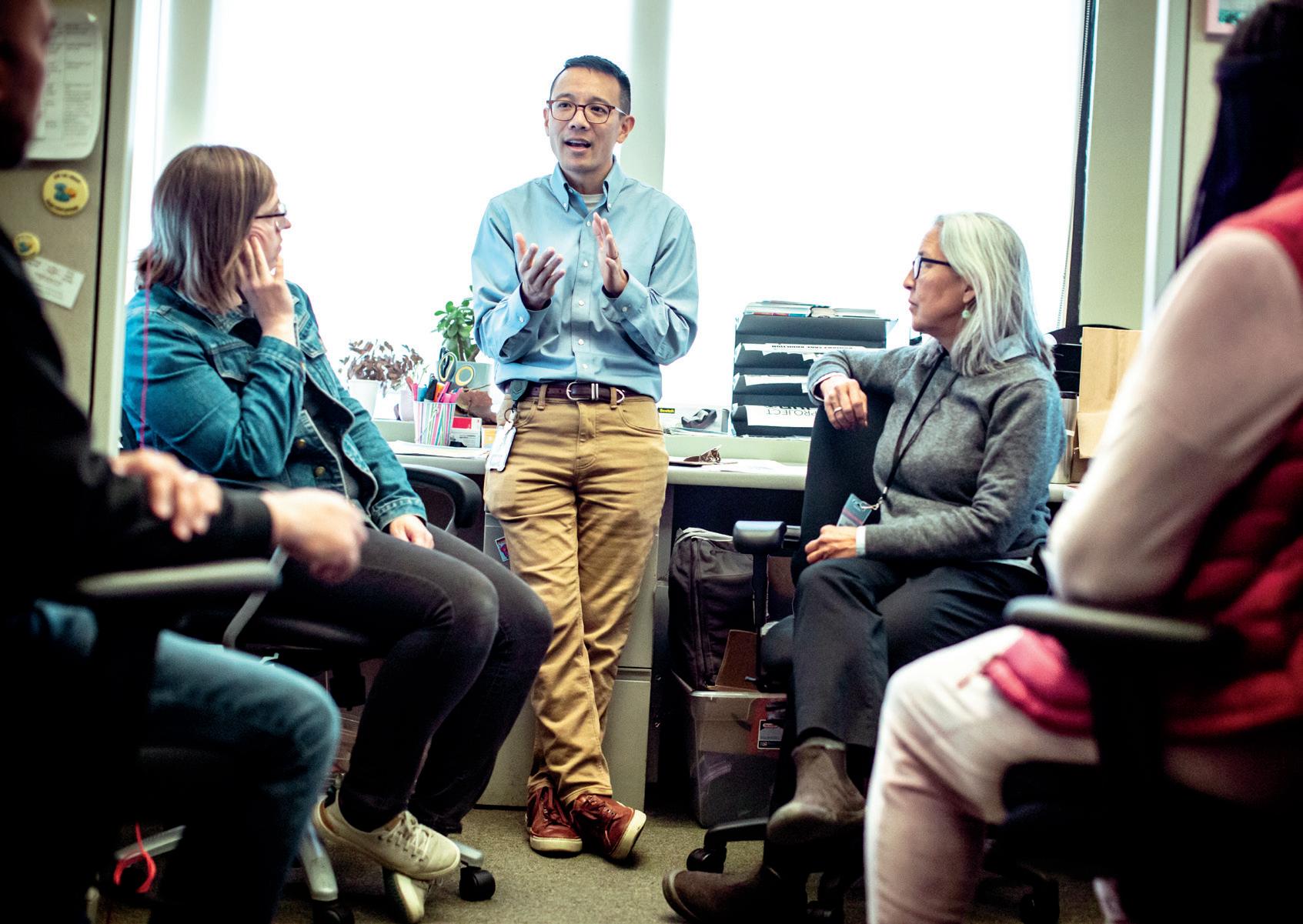
In an office down the hall, Dr. Jeffrey K. Hom ’04 awaits his first patient of the day. Like his surroundings on this quiet Wednesday, Hom radiates a kindly presence. He smiles readily when he talks about his work, though there is sometimes gentle sadness in his eyes.
It’s hard to tell in this vibrant clinic and comfortable office, enclosed in an unassuming grey building, that you are in the middle of San Francisco’s fight against a fearsome epidemic that claims new lives every day and that intersects in multiple ways with another scourge of the city: homelessness. But there are clues—a pile of pharmaceutical boxes balanced precariously by the door, a canister of overdose reversing Narcan next to Hom’s keyboard.
Above his desk hangs a poster with an illustration of a poppy blooming out of the tip of a syringe and next to it, in all caps, the words “Meet people where they’re at.”
Last year, in a city with fewer than 830,000 inhabitants, 621 people died of accidental overdoses in San Francisco. In 2024, the “point in time count” showed that more than seven thousand households were experiencing homelessness.
The city has been locked in a frustrating, tragic battle with opioid addiction for years. Hom is on the front lines here at the clinic, where San Franciscans of all stripes come to seek treatment for substance use disorder. Hom is a foot soldier in this war, but he is also the one drawing battle plans and directing strategy.
Hom is the medical officer for science and policy in the substance use services section of the San Francisco Department of Public Health. The job involves treating patients but also thinking big picture about what substance use disorders mean for San Francisco, the city where he grew up that has now beckoned him back. The work is heavy. Hom has had patients die from overdoses; he’s seen others revived in the nick of time. In other public health departments in other cities, it’s normal for higher-ups like Hom to spend their weeks
working in tidy municipal office buildings, removed from the hard truths of recovery.
But Hom says he loves his days in the clinic. They can be among “the most rewarding and uplifting” parts of his job, and his hours here help him cope with the weight of it all.
“This time with patients helps me,” he said.
MEET PEOPLE WHERE THEY’RE AT
Hom comes from a medical family. He grew up in San Francisco’s Richmond district, raised by an anesthesiologist father and a mom who worked as a geriatric nurse. His grandmother worked in the public health department at University of California, Berkeley.
He always knew he wanted to follow in their footsteps and ultimately settled on public health as a career path that would allow him to work with patients and advocate for them on a policy level. After graduating from Bowdoin in 2004, he considered pursuing global health and spent time in clinics in Lesotho and Cambodia. But a stint working on a Navajo reservation that made him realize the sharp disparities in care between the haves and have-nots in the United States meant there was just as much opportunity to make an impact closer to home.
After medical school at Harvard and residency at the University of California, San Francisco, Hom embarked on his public health career in earnest, completing a fellowship at the University of Pennsylvania and working for Philadelphia’s public health department.
He loved Philadelphia, but when the opportunity to come back to California presented itself in 2022, he took it. He settled in Marin County with his wife, Tiffany, and their two elderly dogs, Piccolo and Crimson. Life is good here: the dogs have space to roam and Hom gets to spend precious weekends, holidays, and birthdays with his family.
He had always known that he might want to come back to the Bay Area. But by 2022, the city that raised him had changed.
The tech boom brought newfound wealth and the relentless vigor of young professionals hungry to make their mark on the future to San Francisco. It also meant yawning inequality,
Opening spread, left: The corner of Geary and Taylor Streets in the Tenderloin District, the epicenter of San Francisco’s drug crisis.
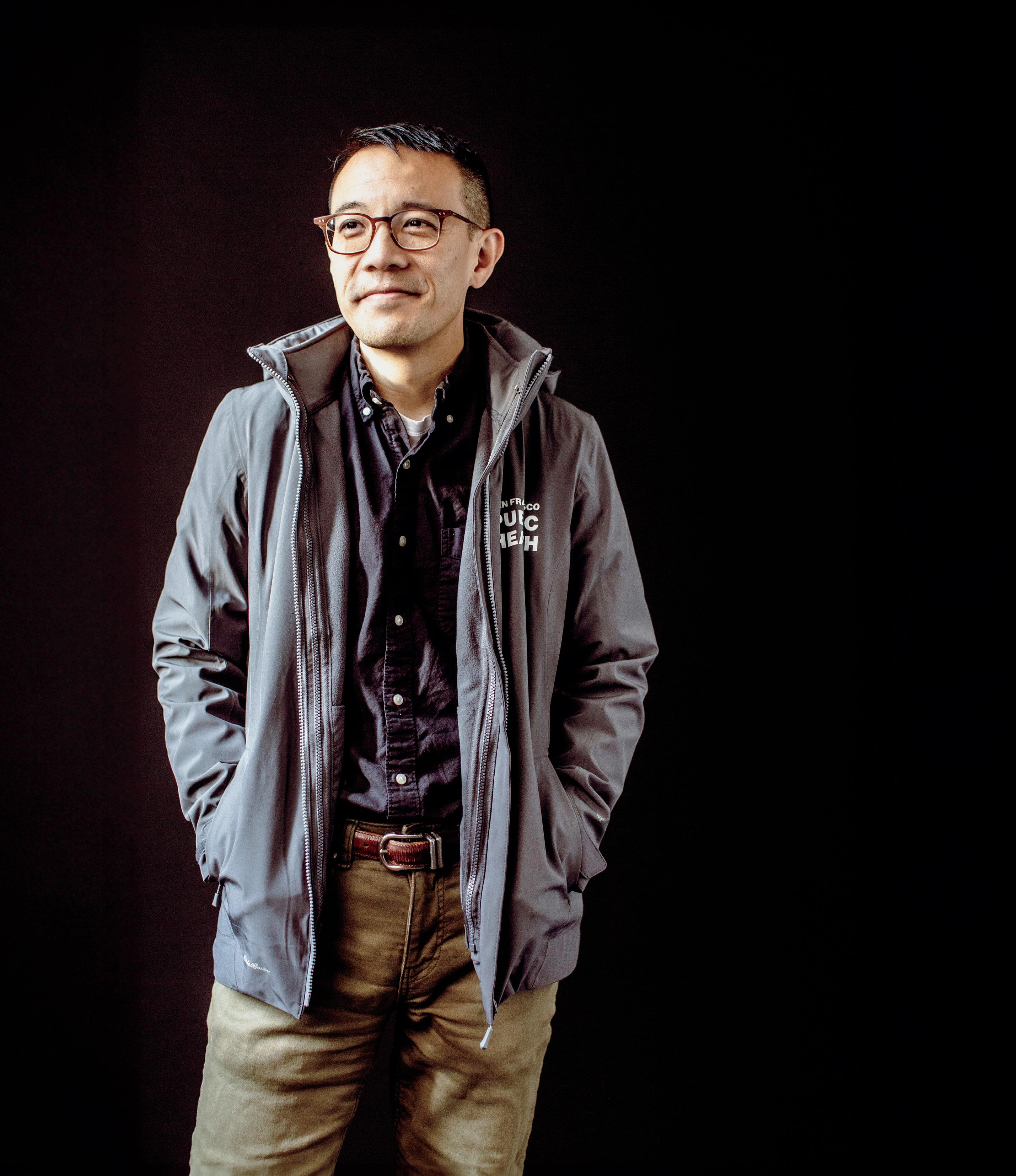
Opening spread, right: Dr. Jeffrey K. Hom ’04
Hom meets with a client in the Howard Street clinic.
rendering life in the city simply too expensive for many of the working families who had called it home for generations.
And then there was COVID.
The pandemic wrung San Francisco out like a wet rag. Five years later, it’s still on the mend, still figuring out how to be a city again. Riders are coming back to public transit lines, and companies are returning to the downtown office buildings that have awaited them, vacant, for years. Residents are optimistic, confident that the city’s darkest days are behind it.
But those days were dark indeed. Crime spiked and parts of downtown imploded. Overdose deaths soared. Many of them were caused by a new drug, a massively potent synthetic opioid that has become a boogeyman and a byword for addiction, death, and crime in America: fentanyl.
This new drug wasn’t new to Hom in 2022. Fentanyl began its reign in earnest on the East Coast, rippling through streets and morgues and treatment centers in cities like New York, Baltimore—and Philadelphia, where Hom was living and working.
“I was there around the time that it was really starting to escalate,” Hom said. “We could see the deaths increasing.”
This was the start of a new chapter in the desperate tale of the opioid epidemic, with its familiar corporate villains and thousands of victims, each a person and each—at least at one time—with friends, neighbors, parents, spouses and partners, or children who loved them. By the time Hom made his way to California, fentanyl had arrived.
The drug tends to be cheaper than heroin and between fifty and a hundred times stronger than morphine.
“Because it’s just so potent, it can cause an overdose very quickly, even in someone who may have a high tolerance,” Hom said.
And it is, of course, addictive. Hom likes to remind the graduate students he teaches that many people who use fentanyl or other opioids just want to feel well, just want to hold off punishing withdrawals with debilitating symptoms like vomiting, severe aches, sweats, and diarrhea.
“Most of the people that you’re seeing are not using to feel high, they’re using just to feel normal,” Hom said. “I think that helps us humanize this, to remember that people are struggling.”
In general, Hom wants us all to “humanize this.” He wants us to see people who use drugs as people, foremost. Some of them want to stop using, and others aren’t quite ready, but each is worthy and deserving of care, dignity, and autonomy.
That’s the lens through which he views this crisis, and that’s the framework on which he is building solutions. Like the poster above his desk in the clinic reminds him: Meet people where they’re at.
“At an individual level, it’s understanding ‘Ok, well, where is someone at, and can we offer them some sort of a service that can meet their need?’” Hom said.
For people who want to escape addiction, Hom’s goal is to make off-ramps as accessible as possible. Part of that work means breaking down barriers to treatments like methadone
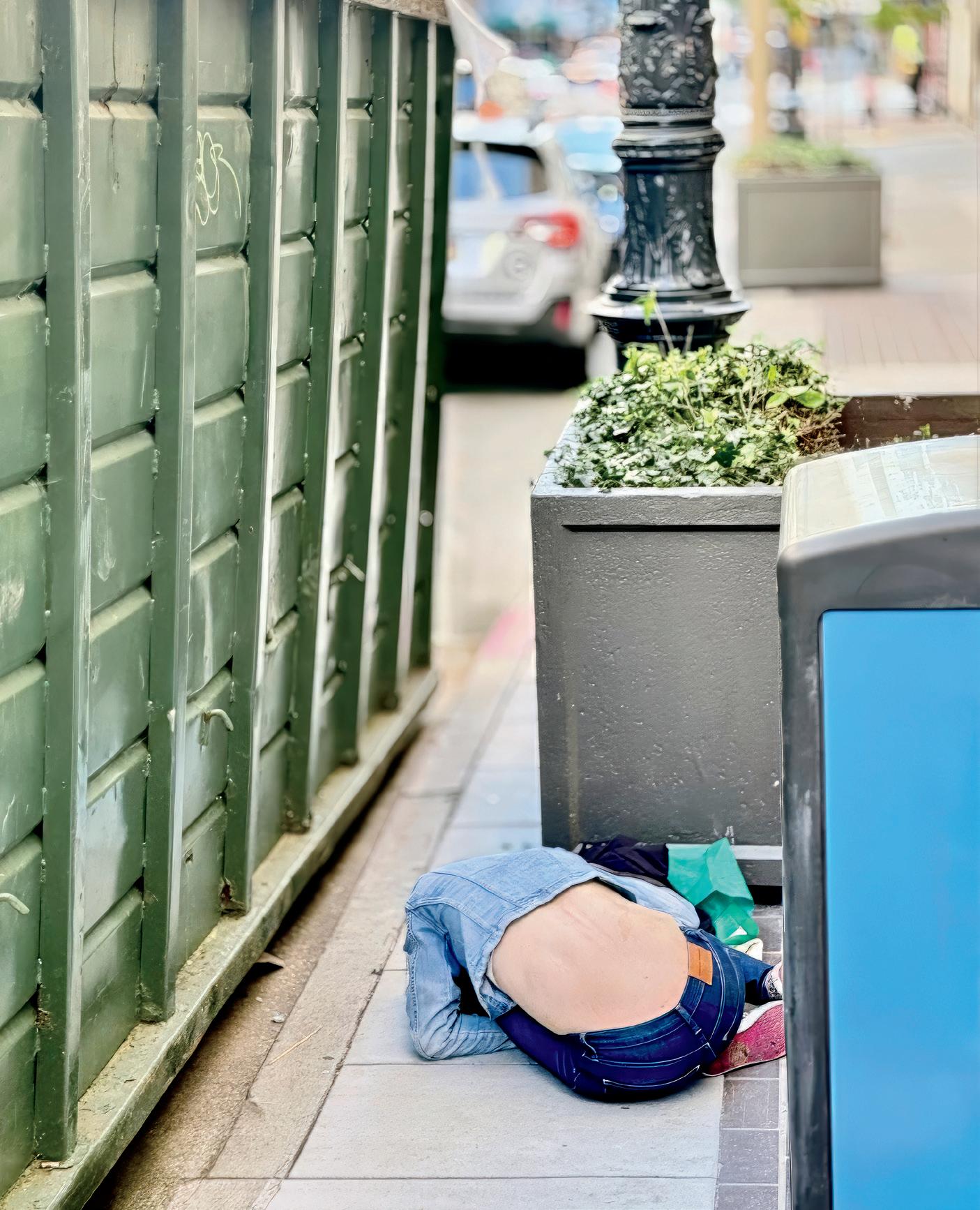
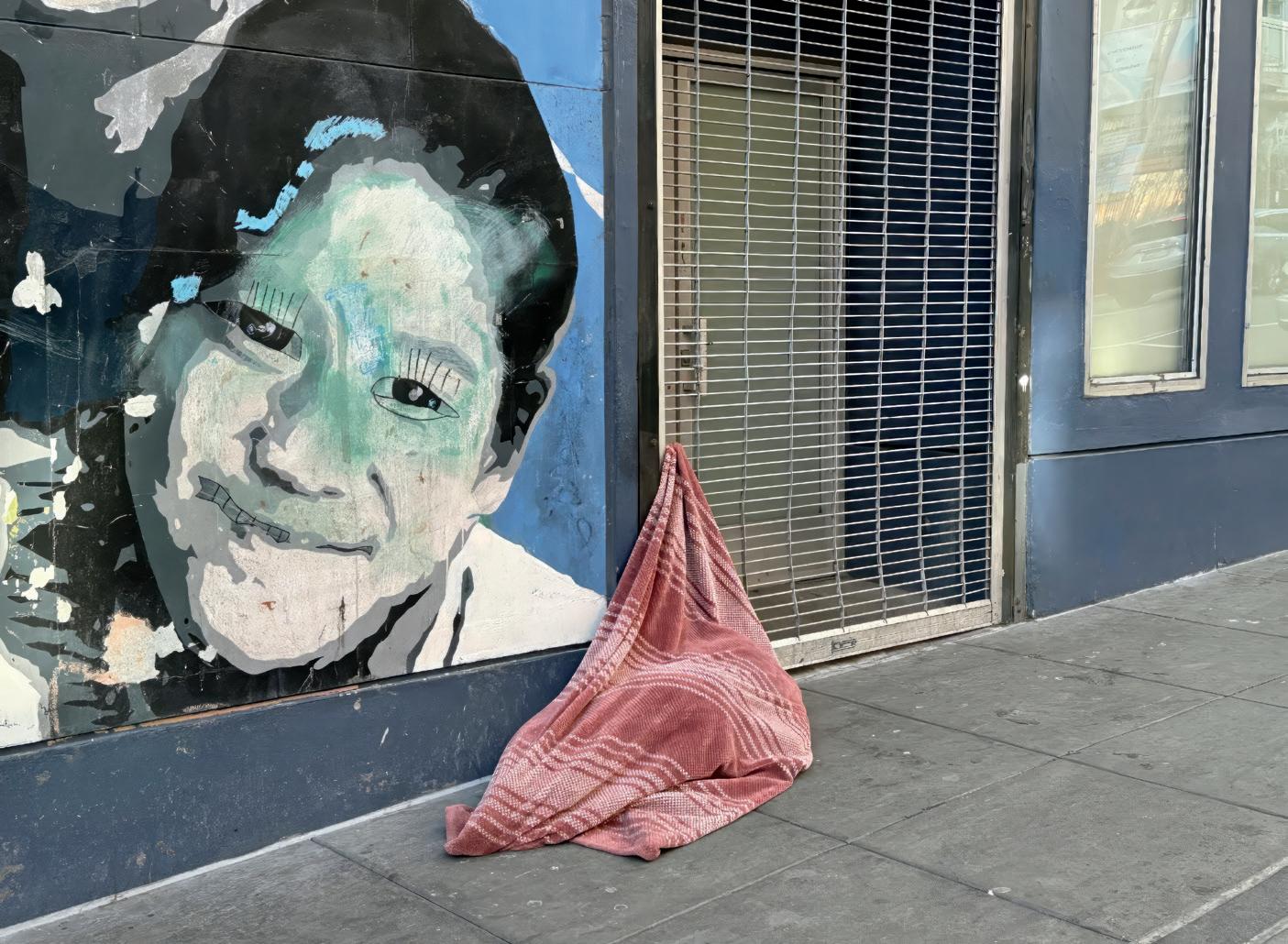
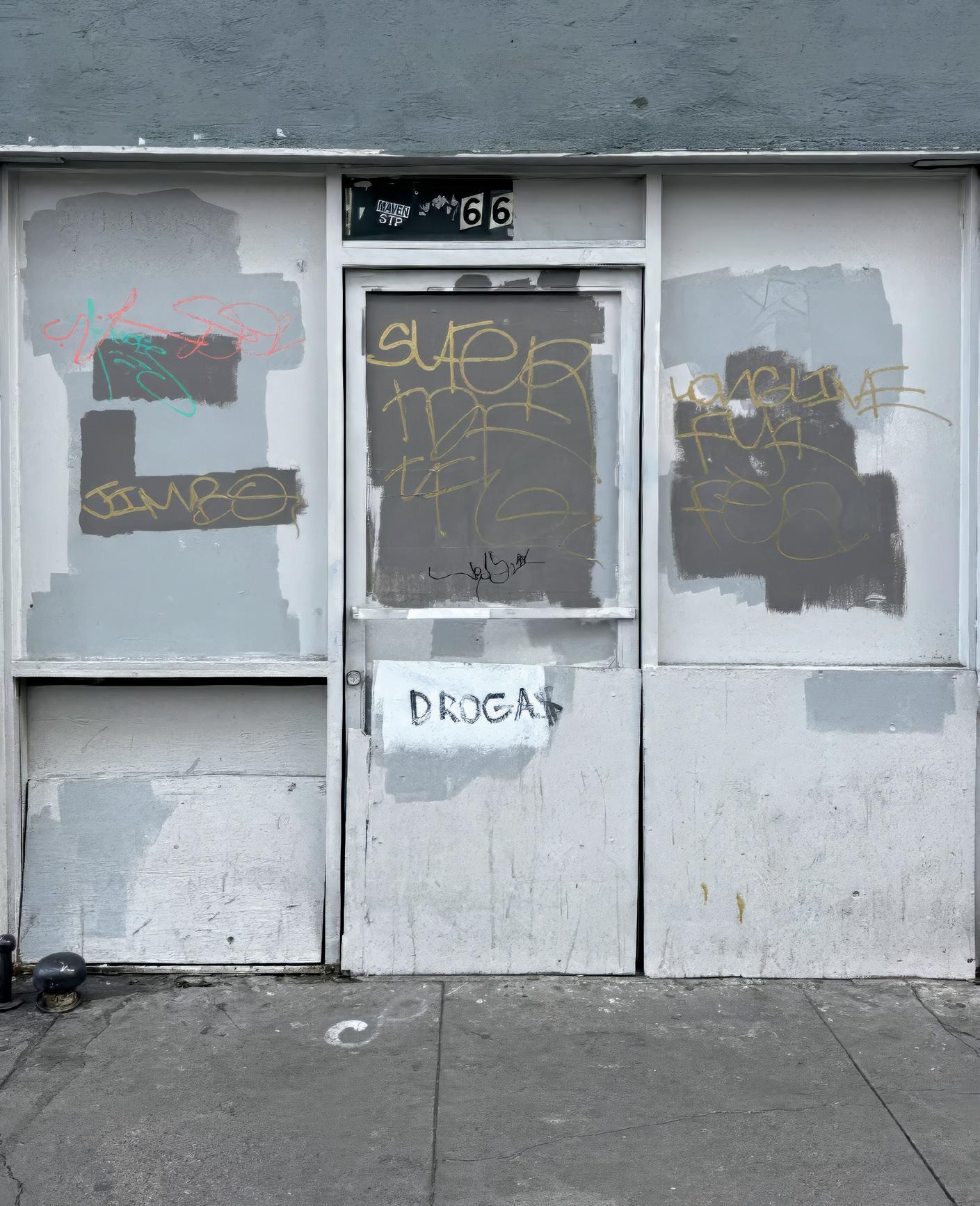
Evidence of the fierce fight against addiction and the homelessness, poverty, and degradation that it spurs abound in the streets of San Francisco. Opposite page: Hom leads a team meeting at his office.
and buprenorphine, federally approved medications that can cut the risk of dying from overdose or other causes in half. Hom sees them, almost literally, as miracle drugs.
“There is no other medication that I can prescribe in primary care for a chronic illness that has a 50 percent reduction in mortality,” Hom said. “So, these really are lifesaving medications.”
Unlike methadone, which must be administered by health care workers in clinical settings, buprenorphine can be prescribed by a doctor and filled by a pharmacy. Federal rules allow doctors to prescribe it over the phone, and Hom helps staff a city-run telehealth hotline that can connect people with the drug, among myriad other services.
But even with the telehealth hotline, Hom saw barriers to connecting patients with these medications. Fewer than half of the pharmacies in San Francisco were stocking them, a study by the San Francisco Department of Public Health found. So, Hom and his colleagues pushed citywide legislation in 2024 requiring them to have it on hand, ensuring critical same-day access for patients. San Francisco was the first city in the country to pass such a law.
“At the end of the day, it’s really about trying to create a system in which people can access a service that would meet their needs, including treatment with life-saving medications,” Hom said.
Many of the people who use drugs in San Francisco aren’t ready or willing to start recovery treatments. It’s Hom’s job to consider them and care for them too. The question he asks is not how to get them to stop but “What are the harm reduction programs and policies that we can offer to help reduce their risks?”
In San Francisco and other liberal cities across the country, that proposition has become harder, even since Hom returned to the Bay Area four years ago.
The concept of harm reduction (an approach to substance use that can include needle exchanges and overdose-reversing treatments like Narcan) doesn’t lend itself to overnight solutions to the crisis that has gripped San Francisco for the last half-decade. Political headwinds have shifted; Hom says he sees a growing impatience among residents and some
elected officials, who have turned away from harm reduction and some of the programs that grew out of it.
San Francisco shut down its safe-use sites, spaces where people could go to use illicit substances in a medically supervised, sanitary environment, in 2022, just a few months after Hom joined the department.
In a recent citywide speech, San Francisco mayor Daniel Lurie boasted about his administration’s hardline approach to substance use.
“We stopped freely handing out drug supplies and letting people kill themselves on our streets,” he said. “It is not a basic right to use drugs openly in front of our kids.”
To an extent, Hom gets it. As a public servant, he knows his responsibility is not just for people who use drugs but also for the rest of the community that is shaped by substance use. Like Lurie, he said, he does not “want kids walking down the street to be encountering this.”
“I’m sad that we have had such high overdoses,” he said. “I’m sad that people who live in
IN ORDER TO MEET PEOPLE WHERE THEY’RE AT, YOU HAVE TO BE WILLING TO MEET THEM AT ALL.
those communities see it, I am.” But Hom also wonders whether politicians have given up on harm reduction too soon, whether the pendulum of public opinion has swung too far too fast.
“I don’t think harm reduction has failed,” Hom said. “I think it’s never been funded to the level that it deserves to succeed.”
A MORAL THING
But before any of that—before recovery, before harm reduction, before politics, and before medication—comes a more basic question for him. “The first thing is, can we create spaces where people feel open and able to talk about their substance use?” Hom said.
In order to meet people where they’re at, you have to be willing to meet them at all.
In his work, Hom thinks a lot about prejudice and how history and social norms shape drug policy and complicate treatment. All too often, Hom said, the public tends to understand substance use as a “moral thing.”
But it isn’t, at least in his line of work. He approaches substance abuse like the doctor he is, understanding it “as a chronic illness” that can be treated like any other.
“Substance use disorders are highly stigmatized. There’s a lot of judgment,” he said. “We’ve taken a very punitive approach historically, and a lot of policies are grounded in racism.”
A deep commitment to social justice is the beating heart of Hom’s work and outlook on life. It’s what got him into this line of work in the first place, inspired by sociology courses at Bowdoin that showed him how he could apply “medicine and public health to my community and social justice.”
Public health is a profoundly interdisciplinary field. It involves thinking on a systems level, understanding how diseases and disorders manifest in the broader context of a community. In his work, Hom must think about the patients he treats on Howard Street but also about San Francisco’s school children walking to class, the mayor, doctors, pharmacists, drug makers, cops and—crucially—how they all interact.
This kind of interdisciplinary work seems to suit Hom. He knew early on that he wanted a career in medicine, just like his parents. But he chose to attend Bowdoin, drawn to a liberal arts education that would allow him to fulfill the coursework he needed to apply to medical school while pursuing other intellectual curiosities, like art history, his major.
He discovered art history in high school and loved how it used visuals to understand bygone societies and the narrative thread of the past. Images matter to Hom, and a few years ago he started thinking seriously about how photographs were shaping contemporary understandings of substance use. Could these images, taken by professional photojournalists and published by news outlets, be shaping how society views people who use illicit drugs? In a study published in July, Hom proved that they could.
“That always drew me to art history, the opportunity to learn about people, about events, about how those were perceived,” he said. “I just think that images are so powerful, they’re so evocative.”
To test his theory, Hom conducted a survey of some 3,400 participants. Eight groups were each shown an image that depicted one reality of substance use disorder: a person injecting drugs, a patient receiving methadone therapy, someone being treated after overdosing, the family member of someone who had died because of substance use, or a person in recovery shown in a workplace setting. After viewing the photos, each survey participant was asked various questions to assess their perceptions and feelings about substance use.
The results were substantive. People who saw pictures of drugs being injected were more likely to say they felt disgust or pity, and participants who saw pictures representing recovery were more likely to say they were open to working alongside people in recovery from substance use disorder.
“The findings weren’t surprising, but it was nice to have the empirical data showing that images of people who are in recovery reduce this stigma,” Hom said. “My art history background made me believe that it had an impact.”
Stigma and prejudice matter to Hom, not just because they perpetuate injustice, but because they can constitute real barriers to recovery. If we give in to stigma and let ourselves shut out, judge, castigate, or demean, if we treat addiction as a “moral thing,” he asks, how can we be ready to treat, to support recovery, to offer care? Hom has dedicated his professional life to breaking down those barriers: between people and the treatments that can help them, policy and practice, doctors and patients, the haves and the have-nots. It can be strenuous, political, and emotionally intense.
Hom loves the city where he grew up. And he wants it to be better. With his art historian’s eye, his training as a doctor, and his deep capacity for compassion, this native son is ready to work for San Francisco.
joined the San Francisco Chronicle, where she covers the San Francisco Board of Supervisors, after three years as a writer at The
Alyce McFadden ’20
New York Times
Timothy Archibald is a commercial and editorial photographer based in San Francisco.
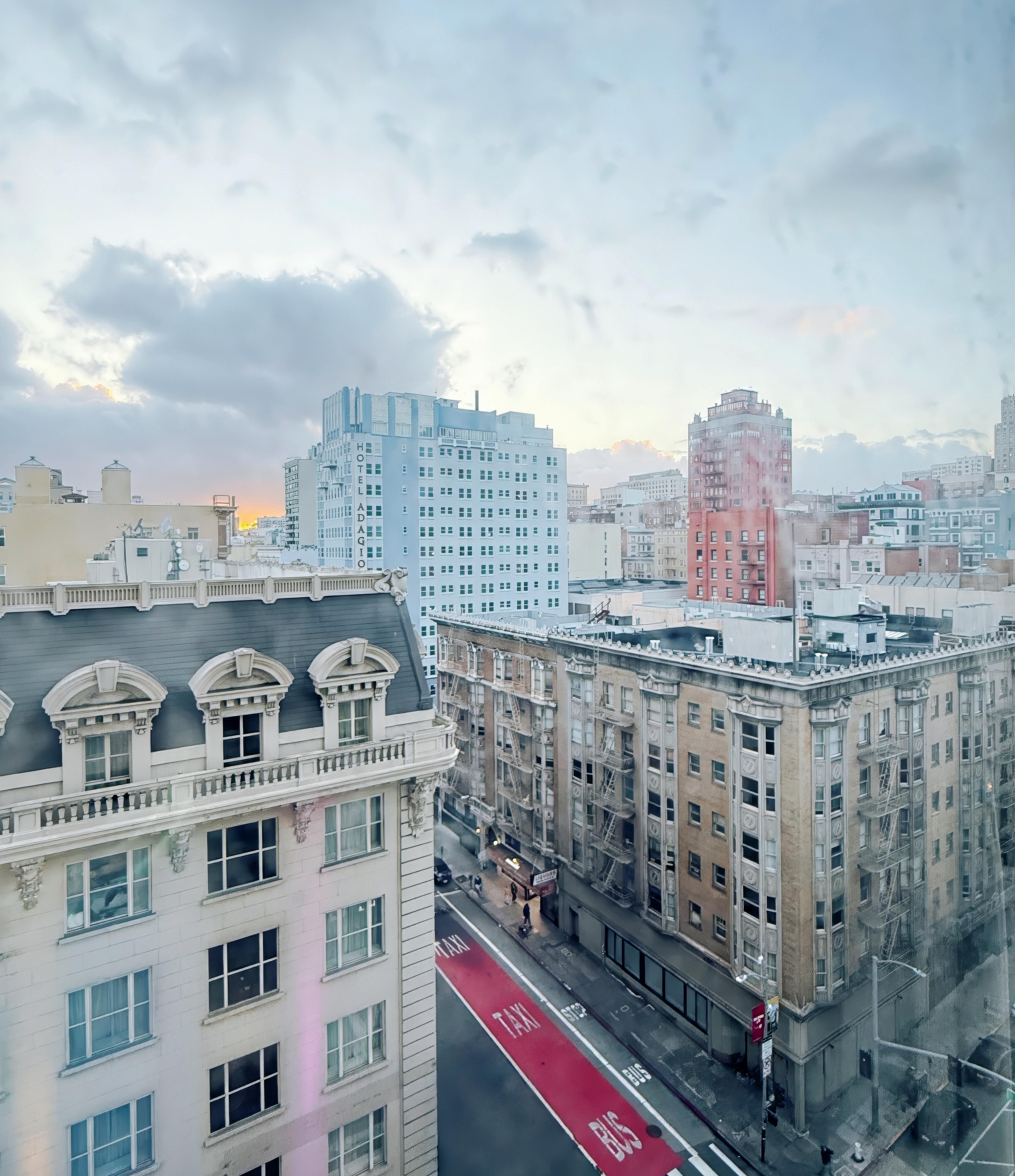
Opposite page, left: Dusk on Turk Street.
Opposite page, right: A person struggles on the street.
Below: Hom on a balcony looking out on his hometown of San Francisco.
BY SAVANNAH HORTON ’17
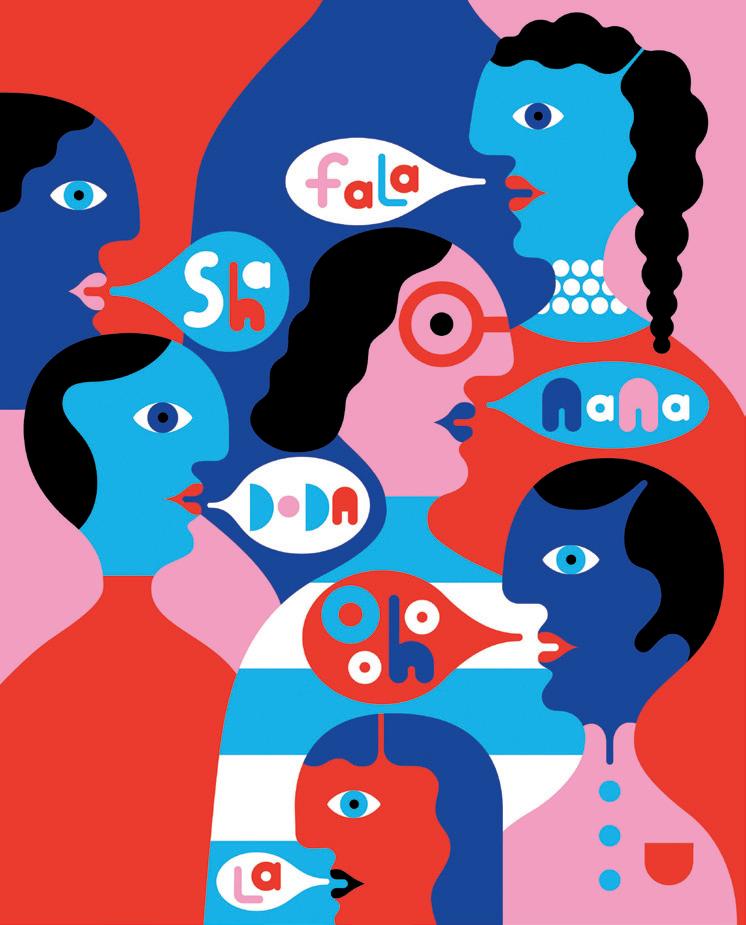
BY ROBERT NICOL
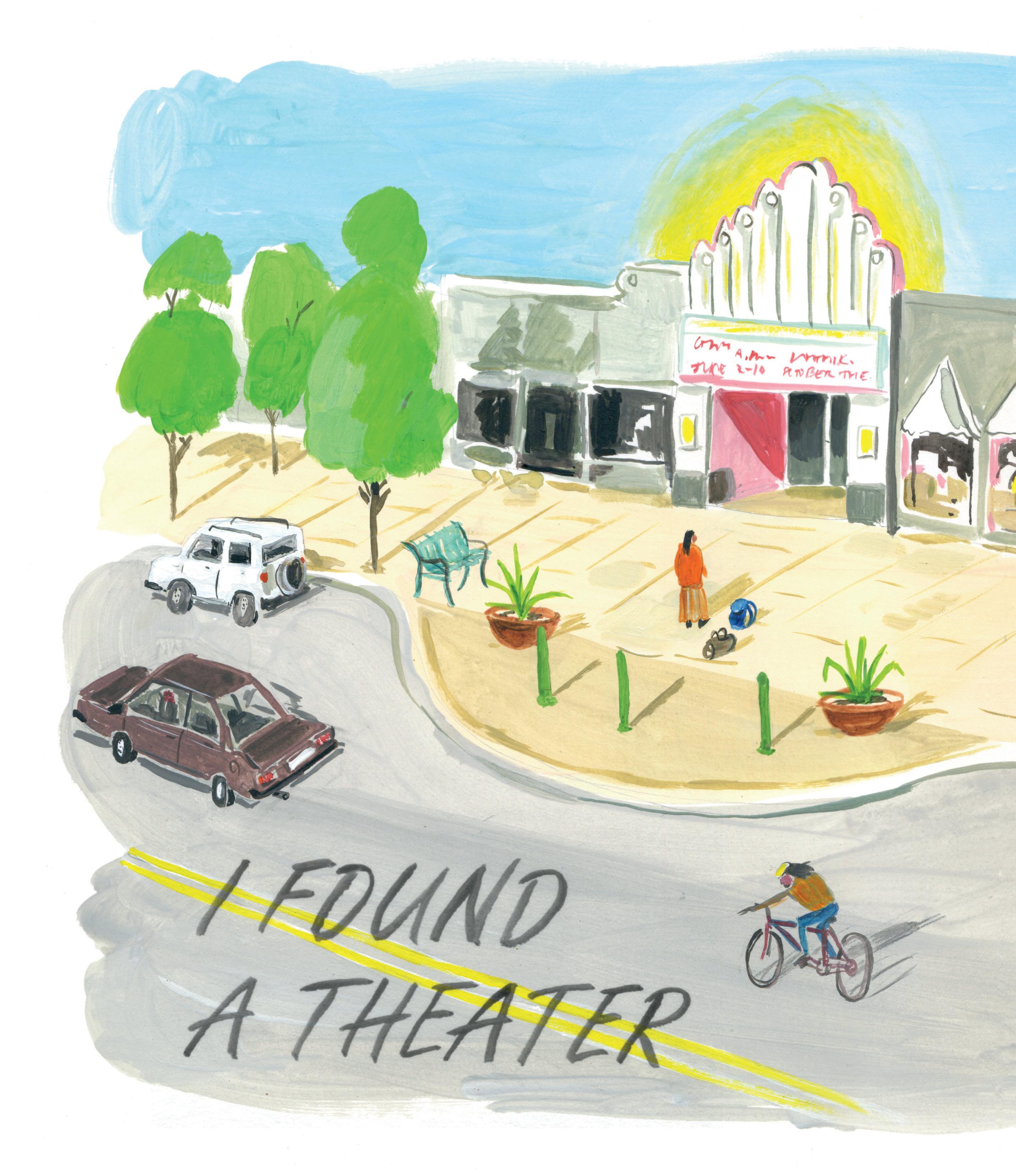
Everyone knows the tropes about theater kids: they emote constantly, elbow others out of any spotlight, belt out Broadway tunes at the slightest provocation. It’s funny, and some self-proclaimed theater kids even cop to parts of it. But is it the actual story? We reached out to Savannah Horton ’17, who had written for the Orient her senior year about “life as a washed-up theater kid” to see what she thought. What we heard—from her and other now-grown theater kids—was more about strength in vulnerability, the emotion that runs between an actor and an audience, and the way theater can serve as a hearth for humanity. Whether to combat isolation or fuel connection, people told us, “I found a theater.”
ILLUSTRATIONS
IIN MY LATE TWENTIES, I spent two years driving a dog and three duffel bags between eighteen cities across the US. Surrounding myself with strangers every month was an amusing challenge—learning the contours of a place, identifying the common personality types—but finding a sense of belonging didn’t get easier as I traveled further.
Bowdoin sets you up with a certain comfort when it comes to socialization. Extroversion is pretty much baked into our mission (see “To lose yourself in generous enthusiasms and cooperate with others for common ends”). But I struggled in Florida, then in Texas, then in Colorado to feel that I was “cooperating” with anyone. I attended paint nights alone, where I worked up the courage to exchange a few sentences with the women who had signed up together. I lingered with my laptop in rural coffee shops so I could get to know—read: bother—kind baristas.
Despite my efforts, I couldn’t shake that angsty, teenaged feeling I thought Bowdoin had successfully trampled out of me: that I was up against the entire world. This is a gloomy way to feel when you are nearing thirty.
I should add I didn’t have to be traveling. No one was forcing an itinerant lifestyle upon me. I was restless and curious and felt coddled by New England. I felt I didn’t know my own country.
“I was cast as an ‘eccentric’: Pozzo in Waiting for Godot, Hedda in Hedda Gabler, Angie in Top Girls. Inhabiting those roles gave me tremendous freedom—being curious and vulnerable helps you make meaningful friends. The act of creating something together broke down any other Bowdoin identity, creating a new team where everyone was welcome. Theater was transformational and wonderful. My phone background is still Memorial Hall, a reminder of a place where I felt so much joy.”
—KATE
KEARNS ’14, A THEATER KID-TURNED-MBA WHO WORKS AS CHIEF
I mostly adored the freewheeling nature of life on the road, the luxury that I could leave a place, and it would instantly forget me. I worked remotely and could sustain myself while sightseeing in Joshua Tree or the Garden of the Gods. In every way but one, it was a complete privilege—I hadn’t thought of myself as a solitary person and still didn’t, but that was exactly what I’d become.
By the time I got to New Mexico, I knew I had to make a change.
I WAS RENTING an apartment in Las Cruces, and I was, as I’ve said, lonely. Las Cruces hugs the heart of the Mesilla Valley. Thick-walled adobe bakes in the vast Chihuahuan Desert at the base of the ragged Organ Mountains. The world around the little city is enormous. The sky is so empty. I knew one person in a thousand-mile radius, so I decided to do what I’d done as a child whenever I wanted to experience a sense of belonging.
I found a theater.
EVERY COMMUNITY THEATER smells the same. See a musical in El Paso or Fort Collins, and you’ll catch a whiff of open paint cans and sawdust. That pervading mustiness of heavy curtains unfurling. Thick, faded carpets—all of it like the building just pushed open its doors for the first time in ten years. Cooling coffee. Sometimes, if you’re lucky, red wine.
When I stepped into the Las Cruces Community Theater, the smell sent me back two decades to the Fiddlehead Theater and my first audition, for Annie. (Pretty much everyone’s first audition is for Annie.)
The scene lived right behind my eyes. See the line of girls across the neon-taped stage. Narrow rows of crimson red seats. A mintcolored dungeon that is the frigid greenroom. A mini loaf of cornbread from Boston Market to scarf down before the callback. I was seven and squawking through an animated rendition of a song I was a decade and a half too young for—“All That Jazz”—with the confidence of a goose.
Smell is our most nostalgic sense, apparently. Smells don’t require emotional processing. They’ve got a central line straight to our brains.
New York City high school theater teacher William Yusah ’08 talks about finding a way to fit everyone on the stage.
Open Invitation
I WAS INTIMIDATED by theater in high school. It seemed reserved for cool kids, like other-side-of-the-pillow cool. In my senior year I was asked to be in the musical as a singer. I wasn’t a theater kid. I just came in to sing in Sweeney Todd. I loved my tech crew, who didn’t do it for fame or flowers or the spotlight. So I took a stagecraft class, and in one class I fell in love with the warm and inviting nature of Bowdoin theater. And then Davis Robinson invited me to audition for an Ibsen play. It was this slow invite into a space I had thought to be for kids I did not feel cool enough to hang with. That led to my going to NYU to study theater education and create that space for others. Now I’m in my fourteenth year as a theater teacher in a public school in Manhattan. And that’s my philosophy—there’s no barrier to entry; everyone is invited. If you want to be in theater, we’ll find a way to fit you on stage.
The backbone of theater is empathy. If you’re doing a show that has a villain, someone has to be that. There’s a limitlessness to your exploring, because what you are exploring is what it means to be alive and human.
I get sad when I see a kid disappointed because of limits of casting. But we’re going to get to closing night. And we’re all going to go to this afterparty, and it’s going to feel like it meant something.
William Yusah ’08, an English and theater major at Bowdoin, earned his master’s in educational theater and English at NYU. He teaches at New Explorations into Science, Technology, and Math High School in Manhattan.
When I smelled that theater smell in Las Cruces, I wasn’t auditioning. All I was doing was sitting in the audience of Merrily We Roll Along But a few feet into the building, I was already tearing up. During the overture, my eyes were streaming. By curtain call, I was trying to suppress my sniffles so my neighbors wouldn’t smirk about me later in their cars.
My reaction was visceral, automatic, and strange. I didn’t think about theater in my day-to-day life. At Bowdoin, I’d participated in one small-scale musical production, where I managed to scar my poor family for years to come (don’t do Spring Awakening unless you want your parents mentally connecting you forever to the idea of sexual frustration). But
watching Merrily We Roll Along, alive and alone, I felt a wave of transformative nostalgia.
For the rest of my travels, I made a point to see a community theater production wherever I stopped. It was the closest I’d felt, in a long time, to fitting in.
SOME PEOPLE find community theater kind of embarrassing.
I get it. Coming to terms with a love of theater is coming to terms with one’s inner dork. Some people outgrow that inner dork in middle school. Some people weren’t eight-year-olds sniffling in the backseat of a minivan to “Goodbye Love” from Rent. Some people didn’t spend their teenage summers playing Zip Zap Zop and
dressing in group costumes every time they left the cabin at theater camp.
But many have experienced the kind of glee I felt as a theater kid when they are at a Bowdoin lobster bake. Or at Ivies. Or at Reunion. Did you want to laugh and cry at the same time?
That’s collective effervescence—the physical reaction to heightened emotion during a shared experience.
Theater kids learn about collective effervescence early. They understand what it’s like to build worlds together from words on paper. It’s easy to mock these enthusiastic rascals, but they develop a rare earnestness.
Another artistic community almost drained that from me.
A former devoted theater kid, current musician, and twin brother, Professor of English Aaron Kitch tells tales of his youth on the Wichita stage.
Scene Stealer
I’M A TWIN. When my brother, Justin, and I were twelve, my mom said, “You guys need to do something for the summer.” So she found this theater camp. It was all day for three or four weeks. My mom said, “Perfect. Now learn to use the bus.” So, every day we took the city bus—this was Wichita, Kansas—to this camp. The show was The Music Man. I was in the barbershop quartet, and my brother played Winthrop, the boy who can suddenly sing in “Wells Fargo Wagon.”
The director went on to start a musical theater program that became the thing for kids in town who wanted to do theater and music and dancing. They even hired teachers to teach us tap and ballet. We got pretty ambitious!
There was this old, abandoned theater called the Orpheum downtown that used to be an opera house, or maybe a silent movie theater. It had no
seats, no heat, no bathrooms, a bare-bones stage, and we decided to do Annie there to get attention to the space and raise money. I played President Roosevelt. I got to be pushed around in a wheelchair and sing “The sun will come out tomorrow.” My brother was in it too. We had to put chairs out for the audience. The fire department said we had to tie them together to meet the fire code. So, we had to tape all the chairs—I think it ended up being 500—together. It got such great publicity that they reopened the theater. We were so proud!
Justin and I used to be the emcees for this show called Broadway Lights. It was a fundraiser we would do every year, which would take numbers from different shows and put them together. We had to write jokes about our sponsors, and about each other. And we would sing “Anything you can do, I can do better.” We would get so into it that we would actually get angry with each other on stage.
Once in Anything Goes I played Sir Evelyn, this fancy-pants British guy. He’s the butt of jokes, but he fancies himself quite sophisticated. My director told me to liven it up and go off script for one performance, so I did. I tried to make my fellow cast members laugh by improvising some lines about my buttocks, and they were definitely surprised. The other actors weren’t in on it. And I could not get back to the script! It was terrifying. It was terrible. The director was so upset with me, even though it was her idea.
I was later a counselor, and I played in the pit. It’s what made me interested in theater. I did theater throughout college, and I study and teach it now; I’m teaching “Remaking Shakespeare” this spring with (theater professor) Abbie Killeen.
Theater builds community. I think the most interesting relationships come out of making stuff together. And there’s the real-life, witnessing community. I think that explains a lot about Shakespeare’s and other playwrights’ enduring power. It’s that live community. Which is always threatened—it’s something we lost with COVID. It’s something we lose with screens. But it keeps coming back. It can’t be eradicated.
Professor of English Aaron Kitch is a literary scholar with a focus on early modern literature and a special interest in William Shakespeare, a performing musician and songwriter, and a former avid theater kid.
I NEED TO BACK UP. Before embarking on my cross-country tour, I obtained an MFA in creative writing. Over the course of the program, I felt confidence flee my body like a startled deer. I was familiar with rejection, but I was less prepared for the morbid, halting isolation that was novel writing. At Bowdoin, my fiction workshop was the highlight of my week— three hours of discovering new favorite short story writers in the wood-paneled warmth of Massachusetts Hall.
Now, in graduate school, I was drafting, querying, submitting, and, ultimately, shelving a project I’d spent years on. Writing was no longer adjacent to book club, where we gushed over sentences we loved. Writing was publishing. My cynicism grew to an all-time high when my program ended. I felt as though anyone else’s success—which I rarely saw as deserved— directly impeded my own. It was easy, then, to convince myself I was living as the most authentic version of myself because I was unhappy. It can be fun to be sardonic. Cynicism makes you feel that you understand the grooves of the world more deeply than everyone else simply because you dislike it. The literary community I’d entrenched myself in seemed just as jaded, cynical, and condescending as I was.
Ultimately, I came away from this creative outlet wanting absolutely nothing to do with it. My ideas no longer felt valuable; my perspective wasn’t interesting. I second-guessed everything I said or wrote.
Stepping inside a theater had the opposite effect. All I wanted to do, after seeing a show, was find a group of enthusiastic thespians and try what I hadn’t wanted to try in a very long time: to have fun, to tell a story.
LAST SEPTEMBER, I finally settled—in Rhode Island. It’s the real deal. I own furniture. I transferred the title of my car.
When I first arrived, I understood that to make this place a home, I had to thoughtfully build a life. I knew no one in the area except for family, and I refused to let my circle solely contain blood relatives. I gave myself two months to procrastinate before committing to auditioning for a musical. It was pathetically terrifying. I made the nauseating trip to Staples to print out
Actor and social justice educator Sally Rose Zuckert ’19 sees theater as a chalice that holds every human feeling and every academic discipline.
A Cup That Holds It All
I THINK THEATER teaches masterfully the power of deep listening. That’s what I think theater work is—the embodiment of how you’ve listened, and what you’ve taken in, and what you want to create from your own experiences and opinions. I think of it as this big chalice that holds everything
Abigail Killeen gave me a worksheet once that showed the journey of an actor from their beginning to what they would hope to achieve sometime on a stage. At the very top was just the word “transcendence.” I will always think of it.
I credit the educators at Bowdoin for helping me realize that that’s something I could really want and dedicate my life to. You’re never arrested, you’re never done with the text or the idea or the scene. What better gift is there to know that you never have to be finished?
When I was at Bowdoin, I was lucky to be in a play called Eurydice. Being in that show—hair freezing on my way to morning rehearsal in the dead of winter— taught me discipline and rigor. And the show we put up was beautiful.
Rather recently, I was in Eurydice again, and I played the same role. I was really excited at first, and then I got anxious, thinking, “ I hope this Eurydice is really different from my first. I hope she sees different things, and she’s speaking from a different place.” We made the play—it was so much more work than I remembered! And it wasn’t perfect. But at the end, there is a scene where Eurydice has to say goodbye to her father at a river’s edge. It’s a quiet scene. My director said, “What if in the silence you cleaned your father? Washed his hands and face?” So we filled the quiet with that action, and that is the closest I’ve ever felt to transcendence. It felt like a marriage of the Eurydice I had been at Bowdoin and the new Eurydice, like the person I was at Bowdoin and the person I am now. The moment sparkles in my memory.
Sally Rose Zuckert ’19 majored in English and theater with a minor in gender, sexuality, and women’s studies at Bowdoin. She earned a master’s in humanities: theater and performance studies at the University of Chicago.
Professional actor and theater director Bari Robinson ’07 writes of the role of the audience.
Watch Me
AN ACTOR’S JOB is to connect with someone else through story, and we spend years trying to perfect this skill. Ironically, the better we know ourselves, the more authentically we can embody other people. The more we can embody other people, the more the audience can see themselves reflected in us. This practice teaches us empathy. It brings us more into the world, and it teaches us about how people think. That’s what I try to give an audience whether I’m acting, teaching, or directing. In a way, this cultivated vulnerability is the best gift we can give to them.
The camaraderie this can build is immense. In so many shows I’ve been in, within about three days I’m best friends with the whole cast. There’s an openness and love that develops in rehearsal. It’s a paradox: I’ve found that I actually learn more about people when they start to play other people. They can’t hide anymore. They’re revealing themselves when they’re playing somebody else. When the mask comes off, the audience is able to see the character as opposed to seeing you playing at that character. You, the audience, are the reason we exist—there’s no theater without you. That’s different from other art forms. If I’m painting, I can still paint with no one there. I don’t need to show anybody my painting for me to be a painter. For a theater maker, I need at least one person watching me; then we can start to play. I felt a great example of this during COVID. There is an amazing experimental theater company called 600 Highwaymen. In 2021 they produced a show that was entirely over the phone— just the disembodied voices of two of us from the audience and an actor guiding us through this journey. Neither the actor nor the other audience person was someone we would ever see or meet, and once we hung up the phone, they disappeared. For me, that connection that the three of us had for that hourlong performance brought home the importance of the relationship between the artist and the audience. When we engage together, everyone is implicated in the story, and that is a beautiful act.
Bari Robinson ’07 studied at the British American Drama Academy and the Public Theater Shakespeare Lab and earned an MFA in theater arts at Columbia University. He is the founding producer of the Portland Theater Festival.
sheet music. I YouTubed vocal warm-ups whenever I drove somewhere.
Then, I auditioned.
It went poorly, and I called my mom. Still, I felt so giddily proud for putting myself out there. Miracles happen, apparently. I was offered an ensemble part—a made-up role for Into the Woods, let’s be clear. I might have been the most excited person in history to accept a chorus role. I cried as soon as I hung up the phone.
As was the case when I auditioned for BOKA while at Bowdoin, I assumed I was a personality hire—which I recognize is being generous to my personality—but when I got that call, I cared less about being on stage than about what the casting granted me: a community.
RETURNING TO THEATER has softened the cage my body and brain built around my emotions in the name of maturation. When I walk into an auditorium, I feel the relief of being unmoored, of working with people who are fully present.
Theater is helping me defrost. I’m learning to talk to people again without wondering whether they find me unintelligent or dull. I’m learning to collaborate, to not take myself too seriously.
There simply isn’t time. A performance is ephemeral and distinctive. You can’t agonize. You’re on a schedule. You’re important, but you’re not the most important. On stage, everyone is essential, but no one is the center of the world. That’s a pretty crucial lesson.
People have this idea that kids who do theater believe they’re Earth’s protagonists. Maybe that’s a little bit true, especially if you’re snagging lead roles left and right—Young Cosette, Baby June, Gavroche—but for most former theater kids, performing was more shame spiral than ego boost. The only time theater kids actively need to be stopped is at theater camp, where everyone is as concerned with kissing as they are with bowing last at curtain call. Otherwise, they deal with more than enough humiliation. I once played the role of Sugar Cube, during which I wore a silver morph suit (hood and all), a three-by-three-foot cardboard box with arm and leg holes, and tap shoes.
Theater shakes your confidence as much as it builds it up. It can breed irritating preteens (the singing my mother endured in the car
after Wicked came out in 2004 was objectively torture), but it can also create adults comfortable showcasing themselves despite fears of failure and rejection. It can foster empathy through storytelling; it can shape people willing to see all sides of a conflict. To be a theater kid is to understand the importance of sincerity. Of being goofy. Of embarrassing yourself. Of screwing up and moving on without dwelling on how things could have gone differently.
The irony, of course, is that my own contributions to theater have never been talent-based. In elementary school, if you’re motivated enough to climb on stage and belt out sixteen bars of “Castle on a Cloud,” congrats, you’re in the cast! Even better if you have an overbite, so far the only time in my life where this feature has benefited me. As an adult, my singing is mediocre, and my dancing is worse. I’m not fishing here. My mom can confirm.
But from the beginning, theater people have made me feel necessary. For the simple reason that I wanted to be there.
IT’S EASY to feel the same type of spirit at Bowdoin, where everyone is curious and candid and cooperative, no matter their area of interest. You can say that’s because the safety net of Bowdoin is coddling. But Bowdoin nurtured in me a desire to pursue art for art’s sake. It reassured me that I mattered within a community and that I could benefit from being vulnerable.
Four years out of my MFA program, and I still barely trust myself to organize words, on paper or aloud. My creative confidence took such a dip post-Bowdoin that even my tepid forays into Dungeons and Dragons every Monday make me nauseous—what if I can’t think of anything funny or useful to say?
But my confidence is growing. And I have community theater to thank, as cheesy as that sounds. Performing has reminded me why I was drawn to writing in the first place. Theater is one of the oldest forms of storytelling. It exists to share an understanding. It holds up a mirror to an audience and makes them feel something.
It’s been freeing to jump onto a stage where every person has just worked a day job. No one is expecting to get famous or even to get paid. It’s just a group of grown-up theater kids pulling
“When I
was thirteen, I spent a year on tour with the Broadway show Matilda
.
There were eleven other kids.
From trick-or-treating backstage to learning ukulele from our onstage teacher, some of my fondest memories are from then. We geeked out on stage-dooring Broadway shows, meeting actors, and getting our Broadway trading cards signed. Even after Matilda closed, we stayed close, traveling to see each other and Zooming over the pandemic when we couldn’t be together.”
—MOLLY RICHARDSON
’25, NOW A GRADUATE STUDENT IN CLINICAL PSYCHOLOGY, WRITING ABOUT SPENDING
their weight, committing themselves to telling a story just for the sake of it. Like I said, maybe that’s lame. But I tear up even thinking about it.
TO THE POSSIBLE DISMAY of my future spouse, I will encourage my children to try theater. Sending a child to an acting camp or dance class is like throwing them simultaneously to the wolves and the teddy bears. And that’s important, I think. Theater is risk and reward. It’s playing pretend. And playing pretend takes a human being out of their innately egocentric mindset.
Children deserve access to these communal, creative spaces. They should learn the discomfort of collaboration that comes before the euphoria of it. They need a steady spout of encouragement. They need theater, because theater ensures there are people still carrying the fire when the human spirit is dim (thank you, Cormac McCarthy, for that killer line).
What more can you ask for, at the end of the day, than a hopeful child?
I guess maybe a hopeful child who grows into a hopeful adult. Like me.
Savannah Horton ’17 is a content editor and writer who majored in English at Bowdoin and earned an MFA at the University of Florida. Her work has been published in The Metropolitan Review, The Rejoinder, and The Drift, among other publications.
Robert Nicol is an artist, educator, and illustrator based in Norfolk, England. He is a graduate of the Glasgow School of Art and the Royal College of Art.
BY REBECCA GOLDFINE
From our earliest recorded histories, we have stories of humans looking up at the heavens—in awe, seeking meaning, rooting themselves in the galactic landscape. The ways we have come to understand the stars and planets and our place in the universe have changed with scientific and mathematical discoveries and the exploration of space, but the sense of wonder we get when we contemplate the night sky does not diminish.
LOOK
TTHE
Opening spread:
An illustration from Smith’s Illustrated Astronomy, Designed for the Use of the Public or Common Schools (Bazin & Ellsworth, 1848). Written by Asa Smith, principal of Public High School No. 12 in New York City, the book includes lessons and charts for teaching, beginning with a lesson on the Ptolemaic system, the first question of which was “What is the body called upon which we live?”
Opposite page, left:
Plate 20 from Astronomical Engravings Illustrating Solar Phenomena (Harvard University, 1876), a project undertaken by the Observatory of Harvard College. This plate, showing the crater Gassendi and lunar mountains, was taken on February 8, 1872.
Opposite page, right:
Cloud Study, Moonlight, ca. 1860, oil on paper by Albert Bierstadt. Bowdoin College Museum of Art (BCMA). This painting was one of ninety works featured in the BCMA exhibition Night Vision: Nocturnes in American Art, a survey dedicated to scenes of the night in American art from 1860 to 1960, spanning an era not yet illuminated by electricity to the beginning of the Space Age.
AS THE LAST soccer players trickle off the playing field and the floodlights finally click off, darkness settles over the nearby observatory. There, a handful of students and two professors huddle around an array of small telescopes.
After a minute scanning the sky, one of the telescopes pinpoints Saturn hanging almost due south. The night is so clear that Assistant Professor of Physics Fe McBride knows she can show the students two other spectacles besides Saturn’s rings of rock and ice: the fuzzy M13 globular cluster—25,000 light-years away and home to hundreds of thousands of stars—and the double star Albireo. In that duo, the cooler star glows a warm orange-red, while the hotter one flickers an icy blue.
Yet even as the students admire Saturn’s shining rings and Albireo’s delicate color contrast, a closer object begins to steal the show. The moon is rising in the east—the heavy globe gliding up from the horizon. Through a scope, the lower half of its cratered surface looks scarred and rough, with deep shadows, and the smooth upper sphere gleams like silver. “Whoa, that is sooo cool,” one student says, peering through the eyepiece. “Check that out. Wow.”
This was only the second viewing session at the newly refurbished Benjamin Hill-Lam ’13 Observatory. After two years of painstaking renovations—including its relocation to Pickard Field—the observatory is now open, but its big telescope won’t be operational until spring. The effort to revive Bowdoin’s old observatory, built in 1891 and last functional in 1991, began when Seeyan Lam made a gift to the College to purchase a high-performance telescope and move and renovate the building in memory of his son, Benjamin, a physics major and engineer who worked on fuel for spaceships. Benjamin died in a rock-climbing accident in 2021.
In an interview last year, Seeyan said he sees the observatory as a window to the universe, a way to look into its vastness and seek meaning. “Looking into the heavens—not in a religious
sense—but looking into the heavens, you can see an infinite amount of stars. It’s hard to grasp the enormity of what the universe is, and you find yourself thinking about life, being lost in that view.”
Among its new attributes, the observatory has a refreshed dome that swivels and opens, allowing the telescope, with its 0.8-meter primary mirror, to point skyward and gather light from the far reaches of the observable universe. As light gathers and accumulates in its long optical tube, the scope will peer far into space, offering a glimpse of what is out there.
A UNIVERSE FOR THE PEOPLE
The Hill-Lam Observatory is a piece of the physics department’s plan to boost its observational astronomy program, an essential companion to its already strong theoretical and computational astronomy program. McBride, an expert on black holes who joined Bowdoin in 2022 to steer the project, explains that observational astronomers collect and analyze data using instruments like telescopes, while theoretical astronomers use mathematical models and computer simulations to explain and predict phenomena that can’t be directly observed. “Getting the chance to guide the entire program—that was just wonderful,” she says. Since McBride came on board, the astronomy offerings have expanded to include the courses Stars and Stellar Evolution, Galaxies and Cosmology, and The Physics of Black Holes. She’s hoping to launch a new minor in astronomy. Once the main telescope is working, she foresees students confirming exoplanets orbiting other suns, collecting data about our own galaxy, and capturing long-exposure images of cosmic phenomena.
The observatory will also be a major force in propelling one of McBride’s priorities: she wants to make physics and astronomy more
EVERYONE RELATES TO THE NIGHT SKY; EVERYONE REVELS IN ITS EXQUISITE STRANGENESS.
welcoming, less intimidating—to give everyone a chance to explore those worlds. Going forward, she plans to host community viewing nights at the observatory as well.
Physics, she laments, can put off would-be scientists with its reputation for demanding a Mensa-level intellect. The same goes for math. “These are the subjects people say, ‘Oh, that’s scary!’ and immediately react with ‘I’m bad at this,’” she says.
But astronomy, despite being a field firmly planted within physics and its universal laws, receives different treatment. Everyone relates to the night sky; everyone revels in its exquisite strangeness. “If you’re sitting next to someone on a plane and you want them to talk to you,” she says, “you tell them you’re an astronomer. If you don’t want them to talk to you, you say you’re a physicist—though both are true.” Because of this, the physics faculty call astronomy their
on-ramp, or, with a guilty smile, they might say their “gateway drug.” “You get people hooked on astronomy and slowly introduce a bit of physics, and people say, ‘That’s not actually that bad. I can learn this,’” McBride explains.
Exposing students to the night sky is especially addictive. “I see students having this ‘aha moment’—a moment of awe for the universe and for nature,” says Professor Thomas Baumgarte, Bowdoin’s William R. Kenan Professor of Physics
PHOTO: (RIGHT) BOWDOIN COLLEGE MUSEUM OF ART
and an expert on relativistic astrophysics and numerical relativity. “It can be life-changing, truly. Different students are drawn to physics for different reasons. Some love the beautiful math, and others see the night sky and say, ‘Wow, this is it—this is what I want to do, it is gorgeous.’”
THE ETERNAL NIGHT SKY
When they lose themselves in the enthusiasms of astronomy, students enter an age-old practice. The unending presence and ceaseless motion of celestial bodies have stirred human curiosity for millennia, inspiring religions, philosophies, and the beginnings of science. Among the earliest people to record the movements of stars and planets in a systematic way were the Babylonians of ancient Mesopotamia, around the second millennium BCE.
Bowdoin religion professor Robert Morrison, a world expert on the history of Islamic science, says “Just imagine it,” those early observers living in or near the desert thousands of years ago under dry, cloudless skies. “What’s compelling about the stars and planets,” he says, “is that they never seem to stop moving. They move in circles that are predictable. They are eternal. They don’t go away like we do; they never die.” (Today, of course, we know even stars have lifespans.)
Bowdoin professor Dallas Denery, an intellectual and religious historian, teaches ancient astronomy in two of his courses, The Good Life and Science, Magic, and Religion. In both, students read On the Nature of the Gods by Roman statesman Marcus Tullius Cicero around year zero.
In the book, written as a dialogue among philosophers wrestling with the nature of divinity, one of the sages notes the movement of stars through the heavens and asks, “What kinds of things move?” Denery explains the analysis that follows: “Well, rocks and dirt don’t move, but trees move—they grow up. And humans move.” The sage concludes that trees and humans move because they are alive, and if the stars also move, then the heavens, too, must be alive. “So, when you see the stars moving, you’re actually watching intelligent beings perform their daily motions—and you know they’re intelligent because their motion is so orderly.”
The study of the heavens would eventually lead to what we would call science today, though in ancient times, science bled easily into religion.
“The universe was so attractive because it represented perfect knowledge. If God’s knowledge is perfect, then this must be a glimpse of what God is up to,” Morrison says. “Studying the stars set up intellectual life. Part of it drove what we now call science, and part of it drove religion—that is, figuring out what the gods want us to do.”
Early Islamic astronomers went on to create mathematical models of celestial motion with impressive precision—well before the telescope was invented. These scholars charted the movements of stars, planets, and uncanny phenomena such as comets, meteors, and supernovae to
interpret how they were communicating and what they were saying.
“Astrology,” Denery says, “was considered a serious scientific pursuit. The idea was that things on Earth happen because they receive energy from the heavens. If you could understand how that energy is transmitted—its patterns—you might be able to predict events.”
For Cicero and other Stoic philosophers, the stars also offered inspiration for flawed humans. “It reflected a sense of order that you should model your own life on, because the gods are a model of existence,” Denery says. “As the stars move in a calm, orderly fashion and are not bothered by things, they are an ideal that we should follow.”
North
Opposite page, top: A star map from Astronomy with an Opera-Glass, by Garrett P. Serviss (1903). This book was taken by Donald B. MacMillan on the S. S. Roosevelt during the 1908–1909 Peary Arctic Expedition and includes a handwritten glossary to Inuit terms and their pronunciation, including his own name.
Opposite page, bottom: Detail from a large wall map, dedicated to President John Quincy Adams and “designed for the use of schools and private families in solving the various problems incident to the study of Astronomy,” by the cartographer M. R. Bartlett, published in 1825.
Above:
Storm over the Three Sisters Mountain, astrograph of the Cygnus Wall, which is part of the greater
American Nebula, a large region of glowing gas west of Deneb, the nineteenth-brightest star in the sky.
THE UNENDING PRESENCE AND CEASELESS MOTION OF CELESTIAL BODIES HAVE STIRRED HUMAN CURIOSITY FOR MILLENNIA.
FOLLOWING THE STARS
Above:
A series of photos of the April 2025 solar eclipse, by Nathan Bukowski-Thall ’26. The photos were taken in Jackman, Maine, in roughly twenty-minute intervals, beginning at 2:25 p.m., showing totality at 3:30 p.m., and ending at 4:30 p.m., and Bukowski-Thall stitched them together in Photoshop. He used a Canon EOS M50 Mark II attached to an Evostar 72ED ApoRefractor telescope, tracking the sky with an iOptron SkyGuider mount.
“I also built and 3D-printed my own solar filter, which was a ton of fun,” he says.
Opposite page:
A much earlier total eclipse of the sun can be seen in Plate 18 from Astronomical Engravings Illustrating Solar Phenomena (Harvard University, 1876). This eclipse was December 22, 1870, and the photograph was taken from Jerez de la Frontera, a city southwest of Seville in Spain.
Once they have gravitated to astronomy, physics majors have opportunities to collaborate with professors on advanced astrophysics research. As McBride has developed the astronomy program, she’s also been writing and publishing papers about active galaxies and the supermassive black holes at their centers and particle acceleration processes. Her student advisees have researched topics like ghost particles, black holes, and spitting blazars.
McBride offers a humanistic perspective on this work. “Astronomy participates in the deeper questions: we get to study our place in the universe, explore where we are coming from, what we are doing here, and if there is life out there that is not human—the big questions that drive a lot of fundamental science.”
Despite its otherworldly focus, this fundamental research in astronomy—and other fields— can result in tangible improvements in our lives, she noted. Astrophysics, for instance, gave us sophisticated camera chips and solar panels.
She also alludes to the limitations of astronomy, a field that hits up against a reality that has
a knack for slipping beyond our comprehension. Though astrophysicists have made enormous advances in the past decades, they have not uncovered anything like all the secrets of the stars.
“Physics can be frustrating because we can’t answer all the whys. Like, why do we have gravity? It just is,” McBride says. “But in the absence of answering the why questions, you can answer the how questions: How do black holes work? How do galaxies form? How did our Earth form? Is this a special planet? Is that why we have life, because it formed differently than other planets? We are starting to understand this, better than people two hundred years ago could have ever imagined.”
One of McBride’s advisees, Ava Biasotti ’26, is trying to determine the origins of high-energy cosmic rays by tracing the cosmic paths of their neutrinos or “ghost particles.” Since neutrinos have very low mass, they travel nearly at the speed of light, passing through everything— planets, stars, even human beings— without stopping, without being noticed at all (except by specialized instruments).
Biasotti appreciates astronomy’s roots in the timeless human drive for knowledge. But she says it’s thrilling to be part of the field today because
it’s picked up such momentum in the last century. “This is the one hundredth anniversary of officially knowing there are other galaxies in the universe,” she says. “It’s all very recent. One hundred years ago, people weren’t thinking about black holes. They had just realized the universe was larger than our galaxy. We’ve opened up this whole new world to explore.”
Wilder Mae Harwood ’24, now a second-year graduate student in observational astronomy at Brown University, worked with McBride to research the ultrafast particles and light outflows of black holes, called jets. “By studying black hole jets, you can learn a lot about what is the most efficient engine in the universe,” she says. “They accelerate particles, and make stuff move very, very fast. The question about how that happens gets people very interested, since you’re working with a high degree of energy and speed.”
Harwood views astronomy as a collective undertaking stretching across centuries. She likened it to the building of a medieval cathedral involving generations of workers. Quoting a barista she chatted with, she recalls, “He said astronomy reminded him of the cathedrals built in the 1300s, when generations of people worked on it. Physics is like that: A lot of people add to it, and you can watch it grow, even if you won’t see your part being completed.”
After finishing her degree at Brown, Harwood will decide whether to pursue a PhD or take another path. One possible road is writing—she’s already completed nine books, including science fiction novels that blend her physics background with questions on existence and humanity. “If you put a bunch of researchers in a room, you can usually spot the astro people,” she says. “They’re always looking for something beyond themselves.”
Nathan Bukowski-Thall ’26, a physics major, is seeking to publish research with McBride that introduces a new method for measuring the mass of supermassive black holes. The senior is also known for his astrophotography: he has captured the Eagle Nebula’s glimmering pink dust and gas cloud, the translucent green puddle of the Lagoon Nebula, and the lavender-tinted Triangulum Galaxy. One of his photos shows Orion, the great starry huntsman, and the dark Horsehead Nebula adorning his belt.
PHOTO: GEORGE J. MITCHELL DEPARTMENT OF SPECIAL
SEEING THE LIGHT
To keep people entranced by the universe, we need to be able to see it, which requires truly dark spaces. McBride is collaborating with recently retired physics lab instructor Paul Howell—an expert in telescopes—to help calibrate the new observatory telescope. Since he left Bowdoin, Howell has dedicated much of his time to the Southern Maine Astronomers club, which he cofounded with Brunswick resident Rob Burgess in 2004. One of the club’s central missions is to fight light pollution and restore the dark skies that once united the human experience.
“As we’ve learned more about light pollution, we’ve realized how serious a loss it is,” Howell says. “Humans have, until a blink of an eye, gone to bed outside or sat with their kids and pointed to the sky and created myths to connect us and retell our stories. It is a global asset. Different cultures create their own mythologies, but all of this is endangered.”
Today, 99 percent of Americans live under moderately or severely light-polluted skies. Beyond cultural loss, light pollution disrupts circadian rhythms and harms wildlife adapted to the natural cycles of light and darkness.
“Every living thing on Earth evolved on a planet with no light pollution,” Howell says.
Above:
A digital print by artist Claire Van Vliet based on a pulp painting, one of eight Van Vliet works contained in Phaenomena = Sky signs, a special edition artists’ book published by Janus Press. The text consists of a translated third-century BCE work by the Greek poet Aratus, supplemented with commentary by a meteorologist and planetarium director. It describes in verse the constellations, their rotation in the night sky throughout the year, and their use as a calendar.
Opposite page:
An image by Brett Joslin of the Southern Maine Astronomy Club, taken April 10, 2021, at Reid State Park in Georgetown, Maine. It is a composite photo of a series of thirty-five pictures that were stacked for the Milky Way and a stacked foreground of images taken at nautical twilight. In the foreground of the photo is the Sheepscot River.
Bukowski-Thall first got hooked on stargazing when he was a kid, spending his summers on Cliff Island in Portland’s Casco Bay, away from the city’s lights. He says marveling at the stars has always made him feel connected to our ancestors. “This is something we all have in common. We could never understand one another, but we all share this experience of sitting around a campfire and looking up at the stars.”
Though Bukowski-Thall feels the tug of astronomy to the deep past, he’s geared toward its distant future. “I see it as if the whole purpose of humanity is to learn and understand the universe,” he says. “Carl Sagan once said that humans are the way the universe tries to understand itself. I think about that a lot. Because of that, astronomy feels like the true and final purpose of humans. It makes me feel like I am playing a part in the progression of the world and society. A little bit.”
Burgess, who serves on Brunswick’s planning board, credits Bowdoin for installing starfriendly lighting at its athletic fields that earned it a Dark Sky International certificate. He compares light pollution to earlier environmental crises. “People thought the rivers and streams were dumping grounds—nobody owned them and you could recklessly discharge things into that medium and it went away somewhere,” he says. “I think light is very similar in the public consciousness. It’s out there; it doesn’t seem to harm anything if it’s there or not there, but we are now learning how much it does affect everything.”
Including our ability to be awed. Nur Schettino ’24 says it’s critical to tap into our sense of wonder, especially “when so much of our work on a day-to-day basis is sitting at our desk and looking at a monitor.” He completed research with McBride at Bowdoin and is now a
WE HAVE OUR FACES IN SCREENS, AND WE’RE FOCUSED ON THE DETAILS OF OUR WORK, AND WE FORGET WHAT IT IS WE’RE DOING ON A GRANDER SCALE.
second-year graduate student studying neutron stars—or “stellar zombies,” the dense, magnetic remains of stars that sometimes consume their companions—at Friedrich-Alexander University in Germany.
Schettino recalls the story of a friend who spent time at the Paranal Observatory in Chile, where she got so absorbed in her computer simulations that she barely ventured outside. But one night she stepped out into the Atacama Desert and saw what she thought was a long cloud. It took a beat or two before she remembered: it was the Milky Way.
“We have our faces in screens, and we’re focused on the details of our work, and we forget what it is we’re doing on a grander scale,” Schettino says. But when you take a moment to look up, “it becomes easier to see the ways in which investing in science and the enrichment of our collective human culture and our understanding of the universe has a goal—it makes for a happier and more harmonious world.”
Happier? More harmonious? “Space is gorgeous, awe-inspiring, and evokes a sense of grandeur, but it is also remote, inhuman, and empty—and, perhaps, also scary,” Schettino says. “Scarily not us, not like us, not anthropomorphic, and I think that reminds us to decenter the human experience, which is humbling.” When astronomy or any scientific pursuit, or even one’s own life “is approached with humility and a genuine desire for discovery,” he adds, “you can improve the world.”
Rebecca Goldfine, senior writer, works in the communications office doing research, writing, editing, photography, and video for the College.
PHOTO: BRETT JOSLIN
John Wihbey ’98 works at the intersection of media and technology, with increasing focus on AI’s power to shape and influence media and communications. His new book, Governing Babel, places these high-stakes questions in the context of history with an eye toward new rules and smart regulation.
New Rules
How do you think journalism has responded to AI?
The narrative is that the internet happened to us—and we don’t want it to happen to us again. There was the static internet, then the interactive web, and then social and mobile. This is the next phase. Maybe it’s truly revolutionary. At the same time, people are concerned that the technologies are not ready to render the accuracy, fidelity, and trust you need. They’re not rule-based like a spreadsheet; they’re probability predictive models that can make errors and make mistakes. They also have tendencies to kind of shave truth.
You put the rise of social media into historical context. Tell me how you see all this.
I try to put social media into what I refer to as the 100-year journey. That begins at the end of World War I, where courts start to define the First Amendment. We had a first amendment through the eighteenth and nineteenth centuries, but it really didn’t have specific meaning. It was often left to local courts and leadership to decide. So, you have that, then you have the rise of broadcast technologies, and through the FCC in 1934, the first inkling of regulation. I think there’s a big question about what the United States is going to do. My thesis is that there are some deep principles that might allow us to put some regulation on the books. I think there’s a chance that a presidential candidate or candidates might run on something like that. Nobody quite has. It polls well to say you’re going to try to get social media under control. Whether you can is another question.
Why do you think the US is so slow or so silent?
We’ve always had a libertarian ethos around regulating speech and media in any way. We also, in 1996, passed a law allowing websites, later platforms, that host user-generated content to not be liable for content they host but did not produce. And we’re sort of stuck in the ’90s. We have not gotten the momentum to pass anything that would update these archaic laws. It’s often said about social media that there just is no remedy. It doesn’t map onto anything in our history. There’s no way we could imagine something that would be First Amendmentrespecting but also bring things roughly into line with broadly shared norms. I say, most of the past moments where we’ve made big decisions about speech and the public sphere were moments of invention and creative response to a new set of circumstances. I believe we could do it again. You see a lot of states moving against deceptive AI. The states are laboratories of democracy, and there’s a lot of action there.
You said there’s a tendency to think of this as a young person’s world, but this is not in fact their revolution. What does that mean?
The social media revolution in the early 2000s was largely youth driven, whether by founders like Zuckerberg or early adopters. It’s not clear that AI is a youth revolution. It seems more of a managerial class that’s adopting these technologies. Maybe it’s just an anxiety about where the job market is going. I think there are media narratives that are scaring a lot of young people. There are going to be no entry-level jobs, you’re going to be replaced, there’s going to be no work. I hope that
students will be users but also bring a degree of skepticism so we don’t give up important things— cultural values, great books and great ideas and literature and art and music and history. But that they recognize there’s tremendous power in these technologies to help us synthesize large amounts of information, to blend ideas, to give us the basis of new ideas. Generative AI models are fantastic for stress-testing ideas and providing critical counterpoints. This is the ideal of the liberal arts education, actually—to sort of hold contradictory things in one’s mind and still proceed.
What gives you optimism?
The story of our country is a story of dealing with new technologies and making mistakes but ultimately figuring out rules of the road to help us grapple with harms and disparities and inequities. If we look back at history, we see it often takes a while for that to happen. But if we keep our institutions strong and healthy—public institutions but also private and cultural ones— we have a strong foundation for figuring out these problems. That’s no guarantee that in the short term we will, but I think we stand a good chance of coming up with reasonable norms and rules if we believe in the power of human beings to come together collectively, to deliberate, and to try to come to some rough running consensus about how to help humans flourish.
John Wihbey ’98 is director of the AI-Media Strategies Lab and associate professor at Northeastern University and is also cofounder of Northeastern’s Institute for Information, the Internet, and Democracy and a faculty researcher at the Ethics Institute.
Whispering Pines
Common
Purposes
and Values
The words of Professor Athern Daggett of the Class of 1825 still resonate in 2026.
WALKING PAST Hubbard Hall, I am reminded that on January 8, 1973, Athern Daggett, a beloved member of the faculty for more than forty years and acting president of the College from July 1967 to December 1968, slipped on the icy steps to Hubbard, struck his head, and died several days later. After his death, the College installed bronze handrails to prevent another such tragedy.
Athern Park Daggett was born in 1904 in Springfield, Missouri. He graduated magna cum laude from Bowdoin in 1925, earned a PhD in 1931 from Harvard, and returned to teach at Bowdoin in 1933. In 1951 he was named the William Nelson Cromwell Professor of Constitutional and International Law and Government.
Daggett became acting president when President James Stacy Coles accepted the presidency of the Research Corporation of New York during a sabbatical leave from Bowdoin. The late 1960s was a tumultuous time, and the social and political fabric nationally and on college campuses was frayed by polarization and challenges to the status quo. Daggett was also president when the first alumni deaths were reported from Vietnam, and he also president when the Rev. Dr. Martin Luther King Jr. and Bobby Kennedy were assassinated.
Following Dr. King’s death, two founding members of BUCRO (the Bowdoin Undergraduate Civil Rights Organization), Virgil Logan ’69 and Bobby Ives ’69, planned to hitchhike to Atlanta for the funeral. Daggett called them into his office, and instead of trying to talk them out of what might have been a risky trip, Daggett asked if they would accept an offer of airfare to represent Bowdoin at the funeral.
At Daggett’s memorial service in the Chapel, President Roger Howell, who had graduated from Bowdoin in 1958, quoted his mentor’s own words.
“In the centuries-old debate between authority on one side and the individual subject to authority on the other—a debate which is part of the crisis of our own time—the Bill of Rights takes one side. It says authority is not to be exercised against the individual save with adequate safeguards for that individual’s integrity and with adequate acknowledgment of his worth as an individual.” —CHAPEL TALK, 1954
“An academic community…should be the community par excellence where issues are discussed and debated. This involves tolerance and humility, and respect for another’s opinion, even though one may feel that often it is wrong, mistaken, or illogical. The absolute conviction of the truth, or justice, or righteousness of one’s own position can possibly go along with tolerance and humility, but it seldom does.”
—BACCALAUREATE ADDRESS, 1968
“The academic community is not a healthy community if it allows itself to be divided by function rather than united by purpose. The division fancied to exist between faculty and administration, the antagonism of interest often alleged to separate the classroom and the laboratory from the playing field and the gymnasium, . . . the differences of opinion often attributed to the students of yesterday (the alumni) and the students of today (the undergraduates)—all of these, when they are real, contribute to the fragmenting of the broad common base of agreed interest and purposes on which meaningful debate can be conducted.”
—BACCALAUREATE ADDRESS, 1968
“I am here reminded of [former British Prime Minister] Lord Balfour’s statement: ‘Politics is the art of finding the compromises that postpone the crises that arise from insoluble problems.’ The immediate problems of our day, the great human problems, have no final answers, and each generation advances or falls back in its attempt to take hold of them and manage them. Let us be sure that ours advances them.”
—BACCALAUREATE ADDRESS, 1968
Athern Daggett’s quiet wisdom is a timely—and timeless— gift to us all.
John R. Cross ’76 is secretary of development and college relations.
After twenty-five years in library work, Jon Clayborne ’69— who says he does “a wicked imitation of Diana Ross, Supremes era”—returned to a love of performing in retirement.
Connect
SECOND ACT
My first acting role was in the second grade at PS 63 in New York City—I played one of the leads in Christmas in Puerto Rico after I replaced the student who had been chosen to play Juan. My experiences in Bowdoin theater made me consider making a livelihood from acting. Following graduation, I took on the employment of being an actor: plowing through the trade journals, buying sheet music and finding monologues for auditions, going to casting calls, pursuing professional representation. I auditioned for Hair, Hello Dolly, and other Broadway shows; I didn’t get them. Toured in a children’s musical based on the life of Harriet Tubman, did background roles in Superman, Raging Bull, and Nighthawks, among others. My film work enabled me to join SAG, the Screen Actors Guild. I put acting on hold in the mid-’70s, obtained my master’s in library science from Rutgers University, and spent the next twenty-five years working in libraries and library-related fields.
Upon “retirement” I revived my acting, theorizing that relocating to Fort Lauderdale and being part of the aging Baby Boomer generation would be assets. I contacted four agencies and within a month was getting movie and music videos, TV commercials, and print work.
Having grown up in The Bronx, I had my eye on a small college in a bucolic setting. My college advisor recommended two colleges in Maine— Colby and Bowdoin. Even as I rode a Trailways bus to Brunswick to visit Bowdoin for a weekend, I had my steamer trunk packed for Waterville.
After two days on the Bowdoin campus, I couldn’t imagine not returning to the Bowdoin Pines. Now having toured six continents, my husband and I plan to return to our favorites. But with a new inhabitant joining us at home recently, we also want to spend a good deal of time with our little Ragdoll cat.
JON CLAYBORNE ’69
PHOTO: DAN CUTRONA
ALUMNI NEWS AND UPDATES
1962
Chris Potholm: “Dave Emery, Dennis Bailey, and I are very excited about our new humor book, Real Life, Real Funny: The Way Maine Humor Should Be, which Down East Books is bringing out in early 2026. There are contributions by Janet Mills, Angus King, Rob Caldwell, Pat Callaghan, Will Davis, and Bill Nemitz, as well as very funny vignettes from Bowdoin stalwarts such as Bill Cohen ’62, Jed Lyons ’74, Spiros Droggitis ’74, Bob Whelan ’83, and Edie Smith ’81.”
1973 John Garrett: “Classmate Bob Loeb and I recently had a festive holiday dinner. Bob continues to practice law in Chicago and, among other things, hone his skills at blackjack, per his tome, Blackjack and the Law. Bob lives in downtown Chicago, as does his daughter, Sarah Loeb ’11. As for me, having retired from LaSalle Street Finance, I flail at three-bogey golf (Illinois weather seldom permitting) and sometimes tutor English as a second language. (Also, occasional telecons with squire Bill Springer ’65 and emails with fellow Sweetbriar junior year in Paris alumnus Barry Browning, fellow now-Minneapolis and Alpha Delt Jim Morrison, Esq., and of course with my son, Hank Garrett ’10.) Also: Go, esteemed Mayor-elect Zohran Mamdani ’14!”
1974
From a bowdoin.edu/news story, November 10, 2025. Alvin Hall earned a silver honor for his podcast Alvin Hall’s Other America at the fourth annual Signal Awards in November. The podcast, which is produced by the BBC, sees Hall return to his home community of Wakulla County, Florida, to measure
the political climate and deliver a haunting portrait of a disappearing way of life. According to the organization’s website, the Signal Awards are focused on “uplifting the podcast medium by recognizing the most potent, meaningful, and unprecedented audio projects being made.” The silver award makes Alvin Hall’s Other America eligible for next year’s Webby Awards for excellence on the internet. Meanwhile, Hall is also producing an upcoming film about the Lorraine Motel in Memphis, Tennessee, a hub of civil rights activity and famous for being the location of Dr. Martin Luther King Jr.’s assassination in 1968. Hall previously visited the motel in his Driving the Green Book podcast, which explored the history of the Negro Motorist Green Book through a road trip where he documented the significance of places that were deemed safe destinations for African American travelers.
1976
Reunion
From a bowdoin.edu/news story, October 27, 2025. Phil Gregory, one of the nation’s leading environmental and constitutional attorneys, spent two days at Bowdoin in October to discuss his work representing young people who are pushing governments to address their contributions to climate change. His visit included a community talk, a classroom lecture, and a more casual career chat with students interested in legal careers. Since 2010, Gregory has worked pro bono for Our Children’s Trust, a nonprofit firm that works with young people to ensure their right to a safe and healthy environment in the face of the climate crisis. One of its more prominent cases, Juliana v. United States, was the subject of the popular Netflix
Remember
The following is a list of deaths reported to us since the previous issue. Full obituaries appear online at: obituaries.bowdoin.edu
Roy A. Gallant ’50
August 12, 2025
Norman A. Hubley ’51
September 21, 2025
Richard W. Ham ’52
November 18, 2025
Robert C. Hitchcock ’52
October 27, 2025
Donald R. Kurtz ’52, H’05
October 20, 2025
William H. Graff ’53
November 3, 2025
Theo A. de Winter ’54
October 17, 2025
David R. Anderson ’55
October 3, 2025
William C. Hayes ’55
September 23, 2025
Francis P. Twinem Jr. ’55
March 20, 2025
Peter B. Hathaway ’56
September 23, 2025
George I. Rockwood Jr. ’56
September 26, 2025
Curtis H. Stiles ’56
October 20, 2025
Dwight L. Eaton ’57
November 22, 2025
John R. Eaton ’57
September 27, 2025
Harmon W. Smith Jr. ’58
September 23, 2025
John W. Towne ’58
October 1, 2025
Thomas R. Heels ’59
December 5, 2025
Daniel W. Smart ’60
September 10, 2025
Francis H. Fuller ’61
October 13, 2025
Asa O. Pike IV ’61
November 11, 2025
Bayard U. Livingston IV ’62
October 11, 2025
Jonathan F. Wagner ’62
November 3, 2025
Peter R. Finn ’63
December 12, 2025
Aretas E. Stearns ’65
December 5, 2024
John W. Lincoln ’66
July 11, 2025
Dennis E. McCowan ’68
September 19, 2025
Andrew M. Neher ’69
September 7, 2025
Theodore D. Peters ’70
September 2025
Stephen J. Carey ’71 November 13, 2025
Clifford R. Bernier ’81 May 23, 2025
Dana H. Jones ’84 December 2, 2025
William C. Watt ’91 May 18, 2025
Jon R. Dufresne ’95 November 27, 2025
Christopher J. Sakelakos ’02 September 16, 2025
Phoebe M. Carey ’11 December 6, 2025
Tyrelle D. Johnson ’15 September 8, 2025
HONORANDS
Agnes Gund H’12 September 18, 2025
GRADUATE
Timothy J. Amero G’69 November 14, 2025
FACULTY/STAFF
Merwin L. Chipman September 11, 2025
Rosalie A. Deschenes October 8, 2025
Robert H. Edwards H’01 November 30, 2025
William S. Gardiner November 25, 2025
Ann E. St. Onge September 28, 2025
Kidder Smith September 29, 2025
Bowdoin obituaries appear on a dedicated online site, rather than printed in these pages. Updated regularly, the improved obituary format allows additional features that we can’t offer in print, specifically the ability for classmates, families, and friends to post photos and remembrances.
Connect
Ted Fuller ’61 is proud to have two grandsons join the ranks of Bowdoin alumni— Mark Paquette ’25 and Robert (Sam) Paquette ’21, who all posed together at Mark’s graduation in May.
Susan Fischer, Sue Landry, Andrea Lockwood, Judy Schulz, and Jane Warren were hosted by Whitney Sanford on Tybee Island, Georgia. The group—all Class of 1983—stay connected and get together every fall.
A donation site set up by the Class of 1980 reunion committee as part of a food drive initiative they organized during their 45th Reunion celebration in partnership with the Mid Coast Hunger Prevention Program. The class donated 750 pounds of food as a result of their very successful efforts!
Edwin Staples ’89, Rachel Tausend ’89, Jill Bockmann ’89, Kati Hopman ’89, Laurie Averill-Murray ’89, and Roy Averill-Murray (Texas A&M, ’90) on the trails at Maquipucuna Lodge in the Chocó Andino cloud forest of Ecuador, November 2025.
documentary Youth v. Gov. Gregory said he has Bowdoin to thank for teaching him critical thinking skills that have transferred to his career. He also credits Frank Burroughs, his English faculty advisor, with setting him on his current path with one piece of advice he told him as a senior: “Do something that matters.”
1977
From a bowdoin.edu/news story, October 27, 2025. Following the death of Dave Sweetser in July, a group of his football teammates and classmates created a new award within the football program to honor his life and legacy. Jim Soule, who spearheaded the effort, said it was born of a desire to recognize Sweetser’s legacy as the quintessential lineman. The Dave Sweetser Award will be presented annually to an offensive and a defensive lineman who exemplify outstanding performance and leadership, both on and off the field. “David Sweetser used the skills learned on the gridiron to become a larger-than-life provider as a friend to many and a great success in the business world after college,” said Soule. “His charismatic personality made him instantly likable to all that were fortunate to meet him. Metaphorically speaking, all would be wise to follow the path that David Sweetser took to be a truly great lineman in life.” The award was presented for the first time at the conclusion of the 2025 season to offensive lineman Tyler Larson ’26 and defensive lineman Angus Leary ’28
1980
Cindy Kingsford:
“As part of our 45th Reunion celebration, the Class of 1980 committee sought to create an engagement opportunity that reflected our commitment to the common good. This vision sparked
the idea for the Class of 1980 food drive for Mid Coast Hunger Prevention Program (MCHPP). The committee took the lead in organizing the initiative, coordinating directly with MCHPP, arranging for banana boxes to be delivered, and setting up a donation trailer outside their class headquarters at Reed House. Classmates joined the effort wholeheartedly—bringing food from home and taking numerous trips to Hannaford to fill Scott Samuelson’s truck! It was a collective effort to support the amazing work of Mid Coast Hunger Prevention and to recognize the importance of the common good. Thanks to their efforts and the generosity of their classmates, the Class of 1980 successfully donated 750 pounds of food to MCHPP. Their hope is that this spirit of giving will inspire future Reunion Committees to incorporate similar acts of service into their celebrations. Committee members Jenny Goldfarb Aronson, Rick Beveridge, Steve Bischoff, Natalie Burns, Jean Daley, Jayne DeanWhite, Dave DeBoer, Terry Green, Audrey Gup-Mathews, Michael Hayes, Russell Johnson, Molly Hoagland King, Cindy Kingsford, Steve LeMenager, Rodie Flaherty Lloyd, Tom Lorish, Jamie Macmillan, Mike McQueeney, Tom Moore, Anne Bullock Perper, Nancy Roberts Ransohoff, Leanne Robbin, Scott Samuelson, Nancy Sanborn, Janice Warren, and Amy Woodhouse all participated in the effort.”
1983
From a CSCAA news release, December 4, 2025 Lissa McGrath Millett has been inducted into the College Swimming and Diving Coaches Association of America (CSCAA) Division III Hall of Fame
class for 2026. She is one of four inductees with ties to NESCAC and the most accomplished swimmer in Bowdoin history. In 1980 she won the High Point Award her first-year season, then repeated the feat in 1982 and 1983. In 1982 and 1983 Millett won every race she entered, totaling twenty-nine consecutive victories and five New England titles. She was awarded the Kay Frommer Award presented to the senior who scored the most points in her collegiate career. At the 1980 AIAW National Championships, she won the title in the 400 IM while also earning AllAmerican recognition in the 100 and 500 freestyle races and the 100 IM. In 1982 and 1983 she captured titles in the 400 and 200 IM while setting the 200 national record in 1983. All told, she earned All-American recognition nineteen times, won eleven New England titles, three national championships, and held twenty Bowdoin records upon graduation. In recognition of her achievements, Millett was inducted into the Bowdoin Athletic Hall of Honor in 2003. The 2026 CSCAA Hall of Fame induction ceremony will take place on May 4, 2026, in Rosemont, Illinois, during the CSCAA annual awards celebration.
1988 From a bowdoin.edu/news story, December 5, 2025 Angus Wall is receiving praise for his new documentary, Being Eddie, which was released in November on Netflix. It traces Eddie Murphy’s rise to fame, from standup comic in Los Angeles at age seventeen to star of blockbuster films, and includes testimonies from other comedians— like Kevin Hart, Chris Rock, Jamie Foxx, Dave Chappelle, and Pete Davidson—who give him credit for much of their own success. “There’s
just nobody like Eddie Murphy,” Wall said in a press release. “He’s funny, he’s an icon, and he’s a blueprint for how to be in the world. I’m excited for people to experience him in this film and grateful for how generous he—and everyone—has been.” Bowdoin alumnus John Davis ’77 was a producer on the film. Wall has won Oscars for his film editing of The Social Network and The Girl with the Dragon Tattoo and has founded two production companies, Rock Paper Scissors and MakeMake Entertainment. He majored in studio art at Bowdoin.
1989
Laurie AverillMurray: “In November 2025, my husband and I were fortunate to host four Bowdoin friends (Edwin Staples, Rachel Tausend, Kati Hopman, and Jill Bockmann) in Quito, Ecuador, where we have lived for the past three years after retiring from our jobs as wildlife biologists in the states. In addition to exploring the beautiful city of Quito, our group of six hiked Rucu Pichincha, one of Ecuador’s many volcanoes; stayed in an inhabited volcanic crater; explored the Chocó Andino cloud forest at Maquipucuna Lodge, searching for (and finding!) the elusive Andean (spectacled) bear; and visited the páramo highlands east of Quito. It was so wonderful to spend time with Bowdoin friends in my adopted country of Ecuador!”
1991 Reunion
Lance Conrad: “Our 35th Reunion planning committee is crafting an exciting weekend back on campus on May 28–31. Save the date! Over thirty classmates on the committee are determined to make up for our lost 30th Reunion with a weekend
Get a Jump on Your Giving
Did you know you don’t have to wait until you are 73, when you are required to take minimum distributions from your retirement plan, to take advantage of using an IRA for your philanthropy? Beginning at 70½, you can direct tax-free gifts up to $111,000 (in 2026) from your IRA to Bowdoin. And, if you have a different type of retirement plan, you can roll that plan into an IRA.
To learn more about making IRA QCD gifts to Bowdoin, contact Stephanie Ball, director of gift planning.
207-725-3172
giftplanning@bowdoin.edu bowdo.in/IRA-QCD-FAQ
Connect
PURPOSE IN PRACTICE
United Way of Southern Maine leader Dan Coyne ’98 was drawn to Bowdoin’s commitment to the common good. He went on to make it the focus of his work.
THERE WERE BRIEF MOMENTS when I thought about pursuing a PhD in military history, but I recognized my real passion centered around wanting to work on community-wide problems that no one organization, group, or sector alone could solve. This led me to pursue a law degree and positions in which I could work on complex systemic issues. I’ve been fortunate to work in public service as well as nonprofits. In 2012, I jumped at the chance to join United Way of Southern Maine when they created a position dedicated to public policy work. Working and collaborating with so many amazing staff, volunteers, and community members fills my cup. Right now, we are shining a light on a population we call ALICE (asset-limited, income-constrained, employed)— family, friends, and neighbors who work one or more jobs but still struggle to make ends meet. My experiences at Bowdoin all deeply influenced me, but serving as a senior interviewer and an RA were the most influential. I believe people want to be seen—truly seen—for who they are as humans, which includes being appreciated for the unique contributions they offer their communities and the world. People can only be truly seen and fully appreciated if we lead with genuine curiosity and radical kindness.
For more from this interview, visit bowdoin.edu/magazine.
to remember in Brunswick. All of us are hoping for the best turnout ever, and we’d like you to join us. Please reach out with questions, ideas, or expressions of excitement! We’ll see you in May.”
From Matthew Rogers: “Matthew Rogers has published a book on coaching and leadership. Matt has built a successful wealth management team over the past thirty-two years and has also coached for thirty years, including being the hitting coach at Bowdoin for the past seven years. This book is about coaching, but really more about leadership, humility, and teamwork. Mookie Betts said, ‘Matt has a unique perspective, having seen so many walks of life and being around sports for so long. His ability to share stories can help coaches relate to anyone. It is a must-read for coaches as well as parents and leaders.’ The book is available for purchase through Tower Publishing and Amazon.”
From a Bowdoin.edu/news story, November 18, 2025 Serena Zabin is featured in The American Revolution, the latest documentary from Ken Burns, who was awarded an honorary degree by the College in 1991. Zabin shared her insights and scholarship in the twelve-hour series, which is told in six parts. Burns details the country’s founding with help from Zabin, a historian of early America and Carleton College’s Stephen R. Lewis Jr. Professor of History and the Liberal Arts. Zabin’s book The Boston Massacre: A Family Histor y reportedly caught the eye of Burns’s two codirectors Sarah Botstein and David Schmidt. “Because my book is full of juicy little stories about ordinary people, they wondered if I could give them some leads,” said Zabin in an article on Carleton’s website. The series premiered on PBS on November 16.
2000
Doug Silton: “Hi alums! After graduation in 2000, I was based in Los Angeles for a decade and then the past twelve years outside of Portland, Oregon, as a full-time artist (movement and imagery). And after twenty-five years of touring as a professional dancer on the Lindy Hop and West Coast Swing world convention tour as a coach, instructor, judge, performer, and choreographer, I have now changed locations and have left the US for the foreseeable future ... until we have a semblance of a democracy again ... when I’ll move back to Oregon. I’m based in Bangkok, Thailand, still touring a few weekends a year at dance conventions and doing a lot of long-distance trekking, running, focusing on leave-no-trace efforts on trails, and creating art. Look me up if you’re around! My What’s App is +1 503-407-1037 and email is DougSilton@gmail.com. Website to see what I’ve been up to in the dance and photography and cinematography world: www.DougSilton.com.”
2004
From Alicia Smith: “Longlost college friends randomly reunited at a Widespread Panic concert at the MGM Fenway in Boston. Alicia Smith and Bart McMann ’03 rocked out to some killer music and lights thanks to Alicia’s husband, Preston Hoffman (UPenn ’99), on the lighting board. Also in attendance during the threenight run was Lauren McNally ’03, whose face melted so hard on Friday, she couldn’t make the Saturday show.”
2005
From Kevin Robinson: “Kevin ‘KAYR’ Robinson—business strategist, investor, entrepreneur, and cofounder of KAYJAY Consulting— has announced his forthcoming
Dan Coyne ’98
Catching Up
PHOTO: ANDREW ESTEY
memoir, Can’t Break Me: How I Shifted My Mindset and Overcame the Odds, releasing spring 2026. The book traces Robinson’s journey from growing up in the poorest neighborhoods of Philadelphia to building a multimillion-dollar real estate legacy. Part memoir, part blueprint, Can’t Break Me explores breaking cycles, reclaiming identity, and thriving despite formidable barriers. Robinson’s early life was marked by instability, violence, and limited opportunities, but where others saw limits, he saw fuel. Today, as a speaker, consultant, and thought leader, he shares lessons from his journey to help others achieve financial independence and long-term success. His professional experience includes roles at Goldman Sachs, Sirios Capital Management, and Truist Securities. Whether from the block or the boardroom, Robinson’s story demonstrates what it takes to rise.”
2008
From a Wheelchair Rugby Canada news report, November 21, 2025. Kristen Cameron competed in RugbyMania 2025 in Prague, Czechia, as part of Wheelchair Rugby Canada’s historic Northern Lights team, the country’s women’s development team. The tournament marked the first time an all-women’s team competed in an international mixed-gender wheelchair rugby competition. In their first event playing together, the group finished eighth overall and gained valuable on-court experience that will fuel continued growth, with hopes of preparing for future international competitions and the 2026 Women’s World Cup in Paris.
From a Boston College High School press release, October 27, 2025 Dudney Sylla, a 2004 graduate of
Boston College High School, has been recognized with the 2025 St. Ignatius Award, BC High’s highest alumni honor for leadership, faith, and service to others. A passionate advocate for educational equity and leadership development, Sylla currently serves as partnership director at Axim Collaborative, where he builds partnerships to expand access to quality education and workforce opportunities. Prior to joining Axim, he spent more than six years at MENTOR: The National Mentoring Partnership, where he led national initiatives to strengthen mentoring networks and expand programs that center youth voice and belonging. Throughout his career, Sylla has focused on cultivating relationship-centered strategies for youth and adults, helping individuals “find their superpower” while working to dismantle systemic barriers to opportunity. Sylla’s recognition was part of BC High’s annual all-school awards ceremony on October 16 at the McNeice Pavilion, celebrating alumni who demonstrate moral courage, social responsibility, and an enduring commitment to the greater good.
2011
Reunion
From Caitlin Callahan: “I wanted to share that Caitlin Callahan, chief operating officer of Urban College of Boston, has been named to the Boston Business Journal’s prestigious 40 Under 40 list, an annual recognition honoring rising leaders who are making an impact in their companies, communities, and industries before the age of forty. Caitlin was recognized for her exceptional leadership and commitment to expanding access to affordable, high-quality higher education for Greater Boston’s nontraditional
Dudney Sylla ’08 has been honored with Boston College High School’s 2025 St. Ignatius Award, the highest honor bestowed upon a BC High graduate. The awards recognize alumni who live the ideals of the school through moral character, leadership, and service to others. Pictured: Chair of the St. Ignatius Award committee Ken Foraste, Sylla, BC High School Principal Paul Manuel, and BC High School President Grace Cotter Regan.
Sydney Burton ’23, George Rowe ’23, Nick Werner ’24, Divya Bhargava ’26, Emma Mazlish ’26, Brendan Deppen ’25, Zephyr Gilmore ’25, Milo Goodell ’26, Avery Ellis ’23, Ingrid Krishnan ’26, Ruby Fyffe ’26, Piper Wilson ’26, Beckett LaPrade ’26, Ben Ross ’22, and Mason Daugherty ’25— with a large cohort from the former and current Bowdoin rowing teams— at the completion of the Sugarloaf Uphill Climb race in October.
Alicia Smith ’04 and Bart McMann ’03 took a break from “rocking out” to snap a selfie at a Widespread Panic concert at the MGM Fenway in Boston.
ART LESSONS
Whispers of inspiration at Bowdoin first suggested to artist Ouda Baxter ’11 that she might find teaching a rewarding extension of her talents.
MY PATH TO ART is meandering but clear in retrospect. I made art as a kid and would come home to draw or paint while I ate my after-school snack. When I finally took art classes at Bowdoin, I loved the textures of artmaking, the scent of the studios, and the atmosphere of focus and making. I took an amazing class my senior year with Kathryn Byrnes called Mindful Education. It inspired me for the first time to think about teaching. My favorite show for my art was Uganda: Winter at the Museum of African Art and Culture in Portland, when we had a live band play in the street. The pieces were photography of a trip I took to visit family in Uganda and some sound recordings of memories that went along with them. I moved to Islesboro to teach K-12 art at a very special island school of about a hundred students. I’ve also taught at Berwick Academy, a few different Waldorf schools, and now The Ecology Learning Center in Unity, Maine. I am always trying out new projects to share with my students or getting inspired by what I put into the curriculum to then go and make more work. I love being hands-on and sharing my passion for the arts.
For more from this interview, visit bowdoin.edu/magazine.
students—particularly immigrants, multilingual learners, and adult students historically excluded from traditional systems. Over her seven years with Urban College, Caitlin has helped secure more than $4 million in grants, led partnerships with organizations such as Boston Children’s Hospital and Southern New Hampshire University, and recently launched the college’s first donor circle. Her strategic leadership has been instrumental in strengthening Urban College’s mission to advance educational and economic equity through flexible, student-centered learning.”
2012
From a bowdoin.edu/news story, November 3, 2025. Tanu Kumar visited Bowdoin in October to talk with students about her research into subsidized homeownership programs in India, work that forms the basis of her recently published book, Building Social Mobility: How Subsidized Homeownership Creates Wealth, Dignity, and Voice in India (Cambridge University Press, 2025). Drawing on extensive field research, Kumar analyzes three homeownership programs in India. Her conclusions underline the significance of putting people into housing that they own rather than rental units, which is the case with many low-income housing programs in the US, for example. Kumar also spent time talking to students in Visiting Assistant Professor Shaukat Ansari’s class The Politics of Development about her job as a governance specialist in the World Bank’s Public Institutions and Data Analytics Unit, which she joined this year after being an assistant professor of politics and economics at Claremont Graduate University. She explained the
type of work development banks do and how they differ from aid organizations, noting that “with aid budgets shrinking everywhere, I wanted to highlight to the students that there are still opportunities in international development and how important that type of work is.” Her appetite for international affairs was stimulated at Bowdoin, where, as a government major, she developed an interest in so-called fragile conflict-affected states and undertook research projects about Afghanistan and Pakistan. “When I went to grad school, I realized that there was also a lot of work to be done in India, a country I have a personal connection to, so I became more interested in development issues. But it was my experience at Bowdoin that set me on the path to this kind of work.”
From a bowdoin.edu/news story, November 11, 2025. Teona Williams, who teaches at Rutgers University, returned to Bowdoin recently to deliver the talk “When Hunger Is the Disaster: Fannie Lou Hamer and June Jordan’s Food Justice Work in the Mississippi Delta.” Williams explained that her talk drew from her forthcoming book, which explores how Black women from rural communities “theorize and respond to disaster.” In 1968, Hamer founded the Freedom Farm Cooperative (FFC), a 640-acre collective that offered provisions to more than 10,000 families in Delta counties between 1968 and 1973. Williams explained that state and county authorities were given wide discretion over who received food aid—an arrangement that, in the Jim Crow South, reinforced “systems of racial and economic control.” She said it became evident that one way white Southerners tried to curb the Civil Rights Movement was to use food as
Ouda Baxter ’11
Catching Up
a weapon. “Nobody’s free until we all are free, and food, like all other necessities, is a human right,” she said. “I want to dedicate this talk to everyone who knows, deep down in their bones, that the only way to free the people is to feed the people.”
2016 Reunion
From a bowdoin.edu/news story, November 6, 2025. Kelsey Freeman has joined this year’s cohort of NobleReach Scholars, a group of twenty-eight cybersecurity specialists, engineers, computer scientists, and policy experts selected from more than 1,200 applicants nationwide to apply innovation to solving social problems. Freeman’s path to the NobleReach scholarship has been shaped by her long-standing commitment to Indigenous rights and immigration policy. After graduating from Bowdoin with a major in government and legal studies and a minor in Spanish, she won a Fulbright fellowship to teach English in Mexico. While there, she pursued research on Central American migrants, which became the basis of her 2020 book, No Option but North: The Migrant World and the Perilous Path Across the Border, which won the 2021 Colorado Book Award and was a finalist for the Oregon Book Award. At Bowdoin, she focused her studies and extracurricular activities on how public and educational institutions can better support tribes. She led Alternative Spring Break trips to the Passamaquoddy reservation for the McKeen Center, researched barriers to college access for Native students, and completed an honors project on Indigenous social movements. For the past three years she’s been a Knight-Hennessy Scholar at Stanford University, where she earned two master’s
degrees in international policy and in environment and resources. Through a Shultz Energy Fellowship from Stanford, Freeman joined the California Energy Commission this summer. Now, as a NobleReach Scholar, she’s extending her role in the commission’s tribal affairs program, convening meetings with Native communities across the state. The goal of this outreach is to co-develop a series of policies that range from best practices for writing tribal energy grants to protecting tribal energy sovereignty.
2018
Alex Moreno:
“My debut poetry book, Sticky Time, [was] published on November 15! It was released by Sunflower Station Press, a Los Angeles-based nonprofit that I regularly do readings with. I graduated with honors in English literature with a concentration in creative writing, so this is really an extension of what I studied at Bowdoin. Here is a description of the project: ‘In Sticky Time’s visceral, synesthetic poems, our speaker chronicles her quest for stability during a year of emotional and physical scattering. Ripe with surreal language and grotesque images, the poems toy with metaphysical questions concerning the nature of time, psychosomatics, technology, and conflicting visions of self. A full spin through the organs and the instants.’”
Audrey Leland: “I recently launched Illuminated Threads, a socially conscious clothing brand that combines fashion and education by turning data into wearable art. Each piece features embroidered or printed data visualizations on pressing social issues such as inclusion, climate change, and gun safety. Illuminated Threads is designed to make complex information visible
and accessible through everyday clothing. Every garment tells a story, sparks conversation, and directs a portion of each purchase to nonprofit organizations working directly in these areas.”
2020
From Nathan Blum: “Nathan Blum’s short story ‘Outcomes’ was published in the November 3, 2025, issue of The New Yorker. Accompanying the publication is an episode of the Writer’s Voice podcast, in which Blum reads the story aloud, and an author interview with the magazine’s fiction editor, Deborah Treisman.”
From a bowdoin.edu/news story, December 17, 2025 Kate Rusk-Kosa used a grant from Bowdoin’s office for Career Exploration and Development (CXD) to join forces with her father, documentary filmmaker Frank Kosa, on a longterm project to help end the silence around mental illness. The funds were part of CXD’s efforts to help graduating seniors transition into an uncertain job market during the COVID pandemic. Rusk-Kosa had no plans for that summer. But her father was trying to get a new project off the ground: a podcast series called Brain Stories to share people’s personal stories of mental illness. Working alongside her father gave her a window into his worlds of journalism and filmmaking, and a new suite of skills beyond those she acquired with her education and sociology majors and related work experiences. After dedicating herself to Brain Stories that summer, Rusk-Kosa went on to teach English in Mexico through a Fulbright fellowship and currently has a fulltime job with Planned Parenthood in New York City. Kosa continued producing the podcast, with Rusk-Kosa contributing when she
could, and now five years later, Brain Stories is available across major podcast platforms.
2022
From a bowdoin.edu/news story, November 6, 2025. Micaela Simeone has joined this year’s cohort of NobleReach Scholars, a group of twenty-eight cybersecurity specialists, engineers, computer scientists, and policy experts selected from more than 1,200 applicants nationwide to apply innovation to solving social problems. At Bowdoin, Simeone majored in English and digital and computational studies (DCS) before earning a master’s degree in applied ethics and policy from Duke University in 2023. When she launched her job search, she sought positions in “the world of responsible technology or public-interest tech.” In Seattle, Simeone is working both with the city’s office of innovation and performance and the department of construction and inspections to deploy AI to streamline the permitting process for home builders and homeowners. In her current role, Simeone is drawing on her past experiences working on digital equity in rural Maine. As a Bowdoin student, she researched the issue for her DCS major, and as a graduate student, she continued researching broadband access in the state, publishing a paper on the subject in Maine Policy Review. “This work took me across Maine to interview people,” she said. “What always stands out to me about meeting people who were trying to bring broadband to rural communities is how much meaning can come from getting people together in a room to talk about issues and pain points, and how technology can be part of the solution. And I think the same is true for AI.”
Celebrate
1. Isabel Schwartz ’17 and Aaron Todd (Worcester Polytechnic Institute ’18) were married on June 14, 2025, at the Lyman Estate in Waltham, Massachusetts. Pictured: Austin Downing ’17, Anna Mellman ’17, Sarah Nelson ’17, Christine Andersen ’17, Abby Ceglarski ’17, Kelsey Goodwin ’15, Aaron and Isabel, Will Hutchinson ’18, Hannah Billings ’20, Sawyer Billings ’18, Marissa Tidona ’17, and Bridget Went ’17.
2. Christian Ebersol ’11 and Jessica Moore (Santa Clara University) were married on June 28, 2025, at Castello di Petrata in Assisi, Italy. Pictured: Max Goldberg Liu ’11, Wes Fleuchaus ’11, Turner Kufe ’11, Christian and Jessica, Schuyler Ransohoff ’11, Zak Kubetz ’11, and Mark Oppenheim ’11.
3. Stefanie Mueller ’19 and Dylan Martz (University of Pittsburgh ’18) were married on October 21, 2025, in Toledo, Spain. Pictured: Angela Wunderlich ’19, Ben Wong ’20, Sadie Saxton ’20, Eleanor Brakewood ’19, Sara Ory ’19, Stef and Dylan, Samantha Schaefer ’19, Nate Kent ’18, Erin Jeter ’18, Joe Staudt ’19, Katya Hodges ’19, April Mendez ’18, Sarah Kelley ’18, Sam Adler ’19, Paola Maymi ’18, Rachel Mann ’18, and Phillip Galonsky ’18.
4. Molly Rose ’15 and Cedric Charlier ’17 were married on September 27, 2025, at Migis Lodge on Sebago Lake in South Casco, Maine. Pictured: Michael Eppler ’17, Austin Downing ’17, Ellen Cahill ’17, Matthew Dias Costa ’17, Patrick Kearon ’17, Henry Quinson ’17, Gregory Kerr ’79, Anna Mellman ’17, Marissa Tidona ’17, Noah Safian ’17, Steven Rose ’79, Emma Olney ’17, Nabil Odulate ’16, Leslie Josselyn-Rose ’78, Patrick Toomey ’17, Moctar Niang ’19,
Molly and Cedric, Arman Ashrafi ’17, Avery Loeffler ’15, Taylor Wilson Dussault ’15, Leah Anderson ’15, Pam Herter ’15, Sam Canales ’15, Genna Warner ’15, Michael Schlagel ’15, Kendall Carpenter ’15, Liv Raisner ’15, Rebecca Warner Armour ’11, Brian DeAngelo ’14, Mary Rockett Reuter ’15, Georgia Nowers McGinnis ’12, Cody Dussault ’15, Peter Reuter ’16, former Bowdoin senior vice president Scott Meiklejohn, John McGinnis ’15, Ujal Santchurn ’15, and Josh Friedman ’15.
5. Cordelia Orbach ’17 and Cole Burkhardt ’18 were married on June 28, 2025, in Paradise Valley, Montana. Pictured: Leo Levine ’17, Noah Verzani ’18, Olivia Atwood ’17, Nickie Mitch ’18, Simon Close ’17, Matt Gutierrez ’16, Madeleine Livingston ’16, Cole and Cordelia, Cooper Hemphill ’18, Zach Hebert ’18, Maeve Morse-Seaverns ’18, Whittaker Morse-Seaverns ’18, Rachel Zafren ’18, Andrew Walter-McNeill ’19, Pamela Zabala Ortiz ’17, and Atticus Orbach ’27.
6. Cassie Rodrigues ’10 and Ali Qari (Drexel ’08) were married on May 10, 2025, at the Full Moon Resort in the Catskill Mountains, New York. Pictured: Christina Pindar ’12, Abriel Ferreira ’10, Susan Coyne ’07, Avery Forbes ’08, Ali and Cassie, former Bowdoin martial arts club instructor Leilani Ricardo, Alex Graber ’09, Lydia Yeh ’09, and Josh Magno ’11. Cassie said, “The dance floor was destroyed.”
7. David Patrick Cast ’20 and Alexandra Kristina Koeck-Schultz (Colby College ’20) were married on September 6, 2025, in Kennebunkport, Maine. Pictured: Mackenzie Philbrick ’20, Parke Aiken ’20, Connor Foushee ’20, David and Alexandra, Nicholas Cast ’14, Alex Uys ’20, and Maggie Ford ’20.
Connect
8. Tom Charpentier ’10 and Lilja Amundson (Luther College ’14) were married on September 20, 2025, on Muscongus Bay in Bremen, Maine.
Pictured: Johanna Henderson ’10, Billy Rohman ’11, Joe Henderson ’10, Joe and Johanna’s kids, Finn and Ellie, Akiva Wolberg ’10, Tom and Lilja, Sam Waxman ’10, Parker Towle ’13, and Mae Speight ’13. Tom said, “Thanks to Maria Stone [at Bowdoin Alumni Relations] for the banner from the last Wisconsin alumni gathering!”
9. Jordan Gowdy ’18 and Ethan Mao ’18 were married on October 11, 2025, in Salem, Connecticut. Pictured: David Naspo ’97 and Erin Naspo ’97, Frankie Pappalardo ’18, Bowdoin Assistant Softball Coach Jen Burton, Tucker Williams ’18, James Bothelo ’18, Whit Morse-Seaverns ’18, Maeve Morse-Seaverns ’18, Lauren Marshall ’18, Jaime Quirante ’18, Michelle Albright Quirante ’18, Ali Miller ’18, Jordan and Ethan, Emily Griffin ’17, Matt Crowell ’18, Natalie Edwards ’18, Mike Netto ’18, Andrew Brenner ’18, Charlie Tomb ’18, Luke Jenkins ’18, and Claire McCarthy ’18.
10. Sam Waxman ’10 and Akiva Wolberg ’10 were married on September 14, 2025, in Washington, DC. Pictured: Chris Adams ’09, Sam and Akiva, and Tom Charpentier ’10. Sam said, “Congrats to our friend Tom, who made it to our wedding the week before his in Maine (which we attended)!”
11. Phoebe Thompson ’18 and Oscar Bello Goya celebrated their marriage on July 28, 2025, in Whipple, Ohio.
Pictured: Aaron Zweig ’18, Andrew Sisti ’18, Elizabeth Miller ’18, Zachary Duperry ’18, Phoebe and Oscar, Jonah Watt ’18, Nate Forlini ’18, Jesse Newton ’18, and Lillian Eckstein ’18.
12. Ryan Davis ’15 and Rachel Pollinger ’15 were married on August 15, 2025, in Princeton, Massachusetts.
Pictured: Julia Gomez ’15, Theresa Faller ’15, Karl Reinhardt ’15, Steven McClelland ’16, Noah Bragg ’15, Carolina Bragg ’26, Jean-Paul Honegger ’15, Josh Zalinger ’13, Brian Kim ’13, Alex Lynds Shuster ’15, Victor Leos ’16, Emily Lowell ’15, Dieu Ho ’15, Kelsey Linnell ’14, Nicole Monaco Tan ’16, Chris Robleto ’14, Sky Monaco Tan ’16, Kenneth Hsia ’15, Felix Emiliano ’15, Malik McKnight ’15, Rachel and Ryan, and Jared Littlejohn ’15.
13. Simone Laverdiere ’19 and Michael Lee ’19 were married on August 30, 2025, in Portland, Maine.
Pictured: Yoonjin Seo ’19, Anna Blaustein ’19, Claire Phillips ’19, Monica Xing ’19, Emma Landes ’19, Katya Hodges ’19, Conor McManamy ’19, Zoe Shamis ’19, Steve Pastoriza ’19, Nicole Anthony ’19, Caitlin Tardio ’19, Francisco Navarro ’19, Simone and Michael, Daniel Viellieu ’19, Yuta Kobayashi ’19, Brigitte McFarland ’18, Jojo Amdur ’18, Sam Valdivia ’19, Sofia Trogu ’19, Erik Wurman ’19, Sara Caplan ’20, and Liz Schilling ’19.
14. Benjamin Hopkins ’20 and Helen Wang ’20 were married on August 2, 2025, in Harpswell, Maine. Pictured: Mohamed Nur ’19, Aaron Earl ’20, Mamadou Diaw ’20, Julianna Kiley ’20, Victor Lee ’21, Lynn Nguyen ’22, Eunice Shin ’22, Louisa Izydorczak ’20, Jiadi Chang ’20, Adam Cohen ’20, Riley Harris ’20, Junyoung Hwang ’20, Brendan Pulsifer ’20, Ben and Helen, Dylan Hayton-Ruffner ’20, Charlotte Hall ’20, Irfan Alam ’18, Allie Gross ’20, Manlio Calentti ’20, Annie Rose ’20, Calvin Soule ’20, Emily Cohen ’20, Diego Velasquez ’20, Carolyn Bailey ’20, and Carmen Caterina ’20.
From moccasins to mud boots, from sneakers to slippers—footwear, and the making of it, is a major part of Maine’s history.
Maine’s Sole Story
Maine’s shoe industry has its roots in colonial times, when moccasin-making techniques of Native American tribes like the Passamaquoddy, Penobscot, and Abenaki were adopted by European craftsmen who had settled in the state. Colonists preferred the flexible moccasins to rigid European boots on snowshoes and found that, in a canoe, the deer, moose, bear, or beaver hide of the moccasin wouldn’t damage the bark the way a boot did. Early Maine shoemaking was a cottage industry known for its “ten-footers,” ten-foot-square workshops where craftsmen and apprentices hand-stitched moccasins from a single piece of leather—a technique that became the foundation for Maine’s global footwear industry.
Late nineteenth-century Maine saw the industrialization of hand-sewing techniques, establishing large factories in Freeport and Auburn that maintained hand-stitching even as other processes were mechanized. Auburn, Maine, became a major hub of the nation’s footwear industry. Just thirty-five miles from the Bowdoin campus, the city was once the fifth-largest shoe manufacturing center in the US, peaking in the early 1920s, when twelve factories employed 8,000 workers—many of them women—to make 70,000 pairs of shoes per day to keep the town’s economy strong.
In the early twentieth century, Auburn was known as the “White Shoe City of the World” after cornering the market in white canvas shoes—a popular summer footwear choice. In 1917 one factory alone made three-quarters of these types of shoes.
Lewiston also served as an early hub for manufacturing. At one time the Lewiston area had 10,000 sewers. Throughout the boom years, companies such as Goulet Moccasin, Cole Haan, Commonwealth Shoe, and Allen-Edmonds, among many others, employed and provided for entire families.
Stiff global and domestic competition caused the Maine shoe industry to shrink significantly after World War II. By the late 1980s, many factories had been sold, merged, relocated off-shore, or simply closed. Nevertheless, the state remained important to the industry, developing a reputation for quality, producing finely crafted artisanal footwear—often with a preppy twist. L.L.Bean, Rancourt & Co., Sebago Shoe, Eastland, and Quoddy are still recognized as part of Maine’s traditional shoemaking industry and hand-sewn craftsmanship.
Perhaps Maine’s most recognizable shoe, the iconic, all-weather L.L.Bean boot is still being handmade in the state, more than 110 years after it first appeared.
Hugely popular, leather penny loafers were first made in 1936 by GH Bass of Wilton, Maine, and were known as “weejuns” because they were based on a Norwegian style.
At the 2024 Olympic games in Paris, members of Team USA sported white buckskin shoes produced by Lewiston-based manufacturer Rancourt & Co. This was the fourth time the shoemaker collaborated with Polo Ralph Lauren to help kit out the national Olympic team.
Another Lewiston shoemaker keeping handmade traditions alive is Quoddy. Founded in the early 1900s, the company’s prosperity waned later in the century, only to be revived in the 1990s. The firm’s signature hand-stitched boat shoes have adorned the feet of celebrities such as Tom Brady and Jimmy Fallon.
New England athletic brand New Balance is heavily invested in the pine tree state, having recently completed a $65 million expansion at its primary manufacturing facility in Skowhegan. The sneaker giant’s sales have been buoyed by the US military, which supplies each recruit with a pair of the brand’s shoes—and no doubt also by the endorsement of Dallas Mavericks forward and Maine-born basketball sensation Cooper Flagg.
L.L.Bean worker E. Sylvain stitches a Bean boot, known when it was first developed in 1912 as the Maine Hunting Shoe, in 1969, just two years after Leon Gorman ’56 had taken over as president of L.L.Bean.