






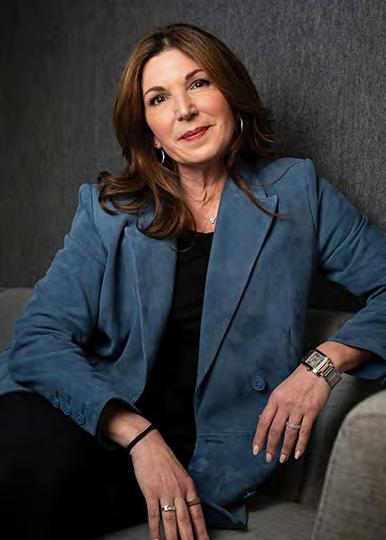
Lisa Ray Sales Director
+33 (0)4 92 99 83 05
+44 7798 662 955
Lisa Ray Sales Director
+33 (0)4 92 99 83 05
+44 7798 662 955


AS


CREATIVITY is increasingly challenged to solve complex business, cultural and societal problems, the 73rd Cannes Lions International Festival of Creativity arrives with a conference programme that reflects the industry’s growing ambition and range. A major highlight is the launch of LIONS Sport — a new global forum celebrating the transformative impact of creative innovation in sports marketing. Taking place on June 24 & 25 during Cannes Lions 2026, the two-day programme will unite leaders from across brands, agencies, rights holders and media to explore how innovation and


creativity in marketing is redefining the $417bn sports landscape.
Building on more than 70 years of creative benchmarking and convening, LIONS Sport will give leading sports marketers a platform to debate, define and recognise creative excellence in sport. Delivered in partnership with Sport Beach, it will examine the forces driving growth across the rapidly evolving sports marketing ecosystem.
The two-day event takes place in a custom-built venue at the Carlton hotel, with keynotes, case studies, networking forums and experiential showcases from brands and


athletes driving the next wave of growth in sport. Sessions include Tennis Australia’s Britt Wickes and Roddy Campbell on how the Australian Open is using entertainment and culture to attract younger audiences, and Brandon Snow of RedBird Capital Partners on the biggest sports marketing deals. Simon Cook, CEO, LIONS, said: “Sport creates shared, borderless moments that no other medium can match. While we understand its scale, the real opportunity now lies in how creativity can transform that scale into meaning, value and growth. It’s clear that the new playing field has shifted
CANNES LIONS continues to place a strong emphasis on talent development, representation and longterm structural change across the creative industries.
Central to this is the See It Be It programme, now entering its 2026 edition as one of the Festival’s most established platforms for accelerating women and non-binary talent in creativity.
Since its launch in 2014, See It Be It has now supported more than 150 women and non-binary creatives from 44 markets. This year’s cohort brings together 20 creatives from 15 markets, including first-time representation from Serbia and South Korea.
Taking place across the week, the programme combines mentorship, private masterclasses, curated session access and backstage experiences tailored to each participant’s ambitions.
The 2026 cohort will be supported by Alumni Tutors Leena Gupta of Talented Agency, India, and Natasha Lashly, founder and ECD of Piña Colada, Venezuela.
“The week I came back from Cannes (2025), I wrote a little ‘moonshot’ in my notebook: come back one day as a SIBI Tutor,” Lashly said.
“This programme has a way of changing you. You arrive for professional growth, but leave
from reach to relevance, from audiences to communities and from media buys to cultural moments.”
In a landscape where rights are fragmented, fanbases are global and athletes have become their own publishers, Cook added that: “LIONS Sport will bring together the people shaping that new reality — because when sport converges with culture and commerce, creativity becomes the ultimate competitive advantage.”
On the client side, Nicole Graham, EVP & chief marketing officer, Nike, said: “In a world that’s constantly shifting, sport remains a powerful force for connection, inspiration and cultural influence. At Nike, we see every day how sport doesn’t just reflect culture — it drives it, shaping the way we tell stories and inspire people around the world.” LIONS Sport, she said, is a recognition “of how profoundly sport is influencing marketing and creative expression”.
Over 150 hours of content
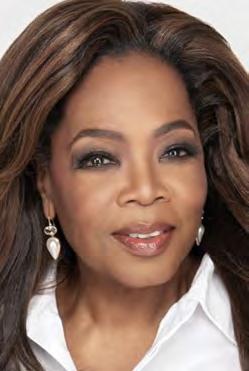
With more than 150 hours of content and around 500 speakers taking to the stage, this year’s Festival brings together an exceptional range of voices from across the creative landscape. Among those confirmed are Google DeepMind co-founder Demis Hassabis, fashion designer Stella McCartney, eBay CEO Jamie Iannone, Meta’s Nicola Mendelsohn and The Estée Lauder Companies’ Aude Gandon. The programme also features acclaimed producer Jerry Bruckheimer, actor and author Alan Cumming, marketing thinkers Mark Ritson and Byron Sharp, alongside leaders from organisations including Patagonia, Mastercard, Sephora, LinkedIn, Shopify and ServiceNow. Adding further star power to this year’s Festival, Oprah Winfrey will be honoured as the 2026 Cannes LionHeart, recognising her outstanding contribution to using influence for meaningful impact.
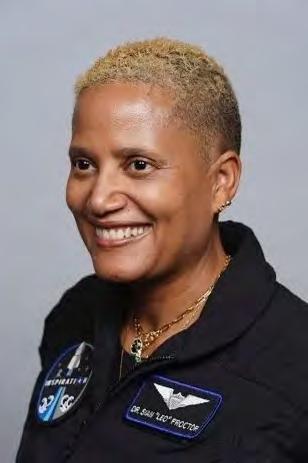
It will be standing room only when three experts in the subject of outer space take to the Debussy stage for Space Isn’t The Future – It’s Your Brief. The session, organised by Pvblic Foundation and UNOOSA, aims to “simplify space’s complexity for marketers and creatives”, with insights from renowned physicist Brian Cox; the first woman commercial spaceship pilot, Dr Sian Leo Proctor; and director of The United Nations Office for Outer Space Affairs (UNOOSA), Aarti Holla-Maini. “The takeaway is clear,” say the session’s organisers: “Space is no longer just a theme or metaphor — it’s an essential part of the creative brief.” Natasha Woodwal, director of content, LIONS, said the 2026 programme “has been designed to reflect how our industry
really works today. We’ve expanded the breadth of formats to encourage deeper participation, from debates and roundtables to interactive workshops and networking opportunities. With the launch of LIONS Sport and the continued growth of LIONS Creators, we’re creating space for new voices, new communities and new conversations that are shaping the future of creativity.”
The 2026 programme is organised around six streams reflecting the expanding scope of creativity today: cultural strategy, technological disruption, effectiveness, craft, leadership and reflection. Together, they map how ideas are made, measured and scaled across an increasingly interconnected creative ecosystem.
Co-curated with Contagious, the Insights & Trends stream examines the cultural and strategic forces reshaping the industry. Patagonia’s Alex Weller will explore the tension between purpose and growth, while Jamie Iannone and Stella McCartney look at how circular commerce is influencing creative and business models. Culture Connectors’ Amy Daroukakis and RADAR’s Sarah Owen will also surface the signals likely to shape the next wave of creativity. Innovation Unwrapped, meanwhile, focuses on the tech and transformations redefining creative possibility. Google

DeepMind’s Hassabis will join a fireside conversation on the future of creativity, while Meta’s Mendelsohn and Estée Lauder’s Gandon explore how AI is reshaping how ideas are developed, evaluated and scaled. R/GA’s Tiffany Rolfe and Nick Pringle will share a playbook for creating in the intelligence age, alongside the ongoing Future Gazers series featuring voices from companies including Dentsu Creative, Sphere and Revenge Capital.
The third pillar, The Creativity Toolbox, focuses on the craft behind standout work and how ideas are built, tested and elevated. NOSSA founder Victor Britto will lead a session on ideation, while David Kolbusz, Lynsey Atkin, Richard Brim and TBWA\Worldwide’s Chaka Sobhani debate whether creative taste can be objective. Marc Pritchard of P&G also returns to discuss creativity as a driver of brand building in an AI-enabled world. Centred on leadership, people and organisational evolution, the Talent & Culture stream looks at how creative cultures are built and sustained. Takeshi Sano of Dentsu reflects on 125 years of innovation, while global roundtables bring together voices including Adams Fan of F5 Shanghai, Trevor Robinson of Quiet Storm and Joana Mendes of Jungle Kid to examine the shifting dynamics of independent and global creative networks.
A key element of Cannes Lions in recent




with something deeper: confidence, clarity and a global sisterhood.”
Gupta added: “Being part of See It Be It 2025 shifted something fundamental in me. It reminded me that the right room can change the trajectory of a career. Coming back as a Tutor feels like a full-circle moment. I’m excited to hold space for 20 extraordinary women as they question bigger, speak louder and build braver.”
Frank Starling, chief DEI Officer, LIONS, said See It Be It “embodies our unwavering commitment to elevating under-represented talent in the creative industry. This year, the programme welcomes a dynamic cohort representing a broad range of creative disciplines and markets. Their unique perspectives and experiences will undoubtedly enrich our SIBI community — a network dedicated to fostering career development and paving the way forward for women and non-binary talent in the industry.”
years has been an emphasis on proving that creativity delivers business benefits — and this is at the heart of the Creative Impact pillar. Co-curated with WARC, this stream focuses on effectiveness and the business value of creativity. Mark Ritson, founder of MiniMBA, and Byron Sharp of the Ehrenberg-Bass Institute will outline foundational marketing truths that continue to underpin longterm growth, while the CMOs In The Spotlight series features leaders including Zena Arnold of Sephora US and Jill Kramer of Mastercard discussing how creativity drives measurable commercial impact at scale.
New for 2026, Cannes Lions Deconstructed is the Festival’s sixth pillar — and will provide a live, on-stage synthesis of the Festival’s biggest ideas. Taking place on the closing day, it will serve as an early-access version of the annual Cannes Lions Wrap-Up Report, capturing key themes, standout work and jury insights from across the week. The session will distil the conversations from the Palais stages and jury rooms into actionable learnings, offering delegates a clear view of where creativity is heading.
Festival focal points
Underneath the six pillars are several new and returning strands guiding delegates through the Festival’s liveliest conversations. Returning formats include Future Gazers, a daily track on the next 18 months in creativity, culture and commerce, and New Voices, which spotlights the next generation of creative leaders, innovators and entrepreneurs. Linking directly to the 2026 Awards programme, Inside The Jury Room returns to offer a unique glimpse into the decision-making process behind the work that sets the global benchmark for creative excellence. Across sessions running throughout the week on the Basement Stage, jury members will share candid insights into what distinguished this year’s winners and how standards of creativity continue to evolve. Additional sessions will also take place across specialist stages, including the LIONS Sport Stage and LIONS B2B Summit, reflecting the breadth of the Festival’s expanding ecosystem.
Cannes Lions is also creating more space for interaction between speakers and delegates. The Rotonde Stage will host

Debates, while new Roundtables offer structured morning discussions on the industry’s most pressing challenges, including independent agency ecosystems and regional perspectives from Asia and LatAm.
Alongside challenging insights, there are also sessions designed to deliver practical applications that delegates can take home with them. Running Monday to Thursday on The Forum Stage, the How To series will move beyond inspiration to focus on execution — offering attendees direct access to the processes, approaches and methods driving creative and commercial success across disciplines.
A key fixture across the Festival week is CMOs In The Spotlight, which brings senior marketing leaders to the stage to share how they are navigating the most complex challenges in modern brand-building. Running daily at 10:30 on the Rotonde Stage, the series offers a direct line into the thinking of global brand leaders as they explore how creativity is driving growth, transformation and long-term value.
Increasingly, LIONS is also evolving beyond presentation formats alone, creating new spaces for more candid and peer-led exchange among senior marketers facing similar pressures across their organisations. Building on this, the Festival is introducing a new closed-door initiative specifically for senior marketing leadership.
The inaugural LIONS Global CMO Forum will take place during the Festival on Wednesday at the Majestic hotel, offering a private environment for open

discussion. Designed as a deliberate departure from traditional formats, the Forum will bring together senior marketers to engage in frank conversation on the pressures shaping modern marketing leadership — from delivering short-term performance to building long-term brand value. Discussions will be conducted under Chatham House Rule to encourage candid exchange and shared learning among peers.
“CMOs today are navigating more complexity and scrutiny than ever before — expected to drive immediate results while building brands that endure,” Simon Cook, said. “Yet too often, the industry creates spaces where they are spoken at, rather than heard. The LIONS Global CMO Forum has been designed to change that.”
Alongside this, Cannes Lions’ long-established CMO Accelerator Programme continues as a flagship leadership experience. Since 2013, it has brought together more than 550 senior marketers from over 55 countries for a closed-door programme led by P&G’s Jim Stengel and shaped around participants’ most pressing leadership challenges.
In 2026, the programme continues to expand as part of the LIONS Global Series, with City Editions also taking place in Singapore, London, São Paulo, New York and Los Angeles, extending the platform beyond Cannes and into key global markets.
Creators in Cannes
Cannes LIONS has embraced the creator economy, reflected in the return of LIONS Creators, a dedicated pass, programme and place where creators connect with
the global communications industry. In partnership with Adobe, LIONS creators will set out to blend networking with content, featuring Mel Robbins on turning ideas into movements and Dhar Mann alongside Shopify’s Jessica Williams and Gap’s Fabiola Tores on building billion-view content ecosystems. From talks to workshops, interactive discussions to networking and socials, this strand takes place all day every day at the LIONS Creators Beach. Cannes Lions sessions that relate to this hot topic include Creative Impact Unpacked: How Do You Scale Brands In A Social-Led Era?, where Kaveri Khullar, SVP marketing, Asia-Pacific, Mastercard, will take the stage with Rica Facundo of WARC.
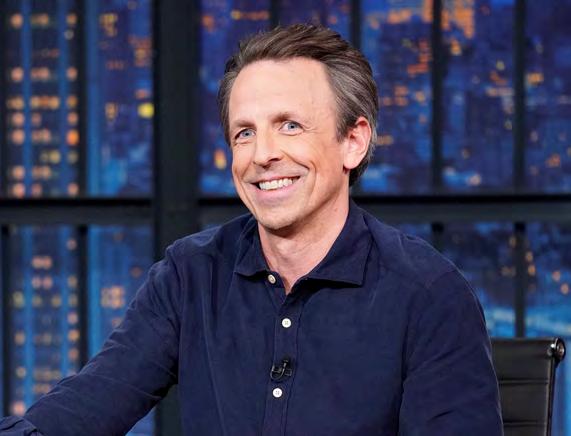
Meta’s head of Instagram — Adam Mosseri will discuss The Evolution of Creativity while TikTok’s Adrian Adaramoye will join the Institute of Practitioners in Advertising to examine what really drives growth — big brand-building moments or continuous activation across diverse communities? LinkedIn and Reddit will present for Discovery vs Belief: Where Does Brand Power Really Sit Today? NBCUniversal, meanwhile, will explore fandom in a session entitled From Franchise To Frenzy: The Global Fandom Engine. During the session, Alan Cumming, Rachel Zoe, Colin Jost and Seth Meyers will unpack how fandom turns great IP into global cultural currency — sparking conversations that move fluidly across linear moments, streaming obsession, digital discovery and social amplification — fuelling communities that don’t just watch, but that immerse themselves. The growing importance of participatory culture is also reflected in a session featuring McDonald’s and Mojang Studios, which examines how brands can move beyond simply generating attention to creating lasting cultural relevance. In The Sticking Point: A McDonald’s × Minecraft Story, the partners behind one of the year’s biggest entertainment collaborations will unpack how they transformed the launch of A Minecraft Movie into a global cultural event spanning more than 100 markets.
Minecraft associate brand director Harry Elonen will discuss how the collaboration was built around participation and ownership, allowing fans to express themselves through the campaign rather than simply consume it. In doing so, the discussion touches on one of the defining themes of modern marketing: the shift from broadcasting messages to creating platforms for communities to build upon.

Experimentation to interrogation Artificial intelligence is set to permeate LIONS 2026. But unlike previous years, when much of the conversation centred on AI’s potential, this year’s programme is more focused on practical application, governance and creative responsibility. The tech appears across multiple content streams, from Innovation Unwrapped and Creative Impact through to Talent & Culture and The Creativity Toolbox.
Rather than treating AI as a standalone discipline, organisers have woven it into discussions about brand building, creative development, media planning, leadership and effectiveness.
Headline sessions include Advertising In The Age Of AI, featuring OpenAI chief revenue officer Denise Dresser. As AI becomes the interface through which consumers search, learn and make decisions, the session will explore how this changes the relationship between brands, audiences and media, and what opportunities emerge through AI-native creative workflows.
Google DeepMind co-founder Demis Hassabis examines the future of creativity itself, while leaders from Meta, Estée Lauder and R/GA will explore how machine intelligence is reshaping the way ideas are generated, evaluated and scaled.
The Festival is equally interested in AI’s tensions and trade-offs. The Conscious Advertising Network’s A Sense Of Impending Doomscrolling: Rebooting AI And Social Media asks whether enthusiasm for automation and platform growth is outpacing accountability, trust and misinformation. The session reflects a growing recognition that creativity’s

future will be shaped not only by technological capability but by the choices made around its deployment.
SAWA’s Creative Control: Premium AI Meets The Big Screen explores the role of human oversight in AI-assisted creativity. Set against the backdrop of cinema’s enduring storytelling standards, the discussion highlights a recurring theme this week: that the most effective use of AI may be as a creative amplifier rather than a creative replacement. One of the Festival’s more thought-provoking counterpoints comes not from a technology company but from Polaroid.
The Analogue Revolution In The Age Of AI argues that in a world optimised for algorithms, analogue experiences may become a source of differentiation, originality and critical thinking. It is a reminder that as LIONS embraces AI, it is also creating space to debate what remains uniquely human.
One notable shift in recent LIONS programmes has been a broader perspective beyond the industry’s traditional North American and European centres. The 2026 agenda continues that evolution, with sessions examining how creativity, innovation and growth are emerging from historically underrepresented markets. China’s growing influence on the global business landscape is explored in From


Local To Global: China Inside Out, where BYD and other industry leaders will examine the country’s latest wave of international expansion. Rather than viewing Chinese brands as followers of established global playbooks, the discussion positions them as creators of new growth models, innovation frameworks and cultural narratives.
Across Asia-Pacific, Heineken’s Brewing Connection: How Heineken Refreshes Social Life In Asia explores a different challenge: how global brands can remain culturally coherent while responding authentically to highly diverse local markets. The session highlights a broader shift in international marketing thinking, where localisation is no longer about adaptation at the margins but often sits at the centre of creative strategy.
Elsewhere, Lessons In Creativity: What Africa Can Teach The World offers a timely challenge to traditional industry assumptions. Framing creativity as a response to constraint rather than abundance, the session examines how resourcefulness, adaptability and community-centred thinking have become drivers of innovation across African markets. The takeaway is that some of the industry’s most relevant lessons may come from regions long viewed as

peripheral to creative discourse.
Japan’s Creative Code: Storytelling That Endures provides another perspective, exploring how Japanese approaches to narrative, character and emotional connection continue to influence audiences across generations and media formats. At a time when AI is making content creation increasingly accessible, the session asks whether cultural distinctiveness and storytelling heritage may become competitive advantages. Together, these conversations reflect a Festival increasingly identifying creativity as a genuinely global exchange of ideas. Rather than searching for a single model of success, Cannes Lions 2026 continues to explore how different regions are developing their own approaches to innovation, growth and cultural relevance.
B2B claims a bigger stage
For years, B2B marketing occupied an uneasy place in the creative industry. Despite influencing some of the world’s largest commercial decisions, it rarely drew the same attention as consumer work. LIONS has been steadily changing that, and in 2026 B2B continues its move from specialist discipline to mainstream creative conversation.
The return of LIONS B2B, delivered in partnership with LinkedIn, reflects growing recognition that creativity plays a vital role in complex purchasing journeys, stakeholder influence and long-term business growth. Rather than focusing solely on lead generation or performance metrics, the programme explores how brand building, emotion and creativity contribute to commercial success.
A highlight will be Cracking B2B Creativity: The Buyability Levers That Power Successful Campaigns, where LinkedIn and WARC unveil
new research examining the emotional and creative drivers behind effective business marketing. Joined by ServiceNow’s Jim Lesser, the session aims to bridge the long-standing gap between evidence and execution, offering marketers a clearer understanding of how creativity influences buying behaviour in business categories.
The prominence of B2B content within the broader Creative Impact stream also signals how the distinction between consumer and business marketing continues to blur, with both disciplines increasingly focused on the same challenge: creating ideas that build trust, shape perceptions and drive measurable growth. In an era where professional audiences consume media, culture and content in much the same way as consumers, the B2B industry’s definition of effective creativity continues to expand.
The climate conversation
Sustainability has become one of the ad industry’s most complex challenges. After years of ambitious environmental claims, many organisations now find themselves navigating heightened scrutiny, regu-
latory pressure and growing concerns around greenwashing. The result, some argue, has been a shift from overstatement to silence.
That tension sits at the heart of Creatives for Climate’s Silence To GreenSHOUTING: A Creative Lab For What Comes Next. Rather than presenting polished answers, the session brings together brands, NGOs and agencies to tackle real-world climate communication challenges with an emphasis on collaboration, accountability and practical problem-solving.
What makes the session acutely relevant is that it addresses a dilemma facing marketers around the world: how to communicate progress without overstating impact, while still maintaining public engagement around sustainability issues.
In many ways, the discussion mirrors a wider theme running through Cannes Lions 2026. Whether the topic is AI, representation, effectiveness or sustainability, the industry’s focus is shifting from aspiration to implementation - examining how creativity can move the needle responsibly and credibly in an increasingly unpredictable world.
THE CARBON FOOTPRINT OF THE PRINT EDITION OF THE LIONS DAILY NEWS ENDS WHEN IT ARRIVES IN CANNES
If one person or 100 people read your printed copy of the Lions Daily News, postdelivery emissions remain at zero. That is not the case if you read it on a phone or tablet
The print and paper industry is one of the lowest industrial greenhouse gas emitters in Europe, accounting for just 0.8% of emissions (European Environment Agency)
The Lions Daily News is printed on responsibly sourced, 100% recyclable paper. If you don’t keep hold of your copy, please make sure it can be recycled
Our printing partner, Creamania, holds the ‘gold standard’ in environmental certification, being both ISO9001 (1999) and ISO14001 (2012) accredited
Creamania also holds the French Imprim’Vert certificate, which covers responsible disposal or recycling of waste materials and the non-use of toxic chemicals
All inks used are certified to be of vegetable origin
No chemicals are used in the processing of the printing plates, only water – and after use they are recycled to be used in other industries
We will continue in our efforts to minimise the impact of your Lions Daily News on the environment
PUBLISHER, LIONS DAILY NEWS BOUTIQUE MEDIA INTERNATIONAL LTD.


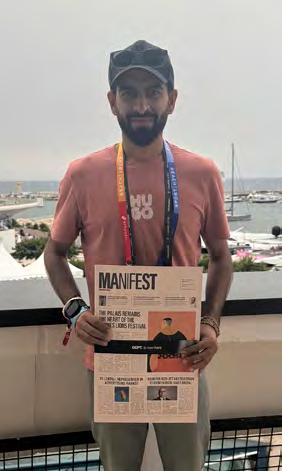
IF THIS article were being read in India, the following statement would be almost irrelevant: ‘In a country full of religious beliefs, there’s one that brings it together — cricket.’
Ever since the landmark 1983 Men’s ODI World Cup win, cricket has dominated the mind space of the entire country, and, unsurprisingly, brands followed.
Cut to the turn of the millennium. The number of sports channels being rolled out on either side of the millennium increased. The English Premier League (or Barclays Premier League as it was known then), the Spanish La Liga, the UEFA Champions League and the FIFA World Cup gained prominence. Thanks to clever merchandising by the likes of Nike and Adidas, and cleverer distribution of the first copy jerseys by some Thailand warehousers, the
In
the year that introduces LIONS Sport to the creative community, Raahil Chopra, founder and editor at India’s Manifest, explains why ‘consumer passion does not automatically translate into commercial opportunity’. Local and international contexts, culture, history — and even religion — are all factors that should also be considered
youth of India were wearing Manchester United, Arsenal and Real Madrid (David Beckham 23) jerseys.
This led experts to believe that football was the next big thing in India, and got marketers interested in spending money on the game, in the belief that the millennials and Gen Z would be ditching cricket for football.
But that was a false dawn.
The Premier League continued to gain prominence, but soon, La Liga and Serie A, two of the prominent European leagues, would be without a television broadcast partner in the country.
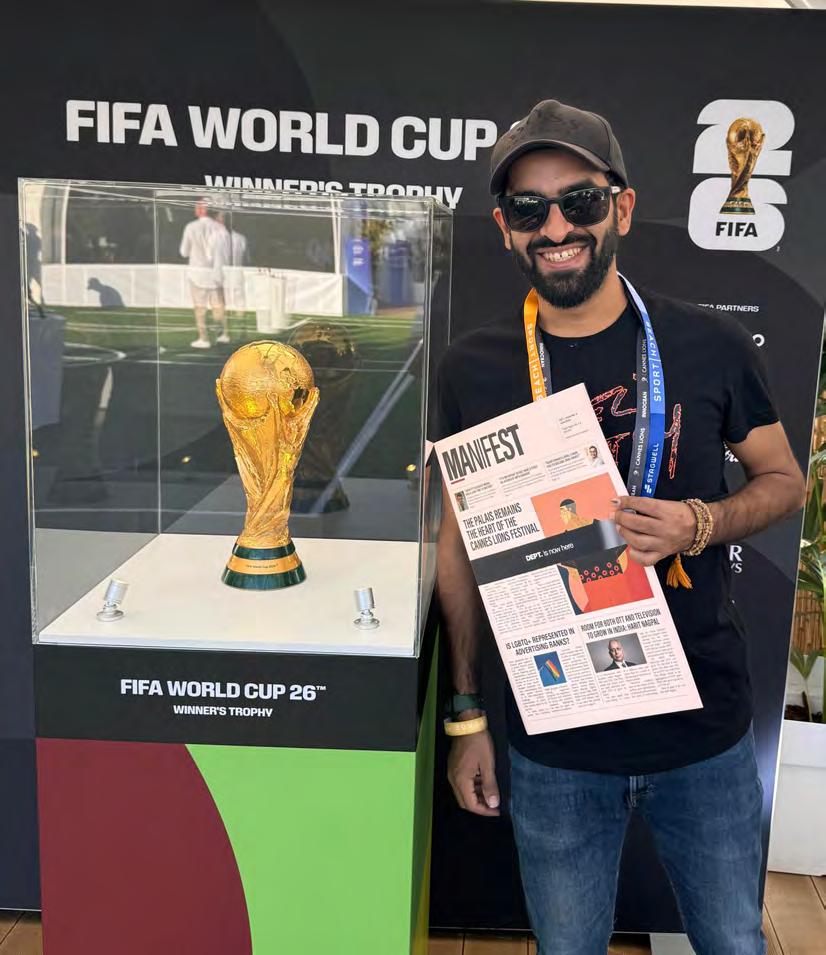
Two decades later, FIFA struggled to gain a broadcaster in India for the biggest tournament in the world — the men’s World Cup. Zee Entertainment Enterprises stepped in and secured rights for the tour-
nament, albeit at close to 30% of what FIFA claimed to have expected.
So, what went wrong?
For years, administrators and broadcasters confused fandom with participation. Indians supported Manchester United, Liverpool, Barcelona and Real Madrid, but very few could name the captain of the Indian national team or identify clubs competing in the domestic league.
The launch of the Indian Super League (ISL) in 2014 was supposed to change that.
Backed by corporate money, celebrity owners and significant broadcaster support, the ISL was positioned as football’s answer to the (cricket) Indian Premier League. Stadiums filled up during the opening seasons, international stars arrived towards the end of their careers and marketers finally had a domestic football property they could associate with. The challenge was that football is not cricket. Cricket fandom in India is built around dec-
ades of shared memories, heroes and victories. Football attempted to manufacture that emotional connection in a matter of years. While the ISL improved infrastructure, increased visibility and brought professionalism to several clubs, it struggled to build a sustainable ecosystem beneath the top layer.
Grassroots development remained inconsistent, youth pathways were fragmented and the national team’s performances failed to create the moments required to convert casual viewers into lifelong supporters.
The result was a widening gap between watching football and investing in football.
A generation continued waking up at midnight to watch the Premier League while showing considerably less interest in domestic competitions. The sport grew culturally, but not commercially at the scale many expected. Meanwhile, something unexpected was happening elsewhere.
Rather than becoming a cricket-versus-football story, India’s sporting landscape was quietly becoming more diverse.
The IPL demonstrated that Indian
audiences were willing to engage with sports as entertainment properties. Administrators across multiple disciplines took note.
The most successful example has undoubtedly been kabaddi.
For decades, kabaddi was viewed as a rural sport with limited commercial appeal. Yet the launch of the Pro Kabaddi League transformed its fortunes almost overnight. By packaging the sport for television, introducing player auctions, improving production quality and creating identifiable franchises, kabaddi became one of India’s most watched sporting properties.
What made the league particularly remarkable was that it did not rely on imported stars or global fandom. It celebrated a sport that was inherently Indian.
Unlike football, which competed with established European competitions, kabaddi owned its category. Fans did not have a superior international alternative competing for their attention every weekend.
Brands noticed.
The league delivered strong television audiences, regional engagement and
family viewership. For advertisers seeking scale beyond cricket, kabaddi suddenly became a viable proposition.
The success of Pro Kabaddi also challenged a long-standing assumption within Indian marketing circles: that international sports automatically carried more value than domestic ones.
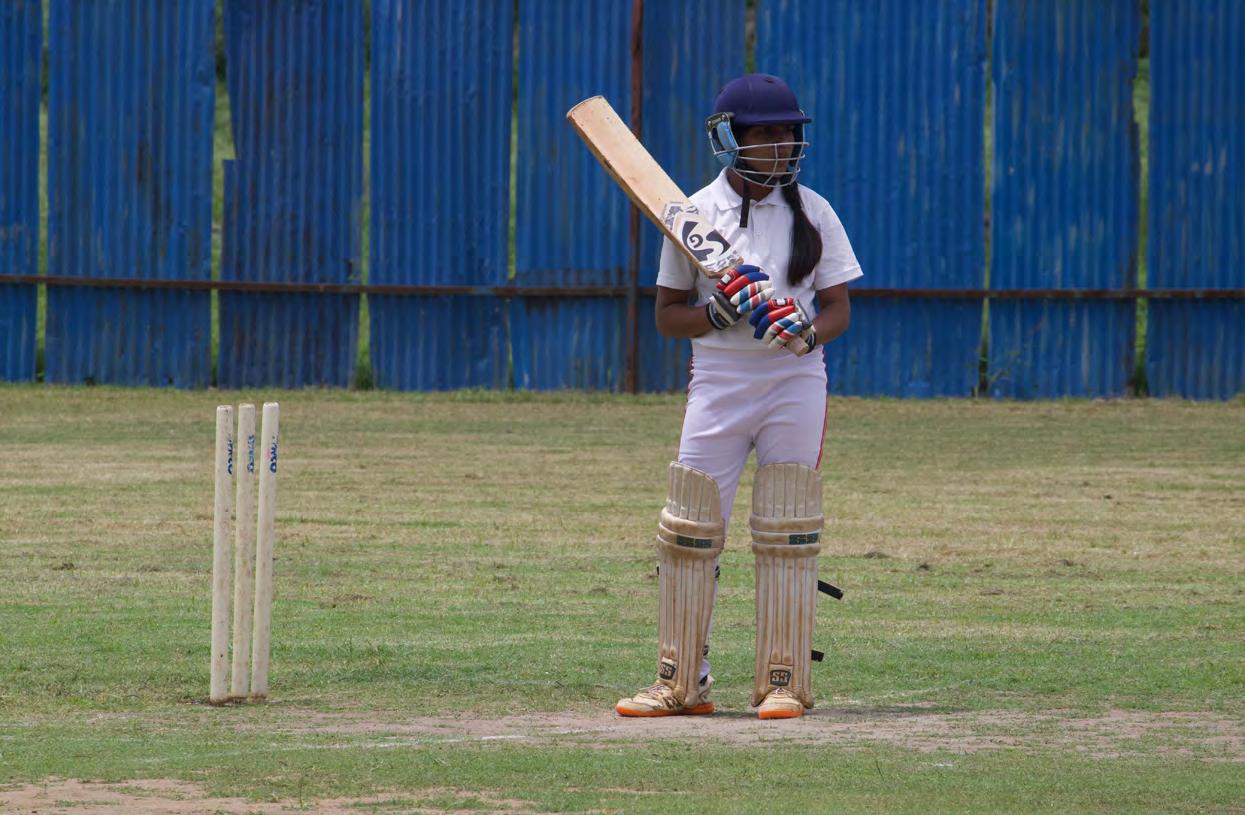
Another major shift has come from women’s cricket.
For years, women’s sport in India lived on the margins of media coverage. Performances were acknowledged during major tournaments but rarely translated into sustained commercial investment.
That began to change following India’s run to the final of the ICC Women’s Cricket World Cup in 2017.
The tournament introduced players such as Mithali Raj, Harmanpreet Kaur and Smriti Mandhana to mainstream audiences. More importantly, it demonstrated that there was a genuine appetite for women’s cricket among viewers. Subsequent performances at global tournaments strengthened that momentum.
The launch of the Women’s Premier League (WPL) in 2023 accelerated the process further. Franchise valuations, media rights deals and sponsorship commitments sent a clear signal that women’s cricket was no longer being treated as a corporate social responsibility exercise.
It was a commercial property.
Attendance figures, broadcast audiences and digital engagement have consistently exceeded many early expectations. Brands that once viewed women’s sport as a niche opportunity now see it as a long-term investment. And the World Cup win in 2025 was the icing on the cake.
The significance extends beyond cricket. Every successful women’s sporting property makes it easier for sponsors to support female athletes in badminton, athletics, wrestling, boxing and other disciplines. Visibility creates familiarity, and familiarity creates commercial confidence.
The last two decades have also produced a steady stream of Indian sporting heroes outside cricket.
The achievements of athletes such as Abhinav Bindra, Neeraj Chopra, PV Sindhu, Saina Nehwal, Mirabai Chanu and Nikhat Zareen have expanded the definition of sporting success in India.
Each Olympic medal, world championship and international title has chipped away at cricket’s monopoly on attention, and football’s promised growth.
The impact is particularly visible among younger audiences.
Unlike previous generations, Gen Z sports
‘‘And it won’t be a surprise if the first cricketer to set foot at the Cannes Lions International Festival of Creativity will be a women’s cricketer from India’’
fans are exposed to highlights, documentaries and athlete content across multiple digital platforms. They do not require a television broadcaster to introduce them to a sport.
A viral Olympic performance can generate millions of views within hours. An athlete’s Instagram following can become as valuable as traditional media coverage.
For brands, this has created an entirely new sponsorship ecosystem. Instead of placing all their investment behind one cricket property, marketers can now build portfolios across athletes, leagues and sporting disciplines.
The broadcaster’s dilemma
This diversification creates both opportunities and challenges.
Cricket remains dominant. It continues to attract the largest audiences, command the highest sponsorship rates and deliver the greatest consistency. However, broadcasters increasingly face the challenge of balancing scale with variety.
The economics of acquiring premium international rights have become more complicated.
Football rights, in particular, have become difficult to monetise in markets
where audience growth has plateaued.
At the same time, emerging sports often offer lower acquisition costs and stronger opportunities for advertiser integration.
This explains why leagues such as Pro Kabaddi, women’s cricket and even selected Olympic events have become increasingly attractive properties. The conversation is no longer about finding the next cricket. It never should have been in India.
The country is big enough to build multiple successful sporting ecosystems that can coexist alongside cricket.
Marketers’ takeaways
For marketers, the lesson from the past two decades is straightforward. Consumer passion does not automatically translate into commercial opportunity.
Football’s journey in India demonstrates that popularity alone is not enough. Millions may watch a sport, but unless that interest is connected to local heroes, domestic competitions and cultural relevance, monetisation remains difficult.
Kabaddi succeeded because it belonged to India. Women’s cricket succeeded because it offered fresh
narratives within a familiar sporting framework. Olympic sports gained momentum because athletes delivered unforgettable moments on the global stage.
The future of sports marketing in India will therefore be less about replacing cricket and more about complementing it.
Cricket will remain the centrepiece of the ecosystem for the foreseeable future. The scale advantage is simply too large.
But the country’s sporting identity is becoming broader than it has ever been. A generation ago, a sports sponsor effectively meant a cricket sponsor.
Today, brands can invest in kabaddi, women’s cricket, badminton, athletics, football, esports, marathon running or individual athletes, each offering distinct audiences and engagement opportunities.
That is perhaps the most significant change of all.
And while cricket remains the religion, the congregation is becoming increasingly diverse. While we saw the head of digital for the International Cricket Council at the Sports Beach last year, there’s been no cricket representation at the festival. It’s time to change that.
And it won’t be a surprise if the first cricketer to set foot at the Cannes Lions International Festival of Creativity will be a women’s cricketer from India.
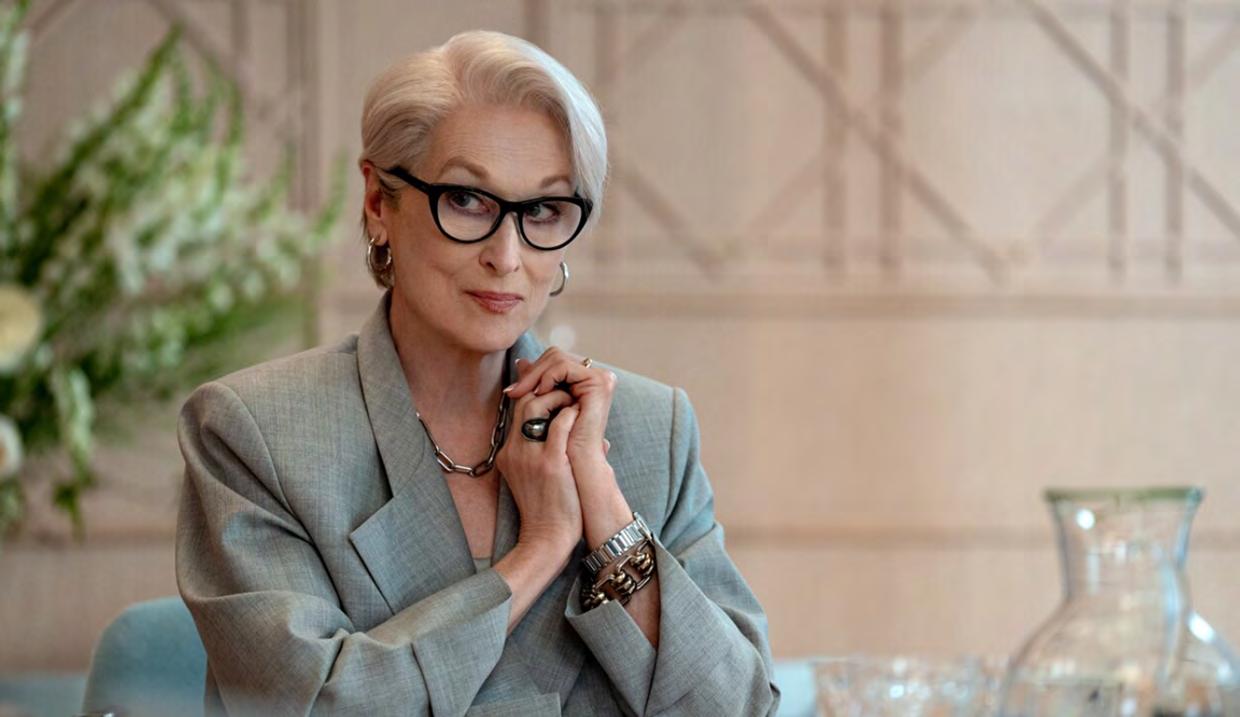

“THAT blue represents millions of dollars and countless jobs. And it’s sort of comical how you think that you’ve made a choice that exempts you from the fashion industry when, in fact, you’re wearing the sweater that was selected for you by the people in this room.”
This dressing-down by Miranda Priestly, played by actress Meryl Streep, to her assistant Andy Sachs, portrayed by Anne Hathaway, in the first Devil Wears Prada, illustrates what happens in the advertising world as well. A sequel to the film was released last April. Ad agencies also dictate trends. Even
From the clothes consumers wear to the way they behave, fashion and advertising shape industries that pump millions of dollars into the global economy, says Janaina Langsdorff, editor at Propmark, São Paulo
without realising it, people find themselves humming a jingle, listening to remakes of classics, buying products advertised with messages that moved them, hiring services that proved relevant to their lives, or even wearing the exact outfits sported by commercial protagonists.
Chic
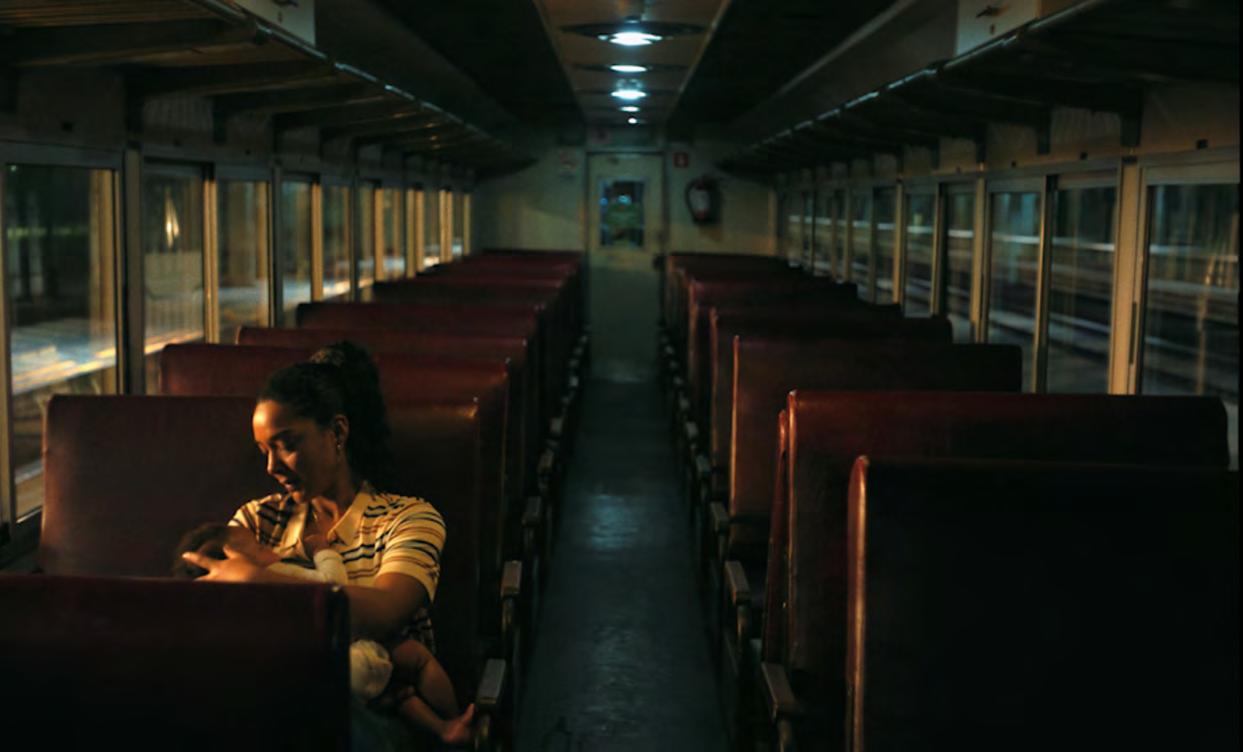
It is not uncommon for a campaign theme to become a talking point. For Mother’s Day, celebrated on May 10, the Brazilian beauty brand O Boticário addressed the “empty nest” syndrome. A mother never forgets the moment
she first brought her baby home in her arms. From joy to solitude, it is equally unforgettable when that child grows up and decides to move out. Even knowing that children must eventually spread their wings, this sudden emptiness weighs heavily on the heart. Created by AlmapBBDO, the film ‘Despedidas’ (‘Goodbyes’) paid tribute to the holiday, which is always celebrated on the second Sunday of May in Brazil. The campaign generated the highest engagement in the brand’s history. Launched on April 14, it garnered
over 40 million organic views in just five days — a 511% surge compared to the 2025 Mother’s Day campaign. It also amassed one million likes and one million shares.
Last year, AlmapBBDO won The Dan Wieden Titanium Lion with ‘Pedigree Caramelo’, a campaign developed for Mars. Caramelo (Caramel) is the nickname Brazilians give to stray, mixedbreed dogs. While these pups are widely beloved, they often overcrowd shelters. The campaign’s goal was to encourage adoption. Chic, isn’t it?
The blueprint
Have you ever seen anyone walking through a mall wearing a Miuccia Prada design fresh off the world’s top runways? Paris, Milan, London and New York set trends, discover designers, and drive the global market. It is meant to inspire. The same goes for Cannes Lions, a runway of ideas capable of guiding the next steps of the creative industry. Multitudes are influenced by the creations showcased on the stages of the Lumière and Debussy theatres, the main auditoriums of the Palais des Festivals in Cannes, where the awards have been held since 1984. These are projects with the power
to scale, reshape communication aesthetics and catapult names into global stardom, weaving together creativity, cultural relevance and business results. However, all this power does not grant anyone a licence to disrupt the market with results manipulated by artificial intelligence. In fact, the Festival’s organisers have tightened the rules. Much like fashion designers, creative professionals shape attitudes and markets. With every piece envisioned, they shatter norms in avantpremières turned into spectacles and big business. What would Miranda Priestly say about that? Do advertisers wear Prada too?

AS BRANDS navigate cultural shifts, economic uncertainty and increasingly fragmented audiences, executives across agencies, media, technology and marketing agree on one thing: the brands outperforming the market are the ones that recognised early that Latino audiences are not a side conversation, but a defining force shaping the future of American culture and consumer behaviour.
From agencies to data-driven platforms leaders say the companies winning with Latino consumers are the ones investing beyond translation, beyond token campaigns and
For
years, marketers treated Latino consumers in
the US as a niche segment. Today, industry leaders say that mindset is no longer just outdated — it’s bad business.
By Claudia Sofía Smolansky Urosa, US Hispanic Editor, PRODU
beyond seasonal visibility. They are the ones that are building longterm cultural relevance.
“The difference between simply reaching people and truly connecting with them lies in understanding their heritage and culture,” says Isaac Mizrahi, co-president & CEO of Alma. “That’s the key that unlocks the door to the consumer’s heart and soul. And that door is the secret to staying relevant.”
That relevance is increasingly tied to growth. Latino consumers are among the youngest, fastest growing and most influential audiences in the US, shaping everything from
entertainment and food trends to the adoption of technology and purchasing behaviour.
Alvaro Luque, CEO of Avocados From Mexico, says the brands succeeding today are those that have intentionally embraced Latino audiences as part of their long-term growth strategy rather than treating them as an afterthought.
“They have been incredibly intentional and effective in how they engage Latino audiences as a core part of their growth strategy,” Luque says. “They have done so by celebrating the culture and inviting others to join them.”
Luque pointed to Avocados From Mexico as an example of how cultural relevance



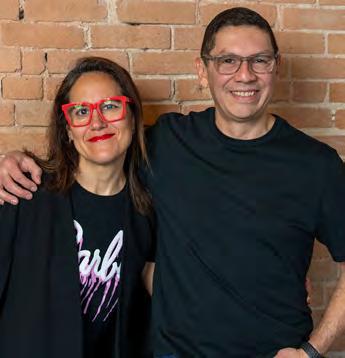


can drive mainstream success. “Avocados, like guacamole, have become part of the mainstream,” he said. “Their creative centres on the nuances but bring forth the universal truths.”
That strategy, he adds, has helped demonstrate that investing in Hispanic culture is not something brands should pivot away from, but something they should fully embrace. “Inclusive marketing is future-facing, growth-oriented and increasingly central to all consumers,” Luque says.
For Aldo Quevedo, CEO & creative chairman of BeautifulBeast, and Flor Leibaschoff, co-founder & chief creative officer of the agency, the issue is no longer whether the US is changing — but whether brands are willing to acknowledge it.
“Brands that are investing understand
that the US has already changed,” they say. Quevedo and Leibaschoff argue that many brands still underestimate the scale of Latino influence despite decades of evidence. “Today, the Latino GDP is the fifth-largest economy in the world, growing twice as fast as the rest of the country,” they say. “Yet brands dedicate only 4% of their advertising investment to this audience.”
According to them, the problem is not strategy but attention: “There’s no one at the decision-making table who truly understands the culture and pushes their peers to see it.”
They also emphasise that Latino audiences reward brands that remain present during difficult moments. “Brands are like friends — the ones who disappear when things get difficult are unforgivable,” they say. “The brands that stay present during hard times build a level of loyalty so deep that even price increases are forgiven.”
Elias Weinstock, chief creative officer of Casanova//McCann, echoes the idea that investing in Latino audiences is no longer simply about inclusion — it is about economics.
“Brands that invest in Latino audiences understand that the Hispanic market is currently a major growth engine for brands — and will become even more so in the future,” Weinstock says. “Beyond politics and social pressures, investing in the Hispanic market simply makes economic sense.”
That sentiment was shared by Veronica Elizondo, chief creative officer at Conill, who said brands ignoring Latino audiences are missing one of the most dynamic opportunities in the marketplace.
‘‘Beyond politics and social pressure, investing in the Hispanic market simply makes economic sense’’
“Latinos are the youngest and fastest growing segment in the US, and they’re shaping culture, how people use technology and what trends take off,” she says. “The influence is there — and the economic power is undeniable.”
But she warned that authenticity matters. “If you’re going to step in, just know you have to commit,” she says. “Be respectful, be consistent and do it in an authentic way. People will notice right away if you’re not.”
Tanya De Poli and Checha Agost Carreño, founders and CEOs of Founders, said the market’s biggest mistake is continuing to think of Latinos as a minority audience instead of recognising them as a defin -
ing force in the country’s future.
“Latino influence is no longer an emerging trend — it is a reality reshaping the centre of gravity in the US,” they say.
They argue that Latino power now extends far beyond demographics:
“Latino power is no longer measured solely by demographic size, but by its ability to define trends, influence elections and drive billions of dollars in consumer spending.”
Omar Quiñones, chief strategy officer at Lerma/, believes the industry is still framing the conversation incorrectly. “Latino culture is not a secondary opportunity,” he says. “It’s the leading edge of growth.”
For Quiñones, brands that understand Latino audiences recognise something deeper: “Latinos are not just an engine for your business, they are the most influential voice shaping trends and tastes, and what becomes mainstream next. This is not multicultural marketing. It is future-market strategy.”
Technology and data leaders also say the next evolution of Latino marketing depends on precision and cultural nuance.
Camila Quintana, sales director LatAm at Locala, said brands often fail when they assume there is a single Latino audience.
“What many brands still overlook is that there is no single ‘Latino audience,’” Quintana says. “There are major differences across markets, cities — and even local consumer behaviours.”
She explains that campaigns perform best when brands understand how Latino consumers move between physical and digital spaces in their everyday lives: “The campaigns that truly perform are the ones that create local relevance and connect with people based on their real behaviours and interests.”
Rafael García, CMO of Numatec, agrees that brands are moving beyond broad demographic assumptions toward a more behaviour-driven understanding of Latino consumers.
“This audience cannot be approached as a uniform segment, nor defined solely by demographics or broad interests,” García says.
For García, the combination of data, technology and cultural understanding is what ultimately drives stronger business results.
“That’s where data, technology and cultural insight make it possi -

ble to activate campaigns that are more relevant, more efficient and ultimately deliver greater business impact,” he said.
Across the industry, the consensus is becoming increasingly difficult to ignore: brands that invest in Latino audiences are not chasing a trend. They are aligning themselves with one of the most powerful economic and cultural forces shaping the future of the American market.
And as younger Hispanic generations continue to redefine what mainstream America looks like, many executives believe the brands that fail to recognise that shift may soon find themselves struggling to stay relevant in a market that has already moved on.