Bournemouth University’s BU2035 strategy details our commitment to use our location and partnerships to strengthen communities, support regional and global prosperity, and create opportunities for our students.
Enabling as many people as possible to benefit from the facilities we have on campus and to travel in a more sustainable way is at the heart of this travel plan. This plan outlines the excellent work already done to support active and sustainable travel to our campuses, and the commitment to continue to develop this as we move into the BU2035 strategic period. We need everyone in our community to be part of this and to consider their own travel choices, as we work together to maximise local travel options, make sustainable choices when travelling internationally and overall to reduce our environmental impact.
1. Introduction
1.1 What is a Travel Plan?
The Bournemouth University (BU) Travel Plan is a programme of measures, initiatives, and infrastructure which aims to support as many students, staff, and visitors as possible to access BU campuses in a more sustainable way. It also sets out our commitment to taking accountability for business travel and giving transparency around the environmental impact it generates. Together we aim to help the BU community to make informed, responsible decisions about their travel activity.
1.2
Why do we need a Travel Plan?
BU is a major higher education institution. Our circa 15,000 students, 1,500 staff, and multiple visitors generate a significant number of trips to/from/between our campuses.
The university acknowledges that we have a responsibility to promote and deliver a Travel Plan which seeks to address the environmental challenges associated with our travel at different levels:
— On campus: To improve the accessibility and quality of the campus environment and to allow the campus to operate effectively
— Local level: A large number of commuting and business journeys are generated each day by BU. This activity contributes to local traffic congestion and air pollution
— Global level: BU’s local, national and international travel activities generate carbon emissions which contribute towards the warming of the planet.
1.3 BU2035
Our strategic BU2035 objectives include to be a Top 10 UK University for Sustainability and be a nationally recognised Employer of Choice. This plan aims to support these objectives and to do this is in a responsible and ethical way enabling BU to bring meaningful and positive impact locally and globally.
1.4 Travel Plan History
Original Plan: 2003-2007
First Update: 2008-2012
Second Update: 2013-2018
Third Update: 2019-2025
Fourth Update: 2026-2031
2. What do we want to achieve?
2.1 Aims
The overall aim of our plan is to enable all campus users to travel by active or public transport for as many journeys as possible. This will enhance staff and student experience and minimise both the on and off campus environmental impacts of our operations, in alignment with the BU2035 strategic plan.
2.2
Objectives
Our plan has four objectives which align to the overall aim and sets a framework for the delivery of the plan. These are the same four objectives of the previous Travel Plan, and by retaining these we will drive continuity of delivery over a longer timeframe.
1. Maximise opportunities
To maximise opportunities for BU staff and students to undertake their travel using sustainable and active travel modes and, in doing so, reduce the number of cars driving to and from BU’s campuses.
2. Environmental impact
To limit the environmental impact of BU’s activities by:
— Enhancing the environment in which we live, work, and learn
— Being a clean neighbour
— Minimising BU’s carbon footprint.
3. Campus development
As by having this travel plan we help ensure that transport related planning requirements are met.
4. Enhance travel opportunities
To enhance travel opportunities and limit the environmental impact of travel, through:
— Being at the forefront of innovations in travel and making those opportunities easily accessible to staff and students
— Facilitating collaboration between faculties, industry and other stakeholders in the development and application of travel related initiatives.
2.3 Targets
We have set targets to measure the success of the plan against our objectives. We are changing our targeting approach to focus on increasing the percentage of travel carried out as active or public transport. This will give a clearer positive message when communicating our goals and will be accessible to everyone to contribute by each of us aiming to make:
50%
of their own journeys to or between campuses by active, public, or shared transport.
Overall targets:
60%
of travel to be active, public, or shared modes for staff by 2030/31
90%
of travel to be active, public, or shared modes for students by 2030/31
50%
usage of daily use permits by 2030/31
3. How will we continue to develop and deliver our Travel Plan?
We have already implemented a wide range of successful measures and on-going initiatives through previous iterations of the Travel Plan. We have reviewed the existing measures and will continue to implement those which have worked well to date.
We are keen to keep making progress and will set out our plans which are focused around key areas:
Plans focused around seven key areas:
1. Bus service
2. Active travel
3. Driving and car parking (incl. support for electric cars)
4. Visitors (cycle, bus, and parking)
5. Business travel
6. Deliveries and fleet vehicles
7. Data collection
These focus areas all work together to enable everyone to be able to carry out as many journeys as possible by active, public, or shared transport.
3.1. We will continue to offer Unibus services to provide high quality and efficient bus travel between and to our campuses from key areas.
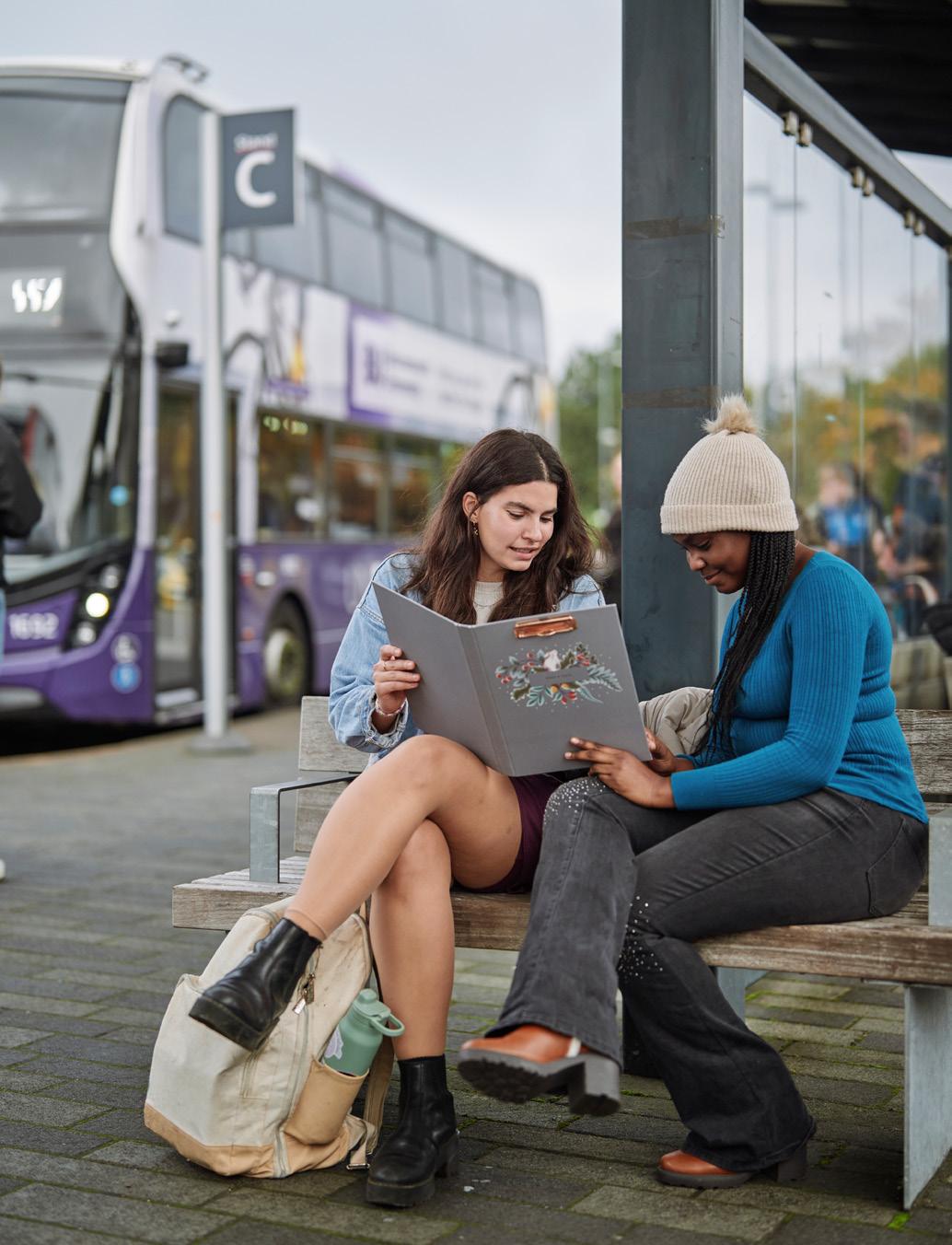
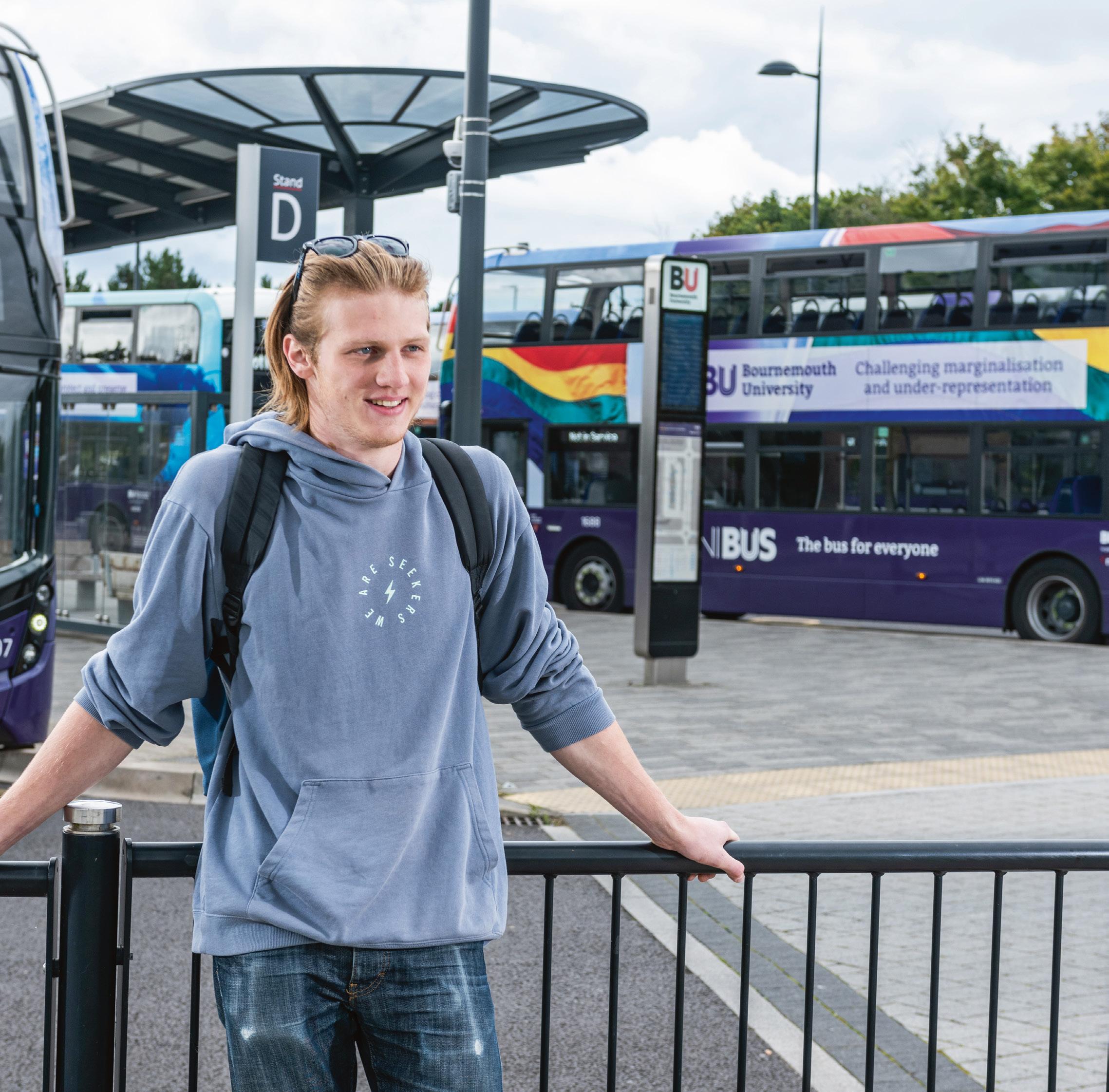
We are proud of the Unibus service which has developed into a high performing operation supporting over 1 million journeys each year. The focus is on student travel, but staff, and members of the public benefit from the high quality, on time services as well. We have invested in a modern bus hub at Talbot Campus which provides a safe and welcoming destination for arrivals and departures. During this Travel Plan we will be reviewing the routes to ensure they provide services where students need them most.
The service currently operates 15 of the Euro 6 diesel buses which are the most efficient diesel buses available, and we have already started trialling an electric bus on the U1 to learn about its performance. During the next Travel Plan we will be looking to implement a new bus contract with electric buses being our aspiration to significantly reduce carbon emissions. The implementation will be complex initially as we will have to overcome barriers including the installation of charging infrastructure and the high purchase cost of electric buses.
To support more staff and students to transition to using the Unibus we provide two weeks free travel at the start of term, and for new staff we provide a free 30-day bus pass. Travel between Talbot and Lansdowne campuses only is free for staff on production of their staff ID card. During this Travel Plan we will be investigating different types of tickets and payment models in response to student feedback that paying for an annual bus pass up front (when not in halls) is a challenge. We will also be looking at the types of tickets we offer to support as many people as possible to use the buses.
New services offered by Morebus including the night-time services will be promoted to students as these are included in the annual passes already, offering very good value for students.
3.2. We will make active travel modes as accessible as possible for as many people as possible.
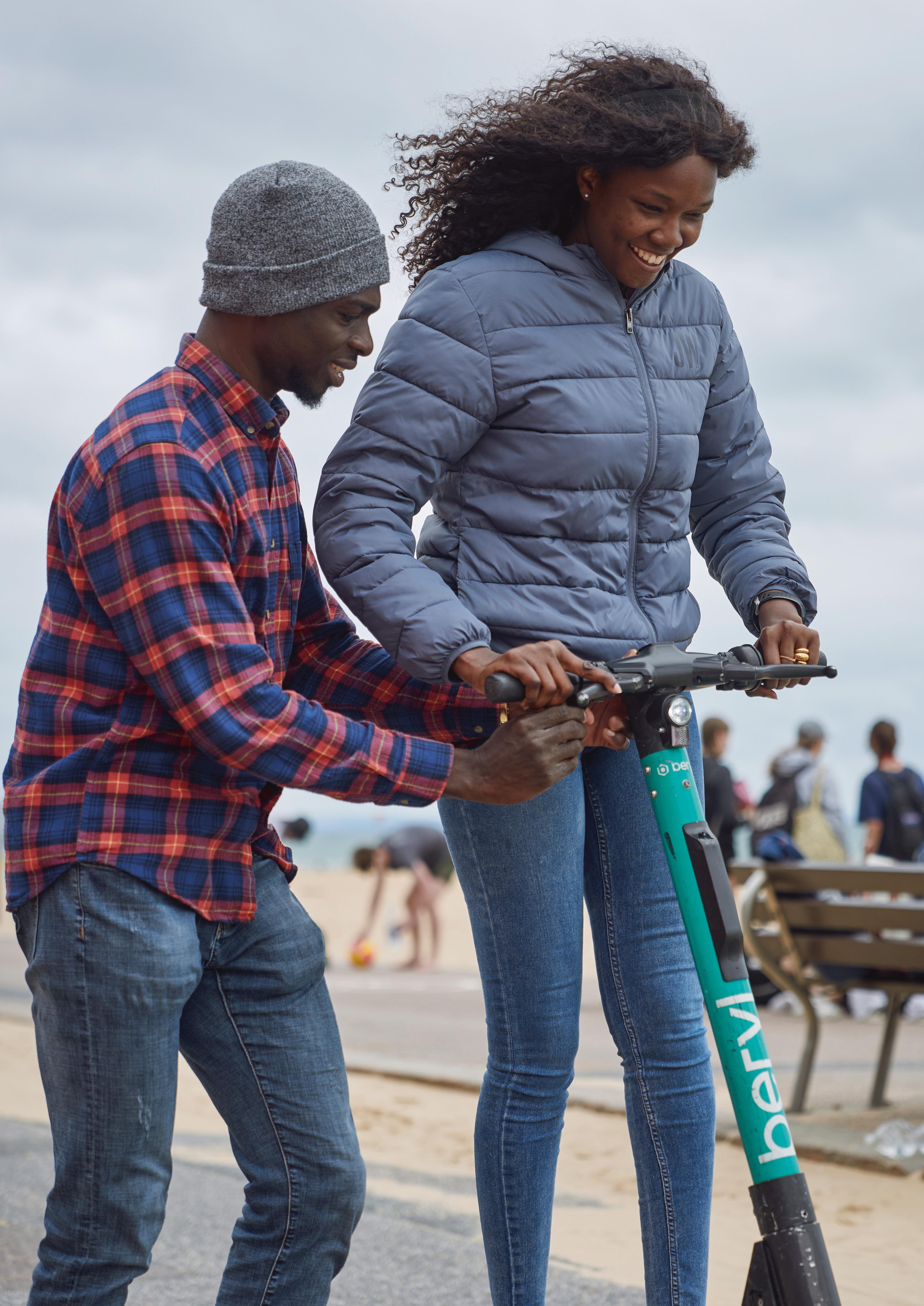
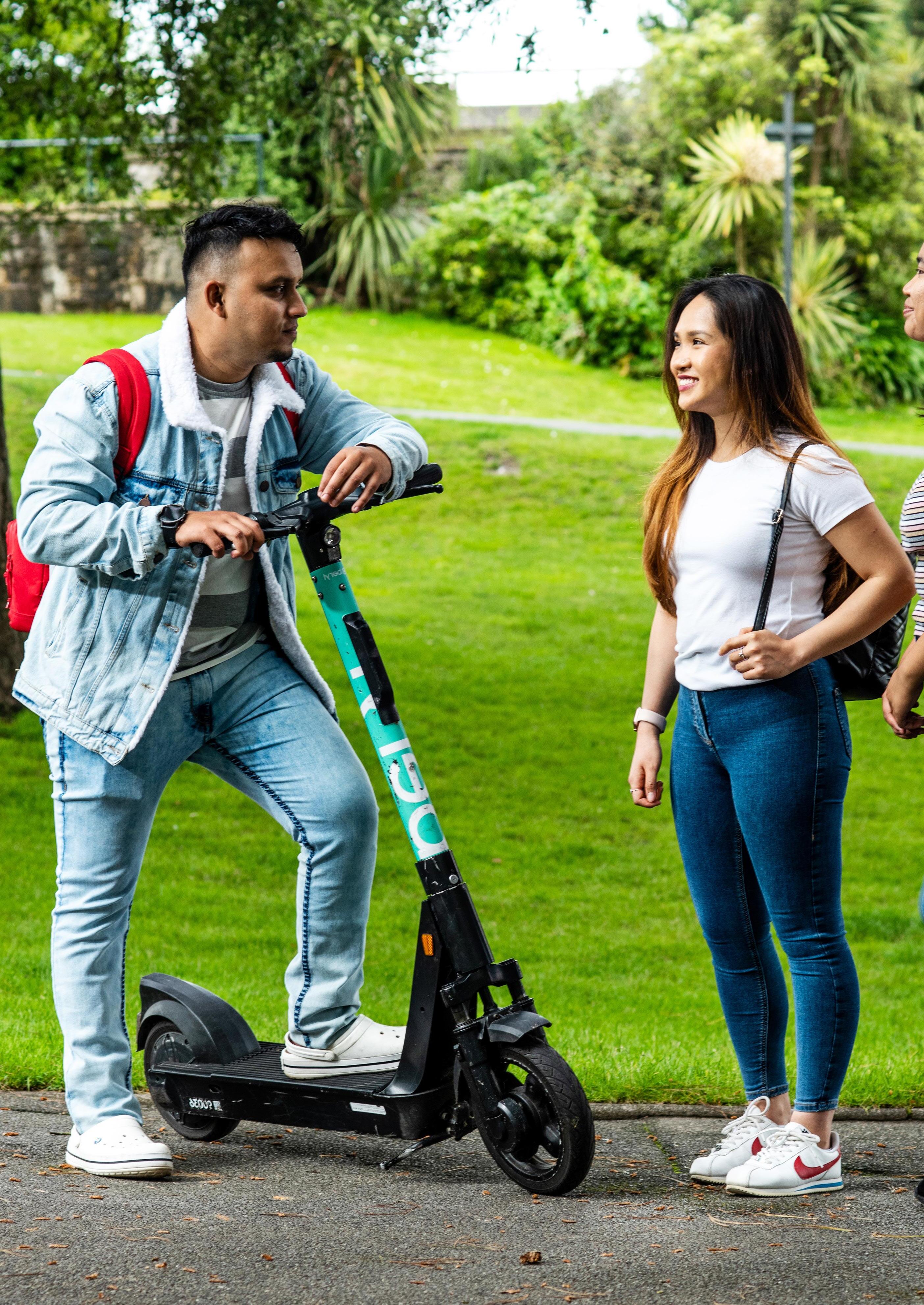
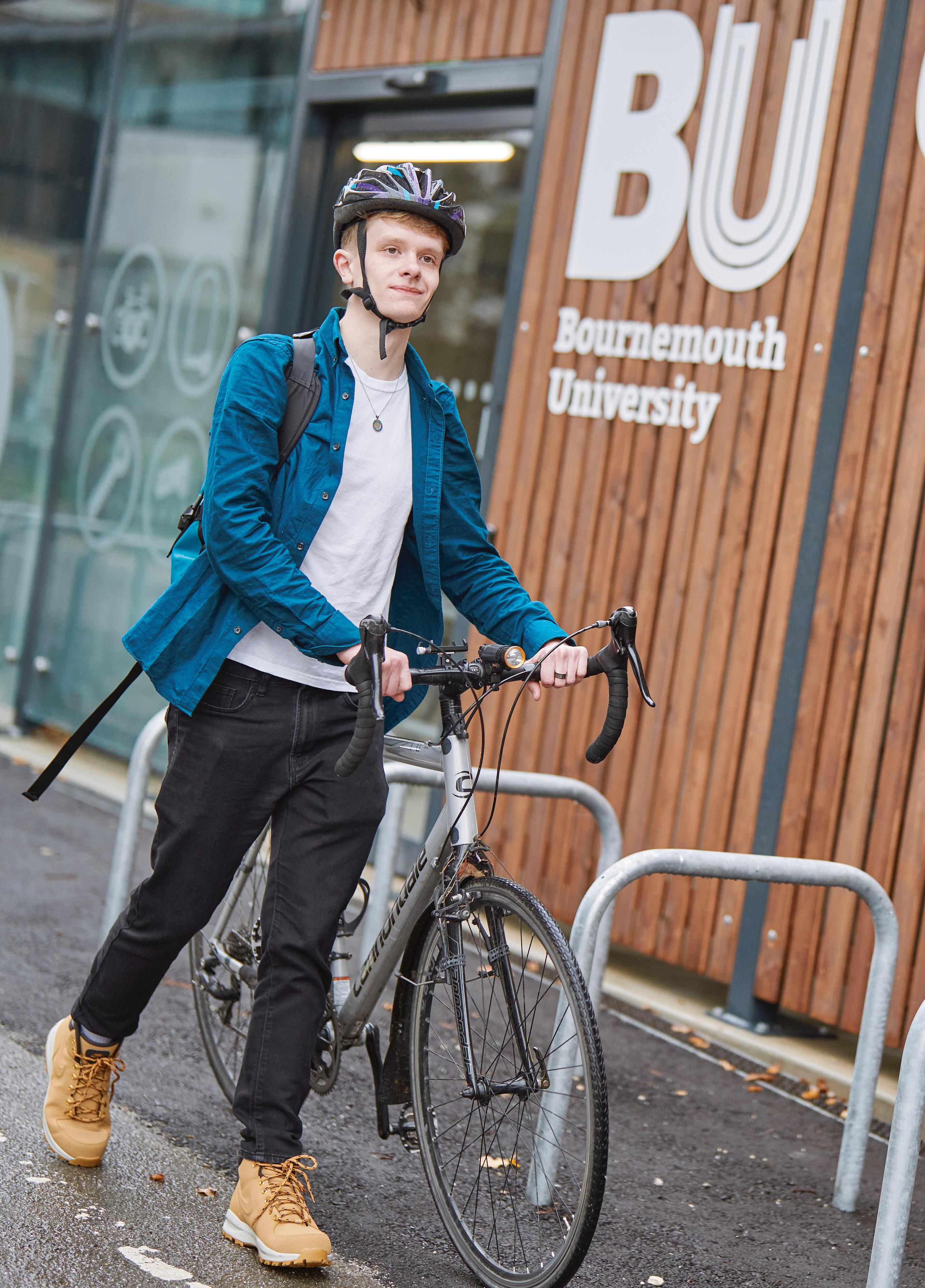
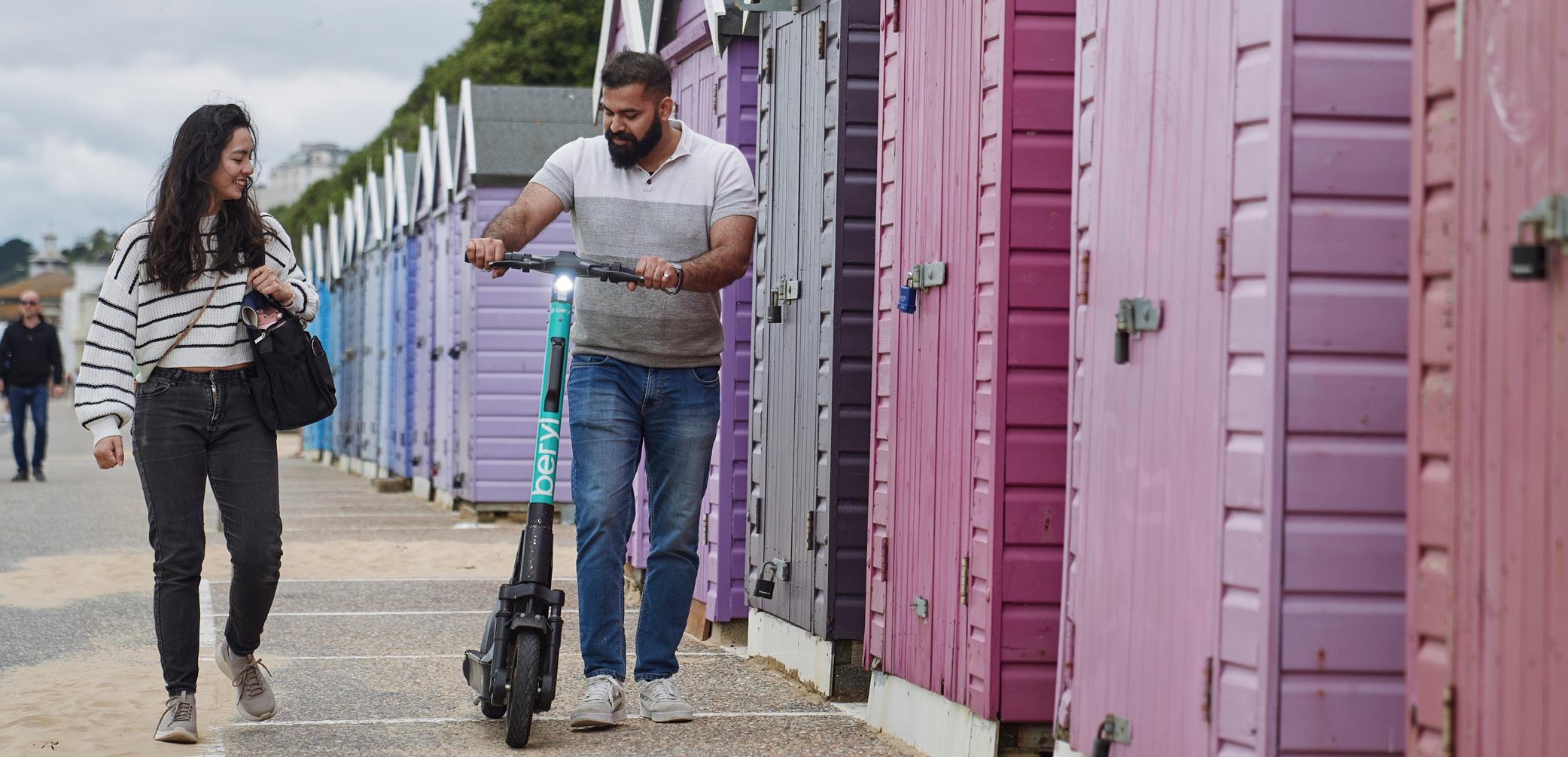
Cycling, walking/wheeling, and scooting are fantastic ways to get to our campuses. We have established excellent facilities on campus which make these easier, including secure compounds to store equipment (including cargo bikes in our new cycle hub), showers, drying cabinets, changing facilities at all our campuses, and bike share bays (currently Beryl).
All of our secure compounds are located around the edges of campus, so that users are discouraged from cycling or scooting through busy pedestrian walkways. Showers are located in Poole House and Christchurch House, as well as in Bournemouth Gateway Building, the Executive Business Centre, and Studland House.
We provide many services to make cycling easier including providing free bike doctor services for repairs and maintenance, a subsidised bike hire scheme to purchase a cheap bike for an academic year, bundles of minutes for use on Beryl and regular bike fairs on campus which include bike tagging by the police and stalls.
We subsidise bike D-locks and other equipment so that students can keep their bikes safe. For staff we provide a popular Cycle to Work scheme to give access to discounted bikes and equipment.
We propose to continue our active travel support and will work to add new schemes as they are identified. We will focus on marketing and communications to help raise awareness of everything we do to support active travel. We will also look to make this more inclusive, considering technology such as cargo or adapted bikes. We recognise that security of bikes is a concern, and we will continue to provide secure compounds with CCTV both on campus and near halls of residences.
When implementing any changes around campus to paths or crossing points we follow laws and regulations to ensure that they are safely accessible for everyone including those with visual impairments or mobility needs.
We currently don’t have any deals with local train operators, but we will continue to review this and implement any schemes where possible.
3.3. We will continue to provide car parking to those who need it, but to operate a system that encourages daily choices over how to travel, which encourages fewer car journeys and more active, public, or shared transport.
As we commence this new Travel Plan we now have in place a car parking management system which uses ANPR cameras to recognise vehicle number plates and is supported by a permit application system which enables eligibility criteria for annual permits, as well as occasional use permits which automatically recognise number plates and charge per day. This means we have the systems foundation we need to tweak and make improvements over the course of this five year plan. As we are trying to incentivise users to try active or public transport it is therefore our aim to encourage more car park users to move over to occasional use permits, so that they can make daily decisions about how to travel, rather than choosing to drive just because they have an annual permit. There may be days where they would quite happily try the bus, but they don’t as the cost of car parking is already paid for monthly.
In order to achieve this we will explore methods with the Travel Plan Implementation Group such as pricing adjustments or eligibility criteria adjustments alongside our work on active and public transport. This work will focus on staff car parking, as currently the occasional use permits are not open to students, due to a lack of parking spaces at Lansdowne Campus.
This Travel Plan aims to strike a careful balance between reducing single-occupancy parking and maintaining the revenue that parking generates.
Furthermore, a portion of parking income is reinvested to promote active travel initiatives, including free Beryl minutes and Bike Doctor sessions which provide a valuable service.
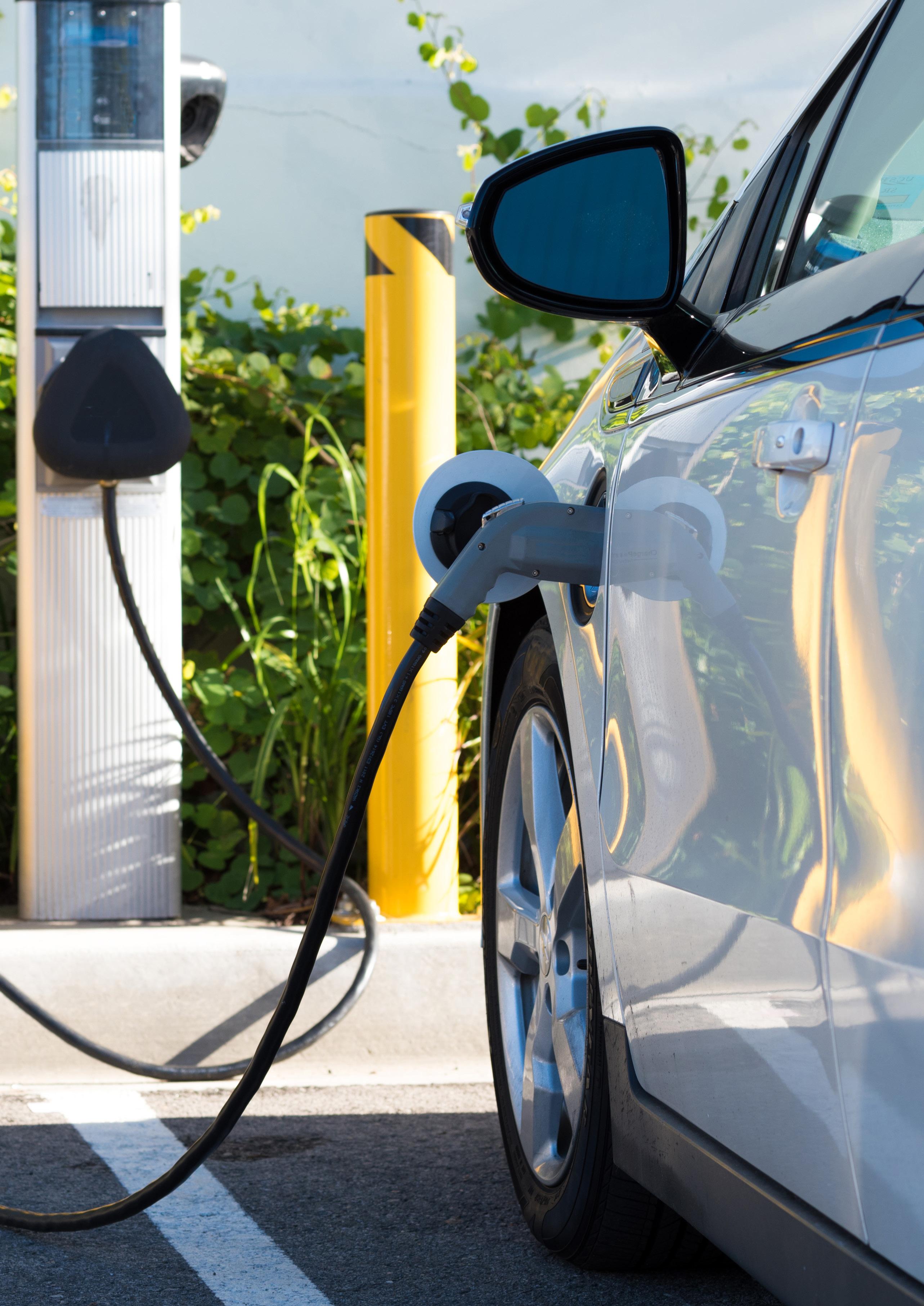
As we commence this new Travel Plan in 2026 we have 24 7kW electric vehicle charging stations on our campuses which are available to staff. We also have one rapid 50kW charger open to anyone at our Talbot Campus. As part of this Travel Plan we want to improve communication about the availability of charging points so that staff are aware and able to make the best use of them. We will monitor usage data and identify if further facilities are required before 2031. We will also cross check this with the number of electric vehicles which are used by staff. In order to support the transition to electric vehicles we have been exploring the provision of an electric vehicle salary sacrifice scheme and hope to be able to implement this in the early part of this new Travel Plan period.
We will also explore effective ways to raise awareness among staff and students about the advantages of using motorbikes and mopeds, including through the promotion of modal champions. These vehicles produce significantly lower carbon emissions compared to petrol or diesel cars, even when car sharing is involved, making them a more sustainable transport option. We actively monitor usage of motorbike bays, and if we observe a notable increase, we will consider expanding dedicated parking areas to further support and encourage this mode of travel.
3.4. Visitors to our campuses who are not students or staff members need to be considered separately to ensure we are supporting them to access campus using mainly public and active transport.
As we start this new Travel Plan we have in place a good provision of cycle parking for visitors, with new sections for visitors at the Talbot Campus Cycle Hub and also the Student Village compound. Visitors are also able to access the inside secure cycle compounds by requesting an access card at reception. We will be reviewing ideas for how to further support visitors to cycle to campus, and how we provide this information to visitors attending events or activities on campus.
For those who need car parking we have pay and display car parking at Talbot Campus which provides access for visitors. It makes public access to campus easier and is clearly signposted. At our Lansdowne car parks we have very limited visitor car parking during the daytime, due to the demand for staff car parking and less available parking in the town centre location. Outside of works hours, from 4pm on weekdays and at weekends we allow for pay and display car parking at Lansdowne, and we want to encourage this to maximise income from our car parks.
The Unibuses are available for public use, and anyone can purchase a ticket to travel, again this needs to be better communicated to visitors attending events. Improvements to the visitor booking form is required and then for communicating to the visitors so that they can plan their journeys. We will also explore how to incentivise visitors to choose active and sustainable travel.
3.5. Travel by BU staff for business both domestic and international is a significant contributor to BU’s carbon footprint and it is our aim to reduce this as much as possible.
It is part of our Climate and Ecological Crisis Action Plan (CECAP) to reduce scope 3 emissions and for BU those from international flights are one of the largest categories. The Business Travel policy is due to be reviewed and there are opportunities to make the policy clearer around how much international travel is required. Introducing a defined business travel hierarchy which is firmly implemented and regularly monitored is key.
Business travel sustainability guidance has been provided to support staff when making decisions about which is the most sustainable form of travel depending on the journey, including the option of attending the event virtually. We are also delivering free Carbon Literacy training to support education of staff around the carbon footprint of travel.
Student international travel is an area which we have not yet measured, and this is something we will explore using guidance from the EAUC in their Standardised Carbon Emissions Reporting Framework (EAUC, 2023). We are not looking to penalise international students for travel. BU2035 includes a transnational education focus, and this will have an impact which we will keep under review.
We will consider opportunities to better coordinate student travel for activities such as day trips, fieldwork, sport, and events. By streamlining this process, we aim to improve oversight, enhance sustainability, and enable more accurate data collection.
3.6. Our fleet vehicles are nearly all electrically powered, and we will continue this journey to lower carbon fuels for our contractors, grounds maintenance and to consolidate our deliveries.
We have successfully moved all but one of our BU fleet vehicles away from fossil fuels over to electric power. The remaining vehicle is a Luton Van for furniture and the options for electric lease vehicles has been limited, we will keep this under review and aim to remove or move to electric by the end of 2031. We will also keep our other fleet vehicles under review and remove them where utilisation is not sufficient. We plan to explore smaller forms of electric transport which can be used on campus including electric cargo bikes or similar as technology advances.
Another area of vehicles contributing to our carbon footprint is grounds maintenance vehicles at our Chapel Gate site. We hope to move to full electric, or lower carbon fuel over the course of this Travel Plan and have made some steps forward including electric mowers being in place which have proved to be excellent operationally. For larger tractors and equipment, it is more challenging, but this is something we are keen to address.
Vehicles used by our contractors are also a focus for us. For example, our security contractor has electric vehicles. We will keep advancing this with other contractors. There may be opportunities to consolidate deliveries to reduce carbon emissions. For large construction projects this is a common part of reporting by contractors under BREEAM. Other contractors such as catering will be a focus for consolidation of deliveries.
3.7. We want to improve travel data collection to inform decisions and carbon footprint reporting
With the systems in place as of 2025 we have limited ability to accurately report how our staff and students travel, and to measure the carbon emissions associated with this travel. In our CECAP we currently report on the actual emissions from our Unibus fleet, but we are not able to report on emissions from other forms of scope 3 emissions such as commuter car travel. We rely on surveys to gain an insight into how people travel, and these are difficult to encourage participation. A focus going forward will be how we can boost responses and find more suitable ways to engage, particularly with students.
During the five years to 2031 we propose to adapt our car parking application system to ask questions of applicants to find out their travel modes and to require all staff to complete this process. Other universities are trying similar systems and we will look to learn from others and develop our in-house car parking application system to collect this data or use another BU system. It will give a much better sample for calculating carbon emissions from commuting.
We strive to add more travel data into our carbon footprint so that we can measure the impact and help mitigate it. We have already added the emissions from travel to our open days and also the emissions from coach travel to our sporting events. We will keep under review new areas which we can add to help develop our reporting and our mitigation efforts.
3.8 Travel action plan
See appendix C for the full action plan.
4. How will we know if we have been successful?
4.1 Monitoring and evaluation
In order to check how we are progressing against our targets and to highlight areas where we can still improve, we will continue to carry out travel surveys for students and staff, and we will look to make edits to our car parking system to gather more data.
We now have accurate car parking data from our ANPR system so we will use this to monitor changes in car park utilisation and through our car parking permit system data will be used to monitor the number of each type of permit.
4.2 Monitoring schedule
Table 2. Summary of how and when our Travel Plan will be monitored
Type of monitoring
Staff travel survey
Student travel survey
Travel Plan Implementation Group meeting
Quarterly review of the university bus service (UNIBUS)
Car parking occupancy data
Cycle occupancy and facility audit
Scope 3 carbon
Car parking permit numbers
Business travel contract management
Annual report delivered to UET
Frequency Outcome
At least every two years
At least every two years
Termly
Staff travel survey report to track % active / public / shared vs car
Student travel survey report to track % active / public / shared vs car
Review of the Travel Plan measures, initiatives, output targets and monitoring reports
Quarterly To review the existing bus operation and to consider future improvements / enhancements to the service
Monthly Data from the automatic car parking system to be collated and reported annually
Monthly Data to be collated and reported annually
Annually Report annually to Travel Plan Implementation Group and sustainability committee
Annually Report annually to Travel Plan Implementation Group for all types of car parking permit
Annually Report annually to Travel Plan Implementation Group on hire car, coach usage, etc.
Anually
CECAP progress report
Report annually to UET on progress of the Travel Plan and propose any edits for future years
Annually Travel Plan progress to be summarised within annual CECAP report
5. Management of our Travel Plan
5.1 Management structure
Our Travel Plan management structure ensures the plan is implemented to achieve the desired outcomes whilst providing greater opportunities for collaboration.
University Executive Team
Sustainability Committee
Travel and Transport team Students
Estates & Facilities
External Stakeholders
— Local Authorities
— UNIBUS
— Local bus operators
— Industry
— Local residents
— Talbot Village Trust
— Arts University
Bournemouth (AUB)
— Others
Faculty reps User
Wellbeing Group
The following stakeholders will be involved in helping to implement and deliver our Travel Plan:
Stakeholder Description
Travel Plan Manager
User Groups
BU Estates & Facilities
Wellbeing Group
Faculty Reps
Students
Travel Plan Implementation Group
The BU Travel and Transport Manager will be responsible for the day-to-day management and implementation of the Travel Plan, supported by the BU Travel and Transport Team.
Existing user groups for cyclists, motorcyclists, and walkers will continue to be engaged in our Travel Plan with the aim of boosting participation in these sustainable travel modes. These will be merged into one group for Active Travel.
Opportunities to support the Travel Plan through the estates development projects e.g. the provision of active travel facilities on campus.
Representatives on the Travel Plan Implementation Group to ensure that the potential health and wellbeing benefits of sustainable travel are optimised.
Representatives from academic faculties who will work with the Travel Plan Coordinator to identify potential transport related research projects.
Students feedback will continue to be sought through travel surveys, and SUBU platforms such as Shout Out, and Big Ideas.
Representatives from faculties, Professional Services, staff unions, Students’ Union, tasked with providing direction, leadership and decision making to ensure our Travel Plan is implemented in accordance with its aims and objectives.
Sustainability Committee
Responsible for providing strategic leadership and oversight for embedding sustainability at Bournemouth University. The Travel Plan Implementation Group will report to this committee annually.
University Executive Team (UET) The Sustainability Committee report to this team.
External Stakeholders
External stakeholders relating to travel and transport activities at BU. Links to external stakeholders at the appropriate level are acknowledged in the management structure.
6. References
Environmental Association for Universities and Colleges (2023) Standardised Carbon Emissions Framework. Available at: https://www.eauc.org. uk/resources/resource/standardised-carbonemissions-framework-(scef)
Climate Change Committee (2025) The Seventh Carbon Budget, Advice for the UK Government. Available at: https://www.theccc.org.uk/ publication/the-seventh-carbon-budget/
Department for Energy Security and Net Zero (2023) Net Zero Government Initiative, UK Roadmap to Net Zero Government Emissions. Available at: https://www.gov.uk/government/ publications/net-zero-government-emissions-ukroadmap
The Health Foundation (2021) How transport offers a route to better health. Available at: https://www.health.org.uk/reports-and-analysis/ briefings/how-transport-offers-a-route-tobetter-health
BCP Council (2024) Statistics about our population. Available at: https://www.bcpcouncil. gov.uk/about-the-council/statistics-data-andcensus/statistics-about-our-population
BCP Council (2019) BCP Council declares a ‘Climate Emergency’. Available at: https://www. bcpcouncil.gov.uk/news-hub/news-articles/bcpcouncil-declares-a-climate-emergency
Office for Health Improvement and Disparities (2022) Air pollution: applying All Our Health. Available at: https://www.gov.uk/government/ publications/air-pollution-applying-all-our-health
7. Appendices
Appendix A
Context
7.1 The bigger picture
‘Surface transport is currently the highestemitting sector in the UK economy. In 2023, surface transport accounted for 24% of UK emissions’ (Climate Change Committee, 2025).
The UK Government has made a commitment to deliver a net zero carbon emission target by 2050 (Department for Energy Security and Net Zero, 2023). Our Travel Plan recognises that the university’s travel and transport activities generate carbon emissions. Through the plan, we will put in place measures to significantly reduce carbon emissions generated from our travel and transport activities and consider offsetting the remaining emissions. We will also implement more robust carbon reporting of our travel and transport activities.
7.2 On campus and travelling between campuses
Our plan supports the promotion of health and wellbeing amongst students and staff, by providing measures, initiatives, and better facilities to encourage increased participation in active travel and an excellent bus service. Walking and cycling are proven to deliver physical fitness benefits and are shown to have a positive impact on stress levels and mental wellbeing (The Health Foundation, 2021). The Travel Plan supports the continued development of our estate by providing enhanced sustainable travel opportunities for students, staff, and visitors.
Travel between Talbot Campus and Lansdowne Campus is very well-served with the U1 and other morebus services which are included in the annual bus ticket. Staff are also able to travel for free on the U1. The other Unibus routes serve the locations where most students live including the U2 from Poole, U3 from Southbourne, and U4 from Westbourne.
We have a limited number of car parking spaces available, BU currently has 1067 individual car parking spaces. The majority of these are for permit holders but a number are also allocated for visitors, contractors, and hire vehicles. Within this number there are also bays dedicated to EV charging or for Blue Badge permit holders.
Students are encouraged not to bring their cars as there is no BU student car parking at Lansdowne, apart from for Blue Badge holders. The car parks at BGB, EBC, and Studland House are dedicated to staff and visitors. They are available for pay and display outside of working hours which anyone can use. Students can apply for car parking permits for Talbot Campus if they meet eligibility criteria. Staff can access occasional use permits for daily car parking or annual passes for both Talbot and Lansdowne campuses.
7.3 The local scale
Bournemouth University’s main campuses are located within the Bournemouth, Poole, and Christchurch conurbation, which has a population of just over 400,000 people (BCP Council, 2024).
In 2019 BCP Council declared a climate emergency and pledged to hit the UK target of being carbon neutral by 2050 ahead of time by working with the wider community to tackle climate change (BCP Council, 2019).
The local area suffers from a number of transport challenges and as a consequence, there is a high dependency on car usage for people who live, work in, or visit the area. Road congestion is a costly and increasing problem at a local level, coupled with the high cost of implementing sustainable/active travel options at a regional scale.
Significant investment has been made in sustainable travel in BCP through:
£79M
Transforming Cities Fund (shared with Dorset County Council)
£3.78M
Active
Travel Fund
These have delivered new infrastructure including cycle lanes which have been built into Wallisdown Road and safety improvements for the local bridge over the railway not far from campus on Glenferness Avenue which has been widened to provide safe passage for pedestrians and cyclists on both sides.
£1.6m funding from Dorset Local Enterprise Partnership and £313,400 from BCP Council has transformed the area next to our Poole Gateway Building.
The footpaths have been widened on the north side of Talbot Avenue to create a combined footpath/cycleway linking up with the infrastructure already in place leading up from Talbot Roundabout. Crossings have been installed on Talbot Avenue, Wallisdown Road, and Boundary Road to provide safer controlled crossing points for pedestrians and cyclists, and the roundabout has been replaced with a smaller one to reduce traffic speeds and improve safety.
Linked to road congestion is the issue of air pollution. The UK Government recognises that air pollution is the top environmental risk to human health in the UK. Exposure can lead to several long-term and short-term health conditions such as lung cancer, worsening asthma, dementia, developmental problems in newborns, and reduced life expectancy (Office for Health Improvement and Disparities, 2022).
In addition, air pollution from vehicles has a negative impact on our local landscapes and ecosystems. Motor vehicles are also a contributor to water, noise, and light pollution which has a damaging effect on wildlife as well as the quality of life for local residents.
We aim to help reduce and mitigate these local issues by:
— Reducing vehicle traffic by encouraging drivers to try cleaner and more sustainable travel options
— Working with local partners such as Bournemouth, Christchurch, and Poole Council to help develop imaginative and innovative solutions to local issues that encourage people to reduce their reliance on cars.
7.4 Changes since 2018/19
There have been some very significant changes which impact on travel since the previous Travel Plan which we have summarised into four areas:
— Covid pandemic: Previously BU’s Travel Plan has focused on reducing the number of people travelling to and from campus. This was due to concerns about lack of available parking spaces and trying to reduce BU’s carbon footprint. The Covid pandemic, which resulted in BU swiftly implementing work/study from home for staff and students from March 2020, completely changed BU’s travel and transport landscape from this point forward
— Post-covid hybrid working: Even after the campuses reopened in 2021 there is still a high percentage of staff working from home at least one or two days per week. This has changed the focus of this updated Travel Plan to consider how best to support staff, students, and visitors to travel sustainably to and from the campuses as there has been a reduction in utilisation of BU car parks postcovid which suggests that the hybrid change has been embedded into working patterns
— BU acquired Chapel Gate sports site: This 65-acre site located in Christchurch, is 5 miles from Talbot Campus. During the last Travel Plan BU have trialled a new bus service on Wednesdays only during term-time and we plan to continue this into the new Travel Plan. Should the usage change, consideration will be given to requirements for further days of bus connections. The site is primarily accessed by car and the car park has been improved since BU took over the management of the site with white lining and new tarmac. There is opportunity to implement a car parking management scheme to help control the car parking and this will be considered as part of this new Travel Plan.
— More commuter students: we are anticipating an increase in commuter students. These are students who choose to live at home, rather than in student accommodation. This may result in more students qualifying for car parking permits if they live over 10 miles from campus. Factors influencing decision making include increased cost of living, mental health, hybrid working, lecture recording, and personal preferences. Increasing numbers of students studying later in life, career changers or those with families may also choose to live at home.
7.5 Scope of the Travel Plan
This Travel Plan applies to our operations on both Talbot and Lansdowne campuses as well as the Chapel Gate sports site, and Portsmouth and Yeovil satellite sites. It provides the strategic direction and overall targets for our Travel Planning activity. Our plan focuses on the following areas of travel and transport activity, which takes place as part of our dayto-day operations:
— Staff and student commuting
— Visitor and events travel, including travel to and from open days
— Business travel across all faculties and Professional Services including rail, flights, and taxis
— Wider student travel e.g., for events, sport, day trips
— Fleet vehicles, deliveries, and contractors on BU sites.
What have we achieved so far?
Our new Travel Plan will be the fourth update since we launched our first plan in 2003.
Our four previous iterations of the Travel Plan have successfully supported notable changes in travel behaviours:
67% TO 57%
A reduction in the proportion of single occupancy staff car travel to campus between 2003 and 2024
15% TO 10%
A reduction in the proportion of single occupancy student car travel to campus between 2003 and 2024
400K TO 1M+
Bus journeys per year and every year since 2022/23. An increase in public transport journeys delivered by the university bus service since 2018
3% TO 12%
An increase in the proportion of staff cycling to campus between 2003 and 2024
1067
Permit holder car parking spaces across both campuses. In 2024/25 934 staff held an annual permit, 254 had an occasional use permit. This equates to 55% and 15% of the total staff number
520 STUDENTS
In 2024/25 had a car parking permit which equates to 3% of the student population
How do students and staff travel?
We undertake student and staff travel surveys at least every two years to monitor travel patterns and to help evaluate the progress of our Travel Plan. Table 1 shows how our students and staff are currently travelling to the university.
Table 1. 2023/24 data from staff and student travel survey regarding travel modes
N.B. Some respondents selected ‘do not travel’. This data has been removed for this reporting purpose.
Summary data
N.B. The % of students travelling by car is a lot higher than the % of students with an actual permit as the permits don’t account for lift share, taxis, or motorbikes but it may be something we want to address.
Travel choices
In 2024 our student travel survey found that: 60% students travelled by bus 17% students walked 7% students cycled
In 2003 this was 40%, 37% and 2% respectively. It shows that as the public transport options increased; the number of students walking has decreased as they have found more convenient ways to get to campus.
A long-standing goal has been to reduce the number of single occupancy vehicles being driven by staff and students on to campus. Between 2003 and 2018 the proportion of staff travelling to campus in single occupancy vehicles dropped from 67% to 46% and students reduced from 15% to 6%.
As mentioned above the Covid pandemic drastically changed how staff now work. Since the iteration of the last travel plan staff now can work from home a few days a week, and many take advantage of this.
Between 2003 and 2024 the number of staff cycling to campus has increased from 3% to 12%. BU has various schemes, initiatives, and facilities in place which have helped contribute towards this.
Buses
Historically the main purpose of the Unibus service has been to ensure that students are able to get to the University during the core operational hours for the purposes of their academic studies. Since it’s implementation the service has grown and been enhanced and now plays an important role in providing students, staff, and members of the public with a sustainable travel mode which gives access to both BU campuses from various locations within the conurbation.
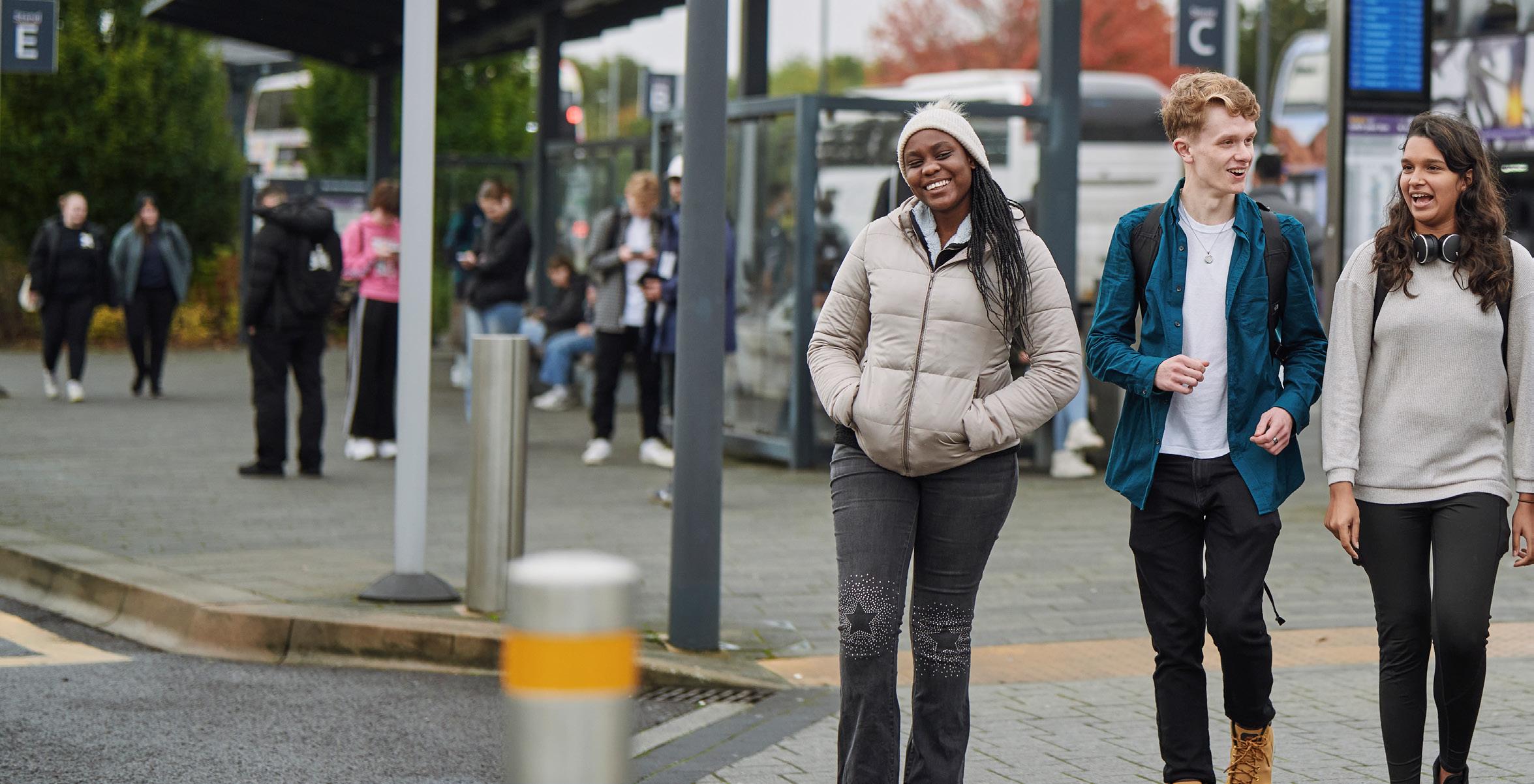
BU’s purpose-built bus hub opened in December 2017. Previously, public road stops were used for the Unibus fleet which often caused road congestion due to the large numbers of students embarking and disembarking. The bus hub has six bays with the capacity for eight buses, and also provides canopy shelters, real-time information boards, and road safety crossings.
The patronage of the Unibus service has been on the increase since its inception. In 2017/18 there were 400,000 journeys per year and this reached over a million in 2022/23. The patronage has not dropped below that number in the subsequent years.
Recently the N5 night bus which stops at Talbot Campus has extended its route to loop round though Wallisdown and Ensbury Park. This will allow students living in those areas to catch the bus. It also now runs seven days a week, whereas previously it was only available on Friday and Saturday nights. This gives students a lot more flexibility if they are staying late on campus to study or socialise.
Table 1: Unibus patronage data showing number of travellers on each service
Buses
In May 2021 Unibus launched their app. The development is ongoing and currently allows BU staff and students to purchase tickets at discounted prices, view timetables, use the journey planner, track buses in real time, and receive notifications regarding any diversions or delays.
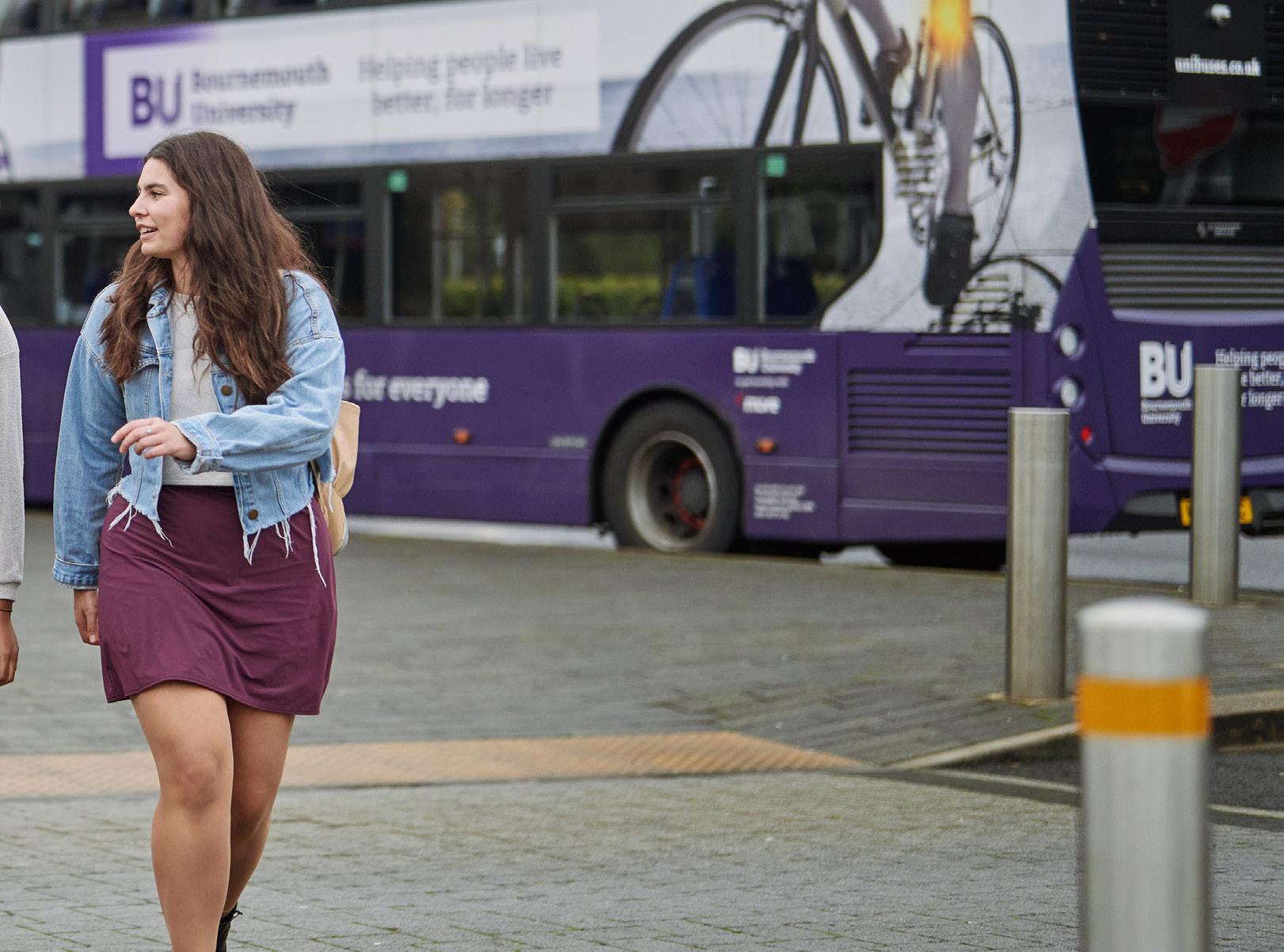
In August 2022 Unibus deployed BU’s brandnew bus fleet which were equipped with the very latest low emissions Euro 6 engine, and also provided USB chargers and free Wi-Fi. The wrapping on the buses highlights the key strengths of the university and the stories and people at the heart of BU. Additionally, outside of term-time these buses operate on the wider Morebus network, therefore promoting BU to the broader community.
At the same time, local bus operator Yellow Buses, went into administration which resulted in Morebus offering more bus routes. This has given BU staff and students even better deals on tickets as travel in Zone A covers the whole of the BCP area.
In 2023 a trial Sports shuttle service between Talbot Campus and Chapel Gate was implemented. This then became the U5 service. The service runs on Wednesdays during term between September and April and in 2024/25 it transported 2778 student athletes, spectators, and staff members in single journeys.
BU utilises a Mystery Passenger service on the Unibuses to gain feedback on customer service, cleanliness of the bus and facilities available onboard, timeliness, and experience at the bus stop. This provides an impartial assessment of the service which helps BU and Unibus to continually improve. Overall, very positive feedback is received. In 2024/25 there were 42 journeys reviewed in total with an average score of 96%. Some quotes from the Mystery Passengers can be seen to the right.
‘The cleanliness of the stop and bus were excellent, all facilities were working as they should. The driver was polite and he anticipated road conditions well.’
‘The customer service received from the driver was great. She was polite and friendly, providing a smooth, comfortable journey, whilst being attentive to passengers.’
‘The journey was comfortable and smooth. I would be happy to use the service again.’
Cycling
Cycle Compounds and Active Travel facilities
BU prides itself on providing excellent cycle and active travel facilities for students, staff, and visitors. This enables people to actively choose to cycle, knowing that upon arrival their bike will be stored safely, and there are the facilities in place to freshen up.
There have been a number of additions and improvements to the cycle compounds since 2018. In October 2020 Bournemouth Gateway Building (BGB) opened and with it three cycle compounds. They all provide secure cycle storage for students, staff, and visitors. BGB was also built with Active Travel facilities which comprise of showers, changing rooms, lockers, and drying rooms.
In March 2023, new active travel facilities were installed at Poole House. The water for the showers is partially heated by the solar thermal installation which is on the roof of Poole House.
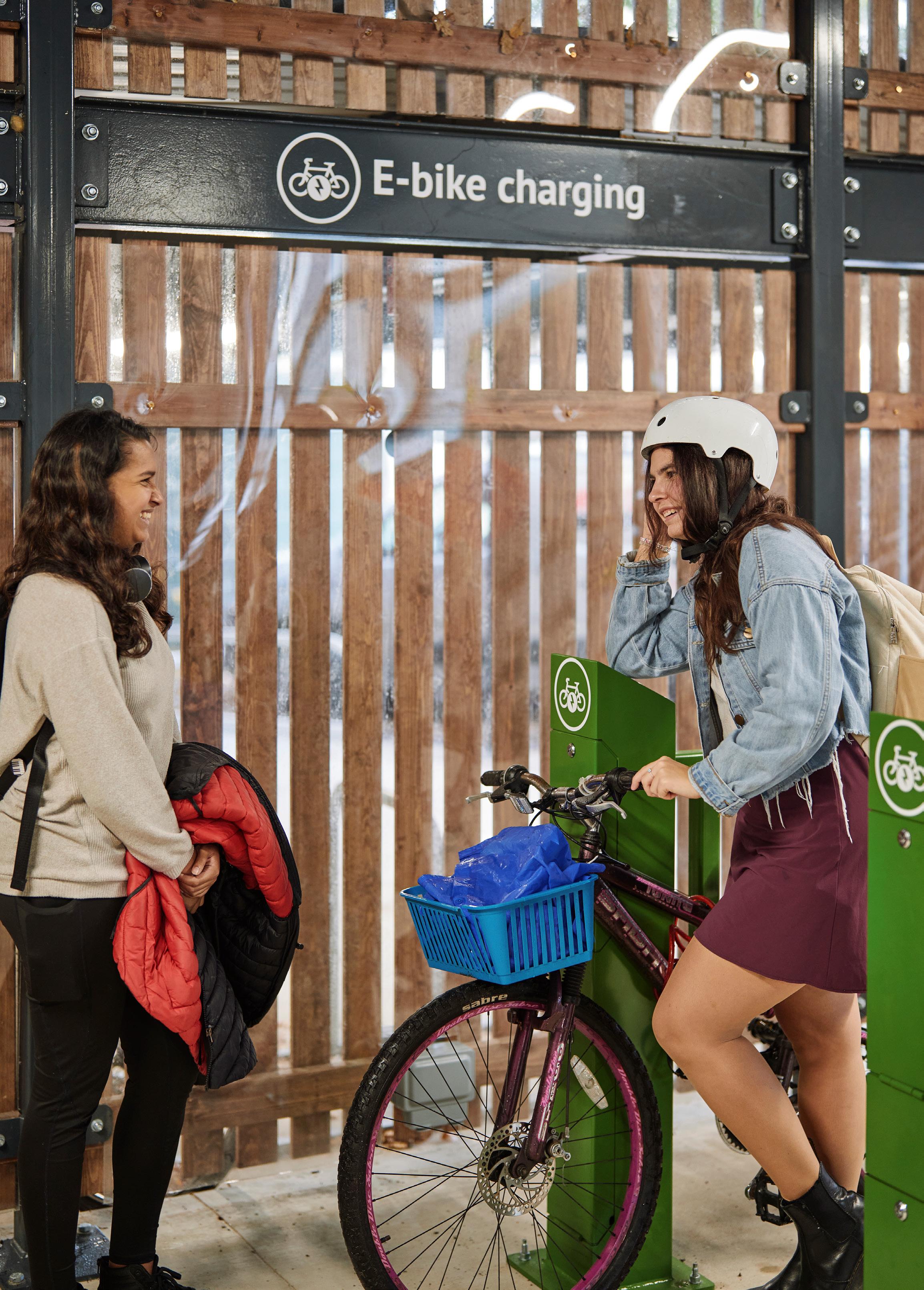
The Talbot Campus Cycle Hub opened in September 2024. It provides e-bike charging stations, double tier pull-down racks to maximise space, cargo bike storage, outside hoops for visitors, an automatic door, tools and bike pumps available to everyone. In May 2025 one of the cycle compounds at BGB was moved to the Student Village to replace the old shelter there.
Beryl - short term bike hire
In June 2019 BCP Council partnered with Beryl, a bike share provider, and introduced hire bikes into the conurbation. Since then this has expanded to include e-bikes and e-scooters, with the intention of cargo bikes becoming available in the near future as well. Since 2020 BU has teamed up with Beryl to offer staff and students bundles of 100, 200, and 400 minutes which they can use on the Beryl app.
This enables them to enjoy free rides across Bournemouth, Christchurch, and Poole with the hope that they will continue using Beryl once their minutes run out. This is funded through the Travel Plan with Beryl matching what BU puts in. According to data from April 2025, 91% of BU users are still riding Beryl today and Beryl predicts that their usage has reduced the use of private emissions emitting vehicles by 15%.
BU has also entered into a licence agreement with Beryl to allow a number of Beryl bays, where the bikes and scooters are stored, on campus. This allows anyone attending campus to quickly be able to park or locate a bike or scooter.
Bike Doctor – free bike servicing on campus
Since September 2020 a former BU student has taken over as the ‘Bike Doctor.’ In addition to the sessions at Talbot and Lansdowne Campuses, a ‘student only’ session was introduced at Talbot Campus. This followed feedback indicating that because sessions operate on a first come, first serve basis, staff were often dominating the available spaces. For 2025/26 we have reduced the number of sessions down two a month with the student only session remaining in place.
The Bike Doctor offers BU staff and students a range of basic bicycle repairs and servicing. These include safety checks, adjusting gears and brakes, changing chains, fixing punctures and anything else required which can be carried out in an appropriate time window. Staff and students also benefit from a discount for any repairs which take longer or require additional parts so are fulfilled outside of this service.
Hope2Cycle – bike hire for an academic year
BU has partnered with a local charity Hope2Cycle for a number of years offering students and staff the opportunity to hire a bike for the Academic Year at a low price. The Travel Plan subsidises the costs of these bikes. The bike comes with a D lock and there is also opportunity for BU staff and students to get a discount on purchasing other equipment such as helmets.
The flexibility of hiring for one year or less encourages students in particular to start cycling with no large costs involved and not having to transport the bike back to their family home. For 2025/26 BU have put a lot of effort into marketing this scheme to students in a hope to get even greater uptake.
Cycle to Work Scheme
BU’s Cycle to Work scheme has been in place since 2018. The scheme allows staff to enjoy lower monthly costs on bikes, accessories, and safety equipment through salary sacrifice, all while boosting their overall health and wellbeing.
Bikebility
BU has recently partnered with an independent Bikeability instructor, to offer staff, students and members of the local community an opportunity to join one of her ‘learn to ride’ or ‘guided ride’ sessions between July and October 2025. This training has been funded through Active Travel England as part of the Big Bike Revival delivered by Cycling UK. The Big Bike Revival is a national programme that aims to encourage adults to cycle more, including those who are new to cycling or returning after a break. The attendance has been low which is to be expected but the feedback from the attendees has been really positive. One student said ‘Dilys was a fabulous instructor and I have learnt more than I have ever imagined. I absolutely would recommend the sessions to everyone, even to people who think they are confident cyclist. They may discover that there are many safety improvements which can be done.’
Parking/Driving
Electric Vehicle chargers
BU installed 24 7kW EV chargers in June 2023 across both campuses, including one at Chapel Gate. 19 are of these are available to permit holders with the remaining five being for Estates maintenance vehicle charging. From installation until July 2025 the chargers have been used a total of 2423 times to a total of 41,870.92 kilowatt hours. The most popular charging locations for staff and student usage are at Christchurch House and Studland House. The Poole House chargers have high usage as well as these are used by Estates.
Fleet vehicles
BU made a commitment for its fleet vehicles to be hybrid or fully electric by 2025. Back in 2020 progress stood at 60% and we have now reached 92% with only one vehicle not conforming. The remaining diesel vehicle is a Luton van and currently there are no reasonably priced EV alternatives on the market however it will remain under regular review.
Parking Management
Since the iteration of the previous Travel Plan BU has moved to a more digital monitoring system of its car parks.
ANPR cameras have been installed on all of BU’s permit holder car parks. The permit system is digital and works in tandem with the cameras to recognise if a vehicle is attached to someone’s permit. This has enabled BU to raise the barriers full time and prevent congestion at peak times.
There has been increased promotion of occasional use permits to encourage staff to choose alternative modes of travel and only pay for the actual days they park on campus.
The idea behind it was that if someone had an annual parking permit then it was taken for granted that they would always drive to campus. Whereas if only an occasional use permit was possible where they would be charged every time they came on site then it would encourage staff to travel to campus by alternative methods.
The occasional use daily model simplified this by simply recognising when a vehicle drove through one of the ANPR cameras and then taking a payment from the card attached to the permit holders account. This was a hassle free way way of paying for parking which didn’t require remembering to pay on the day.
As previously mentioned, the landscape of BU’s car parks changed following the Covid pandemic. Pre-Covid there had been concerns about the ability to meet capacity for car parking spaces. Post-Covid with staff members having the ability to work from home more often and the general decline in staff and student numbers this is no longer the issue it once was.
We have also been collecting and analysing data on car park occupancy and types of permit issued. Being able to track this over time will help us make decisions in the future about how many car parks BU needs and what we need to do to encourage staff to move from an annual to occasional use permit.
Travel Action Plan
summary of our action plan
Strategic Campus Development
Strategic Campus Development Planning applications for BU2035 projects
Travel Plan to make a positive contribution to transport mitigation strategy for each and every planning application submitted as part of the BU2035 programme.
Travel Plan to achieve targeted number of BREEAM credits for each new build project.
Student involvement
Student involvement Student engagement Work with SUBU officers to gain insight and involvement of students to shape travel to and from BU.
Student involvement Student engagement Continue to evaluate and act on feedback from students.
Student involvement Student engagement Promote schemes and initiatives in places which students frequent e.g. student accommodation, student shop.
Research and collaboration
Research and Collaboration Local Authority engagement Ensure that BU’s Travel Plan complements and correlates with BCP’s Local Transport Plan
Research and Collaboration Cycling and walking improvements
Engage actively with the Local Authority on creating a connected network of walking, wheeling, and cycling routes between Talbot and Lansdowne Campuses. Ensuring BU lobby for the actions we need to make a difference for students.
Team
Topic / Mode Measure
Measures and Initiatives
Marketing and Communication Digital travel resources
Marketing and Communication Digital travel resources
Ensure that the travel and transport information on the staff intranet and BU website remains up-to-date and relevant. This includes the online induction for new staff members.
Implement a digital wayfinding solution to provide staff and students with advice about sustainable travel routes to/from campus and to help them find facilities.
Travel and Transport Manager Annually
Travel and Transport Team / IT / Marketing and Communications
Marketing and Communication Signage
Marketing and Communication Green Week
Install colourful signage in areas around campus where increased physical signage is needed to help students, staff, and visitors locate cycle compounds, active travel facilities, EV charging, car parks etc.
Supporting SUBU with their green campaigns which includes “Green Week” during which a number of events are held to encourage sustainable travel.
Travel and Transport Team / SUBU Annually
Marketing and Communication Sustainable travel events
Use sustainable travel events to promote a full range of travel options, including walking, cycling, public transport and the use of hybrid / fully electric vehicles.
and Transport Team
Marketing and Communication Personalised Travel Planning
Marketing and Communication Improving Individuals Lives (Health and wellbeing)
Continue to provide Personalised Travel Planning to staff and students and promote the availability using an online form for expression of interest.
Influence travel behaviour through the promotion of personal benefits such as health, wellbeing, and convenience, rather than broader societal outcomes.
and
Walking and Cycling Travel User Groups
Walking and Cycling Walking and cycling equipment and maintenance
Continue to promote membership of Active Travel user group on Teams.
Continue promoting staff discounts available for the purchase of walking and cycling equipment, including the “Travel to Work” loan.
Promotional incentives (bike lights, hi vis backpack covers) to be continued to be made available at travel events held on campus.
Continue to offer measures to enhance cycle security on campus, including discounted security locks, secure cycle compounds and free bike tagging.
Walking and Cycling Cycle to Work Regular reviews and continued promotion of the “Cycle to Work” scheme.
and Transport Team 2031
Walking and Cycling Bike Doctor sessions
Walking and Cycling Training
Walking and Cycling New Forest Bike Project
Regular Bike Doctor sessions to continue on campus.
Course offering basic skills in cycle maintenance and repair to be made available to staff and students.
This project provides a way of dealing with the problem of abandoned bikes on campus whilst also providing people with a low-cost way of getting into cycling.
Walking and Cycling Annual bike hire scheme
Walking and Cycling Bike share scheme
Walking and Cycling Active Travel Facilities
BU will continue to offer a free “Bikeability” training course to staff and students.
Continue to offer an annual bike hire scheme. Review annually.
Continue to offer subsidised Beryl minutes as long as there is appetite for it from staff and students and Beryl’s partnership with BCP Council remains in place. Review annually.
Continue to promote the Active Travel facilities on campus.
and Transport Team
Team
Walking and Cycling Electric bikes
Walking and Cycling Electric bikes and scooters
Active travel Rewards Scheme
Public Transport UNIBUS
BU will promote existing opportunities to use electric bikes for commuting or intercampus / business travel, such as the Green Commute salary sacrifice initiative, pool e-bikes, and organised rides led by an experienced cyclist.
The installation of e-bike charging facilities will also be considered if there is significant appetite for it. Travel and Transport Team
Provide simple training on how to use shared electric bikes and scooters.
Implement a suitable rewards scheme to incentivise staff and students to travel sustainably.
Conduct annual reviews which cover:
Opportunities to increase route coverage and hours of operation;
Potential changes to routeing which arise through external factors (such as new locations for student accommodation);
Fare structures and pricing to support with cost-of-living challenges including different types of tickets;
Promote full range of bus routes included in Unibus tickets.
Delivery of a refreshed UNIBUS strategy up to 2037.
and Transport Team
Travel and Transport Team / Unibus team Annually
Opportunities to introduce EV or low emission vehicles into the fleet. Travel and Transport Team 2025/26
Public Transport Free bus pass
Public Transport Rail travel
Coaches Coach Parking Safety
The free bus pass initiative currently available for new staff will be expanded to cover those staff who identify bus travel as a potential alternative mode through Personalised Travel Planning.
BU will engage with local Train Operating Companies (TOCs) with the aim of securing discounted staff rail travel.
Implement a process to advise staff booking coaches to book these with the Travel@bournemouth.ac.uk who will allocate a drop off/ pick up location which may include Stand E of the Bus Hub or other drop off locations.
Accessibility Accessibility for everyone We will keep under review the accessibility of our travel services and campus and make improvements working with our EDI colleagues.
Accessibility Equality Impact Assessment
Parking policy Occasional use scheme
Review the Travel Plan’s Equality Impact Assessment annually or whenever any changes affecting accessibility and inclusivity are made.
Review pricing for occasional use scheme to incentive staff to move to this.
and
Team 2025 onwards
Parking policy Car parking eligibility Review the eligibility for car parking permits to incentivise users to move to occasional use.
Parking policy Car parking permit application Bringing information about active and public transport into the car parking permit application so that users can decide to use other modes.
Parking policy Car parking permit application Consider providing discounted parking permits for staff driving small low-emission cars.
Parking policy Permit eligibility criteria
Review the parking prioritisation process e.g. who needs and is eligible for a space.
Electric cars Use of electric vehicles Review data on usage of EV chargers and where more are needed look to implement these during this travel plan.
Electric cars EV Salary Sacrifice Scheme Implement an EV salary sacrifice scheme for staff.
Visitors Visitor mode of travel Improve information on website and on visitor booking form to provide better information about active and public transport, rather than just parking.
Consider incentivising visitors to travel by more sustainable means and trial options e.g. catering vouchers.
and
and Transport Team / Procurement
Monitoring and Evaluation
Operational Travel Visitor travel / events Expand the existing guide for communicating travel information to visitors into an Event Communication Strategy to be used for large events.
Create an online form where staff members who are interested in liftsharing can express an interest.
Monitor and review the supply of motorcycle parking and facilities.
Operational Travel Business travel Revise the business travel policy document to encourage sustainable travel and reduce the number of flights. This will involve a process of internal stakeholder engagement.
Operational Travel Business travel BU will promote opportunities for the use of hybrid / fully electric vehicles for business travel journeys.
Operational Travel Business travel Consider opportunities to better coordinate student travel for activities such as day trips, fieldwork, sport, and events.
Operational Travel
and Servicing BU will work with suppliers with the aim of limiting the environmental impact of delivery trips.
Operational Travel Fleet vehicles Consider moving fleet vehicles to cargo bikes where there is opportunity.
Operational Travel BU fleet vehicles Look for opportunities to make the remaining BU fleet vehicle electric.
Operational Travel Grounds maintenance Review opportunities to reduce carbon footprint of grounds maintenance equipment and vehicles used at Chapel Gate, Talbot Campus and Lansdowne Campus.
Health and wellbeing Clean air zone Consider implementing a clean air zone on campus. Including monitoring of air quality.
Monitoring and Evaluation Staff and Student Travel Surveys
Staff and Student Travel Surveys to be administered bi-annually in alternate years.
Consider developing the car parking permit application system to gather more data on modes of travel.
and Transport Team 2031
and Transport Team / Sustainability Team / CG
/ BU Estates and Facilities
Monitoring and Evaluation Carbon footprint
Gather more data on carbon emissions and usage related to travel to build up a more accurate picture of impact of BU.
and Transport Team Annually
and Transport Team
Summary of feedback from 2025 travel plan working group and student seminars.
Note: These are ideas and comments and not all will be implemented.
Active Travel
— Equipment loan to avoid getting caught in bad weather
— Improved lighting and CCTV locations for safety spots if worried
— Communication on active travel (where to find cycles, routes, safety etc)
— Million pound question – how to change habits?
— Bike bus
— Student/staff survey to explore behaviour change
— Biking introductory and beginner info and safety
— Better tracking of use of schemes and better advertising can increase utilisation
— Small ‘permanent’ bike hub in Poole House SUBU shop with a couple of bikes directing people to Hope2Cycle and other things
— Allowance of time for active travellers to shower, store bike etc
— More awareness of how to use electric bikes and e scooters
— Use apps for walking/cycling to earn points for rewards e.g. betterpoints
— Active travel buddies to answer questions, promote ways to travel
— Air quality focus
— Promoting walking routes because they are actually very nice! People get put off by ’30-minute walk.’ Making it normal to do
— Cycle ‘commute club’ leaving Lansdowne to arrive at Uni at 9am and leave at 4/5pm. Cycling as a group to Uni to feel safer/increase confidence and maybe motivate more if doing with other students instead of cycling alone. However if you already have a bike, likely to already cycle so maybe promote it with Beryl bikes too
— Partnering with the council and other stakeholders so students feel more safe walking in student majority areas – lighting, patrolling, and mainly reassurance
— Keep the cycle lanes clear from leaves/glass etc
— Staff offered a day to trial active travel
— Promote the offers better like student bike rental £50 per year with Hope2Cycle
— Expand on electric bike pool to encourage more use
— Free equipment/giveaways – bike lights and helmets
— Signage to bike hub
— BU cycle facilities are very good but people don’t know about it
— Safe bike storage at halls. Better comms in halls for Beryl and Hope2Cycle.
Business Travel
— Robust justification for travel (i.e., purpose, outcome, and benefit for BU)
— Process for assessing what the preferential form of travel is (based on weighted criteria)
— Quota for business miles
— Selective travel has info about carbon footprint of flights. Want to increase accuracy of this and set rules for travellers to only be able to choose low carbon flights
— Turing scheme = international travel and increase sustainability. Reward for students travelling sustainably
— Look at policy and processes that might involve travel i.e., examining a viva. See if online options would work
— Strong business travel policy which encourages sustainable travel (not just cheap travel)
— Report business travel miles in department meetings
— Benchmarking/target for reducing business travel
— Pool car instead of hiring cars
— Car sharing for business travel should be mandatory
— Reward for travelling sustainably e.g. additional annual leave
— Bus fund for students on courses that require them to travel e.g. journalism. Encouraging sustainable travelling.
Bus
— Keep discounted travel for staff
— An awareness campaign of the travel options available on buses – Uni & More
— Review of routes and possibly making changes (not going through Bournemouth Town Centre)
— Bus incentive scheme. Loyalty card –10 trips and get one free type thing
— Offer bus travel (park and ride) for bigger events like graduation
— Consider bike racks on buses so it opens up bus routes to more people
— EV buses for the new contract
— Night buses advertising them on campus
— Student fare on Morebus app – currently only adult and child listed. The student price is the child price but people may not be aware of that
— Annual bus pass broken down into installments as part of cost of living initiative. Potentially subscription basis
— Add a monthly pass to the Unibus app
— Pay by cash to continue as many students, especially international rely on this before they get their bank account set up
— Purchase bus pass at point of entry into second/third year to help get more of them on to annual passes
— My housemates (I live by the Triangle in town) say they don’t get the U4 because it arrives on the hour so they’re late to lectures, so instead they get the 17, 6, 6a, 36
— Increase U3 as it’s the only direct bus covering those areas.
Cars: Parking/Driving
— Number of spaces not known for duration of new place. What’s the plan if we lose X, Y, Z number of spaces?
— Price of car parking needs to increase to disincentivise car parking and driving
— Not having resit week in holiday periods i.e., students aren’t making more journeys to campus. Remote examinations?
— Parking for HSS students (particular paramedics) around campus during placement as they feel unsafe at night hours. Student concession rates for parking
— More EV chargers and spaces and better info and signage for helping use
— Map of parking spaces near uni on the website. This is for students.
— If more students are commuting, should we offer more spaces for students v’s staff?
— Which students need cars as part of their course and should they be allowed a permit in this case
— More public events at BGB as close to the train station/town
— Free EV charging on campus
— Review of prioritisation process i.e., who needs and gets a space e.g. students who require a car for their studies or staff based on distance to campus
— Review of payment model i.e. the more you use the more you pay. What’s the carrot?
— Teams site for car sharing/matchmaking
— Lower fees for smaller low-emission cars
— Student retention may be linked to car parking but most encouraged not to have a car at uni
— Keep free parking for lower paid members of staff (graduated fees for parking).
Active Travel
— Cycling trip on the beach or forest
— Beryl - posters in common rooms, better signage
— Cycle hub - more signs / bike shaped arrows on ground pointing to cycle hub
— Borrowing bikes - advertise it toward the end of the academic year so students going into second and third year become aware for September
— Beryl Bikes - do a month competition, whoever gains the most minutes on berly bikes gets a reward
— Hope2Cycle at the beginning of the yearin the same way that the unibus is offered on an opt-out basis for first years, have it the same with Hope2Cycle. So students are given a bike but need to opt out of it
— Bike signage - put bike signage in the bus hub
— Bike Breakfast - free/discounted coffee/ croissant if you cycle to work.
Business Travel
— Rewards - reward student and staff for choosing more sustainable choices (food)
— Travel for fieldwork and dissertations - funding for (sustainable) travel needed for student placements and dissertations. Opportunity to book Estates electric vehicles?
— Stopover support - for students and staff choosing sustainable travel, offer them stopover support (both financial and organisational).
Bus
— U1 - We love the U1!
Cars: Parking/Driving
— Make a campaign for car free day in campus, maybe once a month.