CIRCULATION & Marilou Pasion DISTRIBUTION 604.542.7411
Okanagan Boulevard® is a registered trademark of Black Press Group Ltd. All rights reserved. No part of this magazine may be reproduced without the publisher’s written permission. Ideas and opinions expressed in this publication do not necessarily reflect the views of Black Press Group Ltd. or its affiliates; no official endorsement should be inferred. The publisher does not assume any responsibility for the contents, both implied or assumed, of any advertisement in this publication. Printed in Canada. Canada Publications Mail Product Sales Agreement #42109519. Tel: 250.381.3484 Fax: 250.386.2624 info@blvdmag.ca boulevardmagazines.com
life.style.etc.
DR. NANCY FRIESSEN, OWNER, VISIONOLOGY
WORDS MIRIAM HALPENNY X PHOTOGRAPH CONTRIBUTED
WHERE WERE YOU BORN AND WHERE DID YOU GROW UP?
Born in Mexico and raised there on a farm until age five before moving to Canada
WHAT HAS BEEN YOUR CAREER PATH?
Haha, well I wanted to be a waitress at age five, until I went to the eye doctor and got glasses...that convinced me this was the career path for me. In high school my kindergarten dreams came true and I waitressed at a local Italian restaurant and then also worked at my local optometry office. I worked at the optometry office in various roles for five years through my undergraduate degree and teachers college. Ironically I considered teaching as a career at the recommendation of one of the optometrist’s partner’s at a Christmas party. He was a high school guidance counselor and I was confiding in him that I found some of the undergraduate science courses tedious and unrelated to optometry. I was getting disheartened with how long school was taking and how general my undergrad degree was. He suggested I consider teaching. I applied and completed my Bachelor of Education to teach middle school and high school science. I loved so many aspects of teaching; but ultimately optometry had my heart and I chose to pursue it the following year at the University of Waterloo. I graduated in 2017 and have been living and working here in the Okanagan ever since!
WHAT IS THE ONE ASPECT OF YOUR WORK THAT REALLY GETS YOU FIRED UP?
I love being able to provide a more holistic approach to eye care. I believe wholeheartedly that knowledge is power and ensuring every person I have the privilege of seeing in my chair feels confident about their vision and overall eye health. As we age, our vision changes and being able to walk along that path with clients giving them the tools and knowledge to pursue their life to their fullest is my goal.
STYLE INSPIRATIONS & LIFE
Style icon: Meryl Streep & Kate Winslet
Favourite fashion designer or brand: I like finding lesser known hidden gems. From an eyewear perspective, I’d say Andy Wolf or Thierry Lasry are current fave
Favourite musician: I grew up in the country so I love most country music
Film or TV Show with inspiring style: The Devil Wears Prada
Favourite cocktail or wine: Just about any red wine if it’s from the Okanagan Album on current rotation: Taylor Swift
Favourite flower: I love sunflowers
One thing that consistently lifts your spirits during hard times: Rewatching old shows and movies
WHICH OF YOUR INNATE QUALITIES OR DAILY PRACTICES HAS LED TO YOUR SUCCESS?
Honestly, just knowing that optometry was the dream, the goal from such an early age I feel gave me an advantage. It was what I worked toward wholeheartedly. Having experienced many aspects of what my patients go through, from wearing glasses from a young age, to contact lenses as a teen and eventually getting LASIK in my early 20s, I can empathize with clients.
WHAT ARE YOU PASSIONATE ABOUT OUTSIDE OF WORK?
I love to be active and I also love to bake treats; so these two usually balance one another out well! My partner and I like to bike in groups for both the safety of being in a larger group as well as the social aspect of it!
WHAT’S THE BEST LIFE LESSON YOU’VE LEARNED IN THE LAST FIVE YEARS?
Start, just start! Whether it’s the house project, the dream business or something simple like getting more active. Getting something done is better than regretting never having tried. The project takes unexpected turns, sometimes for the better so be open to the new opportunities as they come along.
WHAT IS GOOD STYLE TO YOU?
I gravitate towards quality timeless pieces that will last. I try to avoid fast fashion and believe in taking good care of what I have.
HOW WOULD YOU DESCRIBE YOUR PERSONAL STYLE?
Oh good question, I like to look put together, so I’d say business casual at work but nothing that involves ironing, haha. Out of work I’m a jeans and tee kind of gal. I like to keep it simple and timeless.
FASHION & BEAUTY
Go To Uniform: All black
All-time favourite piece: Wide leg black dress pants
Favourite pair of shoes: My Birkenstocks
Favourite day bag: A graduation gift from my sister that I have had for the last eight years
Favourite work tool: I love the imaging capabilities of both Optos and our OCT Favourite jewellery piece or designer: My engagement ring from European Goldsmith
READING MATERIAL
Last great read: Where the Crawdads Sing
Currently reading: Nothing at the moment, recently finished a few by Taylor Jenkins Reid; I am hoping to read Atmosphere by her soon!
everyone’s talking about Shaping the future
HOW SICA IS REDEFINING THE ROLE OF A CONSTRUCTION ASSOCIATION
For decades, construction associations have quietly operated behind the scenes — essential, yet often unseen. But in the Okanagan, one organization is changing that narrative entirely. The Southern Interior Construction Association (SICA) is no longer just supporting the construction industry — it’s actively shaping its future, and the community is taking notice.
At the heart of that shift is Rebecca Goodman, SICA’s Operations Manager for just over a year, whose own path into construction began on residential job sites as a licensed home builder.
“Being on job sites and being immersed in the world of construction, I completely fell in love with all things construction, and was really faced with realizing I wanted to do something bigger,”
Goodman says. “I wanted to be able to make an impact beyond just working on residential home sites.”
That desire for broader impact ultimately led her to SICA — a non-profit, member-based association representing the industrial, commercial and institutional (ICI) construction sector. From hospitals and schools to manufacturing plants, warehouses and high-rise commercial buildings, SICA’s members are the ones building the backbone of communities across the Southern Interior.
For Goodman, working in the non-profit space brought that sense of purpose she was seeking.
“So working for a nonprofit means that I am very involved in advocacy efforts, community outreach, educational opportunities and workforce development opportunities, all of that really lights me up,” she says. “Making an impact and making a difference was what I was looking for.”
WORDS MIRIAM HALPENNY
SHOWING UP DIFFERENTLY
Under Goodman’s leadership and alongside CEO, Clifford Kshyk, SICA has taken a noticeably different approach to how a construction association operates. Instead of remaining office-bound or transactional, the organization has made a concerted effort to be visible, present and deeply connected to both its members and the wider community.
“That’s what we’ve really been working on — engaging and connecting with everyone surrounding us and constantly asking questions and just showing up for our members differently,” Goodman explains. “Instead of just being in our office and not really having people understand that we’re there for them… we’re successful when our communities are successful, and when our members are successful.”
That philosophy has reshaped how SICA functions day to day. Advocacy, education, networking and workforce development are no longer siloed initiatives — they’re interconnected tools used to support an industry facing real and pressing challenges.
“What we really exist for is advocating on behalf of our members, and connecting our members together,” Goodman says. “That’s why you see lots of networking opportunities and specialty committees — so that we can gather the voice of the construction association and say, ‘What can we do about that?’”
ADDRESSING INDUSTRY CHALLENGES HEAD-ON
One of the most urgent issues SICA is tackling is the skilled trades shortage in British Columbia — a challenge compounded by an aging workforce and an increasing number of small construction companies closing their doors.
“We’ve noticed a real increase in smaller construction companies closing down because they’re retiring,” Goodman says. “The province is short on skilled trades, and when we see those things happening, we’re the people that can go, ‘Okay, what can we do about this?’”
In response, SICA has partnered with Amati Capital Partners to create succession planning and exit strategy programs designed to preserve legacy companies and ensure knowledge, skills and businesses aren’t lost when owners retire.
At the other end of the pipeline, SICA is investing heavily in the next generation of construction professionals — starting much earlier than most would expect.
“We are working on developing the next generation of construction, so that starts all the way in elementary schools,” Goodman says. Through partnerships with other organizations and charities like Honour the Work, SICA is introducing children to skilled trades concepts at a young age, while building scholarships of their own such as the Howard Strong Scholarship, created to help high school students transition into post-secondary construction-related programs.
A MEMBER-FIRST MODEL
After recognizing the need to re-establish trust and clarity within its membership, SICA reaffirmed its mission: to make our industry better.
“So as members, the most important thing I want people to understand is that they have our ear,” Goodman says. “We act almost like a consultant in some regards… the biggest tool in the toolkit is that you have our phone number.”
That member-first mindset is reflected in everything from preferred pricing on education and tailored training opportunities, to free monthly webinars delivered by members themselves. Quarterly open house forums bring together general contractors, trade contractors, manufacturers and suppliers, civil and infrastructure companies, public owners and consultants — ensuring voices from across the industry are heard.
“Our intention is that we’re constantly connecting our members,” Goodman says. “By talking to them, we learn that there’s a need that another member can also solve.”
GAINING MOMENTUM AND RECOGNITION
In October, those efforts were formally recognized when SICA was award ed the Chamber of Commerce Business Excellence Award for a non-profit — a moment Goodman describes as both emotional and validating.
“It was really rewarding to be in a room with our community and really see the fruits of our efforts over the past year in connection,” she says. “We ended up winning, and we were floored… it really lit a fire. We were like, ‘Okay, we’re doing the right things.’”
Another milestone came through SICA’s growing leadership in advancing women in construction.
A Women in Skilled Trades Symposium held in September drew strong community support and partnerships with organizations like Okanagan College and Kelowna Community Resources.
“Our goal is to have an annual Women in Construction conference in Kelowna,” Goodman says. “We’ve secured more funding and we want to partner with our community to see that through.”
BUILT ON COLLABORATION
What ultimately sets SICA apart is its collaborative approach — working alongside organizations such as the BC Construction Association, Canadian Home Builders’ Association, Skills for Change, post-secondary institutions and community groups.
“It’s bigger than just our 450 member companies,” Goodman says. “We’re stronger together.”
That sense of shared responsibility is what continues to drive SICA forward, particularly in times of economic uncertainty.
“There really hasn’t ever been a better time to be part of an association like ours,” Goodman says. “We’re here to help members navigate uncertain times — to be agile, to support, to adapt and to succeed.”
At its core, SICA’s work extends far beyond construction projects.
“We’re successful when our members and when our community is successful,” Goodman says. “These are the people that are building our communities. When they succeed, our community succeeds — and that matters to every single person here.”
In an industry often defined by what gets built, SICA is proving that how you show up — for your members, your industry and your community can be just as important.
A new baton in the valley
Julian Pellicano leads the Okanagan Symphony Orchestra into a new chapter
PHOTOS COURTESY OF OKANAGAN SYMPHONY
From Tchaikovsky to Beethoven’s Fifth, the OSO’s new music director blends beloved classics with a deep respect for local musicians and audiences
When Julian Pellicano stepped into his new role as music director of the Okanagan Symphony Orchestra this past June, he joined a community that already lives and breathes live music – from school band rooms to soldout concert halls.
Pellicano has established himself through his work with the National Ballet of Canada and the Royal Winnipeg Ballet, and is highly experienced with live-to-film performances. He brings a rare mix of ballet pit precision, orchestral breadth and a background in percussion that began long before he ever picked up a baton.
For Pellicano, the appeal of the Okanagan post is as much about place as it is about repertoire.
“I’m excited to have an opportunity to program music and guide the direction of the ensemble,” he says. “The Okanagan is a very beautiful place with a rich history and warm, welcoming community. I am grateful for the opportunity to explore the area and the people while bringing new and familiar music to its live orchestra enthusiasts.”
His first appearances on the OSO podium were in February, for the fourth concert series in their 2025/2026 and leaned into some of the most iconic works in the orchestral canon.
Pellicano adds that many OSO musicians perform with ensembles across Canada before returning to the valley, carrying insights and approaches shaped by those experiences.
“Thoughout this season we’ve been bringing back some very famous works to the Okanagan, some of which have not been heard in our community in over a decade,” Pellicano says. “We’ve been working hard to ensure each concert offers audiences its own special character and feel.”
From the sweeping drama of Tchaikovsky to the unmistakable opening bars of Beethoven’s Fifth Symphony, the 2025/26 programming has been designed to feel welcoming, recognizable and substantial.
“When it comes to pieces like Beethoven’s Fifth, I am thrilled to be bringing it back to not just our community but to our musicians themselves,” he says. “It’s one of those pieces that is always a delight to perform and share with our audience.”
Pellicano adds that many OSO musicians perform with ensembles across Canada before returning to the valley, carrying insights and approaches shaped by those experiences.
“We are very lucky to have the talent that we do here in the Okanagan Symphony,” Pellicano says. “Our musicians bring back what they’ve learned on stages across the country, and it enriches the work we do together.”
Looking ahead, he is eager not only to shape the sound of the orchestra, but also to deepen its ties with listeners of all ages.
February also saw performances for local schools and a chance for the Okanagan Symphony Youth Orchestra to share the stage with OSO professionals – a powerful experience for young musicians sitting just a few stands away from the careers they may one day pursue.
The Okanagan Symphony will unveil its 2026/2027 programming in May, at the conclusion of the current season. We can’t wait to share what’s next. Explore the remainder of this season, and watch for information about the next one, at okanagansymphony.com.
Hockey History is Happening in Kelowna
MAY 21-31, 2026
Join fans from across the country as Kelowna hosts the 2026 Memorial Cup presented by Kubota, a celebration of elite hockey and unforgettable moments.
chl.ca/memorialcup
A Fireside Winter Retreat
Perched above the Okanagan Valley, Chute Lake Lodge offers a timeless retreat into snow-draped wilderness and historic charm
WORDS & PHOTOS MIRIAM HALPENNY
As you continue up the winding, snow-covered roads overlooking Naramata, you’ll feel a sense of being off the grid as soon as you reach Chute Lake Lodge—a serene winter escape perched above the Okanagan Valley.
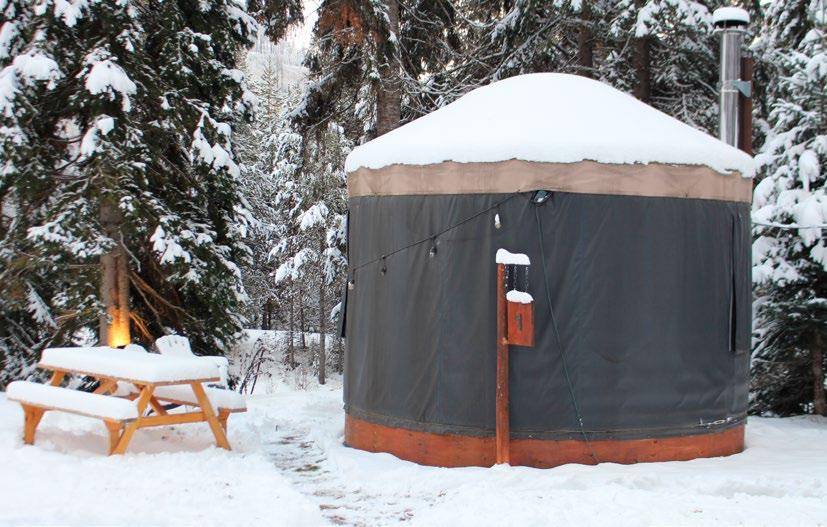
Upon arriving, you’ll hear and smell the fire crackling, along with the sound of snow squishing beneath your boots as you make your way to your cabin, lodge room, or cozy yurt—whichever experience you decide on.
With limited cell service, you quickly realize that visiting Chute Lake Lodge means it’s time to disconnect from the world and be present in your surroundings. It’s a chance to live in the moment, look up at the stars, and unwind with those beside you.
“It’s really just like a Hallmark movie every day. You’re snow shoeing, heating up in the sauna, coming in for cocktails or hot chocolates, sitting by the fire, and it truly feels like you’re in a winter wonderland,” says Chute Lake Lodge manager, Aja Mingay.
Enjoying your stay in the winter
While many guests visit in the warmer months to enjoy camping experiences, water activities, bike trails, and more, winter offers something entirely different—an experience Aja says is easily her favourite.
“Here you have so much snowpack, so much snowfall. Everything is just silent, beautiful, and if you want to have that type of getaway where you don’t speak to anybody, it’s almost like you’re in your own little cabin in the woods,” she explains.
“I have so many guests that tell me they feel so relaxed and rejuvenated and a lot of people, for that reason, will extend their stay.”
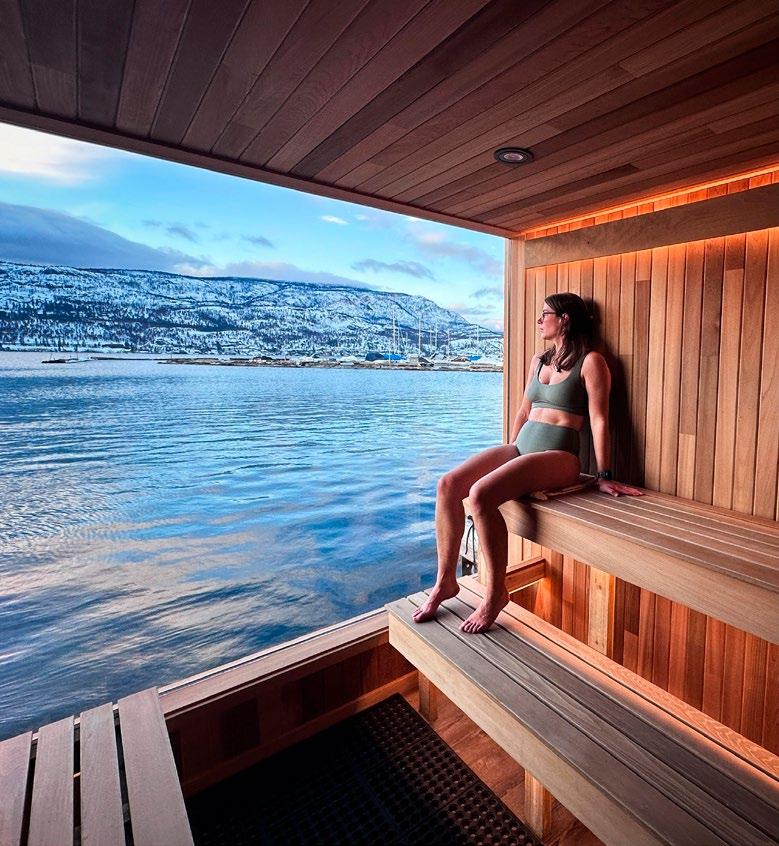
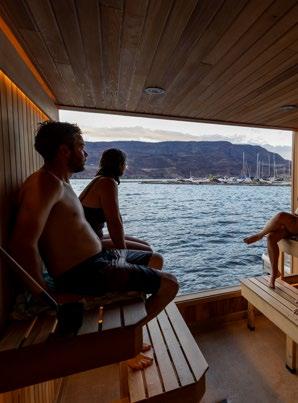
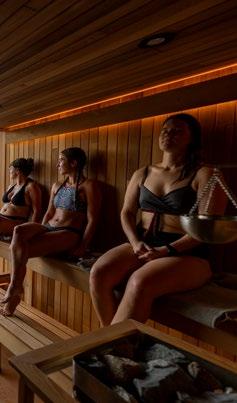
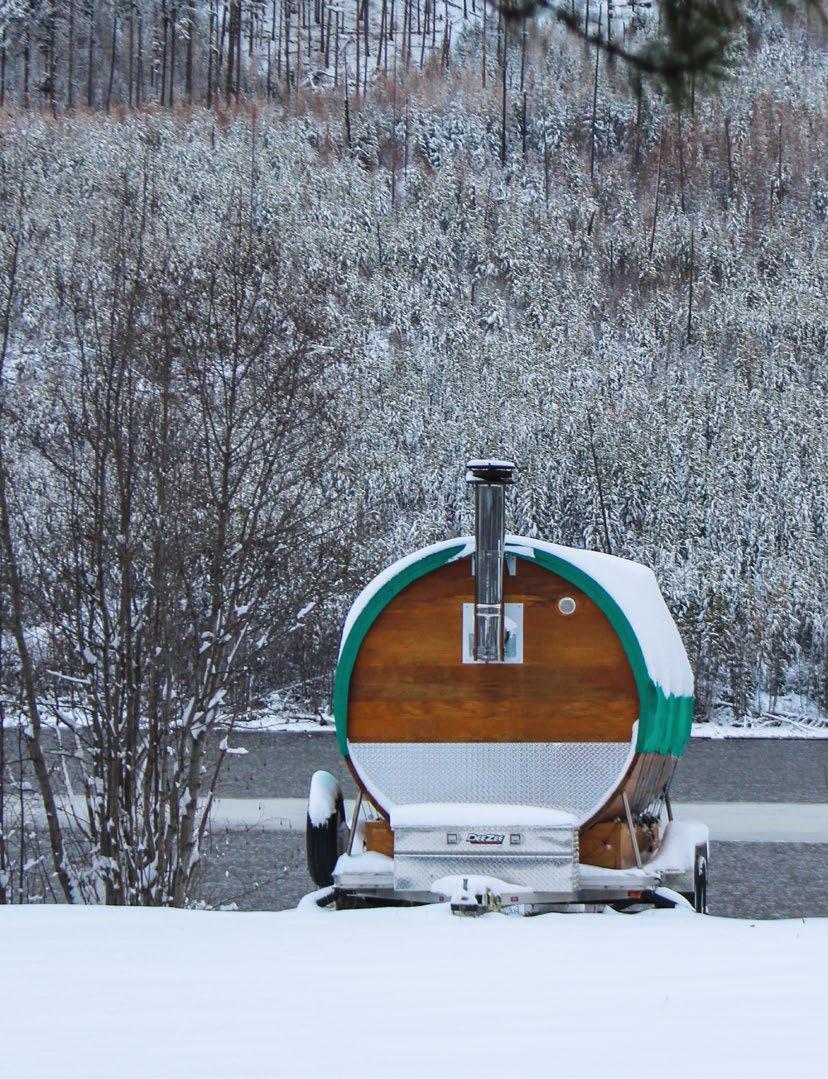
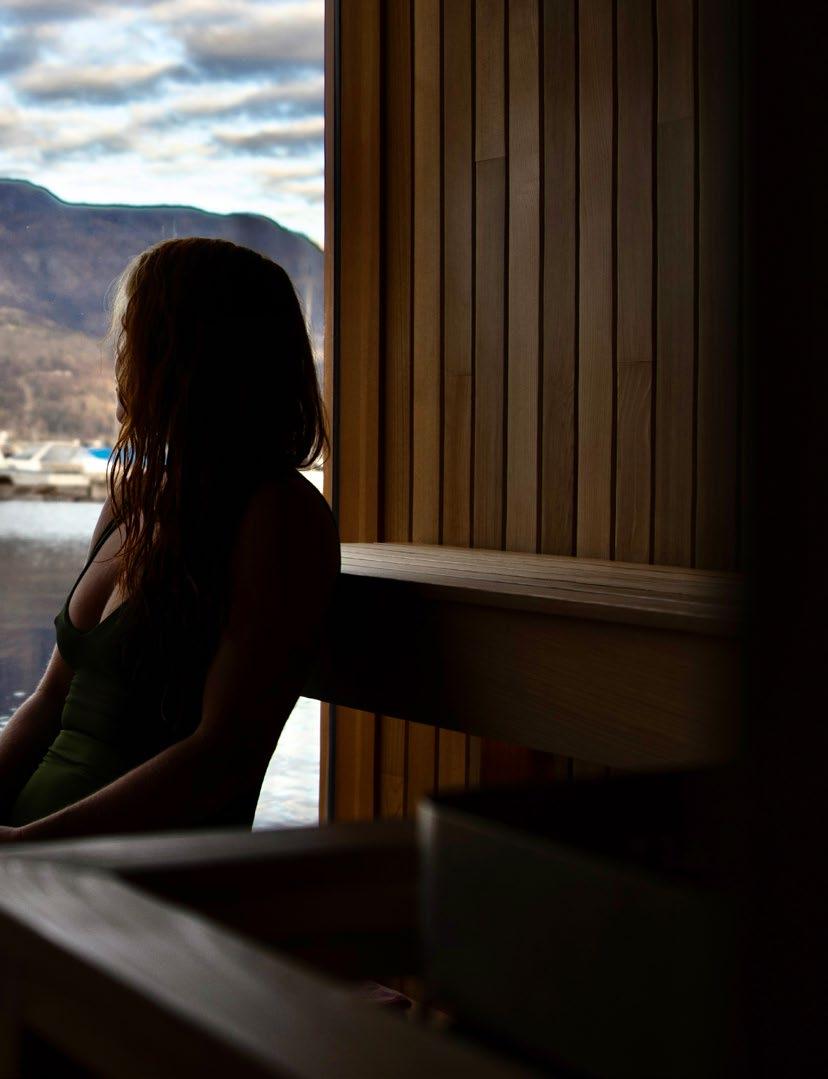
With winter activities including ice skating, ice fishing, snowshoeing, bonfires, and more, the possibilities are endless. And for those looking to warm up, Chute Lake Lodge welcomes guests to enjoy its wood-burning sauna located right on the lake. Inside, dim lighting, candlelight, and the rich scent of cedar create the perfect setting to decompress—ideal for unwinding or a romantic escape with a loved one.
“It smells so good inside and they say that saunaing is so good for your body, just doing even an hour a week. So I really encourage the sauna in the wintertime, and you can get in and out, jump in the snow, and get back in.”
The history
Built in 1921 as a bunkhouse for loggers, the lodge has transformed over the years—first serving as a hunting and fishing lodge before becoming what it is today.
“I want everybody to come here, and I think that everybody should experience this type of place, because Chute Lake Lodge, in
the world that we live in now, is such an anomaly, like places like this will not exist in 20 or 30 years,” says Aja.
“There’ll be lodges, but they’re all going to be brand new, and they’re going to be great, but there’s not going to be stuff like this. And someday this lodge will, you know, fall into the ground, but we’ll keep her going as long as she does.”
While modern updates and amenities have been added over the years, the lodge has maintained its historic charm—something both guests and staff deeply value.
“I just think it’s important to come up here and think about the history. You know, you’re on the Kettle Valley Railway, which was built by hand, horse and buggy for years. And so much work went into that railway. So many people put in years of effort just for it to only run for short, 40 years. But the lodge itself, you know, when you step inside here, is just so historic and so beautiful. And then you sit down and have some great food. Hang out for a bit and talk to the staff about the history and read some of the historic books in the bookshelf, because it’s so interesting, and everybody loves the history of this place,” explains Aja.
Accommodations
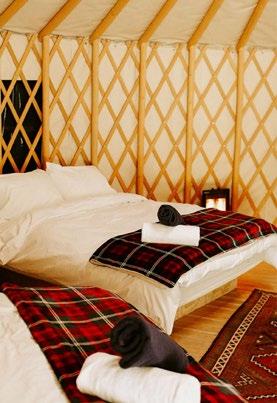
In winter, guests can choose from a variety of accommodations, including lodge rooms, modern cabins with lake views and updated amenities, traditional rustic cabins loved by long-time visitors, and newly added yurts.
Some accommodations are equipped with washrooms, kitchenettes, and modern conveniences, while others offer a more classic experience. Guests can choose from more than 10 cabins depending on capacity, or opt for the yurts, which operate year-round thanks to their insulation and wood stoves.
Dining at the lodge
Chute Lake Lodge’s on-site restaurant serves a delicious array of menu options, including comfort foods, classic handhelds, hearty entrées, and their famous apple donuts. The menu is locally inspired, with seasonal specials changing frequently and featuring dishes such as lobster mac and cheese, chili, homemade focaccia, fish and chips, and oven-roasted duck.
See you at Chute Lake
Whether you’re seeking solitude among snow-laden pines, a romantic weekend tucked away by the fire, or lively moments with friends sharing stories over comfort food, Chute Lake Lodge offers a winter retreat where time slows down and memories come easily.
Here, days are spent snowshoeing across sparkling landscapes, while evenings invite connection—over steaming mugs of cocoa, a shared sauna on the lake, or simply the silence and stillness of the wilderness. It’s a place to disconnect so you can truly reconnect—with nature, loved ones, and yourself.
So, if you’re getting impatient waiting for spring to return, consider visiting Chute Lake Lodge and enjoy the rest of winter above the Okanagan Valley—a place where history, hospitality, and connection await.
lifestyles
The Spirit of the Steam Inside Kelowna’s Floating Sauna
WORDS MIRIAM HALPENNY
PHOTOS GRAHAM FILEK
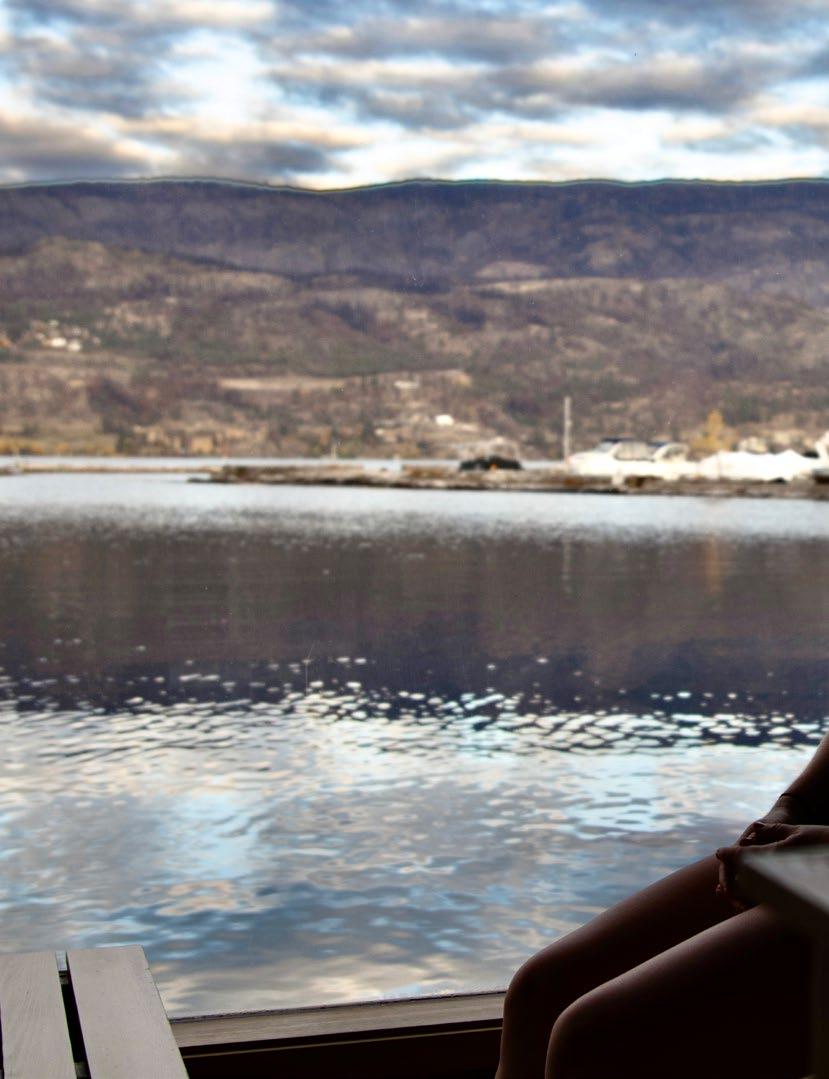
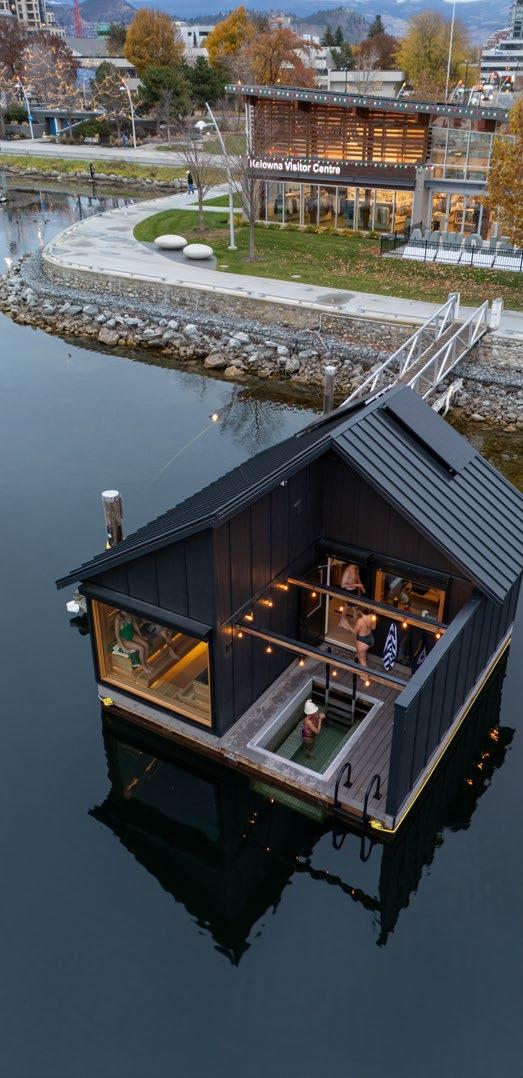
As you walk along the dock toward the small, house-like structure floating on Okanagan Lake, the one marked sauna, it becomes clear this won’t be another bleak, grey offseason day in Kelowna.
Whether you’re a seasoned cold-plunger or stepping into the experience for the first time, there’s a particular thrill to changing into your swimsuit in the heart of winter — a small act of rebellion against the cold.
The jolt of the lake’s ice-cold water followed by the enveloping heat of the sauna challenges both body and mind, leaving you with a rare sense of clarity and renewal.
Loyly Floating Sauna and Cold Plunge — the first experience of its kind in the Okanagan — brings a Finnish-inspired hotand-cold ritual to the valley.
“I don’t think we really understood the impact that we were going to have on the community, which has just been such a beautiful part of this process,” says founder Jessica Rastas, who operates Loyly alongside her husband, Nick.
“The sonic culture is quite new to Canada and B.C., so we had no idea how the community was going to react or engage with what we were creating. It has just been quite amazing, surprising and beautiful.”
Loyly — pronounced low-lou — is a Finnish term describing the moment steam rises from sauna rocks when water is thrown over them.
“So it is a moment. It’s not quite like a noun. It’s a verb kind of idea, and it translates to the breath of the sauna, or the spirit of the steam,” Jessica explains. The name reflects the couple’s desire to honour the tradition and heritage behind sauna culture.
How the idea emerged Nick, originally from Australia, grew up watching his Finnish father build portable saunas the family would take on their travels. Jessica, a Kelowna local, drew on her grandmother’s Norwegian roots to help shape the concept.
The spark for Loyly came during a trip to Tasmania, where the pair discovered a floating sauna on a secluded lake.
“It was on this beautiful little lake in the middle of nowhere, and the experience we had was quite like nothing else. Just
so invigorating, beautiful and connecting. And so we just started talking about how we could potentially bring this to Kelowna,” says Jessica.
“Having grown up here, I know how gray and quiet the winters can get and if you’re not a skier or a snowboarder, you really just kind of are stuck in this space.”
When they returned home — both contemplating career changes — the next step became clear.
With the help of Jessica’s father, a homebuilder for four decades, the couple constructed the floating sauna in November 2023 and opened it by Christmas Eve. Now in its third season, Loyly continues to grow, recently expanding with a second location in Toronto.
The Loyly experience
Visitors bring towels, water and swimsuits for either a community session or a private booking. Community sessions host up to six people and often lead to spontaneous connection. Private sessions, for up to seven, offer a more intimate experience.
Upon arrival, a sauna host welcomes guests and provides a brief orientation.
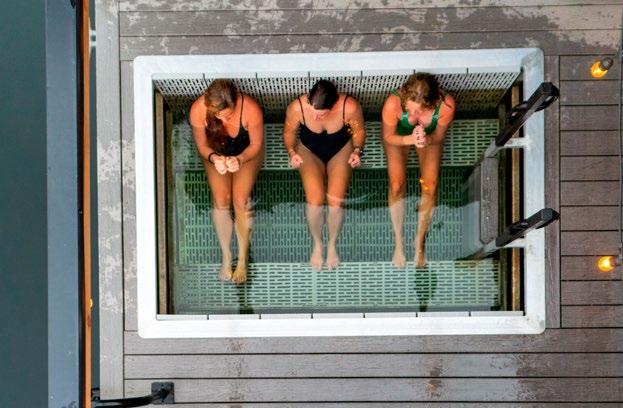
Participants are encouraged to begin and end their session with a cold plunge, alternating between 10 to 15 minutes in the sauna and 30 seconds to two minutes in the water.
“Really encourage people to take a rest period between to get the benefits of that cold exposure that they have done, and just appreciate that hard thing that they did. It’s my favorite part of the process,” Jessica says.
The return from the cold plunge is part of the magic: stepping into the warmth, pouring water over the rocks and breathing in the eucalyptus-infused steam, a moment that seems to quiet the mind and ease the body back into a sense of calm.
“I think there’s nothing that makes your body feel quite so alive, and we don’t have a lot of those experiences in our
day to day so I just really encourage people to slow down. Our mentality has always been that this isn’t timing, it’s more just inviting people to listen to their bodies and get in tune with what they’re feeling they need, and move at their own pace.”
A 70-minute visit typically allows for three full cycles — enough time to settle in, unwind and reap the benefits.
Why people come back
Visitors often speak of improved sleep, lifted mood, injury relief and an overall sense of grounding. Others credit Loyly with helping them navigate seasonal depression or reconnect with their bodies during the darker months.
“Because you’re putting your body into fight or flight when you go into the cold water and I think that in doing that continuously, what you do is you create a pattern that you can take out into the world with you…” Jessica explains.
For many, the initial nerves quickly melt away.
“So many people come in scared, and it makes a lot of sense… I would say 99% of the time people that come in scared are leaving with a renewed sense of themselves,” she says. “It’s such a beautiful way to slow down, get into your body and to push yourself a little bit.”
Operating from October through the end of March, Loyly offers a range of options designed to be accessible and inclusive.
“It’s a space where people are connecting quite well and organically… and so we’re having community groups that are coming in, not knowing each other, and leaving exchanging phone numbers or emails,” Jessica says. “If that’s not what you’re looking for, we do offer silent sessions as well if you are just looking to disconnect.”
As your body shifts from the intensity of the cold to the warmth of the sauna, pause for a moment. Look out over the lake, breathe deeply and acknowledge the challenge you’re meeting with every round.
Styled by light
With dreary winter days and even darker nights, it’s important to embrace the light during this time of year. It’s that light that will help you find balance between those vintage pieces – that are often passed down through generations – and new additions that spark joy. A good outfit can change your entire outlook on the day.
PHOTOGRAPHY: MICHELLE PROCTOR
STYLING: JEN EVANS & JEN CLARK X MAKEUP & HAIR: JEN CLARK
MODEL: HOLLY NEWTON X ASSISTANT: NEVAEH GUILLEMETTE
Silk belted jumpsuit by Stella McCartney from Turnabout ($289), long pearl necklace from House of Savoy ($145).
Black lace top by Zara ($28), deluxe vintage hat from House of Savoy ($58), silver and pearl earrings by Lizzie Fortunato from Bernstein & Gold ($425).
Rust silk blouse ($48), striped vintage suspenders ($25) – both from House of Savoy. Classic navy pant by Smythe from Bernstein & Gold ($450).
Long suedine coat with belt in brown by YAYA ($370), black suede laceup booties by Rupert Sanderson from Turnabout ($289), and lace stockings are stylist’s own.
Vintage blazer by Karl Lagerfeld ($65), vintage pearl necklaces (short $85, long $145), and Martha Sturdy earrings ($89) – all from House of Savoy. White and black tweed pants by Riani from Turnabout ($159).
Sharp shoulder twist dress in onyx by Smythe from Bernstein & Gold ($695); thigh-high black suede boots by Yves Saint Laurent from Turnabout ($1,195), vintage triangle earrings from House of Savoy ($48).
Building vision, shaping legacy
The entrepreneurial journey of
Ross McCredie
WORDS MIRIAM HALPENNY PHOTOGRAPHS CONTRIBUTED
When Ross McCredie reflects on his career, he does so with a familiar grin. “I’m usually a builder, not a buyer,” he says. “I love building things from scratch — putting your team in place and then doing that.”
That builder’s mindset — equal parts visionary, strategist, and risk-taker — has propelled McCredie from a career in travel to becoming one of the most influential figures in Canadian real estate. As the founder of Sotheby’s International Realty Canada and now the driving force behind the Sutton Group, McCredie has spent decades reshaping how real estate is built, marketed, and led.
EARLY VISION AND A DEFINING PIVOT
McCredie’s entrepreneurial instincts surfaced early. “I was fascinated with real estate,” he recalls. While running a travel company through the 1990s, he was already buying and selling property on the side, quietly building experience and curiosity.
That trajectory shifted dramatically in 2001 after a serious accident in Whistler forced him to reconsider his future. “The doctors really didn’t want me to go back into the same roles I was doing before,” he says. Instead, he leaned fully into real estate — a decision that would alter the course of his life and career.
“So many good things actually happened from that,” McCredie reflects. The pivot not only introduced him to a new industry but ultimately led to relationships, opportunities, and a sense of purpose he hadn’t anticipated.
LEARNING THE BUSINESS FROM THE GROUND UP
His formal entry into development came through Intrawest, first in Panorama and then in Whistler — environments that would serve as an accelerated education. “I went from zero to 100 and got my PhD in real estate development,” McCredie jokes.
During three intense years in Whistler, he helped build and sell more than $600 million worth of real estate, including landmark projects such as the Four Seasons. It was here that McCredie fell in love with the full lifecycle of development — from early concept and approvals to delivery and ownership.
“I loved the idea that you could conceive a concept, design it, build it, sell it, and then actually see people living in it,” he says. “That’s an amazing experience.”
McCredie credits both his upbringing and these formative years for shaping his collaborative, creative approach. The youngest of five Irish Catholic children, he learned early how to navigate competing voices and find solutions. “If you really understand what the community wants and what’s in its best interest, you can have a really good outcome,” he explains.
BUILDING SOTHEBY’S INTERNATIONAL REALTY CANADA
In 2004, McCredie made what many considered a risky — even reckless — move: acquiring the Canadian rights to Sotheby’s International Realty. At the time, the Sotheby’s brand had never been licensed globally.
“People had running bets on how long it would take me to go broke,” he laughs. But McCredie wasn’t interested in replicating the existing real estate model. He wanted to elevate it.
“I wasn’t a big fan of the real estate industry and the low bar of how some people operated,” he says. His vision was to build what he called the “Navy SEALs of real estate” — a culture-first organization where professionalism, ethics, and marketing excellence came before individual ego.
For every 100 agents who expressed interest, only a handful were selected. “It was about building a culture of good people working professionally,” McCredie explains. The approach paid off. Sotheby’s International Realty Canada became a global benchmark, with teams from New Zealand to Dallas traveling north to study its operations.
“What we did, we started from scratch,” he says. “Because I’m usually a builder, not a buyer.”
A NEW CHALLENGE: REIMAGINING THE SUTTON GROUP
After selling Sotheby’s, McCredie might have been expected to step back. Instead, in late 2023, he acquired the Sutton Group — a decision that surprised even him.
“All joking aside, I was a bit of a snob,” he admits. “I always thought Sotheby’s was the brand, and I didn’t see Sutton in the same vein.” That perception quickly changed.
What he found was a deeply established Canadian brand with enormous untapped potential — and significant operational challenges.
“The first six months were kind of hell,” McCredie says candidly. “They only had three staff running the entire brand across Canada.”
His response was familiar: build the right team.
And once that team was established, they began modernizing Sutton from the inside out, including the development of a new digital platform, Cornerstone, designed to manage and transact real estate assets in an entirely new way.
“The entire reason I bought Sutton was to do exactly this,” McCredie says. “To build something meaningful again.”
Several months into the transformation, the momentum became undeniable. “I turned to my wife and said, ‘You know what? This is actually going to work,’” he recalls. Franchise partners began embracing the new vision — no small feat for a 41-year-old brand.
LEADERSHIP, CULTURE, AND A LONG VIEW
Across every chapter of his career, McCredie’s leadership philosophy has remained consistent. He surrounds himself with knowledgeable people, focuses relentlessly on culture, and keeps homeowners at the centre of every decision.
“We didn’t allow agents’ pictures on buses,” he says of his Sotheby’s days. “We were all about marketing for the client.”
That principle continues today. “If someone comes to me with an idea, technology, or process — as long as it benefits the owner of the asset, I’ll do it,” he says. “That’s what drives me and the entire team.”
McCredie is also vocal about Canada’s need to think more boldly — particularly around competitiveness, infrastructure, and responsible growth. Having worked internationally, he believes the country must better balance ambition with long-term planning. “If you come up with a really creative solution and truly understand what the community wants,” he says, “you can have a really good outcome.”
DEEP ROOTS IN THE OKANAGAN
For McCredie, the Okanagan — and Kelowna in particular — holds both professional and personal significance. “I love the Okanagan,” he says. His travel company once operated out of Kelowna, and he has spent decades returning to the region.
“It’s a great place to live. The weather is fantastic, it’s accessible, and it has incredible potential,” he says. “The Okanagan is one of the best playgrounds in Canada.”
More than that, it reflects the type of community McCredie believes Canada can build when growth is guided by vision rather than haste.
A LEGACY STILL BEING BUILT
In an industry often driven by ego and excess, Ross McCredie’s legacy is rooted elsewhere — in building teams, elevating standards, and never losing sight of who real estate is truly for.
By leading with discipline and heart, embracing reinvention, and refusing to shy away from complexity, McCredie has shown that Canadian entrepreneurs don’t just build businesses — they shape industries, communities, and the future itself.
Three
BRISBANE
PHOTO CREDIT REUBEN NUTT
LAUREN KRAMER
Brisbane City featuring the Brisbane River, Queens Wharf and The Star Brisbane
Australia’s third largest city is buzzing with dynamism, energy and growth while preparing to host the 2032 Olympics. Spend three days soaking up the highlights and you’ll catch a glimpse of Brisbane’s urban sophistication as well as its exquisite natural mountain and beach retreats, and its rich history.
DAY ONE
We checked in to the Hyatt Regency Brisbane Hotel, which front doors open onto Queen Street and the Queen Street Mall – a pedestrian shopping experience in the heart of the city’s central business district with more than 500 speciality stores.
We then head out with Local Sauce Tours, a small company that combines food and history with a general orientation of the city.
From our guide, Saskia Mathers, we learn about Brisbane’s European beginnings as a convict settlement in 1825 and the City Botanic Gardens, once the penal colony’s food farm. Today, gracious Victorian-style buildings are sandwiched between skyscrapers that extend like glassy fingers, some even a quarter-kilometre into the sky.
Explore downtown Brisbane’s alleyways, where building walls are decorated with street art, each piece a graphic voice for city culture.
Check out Kangaroo Point Bridge, a gleaming white 460-metre bridge for pedestrians and cyclists that connects the downtown core with Kangaroo Point. And stop at Noosa Chocolate Factory to taste the deliciously sweet crunch of macadamia nut balls coated in mango chocolate.
Wallaby eating grass at North Stradbroke Island lookout.
As dusk falls, we rent Lime’s electric scooters and careen over the groomed, shaded paths of the botanic gardens. The branches of massive weeping fig and Bunya pine trees – planted in the 1850s – form a canopy above us, and the evening is filled with the high pitched voices of flying foxes. These large, fruit-eating bats roost in the trees by day and come out at night, as do brushtail possums – squirrel-size marsupials that peer down at us from the lower branches. We stop at Popolo, an Italian restaurant on the South Bank, for a dinner of arancini and lasagna. Our meal is served just as The Star Brisbane illuminates across the river with its fireworks and light show.
DAY TWO
An e-bike ride is the ultimate way to start the day in Brisbane, and they’re readily available on every street corner. In the early morning we zip along the city’s 40 kilometres of bike paths, covering both sides of the river as we explore parks and neighbourhoods. By 10 a.m. the summer heat settles over Brisbane like a hot fan and, desperate for the breeze, we ditch the bikes and hop on a CityCat. Part of the public transit system, these iconic catamarans traverse the river day and night, and you can spend as long as you’d like on board, savouring views of the skyline.
The Queensland Art Gallery is another great respite from the heat, exhibiting the work of contemporary and historical artists. Across the bridge, the Museum of Brisbane is located inside City Hall, with displays that document the collections of ordinary Queenslanders over the years. We examine pharmaceutical bottles, decorative eggs, model ships, vintage beaded purses and even an axe collection as we navigate the gallery. It’s a cool place to spend an afternoon, particularly on a day when the temperature climbs to 35 C.
PHOTO CREDIT REUBEN NUTT
CityCat on Brisbane River with Story Bridge aerial and city views at dusk.
In the evening, we drive to the summit of Mount Coot-tha, 20 minutes from downtown, for a spectacular panoramic view of the city. The largest natural area in Brisbane, Mount Coot-tha encompasses hikes and horse trails as well as a subtropical botanic garden where 200,000 plant species converge, filling the air with a rich, earthy fragrance. Mount Coot-tha is also home to the Sir Thomas Brisbane Planetarium, with insightful exhibits on the galaxies, Aboriginal astronomy and the unique role Australia plays in deep space communication.
We end the day with haloumi burgers at the Summit Restaurant & Bar, an upscale eatery that’s more than 100 years old. Located steps from the Mount Coot-tha outlook, the restaurant’s interior offers a step back in time, with a refined menu filled with unique culinary dishes.
The heat has abated and from a distance, Brisbane’s lights cast a magical glow.
DAY THREE
When the beach calls, Brisbane answers with “Straddie” – the 38 kilometres-long North Stradbroke Island that is the world’s second largest sand island. Our hour-long ferry ride is filled to capacity
but the moment we arrive, the cars disperse as everyone heads to their favourite corner of the island. Straddie’s quiet roads lead to exquisite beaches where turquoise waves crash against the rocks and soft, white sand stretches for mile upon mile. At Cylinder Beach we watch dolphins dip and dive through the water, and returning to our car, we see kangaroos skirting quietly into the bush. Humpback whale sightings are also commonplace on Straddie, and road signs caution drivers to be on the lookout for koala crossings.
In the town of Dunwich, we visit the local museum to learn about Straddie’s history. The island is a longtime settlement of the Quandamooka people, who constitute half of its residents today. One of them, Delvene Cockatoo-Collins, is a well-known Australian designer and artist, whose work is inspired by the island and infused with symbols from her family history.
Our last stop before heading back on the ferry is Brown Lake, a freshwater lake with a deep brown hue from the tannins of tea and paperbark trees. We swim out to the middle of the lake where the only sound is the wind in the leaves as it ripples across the water.
We’re an hour from the bustle of Brisbane’s 2.5 million-strong population, but on Straddie, we’re a world away in a serene pocket filled with wildlife, beauty and an exhilarating feeling of freedom.
“We’re a world away in a serene pocket filled with wildlife, beauty and an exhilarating feeling of freedom.”
PHOTO CREDIT DANIEL CHRISTIE
Sunset at Mount Coot-tha lookout
CANADIAN MADE. MADE FOR YOU.
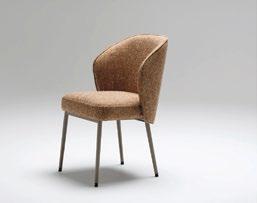
Discover Trica, one of North America’s leading furniture manufacturers — proudly made in Canada and built to last. Highly customizable dining, bedroom, and accent furniture with hundreds of finish and fabric options to perfectly fit your home and lifestyle. Quality craftsmanship. Modern design. Endless possibilities. From March 1 to March 31 we are offering 15% off all custom orders
Lakeshore Place
3200 Lakeshore Rd, Kelowna 250-860-3223
Quiet boutique living with personalized, trusted service.
Missionwood
1075 Barnes Ave, Lower Mission 250-860-9308
Refined living with expansive amenities and a fresh new look.
Northwood
1277 Gordon Dr, Kelowna 250-860-1122
Flexible living shaped around you in a vibrant community.
Southwood
Resort-style living near Skaha Lake.
Summerwood
1360 KLO Rd South Pandosy 778-478-1736
Socially vibrant community surrounded by nature and trails.
Sandalwood
Elevating every moment.
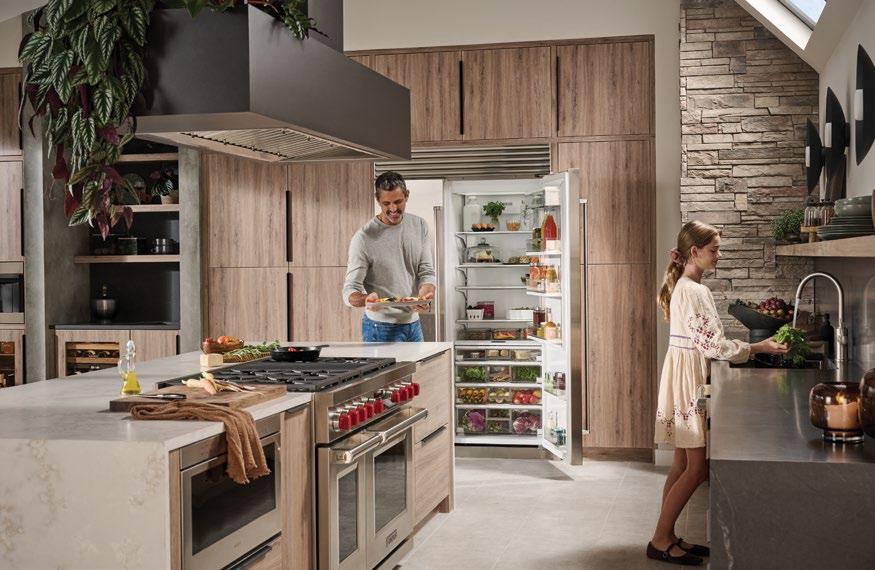
When you step into your kitchen, what do you aspire to do? Master a new cooking technique? Serve food even your pickiest family member will eat with enthusiasm?
Sub-Zero, Wolf, and Cove appliances are meticulously crafted to achieve a higher standard of performance, dependability, and style—so you can raise the bar on every meal you make.
Your fu ure kitchen starts with Sub-Zero, Wolf, and Cove, featured at the largest appliance showroom in the Okanagan.