SYMPHONY ORCHESTRA
SYMPHONIC CHORUS WIND ENSEMBLE
Symphony Hall
301 Massachusetts Ave, Boston
Monday, April 13, 2026 7:30pm
Boston University College of Fine Arts School of Music presents
SYMPHONY ORCHESTRA
SYMPHONIC CHORUS WIND ENSEMBLE
Symphony Hall
301 Massachusetts Ave, Boston
Monday, April 13, 2026 7:30pm
Boston University College of Fine Arts School of Music presents
Symphony Hall, Boston
301 Massachusetts Avenue
Boston, Massachusetts
Monday, April 13, 2026 7:30pm
154 years ago, Boston University established a school of music. The new school was unlike all others in the United States. It was the first to center the study of music as worthy of a degree. Over the next century and a half, scores of universities and colleges would follow BU’s lead and, by doing so, would help establish a rich, dynamic culture of music in this country and beyond.
Music was one of many BU “firsts.” Boston University was among the first colleges to be coeducational. Almost a century before the Ivy League, BU was a leader in smashing the barriers of gender discrimination. Unlike other universities that restricted entry on the basis of race or religion, Boston University embraced talented students of all backgrounds and complexions from its beginning. Dr. Martin Luther King, Jr. received his doctorate from BU.
Boston University remains a leader. We are a proudly global university with nearly 400,000 living alumni around the world. Nearly every major symphony orchestra on this planet has counted BU School of Music alumni among its members. Our alumni are arts leaders, educators, music critics, and more. The impact of BU School of Music has been profound.
Today, we look ahead to the future. We spotlight emerging artists whose talent, skill, passion for music, and ingenuity will shape this century of music. Mentored by world-class faculty, they are exceptionally prepared and ready for this moment.
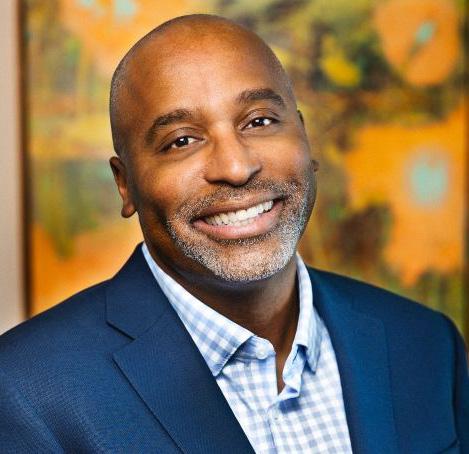
Harvey Young Dean, Boston University College of Fine Arts Vice President for the Arts ad interim
Boston University Wind Ensemble
Jessie MONTGOMERY Coincident Dances (b. 1981)
Joshua Roach, conductor
Boston University Symphonic Chorus with members of the Wind Ensemble and Symphony Orchestra
Igor STRAVINSKY
Symphony of Psalms (1882-1971)
I. Exaudi orationem meam, Domine (Psalm 38:13–14)
II. Expectans expectavi Dominum (Psalm 39:2-4)
III. Alleluia. Laudate Dominum (Psalm 150)
Daniel Parsley, conductor
Intermission
Boston University Symphony Orchestra and Symphonic Chorus
Ludwig van BEETHOVEN
Symphony No. 9 in D minor, op. 125 (1770-1827)
Thank you for joining us!
I. Allegro ma non troppo, un poco maestoso
II. Molto vivace
III. Adagio molto e cantabile
IV. Presto – Allegro assai – Allegro assai vivace
Avuya Ngcaweni, soprano
Lindsey Weissman, mezzo-soprano
Heming Cao, tenor
Nathan Savant, bass-baritone
Sarah Ioannides, conductor
Welcome to the annual Boston University at Symphony Hall concert! This concert celebrates many of our extremely talented students at Boston University and offers a snapshot of the musical brilliance that takes place every day on our campus. The School of Music at Boston University was founded in 1872 and was the first institution in the United States to grant a music degree. Today, the School continues a tradition of excellence in performance, composition, theory, musicology, ethnomusicology, and education. Our College of Fine Arts is also home to the renowned Opera Institute and Boston University Tanglewood Institute, which serve as some of the country’s preeminent training programs for emerging musicians.
This concert would not be possible without the tremendous efforts and commitment of these performers, their ensemble conductors, and their teachers. My gratitude also goes to our hard-working and deeply caring Productions and Communications team members, who have worked behind the scenes for months to make this concert a success. As Director of the School of Music, I am thrilled each day as I walk through the school halls and hear various strands of musical performances in progress alongside the finest in music pedagogy and dynamic student–faculty collaborations. The joy-focused commitment that exudes from within the walls of the School is palpable. I invite you to visit us and experience that energy for yourself. For now, I hope you enjoy the incredible musical gifts that these students will share with us.
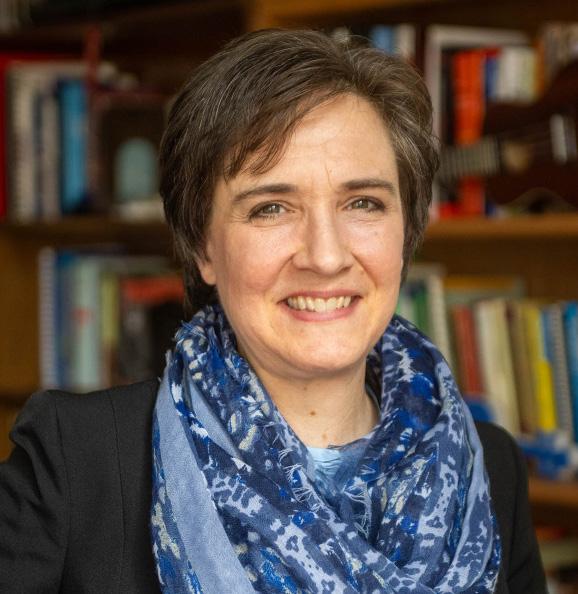
Karin Hendricks Director, Boston University College of Fine Arts School of Music
past abound. The opening of Stravinsky’s dedication, that “this symphony [is] composed to the glory of GOD,” recalls a similar inscription used by J.S. Bach. The use of triadic harmonies built from intersecting minor and major thirds subtly unify the whole work. Stravinsky’s text setting recalls chant and his use of a double fugue in the second movement (something we will hear in Beethoven’s Symphony No. 9 as well) connects his music to earlier musical eras.

Drawing inspiration from the past does not mean, however, that Stravinsky abandoned the sound world he established in his earlier works. Ideas are still layered, ostinato patterns employed, and Stravinsky’s innate sense of structure and balance remain. His mastery of orchestration is always present as he adds and subtracts instrumental and vocal colors from a large sonic palette.
The first movement opens with an E minor triad, in a distinctive arrangement that emphasizes the note G; this chord also separates running figures. The mood intensifies with the entrance of the chorus singing “Exaudi orationem meam, Domine” (Hear my prayer, O Lord). Both here and throughout the work, Stravinsky’s text setting produces an overarching melodic and rhythmic flow that acts as a counterpoint and complement to the orchestra.
The same running figure heard at the beginning of the first movement now becomes the basis for the instrumental fugue in the second. Stravinsky then introduces a second fugue for the voices before combining the two to close this movement. The third movement, which sets Psalm 150, begins slowly and solemnly before turning to an ostinato-grounded section with faster passagework. Another slow section brings a renewed sense of consequence, before being tempered by a final “Alleluia” that resolves with a quiet sense of assurance.
The same sense of musical unity that pervades both the Montgomery and the Stravinsky is evident in Beethoven’s Symphony No. 9, the longest symphony of its day and groundbreaking in the use of the voice, soloists and chorus, as part of the symphonic sound.
Beethoven’s fascination with the 1785 poem “An die Freude” by the renowned German poet Friedrich Schiller (1759-1805) began in the 1790s; the first sketches of a line of the poem date from 1798. Ten years later, Beethoven composed and premiered the Choral Fantasy, a work for piano, chorus, and orchestra. When describing the finale of the Ninth Symphony, Beethoven recalled this earlier work, but said that this latest finale was on a far grander scale. In length, by the number of instruments (not including the voice), and in the emotional zeniths and nadirs reached, Beethoven’s Ninth Symphony extended beyond all other symphonic works that had come before it.
The movements are connected by musical material that will coalesce into the “Ode to Joy” theme reserved for the final movement. In the first movement, Beethoven generates a feeling of stasis combined with anticipation through sustained pitches in the second violin, cello, and winds over which descending, open intervals are played in the first violin and bass. The indefinite harmony of this opening pulls the listener into a sound world that expands to immense proportions and is amplified to unprecedented levels, but ultimately feels incomplete.
In the second movement, Beethoven recasts the traditional dance movement of a symphony. Referencing rhythmic patterns heard in the first movement, the opening of this movement is tumultuous and bursting with energy. The
middle section, featuring the winds and foreshadowing music to be heard in later movements, provides contrast before the boisterous opening music returns. All the frenetic activity of the first two movements stops with the opening of the third, Adagio molto e cantabile (very slowly and in a singable style). Here the strings and winds exchange ideas, sometimes overlapping but always complementary to one another. Beethoven carefully unveils every moment, inviting the listener to relish in each sonority of its rich orchestration. The sense of calm in this slow movement acts as a preparation—one might even say a meditation—before the finale.
The finale cannot be quantified easily in terms of its structure because it combines elements of the previous three movements, not only by recalling and dismissing the distinctive opening of each, but also by borrowing an element of the previous three movements’ formal structures (the sonata form of movement 1, the scherzo elements of movement 2, and the variation features of movement 3). After Beethoven recalls and rejects the openings of the previous three movements, the “Ode to Joy” theme enters in the orchestra, beginning in the low strings. As Beethoven adds more instruments to the orchestral texture there is a sense of completion; however, this is short-lived as a new climax is supplanted with the words, “O Freunde, nicht diese Töne” (O friends, no more of these sounds).
With the entrance of the voice—soloists and chorus—this final movement takes on even larger proportions. Selected stanzas of Schiller’s poem become the foundation for a set of variations that range from syllabic settings alternating between chorus and soloists to florid passages reserved only for the soloists. The text turns to the spiritual beginning with the words “Seid umschlungen Millionen!” (Be embraced, you millions!) at which point Beethoven introduces a new theme. One of the most ethereal moments in this movement occurs as Beethoven suspends the sense of forward momentum and extends the range of the voices and orchestra before combining this new theme with the “Ode to Joy” theme.
The premiere of Symphony No. 9 took place on May 7, 1824, ostensibly led by Beethoven. There was, however, another conductor as well because, with Beethoven’s hearing loss, his conducting sometimes became out of sync with the orchestra. He was not aware of the warm reception of his latest work until someone turned him around to face the enthusiastic audience.
The works on today’s concert were written almost 200 years apart and by composers who experiences were fundamentally different from one another. So, we might wonder how a work composed about the cultural diversity of New York City can speak to the same audience as two symphonies, one from the early 19th century and the other from the early 20th. The answer lies in the musical language of each composer. Each of these composers found the balance of melodic, rhythmic, timbral, and structural ideas that invite us into their sound world and remain with us long after the last notes fade.
—Teresa M. Neff
Exaudi orationem meam, Domime, et deprecationem meam; auribus percipe lacrymas meas.
Ne sileas, quoniam advena ego sum apud te, et peregrinus sicut omnes patres mei.
Remitte mihi, ut refrigerer priusquam abeam et amplius non ero.
-Psalm 38: 13, 14
Exspectants, exspectavi Dominum, et intendit mihi.
Et exaudivit preces meas, et eduxit me de lacu miseriae et de luto faecis.
Et statuit super petram pedes meos, et direxit gressus meos.
Et immisit in OS meum canticum novum, carmen Deo nostro.
Videbunt multi, et timebunt, et sperabunt in Domino.
-Psalm 39: 2, 3, 4
STRAVINSKY
Symphony of Psalms
Hear my prayer, O Lord, and my supplication: give ear to my tears.
Be not silent: for I am a stranger with thee, and a sojourner as all my fathers were.
O forgive me, that I may be refreshed, before I go hence, and be no more.
With expectation I have waited for the Lord, and he was attentive to me.
And he heard my prayers, and brought me out of the pit of misery and the mire of dregs.
And he set my feet upon a rock, and directed my steps.
And he put a new canticle into my mouth, a song to our God.
Many shall see, and shall fear: and they shall hope in the Lord.
Symphony of Psalms
Alleluia.

Laudate Dominum in sanctis ejus; laudate eum in firmamento virtutis ejus.
Laudate eum in virtutibus ejus; laudate eum secundum multitudinem magnitudinis ejus.
Laudate eum in sono tubae; [laudate eum in psalterio et cithara.]
Laudate eum in tympano et choro; laudate eum in chordis et organo.
Laudate eum in cymbalis benesonantibus; laudate eum in cymablis jubilationis. Omnis spiritus laudet Dominum! Alleluia.
-Psalm 150
(Stravinsky omits the line in brackets.)
Alleluia.
Praise ye the Lord in his holy places; praise ye him in the firmament of his power.
Praise ye him for his mighty acts; praise ye him according to the multitude of his greatness.
Praise him with sound of trumpet: [praise him with psaltery and harp.]
Praise him with timbrel and choir: praise him with strings and organs. Praise him on high sounding cymbals: praise him on cymbals of joy: let every spirit praise the Lord. Alleluia.

Froh, wie seine Sonnen fliegen durch des Himmels prächt’gen Plan, laufet, Brüder, eure Bahn, freudig, wie ein Held zum Siegen!
Seid umschlungen, Millionen!
Diesen Kuß der ganzen Welt! Brüder, über’m Sternenzelt muß ein lieber Vater wohnen! Ihr stürzt nieder, Millionen?
Ahnest du den Schöpfer, Welt? Such’ihn über’m Sternenzelt, über Sternen muß er wohnen!
—Friedrich von Schiller

Joyfully, as his suns speed through the glorious expanse of heaven, brothers, run your course, joyously, like a hero towards victory!
Receive this embrance, you millions! This kiss is for the whole world! Brothers, above the starry vault a loving father must surely dwell! Do you fall prostrate, you millions?
World, do you sense your Creator? Seek him above the starry vault, he must surely dwell above the stars!
*First three lines written by Beethoven as preface to Schiller’s text





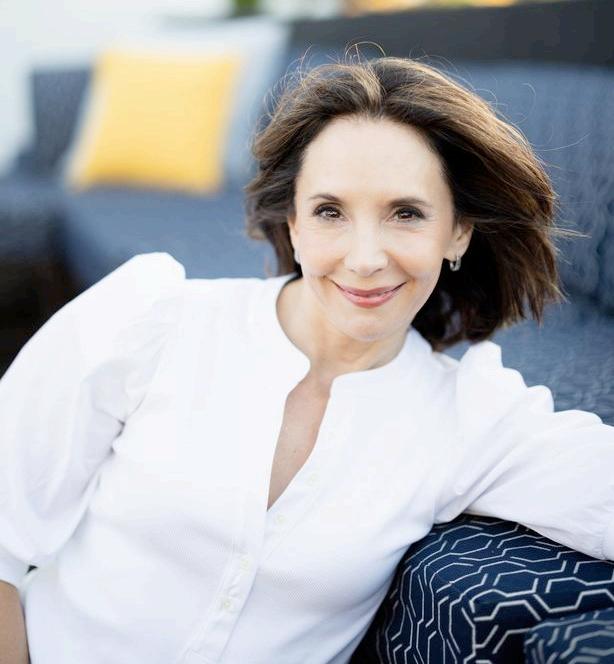
As a music director and guest conductor who is committed to collaboration, innovation and education, Sarah Ioannides was praised by the New York Times for her “unquestionable strength and authority.” As Music Director of Washington State’s Symphony Tacoma, she previously served as music director of the El Paso Symphony Orchestra in Texas and the Spartanburg Philharmonic in South Carolina. Sarah Ioannides was the first woman to hold a full-time position as a conductor with the Cincinnati Symphony Orchestra.
Alongside her tenure as Music Director of Symphony Tacoma, Sarah Ioannides maintains an active international presence, appearing with major orchestras across North America — among them the Buffalo, Calgary, Florida, Phoenix and Seattle and the Orchestre Symphonique de Québec. Her global conducting engagements include appearances with the Royal Philharmonic, Konzerthausorchester Berlin, Gothenburg Symphony, Orchestre National de Lyon, and Bilbao Symphony.
Her repertoire ranges wide – from Mozart to re-emerging composers like Louise Farrenc, Florence Price, Samuel Coleridge-Taylor, Joseph Boulogne, and contemporary works by Aaron J Kernis, Valerie Coleman, David Serkin Ludwig, Daniel Bernard Roumain, Nick DiBerardino and Jessie Montgomery. She has conducted over 60 world premiers, recorded premieres with Nordic Chamber Orchestra, Malmö Symphony and the Royal Philharmonic Orchestra. Producer of original videos for live
orchestral multimedia performances and digital productions her orchestras have received prestigious awards including ArtWorks grants for commissioning music, community projects and films spotlighting current issues. She has led numerous stage productions of opera, ballet and conducted at festivals worldwide, including the European premiere of Stephen Paulus’ The Woodlanders, and Australian & Greek premieres of Tan Dun’s Water Passion after St. Matthew.
She also makes significant contributions to the field of education as Director of Orchestras and Associate Professor of Orchestral Conducting at Boston University, as Founding Artistic Director with Cascade Conducting & Composing. Among the conservatory orchestras and youth orchestras she conducts are those of Yale University, Philadelphia’s Curtis Institute of Music, Jacobs School of Music and the Simón Bolívar Symphony Orchestra.
Well recognized for her skills as a musical curator and adventurous programming she has served on numerous advisory boards, as a competition adjudicator, public speaker, and educator, she has served as panelist for the National Endowment of the Arts for the US Government. A multi-award winning conductor she has received three proclamations for “Sarah Ioannides’ Day” from both the County and the City of Spartanburg and the city of Tacoma. She is a founding member of the League of American Orchestras Council since September 2025 and mother of three children. •


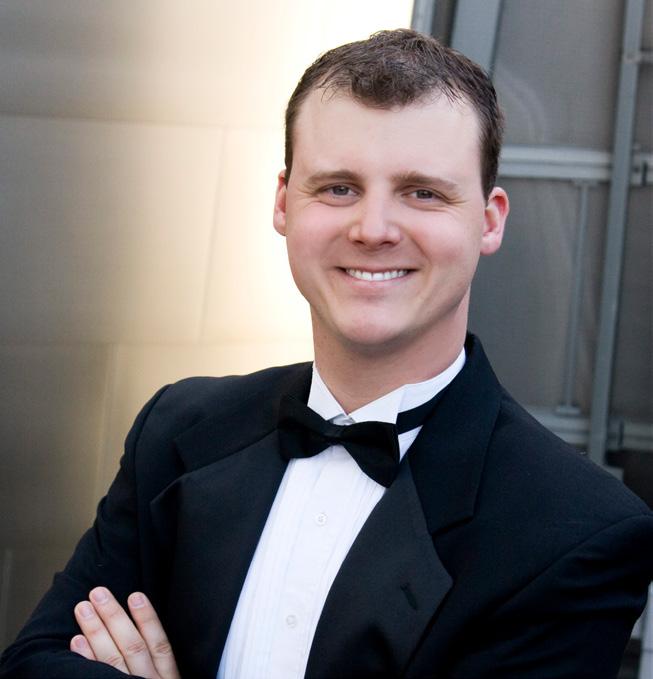
Joshua Roach is the Director of the BU Wind Ensemble. Prior to joining the faculty at BU, Roach taught at the Crane School of Music, the College of New Jersey, Nebraska Wesleyan University, and Peru State College. He has served as guest conductor for the Los Angeles Winds, cover conductor for Pacific Symphony, and assistant conductor for the Young Musician’s Foundation Debut Orchestra and the Downey Symphony.
Roach has led honor groups and presented at music education conferences across the country. Internationally, he has led several tours with youth ensembles, and has worked with the Landesjugendorchester of Baden-Württemberg, a highly selective youth orchestra in Southern Germany.
Before teaching full-time in higher education, Roach was the music director of the Pacific Symphony Youth Wind Ensemble, manager of the University of Southern California Thornton Orchestras program, and freelance musician in the Los Angeles area. For eleven seasons, he taught at the Idyllwild Arts Summer Program where he worked with domestic and international middle and high school students. From 2015-
Assistant Professor of Music; Wind Ensemble Director

2017, he was on the brass staff for the Phantom Regiment drum and bugle corps.
Numerous ensembles have performed Roach’s compositions and arrangements, and his television music appears on shows such as Sport Science, Crime 360, Project Runway, and Last American Cowboy. He has assisted in productions by Turner Classic Films, PBS, Fox, Universal, and DreamWorks.
At the University of Southern California, he earned degrees in music performance, scoring for motion pictures and television, and orchestral conducting. At the University of Michigan, he earned a doctoral degree in wind conducting. Roach’s primary conducting teachers have been Michael Haithcock, Larry Livingston, Carl St.Clair, H. Robert Reynolds, and Sharon Lavery. He studied composition with Frederick Lesemann, Jack Smalley, and David Spear. He studied trumpet with Boyde Hood, Timothy Morrison, Russell Plylar, Judith Saxton, and Mark Niehaus. •
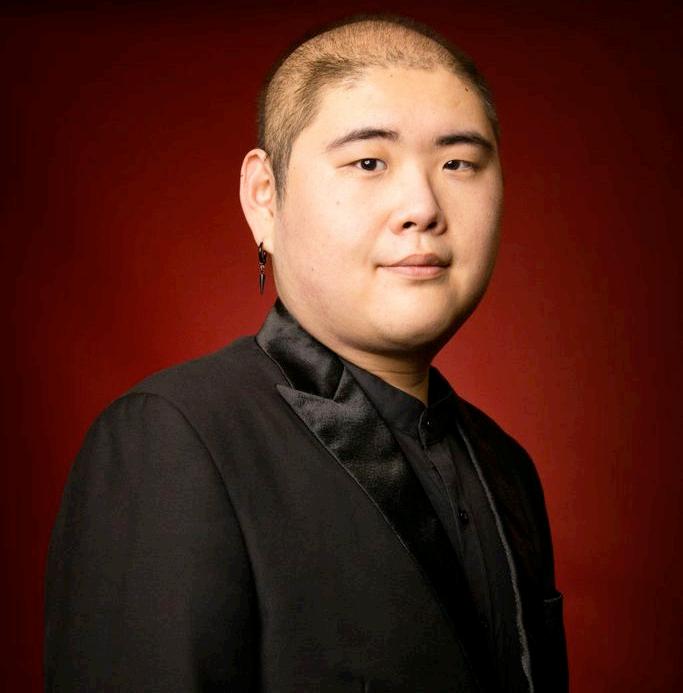
Heming Cao, praised by Sing Tao Boston for his “gorgeous voice and boundless prospects,” is a Boston-based tenor, conductor, and composer with a dynamic career in vocal performance and choral leadership. As a tenor, he has performed roles such as Don Ottavio (Don Giovanni), Rinuccio (Gianni Schicchi), and die Knusperhexe (Hänsel und Gretel). He has appeared as a soloist in major oratorio works with Cantata Singers, including Handel’s Messiah (2025), Monteverdi’s Vespers (2024), Bach’s St. Matthew Passion (2023), and Mass in B Minor (2022). Selected as a Bach Institute Fellow in 2025, he frequently performs with Emmanuel Music and the Bach Institute.
As a conductor, Heming has led ensembles including the Nankai University Student Choir, Tianjin Symphony Orchestra Affiliated Youth Choir, and Tianjin Philharmonic Chamber Choir. He has prepared choirs for works such as Alexander Nevsky Cantata, The Yellow River Cantata, and multimedia projects including the concert The Four Great Classical Novels of Chinese Literature and the film 108. A dedicated educator, he founded the Jungle Children’s Voice and Alma Female Choir in Tianjin and began his tenure as Music Director of The New Moon Choirs in Boston from 2023. Heming is currently a DMA candidate in voice at Boston University. He holds an M.M. in Voice Performance from the Longy School of Music of Bard College and a B.S. in Applied Physics from Nankai University.
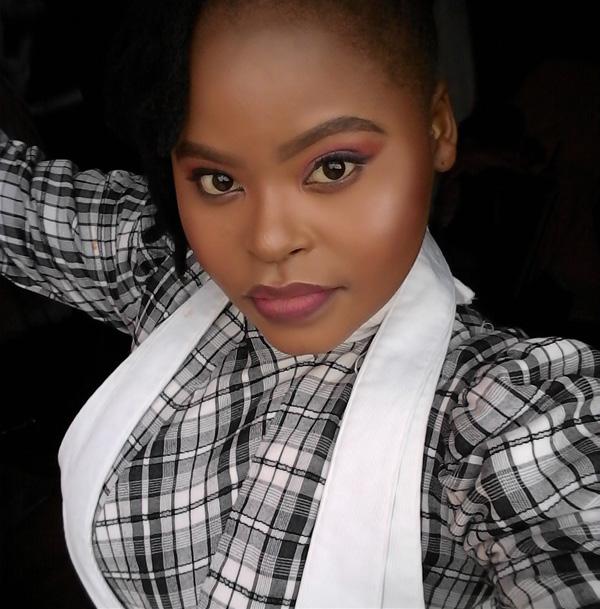
Soprano, Avuya Ngcaweni earned her Bachelor of Music in Opera from the University of KwaZulu Natal, where she sang the role of Aunt Eller in the musical Oklahoma, a collaboration between UKZN and SMU. Avuya revived the role in 2023 with SMU and Nelson Mandela University peers at the Savoy Theatre in Port Elizabeth, South Africa. In 2017 Avuya was awarded a position in the KZN Young performers concert, held at the Playhouse in Durban. She later sang the role of Fiordiligi in Cosi Fan Tutte at the UKZN’s Jubilee Hall. In February 2021, she sang the role of Ann Putnam in the SMU Lyric Opera production of The Crucible. Miss Ngcaweni joined The Dallas Opera Educational Outreach program in August 2021 and earned the MM in Voice Performance from SMU in May 2022. Studying with Professor Hill Moore at SMU, Avuya earned the Performer’s Diploma in 2023.
In October 2023 miss Ngcaweni went on a tour with a show called BROKEN CHORD by Thuthuka Sibisi which consisted of four leads and a dancer, the show was featured in The New York Times and it toured to New York, San Francisco and Connecticut. She sang the title role in Suor Angelica with the SMU Lyric Opera and the Boston University Opera Institute, Miss Ngcaweni was accepted in the Opera Institute in 2024 where she got to work in so many exciting roles such as Eliza in Dark Sisters and Florencia in Florencia en el Amazonas. She has also sung the role of Muhktar in Thumbprint and recently worked on a new opera called Adia and Clora at the Huntington, in Boston.
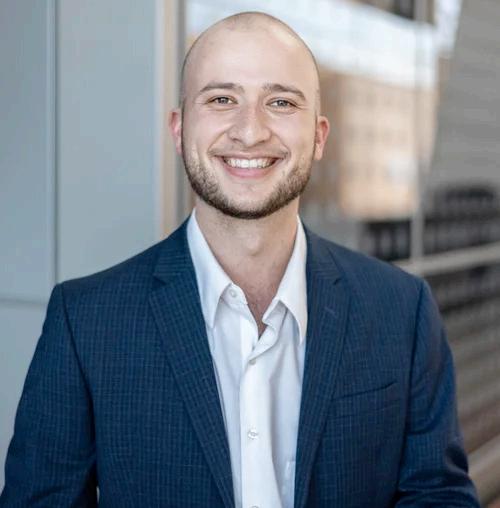
Praised as a “charismatic bass-baritone” with “vocal power,” Nathan Savant is earning recognition for his commanding stage presence and vocal versatility across traditional and contemporary repertoire (Time Argus News, Chicago Classical Review). In the 2025–2026 season, he joined Palm Beach Opera as an Apprentice Artist, performing the Customs Officer in La bohème and the Usher in Rigoletto
In the summer of 2025, Mr. Savant was a Gerdine Young Artist at Opera Theatre of Saint Louis, where he covered Snug and Theseus in Britten’s A Midsummer Night’s Dream and Milton in the world premiere of Ricky Ian Gordon’s This House. He also appeared in the Center Stage concert with the St. Louis Symphony under the baton of Daniela Candillari.
Mr. Savant previously spent two seasons as a resident artist with Opera North, where he performed Guglielmo in Così fan tutte, Marchese d’Obigny in La traviata, and Count Monterone in Rigoletto. He has also been a studio artist at Chautauqua Opera Company and a young artist at Festival Napa Valley. In concert, he has appeared as bass soloist in Beethoven’s Symphony No. 9 with the Albany Symphony and in Handel’s Messiah with the Assabet Valley Mastersingers. While a member of the Boston University Opera Institute, Mr. Savant performed the title role in Gianni Schicchi, Riolobo in Florencia en el Amazonas, Pandolfe in Cendrillon, Jonathan in Siren Song, and the Baritone in Hydrogen Jukebox. Additional roles include Papageno in Die Zauberflöte, Marcello in La bohème, the Maestro in Prima la musica e poi le parole, and the title role in Der Schauspieldirektor.
Mr. Savant holds a Bachelor of Music from the Eastman School of Music, a Master of Music from Northwestern University, and a Performance Diploma from the Boston University Opera Institute.
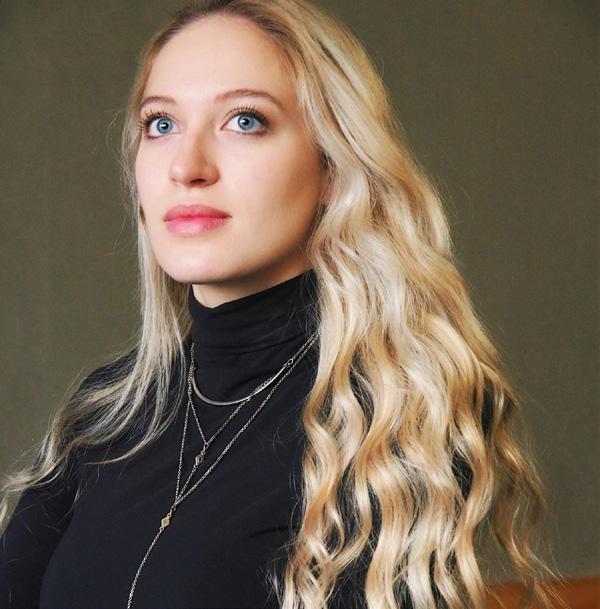
Lindsey Weissman is a mezzo-soprano from Latham, NY. She began her artistic journey as a dancer, touring with Albany Berkshire Ballet and choreographing, before finding her voice in opera. Most recently, she joined the BU Orchestra as a soloist for De Falla’s El amor brujo, Haydn’s Lord Nelson Mass, and the BSO’s Next Generation concert. She was also honored to be named a winner of the 2025 Soloists Competition at BU and, as a result, will perform Elgar’s Sea Pictures, Op. 37 with orchestra in 2026.
In the summer of 2025, she was a Studio Artist with Chautauqua Opera Company, where she premiered the roles of Ida in Ida by Lamplight and Vendetta in Sitcom, toured with Chautauqua Opera-in-the-Schools as the Kid Who Cried Wolf in Who’s Afraid of the Big, BadWolf? and sang Tendril in the orchestral workshop of Missy Mazzoli’s Lincoln in the Bardo, recorded for the Metropolitan Opera ahead of its premiere there in the fall of 2026. She is thrilled to return to Chautauqua this coming summer for her second consecutive season. Lindsey holds an M.M. in Voice Performance and Pedagogy from the University of Houston and a B.M. in Voice and Theater, minor in Jazz Studies from Ithaca College. She is in her first year at the Opera Institute, studying with Dr. Lynn Eustis.
FLUTE
Marissa Milanovich
Dacari Crump
Jungyoon Kim
Katherine Knapp
PICCOLO
Tien-Ai Wang
OBOE
Katherine Filiss
ENGLISH HORN
John Cabell
CLARINET
Haotian Lian
Sihan Chen
Jinchen Duan
Oliver Harrigan
Jeongmin Hong
Max Mabry
EB CLARINET
Rebecca Murray
BASS CLARINET
Giancarlo D’Agostino*
BASSOON
Jovi Altadonna
Lizzie Sylves*
CONTRABASSOON
Jiayi Yi
ALTO SAXOPHONE
Yi Ding
Kuanhao Xi
TENOR SAXOPHONE
Jonghwan Kim
BARITONE
SAXOPHONE
Duan Hong
BASS SAXOPHONE
Hayden Holster
HORN
Charlotte Povey
Megan Carp
YiHao Lee
Alicia Hamm
TRUMPET
Jafet Diaz Martin
Patrick McGovern
Tori Gervais
Sarah Brustin*
TROMBONE
Gillian Kearney
Carson Macklin
BASS TROMBONE
Benjamin Fuller
EUPHONIUM
Kaitlin Oresky
Charles Li
*Boston University Tanglewood Institute Alum
TUBA
Frank John*
BASS
Xinyi Ruan
TIMPANI
Daulton Templet*
PERCUSSION
Phina Xue
Amy Hendricks
Yun-Chen Chou
Theodore Gigstad
STUDENT MANAGERS
Maxwell Liber head manager
Gillian Kearney
CELLO
Aireleen Zhu
Gabriel Lee
Nate Aistrup*
Tristan Hernandez
Ginamarie Bocchino
Lucy Cheng*
DOUBLE BASS
David Amouretti
Yu-Yi Wang
Xinyi Ruan
Jonathan Legere
Katherine Knapp
Tien-Ai Wang
Ann Sharon Hsieh
Ying Jin
OBOE
Daniel Meza
Kailey Hrencecin
Coleton Morgan
Katherine Filiss
John Cabell
BASSOON
Benjamin Cargnel
Lizzie Sylves*
Zekai Zhang
CONTRABASSOON
Jiayi Yi
HORN
Maxwell Liber
Megan Carp
Alicia Hamm
Emily Lowery
Benjamin Thurtle
TRUMPET
Thomas Gray
Maria DeBoer
William Spear
Patrick McGovern
Sarah Brustin*
TENOR TROMBONE
Carson Macklin
Yinci Zhang
BASS TROMBONE
Changwon Park
TUBA
Mitch Brady
TIMPANI
Halle Hayoung Song
PERCUSSION
Xingyue Xue
HARP
Tej Panchal*
Zhuning Gao, asst
PIANO
Hsing-Ho Simon Hou
Kyunga Lee
STUDENT MANAGERS
Lauryn Koeppel: cohead manager
Mawell Liber: co-head manager
Maya Lynn: co-head manager
Benjamin Fuller
Gillian Kearney
Dawson Yow
ASSISTANT CONDUCTORS
David Scott
Gordon Cheung
Ian Henscheid
Ariadna Benitez Talavera
Georgi Videnov
Amara Farah
*Boston University Tanglewood Institute Alum


VIOLIN I
Lana Crosson*
Concertmaster
Patricio Flores-Esquivel
Assistant Concertmaster
Morgen Heissenbuettel
Yanguang Bruce Zhang
Juan Shin
Hsuan-Che Liao
Andy OuYang
James Huang
Cecil Mummey
HaeJin Lee
Linjun Li
Audrey Ma
VIOLIN II
MarieFaith Lane
Da Huang (Dani)
Iris Lin
Maya Lynn
Haitian (Christy) Liu
Wanting Yu
Cecilia Hill
Sadie Walker
Bryce Herda
Xiaodan Zhang
VIOLA
Chi-Jui Chen
Valentina Pulido Pardo
Ian Aistrup*
Matthew Holzaepfel
Lauryn Koeppel
Hina Allen
Avianna Gahm-Diaz
Dawson Yow
Lillian Zielinski
Andrea Martine*
CELLO
Lily Uijin Gwak
Ga Eun Lee
Yu-Ting Ko
Seth MacLeod
Madeline Psarakis
Elton Zheng
Jenna Clark
Nate Aistrup*
Tristan Hernandez
Gabriel Lee
BASS
Boyang (Leonard) Kang
Min Kyung Cho
David Amouretti
Justin Cao
Olivia McCallum*
Lindy Billhardt*
FLUTE
Abigail Leary
Anya Mazaris-Atkinson
PICCOLO
Dacari Crump
OBOE
Kailey Hrencecin
Coleton Morgan
CLARINET
Jeongmin Hong
Jinchen Duan
BASSOON
Benjamin Cargnel
Oscar Garcia-Moreno
CONTRABASSOON
Jovi Altadonna
HORN
Nick Kneupper
Gianna Ingersoll asst.
Yeonjo Oh
Haley Klouda
Noah Silverman
TRUMPET
Reynolds Martin
Tori Gervais
TENOR TROMBONE
Gillian Kearney
Cassie Thomas
BASS TROMBONE
Diego Galiano del Toro
TIMPANI
Dominic Porcelli
PERCUSSION
Yun-Chen Chou
Daulton Templet*
Theodore Gigstad
ASSISTANT CONDUCTORS
Gordon Cheung
David Scott
Ian Henscheid
Ariadna Benitez Talavera
Georgi Videnov
Amara Farah
STUDENT MANAGERS
Lauryn Koeppel: co-head manager
Maya Lynn: co-head manager
Benjamin Fuller
Dawson Yow
FACULTY SECTIONAL COACHES
Hazel Davis
Nancy Goeres
Sam Kelder
Luci Lin
Don Lucas
Rob Patterson

Kevin Lackie & Michael W. Bradley • Graduate Assistant Conductors
Sinead O’Mahoney & Janae Peterson • Graduate Student Managers
Yuewen Wu • Collaborative Pianist
Emmanuel Aguirre
Gutierrez
Caroline Ahn
Larry Bai
Alexandros Balaouras
Peter Balluffi-Fry
Abigail Bancroft
Robert Baron
Alyssa Bauman
Anna Beeken
Travis Benoit
Delainey Bostley
Jerome Boxer*
Michael Bradley
Julia Brauner
Rufus Burnes Heath
Elizabeth Chavez
Jinho Cho
Emmalynn Craft
Bridgette Curran
Nicoleta Cutitaru*
Sabrina Dagazai
Corinne Davidson
Marie Davis
Hannah Dubroff*
Renee Dvorske
Cameron Edgar
Amanda Forde
Karen Frank
David Fried
Frank Furnari
Joseph Hall
Jaida Hawkins
Tessa Hayashida
Bethany He
Zachary Held
Mariko Henstock
Hannah Hess
Vanessa Hudson
Audrey Hyers
Marshall Joos
Bridget Kearney
Chelsea Kharakozova
George King
Daniel Krewson
Gulce Kureli
John Kwon
Kevin Lackie
Jessica Laman
J Lamoureux
Caureen Lawrence
Anna Lee-Hassett
Ysobel Leonard*
Zhifeng (April) Li
Catherine Li
Laura Long
Kenneth Lu
Bianca Lucas
Charlotte Ma
Angela Madrigal
Lauren Mahoney*
Andrew Mak
Marco Marchant
Alexa McGarrity
Ilyena Metzger
Edith Mora Hernandez
Laura Morgan
Justin Moy
Kit Ng
Sherra Ng
Sinead O’Mahoney
Han Oh*
Dana Oprisan
Daniella Parkinson
Evie Passero
Krishen Patel
*Boston University Tanglewood Institute Alum
Andrea Peña
Janae Peterson
River Peterson
Reina Radnor
Bianca Rahme
Miki Ramirez-Cruz
Jackie Reynolds
Julia Rojkov
Max Romoff
Veer Sawhney
Alex Segreti
Levent Sencan
Shiqi Shan
Jacqueline Shaw
Yihao Sheng
Owen Shultz
Roshan Sivaraman
Jacob Slade
Shawn Smaldon
Morgan Snoap
Samuel Soric
Matthew Sperling
Ripley Stark
Wanda Sullivan
Viveka Thomas
Jailyn Thompson
Sophia Tigges
Monica Ultmann
Junmin Wang
Braden Willenbrock
Mengyue (Lydia) Yi
Alina Zhang
Xilei (Bella) Zhang
Xunuo (Nora) Zhang
Zijun (Claire) Zhu
Edith Mora Hernandez, Associate Conductor • Travis Benoit, Assistant Conductor • Marshall Joos, Collaborative Pianist
Abigail Bancroft
Anna Beeken
Zoe Bennett
Travis Benoit
Michael Bradley
Rachel Brennan
Delainey Bostley
Jerome Boxer*
Jinho Cho
Joshua Cohen
Marie Davis
Sabrina Dagazai
Karen Frank
Emma Goldenberg
Joseph Hall
Tessa Hayashida
Audrey Hyers
Marshall Joos
Daniel Krewson
Kevin Lacke
J Lamoureux
Ysobel Leonard*
Morgan Lucero
Bianca Lucas
Andrew Mak
Lauren Mahoney*
Marco Marchant
Ilyena Metzger
Justin Moy
Laura Morgan
Edith Mora Hernandez
Sinead O’Mahoney
Janae Peterson
River Peters
Reina Radnor
Bianca Rahme
Sam Rekulak
Daniel Reid
Olivia Rhein
Max Romoff
Owen Schultz
Alex Segreti
Shawn Smaldon
Samuel Soric
Matthew Sperling
Audrey Tang
Denny Veidelis
Braden Willenbrock
Cindy Yao
Lydia Yi
Marie Davis, Graduate Assistant Conductor • Travis Benoit, Assistant Conductor • Annie Chen, Collaborative Pianist
Jude Barjakly
Anna Beeken
Delainey Bostley
Rachel Brennan
Kyle Capogna
Nicoleta Cutitaru*
Marie Davis
Hannah Dubroff*
Raquel Figueroa
Karen Frank
Abigail George
Emma Goldenberg
Catherine Hsu
Alexa McGarrity
Ashna Mitta
Edith Mora Hernandez
Keira Muselbeck
Rebecca Nehmeh
Sherra Ng
Sinead O’Mahoney
Roshan Sivaraman
Wanda Sullivan
Konstantina Tatsis
Victoria Vastis
Cindy Yao
Mengyue (Lydia) Yi
Xilei Zhang
Zijun (Claire) Zhu
Jinho Cho, Graduate Assistant Conductor • Travis Benoit, Graduate Student Manager • Jason Xue, Collaborative Pianist
Travis Benoit
Michael Bradley
Jinho Cho
Joshua Cohen
Gustavo Cruz
Sabrina Dagazai
Zachary Held
Ethan Huey
John Kwon
Kevin Lackie
Marco Marchant
Dylan Nunez
Krishen Patel
Leonid Shokh
Ziming Sun
Ketty Nez
Andrew F. Smith
Len Tetta
Steven Weigt
Jason Yust
CONDUCTING
Jennifer Bill
Aaron Goldberg
Sarah Ioannides
Mark Miller
Daniel Parsley
Joshua Roach
DOUBLE BASS
Carl Anderson*
Edwin Barker*
Shiela Kibbe, Chair
Pavel Nersessian
Boaz Sharon
Jihye Chang Sung
Andrius Žlabys
MUSICOLOGY AND ETHNOMUSICOLOGY
Michael Birenbaum
Quintero
Samuel Bradley
Leland Clarke
Victor Coelho
Juliet Glazer
Dan DiPiero
Pamela Feo
ORGAN
Heinrich Christensen
Peter Sykes
PERCUSSION
Kyle Brightwell*
Tim Genis*, Coordinator of Percussion
Weichen Lin
Matthew Smallcomb
Samuel Solomon

SAXOPHONE
Jennifer Bill
Kenneth Radnofsky
TROMBONE
Gabriel Rice
Don Lucas
Toby Oft*
TRUMPET
Terry Everson, Chair of Brass
TUBA AND EUPHONIUM
Kenneth Amis
Eric Goode
Mike Roylance*
VIOLA
Steven Ansell*
Daniel Doña±
Samuel Kelder
Danny Kim*
Michelle LaCourse, Chair of Strings
VIOLIN
Heather Braun±
Rose Drucker±
Bayla Keyes
Minju Kim
Lucia Lin*
Klaudia Szlachta
Alexander Velinzon*
Peter Zazofsky

VOICE
Jean Anderson-Collier
Thomas Cannon
James Demler
Lynn Eustis, Chair
David Guzmán
Douglas Sumi
Alison Trainer
STAFF
Christopher Dempsey, Director of Production and Performance
Oshin Gregorian, Associate Director of Production/ Performance & Opera Programs
Barbara Raney, Assistant Director for Student Services
Keith Orr, Business Manager
Zachary M. Schwartz, Director of Admissions
Luis Javier Santiago Sierra, Director of University Ensembles
Sharif Mamoun, Assistant Director, Athletic Bands
Katharine Hurd, Ensembles Manager
Connor Barry, Stage Manager
Lindy Billhardt, Librarian
Jewel Kim, Admissions
Coordinator
Brenn Parker Fjeldsted, Administrative Coordinator
Kira Ousey, Administrative Coordinator
Stone Washburn, Administrative Coordinator
Jenna Wang, Administrative Assistant
STAFF PIANISTS
Anna Carr
Scott Koljonen
Siu Yan Luk
Jacob Lytehaven
Dahee Park
April Sun Lorena Tecu

ADAPTED BY ELLEN MCLAUGHLIN
DIRECTED BY SHALEE COLE MAULEÓN
JOAN & EDGAR BOOTH THEATRE
APRIL 17 - 26, 2026






Established in 1954, Boston University College of Fine Arts (CFA) is a community of artist-scholars and scholar-artists who are passionate about the fine and performing arts, committed to diversity and inclusion, and determined to improve the lives of others through art. With programs in music, theatre, and visual arts, CFA prepares students for a meaningful creative life by developing their intellectual capacity to create art, shift perspective, and think broadly. CFA offers a wide array of precollege, undergraduate, graduate, and doctoral programs, as well as a range of online degrees and certificates. Learn more at bu.edu/cfa
Founded in 1872, Boston University College of Fine Arts School of Music combines the intimacy and intensity of traditional conservatory-style training with a broad liberal arts education at the undergraduate level, and elective coursework at the graduate level. The school offers degrees in performance, conducting, composition and theory, musicology, music education, and historical performance, as well as artist and performance diplomas, including a performance diploma in its Opera Institute. Learn more at bu.edu/cfa/music
Boston University Tanglewood Institute (BUTI) is the premier summer training program for young musicians. Created in 1966 at the invitation of then-BSO music director Erich Leinsdorf, BUTI was developed by Boston University College of Fine Arts as a summer program to complement the existing offerings of the BSO’s Tanglewood Music Center (TMC). BUTI continues to build upon its legacy of excellence, offering a transformative experience annually to more than 400 young instrumentalists, composers, and singers who reside at its 64-acre campus in Lenox, Massachusetts. Intensive programs, distinguished faculty, and the opportunities afforded through its unique affiliation with the BSO and TMC combine to give BUTI a celebrated and distinctive reputation among summer music programs of its kind. BUTI alumni contribute to today’s musical world as prominent performers and conductors, composers and educators, and administrators and board members. Learn more at bu.edu/cfa/tanglewood