S PI R I T OF GI VI N G — FALL 2026
Boston Children’s Hospital Magazine
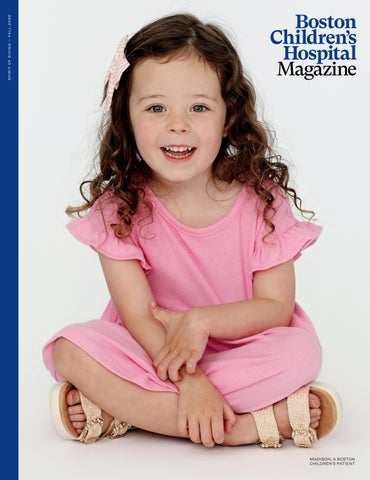
MADISON, A BOSTON CHILDREN’S PATIENT
In This Issue
FALL 2026
EDITOR
Lisa Fratt CONTRIBUTORS
Betsy Arenella Brittany Bulens John Deputy Kevin Ferguson Regina Galea Michael Goderre Sara Goodman Sarah Sligh Goodman Jonathan Kozowyk Diana Levine Erin Mason Lauren Seidman Mark Washburn
4
DESIGN
Patrick Mitchell/ModMag COVER PHOTOGRAPH
4 FEATURES
Diana Levine
DEPARTMENTS
4
Profiles 18 Dr. Abby Rosenberg
Inside the Fetal Care and Surgery Center 10
Champions of Research
Doug and Diana Berthiaume make a pledge to science when it matters most. CONNECT WITH US
14
Big Questions 8 How does one cure lead
to the next?
26 How can parents address
school struggles?
Building Momentum
FACEBOOK.COM/ E BOSTONCHILDRENSHOSPITAL
D TWITTER.COM/HELPKIDS M YOUTUBE.COM/CHILDRENS
The people and programs driving our vision
C LINKEDIN.COM/COMPANY/
22
HOSPITALBOS
BOSTONCHILDRENSHOSPITAL
2
Expert care for a lifetime
STORY.SNAPCHAT.COM/ 0 @BOSTONCHILDRENS
28
Boston Children’s Hospital Magazine is published by the Boston Children’s Hospital Trust. ©Boston Children’s Hospital 2026. All rights reserved.
A Visit to Boston Children’s Needham
World-class care in a family-friendly space
BOSTONCHILDRENS.ORG/GIVING 617-355-6890
BOSTON CHILDREN’S HOSPITAL MAGAZINE
Moments 13
Beyond Childhood
Q INSTAGRAM.COM/ BOSTONCHILDRENS
To opt out of receiving Boston Children’s Hospital Magazine, contact publications@chtrust.org.
•
20 32
Voices
In Focus
Celebrations MICHAEL GODERRE
Giving Babies a Future ... Before Birth
CEO’s Message
“Every day is a new opportunity to shape healthier tomorrows.” I DON’T KNOW IF you’ve ever witnessed a child’s
grin as she rushes to greet her favorite nurse. Or a surgeon’s smile as he holds a pair of newborns whose healthy start was far from certain. Or the tears of delight when a former patient has an unexpected encounter with a caregiver. Moments of joy like these happen every day at Boston Children’s. Our hospital is built on connections—caregivers with families, clinicians with scientists, and all of us with philanthropists. The connection between philanthropists and mission can last for decades and have an impact that stretches far into the future. For nearly 30 years, Doug and Diana Berthiaume have supported children and families through volunteer leadership and exceptionally generous giving. Their most recent gift, a $60 million commitment, ensures that scientists and caregivers can amplify their life-changing work. It’s almost impossible to convey how incredibly grateful I am for the Berthiaume’s longstanding partnership—and for each of you, who makes the magic happen. In this issue, you’ll learn how your support helped vanquish previously fatal pediatric conditions and is driving ongoing innovation to care for a unique generation of adult survivors. You’ll preview our teaching kitchen where experts are nourishing kids who have complex dietary needs. You’ll see how a calm, trusted caregiver can ground a child in the midst of a crisis. On behalf of the entire Boston Children’s community, thank you. We appreciate your generosity, trust, and commitment more deeply than words can say.
MICHAEL GODERRE
Warmest Regards,
KEVIN B. CHURCHWELL , MD CEO
Moments
“I have lived and witnessed daily the power of philanthropy in our ability to provide the very best care.” JOHN COSTELLO, MA, ON BEHALF OF HUNDREDS OF BOSTON CHILDREN’S EMPLOYEE DONORS
OUR SINCERE THANKS TO EMPLOYEE DONORS (L-R): CHELSEY HUFFMAN, RN (NURSING), JOHN COSTELLO, MA (OTOLARYNGOLOGY), JILL TWOMEYMCLAUGHLIN (CHILD LIFE SERVICES), TOMMY MARTIN, MD (CRITICAL CARE MEDICINE), STEPH ALTAVILLA, RN (AMBULATORY PROGRAMS)
BOSTON CHILDREN’S HOSPITAL MAGAZINE
2
P H OTOG RA PH B Y Diana Levine
3
FALL 2026
LIAM
BOSTON CHILDREN’S HOSPITAL MAGAZINE
4
IL LUSTRATION B Y Jane Doe
CREDIT
Rubric
Fetal Care
Giving Babies a Future ... Before Birth MICHAEL GODERRE
Inside the Fetal Care and Surgery Center
FIRST CAME THE unexpected news that she was carrying twins. Then a
much less welcome surprise—at 19 weeks, Shannon learned that her babies had twin-twin transfusion syndrome (TTTS), a rare complication that causes uneven blood flow between fetuses. She and her husband were prepared to travel wherever necessary for care when their doctor told them about the Fetal Care and Surgery Center (FCSC). “I can’t thank him enough for suggesting Boston Children’s,” she says. “Because right from the start, everyone was absolutely amazing.” The FCSC has existed in its current form for a mere four years. In that short time, institutional and philanthropic investments have grown the program into a leader in the field. Families come to the center seeking expertise, innovation, and compassionate care during some of the most challenging moments of their lives. Since 2022, FCSC experts have cared for more than 200 patients from across the United States and beyond. Under the guidance of Director Eyal Krispin, MD, a multidisciplinary team evaluates some of the most complex fetal conditions and, when appropriate, offers interventions that can alter the course of a child’s life before birth. Clinicians began experimenting with fetal ultrasound in the 1950s; for decades after, their ability to diagnose fetal conditions far outstripped available treatments. But in the last 25 years, progress has accelerated.
5
FALL 2026
MIKE, SHANNON, AND THEIR TWINS
PHILANTHROPY FUELS A NEW ERA OF FETAL MEDICINE 3 A new commitment from Karen and Farhad Nanji will drive research into fetal care for spina bifida and other neural tube defects under the direction of Carlos R. Estrada, Jr., MD, MBA. 3 Dario Fauza, MD, PhD, has created a method of transamniotic stem cell transplant, which could heal fetal disorders with just a needle stick. This work is funded by Kevin and Kate McCarey. 3 How does a mother’s gut bacteria shape her baby’s developing brain? Brian Kalish, MD, is investigating the molecular pathways that control brain cell growth. The Feihe Pediatric Brain Development Research Initiative at Boston Children’s Hospital, a Harvard Medical School Teaching Hospital supports this research. 3 The March of Dimes’ Basil O’Connor Award is enabling Sarah Morton, MD, PhD, to study how supplemental prenatal progesterone works with the placenta to increase birth weight, which could help infants with heart defects better handle surgery. Karen Nanji explains the inspiration for her family’s gift: “Breakthroughs before birth can change lives forever.”
BOSTON CHILDREN’S HOSPITAL MAGAZINE
In 2001, Boston Children’s pioneered fetal intervention for hypoplastic left heart syndrome, in which one side of the heart fails to grow. Our experts shared the innovation with colleagues, and today, the procedure is performed in premier centers around the world. In 2024, the FCSC became one of a select number of centers in the nation to offer minimally invasive fetal surgery for spina bifida, a condition that exposes the spine and nerves to amniotic fluid. “Our center is structured with two aims: Offer the full spectrum of care currently available in fetal surgery and develop treatments that will define the future of fetal medicine,” says Dr. Krispin. Examples include prenatal therapies for congenital abdominal wall defects and maternal administration of medications that cross the placenta to treat some conditions. According to Dr. Krispin, the next frontier of fetal surgery is no surgery at all. For example, FCSC researchers are studying how the drug propranolol can be used to shrink placental tumors in a rare condition called chorioangioma. As scientists discover new ways of treating congenital disorders with pharmaceuticals, stem cell therapy, enzyme replacement, and gene therapy, the FCSC team is preparing to deliver those treatments prenatally, when they can do the most good. At the same time, FCSC’s Director of Research P. Ellen Grant, MD, is leading efforts to push the limits of imaging technology in combination with artificial intelligence and years of patient data. This
6
MICHAEL GODERRE
“Breakthroughs before birth can change lives forever.”
LOWER RIGHT: COURTESY OF THE SCHMIDT FAMILY, UPPER RIGHT: MICHAEL GODERRE
AFTER FETAL TREATMENT CHARLOTTE, PICTURED WITH PARENTS CARL AND ERIN, IS MEETING MILESTONES.
effort is helping them understand how prenatal conditions evolve, identify disease at its earliest stages, track progress, and guide interventions. Projects include using MRI to quantify early brain development and provide more insight into placental function, as well as a wearable continuous ultrasound device capable of delivering unprecedented insight into fetal health throughout pregnancy. Amid their increasingly ambitious research goals, the team is committed to reducing risk for patients. Surgeons continue to refine minimally invasive procedures that access the fetal environment through tiny ports. Almost all fetal interventions performed at Boston Children’s use this fetoscopic method, because it puts less physical stress on patients, resulting in faster recovery. The team also is exploring novel uterine closure techniques designed to reduce complications and improve maternal outcomes. The FCSC pairs medical expertise with extensive counseling and support. “There are times when medicine can offer remarkable solutions,” says Dr. Krispin. “There are also times when our role is to help families navigate difficult choices.” For Shannon, that guidance led her to opt for fetoscopic laser surgery at 23 weeks and six days to separate the blood vessel connection between the twins. Nine weeks later, Shannon welcomed Luke and Liam into the world. “I owe everything to my team for their compassion, for their attention to detail, and for being so down to earth when I was dealing with so many emotions.”
ARIA
IN HONOR OF ARIA Thirty-eight weeks into her pregnancy, Soyona Rafatjah and her husband Luke Schmidt learned their unborn baby had vein of Galen malformation (VOGM), a potentially devastating neurological disorder. The family traveled from Wisconsin to meet with Darren B. Orbach, MD, PhD. Though their son Aria was treated as a newborn, Soyona and Luke support Dr. Orbach’s efforts to bring fetal intervention for VOGM to families everywhere.
7
FALL 2026
Big Questions
HOW DOES ONE CURE LEAD TO THE NEXT?
ways be applied to the next disease. Or the one after that. Unfortunately, with more than 4,000 rare childhood diseases, there’s no shortage. That ethos has driven Daniel Bauer, MD, PhD, who helped discover a gene-based cure for sickle cell disease (SCD), and Akiko Shimamura, MD, PhD, renowned for identifying genetic causes of bone marrow failure. They have joined forces to find a cure for Shwachman-Diamond syndrome (SDS). The inherited, ultra-rare disease—just over 700 cases have been identified—is characterized by low blood counts and digestive problems due to pancreatic dysfunction. About 25% of children with SDS develop leukemia by young adulthood. Drs. Bauer and Shimamura’s SDS therapy, now in pre-clinical testing, uses prime editing, the most advanced gene-editing method. Prime editing enables scientists to use a copy-and-paste technique in which the mutated DNA sequence can be replaced with the correct genetic code. It’s more precise and may be safer than traditional CRISPR-Cas9 editing, such as that used in Casgevy, the FDA-approved treatment for SCD. “Their work brings scientific rigor, compassion, and hope to a field that urgently needs all three,” says Joseph Olivo, who together with his wife, Jane, donates to SDS research at Boston Children’s. “Supporting this research is deeply personal. After losing our adult son to SDS, we felt a responsibility to help drive progress that could spare other families the pain we endured.” Dr. Bauer, director of the Gene Therapy Program, and Dr. Shimamura, director of the Bone Marrow Failure and Myelodysplastic Syndrome Program and founder of the SDS Registry, have made substantial progress in developing a prime editor for SDS. But to bring a first-in-human therapy to clinical trial, they must evaluate its efficacy, fine-tune the manufacturing and clinical protocols, and then make their case before the U.S. Food and Drug Administration. And that takes additional expensive research. “I want to cure my children,” says Lisa Superina, a Long Island mother of Nora, 6, and Kayla, 8, who have been diagnosed with SDS; Maria, 13, and Emma, 11, who carry the defective gene that causes SDS; and Danny, 2. “There’s no treatment. No cure,” says Superina, whose children were first examined by Dr. Shimamura in 2022. Aggressive management, including frequent blood tests, annual bone marrow biopsies, and pancreatic enzyme replacements to aid in digestion and absorption of food, keeps the younger girls healthy. Superina also looks to the generosity of donors, especially parents of children with SDS. “They understand. It’s not easy getting funding for rare diseases.” If Drs. Bauer and Shimamura succeed in finding a cure for SDS, they won’t stop there. The gene editor is meant to be the first building block of a universal gene-editing platform for blood and immune diseases, including myelodysplastic syndromes and inherited bone marrow failures. Such a platform would allow researchers to tailor specific genetic cures to specific patients—changing the lives of countless children. THE POWER OF PHILANTHROPY OUR SINCERE GRATITUDE TO THE DONORS FUELING SDS RESEARCH: TODD A. DAGRES, EQT FOUNDATION, DWIGHT LONG, THE JOHN C. OLIVO MEMORIAL FUND, SHWACHMANDIAMOND SYNDROME FOUNDATION, LISA SUPERINA
BOSTON CHILDREN’S HOSPITAL MAGAZINE
8
COURTESY OF THE SUPERINA FAMILY
TRUE SCIENCE NEVER STOPS AT A SINGLE CURE. That’s because what’s learned along the way can al-
CREDIT
(L-R): MARIA, DANNY, GRAIG, NORA, LISA, KAYLA, AND EMMA
FALL 2026
Visionaries
CHAMPIONS OF RESEARCH Doug and Diana Berthiaume make a pledge to science when it matters most THE EVERY CHILD FUND. SURGICAL INNOVATION. THE VASCULAR ANOMALIES CENTER. THESE ARE A FEW of the causes Doug and Diana Berthiaume have supported throughout
their long relationship with Boston Children’s. Now, they’ve made a landmark gift of $60 million to advance the greatest opportunities in pediatric research more rapidly than ever before. This commitment represents the most significant investment in their history of philanthropy and reaffirms their belief that urgency in research can change—and save—young lives. “Families facing a medical crisis don’t have the luxury of time,” says Doug. “When a child is sick and answers are elusive, every day matters. Our hope is that this gift helps accelerate solutions and ensures children and families receive the breakthroughs they deserve—as quickly as possible.” The Berthiaumes’ philanthropy gives hospital leaders flexibility to move fast. It accelerates research in rare and complex pediatric conditions and speeds discoveries from lab to clinic. It also supports nimble investments in state-of-the-art technologies, novel treatments, and solutions to emerging global health threats affecting children. “This extraordinary gift reflects remarkable generosity and decades of partnership rooted in a shared mission,” says CEO Kevin B. Churchwell, MD. “The Berthiaume family has stood with us through transformative moments in pediatric medicine. Their ongoing leadership ensures we can act boldly and decisively—especially for families who cannot afford to wait.” For families navigating rare diseases, complex diagnoses, or life-threatening conditions, hope often depends on how quickly science can move. By entrusting hospital leadership with flexible resources, the Berthiaume family is enabling innovation at the speed children need— reinforcing their legacy as enduring champions of child health.
What’s Next? The Berthiaumes understand the power of philanthropy to fuel the discoveries that inform tomorrow’s care. For example, unrestricted giving will enable our neurobiologists to tackle urgent frontiers in brain science: the links between neurodevelopment and neurodegeneration, the unique qualities of the adolescent brain, and the biological underpinnings of psychiatric illness.
BOSTON CHILDREN’S HOSPITAL MAGAZINE
10
“Things get done here that don’t get done anywhere else in the world,” says Doug (above, with Diana). “This hospital attracts people who want to stretch the bounds of science to make a difference. They produce innovations that save children.”
ABOVE: JOHN DEPUTY
As champions of the Stem Cell Program, the Berthiaumes enabled enormous progress toward new treatments. Today, stem cell researchers use zebrafish to pursue answers for devastating cancers and hereditary conditions.
11
FALL 2026
“THE BERTHIAUME FAMILY HAS STOOD WITH US THROUGH TRANSFORMATIVE MOMENTS IN PEDIATRIC MEDICINE. THEIR ONGOING LEADERSHIP ENSURES WE CAN ACT BOLDLY AND DECISIVELY— ESPECIALLY FOR FAMILIES WHO CANNOT AFFORD TO WAIT.”
FROM SCIENCE TO CARE When Grant was an infant, his family came to the Vascular Anomalies Center seeking answers about a cluster of blood vessels on his left leg. He was diagnosed with Bockenheimer syndrome—a condition so rare that Boston Children’s is one of only a handful of hospitals in the world experienced in managing and treating it. He’s undergone close to 30 procedures and extensive rehabilitation, and today Grant is a rising college senior—with his sights set on medical school. “Two decades ago, vascular anomalies were poorly understood, and treatment options were painful and invasive,” says Steven Fishman, MD, co-founder of the center. “Today, we’ve identified the genetic mutations that cause most of these conditions and have found medications that eliminate the need for surgery. Doug and Diana laid the philanthropic foundation that allowed us to start on that path.”
A CAPITAL CONTRIBUTION
BOSTON CHILDREN’S HOSPITAL MAGAZINE
ABOVE: COURTESY OF GRANT’S FAMILY
When donors like Doug and Diana support campus expansion at Boston Children’s, they don’t just help construct buildings; they create spaces for lifesaving innovation. The Berthiaume Family Building, named in 2000, houses MROR—the nation’s first intraoperative imaging system of its kind. By allowing surgeons to image the body during complex procedures like brain tumor or spinal surgeries, this technology has reduced the need for follow-up operations—and changed the standard of care for pediatric patients.
12
ABOVE: MICHAEL GODERRE, RIGHT: COURTESY OF THE HARRINGTON FAMILY
Voices
Room 823
Katie has been a nurse at Boston Children’s Longwood campus for 16 years. On March 25, she had taken the day off to bring her daughter to a routine appointment. Spencer has worked at Boston Children’s Needham for nearly a year, but he’s been a patient since the day he was born. “I was telling one of the kiddos in the lobby that I’m a patient just like them. My checkups are with the heart team.” “I heard his first name and that he was a heart patient—there are thousands of them. But when he mentioned coming back for biopsies to the child’s mother, I knew he was a transplant patient, because they need biopsies to make sure their body isn’t rejecting the new heart. So I asked, ‘Are you Spencer Harrington?’” “After I said yes, Katie told me she was one of the nurses on my cardiology team when I got my transplant—12 years ago! Then she asked about my mom. I couldn’t believe she remembered her name.” “I talked to Laurie a lot, because she was the one who would come to us when Spencer had had a rough day, and she’d ask us how to make it better.” “We started joking about the wall color in the old building and room 823. She even remembered my room.” “It’s not such a stretch. Spencer lived on 8 East for six
13
months, and he was on an LVAD—a left ventricular assist device for patients who have reached end-stage heart failure. When a child is that ill, they need to be in the room closest to the charge nurse, so we can hear any LVAD alarms. There was a lot of action in his room sometimes. But also, Spencer was just a great kid. We all liked hanging out with him.”
FALL 2026
Mental Health
Building Momentum
THE PEOPLE AND PROGRAMS DRIVING OUR VISION
work as a child and adolescent psychiatrist, she had no idea how significantly her field was about to change. Amid the mental health crisis, philanthropists were recognizing the moment’s urgency—and the hope it presented. The next year, Sara Page and Richard Mayo set in motion a once-in-a-generation opportunity to transform children’s mental health. Their $20 million gift enabled Boston Children’s to reimagine how behavioral healthcare fits into pediatric medicine, shifting the focus to early intervention, reaching patients and families in their communities, and amplifying research with an eye toward effective and early treatment. “The Mayos’ remarkable partnership allowed us to dream big,” says CEO Kevin B. Churchwell, MD. “It elevated mental wellness as a fundamental part of every child’s health.” The first step in achieving this vision: Recruit Psychiatrist-in-Chief Stacy Drury, MD, PhD. Dr. Drury immediately started building a new model that ensures every child can access the right level of care when they need it and utilized the support of the Mayo family to recruit a leadership team to build out the vision, including Matthew Siegel, MD, MBA, chief of clinical enterprise, and Mary Margaret Gleason, MD, chief of early childhood and training. Other donors quickly stepped up. Dr. Drury’s passion and vision impressed Jeannie and Jonathan Lavine, their daughters, Emily and Allison, and their son-in-law, Nathan Rosin. In April, they made an extraordinary $36.5 million gift to boost leadership, research, and workforce development, including the establishment of the Lavine Family Professorship in Brain Health to support Dr. Drury’s work. Their gift also advances the transformation of the Franciscan Children’s campus to establish a truly child- and family-centered destination for patients with complex behavioral health and medical needs. “Mental health impacts everyone,” says Jeannie. “It’s vital to ground this pioneering work in world-class research and to orient care around families.”
BOSTON CHILDREN’S HOSPITAL MAGAZINE
14
COURTESY OF THE MAYO FAMILY AND THE LAVINE FAMILY, OPPOSITE PAGE: JONATHAN KOZOWYK
WHEN JESSICA BECKER, MD, MPH, left Boston for New York in 2022 to
TK
ABOVE: DR. BECKER WITH DR. GLEASON. OPPOSITE: SARA PAGE AND RICHARD MAYO AND THE LAVINE FAMILY
15
FALL 2026
“Quote.”
THE ENERGY RIGHT NOW MAKES THIS AN EXCITING TIME TO BE INVOLVED IN THIS WORK. IT’S UNITING PEOPLE WHO WANT TO BE PART OF THIS HISTORIC CHANGE.
Jonathan adds, “We hope our gift helps others see the power we all have to make a difference for children.” In 2025, drawn by the unprecedented investment in children’s mental health, Dr. Becker returned to Boston as associate chief of intensive psychiatry services at Franciscan Children’s. “The energy right now makes this an exciting time to be involved in this work,” says Dr. Becker. “It’s uniting people who want to be part of this historic change.” Dr. Drury and her team continue to recruit other stellar individuals, laying the groundwork to realize their revolutionary vision of behavioral healthcare.
Expanding levels of care When a child is in crisis, the hardest part shouldn’t be finding the right place for help. Yet many families spend weeks calling programs, trying to piece together care that matches their child’s needs.
BOSTON CHILDREN’S HOSPITAL MAGAZINE
At Franciscan Children’s, Dr. Becker is addressing this challenge, strengthening the handoffs between providers to streamline care for children moving from one program to another and building tighter connections with outpatient providers to ensure a seamless experience for families. She’s also partnering with Boston Children’s leadership to identify where gaps exist and where new programs across the campuses can create a more complete continuum of care. For example, the team is developing intensive outpatient treatment programs for children who need daily, structured support but don’t require an inpatient stay. Additionally, with the support of medical specialists from Boston Children’s, Dr. Becker’s team is expanding access for children whose mental health needs are intertwined with complex medical conditions, including seizure disorders and type 1 diabetes—reinforcing the idea that mental health and physical health are inseparable, and care works best when both are treated together.
16
KEVIN FERGUSON
LETICIA
DIANA LEVINE
NOAH
Intervening early
Helping kids relax
The foundations of mental wellness are built in a child’s first years, when their developing brains are particularly sensitive to experiences and their surroundings. Symptoms often are missed, however. Even when they aren’t, effective treatment is hard to find. Last summer, Leticia Sefia, a clinical research assistant, joined the 10-member team of the recently established early childhood mental health program. Sefia is helping Dr. Gleason, who holds the Robins Family Chair in Early Childhood, create a program that supports families from different backgrounds throughout their care journey. A critical part of this work is to track families’ engagement starting with their initial outreach and continuing until they receive treatment to ensure timely, equitable interventions.
The Emergency Department (ED) can feel particularly overwhelming for a child experiencing behavioral health challenges. The loud sounds, bright lights, and fast pace can worsen their symptoms. Finding calm is key. That’s where Noah Callan comes in. A behavioral health counselor, Noah stops by to visit kids in the ED and immediately begins to build an easy rapport. His goal: Reduce their anxiety and help them trust that the team of doctors and nurses is there to help. He also sometimes joins children as they travel from the ED to a program that aligns with their needs, using a low-key, customized SUV rather than an ambulance. Each touchpoint makes a difference in children’s healing and long-term trajectory. “We’re already starting to see the benefits of a truly patient- and family-centered approach,” says Dr. Drury. “I can’t wait to see what’s possible in the years ahead.”
17
FALL 2026
Profile
Abby Rosenberg: Redefining Palliative Care EVERY PATIENT WHO WALKS THROUGH OUR DOORS IS A KID WITH POTENTIAL AND A KID WHO CAN LIVE—FOR HOWEVER LONG AND WHATEVER IT LOOKS LIKE— A RICH, HIGHQUALITY LIFE.
Abby Rosenberg, MD, is drawn to the path less traveled. Whether hiking in remote locations, counseling children with HIV, or studying bioethics, she isn’t intimidated by ambiguity. Early in her career, uncertain about her own future, she asked herself: How do families navigate serious illnesses, and how can I best meet them with real support? Palliative care, which was introduced as a subspeciality in 2006, proved to be the answer. For some, palliative care can imply giving up. As the inaugural director of Boston Children’s Resilience and Palliative Care Center, Dr. Rosenberg is determined to change the paradigm. “Every patient who walks through our doors is a kid with potential and a kid who can live—for however long and whatever it looks like—a rich, high-quality life. I want us as a community to see what every child’s thriving could be.” She aims to build resilience for kids and families at every level of care—from routine visits to the most complex diagnoses. If resilience doesn’t come naturally, she believes it’s a skill that can be acquired with the right people, tools, and support. Philanthropy, such as a recent gift from Becky Aures, MD, has enabled the center to research and create a framework for resilience training and serious illness communication. “Children now survive diseases once considered fatal, but many live with serious, complex medical conditions and their need for comprehensive support has never been greater. I believe the clinical approach and research being led by Abby and her team represent the future of healthcare,” says Dr. Aures. “Supporting this vision is an opportunity to help transform how children and families are cared for, both today and for generations to come.”
BOSTON CHILDREN’S HOSPITAL MAGAZINE
Structured programs aim to help families clarify what matters most—such as time at home, comfort, or pain relief—so decisions about their child’s care align with their values. The team also is developing interventions to support clinicians who frequently engage in difficult conversations and share in families’ grief. After establishing the center’s infrastructure, Dr. Rosenberg intends to replicate the model throughout Boston Children’s and, ultimately, across pediatric centers worldwide. Meeting this ambitious goal will take steady resolve, resilience, and perseverance. One thing is certain—Dr. Rosenberg is up to the challenge.
Our “Why” Our daughter Seraphina was born with multiple serious medical conditions, and we were lucky to have palliative care and the Pediatric Advanced Care Team (PACT) involved very early. As Seraphina’s medical needs grew increasingly complex, we benefited enormously from the team’s guidance. We learned to prioritize her care based not just on what could be treated but on what would actually help her live well, even in the face of an uncertain future. We wanted her to be able to enjoy everyday moments at home, with the best possible quality of life, and palliative care helped us make that a reality for the eight years our daughter lived. For children with serious or life-threatening diagnoses, decision-making can be complex, and answers are not always straightforward. By giving to Dr. Rosenberg and the PACT team, we hope more children can be connected to the specialized support PACT offers for these families. Rene and Thomas Harrell
18
MARK WASHBURN
IN BOTH HER PERSONAL and professional life,
CREDIT
Profile
P H OTOG RA PH B Y Jane Doe
19
FALL 2026
“Beep, beep! Honk! Vroom!”
5
Unrivaled
1
Unstoppable Our fleet of Cozy Coupes, Brady Buggies, and Wagons do more than move children through the hospital—they help ease fear, provide comfort, and add a sense of fun. A playful alternative to wheelchairs, child-friendly carts encourage kids to get out of bed, explore, and connect with others—an important part of healing and emotional well-being.
BOSTON CHILDREN’S HOSPITAL MAGAZINE
5
Unwavering For many years, children enrolled in out-of-state Medicaid programs faced lengthy waits for care. That’s because our experts need to enroll in the other states’ Medicaid programs, a lengthy bureaucratic process that delayed treatment for some patients with nowhere else to turn. Our Office of Government Relations partnered with children’s hospitals, advocacy groups, patient families, and congressional champions to advance a bill to streamline enrollment across all state Medicaid groups. Nearly a decade after its introduction in 2017, the Accelerating Kids’ Access to Care Act was signed into law, eliminating a major hurdle that prevented kids from getting the care they need.
“ I’m glad they worked together to get this bill over the finish line.” CHRISTIAN, A 10-YEAR-OLD PATIENT FROM OKLAHOMA
20
Scientific breakthroughs change kids’ lives, and no one has pioneered more of them than our team of 6,500 scientists and staff. One example? Earlier this year, the U.S. Food & Drug Administration approved a groundbreaking treatment made possible by Boston Children’s researchers that can cure a rare form of deafness. “ Gene therapy completely changed our lives. Miles was born deaf, and now he can hear.” KERRI, WHOSE SON IS ONE OF THE FIRST TO RECEIVE THE REVOLUTIONARY TREATMENT
CREDIT
Unrestricted
In Focus
“ Parents are first responders at home. We’ve always asked, ‘Are they ready? Did they practice enough?’ Simulation is our opportunity to answer yes.” JENNIFER ARNOLD, MD, EXECUTIVE DIRECTOR IMMERSIVE DESIGN SYSTEMS
“No one else in your life understands what you’re going through. The people we’ve met through the program really do.” KAYLA KEEPS HER DAUGHTER LILAH’S MEMORY ALIVE BY PARTICIPATING IN THE EVERSOURCE WALK AND THE MEMORIAL SERVICE AND SHARING HER STORY WITH OTHERS.
1
Undaunted Sixty percent of families whose children require dialysis are food insecure. But the choices at most local pantries don’t meet their specific dietary needs. A team including dietitians, social workers, and support staff launched the only pantry in New England to offer food for children receiving dialysis. “ We’ve been making great use of the food provided through the dialysis pantry. Everything has been delicious and incredibly helpful, especially when we don’t have time to get to the grocery store. Before we cooked the beans for our chili, I even made my son a sensory shaker with them. He loved it!”
CREDIT
ELIZABETH, PATIENT PARENT
1
Unexpected The transition from hospital to home is exciting. But families whose children depend on a G-tube, ventilator, or complex medication may feel unprepared to provide care at home or handle an emergency, like a blocked tracheostomy. Our Immersive Design Systems team delivers advanced training—equipping families with the tools, knowledge, and confidence to save their child’s life if the unexpected occurs.
1
Unfathomable When a child dies, the Bereavement Program cares for families, supporting and connecting them through grief groups, workshops, and events, including an annual Memorial Service.
UNRESTRICTED SUPPORT THROUGH THE EVERY CHILD FUND POWERS EVERY CORNER OF BOSTON CHILDREN’S, PROVIDING LEADERS AND CAREGIVERS AN INVALUABLE GIFT—THE FLEXIBILITY TO MEET EMERGING, URGENT, AND ROUTINE NEEDS. 21
FALL 2026
CREDIT
BOSTON CHILDREN’S HOSPITAL MAGAZINE
22
IL LUSTRATION B Y Jane Doe
Adult Medicine
I’VE OUTLIVED EVERY STATISTIC THAT I COULD POSSIBLY OUTLIVE. JOAN FINNEGAN BROOKS WASN’T EXPECTED TO LIVE PAST KINDERGARTEN. THEN OUR EXPERTS INTERVENED.
Beyond Childhood REWRITING THE RULES OF ADULT MEDICINE
P H OTOG RA PH B Y Kevin Ferguson
23
FALL 2026
A multidisciplinary BACH research group focuses on longterm cognitive and mental health outcomes in adult patients with congenital heart defects. Boston Children’s is testing an inhaled gene therapy designed to address the underlying cause of CF; the treatment delivers messenger RNA directly to lung cells, enabling them to produce functional proteins.
BY THE NUMBERS Boston Children’s experts care for 650 adults with CF and 5,000 adults with CHD through the BACH team annually.
BORN WITH CYSTIC FIBROSIS (CF) in 1960, Joan
Finnegan Brooks wasn’t expected to live past her fifth birthday. “There was no science. We were barely able to find a doctor in New York to treat me,” says Finnegan Brooks. That led her parents to Harry Shwachman, MD, the pioneering Boston Children’s researcher who had earned the nickname Dr. CF. It was a lifesaving decision. “I’ve outlived every statistic that I could possibly outlive,” she says. Finnegan Brooks is part of a burgeoning adult population alive today because Boston Children’s translated its groundbreaking research of historically fatal childhood conditions into exceptional pediatric care. So, too, is Erin Sullivan, PhD. Now 47, Dr. Sullivan received lifesaving open-heart surgery for a rare heart condition when she was 3 months old. Today, as researchers continue to advance interventions for patients with CF and congenital heart defects (CHD), physicians are establishing programs to care for an entirely new class of patients whose survival into adulthood was once unimaginable. Finnegan Brooks and Dr. Sullivan, along with other patients and their families, want to fuel the momentum. “None of the work—whether on the clinical or the research side—gets done without philanthropy, for which I’m eternally grateful,” says Finnegan Brooks, who has served as a national CF patient advocate for more than 30 years. While life expectancy for children born with CF or CHD has increased dramatically, adult patients face distinct and evolving health challenges. Those with CF often face gastrointestinal complications, diabetes, bone loss, and liver disease, while adults with CHD are at greater risk for arrhythmias, heart failure, stroke, and pulmonary hypertension. Mitigating these risks requires lifelong, coordi-
BOSTON CHILDREN’S HOSPITAL MAGAZINE
nated care and screening across multiple specialties and institutions as budding adults begin seeking treatment from outside providers. But transitioning pediatric patients to adult care is tricky; many want to retain ties to their childhood specialists. “Once a Boston Children’s patient, always a Boston Children’s patient,” says Danyel Rodgers, whose son, Perry, received a lifesaving intervention as a newborn, had open-heart surgery at 12, and is now seen by cardiologists in the hospital’s Boston Adult Congenital Heart (BACH) and Pulmonary Hypertension Program. “The fact that Boston Children’s has brought in adult congenital heart cardiologists makes me feel great, because I know they have more than 22 years of information on Perry.” Grateful for Perry’s good health, the Rodgers family has been a steadfast philanthropic partner, helping the hospital purchase its first cardiac MRI scanner in 2003 and now supporting BACH. When providers have questions regarding adults with CHD, they often turn to the BACH program for answers. “We take a comprehensive, multidisciplinary approach to care—considering the vasculature, impact on the liver and kidneys, and neurocognitive aspects that are prevalent in adults living with congenital heart disease,” says Anne Marie Valente, MD, Federici-Smith Chair in Cardiology. In addition to caring for adults at Boston Children’s, BACH physicians travel to seven New England medical sites to provide specialized care and clinical consults. To ease the transition to adult care, Boston Children’s—with philanthropic help—created the BRIDGES Adult Transition Program. BRIDGES serves three roles: First, it matches patients with adult primary care physicians attuned to their clinical needs. Second, it helps fledgling adults navigate
24
COURTESY OF THE PERRY FAMILY
SCIENCE AT A GLANCE
KEVIN FERGUSON
a world of unfamiliar specialists and insurance providers. Third, it trains general practitioners in caring for adults with rare childhood diseases—some they might not have seen since medical school. Communication is key, says Ahmet Uluer, DO, MPH, director of BRIDGES and the Adult Cystic Fibrosis Program of Boston Children’s and Brigham and Women’s Hospital. “The stakes are high because, if you don’t help somebody with a chronic illness transition in an individualized, seamless way, their health can really fall apart. If you fall through the cracks, your disease is going to worsen, and then your first interaction with the adult community could be a hospitalization or a significant downturn in your health,” says Dr. Uluer. Unsupported patients are more likely to miss appointments and rely too heavily on the more expensive parts of the healthcare system, such as the emergency room. Finnegan Brooks, Rodgers, and Dr. Sullivan, instead, show what’s possible when children with chronic diseases receive uninterrupted care for decades: a lifetime of opportunity.
25
FEDERICI-SMITH WITH JOHN FRIEDA AND HER GRANDDAUGHTER, VIENNA
FROM HAIR CARE TO HEART CARE Seventeen years ago, Gail Federici-Smith, co-founder of John Frieda Professional Hair Care, launched HAIRraising, a Boston-area cut-a-thon that supports the Benderson Family Heart Center. Federici-Smith’s daughter Alex was born with a congenital heart defect, and her treatment involved a cardiac seal, which was in clinical trials at the time, and subsequent open-heart surgeries. “Alex is 40 years old, has two children, and is living a full and productive life thanks to Boston Children’s,” says Federici-Smith, who has long supported the hospital through private philanthropy. She expressed her gratitude again late last year through a generous $15 million gift to establish the Federici-Smith Clinical Research Program in Adult Congenital Heart Disease and create the FedericiSmith Chair in Cardiology, held by Anne Marie Valente, MD.
FALL 2026
Big Questions
HOW CAN PARENTS ADDRESS SCHOOL STRUGGLES?
BACK-TO-SCHOOL CHECKLIST: COMPLETE. SUPPLIES: BOUGHT. WELCOME LETTER: READ. Then an
email from your child’s teacher lands in your inbox with a cryptic subject line: “Quick check-in about today.” Your stomach drops before you even click to open it. For some parents, a message like this can feel alarming or even accusatory. But it’s often the start of a positive conversation. Researchers estimate six million children in the United States receive extra support at their public school, and teachers are usually among the first to notice when a child is struggling and could benefit from additional help. “Three of the most common reasons children access support services are specific learning disabilities (such as dyslexia), speech or language disorders, and autism spectrum disorder,” says Erica Lee, PhD. Other challenges that may warrant an adjusted learning program include a developmental delay, medical or behavioral health condition, or an injury. While parents may feel stressed or defensive when a teacher shares a concern, Dr. Lee encourages families to consider it an opportunity for valuable insight and collaboration. “The ultimate goal is to help all children learn in an age-appropriate way.” She offers advice on the next steps. 3 Talk to the teacher: Learn more about what they see during the school day and the nature of their concerns. Discuss the student’s relationships with their peers and ability to follow directions in addition to their academic performance. Explore ways to partner to monitor children’s development and support them at school and home. Experienced teachers who see many students the same age over time are well positioned to recognize what behaviors and skills are typical for that developmental stage. 3 Explore evaluation: Support services available to help kids succeed can include extra time on tests, weekly skill-building groups, or sessions with a tutor or counselor. Accessing these resources may require an evaluation by a school psychologist. Dr. Lee encourages parents to ask schools for options that fit their child and directs parents to their state’s Department of Education website, which offers guides and timelines for the referral and evaluation process. 3 Include behavioral health: A child’s mental health is vital to growth and development. Emotional and behavioral concerns can affect learning, relationships, and self-esteem but can sometimes be hard to spot. Like academic support, mental healthcare is most effective the earlier a child can access it. 3 Get a pediatrician’s perspective: With a longer-term view of the child’s growth and development, they may recognize patterns of behavior or difficulty in meeting milestones. And your child may be more comfortable talking with someone they’ve seen all their life than to a new adult at school. A pediatrician can also refer your child to a specialist, if needed. 3 Set a positive tone for your child: Even though getting extra help can feel stigmatizing, or add appointments and new routines, it’s important to remind your child that these adults are on their team. Everyone needs help sometimes, and teachers, counselors, and specialists want to help them feel better and become the best version of themselves. Point to examples your child understands: times when support enabled them to succeed, the way you lean on people in your life to support you, or how even professional athletes rely on coaches, trainers, and a game plan. Parents can set kids up for long-term success by teaching vital life skills: how to ask for help, accept support, and stick with a plan to grow.
BOSTON CHILDREN’S HOSPITAL MAGAZINE
26
CREDIT
FALL 2026
BOSTON CHILDREN’S HOSPITAL MAGAZINE
28
IL LUSTRATION B Y Jane Doe
CREDIT
MADISON
Campus Innovation
A VISIT TO BOSTON CHILDREN’S NEEDHAM World-class care in a family-friendly space
MADISON (4) LOVES TO MOVE. From hopping like a bunny in front of her baby sister to twirling around in her leopard-print
dress, she rarely sits still. After being diagnosed with congenital hip dysplasia at birth, Madison wore a soft harness for five months to help her hips align properly. The intervention worked, sparing Madison surgery and allowing her to run, jump, and dance without any restrictions. Today, she and her mother Katie have come to Boston Children’s Needham for her annual check-up to make sure her hips continue to develop stably. From the moment they walk through the front doors, it’s clear the new building was designed with children and families in mind. Inspired by the steady currents of the Charles River and nearby Route 128, the five-story ambulatory surgical center explores a different theme related to motion on each floor. The second floor, where Madison and Katie visit, focuses on movement and body. Cheerful drawings of children playing with beach balls adorn the walls, while floor-to-ceiling windows ensure the space feels welcoming. For Martha Murray, MD, orthopedic surgeon-in-chief, the family-centered design means the physical infrastructure will
P H OTOG RA PH B Y Michael Goderre
29
FALL 2026
The Power of Movement This integrated approach to care, combined with the campus’s accessibility and free parking, has been a gamechanger for Dylan, 9, and his mom Amy. Dylan receives care from numerous departments, including physical therapy (PT), and sees multiple specialists to support his needs. Dylan looks forward to his PT appointments, both because the colorful, art-filled space doesn’t feel like a hospital and because he loves working with Megan Dakhlian, PT, DPT. After greeting Dr. Dakhlian, Dylan heads to the large, open physical and occupational therapy space, where the team uses a range of specialized equipment to increase patients’ independence and function. He’s working on muscle strength, flexibility, body awareness, and coordination. In one exercise, he’s connected to a computer with sensors to train his body to understand different sensations. On the screen, he’s a depicted as a butterfly that moves differently when he squeezes his muscles and when he relaxes.
BOSTON CHILDREN’S HOSPITAL MAGAZINE
DYLAN IS ALL SMILES AS HE CONCENTRATES ON BUILDING STRENGTH AND BALANCE.
“He has fun every time he comes here,” says Amy. “The facility is inviting, and he loves Megan. Plus, the variety of equipment keeps it engaging.”
Cooking up Confidence Food plays a vital role in health. Yet many chronic conditions, including celiac disease and diabetes, can make preparing food feel overwhelming. The Teaching Kitchen offers children and their families a safe, fun space to explore their nutritional needs. As one of the only programs of its kind embedded in a children’s hospital, it provides hands-on education that complements patients’ medical care. For example, Maya, 8, Abigail, 9, and Stella, 14, are attending a class with their moms to learn how to cook gluten-free desserts. The girls, who all have celiac disease, don their aprons and listen attentively as Maria Cherry, RDN, LDN, culinary dietitian, talks about the importance of keeping their bodies healthy. Next, it’s time to start cooking. They mix premeasured cupcake ingredients and then focus on assembling a fruit tart, complete with a datebased crust. After learning basic knife safety, they each cut their own fruit—strawberries, blueberries, and blackberries—and decorate the top. The girls’ moms agree: It’s a chance for their daughters to regain a sense of control over their bodies and feel empowered to make healthy choices.
30
DIANA LEVINE
match the exceptional care her team delivers every day. And because the orthopedic exam rooms sit just steps from dedicated spaces for physical and occupational therapy, the team can offer a more streamlined, cohesive rehabilitation approach— ensuring that children can return to the activities they love sooner.
MICHAEL GODERRE
It also helps them develop a new relationship with foods they may have been hesitant to try. Just as importantly, the class allows their individuality to shine through. Maya loves to be creative with her designs, while Abigail enjoys the precision of cutting fruit. Stella wants to better understand her disease and what gluten-free baking looks like. While the cupcakes cool on the counters, everyone tastes their tarts—they’re a success. Nolan Reese, RD, LDN, culinary nutrition manager, says the space offers an important but often overlooked side of pediatric care. “We’re lucky to be at Boston Children’s, where we have a team of experts who support our work. It’s a dream to help patients and families better manage their conditions through nutrition education and cooking.” The Teaching Kitchen is just one of the ways the Division of Gastroenterology, Hepatology, and Nutrition supports patients in Needham. The campus offers specialized services—including endoscopies, gastrostomy tube care, and feeding and swallowing therapy—that help families navigate both common and complex gastrointestinal disorders. At the end of the day, Madison skips home, excited to tell her dad she won’t need another follow-up visit for several years. Dylan leaves grinning, eager to return and see Dr. Dakhlian again on his next visit. Maya, Abigail, and Stella share their favorite moments from their cooking experience. And their families feel firsthand the benefits of truly patient-centered care.
31
ON THE TEACHING KITCHEN MENU: GLUTEN-FREE CUPCAKES CRAFTED BY ABIGAIL (L) AND MAYA
LYLE’S LEGACY Thirteen years before the Needham campus was built, The Micheli Center for Sports Injury Prevention opened in Waltham, demonstrating how a state-of-the-art space can enable cutting-edge care. Here, sports medicine specialists translate research into evidence-based training and injury risk assessments personalized for each patient. They’re implementing the vision of the late Lyle Micheli, MD, director and co-founder of Boston Children’s Sports Medicine Division, who advocated tirelessly for prevention rather than just recovery. During his career, Dr. Micheli innovated to improve outcomes, seeding the field of pediatric sports medicine. He recognized that, because young athletes are still growing, they need a different approach than adults. Dr. Micheli’s legacy lives on in the Micheli Center and in the patients whose lives he touched. For example, more than 40 years ago, Marylee Johnson, then 34, sought answers about her extreme scoliosis. Dr. Micheli saw options where others hadn’t and performed surgery that she credits with saving her life. To honor him, she created the Marylee Johnson Medical Career Development Scholar Fund to provide steady support for training the next generation of orthopedic specialists—ensuring future patients can have the same life-changing care that Dr. Micheli gave her.
FALL 2026
Celebrations
MAYEDAY MADE OUR DAY
BOSTON CHILDREN’S HOSPITAL MAGAZINE
JOHN DEPUTY
Now that’s a smile—and a jersey—worth framing. In a home run moment, Riley, a 10-yearold who has a very rare form of cancer, met New England Patriots quarterback Drake Maye at MayeDay, the celebrity softball fundraiser hosted by Drake and Ann Michael Maye. The event featured an all-star lineup—including Julian Edelman, Zdeno Chara, and Meghan Keller—along with nearly 30 Boston Children’s patients and families.
32
100 CANDLES, ONE BIRTHDAY WISH
JONATHAN KOZOWYK, COURTESY OF THE DEMPSEY FAMILY
Gloria knows a thing or two about birthdays. For her 100th, she asked friends and family to support Child Life Services through Fundraise Your Way. “What Boston Children’s did for me felt like a gift,” Gloria says. “That’s why I wanted my birthday to help children there today.” Gloria walked with a limp from the time she was 18 months old. At age 9, she came to Boston Children’s for care, undergoing two operations for a longstanding hip problem and spending months recovering inpatient in a body cast. She remembers how hard it was to be away from home and how much it mattered to have activities to look forward to during long days in the hospital. Nearly a century later, she turned her birthday into something much bigger: a celebration of the birthdays still to come. Now that’s how you make 100 years count.
STU DRIVES TOMORROW’S BREAKTHROUGHS When Stuart Orkin, MD, received the 2026 Breakthrough Prize in Life Sciences, he celebrated—by donating his $1.5 million prize (plus an additional $250,000) to Boston Children’s. “Since the Breakthrough Prize celebrates our discoveries leading to gene therapy for sickle cell disease, I couldn’t think of a better way to use the prize funds than further research. Work toward finding better treatments and cures is never done. It’s what Boston Children’s stands for.”
GLORIA WITH HER FUNDRAISE YOUR WAY PAGE
401 PARK DRIVE, SUITE 602 BOSTON, MA 02215-3354
HISTORIC IMPACT (X 2) Known as Dr. CF, Harry Shwachman, MD, built the largest cystic fibrosis (CF) clinic in the world, devised new diagnostics, and set treatment standards. But his pioneering work didn’t stop with CF. He was one of the first to describe a pancreatic insufficiency condition, later named ShwachmanDiamond syndrome (SDS). Today, as countless children and adults trace their good health to his CF research, Boston Children’s physician-scientists seek to amplify Dr. Shwachman’s impact by curing SDS. LEARN MORE ON PAGES 8 AND 22.