MASS FREEDOM TO READ LAUNCHES BANNED BOOKS WEEK CAMPAIGN
A coalition of advocates, authors, booksellers, and librarians launch a campaign to pass An Act Regarding Free Expression (H.3594/S.2328) in Massachusetts
In response to growing attacks on the freedom to read across the country, including in Massachusetts, local organizations and national partners have formed a coalition dedicated to protecting the right to access books in Massachusetts libraries.
This Banned Books Week (October 5-11), advocates will be supporting a series of banned book events and are spearheading a postcard mailing campaign to encourage state legislators to pass An Act Regarding Free Expression (H.3594/ S.2328). In Massachusetts, challenges to library materials have more than doubled over the last three years, as documented by PEN America and the American Library Association, impacting librarians, students, educators, and creatives. Massachusetts-based authors and illustrators have been further impacted through bans of their books banned across the country since 2021. Massachusetts booksellers have faced harassment and intimidation at their events. Now is the time for the Massachusetts state legislature to pass
a comprehensive Freedom to Read bill that protects librarians and educators from harassment for doing their jobs; and protects authors, creators, booksellers, and publishers from economic harm due to censorship.
Malinda Lo, New York Times bestselling and National Book Awardwinning author, and member of the Massachusetts Authors Against Book Bans Legislative Task Force, said: «»Authors and creators directly suffer economic hardship when our books are banned. Every author is a small business, and book bans lead to suppressed demand, canceled school visits, and soft censorship. We creators work very hard to make art that speaks across cultures, time, and experience. When our books are banned, it is our voices that are silenced. I urge legislators to take our voices into account and pass An Act Regarding Free Expression with protections for creators, because the freedom to read is meaningless without the books we create.
Testifying in favor of the bill last month, Rebekah Tierney, President of the Massachusetts School Library Association, said: “When students encounter books in a school library
staffed by a professional librarian with characters who look and sound like them, their very existence is validated. They know that a professional adult has assessed and added that book to the collection, and by extension, the student knows that they matter, and they are worth the representation in print and in life.
Andrea Fiorillo, Co-Chair of the Massachusetts Library Association Intellectual Freedom Committee, said in her testimony to lawmakers: «In a democracy, free people write the stories and histories they want to write. In a free market, publishers and booksellers publish and sell the stories and histories they want to publish and sell–and free people choose the stories they want to read. Libraries
and librarians make that freedom possible by collecting many voices and providing access to the whole community. I urge legislators to pass an Act Regarding Free Expression to protect workers doing their jobs and readers’ freedom to choose the stories that are right for them.»
Coalition members working to pass this vital legislation include American Booksellers for Free Expression, Authors Against Book Bans, The Authors Guild, Beacon Press, Boston Comic Arts Foundation, Candlewick Press, Charlesbridge Publishing, Greater Boston PFLAG, Massachusetts Library Association, Nosy Crow, PEN America, and Penguin Random House. About Mass Freedom to Read
Mass Freedom to Read is a coalition of Massachusetts parents and readers, authors and creators, libraries, booksellers, and publishers. We believe that freedom of expression, including the freedom to read, is a fundamental American right, protected by the First Amendment. Learn more at massfreedomtoread.org.
BOSTON COMIC ARTS FOUNDATION

MASSACHUSETTS MINUTE
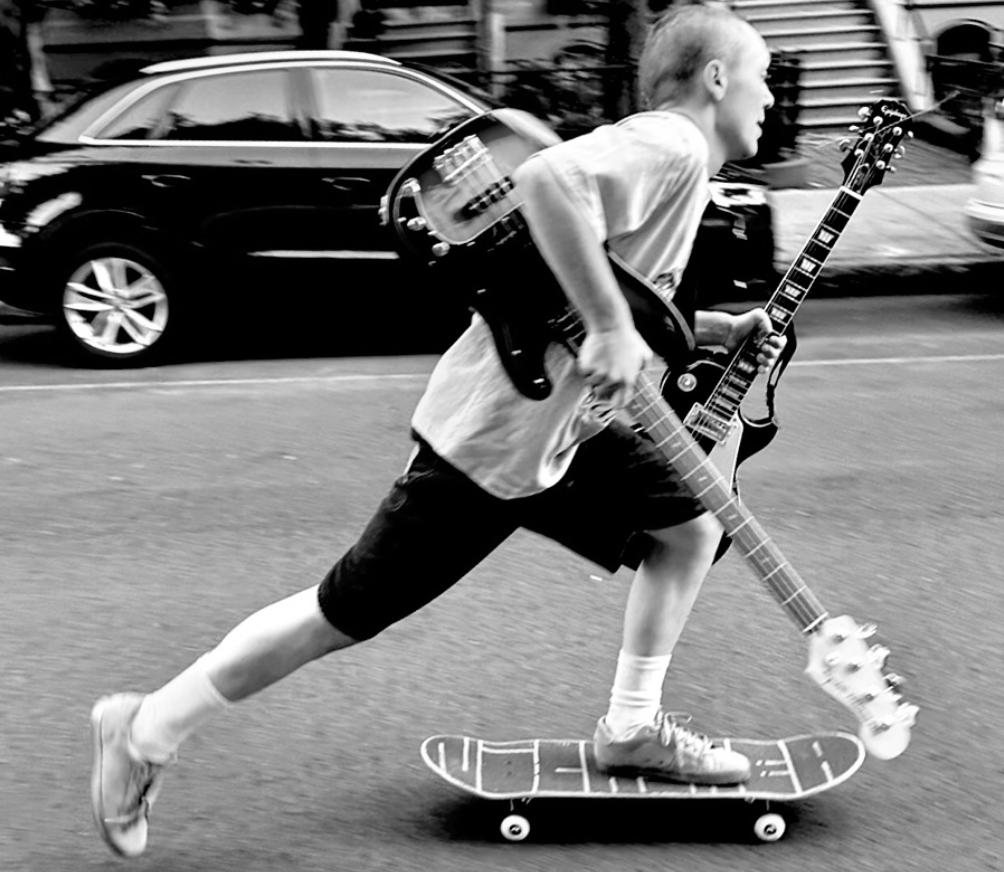
“[There are] gGreat things coming. , I can feel it in my bones.” For Boston rapper and illustrator, Nick Shea, the power of manifestation is realcertainly appears to be real. His March release of “Great Things Coming” entered the world as a hopeful and, serene offering to the abyss. What he may not have anticipated after uploading the track was for the universe to say something back – in the form of a viral internet moment alongside none other than globally famous YouTuber and online streamer, IShowSpeed.
While most over the age of 25 probably are probably notn’t familiar with IShowSpeed, the younger generation of Bostonians were amped up early last month as the internet celebrity turned global icon arrived in Boston for Day 9 of his 24/7 stream series tour? across the United States. Roughly two hours into the stream, Speed, led by none other than the infamous Matt Shearer from WBZNewsRadio, entered the Boston Common, where he was greeted by a sign that read “$1 drawing of YOU!”. For many of those watching along on YouTube, Nick seemed like any other’s sudden appearance initially may have initially seemed like an introduction to another nondescript Bostoniananother random NPC from the city. VBut what viewers quickly came to find out was that they were in the presence of someone who was up to something really special.
Over the past several years, Nick Shea has become an integral piece of the Boston Common. Sitting on a bench with a sharpie, stack of index cards, and a bluetooth speaker, Nick offers Bostonians the opportunity to have a cheap picture drawn of themself.
While it’s the picture that first entices them to sit, it’s the immediate connection with Nick that makes them want to stay. Thise Bostonian is on a mission to spread positivity across the city by means of art and conversation. In less than a minute, he has a way of putting a smile on people’s face, fostering a deep connection, and giving people something to walk away with as a token of their day.
While much of his impact is felt in person atin theBoston Common, it’s not the sole avenue by which he makes an imprint. For the better portion of the last ten years, Nick has slowly amassed a discography of hip-hop music that resonates uniquely with the soul. His music is filled with verses that revolve around his undying passion for positivity, and his choice of jovial, shimmering soundscapes are like can be equated to sunshine that you can absorb via headphones and speakers. He’s a living, breathing powerhouse of creativity, and his recently released EP titled ‘SHUT UP AND PLAY!” is just the latest example of these sentiments.
While he was only on IShowSpeed’s stream for a mere couple of minutes, this was all it took for his follower count and monthlyand, monthly Spotify listenership, and overall notoriety to quickly jolt upwards. As the dust settles, Nick is undoubtedly in search of even more ways where he can bring his mission to spread smiles to an even bigger scale. In a world that could absolutely benefit from more joy, Nick Shea is definitely a breath of fresh air.
LOVE AND GLORY ON THE BATTLEFIELD
The Great American Beer Hall in Medford, MA on September 18.
The timed painting competition, Art Battle, a timed painting competition, started in NYC in 2001. Over the next twenty years, it has spread around the world with monthly events taking place everywhere from Boston to Bangkok. 12 artists compete in three 20-minute rounds of painting. At the end of the night, a winner is crowned and bestowed a crisp $100 bill. All the paintings are sold at a silent auction and split between the artist and the event.
Ananda Toulon has been a competitor on and off since the event came to Boston in 2019. She placed as a finalist in 2021 and 2022 before taking home the gold and competing in Art Battle U.S. in Daytona, Florida, in 2023. The event is also where she met her partner, artist Narvicto DeJesus at the event as well.
“He’s still one of my fiercest competitors,” Toulon she said. “ It’s nice to have someone equally as competitive and challenging as they are supportive. It’s a well earned victory that doesn’t allow either of us to coast.”
Toulon’s strategy for Art Battle is simple. “I listen to ‘Dogs’ by Pink Floyd,” she ex-
plained. The 17-minute-long song helps her keep time during a round and offers clear indicators of where she should be in the painting process. “I find myself very influenced by music. If I can’t find the right song, I start freaking out,” she said. “And Sshuffle is a very dangerous game.”
She appreciates events like Art Battle as an opportunity to engage with fellow artists and fans outside of gallery small talk. “I want to attract more casual, meaningful, intimate interactions versus like, I have to put on a fancy little tie and speak outside of how I normally speak,” she said. “That’s not necessarily the case for all gallery settings, but like galleries in a way are performance. But with [art battle] you can see the craft, but there’s also no expectations.”
This summer, Toulon’s said she’s experienced a bit of a dry spell. “People are getting stuff, but I’m not. And that’s okay. I think the things I don’t get, maybe I’m not ready for them,” she said. In stepping back from painting, Toulon says she has enjoyed “participating in the village” while taking up support roles on various projects.
Toulon can be found on Instagram @anandatoulon. Inquiries on commissions and bookings can be made via DM. The next Boston Art Battle will take place on November 21, at Lamplighter Brewing – 110 N First St, Cambridge, MA. Doors open at 7 p.m.
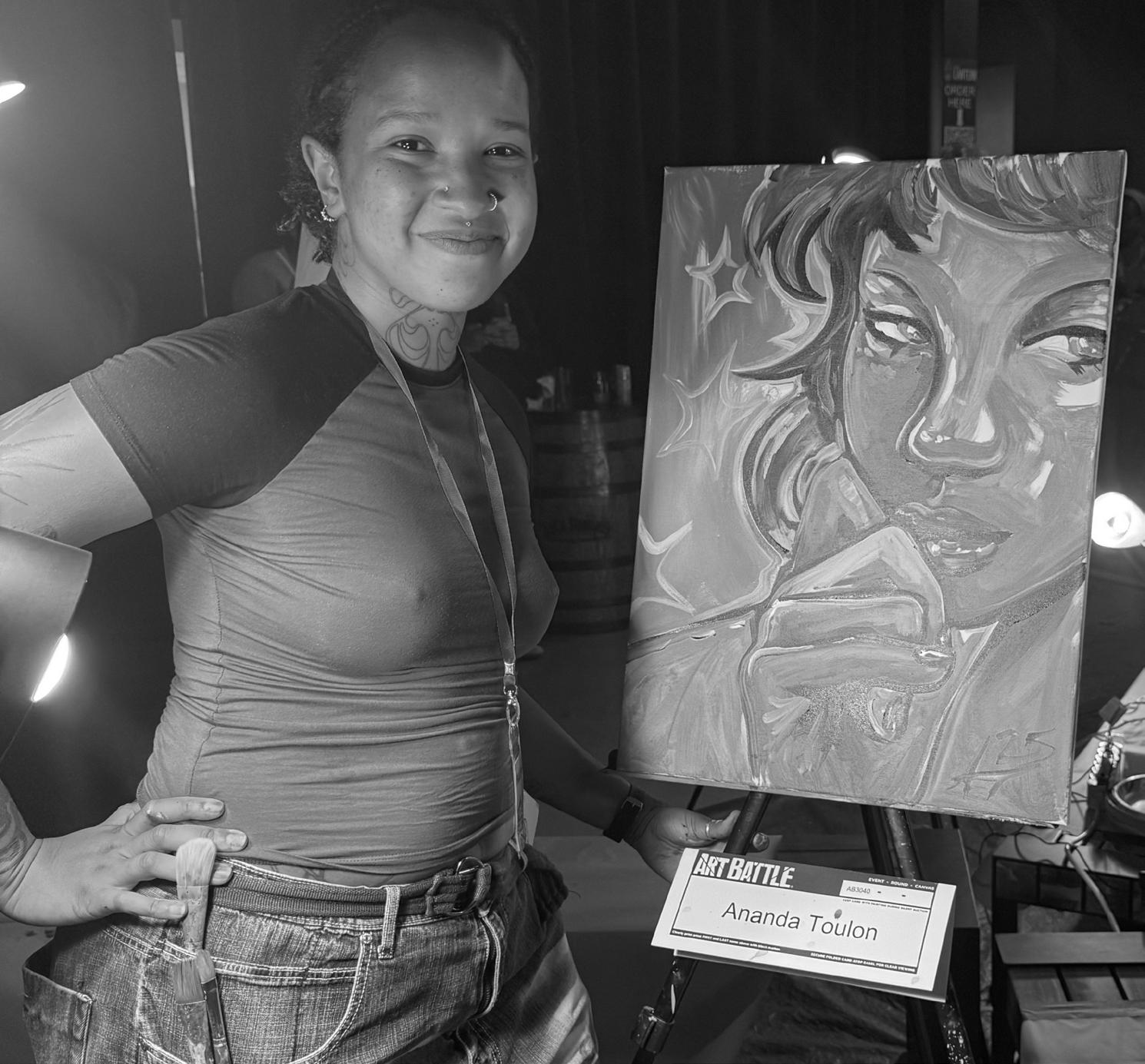
“Dorchester artist and Girlypop co-founder Ananda Toulon renewed her tenure as champion of Boston Art Battle, onThursday, September 18, at
Ananda Toulon at Boston Art Battle
ILLUMINUS FESTIVAL SHOWCASES ROXBURY ARTISTS
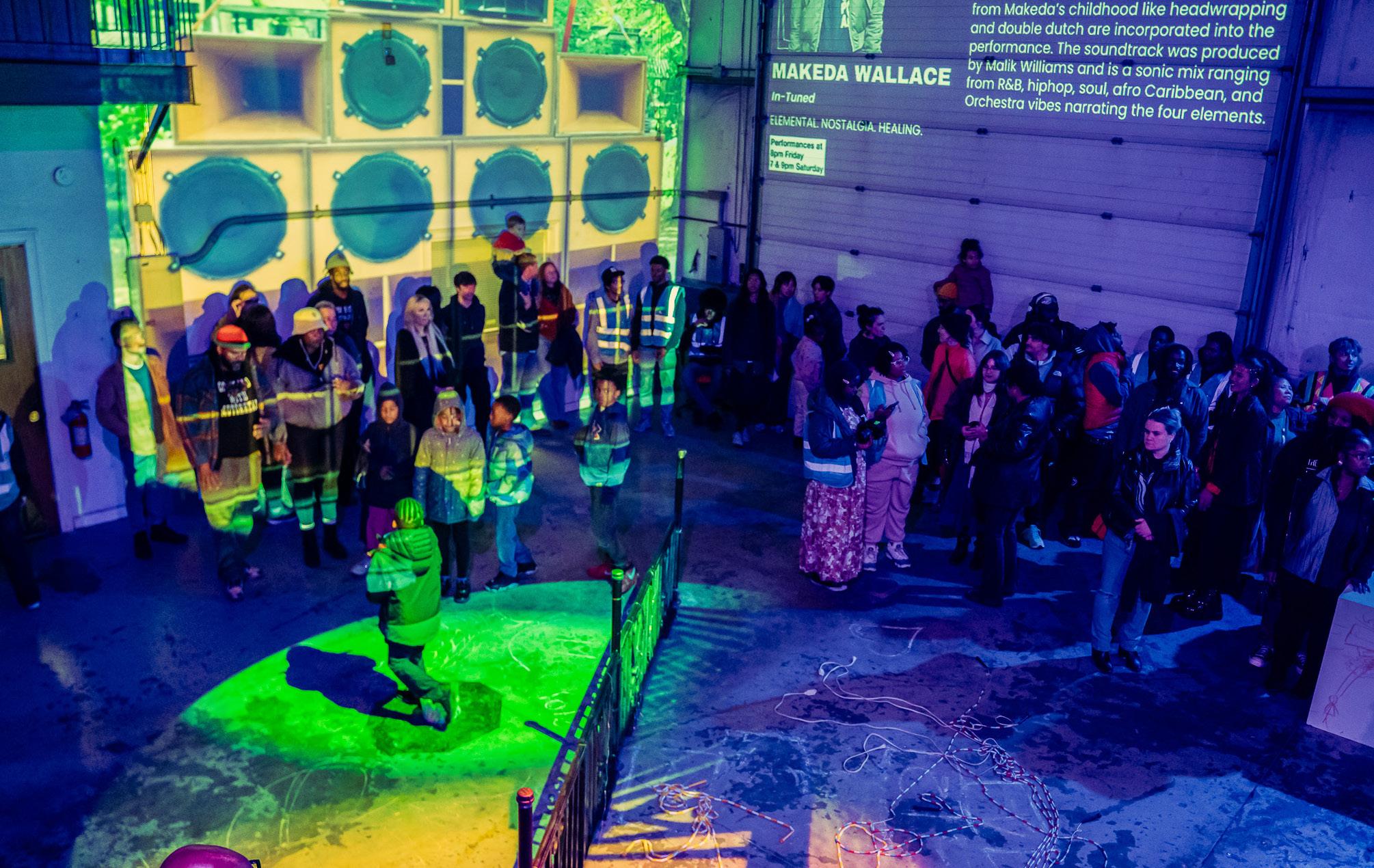
Roxbury-based artists transform Madison Park Technical Vocational High School
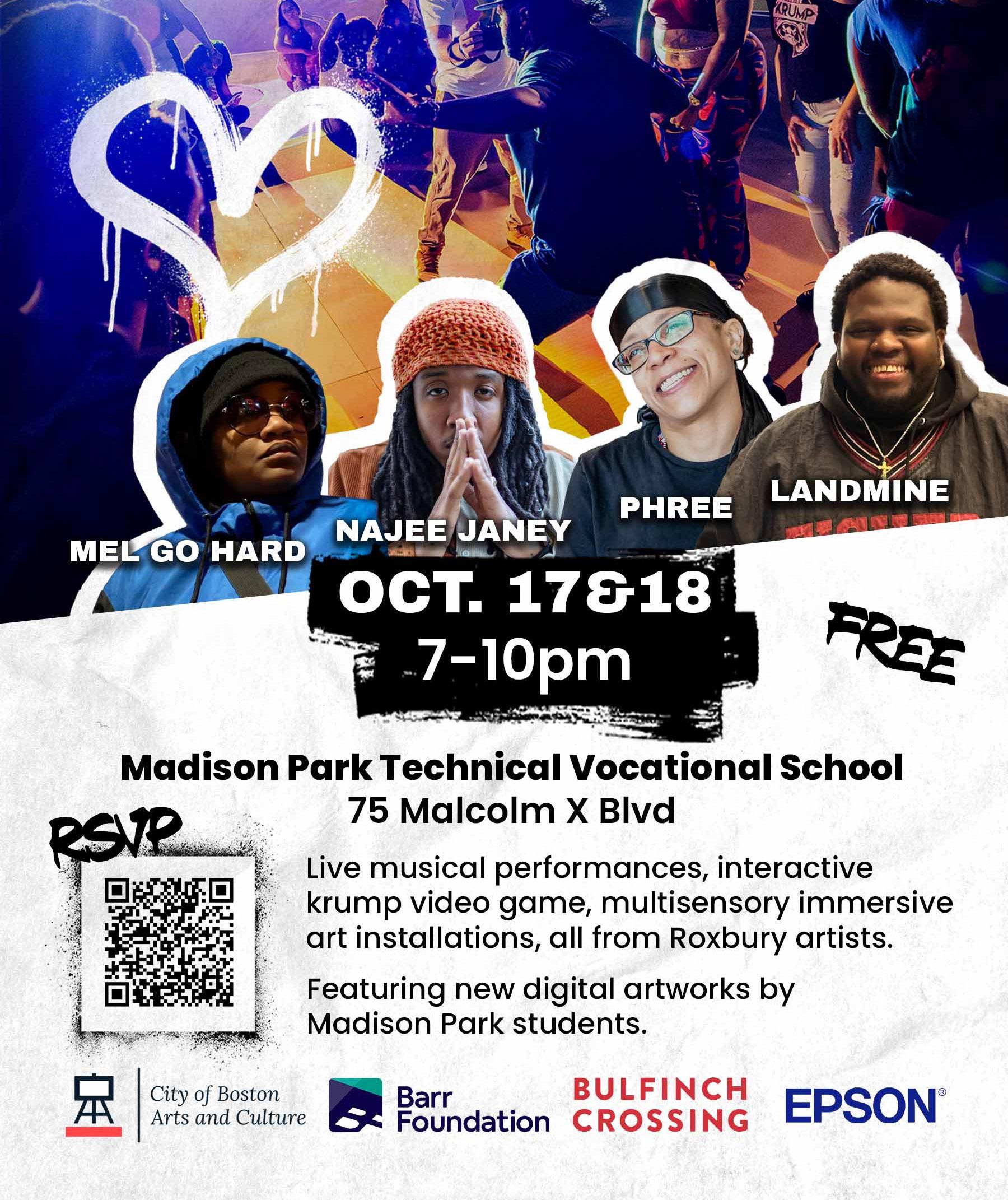
Roxbury, MA – ILLUMINUS, Boston’s festival of light, art, and technology, returns October 17 and 18 with its Roxbury Activation, taking place at Madison Park Technical Vocational High School from 7:00 PM to 10:00 PM each evening. Free and open to the public, ILLUMINUS Roxbury will feature four artists with deep roots in Roxbury presenting new immersive multimedia works that combine projection, sound, live performance, and community participation. The team of ILLUMINUS curators has selected four Roxbury artists as this year’s presenting cohort, including:
Mel Go Hard (Melissa Sanon)
Melissa brings existing murals to life. With projection mapping and immersive soundscapes, she transforms the walls of Madison Park into living portals of rhythm, color, and light. A powerhouse producer, songwriter, engineer, and designer, Melissa crafts work that is emotional, resilient, eclectic, and psychedelic, and born from her lived experiences and unstoppable triumphs.
Najee Janey
Najee brings the crowd inside his world with an original performance staged in a projection-mapped environment shaped by community voices. His performance will be a shared journey of stepping into power, rising into higher selves, and uncovering the limitless potential within us all. Born and raised in Roxbury, Najee’s music reflects the soul and spirit of his neighborhood through rap, song, and production infused with growth, reflection, and cultural pride.
Phree
Step into a courtyard reborn as a sanctuary of color, sound, and spirit. With chakra-lit trees, flowing projections, and poetic spoken word, Phree creates an atmosphere where visitors can pause, breathe, and recharge. Their meditative soundscapes and luminous visuals weave a tapestry of selflove and collective healing. A poet, educator, and artist, Phree is also the celebrated
host of Feel It, Speak It open mic and The Phree Game podcast.
LandMine (Tayquan Pomare-Taylor)
LandMine will face off against his own holographic krump avatar in an interactive mixed reality dance battle video game, where visitors can play together or battle against LandMine performing live. A krumper, storyteller, and educator, LandMine draws inspiration from community, mental health, and education. He describes Roxbury as raw, powerful, and full of heart, qualities reflected in his electrifying performances. Additionally, students from Madison Park will present site-specific animations that blend animated poetry, time-lapse collage, and illustration, led by instructors and muralists Luis Tafaro and Genaro “Geo” Ortega Jr.
For more information about the ILLUMINUS Roxbury Activation and to RSVP, please visit www.illuminus.org/roxbury, and follow @ illuminus for updates.
A Special Thank You to Our Supporters ILLUMINUS Roxbury is made possible with the generous support of the Barr Foundation, the Mayor’s Office of Arts and Culture, EPSON, and Bulfinch Crossing. This event is also made possible through partnerships with the MIT Spatial Sound Lab, DreaMR Labs, and MASARY Studios. About ILLUMINUS
ILLUMINUS is a platform for Boston-based artists to create experiential works of light, sound, and performance in the neighborhoods they call home. The mission is to use the creative process of developing and producing public art experiences to enable artists to connect, inspire, and empower their communities. The vision is a connected city where artists are leaders and every individual feels part of a community capable of positive change.
---------------- THE ILLUMINUS TEAM
10/26 Hustle Killer
10/12 Sado-Domestics
Acoustic set! @ The Square Root Cafe 4pm-6pm 21+ FREE
10/5 State Park's Western World presents "Both Kinds" Country AND Western DJ Night with DJ Groan Man. Every first Sunday of the month from 3-6pm @ State Park Bar 21+ FREE
10/7 Bars Over Bars Hip Hop Showcase a hip hop showcase featuring local artists! @ Midway Cafe 8pm 21+ $10 @ barsoverbarsmedia
10/8 Rozzie Old Time Session @ The Square Root Cafe 8pm11pm 21+ FREE
10/9 Singer Songwriter Night Hosted by Glenn Williams with Drew Dunphy, DS Scrolls and John O’Toole @ The Square Root Cafe 7pm10:30pm 21+ FREE
10/9 The Fantastic Cypher hosted by Big D + DJ Nightime Gallagher @ Lilypad 10pm All Ages $5
10/9 20th Annual HONK Festival An awesome annual 3-day free festival bringing brass bands from all over the United States and the world to Somerville for a celebration of music, community and activism. This year's festival will include a HONK! U Conference on Thursday, October 9 at Tufts University’s Department of Music, from 10:00am-5pm, with breakfast available starting at 9am. Learn more at honkfest.org All Ages FREE @honkfest
10/10 Ringing, Main Era, and Vivid Bloom Presented by 4th Wall @ The Capitol Theatre 8pm-11pm 18+ $10
10/10 Bitch - National Coming Out Day Celebration! Bitch is a longstanding queer icon, actress, musician and writer who Yahoo Entertainment called “a feminist force that the world needs now more than ever” when she released “Bitchcraft,” her 9th studio album, on the legendary label Kill Rock Stars in 2022. @ Club Passim 8pm $35
10/11 Saturday Night House Party Music by DJ Brian Derrick @ Club Cafe 10pm 21+ $15
Halloween Showcase @ The Jungle 9pm 21+ FREE @ hustle_killer_hq, @hustle_ killer
10/28 Future Teens, ADJY, Maura Weaver @ Deep Cuts Deli 7pm 18+ $20 adv/$25 do
10/14 LETHAL: Rico Nasty ft. Sadboi The Blair Bitch Project is teaming up with Rico Nasty for her LETHAL tour stop! @ Citizens House Of Blues Boston 7pm 21+ $35+
10/15 Jesse Gallagher @ Lilypad 7pm-8pm All Ages $10
10/17 Tysk Tysk Task, Makeout Palace, The Ghouls @ Lilypad 8pm-10pm All Ages $15 adv/$18 do
10/18 Battlemode, Mercy Ruin, Ultra Deluxe, Jade Weapon, nicoteens with production by Junk Drawer @ Warehouse XI 7pm 18+ $15
10/19 Grindhouse 4 Bass & Bones ft. feardotcom, the girl, n3o r3tro, vid3o gurl, militia rashad, dialog talk, kony 762, muda @ The Jungle 8pm 21+ $15
10/19 Guerilla Toss Hosted by Get 2 the Gig/Mass Concerts @ Crystal Ballroom 8pm 21+ $30 @guerillatoss
10/21 Nonevent presents: Weston Olencki, Webb Crawford, Victoria Cheah @ Goethe-Institut Boston 8pm All Ages $10-$15 @ noneventseries
10/23 'Free Jazz' For the Fall Over three sessions, we’ll engage the music of free jazz pioneers Albert Ayler, Sun Ra, and Alice and John Coltrane. We’ll explore the spiritual qualities of their repertoire by listening to albums, watching performances, and reflecting together in small and large groups. @ Just Book-ish 6pm8pm FREE
10/24 Sound In Air ft. Violet Nox, A. Campbell Payne, Architrave, Thorny, Metal Tiger, Mute City, Hissquiet with Lexx St. Leonard Live Painting, J.Bagist DJ, and visuals by DebStep, Deftly, CoRy, Zombie & Emma Lucille @ The Foundry 6pm All Ages @violetnoxband
10/25 All Soul's Ball ft. Sinnet (Spooky Single Release!), The Devil's Twins, The Downhill Jam (Tony Hawk Pro Skater Cover Band from LA), Honey Cassette as Gin Blossoms @ Deep Cuts Deli 7pm 18+ $15 adv/$20 dos
10/30 "The Toxic Avenger": An Audio Visual Celebration Double Feature X Salem Scare Society Presents: Toxie Takes Salem! Chiptunes Preshow by Battlemode Explo ‘25 (Troma Super Cut) with Live Score from Original Composer: Chris Burke (aka glomag) 360° A/V Toxie Remix (Wubson X V.Kash) @ Cinema Salem 6pm-10pm 18+ $30
10/31 An Authenticity Halloween Party with Special guests! Hip-Hop, 90s, R&B! @ The Pearl - Boston Landing 8pm 21+ FREE @ alcidemusicgroup
10/16 Roslindale Comedy
Showcase @ The Square Root Cafe 7pm 21+ $10
10/29 Brookline Interactive Group Youth Media Showcase Join for a reception and showcase of work produced this summer by talented young media creators! @ Brookline Interactive Group 6:30pm8:30pm All Ages FREE
10/30 The Rocky Horror Picture Show 50th Anniversary ft. The Teseracte Players of Boston @ Arts at the Armory 7pm 17+ $25+
10/30 The 4th Witch Chicago’s Manual Cinema theatre company returns with their shadowy and magical take on the witches of Shakespeare’s MacBeth, employing their usual use of shadow puppetry, live music and actors in a thrilling new way. Don’t miss! @ Emerson Paramount Center $27.50+/ Student $22
Visit the ThotBot Implantation Center An immersive & interactive installation and multimedia concert open from October - March. Is your ThotBot glitched? An audience of 14 is invited to step into the waiting room of a dystopian brain implant clinic before being pulled deeper into the ThotBot Storyworld with narrative video and a live music performance. @ Bow Market $26
10/4 2025 Boston Dance Cypher FREE event to display your dance moves! REP YOUR FLAG EDITION/ White or Purple. Come with your crew and Dance Like No One's Watching. Vibes by @ DjayRedman Event Planned by Young Burna, alongside other Boston Hosts! @ Quincy Quarries 4pm-8pm FREE
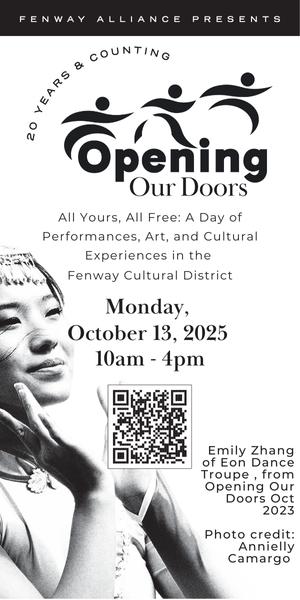
10/13 Opening Our Doors Festival Boston’s largest day of free cultural experiences! The central mission is to “open the doors” of Boston’s most iconic & historic institutions for a free day of music, art, creativity, and performances. Visit fenwayculture.org/openingour-doors-2025 for more information. @ The Fenway All Ages FREE
10/14 The Inkwell Open Mic Two songs or eight minutes, whatever comes first. Originals only. @ Midway Cafe 8:30pm 21+ FREE
10/16 Cryptic Creatures with Joe Ledoux IWatch Joe perform magic tricks and discuss his three favorite local cryptic creatures which inspired three new pieces of art. Prepare yourself for a Mysterious night of Art, Magick, and the Occult! @ The West End Museum 6pm8pm All Ages $12
10/25 Boston Liberation Center’s fourth birthday block party! And the GRAND OPENING of the Harriet Tubman Freedom Park @ Boston Liberation Center 12pm-6pm
10/30 Arlekin Players’ Dybbuk Don’t miss another chance to see this powerful reimagining of an ancient yet timely Yiddish folktale by local playwright/director Igor Golyak, returning from their New York run. Not cheap, but worth it. @ The Vina Shul $99-129
10/31 Drag Horror Story
Celebrate Devils Night with Lexi Baby and guests as she takes you through the world of American Horror Story with your favorite characters across different seasons. @ Club Cafe 7:30pm-9:30pm 21+ $30
community
Boston Bike Events . com No affiliation, just compilation. www.bostonbikeevents.net
New Website
BostonQueers.com! Boston
Queers is your go-to queerowned business directory for discovering and exploring queer-owned businesses in New England. Whether you're looking for inclusive services, shops, or local favorites, their resource guide has you covered.
10/18 Centering Peace a unique series of gatherings designed to explore and share peace-building practices. These events bring together loCombining structured themes with a relaxed and welcoming environment, Centering Peace invites participants to learn, connect, and contribute to meaningful conversations. @ The Centerpiece Flower Shop 5:30pm-7:30pm All Ages FREE
10/18 Mattapan Open Streets
The newest Open Streets Boston neighborhood! Get ready for live music, delicious food trucks, kid's activities, and local art that will bring the community together. @ Blue Hill Ave @ 10:30am-3pm All Ages FREE music
Fallen Fruit is a crowdsourced interactive map for foragers. By quantifying this resource on an interactive map, this nonprofit facilitates intimate connections between people, food, and the natural organisms growing in our neighborhoods. Visit fallingfruit.org to learn more.
Global Blackout for Gaza Call to Action! Every Thursday No Work, No Banking, No Shopping (in store and online). By planning weekly routines and shopping trips in advance, we can keep this powerful act of solidarity alive. Out unwavering financial pressure on government powers and complicit corporations that are fueling or enabling the genocide. Visit @globalblackoutforgaza for more information
Know Your Rights: What to Do if You Are Arrested or Detained by Immigration This resource provides general information on what to do if you or someone you know is stopped, arrested, or detained by immigration or other law enforcement. Visit www.nilc.org/resources for more information
10/5 Two Years of Genocide: Rise Up for Gaza An International Day of Action and opportunity for Bostonians to take the streets in the masses to show that we stand with Gaza. From wherever we are, we will make it clear: we demand a total arms embargo and sanctions against Israel. Near State St stop. @ Consulate General of Israel to New England 12pm4pm
10/6 Projecting Protest: Screening and Panel
Discussion Massachusetts College of Art and Design (MassArt) presents the Boston premiere of this short film by DC- based filmmaker Thomas Clement. Join to view and discuss this 22-minute documentary that delves into the rise of unsanctioned light projection as a form of activism in the United States. @ Massachusetts College of Art and Design 6pm-8pm FREE
10/9 Puff and Paint Party
Support Black-led art healing programs from Heal the Hood while enjoying a night of creativity, community & vibes @ Heal the Hood: The People's Free Store 6pm-9pm $25+
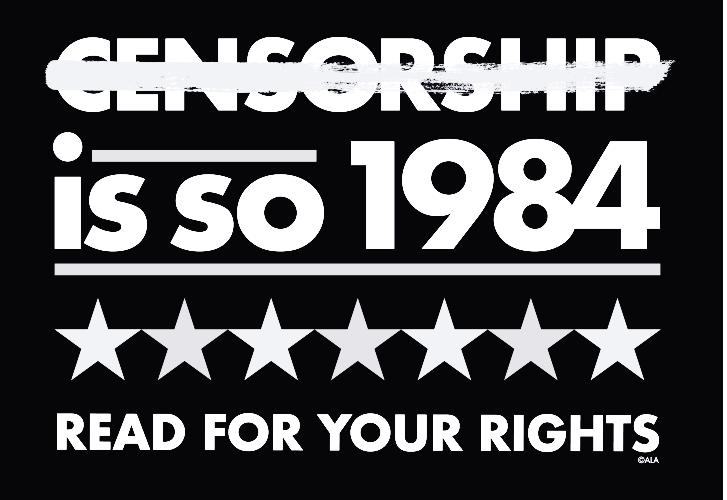
10/11 Let Freedom Read! The freedom to read is under attack — let’s do something about it! The organizers
theater & performance art
behind Banned Books Week are asking everyone to take at least one action to help defend books from censorship and to stand up for the library staff, educators, writers, publishers, and booksellers who make them available! Show them how you’re taking action on social media by using the hashtags #LetFreedomReadDay and #BannedBooksWeek! Visit bannedbooksweek.org for more information
10/14 Centering Palestine: Between Colonialism, Democracy, Repression, and Freedom A Conversation with Rami Khouri. Join for part 1 of a 4-part series curated by Khury PetersenSmith that features a series of conversations around Palestine. @ Just Book-ish 6:30pm-8:30pm
10/20 2025 Somerville City Councilor and Mayoral Debates Presented by Somerville Media Center and The Somerville Beacon @ Crystal Ballroom 5:30pm8:30pm FREE
Hump Day News A locallyowned website for art, politics, sports, and culture, in Boston and beyond. Check it! www.humpday.news
10/4 Book Release:
Sometimes Stormy Join local author-illustrator, Amanda Davis, as she celebrates the release of her latest picture book, Sometimes Stormy: A Story about Finding Calm and Staying Safe when Someone You Love Drinks Too Much. Davis will be in conversation with Carmen Barefield and Angelica Bryant @ Just Bookish 4pm-5:30pm All Ages FREE
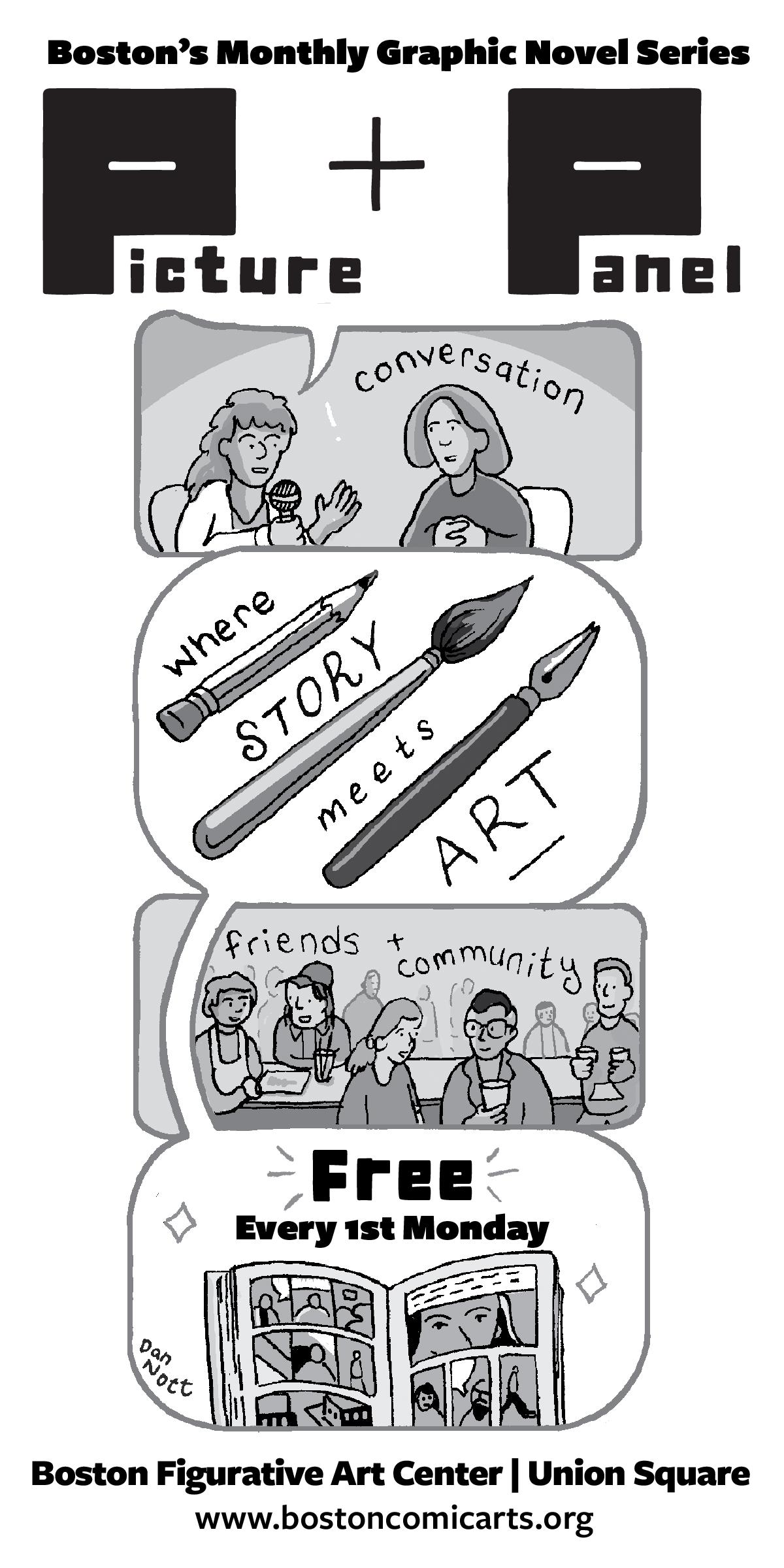
10/4 BFAC ZineFest a zine vendor market + zine related workshops throughout the day. @ Boston Figurative Art Center 12pm-7pm All Ages FREE
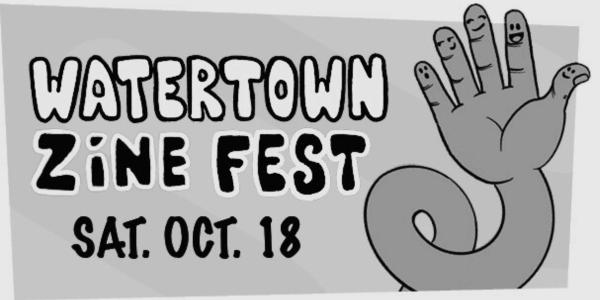
10/18 Watertown Zine Fest a day-long celebration of zine culture and DIY publishing. Browse the marketplace, attend zinester workshops, and check out the Library’s growing zine collection. If you’re asking, “what’s a zine?” Zine Fest is a great place to learn. @ Watertown Free Library 11am-4pm All Ages FREE
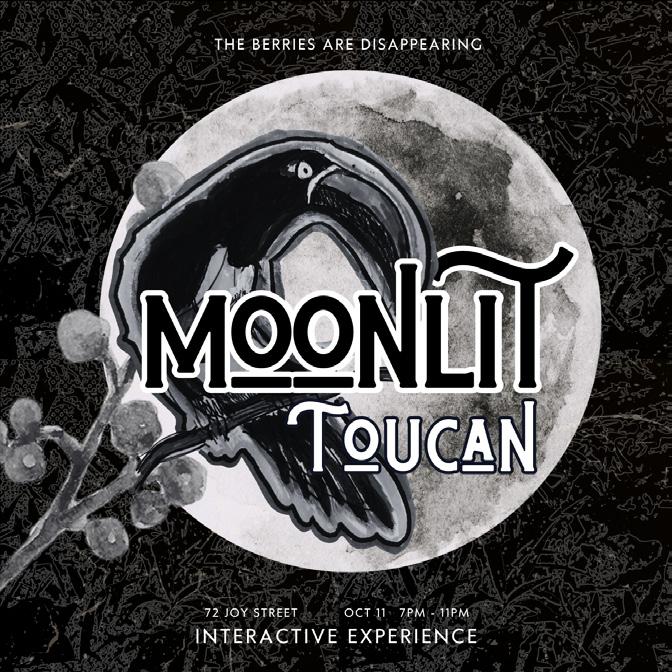
10/11 Moonlit Toucan: A Night of Immersive Art
You're invited to step into a moonlit jungle... where creativity and community collide in an interactive world. Come to experience an art studio transformed into an alternate world and a chooseyour-own-adventure narrative. To learn more visit toucan. city! @ 7pm-11pm All Ages $20-$25
10/12 Showmanship Closing Day Meet the artists of Costuming Masculinity from Man to Monster: a two-person exhibition featuring Boston Drag Artists Throb Zombie and Rusty Hammer. @ Artisans Asylum 3pm-6pm FREE
10/16 Arts Collaborative Medford presents: SPLASH!
Savor bites from your favorite Medford eateries, connect with friends old and new, and support the creative community that makes Medford shine. @ Arts Collaborative Medford 6pm9pm All Ages $35+
10/17 Illuminus Roxbury
A large-scale public art activation featuring four incredible Roxburybased artists who will be transforming Madison Park into an immersive celebration of art and performance. Join Mel Go Hard (Melissa Samon), Najee Janey, Phree, and LandMine (Tayquan Pomare-Taylor) for a festival of light, art, performance and technology. @ Madison Park Technical Vocational High School 7pm All Ages FREE
10/23 The Boston Pancakes & Booze Art Show Come experience one of the largest pop-up art movements to hit North America over the past decade. Celebrate 15+ years serving FREE PANCAKES and introducing you to some of the nation's leading emerging artists. @ MIXX 360 Nightlife 7pm-10pm 21+ $15 adv/$20 dos
10/28 PORTALS Step through the portal - immerse yourself in the art of Daisy Hernandez and Brendan Lehman in this electric one night event where punk energy, vivid colors, and emotionally charged forms come alive in striking paintings, illustrations, and sculptures. @ 460 C Harrison Ave, Boston @ 7pm-9pm
Trans Music Archive x Figure 8 Recording 2025 Residency Program Two artists/bands will be chosen for a 1-week long recording residency at Figure 8 Recording in Brooklyn, NY from November 14th through 21st. A $1000 stipend will be provided for each of the chosen artists/ bands. Visit transmusicarchive. org/residency to learn more and apply Deadline to apply is 10/8
Call for Submission: Three Artist Exhibition Series Gallery 263 is inviting artists to share their work for consideration for a three artist exhibition curated by the gallery. There is no specified theme. This opportunity is ideal for artists to exhibit artwork that may be the start of a new series of work or experimental practices. Artists working in all mediums of all experience levels are encouraged to apply. Visit Gallery263.com for more information and to apply. Deadline to apply is 10/13
The Fay Chandler Emerging Art Exhibition Emerging artists who live or work in the Greater Boston area are encouraged to submit their artwork. Selected artists will be part of an exhibition that will be on display in the Boston City Hall Galleries from November 10, 2025 to January 30, 2026. Deadline to apply is 10/13
Boston Youth Poet Laureate Open Application Apply to work with the City's Poet Laureate to celebrate and grow the role of poetry in young people’s lives across Boston and beyond. Deadline to apply is 10/29
Boston Cultural Council Grants This grant provides small and mid-sized organizations that are based in Boston or whose programming primarily takes place in Boston up to $10,000 to support general operating costs. Deadline to apply is 10/16
Opportunity Fund This City of Boston grant provides project-based funds to Boston-based artists and cultural workers to create and present creative, communitycentered experiences that expand access to arts and culture across all neighborhoods. Deadline to apply is 10/16
Third Wave Mobilize Power Fund supports urgent community organizing, direct action, healing justice, mutual aid, legal needs, leadership development, and grassroots campaigns. It prioritizes organizations led by and for young women of color (cis and trans), as well as trans, queer, gender nonconforming, and intersex youth of color under 35. Grants up to $10,000. Deadline to apply is 10/7 MCC Grants for Creative Individuals unrestricted grants of $5,000 to Massachusetts artists, culture bearers, and creative practitioners to equitably advance creative expression throughout our diverse communities. Deadline to apply is 10/24
10/18 Black Boy Joy Summit 2025 Whether you’re a teacher, coach, parent, or mentor, this summit is your opportunity to ignite the potential in the young men you care about. This isn’t just an event; it’s a chance to empower youth with skills in STEM, leadership, and personal growth. Ages 12-18 welcome. @ Bruce C. Bolling Municipal Building 9am3:15pm FREE
10/28 Grant Writing Workshop Join Arts Action Consortium for an informative session on grant-writing led by J Cottle and hosted by the Dunamis. Whether you're a seasoned grant writer or just starting out, this event is perfect for anyone looking to hone their skills and secure funding for their projects. @ Cultural Equity Incubator 6pm-8pm FREE @ dunamisboston



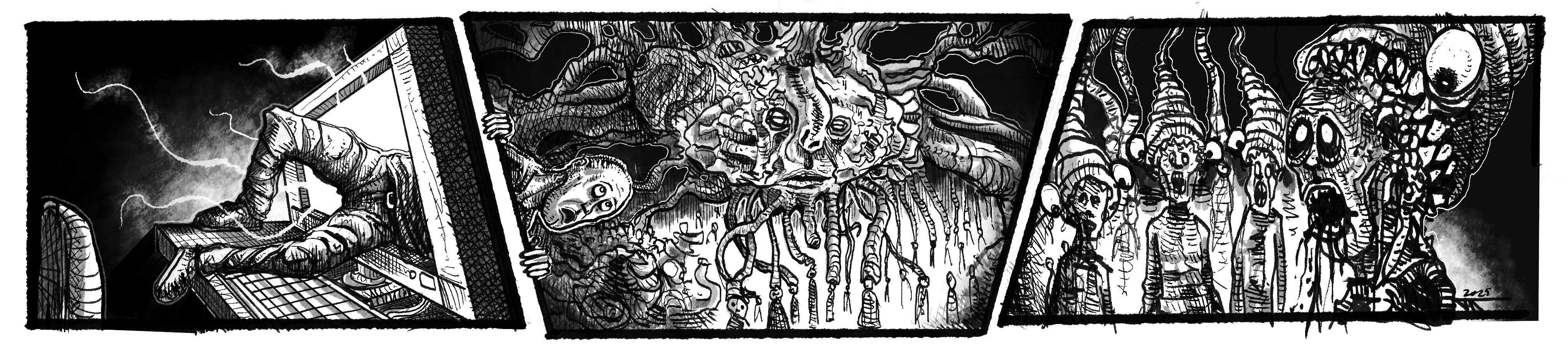
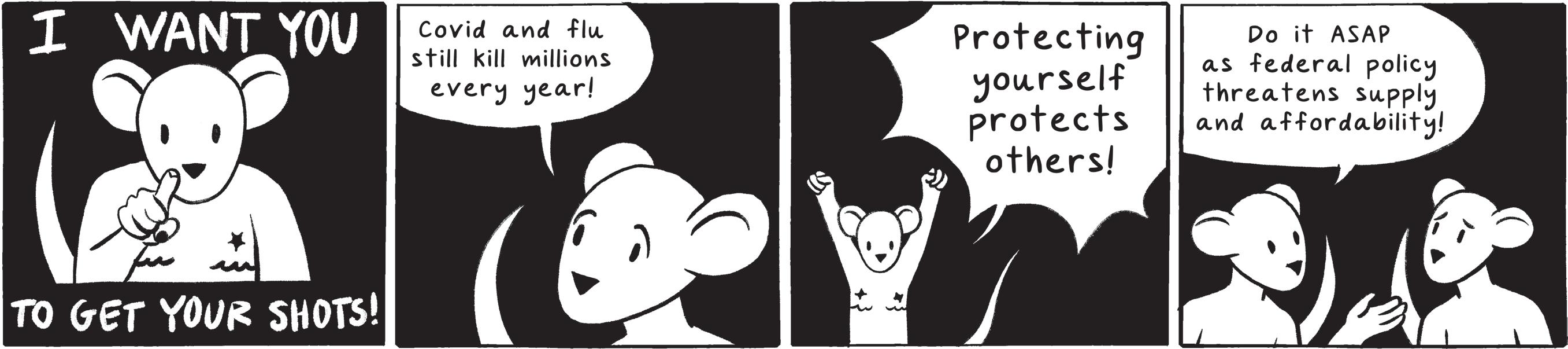
Your Shots! by Kieran Teare-Thomas
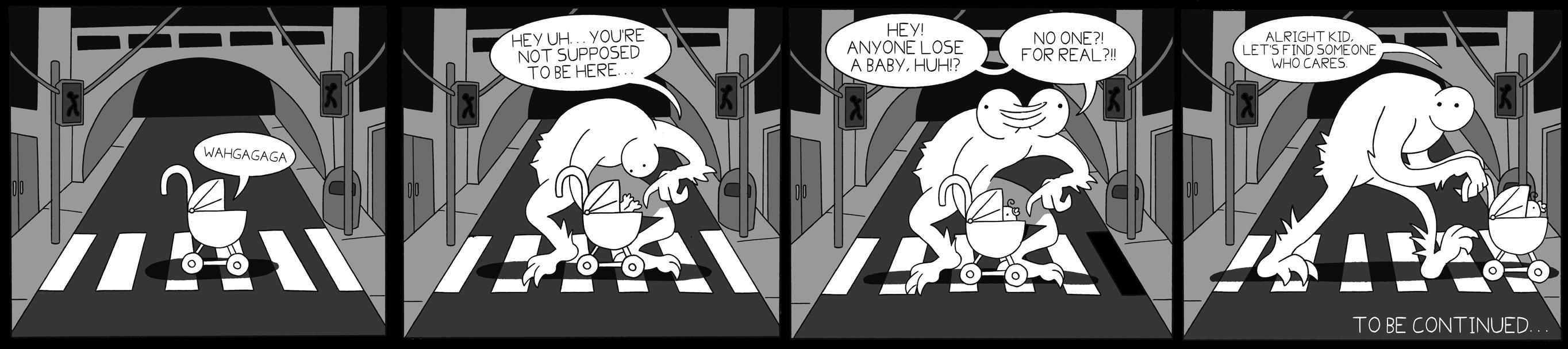
Ineptitude by Jared Kellogg
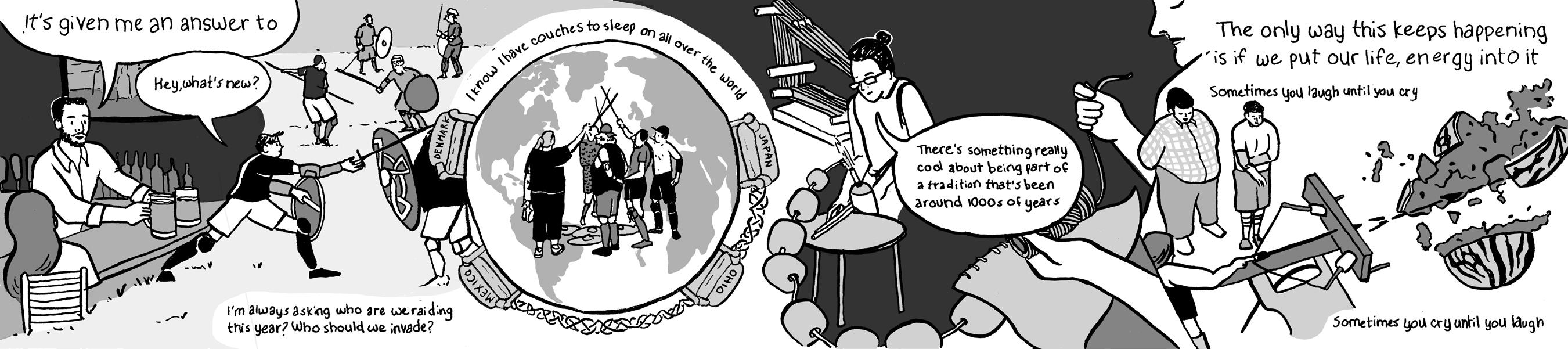
Local Lore: The Boston Viking Irish by Jillian D. King
@jilliandking
@britdeart
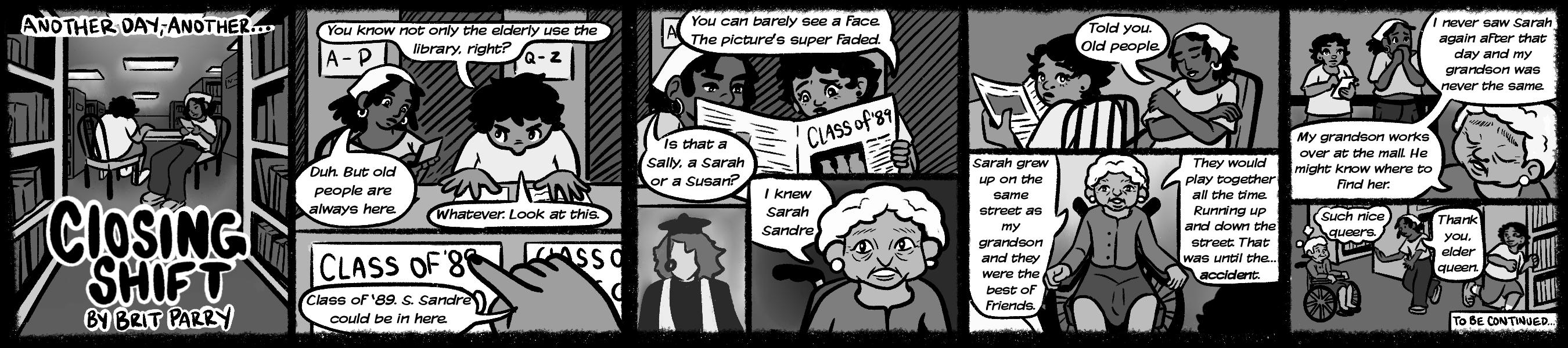
Closing Shift by Brit Parry
Friendly Fella by Austin Ickes
@sticky ickes
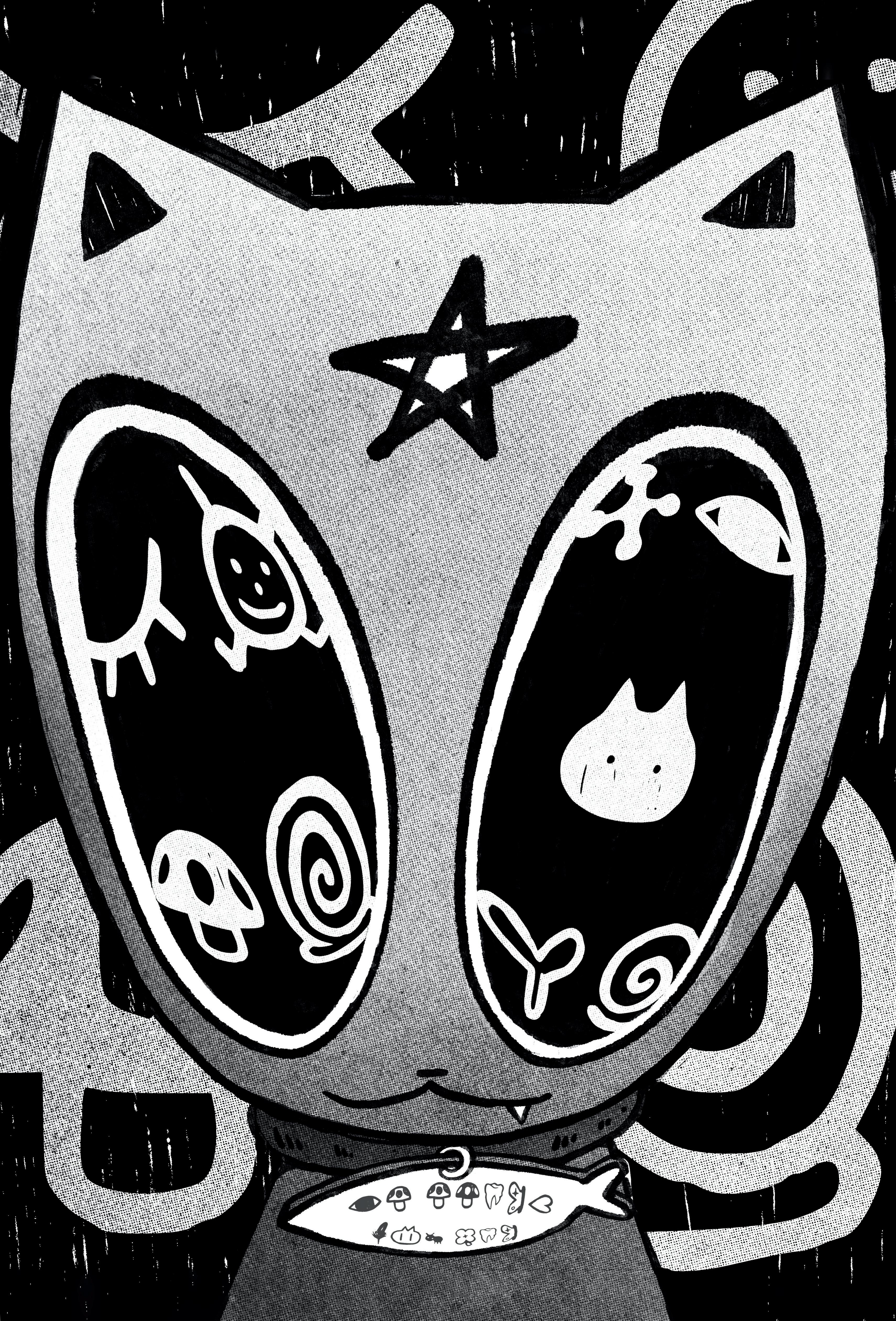
MEET THE ARTIST
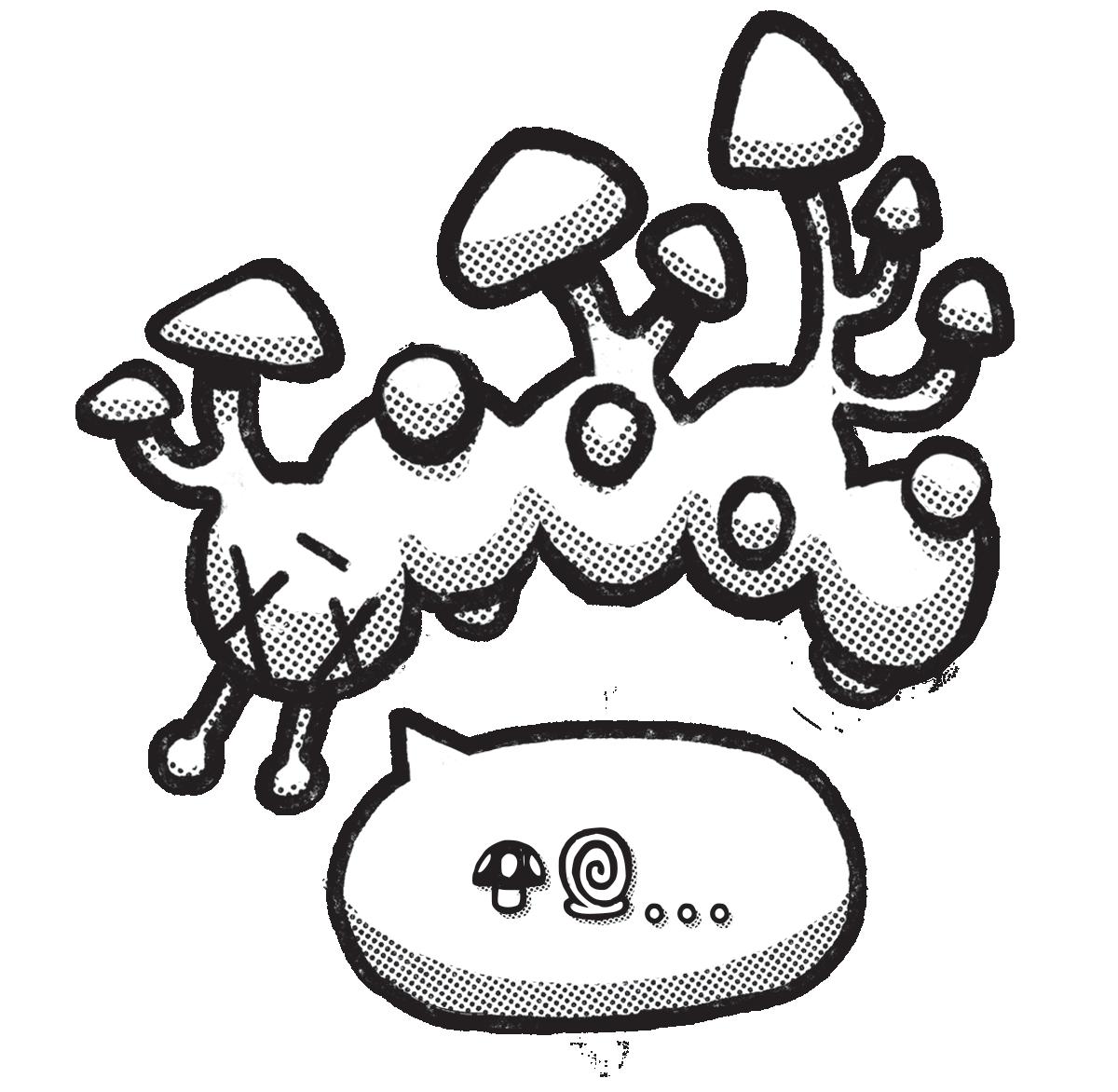
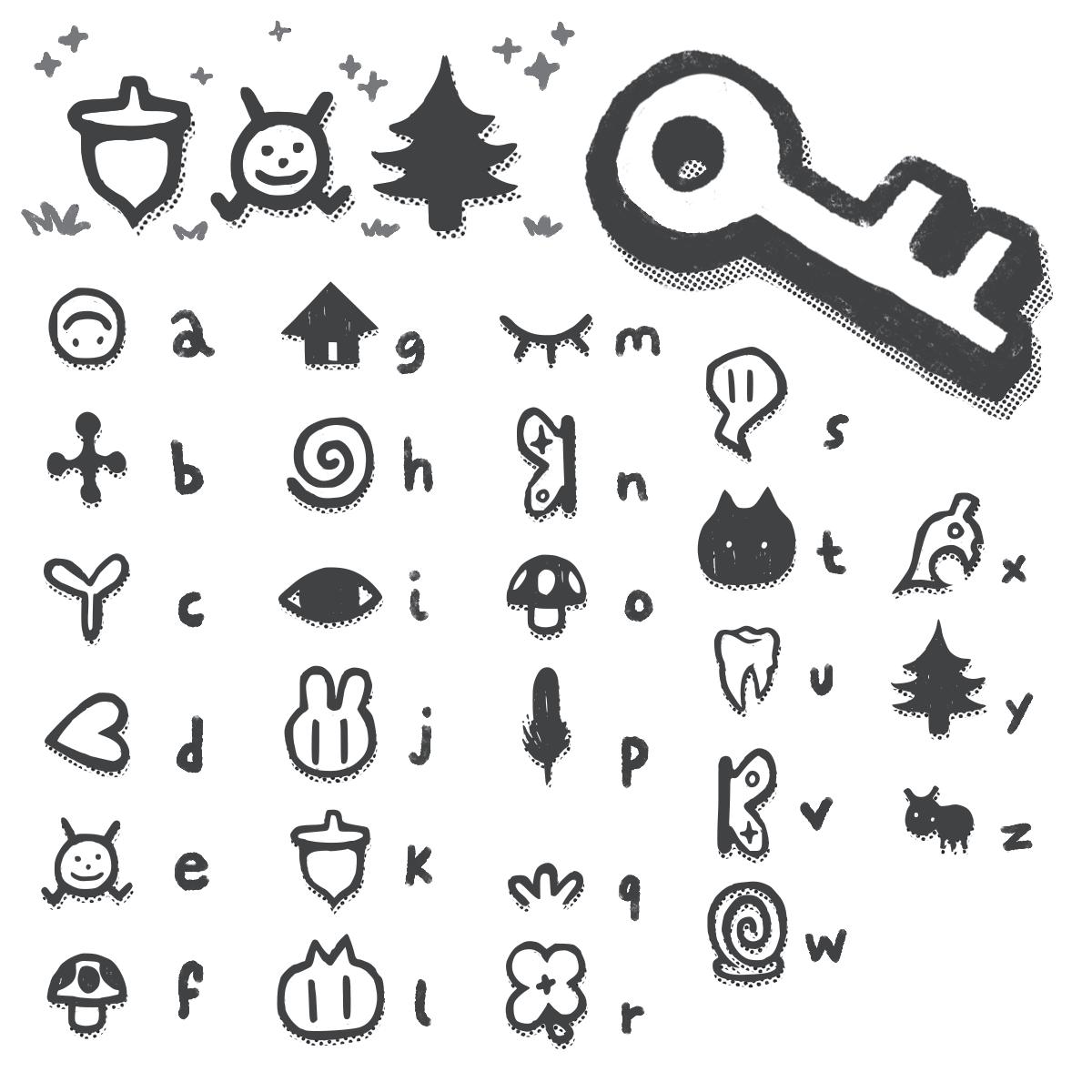
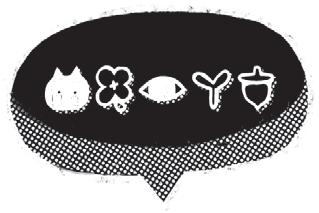
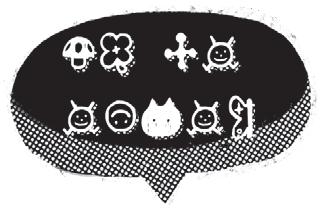
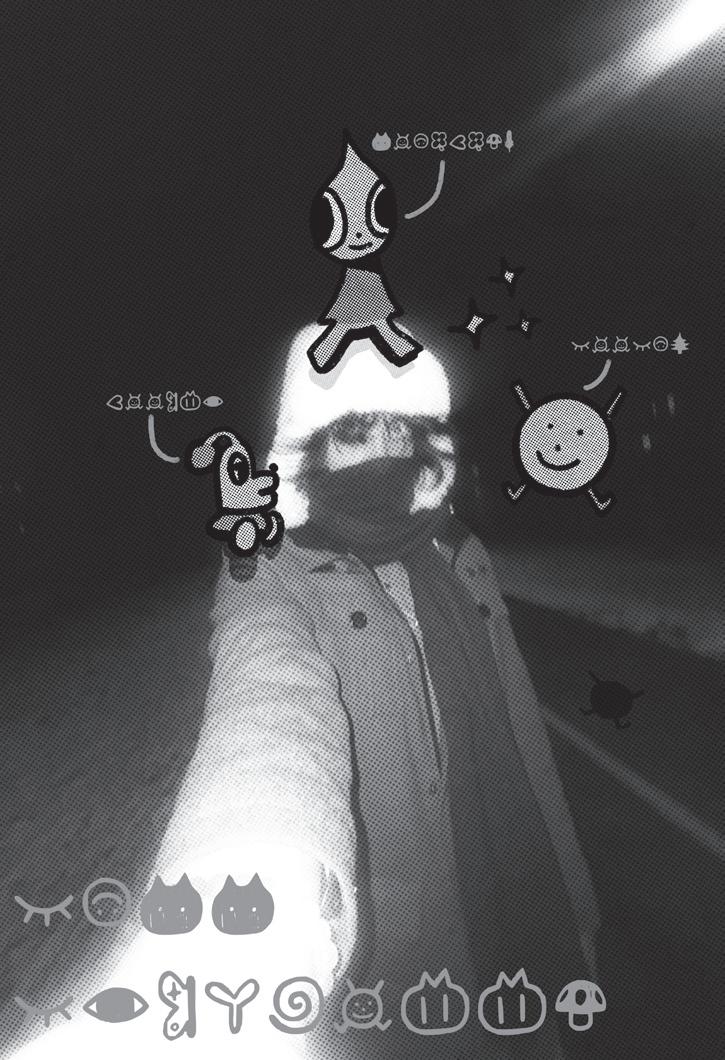
Hi! I’m Matt Minchello, and I’m an illustrator and animator based in the liminal space that exists between Magoun square and Ball square. When I’m not drawing you can find me peddling my mushroom wares at the Union Square Farmers Market, hidden in graffiti remnants along the GLX, getting my bike stolen at various Camberville squares, or getting easily distracted by bugs along the Somerville Community Path. If you’re trying to locate my consciousness, it’s cached somewhere between a half-broken Porchfest map tab and the frozen servers of Club Penguin — and sometimes, it logs me out because my consciousness forgot the password. I hope you enjoy my art throughout the newspaper and have fun decoding my messages. If you want to follow my art journey, you can find me on instagram @mellohumanbug. If you don’t follow me, I simply reappear as a crude drawing on a random wall in Boston. Ok, bye.
SPOTLIGHT ON SILVER SCREEN QUEENS
A SIT-DOWN WITH PARKER HALLIDAY
Parker Halliday is a digital producer by day and a fiercely creative force by night. Known for the clever, sharp takes on horror films that she shares through her podcast and YouTube channel “Silver Queens,” she uses her platform to explore themes like fear and media representation in cinema from the feminine perspective. Meg Pallis and Matt Meyers from Night Cap Cafe sat down to talk about what inspired her work, how horror functions as a mirror to society, and how to best produce a podcast.
Meg Pallis (MP): Why did you start your podcast?
Parker Halliday (PH): I’ve always enjoyed content creation. It’s what I do professionally for celebrities and influencers, but I missed creating something of my own. After watching The Substance, something clicked. I realized I deeply missed writing about things I care about. I even considered going to grad school. Instead I thought, what if I write an essay every two weeks about a movie I’m interested in? That turned into my podcast. It became my way of keeping myself accountable and staying creatively sharp.
MP: Why horror? What draws you to the genre?
PH: Horror has always been both empowering and problematic for women. You have the “Final Girl” trope—think Texas Chainsaw Massacre or Black Christmas where a woman is the survivor, the heroine. But there’s also this history of horrific violence against women portrayed on screen. Some of it is truly disturbing.
Now, though, we’re seeing a shift toward psychological horror, like in The Substance. The monster becomes more metaphorical, representing fear or internal struggle rather than just being a slasher like Michael Myers.
MP: What are your favorite horror films to talk about?
Parker: Definitely The Substance, The Shining, Jennifer’s Body... I loved diving into The Shining and exploring how Shelley Duvall was treated on set. People criticized her for being too “weepy,” but she was playing a mother in crisis. That performance was layered and incredibly vulnerable.
Jennifer’s Body is fascinating because it was directed by women and written by Diablo Cody, but marketed completely incorrectly—to teen boys who didn’t get it. It’s become a cult classic because people eventually realized its message. It’s angry, raw, and funny.
I also covered I Spit on Your Grave. It’s brutal, but it shows a woman reclaiming her body and agency in a way that’s uncomfortable but powerful.
MP: What would you say to people who think liking horror is “weird” or “messed up”?
PH: I have anxiety, and for some reason, horror helps me. It’s a way to engage with that anxious energy in a safe space. When you're scared during a movie, you know you're safe. It’s like exposure therapy— like being scared of flying and going in a simulator.
Horror helps me name a feeling. In real life, anxiety can feel vague and directionless. Horror makes it tangible.
MP: How do you balance criticism with celebration in your work?
PH: I always remind myself and my listeners that my point of view is just that—mine. I give trigger warnings when needed. Horror can be heavy, and people respond to it differently.
Take my video on Nosferatu, for instance. I had people pushing back, saying my take on Ellen reclaiming her sexuality was wrong, that it was more of a rape allegory. And they’re not wrong to feel that way! That’s what makes horror rich—you can watch the same film and walk away with totally different interpretations.
MP: How does horror help explore social issues?
PH: Movies are always products of their time. Watching a film from the 1960s means you’re interpreting it through a
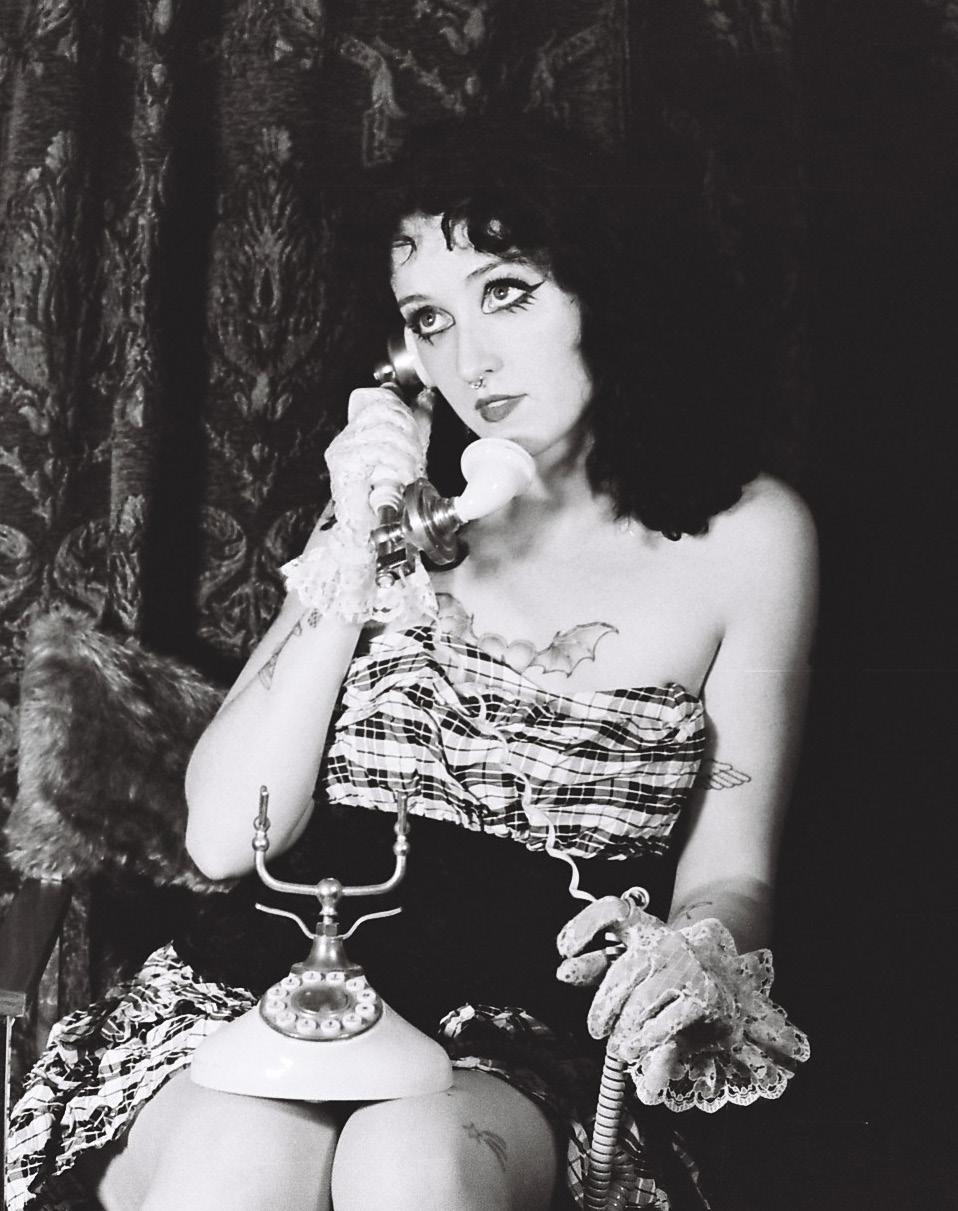
completely different lens than someone who watched it when it was released. For example, Jennifer’s Body didn’t resonate in 2009. But after the #MeToo movement, the film found a new audience. Now people understand it as a critique of the way women—especially those like Megan Fox—were exploited and misunderstood. The film didn’t change; the culture around it did.
That’s the magic of horror. It ages with us.
MP: What’s your episode production process like?
PH: It’s chaotic—in a good way! Sometimes I just watched a film and had to talk about it. Other times I compare old and new films that connect. Like Zola and Anora Zola felt full and rich. Anora didn’t connect with me as much, as [the titular character] felt two-dimensional.
I write 10-page scripts. I research with JSTOR and other sources. I do the recording myself—get in costume, film at my studio at Saxon Mills in Framingham. I edit everything too. I’m a bit of a control freak, but honestly, it would be amazing to have help filming.
Oh, and I make a themed drink for every episode! I’m a terrible bartender, so people comment when I clearly hate the first sip. [Laughs.] But it adds a fun, visual layer.
MP: Any upcoming episodes we should watch for?
PH: Jennifer’s Body is next, and then I’m diving into Zola and Anora. I’ll talk about how female characters are portrayed and how much the creative team behind the work matters. A woman writing or directing a female character changes everything.
There’s such a difference between how men describe women and how women describe themselves—it's staggering. MP: What advice do you have for someone starting a podcast?
PH: Find your niche. There are so many podcasts, so you need to ask: what do I love? What do I care about? Has someone already done this? Even if they have, how can you make it uniquely yours?
For me, it was looking at complex female characters on and off screen. Historically, women in film have been treated horribly, and that affects how they’re portrayed. One of my favorite old Hollywood icons is Hedy Lamarr. I even have a tattoo of her. She [influenced the creation of wi-fi] during WWII, but she was also a gorgeous actress whose life in Hollywood was heartbreaking. Her story was the starting point for me in understanding how women in film have been shaped—and silenced—by the systems around them.
Love what you read? You can check out Parker’s podcast on Instagram at @silverscreenqueenspodcast, as well as her Youtube channel and Tiktok (named the same way). You can check out Night Cap Cafe’s streaming broadcast, coming soon to Somerville. Follow our socials at @ night_cap_cafe on Instagram and visit our website nightcap.cafe for updates.
Edited by Epke Paquette