

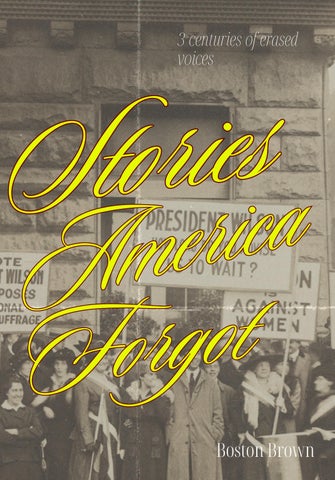
The18thcenturyinAmericawasmarkedbyrevolution,expansion,andthe foundingofanewnation butfullcitizenshipwasextendedonlytowhitemen withproperty.Women,AfricanAmericans,andNativeAmericanseachplayed essentialrolesinshapingearlyAmerica,yettheyfacedlegalexclusion,forced labor,landdispossession,andviolence.Despitetheseobstacles,theyresisted, adapted,andpreservedtheircommunitiesandculturesinwaysthatcontinueto influencetheUnitedStatestoday.


Womeninthe18thcenturyhad verylimitedlegalrights.They couldnotvote,ownproperty independentlyaftermarriage,or participatefullyinpoliticallife.
Despitetheserestrictions,womenwerevital totheRevolutionaryWareffortasboycotters, fundraisers,andhome-frontorganizers. FigureslikeAbigailAdamsurgedthenation’s foundersto“remembertheladies,” highlightingearlycallsforexpandedrights.


Uncoveringthestoriesof silencedgroupsinhistory


NATIVENATIONSHADHISTORIESLONGBEFOREAMERICATOOKSHAPE.

The smallest spark can start a flame; And the world will never be the same.
Yet African Americans actively resisted through revolts, escape, sabotage, and the preservation of African cultural traditions Many fought in the Revolutionary War, hoping military service would lead to freedom.
Whether enslaved or free, Black people shaped the early United States through their labor, culture, and continuous resistance, proving that the story of America’s founding cannot be told without them.


Although they suffered displacement and population loss, Native communities preserved traditions, languages, and systems of governance that continue to survive today.


bThe19thcenturymarkedthe irthoftheorganizedwomen’s rightsmovementintheUnited States. Womenlivedwithlimitedlegalrights, nopolitical voice, andfewopportunitiesforeducationoremployment.


Events like the 1848 Seneca Falls Convention brought women together to demand equality, including the right to vote and own property. Women also worked in reform movements, such as abolition and education, which helped strengthen their activism.


African Americans built schools, churches, mutual aid societies, and political organizations. But white supremacist backlash, Black Codes, and the rise of Jim Crow undermined this progress. Still, African American communities laid the groundwork for future civil rights movements—proving that freedom required more than legal declarations; it required social and political transformation.


empty land and revealed the cost of westward expansion. Native resistance, survival, and adaptation are essential to understanding the true story of 19th-century America.


Women had some major successes in the 20th century. In 1920, the 19th Amendment finally gave women the right to vote. During WWI and WWII, women entered the work force proving the could do jobs that were previously only for men.


Thefeministmovementofthe1960sand1970s pushedfurther challengingworkplace discrimination,fightingforreproductiverights, anddemandingequalityineducationandlaw.
Bytheendofthecentury,womenhadmore powerandvisibilitythaneverbefore,although thestruggleforfullequalitycontinued.
LGBTQcommunitiesexistedlongbeforethe20thcentury, butthiswasthefirsttimetheybeganorganizingopenly.


Love is not a crime—silence is. Loveisnotacrime silenceis.


Human dignity has no labels. Humandignityhasnolabels.


Movement of the 1950s and 1960s confronted segregation, violence, and discrimination through boycotts, marches, legal challenges, and grassroots organizing. This activism led to major laws like the Civil Rights Act and Voting Rights Act. Even with continuing racism and inequality, African Americans reshaped the nation through art, politics, protest, and community leadership.

the1950sand1960s confrontedsegregation, violence,anddiscrimination throughboycotts,marches, legalchallenges,and grassrootsorganizing.This activismledtomajorlawslike theCivilRightsActandVoting RightsAct.Evenwith continuingracismand inequality,AfricanAmericans reshapedthenationthrough art,politics,protest,and communityleadership.
realitythatwasslavery.Blackactivismgreatlyshapeddemocracy,which understand.ByskimmingpasttheWomen’sRightsmovement,werecei throughonlytheeyesofmen,whichignoresthegreateffortswomenmad backthenandnow.
Overall,thisprojectaimsto(bymorethanjustapowerpointpresentation) historycannotbefullyunderstoodwithoutthenarrativesofmarginaliz throughouthistory.Byplacingthesecommunitiesatthecenterofthecent challengeswhatistraditionaltaughtinHistoryclasses.Thesegroupsw present,butabsolutelyessentialtotheevolutionoftheUnitedStatesof