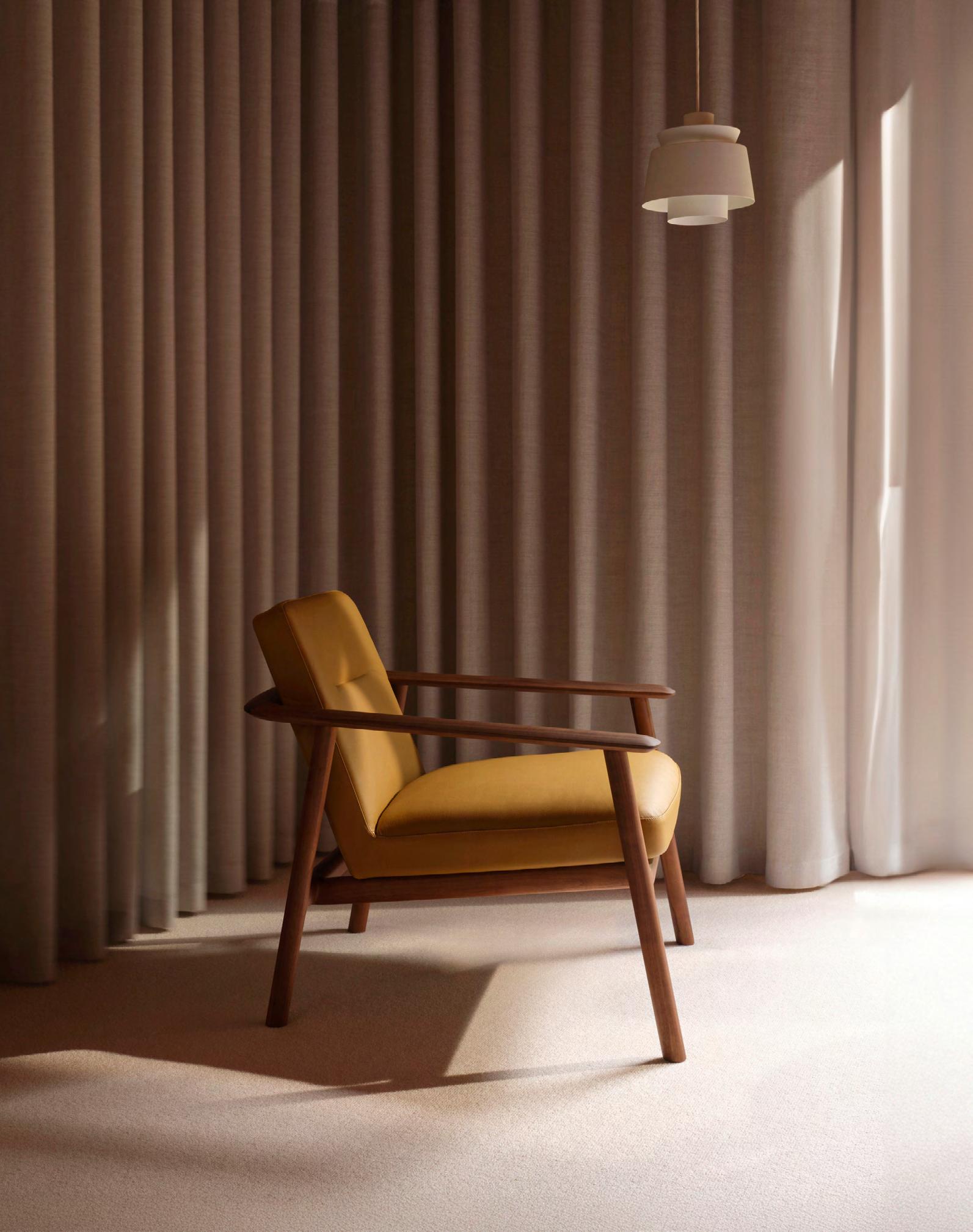
Katō
Lounge Collection
Welcome to the 2026 edition of Details
As ever, sustainability remains central to everything we do. In this issue, we sit down with our Sustainability Manager, Mark Winsper, to discuss our carbon reduction and circularity strategies‘The Loop’ and ‘ReNew’ - and highlight the positive steps we’re continuing to take towards a more responsible future.
It’s also an exciting year for new design. We’re proud to introduce three new additions to our collection: Lucy, a lounge chair that truly reflects our sustainability philosophy; Nya, offering relaxed comfort with refined detailing; and Lumae, a fully upholstered dining chair designed with both warmth and versatility in mind. In this issue you will hear from the designers behind these news pieces how each one has been thoughtfully developed to balance Boss Design’s key pillars: design integrity, comfort and environmental responsibility.
Thank you, as always, for your continued support. We look forward to sharing the year ahead with you.
Natalie Murray, Editor
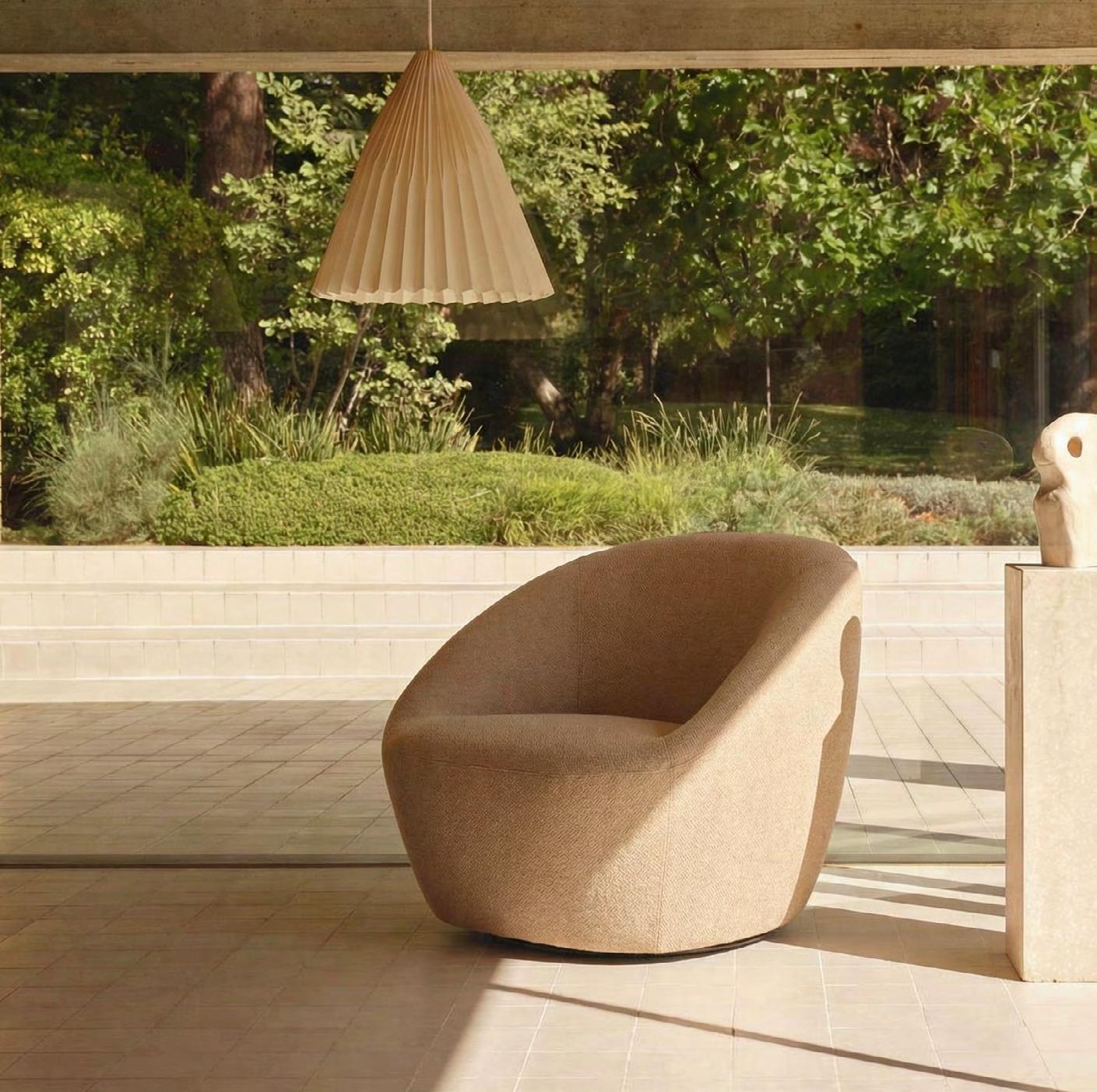
Lucy
The shape of things to come
‘We are leaders not followers.’ Steve Bloomer, Lead Developer at Boss Design, keenly emphasises the significance of Lucy’s introduction to the existing portfolio by telling us how truly ‘new and fresh’ it is, and how navigating through unchartered design waters ‘has, at times, teetered between scary and challenging – happily landing mainly on the right side of challenging’. A source of great pride for all involved, Lucy is set to herald a new wave of design tropes.
Aaron Clarkson, Senior Product Designer, picks up the story…
Our pioneering new product is built with one bold ambitionto remove furniture from landfill. Lucy is everything you would expect from Boss Design: curvaceous, organic in form, beautifully tailored and sumptuously comfortable. But beneath her sculptural exterior lies something far more radicalengineering designed to transform the lifecycle of upholstered furniture.
Designed for renewal, not replacement
In the world of commercial interiors, fabric is often the first element to fail. Once upholstery reaches the end of its life, the entire piece is typically discarded, sent to landfill or incineration even when the structure beneath is perfectly sound.
We do offer a re-upholstery service through our renew programme, but the reality is this - many clients choose replacement over repair. It’s quicker, simpler and - too oftenit’s wasteful. Lucy changes that equation entirely.
Re-upholstery without removal
Lucy was engineered so re-upholstery can happen in situ, without the furniture ever leaving the building.
Imagine a 24/7 lounge such as those operated by British Airways. Removing furniture from these high-security, high-traffic spaces is disruptive and complex: access through security is time-consuming, transport is labour-intensive and lounges may even need to close temporarily. All of this carries a significant carbon footprint. Lucy eliminates these challenges.
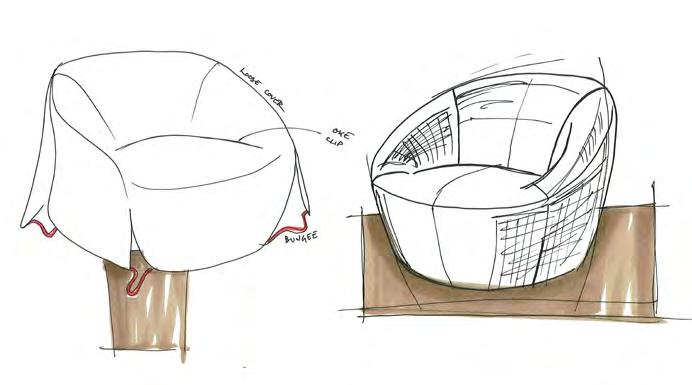
Her cover is completely removable, no tools required. In minutes, quietly and cleanly, she can be re-upholstered on site. No
downtime, no transport, and no disruption. The old covers can then be recycled into new textile fibres, extending their value rather than ending their life. The furniture remains in situ, the space stays open and the product has a new lease of life.
Inspired by the outdoors
The idea came from an unexpected place; boating equipment. In sailing, elastic bungee and rope systems allow fabric to flex, adapt and be tensioned with ease. Sails are temporarily tied off to adjust to the wind; secure, but adaptable. Lucy uses the same principle.
Her upholstery is secured beneath the seat using a bungee cord system, working much like a drawstring bag. The fabric is tensioned evenly around the form, then clamped discreetly into place. The result is a tailored, seamless finish, but one that can be released and replaced effortlessly. It’s simple, intuitive and it fundamentally rethinks how upholstery can function.
Engineered for circularity
Lucy’s sustainability story goes far beyond her removable cover. She is constructed from:
• Bio-Pur® foam, which produces up to 70% less carbon than traditional foam
• A fully recyclable internal steel frame
• FSC (Forest Stewardship Council) certified plywood from responsibly managed forests
• Minimal bolt fixings for straightforward disassembly
We deliberately reduced the number of materials used, ensuring that at the very end of Lucy’s life, each component can be easily separated and recycled. The foam can be repurposed into carpet underlay or new upholstery foam. The steel returns to the recycling stream. The timber is responsibly sourced and recoverable. Nothing complicated and unnecessary.
A new way forward
Lucy isn’t just a chair; she’s a shift in thinking. She challenges the assumption that upholstered furniture is disposable. She removes the friction from doing the right thing. She reduces carbon, disruption and waste, while delivering the comfort and beauty our clients expect.
Sustainable design isn’t just about materials. It’s about systems. It’s about foresight. It’s about designing products that anticipate their own renewal. Lucy was built for exactly that.
Creative Circularity
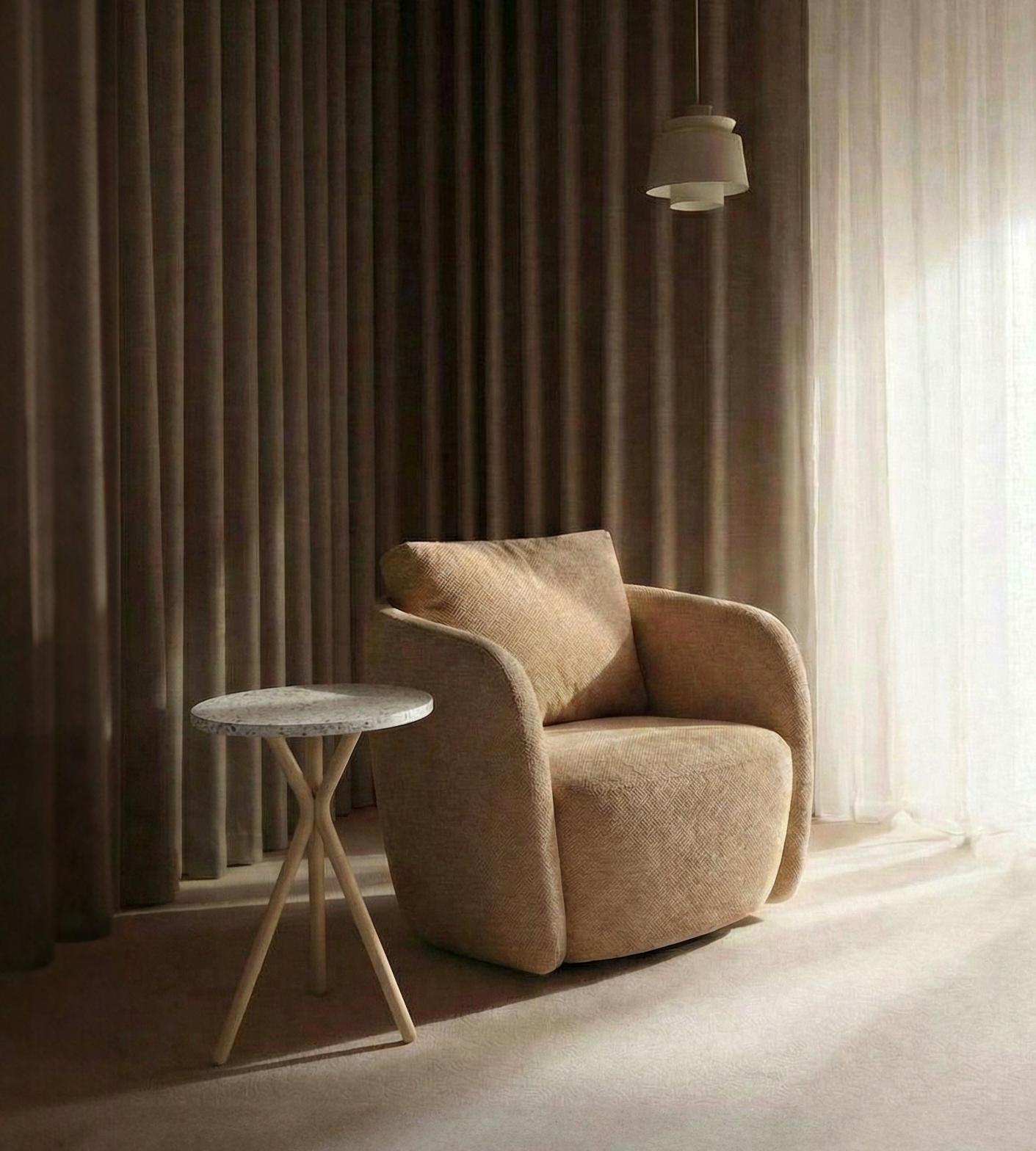
Nya
Aaron Clarkson – Senior Furniture Designer

Compact comfort, reimagined
Nya is a sumptuously comfortable lounge chair, wrapped in a curvaceous, supportive organic shell that feels as good as it looks.
Big comfort, smaller footprint
The ambition behind Nya was clear: create a lounge chair with all the generous comfort of Beau, Mila and Bodie, but in a more compact form. In high-value environments such as airline lounges and hotel lobbies, every square metre matters. Where seating must work harder, be more flexible and offer elevated comfort without overwhelming the space, Nya answers that challenge. Its reduced footprint increases layout versatility while still offering the deep, enveloping sit you’d expect from a much larger piece.
Design without restraint
With Boss Design, a company unafraid to invest in tooling for innovation and pioneering design, there were no limitations on form during our design phase. This freedom allowed us to negate straight lines in favour of a cocoon-like silhouette; fluid, sculptural and entirely organic. The chair flows continuously from base to backrest, encasing the user in soft architectural luxury. It feels protective without being imposing, a personal retreat within a public space.
Engineered for domestic-level comfort
Nya doesn’t just look inviting, it performs. At its core is a traditionally sprung seat using steel serpentine springs, delivering the kind of resilience and comfort typically reserved for high-end residential upholstery. Above this sits carefully layered foam in varying densities, engineered to balance support and softness. A generously fibre-filled back pillow completes the experience, allowing the user to truly sink in, relaxed, supported, and at ease.
The power of the surround
Encasing the upholstered core is a moulded foam organic shell. This structural surround:
• Holds the internal components securely in place
• Creates a distinctive, iconic silhouette
• Enhances the sense of enclosure and security for the user
• It’s this outer form that gives Nya its identitysculptural yet purposeful.
Movement with intent
Nya is available with a swivel base and auto-return mechanism. This thoughtful feature ensures chairs naturally return to their original position, maintaining visual order in hospitality and lounge settings without the need for constant adjustment by staff.
For the user, the swivel adds subtle dynamism, perfect for turning into a conversation or shifting perspective within a space.
Designed responsibly
Sustainability is built into Nya’s construction:
• Bio-Pur ® foam, producing 70% less carbon than conventional foam
• An internal metal skeleton for long-term durability
• FSC-approved plywood from responsibly managed sources
Every component has been considered not only for comfort and aesthetics, but for minimum environmental impact and maximum longevity.
Nya is more than a lounge chair, it’s a refined response to modern spatial challenges: compact, sculptural, and deeply comfortable. It is a chair that invites you in, supports you completely, and quietly elevates the spaces it inhabits.
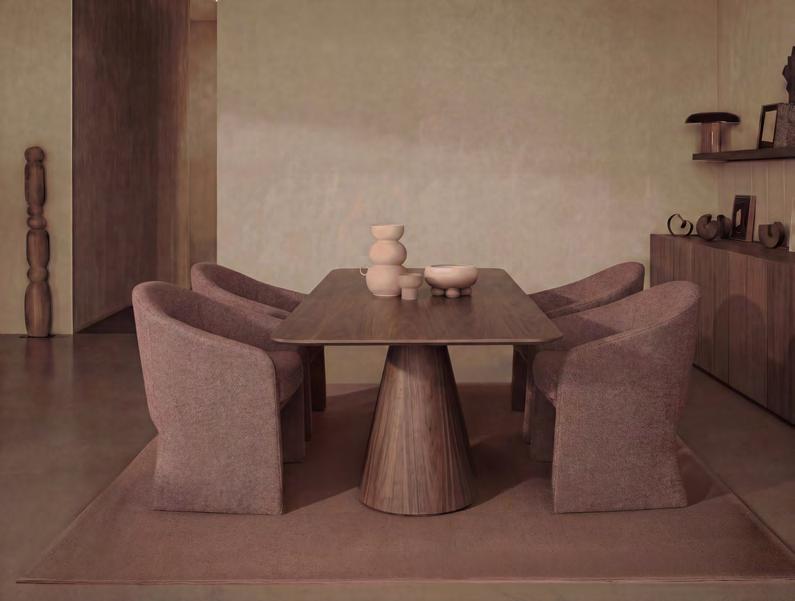
When Boss Design won a collaboration with a quintessentially British prestigious brand, we had a clear vision of the development route we would take.
The Lumae project emerged through a close collaborative process — one rooted in shared values and mutual respect for craft, engineering and material integrity. From the outset, the conversation centred on identifying the principles that jointly define our respective brand characteristics: precision in detail, clarity of form and a belief that innovation should enhance, not overpower, the user experience. Through open dialogue and iterative development, these foundations shaped the direction of the chair.
The design process explored how refinement and strength can coexist — how technical performance can sit comfortably within a calm, assured aesthetic. Every proportion, surface transition and material decision was carefully evaluated to ensure alignment with a clear and cohesive design language.
The result is a chair defined by quiet confidence — where form, function and finish work in harmony, and where collaboration is evident in every considered detail.
Inspired by legacy, designed for now
Lumae draws direct inspiration from our successful seating collections, Paloma, Remi and Amelia, but evolves them into something more architectural and composed.
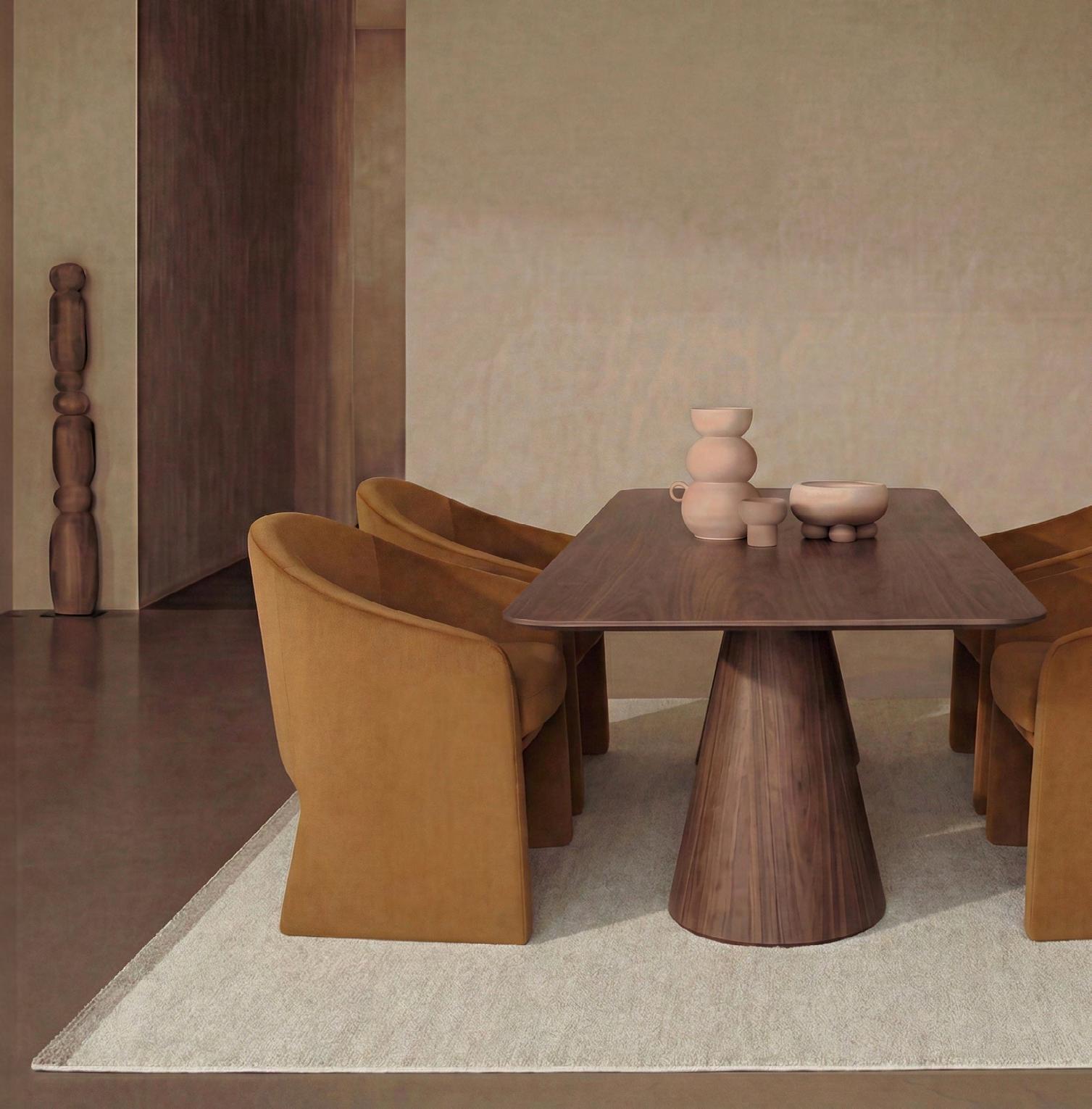
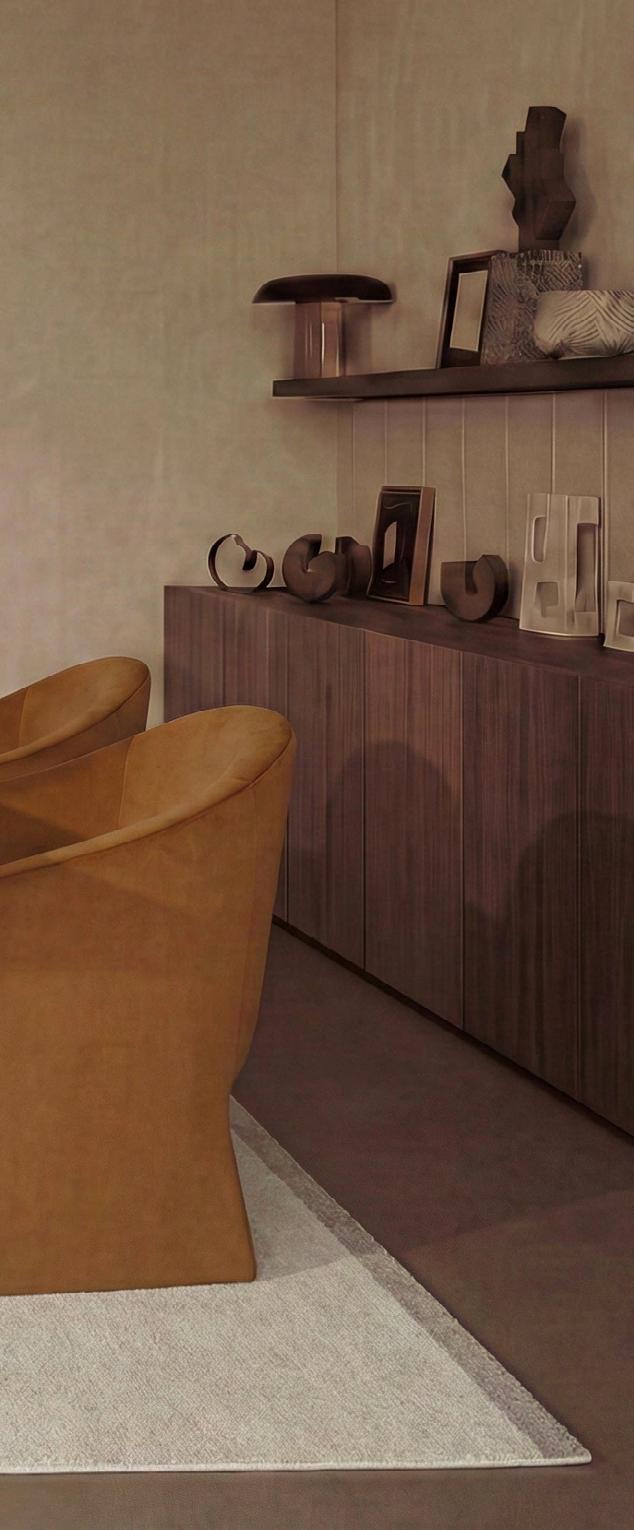
If those designs are siblings, Lumae is the sophisticated elder, poised, confident and effortlessly adaptable. Picture it upholstered in rich velvet within a members’ lounge or specified in a contemporary woven textile inside a high-end hotel suite. It feels equally at home in executive meeting spaces, hospitality environments and private lounges.

Lumae
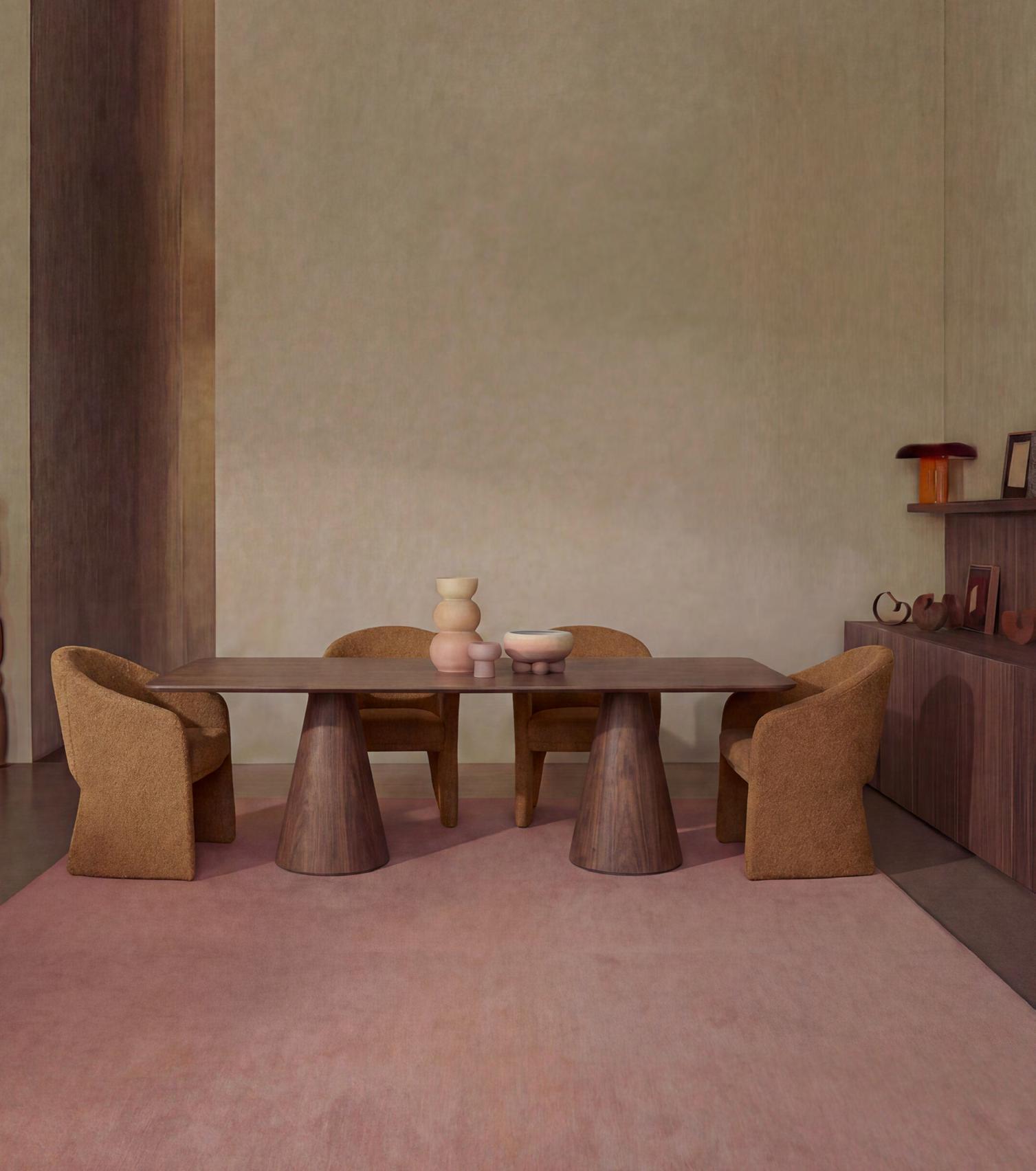
As with a key specialism of our client, comfort in Lumae is not an afterthought, it is precisely engineered.
Comfort, engineered
As with a key specialism of our client, comfort in Lumae is not an afterthought, it is precisely engineered.
Clients can specify:
• A loose seat cushion for a relaxed, residential aesthetic
• A fixed seat cushion for a sharper, architectural profile
Each version is beautifully tailored to a standard worthy of Boss’s upholstery team, with crisp seam lines, balanced proportions and meticulous finishing. The detailing is subtle but deliberate, echoing the finesse for which our client has earned its status on the global stage.
Responsible by design
A key objective we share with our client is working toward a more sustainable future, and we ensured that Lumae reflects the same forward-thinking ethos.
The chair is manufactured using:
• Bio-Pur® foam, which produces 70% less carbon than conventional foam
• An internal steel frame for structural longevity
• FSC-certified plywood and responsibly sourced fixings
• A design engineered for efficient manufacture
Importantly, Lumae is designed for disassembly. It can be easily stripped and reupholstered, extending its lifecycle and reducing waste, a principle increasingly vital in both automotive and furniture design.
A shared philosophy of modern British luxury
What unites this collaboration is more than aesthetics. It’s a mindset.
Our client is redefining luxury through innovation, sustainability and confident British design. Lumae translates that philosophy into furniture form, sculpted yet inviting, refined yet durable. It is not simply a meeting chair, it is an expression of brand values.
Brooke
David Bonneywell, Design Manager
Crafting spaces with curve appeal
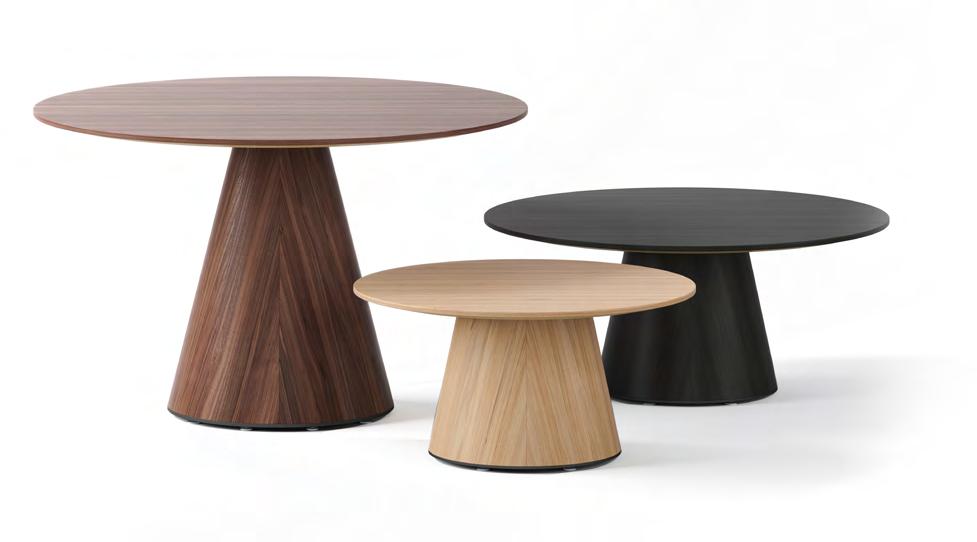
From executive boardrooms to open-plan workspaces and luxury lounges, Brooke is a family of tables that lends prestige presence to a variety of settings. In conversation with David Bonneywell, Design Manager, we discover how Brooke was developed behind the scenes.
You worked on the project for the original Brooke tables - what was that process like?
This was a relatively straightforward development process. The challenge was to design interesting features to the cone profile to reveal subtle edge details and seamless joints. Working with multiple suppliers and a variety of materials meant that production tolerances had to be resolved to keep the overall visual as clean and consistent as possible.
Did you take inspiration from any particular influences or sources?
Circles are always very appealing and give reliably adaptable forms for all environments. It’s an arrangement that welcomes you to the discussion, facilitating natural
eye contact with everyone seated at the table. The cone silhouette was the most harmonious shape for the base, in order to complement the many varieties of table-tops and seating that we offer alongside Brooke.
What prompted this new phase of design for the Brooke twin ped?
From developing the single pedestal range we realised that this could also be expanded into larger table-top sizes to suit the increasing trend of natural and organic working environments that require more power and connectivity options. Splitting and extending the cone shape into an oval was a natural progression to create a visually striking table that could still be produced in a multitude of finishes.
What are you most proud of re being part of designing Brooke?
It is always challenging to do the simple things well as there is nowhere to hide. A marker of success to me is also still creating levels of interest and adaptability using such a classic form – this I believe has been achieved effectively with the Brooke range.
Closing The Loop
Mark Winsper – Sustainability Manager
In an interview with Mark Winsper, Sustainability Manager for Boss Design, we discuss the company’s five-year Sustainability Strategy, our unique model ‘The Loop’ and the principles behind designing for a sustainably crafted future.
What was the driving force behind this initiative?
For me, it was about putting a clear framework around what Boss has always been good at, in a way that enables us to anticipate – and be equipped for - what the market needs next. We could react to every new sustainability requirement as it comes in, but that’s not our style; we would always prefer to be proactive rather than reactive. I wanted a plan - derived from both qualitative and quantitative sources - that effectively guides our ways of working and sets standards for us to uphold, so customers can procure from us with confidence.
Maintaining communication with clients, taking the time to listen and understand their expectations, challenges, objectives – whatever they may be – cannot be underestimated in terms of importance. Everyone is at different stages of their sustainability journey, but a key common denominator was the desire for Boss Design
to be a trusted partner, working in tandem with them to meet their needs and support their respective goals. Happily, our legacy of craftsmanship and production of high-quality furniture designed to last gives us a natural and credible foundation upon which to build.
Tell us about ‘The Loop’
model.
Circularity is the future of our industry. Clients are under pressure to reduce waste, retain value, and account for the carbon they have already bought. The Loop is our response to that shift; designed to meet customers where they are, at the point they most need support. It affords clients clear routes to longevity: to retain products in their current workplace for longer, renew them when they need a refresh, redeploy them when layouts change, repurpose them when they no longer fit, and only recycle as a last resort.
ReNew is the most tangible example. From April to December last year we reupholstered over 1,000 pieces, and we have a live pipeline already booked and progressing, ranging from tens of items right through to thousands over the coming months. This is a clear indication that the demand is real, and it proves the model can scale.
We are also building a trusted partner network, called The Hive, to ensure that these services can be delivered with consistent quality and reach.
Does this strategy address carbon reduction plans for Boss Design?
Yes, because at its heart is one simple idea; lifetime carbon management. If you care about carbon, you must care about how long something stays useful.
We have clear ambitions, aligned to the Science Based Targets initiative and the direction set by our parent company, Okamura. Our headline goals are a 50% reduction by 2030 and carbon neutrality by 2050. We have multiple projects in the pipeline across operations, energy, transport and supply chain engagement, all working towards this shared ambition. The point is measurable progress with full and consistent transparency.
Finally, how does this connect to Boss Design’s ESG strategy?
For us, it is broader than carbon and materials. It is people, culture, governance, and how we show up locally. Alongside our operational work and The Loop services, we are building our ESG plan, including community and biodiversity projects that create a positive local impact. I’m excited by this project, and look forward to sharing the details with both our clients and the industry as a whole in due course.
As Good As ReNew
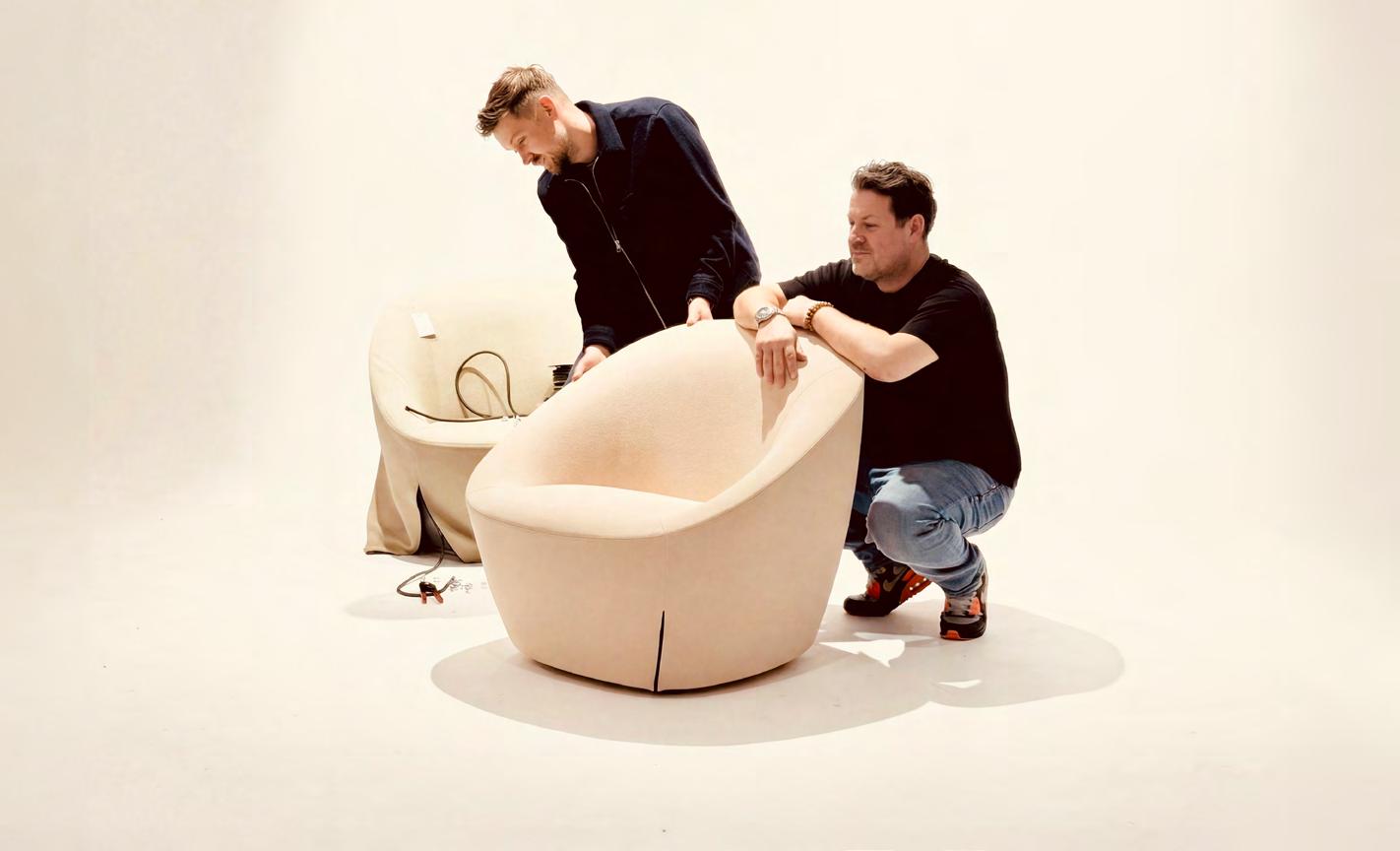
As part of The Loop model, our ReNew initiative — a service for reupholstery, repair and refresh — keeps products in use and relevant, protecting value for clients and the planet.
Boss Design’s heritage in craftsmanship naturally extends into circularity: components are considered for disassembly, finishes are chosen for longevity, and every new range is launched with clear routes for what comes next.
According to WRAP (Waste and Resources Action Programme), the UK discards around 1.2 million tonnes of furniture each year, with only a small fraction reused or refurbished. The thought of beautifully crafted furniture being discarded long before the end of its life drives our zero-to-landfill commitment and reinforces why circular design matters.
Furniture should never be treated as a commodity but recognised as an asset that holds value, evolves with use, and contributes positively throughout its life and beyond. When we treat furniture as an asset, we preserve its embodied carbon and craftsmanship. Every time we renew rather than replace, we extend the life of materials and halve the carbon footprint of the alternative. Through our second-life programs and collaborative circular networks, we help clients unlock that potential, turning procurement into stewardship and product life into product legacy.
Why does this matter?
Workspaces evolve. Interior schemes shift. Upholstery specifications and colourways change as organisations grow, refresh, and reimagine how their spaces should feel. In many fit-outs, lounge seating is replaced for aesthetic reasons rather than performance, creating avoidable waste. This is the fast furniture habit, and it is one of the most avoidable forms of disposal in our industry.
Lucy was designed to offer a practical alternative through renewal rather than replacement, with the conceptual objective that delivers seats which stay in service, beautifully, through multiple chapters of change. It is a lounge chair with renewal engineered into its architecture.
Aaron Clarkson, lead designer on the project, held two priorities as paramount from inception: protect the integrity of form, and design for longer life. Renewal could not look like a compromise - it had to be fast enough to be practical and precise enough to preserve the silhouette, the line, and the finish. Working in close partnership with Steve Bloomer, Lead Developer, the team embraced optimisation throughout the evolution of the design process, refining shape and upholstery as one system until renewal became central to the final product.
Lucy sits within the The Loop as a flagship expression of ReNew, optimised for circularity and designed to reduce carbon over its lifetime through retention, renewal, and core materials. Only the upholstery cover is replaced,
reducing the amount of fabric exchanged during refresh cycles while minimising the likelihood of disposal. Removed covers are collected at the point of renewal and returned to the fabric manufacturer for recycling, creating a defined pathway for replaced components.
Selected upholstery options are available in fabrics made from 100% recycled materials. Bio-Pur® is used at the core, supporting responsible material optimisation beneath the surface while maintaining comfort and durability. Lucy is designed for three service lives or more, with an expected seven years per life under normal use. Over that lifetime, we continue to review and improve through each design tweak and iteration, strengthening longevity, serviceability, and circular outcomes.
Lucy supports that reality in the spaces where lounge chairs live. When a scheme changes, the chair does not need to be replaced. The renewal is focused where it should be, on the upholstery cover, so the chair’s value stays in place. Removed covers are returned to the fabric manufacturer for recycling, and selected upholstery options are available in fabrics made from 100% recycled materials. Bio-Pur® sits at the core, bringing responsible material optimisation into the comfort experience without compromising performance. Lucy is designed for three service lives or more, with an expected seven years per cycle under normal use. Over that lifetime, we will continue to review and improve through intelligent design innovation and iteration, strengthening longevity, serviceability, and circular outcomes.
AHM On Location
House
“Probably the best modern house in the world”
Hugh Pearman, Architecture critic
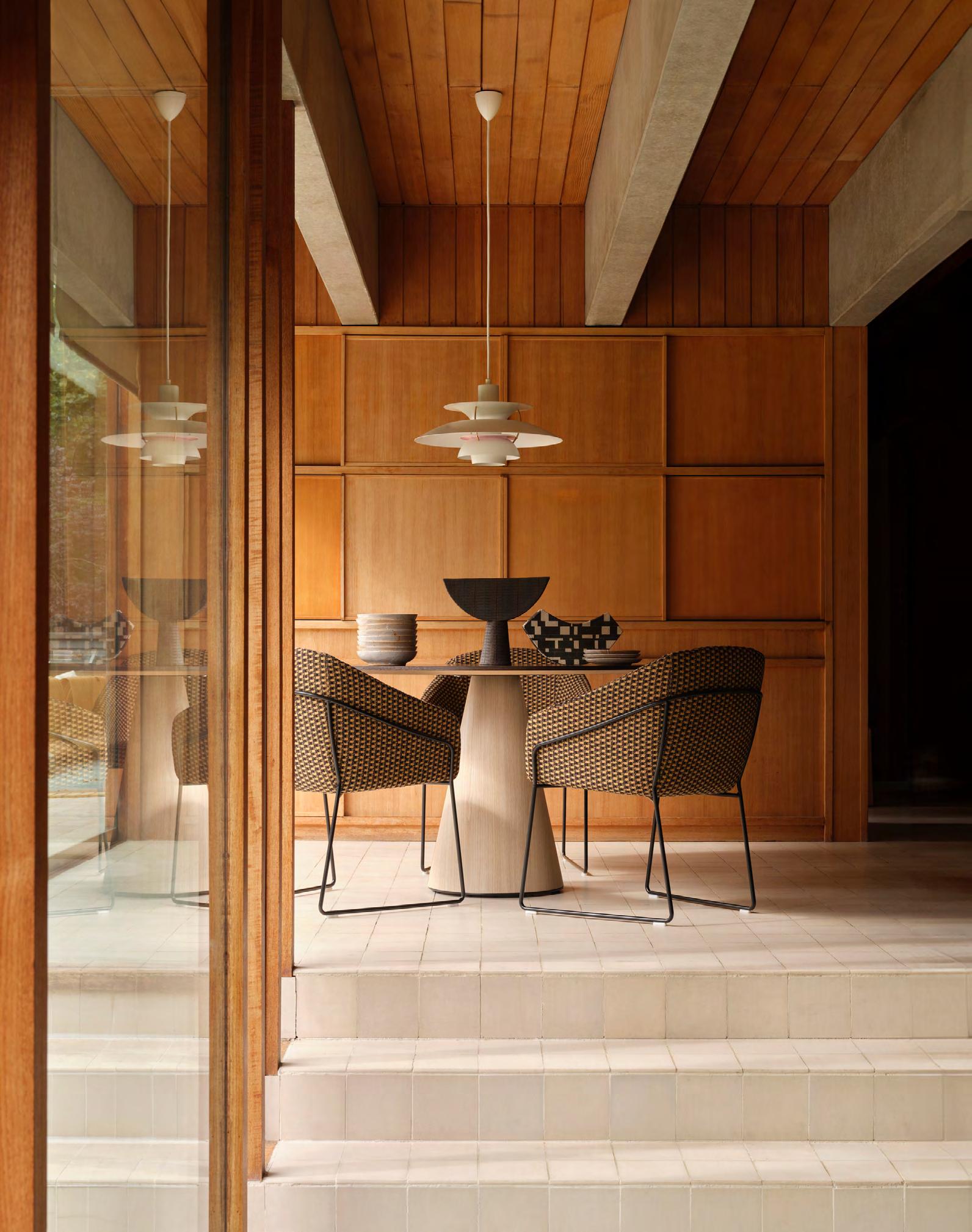
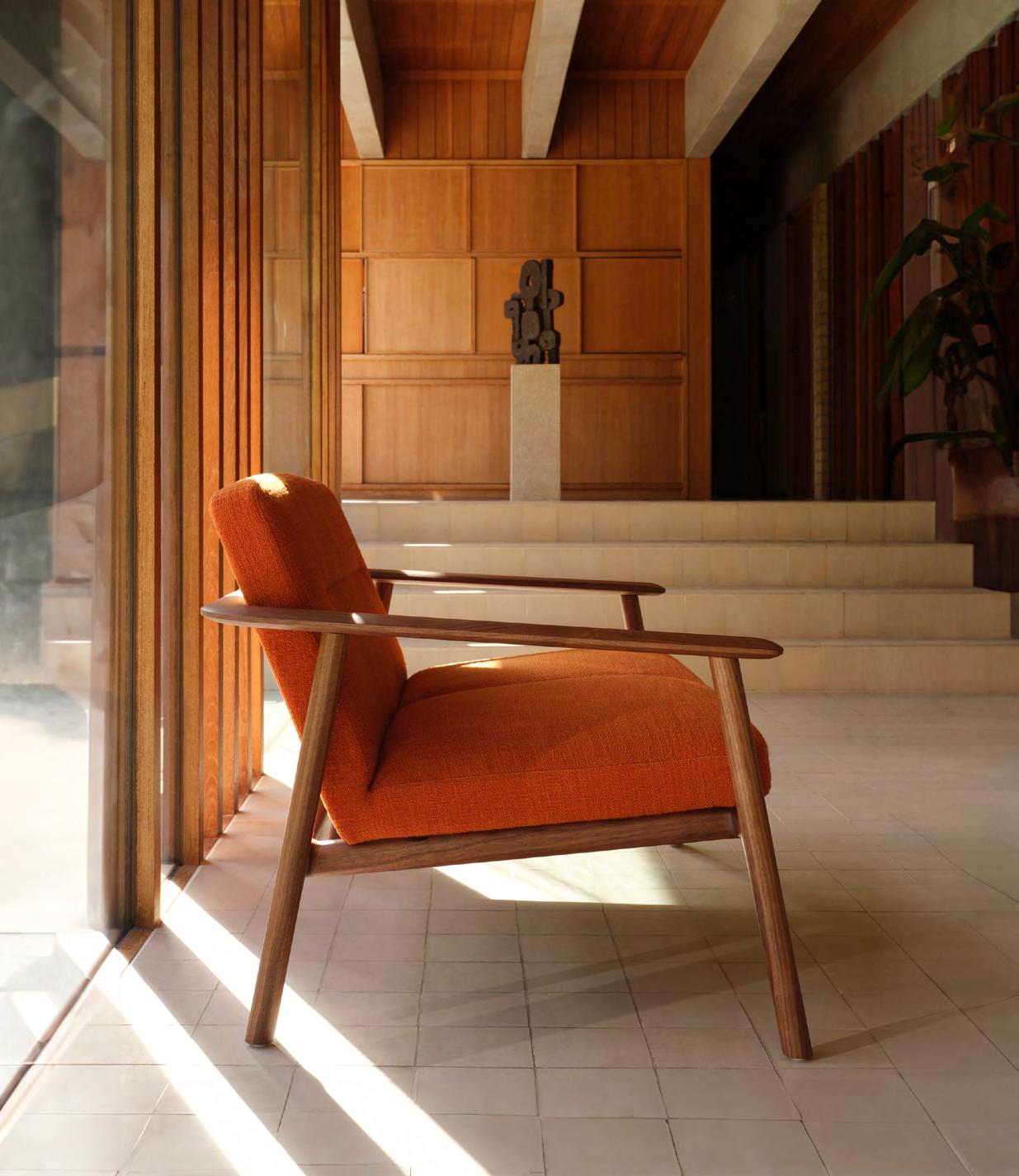
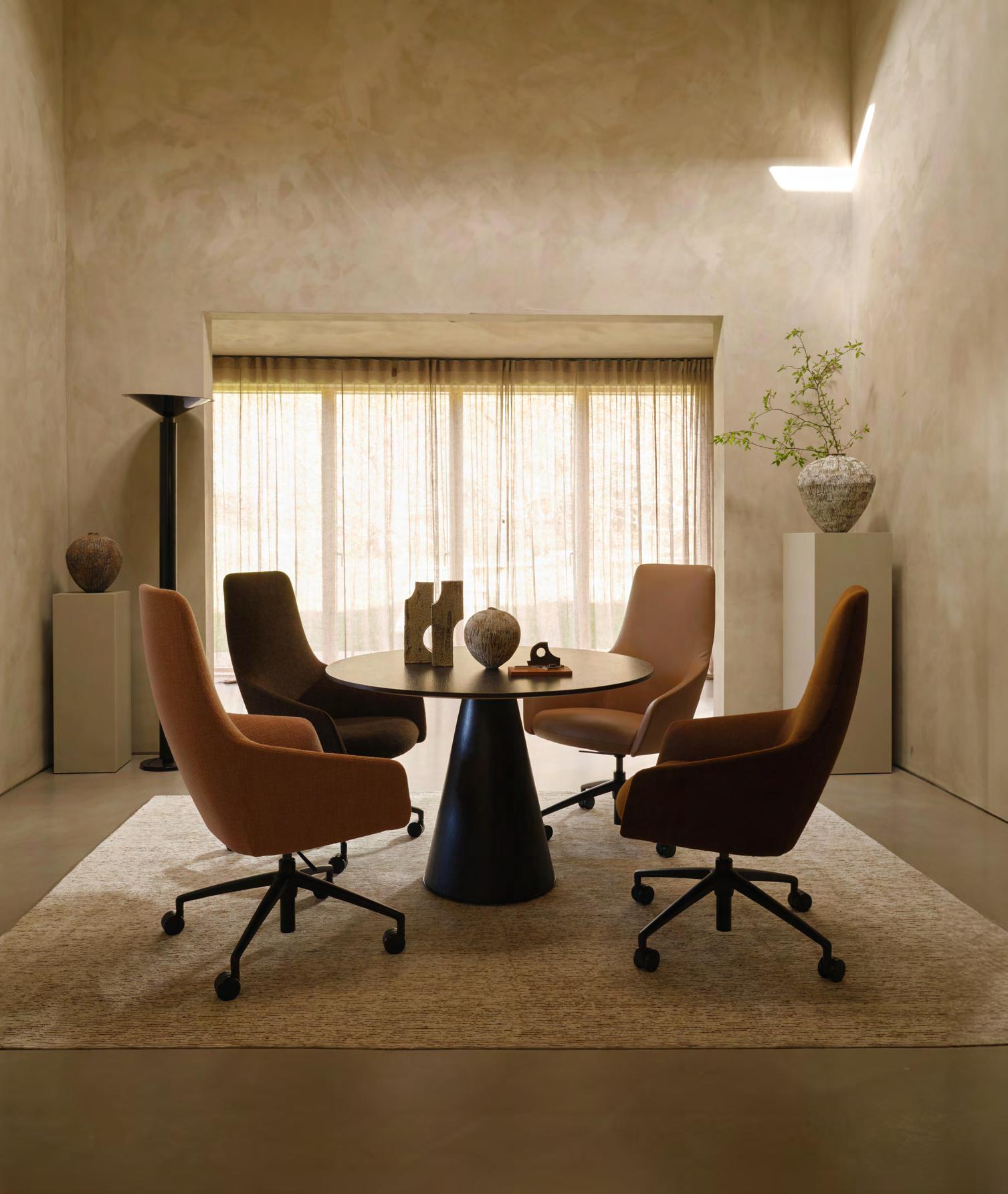
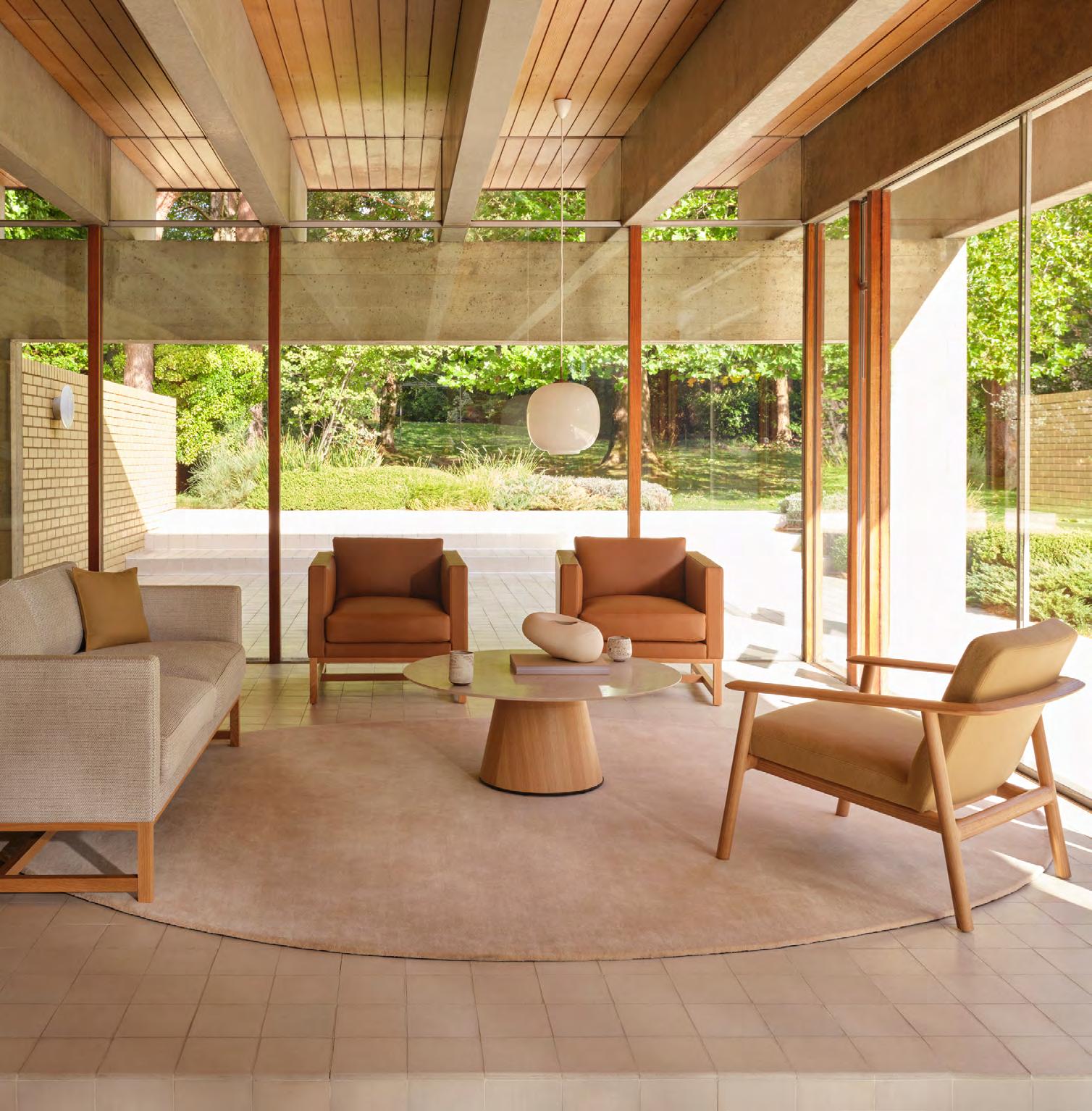
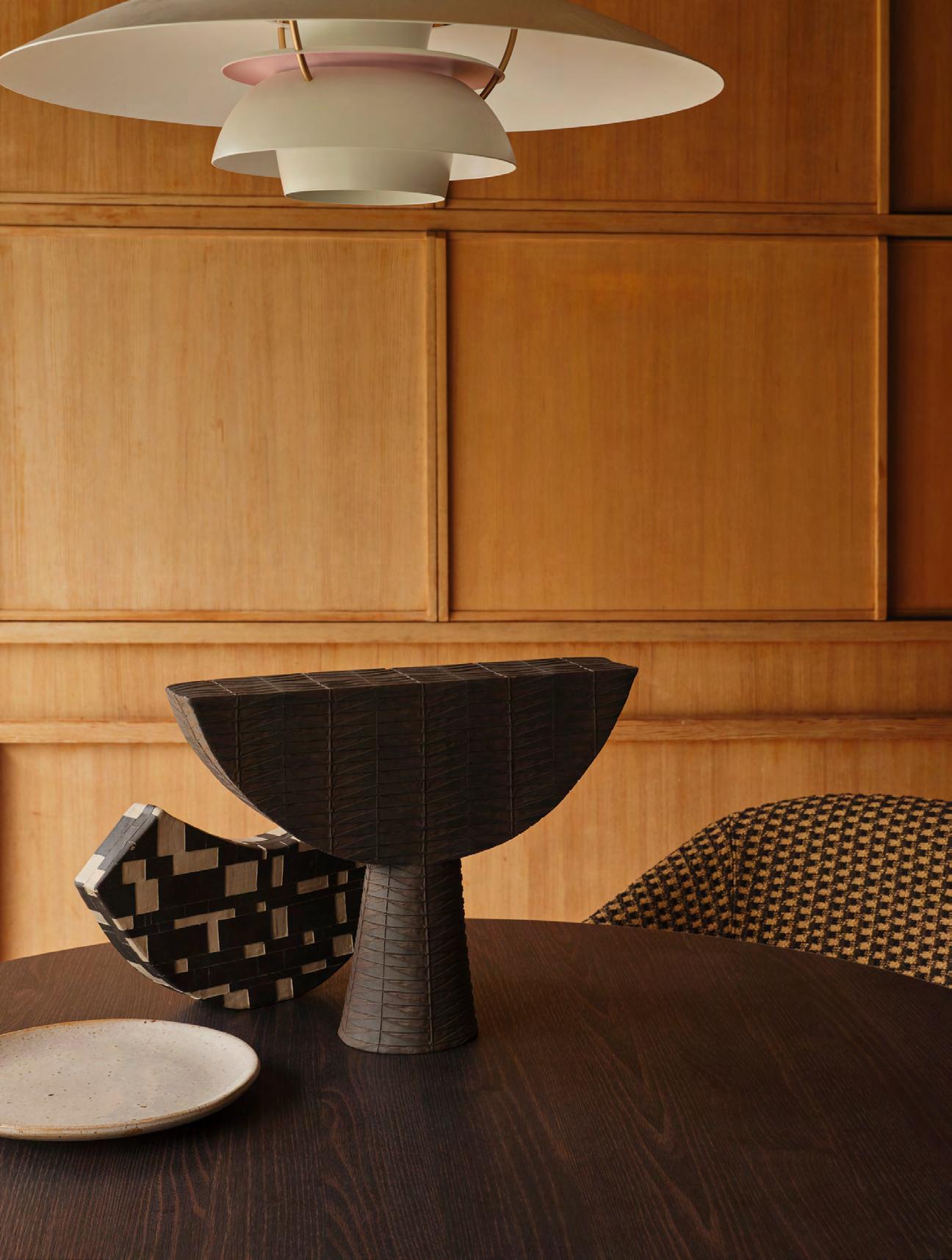
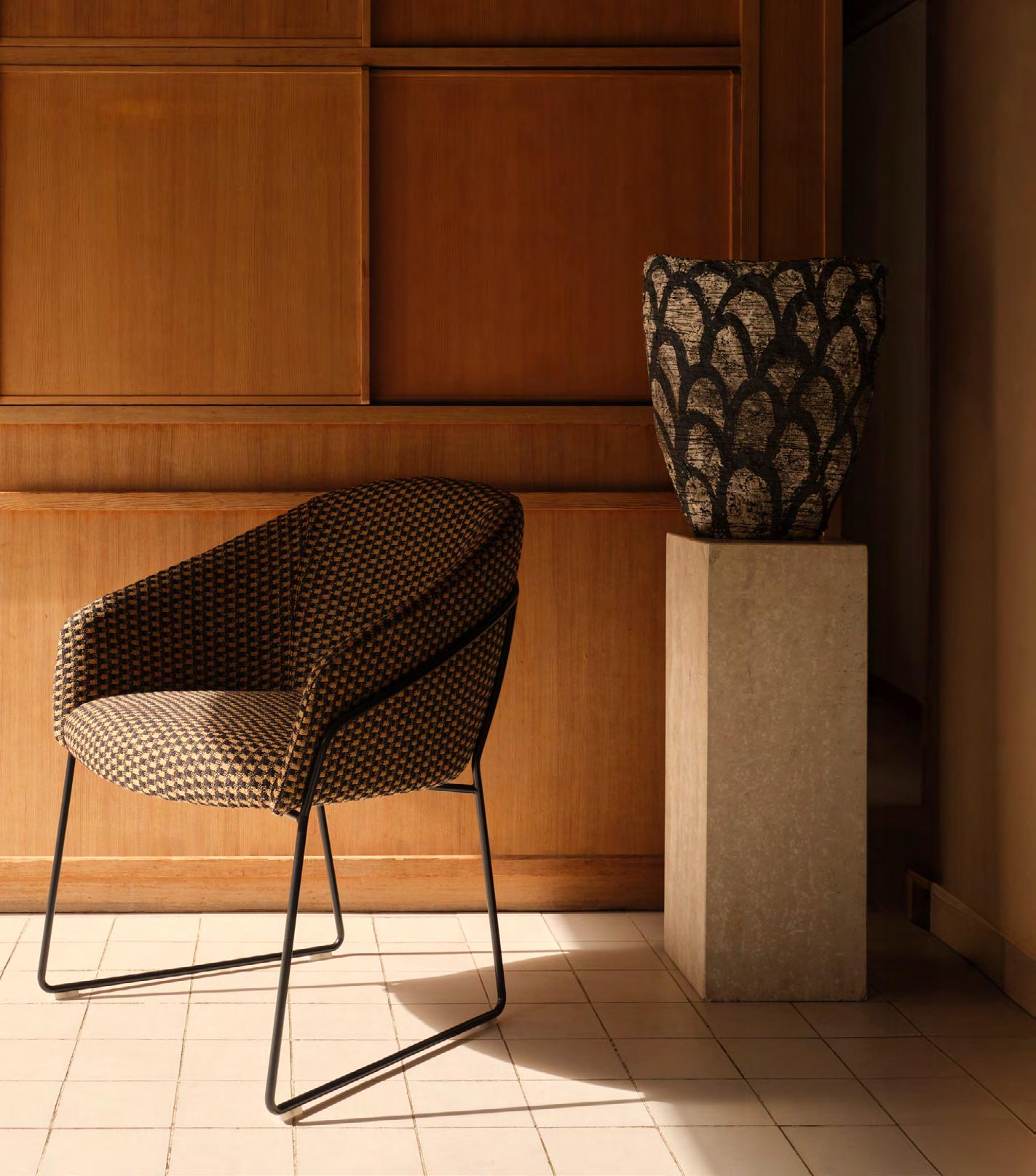
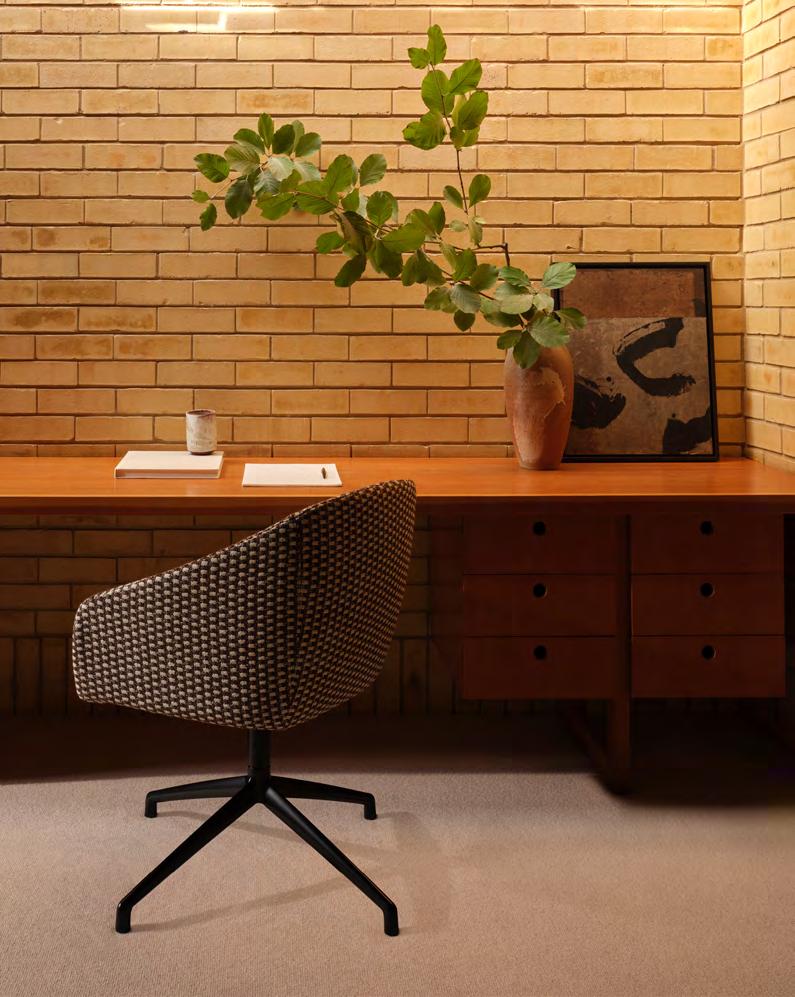
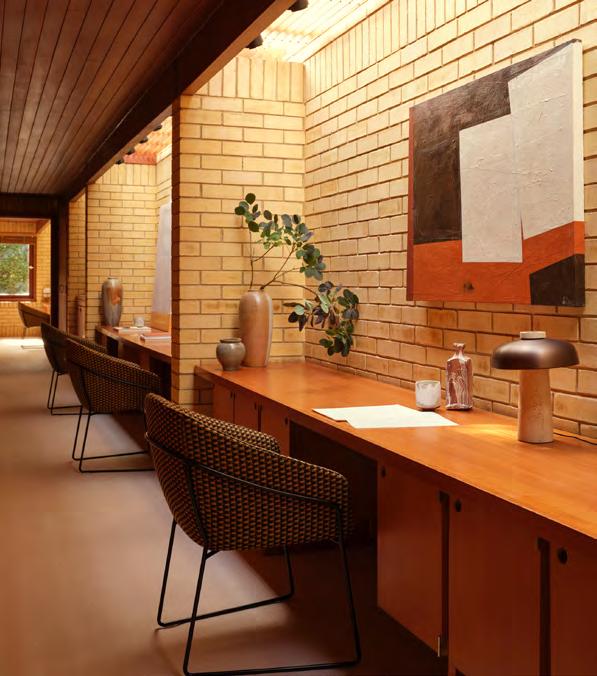
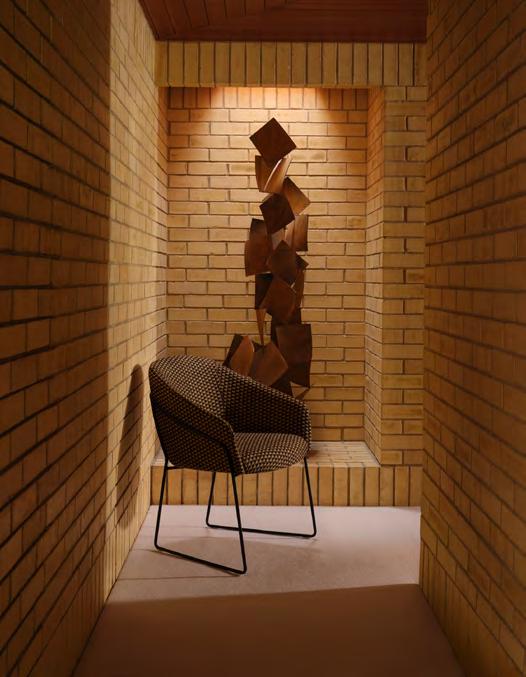
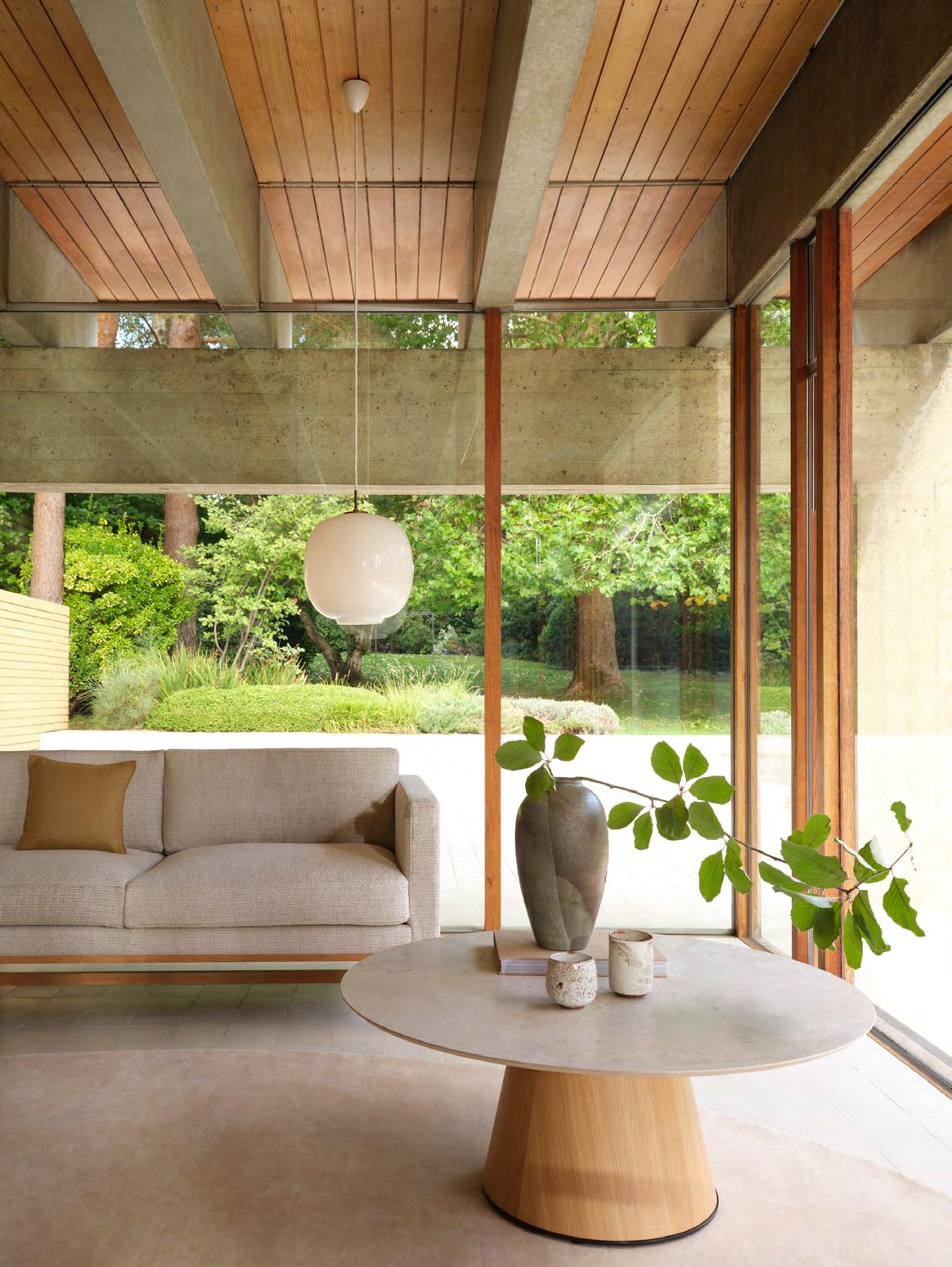
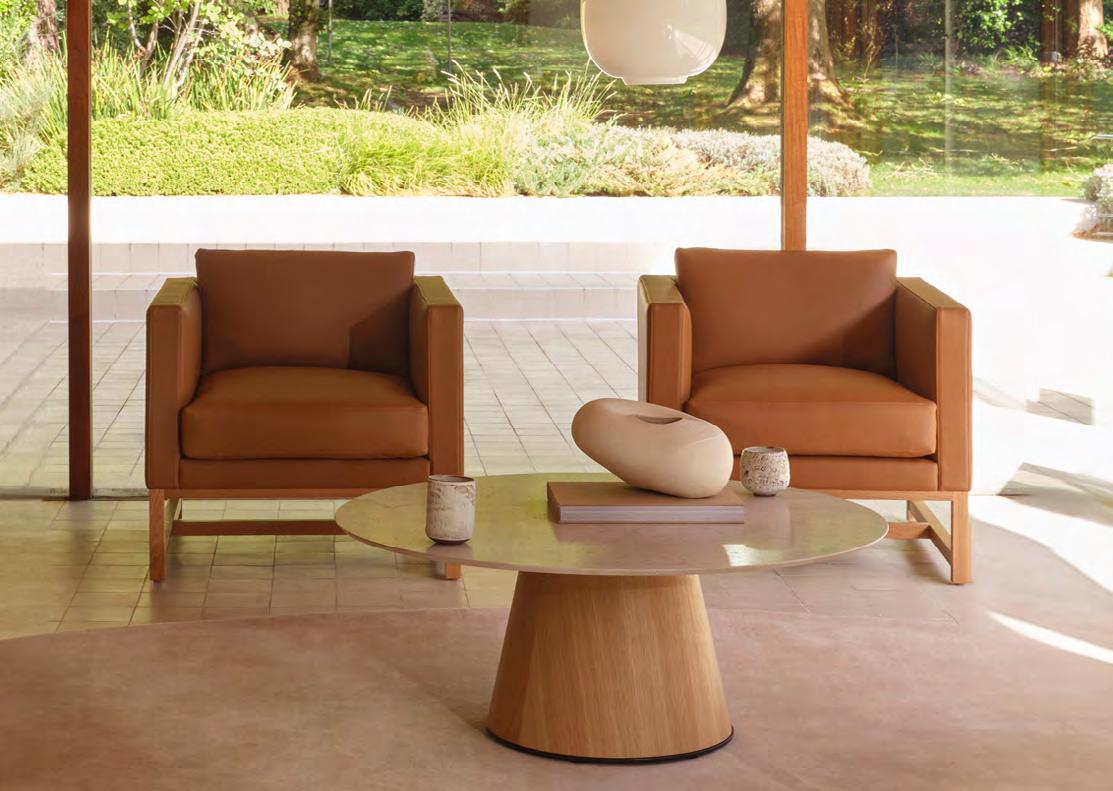
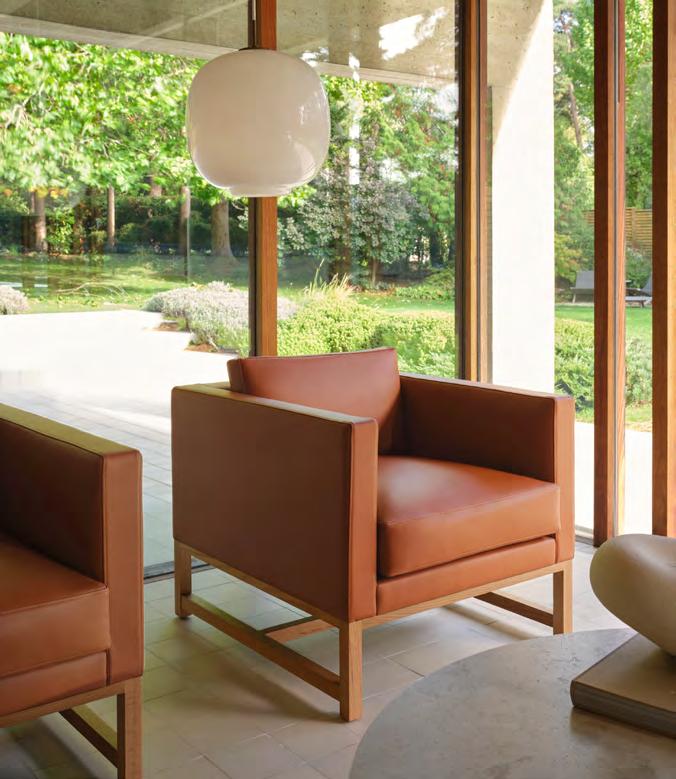
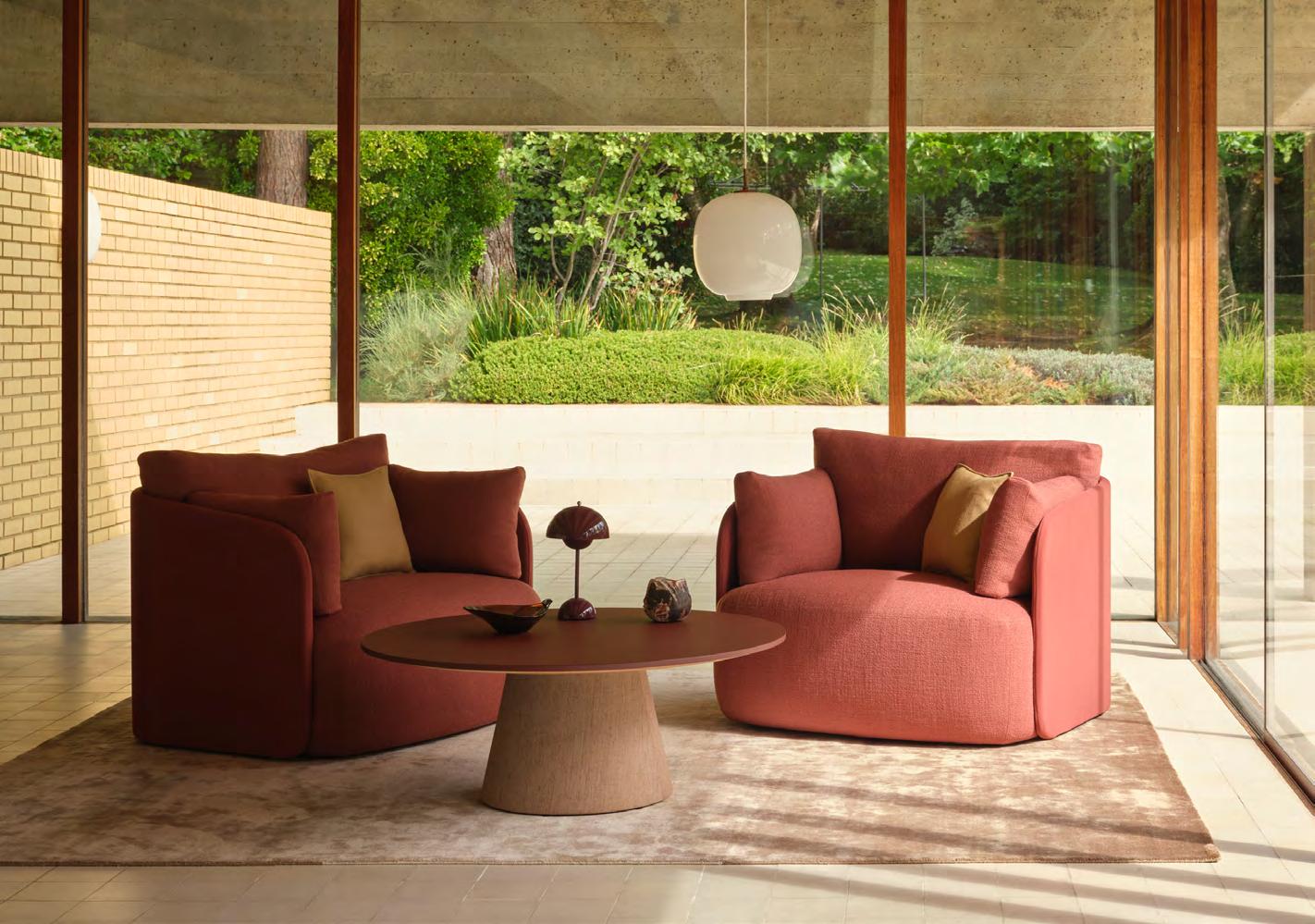
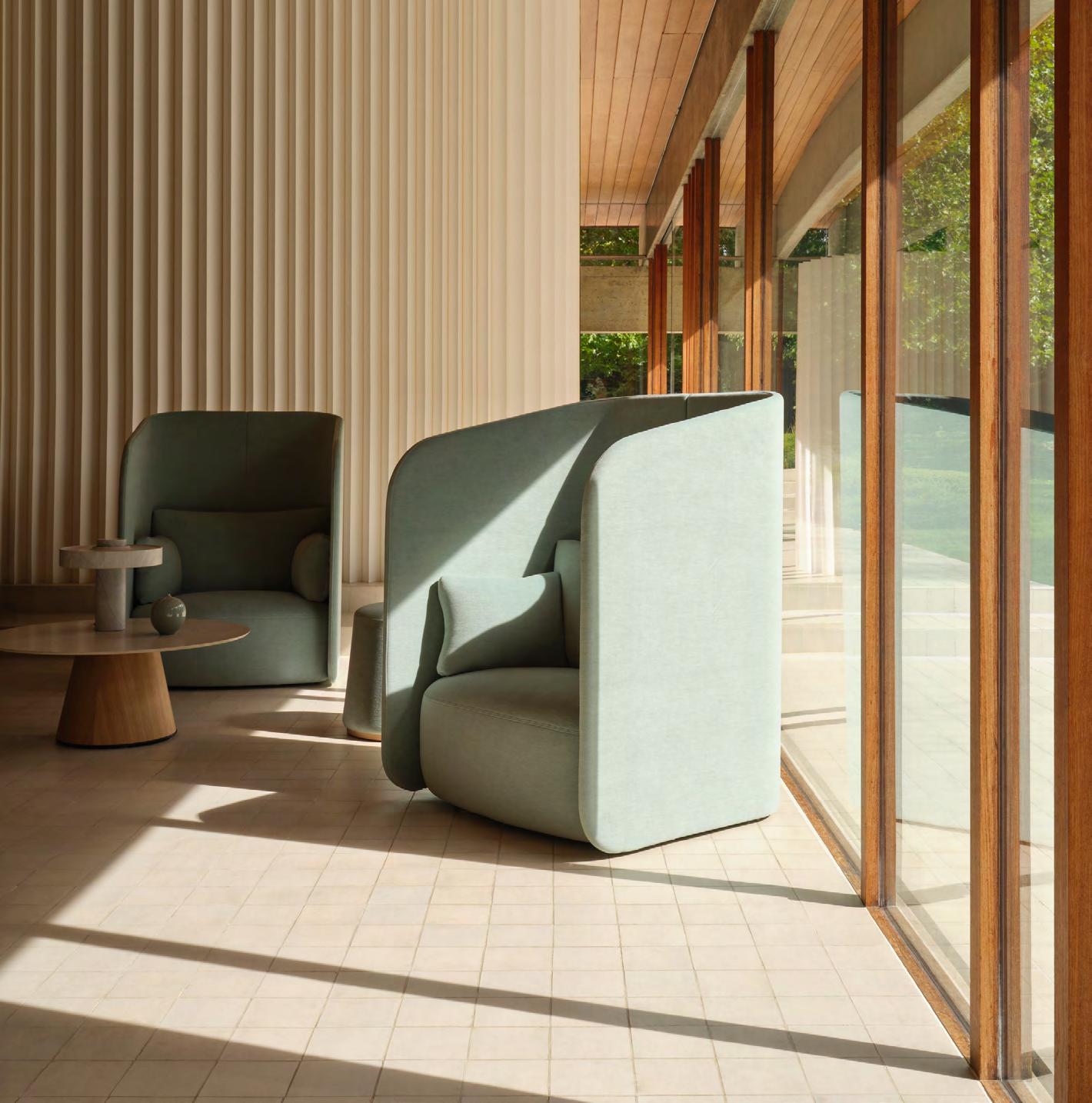
Described as “Probably the best Modern house in the world” in an article for The Sunday Times by notable architecture critic Hugh Pearman, AHM House in Hertfordshire was our setting of choice for a photo shoot to showcase Kato, Paloma, Orten and Brooke.
Conceptualised in 1961 by Danish architect Jørn Utzon, internationally celebrated for the Sydney Opera House, AHM House remains one of the most quietly significant modern houses in Britain. Created for structural engineer Povl Ahm, and completed in 1963, the Grade II–listed residence reflects a rare moment where architectural vision and structural ingenuity converge in perfect balance.
The pavilion-like open plan design engenders a natural energy flow through the space, complemented by precast concrete beams, warm Aylesbury brick and precisely detailed timber. Its disciplined geometry is softened by natural light and a carefully choreographed relationship
with the surrounding garden. Privacy from the street gives way to openness within, where glazing, proportion and materiality coalesce to shape a calm, human-centric environment. Here, Utzon’s modernism is not monumental but intimate - rooted in craft, climate and the rituals of daily life.
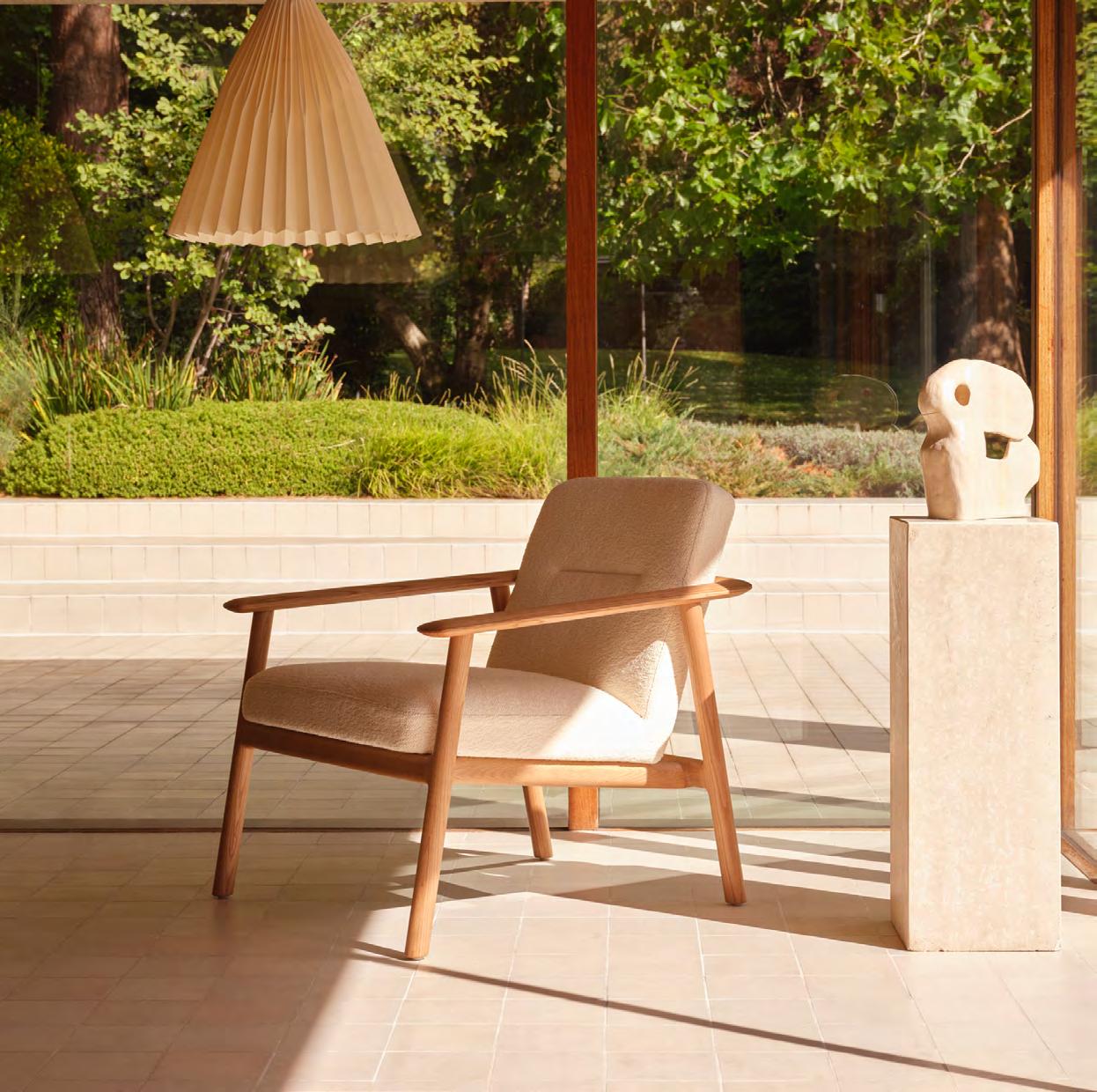
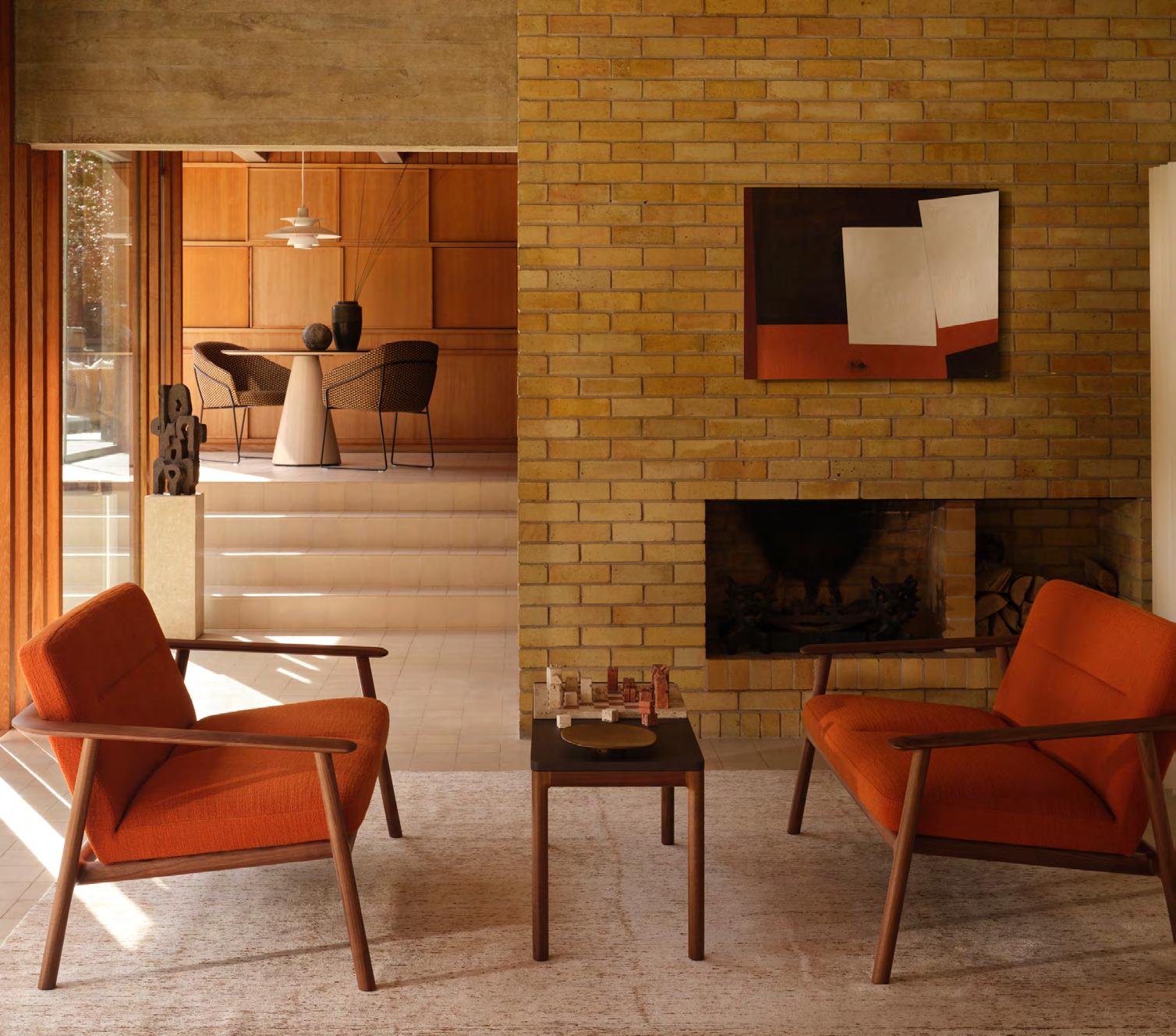
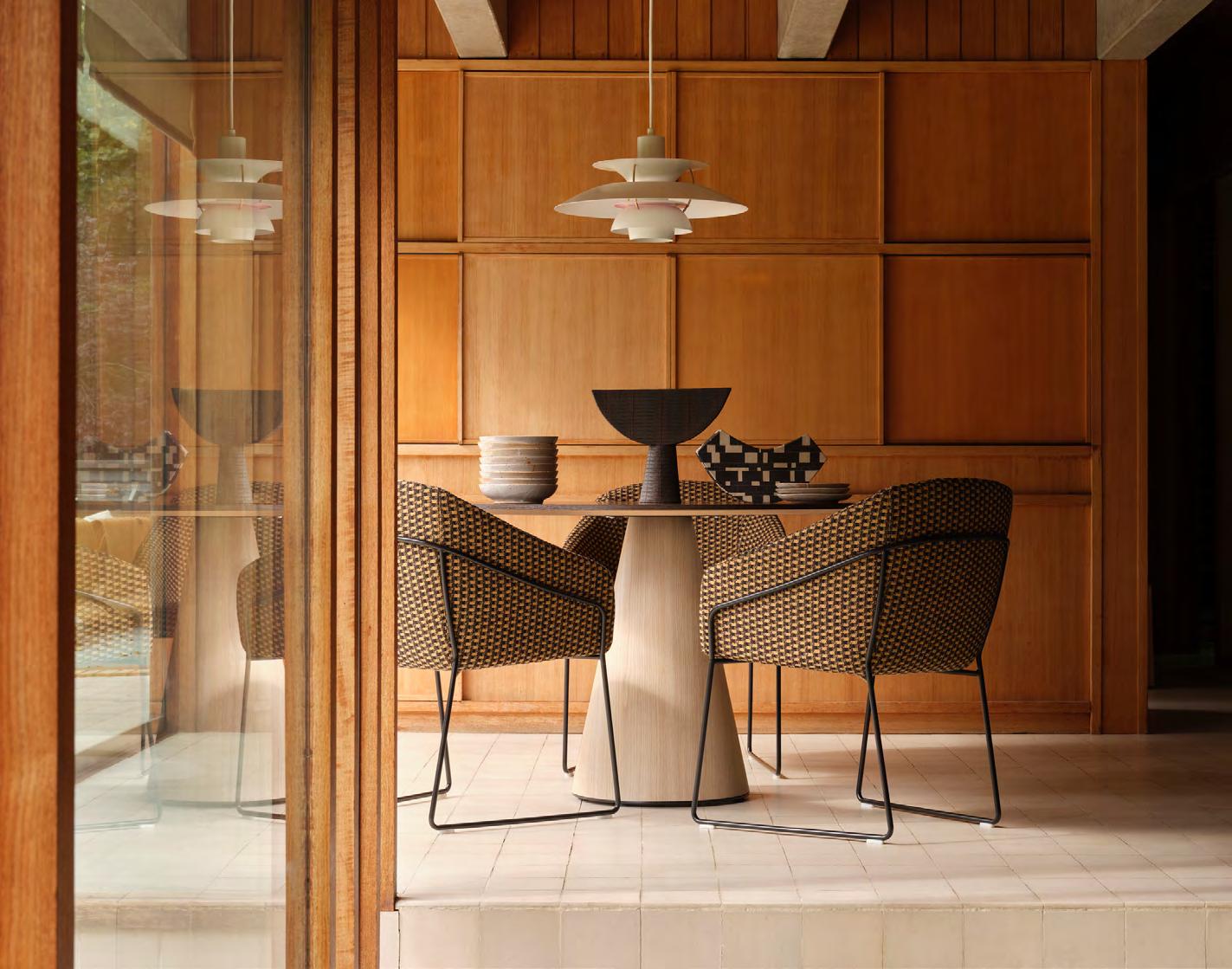
The architectural clarity and material quality proved a perfect backdrop to the craftsmanship and organic sensibility that anchor the aesthetic for the Kato, Paloma and Brooke collections by Boss Design. The furniture’s refined lines, timeless silhouettes and emphasis on comfort integrate homogenously with Utzon’s restrained palette of brick, timber and concrete. Bathed in soft daylight and framed by the house’s indoor–outdoor connection that seamlessly invites nature into the built environment, each piece feels considered rather than placed - part of a shared design language that spans decades.
In this context, the photography moves beyond product styling; it becomes a dialogue between architecture and furniture, united by proportion, tactility and an enduring modern sensibility.

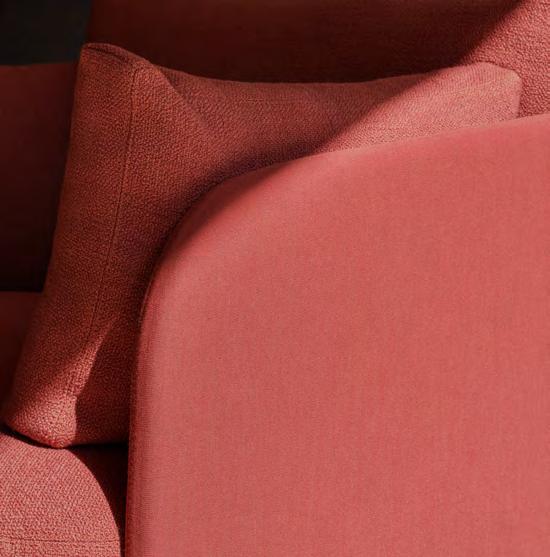
Katō Collection
With its sculptural poise and refined detailing, Kato feels at home against Utzon’s minimal, earthy interiors. The chair’s quiet elegance echoes the architect’s belief in design that serves both beauty and purpose. companion to the geometry of Utzon’s spaces.
Brooke
Brooke Collection
The inspiration behind Brooke is a simple one. A circle, nature’s perfect form, is not just the tabletop but is repeated in the tapering cone-shaped base that supports the surface. Comfortable, inviting, unobtrusive. The art of conversation. Design
Paloma Collection
Light, expressive, and versatile, Paloma integrates seamlessly into myriad environments, reflecting Utzon’s ethos of design as a living, adaptable element of space.
Paloma
Hand Crafted
Orten Collection
Orten’s unassuming, timeless simplicity belies the complex engineering and intelligent design that contribute to its superior comfort and make it one of our most enduring styles.Hand finished and upholstered by our master craftspeople for the ultimate in understated luxury, Orten is available with elegant two-tiered leg detail or a stylish H-shaped oak frame.
Mila
Mila Collection
Mila, a unique soft seating range ideal for creating a range of luxurious spaces. With a firm surround creating a protective cocoon around its soft cushioning, Mila’s sofa, armchair and high-back single seat promises an oasis of calm, next level comfort and a place of sanctuary.
Redefining Focus
AHM House Styling Design Credits & Contributors - Thanks to: Cavaliero Finn/Lise Herud Braten/Gemma Smale/Heather Gibson/Sarah Purvey/Robert George Studio/ Fiona McDonald/FRAMI Atelier/The Specified/Tom Bogle/Tim Martin Workshop/Jennifer Manners/Dedar Milano/Kvadrat/Sania Pell Styling/Beth Evans Photography