

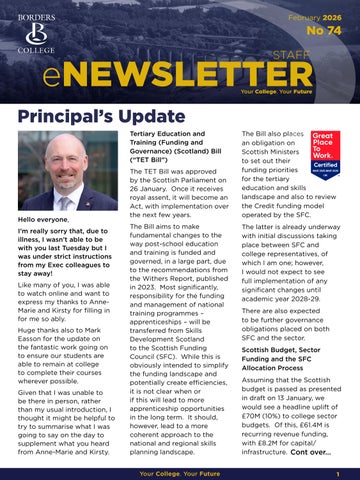

Hello everyone,
I’m really sorry that, due to illness, I wasn’t able to be with you last Tuesday but I was under strict instructions from my Exec colleagues to stay away!
Like many of you, I was able to watch online and want to express my thanks to AnneMarie and Kirsty for filling in for me so ably.
Huge thanks also to Mark Easson for the update on the fantastic work going on to ensure our students are able to remain at college to complete their courses wherever possible.
Given that I was unable to be there in person, rather than my usual introduction, I thought it might be helpful to try to summarise what I was going to say on the day to supplement what you heard from Anne-Marie and Kirsty.
The TET Bill was approved by the Scottish Parliament on 26 January. Once it receives royal assent, it will become an Act, with implementation over the next few years.
The Bill aims to make fundamental changes to the way post-school education and training is funded and governed, in a large part, due to the recommendations from the Withers Report, published in 2023. Most significantly, responsibility for the funding and management of national training programmes –apprenticeships – will be transferred from Skills Development Scotland to the Scottish Funding Council (SFC). While this is obviously intended to simplify the funding landscape and potentially create efficiencies, it is not clear when or if this will lead to more apprenticeship opportunities in the long term. It should, however, lead to a more coherent approach to the national and regional skills planning landscape.
The Bill also places an obligation on Scottish Ministers to set out their funding priorities for the tertiary education and skills landscape and also to review the Credit funding model operated by the SFC. The latter is already underway with initial discussions taking place between SFC and college representatives, of which I am one; however, I would not expect to see full implementation of any significant changes until academic year 2028-29.
There are also expected to be further governance obligations placed on both SFC and the sector.
Assuming that the Scottish budget is passed as presented in draft on 13 January, we would see a headline uplift of £70M (10%) to college sector budgets. Of this, £61.4M is recurring revenue funding, with £8.2M for capital/ infrastructure.
While the increase is welcome and, I believe, shows the impact of the case made by Colleges Scotland, once you look at the detail, it is obvious that this will not be applied as a flat rate across the sector. Indeed, a number of elements of the uplift were already assumed and budgeted for by the sector and each college individually.
Firstly, we know that approximately £7M is to cover the shortfall in Employers’ National Insurance Contributions (ENICs) resulting from the increase in April 2025. There is also £14M allocated to a technical capital/revenue switch, to cover accounting treatment for a few colleges due to historic funding categorisation. This latter item will not benefit us.
Thirdly, in 2025-26, there was initially a £26M transformation fund which was then withdrawn before colleges could even bid into it. While there is an expectation that some of this may be reinstated, we do not know at what level this will be or any criteria for its use.
All this means that there is a much smaller amount that SFC can actually allocate to the sector. What we do know is that they intend every college to have an uplift but it will not be equal for every college.
In terms of capital, we do not know if the increase will be applied proportionally across colleges, or targeted to priority interventions.
The £8M Raising Income through Skills and Education (RISE) fund is also welcome and I hope will be applied
across all regions as clearly there is work we can support in the Borders to reduce poverty.
In terms of timescales, an initial report to agree principles was taken to SFC Board on 12 February; they will now be working on individual college allocations, with approval at their Board on 12 March, and indicative allocations announced to colleges on 26 March.
While we do not anticipate any increase to our own Credit target as part of this process, we are continuing to liaise with SFC to make the case for increased investment in our Region. I am also leading the group of principals and finance directors in direct engagement with SFC on this matter.
Following, the publication of Vision 2030 in August, our Board have now approved the following supporting strategies: -
• Skills and Enterprise
• People
• Estates
• Digital and Data
• Sustainability
• Financial
These detail the success factors and indicators to measure performance in achieving the ambitions set out in Vision 2030.
In parallel, we have adjusted our corporate branding, including logo variants and sizing, lettering and colour palette. Guidance will be published after JCCP in March; please ensure you follow this
and consult Marketing should you have any questions.
New Teams backgrounds and PowerPoint templates are also available; again, please ensure you use these for corporate presentations or when representing the College externally.
Borderlands
South of Scotland Enterprise took possession of our former Hawick building last month and we are now one of a number of partners with them, intending to enable regional access to technology, robotics and innovation space, with upskilling to support individuals and businesses.
Colleges Scotland Manifesto The Colleges Scotland manifesto for the upcoming Scottish Parliamentary election launched on 23 February, at a hustings event in Edinburgh. Highlighting the value of colleges in delivering success across Scotland, we will be using its themes and messages in our regional communications.
Lastly, please remember to fill in your survey. The messages from last year’s were really helpful in shaping so much of what we have done over the past year to improve how we work together.
Thank you if you’ve read this far – normal service will hopefully be resumed next month – and I hope you enjoyed your scones and catchup with colleagues.
Pete Smith Principal & CEO

Tuesday 31st March 2026

Lee-Anne GillieTemporary LecturerFind Your Vibe
Thursday 30th April 2026

Friday 29th May 2026

Gillian MacdonaldSupply Additional Needs Assistant Graeme JohnstoneSupply Cleaner
Thank you to all of you who have already completed the GPTW survey.
For those who have still to complete this it is still open.
You will have received an email containing a link from hello@invite.emprising.com
Carmel Scott - Supply Classroom Assistant and Supply Additional Needs Assistant
Zoe Martin - Supply Lecturer - Supported Programmes
Tanushree NairSupply Classroom Assistant
Your feedback is really important to us, please take a few minutes of your valuable time to complete the survey and use your voice to tell us what we can do better.
Any questions please get in touch dkerr@ borderscollege.ac.uk or pop by and see me.

1-31 March SDG Teach In Home - SOS UK SOS UK: Campaign to put the UN Sustainable Development Goals (SDGs), and therefore sustainability, at the heart of all stages of education, and across all disciplines. Opportunities for students to get involved in sustainability - Take Action | SOS-UK
9-15 March Food Waste Action Week Food Waste Action Week Love Food Hate Waste: Week of action raising awareness of the environmental consequences of wasting food and promoting activities that help to reduce the amount of food wasted. Food Waste Action Week | WRAP

A meeting of the Joint Consultative Committee Policies tool place on Wednesday 28th January, 2026. The following documents were discussed and agreed and have now been updated on the College website.
• Creating & Validating Awards for SCQF Credit Rating Procedures
• Approvals Procedure
• Academic Exemptions Policy and Procedure
• Internal/External Verification Policy
• Information Security Policy
• Employee Resourcing Policy and Procedure
• Performance Improvement/Capability
Occupational Health are retained by the College to offer you support. You can selfrefer by giving them a call – their number is 01896 825982. This service is totally
Policy and Procedure
• Recruitment of Ex-Offenders Policy and Procedure
• Anti-Fraud & Corruption Policy
• Fee Policy
• Training and Development Policy
• Induction of New Staff – Guidance for Managers
You should make yourself aware of any relevant policies and procedures.
Managers should ensure that the guidance document on the Induction of New Staff is used when welcoming a new staff member to the College.
confidential and no information is shared with the College unless you ask them to. Debbie Kerr – Director of People Services
Sam Anderson is helping to change the conversation around menopause by encouraging men to better understand and support the women in their lives and workplaces.
Sam, who is a Health and Social Care lecturer at Borders College, is one of five trained Menopause Champions at the College. Inspired by his partner’s experience of perimenopause, Sam has developed a humorous and honest A to Z guide aimed at improving men’s understanding of menopause and breaking down lingering stigma.
Sam explains that from a male perspective, menopause can sometimes feel difficult to navigate.
“It can feel like you are stepping on eggshells when your partner has brain fog or seems withdrawn or irritable. You can assume it is something you have done, rather than recognising it as an opportunity to ask how you can help.”

Using humour to open up honest conversations, Sam is writing a book provisionally titled The Menopause for Men: An A to Z Guide for Us Idiots.
Read more here
Business Lecturer Susan Cooper is turning a great idea into something that will really support families across the Scottish Borders. Susan is kicking off 2026
with a mix of excitement and nerves as she develops a new online community platform for parents. The idea first took shape during the Borders College Start

Up Project and has grown into a space designed to help parents connect, share trusted information, find local activities for their children and discover the wide range of services available across the region. At its heart, the platform is about bringing people together and making it easier for parents to feel supported.
Susan commented:
“Seeing an idea grow from the Start Up Project into something that can genuinely support parents across the Borders has been incredibly exciting. Read more here.
Borders College is celebrating a fantastic achievement after five members of its learning community were announced as finalists for the Lantra Scotland ALBAS 2026 Awards, which will take place in March.
The ALBAS Awards recognise excellence in land-based and aquaculture skills, highlighting the achievements of students, apprentices, lecturers and employers across Scotland. Being named a finalist is a significant accomplishment and reflects the high quality of teaching, training and employer partnerships at Borders College.
Among the student finalists is Beth Millar from Jedburgh,
Roxburghshire, who is completing an SVQ in Mixed Farming through Borders College while working as a Farm Worker and Attraction Manager at Kersheugh Farm,
Jedburgh. Beth’s nomination recognises her commitment to developing practical skills alongside her professional responsibilities.
Read more here.

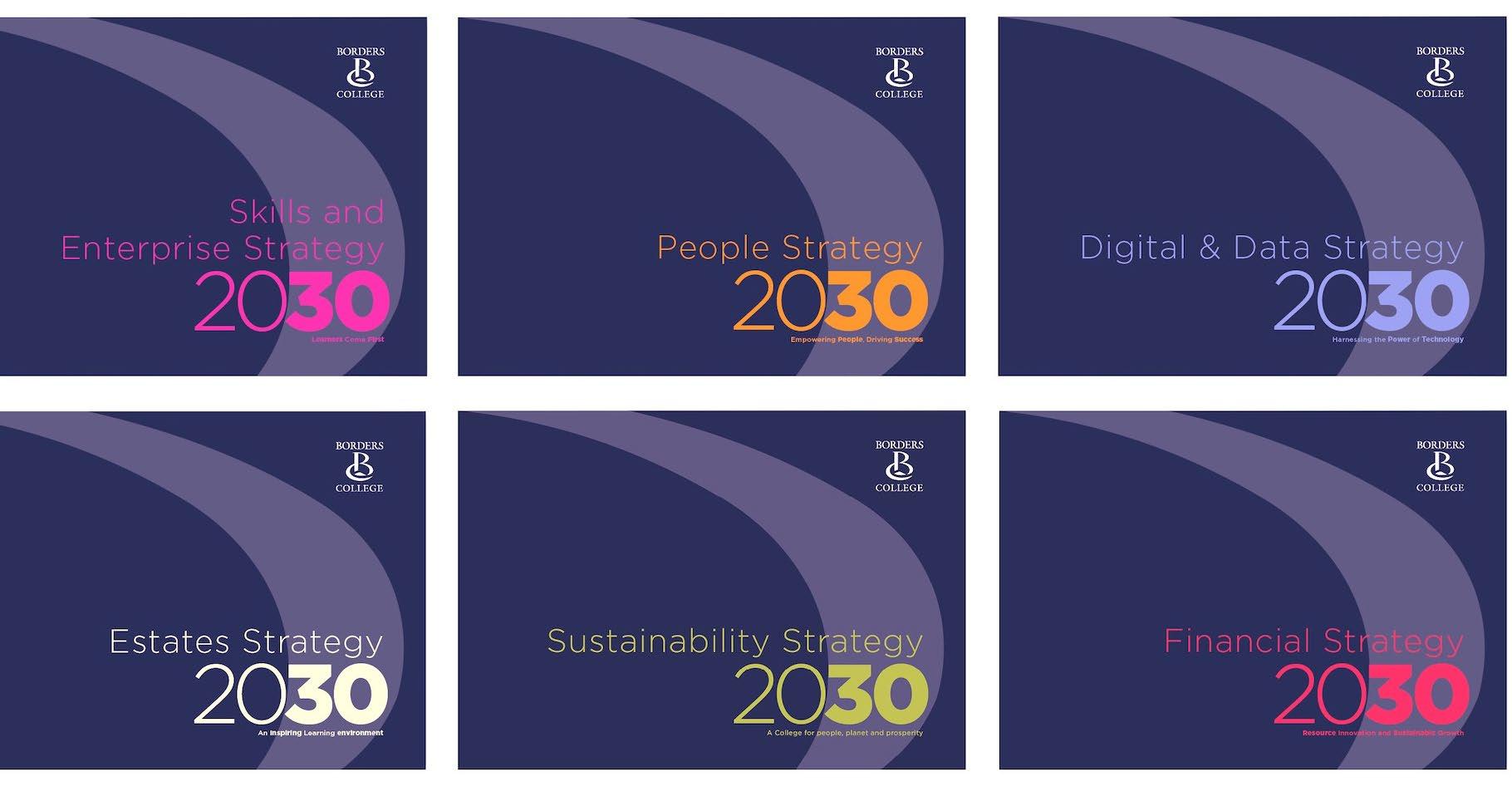
Borders College has set out an ambitious plan to strengthen learner success, support regional skills and drive economic growth. Under Vision 2030, it aims to support more learners to achieve their goals and progress into positive destinations. It will ensure we have a curriculum aligned to regional needs, offering sustainable pathways backed by effective resource planning. Our engagement with local businesses will increase, encouraging innovation and new commercial opportunities. The College also commits to reducing its environmental impact with a clear route to Net Zero by 2045. Investment in modern estates and advanced technology will enhance learning and support efficient delivery across the organisation.
To deliver on its Vision, the college has published six key strategies that outline how it will achieve its goals and measure success. These are Skills and Enterprise, People, Digital and Data, Estates, Sustainability and Financial strategies.
Skills and Enterprise Strategy highlights our commitment to placing learners at the centre of our work, with a strategy focused on strong experiences, successful outcomes and positive destinations. It stresses that progress relies on shared values of being respectful, responsible and people-centred, shaping a supportive environment where staff and learners can succeed together.
People Strategy emphasises that success depends on people working together with shared values of being respectful, responsible and people-centred. The plan outlines how these values will shape a supportive, positive
environment where everyone can thrive. It reinforces a commitment to making the College an excellent place to work and learn.
Digital and Data Strategy gives staff, students and stakeholders a clear view of the College’s digital priorities and long-term ambitions. It guides decision-making and funding by linking choices to defined aims for the next five years. It also sets out how progress will be measured to ensure goals are being met.
Estates Strategy outlines upcoming estates challenges and our ambitious solutions, focusing on efficient consolidation and continued environmental progress. It stresses the importance of modern, welcoming facilities that support strong learning outcomes while maintaining safety and compliance. The fiveyear plan begins a longer journey, including ambitions for a new rural learning campus at Newtown St Boswells.
Sustainability Strategy sets out a longterm commitment to sustainability, building a foundation for resilient, future-focused development. Aligned with national and sector targets for net zero, the strategy promotes sustainable behaviours, embeds good practice in learning, supports innovation with employers and adopts ethical, environmentally responsible approaches across all operations.
Financial Strategy sets a financial framework to support the delivery of Vision 2030 and its related plans. It focuses on three priorities: widening and growing revenue, improving cost efficiency through effective resource management, and maintaining strong financial stewardship to ensure long-term stability and sustainable progress.
Borders College Principal and CEO, Pete Smith, commented:
“Our plan sets a clear and ambitious direction for the years ahead. By aligning learning with
regional needs, expanding opportunities for our students and businesses, and investing in modern, sustainable facilities, we are building strong foundations for future growth.
“The six strategies we have published state how we will deliver on our commitments, ensuring meaningful progress for our learners, our communities and our region.”
Together, these six strategies form a coherent roadmap that strengthens the College’s role at the heart of the region. They set out how Borders College will adapt, invest and innovate to meet the needs of learners, employers and communities in the years ahead. With clear priorities and a long-term vision for growth, sustainability and opportunity, the College has positioned itself to deliver meaningful change and lasting impact.
The published strategies are available to read on the Borders College website at: https://www. borderscollege.ac.uk/vision2030
Borders College recently visited Knowepark Primary School in Selkirk to deliver an engaging session on sustainability and sustainable construction to Primary 7 pupils.
The visit was arranged following a request from class teacher Mrs Ferrie, who was keen to give pupils the opportunity to learn directly from an industry professional. The interactive session successfully linked classroom learning to realworld challenges and future opportunities within the construction sector.
During the session, pupils explored why sustainable construction is increasingly important, learning how human activity contributes to climate change and how the construction industry can play a key role in reducing environmental impact.

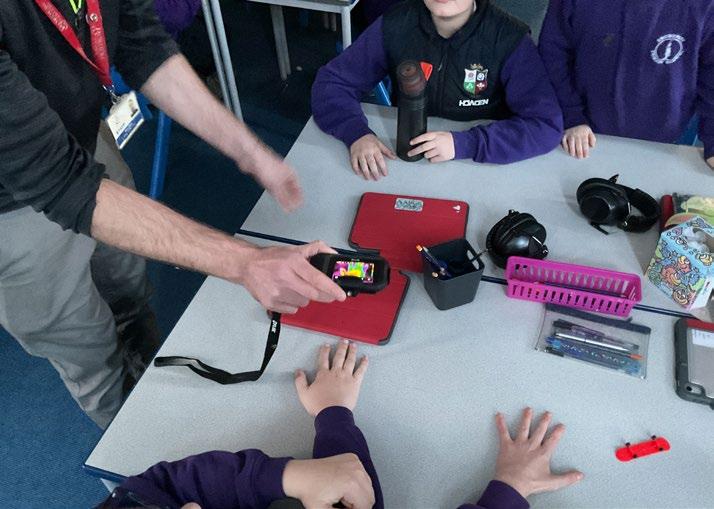
Key topics such as greenhouse gases and global warming were discussed, helping pupils to understand complex global issues in an accessible way.
Pupils were actively involved throughout, taking part in discussions, asking questions and sharing their ideas.

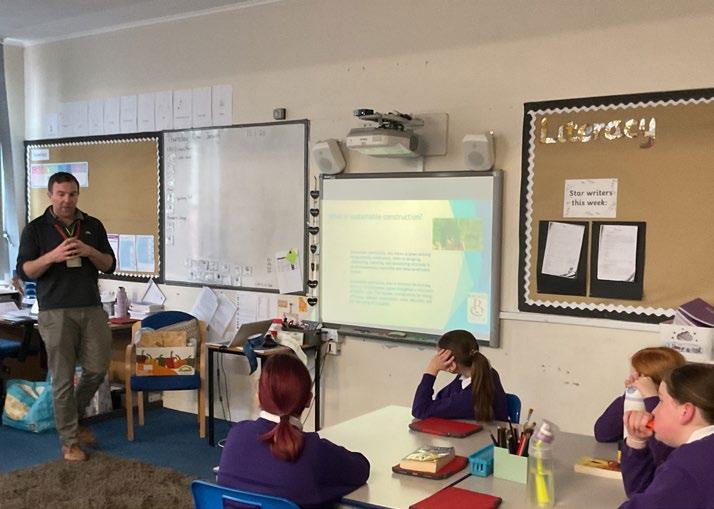
They demonstrated a strong understanding of how a wide range of construction trades contribute to sustainable building, helping to broaden their awareness of potential career pathways.
Read more here
Borders College has reached its goal of halving its climatechange-causing greenhouse gas emissions by 2025. The College’s outgoing Sustainability Strategy for 2020-2025 included a target to reduce greenhouse emissions to 50% by 2025, compared to baseline figures from the 2014/15 academic year.
This target included emissions from heating, electricity, water, refrigerant leaks, waste and business travel. In 2014/15, these totalled 806 tCO2e (tonnes of CO2 equivalent).
Each November, public bodies in Scotland report their greenhouse gas emissions for the previous year. Data collected for the 2024/25 academic year showed that emissions from the target sources had dropped to 374.67 tCO2e or 46% of the baseline – meaning that the College’s target for 2025 had been achieved. This decrease has been observed across all target emissions sources.
While the College has undertaken some significant projects to reduce emissions,

such as installing the SHARC wastewater heat pump at the Galashiels Campus, the savings generated during the 2020-25 Sustainability Strategy have been thanks to incremental changes from across the College. The amounts of heating fuels, water and refrigerant gases used and waste produced all decreased compared to previous years. At the same time, resources used by the College, including electricity, have become less greenhouse gas-intensive. Combined, these factors have reduced emissions and helped to achieve the 2020-
25 Sustainability Strategy’s target.
Moving forward, the College will continue to reduce emissions to reach the Scottish College sector’s target of net zero by 2040. In support of this, Borders College has published a new 2025-2030 Sustainability Strategy, which outlines the steps the College will take to further reduce greenhouse gas emissions and promote sustainable practice throughout the College. This includes a target to reduce baseline emissions to 40% by 2030/31.
Read more here

Items for inclusion in the eNewsletter should be submitted to your Senior Leadership Team staff member two weeks prior to the end of the month.
Borders College staff are being encouraged to take part in this year’s SDG Teach In, taking place throughout March.
The SDG Teach In is an annual global campaign led by Students Organising for Sustainability UK (SOS UK). Running since 2018, the initiative invites educators across all subject areas and levels of education to embed the United Nations Sustainable Development Goals (SDGs) and wider sustainability themes into their teaching, learning, and assessment.
By getting involved, educators help students explore how their studies connect to real-world challenges—supporting critical thinking and inspiring action toward a fairer, more sustainable future. Whether through weekly activities, class discussions, or assessment tasks, the SDG Teach In offers a valuable opportunity to make sustainability more visible within our curriculum.
Staff can take part by completing a short online pledge, with free registration open to educators worldwide

until the end of March: SDG Teach In 2026 pledge form
To support staff in identifying how their teaching links to the SDGs, Delivery Team Managers and Heads of Sector will host drop-in sessions on Monday 2nd March in the Start Up Hub. These sessions will include demonstrations of a new AI Agent designed to help staff easily incorporate SDG
themes into lesson planning. Attendees will have the chance to see the tool in action, try example prompts, and gather ideas tailored to their subject areas.
Staff are welcome to drop in at any time during the day to explore practical ways of embedding the UN Sustainable Development Goals into teaching and assessment.
Robbie Bunton - recertification
Simon Watson - recertification
Niall Campbell - recertification
Alan Elder - Initial training
Katrina Fitzgerald Health & Safety Manager

Whether you prefer attending in-person or online, we offer a diverse range of courses to help you develop both personally and professionally. Register today!
Active IQ Certificate in Gym Instructing (Level 2) £799 30/03/2026 19/06/2026
BPEC ACS Gas Reassessment £749 06/05/2026 08/05/2026
BPEC ACS Gas Reassessment £749 10/06/2026 12/06/2026
Brush Cutting, Strimming & Garden Maintenance
Brush Cutting, Strimming & Garden Maintenance
BPEC Heat Pump Installer
£350 05/03/2026 06/03/2026
£350 19/03/2026 20/03/2026
£899 16/03/2026 24/03/2026
BPEC Heat Pump Installer £899 20/04/2026 28/04/2026
BPEC Heat Pump Installer £899 18/05/2026 26/05/2026
BPEC Heat Pump Installer £899 15/06/2026 23/06/2026
Elementary Food Hygiene (REHIS)
Elementary Health and Safety (REHIS)
Elementary Health and Safety (REHIS)
Emergency First Aid at Work (FAIB)
Emergency First Aid at Work (FAIB)
First Aid at Work 3 day (FAIB)
First Aid at Work Re-Qual (FAIB)
Intermediate Food Hygiene (REHIS)
Mole Control
Mole Control
Scottish Personal Licence Holder
Scottish Personal Licence Holder: Refresher
Tractor Driving for Beginners Borders College certificate
Tractor Driving for Beginners Borders College certificate
Unvented Hot Water
Unvented Hot Water
Unvented Hot Water
Water Byelaws
Water Byelaws
Welding - For Beginners
Welding - For Beginners
Workplace Mental Health
Workplace Mental Health
£102 15/06/2026 15/06/2026
£102 16/03/2026 16/03/2026
£102 11/05/2026 11/05/2026
£117 18/03/2026 18/03/2026
£117 17/06/2026 17/06/2026
£200 17/03/2026 31/03/2026
£168 23/04/2026 25/04/2026
£475 02/03/2026 06/03/2026
£95 19/02/2026 19/02/2026
£95 26/03/2026 26/03/2026
£173 25/06/2026 25/06/2026
£104 25/06/2026 25/06/2026
£230 23/04/2026 24/04/2026
£230 07/05/2026 08/05/2026
£199 25/03/2026 25/03/2026
£199 13/05/2026 13/05/2026
£199 03/06/2026 03/06/2026
£199 04/03/2026 04/03/2026
£199 27/05/2026 27/05/2026
£250 26/02/2026 27/02/2026
£250 12/03/2026 13/03/2026
£135 06/03/2026 06/03/2026
£135 08/05/2026 08/05/2026
These what3words refer to the exact location of each campus and are unique for every address across the world. This
Emergency services can use what3words to locate people in the event of an emergency more efficiently.

College staff training to administer Naloxone: Staff trained to administer Naloxone
Alison Finnie
Bruce Winwood
Colin Waddell
Dave Black
David Marshall
David Slight
Dawn Routledge
Debbie Whellans
Duncan Dishington
Emily Smith
Emma Suddon
Erin Scott
Jake Dixon
Jen MacKenzie
John Rafferty
Katrina Fitzgerald
Kelly Frizzell
Lynne Crosbie
Michelle Blaikie
Ross Docherty
Claire Hamilton
Lisa Riddell
Nicky Gass
Lynsey Cooney
Emma Walsh
Mandy Dougall
Joshua Ratcliffe
Jo De Luca
Naloxone is a life-saving, non-addictive medication used to temporarily reverse the effects of an opioid overdose. It works by blocking opioid receptors in the brain, restoring normal breathing within 2–3 minutes in a person whose breathing has slowed or stopped due to drugs like heroin, fentanyl, methadone, or prescription painkillers.
• Reverses Overdose: It treats opioid-induced respiratory depression, preventing brain damage or death.
• Safe: It has no effect if no opioids are present in the system, making it safe to use even if you are unsure if drugs were involved.
• Lifesaving: It buys critical time (30-90 minutes) for emergency services to arrive.