Hammering took more time than all other silver manufacturing processes, so it accounted for the majority of labor costs. Silversmiths would then seam parts together to create complex and artistic items, sealing the gaps with a solder of 80 wt% silver and 20 wt% bronze. Finally, they would file and polish their work to remove the seams, finishing off with engraving and stamping the smith's mark. The American revolutionary Paul Revere was regarded as one of the best silversmiths from this
"Golden Age of American Silver". Following the Revolutionary War, Revere acquired and made use of a silver rolling mill from England. Not only did the rolling mill increase his production[-hammering and flattening silver took most of a silversmith’s time-he was able to roll and sell silver of appropriate, uniform thickness to other silversmiths. He retired a wealthy artisan, his success partly due to this strategic investment. Although he is celebrated for his beautiful hollowware.
Silver is not a very reactive metal and does not react with oxygen or water at ordinary temperatures, so does not easily oxidize. However, it is attacked by common components of atmospheric pollution. Silver sulfide slowly appears as a black tarnish during exposure to airborne compounds of sulfur (byproducts of the burning of fossil fuels and some industrial processes), and low level ozone reacts to form silver oxide. As the purity of the silver decreases, the problem of corrosion or tarnishing increases because other metals in the alloy, usually copper, may react with oxygen in the air.
The black silver sulfide (Ag2S) is among the most insoluble salts in aqueous solution, a property that is exploited for separating silver ions from other positive ions.
Sodium chloride (NaCl) or common table salt is known to corrode silver-copper alloy, typically seen in silver salt shakers where corrosion appears around the holes in the top.
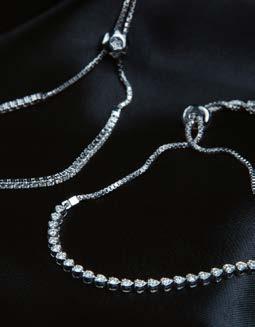
In Colonial America, sterling silver was used for currency and general goods as well. Between 1634 and 1776, some 500 silversmiths created items in the "New World" ranging from simple buckles to ornate Rococo coffee pots. Although silversmiths of this era were typically familiar with all precious metals, they primarily worked in sterling silver. The colonies lacked an assay office until 1814, so American silversmiths adhered to the standard set by the London Goldsmiths Company: sterling silver consisted of 91.5–92.5% by weight silver and 8.5–7.5 wt% copper. Stamping each of their pieces with their personal maker's mark, colonial silversmiths relied upon their own reputation to guarantee the quality and composition of their products.
Colonial silversmiths used many techniques developed in Europe. Casting was frequently the first step in manufacturing silver pieces, as silver workers would melt down sterling silver into easily manageable ingots. Occasionally, they would create small components by casting silver into iron.
Fine silver, which is 99.9% pure silver, is relatively soft, so silver is usually alloyed with copper to increase its hardness and strength. Sterling silver is prone to tarnishing, and elements other than copper can be used in alloys to reduce tarnishing, as well as casting porosity and firescale. Such elements include germanium, zinc, platinum, silicon, and boron. Recent examples of these alloys include argentium, sterlium and silvadium.
A piece of sterling silver dating from
Henry II's reign was used as a standard in the Trial of the Pyx until it was deposited at the Royal Mint in 1843. It bears the royal stamp ENRI. REX ("King Henry") but this was added later, in the reign of Henry III. The first legal definition of sterling silver appeared in 1275, when a statute of Edward I specified that 12 troy ounces of silver for coinage should contain 11 ounces 2+1⁄4 pennyweights of silver and 17+3⁄4 pennyweights of alloy, with 20 pennyweights to the troy ounce.
Hammering took more time than all other silver manufacturing processes, so it accounted for the majority of labor costs. Silversmiths would then seam parts together to create complex and artistic items, sealing the gaps with a solder of 80 wt% silver and 20 wt% bronze. Finally, they would file and polish their work to remove the seams, finishing off with engraving and stamping the smith's mark. The American revolutionary Paul Revere was regarded as one of the best silversmiths from this
"Golden Age of American Silver". Following the Revolutionary War, Revere acquired and made use of a silver rolling mill from England. Not only did the rolling mill increase his production[-hammering and flattening silver took most of a silversmith’s time-he was able to roll and sell silver of appropriate, uniform thickness to other silversmiths. He retired a wealthy artisan, his success partly due to this strategic investment. Although he is celebrated for his beautiful hollowware.
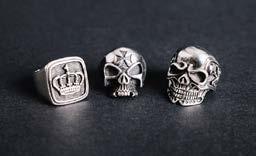
Silver is not a very reactive metal and does not react with oxygen or water at ordinary temperatures, so does not easily oxidize. However, it is attacked by common components of atmospheric pollution. Silver sulfide slowly appears as a black tarnish during exposure to airborne compounds of sulfur (byproducts of the burning of fossil fuels and some industrial processes), and low level ozone reacts to form silver oxide. As the purity of the silver decreases, the problem of corrosion or tarnishing increases because other metals in the alloy, usually copper, may react with oxygen in the air.
The black silver sulfide (Ag2S) is among the most insoluble salts in aqueous solution, a property that is exploited for separating silver ions from other positive ions.
Sodium chloride (NaCl) or common table salt is known to corrode silver-copper alloy, typically seen in silver salt shakers where corrosion appears around the holes in the top.
In Colonial America, sterling silver was used for currency and general goods as well. Between 1634 and 1776, some 500 silversmiths created items in the "New World" ranging from simple buckles to ornate Rococo coffee pots. Although silversmiths of this era were typically familiar with all precious metals, they primarily worked in sterling silver. The colonies lacked an assay office until 1814, so American silversmiths adhered to the standard set by the London Goldsmiths Company: sterling silver consisted of 91.5–92.5% by weight silver and 8.5–7.5 wt% copper. Stamping each of their pieces with their personal maker's mark, colonial silversmiths relied upon their own reputation to guarantee the quality and composition of their products.
Colonial silversmiths used many techniques developed in Europe. Casting was frequently the first step in manufacturing silver pieces, as silver workers would melt down sterling silver into easily manageable ingots. Occasionally, they would create small components by casting silver into iron.
Fine silver, which is 99.9% pure silver, is relatively soft, so silver is usually alloyed with copper to increase its hardness and strength. Sterling silver is prone to tarnishing, and elements other than copper can be used in alloys to reduce tarnishing, as well as casting porosity and firescale. Such elements include germanium, zinc, platinum, silicon, and boron. Recent examples of these alloys include argentium, sterlium and silvadium.
A piece of sterling silver dating from
Henry II's reign was used as a standard in the Trial of the Pyx until it was deposited at the Royal Mint in 1843. It bears the royal stamp ENRI. REX ("King Henry") but this was added later, in the reign of Henry III. The first legal definition of sterling silver appeared in 1275, when a statute of Edward I specified that 12 troy ounces of silver for coinage should contain 11 ounces 2+1⁄4 pennyweights of silver and 17+3⁄4 pennyweights of alloy, with 20 pennyweights to the troy ounce.
Hammering took more time than all other silver manufacturing processes, so it accounted for the majority of labor costs. Silversmiths would then seam parts together to create complex and artistic items, sealing the gaps with a solder of 80 wt% silver and 20 wt% bronze. Finally, they would file and polish their work to remove the seams, finishing off with engraving and stamping the smith's mark. The American revolutionary Paul Revere was regarded as one of the best silversmiths from this "Golden Age of American Silver". Following the Revolutionary War, Revere acquired and made use of a silver rolling mill from England. Not only did the rolling mill increase his production[-hammering and flattening silver took most of a silversmith’s time-he was able to roll and sell silver of appropriate, uniform thickness to other silversmiths. He retired a wealthy artisan, his success partly due to this strategic investment. Although he is celebrated for his beautiful hollowware.
Silver is not a very reactive metal and does not react with oxygen or water at ordinary temperatures, so does not easily oxidize. However, it is attacked by common components of atmospheric pollution. Silver sulfide slowly appears as a black tarnish during exposure to airborne compounds of sulfur (byproducts of the burning of fossil fuels and some industrial processes), and low level ozone reacts to form silver oxide. As the purity of the silver decreases, the problem of corrosion or tarnishing increases because other metals in the alloy, usually copper, may react with oxygen in the air.
The black silver sulfide (Ag2S) is among the most insoluble salts in aqueous solution, a property that is exploited for separating silver ions from other positive ions.
Sodium chloride (NaCl) or common table salt is known to corrode silver-copper alloy, typically seen in silver salt shakers where corrosion appears around the holes in the top.
In Colonial America, sterling silver was used for currency and general goods as well. Between 1634 and 1776, some 500 silversmiths created items in the "New World" ranging from simple buckles to ornate Rococo coffee pots. Although silversmiths of this era were typically familiar with all precious metals, they primarily worked in sterling silver. The colonies lacked an assay office until 1814, so American silversmiths adhered to the standard set by the London Goldsmiths Company: sterling silver consisted of 91.5–92.5% by weight silver and 8.5–7.5 wt% copper. Stamping each of their pieces with their personal maker's mark, colonial silversmiths relied upon their own reputation to guarantee the quality and composition of their products.
Colonial silversmiths used many techniques developed in Europe. Casting was frequently the first step in manufacturing silver pieces, as silver workers would melt down sterling silver into easily manageable ingots. Occasionally, they would create small components by casting silver into iron.
Fine silver, which is 99.9% pure silver, is relatively soft, so silver is usually alloyed with copper to increase its hardness and strength. Sterling silver is prone to tarnishing, and elements other than copper can be used in alloys to reduce tarnishing, as well as casting porosity and firescale. Such elements include germanium, zinc, platinum, silicon, and boron. Recent examples of these alloys include argentium, sterlium and silvadium. A piece of sterling silver dating from
Henry II's reign was used as a standard in the Trial of the Pyx until it was deposited at the Royal Mint in 1843. It bears the royal stamp ENRI. REX ("King Henry") but this was added later, in the reign of Henry III. The first legal definition of sterling silver appeared in 1275, when a statute of Edward I specified that 12 troy ounces of silver for coinage should contain 11 ounces 2+1⁄4 pennyweights of silver and 17+3⁄4 pennyweights of alloy, with 20 pennyweights to the troy ounce.