Little cars, big smiles
Smile makers build Toys for God’s Kids Pages 8-9 Treatment center changes young lives Pages 12-13

Smile makers build Toys for God’s Kids Pages 8-9 Treatment center changes young lives Pages 12-13

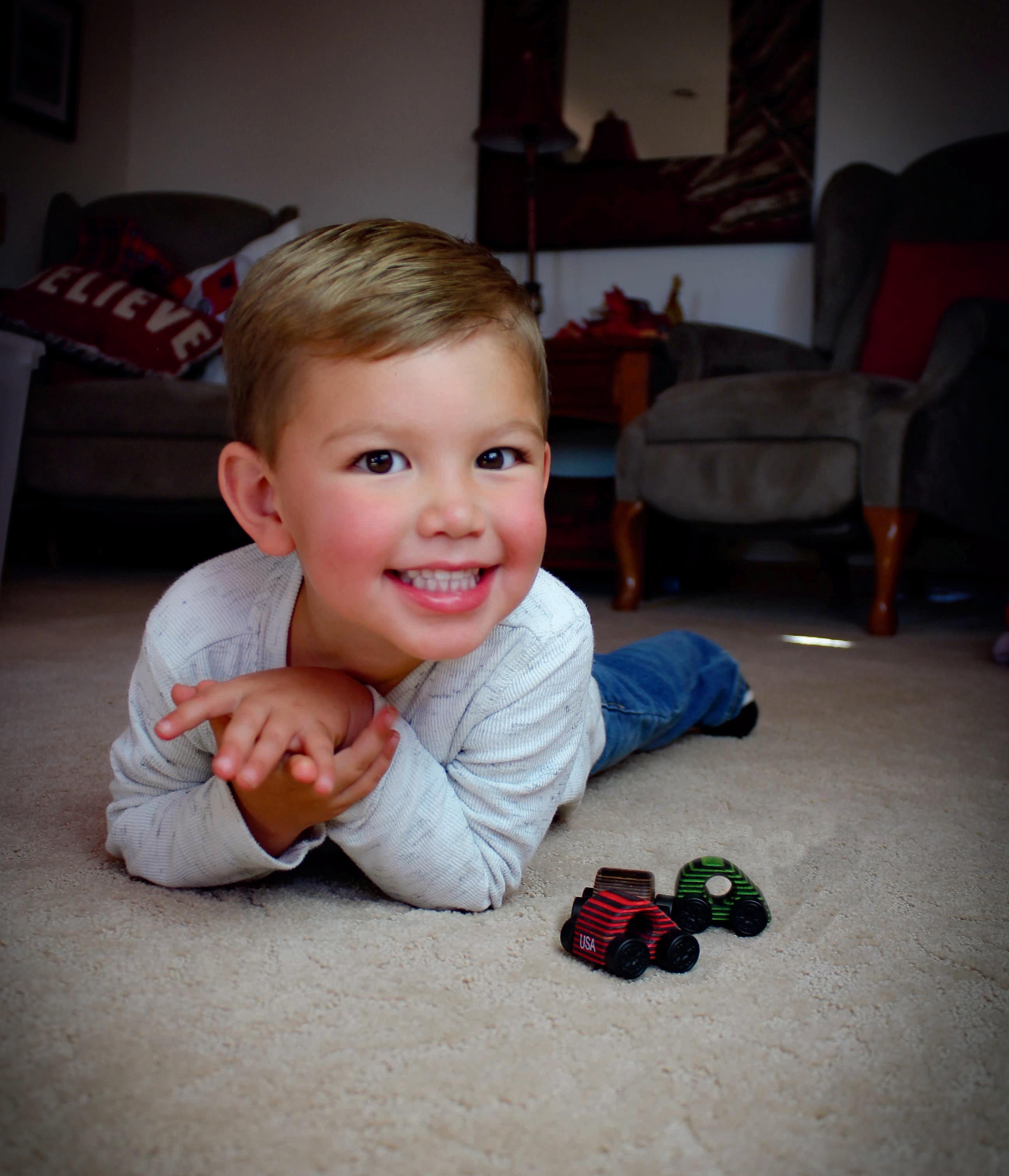
Asher Smith plays with a few of the thousands of small wooden cars built each year by Toys for God’s Kids
Inflation seems to be the topic of all conversation, and rightfully so. According to the US Bureau of Labor Statistics, they calculate that $100 in September 2021 has the same buying power as $108.20 in September 2022. That means our dollar isn’t going as far as is it did last year. It is evident in everything that we are purchasing. Food in all categories is up 11.2% and energy 19.8%.
seeing and as we borrow money at a higher interest rate, it could impact future rates. But that is why we do these plans, so that we can anticipate when a rate increase would be necessary.
Over 60% of our expenses is due to power costs. Both Basin Electric and East River Electric are projecting rates to remain stable.
Stephanie Horst horst@byelectric.com
With all these price increases, did you know that B-Y Electric has not increased rates? In fact, not only are we keeping rates the same, but back in April, your Board of Directors approved a $267,000 bill credit to be applied to our member’s electric bills. This bill credit
Stable electric rates are not the only responsibility we bear, but so is reliability. We continue to invest in our distribution system with regular maintenance and replacement of our aging lines. East River has also committed to reliability to B-Y Electric members with a new substation in the lake area. The Lewis and Clark substation addresses the load growth and future load growth in the area while adding support to the Gavins substation. Construction will begin sometime this year and projected completion Spring/Summer of 2023.
was passed on to our members from a credit we received from East River Electric and Basin Electric on our power bill. In October, the Board of Directors also approved a $170,300 Capital Credit retirement in addition to another $281,200 getting passed through from East River and Basin. This will be a credit on our members’ December 1st electric bill. That means $718,500 stayed in our members’ wallets in 2022.
So, what does 2023 look like? We are currently working on our 2023 budget, and it indicates no rate increase will be needed. We are however working on a new four-year work plan and long-range plan. These plans will be accounting for all the material increases we are
With the holidays approaching, so does the cold weather. If you have electric heat, you are going to weather out this winter season well. Like I mentioned before, our rates are the same, unless your usage increases, your electric bill isn’t going up. If you are doing new construction, you may want to consider an all-electric heating system. Our heat rate remains stable, it does not go up and down with commodity prices. We also offer rebates on heat-pumps and resistance heat. Contact Aaron in our office for more information at 605-463-2507.
For those members who qualify, state assistance is available for home heating costs. The South Dakota Department of Social Services’ website is a great resource including the current income guidelines and an online application: https://dss. sd.gov/economicassistance/energyassistance/ lowincome.aspx
For more information, call our office at (605) 463-2507 or email horst@byelectric.com
We are currently working on our 2023 budget, and it indicates no rate increase will be needed.
(USPS No. 018-973)

Bon Homme Yankton Electric Association, Inc PO Box 158 134 S. Lidice St. Tabor, SD 57063
Office Hours: Monday through Friday 7:30am - 4:00pm
To pay by phone, call: 1-888-395-5315
To report an outage, call: Local call from Tabor, Tyndall, and Yankton: 605-463-2507
NOTICE: Electric bills must be paid by 10:00am on the 20th of each month to avoid a $10 late fee.
Board President: Paul Voigt
Board of Directors
Dave Sykora - Vice President
Dave Sternhagen - Secretary
Robert Ruppelt - Treasurer
Dean Sternhagen
John Lillevold
Rick Cheloha
General Manager: Stephanie Horst Operations Manager: Ken Carda Office Manager: Nicole Einrem Member Service Advisor: Aaron Melichar

Bon Homme Yankton Electric Cooperative Connections is the monthly publication for the members of Bon Homme Yankton Electric Association, Inc, PO Box 158, 134 S. Lidice St., Tabor, SD 57063-0158. Families subscribe to Cooperative Connections as part of their electric cooperative membership. The purpose of Bon Homme Yankton Electric Cooperative Connections is to provide reliable, helpful information to electric cooperative members on electric cooperative matters and better rural living. Subscription information: Cooperative members devote 50 cents from their monthly electric payments for a subscription. Non-member subscriptions are available for $12 annually. Periodicals postage paid at Tabor, SD 57063.
Postmaster: Please send address changes to Bon Homme Yankton Electric Cooperative Connections, PO Box 158, Tabor, SD 57063; telephone (605) 463-2507.
The October board meeting was held on October 19, at 8am. All board members were present. Others present were the attorney, management staff and guest employee Alex Caba.
THE BOARD REVIEWED CONSENT AGENDA:
• Minutes of the Previous Meeting
• New Members & Cancellations
• Capital Credits to Estates Discounted-$809.21
• Closed Work Order Inventory-None
• Review Special Equipment purchasesNone
THE BOARD REVIEWED AND APPROVED:
• Member Service Report • Operations & Safety Report
• Office & Financial Reports including the preliminary capital budget
• General Manager Report
• East River Cyber Security/IT Report

• Director Reports
• Legal Report
• Selected delegates for the Midwest Annual Meeting
• Approved the 2022 Capital Credit Retirement
• Resolution to modify the R&S Retirement Plan
• Accepted the Basin Electric 2023 Load Forecast

• Executive Session - Enter & Exit
• Next Meeting date set for Wed, November 23, at 8am
Scotland
Michelle Merritt
Dawson Hutterian Brethren Inc.

Tabor Jallison Altwine Yankton
Barbara Fendrick Andrew & Mary Wuestewald Dustin Iiams
Mary Sterk
Brenda
It’s time to deck those halls - safely. More than 800 home fires are caused by holiday decorations each year, according to the National Fire Protection Association.

An additional 170 home fires are caused by Christmas trees each year. Keep these tips in mind for a safe holiday season:
• Carefully inspect all electrical decorations before you use them. Cracked or damaged sockets and loose or exposed wires can cause serious shock or start a fire.
• Make sure all extension cords and electrical decorations are being used properly - indoor-rated cords indoors, outdoor-rated cords for outside decorations.
• Inspect extension cords for damage and discard (not repair) any that are not completely intact.
• Never mount or support light strings in a way that might damage the cord’s insulation.
• Outdoor electrical lights and decorations should be plugged into circuits protected by ground-fault circuit interrupters.
• Exercise caution when decorating near power lines. Keep yourself and your ladder at least 10 feet from power lines.
• Turn off all indoor and outdoor electrical decorations before leaving home or going to sleep.
• Avoid overloading electrical outlets with too many decorations or electrical devices. They can overheat and cause a fire.
• Never connect more than three strings of incandescent lights together.
• Water your Christmas tree daily.
• Keep all decorations at least 3 feet away from heating equipment.
• Avoid using candles. The flames are just too dangerous with all the flammable decorations around.
• Purchase electrical decorations from reputable retailers and that are approved by a nationally recognized testing lab such as UL, Intertek or CSA.
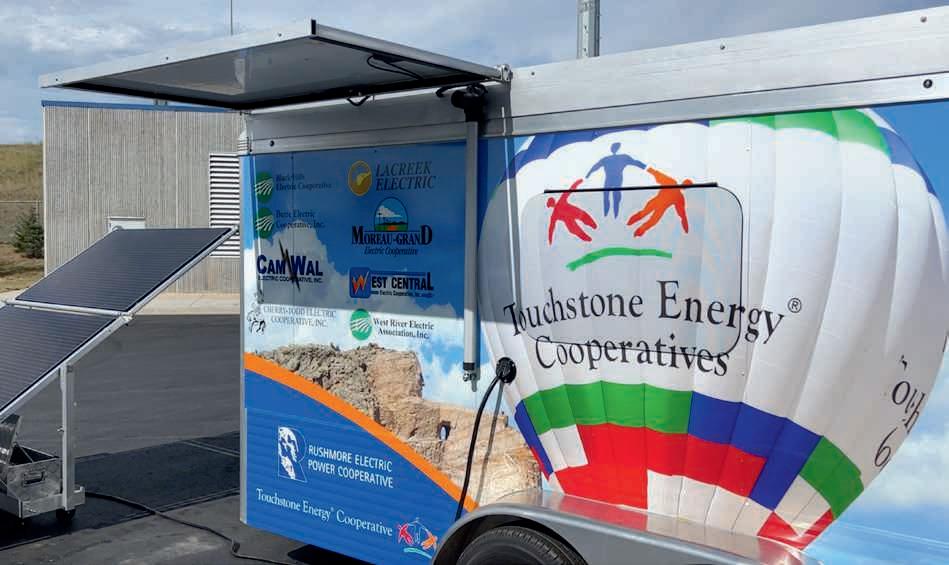
Rushmore Electric and Touchstone Energy have joined togeth er to construct a demo trailer designed to teach co-op members across the state more about how solar power functions. The trailer is equipped with fold-out collection panels and also bat tery storage capability. Co-op energy experts use the trailer to frame discussions about net metering, interconnection agreements and more.
To see a video of the trailer and learn more about how electric cooperatives serve our members, visit Cooperative Connections Plus by scanning the QR code at right.

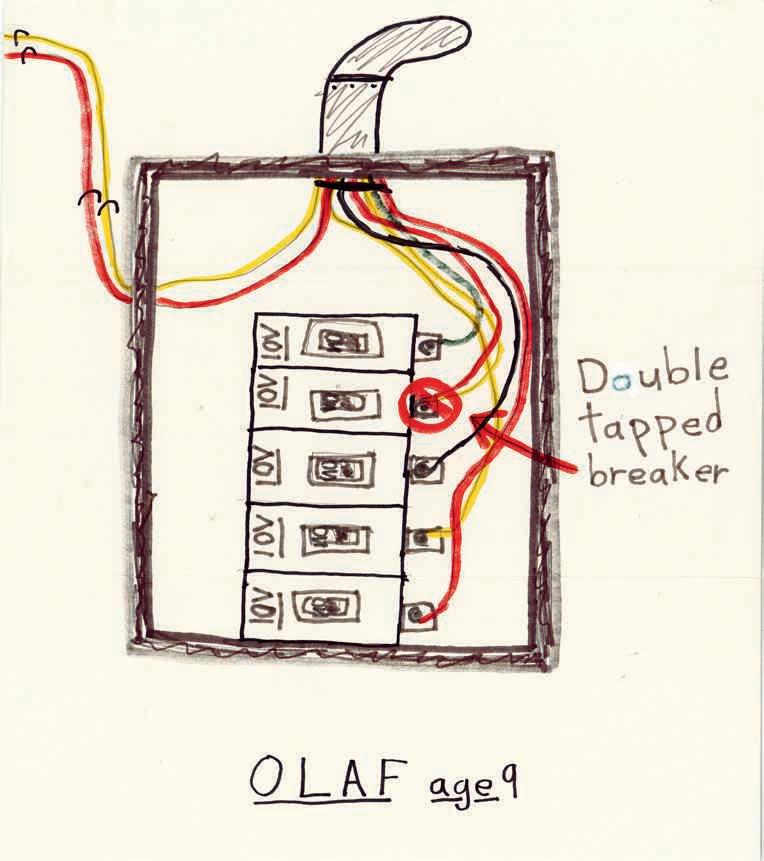
Olaf Sahlstrom, 9, shares a tip he learned from his parents, Ben and Naomi Sahlstrom: Double-tapped breakers are unsafe and can lead to overheating, arcing, and electrical fires. The Sahlstroms reside in Tracy, MN and are members of Lyon-Lincoln Electric Cooperative.
Kids, send your drawing with an electrical safety tip to your local electric cooperative (address found on Page 3). If your poster is published, you’ll receive a prize. All entries must include your name, age, mailing address and the names of your parents. Colored drawings are encouraged.
Ingredients:
8 qt. box powdered milk
1 lb. can Nestles Cocoa Mix 7-8 oz. jar powdered creamer 3 c. powdered sugar 1/3 c. cocoa
METHOD
Mix in order given in large bowl. Put in air tight container. Use 1/4 cup mix per cup of hot water. Makes about 16-cup mix.
Phyllis Niemann, Clear Lake
PEANUT BUTTER PIE
Ingredients:
1 heaping c. peanut butter
1 8 oz. pkg. cream cheese (softened)
1 8 oz. tub cool whip (thawed)
1/2 c. milk
2 c. powdered sugar graham cracker pie crust (prepared)
Crushed Butterfingers or Reeses for garnish
METHOD
Thoroughly mix peanut butter and cream cheese. Add 1/2 cup milk and slowly add 2 cups powdered sugar. Mix well. Fold in cool whip. Put in a prepared graham cracker crust. Makes two 9” pies or one 10” pie with a little extra. Top with crushed candy. Place in freezer until frozen. Remove from freezer 10 minutes before serving.
Elaine Rieck, Harrisburg
Ingredients:
2-1/2 c. Rice Krispies
1/2 c. light brown sugar
1 c. slivered almonds or toasted nut meats
1/2 c. butter, melted 1/2 gal. vanilla ice cream 1 can pie cherries ½ tsp. almond flavoring
METHOD
Mix first four ingredients together. Spread half mixture in a 9x13 pan evenly. Cut and press vanilla ice cream on top and spread remaining mixture on top. Freeze. When ready to serve, stir pie filling and almond flavoring together and heat on stove top or microwave and use for topping individual pieces.
Patty Sinning, Lennox

Ingredients:
3 c. flour
2 tsps. ground ginger
1 tsps. ground cinnamon
1 tsp. baking soda
1/4 tsp. ground nutmeg
1/4 tsp. salt
3/4 c. (1-1/2 sticks) butter, softened
3/4 c. firmly packed brown sugar
1/2 c. molasses
1 egg
1 tsp. pure vanilla extract 1/4 c. granulated sugar 60 milk chocolate kisses
METHOD
Mix flour, ginger, cinnamon, baking soda, nutmeg and salt in large bowl. Set aside. Beat butter and brown sugar in large bowl with electric mixer on medium until light and fluffy. Add molasses, egg and vanilla; mix well. Gradually beat in flour mixture on low speed until well mixed. Press dough into a thick flat disk. Wrap in plastic wrap. Refrigerate 4 hours or overnight. Preheat oven to 350°F. Shape dough into 1-inch balls. Roll in granulated sugar to coat. Place 2 inches apart on ungreased baking sheets. Bake 8-10 minutes or until edges of cookies begin to brown. Immediately press a chocolate candy into center of each cookie. Remove to wire racks; cool completely. Store cookies in airtight container up to 5 days.
mccormick.com
Please send your favorite recipes to your local electric cooperative (address found on Page 3). Each recipe printed will be entered into a drawing for a prize in December 2022. All entries must include your name, mailing address, phone number and cooperative name.
A: Winterizing is an important step to keep your home cozy and your bills low. These tried-and-true methods will ensure your home is sealed tight and ready for colder weather. I’ve also included tips that address common misconceptions.
You can raise the water temperature inside your home’s water pipes by 2 to 4 degrees by insulating, according to the U.S. Department of Energy (DOE). Insulating allows you to turn down the heat on your water heater, saving energy and money.
Miranda Boutelle Efficiency Services Group
Start by insulating the pipes coming out of your water heater. If you have a gas water heater, keep pipe insulation at least 6 inches away from the flue. Insulate hot and cold water lines. The latter can prevent condensation and freezing pipes. Insulating your water heater can save 7% to 16% on water-heating costs, DOE says. Insulation kits are available at hardware stores. Don’t obstruct the pressure relief valve, thermostats or access valves.
Air sealing and insulation are a great combination for minimizing home energy use. Insulation is like a warm sweater for your home, and air sealing is the wind breaker. All the cracks, gaps and holes in a home can be like having a window open yearround. Air sealing eliminates those leaks. It can be done as a do-it-yourself project or by a professional.
Windows can be a source of drafts and wasted energy. Close windows tightly.
Add weatherstripping around windows to prevent warm air from escaping your home and caulk the gaps where the window trim meets the wall and the window frame. Add curtains to make the room feel warmer.
Storm windows are a lower-cost option for upgrading single-pane windows. They are available with low-emissivity coatings, which insulate better, and are available for installation either from the inside or outside of the window.
When I was little, my dad told me it was too cold to have a fire. I remember thinking that made no sense, but he was right.
We had an open, wood-burning fireplace—not a wood stove. A fireplace can draw the warm air out of the house, cooling it down or causing your heating system to use more energy.
Your fireplace adds ambiance to your home but isn’t necessarily effective at heating it. If you have a wood-burning fireplace, close the damper when your fire is extinguished. An open damper in the winter is an easy exit for the air you paid to heat.
Adding tempered glass doors to a wood-burning fireplace can create an extra buffer between the cold outside and a cozy living space.
Some gas fireplaces require a damper to remain permanently open so gas can vent out of the home. Check the specifications of your unit to ensure safe operation.
Through the years, I have heard a lot of debate about closing off rooms or parts of the home to save energy.
Best practices come down to the type of heat source. If you have a zonal heating system, where individual areas are controlled separately, you can close doors and only heat the areas you use. Examples of zonal systems are wall heaters, baseboard heat, hydronic radiant heat, radiators and ductless heat pumps, also called mini-splits.
Keep areas with plumbing or water lines warm enough so pipes do not freeze.
If you have a central forced-air heating system, leave doors open to all heated areas. Closing doors and/or register dampers forces the system to work harder, uses more energy and can shorten the life of heating equipment.
Maintaining a clean filter in your furnace is one of the best ways to keep it running efficiently and prevent costly repairs. Check your furnace or ductless heat pump filter monthly during peak heating season.
It’s all over the news about propane, natural gas and fuel oil prices being much higher this winter than last. People are very concerned about what they are going to have to give up to stay warm. You know what has not gone up? Your cooperative’s electric rates! If your bill gets higher this winter, it will be because you used more electricity or the weather is not cooperating and becomes colder than normal. Make use of the holiday energy savings tips and ask us how to get an electric heat credit on your bill in the winter months.
Whether you’ve already decked your halls or you’re just getting started, there’s still time to incorporate energy savings into your holiday décor planning.

If you haven’t strung your twinkle lights, be sure to use LED light strands. LEDs consume far less energy than incandescent lights and they can last 40 holiday seasons. They’re also safer because they’re made with epoxy lenses, not glass, making them more resistant to breaking––and they’re cool to the touch, so no burnt fingers!
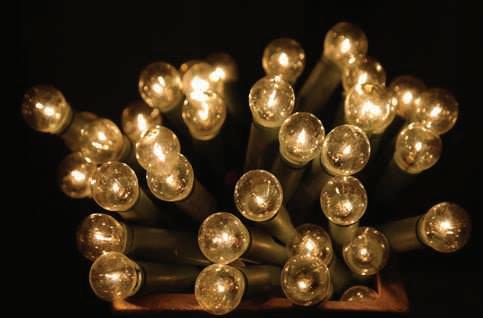
If you missed Santa’s memo about energy-saving LEDs and your holiday lights are already up, you can still save on lighting costs. All you need is a programmable light timer. Most models cost between $10 to $25 and can be purchased through online retailers like Amazon or at big box stores like
Lowe’s or Wal-Mart. With a light timer, you can easily program when you want your holiday lights turned on and off, which will save you time, money and energy. If you’re using a timer for exterior lighting, make sure it’s weatherproof and intended for outdoor use.
If Clark Griswold’s décor style is a bit much for your taste, consider a more natural approach. Many Christmas tree farms, and even retailers like Lowe’s and Home Depot, give away greenery clippings from recently trimmed trees. With a little twine, extra ornaments and sparkly ribbon, you can create beautiful garlands and wreaths to hang over your front door or windows. To add extra twinkle at night, you can install solar-powered spotlights to illuminate your new (essentially free!) greenery. Solar spotlights can vary in price, but you should be able to purchase a quality set of four for about $30––and because they run on natural energy from the sun, there’s no additional cost to your energy bill.
Regardless of how you decorate your home for the holidays, there are plenty of ways to save energy throughout the season.

Frustrated moms across the ages have been searching for a surefire method for getting an unruly child to simmer down.
Duane Strand is pretty sure he’s found a failsafe solution: toy cars.
Several years ago, Strand began building tiny wooden cars in his nondescript backyard shed in Platte. He recalls visiting Pierre one evening and having dinner at a local restaurant when a young boy suddenly started pitching a fit and hollering at the top of his lungs.

Strand just happened to have one of the cars in his pocket. He reached out and handed it to the child and was rather amazed at the result. Not only did the whining stop forthwith, but that boy’s frown turned upside down as the
kid started beaming from ear to ear.
“He quit yelling right then and there. His whole attitude changed,” Strand recalls. “These cars really have a soothing effect on the kids.”
That’s the impact Strand is shooting for as he and his three-man team of retirees crank out nearly 60,000 toy cars each year. They’re looking to squeeze all the “smileage” they can get out of the toy cars they build.
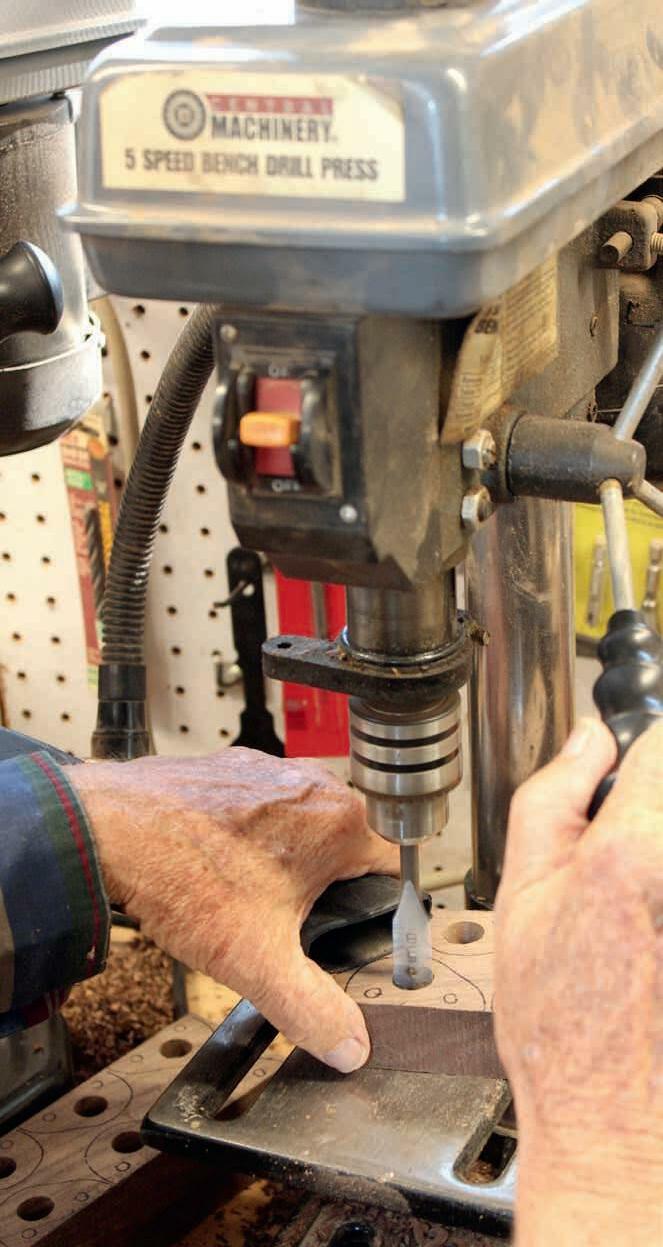
The main construction crew includes retired farmer Richard Ringling and retired mechanic LeRoy Iedema. Ringling usually works the drill press to create holes in the wood where the axles will go. Then Iedema follows up by pressing the wheels onto the axles. He came up with a way to make sure the wheels roll straight and stay in place and dares anyone to try and pull off a wheel.
There are others who join in the
process: Justin Kok cuts the wood into manageable blocks; Brett Wynia performs repairs on the drill presses, band saws, sanders, routers and other pieces of equipment when they break down; and Curtis Versteeg helps to sand down the rough surfaces on the cars.
Toy cars are distributed by military personnel serving overseas.
And just down the road from the shop is the Platte Lumber Yard, where many of the material supplies are stored until needed for production. Strand said it was the folks down at the lumber yard who initiated the vital connection with

Strand gets lots of ‘smileage’ out of making toy cars for childrenLeRoy Iedema, Richard Ringling and Duane Strand crank out nearly 60,000 toy cars each year from their 12x10-foot workshop in Platte. Photo by Billy Gibson
“Without Boyds we wouldn’t be able to do any of this,” Strand said.
Dustin Knutson, a member of Central Electric Cooperative and part owner of the company that bills itself as the largest after-market gun stock maker in the world, is a Shriner with a heart for community service and said he was allin when Strand approached him about supporting the program by supplying excess wood.

“They’re really easy to work with,” he said, noting that he keeps one of the cars on his desk. “They take whatever they can get and they show up consistently. We started saving off-cut blocks of wood specifically for the cars. The laminated wood works well because it’s colorful and looks good and the kids can pick out their favorite one.”
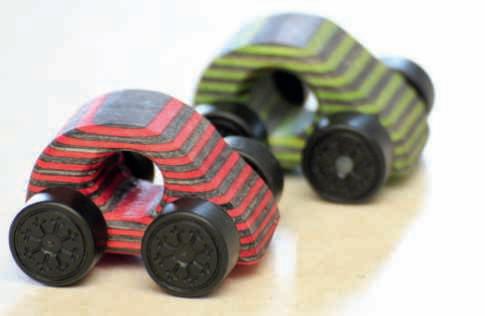
Strand’s distribution system is a bit scatter shot but he still manages to send them all over the globe. Anyone he knows who is planning a trip gets a supply of cars. Knutson, for instance, takes them with him when he travels for business or pleasure, whether vacationing in Mexico or hunting in Africa.
“People in America may think these are just simple toys, but I’ve been in parts of the world where a toy for a kid is a stick and a rock,” Knutson said. “But these little cars give kids something to smile about. Duane and his guys are just beautiful people doing good things for the good of humanity and we’re happy to help them any way we can.”
The toys also ride along in ambulances, military satchels and police vehicles in the event a child needs to be calmed. They show up in doctor’s offices, churches and other venues.
The operation is affiliated with a group called Toys for God’s Kids, a non-denominational organization based in Denver. Strand is the only affiliated “smile maker” in South Dakota.
While the three-man crew claims they’re working harder than they used to before retiring, Iedema assigns a greater value to his toil beyond the opportunity to put a smile on a kid’s face. He said his heart doctor has informed him that he’s in better shape than before he started woodworking three years ago. He’s slimmer, more active and feels a lot better.
Strand chips in, “…yeah, and he’s
more ornery than ever, too!”
Collectively, the guys crank out about 250 cars a day scrunched inside the 12 x 10-foot shed. Each unit has to be dipped in linseed oil to protect children from any potential toxicity. The toys are boxed and shipped to their destination at the recipient’s expense.
Strand doesn’t know how much longer he’s going to be able to keep cranking out cars. He’ll reach the age of 90 in a few months and his friend Ringling has a plan: “I told him when he turns 90 we’re going to take him up by the interstate and take a picture underneath the sign that says I-90. Get it?”
Have you ever received your power bill and thought, “I wonder which appliances in my home are using the most energy?” Don’t worry - you’re not alone. A few years ago, after being away for a somewhat lengthy trip, I arrived home to a typical energy bill. I was surprised because I expected a lower bill after being away from home. This led me to a journey in search of answers.
My first answer came from browsing the Energy Information Administration’s (EIA) website, specifically the Residential Energy Consumption Survey. According to EIA, a typical U.S. home spends more than $2,000 annually on energy bills, and on average, more than half of energy consumption is for just two end uses: space heating and air conditioning. Seeing this, I understood the importance of adjusting my thermostat while I’m away because it truly makes a difference.
I also learned that water heaters tend to be the third largest energy user at 13
percent, followed by lighting, which usually accounts for about 12.5 percent of the average energy bill.
Once I understood the factors driving my consumption, I was able to control them and save money by using helpful devices like smart thermostats, water heater controllers and smart power strips.
Several factors affect the amount of energy you use, including geographic location and climate, the number of people in the home, the type of home and its physical characteristics. The efficiency of energy-consuming devices and the amount of time they are used also impact home energy consumption.
To save energy and reduce your monthly bill, the following tips can help:
1. Use ENERGY STAR®-rated appliances and devices.
2. Replace old, inefficient equipment. For example, if your air conditioner, furnace or water heater is more than 10 years old, it is likely using a lot more energy than necessary. A newer model will save you money in the long run and
help you avoid a breakdown.
3. Use appliances with efficiency in mind. Only wash full loads of clothes or dishes, and when possible, cook with smaller, countertop appliances.

4. Set your thermostat accordingly to scale back heating or cooling when you are asleep or away. When you’re in the home and active, the Department of Energy recommends setting it to 78 degrees in the summer and 68 degrees in the winter. Aim for settings as close to those as possible to save energy.
5. Use energy efficient LED bulbs. They use 75 percent less energy than incandescents and last 25 times longer.
6. Plug electronics into a smart power strip, which allows you to designate “always on” for devices that need to maintain network connection, while cutting power from devices like speakers and TVs when they are not in use.
In addition to these steps, consider using real-time energy monitors to help identify faulty appliances or other problems like a broken water heater that runs unnoticed for extended periods of time, leading to high energy bills.
With a little extra attention, you’ll be well on your way to a path of energy savings - and lower energy bills.
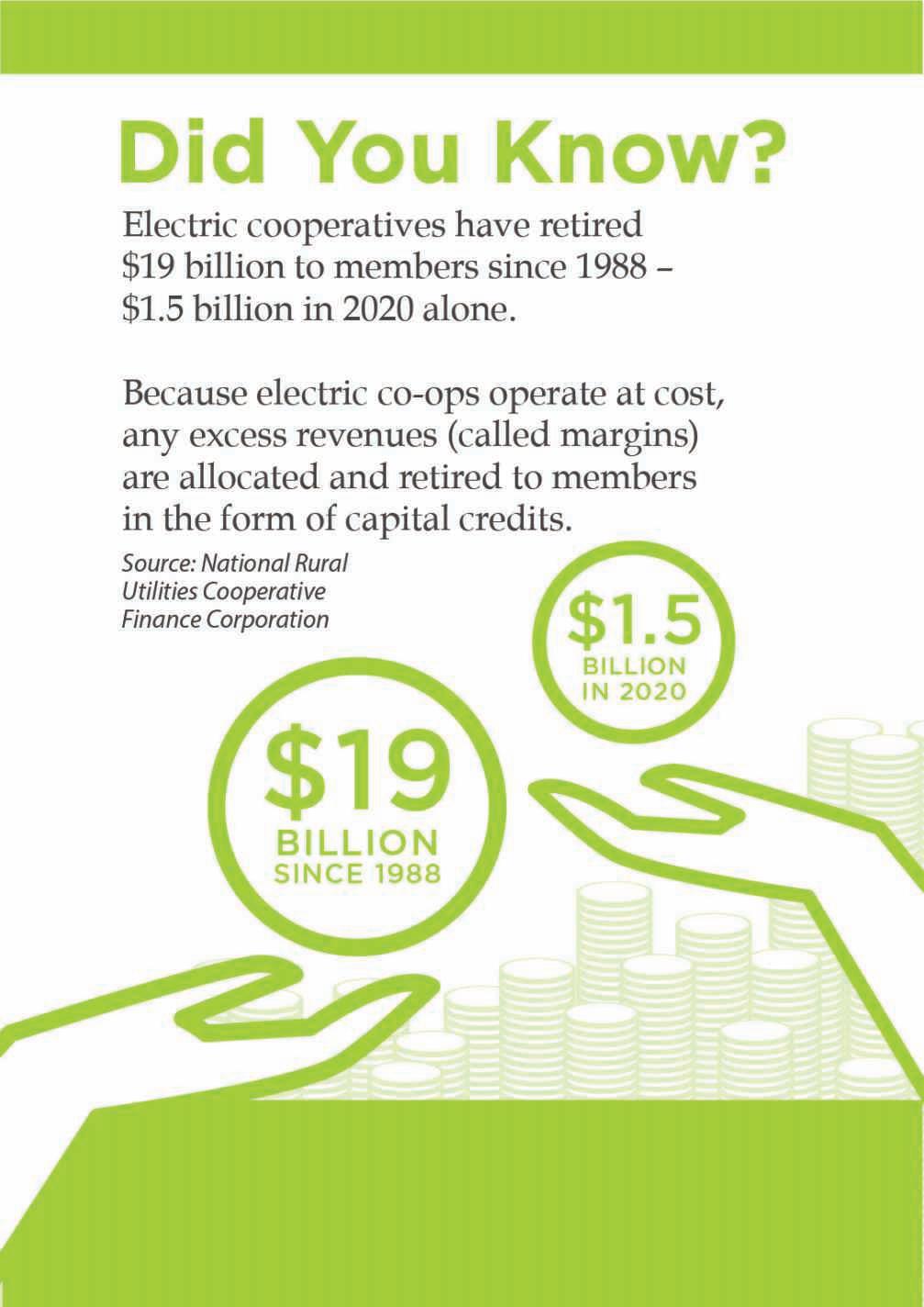
The board approved the next capital credit refund at the October board meeting. $451,500 will be returned to current and former members of the cooperative.
$281,200 was received from our wholesale power providers, Basin Electric and East River Electric, and will be passed through to the members. $170,300 will be directly from the cooperative.
The refund will be applied towards capital credits allocated in 2002, 2003 and 2004. You will only receive a refund if you were an active member during those years.
Active members will receive a bill credit on their primary electric account on the December 1st bill. Former members will receive a check in December if the amount is greater than $25.00 and we have a valid mailing address on file.
As a non-profit cooperative, any margins earned are allocated to the members in the form of patronage capital credits. The funds are held and used as capital for a number of years and then refunded on a first-infirst-out rotation.
Members can submit classified ads for the following categories: Giveaway, For Sale, For Rent, and Wanted Ads. All ads must be received by the first of the month to be included in the following month’s issue. Ads will run one time unless resubmitted. Bon Homme Yankton Electric reserves the right to edit content or exclude ads due to space restrictions. Email ads to ebiz@byelectric.com.
January Issue Deadline: December 1, 2022. Email your classified ad to: ebiz@byelectric. com. Members can post one free ad per year. Repeats or longer ads are $1/column inch.
• FOR RENT: 1 bedroom apartment. Tabor Manor. Contact Gary at 605-463-2209 or Ron at 605-463-2256.
• Beseda Hall, Tabor, SD for rent for any special occasion such as weddings, anniversaries, graduation or birthdays! For more information contact Linda Bares at 605-661-6220 or snlbares@gmail.com.
• FOR RENT: Tabor Self Storage. Call 605-6600274 or 605-660-3497.
This institution is an equal opportunity provider and employer. If you wish to file a Civil Rights program complaint of discrimination, complete the USDA Program Discrimination Complaint Form, found online at http://www. ascr.usda.gov/complaint_filing_cust.html, or at any USDA office, or call (866) 632-9992 to request the form. You may also write a letter containing all of the information requested in the form. Send your completed complaint form or letter to us by mail at U.S. Department of Agriculture, Director, Office of Adjudication, 1400 independence Avenue, S.W., Washington, D.C. 20250-9410, by fax (202) 690-7442 or email at program.intake@usda.gov.
It was a small compliment, but it meant everything to the young lady who wasn’t quite accustomed to receiving positive reinforcement. A simple affirmation spoken softly and sincerely into her ear: “You’re gorgeous, and you’re worthy.” And the tears began to flow.
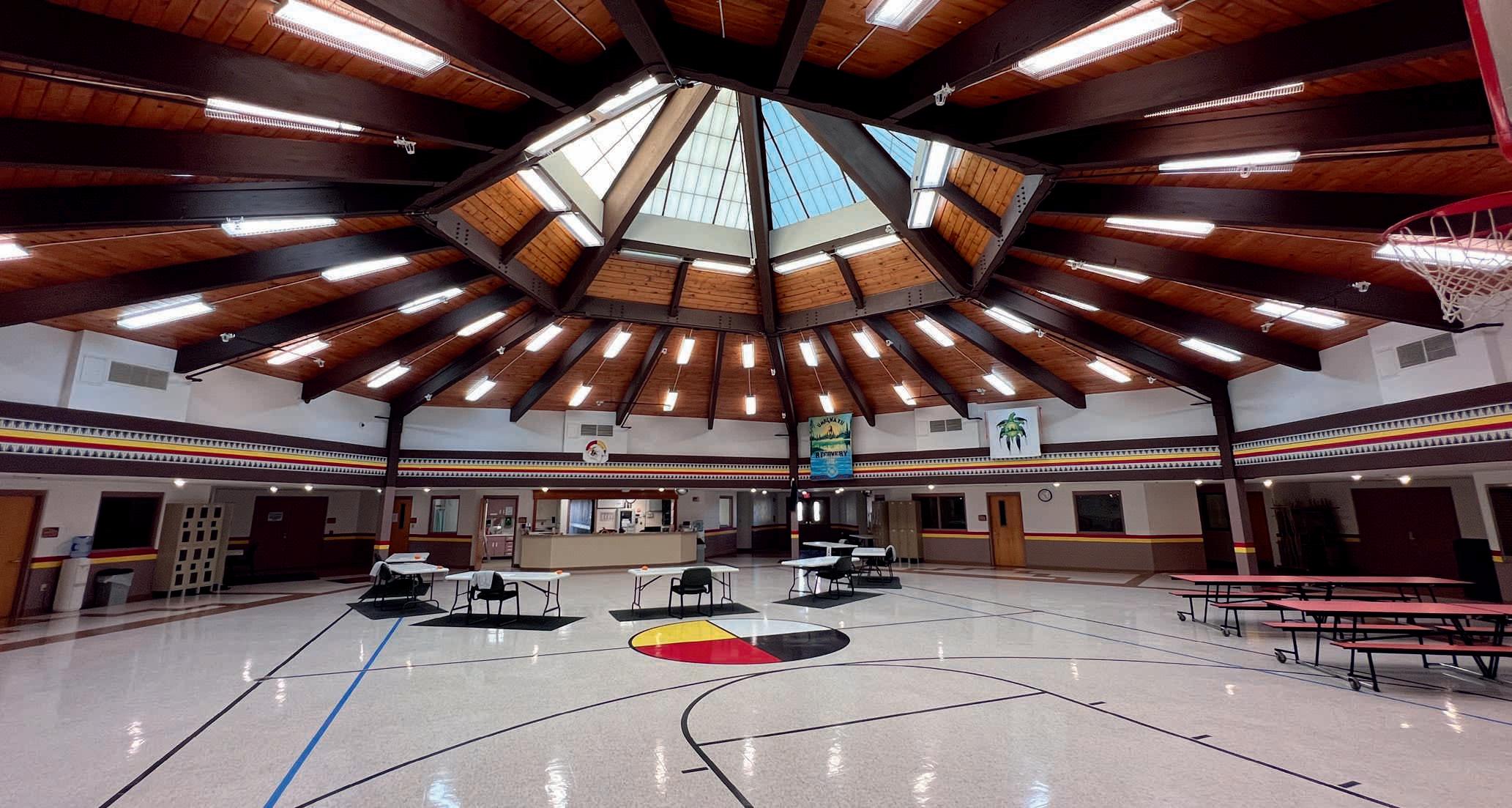
The Indian Health Service Great Plains Youth Regional Treatment Center near Mobridge is a place where at-risk youth can go to address their challenges with drug and alcohol abuse and find the support they need to deal with difficult situations.
Acting Clinical Director Charita Dowdell remembers that encounter with the young woman.
“I tell all of our residents how gorgeous they are and that I see the beauty in them and who they are deep down inside,” Dowdell said. “I told her she was worthy and that she had value,
and she just broke down. She told me that nobody had ever said that to her.”
That’s just one of the stories about how the treatment center’s staff strive to change the lives of teens who enter the program. There are many others.
Program Director Lavon Booth has been involved with the residential program for 20 years, initially as an administrative officer when she started in 2002. She previously served at the Cheyenne River Service Unit in her hometown of Eagle Butte before starting at the YRTC.
She sees the transformation of residents captured in plain view during graduation ceremonies that take place when the 12-week session concludes.
“We’re very fortunate to see the change that happens in our residents from the time they arrive until the time they graduate,” she said. “We see them moving in a positive direction and at graduation we get to hear them speak intimately about what they’ve learned and you see how it all comes together.
They come in very shy and reserved, and they leave here carrying a more positive spirit and more confidence. It’s really touching for us and very rewarding.”
The treatment center is housed in the old Chief Gall Inn hotel on land leased from the Standing Rock tribe. Youth between the ages of 13 and 17 are referred through tribal alcohol programs, local schools, community service organizations and other agencies.
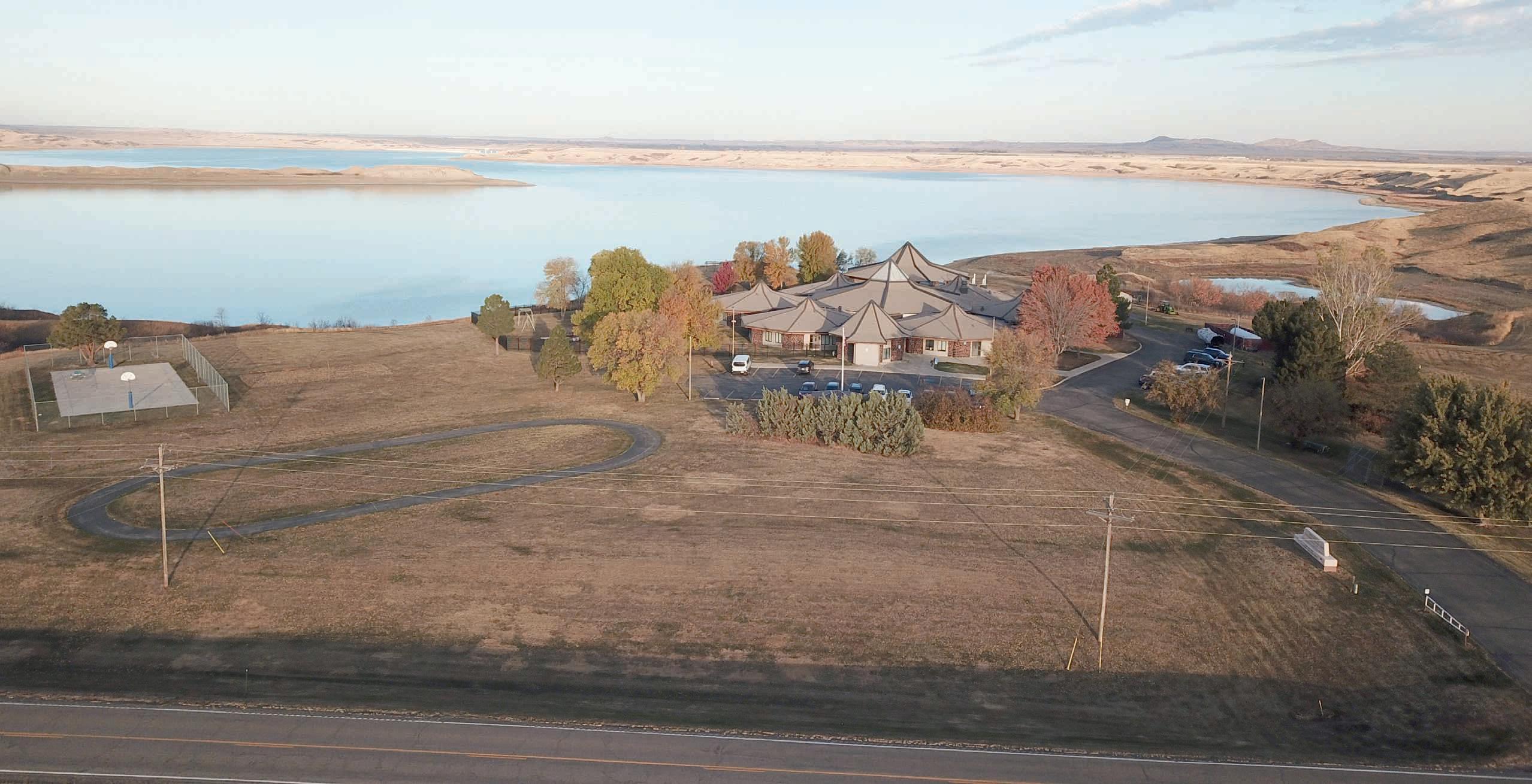
According to the center’s mission statement, the program “is dedicated to promoting a healthy lifestyle restoring balance and harmony in mind, body and spirit to our American Indian youth and their families.”
Dowdell said playing a role in watching that mission statement come true to life in the form of changed behaviors and more positive attitudes makes her know she’s definitely making a profound difference.
One effective modality is a mentoring program where residents taking part in the rehabilitation process shepherd those who are just entering the facility. Not only do the incumbent residents show the newbies around the physical
space, but they also listen to their concerns, answer questions and try to allay their fears that stem from living in a new environment with certain rules, guidelines and expectations.
“When they start feeling homesick or afraid or stressed and they just need someone near their age to talk to, it helps them make the adjustment so they can settle down and focus on what they need to do to make changes. That bond is something that actually helps both of them get through and graduate successfully,” she said.
Dowdell noted there is a concern among staff about residents returning to a challenging environment. So, upon graduation, the youth receive support through a tracking system where staffers make regular check-in calls after three days, three months, six months and a year. A tele-health network is also
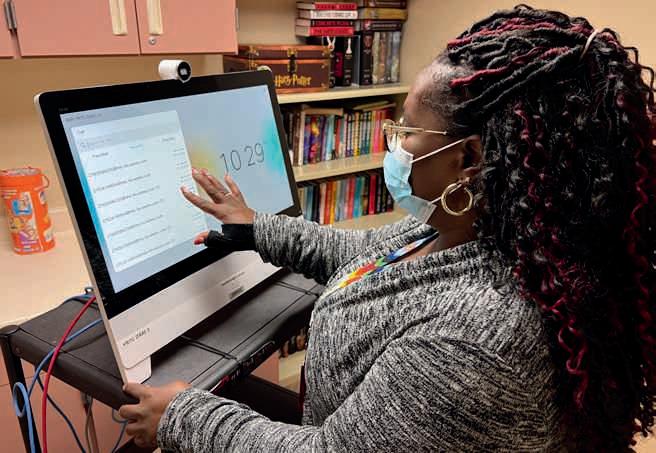
available to the graduates.
Role-playing also helps re-integration, Dowdell said. She added that the residents are taught to anticipate the same kind of challenges they faced before and how to handle them with a different approach.
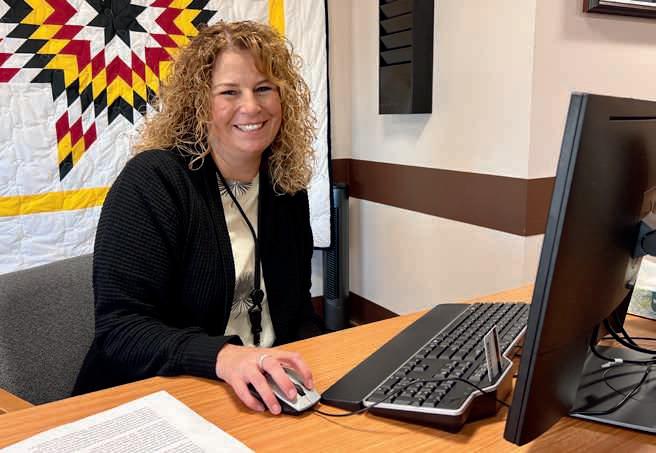
“They return as a changed person, but everybody else around them will be doing the same things,” she said. “We tell them to stay connected to their support system and manage their emotions; how to be true to yourself while being respectful to others. We prepare them for what life is going to look like when they leave.”
She mentioned one particular youngster who entered the program with a defiant attitude and dealing with depression, anxiety and post-traumatic stress. She knuckled down academically and caught up to her class grade. After
graduation, she returned to juvenile detention for seven months. But in the end, she straightened out her life by applying the things she learned at the center.
“She struggled with treatment, but she sent us a letter thanking us for what the program did for her,” Dowdell said. “She said she was grateful for giving her the skills to manage the difficult predicament she was going through. She changed her mentality and grew and matured and became a new person.”
Dowdell stressed that parents can play a key role in helping their children navigate through rehabilitation or prevent them from becoming a candidate in the first place.
“Listen to your children,” she emphasized. “They are saying something to you, but often they don’t feel like they’re being heard. Before you shut that door, listen to what they’re saying. You may have to shut the door anyway, but at least take the time to listen to what they have to say.”
Visit www.ihs.gov/greatplains/ healthcarefacilities/greatplainsyrtc/.
need to change the direction of their lives.
 Billy Gibson billy.gibson@sdrea.coop
Each Christmas season, the Botkin family home nestled in the foothills just outside of Spearfish is transformed from a cozy chalet-style space into a tightly managed, finely tuned assembly center.
The goal is to produce dozens of cinch sacks full of Christmas gifts for school-age children. There’s even a name for the operation: Santa Sacs for Kids.
Amanda Botkin and her husband, Eric, have spent the past 10 yuletide seasons organizing the program and working in conjunction with local school counselors to connect with students and distribute the gift bags. When the calendar page flips to December, the Botkins and their three children ages 8 through 14 kick into high gear and the home starts buzzing with activity.
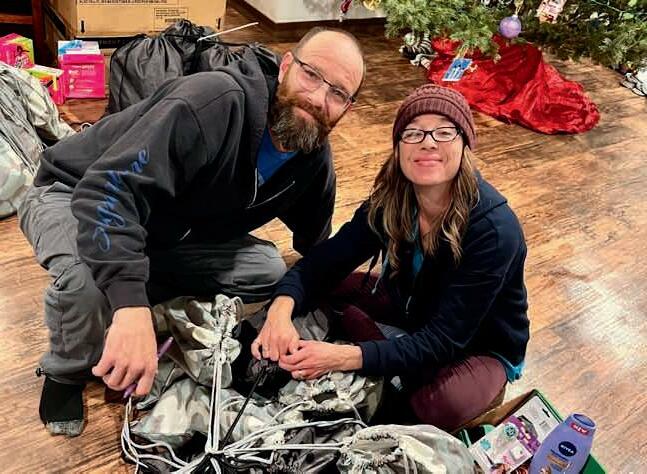
To achieve maximum efficiency – or possibly to prevent the family pets from completely freaking out - the process is
departmentalized. In the kitchen area, bags are filled with coloring books and stickers and small toys for kindergarten and elementary school children. In the living room, items specifically for older female students are gathered up and placed in pink plastic sacks. Down the hallway, fast-food gift cards, winter hats and personal hygiene products like body wash and shampoo for high schoolers are collected and deposited in the totes.
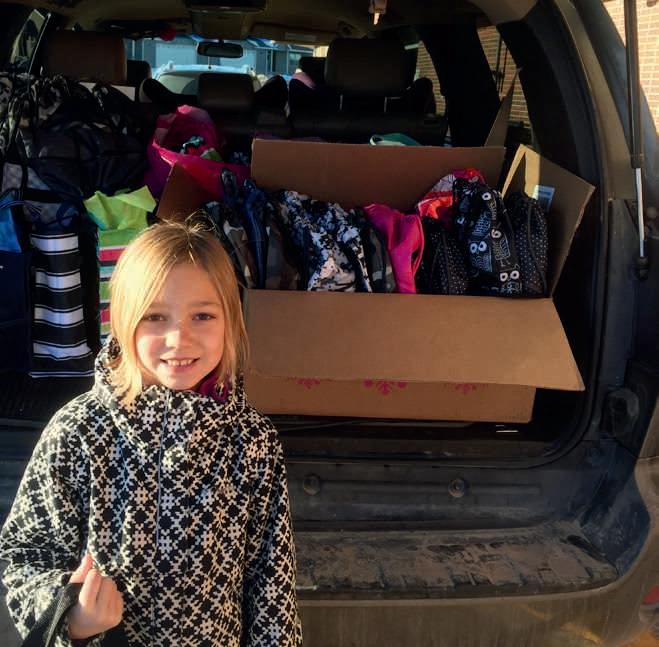
Closer to Christmas and before school lets out for the break, the bags are loaded up in the family Sequoia and transported to counselors at different schools in the area.
The entire program was Amanda’s brainchild, which stemmed from her quest for a way to spark a spirit of giving and community service within her own children – and most of all, a sense of gratitude for blessings received.
“My oldest daughter, Elizabeth, was in kindergarten and I just felt that it was very important for my kids to understand how fortunate we are as a
Eric’s sister, Amy Irion, also enjoyed participating in the annual project.
family. They need to know what it’s like to do things for others,” she said. “Not everybody has a Christmas that looks like ours does.”
Amanda, who works as a nurse in Spearfish, contacted local school counselor and personal friend Mandi Scott and shared the details of her plan. Scott climbed aboard without hesitation. Then Amanda hopped on social media to seek support from other friends, relatives and anyone else interested in contributing to the project. The response was overwhelming.
“We’ve received so much help from so many people who were willing to donate items or funds to buy gifts,” she said. “But we wouldn’t be able to do
anything without participation from our counselors. We do everything through them and everything is anonymous with the kids. They give us the ages and genders and we put together the Santa Sacs for them based on the information we get. School counselors have a really hard job and don’t always get the recognition they deserve, so we want them to know how much we appreciate what they do and the critical services they provide. They’re amazing!”
While Amanda says that pursuing the project is its own reward, occasionally the counselors will forward messages of thanks they’ve received from students.
“It’s nice to get notes when the kids send them,” Amanda said. “But it’s mostly about trying to give them the kinds of gifts that they’ll like or use or have fun with.”
Eric Botkin said he was gung-ho from the beginning when his wife approached him with her plans. He describes the influence his single mother had on developing his understanding of charity. When he was younger, his mom worked
Elizabeth was a youngster when her mother started Santa Sacs for Kids and helps each year to stuff and distribute gift bags.

at a nursing home in Douglas, WY, and he and his siblings would spend Christmas visiting with residents and giving them presents. When Eric was in high school, his mother was a patrolling police officer and used her position to serve others and help solve problems.
During the first year of Santa Sacs for Kids, Eric’s role was to take care of the younger kids, Anna and Dean, while kindergartner Elizabeth played the role of Amanda’s elf.
“I kept an eye on the kids while Elizabeth and Amanda went out and shopped,” Eric said. “But then as the years went along, the number of bags and gifts kept growing. We needed
every hand in the house and whatever volunteers we could get. Amanda has a huge heart and is a great person and always tries to make sure there are nice things in the bags. She wants the kids to all love what they get.”
Amanda, not exactly a loafer, has bigger dreams for the program she created: “I’d really like to get more of the surrounding communities involved and put more bags out there. There’s so much need.”
She would also like to see more older kids get involved in Christmas giving projects so that they can learn the lessons that Elizabeth has learned.
Elizabeth, a 14-year-old freshman at Spearfish High School, is a track and wrestling athlete and also participates in Spartans for Spartans, a group that helps elementary students make a smoother transition to middle school.
“I like getting Christmas presents, but it’s more important to give to others,” she said. “I like doing something positive with my family and it’s great knowing I’m helping other kids make their lives better.”
For those who wish to donate, visit https://gofund.me/2f62016a.
Bring this coupon and mailing label to the Touchstone Energy® Cooperatives booth in LaCroix Hall at the Black Hills Stock Show to win an electric snow blower!
Your Phone Number: Your E-mail Address:
DEC. 4
December 15-18, 2022
Christmas at the Cathedral 521 N Duluth Ave. Sioux Falls, SD 605-988-3765
Sioux Falls Legion Post 15 Pancake Breakfast 8:30 a.m.-noon 1600 W Russell St. Sioux Falls, SD
DEC. 4
Hartford Hometown Christmas Hartford, SD www.hartfordhtc.com
DEC. 4
Walk Through Bethlehem United Methodist Church Webster, SD 605-345-3747
DEC. 10
NOV. 25
Olde Tyme Christmas Kick-off and Parade Hill City, SD
NOV. 25
To have your event listed on this page, send complete information, including date, event, place and contact to your local electric cooperative. Include your name, address and daytime telephone number. Information must be submitted at least eight weeks prior to your event. Please call ahead to confirm date, time and location of event.
“Light up the Night” Parade and Fireworks Belle Fourche, SD
NOV. 25-26
Kris Kringle Kraft Fair Hill City, SD
NOV. 26
Gregory Mid-Winter Fair Gregory Auditorium Gregory, SD 605-830-9778
DEC. 2-3
Christmas in the Hills Mueller Center Hot Springs, SD 605-745-4140
DEC. 3
Santa’s Thrift Village Minneluzahan Senior Center Rapid City, SD 605-394-1887
DEC. 3
Tabor’s Holiday Light Parade Tabor, SD 605-660-0274
DEC. 3
60th Annual Wreath and Centerpiece Sale Central States Fair Grounds, Rapid City, SD 605-343-0710
DEC. 3
Julefest 2022: Scandinavian Christmas Festival & Bazaar 8 a.m.-2p.m. Our Savior’s Lutheran Church Spearfish, SD
Frontier Christmas Fort Sisseton Historic State Park Lake City, SD 605-448-5474
DEC. 15-18
Christmas at the Cathedral 521 N Duluth Ave. Sioux Falls, SD 605-988-3765

DEC. 17
Custer Christmas for Kids Custer High School Custer, SD custerchristmas4kids@gmail.com
JAN. 14
Coats for Kids Bowling Tournament
Registration Starts at 1 p.m. $80 for a four-person team Meadowood Lanes Rapid City, SD 605-393-2081
Note: Please make sure to call ahead to verify the event is still being held.