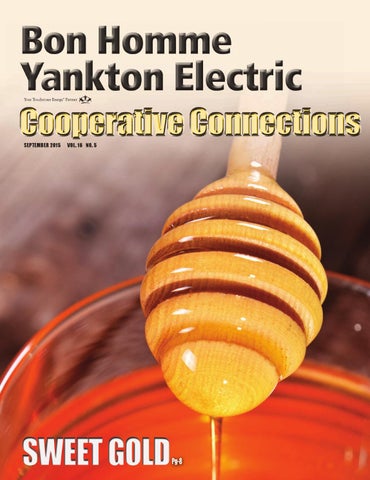
SEPTEMBER 2015
VOL. 16 NO. 5
Co-op
News
2015 Youth Tour Teens Challenged to Make A Difference by Derrill Holly, NRECA
worked for NRECA International, told Young electric cooperative members participants how co-op volunteers from 16 states helped build and train staff for that attended NRECA’s 51st annual Haiti’s first electric cooperative. “Every single one of us knows a story Youth Tour were about coops going above and beyond,” encouraged to make a difference in the world said Sanders, now an apprentice lineman with Johnson City, Texas-based by finding ways to help others. Pedernales Electric Cooperative. During a spirited June 15 rally The event stresses community marking NRECA Youth Day, more than 1,700 young co-op members heard from involvement, particularly in rural America, said Kirk Johnson, NRECA’s speakers who shared the experiences of senior vice president for government the Electric Cooperative Youth Tour. relations. Since NRECA launched the first Youth “Co-ops back home stay engaged Tour in 1964, more than 50,000 young with the youth so there are ongoing people have participated. South Dakota benefits to communities,” said Johnson. first sent students in 1963 and has “There’s a long-term value proposition sent 1,265 teens – including the 2015 Bon Homme Yankton Electric for everyone involved.” delegation of 44 students – since then. representative Sam Caba visiting the “The essential message of history is congressional offices. 2015 Bon Homme that we must all work together,” said Yankton Electric Breonna Hammon, who attended last Youth Tour Winner year as a member of Loa, Utah-based Garkane Energy which also serves part of Sam Caba expressed his appreciation, Arizona. "Thank you for Hammon, from Centennial sponsoring my trip Park, Ariz., served as NRECA Youth Leadership Council spokesperson during to Washington, DC. It was a trip of a the past 12 months and addressed the NRECA annual meeting earlier this year. lifetime. Thanks also for the great service A first-time experience for most we get on a daily participants, Youth Tour includes visits During their Job Shadow Day, the South Dakota teens met with basis." to institutions such as the Supreme Sen. Mike Rounds, Sen. John Thune and Rep. Krisi Noem. Court, the U.S. Capitol and the National Archives, and opportunities to meet with members of Congress. “Youth Tour is a vital opportunity for youth living in co-op service territory to visit our nation’s capital and learn about the importance of electric cooperatives,” said NRECA CEO Jo Ann Emerson. “Our youth are our future leaders, politicians and educators, and the Youth Tour is a strong reminder each year of how bright that future will be.” Daniel Sanders, a 2008 Youth Tour participant from Texas who later The 2015 South Dakota group poses in front of the White House. 2 September 2015 • Cooperative Connections
Board
Report
East River Electric Manager Gives Update (USPS No. 018-973)
Bon Homme Yankton Electric Assn, Inc. PO Box 158 134 S Lidice Tabor, SD 57063 Office Hours: Monday through Friday 7:30am to 4:30pm
To Report an Outage Call: Local From Tabor, Tyndall and Yankton 605-463-2507 or Toll Free in South Dakota 1-800-925-2929 NOTICE: Electric bills must be paid by 10:00am on the 20th of each month to avoid a $10 late fee. Bon Homme Yankton Electric Cooperative Connections is published monthly by Bon Homme Yankton Electric Association, Inc., PO Box 158, 134 S. Lidice St., Tabor, SD 57063-0158 for its members. Families subscribe to Bon Homme Yankton Electric Cooperative Connections as part of their electric cooperative membership. Bon Homme Yankton Electric Cooperative Connection’s purpose is to provide reliable, helpful information to electric cooperative members on matters pertaining to rural electrification and better rural living. Subscription information: Electric cooperative members devote $6.00 from their electric payments annually for a subscription. Nonmember subscriptions are available for $12 annually. Periodicals Postage Paid at Tabor, SD 57063 and at additional mailing offices. POSTMASTER: Send address changes to Bon Homme Yankton Electric Cooperative Connections, Bon Homme Yankton Electric, PO Box 158, Tabor, S.D. 57063 TELEPHONE (605)463-2507: FAX (605) 463-2419. Design assistance by TDG Communications, Deadwood, S.D.
The board invited the director candidates to the regular monthly meeting to give them a taste of their duties as future directors of the cooperative. Tom Boyko, General Manager of East River Electric, addressed the board and visited with them about issues at East River Electric including a general overview of the service area along with load and financial forecasts. The board discussed membership in the South Dakota Wind Energy Association and agreed to support the organization again for the current year. The board completed a survey regarding the services of the South
Dakota Rural Electric Association (SDREA) which will help them make adjustments to their programs in order to serve the member cooperatives in the most efficient way possible. As the director candidates that are running unopposed at the annual meeting will be new to the board, a director orientation session will be set up to give them more information regarding the cooperative way of doing business. The cooperative will wait until the end of the year to perform a cost of service review. This review will help determine that the rates are equitable to the members as well as covering all costs.
Welcome New Members Irene Hansen Cattle Co. Lesterville Roger Hejl Springfield Margaret Konrad Tabor Cody Auch William Sohl Steven Vellek Tyndall John A Cuka Yankton Intek Heidi Enge Lacey Kruse Tim Gubbels Tyler Heine John R Hancock Delores J Davis Myron Van Noort Kim R Engelhaupt
Download the SmartHub App for your Mobile Device Today!
Statement of Non-Discrimination This institution is an equal opportunity provider and employer. If you wish to file a Civil Rights program complaint of discrimination, complete the USDA Program Discrimination Complaint Form, found online at http://www.ascr.usda.gov/complaint_filing_cust.html, or at any USDA office, or call (866) 632-9992 to request the form. You may also write a letter containing all of the information requested in the form. Send your completed complaint form or letter to us by mail at U.S. Department of Agriculture, Director, Office of Adjudication, 1400 independence Avenue, S.W., Washington, D.C. 20250-9410, by fax (202) 690-7442 or email at program.intake@usda.gov.
Cooperative Connections • September 2015 3
Safety
Tips
Six Rules for School Safety Back-to-school does not have to mean back-toworrying. Though safety inside school is ultimately the responsibility of the principal and school staff, parents can take a few basic steps to ensure a safe school experience. These are recommended by the National Association of Elementary School Principals: • Learn the school’s emergency procedures. Emergency plans and phone numbers are usually included in school handbooks and posted in classrooms. Taking a few extra minutes to familiarize yourself and your child with emergency information can give him the confidence he needs to act quickly in emergency situations. • Know travel routes to and from the school. Make sure you and your child know both primary and alternate routes. In an emergency, roads can be blocked and it’s important to have a backup plan. • Know and follow school security and safety measures. These might include signing in when visiting the school, being escorted when walking through the building or wearing a visitor pass. Following these procedures also sets a great example for your kids. • Talk with your child about safety. Be specific. Talk about instinct and paying attention to funny feelings of fear. Explain what to do if she doesn’t feel safe (find a teacher, call 911, etc.). Make sure she knows how to contact you or a trusted neighbor who is likely to be at home. • Inform school staff about health and emotional concerns. Whether your child has a food allergy, a physical disability or has been subject to bullying, make sure to keep your child’s teachers and principal in the loop. • Get involved. Talk with the principal about what you can do to increase school safety, such as organizing parents to form a neighborhood watch before and after school. Sometimes parent groups are highly successful in making improvements in traffic safety during drop off and pick up times. Source: www.scholastic.com
4 Sep t em ber 2015
•
cooperative connections
EPA’s Greenhouse Gas Regulations Fail to Consider the Economic Impact on Americans America’s electric cooperatives, through the National Rural Electric Cooperative Association (NRECA) expressed concerns with the Environmental Protection Agency’s (EPA) final rules regulating greenhouse gas emissions from new, existing, modified and reconstructed power plants which were announced Aug. 3. “Any increase in the cost of electricity most dramatically impacts those who can least afford it, and the fallout from the EPA’s rule will cascade across the nation for years to come,” said NRECA CEO Jo Ann Emerson in early August. “While we appreciate the efforts intended to help offset the financial burden of rising electricity prices and jobs lost due to prematurely shuttered power plants, the final rule still appears to reflect the fundamental flaws of the original proposal. It exceeds the EPA’s legal authority under the Clean Air Act, and it will raise electricity rates for our country’s most vulnerable populations while challenging the reliability of the grid. “We will continue reviewing this extremely complex rule and have additional comments on behalf of America’s not-for-profit, consumer-owned electric cooperatives in the coming days.” For more information and an Electric bills for Americans could go interactive map, visit http://www.nreca. up with EPA’s final power plant rule. coop/111d.
Kids’ Corner Safety Poster
“Water and electricity do not mix!” Sally Hakin, 12 years old Sally is the daughter of Tim and Anita Hakin, Herrick, S.D. They are members of Rosebud Electric Cooperative, Gregory, S.D.
Kids, send your drawing with an electrical safety tip to your local electric cooperative (address found on Page 3). If your poster is published, you’ll receive a prize. All entries must include your name, age, mailing address and the names of your parents. Colored drawings are encouraged.
Reader Recipes
Garden Delights Cabbage Sloppy Joes 1 lb. ground beef 1-1/2 cups finely shredded cabbage 1 medium onion, chopped 1 celery rib, chopped 1/4 cup chopped green pepper 1 cup ketchup 3 T. brown sugar
2 T. lemon juice 1 T. white vinegar 1 T. Worcestershire sauce 1 T. prepared mustard 1 tsp. salt Dash pepper 8 sandwich rolls
In a large skillet, cook beef, cabbage, onion, celery and green pepper over medium heat until meat is no longer pink and the vegetables are crisp-tender; drain. Stir in ketchup, brown sugar, lemon juice, vinegar, Worcestershire sauce, mustard, salt and pepper. Cover and simmer for 10 minutes until cabbage is tender. Serve on rolls. Stephanie Fossum, Hudson
1 cup melted butter 1/8 cup salt 1-1/2 cups sugar 1-1/2 cups flour
Boil vegetables until tender; strain through a colander. This should yield about 4 quarts juice. Mix together butter, salt, sugar and flour. Add to juice slowly, stirring constantly. Boil 20 minutes; will thicken as it boils. Pour into jars and pressure cook 10 minutes at 5 lbs. Diane Bartnick, New Effington
Asparagus Cheese Strata 1-1/2 lbs. fresh asparagus, cut into 2-inch pieces 3 T. melted butter 1 loaf sliced bread, crusts removed 3/4 cup shredded Cheddar cheese, divided
2 cups cubed, fully cooked ham 6 eggs 3 cups milk 2 tsp. dried minced onion 1/2 tsp. salt 1/4 tsp. dry mustard
In a saucepan, cover asparagus with water. Cover and cook until tender but still firm; drain and set aside. Lightly brush butter over 1 side of bread. Place 1/2 of bread, buttered side up, in a greased 9x13-inch pan. Sprinkle with 1/2 of cheese. Layer with asparagus and ham. Cover with remaining bread, buttered side up. Beat eggs. Add milk, onion, salt and mustard. Pour over bread. Bake uncovered at 325°F. for 50 minutes. Sprinkle with remaining cheese. Bake an additional 10 minutes or until cheese is melted and a knife inserted in center comes out clean. Shirley Miller, Winfred
1 T. butter, unsalted 2 large leeks (about 1⁄2 pound), trimmed, cleaned and sliced 3 large seedless cucumbers (4 cups), peeled and coarsely chopped 1-1/2 cups low-fat milk 1 T. lemon juice
1/4 cup fresh mint leaves Black pepper Salt 3/4 cup low-fat plain yogurt 1 T. honey 1/2 cup chopped grape tomatoes 1/4 cup feta or blue cheese crumbles
In a large skillet, melt butter over medium heat. Add leeks and sauté for 5 minutes. Mix in cucumbers; sauté for 1 minute then remove from heat. Add leeks, cucumbers, milk, lemon juice and mint to a blender or food processor; puree for 1 minute. Add pepper and salt to taste; blend together. In a separate bowl, mix yogurt and honey together. Fold into cucumber soup. For best flavor results, chill in refrigerator for 1 hour. When ready to serve, ladle soup into four bowls. Add 2 T. of tomatoes and 1 T. of cheese crumbles in the center of each bowl. Makes 4 servings. Nutritional information per serving: 190 calories; 7g total fat; 4g saturated fat; 9g protein; 25g carbohydrate; 3g dietary fiber; 23mg cholesterol; 243mg sodium
Tomato Soup 2 gallons tomatoes, chopped 1 bunch celery, chopped 1 green pepper, chopped 6 medium onions, chopped
Cucumber Leek Soup
Pictured, Cooperative Connections
Zucchini Supreme Casserole 1/4 cup diced onion 2 lbs. zucchini, diced (about 6 cups) 1 can cream of mushroom soup
1 cup sour cream 1 cup shredded carrots Diced chicken or turkey 1 pkg. seasoned croutons 1/2 cup butter, melted
Cook onion and zucchini together in a little salted water until soft; drain. Combine soup and sour cream. Add carrots and meat. Fold in zucchini mixture. Toss croutons with melted butter. Place 1/2 croutons in bottom of casserole dish. Spread zucchini mixture over top. Sprinkle with remaining croutons. Bake at 400°F. for 50 minutes. Paula Vogel, Ethan
Rhubarb Muffins
2 cups brown sugar, divided 2 eggs 1 tsp. vanilla 1 cup vegetable oil 1 cup buttermilk 3 cups flour
1 tsp. baking soda 2 cups diced rhubarb 1/2 tsp. salt 1-1/4 cups chopped nuts, divided 2 T. cinnamon
Please send your favorite pasta and crockpot recipes to your local electric cooperative (address found on Page 3). Each recipe printed will be entered into a drawing for a prize in December 2015. All entries must include your name, mailing address, telephone number and cooperative name.
Combine 1-1/2 cups brown sugar, eggs, vanilla, oil and buttermilk. Add flour, baking soda, rhubarb, salt and 3/4 cup nuts. Put in muffin pan. Combine remaining brown sugar, nuts and cinnamon. Sprinkle over top. Bake at 325°F. for 20 to 25 minutes. Mary Jessen, Holabird
cooperative connections
• S e p t e m b e r 2015
5
Power Supply Tour Energizes Members Bon Homme Yankton Electric sponsors the power supply tour to educate cooperative members about what it takes to provide electricity to our area. Bon Homme Yankton Electric is a member of East River Electric Power Cooperative and Basin Electric Power Cooperative. The tour takes members on a fact finding electrical journey from the origins of the fuel to the flip of the light switch. This year’s power supply excursion was led by Member Service Advisor Bob Felber along with Clay Union Electric’s Mike Kjose. Members from Clay Union Electric and Union County Electric also participated in the trip. Members learned about the layer of lignite coal that is first exposed, blasted, scooped, hauled, crushed and incinerated. The remaining fly ash is recycled into building products while the land is reclaimed to its original state. Two huge 450 megawatt generators at the Antelope Valley Power Plant rely on steam generated by the coal burned in boilers that are several stories tall. The electricity travels over high voltage power lines mixing with other Basin Electric power sources such as wind, nuclear and natural gas to our wholesale power supplier, East River Electric Power Cooperative. East River
also purchases about 20% of our power from the Missouri River dams via the Western Area Power Administration. The group also toured a model of the Great Plains Synfuels Plant where they use coal and other additives to make a variety of byproducts including natural gas. The last stop of the tour was at the Crow Lake Wind project west of Mitchell, SD. At this site, there are 108 1.5 megawatt turbines with the potential to generate 162 megawatts of electricity. Of the actual turbines, one hundred are owned by Basin Electric, seven by South Dakota Wind Partners and one by Mitchell Technical Institute for their wind energy program. This tour comes highly recommended by all past Photos: Top Rightparticipants. They are Debi Diede, Ken amazed at the process Becvar, Ron and involved in bringing Marina Schaeffer electricity into their get ready to homes. Watch this tour the power newsmagazine for plant. Right-Gary announcements Odens stands in regarding the next tour front of the end tentatively scheduled of a wind turbine for 2017. blade for scale.
Bon Homme Yankton Electric members attending the tour in no particular order: Ron & Marina Schaeffer, Dennis & Blanche DeJong, Harry & Iva Murrill, Gary & Sandy Odens, Bob & Linda Moe, Melvin & Marilyn Gimbel, Don & Colleen Noecker, Ken Becvar, Debi Diede, Michael Adams and chaperones Bob and LuAnn Felber. 6 September 2015 • Cooperative Connections
Co-op
News
Bon Homme 4H Farm Safety Camp
Member Service Advisor Bob Felber used the Neon Leon and Lightning Liz display to demonstrate an assortment of electric safety tips including avoiding overhead lines when flying kites and climbing trees. He demonstrated the proper way to exit a vehicle if it has come in contact with live power lines and to only exit if absolutely necessary. Unseen dangers also exist in the form of underground cable and electrical boxes. These dangers were demonstrated with a backhoe coming in contact with an underground cable and how that would cause injury to a person if they were touching the equipment and the ground at the same time. Bon Homme Yankton Electric staff is available for a variety of safety demonstrations for youth and adults including the Hot Line Trailer for outdoor use as well as the Neon Leon and Lightning Liz display. Anyone with questions regarding electric safety are encouraged to contact our office and visit with our electrical experts.
Basin Tour Raves and Reviews Bob & Linda Moe: Thank you for selecting us to participate in this year's Basin Bus Tour July 20-22. Every part of the tour was well planned and informative. The lodging accommodations, meals, and snack breaks were great. Also appreciated were the rest stops for stretching, water and beverages. The guides thoughtfulness was greatly appreciated. We truly learned of all the different operations (from East River to Basin Electric Cooperative) that take place when turning on the light switch. And, have a deeper appreciation for electricity we are receiving from B-Y Electric. The guides and bus driver were very helpful and kept us all on schedule. We highly recommend this tour to all B-Y Electric customers. Ron Schaeffer: It was a pleasure and educational. Marina Schaeffer: Very interesting tour! I enjoyed it! Thank you. Harry Murrill: I learned a great deal of just how much goes into keeping my lights on. Iva Murrill: Super! Educational-informative. The tour guides were so great about answering all our questions. Ken Becvar: Very educational. All members should take this trip. Other comments: Very enjoyable and a treat for me to stop at the Capitol in Pierre since I had never been there before. Thank you so much for providing such an educational opportunity. I had no idea such plants existed. The knowledge and intelligence necessary to build and maintain these plants is amazing. I knew open pit mines and associated equipment were huge, but they proved to be even larger than expectations. See more photos at www.facebook.com/BonHommeYanktonElectric
Cooperative Connections • September 2015 7
Raising Royalty Scientific Process Helps South Dakota Beekeeper Build Better Bees
J
Milkweed is attractive to honeybees as a food resource, but carries a hidden peril with it. Honeybees are often unable to muster enough force to pull the pollen away from the flower. Page 9 Inset: Dandelions are valuable sources of pollen and nectar early in the spring for honeybees. 8 September 2015 • Cooperative Connections
Photos Courtesy Jon Kieckhefer
By Susan Smith
University of Kansas. Several of his friends raised on Kieckhefer, a former agronomist for South Dakota State University’s Cooperative Extension Ser- bees as a hobby. He began doing the same. When he moved back to South Dakota, the bees came vice, now spends most of his time raising bees west of Volga. But unlike most beekeepers, the Brookings with him. Demand and economics pushed him in the direction of breeding and selling queen bees. At native’s primary goal isn’t to produce honey. that time, a colony cost $100 to $200. A queen cost “I’m not like other commercial beekeepers,” he $20 to $25. His bees wintered said. “Most do it for pollinawell, which attracted the attion and honey production. tention of other beekeepers. For the most part I raise and “More and more guys sell queens.” wanted to buy queens from Kieckhefer’s interest in me because I kept my bees in honeybees began when he the winter,” he said. “I didn’t was 12 years old and a dead do anything special – if they tree on his family’s property survived they survived and if turned out to be the home of they didn’t, they didn’t.” a bee colony. His father, an He keeps 500 hives and entomologist with the United Workers act as attendants to the queen when harvests 15,000 to 20,000 States Department of Agrithey are in close proximity. The workers face the pounds of honey from them culture, helped Kieckhefer queen and tend to her needs. A queen is often per year, which he sells to move that bee colony from a marked by a beekeeper with a dot of paint on her wholesalers. And if he can birdhouse to a glass-covered thorax. The color of paint denotes the year she help pollinate a local field, he box. The bees were successwas raised. Years ending in 0 or 5 are blue. The does. But he primarily breeds fully relocated. A dryer vent mark identifies the age of the queen and makes and raises queens that have hose allowed them to come her easier to find in the hive. specific genetic traits he can and go and the glass cover guarantee by tracing their pedigree. They aren’t big on the box allowed Kieckhefer to peek in on them honey producers but they survive cold northern when he wanted. winters better, resist mites that decimate a hive “I was like any kid fascinated with insects,” he said. “I wanted to save them. I wanted to have them when they get inside or make them more hygienic, which also cuts down on the mite problem. And it and be able to watch them.” makes it possible for beekeepers to use fewer pestiThat fascination caused him to start keeping cides. When his bees are paired with bees that have his own bee colonies during graduate school at the
a high production value, it’s like the best of both worlds. He uses a process of instrument insemination with his queen bees so that he knows which males with which traits are used in the fertilization process. Bees are everywhere in South Dakota, he said. Without the insemination process, Kieckhefer said it’s difficult to know which males the queen mates with. He marks male bees with paint so he knows their original hive and the day they hatched. The average honeybeekeeper is not going to pay for a queen with a specific genetic makeup. But people who breed queens to sell to those producers do see the value in being able to guarantee bees that winter well or have other genetic benefits. “The value is in the known genetic trait,” Kieckhefer said. That trait can then be used in other stock. The worker bees in a hive create a queen by feeding a female egg more protein – called royal jelly. This causes the ovaries to develop early, creating the queen. Worker bees short of a queen in their colony will choose one or a few cells with eggs inside to feed more of the royal jelly. People think a queen controls a colony of bees, Kieckhefer says, but that isn’t completely true. Once the queens stop producing eggs, they are dethroned, so to speak. They will mate shortly after hatching and then keep that sperm for their lifetime – usually two to three years – some live longer. Once that sperm runs out, so does their productive life. “The queen is there doing the egg laying for the hive,” Kieckhefer said. “As soon as workers get upset with her, they just kill her and make a new one.” Kieckhefer sells a couple of different grades of queen – a production grade that can mate with whomever it wants because it is not going to be useful to produce queens with specific traits. Some of those queens go to South Dakota or Minnesota and mostly to hobbyist beekeepers. The pedigreed queens all go to queen breeders on the East or West Coast. Currently there are more managed honeybee colonies than any time since the 1970s. Honeybeekeepers lose bees
every year to death from natural causes, disease and not withstanding the winter. Beginning in 2006, Colony Collapse Disorder decimated a fair amount of hives. The cause is still unclear. Some blame the mites, some think it’s related to pesticides and some even blame cell phone towers and power lines, Kieckhefer said. “No one has come up with a satisfactory explanation of the vast loss,” Kieckhefer said. But beekeepers are a fairly resistant bunch and make up their losses quickly, especially with new bees hatching every day in the summer months. “Honeybees aren’t in great danger of extinction,” Kieckhefer said. There are no native honeybee species in the United States. Colonists brought them all in from Eurasia for the purpose of producing honey, which is still the main attraction of keeping bees. “Everyone’s after that sweetness,” Kieckhefer said. According to the South Dakota Department of Agriculture, South Dakota typically ranks in the top five states for honey production, ranking third in 2008 with 21.3 million pounds. The state’s bees produce a “highly desirable, mild-flavored and light-colored alfalfa and sweet clover blend.” The value of the state’s honey crop in 2008 was $28.6 million. Pollinating South Dakota’s cash crop is another major component of beekeeping. It’s something a producer typically gets for free via the natural process the bees go through to produce honey, but it adds $10.7 billion in value to state crops. Kieckhefer continues to keep bees – enduring daily stings, sometimes in uncomfortable places like inside the nostril or ear drum – because of the addictive quality of the work. Most people who try to keep bees either stop right away, he said, because they hate being stung or become addicted and collect more and more hives. “There’s nothing more relaxing than working with bees,” he said. “You stop thinking about yourself and focus on the bees. It’s kind of a meditative experience to do that. You’re working in their world rather than your own.”
Sweet clover is the flower that produces most of the “clover honey” that characterizes much of the honey production in the Dakotas. Sweet clover produces heavy nectar flows and the resulting honey is light in color and mild in flavor. Yellow and white sweet clovers are common plants in roadside ditches and pastures in the Dakotas and migratory beekeeping operations try to time moving their bees into the northern plains to maximze honey crops from sweet clover blooms.
A honeybee colony reproduces by raising a new queen, then one of the queens (usually the old queen) and roughly half of the workers leave to find a new hive location. While the workers are searching for a suitable site to build a new hive, the group of bees – called a swarm – may alight temporarily in exposed locations. The queen in this swarm of bees on a wooden fence post was somewhere in the middle of the mass of bees.
Cooperative Connections • September 2015 9
Co-op
News
Coal Mine Highlights ND Trip Teens representing several South Dakota electric cooperatives gathered from across the state to participate in the annual Youth Excursion to tour Basin Electric’s power plants in Beulah, N.D., July 28-30. Representing Bon Homme Yankton Electric were Katrina Hauger, daughter of David and Deb Hauger of Volin and Taylor Lee, daughter of Kim and Tina Lee of Irene. Throughout the trip, the group witnessed how electricity is made available to their homes and farms through guided tours of Coteau
Properties Freedom Mine, Antelope Valley Station power plant, Great Plains Synfuels plant and the Wilton Wind Energy Center. When the group was not out touring the various energy production plants, they enjoyed good meals, game show activities with prizes that featured the various co-ops, a dance, swimming and meeting new friends. Thank you notes: Dear Bon Homme Yankton Electric, Thank you for giving me the chance to go to North Dakota. I had an amazing time learning about how we get our electricity, and also making new friends. Thanks for all the hard work you all do for not only me and my family, but also for many others. Thanks again, Taylor Lee
Taylor Lee (l) and Katrina Hauger (r) stand in front of the model of the Antelope Valley power plant in North Dakota.
Thank you Bon Homme Yankton Electric for giving me the opportunity to go to North Dakota and be able to
Gross KWH Taxes Paid to Schools Taxes From Providers South Dakota law requires that rural electric cooperatives pay a tax based on the number of KWHs sold in each local school district. This tax replaces the former 2% Gross Revenue Tax. School districts in our service area have received $267,032 in gross KWH tax as a result of electric sales to members of Bon Homme Yankton Electric in 2014. The table breaks down the gross KWH taxes paid by Bon Homme Yankton Electric, East River Electric on our purchases of electricity and Basin Electric’s tax based on KWH sales to East River on behalf of our members.
Bon Homme Yankton Elec. $136,653 East River Electric 71,644 Basin Electric 58,735
Total
$267,032
Taxes To Schools Avon Bon Homme Scotland Menno Tripp-Delmont Viborg Irene Yankton
4-1 4-2 4-3 33-2 33-4 60-5 63-2 63-3
Total
1 0 September 2015 • Cooperative Connections
$14,053 67,357 20,512 10,484 2,840 1,014 17,792 132,980
$267,032
see Antelope Valley Station, Dakota Gasification Company, Coteau Properties' Freedom Coal Mine, Wilton Wind Project, and BEPC's Deer Creek Station. The Youth Excursion really opened my eyes on the process of how energy, synthetic natural gas, and byproducts are made out of coal. I was very fascinated when we got to tour the inside of Antelope Valley Station and BEPC's Deer Creek. Thank you for driving us to and from Brandon. It was a great experience and I had a blast touring North Dakota and meeting some great new friends. Thank you, Katrina Hauger
Classifieds October Issue Deadline: September 1, 2015. Email your classified ad to: by@ byelectric.com. Members can post one free ad per year. Repeats or longer ads are $1/column inch. FOR RENT: 1 bedroom apartment. Tabor Manor. Contact John at 605-463-2478 or Gary at 605-463-2209.r Thinking about building a home? Don’t pick a floor plan or a builder until you’ve talked with the area’s ONLY Certified Aging-in-Place specialist, Certified Green Professional Builder and ENERGY STAR Partner Builder. Call 4 Life Homes today. 605-661-4488.r Beseda Hall, Tabor, SD for rent for any special occasion such as weddings, anniversaries, graduation or birthdays! For more information contact Linda Bares at 605-661-6220 or snlbares@gmail.com. FOR RENT: 36'x60' Behlen building. Call 605-660-1256. FOR SALE: 2005 Cadillac DeVille. Silver grey, 75,000 miles, cruise control, heated seats, new tires and battery last year. V8 Northstar engine. $7,700. Located on Hwy 314, Yankton. Call 605-665-9257.
Haase Heating & Cooling
Dan Haase
Heating, Cooling, Heat Pumps We sell the best and service the rest
GT Repair & Autobody Glenn Tycz Tyndall, SD 57066
605-589-3018
Scotland, SD 57059 605-583-4490
We Repair and Install Windshields
Don Wynia’s Shop
Well drilling, repairing and cleaning Water Systems – Artesian Wells Sales and Installation
Call Don, 2 miles south of Tyndall
41566 306th St Tyndall, SD 57066
Earth-Coupled Heat Pump
Emergency Service Free Estimates
605-661-1960 Custom Matting & Framing Original Art/Gifts/Cards Handmade Glass Beads & Jewelry
1610 Main St
Tyndall, SD
605-589-4050
Open Wednesday through Saturday
Construction And Painting New Construction Remodel - Roofing Flooring
Jason Finck
Tabor, SD 57063
605-660-3204 Opsahl-Kostel Funeral Home
Yankton, Tabor, Tyndall, Menno
605-665-9679
Preplanning will give you peace of mind and may save money
Wellmark Has You Covered, No Matter What Your Stage of Life. CALL TODAY to learn more.
Cameron Insurance
Brad Cameron Tyndall, SD 57066
605-589-4176
An Authorized Independent Agent For
If only the future was predictable. Farming is always a gamble. You never know when bad weather or other problems will strike. The only thing you can be sure of—you need quality insurance protection. Call our office today for a competitive quote.
Koranda Well Company LLC Tabor, SD 57063 605 - 463- 2244
Jonsered Mowers - Raven Electric Mowers - Kohler - Briggs & Stratton Small Engine Repair & Major Welding & Pick Up Service
Art & Antique Gallery
Bohemian Farmers Mutual
R. Martin Koch, Secretary PO Box 206 Tabor, SD 57063 605-463-2558 1-800-868-1756
Sanders Heating & Cooling 300 W 17th Tyndall, SD 57066
605- 589-3228 1- 800-894-3228
Furnaces, Heat Pumps and Air Conditioners Free Estimates Handicap and Accessible Home Modifications • Ramps • Grab Bars • Stair Lifts • Walk-in Showers www.4lifehomes.net • Kitchen and Bathroom Remodels
605-463-2786
FREE HOME DAMAGE ASSESSMENT following a storm
INSURANCE CLAIM SPECIALIST GENERAL CONTRACTOR • Roofing • Gutters • Siding • Painting • Windows • Doors
Wellmark Blue Cross and Blue Shield of South Dakota is an Independent Licensee of the Blue Cross and Blue Shield Association. ©2012 Wellmark, Inc. SD-20-P-12
HEATING & COOLING 920 Broadway Yankton, SD 57078
60 5 -6 6 5 -9 4 6 1
800-491-9461
HOME REPAIR HOTLINE
605-661-4488
Warm Air, Air to Air, Geothermal Heat Pumps WE DO EMERGENCY HOME REPAIRS Cooperative Connections • September 2015 1 1
Under the Stars
Drive-in Movie Theaters Draw Movie Fans
O By Terr y Woster
Below: The concession stand glows as a trailer shows before a Monday night showing at Miller’s Midway Theater this summer. Inset: Popcorn, soda and candy are musthaves in the concession stand. Opposite Page: Cars and lawn chairs line the Midway Theater’s lot for the showing of Minions this summer.
utdoor drive-in movie theaters may be a relic of the past in much of rural America, but in a few South Dakota communities, they are still packing in the crowds for full-length movies under the stars. For a couple of generations, the term “big screen’’ forever will mean a massive, flat movie screen sticking above the prairie with a first-run movie viewed by families from the comfort of their automobiles. It’s Danny Zuko and Sandy from the movie “Grease,’’ a memory of a simpler time when a date on a summer night meant a trip to a double-feature or a dusk-todawn extravaganza on a holiday weekend. Only a handful of drive-in theaters continue to operate in South Dakota, but the owners of those that still show movies say business is strong. “This past year has been excellent, just phenomenal,’’ says Ron Maier, owner of the Pheasant DriveIn in Mobridge. “Really, I can’t believe it.’’ Maier, who says he grew up in and around the movie-theater business, “can’t remember a time when I wasn’t around the movie business.’’
12 September 2015 • Cooperative Connections
He has gone digital with the business, as have other remaining outdoor theaters. The movie companies, he says, quit offering film a couple of years ago. The conversion was a significant investment, but Maier says it has been worth the effort. “We’re seeing a lot of repeat customers, a lot of people bringing their grandchildren,’’ he said. “It’s maybe some nostalgia. They kind of remember the good old days.’’ While Maier is keeping a long-time business in operation, Roy Reitenbaugh is finding success with his three-year-old twin screens near Hermosa. In a sort of West River version of the “Field of Dreams’’ theme, “If you build it, they will come,’’ Reitenbaugh opened Roy’s Black Hills Twin Drive-In in July of 2012. The drive-in shows movies seven days a week, offers a concession stand and has drawn a steady stream of tourists during the summer. “We’ve had people from France, Finland, England, Canada, you name it,’’ Reitenbaugh says. A Canadian family told him they’d planned their vacation two months earlier and a stop at his outdoor
Photos by Brenda Kleinjan/SDREA
theater was a priority. The price is $8 for adults and $6 for ones to take it over.’’ children. Donlin started in the drive-in business as a youngster, Drive-in theaters of old often featured variations of “buck receiving a lesson on operating the projection equipment on a night,’’ a promotion that allowed a carload – as many people Tuesday and running the show the next night. as could fit in the vehicle, trunk and all, sometimes – to attend The screen blew down in a strong summer storm in 1968, a showing for $1 or $2 or whatever bargain price the market the Midway’s web site says. It also says, “The screen was rebuilt would bear. At Reitenbaugh’s theater, Thursday nights are right away and movies were shown throughout the rest of the carload nights, with a $16 tab for as many people as fit into the summer.’’ vehicle. Friday evenings at the Midway are “Pierre night,’’ Donlin “They really believe in it down here,’’ he says of his carload- said. “For some reason, a majority of the audience on those night audiences. nights consists of folks from Pierre who have driven 70 miles to Black Hills Electric Cooperative, Custer, S.D., provides see a movie, outside, on a big screen, with the last rays of sun the power for the twin theaters. Mike Chase of BHEC says it disappearing in the west and stars filling the open sky above. was unusual to be asked to provide the power to a brand-new Outdoor theaters may be a dying breed elsewhere, but in a drive-in theater, but the job itself was pretty routine. few South Dakota communities, they thrive. Asked what he Over on Highway 14 near Miller, the Midway Drive-In has sees as the future of his business, Maier in Mobridge says simbeen in operation since 1953. ply, “I can’t remember not being around the movie business. I The bill featured “Minions’’ the first weekend in August, guess I really haven’t thought of slowing down.’’ followed by “Spy.’’ Five families currently own the theater, says Mike Donlin, one of the owners. Gregory: Hilltop Drive-In Theatre “Kids’ movies do better 33575 US Hwy 18 Gregory, SD • Phone: 605-830-6058 than anything else, but we try Hermosa: Roy’s Black Hills Twin Drive-In to cater to different crowds,’’ 810 Tanaya St., Hermosa, SD • Phone: 605-255-5333 Donlin said. Luverne: Verne Drive-In Theater Operating the drive-in is US Hwy 75, Luverne, MN • Phone: 507-283-0007 both a business and a way to Miller: Midway Theater keep a piece of the past alive, US Hwy 14 Midway between Miller and St. Lawrence, SD he said. Phone: 605-870-0108 “People our age know Mobridge: Pheasant Drive-In Theater about drive-ins, but their kids 1600 20th St W, Mobridge, SD • Phone: 605-845-2021 and grandkids often have Redfield: Pheasant City Drive In Theater never experienced an outdoor 17230 US Hwy 281, Redfield, SD • Phone: 605-460-1944 movie,’’ Donlin said. “In a way, it’s preserving a piece of history. From an accountant’s point of view, I don’t know that these things would pay, but we have five families involved and some day the kids Pheasant City Drive In Theater, Redfield and grandkids, they’ll be the Cooperative Connections • September 2015 13
Bin Building Frenzy Underway
The Right Place S
ummer storms and normal expansion plans
have several ag producers in the state planning to build new or replacement grain bins throughout the state. Early on in the process – right up there with choosing the bin size and lining up a building crew – should be a call to the local electric cooperative. The call can help producers properly place their new bins in relationship to existing power lines. Adequate clearances can reduce the risk of accidental contact between power lines and tall farm equipment such as portable grain augers, elevators or grain probing devices. The National Electrical Safety Code (NESC)* requires specific line clearance requirements for grain bins located near power lines. Building a grain bin too close to a power line may mean that it will have to be moved, often at the farmer’s expense. For example, a 35-foot tall bin should be placed no less than 104 feet away from the power line. Taller bins that can be filled by a portable grain auger must be placed even further from power lines. Proper siting of grain bins in relation to existing high voltage power lines is extremely important. 80 80’ high bin = 218 feet from line
Height of Bin
70 70’ high bin = 193 feet from line
In addition to safety considerations, there are also requirements for power line clearances which are mandated by national wiring codes. A bin placed too close to a power line may need to be moved or the power line relocated (i.e. raised or rerouted) due to a code violation. These changes are likely to be expensive and may be charged to the bin owner. Talk with your electric supplier before the bin site is confirmed. The NESC specifies the line clearance requirements for grain bins located close to power lines. The NESC specifies both the horizontal distance between the side of the bin and an adjacent power line and the vertical clearance above the bin to the nearest power line (NESC Article 234, Section F). To assist in understanding clearance rules mandated by the NESC, a further explanation is provided in Appendix I of this pamphlet. Appendix II provides a complete listing of the requirements as reprinted from the NESC. Notice that bins filled by permanently installed augers, conveyers or elevator systems are treated separately from bins filled by portable augers. These rules also apply to feed storage bins, such as hopper bottom bins serving livestock production buildings. Anyone involved in the site planning and construction of grain bins should read and understand Appendix II. Note: Requirements of the National Electrical Safety Code, Article 234, Section F pertain only to bins or power lines constructed after August 1989. Bins or power lines installed prior to this date are not required to conform to these clearance rules. However, additions to an older bin which increases its height may cause it to now be covered by NESC requirements.
60 60’ high bin = 168 feet from line 50 50’ high bin = 143’ 40 40’ high bin = 118’ 35’ high bin = 104’
30 30’ high bin = 93’ 25’ bin = 80’
20 20’ bin = 68’ 10 0
15’ bin=55’
15’ high
0
50
100
150
200
250
Distance of bin (in feet) from line with 18.5 feet clearance Based on a typical power line having a vertical clearance of 18.5 feet above the ground and a supply line phase to ground voltage of more than 750 V to 22KV; National Electrical Safety Code Rule 232. 14 September 2015 • Cooperative Connections
The simplest and least expensive way to avoid these costly line construction requirements is to locate bins far enough away from overhead power lines so that the NESC clearance envelope is not violated. The table below lists the minimum horizontal distance needed between
grain bins of various sizes and a typical power line. Placing bins at these distances reduces the chance of an electrical accident and avoids the need for special power line construction. This helps both the farmer and the power supplier. The taller the bin, the greater the distance it must be from the power line.
P
V1
H V1
T P
* The NESC is a code which specifies minimum construction standards for safe transmission and distribution of electricity to the meter location. T
Appendix I: Discussion of National Electrical Safety Code, Article 234, Section F This section provides additional discussion and details on the requirements of NESC 234, Section F. Note that only bins or power lines constructed after August 1989 are affected by these requirements. Considering horizontal clearances first, the NESC specifies clearances for both the nonloading and loading sides of a grain bin (refer to Figure 234-3 on the adjoining page). The nonloading side of a bin is that area where an auger, conveyor, elevator or other filling device cannot operate due to an obstruction. Typical obstructions include public roads, permanent fences, abutting buildings or any other permanent structure. Just because the bin is not typically filled from a particular side does not define it as the nonloading side of the bin. A permanent obstruction must exist that prevents loading of the bin. The required distance from the power line to the side wall of the bin for nonloading sides must be at least 15 feet. If the 15-foot distance is not met, either the power line or the grain bin must be moved. On the loading side(s) of the bin, distances must be greater, due to a greater risk of accidents. The distance horizontally from the bin wall to the power line is determined by the height of the highest access door or other probing port of the bin. In 234-3, this height is defined as V. Adding a distance of 18 feet to V determines the value H in Figure 234-3. Beyond this H distance, a minimum sloped clearance of 1 foot vertical drop for each 1.5 feet of horizontal travel must be designed. The NESC ruling also specifies the vertical clearance above the bin between the top of the bin and the nearest overhead line. A clearance of at least 18 feet directly above the highest opening or probing port must be maintained. This 18-foot clearance must encircle the bin around all loading sides, out to distance H as shown in the figure. These rules define the “envelope clearance” that must exist around the bin. Appendix II: Reprint of Article 234, Section F from the National Electrical Safety Code. Clearances of Wires, Conductors, Cables and Rigid Live Parts From Grain Bins 1. Grain Bins Loaded By Permanently Installed Augers, Conveyors or Elevator Systems: All portions of grain bins that are expected to be loaded by the use of a permanently installed auger, conveyer or elevator system may be considered as a building or other installation under Rule 234C for the purpose of determining appropriate clearances of wires, conductors, cables and rigid live parts, except that a vertical clearance above the bin of not less than 18 feet (5.5 meters) shall be maintained above the level of the highest probe port. 2. Grain Bins Loaded by Portable Augers, Conveyors or Elevators (With No Wind Displacement) a. The clearance of wires, conductors, cables and rigid live parts from grain bins that are expected to be loaded by the use of portable auger, conveyer or elevator shall be not less than the values illustrated in Fig. 234-3. EXCEPTION: Clearances of the following items on the nonloading side of grain bins shall be not less than those required by Rule 234C for clearances from buildings: 1) support arms, effectively grounded equipment cases
V2
V2
V1
P Permanent Elevator
Probe Ports
V1
V1
P T
H
Grain Bin
H
Grain Bin
V2
Clearances for Grain Bins Filled by Permanently Installed Augers, Conveyors or Elevators
1
1.5
1.5 18 ft.
Area of sloped clearance
H
Rule 232 area
Loading side
V
1
Area of sloped clearance
15 ft. Nonloading side
Rule 232 area
V H
H
15 ft. Loading side
Area of sloped clearance
Nonloading side
Area of sloped clearance
Clearances for Grain Bins Filled by Portable Augers, Conveyors or Elevators Drawings reprinted with permission from IEEE Std. C2-2002, “National Electrical Safety Code.” © Copyright 2002 by IEEE; all rights reserved. The IEEE disclaims any responsibility or liability resulting from the placement and use in the described manner.
2) Insulated communication conductors and cables, messengers, surge-protection wires, grounded guys, neutral conductors meeting Rule 230E1 and supply cables meeting Rule 230C1. 3) Supply cables of 0 to 750 V meeting Rules 230C2 or 230C3 b. Any side of a grain bin is considered to be a nonloading side if it is so designated or if it is so closely abutting another structure or obstruction or so close to a public road or other right-of-way that a portable auger, conveyor or elevator is not reasonably anticipated to be used over that side or portion to fill the grain bin. c. Where an agreement excludes the use of portable augers, conveyors or elevators from a designated portion of a grain bin, such portion is considered to be a nonloading side. Cooperative Connections • September 2015 15
Events of Special Note
August 20-23 Kool Deadwood Nites Deadwood, SD, 605-578-1876
August 27-30 Hugh Glass Rendezvous Lemmon, SD, 605-393-5832 August 27-30 Prairie Village 53rd Annual Steam Threshing Jamboree Madison, SD, 605-256-3644 or 800-693-3644 August 29 Blackout Motors Show and Shine, Noon to 7 p.m. Yelduz Shrine Center Aberdeen, SD, 605-645-8790 September 3-7 South Dakota State Fair Huron, SD, 605-353-7340 September 3-7 CRST Labor Day Fair Powwow and Rodeo Eagle Butte, SD, 605-964-6685 September 4-6 LifeLight Festival Worthing, SD, 605-338-2847 September 4-6 Flavor Days, 9 a.m. to 8 p.m. Spearfish, SD, 605-645-1880 September 5 Roughstock Challenge, 7 p.m. Tripp County Rodeo Grounds Winner, SD, 605-842-1533
Photo CourteSy oF Mary CoFFin
August 21-23 Summer Arts Festival Riverside Park Yankton, SD, 605-665-9754
August 22 Riverboat Days Extreme Bull Riding Tour, Rodeo Arena Yankton, SD, 605-760-2153 September 6 Studebaker and Packard Car and Truck Show and All Makes of Car Parts Swap Meet Custer, SD, 605-431-4502 To have your event listed on this page, send complete information, including date, event, place and contact to your local electric cooperative. Include your name, address and daytime telephone number. Information must be submitted at least eight weeks prior to your event. Please call ahead to confirm date, time and location of event.
September 5 Third Annual Rush-No-More Car Show and Shine Sturgis, SD, 605-347-2916 September 6 South Dakota Auctioneers Association State Bid Calling Contest, South Dakota 4-H Foundation Benefit Auction South Dakota State Fair Dakota Land Stage, 2 p.m. Huron, SD September 11-13 James Valley Threshing and Tractor Show Andover, SD, 605-881-5978 September 12 Sidewalk Arts Festival Sioux Falls, SD, 605-367-7397 September 12 Foothills Bud Light Bull Bash Jerauld County 4-H Rodeo Grounds, Wessington Springs, SD 605-770-4370
September 12 Living History Fall Festival Granary Rural Cultural Center, Groton, SD granaryfinearts.org September 12-13 Beef N Fun Festival Mobridge, SD, 605-845-2500 September 17-18 St. Joseph’s Indian School 39th Annual Powwow Chamberlain, SD 605-234-3452 September 18-19 Deadwood Jam, Main Street Deadwood, SD, 605-578-1876 September 18-20 North Country Fiber Fair Watertown, SD, 605-956-7909 September 19-20 NESD Celtic Faire and Games Aberdeen, SD, 605-380-5828
September 26 Family Health and Safety Festival 11 a.m. to 3 p.m. First Presbyterian Church Sioux Falls, SD, 605-371-1000 September 26 South Dakota Women’s Expo South Dakota State Fairgrounds Huron, SD, 605-353-7340 September 26 Great Downtown Pumpkin Festival Rapid City, SD, 605-716-7979 September 26-27 Pioneer Power Show Menno, SD, 605-387-5770 September 30-October 4 South Dakota Film Festival Aberdeen, SD, 605-725-2697