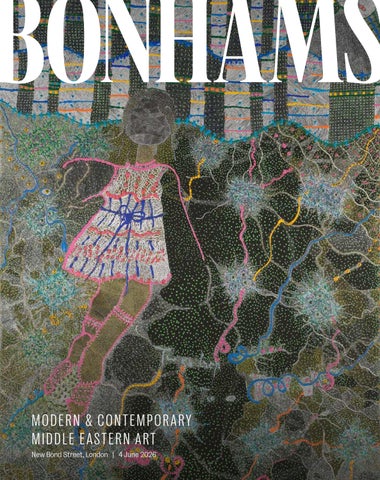
New Bond Street, London | Thursday 4 June 2026, at 2pm
Bonhams 101 New Bond Street London W1S 1SR bonhams.com
SALE NUMBER
32273 Lots 1-99
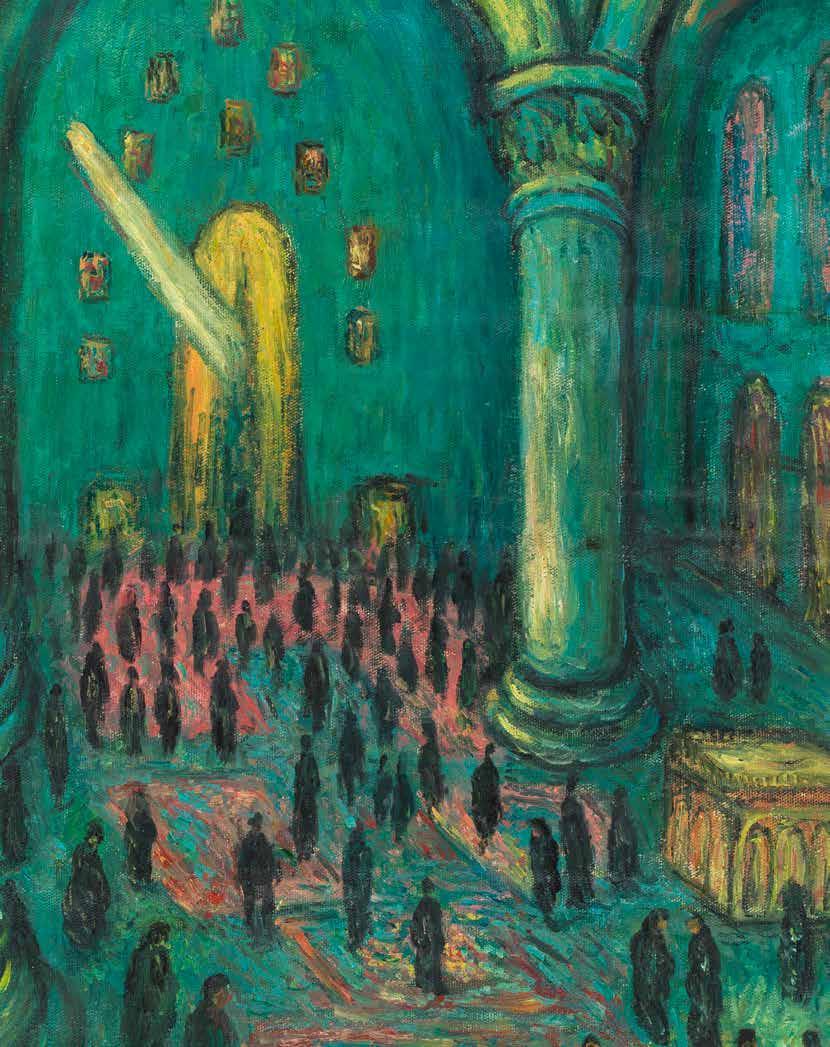
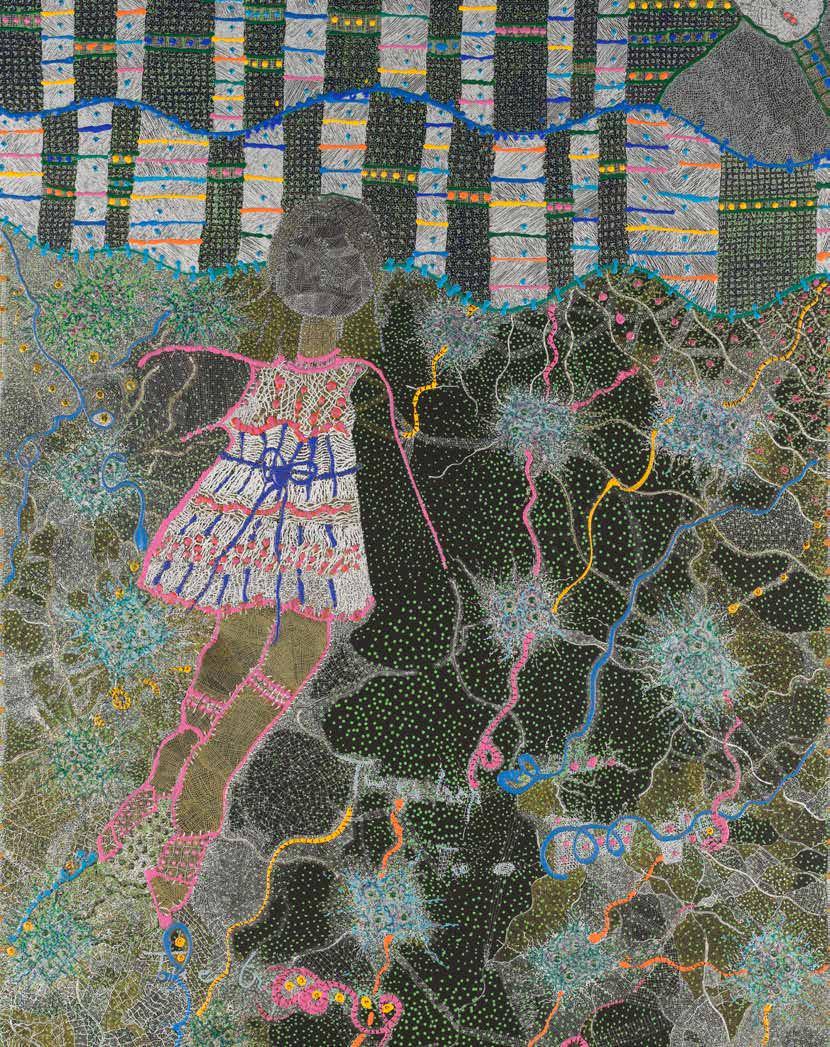
Front Cover: Lot 9
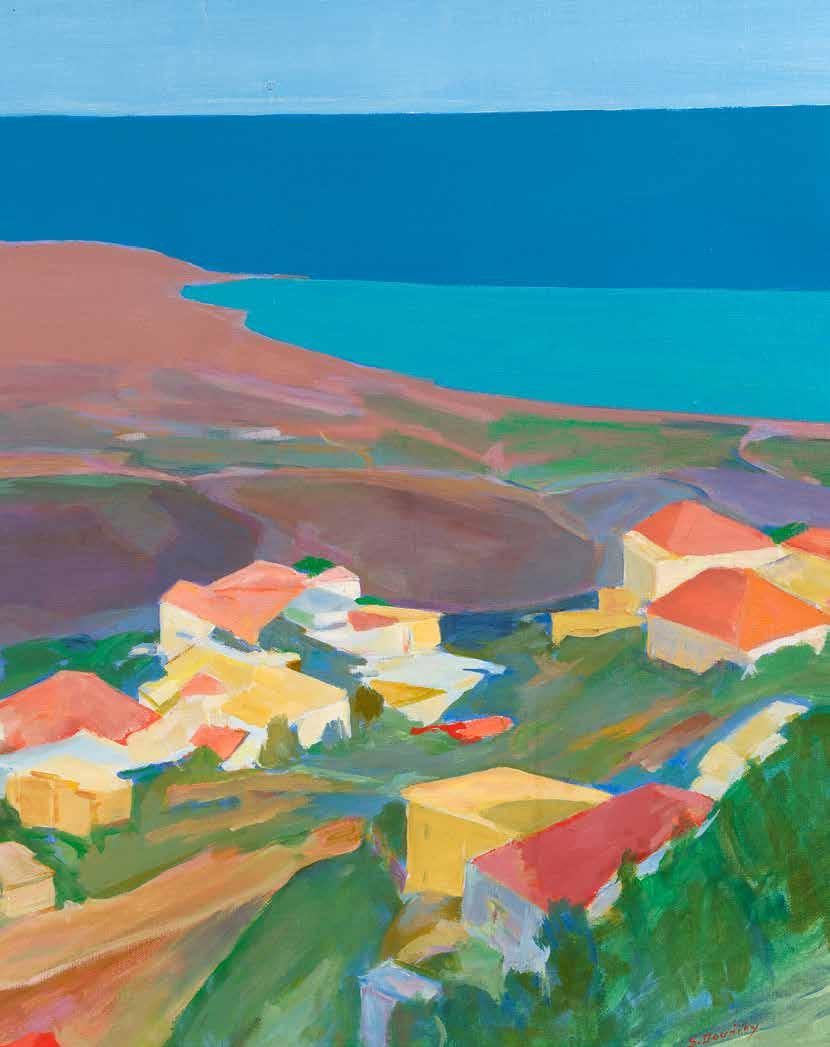
Back Cover: Lot 16
VIEWING
Sunday 31st May 12pm-4pm
Monday 1st June 9am-5pm
Tuesday 2nd June 9am-5pm
Wednesday 3rd June 9am-5pm
Thursday 4th June 9am- 12pm
London Nima Sagharchi +44 (0) 20 7468 8342 nima.sagharchi@bonhams.com
Noor Soussi +44 (0) 20 7468 8345 noor.soussi@bonhams.com
Lylia Hafiz
+44 (0) 20 74688254 lylia.hafiz@bonhams.com
Bid online/APP New to Bonhams? To be able to place bids, you must have an active bonhams account.
Bid online/VIA OUR APP Register to bid online by visiting www.bonhams.com/32273
Bid through the app. Download now for android and iOS. You will be required to provide a valid credit card in your name which must be verified before you are able to place bids. If you are placing bids on behalf of a company, please ensure you indicate this when registering. We reserve the right to request further information from you (including your government issued ID) where you are the successful bidder, in particular in relation to any lot where the purchase price is over £5000. Please note all successful corporate bidders will be required to provide additional information.
For all other enquiries, contact our Client Services department on: +44 (0) 207 447 7447 or bids@bonhams.com
Please see back of catalogue for important notice to bidders
To submit a claim for refund of VAT, HMRC require lots to be exported from the UK within strict deadlines. For lots on which Import VAT has been charged (marked in the catalogue with a * or Ω) lots must be exported within 30 days of Bonhams’ receipt of payment and within 3 months of the sale date. For all other lots export must take place within 3 months of the sale date.
Please note that from 19 January 2022, items containing ivory cannot be imported into the EU. The import of ivory into the USA is already prohibited.
Bonhams © 2026 Bonhams & Butterfields Auctioneers Corp. All rights reserved.

+44 (0) 20 7447 7447
To bid via the internet please visit www.bonhams.com
Payments
Buyers
+44 (0) 20 7447 7447
Sellers
Payment of sale proceeds
+44 (0) 20 7447 7447
Valuations, Taxation & Heritage
+44 (0) 20 7468 8340 valuations@bonhams.com
Shipping
For information and estimates on domestic and international shipping as well as export licenses please contact IBI Logistics on info@ibi-logistics.com +44 208 283 4900.
All sold lots marked TP will be removed to The Packengers, Unit 9, Abbey Mead Industrial Park, Brooker Road, Waltham Abbey, EN9 1HU on Friday 5 June 2026 and will be available for collection from 12pm Monday 8 June 2026 and then every working day between 9.30am and 4pm by appointment only. Storage will be free of charge from & including the sale end date, charges will apply from 9.30am Monday 6 July 2026.
A booking email or phone call is required in advance to ensure lots are ready at time of collection. Photographic ID will be required at time of collection. If a third party is collecting for you written authorisa tion is required in advance from you and photographic ID of the third party is requested at the time of collection.
To arrange a collection time please send a booking email to londonstor age@thepackengers.com or call +44 (0) 2031544360.
All other sold lots will remain in the Collections room at Bonhams New Bond Street free of charge until Friday 19 June 2026. Lots not collected by this time will be returned to the department, storage charges may apply.
The following symbols are used to denote that VAT is due on the hammer price and buyer’s premium.
† VAT 20% on hammer price and buyer’s premium
* VAT on imported items at a preferential rate of 5% on hammer price and the prevailing rate on buyer’s premium
Y These lots are subject to CITES regulations, please read the information in the back of the catalogue.
Payment in Advance (Telephone to ascertain amount due) by: credit or debit card
Payment at time of collection by: credit or debit card.
Please note that as of 1 January 2021 for Margin Scheme and Imported Lots VAT on the Buyer’s Premium will be refunded by Bonhams on valid proof of export of your Lot from the UK within 90 days of full payment of your invoice.
What else has changed since 1 January 2021 for EU Buyers?
If you buy a Lot in this sale and intend to ship the Lot outside the UK, you will need to pay local Import Tax when you bring your Lot into the country of destination.
What do the Star (*) and Omega ( Ω ) symbols mean ?
If you buy in this sale you will pay import VAT of 5% (* symbol) or 20% (Ω symbol) on the Hammer Price. As of 1 January 2021, for EU buyers shipping purchased Lots outside the UK, this tax will be refunded by Bonhams on valid proof of export of your Lot from the UK within 30 day
Nima Sagharchi
Group Head
Middle Eastern, Islamic and South Asian Art
Noor Soussi Head of Department Modern & Contemporary Middle Eastern Art
Lylia Hafiz Sale Coordinator
Suzy Sikorski
Business Development Director




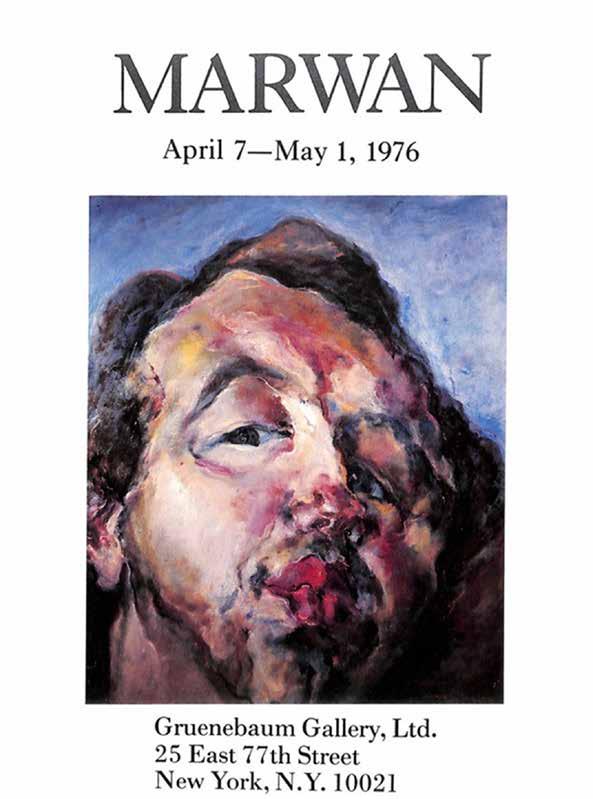
LOTS 1-4
FOUR IMPORTANT EARLY PAINTINGS BY MARWAN, INCLUDING THREE EXHIBITED AT THE ARTIST’S FIRST SOLO SHOW IN NEW YORK AT THE GRUENEBAUM GALLERY IN 1976
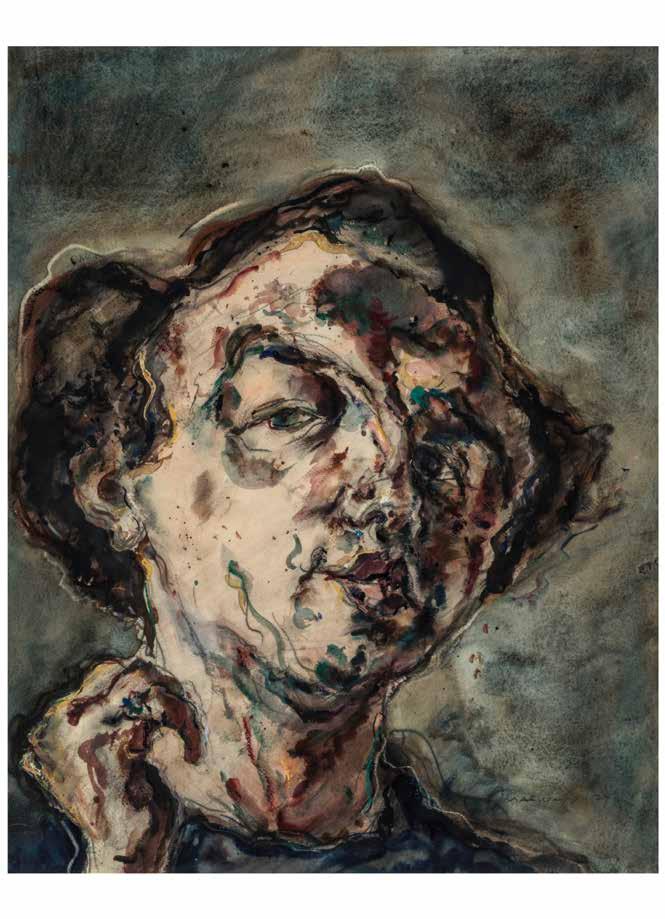
1 * AR
MARWAN KASSAB-BACHI (SYRIA, 1934-2016)
Untitled (No. 141)
watercolour on paper, framed signed “Marwan” and dated “74” (lower right), Gruenebaum Gallery sticker on the verso, executed in 1974 61 x 48cm (24 x 18 7/8in).
£4,000 - 6,000
US$5,400 - 8,100
€4,600 - 6,900
Provenance:
Property from the collection of the late Timothy Egert, Washington DC Acquired from the Gruenebaum Gallery, New York, circa late 1970s
Exhibited:
New York, Marwan: Solo Exhibition, Gruenebaum Gallery, 1976
Published:
Exhibition Catalogue, Marwan: Solo Exhibition, Gruenebaum Gallery, New York, 1976
The longest-serving employee of the State Department in Washington D.C., Timothy Egert was an avid collector and patron of the arts. With a discerning eye and an appreciation for quality that spans diverse movements, media, regions and genres, Egert amassed an eclectic collection anchored with a distinctive point of view. Including works by Martin Wong, Paul Feeley, Sonia Gechtoff, Ross Bleckner, Marwan, Karel Appel and other notable artists, Egert’s collection demonstrates a passionate dedication to the arts for art’s sake and the joy of collecting. Bonhams is honoured to offer a selection of works from his collection across several upcoming auctions, many of which have never been offered for sale before.
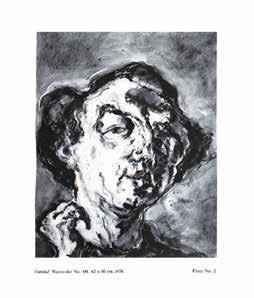
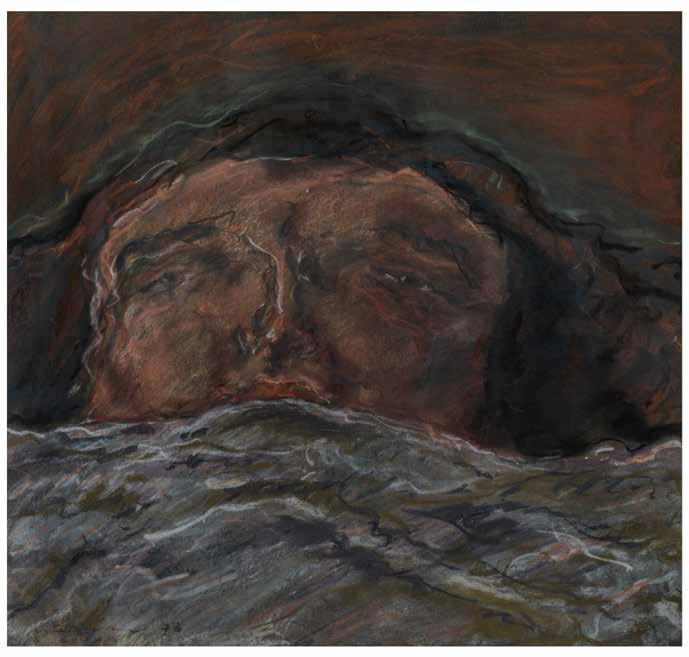
2 * AR MARWAN KASSAB-BACHI (SYRIA, 1934-2016)
Kopf (Head) pastel on paper, framed signed “Marwan” and dated “73” (lower left), Gruenebaum Gallery sticker on the verso, executed in 1973 43 x 45.5cm (16 15/16 x 17 15/16in).
£3,000 - 5,000
US$4,100 - 6,800
€3,500 - 5,800
Provenance:
Property from the collection of the late Timothy Egert, Washington DC Acquired from the Gruenebaum Gallery, New York, circa late 1970s
Exhibited:
New York, Marwan: Solo Exhibition, Gruenebaum Gallery, 1976
“I
GREW UP IN AN OLD ARAB HOUSE WHERE EVERYTHING WAS “PERFECTLY SELF CONTAINED”. THE TOWN WITH ITS ANIMALS, GREEN GARDENS, AND THE HOUSES WITH THEIR WATER FOUNTAINS WERE ALL I KNEW. THE WATER WHICH WAS THE LIFE BLOOD OF EACH HOUSE, WAS ETCHED IN MY MEMORY - AND ALSO MY ART. MY FACIAL LANDSCAPES WOULD BE INCONCEIVABLE WITHOUT WHAT I HAVE COMMITTED TO MEMORY. MY WORK, THE HEADS, THE FACES, SUCH EXPRESSIONS WOULD BE IMPOSSIBLE WITHOUT MY STORE OF EXPERIENCE.
– MARWAN
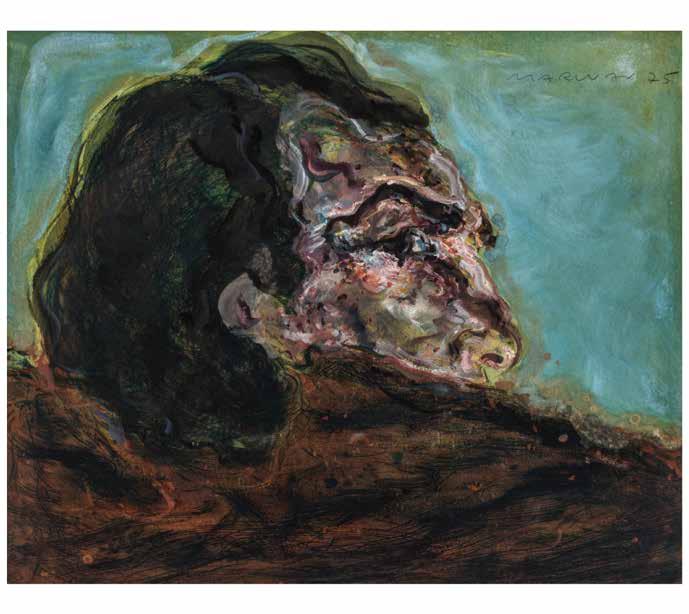
3 * AR
MARWAN KASSAB-BACHI (SYRIA, 1934-2016)
Untitled (No. 143)
watercolour on paper, framed signed “Marwan” and dated “75” (upper left), Gruenebaum Gallery sticker on the verso, executed in 1975 34 x 41.5cm (13 3/8 x 16 5/16in).
£3,000 - 5,000
US$4,100 - 6,800
€3,500 - 5,800
Provenance:
Property from the collection of the late Timothy Egert, Washington DC Acquired from the Gruenebaum Gallery, New York, circa late 1970s
Exhibited:
New York, Marwan: Solo Exhibition, Gruenebaum Gallery, 1976
Published:
Exhibition Catalogue, Marwan: Solo Exhibition, Gruenebaum Gallery, New York, 1976
"THE WORKS ARE NOT A FIXED INTERPRETATION OF MY EXPERIENCES, BUT IN CONTINUOUS MOVEMENT. AS SOON AS YOU BEGIN TO UNDERSTAND THE MEANING BEHIND THEM, THEY SHIFT AND AGAIN APPEAR NEW."
– MARWAN
4 * AR
MARWAN KASSAB-BACHI (SYRIA, 1934-2016)
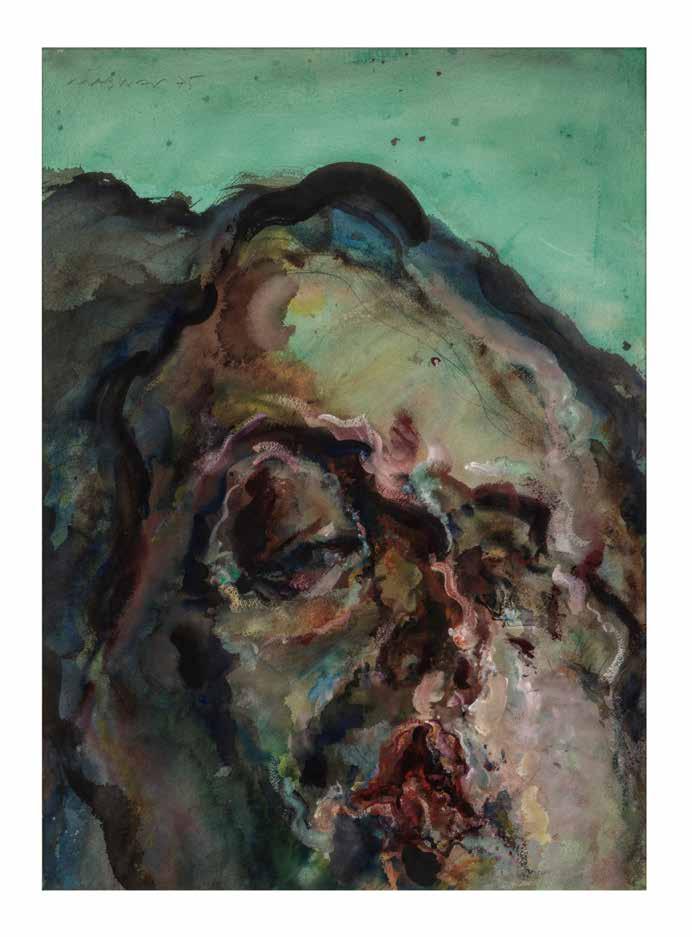
Untitled (No. 105)
watercolour on paper, framed signed “Marwan” and dated “75” (upper left), Gruenebaum Gallery sticker (verso), executed in 1975 75 x 54.5cm (29 1/2 x 21 7/16in).
£4,000 - 6,000
US$5,400 - 8,100
€4,600 - 6,900
Provenance:
Property from the collection of the late Timothy Egert, Washington DC Acquired from the Gruenebaum Gallery, New York, circa late 1970s
Exhibited:
New York, Marwan: Solo Exhibition, Gruenebaum Gallery, 1976
Published:
Exhibition Catalogue, Marwan: Solo Exhibition, Gruenebaum Gallery, New York, 1976
LOTS 5-6
TWO HIGHLY SIGNIFICANT PAINTINGS BY FAHR EL-NISSA ZEID FORMERLY IN THE COLLECTION OF HER PERSONAL ASSISTANT, INCLUDING A RARE 1940S VIEW OF THE BAYEZID MOSQUE AND AN IMPORTANT ABSTRACT WORK EXHIBITED AT HER MAJOR SOLO EXHIBITION IN LONDON AT LORD’S GALLERY IN 1957
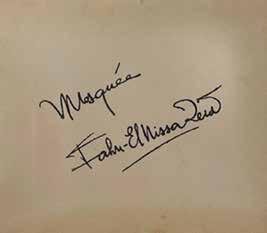
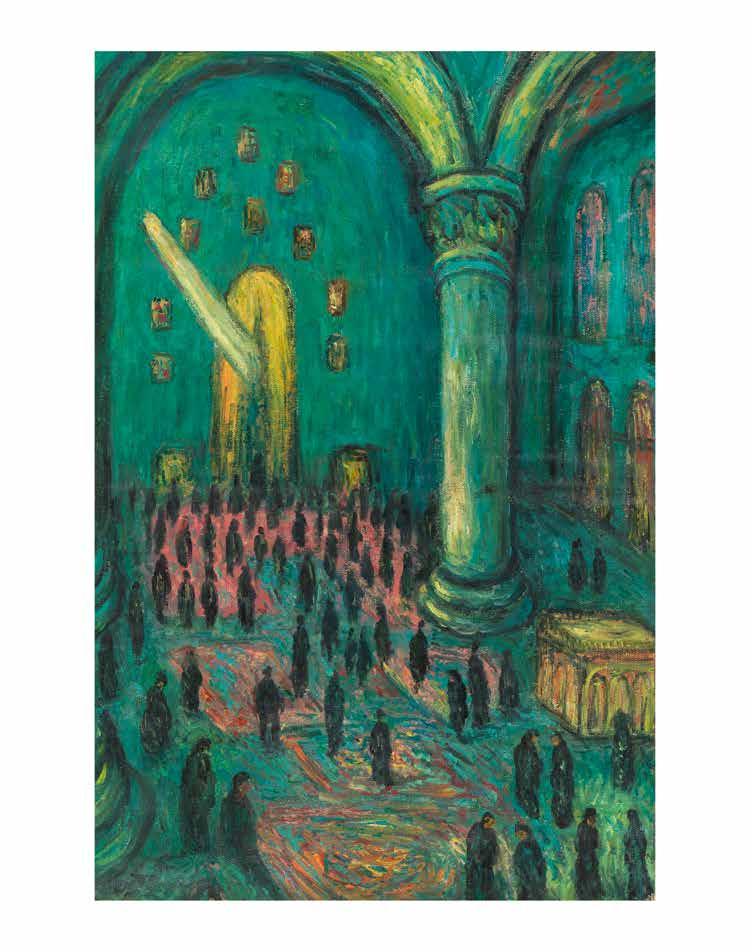
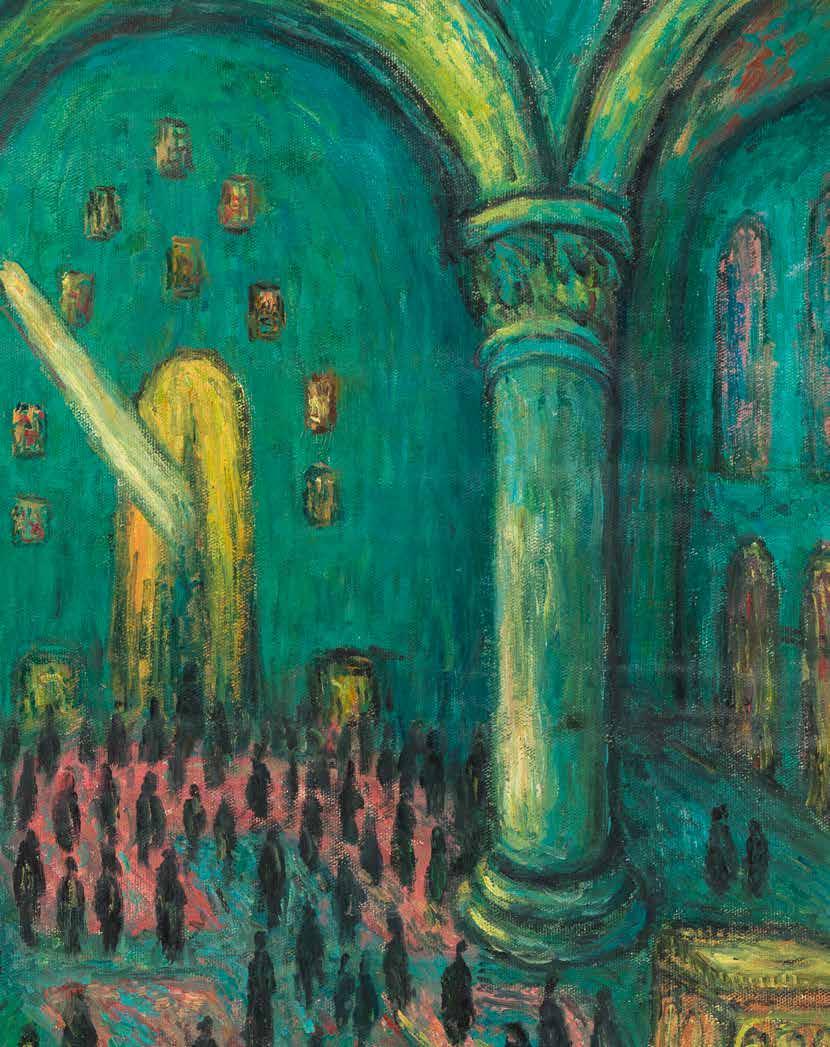
5 FAHR EL-NISSA ZEID (TURKEY, 1900-1991) Bayezid Mosque (Bayazit Camisi) oil on canvas, framed signed and titled “Mosquée” on a label on the verso, executed circa 1945 60 x 40cm (23 5/8 x 15 3/4in).
£20,000 - 30,000
US$27,000 - 41,000
€23,000 - 35,000
Provenance:
Property from a private collection, London
Property from the collection of Fahr El-Nissa Zeid’s personal assistant, Raymond Williams, England Gifted directly from the artist to the above owner, circa 1970s
Note:
Bonhams would like to thank Adila Laidi-Hanieh for the cataloguing of this lot
“HER MOSQUE INTERIORS OFFER A RARE FEMININE GAZE: FROM THE WOMEN’S BALCONIES, OVERLOOKING THE MAIN MUSALLA, OR FROM A LATERAL GROUND FLOOR SECTION. ZEID’S MOSQUE
- ADILA LAIDI HANIEH
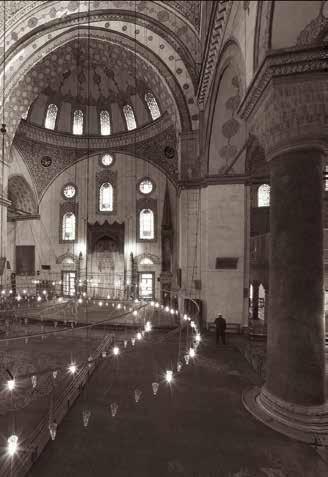
Mosque by Adila Laïdi-Hanieh, PhD
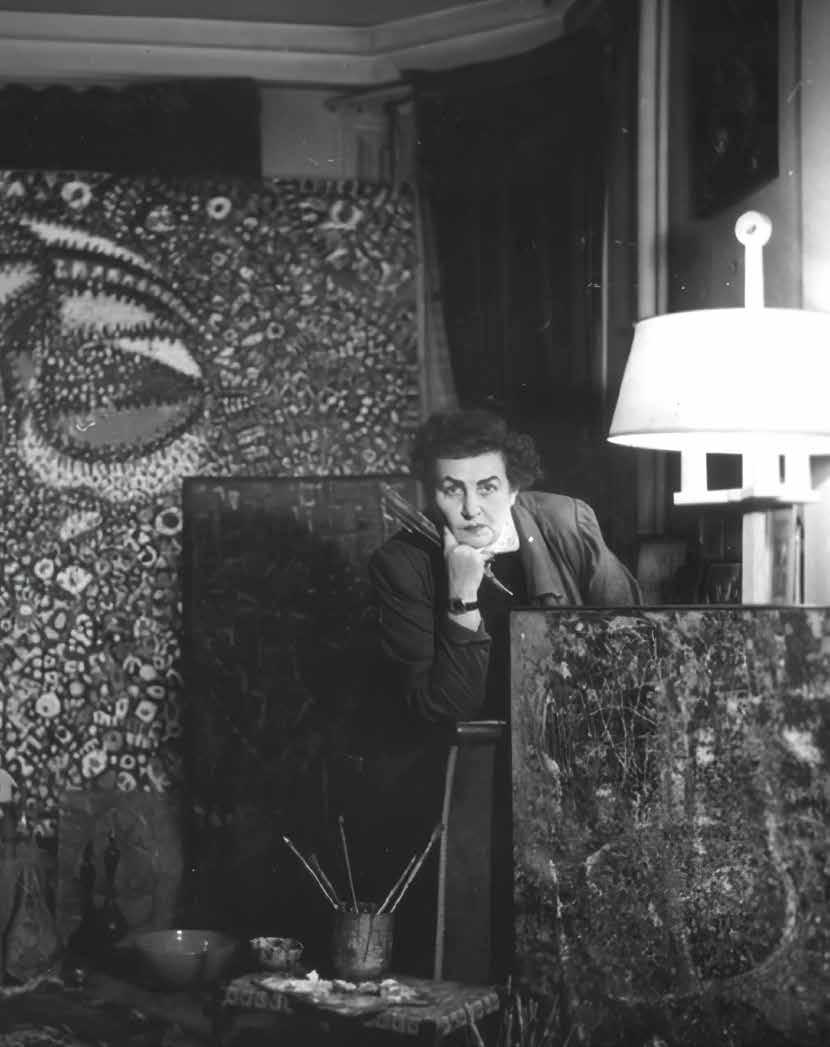
Mosques were an important part of Fahr El-Nissa Zeid’s figurative output in the 1940s. After joining the Turkish modernist collective D Grubu in 1941, she expanded her production to include en plein air scenes sketched with China ink, then completed in her studio. This practice yielded a diverse output of genre scenes: Taverns and cafes, city squares, and Bosphorus views. She rendered them in her recognizable quick line and sweeping applications of vibrant cobalt turquoises and mineral greens.
Fahr El-Nissa also visited mosques and painted soaring interiors and teeming congregants in Istanbul as well as in Ephesus, Izmir, and Kerbala -after she stayed in Iraq in 1938. Her mosque interiors offer a rare feminine gaze: From the women’s balconies, overlooking the main musalla, or from a lateral ground floor section. Her unique vistas were further enriched by being populated with female figures. Fahr El-Nissa Zeid’s mosque paintings thus stand out from orientalist travelogues’ illustrations of architectural details and prayer positions, by rendering visible uniquely gendered perspectives enriched by lived experience.
The painting on offer here depicts the Bayezid II Mosque, situated on the eponymous city square that the artist drew to great acclaim in 1945. Its Sultan’s lodge (hunkar mahfili) is recognizable to the right. Bayezid’s qibla wall is notable for its tiered arched windows arranged in a graduated hemicycle framing the mihrab, surmounted by oculi, creating a luminous halo effect.
Fahr El-Nissa Zeid’s sensitivity to colour and light phenomena transfigures these unique architectural features into an atmospheric representation of figures in an emerald universe, irresistibly pulled toward a spangled firmament.
“TODAY WITH THE ABSTRACT, MAN HAS REACHED THE SUMMITS, MAN GOES TOWARDS THE INFINITE SPACE, IT IS A WINDOW OPEN FROM OUR WORLD TO OTHER WORLDS. IT IS THE REACH OF A BOUNDLESS AND LIMITLESS THOUGHT... WHY NOT SEE FARTHER AND ENLARGE THE VISUAL ORB AND REACH EVEN THE DIVINE?”
- FAHR EL-NISSA ZEID
6 FAHR EL-NISSA ZEID (TURKEY, 1900-1991)
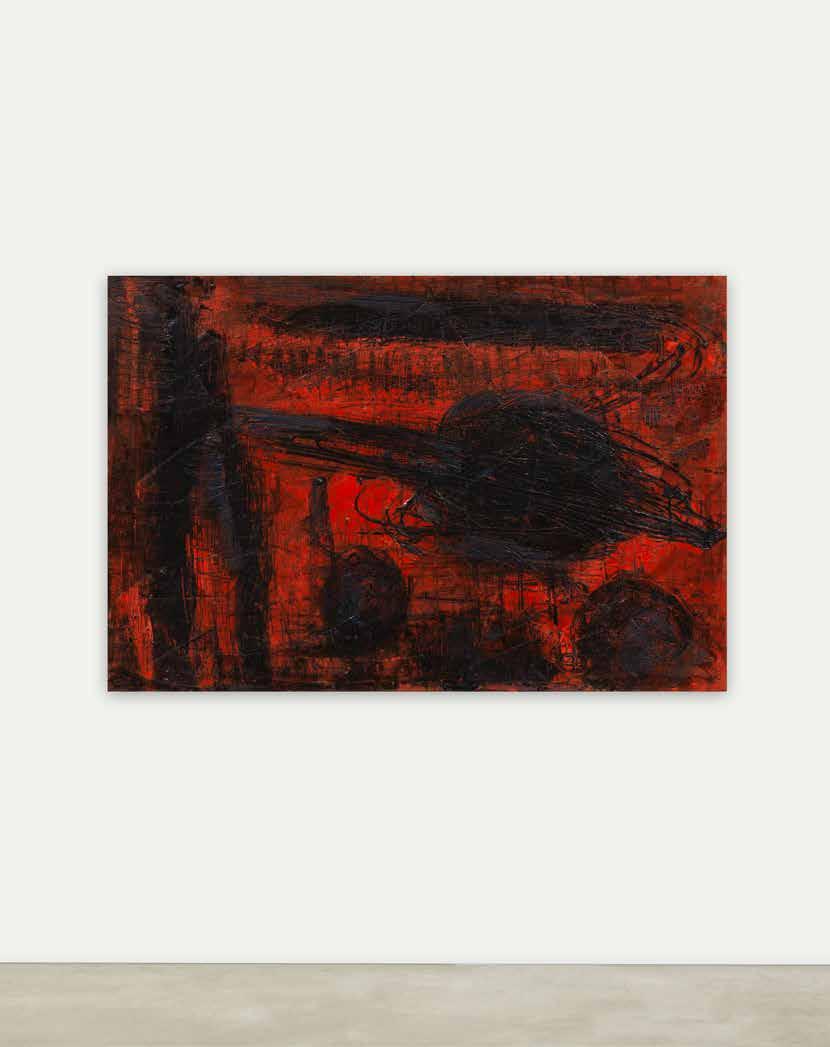
Cataclysm oil on canvas, framed titled on Lord’s gallery label on the verso, executed in 1957
50.5 x 76cm (19 7/8 x 29 15/16in).
£20,000 - 30,000
US$27,000 - 41,000
€23,000 - 35,000
Provenance:
Property from the collection of Fahr El-Nissa Zeid’s personal assistant, Raymond Williams, England
Gifted directly from the artist to the above owner, circa 1970s, thence by descent
Exhibited:
London, The Lords Gallery, Fahr El-Nissa Zeid, 1957
Published:
Fahr El-Nissa Zeid, exhibition catalogue, The Lords Gallery, London, 1957
Ahl-Al Naft, Iraqi Petroleum Company, Baghdad, 1957
Note:
Bonhams would like to thank Adila Laidi-Hanieh for the cataloguing of this lot
by Adila Laïdi-Hanieh, PhD
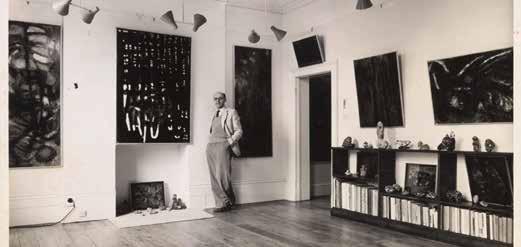
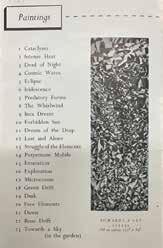
Cataclysm was a meaningful work in Fahr El-Nissa Zeid’s late 1950s oeuvre. It was the first painting listed in her 1957 London exhibition brochure, for a show concentrated around 23 oil paintings. The display distilled Fahr El-Nissa’s heretofore maximalist multichromatic production into a dark minimalist visual universe. These were bi-chromatic to three-colour, mediumsize paintings, centring amorphous black signs and blurred grids in primary colour backgrounds of reds or yellows. Art critic George M. Butcher described Fahr El-Nissa then as standing “at the extreme edge of abstract painting.”
Fahr El-Nissa Zeid had already “arrived” on the London art scene, after her 1954 exhibition at the London ICA, then the leading showcase of contemporary art in the UK. She was also the first woman to have a solo show there, exhibiting her large multicolour abstractions, developed over six years of honing her abstract process.
That high point inevitably ushered in a change, as Fahr El-Nissa was to renew her visual language in close sequence. The change may have been welcome to art merchant Philip Granville who became her London dealer in 1955, and who encouraged her to develop her commercial potential.
In 1956, Fahr El-Nissa premiered her new output in Brussels at the Beaux Arts. Critic Morris Collis noted “the increased quality of her oil paint,” giving “effects more mysterious and visionary than she was able to achieve [...] One seems to be looking [...] into the convolutions of being, the unfolding’s of an inchoate consciousness.”
In 1957, Granville inaugurated his new Lord’s Gallery with the Fahr El-Nissa show. He would later champion modernists Robert Delaunay, Paul Delvaux, Jean Tinguely, Ben Nicholson, Man Ray, and Kurt Schwitters. Granville presented her works as “compelling visions” with “strong suggestive power,” as she sought “her inspiration [...] from the world around her and the world within her.”
George Butcher also considered that Fahr El-Nissa Zeid was working “with a double vision – the inner eye (the unconscious) and her outer eye [...] integrated into what becomes – literally – a single abstractexpressionist vision.”
The artist herself averred that her works expressed her inner worlds, conceptualizing art as a spiritualist quest. By 1949, she described her abstraction as an exalted communion with the absolute, a voyage into the infinite, shaped by her lifelong fascination with space:
“Today with the abstract, man has reached the summits- man goes towards the infinite –space- it is a window open from our world to other worlds. It is the reach of a boundless and limitless thought [...] why not see farther and enlarge the visual orb and reach even the divine, in a circle traversed by cosmic waves.”
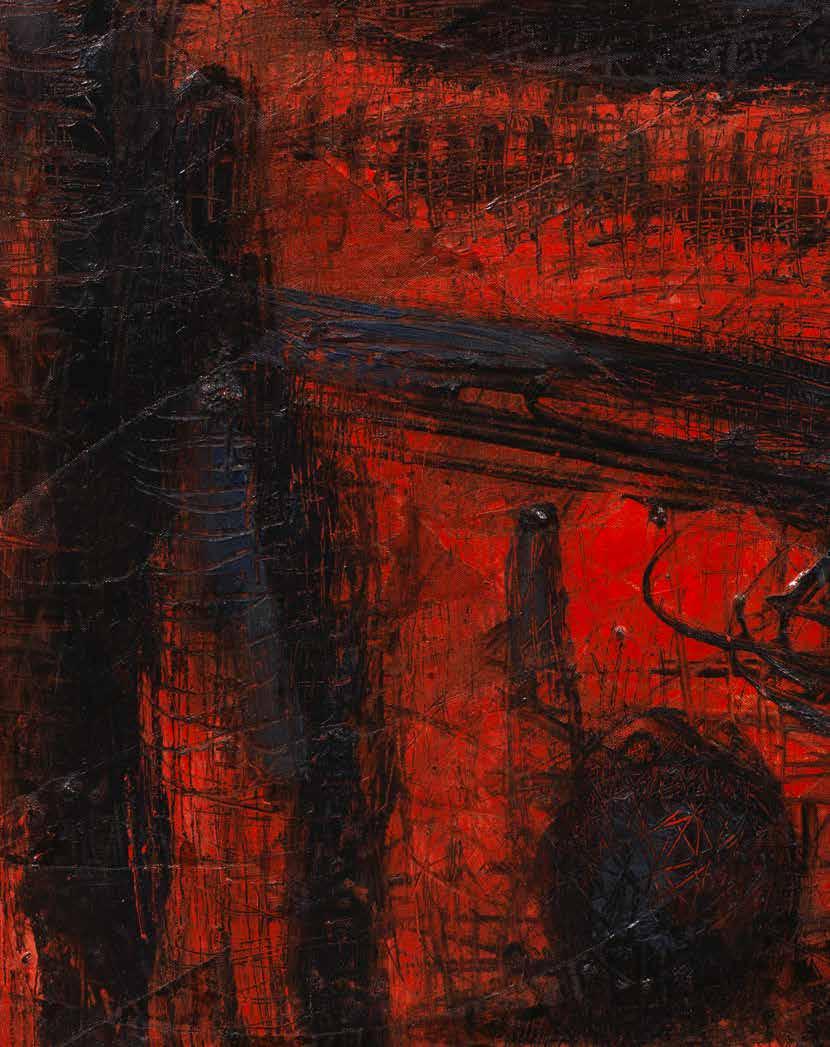
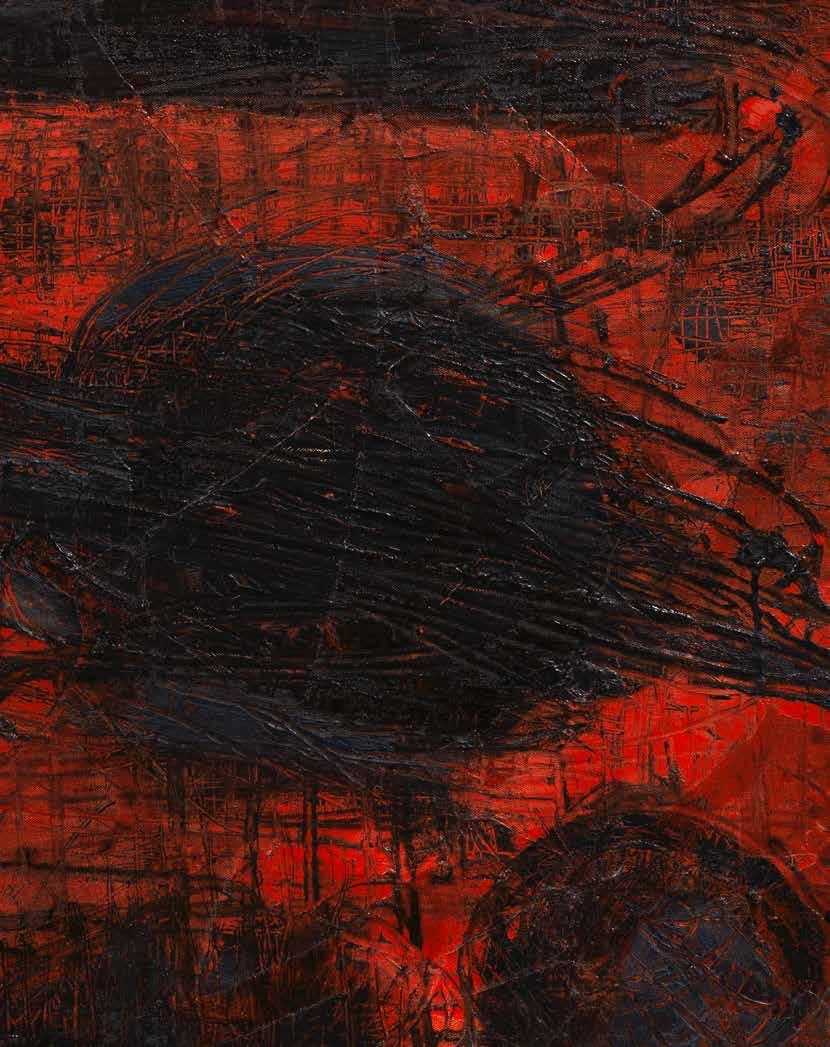
Thus, her five-decade expressionist production was traversed by bichromatic depictions of immersive astral worlds. Cataclysm is one such intense representation of that fascination. The apocalyptic tableau offers a cosmic confrontation between deep crimson and charcoalblack. A diagonal mass sweeps across the upper-centre, hinting at a planet, orbited by an astral ring. Below, two spheres anchor the lower plane, yielding to gravitation. The whole is framed by distended horizontal and vertical dark swathes.
Visible impasto and aggressive cross-hatching suggest Fahr El-Nissa scraped and reworked the canvas repeatedly, having recently added the palette knife to her process. She also makes the red bleed irregularly through the black. The combination of gestural energy and chromatic heat create a hallucinatory effect defying comprehension, demanding to be experienced.
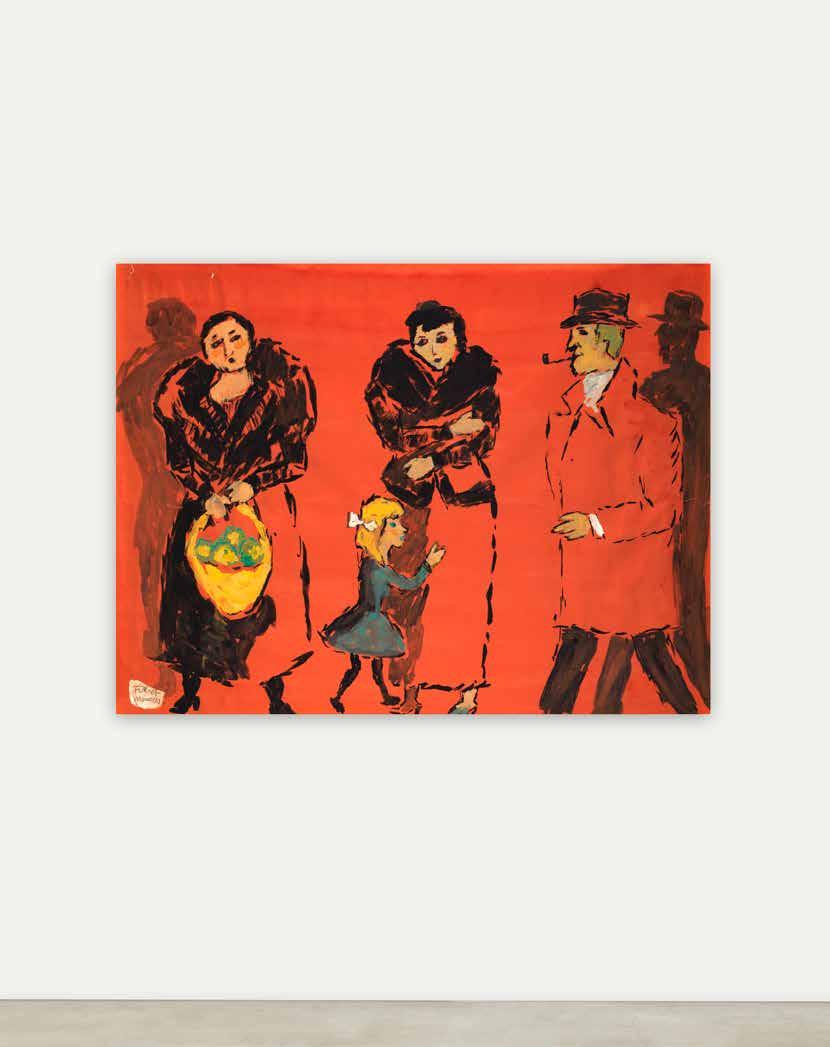
7 AR
FIKRET SAYGI MUALLA (TURKEY, 1903-1967)
Scène Parisienne gouache on paper, framed signed “Fikret Moualla” (lower left), executed circa 1940s 48 x 64cm (18 7/8 x 25 3/16in).
£18,000 - 22,000
US$24,000 - 30,000
€21,000 - 25,000
Provenance:
Property from a private collection, UK Acquired directly from the artist by the above
Bonhams is delighted to present this work by Fikret Mualla, one of the most important figures in twentieth-century Turkish art. Painted during his formative and prolific years in Paris, this vibrant composition encapsulates the singular vision of Fikret Mualla. Set against a striking red background, the scene unfolds with a theatrical immediacy. Elongated figures, rendered in fluid, gestural brushstrokes, inhabit a moment that feels both intimate and observational. A child’s animated presence contrasts with the composed, almost detached adults, while the quick, expressive line lends each figure a psychological charge rather than strict physical definition.
Mualla’s Parisian works are distinguished by this distinctive balance between spontaneity and emotional acuity. Living in the cultural ferment of midcentury Paris, he absorbed elements of European modernism, including echoes of Expressionism and Post Impressionism, yet transformed them into a deeply personal visual language. His use of bold colour fields, such as the dominant red seen here, is not merely decorative but emotive, creating an atmosphere that heightens the human interactions within the composition.
As a leading Turkish modernist, Mualla occupies a crucial position in bridging the artistic developments of Europe with the evolving identity of modern Turkish art. His practice diverged from academic conventions, embracing instead a raw immediacy that reflected both his inner world and the social rhythms of cafés, streets, and everyday encounters in Paris. Despite personal struggles, his work remained remarkably lucid, capturing fleeting gestures and moods with a lyrical intensity.
This painting stands as a compelling example of Mualla’s mature style. It is economical yet expressive, rooted in observation yet elevated by imagination. It affirms his enduring legacy as an artist who not only contributed to but fundamentally shaped the trajectory of Turkish modernism, bringing it into dialogue with the broader currents of twentieth century art while retaining an unmistakably individual voice.
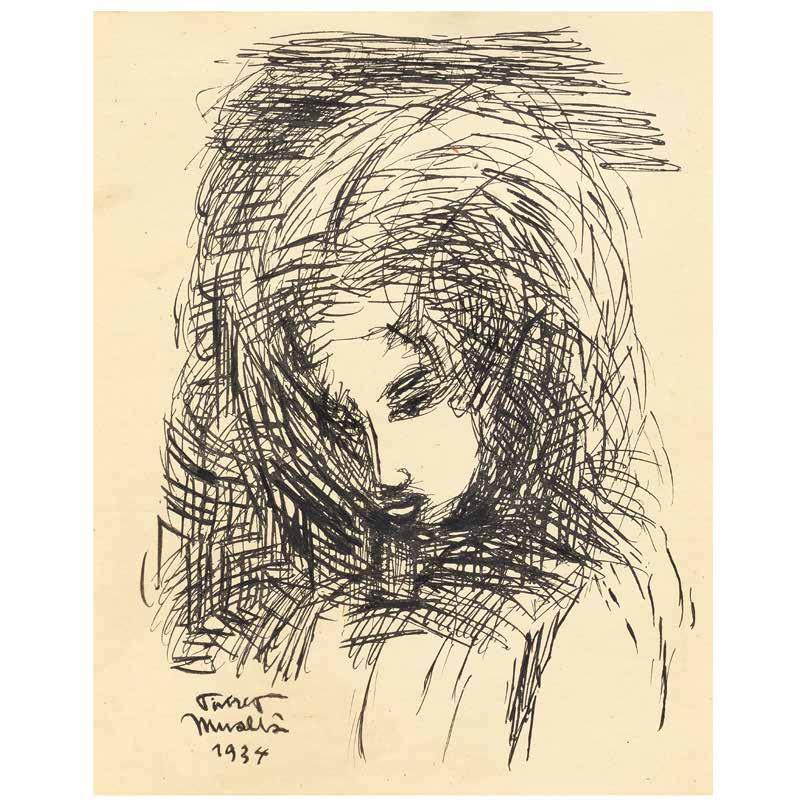
8 AR FIKRET SAYGI MUALLA (TURKEY, 1903-1967)
Untitled ink on paper, framed signed “Fikret Mualla” and dated “1934” (lower left), executed in 1934 19.5 x 15.5cm (7 11/16 x 6 1/8in).
£2,000 - 4,000
US$2,700 - 5,400
€2,300 - 4,600
Provenance:
Property from a private collection, UK Acquired directly from the artist by the above
LOTS 9-12
FOUR HIGHLY SIGNIFICANT WORKS BY HUGUETTE CALAND FROM A PRIVATE UK COLLECTION, LED BY A MONUMENTAL PAINTING THAT FORMED ONE OF THE CENTREPIECES OF THE ARTIST’S MAJOR MUSEUM RETROSPECTIVES IN MADRID AND HAMBURG, ALONGSIDE IMPORTANT WORKS SHOWN IN HER LANDMARK BEIRUT EXHIBITIONS
“SHE LOVED HER OPEN FACE, HER MISCHIEVOUS EYES THAT OFFERED A CHEERFUL POINT OF CONTACT TO THOSE SHE MET.
BRIGHT COLOURS OR BLACK AND WHITE, FIGURATIVE OR NEARLY
ABSTRACT, WIDE-EYED OR EYELESS.... WHETHER SERIOUS OR HUMOROUS, HER SELF-PORTRAITS BARE ONE COMMONALITY:
THE PAST IS WOVEN INTO THE PRESENT”
9 * HUGUETTE CALAND (LEBANON, 1931-2019)
Girl Skipping Rope
acrylic and metallic markers on board, framed executed in 1998-2000
244 x 122cm (96 1/16 x 48 1/16in).
£150,000 - 300,000
US$200,000 - 410,000
€170,000 - 350,000
Provenance:
Property from a private collection, London Christie’s, Post-War and Contemporary Art, October 2020, Lot 282 Acquired directly from the artist, California, circa 2004
Exhibited:
Madrid, Museo Nacional Centro de Arte Reina Sofía, Huguette Caland: A Life in a Few Lines, 2025
Hamburg, Deichtorhallen Hamburg, Huguette Caland: A Life in a Few Lines, 2025-2026
Published: Museo Nacional Centro de Arte Reina Sofía, Huguette Caland: A Life in a Few Lines, Spanish Ministry of Culture, 2025
Note:
Please note the present work will be included in Huguette Caland’s forthcoming Catalogue Raisonné #ID2153
- BRIGITTE CALAND
“MY FAMILY LOVED RUGS - THEY WERE EVERYWHERE, WHEN I SEE MY WORK, IT’S ALL ABOUT RUGS, FABRIC AND TAPESTRY.”
- HUGUETTE CALAND
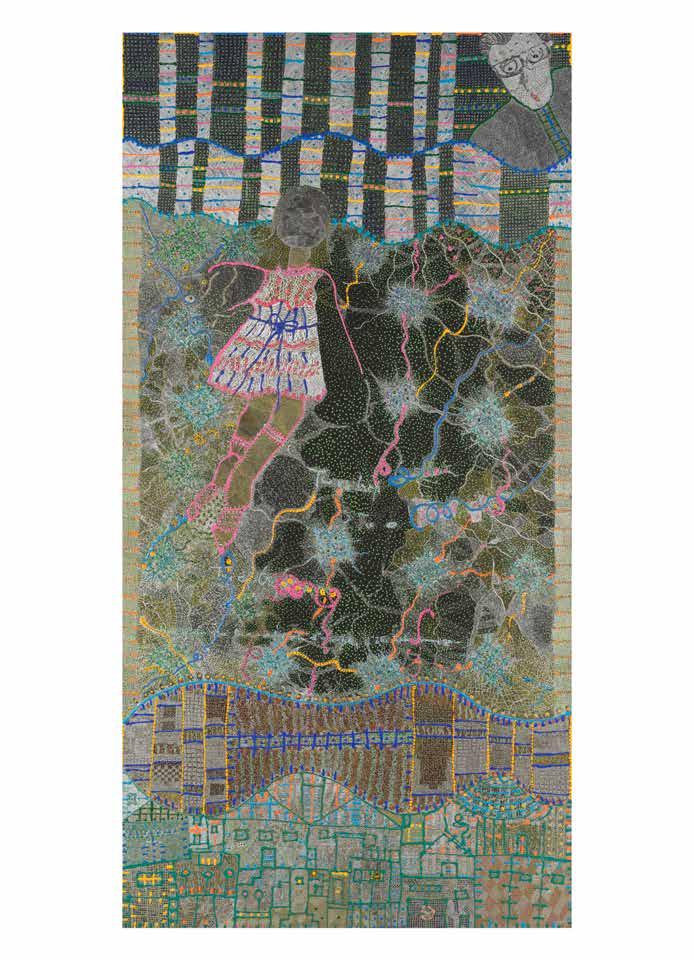
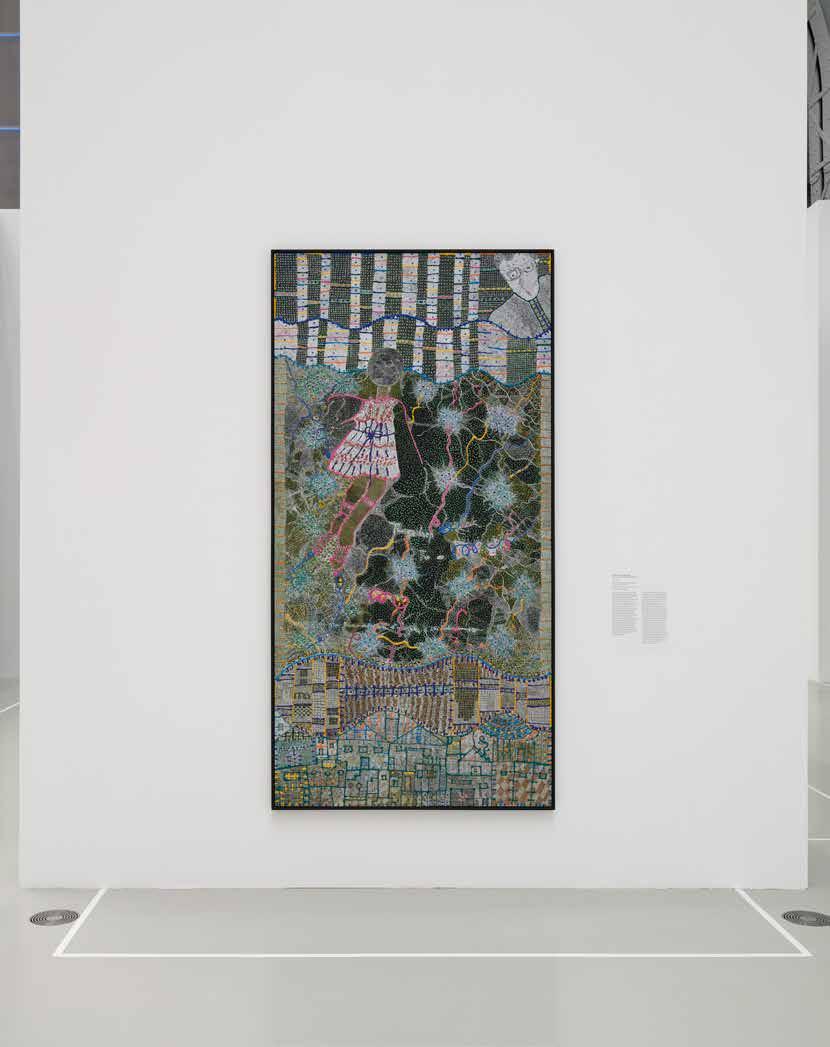
Huguette Caland’s Girl Skipping Rope is one of the most ambitious, personal and emotionally layered works of her later career. Executed between 1998 and 2000, the painting belongs to the artist’s final and highly personal period, when memory, desire and autobiography became ever more closely entwined within her work. It also gained renewed prominence through Caland’s major retrospective A Life in a Few Lines at the Museo Reina Sofía, Madrid, and later at Deichtorhallen Hamburg, where it was one of the visual centrepieces of the exhibition.
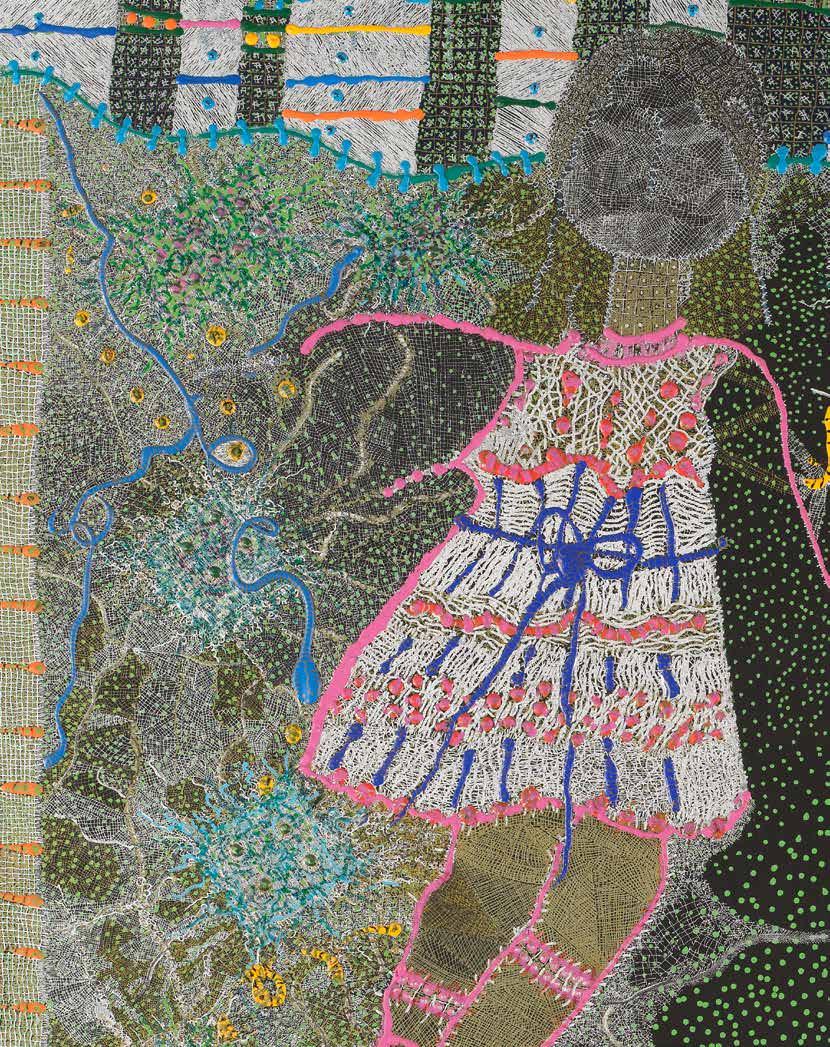
Monumental in scale, and the largest work by the artist in this medium, Girl Skipping Rope unfolds as a dreamlike meditation on identity, love and remembrance. At its centre, Caland depicts herself as a young girl in a pink dress, skipping with an air of buoyant freedom across a radiant, pulsating field of colour. In the upper right appears the face of Paul Caland, the man she loved from an early age and later married in 1952. The work thus binds together two distinct but interwoven emotional worlds: the innocent, careless joy of childhood and the more complex, reflective happiness of mature romantic love.
What gives the painting its particular force is this layering of emotional time. The child at play is not simply a recollection of youth, but a vessel for an earlier form of happiness, one that Caland sets into dialogue with the deeper, more complicated fulfilment of adult attachment. Rather than separating these states, she allows them to coexist within the same imaginative space. The result is a work in which youthful exhilaration and later love are held in delicate tension, suspended between memory and desire. This deeply autobiographical charge is entirely in keeping with Caland’s own understanding of her art, which the Hamburg retrospective described as rooted in the material of her own life.
Inscribed at the centre of the composition is the phrase “Tu es trop”, or “you are too much”, a line that introduces Caland’s characteristic wit and intimacy into the painted field. The text reads almost like a private utterance, affectionate, teasing and self-aware at once, reinforcing the sense that this is not simply an image to be viewed but a coded personal world to be entered.
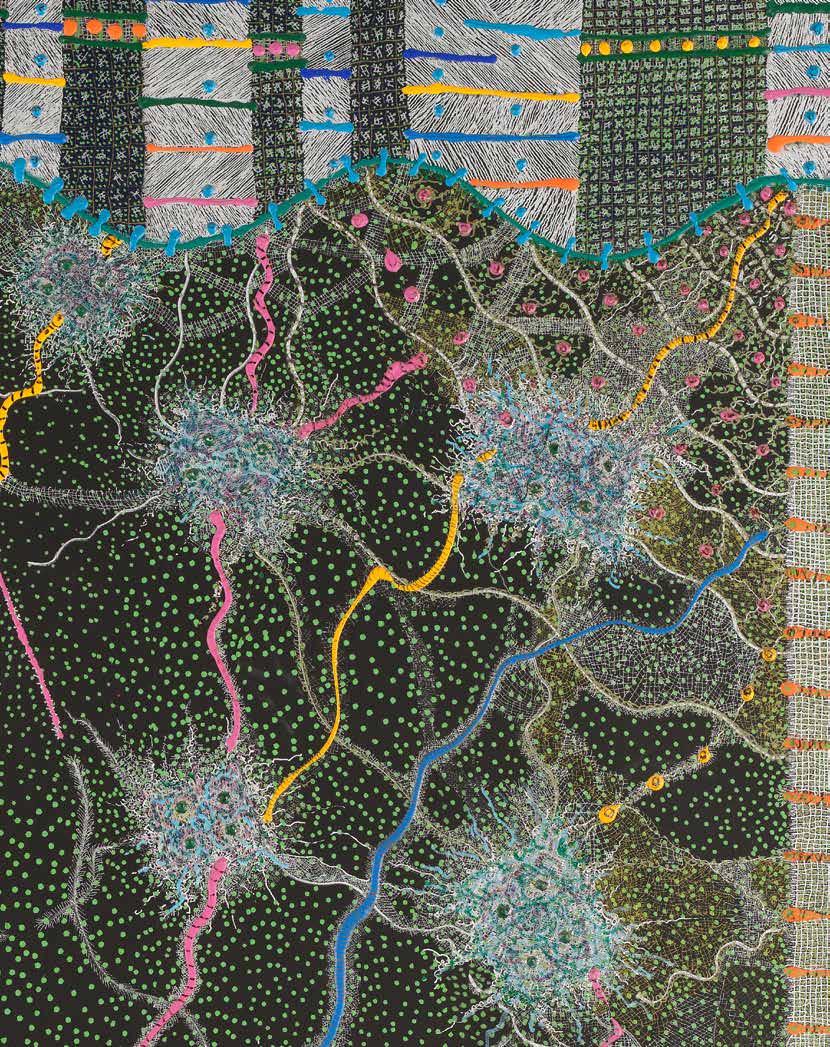
Formally, the work is equally remarkable. Built up through fluorescent beads, ribbons of thick paint, fine grids, dots and patchwork-like networks of line, its surface has a tactile, almost woven quality. Caland’s long engagement with textiles is palpable here, and the picture’s ornamental density evokes the structure of embroidered fabric as much as painting. In this sense, Girl Skipping Rope resonates strongly with the traditional Arabic craft of tatreez, drawing on the rhythmic repetition, patterning and intimate hand-work associated with textile traditions, while transforming them into a vivid painterly language.
Born in Beirut in 1931, Huguette Caland was the daughter of Bechara El Khoury, the first President of the Republic of Lebanon. She began studying fine art at the American University of Beirut in 1964, before moving to Paris in 1970 and later to Venice, California, in 1987. Across a career spanning painting, drawing, sculpture, collage, textiles and writing, she developed one of the most distinctive voices in modern and contemporary art from the Arab world, forging a visual language marked by sensuality, wit and an uncommonly free imagination. Her work moves fluidly between intimacy and monumentality, often drawing on the body, memory, ornament and personal narrative with a lightness of touch that is at once playful and deeply assured.
Caland’s art resists easy classification. At once elegant, mischievous and profoundly individual, it reflects a lifelong refusal of convention, whether social, aesthetic or political. Her work is often rooted in autobiography, yet never confined by it, transforming lived experience into images of universal resonance. Over the course of several decades, and across Beirut, Paris and California, she created a body of work that remained consistently original while constantly evolving, securing her place as one of the most important and singular artistic figures to emerge from Lebanon in the twentieth century.
“HUGUETTE POSSESSED A ZEST FOR LIFE, AND FOR HER, ANYTHING WAS POSSIBLE. HER FREEDOM AND WAY OF THINKING TOOK PRECEDENCE, AND SHE SWEPT YOU ALONG WITH HER.”
- NADINE BEGDACHE
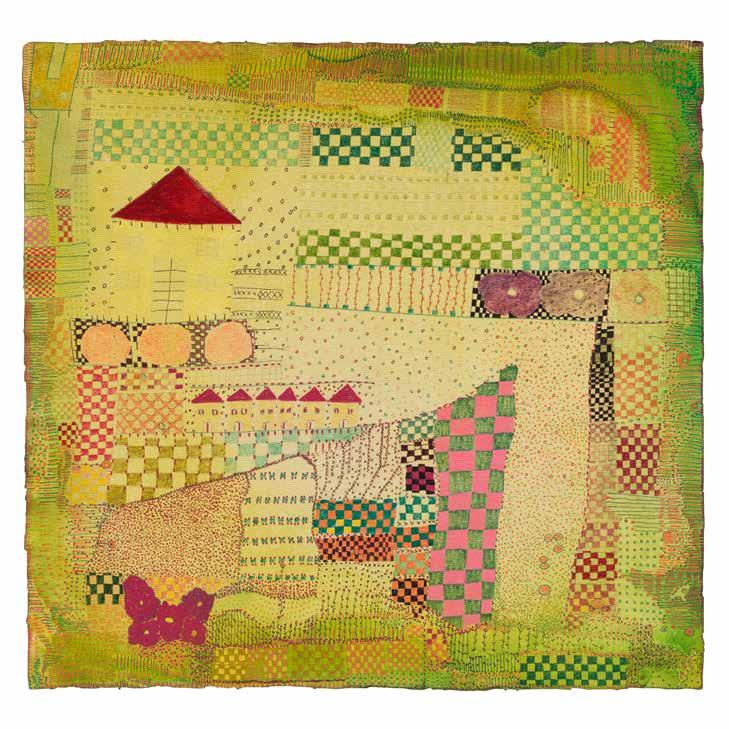
10
HUGUETTE CALAND (LEBANON, 1931-2019)
Aley 2
mixed media on canvas, framed executed in 2010
72 x 76cm (28 3/8 x 29 15/16in).
£30,000 - 50,000
US$41,000 - 68,000
€35,000 - 58,000
Provenance:
Property from a private collection, London
Exhibited:
Beirut, Galerie Janine Rubeiz, Huguette Caland, My Younger Years, 12 January to 12 February 2011
Beirut, Huguette Caland: Works 1964-2012, Beirut Exhibition Centre, Solidere, 2013
Published:
Galerie Janine Rubeiz, Huguette Caland, My Younger Years, 12 January to 12 February 2011
John Carswell, Huguette Caland: Works 1964-2012, Solidere, Beirut 2013
Note:
Please note the present work will be included in Huguette Caland’s forthcoming Catalogue Raisonné #ID1419
Painted in 2010, Aley 2 belongs to the body of work Huguette Caland produced in the years surrounding her return to Beirut, after decades abroad. The painting was included in two major exhibitions marking that homecoming: Mes jeunes années at Galerie Janine Rubeiz in 2011, and the retrospective Huguette Caland: Works 1964-2012 at the Beirut Exhibition Center in 2013.
This is an important work from that late moment of return and rediscovery. Its title invokes Aley, the Lebanese mountain town long associated with summer life, holidays, and family memory, while its deliberately simple rendering of a house on a street carries the force of something halfremembered and deeply felt.
In its childlike directness, the image echoes one of the earliest subjects a child learns to draw: the home itself. Yet in Caland’s hands this motif takes on a more complex emotional charge. Having left Lebanon in 1970 and spent much of her life in Paris and California, the house becomes not only a fragment of childhood memory, but also a portal to a place from which she had long been separated.
Like much of Caland’s later work, Aley 2 balances immediacy with emotional depth. Its apparent naivety is deceptive: beneath the primitive shorthand of house, street and landscape lies a meditation on belonging, distance and return. In this sense, the work is not merely about a remembered place, but about the act of reconnecting with one’s origins, and with the earliest visual and emotional structures through which the idea of home is first formed.
In works from this period, Caland continued to draw deeply on the visual language of tatreez, embroidery, textiles and woven pattern, translating those traditions into a highly personal painterly idiom. Her lines often behave less like conventional brushwork than like stitched threads, looping, repeating and interlacing across the surface with the rhythm of fabric or needlework.
In Aley 2, this sensibility is especially apparent: the composition seems to hover deliberately between embroidery and painting, as though the image has been woven or sewn into being rather than simply painted. Pattern, ornament and surface are not treated as decoration alone, but as carriers of memory, place and touch, allowing the work to evoke both the intimacy of domestic textile traditions and the freedom of Caland’s mature abstract language.
11
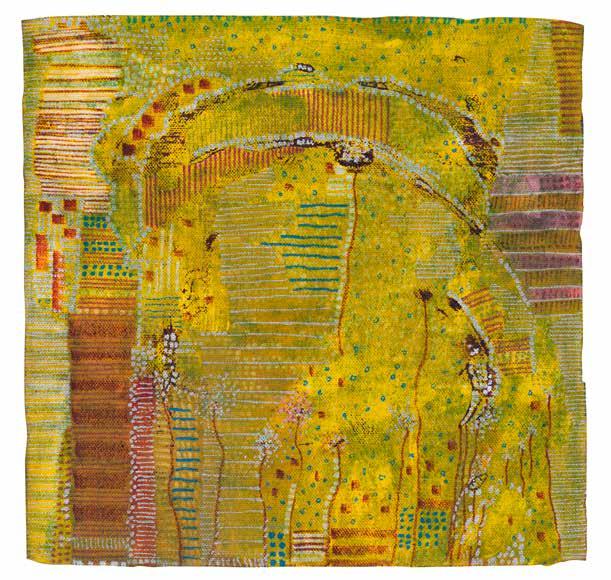
HUGUETTE CALAND (LEBANON, 1931-2019)
Me
mixed media on canvas, framed executed in 2010
26 x 26cm (10 1/4 x 10 1/4in).
£10,000 - 15,000
US$14,000 - 20,000
€12,000 - 17,000
Provenance:
Property from a private collection, London
Exhibited: Beirut, Huguette Caland: Works 1964-2012, Beirut Exhibition Centre, Solidere, 2013
Published: John Carswell, Huguette Caland: Works 1964-2012, Solidere, Beirut 2013
Note:
Please note the present work will be included in Huguette Caland’s forthcoming Catalogue Raisonné #ID1434
12
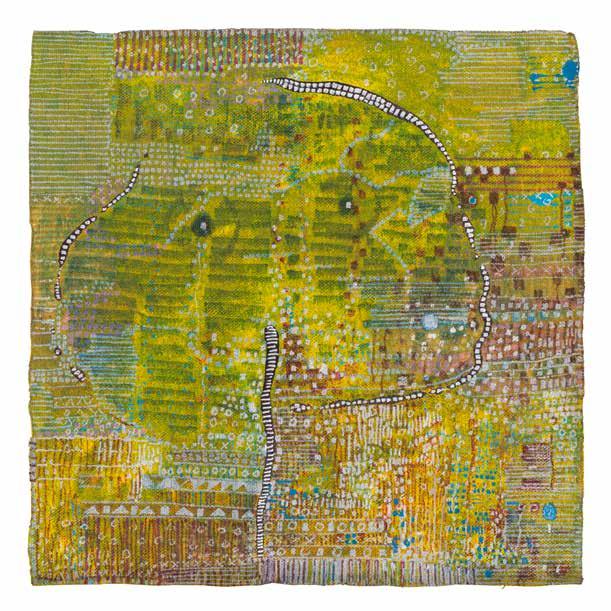
HUGUETTE CALAND (LEBANON, 1931-2019)
You mixed media on canvas, framed signed, titled and dated on the reverse, executed in 2010 26 x 26cm (10 1/4 x 10 1/4in).
£10,000 - 15,000
US$14,000 - 20,000
€12,000 - 17,000
Provenance:
Property from a private collection, London
Exhibited: Beirut, Huguette Caland: Works 1964-2012, Beirut Exhibition Centre, Solidere, 2013
Published: John Carswell, Huguette Caland: Works 1964-2012, Solidere, Beirut 2013
Note:
Please note the present work will be included in Huguette Caland’s forthcoming Catalogue Raisonné #ID1435
“NOTWITHSTANDING THE HISTORICAL SIGNIFICANCE OF HER ART—AND THE INTERNATIONAL RECOGNITION THAT HAS COME WITH A RECORD OF SEVENTY-FIVE-PLUS ONE-WOMAN SHOWS ACROSS CONTINENTS— SIRRY IS SURPRISINGLY UNDER-STUDIED, AND HER ART IS DESCRIBED PREDOMINANTLY IN TECHNICAL TERMS CENTERED ON “COLOR.” THE QUINTESSENCE OF LIFE AND POLITICAL STATEMENTS, HOWEVER, SEEMS TO HAVE BEEN IGNORED, IF NOT ENTIRELY MISSED. EDUCATED IN EGYPT AND EUROPE, SIRRY BUILT ONE OF THE MOST INFLUENTIAL CAREERS IN TWENTIETH-CENTURY MODERN ARAB ART.
DIVIDED INTO THREE OVERLAPPING PHASES, HER PAINTINGS BLUR ART AND POLITICS AS THEY NARRATE THE STORY OF SOCIETIES VACILLATING BETWEEN TRIUMPH AND DEFEAT, DIGNITY AND HUMILIATION, SOCIAL JUSTICE AND INEQUALITY. SIRRY ARGUABLY BIRTHED A NEW IDENTITY THAT MAKES NO DISTINCTION BETWEEN SEEING AND MILITANCY. AS SHE FLUIDLY MOVED BETWEEN STYLES, THIS “CHILDLESS” GRANDE DAME BECAME THE NATIONAL GODMOTHER TO AN ENTIRE NATION”
- FATENN MOSTAFA KANAFANI
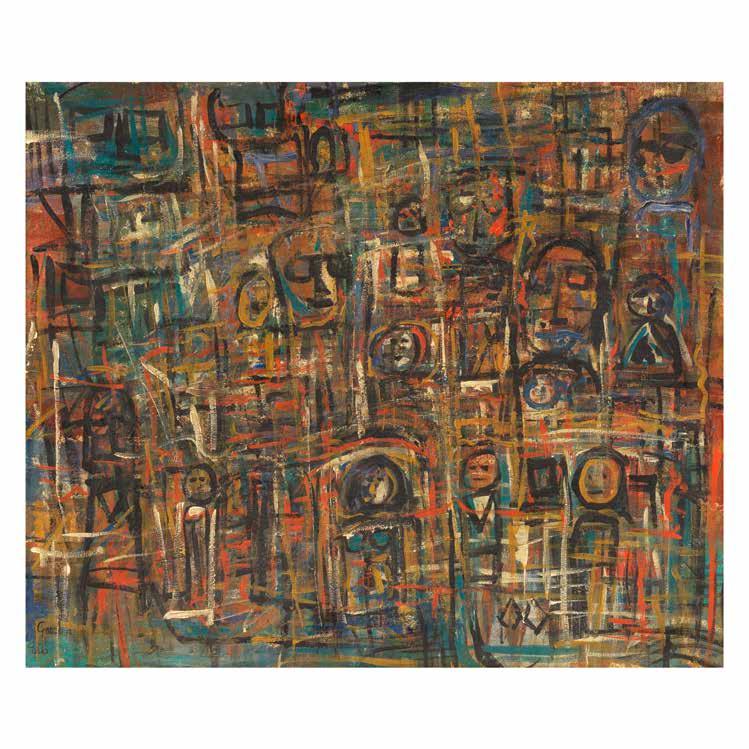
13 *
GAZBIA SIRRY (EGYPT, 1925-2021)
Untitled oil on canvas, framed signed “Gazbia” in English and Arabic and dated “72” (lower left), executed in 1972 52 x 62cm (20 1/2 x 24 7/16in).
£20,000 - 40,000
US$27,000 - 54,000
€23,000 - 46,000
Provenance:
Property from a private collection, Kuwait
Note:
This painting is accompanied by a certificate of authenticity issued by the artist’s daughter Azza Naguib
“I TRY TO LIBERATE MYSELF FROM EVERYTHING. TRYING EVEN THE IMPOSSIBLE - RUNNING ALL OVER THE WORLD LIKE MAD, HOPING TO REACH THE EDGE JUST TO SIT DANGLING MY FEET IN SPACE!”
- GAZBIA SIRRY
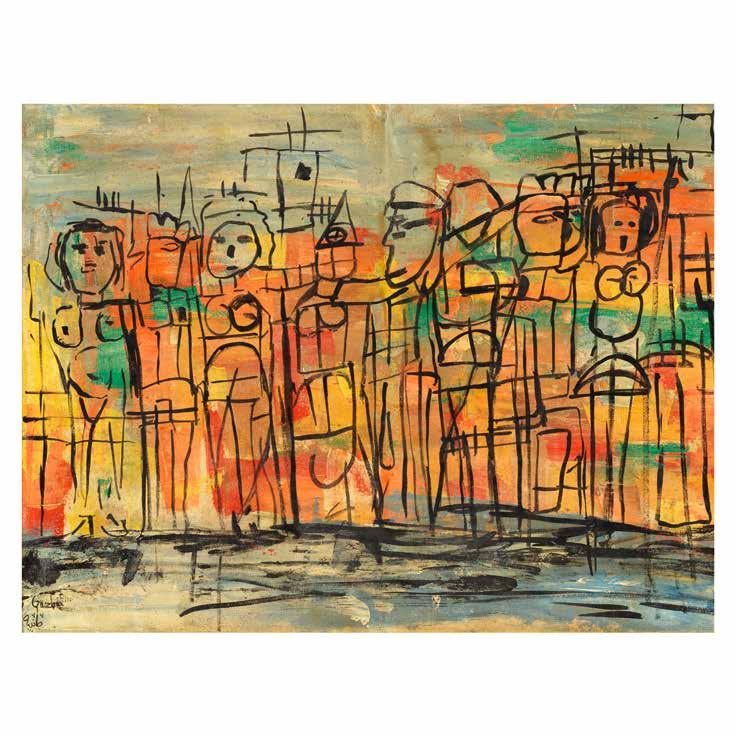
14 * GAZBIA SIRRY (EGYPT, 1925-2021)
Untitled oil on canvas, framed signed “Gazbia” in English and Arabic and dated “77” (lower left), executed in 1977 44 x 58cm (17 5/16 x 22 13/16in).
£25,000 - 50,000
US$34,000 - 68,000
€29,000 - 58,000
Provenance: Property from a private collection, Kuwait
Note: This painting is accompanied by a certificate of authenticity issued by the artist’s daughter Azza Naguib
15 *
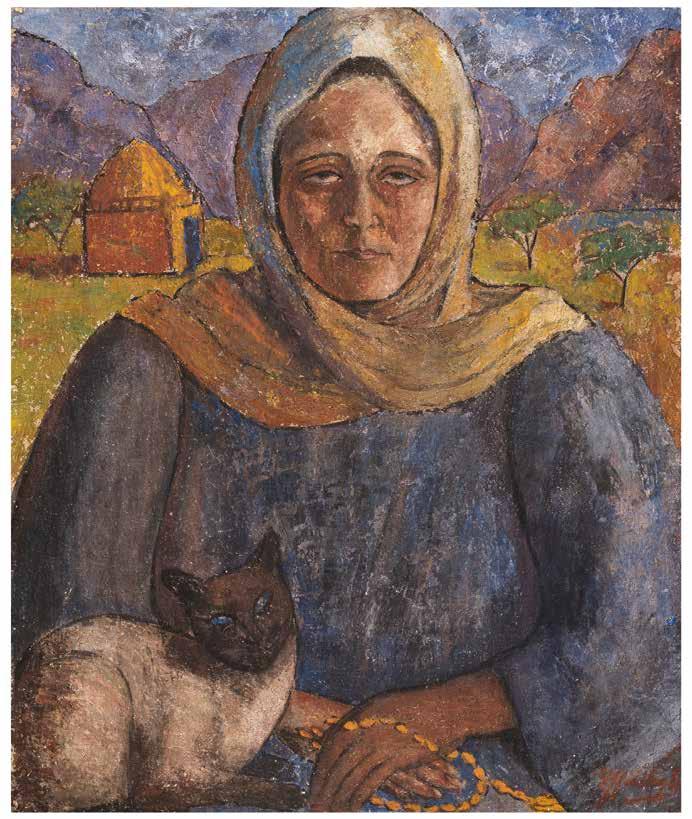
EFFAT NAGHI (EGYPT, 1905-1994)
Fellaha with Cat oil on wood panel, framed signed “Effat Naghi” (lower right), further inscribed, signed and dated on the verso, executed in 1947 73.5 x 61.5cm (28 15/16 x 24 3/16in).
£20,000 - 40,000
US$27,000 - 54,000
€23,000 - 46,000
Provenance:
Property from the private collection of H.E Ambassador Francine Henrich Acquired directly from the artist by the above
This evocative composition by Effat Naghi, executed in 1947, presents a poignant and dignified portrayal of a female fellaha, embodying both the resilience and quiet introspection of rural Egyptian life. Painted in oil on wood, the work reflects Naghi’s distinctive synthesis of modernist sensibilities with a deeply rooted engagement in Egypt’s social and cultural identity.
At the centre of the composition, the seated figure confronts the viewer with a solemn, almost meditative gaze. Her features are rendered with a deliberate stillness, emphasised by the earthy, muted palette that binds figure and landscape into a unified whole. The surrounding environment, with its simplified forms of mountains, sparse trees, and a modest dwelling, situates her firmly within the agrarian context, yet the flattened perspective and stylised treatment transcend mere representation, aligning the work with broader currents of twentieth century modernism in Egypt.
Naghi, a pioneering female voice within the Egyptian art movement, was instrumental in articulating a visual language that balanced national identity with international modernist dialogue. Her depictions of rural subjects, particularly women, are imbued with a sense of dignity and permanence, elevating everyday life into a realm of quiet monumentality. In this work, the fellaha becomes not simply a subject but a symbol of continuity, endurance, and connection to the land.
The presence of the cat, nestled calmly within the figure’s arms, introduces a layer of symbolic resonance that reaches back to Ancient Egypt. Cats held a revered status in ancient Egyptian culture, associated with protection, fertility, and domestic harmony. They were sacred to the goddess Bastet, often depicted as a feline or a woman with a cat’s head, embodying both nurturing and protective qualities. The inclusion of the cat here may be understood as an echo of this enduring cultural memory, linking the modern rural subject to a much older spiritual and symbolic tradition. Its presence softens the composition, offering a moment of intimacy and tenderness that contrasts with the sitter’s otherwise austere expression.
Provenance further enriches the significance of this painting, having belonged to the collection of former ambassador Francine Henrich, whose discerning eye contributed to the preservation of important works from the region.
This painting stands as a compelling example of Effat Naghi’s ability to weave together personal, cultural, and historical narratives. Through its restrained yet powerful composition, it captures a timeless vision of Egyptian identity, where the human figure, the natural world, and symbolic elements coexist in quiet harmony.
“AT THE END OF THE 1930S I BEGAN READING ABOUT MODERN ART. I USED TO LOOK AT MODERN PAINTINGS, WHICH MOST PEOPLE CONSIDERED UGLY, AND FOUND THAT IN MY EYES, THEY WERE BEAUTIFUL. GRADUALLY, I BEGAN TO LEAN MORE AND MORE TOWARDS THESE PAINTINGS, AND I BECAME CERTAIN THAT ART IS CREATION AND NOT THE IMITATION OF NATURE. NATURE IS ONE THING AND ART, ANOTHER.
I COULD PROVE TO YOU BY WAY OF EXAMPLE, HOW AFTER THREE OR FOUR PAINTINGS OF THE MONASTERY OF QOZHAYA IN WADI QADESHA, THE FOURTH AND FINAL PAINTING WOULD BE ABSTRACT BY COMPARISON WITH THE FIRST ONE. THIS OCCURS BY USING FEWER LINES, AND ELIMINATING CLASSICAL CURVES, AND VIA A LACK OF DETAIL”
- SALIBA DOUAIHY
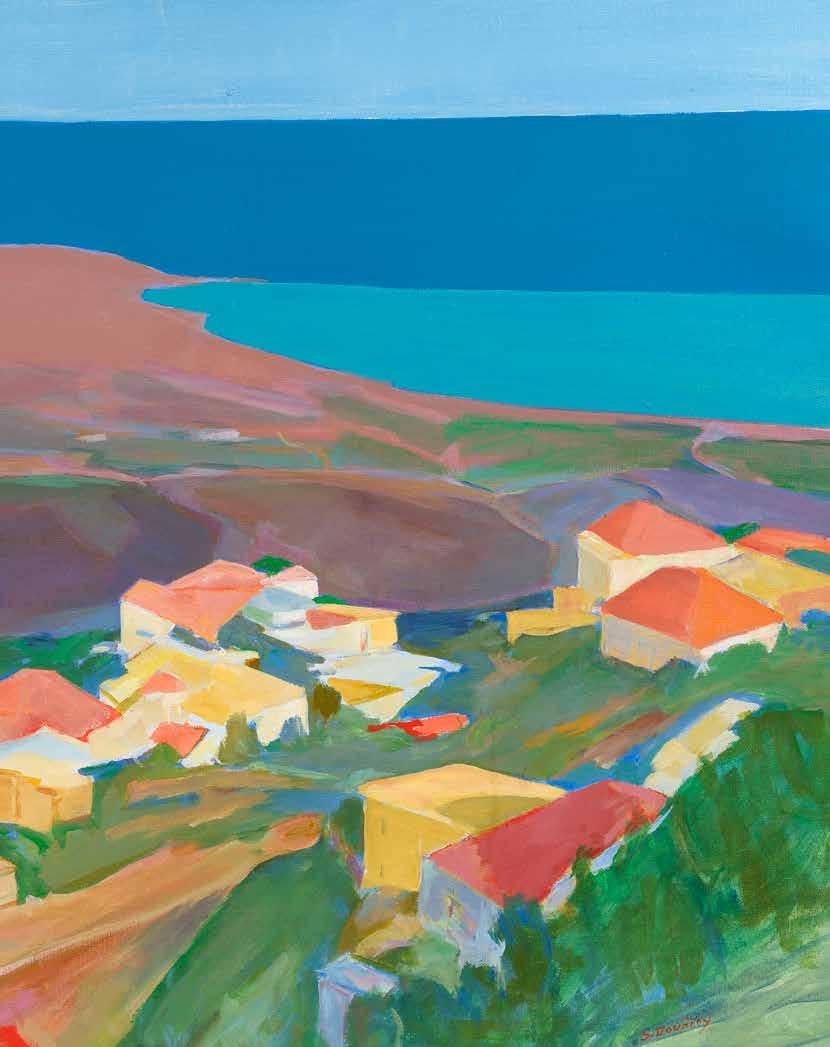
16 *
SALIBA DOUAIHY (LEBANON, 1915-1994)
Bay of Akkar oil on canvas, framed signed “S. Douaihy” (lower right), executed circa 1950s 67.5 x 90cm (26 9/16 x 35 7/16in).
£50,000 - 80,000
US$68,000 - 110,000
€58,000 - 92,000
Provenance:
Property from the artist’s estate, USA
Published: Robert Wihbey, Saliba Douaihy: In Celebration of 100 Years, 2015
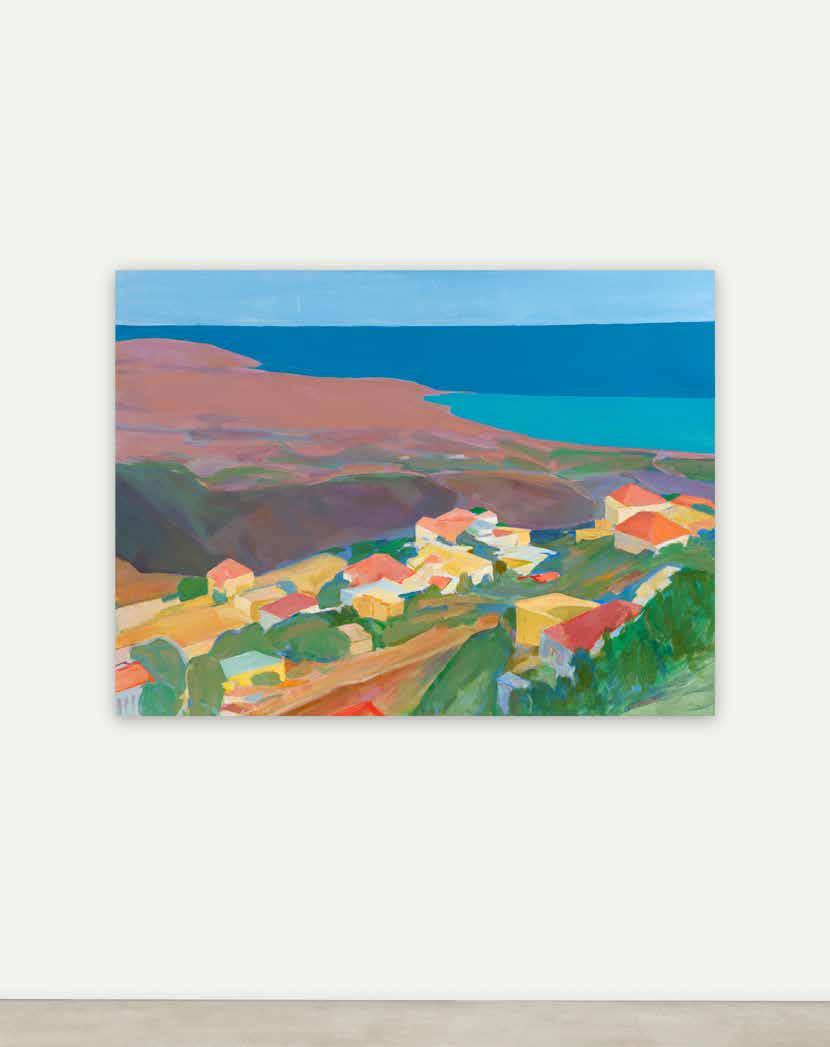
Saliba Douaihy remains one of the most original and compelling artists to emerge from Lebanon in the twentieth century. Although he began as a gifted painter of atmospheric, classically observed landscapes, his career was defined by a steady and highly personal movement towards abstraction. Over time, natural description gave way to an art built on line, shape and colour, as Douaihy sought not simply to record the visible world, but to distil its inner essence.
The present work, an early 1950s coastal scene in Akkar, belongs to one of the most significant moments in that evolution. It is a rare and important transitional painting, made at the precise point at which Douaihy was moving decisively away from classical landscape painting and towards a new visual language in which form is simplified, detail suppressed, and colour allowed to carry expressive force in its own right. More advanced than his earliest transitional compositions, this work stands notably closer to the hard-edge abstraction of his mature years, placing it at the very cusp of full abstraction.
Several strands converge in this painting. Douaihy’s exposure to American modernism encouraged a greater confidence in simplification and structural clarity. At the same time, he was increasingly drawn to the idea that colour and shape could function not as descriptive tools, but as independent means of expression. Here, the coastal landscape of Akkar is no longer rendered through intricate naturalistic detail. Instead, it is translated into broad, flattened zones of blue, mauve, green and ochre, with the houses and terrain reduced to firmly ordered, interlocking forms. The scene is still recognisably observed, yet it has already begun to shed the incidental in favour of the essential.
What makes the work especially compelling is this balance between place and abstraction. The landscape has not disappeared, but it has been reimagined. Sea, hillside and village are compressed into a composition of lucid geometry and controlled chromatic relations, revealing Douaihy’s growing desire to capture a scene as it was felt and structured, rather than merely seen. The architecture, stripped of ornament and descriptive modelling, becomes a sequence of angular blocks, while the sweeping divisions of land and water anticipate the linear clarity and spatial compression that would come to define his later work.
Arguably one of the artist’s most important transitional landscapes, this painting captures Douaihy at a moment of artistic breakthrough. It shows him no longer tentatively moving towards abstraction, but standing directly on its threshold. Preserved for decades in the collection of the artist’s nephew and appearing on the market for the first time, it is both an exceptionally fresh work and a major document of Douaihy’s passage from landscape to pure form.
“YOU HAVE YOUR LEBANON AND ITS DILEMMA. I HAVE MY LEBANON AND ITS BEAUTY. YOUR LEBANON IS AN ARENA FOR MEN FROM THE WEST AND MEN FROM THE EAST. MY LEBANON IS A FLOCK OF BIRDS FLUTTERING IN THE EARLY MORNING AS SHEPHERDS LEAD THEIR SHEEP INTO THE MEADOW AND RISING IN THE EVENING AS FARMERS RETURN FROM THEIR FIELDS AND VINEYARDS. YOU HAVE YOUR LEBANON AND ITS PEOPLE. I HAVE MY LEBANON AND ITS PEOPLE”
- KHALIL GIBRAN
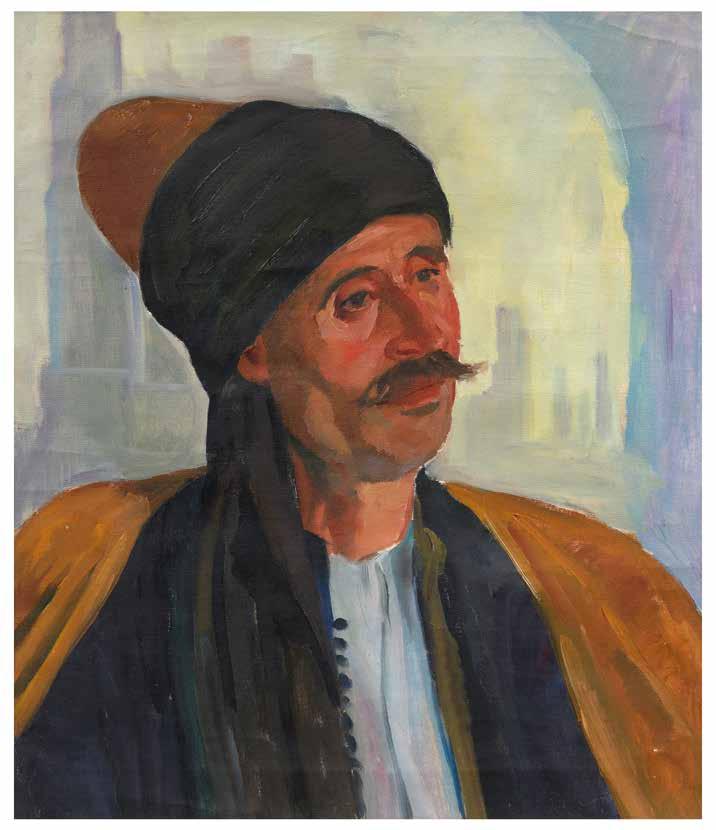
17 *
SALIBA DOUAIHY (LEBANON, 1915-1994)
Bsharri
oil on canvas, framed signed “S. Douaihy” (lower left), inscribed on the verso, executed circa late 1930s 68.5 x 95cm (26 15/16 x 37 3/8in).
£50,000 - 80,000
US$68,000 - 110,000
€58,000 - 92,000
Provenance:
Property from the artist’s estate, USA
Exhibited: Lebanon Pavilion, World’s Fair, Flushing Meadows, New York, US, 1939
Published: Robert Wihbey, Saliba Douaihy: In Celebration of 100 Years, 2015
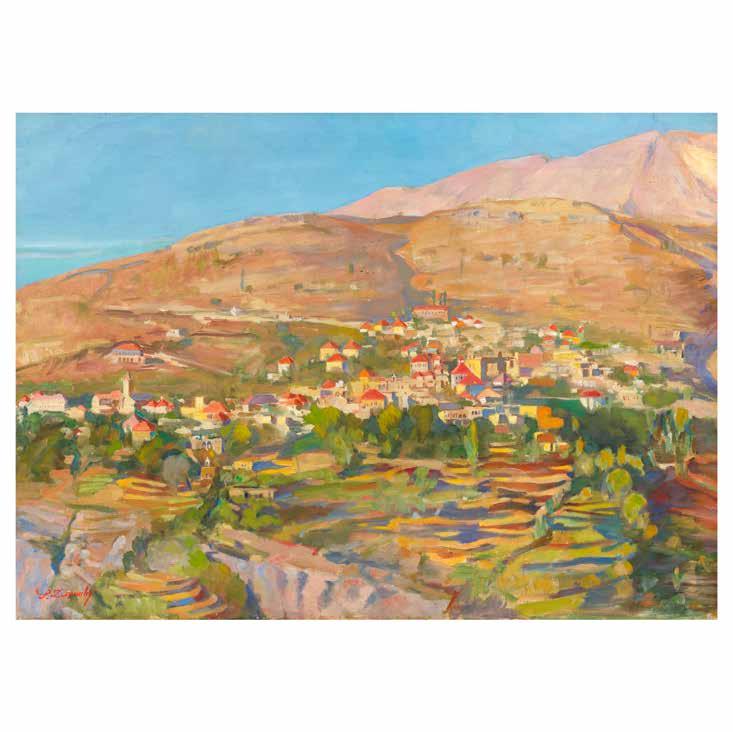
Executed in the 1930s and exhibited at the New York World’s Fair in 1939, this important early view of Bsharri belongs to the formative chapter of Saliba Douaihy’s career, when the artist was establishing himself through landscapes of northern Lebanon before the radical abstraction of his later American years. Its scale is striking, but what gives the work its real weight is the richness of its subject: Bsharri is not treated merely as a picturesque mountain village, but as a place dense with memory, identity and cultural meaning.
Douaihy builds the town from a web of delicately modulated brushwork, red-roofed houses, terraced fields and ascending mountain rhythms, producing a composition at once expansive and minutely observed. It is a painting of topography, certainly, but also of belonging.
Bsharri occupies a singular place in the Lebanese imagination. Set above the Qadisha Valley and beside the famed Cedars of God, it is one of the great historic mountain towns of northern Lebanon, a place where landscape, spirituality and national symbolism converge. It is also inseparable from the legacy of Kahlil Gibran, who was born there in 1883 and whose life, like Douaihy’s, would come to embody the dialogue between Lebanon and America.
Gibran emigrated to the United States as a child and would go on to write some of his most enduring works in English, even as his thought remained deeply rooted in the emotional, spiritual and social world of Mount Lebanon. In much the same way, Douaihy, who later settled in New York and developed a highly distilled abstract language, ultimately used the visual vocabulary of his adopted home not to abandon Lebanon, but to translate it. Even in abstraction, his art can be understood as carrying within it the remembered light, contours and metaphysical spaciousness of the Lebanese landscape.
That parallel gives this painting an importance beyond its date. Bsharri was Gibran’s home, but it also stands here as an emblem of the broader Lebanese cultural renaissance with which both figures are associated. Gibran was one of the defining voices of the Mahjar and a major figure within the wider Nahda, those intertwined movements through which Arab émigré intellectuals, many of them Lebanese, reshaped modern Arabic and diasporic cultural life. Douaihy belongs to a later but related arc: an artist who carried Lebanese experience into an international idiom without surrendering its specificity. This early panorama of Bsharri therefore feels almost prophetic.
Long before the hard-edged abstractions for which he would become celebrated, Douaihy was already articulating a central theme of modern Lebanese culture: how to inhabit another language, another medium, another world, while still speaking unmistakably of home.

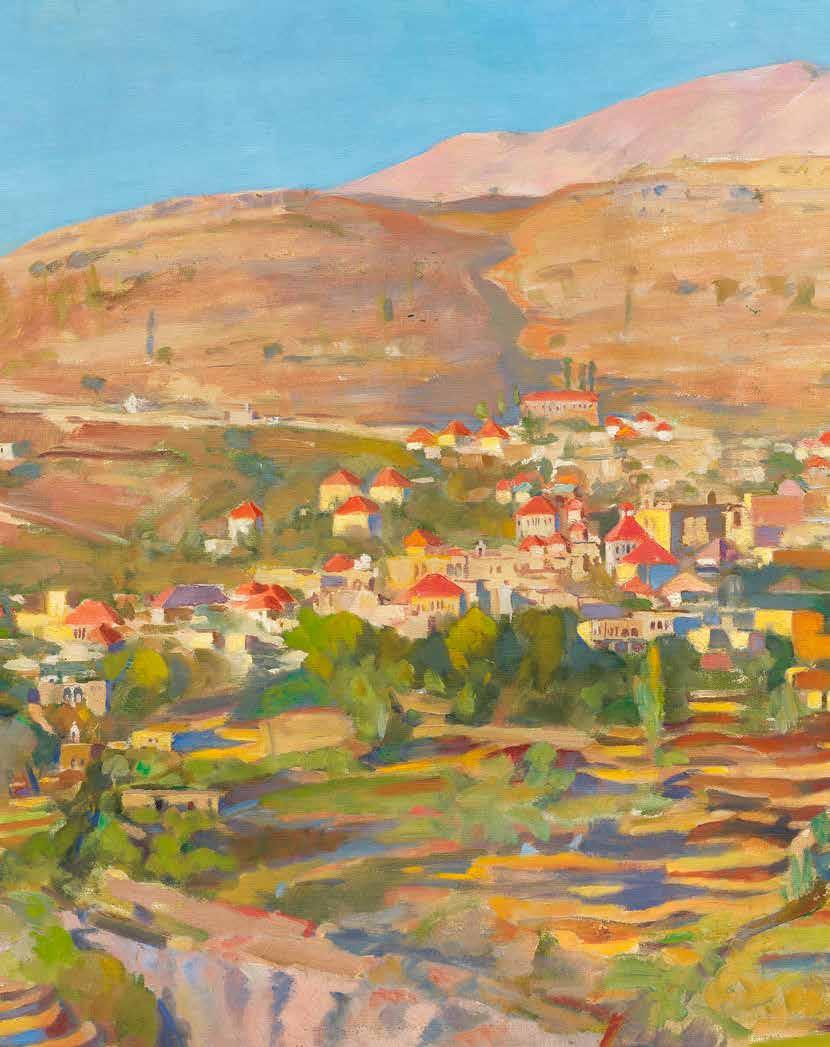
18 * SALIBA DOUAIHY (LEBANON, 1915-1994)
The Sheikh oil on canvas, framed executed in 1940s 52 x 45cm (20 1/2 x 17 11/16in).
£10,000 - 15,000
US$14,000 - 20,000
€12,000 - 17,000
Provenance:
Property from the artist’s estate, USA
Published: Robert Wihbey, Saliba Douaihy: In Celebration of 100 Years, 2015
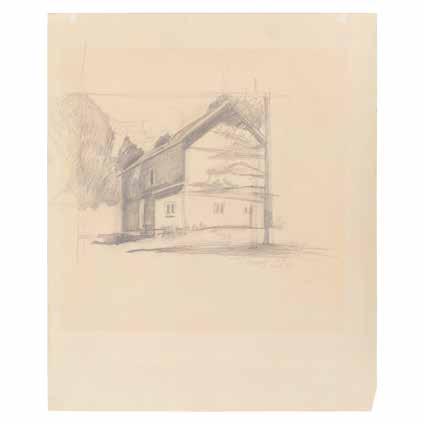
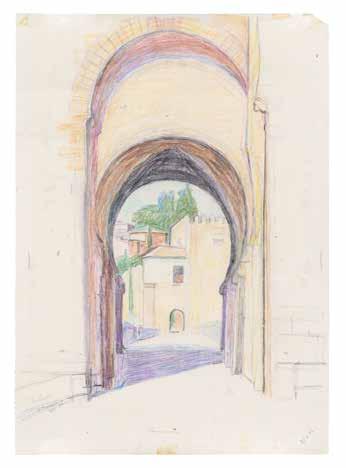
19 *
SALIBA DOUAIHY (LEBANON, 1915-1994)
Catskills, NY
graphite on paper, framed signed “S Douaihy Jewett NY” and dated “1978” (lower right), executed in 1978 35.5 x 43cm (14 x 16 15/16in).
£1,000 - 1,500
US$1,400 - 2,000
€1,200 - 1,700
Provenance:
Property from the artist’s estate, USA
Published:
Robert Wihbey, Saliba Douaihy: In Celebration of 100 Years, 2015
20 *
SALIBA DOUAIHY (LEBANON, 1915-1994)
Toledo, Spain
graphite and pastel on paper, framed signed “Toledo S.Douaihy” and dated “982” (lower left), executed in 1982 43 x 30cm (16 15/16 x 11 13/16in).
£2,000 - 3,000
US$2,700 - 4,100
€2,300 - 3,500
Provenance:
Property from the artist’s estate, USA
Published:
Robert Wihbey, Saliba Douaihy: In Celebration of 100 Years, 2015
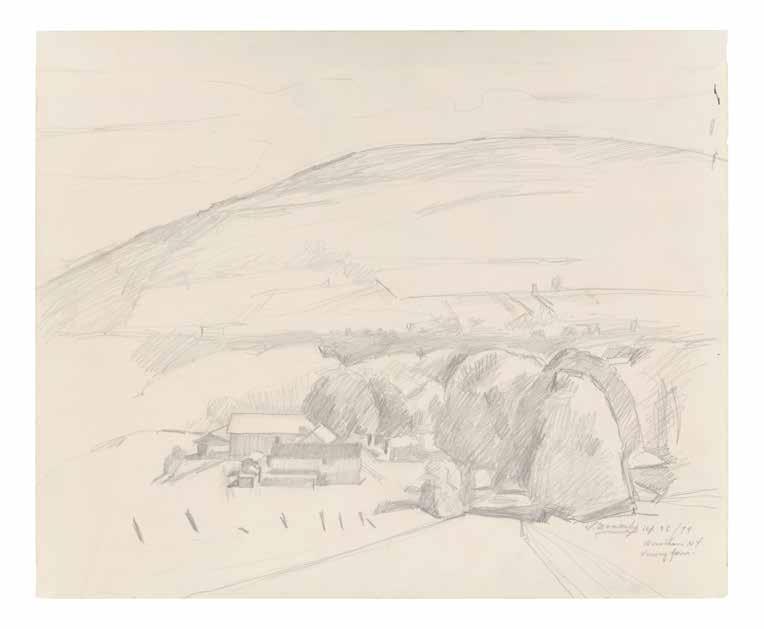
SALIBA DOUAIHY (LEBANON, 1915-1994) Windham, NY graphite on paper, framed signed “S Douaihy Windham, NY” and dated “Sep 26. / 79” (lower right), executed in 1978
35.5 x 43cm (14 x 16 15/16in).
£1,500 - 2,500
US$2,000 - 3,400
€1,700 - 2,900
Provenance:
Property from the artist’s estate, USA
Published: Robert Wihbey, Saliba Douaihy: In Celebration of 100 Years, 2015
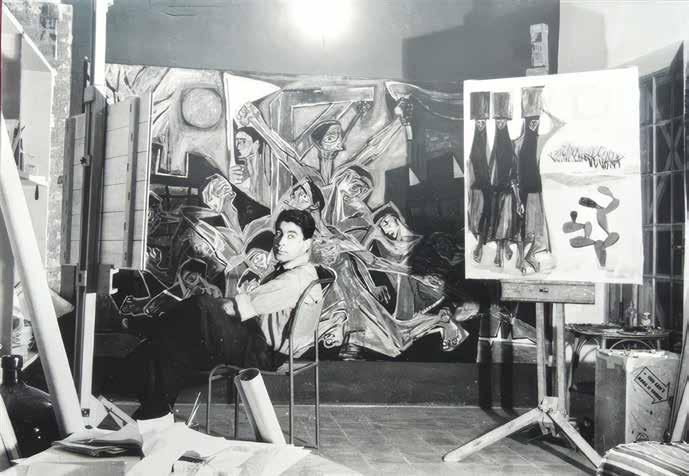
LOTS 22-23
THE EVOLUTION OF MAHMOUD SABRI: IMPORTANT WORKS FROM THE ARTIST’S ESTATE
22 AR
MAHMOUD SABRI (IRAQ, 1927-2012)
Study of Grief
mixed media on cardboard, framed executed circa 1960s
59 x 69.5cm (23 1/4 x 27 3/8in).
£20,000 - 40,000
US$27,000 - 54,000
€23,000 - 46,000
Provenance:
Property from the artist’s estate
Note:
The present work is a study for a painting in the collection of the Prague National Gallery
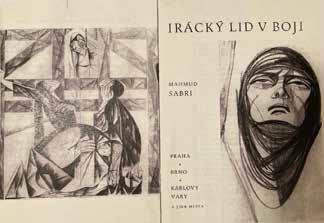
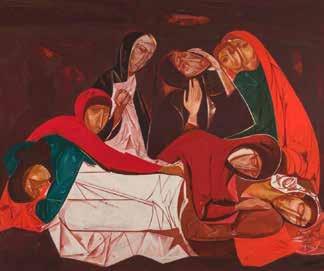
This early study for Grief, executed in the 1960s, offers a rare and intimate insight into the working process of Mahmoud Sabri, one of the most intellectually rigorous and politically engaged figures of the Iraqi modern movement. The finished painting, now held in the collection of the National Gallery Prague, stands among Sabri’s most poignant meditations on loss and collective suffering. The present work, however, reveals the genesis of that emotional and compositional intensity in its most immediate form.
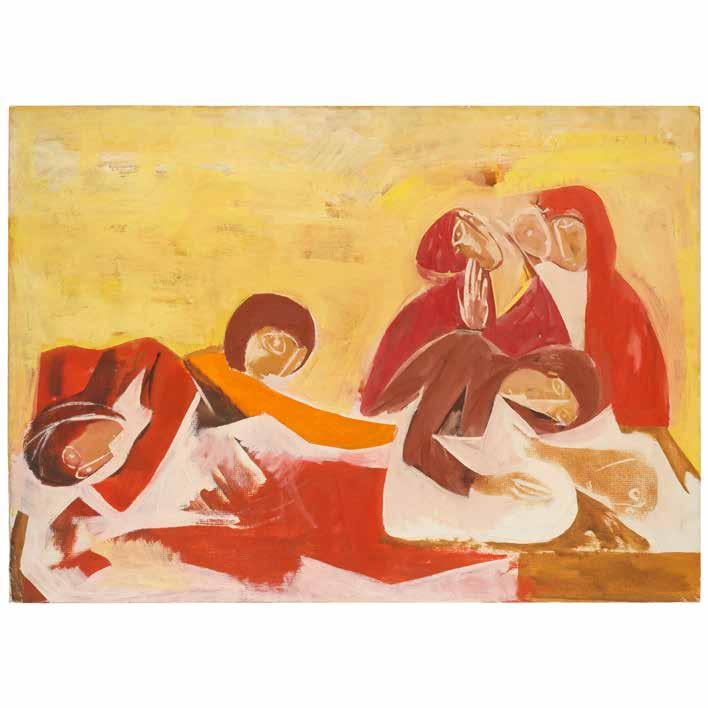
Rendered with a looseness and urgency absent from the final composition, the study captures Sabri’s initial structuring of grief as both a personal and communal experience. The figures, simplified yet expressive, gather around a recumbent body, their gestures already charged with anguish. Limbs bend and fold into one another, creating a rhythm of interlocking forms that conveys both intimacy and suffocation. The flattened pictorial space and raw application of paint heighten this sense of emotional compression.
Sabri’s engagement with themes of mourning and injustice is inseparable from his political convictions. Working in exile and deeply critical of the conditions in Iraq, he conceived of art as a vehicle for social consciousness. In this context, Grief can be understood not simply as a lamentation, but as an indictment. The sorrow depicted is not isolated or private, but emblematic of a broader human condition shaped by violence and displacement.
The composition recalls the visual language of Western religious imagery, particularly scenes of lamentation, yet Sabri strips these references of transcendence. Instead, he grounds the scene in a stark human reality. The figures do not gesture toward salvation, but remain anchored in loss. In the study, this tension is even more pronounced, as the absence of refined detail allows the emotional structure of the work to emerge with clarity.
As a preparatory work, this study holds particular significance. It documents the evolution of a major composition while standing as a compelling work in its own right. The immediacy of the brushwork and the openness of form lend it a directness that complements the more resolved final painting. Together, they underscore Sabri’s enduring concern with the representation of suffering and the role of the artist as witness.


23 AR
MAHMOUD SABRI (IRAQ, 1927-2012)
C2 + H5 + OH (From the Quantum Realism Series) oil on canvas, framed signed “M.S” (lower left), titled (stretcher bar), executed circa 1969 90 x 90cm (35 7/16 x 35 7/16in).
£60,000 - 80,000
US$81,000 - 110,000
€69,000 - 92,000
Provenance:
Property from the artist’s estate
Mahmoud Sabri’s C2 + H5 + OH marks a profound shift in the Iraqi artist’s career, representing one of his earliest explorations into the realm of Quantum compositions. This period, which Sabri initiated in 1969 and expanded throughout the 1970s, signifies his departure from his earlier modernist depictions of daily life in Iraq toward a revolutionary form of geometric abstraction. These works were meticulously constructed based on scientific formulas, exploring atomic and chemical compounds. Sabri’s dedication to integrating art and science highlights his unique intellectual approach, positioning him as a visionary within Arab abstraction. This particular work exemplifies the artist’s fascination with the underlying structures of the universe, as he sought to capture the essence of material transformation through geometric precision and vibrant colour fields.
In 2024, Sabri’s legacy was further solidified when his work was represented for the first time in the main pavilion of the Venice Biennale. A piece from his Quantum Period was chosen, underscoring the critical importance of this body of work in the history of Arab abstraction and international abstract art. His inclusion in Venice reflects a broader reevaluation of his contributions, not only as a pioneer of Middle Eastern modernism but as a crucial figure in the global narrative of abstract art, where science and art converge. Sabri’s visionary approach continues to inspire and challenge conventional interpretations of abstraction, solidifying his place in the annals of art history.
“IN 1971, SABRI PUBLISHED A MANIFESTO TITLED QUANTUM REALISM, IN WHICH HE CALLED FOR AN ‘APPLICATION OF THE SCIENTIFIC METHOD IN THE FIELD OF ART’. HIS SUBSEQUENT WORK CONSISTED OF COLOUR COMPOSITIONS, PRESENTING AN INDEXED CODIFICATION OF REALITY, DEVOID OF FIGURES AND RECOGNISABLE OBJECTS”
- SUHEYLA TAKESH, VENICE BIENNALE, 2024

“I LIKE SOLITUDE. IT ALLOWS YOU TO FLY AWAY AND DREAM. IT PROVOKES THE IMAGINATION. THERE ARE NO DISTRACTIONS. FOR ME, ART IS SACRED, IT’S LIKE A PRAYER, IT’S JUST AS PRECIOUS, JUST AS IMPORTANT.”
- NADIA SAIKALI
24 *
NADIA SAIKALI (LEBANON, BORN 1936)
Solitude
oil on canvas
signed “N.Saikali” and dated “1983” (lower right), executed in 1983 150 x 150cm (59 1/16 x 59 1/16in).
£35,000 - 45,000
US$47,000 - 61,000
€40,000 - 52,000
Provenance:
Property from a private collection, Paris
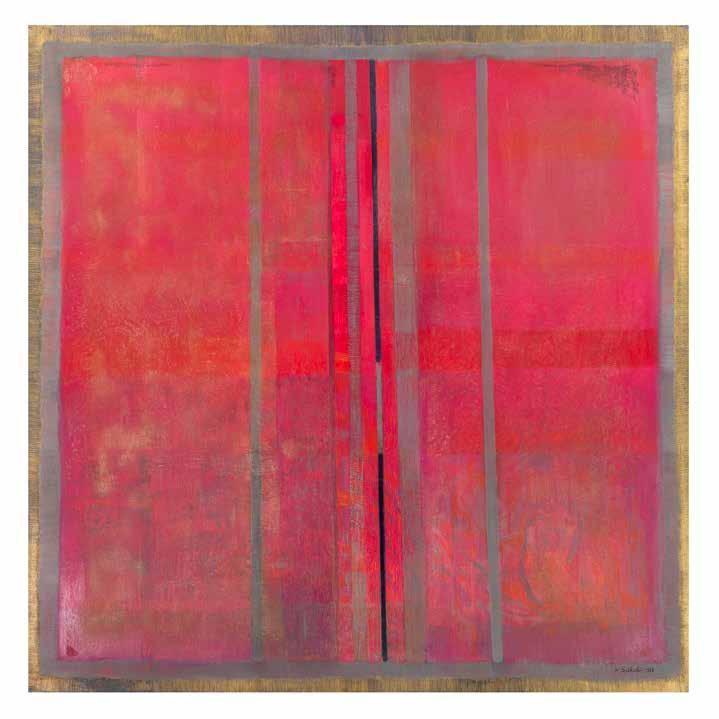
Painted in 1982-1983, this monumental canvas belongs to a mature and important phase in Nadia Saikali’s career, when her abstraction became increasingly meditative, spiritual and inward-looking. Built through a glowing field of reds and burnt rose tones, the composition is structured by a sequence of vertical bands that divide and regulate the surface while never fully interrupting its atmosphere.
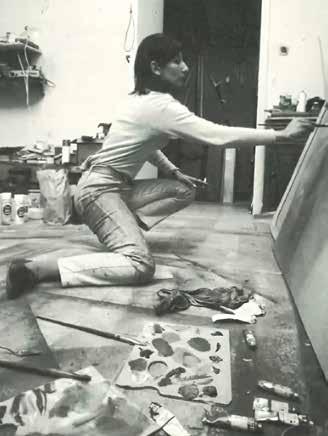
The eye is also drawn towards the painted frame and the narrow dark lines at the centre, which may be read in two ways: as the framing elements of a window opening onto an inner, private realm, or conversely as bars, suggesting enclosure, restraint and a spirit held in captivity. Though entirely abstract, the painting carries a strong psychological presence, and reflects Saikali’s ability in the 1980s to use colour and structure to create works that are meditative and emotionally resonant.
Born in Beirut in 1936, Nadia Saikali is regarded as one of the most original voices in post-war Lebanese abstraction. She studied art in Beirut before continuing her training in Paris, where she encountered the currents of European modernism that would leave a lasting mark on her practice. From an early stage, however, Saikali’s work resisted simple categorisation. Rather than aligning herself too rigidly with any one school, she developed a highly personal visual language shaped by her sensitivity to colour, rhythm and material, and by a desire to move beyond representation into a more intuitive and atmospheric form of image-making.
Over the course of her career, Saikali worked across a remarkably broad range of media, including painting, collage, tapestry, mosaic and largescale public commissions. This interdisciplinary dimension is central to her practice and helps explain the particular strength of her abstract vocabulary, which often feels at once painterly, architectural and decorative without ever collapsing into ornament.
Her work was exhibited widely in Lebanon and internationally, and she emerged as part of the generation of artists who gave Lebanese modernism one of its most outward-looking and experimental expressions. Yet for all its internationalism, her art retained a chromatic and emotional sensibility closely tied to Lebanon, often drawing on the light, sea and atmosphere of the Mediterranean.
By the 1980s, Saikali’s painting had entered a more distilled and contemplative phase. The present work belongs to that important moment, when her compositions became increasingly pared back and her surfaces more minimal, with repeated vertical structures and layered tonal fields creating a heightened sense of stillness and interiority. It is in works such as this that Saikali’s mature achievement is most clearly felt: here, scale, colour and structure are held in careful balance, allowing the painting to unfold slowly and reward sustained attention.
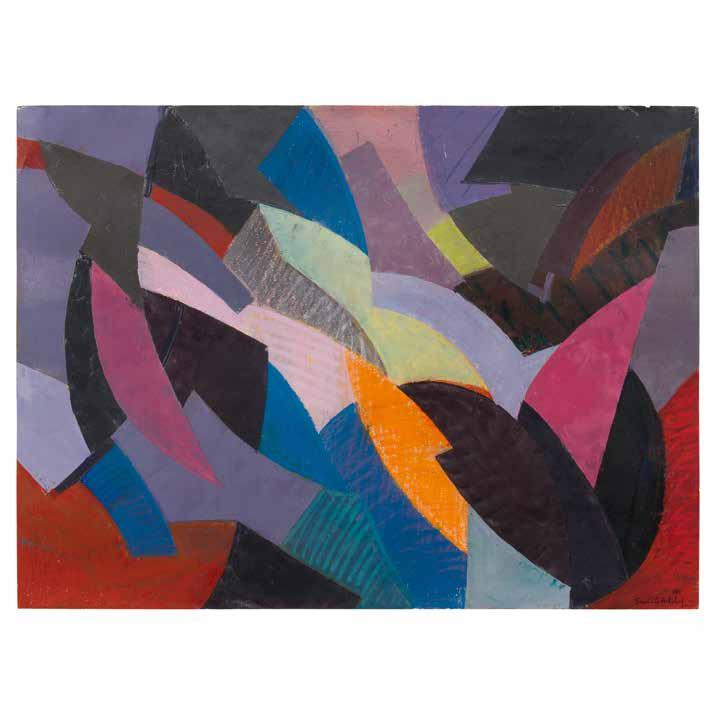
mixed media on card, framed signed “Samia A.Halaby” and dated “1989” (lower right), executed in 1989 55.5 x 76cm (21 7/8 x 29 15/16in).
£20,000 - 30,000
US$27,000 - 41,000
€23,000 - 35,000
Provenance:
Property from a distinguished private collection, Lebanon
Executed in 1989, Rapids belongs to a crucial moment in Samia Halaby’s mature abstract practice, when her paintings were increasingly driven by the idea that form should behave like nature itself: not static, but in motion, unfolding through pressure, rhythm and change.
By the 1980s, the evolution of shape had become a central concern in her work, an enquiry she would later articulate in her book Growing Shapes: Aesthetic Insights of an Abstract Painter, which explains how forms in her paintings developed from the early 1980s onward.
Rapids is an especially vivid expression of that thinking. Rather than describing water literally, Halaby constructs sensation through a sweep of interlocking arcs, diagonals and coloured planes that seem to surge, collide and tumble across the surface. The composition has the force of a current, with forms pushing forward and folding over one another in a continuous state of flux.
In this sense, the painting sits squarely within the wider Growing Shapes period, in which shape is not treated as a fixed geometric unit but as something organic, expanding and transforming as if subject to the same laws of movement found in the natural world. Halaby has described abstraction as rooted in the principles of motion in nature, and Rapids gives that conviction a particularly dynamic and sensuous form.
What makes the work so compelling is the way discipline and spontaneity are held in balance. Its structure is rigorous, yet its energy feels immediate and improvisatory, as though the painting were discovering its own momentum in real time. This tension between construction and flow is central to Halaby’s achievement across the 1980s: she expands the language of geometric abstraction without allowing it to become inert, instead charging it with velocity, compression and release.
In Rapids, colour itself becomes a kinetic force, as deep blues, sharp yellows, pinks and earth tones fracture and accelerate the eye, creating an image that does not merely depict movement but performs it. Seen within the context of the Growing Shapes body of work, the painting stands as a superb example of Halaby’s ability to turn abstraction into a living, natural phenomenon.
“THE GROWING SHAPE SERIES
IN MY WORK EMERGED FROM THE PREVIOUS ENGAGEMENT WITH DISCOVERING PRINCIPLES IN NATURE THAT COULD BE TRANSLATED INTO THE PROCESS OF MAKING PAINTINGS. IT WAS THE EARLY REALISATION OF THE IDEA OF MAKING A PAINTING GROW AS A LEAF GROWS.”
- SAMIA HALABY
“MODERN ART IN THE ARAB WORLD IS NOT A BREAK WITH TRADITION, BUT A CONTINUATION IN ANOTHER LANGUAGE.”
- HELEN KHAL
26 *
HELEN KHAL (LEBANON, 1923-2009)
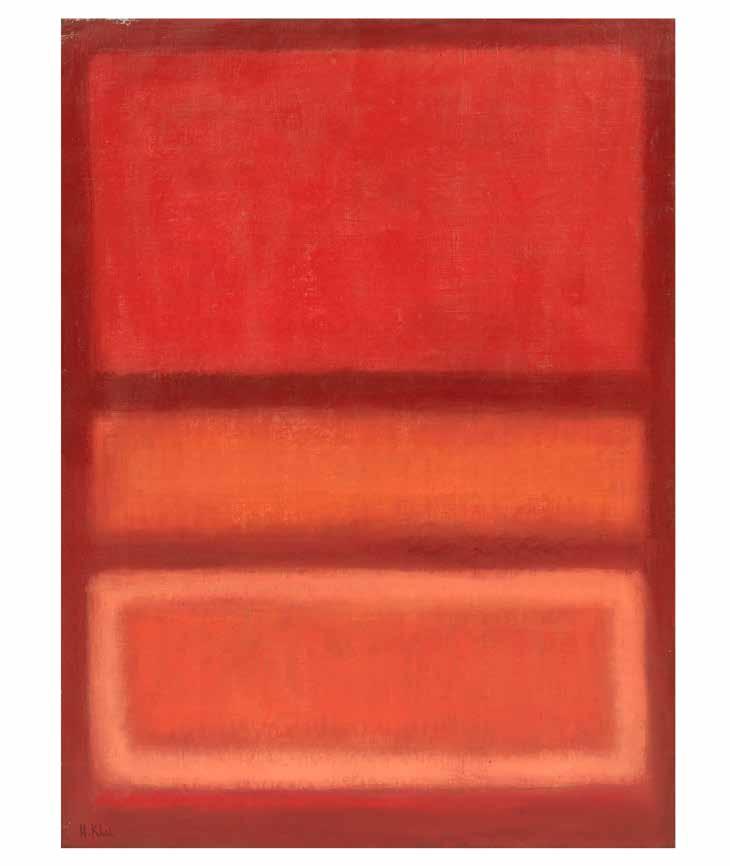
Untitled oil on canvas, framed signed “H.Khal” (lower left), executed in 1984 80 x 60cm (31 1/2 x 23 5/8in).
£30,000 - 50,000
US$41,000 - 68,000
€35,000 - 58,000
Provenance:
Property from a private collection, Beirut Acquired from the family of the artist
Helen Khal (b. 1923, Allentown, USA – d. 2009, Ajaltoun, Lebanon) was a central figure in Beirut’s artistic milieu during the cultural flourishing of the 1960s. She studied at the Lebanese Academy of Fine Arts and later at the Art Students League of New York. In 1987 she made a lasting contribution to Arab art history with her book The Woman Artist in Lebanon, which documented the work of thirty-nine women artists and remains an important reference today.
Khal began painting in her early twenties but was initially reluctant to exhibit. Encouraged by Aref Rayess, she held her first solo exhibition in 1960 at Galerie Alecco Sab in Beirut. In 1963 she became the founding director of Gallery One, Lebanon’s first contemporary art gallery.
Alongside her artistic practice, Khal was an influential writer and educator. She contributed art criticism to the English-language Lebanese newspapers The Daily Star and Monday Morning and taught at the American University of Beirut and the Lebanese American University.
Her work is distinguished by a deep sensitivity to colour. In the 1950s and early 1960s she experimented with Cubist approaches in still life and portraiture. Following her separation from the poet Yusuf alKhal, her practice shifted toward non-objective painting, embracing a language akin to Colour Field abstraction. Through this she explored how colour and geometric form could express subtle emotional states, a direction shaped in part by artists such as Mark Rothko and her friendship with Huguette Caland in the 1970s.
LOTS 27-29
THREE IMPORTANT PAINTINGS BY THE PROMINENT PALESTINIAN ARTIST JUMANA EL HUSSEINI, DATING FROM THE 1960S AND 1970S
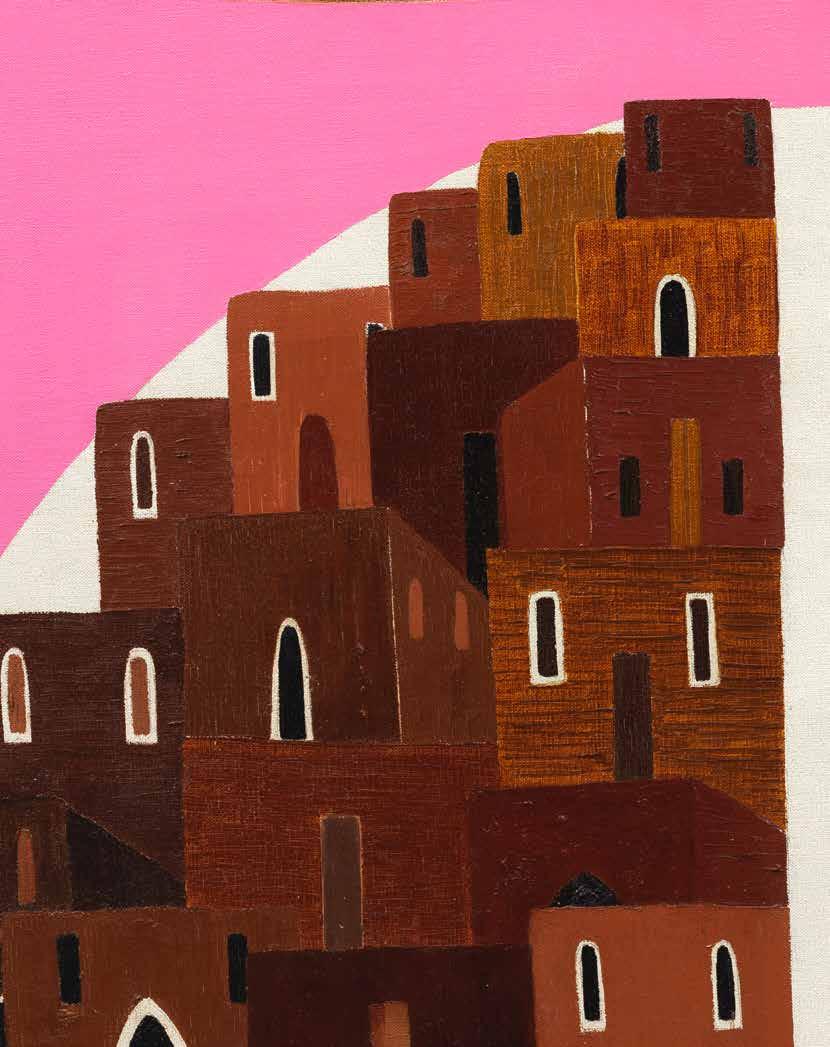
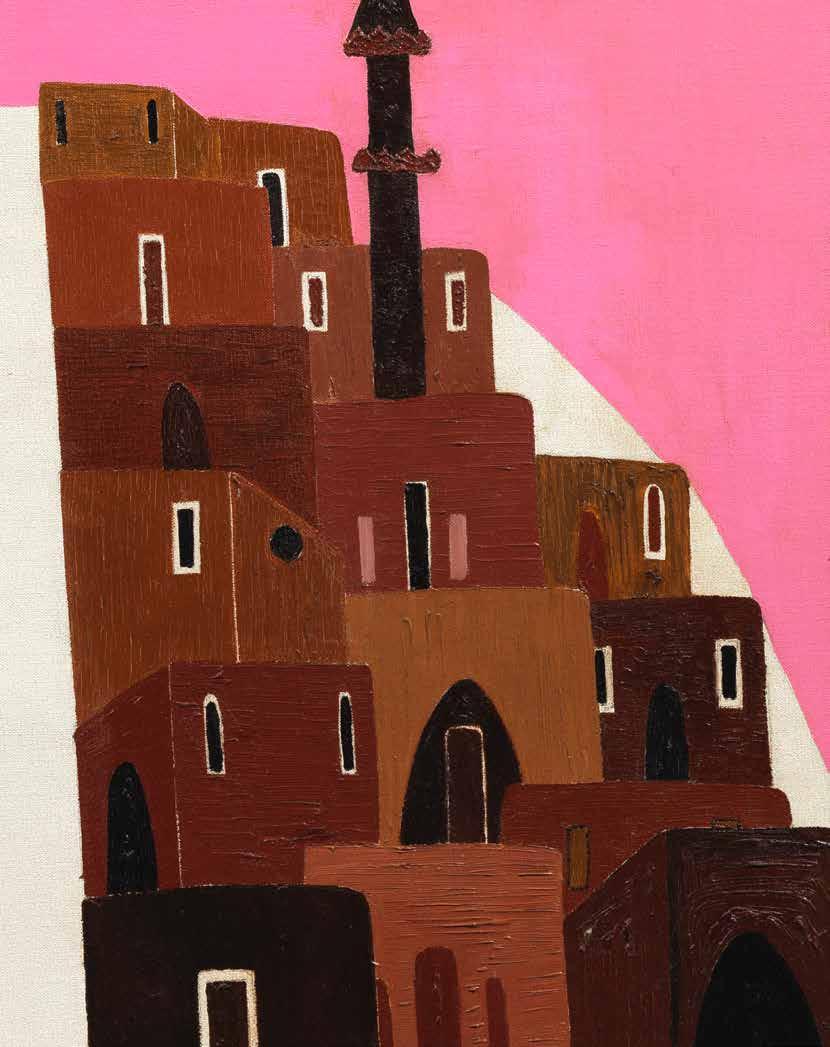
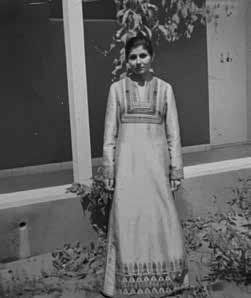
“JUMANA IS THE ICON OF JERUSALEM, AND JERUSALEM IS JUMANA’S ICON.”
- NASSER SOUMII
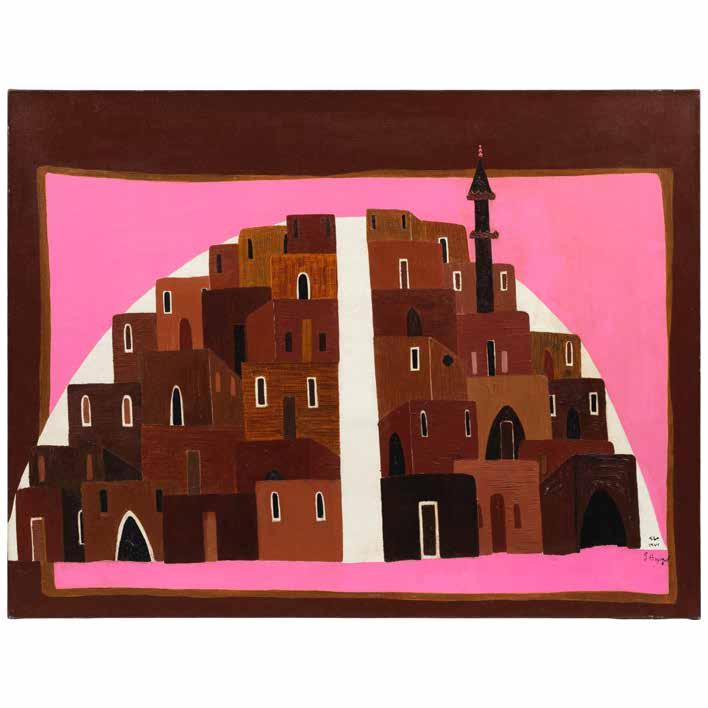
27 * AR
JUMANA EL HUSSEINI (PALESTINE, BORN 1932)
Jerusalem oil on canvas, framed signed “Jumana G. Bayazid” and dated “1972” in Arabic (lower right), further signed and dated on the verso, executed in 1972 64.5 x 85cm (25 3/8 x 33 7/16in).
£18,000 - 25,000
US$24,000 - 34,000
€21,000 - 29,000
Provenance:
Property from a private collection, Lebanon
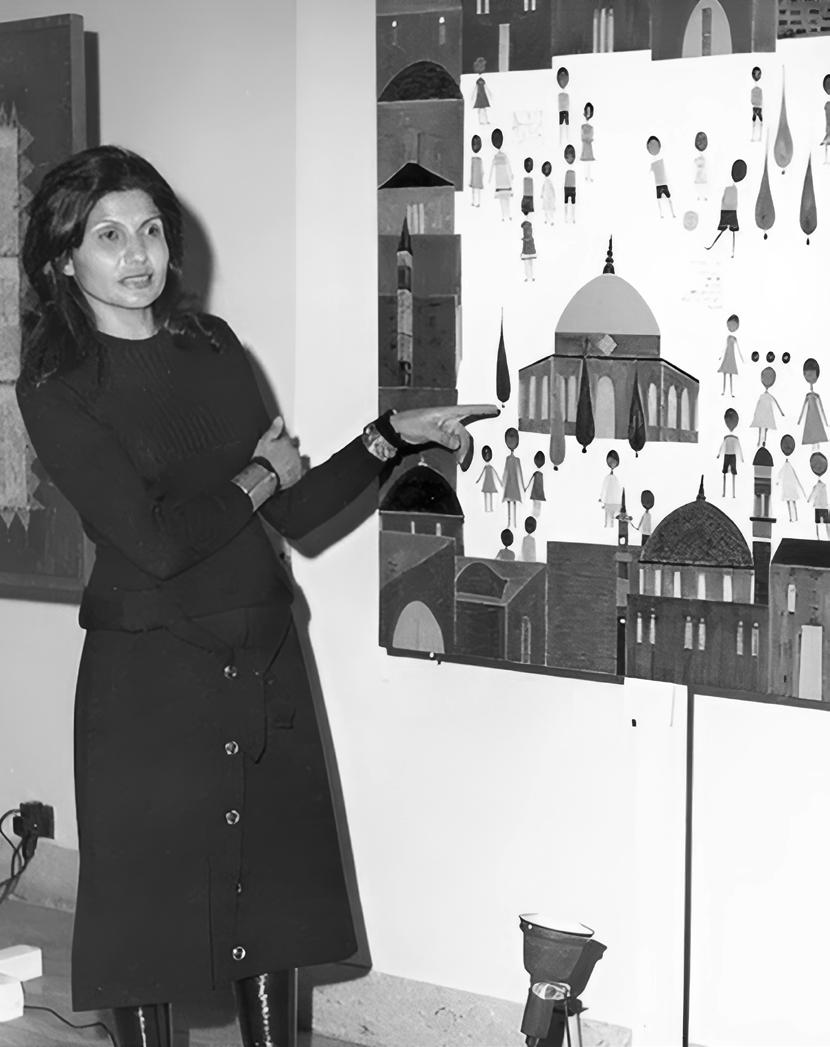
Born in Jerusalem in 1932, Jumana El Husseini belonged to a generation of Palestinian artists for whom painting became inseparable from memory, loss and the reconstruction of place. Forced to leave Palestine with her family in the late 1940s, she settled in Beirut, later studied at the American University of Beirut, and would go on to build an international career that extended to Paris and beyond.
Across painting, sculpture, ceramics and embroidery, El Husseini returned again and again to the city of her birth, developing a highly distinctive visual language in which Jerusalem was reimagined not as topography alone, but as an inner landscape of recollection, longing and symbolic form.
The present painting is a particularly striking example of that vision. Rather than offering a literal cityscape, El Husseini compresses Jerusalem into a compact architecture of stacked houses and towers, distilled into simplified geometric forms and warm earthen tones. Most arresting of all is the vast curved shape that encloses the composition, reading almost like a protective dome or sheltering vault.
It inevitably calls to mind the Dome of the Rock and the broader language of sacred architecture in Jerusalem, yet it also functions more poetically, as a gesture of containment, guardianship and reverence, as though the city itself were being held in memory and protected within an almost liturgical form. This kind of geometric, dreamlike reimagining of Jerusalem became central to El Husseini’s art.
A subtle vertical division running down the centre of the composition gives the work an additional emotional and political charge. It suggests fracture as much as structure: a city split in two, an image haunted by separation, partition and the long history of Jerusalem’s divided reality.
That line becomes more than a compositional device. It can be read as an allusion to East and West Jerusalem, or more broadly to rupture itself, with the clustered buildings on either side appearing held together and pulled apart at once. In this way, El Husseini transforms the urban image into something both architectural and elegiac, balancing solidity with vulnerability.
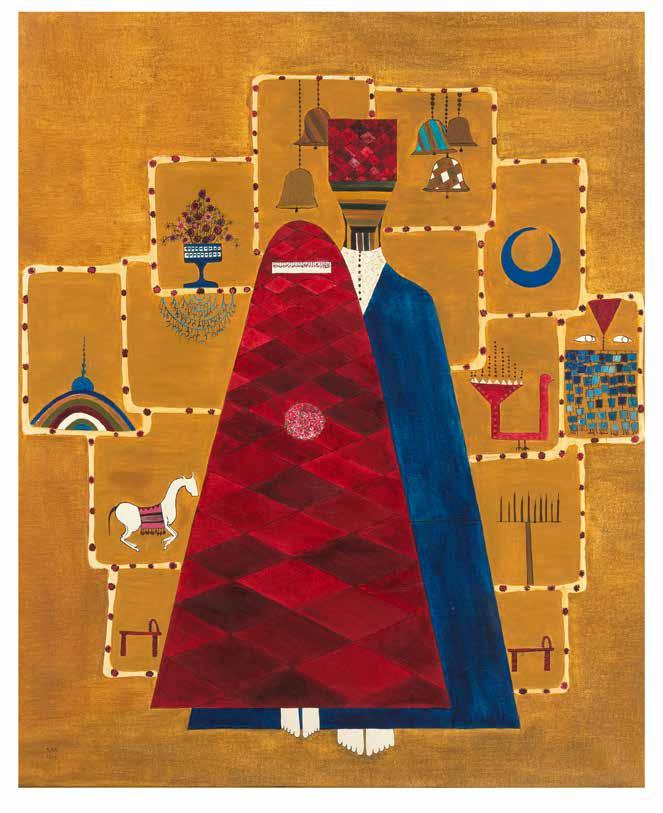
28 * AR
JUMANA EL HUSSEINI (PALESTINE, BORN 1932) Man and Women oil on canvas signed “Jumana” and dated “1967” in Arabic (lower left), executed in 1967 109 x 93cm (42 15/16 x 36 5/8in).
£20,000 - 30,000
US$27,000 - 41,000
€23,000 - 35,000
Provenance:
Property from a private collection, Canada Acquired directly from the artist by the above Thence by descent to the present owner
29 *
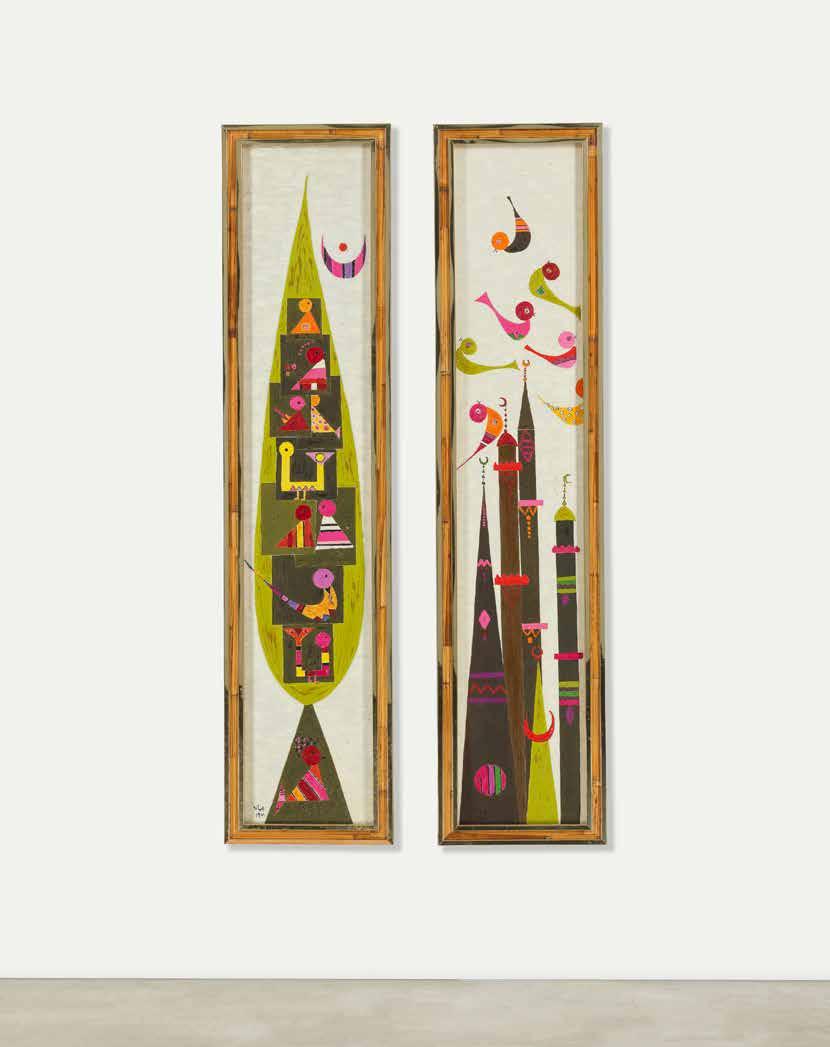
JUMANA EL HUSSEINI (PALESTINE, BORN 1932)
Untitled (Crescent Moon) oil on canvas, framed, diptych each panel signed "Jumana" and dated "1970" in Arabic (lower left), executed in 1970 each panel is 100 x 20cm (39 3/8 x 7 7/8in)
£20,000 - 30,000
US$27,000 - 41,000
€23,000 - 35,000
Provenance:
Property from a private collection, Canada Acquired directly from the artist by the above Thence by descent to the present owner
30 *
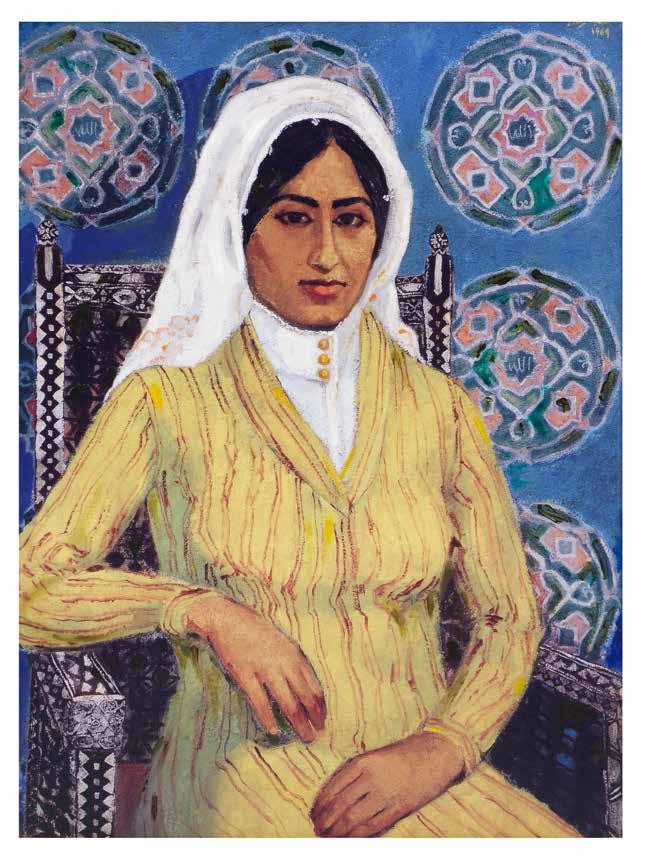
SAFEYA BINZAGR (SAUDI ARABIA, 1940-2024)
Al Ziboun
hand-coloured print on canvas, framed signed, numbered, dated and inscribed on the verso, number 1 from an edition of 60, executed in 2008 60 x 45cm (23 5/8 x 17 11/16in).
£20,000 - 30,000
US$27,000 - 41,000
€23,000 - 35,000
Provenance:
Property from the artist’s estate
Safeya Binzagr stands as a central figure in the development of Saudi modern art, widely recognised as one of its most influential pioneers. Among her most recognised subjects is the present work, Al Ziboun, widely regarded as one of the most iconic images of Saudi cultural identity and a defining work within her practice. The subject, based on her sister and depicted in traditional Hijazi dress, has been extensively reproduced and exemplifies her sustained focus on documenting heritage across multiple facets of Saudi society, including marriage customs, regional dress, domestic life, and architecture.
Binzagr's work has played a significant role in recording Saudi traditions and social life, contributing to the preservation of customs, practices, and ways of life undergoing rapid change. In parallel to her artistic practice, the artist established Darat Safeya Binzagr in Jeddah, an artist-led institution dedicated to supporting both artists and the wider public, and helping to solidify the presence of Saudi women in the Kingdom's artistic landscape. Today, her work is the subject of renewed institutional attention and increasing market demand, positioning her as a key figure in the growing international recognition of Gulf modern art.
Born in Jeddah in 1940 into a well-known merchant family, Binzagr grew up in one of the city's historic districts, where domestic life, social customs, and architecture formed an early visual reference. In 1947, she moved with her family to Cairo, and later continued her education in England. During this period, she developed her interest in drawing and gained exposure to museum collections and European art, studying the work of artists such as Paul Cézanne, Giotto di Bondone, Vincent van Gogh, and Fra Angelico, among others.
Following her return to Saudi Arabia in the early 1960s, she observed the effects of rapid modernisation on urban life and social practices. This prompted her to focus on recording aspects of everyday life that were in the process of disappearing. She subsequently returned to Cairo to pursue formal art training and later continued her studies in London at Central Saint Martins, where she developed her technical approach to drawing and printmaking.
During her time in Cairo, she worked alongside fellow Saudi artist Mounirah Mosly, and together they identified the need to introduce art more formally into Saudi cultural life and education. In 1968, Binzagr held her first exhibition in Jeddah at Dar al-Tarbiya girls' school, marking an early milestone in the development of the Saudi art scene, organising and installing the presentation independently due to the absence of formal gallery spaces.
Binzagr's practice is grounded in research and documentation. She photographed sites, objects, and individuals as reference material and conducted interviews to verify details, often cross-checking information across multiple sources. She also consulted archival materials, including historical photographs and documents from institutions such as the Royal Geographical Society. While informed by these sources, her paintings remain interpretive, shaped through composition, colour, and selection.
In 1995, she established Darat Safeya Binzagr, a combined gallery, archive, and educational space built around her collection. Officially opened in 2000, the institution offers exhibitions, workshops, and a research library, and continues to serve as a resource for students and researchers.
Her work continues to be included in major institutional exhibitions, reflecting her enduring relevance within the development of Saudi modern art. Alongside prominent private collections, her works have recently been exhibited at the Diriyah Contemporary Art Biennale, Riyadh; Hayy Jameel, Jeddah; Ithra Museum, Dhahran. Most recently, her work has also been featured in Bedayat: Beginnings of the Saudi Art Movement, presented at the National Museum of Saudi Arabia, which surveys the early development of modern art in the Kingdom. This sustained institutional focus, coupled with increasing demand among collectors, marks a significant moment for the artist and wider Saudi modernist movements.
31 *
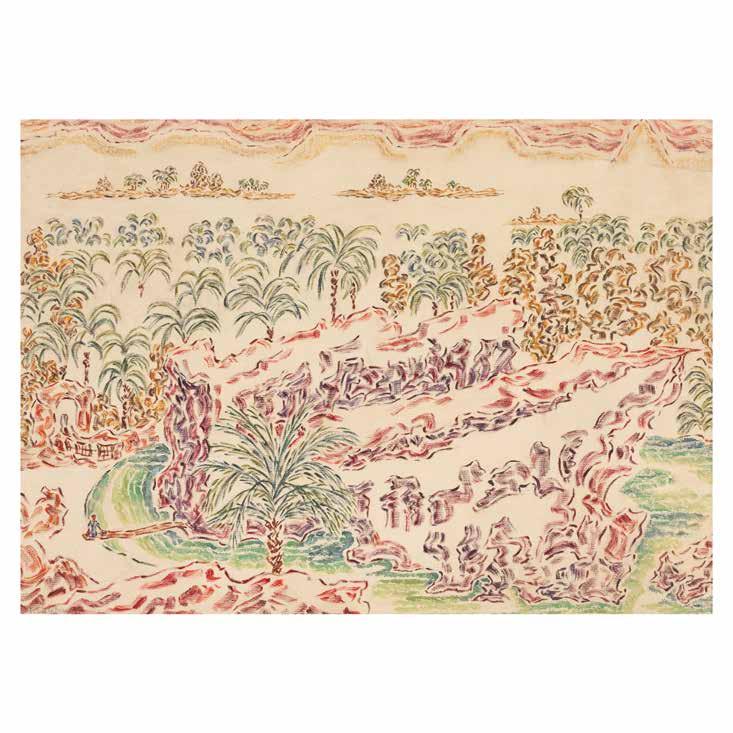
EFFLATOUN (EGYPT, 1924-1989)
The Oasis (Al Wadi) oil on canvas, framed signed “I.Efflatoun” (lower left), artist’s label and stamp on the verso, executed in 1984 48 x 67cm (18 7/8 x 26 3/8in).
£35,000 - 50,000
US$47,000 - 68,000
€40,000 - 58,000
Provenance:
Property from a private collection, Cairo
Note:
The present work is accompanied by a certificate of authenticity from Safarkhan Art Gallery
Inji Efflatoun’s The Oasis (Al Wadi) executed in 1984 exemplifies the artist’s mature style, reflecting a period in which her exploration of landscape became increasingly nuanced and formally resolved. One of the most significant figures in modern Egyptian art, Inji occupies a singular position at the intersection of artistic innovation and political engagement, her work shaped by her role as both a pioneering feminist and a committed observer of the Egyptian landscape.
Painted in 1984, The Oasis belongs to a body of work in which Inji turned increasingly toward depictions of rural Egypt, rendering scenes of agricultural life and natural abundance with a distinctive chromatic vibrancy. The present composition unfolds as a richly textured terrain. Palm trees rise rhythmically across the picture plane, their fronds rendered in delicate, almost calligraphic strokes, while the earth itself appears animated through a tapestry of reds, ochres, and greens. The oasis, traditionally a site of refuge and sustenance, becomes here both a physical and symbolic space, evoking continuity, fertility and resilience.
Inji’s brushwork in this work is notably dynamic yet controlled, combining gestural freedom with a structured compositional sensibility. The surface is alive with movement. Clusters of figures and natural forms seem to emerge and dissolve within the landscape, suggesting not a fixed topography but rather an experiential memory of place. This approach reflects her broader artistic evolution, particularly following her imprisonment in the late 1950s, after which her work shifted from overtly political imagery toward a more introspective, yet no less powerful, engagement with land and identity.
As a founding member of Egypt’s modernist movement, Inji was closely associated with the avant garde circles of mid twentieth century Cairo, including the Surrealist inflected Art et Liberté group. However, her work ultimately transcended any single stylistic categorisation. Instead, she forged a visual language that was deeply personal yet universally resonant, rooted in Egyptian experience while engaging with broader modernist concerns.
The significance of Inji’s oeuvre has been increasingly recognised in recent years, with major institutional presentations such as her inclusion in Venice Biennale exhibitions and retrospectives that have reasserted her place within the global canon of modern art. Today, her paintings are held in important public and private collections worldwide, and her legacy continues to inspire new generations of artists and scholars alike.
The Oasis (Al Wadi) encapsulates many of the qualities that define Inji’s enduring contribution: a profound sensitivity to landscape, an innovative painterly technique, and an unwavering commitment to articulating a distinctly Egyptian modernity. In its vivid palette and layered composition, the work offers not merely a depiction of place, but a meditation on belonging, survival and the quiet strength embedded within the natural world.
LOTS 32-33
TWO IMPORTANT WORKS BY ALGERIAN ARTIST BAYA, CREATED IN THE 1980S AND 1990S
“IN A PERIOD AS THE ONE WE ARE LIVING IN, WHEN THE ISLAMIC WORLD IS SCANDALOUSLY SUBJECTED AND COLONIZED, BAYA’S ENDEAVOUR IS SIGNIFICANT. FAIRY TALES ARE THE VERY HEART OF A PEOPLE, AND SHE IS A SEER, SHE « SEES», AND SHE LOOKS TO THE SKY. BUT SHE ALSO LOVES THE EARTH. FLOWER AMONG FLOWERS, SHE ASKS HER FLOWERS TO NURTURE THOSE SHE LOVES.”
- ANDRÉ BRETON, DERRIÈRE LE MIROIR, 1947
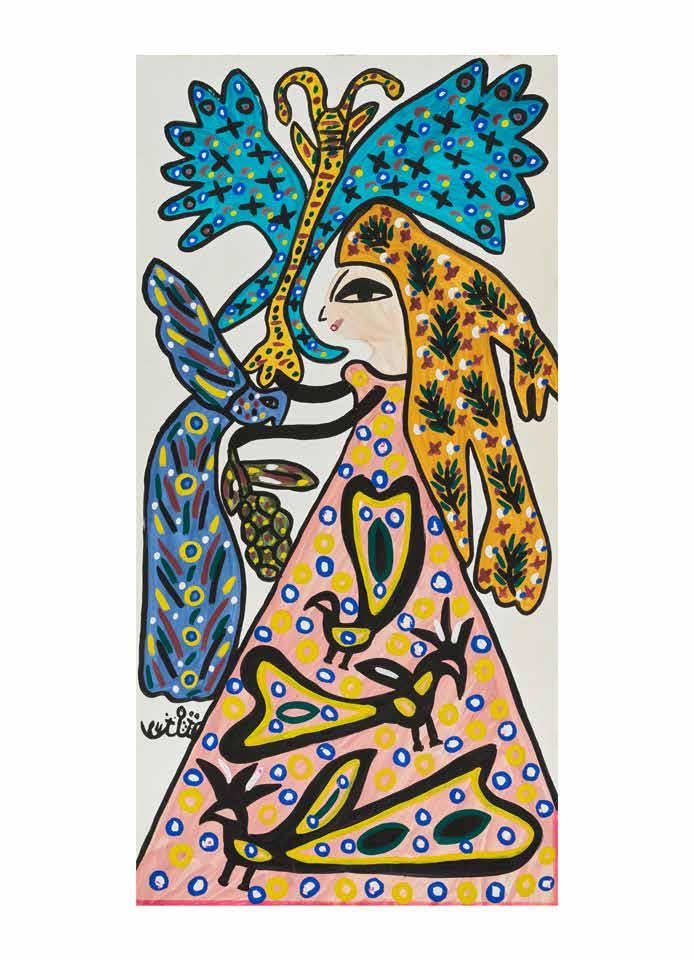
Untitled mixed media on paper, framed signed and dated "84" (lower left), further signed on the verso, executed in 1984
100 x 50cm (39 3/8 x 19 11/16in).
£20,000 - 30,000
US$27,000 - 41,000
€23,000 - 35,000
Provenance:
Property from a private collection, Algeria Acquired by the present owner directly from the artist in the 1980s
Note:
The present work is being authenticated by the Baya committee
Born Fatma Haddad in 1931 in Bordj El-Kiffan, on the outskirts of colonial Algiers, Baya was orphaned as as a young child and was raised by her grandmother for several years until she began working as a maid for Marquerite Caminat, a French artist and patroness of the arts, whose art collection included many notable European modernists. They quickly formed a maternal bond and Caminat recognised Baya’s artistic talent and offered her the means to develop her skills.
Aged sixteen, Baya became the first indigenous Algerian artist to exhibit in Paris, showing at La Galerie Maeght in 1947. This debut drew considerable attention and brought her, over time, into contact with Picasso, Georges Braque, and Jean Dubuffet amongst others.
Upon her return to Algeria, she married the musician El-Hadj Mahfoud Mahieddine in 1953, and set painting aside for the next decade to raise her six children amid Algeria’s war of Independence. She returned to work in the early 1960s and joined Aouchem, an artists group founded by Choukri Mesli and Denis Martinez, which advocated for an avant-garde rooted in popular Algerian visual culture, its signs and living traditions. After her husband’s death in 1979, the need to provide for her family drove a period of intense production. She exhibited widely across the world and continued working without interruption until her death in 1998.
Baya painted at home, working with gouache on paper, the only medium she felt gave her genuine freedom of movement. She worked without sketches, beginning each composition with a central subject, most of the time a woman, and expanding outward before ultimately outlining the elements in black. Her visual sources were Arabo-Berber and Andalusian; she was selftaught; and the world she built constituted a language of its own, one she resisted having labelled, whether as naïve art, art brut, or surrealism.
The present work belongs to a sustained period of activity following her return to painting. By the 1980s her reputation was well established and she was exhibiting internationally; at the same time her practice was quietly transforming. The palette shifted, blue asserting itself as the dominant note where her famous Indian pink had once prevailed. Certain motifs that had formerly occupied the margins of her composition now claim our attention: birds and butterflies, associated with a protective quality, appear with increasing weight and autonomy. The woman remains central to the painting, a recurring figure she explored throughout her life. Asked in a 1993 interview why, she connected it to the early loss of her mother: “I have the impression that the woman I paint is somewhat a reflection of my mother: I make her a musician, and so on.” A large peacock rests on her hand, a bird Baya cherished and frequently incorporated into her work. In Amazigh culture, the peacock is a privileged animal, often associated with protection and power.
“WHY BIRDS?, THEY ASK ME. WELL, I LIKE BIRDS. WHY BUTTERFLIES? WELL, BECAUSE I LIKE BUTTERFLIES. FOR ALL THIS, I DO NOT GIVE A THEME. I FEEL IT AND I PUT IT ONTO PAPER. I TAKE PLEASURE IN THAT, BUT I CANNOT SAY WHY MY PAINTING IS LIKE THIS OR LIKE THAT. WHEN I PAINT, I AM HAPPY, I AM IN ANOTHER WORLD, I FORGET EVERYTHING. PEOPLE TELL ME: "WHY [DO YOU PAINT] THE SAME THING?" I FIND THAT IF I CHANGE, I WILL NO LONGER BE BAYA.”
- BAYA, INTERVIEW WITH AMÉZIANE FERHANI, INSTITUT DU MONDE ARABE ET EDIFRA, 1990
33 * BAYA (ALGERIA, 1931-1998)
Untitled (Nature Morte) mixed media on paper, framed signed and dated “94” (lower centre), further signed on the verso, executed in 1994
98.5 x 73.5cm (38 3/4 x 28 15/16in).
£16,000 - 20,000
US$22,000 - 27,000
€18,000 - 23,000
Provenance:
Property from a private collection, Algeria
Gifted by the artist to Akacha Talbi, Algerian artist Acquired from the above by the present owner
Note:
The present work is being authenticated by the Baya committee
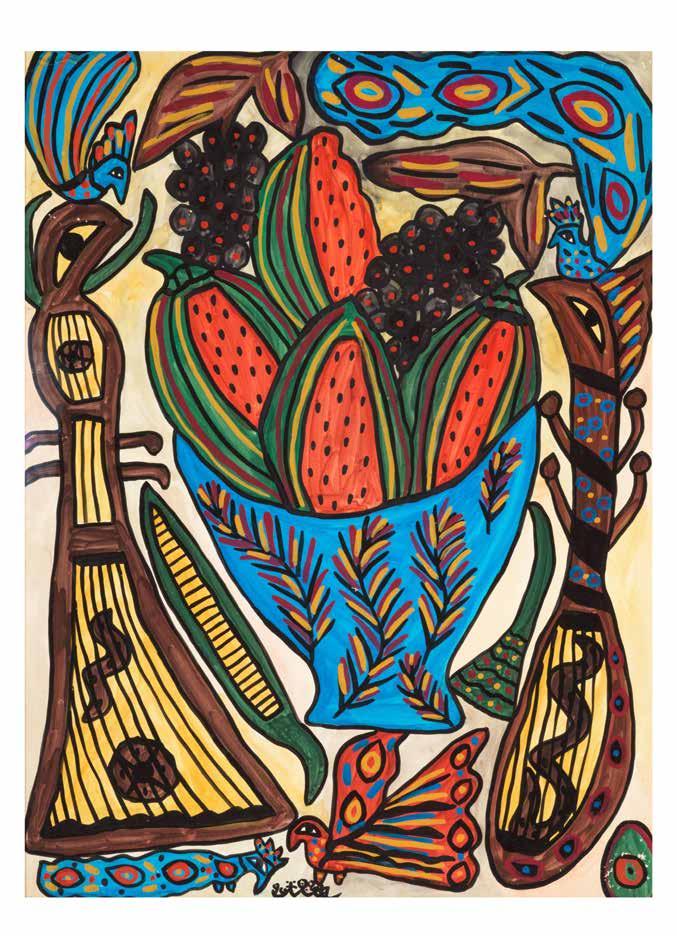
The second work, from the 1990s, turns to still life. A blue vase holds watermelons and grapes, evoking the sense of vitality typically embodied by her female figures. Two stringed instruments flank the composition, anchoring the scene and introducing a sense of harmony. Instruments had entered Baya’s work in 1961, after her marriage to Mahieddine, whose home was filled with them. “Living among all these instruments influenced me,” she said, “it fit well with my world.” The arrangement has a quality of considered abundance, each element placed with care, the whole cohering into richness of colours and life.
Notably, this painting was created in the midst of the Décennie Noire (Black Decade, 1991–2002) in Algeria, a period of civil conflict and terrorism that caused the murder of many, including intellectuals and cultural figures. Whilst multiple artists left the country to seek safety, Baya remained at home. Although rare, she continued to participate in group exhibitions and produce a large body of works, often featuring what she perceived as key symbols of protection such as birds or butterflies.
Her works are held in museums and private collections around the world, including in Algeria, France, the United States, and the UAE. Baya will be featured in a major solo exhibition at Tate Modern in 2027.
“GO DOWN, ALL OF YOU, AS ENEMIES TO ONE ANOTHER. AND ON EARTH YOU WILL HAVE A PLACE OF SETTLEMENT.....”
- SURAH AL-BAQARAH 2:36
34 *
MAHMOUD HAMMAD (SYRIA, 1923-1988)
Expulsion from Paradise oil on canvas
signed “Hammad” in English and Arabic and dated “62” (lower right), executed in 1962
110 x 89.5cm (43 5/16 x 35 1/4in).
£25,000 - 50,000
US$34,000 - 68,000
€29,000 - 58,000
Provenance:
Property from the artist’s estate, Amman
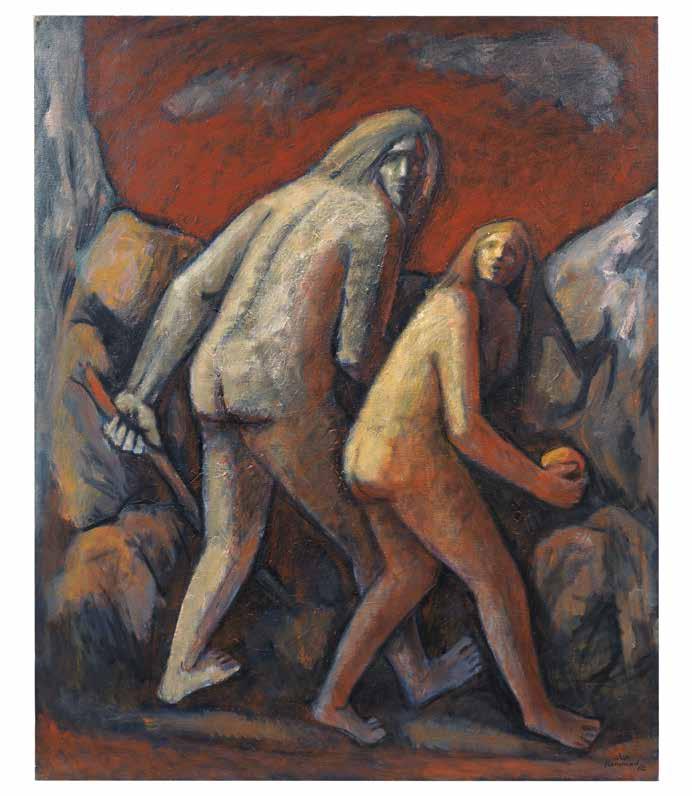
Executed in 1962, Expulsion from Paradise is a rare and powerful mature figurative painting by Mahmoud Hammad, created at a pivotal moment shortly before his transition toward calligraphic abstraction. The composition presents the monumental nude figures of Adam and Eve advancing through a fractured, compressed landscape beneath a redtoned sky. One figure turns back toward the other, introducing subtle narrative tension, while the expressive brushwork and layered textures lend the surface a sculptural intensity. The dramatic red ground and restrained palette of earthy ochres, greys, and flesh tones heighten the emotional and symbolic charge, conveying themes of exile, inevitability, loss, and human vulnerability.
Executed during Hammad’s Horan period (1957–1963), following his return from Italy and settlement in southern Syria in Dara’a, the painting reflects the artist’s development as he pursued his own artistic identity.
At this time, Hammad focused on the surrounding landscapes as well as the archeological and social aspects of Dara’a, producing works that combined expressive figuration with psychologically charged spaces. Expulsion from Paradise relates thematically to other works of the period, including Law of the Jungle (Cain and Abel) (1958), The Wounded Soldier in Maysaloon (1961), and the politically charged The First of February (1958), through which Hammad evoked the union of Egypt and Syria while alluding to broader regional concerns such as the Palestinian cause.
The work demonstrates Hammad’s fully developed figurative language, synthesizing European modernist influences with a distinctive personal and regional sensibility. Works of this scale and narrative ambition from the early 1960s are rare within Hammad’s oeuvre, positioning Expulsion from Paradise as a significant statement in mid-20th-century Arab modernism.
“IN
KAYYALI ENCOUNTERED A WORLD WHERE HISTORY, FAITH AND HUMAN PRESENCE FELT INSEPARABLE”
35 *
LOUAY KAYYALI (SYRIA, 1934-1978)
Malula oil on canvas, framed signed “Kayyali” and dated “64” (lower right), further signed, titled, dated in English and Arabic on the verso, executed in 1964 57.5 x 95.5cm (22 5/8 x 37 5/8in).
£20,000 - 30,000
US$27,000 - 41,000
€23,000 - 35,000
Provenance:
Property from a private collection, Finland Acquired directly from the artist by the above in Syria, mid 1960s
For over two millennia, the rocky hill-village of Maaloula has stood as a beacon of historical and spiritual importance, preserving the ancient Aramaic language, spoken by Jesus Christ. The village is located 56 kilometres to the northeast of Damascus and built into the rugged mountainside, at an altitude of more than 1500 metres. Its name, derived from the Aramaic “Ma’la,” meaning ‘entrance,’ belies the village’s significance, despite its modest size. Maaloula is home to three revered monasteries: St. Sergius, St. Bacchus, and St. Thecla.
Beyond its allure for Christian pilgrims, Maaloula captivates modern-day artistic pilgrims, particularly those hailing from the Faculty of Fine Arts in Damascus. Since the 1960s, these enthusiasts have embarked on field trips to study and immortalize the enigmatic landscape and architecture of this ancient locale.
As both renowned Syrian modernists Louay Kayyali and Fateh Moudarres were lecturers at the University of Damascus it would explain why the village holds such a cult status for young Syrian artists and why Maaloula frequently featured as a subject in both artists’ oeuvres. This piece is a classic example of Kayyali’s depiction of the village, and the combination of soft colours, bold lines and haunting vacant windows produces an engaging and timeless work typical of the artist’s career.
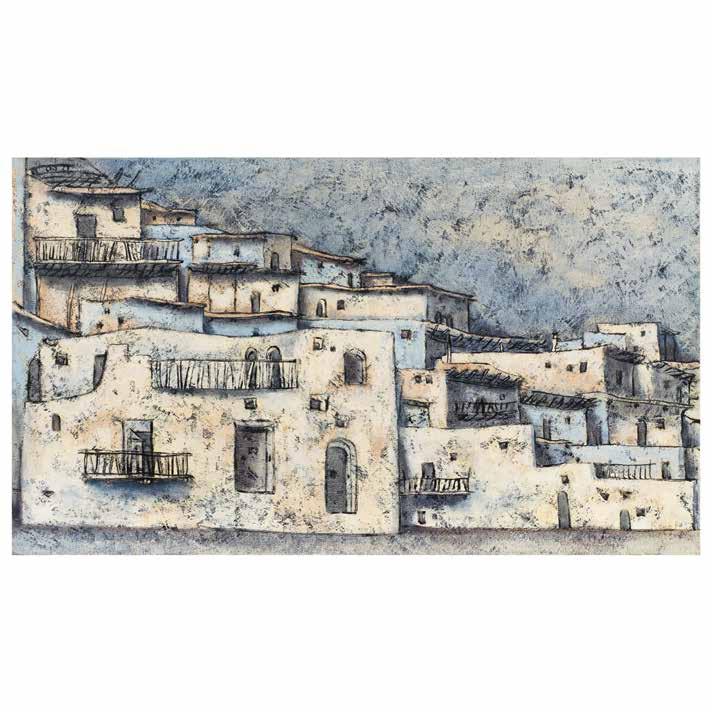
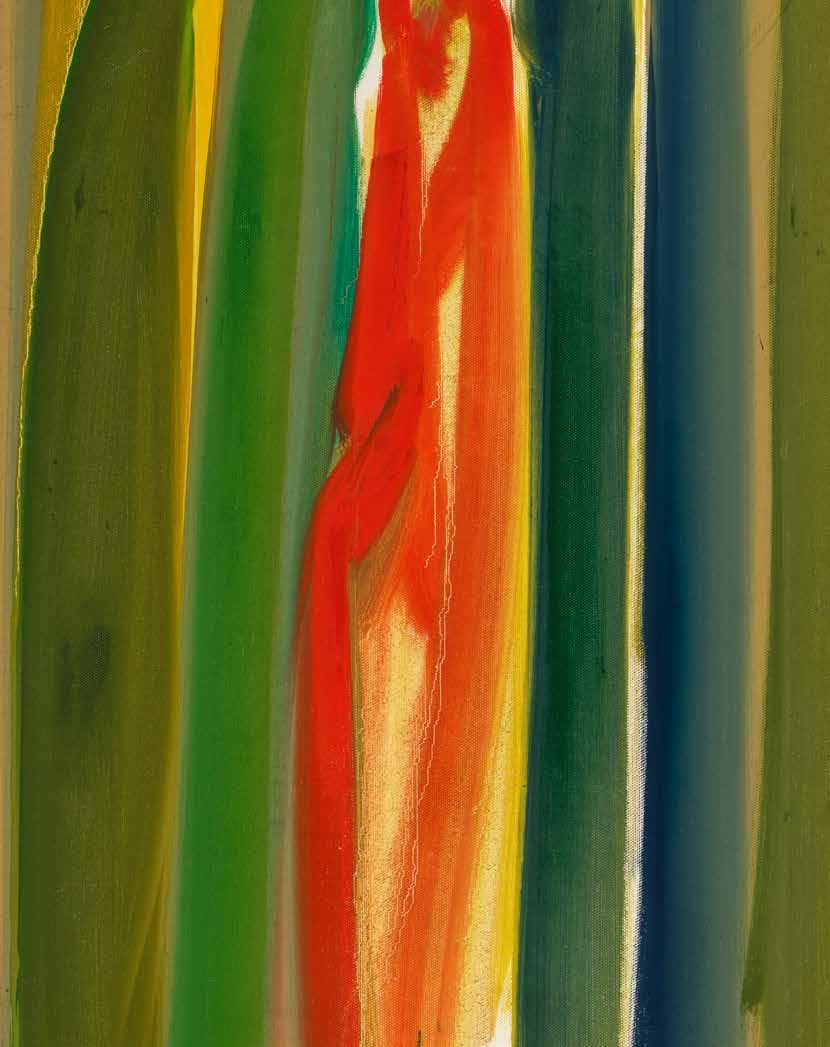
LOTS 36-39
EXHIBITED IN THE LANDMARK AMERICAN TOURING RETROSPECTIVE “CONTEMPORARY ART FROM LEBANON”, ORGANISED BY THE SMITHSONIAN INSTITUTION IN BETWEEN 1971 AND 1973


“THE PRESENT WORKS WERE SHOWN IN ONE OF THE EARLIEST AND MOST AMBITIOUS EXHIBITIONS OF LEBANESE ART EVER STAGED ABROAD. ORGANISED BY THE SMITHSONIAN INSTITUTION IN COLLABORATION WITH THE SURSOCK MUSEUM IN 1971, “CONTEMPORARY ART FROM LEBANON” BROUGHT TOGETHER MORE THAN THIRTY ARTWORKS BY SOME OF THE COUNTRY’S LEADING ARTISTS. TOURING EXTENSIVELY ACROSS THE UNITED STATES FROM CALIFORNIA TO DELAWARE, MICHIGAN, IOWA, FLORIDA AND ALABAMA, AND EVEN APPEARING AT THE STATE CAPITOL IN WASHINGTON, THE EXHIBITION STANDS AS A LANDMARK EARLY TESTAMENT TO THE THE INTERNATIONAL APPEAL AND DEEP RESONANCE OF LEBANESE MODERN ART”
From the collection of Laurence Latta, these three works speak to a formative moment in the international history of modern Lebanese art. Latta was an American engineer, entrepreneur and investor whose career ranged from military service to industry and finance.
A graduate of Stanford University, he served in the US Army Corps of Engineers during the Second World War and later spent fourteen years living and working in Cairo and Beirut during the 1960s and 1970s, before returning to the United States in 1976. That long residence in the Middle East places this collection within the wider cosmopolitan milieu of the region at a moment of intense cultural vitality.
The works were shown in Contemporary Art from Lebanon, one of the earliest and most ambitious exhibitions of Lebanese art to tour the United States. Smithsonian records describe the exhibition as comprising thirty-two paintings by eight Lebanese artists and confirm that it was lent to the Smithsonian Institution Traveling Exhibition Service from 1971 to 1973. Surviving archival records trace the tour through California, Delaware, Florida, Iowa, Michigan, Alabama and Washington, and a contemporary notice records its presentation at the State Capitol Museum from 26 April to 21 May 1972.
The group is especially compelling for including works from the most important periods of Paul Guiragossian and Nadia Saikali, two artists whose careers unfolded across borders while remaining deeply tied to the Arab world and, in different ways, to Lebanon. Guiragossian exhibited in Beirut, Paris, Milan, Frankfurt and the United States, while Saikali studied in Paris, lived and worked between Lebanon and Europe, and developed a visual language shaped by both international modernism and a distinctly Lebanese imagination.
The inclusion of Mouazzez Rawda adds a further dimension to this crosscultural story: an Iraqi-born, Lebanese sculptor, she brought to modern art in Lebanon a practice shaped by movement, reinvention and exchange, while remaining closely connected to the artistic life of Beirut. Together, these artists reflect the outward-looking, cosmopolitan character of twentieth-century Arab art, rooted in place yet constantly enriched by travel, exile and dialogue across cultures
Together they exemplify the intrepid nature of Levantine culture: outwardlooking, mobile and cosmopolitan, yet always anchored in the emotional and cultural landscapes from which they emerged.
36 * PAUL GUIRAGOSSIAN (LEBANON, 1926-1993)
Red Bride oil on canvas signed “Paul G” (lower left) and further signed “Paul. G.” (on verso), executed in 1971
92 x 65cm (36 1/4 x 25 9/16in).
£25,000 - 35,000
US$34,000 - 47,000
€29,000 - 40,000
Provenance:
Property from the collection of Laurence Latta (1936-2022) Acquired directly from the artist by the above Thence by descent to the present owner
Exhibited:
Washington, D.C., Smithsonian Institution Traveling Exhibition Service (SITES), Contemporary Art from Lebanon, 1971–73, no. 19, exhibited in: Federal Deposit Insurance Corporation, Washington, D.C., 8 May – 6 June 1971 University of Delaware, Student Center, Delaware, 26 June – 25 July 1971 Pensacola Art Center, Florida, 14 August – 12 September 1971 Flint Institute of Arts, DeWaters Art Center, Michigan, 2 – 31 October 1971 Cornell College, Comms Union Board, Iowa, 20 November – 19 December 1971 State Capitol Museum, Washington, 22 April – 21 May 1972 Percy H. Whiting Art Center, Alabama, 4 November – 3 December 1972 Sunset Community and Cultural Center, California, 31 March – 29 April 1973.
Published: Smithsonian Institution Archives, Record Unit 290, Pope, Annemarie Henle, Contemporary Art from Lebanon, 1971, Washington
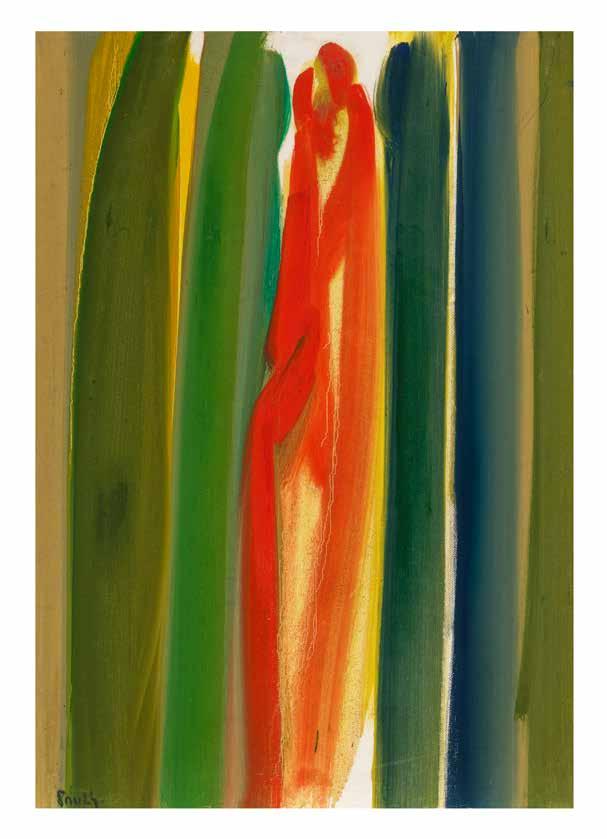
37 * PAUL GUIRAGOSSIAN (LEBANON, 1926-1993)
Whispering oil on canvas
signed “Paul G.” (lower left) and further signed “Paul Guiragossian” on the verso, executed in 1971 73 x 60cm (28 3/4 x 23 5/8in).
£20,000 - 30,000
US$27,000 - 41,000
€23,000 - 35,000
Provenance:
Property from the collection of Laurence Latta (1936-2022)
Thence by descent to the present owner
Exhibited:
Washington, D.C., Smithsonian Institution Traveling Exhibition Service (SITES), Contemporary Art from Lebanon, 1971–73, no. 19, exhibited in: Federal Deposit Insurance Corporation, Washington, D.C., 8 May – 6 June 1971
University of Delaware, Student Center, Delaware, 26 June – 25 July 1971
Pensacola Art Center, Florida, 14 August – 12 September 1971
Flint Institute of Arts, DeWaters Art Center, Michigan, 2 – 31 October 1971
Cornell College, Comms Union Board, Iowa, 20 November – 19 December 1971 State Capitol Museum, Washington, 22 April – 21 May 1972
Percy H. Whiting Art Center, Alabama, 4 November – 3 December 1972
Sunset Community and Cultural Center, California, 31 March – 29 April 1973.
Published:
Smithsonian Institution Archives, Record Unit 290, Pope, Annemarie Henle, Contemporary Art from Lebanon, 1971, Washington
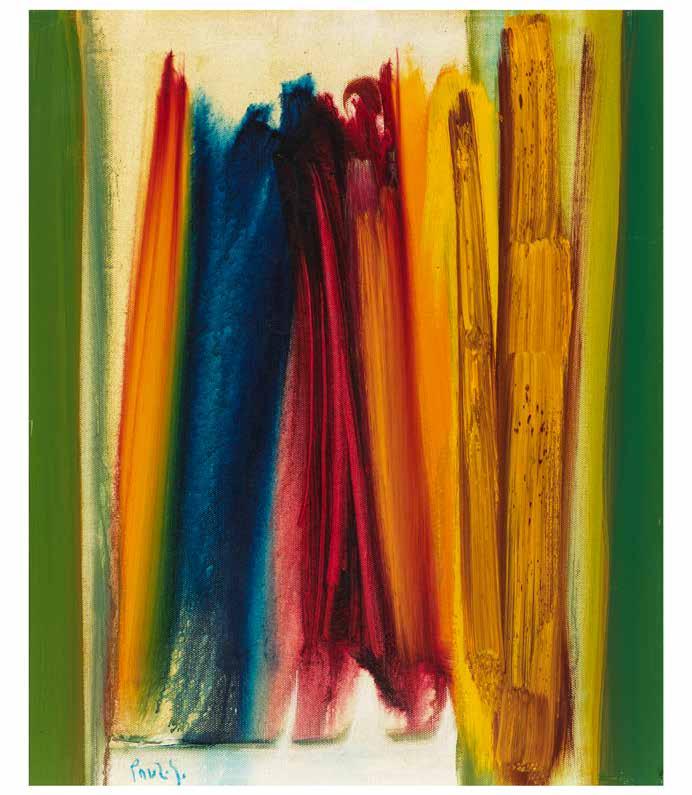
“HER ART IS NOT MERELY FORMAL EXPERIMENTATION; IT’S IMBUED WITH A SENSE OF MYSTICISM AND AN EXPLORATION OF THE ESOTERIC. INFLUENCED BY ZEN BUDDHISM – A PASSION SHE DISCOVERED
NATURAL WORLD AND ITS UNDERLYING ENERGIES.”
- CONTACT GALLERY,
1972
38 *
NADIA SAIKALI (LEBANON, BORN 1936)
Composition en Verticale oil on canvas
signed “N. Saikali” (lower right) and inscribed “Composition en verticale” (on the stretcher), executed circa 1970 70 x 60cm (27 1/2 x 23 5/8in).
£12,000 - 16,000
US$16,000 - 22,000
€14,000 - 18,000
Provenance:
Property from the collection of Laurence Latta (1936-2022)
Thence by descent to the present owner
Exhibited:
Washington, D.C., Smithsonian Institution Traveling Exhibition Service (SITES), Contemporary Art from Lebanon, 1971–73, no. 19, exhibited in: Federal Deposit Insurance Corporation, Washington, D.C., 8 May – 6 June 1971
University of Delaware, Student Center, Delaware, 26 June – 25 July 1971
Pensacola Art Center, Florida, 14 August – 12 September 1971
Flint Institute of Arts, DeWaters Art Center, Michigan, 2 – 31 October 1971
Cornell College, Comms Union Board, Iowa, 20 November – 19 December 1971
State Capitol Museum, Washington, 22 April – 21 May 1972
Percy H. Whiting Art Center, Alabama, 4 November – 3 December 1972
Sunset Community and Cultural Center, California, 31 March – 29 April 1973.
Published:
Smithsonian Institution Archives, Record Unit 290, Pope, Annemarie Henle, “Contemporary Art from Lebanon, 1971, Washington
Painted in 1970, this work belongs to a pivotal moment in Nadia Saikali’s career, when her abstraction became more pared back, meditative and spiritually charged. Born in Beirut in 1936, Saikali studied at the Académie Libanaise des Beaux-Arts before continuing her training in Paris, later teaching in Beirut and exhibiting internationally, including at the São Paulo Biennale, while developing one of the most original abstract languages of her generation. By the late 1960s and early 1970s, she had turned toward a more minimal visual vocabulary shaped in part by a deep engagement with Zen Buddhism.
That spiritual dimension is felt here in the painting’s extraordinary economy. The large central circle immediately recalls the Zen enso: a form associated not with rigid geometry but with concentration, gesture, breath and inner clarity.
Saikali does not present it as a formal symbol, but rather as a suspended presence within the composition, something both graphic and contemplative. The two dark vertical strokes that interrupt the upper register carry the force of calligraphic marks, while the broad horizontal bands lend the whole surface a sense of stillness and balance. Her embrace of minimal means in this period closely aligns with her interest in Zen philosophy and in a reduced, essential form of abstraction.
Yet for all its spiritual reserve, the painting remains deeply Lebanese in feeling. The luminous blue field evokes the Mediterranean, while the soft gradations of grey, sand and black suggest shoreline, sky and horizon, as though seascape and memory had been distilled into abstraction. This fusion of inward contemplation with the light, atmosphere and openness of Beirut is one of Saikali’s great achievements. The result is a work that feels at once international in its language and unmistakably rooted in Lebanon.
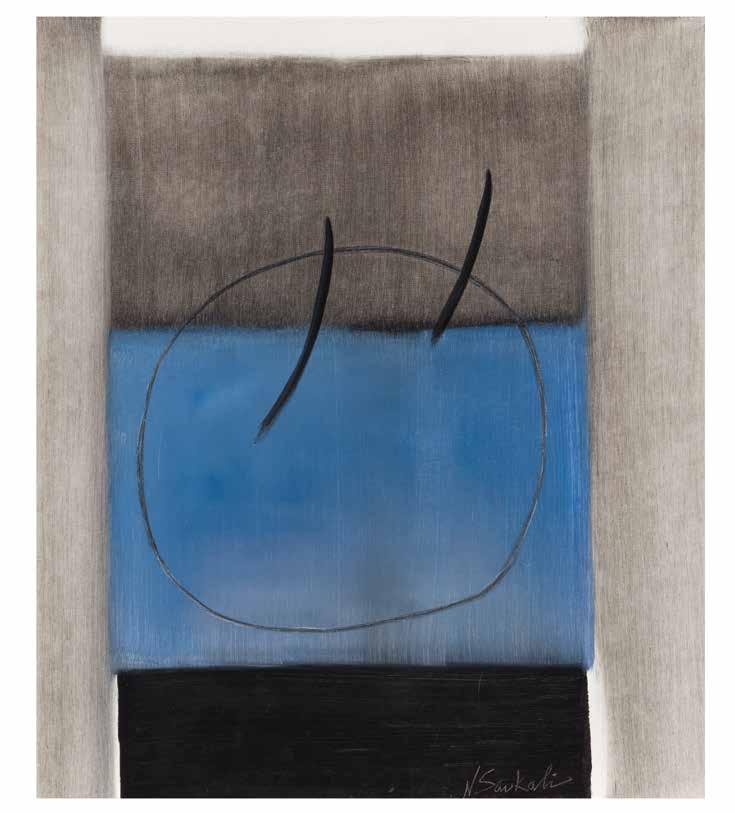
39 *
“WHAT DISTINGUISHES RAWDA’S MATURE SCULPTURE IS PRECISELY WHAT FORMS DEMONSTRATES SO WELL: THE
GEOMETRIES TOWARDS SMOOTH, ORGANIC SURFACES AND SIMPLE, PRONOUNCED CONTOURS.”
MOUAZZEZ RAWDA (LEBANON, 1906-1986) Forms brown onyx
executed circa 1960s
21 x 17.5cm (8 1/4 x 6 7/8in).
£5,000 - 7,000
US$6,800 - 9,500
€5,800 - 8,100
Provenance:
Property from the collection of Laurence Latta (1936-2022)
Acquired directly from the artist by the above Thence by descent to the present owner
Exhibited:
Washington, D.C., Smithsonian Institution Traveling Exhibition Service (SITES), Contemporary Art from Lebanon, 1971–73, no. 19, exhibited in:
Federal Deposit Insurance Corporation, Washington, D.C., 8 May – 6 June 1971
University of Delaware, Student Center, Delaware, 26 June – 25 July 1971
Pensacola Art Center, Florida, 14 August – 12 September 1971
Flint Institute of Arts, DeWaters Art Center, Michigan, 2 – 31 October 1971
Cornell College, Comms Union Board, Iowa, 20 November – 19 December 1971
State Capitol Museum, Washington, 22 April – 21 May 1972
Percy H. Whiting Art Center, Alabama, 4 November – 3 December 1972
Sunset Community and Cultural Center, California, 31 March – 29 April 1973.
Published:
Smithsonian Institution Archives, Record Unit 290, Pope, Annemarie Henle, Contemporary Art from Lebanon, 1971, Washington
Mouazzez Rawda’s Forms is a striking distillation of the language that made her one of the pioneers of modern sculpture in Lebanon. Reducing mass to a sequence of rounded, interlocking volumes, the work balances weight and openness with remarkable assurance, its central aperture acting not merely as a void but as an active compositional force. In this compression of solid and empty space, Rawda achieves a sculpture that feels at once monumental and intimate, poised between abstraction and figuration.
Born in Baghdad in 1906 and later based in Lebanon, Rawda came to art comparatively late, studying first at ALBA and then for many years at the American University of Beirut, where she worked under Arthur Frick and began to focus seriously on sculpture. Her career is especially remarkable for the force of will behind it: she entered and excelled in a field then dominated by men, exhibiting at the Sursock Museum’s Salon d’Automne and winning public recognition for her work in stone.
What distinguishes Rawda’s mature sculpture is precisely what Forms demonstrates so well: the move away from sharper geometries towards smooth, organic surfaces and simple, pronounced contours. Her sculpture often draws strength from this tension between firmness and sensuality, between carved material and flowing rhythm. Here, those qualities are brought into especially elegant alignment, giving the work a quiet authority and a deeply modern sense of sculptural harmony
40 *
SOHRAB SEPEHRI (IRAN, 1928-1980)
Untitled (from the Abstract Tree series) oil on canvas, framed executed circa 1960s
119.5 x 78.5cm (47 1/16 x 30 7/8in).
£50,000 - 100,000
US$68,000 - 140,000
€58,000 - 120,000
Provenance:
Property from a private collection, Switzerland
Acquired directly from the artist by the above, Iran, early 1960s
Thence by descent to the present owner
This painting by Sohrab Sepehri was acquired directly from the artist by Michel Othenin-Girard in Tehran during the reign of Mohammad Reza Shah Pahlavi, a period marked by significant cultural patronage and international artistic exchange.
A Swiss master carpenter by profession, Michel Othenin-Girard was active in Iran in the 1960s, where he worked closely with the royal household. He was responsible for commissioning and producing bespoke furniture from the renowned Swiss design firm Knoll. Under the direction of his employer, a relative by marriage of the Shah, Othenin-Girard contributed to the furnishing and decoration of several royal residences, including a palace belonging to Farah Pahlavi on the shores of the Caspian Sea.
It was within this cultural environment that Othenin-Girard first encountered the work of Sepehri. Tasked with selecting artworks for display, he established a direct relationship with the artist and acquired the present painting. The work reflects both his personal discernment and his proximity to one of Iran’s most important modern painters.
In 1962, Michel invited his brother, Ivan Othenin-Girard (1932 to 2012), a Swiss artist, to Tehran. Ivan went on to play a role in the development of the Faculty of Fine Arts in Tehran and remained in Iran for approximately twenty years.
Michel Othenin-Girard returned to Switzerland in 1965, bringing this painting with him. It remained in the family thereafter, kept in the home he shared with his wife, Marie-Claire Oppel, in Neuchâtel. The couple had no children and preserved the work throughout their lives. Following their passing, the painting passed by inheritance to their niece and nephews, in whose possession it has remained until the present day.
Painted during the pivotal decade of the 1960s, the present work stands as a compelling example of Sohrab Sepehri’s mature exploration of form, nature and abstraction. While often associated with the contemporaneous Saqqakhaneh movement, pioneered by Iranian artists such as Parviz Tanavoli, Hossein Zenderoudi and Faramarz Pilaram, Sepehri consciously diverged from its overt engagement with folkloric and symbolic motifs, instead pursuing a deeply personal and introspective visual language.
This composition encapsulates the artist’s enduring preoccupation with nature, distilled into an almost meditative abstraction. Vertical, calligraphic brushstrokes evoke the presence of trees while resisting literal depiction. Suspended within a muted, atmospheric ground, these forms emerge and dissolve simultaneously, embodying a tension between material presence and ephemeral absence. The restrained palette, dominated by soft greys, earthen hues and passages of white, enhances the work’s contemplative stillness and invites a quiet, almost spiritual engagement.
Sepehri’s vision was profoundly shaped by his attachment to his birthplace, Kashan, an oasis city where vegetation interrupts the surrounding desert landscape. It is here that the genesis of his arboreal imagery can be traced. In the present work, the tree is not merely a subject but a symbol of resilience, solitude and inner equilibrium. Reduced to essential gestures, it becomes a vehicle through which Sepehri articulates his philosophical reflections on existence and harmony.
Equally significant is the artist’s engagement with East Asian aesthetics, particularly following his travels to Japan in the 1960s. The influence of Zen philosophy is palpable. The economy of means, the emphasis on gesture and the acceptance of emptiness as an active compositional force all resonate within the canvas. The brushwork, at once deliberate and spontaneous, recalls both calligraphy and the fluid immediacy of ink painting, while the spatial flattening suggests an affinity with traditional scroll compositions. Despite these international influences, Sepehri’s work remains deeply rooted in an Iranian sensibility. His sensitivity to tone and surface, and his poetic evocation of landscape, echo the traditions of Persian painting and literature. The result is a sophisticated synthesis, an artistic language that bridges East and West while remaining unmistakably his own.
The present painting exemplifies the delicate equilibrium that defines Sepehri’s oeuvre, a dialogue between abstraction and representation, restraint and expression. In this balance lies the quiet power of his work. It is not an image that declares itself immediately but one that unfolds gradually, revealing layers of meaning through sustained contemplation. In its simplicity and depth, it stands as a poignant testament to Sepehri’s enduring quest for purity, both in art and in life.
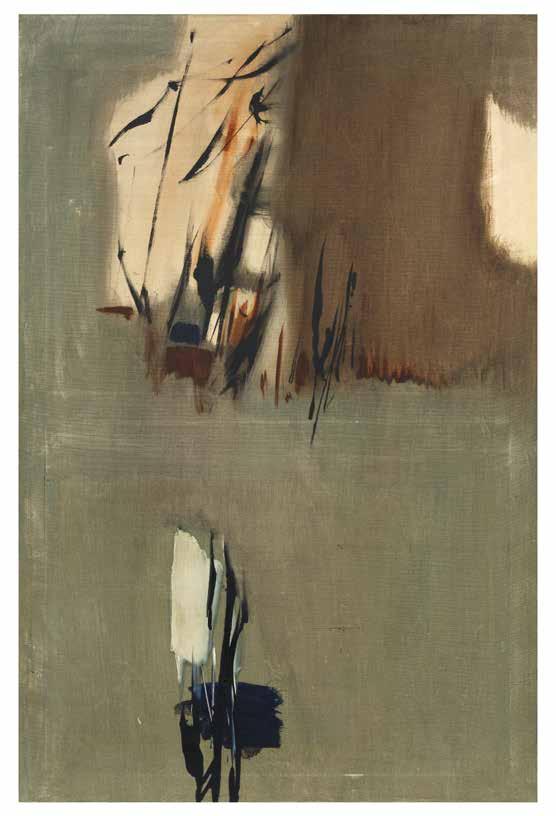
Portrait of Safaa Nabaa oil on canvas, framed signed "Marwan" and dated "96" (upper left), further signed, dated, inscribed and dedicated on the verso, executed in 1996 60 x 75cm (23 5/8 x 29 1/2in).
£50,000 - 70,000
US$68,000 - 95,000
€58,000 - 81,000
Provenance:
Property from a private distinguished collection, Dubai
Painted in 1996, Marwan’s portrait of Safaa Nabaa is an intimate and quietly significant work, linking two central strands of Syrian modernism. Safaa was the daughter of Nazir Nabaa, one of the leading painters of the Damascus school, and Shalabiya Ibrahim, the Egyptian artist; she would herself become an illustrator. Marwan’s choice of sitter therefore carries a particular resonance: this is not an anonymous head, but the face of someone raised within a household of artists, painted by one of her father’s great contemporaries.
The portrait belongs to Marwan’s celebrated exploration of the head as an existential landscape. From the 1970s onwards, the head became his principal subject, not as conventional likeness but as a charged field of feeling, memory and interiority. His faces were often described as “face landscapes”, works in which identity seems to emerge, dissolve and reform through paint. Here, Safaa’s features are built from restless passages of ochre, brown, red, cream and green, the surface alive with movement. The sitter is recognisable, but never fixed; she appears through the act of painting itself.
The work is especially compelling for the dialogue it opens with Nazir Nabaa’s own artistic world. Nabaa’s practice was rooted in research, memory, Arab visual culture and, as he put it, the search for “the soul”. Marwan approaches that same territory through a more psychological and expressionist language. In this portrait, the daughter of one Syrian master becomes the subject of another, creating a work that is at once personal, painterly and historically resonant.
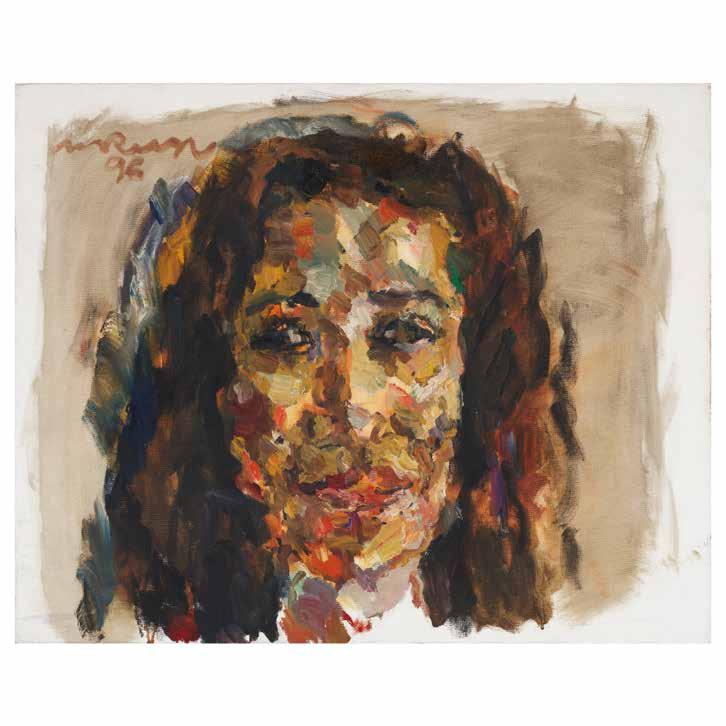


42 AR LAILA SHAWA (PALESTINE, 1940-2022)
Night and the City (from the Sarab Series) acrylic on canvas, framed signed "Shawa" and dated "08" (lower left), further signed and dated on the verso, executed in 2008 99 x 199cm (39 x 78 3/8in).
£30,000 - 50,000
US$41,000 - 68,000
€35,000 - 58,000
Provenance:
Property from a private collection, London
Laila Shawa is recognised as a leading figure in contemporary Middle Eastern art, whose work draws on a wide range of cultural and political references shaped by her life between Gaza, Beirut and London. Trained in Cairo and Rome and later working closely with communities in Gaza, Shawa developed a practice that combines technical precision with a strong engagement with questions of identity and representation across the region.
Her 2008 Sarab series, from which Night and the City is drawn, marks a return to painting and a renewed focus on abstraction. The title “Sarab,” meaning mirage in Arabic, reflects her interest in the idea of illusion, particularly in relation to rapidly developing urban centres in the Gulf. In this series, Shawa uses the formal structure of Islamic geometric patterning as a starting point, a visual language long associated with order, balance and cultural continuity. By subtly disrupting these patterns, she introduces a sense of instability into otherwise structured compositions.
In Night and the City (Sarab Series), the composition is defined by layered geometric forms and a vivid palette, creating a sense of depth and movement across the surface. The reference to the city, and in particular to Dubai, situates the work within a contemporary context, where rapid urban expansion raises questions around cultural identity and continuity. The tension between order and disruption is central to the composition, as precise patterning gives way to irregularity.
Shawa’s broader practice often reflects her exposure to multiple cultural perspectives, informed by her upbringing in the Middle East and her international career. This is evident in the Sarab series, where traditional visual elements are reworked within a contemporary framework. Rather than presenting geometry as fixed or purely decorative, she uses it as a flexible structure through which to explore change and transformation.
Night and the City exemplifies this approach, balancing formal clarity with subtle variation. The work highlights Shawa’s continued engagement with pattern, surface and meaning, while situating her practice within ongoing conversations around modernity and cultural identity in the Middle East.
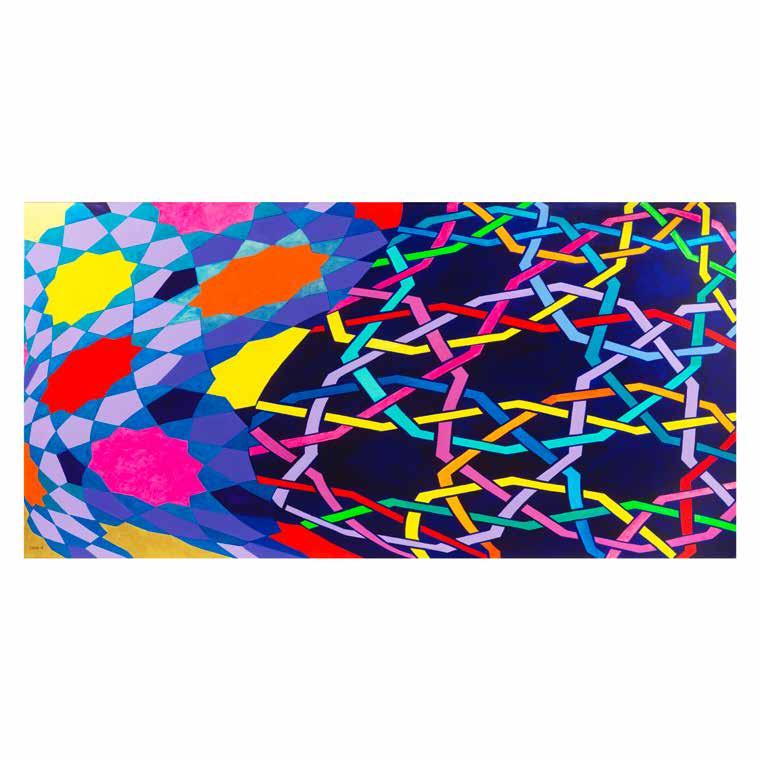
Mohammed Sami’s The Sinker is a haunting, multilayered meditation on trauma, displacement and the enduring psychological weight of conflict. Having lived through the Iraq War before seeking asylum in Europe, Sami repeatedly returns to what might be described as “triggering” objects, ordinary domestic forms that become charged with the residue of violent memory.
At the centre of the composition is a figure that clearly references Rodin’s The Thinker, though it is decisively transformed. Where Rodin’s sculpture embodies intellectual struggle and introspection, Sami’s figure appears eroded, almost scorched, stripped of individuality and reduced to something spectral, as though fossilised by experience.
Perched precariously on a richly patterned red surface, evoking both ornate textiles and the suggestion of luggage, the figure appears not elevated in thought but instead in suspension before collapse. The title, The Sinker, reframes contemplation as descent. This is not a mind in reflection, but one being drawn downward under the cumulative weight of memory and loss.
Beneath and behind the figure, a dense arrangement of mismatched, brightly coloured suitcases becomes one of the work’s most resonant motifs. These objects speak to the condition of displacement, evoking lives compressed into portable fragments. Yet they function not merely as symbols of travel, but as ballast, materialising the emotional and historical burden that anchors the figure in place while simultaneously pulling him under.
The upper register of the painting is dominated by dark, billowing smoke that presses heavily into the composition. Rather than depicting a specific event, Sami evokes the afterlife of violence, memory as a continuing combustion. A red atmospheric haze mediates between fire and sky, suggestive of blood, heat and the disorienting “fog” through which conflict is both witnessed and recalled.
In contrast, the lower half of the canvas opens into a stark, almost unnaturally calm blue expanse. This space suggests both water and void, a threshold of migration that is at once physical and existential. The figure’s reflection, fractured and unstable within this surface, implies that the process of sinking is already underway, suspended between the scorched past above and an uncertain, depthless future below.
A small white bird appears near the figure, delicate and seemingly incongruous within the dense psychological weight of the scene. Whether read as a fragile embodiment of hope, a displaced soul, or a silent witness, its proximity to the obscured gaze of the figure lends it a quiet poignancy, suggesting a desire for escape or transcendence that remains just out of reach.
Sami’s painterly language is rooted in a palimpsestic layering of image and memory, in which the past continuously bleeds into the present. Rather than depicting conflict directly, he constructs a network of symbolic surrogates, suitcases, smoke, water and a solitary figure, to articulate the condition of exile as an ongoing psychological state.
The result is a work of considerable emotional and formal power. The Sinker does not rely on spectacle or literal representation. Instead, it evokes the quiet, persistent gravity of trauma, offering a profound reflection on what it means to be shaped, and continually reshaped, by the act of leaving one’s homeland behind.
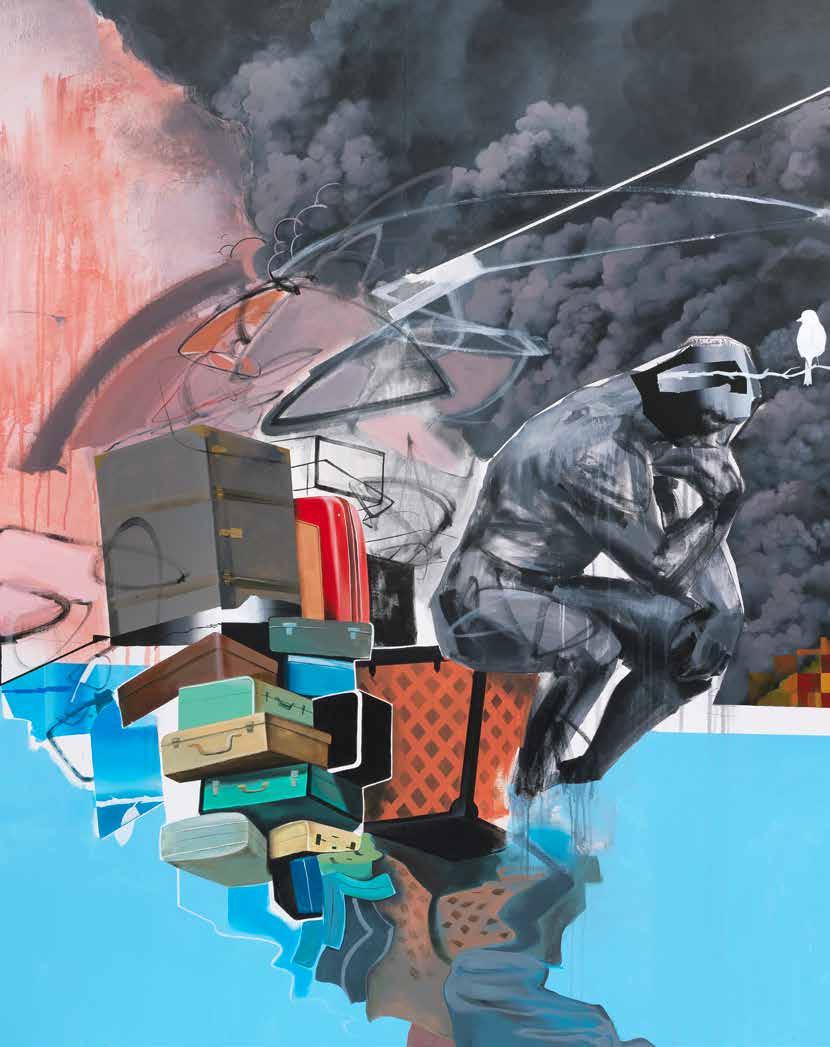
43 * AR
MOHAMMED SAMI (IRAQ, BORN 1984)
The Sinker acrylic on canvas signed “Mohammed Sami” and dated “15” (left centre), executed in 2015 198.5 x 186cm (78 1/8 x 73 1/4in).
£100,000 - 150,000
US$140,000 - 200,000
€120,000 - 170,000
Provenance:
Property from a private collection, Gibraltar Acquired directly from the artist by the above
Published:
The Baffler magazine front cover, issue number 28, July 2015
Note:
This painting is accompanied by a certificate of authenticity issued by the Artist

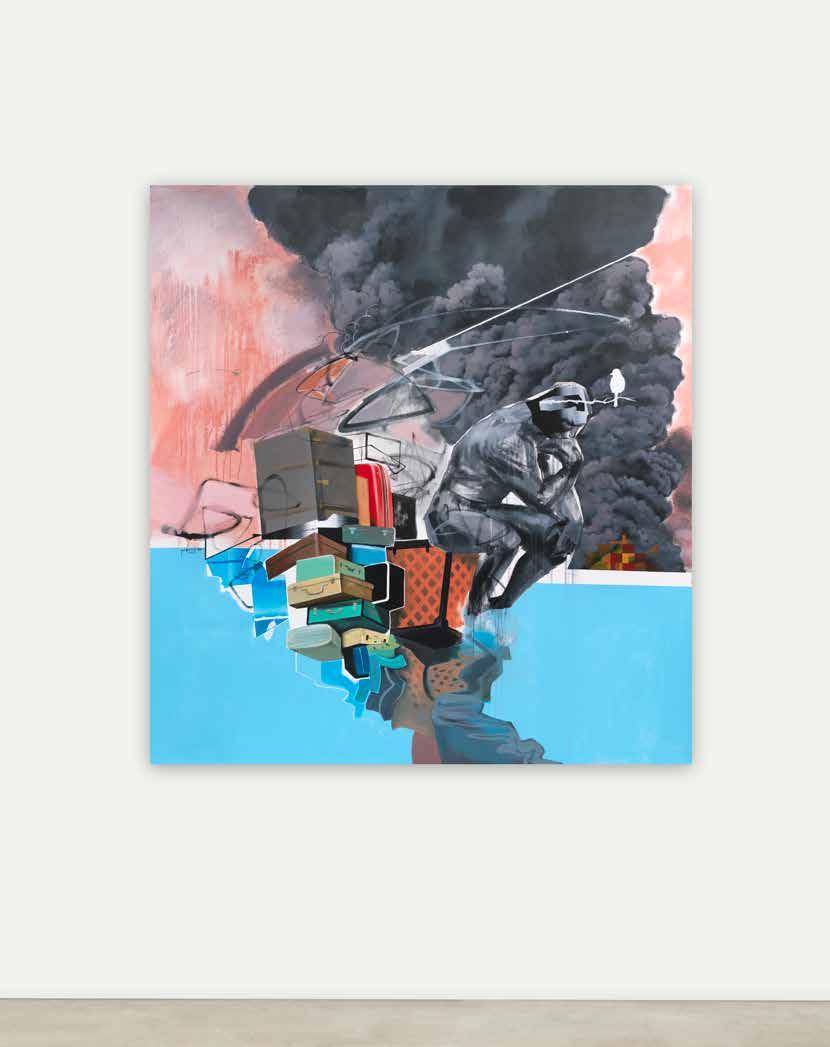
44 * AR
ADAM HENEIN (EGYPT, 1929-2020)
The Reader bronze signed “A.HENEIN” and inscribed “IV.IIX” on the base, number 4 of an edition of 8, executed circa late 1960s 37.5 x 27cm (14 3/4 x 10 5/8in).
£40,000 - 60,000
US$54,000 - 81,000
€46,000 - 69,000
Provenance:
Property from a distinguished private collection, Egypt
Adam Henein's sculpture The Reader from the 1960s stands as a profound testament to the fusion of historical reverence and modern abstraction. This sculpture draws a silent but unmistakable parallel to the ancient Egyptian masterpiece The Sated Scribe, housed in the Louvre, while also echoing the introspective power of Rodin's The Thinker. With its simplified forms and smooth, rounded surfaces, The Reader carries the dignified essence of traditional Egyptian sculpture, known for its representation of composed authority and eternal stillness.
Henein, an Egyptian sculptor with a deep connection to his cultural heritage, was a master in interpreting his country's ancient artistic language and transforming it into modern expression. The Reader, with its seated form exuding a sense of contemplation, evokes the age-old tradition of learning and wisdom that was central to ancient Egyptian culture. The sculpture's stylized features – the pronounced head, the indicative gesture of the hand, and the cubic simplicity of its base – all resonate with the timelessness of Egyptian art. Yet, the smoothed abstraction and the robust, flowing forms also gesture towards European sculptural influences, creating a piece that transcends geographical boundaries.
There's an undeniable aura of pride and authority emanating from The Reader. It captures a moment of profound engagement, be it with the self or the world at large. The positioning of the figure, upright and poised, suggests a reader not only absorbed in his material but also ready to impart knowledge, a duality that gives the sculpture its dynamic tension. The posture could be seen as introspective, a figure lost in the pages of a text, or as an orator, delivering words of significance to an unseen audience. This ambiguous interpretation allows viewers to project their narrative onto the sculpture, making it both personal and universal.
The Reader stands as a dialogue between the internal and the external – a celebration of the act of reading as both a solitary and a shared experience. Henein's work invites contemplation on the power of literacy, knowledge, and the timeless tradition of storytelling. In this single form, the sculptor encapsulates the essence of transmission from the ancient to the contemporary, the private to the public, and the individual to the collective, bridging worlds with the silent power of sculpture.
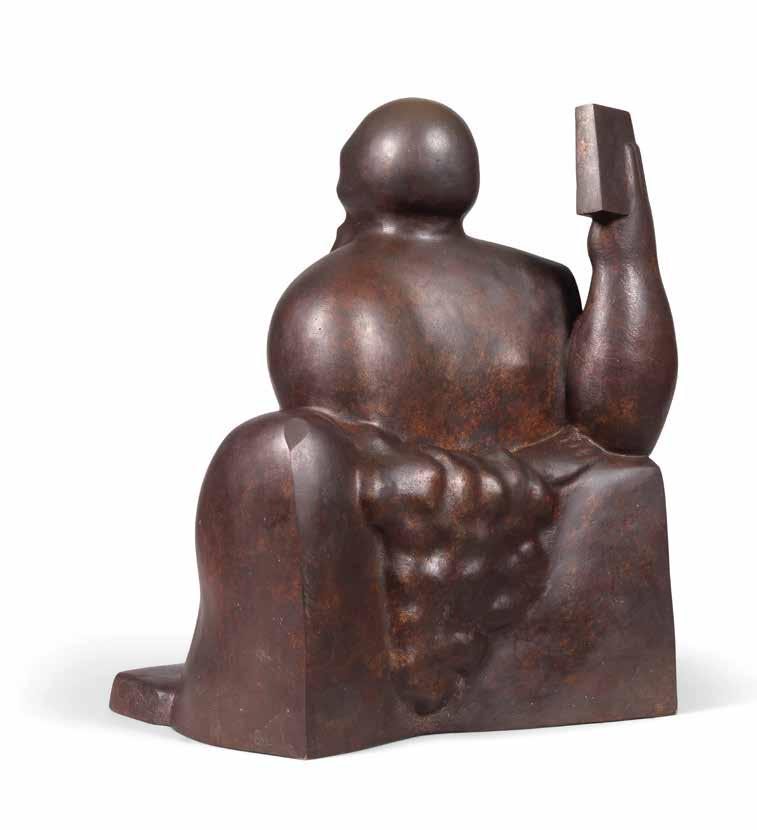
45 *
NAIM ISMAIL (SYRIA, 1930-1979)
Motherhood oil on canvas, framed signed “Naim” and dated “66” in Arabic (lower right), executed in 1966 69 x 49.5cm (27 3/16 x 19 1/2in).
£30,000 - 50,000
US$41,000 - 68,000
€35,000 - 58,000
Provenance:
Property from a distinguished private collection, Dubai
Painted in 1966, Naim Ismail’s Motherhood is a tender and unusually decorative work, bringing together the intimacy of the maternal figure with the visual language of pattern, cloth and domestic memory. The composition is built almost like a patchwork or quilt: blocks of colour, geometric motifs, floral designs and textile-like surfaces surround the central figure, giving the painting the quality of something assembled, remembered and handed down.
The mother herself is rendered in deep blue and turquoise, her body monumental yet softened by the surrounding ornament. Her patterned skirt, veiled head and the decorative panels around her evoke the world of fabric, embroidery, rugs and domestic interiors, traditionally associated with feminine labour and inherited forms of making. Ismail does not treat these motifs as background decoration alone; they become part of the emotional structure of the painting, suggesting that motherhood is woven from memory, protection, repetition and care.
Within the context of Syrian modernism, Motherhood reflects Ismail’s ability to combine modern pictorial construction with vernacular visual culture. The flattened forms, bold colours and simplified figure give the work a distinctly modern character, while the patterns anchor it in the textures of everyday life. The result is a painting that feels both personal and archetypal: a mother seen not only as a figure, but as a living fabric of home, memory and continuity.
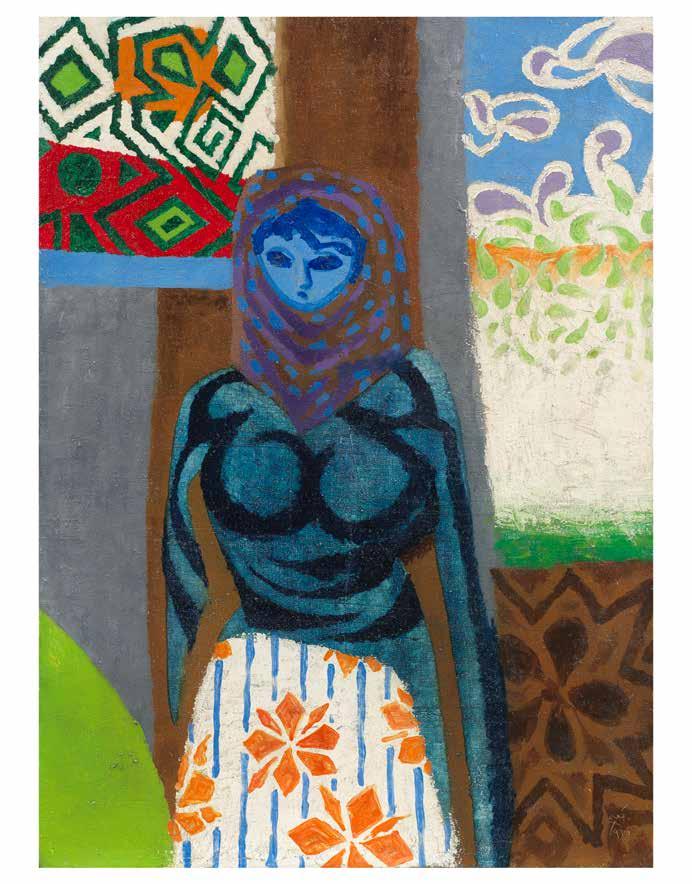
45A *
JABRA IBRAHIM JABRA (IRAQ, 1919-1994) Fragmentation oil on canvas, framed signed “Gabriel Jabra” and dated “1467” (lower left), executed in 1947 43.5 x 68cm (17 1/8 x 26 3/4in).
£30,000 - 50,000
US$41,000 - 68,000
€35,000 - 58,000
Provenance:
Property from the collection of Jabra Ibrahim Jabra
Painted in 1947, this work comes from a crucial moment in Jabra Ibrahim Jabra’s life, just before the upheaval of 1948 forced him to leave Palestine for Iraq. Born in 1919 and raised in Bethlehem and Jerusalem, Jabra was already deeply engaged in literature, art and intellectual life by the time this painting was made.
He would later become one of the most important Arab writers and critics of the twentieth century, but this work belongs to an earlier phase, when he was still in Jerusalem and working through painting as well as writing. The date gives the picture a particular weight: it was made on the eve of a profound personal and historical rupture.
That sense of tension is felt in the composition itself. The faces are compressed together, but they do not fully settle into a single coherent scene. The central face is split, and the image as a whole seems to be constructed across two joined pieces, giving it a literal seam down the middle. That fragmentation feels important; it is hard not to connect the broken structure of the picture to a wider atmosphere of instability, division and uncertainty in Palestine at that moment.
The painting is also interesting in relation to Jabra’s wider career as a writer, poet and dramatist. Even at this early stage, there is a sense that he is less interested in straightforward portraiture than in building a layered emotional image. The crowded faces, overlapping gestures and shallow space give the work something of the intensity of a staged scene, almost like several states of mind pressed together into one frame. In that respect, it already suggests the kind of complexity and fragmentation that would later become central to his literary work.
Most of all, the painting stands as a rare and important work from Jabra’s Palestinian period. It is direct, expressive and psychologically charged, and its fractured structure gives it real force. Rather than feeling overworked or overly symbolic, it captures a mood of human closeness under pressure, which is exactly what gives it its power.
Jabra Ibrahim Jabra (1919–1994) was one of the great Arab men of letters of the twentieth century: a Palestinian-born novelist, poet, critic, translator and artist whose life and work were profoundly shaped by exile, modernism and cultural displacement. Born in Bethlehem and educated in Jerusalem, Cambridge and Baghdad, he became a central figure in Iraq’s postwar intellectual life after leaving Palestine in the upheaval of 1948.
Equally at home in literature and the visual arts, Jabra moved between painting, fiction, poetry and criticism with unusual ease, helping to introduce international modernist ideas into the Arab world while remaining deeply engaged with the fractures and inheritances of his own region. His writing, whether in novels such as The Ship and In Search of Walid Masoud or in his memoir The First Well, is marked by psychological depth, formal experimentation and a persistent meditation on memory, loss and identity.
“FOR TRADITION TO BE ALIVE IT HAS TO BE ALLOWED TO BE A FOUNTAIN OF POWER FOR THINGS UNDREAMT OF, THINGS TO COME.”
- JABRA IBRAHIM JABRA
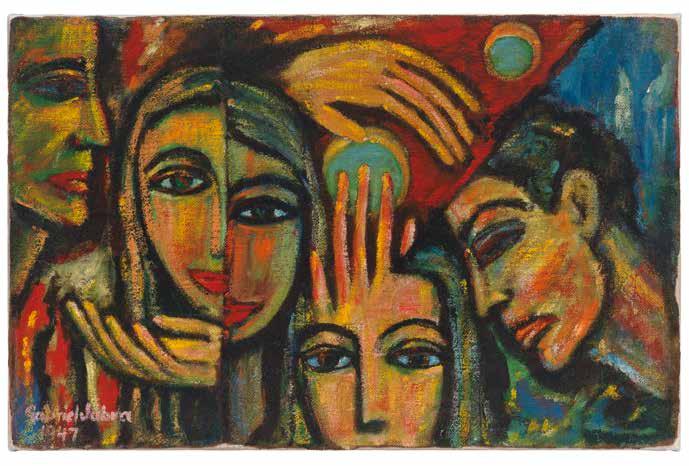
46 *
Portrait of a Woman oil on panel, framed signed “Shakir” and dated “55” in Arabic (upper right), executed in 1955 45 x 40cm (17 11/16 x 15 3/4in).
£30,000 - 50,000
US$41,000 - 68,000
€35,000 - 58,000
Provenance:
Property from the collection of Jabra Ibrahim Jabra
Shaker Hassan Al Said occupies a singular position within modern Iraqi art, both as a pioneering artist and a leading theorist. In 1951, alongside Jewad Selim, he co-founded the Baghdad Group of Modern Art, marking a defining moment in the emergence of a distinctly Iraqi modernism. Through its manifesto and exhibitions, the group would come to signify a “golden age” in twentieth-century Iraqi art.
Often regarded as the intellectual force behind the movement, Al Said was deeply engaged in both artistic and theoretical production. The present work comes from the collection of Jabra Ibrahim Jabra - a Palestinian-Iraqi writer, critic, and artist, and a key intellectual figure of Arab modernismadding a significant layer of historical and cultural resonance.
Painted in 1955, Portrait of a Woman belongs to a rare and formative period in Al Said’s practice, just prior to his move to Paris, where he would further his studies between 1955 and 1959. Works from this early phase reveal an engagement with figuration shaped by both Western influences - such as Cubism and Expressionism - and a strong grounding in local Iraqi traditions, drawing on rural subjects, stylised forms, and the visual language of folk and material culture.
The composition reveals a striking psychological tension, with the sitter rendered through a fractured symmetry - one eye closed, the other open - suggesting an inner duality. The muted palette and textured surface reinforce a sense of introspection, where form begins to move beyond representation towards a more symbolic and emotional register, anticipating the artist’s later shift towards abstraction, surface, and the passage of time as central themes.
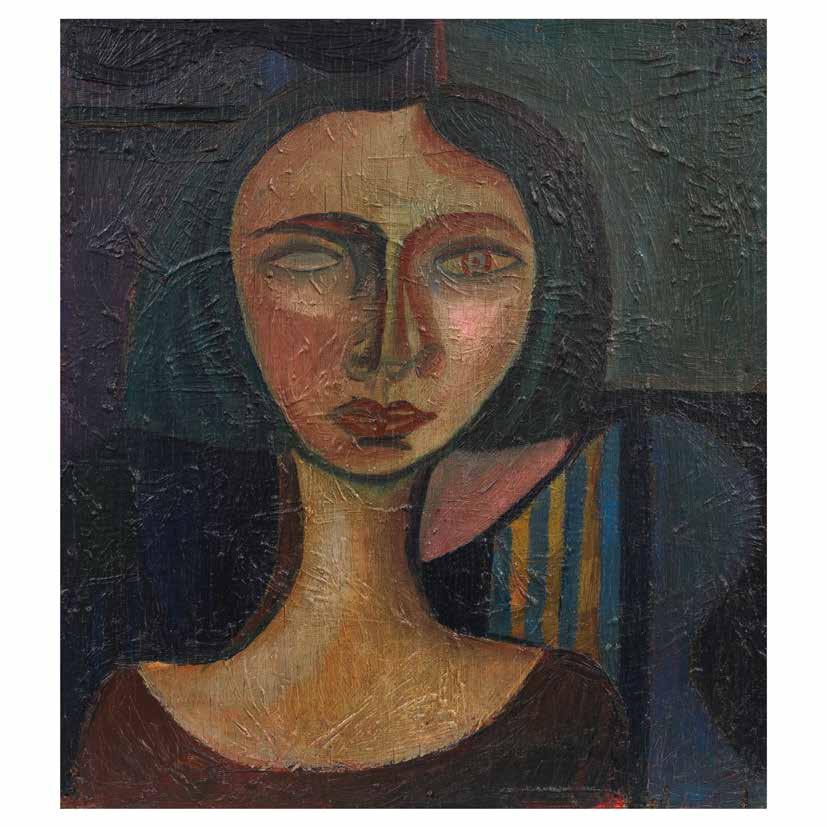
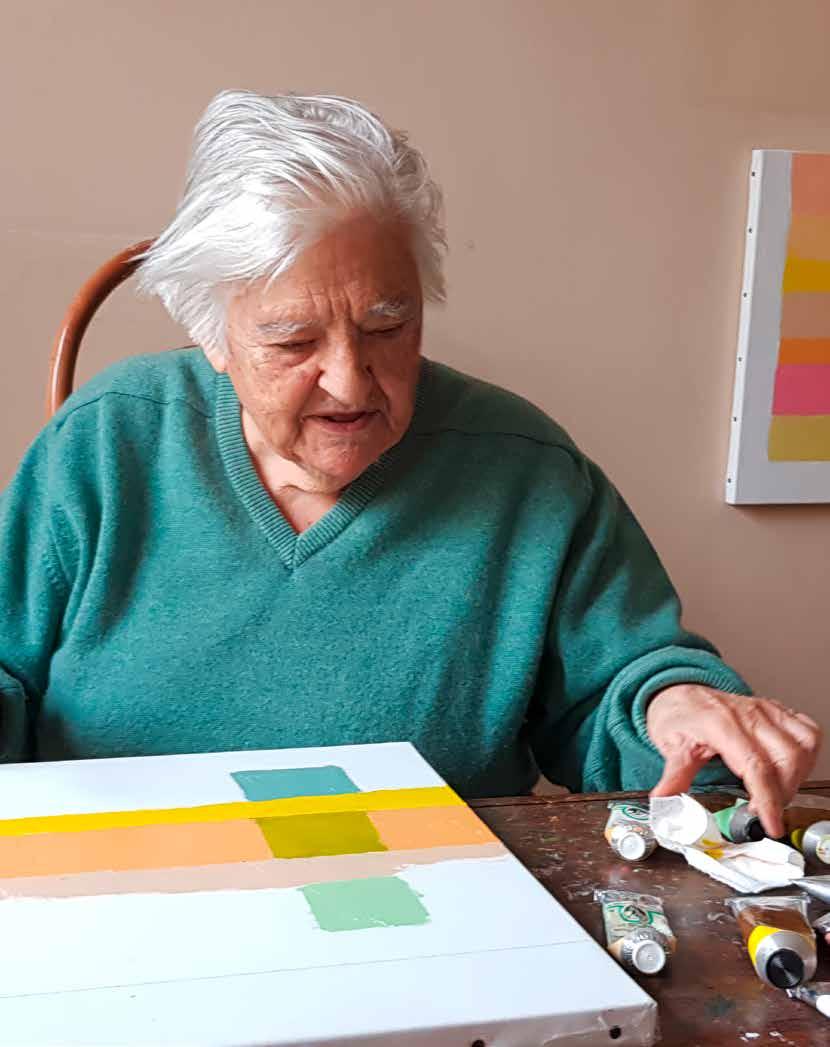
LOTS 47-49
THREE MATURE WORKS BY THE RENOWNED LEBANESE
47 *
ETEL ADNAN (LEBANON, 1925-2021)
Découverte de l’immédiat 2 ink on canvas, framed signed “A” (lower left), further signed “Adnan”, dated “21” and Galerie Lelong label on the verso, executed in 2021 41 x 33cm (16 1/8 x 13in).
£25,000 - 35,000
US$34,000 - 47,000
€29,000 - 40,000
Provenance:
Property from a private collection, Dubai
Executed in 2021, this striking black-and-white canvas belongs to the final body of work Etel Adnan produced in the last year of her life, a series in which she pared painting down to its most essential means: black line, white ground, and the quiet poetry of ordinary things. In place of the radiant colour for which she is so celebrated, Adnan here turns to a sparse visual language shaped by the stillness and solitude of the pandemic years, rendering humble household objects, fruit, a bag and the small furnishings of daily life with an almost calligraphic economy.
These late paintings are animated by many of the ideas that occupied Adnan’s final writings: silence, mortality, emptiness, clarity and the stripped-back truth of immediate experience. As discussed in relation to Discovery of Immediacy, Adnan sought to simplify her vision to its roots, abandoning ornament, detail and even colour in order to make room for air, space and freedom. The resulting forms, imperfect, direct and unadorned, transform the minor rhythms of everyday life, a bowl, a bottle, scattered fruit, something to be held or eaten, into meditations on presence and transience.
There is, in these late canvases, a profound tension between the domestic and the existential. Their subject matter remains intimate and familiar, yet the vast white ground behind these objects opens onto something much larger: time, silence and the awareness of life’s fragility. In Adnan’s hands, the still life becomes not merely a record of things seen, but a distilled reflection on what remains when everything extraneous has fallen away.
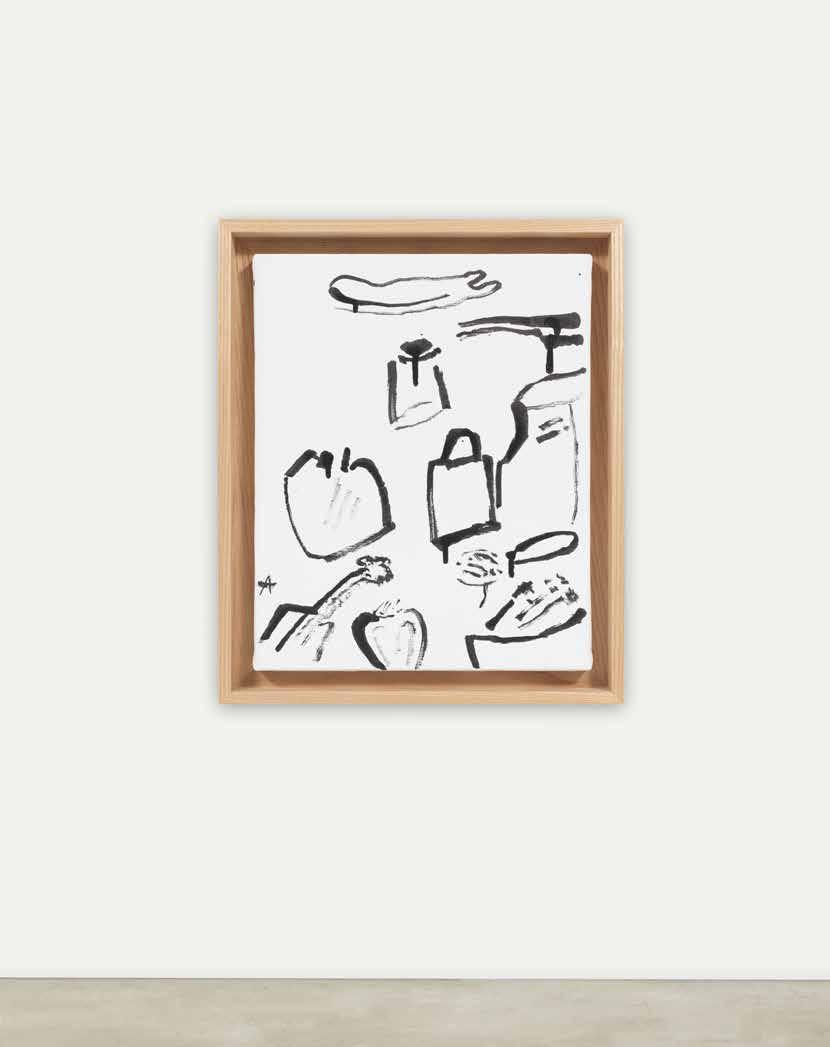
“EVER SINCE I SAW THE EXPLOSION OF THE ATOMIC BOMB OVER JAPAN ON TELEVISION, I’VE BEEN TERRIFIED BY THE INTENSITY OF THE COLOUR WHITE, OF WHITENESS. I THINK THAT IN CHINA, IF I AM NOT WRONG, WHITE IS THE COLOUR OF MOURNING USED BY WOMEN. THE ALL-WHITE IS AS BLINDING AS THE ALL-BLACK. THOSE EXTREMES ARE OMINOUS..”
- ETEL ADNAN
48 *
ETEL ADNAN (LEBANON, 1925-2021)
Untitled ink on paper, framed signed “Adnan” (lower left) and dated “16” (lower right), Galerie Janine Rubeiz label on the verso, executed in 2016 30 x 46cm (11 13/16 x 18 1/8in).
£10,000 - 15,000
US$14,000 - 20,000
€12,000 - 17,000
Provenance: Property from a private collection, Dubai
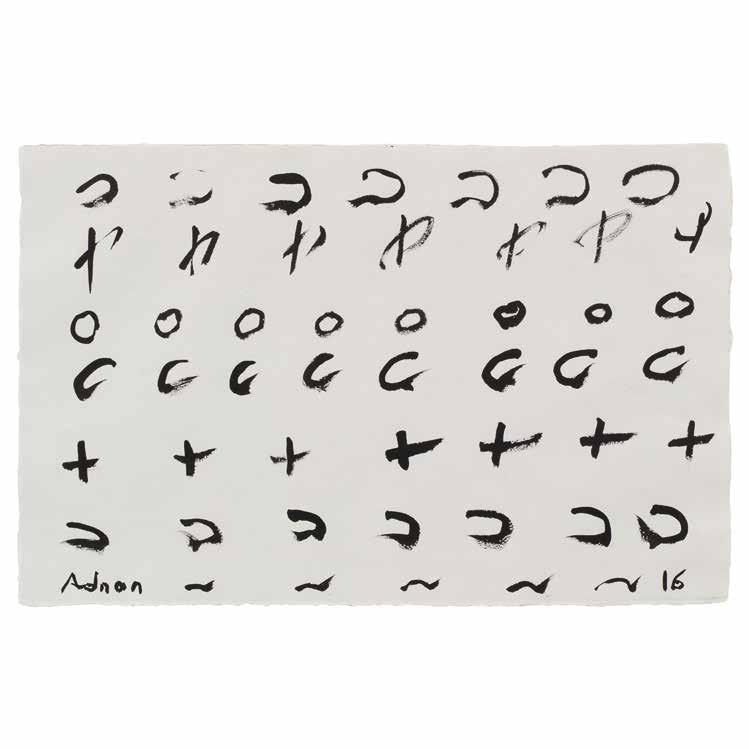
49 *
ETEL ADNAN (LEBANESE, 1925-2021)
View of Nicasio, California watercolour on paper, framed signed “Adnan” (lower left), gallery label on the verso, executed in 2004 21.5 x 28.5cm (8 7/16 x 11 1/4in).
£6,000 - 8,000
US$8,100 - 11,000
€6,900 - 9,200
Provenance: Property from a private collection, Lebanon
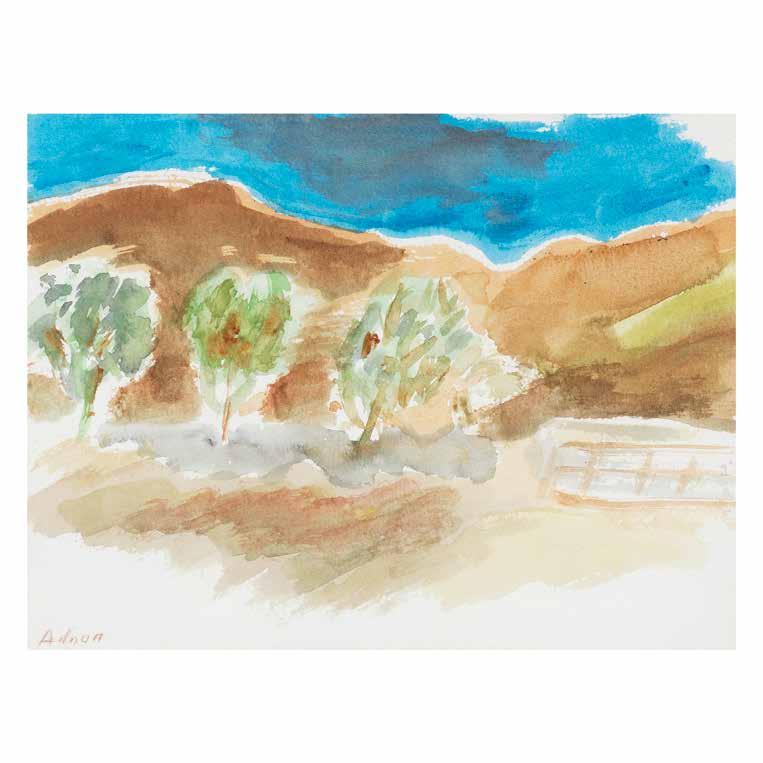
50 * HELEN KHAL (LEBANON, 1923-2009)
Water Jug oil pastel and acrylic on paper mounted on wood, framed signed “H.Khal” (lower left), executed in 1964
68.5 x 49cm (26 15/16 x 19 5/16in).
£20,000 - 30,000
US$27,000 - 41,000
€23,000 - 35,000
Provenance: Property from a private collection, Dubai
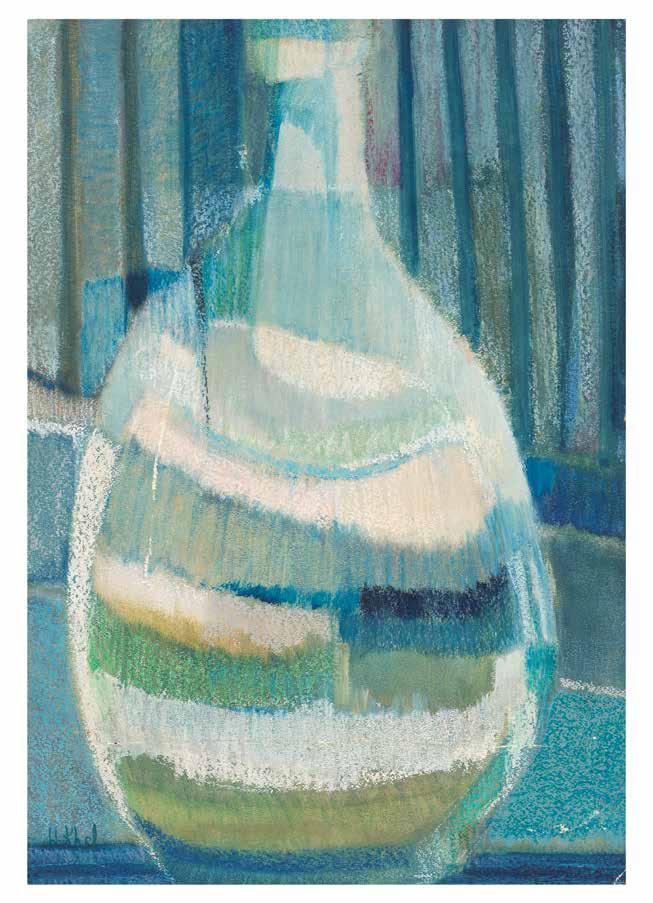
“WHEN YOU ARE WITH YOUR EASEL, YOU HAVE PEACE, SILENCE, AND AN UNFOLDING, EXPLODING VISION BEFORE YOU.”
-
51 JULIANA SERAPHIM (PALESTINE, 1934-2005)
House Behind the Trees oil on canvas, framed signed “Juliana” (lower left), executed in 1965 95 x 70.5cm (37 3/8 x 27 3/4in).
£18,000 - 25,000
US$24,000 - 34,000
€21,000 - 29,000
Provenance:
Property from a private collection, London
Juliana Seraphim was a renowned artist and pioneering figure in the Middle Eastern art scene, recognised for her distinctive Surrealist style and dreamlike imagery. Her work explores themes of femininity, desire, and spirituality through which figures
often merge with organic forms such as flowers. Shaped in part by early influences such as visits to her grandfather’s monastery in Jerusalem, where frescoes of mystical figures left a lasting impression.
Following her displacement from Palestine in 1948 at the age of fourteen, she settled in Beirut, where she studied at the Lebanese Academy of Fine Arts before continuing her training in Florence and at the Royal Academy of San Fernando in Madrid.
Seraphim’s work is rooted in a richly imaginative and introspective visual world, characterised by dreamlike imagery populated by hybrid, metamorphic forms in which female figures often merge with elements of nature, including flowers, shells, and marine life. Working in a distinctive palette of soft tones, she developed a highly personal Surrealist language that explores themes of femininity, memory, and spirituality shaped by imagination and personal experience.
Seraphim developed an introspective body of work that actually set her apart from the overtly political concerns of many of her contemporaries. Dividing her time between Beirut and Paris during the Lebanese Civil War, she remained active internationally, representing Lebanon at major biennials including Alexandria, Paris, and São Paulo. Her work is held in significant public and private collections worldwide, including the Metropolitan Museum of Art, New York, the Institut du Monde Arabe, Paris, and the Sursock Museum, Beirut.
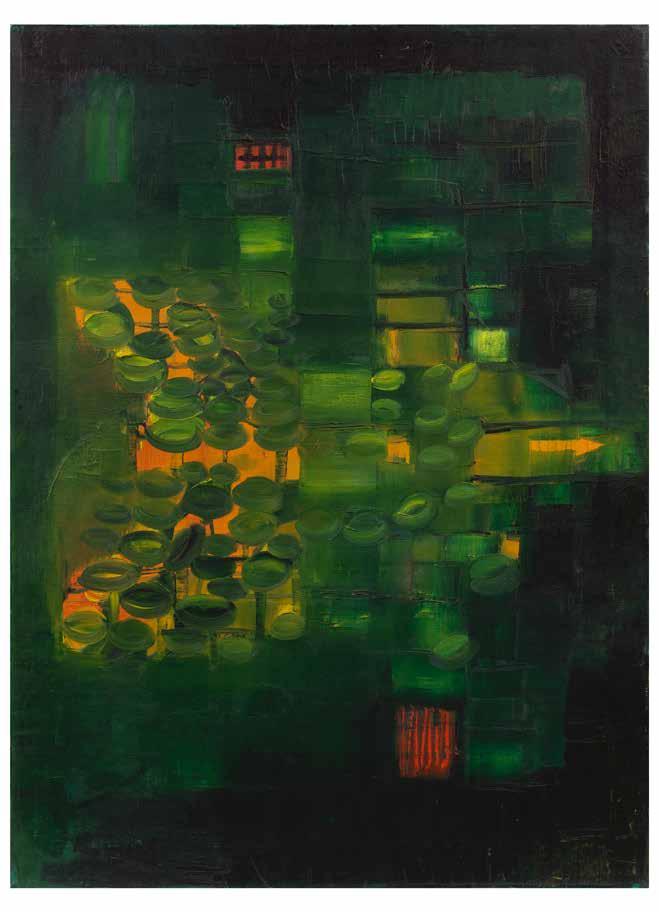
52 *
JULIANA SERAPHIM (PALESTINE, 1934-2005)
Danse au Rythme du Tambourin oil on canvas, framed signed “Juliana Seraphim” and dated “1994” (lower left), executed in 1994 80.5 x 50.5cm (31 11/16 x 19 7/8in).
£8,000 - 12,000
US$11,000 - 16,000
€9,200 - 14,000
Provenance: Property from a distinguished private collection, Lebanon
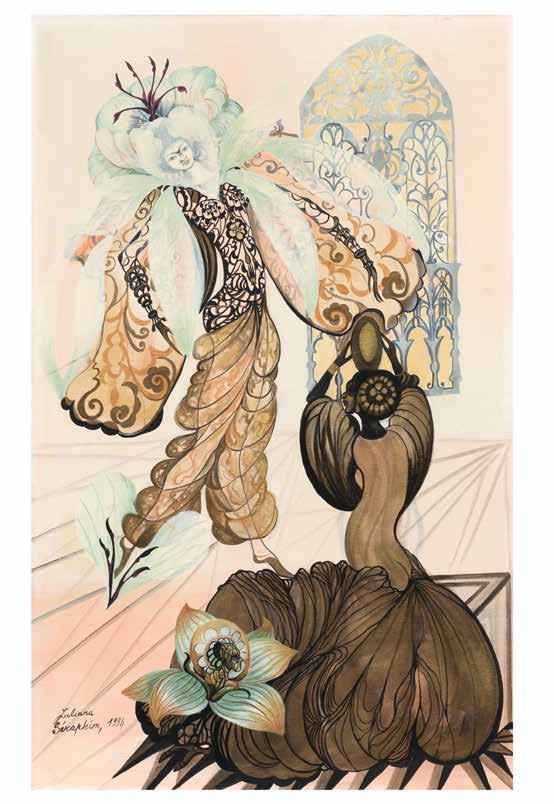
53 * AR
SUAD AL ATTAR (IRAQ, BORN 1942)
Untitled (Paradise) oil on wood panel
signed “Suad Al Attar” and dated “1975” in English and Arabic (lower center), executed in 1975
149.5 x 109.5cm (58 7/8 x 43 1/8in).
£40,000 - 60,000
US$54,000 - 81,000
€46,000 - 69,000
Provenance:
Property from a prestigious private collection of Iraqi Art, Europe
Published:
Longing for Eternity: One Century of Modern and Contemporary Iraqi Art, Skira, Milan, 2014
This luminous composition, executed in 1970, stands among the earliest and most expansive articulations of Suad Al-Attar’s enduring vision of the paradisiacal garden, a theme that would come to define her practice. Rendered in a rich spectrum of blues and turquoise tones, the work envelops the viewer in a dreamlike, almost aqueous landscape, where dense foliage, elongated stems and fantastical botanical forms dissolve into one another, creating a contemplative and immersive environment.
Unlike later works in which symbolic elements such as birds or architectural motifs emerge more distinctly, this early example is remarkable for its near total devotion to the organic. The composition unfolds as a continuous, breathing surface, neither fully terrestrial nor entirely imagined, suggesting a sacred interior world. The path like opening at its centre draws the eye inward, evoking both a physical and metaphysical journey, a quiet passage into an inner sanctuary of memory and myth.
In this formative period, Al Attar was already synthesising influences from the rich artistic heritage of Iraq. The intricate linearity and rhythmic stylisation of the vegetation recall the legacy of the Baghdadi School of Art, particularly the detailed manuscript illustrations of Yahya ibn Mahmud al-Wasiti. At the same time, her training under Jewad Selim is evident in her ability to merge tradition with a modern sensibility, distilling cultural memory into a personal and symbolic visual language.
Trees and plant life, recurring motifs throughout Al Attar’s oeuvre, are here rendered as both protective and enclosing. They evoke abundance and fertility, yet also a subtle sense of entrapment, mirroring the dualities of the human condition. In this way, the garden becomes not merely a depiction of nature, but a psychological and poetic construct, a place of refuge, longing and quiet resistance.
Born in Baghdad in 1942, Al Attar was a pioneering figure in modern Iraqi art. She studied at Baghdad University and later in the United States before continuing her training in London. In 1965, she became the first woman artist to hold a solo exhibition in Baghdad, marking a significant moment in the region’s cultural history. Though she relocated to London in the mid 1970s, her work has remained deeply rooted in Iraqi heritage, drawing on ancient, Islamic and modern sources to construct a timeless visual narrative.
This monumental early painting not only exemplifies Al Attar’s lifelong engagement with the theme of paradise, but also captures a moment of artistic emergence, where tradition, memory and imagination converge in a singular, meditative vision.
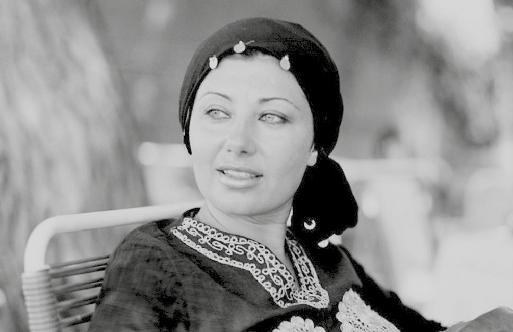
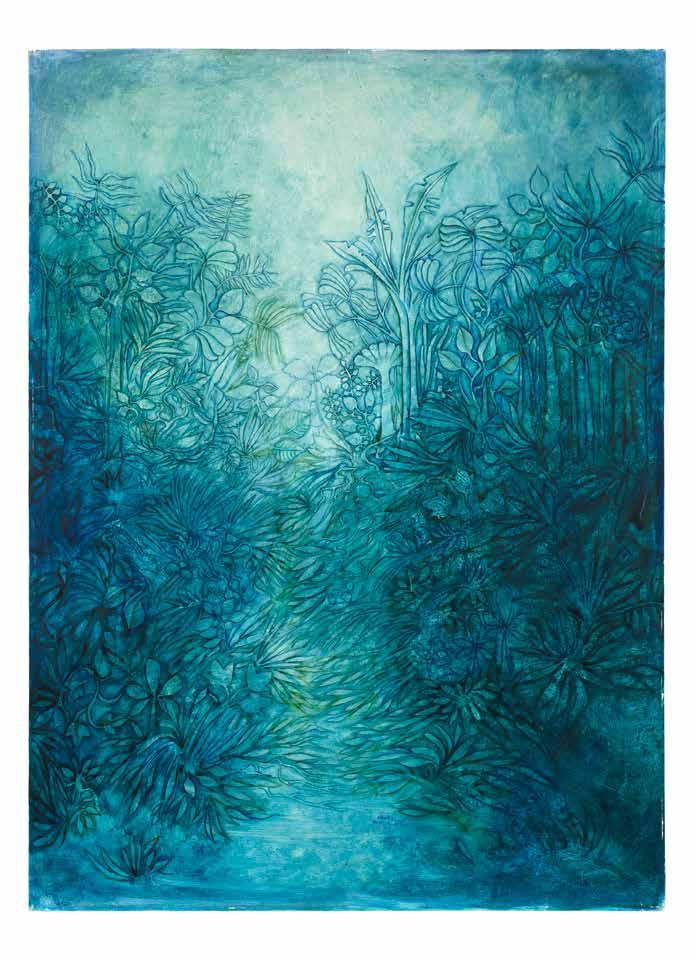
54 * AR SUAD AL ATTAR (IRAQ, BORN 1942)
Untitled oil on wood panel, framed signed “Suad Al Attar” and dated “1971” in Arabic (right center), executed in 1971
78.5 x 68cm (30 7/8 x 26 3/4in).
£25,000 - 35,000
US$34,000 - 47,000
€29,000 - 40,000
Provenance:
Property from a prestigious private collection of Iraqi Art, Europe
Published:
Longing for Eternity: One Century of Modern and Contemporary Iraqi Art, Skira, Milan 2014
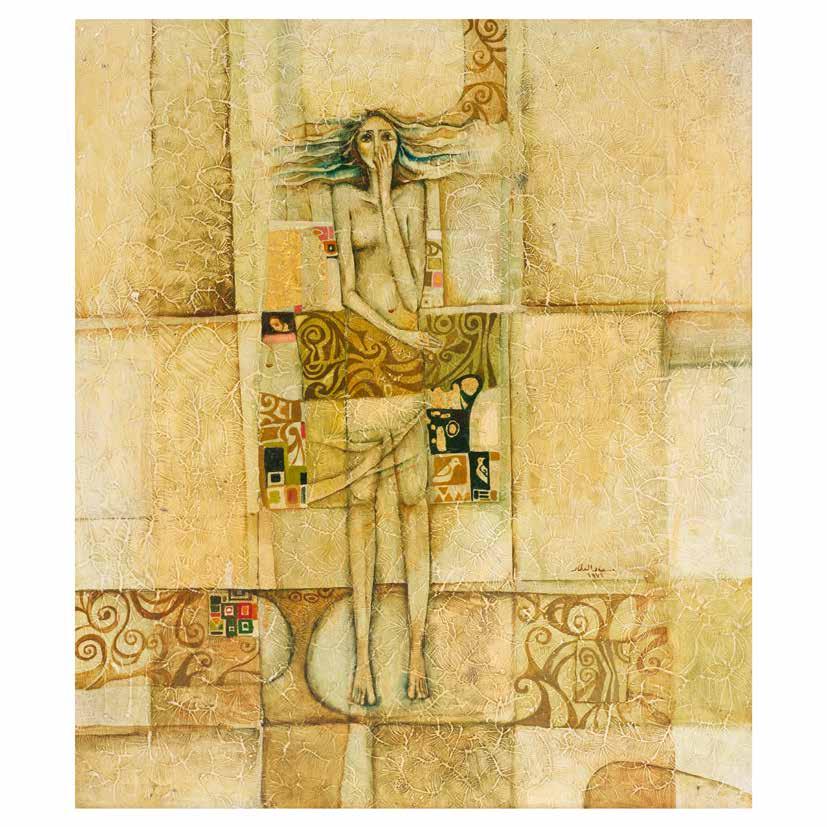
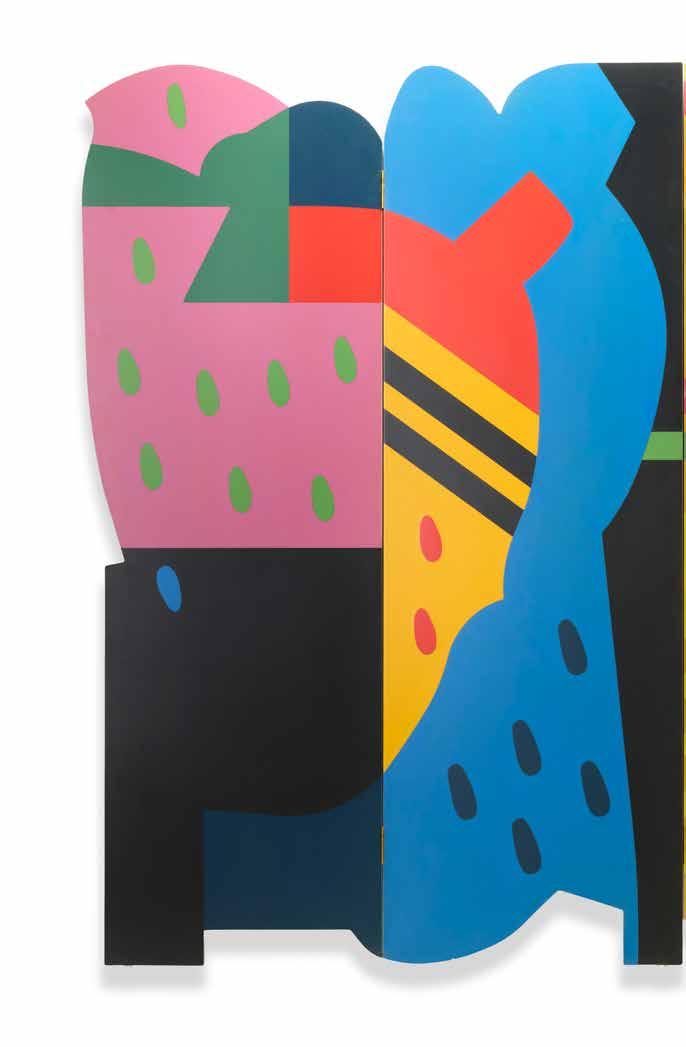
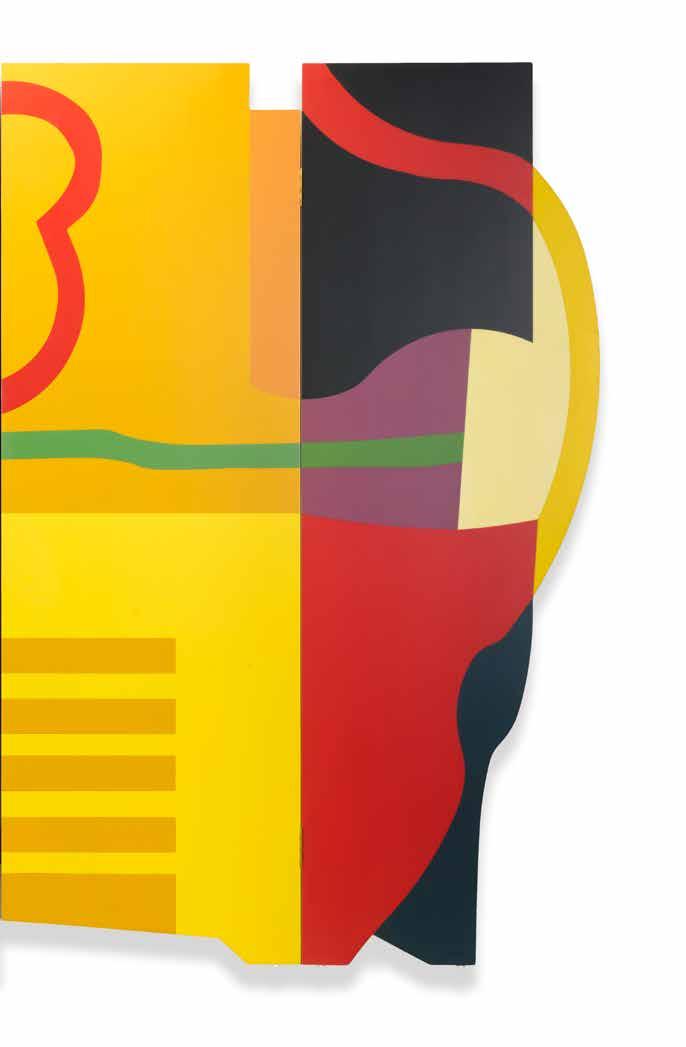
55 TP
DIA AL-AZZAWI (IRAQ, BORN 1939)
Untitled (Paravent)
mixed media on wood panels, folding screens executed in 2018
180 x 236cm (70 7/8 x 92 15/16in).
£20,000 - 30,000
US$27,000 - 41,000
€23,000 - 35,000
Provenance:
Property from a private collection, UK
Executed in 2018, this folding screen shows how naturally Dia Azzawi moves beyond painting into three-dimensional forms and functional objects. Although a paravent belongs to the world of furniture, Azzawi approaches it as an artist rather than a designer, using the screen’s hinged structure as an extension of his sculptural thinking. That instinct runs through his wider practice, which spans painting, printmaking, sculpture, artist’s books and tapestry.
Across all of these mediums, he treats surface, line and form as things that can be built, layered and given physical presence. The present work sits squarely within that approach. Rather than simply decorating an object, Azzawi turns the object itself into a work of art, collapsing the boundary between painting, sculpture and furniture. The result is a piece that is both functional and unmistakably part of his broader artistic language.
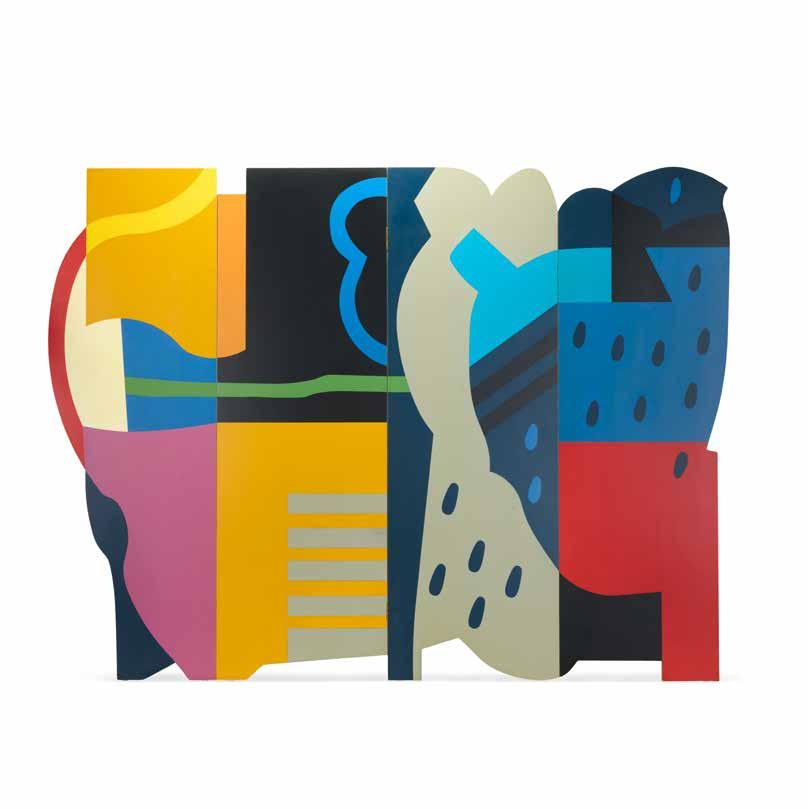
56
ABDULLAH AL SHAIKH (SAUDI ARABIA, 1936-2019)
Bedouin Scene oil on canvas, framed signed "Abdullah Al Shaikh" and dated "2008" in Arabic (lower right), executed in 2008 120.5 x 93.5cm (47 7/16 x 36 13/16in).
£30,000 - 40,000
US$41,000 - 54,000
€35,000 - 46,000
Provenance:
Property from a private collection, London
Note:
Please note that this work is accompanied by a certificate of authenticity from Al Alamia Gallery
Abdullah Al Shaikh, born in Al Zubair, Iraq in 1936, is widely regarded as one of the early pioneers of modern art in Saudi Arabia. He studied at the Institute of Fine Arts, Baghdad, graduating in 1959, before continuing his education at Essex College of Technology in 1965.
Working across painting, drawing, and design, Al Shaikh developed a distinctive visual language rooted in expressive figuration. His practice often explores human emotion, memory and the tension between tradition and modernity, rendered through bold forms and a sensitive handling of line and colour. His work reflects both his Iraqi upbringing and his deep engagement with the evolving cultural identity of Saudi Arabia during the second half of the twentieth century.
Alongside his artistic practice, Al Shaikh played an important institutional role in shaping the Kingdom's visual culture. He served as Chairman of the Design Department at the Royal Printing House and was an active contributor to the regional art scene as a jury member for numerous exhibitions and competitions.
His work has been exhibited internationally, including at the Sharjah Biennale, the Institut du Monde Arabe in 2002 and the Arab Artists Exhibition in Beijing in 1996. Over the course of his career, he has received several accolades, notably the Golden Palme d'Or in Muscat (2001) and the Silver Palme d'Or in Kuwait (2003).
Al Shaikh's legacy lies in his role as both an artist and cultural figure, helping to define a generation of Gulf modernism while maintaining a deeply personal and humanistic approach to his work.
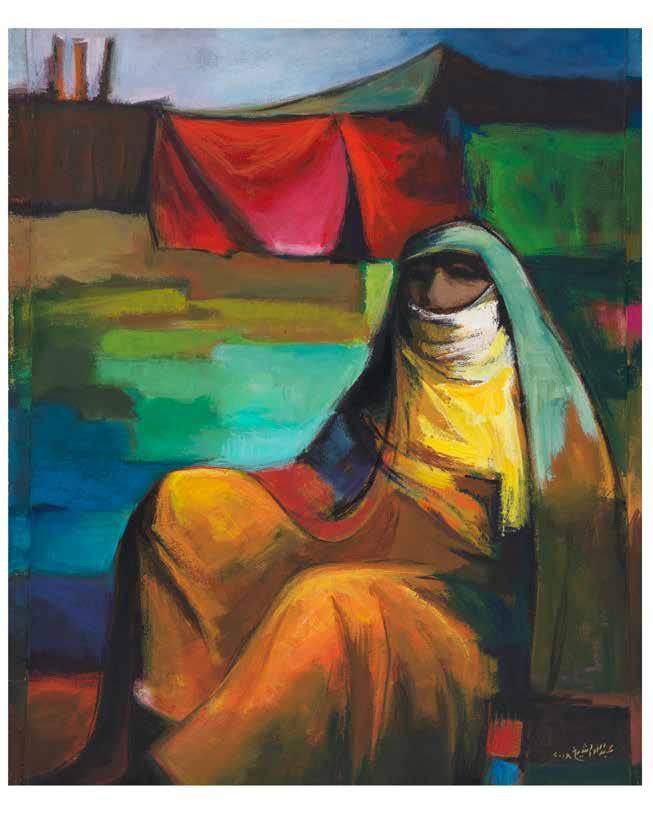
57 REZA DERAKSHANI (IRAN, BORN 1952)
Red Field Hunting oil on canvas signed "Reza Derakshani" in English and in Farsi and dated "2013" on the verso, executed in 2013 149 x 119.5cm (58 11/16 x 47 1/16in)..
£25,000 - 35,000
US$34,000 - 47,000
€29,000 - 40,000
Provenance: Property from a private collection, London
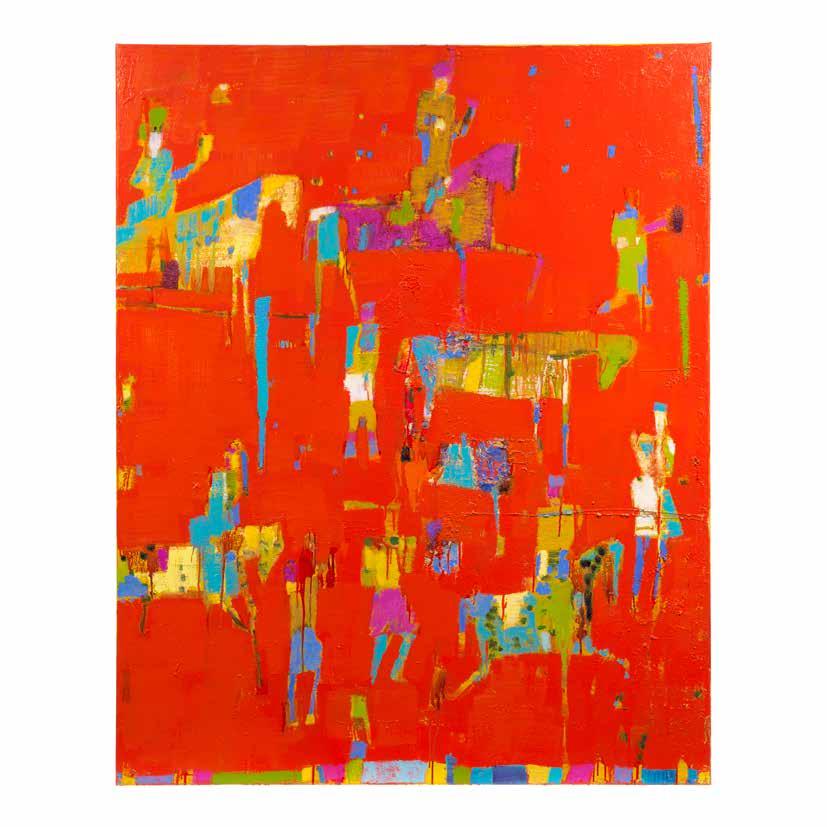
58 * TP REZA DERAKSHANI (IRAN, BORN 1952)
Those Roots Drink Quietly oil on canvas
signed and dated "07" (lower centre), further signed, dated and inscribed on the verso, executed between 2006-2007 183 x 196.5cm (72 1/16 x 77 3/8in).
£12,000 - 18,000
US$16,000 - 24,000
€14,000 - 21,000
Provenance:
Property from a private collection, New York Sotheby's, Contemporary Discoveries Including the Marcel Lehmann Lefranc Collection, February 2025, Lot 117 Aria Art Gallery, Tehran
Acquired from the above by a private collection, Luxembourg
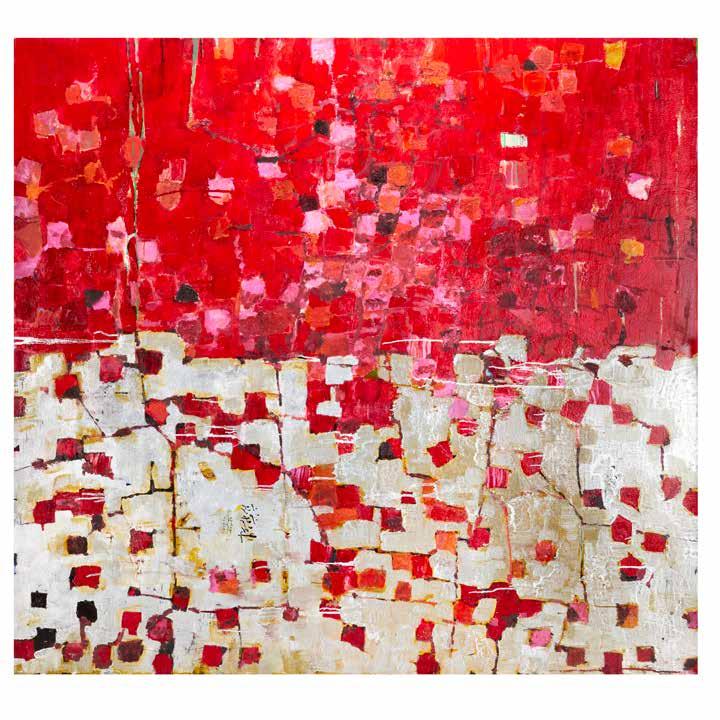
59 * TP ISMAEL FATTAH (IRAQ, 1934-2004)
Seated Figure bronze signed “Ismail Fattah” and dated “1978”, executed in 1978, the present sculpture is unique 103 x 60cm (40 9/16 x 23 5/8in).
£30,000 - 50,000
US$41,000 - 68,000
€35,000 - 58,000
Provenance: Property from a private collection, Canada
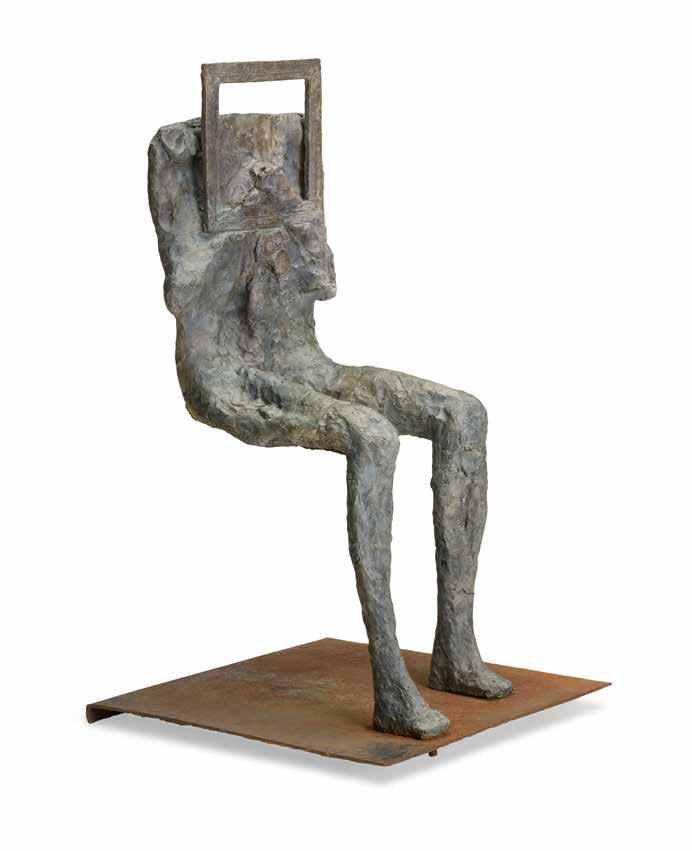
60 *
1934-2004)
The Man & the Cockerel oil on canvas
signed “Ismail Fattah” in Arabic and dated “98” (lower left), executed in 1998 102 x 85cm (40 3/16 x 33 7/16in).
£30,000 - 50,000
US$41,000 - 68,000
€35,000 - 58,000
Provenance:
Property from a prestigious private collection of Iraqi Art, Europe
Published:
Longing for Eternity: One Century of Modern and Contemporary Iraqi Art, Skira, Milan 2014
Ismail Fattah stands as a key figure within late 20th-century Iraqi modernism, known for his ability to fuse symbolic imagery with deeply human narratives. In his 1989 work Man & the Cockerel, Fattah draws upon a familiar motif and reimagines it through a vivid, expressive palette, imbuing the composition with both psychological tension and cultural resonance. His treatment of colour and form heightens the dialogue between figure and symbol, situating the work within a broader exploration of identity, presence and introspection.
In Iraqi modernism, particularly within the Baghdadiyat movement of the mid-20th century, the cockerel carries a rich and layered symbolic presence that merges everyday life with deeper cultural and emotional meaning. Far from being a purely decorative motif, it is rooted in the visual language of Iraqi domestic and rural environments, where the cockerel is a familiar and constant presence. Its association with the morning call and courtyard life evokes a sense of nostalgia, reflecting the artists’ desire to preserve an authentic Iraqi identity during a period of rapid social and urban transformation.
At a more symbolic level, the cockerel often embodies ideas of masculinity, pride, and vigilance. Its upright stance, vivid plumage and assertive character make it a natural extension or counterpart to the male figure within modernist compositions. In many works, it appears almost as a surrogate presence, mirroring human qualities such as strength, ego or even fragility, depending on how it is depicted. This duality allows the cockerel to operate both as an independent subject and as a psychological extension of the figures it accompanies.
The motif also carries subtle spiritual undertones. In regional folklore and within broader Islamic cultural references, the cockerel is sometimes associated with awakening and heightened perception, its crow marking the transition from night to day. This lends it a metaphysical dimension, positioning it as a symbol of awareness, truth or an attunement to unseen rhythms. Such associations deepen its resonance within modernist works that seek to bridge the material and the symbolic.
By the later decades of the 20th century, artists such as Ismail Fattah began to infuse familiar motifs like the cockerel with more ambiguous and psychologically charged meanings. In compositions where it appears alongside a human figure, the relationship can suggest tension, control or quiet companionship, opening the image to more complex interpretations. Within this context, the cockerel becomes a vehicle for allegory, capable of reflecting broader themes of power, identity and the human condition, while remaining anchored in the visual and cultural fabric of Iraqi life.
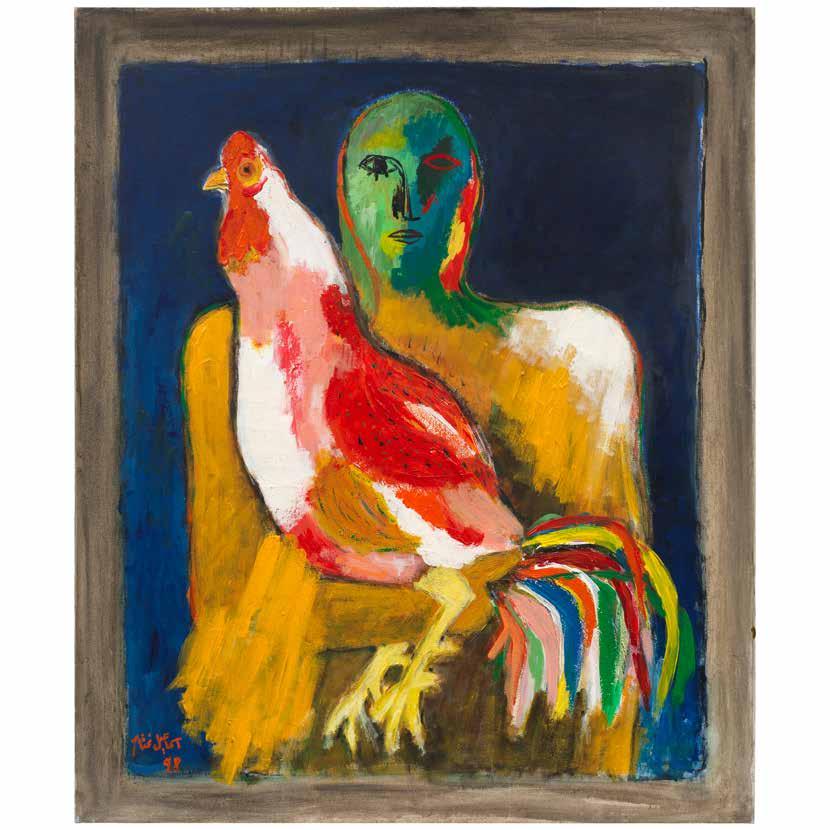
“I PAINTED TO RELIEVE THE SPIRITUAL TENSION I FELT WHEN I WAS UNABLE TO EXECUTE MY IDEAS IN SCULPTURE”
- ISMAIL AL FATTAH
61 ISMAIL FATTAH (IRAQI, 1934-2004)
Human Forms mixed media on paper, framed signed “Ismael” in English and Arabic and dated “88” (lower left), executed in 1988 158 x 118cm (62 3/16 x 46 7/16in).
£15,000 - 25,000
US$20,000 - 34,000
€17,000 - 29,000
Provenance:
Property from a private collection, London
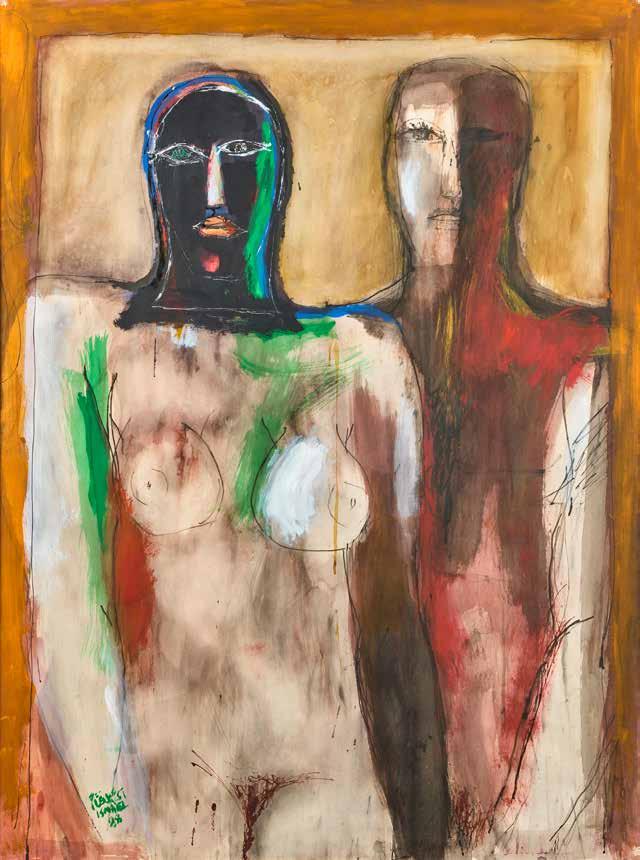
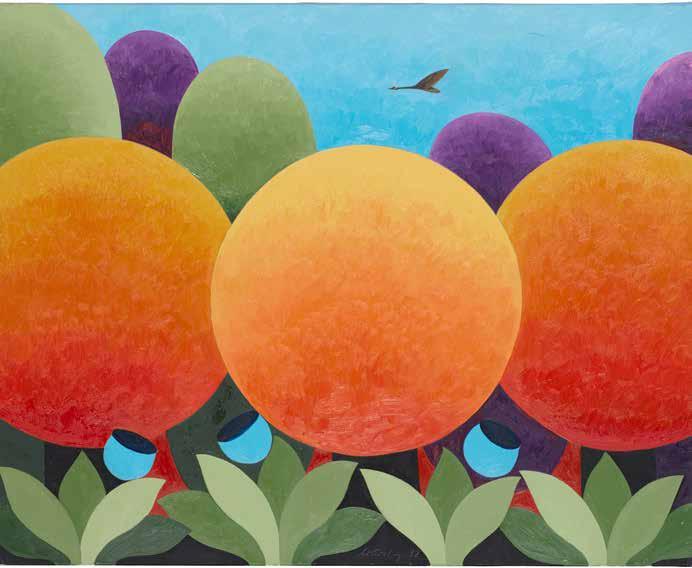
WILLY ARACTINGI (LEBANON, 1930-2003)
signed “W. Aractingi” and dated “92” (lower centre), executed in 1992
65 x 81cm (25 9/16 x 31 7/8in).
£15,000 - 25,000
US$20,000 - 34,000
€17,000 - 29,000
Provenance:
Property from a distinguished private collection, London
WILLY ARACTINGI (LEBANON, 1930-2003)
Les Arbres Bleus oil on canvas
signed and dated (lower right), further signed and dated on the verso, executed in 1992
81 x 100cm (31 7/8 x 39 3/8in).
£20,000 - 30,000
US$27,000 - 41,000
€23,000 - 35,000
Provenance:
Property from a private collection, London
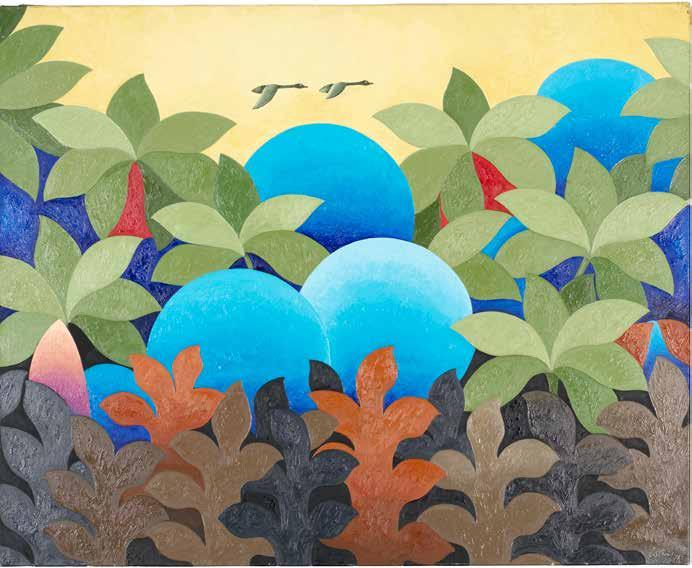
Willy Aractingi was a singular figure within modern Lebanese art whose richly imaginative visual language bridged folklore, literature, and personal mythology. Born in New York and raised in Egypt, Aractingi’s early exposure to diverse cultural environments informed the cosmopolitan yet deeply introspective nature of his work. A self-taught artist, he began painting at the age of twelve, though his artistic career unfolded gradually as he balanced creative pursuits with professional responsibilities before dedicating himself fully to painting in the mid-1980s.
Aractingi described his practice as “naïve primitive,” aligning himself loosely with artists such as Paul Gauguin and Henri Rousseau, yet his oeuvre remains distinctly his own. His compositions are characterised by flattened perspectives, stylised figures, and a vivid, harmonious palette through which he constructed dreamlike worlds where reality and imagination coexist. Drawing on a wide range of sources, from Middle Eastern folklore and literary epics such as Antar and Abla to Western tales including Tarzan and Sleeping Beauty, his paintings evoke a universal narrative language rooted in storytelling and symbolism.
Among his most celebrated achievements is his extensive pictorial interpretation of Jean de La Fontaine’s Fables, a monumental project comprising over two hundred works completed over several years. Aractingi remains the only artist known to have illustrated the entirety of the Fables in oil on canvas, a testament to both his ambition and narrative sensibility. These works exemplify his ability to translate moral allegories into visually engaging compositions populated by animals and human figures rendered with both simplicity and emotional depth.
Working between Lebanon and France, Aractingi developed a body of work that is at once intimate and expansive, reflecting personal memory, cultural heritage, and an enduring fascination with the poetic possibilities of painting. His art, often imbued with a sense of joy and quiet humour, conceals layers of symbolism beneath its apparent simplicity, inviting viewers into a contemplative, almost utopian realm.
Today, Aractingi is regarded as one of Lebanon’s most distinctive modernists. His works have been exhibited internationally and are held in major public and private collections, including the Sursock Museum in Beirut, where a major retrospective in 2017 reaffirmed his enduring contribution to the canon of Middle Eastern art.
64 *
RAFIC CHARAF (LEBANON, 1932-2003)
Migration (Bird) oil on wood panel, framed signed “Rafic Charaf” and dated “68” in Arabic (lower left), executed in 1968 44 x 59.5cm (17 5/16 x 23 7/16in).
£10,000 - 15,000
US$14,000 - 20,000
€12,000 - 17,000
Provenance:
Property from a private collection, Beirut
Rafic Charaf’s Migration (Bird) series from 1965 to 1968 belongs to a formative moment in Lebanese modernism, created just before the country’s descent into civil war yet already charged with a sense of unease. The work feels quietly prophetic, capturing a psychological state of suspension and dislocation that would soon define a wider national experience.
A jagged black form hovers against a dense blue field. It suggests a bird but resists clear definition, functioning instead as a symbolic presence. Charaf reduces the image to its essentials, allowing ambiguity to carry meaning. The figure appears caught between movement and stillness, neither arriving nor departing.
This sense of in between becomes central to the painting’s emotional force. The bird does not embody freedom but rather uncertainty. It watches and waits, suspended in a moment that never resolves. The saturated blue offers no comfort, intensifying the feeling of isolation and quiet tension.
As noted by the curatorial team, Charaf’s work is rooted in place yet haunted by the idea of flight. In Migration, this tension becomes a meditation on exile as both a physical and psychological condition. The painting speaks not through narrative but through atmosphere, conveying the weight of anticipation and the fragility of belonging.
In its restraint and ambiguity, Migration (Bird) stands as a powerful reflection on identity and displacement, resonating far beyond its time of creation
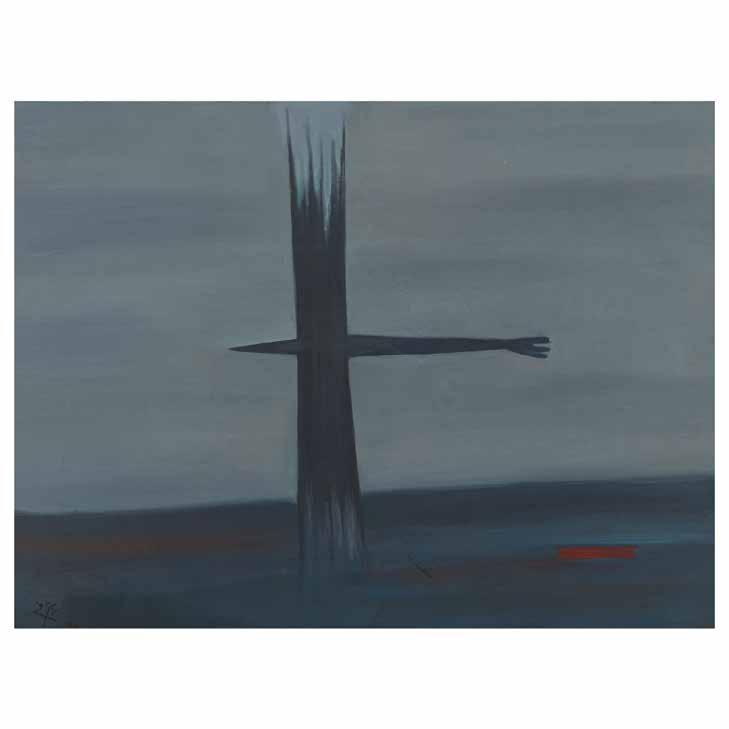
65 * RAGHEB AYAD (EGYPT, 1892-1982)
The Donkeys oil on canvas, framed signed “R.AYAD” and dated “1970” (lower right), executed in 1970 60 x 90cm (23 5/8 x 35 7/16in).
£25,000 - 50,000
US$34,000 - 68,000
€29,000 - 58,000
Provenance:
Property from a private collection, Egypt
Originally in the collection of a distinguished Egyptian collector Acquired directly from the family of the artist by the above
Ragheb Ayad stands among the pioneers of modern Egyptian art, recognised for his vivid depictions of rural life and his commitment to a distinctly local visual language. A leading figure in Cairo’s early 20th century art movement, Ayad moved beyond academic traditions to embrace subjects drawn from everyday Egyptian experience, rendering them with a stylised and often folkloric sensibility.
The Donkeys executed in the later years of the artist’s career, exemplifies this mature vision. The composition presents a rhythmic procession of donkeys, articulated through bold outlines and a harmonious interplay of earthy and luminous tones. The animals are simplified yet expressive, conveying both movement and quiet dignity. The inclusion of the rider anchors the scene within the lived reality of agrarian Egypt, while the surrounding landscape, composed in layered bands of colour, evokes the fertile Nile setting without strict naturalism.
Ayad’s technique reflects a synthesis of influences, combining the structural clarity of European modernism with the decorative richness of Egyptian folk traditions. The flattened perspective and patterned surfaces lend the work a sense of timelessness, elevating a humble rural subject into a poetic meditation on daily life.
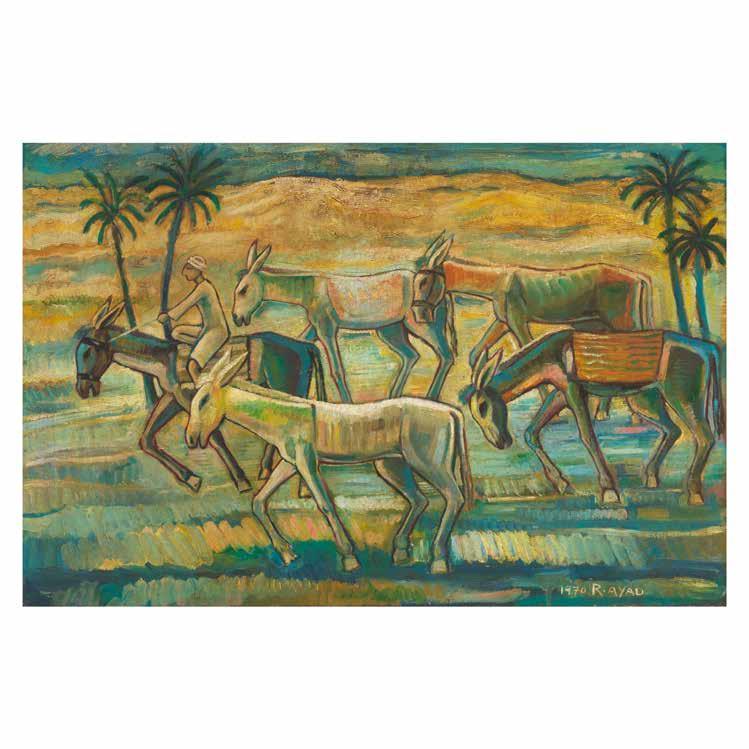
66
RABAB NEMR (EGYPT, 1939-2025)
Freedom
ink on paper, framed signed “Rabab Nemr” and dated “2000” in English and Arabic (upper left), executed in 2000
32 x 48cm (12 5/8 x 18 7/8in).
£10,000 - 15,000
US$14,000 - 20,000
€12,000 - 17,000
Provenance:
Property from a private collection, London Acquired directly from the artist by the above
Exhibited:
Khan Al Maghraby, Rebab Nemr, Cairo 2000
Works on paper have long occupied a central role in the practice of Rebab Nemr, through which she has developed a distinctive and highly personal visual language. Executed in ink, these compositions demonstrate a confident economy of means, where line becomes both structure and subject, articulating forms that hover between figuration and abstraction.
Across this group, the human presence remains a consistent point of departure. Yet Rebab resists fixed representation; figures are suggested rather than defined, emerging through layered, gestural marks that convey movement and psychological depth. This ambiguity invites a more intimate engagement, allowing the viewer to navigate the space between recognition and interpretation. The resulting works are at once immediate and contemplative, grounded in observation but freed from strict descriptive intent.
The use of ink on paper is integral to this effect. The medium’s fluidity lends itself to spontaneity, while its permanence records each gesture with clarity. Lines accumulate, intersect and dissolve, creating a dynamic rhythm across the surface. In these works, the act of drawing is laid bare, emphasising process as much as outcome.
All of the present works were exhibited at Khan Al Maghraby in 2000, situating them within an important moment in the artist’s early career. The exhibition brought together a body of works that collectively underscore Rebab’s sustained engagement with the expressive potential of line and her exploration of the human condition through pared-down, yet evocative forms. Together, these works offer a compelling insight into Rebab’s practice, where the interplay of gesture, form and presence reflects a nuanced and enduring investigation into the body and its emotional resonance
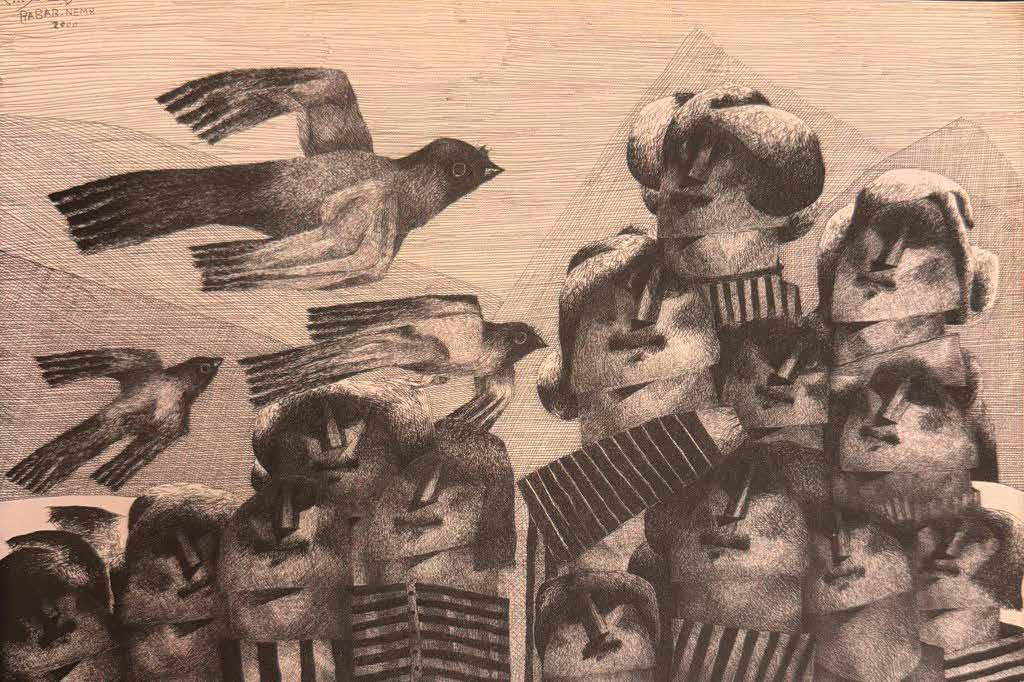
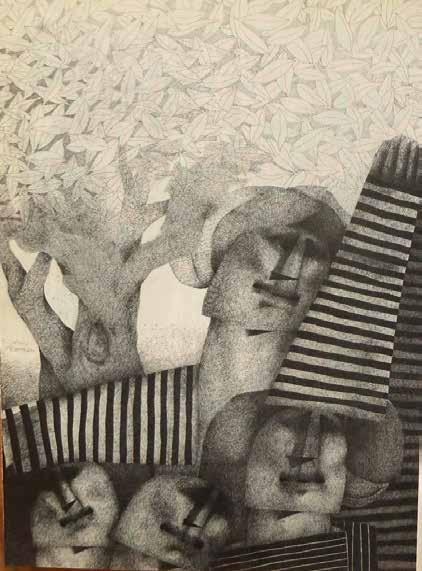
67 RABAB NEMR (EGYPT, 1939-2025)
In the Shadow of the Tree of Life ink on paper, framed signed “Rabab” and dated “2000” (left centre), executed in 2000 76 x 56cm (29 15/16 x 22 1/16in).
£14,000 - 18,000
US$19,000 - 24,000
€16,000 - 21,000
Provenance:
Property from a private collection, London Acquired directly from the artist by the above
Exhibited:
Khan Al Maghraby, Rebab Nemr, Cairo, 2000
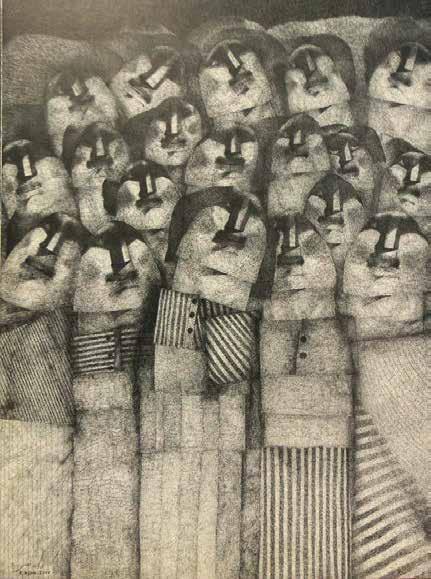
68 RABAB NEMR (EGYPT, 1939-2025)
Something in the Sky ink on paper, framed signed “Rabab Nemr” in Arabic and English and dated “2000” (lower left), executed in 2000
76 x 56cm (29 15/16 x 22 1/16in).
£14,000 - 18,000
US$19,000 - 24,000
€16,000 - 21,000
Provenance:
Property from a private collection, London Acquired directly from the artist by the above
Exhibited:
Khan Al Maghraby, Rebab Nemr, Cairo 2000
69 * AR
ADAM HENEIN (EGYPT, 1929-2020)
The Owl terracotta executed in 1989
30 x 26cm (11 13/16 x 10 1/4in).
£8,000 - 12,000
US$11,000 - 16,000
€9,200 - 14,000
Provenance:
Property from a private collection, Alexandria
Born in Cairo in 1929 into a Coptic family with roots in Asyut, Upper Egypt, Adam Henein was raised among craftsmen. His father worked as a silversmith and Henein developed an early sensitivity to material and form, displaying a particular fascination for Pharaonic sculptures. Henein went on to study sculpture at the Faculty of Fine Arts in Cairo, graduating in 1953. Following his graduation, he spent time at the Luxor Atelier, an institution founded to preserve and teach the principles of ancient Egyptian artistic traditions. In the 1950s, he received a scholarship to study at the Academy of Fine Arts in Munich in the late 1950s and he discovered Western modernism.
Back in Egypt during the early 1960s, Henein immersed himself in the landscapes of Nubia and Upper Egypt, living among rural communities along the Nile. He explored bronze and plaster, creating a rich body of work focused around animals, birds, and local figures. What was meant to be a short stay in Paris in 1971 eventually extended to over two decades. During this period, he developed a distinctive approach to painting, notably by mixing natural pigments mixed with gum arabic, and producing works with the textural richness of ancient frescoes. By the 1980s, Henein’s work evolved toward increasing abstraction, stripping away figuration in favour of layered forms, colour fields, and structural composition.
Upon his return to Egypt in 1996, he was appointed to lead the restoration of the Great Sphinx at Giza and founded the Aswan International Sculpture Symposium, an annual gathering that revived the tradition of working directly in granite. In 2014, the Adam Henein Museum opened in Cairo’s Harraniya district, housing the most comprehensive collection of his sculpture and painting.
70 No lot
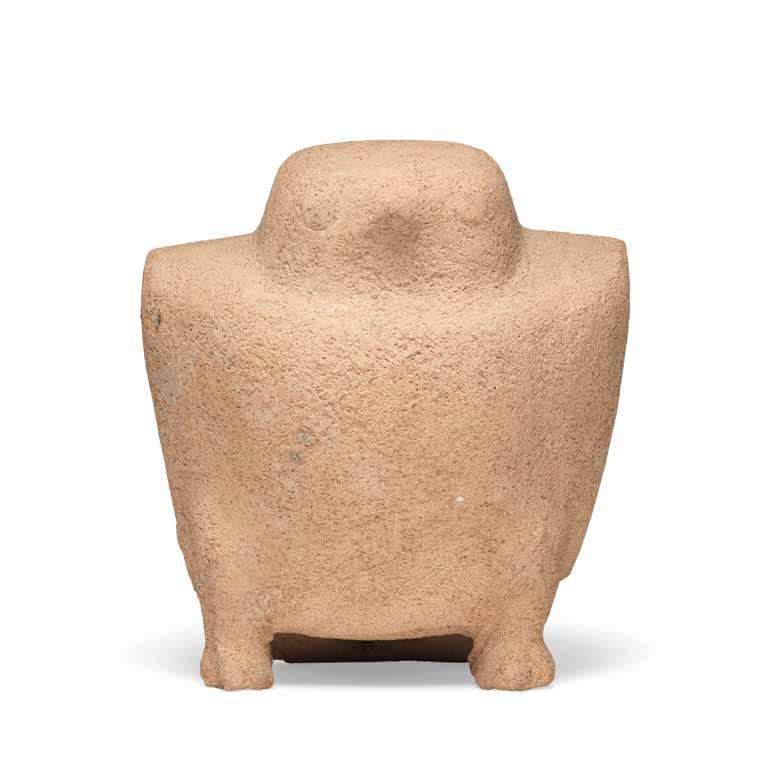
71 *
NAZIR NABAA (SYRIA, 1938-2016)
The Water Carrier oil on canvas, framed signed “Nazir Nabaa” in Arabic (lower right), executed in 1968 60 x 40cm (23 5/8 x 15 3/4in).
£18,000 - 25,000
US$24,000 - 34,000
€21,000 - 29,000
Provenance: Property from a distinguished private collection, Dubai
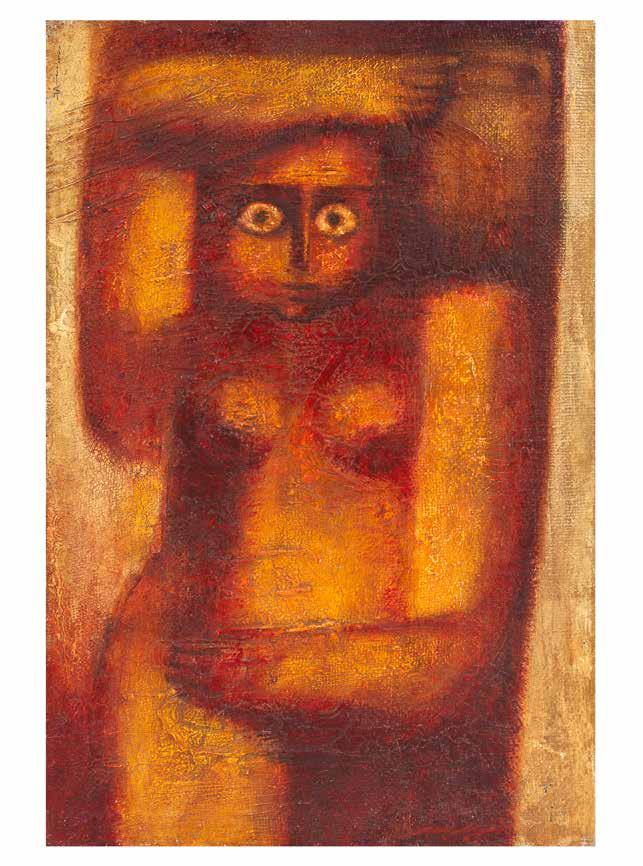
72 * AR
“I AM VERY FAITHFUL TO THE CONDITION OF THE WOMAN WHO LIVES HER CONDITION AS A WOMAN INTENSELY, FIRST AND FOREMOST... WHAT IS A WOMAN FOR ME? SHE IS THE SOURCE. IT IS AN IMMENSE, LIMITLESS SUBJECT... IT IS THE SAME ONE WHO TRANSFORMS, WHO EVOLVES, WHO DEGENERATES, WHO PROGRESSES, ALL AT THE SAME TIME... IT IS SHE WHO HELPS ME GO FURTHER EACH TIME.”
M’HAMED ISSIAKHEM (ALGERIA, 1928-1985)
Untitled oil on canvas
signed “Issiakhem” (lower left), further signed, dated and inscribed on the verso, executed in 1972 116.5 x 85cm (45 7/8 x 33 7/16in).
£20,000 - 30,000
US$27,000 - 41,000
€23,000 - 35,000
Provenance:
Property from a private collection, Algeria
Gifted by the artist to the original owner
Thence by descent to the original owner’s children
Acquired from the above by the present owner
Note:
The present work is registered in the Issiakhem estate records as PR430
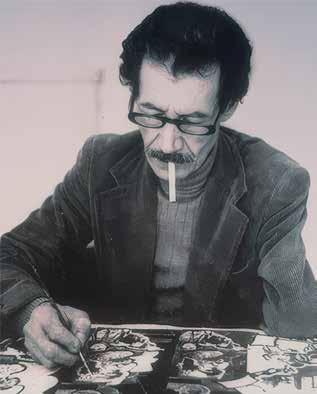
M’hamed Issiakhem is widely regarded as one of the founding figures of modern Algerian art. He began his formal training during the colonial period at the École des Beaux-Arts in Algiers before continuing his studies in Paris, where he absorbed the influence of the European avant-garde and incorporated it into Algeria’s own artistic heritage. After a period in Germany, he returned to Algeria following independence in 1962 and focused on the country’s cultural reconstruction, co-founding the National Union of Plastic Arts in 1963.
His work explores colonial history, its violence, and the difficulties of forging a national identity in its aftermath. A defining event came in 1943 when, as a child, he brought home an unexploded grenade found near an American military camp. It detonated, killing his two sisters and nephew and leaving him without his left arm. The physical and psychological weight of that moment never left him, surfacing throughout his painting in fragmentation and a raw intensity. At the centre of his practice stands the recurring figure of the woman, a subject he returned to from the 1950s until his death in 1985, and the central motif of the present work. His relationship to the female figure was shaped, in part, by a fractured bond with his own mother, from whom he was separated at the age of four.
Painted between 1971 and 1972, this work belongs to a mature phase of Issiakhem’s career, when his visual language had reached a heightened formal and psychological concentration. It is part of a group of paintings in which the human face, the eyes above all, becomes the primary source of expression. Here, the gaze both reveals and withholds, carrying an emotional depth that resists easy reading. The two figures feel at once present and withdrawn, suspended between visibility and introspection.
The composition is quiet and still. The veiled figure on the left, larger and more imposing, suggests a maternal presence, seeming protective yet burdened. The smaller figure beside her looks outward with a steady, searching directness. Their relationship is left deliberately open, though it echoes the mother-and-child pairing that recurs across Issiakhem’s body of work. A palette of greys and whites anchors the painting, lending it a muted, contemplative weight, while passages of ochre break through the surface like traces of memory or warmth held just beneath the skin. In the upper background, faint architectural lines suggest a house or village, barely present, as though recalled rather than observed. Rather than depicting specific individuals or a narrative scene, it turns toward feeling itself: suffering and dignity held in the same breath, carried through the faces of its figures.
Beyond his practice, Issiakhem’s contribution to Algerian cultural life was both artistic and institutional. He taught at the École des Beaux-Arts in Algiers and Oran, designed banknotes and postage stamps for the newly independent state, and, from 1971, served as an educator at the École Polytechnique d’Architecture et d’Urbanisme. He exhibited internationally throughout his career, and major exhibitions have been held since his passing in 1985, notably at the Institut du Monde Arabe in Paris (2022) and the Venice Biennale Arte (2024). His works are held in significant public and private collections, including the Musée des Beaux-Arts d’Alger, the Algerian Museum of Modern Art, the Barjeel Art Foundation, and the Dalloul Art Foundation.
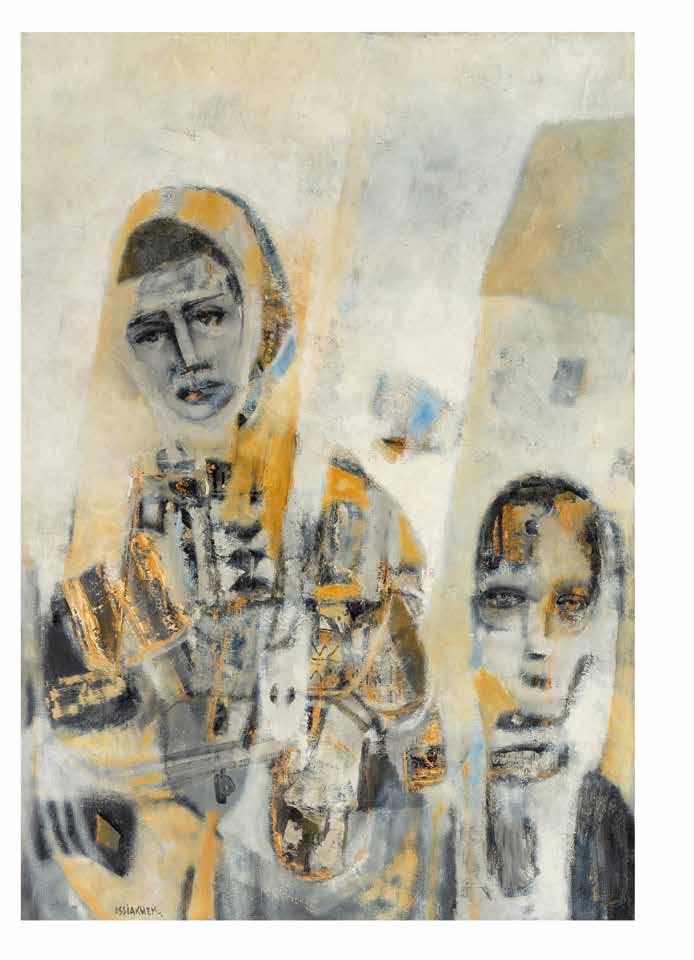
73 * AR TP
HUSSEIN MADI (LEBANON, BORN 1938)
Untitled wall hanging metal sculpture signed “MADI” and dated “1992”, executed in 1992 90 x 152cm (35 7/16 x 59 13/16in).
£25,000 - 35,000
US$34,000 - 47,000
€29,000 - 40,000
Provenance: Property from a private collection, Lebanon
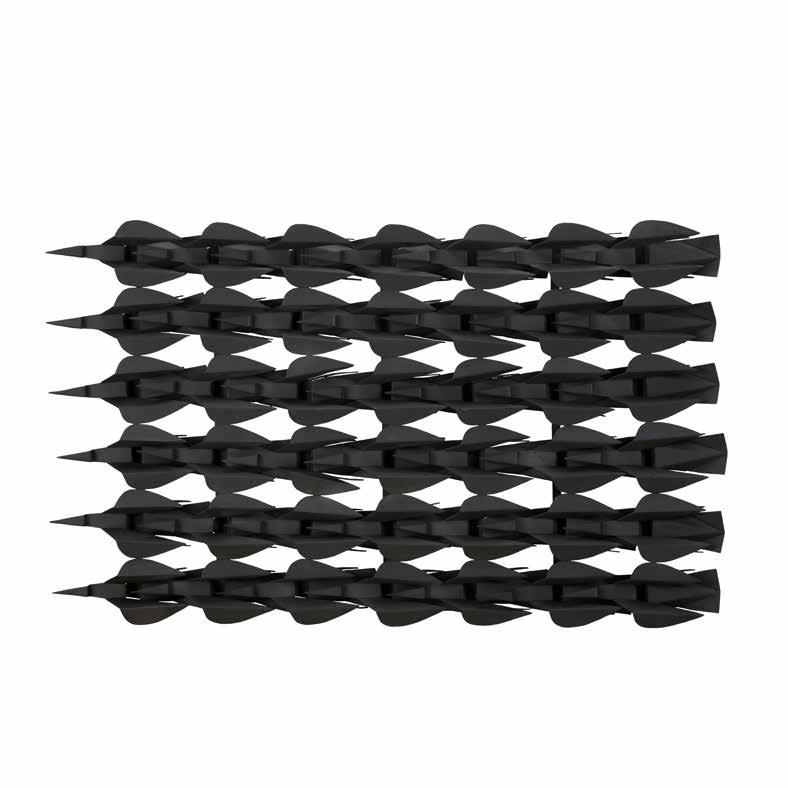
The Silent Herd mixed media on canvas, framed signed “Hallaj” in English and in Arabic and dated “1990” (lower right), executed in 1990 69 x 99cm (27 3/16 x 39in).
£25,000 - 35,000
US$34,000 - 47,000
€29,000 - 40,000
Provenance:
Property from a distinguished private collection, Dubai
Painted in 1990, The Silent Herd belongs to the mature visual language of Mustafa Al Hallaj, one of the leading Palestinian artist-printmakers of the twentieth century. Born near Jaffa in 1938 and displaced after 1948, Al Hallaj developed a distinctive symbolic vocabulary drawing on Palestinian memory, Canaanite and ancient Near Eastern imagery, folklore, mythology and religious allegory.
In this work, horses, bulls, serpents and other animals move across a warm, earth-coloured ground, accompanied by a solitary robed figure. The composition does not read as a straightforward narrative, but as an arrangement of signs and witnesses. The animals may suggest biblical or Qur’anic associations of creation, sacrifice, exile and survival, while also recalling the pastoral and mythic imagery that recurs throughout Al Hallaj’s work. The human figure appears less as an owner or herdsman than as an observer or guardian within this symbolic landscape.
The importance of the painting is also connected to its survival. It was rescued from the fire that destroyed Al Hallaj’s Damascus studio in 2002, the same fire in which the artist tragically lost his life while trying to save his work. The Silent Herd therefore stands as a strong example of Al Hallaj’s late symbolic painting: reflective, layered and deeply rooted in the visual memory of Palestine and the ancient Near East.
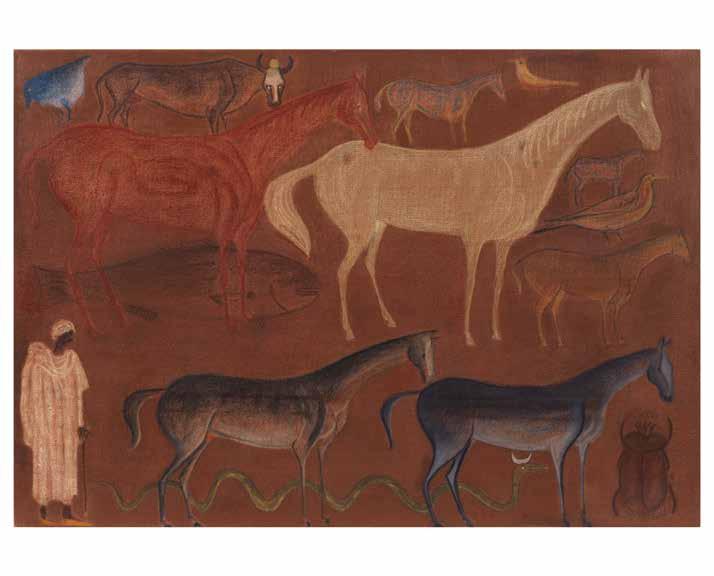
75 *
JAMIL MOLAEB (LEBANON, BORN 1948)
Bergère oil on canvas, framed signed “Molaeb” and dated “10.8.2010” (lower left), executed in 2010 73 x 37cm (28 3/4 x 14 9/16in).
£3,000 - 5,000
US$4,100 - 6,800
€3,500 - 5,800
Provenance: Property from a distinguished private collection, Lebanon
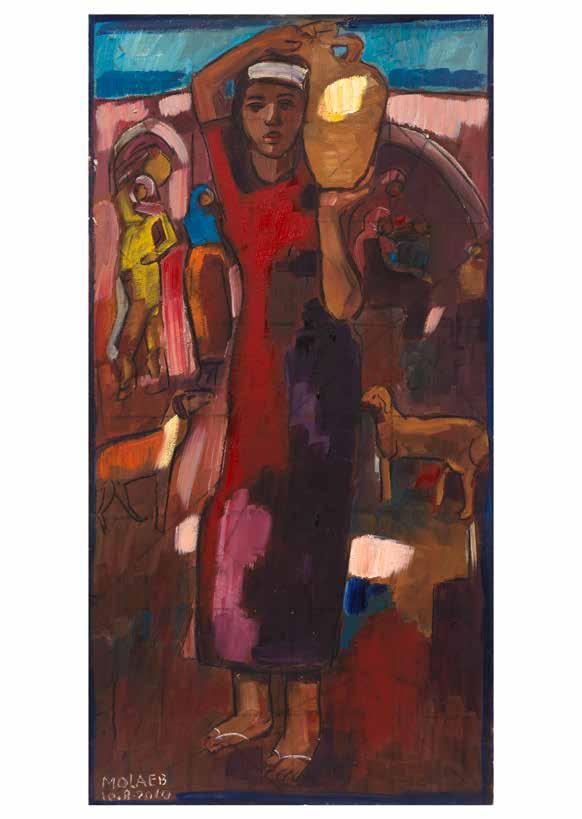
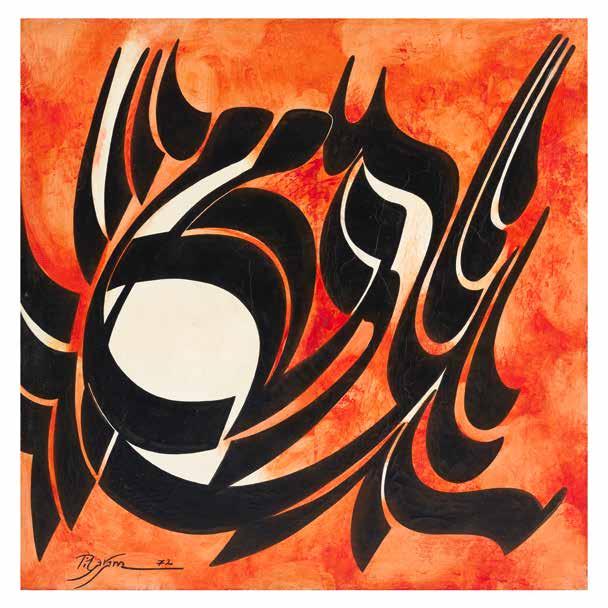
76 *
FARAMARZ PILARAM (IRAN, 1937-1983)
Untitled (Calligraphic Composition on Red) mixed media on canvas, framed signed “Pilaram” and dated “72” (lower left), executed in 1972 60 x 60cm (23 5/8 x 23 5/8in).
£6,000 - 9,500
US$8,100 - 13,000
€6,900 - 11,000
Provenance:
Property from a private collection, New York Christie’s, Visions d’orient - de l’orientalisme à l’art contemporain, 4th Nove 2011, Paris, Lot 154
| BONHAMS
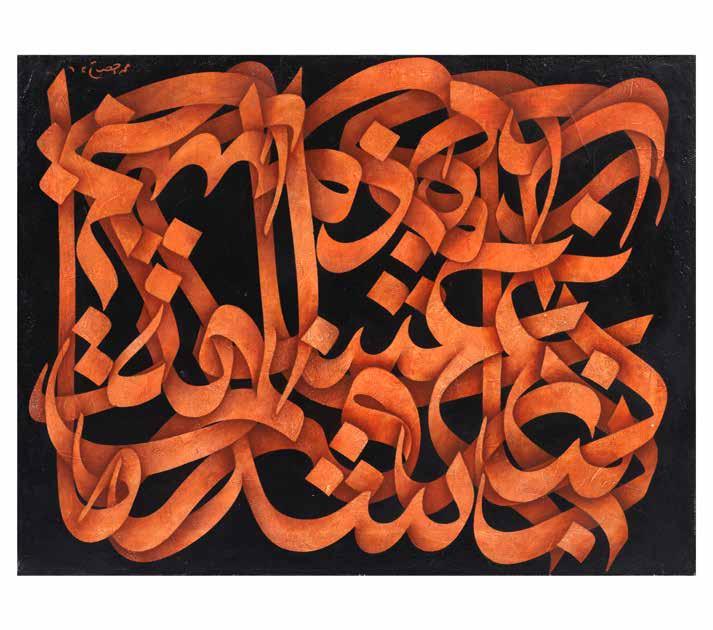
77 *
MOHAMMAD EHSAI (IRAN, BORN 1939)
Calligraphic Composition oil on canvas
signed "Mohammad Ehsai" and dated "63" in Farsi (upper left), executed in 1963 60 x 78cm (23 5/8 x 30 11/16in).
£15,000 - 22,000
US$20,000 - 30,000
€17,000 - 25,000
Provenance:
Property from a private collection, New York Sotheby’s, Contemporary Art Including Arab and Iranian Art, 16th October 2009, London, Lot 320
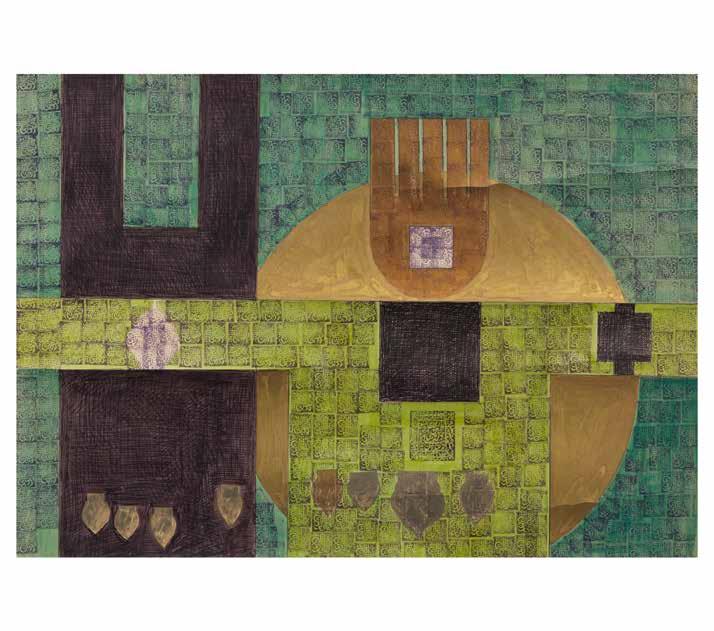
78 *
FARAMARZ PILARAM (IRAN, 1937-1983) Panj Tan (Composition 19) ink, metallic paint and acrylic on paper, framed signed and titled in Farsi on the verso, executed circa early 1960s 49 x 69cm (19 5/16 x 27 3/16in).
£15,000 - 22,000
US$20,000 - 30,000
€17,000 - 25,000
Provenance:
Property from a private collection, New York Christie’s, Modern and Cotemporary Art, 18 October 2016, Dubai, Lot 8
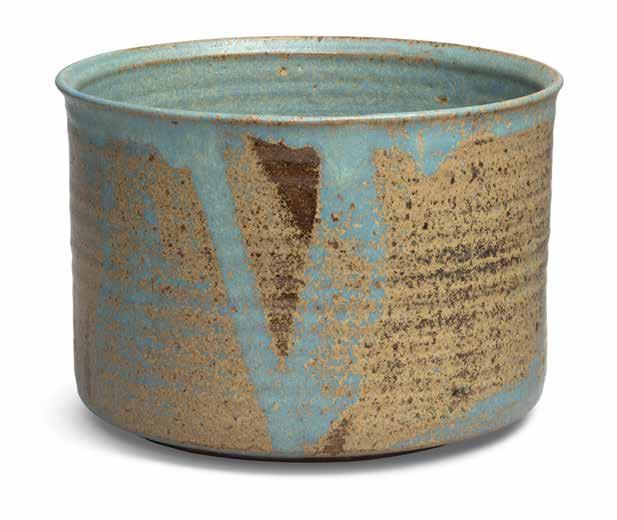
SALHAB KAZEMI (LEBANON, 1942-1990) Untitled ceramic bowl signed "D.S" in Arabic 18 x 28cm (7 1/16 x 11in).
£10,000 - 15,000
US$14,000 - 20,000
€12,000 - 17,000
Provenance:
Property from a private collection, Lebanon
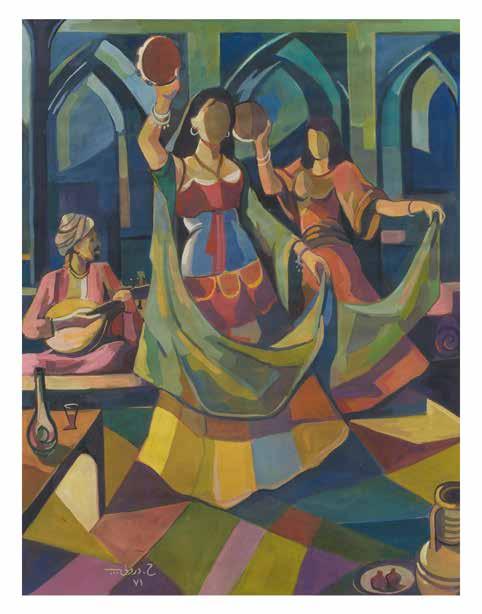
80 *
HAFIZ DRUBI (IRAQ, 1914-1991)
Untitled (Dancers) oil on paper, framed signed “H.Drubi” and dated “71” (lower left), executed in 1971 61.5 x 46.5cm (24 3/16 x 18 5/16in).
£10,000 - 15,000
US$14,000 - 20,000
€12,000 - 17,000
Provenance:
Property from a prestigious private collection of Iraqi Art, Europe
Published:
Longing for Eternity: One Century of Modern and Contemporary Iraqi Art, Skira, Milan 2014
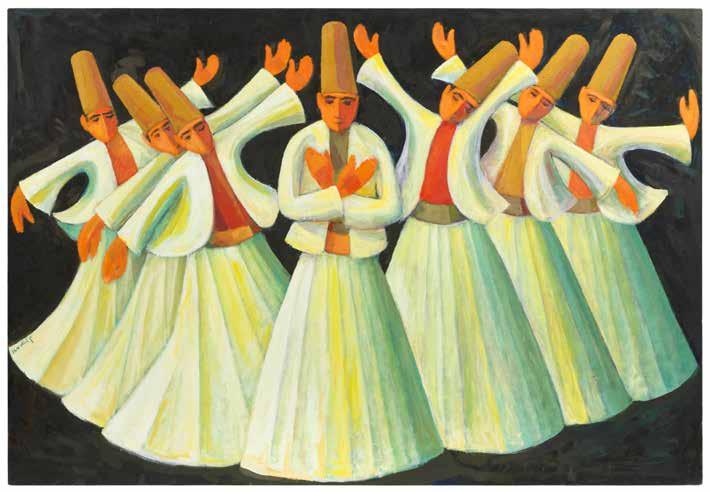
81 *
MAMDOUH KASHLAN (SYRIA, 1929-2022)
Devotional Chanting (Nashwat Al Ibtihal) oil on canvas
signed “Kashlan” and dated “16” in Arabic (left centre), inscribed on the verso, executed in 2016 109 x 158cm (42 15/16 x 62 3/16in).
£12,000 - 18,000
US$16,000 - 24,000
€14,000 - 21,000
Provenance:
Property from a private collection, Dubai
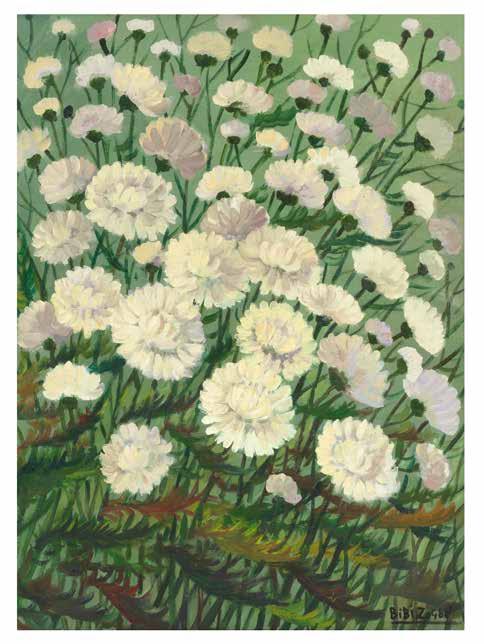
82 *
BIBI ZOGBE (LEBANON, 1890-1973) Crisantemos oil on canvas, framed signed “Bibi Zogbé” (lower right) and titled on the verso 71.5 x 51cm (28 1/8 x 20 1/16in).
£6,000 - 8,000
US$8,100 - 11,000
€6,900 - 9,200
Provenance: Property from a private collection. Lebanon
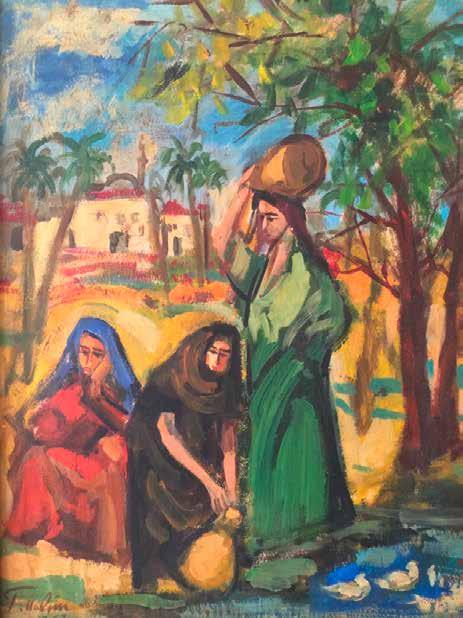
83
TAHIA HALIM (EGYPT, 1919-2003)
Rural Life
oil on wood panel, framed signed “T.Halim” and dated “1952” (lower left), executed in 1952 42 x 32cm (16 9/16 x 12 5/8in).
£12,000 - 16,000
US$16,000 - 22,000
€14,000 - 18,000
Provenance:
Property from a private collection, London Acquired directly from the artist by the above Thence by descent to the present owner
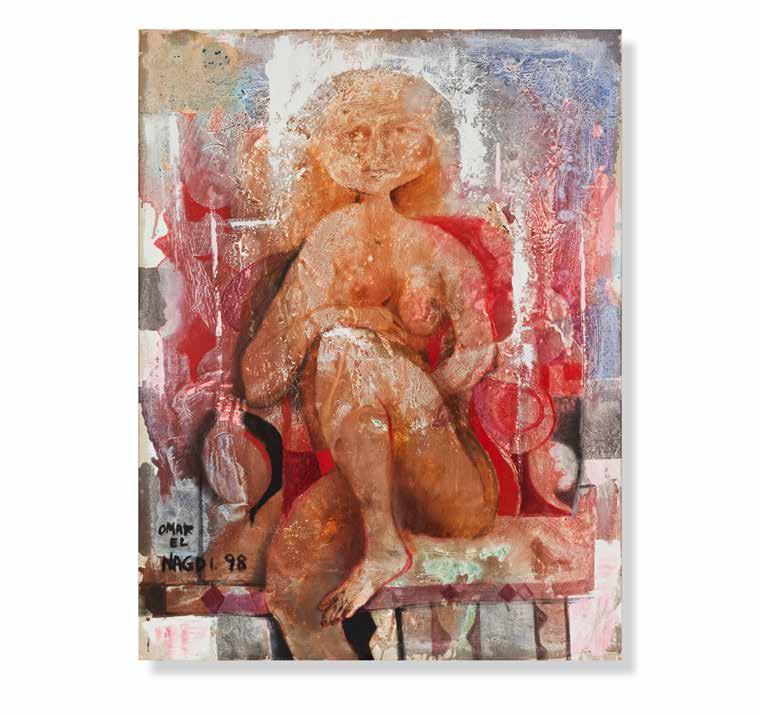
signed and dated (lower left), executed in 1998
115.5 x 89cm (45 1/2 x 35 1/16in).
£15,000 - 25,000
US$20,000 - 34,000
€17,000 - 29,000
Provenance:
Property from a private collection, France
85 *
OMAR EL-NAGDI (EGYPT, 1931-2019)
Untitled oil on canvas, framed signed upper left and dated upper right, executed in 1996 64.5 x 52.5cm (25 3/8 x 20 11/16in).
£5,000 - 8,000
US$6,800 - 11,000
€5,800 - 9,200
Provenance:
Property from a private collection, France
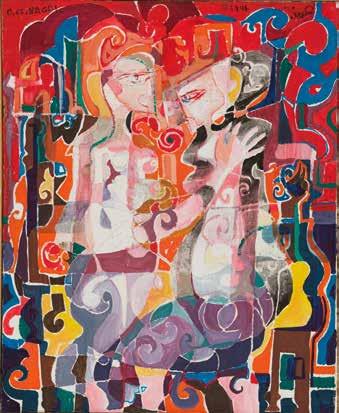
86 *
OMAR EL-NAGDI (EGYPT, 1931-2019)
Les Deux Amies oil pastel on paper, framed signed “Omar Nagdi” and dated “64” (lower right), executed in 1964 64 x 49cm (25 3/16 x 19 5/16in).
£4,000 - 6,000
US$5,400 - 8,100
€4,600 - 6,900
Provenance:
Property from Galerie Eric Baude, France
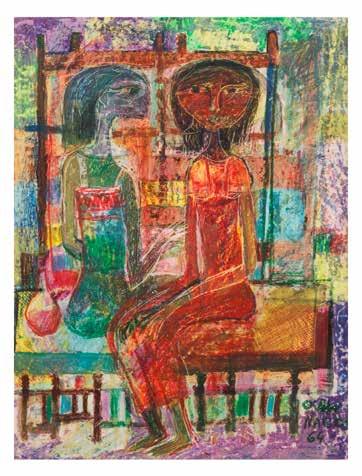
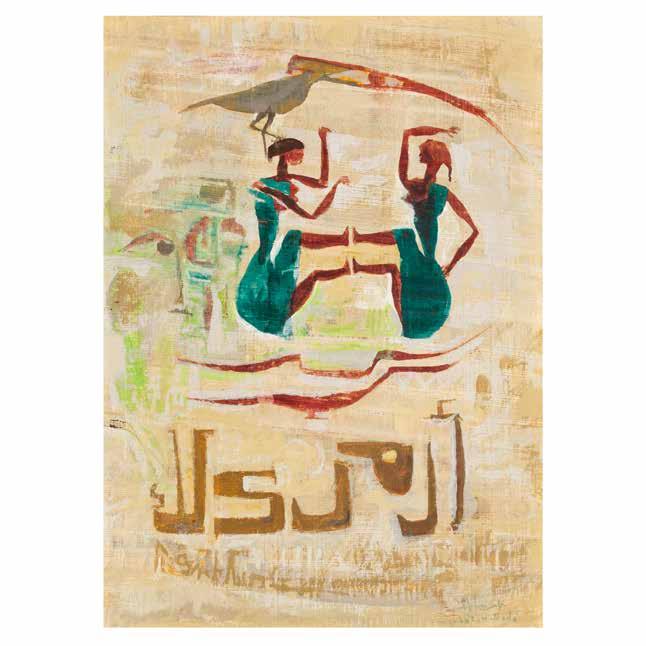
87 *
HAMED NADA (EGYPT, 1924-1990)
Seated Figures with Birds 15 x 11 inches oil on papyrus, framed executed in 1981
38 x 28cm (14 15/16 x 11in).
£8,000 - 12,000
US$11,000 - 16,000
€9,200 - 14,000
Provenance:
Property from a private collection, Canada Acquired directly from the artist by the above Thence by descent to the present owner
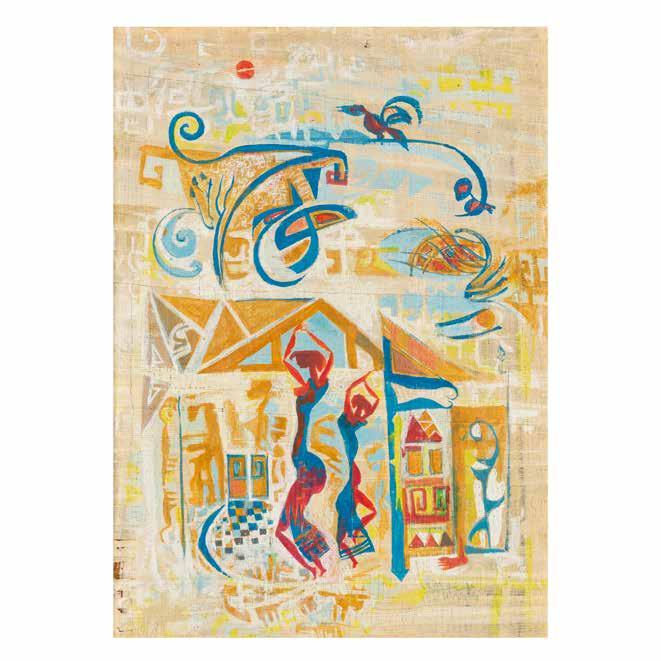
88 *
HAMED NADA (EGYPT, 1924-1990)
Untitled (Dancing Figures) 15 x 11 in. oil on papyrus, framed executed in 1981
38 x 28cm (14 15/16 x 11in).
£8,000 - 12,000
US$11,000 - 16,000
€9,200 - 14,000
Provenance:
Property from a private collection, Canada Acquired directly from the artist by the above Thence by descent to the present owner
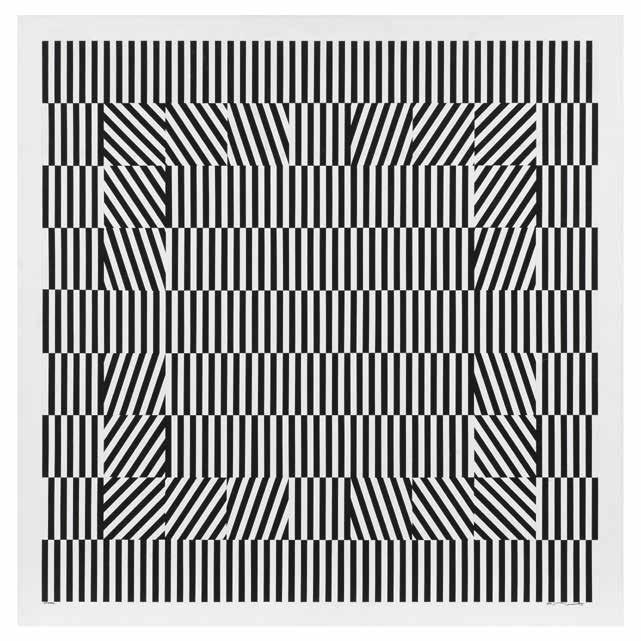
89 * AR
MEHDI MOUTASHAR (IRAQ, BORN 1943) Zone 25 oil on canvas, framed signed “Mehdi Moutashar”, dated “1973”, titled “Zone 25” and inscribed “Paris” on the verso, executed in 1973 89 x 89cm (35 1/16 x 35 1/16in).
£15,000 - 20,000
US$20,000 - 27,000
€17,000 - 23,000
Provenance:
Property from a prestigious private collection of Iraqi Art, Europe
Exhibited: Mehdi Moutashar, Cagnes-Sur-Mer, 1973
Mehdi Moutashar was born in Hilla, Iraq, a region with a long and rich cultural history. He received his early training at the Institute of Fine Arts in Baghdad before continuing his studies at the École Nationale Supérieure des Beaux-Arts in Paris, graduating in 1970.
His work has been exhibited internationally at institutions including Mathaf: Arab Museum of Modern Art in Doha, the Musée d’Art Moderne de Paris, and the Islamic Arts Biennale in Jeddah. His works are held in major public collections such as the Victoria and Albert Museum, London, and Qatar Museums, reflecting his important contribution to modern and contemporary art from the region.
In 2018, he was awarded the Jameel Prize 5 at the Victoria and Albert Museum, further recognising his role in contemporary abstraction.
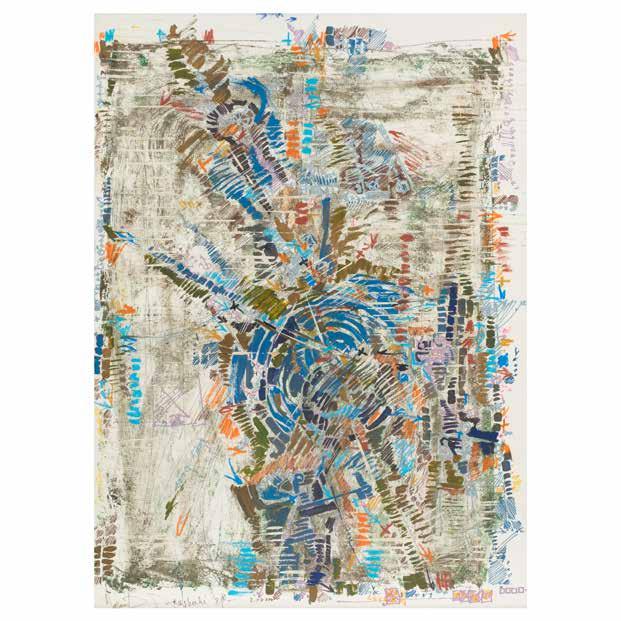
90 *
MASSOUD ARABSHAHI (IRAN, 1935-2019)
Abstract
acrylic on paper, framed signed “Massoud Arabshahi” and dated “87” (lower left), executed in 1987 75 x 55cm (29 1/2 x 21 5/8in).
£3,500 - 6,000
US$4,700 - 8,100
€4,000 - 6,900
Provenance:
Property from a private collection, New York
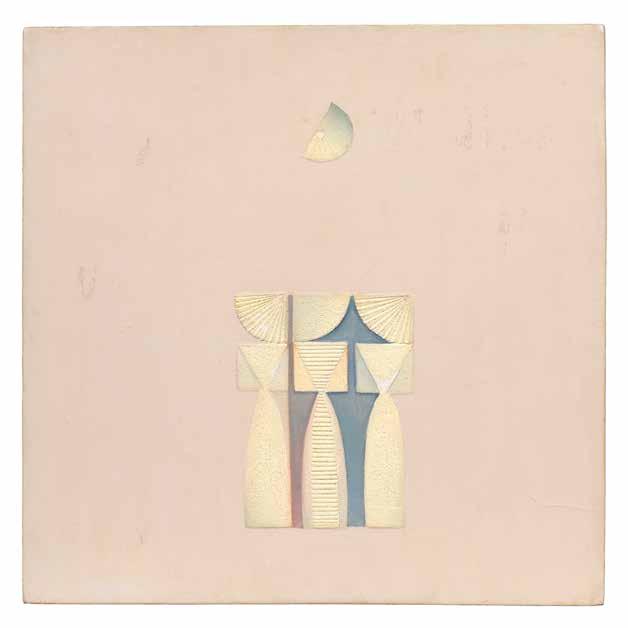
91 *
FARGHALI ABDEL HAFIZ (EGYPT, 1941-2023)
Moonlight
mixed media on canvas mounted on board, framed signed “Fargali” and dated “80” in Arabic (lower left turnover), executed in 1980
50 x 50cm (19 11/16 x 19 11/16in).
£10,000 - 15,000
US$14,000 - 20,000
€12,000 - 17,000
Provenance:
Property from a private collection, Egypt
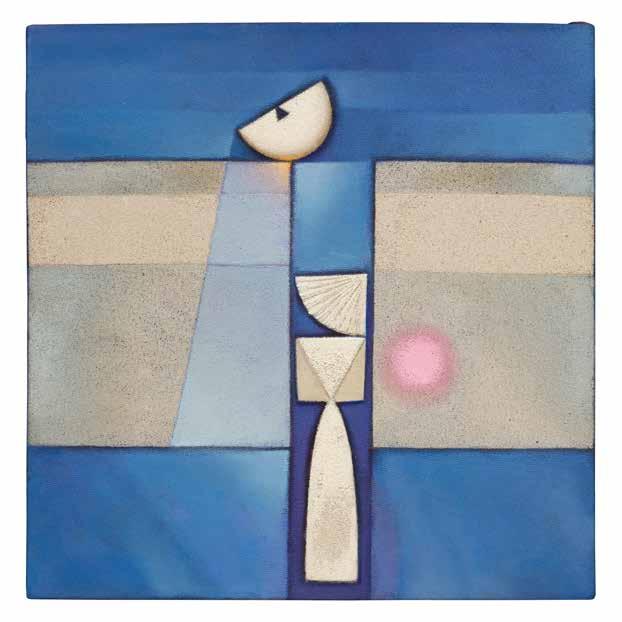
92 *
FARGHALI ABDEL HAFIZ (EGYPT, 1941-2023)
Twilight
mixed media on canvas mounted on board, framed signed “Farghali” and dated “84” in English and Arabic (lower left turnover), executed in 1984
40.5 x 40.5cm (15 15/16 x 15 15/16in).
£8,000 - 12,000
US$11,000 - 16,000
€9,200 - 14,000
Provenance:
Property from a private collection, Egypt
Farghali Abdel Hafiz is a graduate of the Institute of Art Education in Cairo and the Academy of Fine Arts in Florence. His work is deeply rooted in his engagement with his surrounding environment. Based in Dahshour, one of Egypt’s most historically significant sites, reflected in the meditative and atmospheric qualities of his paintings.
Abdel Hafiz’s compositions are usually characterised by spontaneous and expressive brushwork which is often bold use of colour. Working across diverse media including oil, watercolour, acrylic, and mixed materials such as sand and clay he has developed a richly textured and highly individual and unique to his visual language.
The present work, Twilight, exemplifies the artist’s distinctive visual language. Its bold, often abstract composition is defined by a highly formalised use of colour, in which structured forms evoke the appearance of archaeological excavations, lending the work a sense of depth and layered history.
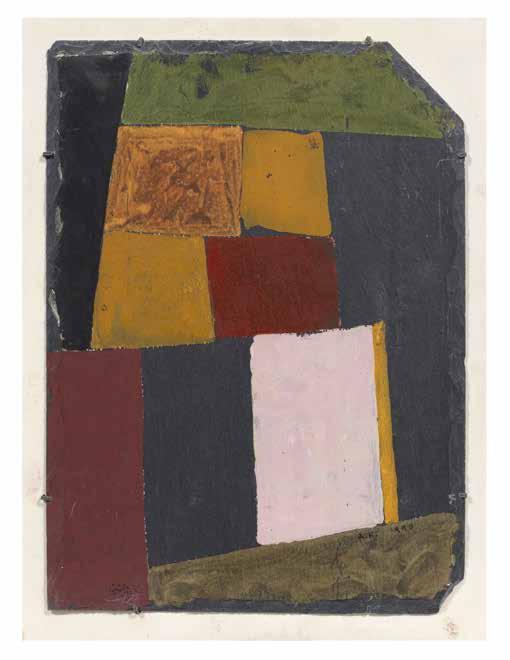
93 * AR
ADAM HENEIN (EGYPT, 1929-2020)
Untitled I
mixed media on slate, framed signed “A.H” and dated “1995” in Arabic (lower right), further signed “Adam Henein” in Arabic (lower left), executed in 1995 30 x 22cm (11 13/16 x 8 11/16in).
£4,000 - 6,000
US$5,400 - 8,100
€4,600 - 6,900
Provenance:
Property from a private collection, Egypt Acquired directly from the artist by the above
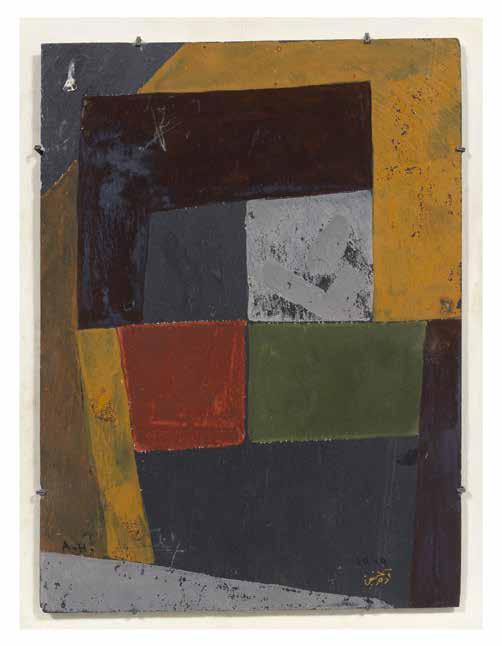
94 * AR
ADAM HENEIN (EGYPT, 1929-2020)
Untiled II
mixed media on slate, framed signed “Adam Henein” and dated “1995” in Arabic (lower right), further signed “A.H” (lower left), label on the verso, executed in 1995 30 x 22cm (11 13/16 x 8 11/16in).
£4,000 - 6,000
US$5,400 - 8,100
€4,600 - 6,900
Provenance:
Property from a private collection, Egypt Gifted directly by the artist to the above
95 *
ABDEL WAHAB MORSI (EGYPT, BORN 1931)
Man and Child
mixed media on paper, framed signed "A. Morsi" and dated "1968" (lower right), executed in 1968 47 x 33cm (18 1/2 x 13in).
£2,000 - 3,000
US$5,400 - 8,100
€4,600 - 6,900
Provenance:
Property from a private collection, Canada Acquired directly from the artist by the above Thence by descent to the present owner
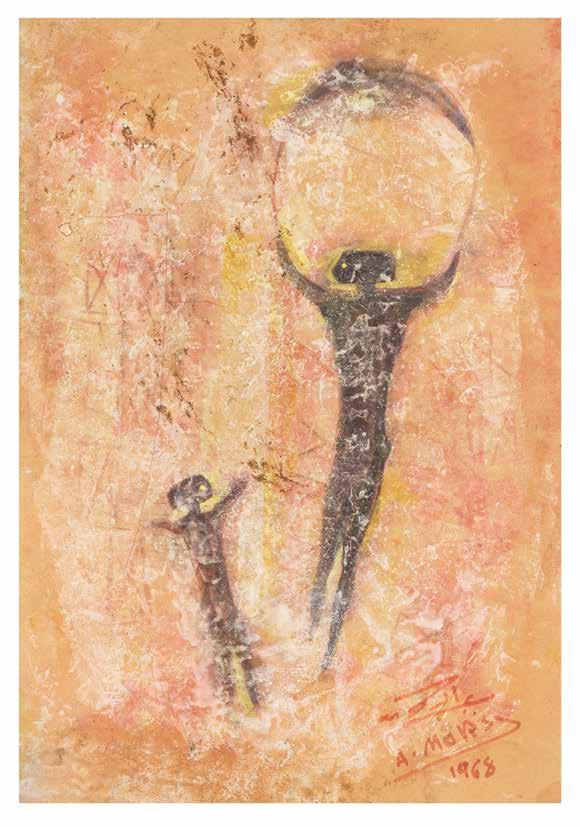
Untitled acrylic on canvas
signed and dated “2025” (lower left), inscribed on the verso, executed in 2025
90 x 60cm (35 7/16 x 23 5/8in).
£9,000 - 15,000
US$12,000 - 20,000
€10,000 - 17,000
Provenance:
Property from a private collection, Cairo
Souad Abdelrassoul’s practice encompasses painting, drawing, sculpture and graphic design, moving fluidly between abstraction and figuration. Her work probes the depths of human experience, offering a nuanced exploration of empowerment, self-discovery, and the complex relationship between body and mind. Rooted in her own lived experience as a woman and a mother, her paintings channel a range of emotional states while reflecting on how women navigate and adapt within restrictive environments. Drawing on myths and folklore, Abdelrassoul constructs narratives through her figures that challenge and reconsider the roles of women across society and cultural history. Infused with a subtle surrealist sensibility, her work celebrates both the feminine and the emotional.
Preferring acrylic over oil, Abdelrassoul embraces the immediacy and fluidity of the medium, allowing her to respond instinctively and capture fleeting emotional moments. Recurring motifs surface throughout her work, often drawn from anatomy as well as the natural world. Her personal engagement with planting and nurturing seeds becomes a quiet but persistent source of inspiration. Blending abstract and figurative elements, she fuses human, animal, and vegetal forms, with tree-like bodies that branch into veins and arteries, alongside enlarged insectlike creatures. These compositions underscore the intrinsic connection between inner life and the external environment. Through this reimagining of space and form, she transforms ideas drawn from nature and science into deeply personal visual languages, rooted in the belief that humanity remains inseparable from the earth.
Born in Cairo in 1974, Abdelrassoul earned her BFA from El Minya University in 1998, followed by a master’s degree in History of Art in 2005, and a PhD in Modern Art History in 2012. Since the late 1990s, she has exhibited widely in both solo and group exhibitions across Cairo, as well as internationally in cities such as Nairobi, Beirut, and the United States. Recent presentations include exhibitions in London at Fitzrovia Gallery in 2023 and Cromwell Place in 2021 and 2022, and at Circle Art Gallery in Nairobi in 2021. In 2022, she was commissioned to create a work for the facade of the Hayward Gallery at London’s Southbank Centre. Her work is held in the collections of the Chazen Museum of Art and the Worcester Art Museum in the United States, and she was shortlisted for the Norval Sovereign Art Prize in Cape Town.
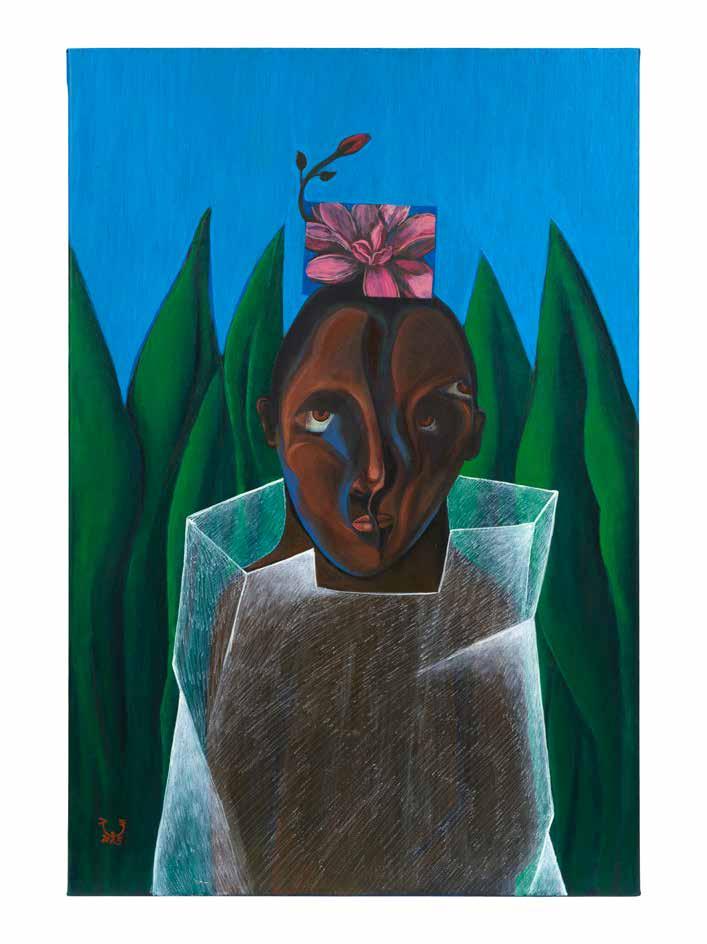
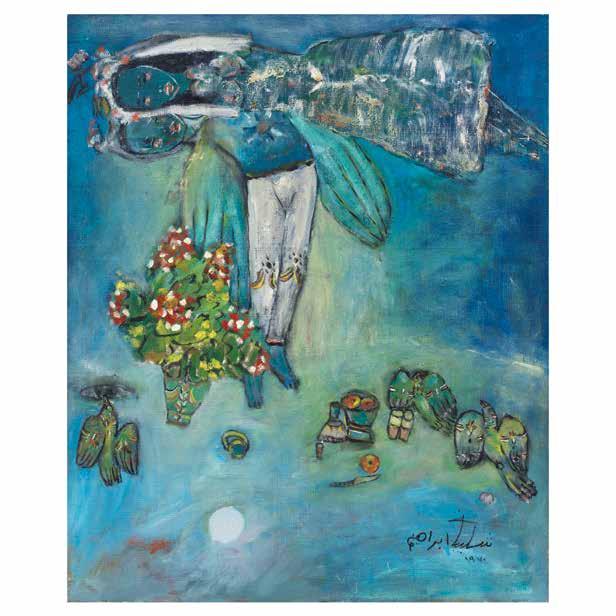
97 *
SHALABIYA IBRAHIM (EGYPT, BORN 1944)
Untitled oil on canvas, framed signed “Shalabiya Ibrahim” and “dated 1970” in Arabic (lower right), further dated and signed on the verso, executed in 1970 55 x 45cm (21 5/8 x 17 11/16in).
£20,000 - 30,000
US$27,000 - 41,000
€23,000 - 35,000
Provenance:
Property from a private collection, Dubai
Hanged Series painted copper sheets with safety pins, three parts executed in 2015 various dimensions, largest is 92 x 21cm (36 1/4 x 8 1/4in)
£4,500 - 7,500
US$6,100 - 10,000
€5,200 - 8,600
Provenance:
Property from a private collection, New York
99 * AR
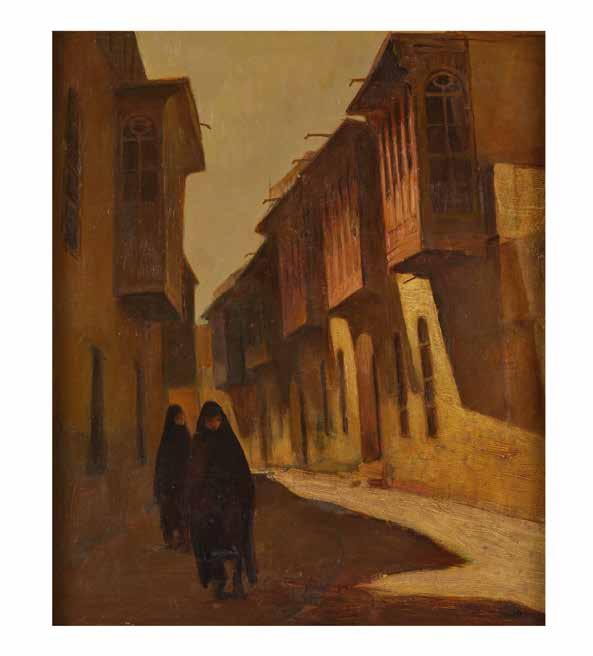
FAEQ HASSAN (IRAQ, 1914-1992) Street with Women oil on canvas, framed signed “Faik” and dated “1968” in Arabic (lower right), further signed, dated and inscribed in English on the verso, executed in 1968 60 x 45cm (23 5/8 x 17 11/16in).
£18,000 - 25,000
US$24,000 - 34,000
€21,000 - 29,000
Provenance:
Property from a private collection, Sweden
EVENING SALE
New York | May 20, 2026
INQUIRIES
eveningsaleus@bonhams.com bonhams.com
CONSTANTIN BRANCUSI (1876-1957)
La Muse endormie II signed ‘Brancusi’, numbered ‘7/8’ and inscribed with the foundry mark ‘Susse Fondeur Paris’ (on the underside) polished bronze 6 15/16 x 11 1/8 x 6 11/16 in (17.6 x 28.2 x 17 cm)
Refer to department
New York | May 21, 2026
INQUIRIES +1 917 206 1696
impressionist.us@bonhams.com bonhams.com
FERNAND LÉGER (1881-1955)
Composition aux gants jaunes oil on canvas
25 5/8 x 21 1/4 in (65.1 x 54 cm)
Painted in 1934
$250,000 - 350,000 *
This notice is addressed by Bonhams to any person who may be interested in a Lot, and to all persons participating in the auction process including auction attendees, Bidders and potential Bidders (including any eventual Buyer of the Lot). For ease of reference we refer to such persons as “Bidders” or “you”. Our List of Definitions and Glossary is incorporated into this Notice to Bidders. It is at Appendix 3 at the back of the Catalogue. Where words and phrases are used in this notice which are in the List of Definitions, they are printed in italics. IMPORTANT: Additional information applicable to the Sale may be set out in the Catalogue for the Sale, in an insert in the Catalogue and/or in a notice displayed at the Sale venue and you should read them as well. Announcements affecting the Sale may also be given out orally before and during the Sale without prior written notice. You should be alert to the possibility of changes and ask in advance of bidding if there have been any.
1. OUR ROLE
In its role as Auctioneer of Lots, Bonhams acts solely for and in the interests of the Seller Bonhams’ job is to sell the Lot at the highest price obtainable at the Sale to a Bidder. Bonhams does not act for Buyers or Bidders in this role and does not give advice to Buyers or Bidders. When it or its staff make statements about a Lot or, if Bonhams provides a Condition Report on a Lot it is doing that on behalf of the Seller of the Lot. Bidders and Buyers who are themselves not expert in the Lots are strongly advised to seek and obtain independent advice on the Lots and their value before bidding for them. The Seller has authorised Bonhams to sell the Lot as its agent on its behalf and, save where we expressly make it clear to the contrary, Bonhams acts only as agent for the Seller. Any statement or representation we make in respect of a Lot is made on the Seller’s behalf and, unless Bonhams sells a Lot as principal, not on our behalf and any Contract for Sale is between the Buyer and the Seller and not with us. If Bonhams sells a Lot as principal this will either be stated in the Catalogue or an announcement to that effect will be made by the Auctioneer, or it will be stated in a notice at the Sale or an insert in the Catalogue.
Bonhams does not owe or undertake or agree to any duty or responsibility to you in contract or tort (whether direct, collateral, express, implied or otherwise). If you successfully bid for a Lot and buy it, at that stage Bonhams does enter into an agreement with you as the Buyer. The terms of that contract are set out in our Buyer’s Agreement, which you will find at Appendix 2 at the back of the Catalogue, and this will govern Bonhams’ relationship with the Buyer 2. LOTS
Subject to the Contractual Description printed in bold letters in the Entry about the Lot in the Catalogue (see paragraph 3 below), Lots are sold to the Buyer on an “as is” basis, with all faults and imperfections. Illustrations and photographs contained in the Catalogue (other than photographs forming part of the Contractual Description) or elsewhere of any Lots are for identification purposes only. A photograph or illustration may not reflect an accurate reproduction of the colour(s) or true condition of the Lot Lots are available for inspection prior to the Sale and it is for you to satisfy yourself as to each and every aspect of a Lot, including its authorship, attribution, condition, provenance, history, background, authenticity, style, period, age, suitability, quality, roadworthiness (if relevant), origin, value and estimated selling price (including the Hammer Price). It is your responsibility to examine any Lot in which you are interested. It should be remembered that the actual condition of a Lot may not be as good as that indicated by its outward appearance. In particular, parts may have been replaced or renewed and Lots may not be authentic or of satisfactory quality; the inside of a Lot may not be visible and may not be original or may be damaged, as for example where it is covered by upholstery or material. Given the age of many Lots they may have been damaged and/or repaired and you should not assume that a Lot is in good condition. Electronic or mechanical items or parts are sold for their artistic, historic or cultural interest and may not operate or may not comply with current statutory requirements. You should not assume that electrical items designed to operate on mains electricity will be suitable for connection to the mains electricity supply and you should obtain a report from a qualified electrician on their status before doing so. Such items which are unsuitable for connection are sold as items of interest for display purposes only. If you yourself do not have expertise regarding a Lot, you should consult someone who does to advise you. We can assist in arranging facilities for you to carry out or have carried out more detailed inspections and tests. Please ask our staff for details. Any person who damages a Lot will be held liable for the loss caused.
3. DESCRIPTIONS OF LOTS AND ESTIMATES
Contractual Description of a Lot
The Catalogue contains an Entry about each Lot. Each Lot is sold by its respective Seller to the Buyer of the Lot as corresponding only with that part of the Entry which is printed in bold letters and (except for the colour, which may be inaccurately reproduced) with any photograph of the Lot in the Catalogue. The remainder of the Entry, which is not printed in bold letters, represents Bonhams’ opinion (given on behalf of the Seller) about the Lot only and is not part of the Contractual Description in accordance with which the Lot is sold by the Seller Estimates
In most cases, an Estimate is printed beside the Entry Estimates are only an expression of Bonhams’ opinion made on behalf of the Seller of the range where Bonhams thinks the Hammer Price for the Lot is likely to fall; it is not an Estimate of value. It does not take into account any VAT or Buyer’s Premium payable or any other fees payable by the Buyer, which are detailed in paragraph 7 of the Notice to Bidders, below. Prices depend upon bidding and lots can sell for Hammer Prices below and above the Estimates, so Estimates should not be relied on as an indication of the actual selling price or value of a Lot Estimates are in the currency of the Sale Condition Reports
In respect of most Lots, you may ask Bonhams for a Condition Report on the Lot’s general physical condition. If you do so, this will be provided by Bonhams on behalf of the Seller free of charge. As this is offered additionally and without charge, Bonhams is not entering into a contract with you in respect of the Condition Report and accordingly does not assume responsibility to you in respect of it. The Condition Report represents Bonhams’ reasonable opinion as to the Lot’s general condition in the terms stated in the particular report, and Bonhams does not represent or guarantee that a Condition Report includes all aspects of the internal or external condition of the Lot. Neither does the Seller owe or agree to owe you as a Bidder or Buyer any obligation or duty in respect of this free report about a Lot, which is available for your own inspection or for inspection by an expert instructed by you. The Seller’s responsibility to you
The Seller does not make or agree to make any representation of fact or contractual promise, Guarantee or warranty and undertakes no obligation or duty, whether in contract or in tort (other than to the eventual Buyer as set out above), in respect of the accuracy or completeness of any statement or representation made by him or on his behalf, which is in any way descriptive of any Lot or as to the anticipated or likely selling price of any Lot. Other than as set out above, no statement or representation in any way descriptive of a Lot or any Estimate is incorporated into any Contract for Sale between a Seller and a Buyer Bonhams’ responsibility to you
You have the opportunity of examining the Lot if you want to and the Contract for Sale for a Lot is with the Seller and not with Bonhams; Bonhams acts as the Seller’s agent only (unless Bonhams sells the Lot as principal).
Bonhams undertakes no obligation to you to examine, investigate or carry out any tests, either in sufficient depth or at all, on each Lot to establish the accuracy or otherwise of any Descriptions or opinions given by Bonhams, or by any person on Bonhams’ behalf, whether in the Catalogue or elsewhere.
You should not suppose that such examinations, investigations or tests have occurred.
Bonhams does not make or agree to make any representation of fact, and undertakes no obligation or duty (whether in contract or tort) in respect of the accuracy or completeness of any statement or representation made by Bonhams or on Bonhams’ behalf which is in any way descriptive of any Lot or as to the anticipated or likely selling price of any Lot. No statement or representation by Bonhams or on its behalf in any way descriptive of any Lot or any Estimate is incorporated into our Buyer’s Agreement.
Alterations
Descriptions and Estimates may be amended at Bonhams’ discretion from time to time by notice given orally or in writing before or during a Sale
THE LOT IS AVAILABLE FOR INSPECTION AND YOU MUST FORM YOUR OWN OPINION IN RELATION TO IT. YOU ARE STRONGLY ADVISED TO EXAMINE ANY LOT OR HAVE IT EXAMINED ON YOUR BEHALF BEFORE THE SALE
4. CONDUCT OF THE SALE
Our Sales are public auctions which persons may attend and you should take the opportunity to do so. We reserve the right at our sole discretion to refuse admission to our premises or to any Sale and to remove any person from our premises and Sales, without stating a reason. We have complete discretion as to whether the Sale proceeds, whether any Lot is included in the Sale, the manner in which the Sale is conducted and we may offer Lots for Sale in any order we choose notwithstanding the numbers given to Lots in the Catalogue. You should therefore check the date and starting time of the Sale, whether there have been any withdrawals or late entries. Remember that withdrawals and late entries may affect the time at which a Lot you are interested is put up for Sale. We have complete discretion in which to refuse any bid, to nominate any bidding increment we consider appropriate, to divide any Lot, to combine two or more Lots, to withdraw any Lot from a Sale and, before the Sale has been closed, to put up any Lot for auction again. Auction speeds can exceed 100 Lots to the hour and bidding increments are generally about 10%; however, these do vary from Sale to Sale and from Auctioneer to Auctioneer Please check with the department organising the Sale for advice on this. Where a Reserve has been applied to a Lot, the Auctioneer may, in his absolute discretion, place bids (up to an amount not equalling or exceeding such Reserve) on behalf of the Seller. We are not responsible to you in respect of the presence or absence of any Reserve in respect of any Lot. If there is a Reserve it will be no higher than the lower figure for any Estimate in the Catalogue, assuming that the currency of the Reserve has not fluctuated adversely against the currency of the Estimate. The Buyer will be the Bidder who makes the highest bid acceptable to the Auctioneer for any Lot (subject to any applicable Reserve) to whom the Lot is knocked down by the Auctioneer at the fall of the Auctioneer’s hammer. Any dispute as to the highest acceptable bid will be settled by the Auctioneer in his absolute discretion. All bids tendered will relate to the actual Lot number announced by the Auctioneer. An electronic currency converter may be used at the Sale. This equipment is provided as a general guide as to the equivalent amount in certain currencies of a given bid. We do not accept any responsibility for any errors which may occur in the use of the currency converter. We may use video cameras to record the Sale and may record telephone calls for reasons of security and to assist in solving any disputes which may arise in relation to bids made at the Sale. At some Sales, for example, jewellery Sales, we may use screens on which images of the Lots will be projected. This service is provided to assist viewing at the Sale. The image on the screen should be treated as an indication only of the current Lot. It should be noted that all bids tendered will relate to the actual Lot number announced by the Auctioneer. We do not accept any responsibility for any errors which may occur in the use of the screen.
You must complete and deliver to us one of our Bidding Forms, either our Bidder Registration Form, Absentee Bidding Form or Telephone Bidding Form in order to bid at our Sales
If you are a new client at Bonhams or have not recently updated your registration details with us, you must pre-register to bid at least two working days before the Sale at which you wish to bid. You will be required to provide government-issued proof of identity and residence, and if you are a company, your certificate of incorporation or equivalent documentation with your name and registered address, government issued proof of your current address, documentary proof of your beneficial owners and directors, and proof of authority to transact. We may also request a financial reference and /or deposit from you before allowing you to bid.
We reserve the rights at our discretion to request further information in order to complete our client identification and to decline to register any person as a Bidder, and to decline to accept their bids if they have been so registered. We also reserve the rights to postpone completion of the Sale of any Lot at our discretion while we complete our registration and identification enquiries, and to cancel the Sale of any Lot if you are in breach of your warranties as Buyer, or if we consider that such Sale would be unlawful or otherwise cause liabilities for the Seller or Bonhams or be detrimental to Bonhams’ reputation.
Bidding in person
So long as you have pre-registered to bid or have updated your existing registration recently, you should come to our Bidder registration desk at the Sale venue and fill out a Registration and Bidding Form on (or, if possible, before) the day of the Sale. The bidding number system is sometimes referred to as “paddle bidding”. You will be issued with a large card (a “paddle”) with a printed number on it. This will be attributed to you for the purposes of the Sale. Should you be a successful Bidder you will need to ensure that your number can be clearly seen by the Auctioneer and that it is your number which is identified as the Buyer’s. You should not let anyone else use your paddle as all Lots will be invoiced to the name and address given on your Bidder Registration Form. Once an invoice is issued it will not be changed. If there is any doubt as to the Hammer Price of, or whether you are the successful Bidder of, a particular Lot, you must draw this to the attention of the Auctioneer before the next Lot is offered for Sale At the end of the Sale, or when you have finished bidding please return your paddle to the Bidder registration desk.
Bidding by telephone
If you wish to bid at the Sale by telephone, and have pre-registered to bid or have updated your existing registration details recently, please complete a Registration and Bidding Form, which is available from our offices or in the Catalogue. Please then return it to the office responsible for the Sale at least 24 hours in advance of the Sale. It is your responsibility to check with our Bids Office that your bid has been received. Telephone calls will be recorded. The telephone bidding facility is a discretionary service offered at no additional charge and may not be available in relation to all Lots. We will not be responsible for bidding on your behalf if you are unavailable at the time of the Sale or if the telephone connection is interrupted during bidding. Please contact us for further details.
Bidding by post or fax
Absentee Bidding Forms can be found in the back of this Catalogue and should be completed and sent to the office responsible for the Sale, once you have pre-registered to bid or have updated your existing registration details recently. It is in your interests to return your form as soon as possible, as if two or more Bidders submit identical bids for a Lot, the first bid received takes preference. In any event, all bids should be received at least 24 hours before the start of the Sale Please check your Absentee Bidding Form carefully before returning it to us, fully completed and signed by you. It is your responsibility to check with our Bids Office that your bid has been received. This additional service is complimentary and is confidential. Such bids are made at your own risk and we cannot accept liability for our failure to receive and/or place any such bids. All bids made on your behalf will be made at the lowest level possible subject to Reserves and other bids made for the Lot. Where appropriate your bids will be rounded down to the nearest amount consistent with the Auctioneer’s bidding increments. New Bidders must also provide proof of identity and address when submitting bids. Failure to do this will result in your bid not being placed.
Bidding via the internet
In order to bid online in a Sale, you must be 18 or over and you must register to bid via the Bonhams App or www.bonhams.com. Once you have registered, you should keep your account details strictly confidential and not permit any third party to access your account on your behalf or otherwise. You will be liable for any and all bids made via your account. Please note payment must be made from a bank account in the name of the registered bidder.
Individuals: Enter your full name, email, residential address, date of birth and nationality and provide a valid credit card in your name which will be verified via Stripe before you are able to bid. If your credit card fails verification, you will not be permitted to bid and you should contact Client Services for assistance. We may in addition request a financial reference and/or deposit from you prior to letting you bid. If you are bidding as agent on behalf of another party, you agree: (i) to disclose this fact to Client Services; (ii) to provide such information as we require to enable us to complete our identification and anti-money laundering checks on that third party; and (ii) where your bid is successful, you are jointly and severally liable with that other party for the full amounts owing for the successful bid. Where you are the successful bidder for any lot with a hammer price equal to or in excess of £5,000/$10,000/ HKD50,000/AUS$10,000 depending on the jurisdiction and currency of the Sale, and if you have not provided such documents previously, you will be required to upload or provide to Client Services your Government issued photo ID and (if not on the ID) proof of your
address before the lot can be released to you. We reserve the right to request ID documentation from any bidder or successful buyer regardless of these thresholds and to refuse to release any purchased lot until such documentation is provided.
Companies: You must select the option to set up a business account and then provide your full name, email, residential address, date of birth and the full name of the company. You must provide a credit card for verification either in your name or the name of the company but payment must be made from an account in the company’s name. If your credit card fails verification, you will not be permitted to bid and please contact Client Services for assistance. We may in addition require a bank reference or deposit prior to letting you bid. For all successful bids, we require the company’s Certificate of Incorporation or equivalent documentation confirming the company’s name and registered address, documentary proof of each beneficial owner owning 25% or more of the company, and proof of your authority to transact before the lot can be released to you.
We reserve the right to request any further information from any bidder that we may require in order to carry out any identification, anti-money laundering or anti-terrorism financing checks conducted by us. We may at our discretion postpone or cancel your registration, not permit you to bid and/or postpone or cancel completion of any purchase you may make.
Bidding through an agent
Bids will be treated as placed exclusively by and on behalf of the person named on the Bidding Form unless otherwise agreed by us in writing in advance of the Sale. If you wish to bid on behalf of another person (your principal) you must complete the pre-registration requirements set out above both on your own behalf and with full details of your principal, and we will require written confirmation from the principal confirming your authority to bid.
You are specifically referred to your due diligence requirements concerning your principal and their source of funds, and the warranties you give in the event you are the Buyer, which are contained in paragraph 3 of the Buyer’s Agreement, set out at Appendix 2 at the back of the Catalogue.
Nevertheless, as the Bidding Form explains, any person placing a bid as agent on behalf of another (whether or not he has disclosed that fact) will be jointly and severally liable with the principal to the Seller and to Bonhams under any contract resulting from the acceptance of a bid. Equally, please let us know if you intend to nominate another person to bid on your behalf at the Sale unless this is to be carried out by us pursuant to a Telephone or Absentee Bidding Form that you have completed. If we do not approve the agency arrangements in writing before the Sale, we are entitled to assume that the person bidding at the Sale is bidding on his own behalf. Accordingly, the person bidding at the Sale will be the Buyer and will be liable to pay the Hammer Price and Buyer’s Premium and associated charges. If we approve the identity of your client in advance, we will be in a position to address the invoice to your principal rather than you. We will require proof of the agent’s client’s identity and residence in advance of any bids made by the agent on his behalf. Please refer to our Conditions of Business and contact our Customer Services Department for further details. Bonhams undertakes Customer Due Diligence (CDD) into its Sellers and Buyers as required by the Money Laundering, Terrorist Financing and Transfer of Funds (Information on the Payer) Regulations 2017 (“the Regulations”). Bonhams’ interpretation of the Regulations and Treasury Approved industry Guidance is that CDD under the Regulations is not required by Buyers into Sellers at Bonhams auctions or vice versa
6. CONTRACTS BETWEEN THE BUYER AND SELLER AND THE BUYER AND BONHAMS
On the Lot being knocked down to the Buyer, a Contract for Sale of the Lot will be entered into between the Seller and the Buyer on the terms of the Contract for Sale set out in Appendix 1 at the back of the Catalogue. You will be liable to pay the Purchase Price, which is the Hammer Price plus any applicable VAT. At the same time, a separate contract is also entered into between us as Auctioneers and the Buyer
This is our Buyer’s Agreement, the terms of which are set out in Appendix 2 at the back of the Catalogue. Please read the terms of the Contract for Sale and our Buyer’s Agreement contained in the Catalogue in case you are the successful Bidder including the warranties as to your status and source of funds We may change the terms of either or both of these agreements in advance of their being entered into, by setting out different terms in the Catalogue and/or by placing an insert in the Catalogue and/or by notices at the Sale venue and/or by oral announcements before and during the Sale. It is your responsibility to ensure you are aware of the up to date terms of the Buyer’s Agreement for this Sale
7. BUYER’S PREMIUM AND OTHER CHARGES PAYABLE BY THE BUYER
Under the Buyer’s Agreement, a premium (the Buyer’s Premium) is payable to us by the Buyer in accordance with the terms of the Buyer’s Agreement and at rates set out below, calculated by reference to the Hammer Price and payable in addition to it.
For this Sale the following rates of Buyer’s Premium will be payable by Buyers on each Lot purchased:
28% of the Hammer Price on the first £40,000; plus 27% of the Hammer Price from £40,001 and up to £800,000; plus 21% of the Hammer Price from £800,001 and up to £4,500,000; plus 14.5% of the Hammer Price above £4,500,000
A 3rd party bidding platform fee of 4% of the Hammer Price for Buyers using the following bidding platforms will be added to the invoices of successful Buyers – Invaluable; Live Auctioneers; The Saleroom; Lot-tissimo.
Storage and handling charges may also be payable by the Buyer as detailed on the specific Sale Information page at the front of the catalogue.
The Buyer’s Premium and all other charges payable to us by the Buyer are subject to VAT at the prevailing rate, currently 20%.
VAT may also be payable on the Hammer Price of the Lot, where indicated by a symbol beside the Lot number. See paragraph 8 below for details.
On certain Lots, which will be marked “AR” in the Catalogue and which are sold for a Hammer Price of £1,000 or greater, the Additional Premium will be payable to us by the Buyer to cover our Expenses relating to the payment of royalties under the Artist’s Resale Right Regulations 2006, as amended. The Additional Premium will be a percentage of the amount of the Hammer Price calculated in accordance with the table below, and shall not exceed £12,500.
Note: only one debit or credit card may be used for payment of an account balance. If you have any questions with regards to card payments, please contact our Customer Services Department. We reserve the rights to investigate and identify the source of any funds received by us, to postpone completion of the sale of any Lot at our discretion while we complete our investigations, and to cancel the Sale of any Lot if you are in breach of your warranties as Buyer, if we consider that such Sale would be unlawful or otherwise cause liabilities for the Seller or Bonhams, or would be detrimental to Bonhams’ reputation. 10. COLLECTION AND STORAGE
The Buyer of a Lot will not be allowed to collect it until payment in full and in cleared funds has been made (unless we have made a special arrangement with the Buyer). For collection and removal of purchased Lots, please refer to Sale Information at the front of the Catalogue Our offices are open 9.00am – 5pm Monday to Friday. Details relating to the collection of a Lot, the storage of a Lot and our Storage Contractor after the Sale are set out in the Catalogue 11. SHIPPING
SHIPPING For information and estimates on domestic and international shipping as well as export licenses please contact The Packengers Ltd on +44 (0) 203 154 4360 bonhamslondon@thepackengers.com
12. EXPORT/TRADE RESTRICTIONS
8. VAT
The prevailing rate of VAT at the time of going to press is 20%, but this is subject to government change and the rate payable will be the rate in force on the date of the Sale
The following symbols, shown beside the Lot number, are used to denote that VAT is due on the Hammer Price and Buyer’s Premium:
† VAT at the prevailing rate on Hammer Price and Buyer’s Premium
Ω VAT on imported items at the prevailing rate on Hammer Price and Buyer’s Premium
* VAT on imported items at a preferential rate of 5% on Hammer Price and the prevailing rate on Buyer’s Premium
G Gold bullion exempt from VAT on the Hammer Price and subject to VAT at the prevailing rate on the Buyer’s Premium
• Zero rated for VAT, no VAT will be added to the Hammer Price or the Buyer’s Premium
a Buyers from within the UK: VAT is payable at the prevailing rate on just the Buyer’s Premium (NOT the Hammer Price). Buyers from outside the UK: VAT is payable at the prevailing rate on both Hammer Price and Buyer’s Premium. If a Buyer, having registered under a non-UK address, decides that the item is not to be exported from the UK, then he should advise Bonhams immediately.
In all other instances no VAT will be charged on the Hammer Price, but VAT at the prevailing rate will be added to Buyer’s Premium which will be invoiced on a VAT inclusive basis.
9. PAYMENT
It is of critical importance that you ensure that you have readily available funds to pay the Purchase Price and the Buyer’s Premium (plus VAT and any other charges and Expenses to us)in full before making a bid for the Lot. If you are a successful Bidder, payment will be due to us by 4.30 pm on the second working day after the Sale so that all sums are cleared by the eighth working day after the Sale. Payments made by anyone other than the registered Buyer will not be accepted. Bonhams reserves the right to vary the terms of payment at any time. Bonhams’ preferred payment method is by bank transfer. You may electronically transfer funds to our Account. If you do so, please quote your paddle number and invoice number as the reference. Our Account details are as follows:
Bank: National Westminster Bank Plc
Address: PO Box 4RY
250 Regent Street London W1A 4RY
Account Name: Bonhams 1793 Limited
Account Number: 25563009
Sort Code: 56-00-27
IBAN Number: GB 33 NWBK 560027 25563009
If paying by bank transfer, the amount received after the deduction of any bank fees and/or conversion of the currency of payment to pounds sterling must not be less than the sterling amount payable, as set out on the invoice.
Payment may also be made by one of the following methods:
Debit cards issued in the name of the Buyer (including China Union Pay (CUP) cards and debit cards issued by Visa and MasterCard only). There is no limit on payment value if payment is made in person using Chip & Pin verification.
Payment by telephone may also be accepted up to £5,000, subject to appropriate verification procedures. If the amount payable by you for Lots exceeds that sum, the balance must be paid by other means.
Credit cards issued in the name of the Buyer (including China Union Pay (CUP) cards and credit cards issued by Visa and MasterCard only). There is a £5,000 limit on payment value if payment is made in person using Chip & Pin verification.
It may be advisable to notify your debit or credit card provider of your intended purchase in advance to reduce delays caused by us having to seek authority when you come to pay.
It is your sole responsibility to comply with all export and import regulations relating to your purchases and also to obtain any relevant export and/or import licence(s). Export licences are issued by Arts Council England and application forms can be obtained from its Export Licensing Unit. The detailed provisions of the export licensing arrangements can be found on the ACE website http://www. artscouncil.org.uk/what-we-do/supporting-museums/cultural-property/ export-controls/export-licensing/ or by phoning ACE on +44 (0)20 7973 5188. The need for import licences varies from country to country and you should acquaint yourself with all relevant local requirements and provisions. The refusal of any import or export licence(s) or any delay in obtaining such licence(s) shall not permit the rescission of any Sale nor allow any delay in making full payment for the Lot Generally, please contact our shipping department before the Sale if you require assistance in relation to export regulations.
From 28 June 2025, the import into the EU of non-EU origin property of a certain age (and in some categories above a certain value) into the EU is subject to additional requirements. Under the relevant EU Regulation, it is the Buyer’s sole responsibility to assess whether any Lot meets the criteria for import into the EU. The refusal of any required Importer Licence or Importer Statement, or any delay in obtaining such Licence or Statement shall not give rise to the rescission or cancellation of any Sale, nor allow any delay in making full payment for the Lot.
13. CITES REGULATIONS
Please be aware that all Lots marked with the symbol Y are subject to CITES regulations when exporting these items outside the UK. These regulations may be found at:
https://www.gov.uk/guidance/apply-for-cites-permits-and-certificatesto-trade-endangered-species#how-to-apply or may be requested from: Enquiries: wildlife.licensing@apha.gov.uk
Applications: CITESapplication@apha.gov.uk
Address: UK CITES Management Authority Centre for International Trade Horizon House, Deanery Road, Bristol BS1 5AH
The refusal of any CITES licence or permit and any delay in obtaining such licences or permits shall not give rise to the rescission or cancellation of any Sale, nor allow any delay in making full payment for the Lot
14. THE SELLERS AND/OR BONHAMS’ LIABILITY
Other than any liability of the Seller to the Buyer of a Lot under the Contract for Sale, neither we nor the Seller are liable (whether in negligence or otherwise) for any error or misdescription or omission in any Description of a Lot or any Estimate in respect of it, whether contained in the Catalogue or otherwise, whether given orally or in writing and whether given before or during the Sale. Neither we nor the Seller will be liable for any loss of Business, profits, revenue or income, or for loss of reputation, or for disruption to Business or wasted time on the part of management or staff, or for indirect losses or consequential damages of any kind, irrespective in any case of the nature, volume or source of the loss or damage alleged to be suffered, and irrespective of whether the said loss or damage is caused by or claimed in respect of any negligence, other tort, breach of contract (if any) or statutory duty, restitutionary claim or otherwise. In any circumstances where we and/or the Seller are liable in relation to any Lot or any Description or Estimate made of any Lot, or the conduct of any Sale in relation to any Lot, whether in damages, for an indemnity or contribution, or for a restitutionary remedy or otherwise, our and/or the Seller’s liability (combined, if both we and the Seller are liable) will be limited to payment of a sum which will not exceed by way of maximum the amount of the Purchase Price of the Lot irrespective in any case of the nature, volume or source of any loss or damage alleged to be suffered or sum claimed as due, and irrespective of whether the liability arises from any negligence, other tort, breach of contract (if any) or statutory duty or otherwise. Nothing set out above will be construed as excluding or restricting (whether directly or indirectly) our liability or excluding or restricting any person’s rights or remedies in respect of (i) fraud, or (ii) death or personal injury caused by our negligence (or by the negligence of any person under our control or for whom we are legally responsible), or (iii) acts or omissions for which we are liable under the Occupiers Liability Act 1957, or (iv) any other liability to the extent the same may not be excluded or restricted as a matter of law or (v) our undertakings under paragraphs 9 (in relation to specialist Stamp or Book Sales only) and 10 of the Buyer’s Agreement. The same applies in respect of the Seller, as if references to us in this paragraph were substituted with references to the Seller
15. BOOKS
As stated above, all Lots are sold on an “as is” basis, subject to all faults, imperfections and errors of Description save as set out below. However, you will be entitled to reject a Book in the circumstances set out in paragraph 11 of the Buyers Agreement. Please note that Lots comprising printed Books, unframed maps and bound manuscripts are not liable to VAT on the Buyer’s Premium.
16. CLOCKS AND WATCHES
All Lots are sold “as is”, and the absence of any reference to the condition of a clock or watch does not imply that the Lot is in good condition and without defects, repairs or restorations. Most clocks and watches have been repaired in the course of their normal lifetime and may now incorporate parts not original to them. Furthermore, Bonhams makes no representation or warranty that any clock or watch is in working order. As clocks and watches often contain fine and complex mechanisms, Bidders should be aware that a general service, change of battery or further repair work, for which the Buyer is solely responsible, may be necessary.
17. FIREARMS – PROOF, CONDITION AND CERTIFICATION
Proof of Firearms
The term “proof exemption” indicates that a firearm has been examined at a Proof House, but not proved, as either (a) it was deemed of interest and not intended for use, or (b) ammunition was not available. In either case, the firearm must be regarded as unsafe to fire unless subsequently proved. Firearms proved for Black Powder should not be used with smokeless ammunition.
The term “Certificate of Unprovability” indicates that a firearm has been examined at a Proof House and is deemed both unsuitable for proof and use. Reproof is required before any such firearm is to be used.
Guns Sold as Parts
Barrels of guns sold as parts will only be made available for sleeving and measurements once rendered unserviceable according to the Gun Barrel Proof Act of 1968 to 1978 and the Rules of Proof.
Condition of Firearms
Comment in this Catalogue is restricted, in general, to exceptional condition and to those defects that might affect the immediate safety of a firearm in normal use. An intending Bidder unable to make technical examinations and assessments is recommended to seek advice from a gunmaker or from a modern firearms specialist. All prospective Bidders are advised to consult the of bore and wall-thickness measurements posted in the saleroom and available from the department. Bidders should note that guns are stripped only where there is a strong indication of a mechanical malfunction. Stripping is not, otherwise, undertaken. Guns intended for use should be stripped and cleaned beforehand. Hammer guns should have their rebound mechanisms checked before use. The safety mechanisms of all guns must be tested before use. All measurements are approximate.
Original Gun Specifications Derived from Gunmakers
The Sporting Gun Department endeavours to confirm a gun’s original specification and date of manufacture with makers who hold their original records.
Licensing Requirements
Firearms Act 1968 as amended
Bonhams is constantly reviewing its procedures and would remind you that, in the case of firearms or shotguns subject to certification, to conform with current legislation, Bonhams is required to see, as appropriate, your original registered firearms dealer’s certificate / shot gun certificate / firearm certificate / museum firearms licence / Section 5 authority or import licence (or details of any exemption from which you may benefit, for instance Crown servant status) for the firearm(s) you have purchased prior to taking full payment of the amount shown on your invoice. Should you not already be in possession of such an authority or exemption, you are required to initially pay a deposit of 95% of the total invoice with the balance of 5% payable on presentation of your valid certificate or licence showing your authority to hold the firearm(s) concerned.
Please be advised that if a successful Bidder is then unable to produce the correct paperwork, the Lot(s) will be reoffered by Bonhams in the next appropriate Sale, on standard terms for Sellers, and you will be responsible for any loss incurred by Bonhams on the original Sale to you.
In the case of RFD certificates and Section 5 authorities, we wish to keep an up-to-date copy on file. Please supply us with a Fax or photocopy. It would be helpful if you could send us an updated copy whenever your certificate or authority is renewed or changed.
Lots marked ‘S1´ and bearing red labels are Section 1 firearms and require a valid British Firearms certificate, RFD Licence or import licence.
Lots marked ‘S2’ and bearing blue labels are Section 2 firearms and require a valid British Shotgun certificate, RFD licence or import licence.
Lots marked ‘S5´ and bearing specially marked red labels are Section 5 prohibited firearms and require a valid Section 5 Authority or import licence.
Lots marked with a ‘S58´ and bearing yellow labels are for obsolete calibres and no licence is required unless ammunition is held. Unmarked Lots require no licence.
Please do not hesitate to contact the Modern Sporting Gun Department should you have any queries.
Taxidermy and Related Items
On behalf of the Seller of these articles, Bonhams undertakes to comply fully with Cites and DEFRA regulations. Buyers are advised to inform themselves of all such regulations and should expect the exportation of items to take some time to arrange.
18. FURNITURE
Upholstered Furniture
Whilst we take every care in cataloguing furniture which has been upholstered we offer no Guarantee as to the originality of the wood covered by fabric or upholstery.
Historically many gemstones have been subjected to a variety of treatments to enhance their appearance. Sapphires and rubies are routinely heat treated to improve their colour and clarity, similarly emeralds are frequently treated with oils or resin for the same purpose. Other treatments such as staining, irradiation or coating may have been used on other gemstones. These treatments may be permanent, whilst others may need special care or re-treatment over the years to retain their appearance. Bidders should be aware that Estimates assume that gemstones may have been subjected to such treatments. A number of laboratories issue certificates that give more detailed Descriptions of gemstones. However there may not be consensus between different laboratories on the degrees, or types of treatment for any particular gemstone. In the event that Bonhams has been given or has obtained certificates for any Lot in the Sale these certificates will be disclosed in the Catalogue Although, as a matter of policy, Bonhams endeavours to provide certificates from recognised laboratories for certain gemstones, it is not feasible to obtain certificates for each Lot In the event that no certificate is published in the Catalogue, Bidders should assume that the gemstones may have been treated. Neither Bonhams nor the Seller accepts any liability for contradictions or differing certificates obtained by Buyers on any Lots subsequent to the Sale
Estimated Weights
If a stone(s) weight appears within the body of the Description in capital letters, the stone(s) has been unmounted and weighed by Bonhams If the weight of the stone(s) is stated to be approximate and does not appear in capital letters, the stone(s) has been assessed by us within its/their settings, and the stated weight is a statement of our opinion only. This information is given as a guide and Bidders should satisfy themselves with regard to this information as to its accuracy.
Signatures
1. A diamond brooch, by Kutchinsky When the maker’s name appears in the title, in Bonhams opinion the piece is by that maker.
2. A diamond brooch, signed Kutchinsky Has a signature that, in Bonhams’ opinion, is authentic but may contain gemstones that are not original, or the piece may have been altered.
3. A diamond brooch, mounted by Kutchinsky Has been created by the jeweller, in Bonhams’ opinion, but using stones or designs supplied by the client.
20. PHOTOGRAPHS
Explanation of Catalogue Terms
• “Bill Brandt”: in our opinion a work by the artist.
• “Attributed to Bill Brandt”: in our opinion probably a work by the artist, but less certainty to authorship is expressed than in the preceding category.
• “Signed and/or titled and/or dated and/or inscribed”: in our opinion the signature and/or title and/or date and/or inscription are in the artist’s hand.
• “Signed and/or titled and/or dated and/or inscribed in another hand”: in our opinion the signature and/or title and/or date and/or inscription have been added by another hand.
• The date given is that of the image (negative). Where no further date is given, this indicates that the photographic print is vintage (the term “vintage” may also be included in the Lot Description). A vintage photograph is one which was made within approximately 5-10 years of the negative. Where a second, later date appears, this refers to the date of printing. Where the exact printing date is not known, but understood to be later, “printed later” will appear in the Lot Description
• Unless otherwise specified, dimensions given are those of the piece of paper on which the image is printed, including any margins. Some photographs may appear in the Catalogue without margins illustrated.
• All photographs are sold unframed unless stated in the Lot Description 21. PICTURES
Explanation of Catalogue Terms
The following terms used in the Catalogue have the following meanings but are subject to the general provisions relating to Descriptions contained in the Contract for Sale:
• “Jacopo Bassano”: in our opinion a work by the artist. When the artist’s forename(s) is not known, a series of asterisks, followed by the surname of the artist, whether preceded by an initial or not, indicates that in our opinion the work is by the artist named;
• “Attributed to Jacopo Bassano”: in our opinion probably a work by the artist but less certainty as to authorship is expressed than in the preceding category;
• “Studio/Workshop of Jacopo Bassano”: in our opinion a work by an unknown hand in a studio of the artist which may or may not have been executed under the artist’s direction;
• “Circle of Jacopo Bassano”: in our opinion a work by a hand closely associated with a named artist but not necessarily his pupil;
• “Follower of Jacopo Bassano”: in our opinion a work by a painter working in the artist’s style, contemporary or nearly contemporary, but not necessarily his pupil;
• “Manner of Jacopo Bassano”: in our opinion a work in the style of the artist and of a later date;
• “After Jacopo Bassano”: in our opinion, a copy of a known work of the artist;
• “Signed and/or dated and/or inscribed”: in our opinion the signature and/or date and/or inscription are from the hand of the artist;
• “Bears a signature and/or date and/or inscription”: in our opinion the signature and/or date and/or inscription have been added by another hand.
Damage
For your guidance, in our Catalogues we attempt to detail, as far as practicable, all significant defects, cracks and restoration. Such practicable Descriptions of damage cannot be definitive, and in providing Condition Reports, we cannot Guarantee that there are no other defects present which have not been mentioned. Bidders should satisfy themselves by inspection, as to the condition of each Lot
Please see the Contract for Sale printed in this Catalogue. Because of the difficulty in determining whether an item of glass has been repolished, in our Catalogues reference is only made to visible chips and cracks. No mention is made of repolishing, severe or otherwise.
23.
The Veteran Car Club of Great Britain
Dating Plates and Certificates
When mention is made of a Veteran Car Club Dating Plate or Dating Certificate in this Catalogue, it should be borne in mind that the Veteran Car Club of Great Britain using the services of Veteran Car Company Ltd, does from time to time, review cars already dated and, in some instances, where fresh evidence becomes available, the review can result in an alteration of date. Whilst the Club and Veteran Car Company Ltd make every effort to ensure accuracy, the date shown on the Dating Plate or Dating Certificate cannot be guaranteed as correct and intending purchasers should make their own enquiries as to the date of the car.
24. WINE
Lots which are lying under Bond and those liable to VAT may not be available for immediate collection.
Examining the wines
It is occasionally possible to provide a pre-Sale tasting for larger parcels (as defined below). This is generally limited to more recent and everyday drinking wines. Please contact the department for details. It is not our policy to inspect every unopened case. In the case of wines older than 20 years the boxes will usually have been opened and levels and appearance noted in the Catalogue where necessary. You should make proper allowance for variations in ullage levels and conditions of corks, capsules and labels.
Corks and Ullages
Ullage refers to the space between the base of the cork and the wine. Ullage levels for Bordeaux shaped bottles are only normally noted when below the neck and for Burgundy, Alsace, German and Cognac shaped bottles when greater than 4 centimetres (cm). Acceptable ullage levels increase with age; generally acceptable levels are as follows:
Under 15 years old – into neck or less than 4cm 15 to 30 years old – top shoulder (ts) or up to 5cm
Over 30 years old – high shoulder (hs) or up to 6cm
It should be noted that ullages may change between publication of the Catalogue and the Sale and that corks may fail as a result of transporting the wine. We will only accept responsibility for Descriptions of condition at the time of publication of the Catalogue and cannot accept responsibility for any loss resulting from failure of corks either before or after this point.
Options to buy parcels
A parcel is a number of Lots of identical size of the same wine, bottle size and Description. The Buyer of any of these Lots has the option to accept some or all of the remaining Lots in the parcel at the same price, although such options will be at the Auctioneer’s sole discretion. Absentee Bidders are, therefore, advised to bid on the first Lot in a parcel.
Wines in Bond
Wines lying in Bond are marked Δ. All Lots sold under Bond, and which the Buyer wishes to remain under Bond, will be invoiced without VAT or Duty on the Hammer Price. If the Buyer wishes to take the Lot as Duty paid, UK Excise Duty and VAT will be added to the Hammer Price on the invoice.
Buyers must notify Bonhams at the time of the sale whether they wish to take their wines under Bond or Duty paid. If a Lot is taken under Bond, the Buyer will be responsible for all VAT, Duty, clearance and other charges that may be payable thereon.
Buyers outside the UK must be aware that any forwarding agent appointed to export their purchases must have a movement certificate for Lots to be released under Bond.
Bottling Details and Case Terms
The following terms used in the Catalogue have the following meanings:
CB – Château bottled
DB – Domaine bottled
EstB – Estate bottled
BB – Bordeaux bottled
BE – Belgian bottled
FB – French bottled
GB – German bottled
OB – Oporto bottled
UK – United Kingdom bottled
owc – original wooden case
iwc – individual wooden case
oc – original carton
SYMBOLS
THE FOLLOWING SYMBOLS ARE USED TO DENOTE
Y This lot contains one or more regulated plant or animal species and is subject to CITES regulations. It is the buyer’s responsibility to investigate such regulations and to obtain any necessary import or export certificates. A buyer’s inability to obtain such certificates cannot justify a delay in payment or cancellation of a sale.
TP Objects displayed with a TP will be located at the Cadogan Tate warehouse and will only be available for collection from this location.
W Objects displayed with a w will be located in the Bonhams Warehouse and will only be available for collection from this location.
Δ Wines lying in Bond.
AR An Additional Premium will be payable to us by the Buyer to cover our Expenses relating to payment of royalties under the Artist’s Resale Right Regulations 2006, as amended. See clause 7 for details.
○ The Seller has been guaranteed a minimum price for the Lot, either by Bonhams or a third party. This may take the form of an irrevocable bid by a third party, who may make a financial gain on a successful Sale or a financial loss if unsuccessful.
▲ Bonhams owns the Lot either wholly or partially or may otherwise have an economic interest.
Ф This lot contains elephant ivory and is therefore subject to both CITES regulations and the UK Ivory Act 2018. It has been registered or has an exemption certificate allowing it to be offered for sale and sold under the provisions of the Ivory Act 2018. Property containing African elephant ivory cannot be imported to the USA. The EU and the UK have in place wide-ranging restrictions on dealing with property containing elephant ivory, including restrictions on import and/or export. It is a buyer’s responsibility to obtain any export or import licences, certifications and any other required documentation, where applicable. Bonhams is not able to assist buyers with the shipment of any lots containing elephant ivory into the US, the UK or the EU. A buyer’s inability to export or import these lots cannot justify a delay in payment or cancellation of a sale.
•, †, *, G, Ω, a see clause 8, VAT, for details.
DATA PROTECTION – USE OF YOUR INFORMATION
Where we obtain any personal information about you, we shall only use it in accordance with the terms of our Privacy Policy (subject to any additional specific consent(s) you may have given at the time your information was disclosed). A copy of our Privacy Policy can be found on our Website www.bonhams.com or requested by post from Customer Services Department, 101 New Bond Street, London, W1S 1SR or by email from info@bonhams.com
APPENDIX 1
IMPORTANT: These terms may be changed in advance of the Sale of the Lot to you, by the setting out of different terms in the Catalogue for the Sale and/or by placing an insert in the Catalogue and/or by notices at the Sale venue and/or on Bonhams’ website, and/or by oral announcements before and during the Sale at the Sale venue. You should be alert to this possibility of changes and ask in advance of bidding if there have been any.
Under this contract the Seller’s liability in respect of the quality of the Lot, it’s fitness for any purpose and its conformity with any Description is limited. You are strongly advised to examine the Lot for yourself and/or obtain an independent examination of it before you buy it.
1 THE CONTRACT
1.1 These terms and the relevant terms for Bidders and Buyers in the Notice to Bidders govern the Contract for Sale of the Lot by the Seller to the Buyer
1.2 The Definitions and Glossary contained in Appendix 3 in the Catalogue are incorporated into this Contract for Sale and a separate copy can also be provided by Bonhams on request. Where words and phrases are used which are in the List of Definitions, they are printed in italics.
1.3 The Seller sells the Lot as the principal to the Contract for Sale such contract being made between the Seller and you through Bonhams which acts in the sole capacity as the Seller’s agent and not as an additional principal. However, if the Catalogue states that Bonhams sells the Lot as principal, or such a statement is made by an announcement by the Auctioneer, or by a notice at the Sale, or an insert in the Catalogue, then Bonhams is the Seller for the purposes of this agreement.
1.4 The contract is made on the fall of the Auctioneer’s hammer in respect of the Lot when it is knocked down to you.
2 SELLER’S WARRANTIES AND UNDERTAKINGS
2.1 The Seller undertakes to you that:
2.1.1 the Seller is the owner of the Lot or is duly authorised to sell the Lot by the owner;
2.1.2 save as disclosed in the Entry for the Lot in the Catalogue, the Seller sells the Lot with full title guarantee or, where the Seller is an executor, trustee, liquidator, receiver or administrator, with whatever right, title or interest he may have in the Lot;
2.1.3 except where the Sale is by an executor, trustee, liquidator, receiver or administrator the Seller is both legally entitled to sell the Lot, and legally capable of conferring on you quiet possession of the Lot and that the Sale conforms in every respect with the terms implied by the Sale of Goods Act 1979, Sections 12(1) and 12(2) (see the Definitions and Glossary);
2.1.4 the Seller has complied with all requirements, legal or otherwise, relating to any export or import of the Lot, and all duties and taxes in respect of the export or import of the Lot have (unless stated to the contrary in the Catalogue or announced by the Auctioneer) been paid and, so far as the Seller is aware, all third parties have complied with such requirements in the past;
2.1.5 items consigned for sale by the Seller are not connected with or derived from any criminal activity, including without limitation tax evasion, money laundering, terrorist financing or breach of any applicable international trade sanctions;
2.1.6 subject to any alterations expressly identified as such made by announcement or notice at the Sale venue or by the Notice to Bidders or by an insert in the Catalogue or on the Bonhams website, the Lot corresponds with the Contractual Description of the Lot, being that part of the Entry about the Lot in the Catalogue which is in bold letters and (except for colour) with any photograph of the Lot in the Catalogue.
3 DESCRIPTIONS OF THE LOT
3.1 Paragraph 2.1.5 sets out what is the Contractual Description of the Lot. In particular, the Lot is not sold as corresponding with any part of the Entry in the Catalogue which is not printed in bold letters, the remainder of which Entry merely sets out (on the Seller’s behalf) Bonhams’ opinion about the Lot and which is not part of the Contractual Description upon which the Lot is sold. Any statement or representation other than that part of the Entry referred to in paragraph 2.1.5 (together with any express alteration to it as referred to in paragraph 2.1.5), including any Description or Estimate, whether made orally or in writing, including in the Catalogue or on Bonhams’ Website, or by conduct, or otherwise, and whether by or on behalf of the Seller or Bonhams and whether made prior to or during the Sale, is not part of the Contractual Description upon which the Lot is sold.
3.2 Except as provided in paragraph 2.1.5, the Seller does not make or give and does not agree to make or give any contractual promise, undertaking, obligation, guarantee, warranty, or representation of fact, or undertake any duty of care, in relation to any Description of the Lot or any Estimate in relation to it, nor of the accuracy or completeness of any Description or Estimate which may have been Bonhams. No such Description or Estimate is incorporated into this Contract for Sale
4 FITNESS FOR PURPOSE AND SATISFACTORY QUALITY
4.1 The Seller does not make and does not agree to make any contractual promise, undertaking, obligation, guarantee, warranty, or representation of fact in relation to the satisfactory quality of the Lot or its fitness for any purpose.
4.2 The Seller will not be liable for any breach of any undertaking, whether implied by the Sale of Goods Act 1979 or otherwise, as to the satisfactory quality of the Lot or its fitness for any purpose.
5 RISK, PROPERTY AND TITLE
5.1 Risk in the Lot passes to you after 7 days from the day upon which it is knocked down to you on the fall of the Auctioneer’s hammer in respect of the Lot, or upon collection of the Lot if earlier. The Seller will not be responsible thereafter for the Lot prior to you collecting it from Bonhams or the Storage Contractor, with whom you have separate contract(s) as Buyer You will indemnify the Seller and keep the Seller fully indemnified from and against all claims, proceedings, costs, expenses and losses arising in respect of any injury, loss and damage caused to the Lot beyond 7 days from the day of the fall of the Auctioneer’s hammer until you obtain full title to it.
5.2 Title to the Lot remains in and is retained by the Seller until: (i) the Purchase Price and all other sums payable by you to Bonhams in relation to the Lot have been paid in full to and received in cleared funds by Bonhams, and (ii) Bonhams has completed its investigations pursuant to clause 3.11 of the Buyer’s Agreement with Bonhams set out in Appendix 2 in the catalogue.
6 PAYMENT
6.1 Your obligation to pay the Purchase Price arises when the Lot is knocked down to you on the fall of the Auctioneer’s hammer in respect of the Lot
6.2 Time will be of the essence in relation to payment of the Purchase Price and all other sums payable by you to Bonhams Unless agreed in writing with you by Bonhams on the Seller’s behalf (in which case you must comply with the terms of that agreement), all such sums must be paid to Bonhams by you in the currency in which the Sale was conducted by not later than 4.30pm on the second working day following the Sale and you must ensure that the funds are cleared by the seventh working day after the Sale. Payment must be made to Bonhams by one of the methods stated in the Notice to Bidders unless otherwise agreed with you in writing by Bonhams. If you do not pay in full any sums due in accordance with this paragraph, the Seller will have the rights set out in paragraph 8 below.
7 COLLECTION OF THE LOT
7.1 Unless otherwise agreed in writing with you by Bonhams the Lot will be released to you or to your order only when: (i) Bonhams has received cleared funds to the amount of the full Purchase Price and all other sums owed by you to the Seller and to Bonhams and (ii) Bonhams has completed its investigations pursuant to clause 3.11 of the Buyer’s Agreement with Bonhams set out in Appendix 2 in the catalogue.
7.2 The Seller is entitled to withhold possession from you of any other Lot he has sold to you at the same or at any other Sale and whether currently in Bonhams’ possession or not, until payment in full and in cleared funds of the Purchase Price and all other sums due to the Seller and/or Bonhams in respect of the Lot
7.3 You should note that Bonhams has reserved the right not to release the Lot to you until its investigations under paragraph 3.11 of the Buyers’ Agreement set out in Appendix 2 have been completed to Bonhams’ satisfaction.
7.4 You will collect and remove the Lot at your own expense from Bonhams’ custody and/ or control or from the Storage Contractor’s custody in accordance with Bonhams’ instructions or requirements.
7.5 You will be wholly responsible for packing, handling and transport of the Lot on collection and for complying with all import or export regulations in connection with the Lot
7.6 You will be wholly responsible for any removal, storage or other charges or expenses incurred by the Seller if you do not remove
the Lot in accordance with this paragraph 7 and will indemnify the Seller against all charges, costs, including any legal costs and fees, expenses and losses suffered by the Seller by reason of your failure to remove the Lot including any charges due under any Storage Contract. All such sums due to the Seller will be payable on demand.
8 FAILURE TO PAY FOR THE LOT
8.1 If the Purchase Price for a Lot is not paid to Bonhams in full in accordance with the Contract for Sale, the Seller will be entitled, with the prior written agreement of Bonhams but without further notice to you, to exercise one or more of the following rights (whether through Bonhams or otherwise):
8.1.1 to terminate immediately the Contract for Sale of the Lot for your breach of contract;
8.1.2 to resell the Lot by auction, private treaty or any other means on giving seven days’ written notice to you of the intention to resell;
8.1.3 to retain possession of the Lot;
8.1.4 to remove and store the Lot at your expense;
8.1.5 to take legal proceedings against you for any sum due under the Contract for Sale and/or damages for breach of contract;
8.1.6 to be paid interest on any monies due (after as well as before judgement or order) at the annual rate of 5% per annum above the base rate of National Westminster Bank Plc from time to time to be calculated on a daily basis from the date upon which such monies become payable until the date of actual payment;
8.1.7 to repossess the Lot (or any part thereof) which has not become your property, and for this purpose (unless the Buyer buys the Lot as a Consumer from the Seller selling in the course of a Business) you hereby grant an irrevocable licence to the Seller by himself and to his servants or agents to enter upon all or any of your premises (with or without vehicles) during normal Business hours to take possession of the Lot or part thereof;
8.1.8 to retain possession of any other property sold to you by the Seller at the Sale or any other auction or by private treaty until all sums due under the Contract for Sale shall have been paid in full in cleared funds;
8.1.9 to retain possession of, and on three months’ written notice to sell, Without Reserve, any of your other property in the possession of the Seller and/or of Bonhams (as bailee for the Seller) for any purpose (including, without limitation, other goods sold to you) and to apply any monies due to you as a result of such Sale in satisfaction or part satisfaction of any amounts owed to the Seller or to Bonhams; and
8.1.10 so long as such goods remain in the possession of the Seller or Bonhams as its bailee, to rescind the contract for the Sale of any other goods sold to you by the Seller at the Sale or at any other auction or by private treaty and apply any monies received from you in respect of such goods in part or full satisfaction of any amounts owed to the Seller or to Bonhams by you.
8.2 You agree to indemnify the Seller against all legal and other costs of enforcement, all losses and other expenses and costs (including any monies payable to Bonhams in order to obtain the release of the Lot) incurred by the Seller (whether or not court proceedings will have been issued) as a result of Bonhams taking steps under this paragraph 8 on a full indemnity basis together with interest thereon (after as well as before judgement or order) at the rate specified in paragraph 8.1.6 from the date upon which the Seller becomes liable to pay the same until payment by you.
8.3 On any resale of the Lot under paragraph 8.1.2, the Seller will account to you in respect of any balance remaining from any monies received by him or on his behalf in respect of the Lot after the payment of all sums due to the Seller and to Bonhams, within 28 days of receipt of such monies by him or on his behalf.
9 THE SELLER’S LIABILITY
9.1 The Seller will not be liable for any injury, loss or damage caused by the Lot after the fall of the Auctioneer’s hammer in respect of the Lot
9.2 Subject to paragraph 9.3 below, except for breach of the express undertaking provided in paragraph 2.1.5, the Seller will not be liable for any breach of any term that the Lot will correspond with any Description applied to it by or on behalf of the Seller, whether implied by the Sale of Goods Act 1979 or otherwise.
9.3 Unless the Seller sells the Lot in the course of a Business and the Buyer buys it as a Consumer
9.3.1 the Seller will not be liable (whether in negligence, other tort, breach of contract or statutory duty or in restitution or under the Misrepresentation Act 1967, or in any other way) for any lack of conformity with, or inaccuracy, error, misdescription or omission in any Description of the Lot or any Entry or Estimate in relation to the Lot made by or on behalf of the Seller (whether made in writing, including in the Catalogue, or on the Website, or orally, or by conduct or otherwise) and whether made before or after this agreement or prior to or during the Sale;
9.3.2 the Seller will not be liable for any loss of Business, Business profits or revenue or income or for loss of reputation or for disruption to Business or wasted time on the part of the Buyer or of the Buyer’s management or staff or, for any indirect losses or consequential damages of any kind, irrespective in any case of the nature, volume or source of the loss or damage alleged to be suffered, and irrespective of whether the said loss or damage is caused by or claimed in respect of any negligence, other tort, breach of contract, statutory duty, restitutionary claim or otherwise;
9.3.3 in any circumstances where the Seller is liable to you in respect of the Lot, or any act, omission, statement, or representation in respect of it, or this agreement or its performance, and whether in damages, for an indemnity or contribution or for a restitutionary remedy or in any way whatsoever, the Seller’s liability will be limited to payment of a sum which will not exceed by way of maximum the amount of the Purchase Price of the Lot irrespective in any case of the nature, volume or source
of any loss or damage alleged to be suffered or sum claimed as due, and irrespective of whether the liability arises from any negligence, other tort, breach of contract, statutory duty, bailee’s duty, restitutionary claim or otherwise.
9.4 Nothing set out in paragraphs 9.1 to 9.3 above will be construed as excluding or restricting (whether directly or indirectly) any person’s liability or excluding or restricting any person’s rights or remedies in respect of (i) fraud, or (ii) death or personal injury caused by the Seller’s negligence (or any person under the Seller’s control or for whom the Seller is legally responsible), or (iii) acts or omissions for which the Seller is liable under the Occupiers Liability Act 1957, or (iv) any other liability to the extent the same may not be excluded or restricted as a matter of law.
10 MISCELLANEOUS
10.1 You may not assign either the benefit or burden of the Contract for Sale.
10.2 The Seller’s failure or delay in enforcing or exercising any power or right under the Contract for Sale will not operate or be deemed to operate as a waiver of his rights under it except to the extent of any express waiver given to you in writing. Any such waiver will not affect the Seller’s ability subsequently to enforce any right arising under the Contract for Sale
10.3 If either party to the Contract for Sale is prevented from performing that party’s respective obligations under the Contract for Sale by circumstances beyond its reasonable control or if performance of its obligations would by reason of such circumstances give rise to a significantly increased financial cost to it, that party will not, for so long as such circumstances prevail, be required to perform such obligations. This paragraph does not apply to the obligations imposed on you by paragraph 6.
10.4 Any notice or other communication to be given under the Contract for Sale must be in writing and may be delivered by hand or sent by first class post or air mail or fax transmission, if to the Seller, addressed c/o Bonhams at its address or fax number in the Catalogue (marked for the attention of the Company Secretary), and if to you to the address or fax number of the Buyer given in the Bidding Form (unless notice of any change of address is given in writing). It is the responsibility of the sender of the notice or communication to ensure that it is received in a legible form within any applicable time period.
10.5 If any term or any part of any term of the Contract for Sale is held to be unenforceable or invalid, such unenforceability or invalidity will not affect the enforceability and validity of the remaining terms or the remainder of the relevant term.
10.6 References in the Contract for Sale to Bonhams will, where appropriate, include reference to Bonhams’ officers, employees and agents and to any subsidiary of Bonhams Holdings Limited and to its officers, employees and agents.
10.7 The headings used in the Contract for Sale are for convenience only and will not affect its interpretation.
10.8 In the Contract for Sale “including” means “including, without limitation”.
10.9 References to the singular will include reference to the plural (and vice versa) and reference to any one gender will include reference to the other genders.
10.10 Reference to a numbered paragraph is to a paragraph of the Contract for Sale
10.11 Save as expressly provided in paragraph 10.12 nothing in the Contract for Sale confers (or purports to confer) on any person who is not a party to the Contract for Sale any benefit conferred by, or the right to enforce any term of, the Contract for Sale 10.12 Where the Contract for Sale confers an immunity from, and/or an exclusion or restriction of, the responsibility and/or liability of the Seller, it will also operate in favour and for the benefit of Bonhams, Bonhams’ holding company and the subsidiaries of such holding company and the successors and assigns of Bonhams and of such companies and of any officer, employee and agent of Bonhams and such companies, each of whom will be entitled to rely on the relevant immunity and/or exclusion and/or restriction within and for the purposes of Contracts (Rights of Third Parties) Act 1999, which enables the benefit of a contract to be extended to a person who is not a party to the contract, and generally at law.
11 GOVERNING LAW
All transactions to which the Contract for Sale applies and all connected matters will be governed by and construed in accordance with the laws of that part of the United Kingdom where the Sale takes place and the Seller and you each submit to the exclusive jurisdiction of the courts of that part of the United Kingdom, save that the Seller may bring proceedings against you in any other court of competent jurisdiction to the extent permitted by the laws of the relevant jurisdiction. Bonhams has a complaints procedure in place.
APPENDIX 2
BUYER’S AGREEMENT WITH BONHAMS
IMPORTANT: These terms may be changed in advance of the Sale of the Lot to you, by the setting out of different terms in the Catalogue for the Sale and/or by placing an insert in the Catalogue and/or by notices at the Sale venue and/or by oral announcements before and during the Sale at the Sale venue. You should be alert to this possibility of changes and ask in advance of bidding if there have been any.
1 THE CONTRACT
1.1 These terms govern the contract between Bonhams personally and the Buyer, being the person to whom a Lot has been knocked down by the Auctioneer
1.2 The Definitions and Glossary contained in Appendix 3 to the
Catalogue for the Sale are incorporated into this agreement and a separate copy can also be provided by us on request. Where words and phrases which are defined in the List of Definitions are used in this agreement, they are printed in italics. Reference is made in this agreement to information printed in the Notice to Bidders, printed in the Catalogue for the Sale, and where such information is referred to it is incorporated into this agreement.
1.3 Except as specified in paragraph 4 of the Notice to Bidders the Contract for Sale of the Lot between you and the Seller is made on the fall of the Auctioneer’s hammer in respect of the Lot when it is knocked down to you. At that moment a separate contract is also made between you and Bonhams on the terms in this Buyer’s Agreement
1.4 We act as agents for the Seller and are not answerable or personally responsible to you for any breach of contract or other default by the Seller, unless Bonhams sells the Lot as principal.
1.5 Our personal obligations to you are governed by this agreement and we agree, subject to the terms below, to the following obligations:
1.5.1 we will, until the date and time specified in the Notice to Bidders or otherwise notified to you, store the Lot in accordance with paragraph 5;
1.5.2 subject to any power of the Seller or us to refuse to release the Lot to you, we will release the Lot to you in accordance with paragraph 4 once you have paid to us, in cleared funds, everything due to us and the Seller and following completion of our enquiries pursuant to paragraph 3.11;
1.5.3 we will provide guarantees in the terms set out in paragraphs 9 and 10.
1.6 We do not make or give and do not agree to make or give any contractual promise, undertaking, obligation, Guarantee, warranty, representation of fact in relation to any Description of the Lot or any Estimate in relation to it, nor of the accuracy or completeness of any Description or Estimate which may have been made by us or on our behalf or by or on behalf of the Seller (whether made orally or in writing, including in the Catalogue or on Bonhams’ Website, or by conduct, or otherwise), and whether made before or after this agreement or prior to or during the Sale. No such Description or Estimate is incorporated into this agreement between you and us. Any such Description or Estimate, if made by us or on our behalf, was (unless Bonhams itself sells the Lot as principal) made as agent on behalf of the Seller
2 PERFORMANCE OF THE CONTRACT FOR SALE
You undertake to us personally that you will observe and comply with all your obligations and undertakings to the Seller under the Contract for Sale in respect of the Lot
3 PAYMENT AND BUYER WARRANTIES
3.1 Unless agreed in writing between you and us or as otherwise set out in the Notice to Bidders, you must pay to us by not later than 4.30pm on the second working day following the Sale:
3.1.1 the Purchase Price for the Lot;
3.1.2 a Buyer’s Premium in accordance with the rates set out in the Notice to Bidders on each lot, and
3.1.3 if the Lot is marked [AR], an Additional Premium which is calculated and payable in accordance with the Notice to Bidders together with VAT on that sum if applicable so that all sums due to us are cleared funds by the seventh working day after the Sale
3.2 You must also pay us on demand any Expenses payable pursuant to this agreement.
3.3 All payments to us must be made in the currency in which the Sale was conducted, using, unless otherwise agreed by us in writing, one of the methods of payment set out in the Notice to Bidders. Our invoices will only be addressed to the registered Bidder unless the Bidder is acting as an agent for a named principal and we have approved that arrangement, in which case we will address the invoice to the principal.
3.4 Unless otherwise stated in this agreement all sums payable to us will be subject to VAT at the appropriate rate and VAT will be payable by you on all such sums.
3.5 We may deduct and retain for our own benefit from the monies paid by you to us the Buyer’s Premium, the Commission payable by the Seller in respect of the Lot, any Expenses and VAT and any interest earned and/or incurred until payment to the Seller
3.6 Time will be of the essence in relation to any payment payable to us. If you do not pay the Purchase Price, or any other sum due to us in accordance with this paragraph 3, we will have the rights set out in paragraph 7 below.
3.7 Where a number of Lots have been knocked down to you, any monies we receive from you will be applied firstly pro-rata to pay the Purchase Price of each Lot and secondly pro-rata to pay all amounts due to Bonhams
3.8 You warrant that neither you nor - if you are a company, your directors, officers or your owner or their directors or shareholders - are an individual or an entity that is, or is owned or controlled by individuals or entities that are:
3.8.1 the subject of any sanctions administered or enforced by the U.S. Department of the Treasury’s Office of Foreign Assets Control, the U.S. Departure of State, the United Nations Security Council, the European Union, His Majesty’s Treasury, or other relevant sanctions authority (“Sanctions” and a “Sanctioned Party”); or
3.8.2 located, organised or resident in a country or territory that is, or whose government is, the subject of Sanctions, including without limitation, Iran, North Korea, Sudan, Russia, and Syria); and further
3.8.3 that the property you purchase will not be transferred to or used in a country in contravention of any Sanctions administered or
enforced by the U.S, the United Nations Security Council, the European Union or His Majesty’s Treasury or any other relevant Sanctions authority.
3.9 You warrant that the funds being used for your purchase have no link with criminal activity including without limitation money laundering, tax evasion or terrorist financing, and that you not under investigation for neither have been charged nor convicted in connection with any criminal activity.
3.10 Where you are acting as agent for another party (“your Principal”), you undertake and warrant that:
3.10.1 you have conducted suitable customer due diligence into your Principal under applicable Sanctions and Anti-Money Laundering laws and regulations;
3.10.2 your Principal is not a Sanctioned Party and not owned, partially owned or controlled by a Sanctioned Party, and you have no reason to suspect that your Principal has been charged or convicted with, money laundering, terrorism or other crimes;
3.10.3 funds used for your or your Principal’s purchase are not connected with or derived from any criminal activity, including without limitation tax evasion, money laundering or terrorist financing;
3.10.4 items purchased by you and your Principal through Bonhams are not being transferred to or used in a country in contravention of any Sanctions administered or enforced by the U.S, the United Nations Security Council, the European Union or His Majesty’s Treasury or any other relevant Sanctions authority, or purchased or to be used in any way connected with or to facilitate breaches of applicable Tax, Anti-Money Laundering or Anti-Terrorism laws and regulations; and
3.10.5 that you consent to Bonhams relying upon your customer due diligence, undertaking to retain records of your due diligence for at least 5 years and to make such due diligence records available for inspection by an independent auditor in the event we request you to do so.
3.11 We reserve the rights to make enquiries about any person transacting with us and to identify the source of any funds received from you. In the event we have not completed our investigations in respect of anti-terrorism financing, anti-money laundering or other financial and identity checks concerning either you or the Seller, to our satisfaction at our discretion, we shall be entitled to retain Lots and/or proceeds of Sale, postpone or cancel any sale and to take any other actions required or permitted under applicable law, without liability to you.
4 COLLECTION OF THE LOT
4.1 Subject to any power of the Seller or us to refuse to release the Lot to you, once you have paid to us, in cleared funds, everything due to the Seller and to us, and once we have completed our investigations under paragraph 3.11, we will release the Lot to you or as you may direct us in writing. The Lot will only be released on production of a buyer collection document, obtained from our cashier’s office.
4.2 You must collect and remove the Lot at your own expense by the date and time specified in the Notice to Bidders, or if no date is specified, by 4.30pm on the seventh day after the Sale
4.3 For the period referred to in paragraph 4.2, the Lot can be collected from the address referred to in the Notice to Bidders for collection on the days and times specified in the Notice to Bidders. Thereafter, the Lot may be removed elsewhere for storage and you must enquire from us as to when and where you can collect it, although this information will usually be set out in the Notice to Bidders
4.4 If you have not collected the Lot by the date specified in the Notice to Bidders, you authorise us, acting in this instance as your agent and on your behalf, to enter into a contract (the “Storage Contract”) with the Storage Contractor for the storage of the Lot on the then current standard terms and conditions agreed between Bonhams and the Storage Contractor (copies of which are available on request). If the Lot is stored at our premises storage fees at our current daily rates (currently a minimum of £3 plus VAT per Lot per day) will be payable from the expiry of the period referred to in paragraph 4.2. These storage fees form part of our Expenses
4.5 Until you have paid the Purchase Price and any Expenses in full the Lot will either be held by us as agent on behalf of the Seller or held by the Storage Contractor as agent on behalf of the Seller and ourselves on the terms contained in the Storage Contract
4.6 You undertake to comply with the terms of any Storage Contract and in particular to pay the charges (and all costs of moving the Lot into storage) due under any Storage Contract You acknowledge and agree that you will not be able to collect the Lot from the Storage Contractor’s premises until you have paid the Purchase Price, any Expenses and all charges due under the Storage Contract
4.7 You will be wholly responsible for packing, handling and transport of the Lot on collection and for complying with all import or export regulations in connection with the Lot
4.8 You will be wholly responsible for any removal, storage, or other charges for any Lot not removed in accordance with paragraph 4.2, payable at our current rates, and any Expenses we incur (including any charges due under the Storage Contract), all of which must be paid by you on demand and in any event before any collection of the Lot by you or on your behalf.
5 STORING THE LOT
We agree to store the Lot until the earlier of your removal of the Lot or until the time and date set out in the Notice to Bidders, on the Sale Information Page or at the back of the catalogue (or if no date is specified, by 4.30pm on the seventh day after the Sale) and, subject to paragraphs 3, 6 and 10, to be responsible as bailee to you for damage to or the loss or destruction of the Lot (notwithstanding that it is not your property before payment
of the Purchase Price). If you do not collect the Lot before the time and date set out in the Notice to Bidders (or if no date is specified, by 4.30pm on the seventh day after the Sale) we may remove the Lot to another location, the details of which will usually be set out in the relevant section of the Catalogue. If you have not paid for the Lot in accordance with paragraph 3, and the Lot is moved to any third party’s premises, the Lot will be held by such third party strictly to Bonhams’ order and we will retain our lien over the Lot until we have been paid in full in accordance with paragraph 3.
6 RESPONSIBILITY FOR THE LOT
6.1 Title (ownership) in the Lot passes to you (i) on payment of the Purchase Price to us in full in cleared funds and (ii) when investigations have been completed to our satisfaction under paragraph 3.11.
6.2 Please note however, that under the Contract for Sale, the risk in the Lot passes to you after 7 days from the day upon which it is knocked down to you or upon collection of the Lot if earlier, and you are advised to obtain insurance in respect of the Lot as soon as possible after the Sale.
7 FAILURE TO PAY OR TO REMOVE THE LOT AND PART PAYMENTS
7.1 If all sums payable to us are not so paid in full at the time they are due and/or the Lot is not removed in accordance with this agreement, we will (without further notice to you unless otherwise provided below), be entitled to exercise one or more of the following rights (without prejudice to any rights we may exercise on behalf of the Seller):
7.1.1 to terminate this agreement immediately for your breach of contract;
7.1.2 to retain possession of the Lot;
7.1.3 to remove, and/or store the Lot at your expense;
7.1.4 to take legal proceedings against you for payment of any sums payable to us by you (including the Purchase Price) and/or damages for breach of contract;
7.1.5 to be paid interest on any monies due to us (after as well as before judgement or order) at the annual rate of 5% per annum above the base lending rate of National Westminster Bank Plc from time to time to be calculated on a daily basis from the date upon which such monies become payable until the date of actual payment;
7.1.6 to repossess the Lot (or any part thereof) which has not become your property, and for this purpose (unless you buy the Lot as a Consumer) you hereby grant an irrevocable licence to us, by ourselves, our servants or agents, to enter upon all or any of your premises (with or without vehicles) during normal business hours to take possession of any Lot or part thereof;
7.1.7 to sell the Lot Without Reserve by auction, private treaty or any other means on giving you three months’ written notice of our intention to do so;
7.1.8 to retain possession of any of your other property in our possession for any purpose (including, without limitation, other goods sold to you or with us for Sale) until all sums due to us have been paid in full;
7.1.9 to apply any monies received from you for any purpose whether at the time of your default or at any time thereafter in payment or part payment of any sums due to us by you under this agreement;
7.1.10 on three months’ written notice to sell, Without Reserve, any of your other property in our possession or under our control for any purpose (including other goods sold to you or with us for Sale) and to apply any monies due to you as a result of such Sale in payment or part payment of any amounts owed to us;
7.1.11 refuse to allow you to register for a future Sale or to reject a bid from you at any future Sale or to require you to pay a deposit before any bid is accepted by us at any future Sale in which case we will be entitled to apply such deposit in payment or part payment, as the case may be, of the Purchase Price of any Lot of which you are the Buyer
7.1.12 having made reasonable efforts to inform you, to release your name and address to the Seller, so they might take appropriate steps to recover the amounts due and legal costs associated with such steps.
7.2 You agree to indemnify us against all legal and other costs, all losses and all other Expenses (whether or not court proceedings will have been issued) incurred by us as a result of our taking steps under this paragraph 7 on a full indemnity basis together with interest thereon (after as well as before judgement or order) at the rate specified in paragraph 7.1.5 from the date upon which we become liable to pay the same until payment by you.
7.3 If you pay us only part of the sums due to us such payment shall be applied firstly to the Purchase Price of the Lot (or where you have purchased more than one Lot pro-rata towards the Purchase Price of each Lot) and secondly to the Buyer’s Premium (or where you have purchased more than one Lot pro-rata to the Buyer’s Premium on each Lot) and thirdly to any other sums due to us.
7.4 We will account to you in respect of any balance we hold remaining from any monies received by us in respect of any Sale of the Lot under our rights under this paragraph 7 after the payment of all sums due to us and/or the Seller within 28 days of receipt by us of all such sums paid to us.
8 CLAIMS BY OTHER PERSONS IN RESPECT OF THE LOT
8.1 Whenever it becomes apparent to us that the Lot is the subject of a claim by someone other than you and other than the Seller (or that such a claim can reasonably be expected to be made), we may, at our absolute discretion, deal with the Lot in any manner which appears to us to recognise the legitimate interests of ourselves and the other parties involved and lawfully to protect our position and our legitimate interests. Without
prejudice to the generality of the discretion and by way of example, we may:
8.1.1 retain the Lot to investigate any question raised or reasonably expected by us to be raised in relation to the Lot; and/or
8.1.2 deliver the Lot to a person other than you; and/or
8.1.3 commence interpleader proceedings or seek any other order of any court, mediator, arbitrator or government body; and/or
8.1.4 require an indemnity and/or security from you in return for pursuing a course of action agreed to by you.
8.2 The discretion referred to in paragraph 8.1:
8.2.1 may be exercised at any time during which we have actual or constructive possession of the Lot, or at any time after such possession, where the cessation of such possession has occurred by reason of any decision, order or ruling of any court, mediator, arbitrator or government body; and
8.2.2 will not be exercised unless we believe that there exists a serious prospect of a good arguable case in favour of the claim.
9 FORGERIES
9.1 We undertake a personal responsibility for any Forgery in accordance with the terms of this paragraph 9.
9.2 Paragraph 9 applies only if:
9.2.1 your name appears as the named person to whom the original invoice was made out by us in respect of the Lot and that invoice has been paid; and
9.2.2 you notify us in writing as soon as reasonably practicable after you have become aware that the Lot is or may be a Forgery, and in any event within one year after the Sale, that the Lot is a Forgery; and
9.2.3 within one month after such notification has been given, you return the Lot to us in the same condition as it was at the time of the Sale, accompanied by written evidence that the Lot is a Forgery and details of the Sale and Lot number sufficient to identify the Lot
9.3 Paragraph 9 will not apply in respect of a Forgery if:
9.3.1 the Entry in relation to the Lot contained in the Catalogue reflected the then accepted general opinion of scholars and experts or fairly indicated that there was a conflict of such opinion or reflected the then current opinion of an expert acknowledged to be a leading expert in the relevant field; or
9.3.2 it can be established that the Lot is a Forgery only by means of a process not generally accepted for use until after the date on which the Catalogue was published or by means of a process which it was unreasonable in all the circumstances for us to have employed.
9.4 You authorise us to carry out such processes and tests on the Lot as we in our absolute discretion consider necessary to satisfy ourselves that the Lot is or is not a Forgery
9.5 If we are satisfied that a Lot is a Forgery we will (as principal) purchase the Lot from you and you will transfer the title to the Lot in question to us, with full title guarantee, free from any liens, charges, encumbrances and adverse claims, in accordance with the provisions of Sections 12(1) and 12(2) of the Sale of Goods Act 1979 and we will pay to you an amount equal to the sum of the Purchase Price, Buyer’s Premium, VAT and Expenses paid by you in respect of the Lot
9.6 The benefit of paragraph 9 is personal to, and incapable of assignment by, you.
9.7 If you sell or otherwise dispose of your interest in the Lot, all rights and benefits under this paragraph 9 will cease.
9.8 Paragraph 9 does not apply to a Lot made up of or including a Chinese painting or Chinese paintings, a motor vehicle or motor vehicles, a Stamp or Stamps or a Book or Books.
10 OUR LIABILITY
10.1 We will not be liable whether in negligence, other tort, breach of contract or statutory duty or in restitution or under the Misrepresentation Act 1967 or in any other way for lack of conformity with or any inaccuracy, error, misdescription or omission in any Description of the Lot or any Entry or Estimate in respect of it, made by us or on our behalf or by or on behalf of the Seller (whether made in writing, including in the Catalogue, or on the Bonhams’ Website, or orally, or by conduct or otherwise) and whether made before or after this agreement or prior to or during the Sale
10.2 Our duty to you while the Lot is at your risk and/or your property and in our custody and/or control is to exercise reasonable care in relation to it, but we will not be responsible for damage to the Lot or to other persons or things caused by:
10.2.1 handling the Lot if it was affected at the time of Sale to you by woodworm and any damage is caused as a result of it being affected by woodworm; or
10.2.2 changes in atmospheric pressure; nor will we be liable for:
10.2.3 damage to tension stringed musical instruments; or
10.2.4 damage to gilded picture frames, plaster picture frames or picture frame glass; and if the Lot is or becomes dangerous, we may dispose of it without notice to you in advance in any manner we think fit and we will be under no liability to you for doing so.
10.3.1 We will not be liable to you for any loss of Business, Business profits, revenue or income or for loss of Business reputation or for disruption to Business or wasted time on the part of the Buyer’s management or staff or, if you are buying the Lot in the course of a Business, for any indirect losses or consequential damages of any kind, irrespective in any case of the nature, volume or source of the loss or damage alleged to be suffered, and irrespective of whether the said loss or damage is caused by or claimed in respect of any negligence, other tort, breach of contract, statutory duty, bailee’s duty, a restitutionary claim or otherwise.
10.3.2 Unless you buy the Lot as a Consumer, in any circumstances where we are liable to you in respect of a Lot, or any act,
omission, statement, representation in respect of it, or this agreement or its performance, and whether in damages, for an indemnity or contribution or for a restitutionary remedy or in any way whatsoever, our liability will be limited to payment of a sum which will not exceed by way of maximum the amount of the Purchase Price of the Lot plus Buyer’s Premium (less any sum you may be entitled to recover from the Seller) irrespective in any case of the nature, volume or source of any loss or damage alleged to be suffered or sum claimed as due, and irrespective of whether the liability arises from negligence, other tort, breach of contract, statutory duty, bailee’s duty, a restitutionary claim or otherwise.
You may wish to protect yourself against loss by obtaining insurance.
10.4 Nothing set out above will be construed as excluding or restricting (whether directly or indirectly) any person’s liability or excluding or restricting any person’s rights or remedies in respect of (i) fraud, or (ii) death or personal injury caused by our negligence (or any person under our control or for whom we are legally responsible), or (iii) acts or omissions for which we are liable under the Occupiers Liability Act 1957, or (iv) any other liability to the extent the same may not be excluded or restricted as a matter of law, or (v) under our undertaking in paragraph 9 of these conditions.
11
Where the Lot is made up wholly of a Book or Books and any Book does not contain text or illustrations (in either case referred to as a “non-conforming Lot”), we undertake a personal responsibility for such a non-conforming Lot in accordance with the terms of this paragraph, if: the original invoice was made out by us to you in respect of the Lot and that invoice has been paid; and you notify us in writing as soon as reasonably practicable after you have become aware that the Lot is or may be a nonconforming Lot, and in any event within 20 days after the Sale (or such longer period as we may agree in writing) that the Lot is a non-conforming Lot; and within 20 days of the date of the relevant Sale (or such longer period as we may agree in writing) you return the Lot to us in the same condition as it was at the time of the Sale, accompanied by written evidence that the Lot is a non-conforming Lot and details of the Sale and Lot number sufficient to identify the Lot.but not if: the Entry in the Catalogue in respect of the Lot indicates that the rights given by this paragraph do not apply to it; or the Entry in the Catalogue in respect of the Lot reflected the then accepted general opinion of scholars and experts or fairly indicated that there was a conflict of such opinion; or it can be established that the Lot is a non-conforming Lot only by means of a process not generally accepted for use until after the date on which the Catalogue was published or by means of a process which it was unreasonable in all the circumstances for us to have employed; or the Lot comprises atlases, maps, autographs, manuscripts, extra illustrated books, music or periodical publications; or the Lot was listed in the Catalogue under “collections” or “collections and various” or the Lot was stated in the Catalogue to comprise or contain a collection, issue or Books which are undescribed or the missing text or illustrations are referred to or the relevant parts of the Book contain blanks, half titles or advertisements.
If we are reasonably satisfied that a Lot is a non- conforming Lot, we will (as principal) purchase the Lot from you and you will transfer the title to the Lot in question to us, with full title guarantee, free from any liens, charges, encumbrances and adverse claims and we will pay to you an amount equal to the sum of the Purchase Price and Buyer’s Premium paid by you in respect of the Lot
The benefit of paragraph 10 is personal to, and incapable of assignment by, you and if you sell or otherwise dispose of your interest in the Lot, all rights and benefits under this paragraph will cease.
12.1 You may not assign either the benefit or burden of this agreement.
12.2 Our failure or delay in enforcing or exercising any power or right under this agreement will not operate or be deemed to operate as a waiver of our rights under it except to the extent of any express waiver given to you in writing. Any such waiver will not affect our ability subsequently to enforce any right arising under this agreement.
12.3 If either party to this agreement is prevented from performing that party’s respective obligations under this agreement by circumstances beyond its reasonable control (including without limitation governmental intervention, industrial action, insurrection, warfare (declared or undeclared), terrorism, power failure, epidemic or natural disaster) or if performance of its obligations would by reason of such circumstances give rise to a significantly increased financial cost to it, that party will not, for so long as such circumstances prevail, be required to perform such obligations. This paragraph does not apply to the obligations imposed on you by paragraph 3.
12.4 Any notice or other communication to be given under this agreement must be in writing and may be delivered by hand or sent by first class post or air mail or fax transmission (if to Bonhams marked for the attention of the Company Secretary), to the address or fax number of the relevant party given in the Contract Form (unless notice of any change of address is given in writing). It is the responsibility of the sender of the notice or communication to ensure that it is received in a legible form within any applicable time period.
12.5 If any term or any part of any term of this agreement is held to be unenforceable or invalid, such unenforceability or invalidity
will not affect the enforceability and validity of the remaining terms or the remainder of the relevant term.
12.6 References in this agreement to Bonhams will, where appropriate, include reference to Bonhams’ officers, employees and agents.
12.7 The headings used in this agreement are for convenience only and will not affect its interpretation.
12.8 In this agreement “including” means “including, without limitation”.
12.9 References to the singular will include reference to the plural (and vice versa) and reference to any one gender will include reference to the other genders.
12.10 Reference to a numbered paragraph is to a paragraph of this agreement.
12.11 Save as expressly provided in paragraph 12.12 nothing in this agreement confers (or purports to confer) on any person who is not a party to this agreement any benefit conferred by, or the right to enforce any term of, this agreement.
12.12 Where this agreement confers an immunity from, and/or an exclusion or restriction of, the responsibility and/or liability of Bonhams, it will also operate in favour and for the benefit of Bonhams’ holding company and the subsidiaries of such holding company and the successors and assigns of Bonhams and of such companies and of any officer, employee and agent of Bonhams and such companies, each of whom will be entitled to rely on the relevant immunity and/or exclusion and/ or restriction within and for the purposes of Contracts (Rights of Third Parties) Act 1999, which enables the benefit of a contract to be extended to a person who is not a party to the contract, and generally at law.
13 GOVERNING LAW
All transactions to which this agreement applies and all connected matters will be governed by and construed in accordance with the laws of that part of the United Kingdom where the Sale takes (or is to take) place and we and you each submit to the exclusive jurisdiction of the courts of that part of the United Kingdom, save that we may bring proceedings against you in any other court of competent jurisdiction to the extent permitted by the laws of the relevant jurisdiction. Bonhams has a complaints procedure in place.
DATA PROTECTION – USE OF YOUR INFORMATION
Where we obtain any personal information about you, we shall only use it in accordance with the terms of our Privacy Policy (subject to any additional specific consent(s) you may have given at the time your information was disclosed). A copy of our Privacy Policy can be found on our Website www.bonhams.com or requested by post from Customer Services Department, 101 New Bond Street, London W1S 1SR, United Kingdom or by email from info@bonhams.com.
APPENDIX 3
DEFINITIONS AND GLOSSARY
Where these Definitions and Glossary are incorporated, the following words and phrases used have (unless the context otherwise requires) the meanings given to them below. The Glossary is to assist you to understand words and phrases which have a specific legal meaning with which you may not be familiar.
LIST OF DEFINITIONS
“Account” the bank account of Bonhams into which all sums received in respect of the Purchase Price of any Lot will be paid.
“Additional Premium” a premium, calculated in accordance with the Notice to Bidders, to cover Bonhams’ Expenses relating to the payment of royalties under the Artist’s Resale Right Regulations 2006, as amended, which is payable by the Buyer to Bonhams on any Lot marked [AR] which sells for a Hammer Price which together with the Buyer’s Premium (but excluding any VAT) equals or exceeds 1000 pounds.
“Auctioneer” the representative of Bonhams conducting the Sale
“Bidder” Any person considering, attempting or making a Bid, including those who have completed a Bidding Form
“Bidding Form” our Bidding Registration Form, our Absentee Bidding Form or our Telephone Bidding Form.
“Bonhams” Bonhams 1793 Limited or its successors or assigns. Bonhams is also referred to in the Buyer’s Agreement, the Conditions of Business and the Notice to Bidders by the words “we”, “us” and “our”.
“Book” a printed Book offered for Sale at a specialist Book Sale
“Business” includes any trade, Business and profession.
“Buyer” the person to whom a Lot is knocked down by the Auctioneer. The Buyer is also referred to in the Contract for Sale and the Buyer’s Agreement by the words “you” and “your”.
“Buyer’s Agreement” the contract entered into by Bonhams with the Buyer (see Appendix 2 in the Catalogue).
“Buyer’s Premium” the sum calculated on the Hammer Price at the rates stated in the Notice to Bidders
“Catalogue” the Catalogue relating to the relevant Sale, including any representation of the Catalogue published on our Website
“Commission” the Commission payable by the Seller to Bonhams calculated at the rates stated in the Contract Form
“Condition Report” a report on the physical condition of a Lot provided to a Bidder or potential Bidder by Bonhams on behalf of the Seller
“Conditions of Sale” the Notice to Bidders, Contract for Sale, Buyer’s Agreement and Definitions and Glossary.
“Consignment Fee” a fee payable to Bonhams by the Seller calculated at rates set out in the Conditions of Business.
“Consumer” a natural person who is acting for the relevant purpose outside his trade, Business or profession.
“Contract Form” the Contract Form, or vehicle Entry form, as applicable, signed by or on behalf of the Seller listing the Lots to be offered for Sale by Bonhams
“Contract for Sale” the Sale contract entered into by the Seller with the Buyer (see Appendix 1 in the Catalogue).
“Contractual Description” the only Description of the Lot (being that part of the Entry about the Lot in the Catalogue which is in bold letters, any photograph (except for the colour) and the contents of any Condition Report) to which the Seller undertakes in the Contract of Sale the Lot corresponds.
“Description” any statement or representation in any way descriptive of the Lot, including any statement or representation relating to its authorship, attribution, condition, provenance, authenticity, style, period, age, suitability, quality, origin, value, estimated selling price (including the Hammer Price).
“Entry” a written statement in the Catalogue identifying the Lot and its Lot number which may contain a Description and illustration(s) relating to the Lot
“Estimate” a statement of our opinion of the range within which the hammer is likely to fall.
“Expenses” charges and Expenses paid or payable by Bonhams in respect of the Lot including legal Expenses, banking charges and Expenses incurred as a result of an electronic transfer of money, charges and Expenses for loss and damage cover, insurance, Catalogue and other reproductions and illustrations, any customs duties, advertising, packing or shipping costs, reproductions rights’ fees, taxes, levies, costs of testing, searches or enquiries, preparation of the Lot for Sale, storage charges, removal charges, removal charges or costs of collection from the Seller as the Seller’s agents or from a defaulting Buyer, plus VAT if applicable.
“Forgery” an imitation intended by the maker or any other person to deceive as to authorship, attribution, origin, authenticity, style, date, age, period, provenance, culture, source or composition, which at the date of the Sale had a value materially less than it would have had if the Lot had not been such an imitation, and which is not stated to be such an imitation in any description of the Lot. A Lot will not be a Forgery by reason of any damage to, and/or restoration and/ or modification work (including repainting or over painting) having been carried out on the Lot, where that damage, restoration or modification work (as the case may be) does not substantially affect the identity of the Lot as one conforming to the Description of the Lot.
“Guarantee” the obligation undertaken personally by Bonhams to the Buyer in respect of any Forgery and, in the case of specialist Stamp Sales and/or specialist Book Sales, a Lot made up of a Stamp or Stamps or a Book or Books as set out in the Buyer’s Agreement.
“Hammer Price” the price in the currency in which the Sale is conducted at which a Lot is knocked down by the Auctioneer.
“Loss and Damage Warranty” means the warranty described in paragraph 8.2 of the Conditions of Business.
“Loss and Damage Warranty Fee” means the fee described in paragraph 8.2.3 of the Conditions of Business.
“Lot” any item consigned to Bonhams with a view to its Sale at auction or by private treaty (and reference to any Lot will include, unless the context otherwise requires, reference to individual items comprised in a group of two or more items offered for Sale as one Lot).
“Motoring Catalogue Fee” a fee payable by the Seller to Bonhams in consideration of the additional work undertaken by Bonhams in respect of the cataloguing of motor vehicles and in respect of the promotion of Sales of motor vehicles.
“New Bond Street” means Bonhams’ saleroom at 101 New Bond Street, London W1S 1SR.
“Notional Charges” the amount of Commission and VAT which would have been payable if the Lot had been sold at the Notional Price “Notional Fee” the sum on which the Consignment Fee payable to Bonhams by the Seller is based and which is calculated according to the formula set out in the Conditions of Business.
“Notional Price” the latest in time of the average of the high and low Estimates given by us to you or stated in the Catalogue or, if no such Estimates have been given or stated, the Reserve applicable to the Lot “Notice to Bidders” the notice printed at the back or front of our Catalogues
“Purchase Price” the aggregate of the Hammer Price and VAT on the Hammer Price (where applicable), the Buyer’s Premium and VAT on the Buyer’s Premium and any Expenses.
“Reserve” the minimum price at which a Lot may be sold (whether at auction or by private treaty).
“Sale” the auction Sale at which a Lot is to be offered for Sale by Bonhams.
“Sale Proceeds” the net amount due to the Seller from the Sale of a Lot, being the Hammer Price less the Commission, any VAT chargeable thereon, Expenses and any other amount due to us in whatever capacity and howsoever arising.
“Seller” the person who offers the Lot for Sale named on the Contract Form. Where the person so named identifies on the form another person as acting as his agent, or where the person named on the Contract Form acts as an agent for a principal (whether such agency is disclosed to Bonhams or not), “Seller” includes both the agent and the principal who shall be jointly and severally liable as such. The Seller is also referred to in the Conditions of Business by the words “you” and “your”.
“Specialist Examination” a visual examination of a Lot by a specialist on the Lot
“Stamp” means a postage Stamp offered for Sale at a Specialist Stamp Sale
“Standard Examination” a visual examination of a Lot by a nonspecialist member of Bonhams’ staff.
“Storage Contract” means the contract described in paragraph 8.3.3 of the Conditions of Business or paragraph 4.4 of the Buyer’s Agreement (as appropriate).
“Storage Contractor” means the company identified as such in the Catalogue.
“Terrorism” means any act or threatened act of terrorism, whether any person is acting alone or on behalf of or in connection with any organisation(s) and/or government(s), committed for political, religious or ideological or similar purposes including, but not limited to, the intention to influence any government and/or put the public or any section of the public into fear.
“VAT” value added tax at the prevailing rate at the date of the Sale in the United Kingdom.
“Website” Bonhams Website at www.bonhams.com
“Withdrawal Notice” the Seller’s written notice to Bonhams revoking Bonhams’ instructions to sell a Lot
“Without Reserve” where there is no minimum price at which a Lot may be sold (whether at auction or by private treaty).
The following expressions have specific legal meanings with which you may not be familiar. The following glossary is intended to give you an understanding of those expressions but is not intended to limit their legal meanings:
“artist’s resale right”: the right of the creator of a work of art to receive a payment on Sales of that work subsequent to the original Sale of that work by the creator of it as set out in the Artist’s Resale Right Regulations 2006, as amended.
“bailee”: a person to whom goods are entrusted.
“indemnity”: an obligation to put the person who has the benefit of the indemnity in the same position in which he would have been, had the circumstances giving rise to the indemnity not arisen and the expression “indemnify” is construed accordingly.
“interpleader proceedings”: proceedings in the Courts to determine ownership or rights over a Lot
“knocked down”: when a Lot is sold to a Bidder, indicated by the fall of the hammer at the Sale.
“lien”: a right for the person who has possession of the Lot to retain possession of it.
“risk”: the possibility that a Lot may be lost, damaged, destroyed, stolen, or deteriorate in condition or value.
“title”: the legal and equitable right to the ownership of a Lot
“tort”: a legal wrong done to someone to whom the wrong doer has a duty of care.
“warranty”: a legal assurance or promise, upon which the person to whom the warranty was given has the right to rely.
SALE
The following is an extract from the Sale of Goods Act 1979:
“Section 12 Implied terms about title, etc
(1) In a contract of sale, other than one to which subsection (3) below applies, there is an implied term on the part of the seller that in the case of a sale he has a right to sell the goods, and in the case of an agreement to sell he will have such a right at the time when the property is to pass.
(2) In a contract of sale, other than one to which subsection (3) below applies, there is also an implied term that-
(a) the goods are free, and will remain free until the time when the property is to pass, from any charge or encumbrance not disclosed or known to the buyer before the contract is made, and
(b) the buyer will enjoy quiet possession of the goods except in so far as it may be disturbed by the owner or other person entitled to the benefit of any charge or encumbrance so disclosed or known.
(3) This subsection applies to a contract of sale in the case of which there appears from the contract or is to be inferred from its circumstances an intention that the seller should transfer only such title as he or a third person may have.
(4) In a contract to which subsection (3) above applies there is an implied term that all charges or encumbrances known to the seller and not known to the buyer have been disclosed to the buyer before the contract is made.
(5) In a contract to which subsection (3) above applies there is also an implied term that none of the following will disturb the buyer’s quiet possession of the goods, namely:
(a) the seller;
(b) in a case where the parties to the contract intend that the seller should transfer only such title as a third person may have, that person;
(c) anyone claiming through or under the seller or that third person otherwise than under a charge or encumbrance disclosed or known to the buyer before the contract is made.
(5A) As regards England and Wales and Northern Ireland, the term implied by subsection (1) above is a condition and the terms implied by subsections (2), (4) and (5) above are warranties.”
(Attendee / Absentee / Telephone Bidding)
Please circle your bidding method above.
The Sale, including all bidding and buying, is governed by Bonhams’ Conditions of Sale. You should read the Conditions and any Sales Information prior to bidding and ensure you understand the charges payable on any purchase you make. The Conditions also set out certain undertakings by bidders and buyers and limits Bonhams’ liability to you. Please note an invoice for a purchased lot will be made out in the name as shown on this form and payment will only be accepted from an account in that name (or the name of the company if the bid is on behalf of that company).
Data protection
Where we obtain any personal information about you when you register or bid with us, we shall only use it in accordance with the terms of our Privacy Policy. A copy of our Privacy Policy can be found on our website (www.bonhams.com) or requested by post from Customer Services Department, 101 New Bond Street, London W1S 1SR United Kingdom or by e-mail from info@bonhams.com.
We may from time to time provide you with information about goods and services that we believe may interest you, based on your previous interactions with us. You can opt out of receiving these communications at any time. If you do not want to receive such communications, please tick this box
Notice to Bidders.
At least 24 hours prior to the Sale, you must provide government issued photo ID, e.g., a passport or driving licence and - if not included on the ID document - proof of address, e.g., a current utility bill, or bank/credit card statement. Corporate clients must also provide their company registration documents, documentary proof of beneficial owners owning 25% or more of the company and confirmation of the named individual’s authority to act. Failure to provide these documents may result in your bids not being processed. Clients who are not able to provide documents prior to Sale may opt to bid online using our credit card verification option. Please note we reserve the right to request a bank reference or deposit.
If successful
I will collect the purchases myself
Please arrange shippers to contact me with a quote and I agree that you may pass them my contact details.
Paddle number
If you are not attending the sale in person, please provide details of the Lots on which you wish to bid at least 24 hours prior to the sale. Bids will be rounded down to the nearest increment. Please refer to the Notice to Bidders in the catalogue for further information relating to Bonhams executing telephone, online or absentee bids on your behalf. Bonhams will endeavour to execute these bids on your behalf but will not be liable for any errors or failing to execute bids.
General Bid Increments:
£10 - 200 by 10s
£200 - 500 by 20 / 50 / 80s
£500 - 1,000 by 50s
£1,000 - 2,000 by 100s
£2,000 - 5,000 by 200 / 500 / 800s
£5,000 - 10,000 by 500s
£10,000 - 20,000 by 1,000s
£20,000 - 50,000 by 2,000 / 5,000 / 8,000s
£50,000 - 100,000 by 5,000s
£100,000 - 200,000 by 10,000s above £200,000 at the auctioneer’s discretion
The auctioneer has discretion to split any bid at any time.
Company name (if applicable)
Company Registration number (if applicable)
Post / Zip code
Telephone (mobile)
Telephone (landline)
E-mail (in capitals)
Please answer all questions below
1. ID supplied: Government issued ID and (if the ID does not confirm your address) current utility bill/ bank statement. If a company, please provide the Certificate of Incorporation, your ID (as above) (plus, if not a director, a letter authorising you to act), and documentary evidence of the company’s beneficial owners
2. Are you representing the Bidder? If yes, please complete question 3.
3. Bidder's name, address and contact details (phone and email): Bidder’s ID: Government issued ID and (if the ID does not confirm their address) current utility bill/bank statement
Are you acting in a business capacity? Yes No
If registered for VAT in the EU please enter your registration here: /
Please note that all telephone calls may be recorded.
THE APPLICABLE BUYER’S PREMIUM, VAT AND ANY OTHER CHARGES DUE. THIS AFFECTS YOUR LEGAL RIGHTS.
Bidder/Agent’s (please delete one) signature:
Please email or post the completed Auction Registration form and requested information to: Bonhams, Customer Services, 101 New Bond Street, London, W1S 1SR. Tel: +44 (0) 20 7447 7447, bids@bonhams.com Bonhams 1793 Limited. Montpelier Street, London SW7 1HH. Incorporated in England. Company Number 4326560.
Date: