





La Marina Advertiser brings you news and views on local issues in La Marina Urbanisation, La Marina Pueblo and San Fulgencio.
If you have any QUESTIONS for Samantha about local issues, please email Sam on info@lamarinaadvertiser.com

La Marina Advertiser brings you news and views on local issues in La Marina Urbanisation, La Marina Pueblo and San Fulgencio.
If you have any QUESTIONS for Samantha about local issues, please email Sam on info@lamarinaadvertiser.com
with Samantha Hull San Fulgencio Councilor
Answering all your questions about local issues as well as exploring life and culture in Spain as a San Fulgencio local.

If you’re an expat couple living in San Fulgencio (including La Marina), you can marry legally in Spain, but it runs on paperwork. Before any ceremony, you need an approved expediente matrimonial (marriage file) or, in some cases, a notarial act confirming you’re both free to marry.
Start local: San Fulgencio’s Justice of the Peace
For San Fulgencio residents, the first practical stop is the local Oficina de Justicia / Juzgado de Paz (Justice of the Peace). This is where you find out exactly which office will handle your file and how to book the right appointment. San Fulgencio is in the Orihuela judicial district, and depending on how services are organised at the time, your file may be handled locally or via the relevant Registro Civil for the district.
The Generalitat’s published details for the Juzgado de Paz in San Fulgencio are: C/ Lepanto, 9 (Centro Cívico), 03177 San Fulgencio, telephone 966 794 729, email ojm_sanfulgencio@gva.es.
If you live in a different municipio in the area, start with that town’s Juzgado de Paz (or Registro Civil in larger towns). They’ll confirm the competent Registro Civil and the local booking process. Don’t assume the procedure is identical across the Costa Blanca.
Choose your route: civil, notary, or religious
Most expats choose a civil marriage and then hold a separate celebration. A notary route can be faster or easier to schedule, but it involves fees. Religious weddings are possible in certain forms, but they come with extra rules and still need proper registration.
Opening the expediente: what you’re proving
The expediente/notarial act checks identity, residence and marital status, and confirms there are no legal impediments. In the Valencian Community it’s commonly expected that at least one of you is empadronado (registered on the padrón) in the locality for the Civil Registry process, so make sure your padrón is up to date before you start booking appointments.
Documents you’ll usually be asked for
Your local office will confirm the final list, but plan for:
• Passports/ID (and often NIE if you have it)
• Full birth certificates
• Padrón certificate or other proof of address/residency
• Proof of marital status (single/ divorced/widowed)
• If applicable, divorce documents or a spouse’s death certificate
If a document isn’t in Spanish, expect to need an official sworn translation. Many foreign certificates also need legalisation (often an apostille). These are the steps that most often slow people down, so sort them early.
British nationals: allow time for “free to marry” paperwork
Spanish offices often ask British nationals for evidence that they are free to marry. The UK government process typically involves applying online for a Certificate of No Impediment (CNI), a Marital Status Certificate (MSC), or both, supported by forms signed in front of a notary in Spain.
Non-UK nationals should check what their own country issues (often called a certificate of capacity to marry or similar) and whether it needs an apostille and translation.
ceremony:
Once your expediente/notarial act is approved, you can book the ceremony. Depending on the route, the marriage can be celebrated by a mayor or councillor, a Justice of the Peace, certain court officials, or a notary. You’ll also need two witnesses, who sign the marriage record.
In practice, local civil ceremonies usually take place at the town hall or a municipal room, and availability can be limited at popular times of year. Ask early what San Fulgencio is currently offering (weekday/ weekend options and how far ahead dates are booking).
If either of you isn’t comfortable in Spanish, ask whether an interpreter is required for appointments or the ceremony. You may also be asked questions during the expediente process; answer simply and consistently.
After you marry, the paperwork is sent for registration and you can request official marriage certificates.
Keep a few certified copies for residency renewals, banking, insurance, and name changes.
If your documents are Spanish, in date, and your padrón is current, the process can move quickly. If you need UK paperwork, apostilles and translations, plan for months rather than weeks. Start by contacting the San Fulgencio Juzgado de Paz, get the current checklist, and work backwards from the date you’d like.


When, and why, did you come to La Marina?
Two years ago I made the move to Spain. Before settling in La Marina, I spent around five months in Rojales. What drew me to La Marina is the perfect balance it offers: peace and quiet when you want to relax, yet with everything close by – beaches, restaurants, shops, and activities. It immediately felt like the right place to start a new chapter in life.
Where were you living previously, and what were you doing?
I was living in Rotterdam, the Netherlands. For many years I worked in the car business, but I always had the ambition to move into real estate. Since I was also involved with a photography company in Holland, I decided to take a real estate photography course – combining my passion for visuals with property. Not long after, a real estate agency approached me to collaborate, and that became my first real step into the business.
What do you do now?
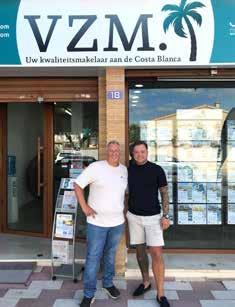
Together with Boris Wielinga I have taken over VZM, a long-standing real estate company in La Marina. It’s an exciting challenge: we want to build on VZM’s strong reputation, while bringing in fresh ideas, modern marketing, and a renewed vision to help people find their dream homes here.
What is your favourite thing about La Marina?
What I love most about La Marina is its atmosphere. It has a relaxed, international character, while still keeping the charm of
a Spanish coastal town. There’s a strong sense of community, and you can enjoy a calm lifestyle knowing that beaches, nature, and cities like Alicante are all within easy reach.
And the future?
The future looks very promising. With the takeover of VZM, our ambition goes beyond selling houses – we want to guide people into a new life here, just as we once started ours. Our vision is to grow VZM into a recognizable, forward-looking brand while keeping the personal approach that makes this area so special. For us, it’s all about helping others begin their own new chapter in the Costa Blanca.
Tel: +34 654 36 79 45 www.vzmmakelaar.com




NEW MEMBERS ALWAYS WELCOME! Tuition will be given if required.
RING BARRY ON 641 873 985
Pop in on one of our 'ROLL UP'days - every Tuesday & Thursday
2026 is a big year for La Marina Bowling Club. In 2010 our club had 160 members, but changes in the laws of Brexit, and possibly the Covid epidemic put a great strain on our membership numbers. Is playing bowls an older person's game... Absolutely rubbish... I started playing when I was 10 years of age... and I am now 77 years young. I used to go with my father and watch him playing, and thought I could do this, and I started playing, and my Dad was a wonderful role model. Now we roll the tape to 2026, and I think there are so many people of so many nationalities that would enjoy our game, and all the social aspects that go with it.
We are currently starting a recruitment campaign to swell our membership, so if you need a new hobby with a great social environment, which includes trips out, luncheon dates, cabaret shows and much much more, come to La Marina Bowls Club, Sports Complex, Calle Berna, La Marina Urbanisation, 03177 on Saturday February 14th. and try this wonderful sport. We are having a taster session on February 14th.,from 11a.m.until 2.00p.p.m., with experienced coaches and players. All the equipment you will need is available to use, dress is casual, but all we ask is that you wear flat soul shoes, with no heels. This is to protect our carpet surface from
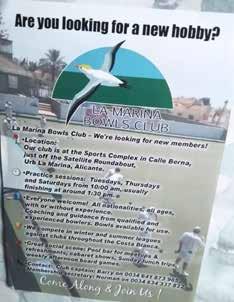
contaminacion. I have attached a copy of a flyer, which we have had printed....all 5,000 of them.... to spread the word in our efforts to increase our membership.
COME ALONG ON FEBRUARY 14th at 11am. Try it, and enjoy it... Refreshments will be available on the day.
If you need any more information, then please contact Barry on 0034 641873985, or by email robertsbarry801@gmail.com




Spanish has an impressive number of words that English, by comparison, often has no direct equivalent for- especially when it comes to time and food.
Take sobremesa . That moment after a meal when the plates are cleared but no one gets up. Coffee appears. Conversation drifts. Jokes interrupt stories. Stories interrupt each other. No one is in a hurry.
Then there’s recenar. Eating again after dinner. In Spain, hunger doesn’t obey schedules. Eating is social. It’s rarely just practical. Sometimes it’s about the food, sometimes about the people, usually both.
And antojo. A craving. Sudden, specific, and hard to ignore. Sometimes it turns into a capricho- something indulgent, wanted purely for pleasure - a slice of cake at midnight, a new pair of shoes. Something unnecessary but deeply satisfying.
Small gestures matter too. Mimos . Tender touches, quiet acts of care. A hug. A hand on your arm or back. Words for the tiny, physical ways affection shows up.
Time works differently here as well. Madrugar means waking up very early, usually against your will. Not just early, but reluctantly early. English can explain it in a sentence. Spanish fits it into a single word. On the other end, trasnochar is staying up late into the night, or all night, whether you’re finishing work or praying until dawn.
If you shiver at the slightest breeze, you might be friolero or friolera . Someone sensitive to the cold, always reaching for a jumper.
Even behaviour gets its own vocabulary. Chapuza . A makeshift job. A botched repair. Something done quickly, not beautifully, but well enough to function. A chair balanced with cardboard. A leaky pipe fixed with tape. It’s not ideal, it won’t last, but for now, it works.
There’s estrenar, too. To wear or use something for the very first time. A jacket. Shoes. A car. Beginnings matter enough to deserve their own verb. Even small details are named: entrecejo, the space between your eyebrows.
And emotions. Vergüenza ajena . The discomfort of watching someone else embarrass themselves. Secondhand

¡Buenas! We are Dani and Sam from the ‘Speechless in Spain’ Language Centre in San Fulgencio, where we have lived for over two decades and taught Spanish here with over 26 years of combined experience.
embarrassment - the urge to look away, to cringe on their behalf. Food and social life have their own language. Tapear. Moving from bar to bar, sharing small plates, stretching the evening. Tardeo, its afternoon cousin. Drinks, laughter, delays. Merienda , the mid-afternoon snack, often shared. Botellón, informal gatherings in public spaces, noisy and unplanned, where drinking is the main activity.
Then there’s aprovechar. To make the most of things. Time, light, a free afternoon, a meal. It’s why “enjoy your meal” becomes que aproveche. Not just eat. Take your time. Let it count.
These words are not accidental. They exist because people need them. And just as Spanish has words that English doesn’t, there are things in English that Spanish doesn’t name with a single word. Toes, for example- dedos covers both fingers and toes, so you have to specify: dedos de los pies (fingers of the feet), dedos de las manos (fingers of the hands). Slippers? You need a whole phrase: zapatillas de ir por casa , “shoes for walking around the house.”
Every language notices different things, and each finds its own way of making the ordinary feel precise, familiar, and worth naming.
If you'd like to know more about Speechless in Spain, get in touch: Tel: 623 003 215
Email: info@speechlessinspain.com





By Carol Garrett
Memory is a wonderful thing until it all goes amiss. When we run upstairs to get something then forget what that something is.
We leave the house buying weekly goods but when we get inside the store this is where the problem begins because that’s where we forget once more. But now I’m ready, it won’t catch me out a long list I have for myself. I can’t believe it, its happened again left the list at home on a shelf
Birthdays are no more a problem they are all written down in my book. But I can‘t recall where the safe place is and where is the best place to look.
The appointments with doctor or dentist a diary much safer than mind. The problem comes when the most favoured place is a place you forget where to find.
Nothing is ever lost though I feel the strange thing I admit shamefully. Is I’m never late for drinks or a meal so what does that say about me.
When we sit with our friends just chatting we all have something to say. Told never to talk over others but if we don’t the words fade away.
Is this memory a lack of me thinking of having too much time on my own. Or is it really an age thing well, everything else is I groan.
So my answer is try not to worry my friends of this age are the same. And if they can laugh and be merry then I too will be playing the game.
The Writing Group is a friendly mix of local creatives who meet every second Tuesday at 11am in The Palm Tree Bar, La Marina, to share ideas, write for fun, and enjoy supportive, relaxed company.
For more info, email Paddy at paddychristie7@gmail.com or call/ whatsapp him on 634 343 956
By Sean McSeveney
I have lived in chapters, pages torn, pages turned memories fading like old footprints, ---washed out by the next tide.
Every few years, I packed my world into a box or duffle bag, left behind the roof I called certainty, stepped towards the sky I’d never seen.
Some jobs were chosen, some survived, others found me during the sharp-edged days when life cracked open without warning and taught me how to breathe again.
I learned that breaking can be a doorway even when it looks a loss.
There were nights when the past felt heavier than the bags I carried, and mornings when I awoke not knowing who I was supposed to be next.
But each time something inside whispered “go on begin again”. So, I did.
With every new beginning, new soil under my boots, new rooms echoing with my voice, new hands learning new work. I found that starting over is not the same as starting from nothing. I carried every place, every lesson, every scar that reshaped me.
I’ve become a mosaic of all the lives I’ve lived, pieced together by motion, -- held together by resilience. New beginnings are not reset ---- they are quiet proof that I am still here. Still choosing, still willing to grow toward the light no matter how many storms came before.
And if life should turn again, --- if another chapter waits unmarked, I will pack my bags, steady my heart, walk forward once more.
Not because I must,--- but because I know how.

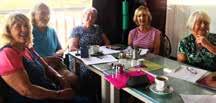
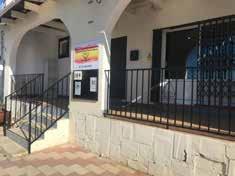
The SFA is a drop in centre for retired people of all nationalities, it is completely adapted for people with mobility issues and has wheelchair access. Seniors Friendship Association is fully recognised by, and registered with, the Valencian government.
It´s a place to go for a chat, to play a game, to have a tea or coffee...a place to meet new people and make new friends, a place to create a supportive social network.
The inspiration behind the SFA is Barry Wallis with the support and assistance of David and April Fraser, Mike Rose, Patricia Paris and Jose Berardi – all of whom are grateful to the large number of volunteers who have given freely of their time and skills to help get the Seniors Friendship Association and premises up and running. Also...a big shout out to those local businesses and individuals who have made donations, of money or items, to the SFA.
You do not have to be a member of the SFA to visit it´s premises – all retired people are welcome, members or not, but membership (which is just 10 euro per year...cheap as those proverbial chips!) does have benefits which include:
• A membership card which will allow you access to discounts at certain local businesses.
• Participation in chair keep fit sessions.
• Help with figuring out tech (mobile phones, laptops etc).
• Healthcare advice from an ex-NHS professional.
• Foot health information from a qualified podiatrist.
• Advice on obtaining UK benefits.
Another advantage of membership is that members are entitled to attend SFA general meetings where they will have the chance to shape the future of the Association.
The Seniors Friendship Association is also promoting the Brexpats Buddies Whatsapp group:

Finally, in the words of Barry Wallis himself: “The SFA is a social hub, a place to meet new people, make new friendships, a place to find a listening ear, to put an end to loneliness, a place for new hobbies, new interests and new beginnings.”
The Seniors Friendship Assocation
C/Madrid 109, La Marina
Tel/Whatsapp 711 084 903
Open Monday, Wednesday & Friday 10.30am to 1.00pm




Bark! Hullo hooman and doggy friends! In last month´s column I briefly mentioned bunny cats. What, you ask, the bark are bunny cats? Well, I´m sorry to say this but they are a hellish and dangerous new creature that is half bunny rabbit and half cat – hence bunny cat! Where they´ve come from and how they´ve come about...well...bark knows to be honest!
Regardless of the how and when of bunny cats, they are not good news...imagine the teeth, claws and bad character of a cat combined with the athleticism of a bunny rabbit. Scary! A dangerous opponent for any dog...and any hooman! In fact look at the picture on this page – it´s a Dogificial Intelligence (DI) recreation of a bunny cat – is that barking frightening or what!

News of bunny cats first started to appear in doggy social media – Dogbook, Instadog, Dog Dok and ´D´ (formerly known as Dogter). I have been seeing more and more of these post plus I´ve barking with other local dogbourhood dogs, some of who have barked me that, yes, they have seen real, live, meowing, jumping, biting bunny cats!
So...I, myself, am now convinced that bunny cats are more than just a social media story...I´m convinced that they are real, they are here jumping, and bobbing and mewling amongst us in our dogbourhood! They are barking dangerous and something has to be done!
The first thing I would say, as much to hoomans as other doggies, is that if you do see a bunny cat do not approach it under any circumstances – they are dangerous, a jumping, leaping furry bundle of teeth, claws and bad attitude. Bunny rabbits are formidable foes and should only ever be approached mob-pawed...I would recommend at least four dogs (okay, three dogs if they´re Jack Russells...) to each bunny cat.
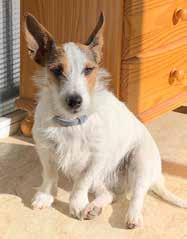

Which brings me to the real point of this month´s column. I have decided something needs to be done about the bunny cat menace! To this end I´m looking to put together a crack squad of local doggies to patrol the dogbourhood paw-handed to seek out and chase away bunny cats! Doggy applicants for my doggy mob needed to be fit and strong and ready for a barney! All dog types are welcome but if you happen to be a Jack Russell that´s even better as everyone knows that us JR types know how to fight like nodoggy else! Oh, and if you do decide to join the bunny cat hunt don´t tell your hooman....last thing we need is them coming along and running around, getting in the way, flapping their deformed front legs (they call them ´arms´, apparently) in panic and generally getting in the way!
Oh, and one last thing...if you want to join the bunny cat hunt and you´re a Jack Russell and you´re a Jack Russell bloke... well...that´s double plus barking fabulous because this Jack Russell lady here, that being me, is still looking to get preggers and puppied up by some fit Jack Russell bloke – it could be you!
To get more details on the bunny cat hunt (and the preggers thing!!) email me at: tulisa@barkmail.com



by Nicola Dunsford
February often brings conversations about love, but beyond romance and cultural gestures, there lies a deeper truth waiting to be felt: love is a frequency, a field, a living energy within us. It is not something we chase or earn, but something we remember and return to.
This month, the energy around us subtly turns toward the heart. Not the emotional heart, but the spiritual heart - the centre of intuition, compassion, and connection - inviting us into a gentler way of being. When we attune to this space, we step into a higher vibration of living. We listen more deeply. We soften our gaze. We begin to meet life from a place of presence rather than protection.
The heart field is powerful. When open, aligned, and clear, it radiates a frequency that influences everything around you. Many spiritual traditions describe this radiant field as the bridge between soul and self - a gateway where intuition, compassion, and wisdom meet.
When you rest in your heart, you no longer push against life. You flow with it. Your inner voice becomes clearer, your energy becomes softer, and your relationships, including the one with yourself, begin to shift in meaningful ways.
Before awakening deeper love, many of us are invited to release the heaviness resting on the heart. Not through force, but through gentle awareness.
Try this simple practice:
• Sit quietly and place both hands over your chest.
• Breathe into that space, as if you are drawing fresh air into your heart.
• On the exhale, imagine releasing old hurts, self-judgements, or protective walls
• that no longer serve you.
• Whisper, “I soften. I open. I allow love to return.
• The heart responds beautifully to permission, not pressure.
One of February’s quiet teachings is that love is something we allow, not something we strive for.
To strengthen your connection to the heart field:
• Notice moments of beauty and let them land.
• Allow compliments or kindness without deflecting.
• Offer yourself tenderness when your inner voice becomes harsh.
• Invite your inner child into the moment with you.
• The more you allow love, the more naturally it flows outward.
From a spiritual perspective, love is not a limited resource. It expands the more we express it.
A radiant heart field might look like: speaking gently, deep listening, blessing people silently as you pass them, offering compassion where you once offered judgement, or simple presence. When your heart is open, you become a quiet healing presence in the world.
February is an invitation to remember who you are beneath the armour and beyond the stories - a being woven from love and sustained by connection, and capable of radiating love in every direction. May this month guide you deeper into your own heart field and help you move through the world with softness, truth, and soul.
Blessings for a heart-centred February, Namaste
Nicola is a Spiritual Life Coach and Energy Healer who leads the Soul Café.
The group gathers fortnightly on Wednesday mornings. For more details, please call/message Nicola on 634 199 029 (phone or WhatsApp).


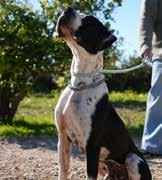
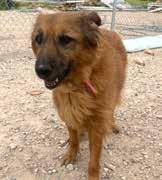
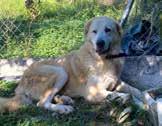

At K9 Club, some of the animals who come into our care will spend the rest of their lives with us. Medical conditions, advanced age, or nervous dispositions mean they need the long-term stability, safety and understanding that a rescue environment can provide.
Trigger has called K9 home for many years. He suffers from a neurological condition that has caused several strokes, but thanks to regular injections every couple of months to help manage nerve damage, his quality of life has improved greatly and he continues to enjoy his days with us.
Sacha joined K9 a few months ago and, at nearly 15 years old, is currently undergoing veterinary investigations due to health issues that led to weight loss and stomach problems. She is doing much better and we remain hopeful of finding the cause. Sacha would truly thrive in a loving foster home, where she could spend her remaining days enjoying the comfort of a sofa and a quiet routine.
Medusa came to us from another rescue where she struggled to cope with a large, noisy environment. When she arrived, she was terrified and would sit facing the wall. Since then, she has made remarkable progress and is slowly learning to trust again. Once fully settled, Medusa will live freely and safely at our centre.
Teo is our resident dog and roams freely

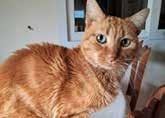
around K9. He came to us from another rescue and has several tumours, most of which cause him no trouble. Tumours in his ears do require daily treatment and medication to manage pain, but despite weaker back legs, Teo still runs around like a puppy.
As you know, K9 is run entirely by volunteers, and every euro raised goes directly towards rescuing, supporting and caring for the animals with us.
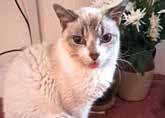
We also care for many cats who will never be rehomed due to health issues or physical disabilities. Morris arrived late one night after being shot; he is deaf and blind on one side and has nerve damage on the other. Daphne came to K9 after being hit by a car and now has three legs, along with severe mouth problems caused by calicivirus. Oscar struggles to digest fats and requires medication and a carefully managed diet. Many of our cats rely on daily medication, including immunosuppressants that are vital for boosting their immune systems.
K9 and all the animals in our care would like to sincerely thank everyone for your continued kindness and donations - your support truly makes a difference.
For more information about K9 Club, please get in touch at k9clubinfo@gmail.com







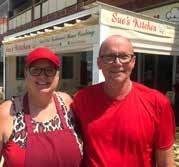
Sue has been making us delicious home-made dishes at Sue´s Kitchen, here in La Marina, for over 3 years... and we´ve persuaded her to share some of her secrets with us!

Ingredients
Cake
100g unsalted balter
50g of good quality cocoa powder
90ml of boiling water
3 large eggs
4 tbsps of milk
175g self-raising flower
1 rounded tsp baking powder
300g caster sugar
Finely grated zest of 1 orange
Icing & Filling
150g of dark chocolate broken into small pieces
150ml of double cream
Sue's Kitchen
Centro Comercial Bahia De Las Dunas, C/Mar Mediterraneo 8, Unit 4, La Marina 03177
Tues to Sat 9am – 4pm Tel/Whatsapp 660 850 464
Instructions
Preheat oven to 180c (Fan 160c, Gas 4).
Grease 2 x 20cm round sandwich tins and line with baking paper.
To make the sponges – measure the cocoa powder and boiling water into a large bowl and mix to a paste. Add the remaining ingredients and beat until combined.
Divide the mixture evenly between the 2 sandwich tins and bake for 20-25 minutes until sponges are well-risen and shrinking away from the sides of the tins.
Remove sponges from oven and turn out onto a cooling rack and leave to cool completely.
Icing and Filling: Melt the chocolate in the microwave for 30 seconds until soft and whisk in the cream until thick and creamy.
Spread the top of one sponge with half the icing and put the other sponge on top. Cover the top of the cake with the rest of the icing then make large S shapes in the icing with a small palette knife.
Take 100g of dark chocolate, break it into fine pieces, sprinkle it on top of your cake and – enjoy!





As Spanish people, there are things we see, smell, and feel that are so normal to us we don’t think to explain them. They live quietly in our bodies, learned without instruction, absorbed simply by growing up where we did.
We wake up in the morning. We don’t really do breakfast. Instead, coffee. Strong, fast and then we leave. But that same coffee, taken later, can last an hour.
Because it’s never about the drink, it´s an excuse to sit, to talk, to interrupt each other enthusiastically, hands flying, stories overlapping, everyone speaking at once and somehow still understood.
Time works differently here. Five minutes is never five minutes. A meeting at seven means around seven...possibly. If we say we’re on our way, we probably aren´t. No one is stressed about this. Why would they be? Late is expected.
Forty five minutes after the agreed time, my friends and I arrive at the café. We always take an extra chair for our handbags. Of course. As a Spanish woman, you would never put your bag on the floor. It attracts poverty, apparently. No one questions this. It’s just known, like not trusting the weather forecast or every grandmother being a doctor.
You meet someone new...and...straight in for two kisses on the cheek! Even if you’re shy. Even if you don’t know them. Standard procedure. We also have no real sense of personal space. An empty beach and we’ll still sit right next to you. We’re not being rude. We’re being friendly. And don’t forget to greet us in the street. We will never walk past you without a buenos días, or at the very least, a look that says, yes, we’ve seen each other exist.
And then there’s the smell. Strong perfume that only intensifies as the night goes on. Older women pass by trailing Nenuco, the baby cologne many still pour generously into their hair after a shower.
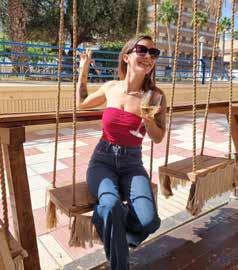
Cleanliness has a smell. Childhood has a smell. Everything has a smell. Perfume, bleach, food, tobacco, manure. Spain is not subtle, especially through the nose. We don’t queue. Except in the supermarket. Anywhere else, we gather. At the post office, we stand around. “¿Quién es el último?” someone asks. A hand goes up. That’s it. Order without lines. Chaos with rules.
We talk loudly. And the louder a table is, the happier it usually is. Don’t tell us to be quiet. Noise means life is happening. Silence feels suspicious. Volume does not equal anger. Adults argue loudly and then share dessert. Complaining is practically a love language.
We eat late. Nine o’clock dinners are normal. And when the meal ends, it doesn’t end. You stay. You talk. You linger. Sobremesa stretches on, unplanned and uninterrupted, a word invented because the habit needed a name. Sometimes we recenar, eating dinner and then eating again. Lighter, later, still together.
To the rest of the world it might look chaotic, noisy and badly timed. To us, it’s just life. Familiar, scented, loud, late, and full.



1. What is the favourite food of Dragonflies?
2. Who addressed the UN General Assembly with a gun in his belt?
3. Where are The Pampas?
4. What mid-day nap takes it’s name from the Spanish word Sexta meaning “sixth”?
5. What term applies to the consistency, thickness and substance of wine?
6. What is the positive electrode of a battery called?
7. What film earned Glenda Jackson an Oscar in 1971
8. Which Andrew Lloyd Webber musical starred Michael Crawford and Sarah Brightman?
9. What school is opposite Windsor on the Thames?
10. Which sports woman became Mrs Cawley?
To solve the puzzle each 3 x 3 box, each row and each column must contain all the numbers 1 to 9. For hints and information visit www.sudoku.org.uk








Invest in solar panels and reduce your monthly bills with your trusted expert, Sunrise Energy.
We provide high-quality solar panels for the best energy output. With over 11 years of experience, we offer the best value for money.
Our quotes are tailor-made, fully based on your energy usage, available space, and roof orientation. With a fast installation guaranteed!
Sunrise Energy is here for you in Dutch, Spanish & English.
Switch to sustainable energy and request your free, no-obligation quote today! Your


