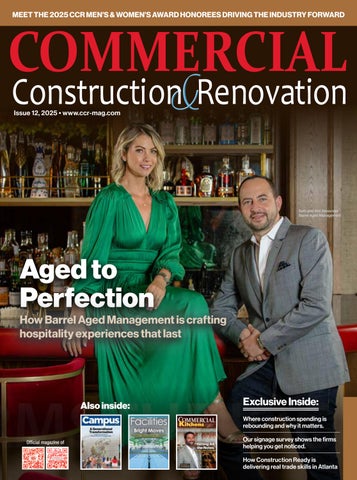
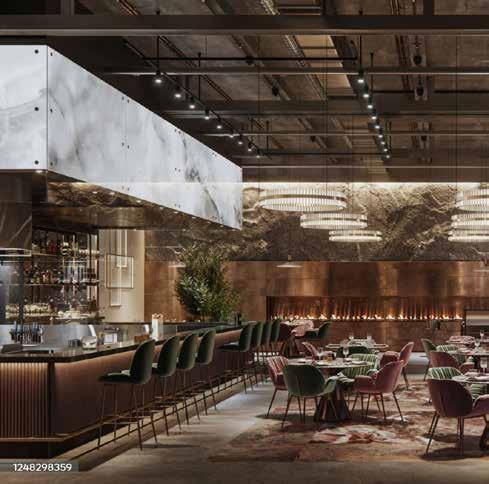
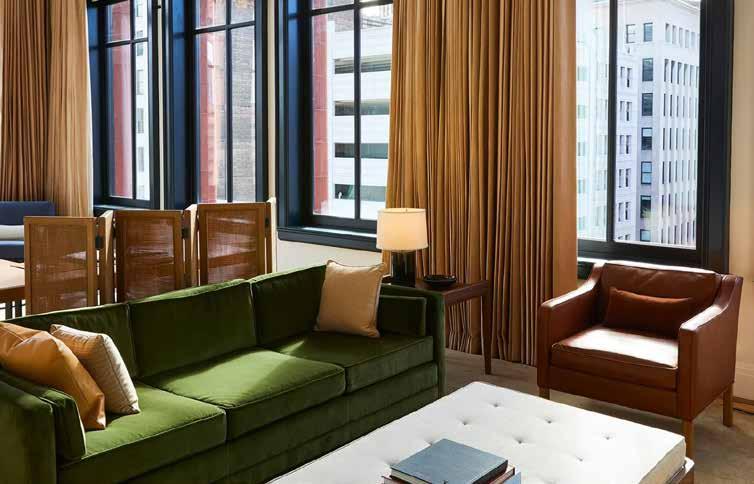
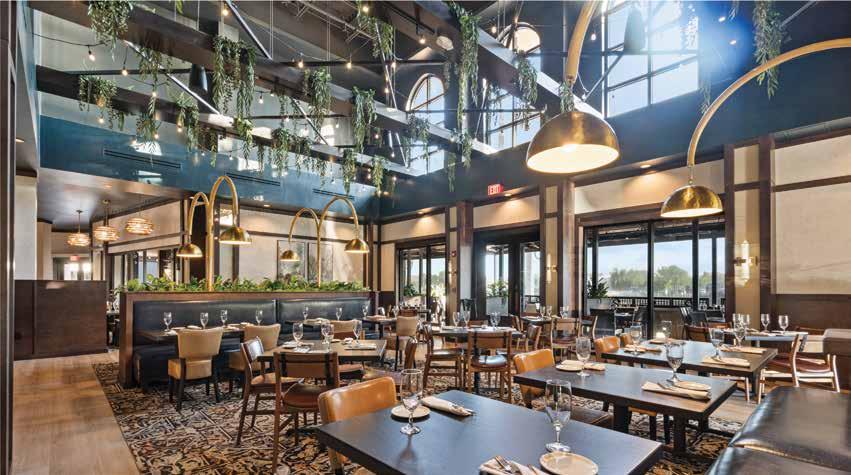
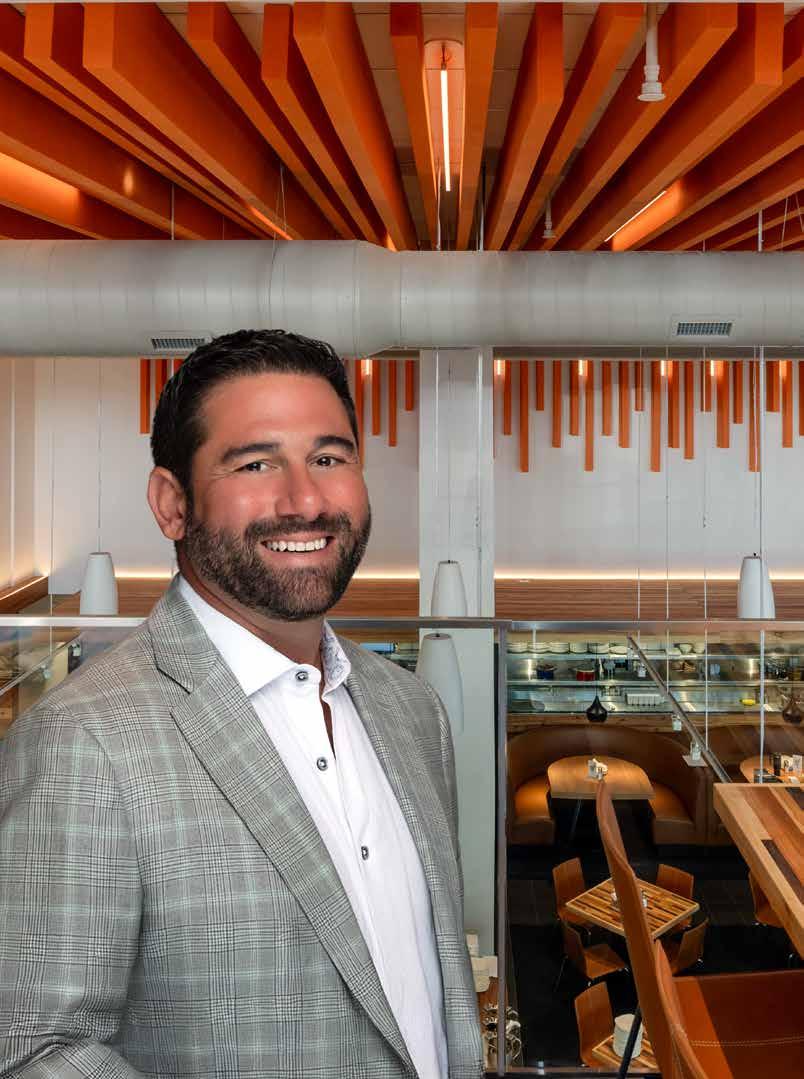
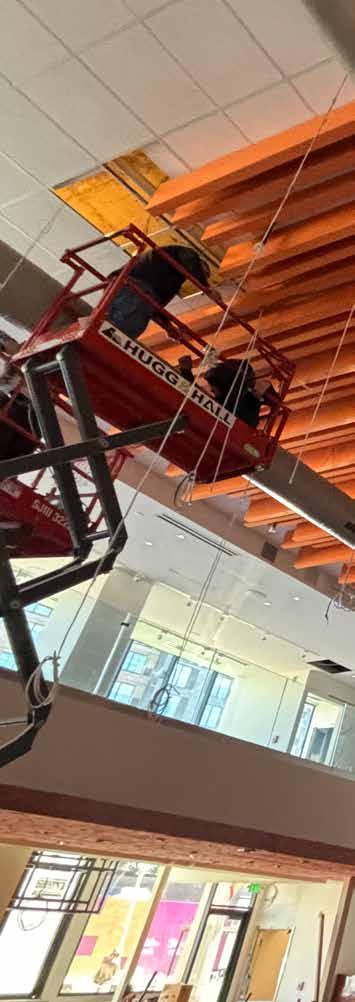
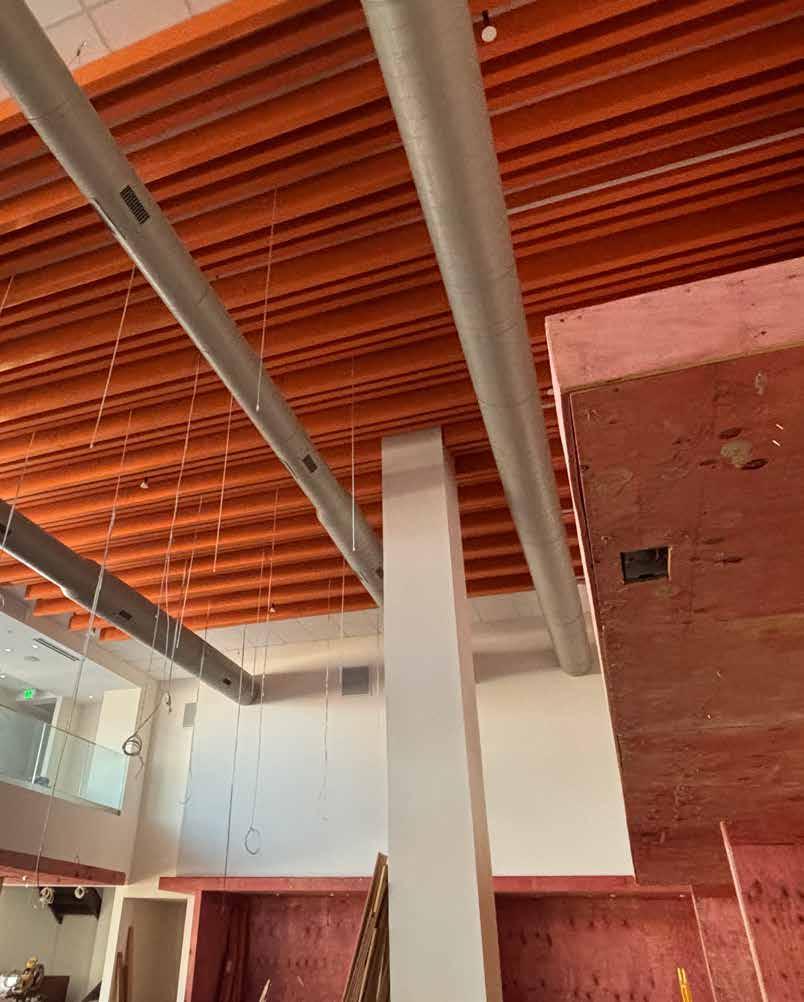
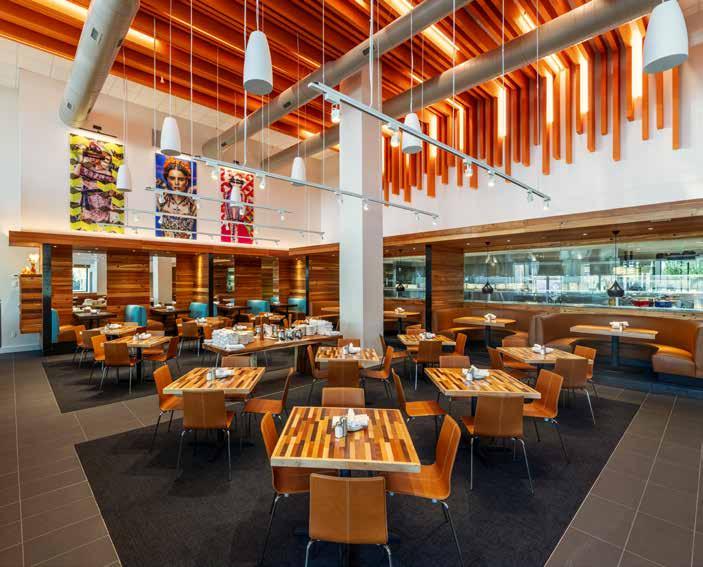
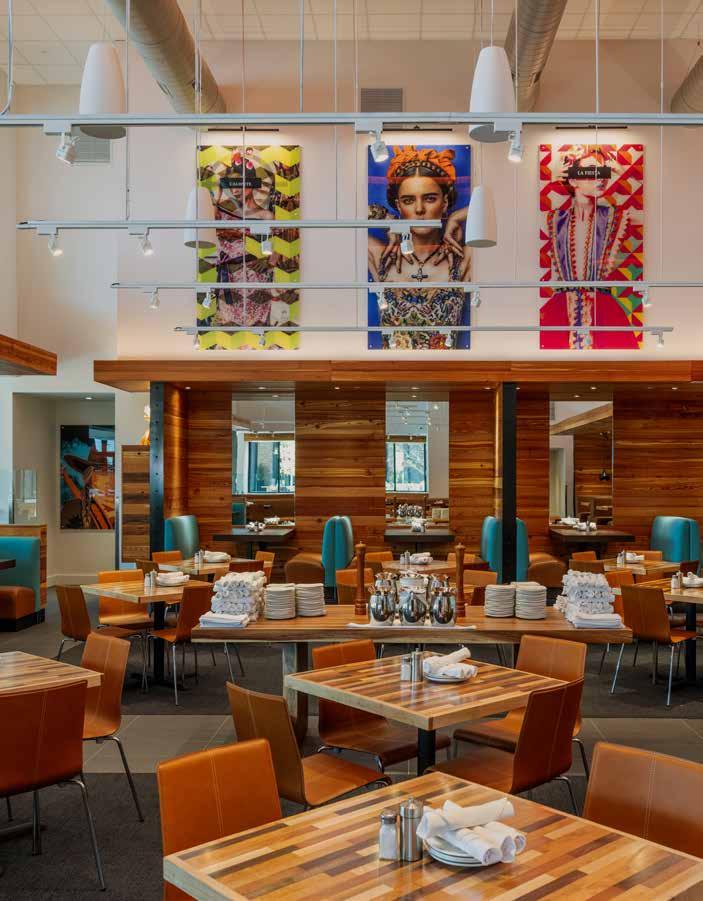
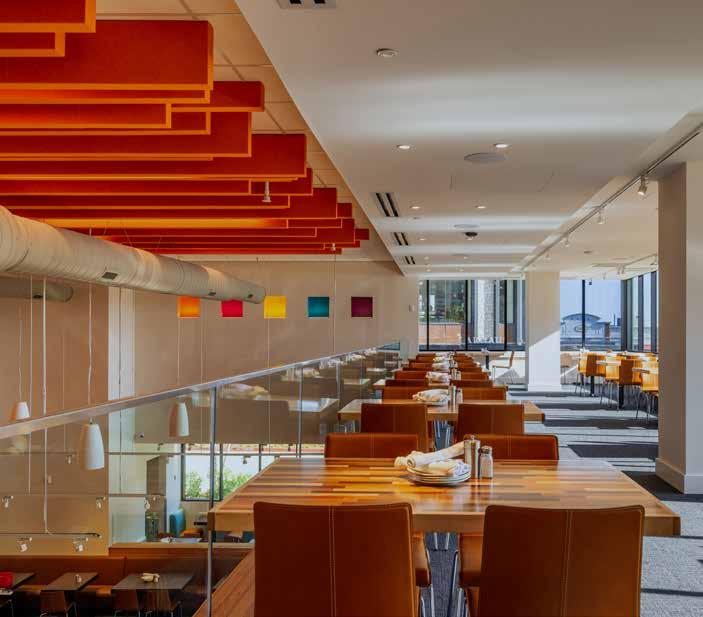
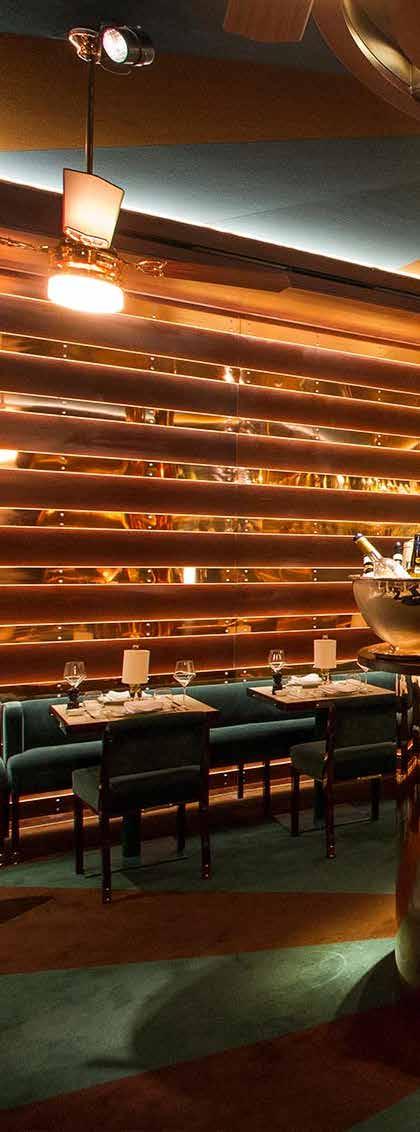
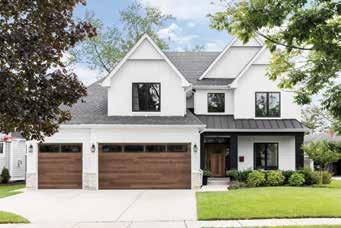
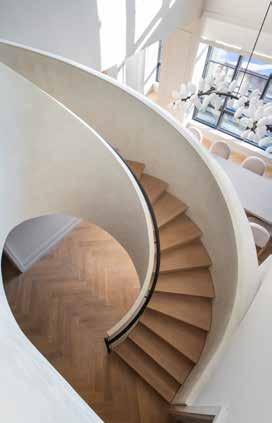
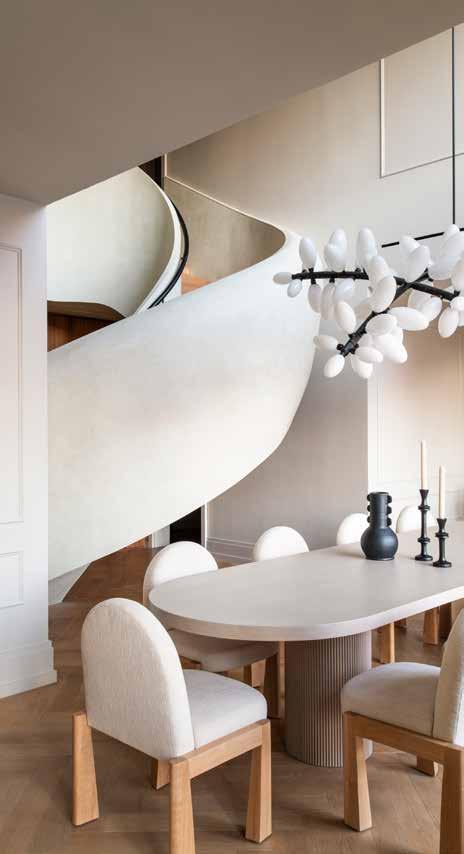
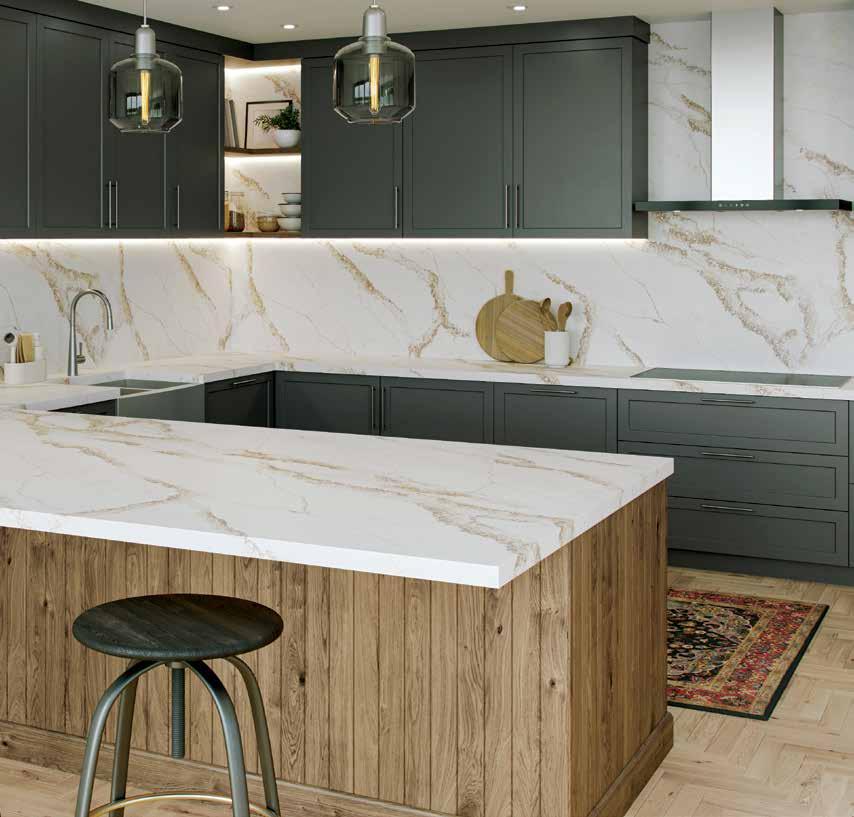
How Barrel Aged Management is crafting hospitality experiences that last.
48 Leaders and the Moment
Meet the 2025 CCR Men’s and Women’s Award honorees driving impact across the industry.
72 From Legacy to Smart
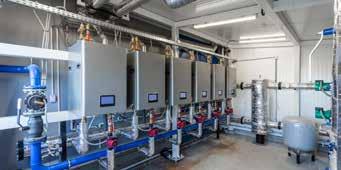
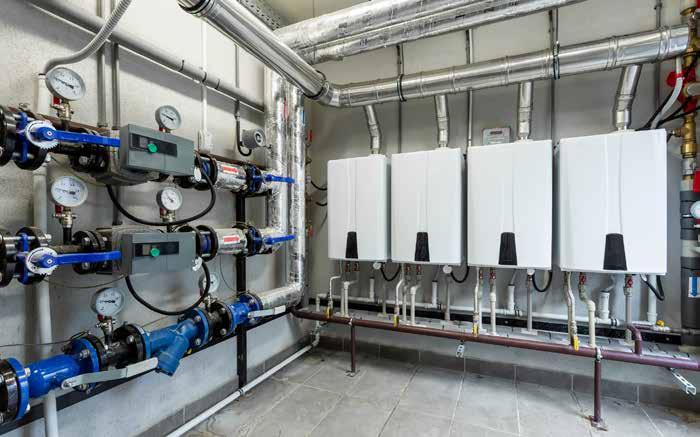
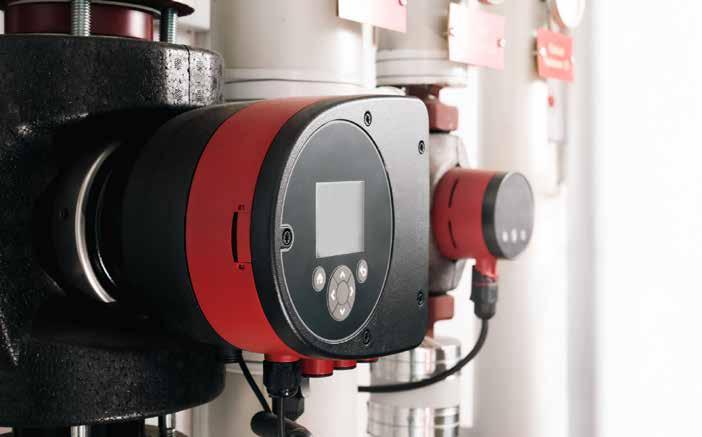
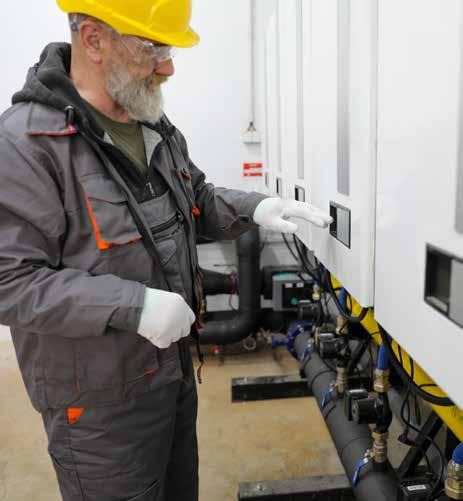
Why it’s time to upgrade traditional boiler systems in modern warehouses.
66 The Art of a
Lessons in operational planning, communication and environmental stewardship.
80 The Turning Point
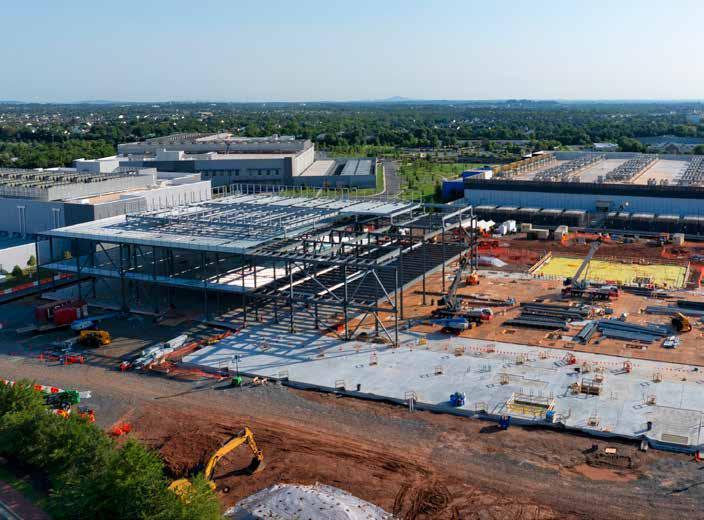
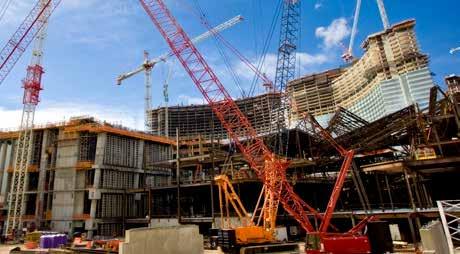
Upcoming rebound in construction spending offers pockets of opportunity.
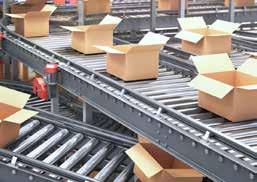
Seamless Move
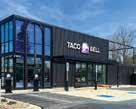
Live Más. Dream Loud Taco Bell’s Scholarship Returns.
It's late. The homework is half-finished. And then the hunger sets in. As my youngest child, who's ripping through her sophomore year at Ole Miss can attest, these are the moments most students know well. Somewhere between the grade gut check, the academic to-do list that just won't quit and those late-night food runs, a big idea shows up.
That’s where Taco Bell likes to live, specifically the Live Más Scholarship. For the 11th year running, Taco Bell asks young people a refreshingly simple question: What do you want to build? Not just in a classroom, but in life. The program supports students ages 16 to 26 who are chasing passions in all forms—trade schools, creative fields, entrepreneurial dreams.
This year, applicants can submit a two-minute video or take a new written route, which feels like a quiet, nostalgic nod to authenticity over polish.
And the numbers, they're real: $14.5 million up for grabs in awards ranging from $5,000 to $25,000. Mentorship. Renewal opportunities. More than $64 million awarded to over 3,000 students since 2015—all fueled by customers rounding up their orders.
Submissions are open through Jan. 6, with the winners drop in April. For a brand built on late nights and big cravings, it’s a fitting reminder: inspiration rarely waits for perfect timing. It shows up when you least expect it—between exams, obligations, and one more bite. Live Más just happens to be there when it does.
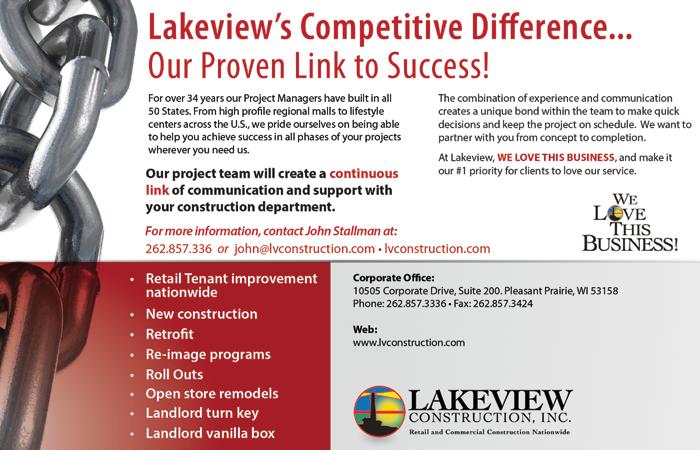
We have always said, if we do a good job the phones will ring.
Established in 1993, Lakeview Construction, LLC is a national commercial project solution provider specializing in all phases of construction.
From concept to completion, our professional teams deliver quality construction and outstanding service, ensuring on-time schedules and cost-effective project management.
Headquartered in Pleasant Prairie, Wisconsin, we operate across all 50 states
CCR EDITORIAL BOARD
ACADEMIA
DR. MARK LEE LEVINE
Professor Burns School/ Daniels College University of Denver
ADA
BRAD GASKINS Principal The McIntosh Group
ARCHITECTS/ENGINEERS
MICHAEL MAGEE
Studio Leader Retail, Store Design Senior Associate Little
FRED MARGULIES
Director of Retail Architecture Onyx Creative
STEVEN MCKAY
Managing Principal, Global Design Leader DLR Group
STEVEN R. OLSON, AIA President CESO, Inc.
CONSULTANT
GINA MARIE ROMEO
Chief Heart Officer & Principal Consultant, Allied RDI
DEVELOPMENT/PROJECT MANAGEMENT
KAY BARRETT
NCIDQ, CDP
Senior Vice President Cushman & Wakefield
PAM GOODWIN
Goodwin Advisors, LLC Goodwin Commercial The Pam Goodwin Show
DAVID THOMPSON Vice President TCB Construction Group LLC.
MATT SCHIMENTI President Schimenti Construction
JOHN STALLMAN
Marketing Manager Lakeview Construction
JEFFREY D. MAHLER
RCA Advisory Board Member
HEALTHCARE
CLINTON “BROOKS” HERMAN
Principal Facilities Project Manager, MD Anderson Cancer Center
HOSPITALITY
SAMUEL D. BUCKINGHAM, RS AMS CMCA President of Construction Devco Development
GARY RALL
Vice President of Design and Development Holiday Inn Club Vacations
ROBERT RAUCH Chairman Brick Hospitality
JOE THOMAS
Joseph K Thomas Sr. Consulting Senior Consultant Hospitality Engineering
LU SACHARSKI Vice President of Operations and Project Management Interserv Hospitality
ANDY BRIGGS, CHA Managing Principal A14 Capital Management
INFORMATION TECHNOLOGY
CRAIG WEBER Director of Business Prime Retail Services, US Prime 3 Retail Canada, Inc.
REAL ESTATE
RESTAURANTS
DAVID SHOTWELL
Director of Construction & Facilities, BOJ of WNC, LLC
BOB WITKEN
Senior Project Manager Fox Restaurant Concepts
RETAILERS
AARON ANCELLO
Facilities Asset Management Public Storage
DEDRICK KIRKEM
Facilities Manager Alice + Olivia
DAVID D. DILLON
Principal Design Lead, Templates & Standards Chick-fil-A Corporate Support Center
LAURA GROSS
Retail Facilities Manager American Signature Furniture
KELLY RADFORD Vice President Facility Services CubeSmart
PERMITTING
VAUN PODLOGAR
CEO, Owner, Founder State Permits, Inc.
ROB ADKINS, LEED AP CDP Senior Project Manager Cushman & Wakefield
MEGAN HAGGERTY Founder Legacy Capital Investment
MARIE ANTONETTE G. WAITE
Founder and CEO
Finest Women in Real Estate
NO ENTRY NO HARM
Stop Smash and Grab
Retrofit Security Glazing
DefenseLite® is a clear security shield that integrates forced entry protection seamlessly with existing doors, windows, and storefronts, providing an invisible layer designed to protect retail businesses from impending harm, vandalism, and theft.
• Unbreakable polycarbonate overglaze 250 times stronger than glass
• Framing available in a variety of standard and custom finishes
• Anti-graffiti protection available
• A cost-effective, easy-to-install solution
PROTECTION FROM SMASH AND GRAB
• Protect your property
• Protect your employees
• Protect your inventory
PROTECTION FROM VANDALISM
• Prevent looting
• Prevent vandalism
• Preserve brand integrity
DefenseLite® is a patented, retrofit glazing system designed for advanced forced entry protection. Manufactured by Impact Security, this proven technology provides a cost-effective solution, installed by authorized dealers located throughout North America. To learn more, visit www.defenselite.com
Contact
AroundtheIndustry
RESTAURANTS
Firehouse Subs
Firehouse Subs has renewed its franchise incentive programs, offering up to $100,000 per restaurant to support growth. The 2026 development incentive provides $75,000 for opening one new location and $100,000 for two or more. A separate program extends the same level of support to veteran and first responder franchisees for each new unit they launch.
Shake Shack
Shake Shack will enter Vietnam next year with its first restaurant, part of a plan to open 15 locations in the country by 2035. The move expands its partnership with licensee Maxim’s Caterers Limited, which operates 52 Shake Shacks across China, Hong Kong, Macau, and Thailand. Maxim’s runs more than 2,000 outlets in Asia, including regional concepts and global brands like The Cheesecake Factory, Lawry’s The Prime Rib and Starbucks.
Einstein Bros Bagels
Einstein Bros Bagels is rolling out its new “Elevate the Morning” prototype in Cincinnati using the market as a hub for innovation. Five Bruegger’s Bagels locations will convert to the updated design with customers able to transfer rewards points to Einstein and receive a 500-point bonus. The company says it is not a full Bruegger’s shift.
Cava
Cava has opened its first Miami location bringing indoor and patio seating, digital pickup and delivery to the city. Ahead of the launch the restaurant hosted a Community Day to support Good Neighbors Florida and donated meals locally. With about 400 locations nationwide Cava plans to grow to 1,000 by 2032.
Bar Louie
Sun Holdings has acquired Bar Louie out of bankruptcy adding 39 stores to its portfolio of more than 1,800 restaurants. The move strengthens the company’s strategy to expand its casual-dining presence nationwide and positions Bar Louie for renewed growth under one of the industry’s largest multi-brand operators.
Lola Beans
Kirk and Coleen Jeter, franchisees behind several Wingstop and Crumbl locations, have signed a deal to open 15 Lola Beans units across the Dallas–Fort Worth area. Based in North Carolina, the Jeters were drawn to the drive-thru coffee concept’s simplicity and growth potential. The first location is slated to open in the first quarter.
Gordon Ramsay at the Carnaby
Gordon Ramsay will open his first restaurant at a Disney Parks property with Gordon Ramsay at the Carnaby in Anaheim, California. The 1960s-themed gastropub will showcase British classics and a lively Carnaby Street vibe with live music and themed performances, adding a bold new dining experience to the resort.
Slim Chickens
Slim Chickens is accelerating its growth with plans to sign 150 new franchise deals and open nearly 50 locations by the end of 2025. Former Starbucks exec Matt Green is leading a strategy focused on new markets and flexible formats from drive-thru-only to campus and airport venues. Expansion will remain franchise-driven.
R&R Brands
R&R Brands is set to revitalize Brio and Bravo by sharpening each concept’s unique strengths. Brio will lean into upscale Tuscan-inspired dishes with a wine country feel while Bravo will spotlight its lively family-friendly Italian American menu. With new operational leadership R&R aims to position both brands for long-term growth.
&pizza
&pizza is expanding into four new markets as it ramps up franchising with 12 stores planned for Orlando, Florida, Atlanta, Raleigh, North Carolina, and Charleston, South Carolina by summer 2026. The fast-casual chain aims for 300 units by 2030 as it leans back into its countercultural vibe and resets its growth strategy.
RETAIL
Costco Wholesale
Costco will open a new store next month in Allen, Texas, boosting its Dallas-Fort Worth presence to more than 10 locations. The launch follows recent openings in Prosper and Weatherford and is part of the company’s plan to add about 25 stores globally this year, including 15 in the U.S.
Ollie’s Bargain Outlet
Ollie’s Bargain Outlet is nearly doubling its store count, expanding from 303 locations in 2018 to almost 600 by mid-2025, with a goal of 1,050. The closeout retailer is converting shuttered stores from chains like Big Lots and Bargain Hunt, with recent growth into New Hampshire and Nebraska.
Monos
Canada-based luggage retailer Monos is stepping into the U.S. market with plans for five brick-and-mortar stores in Boston, Los Angeles, Chicago, New York City and Washington, D.C. The push is to connect with American customers through in-person experiences. The expansion into US retail follows lessons learned from its Canadian stores and leverages existing U.S. distribution centers.
True Religion
True Religion, now owned by ACON Investments and SB360 Capital Partners, has opened new stores in Las Vegas, Nevada and Baton Rouge, Louisiana. Featuring updated designs with signature denim tables and inclusive forms, the brand will add locations this fall in Jersey City and New York City, doubling its metro presence.
Boden
British fashion retailer Boden opened its first U.S., a 2,000-squarefoot location at the Avalon shopping center in Alpharetta, a suburb of Atlanta. This is Boden’s first full-price retail space in the U.S., following its successful online sales and existing presence in Nordstrom department stores.
Staples
Eyecare retailer Stanton Optical has announced a partnership with Staples to launch shop-in-shop locations, starting with a pilot in Pennsylvania Staples stores this fall. This collaboration aims to leverage Staples’ nearly 1,000-store footprint to expand access to affordable eye exams and eyewear.
Aritzia
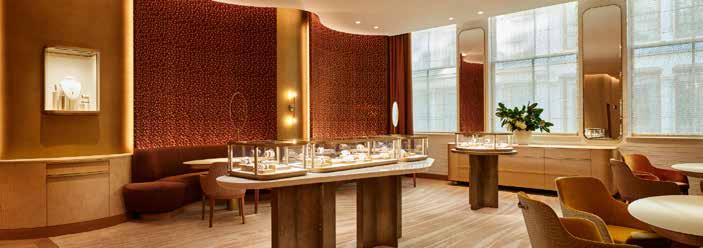
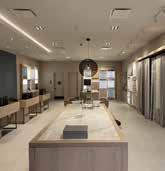
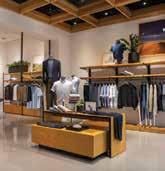
Vancouver-based retailer Aritzia is making its Utah debut with the opening of a new boutique at Fashion Place Mall. The location marks the company’s first in the state and reflects its broader U.S. expansion strategy. The store is characterized by thoughtfully curated artwork, refined marble and wire-wheeled white oak floor fixtures, textured brick arches and 20th Century-inspired European furniture.
Primark
Primark is celebrating 10 years in the United States with four new store leases, including its Minnesota debut at Mall of America. Other upcoming openings include Brandon Exchange in Florida, Vineland Premium Outlets in Orlando and Sugarloaf Mills in Georgia.
Martha Stewart
Martha Stewart, in partnership with Marquee Brands, has opened her first two stores in Dubai at Dubai Hills Mall and Mirdif City Center. Inspired by her Bedford, New York home, the locations offer cookware, home fragrances and entertaining essentials, with expansion plans targeting Saudi Arabia, India and Kuwait.
Vispring
UK-based Vispring is bringing its luxury handcrafted mattresses made from natural materials to a showroom in the Dallas Design Center, part of its US expansion. The Dallas location joins existing sites in New York and California, and the company is planning to open more locations in San Diego, Denver and Washington, D.C. this year.
Lowe’s
Lowe’s will open two additional stores in the Dallas-Fort Worth Metroplex in Midlothian and Royse City—the fourth and fifth Lowe’s stores to open in Texas this year. The new stores will each feature approximately 94,000 square feet of retail space and approximately 30,000 square feet of outdoor garden space. They include an updated store layout and enhanced assortments in flooring, kitchen and bath, appliances, workwear and pet.
Urban Revivo
China’s Urban Revivo opened a nearly 2,700-square-metre store in London—its second in the city this year. The retailer, which operates 400-plus stores worldwide, has set a target to open 200 overseas locations within the next five years and has already launched stores in New York and Hong Kong, besides London, this year. It has around 20 stores in Southeast Asia.
HOSPITALITY
Cirque du Soleil
Cirque du Soleil has debuted Auana at the Outrigger Waikiki Beachcomber Hotel in Hawaii. The 80-minute production blends acrobatics, creative sets and original music with themes inspired by native Hawaiian culture, including oceans and volcanoes. Performances run twice nightly from Wednesday to Sunday.
Landingplace Hotels
Landingplace Hotels has launched with two midscale brands, Landingplace Select and Landingplace Suites, designed to bring more flexibility to franchising. Landingplace Select emphasizes efficiency with features such as pay-per-use housekeeping, while Landingplace Suites targets extended-stay demand with flexible 30-plus-night stays.
Four Seasons Resort / Residences Telluride
Four Seasons, in partnership with Merrimac Ventures and Fort Partners, will develop the Four Seasons Resort and Residences Telluride in Colorado’s Mountain Village. The ski-in/ski-out property will feature 52 guestrooms, 43 hotel residences and 26 private residences, with design by Olson Kundig and interiors by Clements Design. Amenities include luxury dining, wellness offerings and personalized residential services.
Sheraton Johor Bahru
Sheraton Hotels & Resorts has opened Sheraton Johor Bahru, its first property in the city. The 345-room hotel debuts the brand’s new community-focused design in Malaysia, featuring gathering spaces like the Community Table and Soundproof Booths, as well as family suites, wellness amenities and access to the Sheraton Club. (Continued on next page)
AroundtheIndustry
Melco Resorts
Melco Resorts has opened City of Dreams Sri Lanka, a $1.2 billion integrated resort developed with John Keells Holdings. The project includes an 800-room hotel, 180,000-square-foot casino, retail and dining venues, and convention facilities. Expected to generate more than 20,000 jobs, the resort is positioned to drive tourism and economic growth.
Sonesta International Hotels / Aken Hotels & Resorts
Sonesta International Hotels has partnered with Aken Hotels & Resorts to expand in Latin America, initially aligning six Aken properties with Sonesta. The move targets growth in Mexico, Argentina, Colombia, Ecuador and Costa Rica. Through the partnership, Sonesta Travel Pass members can earn and redeem points at Aken locations, with the expansion aimed at tapping significant travel demand and guest loyalty opportunities in the region.
JdV by Hyatt
The Royal Beach Hotel Punta Cana has opened in the Dominican Republic, introducing the JdV by Hyatt brand to the Caribbean. Developed with Grupo Martinon, the 66-room property features a signature restaurant with pool bar, two boardrooms and an event terrace. Guests can also purchase day passes to nearby Hyatt Inclusive Collection resorts.
Limelight Hotels
Aspen One will debut its first East Coast property with Limelight Charleston, opening in 2028. Located in Charleston’s historic district, the 50-room hotel will include a restaurant, bar, rooftop pool and 16 private residences. The project is being developed in partnership with Category Co.
Sports Illustrated Resorts
Travel + Leisure Co. is bringing Sports Illustrated Resorts to Chicago, marking the brand’s third location after Nashville and Tuscaloosa, Alabama. The resort will feature about 250 units and a mix of amenities, remaining open during construction with full completion expected in late 2026.
Preferred Hotels & Resorts
Preferred Hotels & Resorts is launching Legendary Journeys – The Ultimate Private Jet Experience in October 2026. Created with Bucketlist Experiences, the 17-day global itinerary spans Asia, Africa and Europe and is limited to 29 couples. Travelers receive premium perks, including I Prefer Hotel Rewards Titanium Status and one million bonus points, highlighting the exclusivity of the inaugural trip.
Marriott International
Marriott International is debuting its new Series by Marriott brand in the U.S. through a partnership with Hawkins Way Capital. Targeting the midscale and upscale segments, the brand will convert five properties in Miami, Chicago, San Francisco, San Diego and Santa Monica into regionally distinctive hotels.
St. Vincent / Grenadines
St. Vincent and the Grenadines is set for a major tourism boost with four new hotels planned over the next three years. Projects include a 280-room Marriott Autograph Collection, a 360-room Beaches resort, the Palm Island Development and Cumberland Bay Resort, which will feature overwater bungalows and a marina.
The Numbers Game
91 4
The percent of U.S. adults who have changed routes or plans because of construction disruptions, with 70% saying construction delays have impacted their daily life, according to Mobilization Funding’s “2025 Construction Delays and Payment Timing Report.”
13
The percentage that construction employment has grown since January 2020—more than twice the pace of overall U.S. job growth at 6%, according to ADP’s “Today at Work 2025” report. The report also shows that demand for workers has slowed, with construction job openings dipping in July and continuing trailing overall U.S. openings.
The value, in billions, of Starbucks’ new joint venture in China as Boyu Capital acquires a 60% stake in the company’s retail operations. Starbucks will keep 40% ownership and use the partnership to accelerate growth in smaller cities and compete with fast-rising local startups.
Where Opportunity’s on the Menu
The
best U.S. cities for restaurant and hospitality
careers
When it comes to where restaurant and hospitality careers can truly flourish, a new study from Escoffier Global is serving up some interesting insights. The report ranks major U.S. metro areas by their mix of opportunity, career growth, and livability—helping chefs, servers, managers, and hospitality pros discover the cities where passion meets potential.
Topping the list is New York City, where an unmatched density of restaurants, hotels, and culinary institutions fuels both creativity and career momentum. Las Vegas lands in second place thanks to its tourism intensity and strong demand for hospitality professionals across every level, from front-of-house to executive management. Orlando follows close behind in third, driven by a steady influx of visitors and year-round hiring demand that creates stable pathways for advancement.
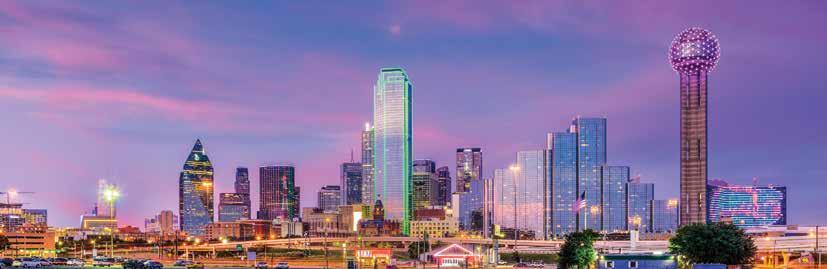
Dallas-Fort Worth and Austin round out the top five, proving that Texas continues to rise as a powerhouse for hospitality careers. Both cities balance affordability and opportunity with fast-growing food scenes and competitive management tracks. For those looking to grow, lead, and build a lasting career, these cities are showing that hospitality is more than a job—it’s a journey with plenty of room to rise.
They said it...
“As we approach the end of the year, the U.S. construction market is shaped by both volatility and opportunity. Despite ongoing challenges with material costs and labor availability, strong demand in high-growth sectors such as data centers, semiconductor facilities and pharmaceutical manufacturing is expected to drive momentum in the market as we move into 2026.”
— Steve Stouthamer, Executive VP of Project Planning at Skanska USA Building, on the industry outlook heading into 2026.
“Every room and suite has been completely reimagined with bespoke finishes, refined design, and thoughtful touches that cater to the discerning modern traveler.”
— Ken Janssen, VP & GM, on Green Valley Ranch Resort’s $200 million renovation in partnership with Avenue Interior Design.
“With Project Fresh, we’re taking decisive steps together as One Wendy’s to strengthen our foundation, enhance restaurant performance and modernize how our customers experience the brand. Project Fresh is about reigniting the energy and distinctiveness that have always made Wendy’s special.”
— Wendy’s interim CEO Ken Cook on how the initiative plans to reignite growth and rebuild brand relevance
A New Kind of Adventure
Universal Studios brings a kid-sized theme park to Texas
Universal Studios is gearing up to open its first-ever Universal Kids Resort in Frisco, Texas, marking a major move in the family entertainment landscape. Set to debut by 2026, the new destination is designed specifically for younger guests and their families, offering a more approachable way to experience the magic of Universal’s most beloved worlds. From the imagination of Jurassic World to the humor and heart of Shrek, the resort promises a lineup of immersive experiences built just for kids.
The project is more than a theme park—it is a full vacation experience anchored by a 300-room hotel that puts guests right in the center of the action. Families
can expect attractions scaled for younger adventurers, interactive play zones and character-driven worlds that bring Universal stories to life at a child’s pace. For Frisco and the broader North Texas region, the development signals a major tourism boost and a fresh destination for year-round fun.
As construction moves forward, anticipation continues to build. Universal Kids Resort represents a new chapter for Universal Studios, one focused on accessibility, imagination and family-first design. When the gates open in 2026, Texas families will not have to travel far to step into an entirely new world of play.
KW Designs is a full-service Architectural firm that provides comprehensive services from Masterplaning, to both commercial and residential projects small and large. With over 26 years of experience in a wide variety of project types, we work to cater our larger range of expertise to the specific needs of each individual client. Currently licensed in SC, NC,TN, & NY, however we are NCARB Certified and able to obtain reciprocal licenses pending our clients needs. A few of the project types we work on include industrial, (Tilt up and PEMB), flex, warehouse, manufacturing, commercial, office, retail, restaurant, hospitality, private schools, churches, corporate projects, mixed-use, multifamily, historical adaptive reuse, master planning, and residential. We look forward to talking about how we can be a team member on your next project.
CORNER
Where Digital Fluency Meets the Field
How data-driven construction teams are strengthening supplier relationships
Where Digital Fluency Meets the Field
How data-driven construction teams are strengthening supplier relationships
By Troy Harrison
Here’s something nobody saw coming: The generation most skeptical of artificial intelligence (AI) isn’t the one that doesn’t understand it. It’s the one that understands it best.
Every new technology faces resistance. The internet? A fad. Smartphones? Unnecessary. Social media? A waste of time. But tech skepticism has always followed the same pattern—older workers resisted, younger workers embraced, and eventually the skeptics retired and adoption became universal.
Not this time.
The Tech Skepticism Script Has Flipped
Traditional technology skepticism was driven by unfamiliarity. Baby boomers didn’t grow up with computers. Gen X had to learn the internet as adults. They resisted because the technology was foreign. As digital natives entered the workforce, resistance faded.
AI flips this script entirely.
Sixty-two percent of Gen Z express skepticism toward artificial intelligence— higher than any other generation. Sixteen percent explicitly don’t want AI on their phones, compared to only 9% of older users. Forty-nine percent believe AI will harm their critical thinking skills.
This isn’t ignorance. It’s educated wariness. Gen Z grew up watching social media algorithms manipulate behavior, mine personal data, and damage mental health. They understand how “engagement optimization” created filter bubbles and monetized attention at the expense of well-being. They’ve seen technology companies prioritize profit over users—and they figure (correctly) that it will keep happening.
When it comes to AI, Gen Z isn’t asking “how does this work?” They’re asking “who does this benefit, and at what cost?” And they can spot AI-generated content instantly. Years of exposure to algorithmic manipulation have given them sophisticated internal detectors.
Here’s the Impact for B2B Sellers
You already know that generational dynamics in B2B selling have gotten complex. Older salespeople struggle to connect with younger buyers who communicate differently and research differently.
Younger salespeople face challenges selling to executives who expect traditional relationship-building. AI adds another layer of complexity to this already-delicate situation.
Consider this common scenario: Your sales team deploys AI-powered email outreach, chatbots for qualification, or AI-generated proposals. The goal is efficiency—reach more prospects, respond faster, scale the process. But when that AI touches a Gen Z buyer, it triggers immediate skepticism.
An AI-written email isn’t just impersonal—it’s a signal that you chose efficiency over authenticity. An AI chatbot isn’t helpful—it’s a barrier between the buyer and real human expertise. An AI-generated proposal tells the buyer you couldn’t be bothered to understand their specific situation.
Here’s the mismatch: Millennial and Gen X sales leaders view AI pragmatically as a productivity tool (which it can and should be, used correctly). They don’t realize their AI-enhanced outreach is actively repelling their youngest prospects. They see time savings. Gen Z buyers see corporate shortcuts that signal low prioritization of genuine relationships.
Authenticity is Everything—and This Time, You Can’t Fake It
When buyers doubt the authenticity of your communication, they doubt the authenticity of your company.
This hits B2B particularly hard because business relationships depend on trust. B2B buying decisions involve long-term commitments, significant investment, and organizational risk. Buyers need confidence that you’ll deliver, support, and stand behind your product over time.
AI-generated content undermines that confidence. When a prospect receives an
AI-written email, the subtext reads: “This company would rather automate than understand our needs.” When an AI chatbot handles initial qualification, the message becomes: “Our time is more valuable than yours.”
When an AI system generates proposals, buyers wonder, “If they’re using AI for this, where else are they cutting corners?” And guess what? These messages are correct interpretations.
What You Should Do
Don’t abandon AI. Use it, but use it well. The technology offers legitimate value for data analysis, research, ideation and productivity. But deployment must be strategic and behind the curtain.
Distinguish between internal AI use and customer-facing AI deployment. Using AI to analyze customer data and identify patterns? That’s smart. Using AI to generate customer
Gen Z is entering the workforce now. Within a decade, they’ll hold senior leadership roles. Their sophisticated understanding of AI’s capabilities and limitations will shape how organizations approach artificial intelligence.
Gen Z interprets AI deployment as a values statement. They’ve watched tech companies claim to prioritize user experience while optimizing for ad revenue. They’ve seen platforms promise connection while fostering division. If your technology serves your interests at the customer’s expense, trust evaporates.
AI Skepticism Will Age In, Not Out
Here’s the critical difference: Internet skepticism aged out. AI skepticism will age in.
Gen Z is entering the workforce now. Within a decade, they’ll hold senior leadership roles. Their sophisticated understanding of AI’s capabilities and limitations will shape how organizations approach artificial intelligence. And their skepticism isn’t going away—it’s informed by direct experience with technology’s dark patterns.
The choices you make today about AI deployment will determine whether future decision-makers view your organization as trustworthy or opportunistic. Companies that use AI thoughtfully, transparently and in service of genuine customer value will differentiate themselves.
Those who deploy AI primarily for internal efficiency will find themselves shut out as skeptical buyers gain purchasing authority.
communications? That’s dangerous. The former enhances human decision-making. The latter replaces human connection.
When AI does touch customer interactions, be transparent. Don’t try to make AI-generated content indistinguishable from human communication. Acknowledge the tool’s role while demonstrating human oversight. Let prospects know that AI helped research their industry, but a human shaped the insights specifically for their situation.
Remember, AI is your intern, not your manager, salesperson or decision maker. As an intern, it’s great—it has a high IQ, it has 20 degrees, and it has no street smarts whatsoever. Your job is to give it the street smarts.
Most importantly, recognize that generational differences in AI perception aren’t temporary. Gen Z’s skepticism reflects a permanent shift in how buyers evaluate vendor authenticity. Companies that double down on genuine human relationships, transparent processes, and customer-first values will thrive.
Those who view AI primarily as a cost-cutting tool will become irrelevant to the generation they’re trying to reach.
The question isn’t whether to use AI. It’s whether you use it in ways that build trust or destroy it. Gen Z’s skepticism provides the answer—and it’s not going away.
Troy Harrison is the Sales Navigator and author of “Sell Like You Mean It” and “The Pocket Sales Manager.” He helps companies navigate the Elements of Sales on their journey to success. For more information on his free, 45-minute Sales Strategy Review, e-mail Troy@TroyHarrison.com.
Connections in the Desert
RCA continues the conversation during ICSC Centerbuild in Phoenix
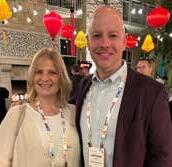
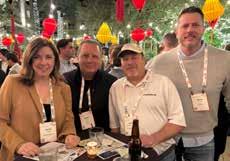
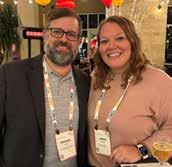
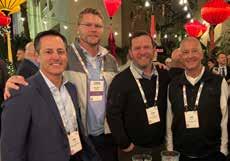
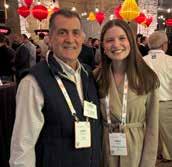
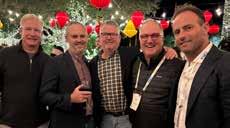
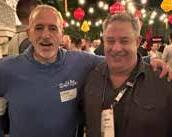
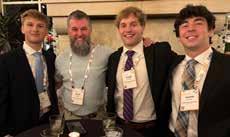
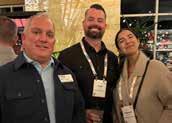
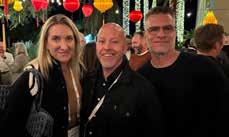
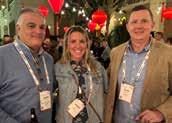
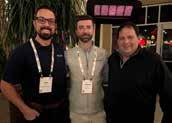
The Retail Contractors Association (RCA) brought its signature “Continue the Conversation – Connections and Introductions” reception to Phoenix during ICSC Centerbuild. The networking event gathered members, retailers, partners and invited guests for a relaxed evening of networking at the Kembara Patio at the JW Marriott Phoenix Desert Ridge Resort & Spa. With drinks and appetizers setting the tone, the happy hour helped reinforce RCA’s commitment to collaboration, relationship-building and face-to-face engagement at key industry events. For more information on RCA and upcoming events, visit www.retailcontractors.org
2. Joe Desanto and Anthony Amunategui, CDO Group; Jason Miller, Catalyst Brands
3. Eric Handley, W.A. Randloph; Steve Olson, Ceso Inc; Cash Matetich and Don “Scrappy” Skorupski, Construction One
4. Matt Schimenti, Schimenti Construction; Jen Davis, Jones Sign; Jennifer Sussman, Powerhouse; Joe Rotondo, Schimenti Construction
6. Benning Construction Team and Guests: Jennifer Elliott, Anthony Zito, Jolevette Zito and Ryce Elliott
7. Kim Miller, Gallant; Matt Frank, The Menemsha Group
8. Michael Vitale, Choice Construction Group; Janine Buettner, ArcVision
9. Jerry DeLiberato, Bowen; Emily Harding, Commonwealth Building
10. Matthew Grose, SJC Ventures; Jeff Mahler, Onyx Creative; Steven Sacks, Frontier Building
1. Curtis Scharfenaker, Mike Crislip, Onyx Creative; Byron Muir, Atlas Building Group
1. Adriana Dika, John Czepiel, Tricarico Architecture & Design PC; Bob Krzykowski, JA Carpentry Inc.
2. Turner D., Tristan Leshiem, Rectenwald Brothers Construction; Erich Meile, Ben Hunter, Engine
3. Jeff Mahler, Onyx Creative; Cheryl Montour and Debbie Albergo, Division Commercial Construction Inc
4. David Van Laeys, CED; Adam Spiewak, Scott Mellen, J. Raymond Construction; Bill Tomala, Cuhaci Peterson, Matt Miller, ACG Roofing
5. Drew Romanic, Martin Architectural; Jeff Sabaj, TriLeaf; Janine Buettner, ArcVision; Mike, FC Dadson
6. DWI Team: Tom Lagos, Kaitlyn Newton, Lath Guyer, Lans Stallings and Adam Bass
7. David Corson, CCR Magazine; Brian Hogan, FCP Services
8. Vince Retort, Rectenwald Brothers Construction; Joe Frank, Nike
9. Adam Shihadeh, JG Construction; Bill Rupert, RCS-CM
10. Greg Healy, GPRS; Art Rectenwald, Rectenwald Brothers Construction
11. Will Schaffer, Univ of Cinci; Steve Hermiller, Mannik & Smith Group; Chase McGugin and Austin Van Atta, Univ of Cinci
12. Melanie Gifford and Sean McGuinness, Sargenti Architects; Jim Agresta, JA Carpentry Inc
13. Shannon McDonald, Taylor Bros Construction Co; Jenna Frank, Complete Mechanical Solutions; Tyshaun Allen, Taylor Bros Construction Co
14. Ben Owens, Weekes Construction; Eddie Grant, Graves Construction; Danielle Murray, Weekes Construction
15. Joe Rotondo, Schimenti Construction; Karissa Riffel and Allen Akowicz, Forta LLC
16. Dave Brown, Tri-North Construction; Lisa Schwartz, ProCoat Products
17. Nick Otto, Go West Architecture; Chadrick Spencer, Bureau Veritas; Jon Glanz, MG Concepts
Skills on Demand
The
role of micro-credentials in a fast-moving construction landscape
Behind every modern construction project is a skilled trades workforce that is being stretched further than ever before. As labor shortages collide with rapidly advancing building technologies, the pressure to quickly advance is present, but not always practical.
Breakneck innovation in materials, digital tools, automation and connected buildings has accelerated the “qualification gap” on job sites. At the same time, high rates of retirement and ongoing workforce deficits mean that many tradespeople don’t have time for ongoing training—exacerbating the skills gaps further as project timelines get more compressed, budgets become tighter and technology becomes even more advanced.
By Kristin Bigda
Stuck in this vicious cycle, skilled tradespeople today need a more accessible form of training that helps them keep pace with evolving technology while also staying productive in the field. Though long-form, traditional education is irreplaceable, microcredentials are emerging as a provisional solution that delivers rapid knowledge and flexibility.
What are micro-credentials?
Micro-credentials are short, stackable learning modules that can be offered by trade associations, agencies or academic
We
Our specialized project management teams are highly effective in maintaining affordable budgets, meeting tight deadlines, and delivering quality construction turnovers on time, every time. From coast to coast, Alaska to Puerto Rico, Hunter Building Corporation has you completely covered on your next construction project!
We offer a multitude of services nationwide ranging from tenant improvements, build-outs, remodels, ground-up construction, and project management. Hunter Building Corporation takes pride in the fact that many of our clients have been repeat customers for many years.
partners and are built to validate specific competencies versus a wider scope of skills.
Broader credentials—like a diploma or certification—demonstrates knowledge across multiple subjects or an entire trade, but micro-credentials demonstrate competency in a very specific, targeted skill, such as Building Information Modeling (BIM) or sustainable construction.
Traditional credentialing programs are essential, but they often take one to four years to complete and require significant classroom or on-site training time. With the rapid pace of today’s technology—and the many pressures already facing the industry—it’s unrealistic to expect skilled trade workers to continually pursue long-form education alone. Micro-credentials are a practical complement.
systems and standards without sacrificing productivity and they give employers a practical way to cultivate a more adaptive, future-ready workforce.
When deployed strategically, microcredentials strengthen both individual performance and organizational capacity, which is vital to the construction industry as it continues to grapple with labor and skill gaps. Micro-credentials:
> Target skill development for evolving job sites by helping workers quickly build mastery in areas that align with emerging construction needs. For example, understanding fire and life safety system updates for large commercial facilities or learning new installation and maintenance techniques for smart lighting controls.
With the rapid pace of today’s technology— and the many pressures already facing the industry—it’s unrealistic to expect skilled trade workers to continually pursue longform education alone. Micro-credentials are a practical complement.
Most programs can be completed in a few hours or days, are self-paced, and delivered online, allowing workers to build new skills on their own schedule without stepping away from the jobsite. As construction becomes increasingly complex, micro-credentials help workers learn quickly and purposefully.
How do micro-credentials strengthen today’s construction workforce?
Because of their speed, specificity and accessibility, micro-credentials offer critical support in an industry increasingly marked by fast-moving progress. They give workers the ability to stay current with new tools,
> Provide flexible learning that fits around project timelines, reducing downtime and schedule disruptions. Micro-credentials are ideal for organizations who can’t afford to pull teams off jobs for extended training periods.
> Are immediately applicable to active projects because micro-certifications require real-world performance rather than just classroom hours. This means workers can immediately apply their skills to on-site jobs.
> Stand as a reliable verification of skills and give employers clear evidence of worker competencies. Micro-credentials
can be displayed anywhere from resumes to portfolios to social media sites.
> Lay out a clear pathway for career advancement when stacked, helping workers grow their expertise in a strategic way.
> Reduces external hiring pressures and onboarding costs because organizations can upskill internally instead of solely relying on external hiring. With attainable opportunities for career advancement, organizations also strengthen their loyalty and reduce turnover.
> Increase safety, compliance, and quality by helping workers seamlessly keep pace with evolving codes, standards and technologies.
> Boost workforce confidence and morale by empowering workers to stay current, competitive and in control of their own professional development.
Equipping today’s workers for tomorrow’s technologies
The construction industry is entering an era defined by innovation, efficiency and intelligence. With the rise of smart buildings, AI-assisted project managers, robotics, and more, traditional training pipelines—though essential—are not always practical.
Workers must have knowledge that moves at the speed of innovation and micro-credentials offer a scalable solution to always maintain workforce readiness.
Micro-credentials are not a shortcut to education. Instead, they are a strategic tool that supports the resilience of the construction sector by ensuring the people who build and maintain commercial spaces remain qualified, adaptable and confident — even when the industry continues to throw down hurdles.
As innovation reshapes the construction industry, micro-credentials are a pragmatic approach that delivers safe, efficient and resilient projects. CCR
Kristin Bigda is the Senior Director, Product Management at the National Fire Protection Association (NFPA), where she is responsible for NFPA's training, certifications, publications, licensing, and subscription product lines as well as the Technical Services team.
Student Insider
Presented by
Student Insider
Dear Skills Trade Student
While construction and technical skills are your primary focus, ConstructEDU Student Insider (CEDU) is designed to supplement your education by providing content that dives into the business of the commercial construction and renovation industry. The bi-monthly newsletter covers areas such as emerging technologies, regulatory issues and other factors shaping the diverse industry’s future. CEDU also features insights and profiles from industry thought leaders on the trends and challenges affecting the marketplace.
Delivered at no charge, we not only encourage you to make CEDU a part of your educational consumption, but also to share it with your peers.
Jay Nuss Realty Group Supports New Vocational Center in Massachusetts
Jay Nuss Realty Group partnered with Dharma Dreams Vocational Center on the sale of a new Hanover facility that will support young adults with learning differences through hands-on workforce training and life skills development. In addition to brokering the sale the firm committed funding as the center’s first room sponsor reinforcing its investment in student success ahead of the center’s January 2026 launch.
Construction Ready Brings CareerExpo and SkillsUSA Championships to Atlanta
Construction Ready will host its 2026 CareerExpo and SkillsUSA
Georgia State Championships on Feb. 19–20 at the Georgia World Congress Center delivering hands-on learning for more than 6,000 K–12 and college students while connecting them with professionals across the skilled trades. Now in its 20th year the event continues to grow with new career exploration areas and expanded opportunities that address Georgia’s urgent construction workforce needs.
Swinerton Delivers Hands-On Learning Space for Future Cosmetologists
Swinerton completed a renovation at Catawba Ridge High School, creating a state-of-the-art cosmetology training facility that gives students real-world salon experience and supports career readiness through hands-on learning. The project reflects continued investment in skilled trades education across South Carolina and builds on Swinerton’s recent work, including the new Phoenix Montessori Academy campus in Huntersville, North Carolina, and partnerships with Melmark Carolinas and Highmark School Development.
PermitUsNow Founder Honored for Small Business Mentorship
PermitUsNow Founder and CEO Helen Callier was named Mentor of the Year by the Greater Houston Business Procurement Forum recognizing her long-standing commitment to strengthening small businesses across Houston’s AEC community. The honor highlights Callier’s leadership in mentoring contractors and suppliers and advancing access to public- and private-sector opportunities throughout the region.
Aged to Perfection
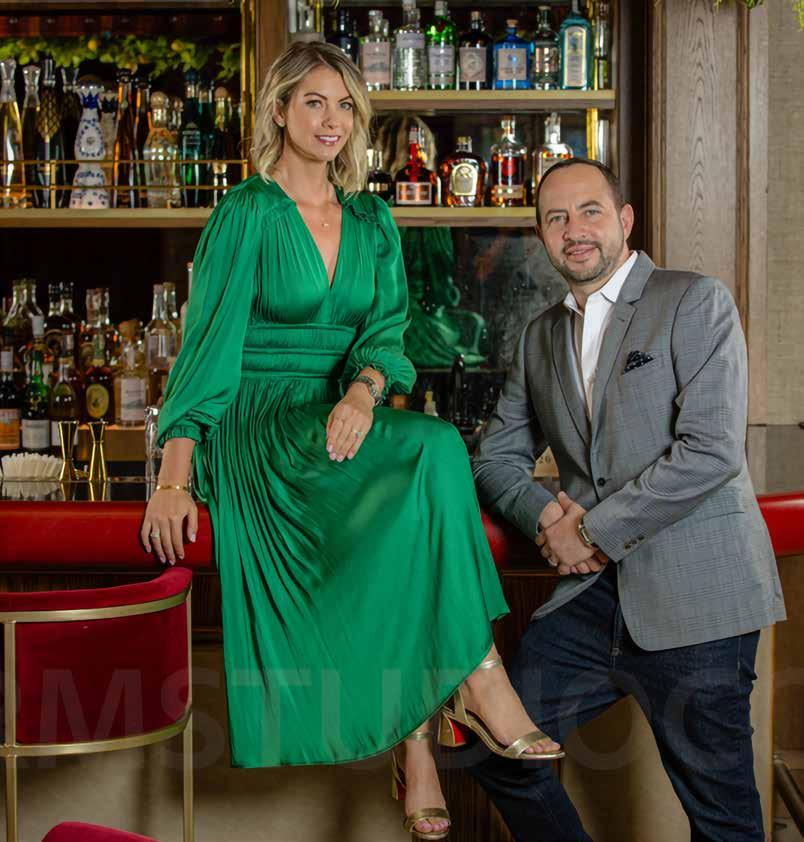
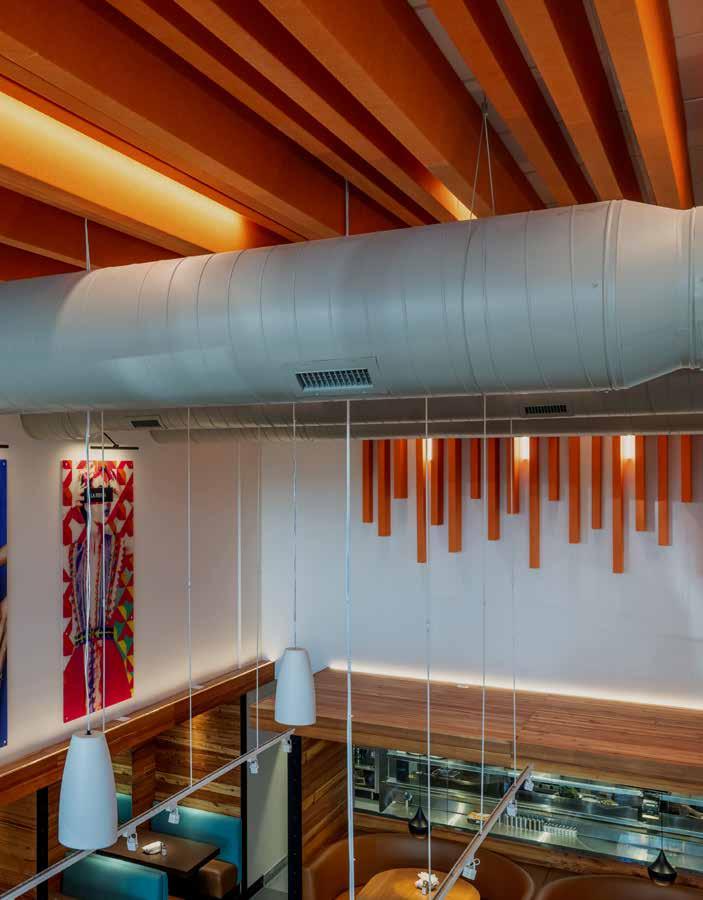
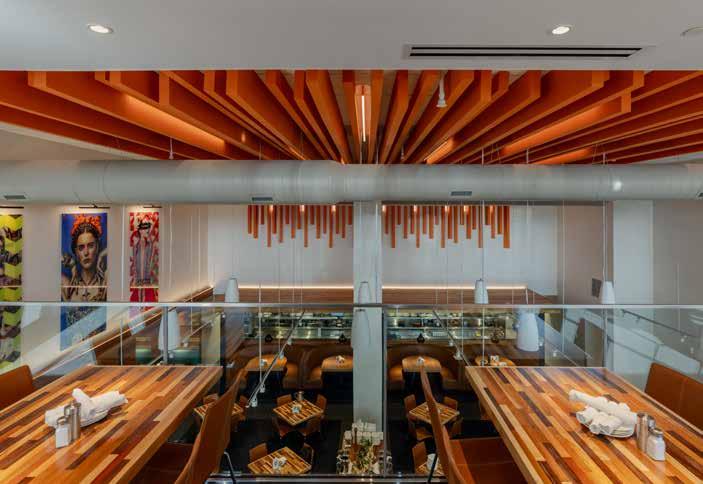
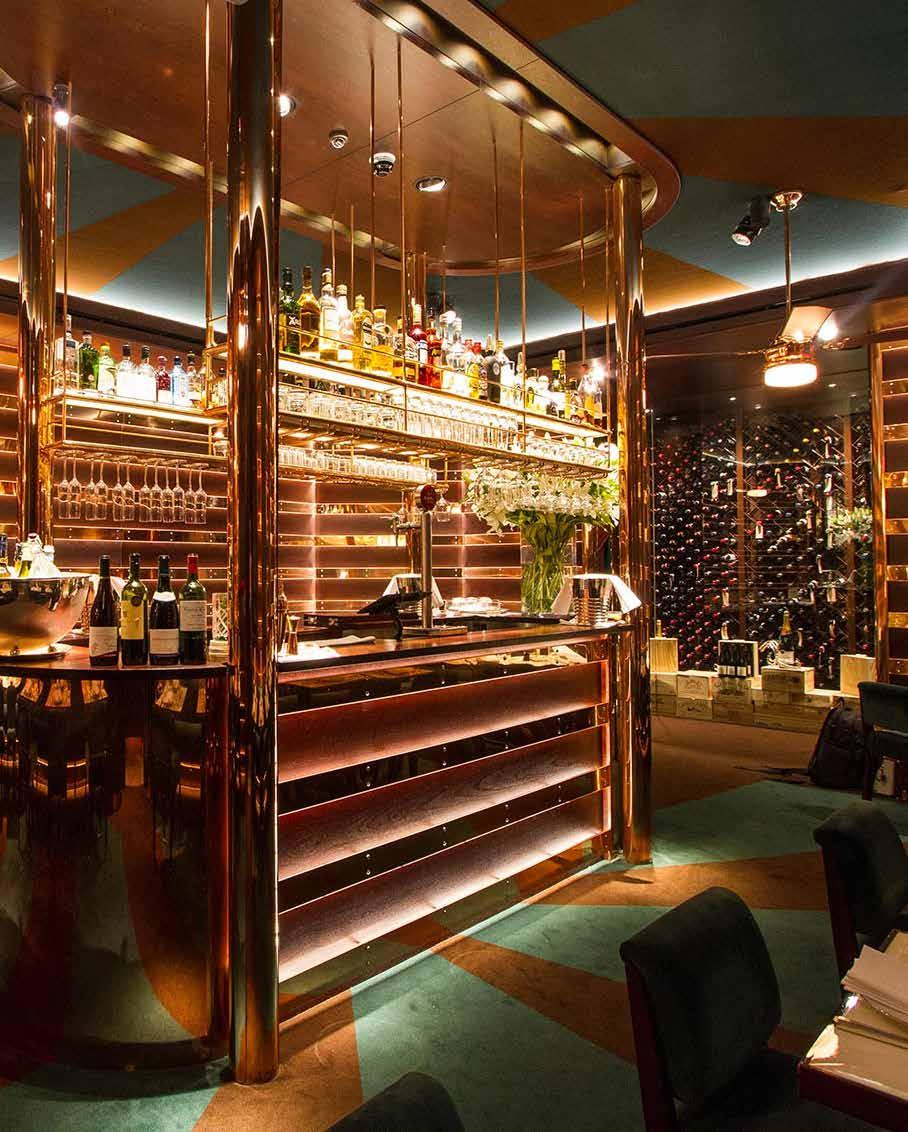
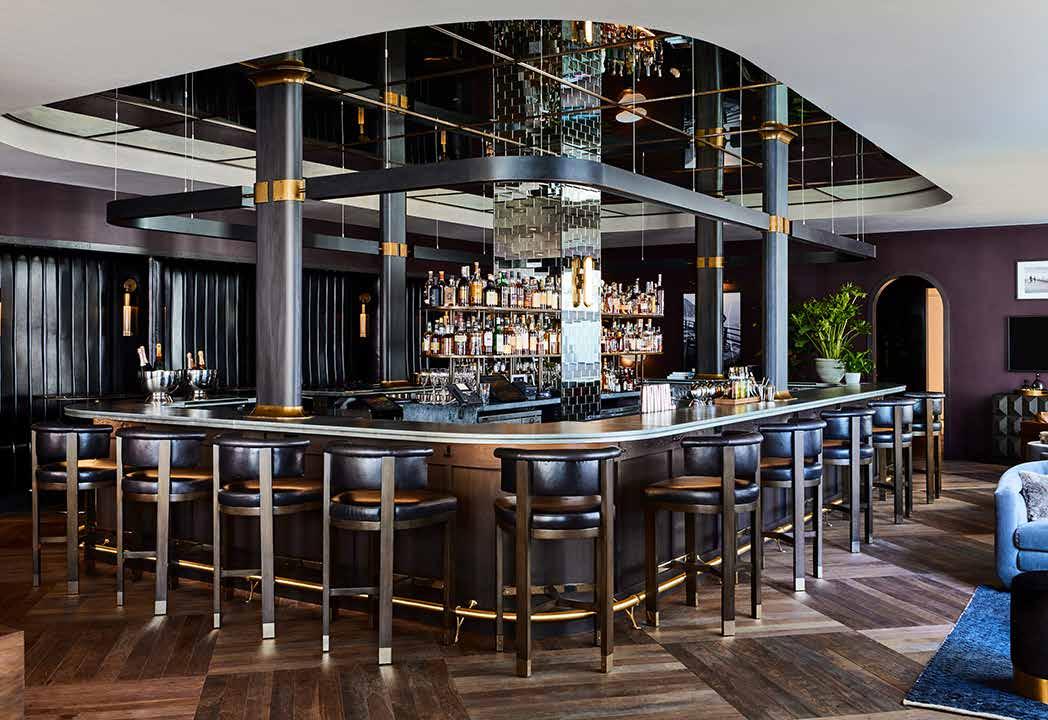
How Barrel Aged Management is crafting hospitality experiences that last
In today’s hospitality landscape, success isn’t just about a great idea—it’s about the ability to bring that idea to life with clarity, consistency and staying power. That’s where Barrel Aged Management (BAM) comes in. Founded by husband-and-wife team Seth and Ami Alexander, BAM is a full-service hospitality studio that specializes in bridging bold creativity with operational precision.
With decades of experience across hotels, restaurants, and lifestyle spaces, the Alexanders have built BAM as a onestop partner for developers, hotel groups, and restaurant operators looking to create or reinvent standout guest experiences. Their work spans the entire development cycle, from brand identity, menu engineering and spatial planning to operational consulting, leadership sourcing and post-launch optimization. The goal is to ensure that every touchpoint—from the name on the door to the first sip of a cocktail—feels intentional, authentic and built to last.
CCR sat down with Seth and Ami to talk vision, execution and what’s next in hospitality.
Give us a quick overview of Barrel Aged Management— what was the inspiration behind launching the studio?
Ami: We founded Barrel Aged Management because we recognized a gap in the hospitality industry: the disconnect between strategy, branding and operations. With decades of experience launching and scaling hotels, restaurants, and lifestyle spaces, Seth and I knew the best concepts needed a partner who could see the full picture.
We created BAM to align creativity and operations under one roof so we could help developers, operators and hotel groups bring the next generation of hospitality to life.
“We always start by listening. Every client has a different vision and set of challenges.”
— Seth Alexander
You talk about creating “authentic, inspired spaces that foster community.” How does that philosophy translate into the projects you take on?
Ami: Authenticity means creating spaces that tell a unique story and reflect the cultures around them. We love taking on projects with interesting histories or meaningful details that we can highlight.
Guests today are looking for more than just great food or beautiful design; they want experiences that celebrate local producers, programs that feel intentional and moments that linger long after they leave. Our job is to make sure those values are embedded in every detail.
With decades of combined experience across operations, F&B, and brand development, how do your complementary backgrounds shape the way you work together?
Ami: Seth has extensive operational experience, while I bring expertise in brand
storytelling and strategy, creating a balanced partnership that combines both perspectives.
Together, we ensure a project performs operationally and financially, while also connecting emotionally with guests. Every decision we make integrates both elements, bringing our vision to life in a way that resonates on every level.
What sets BAM apart from other hospitality development and advisory firms?
Seth: We created BAM to be more than your average hospitality agency. We are a true partner that can move ideas forward with intention and purpose. We combine real-world operational experience with strategic foresight and creative development.
Ami and I also bring in proprietary tools like our AI-driven workflows that turn data into actionable strategies. That mix of vision, innovation, and execution is what truly sets us apart.
BUILDING YOUR BRAND
Our master builders travel wherever our customers want to grow. Decades of cross-country construction allow us to build a Wesco in the northern Michigan snow and ensure that a Real Seafood in Florida adheres to hurricane building codes.
Hospitality is about people and place—how are you seeing guest expectations evolve right now?
Ami: I’m seeing food and beverage shift from being a simple amenity to becoming the heart of the hospitality experience. Today’s guests want personalized, memorable programs that go beyond convenience. They expect experiences that celebrate a property’s identity and distinguish it from the competition. While convenience and technology are important, they can’t replace human connection.
Your work spans everything from master planning and F&B concepting to operational consulting. How do you decide where to start with a new project?
“Authenticity means creating spaces that tell a unique story and reflect the cultures around them.”
— Ami Alexander
Seth: We always start by listening. Every client has a different vision and set of challenges. Sometimes the focus is brand identity and menu engineering, other times it’s on operational consulting or portfolio repositioning. We prioritize the pressure points first and build a roadmap that bridges creative ideas with operational execution.
What’s the secret to aligning bold creative ideas with the operational rigor needed to bring them to life?
Seth: The secret is acknowledging that both are essential. Creativity without execution stalls and execution without creativity falls flat. BAM was designed to bridge these two forces, ensuring every project is distinctive and commercially successful.
You’ve worked with brands from EDITION and Virgin Hotels to Broken Shaker and Shinola Hotel. What’s a common thread you look for in a project or partner?
Ami: Seth and I look for vision and lon -
DESIGNED TO AMAZE.
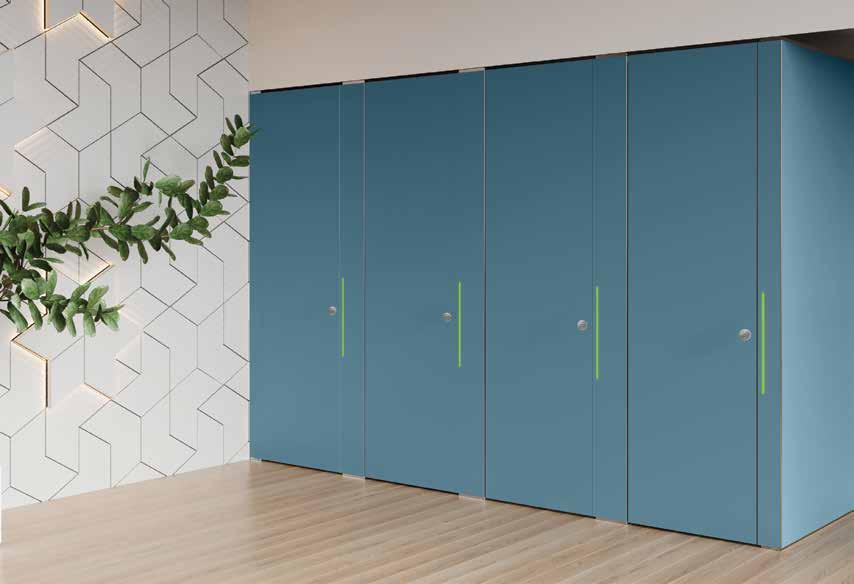
NEW! Skyline and Highrise Series Euro Style Partitions
The elegant design of Bradley’s exclusive collection of Euro style partitions flawlessly combines beauty and performance raising the standard in commercial washrooms. Two new series options, Skyline and Highrise, feature high-design materials, occupancy indicators, increased privacy, and seamless construction to provide an elevated look and welcoming spaces. Commercial Washrooms. Brought to Life.
bradleycorp.com/euro-style-partitions
HIGHRISE SERIES
Phenolic LT
gevity. Whether it’s a global hotel group or an independent operator, we want to work with people who are committed to authenticity and dedicated to building lasting hospitality experiences.
Hospitality is often defined by “sense of place.” How do you ensure each project feels distinct and memorable rather than formulaic?
Seth: We reject formulas. Each project has its own DNA. I look closely at the local culture, the guest demographic and the brand identity. By weaving those elements together, we can create concepts that feel authentic to their location and impossible to replicate elsewhere.
What’s the biggest challenge hospitality groups are facing right now? How are you helping clients navigate it?
Seth: One of the biggest challenges is that many groups are sitting on siloed data across POS systems, reservations, inventory,
guest feedback and financials. This makes it difficult to see risks and opportunities in real time.
Ami and I use AI-powered analysis to unify those systems and deliver actionable insights. This helps our clients identify gaps, optimize performance and make decisions faster.
Sustainability and culture are top of mind in hospitality. How do you weave those values into the projects you lead?
Ami: For me, these values are not an afterthought; they are embedded in the ideation process. We source local producers and artisans and create experiences that are both intentional and responsible.
Even something as simple as a minibar can be transformed into a curated retail experience that supports culture, reduces waste, and leaves guests with a lasting impression.
Where do you see the greatest opportunities for innovation in hospitality right now?
One on One with Ami & Seth
Describe a typical day—if such a thing exists in hospitality.
Ami: There is no typical day in hospitality. One morning, we’re in design reviews, the next, I could be on-site working with a chef team, and the day after, Seth is deep in operational audits. The constant, though, is our focus on both the creative vision and the execution of each project, and keeping that top-of-mind through decision-making and as we conduct our meetings.
What’s the biggest thing on your to-do list right now?
Seth: Right now, we are rolling out new F&B concepts for several hotel partners and finalizing our “House Engine” platform.
What was the best advice you ever received about leading in hospitality?
Ami: The best advice we ever received is that hospitality is not about transactions, it is about trust and connection. Technology,
Seth: Food and beverage has become the anchor of modern hospitality. When paired with innovations like AI-driven revenue prediction, hyper-personalization tools and smarter CapEx planning, it can completely redefine the guest journey and the operator’s return. I’m excited to help build those bridges.
Looking ahead, what excites you most about the future of Barrel Aged Management?
Seth: I’m excited about scaling our “House Engine,” which is our centralized AI toolbox for hospitality diagnostics. It integrates directly with client systems and delivers predictive insights, revenue levers and service strategies in days instead of weeks.
Alongside that, we are continuing to expand our work across hotels, restaurants and lifestyle spaces. What excites us most is the opportunity to continue creating authentic, inspired and lasting hospitality experiences. CCR
systems, and strategy matter, but the true essence of hospitality is making people feel seen, heard and cared for.
What’s the best thing a client or guest has ever said about your work?
Ami: The best compliment is when clients tell us that we delivered a strategy that was aspirational and actionable. Hearing that our work resonates with both guests and the operating teams means we’ve achieved exactly what we set out to do.
If you weren’t building and advising hospitality concepts, what would you be doing?
Ami: Seth would probably be opening another bar or restaurant and I would still be telling stories, maybe in brand or editorial work. My passion would still be focused on creating experiences that connect people.
Where Your Vision Meets Our Expertise
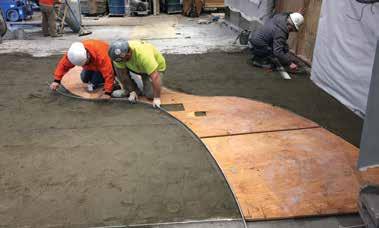
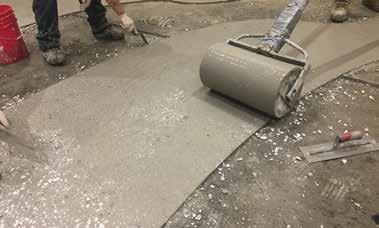
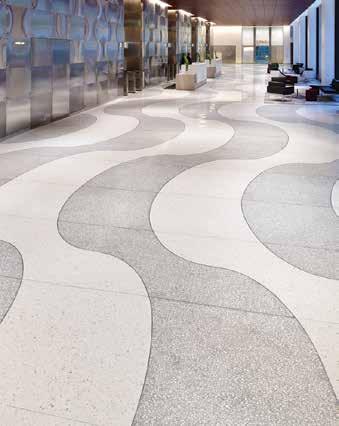
Terrazzo is a handcra ed building material; its primary components are assembled on the construction site. For 100-years, the contractor members of the National Terrazzo and Mosaic Association have brought integrity and skill to countless installations. The NTMA has the expertise your project needs. Find specifications, information, color samples, contractor and supplier members at www.ntma.com or call 800-323-9736.
Laudadio
IT’S THAT SIMPLE
We’re a company with a fresh approach. We are highly skilled and passionate design and construction experts brought together and bonded by mutual trust and respect.
Every member of the PMC team stands ready to deliver, regardless of location, complexity or challenge. We will bring your projects to market with a focus on quality, performance and speed.
Professional Design and Project Management Services for the Retail, Restaurant, Hospitality, Entertainment and the Commercial Markets.
Better. Faster. Smarter
Leaders and the Moment
Meet the
2025
CCR Men’s
and Women’s
Award honorees driving impact across the industry
The 2025 CCR Men’s and Women’s honorees represent the visionaries, thinkers and leaders moving the commercial construction industry forward. From innovation and execution to mentorship and impact, these professionals are shaping what’s next—on the jobsite, in the boardroom, and across the communities they serve.
Casey Mitschke Director of Preconstruction
Adolfson & Peterson Construction
Mary Lindecamp Owner
Elegant Upholstery & Slipcovers
Casey Mitschke never drifted far from the work. Since joining Adolfson & Peterson Construction in 2009 as a field engineer intern, she has built a career rooted in precision, presence and trust. Today, as Director of Preconstruction, she is known for a hands-on leadership style that keeps her closely connected to her team and deeply engaged in the details that shape project success.
Casey works shoulder-to-shoulder with operations teams, trade partners, architects and owners, ensuring clear communication and informed decision-making from the earliest phases of a project. She plays an active role in developing pre-construction schedules, cost models, milestone estimates and GMP packages, bringing consistency and accuracy to complex builds.
As AP expands into new market segments, Casey has been instrumental in advancing mission-critical and adaptive reuse work. Her leadership on the multifamily conversion of Dallas’ 50-story Santander Tower—transforming 14 floors of commercial office space into 291 luxury apartments—stands as a defining example of her ability to guide high-stakes projects with confidence and clarity.
Mary Lindecamp has built her career on craftsmanship, care and an uncompromising attention to detail. As a hands-on owner of Elegant Upholstery & Slipcovers she leads a team of skilled artisans that are known for work that consistently exceeds client expectations and a reputation earned one project at a time..
A highly skilled seamstress in her own right with a meticulous eye, Mary approaches every job—whether hotel furniture, restaurant booths or poolside cushions—with the same standard of excellence. Her work blends durability with sophistication, delivering pieces that perform in demanding commercial environments while elevating the overall design.
Design teams value Lindecamp for her collaborative approach. She works closely with architects and interior designers to ensure each piece aligns with the broader design vision while meeting rigorous functional requirements. Using premium fabrics and materials, she tailors every solution to the specific needs of the client.
Serving both commercial and residential markets, Mary remains an invaluable partner—proving that true quality lives in the details and lasts well beyond installation.
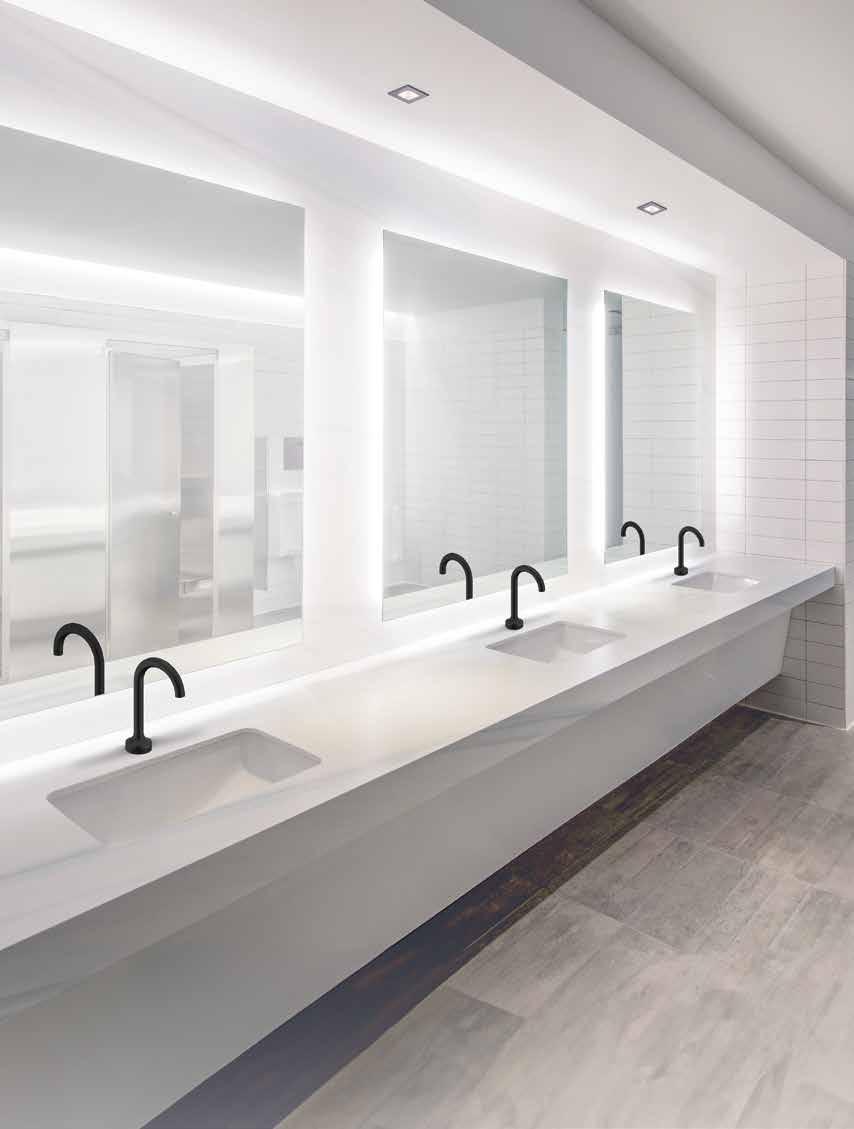
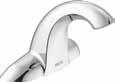
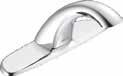
REDEFINING TOUCHLESS WITH NO VISIBLE SENSORS
Proximity® Sensing Technology offers a new standard in faucet innovation by delivering a seamless touchless experience that enhances hygiene, durability, and design without any visible sensors.
Janine Buettner, RDI Partner & Director of Business Development
ArcVision Inc.
Debbie Moore Senior Project Manager, Development/Real Estate Barnes & Noble
Janine Buettner has built a career defined by connection, consistency and longterm impact. Approaching two decades with ArcVision in 2026, she has played a central role in the firm’s growth and evolution within the commercial design and construction industry.
During her first 12 years at ArcVision, Janine worked directly with national retail brands supporting multi-unit development programs. Her early work spanned coordinating project teams and consultants, developing design and construction documents, navigating permitting processes and providing technical support—experience that grounded her in the realities of the industry.
Today, as a Partner, Janine leads ArcVision’s Business Development and Marketing efforts, serving as a key connector between clients, partners and internal teams. She drives strategic growth by identifying emerging markets, qualifying opportunities and shaping RFP responses, while also contributing to company strategy, operational oversight and financial performance. An active industry voice, Janine represents ArcVision through professional organizations, including long-standing leadership with the Retail Design Institute, helping position the firm for its next chapter of impact.
Deb Moore has built a career defined by versatility, longevity and impact. With more than 38 years in the retail construction industry, she has worked across the developer, consultant and client sides, gaining a comprehensive perspective few professionals achieve.
Deb began her career as a project manager with Phillips Van Heusen during a time when women were rare in the field. Her early work ranged from assembling fixtures to coordinating more than 200,000 square feet of ground-up outlet center development. She later expanded her experience through roles at Polo Ralph Lauren, J. Crew and JLL before joining Barnes & Noble.
Today, Deb leads projects from inception through the first year of operation, overseeing bidding, build-outs, turnovers and closeout. A committed mentor and early remote-work pioneer, she has delivered more than 600 stores across 47 states and Canada, building lasting relationships that continue to define her career.
Anthony Amunategui Founder CDO Group
Michael LeFande, AIA Senior Principal and Managing Partner
SBLM Architects
Anthony Amunategui has spent his career rebuilding the construction industry from the inside out. With more than 37 years of experience, he recognized early that many of the industry’s chronic challenges—slow decisions, fragmented communication, rising costs and unpredictability—were systemic, not situational.
That insight led to the founding of CDO Group in 1997. Built on a disciplined framework for execution, the firm has grown into a national commercial construction management and general contracting company delivering more than $100 million in projects annually and nearly one million square feet of retail space each year for leading brands. For Anthony, scale is the result of process, not the goal.
Operating at the intersection of construction, technology and leadership, he continues to introduce modern operating principles into a traditionally resistant industry, testing new tools and workflows to drive speed, clarity and accountability. Beyond the jobsite, Anthony extends that mindset through the Future Factory Podcast and his philanthropic efforts, reflecting a leadership philosophy centered on impact, responsibility and lasting change.
With more than 35 years in the construction industry, Michael LeFande brings a steady blend of experience, vision, and mentorship to every project he touches. A registered architect in New York, New Jersey and Colorado, Michael has spent four decades delivering complex retail, commercial, healthcare and mixed-use developments across the country.
Since becoming a principal at SBLM Architects in 1996, he has led national rollout programs and large-scale developments for clients including Home Depot, CVS, Barnes & Noble, Dave & Buster’s, Burlington Stores, Petco, and Floor & Décor. Recent work includes the redevelopment of Huntington Shopping Center on Long Island and the ground-up Throggs Neck Shopping Center in the Bronx.
Recognized with the 2025 AIA Long Island Architect Achievement Award, Michael is equally known for his collaborative leadership and commitment to mentorship. Outside the office, his dedication to service continues through dog rescue advocacy and benefit concerts with his band, Society’s Dogs, supporting pet rescue and suicide prevention—proof that leadership extends well beyond the drawing board.
Bert Spitz has been creating original garment hanger designs in the world of visual display since 1972, long before branding extended to every detail of the retail environment. Early on, he understood that even the most utilitarian elements could shape perception and reinforce identity.
That philosophy became the foundation of B Free Hangers, a garment hanger design company specializing in wholesale custom solutions for retail stores, apparel manufacturers’ showrooms, interior designers and homeowners. From custom-designed hangers to accessible plastic and wood options, Bert focuses on consistency, quality and visual alignment—ensuring each piece enhances the overall brand experience.
His work has appeared in some of the most imaginative retail settings in the world, including Disney World shops and Cirque du Soleil theater stores across MGM Las Vegas properties, where hanger style and color played a role in extending immersive design concepts.
Known for his boundless creativity and positive spirit, Bert also shares a lifelong passion for food and storytelling. For him, the guiding principle remains simple: love what you do, and it never feels like work.
Kevin Rourke
Material Specification – Global Branding
Davis Marketing Associates
Kevin Rourke’s sign industry career began in 1990 as a sales representative with EGL, working with neon and fluorescent lighting across the U.S. and Canada. The path felt inevitable. His father spent more than 40 years in lighting operations with Westinghouse Lighting and Philips, grounding Kevin early in both craft and discipline. While traveling national markets, Kevin partnered with sign fabricators on proper lighting specification, an experience that introduced him to Fitzpatrick International Group and Kay-Bee Toys and sparked a lasting appreciation for signage as a critical brand asset.
Today, Kevin serves as a consultant and industry advocate with DMA, helping brands, designers, architects, and fabricators specify durable, sustainable, and cost-effective illuminated signage. Known for his “shop-floor-to-brand-owner” perspective, he bridges design intent with manufacturability, reducing field failures and strengthening brand consistency across global programs.
In addition, Kevin is an active member of International Sign Association, Society for Experiential Graphic Design, and Retail Design Institute, where he continues to educate brand owners on the value of great design and quality fabrication.
Bert Spitz Founder B Free Hangers
MMOC E RCIALCONSTRUCTION&RENO
2026
NOITA
Honoring the leaders, innovators and organizations that have shaped—and continue to shape—the future of commercial construction and renovation.
This new awards program will recognize excellence, leadership, and lasting impact across the industry. Nomination details and categories will be announced soon.
Learn more in Commercial Construction & Renovation Issue #1, 2026. History in the making.
Signage Firms Survey Spotlights Brands Shaping What Gets Noticed
From stadium-scale identity packages to wayfinding that keeps jobsites moving and guests on track, our Signage Firms Survey highlights the teams turning blank walls into bold stories. These firms bring the craft, the speed and the problem solving that helps retailers, hospitality operators, healthcare systems and campuses show up with clarity and confidence. If you want to be listed in a future issue, contact Publisher David Corson at davidc@ccr-mag.com.
We will design something that is uniquely yours using our mastery of light, color and materials.
Electroromantic
Antwonn Del Rosso, Owner 2146 e Sergeant st. Philadelphia, PA 19125 (609) 954-0160
antwonn@electroromantic.com
www.electroromantic.com
Year Established: 2019
Number of employees: 1
Type of Signage: LED Neons are made with LED lights encased in Silicone Tubing, Mounted onto Acrylic, Glass Neon, Sign Restoration, Repairs, Channel Letters, Sign Installation
Jonathan Yasko, Director of Sales & Client Services 3601 Lathrop St.
South Bend, IN 46628 (574) 234-5252
jsy@northamericansigns.com
www.northamericansigns.com
Year Established: 1934
Number of employees: 135
Type of Signage: Interior & exterior channel letters, pylons, monuments, cabinets, high-rise, digital, wayfinding, blade, and cabinet signs and window and wall graphics, awnings
Bob Mehmet, CEO / President 707 West Spring Garden Street Palmyra, NJ 08065 (856) 829-1460
rmehmet@pscosigngroup.com www.pscosigngroup.com
Year Established: 1905
Number of employees: 535
Plaskolite
Jonda Baldwin, Marketing Support Administrator 400 W Nationwide Blvd, Suite 400 Columbus, Ohio 43215 (614) 294-3281
www.plaskolite.com
plaskolite@plaskolite.com
Year Established: 1950
No. of Employees: 297
Type of Signage: Endless Decorative Abilities, Durability and Weather Resistance, Sign Grade Acrylic and Polycarbonate for Sign Fabricators and Designers
Type of Signage: Brand conversion programs, interior and exterior signage, maintenance and lighting, digital signage, large format printing, all-encompassing ATM solutions, high-rise installations, and wayfinding solutions
Lessons in operational planning, communication and environmental stewardship
By David Eakins
In today’s manufacturing environment, the decision to relocate or consolidate facilities is often driven by the need to improve efficiency, reduce costs, or modernize outdated infrastructure. But executing such a move, especially under tight deadlines, can pose significant risks to employee retention, customer satisfaction, regulatory compliance and production continuity.
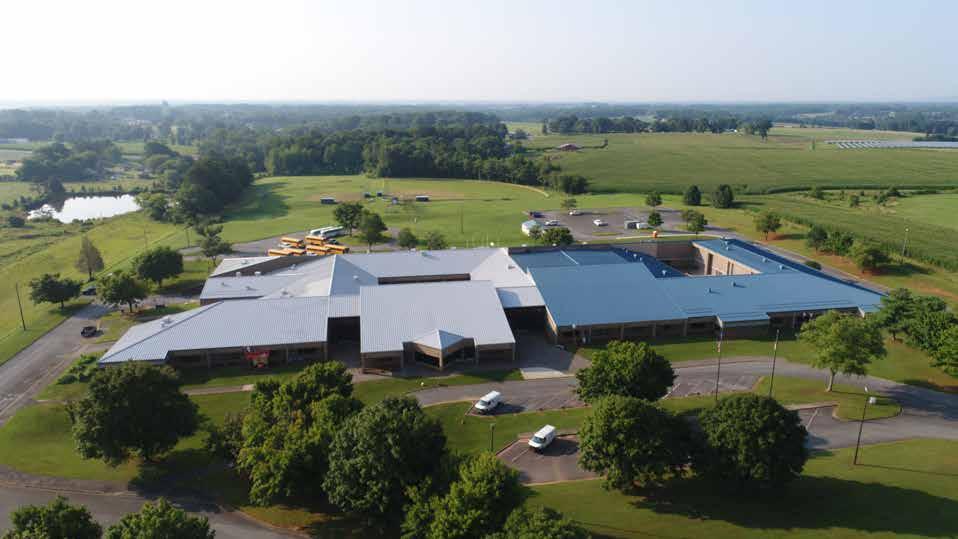
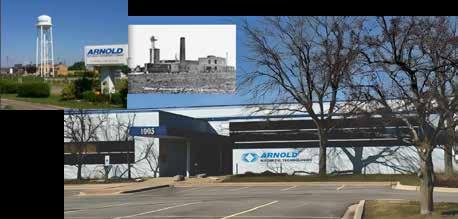
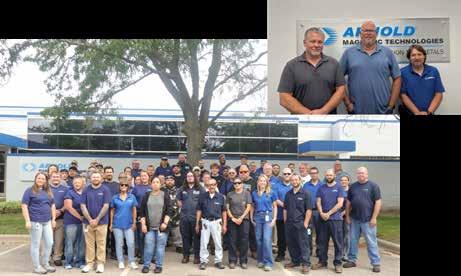
Due to external circumstances, Arnold Magnetic Technologies needed to quickly move two business units from the company’s original property where they had operated for almost one hundred years. The company had only a few months to secure and retrofit a suitable site, transfer more than 400 pieces of equipment and resume operations without disrupting service to its customers.
Arnold’s experience highlights the importance of meticulous planning, strong internal communication and a collaborative culture. These factors proved essential to executing a complex move while maintaining both performance and trust within its workforce and client base.
Faced with the challenge of uniting their sand-casting foundry and thin metals re-rolling plant under one roof, Arnold’s Director of Operations for the two facilities, David Eakins, along with campus Facility Manager, Mike Lidman and Manufacturing Engineer, Chris Oakes, embarked on a highstakes relocation to Woodstock, Illinois.
Putting People at the Center of Facility Decisions
When you’re choosing a new facility, decisions about location, layout and design must
reflect the needs of the people who work there. From the beginning of the Woodstock transition, Arnold’s leadership team considered how the move would affect its existing workforce and future talent pool.
They drew a radius around their former facilities and evaluated candidate buildings based on their current employee commute patterns as well as transportation access and proximity to future skilled labor.
Critically, the company chose a location offering better access to public transit, major highways, and proximity to a dense population center, prioritizing both employee retention and recruitment. But location alone was not enough. Arnold leveraged the move as an opportunity to substantially upgrade workplace conditions, modernizing facilities that had lacked comfort features for years.
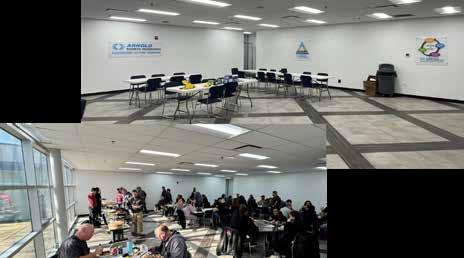
Enhanced cafeteria and restroom spaces, increased natural lighting, and a more cohesive layout have all contributed to a revitalized environment that boosts morale and productivity.
This employee-first mindset extended into staffing models. By combining two previously separate facilities into a single campus, Arnold was able to streamline roles, replacing duplicated functions with unified support teams. It also created new opportunities for cross-training, allowing employees to broaden their skills and contribute across departments.
Rather than reinforcing a rigid and separate structure, the consolidation empowered staff to grow within the organization and build a shared culture.
Union leadership was approached regarding their participation in the move, most taking on new temporary roles far outside their normal scope of work. All employees remained engaged in the process and no one lost time. The leadership team worked together with union and non-union staff to secure buy-in and keep them motivated through the aggressive transition schedule.
Designing a Functional, Flexible Plant Layout
When integrating two very different manufacturing environments, careful attention to physical layout and infrastructure is essential. In Arnold’s case, the foundry’s dusty environment posed a potential
contamination risk to the clean-room-like conditions required for thin metal processing. The new facility had to support airflow zoning, dust collection and debris control across departments that now shared a roof.
To manage these competing environmental needs, the team focused on collaborative planning. Frontline operators and technical staff worked alongside the leadership team to identify core workflows and design a plant layout that maintained the integrity of each process.
The management team stressed the importance of eliminating hierarchy in the room, soliciting input from all levels of the organization, resulting in a layout that reflected real-world production needs rather than abstract planning ideals.
Importantly, the team also made strategic decisions about which equipment to bring and which to retire. Rather than moving everything by default, Arnold carefully evaluated down-time and capacity on every piece of equipment and invited operators to confirm high-value equipment based on actual usage. Teams then removed and recycled outdated machines, streamlining inventory and clearing the path for higher-performing, newly specified tools.
For facilities professionals, this approach highlights a crucial takeaway: plant design is not just about square footage or utility hookups, it is about understanding product flow, process requirements and how small infrastructure decisions affect longterm operational performance.
Planning for Continuity in Customer and Certification Processes
One of the greatest challenges of any facility move is maintaining customer trust during the transition. Shutdowns, delays, and inconsistencies in communication can all erode confidence and strain key relationships. Arnold managed to retain its customer base throughout the move, a result of detailed planning, honest forecasting and proactive outreach.
First, the company communicated early and often, alerting clients well in advance and asking them to submit projected orders ahead of the move. This allowed Arnold to build inventory and minimize order delays. For those unable to meet the early ordering deadline, the company committed to prioritizing their orders once operations resumed. This transparent, customer-forward approach minimized anxiety and strengthened long-term loyalty.
The company built extra time into their project schedule for the downstream effects of relocation, particularly inspections and recertification. By reaching out to governing certification bodies before the move, Arnold gained a clear understanding of the steps required to pass the various inspections required by the new municipality. They also worked with industry regulators to recertify for ISO 9001, AS9100 and Nadcap, and with their customers to revalidate work processes.
For other manufacturers, this underscores the importance of anticipating not
just the physical move, but the bureaucratic and compliance-related adjustments that accompany it.
Accelerating a Complex Move Without Compromising Safety or Quality
Most major facility overhauls allow a full year or more for permitting, engineering drawings and utility coordination. Arnold had eleven months total to find a site, design and execute the move, construct a new foundry and resume operations. Much of the traditional pre-move planning had to happen simultaneously with execution, requiring agility, risk mitigation and constant on-the-ground problem solving.
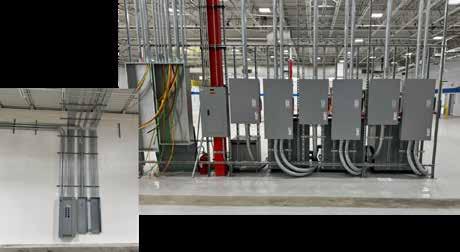
With such a tight timeline, vendor delays and backordered supplies repeatedly threatened to derail the project. The team had to pivot frequently to solve major problems like a nine month lead time for an electrical distribution grid and delays from sprinkler system installers. Critical decisions were made quickly, and Arnold’s parent company, Compass Diversified (NYSE: CODI) remained flexible to accommodate the additional investment needed to keep the move on track.
The company also had to contend with regulatory differences between its previous location and the new jurisdiction. Much of the legacy equipment
did not meet updated codes, requiring retrofits or replacements. To ensure operational readiness and regulatory compliance, Arnold heavily invested in new equipment that not only met code, but also improved quality and output across both production lines.
By combining technical foresight with real-time collaboration, Arnold was able to transform a condensed timeline into a successful rollout. Facilities managers can take from this the importance of agile project management, particularly the ability to quickly identify issues, adapt workflows and maintain alignment between engineering, production and regulatory teams. Transparent communication with executive leadership and investors also is critical for success.
Making Environmental Responsibility Non-Negotiable
As sustainability continues to be a growing focus in the manufacturing sector, Arnold used its transition as an opportunity to invest in environmentally forward infrastructure. The company’s new facility sits within an Economic Justice Zone, a designation meant to limit industrial pollution in historically underserved areas.
Rather than seeing this as a restriction, Arnold treated it as a mandate to exceed environmental compliance standards.
Cooling systems now use closed-loop chilling circuits instead of consuming municipal water, significantly reducing strain on the local water supply. Water wash stations are supported by on-site processing tanks to limit wastewater discharge. Glycol-based thermal control systems manage temperature precisely, while massive dust collectors, vacuum sand systems and HEAF air filtration mitigate emissions from the foundry.
In areas with potentially hazardous fumes, like degreasers or finishing lines, Arnold installed dedicated fume collectors and filters. All of these enhancements required significant capital, but the company viewed them as long-term investments in both environmental health and community well-being.
For other facility leaders planning upgrades or moves, this example underscores the value of designing sustainability into the foundation of your operations—not just to meet today’s codes, but to lead on future-proof practices.
Driving Growth Through Strategic Facility Transformation
Relocating or consolidating a manufacturing facility is a high-stakes endeavor, but it is also an opportunity to reset priorities, invest in people, and build smarter, greener operations from the ground up.
By putting employees and customers first, embracing collaborative planning, and designing with environmental and regulatory foresight, Arnold not only met its ambitious move timeline but also emerged stronger, with a more resilient, future-ready facility.
This experience demonstrates that with transparent communication, empowered teams, and a long-term vision, even the most daunting transitions can become catalysts for operational excellence. Facilities professionals, regardless of company size or industry, can draw actionable lessons from Arnold’s approach, not only in the decisions that were made, but also in the way those decisions were made. They were made transparently, collaboratively and always with an eye toward sustainable growth. CCR
David Eakins is Director of Operations at Arnold Magnetics Technologies.
HIGH QUALITY DELIVERABLES WITHIN 2MM
QUICK SPEED TO DELIVERY 10 DAYS OR LESS
FSU works with retailers, architects, restaurants, financial services, gas convenience, and commercial property owners nationwide. We work with everyone from development to construction managers, store planners to designers, and facilities to asset managers. WE HAVE YOU COVERED!
• 3D Surveys and BIM
• 2D Architectural As-Builts
• Due Diligence and Permit Research
• Facility Assessments, Audits, and Asset Surveys
• ADA Compliance
• Drone Surveys
The experience your project deserves
FSU works with retailers, architects, restaurant concepts, financial services, companies and facilities, and asset managers of every size across North America.
From Legacy to Smart
Why it’s time to
upgrade traditional boiler systems in modern warehouses
By Simon Soloff
In today’s fast-evolving logistics and supply chain environment, precision in temperature control isn’t just a technical concern; it’s a business imperative. Yet, many warehouses still rely on outdated, traditional boiler systems that lack the flexibility, insight and efficiency needed for modern operations.
Sniff out regulation changes
To track government construction regulations, you have to continually monitor key agencies and deep dive all the states you work in for those regs. Or, you can now just Hire the Hound —
The BillTrack50 Regulation Hound.
This brand new regulation tracking tool is the first truly great tracker out there.
BillTrack50's Federal and State Regulatory Tracking Hound actually tracks. It runs down the key changes that affect your business, from start to finish. See for yourself.
You can Hire our Hound for a 30-day FREE TRIAL or schedule a demo with one of our experts to see how you can start saving time and money today!
BillTrack50 software dives into the swamp of regulator bulletins, administrative websites, and hard to find documents, breaking them all into individual regulation entries for understanding, and figuring out how they are all related. It handles the mess others ignore.
To meet the demands of today’s temperature-sensitive industries, warehouse operators must take a hard look at their heating infrastructure and consider upgrading to smart boiler systems powered by IoT (Internet of Things) technologies.
Over the years in a company that focuses on smart energy solutions for warehouses, I’ve worked with countless facilities struggling to meet modern efficiency and compliance standards using legacy heating systems. The truth is clear: Traditional boilers are no longer adequate.
Here’s why smart boilers are the future and why now is the time to make the switch.
The Limits of Traditional Boiler Systems
Conventional boiler systems were built for a different era, one without real-time data, remote access, or adaptive controls. They typically run on preset timers or manual adjustments, making them inefficient in environments that demand precision and flexibility.
Key drawbacks of these systems are inconsistent temperature control, high energy consumption, limited responsiveness to environmental changes, no predictive maintenance capabilities and zero remote access or automation.
Warehouses that continue to rely on outdated, traditional boiler systems risk falling behind, not only in energy efficiency, but also in their ability to compete and thrive in an increasingly data-driven, performance-focused supply chain economy.
These issues translate directly into higher operating costs, greater risk of product spoilage and a larger carbon footprint, none of which are acceptable in today’s competitive and sustainabilityconscious market.
Why Smart Boiler Systems Are the Necessary Next Step
Smart boilers represent a transformative upgrade over traditional systems. Managed by intelligent thermostats and integrated with IoT devices, these systems offer remote monitoring and control, where you can adjust settings from anywhere via mobile apps or centralized software.
Smart boilers also offer predictive maintenance, so warehouse operators can avoid costly breakdowns by identifying issues before they occur.
Smart boilers also offer real-time data & analytics so warehouse managers can understand heating usage patterns and optimize energy consumption. Another major benefit is a smart boiler system’s automated response to environmental conditions.
Smart sensors adjust boiler output based on occupancy, weather and internal conditions.This level of automation and insight simply isn’t possible with older systems.
Efficiency Gains and Sustainability
Upgrading to smart boilers can reduce heating costs by up to 30%, thanks to more precise heat distribution and minimized energy waste. However, the financial benefits are just the beginning.
These advanced systems play a key role in sustainability efforts by significantly reducing greenhouse gas emissions, minimizing fuel consumption, and supporting organizations in meeting green certification standards and Environmental, Social and Governance (ESG) commitments.
For facilities working toward net-zero or carbon-neutral targets, adopting smart boiler technology is a strategic investment that not only modernizes heating infrastructure but also aligns it with long-term environmental and corporate responsibility goals.
As AI, machine learning and IoT technologies become deeply embedded in logistics and facility operations, smart boilers will play a pivotal role in creating energy-efficient warehouse ecosystems that support both sustainability and performance.
Enhancing Warehouse Operations
Smart boiler systems are particularly valuable in temperature-controlled warehousing, where maintaining stable conditions is essential to preserving product quality, ensuring safety, and meeting strict regulatory requirements. Industries such as pharmaceuticals, food and beverage, chemicals and electronics depend on tightly controlled environments and smart boilers deliver the precision, reliability and responsiveness needed to uphold these rigorous standards.
Unlike traditional boilers, where even a minor temperature deviation can jeopardize compliance, product integrity, and customer trust, smart systems significantly reduce this risk through advanced features.
These include automated alerts when temperatures deviate from set thresholds, continuous data logging to support audits and regulatory compliance, and seamless integration with warehouse management systems (WMS). This all creates a fully connected and proactive thermal management ecosystem that enhances operational efficiency and accountability.
Overcoming the Challenges of Upgrading
Transitioning from a traditional boiler system to a smart one involves upfront investment, system integration challenges, and the need for staff training. Yes, these are valid concerns that can make warehouse managers pause. But when weighed against the long-term benefits, the investment proves not only worthwhile, but also strategic.
Key considerations during the transition include ensuring that the smart boiler system integrates smoothly with existing infrastructure to avoid costly retrofits and
implementing robust cybersecurity measures to protect connected devices and maintain operational integrity.
It is also important to provide comprehensive training so that staff can confidently operate and maintain the system for maximum return on investment. Rather than viewing this solely as a technology upgrade, warehouse managers should approach it as a critical infrastructure enhancement that strengthens operational resilience, improves energy efficiency and supports long-term cost control and sustainability goals.
The future of warehousing is being shaped by intelligent, interconnected systems, and boilers must not be overlooked in this evolution. As artificial intelligence (AI), machine learning and IoT technologies become deeply embedded in logistics and facility operations, smart boilers will play a pivotal role in creating energy-efficient warehouse ecosystems that support both sustainability and performance.
These systems enable seamless, fully automated HVAC integration, improving overall climate control while reducing manual intervention.
Smart boilers also enhance workplace conditions by providing more consistent temperature regulation, which boosts comfort, safety, and productivity for warehouse staff. In addition, smart boilers offer real-time data and analytics that empower facility managers with greater operational insight and agility, allowing them to respond quickly to changing demands or issues.
Warehouses that continue to rely on outdated, traditional boiler systems risk falling behind, not only in energy efficiency, but also in their ability to compete and thrive in an increasingly data-driven, performance-focused supply chain economy. Embracing smart boiler technology is both an upgrade and a forward-thinking move toward smarter, more resilient operations.
Traditional boilers are becoming obsolete in modern warehouse environments. By upgrading to smart boiler systems, operators can reduce costs, enhance operational control, and contribute to a more sustainable future. The benefits aren’t just about heat; they’re about smarter resource management, tighter compliance and stronger business performance.
The shift isn’t just about technology— it’s about staying relevant. CCR
Simon Soloff is co-founder and President of EnTech, a leading innovator in smart energy solutions for warehouses and other commercial buildings. Alongside his brother and co-founder, Eric, he identified critical inefficiencies in traditional energy monitoring systems, leading them to establish EnTech in 1999. Driven by their vision for real-time data accessibility, EnTech became a pioneer in internet-based energy management solutions. As a smart energy expert, Simon advises building managers on how to cut down on energy usage and optimize overall efficiency. entechsmart.com.
The Turning Point
Upcoming rebound in construction spending offers pockets of opportunity
By Chris Fisher
After two years of rising rates and slowing activity, U.S. construction may finally be nearing the bottom of its current cycle with a rebound driven by nonresidential and infrastructure sectors anticipated in 2026. Ducker Carlisle’s latest Construction Industry Outlook projects that total put-in-place construction will increase by 5.3% in 2026 and at an average annual rate of 5.7% through 2029.
This contrasts with a consensus forecast from the American Institute of Architects (AIA) that expects more modest gains of 2.2% in 2025 and 2.6% in 2026 based on factors including high long-term interest rates, falling consumer confidence, rising tariff rates and labor shortages.
But with recent Federal Reserve actions and anticipated further cuts, market participants are becoming more optimistic for improved funding conditions to stimulate construction activity overall.
Key Growth Drivers: Data Centers, and More
One of the greatest areas of activity and attention in the construction industry is data center capacity buildout, which has significantly exceeded the outlook across other sectors. Ducker Carlisle estimates that data center construction will exceed $50 billion by 2029, including newly constructed large-scale data centers as well as retrofit and renovation of existing buildings with access to power and energy grids critical
After two years of rising rates and slowing activity, U.S. construction may finally be nearing the bottom of its current cycle with a rebound driven by nonresidential and infrastructure sectors anticipated in 2026.
to meeting the massive electricity needs of new technologies.
This expansion is being fueled by the ongoing rise in demand for existing services like cloud storage and streaming, the rapid buildout of AI-related capabilities and data analytics, and the availability of funding from IT and technology companies requiring exponentially increasing computing power to support computationally-intensive operations.
Data center-adjacent offices and high occupant facilities will participate in this growth as well, but more classic and traditional commercial office construction will experience challenges due to occupancy and rental rates.
Other sectors expected to show strength include:
Healthcare – The forecast for healthcare construction is strong, with an expected
increase of 22.0% in 2025. Spending on institutional facilities, which includes healthcare, is also expected to be a strong sector with projected gains of 6.1% in 2025 and 3.8% in 2026.
Leisure-related sectors – Lodging and Amusement/Recreation are expected to exhibit strength throughout the forecast period as travel and hotel occupancy rates return to pre-pandemic levels. Ducker Carlisle also anticipates improved spending to remodel or upgrade hotels, resorts and restaurants as premium and business travel rebounded in 2025 and is forecasted to continue in 2026.
Manufacturing – Coming off a period of strong growth, construction in the manufacturing segment would be expected to contract during normal economic cycles. However, recent tariff and domestic economic policies has created a significant increase in forecasted investments by global international corporations and sovereign funds, potentially creating a medium-term lift in construction and innovation across the manufacturing sector.
Weakening Segments and Headwinds
Not all sectors will experience growth and positive spending in the coming years due to traditional cycles and capacity of existing facilities recently added to our US building stock. Sectors which may experience a downturn or remain weak include:
Commercial – The traditional commercial buildings and office segment remains a weak point, continuing a long-term trend of reorganization and repurposing of commercial inventory, especially for class B and C office buildings. With return-tooffice demands increasing, Class A office owners are investing in remodeling features and functions of their existing buildings to help keep occupancy levels
high. Businesses are attracting employees back to the office, not by mandate but by higher quality office environments.
Educational – After a rather strong period in school construction and remodeling—driven in part by the federal Elementary and Secondary School Emergency Relief Fund (ESSER) that provided more than $190 billion to address the impact of the pandemic—Ducker Carlisle anticipates educational construction will decline. Local states and communities still have funding sources through bond programs and state budgets, but not to the same level as federal funding provided over the past three years.
Regional Trends
The Southern regions of the U.S. are expected to continue outperforming and will account for nearly half of the national construction spending by 2029. This growth is driven by long-term trends such as net inbound migration, lower-cost housing markets, and post-disaster rebuilds.
Specific examples of areas with robust growth include Texas, Georgia, Arizona, Utah, the Carolinas and Colorado. Within regions, we anticipate suburban and rural, including Tier 2 and Tier 3 cities, to see outsized
growth as developers look for more economical land purchases
Building Material Expenditures
Both retail and wholesale building material expenditures are showing ongoing softness through the rest of 2025. Retail expenditures are mostly flat, reflecting stability in homeowner improvement spending, while wholesale sales, though performing better, are challenged by the sluggish new construction market.
Despite some price declines, materials are widely expected to remain above preCOVID pricing levels.
The latest Ducker Carlisle outlook points to a commercial construction sector that’s finally regaining its footing after several quarters of uneven performance and cost uncertainty, but the rebound is concentrated in certain segments. Growth is being driven by data centers, manufacturing, healthcare and lodging/amusement projects, while conventional commercial office buildings and the educational sector remain sluggish.
The recovery is uneven, but the opportunities are there for contractors who operate in the segments showing the strongest demand and steady project momentum. CCR
Chris Fisher is a Managing Principal at Ducker Carlisle where he leads the firm’s Building and Construction practice. He specializes in commercial growth strategies for businesses and transaction support for private equity firms across the entire value chain in the construction industry.
CIRCLE NO. 39
Size
Material
Type of Material
Layer 1 0.5 Wear layer Use layer with PU protection
Accomplish a year's worth of geospatial business in just three days.
Geo Week brings together geospatial and mapping professionals to explore how data, maps, and advanced technologies can deepen our understanding of the world and inform solutions for complex challenges.
Geo Week’s conference program and tradeshow floor provide expert insights, real-world case studies, cutting edge tools, and unmatched peer-to-peer-networking. Harness the power of geospatial at Geo Week!
Hitting All the Notes
Why Mesero OKC’s custom ceiling is making a statement
By David Ostermann
Oklahoma City is undergoing a major transformation. This once sleepy city is quickly becoming a bustling metropolis fueled by ambitious development projects, a thriving food scene, and a renewed investment in public spaces. Take the OAK OKC open-air district, for example. This newly launched community center is designed to be a cornerstone of the city’s next chapter, complete with high-end retail, luxury accommodations, and standout dining destinations.
Photo courtesy of David Ostermann, SpeedPro
Irving
An installer carefully positions custom acoustic baffles in the Mesero OKC ceiling, adding both style and sound control to the dining space.
The first wave of tenants was carefully chosen to set the tone—modern, welcoming and reflective of the district’s long-term vision. Among them is Mesero OKC, a two-story restaurant whose contemporary interpretation of Tex-Mex cuisine is matched by equally forward-looking architecture.
W. “Trey” R. Dyer III, CEO of Mesero Restaurant Group, set three non-negotiables for the brand’s inaugural Oklahoma location: the space had to express Mesero’s unmistakable character without relying on thematic décor; it had to be acoustically comfortable for guests despite a hard-surfaced shell; and it had to open on a compressed schedule tied to OAK OKC’s phased debut.
Mesero OKC is a standout addition to The OAK OKC district, blending bold design with smart acoustical engineering to create a dining experience that’s as functional as it is visually striking.
Dyer’s ownership group retained architect FUSION AE, a fully integrated architecture and engineering firm made up of the nation’s leading experts in restaurant and retail design. They were charged with managing the site and vision and my studio, SpeedPro Irving, was asked to fabricate and install the custom acoustic system that
would become the restaurant’s signature design focal point.
Turning an Acoustic Challenge into a Signature Design Element
The corner suite where Mesero OKC is located is nearly twenty-eight feet from finished floor to structure. This expansive
and open concept, while airy and inviting, posed a formidable acoustical problem. The two dining levels consist of tilt-wall concrete, with the opposing elevation walls being floor-to-ceiling insulated glass.
Left untreated, the restaurant space would ring like a bell and would make for an extra loud and echoey dining experience, which would make it difficult for customers to hear each other and enjoy themselves. Fusion-AE proposed a field of acoustic baffles fabricated from PET felt, a recycled-plastic fiberboard with an excellent noise-reduction coefficient, low mass and a Class A fire rating.
The baffles would hang in an irregular array that mimicked a “dripping” ceiling, simultaneously absorbing sound and delivering a visual punch. Just as important, PET’s light weight would simplify rigging in a space where diners in the new interior mezzanine would sit only 6 feet to 8 feet from the finished ceiling.
Because no catalog product came close to the required dimensions or color, the ceiling had to be made from scratch. At our SpeedPro Irving facility, we translated Fusion-AE’s design to create baffles that nested each unique panel for efficient cutting. We also custom-manufactured an exact color match to Mesero’s signature orange brand color.
Next, we created a full-scale mock-up allowing the architect, owner, and contractor to study sight lines from both the main floor and the mezzanine. The exercise resolved sprinkler coverage, emergency-lighting offsets and the
integration of linear LED channels that would continue through the curtain wall and along the exterior soffit.
That early prototyping step streamlined later approvals and transformed a potential acoustic challenge into a standout brand feature.“The custom baffles turned a practical necessity into a visual centerpiece that adds a high-design element to the space while reinforcing our brand,” Dyer says.
Fabrication proceeded in four tightly sequenced stages: Custom color PET manufacturing, CNC cutting and edge finishing, pre-assembly with coordinate tags,
and finally field installation. Next, the crew staged the baffle placement from scissors lifts after the trades cleared each work zone. Lightweight felt panels meant no secondary steel was required—a savings in both time and cost.
Details That Define the Experience
While the ceiling commands attention, several complementary elements ensure a cohesive and comforting space for guests. Warm wood finishes add a sense of comfort to primary walls without overloading the structure. The bar area introduces a bold
Does your project have what it takes?
That's why Commercial Construction & Renovation is looking for your team. Our ninth annual “CCR Project Profile Awards ” will recognize the best-of-the-best construction projects from the top down with awards for New Construction Project and Renovation Project. Being the best takes a team e ort.
To help select these special projects, we’re building a special committee from our Editorial Advisory Board to pour through the nominations. After they select the projects, we'll identify winners in the following sectors:
In today's commercial construction industry, the successful new builds and renovated projects are the ones with every part of the team working in unison to deliver on time, under or on budget and in sync. From design, to engineering, to building and management, the best projects feature the best teams.
So, how do you get your project nominated?
Go to: https://ccrmag.formstack.com/forms/2026_project_profile_form and fill out the online form, then submit all images for award entries to: https://spaces.hightail.com/uplink/BOC
Deadline to submit form: March 23, 2026
Send your nominations forms to David Corson, publisher, at davidc@ccr-mag.com.
pop of bright blue, providing a striking contrast to the orange baffles and seating.
In addition, the original Mesero open-kitchen concept has been tweaked for this location, now sitting behind a glass wall that is clear enough to preserve culinary theatre, but solid enough to contain equipment and kitchen noise.
Mesero OKC stands as a vibrant example of how thoughtful design and smart execution can shape both a dining experience and a district’s identity. For OAK OKC, the glowing orange baffles visible through two stories of glass have become a de facto beacon, drawing foot traffic from neighboring retailers by day and signaling the district’s modern and luxury identity after dark, especially as the exterior LEDs channels shine.
In addition, the original Mesero open-kitchen concept has been tweaked for this location, now sitting behind a glass wall that is clear enough to preserve culinary theatre, but solid enough to contain equipment and kitchen noise.
And for the project team, the collaboration underscores three takeaways worth applying to future work. First, involve key stakeholders—owner, architect, contractor, and fabricator—early in the design process to streamline decision-making and align on creative solutions.
Second, leverage material properties rather than fight them; PET felt’s
strength-to-weight ratio and acoustic performance supported both the design intent and the construction budget.
Third, align exterior and interior details so daylight and nighttime lighting schemes read as one continuous idea, reinforcing tenant identity within the larger mixed-use context.
Mesero OKC is a standout addition to The OAK OKC district, blending bold
design with smart acoustical engineering to create a dining experience that’s as functional as it is visually striking. This restaurant project showcases how thoughtful, detail-driven execution can transform a practical need into a powerful brand statement, one that helps define both the restaurant and the district it calls home. CK
David Ostermann is the owner of SpeedPro Irving, a reliable partner for commercial interior graphics and signage. Serving the construction and design community since 2006, SpeedPro specializes in high-quality, fast-turnaround solutions tailored for commercial environments. From custom wall coverings and ADA signage to acoustic panels and branded graphics, itworks closely with general contractors across the region to ensure every project meets code, design intent and schedule. He can be reached at: david@speedproirving.com.
Bright Moves
Daylighting brings energy and connection to Tulsa’s new recreation hub for active seniors
Bright Moves
Daylighting brings energy and connection to Tulsa’s new recreation hub for active seniors
By Neall Digert
Since 1973, nonprofit LIFE Senior Services has delivered programs and services dedicated to promoting healthy, active aging for adults in Tulsa. Recognizing the evolving needs of older adults, the organization expanded its Roma Berry campus with a new, 8,450-squarefoot recreation facility designed for indoor pickleball and basketball.
Photos courtesy of Solatube International
As tubular daylighting systems require minimal structural modification, they integrated seamlessly into the existing roof design.
The project directly responds to the surging popularity of pickleball, especially among seniors who appreciate its low-impact movements. This remains the fastest growing sport in the U.S., according to the Pickleball Athletic Club, challenging communities to design spaces accommodating demand. The project further reflects the critical need for expanded exercise resources for the country’s aging population, as physical activity programs in the U.S. must increase by 78% to adequately meet senior demand, according to the National Library of Medicine.
Designing a facility tailored to these trends presented distinct challenges. The building’s roof structure required the addition of a fenestration solution that provided high-quality, abundant daytime illumination to support players’ safety and comfort. At the same time, this had to be achieved without introducing glare or heat gain, and without violating the roof’s design constraints. Furthermore, the project
needed to embody LIFE Senior Services’ wellness-focused mission by cultivating an environment conducive to physical activity and social interaction.
To meet these objectives, the project team incorporated natural daylight as a core design principle. Installing 12 Solatube SolaMaster 330 DS-O tubular daylighting devices (TDDs) with advanced user-controlled daylight dimmers provided glare-free illumination across the courts, with user-adjustable court-level daylight illumination suitable for various activities without producing added heat. The result was an inviting, energy-efficient facility where Tulsa seniors can thrive.
Illumination Criteria and Design Constraints
To deliver a comfortable and visually safe setting for athletic movement, an abundant distribution of natural daylight remained a primary design imperative for the recreation facility. The option of utilizing traditional skylights raised multiple concerns, related
to: inconsistent daytime daylight distribution patterns; increased heat loss and heat gain issues for the space; and the structural limitations of the building’s low-slope roof.
These challenges are not unique to athletic facilities and affect a wide range of commercial developments. For example, a study published in Oxford Academic found that conventional skylights can introduce excessive solar heat gains in commercial buildings.
Moreover, poorly positioned skylights can generate uneven daylighting, “hot spots” and harsh shadows, according to the Florida Solar Energy Center, which can compromise the athletes’ visual comfort and acuity.
These realities necessitated an alternative daylighting solution capable of overcoming the inherent limitations often associated with traditional skylights.
An Engineered Daylighting Solution
The project team addressed the facility’s illumination criteria by incorporating an
SolaMaster 330 DS-O units are engineered to capture, transfer and diffuse full-spectrum daylight, well-suited for the facility’s open-span, multi-court layout.
advanced daylighting system: Solatube Tubular Daylighting Devices (TDDs). Twelve SolaMaster 330 DS-O units were systematically integrated into the building envelope, spaced evenly across the roof.
These systems are engineered to capture, transfer and diffuse full-spectrum daylight deep into interior spaces, well-suited for the facility’s open-span, multi-court layout.
The Solatube TDDs provide an abundant, glare-free distribution of natural daylight throughout the facility, creating a visually uniform and comfortable playing
environment. The systems’ properties further filter out heat-inducing infrared wavelengths, helping maintain a stable indoor temperature year-round.
As TDDs require minimal structural modification, they integrated seamlessly into the existing roof design. The inclusion of built-in optical daylight dimmers further provides an additional layer of control, granting staff the flexibility to modulate daylight levels for various activities and to accommodate variations in daylight availability due to time of day, season of the year and sky conditions.
By distributing abundant light without glare or thermal discomfort, the design encourages older community members to gather and interact.
This engineered daylighting solution succeeded in delivering highquality, controlled daylight throughout the facility, enhancing visibility and achieving a pleasant environment for movement.
Daylighting as a Strategy for Senior Wellness
The decision to prioritize daylighting was rooted in evidence connecting natural daylight to senior health. Exposure to daylight is strongly correlated with a decrease in depression among older adults, reports the National Library of Medicine, who often face a higher risk of depression due to spending more time indoors.
Complementing this, research from the National Institutes of Health associates daylight exposure with improved sleep quality in older adults, a key contributor to overall wellness.
The facility’s daylighting systems create a visually uniform environment conducive for athletic movement.
Furthermore, studies from the Lighting Research Center suggest that daylight positively affects serotonin levels and alertness, reduces fatigue, and sharpens cognitive function. These findings underscore daylighting as a critical, evidence-based strategy for promoting mental and physical well-being.
By incorporating Solatube TDDs that diffuse daylight evenly, the recreation facility’s design supplies abundant daylight exposure to support players’ alertness, mood and vitality.
Fostering Community and Social Engagement
The application of daylighting systems also proved integral to achieving LIFE Senior Services’ goal of promoting social connection. Older adults face a higher risk of isolation, according to the National Institute on Aging. With life expectancies continuing to rise, creating opportunities for seniors to remain active and socially engaged represented a crucial design objective.
The facility’s daylighting system supports this intention by infusing the interior
with bright, balanced natural daylight, fostering a welcoming and physically agreeable atmosphere. By distributing abundant light without glare or thermal discomfort, the design encourages older community members to gather and interact.
The synthesis of an engaging sport like pickleball with the facility’s uplifting, naturally lit environment creates opportunities for both physical activity and social interaction, two crucial factors in combating isolation.
Operational Efficiency and Sustainability
The integration of Solatube TDDs yielded significant advantages in operational efficiency. The ample distribution of natural daylight substantially reduces the facility’s reliance on electric lighting during peak daytime hours, lowering overall energy consumption when occupancy is highest.
Given that electric lighting can represent 35% to 50% of a commercial building’s annual energy use, according to a study by Bialystok University of Technology, this demand reduction lowers carbon emissions and generates long-term operational savings. This outcome represents responsible fiscal stewardship, a pivotal consideration for a nonprofit organization like LIFE Senior Services, enabling it to allocate more resources to its vital community programs.
The installation of Solatube TDDs in LIFE Senior Services’ new recreation facility successfully achieved the project’s overarching goals for daylighting, comfort and safety. The daylighting systems provide bright, evenly distributed natural daylight that directly supports physical activity, nurtures social interaction and reduces the facility’s environmental footprint.
The project further bolsters the organization’s commitment to wellness-focused aging, serving as a benchmark for the value of incorporating integrated daylighting as a central design strategy in modern active aging facilities.
Neall Digert, Ph.D., MIES, VP, Innovation and Market Development, Solatube International and Kingspan Light + Air North America, has over 30 years of consulting and education experience working in the energy/lighting/daylighting design and research fields, specializing in the design and application of advanced lighting and daylighting systems for commercial building applications.
The design team for LIFE Senior Services’ new recreation facility installed 12 Solatube SolaMaster 330 DS-O tubular daylighting devices (TDDs) evenly across the roof, providing an abundant, glare-free distribution of natural daylight throughout the facility.
For architects, developers, and contactors
Mechanical Engineering
Plumbing Engineering
Electrical Engineering
Structural Engineering
bluestreak-consulting.com
CIRCLE
HEAVY EQUIPMENT SERVICE PARTS.
HEAVY EQUIPMENT SERVICE PARTS.
Buy service parts and maximize fleet utilization rate.
Buy service parts and maximize fleet utilization rate.
Unlock savings and efficiency with EquipmentShare’s parts catalog. We offer high-quality parts to enhance your fleet utilization rate and reduce maintenance costs. Trust EquipmentShare for top-tier value and support in maintaining your heavy equipment. AND MORE!
Unlock savings and efficiency with EquipmentShare’s parts catalog. We offer high-quality parts to enhance your fleet utilization rate and reduce maintenance costs. Trust EquipmentShare for top-tier value and support in maintaining your heavy equipment. AND MORE!
A Generational Transformation
A Generational Transformation
Inside the David Booth
Kansas Memorial Stadium project
The University of Kansas set out to do more than modernize a football stadium. It set out to reshape the front door to campus. The transformation of David Booth Kansas Memorial Stadium reimagines a nearly 100-year-old landmark into a next-generation experience for fans, student-athletes and donors while honoring its origins as a World War I memorial dedicated to the 130 members of the KU community who lost their lives in the war.
For KU Athletics, the project represents a rare chance to elevate competitiveness and campus pride for decades to come. Dimensional Innovations partnered with HNTB, Multistudio, Turner Construction, Legends and the university to design experiential elements that knit KU’s story into every touchpoint—from graphics and wayfinding to immersive technology and donor recognition.
Commercial Construction & Renovation sat down with Justin Wood, Principal and Sports Practice Director at Dimensional Innovations, to discuss the reimagining of the University of Kansas’ David Booth Memorial Stadium. From honoring the stadium’s heritage as a World War I memorial to creating future-ready fan experiences, Wood shares how DI helped KU deliver a project that’s redefining what a collegiate venue can be.
Campus FACILITIES
Give us a snapshot of the David Booth Kansas Memorial Stadium project.
The University of Kansas wanted more than a stadium renovation. They wanted a comprehensive gateway to the campus and community. The project reimagines a nearly century-old stadium into a next-generation fan, student-athlete and donor experience.
As the oldest college football stadium west of the Mississippi, David Booth Kansas Memorial Stadium began as a World War 1 memorial dedicated in 1922 to honor 130 KU students, faculty and alumni who lost their lives in the war. That heritage was a guiding principle throughout the project. At the same time, the university knew this was a once-in-a-generation opportunity to create an experience that would position KU Athletics competitively for decades to come.
Our role at Dimensional Innovations was to partner with HNTB, Multistudio, Turner Construction, Legends and the university to design and deliver experiential elements that bring KU’s story to life at every turn. The renovation includes bold new graphics, wayfinding, donor recognition, immersive storytelling and technology integrations.
What made this project so unique compared to other collegiate athletics projects?
Two things stand out. First, the historic weight. Unlike a typical stadium modernization, this one carried a responsibility to honor the stadium’s memorial roots. We weren’t just designing for fans today; we were stewarding a legacy nearly 100 years old.
Second, the timing. College athletics is changing fast with name, image and likeness (NIL) opportunities, the transfer portal and an increasingly competitive recruiting landscape. Facilities are now one of the most important differentiators for programs. KU understood that and wanted to move firmly forward and set itself apart.
What are some of the biggest challenges you faced?
Scale and speed. The Gateway District project isn’t just the stadium. It includes a new conference center, retail and mixed-use development that expands KU’s footprint in a transformational way. Coordinating across that scope, while ensuring every touchpoint felt connected to KU’s identity, required enormous collaboration.
Campus FACILITIES
Another challenge was the pace. What was originally scoped as a 30-month project had to be delivered in just 18 months. Compressing a timeline of that magnitude required an extraordinary level of coordination across architects, builders, fabricators and the university. For our team, it meant leaning on our integrated design-build-technology model.
Because we handle strategy, design, fabrication and installation in-house, we could cut down on handoffs and keep the process moving without sacrificing quality. It was a true all-hands effort to meet the deadline while keeping the integrity of the design intact.
How did you approach designing the stadium as a year-round destination, not just a game-day venue?
This was one of KU’s biggest priorities. Stadiums today can’t just sit empty during the off-season. They have to function as living, breathing parts of campus and the community. For this project, we thought about how it would be viewed and used beyond just football Saturdays.
The new design introduces flexible premium spaces, donor areas and gathering zones that can host everything from recruiting events to conferences, community gatherings and university celebrations. Paired with the Gateway District’s adjacent mixed-use development, the stadium has transformed into a true campus hub.
It’s about creating an asset that drives value 365 days a year. Whether that’s bringing alumni back for events, giving recruits a memorable tour or providing the city of Lawrence with a world-class space for civic engagement.
How did you collaborate with stakeholders during the process?
We took a layered approach. On one hand, we worked closely with KU Athletics leadership to understand the strategic priorities: recruiting, revenue generation and fan engagement. On the other, we spent
Challenging the Status Quo
Maximize uptime, maintain compliance, and sustain safety with a team that treats your business like its own.
WHAT SETS US APART
Maximize uptime, maintain compliance, and sustain safety with a team that treats your business like its own.
We do business differently. We prioritize building a culture of confidence — with clients, vendors, and our team alike. We believe in the transformative power of great people combined with trusted relationships. With our attention to detail and commitment to operating in the gaps, we boldly redefine industry standards. Our way has proven to be the formula for becoming a leader in infrastructure management.
Services:
» 24hr Emergency Services
SERVICES
Fire Suppression
YOUR WHY IS OUR MISSION
» Reactive Maintenance
» Preventative Maintenance WHAT SETS US APART...
Fire Life Safety
» Code Compliance Review & Reporting
» Proactive Planning Upgrades & EOL Asset Review
We operate differently. Envisioning what should be, not what is, we lead the way by creating newer, higher standards of quality for the underserved, highly technical trades of fire suppression, vertical transportation, and material handling. Our approach harnesses the power of people, data, and technology. Listening to learn, we discover each client’s why and deliver true value through partnership and expertise because your why is our mission.
» Fire Extinguishers
» Fire Suppression Systems
Vertical Transportation
» Elevator Systems
NATIONAL COVERAGE
» Fire Sprinklers
» Fire Alarms & Detection
» Passive Fire Protection
» System Monitoring
» Gas Station Suppression
» Kitchen Exhaust Cleaning
» Kitchen Suppression
» Escalator & Walkway Systems
» Upgrades & Modernization
Material Handling Systems (MHS)
» Rolling Doors
» Dock Equipment
» Forklifts
» Scissor Lifts
» Pallet Jacks
» Pallet Racking Systems
» Conveyors
» Warehouse Supplies
» Baler Compactor
» Floor Cleaning Equipment
We discover each client’s why and deliver true value through partnership and expertise because your why is our mission.
MEMBERS OF
Members Of
Nothing is more important than protecting your people (first and foremost), your property, and your business continuity. We customize our fire and life safety services around each of your unique sites and our services include: Fire Suppression Systems, Fire Sprinklers, Fire Alarms & Detection, Passive Fire Protection, System Monitoring, Gas Station Suppression, Kitchen Exhaust Cleaning, and Kitchen Suppression.
Vertical Transportation
Safe, accessible transportation throughout your facility is a must. Since no location moves like yours, our custom solutions include Preventative Maintenance, 24hr Emergency Services, Reactive Maintenance, Code Compliance Review & Reporting, Proactive Planning Upgrades & EOL Asset Review, Elevator Systems, Escalator & Walkway Systems, and Upgrades & Modernization.
Material Handling
Your supply chain is missioncritical – whether it’s delivering medical supplies, distributing food, or moving the raw materials that power your business. Our services include: Rolling Doors, Dock Equipment, Forklifts, Scissor Lifts, Pallet Jacks, Pallet Racking Systems, Conveyors, Warehouse Supplies, Baler Compactor, and Floor Cleaning Equipment.
time listening to alumni and community voices to ensure the memorial story was authentically represented.
And of course, we always view projects through the lens of the fan. What makes someone choose to leave their living room, with a big screen and high-def broadcast, to come to a stadium? It’s about creating a remarkable experience they cannot get anywhere else.
Walk us through the design strategy.
We organized the word into three core priorities:
> Heritage storytelling: Integrating the WW 1 memorial elements into the fabric of the design, from aluminum name panels to interpretive exhibits that honor veterans.
> Fan and Recruit Experience: Designing bold graphics, donor recognition and immersive spaces that elevate game day and give recruits a “wow” moment on their first visit. For example, the Players Tunnel is intentionally crafted to build anticipation and reinforce Jayhawk pride as they walk down the path.
> Consistency Across the District: Ensuring signage, wayfinding and brand elements tied the stadium into the broader Gateway District development.
By layering those priorities, we created an environment that feels unified, inspiring and future-ready.
From a construction and fabrication standpoint, what stood out?
The project pushed boundaries of what we could deliver in terms of scale. Our team handled everything from massive exterior signage to precision donor panels. Some elements required advanced fabrication techniques—3D printing, large-format graphics and custom metalwork—to meet durability needs and design vision.
This was one of KU’s biggest priorities. Stadiums today can’t just sit empty during the off-season. They have to function as living, breathing parts of campus and the community.
How does the fan experience differ now?
Fans can expect more than a game. They can expect an experience that blends tradition, technology and community pride. For example, entering through the new concourse, they’re immediately immersed in KU’s story: timelines, championship moments and dedications. The premium spaces offer elevated hospitality that rivals pro venues.
And throughout, digital integrations create opportunities for energizing content and interactive storytelling. It’s an experience that makes being there irreplaceable compared to just watching at home.
How does the project align with larger
trends in collegiate athletics facilities?
We’re seeing a few big shifts in collegiate athletics:
> Experiences over Amenities: It’s no longer enough to just have a bigger weight room or nice locker room. Facilities must create memorable experiences.
> Integration of Storytelling: Programs are realizing the power of immersive graphics and technology to tell their story and connect emotionally.
> Mixed-Use Development: Projects like the Gateway District show how universities are thinking beyond the stadium to create year-round destinations.
KU’s project is at the forefront of all three trends.
What
are you most proud of in this project?
For me, it’s personal. I am a KU alumnus and as I walk through the new stadium, I see the Jayhawk story and tell it in ways it’s never been told before. From honoring the fallen to celebrating modern victories, the project captures what it means to be part of this community.
At the end of the day, our job was to help KU create an environment that inspires fans, engages recruits and honors the university. Seeing all of that come together is something I’ll never forget.
Any advice for peers working on similar large-scale collegiate projects?
Stay anchored in authenticity. Every school has its own DNA. The danger is creating something that feels like it could be anywhere. Dig deep into what makes the place unique and let that guide every design decision.
Also, collaborate early and often. These projects are too complex for silos. Success comes with architects, builders, designers and the client working as one team toward a shared vision.
What does this project mean for KU fans?
It means they get to walk into a place that feels like home. It also feels brand new. They’ll see their history honored, traditions celebrated and their future embraced. Most of all, it means that when they gather in Lawrence on game day, they’ll share something you cannot replicate.
GENERAL CONTRACTOR PROFILES
Building with Intention
How Patrick and Lorraine Reidy are shaping Reidy Contracting Group for the future
Building with Intention
How Patrick and Lorraine Reidy are shaping Reidy Contracting Group for the future
Reidy Contracting Group is built on experience, ambition and a clear-eyed vision for what construction partnerships should be. Founded by Patrick and Lorraine Reidy the firm blends deep field knowledge with disciplined strategic leadership to deliver work defined by precision trust and long-term value. Patrick brings hands-on construction expertise, while Lorraine’s financial and operational leadership helps guide the company’s growth with intention and accountability.
Casa Cruz
From its early days RCG has earned a reputation for tackling complex projects with a collaborative hands-on approach that puts planning craftsmanship and relationships first. That mindset continues to shape its work across New York, where the firm is known for reliability, transparency and consistent execution.
A certified Women-Owned Business Enterprise through both the New York City Department of Small Business Services and the Women’s Business Enterprise National Council RCG brings a distinct perspective to every project. Backed by a skilled team and trusted partners, the company emphasizes strong preconstruction planning, smart budgeting and thoughtful problem-solving—because great projects start with great people.
Can you give us a quick snapshot of your brand and the work you do?
Reidy Contracting Group (RCG) is a full-service general contracting and construction management firm based in New York City. As a husband-and-wife team who came to New York from Ireland, we founded RCG in 2010. The company was built on a shared vision of opportunity, craftsmanship and integrity.
I (Patrick) brought decades of hands-on construction experience and a background in mechanical engineering, while Lorraine contributed her expertise as an MBA-qualified accountant and financial strategist.
Since our founding, we’ve focused on delivering high-quality, design-driven
Since our founding, we’ve focused on delivering high-quality, design-driven interior renovations and fit-outs across the corporate, hospitality, retail, education and entertainment sectors.
interior renovations and fit-outs across the corporate, hospitality, retail, education and entertainment sectors. Our portfolio includes projects for Warner Bros. Discovery, American Express, Nickelodeon and Ghirardelli at the Empire State Building.
What defines RCG most is our commitment to people—our clients, partners and employees—and our belief that trust is the true foundation of every project.
What types of clients
and markets are your primary focus?
Our core markets include corporate interiors, hospitality, media and entertainment and retail—sectors that demand both precision and creativity. Over the past 15 years, we’ve also expanded strategically into healthcare and infrastructure. Diversification has been key to our growth and resilience, allowing us to navigate changing market conditions while continuing to serve a wide range of industries.
Many of our clients are globally recognized brands with fast-paced, complex projects that require technical expertise and
seamless coordination. We also work closely with top architectural and design firms that value partnership, problem-solving and craftsmanship as much as execution.
How does your approach to building serve the needs of today’s end-users?
We see every project as a collaboration between vision, function, and the human experience. Today’s end-users expect spaces that are flexible, sustainable and designed to enhance comfort, well-being and productivity.
You can teach someone to read drawings, but you can’t teach them to care. That philosophy defines how we build. Our teams work closely with designers and consultants to ensure every detail—from acoustic performance to material selection to how a space feels when you walk through it—reflects that same care and purpose.
Nexus Club
Bank of Ireland Fit-Out
What drives your construction strategy—efficiency, innovation, client collaboration or a mix of all?
It’s truly a mix of all. Our success lies in balancing efficiency and innovation with genuine client collaboration. We’re process-driven but flexible, knowing that each project has its own rhythm and challenges. We prioritize communication, planning and accountability at every level. We’ve also embraced technology—from 3D coordination and virtual walkthroughs to digital field reporting—to improve coordination, accuracy and speed without ever compromising quality. Our approach is proactive, never reactive, and always centered on client trust.
What are some of the biggest challenges you face in delivering or renovating projects today?
While supply chain disruptions and rising costs remain ongoing industry challenges, communication is the most critical factor in delivering successful projects. If you’re not communicating in real time with clarity, you’re putting the project at risk.
In New York City, where logistical complexity and tight timelines are part of the job, our ability to plan ahead, set realistic expectations, and problem-solve early is what allows us to maintain consistency and quality—no matter the scale or speed of the project.
How
are you incorporating sustainability and resilience into your work?
Sustainability isn’t an afterthought for us—it’s an expectation. We’ve completed multiple LEED-certified projects, including a LEED Platinum corporate headquarters overlooking Central Park and we continue to integrate sustainable practices across all phases of construction.
From sourcing responsibly and managing waste to partnering with design teams committed to energy efficiency and long-term performance, sustainability is part of how we build. Our resilience also comes from diversification—entering new sectors like healthcare and infrastructure has strengthened our ability to grow responsibly while staying adaptable to evolving industry needs.
Looking
ahead, what do you see as the most pressing challenges for the industry?
The biggest challenge ahead is attracting and retaining skilled talent. Having built RCG over 15 years through mentorship and internal growth, we understand how vital it is to foster a culture where people feel valued, supported and proud of what they build.
The next generation of builders is looking for meaning, balance and innovation in their work. Our industry must continue to modernize—not only through technology but through culture—by providing opportunities for development, collaboration and purpose-driven work.
What trends are shaping the future of construction right now?
Technology and data are transforming every stage of construction, from project management to field operations. We’re integrating 3D coordination tools, virtual walkthroughs and AI-driven quality control systems that help identify issues early and improve efficiency.
We’re also seeing a continued rise in prefabrication, sustainable materials, and wellness focused design. But beyond technology, one of the most important trends we see is a renewed focus on relationships— clients are prioritizing trusted partnerships over low bids. That’s exactly how we’ve always operated and built our reputation.
Where is your business headed in the next few years?
We’re focused on strengthening our position in New York while expanding selectively into other markets that share our values of quality, collaboration and craftsmanship.
Internally, we’re investing heavily in training, technology and leadership development to ensure our next generation of builders continues the culture that Patrick and Lorraine established—one grounded in integrity, accountability and excellence. We’re celebrating our 15th anniversary this year, but we’re just as ambitious and forward-looking as when we began.
What
makes your brand stand out in a crowded market?
Our people and our partnerships set us apart. RCG was built through repeat
The Kitano Hotel
Ready to take your customer loyalty game to the next level?
Look no further than MarketNet – the industry leader in running effective spiff programs!
What exactly is a spiff program?
It’s an incentive program designed to reward and motivate your sales team and/or customers.
Whether you’re looking to boost sales, increase customer engagement, or drive brand loyalty, MarketNet’s spiff programs have got you covered. Here’s why ours stand out from the rest:
1. Tailored Solutions. You’re unique. So our spiff programs are fully customizable to meet your specific goals and objectives, whether you’re a small startup or a large enterprise.
2. Cash. It’s the Irresistible Incentive: With MarketNet, we’ve found cash talks, and everything else walks.
3. Cutting-Edge Technology. MarketNet leverages the latest technology and automation tools to streamline the entire process. Our “plug and play” website interface works WITH your brand, not against it.
4. Proven Results. Our clients have seen proven year-over-year improvements in sales, customer satisfaction, and brand loyalty thanks to MarketNet’s spiff programs. Let
One-on-One with... Reidy Contracting Group’s Patrick and Lorraine Reidy
Describe a typical day.
There’s no such thing as a typical day in construction—and that’s what makes it exciting. Mornings start early with check-ins across project teams, followed by a balance of site visits, client meetings and problem-solving sessions. No matter how busy things get, we always make time to walk the jobs. Seeing the work firsthand keeps us connected to what we do and why we do it.
What was the best advice you ever received?
“Stay humble and never stop learning.” Construction teaches you something new every day and nobody’s above getting their hands dirty. That mindset has guided how we lead, manage and build relationships—with clients, partners and our own team.
What’s the best thing a client ever said to you?
A client once told us, “You made a difficult process enjoyable.” That meant everything to us because it captured what we strive for — to make construction collaborative, transparent and rewarding. That project was a fast-track interior buildout with many moving parts and its success came down to trust, teamwork and communication.
business and referrals, not aggressive marketing—a testament to the trust we’ve earned from clients, architects and subcontractors alike.
Our complementary strengths—engineering and field expertise combined with financial and business leadership—shaped a company that delivers on every promise. We’re known for being easy to work with, accountable and deeply committed to both the process and the outcome.
How are you using technology and innovation to improve efficiency, safety and client outcomes?
We’re leveraging advanced project management systems, 3D coordination tools, and digital field reporting to maintain transparency and keep teams aligned in real time. These tools allow us to detect potential issues before they arise, streamline schedules and enhance safety oversight.
Beyond that, we’re exploring the use of artificial intelligence to improve quality control and operational efficiency. But innovation isn’t just about adopting new technology—it’s about nurturing a culture that encourages creative thinking and continuous improvement at every level.
Can you share a client story or project that best illustrates your company’s capabilities and culture?
Our work on the Warner Bros. Discovery headquarters in New York perfectly represents who we are. This 360,000-squarefoot fit-out spanned 13 floors and included office spaces, production studios, amenity areas and rooftop landscaping. It required complex logistics, tight coordination, and daily collaboration with architects, engineers and client stakeholders—all under an accelerated schedule.
That project showcased our technical expertise, communication, and culture of teamwork. Similarly, our work on the American Express Centurion Lounge and the redevelopment of 360 Park Avenue South demonstrate our ability to execute design-driven, large-scale projects while maintaining precision and care in every detail.
TrimJoist® combines the strength and flexibility of an open-web floor truss with the efficiency of a wood I-joist into one trimmable floor system that allows for a precise onsite fit—eliminating custom truss fabrication and simplifying installation. Trusted by architects, engineers, contractors and homebuilders, TrimJoist® delivers performance and design flexibility for residential and light commercial projects. In this conversation, Brian Thomas, President & COO, shares how TrimJoist® improves structural performance, why trimmable floor systems are gaining traction and how the technology streamlines installation, planning and onsite efficiency—pointing to the future of wood floor framing.
Reinventing Facilities, Retail & Service Ops: MasonMade Ventures’ Growth Playbook with Desiree Russo
CCR Publisher/Editor David Corson sits down with Desiree Russo, Senior Vice President of MasonMade Ventures, a people-first investment and operating firm built on more than two decades of entrepreneurial execution. Founded by industry veterans Joe Scaretta and Moses Carrasco following the launch of Empire Facilities Management Group in 2003, MasonMade Ventures has grown through innovation, expansion and strategic acquisitions that continue to reshape how multi-site operators, retailers and service organizations manage facilities, projects and capital programs.
Brought
An interview podcast that talks to guests that will have business titles in design, construction, facilities, real estate, procurement, development, etc. in retail, restaurants, hospitality, healthcare, federal, multi-family, shopping center owners, developers, cannabis, mixed-use along with the A/E/C sectors plus vendor service suppliers & mfcs who’s products and services are specified, recommend and purchased by enduser brands to build and maintain their facilities in the Commercial Construction Building industry.
To be a guest or sponsor, reach out to David Corson your host at davidc@ccr-mag.com.
Subscribe here to listen to all episodes:
with Fred Malik, Managing Director, Fortified, A IBHS Program
In this episode, CCR Publisher and Editor David Corson sits down with Mike Sokaris, Vice President of Sales, Water Heaters, and Steve Wieland, Director of National Accounts, USA Heating, for Ariston Group, a global leader in water heating solutions and sustainable climate comfort. Ariston Group (Bloomberg: ARIS IM), listed on Euronext Milan, reported €2.6 billion in revenues in 2024 and employs more than 10,000 people with a direct presence in 40 countries across five continents, supported by 29 production sites and 28 research and development centers.
David Corson, Publisher/Editor of Commercial Construction & Renovation (CCR), sits down with Fred Malik, Managing Director of the FORTIFIED program, an IBHS initiative that goes beyond minimum building code requirements to strengthen homes and commercial buildings against severe weather. While local building codes establish baseline safety standards, the voluntary FORTIFIED construction and reroofing program provides enhanced protection designed to improve resilience against high winds, hail, hurricanes and even tornadoes.
CCCT with Mike Sokaris & Steve Wieland from Ariston, leader in water heating solutions
CCCT
IS YOUR SUPERINTENDENT CERTIFIED?
Ask your GC if they have a Superintendent on your projec t.
Being a retail superintendent requires a market segments. While all construc tion superintendents have responsibilities for schedule, produc tivity, safety, and quality on the projec t site, the challenges and constraints of the retail environment mean that a special training focus is needed. Superintendents must learn how to think like a retailer and a contrac tor throughout these projec ts
RCA’s Retail Superintendent Training Program addresses this need.
• At least three years of experience in retail construc tion
• Completed OSHA 30-hour
• Completed RCA's two - day workshop, which includes in- depth training on retail-focused customer ser vice
The Retail Contractors Association is a national organization of high caliber retail contractors united to provide a solid foundation of ethics, safety, quality and professionalism within the retail construction industry.
PROFESSIONAL DEVELOPMENT
Matt Brecker
SPONSORSHIP AND MEMBER BENEFITS
Anthony Graves
WORKFORCE DEVELOPMENT
Hector Ray
Vice President Timothy Aubel Rectenwald Brothers Construction, Inc.
Cheryl Montour, President/CEO Kennesaw, GA 770-919-9941 x222 cmontour@division9inc.com www.division9inc.com
Eckinger Construction
Philip Eckinger, President Canton, OH 614-306-9541 phil@eckinger.com www.eckinger.com
M.CARY, INC. is a professional general contracting firm serving a distinguished and diverse clientele throughout the New York metropolitan and surrounding areas over 25 years.
Since 1995, filling construction needs of small startup companies to large organizations including universities and national retailers. From the pre-construction phase to the day you open for business and beyond, each job is given personal consideration and discriminating attention to detail.
Once we are selected as the general contractor on a project we concentrate on nothing but completing the job on time and under budget, while still maintaining the high level of service our clients deserve.
M. CARY, INC. does whatever it takes to meet our commitments. Our Dedication to our clients is the key to our success.
2025 Retail Contractors Association Members
EDC
Jeffrey Broderick, EVP
Midlothian, VA
804-897-0900 x 112
jbroderick@edcweb.com www.edcweb.com
Englewood Construction Inc.
Christopher Di Santo, Dir. Operations Lemont, IL 847-233-9220
Cdisanto@eci.build www.eci.com
FMGI Inc.
Darin Ross, President & CEO Woodstock, GA 678-903-2200
Since our inception in 1971, Elder-Jones has been building a reputation for uncompromising quality, on-time construction, and honest, competitive pricing. We’ve been perfecting our craft for over fty years, and we’re ready to build for you.
Each project fully benefits from our combined resources and experience
Today’s technology is key to our success in completing projects on time and under budget.
We specialize in big box retailers, construction management, fixture assembly, mall renovations, grocery stores, restaurants, government projects and design build concepts.
Our team has been built with the customer in mind.
2025 Retail Contractors Association Members
2025 Retail Contractors Association Members
Management Resource Systems, Inc. is licensed to build in all 50 states, British Columbia, Alberta, Saskatchewan, Manitoba, Ontario, and Puerto Rico. We specialize in retail construction and recognize that a quality built project is the first and most vital step to reaching and retaining customers. As a result, a project built by MRS is built to exceed the satisfaction of our client, on time, every time!
MANAGEMENT RESOURCE SYSTEMS, INC.
1907 Baker Road, High Point NC 27263
PHONE: (336) 861-1960 BID FAX: (336) 861-3065
Rooted in Place
How The Turett Collaborative is designing with neighbors, history and the urban fabric in mind
Wayne Turett Founder and Principal, The Turett Collaborative (TTC)
Rooted in Place
How The Turett Collaborative is designing with neighbors, history and the urban fabric in mind
For Wayne Turett, architecture has always been about more than buildings. It is about people, place and the responsibility that comes with shaping the spaces where life unfolds. As founder and Principal of The Turett Collaborative (TTC), Turett has spent nearly four decades building a practice rooted in collaboration, curiosity and deep respect for the urban fabric—especially the TriBeCa neighborhood he has called home for more than 30 years.
Photo courtesy of Liz Glasgow
Founded in 1991, TTC was conceived as a truly multidisciplinary studio, bringing together architecture, interiors, graphics, furniture, and product design under one roof. That collaborative ethos continues to define the firm’s work today, from restaurants and residences to institutional spaces and preservation-focused projects. Equally central is TTC’s commitment to sustainability, green building and exceeding code to improve health, wellbeing and long-term performance.
We asked Turett to reflect on collaboration as a design philosophy, working closely with communities and how thoughtful architecture can honor both environment and legacy.
Tell us a little about yourself. What is your industry story? I grew up tinkering, inventing and building things from a young age. In my late teenage years and into my 20s, I had the opportunity
Photos courtesy of Travis Mark
to work as a Union Carpenter on high-rise buildings in New York City.
Working on many 30-plus story buildings, most of which were banal, inspired me to design better buildings and study architecture. I always had plenty of ideas and wanted to design buildings that were more interesting and non-traditional.
What inspired you to establish your company?
I was industrious from an early age, mowing lawns, delivering newspapers, and working odd jobs in high school and college. After graduating college, I landed an architectural position that paid $104 take-home pay per week. I spent a number of years working for various architectural companies, following designs handed down to me from above.
I was itching to do my own projects. One night, I had an inspiration for a newsstand design. I drew it up and filed it. To my surprise, the City Art Commission, which re-
Photos courtesy of Adam Kane Macchia
Capture the world in quartz
Vadara captures the magic of nature’s most captivating corners, and sets it in one of the world’s most hard-wearing minerals to create a surface from which visions can be realized, and memories made.
SCAN & DISCOVER
Desert Blush V817
views all buildings to be built on city-owned property, selected it for a “Design Excellence Award.” I started the business using the newsstand publicity.
How has your founding mission evolved over time?
To be honest, my founding mission was accidental. I was having fun and would design anything for anyone who came to me. People wanting bathrooms, houses, restaurants and commercial spaces were my clients. Eventually, I started to get consistent work of a specific type. We designed food establishments, then commercial spaces for start-ups during the Dot Com boom.
We also provided designs for a number of record companies. We flirted with design-build on some projects, and I designed, developed, and managed the first pre-Starbucks era coffee bar in NYC in 1991, which was called Newsbar (long before chains like Barnes & Noble adopted the model). Newsbar combined magazines with coffee.
We care deeply about our clients. Our attention to detail and our informative, friendly relationships and collaboration with our clients makes the difference.
Our mission changed again toward hospitality. Around that time, we also designed a townhouse on the East Side. With the second townhouse, we began to be recognized as one of the premier luxury residential architects. Since then, we have completed numerous luxury residential projects. Our primary mission is to design more residential, multifamily residential and commercial properties.
Describe the signature style or characteristics that define your residential projects.
Our style has been described by various publications as warm contemporary. We
avoid gratuitous detail while steering away from cold modernism.
What types of residential projects do you specialize in? What market segment do you primarily serve?
Our primary client is looking for creative contemporary design. I strive for innovative and novel solutions.
What has been your most challenging project to date?
We are currently working on a seven-story, five-unit luxury condominium. It is designed for the extreme high-end user, so it is extremely well detailed. During the design
Photo courtesy of Liz Glasgow
process, the developers had a fixed view of what they were looking for and were resistant to incorporating tolerances. They were also on an unrealistic schedule, which forced us to rush and catch up.
How did overcoming those challenges shape your approach to construction?
Our approach has changed to allow us to have more control over the schedule and deliverables.
Can you share details about your favorite completed project and what made it particularly meaningful or successful?
I have many favorites. One of the standouts is a 10,000 square foot townhouse in Tribeca, New York. I work and live nearby and had a vision for a derelict site. A young couple came to me to help them look at apartments.
Design and innovation are built into each of our projects. Our projects are often written up for their design, energy efficiency and innovation.
After getting to know them, I suggested that they build a townhouse on this site. It was a great collaboration. We became friends, and they loved the home.
How do you integrate sustainable building practices into your construction process? What specific eco-friendly innovations have you implemented?
Honestly, it is not easy to secure our clients’ support for sustainable design. If it is not on their radar, they need to be educated. I find that talking about indoor air pollution is the one item that gets their attention. Outgassing from building products and furniture contributes, but the most significant source is gas cooking appliances.
Our solution to the indoor air issue is to incorporate an ERV (energy recovery
Photos courtesy of Costas Picadas and Liz Glasgow
One-on-One with... The Turett Collaborative’s
Wayne Turett
Describe a typical day Wake up, drink water, exercise, meditate, walk to the office, set an agenda.
What is the biggest item on your to-do list? Design ideas with colleagues.
What is the most rewarding part of your job? Seeing ideas become reality and getting to know clients.
What was the best advice you ever received? Perseverance.
What is the best thing a client ever said to you? We love our house.
ventilation unit). Lately, I have specified that the contractor reuse as much demolition material as possible.
What sets your company apart from other residential contractors in your market?
Considering that there are very good architects in our area, our people make a difference. We are four partners, each with a different area of expertise, ranging from zoning to sustainability. We care deeply about our clients. Our attention to detail and our informative, friendly relationships and collaboration with our clients makes the difference.
How do you balance client design preferences with structural integrity and building code requirements?
We are very knowledgeable about building and codes, so we propose designs that consider them from the first sketch.
What emerging trends in residential construction are you most excited about, and how are you incorporating them?
Energy efficiency, Net Zero, and smart home automation are all being incorporated into our projects.
How do you approach collaboration with architects, designers, and other professionals during your projects? Teams need to work together using technology such as Revit modeling.
What values drive your day-to-day operations, and how do these translate into the final homes you deliver?
Design and innovation are built into each of our projects. Our projects are often written up for their design, energy efficiency and innovation.
What trends are you seeing in the residential construction market today? How are they shaping the industry?
Manufactured housing, energy efficiency and a leaning toward sustainability.
Photos courtesy of Travis Mark and Mary Dorn Photography
Rules of the Build
A homeowner’s guide to planning permission vs. permitted development
Thinking about a major home renovation? Maybe you’re looking to add living space, debating whether a home addition makes sense, or eyeing that attic as a future bedroom or office. No matter the project, one of the most important first steps is understanding whether your plans require formal planning approval—or whether they may fall under permitted development rules.
In some cases, permitted development allows homeowners to move forward without a full planning review. In others, planning permission is the smarter path to bring a bigger vision to life.
To help homeowners understand the difference, experts at MyJobQuote have created a guide outlining what permitted development and planning permission are, when each applies and how to choose the right route.
What is Permitted Development?
Permitted development refers to certain types of home improvements that can be completed without applying for full planning permission, as long as the work stays within defined limits.
These rules are designed to allow reasonable upgrades—such as additions or attic conversions—while controlling overall size and impact. While there are boundaries, they
Permitted development refers to certain types of home improvements that can be completed without applying for full planning permission, as long as the work stays within defined limits.
often provide enough flexibility to meaningfully expand or improve a home without triggering a lengthy approval process.
That said, permitted development does not eliminate documentation.
Homeowners still must submit plans to their local planning or building department and obtain required approvals, including building code sign-offs, shared wall agreements where applicable and other certifications tied to safety and compliance.
When Does Permitted Development Apply?
Many common home upgrades—both interior and exterior—can qualify as permitted development, provided they follow specific design rules.
Once you have a general idea of what you want to build, it’s wise to consult with a local architect or planning professional. These experts understand local regulations and can help translate your ideas into a compliant, high-quality design.
General Rules for Home Additions
` Additions and outbuildings cannot cover more than half of the land surrounding the original home
` An extension cannot be taller than the existing roof
` Additions built close to a property line are subject to lower height limits
` Extensions cannot project forward from the main front façade of the house
` Homes in historic or protected districts may face stricter exterior design limits
` Exterior materials must closely match the existing home
` It cannot project toward the front-facing roof slope
` Side-facing windows must use privacy glazing
` Rear dormers must be set back slightly from the roof edge
` No part of the extension may overhang the original exterior walls
Single-Story Rear Additions
Rear additions may qualify as permitted development depending on home type and location.
` Detached homes typically allow deeper rear additions than attached homes
` In some designated planning zones, larger rear additions may be permitted with prior approval
` Overall height limits apply to keep additions visually consistent with the home
Once you have a general idea of what you want to build, it’s wise to consult with a local architect or planning professional.
Attic (Loft) Conversions — U.S. Homeowner Guide
When converting an attic under permitted development rules, limits are based on the overall amount of new roof space added, not just usable floor area.
For attached homes, such as townhomes or row houses, the allowable attic expansion is roughly equivalent to a 200-square-foot room with standard ceiling height—similar to a small bedroom or home office.
For detached or semi-attached homes, the allowable space increases to approximately the size of a large bedroom or compact studio, offering greater flexibility for layout and design.
Additional requirements still apply:
` The conversion cannot extend above the height of the existing roof
Single-Story Side Additions
Side additions face tighter controls:
` Height is limited to maintain scale
` Width is restricted relative to the original home
` In historic or conservation districts, side additions often require planning approval
Two-Story Additions
Two-story additions are more limited under permitted development:
` Rear extensions must remain modest in depth
` Adequate distance must be maintained from rear property lines
` Roof design must match the existing home
` Certain windows must be fixed or privacy-glazed
` Homes in historic districts typically require full planning approval
When Permitted Development Does Not Apply
Permitted development generally applies only to single-family homes. It does not apply to:
` Apartments or condominiums
` Homes created through prior change-of-use approvals
` Properties subject to special zoning overlays or planning restrictions
What is Planning Permission?
Planning permission involves applying to your local planning authority for approval to carry out specific types of construction. This includes new builds, major structural changes or significant changes in how a building is used.
The process ensures projects align with zoning laws, neighborhood standards, environmental considerations, and safety requirements. Completing work without required approval can lead to fines, enforcement action or even removal of completed construction.
Planning Permission vs. Permitted Development
The key difference is simple: permitted development allows certain projects to proceed without formal planning approval, while anything outside those limits requires permission.
Even when approval isn’t required, homeowners are often encouraged to obtain a formal confirmation—sometimes called a Certificate of Lawful Development—to document compliance. This can be especially helpful during resale or inspections.
Ultimately, the right path depends on the size, scope and location of your project. When in doubt, seeking professional advice early can save time, money and frustration—and help ensure your renovation stays on solid ground from start to finish.
Source: MyJobQuote
Commercial Construction Data
SUBSCRIPTION SERVICES
Call 678.765.6550: Call anytime. If no one answers, leave a detailed message and be sure to include your name, phone number and/or email address so we can contact you if we have any questions.
Or write: Commercial Construction & Renovation P.O. Box 3908 Suwanee, GA 30024
Moving?: Please let us know eight weeks in advance to make sure you do not have interruption in service. Remember to include both your old and new contact information.
Duplicate Issues?: If you are receiving multiple copies of Commercial Construction & Renovation, please let us know. And please include information from both mailing labels. A subscription to Commercial Construction & Renovation is your subscription to better-design, better-built and better-maintained facilities.
Please contact us for all your subscription needs. We’re here to help!
How To Reach Us Regarding Your Subscription
Visit us online: 24 hours a day at www.ccr-mag.com. All the information you need to take care of your subscription account is right here. Subscription Questions?: Please email corpcirc@ccr-mag.com.
Would you like information on Commercial Construction & Renovation People? Yes No
Please check here if you would like to receive the Commercial Construction & Renovation email newsletter. Yes No
indicate your organization’s primary business: (choose one only)
2025 “To Do List” Completed
Finish building the house. Sell the current one. Declutter, pack and move.
Somewhere in between, we produced 12 issues averaging 180 pages each, hosted eight industry receptions, delivered 365 “Word of the Day” shorts, rolled out 52 Happy TGIF videos, recorded and edited a full slate of CCCT podcasts and hosted two virtual roundtable discussions along with my hands in some other ventures that are bright on the horizon.
Now, at year’s end, CCR will surpass 76 million-plus interactions/hits on our website in 2025, with an additional reach of 8,687,223 in reach across our social media platforms. Momentum is not a buzzword here. It is measurable, sustained and growing.
Another year is officially in the books, and it feels like the right moment to pause and say, “Thank You.”
First, “Thank You” to my wife as it’s better to be busy than not these days and being you 24/7/365. And to my son, who continues to thrive in the aviation maintenance technology world. You are living proof that there is never a dull moment in the skilled labor market.
To our CCR subscribers, advertisers and sponsors, “Thank You.” Relationships are everything, and we appreciate your continued trust and daily vote of confidence.
To our editor, “Thank You” for your editorial leadership month after month. CCR would not be CCR without you.
To our artist, “Thank You” for the creativity and discipline behind every issue. Making monthly consistency look effortless is no small achievement, so kudos on the design layouts.
To our posting department, thank you for delivering thoughtful, timely content every single day. Exceptional work by two awesome digital content professionals.
To our web developer and data partner, “Thank You” for keeping us secure, stable and moving forward while navigating the realities of the modern digital landscape on the wild, wild web.
“Thank You” to the delivery services we rely on, both digital and physical. Commerce never sleeps and neither do you so “ABMF”: Always Be Moving Forward.
To my doctor, CPA and attorney, “Thank You” for keeping me healthy, compliant and grounded.
To every subcontractor who helped bring our Empty Nester lake home to reality, “Thank You.” Your craftsmanship speaks for itself.
And to our military, police officers, firefighters, EMTs and all first responders, “Thank You” for your service, sacrifice and commitment. It never goes unnoticed.
This past year delivered its share of wins and lessons, and I am confident 2026 will build on that foundation. The future is bright. Do your best, enjoy the work and keep getting a little better every day.
Here’s to prosperity, safe travels and good health. “Happy New Year: 2026.”
As always, “Keep the Faith.”
PRIVACY AT THE FLIP OF A SWITCH
Switchable Smart Film for Dynamic Workspaces
In today’s dynamic workspaces, flexibility is everything. With Window Film Depot’s switchable Smart Window Films, you can instantly transform glass office partitions from clear to translucent privacy—all at the flip of a switch.
On-Demand Privacy – Switch between transparent and translucent in seconds
Sleek & Modern – No bulky blinds or curtains, just seamless design
Energy Efficient – Enhances privacy without restricting daylighting, blocks UV rays and reduces glare
Upgrade your office with versatile privacy solutions that adapt to the way you work—seamlessly, efficiently, and beautifully.