66 Inside the New Realities of Design & Development
Our Men’s Roundtable shares the pressures, opportunities and ideas defining today’s market.
82
88 The Visibility Equation Are you getting your fair share of visibility and traffic?
92 The ROI Case for Resilient Design Why smart upfront decisions save millions over a building’s life cycle.
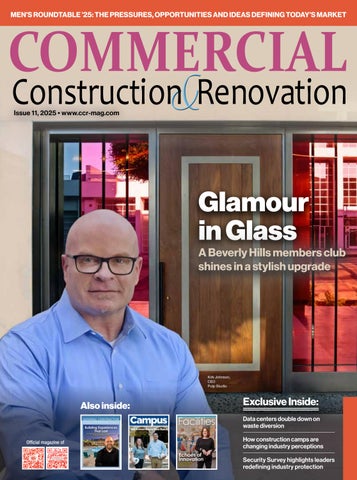
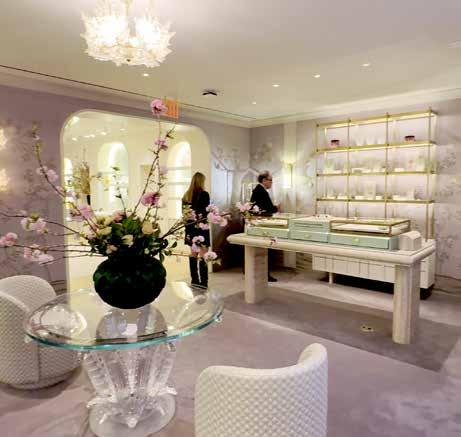
40 Glamour in Glass
Beverly Hills members club shines in a stylish upgrade.
Built to Win
How Wegmans and the Buffalo Bills are doubling down on community impact
The history. The aura. The cold. When you think of the Buffalo Bills, those are just but a few of the images that come to mind. But the organization and its endearing connection to the community is so much more. Wegmans has always seen this. That's why the grocer is not just renewing its partnership with the National Football League (NFL) stalwart—its expanding a relationship that has become one of the most consistent forces for good across New York State.
Today, with Wegmans stepping in as a founding partner of the Bills' new Highmark Stadium opening in 2026, that connection is ready for its next big chapter.
And, to be clear, the fan traditions stay firmly in place, so expect more of those WWE-laced table smashes. In addition, Wegmans will continue as the official tailgate headquarters and the presenting partner of Bills Training Camp, keeping the energy high and the tables breaking. But that’s only the surface. The heart of this partnership lives well beyond kickoff and final whistles.
Together, Wegmans and the Bills have raised more than four million dollars to fight food insecurity across upstate communities, ensuring families have access to nutritious meals during their toughest moments. Their collaboration also fuels youth programs that give kids safe spaces to learn, stay active and discover their own potential. It’s the kind of impact that outlasts a season and reaches far beyond the stadium walls and crowd noise.
In an era where partnerships often favor visibility over value, Wegmans and the Bills offer a different playbook—one built on service, shared commitment and real community investment. They show what happens when a hometown team and a hometown grocer decide winning should matter on the field and in every neighborhood they call home.
What are you doing to build your brand in your community? How are you staying connected to the pulse that drives and inspires everything you do?
Your story is ready to be told, too.
We have always said, if we do a good job the phones will ring.
Established in 1993, Lakeview Construction, LLC is a national commercial project solution provider specializing in all phases of construction.
From concept to completion, our professional teams deliver quality construction and outstanding service, ensuring on-time schedules and cost-effective project management.
Headquartered in Pleasant Prairie, Wisconsin, we operate across all 50 states
CCR EDITORIAL BOARD
ACADEMIA
DR. MARK LEE LEVINE
Professor Burns School/ Daniels College University of Denver
ADA
BRAD GASKINS Principal The McIntosh Group
ARCHITECTS/ENGINEERS
MICHAEL MAGEE
Studio Leader Retail, Store Design Senior Associate Little
FRED MARGULIES
Director of Retail Architecture Onyx Creative
STEVEN MCKAY
Managing Principal, Global Design Leader DLR Group
STEVEN R. OLSON, AIA President CESO, Inc.
CONSULTANT
GINA MARIE ROMEO
Chief Heart Officer & Principal Consultant, Allied RDI
DEVELOPMENT/PROJECT MANAGEMENT
KAY BARRETT
NCIDQ, CDP
Senior Vice President Cushman & Wakefield
PAM GOODWIN
Goodwin Advisors, LLC Goodwin Commercial The Pam Goodwin Show
DAVID THOMPSON Vice President TCB Construction Group LLC.
MATT SCHIMENTI President Schimenti Construction
JOHN STALLMAN
Marketing Manager Lakeview Construction
JEFFREY D. MAHLER
RCA Advisory Board Member
HEALTHCARE
CLINTON “BROOKS” HERMAN
Principal Facilities Project Manager, MD Anderson Cancer Center
HOSPITALITY
SAMUEL D. BUCKINGHAM, RS AMS CMCA President of Construction Devco Development
GARY RALL
Vice President of Design and Development Holiday Inn Club Vacations
ROBERT RAUCH Chairman Brick Hospitality
JOE THOMAS
Joseph K Thomas Sr. Consulting Senior Consultant Hospitality Engineering
LU SACHARSKI Vice President of Operations and Project Management Interserv Hospitality
ANDY BRIGGS, CHA Managing Principal A14 Capital Management
INFORMATION TECHNOLOGY
CRAIG WEBER Director of Business Prime Retail Services, US Prime 3 Retail Canada, Inc.
REAL ESTATE
RESTAURANTS
DAVID SHOTWELL
Director of Construction & Facilities, BOJ of WNC, LLC
BOB WITKEN
Senior Project Manager Fox Restaurant Concepts
RETAILERS
AARON ANCELLO
Facilities Asset Management Public Storage
DEDRICK KIRKEM
Facilities Manager Alice + Olivia
DAVID D. DILLON
Principal Design Lead, Templates & Standards Chick-fil-A Corporate Support Center
LAURA GROSS
Retail Facilities Manager American Signature Furniture
KELLY RADFORD Vice President Facility Services CubeSmart
PERMITTING
VAUN PODLOGAR
CEO, Owner, Founder State Permits, Inc.
ROB ADKINS, LEED AP CDP Senior Project Manager Cushman & Wakefield
MEGAN HAGGERTY Founder Legacy Capital Investment
MARIE ANTONETTE G. WAITE
Founder and CEO
Finest Women in Real Estate
NO ENTRY NO HARM
Stop Smash and Grab
Retrofit Security Glazing
DefenseLite® is a clear security shield that integrates forced entry protection seamlessly with existing doors, windows, and storefronts, providing an invisible layer designed to protect retail businesses from impending harm, vandalism, and theft.
• Unbreakable polycarbonate overglaze 250 times stronger than glass
• Framing available in a variety of standard and custom finishes
• Anti-graffiti protection available
• A cost-effective, easy-to-install solution
PROTECTION FROM SMASH AND GRAB
• Protect your property
• Protect your employees
• Protect your inventory
PROTECTION FROM VANDALISM
• Prevent looting
• Prevent vandalism
• Preserve brand integrity
DefenseLite® is a patented, retrofit glazing system designed for advanced forced entry protection. Manufactured by Impact Security, this proven technology provides a cost-effective solution, installed by authorized dealers located throughout North America. To learn more, visit www.defenselite.com
Contact
AroundtheIndustry
RETAIL
JD Sports
JD Sports has opened its first Canadian flagship in Vancouver, advancing its North American expansion. The UK-based retailer’s new location features exclusive products, a dumbwaiter system for stock delivery and dedicated shop-in-shops for top brands including Adidas and Nike.
Moynat
Moynat has opened a new boutique on Avenue Montaigne in Paris, its second standalone store in the city. The location debuts a capsule collection inspired by the brand’s archival trunks. Owned by LVMH, Moynat aims to balance growth with exclusivity while appealing to younger audiences through colorful, casual designs.
Target
Target is opening seven new stores this fall across Arizona, California, Florida, Nebraska, South Carolina, Texas and Virginia. Six of those seven locations will be large-format stores, topping the retailer’s 125,000-square-foot chain average. The openings include Target’s second new store this year in Texas (which now has 159 brick-and-mortar stores), as well as the retailer’s third new opening in Florida in 2025.
IKEA
IKEA debuted its first retail park location at Harlow Retail Park in the United Kingdom. The small-format store, the first of three sets to open this year, offers room sets, planning services, same-day takehome items and pre-loved product returns with store credit.
Bed Bath & Beyond
Bed Bath & Beyond returned to physical retail with Bed Bath & Beyond Home, a new store concept that debuted in Nashville. Relaunched under The Brand House Collective, the format modernizes the brand for today’s shoppers and revives its popular coupon tradition, honoring both new and legacy coupons.
Lululemon Athletica
Lululemon Athletica has opened a new store in Milan as part of its strategy to quadruple international revenue by 2026. The Canadian brand has also entered Turkey, India, Denmark and Belgium this year and sees international markets potentially comprising 50% of its business.
Goop
Goop has opened its seventh permanent store in Aspen, Colorado, timed with the town’s annual Food & Wine Classic. The location features Goop’s G. Label and Goop Beauty lines, plus high-end wellness products. Vice President of Retail Matthew Blythe says Goop plans two to three openings annually, with a goal of 30 stores.
Loblaw Cos.
Loblaw Cos. is investing $2.2 billion in expansion, including 20 new stores and 23 pharmacy clinics. It also added 130 Canadian vendors to strengthen its local supply chain and meet demand for domestic products.
Walmart
Walmart will open a new Neighborhood Market in Mesquite, Texas, by late summer 2026. The smaller-format store will offer a curated selection of essentials, joining Walmart’s broader North Texas growth strategy that includes updating existing locations and building new Supercenters to serve the region’s expanding population.
Warby Parker
Warby Parker has opened its 300th store at Brookfield Place in New York City, offering eye exams and its full optical range, including the summer 2025 collection. The company plans 45 additional openings this year across the U.S. and Canada, with each store tailored to its local community.
Tm:rw
Smartech Retail Group debuted Tm:rw, a 20,000-square-foot experiential store in New York City’s Times Square. Located in the historic Candler Building, the store will showcase 150 brands and 800 products across interactive zones. Smartech plans to expand the concept to additional locations.
Bed Bath & Beyond
Bed Bath & Beyond plans to open 300 new stores within the next two years. The rollout began with a store in Nashville, Tennessee, and will be implemented through a partnership with The Brand House Collective, formerly Kirkland’s, which will rebrand its existing stores as Bed Bath & Beyond Home stores.
RESTAURANTS
Limusina
Quality Branded, the group behind Bad Roman, has unveiled Limusina, a three-level Mexican restaurant in New York City’s Hudson Yards. The 5,000-square-foot space serves dishes like lobster al pastor, grilled branzino, and pork shank carnitas, paired with inventive cocktails by Bryan Schneider and desserts from Lucy Blanche.
Bojangles
BOJ of WNC LLC, the largest Bojangles franchisee, has sold its more than 120 restaurants across six states to private equity firm Eyas Capital. The firm plans to expand in Ohio with more than 40 additional locations, building on Bojangles’ strong following in Western North Carolina.
Brassica
Brassica, a Columbus, Ohio-based fast-casual Mediterranean chain, is set to double its restaurant count and expand into three new markets following a minority investment from Chipotle’s Cultivate Next fund. The brand will enter Cincinnati, Houston and Indianapolis, with six new company-owned locations planned within 18 months.
Saigon Hustle
Saigon Hustle, a Houston-based fast-casual Vietnamese restaurant, has secured investments from Savory Fund and Virentes Partners Group to support national franchising. Virentes has committed to opening 24 locations across four states, with plans to reach 150 units in five years.
Musaafer
Musaafer, a Michelin-starred Indian restaurant from Houston, is expanding to New York City with a new location in Tribeca. Known for upscale regional Indian cuisine and a luxurious ambiance, the restaurant earned a Michelin star in 2024. The Tribeca location at 133 Duane Street will carry forward the fine-dining ethos that brought national acclaim to the Houston original.
Next Level Veggie Grill
Next Level Veggie Grill has debuted in Denver following the merger of Next Level Burger and Veggie Grill, forming the largest plant-based restaurant company in North America. With a focus on organic and non-GMO ingredients, the Denver unit is the first to complete the transition under the new name, signaling the company’s vision for national and global growth.
Hencraft
Patina Group, a New York-based hospitality company, is launching a new fast-casual chicken concept called Hencraft in Buffalo, New York. The restaurant will feature a menu centered on chicken sandwiches and tenders, with an emphasis on high-quality, locally sourced ingredients.
King’s Hawaiian
King’s Hawaiian has entered college dining with its new King’s Hawaiian Grill concept, designed to connect with Generation Z through nostalgia and brand recognition. Now open at schools including Indiana University and the University of Michigan, the concept features a customizable menu with items such as chicken sandwiches and smashburgers.
Keke’s Breakfast Cafe
Keke’s Breakfast Cafe has opened its first Georgia location, expanding beyond its Florida base and bringing its total to 69 restaurants.
Fat Brands
Fat Brands has opened its first co-branded Fatburger and Round Table Pizza restaurant in Rancho Cordova, California. The debut is part of the company’s strategy to launch 40 co-branded units across California, following earlier rollouts in Texas and Utah.
Tiny Kitchen
The Tiny Kitchen, a farm-to-table culinary boutique specializing in New Orleans gumbo and jambalaya, has relocated to Prep Kitchens in Scottsdale, Arizona. The move enables Chef Traci White to expand catering and meal prep services while partnering with The Knot and WeddingWire for wedding menus.
Corner Bakery Café
Corner Bakery Café has introduced a new store prototype with a smaller 2,000- to 2,500-square-foot footprint and a brighter, more modern design. Moving away from its traditional 3,000- to 4,000-square-foot format, the shift is aimed at aligning with current economic conditions and improving operational efficiency. The company plans to open about 10 new units each year, with growth focused on Southern states.
HOSPITALITY
Open Hotels
Olive by Embassy has launched Open Hotels, an AI-native, remotely operated hotel brand designed to enhance guest experience and streamline operations. The brand plans to integrate 130 hotels this year, targeting $23.5 million in revenue, with ambitions to scale to 1,000 hotels in India by 2030 and expand globally.
Rosewood Hotels & Resorts
Rosewood Hotels & Resorts will debut its first property in the French Alps this December with the opening of Rosewood Courchevel Le Jardin Alpin. Located in Courchevel 1850, the 51-room retreat will feature ski-in/ski-out access, a spa and multiple dining venues, with French designer Tristan Auer leading the site’s transformation.
Mandarin Oriental
Mandarin Oriental Hotel Group will open a luxury hotel in Seoul’s Central Business District in 2030. The Mandarin Oriental, Seoul will offer 128 rooms, a four-story spa and a golf academy with simulators. Interiors by designer Andre Fu will combine refined elegance with local influences.
LivSmart Studios by Hilton
Hilton has launched LivSmart Studios, its new extended-stay brand, with the first property opening in Tullahoma, Tenn. The debut expands Hilton’s portfolio with a lodging option designed for longer stays, reflecting the company’s strategy to meet growing demand in the extended-stay segment.
(Continued on next page)
AroundtheIndustry
Sturgis Buffalo Chip
The Sturgis Buffalo Chip, best known as a campground for the Sturgis Motorcycle Rally, is expanding into Southern Nevada with a barn-themed casino-hotel. Led by founder Rod Woodruff and Advent Creations’ Mark Advent, the project will feature a 10,000-seat amphitheater, three-level music bar and pedestrian retail promenade.
Minor Hotels
Minor Hotels has unveiled four new brands as it targets 850 properties globally by 2027, up from more than 560 today. The lineup includes The Wolseley Hotels, inspired by the London restaurant; Minor Reserve Collection, a luxury soft brand; Colbert Collection, focused on independent hotels with strong culinary programs; and iStay, a budget-friendly urban brand.
Hyatt Regency
Hyatt Regency has opened its first Manhattan property with the debut of Hyatt Regency Times Square, following a multimillion-dollar transformation of the former Crowne Plaza. The 795-room hotel features a two-story lobby, signature restaurant and one of New York City’s largest hotel fitness centers.
Sports Illustrated Resorts
Travel + Leisure Co. will debut the Sports Illustrated Resorts brand in the U.S. with a Nashville, Tennessee property opening next spring on Music Row. The resort will feature a fitness center, members-only lounge, quick-service restaurant and resort-style pool. A second resort is slated to break ground in Tuscaloosa, Alabama in spring 2026.
They
said it...
“Over the last few years, we’ve seen steady growth and surpassed many milestones for our brand, while simultaneously strengthening our franchise system and building a loyal guest following.”
— Chris Dull, President and CEO of Freddy’s Frozen Custard & Steakburgers, on the brand’s continued momentum under new ownership by funds affiliated with Rhône.
Las Vegas Sands
Las Vegas Sands has broken ground on an $8 billion expansion of Marina Bay Sands in Singapore. Expected to open in early 2031, the project includes a 570-suite luxury hotel tower, a 15,000-seat arena and 200,000 square feet of meeting space. Designed to redefine luxury and service, the expansion targets affluent business and leisure travelers seeking high-end experiences.
Resorts World New York City
Resorts World New York City has unveiled a $5.5 billion plan to transform the 73-acre Aqueduct site in Queens into New York State’s largest fully integrated resort. The 5.6 million-square-foot destination would feature gaming, entertainment and hospitality, with construction potentially starting in July 2026. With land-use approvals already secured, the project is positioned as a major milestone for both the city and state.
Preferred Hotels & Resorts
Preferred Hotels & Resorts has expanded its global portfolio with 18 properties added in the second quarter, including luxury resorts in Texas, South Carolina, Virginia and Pennsylvania. The growth is part of a broader strategy that also brings new hotels in Austria, Italy, China, Greece and Costa Rica.
Accor
Accor has partnered with businessman Phil Ruffin to add Treasure Island—TI Las Vegas Hotel & Casino to its portfolio, marking the company’s first Las Vegas property and its largest hotel worldwide. The 2,884-room resort will operate under the Handwritten Collection brand through a franchise agreement. Following a multimillion-dollar renovation, the property has also earned a Four Green Globes sustainability certification.
“We’ve seen same-store sales rise 3.9% thanks to brand sentiment, operational focus and marketing initiatives that are really resonating.”
— Keke’s Breakfast Cafe President John Dillon on the brand’s growth as it expands into Georgia with 69 locations and continues to explore opportunities with parent company Denny’s.
“We will continue to focus on design and operations that make longer stays comfortable, while welcoming shorter stays without compromise.”
— StayAPT Suites CMO Jennifer Kearney on how the apartment-style model is reshaping extended-stay hospitality with true living rooms, full kitchens and efficient operations attractive to franchisees.
Trusted by the biggest names in North America.
We’ve built across a diverse set of industries, from commercial retail to resorts to big box projects, and every single project gives us more ideas to take to the next site. Your project, our work.
We’re proud to be trusted by the world’s biggest brands again and again.
40+ years of successful projects
13,000+ pre-vetted subcontractors and vendors
1 million+ square feet constructed annually
3,775+ total projects
Letter to the Editor:
David and Mike,
I enjoyed reading CC&R’s article, “Poured, Printed, Tilted Up” on modern concrete systems. The article provided an excellent overview of different options, showing how the industry has (or should have) moved beyond CMU construction.
At FMGI, we firmly believe that demand for 3D concrete printing (3DCP aka Additive Construction) will surge in the next year in the retail real estate arena. Our second build for Walmart proved that 3DCP is faster, safer, and cheaper than standard CMU construction. As a general contractor that leads the industry, FMGI has purchased two 3DCP robots, is conducting R&D with mix blends, experimenting with new finishing technologies and finalizing additive construction curriculum for training and certification.
Which brings me to the reason for my letter. Many of the “drawbacks” to 3DCP included in your article are being solved, including:
> Code challenges – I agree that this can be a challenge, but codes are improving. We are aligning with ASTM to standardize 3DCP in retail construction which will help accelerate adoption within the industry. Also, we are nearly complete with an engineering specifications document for 3DCP which will establish standards and expedite the design and review process.
> Aesthetics – While there are a number of exterior claddings that could cover up the ridges, new technologies are being tested by FMGI to eliminate the “pancake effect.”
> Lack of reinforcement – Our tests have shown 3DCP walls are 350% stronger than CMU walls. The U.S. Air Force is using 3DCP for military use, including bunkers, forward buildings, and revetments. For our Walmart builds, FMGI did use rebar, and we’re successfully extending the distance between vertical columns because the walls are stronger.
> Insulation – We inject foam insulation between the rebars which provides adequate insulation for commercial use.
I’d be happy to provide more details in a CCR Voices story, on your podcast, or for an E-Digest interview. Thank you for putting out a great product and interesting stories.
Dr. Babak Zareiyan Director of Innovation & Technology, FMGI
2025 HVAC/Energy Survey from Issue 10
BubblyNet
Fabio Zaniboni, Founder & CEO
101 North Garden Avenue Clearwater, FL 33755
fabio@bubblynet.com • www.bubblynet.com
Product Type: Controls/Monitoring
The Numbers Game
4.6
The percent increase in U.S. hotel IT expenses in 2024, outpacing the 4% rise in total hotel costs, according to CBRE. The biggest jumps came in reservation, property management and guest service systems, while backoffice tech rose more modestly.
2.9
The percentage annual growth in extended-stay hotel supply, compared with a 2.5% rise in demand, according to The Highland Group. The near balance has kept occupancy rates steady, though recent months show supply edging slightly ahead.
2.5
The percent of firms that report projects consistently finish on time and on budget, according to FMI Corporation’s “2025 Project Manager Study.” The report finds that when project managers are at least moderately involved in estimating, profit reliability jumps from 55% to 78%, highlighting the link between early engagement and stronger project outcomes.
Building on a Winning Streak
Wegmans, Buffalo Bills double down on community impact
Wegmans and the Buffalo Bills are taking their long-standing partnership into its next chapter, expanding a relationship that has become a cornerstone of community support across New York State.
As Wegmans becomes a founding partner of the new Highmark Stadium opening in 2026, the connection between the beloved grocer and the hometown team continues to grow in both reach and purpose. Wegmans also will remain the official tailgate headquarters and the presenting partner of the Buffalo Bills Training Camp, keeping fans fueled and engaged all season long.
What sets this partnership apart is how deeply it extends beyond game day. Together, Wegmans and the Bills have raised more than four million dollars to fight food insecurity throughout upstate New York State, helping families access nutritious meals when they need them most. Their collaboration also funds critical youth programs, creating opportunities for kids to learn, play and build confidence both on and off the field. It is a model rooted in service, showing how corporate partnerships can make a meaningful difference.
AI
Is Transforming Hiring...
But humans still hold the advantage
Artificial intelligence may be reshaping how companies hire, work and grow but the new U.S. 2026 Hays Salary & Hiring Trends Guide shows a reality that leans more human than feared. Half of U.S. organizations now use AI in some form yet only 4.7% have eliminated roles. Nearly half report using AI to boost productivity and support existing teams. Companies are shifting from hiring to upskilling as they build internal capabilities and create leaner more agile teams.
That shift is reflected in how leaders invest. Upskilling now outpaces hiring with 42% of organizations training current employees while 34% are recruiting to fill digital skill gaps. Data literacy automation fluency and prompt engineering have become baseline expectations across IT HR marketing and operations. At the same time workers remain uneasy with 77% expressing concern about AI’s impact on job security.
Even with rapid advances the skills that matter most remain unmistakably human. Roles that require leadership empathy and complex decision-making continue to resist automation. As AI accelerates, Hays projects strong growth in cybersecurity software development and data architecture—an indicator that technology may change the landscape but the human advantage still defines it.
CORNER
Going Tech
5 initiatives to expedite the commercial construction industry’s adoption of AI
Going Tech
5 initiatives to expedite the commercial construction industry’s adoption of AI
Artificial intelligence (AI) offers exceptional potential for the construction industry. It can help construction companies make more informed decisions, improve efficiency, increase safety, minimize risk, reduce costs and many other valuable benefits. Yet, although nearly two-thirds of construction managers believe that their industry is “keeping pace with tech awareness,” other studies show that 65% of them report that their companies are not currently using AI.
Even today, AI already is available to the construction industry for utilization in a broad range of applications.
Where is the disconnect?
Traditionally, construction companies have been slow in embracing technology. Yet the current AI revolution has the potential to dramatically change the industry, leaving slow-adopters far behind.
To evolve, construction companies will need to view planning and operations from a new perspective, recognizing the pivotal impact and value artificial intelligence and other technologies will have in the future.
Even today, AI already is available to the construction industry for utilization in a broad range of applications. Key areas include project management, project design and updating, safety enhancement and prevention, and predictive monitoring of maintenance and quality. If the potential advantages from technology are so significant, what’s holding the construction industry back from adopting them?
Here are five initiatives construction companies can take right now to speed their technological adoption and evolution:
1 Add a dedicated technology expert to the executive team
Many construction companies don’t know what they don’t know because they don’t have a technology/AI expert as part of their executive leadership, with influence on planning, strategy and operations.
2 Make technology a priority in planning
Technology should be added to planning with an elevated priority. Together, with the above technology executive, management should craft a strategy for the company, from a new perspective, together with a plan for its implementation.
3 Prioritize budgeting for technology
The tech world is moving very quickly. Those that slowly embrace it will get left behind. Budgeting for technology must be elevated in priority because innovation is moving so quickly. While there is an investment needed to get things started,
Traditionally, construction companies have been slow in embracing technology. Yet the current AI revolution has the potential to dramatically change the industry, leaving slow-adopters far behind.
justifying the investment to the financial team can compare favorably with other budget considerations when one values the quantifiable reduced costs, increased efficiencies and prevention of future risk that technology can provide. As it is said, technology doesn’t cost, it pays.
4 Develop a goodwill campaign relating to technology adoption and leadership
Employees can be nervous about new things happening at work, like the adoption of technology. Getting one’s messaging ahead of implementation has the potential to instill pride and loyalty in employees, who become appreciative of their working for an advanced company. A company can also give employees added confidence by investing
in training so they value how it will improve work experience and results.
5 Promote technology as a marketing competitive advantage
Customers and clients prefer doing business with companies that are on technology’s cutting edge. Create a marketing message, based on technological advantages, and promote it to create distance from the competition.
The construction world is at the early stages of artificial intelligence and the industry’s evolution into becoming more technologically prioritized. The leading construction companies of the future will be those that more quickly embrace technology and artificial intelligence today and make it a fundamental component of their operations going forward.”
James Gallagher, P.E., F.ASCE, is a construction dispute resolution thought leader and Principal at Resolution Management Consultants.
Stronger. Sharper. Smarter.
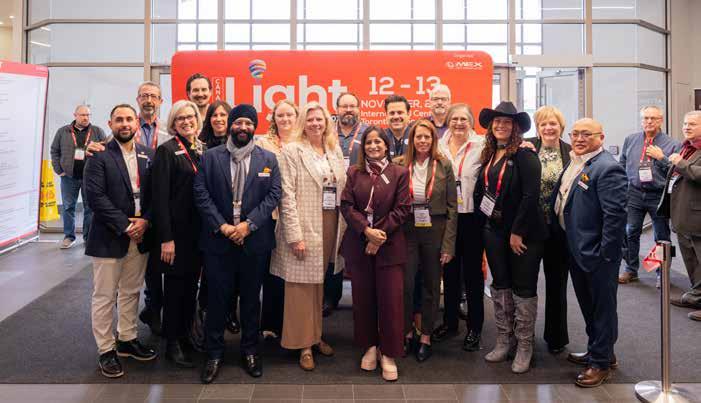
Canada Light Expo 2025 sets the light for the path forward
The Canada Light Expo 2025 closed with the energy of a show hitting its stride. What debuted last year as a promising new gathering now feels like a cornerstone event. Attendance climbed. Exhibitors doubled. Conversations deepened. The industry showed up ready to learn and ready to build on the momentum shaping the future of lighting.
Across two days, the floor buzzed with architectural, decorative, smart and sustainable lighting solutions. CEU sessions drew packed rooms. Networking events sparked collaborations. Designers, architects, engineers and manufacturers mixed insight with innovation and walked away with a clearer view of where the industry is heading. The sold-out show floor underscored a truth the organizers leaned into from the beginning: Canada needed a national, design-forward platform built for the people shaping how spaces feel and function.
With its advisory board guiding the vision and a growing roster of partners fueling the experience, Canada Light Expo proved that the industry is not just evolving but accelerating. If this year is any indication, the path to 2026 is already lit—and the next edition promises to shine even brighter.
in the news When Inspiration Finds Its Moment
SARA event helps Midlands Technical College students open doors to new possibilities
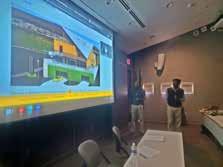
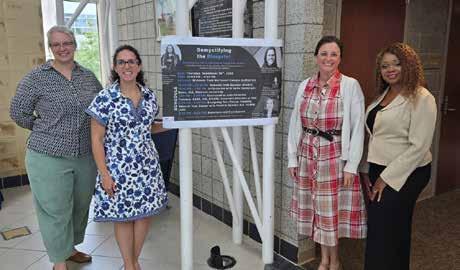
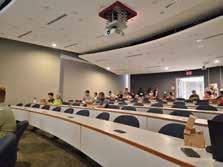
The energy at this year’s SARA student event at Midlands Technical College hit differently. What started as a gathering quickly turned into a moment students will remember.
The event brought the group together and and spotlighted emerging talent who will be recognized with a SARA Design Award and student grant in partnership with the CCCAP at the 2025 SARA National Design Awards in Washington, D.C. on Nov. 15. It was spearheaded by Christina Toscano, AIA, Associate SARA, and Senior Associate Architect at TVS Architecture & Design in Atlanta; and Cierra Davies, Professor of Architecture in the Architectural Engineering Department at Midlands Technical College.
Since then they have been talking about next steps in a new way. They want to pursue licensure, visit more colleges and step confidently into upcoming Design Competitions. One student is already preparing to study architecture at Clemson after feeling inspired at the event. The day also pulled architecture, civil, mechanical and construction students into the same room creating a rare mix of voices and ideas.
We
Our specialized project management teams are highly effective in maintaining affordable budgets, meeting tight deadlines, and delivering quality construction turnovers on time, every time. From coast to coast, Alaska to Puerto Rico, Hunter Building Corporation has you completely covered on your next construction project!
We offer a multitude of services nationwide ranging from tenant improvements, build-outs, remodels, ground-up construction, and project management. Hunter Building Corporation takes pride in the fact that many of our clients have been repeat customers for many years.
Building Tomorrow's Workforce Today
How construction camps are changing industry perceptions
My career in the electrical industry began in 1982 as an IBEW Apprentice in Baton Rouge, Louisiana. After learning the trade and earning my Journeyman Wireman certification, I joined Rosendin Electric in 1992. Over the past three decades, I've moved through various positions, earning the role of Senior VP of Field Operations.
Throughout this journey, I've witnessed the construction industry evolve through technological revolutions and economic cycles, while the core need for skilled craftspeople has remained constant.
The construction industry now faces a critical workforce shortage, with 94% of construction firms reporting difficulty finding workers to hire, according to the 2024
By Dave Elkins
Workforce Survey by the Associated General Contractors of America (AGC). This shortage threatens our ability to build essential infrastructure and meet construction demands across the country.
The problem stems from multiple factors: an aging workforce approaching retirement, fewer young people considering trades careers and education systems that prioritize four-year degrees over skilled trades. To address this challenge, The Rosendin Foundation’s Camp Build™ education program directly engages students before misconceptions about construction and blue collar careers take root.
Rosendin’s TRF Camp Build™ Education Program
The Rosendin Foundation, a 501(c)(3) non-profit organization established by Rosendin Electric, Inc., focuses on positively impacting communities through programs that support emotional, nutritional and occupational health. As part of its mission to develop the next generation of construction workers, the Foundation created TRF Camp Build™ to address the industry's critical workforce shortage.
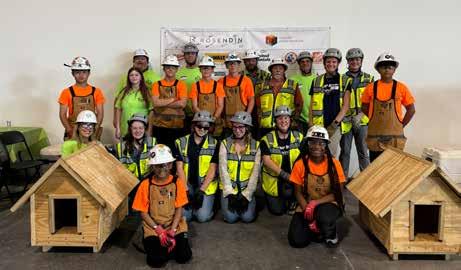
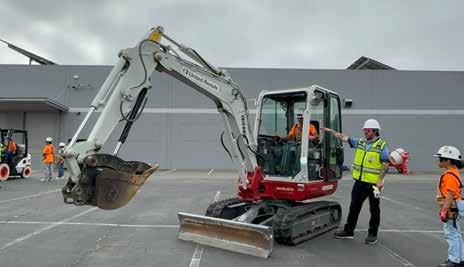
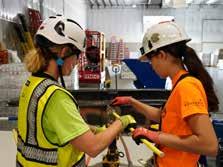
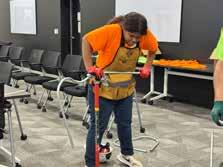
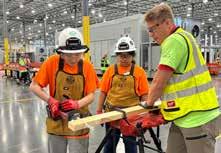
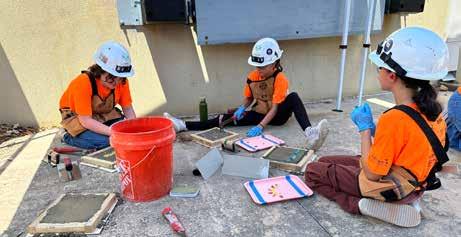
The TRF Camp Build™ education program completed its third year in 2025 with a mission of building the next generation of construction workers. This summer, the program reached 91 middle school and high school students across five cities, teaching them construction skills through instructor-led projects, empowering them in safe tool operation and introducing them to career paths they might never have considered otherwise.
Research shows career perceptions form between 6th and 8th grade. By reaching students at this critical age, the program opens their eyes to construction career paths before they select high school courses that determine their future options.
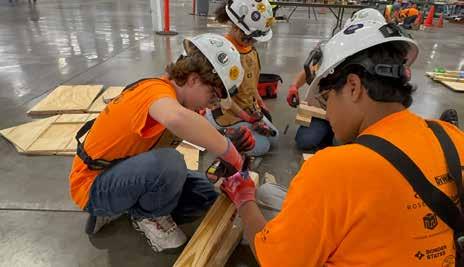
Each program’s session transforms complete beginners into budding builders. Students progress from never having held tools to completing functional projects they can take home or donate to community organizations. The daily curriculum balances skill development with career exploration, giving students both practical abilities and industry knowledge.
What Students Learn
The curriculum covers essential construction skills across multiple trades. Students master basic electrical wiring, welding techniques, concrete pouring, conduit bending and woodworking fundamentals. These hands-on activities connect directly to future career opportunities in the construction industry.
Industry experts from Rosendin and its partners in various trades volunteer their time to teach specialized skills, sharing real-world applications and career insights that textbooks cannot provide.
On day one, many students struggle to identify basic tools. By the end, these same students confidently operate power equipment, read simple blueprints and complete multi-step construction processes. This rapid skill development demonstrates the effectiveness of the program's hands-on approach with middle school learners.
Beyond technical skills, students learn workplace safety protocols, proper tool handling, and personal protective equipment use. These safety habits form the foundation for professional work practices that will serve them throughout their lives. The program emphasizes that safety represents the most important aspect of construction work, establishing this priority early in their development.
TRF Camp Build™ also introduces students to cutting-edge construction technology. Using building information modeling (BIM) software and virtual reality headsets, students explore how digital tools transform modern construction projects. This technology component helps students see construction as an advanced, innovative field rather than just manual labor.
Building the Next Generation
Rosendin’s 2025 program included 51 boys and 40 girls, reflecting a commitment to
building a diverse construction workforce. The program ran for 21 days across five cities: Austin, Texas; Sterling, Virginia; Huntersville, North Carolina; Commerce, California; and McKinney, Texas.
TRF Camp Build™ actively works to change perceptions about who belongs in construction. Instructors include male and female construction professionals from various backgrounds, cultures and ethnicities, providing visible role models for all participants. This representation matters particularly for students who might not otherwise see people like themselves in construction careers.
Rosendin’s program creates tangible results. Students built functional lamps with proper wiring, constructed dog houses donated to animal shelters, poured concrete stepping stones, and completed other projects that demonstrate real-world applications of their new skills. These completed projects provide immediate feedback and build confidence that theoretical classroom learning rarely achieves.
Industry Support for Workforce Development
Rosendin’s 2025 program received support from 57 organizations that contributed over $108,500 in materials, tools and expertise. Milwaukee Tool, DEWALT and Klein Tools provided professional-grade starter kits for each student to take home, ensuring they could continue developing skills beyond the program.
TRF also partnered with local IBEW union halls, who opened training facilities, giving students access to equipment and instruction normally reserved for electrical apprentices. IBEW instructors also volunteered their time to teach specialized electrical skills, demonstrating the industry's commitment to knowledge transfer.
TRF Camp Build's™ industry partners recognize that workforce development requires long-term investment. Rather than seeking immediate returns, these companies understand that today's middle schoolers represent the workforce of 2030 and beyond. Their support reflects strategic thinking about industry sustainability.
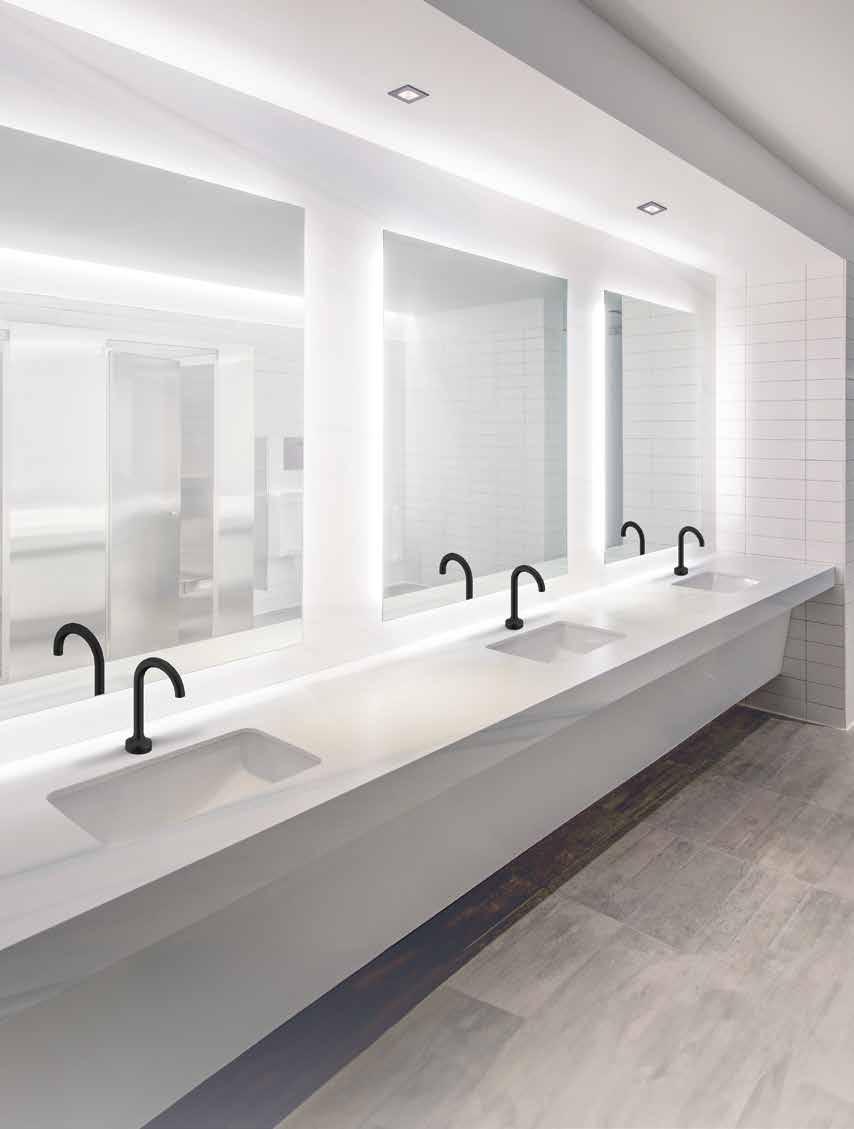
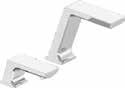
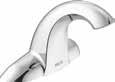
REDEFINING TOUCHLESS WITH NO VISIBLE SENSORS
Proximity® Sensing Technology offers a new standard in faucet innovation by delivering a seamless touchless experience that enhances hygiene, durability, and design without any visible sensors.
Career Pathways
Throughout the program, students meet professionals from various construction disciplines. These role models share their career journeys, from apprenticeship to leadership positions, helping students envision their own potential paths in the industry.
Each day includes structured reflection time where students connect their hands-on activities to potential career paths. They discuss how the skills they practiced apply to different construction specialties and explore the educational pathways leading to various industry roles. This career guidance component helps students envision themselves in construction professions.
Students learn that modern construction offers diverse career options beyond traditional roles. They meet project managers, estimators, designers, safety professionals and business owners, all with roots in skilled trades. This exposure helps students understand the possible career opportunities within the construction industry.
TRF Camp Build™ emphasizes that construction careers offer excellent wages, job security and advancement opportunities, whether they choose to go to college or enter the workforce after high school gradu-
ation. This message counters the prevailing narrative that college represents the only path to success. Students also learn about apprenticeship programs that provide paid training and clear advancement pathways, without having to incur student debt.
Rosendin’s free camp also addresses common misconceptions about construction work. Students learn that modern construction sites utilize advanced technology, require critical thinking skills and offer varied work environments. This updated perspective helps them see construction as an intellectually engaging career option.
Measuring Success
The success of TRF Camp Build™ is evident in the immediate transformation of students during the camp week. Students who begin with little to no experience using tools develop measurable skills in electrical wiring, woodworking, concrete pouring and other construction fundamentals by the end of the program. The tangible projects completed by students generate excitement and pride that extends beyond the camp itself. Students beam with accomplishment when showing parents their finished projects, while parents
are excited for their children to learn new skills that can benefit them in the future.
Many students who never used tools before camp proudly demonstrate new abilities by week's end. Volunteers find the experience equally rewarding, seeing reflections of their younger selves in the students and feeling reinvigorated in their careers after witnessing the students' excitement and rapid progress.
These construction camps serve as a cornerstone in Rosendin's broader plan to educate the public about the industry's evolution. Students and parents witness firsthand how modern construction incorporates advanced technology, problem-solving and creativity. By highlighting diverse career opportunities, these experiences present construction as an industry with multiple pathways for advancement and professional growth.
Expanding the Model
TRF Camp Build™ will continue in its established locations in 2026, with plans to expand to additional cities in the coming years. This growth strategy aims to reach more students across diverse communities, introducing them to construction career possibilities before they make educational decisions that could limit their options.
As the program expands, organizers will continue refining the curriculum to reflect evolving industry needs and technologies. This includes creating more advanced tracks for returning students who want to build on their foundational skills and explore specialized areas within construction.
The success of these efforts demonstrates that early exposure to construction careers creates a lasting impact. By engaging young people before they form career perceptions, we build a pipeline of skilled, passionate professionals ready to enter the construction industry.
The tools and technology may change, but the fundamental need remains constant: skilled people building our world. By investing in students today, we secure the workforce that will build tomorrow. CCR
Dave Elkins is Senior VP of Field Operations at Rosendin.
Imagine Your Brand in Lights
We will design something that is uniquely yours using our mastery of light, color and materials.
Presented by
Student Insider
Dear Skills Trade Student
While construction and technical skills are your primary focus, ConstructEDU Student Insider (CEDU) is designed to supplement your education by providing content that dives into the business of the commercial construction and renovation industry. The bi-monthly newsletter covers areas such as emerging technologies, regulatory issues and other factors shaping the diverse industry’s future. CEDU also features insights and profiles from industry thought leaders on the trends and challenges affecting the marketplace.
Delivered at no charge, we not only encourage you to make CEDU a part of your educational consumption, but also to share it with your peers.
JLG Rebuilds the Skilled Trades From the Ground Up
JLG Industries Inc., an Oshkosh Corporation business, is taking a people-first approach to one of the biggest challenges in construction and manufacturing: the shrinking skilled labor pipeline. While companies across the country struggle to recruit and retain experienced craft professionals, JLG is choosing a different path—one centered on classrooms, welding labs, paint booths, factory floors and technical schools. The company is not waiting for workforce solutions to emerge. It is building them.
Compu Dynamics Raises the Bar for Workforce Giving
Compu Dynamics marked a major milestone at its 6th Annual Charity Golf Tournament—surpassing $200,000 in total donations to Northern Virginia Community College (NOVA). This year’s event alone contributed a record $55,000 to support NOVA’s Information and Engineering Technologies (IET) programs, helping local students gain the skills and resources needed to step into the fastgrowing data center and digital infrastructure workforce.
Rising Stars and BGCB Open Doors to the Trades
The Rising Stars Program, a nonprofit focused on closing the skilled labor gap by connecting young adults to construction careers, has formed a new partnership with the Boys & Girls Clubs of Boston (BGCB) to launch Trade Trailblazers—an eight-week summer internship and career exploration program designed to introduce Boston teens to the skilled trades.
Read More HERE
Deceuninck Gives Students a First Look at Modern Manufacturing
Deceuninck North America welcomed students from local high schools to its Monroe production facility as part of Manufacturing Day and Manufacturing Month—a nationwide effort to inspire the next generation of manufacturing professionals. The October event gave students hands-on learning experiences and direct exposure to the wide range of career paths within the manufacturing sector.
Read More HERE
Glamour in Glass
A Beverly Hills members club shines in a stylish upgrade.
By Kirk Johnson
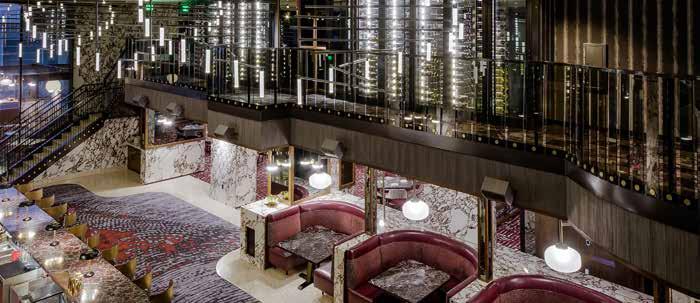
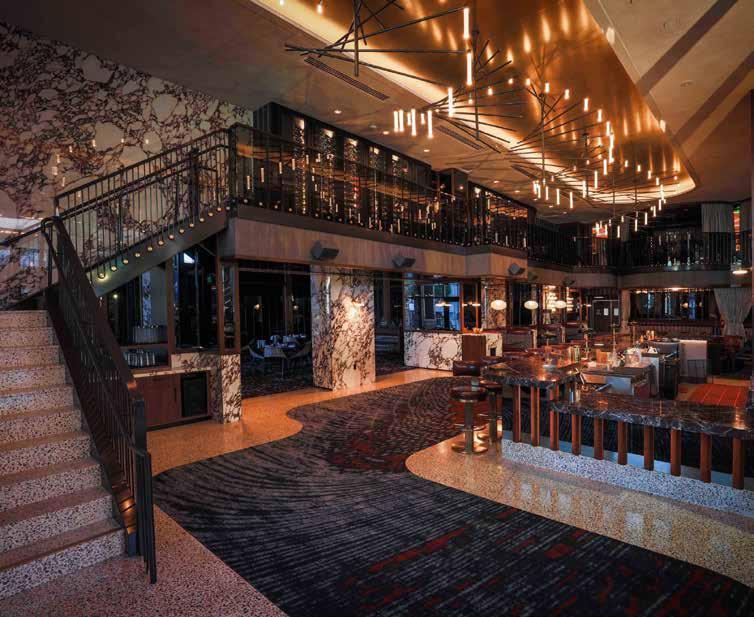
Beverly Hills has always embodied glitz and glamour. From world-class dining to high-end shopping, the city is synonymous with luxury and prestige that has long attracted people from around the world. It’s only fitting that a private members-only club joined the scene.
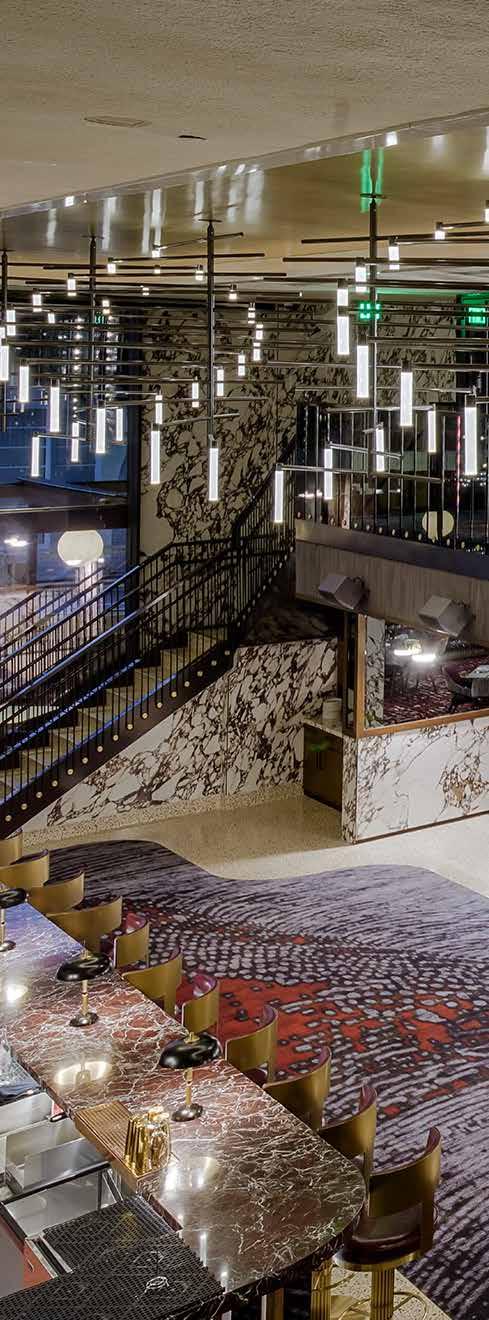
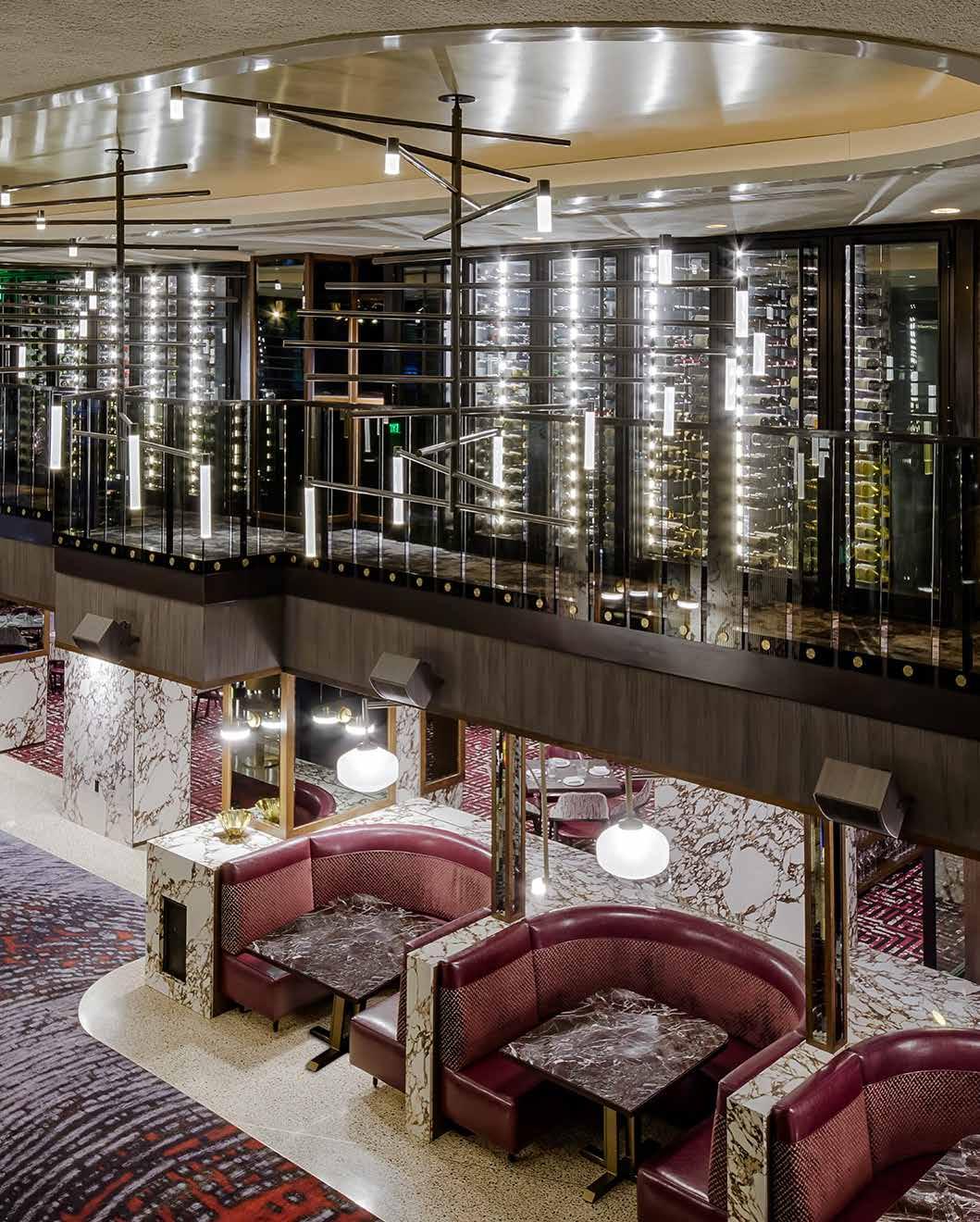
Designed by Kelly Architects, Gravitas offers its members an unmatched experience by blending extraordinary culinary experiences, impeccable service and exclusive networking opportunities. This 27,000-square-foot club boasts a bespoke, sophisticated design where every detail is thoughtfully customized for the unique uses of every space.
From an open-air dining area with temperature-controlled wine lockers to private conference rooms and game lounges, Gravitas showcases one-of-a-kind artistry, redefining what a luxury hospitality experience should be.
Inside the club, 150 pieces of two-layer laminated bronze glass form the stair handrails that frame the art-deco inspired restaurant space.
Behind this luxurious experience are dedicated professionals from all specialties whose passion and craftsmanship make Gravitas truly exceptional. Among these artisans are the glass specialists whose commitment to design excellence define the space. After years of mastering the
precision and artistry architectural glass demands, their expertise ensures its place in distinguished, high-end environments like Gravitas.
Glass fabricator Pulp Studio and installers Camero Glass and Metal X Fab, LLC each played a vital role in bringing the Gravitas
vision to life. These master glass artisans and installers dedicate more than 10,000 hours to refining their technique, developing the precision and control to not only install the glass, but also manipulate it through complex processes such as layering, bending and shaping.
The results are sculptural façades that integrate color, depth and structure to enhance both the aesthetic and functional qualities of the built environment.
Gravitas features decorative architectural glass throughout the exterior, entryway,
The secret behind this transformation lies in the liquid crystal sheet. In its unpowered state, liquid crystal molecules disperse light, rendering the glass translucent.
BUILDING YOUR BRAND
Our master builders travel wherever our customers want to grow. Decades of cross-country construction allow us to build a Wesco in the northern Michigan snow and ensure that a Real Seafood in Florida adheres to hurricane building codes.
dining area and conference room—showcasing extraordinary versatility in both design and application of the medium.
Entryway
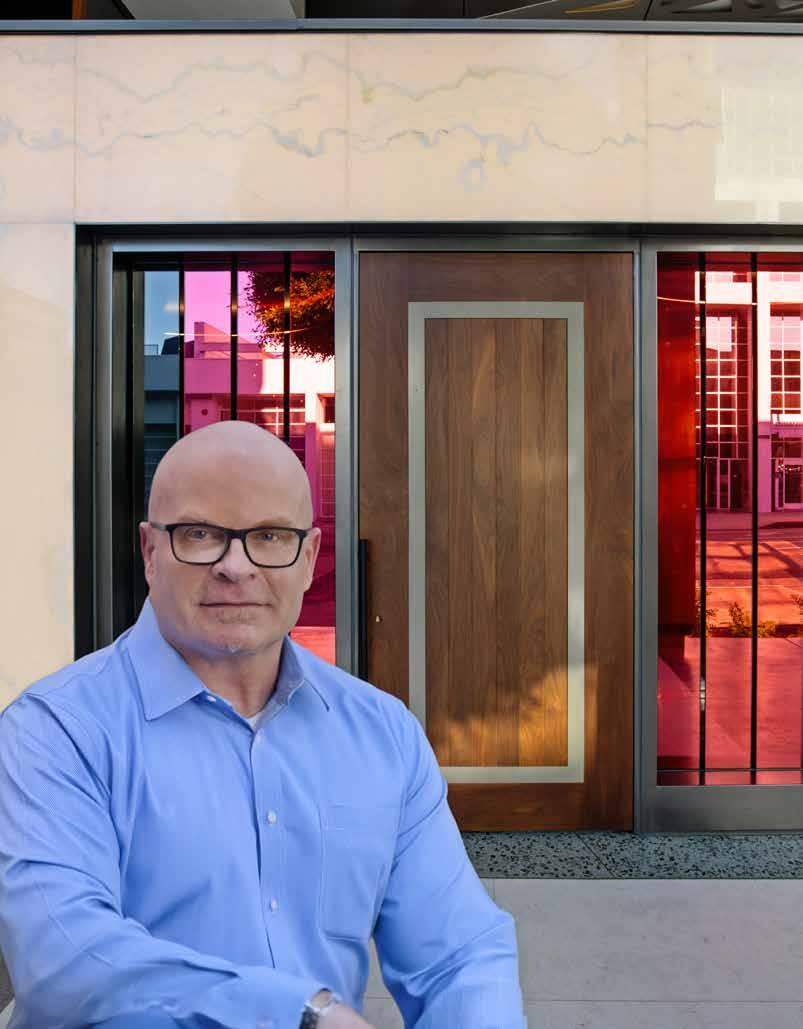
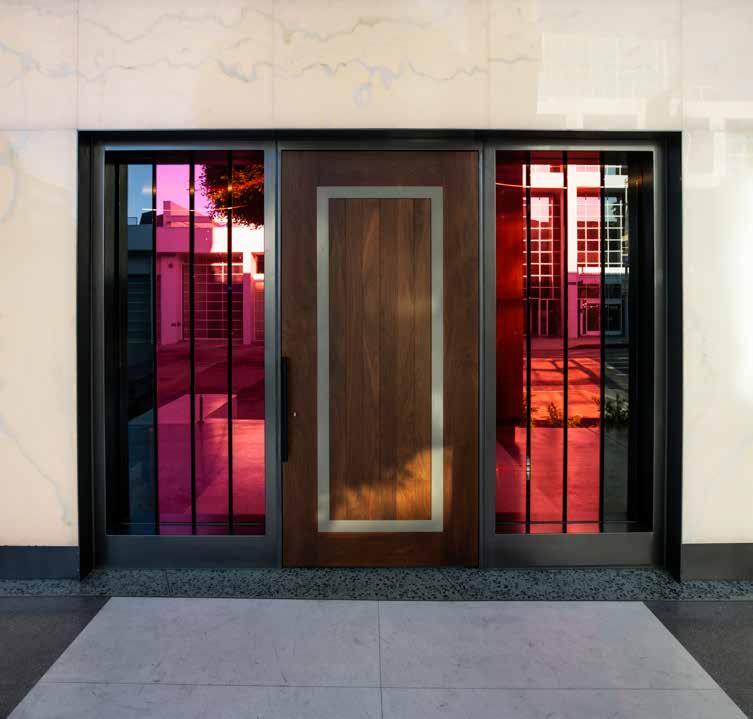
The entrance of Gravitas features neutral gray reflective glass that creates a sleek, contemporary aesthetic—evoking the feelings of a glass house. Each of the nine
panels is laminated to low-iron glass, eliminating the blue-green tint typical of standard glass and allowing the architectural details and decorative elements to appear in their true color and clarity.
A custom-colored interlayer brings the façade to life, casting bold pink and red reflections that shift with the light. According to Kelly Architects, the pink façade glass
draws inspiration from California sunsets, lipstick and roses, as well as the wellness culture that Beverly Hills is known for. The vibrant hue symbolizes charisma, and the team sought to thoughtfully reinterpret that spirit for the city of Los Angeles.
With 20% visible light transmission, the glass entrance at Gravitas balances privacy and performance—reducing heat and glare
DESIGNED TO AMAZE.
NEW! Skyline and Highrise Series Euro Style Partitions
The elegant design of Bradley’s exclusive collection of Euro style partitions flawlessly combines beauty and performance raising the standard in commercial washrooms. Two new series options, Skyline and Highrise, feature high-design materials, occupancy indicators, increased privacy, and seamless construction to provide an elevated look and welcoming spaces. Commercial Washrooms. Brought to Life.
bradleycorp.com/euro-style-partitions
SKYLINE SERIES
Enameled Tempered Glass
from the Southern California sun while keeping the interior discreet. This thoughtful design ensures that the exclusive social club remains hidden in plain sight, unnoticed by passersby on the street.
Main Dining Area and Cocktail Lounge
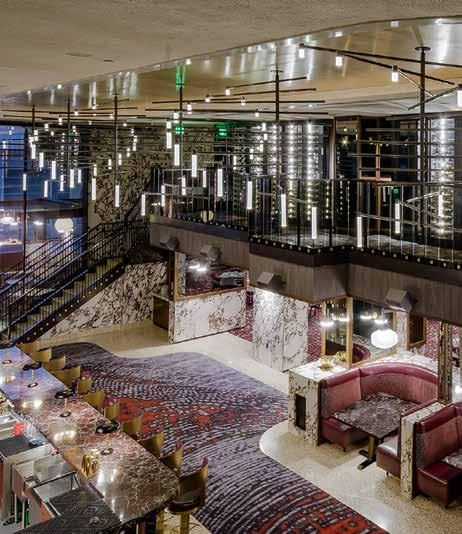
Inside the club, 150 pieces of two-layer laminated bronze glass form the stair handrails that frame the art-deco inspired restaurant space. Bold yet refined, their gilded accents catch the light, echoing the club’s luxurious interior. The exposed edges of the glass are a deliberate aesthetic detail, one that elevates the overall design of the club and shouldn’t be overlooked.
Each handrail is crafted using proprietary technology to achieve a flawless, zero-tolerance finish. While building codes require laminated glass for handrails, the meticulous edgework elevates both safety and design integrity. This allows property managers and business owners to go beyond standard pre-polished laminate and realize a truly exceptional, custom finish.
George Kelly, founder and principal architect of Kelly Architects, was onsite for the installation of the handrails. The panels were installed by a specialist from Metal X Fab, LLC using a robotic suction-cup system controlled via remote joystick.
The machine’s precision allowed each panel to be maneuvered into place with remarkable accuracy and control, ensuring a flawless fit and seamless visual alignment.
Conference Room
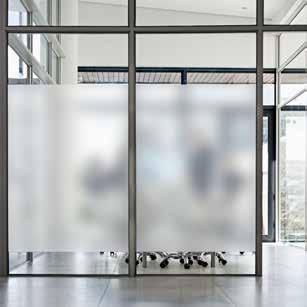
In the conference room, Camero Glass installed privacy glass that allows effortless control of visibility, seamlessly transitioning from opaque to transparent with the flip of a switch. When powered on, the glass becomes clear; when powered off, it turns translucent, creating a space that’s both private and adaptable.
From the beginning, the intent was to incorporate privacy glass into the space.
When walking down the hallway, the glass remains clear, creating the perception of a larger, more open space while offering visibility into all the rentable amenities that Gravitas offers. At the same time, the system allows the ambiance to be adjusted as needed—shifting effortlessly from open and welcoming to private and intimate.
The secret behind this transformation lies in the liquid crystal sheet. In its unpowered state, liquid crystal molecules disperse light, rendering the glass translucent. When voltage is applied, the molecules align in a uniform direction in
a way that permits parallel light to pass through the glass.
From the exterior façade to the finest interior details, Gravitas exemplifies how thoughtful design and expert craftsmanship can elevate a space beyond function into an art form. Through the collaboration of architects, artisans and installers, glass becomes more than just a material; it’s a defining element of luxury.
The result is a setting that reflects the sophistication of Beverly Hills itself: timeless, refined and meticulously crafted in every detail. CCR
Kirk Johnson is the CEO of Pulp Studio, the leading fabricator of technically advanced architectural decorative glass in Los Angeles, Calif. With three decades of experience in the glass industry, Johnson began his career on the production floor and has since mastered every facet of the business—from cutting, tempering, and lamination to insulation, fabrication, sales and executive leadership.
Where Your Vision Meets Our Expertise
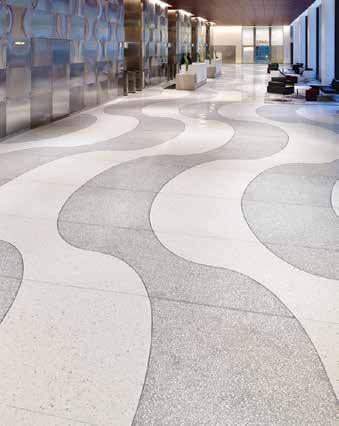
Terrazzo is a handcra ed building material; its primary components are assembled on the construction site. For 100-years, the contractor members of the National Terrazzo and Mosaic Association have brought integrity and skill to countless installations. The NTMA has the expertise your project needs. Find specifications, information, color samples, contractor and supplier members at www.ntma.com or call 800-323-9736.
Laudadio
IT’S THAT SIMPLE
We’re a company with a fresh approach. We are highly skilled and passionate design and construction experts brought together and bonded by mutual trust and respect.
Every member of the PMC team stands ready to deliver, regardless of location, complexity or challenge. We will bring your projects to market with a focus on quality, performance and speed.
Professional Design and Project Management Services for the Retail, Restaurant, Hospitality, Entertainment and the Commercial Markets.
Better. Faster. Smarter
Security Products/Services Survey Spotlights Protection Leaders Across Sectors
From access control and surveillance to cybersecurity and emergency response, our Security Products/Services Survey showcases the manufacturers integrators and service providers keeping people property and data safe. See who is raising the bar on protection resilience and peace of mind, and learn how your company can be featured in future issues by contacting Publisher David Corson at davidc@ccr-mag.com.
Action Bullet Resistant
Joseph Hayes, CEO 235 Union Blvd West Islip, NY 11795 (800) 962-8088
Robert Messer, President 13988 Diplomat Drive, 180 Dallas, TX 75234 (972) 831-1600
rmesser@iptechview.com
www.iptechview.com
Security Product Type: Access Control/ Biometrics|AI|CCTV Cameras/Systems|Other: Cloud Video Management & User Access, Remote Central Management of Multi-Site Systems
Accomplish a year's worth of geospatial business in just three days.
Geo Week brings together geospatial and mapping professionals to explore how data, maps, and advanced technologies can deepen our understanding of the world and inform solutions for complex challenges.
Geo Week’s conference program and tradeshow floor provide expert insights, real-world case studies, cutting edge tools, and unmatched peer-to-peer-networking. Harness the power of geospatial at Geo Week!
That's why Commercial Construction & Renovation is looking for your team. Our ninth annual “CCR Project Profile Awards ” will recognize the best-of-the-best construction projects from the top down with awards for New Construction Project and Renovation Project. Being the best takes a team e ort.
To help select these special projects, we’re building a special committee from our Editorial Advisory Board to pour through the nominations. After they select the projects, we'll identify winners in the following sectors:
In today's commercial construction industry, the successful new builds and renovated projects are the ones with every part of the team working in unison to deliver on time, under or on budget and in sync. From design, to engineering, to building and management, the best projects feature the best teams.
So, how do you get your project nominated?
Go to: https://ccrmag.formstack.com/forms/2026_project_profile_form and fill out the online form, then submit all images for award entries to: https://spaces.hightail.com/uplink/BOC
Deadline to submit form: March 23, 2026
Send your nominations forms to David Corson, publisher, at davidc@ccr-mag.com.
Securitron
Chris Hobbs, Director of National Accounts
10027 S 51st St., Suite 102 Phoenix, AZ 85044 (443) 340-2176
www.assaabloyesh.com
chris.hobbs@assaabloy.com
Security Product Type: Access Control/Biometrics, Security Doors/ Door Control Hardware, Locks/Key Controls
Buy service parts and maximize fleet utilization rate.
Buy service parts and maximize fleet utilization rate.
Unlock savings and efficiency with EquipmentShare’s parts catalog. We offer high-quality parts to enhance your fleet utilization rate and reduce maintenance costs. Trust EquipmentShare for top-tier value and support in maintaining your heavy equipment. AND MORE!
Unlock savings and efficiency with EquipmentShare’s parts catalog. We offer high-quality parts to enhance your fleet utilization rate and reduce maintenance costs. Trust EquipmentShare for top-tier value and support in maintaining your heavy equipment. AND MORE!
Inside the New Realities of Design & Development
Our Men’s Roundtable shares the pressures, opportunities and ideas defining today’s market.
Moderated by David Corson
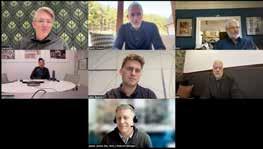
From small-town planning to dense urban redevelopment and from manufacturing floors to higher-ed campuses, our Men’s Roundtable brings together a cross-section of voices shaping how and where we live, work and build. The conversation spans housing pressures, workplace reinvention, affordability challenges, mentorship and the fast-moving influence of artificial intelligence (AI). What emerges is a clear look at the real forces reshaping design and construction today, and the creative energy driving the industry forward.
Raul Garcia-Moncada Principal/Director of Design
Principal Architect
Officer
Spector Project Architect
David Shove-Brown
Ryan Smith Chief Creative
Jason Jones Principal
Jake
Kyle Woudstra Owner/President
CCR: Give us a snapshot of what you do.
Ankrom Moisan’s Jones: Ankrom Moisan is a Pacific Northwest architecture firm that started from a two-person practice into a team of 200. We work collaboratively across architecture, interior design, urban planning and brand identity, serving a wide range of sectors that includes student housing, higher education, affordable housing, healthcare, hospitality, multi-family housing, office, retail, community and senior communities. With offices in Portland, Seattle and San Francisco, we design projects nationwide.
3form’s Smith: We are a U.S.-based architectural materials manufacturer specializing in translucent architectural panels and decorative surfaces. With 400 employees, the company also operates a lighting business. Smith emphasizes the importance of domestic manufacturing and the satisfaction of bringing design into built reality.
the owner. We’re located in Laurens, South Carolina. We are a full-service architectural firm who cater our larger range of expertise to specific client’s needs. We work on Master planning, commercial and residential projects small and large.
“Students expect sustainable design. It is not a bell and whistle anymore. It is the baseline.”
– Jason Jones, Ankrom Moisan
//3877’s Shove-Brown: //3877 is a 15-year-old firm based in D.C. focusing on hotel, hospitality, restaurant and fitness projects, along with select multifamily and higher education work. The firm has grown from two founders to more than 40 employees and continues to navigate post-COVID growth challenges.
BR Design Associates’ Garcia-Moncada: BR Design Associates is a boutique interior design firm based in New York City. This year, we’re celebrating 40 years of international work focusing on commercial interiors with a hospitality flair, with a strong focus on storytelling, brand alignment and, most importantly, the user experience.
KW Designs’ Woudstra: Kyle Woudstra with KW Designs. I’m the President and
Spectorgroup’s Spector: I’m a project architect at Spectorgroup, a multidisciplinary design practice headquartered in Manhattan. The firm was originally founded by my grandfather in the mid-’60s, so it means a lot to me to represent a third generation here. Today, we work across a wide range of sectors from workplace and mixed-use projects to retail and education. Our focus is always on creating experiences that genuinely connect people to their environments.
CCR: What are you seeing out there today?
KW Designs’ Woudstra: I live in a small town in Laurens, South Carolina where we’re trying to preserve its small-town character while still planning for thoughtful growth. Currently, we are working on updating the town’s master plan as we balance that
vision with interest from big developers who want to bring in large tracts of housing.
We finally have zoning in place to help guide that work and we’re looking at how to add multifamily or mixed-use development that still aligns with the historic downtown. That could mean a larger building designed to feel like a series of smaller storefronts.
We also have an old cotton mill and an old glass mill in town and we’re exploring adaptive reuse opportunities for both. One of the biggest challenges I see is the need for entry-level housing. With rising real estate values, it’s tough because developers want to maximize the return on their land, so most new projects target mid to higher end buyers. Entry-level options are harder to create, which leaves many people relying on the existing building stock.
BR Design Associates’ Garcia-Moncada: We’re living in an interesting moment for housing in New York City. After Hurricane Sandy, many downtown buildings were damaged by flooding, and a lot of companies moved to Midtown. Downtown sat empty for a long time, and now many of those office buildings are being repurposed and repositioned as housing.
What happens next depends on the government and how policy takes shape, especially with a new mayor in place. It’s going to be an interesting time for New York as we try to balance high-end residential with the need for housing that’s accessible to everyone. So we’ll see where this goes.
Spectorgroup’s Spector: When you first posed the question, I immediately thought about what we’ve been seeing downtown with residential conversions. Now that same rezoning energy is moving into Midtown. There’s more mixed-use zoning being proposed and more buildings are being sold with the intent of converting them to residential.
That shift has created an entirely new professional niche where firms specialize in commercial-to-residential conversions. The egress requirements and the mechanical systems are complex, and you need a detailed hand to work through the code, especially in those downtown buildings with massive floorplates. Midtown
CIRCLE NO. 32
buildings are smaller, which makes the work a bit more manageable.
On the other hand, we also see how this plays out in the commercial sector. Many businesses still want to stay in Midtown because of the convenience of transit so we’re watching a consolidation of office space.
Companies want mixed-use buildings where they can find their long-term footing. As residential demand shifts and Midtown absorbs more of that demand, it’s interesting to see how this impacts the sectors that have traditionally defined the area.
//3877’s Shove-Brown: We could spend an hour talking about residential development in D.C. alone. The cost of living has been a driving force for years. My wife and I bought our first house before we got married, thanks to a federal tax credit for renovating older buildings. We were just trying to bring back a D.C. townhouse that had seen better days. Fast forward 12 years, we sold it and looked like the smartest investors in the world. It was dumb luck. The city was growing and changing around us.
Now many of my younger employees are struggling to afford anything in the city. To meet that demand, we’re seeing new multi-unit mixed-use properties in places that never had them near Union Station or Union Market.
We’re also seeing more adaptive reuse efforts. The challenge in D.C. is block size. Many government and office buildings were built on full or half blocks and the geometry does not support easy conversion. Add in height restrictions and you’ve got buildings that are almost impossible to turn into residential or hospitality. The math just does not work.
So you have owners sitting on office buildings that have been empty for years and they do not know what to do with them. There’s a real disconnect as the city continues to evolve and gentrify. D.C. changes week to week. A government shutdown can shift the entire energy of the city overnight. It’s a fascinating moment right now.
It’s interesting to see how all of this affects each of us especially when you look at rising costs and now interest rates and the overall cost of living. That adds a different level of strain and stress on homeowners
or people trying to become homeowners. In D.C., there’s a very real disconnect.
This is a really interesting topic for me. I love housing. I read and listen to a lot about it. At my core, I’m an architect builder. I love that universe. But I do have a bit of a contrarian perspective on housing because I keep hearing this idea of oversupply and I cannot reconcile it for myself.
We’re all a little deluded by the idea that we have a housing shortage when a huge volume of supply is simply caught up in the system. I think there’s plenty of housing. It just got locked into this crazy upward cycle and we haven’t seen the reset yet. When that happens, the market will recalibrate.
Permitting will start to slow down and people will ask what the real goals are. That’s where adaptive reuse becomes interesting because commutes and work patterns have shifted. But right now, we’re in a tough spot because the correction hasn’t hit yet.
Ankrom Moisan’s Jones: I look at student housing through two lenses: on-campus housing and purpose-built student housing. One is funded by the university, and the other by private developers. Public funding comes with political pressure, and that strain on campus budgets is pushing universities to explore public-private partnerships. That is why we are seeing so
“We are translators of the built environment in a very analog world and someone still has to turn ideas into physical reality.”
– Ryan Smith, 3form
Here’s an example. Everyone right now is presumably living somewhere. Most people have a roof over their head. So how do we define oversupply? Then you look at what has happened with Airbnb. You look at the flipper market. I have family in California and I went to an open house just for fun. I had heard that about 25% of the houses in that area were flippers. I asked the realtor if that was accurate and he said yes.
Twenty-five percent of the available housing supply is tied up in flipping. Add the investor ownership conversation and it becomes clear we’re in a dislocated zone where the market is highly leveraged with too much money flowing through it over the last 15 years. I’ve lived through enough cycles to see the patterns. I’ve got gray hair to prove it. I’ve lived through ‘87, ‘95, ‘01 and ‘08.
many P3 projects at Tier 1 schools on the East Coast and in the Midwest.
On the private development side, securing financing has become more difficult due to higher interest rates. If a project is not within a block of a Tier 1 university, banks are not interested. Those are the only deals moving forward right now. Affordability also is a major challenge. We talk about it daily. How do we offer strong amenities while keeping units and beds affordable?
Students are aware of the debt they are taking on, and parents know precisely what they are paying for. Developers are adjusting their strategies, with some forming joint ventures to pursue larger, denser projects, since density is key.
We also are seeing more renovations. Many facilities are reaching the end of their
KW Designs is a full-service Architectural firm that provides comprehensive services from Masterplaning, to both commercial and residential projects small and large. With over 26 years of experience in a wide variety of project types, we work to cater our larger range of expertise to the specific needs of each individual client. Currently licensed in SC, NC,TN, & NY, however we are NCARB Certified and able to obtain reciprocal licenses pending our clients needs. A few of the project types we work on include industrial, (Tilt up and PEMB), flex, warehouse, manufacturing, commercial, office, retail, restaurant, hospitality, private schools, churches, corporate projects, mixed-use, multifamily, historical adaptive reuse, master planning, and residential. We look forward to talking about how we can be a team member on your next project.
lifespan, and campuses do not have the funding to rebuild. So, they are replacing windows, updating mechanical systems and refreshing interiors. Developers with large portfolios are doing the same. Instead of selling, they are reinvesting and remodeling. The focus now is on finding new ways to make the numbers work.
CCR: How the market is addressing affordability is a hot topic. What trends are you coming up with?
Ankrom Moisan’s Jones: We are seeing a few major design trends rise to the forefront right now. Wellness and community are leading the way, along with a growing focus on neurodivergence. It is an important issue that deserves real attention, and we believe architecture has a significant role to play.
Student suicide rates are high, so the question becomes: How do we create communities that may not solve the problem entirely but foster environments where students can truly thrive? That influences everything from materials and lighting to circulation and strong connections to the campus and the broader community.
the ways technology can shape the future of student living.
3form’s Smith: I always love this topic. We look at it through a manufacturing lens because we’re a local manufacturer. Being in Utah puts us within reach of most of the U.S. and the whole “Building Things in America” conversation is heating up. We’ve always made things here so for us it’s less about following a trend and more about explaining why it matters.
“You can go out and try to sign the ace and the all stars or you can invest in a strong farm system. We believe in building the farm system.”
– David Shove-Brown, //3877
Sustainability and resilience also are major drivers. Institutional requirements continue to increase and new energy codes for multifamily housing are pushing innovation. Students expect sustainable design. It is no longer an added bonus. It is the baseline.
We also are seeing more densification and a stronger global influence within student housing. Communities are becoming more international, which is exciting even as the political climate shifts around them. And finally, we are only beginning to explore what AI can do. Its integration into multifamily design is opening new conversations about smart environments, entertainment and
I’m an old-fashioned builder at heart. I love working with my hands. My best summers in high school were spent doing construction. It feels like we’ve lost that conversation around the trades.
The whole BABA universe—Build America Buy America—is a big question for a lot of people. Some of it is political but a lot of them are practical. Things cost more. If you ship them shorter distances, you save money. There’s a logic to that and I appreciate the simplicity behind it. But life never gets simpler. There’s always a new program or platform. As manufacturers, we’re being asked to do more because design offices
run out of hours and systems keep getting more complex.
One of the biggest trends we’re seeing is the need for simpler systems. If we can take A, B and C—pieces that used to come from different sources—and combine them into one integrated solution it takes a huge load off designers and end users. Clients love the easy button. They want one source, one system, one answer. It sounds obvious but in a world that keeps getting more complex it stands out.
From a simple manufacturing perspective, the question is how we make the process easier for everyone. And I think that desire for simplicity is going to keep growing because the need is already here.
//3877’s Shove-Brown: There are two ways I could answer this. We can talk about design trends in the markets we serve, or we can talk about trends shaping our business. Like Jason said, AI sits at the center of both. On the design side, hotel hospitality and restaurant work is incredibly competitive.
Years ago, a Marriott in Salt Lake looked the same as a Marriott in D.C. I remember staying in one and the artwork on the wall was Union Station because that was the brand playbook. Every property looked the same.
Now that mindset has shifted. An experience in Salt Lake should feel different than an experience in Boston or Miami, so we must understand the local context and the level of competition. We want to create something memorable, but we still must make the numbers work. That means putting in the right amount of design effort to deliver solutions that fit the budget and are sustainable without telling the client the cost has tripled since last week.
For us, AI and other tools are part of that efficiency equation. The technology is powerful, but it can get so complex that our own teams get bogged down in minutiae. We can create amazing renderings but then lose hours detailing the bolt that connects two pieces of structure.
Sometimes you just want to say let’s build the building. So, we use AI third-party drafting teams and whatever else helps streamline the process. It all feeds into the service we provide and
helps clients push their design without blowing their budgets.
Spectorgroup’s Spector: We’re seeing a similar shift. We’re working closely with GCs and sub-contractors earlier in the process so detailing is addressed upfront and integrated directly into our CDs. It saves time. It saves money. It keeps the project on schedule and it reduces waste for everyone involved.
On the design side, everything feels more residential. Clients want spaces that are warm and comfortable. They want environments that feel as personal as home. We’re seeing warm tones, deeper investment in furniture, and an overall level of intention that wasn’t there a few years ago. That investment makes the work more exciting, and it elevates the final design in a meaningful way.
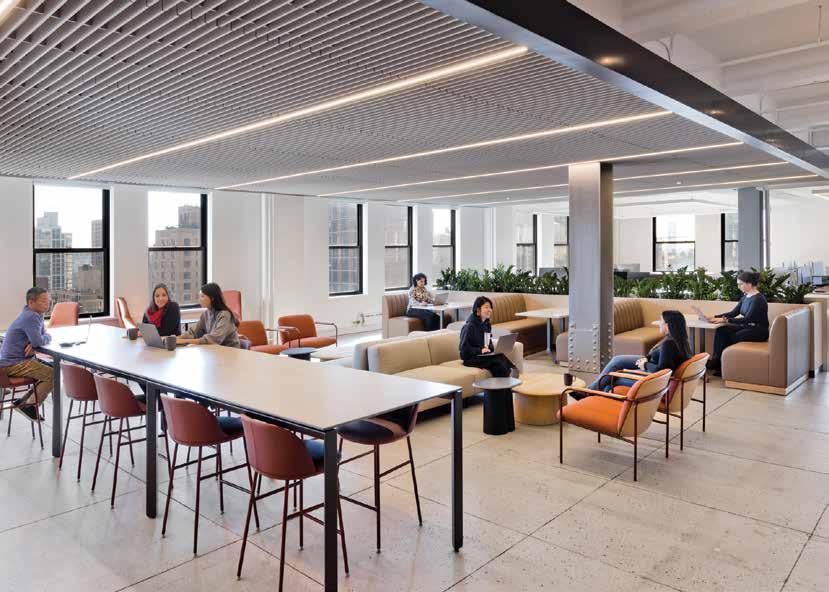
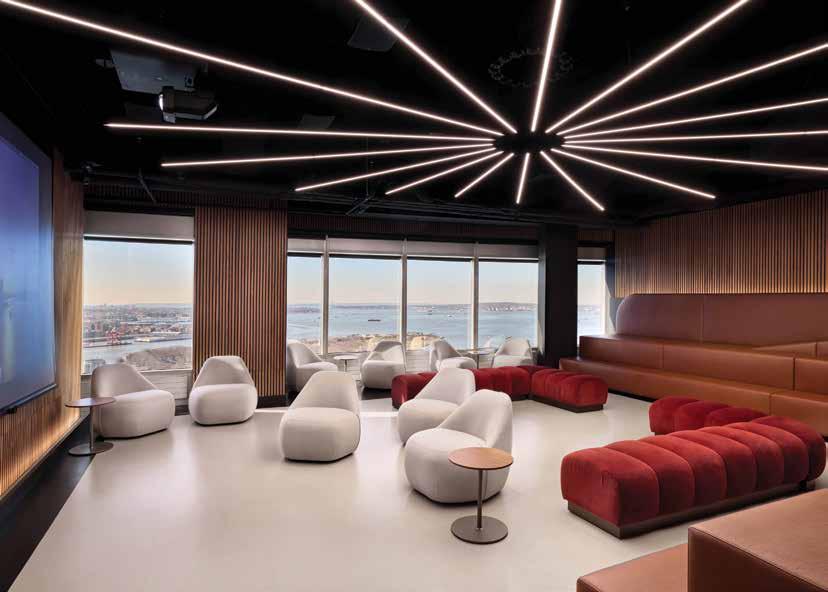
BR Design Associates’ Garcia-Moncada: In the post-pandemic return-to-office era, clients are seeking spaces that make people feel special and grounded. They want environments that feel uniquely theirs and offer perks of exclusivity and experiences they cannot get at home, while still providing the comfort and warmth of home. The design process is shifting toward celebrating individuality and choice within organizations. Collaboration remains important, but coexistence is gaining momentum.
You see this everywhere—coffee shops, libraries and other places people gather. They aren’t necessarily interacting; they’re simply sharing space and working side by side. Members-only co-working and networking spaces are a clear example. In New York, examples include Zero Bond, The Ned and even Soho House in its own category. The goal is to create environments where people can connect, relax and still maintain privacy while being around others.
We’re also seeing a significant rise in phone rooms and retreat spaces designed for heads-down work. Before the pandemic, everything revolved around constant collaboration. Now, people are seeking balance: The ability to coexist with others, while also having the option to step away when focus is needed.
KW Designs’ Woudstra: We’re seeing different trends across the markets we serve but a lot of it comes down to construction detailing and cost. Every contractor has a preference. One might want a stem wall foundation while another prefers a turndown. We work with our engineering partners to include both as options when we can so the contractor can choose what is most economical. You cannot do that with every detail, but there are places where it makes the process easier and more cost-effective. We also get a lot of calls from clients who say the city told them they need to add something major like a sprinkler system. We always take a step back and complete an indepth code review. We had a 30,000 square foot warehouse where the owner assumed sprinklers were required.
Everyone wants good design but they need it to be cost-effective. Strategies like non-separated mixed-use can help simplify inspections and reduce cost when the conditions allow it.
Because we work across so many typologies, we can cross-pollinate ideas. If a client wants a pre-engineered metal building for a small retail space, we will look at whether a simple wood structure is faster and more cost-effective. Sometimes they still choose the metal building because it gives them flexibility for future expansion. The point is to explore the options and understand what will serve them best.
One trend that keeps coming up is not about design at all. It is about availability. Clients want to know how fast we can start and how quickly we can deliver. They want
“In architecture communication is everything. It is how we share the vision and guide the process that turns that vision into reality.”
– Kyle Woudstra, KW Designs
Based on use and location they were not. We shared our code review with the building official and fire marshal and they agreed. The client was thrilled as it saved them nearly $250,000 while maintaining the life safety requirements for the building.
That is the essence of the bangfor-the-buck conversation. Prices are up.
to know if they will have direct access to us. Larger firms may quote four months for a small project. We can often get it done in one. That speed and direct communication matters. We are a small, but efficient firm and when clients call, they work directly with me.
And a lot of that comes from clients having trouble with past design teams that were simply non-responsive. Those last few points have become a trend we are hearing more when people call us for the first time. Oddly, we’re still a little surprised every time we hear it.
It’s kind of step one. In the architectural field, communication is everything. My colleagues can confirm that. We’re not just designing the building and handing over an instruction manual on how to build it.
Communication is how we share the vision and guide the process that turns that vision into reality. Timely responses and clear communication are two trends we’re seeing more often because clients are asking for them right out of the gate.
CCR: Are any of your firms involved in mentoring young people who want to get into the trades?
KW Designs’ Woudstra: We’ve done a little of that in the past and we’re always open to it. Because we’re a smaller firm it’s harder to have a full setup for mentoring or hands-on training. But when people ask if we are willing, we’re more than happy to help. We’ve been invited to speak at high schools and grade schools to talk about the field and we always say yes. We just do not have a formal program in place.
In past firms, I have worked for larger companies, however I was very involved in training and mentoring younger employees, and would make a point of bringing them to jobsites as well, as seeing it under construction helps better understand what you are drawing.
summer. Giving students real-world experience and helping them get a strong start in the field is still very effective at keeping young people inspired and engaged in the architecture industry.
“Collaboration is still important but coexistence is gaining momentum. People want spaces where they can share the room and still have their own lane.”
– Raul Garcia-Moncada, VR Design Associates
BR Design Associates’ Garcia-Moncada: While we don’t have a formal program at the firm, we’re very involved through IIDA NY, the International Interior Design Association of NY. A lot of designers here in the city are active members, and they take full advantage of those initiatives. IIDA has specific programs for students who are considering careers in interior design and architectural roles, and we support those efforts.
Spectorgroup’s Spector: We don’t have a formal program, but we have many internal processes to support the development of our junior staff. We have office-wide training sessions on topics like Building Information Modeling (BIM) and regularly bring in vendors for presentations. Watching young people grow within our firm is so rewarding.
We also regularly bring on students as interns—one in the winter and one in the
3form’s Smith: This idea of working with your hands and really understanding the built environment is huge for us as a manufacturer. I love reminding people how hard it actually is to build something. It’s hard to move a product through a factory and have it come out exactly as designed. That alone teaches so much.
We support three programs that lean into that hands-on learning. One is a local partnership with the University of Utah. We provide material for a project their students build every year on the Navajo reservation. The students design and build a structure, and it goes to a family selected by the community. It is an incredible program, and I love the hands-on nature of it.
On a simpler level we donate samples to programs and schools so students can touch the material. That tactile connection matters. When someone can hold something, they start to understand how it works
and maybe it sparks an idea they can bring into a project.
The third program is with The Ohio State University. A professor there asked how to connect new students with a real manufacturer. That opened the door to talk about what happens beyond the screen. Students draw something in software but what does it mean in the real world in terms of temperature, light tolerances and fabrication? We gave them material, and I told them I wanted the students to actually cut it. They have a full shop and a CNC, so they were able to dive in and work directly with the material.
Those cross-collaborations are where the light bulb moments happen. You take something conceptual then touch it and make something out of it. They are small steps but if we can help spark that curiosity even a little, I love that.
Ankrom Moisan’s Jones: Mentorship is something I care about deeply. It is a big part of our culture at Ankrom Moisan. I currently serve as a research advisor for a group of graduate students in Portland State University’s architecture program, where we are studying modular housing and workforce housing and exploring ways to make it more affordable for college faculty and staff. Working directly with that group has been incredibly rewarding. We also are very involved with ULI and the mentorship programs. They offer at both the high school and college levels. Giving back keeps me energized. It keeps us connected to the next generation of talent. You get to see what students are curious about and where the industry is heading. After spending time with these students recently, I can say there is a lot of hope for the future.
CCR: How are you using AI today and where do you see it taking your work in the future?
Ankrom Moisan’s Jones: I will start with this. People worry that AI is going to replace this or replace that, but it will never replace human connection. It will not replace communication or the one-on-one work we do. That is the core of who we are as storytellers and builders. When you look at it that way, AI becomes what it really is: a tool. A powerful one. Another tool in the toolbox, just like the computer was.
We are already finding real value in it, and we are investing heavily as a firm. Like many others, we are exploring AI as both a data source and a data-driven design tool. We are using it for visualizations and concept development with clients. We have also started using it for zoning and code research, with one big caveat. It can hallucinate. We treat it like a very intelligent intern. You still have to back-check the work. Where it becomes exciting is regenerative design. Can AI generate one hundred design options instead of the ten we have the staffing to produce? Can it help us reach better solutions faster? We are also looking at performance-driven design and what AI can offer in terms of life-cycle intelligence and smart-building operations. Tracking movement, tracking habits, adjusting the environment in real time. It becomes fascinating when you think of a building as an organism that can respond to the people inside it.
There are a lot of opportunities ahead, and I believe we are going to see massive change in the next five years. It will be interesting to see where it goes.
3form’s Smith: We all feel this. I’ll answer it on three levels. First, what would be amazing with AI? I am so tired of learning new programs. I learned AutoCAD. I learned some old Unix programs back in the day. Every time Photoshop releases a new version I feel like I have no idea how to use it.
So, imagine a future where you just talk to your drawing program. Move that over here. Shift that a little. It would be incredible because it removes this awkward barrier between what we know and what the software lets us do. That’s the hopeful side.
How we use AI now is much more practical. One of our team members on the claims and contractor side said if he writes an email, it never sounds great so he runs it through AI and it smooths everything out. We all use it that way. We’re also using it a little in sales. We record a call—with permission—and AI summarizes it. Were you effective? Did you hit your points? What did you miss? Did you deliver what you were supposed to? It’s amazing to have that kind of feedback.
The long-term future is the part that’s both exciting and terrifying. From a manufacturing perspective I tell people we are translators of the built environment. Even now any fully computerized experience still feels shallow. There’s a term for it: “inshittification”— technology getting harder to deal with as it scales.
But the physical world still matters. Things still have to go through machines. They have to be built, palletized and installed. We still need humans who can translate ideas into physical reality for a very long time.
If someone asks Google AI for the code requirements in New Mexico and it spits out something from 1993 that’s a disaster waiting to happen. It happens more than you’d think.
AI can do great things with renderings but if you don’t know what information you’re asking for, you’re going to get garbage. The prompts matter. We are using AI more. I use it all the time when I write. We run automated reviews on spreadsheets.
And to Ryan’s point, our new payroll software has an AI tool that analyzes tone in performance reviews. My father was a
“We’re working closely with GCs and sub-contractors earlier in the process so detailing is addressed upfront and integrated directly into our CDs. It saves time.”
– Jake Spector, Spector Group
Some jobs will disappear. No question. But a huge number of jobs will remain because we live in an analog world and someone has to bridge the gap between digital and physical. That human condition piece is what keeps the future from feeling too dark.
//3877’s Shove-Brown: This is another long discussion. We remind everyone that AI is basically a search engine. It only works with the information it can find which can be great or a colossal disaster.
Green Beret. His tone would have been one tone. Now AI tells you if your tone is kind, too aggressive or too soft. It’s wild.
It can make me sound less like an idiot and it can help me adjust tone but at the end of the day if you don’t put in the right information you’re going to get garbage out. That’s the part people forget.
Spectorgroup’s Spector: Most of us were introduced to AI through chatbots. While that’s useful, the work we do is far more specific: It lives in the details and the minutiae. We keep testing new tools as they come out. We’re using AI for post-processing renderings, for code research, and even for digging into hardware details and explaining small parts of the job.
Looking ahead, I wonder if we’ll reach the point where I can feed AI three or four drawing sets I’ve produced and ask it to generate a drawing package for a new project that matches my style.
That brings up the bigger question. If an AI produces those drawings and I’m the one stamping them, is that still responsible control? Can I legally and ethically stamp a set created by AI? Instinctively I want to say no. But if the software becomes accurate
enough does that answer change? At some point it might.
BR Design Associates’ Garcia-Moncada: My spouse is an editor and is absolutely terrified of anything produced by ChatGPT or any AI tool. There’s a formulaic rhythm to AI writing, and for someone who has spent years editing books, it’s unsettling. He freaks out every time. But for me, as a designer and storyteller, I see it differently.
We’re already comfortable with words. We know how to present. We know how to frame ideas. So, when we take a sketch or a rough rendering and run it through Midjourney using the same language we use with clients, it can turn into something magical. Yes, it can be a miss, but it can also be a powerful tool. It helps us polish our presentation voice through the technology itself.
For us, it’s been incredibly useful. Budgets are tight. Fees are tight. Clients want more and more to stay competitive. AI gives us shortcuts to create high-quality presentation materials fast. Tasks that used to take forever in Photoshop can now be done in seconds with a few words. It’s like the dream I had in architecture school, where I imagined having a USB port in my head, sending ideas straight to the plotter. This is the digital version of that. It’s basically architectural Cliff Notes. I love it.
KW Designs’ Woudstra: We don’t really use AI much internally right now. I’m still a little old school. I went from hand drafting to Data-CAD to MicroStation to AutoCAD. At my last firm, we were getting ready to move into Revit and I remember thinking exactly what Jason said, “I don’t want to learn another program. I’m good.’
AI has potential in areas like renderings and walkthroughs. Those can be great value-adds. But Jake made a really important point. When you get into detailed design construction documents and even building code searches there’s real danger. If AI produces something, can I sign and seal it?
I agree with Jake—the answer is no. It was not created under your supervision and you don’t know every detail. At the end of the day, we are dealing with life safety.
So, I see where AI can be helpful and I know some contractors we work with are
already using it in different ways. I don’t begrudge anyone who does. But for our firm, we’re not using it in our day-to-day work right now.
CCR: What are some of your goals moving forward?
Spector Group’s Spector: My goal is to get out there more and meet more people. I’m going into my fifth year in architecture after working as a contractor with a little grad school in between. I’m trying to connect with more people in architecture and real estate and really every part of the industry we’re all part of here.
some recent products through that process, and I think every manufacturer is going to need it. If you don’t have it you’re going to be out in the wind. It’s that interesting and that important. My goal is to learn more about it each year. And I’m trying to convince every employee and their kids to have a 3D printer at home. I had that exact conversation with a friend last week.
Ankrom Moisan’s Jones:. For me, it comes down to two things. On a personal level, I am always working on being present with family, friends and at work. It is something I am constantly striving toward.
//3877’s Shove-Brown: My kid has two years left in high school, and then she’ll be off to college and running her own life. My resolution is to work less. I still work hard but trust my team more, delegate more and carve out time because life is moving fast. Kyle’s right, you have to make time for the things that warm your heart and your soul. For me, that means more time with my family and maybe embarrassing myself on a golf course, but having fun doing it.
3form’s Smith: I wasn’t sure whether to give a personal answer or a business one, so I’ll split it up. Personally, I’ve been painting. Creativity feels like life’s magic lesson and the most illuminating way to spread positivity. I’d love to put together enough work to talk about it and show it. It has been a ton of fun.
On the work side, I’m completely obsessed with 3D printing. We’ve pushed
Professionally, we are deep into thought leadership right now. We just wrapped up our strategic retreat, which set a lot of new direction for the firm and for our higher education studio. I am excited to dig in and start sharing our research and our ideas with the world.
BR Design Associates’ Garcia-Moncada: I have to finish my certification in fashion styling. I’ve been spending a lot of time learning about how other industries approach design. I’ve done creative fragrance development. Fragrance evaluation and now fashion styling, and that’s just to keep the creative juices flowing.
KW Designs’ Woudstra: Perhaps an odd one, not really related to this discussion, but if I had to have a New Year’s resolution, it’d be getting a little deeper in my Bible, getting a little bit closer to the Gospel. CCR
Size
Material
Type of Material
Layer 1 0.5 Wear layer Use layer with PU protection
How data center construction can achieve 95% waste diversion
Data centers have become the backbone of the modern economy, powering everything from online retail and streaming to artificial intelligence and financial services. Their footprint is expanding rapidly: U.S. data center demand is projected to grow at double-digit rates through the decade, with facilities getting larger and more complex.
Yet, while these projects are celebrated for their technological sophistication, a critical issue often gets overlooked—the sheer volume of construction waste they generate. Bringing a single hyperscale facility online requires enormous amounts of concrete, steel, wood, plastics, and packaging. That scale translates into equally massive waste streams, much of which traditionally ends up in landfills. For an industry that champions sustainability and efficiency, this reality
presents both a reputational challenge and a missed opportunity.
The good news is that diversion rates approaching 95% are not only possible— they already are being demonstrated on commercial construction projects around the world.
Why Diversion Matters
Waste diversion often is treated as a secondary concern, but for commercial
Achieving near-total diversion requires coordination across design, construction and operations. It begins with how projects are conceived.
construction executives, it intersects directly with the priorities that drive project success: cost, schedule, stakeholder expectations and long-term operational efficiency. Financially, landfilling is expensive.
Tipping fees, hauling charges and lost material value add up quickly, especially on large-scale builds like data centers. By contrast, diverting waste into reuse, resale or recycling streams can reduce costs and, in some cases, generate revenue.
Strategically, high diversion rates reinforce the sustainability commitments that owners, tenants and investors increasingly demand. With ESG reporting under growing scrutiny, a documented diversion rate of 90% or more provides a tangible, verifiable metric that strengthens credibility.
It also builds trust with tenants, particularly in sectors like cloud computing, healthcare and financial services, where sustainability performance influences site selection.
From an operational standpoint, diversion supports resilience. Global supply chain disruptions have demonstrated how vulnerable construction projects can be to raw material shortages. Treating waste as a resource—wood that can be resawn, metals that can be re-melted, plastics that can be reprocessed—creates buffers that reduce exposure to volatility and delays.
Circularity in Action
The principles behind 95% diversion align with broader circular economy strategies. Instead of the traditional “take, make, dispose” model, circularity emphasizes keeping resources in use for as long as possible. A joint McKinsey and World Economic Forum study found that circular construction could abate 75% of embodied CO2 emissions and generate up to $360 billion in net value by 2050.
Using recycled aggregates in cement, for example, can deliver up to 96% of possible abatement and $122 billion in net profits. Steel, aluminum, glass, and plastics all show similar potential for cost savings and carbon reduction when recycled at scale.
This is not just theory. Developers are beginning to embed circular practices into live projects. Digital Realty, one of the world’s largest data center operators, reported diverting more than 88% of construction waste from landfill through aggressive reuse and recycling initiatives. While not yet at 99%, this performance demonstrates that diversion well above industry averages is achievable in practice.
How to Get There
Achieving near-total diversion requires coordination across design, construction and operations. It begins with how projects are conceived. Designing for disassembly— using modular components, standardized panels and demountable systems—makes it easier to reclaim materials at the end of their initial use. Early engagement with suppliers can also help identify materials that are easier to recycle or that already contain recycled content.
Once construction begins, real-time tracking becomes critical. Digital platforms can log every pallet, crate, and container as it arrives on-site, then track where it goes when discarded. This level of visibility ensures accountability and allows project managers to intervene if a waste stream is headed toward landfill unnecessarily. Some systems even integrate with ESG reporting tools, providing auditable data for investors and regulators.
Relationships with local partners are equally important. Regional recyclers, remanufacturers, and energy recovery facilities must be lined up in advance to handle material flows efficiently. Wood, for example, can often be resawn into smaller pieces for resale. Pallets can be repaired and returned to circulation.
Wood residuals can be diverted to generate clean renewable electricity. Scrap steel and aluminum can go directly into regional smelters. Even plastics and cardboard, if sorted correctly, can be sold back into manufacturing supply chains. For the fraction of materials that cannot be reused or recycled, waste-to-energy conversion ensures that nothing goes to landfill.
Continuous improvement is the final ingredient. Diversion audits conducted throughout the project—rather than only
at closeout—help identify opportunities to improve performance in real time. Contractors and owners who set daily or weekly diversion targets find it easier to sustain momentum and achieve higher yields.
long-term efficiency. Materials reclaimed and documented in the construction phase can inform future renovations or expansions, reducing procurement costs and supporting ongoing waste reduction goals.
Lessons for Commercial Construction
While data centers represent a particularly resource-intensive segment, the lessons extend across commercial construction— from retail and hospitality to healthcare, education, and multifamily. Every sector faces similar pressures: budgets are tight, stakeholders demand transparency, and sustainability is increasingly tied to brand reputation.
The path forward is clear. By embedding circularity into project planning,
Strategically, high diversion rates reinforce the sustainability commitments that owners, tenants and investors increasingly demand. With ESG reporting under growing scrutiny, a documented diversion rate of 90% or more provides a tangible, verifiable metric that strengthens credibility.
The Payoff
For owners, contractors, and operators, the benefits of pursuing 99% diversion are multifaceted:
> Cost savings come from reduced landfill fees and the recovery of material value. On large data center projects, these savings can reach millions of dollars.
> Schedule stability improves as material reuse and recycling reduce reliance on unpredictable supply chains.
> ESG performance strengthens with auditable data that can be showcased to tenants, investors, and regulators.
> Market differentiation increases for contractors who can demonstrate sustainability leadership in competitive bids.
For facilities managers, high diversion during construction sets the stage for
leveraging digital tracking, building local partnerships, and committing to continuous improvement, commercial construction teams can achieve diversion rates once thought impossible. The success stories emerging in the data center sector show that 95% to 99% diversion is within reach.
The challenge now is for the broader industry to embrace these practices and make them standard rather than exceptional.
The age of “take, make, dispose” is ending. Commercial construction has the opportunity to define itself by a new standard—one where the waste from today’s projects becomes the resource for tomorrow’s. Data centers, with their scale and visibility, are proving that it can be done. The rest of the industry has every reason to follow suit. CCR
The Visibility Equation
Are you getting your fair share of visibility and traffic?
By Jean-Pierre Lacroix
Retail sales in the United States have surged significantly since last year, sparking fierce competition among retailers to capture their share and boost foot traffic. To shout, “shop here,” many are covering their windows with promotional offers, price cuts, new product launches and seasonal deals.
Yet, these messages add to an already overwhelming flood of 10,000 marketing impressions consumers face daily. In this scramble to say more, one key to driving traffic is often missed: 80% of purchase decisions happen in the blink of an eye— driven by emotion, not logic.
More is not necessarily better
In an increasingly crowded retail landscape with new stores opening everywhere from high streets and strip malls to power centres and shopping malls, standing out and driving
traffic remains a challenge even for the best. Relying solely on promotions won’t deliver sustainable, profitable growth.
To truly differentiate, retailers must forge an emotional connection with customers in the split second it takes to decide which store to enter. Understanding the key drivers behind visitation and repeat visits is essential to securing a fair share of sales. These insights form the foundation of the BlinkFactor principles, built on three decades of consumer behavior analysis and real-world research.
Why emotions matter for retailers
We know that humans process visual information, such as store exteriors and product displays 6,000 times faster than text. More importantly, we also retain 65% of what we see compared to just 10% of what we hear, and color can boost brand recognition by as much as 80%.
It’s no coincidence that category leaders like Best Buy, Target, Walmart, and McDonald’s all own a memorable color and shape. Emotions, meanwhile, are processed five times faster than
rational thought, which means brands should spend less time appealing to logic and more time tapping into the emotional desires of their customers.
While the mechanics of the emotional brain are complex, one truth is clear: the right emotional triggers can decisively nudge shoppers toward your brand over the competition.
Give your store the blink test
For customers wishing to visit your store, you must stand out, connect with them on an emotional level and ensure there are no friction points that would cause them to think critically, namely, answering these three key questions:
1 Is your storefront distinctive and memorable?
According to the “ThinkBlink Manifesto,” your storefront is far more than an entry point, it’s your brand’s split-second chance to spark an emotional connection, what we call the “Blink Factor.” Humans process visuals 6,000 times faster than text, meaning you have only milliseconds to make customers feel something before their rational mind kicks in. Owning a distinctive color and shape can instantly set you apart from the competition.
Our work with Tip Top in Canada and WSS in the U.S. proves the impact of this approach. By crafting bold, recognizable exteriors, we created store experiences that shouted a welcoming, “Come inside”.
A unique and memorable storefront should trigger an immediate emotional response, allow customers to identify your brand from across the street, ensure the visual language aligns with your brand’s emotional territory, and compete on feelings rather than just displaying products.
Ultimately, if I put my thumb over your store sign, do I recognize your brand from competitors, since, pending the pedestrian traffic, your storefront sign may not be visible. When you consider that visuals are a
direct link to your customers’ emotions, you need to ensure your visual language aligns with your brand’s emotional territory.
2
What’s your 10-foot story?
Your 10-foot story is about your brand narrative being straightforward from ten feet away, before customers can read any text or see detailed products. In that moment, your store should instantly communicate your brand’s emotional promise through color, shape, and design. It should tell customers what kind of experience they’ll have, rather than just what you sell, while creating a sense of belonging that makes them want to step inside.
Having a distinctive visual language is key to standing apart from competitors. Ask yourself: If someone walked past your store with their “sound off” and only caught a glimpse from the corner of their eye, what would they understand about your brand? For Tip Top, floor-to-ceiling digital signage showcasing the latest arrivals was visible from the entrance, enticing customers to enter further into the store. WSS featured a central, high-impact display at the front, creating an immediate draw.
Your 10-foot story isn’t just about attraction; it’s about removing friction. Cluttered entrances, aisles unfriendly to strollers, or poor wayfinding all heighten customer anxiety, putting emotional connection out of reach. Simply put, it’s hard for customers to love your brand if you frustrate them before they’ve even stepped inside.
3
Are you getting in the way of your success?
Many retailers undermine their own success by overcomplicating their message, breaking the ThinkBlink principle that “simplification is the ultimate sophistication.”
Common pitfalls include feature overload by cramming too many messages into window displays, rational-only appeals that focus on price and features
instead of emotions, generic aesthetics that look like every other store in their category and inconsistent emotional territory through mixed visual signals that confuse the subconscious.
We recently conducted a study to determine which promotional and marketing signs customers read. The answer is very few, if any, and many act as visual clutter to what is truly important, the product.
The solution is to step back and ask yourself: What single emotion do we want customers to feel when they see our storefront? Then, design everything to trigger that feeling in the blink of an eye. Your storefront and first ten feet should stand out, create a split-second pause, and pull customers inside through emotional cues like intrigue, discovery, or inspiration.
It follows the natural behavior of shoppers: first notice, drive interest, and then act. Ironically, these are the same behaviors when we shop online or in a physical store. So why fight the flow?
The Retail Reality: Your Store Has Milliseconds to Win
In today’s hyper-competitive retail landscape, success isn’t determined by how many promotional messages you display, it’s won or lost in the blink of an eye through emotional connection.
With humans processing visual information 6,000 times faster than text and making 80% of buying decisions driven emotion, not logic, your storefront must create an instant emotional bond before rational thinking begins.
The best retailers know how to stand out. They own a distinctive color and shape, tell a clear ten-foot story that conveys experience over product, and remove friction points that create customer anxiety.
Yet too many fall into the traps of feature overload, purely rational messaging and generic aesthetics that fail to create the emotional pause needed to drive store visitation. CCR
Jean-Pierre Lacroix is President of Shikatani Lacroix Design (SLD.com), a global branding and design agency specializing in bold, futureforward customer experiences. For more than 45 years—35 at SLD’s helm—he has led brand transformations for major retailers, consumer brands and financial institutions. A pioneer in experiential branding, Lacroix coined the term “Blink Factor” to describe the critical first impression that drives customer engagement, and was among the first to introduce digital signage, virtual reality and neuroscience testing to retail design. He is the author of "The Belonging Experience," "Desire by Design" and "ThinkBlink Manifesto."
The ROI Case for Resilient Design
Why smart upfront decisions save millions over a building’s life cycle
By Paul Lavallee
Buildings are expensive. While developers focus on upfront construction costs, the long-term expenses of a building can swell to 1.5 to 2 times the initial price tag over its lifespan. This means that developers and asset managers are incentivized to prioritize upfront investments in energy-efficient systems and lifecycle budgeting to maintain building maintenance, sustainability and tenant satisfaction.
Despite this, many projects are driven by short-term thinking that prioritizes initial cost savings over long-term performance. This approach often leads to significant hidden expenses in future maintenance, energy loss, and premature replacements.
In other words, they trade short-term gain for long-term pain.
The solution is, in part, resilient design. This design philosophy selects materials for their ability to withstand environmental factors and the passage of time, initiating a virtuous cycle of sustainability that also delivers financial value.
Durability Creates Sustainability
Sustainable buildings that deliver long-term value and return on investment (ROI) require looking beyond what’s green today and looking to what lasts for decades to come.
Put differently, the most sustainable building is the one that doesn’t need to be replaced or significantly remodeled in the future.
To achieve this, select durable materials that last, including highly durable coatings, insulation, building envelope, and moisture barriers and HVAC systems.
For example, the Empire State Building, a structure that has defined New York City’s skyline for nearly a century, underwent a significant renovation in the 1990s to replace its more than 6,400 windows.
The success of the project depended on the performance of the new window frame coatings. Instead of selecting the cheapest option, the project team chose a product with proven durability and resistance to UV damage, acid rain, and salt.
Years later, when additional windows were replaced, the new frames were a seamless color match to the old ones, showing no noticeable fading.
Resilience = ROI
Building sustainability isn’t just an altruistic priority. There is a compelling financial case for durable design. Don’t just view the initial investment in high-performance materials as an expense. It’s a capital investment capable of generating significant returns over the life of the asset, through lower lifetime maintenance costs.
Sustainable buildings that deliver long-term value and return on investment (ROI) require looking beyond what’s green today and looking to what lasts for decades to come.
For instance, resilient coatings and materials deliver a powerful return on investment by significantly reducing operational and maintenance costs, while maintaining their initial appearance.
The need for frequent repainting, resurfacing or repair is virtually eliminated, saving building owners millions over the building’s lifespan.
Additionally, investing in insulation, reflective coatings and moisture control solutions can pay enormous dividends.
Specifically, reflective coatings and advanced insulating materials significantly reduce energy consumption and improve indoor comfort, while moisture control systems help prevent degradation of building envelopes, reducing repair costs and extending lifespan.
Long-Term Value Creation
For modern developers, it’s time for a paradigm shift.
Resilient design looks at a project’s longterm legacy as it builds or renovates buildings that continue to perform, protect and provide long after the construction crews have left and the project is complete.
The question “How much does it cost?” cannot be the only consideration when planning a new building project or renovation. They must put that question alongside another consideration: “How long will it last?” or more importantly, “What is the Lifecycle Cost” of this project?
Instead of relying on the lowest bid, professionals should ask critical questions:
> How does this material perform in a real-world, long-term scenario?
> What are the documented environmental and performance credentials?
> How will this choice contribute to the building’s long-term efficiency and market value?
> What are the costs to replace this material if its service life is less than the building’s lifespan?
Resilient design looks at a project’s long-term legacy as it builds or renovates buildings that continue to perform, protect and provide long after the construction crews have left and the project is complete. CCR
Paul Lavallee serves as the Global Market Manager of Kynar® Coatings, with responsibility for the Kynar 500® and Kynar Aquatec® PVDF product lines globally. He has worked for Arkema for 27 years in a variety of engineering, manufacturing, research, supply chain, and business roles. He holds a B.S. in Chemical Engineering from Rensselaer Polytechnic Institute and a Business Administration Executive Certificate from University of Notre Dame. He is based in Radnor, Pennsylvania.
Sniff out regulation changes
To track government construction regulations, you have to continually monitor key agencies and deep dive all the states you work in for those regs. Or, you can now just Hire the Hound —
The BillTrack50 Regulation Hound.
This brand new regulation tracking tool is the first truly great tracker out there.
BillTrack50's Federal and State Regulatory Tracking Hound actually tracks. It runs down the key changes that affect your business, from start to finish. See for yourself.
You can Hire our Hound for a 30-day FREE TRIAL or schedule a demo with one of our experts to see how you can start saving time and money today!
BillTrack50 software dives into the swamp of regulator bulletins, administrative websites, and hard to find documents, breaking them all into individual regulation entries for understanding, and figuring out how they are all related. It handles the mess others ignore.
GENERAL CONTRACTOR PROFILES
Building Experiences That Last
How Amenity Construction Group is redefining construction through specialization and vision
Chris Seeger President of the New Construction Division
Building Experiences That Last
How Amenity Construction Group is redefining construction through specialization and vision
As President of the New Construction Division at Amenity Construction Group, Chris Seeger is guiding the company through a period of strategic growth and specialization. With expertise that spans design, consulting and construction, Amenity Construction Group delivers single-source solutions in aquatic and specialty outdoor environments— spaces that combine technical precision with creative vision.
Under Seeger’s leadership, the company has expanded its capabilities through targeted acquisitions that strengthen its market position and enhance its ability to take on complex, high-profile projects.
We sat down with him to see how Amenity Construction Group is redefining what it means to build places that inspire connection, elevate experience and stand the test of time.
Give us a snapshot of your brand.
Amenity Construction Group (ACG) is a collective of specialized construction brands with deep roots in aquatic environments. With over 50 years of legacy in high-end pool building, we’ve long delivered both luxury residential and commercial/government projects.
Our focus has always been new build delivery, creating lifestyle-driven amenities and community based aquatic facilities with equal emphasis on artistry, precision, usability and an unforgettable client experience.
What type of clients and markets are you targeting?
We work with residential homeowners, developers, designers, builders,
municipalities, and government agencies. Our projects span the Mid-Atlantic region, where we build amazing custom designed pools for residential and commercial clients. We cater to every client type and have built a customized experience to match the needs of anyone who walks through our doors.
How does your work cater to today’s end-users?
Clients today expect accountability, transparency, communication and uncompromising quality. For homeowners, that means a seamless journey to an amazing final product that works seamlessly.
For commercial and institutional clients, it means being their trusted partner knowing that we’ll deliver what is expected: projects that meet rigorous compliance requirements while delivering safe, efficient and engaging spaces for their clients.
Equally important, we ensure our commercial partners achieve strong ROI and fiscal accuracy, giving them the confidence that their project is well-managed and strategically aligned with their goals.
How is your construction strategy based?
> Self-performance: We self-perform much of our work, maintaining quality and control of outcomes.
> Transparency: We use project management platforms to ensure real-time client visibility and communication discipline.
> Innovation: Daily, we look to modernize processes and workflows, implement smart tech strategies, and leverage automation and AI to improve our employees daily work and our clients experience.
> Compliance: We pair craftsmanship and high quality standards with strict adherence to codes, safety and regulatory standards.
What are some of today’s biggest challenges?
Aquatic construction is often misunderstood. Because it is such a specialized field with many technical considerations, aligning expectations between contractors, owners or stakeholders can be challenging. We address this by acting as a straightforward, expert partner, bringing clarity, discipline and deep experience to every
HIGH QUALITY DELIVERABLES WITHIN 2MM
QUICK SPEED TO DELIVERY 10 DAYS OR LESS
FSU works with retailers, architects, restaurants, financial services, gas convenience, and commercial property owners nationwide. We work with everyone from development to construction managers, store planners to designers, and facilities to asset managers. WE HAVE YOU COVERED!
• 3D Surveys and BIM
• 2D Architectural As-Builts
• Due Diligence and Permit Research
• Facility Assessments, Audits, and Asset Surveys
• ADA Compliance
• Drone Surveys
The experience your project deserves
FSU works with retailers, architects, restaurant concepts, financial services, companies and facilities, and asset managers of every size across North America.
project. Whether residential or commercial, our focus is on delivering value, setting clear expectations and ensuring outcomes that are not compromised.
What are the biggest challenges in construction or renovating a project?
The unknowns. There are several unknowns when jumping into a new build or renovation, be it soil conditions for a new build, or the condition of a concrete pool shell underneath layers of plaster. Explaining these situations and using clear communication up front is critical to the health of the relationship with our clients during the construction process. No one loves surprise change orders, so explaining the unknowns early on in the process is key.
How are you working to promote sustainability?
Efficiency in pools can be quite challenging; we prioritize energy-efficient equipment, smart automation, and advanced water management. We also prioritize and keep our ear to the ground on innovation in the pool space. For example, lowering traditional chemical use in an aquatic space has never been easier. With innovation in the sanitation
and interior finish space there are ways to lower chemical usage.
What do you see as some of the biggest challenges in construction, moving ahead?
Meeting the needs of an ever changing demand for personal and community amenities. With COVID there was a large push to create personal sanctuary in family’s homes. Coming out of that we have seen a continuation of that, but also an increase in sanctuary and entertainment spaces with communities. If it’s an HOA pool, apartment complex aquatic space or a country club, we are seeing demand to upgrade or build spaces that cater to shared experiences with friends and family.
Are you optimistic about what you see in your building and construction sectors?
We’re bullish. Residential demand for lifestyle-focused amenities continues to expand, and investment in public and institutional facilities is strong. These dynamics provide long-term opportunities for growth, and by combining the ability to provide these amenities into one company we think people and companies will look to us as an expert in that space.
What trends are you seeing?
> Lifestyle-focused, amenity-rich environments across residential and commercial projects.
> Client expectations for real-time transparency and accountability.
> Sustainability and efficiency as standard requirements.
> Greater integration of wellness and community engagement into design.
> Innovation and technology brought to the aquatics space
Where is your business headed?
We are scaling our new build delivery into strategically selected markets while reinforcing our presence in the Carolinas, Maryland and Virginia. Our long-term vision is to be the premier builder of aquatic and amenity-driven environments across both residential and commercial markets.
Tell us what makes your brand unique?
We’re forward thinkers, we thrive on innovation and bucking tradition when it makes sense. Our clients experience drives every decision we make. By doing this, we in turn believe that drives an employee experience to match.
Is there a story you can share about how work and ability to engage with the industry makes you successful?
I love to tell stories about adversity, and how we respond to that adversity. As with all businesses, we make mistakes; we fail clients in certain scenarios or steps in a project; it’s impossible to be perfect.
That’s the human in us. My favorite stories come from taking those moments, owning our mistakes and making it right. Adversity tells you a lot about a person/ company, but how they respond to adversity tells you everything.
We’ve had a few instances where we receive tough feedback from a client, and in each of those instances we’ve flipped the narrative to blow our clients expectations out of the water, just by answering the phone or reaching out and showing we care about the outcome.
Old School Meets New Rules
A $25 million upgrade gives Southwestern University’s historic Mood-Bridwell Hall a bold, tech-ready future
Amanda Barber
Josiah Cortez Project Manager Kitchell
Old School Meets New Rules
A $25 million upgrade gives Southwestern University’s historic Mood-Bridwell Hall a bold, tech-ready future
By Andrew Felts
For 186 years, Southwestern University has been equipping students to become the leaders of tomorrow while simultaneously recognizing the institution’s rich history as the first university in Texas. Southwestern’s tradition of looking to the future while honoring the past is on full display this fall as the University celebrates the grand re-opening of one of its most historic structures.
Mood-Bridwell Hall, originally opened in 1908 and added to the National Register of Historic Places in 1975, has undergone a $25 million renovation that restored the prestige of the historic structure while incorporating the latest classroom technology.
“Mood-Bridwell Hall is a very historic building on campus,” says Southwestern University Associate VP for Facilities Management Amanda Barber. “It is one of the anchor buildings that define the characteristic look of the campus from an exterior facade perspective. It is historically relevant in that sense, but it’s also currently relevant because it is preserving the soul of the campus look.”
Campus FACILITIES
Together with project management firm Kitchell, general contractor Linbeck, and architect PBK, Southwestern University leaders reimagined the historic structure to become a hub of 21st Century learning. Renovating the nearly 40,000 square foot building required close coordination between all partners to preserve the historic features of the 117-year-old structure.
The renovation would not have been possible without collaboration between Southwestern and the City of Georgetown, the University’s home located about 30 miles north of the Texas capitol of Austin. Leaders from the University and its construction partners worked alongside Georgetown’s Historic and Architectural Review Commission (HARC) to ensure compliance with local guidelines.
“The City of Georgetown planning and permitting teams have been outstanding partners,” Barber says. “Without their involvement and their knowledge of code compliance and permitting, we would not have been able to achieve this renovation. They have been really good to work with, and you don’t see that kind of partnership and collaboration in many jurisdictions.”
Mood-Bridwell Hall was originally constructed in the Richardson Romanesque style using limestone blocks quarried at the nearby Brushy Creek Quarry in Round Rock, Texas. The original stonework was completed by Waterston and Sons stone cutters, the same masons who immigrated to the United States in the 1880s to work on the construction of the Texas State Capitol Building. During the renovation, crews worked meticulously to preserve the century-old facade of the building.
When originally constructed, Mood-Bridwell Hall featured a large, open-air atrium in the center of the building. Today, one of the building’s new defining characteristics is a large skylight that fills the atrium with natural sunlight in a nod to the building’s original construction.
“The building is over 100 years old, so not only does it have historical value for the University, but for the City of Georgetown as well,” says Kitchell Project Manager Josiah Cortez. “It is listed in the City’s historical archives as a building of importance, so there were a lot of design elements that we were not allowed to touch. It took a lot of teamwork from every group to get it to where it is now. It took quite the effort but
this is one project that many people can be proud of.”
Comprehensive stonework was completed, including the repointing of joints and thorough cleaning of the limestone blocks. A variety of repairs were completed to correct defects that had arisen throughout the building’s history. A new roof as well as new, energy-efficient windows were also installed, allowing the exterior to shine bright.
Challenging the Status Quo
Maximize uptime, maintain compliance, and sustain safety with a team that treats your business like its own.
WHAT SETS US APART
Maximize uptime, maintain compliance, and sustain safety with a team that treats your business like its own.
We do business differently. We prioritize building a culture of confidence — with clients, vendors, and our team alike. We believe in the transformative power of great people combined with trusted relationships. With our attention to detail and commitment to operating in the gaps, we boldly redefine industry standards. Our way has proven to be the formula for becoming a leader in infrastructure management.
Services:
» 24hr Emergency Services
SERVICES
Fire Suppression
YOUR WHY IS OUR MISSION
» Reactive Maintenance
» Preventative Maintenance WHAT SETS US APART...
Fire Life Safety
» Code Compliance Review & Reporting
» Proactive Planning Upgrades & EOL Asset Review
We operate differently. Envisioning what should be, not what is, we lead the way by creating newer, higher standards of quality for the underserved, highly technical trades of fire suppression, vertical transportation, and material handling. Our approach harnesses the power of people, data, and technology. Listening to learn, we discover each client’s why and deliver true value through partnership and expertise because your why is our mission.
» Fire Extinguishers
» Fire Suppression Systems
Vertical Transportation
» Elevator Systems
NATIONAL COVERAGE
» Fire Sprinklers
» Fire Alarms & Detection
» Passive Fire Protection
» System Monitoring
» Gas Station Suppression
» Kitchen Exhaust Cleaning
» Kitchen Suppression
» Escalator & Walkway Systems
» Upgrades & Modernization
Material Handling Systems (MHS)
» Rolling Doors
» Dock Equipment
» Forklifts
» Scissor Lifts
» Pallet Jacks
» Pallet Racking Systems
» Conveyors
» Warehouse Supplies
» Baler Compactor
» Floor Cleaning Equipment
We discover each client’s why and deliver true value through partnership and expertise because your why is our mission.
MEMBERS OF
Members Of
Nothing is more important than protecting your people (first and foremost), your property, and your business continuity. We customize our fire and life safety services around each of your unique sites and our services include: Fire Suppression Systems, Fire Sprinklers, Fire Alarms & Detection, Passive Fire Protection, System Monitoring, Gas Station Suppression, Kitchen Exhaust Cleaning, and Kitchen Suppression.
Vertical Transportation
Safe, accessible transportation throughout your facility is a must. Since no location moves like yours, our custom solutions include Preventative Maintenance, 24hr Emergency Services, Reactive Maintenance, Code Compliance Review & Reporting, Proactive Planning Upgrades & EOL Asset Review, Elevator Systems, Escalator & Walkway Systems, and Upgrades & Modernization.
Material Handling
Your supply chain is missioncritical – whether it’s delivering medical supplies, distributing food, or moving the raw materials that power your business. Our services include: Rolling Doors, Dock Equipment, Forklifts, Scissor Lifts, Pallet Jacks, Pallet Racking Systems, Conveyors, Warehouse Supplies, Baler Compactor, and Floor Cleaning Equipment.
Campus FACILITIES
A State-of-the-Art Appeal
Inside Mood-Bridwell Hall, the interior was scaled back to its original studs and foundations. From there, the building was reimagined. State-of-the-art classrooms, faculty offices, meeting spaces and even a coffee shop, were woven among the original beams, pillars and columns that date back to the early 20th Century, resulting in a unique blend of old and new.
“It’s not completely uncommon to take on a project like this, but there are very few of them that are this old,” Cortez says. “We were working with the existing foundations that were constructed in 1908, so there were a lot of unknowns that we had to take into consideration. It’s not unheard of, but there are just very few projects of this magnitude on such an old building.”
Campus FACILITIES
When originally constructed, Mood-Bridwell Hall featured a large, openair atrium in the center of the building. Today, one of the building’s new defining characteristics is a large skylight that fills the atrium with natural sunlight in a nod to the building’s original construction. Unused roof space on the second floor was transformed into a new outdoor terrace designed to become an outdoor classroom and central gathering place.
On the north side of the building, a two-story annex was constructed, adding about 1,500 square feet of space and allowing for the addition of several new classrooms. Renovated classrooms feature advanced projection systems alongside enhanced wifi and networking capabilities.
The main atrium is home to an interactive video wall, and state-of-the-art, environmentally-friendly Epson printing systems were installed on each floor. These
systems use 50% less power and utilize a water-based ink system, eliminating the need for petroleum-based toner.
The Next Generation
While envisioning the renovation of Mood-Bridwell Hall, University leadership wanted to ensure that its next century of use will be as impactful as its first. When it opened in 1908 as a men’s residence hall, the building held 80 bedrooms and was the first building on campus with steam heat, electricity and bathrooms on every floor.
During World War I, Mood-Bridwell Hall was transformed into barracks for the Student Army Training Corps. Just a few years later, in 1925, it served as a women’s dormitory after the Ladies Annex burned down. When the V-12 Navy College Training Program came to Southwestern during
World War II, Mood-Bridwell Hall again became a women’s dormitory while Laura Kuykendahl Hall, the women’s residence hall, was utilized by Naval trainees.
Throughout history, it also served as a campus dining hall, library, and infirmary. In 1965, the building was converted to house faculty offices, campus organizations and classrooms. Today, Mood-Bridwell Hall is ready to serve the next generation of students, faculty, and staff with new classrooms, office space, and other amenities designed to build community.
Barber says the project sends the right message to the faculty, staff and students that Southwestern is committed to preserving its soul, history and traditions. “It is a really rich story that is Southwestern, while providing clean, functional, desirable and modernized spaces that are conducive to learning and achieving the mission of the University.”
Andrew Felts is Director of Communications and Public Relations at Southwestern University. For more information, visit southwestern.edu.
IS YOUR SUPERINTENDENT CERTIFIED?
Ask your GC if they have a Superintendent on your projec t.
Being a retail superintendent requires a market segments. While all construc tion superintendents have responsibilities for schedule, produc tivity, safety, and quality on the projec t site, the challenges and constraints of the retail environment mean that a special training focus is needed. Superintendents must learn how to think like a retailer and a contrac tor throughout these projec ts
RCA’s Retail Superintendent Training Program addresses this need.
• At least three years of experience in retail construc tion
• Completed OSHA 30-hour
• Completed RCA's two - day workshop, which includes in- depth training on retail-focused customer ser vice
Superintendent exam
Echoes of Innovation
The acoustic design behind Palo Alto Junior Museum & Zoo
Dana Pucillo
VP of Acoustic Solutions Carnegie
Echoes of Innovation
The
acoustic design behind Palo Alto Junior Museum & Zoo
By Dana Pucillo
Founded in 1934, the Palo Alto Junior Museum & Zoo has been a vital cornerstone of early childhood education for the community, where generations of children and families have passed through its doors to learn, explore, play, discover and get curious about the world around them.
Featuring interactive exhibits, live animals, and hands-on programming, the center has always been a lively place, evolving to meet the needs of today’s youth. K-12 educational design as a whole has come a long way and parents, educators, and caregivers expect children’s spaces to be not only engaging but also supportive of different learning styles and sensory needs.
In educational spaces, poor acoustics could mean the difference between accessible and inaccessible learning for kids and young people. According to the American Speech-Language-Hearing Association, poor acoustical design may negatively impact child behavior, concentration levels and understanding, while good acoustics improve speech intelligibility by more than 35%, directly affecting learning outcomes.
Recognizing the impact acoustical design has in supporting a well-rounded learning environment, the City of Palo Alto collaborated with Kirei to outfit the museum, enhancing both the acoustic and visual quality of its newly designed spaces. This project aimed to address the high noise levels while maintaining a visually engaging and sustainable design.
The city’s ongoing Green Building initiative mandates the use of healthy building materials, leading to the selection of acoustic solutions that foster a more enjoyable experience for both kids and adults while ensuring compliance with the city’s building codes and fire regulations.
Sustainability as a Guiding Principle
The City of Palo Alto has long prioritized environmentally responsible practices, with a mission to reduce energy, water and natural resource consumption to improve Palo Alto citizens’ well-being. Kirei’s products aligned seamlessly with those values.
Crafted from recycled PET, Kirei’s acoustic products repurpose roughly 235 single-use plastic bottles per panel. This process diverts waste from landfills and waterways, connecting directly to the museum’s mission of inspiring care for the natural world.
All products meet or exceed CDPH standards for VOCs, are Red List Free and Declare Label qualified/certified, and contribute to LEED and WELL Building credits.
For a museum dedicated to teaching the youth about discovery, ecology
and responsibility, these choices carried meaning beyond performance. The materials themselves are a part of the story, modeling how design can be both beautiful and responsible.
Enhancing the Exhibit Hall
Upon entering, guests are greeted by the 3,000-square-foot main exhibit hall, lined with activity stations. This open-plan space proved to be one of the greatest challenges of the acoustic design. In this layout, sounds of laughter, running and chatting can carry easily, so the goal was to balance acoustic control while adding visual interest.
Kirei’s Simple Baffles were selected for this space and strategically installed on the ceiling. Suspended overhead, the baffles introduced rhythm and texture while softening the auditory experience below.
Simple Baffles are customizable prefabricated acoustic ceiling panels, designed to be arranged around complex ceiling features such as HVAC, sprinklers, and lighting. With an ASTM E84 Class A Fire Rating and Noise Reduction Coefficient (NRC) rating of 0.60, the panels meet the museum’s safety guidelines
while significantly improving sound absorption in the noisy space.
Creating a Calming Nook
Another innovative feature of the redesign was the creation of an 80-square-foot Calming Nook for children with sensory sensitivities. This small yet impactful addition provides a retreat for guests who may need a quieter, more controlled space to unwind. This designated quiet area also offers an alternative place to read and learn
apart from larger groups, supporting focus and concentration.
To bring this space to life, the Calming Nook required a sense of enclosure without a fully closed ceiling, allowing for necessary sprinkler system access while still providing acoustic support. Custom-cut Simple Baffles from Kirei also proved to be the ideal solution, effectively reducing noise while maintaining an inviting atmosphere.
For kids who may become overstimulated easily and need to step away from
the chaos, this space offers a quiet place to relax and recharge. Having the ability to withdraw from the activity and re-center makes the museum accessible to a wider range of visitors.
For caregivers, the nook provides reassurance that their children’s needs are anticipated and respected, allowing them to make the most out of their visit.
Keeping Inclusivity at the Forefront
The transformation of the Palo Alto Junior Museum & Zoo demonstrates how attention to acoustics can profoundly shape the visitor experience. In children’s spaces, especially where sensory input is high, the ability to offer balance is invaluable.
For adults, this redesign allows for easier communication and the ability to guide activities without distractions. For kids, acoustic control fosters a wellsupported environment that encourages both energetic play and restorative quiet. Most importantly, all guests have the ability to engage with the exhibits on their own terms, leaving a lasting impression.
The Impact of Acoustical Design
As communities continue to invest in public cultural spaces, the Palo Alto Junior Museum & Zoo serves as an inspiring example of how acoustics, sustainability and inclusivity can come together in design. The project demonstrates that addressing the sensory environment is not an afterthought, but a central component of creating places where everyone feels welcome.
By combining a rich legacy with forward-thinking design, the museum has ensured its role as a place of discovery and joy for future generations. Through careful planning, collaboration and innovation, the team created a facility that truly balances the chaos of exploration with the comfort of quiet.
Dana Pucillo serves as VP of Acoustic Solutions at Carnegie. With 30-plus years of interior design experience, she builds teams and processes that bring to market innovative, sustainable, and high performing acoustic products. Her work lies at the intersection of exceptional design and environmental stewardship and she uses her deep expertise to collaborate on design solutions that drive the commercial acoustics industry forward. Pucillo enjoys collaborating with multidisciplinary designers to develop market-driven, sustainable, and high-performing acoustic solutions.
Building Better Care
New design revives Charlotte’s landmark C.W. Williams Community Health Center
Building Better Care
New design revives Charlotte’s landmark C.W. Williams Community Health Center
The C.W. Williams Community Health Center has been a pillar of the West Charlotte community for over 40 years. Founded in 1981 by Dr. Charles Warren Williams, the center was North Carolina’s first Federally Qualified Health Center and remains a model for affordable, patient-centric healthcare. But the center’s flagship location had seen better days and patient needs were outgrowing the space.
Following a donation from Dr. William’s family, a new, stateof-the-art facility opened its doors on the grounds of the original location in fall 2024. At 17,700 square feet, the center expanded its service offerings to include a pharmacy, dental office, mental health services, substance abuse counseling, pediatric care, and a food pantry in addition to primary and preventative care.
Designed by BHM Architects, the new C.W. Williams Community Health Center uses Echelon Masonry’s Aria Slim masonry in Ground Face Granite and Texture Face Alabaster to deliver a design that balances a modern aesthetic with quiet resilience, living up to the center’s role as a pillar of the community.
Designed With Dignity
Low-income and public assistance programs come with heavy stigma, one that stretches even into the architecture. Facilities are typically boxy, grey, and bleakly utilitarian. “The client was adamant that we should steer away from this look,” says Kristin Mulkey, Partner at BHM Architects, who led the project. “It was important for the structure to provide a strong, clean, updated look while not being overbearing or intimidating.”
“It was important for the structure to provide a strong, clean, updated look while not being overbearing or intimidating.”
— Kristin Mulkey, Partner, BHM Architects
The issue is more than just skindeep. Research has shown that building design profoundly impacts occupant physical and emotional well-being. Prioritizing aesthetics is a simple way to make patients feel valued and instill a sense of community pride. “The goal was to have the center fit beautifully into the neighborhood without being too ostentatious,” Mulkey says.
And Echelon Masonry’s Aria Slim fit the bill perfectly. The product’s linear design breaks up the clinic’s square, two-story
structure while providing visual interest. The light tones of the masonry lean into the design’s blue-gray palette and pair well with the dark exterior paneling and warm wood accents. Large, high-placed windows allow ample natural light without presenting a security risk.
Designed for Durability
With a strict budget and 13,000 patients served annually, the C.W. Williams Health Center needed a design that made every penny count and prioritized durable,
The light tones of the masonry lean into the design’s blue-gray palette and pair well with the dark exterior paneling and warm wood accents.
long-lasting materials. Masonry was an easy choice. “There were some concerns around vandalism and break-ins,” Mulkey says. “The client was especially concerned with the base of the building. Masonry was a smart choice because it’s tough, but also easy to clean.”
Additionally, Echelon Masonry is sourced locally, reducing transportation and manufacturing costs, which was another win for the clinic’s budget.
The center’s design also needed to factor in another obstacle—the weather. Charlotte’s climate is very humid, and the city has experienced increased hurricane
effects and severe weather in recent years. This has led to an uptick in mold and mildew problems, especially for buildings that are illequipped to handle excess moisture.
Mold poses a significant health risk, and families in lower-income areas are disproportionately at risk of exposure. It was a risk the center could not afford to take. “We went with solid masonry instead of a thin veneer; this allowed us to install a rainscreen wall system,” Mulkey says.
Rainscreens deploy a multi-layer exterior to direct moisture and precipitation away from the building. An intentional gap is left between the outermost and secondary layer,
allowing for extra ventilation and preventing mold growth on the building’s exterior. The masonry was treated with a water repellent for an extra layer of protection.
For the team at BHM Architects, the C.W. Williams Health Center project was not just about delivering a building. It was about honoring the vision of its founder and enhancing the lives of those it serves.
Utilizing masonry in the building design allowed the team to create a unique aesthetic that serves as a beacon in the community and can withstand any potential challenges. The end result is a community-first health center that is built to last.
For architects, developers, and contactors
Mechanical Engineering
Plumbing Engineering
Electrical Engineering
Structural Engineering
bluestreak-consulting.com
A Civic Core Reborn
West reimagines a former courthouse into a mixed-use hub for community and connection
Alex Gutierrez
Associate Principal and Design Director
Carrier Johnson + Culture
A Civic Core Reborn
West reimagines a former courthouse into a mixed-use hub for community and connection
San Diego’s civic heart has always pulsed around its plazas, theaters and gathering spaces—but the western edge of the Civic Core long carried an empty gap where the former courthouse once stood. That changes with West, the forward-thinking mixed-use development reshaping the neighborhood’s skyline.
Positioned at the edge of downtown’s central business district and steps from Little Italy, West anchors a new “live work create” environment with 29 levels of residential living, 289,000 square feet of office space, 10,000 square feet of retail at street level and below-grade parking that supports the flow of daily activity.
Its arrival builds on the character of Civic Center Plaza, where shaded benches, mature trees, and historical touchpoints like Leland Malcolm’s Bow Wave fountain and the terrazzo tribute to Juan Rodriguez Cabrillo’s 1542 landing weave the city’s story into the landscape. West extends that narrative by bringing density, life and connection back to a site that had gone quiet.
For Alex Gutierrez, Associate Principal and Design Director at Carrier Johnson + Culture, the project reflects the belief
that every building tells a story rooted in research, place and purpose. His collaborative, iterative design process guides the team as they shape a destination built around movement, gathering and civic life. In San Diego’s core that story enters its next chapter.
Can you give us an overview of the West project and its role in San Diego’s Civic Core?
West is a multi-parcel development that transformed a three-block former courthouse and jail site into a vibrant, mixed-use community. Located at Broadway and Front Street, the development introduces 431 residential units, including 87 affordable units, alongside 300,000 square feet of office space and 17,000 square feet of retail space.
This collaborative approach helped establish trust with stakeholders, which is critical in redeveloping public land and civic sites. Even small shifts based on feedback had a meaningful impact on the final outcome.
The project replaces a formerly government-only environment with a dynamic mix of uses designed to strengthen civic and social connectivity, creating a 24/7 downtown destination. West exemplifies how cities can transform underutilized civic cores into active, inclusive neighborhoods.
What challenges did you face in redeveloping this part of downtown?
One of the biggest challenges in downtown revitalization is achieving the right mix of residential, commercial, and office space. Too often, redevelopment focuses on a single use, such as retail or tourism, without creating a comprehensive ecosystem that generates activity around the clock. Outdated zoning regulations can further limit mixed-use potential.
In West’s case, we also had to consider accessibility, pedestrian movement, and public realm activation—all while integrating affordable housing as a key component of the development.
How did connectivity influence the project?
Connectivity was central to West’s vision, both physically and socially. Externally, the project leverages existing transit infrastructure, including trolley lines, bus routes, and proximity to the Santa Fe Depot (a hub for both Amtrak and commuter rail), making it highly accessible for both local and regional users.
Internally, landscaped terraces, lounges and shared amenities encourage residents, office workers and retail visitors to interact. These internal and external connections help reinforce West’s identity as a mixed-use hub and encourage a shift toward walkable, transit-oriented urban living.
How did community engagement inform the design?
Community input was essential. Engagement with city planning groups, council
members, and the public helped shape a pedestrian-first framework while balancing car access, parking and ground-floor activation. Transparency along street edges and open spaces was emphasized to create vibrant street life.
This collaborative approach helped establish trust with stakeholders, which is critical in redeveloping public land and civic sites. Even small shifts based on feedback had a meaningful impact on the final outcome.
How did West address the public realm and placemaking?
Rather than being a standalone architectural object, West was designed as an active participant in downtown life. Its public realm strategy connects three former courthouse blocks through widened sidewalks, enhanced pedestrian infrastructure along Union Street and open spaces shaped by San Diego’s topography. Ground planes were designed for experience, with active edges and walkable layouts.
Along each street, Union, C Street, Front, and Broadway, the design responds to context, mobility, and activation, creating a framework that will continue evolving as tenants and residents inhabit the space. Placemaking here is a process: We built the bones, but the community brings them to life.
What early indicators suggest the project is succeeding?
While West is still in its early years, it’s already influencing downtown activity. The commercial spaces and office footprint have helped bring energy into the area during the day. One milestone was the relocation of SANDAG headquarters to West, activating the ground floor and boardroom spaces.
Early signs show increased foot traffic, business vitality, and engagement, suggesting West will become a cornerstone in the longer-term reactivation of San Diego’s Civic Core.
What lessons does West offer other cities looking to redevelop public land?
West offers several key lessons for cities pursuing civic and downtown redevelopment. First, balance is essential. Mixeduse programming that includes housing, office, and retail helps create sustainable activation throughout the day and supports a vibrant community.
Second, multi-layered connectivity is critical; transit access, pedestrian flow, and shared internal spaces all contribute to stronger community networks and more seamless integration with surrounding areas.
Third, public input plays a vital role, as early engagement ensures that the design aligns with real community needs and improves outcomes.
Finally, placemaking should be approached as a process: cities can build the physical framework, but the neighborhood itself ultimately gives life to the space over time.
How does West reflect broader trends in civic and downtown redevelopment?
Across the U.S., cities are rethinking underutilized civic cores to accommodate diverse populations, evolving work patterns, and mobility shifts. West demonstrates how design, public-private collaboration, and civic imagination can come together to create inclusive, vibrant downtowns.
Density, mixed-use programming, affordability and access are all critical
factors in shaping downtowns that thrive for residents, workers and visitors alike.
How do you see West influencing the future of downtown San Diego?
West is part of a larger vision for the Civic Core. Its transit-rich location, active street edges and engaging public realm support a walkable, sustainable downtown lifestyle.
Over the next decade, its impact will grow as residents and tenants help define the character and energy of the site. West shows that with thoughtful design,
connectivity, and community collaboration, downtowns can evolve into places that are active, inclusive, and vibrant at all hours.
How
has the project been recognized within the industry?
West was honored with a "2025 Gold Nugget Award of Merit" for its role in redefining San Diego’s Civic Core through thoughtful urban design and mixed-use integration. The award acknowledges the project’s contribution to both the civic and social life of downtown San Diego.
Peter Wilk is founder and President of Wilk Marketing Communications, a boutique PR and marketing communications agency serving the AEC industry and operating nationally and internationally. Wilk has been frequently published and quoted in national and foreign media, including The New York Times, WBBR Bloomberg Radio, New York Real Estate Journal and Warsaw Business Journal.
Would you like to be a guest or sponsor?
Latest Episodes to stream now
Avi
CCR Publisher/Editor David Corson sits down with Avi Pinsky, Founder of Pinsky Consulting, who describes himself as a “business doctor” and former accountant now dedicated to diagnosing the health of companies and transforming skilled business owners into confident CEOs. By applying a systematic, financially grounded approach, Avi helps uncover where businesses are strong, where they’re struggling, and how to build treatment plans that drive performance, consistency, and positive cash flow. His mission is to turn expertise into leadership, align financial discipline with owner goals, and get businesses on the fast track to prosperity. Enjoy the conversation with David and Avi.
CCCT with Kyle Tourjé, Executive Vice President at Alpha Structural, Inc.
CCR Publisher/Editor David Corson sat down with Kyle Tourjé, Executive Vice President at Alpha Structural, Inc., a Los Angeles–based engineering and construction firm known for more than 30 years as the region’s leading expert in seismic retrofitting, hillside and landslide stabilization, structural upgrades, and complex foundation repair. Alpha Structural is uniquely licensed as both a Structural Engineering firm and General Engineering Contractor, providing true end-to-end capability— from assessment and design to permitting and construction— across challenging environments including oceanfront, tight access, steep terrain and high-rise applications.
Brought
CCCT with
Pinsky, Founder of Pinsky Consulting
An interview podcast that talks to guests that will have business titles in design, construction, facilities, real estate, procurement, development, etc. in retail, restaurants, hospitality, healthcare, federal, multi-family, shopping center owners, developers, cannabis, mixed-use along with the A/E/C sectors plus vendor service suppliers & mfcs who’s products and services are specified, recommend and purchased by enduser brands to build and maintain their facilities in the Commercial Construction Building industry.
To be a guest or sponsor, reach out to David Corson your host at davidc@ccr-mag.com.
Subscribe here to listen to all episodes:
Designing Bold Hospitality & Retail Spaces: Conversation with James Geier, CEO of 555 Design
CCR Publisher/Editor David Corson sat down with James Geier, CEO and Founder of 555 Design — an award-winning global interior design, fabrication, and development firm known since 1988 for shaping iconic retail, hospitality, and commercial environments. With more than 300,000 square feet of studio, manufacturing, and fabrication space and a multidisciplinary team that takes projects from concept through completion, 555 has earned a reputation for immersive branded experiences and bold design language.
Keeping Workers Safe: Leadership, PPE Trends & Safety Culture with Matt Bruggeman of Ritz Safety
CCR Publisher/Editor David Corson sat down with Matt Bruggeman, President of Ritz Safety, one of the nation’s leading providers of safety solutions and PPE serving construction, industrial, utilities, waste and recycling, oil and gas, and other safety-critical sectors. With more than 20 years of experience in sales, operations, and leadership, Matt discusses the evolving PPE landscape, emerging safety trends, building true safety-first cultures, and leading large teams toward customer-focused execution.
Building Stories
CDO Group turns historic potential into a modern home with purpose
Sophia Amunategui President CDO Group, Inc.
Building Stories
CDO Group turns historic potential into a modern home with purpose
Sophia Amunategui has never been content living inside one story. As a construction attorney and President of CDO Group Inc., she steers complex commercial projects with the precision and clarity the industry demands. Yet even within that fast-moving world, she felt a pull toward something that lived outside the boundaries of her day-to-day work—a creative itch that only design could scratch.
That instinct led her into residential transformation, a space that gives her the freedom to explore ideas, take risks, and shape environments in ways commercial construction rarely allows. What began with reimagining her own converted juice factory eventually evolved into a series of projects that celebrate history, structure, and possibility. She and her team seek out properties with character and challenge— buildings with past lives, strong bones and untapped potential.
Their most recent undertaking, a former Veterans clubhouse, offered exactly that. The tall ceilings, traces of community memory, and architectural grit created a canvas that required both respect and reinvention. For Amunategui, these projects are not just renovations. They are opportunities to tell a story through design, bringing new life to spaces while honoring what came before.
Here, she takes us inside that world where structure meets possibility and every project becomes a narrative worth chasing.
Describe the signature style or characteristics that define your residential projects.
The rule of thumb for many/most flips is play it safe. But I don’t like necessarily like playing it safe all the time. Sometimes, you need to add a pop of color or a bold statement. It’s a balance. I try to appeal to buyers, but also add my own personal, creative touches. I run hard on a particular theme from the start and carry it out throughout the house. Each house becomes a very personal undertaking.
What types of residential projects do you specialize in? What market segment do you primarily serve? For the most part, we find a house that is a complete gut, but with huge potential or a unique quality to it. My first flip was an illegal two-flat that we transformed into a single family home. The latest was an old Veteran’s clubhouse that we made into a single family home while honoring the space’s history. Rarely do I flip a place that
does not have a unique attribute from the start. It’s always about the transformation. I think I get joy in that challenge.
What has been your most challenging project to date? How did overcoming those challenges shape your approach to construction? The most challenging flip was one we did
during COVID, as it affected the timing of the project. Given our background in commercial construction, building fast is ingrained in our thinking. During covid, there were forces at play that slowed the process down. What I learned was, slower isn’t necessarily bad.
It actually allowed for time to create. It allowed for the story of the space to
shine through. Sometimes creativity is lost with speed. Also, the city/village we were building in was not as builder friendly. This adds another level of complexity to every project. It’s good to find an area that promotes development rather than one that creates obstacles. The business is hard enough as it is.
Can you share details about your favorite completed project and what made it particularly meaningful or successful?
The most meaningful project was flipping the old Veteran’s clubhouse. We put some much love and energy into that space that it was hard to let it go. Every detail was thought out. It actually sold within one hour of being on the market, which was a testament to every thought that was put into transforming it from a clubhouse to a home. We also kept the historic charm of the space and incorporated the Veteran’s cornerstone/ plaque in the finished product. This was very special.
How do you integrate sustainable building practices into your construction process? What specific eco-friendly innovations have you implemented?
We are always mindful of integrating energy saving components to every building including lighting, heating and air, and window space. It’s a constantly evolving world in this industry and we always need to adjust and change with the times. This often involves researching what is new and the latest and greatest in eco trends.
What sets your company apart from other residential contractors in your market?
I think passion and heart sets us apart as each flip becomes a “child” of ours. We also strive to make the end user happy and put ourselves in the home buyer’s shoes. This is not just a business transaction. It’s a personal undertaking. Each flip represents us in some way.
Capture the world in quartz
Vadara captures the magic of nature’s most captivating corners, and sets it in one of the world’s most hard-wearing minerals to create a surface from which visions can be realized, and memories made.
SCAN & DISCOVER
Desert Blush V817
How do you balance client design preferences with structural integrity and building code requirements?
We always make safety and building code requirements a priority. There is no cutting corners to compromise safety. Code is code for a reason.
What emerging trends in residential construction are you most excited about, and how are you incorporating them?
Right now, things like wallpaper accents, open floor layouts, large kitchen Islands and oversized lighting and windows are big trends that really enhance a space and make designing a living space a lot of fun.
What values drive your day-to-day operations, and how do these translate into the final homes you deliver? Build something that you would want to live in.
How do you approach collaboration with architects, designers, and other professionals during your projects?
We like to use the same team of people. The idea is to create relationships that last. Finding a like-minded group allows the process to go much smoother.
One-on-One with... CDO Group’s Sophia Amunategui
Describe a typical day
Get up, take my kid to school, drink my coffee, go hour by hour, finish my tasks, take care of work, take care of family, be true to myself, play with my dog and sleep well at night.
What’s the most rewarding part of your job?
Honestly, the reward is subjective. For me, I am rewarded by the fact that I am enjoying the process. It is not an end result. It’s the joy found in the creative process.
What’s the biggest item on your to-do list?
I don’t stress about my to do list because; it’s too long on every given day. On that note, the biggest item is making sure the family is functioning, the business is handled, and that I keep moving forward hour by hour.
What was the best advice you ever received?
Hard to choose between don’t sweat the small stuff and remembering that we are all only human. Both of these pieces
Looking ahead, what are your goals for your company’s growth and impact on the residential construction industry? Given that we flip when an actual space speaks to us, and not because it’s a full time career or something we have to do, my goal is pretty simple—keep having fun and enjoying the process. It’s a labor of love.
of advice make it easy for me to find peace and sleep well at night. Oh, and “follow my bliss” is also right up there with the other two pieces of advice.
What’s the best thing a client ever said to you?
Simply, “Thank you.”
Made for You A homeowner’s guide to commissioning custom furniture
By Colby Murphy
Commissioning custom furniture for your home can be both exciting and overwhelming. The process can often come with questions about design, materials and cost that leads to uncertainty. Partnering with the right manufacturer can make a huge difference. At SouthLoft, we do our best to instill confidence in homeowners through clear communication, technical guidance and a shared design vision.
The Step-by-Step Process
The first step in homeowners commissioning custom furniture is to connect with a company that aligns with their standards and vision. It’s a collaborative process that involves multiple conversations about expectations, design preferences and functionality. It’s normal to go back and forth on renderings, costs and schedules, as well as to hold review meetings before to run-through concepts before landing on a final product.
Typically, the process for ordering custom furniture follows several steps: the initial consultation, concept development, a runthrough of ideas, hand-on production, and lastly, delivery.
Homeowners should set a path for how the conversation goes, while the manufacturer should ask detailed questions to clarify the vision. Identifying what you want visually is the biggest part and manufacturers’ job is to translate that vision from concept to reality. For example, discussions might include details about the interiors—the colors of the floors and walls, nearby furnishings, and whether the homeowner wants something to stand out or blend in.
While homeowners usually set the direction because they begin with a vision, manufacturers play an important role in interpreting and refining that vision. They help bridge the gap between aesthetic ideas and technical feasibility. Visualizing what you want is easy, but understanding how it will actually function and feel in your space is a different story.
Homeowners should understand that only limited concept development can happen before a deposit is in place. Many first time custom furniture buyers may not realize how much time goes into creating detailed renderings, dimensioned drawings, and multiple meetings.
It’s a manufacturer’s job to guide clients through this phase, so everyone is aligned before moving into detailed work. Understanding the design phase and the cost difference between custom furniture and mass-produced items helps protect both sides of the partnership.
Concepts & Collaboration
Manufacturers may receive drawings or written descriptions of the custom piece, but interpretations can vary. That’s why clear communication and alignment are essential. Renderings are often edited and shared back and forth until both parties achieve a shared understanding of the final design.
Be open to suggestions from the manufacturer. For example, if a client wants to save money on materials but still achieve a certain look, labor costs may still be higher, making it a balancing act.
Sometimes, redesigning elements to make a piece usable or practical may require compromising on the original vision.
There is a lot of conversation that happens throughout. A manufacturer’s role is to ensure clients know all the pros and cons of a certain design and potential limitations. In a collaborative process like this, it's equally beneficial that clients are open and receptive to feedback.
What to Consider
The common mistakes clients make when ordering custom furniture is not knowing accurate measurements of the space they are commissioning for. Having a clear understanding of the room layout is crucial to ensuring the finished product fits and functions properly within the space. If it’s a dining room and the client wants to order custom chairs, a table or other pieces, both parties must consider what is already in the space. The client should provide clear information on measurement and dimensions and approve plans to avoid any layout issues.
Homeowners should consider both the physical constraints of the room and how the space will be used. If the room is currently empty, you have to consider what may be added to the space in the future and plan accordingly.
When reviewing costs, homeowners should think about the material selection, complexity of the design, and labor. Of these, the two main factors that will drive the price are complexity and the materials. A more dynamic piece like parametric furniture requires additional time and planning, which naturally increases the cost.
Material selection should also align with the furniture’s purpose and setting. If something is going to be used daily, you want structural integrity to ensure longevity. More often than not, this requires the
The right manufacturer will show the process throughout the build, so the homeowner can see every part of the design from start to finish and provide feedback if they are not satisfied with the progress.
piece to be built as if it was being made for a commercial or hospitality space. Those pieces are often made using durable materials because of their frequent use. Homeowners should stick to materials that can withstand wear and tear.
As a homeowner, don’t be afraid to change your mind. Open communication with the manufacturer is a must, and requesting revisions to renderings that don’t align with your vision can be a normal
part of the process. It’s better to go back and forth on visual concepts rather than to re-do the piece once it’s finished.
The right manufacturer will show the process throughout the build, so the homeowner can see every part of the design from start to finish and provide feedback if they are not satisfied with the progress. Clients should always sign-off throughout to prevent changes that impact cost and timeline at the end.
Colby Murphy is founder of SouthLoft, a Texas-based company redefining custom furniture with a quality-first mindset. Murphy is responsible for product engineering, processing efficiency, maintaining client relationships and retention, acquiring new clients and supporting employee wellbeing. Having worked in fabrication since the age of 12, he grew up building cars and hot rods. After his five-and-a-half-year stint in the Marine Corps, he translated this affinity for building into furniture design, starting out in his dad’s garage.
The Power of One
How Michelle Collins built A\N/A on individuality, ingenuity and a refusal to follow the script
Michelle Collins never followed the script. Born in Korea and adopted into Japanese and American roots, she grew up navigating culture and identity through a lens shaped by heritage technology and an unyielding sense of curiosity. That mix became her compass as she forged a path as a female entrepreneur who refused to walk the wellworn road.
In 2016, she turned that conviction into A\N/A A Non-Agency, a proclamation of individuality and a belief that great work begins with amplifying the power of one. Under her leadership, the firm has become an award-winning experience design consultancy trusted by C-level leaders for first-of-its-kind initiatives that demand speed, ingenuity and cultural fluency.
Collins approaches every project as a creator and an agent of creativity, blending business strategy and tech insight with an artful instinct for what transformation requires. She adapts while others adopt proving that real innovation comes from risk and a relentless pursuit of authenticity.
What first inspired you to pursue a career in this industry?
I didn’t plan a career in this industry—it evolved from curiosity and a passion for storytelling. I’ve always loved observing how people connect, how a shared story or experience can shift how someone feels or behaves.
Early on, I realized creativity could be both art and strategy—a way to move culture forward while helping businesses see themselves differently.
That’s where A Non-Agency® was born: from wanting to build something that didn’t fit the traditional advertising and marketing model, and from a desire to create opportunities for a different generation of technology and design discipline.
How would you describe your leadership or management style?
Collaborative, focused, and human. I like to create spaces and opportunities where people feel seen, free to experiment, and find joy in the process. I don’t believe in leading from a podium; I lead by example— with consistency, accountability and pursuit of excellence.
I’m drawn to people who are self-starters, problem solvers and have life experiences which demonstrate growth, honesty and high emotional intelligence. Management is not about hierarchy but a clear understanding of respect and communication.
Michelle Collins
What’s one lesson you learned early in your career that still guides you today?
Don’t chase what’s popular—invest in what makes you unique. It’s easy to get caught up in trends or validation, but authenticity always outlasts attention. Whenever I’ve made decisions from instinct and integrity, the work has resonated more deeply.
How do you define success— personally and professionally?
For me, success feels like alignment—when personal pride and the joy can be shared with clients and teams. It’s when the work, the people and the purpose all move in the same direction.
It’s not only about scale; it’s about meaning and impact. If something creates a spark of innovation, motivates connections, challenges stagnant perspectives or shifts perception. That’s success.
What’s been your proudest moment on the job so far?
I’ve never really felt like this is a “job”— it’s who I am. Honestly, every time someone tells me our work made them feel represented or inspired, I feel proud. Literally, I feel giddy.
However, my proudest moment was also my riskiest: conceiving, investing in and delivering the three-city Kimpton Hotel Escapes, our BCSS Hospitality Retail Platform, during the height of the pandemic. We won nine industry awards for a design and experience we pitched and executed independently—to solve a problem and, in doing so, create what’s now described as “third spaces” in spatial trends.
What challenges have shaped your approach to problemsolving or innovation?
Building something nontraditional means constantly explaining your “why.” Early on, that was frustrating. Now, I see it as part of the work—to redefine what creativity and strategy can look like when you remove the rules, hierarchy and lack of transparency. That challenge shaped my resilience and deepened my trust in vision.
Who has been your biggest influence or mentor, and what did they teach you?
I’ve had mentors who taught me the value of investing in people authentically and the importance of emotional intelligence. My first tech client who was a successful entrepreneur and investor showed me that a business built around human talent and relationships would weather the storms.
Most importantly, their trust and belief that you champion their expertise and reputation is how you build the best teams who will make themselves available to you when they might otherwise say no. This is how I was able to pitch, design, win and deliver award-winning projects as A Non-Agency. We didn’t need massive offices and costly overhead. We invested it into the talent and the work.
How do you keep your team motivated and engaged through change?
I remind them that being uncomfortable is where growth and innovation happens.
For me, success feels like alignment— when personal pride and the joy can be shared with clients and teams. It’s when the work, the people and the purpose all move in the same direction.
Culture never sits still, so we have to stay open and adaptive. We trust each other and when one of us struggles, the others rally to support and encourage.
We don’t engage in the blame game, but do hold ourselves and each other accountable. I try to keep our work grounded in purpose—when people understand why something matters, motivation follows naturally.
What trends or technologies are you most excited about in your field right now?
I’m fascinated by the balance between technology and human centric designs, environments and the converging spaces which
accentuate human wellness. It’s beyond health clubs, wellness facilities.
I see a rapidly growing integration of these principles in the design of residential and commercial. Advancements in wellness tools, personalized climates and biometric data driven, kinetic spaces intrigues me.
What advice would you give to someone just starting out in this industry?
Be curious. Don’t wait for permission. Find your perspective and nurture it. Learn how culture moves and build your creative muscle by living life fully—travel, read, observe, ask questions.
Ask questions and expose yourself to people and subject matters which might be outside your realm of comfort. The best work comes from paying attention and diving in.
How do you balance the demands of your work with your personal life or passions outside of it? Fortunately, my work and passions align. Experience design and consumer strategy requires a wealth of knowledge, interests and experiences in all areas of travel, food, music and social movements. My work for the next generation of creators and culture communities keeps me grounded and sensitive to heritage, legacy and the challenges outside of work.
I need those things to refill my creative energy. My best ideas often come when I’m not “working,” but meditating and immersing in the moment.
If you weren’t doing what you’re doing now, what would your dream job be—and why?
I’ve always fancied the idea that I could work alongside investors as they identify potential opportunities, but assess and propose solutions which would afford me an opportunity to take part in the project or organization as an equity partner.
One on One with A Non-Agency’s Michelle
Describe a typical day.
Collins
There’s no such thing as a typical day. Unlike traditional agencies or consultancies, my vocation is my personal passion. I personally conceive and develop concept-to-execution plans based on inspiration. I love discovery—challenging myself to understand why people make choices and what they might do next.
I make it a point to engage with art, social topics, new technology and the stories behind them. My philosophy is simple: there’s always something new to learn or explore. In a culture that evolves daily, I push myself out of my comfort zone through research and continuous learning.
What was the best advice you ever received? “When in doubt, double down on yourself.”
A former colleague and client said that to me when I was questioning whether to create A
An ideal project would probably be something that combines creativity, connection and culture—a development design project like a residential social space, art house and culinary institute that nurtures emerging sensorial artists which leverage data patterns and human engagement. CCR
Non-Agency®. It was a simple but powerful reminder to trust my vision.
What’s the best thing a client has ever said to you? What was the job and why?
The CEO and Special Projects Lead for Lalique once paid me a tremendous compliment, acknowledging my ability to bridge creativity and business strategy:
We’ve worked with some of the most creative and top talents in the industry. You have a distinctly rare ability to push creativity while delivering strategy with the mind of an MBA.
The Lalique Maison d’Artiste project was one of the most challenging and rewarding of my career— defined by tight timelines, cultural nuances, unique hybrid role, high expectations, and pandemic-related delays. We had just 75 days to execute work that normally takes six to eight months, but we delivered something truly special and worthy of the heritage brand.
Ready to take your customer loyalty game to the next level?
Look no further than MarketNet – the industry leader in running effective spiff programs!
What exactly is a spiff program?
It’s an incentive program designed to reward and motivate your sales team and/or customers.
Whether you’re looking to boost sales, increase customer engagement, or drive brand loyalty, MarketNet’s spiff programs have got you covered. Here’s why ours stand out from the rest:
1. Tailored Solutions. You’re unique. So our spiff programs are fully customizable to meet your specific goals and objectives, whether you’re a small startup or a large enterprise.
2. Cash. It’s the Irresistible Incentive: With MarketNet, we’ve found cash talks, and everything else walks.
3. Cutting-Edge Technology. MarketNet leverages the latest technology and automation tools to streamline the entire process. Our “plug and play” website interface works WITH your brand, not against it.
4. Proven Results. Our clients have seen proven year-over-year improvements in sales, customer satisfaction, and brand loyalty thanks to MarketNet’s spiff programs. Let
Commercial Construction Data
SUBSCRIPTION SERVICES
Moving?: Please let us know eight weeks in advance to make sure you do not have interruption in service. Remember to include both your old and new contact information.
Duplicate Issues?: If you are receiving multiple copies of Commercial Construction & Renovation, please let us know. And please include information from both mailing labels. A subscription to Commercial Construction & Renovation is your subscription
How
To Reach Us Regarding Your Subscription
Visit us online: 24 hours a day at www.ccr-mag.com. All the information you need to take care of your subscription account is right here. Subscription Questions?: Please email corpcirc@ccr-mag.com.
(please specify) Would you like information on Commercial Construction & Renovation People? Yes No
The Power of Preserving What You Build
There’s something about the end of the year that makes you reflective. We talk a lot about rebranding, reinvention, innovation and the new builds reshaping skylines. But sometimes the strongest move isn’t change—it’s honoring what already works.
I was reminded of that recently while I was out at our final reception of the year at Centerbuild. I stayed behind to spend time with my soon-to-be young 86-year-old mother, who lives in the foothills of Cave Creek, just north of the 101. She and her
partner decided to build a small summer house up in Flagstaff—an hour and a half north on I-17, where the desert gives way to mountains, tall pines and big western skies.
The drive alone is a reminder of contrast—rolling hills, open land, hints of the
Grand Canyon nearby. And when you pull off the highway, downtown still sits there as it always has. Flagstaff isn’t trying to be Scottsdale, Phoenix or Sedona. It doesn’t need a flashy rebrand. It knows exactly what it is— historic, rugged, authentic, comfortably worn in — and that’s the beauty of it.
In construction and development, we chase dramatic transformations. But Flagstaff makes a compelling case for restraint. You could tear it down and start over—but why would you? Some places don’t need to be redesigned. They need to be appreciated, maintained and thoughtfully stewarded.
Watching my mom build a home at 86 drives that point home. Reinvention doesn’t always mean replacing—sometimes it means extending, adding, or creating a chapter that fits within the story instead of overwriting it. Her house isn’t a new identity; it’s an addition to who she already is.
As we run toward the 2026 New Year—planning new builds, remodels, repositioning and brand shifts—remember this: Not everything needs to be modernized. Some things need to be preserved.
Great design elevates—it doesn’t erase. Maybe the lesson is simple: In business and in life, know when to build fresh and when to honor what already exists.
It’s an amazing time to be alive. So much happens each day, technology is moving at warp speed, and while we have skilled labor to get the job done right the first time, overworked crews need a moment to recharge—especially with a new year about to begin.
Happy Hanukkah, Merry Christmas and enjoy the holiday season ahead. Keep smiling, keep building and don’t forget to cherish the history beneath the blueprint.
Here’s to safe travels, family and friends, good health—and always, “Keep the Faith.”
Thanks, DC
FROM FROSTED GLASS TO FABULOUS FUNCTIONALITY
Privacy and Aesthetics—Redefined with Innovative Window Films
Give your office or retail environment a modern, high-impact upgrade with Window Film Depot®. Our innovative 3M solutions—including DI-NOC architectural finishes, Dichroic films, and energy-efficient solar films—offer a cost-effective way to refresh and repurpose existing frosted glass surfaces.
More than just aesthetics, our decorative window films enhance privacy, create dynamic visual effects, and support sustainable design without the expense of specialty glass replacements. Perfect for offices, retail spaces, healthcare facilities, and hospitality, our solutions help you meet today’s demand for smart, eco-friendly renovations.
From design to installation, Window Film Depot® delivers nationwide service with a single trusted partner. Let’s make your vision a reality—beautifully, affordably, and sustainably.