The Capital


The year may appear to have begun on uncertain footing, given all that is unfolding in our country. Yet I am reminded of Mahatma Gandhi’s words: “Peace is not the absence of conflict, but the ability to cope with it.”
Legal professionals play a critical role in navigating conflict while keeping the focus where it belongs—on people and on business. While the world around us continues to change, we cannot allow ourselves to be distracted by forces beyond our control. Instead, we must remain sharply focused on the impact of change and proactively position ourselves to lead by strengthening our knowledge, skills, and professional relationships.
The Capital Chapter is proud to continue partnering with a highly skilled and engaged group of business partners who provide resources many of us would not otherwise have access to. Their deep industry expertise helps guide us as we navigate uncharted territory that directly affects internal operations. The business of law is uniquely collaborative, requiring law firm leaders and ( Continued on the following page )
business professionals to work together to develop strategies that move firms forward. As the landscape continues to evolve—especially now—it is more important than ever to stay connected rather than attempting to meet today’s challenges in isolation.
As we move into the new year, I encourage you to establish— or reestablish—relationships with fellow legal professionals. Attend educational programs and member engagement events. Join community meetings, exchange
ideas, and share perspectives. Be an active participant in change rather than allowing change to happen to you.
I also encourage you to register for the 2026 Annual Conference & Expo at the Gaylord National Harbor. Because the conference is local, we are anticipating strong participation from Capital Chapter members. Register by February 23 to receive a $400 early registration savings. In addition, the Capital Chapter will be offering a limited number of scholarships for members who may not
` Deborrah Campagnolo, Senior Director, Operations, Dentons US LLP
` Julia Avalos Cespedes, Receptionist, Davis Wright Tremaine
` Stephanie Denmark, Director of Support Staff, Arnold & Porter Kaye Scholer LLP
` Stephanie Denney, Director of Administration, Alston & Bird LLP
` Tara Doyle, Director of Information Systems, Miller & Chevalier Chartered
` Jeanine Elgin, Manager, Office Operations, White & Case LLP
` Paulette Humphries, Legal Assistant Manager, Davis Wright Tremaine LLP
otherwise have the resources to attend—please watch for upcoming scholarship application information. Finally, the Capital Chapter, along with several other chapters, will host a reception on Sunday, April 12 , opening night of the conference, at Tom’s Watch Bar . Registration is open—sign up today!
I hope to see you there and look forward to an engaging and impactful year ahead.
` Pamela Johnson, Office Administrator, Davis Wright Termaine
` Aretha Larsen, Human Resources & Administrative Manager, Simpson Thacher & Bartlett LLP
` Tosheka Leslie, Office Administrative Coordinator, Davis Wright Tremaine
` Vernon Osbey, Lead Concierge Services Coordinator, Davis Wright Tremaine LLP
` Sadiyyah Owens, HR Manager, Mayer Brown LLP
` Shelli Stine, Office Administrator, Vorys, Sater, Seymour and Pease LLP
` Matthew Urban, CFO, Wilkinson Stekloff LLP
Joined between November 1, 2025 – January 31, 2026
We are recognizing our chapter members celebrating anniversaries in 2026.
5 YEARS
` Karen Lee, Firm Administrator, Carr Maloney PC
` Amanda Treese, Human Resources Manager, Arnall Golden Gregory LLP
10 YEARS
` Rachel Ball, Office Administrator, Hunton Andrew Kurth LLP
` Lorri Holland, Administrator, Walsh Colucci Lubeley & Walsh PC
` Joanna Hurt, Office Business Director, Perkins Coie LLP
` Aaron Majette, Services Support Supervisor, Hyman, Phelps & McNamara, P.C.
` Robin Schmal, Senior HR Specialist, Simpson Thacher & Bartlett LLP
15 YEARS
` Wilmara Guido, Director of Firm Operations, Bookoff McAndrews PLLC
` Sushama Pathak, COO, Lerman Senter
` Halle Sabo, Recruiting & Human Resources Manager, Rothwell, Figg, Ernst & Manbeck, P.C.
` Kimberly Santaiti-Potter, Human Resources Manager, Alston & Bird LLP
` June Todd, Human Resources & Benefits Manager, Nixon & Vanderhye PC
20 YEARS
` Karen Blitz, Office Administrator, Polsinelli PC
` Nancy Dugan, Firm Administrator, Bredhoff & Kaiser, PLLC
` Deidre Hill, Director of Administration, Franklin Karibjanian Law & DePersis PLLC
` Jennifer Ireland, Human Resources and Recruitment Manager, Keller & Heckman LLP
` Karen Laumoli, Firm Administrator, Wilkes Artis, Chartered
` Jason Morrow, Office Administrator, Thompson Coburn LLP
` Karen Murley
` John Riggleman, Administrator, Caplin & Drysdale, Chartered
` Peter Sackleh, Director, Deloitte University, Deloitte LLP
` Cheryl A. Wisbrock
25 YEARS
` Sharon Alston, Office Manager, Quinn Emanuel Urquhart & Sullivan, LLP
` Susan Geiger, Chief Operating Officer, Kaiser PLLC
` Lisa Maust, Human Resources Manager, Gilbert LLP
` Anjanette Milladge, Regional Director of Administration, Sullivan & Worcester LLP
30 YEARS
` Adrienne Corrothers, Associate Director of Facilities & Administrative Operations, King & Spalding, LLP
` Geneva Hunter, Senior Operations Manager/ Secretarial Services, Skadden Arps
` Mary Sackleh
40 YEARS
` Judy Deason
` Marcia Gardy
50 YEARS
` Barbara L. Slaybaugh
55 YEARS
` Jack L. Palmer
The Capital Chapter is offering two $3,500 scholarships for eligible chapter members to attend the 2026 ALA Annual Conference at the Gaylord National Resort & Convention Center in Oxon Hill, MD on April 12-15.
The scholarships will be in the form of reimbursements to successful applicants after they attend the conference. To be reimbursed, members must attend conference sessions. Application deadline is March 30, 2026. Click on https://forms.gle/498VyUqeCNhhqrZr9 to apply.
President
Marie Woods
Van Ness Feldman LLP
President-Elect
Joanna Hurt
Perkins Coie
Immediate Past President
Karen Lee
Carr Maloney P.C.
Secretary/Treasurer
Robert Bieber
Wilkinson Barker Knauer LLP
Vice President,
Business Partner Advisory
Fawn Elzie
Kobre & Kim LLP
Vice President-Elect, Business Partner Advisory
Karen Laumoli
Wilkes Artis, Chartered
Vice President-Elect, Community Services
Kimberly Santaiti-Potter
Alston & Bird LLP
Vice President, Diversity, Equity, & Inclusion
Deorsay Pratt Gilbert LLP
Vice President-Elect, Diversity, Equity, & Inclusion
Angela Tyson
Vice President, Communications
Emmanuel Adedigba Elias Law Group LLP
Vice President-Elect, Communications
Christina Weber Munger, Tolles & Olson
CHAPTER STAFF
Staff Director
Carol Montoya
Executive Director
Paul Haaland, CAE
Director of Events
Rebecca Royal, CMP
The Capital Connection is published on a quarterly basis for members of the Capital Chapter of the Association of Legal Administrators to provide information for the education and benefit of legal administrators, law office managers, managing partners of law firms, and other law related associations. Capital Connection is not engaged in rendering legal, financial, tax counseling or advice through this publication. The contents of all articles, letters, videos, and advertisements published in Capital Connection should not be considered endorsements by the Capital Chapter of ALA nor the opinion expressed therein of any products advertised. Contributing authors are requested and expected to disclose financial and/or professional interests and affiliations that may influence their writing position. Articles and materials accepted for publication are subject to editing by the editorial team and become property of the Capital Chapter of the Association of Legal Administrators. Links to Capital Connection may not be shared without permission from the Chapter.
Join us as we learn more about Denise Fidura, Director of Administration, Miles & Stockbridge.
Denise is a co-chair of the chapter’s Human Resources Community.


HOW WERE YOU INTRODUCED TO ALA?
My predecessor introduced me to the organization.
WHAT MOTIVATED YOU TO JOIN THE ASSOCIATION/CHAPTER?
I joined for the invaluable knowledge that the members collaboratively share!
WHAT DO YOU ENJOY MOST ABOUT BEING A MEMBER OF THIS CHAPTER?
The ALACC community is welcoming and educational. I thank the ALACC members for the incredible advice, guidance and camaraderie that has been integral to my growth as a legal administrator in DC.
WHAT ADVICE WOULD YOU GIVE A NEW MEMBER TRYING TO MAKE THE MOST OF THEIR ASSOCIATION/ CHAPTER MEMBERSHIP?
Be proactive and take advantage of the opportunities that the chapter provides! The networking at events can provide you educational and even career opportunities that would not be available without being an active member in the chapter.
PLEASE SHARE A MEMORABLE EXPERIENCE YOU’VE HAD AS PART OF OUR COMMUNITY. There are so many! From happy hours to educational sessions, many memories, friendships, and business connections have been made.
WHAT TRENDS OR CHANGES HAVE YOU NOTICED IN OUR INDUSTRY LATELY?
AI first and foremost continues to be a hot topic as does remote work. There is no shortage of new and trending topics to tackle. That is one of the best parts of being a legal administrator in my humble opinion: there is never a dull moment!
HOW DO YOU SEE YOUR INVOLVEMENT WITH THE ASSOCIATION/CHAPTER EVOLVING IN THE FUTURE?
In the short term I would enjoy attending more events that workload and current firm initiatives often keep me from. Eventually I would be interested in becoming a member of the chapter leadership team.
WHAT ARE YOUR FUTURE GOALS?
My future goals are to become a C-suite executive while maintaining the work life balance my family needs.
SHARE A FUN FACT OR HOBBY THAT PEOPLE MIGHT NOT KNOW ABOUT YOU.
I used to race cars and have now taken up playing ice hockey (as does my fellow HR co-chair!)
WHAT BOOK, PODCAST, OR RESOURCE WOULD YOU RECOMMEND TO OTHER MEMBERS?
The Instagram account humorous_resources is a fun way to destress and realize you are not alone in your work struggles.
WANT TO BE FEATURED IN THE ALACC MEMBER SPOTLIGHT?
Click here to complete the brief questionnaire. Submissions are accepted on a rolling basis. We look forward to celebrating you!
By Taylor Morgan, Fitwel
Workplace culture is the heartbeat of any organization, shaped by the interplay of people, place, and policy. People bring unique talents and perspectives, place fosters collaboration and innovation, and policies provide the structure that supports collective success. These three elements are deeply interconnected, and any small shift in one will create ripples throughout the organization, influencing culture at every level of employment. By being intentional about considerations for people, place, and policy, organizations can create


an environment where employees feel valued, motivated, and empowered, creating a workplace that is dynamic and resilient.
Workplace culture is the collective atmosphere and operational ethos of an organization. It encompasses how individuals connect, collaborate, and succeed, driven by shared values and work practices that align with the organization’s mission. This culture fosters an environment where employees can thrive and contribute meaningfully to the organization’s goals. Culture lives
at the intersection of people, place, and policy.
People bring culture to life through their behaviors, leadership, and shared values. Place, intentionally designed through human-centric principles, not only enables work but actively fosters well-being, collaboration, and innovation. Policies provide the necessary structure to guide behaviors, ensuring fairness, adaptability, and alignment with organizational values. Together, these elements create a dynamic environment where people can thrive, connect meaningfully, and achieve purpose-driven goals.
We care about culture because it directly impacts how people feel, work, and perform. A strong culture thrives when the right people, intentionally designed environments, and adaptive policies intersect— driving engagement, attracting and retaining talent, boosting collaboration, and fueling innovation. When culture is intentionally designed and supported through physical space and aligned policies, it becomes a powerful tool for shaping behavior, achieving business goals, and creating a workplace where people truly thrive.
Understanding workplace culture is crucial for attracting and retaining top talent, enhancing job satisfaction, and boosting employee engagement. A positive and inclusive culture acts as a magnet for prospective employees, showcasing the organization as a desirable place to work. Once onboard, a supportive and engaging environment fosters job satisfaction by aligning individual values with organizational goals, providing opportunities for growth, and recognizing achievements. Equally important is the intentional design of the workplace itself — thoughtfully
created spaces that encourage collaboration, support focus, and reflect organizational values are proven catalysts for employee satisfaction and belonging. This connection between environment and behavior drives deeper employee engagement, as motivated and satisfied employees are more likely to be committed, productive, and innovative.
People are the heart of the culture, shaping it through their behaviors, leadership, and shared values, creating a cohesive and positive environment. People bring diverse perspectives, skills, and experiences that continuously reshape workplace culture through collaboration, leadership, and social norms. Leaders set the tone through their actions and communication, serving as role models for employees and by fostering a positive environment. Consistent behaviors aligned with company values are recognized and rewarded, reinforcing the desired culture of engagement. Additionally, employees’ adaptability to new policies and processes drives cultural evolution, keeping the organization dynamic and resilient.
The people within an organization are the heartbeat of its workplace
culture, directly influencing and shaping it through their interactions and behaviors.
To drive employee engagement, organizations can focus on several key strategies.
` Fostering genuine connections among employees builds trust and camaraderie, essential for strong team dynamics.
` Encouraging collaboration and open communication creates a supportive environment where ideas can flourish.
` Recognizing and rewarding achievements boosts morale and motivates employees to excel.
` Providing opportunities for professional growth ensures that employees feel valued and invested in their careers.
( Continued on the following page )

The physical environment, or place, influences behavior by offering a thoughtfully designed space that promotes well-being and productivity. It encourages engagement, social interaction, and innovation—all of which play a key role in shaping an organization’s culture. The workspace should reflect the company’s values and ways of working, supporting how people connect, collaborate, and succeed. Diverse workspaces, thoughtfully designed around key activities like Focus, Mentorship, Collaboration, Innovation, Socialization, and Learning, not only accommodate different workstyles but also build an adaptive, resilient

culture that evolves with the needs of the workforce.









































• Boxtop Private Cloud
• Overture Centralized Cloud Management





• Managed IT Services
• Edge Co-Managed IT Services



Seamless technology integration unites in-person and remote workers, fostering collaboration. Thoughtful acoustics enhance both focus and teamwork, while diverse spaces accommodate different work styles, creating a dynamic and adaptable workplace culture.
In essence, “Place” becomes a powerful medium for living out organizational values—every setting thoughtfully designed to inspire, support, and empower.





• 360 IT Assessment tabush.com












Culture is built at the organizational level and is deeply influenced by the design of an intentional office—one that reflects and reinforces the organization’s
core activities, supports the work being done, and empowers the people who bring it all to life. We view culture in the workplace as something that is actively shaped through both behavior and environment. The Intentional Office supports this by aligning on six key activities: Focus, Mentorship, Socialization, Collaboration, Innovation, and Learning. When these activities are intentionally supported through thoughtful design, the physical space becomes a powerful tool to reinforce the behaviors and values a company wants to see. A well designed office doesn’t just allow for work, it promotes well-being, inclusivity, and productivity, embedding a culture that truly values and empowers its people.
Connecting place to culture means designing environments that reflect company values while supporting people and policies.
Policies act as both the guardrails and the enablers of culture, setting clear expectations while empowering employees to thrive within a supportive, adaptable framework. They provide necessary structure to ensure fairness, consistency, and accountability, while also serving as dynamic tools that respond to new challenges, evolving ways of working, and emerging opportunities. In today’s hybrid and digitally connected workplaces, well-designed policies—such as guidelines for flexible work, digital equity, and inclusive space usage—do more than set limits; they create conditions for innovation, belonging, and sustained cultural growth. When policies are thoughtfully aligned with organizational values and peoplecentered priorities, they don’t restrict culture — they amplify it, ensuring that both individuals and teams can flourish over time.
Intentional Connection to Culture
Workplace policies shape culture by setting clear expectations for behavior and space usage. Guidelines ensure fair resource
access, while hybrid schedules enhance collaboration. Digital equity policies give remote workers an equal voice, fostering inclusion. Aligning policies with company values creates a cohesive and positive culture.
Culture is formed through the interplay of individuals, their environment, and the policies that guide their actions. It emerges from the collective behaviors, values, and interactions of employees (people), the physical and digital environments in which work takes place (place),and the formal and informal rules that guide decision-making, expectations and space usage(policy).
These three elements create a culture that is not static but fluid, constantly adapting to new ways of working, the technologies that power our day, and the interconnections among teams.
At its core, Culture is the evolving story of how people find purpose and meaning in their work —brought to life by the spaces they inhabit and the systems that support them. When People, Place, and Policy are intentionally aligned, workplaces evolve into ecosystems where innovation, collaboration, and human
connection thrive. Through thoughtful design and strategy, organizations can create cultures that empower every individual to feel valued, supported, and inspired to succeed.
This article was provided by Allsteel. They transform workplaces for the better, in a collaborative and human-centric way, by designing for real people and their ambitions. With a longstanding commitment to American manufacturing that’s infused with character and crafted with style, the Allsteel | Gunlocke brands boast a history of quality and integrity. For more information, contact Cathy Salerno, 410-423-8532, SalernoC@allsteeloffice.com
By Katie Langer, Centerbase
Practice management software vendors tout a multitude of features. But how are you supposed to sift through these features to figure out which ones will help you manage your firm? Before you purchase legal practice management software, it’s important to understand the capabilities that most programs offer, so you can weigh each software’s strengths when narrowing down your selection.
In this article, we’ll discuss the most common features found in a legal practice management software platform that provide automation, security, collaboration, and intelligence, giving midsize firms the tools they need to practice efficiently, manage profitably, and grow strategically.
` Law firms today need software with built-in automation, compliance controls, and real-time reporting to operate efficiently and reduce risk. ` Core features like time tracking, billing, matter management, and client portals are now non-negotiable for modern legal operations.
` Integrations, mobility, and trust accounting support

ensure firms can scale without adding administrative burden. ` Legal-specific systems like Centerbase offer workflows, controls, and visibility that generic productivity tools simply cannot provide.
Modern legal practice management goes far beyond digital filing systems. Firms need a unified platform that supports the entire matter lifecycle—from intake to invoicing to analytics— while reducing administrative overhead and improving accuracy.
Matter management remains the core of any legal software platform. It’s the central hub for client and case data and allows
your staff to view critical details, including client name, matter number, open date, key parties, and more, at a glance. From the matter dashboard, you can navigate directly to calendars, tasks, documents, emails, and related contacts, ensuring that all matter-related activity stays in one place.
Modern matter management must also support automation and collaboration. Automated workflows can create tasks, reminders, and deadlines based on matter updates, while integrated matter dashboards reduce context switching by linking calendars, billing, and communication tools. These capabilities help midsize firms maintain consistency and improve visibility across teams.
The days of manual timesheets are fading fast. Today’s timekeeping software uses automation and passive tracking to help timekeepers capture more billable hours with less manual work. Many time tracking tools integrate into email, document editing, and communication platforms to automatically detect billable activity. Passive time capture, like Centerbase’s patented Automated Time Capture technology, identifies and records billable events (emails, meetings, phone calls, document work) without requiring attorneys to stop what they’re doing to enter time. This improves revenue capture, simplifies compliance, and significantly reduces nonbillable administrative time.
Common tasks that can be captured include:
` Email correspondence: Time spent drafting and reviewing client emails
` Document work: Time spent editing, reviewing, or generating documents
` Phone calls: Duration of client and case-related calls
` Legal research: Time spent using research platforms
Accurate billing is essential for firm profitability, and modern systems make it easier than ever to generate
polished, compliant invoices. A core requirement of your legal practice management platform is that it should support LEDES billing, an electronic billing format that many insurance defense and corporate clients require. The LEDES process creates uniform billing practices across law firms and helps corporations and insurance companies process and compare law firm invoices. It can be a daunting process, so having LEDES billing built into your practice management system is critical. Automated invoice generation and approval workflows is another core feature, as it can move prebills through approval chains, reduce bottlenecks, and enforce internal compliance.
Beyond internal efficiency, these features improve the client experience with clearer invoices, faster billing cycles, and online payment options that lead to faster payments.
Modern billing features include:
` Customizable templates: Professional, branded invoices
` Multiple rate structures: Configurable by timekeeper, practice area, matter type, or client
` Trust accounting: Automated trust account management and compliance
` Online payments: Secure credit card and ACH payment options
Firmwide calendaring gives teams ( Continued on the following page )
real-time visibility into deadlines and events, and calendars typically include both staff schedules and shared resources such as conference rooms.
When integrated with matter management, each event ties back to a case, making it easy to view hearings, filing dates, and upcoming milestones. If the firm calendar syncs with Outlook, it reduces the number of clicks required to update schedules and ensures attorneys receive updates across their devices.
Operationally, this reduces scheduling conflicts, supports hybrid teams, and strengthens deadline management, especially when paired with automated rules-based calendaring.
Centralized, matter-focused task management has become a must-have for modern firms. Many platforms now offer Kanban-style boards inspired by tools like Trello and Asana.
With visibility across all matter-related tasks, you can see who in your firm is responsible for what and whether work is progressing as expected. This supports attorney accountability, improves transparency, and helps administrators balance their teams’ workloads.
Better task management means fewer dropped balls, more predictable timelines, and clearer ownership, which are all critical to help your firm meet tight deadlines and manage heavy caseloads.

Contact management serves as the data hub for clients, vendors, experts, opposing counsel, and referral sources. In legal-specific systems, contacts are linked to matters, making it simple to understand how each individual interacts with the firm.
This linkage powers critical workflows:
` Conflict checks: Comprehensive searches across matters and parties
` Marketing segmentation: Accurate filtering for campaigns and newsletters
` Relationship management: Tracking referrals and client development opportunities
Key benefits of having a contact management feature in your law practice management software include:
` Faster and more accurate client intake
` Fewer duplicate records
` Improved conflict resolution
` Stronger insights to build client relationships
Firms manage documents in various ways — through server drives, within practice management systems, or via advanced DMS tools like NetDocuments. The best legal

software centralizes documents within matters, making them easy to locate and ensuring version control.
Document automation takes this further by populating templates with client and matter data. This reduces errors, saves time, and ensures consistency across the firm.
For example:
` Fee agreements can auto-fill client information.
` Pleadings can automatically include case captions from matter data.
Furthermore, advanced search capabilities using AI and optical character recognition (OCR) allow users to search within documents, filter by metadata, and retrieve files more accurately, which significantly reduces the amount of time spent digging through folders.
Client portals have quickly moved from “nice-to-have” to essential. These secure online spaces allow clients to access documents related to their case, view bills, make payments, and communicate with their legal team.
Core capabilities of client portals include:
` Secure document sharing with access controls
` Real-time case updates and milestone tracking
` Online payment options
` Centralized messaging and document exchange
Portals reduce email volume, speed up response times from the legal team, and strengthen the client experience, which creates transparency and better engagement throughout the matter lifecycle.
Instead of relying solely on historical reporting, the most effective firms use real-time dashboards
( Continued on the following page )

CBRE is proud to support the Association of Legal Administrators.
Ben Plaisted Ben.Plaisted@cbre.com
Greg Scheipers
Greg.Scheipers@cbre.com
cbre.com/dc
and predictive analytics to make proactive decisions.
Key performance indicators of law firm profitability include:
` Utilization and realization rates
` Practice area profitability
` Attorney productivity
` Cash flow and collections trends
Predictive tools can forecast resource needs, identify underperforming matters, and inform pricing decisions, giving your firm’s leadership team the visibility they need to manage the business like a modern enterprise.
Essential reporting features to look for include:
` Real-time dashboards:
Live performance monitoring and KPIs
` Utilization reports: How effectively timekeepers use their time
` Realization analysis: Billable vs. collected amounts tracking
` Predictive analytics: Resource allocation and cash flow forecasting
Security is a core ethical and legal obligation of a law practice, and it’s getting harder to manage.
According to the American Bar Association’s Cybersecurity TechReport, 29% of law firms reported experiencing a security breach. For midsize firms, a breach can disrupt operations, jeopardize client trust, and trigger
costly compliance issues.
Encryption is one way to implement safeguards. It protects data by converting information into unreadable code, both at rest and in transit, ensuring only authorized users can access it. Multi-factor authentication (MFA) adds an extra layer of verification beyond passwords, making it harder for outsiders to breach firm systems.
Beyond cybersecurity, attorneys also have strict ethical obligations to safeguard client confidentiality under the ABA Model Rules. That means choosing software that provides the access controls, audit trails, and monitoring systems necessary to document who has viewed, changed, or shared sensitive information.


� Breakroom & Coffee Supplies
� Janitorial Supplies
� Office Products
� Printing & more
Automated conflict checking is also critical. By cross-referencing client, contact, and matter data, firms can identify potential conflicts before onboarding new work, reducing your firm’s risk of malpractice and strengthening ethical compliance.
Your legal software should include:
` Multi-factor authentication: Adds verification layers that prevent unauthorized access.
` Role-based access controls: Ensures users only see the data required for their role.
` End-to-end encryption: Protects confidential
information both in storage and transmission.
` Audit trails: Tracks all system activity for compliance, transparency, and risk mitigation.
` Compliance tools: Supports requirements under GDPR, CCPA, HIPAA, and other regulations.
Together, these features allow firms to maintain confidentiality, protect client relationships, and operate with the ethical rigor the profession demands.
Tracking prospective clients is essential for sustainable firm growth and for understanding which marketing efforts produce revenue. Also known as intake management, this feature centralizes how firms capture, track, and convert prospective clients into paying clients. Accurate intake data powers better forecasting and ensures no potential client slips through the cracks. Centerbase’s client intake and CRM capabilities streamline this experience by connecting marketing, intake, conflict checking, and matter creation into one efficient workflow.
` Assign internal tasks
` Track referral sources and marketing ROI
` Convert qualified prospects into active matters
` Choose Legal Software That Grows with Your Firm
Midsize firms need software that is flexible, secure, and built to scale. The best platforms combine these 11 must-have features into a unified system that supports every part of the practice, from timekeeping to billing to profitability analytics. Centerbase delivers these capabilities through a modern operating system for law firms, unifying practice management, financial operations, and business development.
Built specifically for midsize firms, Centerbase provides configurable workflows, automated time capture, advanced reporting, and secure client communication tools that help firms practice efficiently, manage profitably, and grow strategically.
This article first appeared on the Centerbase blog. Centerbase helps legal administrators manage and grow your firm with legal software to help you accomplish tasks faster, bill clients accurately, optimize timekeeper productivity, improve client experiences, and reach optimal profitability. For more information, contact Abby Drake, 972-743-7051, abby.drake@centerbase.com


Modern intake tools enable firms to:
` Capture leads from web forms
` Automate follow-up communication










By Chad Johnston, Director of Operations, Traveling Coaches
In today’s digital age, awareness of cybersecurity threats has become a cornerstone of both professional and personal life. Learning healthy cybersecurity practices at work bolsters the safety of organizational data, improves client service and trust, and extends benefits to personal and home security. This transfer of knowledge creates a ripple effect, enhancing the overall security awareness of individuals and their networks.
Workplaces are often at the forefront of cybersecurity training, given their need to protect sensitive information and maintain operational integrity. Employees are educated on various aspects of digital security, such as recognizing phishing attempts, creating strong passwords, and safeguarding sensitive data and physical environments. These practices equip employees with tools to help protect themselves and their firms against cyber threats.
The cybersecurity skills employees learn at work naturally spill over into their personal lives. Awareness of potential threats to their organizations makes individuals more vigilant in their personal online interactions—including personal email accounts, text messages, and social media profiles—and helps to reduce the risk of falling prey to cyberattacks at home.
Healthy cybersecurity practices extend beyond individual behavior to the home environment. Implementing strong passwords for Wi-Fi networks, regularly updating software, and using antivirus programs are steps individuals can take to secure their home networks. These measures help to protect personal data and safeguard devices connected to home networks, such as smart home systems and IoT devices.
One of the most impactful benefits of cybersecurity education is the ability to share
knowledge with friends and family. Firms that invest directly in healthy online practices for their employees can also have a significant indirect impact on the families and communities where their employees live. Teaching loved ones about the importance of secure passwords, the risks of unsecured networks, and the need for regular software updates can have a profound effect. This shared knowledge helps to foster a culture of security that extends beyond the workplace.
Overall, learning healthy cybersecurity practices at work has a far-reaching impact. It not only helps to ensure the security of organizational data, it also enhances personal and home security. This ripple effect creates a culture of security that extends beyond the workplace, benefiting individuals and their networks. In this way, the lessons learned at work become invaluable tools in the ongoing effort to secure our digital lives.
Investing in cybersecurity education directly impacts the bottom line. Reducing cyber threats leads to cost savings, protects intellectual property, and enhances the company’s reputation. For example, companies that have successfully implemented cybersecurity
education have seen tangible benefits such as reduced data breaches and improved client trust, ultimately impacting their bottom line.
That’s why over 100,000 legal professionals have chosen Traveling Coaches’ OnGuard® Security Awareness Program. OnGuard® uses a programmatic approach to outline and teach your organization’s best practices for protecting sensitive information. Our awardwinning program combines imaginative and engaging tools for communication, education, and reinforcement. With OnGuard®, you receive a comprehensive 12-month action plan featuring monthly modules that cover key topics through eLearning videos,

QuickReads, knowledge checks, podcasts, and handouts. We tailor the program to your requirements, communication preferences, and reporting needs to ensure seamless adoption.
Since 1995, Traveling Coaches has been a pioneer in talent development and organizational change within the legal industry. We go beyond traditional training. We are strategic partners to our clients, offering invaluable insights and consulting expertise. Our goal is to empower law firms to achieve remarkable performance improvements and navigate the ever-changing landscape of technology. For more information, contact Gina Buser, 214-742-6224, gbuser@travelingcoaches.com
EXTRAORDINARY LEADERS. INCLUSIVE CULTURES. EN A ED E LOYEES.


By Kraft Kennedy
In today’s evolving legal landscape, technology has shifted from a background function to a strategic force that drives efficiency, client value, and longterm competitiveness. Yet even the most transformative solutions struggle without one foundational ingredient: trust.
Trust between leadership and staff. Trust between attorneys and technologists. Trust between business cases and implementations. Trust that new systems won’t introduce unanticipated risk. Trust that governance structures protect, rather than constrain, innovation.
As law firms adopt modern platforms, automate workflows, explore external resources, and investigate AI assisted tools, the intersection of governance, compliance, and organizational change becomes the heartbeat of any successful transformation.
Governance is more than
procedural oversight - it’s the structure that gives technology decisions coherence, accountability, and defensibility.
In an industry where risk exposure is constant and client scrutiny is high; governance provides clarity and consistency.
Good Governance Looks Like
` Clear delineation of decision-making rights
` Transparent evaluation criteria
` Defined intake workflows
` Continuous monitoring
` Documented risk assessments
A strong governance framework and roadmap should:
1 Define roles and decision rights
Cross functional committees help strike the balance between innovation and risk mitigation.
2 Establish transparent evaluation criteria
Beyond functionality, firms must analyze regulatory risk, vendor posture, data handling expectations, and overall workflow impact.
3 Implement continuous monitoring
Regulatory expectations shift
rapidly. Governance must adapt just as quickly.
4 Formalize request and approval workflows
Reliable processes create confidence and reduce the likelihood of shadow IT. When governance is predictable, people trust it. When people trust it, they embrace technology decisions more quickly.
Legal professionals excel at identifying risk, which means that new technology can activate uncertainty. Effective change management acknowledges these concerns and provides structure, assurance, and support.
Signs Your Firm Needs Stronger Change Management
` Shadow IT increases
` Decision-making is slow or ineffective
` Adoption lags despite investment
` Training feels too generic
` End user fatigue due to change
` Feedback is inconsistent
` Attorneys feel forced into tools
Change management is most effective when it clearly explains the reasons for decisions, provides timely, role-specific training, and establishes feedback loops to build trust and identify risks. Fostering a culture of innovation through experimentation also speeds adoption and lowers resistance. We, as humans and technologists, need to buy into adoption; this is how we reduce resistance.
REGULATORY ALIGNMENT: GUARDRAILS FOR A HIGH-RISK
Modern legal technology must operate within an increasingly complex regulatory landscape: data residency rules, privacy laws, AI related policies, and client mandated safeguards. Adherence to defined compliance rules ensures firms move forward without exposure.
Compliance Pressures
Increasing for Legal Teams
` Client security audits
` Cross border data restrictions (e.g. GDPR)
` Data residency or sovereignty requirements
` AI governance expectations
` Retention and disposition rules
` Cyber-insurance requirements
A forward-looking compliance strategy should involve:
1 Risk modeling for new technologies
Mapping data flows, classifying information, and assessing vendor controls.
2 Updating internal controls
Innovative tools require new policies and revised governance mechanisms.
3 Maintaining defensible documentation
Auditors — and clients — expect proof.
5 Collaborating closely with client security teams
Transparency strengthens trust and speeds approvals.
The Trust Equation: Governance + Communication + Transparency = Adoption Governance provides direction. Compliance sets the boundaries. Change management educates people and minimizes potential temporary productivity dips.
` To make real changes, you must develop governance models for safe, strategic technology adoption.
` Address change management challenges to build innovative cultures.
` Evaluate regulatory requirements and risk strategies for emerging tools.
( Continued on the following page )

` Launch a champions program
` Offer role-based training
` Share “What’s in it for me?” messaging
` Publish FAQs ahead of go live
` Run 90-day post-launch check-ins
Firms that blend governance, compliance, and change management through a trust-centered lens are better equipped to modernize, adapt, and outperform, not just in technology adoption, but in client service, operational resilience, trusted partners, and long-term strategic growth.
Kraft Kennedy designs, configures and implements systems that will enable you to meet the challenge with access to management tools and collaborative technologies. Learn more about Kraft Kennedy at kraftkennedy.com) or reach out to Beth Anne Stuebe, Director of Sales Operations, or Joe Hoegler, Chief Technology Officer.
By Jocelyn Brumbaugh, Founder, Builden Partners
Between registration fees, travel costs and lost time billing, conferences and events can be costly and time-consuming. Too often, attorneys don’t get the maximum value from this investment by walking in cold. Set attorneys up for success with these essential steps to take before a conference or industry event, setting the foundation for a productive and profitable experience.
One of the biggest mistakes attorneys make is attending a conference without a clear strategy for who they need to meet. Reviewing the attendee list isn’t just about knowing who will be there— it’s about identifying high-value connections and creating a targeted outreach plan. Event sponsors can often receive the list well in advance.
` Prospective Clients: Help attorneys align with the firm’s overall business development goals by identifying key prospective clients who will be attending.
` Existing Clients: Strengthening relationships with current clients is just as important as pursuing new ones. Check if any existing clients will be in attendance and ensure that attorneys meet with them.
` Referral Sources: Attorneys should highlight industry peers, service providers and other professionals and vendors who can introduce them to key contacts.
`
Waiting until the conference starts to arrange meetings is a lost opportunity. The most
successful conference attendees pack their schedules with prearranged meetings, ensuring that even if a session happens to be a miss, they are still making meaningful connections.
` Start Early: Remind attorneys to reach out two to three weeks before the event via email or LinkedIn to make an introduction and schedule a meeting.
` Use Event Networking Tools: Many conferences have apps or directories where attendees can connect before arrival.
` Plan Informal Interactions: Not every meeting has to be a formal sit-down; encourage attorneys to use conference events to their advantage to meet with key contacts.
After a conference, a full calendar of planned interactions makes it easier to track specific ROI.
Even the best networkers struggle to remember every detail about the people they want to meet. A simple but effective trick is to create “baseball cards” — small, easy-to-read reference sheets that outline key information about high-priority contacts alongside their photo. Remind attorneys to study them in advance and leave them in the hotel room, in case they fall out of a loose pocket!
Key Components for Baseball Cards:
` The contact’s name, company and role
` Photo from LinkedIn or their website bio
` A brief description of their background
` Any relevant business development opportunities
By reviewing these notes before the event, attorneys can enter conversations smoothly and with confidence.
Before attending any event, attorneys should refresh their online profiles. Many professionals will look attorneys up after an initial introduction, and it is
crucial that their online presence is polished and up to date.
Digital Housekeeping:
` Are photos current? Encourage attorneys to use their most up-to-date headshot on personal profiles and ensure their website biographies have the latest image.
` Is their personal profile updated? Attorney LinkedIn profiles should be updated with the most recent information, including their Headline and About section. These should match the firm’s website bio.
` Is their firm website bio accurate? Reach out to attorneys attending conferences to review their biographies for any updates or changes ahead of the event.
A polished, current digital presence builds credibility and makes it easier for new connections to engage with the firm’s attorneys, both during and after the event.
To see maximum returns from conferences and events, attorneys should start preparing weeks in advance. Reviewing the attendee list, scheduling meetings in advance, creating baseball cards and updating online profiles can tee up firms to get the most out of their investment.
Builden Partners is changing the way law firms think about marketing with a full-service approach for their marketing, business development, and training needs. We provide strategy and execution services for law firms exclusively, focusing on AmLaw and midsize firms, and our senior team all have roots in the marketing departments of AmLaw firms. As seasoned legal marketing consultants, we create and execute marketing and business development strategies, applying a process-driven approach to help law firms engage with clients, prospects, and talent. For more information, contact Jocelyn Brumbaugh, jocelyn@buildenpartners.com
By Christina Floyd, First American Equipment Finance
As law firms plan for a strong start to 2026, strategic financing is becoming essential for managing growth and evolving client expectations. Technology refresh cycles are accelerating, workplace expectations continue to shift, and firms are under pressure to deliver efficient, secure, and client-centric operations. These dynamics are prompting firms to take a closer look at how they fund their longterm investments.
Rather than purchasing equipment outright, many firms are exploring more flexible, costeffective financing options. By spreading out large project investments and preserving cash for higher-value priorities, financing can help firms better manage cash flow, modernize operations, accelerate digital transformation, and enter the new year with confidence.
Leasing and financing for capital projects is on the rise as firms are seeking greater predictability, flexibility and financial efficiency. Here are several ways leasing can create value for your firm: ` Pay for Use, Not Ownership:
A lease can allow you to pay less than the cash purchase
price for the equipment and help avoid other indirect costs of ownership, like ongoing maintenance and obsolescence.
` Build in Cost Certainty: Fixed monthly payments create a more predictable expense pattern, as lease costs are recognized on a straight-line basis over the lease term.
` Take Advantage of Accounting Benefits: Operating leases are typically recorded at an amount less than the asset’s cost. Under applicable tax rules, you may be able to claim the entire amount of each lease rental payment as a tax deduction.
` Use Cash for Other Opportunities: With leasing, you have more cash available to move to better-performing investment options. Cash can also be better leveraged for important business initiatives, like hiring and retaining your top talent.
IT & Technology Assets
Hybrid work models continue to drive demand for agile, highperformance IT infrastructure.
Leasing enables law firms to refresh technology more frequently, maintain a competitive edge, and helps avoid the strain of large upfront capital outlays.
Examples: Laptops, networking infrastructure, secure servers, virtual collaboration tools
Office Spaces & Renovations
As workplace expectations evolve, firms are rethinking their office environments to support collaboration, productivity, and talent attraction. Financing can cover up to 100% of renovation costs while delivering tax and accounting benefits aligned with partner structures.
Examples: Ergonomic furniture, high-tech A/V systems, sustainable lighting, advanced security systems, construction services
Legal Software & Subscriptions
As efficiency pressures rise, firms are increasingly adopting software to reduce manual work. Financing options help spread out the cost of essential software and subscriptions, improving cash flow and better matching expenses to utilization.
Time & billing systems, practice management platforms, cloud-based eDiscovery, compliance tools
As firms look ahead to 2026, the most successful capital strategies will be those that balance innovation with financial discipline. Financing decisions are no longer just about acquiring assets - they are about timing, flexibility, and aligning resources with long-term firm objectives. By approaching capital planning proactively and evaluating a
range of funding options, law firms can position themselves to adapt, compete, and grow in an increasingly complex operating environment.
Christina Floyd holds a Master’s in Business Administration from St. John Fisher College. She is a Certified Lease and Finance Professional (CLFP) with more than a decade of equipment leasing knowledge. She provides strategic leasing solutions exclusively to law firms nationwide, supporting
In our previous issue, the official contribution limits for 401(k), 403(b), and other retirement plans were still pending. Those limits have since been released, along with an important regulatory update that may affect how catch-up contributions are treated for 401(k) participants who are age 50 or older and considered high-income earners.
The 2026 annual 401k limit is $24,500. If you are 50 or older, you are eligible for an additional $8,000 in catch-up contributions. Note, eff. 1/1/2026, catch-up contributions from eligible high-earning participants will automatically be designated as
projects ranging from capital improvements and equipment purchases to digital transformation and software investments. Additionally, she has successfully completed the Legal Management Finance Specialist Certificate Program through ALA and is a proud business partner of the ALA Capital Chapter. Since joining First American in 2010, she has played a pivotal role in growing the legal division to over 250 law firm clients and counting. Learn more at www.faef.com/legal.

Roth and not pre-tax. Eligible participants earning over $150,000 should be notified of this update.
This change is mandated by Section 603 of the federal SECURE 2.0 Act, effective for taxable years
( Continued on the following page )
beginning after December 31, 2025. Effective January 1, 2026, if you are age 50 or older and earned more than $150,000 in FICA wages during the preceding 2025 tax year, any catch-up contributions you make must be designated as after-tax Roth contributions; they can no longer be made on a pre-tax basis.
` Who is Impacted: This rule applies if you are age 50+ and your FICA wages in the prior calendar year exceeded the specified limit (e.g., $150,000 for the 2025 tax year; amount is indexed annually for inflation).
` Mandatory Roth: If you meet the income threshold and wish to make catch-up contributions, they can no longer be made on a pre-tax basis; they must be made as Roth contributions.
` Employer Responsibility: Employer/HR/Payroll administrators are responsible for verifying your income and will work closely with your retirement plan provider to ensure compliance with this requirement.
` Option to Stop: Eligible participants have the opportunity to stop making catchup contributions if they do not wish to contribute on a Roth basis.
Visit the IRS for the full 2026 publication: IRS Revenue Procedure 2025-32. Ask your
broker or benefits consultant for further information.
The U.S. Equal Employment Opportunity Commission (EEOC) voted 2-1 on January 22, 2026 to rescind its 2024 Enforcement Guidance on Harassment in the Workplace, a nearly 200-page resource that had been published to help employers interpret harassment law under federal anti-discrimination statutes. The rescinded guidance, originally updated in 2024 and widely used by HR professionals, was removed from the EEOC website
Despite the rescission, the EEOC emphasized that federal laws prohibiting workplace harassment and discrimination (e.g., Title VII) remain in full effect and continue to be enforced, and that employers are still responsible for preventing unlawful harassment.
The rescission was based on a Commission majority view that the 2024 guidance had exceeded the agency’s authority by providing interpretations that went beyond statutory text and in part followed legal challenges and a federal court decision that vacated portions of the guidance.
In practical terms, employers now have less EEOC-provided interpretive detail and examples
to rely on for harassment compliance, even though legal obligations under federal and state anti-harassment laws remain unchanged.
Firms should review this new guidance with their HR and employment law attorneys to assess any potential impact.
Enhanced ACA premium subsidies that were expanded during the COVID-19 pandemic expired on December 31, 2025. These expanded subsidies had previously helped lower and middle income individuals and families, including those earning above 400% of the federal poverty level, afford Marketplace health insurance premiums. With the expiration:
` Many enrollees face significant premium increases for 2026 coverage, with average monthly premiums rising dramatically compared to 2025 rates.
` Enrollment in ACA plans dropped for the 2026 plan year, with millions fewer people signing up, in part due to higher costs after the subsidy changes.
` Middle-income families and early retirees, especially those who do not qualify for Medicaid or Medicare, have seen some of the largest increases in premiums and are struggling to find affordable coverage options.
250th Birthday American Gala at Ft. Myers Officers Club
Celebrate the country’s upcoming 250th Birthday Saturday, February 28, 2026
7:30p - 11:30p
Ft Myer Officer’s Club Arlington, VA
Caribbean Celebration at the Residence of the Ambassador from Grenada
Want to travel to the Caribbean on a Saturday Night? Join the Ambassador at his official residence for an incredible cultural event and Caribbean celebration of Grenada!
Saturday, March 14, 2026
8p – 11p
Residence of the Ambassador from Grenada Fairfax, VA
Visit ThingsToDo for more DMV based events and activities or view the events calendar.
The United States Postal Service (USPS) updated how postmarks are applied, and this can affect time sensitive mail such as mail-in ballots, tax returns, bill payments, and other deadlinedriven documents.
Under the new rule, the postmark date may no longer reflect the date you dropped your mail into a mailbox or handed it in at a postal counter. Instead, a postmark may show the date the mail is first processed at a USPS sorting facility, which could be days later.
Specific to Election Day and mail-in ballots, because some states count ballots that are postmarked by Election Day,
even if received later, a postmark that does not accurately reflect the mailing date could result in ballots being rejected as late. Mail-in ballots may receive a later postmark than expected, which could affect whether they are accepted as “timely” in states that count ballots based on the postmark date. As a result, election officials are encouraging voters to mail ballots early, use official drop boxes, or request a manual postmark when mailing close to the deadline.
What you can do:
` Bring the mail piece inside a post office and request a manual postmark at the counter.
` Use certified/registered mail or obtain a Certificate of Mailing to document the actual date you mailed the item.
` Mail well before deadlines to allow time for processing.
In the words of Tammy Patrick, chief program officer at the National Association of Election Officials, “If you’ve moved, if you change your name, if you’re not sure if you’re registered, take early action. Register early. Register online if you can. But if you’re mailing something back, if you’re voting early, request your ballot early to be mailed to you early. Return it early.”
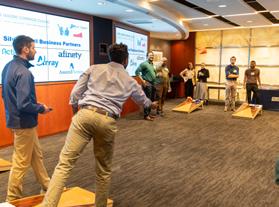
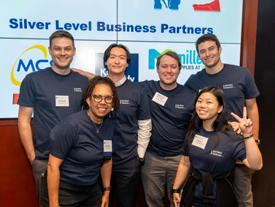
The Chapter hosted a fundraiser for the ALA Capital Chapter Foundation in November. Hosted by Alston & Bird, the Cornhole Classic was an opportunity for teams representing law firms and business partners to “thrown down” while supporting the Toni K. Allen Scholarship Fund. Many thanks to our event sponsors: Elias Law Group, GLJ/isolved, JMS Talent Acquisition LLC, Beacon Hill, Van Ness Feldman, Afinety, Aldebaran Group, and Kraft Kennedy.
Click here to see all of the photos from the Cornhole Classic.







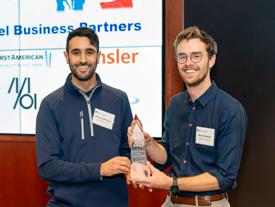
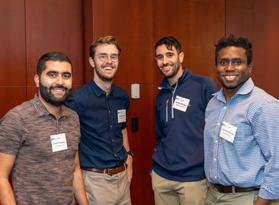

Our annual Holiday Soiree was held in the beautifully decorated Fairmont Hotel. Attendees had a blast with our 360-degree photobooth, danced to the DJ’s tunes, relished great food and drink, and enjoyed each others’ company. The holiday spirit was strong at this event!
Click here to see all of the photos from the Holiday Soiree.












We raised a glass to our fellow administrators and Business Partners at our annual Wine Tasting event in January. Held at Van Ness Feldman, the evening included a presentation by Brett Philpott-Freeman of Grape Intentions. Breet is a wine professional and culinarian with over 20 years experience, and is a member of the James Beard Foundation and the Court of Master Sommeliers. Attendees savored a variety of wines and curated pairings. Click here to see all of the photos from the Wine Tasting.













FEBRUARY
2/26 Education Session: Master Employee Onboarding with Thoughtful IT
MARCH
3/3 DEI Community Meeting
3/5 Legal Operations Community Meeting
3/10 HR Community Meeting
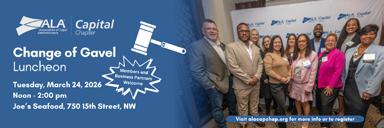
3/24 Change of Gavel Luncheon
APRIL
4/12 National Conference Capital Chapter Reception
4/12 - 15 ALA National Conference, Gaylord National Harbor SAVE THE DATE
7/15 Toni K Allen Scholarship Lunch

Pizzano Contractorspizzanocontractors.com W.B. Masonwbmason.com