









BY HEATHER ARIAS DE CORDOBA, EDITOR
BY HEATHER ARIAS DE CORDOBA, EDITOR
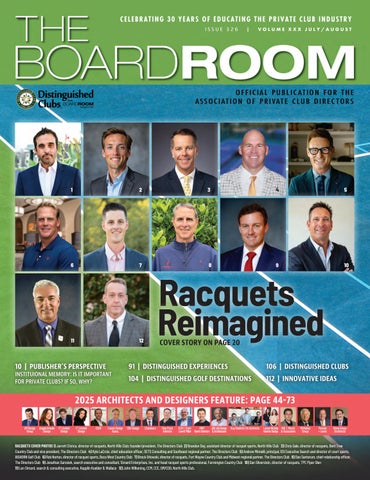
Racquet sports have moved beyond the courts. Once treated as a single amenity, racquets now influence how members connect, how families gather and how clubs think about staffing, facilities, capital investment and long-term value.
That is the purpose of Racquets Reimagined. This cover package is not about declaring a winner among tennis, pickleball, padel, squash or platform tennis. It is about understanding how these sports can work together—and what club leaders must do to turn unprecedented participation into lasting engagement.
To explore that question, we invited professionals working across club operations, consulting, executive search, coaching and industry leadership to share what they are seeing. Brock Orlowski and Dan Santorum take the pulse of the industry. Kyle LaCroix, Len Simard and Jonathan Sarosiek examine the shift from managing individual sports to building intentional racquets ecosystems aligned with the club’s broader strategy. Andrew Minnelli and Dan Silverstein look at the evolving director’s role and the importance of recruiting, developing and retaining the right people.
Chris Gale, Rob Norton and Brandon Day bring the conversation back to the member experience, exploring hospitality, belonging and junior programming as foundations for long-term connection. Jarrett Chirico considers the trust and credibility behind enduring leadership, while John Wilkening connects smart capital planning to the club’s ability to invest, adapt and thrive.
Together, these stories make one point clear: Racquets are no longer a side conversation. Decisions about leadership, programming, court allocation, facilities and funding reach well beyond the department. They shape culture, family engagement, staff performance, member satisfaction and the future relevance of the club.
The opportunity is enormous. But participation alone is not a strategy. The clubs that benefit most will be those that plan with purpose, invest wisely and recognize racquets for what they have become: one of the club’s most powerful engines of connection. BR

In today’s world, visibility is easy. Credibility is rare.
Everywhere you look, people are trying to become a brand. More followers. More posts. More exposure. More noise. Entire industries have become obsessed with recognition, believing that if enough people know your name, success automatically follows.
However, there is a difference between being a brand name and becoming a name brand. A brand name is recognized, while a name brand is respected. And in leadership, hospitality, racquets, private clubs and business, that distinction changes everything.
A brand name can be built quickly. A viral moment, a strong LinkedIn presence, a polished website or the right marketing can create visibility overnight. People may know who you are. They may see your posts. They may hear your name in conversations. But recognition alone does not create trust. A name brand is different. A name brand carries weight before the conversation even starts. It creates confidence before you are seen. It represents consistency, standards and credibility built over years, not weeks.
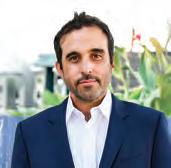
JARRETT CHIRICO
Jarrett Chirico, DCA, is director of racquets at North Hills Club a BoardRoomDistinguishedClubwith ELITE status in Raleigh, NC, president of The Directors Club and BoardRoom’sDave White Editorial Recipient for 2025. He can be reached via email: jarrettchirico@gmail.com
This is especially important in leadership roles. The strongest leaders are rarely the loudest people in the room. Often, they are the most dependable. They create environments where people have confidence in them, sense stability and trust them. Their reputation enters the room before they do.
When someone says, “Hire him,” “They are the best,” “They always deliver,” that is not branding alone. That is reputation. And reputation is the highest level of branding.
The challenge is that becoming a name brand takes patience. There are no shortcuts. It requires alignment between what you say and what you consistently deliver. It requires discipline when excitement fades. It requires showing up repeatedly, even when nobody immediately recognizes you for it.
Many people want the rewards of a respected reputation without enduring the process required to build one, and yet the process is the entire point. The most powerful names in any industry were not built in moments. They were built over years of consistency.
In the club industry, this matters more than most realize. Clubs are not simply buying programs. Members are not simply paying for lessons or events. They are investing in confidence. Confidence that leadership is strong, that standards are high and that the experience will consistently deliver value. That confidence does not come from marketing alone. It comes from reputation.
Anyone can market themselves into visibility. Few can lead themselves into trust.
The most respected directors, general managers and leaders in hospitality understand this deeply. They know long-term influence is built through consistency.
A brand name says, “People know me.” A name brand says, “People believe in me.”
Certain clubs, organizations and leaders continue to rise above the rest for a reason, regardless of trends or economic shifts. Their names have become synonymous with quality. When people hear those names, they already have expectations. They assume standards. They trust automatically.
Respect and trust are earned in the small moments nobody applauds and through consistency when no one is watching. Through leadership during difficult moments. Through professionalism under pressure. Through treating people well repeatedly over time. Through delivering experiences that match the promise attached to your name.
In today’s culture, many people focus entirely on appearing successful instead of becoming successful.
Visibility without substance eventually fades, while substance creates staying power.
In the racquets industry, the professionals and leaders who truly separate themselves are not the ones with the biggest social following or the loudest marketing. They are the people who are trusted implicitly. They are the leaders who elevate culture, mentor, change lives, build community and create experiences people remember.
Their names become associated with excellence because excellence became their standard long before it became their reputation.
A strong reputation also changes the way opportunities come to you. When you are merely a brand name, you constantly chase attention. When you become a name brand, opportunities begin chasing you.
People refer you without hesitation. Partnerships become easier. Trust develops faster. Your standards become part of your identity.
That is where real influence exists. Not in being seen everywhere. But in being respected anywhere.
The strongest organizations in the world understand this principle. The best clubs, luxury hospitality brands and enduring companies do not simply focus on awareness. They focus on trust, consistency and experience. They understand that the true value of a name is not how often people hear it, but what people feel when they do.
Because a name is not a logo, a tagline or a LinkedIn account.
A name is a promise. And over time, every leader, every organization and every brand decides what that promise means.
The goal should never be to become known. The goal is to become trusted. Anyone can become a brand name. Very few become a name brand. And that difference is what separates temporary attention from lasting legacy. BR

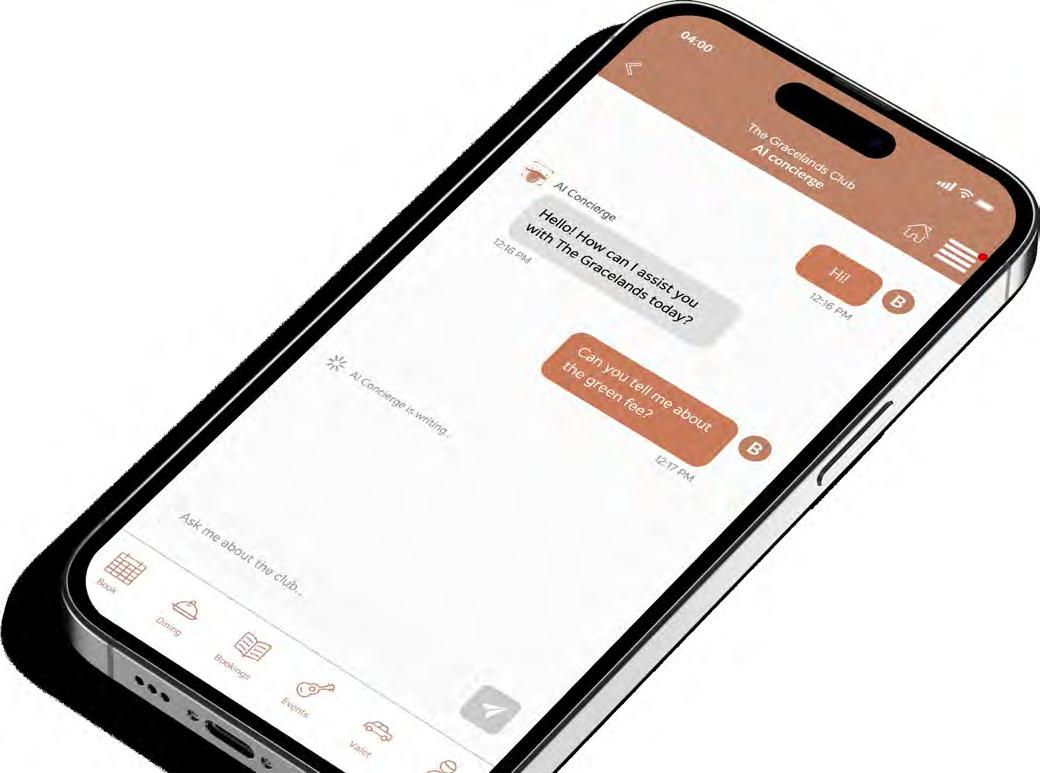
A conversational concierge grounded in your club’s approved content. Biometric login, digital member card, and phone-as-key entry, all from one premium mobile app.
ClubHouse Online™ Premium Mobile App

Instant answers from approved club content
Biometric login digital member card
Phone-as-key access for gates, lockers, and amenities

DAN SILVERSTEIN
Dan Silverstein is director of racquets at TPC Piper Glen in Charlotte, NC, where he oversees racquet sports programming, staff development and member engagement. Before transitioning to private clubs, he served as a Division I head tennis coach at UNC Asheville, West Virginia University, and South Alabama University. Drawing on his coaching background, Silverstein focuses on building strong team cultures, developing staff and creating racquets programs that elevate the member experience. RACQUETS REIMAGINED
In college tennis, winning seasons often begin long before the first match is played. Building a strong team depends on recruiting the right players months or even years in advance.
This process involves scouting talent, having conversations about whether a player is a good fit for the team and occasionally benefiting from a bit of luck.
As I’ve learned over time, the same principles that apply to building a strong tennis team also apply to building a great staff for racquet sports. It’s not just about finding someone who can teach a good forehand, but someone who fits the team’s culture and dynamics… someone who adds to the positive energy of the team, not drains it.
The best programs operate seamlessly even when the director isn’t present. They are built by leaders who approach hiring with the same care they once used to recruit players.
This process is never rushed or taken lightly. It’s deliberate and sometimes exhausting, but that’s what makes it effective. When directors treat hiring as intentional, they end up with a staff that functions as a cohesive unit, not just individuals sharing a schedule.
In college tennis, it’s not just about being a great player. Coaches want team members who fit with the group and are willing to put in the effort and stay positive during a difficult season. They need players who won’t fall apart when a match gets intense or the team doesn’t win.
The same principle applies when hiring staff. A leader wants people who raise the bar and make a positive impact on the organization’s culture.
If a director rushes the hiring process, things can go wrong. There is always pressure to fill a gap quickly after someone quits. But that’s how you end up with someone who ultimately proves to be a poor cultural fit.
Hiring isn’t just about qualifications on paper or years of experience. It’s like signing a player with great stats who can’t connect with the team. Skills matter, but attitude and fit matter just as much.
When the team is aligned with the culture, other skills can be taught. But if the culture is off, even talented and experienced people can create challenges.
Players who listen, adapt and take ownership of their progress end up winning. Coachability matters more than raw talent.
The same principle applies when hiring staff. A curious professional open to feedback and willing to grow will outperform someone with a wall of certificates but no flexibility. Good leaders develop new leaders, and that only happens when the people they hire are willing to learn.
Helping staff improve is just as important as helping players improve.
Staff development matters just as much as hiring. Directors who provide regular feedback, regular check-ins and clear goals create teams that improve over time. When clubs invest in staff growth, they often see stronger retention and a deeper sense of loyalty.
Accountability also plays a role. Being accountable isn’t about punishment—it’s about clarity. In college sports, players know what’s expected of them.
They prepare, compete and take responsibility for their effort. In some clubs, leaders avoid accountability to not rock the boat, but that kind of “peace” is often temporary.
When expectations are unclear, frustration builds quietly until it surfaces later. The best leaders set standards early, reinforce them consistently and address problems directly. That balance between firmness and fairness builds trust and stability.
When the right staff is in place, members notice it immediately. Programs run smoothly, lessons feel more consistent and the culture of the racquets department becomes something people want to be part of.
Directors who approach hiring the way college coaches approach recruiting often see stronger long-term results. Taking time to evaluate cultural fit, investing in staff development and setting clear expectations creates a more stable team environment.
When staff members grow together and understand the program standards, the department becomes stronger. Ultimately, that consistency is something members feel every day. BR
ROB NORTON
Rob Norton is director of racquet sports at Boca West Country Club, a BoardRoomDistinguishedClubwith ELITE status in Boca Raton, Florida. He oversees one of the nation’s largest private club tennis and pickleball operations, including 24 tennis courts, 25 pickleball courts and year-round instructional, competitive and social programming.

Private clubs today generally don’t struggle to attract members to racquet sports. Tennis remains strong, pickleball continues to grow, and clubs are investing heavily in facilities and programming. The greater challenge is helping members feel welcome and connected once they arrive.
As participation grows, established groups can unintentionally become cliques, making it difficult for new members, seasonal residents or returning players to find their place. At Boca West Country Club, a BoardRoom Distinguished Club with ELITE status, member integration is a primary focus because long-term engagement is driven more by relationships than by the sport itself.
One of our most effective tennis programs is Game Arranging, where professional staff create matches for members three times per week. Members are introduced to new playing partners, creating opportunities for friendships, new groups and stronger club-wide connections.
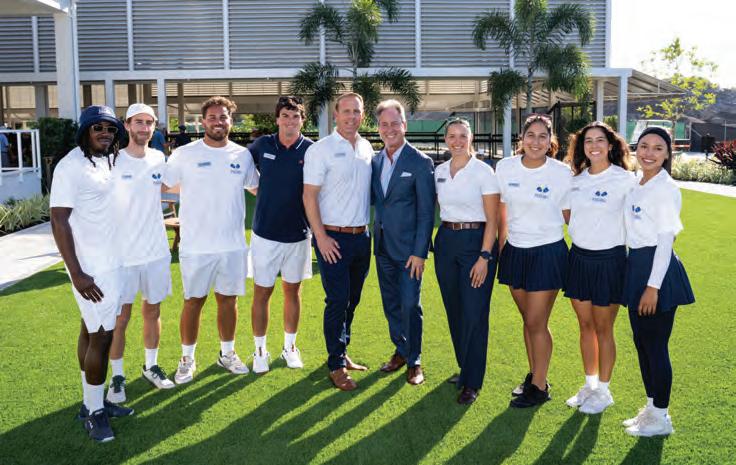
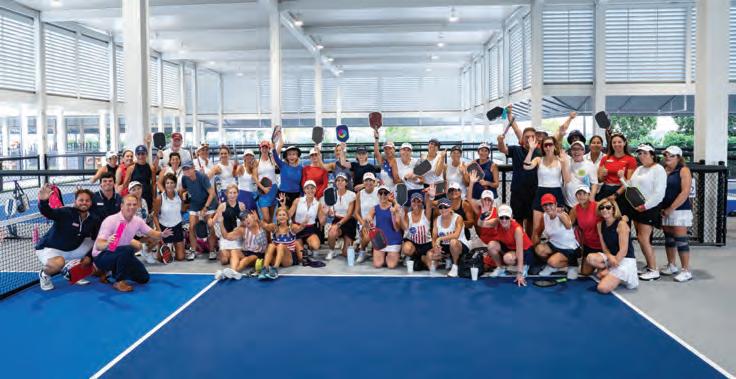
In pickleball, we apply similar principles through structured Open Play. Court monitors and ambassadors help manage rotations, facilitate introductions, answer questions and ensure players of all levels feel included. This approach creates competitive play while maintaining a welcoming environment.
We also help newer players transition from instruction to actual competition through our Pickleball Organized Play, or POP, program. Held twice weekly, POP provides developing players with a comfortable setting to build skills, gain confidence and form relationships with fellow members. Many participants use POP as a bridge to regular Open Play.
Instructional Programming also plays a major role in fostering engagement. We offer clinics for every level, from members picking up a racquet for the first time to advanced players looking to refine specific skills. While instruction improves technique, the greater benefit often is the relationships built within those groups.
Members learn together, encourage one another and frequently transition from clinic participants to regular playing partners. Clinics create a comfortable environment where newer players can develop confidence as they become part of the broader club community.
All of these programs share a common goal: removing barriers and creating opportunities for members to connect. While members may initially join because of the sport, they remain engaged because of the relationships they build. Ultimately, successful programming is not measured by court use alone. It is measured by how effectively those courts bring people together. BR
1) Boca West Country Club Staff L-R: Tobi Orebanwo, Alex Olivier, Bryan Triana, Matt McInerney, Rob Norton Director of Racquet Sports, Matthew Linderman President, COO & General Manager, Maria Tato, Melissa Lino, Alejandra Martinez, Juliana Barahona
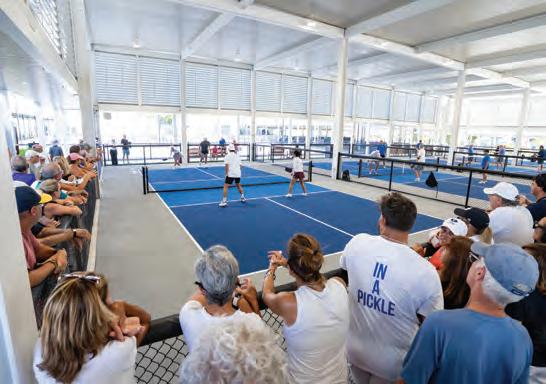
2) Boca West Country Club Pickleball players

Over the years, we’ve sat in boardrooms, racquets offices, locker rooms and clubhouses at more than a hundred private clubs.
And no matter the size, location or mix of racquet sports, we hear the same thing again and again: “We knew racquets mattered. We just didn’t realize how much was tied to it until we stepped back and looked at it this way.”
The moment when leadership sees racquet sports not as courts and calendars but as one of the most powerful engines of engagement, culture and value in the club is what makes this work so meaningful.
Because in today’s club, racquet sports are no longer just an amenity. They are where much of the life of the club happens.
They’re where members start their mornings, where families spend time together and where friendships form that keep people connected to the club for decades. Whether it’s tennis, pickleball, platform tennis, padel or squash, racquet sports bring more members together more often than almost anything else the club offers.
Despite all of that, clubs still manage racquets in pieces—court by court, season by season, issue by issue—without stepping back to look at how the whole operation fits together.
And that’s where clubs get stuck.
Most racquets programs are busy. Courts are full. Programs are running. Staff are working hard. But being busy isn’t the same as being purposely well-designed. When clubs pause and look at how leadership, staffing, finances, facilities, technology, teams and programming connect, things start to change.
One private club general manager recently told us, “For the first time, we weren’t just fixing problems. We finally had a roadmap.”
That shift from reacting to planning is where momentum starts.
When clubs take a broader look at their racquet operations, they almost always uncover things they hadn’t seen before:
• Governance structures that blur accountability
• Directors stretched thin instead of leading
• Teams and leagues that could be better balanced and more inclusive
• Court schedules built on history instead of current demand
• Compensation and pricing that no longer reflect the market
• Technology that isn’t being fully used
• Courts that are wearing out faster than anyone realized.
None of this means the program is failing. It simply means it’s grown faster than its structure can support.
And when that structure gets realigned using industry-proven best practices, everything starts to work better.
Directors of racquets, assistants and support staff live in the middle of all this every day. When the system around them improves and becomes clearer, they do their jobs better.
We’ve watched teams go from stretched and reactive to confident and organized. We’ve seen directors get their time back. We’ve watched members go from frustrated to energized. And we’ve seen clubs that were constantly putting out fires start planning three, five, even 10 years. That’s what a roadmap does. It doesn’t just fix today. It gives everyone a place to aim for.
Racquet sports are no longer a side story in private clubs. They are shaping what the modern club is becoming.
They are where energy shows up first, where members cross paths and where culture lives day to day. Clubs that approach racquets with intention, alignment and proven best practices feel the difference quickly.
Programs become clearer, leadership becomes stronger and members become more connected.
Instead of chasing trends, those clubs start setting them.
That’s when racquet sports stop being just busy and start becoming something the whole club is built around. BR
Len Simard is a search executive and consultant with Kopplin Kuebler & Wallace and one of the most experienced racquet-sports leaders in the private-club industry. A PTR and RSPA Master Professional, Len has directed and advised racquets programs at premier clubs across North America for more than four decades and has worked with hundreds of club leaders across more than 100 private-club engagements. len@kkandw.com
Jonathan Sarosiek is an executive search & consulting partner with Simard Enterprises, Inc., an Affiliate of Kopplin Kuebler & Wallace, and currently serves as head racquet sports professional at Farmington Country Club. An RSPA Elite Professional and PTR Professional with certifications across tennis, pickleball, and platform tennis, Jonathan has consulted with dozens of clubs on racquets operations, team organization, technology adoption, financial alignment, and long-term program strategy. jon@simardenterprises.com



RACQUETS REIMAGINED MULTI-RACQUET
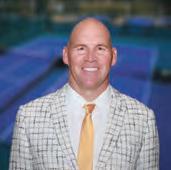
KYLE LACROIX
Kyle LaCroix, CEO of SETS, advises and mentors racquet sports professionals, clubs and sports organizations on leadership, talent development, and building high-performing racquet sports ecosystems. He can be reach via email: kyle@getsets.org
For years, private clubs have debated the future of racquet sports. First, the question was how to grow tennis participation. Then came pickleball, and clubs found themselves debating court conversions, noise concerns and shifting member demand.
Today, padel has entered the conversation, creating even more excitement, investment opportunities and strategic decisions. Some clubs offer platform (paddle) and squash. Perhaps on the horizon are typti, touch tennis and skyball. Don’t know these yet? You probably should.
Many clubs approach these sports as competitors and complications rather than complements and cohesion:
• Tennis versus pickleball
• Pickleball versus padel
• Existing members versus prospective members
• Traditionalists versus innovators.
These debates often lead clubs down the wrong path because they focus on the sports themselves rather than the reason members participate in the first place.
The most successful clubs of the next decade will not win because they chose the right sport. They will win because they build the right ecosystem. Members do not wake up in the morning thinking about court surfaces. They wake up seeking connection, competition, fitness, improvement, friendship and belonging.
The array of racquet sports delivers those outcomes. When club leaders begin viewing racquet sports through that lens, everything changes. The conversation shifts from “Which sport should win?” to “How do all three sports create more value together?”
That is the essence of a modern multi-racquet strategy. The clubs seeing the greatest success are no longer managing separate tennis, pickleball and padel programs. They are creating interconnected racquet ecosystems that encourage participation across multiple sports and multiple stages of a member’s journey.
A member may begin with pickleball because of its accessibility and social nature. Over time, the member may become interested in tennis clinics, padel leagues, social mixers, instructional programs or competitive events.
Rather than competing for participants, the sports begin feeding one another. Participation expands, engagement deepens, retention improves and community strengthens.
This ecosystem mindset also creates clarity around one of the industry’s biggest challenges: staffing.
Across North America, clubs continue to struggle to recruit and retain high-quality racquet professionals. Yet many organizations still hire and develop staff through a single-sport lens. The future demands a different approach. Tomorrow’s racquet leaders must be capable of creating exceptional member experiences regardless of the court they are on.
The most valuable professionals are no longer simply tennis coaches, pickleball instructors or padel specialists. They are leaders who understand programming, culture, member engagement, staff development, communication and business operations.
Sure, they may be pickleball experts, and that’s their domain, but they must be adept at building communities, not just teach lessons. As clubs continue to invest significant capital in their racquet facilities, it is equally important that they invest in the people who are bringing those facilities to life. Facilities create opportunities. People create value.
Perhaps the biggest shift facing private clubs is one of identity. Many organizations continue to define themselves by a particular sport. While each sport brings unique strengths, the most successful clubs are moving beyond sport-based identities. Instead, they are becoming “member experience organizations.”
Their focus is not on protecting a specific activity. Their focus is on creating exceptional experiences that strengthen relationships, increase participation and enhance the value of membership.
When that identity shift occurs, strategic decisions become easier, court allocation becomes more objective, capital investments become more purposeful, programming becomes more collaborative and staff development becomes more intentional. The conversation moves away from defending traditions and toward creating opportunities.
The future of racquet sports is not tennis. It is not pickleball. It is not padel or any other sport, for that matter. The future belongs to clubs that understand how racquet sports can work together to create something greater than any one sport can achieve on its own.
The clubs that embrace this ecosystem mindset will not simply increase court use or grow program revenue. They will strengthen culture, deepen member relationships and redefine what racquet sports can mean within the private club experience. In a rapidly evolving landscape, that may prove to be the most valuable strategy of all. BR
JOHN WILKENING
John Wilkening, CCM, CCE, is the GM/COO at North Hills Club, a BoardRoomDistinguishedClubwith ELITE status in Raleigh, NC. He can be reached at (919) 787-3655 or via email: jwilkening@northillsclub.com

We’ve all heard the great people at Club Benchmarking say that the true financial engine of a private club isn’t a single month’s profit and loss but the steady growth of net assets over time.
Short-term operating results are useful snapshots of how members are using a facility right now, but the balance sheet is where you see whether the place will be vibrant and viable for decades to come. Once you accept that, your approach to facilities and spending changes.
Picture a club that took that advice seriously and decided to lead rather than follow. Leadership meant investing in the property and the member experience before pressure from member demand forced leadership’s hand.
The club didn’t chase every fad; instead, it prioritized smart, visible improvements that met both current member needs and anticipated future trends. That seed of intention kicked off a chain reaction that transformed the club.
At first, the upgrades made the club feel fresh. Members who had drifted away started to show up again, curious and pleasantly surprised. When people came back, the common areas and dining rooms filled up more often.
That uptick in traffic translated into more consistent work for employees and better wages for service staff. Suddenly, shifts felt meaningful and pay improved, and that matters more than most leaders expect. When compensation and opportunity improved, the club began attracting more experienced applicants. A stronger candidate pool means hiring people with real expertise and a commitment to hospitality.
Better employees delivered higher-quality service and a more polished product. That heightened experience kept members coming, and as use rose, the club had both the justification and the revenue base to reinvest in even bigger projects.
Growth forced some tough choices. The leadership repurposed underused areas, added back-of-house capacity and increased member spaces so the operation could support higher use. These were not cosmetic moves; they were strategic investments in capacity and sustainability. Each project was planned with the member experience in mind, and each made the property more attractive and functional.
Because management treated capital work as an investment rather than an expense to minimize, they also put systems in place to fund future projects responsibly.
They adopted a long-range facility plan, prioritized projects based on their impact and established funding mechanisms so improvements did not destabilize operations. Having a predictable capital plan meant they could execute larger, more transformative projects without panic or surprise.
As the club continued to invest, momentum built. Word of mouth improved; people started talking about the club as a place that cared about quality and longevity.
Interest from prospective members rose, which in turn supported stronger initiation values and steadier revenue streams. That healthy cycle was an investment leading to increased use, better staffing and service, and further investment, which became the organization’s engine for sustainable growth.
The takeaway is straightforward: capital investment and facility planning aren’t optional niceties. They’re strategic tools that shape member behavior, staff quality, operational capacity and long-term financial health. Build for today’s members while designing for the next generation, fund projects sensibly and be willing to repurpose or expand spaces when use demands it.
Do that, and you’ll find the balance sheet begins to tell a story of resilience, demand and the ability to keep delivering great experiences for years to come. BR

CHRIS GALE
Chris Gale is director of racquets at Bent Tree Country Club, a BoardRoom DistinguishedClubwith ELITE status in Dallas, Texas, one of the nation’s premier member-owned private clubs. With more than 30 years of leadership experience in the private club industry, he has built a reputation for driving growth, innovation, and operational excellence in racquets programs. A sought-after industry expert, Chris is a frequent keynote speaker at national and international hospitality and club management conferences. He can be reached via email: christopher@benttreecc.org
I am frequently asked about member expectations and how to meet them. My first response is always the same: We should never aim simply to meet member expectations—we should strive to exceed them every day.
When I consider the foundation of member expectations, I always return to one word: experience. We are in the business of creating exceptional experiences for our members.
When we consistently deliver outstanding experiences, we achieve our goals. But when does that experience begin? Is it when a member walks onto the tennis court or enters the pro shop?
I believe the experience begins the moment a member drives through the club entrance. The small details matter: beautiful landscaping, vibrant flowers, a clean parking lot, properly stored teaching equipment, neat and organized courts, chairs and tables.
These details set the tone for what lies ahead and reinforce a member’s decision to spend valuable leisure time with your club and your team of professionals.
Ultimately, your team creates the member experience. This makes it essential for team members to embrace a shared commitment to exceeding expectations. For that to happen, the team must have a strong culture, positive chemistry and a genuine sense of cohesion.
This begins with a mission statement created by the entire team— not just the leader.
Our mission statement is simple: “To exceed the experience and expectations of our racquets-playing members on a daily basis.” It is concise and straightforward, but because it was created collectively, every team member owns it. That ownership immediately creates a vested interest in achieving the mission.
Your team delivers excellence to members every day. Therefore, establishing clear standards and expectations for every staff member is paramount. Not only does this create accountability, but it also fosters a group of professionals working together toward a common goal: exceeding member expectations.
There is tremendous satisfaction in watching a team take pride in this objective—not in an environment where individuals try to outshine one another, but where everyone succeeds together and raises the standard of excellence.
It is important to recognize that no two clubs are alike. Member expectations vary significantly from one club to another, making it essential to understand your club’s unique culture and membership. What worked successfully at one club may not necessarily succeed at another.
To truly exceed expectations, we must first understand what those expectations are.
Is the membership informal and on a first-name basis, or do members prefer to be addressed as Mr. and Mrs.? Are dress codes strictly enforced? Is the club highly competitive or primarily social? These factors can differ greatly.
However, there are also universal elements of hospitality that members appreciate regardless of the club environment.
A warm greeting from the first employee a member encounters— and from every employee who crosses the member’s path—creates an immediate sense of belonging.
Professionals should communicate court assignments before a lesson or match rather than appearing distracted or buried in their phones. They should be on court before members arrive, standing and ready to welcome them.
They should send a follow-up email or message summarizing the session and expressing their appreciation for working with the member. These are simple yet powerful demonstrations of hospitality.
After all, we are in the hospitality industry, not the service industry—and there is a significant difference. Service is received; hospitality is felt.
Membership demographics and expectations evolve. Staying ahead of those changes is critical. One effective way to anticipate shifts in expectations is through a demographic analysis of your membership.
Clubs frequently experience demographic turnover, and with that comes a new set of preferences, priorities and expectations.
To remain relevant and successful, clubs must be dynamic and adaptable. The goal should never be merely “industry standard.” Instead, we should aspire to be industry-leading. That mindset is what separates truly great programs and club cultures from merely good ones.
The concept is simple: aim to be great, not good; aim to be industry-leading, not industry standard. When excellence becomes the expectation, exceeding member expectations becomes part of the culture. BR
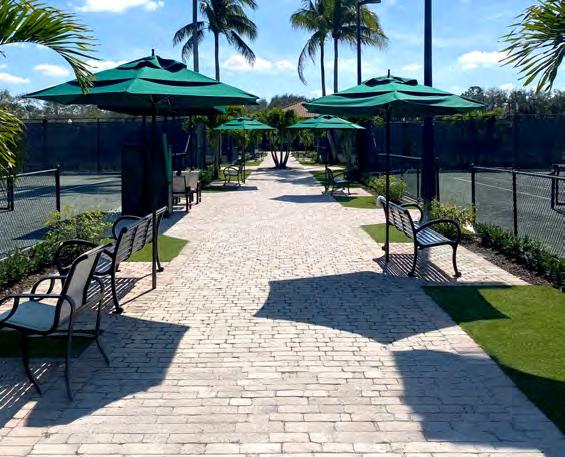
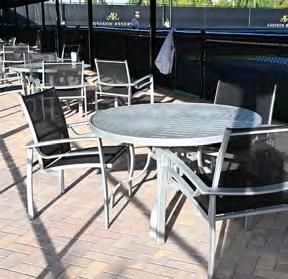




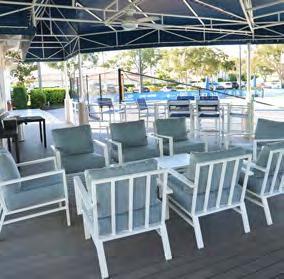

Xhibtz Contract Furnishings is elevating outdoor spaces at The Country Club at Mirasol, Addison Reserve and Grand Harbor Golf Beach Club
At Mirasol, the tennis area features sleek, hidden inground umbrella mounts paired with USA-made Fiberlite umbrellas for seamless shade and sophistication. At Addison Reserve, the pickleball courts are surrounded by durable, stylish, and comfortable outdoor furnishings, perfect for relaxing between matches or enjoying the game from the sidelines.
Let Xhibtz elevate your club’s outdoor spaces with premium, American-made solutions.
WE HAVE A FULL RANGE OF PRODUCTS TO SATISFY ALL YOUR NEEDS







RACQUETS REIMAGINED ENGAGEMENT

Brandon Day is assistant director of racquet sports at North Hills Club a BoardRoomDistinguishedClubwith ELITE status in Raleigh, NC. He can be reached via email: bday@northhillsclub.com
Racquet sports have changed immensely, evolving from a forgotten club amenity into the heartbeat of many successful clubs. If we take a deeper look at some of the most prominent racquets programs in the country, one common force always stands out: junior programming.
Too many clubs still view junior programming as a seasonal afterthought, a place for kids to go while their parents enjoy other parts of the club. Programs become limited to a small series of clinics and camps designed simply to keep courts busy during off hours.
Great junior programming accomplishes two simple but critical goals: get kids on the court and keep them there.
In today’s world, kids are balancing multiple sports, music lessons, tutoring, and increasingly busy schedules. Because of this, accessibility is more important than ever. Parents rarely search endlessly for programming options; they often choose the path of least resistance. Offerings must be consistent, registration must be simple and opportunities must be plentiful.
The most effective clubs make junior opportunities highly visible and easy to access. They lower the barrier to entry through beginner clinics, after-school programs, family events and competitive play opportunities.
Clubs should be encouraged to program events that will introduce kids to the staff. Adding offerings such as color wars, carnivals and Nerf wars will help you grow your imprint among club members who would otherwise not visit your courts. Although the idea may seem unrealistic, we have added 20 percent of those kids to our weekly junior programming this year.
Creating a successful junior program includes more than tennis. Clubs must look beyond the tennis courts to fully support their junior athletes. The reality is simple. If juniors are not getting programming from your club, they are getting it somewhere else.
Modern programs should encourage multisport racquet players. Pickleball allows younger players to get on the court sooner, develop hand-eye coordination and sustain rallies more quickly than tennis often allows in the early stages. Padel especially appeals to teenagers because of its fast-paced action, social atmosphere and growing presence across social media.
While the goal is always to grow the number of players within the program, it is equally important to increase overall club engagement from the juniors already participating. The more opportunities kids
have to connect with different racquet sports, social events and club activities, the more invested they become in the overall club experience.
Getting players onto the court is the easy part. Retaining them is the real challenge.
As juniors grow older, programming must evolve alongside them. Clubs need to provide play days, Junior Team Tennis, social events and age-appropriate competition. Learning racquet sports may initially bring kids to the courts, but community, friendships and connections with peers and professional staff keep them engaged.
In many ways, junior programming is no longer simply about creating great racquet sports players. It is about creating experiences that encourage entire families to spend time at the club, build lifelong memories and develop meaningful connections within the club community.
Junior racquets programs are often viewed in isolation, as though they only impact the racquets department. But when we widen the scope, we begin to see the true impact of a robust junior program. When done correctly, strong junior programming drives increased family engagement, strengthens food and beverage revenue, creates new event opportunities, and ultimately builds a stronger club culture overall.
While the primary goal is to create an ecosystem for junior racquets, the secondary effects are just as significant.
Junior racquets create a desire in parents to pick up a racquet or paddle to share an interest with their child. They do this through lessons, clinics and team participation. This creates not only a pipeline of junior players but also growth in adult participation, helping round out the entire racquets program.
Families who play at the club also stay there. They attend birthday parties and participate in special events. They often spend additional nights dining at the club. Junior racquets can create more touchpoints for the club than any other amenity or program, and it is time clubs begin treating it that way. BR
ANDREW MINNELLI
Andrew Minnelli is principal at GSI Executive Search and director of court sports at BIGHORN Golf Club, a Platinum Club of the World. Through his work in executive search and private club operations, he advises boards, club presidents and general managers on racquets leadership and organizational decisions that influence member experience, departmental culture and long-term club success. He can be reached at andrew@gsiexecutivesearch.com or (310) 740-4488.

RACQUETS REIMAGINED EVOLVING ROLES
Leading racquet operations at an exclusive private club while conducting executive searches for clubs across the country has provided me with a front-row seat to the evolving role of the director of racquets.
From both experiences, one observation continues to surface: The responsibilities associated with the position have evolved faster than the way many clubs define it.
As racquet sports have expanded, clubs have invested significant capital into facilities, staffing, programming and member experiences. Departments that once operated on a relatively modest scale now oversee larger teams, more sophisticated operations and a broader range of responsibilities, while playing an increasingly important role in the overall club experience. Yet many hiring discussions still reflect an earlier version of the profession. Instructional ability and playing background remain valuable, and technical credibility continues to create trust with members and staff.
Today’s racquets director may be responsible for multiple sports, significant operating budgets, professional staff development, capital projects and cross-department collaboration. In many clubs, the position has evolved into one of the more visible leadership roles, with responsibilities that extend well beyond programming and instruction.
Technical credibility remains important, but it now represents only one component of a much larger leadership profile. The qualities that sustain long-term success are often different from the qualities that first earn attention. The strongest leaders build teams, create accountability, communicate consistently with members and colleagues, and work effectively across the organization while staying connected to the club’s broader objectives.
For many members, the racquets department serves as one of their primary connections to the club. Families build relationships through junior programming, and new members often establish their earliest social connections through racquet sports. Daily interactions between professionals and members help shape perceptions of service, culture and community. That influence extends well beyond participation numbers and helps explain why leadership within the department carries broader organizational significance.
Members rarely experience a racquet department the way leaders do. They do not see staffing plans, budget discussions, scheduling challenges or operational decisions; they experience whether the department feels welcoming, whether communication is proactive, whether programs are organized and whether the overall experience consistently reflects the standards of the club.
The most effective leaders are rarely focused only on managing today’s schedule. They are developing future leaders, establishing standards and creating environments where excellence can be sustained long after a single season, program or initiative.
As clubs continue to expand their racquet offerings, complexity follows. More courts create additional scheduling demands, and a larger staff requires stronger leadership. Increased participation raises expectations around communication, consistency and service. The operational challenges may change from club to club, but the need for leadership capable of navigating that complexity remains remarkably consistent.
Candidates should be evaluated based on what the role has become, not what it once was. Racquet sports remain one of the most dynamic areas of private club life. Participation continues to grow, facilities continue to expand and opportunities to create meaningful member engagement continue to increase. As departments grow and become more integrated into the broader club experience, the leadership demands associated with the role will continue to evolve.
While the title may still be director of racquets, the responsibilities increasingly resemble those of a senior club executive. The way a club evaluates the role often determines whether it hires a strong instructor, a capable operator or a longterm leader. BR
THE DIFFERENCE BETWEEN A GOOD CLUB AND A GREAT CLUB IS LEADERSHIP.
“Developing the People Who Develop the Industry.”
Good clubs invest in their facilities. Great clubs invest in their people.
SETS helps clubs develop stronger leaders, more effective teams, exceptional member experiences, and sustainable growth through consulting, education, mentorship, and professional development. Because better leaders create better cultures. Better cultures create better clubs.







BROCK ORLOWSKI
Brock Orlowski, MBA, CRSE, CDORS, RSPA Elite, PPR, RPO, LSA, Padel MBA, SETS, DCA, is director of racquets at Fort Wayne Country Club. He can be reached via email: brockorlowski@ftwaynecc.org RACQUETS REIMAGINED
How can we anticipate the trajectory of something that is continually evolving? How can we describe something that never stops adapting? This is the challenge of defining the pulse of the racquet sports industry.
Racquets have become a catalyst for club growth through engaging members in new ways. It’s no longer about only having tennis classes and tournaments. It’s now become grand events with lavish food and beverage displays and live bands or a DJ.
As tennis boasts the moniker “world’s healthiest sport,” and highly social sports like pickleball and padel become stalwarts at clubs, racquet sports programs are becoming multi-faceted hubs for social gatherings, fitness, corporate events and family celebrations.
What was once a singular focus was recalibrated to be allinclusive. It’s about building racquets ecosystems that garner opportunities for members to engage with each other.
The question becomes: If evolution is constant, then how do we wrap our minds around racquets and capitalize on the momentum?
To answer that question, we need to look at who does it well. What racquets departments are flourishing and ahead of the curve? There are common traits that lead to success, and we need to learn from these examples to adapt our departments accordingly.
Three pillars to every good racquets department recur time and again when looking at clubs that operate at a high level:
• Dynamic leadership
• Facility excellence
• Member engagement.
For a club to find success and capitalize on the boom of racquets, it requires a visionary leader at the helm. Directors of racquets are everywhere, but those who make significant impact and shift paradigms are rare. It takes supreme levels of organization and boldness to lead a department when the landscape is shifting so rapidly. A department cannot rise above the rest by living in the status quo or allowing stasis to define it.
The best leaders in the industry also take time to learn. They attend conferences, workshops, retreats, and are constantly seeking to stay ahead. Leaders want to learn and get better, and clubs should make continuing education a high priority because it will lead to immediate payoff for members.
It takes dynamic leadership from the GM/COO chair to help lead these departments, too. Finding ways to bring the best to their clubs and negotiating contracts that allow for stability and room for growth. Directors of racquets often go to clubs or leave clubs based on the GM.
The redefining of the racquets industry can also be seen in the facilities that clubs build.
The days of a single bay of tennis courts with a shaded pavilion are long gone. Now it’s about finding ways to keep members at the facility all day. Adding court-side dining and bars, social gathering areas in the shade in the summer or by a fire in the winter. Making facilities a one-stop shop where members have everything they need at their fingertips.
A tennis lesson or squash practice may be why a member came to the club, but they will stay for the ancillary experience. A chance to turn a one-hour visit into a four- or five-hour experience is what clubs aim for in their facility builds. The best clubs and best racquets departments make their facilities a priority.
The cornerstone of judging success in the club world is member engagement. As you zoom in on racquets specifically, you will see member engagement taken to new levels.
The creativity and imagination of racquets teams is second to none. Racquets teams turn rain delays into card- and board-game tournaments. They use golf course practice greens for lawn tennis events. Engaging members is what good racquets pros do best.
The evolution of racquets events and programming is a tell-tale sign of a good department. Thinking outside the box and pushing the boundaries of what’s possible should be the aim of the racquets department in its pursuit to engage as many members as possible in a meaningful way.
The racquets industry is redefining what people think can be done, evolving into something better than before, growing into something bigger than we previously imagined and connecting with people more intentionally. BR
“Paul, we greatly appreciate your help throughout the search. These searches are quite the process and I am very glad we made the decision to bring you and KK&W in. In addition, I am even more glad you convinced me and the Board to hire an Interim General Manager! He has been invaluable over the last few months and not only has provided solid leadership but has also developed some good materials, processes, and procedures that our new General Manager will appreciate as she steps into the role.”
Robert O’Neal, Search Chairman Tulsa Country Club, Tulsa, OK































This past year, racquets continued the recent trend of playing a more important role in the overall health and well-being of member clubs as the industry experienced sustained growth, more relevance and, surprisingly, several leadership changes.
• The USTA has entered the tennis education and certification business. This is a huge addition and a positive for tennis. The wellfunded USTA has already invested substantial dollars to improve coach education. USTA Coaching, which started last summer, will also force RSPA and PTR to improve their offerings. USTA Coaching has the potential to enhance and revolutionize tennis coaching in the United States. The result is a massive bonus for clubs. They will have a more skilled and more robust workforce to choose from to provide a quality experience for members.
• After decades of growth and stable leadership, the USTA, PTR and RSPA have new CEOs for the first time. Former Australian Open CEO Craig Tiley will take the helm of the USTA in July. Look for Tiley to act quickly on innovative changes and be disruptive to get the USTA moving forward. This will have a positive effect on the club industry.
WHERE ARE WE NOW
• The “bull market” in racquets continues. Participation in tennis (27.3 million) and pickleball (24.3 million) are at all-time highs, and the same can be said for padel and platform tennis.
• The upgrade and reimagination of club racquets facilities continue in what is typically a very tight footprint. We see some creative designs that functionally fit the various courts to meet the ever-increasing needs in racquets.
LOOKING AHEAD
• GMs and boards realize, or are starting to realize, the increased participation in racquets in the past few years. This has led to racquets playing a more important and impactful role in private clubs. The bull market in racquets is expected to continue in 2026-27. With this being the case, current items must be reviewed and adjusted:
• Club websites
• Racquets/tennis are gaining their own identity. Increasingly, racquets have their own category instead of appearing under “amenities.”
• Racquets “drop-downs” added/revised to include tennis, pickleball and possibly platform tennis, padel and squash.
• Content for each racquets category to be updated. For example, remove outdated designations (several tennis coaching descriptions still include USPTA, which is now RSPA). Update photos for relevancy and better quality.
• Club voicemail messages
• Because of the increase in racquets popularity, the trend is to move racquets up in the pecking order. Racquets members no longer must wait to hear “press seven, eight or nine” to speak with a racquets/tennis staff member.
DAN SANTORUM
Dan Santorum is a 40-year CEO in the racquets industry and is a consultant for The Directors Club as well as other racquets entities. He can be reached at santorum@ roadrunner.com
• Budgets increased to invest in your racquets directors and their staff who take care of your members
• Certification and education options:
• Tennis: USTA Coaching, PTR, RSPA
• Pickleball: PPR, RSPA, RPO
• Platform tennis: RSPA, PPTR
• Padel: RSPA, PCR
• Professional and leadership development: DCA, KKW, CRSE, DORS, SETS
• The Director’s Club (DCA) Retreat, a “must-attend” for your racquets director
• Staff is evolving with most directors and instructors educated and certified to teach multiple racquet sports. This added flexibility is a big boost for clubs.
• With more qualified and versatile staff, programming and play is increasing. So is compensation. This is a win-win for the club, club members and racquets staff.
• Participation will increase, but the percentage increase will decrease. Pickleball is set to pass tennis in participation either this year or next.
• With participation growing, it is not too late for clubs to consider adding courts or restructuring the current court offerings. Padel is the trendy choice to make additions to the club. Important: Design for a future increase in courts or at least consider allocating space for future growth.
• Another trend is adding sun-protection coverings to courts, especially pickleball.
More club members are participating in racquet sports. Once considered an “amenity,” racquets now provides more options, participation and a positive cash flow for the club. Continue investing in racquets and reap the benefits of a happier, more satisfied membership. BR

LEADERSHIP LENS
A podcast hosted by BoardRoom editor Heather Arias de Cordoba, featuring candid conversations with respected
on


BOARDROOM CLUB TALK
A practical podcast hosted by Ricky L. Potts Jr., assistant GM at The Springs in Rancho Mirage, CA, exploring governance, operations,