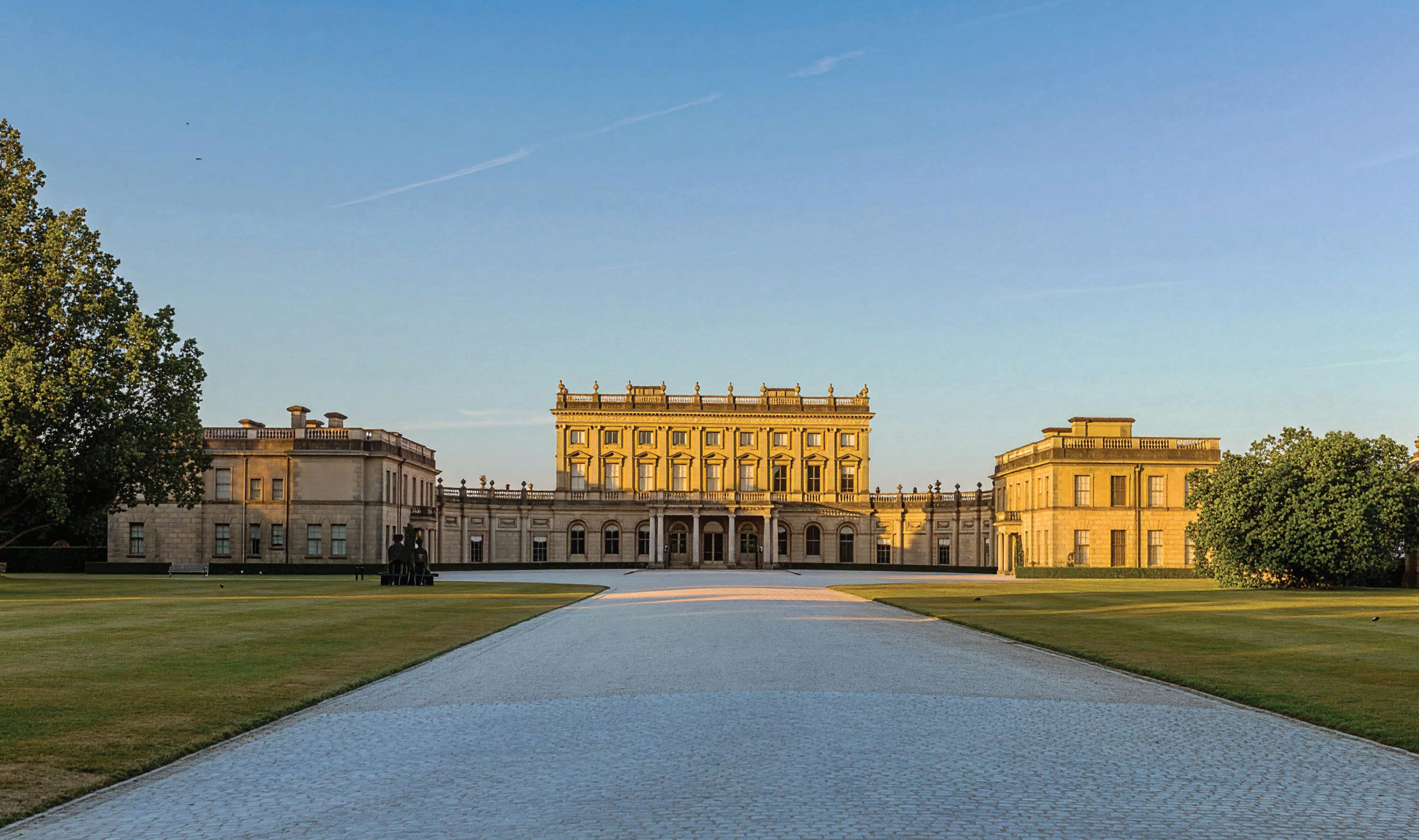
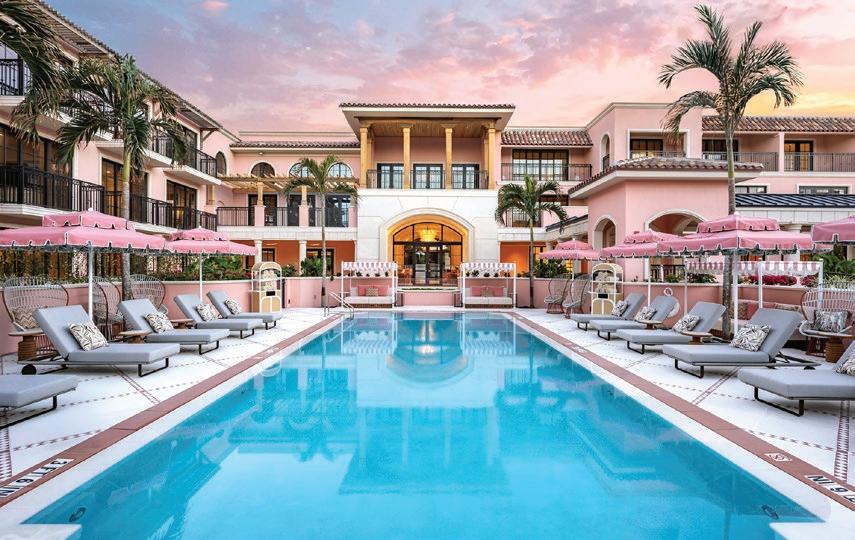
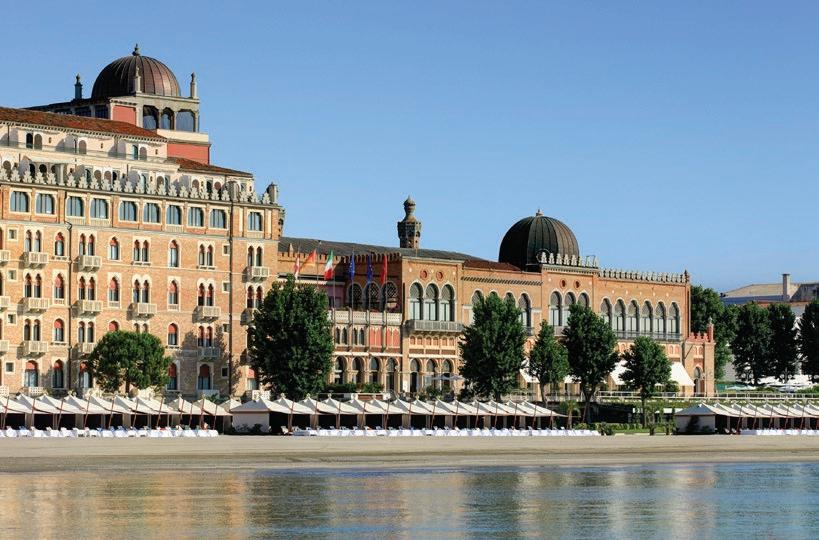
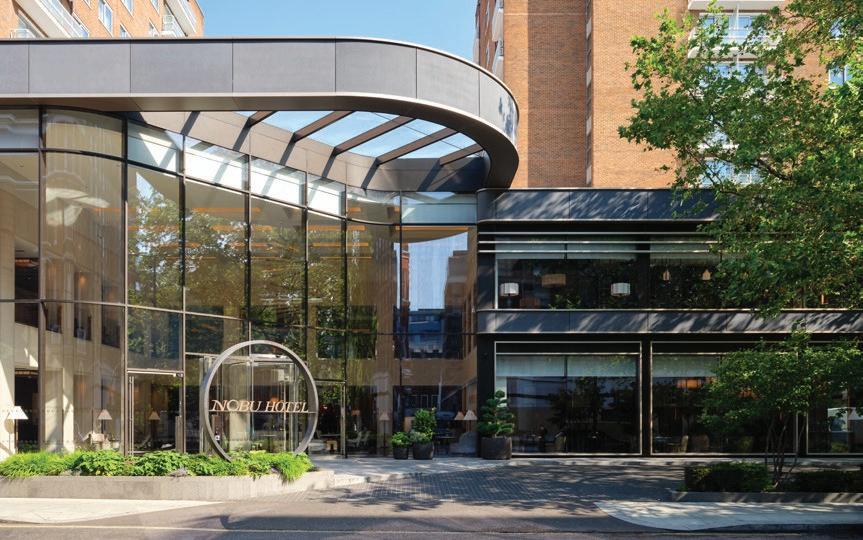
Iconic Hotels & Resorts brings together a collection of legendary properties shaped over decades, and in some cases centuries, of hospitality excellence. From landmark stays in central London to sea-view conferences in Venice and inspiring incentive escapes in Marbella and Palm Beach, we redefine business travel through experience and place.
Every stay, meeting, event, and journey is crafted with style and character. Because when business takes you around, it deserves to be nothing less than iconic.
STEPPING INTO A NEW ERA
Travel management enters a phase of intense transformation
Getting business o to a better start
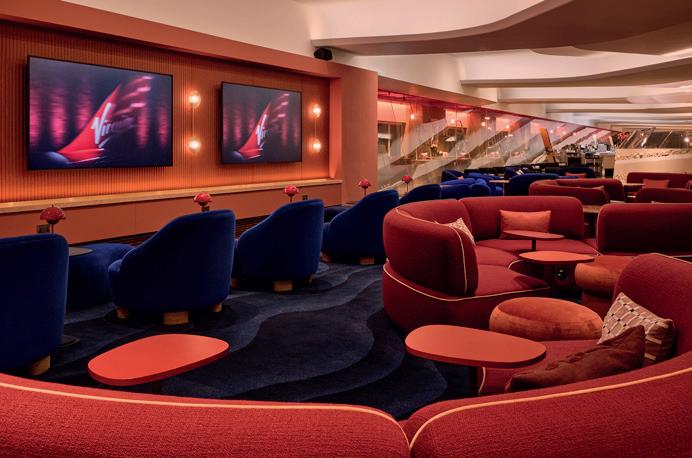
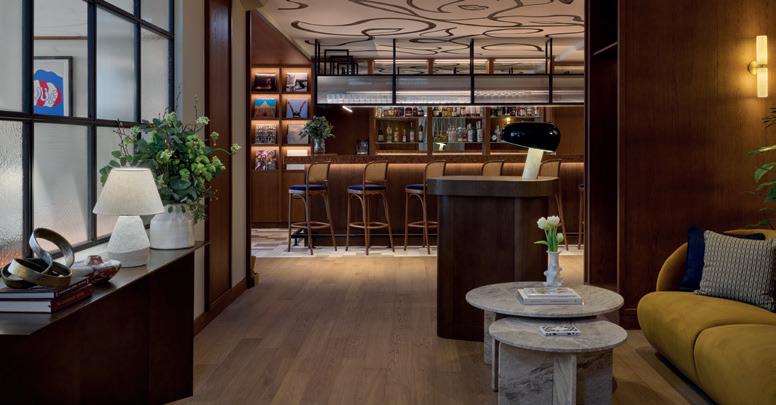
At London Heathrow, our flagship Clubhouse has been refreshed with new spaces designed around the moments before you fly, whether that’s a final hour of focus or a chance to switch o .
The Gallery sets the tone, with panoramic runway views and details inspired by London’s character. Discover pieces created from retired inflight magazines, alongside collaborations with Artbox London’s learning disabled and autistic artists.
Inspired by Soho’s private screening rooms, the Cinema makes the outside world feel far away. Soft lighting, enhanced acoustics, Bluetooth headphones, and seating that’s dangerously easy to settle into. If there’s ever a place to step away from email, this is it.
The Royal Box is our most exclusive retreat. Unapologetically red and by invitation only,
with runway views and a Cabinet of Curiosities that evolves throughout the day, from hidden treats to glasses of bubbly.
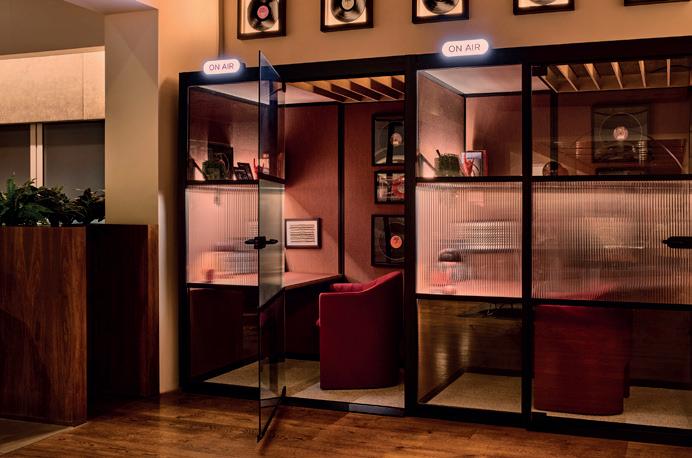
For work that still needs wrapping up, The Townhouse and The Manor are ready, with stylish desks, integrated power, and ‘on air’ signs, a nod to our Virgin Records heritage.
And when it’s time to reset, there’s space for that too.
Our Somadomes use light and sound to create a restorative pause, or leave it to Secret Spa, then step out clear-headed and ready for what’s next.
Because business begins before boarding.
Setting new highs
Every year I'm blown away by the quality of the entries in our People Awards and this year more so than ever, especially with all that's happening in the world.
Despite dealing with continued disruption and uncertainty, so many of you took the time to write your submissions and back them up with testimonials, videos and other evidence.
The standards were so high, the judges just couldn't whittle you down, so we've got more finalists for 2026 than ever before. We even had to dedicate an extra page in the magazine for you all (see pages 58-61).
Finalists represent all corners of the industry and, like in previous years, many come from the world of travel management companies (TMCs), an integral part of the business travel eco-system.
This issue is dedicated to TMCs and our in-depth features explore recent consolidation and investment (pages 22-24), the impact of AI (pages 28-30), what you should be asking in your RFPs (pages 38-40), and how TMCs are helping corporates manage not just their business travel but their social impact too (pages 44-46).
We've also got our TMC Finder directory, interviews with TMC leaders, expert insights, opinions and lots more. Since I joined as Editor six years ago, it's our biggest issue yet, so get comfortable and enjoy...
Bev Fearis, Editor
Features
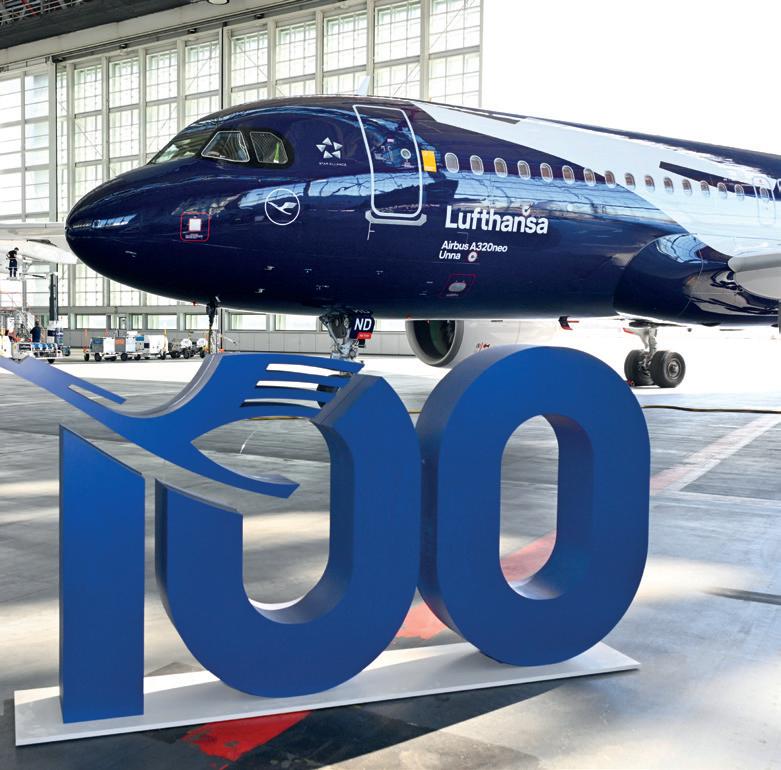
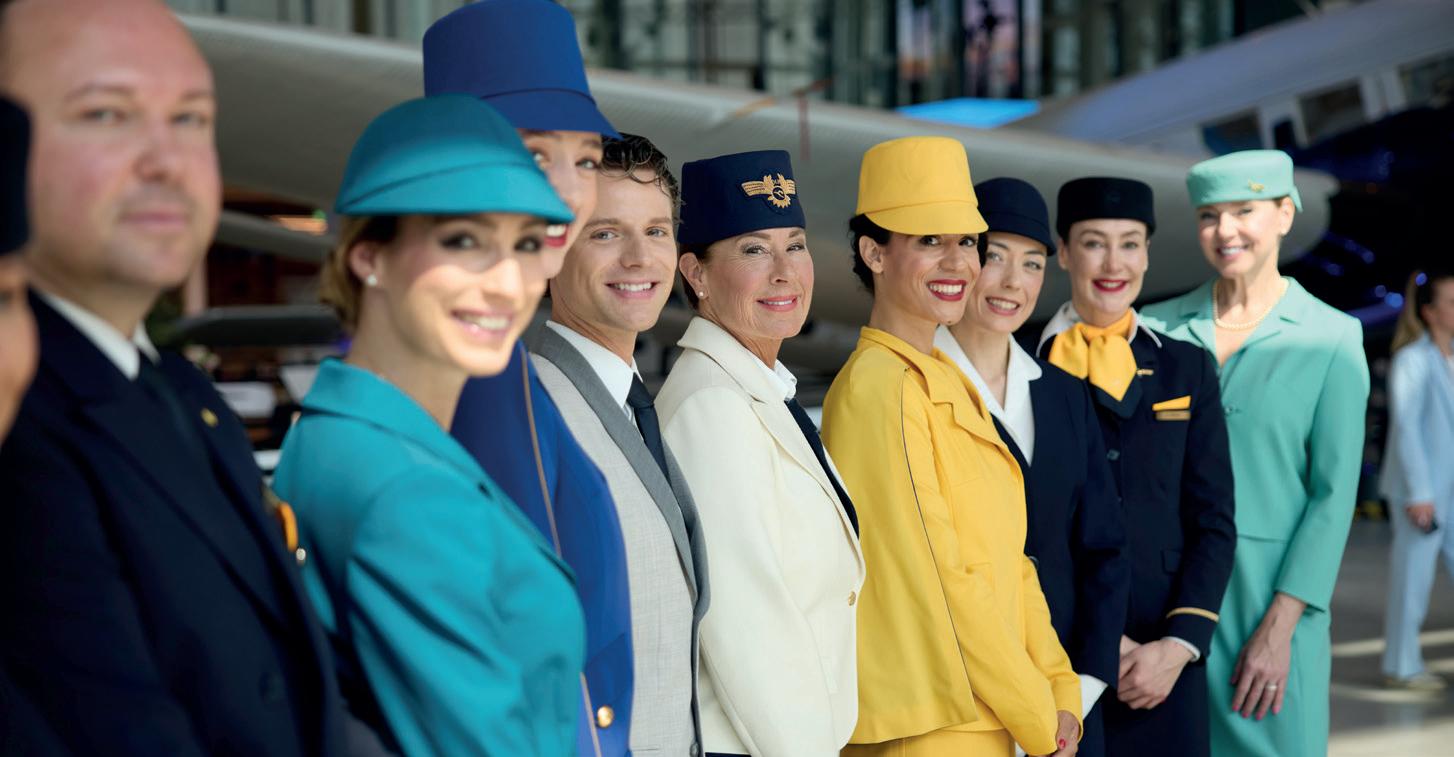
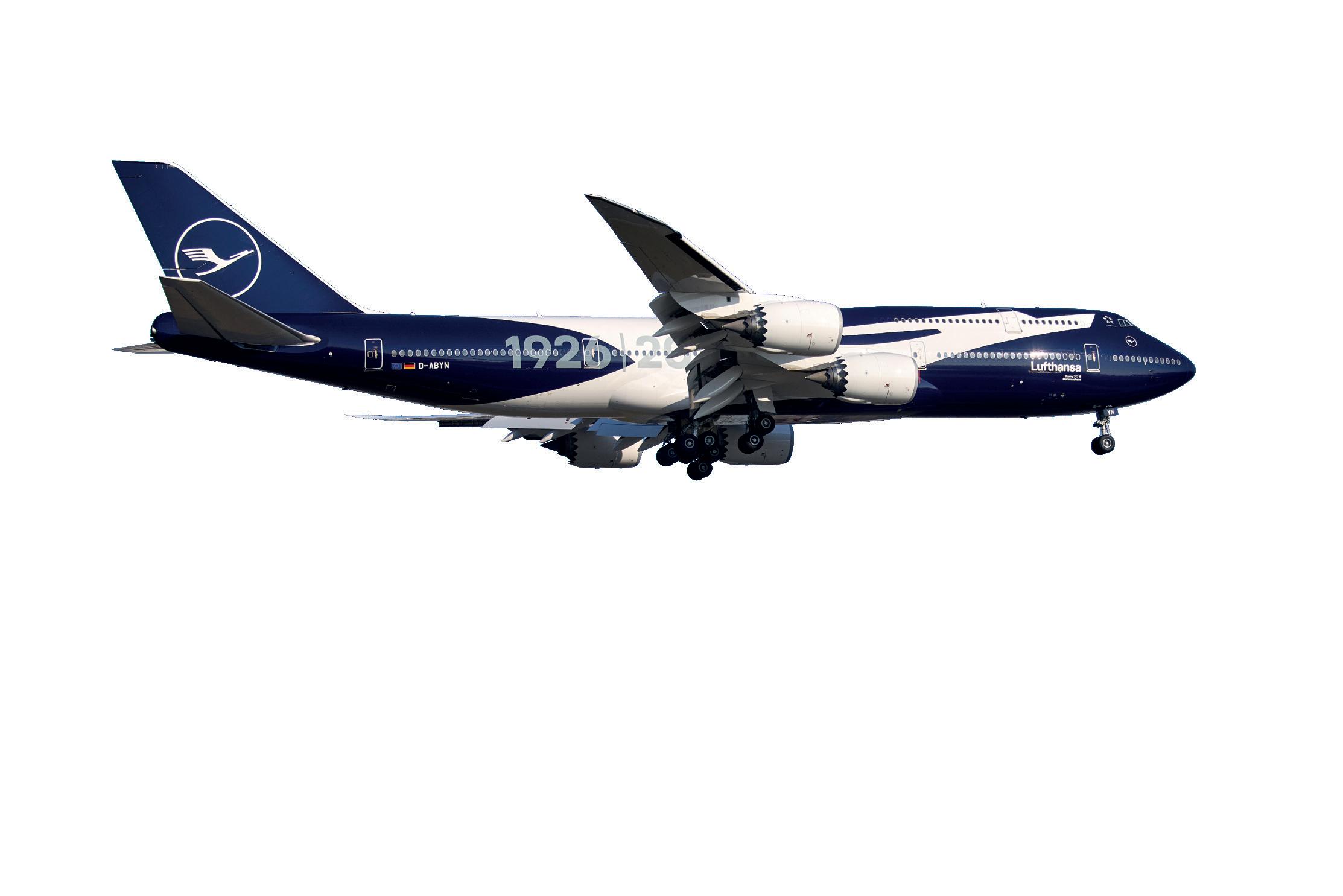
20 Happy Birthday: Lufthansa celebrates 100 years of flying
22 TMC overview: An update on all the latest developments in the TMC sector and what it means for travel managers
28 AI revolution: The use of AI in corporate travel management enters a new phase
38 Guide to RFPs: What you should be asking when choosing a TMC
44 Social impact: TMCs are leading by example to encourage their clients to be more responsible
58 People Awards 2026: This year's finalists are revealed and how to join the celebrations in September
62 Movers & Shakers: See who's making waves in the sustainability space
Up Front
6 Opening Shots: The most exciting openings in the world of travel – in pictures
10 Everyone's Talking About: The sale of American Express GBT
11 Speaking Out: Kayleigh Dawkins at Holiday Extras for Business explains why travel ancillaries deserve more attention
Departures
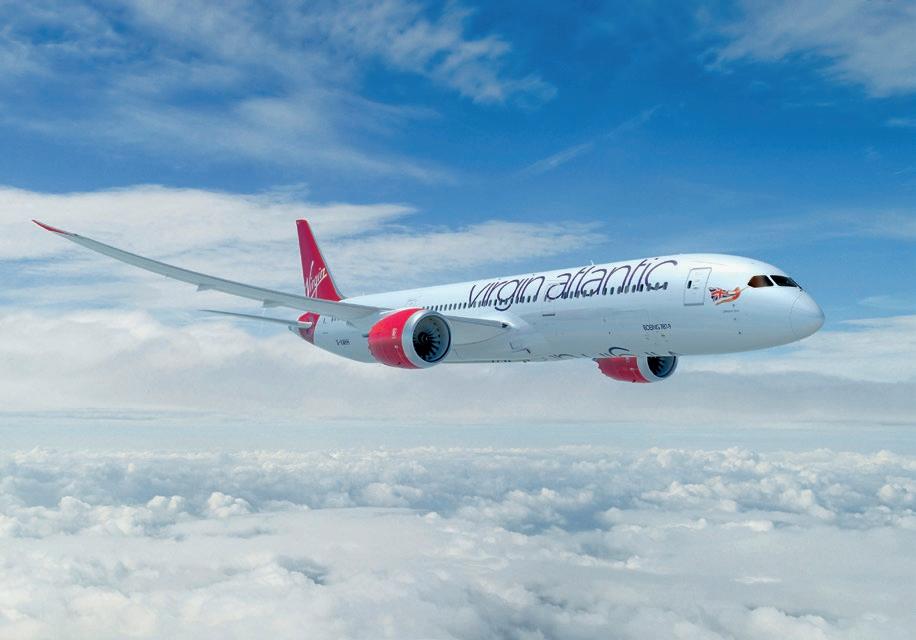
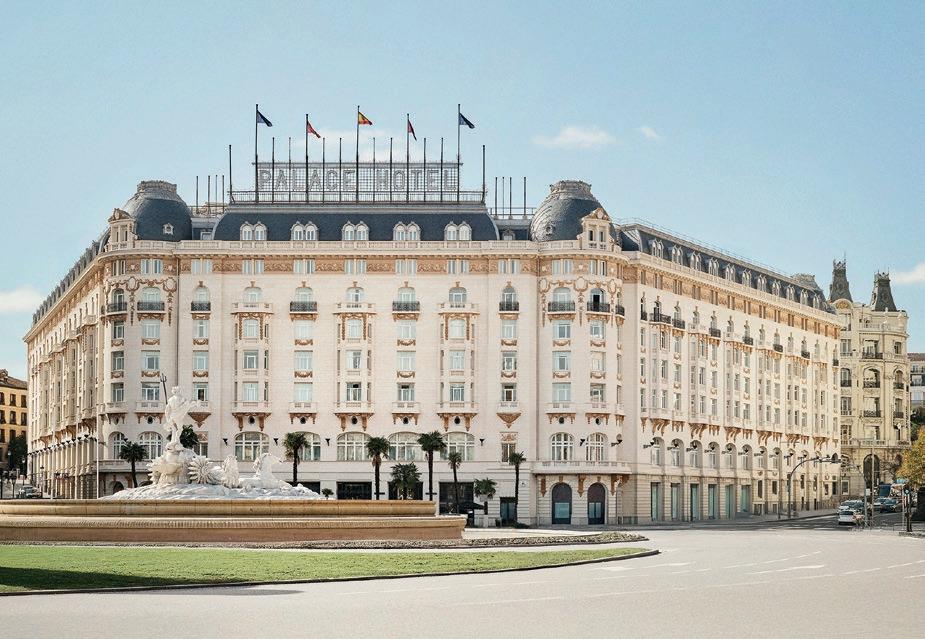
Reality Check: We review Virgin Atlantic's new Heathrow-Seoul service, plus hotels in Toronto and Madrid
Final Word: The quirky side of business travel
We bring you more than 30 pages of in-depth features, interviews and insights, plus our annual TMC Finder
SLICE OF LIFE
Lifestyle brand Miiro continues to grow, with its sixth opening in 18 months. Miiro Spittelberg, in Viennaʼs creative quarter, boasts 132 rooms and suites, with rates from £190. Chic urban pizzeria/bar concept Poco is at the heart of all the fun.
The hotel features a thoughtfully curated collection of works by leading Austrian and international artists in its public spaces, celebrating Vienna’s dynamic artistic legacy”
Miiro Spittelberg, Vienna
SOUNDING OFF
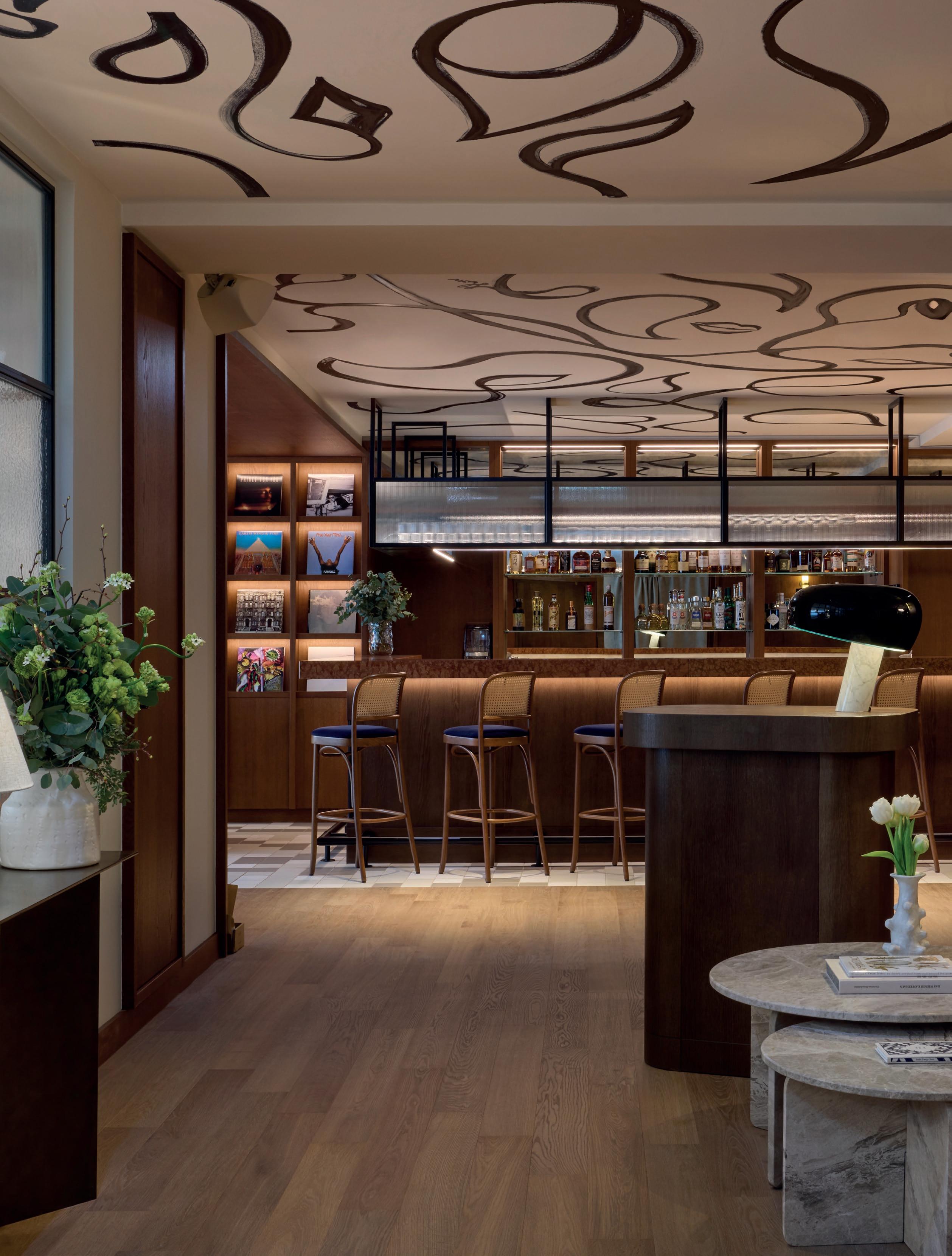
Virgin Atlantic has revamped its Clubhouse at London Heathrow. It has a new cinema area, an invitation-only Royal Box and a refreshed Gallery. Two Work Pod studios – The Manor and The Townhouse –celebrate the brand’s musical studio heritage, while a partnership with Secret Spa introduces a menu of pampering treatments.
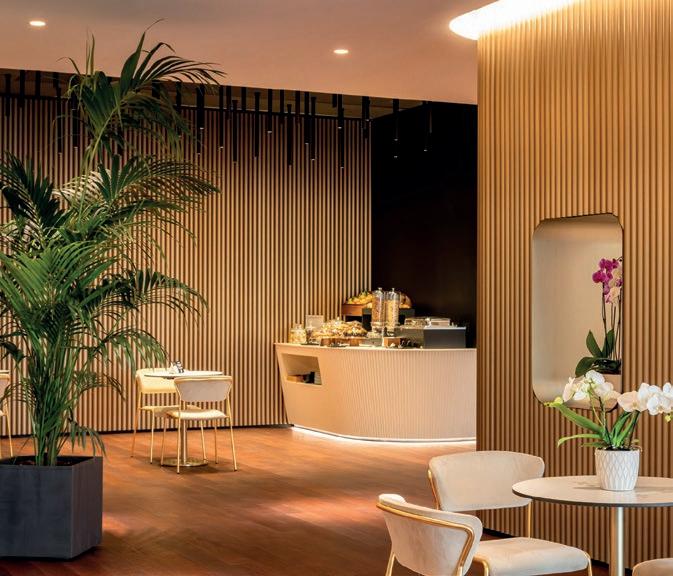
Catullo Lounge, Verona Airport
LOUNGE ABOUT
Swissport’s Aspire brand has taken over the operation of the Catullo Lounge at Verona Airport. The new-look facility is open 6am-9pm daily with complimentary food and beverages sourced from the Veneto region. Workspaces, a quiet zone and showers are available. Selected airline business class tickets and pass schemes have access.
JOY OF SIX
Six Senses has opened its first UK property, in the former Whiteley’s department store, Bayswater. The luxury hotel’s 109 rooms and suites draw on the building’s famed Art Deco styling, while the signature Spa, wellness centre and Earth Lab conservation area offer peaceful retreats.
Virgin Atlantic Clubhaouse, London Heathrow
Six Senses London
Co-founder and CEO Acai Travel
RICCARDO VITTORIA
The Italian tech entrepreneur talks about his quest to create a company that inspires happiness and helps to fix the 'nasty side' of travel operations
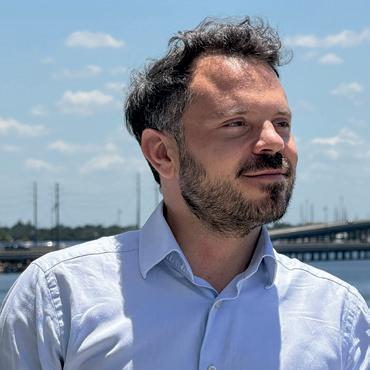
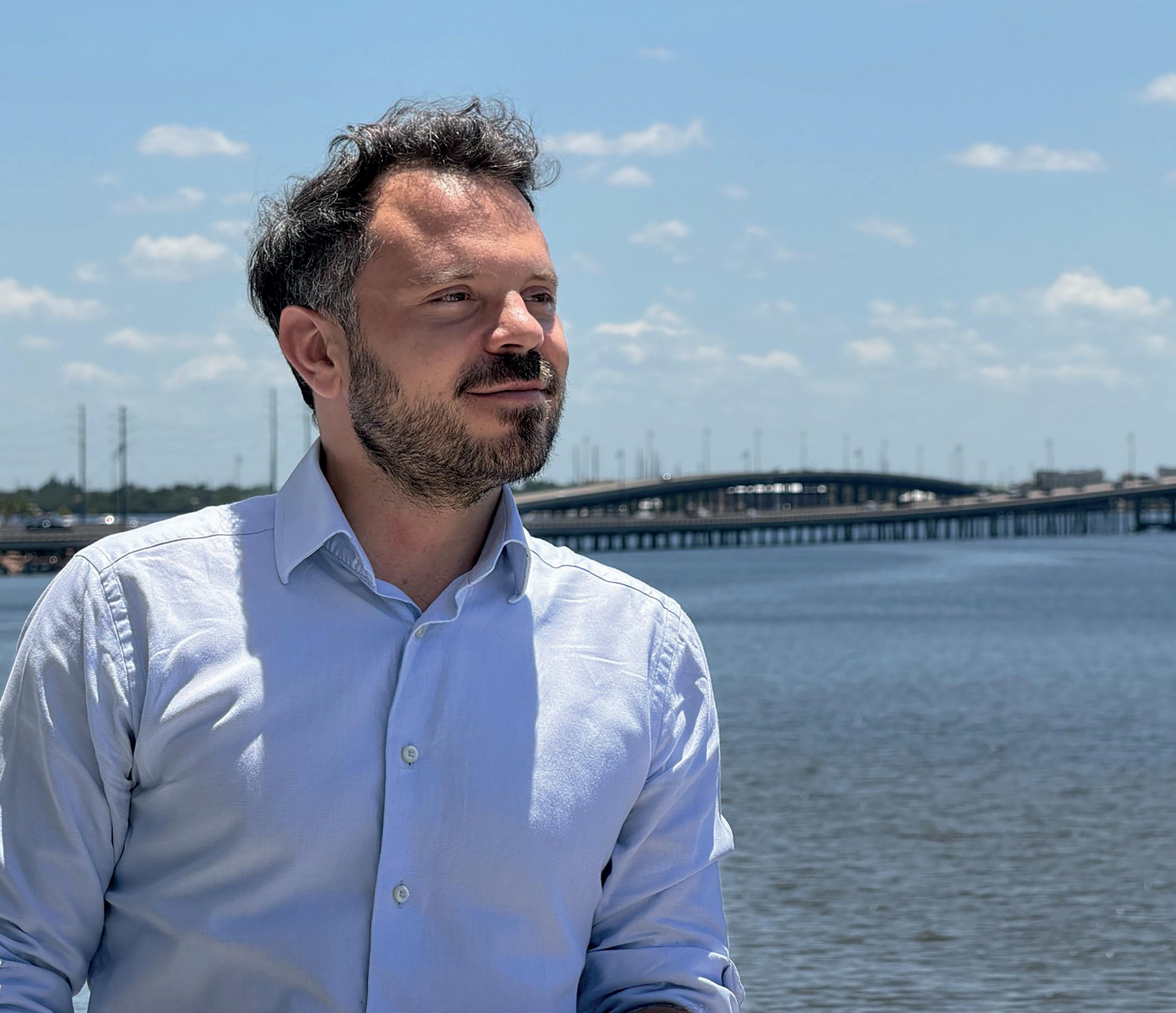
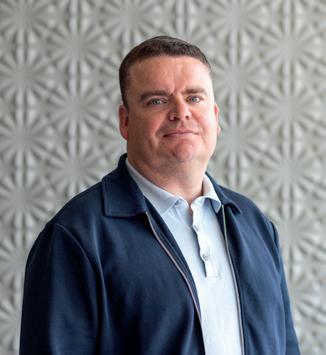
Driven by a long-held fascination with the scale and complexities of the aviation industry, coupled with a desire to be a "master of chaos”, 36-yearold serial entrepreneur Riccardo ‘Riky’ Vittoria was perhaps destined to create his latest venture.
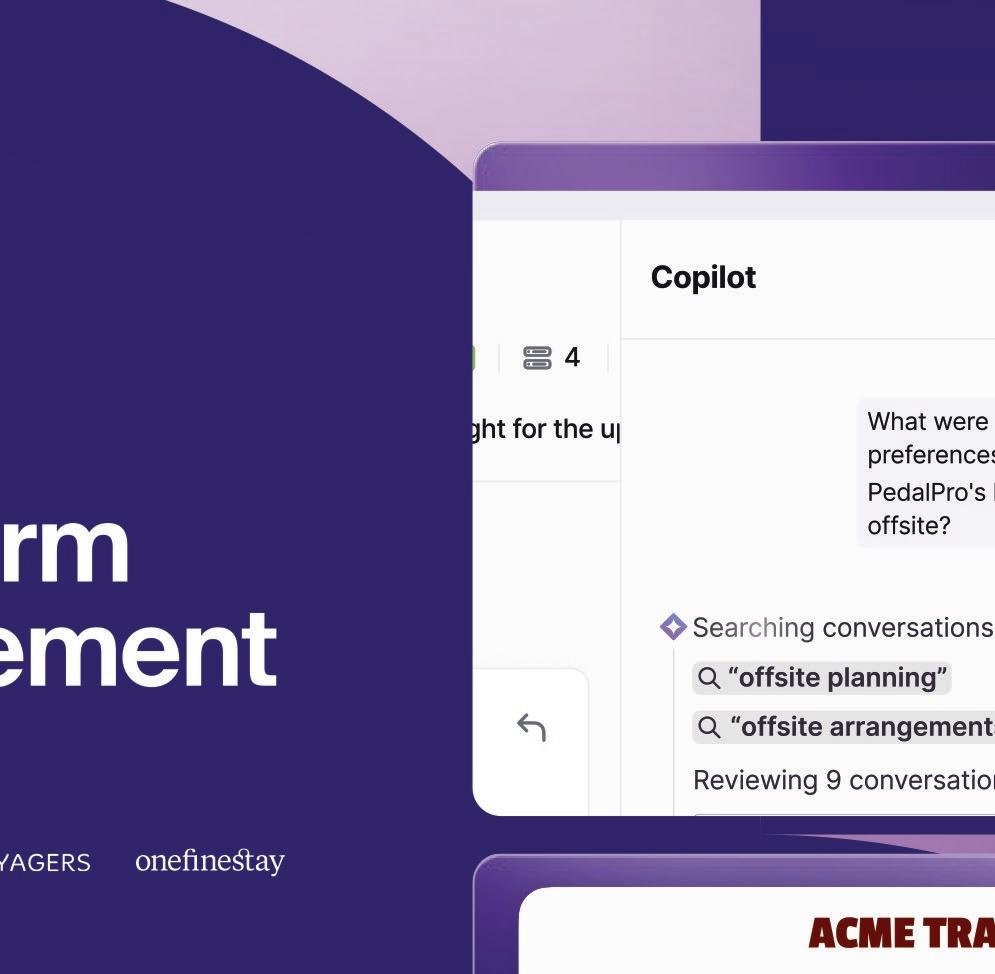
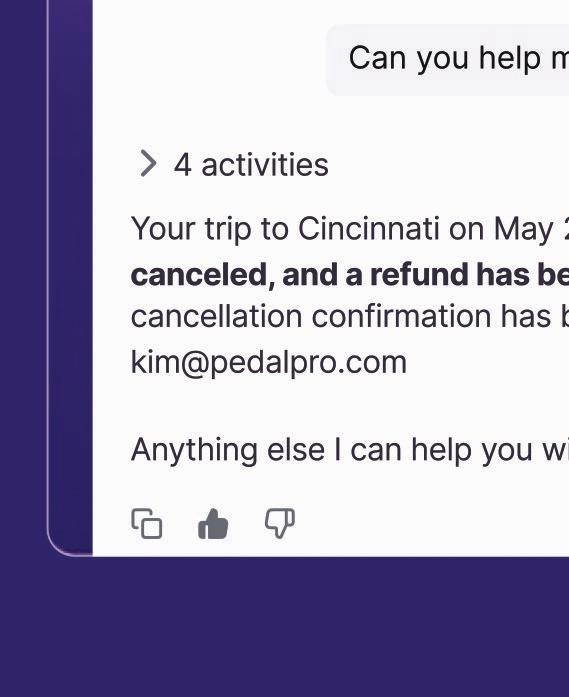
Acai Travel is a vertical AI-powered B2B SaaS company using Large Language Models (LLMs) to help travel management companies, online travel agents and airlines improve the way they work, saving time and money and improving customer service.
While it’s not alone in this space, Acai specialises in the more complex post booking operations, such as changes, cancellations, disruptions and unused tickets, described by Vittoria as the “nasty side”.
He says its AI back-office agents reduce enquiry handling time by an average of 60% and costs by up to 70%. Meanwhile, its clients' customer satisfaction scores have risen by as much as 20 percentage points.
Since launching in 2023, Acai Travel has seen impressive growth, with revenues doubling every quarter. Its customers already include tech-savvy TMCs like Perk, World Travel Inc and ALTOUR, plus kiwi.com and Etraveli Group, the parent of European OTAs Gotogate, Mytrip and Supersaver.
“Deploying this technology for TMCs is just a first step, and we are already deploying it to airlines and OTAs,” says Vittoria. “I believe that, eventually, all the supply chain will be interconnected on agentic conversations. So,
when something doesn't work, you don't have, anymore, a system of APIs with so many point of failures, where in the end experience doesn't work.
“Instead, you will have intelligent systems, either agentic or hybrid agentic, that will talk with each other, work the databases – even the complex Global Distribution Systems and airline Passenger Service Systems – and proactively solve the case for you. For me, being part of this rebuilding of the foundations of travel is super exciting.”
A Fulbright scholar, Vittoria originally studied mechanical engineering, earning degrees from NYU and Rome’s La Sapienza, and gained research experience in machine learning and airline operations at Singapore's University of Technology and Design.
His Masters’ thesis was about airline operations optimisation. “I've always been passionate about airlines and online distribution,” he says. “Even when I was young, I was always trying to figure out ways that I could hack airline systems and find loopholes and ways to get cheaper fares.”
I've already gone the capitalistic way. This time, for me, it wasn't enough. I also wanted to spread a message of enlightenment, enpowerment and peace”
Before Acai Travel, Vittoria founded 30SecondsToFly, an AI-powered traveller messaging solution and workflow automation for TMCs. Five years later, in 2020, it was acquired by American Express GBT, where Vittoria then stayed for three years to help lead AI innovation.
The arrival of LLMs lured him away from Amex GBT and inspired him to set up Acai Travel. “When I saw the power of this technology, and how it could handle complex situations, I wanted to bring it to everybody,” he said.
“The problem with many travel tech solutions is that they try to solve the problem from the traveller perspective by creating a new booking flow, but that’s actually not the right thing to do,” he said. “We approach it from the back, from the operational side, so doing things closer to the complex GDS operations and mostly in post booking. These are very complex processes that nobody knows unless you have worked on the floor and you have learned it the hard way.”
His time at Amex GBT also taught him the importance of prioritising. “Don’t try to do everything at once. Just try to do narrow automations that are fast to deploy. Often AI transformation programmes fail because they're not able to deliver an ROI within the year, so the clients’ leadership says ‘This is not working. Why are we investing in this?’.”
Another key requirement, he believes, is that guardrails are in place to ensure there
a vertical AI company reimagining the operations of travel companies. Previously, he founded 30SecondsToFly, which was acquired by American Express
are no errors. “You need to have an accuracy rate that is higher than a human’s by testing it in Copilot first and making sure everything is perfect. Before you deploy it to the customer, it needs to be 99.9% accurate.”
Culturally, Vittoria argues that established TMCs or OTAs are not best placed to develop game-changing tech solutions in-house, so often look outside.
“In order to invent a technology that doesn’t exist, you need that start-up pressure of, ‘Either we figure out a solution, or we die’. You need the best of the best engineers with a fire under their seat. Big innovation doesn’t come from the big establishments,” he says.
Within Acai, Vittoria strives to create a culture that fosters self-awareness, growth and resilience, inspired by cognitive
behavioural theories, and Zen and Tibetan Buddhism. He views business as a playground for introspection and transformation, not to make a quick buck.
“I've already gone the capitalistic way, creating a company, scaling it and then selling it. This time, for me, it wasn’t enough. I also want to spread a message of enlightenment, empowerment and peace.
“I always start with an approach of trust. I want everybody in my team to not only have a career journey, but have an introspective journey and to learn, by trial and error, how to become a better version of themselves. I want to create companies that inspire happiness and, of course, if people are happier, more forgiving and more united in a company, the business grows faster anyway.”
in brief...
Who would you like to sit next to on a long-haul flight?
I would love to sit next to a Zen master or the Dalai Lama and discuss the workings of the mind.
Are you a good packer?
No, I'm terrible. I always travel with three check-in bags, mainly because I play tennis and have lots of kit. My girlfriend gets upset because she travels with a mini backpack and then I'm the one with all the check-in bags!
Aisle seat or window?
I fly a lot with United Airlines, so in Polaris I’d go for a window seat. If I'm in Economy I’d go for the aisle. I'm a little bit claustrophobic.
Biggest achievement?
Career wise, I would say either the sale of 30SecondsToFly to Amex GBT or my Fullbright scholarship. The scholarship took me from Rome, where I was born, to New York, and there I connected with a thousand other students full of passion but all from different cultures, and it opens your mind.
Biggest influence and why?
Definitely my Zen teacher Frankie Martinez – also my salsa teacher. And Hector Marcel, my Tibetan Buddhist teacher. They were both very transformative and taught me to smooth my edges and become a more balanced, happier and wiser person.
What keeps you awake at night?
Sometime the stress of figuring out the right solution or business model keeps me awake, but usually I sleep for nine hours, which can be difficult for my girlfriend, also a tech entrepreneur, because she only sleeps for four.
Most annoying habit?
Well, I don't drink alcohol, or coffee, and I don't do drugs, but my guilty pleasure is eating. My colleagues always tease me that I eat anything that is put in front of me. Luckily, I also play a lot of tennis!
Riccardo ‘Riky’ Vittoria is co-founder and CEO of Acai Travel,
Global Business Travel in 2020.
RICCARDO VITTORIA
Everyone's talking about... Amex GBT’s sale to Long Lake
“ LO NG LAKE MANAGEMENT IS FOCUSED ON TRANSFORMING LEGACY SERVICE COMPANIES INTO AI FIRST COMPANIES. WE NEED THIS AS AN INDUSTRY. THIS TRANSFORMATION IS NOT CHEAP AND REQUIRES NEW STRATEGIES AND THIN KING"
"Travel is not a hot category among investors, so the best way to get a handsome return on an asset like this is to grow the topline through means beyond organic growth (for example, accretive acquisitions) while reducing people-intensive TMC resourcing costs and client customisation"
CORPORATE TRAVEL IS NO LONGER A SLOW-MOVING CATEGORY. IT’S A CAPITAL + AI ARMS RACE BETWEEN SCALED INCUMBENTS, HIGH-GROWTH DISRUPTORS AND POTENTIALLY NEW ENTRANTS AT THE AI LAYER. AND FOR THE FIRST TIME IN A WHILE, IT’S NOT
This is not one company changing. It’s the model being rewritten. The question is no longer ‘Who is the largest TMC?’, it’s ‘Who will build the operating platform that corporate travel runs on?”
SEQUENCING IS EVERYTHING HERE. RATIONALISE THE OPERATING FOOTPRINT, RESOLVE THE PLATFORM ESTATE, THEN DEPLOY AI.
REVERSE THAT ORDER AND THE PRODUCTIVITY GAINS BECOME SERVICE FAILURES AND CLIENT ATTRITION
“What feels increasingly clear is that the next generation of companies in this space will be built very differently from the ground up, especially in markets that are still underserved”
Alexandre Arruda, CEO and Founder, Flowtt
Mike McCormick, Managing Partner, Travel Again Advisory
Rick Bradberry, Executive Partner, Principal Analyst, Advisor, Forrester
Louis-Hippolyte Bouchayer, Vice President Distribution, Club Quarters Hotels and former Head of Lodging Strategy and Supplier Management at SAP Concur
Martijn van der Voort, Independent Consultant/Director, AstraNomad
Caroline Strachan, CEO, Festive Road
TRAVEL ESSENTIALS
SHIFTING THE NARRATIVE
The industry needs to take a fresh approach to travel ancillaries, says Kayleigh Dawkins, Partnerships Development Manager, Holiday Extras for Business
Although it’s in our company name, in my opinion the word ‘extras’ has never quite sat right when it comes to corporate travel. It suggests something ‘optional’ or ‘indulgent’, something which adds to the enjoyment of a trip. But in the world of business travel, extras are rarely about indulgence. When travelling for work, the margin for disruption is much smaller and the consequences of delays or stress are significantly greater. Travel ‘extras’, such as fast track or lounge access, can ensure a traveller arrives on time, feeling prepared and able to perform at their best ability. They can make or break a trip.
Time constraints
After all, business trips begin at the front door, not at the airline gate. They can often
involve early starts, tight schedules, pressure to be on time and to be prepared, and often travelling alone. There is minimal tolerance for disruption.
Travel ancillaries are operational necessities for travellers. Airport parking and fast track increase efficiency by reducing uncertainty and queueing time. Reliable, pre-booked parking and transfers reduce the risk of missing a flight, being delayed, or suffering last-minute stress.
Airport lounge access enables time to work, prepare or recover, improving wellbeing, performance and readiness for meetings. Our research shows 55% of travellers use the time in the airport to work, but this is challenged when nearly 80% find the experience stressful.
Nearly 80% of corporate travellers say airport stress has an impact on their
onward work performance and over 70% of said ancillary products, like airport parking, lounges and fast track, positively affect the quality of their business trip overall.
The true cost
But this value is perhaps not seen or fully appreciated by those booking trips or deciding travel policy. Often, they prioritise flights and hotels, not the door-to-door journey. While these might be perceived as the most costly elements of a business trip, let’s look at it another way. What about the cost of a missed flight, or the cost of a poor client meeting? What about the cost of traveller stress, or lost productivity? What if you compare these potential ‘disruption’ costs with the relatively low price of adding fast track or lounge access?
Upfront savings
Planning ahead can also reduce the cost of these ancillaries. For airport parking, you can save up to 75% by booking in advance rather than on the day. Lounge access could end up costing the same as buying food and drink in an airport restaurant. Furthermore, booking all this up front means there are no additional expenses to process and no policy leakage. Over 90% of the travellers we surveyed said they would prefer to book all elements of their trip in one place. There needs to be a shift from travel ‘extras’ to journey ‘essentials’ or trip ‘opitimisation’, and not just in the minds of the travellers. Travel managers, travel management companies and online booking tools also need to embrace this change in mindset. Policies need to allow –better still, encourage – these ancillaries for specific trips. We need to see a cultural shift to value the full trip experience, not just the ticket price.
If we want travellers to arrive prepared, on time, and able to perform, can we really afford to treat these ‘extras’ as optional?
Kayleigh Dawkins is Senior Partnerships Development Manager at Holiday Extras for Business, specialising in business travel partnerships and ancillaries. She champions experiences delivering greater value for both the traveller and the procurement team supporting them.
KAYLEIGH DAWKINS
ESG action starts with data we can all trust
Clive Wratten, Chief Executive Officer, BTA
ESG IS NOW A commercial reality – a regulatory direction of travel, and increasingly the lens through which corporate buyers choose their partners. The risk for TMCs that are not aligned is real: fragmentation, inconsistency, and the reputational cost of being seen to lag.
But the thing is, the ESG governance landscape is complex and ultimately needs simplifying. Take, for example, the ESG component of travel
RFPs, a long procurement process that needs modernising.
TMCs are also in dire need of standardised data so that sustainability metrics are measured and reported consistently across the travel ecosystem – this is what makes ESG claims actually credible. There’s no question that the industry needs to be held accountable, but the answers aren’t going to be found by publishing long white papers or complex pledges.
This is why the BTA created Planet Plan, a dedicated ESG
Be worth knowing and connections come easy
Scott Davies, Chief Executive, ITM
board made up exclusively of BTA member organisations to cut through this complexity.
Governance is in place. A baseline ESG maturity assessment has been completed.
Draft frameworks for ROI, data standards and policy guidance are now in consultation.
A shared set of definitions and terminology is being embedded
THE LONGER I’VE worked, the more I’m aware that our personal networks are our single most valuable assets. Establishing and nurturing a large, varied contact group is the main advice I give to young people.
But you’re also going to want to be someone who others value. If your relationships are one-way streets, they are eventually going to be dead ends. And so, you’re going to need two things.
Firstly, you will need to build a strong personal brand. This means behaving and interacting in a way that is beyond your employer’s brand or your job title. Values such as trust, kindness, flexibility, reliability and commitment are good ones to demonstrate.
Secondly, you want to aim to be someone who is entertaining, stimulating or educational to be around. We will always spend
across the whole industry. These are practical and usable frameworks that TMCs can put into play immediately.
Planet Plan gives BTA TMCs the infrastructure to lead rather than react. We hope the rest of the industry follows in our footsteps to make sustainable choices easier and more accessible for all. thebta.org.uk
time with people who make life more interesting and fun.
Of course, you’re going to have various kinds of networks and relationships. There is a clear difference between someone you once had a meeting with and someone who will go into bat for you. Newsflash: LinkedIn contacts are not your true network.
If you’re lucky, you will reach a point where you’re not nurturing a network at all. You’re simply choosing to spend time with people who you feel good around. When the lines between colleagues and friends are blurred, work isn’t really work anymore anyway.
So always invest time, energy and kindness in your network. Deploy it responsibly and thoughtfully. Give more than you get. And when someone in your primary network needs you, or you haven’t heard from them from a while, check in. That’s the time to show your worth! itm.org.uk
It’s not too late to change your game
Jack
Ramsey, Chief Executive Officer, TripStax
I LOVE SUMMER
The flowers are blooming, the veg garden is thriving, and somehow the bind weed is still outperforming everything. As I wrestled with it in the blistering heat, another kind of “The Green Hell” came to mind – the nickname of Germany’s Nürburgring Nordschleife, home of the brutal
instinctive. By the time others noticed what he was doing, it was almost impossible to copy.
With the summer sports season ahead, it got me thinking about how elite athletes train.
Novak Djokovic’s perfectly compact two-handed backhand, Harry Kane’s near-perfect penalties. The same movement repeated thousands of times until it becomes instinctive.
Now, imagine you’re a decent
24-hour endurance race recently tackled by Max Verstappen.
Verstappen already has a reputation for obsessive practice and unusual driving feel, as did Ayrton Senna before him. Senna’s famous feathering of the clutch and throttle through corners involved tiny, impossibly precise inputs repeated so often they became
club player. You’ve spent years hitting a backhand a certain way, won matches and feel competent. Or you’ve put the ball in the net often enough not to disgrace yourself.
Then along comes a Djokovic who adjusts your racquet grip, or a Kane who tells you to lean forward more. When you try it, it feels ridiculous. Worse, it feels wrong. You’re fighting years of
instinct and muscle memory.
But eventually something clicks. Suddenly, you realise you weren’t playing as well as you thought– not because you lacked talent, but because nobody had ever shown you a different way.
That’s not a revolution. It’s evolution. Most people don’t know what to question in order to evolve. They lack the prompt to challenge the habit or to question the ‘norm’.
That’s our industry. The biggest inefficiencies in travel technology often come from inherited processes, systems and assumptions built up over decades.
They’ve been repeated so often they’ve become instinctive: “this is where the data lives”, “this is how bookings flow”, “this is the role of the GDS”, we’re told.
Until someone asks: what if it doesn’t have to be like that?
When we launched TripStax, I was told repeatedly that we were trying to change 30 years of industry muscle memory overnight. We were never trying to revolutionise the industry. We ask questions and offer a different way of thinking.
TMCs no longer need to cling to outdated practices or remain constrained by legacy technology. There’s a new way without disrupting your entire gameplay.
It may feel unfamiliar at first, but once the data foundations are right, everything else becomes possible – including unlocking the real value of AI. Then, you’ll soon realise the old way feels absurd.
Oh, and if Novak would like to fix my backhand, I remain available. tripstax.com
24%
An independent study of 500 travel managers, commissioned by ground transport specialist CMAC Group and conducted by Censuswide, reveals 24% cite employee safety as a key concern when employees travel overseas.
HotelHub data reveals a significant acceleration in hotel rate inflation, with the global average daily rate rising by 7.17% year-on-year to $189.
Europe recorded the most substantial increases, with average rates jumping 13.88% to $175 per night.
Only 1% of travellers feel international travel has become safer today than it was in 2025, according to risk specialist Global Rescue, which polled over 1,200 travellers for its Spring 2026 Global Rescue Traveller Sentiment and Safety Survey.
JACK'S JOURNAL
Our road is sometimes rocky, but corporate grit smooths the way
James Dow, General Manager UK & Ireland, Blacklane
I USED TO marvel at how our sales team loved being on the road. We all know that not every trip is as smooth as a Blacklane. I’m not the only one who hops from city to city missing bedtime stories while navigating poor connections and another security queue.
Prior to this year my Blacklane career was a little more operations than sales focused. So while I touched elements of the industry, I had a lot to learn – 2026 is my year of becoming truly embedded in all things corporate travel.
What a whirlwind. My passport already has more stamps than the Race Across the World
The less-than-glamourous moments get to us all. But then I spent the first half of this year joining our UK and Ireland sales team at conferences, roadshows, events, client pitches, training sessions and even scavenger hunts to bring Blacklane bookers together.
I’ve been inspired and energised with the infectious camaraderie of the business travel industry.
production team. My wife is worried I’ve forgotten all about our Wiltshire home (of course, the dog is more concerned).
I have never experienced an industry that is so open minded, diversity-focused and that simply enjoys working with each other so much.
We are by nature a global bunch. Our business relies on other people having that same passion for travelling to new places to meet new faces and
feel more connected. And it really shows.
From conferences tackling challenges such as accessibility and neurodiversity in travel, to event programming with everything from drag shows to mentoring programmes for young talent, this is an industry that embraces everyone equally as standard. There are many other sectors that could learn a lot from us.
I’ve also seen the resilience and grit of the corporate travel sector come to life. Conferences addressed the cycle of pressurepoints, including extreme weather events, major airport closures, international conflict, and how ever increasing costs of living – and now fuel – are impacting the travel industry.
Despite this unpredictability, the overriding theme was the ‘bounce-back’. The power of the industry to come together, to problem solve and to harness expertise to win both traveller and business leader confidence.
In my role as part of the GBTA’s transportation committee I’m working with industry colleagues to capture these positive trends – and of course the challenges – across our global sector. Please add your thoughts to our research. There is a buyer and supplier survey to ensure all diverse voices are heard. Find the GBTA Transportation Committee on Linkedin for more information.
Thank you for the education and the reminder that working together makes our industry stronger, more resilient and positively more fun. It’s a pleasure to be on this road with you. blacklane.com
A survey of 269 corporate travel buyers across the US, Canada and Europe by the GBTA, in partnership with Spotnana, Marriott and Direct Travel, found 58% of travel managers say AI has had little or no impact on their travel programme to date.
Data from Travelogix and shared by the Advantage Travel Partnership showed the average trip cost climbed by nearly 5% from 2024 to 2025 from £876.86 to £919.13 yearon-year, while the average trip duration fell by 4.9% from 9.13 to 8.68 days.
Some 91% of travel managers are now tasked with overseeing meetings and events, yet most lack the necessary infrastructure to manage this role effectively, according to 2025 data from Cvent, revealing a strategic blind spot.
Sustainable travel done right is when you don’t even notice
WHEN BUSINESS travel works in harmony with how people actually function, sustainability stops being an abstract concept and something that the traveller experiences and recognises.
You arrive, and nothing feels difficult. Your hotel is close to where you need to be. There is no daily negotiation with transport apps or uncertainty about how long it will take you. You walk. The route is familiar and you have a rhythm.
It’s only when a business trip doesn’t work that you truly realise what sustainable travel is supposed to feel like.
On my last trip, it started the moment I landed. Normally, I would fall into that familiar rhythm and catch a train into the city, a route I had done enough times that it requires no thought.
This time was different. I found myself piecing together the journey in real time, checking maps and defaulting to a mix of train and rideshare to get to my hotel.
That pattern continued. The office wasn’t within walking distance from the hotel, so each day began and ended in the back of a car in rush-hour traffic. Rideshare to the office. Rideshare back. No walk to ground myself in the morning, no walk to reflect on the way back, and no real sense of the place that I was in.
Even the small things stood out. As someone from Australia, I’ll admit I am particular about my coffee. On a more familiar trip, I have a go-to place where I can start my day with a decent coffee. On this trip, I didn’t have that. It sounds insignificant, but it is not. That absence of routine, of familiarity, adds up and keeps you slightly off balance.
Because when a trip is designed well, everything just falls into place. You walk instead of ride. You learn the streets without trying. You find that great place for coffee and return to it. The day develops a rhythm quickly and with that comes clarity. You arrive at meetings more focussed. You leave with space to think. You finish the day with some energy left.
And almost without noticing, the trip becomes lower impact. Fewer car journeys. More efficient use of time and energy. Human experience and environmental impact are far more connected than we often realise.
That’s the part we often miss. The real opportunity is not to ask travellers to behave more sustainably. It is to create trips where they get more out of the experience because it already is. atpi.com
FACTS & FIGURES
2.5%
Just 2.5% of corporate travel professionals think the US should be allowed to force mandatory disclosure of five years of social media history from foreign travellers to gain entry to the country, according to a survey by the Business Travel Show.
Just under half (49%) of UK business travellers worry that their manager would judge them for taking personal time on a work trip and 46% fear the same reaction from their colleagues, according to a study conducted by Good Business Travel.
Nearly one third of 1,284 business travellers questioned by BCD Travel admitted they do not know where to find their company’s safety information, while 30% are uncertain about who to contact during an travel emergency.
Louisa Toure, Sustainability Officer, ATPI
Looking at the bigger picture
Sara Andell, Director Consulting Strategy, American Express GBT
MANY TRAVEL BUYERS
TODAY are navigating two worlds: solving for day-to-day immediate operational needs, while recognising the ever-more strategic role that travel plays in business success. As the travel manager role becomes elevated to an orchestrator of multifaceted systems and processes, the ability to lean on specialist knowledge and support from your TMC has never mattered more.
Travel management continues to evolve at pace – including changing traveller and business expectations, AI adoption and broader disruption challenges. Priorities compete and there can be precious little time for the strategic work that drives value for the business.
Amex GBT Consulting’s recent Travel Program Futures Survey found 31% of travel managers report reactive firefighting consumes most of their time. Only 7% focus on strategic traveller experience and
programme management, while 78% say balancing strategy with daily demands is “challenging” or “very challenging”.
This is where an embedded consulting partnership can help drive success. When your TMC embeds a consulting team within your organisation, consultants gain unique access to your data and deeper understanding of your entire travel ecosystem, seeing the full picture beyond just bookings and expenses. At the same time, they can free you from operational burden so you can focus on driving programme value and supporting your business objectives.
For example, when an Amex GBT client needed to replace its manual, error-prone hotel allocation process for hurricane and storm disruptions, the TMC built an automated solution to eliminate duplicate bookings, reduce unnecessary costs and introduce clear accountability.
A new workflow was introduced to bring multiple stakeholders into a single, accountable process, with
real-time visibility and centralised information management, improving efficiency and ultimately resulting in annual savings of $456,000. The process became far more reliable and transparent, with clear ownership, real-time status tracking, and the elimination of duplicate bookings and reconciliation issues.
Custom-fit support can dramatically improve how you operate. Your TMC should be amplified by intelligence.
We combine AI-enabled data science with consulting expertise and insights drawn from billions of transactions. An example of this is our Air Contract Analysis tool.
Historically, contract interpretation consumed weeks for large programmes. We’ve completed proofs of concept and are now in final testing of 11 airline contract formats, with impressive first-pass results that fundamentally change the timeline. Contracts that once took weeks now take days.
In addition, this capability unlocks fare basis code-level Air Rate Audit accessibility for every client, not just those who source through Amex GBT Consulting.
Similarly, our AI-powered Air Monitor, Hotel Wish rate and Air Share shift models will deliver more accurate spend forecasts. Our Policy Analyzer benchmarks your policies against best practice and peer libraries.
Your TMC partnership is your competitive advantage. When supported by intelligent insights and deep expertise, it transforms operational burden into opportunity and data into decisions that drive real value. amexgbt.com
Only 30%-40% of TMC leaders report feeling ready to meet traveller expectations today, with the lowest confidence found in larger TMCs (those with 250 or more employees), says a report commissioned by the Expedia Group.
Gen Z is far more likely than older generations to believe business travel will get easier, with 54% feeling positive compared to 20% for Gen X, according to research conducted by American Express Global Business Travel (Amex GBT) and Ipsos.
A GBTA industry sentiment poll, carried out in April, questioned 500 travel managers and suppliers and found global optimism in the industry for 2026 has fallen to 41%, down from 59% in January, while pessimism has risen from 9% to 24%.
Streamlining life for the better
Alister
Harris, CEO of AI experts Lokulus, reveals what personalisation should look like
What does ‘true personalisation’ mean in managed travel?
It is not about Amazon-style prediction or treating travellers as a statistical likelihood. It is about acting like a trusted one-to-one advisor –understanding this traveller, this trip, this corporate policy and this situation in real time. Done well, it feels like advocacy, not surveillance.
That is especially important during times of disruption. The experience becomes personal when the TMC can see the traveller profile, live trip context, policy position and urgency quickly enough to act before the traveller has to chase.
Businesses expect strategic service partners that can deliver responsiveness, consistency and traveller understanding at scale. Travellers still want high-touch service, but they increasingly expect low-friction interactions – proactive updates, fast answers and support across the channels they already use.
The challenge is that many travel teams are trying to deliver this while managing fragmented systems, disconnected workflows and growing pressure behind the scenes. Technology alone does not create better customer experiences. Connecting the right traveller, booking and policy context to the point of service does.
So where does AI fit into this?
In practice, the most valuable AI is often the least glamorous. It is the AI that reads long email threads, identifies urgency, filters FYI messages, supports quality checks and routes enquiries to the right consultant, so people have more time for judgement, empathy and problem-solving.
For example, AI can automatically surface traveller preferences, policies, VIP status or urgency at the point of enquiry. It can help prioritise disruption-related cases faster, reduce manual triage and provide teams with a single view across channels.
AI should supercharge human capability by handling transactions and heavy administration, while consultants focus on advocacy, creativity and exception handling.
What are the biggest barriers preventing TMCs from delivering personalised experiences today?
It’s orchestration. Valuable traveller context is often split across booking tools, profiles, supplier systems and live trip data, forcing consultants to manually piece together information while handling growing enquiry volumes.
The goal is not necessarily Big Data. It is Right Data: booking data, profile data, policy context, VIP status, accessibility needs and live trip context.
The starting point is simple: map the data you already hold, where it sits and how quickly it reaches the people serving the traveller. Personalisation at scale does not begin with more technology. It begins with connecting the right data to the right decision at the right time.
Is personalisation becoming a competitive advantage for TMCs?
Absolutely. The winners will be the TMCs that orchestrate their existing technology stack more effectively, not those that simply add another tool. Whether the first touch is an AI agent or a human consultant, the experience needs to feel connected, policy-aware and personal. Business travel is still a people-driven industry. Technology should enhance those relationships, not replace them. lokulus.com
FACTS & FIGURES
500%
SAP Concur reported an increase of more than 500% in NDC bookings on Concur Travel in the fourth quarter of last year compared to the first quarter of the year, and hit a million NDC booking milestone by the end of January 2026.
New research from ground transport specialist CMAC Group suggests that 67% of corporate ground travel is currently untracked by travel managers. The survey of 500 business travellers highlights a gap between corporate policy and booking behaviour.
New Eurostar data shows assistance related contact has risen +15.34% year-onyear (+48.65% versus 2023), with growing demand linked not only to mobility support, but increasingly to neurodiversity, hidden disabilities and customers seeking more reassurance.
ASK ALISTER
Josh Bayliss, CEO of Virgin Group, has taken over as Chair of Virgin Atlantic, replacing Peter Norris who has stepped down as Chair after 14 years in the role. Norris continues in his roles as Chair of Virgin Group and Virgin Hotels.
Mark Cooke has joined BCD Travel as Director of Multinational Sales, reporting to Sales VP James Diaz and to focus on energy and marine sectors. Cooke was formerly Head of European Client Success at Reed & Mackay.
Alice Linley-Munro has joined Solutions Travel as Global Account Manager. She was previously Project Delivery Manager at Opteva Ltd and before that spent 14 years in various travel management roles at Oil Spill Response Ltd.
TBR Global Chauffeuring has promoted Graeme O'Donnell from Head of Corporate EMEA to Global Head of Corporate and Michael Savage to Director of Global Events. The US market will be a particular priority for both leaders.
Justin Penny, Head of Supply EMEA at Flight Centre Travel Group, has joined the Executive Board of the Business Travel Association (BTA). Penny has been with Flight Centre Travel Group for more than 20 years.
DGI has recruited Rob Cope in the position of Director of Transformation and Julie Kendrick as Chief Operating Officer. The appointments come weeks after James Parkhouse joined DGI as CEO from Take2Eton.
ALSO ON THE MOVE... >> VisaDoc has appointed Jemma Armstrong as Account Executive >> FCM Meetings and Events has recruited Kevin Watkins as Global Operations Leader – Client Meetings and Events >> Boutique global travel management company NousTravel has appointed Alexandre Chemla as Strategic Officer >> ITM has welcomed Claudia Jackson, BCD, Matthew Pancaldi, Hertz, Audrey Muir, Ballie Gifford & Co., and Michael Funnell, Barclays, to its Board >> Anthony Uphill, previously Director of Partnerships and Strategy for American Express Travel, has joined Virgin Atlantic as Vice President Sales >> Mark Corbett, the founder of Thrust Carbon in 2019 who left the sustainability specialist last year, has joined Navan as Senior Director, Commercial Innovation & Strategy >>
MARK COOKE
GRAEME O'DONNELL
ROB COPE
JOSH BAYLISS
ALICE LINLEY-MUNRO
JUSTIN PENNY
CONCUR TRAVEL
WHERE TO TURN
Charlie Sultan, President Concur Travel, shares insights from its latest Global Business Travel Survey, which shows a widening trust gap on duty of care
Traveller anxiety is now a defining feature of business travel. We live in an uncertain world. In recent months we’ve seen airlines cease operating, key routes suspended and continued geopolitical volatility in many destinations.
Travellers are worried. The eighth annual edition of our Global Business Travel Survey shows 67% of business travellers are nervous about travelling for work this year. Nearly a third (31%) cite geopolitical instability or safety risks, while 28% point to disruption and delays. In a persistently unsettled environment, this level of anxiety cannot be treated as background noise – it must shape how travel programmes are designed and delivered.
Trust issues
But the challenge for travel managers is not just how to deal with traveller concern. There's also growing confusion about who is responsible when things go wrong.
Our survey shows responsibility for traveller safety is not always clearly aligned, and that lack of clarity is eroding trust.
When we asked travellers who they believe is accountable for their safety, the answers were split. Some 37% say they hold themselves most responsible, while 27% say the responsibility sits primarily with their employer. That 27% is particularly
important, as it has risen sharply from 18% in 2020. Expectations of employers have fundamentally shifted post pandemic.
This reflects a broader change in where people place their trust. Employees are increasingly looking to their employers, rather than governments or institutions, as their primary source of support and security. According to the 2026 Edelman Trust Barometer, among those whose trust in people or institutions has been impacted by major societal events, net trust in their CEO rose by nine points and in coworkers by 11 points, while trust in national government leaders fell by 16 points.
For corporate travel managers, that shift carries weight. Your travel programme is no longer just an operational function, it is a visible expression of organisational care.
Exposing the gaps
Generational trends suggest these trust expectations will only intensify.
Older workers are more likely to see safety as their own responsibility, with 47% of boomers and 43% of Gen X taking that view. Among millennials and Gen Z, that drops to 35% and 33% respectively.
As your workforce becomes younger, expectations of employer-led duty of care will increase, and programmes designed for a more self-reliant traveller base might struggle to keep pace.
Confidence levels are also uneven. Only 58% of business travellers say they are mostly or completely confident their organisation could extract them from a dangerous situation. Meanwhile, 28% are only somewhat confident, and 15% are not confident at all.
This is the trust gap in its clearest form. Employees are being asked to travel into risky environments on behalf of their organisation, but many are not convinced
that organisation will be there for them if something goes wrong.
Who’s responsible?
There is also a misalignment among leadership teams. Just 38% of CFOs say their organisation is completely responsible for traveller safety, while 57% see the responsibility as shared but primarily resting with the employee, and 5% say their organisation holds no responsibility at all.
This is where risk and reality diverge. Duty of care is not optional. Organisations are legally bound to protect travelling employees, and that obligation does not diminish because responsibility feels shared or ambiguous. CFOs who regard safety as primarily the employee’s concern may be significantly underestimating their legal obligations.
Travel leaders, meanwhile, are acutely aware of the gap, with 87% concerned that their business is not doing enough to protect the safety of their travellers.
Duty of care needs to be framed as an ownership and execution challenge, with CFOs recognising organisational exposure, travel managers managing operational delivery, and travellers making real-time decisions on the ground. Without clarity across all three, the system is fragile and could break down. concur.co.uk
Our survey shows responsibility for traveller safety is not always clearly aligned, and that lack of clarity is eroding trust”
A CENTURY OF FLYING
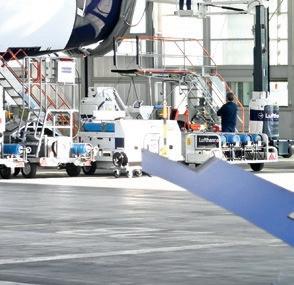
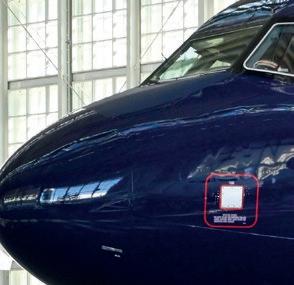
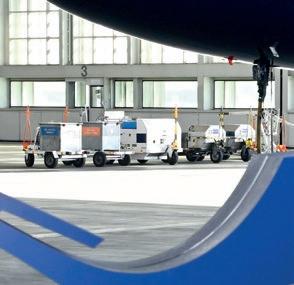
This year Lufthansa marks its 100th anniversary and still sits proudly as one of the world’s most successful airlines
The early days
Lufthansa’s story is woven into the very fabric of aviation. Just 20 years after the Wright Brothers first left the ground, the German carrier was already welcoming passengers on board.
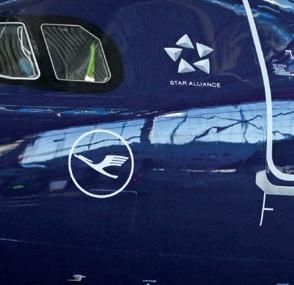
In April 1926, Luft Hansa’s first scheduled service lifted off from Berlin Tempelhof bound for Zurich. It followed the landmark merger of Deutscher Aero Lloyd AG and Junkers Luftverkehr earlier that year, forming Deutsche Luft Hansa AG (DLH). The now-iconic crane logo was there too, a symbol of grace, precision and forward motion.
Those early years were defined by a true pioneer spirit. The airline operated the Junkers F 13, affectionately known as the
mother of all commercial aircraft.
With space for just four passengers in a revolutionary enclosed, heated cabin and cruising at 140 km/h, it was modest by today’s standards — yet by the late 1920s, Luft Hansa’s network stretched to Moscow and even included “bathing routes” using flying boats to the German coast.
The leap towards a global brand
The post-war years saw the rebranded Lufthansa flourish.
The new airline launched operations in 1955, the same year that it welcomed its first Lockheed Super Constellation – the aircraft that opened the door to transatlantic travel and paved the way for jet services in 1960.
A premium experience begins
The jet age didn’t just expand Lufthansa’s reach; it elevated its ambition. Larger aircraft meant room to innovate, and in 1979 Lufthansa became one of the first airlines in the world to introduce a dedicated business class cabin.
It recognised that corporate travellers required more than just a larger seat. Instead, they would enjoy a new experience altogether.
That appeared on the Boeing 747, where 32 seats were branded as First Class, and the upper deck became a lounge where suits and ties were standard attire.
Lufthansa Allegris takes flight
While the lounge and formal dress codes
may be gone, today’s business traveller still enjoys Lufthansa comfort on a groundbreaking new level.
The airline is now two years into the most significant product upgrade in its history.
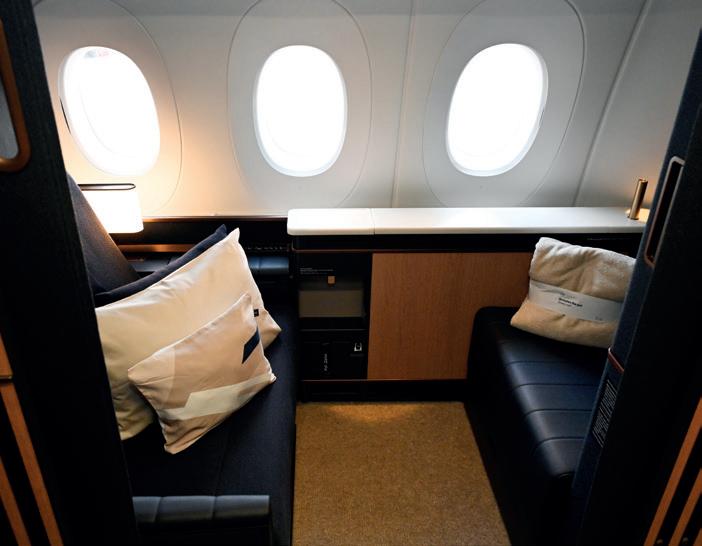
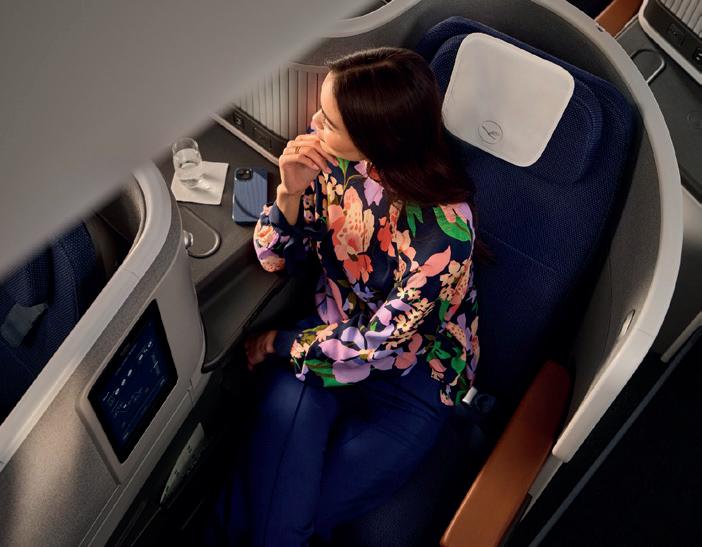
The new Lufthansa Allegris business class marks a shift away from a one-size-fits-all approach. Passengers can choose between five seating options, making the experience more personal, more relaxed and more comfortable than ever before.
Setting new standards
This new-look product continues Lufthansa’s pioneering approach to innovation and is currently available on services to 24 destinations from Frankfurt and Munich –great news for UK flyers looking for easy connectivity.
The flexible options of extra space, extra long beds, private suites or classic seats offer a tailored fit for all types of corporate customer (and will be coming to the Kuala Lumpur route this winter too!)
As Lufthansa Airlines Chief Executive Jens Ritter puts it: “Through Lufthansa Allegris, we have achieved a new standard, with a focus on personalisation to meet the varying needs of our passengers.”
All business class seats offer direct aisle access and, in a world first, heating and
cooling on demand. Add wireless charging, Bluetooth connectivity and a 4K monitor, and passengers can enjoy a seamless transition between work and play.
The Lufthansa Allegris sliding door suites are already flying on selected Airbus A350 and Boeing 787 routes, while the Airbus A380 fleet is being refitted with new Thompson Aero seats, with the first of eight aircraft already completed.
Flying responsibly
Comfort isn’t the only priority. Lufthansa is also pushing forward on sustainability.
With Business Comfort Green fares for travel within Europe, travellers contribute to the use of sustainable aviation fuel (SAF) equivalent to 20% of their estimated flight related CO2 emissions. The remaining 80% is balanced through climate care projects. For intercontinental routes the mix is 10% SAF and 90% climate projects, which includes the added bonus of fee-free rebooking.
A century of progress
It's no surprise that this is an airline that continues to be shaped by its pioneering thirst for excellence.
The renowned efficiency of its Frankfurt and Munich hubs, a new best-in-class business cabin, the network, combinable fares and optimised schedules of the wider Lufthansa Group all combine to prove Lufthansa is clearly designing its future with corporate travellers in mind.
It’s remarkable to think that 100 years ago, a heated cabin was a breakthrough. Today, Lufthansa stands at the forefront of global aviation. Its commitment to innovation suggests the next century will be just as transformative. business.lufthansagroup.com
Entering A NEW ERA
While mergers, acquisitions and partnerships are not unusual in the world of managed travel, the sector is now moving into a more intense phase of tech-inspired transformation. Gill Upton reports
After months of speculation, few in the industry were surprised by the sale of American Express GBT, but some were taken aback by its buyer, AI-driven investment company Long Lake Management, and also by the $6.3bn price tag.
The fundamental changes reshaping business travel require deep pockets and yet it seems investors see a market worth backing. This strong appetite was also seen when Navan’s IPO in the US raised a whopping $923m last autumn for its AI-powered T&E solution.
The Amex GBT sale has triggered much speculation and debate about how its business model might change under new ownership and what it signals for the wider sector.
“Corporate travel is no longer a slowmoving category. It’s a capital plus AI arms race between scaled incumbents, high-growth disruptors and potentially new entrants at the AI layer. And for the first time in a while, it’s not clear who wins,” observes Mike McCormick, Managing Partner, Travel Again Advisory. Industry consultant Martijn van der Voort notes that Long Lake and its
We're seeing that consolidation is prompting some to review their programme and ensure it's still fit for purpose”
investment partner General Catalyst have publicly expressed a preference for sectors considered “operationally neglected: process-heavy, fragmented and ripe for rationalisation through technology”.
“The conviction behind this transaction is real,” he says. “Corporate travel has carried structural inefficiencies that better-capitalised ownership could genuinely address.”
Clive Wratten, CEO of the Business Travel Association, points out: “AI on its own is not a fix-all for efficiency, service or customer experience. Across the sector, TMCs are all looking at how they can use AI in a meaningful way, while still maintaining the expertise, relationships and service levels that clients value most.”
Human intervention
While AI can streamline the booking and servicing process and remove traveller friction, when disruption hits – as the Middle East crisis showed – a tech-only operating model needs something more. It can’t sort the ramifications of sudden airspace closures and flight cancellations when all the anxious traveller wants to hear is a human voice on the other end of a line, 24/7, and to stay on the phone until new arrangements are secured.
Dane Molter, SVP Navan Group Travel Marketplace, claims its virtual assistant Ava now resolves around 55% of traveller queries, allowing human agents to focus on complex support requests.
“The opportunity AI is offering is revolutionary and TMCs that don’t holistically integrate the technology into their workflows and products will quickly become obsolete,” he warns.
Mel Quinn, Director of Corporate at Travel Counsellors, believes human contact is still vital. “The key questions buyers are now asking are less about, ‘what platform do you have?’ and more about, ‘who is actually looking after our people day to day?',” she says.
“Increasingly, businesses want to know they have a consistent point of contact who understands their organisation and can step in quickly during disruption.”
Marrying tech seamlessly with white glove is the goal. TMCs are striving to upgrade from legacy solutions to streamlined data-driven solutions that help solve the challenges of fragmented airline content and the upheavals in the distribution landscape.
TMCs are moving from transactional fulfilment to high-value work, such as VIP services, consultancy and outsourcing, says Eva Fouquet, SVP B2B at Kayak for Business. “As the business travel category simplifies, it means fewer agent touches, which is good news for corporations.”
While AI, data and integrated platforms are the gold standard, there is another big picture change happening too, says Ingrid Sanderson, founder and Managing Director of Principal Business Travel.
“The real development is that corporate travel is now being recognised as an
operational function, not just an admin task,” she explains.
Shifting landscapes
Change of TMC ownership is one way of funding business transformation and tech investment, fuelling M&A activity across the whole sector.
Direct Travel absorbed long-term partner ATPI, Good Travel Management and CT Business Travel became Good Business Travel, Amex GBT purchased CWT, and events and creative agency The Human Network snapped up Beyond Business Travel.
"The landscape is evolving quickly, and there’s a real sense of innovation and opportunity in the market right now," says the BTA’s Wratten.
Katie Skitteral, Group Commercial Director Direct Travel, says the sector is now entering a “genuinely tech-first era”.
“Long-standing challenges around content fragmentation, distribution and clunky processes are finally being addressed thanks to modern infrastructure and APIs which allow the tools and apps to finally speak to one another, instantly,” she says.
“I believe we’re on the edge of significant transformation, one where technology enables more personalisation and seamless, efficient travel experiences for both businesses and travellers alike."
While some TMCs sadly haven’t made it, others have rebranded, including TravelPerk becoming Perk, Diversity now DGI, and Beyond Business Travel now Identity Travel.
Some have opted to develop tech solutions in-house while others are partnering with third party specialists.
Domo recently became a strategic AI and data partner for the Advantage Travel Partnership, Meon Travel implemented Lokulus, Lumo and BizTrip AI joined forces for a tech partnership and Direct Travel has been rolling out its Avenir platform, powered by Spotnana.
More recently, there has been a natural convergence between TMCs, tech companies and expense platforms, exemplified by several strategic partnerships including Amex GBT/SAP Concur, Conferma/Mesh and the rumoured ALTOUR/Kayak for Business.
“It’s because clients are demanding
more connected ecosystems and fewer operational silos," says Iya Magen, CEO of Talma Travel Solutions.
The move translates to real-time data and automated reconciliation across the entire programme. Blockskye is also innovating in this space with Blockskye Capture payment product.
Similarly, meetings and events are seen as a natural extension of managed travel programmes as corporates want consolidated oversight across travel, meetings and spend. It’s one reason why Clarity’s two technologies – ClarityGo and MeetingsPro – can now talk to each other, creating a complete travel and meetings experience.
TMCs have also been launching M&E divisions or expanding them, including FCM Meetings & Events which purchased specialist fresh in March this year.
Time for a rethink
Change is coming thick and fast and what does all this mean for the buying community?
Global Travel Manager Katie Gerrahy of Wood PLC sees such moves as a positive. ”We've never been short of competition in the TMC sector and I think investment only helps improve standards and accelerate innovation,” she notes.
Consultancy Festive Road is sparking debate with a series of webinars exploring whether buyers should stay, go or rethink, triggered by the accelerated M&A activity among TMCs. Only time will tell if there will be a spate of TMC RFPs.
Peter Snowdon, VP Sales & Account Management at TAG, sees some evidence of this already. “We’re seeing that consolidation is prompting some travel managers to review their programme and ensure it’s still fit for purpose,” he says.
Will the mega tech-led TMCs only be about market share, scale and shareholder value? Gary Povey, COO,
The landscape is evolving quickly and there's a real sense of innovation and opportunity in the market right now”
Wings Global Travel, believes so. “Consolidation will widen the gap between travel tech providers and true service companies,” he says.
“This is why service models are increasingly being designed around the top 10% of spend, not around the needs of the majority of clients.”
It's why there may be space for smaller TMCs, believes Principal’s Sanderson. “For us smaller independent TMCs, I don’t see that as a threat if we stand clear about our value. Large platforms can deliver scale, but many businesses still want personal service, accountability and someone who will pick up the phone when travel becomes complicated."
The age of the mega TMC may spark questions over the need for greater financial and ownership transparency, believes Douglas O’Neill, CEO of Inntel.
“The funding structure and ownership model can dictate company culture and decision making,” he points out.
These seismic market changes also give buyers an opportunity to take on a more strategic role. “I think it creates opportunities for travel managers to really demonstrate value to their organisations as technology starts to move them away from operational work to focus more on strategic items. Travel managers need to be brave and embrace the change that’s coming,” says Gerrahy.
Clarity’s Chief Growth Officer Donna Fitzgerald agrees that these industry changes will re-shape buyers into techsavvy curators, “responsible for selecting platforms that deliver seamless and personalised traveller experiences while maintaining policy compliance”.
It’s time for buyers to step up, adapt to change, and occupy the driving seat.
A CHANGE IN MINDSET
‘Business travel should be enjoyed, not endured’ is the new slogan for Wings Global Travel. Head of Growth, Matt Forbes, explains the thinking behind the message
What does “enjoyed, not endured” mean, and why do you think it resonates with corporate travel buyers?
“Enjoyed, not endured” means recognising that we can give travellers what they want without surrendering cost control or oversight of travel programmes.
I’d go further and say that an enjoyable experience is not only for travellers but for the travel manager, the arranger, finance and HR teams and any other individual who touches travel. Their working lives improve when we minimise frustration by eliminating unproductive tasks.
For the traveller it’s about preferences, amenities, comfort, reward points, in-trip support, leisure opportunities or the ability to extend a business trip with leisure time. Or it might simply be a complex multi-leg trip that runs like clockwork.
It means continuing to push for efficiency through automation, but it also means
recognising that it doesn't matter whether we’re talking about travellers or travel managers, people still value personal, responsive and adaptive service.
The priority for travel managers, finance departments and procurement teams is cost control. Do you really see that changing? No, but my argument is that traveller experience and effective cost control are complementary, not contradictory.
Our current mindset is wrong – we tend to think that travel policy exists to limit choice, restrict options and tick the duty of care box on HR forms. If we continue to think like that, we’ll continue to struggle with compliance.
I’m not defining good traveller experience as the expensive, do exactly as you please option. I’m saying that happy, comfortable, well rested travellers make great business sense.
Are companies really willing to spend more on ‘experience’?
At Wings Global Travel, we believe that focusing on experience is one of the strongest levers on costs.
We recognise that travellers deviate from the travel policy not out of wilful disobedience but because they feel they can make better, cheaper, quicker bookings themselves.
If you make compliance the best and easiest option, people will stay on policy. That not only means better control of costs, but an improved ability to fulfil duty of care.
You’re only going to know where your travellers are if their booking was made inside the travel programme.
How are younger business travellers changing expectations around corporate travel?
Millennials and GenZs will soon account for a majority of business travellers. While the usual conclusion is that these generations want everything to be instant and digital, the truth is more nuanced.
Technology is mainly exciting for the over 50s. For everyone else, it’s a given. Maybe that’s why we’re seeing a growing appetite for traditional service values, particularly among younger travellers.
We’re also seeing a change in attitudes to work and a blurring of traditional work/life boundaries. Travel is now more likely to be seen as an opportunity rather than a chore or a sign of status, and as leisure travel becomes more expensive, business travel is increasingly where people seek enriching experiences.
We’ve believed for decades that people are more productive when they enjoy work, but I’ve never heard a client ask: “How will you make business travel more enjoyable for travellers and travel managers?” It’s time we changed that. wings.travel
My argument is that traveller experience and effective cost control are complementary, not contradictory”
TIME FOR A RESET
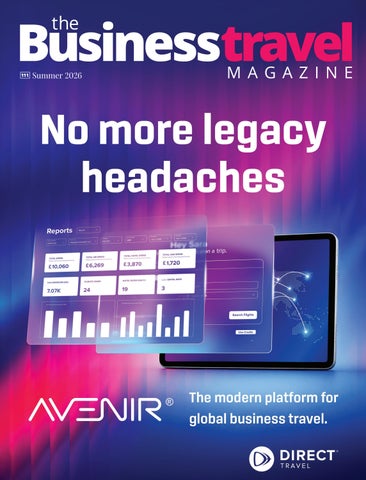
Katie Skitterall, Group Commercial Director of Direct Travel, calls on travel leaders to rebuild their programmes from the ground up instead of trying to fix ‘legacy issues'
Fixing most corporate travel programmes today is like adding modern technology to a 1960s television set. You might improve parts of the experience, but fundamentally, you’re still working with something never designed for how we operate today. So why do we accept this in business travel?
Fragmented content. Duplicated data. PNRs that don’t connect. Layers of legacy systems, added over time, until complexity becomes normalised as “just the way things are done”.
These compromises are familiar. For those newer to the industry, they’re often positioned as unavoidable and written off as “legacy issues” that can be improved, but never truly solved. But that assumption no longer holds.
Today, we don’t need to keep repairing what was built for a different era and managing workarounds. The combination of modern platforms, richer content and true connectivity means we have a genuine opportunity to step back, challenge what we’ve inherited and design something fit for business travel today.
This isn’t about another enhancement or incremental upgrade. It’s about a reset. The real question isn’t just “What if you could start again?”, it’s, “Why wouldn’t you?”
Having spent years working with travel leaders navigating exactly these decisions, one thing is clear: Modern platforms are solving the legacy issues and headaches we’ve all been facing. But that’s just the start. Resetting is about rethinking the fundamentals too: how you engage your
business, who you bring into the process, what you prioritise, and how you create a programme that adds value. With modern infrastructure at the core rebuilding your programme with purpose is finally possible.
If you had a blank sheet of paper - or a magic wand - how would you rebuild your travel programme? What would you keep, what would you discard, what works, and what would you design differently?
Start with the business, not the tools
My first conversation would be with the people shaping the company’s future. I’d engage my CEO and C-Suite early, get buy-in and understand how they see travel supporting the business. I’d align travel with their objectives and goals. Then I would show how travel can add value, in their terms.
If travel wants to be a strategic function, it must start with a clear view of where the business is heading over the next three, five, or 10 years and support the business to get there. Ask these questions:
• What are our commercial objectives?
• How do we want to grow?
• Where are we investing, and why?
• What does good decision making look like five years from now?
Travel doesn’t sit outside those answers. It enables them.
Choose technology for where your business is going, not where it’s been
So many programmes are built around existing tools, rather than around business outcomes and needs. That’s how organisations end up having to manage workarounds instead of removing them.
With modern infrastructure at its core, a reset is an opportunity to design something
We're at an inflection point. The shift is simple: we're no longer fixing travel programmes – we're rebuilding them”
intentionally connected, scalable and ready for the future.
That starts by engaging technology leadership. Travel should sit within an ecosystem that connects people, data and decisions across expenses, HR and duty of care, not work in silo, or as an add-on. You want one connected platform.
Ask the bigger questions:
• What is our long term approach to technology?
• How do AI, automation and self-service fit in?
• What systems can connect?
• How are modern platforms using open APIs to connect databases and systems, and what are the benefits
•Where can technology remove friction, and where does human expertise add value?
Consistency matters
Multiple tools across regions create complexity for travellers, travel managers, and data visibility. That doesn’t need to be the case. One global platform. One set of data. One clear strategy.
This doesn’t mean ignoring local needs but designing a global programme with them in mind from the start.
Global alignment delivers a consistent experience, one place for bookings and data, and a unified travel programme.
When travel is consistent, measurable and aligned, it becomes easier to justify investment, demonstrate the value of manageed travel, and show impact to your organisation's leadership.
Listen to the people who matter most
Technology alone will not deliver change. Engagement will. Spend time listening to the people who use the programme most: frequent travellers, senior executives, and those who regularly book outside of policy. Understand where frictions exists and what “good” looks like now and in the future. Bring those voices into the design process early. Those most affected should help shape the change.
Own your content strategy
Rebuilding also means rethinking how content is sourced and delivered. I wouldn’t rely solely on traditional
distribution channels. I’d design a content strategy that brings suppliers closer through direct connections where they add value.
Done properly on open API, this gives travellers access to all content in one place, from negotiated rates to loyalty benefits, and a better user experience that will ensure they stay on programme.
The commercial impact is real too. Direct connections can unlock huge savings of around 10% for some hotels and airlines compared with GDS content, and eliminates GDS surcharges - often £16-£20 per booking. It’s about intelligently centralising content for better choice and better value.
Build momentum through pioneers
Every organisation has early adopters willing to test and challenge new ideas. Bring them on the journey, use them to stress test ideas and let them help socialise change before it becomes mandatory. Pilot new processes and technology with them.
Transformation doesn’t happen by enforcement, but through advocacy.
A moment to reset
We’re at an inflection point for business travel. The tools available today mean we no longer have to accept legacy limitations. The shift is simple: we’re no longer fixing travel programmes – we’re rebuilding them.
So, take that blank sheet of paper and design for tomorrow, not yesterday.
Because when travel works properly, it doesn’t just move people around the world, it moves the business forward and puts you in the driving seat.
Scan to find out more about Avenir by Direct Travel. Global Travel. Done better.
Learning CURVE
It’s still early days but the use of AI in corporate travel management is now entering a new phase, says Nick Easen
t’s hard to avoid the hype around artificial intelligence. Endless column inches in the media extol the tech’s virtues, including its ability to boost productivity and save workers’ time.
However, its deployment specifically in managed travel is far from ubiquitous, while knowledge and understanding is still patchy at best.
“Among travel managers, I don’t hear much about anyone using AI beyond
querying data at the moment,” explains Ron Glickman, Head of Sales at Acai Travel, who also sits on the GBTA Technology Committee. “If we can learn anything about this, it’s that it’s still in its early days.”
Shout from the top
A small number of enterprise travel managers, larger TMCs and travel tech suppliers are the ones leaning in to AI, since they have the resources to do so,
says Acai Travel’s co-founder and CTO Pavel Pratyush. In listed companies, the pressure comes from on high and earnings call are driven by investors asking how the tech is being adopted to cut costs and boost efficiencies.
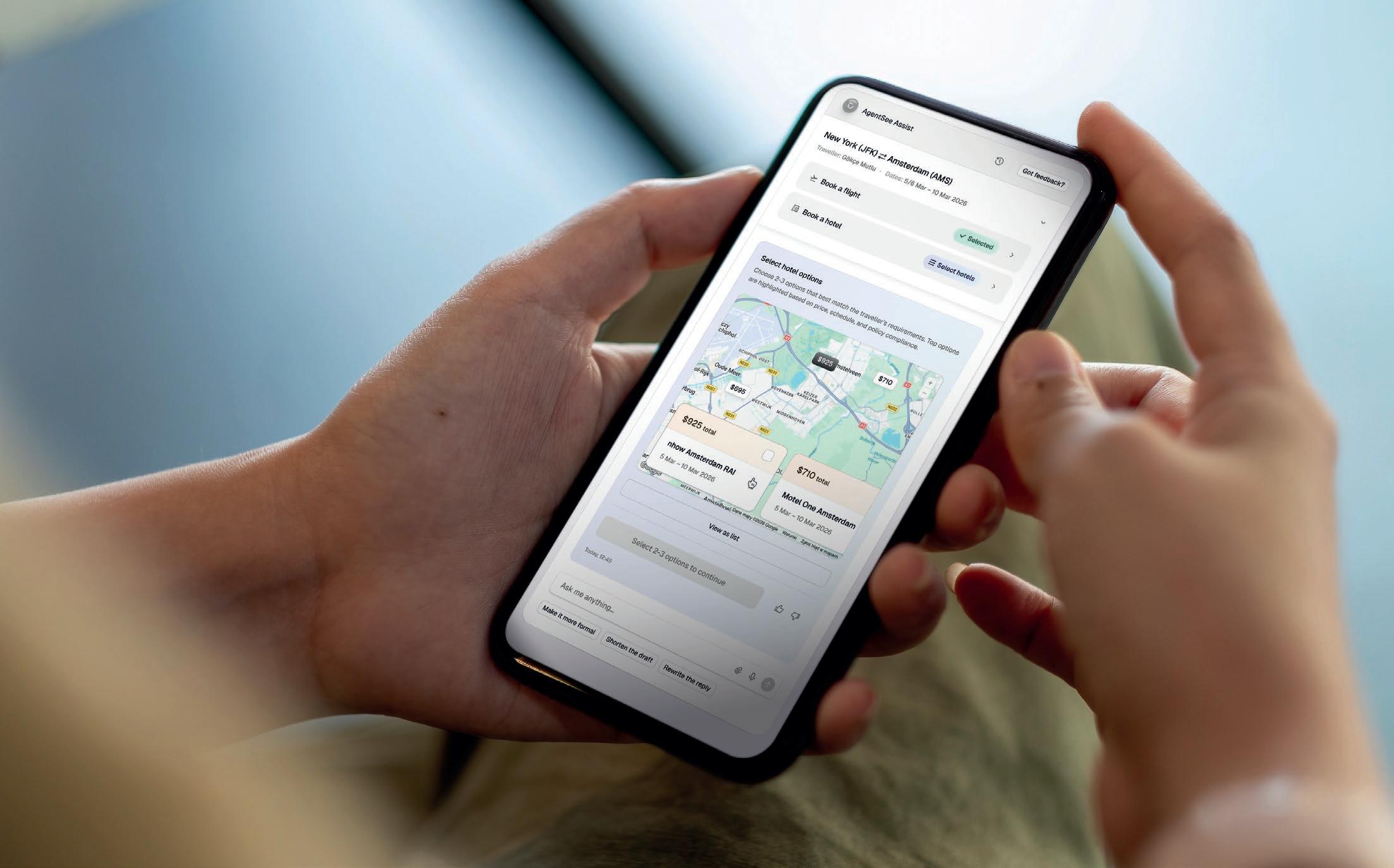
“We’re using the Gemini large language model to translate travel policies into multiple languages and maintain an AI knowledge base,” says Evelyn Hamilton, Global Bid Manager at Transcom.
“This allows employees to self-manage
various aspects of travel, including bookings, expenses and insurance, using natural language processing queries.
“The greatest efficiencies come from saving time and eliminating repetitive, or frequently asked questions. This allows travel managers to shift their focus toward strategic planning and highpriority, complex cases.”
Alicia Zarazua, Global Travel Manager at ESAB Corporation, says it uses AI-focused tools to analyse flight history to predict delays and then offer smart rebooking options. Another major use has been disruption management.
Meanwhile, Salesforce has developed an AI-driven chatbot to answer questions around travel policy. Placed into Slack, it can present the right information to travellers and reduce the repetitive queries handled by the travel team.
One of the challenges to AI adoption is the gap between the possibility of what AI can do and where it is today in reality”
Saving grace AI recently came into its own to help deal with disruption. “AI agents were automatically identifying and rebooking travellers affected by the situation in the Middle East, ensuring their safety and minimising downtime,” says PredictX CEO Keesup Choe.
Travel managers are certainly able to conduct better deep dives into their travel data, policies and RFPs using textbased queries enhanced by AI. Since intelligent chatbots now understand human speech more intuitively, auditing and reporting is easier.
“The best use cases currently are in automated support and personalised sorting. In support, I mean a smart conversational and agentic agent,” states Dane Molter, Senior Vice President for Navan Group Travel Marketplace.
immediately. We also condense thousands of hotel reviews into a single summary so the traveller can decide and book in seconds,” says Florian Mueller, Head of Commercial.
“Our roadmap is built on the belief that the future of travel AI is conversational and personalised. We are regularly running pilots with clients to move away from rigid forms and traditional workflows toward an experience that understands a traveller’s intent through a simple conversation.”
KAYAK for Business is using conversational AI to smooth the search and book process. “Instead of wasting time with manual checkboxes, a business traveller can simply type their requirements in plain English to sort through options and find the right trip
Help yourself
Self-service on steroids is the order of the day. AI can deal with routine questioning during the booking process, and with a bit more personalisation offer up smarter recommendations for travel plans. Expense claims can also be processed and audited more easily to combat fraud.
“One of the challenges to AI adoption at the moment is the gap between the possibility of what AI can do and where it is today in reality. It’s intelligent, but it’s still a child. Yet it will only get wiser,” states John Sturino, Senior Vice President for Product & Engineering at American Express GBT.
Forward momentum
Two factors are driving change. Firstly, managed travel sits under the remit of finance and procurement, a department that is firmly in the crosshairs when it comes to greater automation, efficiencies and cost savings. Secondly, AI is rapidly being embedded into many platforms, interfaces and apps, making it more accessible and familiar in the workplace.
“One of the clearest lessons from this first serious phase of AI adoption is that value comes fastest when AI is applied to real operational friction,” points out Pete Ross, Technical Architect at Lokulus.
This is reiterated by Shelley Mathews, Chief Revenue Officer at Take2Eton, who believes AI works best in high volume, data heavy and time critical areas, where monitoring and complex analyses are crucial – humans just can’t process the volume of travel data quick enough. AI can also bring together disparate sources of data as well.
But there are big challenges to AI deployment. Managed travel is often highly complex, where dated infrastructure is a major barrier to change. Most systems weren’t designed with AI integration in mind, while workflows are focused on human operators.
“The reason we’re also not seeing more DIY or in-house deployments is because businesses don’t have mature governance frameworks in place to enforce data security, ensure legality and guarantee accountability,” explains Karen Janssen, Chief Information Officer at Wings Global Travel.
“AI theoretically enables faster, smarter content sifting and admin than anything previously possible. But who governs the
travel policy that the AI is checking against? Who is accountable when a recommendation falls outside compliance?”
It doesn’t help that travel data sits across multiple systems and channels –think GDSs, OBTs and airlines, as well as multiple suppliers in various categories, coupled with siloed data in-house. At the same time, AI is evolving quicker than many business’ ability to adopt the tech.
“Data is certainly key to improving AI, and AI is only as good as the data behind it. Like any new technology, it can also introduce novel risks, such as biased outputs, privacy threats and fraud,” says Paul Dear, Regional Vice President for Supplier Services EMEA at SAP Concur.
“To overcome this and build trust in AI, businesses need to consider enforcing common data standards, robust security measures, and human oversight for all deployments.”
Stark
realities
True agentic AI, where AI acts like a travel agent managing the entire ecosystem is the holy grail, but this faces challenges.
Consultant Martijn van der Voort sums it up: "It’s not about better search or a cute chatbot, or slapping a conversational layer on yesterday’s workflows. The real question in travel is harder: Can AI-driven intent be translated into a controlled, auditable, executable transaction across live travel systems? That’s the battleground."
Pratyush at Acai adds: “The barriers are real, and anyone in this space who tells you otherwise is selling something. The honest version of the future is that AI doesn't replace travel management, it raises the floor on what's possible with the resources you already have."
The fact is that the fully digitalised, data-driven business is a long-way off. This will continue to dampen AI adoption. It is going to need a leap of faith by some organisations if things are to change.
Certainly, big TMCs and travel tech providers are chipping away at the challenge. They’ve now realised that AI won’t be adopted unless it is grounded in travel-specific infrastructure and operational reality. The focus is now on achieving incremental efficiency gains.
“Managed travel requires predictable outcomes, auditability and accountability. While there is appetite to use AI, there is little tolerance for solutions that introduce uncertainty or increase downstream risk,” explains Todd Arthur, Managing Director for EMEA Agency Solutions at Sabre. “In practice, AI adoption aligns most closely with areas where benefits are immediate and measurable, such as faster servicing, clearer reporting, and improved traveller experience during disruption.”
One observation is that the industry is learning fast. There is now a greater understanding of where AI can add value to travel management.
“The real opportunities lie in more predictive and proactive travel management, especially around disruption and rebooking, deeper personalisation grounded in traveller context, rather than generic profiles, and real-time decision support embedded directly into booking and servicing flows,” states Mark Cullen, Chief Commercial Officer at Amadeus Cytric.
We are now in a different, more grounded, phase. This can only be a good thing for all involved.
“Ultimately, AI adoption in managed travel will be defined less by ambition and more by execution quality. Things have changed,” concludes Sabre's Arthur.
While there is
appetite to use AI,
there is little tolerance for solutions that introduce uncertainty or increase downstream risk”
FRONT
TAKE FIVE
Darragh Vallely, Head of EMEA at Front, shares five ways travel management companies can improve their all-important customer response times
Speedy response times are a key requisite of a TMC's customer service, but not at the expense of accuracy and professionalism. Think of the VIP traveller stranded at an airport calling up expecting someone who already knows the situation, or the rebooking that needs policy sign-off 20 minutes before the last seat goes. Speed without structure doesn't just frustrate travellers; it erodes the trust that corporate clients are renewing contracts on. Here's how to manage it better:
1. Centralised communication
Fragmented context is where TMC service falls apart fastest. When a traveller's rebooking request comes into reservations@ while their account manager is fielding a separate escalation through a client-specific alias, nobody has the full picture, and the traveller ends up calling back before anyone has realised the situation has moved. Bringing everything into one shared thread changes that. Not a ticket summary or a CRM note, but the actual conversation, with every update visible to everyone who needs it. Teams co-ordinate directly within it,
decisions are logged as they're made, and the traveller gets one coherent response instead of a duplicate call or a request to start over.
2. Clear ownership and assignments
Most service breakdowns don't happen because nobody cared. They happen because nobody was clearly responsible. A disruption case that crosses into the overnight shift without a proper handoff leaves the incoming consultant starting from scratch at exactly the wrong moment. Clear ownership means one named person is accountable for every conversation, with transfers tracked as part of the workflow rather than handled via a forwarded email. When a conversation comes in, it's assigned immediately. If it sits past a defined threshold without action, it escalates automatically and visibly. Either someone owns it, or it's flagged as at risk.
3. Workflow automation and routing
Inconsistent routing is where SLAs quietly bleed out. Priority accounts sit in a general queue, and agents re-triage work that should never have landed with them in the first place.
Automation fixes the routing layer. You set rules based on what actually matters: urgency, account tier, request type. A VIP rebooking after a cancellation hits the priority queue immediately. A standard cancellation moves through an AI-assisted draft with a quick human review before it goes out. The repetitive work gets handled at speed; the judgment calls stay with the consultants who know how to make them.
4. Real-time visibility and dashboards
The problem with end-of-week reports is that by the time they land, the damage is done. A queue building on Tuesday afternoon doesn't surface until Friday, by which point three clients have already chased.
Real-time dashboards give leaders a live view of which queues are growing, which conversations are ageing, and where ownership has gone quiet. For support teams, that means catching SLA risks before they breach. For ops leaders, it means spotting misrouted tickets or uneven workload during a disruption spike without waiting for someone to flag them. Stewart Travel Management runs a 39-minute average response time against a 90-minute SLA. That comes from seeing what's happening in the moment, not in retrospect.
5. SLA tracking and reporting
Tracking SLAs and operationalising them are two different things. In travel, steadystate averages only get you so far. The real test is whether your team holds the line when a weather event causes inbound volume to triple within an hour.
Done properly, SLA management turns deadlines into active guardrails. Each conversation carries a deadline tied to customer tier or enquiry type, with warnings surfacing as those deadlines approach. When a threshold is crossed, escalation triggers immediately, not on Friday's report. That gives leaders visibility into which commitments are at risk, which teams are running hot, and whether the root cause is capacity, routing, or ownership. SLAs stop being numbers to report and start shaping how your team works, especially on the days when everything is happening at once. front.com
OVERSEE
IN THE FRONT LINE
Matt Roberts, Senior Director of Channel Sales at Oversee, outlines what the company is shipping, what its customers are seeing and where travel management company performance goes from here
In a nutshell, what is Oversee?
Oversee is an AI-powered optimisation layer for travel management companies (TMCs).
The platform has four modules: FareSaver and HotelSaver for automated post-booking air and hotel reshopping, AgentSee for agentic AI in agent operations, and Travel Sourcing Optimisation through analytics and contract auditing.
We work with more than 7,000 customers in over 60 countries, including half of the top 100 TMCs in the UK and the largest TMCs globally.
The idea is simple: scale TMC performance without the need to force changes in your tech stack or workflow.
What are the latest developments at Oversee?
From a reshopping perspective, much of our work recently has been about helping our partners use data they already have in order
to boost reshopping performance and savings generation.
That shows up in stronger savings and reshopping results across both air and hotel, with the engine continuing to capture price drops well after the void window.
On sourcing, sourcing analytics and contract auditing help identify leakage and missed opportunities, and ensure that customers get what they negotiated.
And AgentSee, our agentic AI for agent operations, is boosting operational efficiency across the booking lifecycle and giving TMCs a credible path to scale capacity without proportional hiring.
How are you helping your customers overcome today’s volatile pricing environment amid the Middle East crisis?
Few industries live closer to pricing volatility and the AI inflection point than corporate
travel. For TMCs, the pressure shows up in margins, agent capacity, and the savings they can credibly defend to clients.
Right now, costs are elevated and prices move daily, which widens the gap between the booked fare and the best available fare.
That gap is recoverable leakage - and higher volatility means more savings opportunities.
FareSaver and HotelSaver continuously catch price drops after booking and rebook like for like, with no traveller disruption.
To date, we have delivered over $300 million in savings across more than 2 million bookings, averaging roughly $200 per air PNR.
AgentSee helps TMCs deliver faster, more efficient service across nearly every point in the booking lifecycle, helping support teams move faster amid disruptions to travel.
Tell us more about AgentSee and how it’s helping TMCs
The pattern we keep hearing is that the best workflows are the ones that combine automation with human oversight.
A single booking request can often run to seven email exchanges, and almost every step contains repetitive background work
that the agent should no longer be doing.
AgentSee handles that layer: checking for missing information, pulling up travel policy and the traveller’s profile, finding options on the GDS, and drafting structured responses.
It works through a chat-based interface that agents are already comfortable with, so adoption is fast. The effect is meaningful gains at almost every point in the booking lifecycle.
Who are your newest customers?
It’s been a very busy year already. World Travel in Tulsa added HotelSaver to Faresaver earlier this year, bringing post-booking price assurance across air and hotel into a single rollout. Fox World Travel formally partnered with us on HotelSaver to tighten rate assurance for their corporate clients. And Kintetsu International extended air and hotel reshopping to its global customers.
We are seeing real momentum across North America, Europe, and Asia, with more announcements coming soon.
The pattern is consistent: TMCs want one platform that compounds value across the booking lifecycle.
What have been the other highlights of 2026?
Oversee was named TravelTech AI Innovation of the Year in the 2026 TravelTech Breakthrough Awards Program, and our Hotel Team is a finalist in The Business Travel People Awards, which we are extremely excited about.
We’re also a finalist in the Business Travel Awards for our Business Travel Achievement in Artificial Intelligence Innovation.
All these nods reflect the operational impact our customers are seeing from AgentSee and the broader platform. This recognition really
The idea is simple: scale TMC performance without the need to force
changes in your tech stack or workflow”
matters to us because it speaks directly to where we are pointing the platform.
What’s your advice to TMC leaders looking to use AI in their businesses?
Two things. Firstly, retire the pass/fail mindset. AI is not a legacy tool where a single workflow either fires or fails. It touches many workflows at once, each at a different depth, and the gains compound across thousands of interactions.
Secondly, build a real scorecard before you scale. The TMCs getting it right are measuring productivity, quality, containment, traveller experience, and resilience under disruption. That is how you move AI from a feature into an operating layer, and how you defend the investment quarter after quarter. oversee.biz
TRAVEL SOLUTIONS
PUSHING THE BOUNDARIES
Nick Bettles, CEO Europe for Talma Travel Solutions, shares an update on its European expansion, new leadership team and how Talma is doing things differently
Tell us about Talma’s rapid expansion and growth in Europe Europe is and will always be one of the most strategically important markets for Talma and it was keen to expand in the region by acquiring the right travel management companies – ones with strong reputations, deep local expertise and exceptional service cultures – and then to invest in those. We acquired Norad Travel and then Blue Cube – two businesses with an unbelievable legacy and a phenomenal level of client retention –and now we’re in a period of significant investment and change. My role, since joining seven months ago, has been to integrate the businesses together and to create an aligned and consistent approach to market.
How do you achieve that global consistency?
Fragmentation remains one of the biggest weaknesses in the traditional travel management model. Many organisations operate through franchise or affiliate structures, which can create inconsistent servicing, disconnected reporting, diluted accountability, and varied client experiences across markets.
Talma has taken a different approach. Our global footprint is built around fullyowned offices in major international travel hubs, giving us direct control over operations, service delivery, governance and strategic execution across markets
When you overlay that with Talma’s global systems, processes, platforms and nextgeneration travel technology, you’ve got something on another level.
What’s special about Talma’s technology?
Technology has been one of the most important accelerators of Talma’s growth.
We have invested heavily in nextgeneration infrastructure, combining strategic partnerships with proprietary technology to create a far more connected travel ecosystem. Earlier this year we expanded our existing partnership with Spotnana into Europe, which allows us to create an agile, transparent and fullyconnected travel ecosystem, giving our clients greater control, smarter insights
and flexibility. It really does set new standards for modern travel management in the region and already we’re seeing that our existing clients – and potential new clients – are genuinely intrigued about what this is going to look like. There is a real sense of excitement.
Alongside this, our proprietary agent desktop, Voya, is transforming the servicing experience for our teams, allowing them to
TALMA
access content from multiple sources through a single interface and removing the inefficiencies of switching between disconnected systems.
Our clients’ travel policies can be embedded directly into workflows, ensuring servicing decisions remain aligned with programme objectives, approval frameworks and traveller requirements.
For clients, this means faster servicing, better content access, stronger policy alignment, reduced friction, and a travel programme that combines automation with expert human decision-making.
How important is the ‘human’ side of your business?
Our people are vital to our growth. We have some unbelievable talent and through a reorganised and realigned structure, we’ve had the opportunity to invest and bring new people in to take us to that next level. In doing so, we have looked outside the traditional TMC space, to help us drive innovation and to bring a new approach.
So, Rachel Morrish has joined us from Addison Lee as our Operations Director, bringing a fresh perspective as a supplier, and that has been revolutionary for how we operate. Clare Clifford is our Director of People. She started in the leisure travel sector but has then worked outside of the
industry. Gemma Sparrow joined us from the Advantage Travel Partnership to become Head of Business Development, Leisure. They’re all bringing so much to the team. We’ve also seen several people take up opportunities in our global operations teams and others were identified as future leaders and were promoted.
This strategic growth is allowing us to nurture talent and a big part of this is building the right environment of trust to attract and retain talent, which then creates and protects long-term relationships with our clients and suppliers. We currently have a 98.1% client retention rate across our European portfolio, which reflects both the strength of our client relationships and the consistency of our delivery.
How will you maintain this high client retention rate?
Ultimately, retention comes from deeply understanding each client’s business
Our strategy is to stay ahead of the curve...to redefine what a modern global travel management partner looks like”
culture, priorities and operating environment, and building programmes that align accordingly.
We don’t see ourselves as simply a transactional TMC. We operate as a travel management solution, combining best-inclass traveller-facing and back-office platforms with high-touch specialist services to create genuinely personalised programmes for clients.
I believe the key to our future success is the mindset shift of our people. Whether it’s our finance, sales or operations teams, we need to ask, ‘Why do we turn up every day and do what we do?’.
It’s about understanding that what we do allows our clients to do what they do, whether that’s to attend a meeting, to close a big deal, to build relationships internally or to attend conferences. Whether we’re getting them to New York or Johannesburg, Bristol or Newbury, we are facilitating growth for our clients, who need reliability, responsiveness and consistency.
When I started at Talma, the first thing I did was to go and speak to our existing clients and I was genuinely surprised by the high level of customer satisfaction. Without fail, even before I'd sat down in the chair, our clients were telling me how great we were, and the dominant theme that shone through was trust. They saw us as a trusted partner and an extension of their business, who enables them to do what they do best. Our strategy is to stay ahead of the curve. It’s not to simply to become a larger TMC, it’s to redefine what a modern global travel management partner looks like. Our vision is to be Europe's most trusted travel partner and I’m so excited to be part of that. talma.com
NICK BETTLES
Nick Bettles was appointed CEO Europe of Talma Travel Solutions in September 2025. He previously held key roles at Virgin Atlantic, Etihad Airways, Cathay Pacific and RX Global. With $1.6 billion in annual sales, Talma is one of the largest travel management groups in the world, with 550 employees in more than 25 countries.
Twist, turn, REPEAT
Travel disruption, new technologies and cost pressures mean corporates are constantly revising what they want from their TMC. We asked industry experts for their top tips on what to ask at RFP time
SECURITY TRACKING AND REAL-TIME DUTY OF CARE
This is the pressing ‘hot topic’, according to Andrea Caulfield Smith, Advantage Travel Partnership Managing Director, Global Business Travel. It’s vital to ask how TMC systems integrate with the corporate’s own, she says, so travellers can be reached quickly. “Some corporates saw this unravelling in the Middle East,” she warns.
Festive Road consultant Abi Cummings advises requesting details on how quickly travellers are identified and contacted during disruption, what proactive rebooking support is provided, and whether support is 24/7 across all regions.
TECHNOLOGY
A priority is to assess how intuitive booking tools are for occasional users. Are systems
designed to drive behavioural change and boost compliance?
Examining how the TMC’s systems will integrate into your own, such as HR, finance, safety and security tracking is a key consideration, as is their Online Booking Tool (OBT) capability and configurability. Involve your IT teams and remember, it’s about your needs, not what the supplier’s standard platform offers.
It’s important to request details on integration with tools such as Microsoft Teams and other messaging platforms to support natural language booking and traveller servicing.
Buyers are also increasingly using specialists to examine all the emerging technology options like Spotnana, Blockskye and Skylink, says Paul Tilstone, founder of temoji Consulting. “Buyers want guidance on who to include, how to include them and how they combine with TMCs and/or technology partners,” he says.
ARTIFICIAL INTELLIGENCE
AI and, increasingly, agentic AI, can be used to good effect, but a key issue is whether AI is being used to deliver faster responses and smarter options or is simply there to reduce costs, says Mel Quinn, Travel Counsellors for Business Director of Corporate Travel.
demand for AI that is embedded into servicing, improving speed, accuracy and agent efficiency while maintaining high touch human support for complex situations. Buyers want proof of real, operational AI, not future concepts.”
Riccardo “Riky” Vittoria, founder and CEO of Acai Travel, says AI-related questions should be: “How are you deploying AI? What kind of savings are you achieving? What kind of automation rates? Can you share any use cases? What kind of NPS score improvements are you seeing?”
He explains: “Corporate buyers need to look a bit deeper into how the TMC is using AI so they can score better, [discover] which are the TMCs that actually have something deployed and working well versus those who are still thinking about it?”
Festive Road’s Cummings adds that it is important to know how AI works in the real world in order to support disruption management, reporting, data insight, agent efficiency and accuracy.
Corporate
buyers need to look a bit deeper into how the TMC is using AI so they can score better”
COST
Buyers want to pay less for their services, with Advantage Travel Partnership stating that average transaction fees are falling from 5% to 3%. Make sure costs are transparent; they will vary according to the product mix of online and offline. Another benchmark is the benefits the TMC brings versus corporate negotiated rates with airlines, hotels and ground partners.
Similarly, TMCs should review the average cost across an origin and destination to benchmark potential savings; for example, comparing one financial sector client’s travel patterns to another.
Ask how quickly benefits and savings will be achieved and how the TMC can demonstrate long-term trust with similar businesses. Festive Road believes it is important to create your own required SLA and KPIs and make the TMC accept them or counter them.
CONTENT
An ITM Trend survey highlighted that access to full content and distribution is the top priority for buyers, with online booking tool optimisation second. Tiltsone at temoji Consulting says the link is no coincidence, with travellers increasingly asking about access to content and airlines “applying costs and content gaps into traditional channels, plus incentives and additional
Ask how quickly benefits and savings will be achieved and how the TMC demonstrates long-term trust with similar businesses”
content into NDC channels to encourage shift”. He explains: “Travel buyers are wanting to go deeper in the RFP on the ‘tech stack’ and ability of the TMC/OBT combination to serve modern content to their travellers and to service it.”
CULTURE
Ask whether the TMC offers dedicated consultants or a centralised setup – find out who will manage your account day-to-day. What is their experience and is there a consistent point of contact who understands your business?
Ensure 24-hour support and a person at the end of the phone who really knows your business and its issues.
Take2Eton Group's Mathews believes that 24/7 support “is no longer enough on its own”. “RFPs now probe ‘follow the sun’ models versus true global teams,” she says. Festive Road’s Cummings recommends asking about organisational culture and how it translates day-to-day.
“Request details on how the TMCs tailor their service delivery, governance approach and stakeholder engagement to align with different clients, rather than applying a fixed standard approach,” she says.
SUSTAINABILITY
Sustainability has moved from a reporting exercise to an operational requirement, says Mathews at Take2Eton. As a mere baseline, she thinks travel managers should “now expect carbon visibility at point of booking, policy driven nudges towards lower impact choices and meaningful sustainability data they can act on”.
Ask whether the TMC offers dedicated consultants or a centralised setup – who will manage your account day-to-day?”
Because one size doesnʼt fit all. Your business doesn't fit a template. Your travel program shouldn't either. Our open platform gives you real flexibility to pick what works, ditch what doesnʼt and build a program that moves as fast as you do. The right tech. The right partners. All working your way.
Showing THE WAY
As businesses become increasingly aware of their social impact, travel management companies are helping to guide and inspire them, says Nick Easen
When it comes to social impact and corporate social responsibility (CSR), leading by example matters.
If travel management companies want the industry to be more responsible and accountable they have to energise customers, suppliers and people to engage more, whether that's by helping local communities, reducing carbon emissions or through responsible procurement.
There are many worthy projects that organisations can now tap into. Some TMCs have in-house charities or volunteer programmes for staff and clients. Others support community projects locally and overseas, as well as opting for more responsible supply chains. Then there are projects focused on diversity and inclusion. It’s an area that has moved way beyond being just a tick-box exercise.
In recent years, ESG, environmental, social and governance, as well as CSR frameworks, have been embedded into countless contracts. “There’s now a clear shift towards integrating sustainability and social value into core travel programmes rather than treating them as separate initiatives,” explains Sam Whittle, Chief Commercial Officer at DGI.
Through this process TMCs have been developing the data, metrics and tools to deliver genuine results, and this is also allowing organisations to take a more structured approach.
“What’s changed is that good intentions are no longer enough. Companies need
evidence. Clients are also looking for true validation,” explains Pippa StrasserGanderton, Director at ATPI Halo.
“TMCs can increasingly act as the bridge between travel data, CSR strategies and real-world impact. This enables travel managers to bring credible, reportable initiatives back into their organisations.”
Some businesses are looking to their TMC for guidance on how they can make a difference, but it’s a mixed landscape.
“Everyone is interested, yet levels range from contractual mandates, to ‘how can we do something great together?’. There is also a growing difference between the public and private sector,” says Kirsty Given, Director of Corporate Responsibility and Sustainability at Clarity Business Travel.
Public sector organisations increasingly look for deliverables, and are engaging third-party experts to validate the social value created. “For the private sector it is less prescriptive and more open to collaboration on how value is generated and calibrated,” states Given.
Eye on the prize
Going forward, social impact will matter more. CSR reporting is becoming mandatory in some sectors – not just on Scope 3 emissions, but other metrics, such as the National TOMs and the EU’s Corporate Sustainability Reporting Directive (CSRD). Regulatory pressure is ramping up, along with a drive towards more ethical procurement standards.
Competition in RFPs and tenders increasingly hinge on demonstrating performance in this area. This is being driven by a shift in expectations from all stakeholders, be they investors, shareholders, C-suite executives, employees or customers.
“TMCs that cannot demonstrate measurable social impact are losing competitive advantage. They can no longer treat this as optional,” points out Anna Snoep, Director of Operations and ESG at Inntel. Organisations are also demanding more information about ESG factors and expecting TMCs to deliver.
“Success for us is measured not just by participation, but by impact hours volunteered, funds raised, waste reduced and, importantly, the engagement levels and feedback from both employees and community partners,” explains Adam Hall, ESG Director at Access Bookings. “Metrics include employee satisfaction scores, retention rates and client feedback on CSR initiatives.
“Covid had a significant impact, and while the environmental side of CSR has been prominent for several years, the pandemic and the ‘Be Kind’ movement that followed shifted focus towards people and community.”
Some TMCs are seeing the dial shift with their clients, whether it’s increasing spend with more diverse and communitybased suppliers or booking more sustainable and socially-minded meetings. However, there are challenges.
“There can sometimes be a disconnect between different business departments and the day-to-day booking of travel,” states Ceri Edwards, CSR Lead at Midas Travel Management.
A step up for TMCs TMCs are stepping up, as they try to become consultants and partners in this arena. They’re increasingly not just booking providers, but trusted advisors in this space – a crucial element of this is evidenced behaviour change.
“Clients want dashboards, benchmarks and insights, not just raw numbers. This requires a different kind of relationship. It’s more consultative, more data-driven and focused on long-term outcomes rather than just on individual transactions,” says Edwards at Midas.
TMCs that cannot demonstrate measurable social impact are losing competitive advantage. It is no longer optional”
TMCs are past masters at keeping travellers within policy, through nudge tactics. The same techniques can be used to make responsible choices easier and motivate people to do more.
“Businesses success is no longer solely measured on its bottom line. Social impact is a key measure. It is also giving businesses a competitive advantage when it comes to attracting clients and employees,” notes Nick Bettles, CEO for Europe, Talma Travel Solutions.
So what does the future hold? Many organisations are still approaching social impact as a company-wide focus rather than something fully embedded within their travel programme. Certainly, industry-wide benchmarking and inspiring case studies are needed.
“In one recent example, we partnered with a global client to develop destination specific city guides designed to embed social impact into everyday travel decisions,” says Yanell Guillen, Senior Marketing Consultant, Engage at Advito.
Expect social impact to become more ingrained into managed travel going forwards, where it’s included in planning and booking, through to reporting and review. Impact will also be more measurable, with greater transparency and visibility within travel programmes.
“We’re already seeing growing demand for end-to-end solutions that combine emissions measurement, reduction and community impact,” observes StrasserGanderton from ATPI Halo.
“There’s a growing recognition that environmental and social impact are interconnected. Organisations are moving beyond carbon-only thinking and recognising that supporting communities, particularly in regions they operate in, is part of a credible strategy," she adds.
"The biggest opportunities will lie in linking travel spend to community outcomes, particularly through highintegrity carbon and social projects.”
Such change will need consistency, awareness and more TMC best practice. There will also be a realisation that money spent on travel can provide a tangible social good if spent wisely.
“It's because business travel is shifting to ‘people-first’ programmes. It’s the future,” says Andy Sison, Commercial Insight & ESG Manager, The Good Travel Collective, parent of Good Business Travel, which sets an example by every year donating 10% of profits to its own charitable foundation.
CASE STUDY: THE SOCIAL IMPACT OF HUMAN TRAFFICKING
The business travel industry, due to its global reach and frequent interactions with travellers, plays a critical role in the fight against human trafficking. It’s why BCD participated in the TUI Palma Marathon to support A21, a global nonprofit dedicated to end modern slavery. Nearly 100 people from the travel management firm took part in October last year, raising funds with the help of friends, family and corporate sponsors.
The TMC raised over £112,000 to support A21 and help end human trafficking. “Clients then asked us to give presentations about human trafficking awareness, one of which resulted in a training project for a global client reaching more than 450 employees," says Olivia Ruggles-Brise, Vice President for Sustainability at BCD.
ROLE CHANGE
A survey of travel managers by Amex GBT Consulting identified a significant shift in the nature of their roles and raised questions about the skills they need in the future. We chat with Laura Kusto, Practice Line Lead,
Strategic Travel Solutions
Tell us about the Amex GBT Consulting research
With developments in technology and the expanded role of the travel manager, we wanted to get a sense of what's really on the minds of our corporate clients and what we should be anticipating for the future. We surveyed our client base at the end of 2025, reaching more than 70 clients around the world. These clients manage an average of $16 million in travel spend. We then followed this up with conversations with around a third of these clients.
What were the key findings?
When an employee travels on business, the routines and environments that support their wellbeing – where they live, eat, sleep, the people around them – completely change, and their ability to perform is heavily influenced by the quality of that trip.
The traveller’s experience sits at the intersection of multiple priorities. Sales and business unit leads want the experience to maximise the performance of the traveller. HR wants healthy, happy employees, whether travelling or not. Procurement teams want fair pricing, and the finance department, of course, wants profitability. A business trip is a balancing act of stakeholder priorities, and our survey validates that.
It's all about the shift from thinking 'I'll do it all myself' to using the technology in a smart way”
Companies have increased their footprints and travel teams are increasingly using new technology platforms in addition to Online Booking Tools (OBTs) to obtain reporting and gain better visibility into their programmes. This has created decentralised purchasing, with centralised observation of what is being purchased.
But the systems don’t necessarily talk to one other and solve issues perfectly yet. They’ve made some progress, but when we asked respondents how they spend most of their time, most said that operational traveller issues and reactive “firefighting” took up most of their time.
This decentralisation has led to what is perhaps the most interesting finding. Travel managers tell us they spend most of their time on operational issues and managing the OBT. But when we asked them how they would like to spend their time, we saw a massive shift, where those operational issues dropped and strategic priorities, such as monitoring the programme, reporting, compliance and supplier management, moved up.
And then the final important insight was that 78% of respondents admit that it’s "challenging or very challenging" to balance their operational duties with strategic responsibilities.
So, what do you think are the solutions to these challenges?
From the follow-up conversations we had with clients, we found some are already starting to move the needle on this difficult balancing act. So, instead of viewing their role as one of procuring business trips, they view their role more as a system governor, where they are responsible for overseeing
and managing the technologies and processes that their travellers use to procure trips.
How is technology helping to facilitate this new approach?
Modern customer management systems can manage operational traveller enquiries and can automate tasks, with a travel manager bringing it across the finish line
Natural language querying can be used on a data set to extract the most relevant information, and agentic booking agents can be fed with predefined passenger criteria, so instead of 100 different flight options, they can provide less than 10 options that best serve that traveller.
Again, it’s all about the shift from thinking "I’ll do it all myself" to using the technology in a smart way, speed it up and do it better.
How can a TMC help travel teams make that shift?
At Amex GBT Consulting, we have a team of around 100 travel managers outsourced to our clients and a key priority for me is ensuring they are equipped with the right talent and expertise to guide clients through this transition. The next phase of our research will be to focus on this talent profile and to canvass the whole industry, to understand how well-equipped travel managers are. Today, deep operational experience remains important, but it increasingly needs to be paired with the ability to work across interconnected human and tech environments.
Our survey finds 44% of respondents indicate that their companies like to innovate and adopt technology early on, but we need to know whether travel teams are equipped to make these changes. We’re committed to finding the answers to these questions. Watch this space. amexglobalbusinesstravel.com
SERVICE MATTERS
We chat with Fred Stratford, the former CEO of Reed & Mackay, about becoming Chair of TAG and how TAG’s high-touch service is meeting the needs of corporate clients
Why have you joined TAG as Chair and why now?
I've long been an admirer of TAG and I’ve always had a good relationship with the founders. It's always been very client focused, with a deep personal service and a high touch offering. I’d even go as far to say client obsessed. Being an advocate of excellent client service, there was a natural affinity.
This is also a really exciting time for TAG, which is expanding its senior team with some key appointments and is making a huge investment in its internal and client-facing technology. These changes will revolutionise the experience, both for its agents and for customers.
Interestingly, while TAG is very well known for being a leader in the entertainment and music sector, it’s not as well known for managing corporate travel and events, which actually makes up around half of its business.
Do corporates require the same hightouch, personal service that TAG’s entertainment clients demand?
Yes. While not everyone needs that, there's a huge number that do. That's why they come
to TAG. These are typically clients with complex travel, which might sometimes be the whole business, like a private equity firm or an investment management firm. But what we're seeing more and more is some of the bigger corporates looking for a tech solution for their more generic, high volume transactional bookings but then coming to TAG for the 10% of their travel, which is more complex and needs that more personal, hightouch service.
We see that particularly polarised in the corporate events space, where companies –particularly ones with hybrid working – want to have a meeting for a small number of their staff, which is more simple. But they will come to TAG for their larger, global events where you need people on site, where it’s more complex and where there are really high stakes. That's where TAG is really rich.
What are clients now demanding from their TMCs and how is TAG evolving to meet these needs?
I think there are now table stakes, which any TMC has to offer, and that’s the data and reporting and so on. Corporates want more
control over their travel and they're wanting to make sure their staff are fully protected, that they meet duty of care. They are also looking for shorter response times. Travellers today expect pretty much instant response. These are the basics but the other piece that is quite interesting is that we're increasingly getting asked for advice, for our expert view and recommendations.
Corporates are looking to travel smarter and are asking us how they can combine trips to save time and money, or to cut their carbon footprint, or reduce leakage. They’re looking for more of a professional service than a transactional one and that’s where we’re seeing TAG coming to the fore.
We're doubling down on that by ensuring our agents are fully trained, while using tech in the background to do some of the heavy lifting and to help speed it up.
How difficult is it to strike a balance between tech and the human touch?
It is an age-old question. I don't think it's a one-size-fits-all. My view of the market is that there are some players who are wanting to use tech only. They're at one end of the scale. Then you have those who purely just want
the personal service. They don’t want any tech, they’re still using spreadsheets. And then I think the area where it's really galvanising, and where TAG sits, is a combination of both. Again, it’s about offering a high-touch service but supported by good tech in the background.
What impact is AI having?
It’s all about speed. Tasks that would have previously taken hours of research, agents can use AI to do in a fraction of the time, which is dramatically improving response times. It means we can offer that real hightouch service but at a much faster pace, and that's what the clients are asking for. AI can definitely bring benefits, and over time it will evolve further, but I think it’s risky to go into AI overload. There's a role for it, and it's maturing, but there’s still a place in the market for a service-led TMC like TAG.
In your opinion, what are the key challenges currently facing travel managers and how is TAG helping to overcome these?
I've been in the industry a while and the travel manager’s role used to be about simply
TAG is not as well known for managing corporate travel and events, which actually makes up around half of its business”
booking travel. Today, I think it’s one of the hardest jobs out there, genuinely, because they’re not just looking after the travel, they’re looking at budgets, costs, sustainability, data, data security, expense management, payments, leakage management and internal noise. Today, everyone is a travel ‘expert’ and thinks they can go online and find a better option, and that’s obviously what leads to some of the leakage. So, this all comes back to the advisory piece, where we are helping them deal with some of these challenges
There’s one word I would use here, and that’s trust. It all comes down to trusting that your TMC is doing the right thing, getting the best deals and explaining to people why you’re doing things. Travel managers are looking for a partner, with a high level of engagement and communication, and that’s
why we hold workshops with our clients. And the other vital piece to gain that trust is breadth of content. Without it, the travel manager's job will be even harder.
What's coming next in the TMC space?
The million-dollar question! I think we're going to see is the TMC industry polarising. That tech-led and service-led divide is going to become even more pronounced as we move forward and for corporates, there will be less choice of TMCs as they are absorbed. I would advise corporates to look carefully for a TMC, based on their particular needs, and commit to a long-term relationship – five or 10 years – and to get in quickly. TAG is continuing to invest in its service first approach because clients are coming to us now and are saying, ‘We can see that ‘glossy’ tech-led world over there, but that’s not what we want’, which gives us confidence that the demand is there for our high-touch service, and that clients are prepared to pay for it. tag-group.com
Applehouse is an independent UK-based corporate travel management company delivering a high-touch, boutique-style service backed by the scale and supplier strength of the Southall Travel Group. Applehouse combines expert customer service, 24/7 in-house support and powerful global content, giving clients the flexibility to book how they choose, alongside detailed spend analytics and a consultative approach to managing travel spend and programme adoption.
Advantage Travel Partnership helps businesses find the right travel management company through our trusted network of independent TMCs. Backed by global scale, buying power, technology and more than 45 years’ travel expertise, we connect organisations with partners that understand their needs, support travellers, control cost and deliver a more personal, flexible approach to business travel. Find your TMC today.
ARRANGEMY
arrangeMY.com sales@arrangeMY.com
Year established: 1990 Number of employees: 96
arrangeMY is an independent UK travel management company, helping organisations simplify travel, accommodation, meetings, events and venue sourcing. Our offering extends to training administration, apprentice accommodation and travel, hospitality and bespoke technology solutions, combining smart systems with experienced UK-based service, proactive account management, real-time MI and consolidated invoicing to control cost, improve compliance and support travellers.
ALTOUR altour.com sales@altour.com
Year established: 1991 Number of employees: 1,200
ALTOUR is a globally recognised leader in corporate travel management, committed to simplifying the complexity of connecting people so they can represent their brands in the most impactful way. With presence in over 90 countries, backed by Internova Travel Group, and ranked the highest American corporate travel management company by BTN, ALTOUR combines global scale with local insight to deliver smarter, faster, and more tailored solutions.
BCD TRAVEL
bcdtravel.com salessupport@bcdtravel.eu
Year established: 2006 Number of employees: 15,000+ globally
BCD Travel creates smarter connections across business travel. Through open technology and trusted human expertise, we help companies and people navigate change, reduce complexity and travel with confidence. Our intuitive digital experiences power journeys that fuel success and drive progress. With 15,000+ dedicated team members serving clients in 170+ countries, BCD is shaping a more sustainable future for business travel.
Year established: 1915 Number of employees: 250+ in Amex GBT Consulting, 18,000+ in Amex GBT
Amex GBT Consulting transforms business travel from an operational necessity into a strategic business advantage that improves traveller engagement, drives maximum value across your global travel programs, and supports your growth goals. Our global team brings the insights, analytics, and results-oriented support you need to help your teams seamlessly navigate every aspect of their travel.
Clarity delivers seamless travel, meetings and event solutions to businesses worldwide. With a team of more than 800 experts and cutting-edge tech platforms like ClarityGo and MeetingsPro, plus a specialist events division, Brighter, Clarity streamlines travel, venue bookings, and unforgettable event experiences. Known for our exceptional service, we empower customers with 24/7 support and advanced tools for travel and meetings that do the business.
Corporate Travel Management (CTM) is an award-winning global provider of business travel solutions with 30 years’ experience supporting organisations of all sizes. Combining smart technology with experienced travel experts, CTM delivers flexible, cost-effective travel programmes tailored to each customer’s needs, helping optimise programme performance, traveller experience and business continuity.
At DialAFlight Corporate Travel, we combine award-winning tech with experienced dedicated travel teams to deliver a smarter, more personal approach, backed by the highest-rated Trustpilot score. From highly competitive fares and bespoke travel spend analysis tools to tailored management reporting and free 24/7 emergency support, our service goes beyond simply booking travel.
DGI
dgitravel.com sales@dgitravel.com
Year established: 2006
Number of employees: 218
DGI is a leading global TMC providing a fully integrated service to the charity, academic and non-profit sectors. With 24/7 global support, carbon offsetting, innovative technology and access to exclusive, highly flexible humanitarian and academic airfares, we’re the non-profit and academic travel experts. We’re also B Corp™ certified, so you can be confident that you’re working with a TMC that’s ethical, responsible, and aligned with your wider social and environmental goals.
DIRECT TRAVEL
dt.com webleads@dt.com
Year established: 1973
Number of employees: 4,000+ globally
Direct Travel is one of the world’s largest TMCs. Combining modern infrastructure with human expertise, we deliver seamless travel programmes at scale, supported by expert teams in 100+ locations.
With the acquisition of ATPI, we have expanded our global footprint and deepened our specialisation in complex and sector-specific travel. Together we deliver industry-leading expertise and solutions across Corporate, Energy, Marine, Mining, and Sports Travel.
Joined-up thinking
Clarity Business Travel is converging its travel and meetings platforms into one entity. Carl Law, Chief Technology Officer, explains what this means for clients
What will Clarity’s new bookings tech do?
We’re transforming how organisations plan, book and manage meetings and travel by converging ClarityGo with our meetings platform, MeetingsPro. This has created a single, end-to-end experience that allows customers to book meetings with travel together, all within one connected ecosystem.
Why are you developing this functionality?
This has been my dream for several years as there was a clear separation between travel and meetings platforms, which is crazy when most travel requirements are determined by the meeting itself.
Organisations are under increasing pressure to control spend, meet sustainability goals and fulfil duty of care responsibilities – without compromising the experience for bookers and attendees. Customers have expressed the need to manage this all within one place to support policy, planning and procurement decisions.
How will this help bookers?
Historically, managing travel and meetings through separate systems often created unnecessary cost, duplicated effort, and a disjointed experience.
Now, bookers can plan meetings and instantly incorporate associated travel or vice versa, while simultaneously viewing total cost, sustainability impact and duty of care implications in one place. This integrated approach removes traditional silos between travel and meetings management, replacing them with a unified, data driven experience.
Meeting organisers will see the full picture from the outset: venue costs, delegate travel spend, carbon impact and duty of care combined into a single view. Travel bookers and managers will gain greater insight into meeting related travel behaviour, while finance, sustainability and risk teams will benefit from consolidated reporting and management information.
What stage are you at?
The two systems co-exist currently, so users can easily move between them. This sets the foundation and we will continue to progress on this journey of convergence with a comprehensive development roadmap ahead using our awardwinning in-house development teams. claritybusinesstravel.com
FCM
fcmtravel.com sales@uk.fcm.travel
Year established: 2004
Number of employees: 1,500
Welcome to FCM, the alternative corporate travel company. What makes us the alternative? We make business travel a pleasure. Don’t just ‘get there’. Connect globally. Think differently. Travel better. Give yourself the flexibility to travel on your own terms. Our modern user platform, combined with the best customer service in the industry, keeps you moving with ease. We’re here to help you travel differently. And by differently, we mean better.
FLUTIS
flutis.com Info@flutis.com
Year established: 2024 Number of employees: 10
Flutis is a business and personal travel platform reimagining corporate travel. Combining AI-powered technology with real human expertise, it offers a seamless, app-first experience for booking and managing travel. Travellers keep earning loyalty rewards, access exclusive rates and benefit from Flutis Cash, while businesses gain greater visibility, smarter reporting and more efficient travel management.
GRAY DAWES TRAVEL
gdg.travel sales@gdg.travel
Year established: 1927 Number of employees: 550
With wholly-owned Gray Dawes offices across the UK, US, Asia Pacific and the Netherlands, we support national and global clients with seamless ALWAYS ON travel management. Wherever our clients are in the world, our award-winning high touch, high tech, high content service is delivered by dedicated in-country teams through a single global tech stack, a single SLA and a single point of contact.
INNTEL
inntel.co.uk hello@inntel.co.uk
Year established: 1984 Number of employees: 140
Inntel is the UK’s leading independent travel management company, solving travel, meetings and events challenges for organisations for over 40 years.
Our award-winning proprietary platform, LOGiC, combines smart technology with expert 24/7 support to deliver tailored, cost-effective and sustainable programmes.
As a certified B Corp™, we help businesses travel and meet better.
Focus Travel Partnership is the leading UK business travel consortium for independent and SME Travel Management Companies, representing 45 TMC Partners with a turnover of almost £1billion. Focus leverages the latest technology platforms and a comprehensive range of services to support our Partners, enabling them to grow and future-proof their businesses. Our collective size and buying power, along with our long-established industry leading air programme, enables Focus to negotiate the best deals across all sectors.
OMEGA WORLD TRAVEL omegaworld.co.uk francesco.deluca@omegaworld.co.uk
Year established: 1972 Number of employees: 400 globally
Omega World Travel is one of the world’s largest independently owned travel management companies. With 50+ years of excellence, and a presence in 50+ countries, we deliver tailored, tech-driven corporate travel solutions for organisations of all sizes seeking value, efficiency, outstanding service and a long-term partnership.
GOOD BUSINESS TRAVEL good-travel.co.uk sales@good-travel.co.uk
Year established: 1864 Number of employees: 165
At Good Business Travel, we combine decades of expertise from Good Travel Management and CT Business Travel to set a new standard in corporate travel. Precision-built technology and personal service simplify business travel, delivering seamless door-to-door journeys so your people can focus on what matters most. We work with travellers, C-Suite executives, EAs, procurement, finance and travel managers across numerous industries.
PRINCIPAL BUSINESS TRAVEL principaltravel.co.uk travel@principaltravel.co.uk
Year established: 1999 Number of employees: 10
Principal Business Travel protects time, money and traveller wellbeing when people travel for work. For over 26 years, we have delivered high-touch corporate travel management designed to simplify complex journeys, reduce disruption and combine expert human support with smart technology when it matters most.
FULLY CONNECTED
Intelligent orchestration is key to the future of business travel, says Graeme Milne, Director Sales and Account Management, Amadeus Cytric
Business travel is changing faster than ever.
But as new technologies emerge, the real transformation isn’t coming from individual tools, it’s coming from how intelligence is orchestrated across an increasingly complex ecosystem. Artificial Intelligence is now enabling business travel to become more connected, adaptive, and human, for travellers, travel managers and corporate buyers alike.
For business travellers, AI is helping to remove friction from the travel and expense journey. Rather than navigating multiple systems, AI enables more intuitive interaction through conversational interfaces embedded directly into existing workflows. This allows travellers to search for and plan trips using natural language, receive policy aligned recommendations, and complete tasks more efficiently.
AI also supports a smoother experience beyond booking. By connecting travel, payments and expense processes, intelligence can assist travellers before, during and after their trip, reducing manual
effort, minimising disruption, and supporting wellbeing and productivity.
For travel arrangers and support teams, AI driven automation helps manage routine requests and information queries at scale, improving responsiveness while allowing teams to focus on complex scenarios where human expertise adds the most value.
Smarter control
For corporate travel buyers, AI plays a critical role in balancing employee experience with governance. Intelligence embedded into the travel programme helps keep bookings aligned with policy, supports better decision making through trusted data, and improves visibility across travel and expense spend.
AI also delivers clear benefits in expense management. Automated categorisation, intelligent auditing, and policy aware workflows help reduce errors and fraud, streamline approval processes and accelerate reporting. The result is greater efficiency for finance teams and a more consistent experience for employees, without compromising compliance.
Importantly, AI augments the role of the
travel manager. By reducing administrative burden and improving insight, AI enables travel managers to focus on strategic programme design, traveller wellbeing, sustainability and long term value creation.
Leading the way
At Amadeus, we are strongly positioned to orchestrate the AI enabled travel ecosystem. Acting as the embedded and neutral execution layer for travel, Amadeus connects suppliers, sellers, and AI systems to trusted, dynamic travel data, securely and at global scale.
This orchestration role is built on three foundations: Amadeus’ long standing position as a system of record for the travel industry, its deeply integrated business logic connecting hundreds of systems and workflows, and its ability to operate at critical mass across all travel sectors.
Rather than delivering isolated AI features, Amadeus focuses on coordinated intelligence that works across the end to end journey.
But AI in travel cannot succeed in isolation. Strategic partnerships with technology leaders such as Microsoft and Google are essential to embed intelligence where people already work, ensuring AI capabilities are practical, scalable and secure.
These collaborations combine Amadeus’ deep travel expertise with advanced AI platforms, accelerating innovation while maintaining the trust, governance, and enterprise grade reliability that customers expect.
The future
Looking ahead, AI will continue to evolve toward more agentic capabilities, where specialised AI agents work together under orchestration to adapt, anticipate, and support decisions across the travel journey
Alongside this, innovations such as biometrics and digital identity will increasingly contribute to more seamless travel experiences, where responsibly deployed.
As these capabilities converge, the future of business travel is not about more tools, but about intelligent orchestration, and that is the shift Amadeus Cytric is driving: moving from fragmented systems to travel programmes that anticipate, adapt, and optimise around both travellers and business goals.
amadeus.com/ai
SELECTIVE TRAVEL MANAGEMENT
selective-travel.com hello@selective-travel.com
Year established: 1975
Number of employees: 180
Selective Travel Management specialises in delivering tailored travel management solutions to various industry sectors across the UK and Ireland, including SMEs, government bodies, higher education, charity, missionary, film and entertainment, and groups and events. Powered by our advanced proprietary technology and strengthened by expert support, we manage the cost, efficiency, and complexity of global business travel for a diverse client portfolio.
TAG
tag-group.com/ peter.snowdon@tag-group. com
Year established: 1988
Number of employees: 450
At TAG, we redefine VIP and corporate travel through bespoke, high-touch service. Trusted by leading global businesses, C-suite executives, and high-profile clients, we deliver seamless end-to-end travel management. With more than 35 years of expertise, 24/7 global support, and deep industry relationships, we manage complex itineraries with precision, discretion and care.
TAKE2ETON GROUP take2eton.com sales@take2eton.com
Year established: 1969 Number of employees: 157
Take2Eton Group is a global boutique independent TMC with operations in the UK, Europe and North America. We blend expert knowledge and hands-on support from our experienced consultants with inventive tech solutions to tailor travel management and event solutions for our customers. We work with SMEs, multi-nationals and high-networth individuals and also provide specialist services for VIPs, energy sector, group air and entertainment travel.
TRAVEL COUNSELLORS FOR BUSINESS business.travelcounsellors. com businesstravel@travelcounsellors.com
Year established: 1994
Number of employees: 2,200+ independent Travel Counsellors supported by 450+ support colleagues
Travel Counsellors for Business offers a truly personal corporate travel management service. A named expert acts as an extension of your team, backed by 24/7 support and leading technology that enhances the human touch. From complex itineraries to last-minute changes, your dedicated Travel Counsellor handles it all.
WAYTE TRAVEL
waytetravel.co.uk garry.lloyd@waytetravel.co.uk
Year established: 1903 Number of employees: 59
Wayte Travel was established in 1903 and has specialised in business travel since 1980, providing access to the widest range of products and most up-to-date information. Our highly motivated and professional team ensures that all our customers receive honest, comprehensive and impartial advice, and that they benefit from our flexible, innovative approach and cost-saving benefits.
WINGS GLOBAL TRAVEL wings.travel Jesse.taylor@wings.travel
Year established: 1992 Number of employees: 450
Dealing with a TMC should never be hard work. No need to compromise and effortless to manage. At Wings we believe that travel should be enjoyed, not endured, with superb service, 24/7 support and outstanding duty of care. Because we are wholly owned, you are dealing with one organisation, one team and one technology platform –agile and seamlessly connected. With a good TMC by your side, you can get on with the work that really matters.
Year established: 1987 Number of employees: 570 globally
Talma Travel Solutions is one of the world’s largest travel management companies, offering comprehensive industry expertise across corporate, luxury and high-end segments. Delivering intuitive and high-touch service, Talma blends local insight with global infrastructure to provide tailored travel solutions. Our approach integrates strategic consulting, advanced technology and rich data capabilities with intelligent, agile and measurable travel solutions.
YOUR TRAVEL CORPORATE ytc.co.uk hello@ytc.co.uk
Year established: 2014 Number of employees: 15
We move businesses forward by making corporate travel effortless. With no complicated contracts or long sales pitches, YTC focus on what matters: delivering a seamless, stress-free travel experience for every booker and traveller. Our specialists provide out-of-hours support, sourcing the best prices and managing every detail for you, from flights and hotels to drivers and visas. We’re backed by incredible tech, but our expert service is human led.
DIAMONDAIR
THE PERSONAL TOUCH
As DiamondAir unveils a new lounge at London Heathrow, founder and CEO Christina Lawford outlines the thinking behind the concept
Tell us about the new DiamondAir Lounge
The lounge combines remote check-in capabilities on selected airlines, baggage handling and personalised concierge support into one connected Heathrow experience. It was designed in response to growing airport congestion and evolving traveller expectations to create a calmer, more efficient and more personalised journey for premium travellers.
Passenger numbers continue to grow globally, but is the airport experience evolving quickly enough for premium travellers?
Not really. Airports are handling record passenger volumes, but many of the core passenger processes remain largely unchanged. Travellers are still navigating congested terminals, repeated queues and increasingly crowded lounge environments. At DiamondAir, we felt there was an opportunity to rethink parts of the journey and create something calmer, more efficient and more personalised for premium travellers. The DiamondAir Lounge was developed as a natural extension of our Airport Concierge services and reflects what we know our customers are increasingly looking for from modern travel experiences.
What are premium travellers now looking for from the airport experience that they were not prioritising a few years ago?
There is definitely a greater focus on wellbeing and the emotional side of travel. Luxury today is increasingly about how efficiently and smoothly the journey feels. Travellers want privacy, discretion and environments that reduce stress rather
than add to it. For many frequent travellers, airports can become operationally exhausting, particularly during peak periods. Increasingly, travellers are looking for experiences that give them greater control over the journey itself.
How does the DiamondAir Lounge build on your existing Airport Concierge services?
Our customers are not simply looking for lounge access they are looking for a better overall journey. The DiamondAir Lounge works alongside our Airport Concierge services to create a more connected Heathrow experience. Guests can combine chauffeur transfers, baggage handling, remote check-in capabilities on selected airlines and concierge support into one personalised journey. The lounge also creates additional flexibility for arriving guests, whether as a private environment before onward meetings, a place to refresh after a flight or as part of a smoother transition before hotel check-in times. For many travellers, particularly those arriving early in London, this creates a far more comfortable and productive arrival. Rather than focusing on one moment within the airport process, we are looking at how we can reduce friction throughout the entire experience.
Why do you believe demand is growing for remote check-in?
Because travellers increasingly value time, control and convenience. Remote check-in changes the rhythm of travel completely. Instead of arriving at Heathrow already focused on queues, baggage and timings, guests can begin their journey in a much calmer and more seamless way. At DiamondAir, we offer remote check-in both from the comfort of a guest’s home or hotel
and from within the DiamondAir Lounge itself on selected airlines. It’s about upstreaming processes and taking the airport to the passenger. That flexibility allows us to create more personalised journeys around the traveller rather than forcing travellers through a rigid airport process.
What does the future of personalised premium travel look like to you?
I believe the future of premium travel is centred on personalisation, efficiency and removing friction from the journey. Travellers still value luxury, but increasingly they are prioritising experiences that feel intuitive and designed around their individual needs. At DiamondAir, we believe innovation comes from rethinking traditional passenger processes and putting the traveller journey at the heart of everything we do. Go to diamondairinternational.com or email sales@diamondairinternational.com
The future of premium travel is centred on personalisation, efficiency and removing friction from the journey”
Agatha Christie loved trains. She hopped aboard to write and used fellow passengers as inspiration for characters in her most famous works. Riding the rails was more than just a way to get somewhere; it helped her sharpen her ideas and shape stories.
In more glamorous times, it’s probably no surprise that the Orient Express – or even the 4.50 From Paddington – could be great literary settings. Yet, if Agatha were alive today, she might wonder why travel management companies now treat rail as a supporting character rather than giving it a starring role.
IT'S A MYSTERY
Joe Thurgood, Sales Manager at South Western Railway, can’t understand why travel management companies are still failing to fully embrace rail travel
most productive when on trains.
I’ve mentioned the argument for modal shift before – an employer’s duty of care; the ability to think, relax and prepare for meetings; city-centre arrivals; and the obvious environmental benefits compared to flying and driving. Reliability is another benefit that seldom gets the recognition it deserves. Ongoing delays on key short-haul air routes, especially during peak business travel periods, highlight the fact that rail’s consistency is a solid advantage.
in booking tools. With a fragmented and regionalised networks, domestic rail operators simply don’t have the muscle to compete with airlines.
Different tracks
Despite years of industry discussion about offering smarter travel choices, air remains the default recommendation for many domestic and near Europe itineraries. This isn’t because TMCs are wilfully ignoring rail. It’s because the structures that underpin managed travel – the booking tools, the commercial models and the staff training –are built around aviation.
An unfair fight
Air content is rich, standardised and deeply embedded in workflows. In contrast, rail often sits in a separate system or requires a consultant to step outside the familiar GDS environment. Worse still, in self-booking tools it lacks prominence or is ignored completely. When booking speed and volume is the metric that TMCs use to judge their own performance, searching and securing airline tickets inevitably wins.
Rail deserves far more attention than it currently receives. All the evidence suggests that business travellers value the ability to work effectively while in transit, with more than 70% of them saying they are at their
So why aren’t TMCs championing rail? Part of the answer lies in commercial reality. Air bookings generate clearer revenue streams, whether through service fees, incentives or long established supplier relationships. I know of TMCs that demand hefty ‘marketing’ payments from Train Operating Companies (TOCs) to get journeys featured
There is also a cultural dimension. Many TMCs have spent decades refining air expertise into a core capability. In contrast, rail knowledge is often gained informally and varies greatly among consultants. If a booking tool doesn’t display rail options, or if a consultant isn’t confident navigating fare structures, the recommendation won’t happen. This cycle of low awareness and low sales just continues.
The simple truth is that all the various parties in the corporate travel game share some responsibility for the way rail is sold.
For corporates, the emphasis must be on
driving their TMC to make rail a viable and visible option when booking. This means telling them that travellers have to be prompted to consider the train when it is practical.
Businesses should ensure that the train is highlighted in booking tools and that agents are empowered to offer rail.
Does your TMC really emphasise the carbon savings that can be achieved? Do you see rail alongside its equivalent airline city pair? Can you showcase real-world examples of success to demonstrate how you are hitting corporate environmental goals, or use the train as an asset for traveller wellbeing, programme resilience
and total journey efficiency? All of these factors can influence future traveller behaviour.
TMCs need to rethink how rail fits into their service model too. Training is an obvious starting point: consultants should understand when rail is the smarter choice. At the same time, commercial teams should explore fee structures that reward advisory value instead or just speed.
And suppliers – TOCs, aggregators and technology partners – must keep improving content quality and integration so that recommending rail feels more natural. southwesternrailway.com
For corporates, the emphasis must be on driving their TMC to make rail a viable and visible option when booking”
SHOUT TO THE TOP
It's time to celebrate the best in our industry - the finalists for the 2026 Business Travel People Awards have been unveiled
Hold on to your hats, folks! Yes, the moment has arrived - the finalists for this year’s Business Travel People Awards have been announced.
Once again, we'll be showcasing the most talented professionals in the corporate travel industry, with winners and highly commended nominees collecting their trophies at a glittering evening celebration at the Grand Connaught Rooms, London, on Tuesday September 15.
There are 19 individual and team award categories across a range of sectors, including a number of new categories this year.
The finalists were chosen after an initial round of judging based on written submissions and evidence.
In the next stage, judges will join together to study the finalists' entries in more detail. Industry Newcomer, Rising Star and Shining Star candidates will also be interviewed before a final winner is selected in these categories.
“Judges have been very impressed by
the quality this year”
The winner of the Industry Contribution Award will be chosen by the panel and revealed at the ceremony, along with the winner of the Chair’s Award.
Tickets for the presentation are available at the Early Bird price of £295 plus VAT for individual spots and £2,595 plus VAT for a table of nine.
From June 20, prices rise to £345 and £2,995 respectively. Tickets include welcome drinks, the ceremony and a three-course meal with wine, soft drinks and coffee.
There are a record number of sponsors for the presentation ceremony this year. Direct Travel has been confirmed as Gold sponsor for the event, while Virgin Atlantic and Delta Air Lines have signed up as Ruby sponsors. Inntel, United Airlines, SAP Concur, Blacklane, South Western Railway, Situ, Domo, Clarity Business Travel, ALTOUR, Talma Travel Solutions, Focus Travel Partnership and Sirius have secured Bronze sponsorship.
For ticket or sponsorship information email kirsty.hicks@bmipublishing.co.uk
THE 2026 BUSINESS TRAVEL PEOPLE AWARDS FINALISTS
ACCOUNT MANAGEMENT TEAM OF THE YEAR
• Virgin Atlantic Account Management Team
• Hotel and Travel Solutions Account Management Team
• ALTOUR Account Management Team
• Sam Davies and Paul Clark, Blacklane
• PredictX Business Intelligence Analyst Team
• Clarity Account Management Team
ACCOUNT MANAGER OF THE YEAR
• Mulham Elghazzi, Uber for Business
• Louise Skeggs, American Express Global Business Travel (Amex GBT) Consulting
• Paul Baker, Global Travel Management
• Jake Seage
• Drew Davidson, DGI
BUSINESS TRAVEL TEAM OF THE YEAR
• Sarah Corrie, Direct Travel
MEETINGS & EVENTS TEAM OF THE YEAR
• Your Event Solutions (YES) Meetings & Events Team, an ALTOUR Company
• Inntel’s Meetings and Events Team
• Meeting and Events Team, Blue Orchid Hospitality
• TV Production Team, Access Bookings
• The Global Travel Management Business Travel Team
• Business Development Team at Travel Counsellors for Business
• Inntel’s Business Travel Team
• Direct Travel’s UK Operations Team
• The APCO Travel Team, APCO Worldwide LLC
SALES CHAMPION(S)
• Angela Weston, Atriis Technologies
• Aiden Walsh, Discover the World
• Inntel’s New Business Team
• James Draper, Direct Travel
• Carly Tebay, Clarity
MARKETING CHAMPION(S)
• Wings Marketing Team, Wings Global Travel
SUSTAINABILITY CHAMPION
• Zoe Waterhouse, Lemon Lane
• Mark Wilson, Global Travel Management
• Clarity’s Marketing Team, Clarity
DIVERSITY, EQUITY AND INCLUSION CHAMPION(S)
• Ami Naru, Travlaw
• Linda Bekoe, APLBC
• Diane Beverley, Cambridge University Press & Assessment
• Verity Phillips-Davies, BDO LLP
• Kit Aspen, Thrust Carbon
• Delphine Millot, Global Business Travel Association
• Cameron Spence, American Express Global Business Travel (Amex GBT) Consulting
• Christal Bemont, Direct Travel
• Imogen Gargett, Access Bookings
TMC ABOVE AND BEYOND – TEAM
• People and Organisational Development Team, DGI
• Sport Team, Access Bookings
• The ClarityGo Migration Team, Clarity
• Internova Finance Team, Internova Group
“Unlike other industry awards, the Business Travel People Awards celebrate the achievements of the people in the industry, rather than the companies or brands exceptional awards night”
TICKETS NOW ON SALE
This year's Business Travel People Awards ceremony will take place on the evening of Tuesday September 15 2026 at the De Vere Grand Connaught Rooms, London
EARLY BIRD TICKET PRICE ENDS SOON Single ticket £295, table of nine £2,595 From June 20, single ticket £345, table of nine £2,995
With thanks to our sponsors
10 sustainability
MOVERS & SHAKERS
Here’s our pick of the ones to watch in the sustainability space in 2026
EVOLVE EVENTS
With over 78% of an eventʼs carbon footprint tied to how people move, Evolve Events’ ʼGrounded’ philosophy is based on creating people-first experiences that prioritise place-led design rooted in local culture and partners, and greener travel that cuts Scope 3 emissions through rail, ferry and low-impact alternatives. Through initiatives like Go Sustainable and
rail-led journeys across Europe, Evolve has demonstrated that travelling to events by train and ferry can cut CO2 by 94% compared to flying, and can be more productive, and social. Its Ireland Overland study trip earned a Platinum rating for Holistic Sustainability from ‘From Now’, placing it in the top 1% of assessed events. evolve-events.com
LAMINGTON GROUP
Lamington Group is redefining how sustainability appears in hospitality by moving beyond reporting and into tangible, revenue-generating systems. Thanks to the work of an in-house circular design team, the group treats waste as a material resource rather than a cost, so coffee waste from its cafés is processed into a bio-composite filament and 3D printed into lighting, room accessories and guest touchpoints. Plastic waste is
reformed into furniture and interior elements, while cardboard is compressed into durable surfaces. These products are designed to sit within the guest experience, creating subtle but powerful storytelling moments. Critically, the work is commercially driven. By cutting waste disposal costs and virgin material purchases, and developing a direct-toconsumer product brand ‘MadeBy’, the group builds a scalable model that links sustainability to financial performance. lamingtongroup.com
CLARITY
Collaboration is at the core of Clarity’s new Sustainability Network, where its clients can learn from peers and share their ESG challenges. The group supports customers by discussing industry topics and determining what support is needed.
The TMC’s booking tool, ClarityGo, enables bookers to highlight and filter by properties with green credentials or features, and has been enhanced with prompts aligned with travel policy. Rail cost and emissions comparison are displayed when searching for UK domestic flights. ClarityInsights, meanwhile, delivers interactive reports and dashboards so customers can easily identify and manage emissions alongside education targets. Clarity has redirected £11,341 into social enterprises and became a member of Social Enterprise UK, allowing customers to build a more responsible supply chain. A new corporate volunteer programme, aims to generate £6,000 in social value. claritybusinesstravel.com
INNTEL
As a certified B Corp, Inntel is verified to meet the highest ESG standards.
Sustainability is embedded within its online booking platforms, LOGiC Travel, which displays emissions at the point of booking and promotes lower-carbon alternatives. LOGiC Meetings highlights sustainable venues and LOGiC Intelligence provides live access to all travel programme data, including carbon usage and pattern. Inntel’s bespoke impact consultancy offers Scope 3 data assessments, policy recommendations, CO2 reduction roadmaps and more. inntel.co.uk
ECO.MIO
This year eco.mio continues work on its next generation Recommendation Engine. This AI-powered layer goes beyond passive nudging to actively guide travellers to the best booking option, balancing cost, policy compliance and carbon impact in one intuitive interface. The simplified booking flow reduces complexity and enables faster, easier decisions. Its pilots show promising results with 93% of travellers choosing one of the recommended options. The company claims the tech delivers savings of 9%-14%. ecomio.com
GREENGAGE
Greengage’s hotel sustainability certification, ECOsmart, continues to grow with international expansion in Europe, the US and Australia. Crucially, Greengage's approach goes beyond certification, offering ongoing support and a growing industry community.
Through integrations with TMCs, venue sourcing tools and booking platforms via API, ECOsmart sustainability credentials are surfaced at the point-of-booking, ensuring environmental considerations are visible to bookers when they make decisions.
TMCs also adopt ECOsmart to measure, manage and communicate their own ESG performance,
THE GBTA FOUNDATION
With a bold mission to ensure that more than half of global travel programmes are purchasing Sustainable Aviation Fuel (SAF) by 2030, the GBTA Foundation is addressing key barriers to SAF uptake. Its practical roadmaps, such as the SAF Playbook for Corporates, showcase best practice and build a global community of practice through SAF Corporate Connect. It is also advocating for clearer SAF accounting guidance, and engaging policymakers on incentives and public investment.
reflecting a shift from supplier-only to whole-supply-chain accountability. Greengage continues to align with evolving regulation, including the forthcoming EU anti-greenwashing legislation, helping organisations make compliant, defensible claims.
On the tech side, its SMARTscan AI automates data extraction from invoices and travel documents, reducing manual effort and improving consistency, while IMPACTportal Pro enables organisations to measure, report and reduce carbon emissions across M&E using standardised methodologies and the best available data. greengage.solutions
SAF Corporate Connect identifies high-impact levers early, building practical infrastructure to clear barriers and drive change.
This global, buyer-led hub is designed to translate climate ambition into coordinated, credible SAF demand. Already it’s seeing results – data from its annual Sustainability Acceleration Challenge showed that 20% of programmes now buy SAF certificates, up onethird from 2024, with another 11% planning to begin within the next 12 months. gbtafoundation.org
MOVERS & SHAKERS 10 sustainability
ZEERO EVENTS
ZEERO EVENTS, the events arm of Zeero Group (formerly trees4travel), is set to launch enhancements that work directly with Cvent’s conferencing technology, enabling event organisers to seamlessly track and act on sustainability data within their existing event workflows.
DELOITTE UK
Its intuitive interface flags ways to reduce emissions at source rather than addressing impact retrospectively. Beyond the internationally-recognised methodologies used for
OMEGA WORLD TRAVEL
Long before sustainability became a core industry focus, Omega World Travel was helping shape the future of responsible travel management.
measurement, the platform drives meaningful engagement across the business travel ecosystem, with integrated attendee tools and a suite of communications assets meaning sustainability efforts can be clearly and credibly communicated to stakeholders.
ZEERO EVENTS is also giving monthly tree gifts to event planners who join the programme, as well as offering organisations ZEERO’s unique hybrid climate contributions to help support both nature restoration and renewable energy trees4travel.com/zeero-events
In the past year, the travel team at Deloitte UK has introduced better data, clearer targets, stronger governance and has improved partnerships and colleague engagement.
It has added annualised absolute emissions-reduction targets across the business and has launched a Travel Emissions Calculator. This means teams can forecast project emissions at planning stage, identify avoidable travel, and select lower-carbon options for essential journeys. A near real-time Travel Emissions Dashboard enables leaders to move from anecdote to evidence-led decisions and manage travel with greater oversight.
In the early 2000s, it collaborated with DEFRA to develop one of the travel industryʼs first carbon emission reporting models, quietly positioning itself as an early leader in sustainable corporate travel.
The TMC helps clients interpret complex carbon data, identify meaningful reduction opportunities, and implement practical, achievable sustainability strategies tailored to each client's business objectives.
Its consulting services assist organisations working towards ISO 14001 accreditation, while other services include monthly business travel carbon footprint reporting, annual carbon reviews and reduction strategies, sustainable hotel programme reviews, carbon budgeting, and Sustainable Aviation Fuel (SAF) implementation support. omegaworld.co.uk
Travel data and controls now integrate with HR, finance and booking channels, enabling scale, improved compliance and reporting. An updated travel policy discourages unnecessary travel and guides colleagues to lowercarbon options at booking.
Its Make Every Mile Matter campaign doubled engagement in the firm’s sustainability community, building willingness to challenge the need to travel. An intranet hub for guidance attracted over 500+ unique views in its first month. deloitte.com
WHEN? Tuesday October 20th, 6 – 9.30pm WHERE? Tower Suites by Blue Orchid Hotels, 100 Minories, London (closest tube Tower Hill)
COST? £495 for a team of up to seven, including a welcome drink and buffet
Join us for a fun evening of networking and the chance to be crowned our Biz Trav Quiz champions
Book your team at thebusinesstravelmag.com/biztravquiz2026 or for more information contact Kirsty.Hicks@bmipublishing.co.uk in partnership with
With thanks to our sponsors
DRIVING FORCE
James Dow, Blacklane Country Manager, UK and Ireland, shares his insights on how the global chauffeur service works with TMCs, how the RFP process can meet everyone’s needs and what the future might look like
Tell us a bit about how Blacklane works with TMCs
TMCs have been integral in driving awareness and adoption for ensuring ground transport is included within travel policies. Blacklane works hand in hand with many different TMCs around the world. We’re proud to be a preferred supplier to many, with our Groundspan integration making us easy to book for the TMC universe. Our TMC relationships are about more than booking ease – we also work with them to ensure we can really add value to the relationships they have with their clients.
Together, we ensure an end-to-end approach to travel plans, and all the associated cost and sustainability reporting. This support with management information is key to ensuring that policies are fit for purpose, and to highlight where
improvement metrics can be added in and measured. A TMC enjoys our seamless luxury service in-car, but also benefits throughout the travel booking and reporting process.
What questions do you want TMCs to ask you during an RFP process?
TMCs are great at guiding their clients through the implementation of adding a new supplier. However, in ground transport everything is just a little less practised. This means that we encourage TMCs to ask more questions about how they will bring their own teams, and travel managers in-house, up to speed with the booking process.
TMCs should consider asking the question ‘How will you ensure that agents and buyers can confidently engage with you, once this deal is up and running?’ This gives confidence that bookers are not
overwhelmed, that the supplier can identify any challenges and ensure they are preempted, and that the working relationship starts from a point of strong collaboration.
Is there anything you would encourage TMCs to do differently in how they engage with suppliers?
As a general trend we see that implementation works brilliantly when working with a TMC. However, there is not yet as much attention on what comes next.
TMCs can aid faster adoption and simpler processes if they plan for a new supplier to provide training to agents and travel managers.
We also know that many TMCs are becoming tech powerhouses with their own in-house technology. Just because a supplier like Blacklane is on the main distribution platforms used by their agents does not mean we follow a one-size-fits-all model.
For example, many TMCs have dedicated VIP teams to support certain client segments. We are passionate about exceptional service, and want to work together to find the solution that works best for different booking nuances – from individual APIs to simply ensuring that some clients are routed through our dedicated bookers portal.
AI is driving change in how we all work – what should TMCs be planning for?
AI can free up a booking agent’s time, aggregating lots of information and helping to find the best option faster.
And when the booker is empowered to embrace AI and has the expertise to spot an error or apply first-hand knowledge to ensure tools have the right prompts and guardrails, then the potential for
maintaining service levels is also strong. Research presented at recent industry conferences has again and again addressed the significant gap between those using AI to research travel, and those actually making bookings through AI. While the booking functionality is still emerging, it is a fascinating theme among corporate travel experts. When things go wrong – for example earlier this year multiple airport closures in the US due to storms and extreme snow – bookers hit the phones to Blacklane’s dedicated Care team. Changing travel plans, and finding fast solutions, in
times of chaos means we often seek the reassurance of another human.
And planning ahead. For all of us this means embracing the efficiency AI can bring while also ensuring we have the expertise of trusted bookers built into these channels in particular when things go wrong.
From your perspective, what is the biggest challenge TMCs are facing right now?
Aside from embracing AI in a manner that protects client service, I am also interested in how we together tackle the challenge of
We must embrace the efficiency AI can bring while also ensuring we have the expertise of trusted bookers built into these channels”
complexity. It is a prevailing theme on industry conference stages, but we have collectively made limited progress.
Those new to the business travel industry find just the acronyms and abbreviations complicated, and that is before they have worked out how the OBT might work with the GDS or what NDC will do to it. How everything is connected is yet more confusing than the individual parts of the sum.
We have industry agreement that complexity is an issue, and that it is something that we want to solve, but we have more collaboration to do. The combination of AI innovation taking place in business travel, alongside the advanced human expertise sitting in all our teams, means we cannot be far from a resolution. blacklane.com/en/business
ELEMENTS OF SUCCESS
The vital role of travel ancillaries for a successful business trip was the hot topic at the latest Business Travel Lunch Forum
While corporates pay close attention to their air and accommodation spend, other important elements of a business trip are often overlooked.
But failing to get a handle on the whole travel experience can impact the safety, wellbeing, comfort and productivity of travellers, and can also make a big dent in travel budgets.
At a Business Travel Lunch Forum in March, corporate travel buyers met with experts to hear why it's necessary to manage ground transport and ancillaries in order to unlock significant cost savings and ensure the success of a business trip.
In an off-the-record debate, guests explored why rail travel, airport transfers, lounge access, fasttrack and other elements still don’t get the full attention they deserve.
They debated the key reasons for managing ancillaries better, driven by a stronger focus on safety, wellbeing and sustainability, plus tighter reporting requirements.
The Lunch Forum was sponsored by South Western Railway, Holiday Extras for Business
deliver a truly seamless experience. What stood out most was the gap between intent and execution. While there is appetite for change, these services are not always embedded as standard within booking flows or policy, which limits both visibility and consistency.
and Blacklane and was held at the Caledonian Club in London’s Belgravia.
Here are some of the key takeaways from the experts who represented these companies at the event:
Kayleigh Dawkins, Partnerships Development Manager, Holiday Extras for Business
Attending the Business Travel Lunch Forum highlighted the growing recognition that ancillaries are a critical part of the overall journey, yet they still struggle to be prioritised within managed travel programmes.
As reflected in the discussion, there is clear awareness among travel managers that areas like parking, lounges and transfers directly impact traveller experience, wellbeing and efficiency, but competing priorities often mean they remain under-integrated.
While rail and ground transport formed an important part of the conversation, it was clear that the “in between” elements of the journey still require greater attention to
For me, it reinforced that improving access and integration is key, but it also requires a more collective effort. Greater alignment across suppliers, TMCs and buyers will be essential to ensure ancillaries are consistently recognised and treated as a fundamental part of the business travel experience.
Sam Davies, Team Lead - Sales & Account Management, UK and Ireland, Blacklane Travel managers shared practical, real-world experiences about what’s working – and what isn’t – in business travel right now.
Sustainability came up quickly, with people comparing how they’re trying to cut emissions without making trips feel harder or more expensive for travellers. Honest conversations about greenwashing, realistic targets, and the need for clearer reporting made it clear that practical progress matters more than big promises. Many left with fresh ideas on how to bring internal stakeholders along on the journey and how suppliers can help make greener choices the easy default.
We also spent time on traveller safety, especially for lone travellers. Managers talked about the reassurance that comes from vetted providers, clear duty-of-care guidelines, and simple ways to flag any concerns and get a quick response. Clean, well-maintained vehicles, reliable pickups, and proactive communication were seen as basics, not extras.
There was strong appreciation for truly professional chauffeurs – from their appearance and driving style to how they interact respectfully and sensitively with different travellers. The overall feeling was that safe, sustainable ground transport depends on close partnerships and open, honest feedback on both sides.
Joe Thurgood, Sales Manager, South Western Railway
It was reassuring to hear from corporate travel managers at the Lunch Forum that they are recognising, more and more, the important role rail travel can play to meet many of the demands of their travellers and their organisations.
There is a clear appetite for modal shift from cars and planes to trains and the productivity, safety and sustainability benefits of rail are widely understood.
But it was also interesting to hear about the continuing barriers, which include fare
complexity, a lack of integration between ticket issuing systems and corporate expense systems, and the need for better integration between UK domestic and continental rail.
Inconsistent Wi-Fi was also raised as an issue, so I'm encouraged by the plans recently announced by the UK Government to invest in technology that will improve Wi-Fi across the network following a successful trial of satellite connectivity on South Western Railway and other operators.
There is still work to be done, but things are definitely moving in the right direction.
It was clear that 'in between' elements of the journey still require greater attention to deliver a truly seamless experience. They are not always embedded as standard within booking flows or policy”
This event was sponsored by South Western Railway, Holiday Extras for Business and Blacklane
Reality check
FLIGHT: VIRGIN ATLANTIC UPPER CLASS, LONDON HEATHROW-SEOUL INCHEON INTERNATIONAL
THE FLIGHT I flew on VS208, Virgin Atlantic’s new daily services to the South Korean capital which launched in late March 2026. The partnership with SkyTeam partner Korean Air means passengers can connect through Seoul to Northeast Asian destinations, plus Australia and New Zealand. There are also connecting opportunities with other SkyTeam partners operating at Incheon, including Vietnam Airlines, China Eastern, China Airlines, Garuda Indonesia and Xiamen Airlines. The new flights are operated on Boeing 787-9 aircraft with Upper Class, Premium and Economy cabins. I flew in Upper Class, which meant I was also one of the first to sample Virgin’s newlyrefreshed Clubhouse at Heathrow.
THE CHECK-IN I arrived by National Express coach into Heathrow’s main bus station, which meant I wasn’t able to make use of Virgin Atlantic’s dedicated drive-in check-in wing. I arrived two-and-a-half hours before the 13.25 flight and went to the front of the
queue for Upper Class passengers. I checked my bag and was through fasttrack security within a few minutes, then following the signs to H lounges. At the Clubhouse, I was escorted to the brasserie area at the far end to meet my travelling companions (other media on the inaugural flight) and greeted with a glass of sparkling wine – part of a new partnership with English wine producer Hambledon. The Clubhouse was fairly busy but service was very attentive. I didn’t fancy any of the à la carte breakfast options, so I headed to the buffet for some Greek yoghurt, fresh fruit and muesli, then went back for some smoked salmon and trout with
capers, lemon and horseradish, which I washed down with a lovely mug of tea. Inside the lounge, Virgin is putting some of the “business” back with its two noiseisolated Studio work pods, named after Virgin Records studios, The Townhouse and The Manor.
THE BOARDING We made our way to gate 16, which was close by but enough for a quick stretch of our legs ready for the 12-hour flight. Again, there were no queues and we walked straight down the air bridge and on to the aircraft into the warmly lit Upper Class cabin – and another glass of fizz.
THE SEAT There are 31 flat-bed seats in this Upper Class – 11 on each side of the aircraft, facing diagonally inwards, and nine in the middle facing diagonally to the right. The screens between each seat allow you to chat to neighbours, or to lower your seat down for privacy. Once into a lie-flat position, you’re not overlooked. The overhead lockers are deep and easily reachable. Seats have a large pull-out table which is plenty big enough for even a large laptop. Entertainment screens can be manoeuvred into a number of positions. The headsets were surprisingly comfy. The only thing I wasn’t so keen on was having to twist behind me to look out of the window.
THE SERVICE I missed the first drinks order, so had to wait a while for my Soju Mojito, but it was worth the wait. For lunch I opted for the Chongga moo ssam spring rolls to start. They were really light and spicy, filled with exotic-sounding ingredients, which I had to Google! For main I went for the more familiar chicken two ways – oven baked breast and a cream herb chicken mini pie, with broccoli, carrot purée, baby carrots and a little jug of chicken jus. It was just the right portion to leave room for dessert – a gorgeous sticky toffee pudding, which wasn’t on the menu but I spied my neighbour eating it. Emily, Marcos and Lorenzo looked after me well. Not familiar with the seat-to-bed mechanism, Emily offered to make up my bed while I went to clean my teeth. The lie-flat seat is super comfortable. I woke up as the full breakfast was being served so chose a blueberry compote,
I OPTED FOR A STICKY TOFFEE PUDDING, NOT ON THE MENU BUT I'D SPIED MY NEIGHBOUR EATING IT
Greek yoghurt, granola and fresh blueberries and a lovely flaky croissant, followed by the salmon. The only negative on the F&B side was the tepid tea but a crew member apologised that they weren’t able to get the water to boiling point. What I found really impressive was the Wi-Fi. About an hour into the flight I was even able to make a Whatsapp video call home. Sadly, it also meant I was able to keep on top of work emails. We touched down at Incheon at 09.38 local time, 25 minutes early.
THE VERDICT Admittedly I was travelling with a group of journalists and Virgin’s new CEO, so we were bound to get tip top treatment, but chatting to some of the airline’s top flyers, the service is consistently good. and the Virgin Atlantic crew make everyone feel like a VIP. However, I think I prefer the newer-style seat on the A330s, which has more storage.
THE COST London-Seoul Upper Class fares start from £3,239. virginatlantic.com
Bev Fearis
THE HOTEL Located downtown just off Yonge Street, Toronto’s main northsouth thoroughfare, Chelsea opened in 1975. Part of the Langham Hospitality Group portfolio, it is the largest hotel in Canada with 1,590 rooms and suites spread over two towers.
THE CHECK-IN The large lobby area is accessed by four separate doors from three different streets. I can’t remember seeing a lobby so busy: there were several major events happening in the city and I was told non-hotel guests use the lobby as a walk through. There were several self-check-in kiosks, but I joined a short and fast-moving queue for the check-in desks. My room was ready a couple of hours before the official check-in time of 15.00.
THE ROOM I stayed in #1771, a Chelsea Room category. Features included a king-size bed, a built in 50-inch TV, a work desk and chair, a lounge chair, an oversized mini-fridge and a Nespresso machine. A small balcony offered views of the streets
below. Several art works were variations on the same theme: a montage of Toronto street signs.
THE FACILITIES The day after I checked out the hotel opened its The Elm Tavern. Described as a “gathering place in the heart of the city", it has been inspired by the British gastropub theme found at sister property, The Langham, in London. A large space that will “evolve” as the day progresses, it serves breakfast, lunch and dinner. It also features The Parlour, a space designed for corporate socials, complete with billiards and dart boards. On the 27th floor, The Heights is the city’s only adults only wellness space, with a heated pool, saunas, a fitness centre and a sundeck with great views of the city skyline.
THE BUSINESS Nine business suites are available, designed specifically for corporate gatherings of up to 10 colleagues, available for a minimum of four hours a day and for overnight stays. Several rooms and break-out areas cater for smaller meetings
CHELSEA HAS RAISED OVER C$1.5 MILLION FOR SICKKIDS, A CHILDREN'S HOSPITAL, SINCE 2013
THE VERDICT Close to subway stations and city attractions and with its in-house activities – there is also a family recreation area on the second floor featuring a 130ft 'corkscrew' waterslide –Chelsea is an ideal recommendation for both business and leisure stays.
THE DETAILS Rates start from around C$275 (£148) a night. chelseatoronto.com
Steve Hartridge
THE HOTEL When it opened in 1912, The Palace was the largest hotel in Europe with 800 rooms (now 470 rooms and suites) and the first in Spain to have a bathroom and telephone in every bedroom. Famous past guests include Pablo Picasso, Salvador Dalí and Ernest Hemingway and today this five-star hotel still attracts celebrities, sportsmen and dignataries. After a two-year renovation, last year it joined Marriott's Luxury Collection. It's in the heart of Madrid’s Barrio de las Letras district and steps from the famous Prado Museum and the leafy Retiro Park, perfect for a stroll.
THE CHECK-IN Two, or maybe three doormen greeted us at the entrance to the grand lobby. One insisted on helping us with our suitcase. We were checked in at the long and well-staffed reception desk then our porter escorted us to our room, answering any questions and placing our bag on the luggage stand.
THE ROOM There are 11 room types, from standard to the Royal Suite. All have been refurbished with hand-
painted wallpaper showing the trees and landscapes of El Retiro, while bathroom mosaics depict aerial views of Madrid's Royal Botanical Gardens. Marble fireplaces, parquet flooring, chandeliers and velvet furnishings in gold, deep russet and petrol blue add to the feeling of oppulence. We were lucky to have one of 18 rooms with a bath.
THE FACILITIES La Cúpula is a vast dining area serving Mediterreanean cuisine from breakfast until dinner. It sits around a circular bar of the same name, for tapas, cocktails and a choice of over 300 wines. On Sunday afternoons the space hosts an opera bunch. The only thing lacking is outside space, but tropical plants and a beautiful glass dome, composed of 1,875 panes of glass, give a feeling of being al fresco. A basement spa will be added next year.
THE BUSINESS The Medinaceli Ballroom is a beautiful space (a very posh wedding took place there during our stay) and smaller meeting rooms come in all shapes and sizes, including
the intimate boardroom-style Mata Hari Room. All but one have natural light.
BATHROOM MOSAICS DEPICT AERIAL VIEWS OF MADRID'S ROYAL BOTANICAL GARDENS
THE VERDICT This historic hotel has been brought back to life by a €100 million investment. Service was excellent, fellow guests were wellheeled and the location can't be beat.
THE DETAILS Lead-in rate for a standard room is €450, excluding breakfast. thepalacehotelmadrid.com Bev Fearis
HOTEL: CHELSEA HOTEL, TORONTO
HOTEL: THE PALACE HOTEL, MADRID
Dinner Club
The first Dinner Club of 2026 saw 43 business travel professionals come together for networking at the Dorchester. The VIP event was kindly supported by SAP Concur, Front, South Western Railway and Blacklane. Guests enjoyed a Champagne reception and a three-course dinner, after which Basia Kolosinska, C&M Travel Recruitment, shared her experience of the jobs market, key changes and how to attract the best travel talent – and keep it.
DRINKS RECEPTION
TIME FOR NETWORKING
THANK YOU TO OUR SPONSORS
TALKING BUSINESS
DINNER CHAT
Ground control to, erm, anyone?
When it comes to safety, Final Word is always ready to listen to the experts.
So we’re happy to report the latest insights from travel risk and crisis response provider
Global Rescue, which has discovered… wait for it… that there actually isn’t much appetite for space travel.
This ground-breaking research discovered that a staggering 74% of people have no interest in heading to the moon, despite the success of April’s Artemis II space mission.
Of course, business travellers might opt for the theoretical productivity gains offered by a super-quick sub-orbital journey across the Atlantic, but we’re not really surprised a trip to the lunar surface is that unpopular.
The reasons? Well, 56% say they’re concerned about safety (naturally), 17% cite fears of
being stranded (hmm, good point) and 7% say they are worried about what happens if they get sick (well, you’ll probably die). Surely, the bigger concern should be who exactly are they going there to meet?
Singing in the plane
Sometimes in our hyper-connected world, you just pray that your internet connection goes down. Alas, Virgin Atlantic’s super new Starlink Wi-Fi works an absolute treat, as proved by the recent success of a skyhigh livestreamed concert by noughties Brit girl-band Sugababes on a flight to JFK. Mutya Buena, Keisha Buchanan and Siobhán Donaghy blasted out a selection of hits inside Upper Class social space, The Loft, on an Airbus A350 to prove that even at 35,000ft the reception for everyone on the ground is crystal clear.
And then there’s the cost. Although, interestingly, 2% of those surveyed think $750,000 would be a fair price to pay for a spell as a letter-day Buzz Aldrin. Good luck with the expenses claim on that one!
A survey of 1,239 hotel staff members and owners has identified the most frequently stolen items by naughty guests. Each item was given a percentage score based on how many hotel employees said there were commonly taken.
If you’ve ever tossed and turned the night away in a stifling hotel room, you’ll be amazed to learn that the big chains have science to say rooms should be kept cool. Between 15-19C (60-67F for our older readers) is the optimum temperature, with breathable cotton bedding and, shock, a fan, the keys to a good night’s rest.
Sleep experts Sleeplay reckon these steps are far more effective than modern mumbojumbo about switching off your phone. We’d also opt for not being in a room next to the stag party or having the fire alarm go off at 3am.