
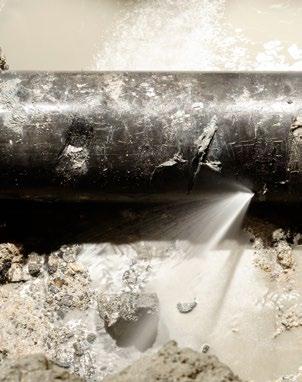
Expert services to help you invest in the right pipes, at the right time
Planned repairs cost 3-5x less than a failure
Target the real risks
Pinpoint your most vulnerable pipes with advanced inspection and real-time monitoring.
Act before a break
Cut emergency spending by stopping leaks and predicting failures before they happen.
Plan for the future
Anticipate maintenance needs to extend pipe life and budget proactively.

As we open Issue 17 of H2O Global News—our first edition of 2026—we do so with a renewed focus on one of the most persistent and defining challenges facing the global water sector: Non-Revenue Water (NRW).
Across continents, NRW continues to represent far more than a technical inefficiency. It is a direct reflection of how effectively water systems are managed, maintained, and prioritised. Whether through ageing infrastructure, data gaps, governance challenges or environmental pressures, the scale of water loss globally remains significant—impacting utilities, economies, and communities alike.
What stands out in this issue is the clear shift in how the industry is approaching the problem. NRW is no longer being treated solely as a leakage issue. Instead, it is increasingly understood as a system-wide performance indicator—one that touches everything from digital transformation and asset management to climate resilience and social equity.
From Aqaba in Jordan to Aswan in Egypt, and from island nations to major metropolitan networks, the stories in this edition demonstrate that progress is being made—but it requires a coordinated, data-driven, and long-term approach.
We see utilities moving beyond reactive repair cycles toward proactive, predictive management. Technologies such as smart metering, AI-driven analytics, digital twins, and advanced pressure management are enabling earlier detection, faster response, and more strategic investment decisions. At the same time, leadership, governance, and operational discipline remain just as critical as any technological solution.
Importantly, this issue also highlights something often overlooked: the wider impact of NRW. Water lost from networks does not simply disappear—it affects energy use, environmental health, and, in many cases, the most vulnerable communities. In regions already facing water stress or climate volatility, reducing NRW is not just an operational goal—it is a necessity for resilience and sustainability.
As we begin 2026, the direction of travel for the sector is clear. The focus is shifting toward smarter systems, stronger organisations, and a deeper understanding of water as both an economic and environmental asset.
At H2O Global News, our role remains to connect these conversations—bringing together utilities, technology providers, policymakers, and industry leaders to share knowledge, challenge assumptions, and highlight solutions that drive meaningful progress.
This issue is just the beginning. Over the course of this year, we will continue to explore the themes shaping the future of water—from digital innovation and infrastructure investment to climate adaptation and global collaboration.
Thank you, as always, for being part of our growing global community.
Abby Davey Publisher and Co-Founder H2O Global News



Publisher and Co-Founder
Abby Davey abby@h2oglobalnews.com
Creative Director and Co-Founder
Louise Davey louise@h2oglobalnews.com
Editorial Team
darby bonner
Martyn Shuttleworth natasha Posnett
COMMERCIAL TEAM
Julian Barrett
Rupert Patterson-Ward
Marketing@h2oglobalnews.com
FOLLOW H2O
H2O Global News delivers news from around the world covering the Drinking/Potable Water, Hydropower and Wastewater industries incorporating technology, companies, legislation, the environment and case studies. The H2O Global News Magazine is published four times a year (Spring, Summer, Autumn and Winter) by Blue Manta Media Limited, Buckinghamshire, England, UK.
H2O Global News t/a Blue Manta Media Limited has used utmost care to ensure and maintain the accuracy, completeness and currency of information published on this site. We, however, take no responsibility for any errors or omission, though if notified of any we will endeavour to rectify such.
CGN is an innovative platform that bridges the gap between industry, research and policy in a modern climate conversation. We enable our users to engage in meaningful conversations about the future of our planet and strive to create an open space where collaborators from all sectors can work together for sustainable progress.
Engineered odour control systems for municipal and industrial wastewaterdesigned, built, and guaranteed to per for m.
Odour issues don’t wait. Neither do we.
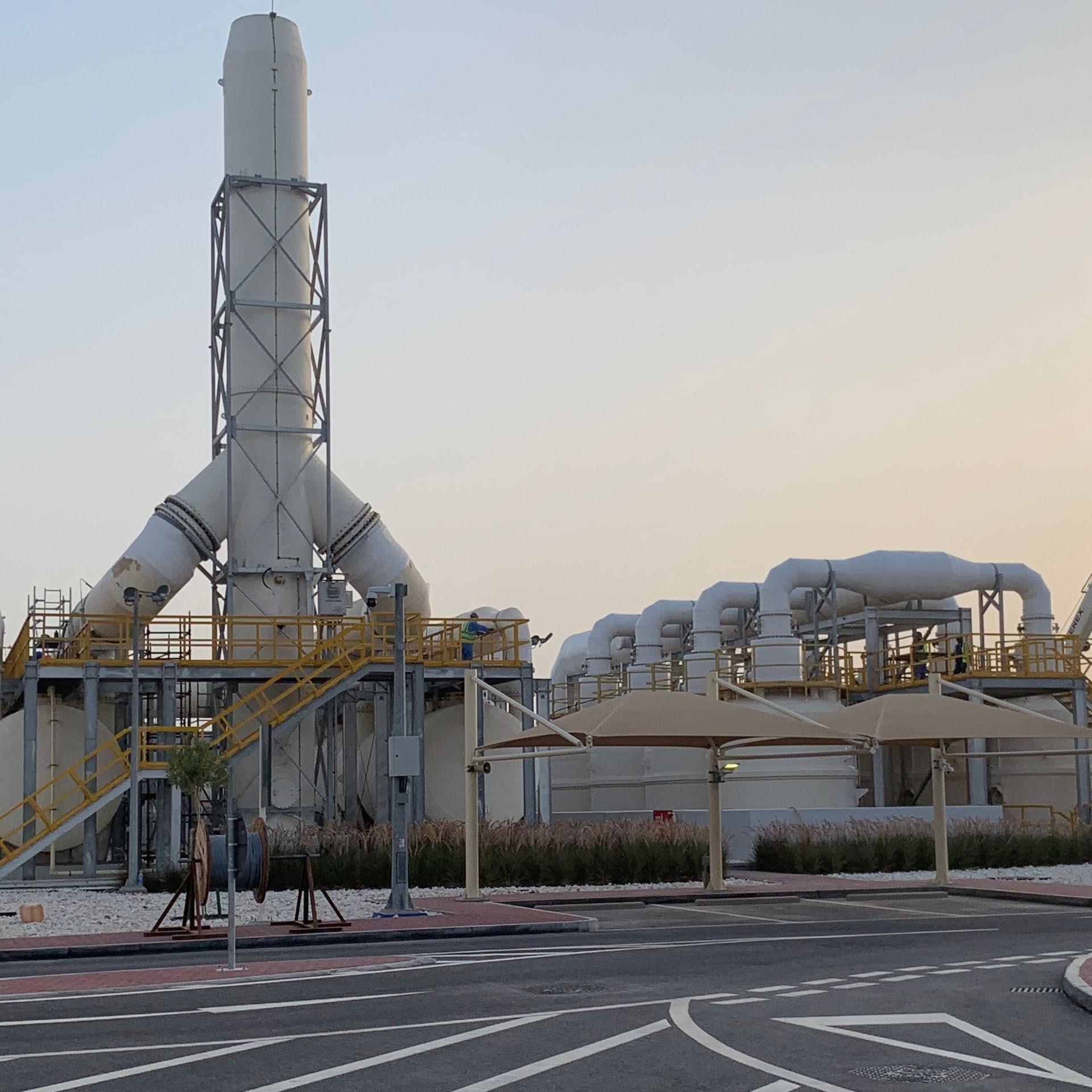
ERG designs and delivers complete odour control solutions - from assessment through to installation, optimisation, and ongoing support. Whether you're upgrading ageing assets or delivering new infrastructure to meet tightening environmental standards, we take full responsibility for performance.
Our systems combine proven technologies including packed tower scrubbers, carbon filtration, and biological treatment - configured to suit real operating conditions, not theory
With operational projects across the UK, Europe, the Middle East and Asia, we support wastewater operators facing increasing scrutiny, ageing infrastructure, and rising community expectations.


99% odour removal per for mance c Designed for high-load, variable wastewater conditions
Full EPC delivery or retrofit upgrades Global



WRITTEN BY | MARTYN SHUTTLEWORTH
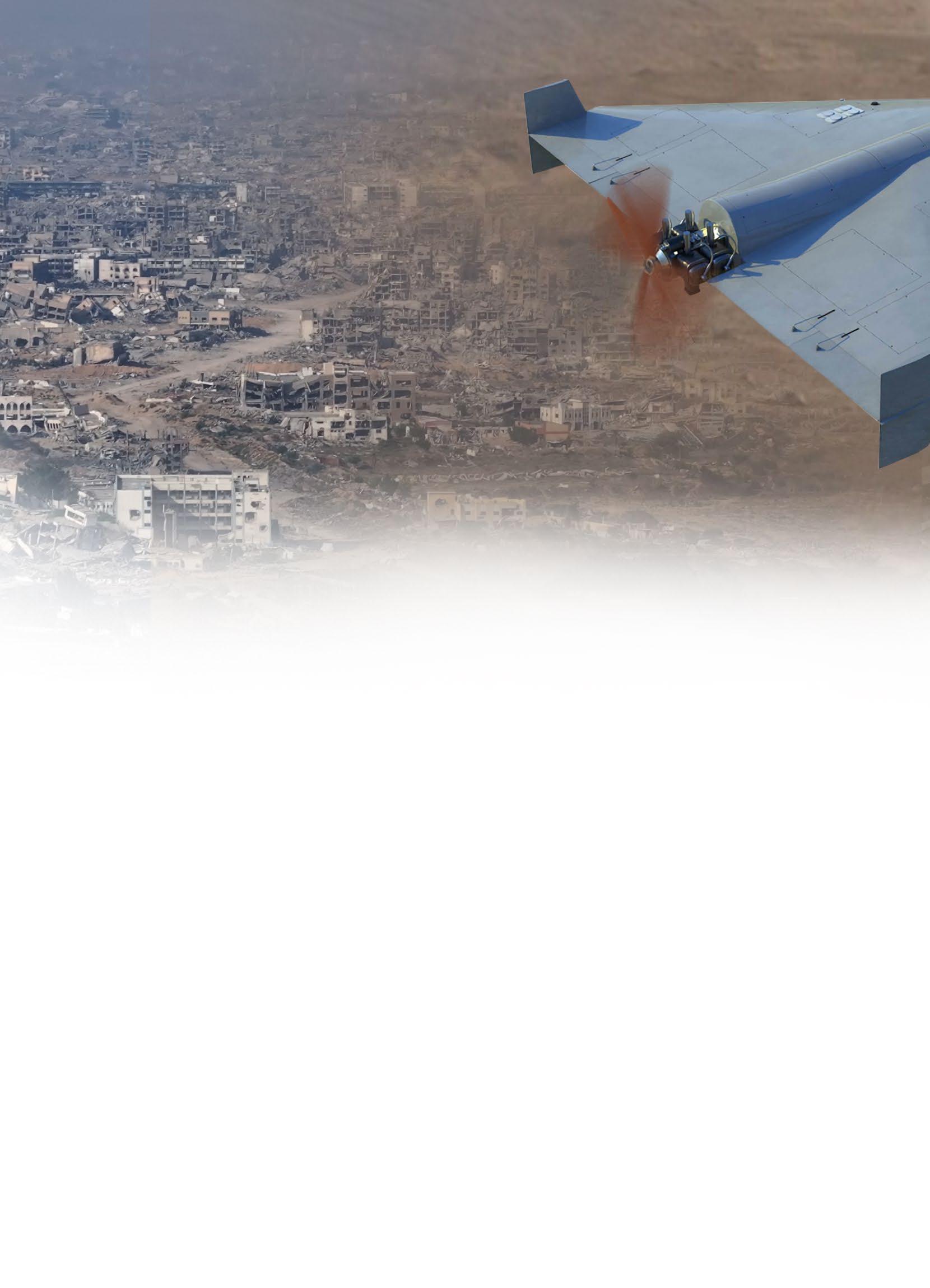
Often, we see water loss as inevitable due to aging infrastructure, poor management, and under-investment. Losses mean less available water for consumers and wasted resources but, while often driven by short-term thinking, greed, or corruption, they rarely target particular groups. Unfortunately, a sinister trend has emerged, where combatants use deliberate water loss as a weapon of war or means of collective punishment.
A number of countries and non-state actors routinely target water sources, infrastructure, storage, and expertise, claiming military necessity when their real intention involves terrorising civilian populations. Combatants seek to pressure their enemies, instigate uprisings, force migration, and degrade medical services. Without water, dehydration leads to death within days, while disease outbreaks due to lack of sanitation become a real threat.
Because it is so vital, numerous international laws and conventions try to protect civilian access to water during conflicts. Creating deliberate water losses, legally and morally, is unacceptable, but leaders openly flout convention and cause indirect civilian casualties through water deprivation. Even worse, deliberate attacks on water systems carry few meaningful consequences for perpetrators
Because water is so important, unscrupulous leaders know that targeting it can help achieve their goals:
• Degrading military, industrial, and economic capacity
• Collective punishment/ siege
• Inciting protests against government

• Creating a humanitarian crisis that saps resources
• Forcing a population to move
While deliberate targeting of water resources and infrastructure is a global problem, some conflicts raise particular concerns.
The Middle East, an area with insufficient freshwater resources, is particularly vulnerable. Drinking water is heavily reliant on desalination, so a direct attack can cripple a nation As an example, Kuwait sources 90% of its water from desalination, Oman 86%, Saudi Arabia 70%, and Israel 80%, leaving them exposed.
Iran has already claimed that the US and Israel deliberately targeted desalination facilities on Qeshm Island. In return, Iran’s leaders delivered veiled threats about targeting critical desalination facilities in other Middle Eastern nations, and Bahrain claimed this has already happened.
As another example of water loss as a weapon, Saudi
Arabia claimed that Yemen’s Houthis targeted desalination infrastructure, while the Saudi’s and their coalition damaged water infrastructure in Yemen in response. The Houthi rebels also restricted water access in areas under control of the Yemeni government, contributing to the humanitarian crisis.
One conflict where attacking water sources and infrastructure has become routine is the bitter civil war in Sudan. Here, according to an International Humanitarian Law study, attacks on water infrastructure created a humanitarian crisis affecting 30 million people. The Rapid Support Forces (RSF) control water sources in North Darfur, attacked water treatment facilities, and restricted water access to quarter of a million people. This has caused outbreaks of diseases such as cholera and forced displacement.
One prominent conflict with deliberate targeting of water resources is Gaza, where Israel stands accused of damaging infrastructure and restricting supplies. Although it is the guarantor of water to the occupied civilian population, Israel turned off supplies and deliberately targeted water infrastructure and desalination plants. Its forces routinely hinder repairs, weaponising water to reinforce the siege and pressure the captive population.
Israel’s military action in Lebanon also attracts accusations of attacks on water infrastructure, despite the ceasefire, leaving hundreds of thousands of people without access to clean drinking water. Communities have to source expensive water from private providers or risk using contaminated water. As a secondary effect, with multiple villages disconnected from water supplies, agriculture also suffers.
The Ukraine/Russia conflict see regular attacks on infrastructure that impact water services. Claiming that it is
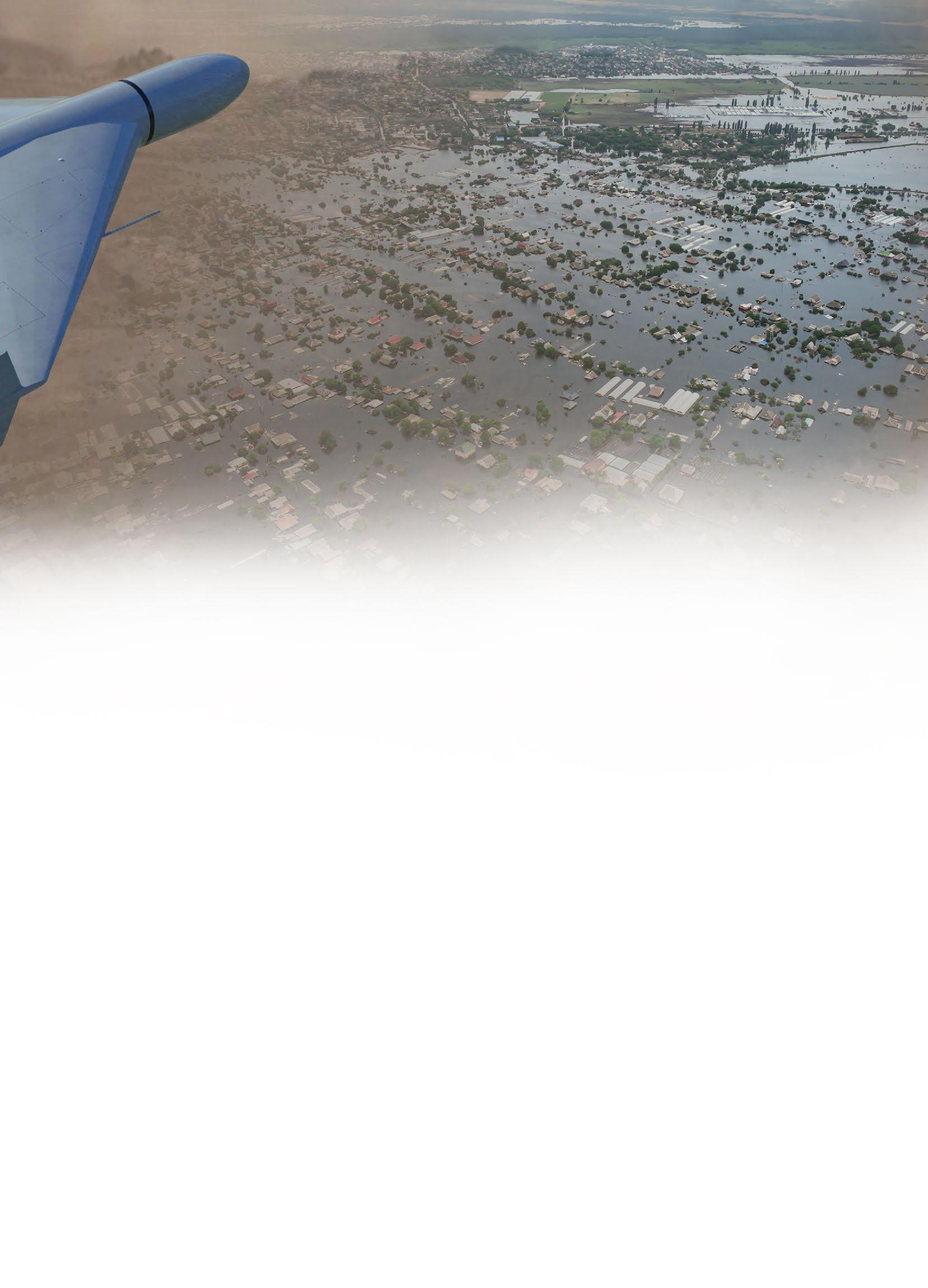
targeting ‘dual use’ capabilities, Russia attacks energy infrastructure, which impacts water treatment and pumping. In terms of direct attacks, Ukraine claims that Russia deliberately attacked the Nova-Kakhovka dam and other infrastructure, affecting water supplies for up to a million people, weaponising water loss. Others accused Russia of cutting water supplies when laying siege to cities such as Mariupol.
In recent years, despite the legal and moral restrictions on targeting water infrastructure and causing water loss for civilian populations, more participants in conflicts are destroying water infrastructure to apply pressure. Unfortunately, water has become a tool of conflict and dominance. In addition, indirect water losses arise from damaging energy infrastructure, which affects water treatment, and polluted water sources, especially when refineries and other sources of chemical pollution are damaged.
Deliberate water loss is a weapon of war intended to bring a population into submission, and the international community too often fails to condemn aggressors. Hypocritically, some politicians and media outlets criticise enemies for doing it but wilfully ignore the actions of allies As an additional layer of complexity, governments may claim that water infrastructure has been hit or exaggerate damage, even using false flag attacks to garner sympathy and draw others into the conflict.
Unless the international community starts to bring real consequences, whether sanctions or peacekeeping missions, disrupting water will continue, and combatants will flagrantly ignore the world leaders uttering words with no real action.
WRITTEN BY | DARBY BONNER
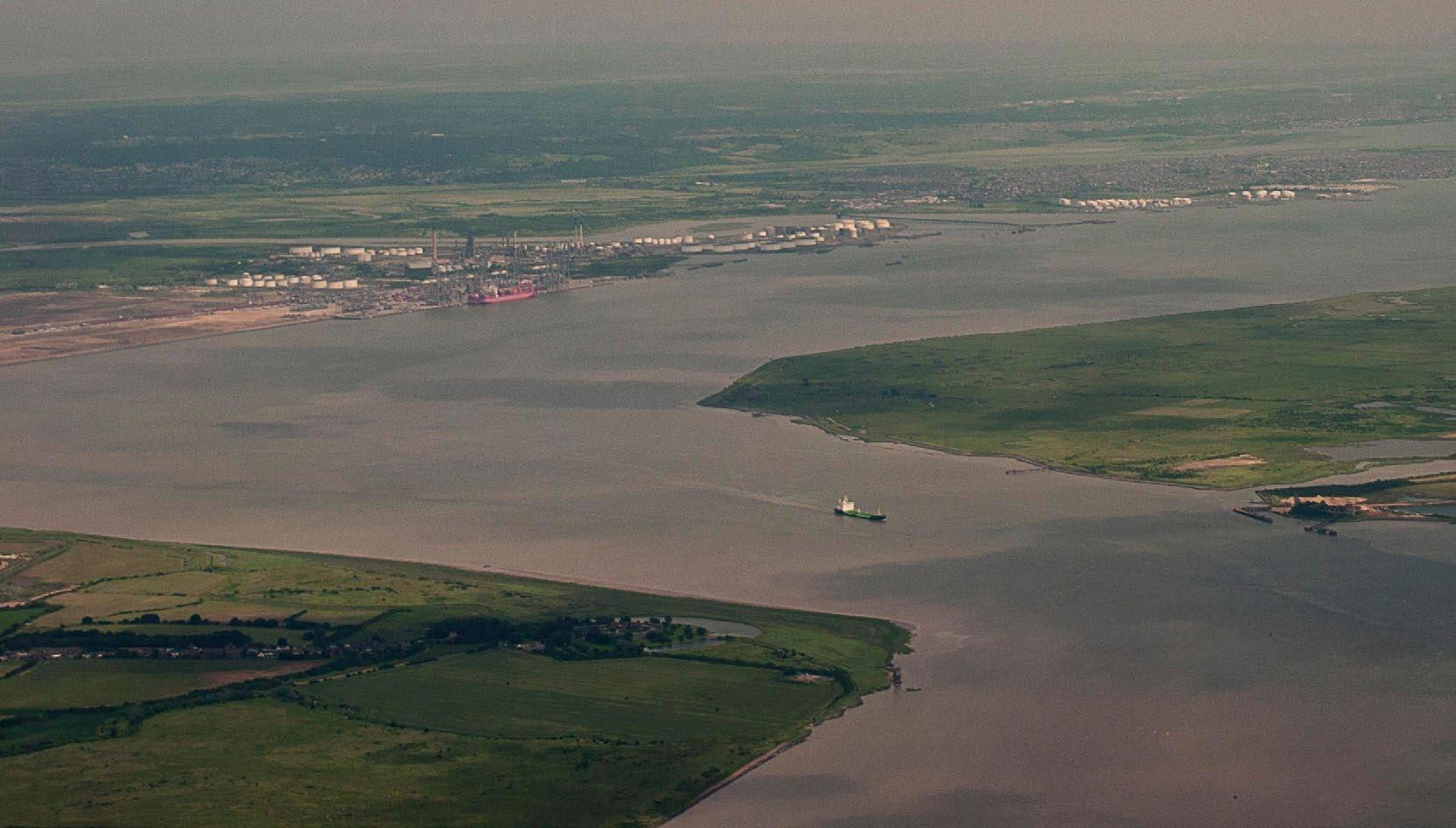
At estuary edges, tiny changes in freshwater can shift salinity, spark algal blooms, or reshape habitats for fish, shellfish, and migratory birds. Much of this water may have first flowed through leaky urban networks. Each year, ageing pipes and faulty connections drain vast volumes as non-revenue water, an issue that hits utilities financially and leaves a hidden environmental footprint downstream.
NRW is typically divided into two categories. Physical losses cover real leakage from pipes, service connections, and storage tanks, and commercial losses cover metering inaccuracies, unauthorised consumption, and data handling errors. In many parts of the world, the scale of these losses is severe. The World Bank estimates that worldwide, 126 million cubic metres of water are lost annually before reaching consumers, equating to billions in lost revenue and wasted carbon emissions.
From an environmental perspective, physical losses are the most significant pathway. Leaks from drinking water mains can infiltrate surrounding soils, recharging shallow aquifers or emerging in nearby waterways. At the same time, deteriorating sewer networks can release wastewater through cracks and defective joints, a process known as sewer exfiltration. Research has shown that ageing sewer


pipes can contribute substantial loads of nitrate and phosphate to groundwater and surface water, which are then transported toward rivers, estuaries and coastal zones. In effect, leaking infrastructure does not simply waste water, it redirects treated and untreated flows into the broader hydrological system, with consequences that extend well beyond the pipe network.
Real-world NRW cases illustrate how closely urban infrastructure and downstream water quality are linked. In the United Kingdom, London's combined sewer system, much of it dating to the nineteenth century, was designed for a far smaller population. As urbanisation intensified, stormwater increasingly overwhelmed the system, causing periodic discharges into the River Thames. The construction of the Thames Tideway Tunnel, completed in 2025, was designed specifically to intercept these overflows and reduce the volume of polluted water entering the tidal estuary. While major overflow events attract investment and attention, continuous low-level leakage from ageing networks poses a more diffuse and harder-to-quantify risk to downstream water quality.
In the San Juan Bay Estuary in Puerto Rico, sanitary sewer discharges were identified as a severe source of nutrient and pathogen loading. From 2015, a US$1.2 million programme funded through the Clean Water State
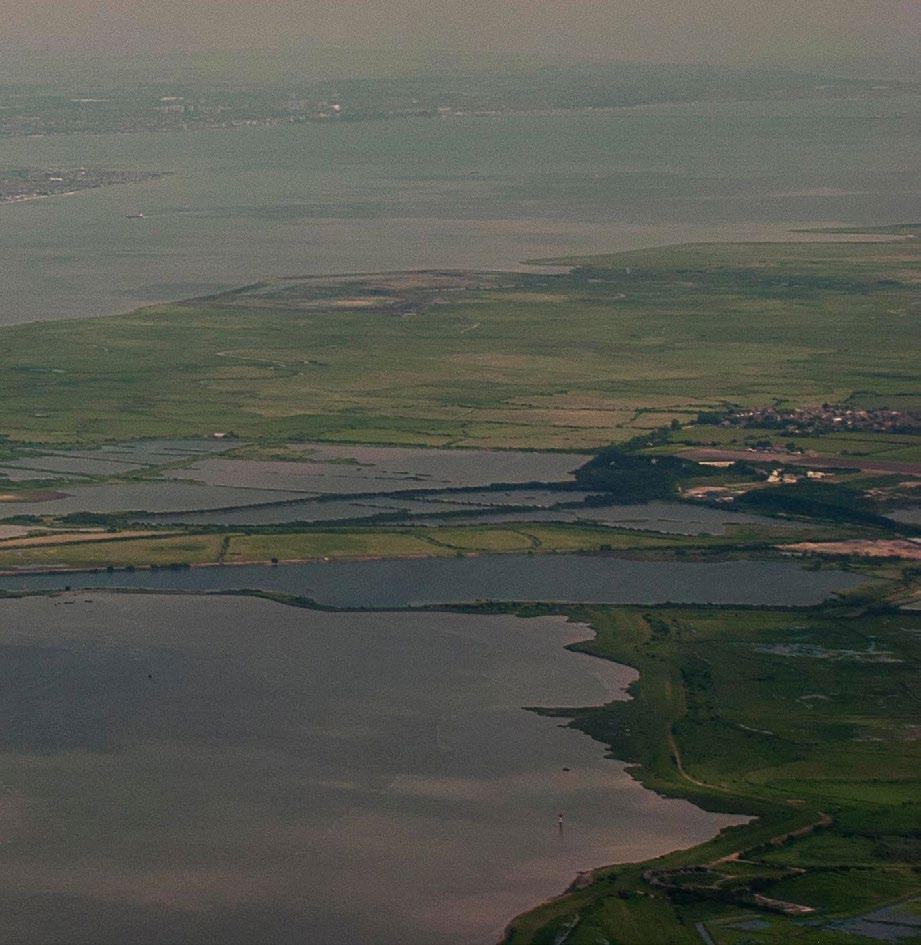
Revolving Fund deployed a network of diagnostic monitoring stations across the watershed to identify illicit discharges. The programme corrected over 87% of identified cases, producing direct, measurable improvements in river and stream conditions.
The NRW reduction toolkit has advanced considerably in recent years. The most impactful approaches combine physical network management with digital monitoring, and increasingly with AI.
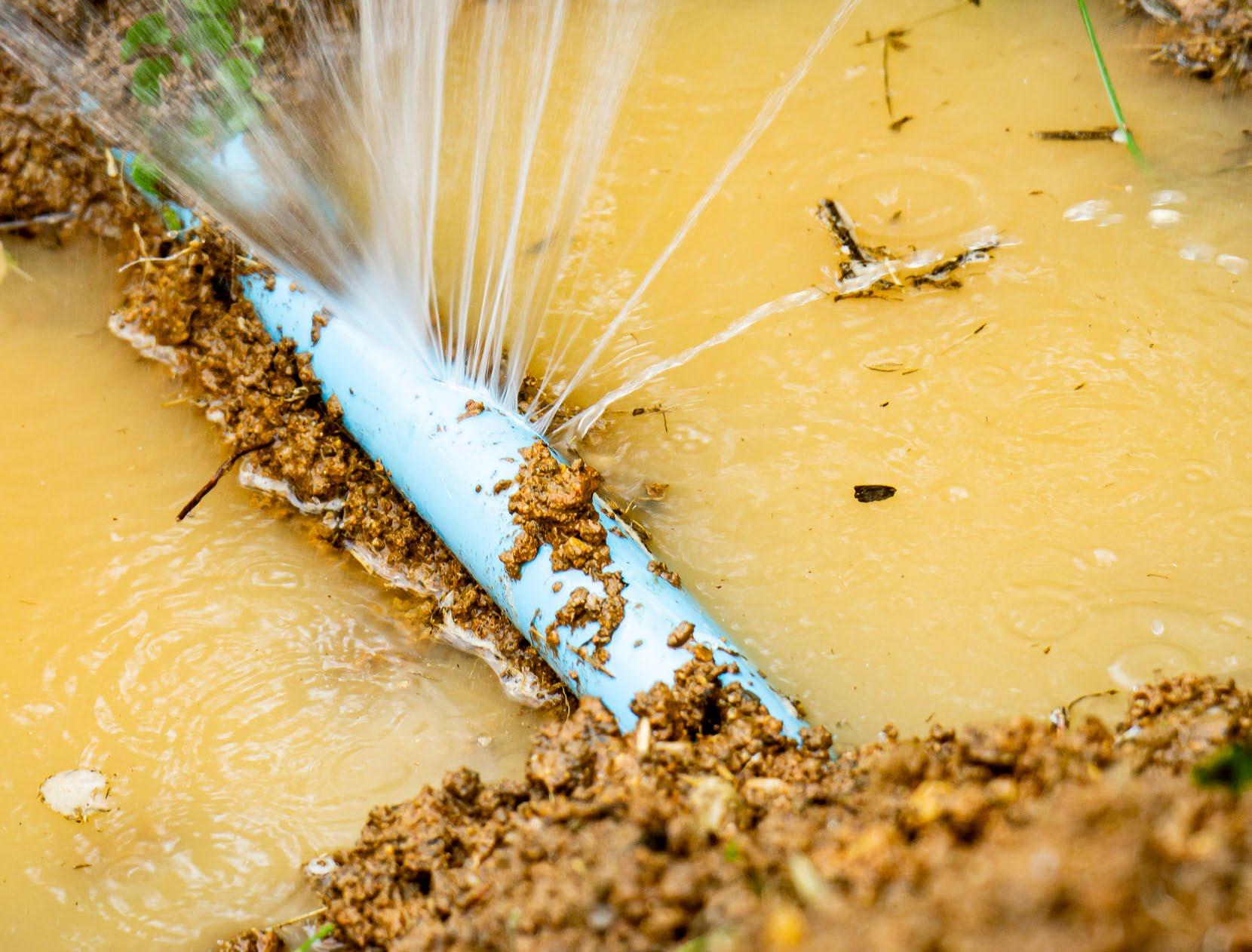
The division of a water distribution network into discrete District Metered Areas, or DMAs, is one of the most established strategies for NRW reduction. By measuring flows in and out of defined zones, utilities can isolate sectors with elevated losses and direct detection teams to the most challenged areas. DMAs are typically paired with pressure management, such as installing pressurereducing valves (PRVs) to optimise network pressure. Reducing excess pressure directly reduces leakage rates, burst frequency and the rate at which background leaks develop into reportable failures.
Acoustic leak detection pinpoints the unique sounds of water escaping from pressurised pipes. Modern wireless acoustic loggers offer 24/7 remote monitoring across distribution networks. In Bangkok, advanced sensors and robotic tools like Pipers have detected 24 leaks in a 50 km pipeline in just 18 hours, helping cut water loss. Meanwhile, in Iowa Park, Texas, Xylem’s SmartBall technology reduced non-revenue water from 14% to 8%, saving up to 500,000 gallons daily.
Internet of Things (IoT) sensor networks are transforming how utilities monitor water systems. In the Netherlands,
more than 700 Pipelife SmartProbe sensors were installed across all 100 of its district metered areas in 2024, aiming to detect even small leaks before they grow into major failures.
Digital twins represent one of the most advanced tools for managing water loss. A 2025 review found that water distribution networks now account for the largest share of digital twin research in the sector, with publications rising from just one in 2015 to 41 in 2024. Early projects in Malmö and Lund, Sweden, have already shown how digital twins can reduce sewer overflows during storms, cutting the amount of polluted water reaching rivers and coastal areas. For water loss management, platforms such as AquaNRW use these models to pinpoint hidden leaks, analyse pressure zones and guide repairs more strategically.
Traditionally, the case for investing in non-revenue water (NRW) reduction has been about money: cutting the cost of treated water that never brings in revenue. But the environmental benefits are just as important. Every leak repaired means less water escaping into soils, rivers and coastal environments, and tools like district metered areas (DMAs) and pressure management help reduce the amount lost across the network. As urban water systems face growing pressure from population growth, ageing infrastructure, sea-level rise and heavier rainfall, NRW is becoming more than an operational metric. For utilities in coastal catchments, especially, reducing water loss is increasingly tied to environmental compliance, catchment management and expectations around responsible water stewardship.
Urban water systems aren’t separate from nature, they’re actually part of the bigger water cycle. When we recognise that connection and invest in technologies that reduce water loss, utilities can improve how efficiently they operate while also lowering their environmental impact at the same time.
WRITTEN BY | NATASHA POSNETT
At 4 a.m., before the sun lifts over the hilltops, a tap begins to leak.
For a few uncertain minutes, water runs. A woman in the kitchen moves quickly; buckets first, then cooking pots, then the plastic drum kept for days like this. By sunrise, the flow has finally stopped again.
On the other side of the island, in newer neighbourhoods, rooftop tanks hum quietly as electric pumps keep pressure steady. The shortage is the same. The experience is not.
The water utility will record the missing water as NonRevenue Water (NRW) — a percentage on a performance chart. But long before it becomes a statistic, it has already reshaped someone’s morning.
Unlike continental networks fed by vast river basins, islands operate within tight hydrological limits. Many depend on small aquifers, seasonal rainfall, or energyintensive desalination. Every litre abstracted and treated carries significant cost. When that water leaks before reaching a paying customer, the utility still bears the expenses.
NRW is treated as an inefficiency. A metric to reduce, a benchmark to achieve. But on island nations, the costs of NRW do not vanish; they are redistributed. Its financial and social consequences remain and they often fall hardest on the communities least able to absorb them. In small island systems, NRW is not just an operational issue, it is an

equity issue. Wealthier residents may experience inconvenience. Lower-income households may face rationing or difficult choices between essential services.

The equity dimension of NRW is particularly critical in small island states because scale works against them. Fixed costs must be spread across limited populations. When large shares of treated water fail to generate income, utilities face chronic financial stress. Reduced flexibility makes it harder to invest in upgrades that would reduce losses in the first place.
Climate change compounds the challenge. Island nations are disproportionately exposed to hurricanes, intense rainfall, flooding, and prolonged drought. Heavy rains can destabilise buried pipes, while drought increases pressure on already limited groundwater reserves. In some islands, saltwater intrusion threatens freshwater lenses, further shrinking usable supply.
After major storms, NRW can spike as damaged pipes leak undetected. Repairs require capital, and capital constraints delay renewal. Deferred upgrades increase vulnerability to the next extreme event. This pattern is visible across small island developing states, including
countries such as Fiji and The Bahamas, where freshwater resources are finite and infrastructure is routinely tested by climate extremes. In desalination-dependent systems, lost water also represents wasted imported fuel, amplifying both financial and environmental costs.
International organisations such as WaterAid have increasingly reframed water loss and infrastructure fragility as part of a broader climate justice issue. In vulnerable island and coastal contexts, the organisation argues that technical efficiency cannot be separated from social protection.
WaterAid’s climate-resilient water safety planning work in the Pacific illustrates this systems approach. In countries such as Papua New Guinea and Timor-Leste, where small, decentralised water systems are exposed to cyclones, saltwater intrusion and prolonged drought, infrastructure failure often disproportionately affects rural and lowincome communities.
Rather than focusing solely on expanding access, WaterAid has supported governments and local utilities to strengthen entire water systems.
This includes:
• Protecting water sources from contamination during flooding
• Designing infrastructure to withstand extreme weather events

• Improving monitoring and maintenance capacity
• Supporting inclusive governance so marginalised communities are represented in planning
WaterAid’s work highlights a key insight relevant to island nations confronting high NRW: resilience reduces inequity. When systems are better maintained and when emergency preparedness plans are in place, the burden of service interruptions does not fall as heavily on households without coping mechanisms.
In small island states, where climate volatility is intensifying and capital investment is constrained, preventing physical losses is inseparable from protecting social stability.
Utilities worldwide are investing in leak detection and smarter metering to reduce NRW. These technical measures are essential.
Yet the question is not simply how much water is lost. It is where it is lost, and who absorbs the consequences.
Non-Revenue Water is typically expressed as a percentage. Behind that percentage lies a deeper story about energy use, climate exposure and social equity. On island nations confronting climate volatility and aging infrastructure, NRW is more than a technical inefficiency. And unless addressed with both engineering precision and social awareness, the burden of lost water will continue to flow toward those least able to bear it.
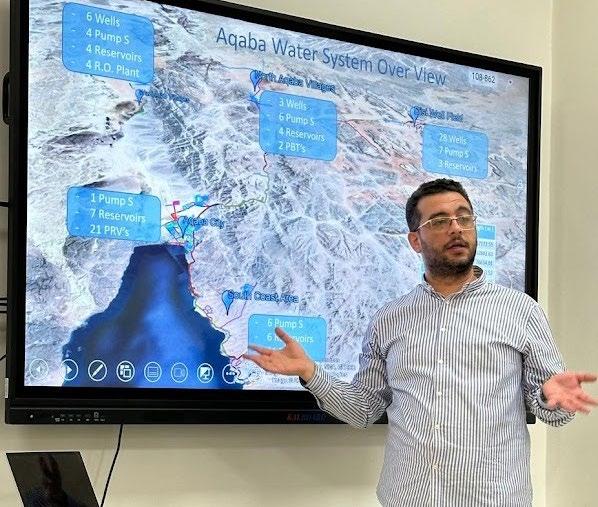
INTERVIEWED BY | MARTYN SHUTTLEWORTH
Like many countries in the Middle East, Jordan faces a water crisis, with diminishing resources exacerbated by high water losses. As the threat of climate change creeps onward, promising future water stress and depletion, the country's government and water utilities are implementing programs to tackle the perennial problem of non-revenue water.
Utilities such as the Aqaba Water Company (AW) believe that new technologies and better field operations will help them track down leaks and detect other NRW issues early, reversing the trend. With advanced metering, better data integration, and new field tools, they will target adverse water
losses that affect communities, raise costs for businesses, and waste scarce resources.
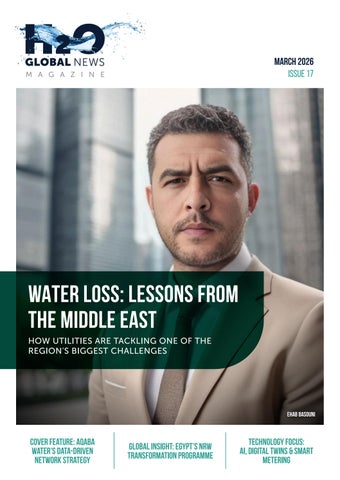
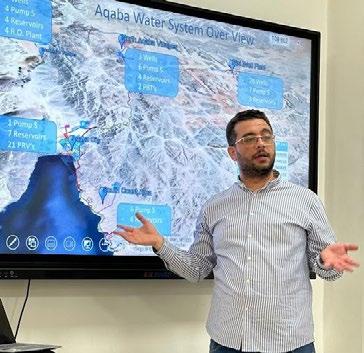
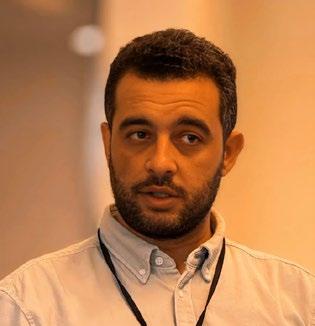
To give an insight into how these new strategies can reduce water loss through better monitoring and targeted repairs, we spoke to Ehab Basouni, head of NRW reduction at the Aqaba Water Company. He reveals some of the problems faced by water suppliers in the arid Middle East, and shows how reducing water losses requires a shift towards predictive approaches and data-driven technology.
Could you give us some background about yourself and your
I am the Head of the Non-Revenue Water Section at Aqaba Water Company in Jordan. My work focuses on reducing water losses through a combination of field operations, data analysis, and technology deployment.
Our activities include leak detection programs, District Metered Areas (DMA) management, smart metering initiatives, pressure management, and improving operational workflows between field teams and control systems. The goal is to move utilities from reactive repairs toward structured, data-driven network management.
Aqaba Water Company is responsible for water supply and wastewater services in Aqaba, Jordan's main coastal city and economic gateway. The utility serves approximately 42,000 customer connections across residential, commercial, industrial, and tourism sectors.
Operating in an arid region means water is a strategic resource. The network includes transmission pipelines, distribution networks, reservoirs, pumping stations, and DMAs. Due to water scarcity and growing demand, operational efficiency and water loss reduction are essential priorities.
Non-revenue water remains a significant operational challenge for many utilities in arid regions, including ours. The scale varies between districts depending on infrastructure condition, pressure regimes, and operational factors.
The main causes generally fall into three categories:
• Real losses: hidden leaks in aging pipes, service connections, and fittings, often influenced by pressure fluctuations.
• Apparent losses: meter inaccuracies, data handling issues, and unauthorised consumption.
• Operational factors: incomplete network visibility, delayed leak detection, or historical infrastructure constraints.
Our approach focuses on reducing these losses through DMA management, active leak detection, smart metering, and improved monitoring using SCADA and data analysis, allowing us to detect anomalies earlier and prioritise field interventions.
Water loss has direct impacts on both service reliability and operational efficiency. For communities, high levels of NRW can lead to lower network pressure, intermittent supply in some areas, and slower response to failures, which affects daily life and confidence in the water service.
For businesses and industry, water losses increase the cost of production and distribution, as utilities must pump and treat more water than what is actually delivered and billed. This also places additional stress on infrastructure and energy use.
In water-scarce regions such as Aqaba, reducing NRW is especially important because every cubic meter saved effectively increases available supply without developing new water sources, improving long-term sustainability for both residents and economic activities.
Aqaba Water Company has implemented several operational and technological measures to reduce NRW. A key step has been the establishment and continuous improvement of DMAs, allowing us to monitor water balance, track Minimum Night Flow (MNF), and detect abnormal consumption patterns more quickly.
We also run active leak detection programs, combining traditional acoustic methods with permanent and semipermanent noise loggers installed on the network. These loggers continuously monitor pipe noise during night hours and help identify potential leak locations early, allowing field teams to focus investigations on specific sections of the network rather than surveying entire areas.
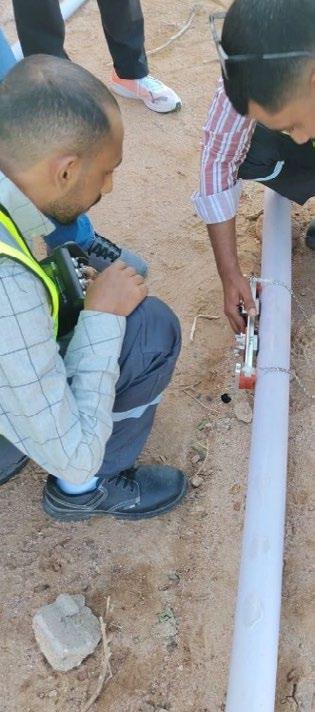
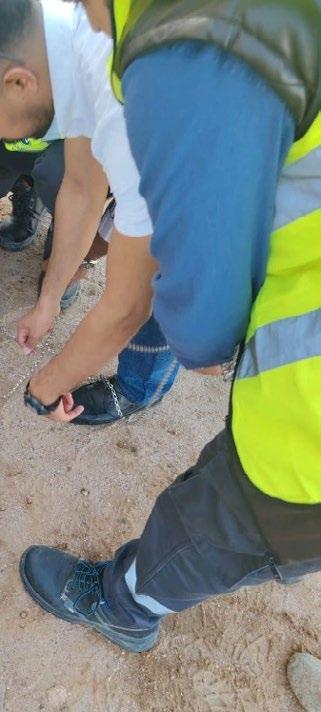
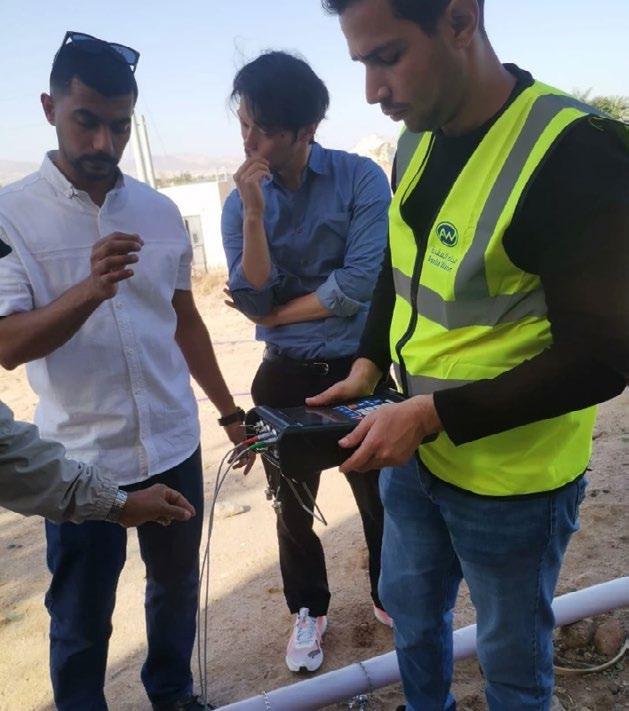
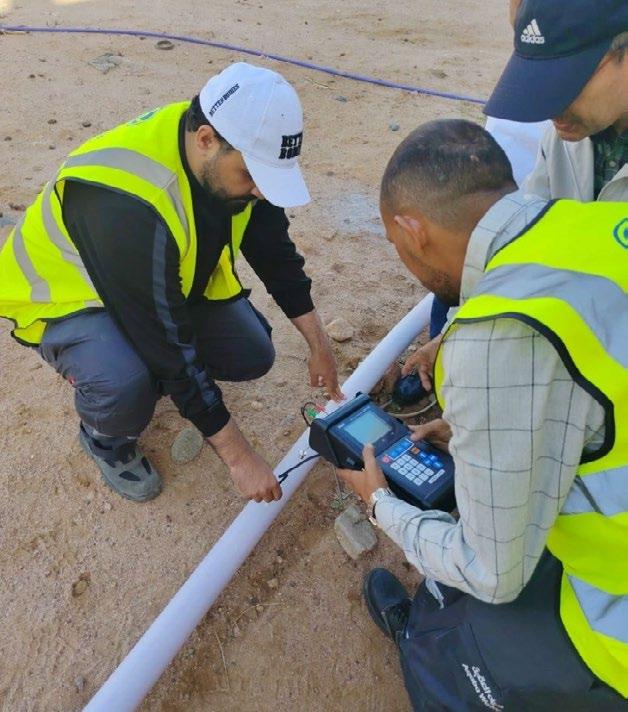
Once anomalies are detected, our teams perform targeted field verification using acoustic equipment such as ground microphones, correlators, and pipe listening devices to confirm and pinpoint the exact leak location before repair.
Continued on page 12
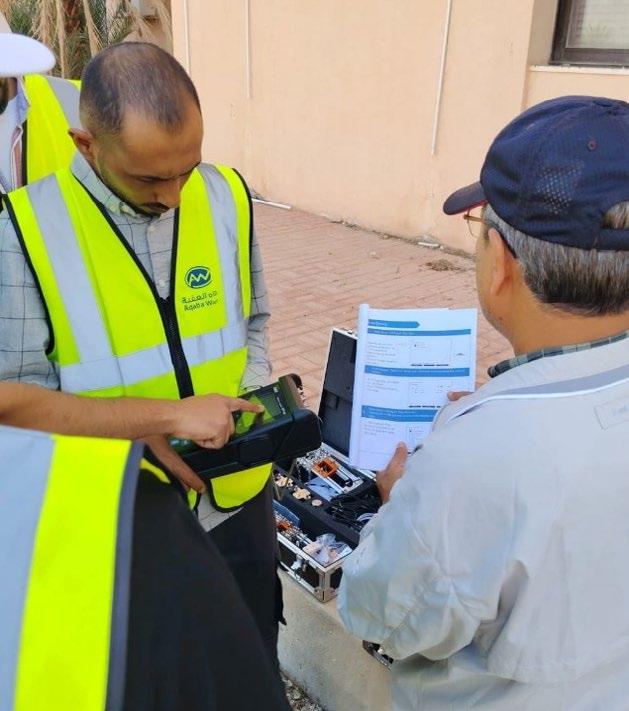
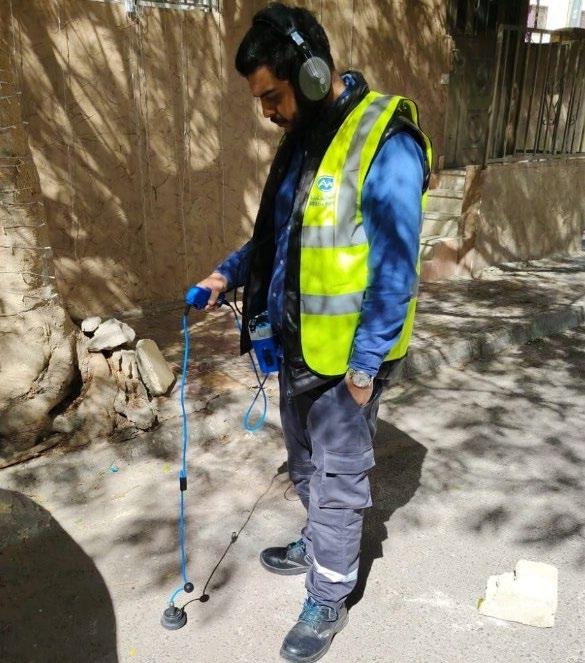
In addition, we are expanding smart metering and Advanced Metering Infrastructure (AMI) initiatives, improving data monitoring through SCADA, and strengthening coordination between field operations, data analysis, and GIS systems to improve response time and operational efficiency.
This combination of continuous monitoring, structured field surveys, and data-driven analysis helps us detect leaks earlier and prioritise repairs where the impact is greatest.
Moving to the present, what is the company’s overall strategy/framework for reducing NRW?
A key component is the DMA framework, which allows us to monitor water balance, analyse MNF, and detect anomalies within defined network zones. This helps prioritise areas where losses are most likely occurring.
We complement this with continuous monitoring technologies such as noise loggers, which provide early indications of potential leaks, combined with targeted acoustic surveys using field equipment to confirm and locate leaks precisely. Another important pillar is data integration, linking information from SCADA, smart metering systems, and GIS.
Overall, the goal is to move from reactive leak repair toward proactive network management, where anomalies are detected earlier, investigations are targeted, and repairs are prioritised based on measurable impact on NRW reduction.
Breaking the strategy down a little, what are the operational solutions for NRW? What approaches are you taking in the field?
At the network level, we rely on DMA monitoring and MNF analysis to identify abnormal consumption patterns and prioritise areas for investigation.
In the field, we combine permanent and mobile leak detection techniques. Noise loggers are deployed across the network to continuously monitor pipe noise during night hours and identify potential leak zones. These signals guide our teams to specific sections of the network where further inspection is required and they carry out the acoustic surveys.
In addition, we use pressure monitoring and GIS-based mapping to better understand network behaviour and direct inspection efforts. This structured process allows us to move from broad network monitoring to highly targeted field verification, improving efficiency and reducing the time required to locate and repair leaks.
Will the company invest in any new technologies to help drive down NRW?
Yes. Aqaba Water Company continues to evaluate and adopt technologies that improve network visibility, early leak detection, and operational efficiency.
Current and future investments focus on expanding smart metering and AMI systems, improving continuous
monitoring through noise loggers, and further strengthening data integration between SCADA, GIS, and operational platforms.
We are also interested in solutions that enhance realtime monitoring, anomaly detection, and predictive analysis, allowing utilities to identify problems earlier and prioritise field interventions more effectively.
However, technology is always assessed from a practical operational perspective. The priority is solutions that support field teams, improve decision-making, and demonstrate measurable impact on NRW reduction.
What are the biggest successes so far and, conversely, what are the biggest challenges? What lessons has Aqaba Water learned?
One of the biggest successes has been improving network visibility and coordination between data analysis and field operations. By implementing DMA monitoring, MNF analysis, and deploying noise loggers, we have been able to identify potential leaks earlier and direct field teams more efficiently. This has significantly improved the speed and accuracy of leak detection.
Another success has been strengthening the link between monitoring systems and practical field verification, ensuring that data leads to targeted investigations rather than broad surveys.
The main challenges remain related to aging infrastructure, pressure variations, and the complexity of large distribution networks, where many leaks are small
and difficult to detect. In addition, integrating different data sources and maintaining continuous monitoring requires sustained operational effort.
One key lesson we have learned is that technology alone does not solve NRW. The most effective results come from combining structured data monitoring, experienced field teams, and consistent operational procedures. Continuous improvement and strong coordination between technical teams are essential for long-term NRW reduction.
Going forward, Aqaba Water Company plans to continue strengthening its DMA-based network management approach, with greater focus on continuous monitoring and faster response to anomalies.
This includes expanding the use of noise loggers for early leak detection, improving MNF analysis, and further integrating SCADA, GIS, and smart metering data to improve system visibility. We also aim to enhance field detection programs and maintenance coordination, ensuring that suspected leaks are investigated and repaired more quickly.
In parallel, the company will continue evaluating new monitoring and analytical technologies that can support predictive maintenance and more efficient network management. The overall objective is to move further toward proactive and data-driven NRW management, improving service reliability and water resource sustainability.
INTERVIEWED BY | MARTYN SHUTTLEWORTH
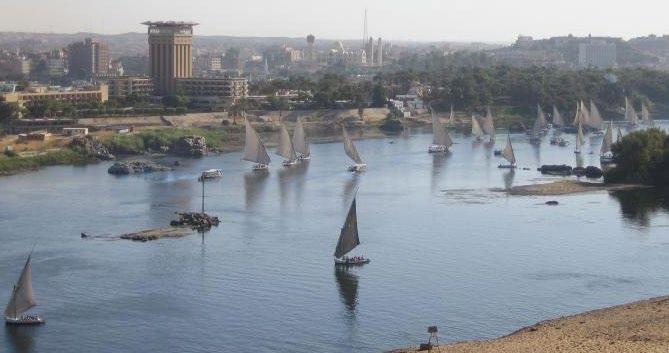
Like many MENA countries, Egypt is already water-stressed but faces a changing climate and higher demand for water resources. To alleviate the problem, the country seeks to reduce water losses and implement new technologies and approaches. One initiative, the Potable Water Management Programme, works with the Aswan Water and Sanitation Company to reduce non-revenue water. With the help of Mohamed Adel Halim and the rest of the team, we learned more about their work and how they blend local and international expertise to provide technical expertise and solutions.
The Potable Water Management Programme (PWMP), funded by the Swiss Agency for Development and Cooperation (SDC), provides innovative solutions for potable water management and service delivery for vulnerable populations. The long-term initiative, implemented between 2018 and 2027, focuses on Upper Egypt, particularly Aswan Water and Sanitation Company (AWSC), while supporting broader development of the country’s water sector. The programme combines infrastructure investments, technical assistance/governance support, and
community awareness activities to address key challenges.

While infrastructure interventions rehabilitate and expand water supply systems in underserved neighbourhoods, technical assistance helps the utility strengthen management practices, improve operational efficiency, and reduce technical and commercial water losses. At the same time, community awareness initiatives promote responsible water use and environmental practices.
By linking these technical, institutional, and social interventions, PWMP aims to improve reliable and equitable access to safe drinking water while strengthening accountability and sustainability. The programme also promotes successful approaches across other Egyptian water utilities, improving living conditions and supporting local economic development.
The PWMP's multidisciplinary Swiss–Egyptian team, led by EBP Schweiz AG, combines international and national expertise. In 2018, SDC mandated EBP to support the PWMP in Aswan Governorate and help provide safe drinking water to approximately 120,000 people in disadvantaged districts.
To this end, EBP's multidisciplinary team advises AWSC with
• Policy and governance
• Infrastructure planning and development
• Project management
• Utility management and institutional development
• Capacity building
• Communication
• Public awareness and community engagement
• Monitoring and evaluation.
In parallel, local engagement teams lead day-to-day coordination in Aswan while delivering technical assistance, staff capacity building, and community outreach.
The programme strengthens AWSC’s operational performance, enhances infrastructure planning and service delivery, and improves communication with customers and local communities. Combining international technical expertise with locally embedded knowledge delivers practical, contextadapted solutions for sustainable and efficient water services.
Reducing water losses involves combining infrastructure improvements, modern monitoring, operational capacity building, and community engagement to address technical and operational water loss.
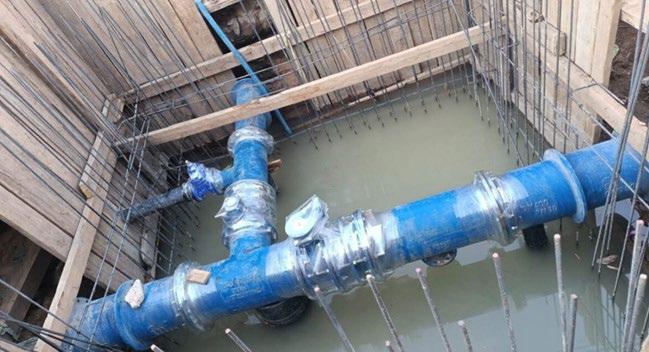
First, a preliminary study assessed Non-Revenue Water (NRW) before deciding on infrastructure interventions in the project’s target slum areas in Aswan. It revealed that over 79% of NRW due to the aging network, so the PWMP opted to rehabilitate and extend the water distribution networks and transmission pipelines, while replacing the existing network in the target areas with a new system incorporating the District Metered Area (DMA) approach. A total of 11 DMAs were established and are actively managed and maintained by AWSC.
Second, alongside new infrastructure, the PWMP helped strengthen NRW management through a specialised AWSC task force comprising staff from relevant departments. This task force plans, monitors, and implements measures to address physical and commercial water losses. They collect and analyse operational data to understand leakage patterns, illegal connections, and billing discrepancies, enabling targeted interventions and informed decision-making.
Third, the PWMP helped AWSC implement DMA and District Metered Zone (DMZ) systems, using pressure monitoring, leak detection, and data analysis to improve network performance and significantly reduce water losses. Eight initial DMAs monitored water flows and identified losses within specific zones of the distribution network, allowing the company to measure consumption accurately, detect leakages, and identify unauthorised connections.
The programme included monitoring and measurement systems, while multiple distribution system DMAs outside the infrastructure-targeted areas allowed AWSC to monitor water flows and identify losses more accurately. Additional equipment such as bulk flow meters at main water production stations, data loggers, and remote meter reading systems improved the tracking of water production and distribution, enabling better operational control and faster identification of anomalies.
Fourth, strengthening the NRW team capacity through on-the-job training in modern approaches for pressure monitoring, leak detection, and data analysis/water balances within the DMA system.
Fifth, the PWMP helped the Commercial Division apply Comprehensive Subscriber Surveys (CSS), to update the customer database, identify illegal connections, and improve billing accuracy. These surveys reduce commercial losses by aligning water consumption with billing records.
Finally, the programme promotes community awareness on responsible water use and conservation. Emphasising the value of water and the importance of avoiding misuse supports technical measures and delivers sustainable long-term results.
Together, these measures help AWSC manage water resources more efficiently, reduce losses across the system, and ensure that more households benefit from reliable water services.
Water losses occur for a variety of reasons, differing from one area to another depending on infrastructure condition and utility operational practices. In general, water losses are classified into two types: physical losses and commercial losses. Understanding the sources of losses and identifying their nature is crucial for improving operational efficiency and enhancing service reliability.
Working with AWSC, the PWMP observed physical losses in certain areas where water leaked from the system before reaching consumers. They were linked to aging pipelines and deteriorated underground infrastructure, which can cause hidden leaks or bursts in the distribution network. Addressing such problems requires technical interventions such as network rehabilitation, leak detection, and improved pressure management.
In other areas, commercial losses were problematic, where consumed water was not properly measured or billed due to illegal connections, malfunctioning/outdated meters, or weaknesses in meter reading and billing. In Aswan, one area showed losses largely driven by illegal connections and registered meters that were not read or billed regularly. In such cases, strengthening monitoring systems, improving meter management, and reinforcing operational procedures can significantly reduce losses without major infrastructure investments.
on page 16
There is no single dominant cause of water losses, even within the same city. Each area has its own technical and operational realities, so utilities must carefully assess the sources of losses before implementing targeted solutions. By combining improved infrastructure, better monitoring systems, and stronger operational practices, utilities can progressively reduce water losses and improve reliability and sustainability.
Water losses and unbilled consumption are usually classified under the broader indicator of Non-Revenue Water (NRW), directly linked to operational and managerial factors such as network efficiency, meter accuracy, management quality, and infrastructure failure. With high levels of unaccounted-for water, the impacts extend beyond technical performance to affect the financial sustainability of water utilities and communities that rely on reliable water services.
From the community perspective, the program can have very tangible effects. During the PWMP, several areas experienced problems related to high physical losses. In some neighbourhoods, very low water pressure and long interruptions made it difficult for households to access water consistently and some residents had to travel to other locations to fill containers. Such conditions affect economic activity, public health, and the productivity of residents, especially in disadvantaged communities.
At the same time, high NRW places a significant burden on the utility. The financial and operational impacts include:
• Increased losses
• Reduced revenues due to unbilled water
• Higher operating costs due to additional production and pumping
• A reduction in the Operation and Maintenance (O&M) budget.
This financial pressure can limit the ability to purchase maintenance tools and materials, invest in human resources, upgrade assets, or strengthen operational capacity. In some cases, it affects the speed and quality of response to customer complaints and maintenance needs.
Therefore, reducing NRW benefits both utilities and communities. By improving monitoring systems, repairing leaks, enhancing billing practices, and strengthening operational management, utilities can recover physical losses, improve financial sustainability, and use existing resources more efficiently. Ultimately, this helps extend reliable water services to underserved areas and contributes to better living conditions and economic opportunities for disadvantaged communities.
Digital technologies and data analytics play an important role in reducing NRW by helping utilities better monitor systems and identify problems earlier. Tools such as smart meters, remote monitoring platforms, and advanced data analysis support leak detection, analysing consumption patterns, improving billing accuracy, and planning infrastructure maintenance.
In practice, successful use of these technologies depends on the utility’s institutional readiness. When implementing the PWMP, the team explored remote meter reading platforms and SCADA-based monitoring systems, but these require reliable IT infrastructure, well-structured data systems, and trained staff capable of operating and maintaining them.
For this reason, the programme supports AWSC with IT infrastructure, supplying measurement and monitoring equipment, and providing training to staff. Building this readiness allows utilities to adopt smarter digital solutions gradually and improve long-term management of water losses.
One of the main challenges during the training programme was the limited availability and reliability of operational data. Effective NRW management requires accurate information about water production, distribution, and consumption. In several cases, gaps in data—such as incomplete meter readings, missing flow measurements, or inconsistent records—made it difficult for teams to conduct detailed water audits or track losses.
Another challenge was technical familiarity with management tools and concepts, because some engineers assigned to the NRW teams transferred from other departments with no induction training in NRW management. In addition, some participants required reinforcement of the basic engineering concepts needed for understanding water balance analysis, network hydraulics, and field measurement practices. The training programme needed additional guidance and foundation explanations before progressing to advanced NRW tools and procedures.
The training approach emphasised hands-on learning and on-the-job coaching, allowing engineers to apply concepts directly in the field. Ensuring a shared understanding across different teams and departments—including operations, maintenance, and billing—supported coordinated NRW management across the utility.
Despite these challenges, the practical training approach gradually built the confidence and skills of the teams, helping them apply the methods needed to monitor and reduce water losses effectively.
WRITTEN BY | MR JOAO PEREIRA, XYLEM REGIONAL OPERATIONS MANAGER, PIPELINE MANAGEMENT
Across the world, critical water infrastructure is steadily ageing, buried out of sight and often overlooked. An important French regional drinking water provider, responsible for supplying around 310,000 consumers, was not prepared to wait for issues to surface before taking action.
A key component of the utility’s drinking water network is a DN900 ductile iron transmission main. This pipeline is a non-redundant link in their system, and if it failed, maintaining water supply would be extremely challenging.
The pipeline’s advanced age and criticality made collecting reliable condition data imperative. Soil conditions along the route were not fully documented, pressure transient data was limited, and there was no historical data on corrosion. As a result, the utility had a limited understanding of the pipeline’s structural health.
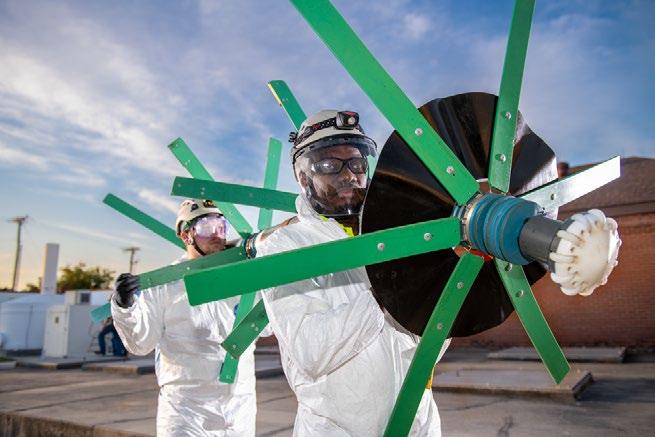
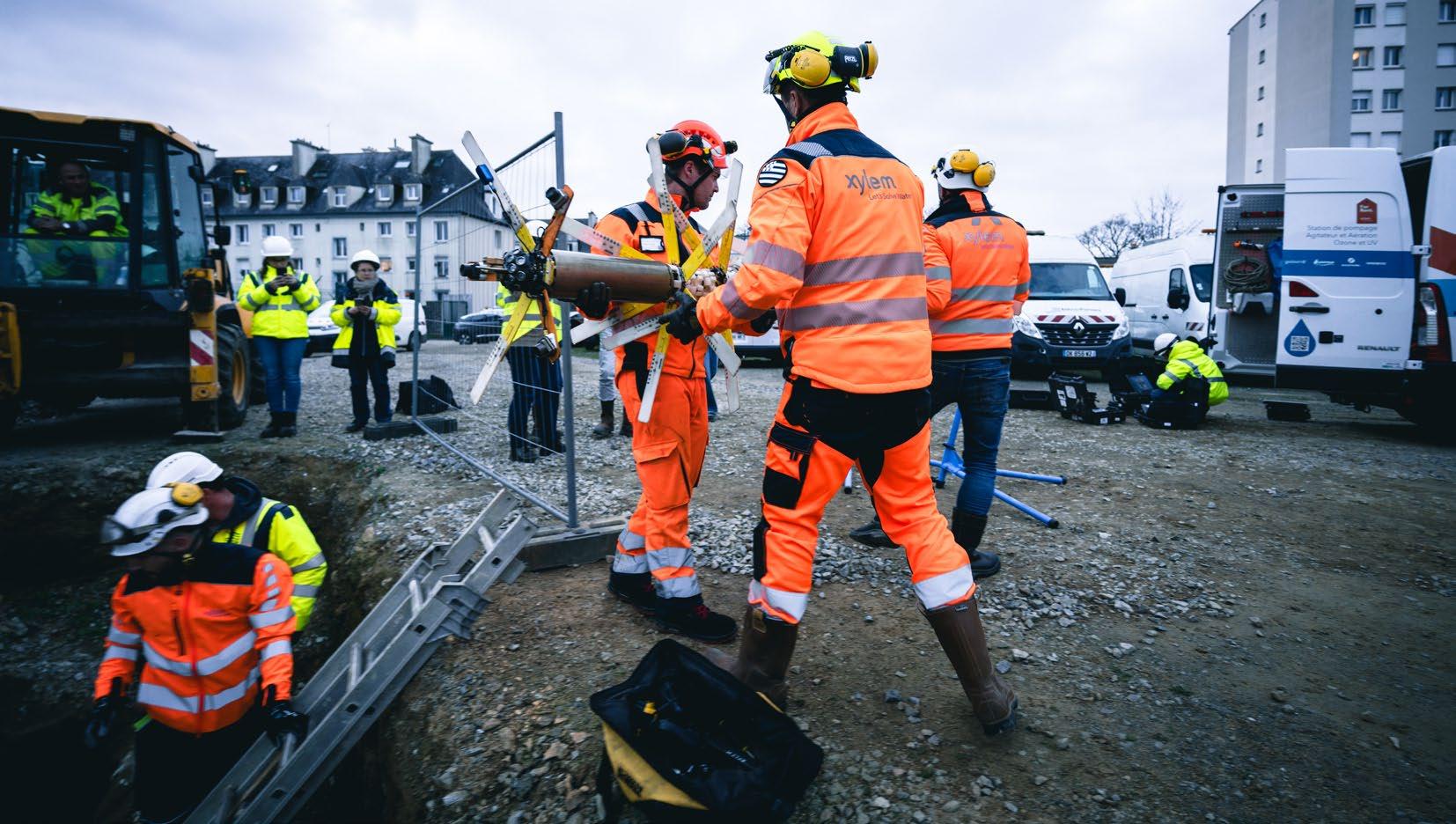
To close the knowledge gap, the utility partnered with Xylem for an advanced inline inspection. The team used PipeDiver, a free-swimming robot, to inspect the main without disrupting supply.
The PipeDiver mission lasted around 11 hours. During that time, the tool travelled approximately 22 kilometres through the transmission main, collecting detailed measurements of pipe wall thickness, out-of-roundness, and other potential threats with its ultrasonic sensors.
This data was analysed using advanced engineering techniques, including structural modelling and finite element analysis, to evaluate how identified defects would affect the pipeline under real operating conditions.
The inspection revealed 697 areas of corrosion with pipe wall loss along the transmission main. However, the engineering analysis showed that only five pipes required immediate intervention.
With a clear understanding of the pipeline’s condition, the utility was able to adopt a targeted repair strategy, focusing maintenance where structural risk was highest while avoiding unnecessary large-scale replacement.
Beyond immediate repairs, the project enabled the utility to move from reactive risk mitigation to proactive, data-driven asset management.
"This operation is fully in line with our patrimonial management approach. It allows us to guarantee the longterm reliability of our infrastructure, to limit the risk of service disruptions and to optimize the planning of our future renewal works."- Arnaud Bechennec, Deputy Director in charge of operations SPL Eau du Ponant
The inspection results now serve as a baseline for future monitoring, and the utility has implemented a planned reinspection cycle every two to three years. This proactive strategy bolsters confidence in the pipeline’s ability to provide reliable water service while helping the utility plan for the asset’s future.
For more information, visit: https://www.xylem.com/en-uk/
At ROCKBlue, Non-Revenue Water (NRW) is understood as a leadership challenge that manifests through performance, demonstrating how effectively utilities govern, manage, and execute across systems.
For many utilities in emerging markets, NRW extends beyond losses from leaks, theft, or metering inaccuracies. It reflects deeper systemic weaknesses. While infrastructure upgrades are important, sustainable reductions require robust governance, disciplined operations, sound financial management, and strong leadership.
Effectively managing NRW, therefore, depends on strengthening the institutional systems that support service delivery, rather than focusing solely on physical repairs.
Utilities rarely achieve lasting NRW reduction by focusing solely on engineering solutions. Persistent losses typically stem from governance gaps, weak operational processes, inconsistent financial oversight, and misaligned leadership priorities. In this sense, NRW is as much a reflection of organisational performance as it is of technical condition.
Leadership, operational systems, and financial management are intertwined. When customer databases
are inaccurate, billing cycles inconsistent, or revenue collection weakly enforced, utilities lose income even when water is delivered. Over time, weak revenue systems constrain infrastructure maintenance, metering, and leak detection programs, creating a reinforcing cycle of operational and financial inefficiency.
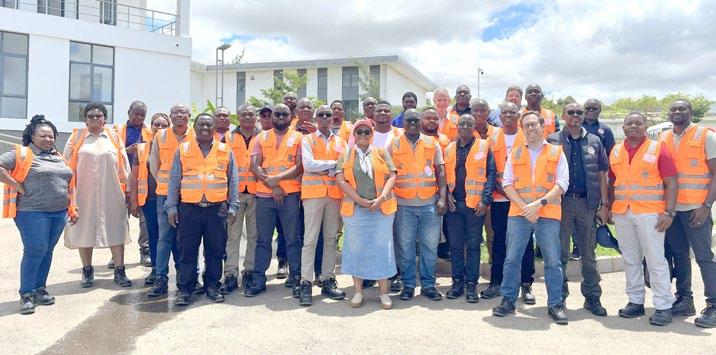
ROCKBlue delivers these interventions through its Utility Partnership Division (UPD), a structured framework for embedding international and local specialists within utility leadership teams. UPD supports senior staff across finance, operations, and governance, ensuring that initiatives are aligned with organisational priorities and sustained beyond individual projects.
Through UPD, initiatives such as the Performance Achievement Workshop Series (PAWS) and the Access to Capital, Oversight and Reporting Nexus (ACORN) are implemented consistently, helping utilities strengthen management, reduce NRW, and improve service delivery. By working alongside utility teams, UPD specialists embed performance-driven practices across departments.
Structured operational systems are the backbone of NRW reduction. Accurate data collection, preventive maintenance schedules, calibrated metering programs, and performance monitoring dashboards enable informed decision-making and targeted interventions.
Leak detection becomes systematic rather than reactive, meter replacement is data-driven, and maintenance cycles are structured. Clear reporting lines and performance expectations foster accountability and ensure losses are tracked, discussed, and addressed across departments.
Leadership capacity often determines whether technical recommendations translate into sustained action. Utilities operate in complex financial environments, and reforms succeed only when leaders align technical, financial, and governing teams around shared performance objectives.
ROCKBlue builds executive and senior management capacity to ensure reforms are implemented effectively. The Performance Achievement Workshop Series (PAWS), cohosted with the American Water Works Association, brings utility leaders together with WASH experts in a collaborative environment. PAWS equips management teams with shared knowledge and tools to drive measurable progress, embed reforms across departments, and sustain long-term improvements.
Even in resource-constrained settings, utilities can achieve meaningful performance improvements before major infrastructure investments. ROCKBlue’s Access to Capital, Oversight and Reporting Nexus (ACORN) supports this by strengthening governance, operational performance, financial management, and creditworthiness while improving access to commercial finance and other capital sources.
By optimizing existing resources, implementing robust oversight, and supporting strategic investment planning, ACORN enables utilities to reduce NRW and enhance service delivery without waiting for capital-intensive projects. Strong performance and financial health can precede and amplify future infrastructure investments.
While reducing NRW percentages is a visible outcome, true success comes from improving overall utility performance. Metrics should reflect operational efficiency, financial resilience, customer satisfaction, and governance adherence. Key measures include:
• Time to detect and repair leaks
• Revenue collection effectiveness
• Customer complaint resolution and satisfaction
• Staff accountability and compliance
• Cost recovery and operational efficiency
• Number of urban residence reached
By tracking these indicators, NRW reduction becomes a natural outcome of stronger institutional performance rather than an isolated technical fix.
Reducing NRW strengthens a utility’s financial and operational foundation, enabling sustainable service delivery and long-term water security, particularly in vulnerable regions. Utilities that focus on performance, leadership, and accountability are better positioned to attract funding, implement infrastructure upgrades effectively, and maintain high-quality service for urban customers.

Over the next decade, addressing NRW sustainably will require sector-wide commitment to leadership development, institutional strengthening, and a performance-driven culture. ROCKBlue’s approach demonstrates that lasting impact comes from building resilient organizations from within, where governance, operations, finance, and leadership work in harmony to deliver sustainable water and sanitation services.
For more information, visit: rockblue.org
ARTICLE FROM ROGER DARLISON, TECHNICAL SALES SUPPORT MANAGER, ENVIROGEN
Water treatment facilities rarely fail overnight. Instead, ageing infrastructure typically develops gradually, often with unseen inefficiencies that increase operating costs, heighten compliance risk and place growing pressure on production continuity. Energy consumption creeps up, chemical dosing increases, maintenance interventions become more frequent, and operators rely more heavily on manual workarounds to keep systems running.
Because these impacts are absorbed into day-to-day operational expenditure, they are typically far less visible than a single capital investment decision. As a result, many manufacturers continue to operate plants that technically meet water quality specifications, while overlooking the steady erosion of economic efficiency and resilience happening beneath the surface.
From a whole-life cost perspective, the greatest financial risk is rarely sudden catastrophic failure. More often, it is the cumulative impact of years of inflated operating costs, reactive maintenance, and deferred intervention. Regulatory compliance may indicate that a system is “acceptable,” but it does not necessarily mean it is efficient, resilient or optimised for long-term operation.
Protecting water treatment assets over time therefore requires a proactive, strategic approach. This starts with understanding how a plant is actually operated day to day, rather than how it was originally designed or documented. On many sites, operational teams work manually on ageing systems, when necessary, to maintain output, masking deeper mechanical or process limitations.
Engaging specialist industrial water treatment partners
early, helps bring these issues into focus before failures force urgent, time-pressured capital decisions, allowing upgrades to be phased around production cycles and aligned with longer-term operational and life-cycle cost objectives.
The earliest indications of deteriorating water treatment infrastructure are often subtle, such as gradual increases in energy use, rising chemical consumption or a growing frequency of minor maintenance interventions. Because these changes develop slowly under normal operating conditions, they are frequently managed through day-to-day workarounds and therefore easy to overlook.
Subtle pressure losses, extended regeneration cycles, increased rinse volumes, or a steady rise in maintenance call-outs are common indicators of declining system health. Where instrumentation is ageing or poorly calibrated, true performance can be obscured, leading to higher dosing rates or excess energy use long before water quality or compliance limits are approached.
Maintenance records often show a gradual increase in intervention frequency, well before a system is formally classed as end of life. These early warning signs typically translate directly into higher operational expenditure, even though they may not trigger immediate compliance concerns.
Key indicators that ageing infrastructure may be approaching the point where intervention is required include:
• Increasing energy and chemical costs
• Frequent unplanned maintenance or emergency repairs
• Rising risk of regulatory non-compliance
• Declining system reliability or water quality stability
• Operational bottlenecks impacting production continuity
Early detection of these hidden costs is best supported by independent site assessments carried out by specialist industrial water treatment companies. While SCADA systems provide valuable real-time and historical data, they can only reflect what is being measured and how systems are currently configured. External specialists bring comparative insight from multiple sites and sectors, helping to place performance in context and identify inefficiencies that may have become normalised internally. This evidence-based approach supports more informed, proactive planning rather than reactive intervention driven by failure events.
Upgrading water treatment infrastructure requires careful planning to balance technical needs, operational constraints and long-term value. A structured approach typically includes:
• Condition assessment: Collecting data on equipment age, performance metrics and maintenance history
• Identifying inefficiencies: Quantifying energy use, chemical consumption, downtime and compliance risks
• Defining objectives: Clarifying whether the upgrade aims to improve efficiency, ensure compliance, reduce operating costs, increase resilience or future-proof capacity
• Budgeting: Developing realistic CapEx and OpEx estimates, including contingency for unforeseen issues
• Regulatory alignment: Ensuring plans meet current and anticipated environmental and safety requirements
• Stakeholder engagement: Involving operations, engineering, finance, and management early, to build alignment and secure approvals
• Technology selection: Evaluating solutions that best fit operational needs rather than defaulting to replacement
• Project phasing: Planning staged delivery to minimise downtime and protect production continuity
One of the most challenging decisions for operators is weighing targeted refurbishment against full system replacement. Experienced industrial water treatment partners can support this process by assessing the condition of existing assets, understanding site-specific constraints, and evaluating the relative benefits, risks and costs of each option. Life-cycle cost analysis allows short-term capital investment to be weighed against long-term operating efficiency, reliability, and risk, supporting decisions based on total value rather than headline cost alone.
Upgrade programmes can stall when water treatment is viewed primarily as a maintenance expense rather than a production-critical risk. Early alignment between operations, engineering and finance helps reframe upgrades in terms of uptime, efficiency and resilience. When considered through a whole-life cost lens, the long-term impact of delaying intervention, including emergency call-outs, lost production, and reputational risk, often outweighs the perceived benefit of deferring capital investment.
Continued on page 22
Selecting the right water treatment approach is less about individual technologies and more about how effectively a solution is matched to site-specific requirements, operational constraints and long-term objectives. Feedwater quality, duty cycle, available footprint, operator capability, energy efficiency, resilience, and ease of maintenance often have a greater impact on long-term performance and cost than the choice of any single treatment process.
For this reason, effective upgrade decisions benefit from a technology-agnostic approach grounded in whole-life value rather than preference for a particular solution. In practice, this may involve optimising and extending existing core treatment systems, integrating proven process technologies, or introducing more advanced solutions where they are justified by operational or sustainability objectives.
Over-specified or overly complex systems can increase training requirements, spares dependency and maintenance burden, without delivering proportional performance benefits. Conversely, targeted refurbishment or hybrid solutions can often restore or enhance system performance while reducing operational complexity and total cost of ownership. Regenerable treatment processes, such as ion exchange systems used in appropriate applications, are a good example of how sustainability objectives and long-term cost efficiency can be aligned through careful technology selection.
Delivery flexibility is equally important. Depending on site requirements, upgrades may be implemented through permanent fixed installations, modular or containerised systems, or the temporary use of mobile treatment plants to maintain continuity during refurbishment works. Where possible, upgrades can be aligned with planned downtime, such as seasonal or scheduled shutdowns, to minimise disruption and reduce project risk.
Over a typical 10-20-year operating life, long-term reliability, serviceability and ease of operation are just as critical as initial treatment performance. Technologies that support stable operation and predictable maintenance often deliver the strongest whole-life value, even if their upfront capital cost is not the lowest option on paper.
Maintaining an uninterrupted water supply during upgrades can be essential for continuous production. As a result, live upgrades demand careful sequencing and close coordination between project teams and site operations.
Where feasible, installing new treatment assets in parallel
with existing systems allows capacity to be brought online without reliance on temporary treatment solutions, which can add cost, complexity and risk. Commissioning alongside live production demands disciplined planning and clear communication, but, when managed correctly, it protects both short-term continuity and long-term system resilience.
When a full parallel installation is not possible, containerised or mobile treatment systems can bridge supply gaps during refurbishment works. Clear communication between engineering, operations, contractors and suppliers underpins successful delivery. The use of shared project trackers to manage scope, interfaces, risks and milestones supports early issue identification and reduces the likelihood of disruption during complex projects.
Deciding between refurbishment and full system replacement is one of the most challenging decisions operators face when managing ageing water treatment infrastructure. While full replacement can appear to offer certainty, it is not always the lowest-risk or fastest-return option.
In many cases, targeted refurbishment can restore performance, reliability and compliance at a significantly lower capital cost, with shorter implementation times and reduced exposure to production disruption. When assessed against total cost of ownership over the remaining asset life, refurbishment often delivers a stronger and more predictable return on investment than wholesale replacement.
A robust cost–benefit analysis should consider not only initial capital expenditure, but also long-term operating costs, energy and chemical consumption, maintenance effort, downtime risk and the likelihood of emergency interventions. Viewed through this lens, the cumulative cost of operating an inefficient system can quickly outweigh the perceived benefit of deferring intervention.
At a world-leading packaging manufacturer, Envirogen delivered a phased upgrade of an ion exchange water treatment system without interrupting production. New treatment skids were installed in parallel with existing assets, enabling safe decommissioning of ageing equipment while maintaining continuous supply.
Early engagement allowed the upgrade to be sequenced around production requirements, reducing dependency on temporary systems and lowering overall delivery risk.
The result was a simpler, more reliable system with reduced maintenance demand, improved water quality stability and stronger long-term life-cycle cost performance.
See how we did it - click the video to watch
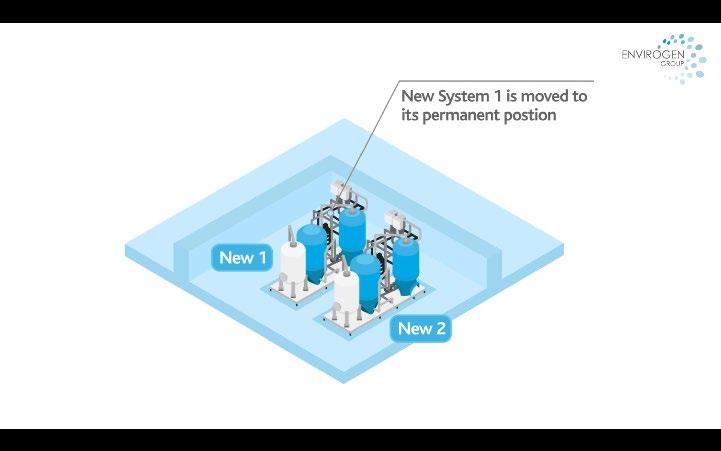
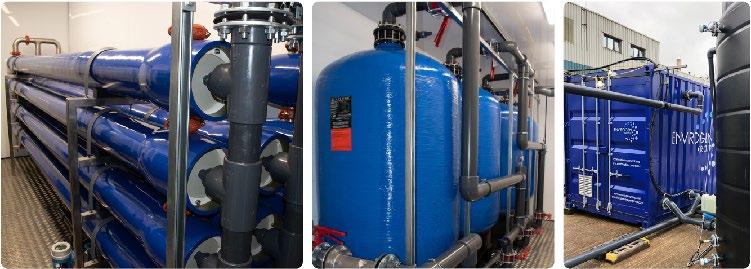
Envirogen refurbished a critical demineralised water plant supplying both process and CHP operations, restoring system reliability while avoiding full plant replacement. Detailed condition assessment demonstrated that core assets could be retained and upgraded, reducing delivery time and capital cost while protecting continuous operations.
The refurbishment achieved significant capital savings without increasing operational complexity, delivering the lowest total cost of ownership over the remaining asset life and safeguarding production continuity. A full containerised mobile water-treatment back-up system was also deployed for additional assurance throughout the project - including a mobile reverse osmosis unit and a containerised ionexchange mixed-bed polishing system - providing ultimate peace of mind during the upgrade.
Ageing water treatment infrastructure does not have to become a constraint on performance, compliance or sustainability. With a structured, evidence-led approach to assessment, planning, and upgrade, existing assets can often be optimised, extended and adapted to meet today’s operational and regulatory demands without unnecessary disruption.
Early engagement with experienced industrial water treatment specialists allows decisions to be grounded in real-world operating data and practical delivery experience. By focusing on whole-life value, aligning stakeholders early, and selecting solutions that genuinely fit site requirements, organisations can move away from reactive maintenance toward a more resilient, predictable operating model.
Taking a proactive approach to assessment, upgrade and ongoing maintenance helps safeguard performance, reduce long-term costs and protect the value of water treatment assets well into the future.
Source: GF
Non-revenue water (NRW) remains one of the most persistent challenges for water utilities worldwide. It combines lost production, lost revenue and accelerated infrastructure deterioration into a single operational burden. Globally, NRW is estimated at around 126 billion cubic meters per year, a volume that could supply roughly 800 million people. The associated economic impact is significant, with avoidable production and energy costs estimated at around USD 39 billion annually.
The challenge is particularly visible in markets where water networks continue to expand while aging infrastructure remains in operation. Brazil is a clear example. National benchmarking data shows that average distribution losses reach 37.78%, often communicated as “around 40%”. In practical terms, nearly four out of ten liters of treated water never generate revenue at the end user.
At the same time, regulatory expectations are increasing.
Loss reduction targets are gradually moving toward 25% from 2033 onward, requiring utilities to implement solutions that are not only technically effective but also scalable and fast to deploy across multiple districts.
Among the most effective strategies to reduce NRW is pressure management. Water networks in growing cities are frequently operated at higher pressures than necessary to ensure supply across large areas. However, excessive pressure increases leakage rates and accelerates mechanical stress on pipes and fittings.
Pressure reducing valves (PRVs) are therefore widely recognized as a highly effective intervention. By stabilizing pressure levels within district metering areas, PRVs reduce the flow rate of existing leaks while protecting infrastructure from unnecessary stress. Studies indicate that lowering the pressure of water networks by 25% can reduce the occurrence of pipe bursts by up to 75% while extending asset lifespan.
When combined with monitoring instruments such as sensors or flow meters, pressure management becomes a
powerful tool for utilities seeking to improve both operational efficiency and network resilience.
While technical performance is critical, utilities also need solutions that can be deployed quickly and reliably. Across the sector, skilled labour shortages and increasing project complexity are extending construction timelines.
Pre-fabricated infrastructure modules offer an effective response. By assembling and testing complex systems in controlled manufacturing environments, utilities can significantly reduce on-site installation time and minimize the risk of assembly errors.
Integrated plug-and-play therefore shift complexity away from the construction site toward standardized manufacturing processes. This approach improves installation predictability while reducing dependence on highly specialized labour.
A recent project with Sabesp, Brazil’s largest sanitation company, demonstrates the practical benefits of this approach.
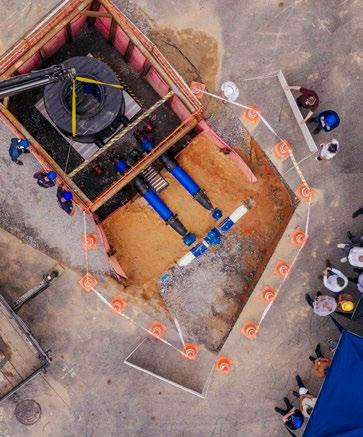
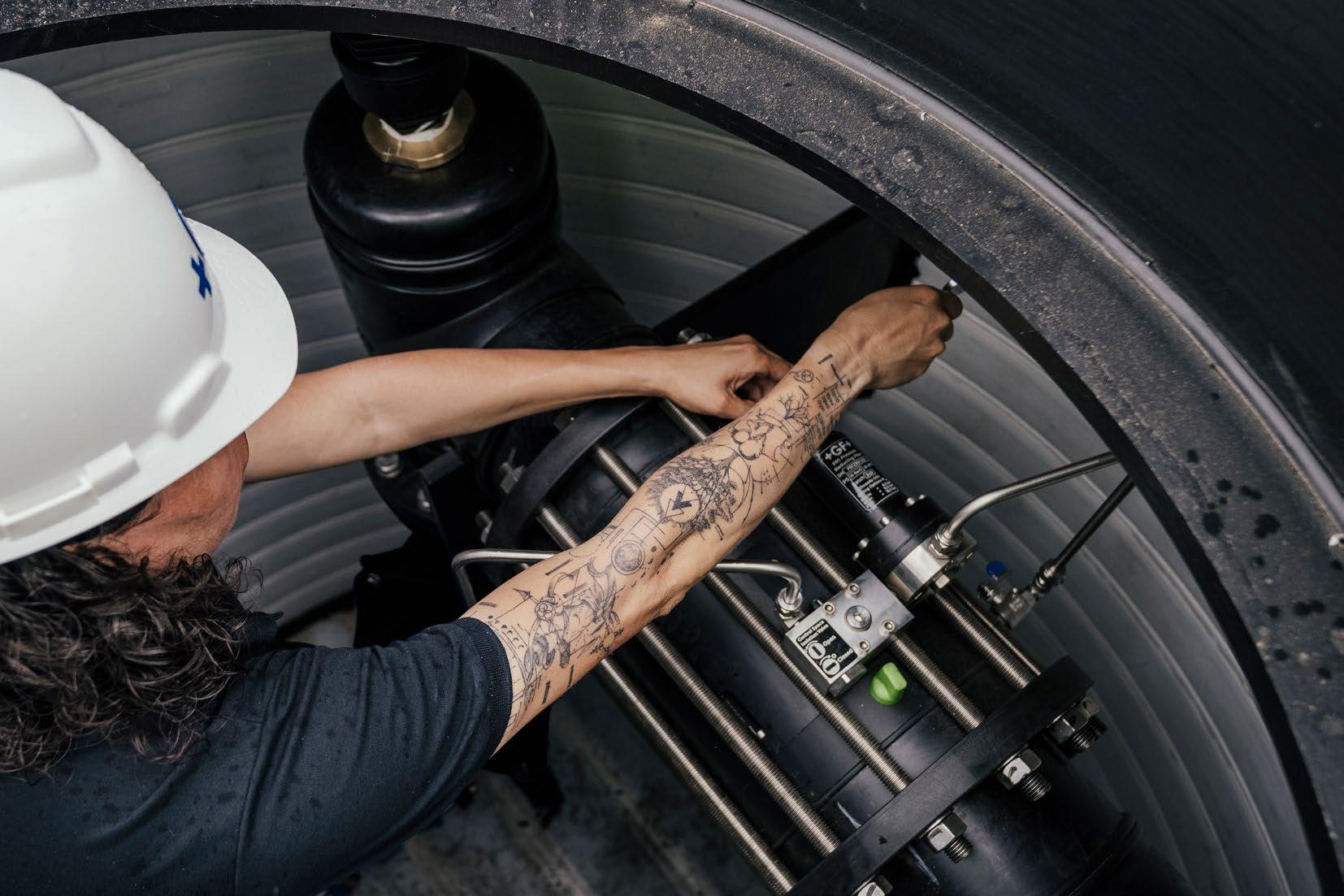
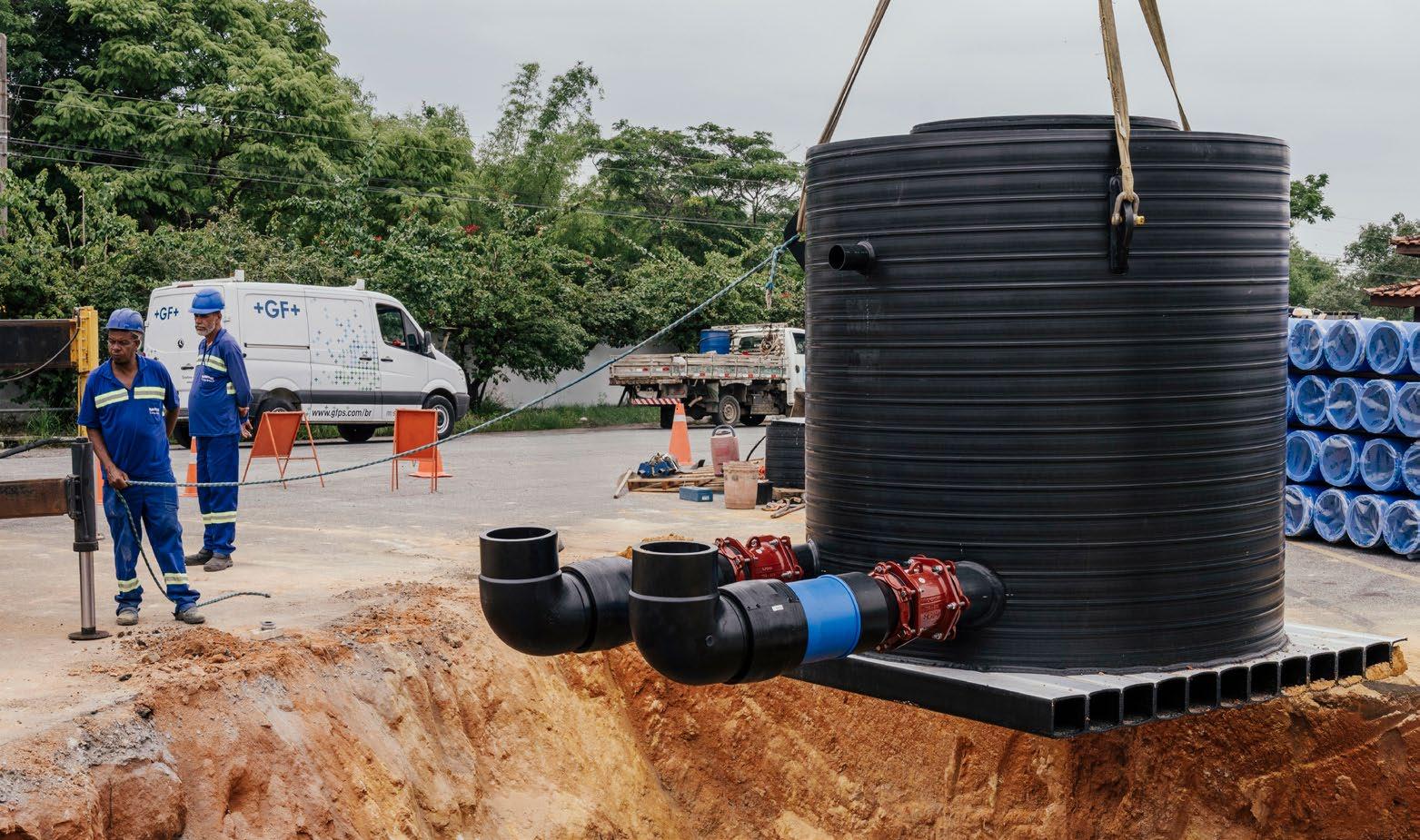
Sabesp supplies water and wastewater services to 375 municipalities in the state of São Paulo. As part of its network modernization program, the utility installed a NeoFlow Plug-and-Play pressure management chamber supplied by GF
With their plug-and-play approach, integrated Flow Solutions ensure compatibility, accelerate installation, and simplify logistics.
Source: GF
The compact system integrates several technologies into a single pre-assembled unit. At its core is the NeoFlow Pressure Reducing Valve, which stabilizes network pressure and reduces leakage rates. For the water inlet and outlet, Sabesp chooses the MULTI/JOINT 3000 Plus couplers that enable the safe connection of different pipe materials, allowing seamless integration into existing mixed-material networks.
The chamber itself is made of lightweight HDPE, which makes it up to 10 times lighter than traditional concrete structures. This significantly simplifies transport, installation and future maintenance. Because the system arrives fully assembled, installation at the Sabesp site required only half a day, including excavation, positioning and final connection. Compared with traditional construction methods, this dramatically reduces installation complexity, trench opening times and labour requirements.
The operational results of the installation are significant. The pressure management chamber saves approximately 130,000 cubic meters of water per year, equivalent to 130 million litres
In financial terms, this translates into about €65,000 per year in avoided production and pumping costs, assuming an average production cost of €0.50 per cubic meter. In Brazilian currency, the annual savings correspond to roughly R$396,513. These figures indicate a payback period of
Continued on page 26
around one year or less, even before accounting for additional operational benefits such as fewer pipe bursts, reduced emergency repairs and improved service continuity.
The environmental impact is equally important. The annual water savings are sufficient to supply around 3,000 people, while stabilized pressure also reduces energy consumption and protects infrastructure from mechanical stress.
Designed for long service life, the chamber itself can last up to 100 years, with internal components designed for around 50 years of operation. This helps reduce lifecycle costs while supporting long-term infrastructure sustainability.
The Sabesp implementation demonstrates how integrated Flow Solutions can significantly reduce water losses without requiring large-scale network reconstruction. By combining
pressure management, compatible materials and prefabricated system design, utilities can improve operational efficiency while strengthening infrastructure resilience.
As water networks worldwide face increasing pressure from climate change, urbanization and aging assets, such integrated approaches provide a practical and scalable pathway toward more sustainable water management.
Experience NeoFlow Plug-and-Play Chamber live at IFAT from 4-7 May in Munich, Germany: GF booth: B3.351 VAG booth: C2.451
https://go.gfps.com/ifat-2026
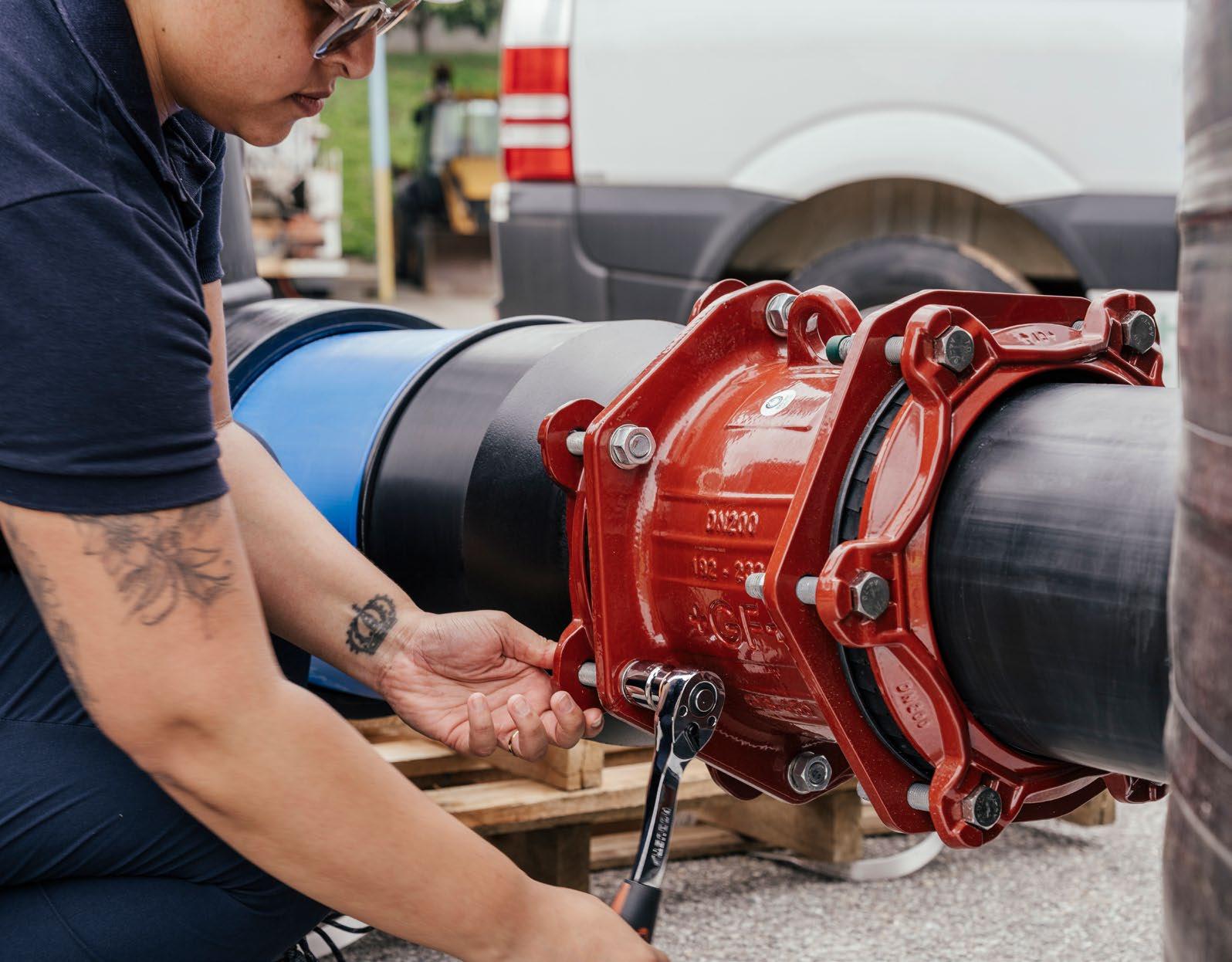
Crucial for longevity: In today’s complex water networks, couplers need to deal with a wide variety of materials and diameters. GF addresses this with its MULTI/JOINT system for quick, safe and connections to combat NRW..
Source: GF
INSIGHTS FROM ROBBERT LODEWIJKS, HULO.AI
Across the globe, utilities lose close to 30 percent of treated drinking water before it reaches a tap.
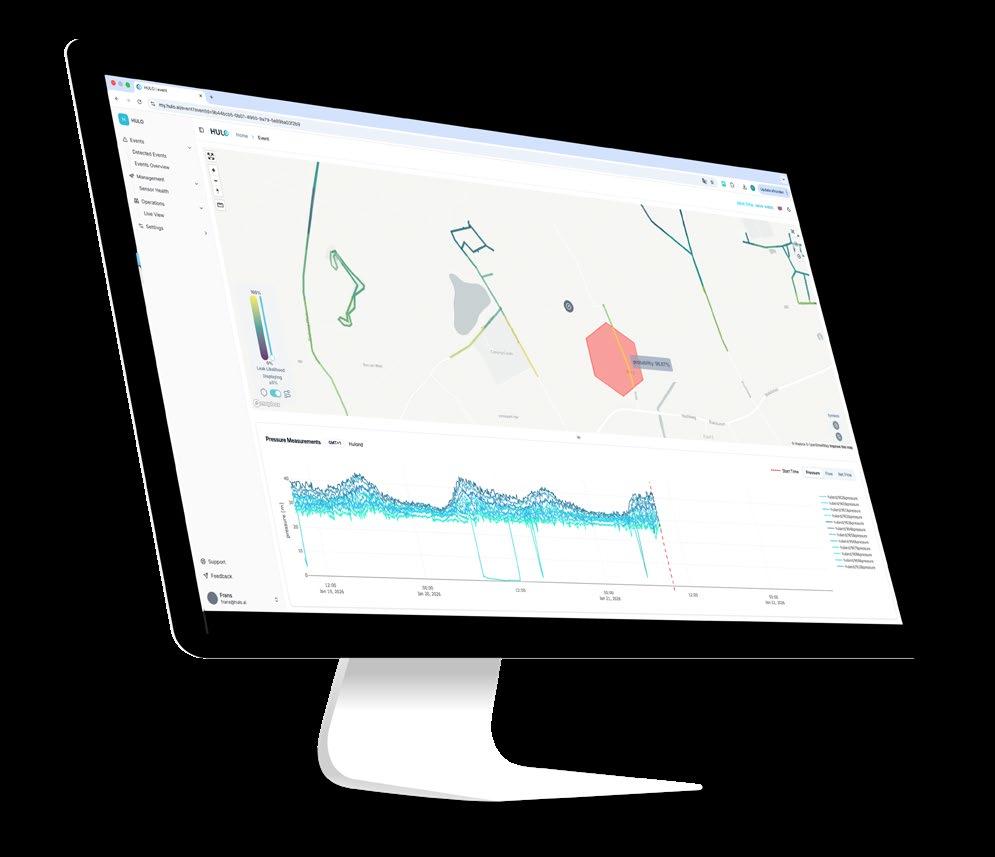
Non-Revenue Water (NRW) weakens financial performance, increases energy consumption, and places additional stress on aging infrastructure. Yet in many regions, the response remains rooted in hardware expansion, physical segmentation, and reactive repair cycles.
A growing number of technology providers argue that most utilities already collect much of the data required to act more decisively, such as pressure readings, flow measurements, and hydraulic models. The challenge lies in transforming that raw data into real-time operational intelligence.
From its base in the Netherlands, HULO.ai develops AI-based software designed to detect, classify, size, and localise leaks and anomalies in near real time using existing infrastructure data. Rather than relying primarily on new hardware installations or large-scale network restructuring, the approach focuses on extracting more value from available data streams.
For CEO and co-founder Robbert Lodewijks, the urgency is both environmental and operational. “We believe utilities should not have to rebuild their networks to understand them. If you truly see what is happening in your system, you stop guessing. And when you stop guessing, performance improves.”
Traditional NRW strategies often centre on leakage as an isolated technical issue. Teams investigate after anomalies appear. Field crews respond when losses become visible. This work is essential, but frequently reactive.

An alternative view frames NRW as a reflection of overall network behaviour. Water loss rarely emerges as a single failure. It often reflects patterns in pressure instability, hydraulic stress, and systemic blind spots. As some practitioners describe it, leaks can be seen as symptoms of limited network visibility rather than isolated defects. This perspective shifts NRW from a percentage reported annually to a daily performance indicator, measured through detection time, prioritisation accuracy, and intervention efficiency. These indicators influence resilience just as much as overall loss volumes.
When utilities move from periodic analysis to more continuous visibility, NRW becomes a question of operational excellence rather than solely infrastructure age.
Continued on page 28
Software-led approaches integrate with existing SCADA systems and hydraulic models. Algorithms grounded in hydraulic principles analyse pressure and flow data to identify deviations, classify anomaly types, and estimate likely location and magnitude.
Compared with hardware-intensive models, this approach may reduce the need for widespread acoustic sensors or extensive physical segmentation. Deployment is primarily dependent on data access and system integration rather than excavation permits or civil works. This can offer advantages in scalability. Utilities may begin in a defined area and expand gradually, depending on operational priorities and data maturity.
“We do not believe in technological fireworks,” Lodewijks explains. “We believe in measurable results. If you can localise a new leak within hours using the data you already collect, that fundamentally changes how you manage your network.”
By combining AI techniques with hydraulic physics, providers aim to avoid “black box” outcomes. Alerts are linked to observable network behaviour, which can help reinforce operator trust.
It is important to note, however, that software-led approaches depend on data quality, model accuracy, and organisational readiness. AI does not replace field investigation but can support more targeted deployment of resources.
Analytics alone do not reduce water loss; operational integration is key.
Modern platforms increasingly prioritise alerts based on probability and estimated impact. They classify anomalies and provide indicative loss estimates to support decisionmaking. The goal is to enable operators to focus intervention where it delivers the greatest operational return. Where implemented effectively, detection times may decrease and investigations become more targeted. Over time, utilities can build a clearer understanding of recurring pressure patterns and structural vulnerabilities.
This visibility can also support collaboration across departments. Operations, asset management, and finance teams may align around shared data rather than fragmented reporting. In this context, NRW becomes embedded in strategic planning rather than confined to a technical silo. “Digital transformation should lower
barriers, not raise them. We work with what is already in the ground and aim to make it more intelligent,” Lodewijks adds.
For decades, District Metered Areas (DMAs) have been one of the most widely used tools in Non Revenue Water management. By dividing a distribution network into smaller zones and measuring inflow and outflow, utilities gain a clearer view of where water losses occur.
The approach has delivered important improvements in many systems. DMAs can simplify monitoring and support targeted leak detection programmes. However, creating and maintaining DMAs often requires physical network restructuring, additional meters, and ongoing operational management. In large or complex systems this can mean significant investment, long implementation timelines, and operational rigidity.
Recent advances in data analytics are opening new possibilities. Instead of relying solely on physical segmentation, software based analysis can extract network wide insights from pressure and flow data already collected through SCADA systems. By analysing hydraulic behaviour across the entire network, AI driven tools can identify anomalies, estimate leak locations, and detect emerging problems without requiring full physical zoning.
This does not necessarily replace DMAs. In many utilities they remain an important operational structure. But digital approaches may complement or, in some cases, reduce the need for extensive segmentation. The result is a shift toward network visibility driven by data rather than infrastructure alone.
Many utilities operate within strict capital constraints. Large-scale DMA programmes or new sensor deployments require investment and long approval cycles. Data-driven approaches offer an alternative or complementary pathway. By extracting greater intelligence from existing infrastructure, utilities can enhance, rather than necessarily replace, physical segmentation strategies. Increased visibility may be particularly valuable in areas where zoning is incomplete or capital programmes are phased over time.
This model can be relevant in both dense urban systems and geographically dispersed rural networks, where rapid deployment and limited capital availability influence feasibility. The economic rationale centres on earlier detection, improved prioritisation of fieldwork, and more informed long-term investment planning.
Technology alone does not reduce NRW. Sustained progress depends on organisational behaviour. Highperforming utilities tend to respond quickly to data, cultivate data literacy across teams, and foster coordination between analysts and field crews. Software platforms can support this culture by presenting hydraulic behaviour in accessible formats, through dashboards, structured alerts, and transparent analytical logic.
Success metrics may evolve accordingly. In addition to overall NRW percentages, utilities increasingly track detection time, repair efficiency, avoided production, and operational cost impacts. In this way, NRW becomes both a financial and resilience lever.
As AI-based solutions expand across different regions, a consistent theme emerges: utilities are seeking speed, clarity, and measurable operational improvement. Earlystage deployments often focus on improving detection capability and investigation efficiency. Over time, confidence grows as teams integrate digital insight into routine operational workflows.
Because these platforms are designed to adapt to existing hydraulic conditions, they can operate across varied network characteristics, from dense urban systems to more rural configurations. The common denominator is data-driven visibility.
The next phase of NRW reduction is likely to be shaped by intelligence layered onto existing infrastructure, combining hydraulic understanding with advanced analytics.
While physical renewal and asset replacement remain essential, software-driven visibility offers utilities an additional lever. When operators gain clearer insight into network behaviour, they are better positioned to strengthen financial performance, reduce environmental impact, and shift from reactive repair toward proactive management.
Non-Revenue Water remains a global challenge. With improved operational insight, it becomes increasingly measurable, manageable, and strategically addressable.
Learn more: www.hulo.ai
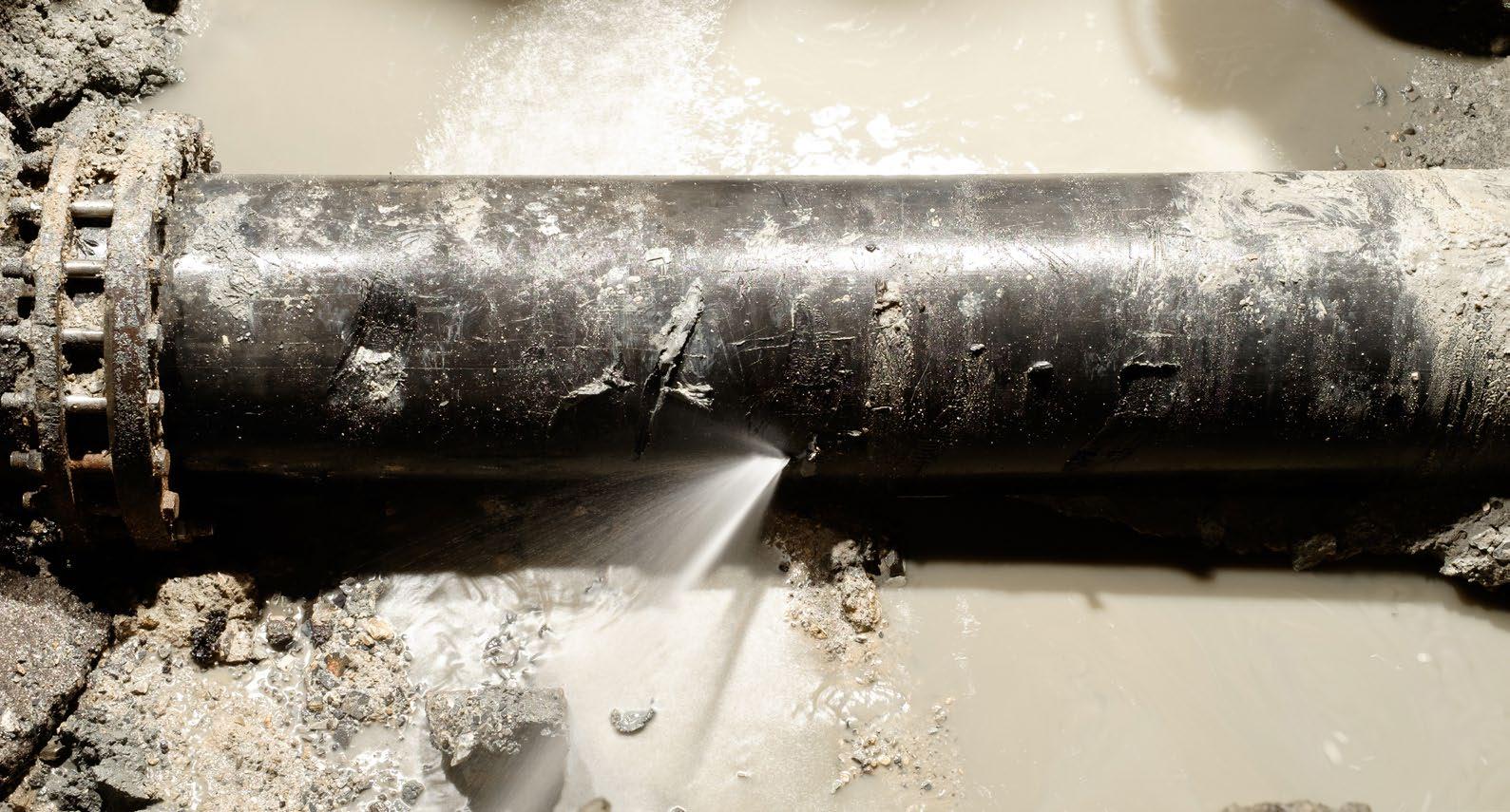
WRITTEN BY | MARTYN SHUTTLEWORTH
Across Europe, water networks lose up to a quarter of all drinking water through leaks, depleting precious resources and wasting energy. While manual inspections, preventative maintenance, and good asset management can reduce loss, they need significant investment and cannot find every leak. Exacerbating the issue, water networks in most European cities incorporate a tangled web of old and new pipes, making it difficult to identify and isolate problems.
In response, many network operators are using pipe robots that crawl through water networks looking for weaknesses and leaks. While useful, their use is sporadic, so they provide limited data and rarely fix the problem, requiring extensive follow-up maintenance. Accordingly, attention is shifting towards pipe robot ‘suites’ that cover the entire process, patiently detecting leaks and gathering
data before performing repairs. One example is the TUBERS Project, a consortium of expertise that is developing an entire ‘robot ecosystem.’
Eirini Angeli, Research and Development Officer at Tech Hive Labs, a research institute in Greece, coordinates TUBERS under the Horizon Europe initiative. She tells us more about TUBERS and how the program intends to reduce water network leaks in Europe and beyond. Their robotic ecosystem integrates pipe robots with a decision support system that allows autonomous navigation through water networks.

One of the main problems with Europe’s water management and infrastructure is the age of the networks. Decades-old distribution system infrastructure sits alongside modern pipes, creating many uncharted areas
and blind spots. Failures can be very difficult to locate and, in some cases, the network operator is not even aware that they exist. As Eirini notes:
“Water flows silently beneath our streets. When it leaks, we rarely see it, but we all pay the price. Up to 40% of drinking water is lost in some networks. The energy used to treat and pump it is wasted. Carbon emissions rise. Infrastructure ages silently.”
Globally, water systems lose about 20% of all treated water, which places additional pressure on water resources and infrastructure. Although water network operators use a number of techniques to try and mitigate the problem, leak location and repair is still the most important element, which led to the TUBERS consortium.
Funded by the EU’s Horizon Europe, the TUBERS project set out to change how pipe robots are used in water networks. Instead of using robots for single inspections, TUBERS will combine robotic platforms to provide dynamic inspections and, importantly, target repairs. Eirini points out that:
“TUBERS was born from a bold idea: What if we could send intelligent robotic systems inside water pipes to inspect, diagnose, and one day repair without digging up cities?”
To do this, the TUBERS team designed their robotic ecosystem with a combination of technologies, from the physical robot to sophisticated software and integrated machine learning. Eirini believes this cross-disciplinary mindset is the foundation of the project:
“TUBERS brings together robotics, ultrasonic sensing and explainable AI into one ecosystem:
• Flexible snake-like robots
• Soft robotic inspection tools
• High-precision ultrasonic measurement
• A digital decision-support platform”
The robot is capable of long-distance operation and can navigate the network, using the soft robotic platform to inspect and repair sections of pipeline. The high precision inspection system can measure corrosion and detect leaks, and the decision support draws upon Explainable Machine Learning algorithms to make optimal choices. However, TUBERS realised the ambitious concept needed to be broken down into actionable parts if it was to become reality.
The project pushes boundaries and implementing the entire ecosystem at once is technologically challenging. As Eirini notes, this led to a phased approach intended to develop each element individually and work towards the final destination:
“The vision was radical: 24/7 internal inspection and targeted repair of drinking water networks. But real-world infrastructure demands realism. Following rigorous technical reviews, the consortium made a critical decision: Not all ambitions can be delivered simultaneously.
Instead, TUBERS adopted an incremental pathway:
1. Deploy a reliable, compliant inspection service.
2. Mature advanced technologies toward industrial readiness.
3. Build a sustainable Robot-as-a-Service model.
4. Expand capabilities responsibly.
This approach reflects a deeper principle: Innovation must be credible to be transformative.”
With this phased approach, TUBERS will develop a system that will deliver benefits for water network operators, consumers, and the environment. For Eirini her role with the phased approach is “navigating the complex journey from research to real-world transformation.”
The TUBERS robotic ecosystem intends to make robot inspections more comprehensive and easily accessible for water network operators. Eirini revealed some of the potential benefits of the program:
“If scaled, TUBERS could:
• Save 158 GWh of energy
• Reduce 79,000 tonnes of CO₂
• Preserve millions of cubic metres of drinking water
But, beyond numbers, it represents something larger: A shift from reactive infrastructure to predictive, data-driven resilience.”
Overall, the TUBERS project rethinks the timeconsuming and expensive processes used for water pipeline inspection and maintenance. By reducing manual inspection and maintenance, the technology gives insight into the next stage of robot pipeline inspection.

WRITTEN BY | NATASHA POSNITT
on-Revenue Water (NRW) rarely makes headlines beyond utility reports and infrastructure budgets. Yet every leak and system failure sends consequences far beyond urban limits. What begins as water lost underground can ripple outwards, reducing freshwater flows and carrying pollutants downstream. NRW ultimately reshapes the health of our coasts.
For coastal communities, those ripples are becoming impossible to ignore. From storm-driven sewage overflows to chronic leaks that strain rivers and aquifers, aging infrastructure is quietly altering the balance between freshwater systems and marine environments. Beaches close after heavy rains. Estuaries struggle with contamination. Marine habitats face mounting stress from pollution and changing salinity levels. The story of NRW is not just about effici ency — it is about environmental resilience.
For Jaime LeDuc, Blue Water Task Force Manager at the Surfrider Foundation, the connection between infrastructure failure and ocean health is concerning.
Founded in 1984, the Surfrider Foundation is a nonprofit environmental organisation dedicated to the protection and enjoyment of the world’s oceans, waves, and beaches. Through grassroots activism, water quality monitoring, policy advocacy, and community education, Surfrider works to reduce coastal pollution, improve water infrastructure, defend public beach access, and strengthen climate resilience in coastal communities across the United States and beyond.
“Storms and failing water infrastructure have direct and serious impacts on coastal and marine environments. When it rains, stormwater flows over impervious surfaces like streets and parking lots, picking up bacteria, trash, oil, and other pollutants before carrying them into rivers and the ocean. Aging or overwhelmed wastewater systems can cause sewage overflows, leading to contamination and beach closures.”
While utilities track NRW losses in financial terms, the environmental accounting tells a broader story.
“When water is lost through leaks, breaks, or inefficient systems, utilities often have to withdraw more from rivers and groundwater, putting added stress on freshwater ecosystems and reducing the flows that sustain healthy coastal environments.”
Every additional withdrawal alters the delicate balance of freshwater entering estuaries. Reduced river flows can increase salinity levels, disrupt breeding grounds, and weaken wetlands that act as natural buffers against storms. What begins as a leak beneath a roadway can ultimately influence the chemistry and biology of coastal waters miles away.
At the same time, deteriorating infrastructure does not only allow water out, it can allow contamination in.
“Failing infrastructure can allow pollutants to enter rivers and estuaries, degrading water quality, damaging marine habitats, and contributing to harmful algal blooms.”
These blooms can suffocate marine life, close fisheries, and create long-term ecological damage. The ripple effect is cumulative and often invisible until it surfaces in the form of closures, fish kills, or public health advisories.
“Climate change is intensifying storms, bringing heavier rainfall, stronger storm surges, and faster runoff. These extremes frequently overwhelm aging pipes and treatment systems, sending polluted water into rivers, beaches, and the ocean. Along the coast, beach loss, wave runup and storm surge can damage coastal buildings and cause sewage pipes, holding tanks, and septic systems to release pollution.”
The result is not only environmental degradation but economic and social disruption. Tourism declines when beaches close. Fisheries suffer when water quality drops. Communities that depend on clean water for recreation and livelihood face growing uncertainty.
“Many communities are not equipped to handle this new level of intensity, leaving coastal ecosystems, marine life, and public health increasingly vulnerable.”
In this era of climate volatility, NRW is no longer simply a matter of operational efficiency. It is also a frontline resilience issue.
While infrastructure upgrades require long-term investment, communities are stepping in to monitor and protect their waterways in real time. Surfrider’s Blue Water Task Force mobilises volunteers to test water quality at beaches that may not be covered by official monitoring programs.
“Communities play a key role in protecting water and coastlines because they have local knowledge, can rally together to build advocacy, and help fill water quality monitoring gaps. Through our Blue Water Task Force program, volunteers test beaches not covered by agency-run monitoring programs, track pollution sources like stormwater outfalls and rivers, and collect data during off-peak times such as winter.”
This grassroots data collection often reveals contamination that would otherwise go undetected.
“This grassroots monitoring fills critical gaps, often uncovering pollution that would otherwise go undetected, and empowers communities to push for infrastructure upgrades, stronger water protections, and long-term solutions to keep beaches, waves, and marine life safe.”
By linking data to advocacy, communities help ensure that water infrastructure failures do not remain hidden.
“If there’s one change that would make the biggest difference, it’s investing in resilient, modern water infrastructure. Upgrading pipes, stormwater systems, treatment facilities, and septic systems; siting them outside coastal hazard areas; increasing monitoring; and implementing nature-based solutions can help prevent sewage overflows, polluted runoff, and chronic contamination.”
Nature-based solutions such as restored wetlands and permeable landscapes can further absorb runoff before it carries contaminants to rivers and oceans.
“Taking action now protects freshwater and marine ecosystems, and ensures our oceans, waves, and beaches remain healthy for future generations.”
In the end, Non-Revenue Water is not just water that disappears from a system. It is water that reappears elsewhere, often in already strained rivers and stressed coastal habitats. The ripple effect connects what happens beneath our streets to what washes ashore. And as storms grow stronger and infrastructure ages, those ripples are only increasing.










Across the globe, water leaders and innovators are redefining how utilities monitor, manage, and minimise water loss. In this edition, leading experts share their insights on the technologies, policies, and strategies driving smarter, more resilient approaches to Non-Revenue Water (NRW).
From advanced leak detection and pressure management to digital optimisation, smart metering, and data-driven asset management, our contributors explore how bold thinking and intelligent systems are transforming NRW reduction from a persistent challenge into a strategic opportunity for greater efficiency, sustainability, and long-term water security.



Managing Director Business Development Director

What do you see as the most effective strategy for reducing Non-Revenue Water (NRW) today?

We work mainly in the wastewater network, so my answers are grounded in how these systems behave. The most effective strategy is shifting focus from chasing incidents to understanding everyday behaviour. Dry weather flows are one of the clearest indicators of system health. When you understand the normal pattern, small changes make sense and point to where the network is under pressure.
What is the biggest barrier utilities face when tackling NRW?
A major barrier is capital expenditure pressure. Teams are being asked to extend the life of their existing assets and find hydraulic capacity within the current network rather than building new infrastructure. Because of this, we are seeing a significant rise in requests for flow surveys, driven by the need for evidence that supports smarter use of existing assets.

What role does smart metering play in reducing commercial and physical losses?
Smart metering has a clear role on the clean water side but it supports wastewater indirectly. Faster identification of household leaks reduces unnecessary flow entering sewers during dry periods, which helps stabilise catchments that run close to capacity. It also improves the overall understanding of water balance. When usage data is more accurate, wastewater teams start with a clearer sense of what normal dry weather flow should look like. It does not replace wastewater monitoring, but it strengthens the context. Looking ahead, comparing long term dry weather flow trends with usage patterns could help highlight unusual inputs or infiltration earlier.


What advice would you give to municipalities beginning their NRW reduction journey?
For municipalities starting out, the best approach is to pick one catchment and understand its dry weather pattern, storm response and recovery time. That clarity guides every next step.
What NRW breakthrough or approach deserves more industry attention?
There is significant untapped potential in the data already being generated. Our sensors produce billions of data points each year, and that is only a fraction of what exists across the industry. The opportunity lies in combining this with rainfall information, modelling outputs and operational insight to reveal patterns not visible today. These include long term behavioural trends, early signs of deterioration, timing issues between catchments and opportunities to unlock capacity that would otherwise be missed. They do not require new infrastructure, only better use of the information that already exists.

do you see as the most effective strategy for reducing Non-Revenue Water (NRW) today?
NRW reduction typically starts with a clear driver such as regulatory requirements, customer pressure, drought conditions, rising costs, or sustainability commitments, which creates the momentum for utilities to invest in loss reduction.
The most effective strategy matches where the utility is on its NRW journey, as different interventions work better at different stages of network maturity.
For all utilities, an accurate water balance is crucial, following standardised methodologies such as the IWA Water Balance Methodology. This determines NRW levels, where losses occur, and appropriate interventions. District Metered Areas (DMAs) further support this by dividing networks into zones for more precise flow measurement and leakage reporting.
For utilities with high NRW or those just starting out, pressure management offers significant low-hanging fruit. Many networks operate at unnecessarily high pressures, increasing leakage and pipe failure rates. Installing pressure reducing valves and developing pressure zones can quickly reduce real losses and extend asset life at relatively low cost.
For more optimised networks where NRW has plateaued, further reductions require advanced monitoring, predictive analytics, and targeted infrastructure renewal to address background leakage and small hidden losses.
Utilities need to find and fix leaks faster than ever, yet detection is increasingly challenging. Digitalisation has already significantly changed network management for NRW reduction and remains a key area for further improvement.
Historically, utilities relied on reactive approaches. Digital technologies are enabling a shift toward continuous monitoring and data-driven decision-making, allowing earlier problem detection and more efficient network management.
Analytics tools help utilities make sense of large data volumes, identifying patterns and anomalies difficult to spot manually such as night flow irregularities in DMAs, abnormal pressure fluctuations, or unusual consumption trends indicating hidden leaks. By automatically highlighting likely leak locations, these tools help utilities focus resources more effectively.
Predictive analytics and machine learning models can estimate conditions likely to cause pipe failure, enabling proactive repair or replacement before a burst occurs, reducing both water losses and emergency repair costs.

What do you see as the most effective strategy for reducing Non-Revenue Water (NRW) today?
The most effective approach is a balanced, data-driven NRW program that begins with a validated water audit and then focuses field resources on pressure management, district metered areas, and active water leak control.
How is digitalisation or AI transforming leak detection and network management?
Digitalization and AI analytics move utilities from reactive repair to predictive operations, reducing detection time, improving leak localization, prioritizing field work, and enabling digital twins for planning, simulation, and training.
What is the biggest barrier utilities face when tackling NRW?
The primary barrier is organizational capacity, not technology. Utilities need sustained leadership, dedicated staff time, sound data governance, and trained personnel to support a multi-year NRW control program.
Which NRW innovation do you believe will have the greatest impact in the next five years?
Data fusion platforms combining Advanced Metering Infrastructure (AMI), pressure/flow, acoustic analytics, and related sensors will drive earlier anomaly detection, risk-based prioritization, and automated pressure control, while remote sensing and AI (satellite leak detection) complement field acoustics.
How can utilities better balance cost, efficiency, and long-term infrastructure resilience?
Utilities can balance cost, efficiency, and resilience with a tiered NRW strategy: a low-cost audit and metering fixes first, targeted leak detection next, and long-term asset renewal planning.
What role does smart metering play in reducing commercial and physical losses?
Smart metering improves billing accuracy, highlights meter under-registration, reduces estimated reads, flags customer-side leaks and continuous flow anomalies, and improves leakage targeting through DMA baselines and pressure zone characterization.
Digital Water Solutions Leader - North America

What do you see as the most effective strategy for reducing Non-Revenue Water (NRW) today?
The most effective NRW strategy treats water loss as an integrated assetmanagement discipline, not a series of isolated projects. Utilities that succeed align pressure management, network segmentation, leak detection, and commercial controls under a single governance framework tied to asset condition, criticality, and lifecycle risk. The shift is from reactive leak repair to continuous performance and risk management, where data informs not only where water is lost today, but where infrastructure is most likely to fail tomorrow – and where accountability and decision rights are clearly defined.
What is the biggest barrier utilities face when tackling NRW?
The biggest barrier isn’t identifying NRW – it’s converting insight into action. NRW spans operations, engineering, finance, customer service, and IT, yet decision rights, funding authority, and execution ownership are often fragmented. Even when analytics clearly identify loss hotspots, utilities struggle to prioritize, approve, and dispatch work quickly. Without clear governance defining who decides, who funds, and who is accountable, utilities become very good at measuring NRW and very slow at reducing it.
What role does smart metering play in reducing commercial and physical losses?
Smart metering is only the starting point. To reduce NRW at scale, AMI must be embedded in a broader operating model that integrates usage data with pressure, asset condition, and operational controls so losses can be acted on systematically. At the same time, AMI enables targeted customer engagement –leak alerts, usage feedback, and demandshaping programs – that reduce apparent and real losses while lowering peak demand and stress on infrastructure. NRW reduction accelerates when utilities actively influence behavior on both sides of the meter.
What NRW breakthrough or approach deserves more industry attention?
The greatest future impact will come from digital twins combined with agentic AI. When a living digital twin continuously represents network conditions, asset health, demand, and pressure, AI can move beyond reporting to orchestrating outcomes – recommending interventions, coordinating actions, and adapting strategies as conditions change. NRW shifts from an abstract percentage to a controllable, systemlevel business metric tied to verified outcomes and organizational accountability.
Ferguson
Director – Utility Technology Solutions

How is digitalisation or AI transforming leak detection and network management?
Digitalization enables utilities to move from a reactive to a proactive approach, reducing time to repair, improving operational efficiency and protecting reputation. By ingesting large volumes of data, AI can help predict which pipes are most likely to fail, evaluate the impact of different failure scenarios and identify high risk leak and breaks areas under specific conditions. We analyzed the network of a utility in PA that was losing a substantial amount of water. We used AI to make recommendations for where to best place leak detection sensors, and within 24 hours of deployment, we found a leak in an abandoned commercial building costing 18.4 million gallons of water.
Which NRW innovation do you believe will have the greatest impact in the next five years?
The NRW innovation with the greatest potential impact over the next five years will be edge computing and IoT devices embedded throughout the water cycle. By placing advanced analytics and AI-driven decision-making closer to the data source, utilities can respond faster and have earlier detection of leaks, pressure anomalies, and inefficiencies across water production, distribution, and consumption. When paired with analytics, these technologies will allow utilities to move from reactive response to predictive, risk-based management, leading to meaningful and sustained reductions in NRW as confidence in the technology continues to grow.
What role does smart metering play in reducing commercial and physical losses?
Smart meters serve as the utility’s primary point of revenue measurement—the system’s “cash register.” From a commercial loss perspective, smart meters reduce apparent losses by improving measurement accuracy, eliminating manual reading errors, and enabling billing in previously unmetered areas. Meter inaccuracies and unmetered consumption are among the largest contributors to apparent losses. Smart meters also reduce physical losses by providing greater system visibility, often including capabilities such as pressure and acoustic monitoring, detecting anomalies faster and enabling quicker response.
How should utilities prioritise pressure management within broader NRW strategies?
Pressure management should be a core pillar of any NRW strategy, yet it is often overlooked. Many utilities have good pressure visibility at treatment plants, pump stations and storage facilities, but once water enters the distribution system, that visibility largely disappears. Because traditional SCADA can be cost-prohibitive to extend throughout the distribution system, utilities are increasingly turning to battery-powered, cellular-enabled pressure monitoring solutions. These technologies provide continuous, point-of-measurement visibility allowing quick response to pressure fluctuations through operational adjustments or targeted field maintenance.
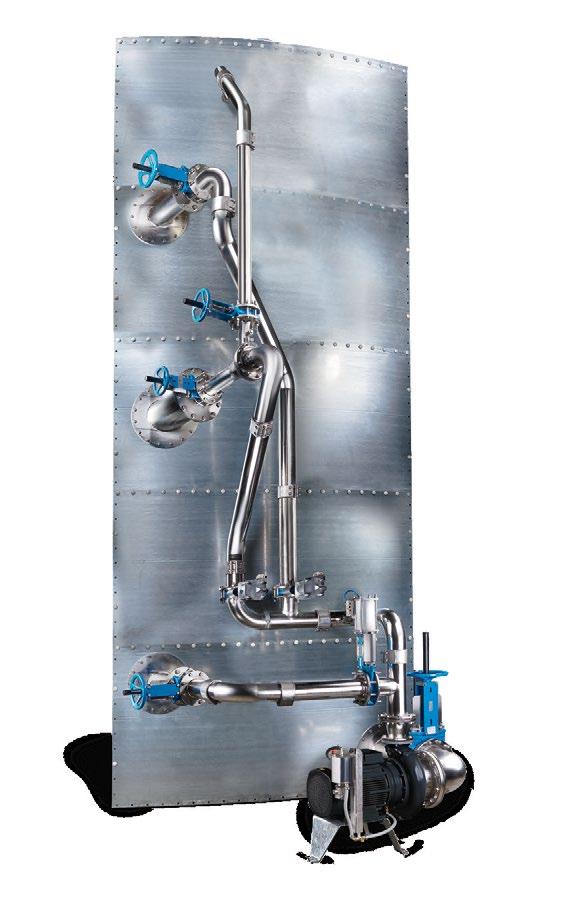



What do you see as the most effective strategy for reducing Non-Revenue Water (NRW) today?
After working with utilities, submetering and insurance companies in very different markets, I’ve learned that the most effective NRW strategy starts with one basic question: “How sure are we about our numbers?” A solid water balance, built on accurate metering from plant to district to customer, changes the discussion from opinion to evidence. Digitalization and AI are simply new ways to listen to the network. When you have thousands of ultrasonic meters sending data over NB-IoT or LoRaWAN, patterns appear quickly: unusual night flows, sudden changes in consumption, signs of leaks. AI helps teams focus on the few points that really need attention.
What is the biggest barrier utilities face when tackling NRW?
The biggest barrier I see is not money or technology, but habits. Many organizations still think in monthly readings and annual averages. NRW reduction needs more frequent data, faster decisions and cooperation between people who are not used to working together. The utilities that manage this well do not try to fix everything at once. They use data to identify “hotspots”, apply smart metering and pressure management there first, measure the results, and then expand. This reduces risk and builds trust inside the organization.
Which NRW innovation do you believe will have the greatest impact in the next five years?
In the next five years, I believe the real step-change will come from full AMI roll-outs with reliable two-way communication. Once a utility can see what is happening in near real time, everything else – leak detection, pressure optimization, customer service – becomes easier. One thing that deserves more attention is the value of open, multi-protocol systems. When meters can work over NB-IoT, LoRaWAN and other standard interfaces, utilities and service companies are free to change suppliers, add new tools and grow step by step. That flexibility is extremely important in long-term NRW programs.
What role does smart metering play in reducing commercial and physical losses?
For me, smart metering is the bridge between customers and the network. Precise ultrasonic measurement reduces commercial losses; detailed profiles and alarms reveal leaks on the customer side, tampering and data errors. The same data support utilities, building owners and even insurers when they need proof of what really happened.
Grundfos Water Utilities Fracta Area Sales Director CEO
What do you see as the most effective strategy for reducing Non-Revenue Water (NRW) today?
A consistent and sustainable method of moving from reactive to proactive asset failure identification and action is imperative. Digital twins replicate what we see beneath the ground however this only works when supported by data rich advanced and future proofed sensor technology. Understanding network demand changes is also key to understanding the strain that beneath ground assets are subjected to as well.
How is digitalisation or AI transforming leak detection and network management?
The reality is, our old water systems are struggling to keep up, they were not designed for present day demands. Using digitalisation can modernise old existing assets at a lower cost, transforming leak detection but also making sure our water supply stays reliable, even as the climate becomes more unpredictable.
What is the biggest barrier utilities face when tackling NRW?
In my opinion; limited funding and ageing infrastructure. Many networks lack accurate data, monitoring systems, and resources to detect leaks, prioritise repairs, and invest in technologies. Collaboration across government, utilities and technology can help with solving the complex challenges facing water networks today. Shared expertise and shared resources can help in the development of scalable solutions that no single organisation could build alone.
Which NRW innovation do you believe will have the greatest impact in the next five years?
Data driven tech, like predictive analytics and real-time monitoring, helps utilities detect leaks, forecast demand, and address issues before they escalate.
How can utilities better balance cost, efficiency, and longterm infrastructure resilience?
Long term fixes focused on lifecycle performance can help build resilience, efficiency and reliability in our assets. Looking beyond the upfront costs associated with this is essential.
What role does smart metering play in reducing commercial and physical losses?
Smart metering stops the ‘silent bleeding’ of water systems, it’s the difference between reactive firefighting and proactive management. It acts as a constant audit, ensuring every drop delivered is accounted for. Smart meters reduce human error and provide the granularity to distinguish between high demand and a sub-surface leak.

What do you see as the most effective strategy for reducing Non-Revenue Water (NRW) today?
The most effective strategy is a proactive, data-driven replacement program. For decades, the industry has been reactive, fixing leaks as they appear. By utilizing AI to identify the “Likelihood of Failure” (LoF) across an entire pipe network, utilities can prioritize replacing the most vulnerable segments before they fail, effectively shifting from crisis management to strategic capital expenditure.
How is digitalisation or AI transforming leak detection and network management?
Digitalization transforms raw data into actionable intelligence. While acoustic sensors find leaks now, AI provides predictive foresight. We use machine learning to analyze variables like soil chemistry, pipe material, and historical weather patterns. This allows us to visualize the invisible degradation of underground assets, turning an iron pipe into a predictable data point.
What is the biggest barrier utilities face when tackling NRW?
The “Data Silo” and legacy mindset. Many utilities possess decades of historical data, but it is often fragmented across different departments or locked in paper records. Overcoming the cultural resistance to trusting algorithmic outputs over traditional “gut feel” remains a significant hurdle in modernizing network management.
Which NRW innovation do you believe will have the greatest impact in the next five years?
I believe Likelihood of Failure (LoF) Modeling integrated with Real-Time Monitoring will have the greatest impact. In five years, a utility manager will see a live “Risk Map” that updates as environmental conditions change (e.g., a sudden freeze), allowing for hyper-efficient, preemptive maintenance that was previously impossible.
How can utilities better balance cost, efficiency, and long-term infrastructure resilience?
The balance lies in Optimized Capital Planning. Utilities shouldn’t just spend more, they must spend smarter. By using Fracta to identify pipes with both a high LoF and a high Consequence of Failure (CoF), utilities can maximize the “Life Cycle Value” of their assets, ensuring resilience without ballooning the budget.

Isle Utilities
Director of Global Scientific Services Senior Consultant
What do you see as the most effective strategy for reducing Non-Revenue Water (NRW) today?
Identifying and controlling leaks is essential for reducing NRW. Therefore, effective network monitoring, the use of artificial intelligence for optimization and modeling and greater awareness of workers and users are the key factors.
How is digitalisation or AI transforming leak detection and network management?
Effective network monitoring depends on reliable tools that can be monitored and controlled remotely. Digitalization further enhances network monitoring, enabling utilities to detect issues faster, optimize operations, and so to reduce NRW. Integrating artificial intelligence adds a predictive element, allowing for preventive solutions rather than just corrective actions.
What is the biggest barrier utilities face when tackling NRW?
The primary barrier is often financial, since many utilities operate with outdated infrastructure, making substantial investment necessary to digitalize and modernize the network and monitoring systems.
Which NRW innovation do you believe will have the greatest impact in the next five years?
Given the rapid development of artificial intelligence applications, it is challenging to select an innovation that won’t be improved within the next five years. Nevertheless, any tool that supports preventive actions will positively impact NRW optimization. Similarly, initiatives or regulations that reward organizations for achieving significant NRW reductions would be extremely beneficial for the sector.
How can utilities better balance cost, efficiency, and long-term infrastructure resilience?
Considering preventive and proactive actions which would allow to get an infraestructure modernization, a network maintenance planning and collaborative strategies between public and private firms.
What role does smart metering play in reducing commercial and physical losses?
Smart metering is the ideal way to monitor the network and detect leaks or abnormal consumption early, thereby improving efficiency and enabling users to better manage their bills. Furthermore, appropriate monitoring is the only way to ensure reliable data collection.
What advice would you give to municipalities beginning their NRW reduction journey?
Developing a detailed NRW Water Balance is crucial at the start of any NRW reduction journey. Various free software options are available a water utilities use, which can analyse data accuracy and help identify areas for improvement in data management to enhance the NRW Water Balance accuracy.
How can data analytics improve asset management and proactive maintenance?
Asset management is often planned and undertaken without a sufficiently detailed assessment of the underlying problem, limiting the ability to identify and the most appropriate and cost-effective solutions. Strengthening asset management strategies through robust asset condition assessments, technology evaluations, and financial modelling is therefore critical. An effective approach enables organisations to prioritise assets based on risk of failure, determine which can be repaired or rehabilitated, and identify those requiring replacement, along with timeframes.
What NRW breakthrough or approach deserves more industry attention?
Water utilities are notoriously risk adverse and therefore very slow in accepting new technologies, although often this can be because of a lack of financial capability, due to the low water tariffs. There have been many new NRW management technologies developed over the last 10 years, including Satellite leak detection, Fibre Optic leak location, Permanent Noise Logging and Leak Detection Dogs. However, the uptake of these technologies has been slow, with most utilities insisting on a pilot stage and justification that the technology is financially viable.
As with most new technologies, the Research and Development phase is costly, with often many upgrades to the system being required before it is the finished article. It is essential that utilities invest more in trialing these new technologies, assisting the developers in their R&D, as well as assessing how affective they are in the utilities own unique conditions. The Trial Reservoirs Initiatives flagship programme, managed by Isle Utilities’ sister non-profit partner Tech Ascend, provides a highly effective pathway for utilities to commit to a wide-scale implementation of proven technologies, while de-risking adoption through structured, real-world trials.
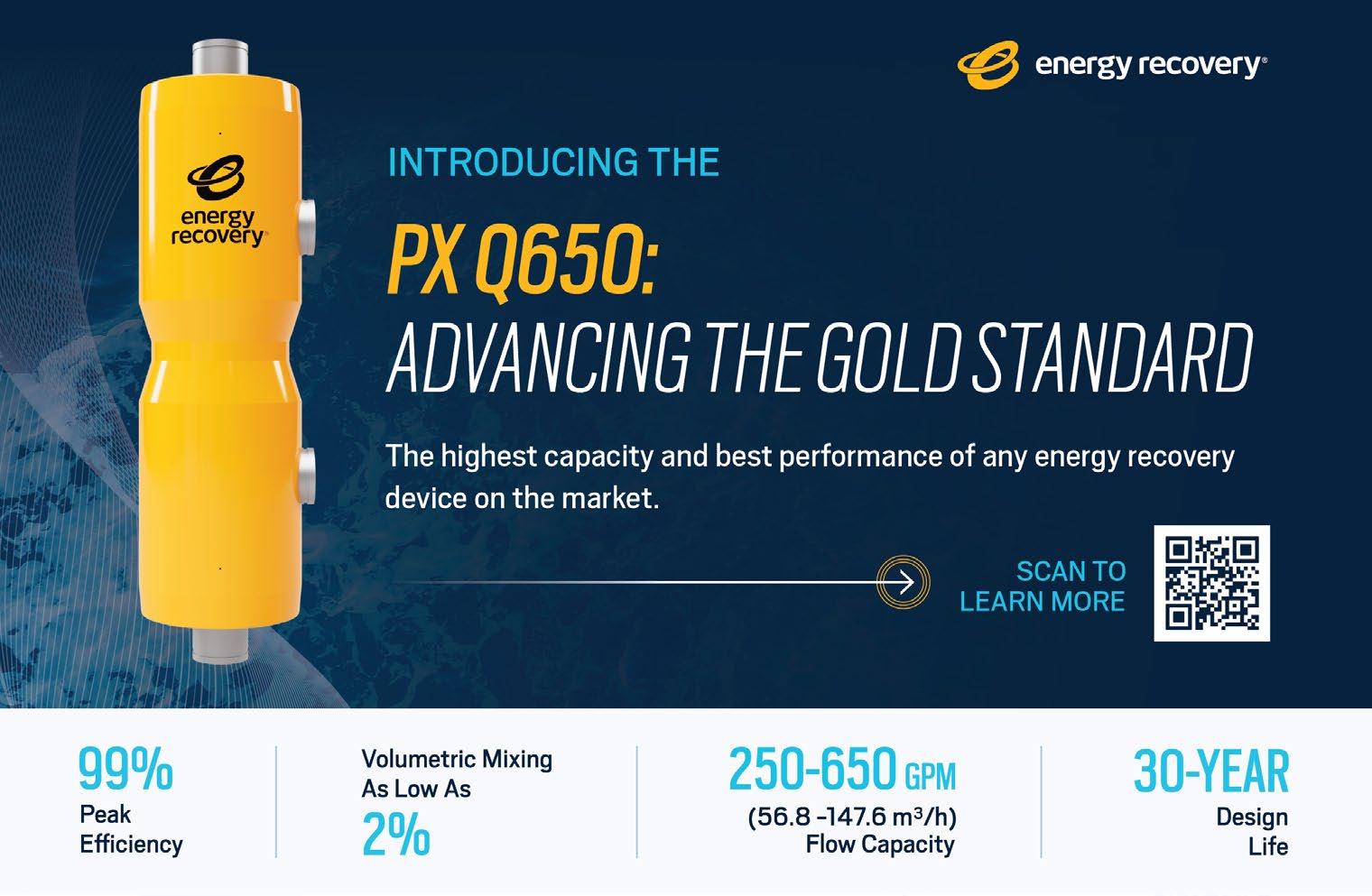

WRITTEN BY | ABBY DAVEY, PUBLISHER, H2O GLOBAL NEWS
M&A activity in early 2026 reflects continued consolidation across water infrastructure, analytics and environmental services, as strategic buyers and private equity investors reposition portfolios for long-term growth.
In the UK, engineering and surveying capabilities remain active areas of integration, while US transactions highlight ongoing scale-building in regulated utilities and high-value water analytics. Asia has also seen significant portfolio reshaping, with major divestments in waste and water treatment as conglomerates realign toward higher-growth sectors.
Across regions, the themes are consistent: expansion of specialist technical capability, strengthening of regulated infrastructure exposure, and increased investment in data-driven water technologies.
Status: Completed (2026)
Location: UK
Empower Technical Services has completed the acquisition of Rosewood Engineering, a UK-based mechanical contractor specialising in water and wastewater infrastructure.
Founded in 1990 and headquartered in Blackburn, Rosewood delivers installation, maintenance and refurbishment services for treatment assets, working with UK utilities and infrastructure contractors. The deal strengthens Empower’s presence in regulated infrastructure markets and expands its specialist engineering capability.
The acquisition is Empower’s third since its formation in May 2025. Financial terms were not disclosed.
Status: Completed (2026)
Location: UK
Dalcour Maclaren has acquired GeoMap Ltd to expand its surveying capability within the water and waste sectors.
GeoMap specialises in land referencing, utility mapping and surveying services supporting infrastructure development. The acquisition strengthens Dalcour Maclaren’s technical capacity in regulated utilities, particularly across water network planning and delivery.
Financial terms were not disclosed.
Status: Completed (December 2025)
Location: UK
Franklin Electric Group has completed the acquisition of Geoquip Water Solutions and Hydrodif Products, strengthening its position in the UK water and groundwater markets.
Geoquip supplies products and systems for residential, commercial and groundwater applications, while Hydrodif adds
specialist water supply solutions. The businesses now operate alongside Pioneer Pump within the Franklin Electric Group. Financial terms were not disclosed.
Status: Announced (December 2025)
Location: US
ITT Inc. has entered into a definitive agreement to acquire SPX FLOW from Lone Star Funds in a transaction valued at $4.775 billion.
SPX FLOW supplies highly engineered pumps, valves, mixers and process technologies serving industrial and water-related markets. The business generated $1.3 billion in revenue in the trailing twelve months to September 2025, with 43% aftermarket sales.
The transaction is expected to close in 2026, subject to customary approvals.
Status: Announced (Expected Q1 2026 Close)
Location: US

Veralto Corporation (NYSE: VLTO) has agreed to acquire U.S.based water monitoring specialist In-Situ for $435 million, subject to customary closing conditions.
In-Situ manufactures environmental and municipal water quality monitoring instruments, including sondes, sensors and data management platforms for surface and groundwater applications. The business generated approximately $80 million in 2025 revenue.
The transaction is expected to close in the first quarter of 2026.
Status: Announced (February 2026)
Location: South Korea / US
SK Ecoplant is set to sell its waste management and water treatment subsidiaries Renewus and Renewon to US private
In-Situ, Environmental Solutions, Water Service
UK: Empower, Dalcour Maclaren, Franklin Electric, Bluewater Bio

South Korea (Asia): SK Ecoplant / KKR
equity firm KKR in a deal valuing the businesses at approximately 1.7 trillion won ($1.2 billion).
The divestment includes SK Ecoplant’s 75% stake in Renewus and 100% of Renewon. The transaction forms part of SK Group’s strategy to exit non-core environmental assets and refocus on semiconductor infrastructure and IT recycling.
The deal remains subject to board approval and customary conditions.
Status: Completed (January 2026)
Location: US
Global Environmental Solutions (GES) has completed the asset acquisition of Environmental Controls Company (ECC), effective 25 January 2026.
The transaction expands GES’s portfolio of environmental control technologies serving regulated infrastructure and industrial markets, adding product depth and customer relationships. Financial terms were not disclosed.
Status: Announced (February 2026)
Location: US
California Water Service Group (CWT) has agreed to acquire Nexus Water Group’s Nevada and Oregon water and wastewater systems for approximately $218 million.
The acquisition will add nearly 36,000 residential connections and expand CWT’s footprint across the western United States. The company plans to finance the transaction through existing
debt and equity facilities.
The deal is expected to close by the end of 2026, subject to customary approvals.
Status: Strategic Investment (February 2026)
Location: UK / Europe
Bluewater Bio has secured growth investment from Verdane and Scott Capital Partners to support global expansion of its wastewater treatment technologies.
The transaction forms part of the creation of Aquavest Technologies, a platform focused on building a multinational wastewater treatment group. Bluewater Bio has delivered more than 300 technology installations worldwide.
Financial terms were not disclosed.
The first quarter of 2026 underscores the resilience of watersector M&A despite broader economic uncertainty. Regulated utilities continue to pursue bolt-on acquisitions to expand geographic footprint and modernise ageing systems, while industrial players seek scale in flow technologies and aftermarket services. Private equity remains active, targeting platform builds in wastewater treatment and environmental infrastructure.
With infrastructure investment requirements rising globally and consolidation still far from mature in many markets, strategic and financial buyers are expected to remain disciplined but active throughout 2026.
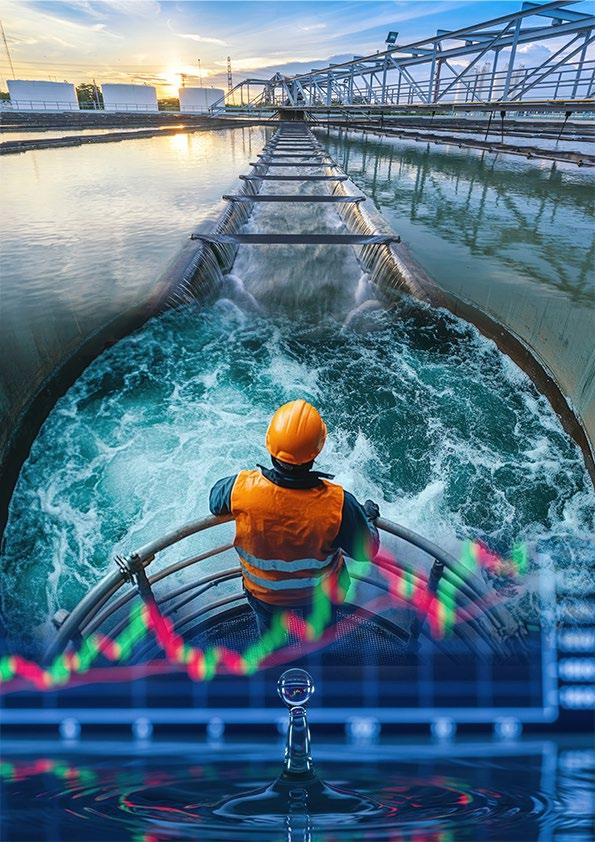
WATER IS NO LONGER A SLOW, DEFENSIVE INFRASTRUCTURE PLAY. IT HAS BECOME A CAPITAL STORY.
WRITTEN BY | ABBY DAVEY, PUBLISHER, H2O GLOBAL NEWS
Across the first quarter of 2026, deal activity, strategic divestments and growth equity investments have reinforced a clear shift: water is now firmly embedded in global infrastructure, private equity and industrial strategy portfolios. The sector is consolidating — but not randomly. Capital is flowing with purpose.
The question is not whether money is entering water. It is where it is going — and what that signals for the next five years.
One of the defining trends of 2026 is the rise of platform-building strategies.
Rather than acquiring isolated assets, investors are backing scalable operators:
• Technology-led wastewater treatment providers
• Digital water analytics firms
• Specialist engineering service groups
• Regulated utility consolidators
Recent transactions demonstrate this clearly. Strategic acquirers are strengthening portfolio depth in monitoring, process equipment and flow technologies. Private equity groups are building multi-asset environmental services platforms. Utilities are continuing geographic consolidation in fragmented markets such as the United States.
The underlying thesis is simple:
The global water sector remains structurally fragmented, particularly in:
• Municipal utilities
• Industrial water services
• Environmental engineering contractors
• Specialist technology providers Capital is targeting integration.
North America continues to dominate regulated utility M&A and infrastructure transactions.
Drivers include:
• Ageing infrastructure requiring recapitalisation
• Regulatory certainty in rate-based models
• A highly fragmented utility landscape
Institutional comfort with US infrastructure frameworks
Large utilities are absorbing smaller systems to modernise assets and reduce leakage losses. Private equity continues to participate through environmental services roll-ups and equipment suppliers.
Importantly, investors are not chasing speculative growth. They are targeting:
• Recurring revenue
• Aftermarket services
• Long-term regulatory visibility
• Asset-heavy, cash-generative models
The result is a more structured, financially sophisticated water market.
European capital flows show a different emphasis.
Investment themes in 2026 include:
• Energy optimisation in wastewater treatment
• Low-carbon process technologies
• Digital monitoring and network intelligence
• Specialist engineering services
Energy remains the single largest operational cost in wastewater treatment. Technologies that reduce aeration demand or optimise process control are attracting disproportionate attention.
This is not ESG theatre. It is margin protection.
At the same time, water analytics and surface/ groundwater monitoring platforms are consolidating as environmental compliance tightens across the EU and UK.
Europe is becoming the centre of water-tech industrial integration, where engineering capability and digital intelligence intersect.
Continued on page 46
H2O GLOBAL NEWS CONNECTS YOUR BRAND WITH DECISION-MAKERS ACROSS DRINKING WATER, WASTEWATER, INFRASTRUCTURE, AND TECHNOLOGY.
FROM DIGITAL CAMPAIGNS TO PREMIUM MAGAZINE PLACEMENTS, WE HELP YOU GET SEEN BY THE PEOPLE WHO MATTER
ADVERTISE WITH US TODAY.
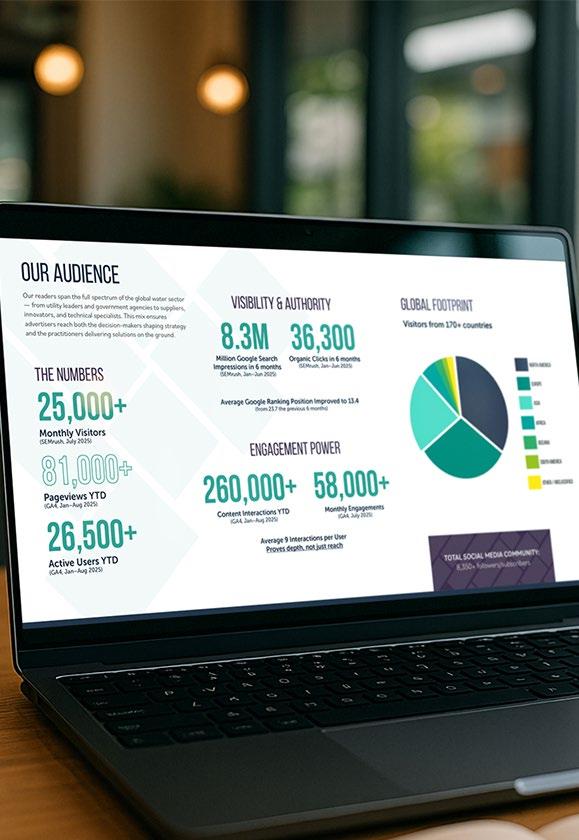
In Asia-Pacific, capital movement is increasingly shaped by corporate restructuring rather than pure sector growth.
Large conglomerates are rebalancing portfolios, exiting non-core environmental assets to refocus on semiconductors, advanced manufacturing and digital infrastructure. Waste and water treatment businesses are being sold to private equity infrastructure investors with long-term operational horizons.
This signals two things:
1. Water is viewed as stable, infrastructure-grade capital.
2. Strategic corporates are becoming more selective about where water fits within broader technology portfolios.
Private equity infrastructure funds, particularly those with Asia-Pacific mandates, are deepening their footprint in waste and water treatment assets.
The narrative around AI, digital twins and predictive analytics remains strong — but capital is more disciplined than headlines suggest.
Investors are favouring:
• Proven revenue models
• Embedded utility contracts
• Hardware + software integration
• Clear operational ROI
Pure software plays without operational integration are facing greater scrutiny.
Leak detection, network analytics and compliance monitoring continue to attract funding — particularly where measurable cost savings or NRW reduction can be demonstrated.
The era of concept-stage digital water exuberance has passed.
The era of disciplined deployment has begun.
A notable dynamic in 2026 is the divergence between infrastructure capital and strategic industrial buyers.
Infrastructure funds prioritise:
• Stable yield
• Regulatory visibility
• Asset longevity
• Geographic defensibility
Strategic buyers prioritise:
• Technology integration
• Portfolio extension
• Market access
• Margin enhancement
• $1.25 TRILLION ESTIMATED US WATER INFRASTRUCTURE INVESTMENT NEED OVER 20 YEARS (EPA)
• 50,000+ COMMUNITY WATER SYSTEMS IN THE UNITED STATES
• 40%+ AFTERMARKET REVENUE IN LEADING FLOW TECHNOLOGY ACQUISITIONS
• 30–55% POTENTIAL ENERGY SAVINGS CITED IN ADVANCED AERATION SYSTEM UPGRADES
• BILLIONS IN PRIVATE EQUITY AND INFRASTRUCTURE CAPITAL DEPLOYED GLOBALLY INTO WATER AND ENVIRONMENTAL SERVICES PLATFORMS SINCE 2024
The result is healthy competition in core segments such as:
• Monitoring and analytics
• Flow technologies
• Engineered treatment systems
• Waste and water services
This competition is pushing valuations higher for highquality assets with strong aftermarket or service components.
One of the most consistent themes in 2026 transactions is the premium placed on aftermarket revenue.
Businesses generating 30–50%+ of revenue from service, maintenance or consumables command materially stronger multiples.
Why?
Because water infrastructure is not optional.
• Maintenance is recurring.
• Compliance is mandatory.
• Service is predictable.
The capital markets have recognised this stability.
The consolidation wave is not simply about size. It is about capability.
The water sector is moving toward:
• Vertically integrated platforms
• Data-enabled infrastructure
• Energy-efficient process optimisation
• Larger regional service operators
Smaller standalone firms face a choice: Scale independently, or become part of a platform.
For utilities, this capital influx offers opportunity — but also pressure. Investors expect efficiency, transparency and long-term asset optimisation.
For technology providers, proof of operational impact will increasingly determine valuation.
For regulators, consolidation raises questions about competition and service standards.
If the first quarter of 2026 is an indicator, the next five years will bring:
• Accelerated utility consolidation in the US
• Continued European water-tech integration
• Increased private equity ownership of environmental services
• Greater emphasis on energy-water optimisation
• A tighter link between digital intelligence and physical infrastructure
Water is no longer viewed as a peripheral environmental market. It is core infrastructure — economically, politically and strategically.
Capital has arrived with discipline.
The next phase will test execution.
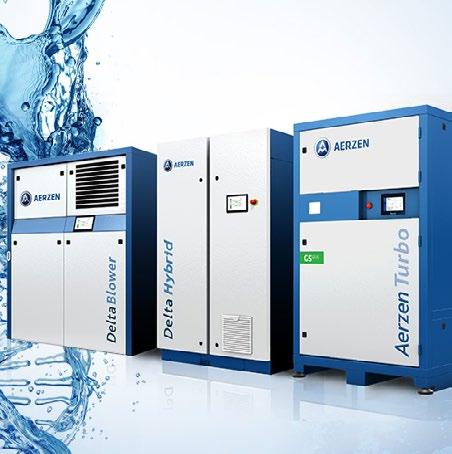
AERZEN will present new sizes of its Delta Hybrid screw blowers and Aerzen Turbo blowers at IFAT 2026, expanding its portfolio of aeration technologies for wastewater treatment plants.
The latest screw blowers are designed to deliver energy savings of up to 37% compared with conventional positive displacement blowers, while operating at reduced sound pressure levels. The new turbo blowers feature air bearing technology and extended turndown capability, supporting demand-oriented oxygen supply in biological treatment processes.
AERZEN is also showcasing integrated system solutions combining blower, aeration and control technology to optimise performance across the biological stage. According to the company, holistic system design can reduce energy consumption by up to 55% and lower the CO₂ footprint of treatment facilities.
The solutions are aimed at improving operational stability, reducing lifecycle costs and increasing overall energy efficiency in municipal and industrial wastewater plants.
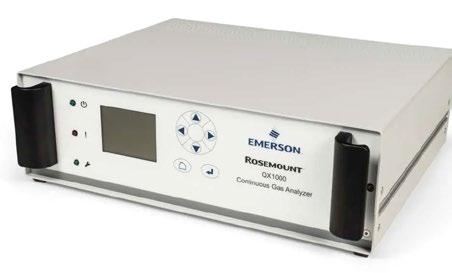
Emerson has introduced the Rosemount QX1000 Continuous Gas Analyzer, a hybrid system designed for continuous emissions monitoring systems (CEMS) across industrial applications.
The analyser combines paramagnetic oxygen (O₂) detection with quantum cascade laser direct absorption spectroscopy within a single device, enabling measurement of key regulatory gases including CO, CO₂, O₂, NOx and SO₂. It is suitable for use in sectors such as power generation, refining, chemical processing, and water and wastewater treatment.
Using a cold/dry sample conditioning approach, the system removes moisture prior to analysis, supporting measurement stability in complex gas streams. Emerson states the QX1000 has been engineered to reduce maintenance requirements, downtime and lifecycle costs, particularly in compliance-critical CEMS installations.
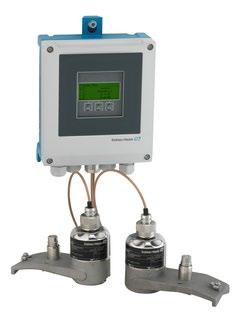
Endress+Hauser has introduced an updated version of its Proline Prosonic Flow W 400 ultrasonic flowmeter, expanding digital connectivity and remote diagnostics capabilities for water and wastewater applications.
The clamp-on flowmeter is designed for non-intrusive measurement in drinking water distribution and wastewater networks, allowing installation without pipe cutting or service interruption. The latest update enhances signal stability and extends communication protocol options, supporting integration with asset management and SCADA systems.
By enabling continuous flow monitoring without operational disruption, the system supports improved network visibility, leak investigation and demand analysis. The clamp-on design also reduces installation time and lifecycle costs compared with in-line alternatives.
The Prosonic Flow W 400 is suited to municipal utilities seeking flexible deployment and retrofit measurement solutions across distribution and treatment infrastructure.
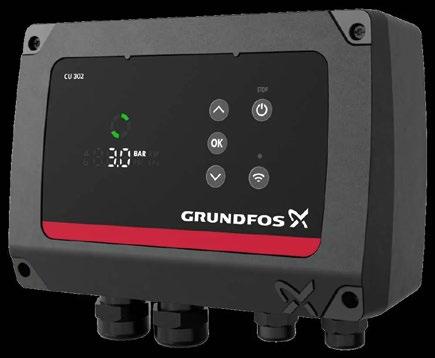
Grundfos has introduced the CU 302 smart controller in Australia, designed to optimise groundwater and pressure management systems using 3-inch and 4-inch SQE submersible pumps.
The controller automatically adjusts pump speed to maintain constant water pressure under varying demand, helping reduce energy use and mechanical wear compared with traditional on–off systems. It is particularly suited to residential and rural bore water installations, where system reliability is critical.
Equipped with Bluetooth and Wi-Fi connectivity, the CU 302 enables remote monitoring and configuration through the Grundfos GO, Grundfos Home and Grundfos Connect platforms. The system supports proactive maintenance and reduces unnecessary site visits, a key benefit in geographically dispersed regions.
The controller is dimensionally compatible with earlier models, allowing straightforward replacement in existing installations.
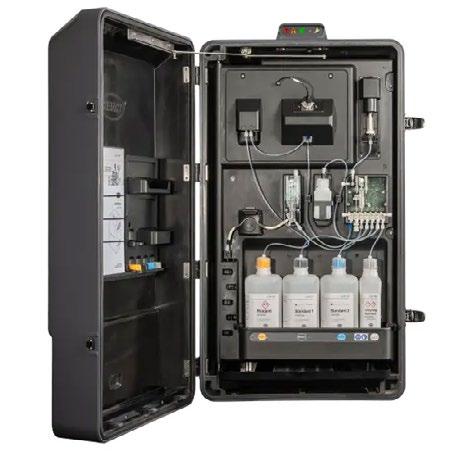
Hach has launched a next-generation digital nitrate sensor designed to enhance process control in municipal and industrial wastewater treatment plants.
The sensor integrates with Hach’s SC digital controller platform and provides real-time nitrate measurement to support optimisation of biological nutrient removal processes. Improved stability in challenging wastewater environments and simplified calibration routines are intended to reduce maintenance requirements and improve operational reliability.
Accurate nitrate monitoring allows operators to adjust aeration and chemical dosing more precisely, helping to optimise energy use and treatment performance while maintaining compliance with discharge standards.
The system is designed for installation within existing monitoring frameworks, supporting digital integration and data-driven decision-making across wastewater treatment facilities.
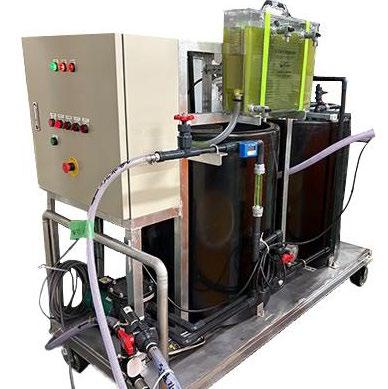
Sumitomo Electric Industries began sales in January 2026 of a compact membrane treatment system designed to enable reuse of wastewater and waste liquids containing oil. The system is capable of reducing industrial waste disposal volumes by up to 90%, based on company verification results.
The unit incorporates the company’s proprietary PTFE-based POREFLON™ membrane, which provides precision filtration capable of removing solids of 0.1 μm and larger. It is designed for applications including waterjet cutting wastewater, cutting and grinding coolant, lubricating oil and degreasing liquids.
With a processing capacity of up to 5 m³ per day, the compact system operates on a single-phase 100 V power supply and is intended for portable or multi-site use. Sumitomo Electric states the solution supports wastewater volume reduction, improved resource efficiency and industrial reuse initiatives.


Carollo Engineers has appointed Jennifer Steffens as Digital Water Technical Practice Director. With 20 years’ experience in digital water leadership roles at OptiRTC, SUEZ and Xylem, she brings expertise in advanced analytics, digital twins and operational optimisation to support utilities across North America.
“Not every utility needs cutting-edge AI, but every utility needs reliable data and confidence in their decisions,”
Pennon Group has created a new Chief Asset Officer role, appointing Ian Christie to strengthen long-term asset resilience and performance across the business. Christie, currently Managing Director for Water Services, Capital Delivery and Asset Planning at Dŵr Cymru Welsh Water, will join the Pennon Executive in May 2026.
The role places asset health at the centre of Pennon’s £3.2 billion investment programme for 2025–2030.
“Developing a deeper understanding of asset health and how it shapes the service we provide will be critical to making informed investment decisions,”
The Association for Consultancy and Engineering has appointed Milda Manomaityte as Chief Executive Officer, effective 2 March 2026. She succeeds Kate Jennings and joins ACE following seven years at the Railway Industry Association, where she most recently served as Chief Operating Officer.
“I am delighted to be joining ACE at such an important moment for the sector and look forward to building on its strong foundations,”
Smart Storm has appointed Phil Buck as Chairman as the wastewater technology specialist enters a new phase of growth. Buck has more than 40 years’ senior leadership experience and previously led the expansion and sale of Spencer Coatings Group to Axalta Coating Systems.
He joined Smart Storm’s board in 2018 following an investment alongside the Development Bank of Wales.
“I look forward to supporting Smart Storm as it capitalises on new opportunities for growth and innovation,”
Remove unwanted contaminants from groundwater sources, addressing environmental management needs.
Envirogen’s groundbreaking SimPACK solution delivers:
• Up to 80% less wastewater
• Nitrate specialist - AMP8 compliant levels
• Advanced remote monitoring
• Low operational costs and improved salt usage
• Regenerable design - 35% increased resin capacity
• Warrantied performance for long-term reliability
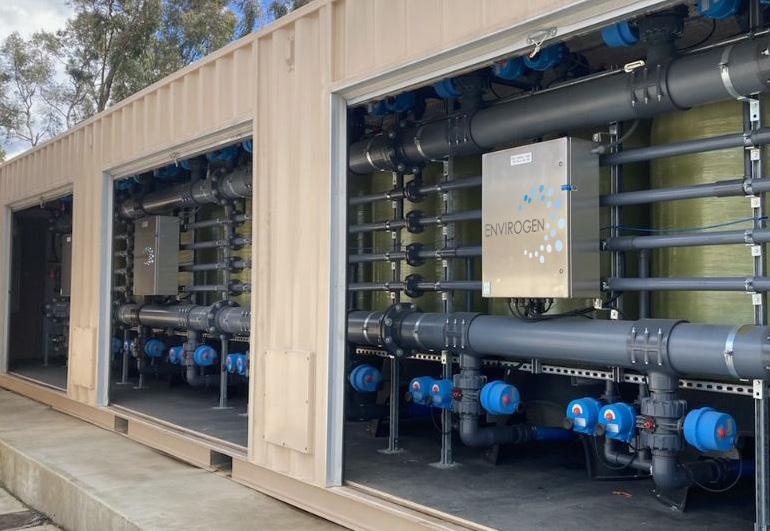

14–16 APRIL 2026 — MUMBAI, INDIA
IFAT India focuses on water, wastewater, waste management and environmental technologies tailored to rapidly growing urban and industrial markets. Key themes include industrial effluent treatment, municipal wastewater infrastructure, sludge management and digital monitoring systems supporting sustainable development.
3–5 JUNE 2026 — SHANGHAI, CHINA
Watertech China is one of Asia’s largest trade exhibitions for water treatment, membrane technologies, filtration systems and industrial process water solutions. The event attracts municipal utilities and industrial operators seeking advanced purification, reuse and zero-liquid discharge technologies.
7–10 JUNE 2026 — ANAHEIM, CALIFORNIA, USA
The American Water Works Association’s Annual Conference & Exposition is a major gathering of water professionals in North America. The programme addresses drinking water quality, distribution resilience, digital water strategies, asset management and regulatory compliance.
8–12 JUNE 2026 — SINGAPORE
Singapore International Water Week convenes global utilities, policymakers and technology providers to address urban water security, climate resilience, desalination, reuse and digital water innovation, alongside high-level government and industry dialogues.
24–26 JUNE 2026 — MEXICO CITY, MEXICO
Aquatech Mexico serves Latin America’s water infrastructure market, covering municipal treatment, groundwater management, desalination, smart metering and industrial water technologies focused on sustainable resource management.
30 JUNE–2 JULY 2026 — ACCRA, GHANA
This regional exhibition focuses on water supply, wastewater treatment, borehole technologies and infrastructure solutions supporting urban development and climate resilience across West Africa.
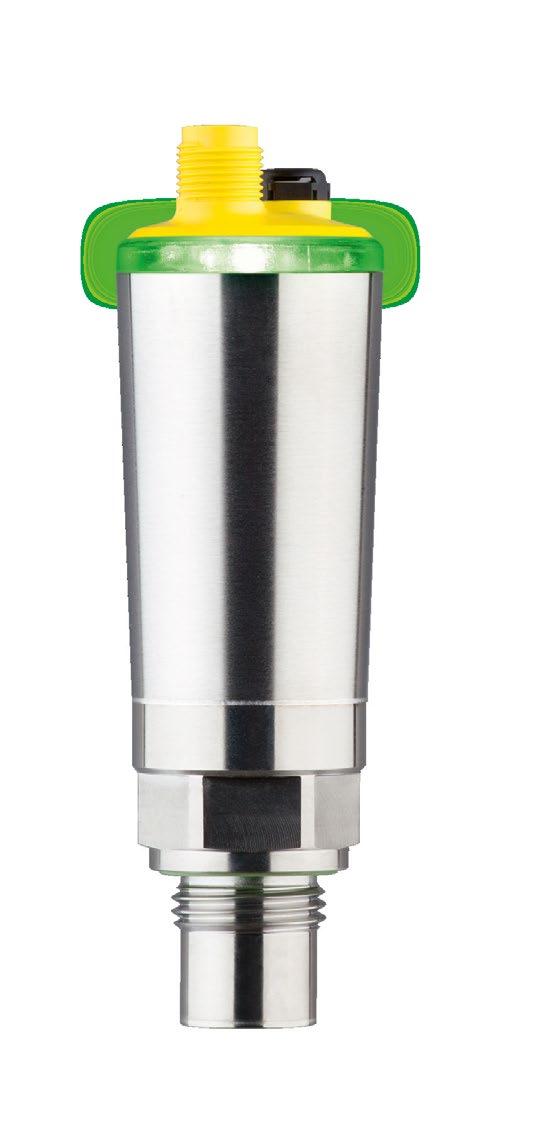

VEGABAR 28
Pressure Transmitter for Wastewater

Everything is possible. With VEGA
• Smart pressure monitoring
• Prevent leaks & blockages
• Boost pipe network safety