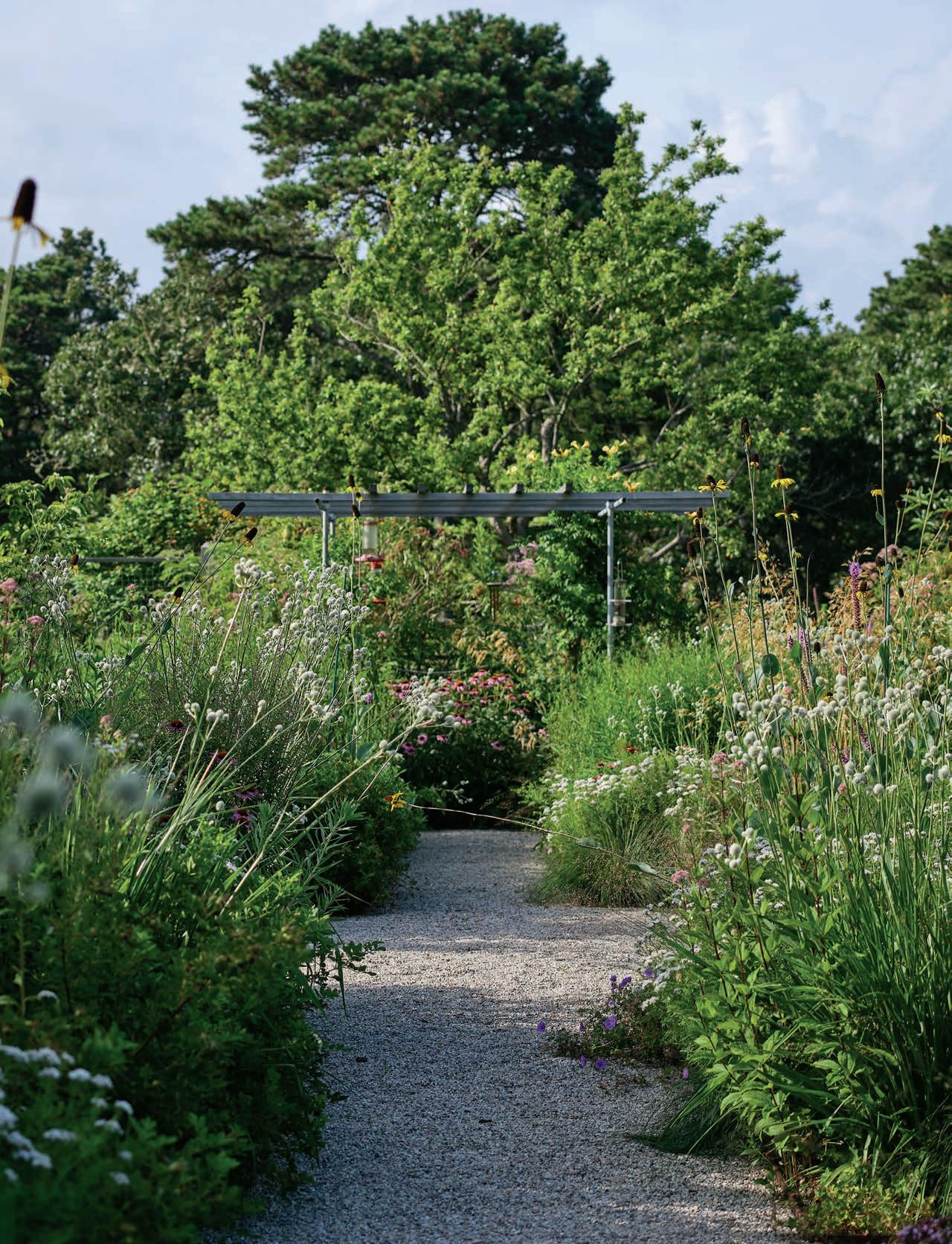
Bluedot Living: At Home on Earth is printed on recycled material, using soy-based ink, in the U.S.
Bluedot Living magazine is published quarterly and is available at newsstands, select retail locations, inns, hotels, and bookstores, free of charge. Please write us if you’d like to stock
Bluedot Living at your business.
Editor@bluedotliving.com
Sign up for the Martha’s Vineyard Bluedot Living newsletter, along with any of our others: the BuyBetter Marketplace, Your Daily Dot, Bluedot Living Kitchen, and The Weekly: bluedotliving.com/sign-up-for-our-newsletters/
Subscribe! Get Bluedot Living Martha’s Vineyard and our annual Bluedot GreenGuide mailed to your address.
It’s $29.95 a year for all four issues plus the Green Guide, and as a bonus, we’ll email you a collection of Bluedot Kitchen recipes. bluedotliving.com/magazine-subscriptions/
Read stories from this magazine and more at bluedotliving.com/marthas-vineyard/
Find Bluedot Living on Threads, Instagram, Facebook, and YouTube @bluedotliving
It’s time for a toast! Five years ago, we set out to create a magazine to share stories of Vineyarders addressing climate change and we’re still here, alive and thriving.
In the years since we published the first issue, we’ve won more than 40 prizes from the New England Newspaper and Press Association; our bi-weekly newsletter now reaches thousands of readers. We also publish other newsletters — The Weekly, Your Daily Dot, The BuyBetter Marketplace, Bluedot Living Kitchen, along with local newsletters in Brooklyn, Nantucket, Santa Barbara, and Canada — these reach more than 125,000 subscribers. (Sign up: bit.ly/newsletter-bluedot). Last year, we launched Bluedot Living Kitchen E-magazine (Free sample here: bit.ly/ FreeKitchenMag). It features recipes and tips on everything from food waste to growing microgreens.
But our growth, as gratifying as it is, isn’t really the story. The story is about the people.
O ver these five years, we’ve met so many remarkable people caring for the
Island. We’ve featured farmers, fishers, and oysterers. We’ve written about backyard gardeners and natural neighbors, protectors of birds and the ponds — summer residents and year-rounders alike, tending to the Island the way one tends to a newborn child — with a fierce, patient, daily devotion.
The whirlwind that grips so much of the country doesn’t quite reach us the same way. I’ve come to believe that if this spirit of care I’ve witnessed here could travel, it would help solve enormous problems far beyond our shores. The Vineyard is a working example of what it looks like
when people take responsibility for the place where they live, and work to protect its health and beauty. That is the story Bluedot Living has been trying to tell here and around the country.
We are deeply grateful to everyone who has shared their stories with us and welcomed us into their farms and kitchens, their conservation meetings and fishing boats, who has read our pages and passed them along to a friend.
As the founder, I am blessed with a first rate team: CEO Ray Pearce, executive editor Jamie Kageleiry, editor Britt Bowker, senior writer Leslie Garrett, CFO David Smith, copyeditor Laura Roosevelt, creative director Tara Kenny, art director Whitney Multari, newsletter producer Vesna Nepomuceno, web producer Grace Hughes, and ad sales manager Josh Katz.
We would love to hear from you, because the truth is, we learn as much from you as we hope you learn from us.
With love and gratitude, Victoria (Vicki) Riskin Founder, Bluedot Living
RANDI BAIRD
By Lis Bluford
(Part Two)
By Robyn Graygor
Food and Recipes
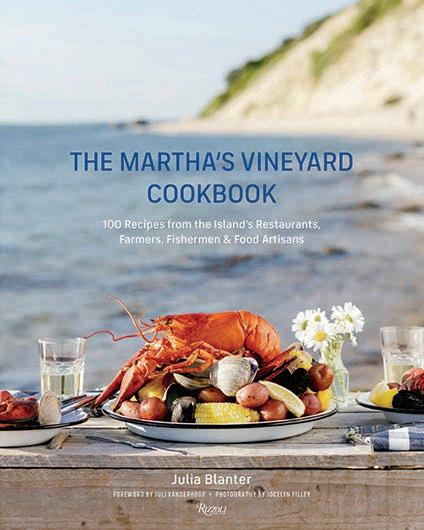
24 Dishes from Julia Blanter’s The Martha’s Vineyard Cookbook
• Clams Cracktino from the Clambulance
• Blueberry Buttermilk Scones from ArtCliff Diner
• Honey-Brûléed Brie from Island Bee Company
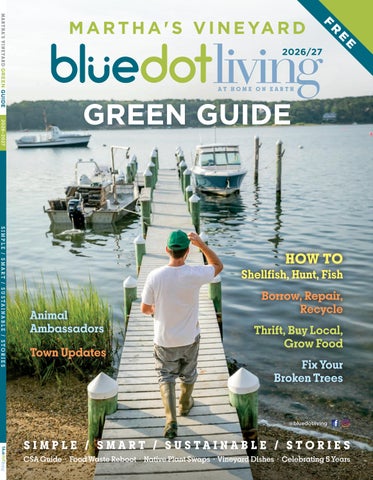
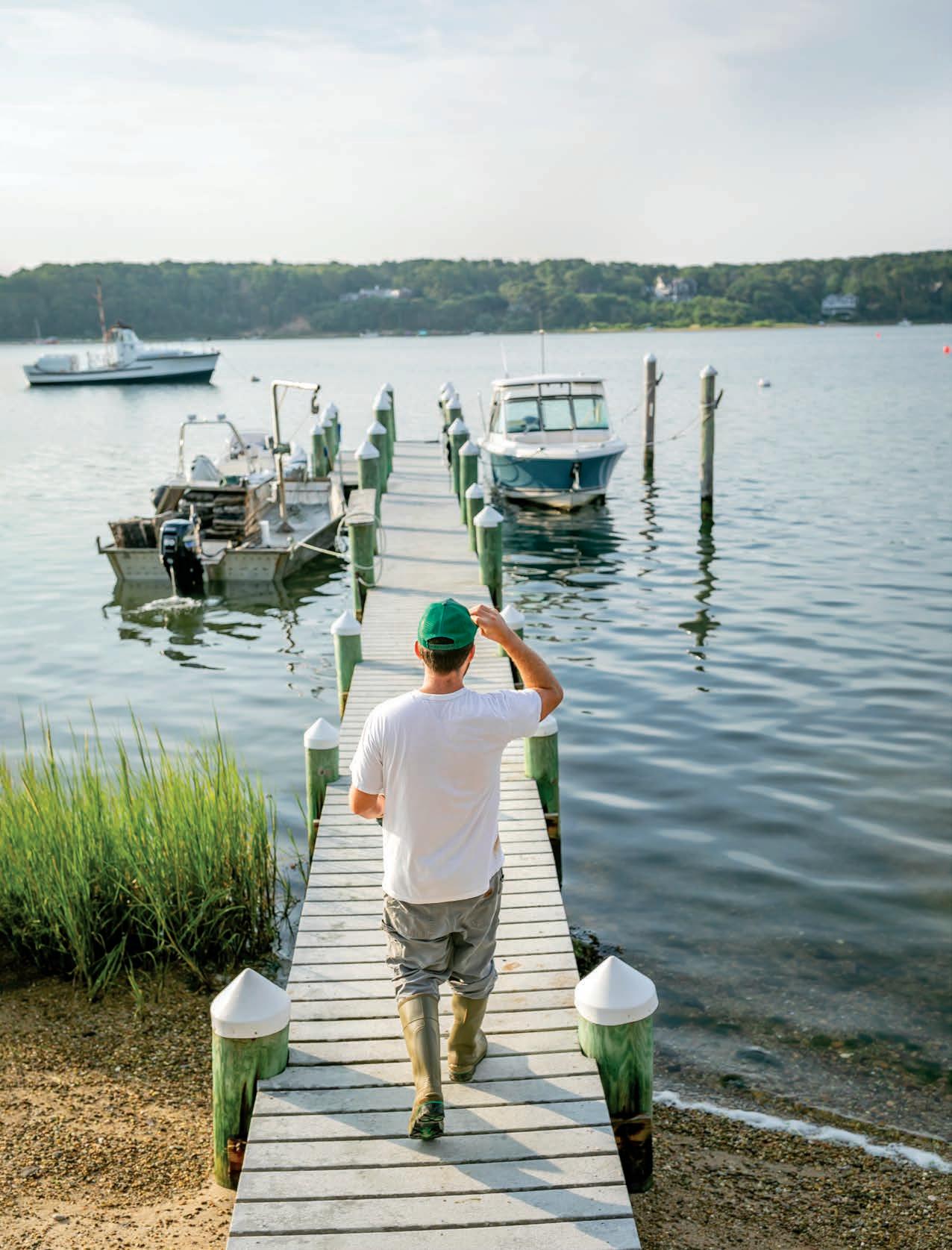
Cover photo: Oyster farmer Noah Mayrand of Tisbury Oyster Company | Photo by Randi Baird
Photo this page: Slough Farm by Sheny Leon
Find Your ADVENTURE
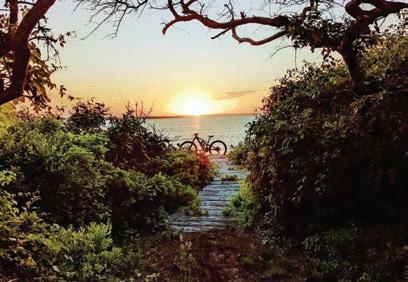
With seven special places to discover on the island, The Trustees has something for everyone. Swim, drive, tour, learn, kayak, paddleboard, meditate, fish, hike, bike, eat, and more!
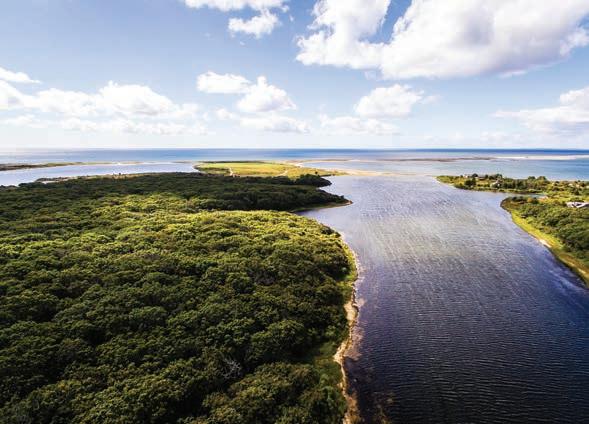
LONG POINT WILDLIFE REFUGE WEST TISBURY
PHOTO BY ABOVE SUMMIT
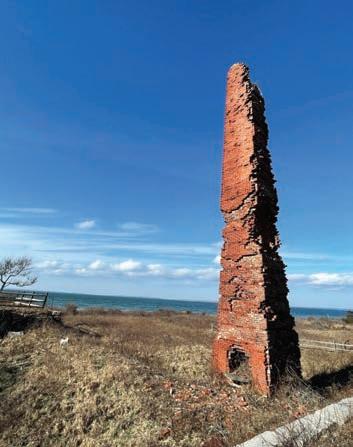
THE BRICKYARD CHILMARK
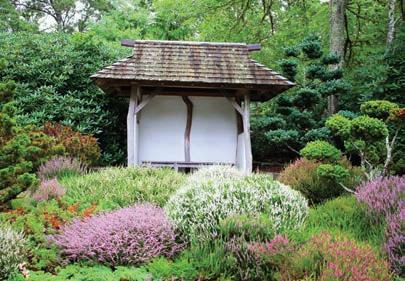
MYTOI GARDEN CHAPPAQUIDDICK
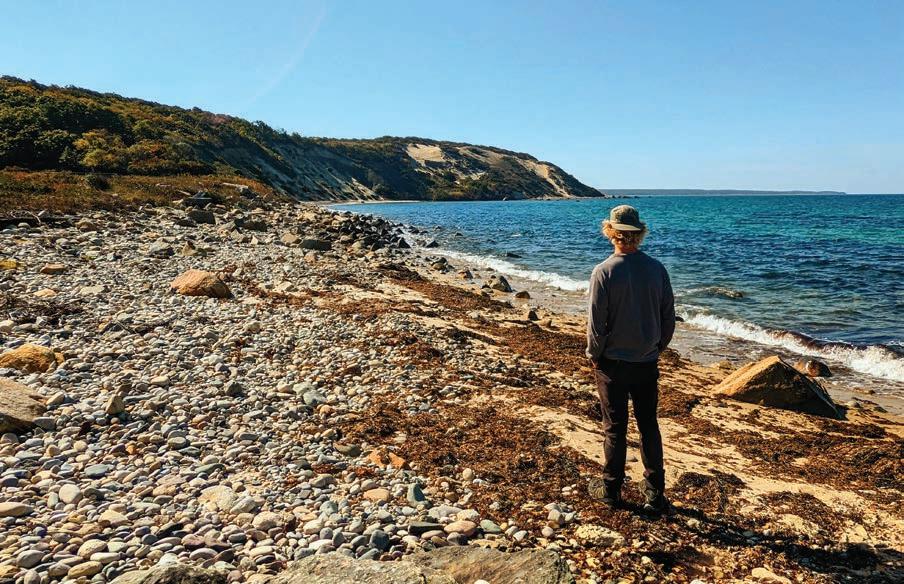
MENEMSHA HILLS CHILMARK
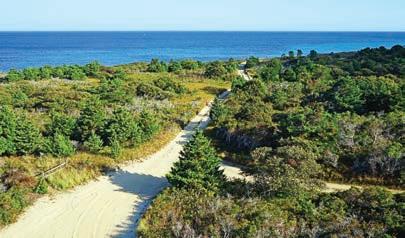
CAPE POGE WILDLIFE REFUGE CHAPPAQUIDDICK
PHOTO BY @ANDREWSCOTTLESTER
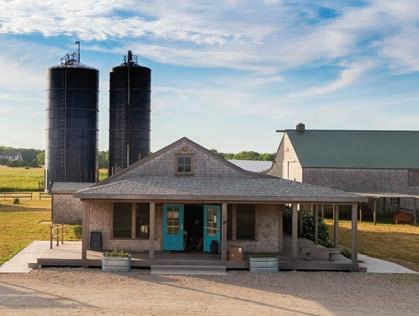
THE FARM INSTITUTE EDGARTOWN
PHOTO BY ABOVE SUMMIT
Finding a Place for Food Waste
An update on how Martha’s Vineyard is processing community food waste.
By Britt Bowker Photos Courtesy of Sophie Mazza
West Tisbury, Oak Bluffs, and Chilmark approved articles at their town meetings in April that set the stage for food waste recycling units to be installed at their town transfer stations. A similar article is on the warrant in Aquinnah, which was meeting just after this magazine went to press. Towns that approve the measures will fund and install their own systems, creating a place for residents to drop off food scraps during routine trips to the dump.
The material would be processed into compost that could eventually be used by Islanders in home gardens, reducing the amount of food waste sent off-Island for disposal and cutting back on compost shipped in for local use. Food waste is one of the largest drivers of methane emissions in landfills, a potent greenhouse gas linked to climate change.
Tisbury is not pursuing its own article, as it plans to partner
with Oak Bluffs and share a machine. Edgartown, meanwhile, is applying for a state grant through the Massachusetts Department of Environmental Protection to fund a recycler at its transfer station, with a decision likely in the fall.
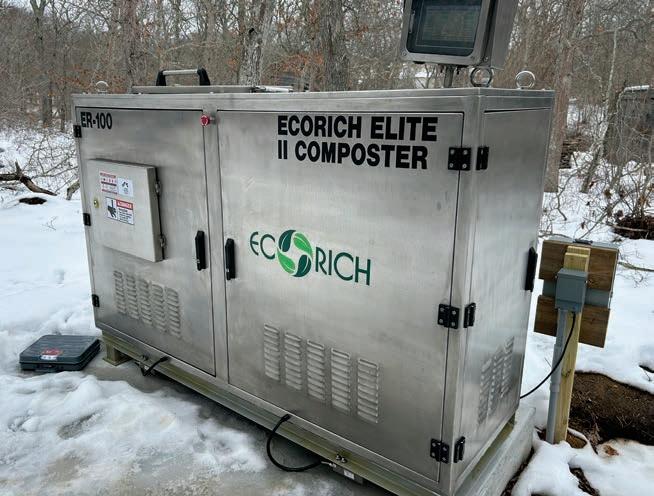
Procurement, town governance, and implementation will follow approval. In West Tisbury, Oak Bluffs, and Chilmark, officials are now entering the request for proposals (RFP) phase, where vendors submit bids for the approved system. One of the systems under consideration is the EcoRich food recycler, an electric unit that processes food waste into a soil-like compost material on site. While the EcoRich system
The EcoRich food recycler at the Charter School.
was included in the warrant article, the final selection will be determined through procurement.
“The idea is that the town voted for this, and now we have a procurement process to follow,” said Sarah Toste of the West Tisbury Board of Health. “We’re likely moving forward with the EcoRich system, since that’s what the warrant was based on, but it still has to go through the proper steps.”
The program is funded through the town. “The town voted to use taxpayer dollars for the purchase of this,” Toste said. The warrant article included a request of about $70,000, though final costs will depend on the procurement process.
The EcoRich system has been in use at the Martha’s Vineyard Public Charter School since late February, with another unit recently delivered to the high school and awaiting electrical hookup.
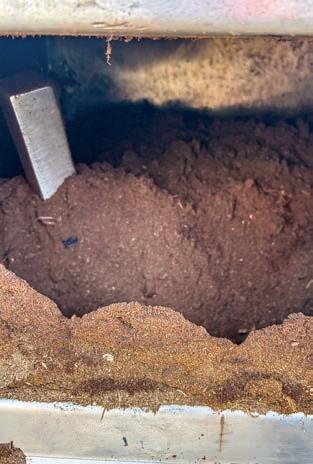
“The machine is so, so easy to use, and the output from the machine looks really good,” said Sophie Mazza, community food waste educator at Island Grown Initiative, who helped bring the food waste processing article onto town agendas. “It kind of looks like a big pile of coffee grounds — exactly as advertised.”
At the Charter School, the system is processing about 150 pounds of food waste per week, with the capacity to handle significantly more. Two high school students help run the program, weighing and loading scraps and coordinating with kitchen and facilities staff.
“These systems make a lot of sense in places that don’t have a carbon source,” Mazza said. “You don’t need to balance carbon and nitrogen the way you do with traditional composting.”
That makes the machines a good fit for schools and some transfer stations, particularly in towns where leaf and yard waste isn’t collected. The output can be used locally, including in school gardens.
The Chilmark School also received a food recycler in April — a different indoor unit about the size of a dishwasher called the FoodCycler. Sophie said she hopes to secure additional units for the Island’s other four schools by fall. Schools are funding the machines with a mix of private funding and grant support, though Mazza noted that securing funding, particularly federal grants, has become more difficult.
The school-based systems are part of a broader effort to rebuild food waste processing on the Island after IGI’s previous composting program ended in 2024, when its in-vessel drum reached the end of its useful life.
“We just get countless calls all the time from people who want this,” Mazza said. “People were using this program, and we wanted to bring it back in a way that can continue indefinitely.”
If approved and implemented, the transfer station programs would be open to residents with dump stickers, allowing them to drop off food waste during regular hours. Exactly how the finished compost will be distributed is still being worked out.
“Ideally, we would want that same food waste to go back into the community,” Toste said. “Are we going to give it back to them, sell it back to them? … We’re going to run the program for a year and then re-evaluate.”
The Vineyard Preservation Trust cares for twenty historic landmarks across Martha’s Vineyard, protecting the buildings that shape the Island’s character and opening their doors for gatherings, exhibitions, music, and shared community life.
Explore the Island through its historic places at vineyardtrust.org
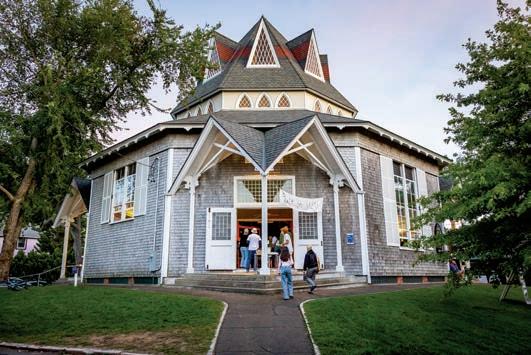
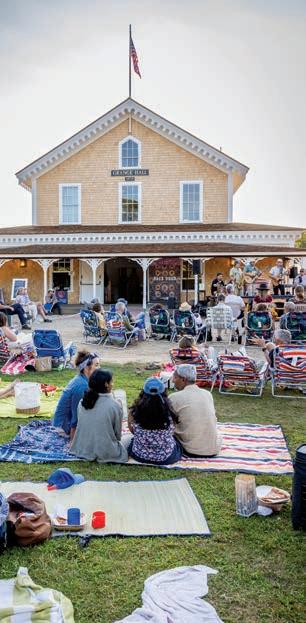
Grange Hall, West Tisbury: A place where the Island gathers for music, performance, and celebration.
SCAN for events, tours and tickets.
Union Chapel, Oak Bluffs: A historic sanctuary for dance, gathering, and worship..
Photo credit: Randi Baird
Toste said the effort reflects strong community interest following the end of earlier composting programs.
“We received calls … questioning whether there were alternative options for community composting,” she said. “There’s a real interest in the sustainable management of food and waste.”
The effort is part of a broader push to rethink waste systems across the Island.
The Martha’s Vineyard Commission’s Trash Task Force, formed in 2025, is working with representatives from each town to coordinate planning and set priorities.
“One of our recommendations is more investment into food waste solutions, especially as the state is likely going to be enforcing restrictions,” said Sakiko Isomichi, the MVC’s Climate Resilience Planner, who helps coordinate the group. “By 2030, residential food waste will likely be part of the ban.”
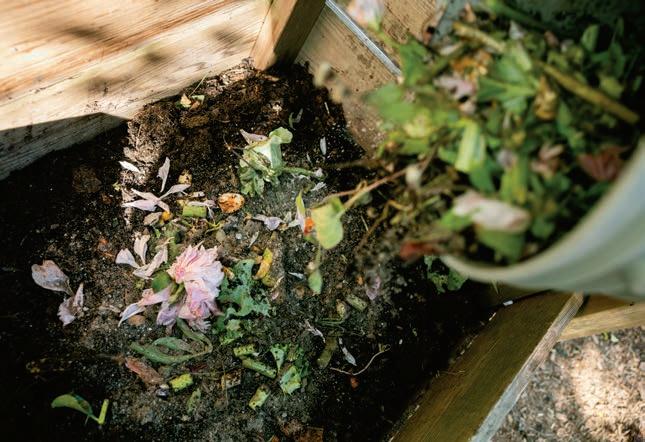
After cycling through the EcoRich system, food waste is transformed into compost, a nutrient-rich soil amendment.
The Martha’s Vineyard Organics Committee, which has worked for years on food waste processing solutions, now falls under the Trash Task Force as a subcommittee. The committee is primarily focused on large-scale and commercial food waste processing possibilities.
Even with momentum from town meetings, questions remain about how quickly towns can move from approval to implementation.
“I’d be curious to see how each town is going to be running it,” Isomichi said. “How much capacity each town has to make sure that it runs well… that’s going to be really important.”
Longer term, Island officials are still exploring larger-scale composting options, particularly for commercial food waste from restaurants and businesses. But finding a suitable site remains a challenge, with space constraints and permitting hurdles limiting options.
“Space is always an issue,” Isomichi said.
For now, the Vineyard is moving toward a more decentralized approach: smaller processing sites, school-based systems, and transfer station units that together reduce the amount of food waste that needs to leave the Island.
That approach could expand over time, potentially including commercial composting facilities or even curbside pickup for food waste.
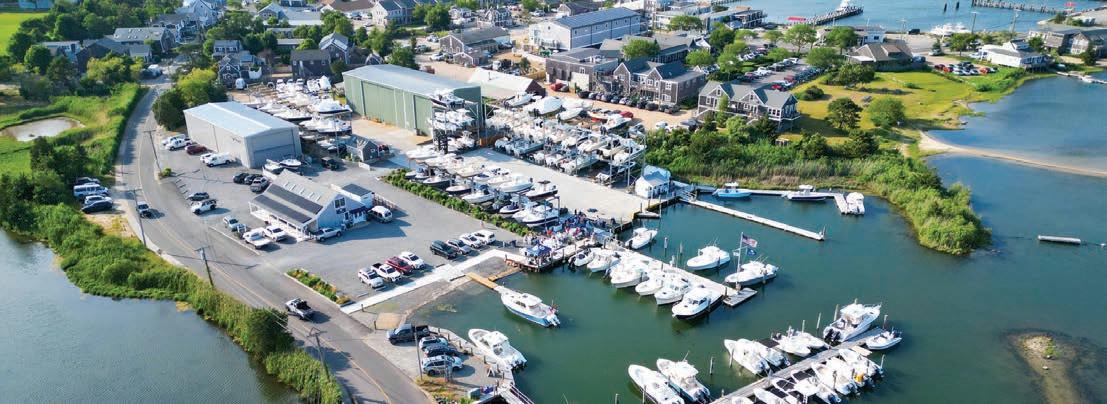
SAFE HARBOR VINEYARD HAVEN AWAITS
TOWN-BY-TOWN
CLIMATE UPDATES
How Martha’s Vineyard communities are advancing shared strategies.
By Britt Bowker
Across Martha’s Vineyard, climate work is starting to look less like a collection of isolated town projects and more like a shared playbook. Each town is tackling its own vulnerabilities, from flooding roads to energy resilience, but there are common themes: how to keep the lights on during outages, how to manage water, and how to shift systems away from fossil fuels.
All six towns are also participating in the state’s Municipal Vulnerability Preparedness (MVP) 2.0 program, working with the Martha’s Vineyard Commission to identify
Tisbury
In Tisbury, climate efforts are increasingly focused on energy resilience and flooding. After winter storms highlighted the challenges of extended power outages, the town is working to identify a network of buildings that could provide heat, charging, and basic services during emergencies. Potential sites include the library, senior center, and Tisbury School, which already has a generator.
After this past winter, “people better understood the consequences of not having power for more than a day,” said Tisbury Climate Committee Chair Melinda Loberg. The town’s
projects that support vulnerable residents and strengthen climate resilience across the Island. Each town received $50,000 to develop a project.
All Island towns except Aquinnah also voted to ban gas-powered leaf blowers last year. While full enforcement won’t take effect until 2028, restrictions begin this summer: from June 1 to October 15, gas-powered leaf blowers are not permitted, though they remain allowed for spring and fall cleanups.
Here’s a look at what’s happening across Island towns.
MVP 2.0 proposal will focus on emergency sheltering and communications during outages.
At the Tisbury School, which is all electric, rooftop solar panels are installed but not yet connected, and the town also plans to add a solar canopy over the parking lot.
As part of the state’s Green Communities program, Tisbury is developing a new round of energy projects focused on heat pumps, efficient lighting, and water upgrades for town buildings. Loberg noted continued concerns about maintaining water service during outages, as pump stations rely on generators.
Flooding remains a major concern in Vineyard Haven,
On Martha’s Vineyard and across Massachusetts, we are working to ensure people and nature thrive.
particularly at Five Corners and along Beach Road, where stormwater and tidal flooding combine to overwhelm existing infrastructure. Proposed solutions include improved drainage systems, an underground stormwater tank, and upgraded outflow pipes, while longer-term plans include raising Beach Road.
Other projects include planned Level 2 electric vehicle chargers at the park-and-ride and continued sewer expansion in the State Road business district to reduce nitrogen pollution in Tashmoo.
Edgartown
Edgartown’s climate work spans infrastructure, energy, and everyday behavior. A recently completed project on Pease’s Point Way combined drainage improvements with sidewalk and bike upgrades, helping reduce flooding during heavy rain while making the area more pedestrian-friendly.
The town continues to transition municipal buildings away from fossil fuels, with electric heat pumps installed at the harbormaster, shellfish department, and Chappaquiddick fire station, and a study underway to electrify HVAC systems at the Edgartown School.
Edgartown is also using its MVP 2.0 process to focus on vulnerable populations, including older residents, young families, and Portuguese-speaking community members, where language access can affect emergency communication.
The town is also requiring properties with access to sewer lines
Bring Life to Your Landscape
Want to turn your yard Want to turn your yard into a haven for birds, into a for pollinators, and wildlife? pollinators, and We’ll help you create a We’ll thriving natural habitat thriving natural that supports our island’s that biodiversity in a way that biodiversity in a way that supports Your yard, your joy, their home.
to connect within two years, a move aimed at reducing nitrogen pollution in local waterways. In Edgartown Great Pond, eelgrass has begun to return after years of decline, signaling improving water quality following sustained restoration efforts.
Also: Sheriff’s Meadow Foundation opened a new public trail on Chappy!
Learn more about Mumcheag Creek Preserve: sheriffsmeadow.org/property/mumcheag-creek-preserve/
Oak Bluffs
Oak Bluffs is advancing several long-term energy and resilience projects, including proposed solar installation at the town landfill that has been in development for years. “That’s a big priority for us,” said Bill Cleary, chair of the Oak Bluffs Energy Committee.
The town is also exploring solar and battery backup at the new town hall, which is already designed to be “solar-ready,” with plans to expand to other municipal buildings, including the library.
The town continues to make progress toward its Green Communities goals of reducing energy use by 25 percent over five years. Recent efforts focused on electrifying municipal landscaping equipment and expanding electric vehicle infrastructure. Voters recently approved four additional Level 2 EV chargers at town hall, bringing the total to 10 charging ports. Climate planning is also focused on critical infrastructure. A recent study examined flood risks and access to Martha’s Vineyard Hospital, identifying vulnerabilities along low-lying
The Bluedot Living Collection — your destination for planet-friendly products
From home essentials to clean beauty, wardrobe staples to low-waste swaps, every item has been carefully chosen to help you live more sustainably.
roadways and potential alternate routes through Eastville. Along the waterfront, jetty repairs are underway, and a broader multiyear study of the harbor and shoreline aims to guide future resilience efforts.
West Tisbury
The town is working to update coastal floodplain bylaws, shifting away from FEMA’s historical maps toward forward-looking climate models. The state is offering towns different projection scenarios, and West Tisbury is weighing which timeline best fits local conditions. Any updates will need to move through planning and zoning boards.
On the energy side, the town is continuing long-term planning for a microgrid at municipal buildings, including the library, fire station, and ongoing decarbonization work at the West Tisbury School; officials say cost remains a major barrier.
Electric vehicle charging infrastructure at the West Tisbury School includes a public charger typically available even during the summer season. Additional chargers are at the library.
West Tisbury was recently designated a state “climate leader” under the Green Communities program, following a series of building code and emissions-related commitments.
Chilmark
Voters in Chilmark recently approved changes to the town’s wetlands protection bylaw, expanding buffer zones around rivers and ponds from 100 to 200 feet. The update gives the conservation commission greater oversight of nearby development, with the goal of reducing impacts to water quality in sensitive pond systems.
Restoration work is also underway at Chilmark Pond, where long-standing water quality issues and recurring cyanobacteria blooms have raised concerns. After years of permitting delays, the Chilmark Pond Foundation began dredging the lower pond this fall, removing accumulated sand to improve tidal flushing when the pond is opened to the ocean. The effort is part of a broader strategy to restore ecological balance in the pond system.
Aquinnah
Aquinnah is advancing plans for a resilient energy system to support town buildings, including solar, battery storage, and generator backup. The town is working toward securing funding to move the project forward, with a focus on long-term energy reliability for municipal facilities.
As part of the state’s Green Communities program, it has electrified all of its town buildings except for the Fire House, which it has an electrification plan for.
Also, a new project led by the Indigenous nonprofit Kinship Heals is in early stages in Aquinnah, with plans for a healing center designed around land stewardship, renewable energy use, and water protection.
Got news you’d like to see in one of our magazines or newsletters? Write me at britt.bowker@bluedotliving.com
Recertified and Recommitted
This spring, we earned B Corp Certification once again, meeting some of the highest standards in the world for social and environmental performance. It reflects the commitment we’ve made to our customers, our employees, and the community we serve. And it's a promise we intend to keep.
Member DIF | Member FDIC
Vineyard Power and the six towns of Martha’s Vineyard, in partnership with Cape Light Compact, are proud to bring energy-saving solutions to our community!
Homeowners:
•No-cost home energy assessments
• Up to 100% off insulation upgrades
• Up to 100% off Whole Home Heat Pumps
Renters:
•Eligible for no-cost energy assessments
• Up to 100% off insulation and air sealing work
Businesses & Non-Profits:
• No-cost business energy assessments
• Up to 70% off energy efficiency upgrades for business and 100% off for non-profits and businesses who rent their place of business
• Eligible measures: lighting, thermostats, refrigeration, weatherization, and more!
Sign Up Today for a No-Cost Energy Assessment!
capelightcompact.org/vineyard
FIELDNote
To: Bluedot Living
From: Great Pond Foundation
Subject: How to Identify Potential Harmful Algal Blooms
Martha’s Vineyard is home to a diverse range of water bodies, from small inland freshwater kettle ponds to brackish, occasionally tidal, great ponds. These ponds are central to Island life and are widely enjoyed for swimming, boating, fishing, and shellfishing. However, rising temperatures and increased nutrient inputs into local watersheds are creating new health challenges for many of these ponds. Great Pond Foundation works closely with Island Boards of Health to monitor pond conditions across the Island. You can help too by watching for signs of Harmful Algal Blooms (HABs) while enjoying your local ponds. Here are some key indicators to look for:
1. WATER COLOR AND CLARITY
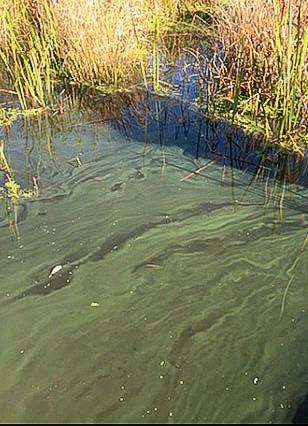
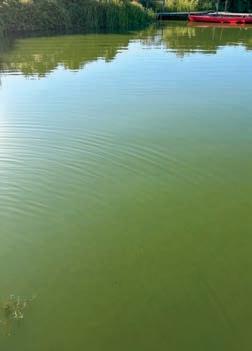
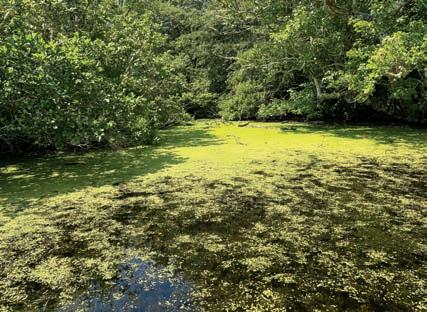
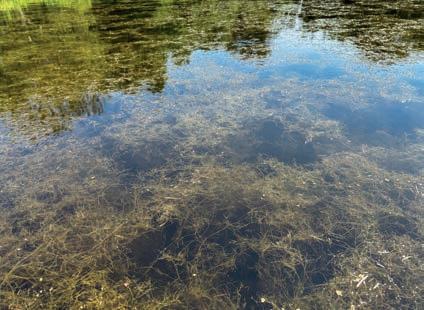
a. Healthy water is usually clear and allows you to see the pond floor at shallow depths. Water that is impaired tends to be murky, has a green hue, or looks like streaks of paint are present. Above are images of water impaired by a harmful
!"#$ %&'()#*+"& ,-./&")"01 %34
!"#$ %&'()#*+"& ,-./&")"01 %345
Middle Pond on 10/9/24
cyanobacteria bloom in Chilmark Middle Pond.
2. PRESENCE OF ALGAL MATTING
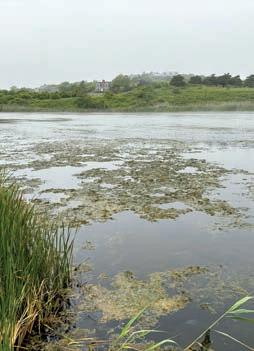
a. One sign of a HAB is algal matting that sits on the surface of the water or on the bottom of the pond. These mats can either be innocuous green algae, a combination of algae, cyanobacteria, and diatoms, or primarily
Middle Pond on 9/3/25
Squibnocket Pond on 6/6/25
• Reduce energy consumption by 50%
• Reduce energy consumption by 50%
67859:959;9; <<< !=>?%3@AB>,%=3,C4D3=B=EF 4=?
• Drastically reduce moisture movement
!=>?%3@AB>,%=3,C4D3=B=EF 4=?
• Drastically reduce moisture movement
67859:959;9; <<< !=>?%3@AB>,%=3,C4D3=B=EF 4=?
!=>?%3@AB>,%=3,C4D3=B=EF 4=?
• Add comfort and durability to your home or building
• Add comfort and durability to your home or building
Locally owned and operated on Martha’s Vineyard since 2004
Locally owned and operated on Martha’s Vineyard since 2004
CALL TODAY FOR A FREE QUOTE!
CALL TODAY FOR A FREE QUOTE!
PO Box 1570, West Tisbury, MA 02575
PO Box 1570, West Tisbury, MA 02575
508-696-6363 • www.fitmv.com • info@fitmv.com
508-696-6363 • www.fitmv.com • info@fitmv.com
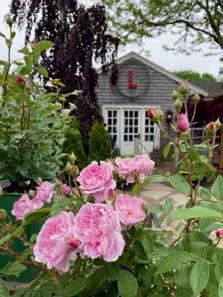
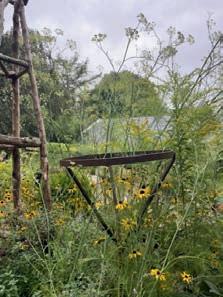
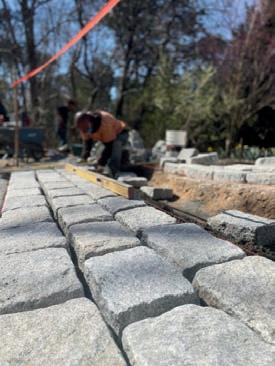
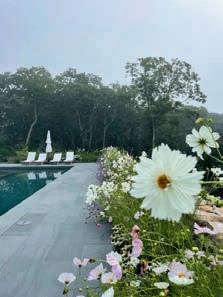
With passion and precision, we create outdoor spaces that don't just look exceptional- they flourish with the natural rhythm of the seasons
Chilmark
Chilmark
D EE R , T ICK & MOSQU IT O C O NTR OL!
(508 )62 7- 292 8 | M V@ oh-DEE R .co m
oh-DEE R. co m
•SAFE FOR YOU, YOUR FAMILY & PETS!
•KILLS TICKS & MOSQUITOES ON CONTACT.
•AN EFFECTIVE ‘GREEN’ ALTERNATIVE TO PESTICIDES & CHEMICALS
ohDEER offers two all-natural pest control solutions for seasonal or year-round protection. Our deer control solution is an egg-based spray with garlic, white peppers, mint oil, and water that directly targets the plants deer love to feed on. Our tick and mosquito spray is a blend of powerful essential oils, including cedarwood oil, lemongrass oil, castor oil, and water. Our team provides customized, thorough coverage for your property, ensuring long-lasting protection.
cyanobacteria. In large concentrations they block sunlight from penetrating to the pond floor, which is harmful to other photosynthetic organisms within the pond. Cyanobacteria also have the potential to produce harmful toxins which can negatively impact human and non-human animal health.
Preister’s Pond on 7/30/25
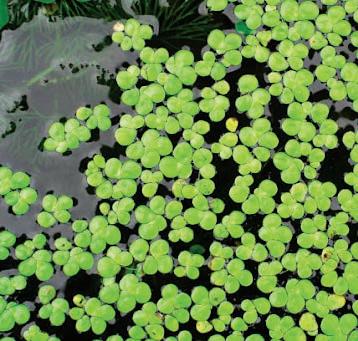
b. W hat can be confused with algal mats: i. D uck weed and other floating plants resemble algal mats from afar. Below are images of duckweed and plants that share a resemblance to algae. Duckweed has clover shaped leaves and thin roots
Priester’s Pond on 7/30/25 e Climate-Friendly Membership at
Pays for Itself
Join Bluedot Living for as little as $5 per month and enjoy:
while algae do not have leaves and tend to be stringy and slimy. These plants are not toxic and are not harmful to humans or non-human animals.
3. ODOR
Impaired water may smell musty, rotten, or have a generally unpleasant odor.
4. DEAD FISH
Areas where large quantities of dead fish are found can indicate an anoxic zone, an area where there is no oxygen. Anoxic zones can occur when algal blooms are present as these organisms consume large quantities of oxygen.
5.
WHAT TO DO IF YOU SEE SIGNS OF HARMFUL ALGAL BLOOMS
Contact your town’s Board of Health Agent or reach out directly to MV CYANO!
Visit the Great Pond Foundation website: greatpondfoundation.org
REPORTING A BLOOM
Edgartown: Brice Boutot Edgartown Board of Health Agent 508-627-6120 | healthagent@edgartown-ma.us
THE PAWNEE HOUSE
MARTHA’S
West Tisbury: Alex Lam
West Tisbury Board of Health Agent
508-696-0105 | boh@westtisbury-ma.gov
Chilmark: Anna McCaffrey
Chilmark Board of Health Administrator 508-645-2105 | boh@chilmarkma.gov
Oak Bluffs: Alexa Arieta
Oak Bluffs Board of Health Agent
508-693-3554 ex 127 | aarieta@oakbluffsma.gov
Tisbury: Drew Belsky, Tisbury Board of Health Agent 774-563-3870 | dbelsky@tisburyma.gov
Aquinnah: Marina Lent
Aquinnah Board of Health Agent
508-645-2309 | health-agent@aquinnah-ma.gov
After reporting a potential bloom, the Great Pond Foundation science team will collect a water sample and if applicable, material (scums, algae) from the site. Depending on circumstances, the person who reported the bloom may be
given supplies and instructions to collect the sample themselves. The sample will then be run through a fluoroprobe; a spectral fluorometer that can estimate phytoplankton abundance through fluorescence of pigments unique to the individual algae groups. In other words, a tool that measures the type(s) and concentrations of phytoplankton, including cyanobacteria. If there is any material (surface scums, algal mats, etc.) collected, GPF will analyze this under a microscope to better understand the phytoplankton presence, type, and dominance. GPF then sends this analysis to the Boards of Health agents where they make recommendations to the public based on the findings in the sample.
COURTESY OF THE GREAT POND FOUNDATION
Edgartown Great Pond.
Harbor View Hotel embodies the charm and elegance of the Great American Summer. Guests enjoy breathtaking ocean views, a heated outdoor pool, and top-tier dining—all within a short stroll to the heart of historic Edgartown on the beautiful island of Martha’s Vineyard.
The Crown Jewel of Martha’s Vineyard
This image features the Skyhouse Suite.
FIELDNote
To: Bluedot Living
From: Polly Hill Arboretum
Subject: Post-Storm Tree and Shrub Health Care: What Homeowners Should Know
After a major storm, it’s natural to walk your property and assess damage to trees and shrubs. Broken branches, split trunks, and bent shrubs can look alarming. Some damage can be safely corrected, while other situations require removing the entire tree to avoid long-term hazards. Understanding how trees respond to injury will help you make better decisions and keep your property safe. Unlike people, trees do not “heal” wounds by replacing
damaged tissue. Instead, they compartmentalize injuries, also known as CODIT, or compartmentalization of decay in trees. This means the tree forms chemical and physical barriers around the damaged area to limit decay and prevent it from spreading into healthy wood. Over time, new growth may roll over the wound edges, but the original damaged wood remains inside the tree. Because of this, the size and severity of the wound matter. Large wounds, especially those involving the trunk or main structural branches, can overwhelm the tree’s ability to compartmentalize decay. Also for CODIT to occur the wound needs to be in the presence of oxygen. Therefore, we do not recommend using any wound sealants.
WHEN IS DAMAGE TOO SEVERE TO FIX?
Some defects significantly weaken a tree’s structural integrity. These situations often require removal rather than repair:
• Major branch failures that remove more than 25–30% of the canopy
• Damage located above targets such as homes, driveways, or walkways
Leaving a severely compromised tree in place creates a future hazard. Even if the tree looks stable immediately after the storm, decay can spread inside the wood. Months or years later, the weakened area may fail unexpectedly — potentially injuring someone or damaging property. It’s better to remove a high-risk tree early than to wait for a dangerous failure.
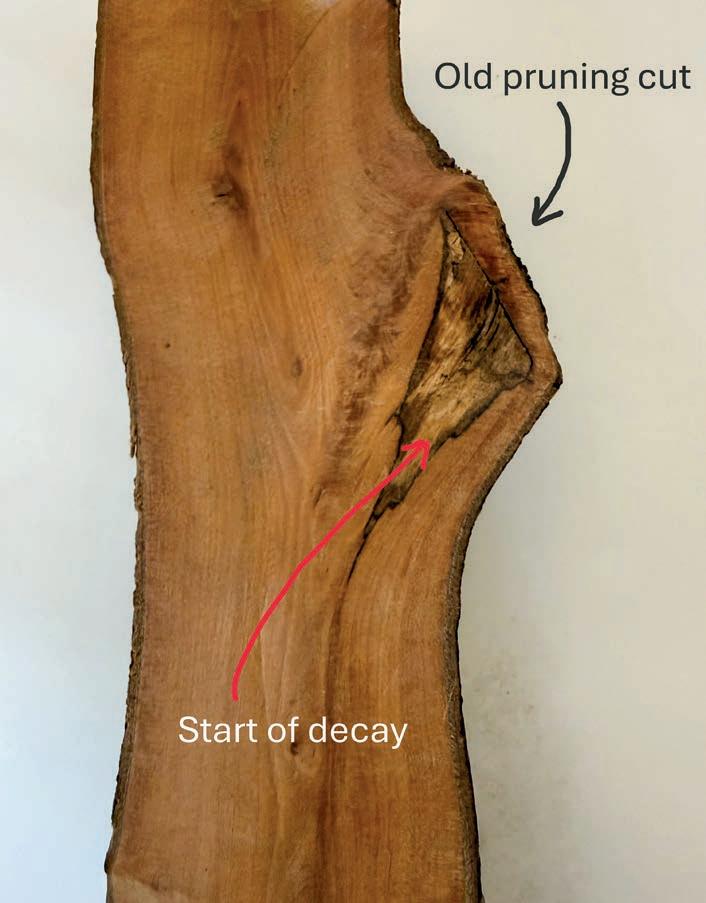
Here is an example of a successful compartmentalization where there was a pruning cut made several years prior. Notice how the darker area of decay wood is not spreading into other areas of the branch. The 4 walls have been successful in compartmentalizing further decay.
EXAMPLE 1: SMALL TREE WITH A CODOMINANT TRUNK BREAK
Imagine a small ornamental tree with two equal trunks growing from the same point. A storm breaks one trunk halfway up. In this case, the proper corrective action is to remove the broken trunk entirely, cutting it back to the point where it joins the remaining stem. The cut should be made just outside the branch collar. Avoid leaving a stub, but do not cut flush into the remaining trunk. Once the damaged trunk is removed, the remaining stem can often assume dominance. The tree will begin compartmentalizing the wound by forming protective barriers around the cut. Over time, new growth may close over the wound. Because the tree is small, the wound size is manageable, and the tree can often continue growing safely.
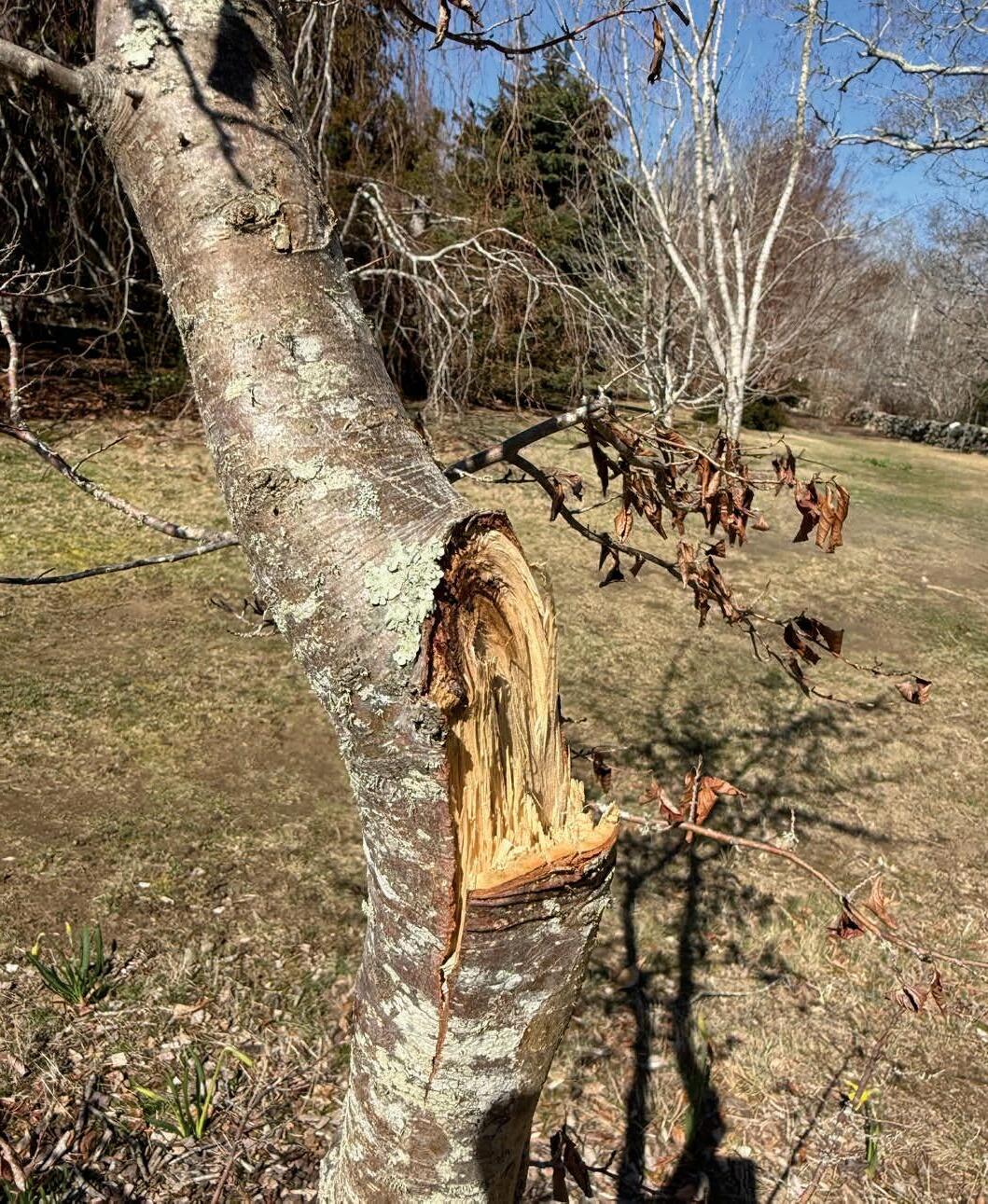
EXAMPLE 2: LARGE TREE WITH A TORN BRANCH AND TRUNK DAMAGE
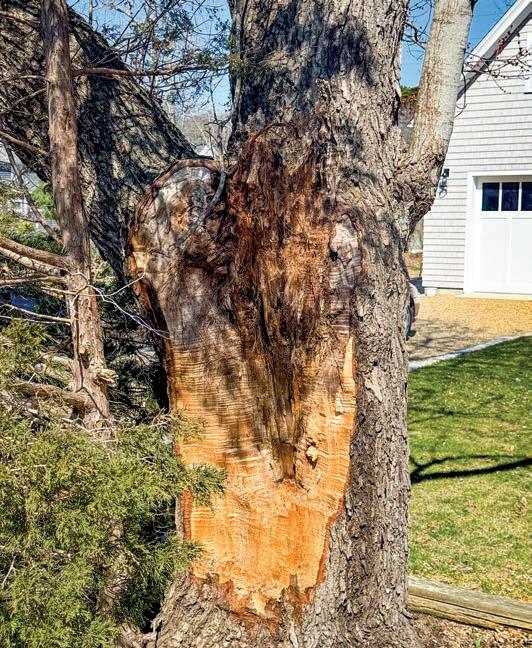
Now consider a mature shade tree where a large limb breaks during a storm and tears downward, ripping bark and wood from the trunk. This type of damage creates a long vertical wound and exposes a large amount of internal wood. Even if the broken branch is removed cleanly afterward, the trunk injury remains. The tree cannot restore structural strength to that torn area. This defect often leads to internal decay and a permanent weak point in the trunk. In a large tree, especially near a house or driveway, the risk of future failure is high. Because the damage compromises the main structure of the tree, removal of the entire tree is typically the safest option.
MOST COMMON SNOWSTORM DAMAGE
During heavy snowstorms, the most common damage is branch bending and breakage. Wet, heavy snow accumulates on leaves (in evergreens) and fine twigs, adding significant weight. This often leads to:
• Broken outer canopy branches
• S plit codominant leaders in small trees
• Bent or splayed shrubs
• Evergreen branches permanently drooping
Shrubs and small trees sometimes rebound once snow melts, but broken branches should be pruned cleanly to prevent decay.
WHEN TO CALL A PROFESSIONAL
If damage involves large branches, the trunk, or trees near structures, consulting a certified arborist is strongly recommended. They can evaluate structural integrity and determine whether corrective pruning or removal is safest. Taking prompt, informed action after a storm helps your trees recover when possible — and ensures that hidden defects don’t become hazards later.
Example 1: Small tree with a codominant trunk break.
Example 2: Large tree with a torn branch and trunk damage.
CSA SHARES On Martha's Vineyard
What’s out there, and what to know before you join.
By Lis Bluford
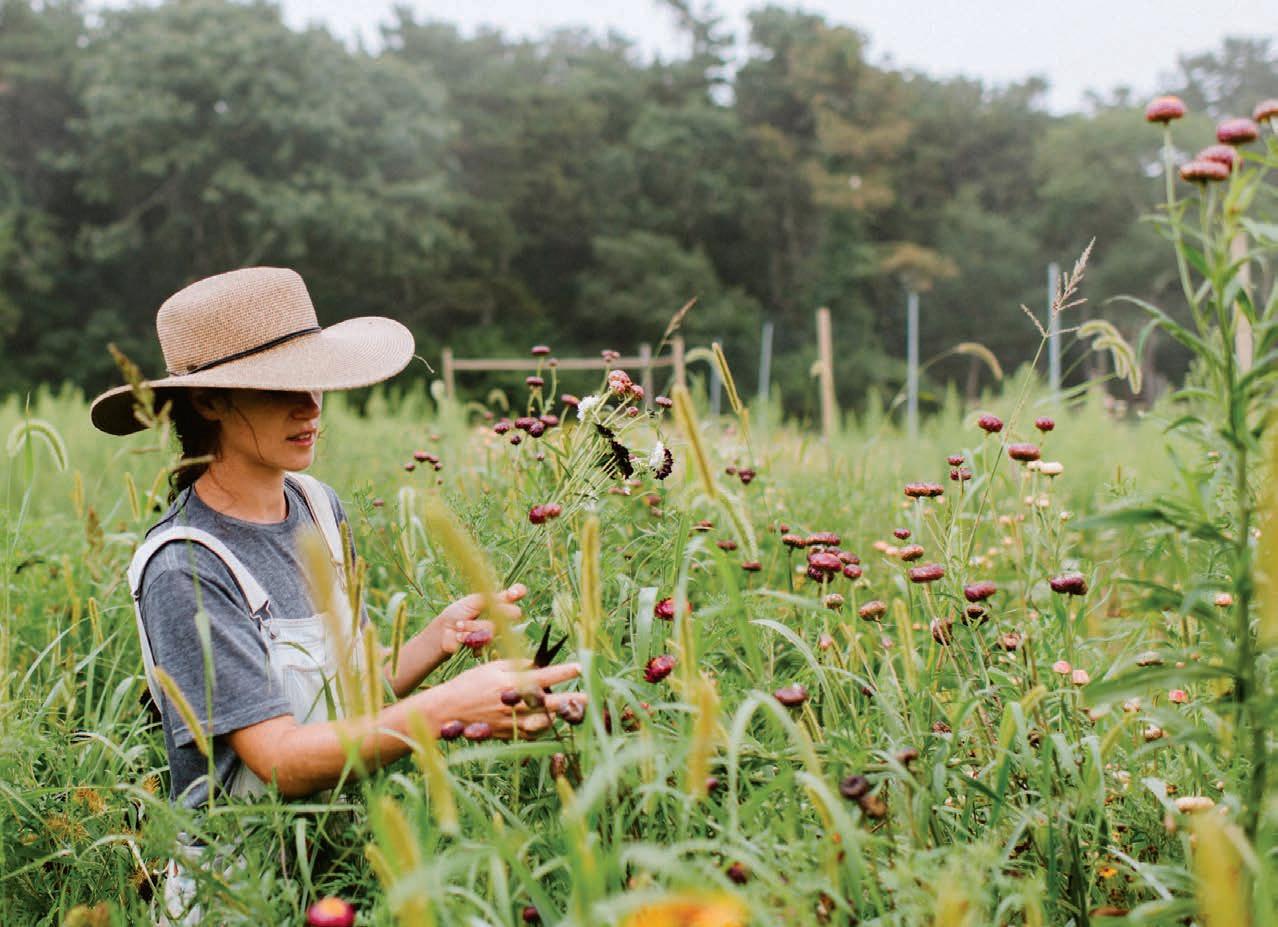
Community Supported Agriculture (CSA) shares are a system where you pay upfront for a share of a farm’s harvest, then pick up what is ready throughout the season.
On Martha’s Vineyard, these programs are a reliable way to keep fresh produce in the house in the summer. The growing season is short, local food is highly valued, and many people want to buy more directly from farms when they can.
This guide is meant to help you understand what is out there on Martha’s Vineyard and which offerings may be the best fit for how you shop and cook. CSAs require a bit of flexibility, as you are depending on weather and crop timing. A cool spring, a stretch of rain, or a problem with a particular crop can shift the season. Shares tend to
work best for people who are comfortable building meals around what they have, instead of shopping for one exact recipe. If you are the kind of person who can turn greens, herbs, squash, tomatoes, or extra root vegetables into grain bowls, soups, pasta, roasted sides, you are much more likely to enjoy it. (Here is a recipe for an endlessly riffable grain salad: bluedotliving.com/endlessly-riffable-grain-salad/).
Want to sign up? For most of these farms, you can do that online. See the website links for details. If you are interested in joining one for the 2026 season, it is worth checking sooner rather than later as some may sell out, especially if you want a smaller or more specialized offering. Sign ups are typically available online or in person at the farm itself before the share begins.
SHENY LEON
Slip Away Farm
CSA AND CSA-STYLE PROGRAMS
These are the CSA and CSA-style programs that have been confirmed for the 2026 season as of early spring. Additional offerings may be announced later.
Morning Glory Farm
120 Meshacket Rd., Edgartown
Offerings: Produce, bread, and flower CSAs with multiple size options
Dates: May 25–Oct. 29, 2026 (5, 10, or 22week options depending on share)
Cost: $140–$1,040 depending on share type and length bit.ly/moglo-csa
Island Grown Initiative
80 Stoney Hill Rd., Vineyard Haven
Offerings: Produce CSA with full and half shares, sliding scale pricing, SNAP/HIP accepted. Pickup available at IGI Farm or Grange Hall
Dates: June 11–Oct. 22, 2026 (weekly or biweekly options)
Cost: $375–$1,050 depending on share size and pricing tier igimv.org/csa
Milkweed and Merry Farm
142 Quenames Rd., Chilmark
Offerings: Vegetable CSA and optional Salt Rock Chocolate add-on
Dates: Full season June 9–Oct. 27, 2026 (21 weeks) or summer season June 23–Sept. 1, 2026 (11 weeks)
CSA
Cost: $525 for full season or $275 for summer share
A newer CSA on the Island, Milkweed’s 2026 program is run in partnership with Merry Farm and follows a farmer’s choice, market-style model, where members select from a curated weekly display. Pickups take place Tuesdays or Wednesdays at Agricultural Hall. milkweedfarm-chilmark.com/csa-info
Slip Away Farm
199 Chappaquiddick Rd., Edgartown pickup available
Offerings: Spring and summer flower shares; additional farm items also available for purchase at pickup (season dependent)
Dates: Spring (3 weeks) and summer (typically April–September: 12, 16 and 20-week options)
Cost: $105–$365 depending on share, slidingscale pricing and punch cards also available slipawayfarm.com
Dates: Registration is open for 2026. Shares begin in June or July depending on the option selected, with pickups at the West Tisbury Farmers Market
Cost: Summer shares start at $345, fall shares start at $230, and full-season shares start at $575 mvfishermenspreservationtrust.org/csf
West
Ghost Island Farm
274 State Rd.,West Tisbury
Offerings: Prepaid farm membership with store credit and ~10% bonus added
Dates: Typically year-round use with summer peak season
Cost: $250 or $500 starting membership, with ability to add funds ghostislandfarm.square.site
This operates more like a prepaid account than a CSA. You add money, receive a bonus, and shop what you want when you want. Many locals we spoke to called out the flexibility and reduced waste compared to traditional CSAs.
Many farmstands have shifted toward flexible memberships, or seasonal programs that offer a similar way to buy local without the structure of a weekly share. Stay tuned throughout the season to see if any of the following farms announce a CSA or share offering: North Tabor Farm, Flat Point Farm, Blackwater Farm, and Whippoorwill Farm.
FINAL THOUGHTS
CSAs require flexibility, but for people who want to support local farms more directly, and do not mind adjusting to the rhythm of the season, they can be one of the most rewarding ways to eat on Martha’s Vineyard.
Lis Bluford is a freelance writer and consultant, who runs MVacay.com — a digital guide to Martha's Vineyard. She spends her time between Oak Bluffs and Richmond, Virginia, with her husband and two young daughters. She loves sunsets at Menemsha, reading on the beach, and trying new restaurants.
SHENY LEON
Slip Away Farm carrots
LUCAS THORS
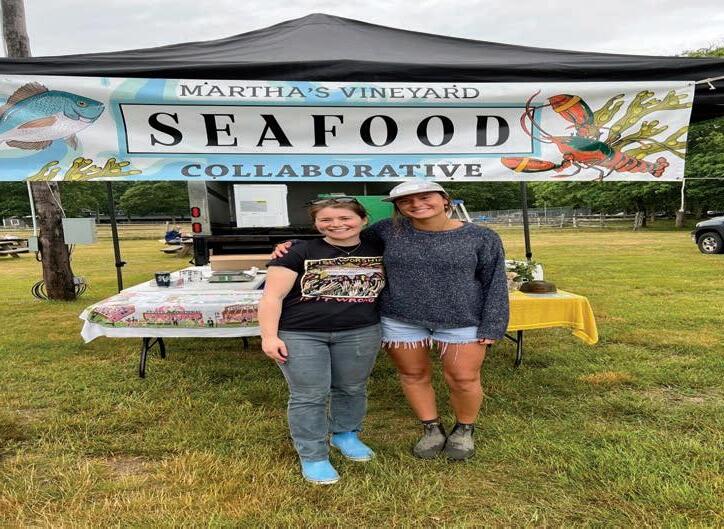
Phoebe Walsh, left, and Adelaide Keene work at the Seafood Collaborative booth at the
Tisbury Farmers Market.
IMMERSIVE AUDIO | BREATHTAKING LIGHTING | INSTANT CONTROL
Recipes as Real AS THE VINEYARD
Dishes from Julia Blanter’s The Martha’s Vineyard Cookbook you can make at home.
When Julia Blanter set out to create The Martha’s Vineyard Cookbook, she wasn’t trying to make a glossy coffee-table book.
“I wanted it to be as real as possible, which is just like the Vineyard,” she told us recently. Real meant chasing people down before they flew south for the winter. It meant flexibility (a sick kid, a plumbing disaster), and a lot of perseverance.
The book took a year and a half from start to finish, with Blanter doing her own recipe testing (“we ate very well that year”) and shooting in borrowed, light-filled spaces — often at photographer Jocelyn Filley’s home or at pasta maker Katie Leaird’s studio. Everyone was within a 10-minute drive. It was hyper local and deeply collaborative.
The result? A Community Cookbook of the Year winner and bestseller at Edgartown Books — “the honor of a lifetime,” Blanter says.
We’re sharing recipes that capture that spirit: ArtCliff’s Blueberry Buttermilk Scones, Clams Cracktino from the Clambulance, and Island Bee Company’s Honey-Brûléed Brie.
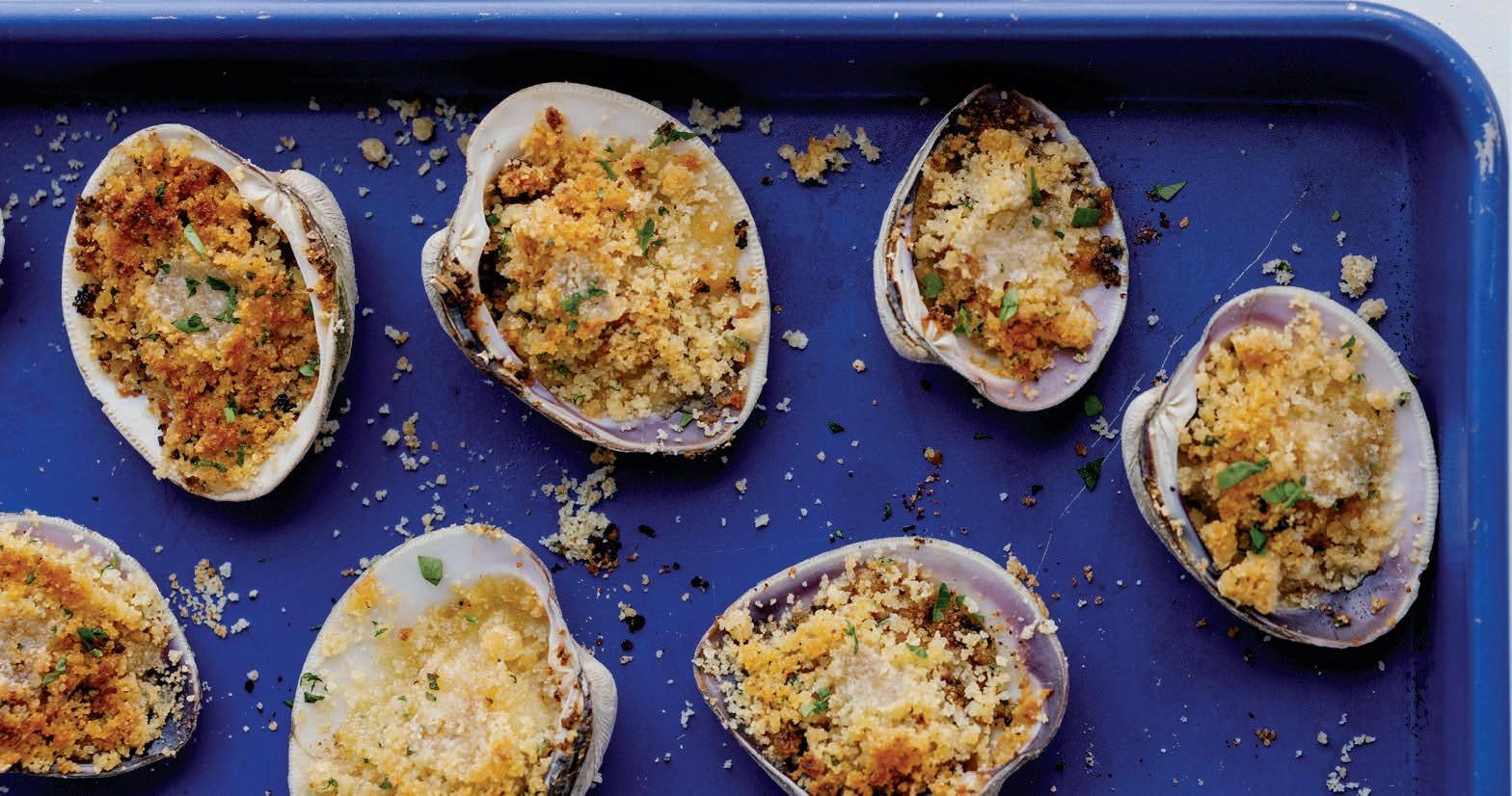
CLAMS CRACKTINO
Beau Begin started Clambulance to share his love of raw bar with the Vineyard. He even shows up to events in his decked-out Clambulance van, complete with an emergency raw bar kit. Beau is passionate about supporting the local seafood industry, and his sumptuous bars always feature an assortment of Vineyard oysters and clams. Make these delectable clams, Beau’s take on clams casino.
Serves 4
INGREDIENTS
16 littleneck clams
1/2 sleeve Town House crackers
1 Tbsp unsalted butter, melted
1–2 tsps grated Pecorino Romano
1/2 tsp onion powder
1/2 tsp chopped flat-leaf parsley leaves Tabasco sauce for serving
INSTRUCTIONS
1. Preheat the oven to 350°F. Shuck the littlenecks and return each clam to a half shell (discard the other half). Put the shells on a baking sheet.
2. Pulverize the crackers in a food processor fitted with the metal blade and transfer to a medium bowl. Add the butter, Pecorino, onion powder, and parsley, and stir to combine. Spoon the mixture over the littlenecks; the clams should be lightly covered.
3. Bake until the topping is golden, 13 to 15 minutes. For a deeper color, broil for 1 to 2 minutes, watching carefully so the topping does not burn. Serve with Tabasco.
Recipe by Clambulance, Vineyard Haven Photo(s) by Jocelyn Filley
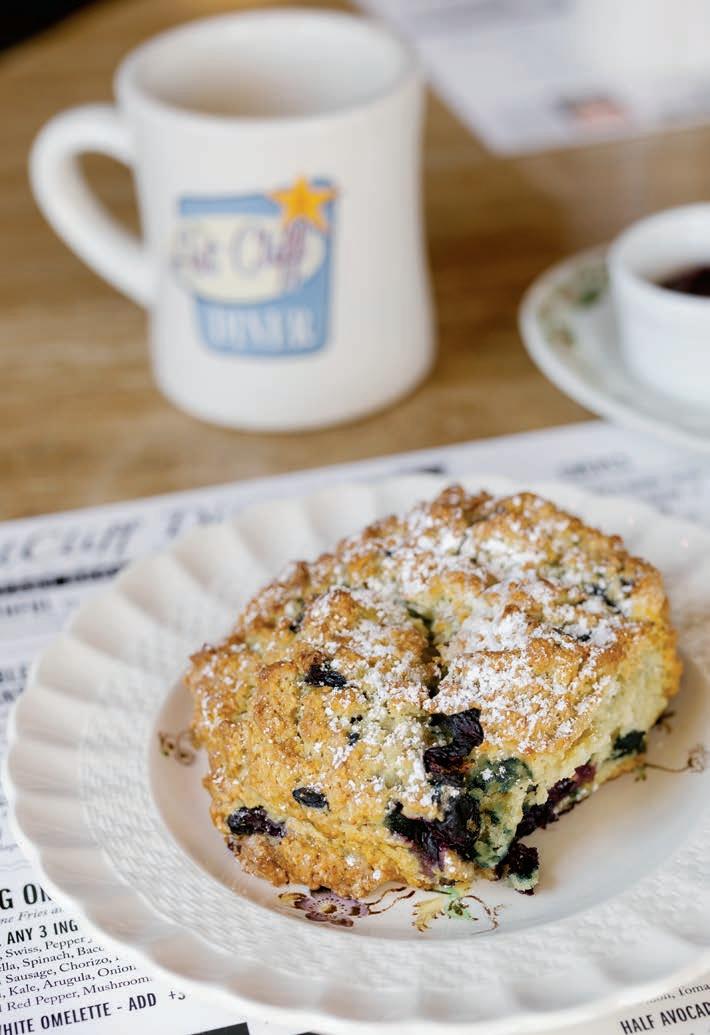
BLUEBERRY BUTTERMILK SCONES
Recipe by ArtCliff Diner, Vineyard Haven
Martha’s Vineyard is spoiled with classic and cozy diners. Case in point: ArtCliff Diner, now in its eighth decade (the original owners Art Silva and Cliff Luce set up their dining car on Beach Road in 1943). The welcome is as warm as ever, thanks to owner Gina Stanley, whose kindness radiates out from the busy kitchen. In the restaurant, the scones are stacked high on antique cake stands, but they don’t last long. If they do sell out, you’re still in luck — you can bake your own lofty scones in less than 30 minutes.
Makes 8 large scones
INGREDIENTS
3 cups all-purpose flour
3/4 cup granulated sugar
1 1/2 tsps baking powder
1/2 tsp baking soda
1/2 tsp kosher salt
8 Tbsps (1 stick) cold unsalted butter, cut into cubes
1 cup buttermilk
1 1/2 tsps vanilla extract
Zest of 1/2 lemon, finely grated
1 cup fresh or frozen blueberries
1 Tbsp light brown sugar or turbinado sugar
Confectioners’ sugar for dusting
INSTRUCTIONS
1. Preheat the oven to 375°F. Line 2 baking sheets with parchment paper. In the bowl of a stand mixer fitted with the paddle attachment, combine the flour, granulated sugar, baking powder, baking soda, and salt on low speed. Add the butter and incorporate until the mixture resembles little pebbles. (Alternatively, use your fingers to cut the butter into the dry ingredients.)
2. Add the buttermilk, vanilla extract, and lemon zest, and mix on low until just combined. (Or mix gently with a wooden spoon until just combined.) Fold in the blueberries with a wooden spoon.
3. Scoop 8 equal portions of the dough and shape each into a round (about 5 inches in diameter). Place the rounds on the prepared pans, leaving 3 inches of space around each. Sprinkle each with brown sugar. Bake until a toothpick inserted in the center comes out clean, 18 to 22 minutes.
4. Cool on the pans for 5 minutes. Dust with confectioners’ sugar.
5. Serve warm with butter, jam, and a hot refill. For sweet potato scones, omit the blueberries and include one roasted and mashed sweet potato.
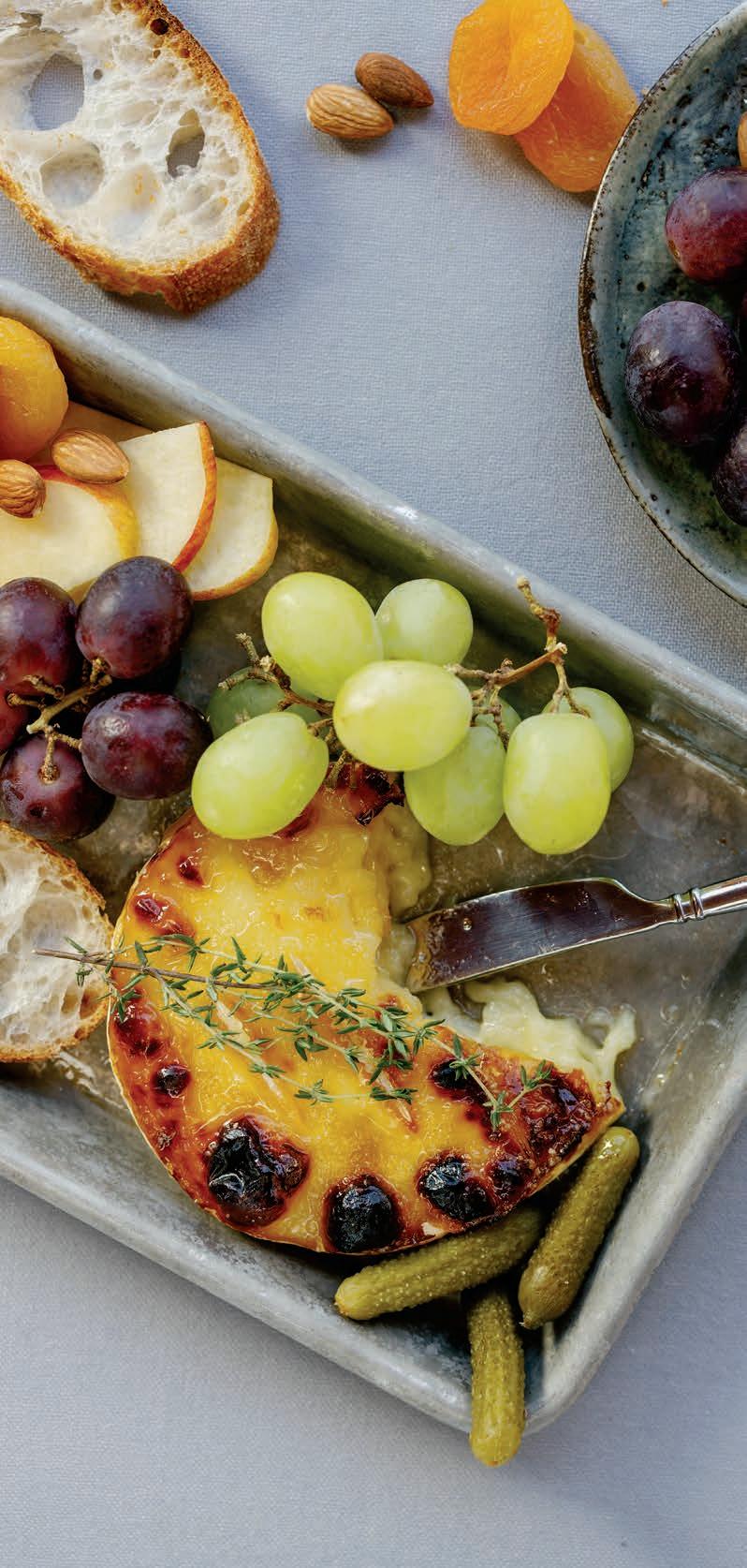
HONEYBRÛLÉED BRIE
Recipe by Island Bee Company, Vineyard Haven
Honey is a reflection of place, as Tricia and Tim Colon’s nectar shows. Their honey is raw and single-sourced from the Island’s six towns. Each has its own distinctive flavor profile. Chilmark honey, for example, is light in hue and delicate; Edgartown honey is molasses-deep, rich, and treacly. It’s a full-time job producing up to 3,000 pounds of honey every year, with climate change — especially drought — creating new challenges every season. But Tricia says their customers make it all worth it. One buys a case of honey for her dogs’ well-being. Others eat it by the spoonful. Tricia loves it drizzled over Mermaid Farm yogurt, mixed into salad dressing, and in this dessert (or appetizer). It might just be the easiest recipe in the book.
Serves 6
INGREDIENTS
1 8-oz round brie
1 Tbsp raw honey, such as Island Bee Company, plus more for drizzling
1 Tbsp turbinado sugar
Toasts for serving
INSTRUCTIONS
1. Preheat the oven to 350°F. Place the brie on a small baking sheet. Slice the white layer of rind off the top. (If the brie came in a wooden container, place it back inside, cut side up, and return to the baking sheet.)
2. Spread the honey over the top of the cheese. Sprinkle the sugar in an even layer over the honey. Bake until the sugar melts, 4 to 5 minutes. Preheat the broiler. Broil until the sugar has caramelized in spots, 2 to 3 minutes. Watch carefully so it doesn’t burn.
3. Allow to rest at room temperature until the sugar hardens, 2 to 3 minutes. Serve with toasts.
Plant This, Not That (Part Two)
Swap out invasive ornamentals for Island-native species that support local wildlife.
By Robyn Graygor
Native plants fill a Katama property.
Robyn Graygor is the Biodiversity Technician for BiodiversityWorks’ Natural Neighbors program. The first part of this article was printed in our 2026 Fall/Winter issue. See the full article online at bit.ly/plant-this-mv.
CLAIRE CALLAGY
Privet
If you want to help maintain Martha’s Vineyard’s iconic native plant communities, consider planting Island-native species in place of their invasive knock-offs.
Common problem plants and their native alternatives:
You can find privets (Ligustrum spp.) in all shapes and sizes. Most commonly, border privet (Ligustrum obtusifolium) decorates property lines as sculpted hedges. These prized privacy barriers were introduced to North America in the 1800s. Fast growing and resistant to rust (a type of leaf spotting), their simple semi-evergreen leaves offer dense coverage throughout the seasons.
The same characteristics that have made this shrub so sought after have also allowed it to become a successful invasive offender. Mature shrubs produce hundreds of seeds that are dispersed by birds and wildlife well into the winter. New plants can also arise through root sprouts and suckering. Toxic compounds in the leaves deter deer browsing and some leaf-feeding insects. Without predators, privet is able to outcompete native shrubs and hinder the development of surrounding vegetation with its dense stands. The resulting shady conditions can interfere with forest regeneration while favoring the growth of more privets.
This plant’s readily available fruits are junk food for birds, passing through
their digestive tracts quickly while providing mainly sugar and water. Specialist insects that have developed intricate relationships with specific plants are threatened when this aggressive spreader takes root in intact native ecosystems. Privets can be found in all regions of Massachusetts, under various growing conditions, making most any vegetative community susceptible to infestation.
Native alternatives
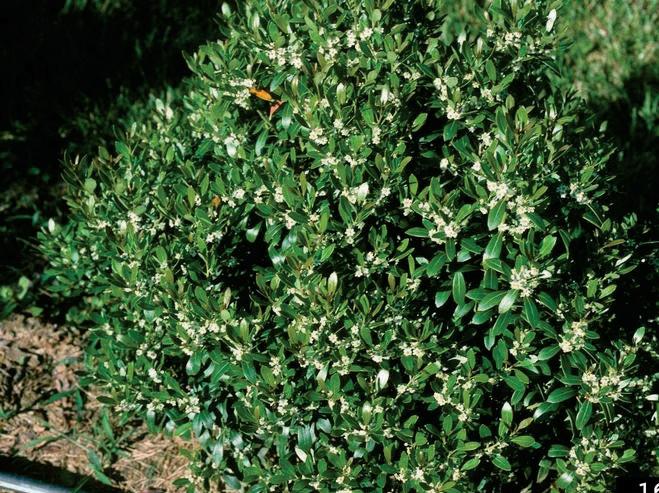
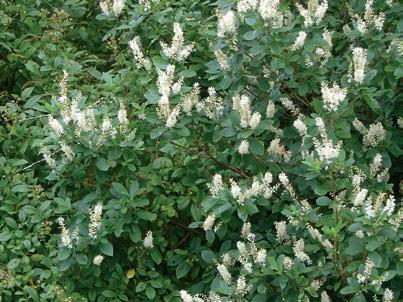
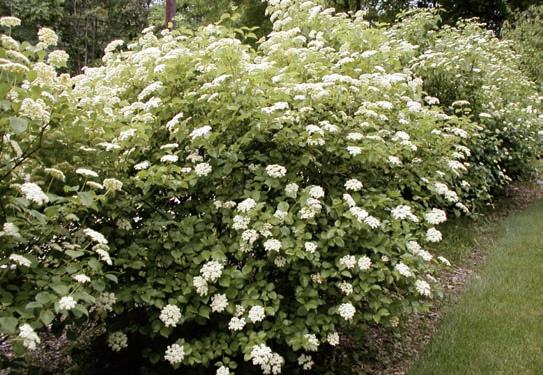
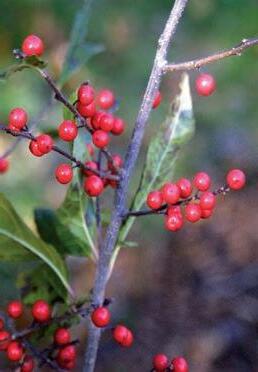
Several Island-native shrubs work well in a hedgerow or in other manicured shapes. These species can bring a tinge of intentionality to a landscape while also servicing native birds, insects, and wildlife. Inkberry (Ilex glabra) is a wintergreen shrub in the holly family that will provide year-round cover. It looks similar to a boxwood, and can be sculpted with pruning. Similarly, a mix of arrowwood (Viburnum dentatum) and sweet pepperbush (Clethra alnifolia) grow happily in a mosaic hedge formation. If
you are looking to replace your privet with a native shrub, consider planting one of the following:
1 Inkberry (Ilex glabra)
2 S weet pepperbush (Clethra alnifolia)
3 Winterberry (Ilex verticillata)
4 Bayberry (Morella caroliniensis)
5 Mountain laurel (Kalmia latifolia)
6 Ar rowwood viburnum (Viburnum dentatum)
Inkberry
Sweet pepperbush
Winterberry
Arrowwood viburnum
Norway Maple
In the early spring, as tree buds are about to burst, Norway maple (Acer platanoids) leaves are already unfurled and reaching for sunlight. Perhaps because of our love for our native red maple (Acer rubrum), people often misidentify Norway maple or believe it to be native to Martha’s Vineyard, and therefore don’t recognize it as the imported species that it is.
The Norway maple comes from Europe and western Asia,
where it is one of the most common maple trees. The first two saplings were introduced to the United States in 1792 when George Washington bought the trees to plant at Mount Vernon. Soon after, Norway maples were being planted along roads and in urban settings to replace elm trees after Dutch elm disease struck.
Both a generalist species
Japanese Wineberry
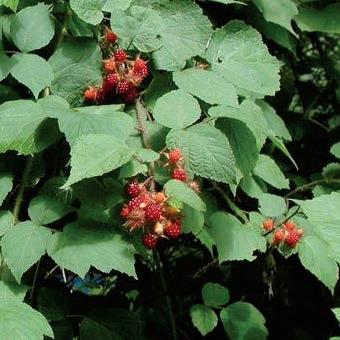
Many casual foragers enjoy wineberries (Rubus phoenicolasius) as a trailside treat in the summer months. The sweet juicy fruits are especially abundant along roadsides and other paths, making it easy to reach out and grab a handful. This thorny shrub was brought to the United States in 1890 from Asia to be bred with other Rubus species for agricultural purposes. Many qualities made it ideal for breeding Rubus cultivars: abundant small shiny fruits, pest resistance, fast growth, adaptability, ample reproduction, and a sweet, candy-like flavor.
By the 1970s, wineberry had escaped cultivation and
and fast growing, Norway maple can insert itself in mature forest communities. While its shade-tolerance allows it to compete under closed canopies, it also takes advantage of sunlight gaps after tree fall or removal. Saplings can lay dormant in low light and grow rapidly once they get access to sunlight. These maples can be found in a variety of habitats, including disturbed anthropogenic sites, wetlands, edge areas, early or late successional forests, and open areas.
Native alternatives
Finding a native replacement for Norway maple is simple: plant red maple (Acer rubrum) instead! This tree is easy to grow in a variety of conditions and displays dazzling fall color. Its early bloom welcomes a myriad of native bees in search of nectar, as well as birds who frequently nest and search for food nearby. Various native moths and butterflies use this tree as a host plant, including the iconic rosy maple moth (Dryocampa rubicunda).
was growing invasively, forming dense thickets in wild areas. It commonly appears at the edges of paths where vegetation has been disturbed, leaving the terrain vulnerable to invasion. Many places in nature where a human can comfortably walk have experienced some level of disturbance, which is why we so commonly encounter invasive species when out walking.
Wineberries are eaten by birds, and the seeds are distributed long distances. This allows for widespread dispersal and somewhat
unpredictable infestations. Although birds do eat wineberries, birdwatchers have observed birds eschewing wineberries in favor of native berries that are more nutritionally valuable, even when the native berries are scarce.
Native alternatives
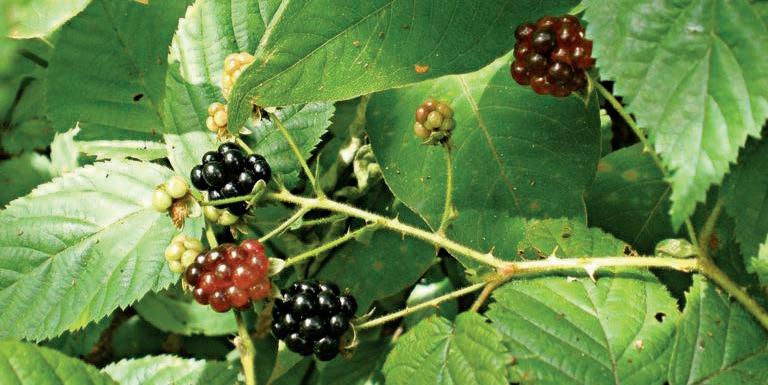
When berry picking season rolls around, it’s extra rewarding to have a patch of native berries for you and the local wildlife to munch on. Luckily, Martha’s Vineyard is home to a variety of wild, edible fruits that are just as delicious, if not more so, than the wineberry. For instance, common blackberry (Rubus allegheniensis) attracts native butterflies and bees and is
a host plant for the striped hairstreak butterfly (Satyrium liparops strigosum). If you are hoping to start a berry patch, consider planting one of the varieties below, all of which provide valuable nectar, pollen, and cover, as well as fruit.
1 Common blackberry (Rubus allegheniensis)
2 Vermont blackberry (Rubus vermontanus)
3 Black raspberry (Rubus occidentalis)
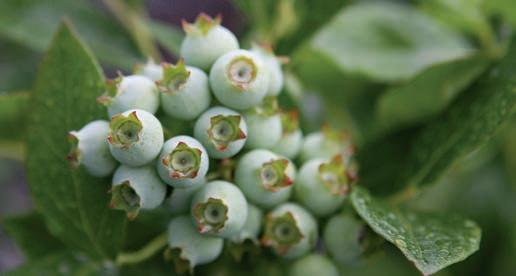
4 Highbush blueberry (Vaccinium corymbosum)
5 Lowush blueberry (Vaccinium angustifolium)
6 Blue huckleberry (Gaylussacia frondosa)
7 Black huckleberry (Gaylussacia baccata)
Common Blackberry
Highbush Blueberry
Asian Bush Honeysuckles: Amur, Tartarian, Morrow’s & Bell’s
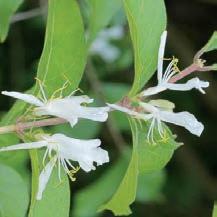
You may have grown up picking honeysuckle flowers and gently pulling a light-colored “string,” called the style, to reveal a drop of tasty nectar. While this has become a common experience among Americans, many of the honeysuckles we’ve grown to love are actually invasive species.
honeysuckles are native throughout Asia.
Amur, Tartarian, Morrow’s, and Bell’s
Amur honeysuckle (Lonicera maackii) is native to Japan and China, Morrow's (Lonicera morrowii) is native to Japan, Tartarian (Lonicera tatarica) is from Russia and Central Asia, and Bell's honeysuckle (Lonicera x bella) is a hybrid of L. morrowii and L. tatarica. These non-native shrubs have hollow stems and flowers that range in color from white, to yellow, to pink.
In the late summer, bright red berries appear, which are useful for identification.
Asian bush honeysuckles can tolerate shade, sun, and a variety of soil types, making them dangerous competition for native plants. They form dense stands in forests, urban and suburban areas, floodplains, wetlands, edge areas, open areas, and roadsides. Soil chemistry and sunlight availability for other plants is altered when a stand becomes well established.
As is true with most other fruit-bearing invasive
plants, birds will eat and distribute the seed, but honeysuckle berries are nutritionally inferior to native species’ fruit.
Native alternatives
Sweet pepperbush (Clethra alnifolia) blooms are fragrant white flowers with a scent so pleasant that you won’t even miss the honeysuckle smell! This native shrub is a host plant for the sweet pepperbush nola moth and will attract an array of bees, butterflies, and hummingbirds.
Planting native species in place of these invasive plants can help maintain the unique natural beauty of the place we call home.
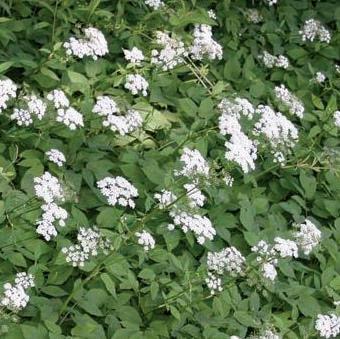
Goutweed
Goutweed (Aegopodium podagraria) is native to Europe and northern Asia and was introduced to North America in the 1800s as an ornamental groundcover. The lowlying compound leaves provide a thick coverage, producing a white, lacy flower under the right conditions. Cultivated varieties have been used for medicinal purposes to treat gout and to create variegated foliage.
nutrient cycling. Its vigorous growth and reproduction also outcompetes neighboring plants for soil moisture and nutrients.
Native alternatives
This herbaceous perennial prefers moist soils and light shade but can infiltrate a variety of habitats. Dense colonies typically form in floodplains. Goutweed spreads aggressively by roots, which can fragment and grow new plants. Soil contaminated with these fragments can lead to new infestations.
Once established, goutweed alters soil chemistry by releasing compounds from its roots and foliage that disrupt
You don’t need an exotic plant to achieve a green carpet of ground cover. Several native species blanket areas with dashing foliage and appealing flowers. Wild geranium (Geranium maculatum), for example, is a low-growing wildflower that will creep along the forest floor. Flashy pink flowers emerge in the early spring, offering a nectar source for native bees in search of food. A larval host for several native moths, wild geranium presents significant value
to wildlife while being a compelling ornamental. If you are in search of a native ground cover, consider planting wild geranium or one or more of the following species:
1 Spotted cranesbill (Geranium maculatum)
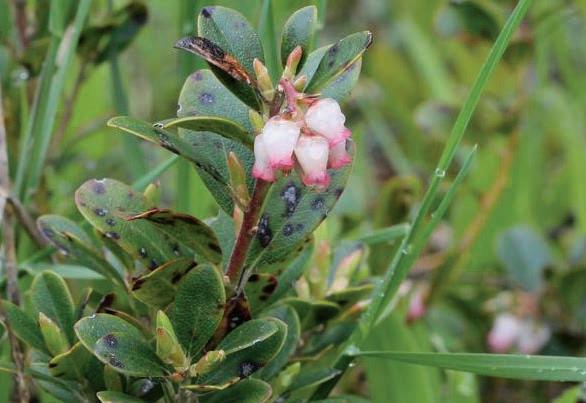
2 Bearberry (Arctostaphylos uva-ursi)
3 False Solomon’s Seal (Maianthemum stellatum)
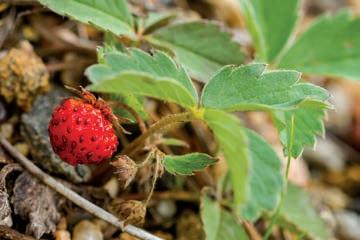
4 W ild strawberry (Fragaria virginiana)
5 Canada mayflower (Maianthemum canadense)
6 Trailing arbutus (Epigaea repens)
Bearberry
Wild Strawberry
Native plants form intricate relationships with local wildlife, birds, and insects that have evolved alongside them.
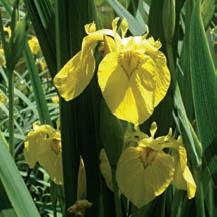
Yellow Flag Iris
Bright yellow flowers in May might seem like a cheery sign of spring, but if they’re blooming from the yellow flag iris (Iris pseudacorus), it’s actually a sign of trouble! This striking invasive flower is so pretty that it’s hard to believe the damage it can do.
Yellow flag iris grows naturally in temperate parts of Europe, Asia, and Africa. It was brought to the United States in the 1700s as an ornamental plant, where it was propagated for water gardens and ponds.
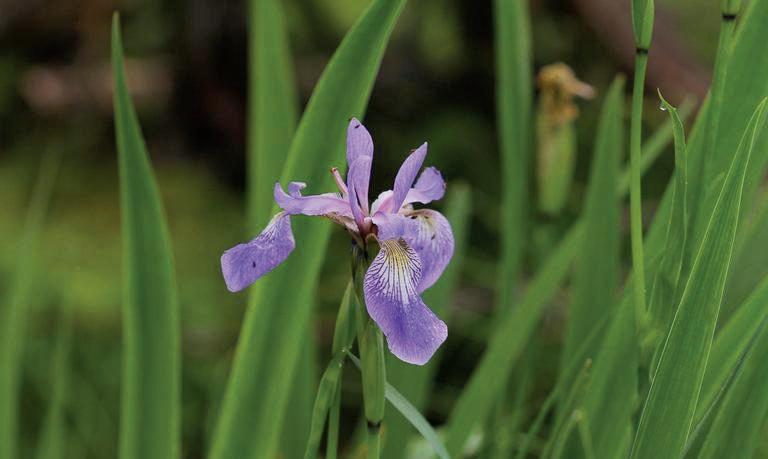
Northern Blue Flag Iris
Rhizomes and seed dispersal create dense clonal colonies that displace native plants and homogenize landscapes. Infestations can occur adjacent to bodies of water and in open wetlands, forested wetlands, and some dry soils.
Rhizomes can persist for long periods of time, both dried and as fragments. They can remain viable through droughts and fires. Both rhizomes and seeds float in
water and can be transported downstream, leading to widespread infestations.
Native alternatives
Wet-loving plants are some of the most beautiful native wildflowers on the Island. Appearing in a variety of shapes, heights, and colors, these species are sure to turn heads of both people and wildlife. Our native northern blue flag iris (Iris versicolor) produces a complex deep purple-blue flower with streaks of yellow and white. This hardy perennial will grow in bunches, filling the desired areas with
showstopping early blooms. There are several other wetland species that will do well in place of yellow flag iris. Consider planting a mix of the following species:
1 Northern blue flag iris (Iris versicolor)
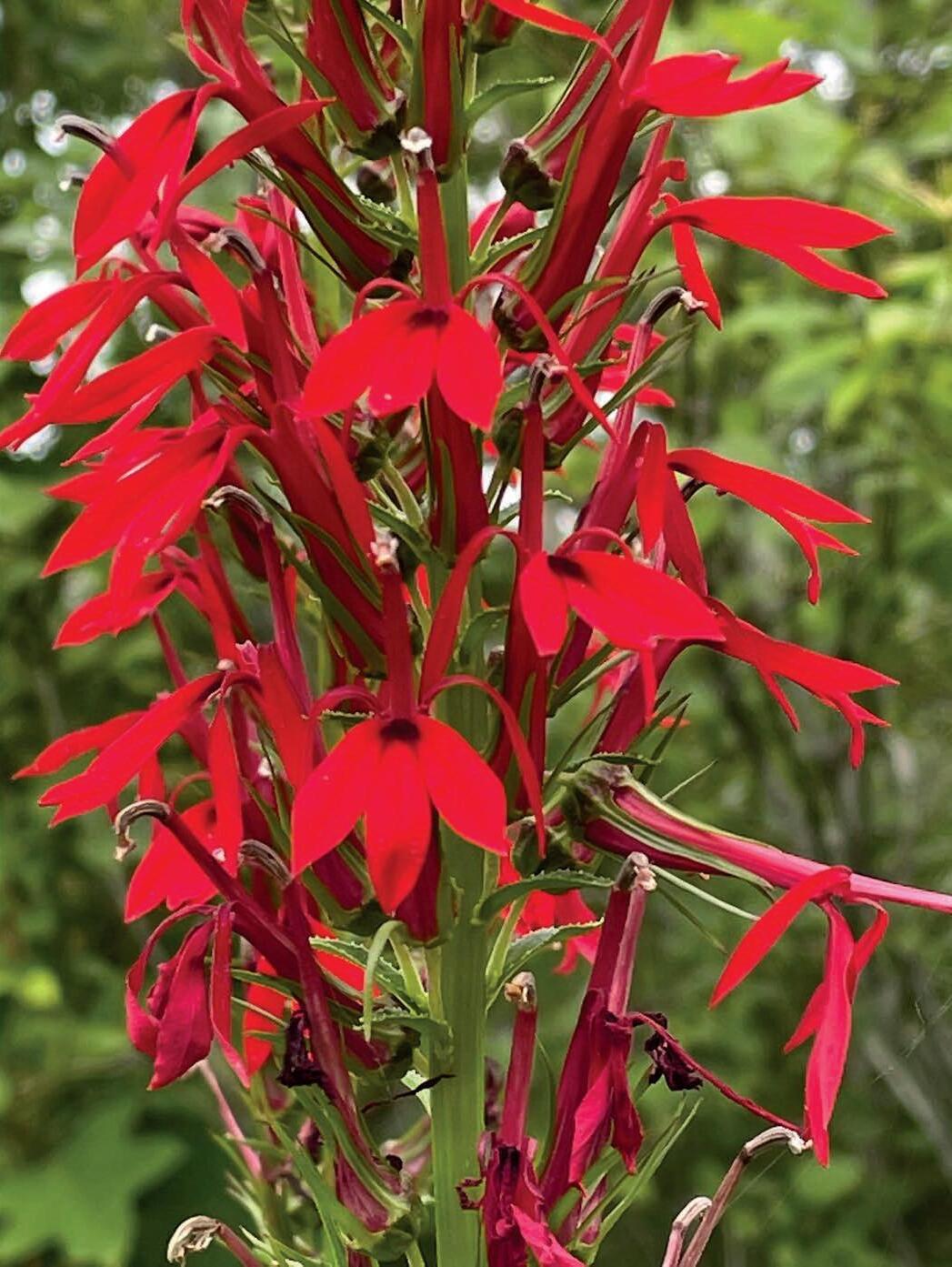
2 Cardinal flower (Lobelia cardinalis)
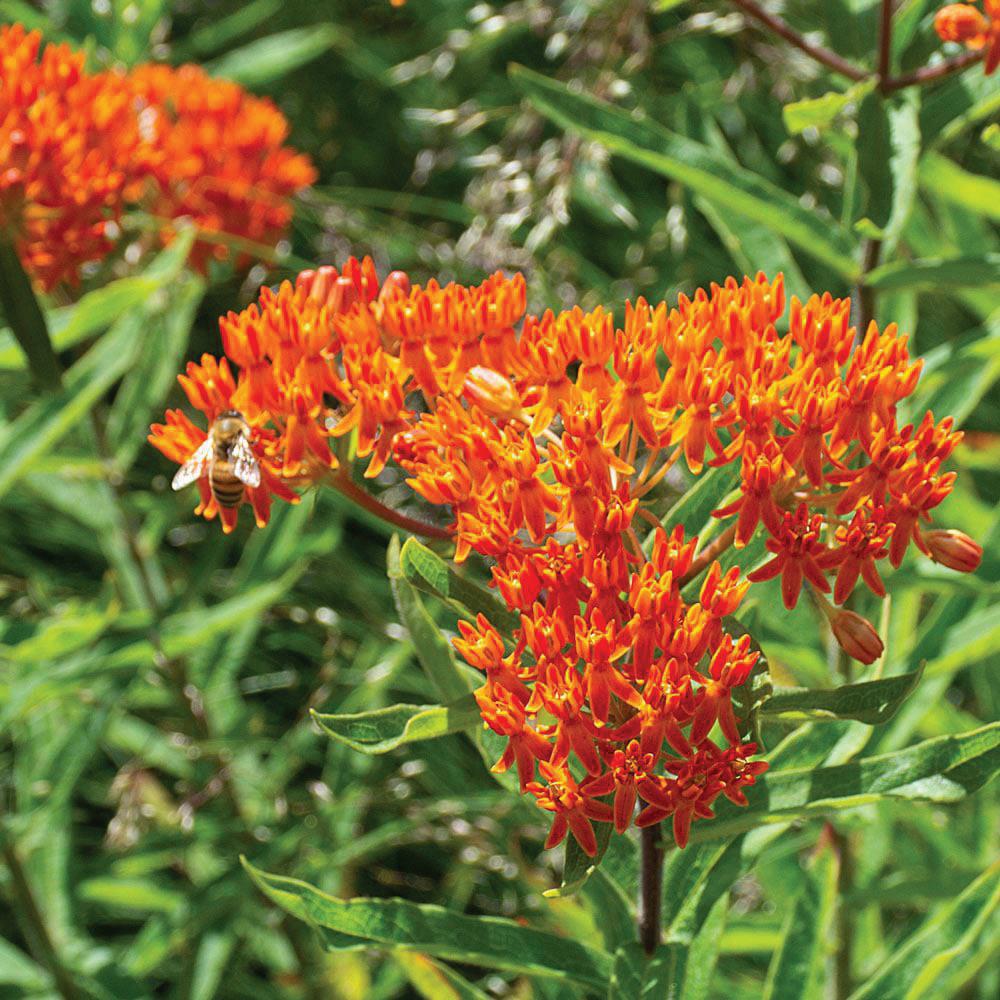
3 S wamp milkweed (Asclepias incarnata)
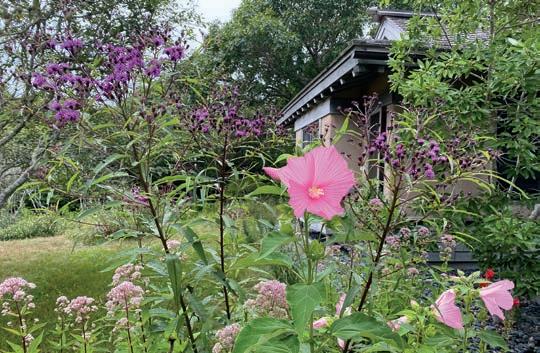
4 Joe-pye weed (Eupatorium fistulosum)
5 Seedbox (Ludwigia alternifolia)
6 Jewelweed (Impatiens capensis)
Cardinal Flower
Joe-pye Weed
Takeaways
Native plants form intricate relationships with local wildlife, birds, and insects that have evolved alongside them. A healthy ecosystem requires balance and biodiversity to remain beneficial. Invasive vegetation is like a misfit cog in the machine, a part that doesn’t benefit the function of the landscape. Without natural predators or equivalent
JENNIE SLOSSBERG
competition, these plants cause tremendous damage to ecosystems and the insect and animal communities that rely on them.
Planting native species in place of these invasive plants can help maintain the unique natural beauty of the place we call home. It’s time we start rooting for the home team!
Resources
Sourcing native plants can be difficult, so it is important to be informed before you open your wallet. Aim for Martha’s Vineyard wildtype plants, meaning plants whose seeds have been collected on-Island. Sometimes the native plant tags in nurseries can be misleading: many of these species tend to be North American natives rather than Martha’s Vineyard or even New England natives. Avoid cultivars of a native species, which can be identified by their theatrical nicknames in quotation marks, such as “Red Columbine (Aquilegia canadensis 'Crimson Wave')”.
The Polly Hill Arboretum has a selection of Martha’s Vineyard wildtype native plant species. They also have an online plant finder (plantfinder.pollyhillarboretum. org) that can help identify what species are native to the island.
The Native Plant Trust has a similar database called Go Botany (gobotany.nativeplanttrust.org) that can be used to determine which species are Island-native and which are not.
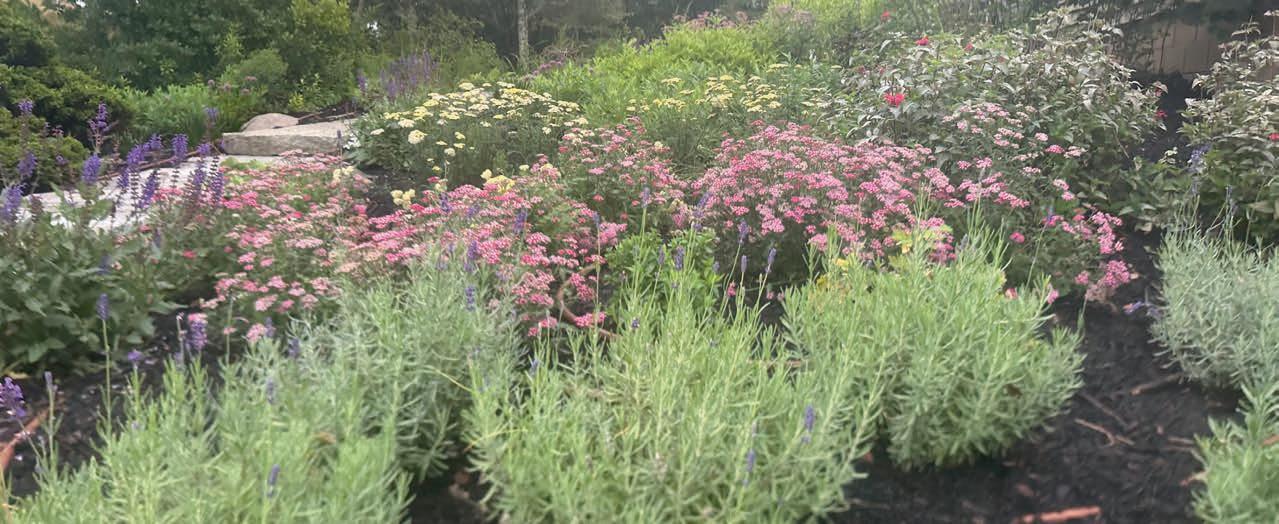
This Prospect Hill landscape, designed by Garden Angels, features a variety of native plants, including yarrow, salvia, Joe-pye weed, bee balm, mountain mint, and alliums.
You can also order native seeds online from the Wild Seed Project website or the Garden for Wildlife website. If you need assistance identifying the plant life that exists on your property, iNaturalist (inaturalist. org) can be a helpful tool. Upload images to iNaturalist and receive several computer generated recommendations on what the species might be. Then, wait for seasoned naturalists to review your post and either verify your identification or suggest otherwise. Each observation you post will be automatically uploaded to the Martha’s Vineyard Atlas of Life (mval. biodiversityworksmv.org), which catalogs the species found on the Island.
Similarly, schedule a Natural Neighbors (biodiversityworksmv.org) site visit to learn more about what plant and animal life can be found on your property and how you can better support it. This BiodiversityWorks program offers free personalized consultations to help all Islanders contribute to biodiversity.
FIELDNote
To: Bluedot Living
From: BiodiversityWorks Invasive Plant Brigade
Subject: Invasive Plant Management Cheat Sheet: Quick Tips and Resources
Managing invasive plants can be an intimidating task, especially if you plan to do it on your own. Luckily, there is some basic information that can make the job more approachable. This cheat sheet serves as a quick guide to manual terrestrial invasive plant management. Equipped with the answers to our most common questions, give this guide a read through the next time you find yourself in an invasive plant predicament.
WHERE DO I START?
Use the Massachusetts Invasive Plant Advisory Group and the Massachusetts Prohibited Plant List to learn which plants are restricted in the state. Online resources like iNaturalist can help you identify and document plants on your property. You can also access iNaturalist as a mobile app for convenience.
NEED AN EXTRA HAND?
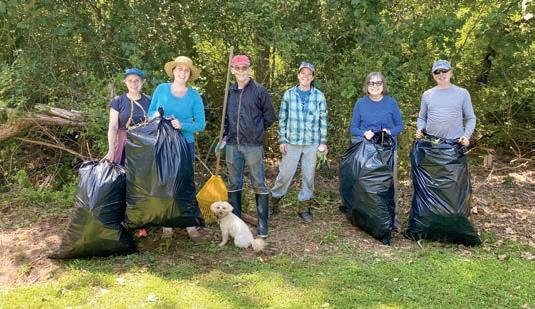
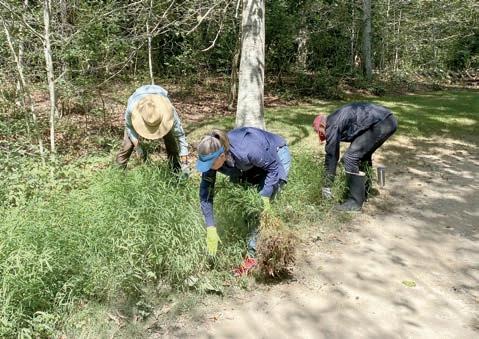
Join BiodiversityWorks’ Invasive Plant Brigade (IPB). Created to meet the need for invasive plant management on Martha’s Vineyard, this volunteer-powered labor cooperative coordinates invasive plant management on properties across the Island.
Volunteers from BiodiversityWorks' Invasive Plant Brigade.
Invasive plant debris should be disposed of carefully to prevent further spread.
You volunteer time removing invasive plants on someone else's removal session, and we match that time for a removal on your own land. If you are physically unable to work on removals, we have volunteers that will work for you. Email rgraygor@ biodiversityworksmv.org for more information.
LOOKING FOR BEST MANAGEMENT PRACTICES?
Check out this recording of our webinar on invasive plants and how to manually manage them: bit.ly/invasive-plant-webinar. In this video, Biodiversity Technician, Robyn Graygor, explores the best times of year to manually remove different priority invasive plants based on their phenology. Watch the whole presentation for an in-depth overview of invasive plants management strategies, or dial into a section on a specific plant.
Find additional information on best management practices for terrestrial invasive plants, in the Hudsonia Ltd Updated BMPs for Priority Invasive Plants. This resource explains the advantage of using manual removal, and provides detailed information about different priority species.
UNSURE OF HOW TO HANDLE DISPOSAL?
There are several ways to safely dispose of invasive plant debris to prevent further spread. Rather than tossing the material in the woods or in the compost where they could regrow and infest new areas, pick a solution that works for you using our terrestrial invasive species disposal guide: bit.ly/dispose-invasive-plants.
MORE QUESTIONS?
Don’t hesitate to reach out. For more information, email rgraygor@biodiversityworksmv.org
Subject: Climate Resilience in Action, Vineyard Style
If you're an avid reader of Bluedot Living MV, you may have noticed exciting things happening across Martha's Vineyard. Community members are showing up to advocate for food waste solutions, unique native habitats, healthy ponds, improved community emergency response, and resilient infrastructure. At the same time, community groups are offering assistance for solar and batteries, urine diversion, resilient workforce, tick disease solutions, regenerative agriculture, and ecological landscaping. These are real examples of climate action, and there is even more happening than you might think. The framework that supports this work is The Vineyard Way, Martha's Vineyard's comprehensive Climate Action Plan (CAP). Developed with input from all six Island towns, the Wampanoag Tribe, and more than 100 Island residents, the CAP is a detailed, equity-centered roadmap for getting the Island to a more resilient future by 2040. It covers six thematic areas, including natural resources, infrastructure, public health, economic resilience, food security, and energy transformation, and outlines more than 190 specific actions for how we get there together. This is not a vague aspiration. This is our plan.
But a plan only works if people engage with it, and that is where you come in.
START AT OUR WEBSITE
Our newly renovated website at thevineyardway.org is designed to be your hub for all things climate action. You can explore the six thematic areas and see which actions are in progress. The "News and Updates" section keeps you current on what is happening across the Island. The “Get Involved” section
provides resources and tools like Plant Local MV and the Food Forest Toolkit. Our website brings the CAP to life as a living document — continually evolving and actively used, not a static plan that sits on a shelf.
FOLLOW ALONG ON SOCIAL
Our Instagram and Facebook channels are where we share upcoming events hosted by community partners, amplify the advocacy work carried out by Island organizations, and spotlight actions big and small that are adding up to real change. Follow us, engage with our posts, share what resonates with you, and help spread the word. Every share reaches someone who might not yet know that this work is happening or that they can be part of it.
FIND YOUR ENTRY POINT
One of the best things about a plan with 190-plus actions is that there is genuinely something for everyone. Not sure where to start? Here are a few ideas:
• Join a town committee. All Island towns have energy and climate committees that welcome engaged residents. Reach out to the committees and let them know that you would like to learn about their work or even get involved yourself.
• Support an Island nonprofit. Organizations like Vineyard Power, Island Grown Initiative, the Vineyard Conservation Society, ACE MV, and so many others are doing hands-on work every day. Donating, volunteering, or contributing in your own way to their efforts makes a difference.
• Participate in monthly climate meetings. The MV Commission’s Climate Resilience Planner hosts two public meetings each month focused on climate resilience. One brings together climate committee chairs from all towns on the second Friday of each month — an opportunity to learn about ongoing resilience efforts. The other meets on the third Wednesday with food waste and compost advocates to collaborate on food waste solutions and minimize solid waste shipment off-Island.
• Attend a community event. Our community partners host talks, walks, workshops, and forums throughout the year. These gatherings are where ideas turn into action and where you connect with the people doing real work.
CELEBRATE OUR CONNECTIONS TO EACH OTHER
Climate action can feel overwhelming, but there is so much to celebrate here. The Vineyard Way exists because this community demanded it. The fact that hundreds of residents showed up to help shape it demonstrates an eagerness to act. Every solar panel installed, every native flora and fauna cherished, every town bylaw updated, and every young person who grows up knowing what a healthy pond looks like is worthy of celebration. The Vineyard Way is not just a document. It is a commitment to the Island we want to become. We invite you to be part of it.
Visit thevineyardway.org, follow us on Instagram and Facebook, and reach out to us to stay connected
COURTESY OF THE MARTHA'S VINEYARD COMMISSION
The MVC Climate Resilience Planner hosts two public meetings each month.
Recycle, compost, volunteer, write your rep, buy secondhand.
The ‘ KEEP-THIS ’ Simple, Smart, Sustainable Handbook
See this online at bit.ly/MVGreenGuide
BORROW, SHARE + REPAIR
LIBRARIES + LIBRARIES OF THINGS
Borrowing from our local libraries reduces waste, saves money, and keeps rarely-used items in circulation.
WHAT YOU CAN BORROW ACROSS MOST MV LIBRARIES (EVEN IF YOU’RE JUST VISITING):
• Tools (home repair, bike repair, gardening)
• Kitchen appliances + dehydrators
• Wi-Fi hotspots + Chromebooks
• Musical instruments
• Birding, fishing + outdoor gear
• Seed libraries + soil test kits
• Energy-use and radon detectors
• For kids: audio options (Tonies, Yoto Cards) and backpack adventure packs
• Books! Check out the Island’s Little Free Libraries, too. (bit.ly/little-free-library-mv)
LIBRARY OF THINGS (BY TOWN)
• Chilmark – power tools, gardening kits, memory care kits
• West Tisbury – energy detective kits, bike tools, shredders, art kits
For full, up-to-date lists, visit each town’s library website.
LIBRARIES AS COMMUNITY CLIMATE HUBS
• CLIMATE BOOK CLUB Meets monthly at the West Tisbury Library, which provides free copies of books on the club’s reading list and access to audiobooks. For more info, contact Nicola Blake (nblake64@gmail.com).
• COMMUNITY SEED LIBRARY At the OB and West Tisbury libraries, guests can “borrow” seeds from the library and they can save seeds as they harvest their bounty to “return” their loan to the library. More info at bit.ly/seed-library-mv.
• COMMUNITY FRIDGES The West Tisbury Library’s “Freedge” (free fridge) is located in the main lobby and is open to all. Drop off fresh, uncut produce, or unexpired canned goods, and take what you’d like.
• ENVIRONMENTAL TALKS, FORAGING WORKSHOPS, AND MORE At the OB library, the OB Climate & Energy Advisory Committee regularly hosts Community Climate Discussions. In September, the Maritime Month honors local Mariner Gordon Goodwin, and features programs like oyster shucking and shell recycling. Check the calendar at oakbluffslibrary.org/events.
BUY SECONDHAND + REUSE
Buying secondhand keeps usable goods out of the waste stream and reduces demand for new production. Martha’s Vineyard has a robust network of thrift shops, resale stores, and online swap groups
THRIFT SHOPS + RESALE STORES
ACT TWO SECOND HAND STORE
66 Main Street, Vineyard Haven; acttwosecondhandstore.org | 508-338-2124
27 Circuit Avenue, Oak Bluffs; Instagram: @frankies.revival
HABITAT FOR HUMANITY RESTORE habitatforhumanitymv.org/restore; Accepts donations of building materials, appliances, and household goods. Purchases support Habitat for Humanity projects.
ISLAND VINTAGE & DESIGNER APPAREL
43B Main Street, Vineyard Haven; shopislandvintage. com | 401-829-7148
MV CLOTHES TO GO
United Methodist Church of Martha’s Vineyard 81 William Street, Vineyard Haven bit.ly/clothestogo | Instagram: @mvclothestogo
MV FAMILY CENTER SWAP SHOP
35 Greenwood Ave., Vineyard Haven
Donate or pick up gently-used baby gear, children’s clothing, toys, and books. bit.ly/mv-fam-center | 508-687-9182
PYEWACKET’S
135 Beach Road, Vineyard Haven
508-696-7766
Vintage, antiques, and eclectic finds.
SECOND TREASURES MV
8 Uncas Avenue, Oak Bluffs secondtreasuresmv.com | 850-293-4345
THE “DUMPTIQUE”
West Tisbury Transfer Station, 46 Old Stage Rd. Accepts donations of clean clothing, shoes, books, and small household items (no furniture or appliances).
ONLINE SWAP + FREE GROUPS
These community-run groups are great places to find used items or give things away locally.
MV STUFF 4 SALE: bit.ly/MVStuff4Sale
MARTHA’S VINEYARD STUFF FOR SALE: bit.ly/Marthas-Vineyard-Stuff-For-Sale
Planning a renovation or demolition? Usable materials, including appliances, cabinetry, fixtures, and lumber, can often be donated rather than discarded. Habitat for Humanity of Martha’s Vineyard accepts a wide range of items and works to reuse materials in local building projects. Find out more at habitatforhumanitymv.org.
GROW + EAT + BUY LOCAL
FARMERS + COMMUNITY MARKETS
WEST TISBURY FARMERS MARKET
Wednesdays and Saturdays, 9 am – noon MV Agricultural Hall, 35 Panhandle Rd. June 6 through Oct. 31
CHILMARK FLEA MARKET
Wednesdays and Saturdays, 9 am – 2 pm Chilmark Community Church, 9 Menemsha Rd. June 27 through Sept. 12
EDGARTOWN VILLAGE MARKET
Tuesdays, 10 am – 2 pm
Daniel Fisher House lawn, 99 Main St. June 16 through August 25
FIRST FRIDAY VINEYARD HAVEN
10 am – 2 pm; 5 pm – 11 pm
Downtown Vineyard Haven and Owen Park
June 5; July 3; August 7; Sept. 4; Oct. 2; Dec. 4
OAK BLUFFS OPEN MARKET
Sundays, 10 am - 2 pm
Washington Park
Memorial Day through Columbus Day
VINEYARD ARTISANS FESTIVAL
10 am - 2 pm. Grange Hall, 1059 State Rd., West Tisbury. Memorial Day weekend; Sundays in June/Sept.; Sundays + Thursdays in July/August
ISLAND
FARMS + FARM STANDS
Many Vineyard farms operate seasonal farmstands and/or offer CSA (Community Supported Agriculture) shares. These programs allow residents to purchase a share of a farm’s harvest throughout the growing season. See our roundup of CSAs on page 20.
MV AGRICULTURAL SOCIETY
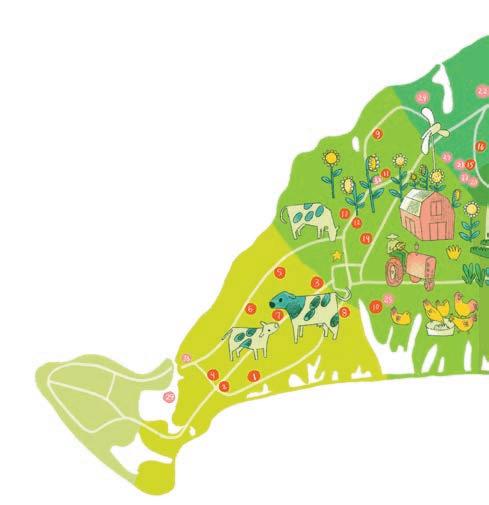
Check out the Martha Vineyard Agricultural Society's farm map (marthasvineyardagriculturalsociety. org/local-farms), for a comprehensive list of the Island's 40+ farms, aquaculture operations, farmers markets, and agricultural nonprofits. The farm map is available for free at the Martha's Vineyard Chamber of Commerce, all Island libraries, and many farm markets and stores.
If you'd like to win a prize for visiting Island farm stands, stores, and markets, please also pick up a copy of the Ag Society's farm passport (info will soon be available on their farm map page), available for free at Island libraries and farmers markets between June and September. Stamp your passport at 6 of the listed farmstands and show it at an Island library for a prize from the Agricultural Society — or visit all listed farmstands for a special prize!
If you'd like to learn how to grow more of your own food this summer, check out the Martha's Vineyard Agricultural Society's workshops and events (bit.ly/ag-society-events)! The Ag Society offers programs taught by Island farmers and gardeners on every part of the growing process, from seeding to compost. Most events are totally free to attend.
The Ag Society also holds monthly meetings of the Island's Homegrown Club, a club for backyard growers interested in leveling up their food production.
Want to hear about these workshops and everythiang else happening in local agriculture? Sign up for the Ag Society community newsletter at bit.ly/ag-society-newsletter.
ORGANIZATIONS SUPPORTING ISLAND AGRICULTURE AND FISHING
ISLAND GROWN INITIATIVE
Building a regenerative and equitable food system. Offers CSAs, workshops, and gleaning programs.
MARTHA’S VINEYARD AGRICULTURAL SOCIETY
Hosts the West Tisbury Farmers Market and provides workshops and resources for farmers.
SLOUGH FARM
A nonprofit working farm focused on regenerative agriculture, food equity, and community programming.
THE FARM INSTITUTE
A teaching farm offering educational programs and youth camps.
MV SHELLFISH GROUP
Hatchery and restoration programs for oysters, quahogs, and bay scallops.
MV FISHERMEN’S PRESERVATION TRUST
Supports local fishermen and the Island seafood economy.
COMMUNITY GARDENING
• IGI Community Garden Islanders of all ages and skill levels can rent plots to grow their own food or flowers. A space to garden, share knowledge, and connect with the community. Learn more: igimv.org/community-garden
• MV Community Greenhouse Cultivating vegetables, flowers, and community since 1983. A shared space where Islanders can learn, volunteer, and grow. Members can also harvest greens from the greenhouse. Learn more: marthasvineyardgreenhouse.org
• MV Garden Club Members learn and and share knowledge about gardening, floral design, and horticulture. Annual Plant Sale: May 23–25, 2026. Learn more: marthasvineyardgardenclub.org
• Second Bloom MV Repurpose flowers from events or weddings instead of throwing them away. A great way to reduce waste and support local floral sustainability. Contact: secondbloommv@gmail.com
• Plant Local MV A collective of conservation groups, botanists, and landscaping practitioners who encourage the use of native plants to foster climate resilience. thevineyardway.org/plant-local-mv
• MV Community Seed Library Offers free seeds and educational resources to promote local gardening and seed saving. bit.ly/seed-library-mv
HARVEST FROM THE LAND + SEA HUNTING + FISHING PERMITS
On Martha’s Vineyard, hunting is one tool used to manage deer populations in the absence of natural predators. Responsible harvesting helps protect native vegetation, reduce tick-born disease risk, and support overall ecosystem health.
In 2026, the state extended deer season on Martha’s Vineyard and Nantucket. Hunting with archery or primitive firearms is now permitted during a winter season (Jan. 1–Feb. 14) and an early fall season (Sept. 21–Oct. 1).
Massachusetts hunting, trapping, and fishing permits — including freshwater, saltwater, and lobster permits — can be obtained online at massfishhunt.mass.gov (Dukes County is Zone 13).
For current regulations, seasons, and limits, visit bit. ly/hunt-fish2026.
WHERE HUNTING IS ALLOWED
Hunting is permitted in designated areas across the Island, including:
• Martha’s Vineyard Land Bank properties (permit required).mvlandbank.com/properties/hunting
• Sheriff’s Meadow Foundation properties (archery deer hunting with permit), including Brookside Ridge Preserve, Phillips Preserve, Cedar Tree Neck Sanctuary, Middle Road Sanctuary, Quansoo Farm. sheriffsmeadow.org/programs/hunting
• Manuel F. Correllus State Forest and other Massachusetts Wildlife Management Areas. bit.ly/MV-state-forest bit.ly/state-park-hunting
*Hikers are encouraged to wear orange so they can easily be seen by hunters.
HUNTERS
SHARE THE HARVEST
This MassWildlife program allows hunters to donate venison to families in need while helping manage the Island’s deer population. bit.ly/hunters-share-the-harvest
MV HUNT CLUB
The MV Hunt Club works with local landowners to expand access for archery deer hunters and support deer population management. mvhuntclub.org
MV
ROD & GUN CLUB
Private nonprofit promoting safety in fishing, hunting, and archery. mvrodandgun.org
SHELLFISHING PERMITS
Recreational shellfishing permits are issued by each town on Martha’s Vineyard. Because seasons, limits, and prices vary, check town websites for current regulations.
Aquinnah bit.ly/aq-shellfish
Chilmark bit.ly/chilmark-shellfish
Edgartown edgartown-ma.us/departments/shellfish
Oak Bluffs bit.ly/OB-shellfish-permit
Tisbury bit.ly/tisbury-shellfish-permit
West Tisbury bit.ly/WT-shellfish
MARTHA’S VINEYARD SEAFOOD COLLABORATIVE
Established by the Martha’s Vineyard Fishermen’s Preservation Trust, the Martha’s Vineyard Seafood Collaborative supports local fishermen and aquaculture farmers by purchasing, marketing, and wholesaling their catch. Find their booth at the West Tisbury Farmers Market. vineyardseafood.org
MV SURFCASTERS ASSOCIATION
A group for anglers of all levels. Promotes conservation, stewardship, and protects public access to fishing areas. mvsurfcasters.org
FORAGING RESOURCES
Martha’s Vineyard is home to a wide range of wild edible plants, mushrooms, berries, and coastal foods. Responsible foraging can deepen your connection to the Island’s ecosystems, but it’s important to harvest carefully and follow local land-use rules. Before foraging, confirm whether harvesting is permitted where you are. Many conservation lands restrict plant collection to protect native species.
LAND BANK PROPERTIES Low-impact harvesting, such as berry picking, herb snipping, and seaweed gathering is permitted on many Land Bank properties, provided no endangered species are taken and plants are not uprooted. mvlandbank.com/ properties/guide.
MANUEL F. CORRELLUS STATE FOREST
Foraging for wild berries and mushrooms is generally allowed for personal use, as the forest is home to species like wild blueberries and blackberries.
SHERIFF’S MEADOW FOUNDATION Properties
Foraging of mushrooms, berries, nuts, leaves, seaweed, and herbs for personal use is allowed. Note: Foraging is not permitted at Mass Audubon’s Felix Neck Wildlife Sanctuary and is generally prohibited on Trustees of Reservations properties.
Rebecca Gilbert of NATIVE EARTH TEACHING FARM in Chilmark is an expert on Vineyard foraging. Learn more about her book on local edible plants and find information on foraging walks and classes at nativeearthteachingfarm.org.
Connect with fellow foragers online at facebook. com/groups/VineyardForagers.
COMPOST + REDUCE FOOD WASTE
Reducing food waste saves money, conserves resources, and prevents organic material from ending up in landfills, where it produces methane.
DONATE EDIBLE FOOD
ISLAND FOOD PANTRY
114 Dukes County Ave., Oak Bluffs igimv.org/about-island-food-pantry
GOOD SHEPHERD PARISH FOOD PANTRY
55 School St., Oak Bluffs goodshepherdmv.com/outreach-programs
EDGARTOWN COUNCIL ON AGING FOOD PANTRY
10 Daggett Ave., Edgartown
By appointment. Contact Donna at 508-627-4268 for more information.
FREE LITTLE PANTRY AT GRACE CHURCH
Woodlawn Ave, Vineyard Haven
A bright purple Island Food Pantry collection box in the Parish Hall is ready to be filled with donations.
COMMUNITY FOOD SHARING
WEST TISBURY LIBRARY FREEDGE
Community fridge where anyone can give or take fresh food.
IGI GLEANING PROGRAM
Volunteers harvest surplus crops from farms for Island food access programs.
COMPOSTING + FOOD WASTE
Island Grown Initiative is partnering with Island towns and schools to install several small food waste recyclers across the Vineyard. (See more details on page 6.) For more info, visit thevineyardway.org/waste-on-mv.
SHENY LEON
BACKYARD COMPOSTING
IGI offers workshops and guides for composting at home, including:
• Take a course on how to effectively compost at home
• Buy a compost tumbler or home composting unit
• Try worm composting (vermicomposting)
• Countertop compost systems
Learn more: bit.ly/IGI-Composting-Tips
RECYCLING + WASTE DISPOSAL
Recycling helps reduce landfill waste and conserve resources. All six Vineyard towns follow similar recycling guidelines, though transfer station sorting systems may vary.
RECYCLABLE MATERIALS
Clean and empty containers only.
• Metal cans
• Glass bottles and jars
• Plastic containers (bottles, jugs, tubs — no flower pots)
• Paper and cardboard (flattened)
INCLUDES
• Office paper
• Newspapers and magazines
• Junk mail
• Paperboard boxes
NOT RECYCLABLE
• Plastic bags or plastic wrap
• Styrofoam
• Ceramics or window glass
• Lids, caps
• Shredded paper
• Food or liquid
• Clothing or linens
• Tanglers (hoses, wires, cords)
TRANSFER STATIONS
Island residents bring household waste and recyclables to their town transfer stations: MV Refuse District serves Edgartown, West Tisbury, Chilmark, and Aquinnah; and the Oak Bluffs landfill serves OB and Tisbury. There are local drop-offs in each Island town. Sorting requirements vary by town:
• Aquinnah, Chilmark, Edgartown, West Tisbury: Paper and cardboard must be separated from containers (glass, metal, and plastics).
• Oak Bluffs and Tisbury: These towns handle mixed paper and cardboard differently — they are sent to other facilities for processing. Residents should check their town guidelines before recycling. Private haulers like Harvey Waste & Recycling and Bruno’s offer curbside pickup.
HOUSEHOLD HAZARDOUS WASTE
The MV Refuse District facilities collects certain hazardous materials, including:
• Mercury thermometers
• Fluorescent bulbs
• Watch and hearing aid batteries
Additional hazardous waste collections (motor oil, oilbased paint, solvents) occur several times each year. 2026 collection dates: July 18, Oct. 17; 9am–12pm. All Island residents can bring hazardous waste to the MV Refuse District, free of charge. Visit mvrefusedistrict. com/ for more info.
Electronics Disposal Day: Saturday, May 30, 2026. (mvcommunityservices.org/events/edd/)
TEXTILE RECYCLING
Recycle unsalvageable clothing, shoes, underwear, socks and other fabric through donateyourclothing. us. Red Cross drop-off bins are located at: OB Transfer Station, VFW, Shell VH, Cronig’s VH, Nick’s Airport Laundry, Edgartown Transfer Station, West Tisbury School, Chilmark Community Center, Chilmark Landfill at Tabor House Rd.
RECYCLE YOUR SHELLS
Drop off oyster, clam, scallop, and mussel shells (no crustaceans) at the MV Shellfish Group shell toter at the John T. Hughes Hatchery & Research Station, 57 Shirley Ave., Oak Bluffs. Recycled shells support oyster habitat restoration and pond health. mvshellfishgroup.org
GREEN HOMES
ENERGY EFFICIENCY + AUDITS
Vineyard Power partners with Cape Light Compact to offer energy efficiency programs and services to Island residents and small businesses. Book an appointment with a local energy coach to assess your home and get personalized recommendations. vineyardpower.org/energy-coach. Check their FAQ page for more info.
HOME ENERGY ASSESSMENTS (MASS SAVE/EVERSOURCE)
Through Eversource, Mass Save, and Cape Light Compact, you can get a no-cost Home Energy Assessment. An energy specialist will evaluate your home and identify opportunities to save energy. You may qualify for:
• No-cost air sealing to reduce drafts and improve comfort
• 75-100% off approved insulation upgrades to maintain consistent temperatures, control moisture, and reduce allergens
• Rebates on heating, cooling, and water heating equipment
• Incentives to address barriers to weatherization, such as knob-and-tube wiring
• Access to 0% financing for qualifying improvements Visit bit.ly/home-energy-assessments for more info.
SOLAR + COMMUNITY SOLAR
Solar power is a way for Island residents and businesses to cut energy costs, reduce carbon emissions, and support a resilient local grid. There are more than 1,500 solar arrays on MV, generating about 10% of electricity, and more to come via offshore wind.
COMMUNITY SOLAR PROJECTS
• Aquinnah Landfill Array — Powers much of Aquinnah’s municipal load
• Cronig’s Parking Canopy Array – Produces about 25% of Cronig’s electricity
• Chilmark Landfill Array — Powers much of Chilmark’s municipal usage
• Boys & Girls Club Rooftop Array — Offsets 100% of the building’s electricity
RESIDENTIAL OPTIONS
• Vineyard Power supports residents and small businesses interested in rooftop solar.
• The Resiliency Affordability Program, funded through Vineyard Power’s Community Benefits Agreement with Vineyard Wind, helps:
• Critical facilities get solar and battery storage
• Income-eligible household access solar program
Energy upgrades on the Island not only reduce costs but help the community reach its goal of 100% renewable electricity by 2040. Learn more about solar and incentives at vineyardpower.org/solar.
NATIVE LANDSCAPING FOR HOMEOWNERS
Landscaping with native plants reduces water use, supports pollinators, and protects Vineyard ecosystems.
• Plant shrubs, trees, and flowers that are native to Martha’s Vineyard.
• Replace turf with pollinator-friendly gardens or wildflower meadows.
• Minimize lawn mowing during No Mow May to support early pollinators.
LOCAL RESOURCES:
• Polly Hill Arboretum - Plant guides and seasonal workshops. plantfinder.pollyhillarboretum.org
• Deep Roots MV - Landscaping services and education focused on sustainable, biodiverse habitats. deeprootsmv.org
• Martha’s Vineyard Commission/The Vineyard Way – Guides on plant selection and eco-conscious landscaping. Check out the Plant Local MV guide: bit.ly/plant-local-mv
WILDLIFE, BEACH + NATURE SAFETY
BEACH SUSTAINABILITY
BEACH-FRIENDLY PRACTICES
• Carry In, Carry Out: Take everything you bring to the beach with you — trash, recyclables, and compostables. Leave nothing behind.
• Use reusable water bottles, utensils, and containers; skip single-use plastics.
• Choose reef-safe sunscreen.
RESPECT WILDLIFE + HABITAT
• Stay off dunes, nesting areas, and cordoned-off sections.
• Leash your dogs on the beach April 1 - Sept. 15; clean up after them.
• Give shorebirds 150 ft. of space and respect fencing.
• Do not fly drones within 150 yards of nesting birds.
OVERSAND VEHICLE + VEHICLE STICKER INFO
• Only drive on the beach if permitted and with a valid oversand vehicle (OSV) permit.
• Check your town’s rules for walk-on passes, parking, and OSV access.
COMMUNITY ENGAGEMENT
• Participate in beach cleanups with local groups, including the Vineyard Conservation Society, Beach BeFrienders, Friends of Sengekontacket, and the Wampanoag Tribe’s Natural Resources Department.
• MV Environmental Film Festival: An annual MV Film Center event showcasing films about climate change and sustainability over Memorial Day weekend. mvfilmsociety.com/nature-as-inspiration
WHO TO CALL FOR
SICK OR STRANDED WILDLIFE
STRANDED MARINE MAMMALS OR SEA TURTLES: Mass Audubon Wellfleet Bay Wildlife Sanctuary at 508-349-2615, option 2; Wampanoag Tribe of Gay Head (Aquinnah) Natural Resources Department, 866-755-6622; NOAA: 866-755-NOAA
INJURED OR SICK LAND ANIMALS MassWildlife rehabilitator database, bit.ly/mass-wildlife-rescue.
Massachusetts Environmental Police sometimes transport injured hawks, falcons, or owls (800-632-8075).
TICK SAFETY + PREVENTION
• Wear long sleeves, long pants, and closed-toe shoes in wooded or bushy areas. Walk in the center of trails.
• Use EPA-registered insect repellents: DEET, picaridin, IR3535, Oil of Lemon Eucalyptus (OLE), para-menthane-diol (PMD), or 2-undecanone.
• Clothing + gear: treat with 0.5% permethrin or buy permethrin-treated clothing.
• Daily checks: inspect skin, hair, and pets after being outdoors.
• If bitten:
• Remove tick promptly with fine-tipped tweezers (pull straight up, no twisting)
• Clean bite area and hands with soap, water, or alcohol
• Monitor for rash, fever, or flu-like symptoms and contact a healthcare provider (e.g., MV Hospital, MV Medical does same-day tests.)
RESOURCES:
• CDC tick prevention: bit.ly/cdc-tick-prevention
• MV Board of Health Tick-borne Illness Reduction: mvboh.com/tickborneillness
• Tick Free MV: tickfreemv.org
VOLUNTEER + STEWARDSHIP
Support the Island’s ecosystems and community by volunteering your time. Many organizations offer opportunities ranging from farming to habitat restoration and planting.
Polly Hill Arboretum Welcome guests, give tours of the grounds, guide school field trips, help in the greenhouse, assist the team with grounds work. bit.ly/PHA-volunteer
Island Grown Initiative Glean fresh produce, prepare and deliver meals, and stock shelves to serve clients at the Island Food Pantry. igimv.org/volunteer
MV Community Greenhouse Help tend vegetables and flowers, assist with community programs, or join seasonal projects. Learn more: marthasvineyardgreenhouse.org
Martha’s Vineyard Community Services Volunteer Support MVCS’s Disability Services Program, Chicken Alley Thrift Shop, and Early Education and Care Center. Learn more: mvcommunityservices.org/getinvolved/volunteering
BiodiversityWorks Beach-nesting bird conservation, Bioblitz events, invasive plant brigades, species monitoring, groundswork, and more. Learn more: bit.ly/biodiversityworks-volunteer
Habitat for Humanity MV Lend a hand to build, renovate, and provide materials, labor, and repair homes. Learn more: habitatforhumanitymv.org/volunteer
Island Autism Group Assist with various tasks at the Hub House and Farm, such as gardening and animal care. Learn more: islandautism.org/volunteer
Martha’s Vineyard Agricultural Society Support programs, events, and the annual Ag Fair. Learn more: marthasvineyardagriculturalsociety.org/support
Martha’s Vineyard Fishermen's Preservation Trust Support events, farmers markets, fish filleting, the Meet the Fleet event (August), more. Learn more: mvfishermenspreservationtrust.org/volunteer
Felix Neck Wildlife Sanctuary
Volunteer with Mass Audubon for a variety of opportunities to support nature and wildlife. Learn more: volunteer.massaudubon.org
Sheriff’s Meadow Foundation
Office work, field work, and more. Contact for more info: sheriffsmeadow.org/contact
Second Bloom Support a team that collects and repurposes floral arrangements from Island events. Learn more: secondbloommv.org/contactus
The Trustees Support a sustainable future and engage in diverse projects across the Island. Learn more: volunteer.thetrustees.org
Vineyard Conservation Society From light office work to events set up to community organizing around environmental issues. Learn more: bit.ly/vcs-volunteer
Sassafras Earth Education A Wampanoag-led nonprofit offering land-based education, summer camps, and Indigenous awareness programs for children and teens. Sassafras centers connection to nature, intergenerational teaching, and equity — providing full tuition support for Wôpanâak, First Nations, and BIPOC youth. sassafraseartheducation.org
WAMPANOAG TRIBE OF GAY HEAD
Martha’s Vineyard is the ancestral homeland of the Wampanoag Tribe of Gay Head (Aquinnah), who continue to lead efforts to preserve and steward Island land and coastal waters through conservation, restoration, and cultural practices. Learn more: wampanoagtribe-nsn.gov
TRANSPORTATION + EVS
VINEYARD TRANSIT AUTHORITY (VTA)
• The Island’s public bus system is now free for all riders (through Sept. 2026), making it easier to reduce car trips. Check vineyardtransit.com/farespasses for updates as to whether the legislature can continue fare-free funding.
• VTA is electrifying its fleet of buses, powered in part by solar carports and a large battery storage system. For schedules and routes: vineyardtransit.com
EV Chargers
• EV infrastructure is growing across the Island for residents, second homeowners, and visitors.
• For a full map of public charging stations: bit.ly/ carchargingMV
• Homeowners can install chargers at their property and even participate in programs like SMART 3.0 and Connected Solutions to earn incentives while supporting the Island grid.
• See the full guide on EVs on page 45.
Tips for Residents + Visitors
• Consider biking, walking, or taking public transit whenever possible.
• If driving, consider an EV or car-sharing options to reduce emissions.
• Even second homeowners can contribute: installing solar panels, using EVs while visiting, or donating energy credits to neighbors or nonprofits.
• Electric bikes are permitted with caveats:
• Only Class 1 and Class 2 e-bikes (as defined under MGL c.90 §1) are allowed on paved bike paths. These models have pedals and motors that stop assisting at 20 mph.
• Motorized bikes and e-dirt bikes (with no pedals or faster speeds) are not allowed in most public areas unless registered as off-road vehicles or motorcycles. (See guide on page 45 )
SUSTAINABLE TRAVEL
Hosteling International MV A budget-friendly accommodation option promoting sustainable travel and eco-conscious living. bit.ly/hostel-mv
Nobnocket Boutique Inn A luxury inn implementing sustainability initiatives such as energy-efficient systems, eco-friendly amenities, and waste reduction practices to support environmentally-responsible travel. nobnocket.com
Harbor View Hotel, Winnetu Oceanside Resort, Summercamp Hotel, The Charlotte Inn, Lambert’s Cove Inn, and Faraway Hotel all boast sustainability initiatives, including energy-efficient systems, water conservation, eco-friendly amenities, waste reduction practices, and support for local food sources.
ADVOCATE FOR CHANGE
Support a healthier, resilient, more sustainable Vineyard by staying informed and speaking up.
RESTORATION AND PLANTING
• Island Climate Action Network (ICAN) Coordinates climate initiatives, educational events, and policy advocacy. islandclimateactionnetwork.org
• The Vineyard Way Martha’s Vineyard comprehensive plan for climate resilience and sustainability. Learn about Island goals and strategies for clean energy, waste reduction, and ecosystem protection. View the full Climate Action Plan: bit.ly/mv-climate-action-plan. Learn more: thevineyardway.org
• Contact your elected officials Reach out to your town, state, or federal representatives to support clean energy, wildlife protection, and sustainable development.
What did we miss?
Email us at editor@bluedotliving.com
Your Electric Vehicle on Martha’s Vineyard
What to know about charging stations, ferry trips, and EV etiquette.
By Lis Bluford, MVacay
EVs are a normal part of life on Martha’s Vineyard now, for year-round residents, seasonal homeowners, and visitors alike. But driving electric here comes with its own rhythm. It’s less about quick fill-ups and more about planning ahead, charging while you’re parked, and being mindful of shared infrastructure, especially in the busy summer months.
The same basic etiquette applies for locals and visitors alike: Know the ferry guidelines, have a charging plan, and understand how to navigate a system that’s still growing.
BRINGING EV'S ON THE BOAT
There’s been ongoing conversation (and policy tweaks) around damaged EVs boarding Steamship Authority (SSA) vessels, tied to concerns about compromised batteries.
The 2026 status: the MVTimes reported in 2025 that a damaged EV may be allowed to board if the owner provides documentation from an ASE-certified mechanic within the past three months stating it’s safe to travel.
FOR SMOOTH BOARDING
If your car was recently in an accident: You may need documentation from a mechanic certified by the National Institute for Automotive Service Excellence (ASE) confirming the vehicle is safe to travel.
Note that hybrids do fall under damaged battery rules: The SSA’s EV policy is enforced by the U.S. Coast Guard.
CHARGING YOUR EV ON MV
Set realistic expectations:
On MV, most charging is Level 2 — think “top off while you’re parked,” not quick highway-style fill-ups. A practical approach is to plan for smaller charges throughout your day.
If you live here, you likely already have your go-to spots, but availability and access can shift seasonally, especially in summer. Where are the chargers?
A good starting point is PlugShare’s up-to-date charging map: bit.ly/MV-EV-charging.
Their live directory shows 34 public stations.
Additional resources:
• MVY Chamber listing of chargers (mvy.com/ev-charging-stations)
• MVTimes list of chargers (bit.ly/ mvt-ev-chargers)
Google map listing of chargers (bit. ly/google-ev-chargers)
TOWN-BY-TOWN CHARGING
(all are Level 2 charges unless noted)
AQUINNAH: Town Hall (free; town vehicles prioritized); Police Dept. (listed as free but sometimes listed as not free)
WEST TISBURY: Town Hall (free; town vehicles prioritized); Library (paid); Highway Dept. (Free); MVY Airport General Aviation Parking Area (25 cents/kWh; parking fees may apply); West Tisbury School
VINEYARD HAVEN: Tisbury School (often just available in summer)
OAK BLUFFS: Town Hall (25 cents/ kWh; time-based fees after 1 hour); Library (Free; town vehicles may be prioritized)
EDGARTOWN: Park and Ride (25 cents/kWh); VTA Yard (11 A St.; free); Harbor View Hotel (guests/ patrons only; Level 3 Tesla)
Note: Prices, time limits, and access can change, sometimes seasonally, sometimes without notice. Always double-check your charging app.
CHARGING ETIQUETTE
This matters year-round, but especially in summer when demand is high.
• Move your car when you’re done charging, especially once you hit 90–100%
• Don’t treat EV chargers as reserved parking
• If a spot is in demand, charge what you need and free it up
• Be extra considerate with overnight use at public stations
SEASONAL HOMEOWNER TIPS
If you’re a seasonal homeowner, installing home charging is one of the easiest upgrades you can offer renters.
• Mass Save provides info on EV charging equipment and potential rebates (for certain MA utilities)
• National Grid’s MA EV Charging Upgrade Program includes rebates for installing a 240-volt outlet and eligible equipment.
For questions or local insight, the Facebook group Electric Vehicle Club of Martha’s Vineyard can be a helpful resource.
H APPY DRIVING!
This guide was originally published on mvacay.com and will be refreshed as policies and infrastructure evolve.
RANDI BAIRD
Electric Bike Guide to MV
Traveling With Your E-Bike FERRIES
Steamship Authority (Woods Hole) charges $5 each way for bikes. Island Queen charges $4 one-way for bikes.
Hy-Line (boats from OB to Hyannis and OB to Nantucket) also allows bikes for ~$8.
Rhode Island Fast Ferry (from OB) charges $8 each way, or $12 for bikes with trailers.
Seastreak (VH to New Bedford ($18 each way), and OB to Nantucket ($14 each way)
ON-ISLAND
VTA: VTA buses have front bike racks (2–3 bike capacity, no extra fee). They’re first come, first served. Routes here: bit.ly/vta-routes
The Chappy Ferry costs about $6 roundtrip with a bike and runs daily. The Menemsha Bike Ferry (Menemsha to Aquinnah) runs weekends in shoulder season and daily in summer. ~$5 each way.
By Lis Bluford, MVacay
WHERE TO RENT E-BIKES ON MV
Bike Rental Shops are walkable from ferry ports and many offer online booking. Here's where to find local e-bike shops.
OAK BLUFFS
All Star Martha’s Vineyard Bike Rentals
Martha’s Vineyard Bike Rental
Pedego Electric Bikes
VINEYARD HAVEN
Martha’s Bike
Brickyard Bicycles
All Star Martha’s Vineyard Bike Rentals
EDGARTOWN
Wheel Happy Bikes
Martha’s Vineyard Bike
Edgartown Bicycles
WHERE TO LOCK UP YOUR BIKE
You’ll find bike racks or informal spots in each town.
VINEYARD HAVEN: Steamship
Terminal bike rack, Owen Park, Church Street lot
OAK BLUFFS: Near Flying Horses Carousel, Ocean Park corner, Inkwell fence
EDGARTOWN: Church Street lot (by buses and restrooms), Memorial Wharf, Chappy Ferry landing, South Beach entry points
MASSACHUSETTS
E-BIKE LAWS
• Only Class 1 and Class 2 e-bikes (as defined under MGL c.90 §1) are allowed on paved bike paths. These models have pedals and motors that stop assisting at 20 mph.
• Motorized bikes and e-dirt bikes (with no pedals or faster speeds) are not allowed in most public areas unless registered as offroad vehicles or motorcycles.
• No license or registration is needed for Class 1 or 2 e-bikes.
• Helmets are required for anyone under 16 (and by all rental shops).
• Don’t ride on sidewalks in town centers.
This guide was excerpted from one originally published on mvacay.com.
Get schedules and route maps at www.vineyardtransit.com
Get schedules and route maps at www.vineyardtransit.com
Since its inception in 2011, MVSG’s Shell Recovery program has diverted about 60,000 gallons (250 tons) of bivalve shells from the waste stream into Martha’s Vineyard salt ponds, where oyster populations uphold the health and resilience of these brackish estuaries.
MVSG recycles shells from restaurants, caterers, and recreational harvesters. Shells cure in the sun for one year, before we return them to the Great Ponds to support shellfish habitat, resulting in improved water quality. Shells are an essential ingredient for oyster habitat restoration. Rather than sending this material to landfills, the shell is collected, cured, repurposed, and returned back into Edgartown and Tisbury Great Ponds. MVSG uses cured shell for “cultching” (depositing shell) in
the Great Ponds to (a) harden soft-bottom environments, provide substrate for wild oyster spat, and buffer against acidic conditions; and (b) create hatcheryreared oyster spat-onshell for the ponds. Together, these efforts harness oysters’ natural filtering capabilities to help clean the ponds and restore ecological balance.
Shell recycling is one of the most effective and accessible ways to support local climate resilience by bolstering oyster populations, improving water quality, and strengthening overall ecological health. The next time you see a David A. Merry & Sons excavator piling shells onto a barge at Sepiessa Point in West Tisbury, or Wilson’s Landing in Edgartown, swing over and say hi. Ask us how you can get more involved by supporting coastal pond conservation efforts.
How To Recycle Your Shells for Oyster Habitat:
1. Buy or har vest shellfish: Any bivalve (clam, oyster, scallop, mussel, raw or cooked), please no crustacean shells.
2. Shuck it, eat it, and place shells in a bucket (free of trash).
3. Bring your bucket of shells to the John T. Hughes Hatchery & Research Station (old Lobster Hatchery) at 57 Shirley Ave, Oak Bluffs. 24 hours a day, we have a shell toter sitting next to the building’s sign. Dump your shells and off you go to enjoy the Island!
Like To Eat Shellfish at a Restaurant?
1. Check out our website mvshellfishgroup.org/shellrecovery-partnership to see the up-to-date list of commercial Shell Recovery partners. Support these establishments and support our efforts as well!
2. Encourage their continued participation. Tell them how much you appreciate the time they take to help our ponds.
3. Next time you are enjoying shellfish at a Vineyard establishment, ask them if they recycle their shells with MVSG!
For more information or to donate: www.
mvshellfishgroup.org
PHOTOS COURTESY OF MV SHELLFISH GROUP
Shell recycling is a simple, effective way to support local climate resilience.
Oysters are natural water filters.
FIELDNote
To: Bluedot Living
From : Mass Audubon
Subject: Animal Ambassadors: Felix Neck’s Critter Crew is Waiting For You
Inspiring curiosity, deepening understanding, and motivating people of all ages to protect nature and wildlife is what we do at Mass Audubon.
Mass Audubon staff are not alone in that mission. At Felix Neck Wildlife Sanctuary there is a coalition of creatures that help us. These Animal Ambassadors live permanently in our Nature Center and build meaningful connections between wildlife and people.
Seeing animals up close in the wild can be difficult, and sometimes dangerous, to both humans and beasts. Felix Neck’s Animal Ambassadors are acclimated to visitors as they cannot live in the wild due to imprinting, injury, or other factors. They turn nature lessons into intimate interactions that can inspire kids and adults to care about the wildlife with which we share our world.
Felix Neck’s critter crew is waiting for you. Our gregarious gang of Animal Ambassadors – Boxy, Spotty, Corny, and Tinkerbelle – hold court in Felix Neck’s Discovery Room.
Tinkerbelle, Tink for short, is Felix Neck’s newest addition — she arrived in mid-April from a family that was not able to care for her. She did not fly in from Neverland, but has brought magic with her nonetheless.
Spotty, if you haven’t already guessed, is a spotted turtle. Spotted turtles are one of North America’s smallest turtles and can be identified by the yellow spots on their shell. When born, hatchling spotted turtles usually only have one spot per large scute, the bony plates that make up the shell. As they grow, the number of spots increase and complement the orange/yellow coloration of their head, neck, and forelegs.
Wander the Sanctuary’s Discovery Room at a turtle’s pace to see all of Felix Neck’s reptilian friends and when you are ready, slither on over to our largest tank to find Corny, the Sanctuary’s only non-native Animal Ambassador.
Tink is a reptile, a female painted turtle. She is a big’un, and as with most adult painted turtles, she is larger than her male counterpart. This size variation, along with her claws (longer for males and shorter for females) helped us to determine Tink’s sex.
Turtles are well represented at the Sanctuary both outside and inside. In addition to Tinkerbelle, we have Boxy and Spotty, named by our young campers after their most obvious characteristics.
Boxy is a box turtle, a name that describes its domelike shell or carapace which can close almost completely to protect the turtle from danger. This species is facing conservation challenges across the Commonwealth and is protected under the Massachusetts Endangered Species Act. Boxy leads a double life, spending the winter brumating (hibernating in turtle-speak) in her indoor enclosure and once it warms up, sunning in her outdoor habitat.
Corny is a corn snake, a variety that lives south of Massachusetts and as far north as New Jersey. Her ruddy coloring and pattern is similar to a copperhead, a venomous snake not found on the Island that can and does bite. Our local milk snakes share a resemblance and are in the same family as the corn snake. Milk snakes do not do well in captivity, so Corny is a similar stand-in that likes to squeeze her way into our hearts and around our wrists.
While we don’t have any live birds in our Discovery Room, we do have live bird cams (bit.ly/FelixNeckBirdCams) that showcase two of the Sanctuary’s avian residents.
Hoo better than to represent birds than the barn owl. A barn owl resides in a constructed nesting box in the dormer of the Nature Center, and the owls have graciously allowed us to install a camera to view them as they live their everyday owl lives. They are wholly wild birds, not fed or cared for by our staff. Starting in the spring, you can watch a family of ospreys through our Osprey Cam. From the arrival of the male bird early in the season, and the female soon after, you can watch their courtship, egg laying, and incubation. After the eggs hatch in June, you’ll see the chicks grow up and fledge, or fly, in real time. You won’t want to miss a minute of this must-see TV.
Enjoy Felix Neck year-round and visit with our enigmatic envoys. While they can’t speak for their species, their presence and impact on thousands of Sanctuary visitors speaks volumes.
Get more info: bit.ly/FelixNeckInfo
PHOTOS COURTESY OF MASS AUDUBON
Boxy the box turtle.
Carl’s Way on Tisbury Great Pond, West Tisbury
Stylized waterfront retreat perched along the tranquil shores of the beloved Tisbury Great Pond, this stunning Hutker Architect designed home is a seamless blend of coastal elegance and timeless island charm. Designed to capture the essence of Vineyard living, the home features intimate water views, sun-drenched interiors, and carefully curated finishes throughout. A private dock gives you easy access to the water where you can paddle, power boat or kayak to Atlantic Ocean Beach. Exclusively offered at $7,300,000