Contributors this Issue Randi Baird, Bella Bennett, Lis Bluford, Jeremy Driesen, Will Kinsella, Sam Moore, Sheny Leon, Adam Moore, Matt Pelikan, Lucas Thors
Bluedot and Bluedot Living logos and wordmarks are trademarks of Bluedot, Inc.
Bluedot Living: At Home on Earth is printed on recycled material, using soy-based ink, in the U.S.
Bluedot Living magazine is published quarterly and is available at newsstands, select retail locations, inns, hotels, and bookstores, free of charge. Please write us if you’d like to stock Bluedot Living at your business. Editor@bluedotliving.com
Sign up for the Martha’s Vineyard Bluedot Living newsletter, along with any of our others: the BuyBetter Marketplace, Your Daily Dot, Bluedot Living Kitchen, and The Weekly: bluedotliving.com/sign-up-for-our-newsletters/
Subscribe! Get Bluedot Living Martha’s Vineyard and our annual Bluedot GreenGuide mailed to your address. It’s $29.95 a year for all four issues plus the Green Guide, and as a bonus, we’ll email you a collection of Bluedot Kitchen recipes. bluedotliving.com/magazine-subscriptions/
Read stories from this magazine and more at bluedotliving.com/marthas-vineyard/ Find Bluedot Living on Threads, Instagram, Facebook, and YouTube @bluedotliving
Hello Readers!
One of my favorite parts of editing this magazine is that it changes the way I look at everyday things in the natural world.
After reading Bella Bennett’s piece, What Is a Beach?, I can’t take a walk along the shoreline quite the same way. A simple stretch of sand now feels like a window into geologic time. I find myself noticing pebbles, cobbles, cliffs, and boulders differently, considering how ice, water, and energy shaped them over thousands of years.
The same thing happened when I read Adam Moore’s essay about elms. Trees I’ve passed countless times without much thought suddenly seem more interesting and impressive. And then there’s the story about Island Alpaca and its barn, which represents preservation and salvaged materials stretching back generations — while the alpacas themselves add another layer of sustainability to livestock on the Island.
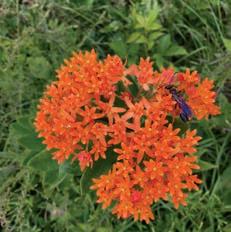
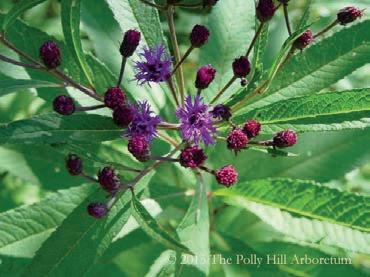
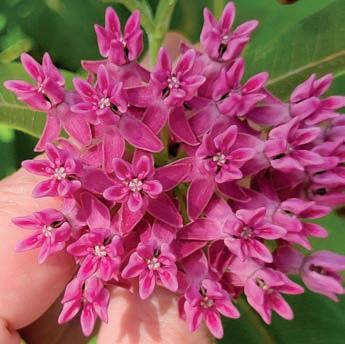
Matt Pelikan writes about the rare purple milkweed and reminds us that
“the way you find rarities is by learning the common stuff first.” Or once you learn a word like “petrichor” — the earthy scent after summer rain — you can’t help but notice it and appreciate there’s a name for it at all.
I think that’s one of the great gifts of storytelling: It invites us to pay closer attention and see familiar things with fresh eyes. (If you appreciate it too, consider supporting us by becoming a member: bluedotliving.com/become-amember-50/)
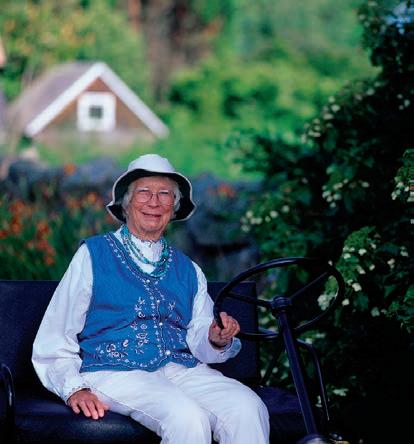
And a special note of thanks to Tim Boland, who appears throughout these pages as both our Climate Champ and a source of knowledge in several stories. We are grateful for all he has contributed to this magazine and to the Island, and wish him well as he retires from his role as executive director at Polly Hill Arboretum.
Thank you, as always, for reading, and happy summer!
– Britt Bowker
Lis Bluford
Bella Bennett
DISPATCHES CONNECTING THE (BLUE)DOTS
With Everyone Sipping from the Same Aquifer, What Happens
During a Drought?
Nantucket (like Martha’s Vineyard), relies on a single-source aquifer for all of its freshwater. Beneath the island sits a giant underground freshwater “lens” stored in sand and gravel that’s replenished entirely by rain and snow. Every summer, as visitors arrive and demand spikes, millions of gallons are pumped out for drinking water, but also for watering lawns, filling pools, irrigating golf courses, and washing cars and boats. When dry conditions coincide with heavy water use, groundwater levels drop and drought
restrictions follow. As droughts became more frequent across New England, understanding how these underground freshwater systems work has never been more important.
– Sam Moore
Read Sam Moore’s deep dive into Nantucket’s aquifer, and the lessons it offers other island communities: bit.ly/ack-drought.
Speaking of Aquifers…
Did you know that scientists last summer completed a first-of-its-kind offshore drilling project that confirmed vast reserves of freshwater trapped in sediments 20 to 40 miles south of Nantucket and Martha’s Vineyard? The discovery is part of an enormous offshore aquifer stretching from New Jersey to Maine. Researchers collected thousands of sediment samples to answer a fundamental question:
The Work Continues
B Corp Certification isn't something you earn once. It has to be achieved again and again. This year, we did just that, for the people and communities we serve.
That same drive is shaping what comes next: a completely redesigned mvbank.com, built to be easier to navigate and a better reflection of who we are today. Coming soon.
Leaf Blower Regulations Are in Effect
Let’s collectively transition away from gas-powered leaf blowers for a healthier environment and Island community.
By Lucas Thors, Vineyard Conservation Society
Seasonal leaf blower regulations are now in effect in five Martha’s Vineyard towns, marking a step toward reducing noise, air pollution, and fossil fuel use across the Island.
In 2025, a group of citizens from across the Island, with support from the Vineyard Conservation Society (VCS), studied the impacts of leaf blowers and proposed regulations establishing limits on when they can be used while setting a path toward phasing out gas-powered models. Residents approved the bylaw during 2025 Town Meetings in Chilmark, Edgartown, Oak Bluffs, Tisbury, and West Tisbury.
“ We are excited that the community is taking this step,” said Zada Clarke, VCS director of advocacy. The bylaws help transition away from fossil fuels and make for quieter neighborhoods.
“As much as we want to be able to do our spring cleanup, we also should be able to enjoy time outside with our kids, with our grandkids, with our guests lying in a hammock, gardening,” said Samantha Look, executive director of VCS.
WHAT ARE THE RULES?
Gas-powered leaf blowers are only allowed during designated times for spring and fall cleanup periods; they are restricted during the summer months.
GAS-POWERED LEAF BLOWERS
ARE ONLY ALLOWED:
• Spring: March 15 - May 31
• Fall: October 15 - January 15
Current regulations apply to homeowners and commercial landscapers in West Tisbury, Tisbury, Oak Bluffs, and Edgartown. In Chilmark, they currently apply to only commercial operators. Vineyard Haven has restrictions that apply only to gas-powered leaf blowers.
Missing out on backyard time?
HOURS
YOU CAN USE ELECTRIC OR GAS-POWERED* LEAF BLOWERS:
(*Gas only in spring and fall)
• Monday - Friday: 8 a.m. – 5 p.m.
• Saturday: 10 a.m. – 5 p.m. (Edgartown allows use beginning at 8 a.m.)
SUNDAY AND HOLIDAY RESTRICTIONS VARY BY TOWN:
• West Tisbury and Oak Bluffs: No leaf blower use.
• Tisbury: Electric leaf blowers allowed; gas-powered leaf blowers prohibited.
• Edgartown and Chilmark: Commercial operators may not use leaf blowers.
No more than two leaf blowers may be used simultaneously on a single property.
Beginning in spring 2028, gas-powered leaf blowers will be prohibited entirely in towns that adopted the bylaw.
WHY REGULATE LEAF BLOWERS?
The regulations were adopted in response to concerns about noise, air pollution, climate impacts, and ecological health.
Gas-powered leaf blowers routinely exceed 100 decibels at the operator's ear and can remain above the World Health Organization's recommended residential outdoor noise limit (55 dB) even hundreds of feet away. Excessive noise has been linked to hearing loss, elevated stress levels, and disruptions to work, learning, and daily life.
Their small gasoline engines are also highly inefficient and emit disproportionately high levels of pollutants relative to their size. They continue burning fuel even at idle, while electric motors use power only when needed. Two-stroke engines that burn a mix of gas and oil are particularly wasteful and polluting. One study found common leaf blower models produced about four times the nitrogen oxides, 20 times the carbon monoxide, and 36 to 300 times the hydrocarbons of a Ford F-150 Raptor. These pollutants worsen asthma and other respiratory conditions, cause headaches, dizziness, and nausea, and are linked to serious health problems including neurological disorders, heart disease, and cancer — with children, older adults, and equipment operators facing particular risks.
Beyond human health, leaf blowers remove the organic matter that protects and nourishes soil while disrupting insects and other organisms that depend on leaf litter.
“Countless organisms live in leaf litter,” said Rich Couse, program director of BiodiversityWorks’ Natural Neighbors program. “Among them are Luna moths, Mourning Cloak butterflies, and roughly 140 of Martha’s Vineyard’s native bee species, all of which require leaf litter to survive the winter.”
The regulations are intended to support a gradual transition to quieter, cleaner electric equipment while preserving the health of both Island residents and local ecosystems.
For more information on Vineyard leaf blower regulations, visit bit.ly/leaf-blower-rules.
(508 )62 7- 292 8 | M V@ oh-DEE R .co m oh-DEE R. co m
•SAFE FOR YOU, YOUR FAMILY & PETS! •KILLS TICKS & MOSQUITOES ON CONTACT. •AN EFFECTIVE ‘GREEN’ ALTERNATIVE TO PESTICIDES & CHEMICALS
ohDEER offers two all-natural pest control solutions for seasonal or year-round protection. Our deer control solution is an egg-based spray with garlic, white peppers, mint oil, and water that directly targets the plants deer love to feed on. Our tick and mosquito spray is a blend of powerful essential oils, including cedarwood oil, lemongrass oil, castor oil, and water. Our team provides customized, thorough coverage for your property, ensuring long-lasting protection.
FIELDNote
To: Bluedot Living
From: Stephanie Tsui, Graduate Fellow for The Nature Conservancy in Massachusetts
Subject: Our Coasts Protect Us, and We Should Protect Them, Too
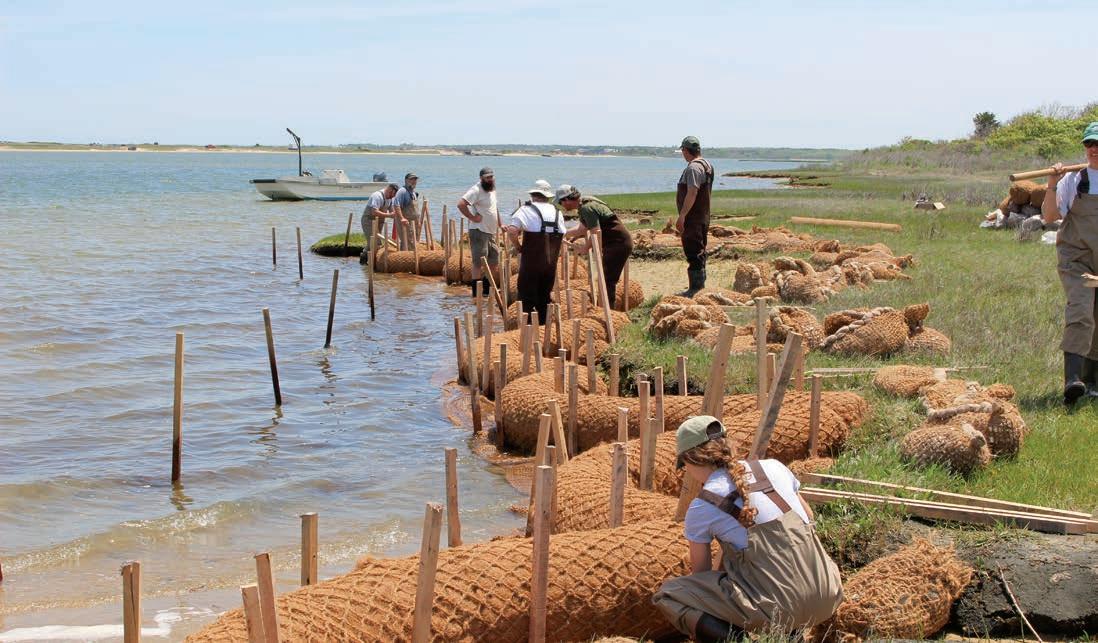
Mass Audubon, in partnership with the University of Rhode Island, United States EPA, and the Edgartown and Oak Bluffs Shellfish Department work collaboratively to install a living shoreline at Felix Neck Wildlife Sanctuary to limit erosion, protect marshlands, and reduce nitrogen in Sengekontacket Pond.
It’s a hot summer day and I’m biking on the Cape Cod Rail Trail, marveling at how many habitats I can pass through at once. I stop to admire an egret as it searches for and catches a fish in the marsh. I imagine how far those animals have traveled — the fish, swimming through the estuary and streams, and the egret hopping from marsh to marsh looking for more sources of food.
Growing up in suburban New Jersey, I felt far removed from coastal environments. I didn’t understand how the rivers near me connected to the ocean and how coastal habitats, in turn, connected to me. In 2012, Hurricane Sandy struck my state, devastating the coastline and flooding inland towns. Nearly every home in my town lost power and I was displaced for nearly a month. It wasn’t until I began studying coastal ecology that I learned how much worse the storm could have been without wetlands. Because of wetlands, New Jersey avoided an additional $625 million in flood damages.
Whether you can see the ocean or not, we all rely on healthy coasts. In fact, more than half of the population of the United States lives within 50 miles of the coast, known as the coastal
zone. Coastal habitats — such as salt marshes, sand dunes and shellfish reefs — provide many ecosystem services, or benefits, to us. They strengthen shorelines and help slow wave energy from storms and high tides, provide habitat for food and other species, and serve as great recreational and educational spaces.
At The Nature Conservancy (TNC), we are working to advance the use of living shorelines to help protect coastal communities and support our goal of helping 2 million people at risk from climate-related emergencies. Living shorelines are nature-based solutions that mimic coastal habitats with structural elements such as native plants, coconut coir logs, or oyster reefs. Beyond flood mitigation and shoreline stabilization, living shorelines also help maintain recreational opportunities, provide habitat for a variety of species, and improve water quality. With the growing threats of sea-level rise and storms worsened by climate change, living shorelines are becoming a popular tool to strengthen coastal resilience against flooding and erosion.
Living shorelines can be constructed with nature-based elements or a hybrid approach of green and gray infrastructure.
COURTESY OF MASS AUDUBON/FELIX NECK SANCTUARY
These options are also referred to as soft or hard techniques. Green or soft techniques include planting native vegetation, such as salt marsh plants or subtidal eelgrass beds; nourishing beaches with more sand; or installing large rocks and shellfish reefs parallel to the shoreline to further reduce erosion. Gray or hard techniques include breakwaters, revetments, bulkheads, and seawalls. Living shorelines are designed to help us live with water, while gray infrastructure is designed to keep water out.
Gray techniques have been the most widely used, so they are easy to permit and design. However, they require long-term upkeep and can eventually fail if not maintained. Meanwhile, green techniques are newer and therefore can be challenging to permit. Yet, they perform better over time in controlling erosion and preventing flood damage. As living shorelines accumulate sand and sediment, they protect young plants as they mature and repopulate the area. This helps strengthen the living shoreline each year.
Where are living shorelines appropriate? Living shorelines cannot replace all gray infrastructure, but in some places, they provide a better long-term solution than seawalls. They work best in areas with low to moderate wave energy, such as a protected cove. Importantly, they are not a one-size-fits-all approach. Each living shoreline must be designed to fit the site’s unique characteristics.
Currently, TNC is partnering with the Northeast Regional Ocean Council (NROC) to provide in-depth training and technical assistance to communities, Tribes, and non-profits looking to design living shorelines across New England. This workshop series will occur in summer 2026.
With continued support, living shorelines will become part of the typical set of tools used to address coastal resilience. Not only can they protect coastal communities and public access points like the Cape Cod Rail Trail, but they can also potentially provide benefits to those living more inland from extreme weather events similar to Hurricane Sandy.
Want to see a living shoreline in person?
There are several living shorelines projects in New England (nature.org/NewEnglandLivingShorelines). You can find an example of a dune restoration project at Cow Bay Beach. Other partners also piloted a living shorelines project at Felix Neck Wildlife Sanctuary to protect a fringing salt marsh. However, additional studies are needed to find a more resilient approach. At Collins Cove in Salem, a three-quarter-acre salt marsh was restored several years ago with plants, coir logs, and sand fill. The National Oceanic and Atmospheric Administration (NOAA) created a map (bit.ly/living-shores-NOAA) that shows NOAAfunded living shorelines projects since 1998.
Dear Dot: Should I Fix or Replace an Old Appliance?
Dear Dot,
My father recently passed away, and we’re clearing out his house. There’s a chest freezer in the basement that’s old but still works. I’ve been wanting one, so should I move my dad’s to my house? Or is it better to buy a newer, more energyefficient one?
– Cathy
The short answer:
Dot typically advises reuse as our eco-friendly default, but energy-hungry old appliances are an exception — replacing them with efficient modern ones can be the better climate choice. For a freezer older than a decade, recycle it responsibly through local municipal, utility, or scrap programs, and replace it with an Energy Star-certified model (new or relatively new used). If you don't actually need a freezer, going without is the greenest option of all.
Dear Cathy,
The fact that you addressed this question to Dot, Doyenne of Eco-Advice, tells me that your main concern is the environmental impact of old vs. new. But first, a story: When Mr. Dot and I bought our home
in 2002, the owners asked if we wanted the chest freezer that was in the basement. As empty-nesters, they no longer had need of it. What’s more, they couldn’t recall how it got there and were baffled as to how they might move it out.
As a pregnant mom of two toddlers, I didn’t want to look a gift workhorse in the mouth, so I agreed to take the house with the freezer intact. It wasn’t until I started writing about climate issues a few years later that I questioned the energy consumption of this basement behemoth. At which point, I found an elegant solution. The farmer from whom we got our produce and meat needed freezer space to hold her butchered animals. She had solar panels that produced plenty of energy and so wasn’t concerned about how energy-hungry the freezer was. Her hefty farmhands managed to extract the thing and take it to the farm. At which point, my husband and I purchased a far more energy-efficient freezer that we situated much closer to our kitchen.
A perfect solution for all!
While Dot typically hews toward re-use, that rule doesn’t necessarily hold when it comes to energy-hungry appliances or vehicles. Of course, there’s an environmental cost to disposing of items, especially large ones, but climate math isn’t always straightforward, and some issues (carbon emissions) trump others (items languishing in landfills).
So let’s break this down, shall we, Cathy?
We’ll start with a simple question (and please know that Dot is casting no shade or shame with this question): Do you need a freezer? If the answer is, well, not really, then making do without is the most eco-friendly (and, incidentally,
economical) option. Problem solved. Well, except for the errant freezer you must now re-home or dispose of. Whether or not you need a freezer, if your dad’s freezer is more than a decade old, it’s best to dispose of it. Energy Star urges you to recycle it, noting that “refrigerators and freezers contain refrigerants, oils, and other compounds that, by federal law, must be removed and recovered. Then the steel, other metals, and selected parts can be recycled. Some recycling programs also capture the foam insulation inside the refrigerator doors for added environmental benefits.” In the U.S., the EPA’s Responsible Appliance Disposal program (RAD) seems to be defunct, but that doesn’t mean that municipal or state governments, local utilities, or scrap recyclers aren’t still doing the work. See what’s available in your community. Similarly, in Canada, it appears that your best course of action is to check out resources in your municipality — most offer a disposal option.
If, in fact, you do need a freezer and you’ve gotten rid of your father’s old one, you should look into buying an energyefficient model. Energy Star’s Flip Your Fridge calculator can help you determine exactly how much energy you’ll be saving.
Energy Star, a program started in 1992, continues to be your best guide to energy-efficient appliances for your home, both in the U.S. and Canada.
Once you’ve got your new freezer (or a new-to-you freezer — which is to say that purchasing a relatively newbut-used freezer is a great option), Dot hopes that in the future, you’ll opt for repair over disposal should anything go wrong. YouTube is a mecca for DIY repairs. Or your friendly neighborhood repairperson would likely be grateful for the job. With the noted exception of older appliances and vehicles, keeping our items in circulation is a climatefriendly choice.
– Efficiently, Dot
Please send your questions to deardot@bluedotliving.com
Want to see more Dear Dots?
Find lots here: bit.ly/Dear-Dot-Hub
Less Traffic Means Getting to Explore More of the Island Less Traffic Means Getting to Explore More of the Island
Get schedules and route maps at www.vineyardtransit.com
Get schedules and route maps at www.vineyardtransit.com
Enjoy less hassle and a greener
Enjoy less hassle and a greener
Martha’s Vineyard when YOU hop on the Vineyard Transit Authority bus.
Martha’s Vineyard when YOU hop on the Vineyard Transit Authority bus.
Calling all residents, visitors, commuters, and kids, too! No need to get stuck in traffic, search for parking, or ask for rides from parents or friends. We’ve got you covered.
Calling all residents, visitors, commuters, and kids, too! No need to get stuck in traffic, search for parking, or ask for rides from parents or friends. We’ve got you covered. when YOU ride with the VTA when YOU ride with the VTA
On Elms
Let us find, and protect, our wild elms of nature.
By Adam Moore
Aloft they fluttered. Parchment-thin, the countless tiny discs wafted in the breeze. Gently they settled in tiny heaps, on the earth, on the grass, upon the rows of chairs. I brushed them off my chair, and then sat down. I was sitting on Yale’s Old Campus in New Haven — the Elm City — in the shade of a lofty American elm. After a moment or two of admiring the elm, I realized that the papery discs all around me were samaras — the winged seeds of the American elm. Hmm … I thought. Might I plant a seed and grow an elm back on the Island? Hopeful, I gathered a handful of samaras, and stashed them in my suit pocket.
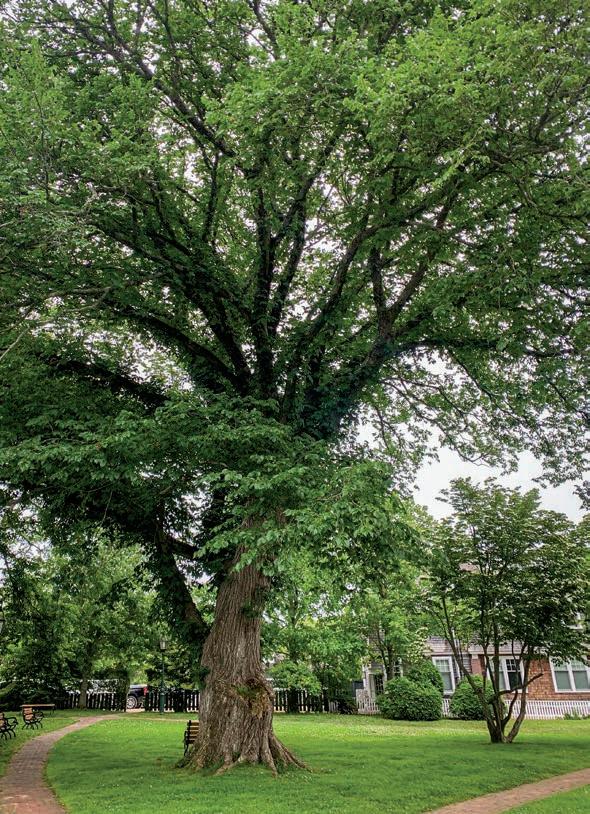
I love Ulmus americana, the American elm. Who does not love elms? I love their graceful, arching form. I love sitting in their shade and reading Moby Dick on a summer afternoon. I love the old survivors, defying Dutch elm disease. There’s a large American elm that graces the Village Green in Edgartown (a Preservation Trust park tucked between Main Street and North Water Street). There’s another, truly massive elm that shades a stretch of Summer Street a couple of blocks away. And I wish that I had seen Music Street in its elmshaded, sylvan glory, before Dutch elm disease killed so many of these magnificent trees.
On returning from New Haven, I promptly forgot about the samaras in my pocket. Yet the following Sunday, I came across the most hopeful article in the Boston Globe. The piece described the work of The Nature Conservancy (bit.ly/TNCELMS) and the U.S. Forest Service in Vermont to breed a strain of disease-resistant American elms. The piece reminded me of the seeds that I had collected. I took the suit from my closet, emptied the pockets, but found only one samara. Hopeful nonetheless, I filled a paper cup with soil, set the cup on my porch, and planted the seed.
Are elms native to Martha’s Vineyard? The 2008 version of the Flora of Martha’s Vineyard states that American elms are introduced. Some elms are indeed introduced, as the magnificent elms that grace those fortunate, select sites around the Island were planted in these locations. However, I believe that American elms are also native.
Elms, after all, are present in the Island’s pollen record.
This demonstrates that, for many centuries, American elms grew beside our other familiar native vegetation, such as beetlebung and sassafras and oaks and hollies. Elsewhere in New England, one still finds American elms growing in their natural habitat. They grow upon flood plains. They shade riverbanks and the edges of creeks. They grow, unnoticed and untended, in ditches and on overlooked, unkempt edges of streets and yards. They persist, in spite of Dutch elm disease.
On the Island, I’ve walked through many a woodland, but I admit that I have not come across American elms growing naturally. Perhaps there were never many natural-growing elms to begin with. Perhaps Dutch elm disease killed those trees without an arborist to tend to them. Perhaps I just have not noticed the elms, or perhaps I did not venture deep enough into the riparian zones where I might more likely find them. Regardless, I still believe that elms are growing here as native trees. I will make a quest of finding them.
In the meantime, I will try to plant them. In this effort, so far I have failed. It has been more than two weeks as I write this, and the New Haven samara that I planted in a paper cup full of earth has not germinated. I think that I should have planted it at once, instead of forgetting about it for a week and then only planting it after being reminded by the newspaper.
Last Sunday I tried again. I gathered up another handful of samaras that had been produced by the elm of the Village
WHITNEY MULTARI
The giant elm in Village Green, between Main Street and North Water in Edgartown.
Green. These looked a little yellowed, though, and I feared that I probably had arrived a bit too late. It’s been five days now since planting, and I have seen no signs of germination. If I fail, I resolve to try again next year, but with a basket full of freshly-fallen samaras and plenty of potting soil.
In his masterpiece, A Natural History of North American Trees, Donald Culross Peattie writes, “If you want to be recalled for something that you do, you will be well advised to do it under an elm — a great elm, for such a tree outlives the generations of men; the burning issues of today are the ashes of tomorrow, but a noble elm is a verity that does not change with time.”
Let us be recalled for what we do for our Island elms. Let us tend to our planted elms of stature. Let us find, and protect, our wild elms of nature. And let us hope for triumph over disease, so that a century from now, elms once again grace our Island woods and swamps and streets.
What You Can Do
• Tim Boland says that the West Tisbury Tree Committee has planted several American elms around town: 7a parking lot entrance and Town Hall near the road
• See Adam’s Field Note about planting a Chestnut orchard: bit.ly/MV-Chestnut
• Help restore the American elm: write Catherine Newman, director of philanthropy, TNC: catherine.newman@tnc.org
working to bring the deer herd into ecological balance to significantly reduce the Island’s tick population and address our growing public health crisis.
more and join our Island-wide effort.
This image features the Skyhouse Suite. The Crown Jewel of Martha’s Vineyard
Harbor View Hotel embodies the charm and elegance of the Great American Summer. Guests enjoy breathtaking ocean views, a heated outdoor pool, and top-tier dining—all within a short stroll to the heart of historic Edgartown on the beautiful island of Martha’s Vineyard.
3 Top-Tier Restaurants
It poured rain the other evening. My dog cowered in our shower — she routinely seeks out a spot where plumbing can produce rain in order to avoid the terror of the real thing. But I savored the sound, following as it did weeks and weeks of relentless sun drying out my gardens and grass.
The next morning, as I walked along the river, now rushing where the day before it had been still, I savored the smell.
It’s a scent that marketers dream of reproducing, trying to convince us that they’ve bottled it by offering detergents called “After the Rain,” and “Summer Rain.”
Human noses are particularly sensitive to the scent of geosmin within petrichor and can detect it at concentrations as low as 0.4 parts per billion, perhaps
“When
the rain
subsided,
a tantalizing
petrichor emanated from the forest floor.”
in a word
Petrichor:
a distinctive, earthy, usually pleasant odor that is associated with rainfall especially when following a warm, dry period and that arises from a combination of volatile plant oils and geosmin released from the soil into the air and by ozone carried by downdrafts.
because rain has been so essential for our survival.
Indeed, the second part of the word “petrichor” comes from the Greek ἰχώρ (ikhṓr), which refers to “the ethereal fluid that is the blood of the gods in Greek mythology.”
But leave it to musician and composer Jon Batiste to give us “Petrichor,” a song about one of Earth’s signature scents — and one that we’re losing by not tending her; a plea for action 20 years after Hurricane Katrina hit his hometown.
“Too many chemicals,” he sings. “They’re burning the planet down.” He calls it “a warning set to a dance beat.”
Next time you get a whiff of petrichor, inhale deeply and let it settle deep in your body where you remember it’s the scent of the planet’s lifeblood and key to our survival.
– Leslie Garrett
The Low-Waste Farm System Behind Island Alpaca
Turns out the furry, friendly Seussian creatures are eco-friendly, too!
Story by Lis Bluford Photos by Randi Baird
Whenever my daughters and I drive past Island Alpaca (we live just down the street), someone’s sure to yell
“Wave to the alpacas!”
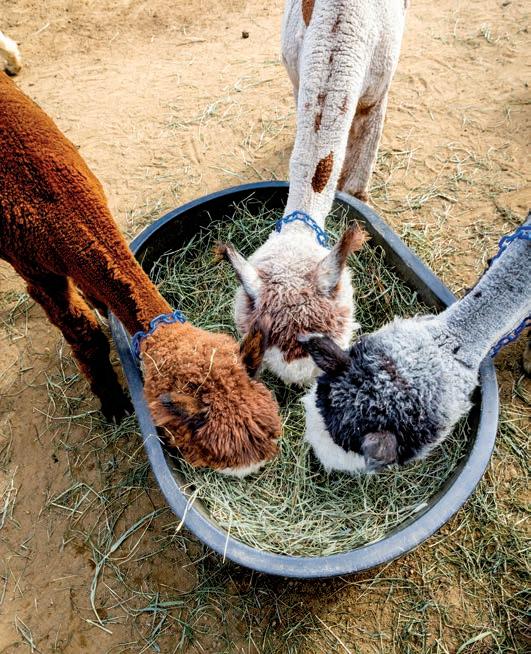
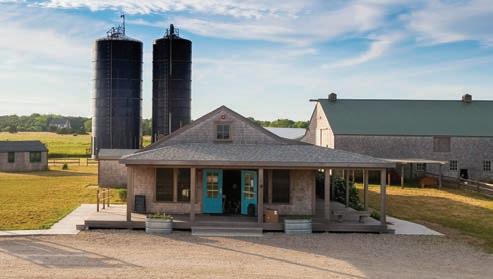
Island Alpaca is small — 19 acres of pasture, barn, store, animals and a whole system of reuse and repurposing. Visitors can walk through the property, greet and pet alpacas, read educational plaques at their own pace, compare alpaca fleece samples and see how different alpaca fiber can look and feel.
An Idea Born at the Ag Fair
Barbara Ronchetti founded Island Alpaca in 2004, but her interest began years earlier, at one of the annual Martha’s Vineyard Agricultural Society Fairs.
“I had met a few alpacas at the Ag Fair more than 25 years ago, and I was committed at first sight,” Barbara tells me. “I
knew a little something about llamas, but had no knowledge about alpacas. I certainly did not know how sweet they are and how luxurious their fleece is.”
At the time, she says, there were few public animal experiences for Islanders. That combination of tender alpaca temperament and fabulous fleece made a lightbulb go off for Barbara: What if people could meet alpacas up close and learn what makes them such useful, gentle, and productive animals?
“It soon became my goal to share with the public how truly unique they are,” she says.
She began to plan her farm, and worked with a local architect to design a barn suited for a small herd. But then a local builder suggested she search for a reclaimed barn. After what she describes as a marathon day of cold-calling antique and reclaimed-lumber distributors, she found the perfect frame:
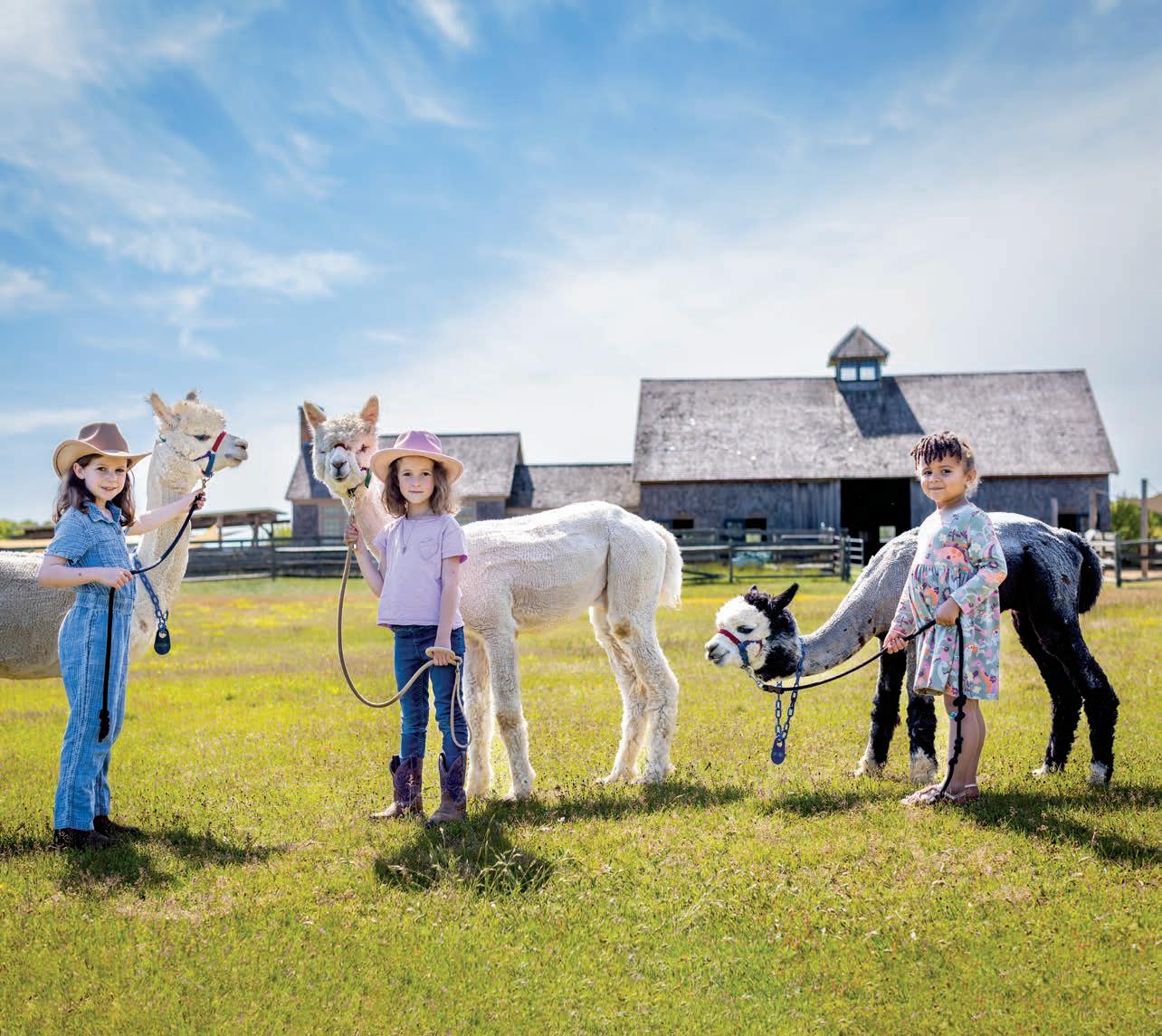
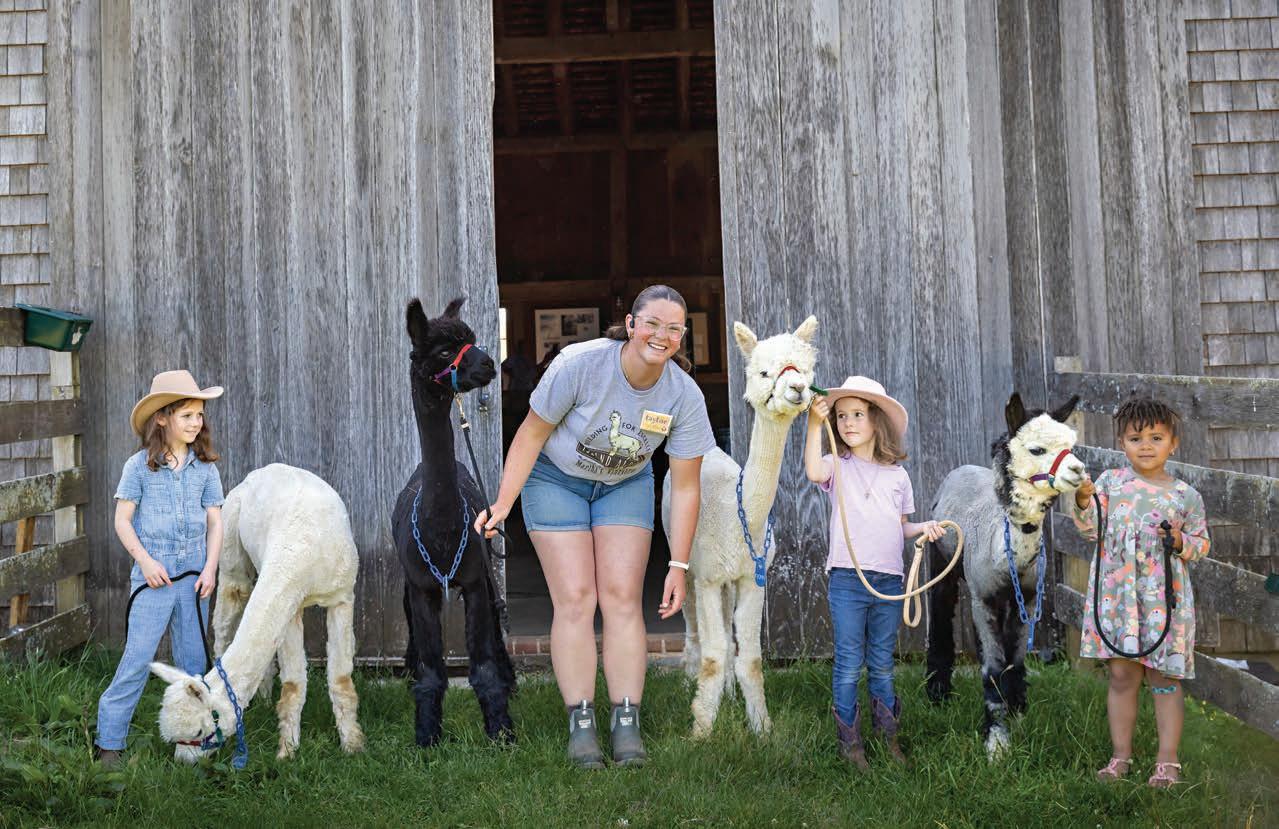
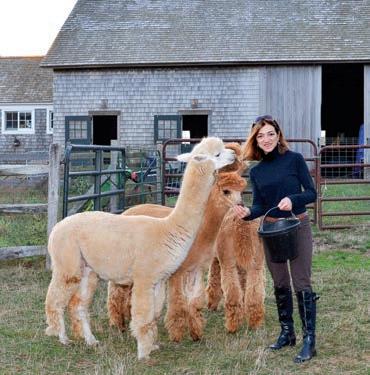
Isla, Taylor, Ollie, and Lina visit with the alpacas at the farm.
a 40-by-60-foot threshing barn from Pennsylvania. She trucked in the 200-year-old, hand-hewn post and beam oak frame and had it reconstructed on the farm.
“Now about 220 years old, this former threshing barn has been the ideal barn for the alpacas,” Barbara says, adding, “It was such a pleasure to recycle and resurrect the beautiful hand-hewn antique beams, all cut by hand. Ax marks are visible, and only the original wooden pegs were used to rebuild the barn.”
The result is a working barn with its own agricultural history, adapted for a new farm purpose on Martha’s Vineyard. Ronchetti adds that the farms that delivered the first alpacas jokingly called it “The Alpaca Hilton.”
Gentle on the Land
Alpacas are relatively low-impact livestock: Their feet are padded rather than hooved, and, as the farm’s signs explain, the alpacas’ shorter tongues allow them to nip the grasses off close to the ground without pulling up roots the way some other livestock do. Alpacas also tend to use communal manure piles, which makes cleanup easier. And that manure makes excellent fertilizer, turning waste into something useful.
W hat’s more, Barbara says, “Alpacas are easy to care for. Their friendly nature makes them an easy introduction to livestock.”
There’s a lot to learn: My daughters know they cannot feed
Alpacas are pretty low impact.
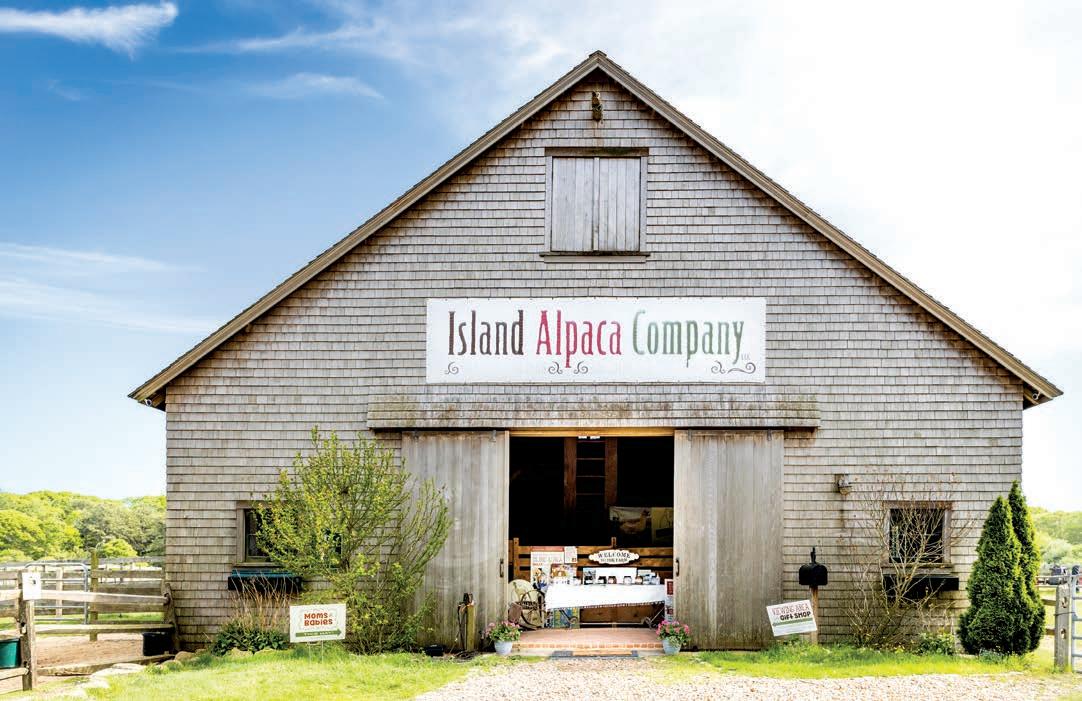
This 220-year-old threshing barn from Pennsylvania was rebuilt on Martha's Vineyard.
Barbara Ronchetti and alpacas.
the alpacas, but they can pet them, observe them, and ask questions. On one recent visit, they wanted to know why some alpacas spit. (It’s how they express irritation, usually with other alpacas.)
Shearing, Fiber, and the Farm Store
Each spring, Island Alpaca shears its herd. Barn manager Taylor Hughes explains, “Shearing takes place after winter passes, when we literally take off their coats. It is an easy process, and it does not harm or hurt the animals in any way.” A professional alpaca shearer comes from New Hampshire for a day, and each alpaca takes about 10 minutes to shear. Removing the fleece helps keep the animals cool in summer, while giving their coats enough time to grow back before colder weather returns.
Once the shearing is completed, the process of turning fleece into fiber begins. First, the best part of the fleece, called the “blanket” (because it comes mainly from the part of the animal that would be covered by a saddle blanket), must be “skirted.” Skirting involves removing soiled, matted, and unusable bits of wool from the fleece. Next, Barbara and her staff sort the fleece by quality and send it to the mills to be woven into yarn.
“ We keep all the fleece stored by the name of the alpaca,” Barbara says. “If you like the color of Leonardo, you can visit our farm store and find his yarn to purchase.”
After shearing, fleece is turned into fiber and then into cozy things you can buy.
The larger lesson is not simply that a souvenir can be soft. It is that clothing starts somewhere. It comes from animals, land, care, labor, and time.
At the time of our recent visit, the farm had yarn from Leonardo (fawn), Anika (white), and Horatio (black) in stock from the previous year’s harvest. That traceability makes for one of the most interesting parts of the Island Alpaca experience: Visitors can meet the animals, pat them, touch fleece samples, learn how fiber quality is measured, and then walk into the shop and see what that fleece can become.
Alpaca fiber is valued because it is soft, warm, durable, lightweight, moisture-resistant, and hypoallergenic. One sign at the farm describes the fleece as a “hollow-cored fiber, making it much warmer,” as well as “lighter and stronger than wool.” Another notes that alpaca yarn “will not pill over time” and is “thermal even when wet.”
Farm manager Lexi DaSilva explains that “locally knit and
MVCF_LegacyAd_BlueDot.qxp_Layout 1 4/6/26 11:15 AM Page 1
Legacy Circle
For over 40 years, the Vineyard has been a cherished home to my family. Through my legacy gift, I hope to preserve the beauty and magic of the Island so that future generations can enjoy it as much as we have.”
Carol Biondi Founding Member
For more information contact Executive Director, paulschulz@marthasvineyardcf.org.
Island Alpaca products are labeled and grouped in a specific section, while the store also carries alpaca products from other producers.” In order to allow as many visitors as possible to buy alpaca products, the store also carries some items made from less costly yarn blends (as opposed to 100% alpaca).
Each fall, my family and I go back to pick out new winter hats and gloves. My daughters can connect those pieces to the animals they visited and the fleece they touched. But the larger lesson is not simply that a souvenir can be soft; It is that clothing starts somewhere. It comes from animals, land, care, labor, and time.
Alpaca Beans and a Low-Waste Loop
Island Alpaca also makes use of what the animals leave behind. The farm’s signs describe alpaca manure as “one of the richest organic fertilizers available” and say that this “gardener’s delight, an exceptional fertilizer” does not need to be composted before being used in the garden.
Barbara says the farm sells dried “alpaca beans” in 5-pound and 15-pound bags, as well as by the bucket when not dried. Gardeners can place the dried beans under a new plant or around the stem of an existing plant, or steep the beans overnight in water to make a fertilizer tea.
Even loose fleece left after shearing has a second life. We
Come visit the Aquinnah Cultural Center's Wampanoag History Museum this summer!
Free admissions for tribal members and children ages 6 and under.
Maintaining Our Sovereignty
The Aquinnah Cultural Center presents: Maintaining Our Sovereignty, an exhibit that situates the Wampanoag Tribe of Gay Head Aquinnah’s fights for federal recognition and land return in the 1970s and 1980s within the tribe’s larger history of selfdetermination on Nôepe. Supported by a MassHumanities “Expand Massachusetts Stories: Promises of the Revolution” grant, Maintaining Our Sovereignty assembles archival materials; newly commissioned works from Aquinnah Wampanoag artists; and oral histories to tell a story of Wampanoag political, cultural, and social mobilization.
19th Annual Native Artisan Market & Festival
July 18 | 11:00 AM - 4:00 PM | Aquinnah Circle
Save the date for our 19th Annual Native Artisan Market Festival! This event is free and open to the public. Join us to shop directly from artisans, listen to live music, watch artist demos, and make a craft of your own!
Check our website for the latest information and any schedule changes: www.aquinnah.org
learned that birds gather it for their nests. It is a small detail, but one that helps show the larger loop: the alpacas graze, grow fleece, are shorn, produce manure, and support both gardeners and nesting birds.
Breeding for Fiber, Health, and Temperament
Those blue ribbons hanging around the farm (first place prizes won at the Ag Fair) are tributes to all the work that goes into raising first-rate alpacas. And it all begins with the breeding program. Island Alpaca’s materials describe a goal of producing “the healthiest, most exemplary, showquality animals with the best conformation, fleece, and gentle dispositions.”
W hen breeding the animals, farm staff pay particular attention to fleece quality, sending samples to a textile-testing lab to measure micron count — the industry term for the diameter of the fiber, which determines its softness. (And they’re happy to talk with visitors about such fleece attributes as density, crimp, uniformity, and luster — all qualities that affect the value and feel of alpaca wool.)
“ When we have a birth in process at the farm, the baby alpaca, called a cria, is typically standing and attempting to walk less than 20 minutes after delivery,” Barbara says. “We put out flags when a newborn arrives so that people can meet our new babies.”
Lots of reuse around alpacas: even birds weave leftover loose fleece into nests.
For visitors, the flags are a sweet Island ritual. For the farm, the crias are also part of a longer agricultural story involving herd health, genetics, fleece quality, and the next generation of animals.
What Visitors Take Away
At Island Alpaca, people can experience the farm at different levels. Some visitors may come because alpacas are gentle and funny to watch. Others may spend time reading the signs about grazing, fiber testing, manure, shearing, and the barn, coming away with a clearer understanding of natural fibers and what it takes to produce them. Children may notice the animals first, then the fleece, then the shop.
For our family, Island Alpaca has become a regular part of our Island life. My daughters always wave when we pass. They like checking on the live alpaca camera at home. But as they get older, they are also starting to see the bigger picture: the animals in the pasture, the fleece in their hands, the hats and gloves in the shop, the fertilizer in the garden, and the old barn holding it all together.
VISIT
Island Alpaca, 1 Head of the Pond Road, Oak Bluffs
Open daily year-round, 10 am – 4 pm, rain or shine.
V isit islandalpaca.com for current hours, visitor information, the alpaca cam, and details on farm experiences and daily alpaca walks and talks, and other events (alpaca yoga!).
Lina gears up for winter.
TAKING TOMATOES TO THE NEXT LEVEL
It’s …. summertime!
By Victoria Riskin
The first time I tasted a tomato, I was a toddler transitioning from puréed food to solids. I was sitting in my highchair, I was told later, when a bright red slice appeared on my plate.
The moment I bit in I gasped in utter delight: a sweet sparkly aliveness. And tomato juice dripping down my chin.
Over the years that delight has faded to frequent disappointment. Tomatoes served at restaurants are often
dull or mealy, slices that promise flavor but rarely deliver.
On the Vineyard, Ghost Island Farm is like a tomato candy store to me — lovely tomatoes grown right there. And at Atria, they do tomatoes right: Go there and order their Heirloom Tomato Carpaccio With Fresh Burrata and Basil Pesto. I might head over there right now, as a matter of fact. Meanwhile, celebrate Island tomatoes wherever you can find them, and enjoy my recipe for gazpacho, and a friend’s Grilled Peach and Tomato Salad.
RANDI BAIRD
ANDALUSIAN GAZPACHO
I first tasted Andalusian gazpacho in Seville, Spain, one afternoon when the warm air slowed us down while we were sightseeing and we snuck into a little restaurant. Gazpacho Andaluz was featured on the menu — as it is everywhere in Seville — puréed to silky perfection, always served icecold, refreshing, the tomato flavor forward with a subtle, heavenly garlicky sharpness.
I found the gentleman who owned the restaurant, complimented him on his soup, far better than most, I told him. I asked him for his recipe, and how he achieved the soup's silkiness. He took me to the small kitchen and showed me his Thermomix, a handsome kitchen appliance. Though it’s not necessary to make this soup — any good blender will do — that machine is now a star in my kitchen.
The recipe for the soup is simple and calls for just a handful of ingredients. It’s a delicious, inexpensive starter for summer gatherings, and guests are always impressed.
NOTES
Texture, From Rustic to Silky: For an ultra-smooth texture, blend longer than you think. A high-powered blender works beautifully, and for a classic finish, many cooks pass the soup through a sieve to achieve that velvety texture. It’s worth the effort.
Chill and Rest: Gazpacho improves with time — overnight is ideal. Serve cold, but not icy, so the flavors stay alive.
Recipe by Victoria Riskin
by Randi Baird
Serves 6
INGREDIENTS
2 lbs very ripe organic tomatoes, roughly chopped
1 medium organic green bell pepper, seeded and chopped
1 organic cucumber, peeled and chopped
1/2 medium yellow onion, peeled and chopped
1 large garlic clove, peeled
2 Tbsps white wine vinegar, to taste
Fine sea salt, to taste
4–6 Tbsps olive oil
Cold filtered water, as needed
INSTRUCTIONS
1. Put all the ingredients but the oil into the blender or food processor: tomatoes, bell pepper, cucumber, onion, garlic, vinegar, and salt. Blend until completely smooth.
2. With the motor running, slowly drizzle in the olive oil to emulsify.
3. Adjust consistency with cold water — gazpacho should be pourable, not thick. I add 8 cubes of ice because my blender has strong blades.
4. Chill for at least 2 hours, preferably longer.
5. Taste again before serving and adjust salt or vinegar if needed.
6. Serve very cold, with a final drizzle of olive oil.
To Serve: In southern Spain, gazpacho is often sipped from a glass, but it’s equally lovely in a bowl. Offer garnishes on the side, like finely diced cucumber, green bell pepper, homemade croutons, and extravirgin olive oil.
A Model of Earth-Friendly Cooking: No cooking means no energy use. Gazpacho is ideal for overripe or imperfect produce, entirely plant-based, and lowcarbon when ingredients are local.
Photo
GRILLED PEACH AND TOMATO SALAD WITH PEACH BELLINI VINAIGRETTE
My friend, Santa Barbara–based culinary designer and teacher, Pascale Beale, learned the art of cooking at the knee of her French grandmother, and today she brings home her passion for food through her delicious writing. She creates recipes that are simple, yet utterly surprising, with combinations that leave guests delighted. Here she combines tomatoes and peaches, inspired by her sensory reflections of Venice. – Victoria Riskin
Recipe and photo by Pascale Beale
It was during a conversation with a friend of mine about the pleasures of Venice, getting lost along the lesser known canals, finding minute squares with jewel box chapels, the pastel shades of the palazzo, the local food, and of course, peach Bellini — that the idea for this vinaigrette popped into my head. It helped that this conversation took place in the middle of my local farmers market, and that we had just tasted a sublime peach. I bought some, of course, and later that night, grilled a few peaches for a salad I was making. The grilling intensified the flavors of the peaches, caramelizing the juices a little as they cooked, and paired beautifully with the acidity in the tomatoes. I had put one peach aside to make a puree for the vinaigrette and was delighted with the result. We toasted Giuseppe Cipriani that evening, in honor of his frothy cocktail, and for inspiring what has become one of my new favorite summer salads. Serves 8
INGREDIENTS
The vinaigrette
1/4 cup olive oil
Juice and zest of 1 lemon
1 ripe peach
1 Tbsp Champagne vinegar
Pinch of coarse salt
10 grinds black pepper
The salad
2 lbs large heirloom tomatoes, approximately the same size as the peaches, halved and cut into wedges
4–6 large peaches, halved, pitted, and cut into wedges
2 Tbsps basil olive oil
Sea salt
Black pepper
1/2 cup packed mint leaves
1/4 cup Thai basil leaves
1 Tbsp pistachios
INSTRUCTIONS
1. Place all the vinaigrette ingredients in a blender or food processor, and pulse until you have a smooth, homogenous vinaigrette. Keep refrigerated until ready to use.
2. Place the tomatoes into a large salad bowl or a large shallow platter.
3. Heat a griddle pan over a medium-hot flame on the stove.
4. Place the peaches into a medium-sized bowl. Pour the basil olive oil over the slices. Toss gently so that the peaches are coated. Sprinkle a little salt and pepper over the peaches. Place the peaches on the griddle and cook for 90 seconds. Carefully turn the peaches over and cook for 60 seconds on the other side. The peaches should have char marks on them.
5. Carefully remove the peaches from the griddle and add them to the tomatoes. Scatter the mint, basil leaves, and pistachios over the fruit.
6. Drizzle the peach Bellini vinaigrette over the salad, toss carefully so as not to break the fruit, and serve immediately.
e Climate-Friendly
What Is a Beach?
The geologic history behind the Island’s sand, cliffs, and ever-changing shoreline.
By Bella Bennett
ALISON SHAW
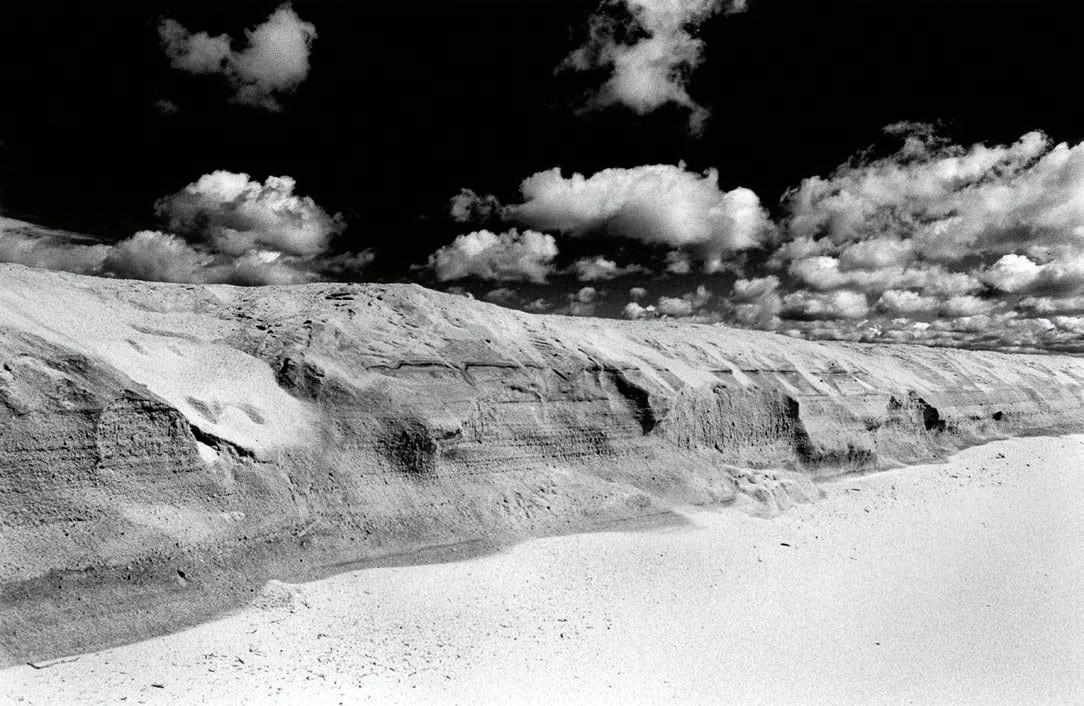
Gay Head (now Aquinnah), 1980.
If you’re like most folks, you likely don’t think about sand beyond its presence beneath your towel while sunbathing or as a nuisance clinging to your skin after a good beach day. To some, though, sand is consequential — I’ve spent the better part of four years studying sand; wars are fought over sand (a key component in concrete). Whether or not you have big opinions about sand, the origins of Martha’s Vineyard’s beach sediments might surprise you!
WHAT IS A BEACH?
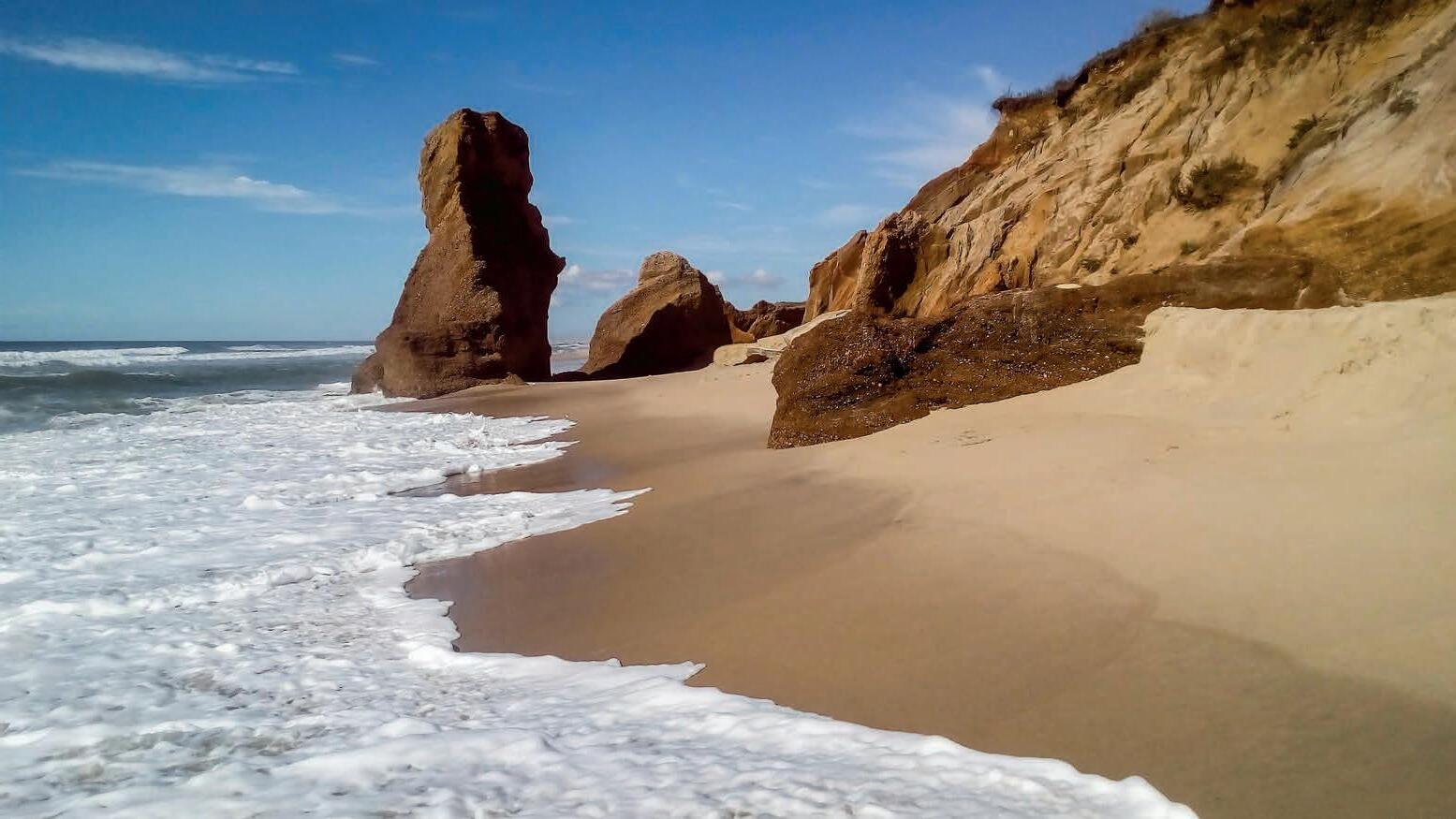
By region, the answer is likely to be variable. Most of us probably envision a curve of white sand, turquoise tropical water, some palm trees; around here, we might think of the gentle waves at State Beach, the glory of the Aquinnah Cliffs, or perhaps the memory of Lucy Vincent’s sentinel looking out over the ocean.
Along the eastern seaboard, our coast is varied. Maine is known for its rocky shores, where fingers of bedrock hold stalwart against the relentless tides, and beachgoers are treated to the rhythmic clatter of well-rounded stones against bedrock that might be half a billion years old. At the opposite end of the eastern coast, Florida’s quintessential beaches are made up of quartz sands and coral fragments and are popular amongst beachcombers for the variety of shells to
be found along endless shoreline.
Of course, beaches are one of the Vineyard’s many draws, each with its own character and story. But why are they here? How did they form? And why do they seem to change so much year to year?
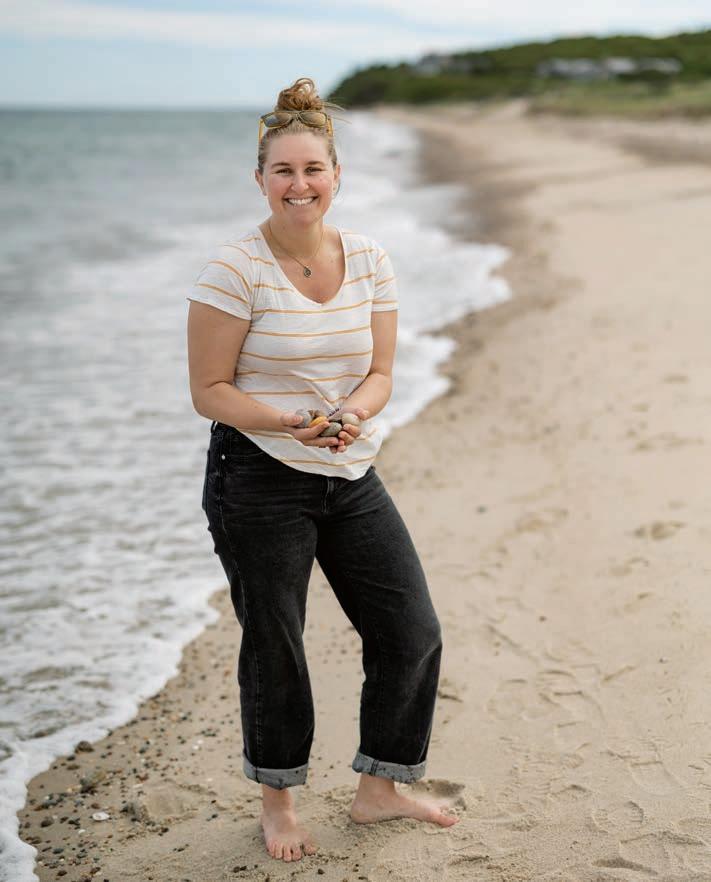
As a kid, I knew that some of our beaches were made of really old stuff, because when I walked along the south shore after a big storm, I would find fossilized shark teeth. I always wondered how old those teeth actually were, and why they only appeared on certain beaches. Most vexing of all was: how did the Aquinnah cliffs come to be? Now, I am a geoscientist, and I have begun to dig into some of these lifelong questions.
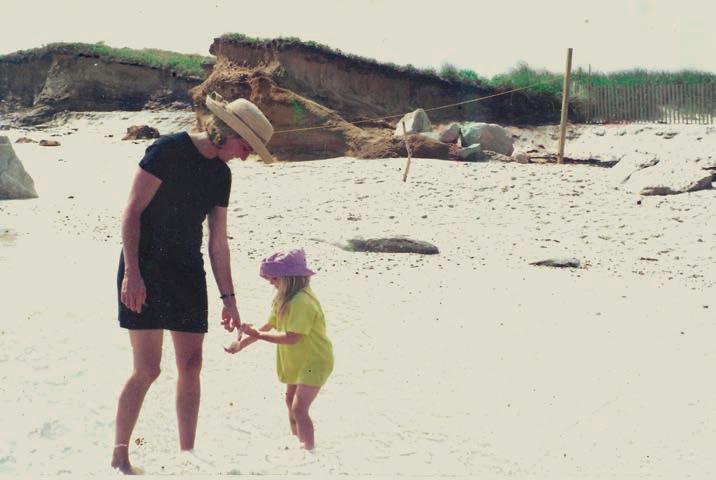
Bella, age 4, handing her mom (whose name is Beach) a shell to save, at Lucy Vincent Beach.
BILL BENNETT
SHENY
LEON
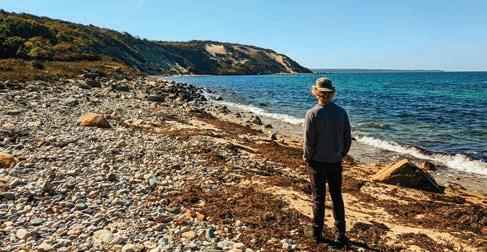
Bella Bennett at Menemsha.
If you’ve had similar questions or found a cool rock on Martha’s Vineyard and wondered where it might’ve come from, I hope to provide some fodder for thought. I’ll warn you though, writing this has taken me far longer than I’d like to admit, because there is so much depth to each of the questions I posed above. I’ve noodled through Charles Lyell’s 1845 book, Travels in North America (See box, page TK), and Henry Fowler’s 1911 A Description of the Fossil Fish Remains (I’d hoped to make a quick identification guide to shark teeth found on the Island, but that’s a project for another time), as well as plenty of more recent publications. Should you share my interest, there is no shortage of material to dig into. For now, we’ll start with the basics.
HOW DID OUR BEACHES — AND OUR ISLAND — COME INTO BEING?
Geologically, the Vineyard is somewhat unique and quite young. Along with Nantucket and Long Island, Martha’s Vineyard is part of the southernmost extent (what we call the “terminal moraine”) of the most recent ice sheet that extended from the arctic across North America. This ice sheet, known as the Laurentide Ice Sheet, scraped the tops of mountains, wrenching up rocks and scouring valleys, as it moved generally south across New England. More than a mile thick in places, the ice eroded and conveyed material from Canada southward, bringing boulders, gravel, and sand, over, under, and through the ice as it advanced southward. During the peak of this glacial period, much of the world’s water was trapped in ice sheets, resulting in sea levels 400 feet lower than what we are used to today.
The ice sheet reached what is now the islands some 27,000 to 25,000 years ago, at which point the rocks and sand that we walk on each day began to accumulate as the glacier flowed like a river in slow motion. As I learned from Chris Halsted, author of a recent publication that estimates the rate of ice retreat of the Laurentide ice sheet, the material that makes up Martha’s Vineyard was delivered, distributed, and uplifted over the course of only a few thousand years.
Within that “brief” time, several processes occurred simultaneously to form Martha’s Vineyard. As mentioned above, the glacier conveyed sediment over untold miles, including giant boulders like that of Great Rock Bight, Waskosim’s Rock, and the Plymouth Rock, as well as unimaginable amounts of gravel, pebbles, sand, and clay. This material accumulated at the edge of the ice sheet, forming moraines. While much of the moraine material remains today as the higher elevation areas (think Menemsha Hills or Cedar Tree Neck), seasonal meltwater floods from the ice sheet redistributed these sediments intermittently as well. Similar to the way in which ocean waves deposit cobbles, pebbles, and sand, these floods deposited heavier materials first — dropping first rocks, then gravel, then finer sands as the water and energy propelling the floodwaters dispersed. The result of this intermittent flooding was the formation of the flatter central and southern part of the Island.
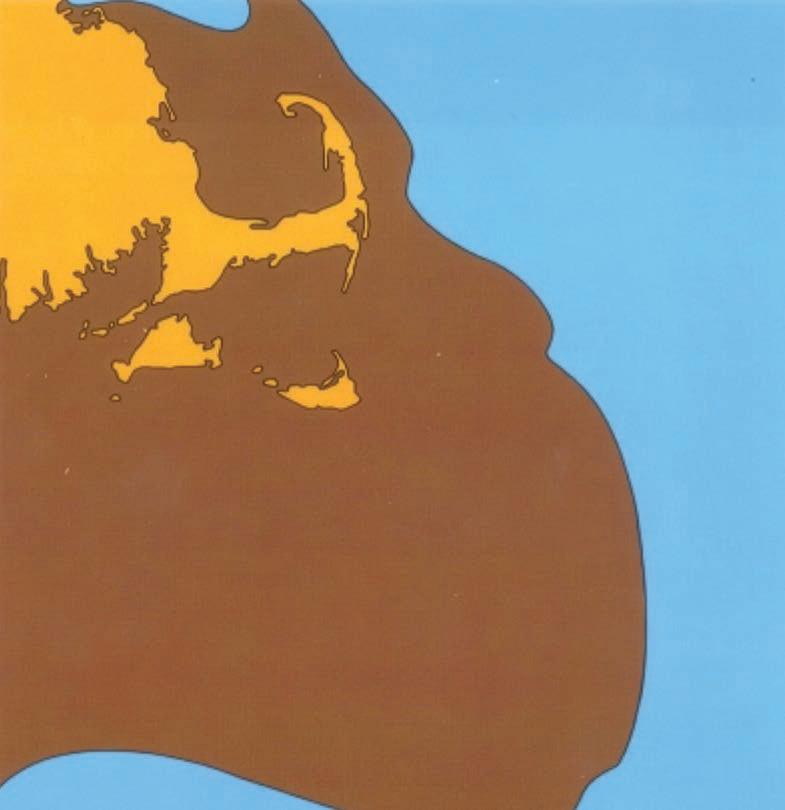
For some time after the retreat of the ice, the sea remained several hundreds of feet below its present level. The land shown in brown was exposed by the lowered sea level shortly after the retreat of the ice from southeastern Massachusetts. As the ice melted, the sea rose gradually. Only the area shown in yellow is above sea level today.
The ponds along the south shore of the Island were scoured. Current research comparing a handful of geologic dating techniques suggests that the ice sheet began to recede northward from its terminal location (here) between 24,000 to 20,000 years ago. On human timescales, a few thousand years of glaciation outlasts most civilizations, but on geologic ones, it’s a mere blip. As the climate changed and ice sheets around the world shrank, the water that had been stored on land in these massive frozen reservoirs was gradually released back into the oceans. The landscape 20,000 years ago here would have been unrecognizable. Standing at Long Point Beach looking south, you would have seen a seemingly endless expanse of sand and gravel, crisscrossed with braided streams and completely devoid of vegetation — no ocean in sight. Looking north, you’d have observed the undulating texture of the frost bottoms, providing direction to the upstream segments of the rivers shallowly cutting through a gently sloping wedge of sediment. Beyond that, you’d have found a massive, continuous mound of boulders and smaller rocks — the terminal moraine and the northern edge of the island we now know. Beyond the moraine was the source of sediment and flowing water — the toe of the ice sheet itself, looming some 1,500 feet above the ground, and beginning its northward retreat at a rate of about 50 meters per year, according to Halsted.
HOW DID THE AQUINNAH CLIFFS FORM?
The material that makes up the Aquinnah cliffs was deposited here far before the Laurentide Ice Sheet came to town. These sediments — primarily clays in striking red, white, and black — were initially deposited at the bottom of a calm sea roughly 90 million years ago, during the cretaceous period (think roaming
COURTESY OF US GEODETIC SURVEY
dinosaurs and the breaking up of supercontinent Pangea). A few tens of millions of years later, the greensand (basically, sand or sandstone that is greenish in color due to the minerological composition) bearing sharkteeth (beautiful story in MV Magazine about that here: bit.ly/MVMag-Clay) was deposited on top. When the Laurentide Ice Sheet found her furthest extent, she was resting heavily atop these layers of Earth history. The pressure of the heavy ice and its southward flow began to reshape these layers.
Humor me for a moment and think of these layers as an unbaked lasagna in a pan. Let's say the ice sheet is a one-pound block of cheddar cheese. If you were to set the block of cheese on top of half the lasagna, what might happen?
With the added weight, the red sauce and ricotta mixture might start to migrate to the unburdened side of the pan. The more consolidated layers (your noodles) might become compressed on the cheddar side, and start to form a bulge on the no-cheddar side. In time, the cheddar will have weighed down one half of the lasagna, and most of the ingredients will have been squeezed toward the other side of the pan, becoming intermingled and forming layers of varying thickness. While massively oversimplified, this is an apt description about the way that the Aquinnah Cliffs came to be. The pressure from the ice sheet uplifted and deformed the underlying clay layers, gradually creating a massive bulge of swirling dinosaur-aged clays and Megladon-teeth-bearing-greensands beyond the toe of the ice sheet.
For their origins, the plant and animal fossils they hold, and their cultural significance, the Aquinnah Cliffs are perhaps the most fascinating part of the Island. While I can’t speak about the cultural context of the cliffs for the Aquinnah Wampanoag tribe, I have found great information in both Helen Manning’s book, Moshup’s Footsteps, and the Wampanoag Tribe of Gay Head
The only constant is change. As the ocean currents daily visit our shores, they push and pull sediment with them, sometimes taking, sometimes depositing.
(Aquinnah)’s website, which I highly recommend. Through these resources, one can learn that the Island was formed by a being known as Moshup, who was quite large in stature, and made his home in the Aquinnah Cliffs. Moshup regularly caught whales to feed himself, his family, and his people, and the blood of the whales is said to have stained the Aquinnah Cliffs deep red.
The Aquinnah Cliffs are and have been many things in the time since Moshup made his home here, including a source of raw materials for ceramics, a gathering place, a refuge, and a location of widely appreciated natural beauty, stewarded for at least ten thousand years by the Aquinnah Wampanoag peoples.
While one may naturally assume that the Wampanoag People initially reached the Island via watercraft, there was in fact no ocean between Cape Cod and Martha’s Vineyard on which to float their vessels at that time. Instead, the people of 12,000 years ago are known to have walked between what’s now the mainland and the Island, seeking access to seasonal hunting grounds. How different this landscape — and the species just beginning to take hold in this newly exposed terrain — must have been. Through generations, those early Islanders’ descendents observed the sea level rising, bringing the ocean slowly closer. They saw the climate change, and with it the ecosystems within which they lived.
The pioneering post-glacial boreal forest was replaced with conifers, and then deciduous trees; mammoths and their ice-aged brethren were no longer suited for this environment, and the animals of today gradually found their way here. About 7,500 years ago, the Vineyard Sound held seawater for the first time in its new form. So began the rhythmic oceanic reshaping of these new landforms, whose prominence was annually diminished as the ice sheet, now confined to the arctic, continued to give water back to the tides.
When finally the ocean met the perimeter of our beloved heap of sediment a mere 2,000 or so years ago, the process of Martha’s Vineyard’s erosion began in earnest.
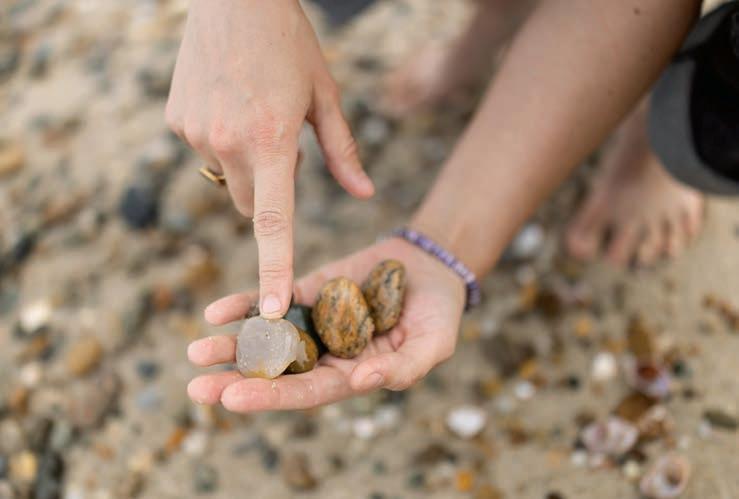
An assortment of beach rocks. Bella's pointing to quartz.
SHENY LEON
Erosion is a constant concern in any coastal community, and perhaps especially on an island. As local soil scientist Doug Cooper reminded me (see the story he did a few years ago here: bit.ly/BDL-landscapes), the only constant is change. As the ocean currents daily visit our shores, they push and pull sediment with them, sometimes taking, sometimes depositing. A study comparing the Martha’s Vineyard coastline over almost 200 years by Clifford Kaye (published in 1973) found that while much of the Vineyard’s coast is being eroded, the Island was then growing in select locations too. One important thing to note is the predominant direction of sediment transport (“longshore drift”), which can help explain why, for example, Dogfish Bar is gaining shoreline while the adjacent Aquinnah Cliffs are being eroded. Beaches share their sediment down current — when there aren’t pesky jetties in the way, that is.
Much has changed in the more than 50 years since Kaye’s study, including sea levels, which NASA suggests have risen about six to eight inches in the past century. With all of these processes constantly in motion, it is remarkable that our island of sediment generally holds steady and changes relatively little day after day, amidst these endless waves.
BACK TO THE BEACHES
Have you ever wondered why sometimes a stretch of up-Island beach is rocky, while other times it's sandy? Day after day, incoming tides transport sand and debris onto the beaches, and outgoing tides drag these materials away. Rougher seas can carry larger pebbles and rocks, and tend to take sand back out with them — think about a typical day at Squibnocket — whereas calmer seas will deposit finer grains of sand like what you typically find at Lambert’s Cove. Seasonally, winter storms tend to erode beaches, creating offshore sandbars like those you might find along the south shore. In the summer, sand from these bars often gets transported back to shore. Meanwhile, all of this back and forth makes beach rocks smaller and rounder, eventually forming new sand.
Unless you are at a volcanic beach, most beach sand is composed of the mineral quartz. I’ve spent the past four years thinking about quartz, collecting it from tropical streams, transporting hundreds of pounds of it across oceans the unnatural way (via airplane), all to ultimately dissolve it in acid in the pursuit of the radioactive form of beryllium (a tool for measuring erosion and burial, and a tale for another time). Quartz is both super robust and super common. Unlike
SHENY LEON
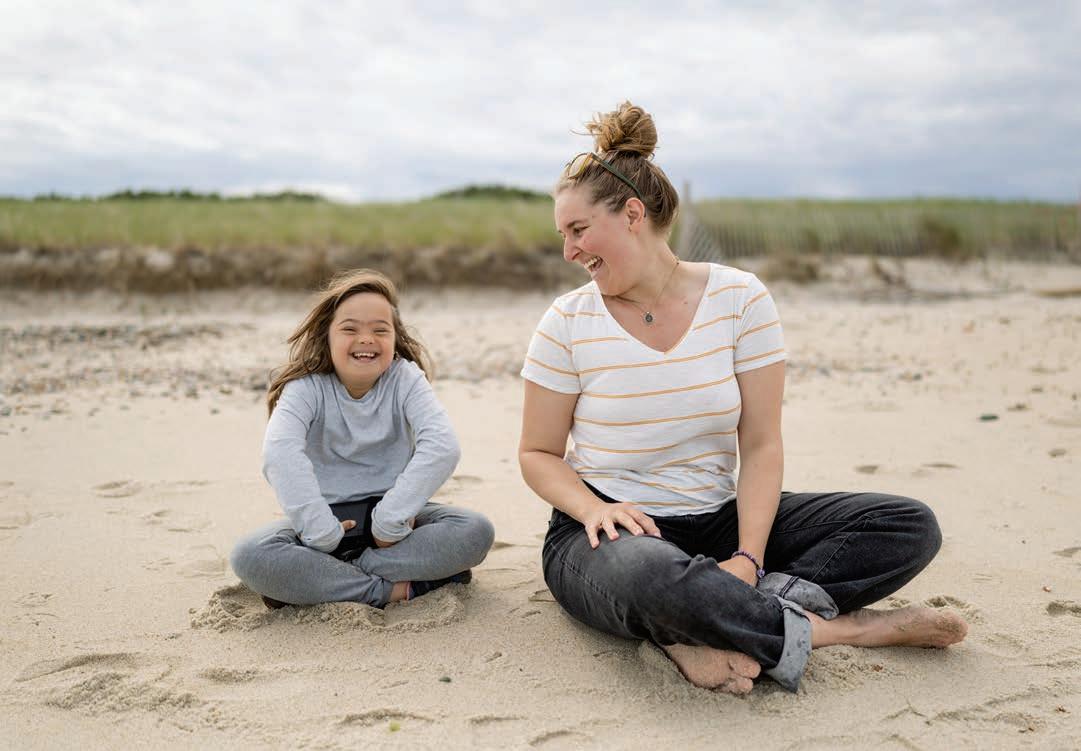
Bella and her friend Lucia at Menemsha.
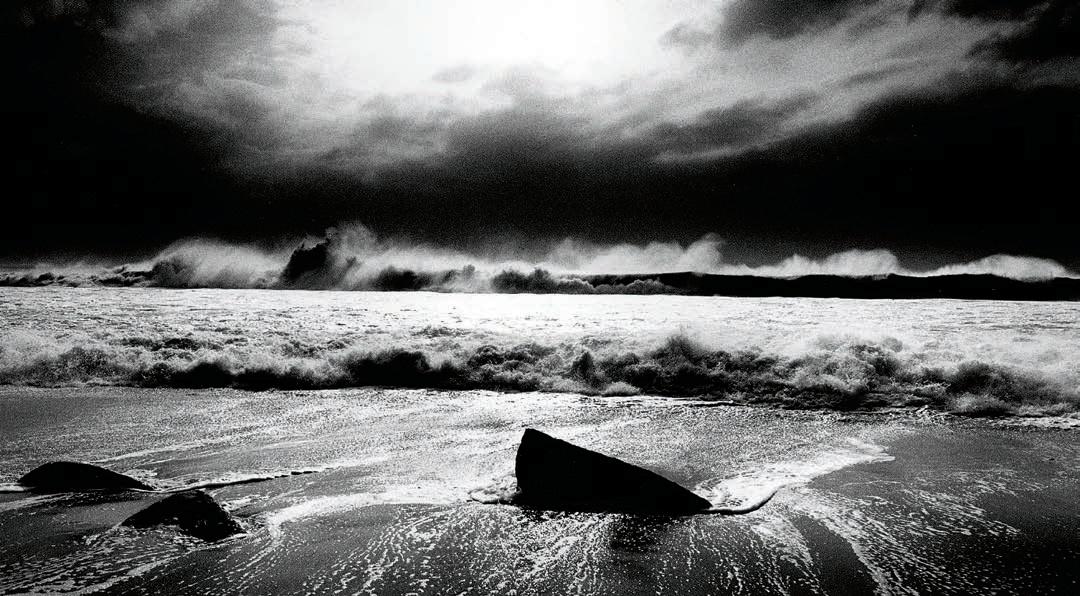
"So began the rhythmic oceanic reshaping of these new landforms." The water, the wind, the weather, the tides sculpt our shorelines and our beaches.
ALISON SHAW (3)
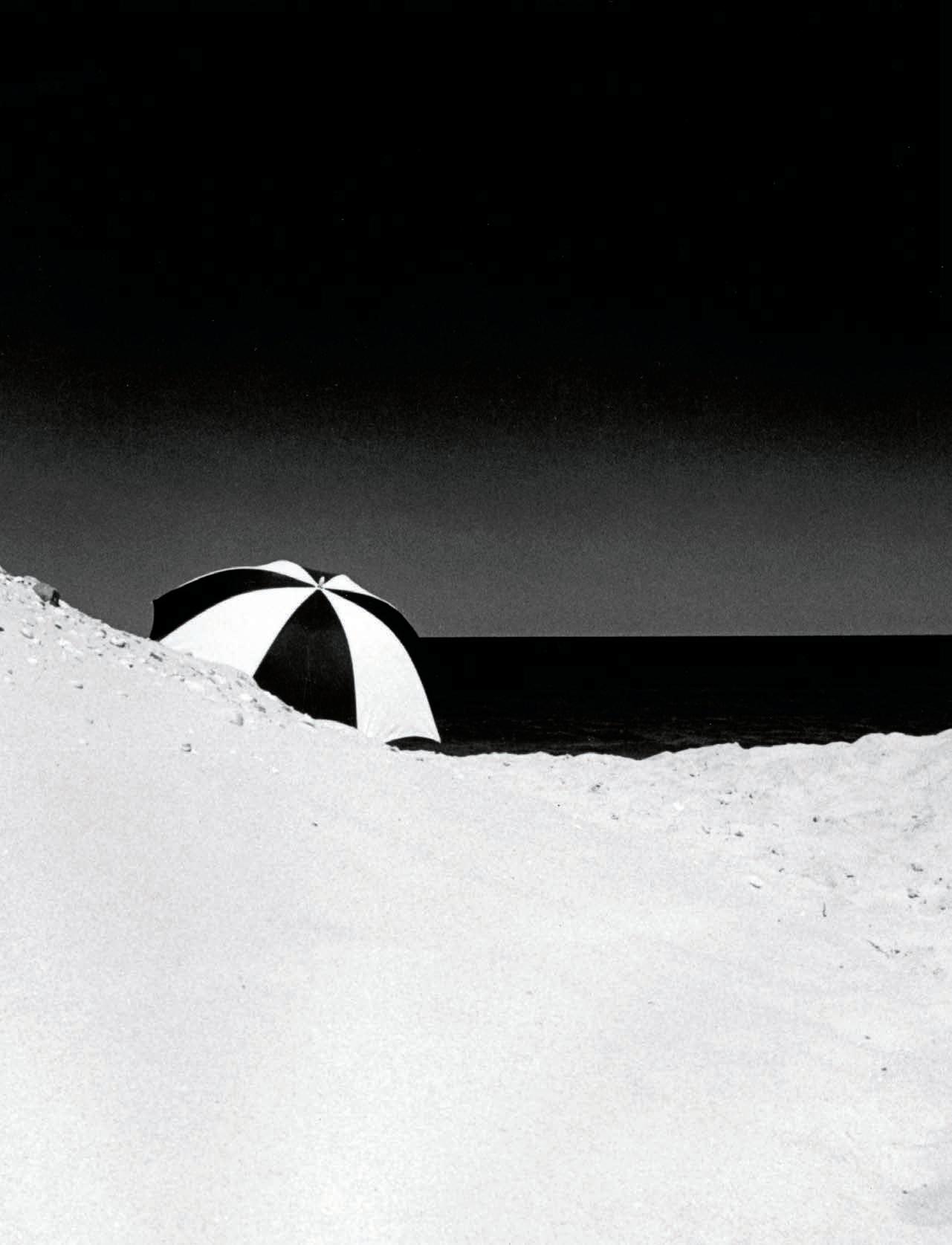
South Beach, 1986.
South Beach, 1990.
Makonikey, 1992.
diamonds, which are prized for their manufactured rarity, quartz should be celebrated for its accessibility. Quartz is pure silica and oxygen, but when just a few impurities are added in (an imperceptible sprinkle of other atoms), it goes by other names — amethyst, citrine, and rose quartz, for example. While other minerals like pyrite (fool’s gold) may catch your eye, most are not nearly as durable as quartz, and break down at the temperature and pressure conditions found at Earth’s surface. (Having come into being at hundreds of degrees celsius, with miles of Earth’s crust acting as a very heavy weighted blanket, they find conditions on the surface way too cold and low-pressure).
While beaches like Squibnocket offer rounded cobbles and pebbles that were once part of bedrock formations from here to Canada, calmer beaches offer the sand-sized fragments of their brethren, slowly broken down from a mass of minerals into single individual grains. Each mineral has specific characteristics that determine its longevity and resistance to weathering. Micas, for example, which are recognizable by their shiny, platey characteristics, fall apart rather quickly when exposed to the elements, especially when water makes its way between the mineral’s thin layers and exploits the weaker atomic bonds there. The thin sheets are then easily broken into tiny, clay sized particles, which remain suspended in water, and end up being deposited far from shore, where the waters are far calmer and allow the tiny particles to settle to the seafloor. By comparison, our champion quartz is tough and stalwart, outlasting most other minerals through the weathering process and becoming the king of the beach simply by longevity.
IN OUR LIFETIMES
Perhaps, like me, you mourned the somewhat recent loss of the sentinel cliff at Lucy Vincent beach. My career trajectory may have begun with the childhood question, “why are the Lucy Vincent cliffs eroding so fast?” I could not understand why the cliffs were a little different every time I visited them. I’m still shocked now, despite growing up alongside the Keeling Curve (the graph that plots the increase in concentrate of CO2 in the Earth’s atmosphere), rising sea levels, and more intense storm systems resulting from our changing climate — all major contributors to the loss of coastal areas.
Watching parts of the Island slowly fade into the ocean has been a perturbing aspect of growing up. As the Greenland and Antarctic ice sheets annually lose more mass than they gain, and the tides endlessly lap at our coastline, we will continue to see such changes. Perhaps (forgetting for an instant the infrastructural implications) we can also recognize this as a unique opportunity to watch our young Island mature and change with her surroundings.
In the end, if you’re here for the beaches, do enjoy the unbeatable trifecta of sun, salt, and glacially-delivered sand, and while you’re doing so, maybe consider the ways in which you can contribute to their longevity. Do your elected representatives know you care about climate change? While personal lifestyle changes are important, driving leadership and industry to strive for efficiency and sustainability can make a significantly larger impact. To any modern captain of industry touched by this special place, now is the time to do your part to steward our one perfect planet for generations to come.
Lucy Vincent Beach, 1991.
ALISON SHAW
What You Can Do
• IMPORTANT! First, don’t climb on the cliffs or dunes at Aquinnah, or remove anything from the cliffs! These are extremely fragile parts of our coastline that are more swiftly lost when battered by both humans and the sea. The Aquinnah Wampanoag tribe shares this beautiful place with all who wish to visit, and has created rules to preserve it for future generations. The least we can do is support this mission by staying on trails and leaving the cliffs to their natural processes.
• To learn about the Wampanoag origin stories of this land, Helen Manning’s Moshup’s Footsteps is an excellent starting place, as would be the Aquinnah Cultural Center (aquinnah.org) and their newly opened ACC Wampanoag History Museum.
• I wholeheartedly recommend checking out David Foster’s A Meeting of Land and Sea: Nature and the Future of Martha’s Vineyard (available in local bookstores and on Amazon). There you’ll find answers to questions you didn’t know you had. Similar articles with different foci by Christine Schultz (bit.ly/MVMag-moraine) and Alex Elvin (bit.ly/Gazette-Cliffs) may also be of interest.
• A more contemporary personal experience can be found in Joseph Vanderhoop Lee’s book, Nothing More of This Land: Community, Power, and The Search for Indigenous Identity. An interview with the author can be found here: bluedotliving.com/an-indigenous-islanderssearch-for-identity/
Lyell on Our Isle
Writing this story provided an opportunity to deep dive into some of the questions I’ve been carrying around since childhood. Along the way, I ran into some rather surprising facts. First, a famous Scottish geologist from the 1800s, Charles Lyell, visited Martha’s Vineyard. Lyell, whose 1830 book Principles of Geology is said to have influenced Charles Darwin, is credited with proposing the concept of glacially transported boulders (a.k.a erratics). How incredible that the person who first published on the concept of erratics also came and visited some of our very own, almost two hundred years ago.
ALISON SHAW
Harthaven, 1986.
Imagine If, an intergenerational podcast exploring how meaningful climate progress is happening — because it is.
Hosted by Bluedot founder Vicki Riskin, Janet Kraus, Ally Giebutowski, and Cleo Carney, the show brings together wisdom and next-gen perspective to spotlight the people redesigning our future.
On the Cutting Edge
Using a scythe to maintain our meadow was a revelation!
By Will Kinsella
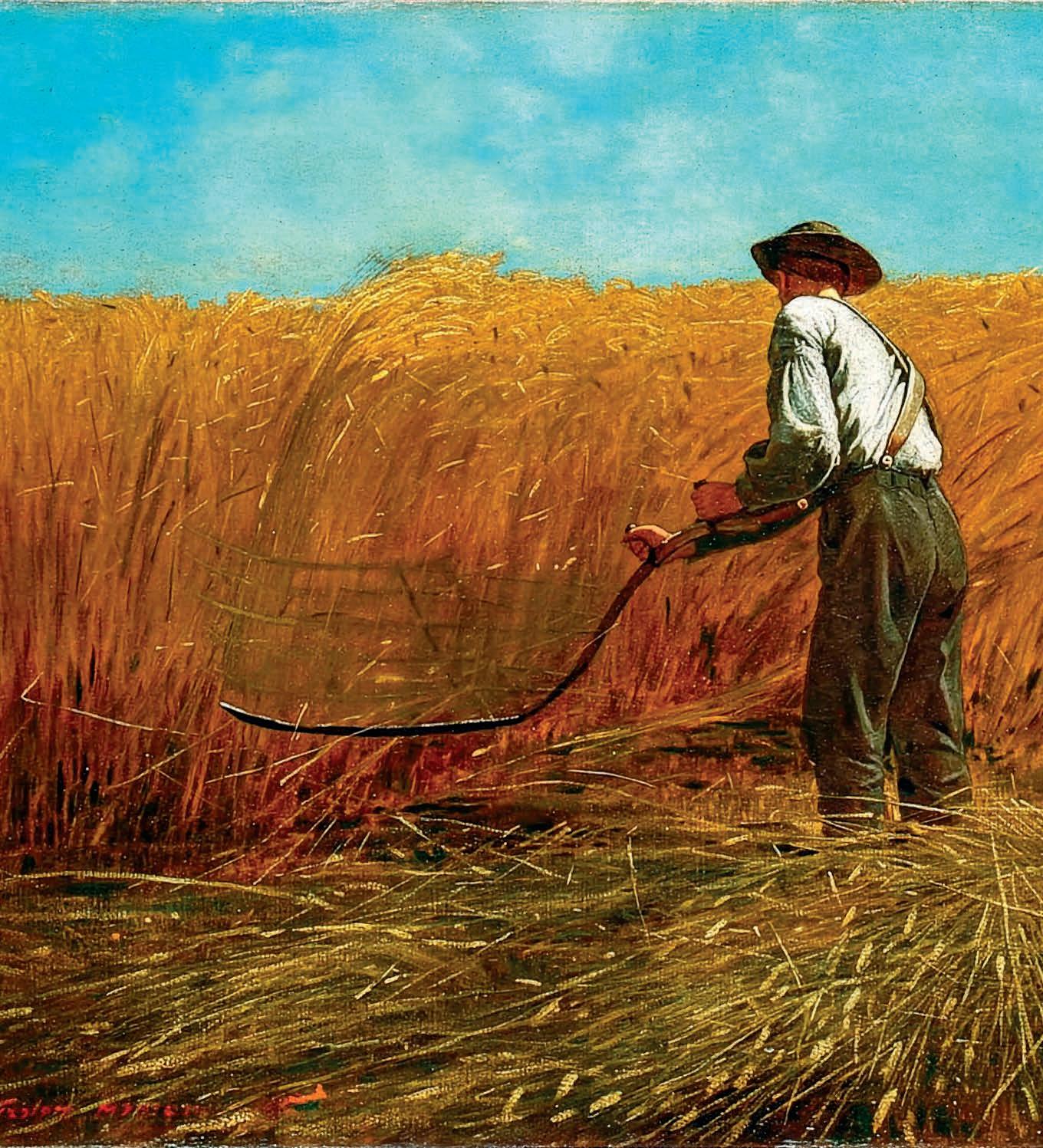
For centuries, people have used scythes to mow fields and meadows.
Mowing
By Robert Frost
There was never a sound beside the wood but one, And that was my long scythe whispering to the ground. What was it it whispered? I knew not well myself; Perhaps it was something about the heat of the sun, Something, perhaps, about the lack of sound— And that was why it whispered and did not speak. It was no dream of the gift of idle hours, Or easy gold at the hand of fay or elf: Anything more than the truth would have seemed too weak
To the earnest love that laid the swale in rows, Not without feeble-pointed spikes of flowers (Pale orchises), and scared a bright green snake.
The fact is the sweetest dream that labor knows.
My long scythe whispered and left the hay to make.
(From his book, A Boy's Will, 1913)
It was March 2024 when Rita Higgins, who was leading a Nantucket Land and Water Council-sponsored native meadow workshop at a local farm, mentioned a scythe workshop on the British Isles. At the time, our former dairy pasture had been allowed to grow for two years as the first step of a meadow restoration (guided by Rita; read about it at bit.ly/Grass-NotGreener) and was supporting a beautiful mosaic of native fescues, sedges, grasses, and forbs — but also woody groundsel, bayberry, and juniper, and invasive thistle, miscanthus, and privet that would soon need to be cut to prevent it from shading out the native meadow plants we were hoping to foster.
For meadow restorations, it's not enough to just let the grasses grow. Invasive and woody species need to be actively managed to prevent succession to another ecosystem, while grasses need to be occasionally trimmed to keep their growth in check and allow space for wildflowers to grow. Doing both typically requires annual mowing, burning, manual removal, and/or regular grazing.
I had been feeling challenged by the contradictions between fostering a native plant meadow that sequesters carbon, filters water, provides habitat, and supports biodiversity, and the loud, energy-intensive, carbon-spewing, soilcompacting, habitat-disrupting power tools used to maintain it. However, it had never occurred to me to use a scythe until Rita mentioned it, nor had I ever seen one used. The change in our goals for this meadow also required a change in management strategy, and for that, a scythe fit the bill: a quiet, non-polluting, cheap, multi-use tool that was easy to assemble, maintain, and repair.
People have used scythes for mowing since the Roman Empire, and sickles for gathering seed heads and cutting grass or reeds (for matting, bedding, and roofing materials) since well before the Agricultural Revolution — but to me, they just evoked the Grim Reaper and Soviet Communism. Farmers replaced these tools so long ago with lawn mowers and combine harvesters that the notion of reincorporating their use took a leap of imagination (and a fair amount of courage when considering handling a sharp, three-foot blade). But while many of us have been conditioned to believe that we need machines to handle labor-intensive chores, it doesn't take a Luddite to advocate the use of a rake
and climate activist on Nantucket, wrote this essay for Bluedot’s Nantucket
THE VETERAN IN A NEW FIELD, WINSLOW HOMER
Will Kinsella, a writer
Green Guide.
and broom when faced with the racket of a leaf blower and the clouds of feces, dust, and mold that they stir up.
Inspired by Rita, I purchased a 170cm Schröckenfux adjustable wooden snath (the scythe’s long, wooden handle) with an attachable 70cm "Gartensense" blade. I watched more than a few instructional videos and practiced swinging the blade over our dirt driveway, getting into a rhythmic sway, shifting my weight from foot to foot while twisting my upper body and keeping the blade against the ground. The slow and deliberate movements are very similar to tai chi and other meditations in motion: a gentle series of posturecorrecting circular maneuvers — back straight, shoulders down — engaging the core muscles while one shifts balance from side to side to the rhythm of one's breath. It's great exercise for people of most ages and abilities and can be as relaxing as a two-step or as demanding as ballet. I've heard about children as young as four learning this procedure and older adults putting aside their canes to scythe, and there are competitions in which scythe mowers race against not only each other, but also against people using strimmers (weed whackers) and lawnmowers.
I first took to the fields with my new scythe on a glorious April morning. Reminding myself of the adage that "the scythe must dance," I fell into a slow but rhythmic shuffle so that my shifting weight, rather than my arms, pushed the scythe through the grasses. I felt peaceful, mesmerized as the scythe blade whispered "swoosh" through the tall grass stems, followed by gentle rustling as swaths of grasses fell together into neat piles at the end of each stroke. Inching my feet forward during the return swing, I repeated the process, over and over again. Although the movements themselves were repetitive, the process was gratifying, every inch of progress providing a moment of complete engagement with the landscape.
The old adage "Give me six hours to chop down a tree and I will spend four sharpening the axe" proved prescient. When it got tough to swing the blade, it was time to resharpen. I stopped every few minutes to hone the blade with a whetstone, stroking diagonally downwards across the top of the blade and across its bottom to remove any metal burrs. During one of the many resharpening stops that first day, I took a moment to look around and admire my handiwork and noticed a gaggle of geese grazing 15 to 20 feet behind me. Normally, they'd honk emphatic protestations if I were walking so close to them, but now, as I mowed with the scythe, it felt as though we were grazing in quiet communion together, and they understood that I posed no threat or bother to them. In addition to the geese, bees, bugs, and other birds normally scared away by the noise or speed of conventional mowing seemed completely at ease while I mowed with the scythe. The entire scything process felt like a serene, blissful engagement with nature, a moment to listen, observe closely, and admire.
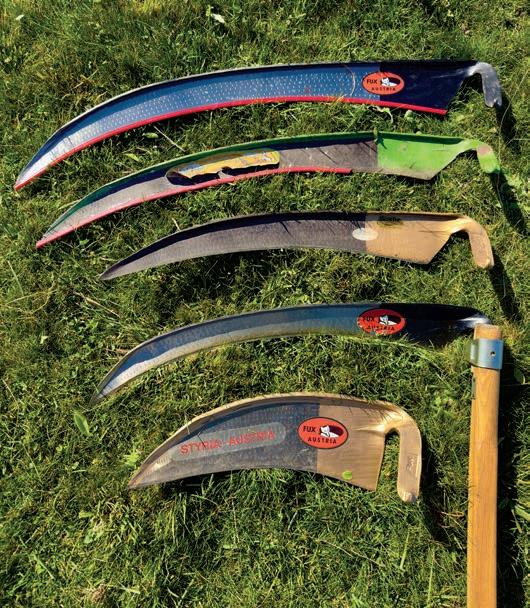
Scythe blades come in a range of lengths and profiles, each suited to different grasses and terrain.
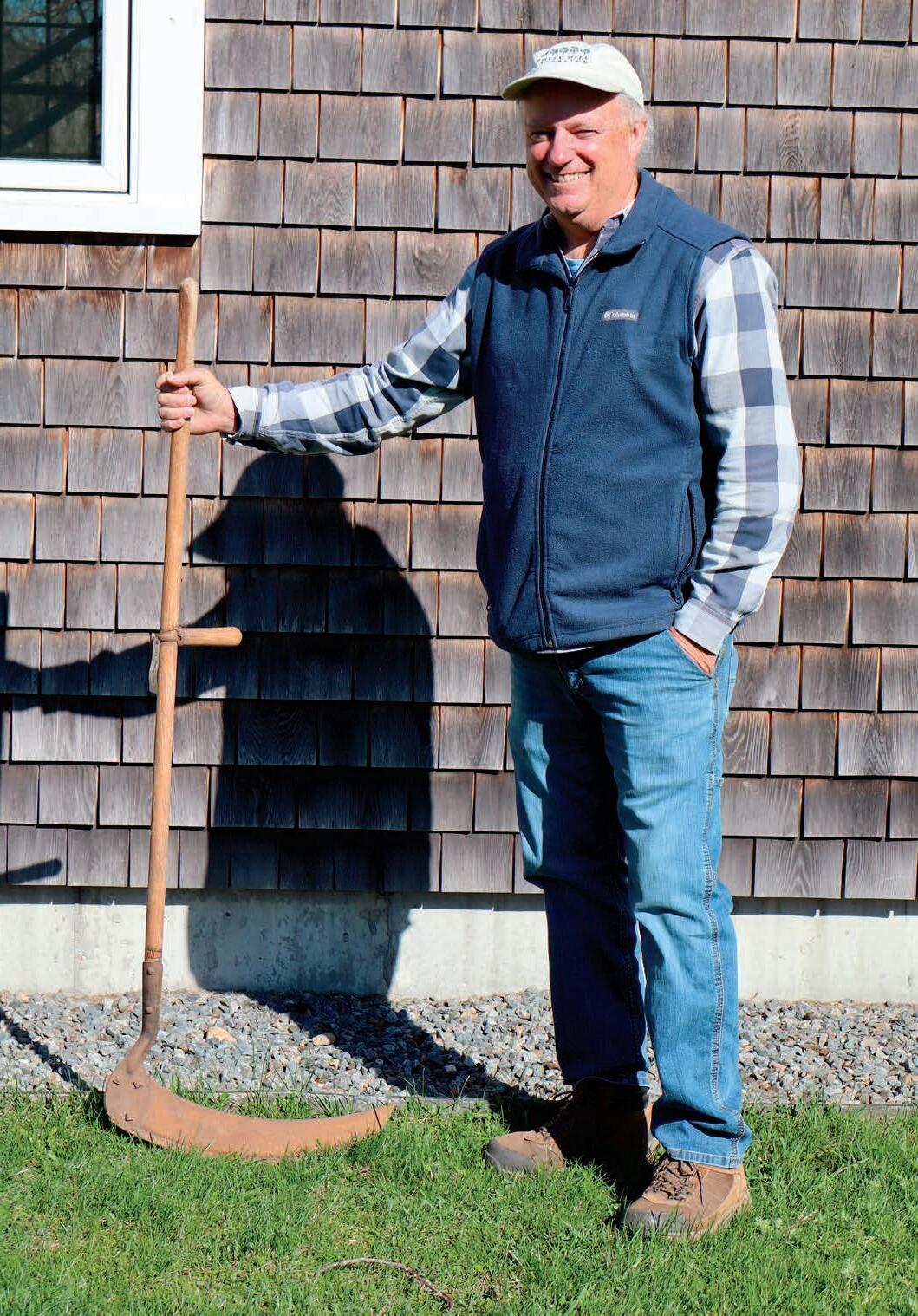
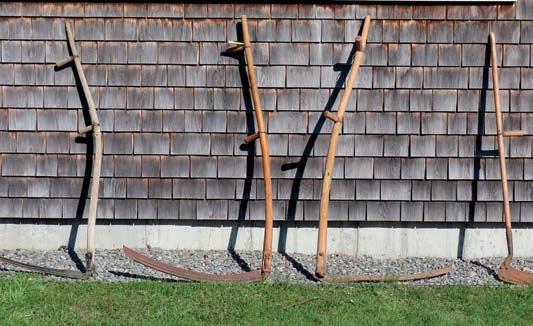
Tim Boland with an antique scythe that is part of the Polly Hill Arboretum collection. (See our story on scythes on MV on page 42 and our story about Tim on page 43).
It doesn't take someone from Nantucket to tell you how disturbing the cacophony of noise from power landscaping equipment can be. [All MV towns except for Aquinnah passed bylaws in 2025 to completely phase out gas-powered leaf blowers by spring of 2028.] Nationwide, noise may be the most widespread and most underacknowledged pollutant. Birds and insects, like humans, are stressed by noisy environments, and chronic stress can lead to smaller body sizes, delayed development, and increased mortality. Artificial sounds can also induce birds, bats, and insects to change feeding, nesting, mating, hunting, and predator avoidance habits — all of which can lead to declines in population, health, and biodiversity. While the sound intensity produced by a gas-powered push or riding mower is comparable to that of a motorcycle, the scythe makes about as much noise as grasses rustling in the breeze.
The time and effort required to mow with a scythe are similar to what it would take using a strimmer, but the whole process is quieter, lighter, and more efficient — and the results are just as good. Experienced scythers using long blades can actually mow much faster than strimmers and achieve a more consistent height of cut. For short grasses where the soil has been smoothed, it's relatively easy to cut down to one to two inches tall, as in a typical mowed lawn. For larger meadow grasses like cord and switch grass, which have dense crowns and hollow stems, it's easy to float the blade to a higher cut level that provides crucial insect habitat and visual interest.
Additionally, you can use a scythe to knick out individual plants, even shrubs, while leaving neighboring plants untouched, whereas the strimmer’s string line cuts a wider radius and won't cut through woody materials. In fact, the scythe is an excellent tool for woody plant removal and pruning that would damage the blade of most lawnmowers. Using a heavier, shorter, and thicker "bush blade," I can easily cut through saplings with a diameter of up to 3/4" at ground level without any of the back bending that using loppers entails (though I still use loppers and/or a saw for anything wider than 3/4"). Also, I can prune bushes and branches taller than myself. For prickly invasives like bull thistle, the scythe makes it easy to cut and move the plant without touching it, which can prove painful with even the best gloves.
For speed alone, the scythe doesn't compete against a large mower or a tractor with a brush hog. Larger cleared areas, such as those owned and maintained by conservation organizations would require teams of scythe mowers to replace a piece of heavy machinery. While a tractor with a brush hog can mow in an hour as much as an experienced scythe mower can do in a day, there’s a lot that these machines don't allow for: selective single plant removal, for example, or on-the-go height variation. Nor can they mow
What You Can Do: Want to Scythe?
• I get my scythe equipment through Scythe Supply: scythesupply.com
• Also check out One Scythe Revolution: onescytherevolution.com
• For online tutorials, Janne Wester is the best! bit.ly/ScytheLessons
• Find out more about UK scythe workshops: somersetscytheschool.com
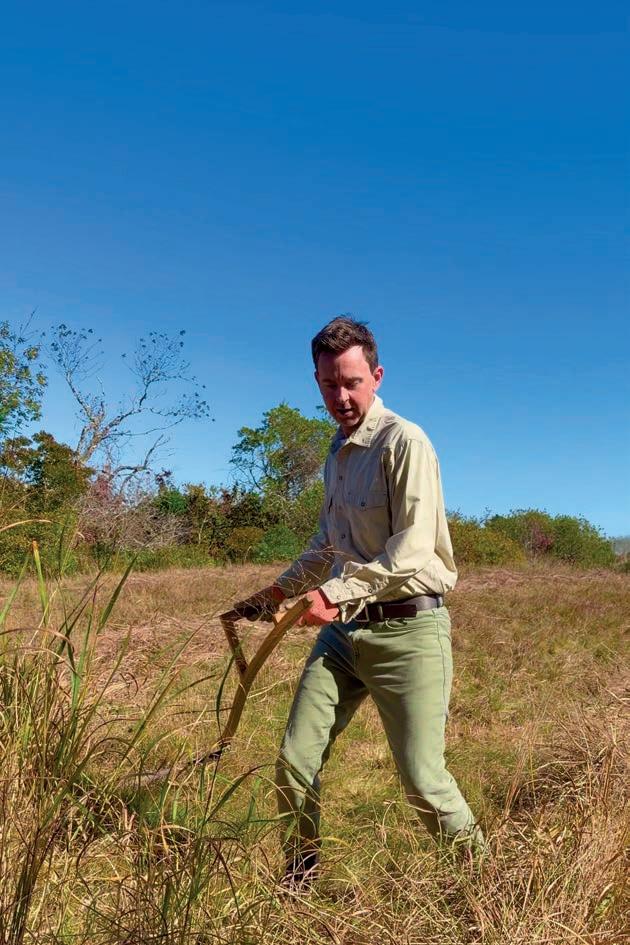
Will Kinsella cut his meadow with his scythe.
in small or steep areas. The scythe is a user-guided precision instrument that remains the most versatile mowing and pruning tool out there.
For most household properties and situations, the scythe remains the ideal land management tool. It’s an appropriate technology that's versatile, environmentally sustainable, energy-efficient, and affordable, and it causes little disruption to our neighbors and environment. Holistic individual climate and environmental action requires us to reconsider how we cut our lawns — as much as whether we should have lawns in the first place — along with how we travel, heat, build, buy, and eat. Consider the scythe a fitting complement to recycling, passive solar, bicycles, composting, and low- or no-meat diets — strategies that may require initial effort but are imperative for living sustainably.
WILL KINSELLA
Scything on Martha’s Vineyard
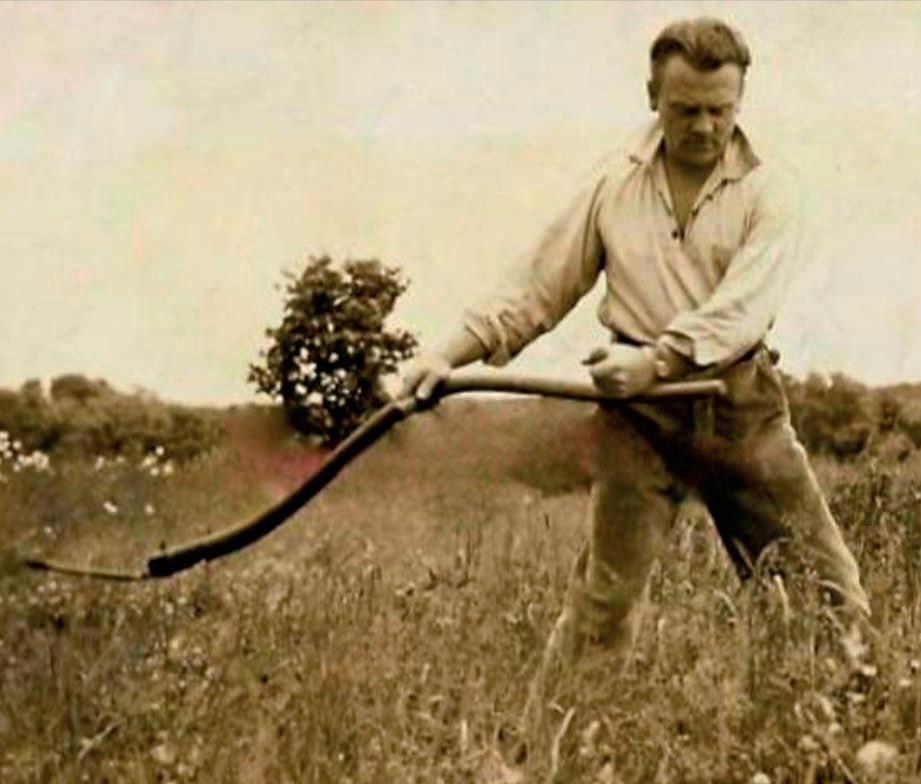
Jimmy Cagney using a scythe at his 250-acre Chilmark farm.
FOLLOW THE FUTURE You Want To See
After I read Will’s essay for the Nantucket Green Guide, I decided it would work well in our Martha’s Vineyard magazine, but felt I needed some information about scythes on the Island.
I Googled “scythes on Martha’s Vineyard,” and immediately found a picture of Jimmy Cagney using a scythe at his Chilmark farm in the 1950s. Internet gold! After some sleuthing I found the person who owned the rights to the photo (thanks, Dayna!). And read this lovely essay about Cagney (known as one of the Vineyard’s first Hollywood celebrity residents): and his farm. (Find that MV Mag story: bit.ly/MVMag-Cagney.)
Cagney loved the farming life on Martha’s Vineyard, and used a lot of hand tools, but didn’t have much to say about his scythe.
I asked people I thought might know — Rich Couse at Natural Neighbors, Sakiko Isomichi at the MVC — about anyone who might be using a scythe. Neither knew anyone. Coincidentally, I had a meeting the same week with Lucy Grinnan at the Ag Society, so I asked her. “Tim Boland!” she immediately responded.
It turned out Tim had not just one, but many antique scythes to show me, thanks to the tool shed that Polly Hill Arboretum inherited from the Littlefield family. He also loaned me a book called The Tool Book, from which I learned much about tools, and also enjoyed the writing about scythes from a century or so ago: “With their curved blades and sinuous handles, the scythe and its cousin the sickle once looked as much like some exotic shorebird as they did like the masterpieces of the blacksmith’s and joiner’s art. The blades were made of custom-forged metal, made by mixing steel and iron in laminates to get sharpness from the steel and malleability from the iron. A fine scythe or sickle would cut a ribbon in the air, but the blade would dent against a hidden rock instead of breaking.”
I should have known Tim would be the best scythe source: My colleague Leslie Garrett and I often joke that “Tim Boland!” is the answer to any vexations we have involving trees, plants, antique tools, or general knowhow (Tim’s our Climate Champ for this issue. See page 43 ). Tim told me that at some point, Polly Hill will have an exhibit of some of these tools, including the longcloistered Littlefield scythes. Stay tuned: pollyhillarboretum.org
– Jamie Kageleiry
Scythes at Polly Hill Arboretum.
COURTESY OF DAYNA DECARLO
CLIMATE CHAMP
TIM BOLAND
Interview by Leslie Garrett
by Sheny Leon
Tim has spent a lifetime studying and conserving trees and plants. After almost a quarter of a century at Polly Hill Arboretum, he’s stepping down as executive director.
Every journalist has them — those sources who reply quickly, have deep and vast expertise, are kind, and are generous with their time.
Tim Boland is such a source.
Wondering what, exactly, is so bad about invasive species? Call Tim. Curious about what makes fall foliage so colorful? Tim can tell you. Wondering about something as obscure as whether smoke from wildfires in Canada changes the color of hydrangeas on Martha’s Vineyard? Tim’s your guy. Can you plant seed paper? Tim’s got an answer. Why isn’t your milkweed growing? Ask Tim. (See links to all these stories below.)
So, when Tim Boland recently announced his retirement from his role as executive director of the Polly Hill Arboretum, you can imagine the collective groan that rose from newsrooms across the Vineyard and beyond.
But Tim is much more than a patient and reliable expert. He is, at his core, a grower — someone who has spent his entire
career placing literal and metaphorical seeds in soil, his mind on the question: How can I help this survive and grow?
His career, as he describes it, has been one of “slow, enduring growth” — a phrase that sums up Tim’s philosophy. Fastgrowing trees, he’ll tell you, sometimes don’t do well in nature. They can be brittle. The ones that tend to last are the ones that take their time.
Tim’s love of trees and plants started with his grandfather. Every year around Mother’s Day, the two of them would head out together to plant redbuds — “beautiful, lavender-flowered trees” native to Michigan, where Tim grew up. A couple a year, sometimes three.
In high school, he got a landscaping job at a local hospital, and his passion really took root, leading him to enroll in every biology course he could find in both high school and junior college. Later, at Michigan State, he dove into the school’s robust agriculture program.
Photos
With no position lined up upon graduation, Tim responded to a notice on a job board for something called a “curatorial internship” at Swarthmore College’s Scott Arboretum in Pennsylvania (established and endowed, incidentally, by the Scott family to honor the patriarch — class of 1895 — and inventor of the paper towel). Tim describes it as “pretty much a tree museum on campus.”
In 1986, a mentor encouraged Tim to take a year-long fellowship at the Royal Horticultural Society in England. When he talked his then-girlfriend (now wife), Laura, into coming with him, her parents were not impressed. Tim laughs: “We were, what do you say, not yet married.” But the opportunity to spend what he calls “a year growing plants” was too good to pass up. “I always say America’s original art form is jazz, whereas [England’s] art form is gardening.”
Back at Michigan State, Tim became a plant propagator, running a 26-acre nursery with what he describes as “free run on what I wanted to grow.” There was something special about the public garden at Michigan State that piqued a deeper curiosity in Tim. It was set up “like a European garden,” Tim
says, with different sections designated for different types of plants, including an area devoted to medicinal plants, and even one for American weeds. Plants, he says, were arranged by their plant family. “I got very interested. Why is that plant in that plant family? Why is an oak related to a beech? Why is it not related to a maple?” The Grounds Department agreed to pay for Tim to get a master’s degree in plant taxonomy — the study of plants’ evolution and relationships — and Tim went back to school while continuing to work.
He spent a lot of time in the herbarium, a vault of dried and pressed specimens that he calls “the maps to the plant kingdom.” He used location data on old specimens to track down living plants in the field, then visited them to gather seeds. The herbarium’s curator, who’d noticed Tim’s particular interest in oak specimens, proposed another opportunity to Tim: a monthlong trip with him to Mexico, to study the oaks there.
Mexico, perhaps surprisingly, is a hotbed of oak diversity — home to roughly 225 of the world’s 430 species — and the trees, which have leathery foliage, look nothing like the oaks of the northern United States. “You wouldn’t even recognize them,” Tim says.
With expanded knowledge and experience, Tim landed a job as a curator at Chicago’s Morton Arboretum. Located on nearly 2,000 acres about 30 miles west of the city, the arboretum specialized in trees and tree science and was, Tim says, “a great spot.” He loved the work. What he didn’t love: a 45-minute commute each way, through a city populated by 11 million people and not nearly enough trees.
Four years into the job, he heard about a position at the Polly Hill Arboretum on Martha’s Vineyard. “Are you kidding me?” he recalls his wife asking.
But Tim had already met Polly Hill herself, when he was just 24 and delivering his first public talk on hollies, a subject fed to him by another mentor (he’s had a lot!) who volunteered with The Holly Society of America and who insisted he needed to hone his public speaking skills. Polly, then in her 80s, was in the audience. Aware of her reputation as a “plant genius,” with a particular love for the hollies of Martha’s Vineyard, he recalls feeling nervous and thinking, why does she have to be here?
He needn’t have worried, he says. Polly was generous with her praise. And 20 years later, he found himself applying, despite his wife’s wariness about life on a small island, for a job at the arboretum Polly had created on Martha’s Vineyard. He accepted the job not long after taking his family to visit the Island. It helped when they got a glimpse of what surrounded the house where they’d live: Trees. And plants. And critters. Then aged 7 and 11, Tim’s two kids decided that the Vineyard would be a great place to grow up.
When he arrived in 2002, Tim found an organization with what he calls “some problems.” A building on site had been condemned; a barn needed renovation; the infrastructure that a functioning arboretum required didn’t yet exist.
But there was a board of about 15 people, some of them deeply committed year-rounders who were, as Tim puts it, “the
Tim holds a big leaf magnolia in the greenhouse.
mechanics of it.” And there was also Polly herself, then 95, but still very clear about what mattered.
Tim worked as a curator for two years, then became director when the Arboretum’s founding director retired. One of the first things he did was to create the organization’s volunteer program. He started with just two, but today there are a dozen, coming twice a week to do what he calls “hard labor” on the grounds, greenhouse work, and pressing, gluing, and labeling specimens in the herbarium.
By the time Polly died in April 2007, at 100 years old, Tim was guiding the organization through a deliberate, patient expansion. With the help of a facilitator, the organization had drafted a strategic plan that included renovating Polly’s house to include a research library, building a greenhouse, and adding a maintenance building. These improvements happened over a number of years; a nonprofit organization, the Arboretum relies largely on fundraising for both operations and capital improvements, and major building projects occur only once the money to support them is in hand.
Through it all, Tim was guided by a simple rule: don’t ruin the spirit of the landscape.
He and the board made a significant decision to focus Polly Hill’s work on native plants, in part as a way of signaling the organization’s investment in the local community. Documenting local plants is an important conservation tool. Now, in the herbarium, staff and volunteers document everything growing on the Vineyard, native and non-native alike. The collection currently holds nearly 5,000 specimens, comprising about 90% of all plants growing on the Island. The entire collection
is digitized and accessible online, and shared with botanical gardens around the world through a consortium of Northeastern institutions accounting for regional flora.
One particularly interesting discovery they’ve made through this documentation process, Tim says, is how many rare species exist on the Vineyard. “We have probably about a dozen very globally rare plants,” he says, including the cleft-leaved hawthorne found nowhere else on the planet. There’s also a Green Adder’s–mouth orchid — tiny and easily overlooked — with just six other known populations in the world, and a purple milkweed that hadn’t been seen in over 60 years, spotted by the sharp-eyed BiodiversityWork’s Matt Pelikan as he drove along a busy road.
Chancing upon that purple milkweed had important consequences. “When a plant is isolated and it doesn't have other plants to pollinate it,” Tim explains, “it becomes genetically kind of narrow. And so, out of hundreds of flowers [on this specimen] that could have produced milkweed pods, there was one.” The Arboretum harvested that one pod, and from it propagated 30 seedlings. Tim reported this discovery to the Massachusetts Natural Heritage program, which provided funding to go check on seven or eight other purple milkweed populations across the state — populations that haven’t been checked in 20 years. The Arboretum has secured funding for a project to collect specimens from these genetically isolated
A magnolia with azaleas behind.
populations, in hopes that cross-pollinating them will help the subspecies grow stronger and recover. (See more about Matt Pelikan’s milkweed on page 47.)
These days, the Arboretum’s work feels more urgent than ever. When Polly started gardening in 1957, Tim estimates that roughly 15% of the world’s plants were under some form of threat — mostly in the tropics. Today, between climate change and habitat destruction, that figure stands at around 40% worldwide.
Nonetheless, Tim thinks it’s time to retire.
When asked what he’ll miss, he doesn’t hesitate: walking into the greenhouse and seeing the seedlings; watching kids run freely through the grounds — something the official guides frown upon, but Tim delights in; and the volunteers, the ones who’ve shown up twice a week for decades, working side by side, sharing the stories of their lives. “People need to listen more,” Tim says. “In other cultures, they listen to old people.”
He won’t be gone entirely, but his future work will be around the edges. “I'm feeling almost like Polly,” he says. “She said, ‘I had my fun, and now it’s over.’ I have a respect for what’s next, almost a Buddhist detachment.”
He’s planning to work on Polly Hill’s archives — hundreds of Polly’s letters going back to 1926, plus his own correspondence — and he may become a research associate, continuing his work on the Island’s flora. He’s also on the board of the International Oak Society, raising funds for conservation projects on four continents, including work in Mexico on sustainable harvesting of oaks for charcoal in communities too poor to have other fuel.
For now, he’ll continue to live on the Vineyard, walking past trees he grew from seed. “You’re like, oh, that tree,” he says, pausing. “I’ll miss the seedlings.”
What You Can Do
Read more about what Tim’s told Bluedot Living
• About invasive species: bit.ly/MVInvasives
• About foliage: bit.ly/MVFoliage
• About the color of hydrangeas: bit.ly/Hydrangeas-smoke
• About planting seed paper: bit.ly/PlantSeedPaper
• About why your milkweed might not be growing: bit.ly/NoMilkweed
Here’s the entire PHA collection: pollyhillarboretum.org/plants/entire-collections/
Volunteer! Volunteers are welcome to give tours, guide school trips, help in the greenhouse, welcome guests in the visitor center, and assist with horticultural work: pollyhillarboretum.org/get-involved/volunteer/ or email: info@pollyhillarboretum.org
Donate to The Polly Hill Arboretum: pollyhillarboretum.givecloud.co/
So, Who Was Polly Hill?
In 1926, according to the PHA website, Polly Hill’s parents purchased an old sheep farm property in West Tisbury called Barnard’s Inn Farm and created a family vacation home. Polly spent “many carefree summers” there. She married Julian Hill and began a family in Delaware, and with the passing of her parents, she and Julian took over management of the farm. Polly found the Vineyard “horticulturally impoverished,” and, at age 50, was determined to learn what else she could grow. So she began planting seeds.
After much planting and experimenting, an arboretum gradually emerged, and soon enough Polly was being praised for her experimental approach and her recordkeeping, garnering awards along the way. “Polly wasn’t just an inspiration to gardeners,” the history on the site recounts, “she motivated anyone seeking the determination to change their life at any age.”
Polly Hill died at age 100, in 2007. The Arboretum is home to 50+ acres of rare trees and shurbe, including Polly’s famous North Tisbury azaleas, the national stewartia collection, camellias, hollies (about which she was an expert), and many more.
Find more history and visitor information at pollyhillarboretum.org
ALISON SHAW, COURTESY OF POLLY HILL ARBORETUM
PawpawPawpaw
“ About Matt Pelikan’s Purple Milkweed
“Ah, yes, the purple milkweed,” Matt Pelikan, wildlife biologist at BiodiversityWorks, responded when I emailed him about the rare milkweed Tim Boland said hadn’t been spotted on-Island in 60 years. “File that one under, ‘It is better to be lucky than good.’ I'm not great with plants. But I am familiar with all of our common milkweeds, and I just happened to notice that the flowers on that clump of plants looked odd as I drove past. So on the way home, I checked it out. It's the same with any group of organisms: you find rarities is by learning the common stuff first.”
One point to make about rarities, he said, “is that we often don't even have a way to tell if something is rare or common. Plants, and some animal groups like birds, butterflies, fish, and mammals, are exceptions: They've been well studied and the status of every species that occurs here is known (thanks to the efforts of people like Tim Boland at Polly Hill). But with many groups of insects, nobody has paid any attention to them.” (Matt has. See the story he did for us about his backyard bugs: bluedotliving.com/why-settle-for-sod/.)
occurrence of some fly or beetle absolutely does not mean you've found a rarity. It's more likely that you've simply bumped up against our profound ignorance of most of the natural species that live around us. Often, you're the first to find it not because it's rare but because you're looking, and you got lucky.”
“Moreover, many common species are rarely seen because they're very good at staying hidden. So finding the first Vineyard
Matt likes to talk about bugs. But back to the milkweed. On the day in June two years ago that he spotted it up-Island (he’d rather not say where, specifically), not quite sure what he was seeing, he took some photos on his phone, and uploaded them to iNaturalist (bit.ly/PelikansMilkweed).
There, he asked the citizen scientists who typically weigh in with opinions and advice, tagging a few he thought could confirm his suspicions: “Any thoughts on this one? Opinions have ranged from purpurascens to a hybrid to an odd syriaca, and I could believe any of the three.”
Several users, including Vineyarder Margaret Curtin, said “Yes!” when it was suggested that it was Purple Milkweed (Asclepias purpurascens). “Wow! Great find!” Find answers to your own botanical (or bug-related) mysteries at iNaturalist.org; stay for the conversation and community.
Long Point Wildlife Refuge BioBlitz
Winter Entrance off of Deep Bottom Road Begins: Friday June 26 5pm Ends: Saturday June 27 5pm th th
Manuel F. Correllus State Forest Moth Night
Manuel F. Correllus State Forest Headquarters, Barnes Rd Wednesday July 1 - 8pm - 11pm st
Manuel F. Correllus State Forest BioBlitz
Manuel F. Correllus State Forest Headquarters, Barnes Rd Begins: Friday July 17 5pm Ends: Saturday July 18 5pm th th
MATT PELIKAN
Get BONUS goodies when you subscribe today!
•Martha’s Vineyard Green Guide, delivered right to you
•Bluedot Living Kitchen Digital Magazine (6 issues, valued at $19.95)
•Special discounts on Earth-friendly products from Bluedot Savings
Spring Point Beachfront on Hammett Road, Chilmark
Wonderful Chilmark north shore 3.8 acre waterfront property with dramatic year round sunset views to the Gay Head Lighthouse and Elizabeth Islands. Enjoy the 5 bedroom 3 1/2 bath main house in move-in condition in highly desirable Spring Point with miles of private trails and the finest coastal bluff walk on the Vineyard north shore, abutting Great Rock Bight Beach Cove and the 200 acre Menemsha Hills Reservation. Exclusively offered at $6,750,000. Specializing in Choice Properties Since 1967