CLASSICAL STUDIES & WORLD ARCHAEOLOGY

July - September 2026

July - September 2026
BLOOMSBURY OPEN COLLECTIONS is a collective-action approach to funding open access (OA) books. Through this model, we aim to make OA publication available to a wider range of authors by spreading the cost across multiple organisations, while providing additional benefits to participating libraries. By prioritising authors that are often underrepresented in scholarly publishing, including early-career and unaffiliated researchers and those based in/writing about low- and lower-middle- income countries, we hope to engage a more diverse author base, bringing their work to a wider global audience.
Following the success of the previous three years, in 2026-27 we will continue to offer three collections of 20 titles each in:
• African Studies & International Development
• Environment & Climate Change
• Gender & Sexuality
• Contribute to a progressive OA funding model that aims to make 60 research titles available open access immediately on publication at no cost to the authors
• Receive guaranteed perpetual access to the 20 titles in each Open Collection you participate in
• Receive 1 year’s access to ~150 backlist titles in related areas for each Open Collection you participate in
• Be publicly acknowledged on our website
For more information and to discuss participating in the 2026-27 programme, contact our Online Sales team:
In the UK, Europe, Middle East, Africa and Asia: OnlineSalesUK@bloomsbury.com
In the Americas: OnlineSalesUS@bloomsbury.com
Australia and New Zealand: OnlineSalesANZ@bloomsbury.com
bloomsbury.com/bloomsbury-open-collections
ePub and ePDF availability is listed under each book entry.
Email academicreviewus@bloomsbury.com (Americas) academicreviews@bloomsbury.com (UK / Rest of World).
Many series are available on standing order. Please contact our trade ordering departments (see page 14).
Translation Rights
Available unless otherwise indicated.
Online resources available.
Available for institutions to purchase on www.bloomsburycollections.com
Bloomsbury
OPEN ACCESS
Selected research publications are available on open access. For our policy or to publish OA, see www.bloomsbury.com/openaccess
Proposals
See www.bloomsbury.com/discover/bloomsburyacademic/authors
Pricing and Availability
Whilst we try to ensure that prices, publication dates and other details are correct on going to press, they are subject to change without further notice.
For information on how we process your personal data please read our Privacy Policy located at www.bloomsbury.com/privacy-policy
You can unsubscribe or manage your preference at any time via www.bloomsbury.com/newsletter or by emailing us at academic@bloomsbury.com
Bloomsbury Ancient Comedy
Companions
UK July 2026
• US July 2026
• 11 bw illus
208 Pages
PB 9781350379107
• £23 99 / $32 95
HB 9781350379060
• £75 00 / $100 00
ePDF 9781350379077
• £67 50 / $90 00
ePub 9781350379084
• £67 50 / $90 00
Bloomsbury Academic
Bloomsbury Ancient Comedy Companions
UK May 2026 • US May 2026
160 Pages • 4 bw illus
PB 9781350344099 • £19 99 / $26 95
HB 9781350344051 • £70 00 / $95 00
ePDF 9781350344068 • £63 00 / $85 50
ePub 9781350344075 • £63 00 / $85 50
Bloomsbury Academic
COLLECTIONS
UK September 2026 • US September 2026
224 Pages
PB 9781350562523 • £28 99 / $39 95
HB 9781350562486 £85 00 / $115 00
ePDF 9781350562493 • £76 50 / $103 50
ePub 9781350562509 • £76 50 / $103 50
Bloomsbury Academic
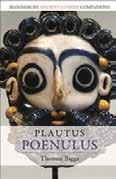
Plautus: Poenulus
Thomas Biggs, University of St Andrews, UK
Plautus’ Poenulus (Little Carthaginian) is a work of staggering literary and historical significance Performed in the long shadow of Rome’s traumatic struggle with Hannibal’s Carthage, this play stages the restoration of a Carthaginian family divided through enslavement Set against the backdrop of a Greece marked by comedic expectations and the geography of contemporary imperial conquest, Poenulus presents a tale of Carthaginian heartbreak and heartache to a post-war Roman audience
This book offers an innovative understanding of Poenulus’ place in Roman history and literary culture, helping readers to appreciate the play itself, the complex nature of Plautine authorship, and the cultures of performance in Republican Rome Most of the book explores the play as a performance, from its unique and strikingly self-aware prologue to the actors' call for applause in the final line The longest chapter examines the play’s afterlives in the Renaissance and early Modern period, including little-known revivals and adaptations in Ferrara, Rome, and Cambridge Over the centuries, people have found in Poenulus a script well suited to active learning in the Latin classroom, a text readymade to support new political ideologies, and a dramatized vision of the world that accorded with processes of racialization in Europe as reengagement with the classical past coincided with the expansion of the slave trade and the objectification of Black Africans That one play has been seen to support and subvert the same outlooks and practices from the third century BCE to the present is a testament to the enduring power of Plautine verse
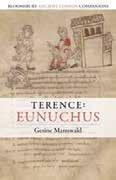
Terence: Eunuchus
Gesine Manuwald, University College London, UK
Terence s Eunuchus (first shown on stage in the second century BCE) was extremely successful at its first performance and has been influential ever since, having inspired allusions and remakes by writers and artists from the ancient world into the modern period This success may be partly due to the fact that the play has a number of ‘Plautine’ elements, such as effective comedy and dramaturgy At the same time, the piece includes actions that are ethically problematic at least from the point of view of a modern audience, especially the reported rape of a young woman Thus, this drama is an intriguing example of how a comedy can present attractive entertainment and raise serious issues, both of which contribute to the continuing fascination that Terence’s Eunuchus evokes
Gesine Manuwald analyses the Eunuchus in its transmitted form as a piece of Roman Republican dramatic literature, looking at: the playwright’s role within the Roman comic tradition and his engagement with contemporary dramatists; the structure and effectiveness of the plot as well as the characterization of the protagonists and the comedy’s themes; and the extent to which these might have resonated with a contemporary audience On this basis, aspects of the history of the play’s reception can be traced, starting in the ancient world, including the late-antique commentary on the play by Donatus, illustrations in early manuscripts as well as literary and artistic reflections in the early modern and modern periods
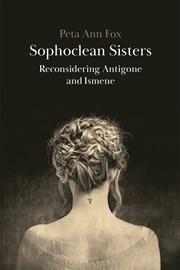
Sophoclean Sisters
Reconsidering Antigone and Ismene
Peta Ann Fox, Rhodes University, South Africa
This book offers a re-evaluation of Ismene in Sophocles’ Antigone, challenging the traditional view of her as merely a foil to her sister, Antigone Through a close analysis of key passages, it argues for a more nuanced understanding of Ismene’s character, emotions and motivations, asserting that she is as compelling and fully realised as Antigone This work contributes to ongoing debates about classical texts and their reception, highlighting the need to re-examine canonical works with fresh perspectives
While Antigone has often been celebrated as heroic, Ismene is typically dismissed as timid and conventional This book disrupts such interpretations, examining how the relationship between the sisters reveals deeper complexities Engaging with contemporary interdisciplinary approaches, it explores how historical ideologies have shaped the understanding of Antigone It situates Ismene within broader conversations about agency, individuality and the representation of women in classical literature
UK September 2026 US September 2026
232 Pages • 9 bw illus
PB 9781350515987
£28 99 / $39 95
HB 9781350515949 • £85 00 / $115 00
ePDF 9781350515956 £76 50 / $103 50
ePub 9781350515963 • £76 50 / $103 50 Bloomsbury Academic
UK September 2026 • US September 2026
224 Pages • 30 bw illus
PB 9781350438439 • £28 99 / $39 95
HB 9781350438392 • £85 00 / $120 00
ePDF 9781350438408 • £76 50 / $108 00
ePub 9781350438415 £76 50 / $108 00
Bloomsbury Academic
to
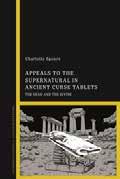
The Dead and the Divine
Charlotte Spence, University of Exeter, UK
Examining how people understood the role of the dead and the divine in the curse tablets they created, this book provides unparalleled insights into the lives of those often underrepresented in ancient sources. Looking at these small, handwritten inscriptions in Celtic, Coptic, Greek, Latin and Punic allows us to see into the lives and imaginations of the broader population, including women and enslaved peoples, from the sixth century BCE to the seventh century CE
The book primarily focuses on the roles of the restless dead and divine in curse tablets, from actively carrying out a curse (physically or metaphysically), to their use analogically, and their function as intermediaries and witnesses By placing the focus always on the individual, Charlotte Spence enhances our understanding both of the lives of ancient individuals and their conceptions of the dead
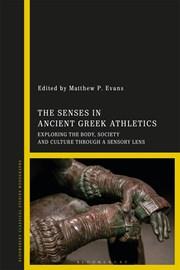
The Senses in Ancient Greek Athletics
Exploring the Body, Society and Culture through a Sensory Lens
Edited
by Matthew P Evans, University of Warwick, UK
Combining ancient sports research and sensory studies, this volume unveils new insights into the societal and cultural history of Greek athletics From the touch and smell of ancient substances and the taste of the athletic diet, to the sight of muscular bodies and the endurance of extreme temperatures, this book offers a unique glimpse into the vivid sensory world of Greek athletics By examining these sensory experiences, readers will gain profound insights into the connections forged between athletes and their natural surroundings, the influence of imperial power and the significance of athletics within Greek poleis and ancient literature
This collection of thought-provoking chapters explores topics such as the importance of the relationship between Roman emperors and Greek athletics; the use and experience of strigils, oil and dust in athletic contexts; and the transformative power of the sensory experience as featured in classical literature Emperor Julian (331-363 CE) is one such example of this, whose understanding of the senses is grounded in an Iamblichean theory of moral psychology and whose writing touches on the multi-sensory experience of these spectacles This book analyses this perspective, asking to what extent these sense-perceptual experiences made athletic contests a beneficial civic institution
NEW IN PB
COLLECTIONS
UK August 2026 • US August 2026
256 Pages 52 bw illus and 8 bw tables
HB 9781350240858 • £90 00 / $120 00
PB 9781350240865 £28 99 / $39 95
ePDF 9781350240872 • £81 00 / $108 00
ePub 9781350240889 • £81 00 / $108 00
Bloomsbury Academic
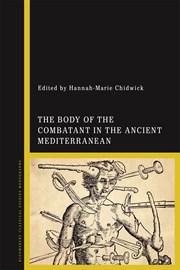
The Body of the Combatant in the Ancient Mediterranean
Edited by Hannah-Marie Chidwick, University of Bristol, UK
This volume explores a broad range of perceptions, receptions and constructions of the soldierly body in the ancient world, putting the notion of embodiment at the forefront of its engagement with ancient warfare The 10 chapters presented here respond directly to the question of how war was embodied in antiquity by drawing on detailed case studies to examine the sensory and bodily experience of combat across wide-ranging time periods and geographies, from classical Greece and Rome to Roman Britain and Persia Together they illustrate how the body in war is a vital universal element that unites these vastly different contexts
Although the centrality of the human body in war-making was recognized in antiquity, a body-centric approach to combat has yet to be widely adopted in modern Classical Studies This collection brings together new research in ancient history, classical literature, material culture, bioarchaeology and art history within a theoretical framework drawn from recent developments in War Studies that places the body front and centre The new perspectives it offers on brutality in battle, the physical expression of warrior identity, and post-combat remembrance and recovery challenge readers to re-assess and expand their existing ideas as part of a broader ongoing ‘call to arms’ to revolutionize the study of ancient warfare in the 21st century
UK September 2026 US September 2026
320 Pages • 18 bw illus
HB 9781350380646 £100 00 / $135 00
PB 9781350380653 • £28 99 / $39 95
ePDF 9781350380660 £0 00 / $0 00
ePub 9781350380677 • £0 00 / $0 00
Bloomsbury Academic
Ancient Environments
UK September 2026
• US September 2026
232 Pages • 17 bw illus
PB 9781350451919
• £28 99 / $39 95
HB 9781350451872 • £85 00 / $115 00
ePDF 9781350451889 • £76 50 / $103 50
ePub 9781350451896 • £76 50 / $103 50
Bloomsbury Academic
COLLECTIONS
Ancient Environments
UK August 2026 • US August 2026
256 Pages • 14 bw illus
HB 9781350383616 • £90 00 / $120 00
PB 9781350383647 • £28 99 / $39 95
ePDF 9781350383623 • £81 00 / $108 00
ePub 9781350383630 • £81 00 / $108 00
Bloomsbury Academic
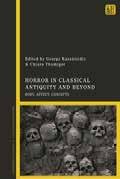
Edited by Chiara Thumiger, Kiel University, Germany & George Kazantzidis, University of Patras, Greece
This open-access volume is the first to explore systematically and comprehensively the concept and category of ‘horror ’ in antiquity. The contributors retrieve the ancient grammar of horror by paying equal attention to its affective and cognitive dimensions, and by looking at it as an embodied, enactive and full-rounded existential experience They explore how horrifying experiences in antiquity are construed as embodied events while being conceptually rooted in cultural frameworks They also showcase the ways in which the body itself can turn into a source of deep horror, be it in literary or medical texts and traditions in the Greek and Roman world, from the classical period to late antiquity
While maintaining a firm awareness of the fact that ‘horror ’ , a largely post-Romantic concept, is not unproblematic when applied to Graeco-Roman antiquity, this collection of studies shows that our Graeco-Roman past can shed substantial light on the ways in which the horrific is understood today, as a category of art but also of life itself
The eBook editions of this book are available open access under a CC BY-NC-ND 4 0 licence on bloomsburycollections com Open access was funded by the Exzellenzcluster ROOTS, Christian-Albrechts-Universität zu Kiel (Germany)
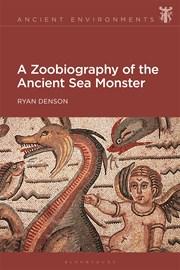
A Zoobiography of the Ancient Sea Monster
Ryan Denson
Examining a vast corpus of literary references and artistic representations, this volume offers the first comprehensive study of the ketos - the sea monster imagined by the ancient Greeks and Romans.
The chapters examine the three central traditions of thought that existed about this imaginary animal in Graeco-Roman culture The first tradition concerns the ketos as a divinely associated monster: a force aligned with marine gods (chiefly Poseidon) and one which was fought by Heracles and Perseus The second tradition features the ketos in more naturalised contexts, as depicted among ancient geographers and historians, as a type of monster roaming the distant waters of the Atlantic and Indian Oceans The third tradition concerns the fusion of the ketos with Leviathan and the other Old Testament sea monsters in the minds of early Christians Accordingly, this classical sea monster became the image of the creature that swallowed Jonah, and, alternatively, a monster associated with the Devil and cosmological evil
While other monsters of Graeco-Roman mythology, such as the Minotaur and Medusa, are household names in modern popular culture, the ketos has effectively been lost in the modern imagination Yet it was no small part of the Graeco-Roman imagination It was this fantastic sea beast that so haunted ancient mariners, and in turn, which contributed to ancient perceptions of the marine world as a profoundly alien and hostile environment
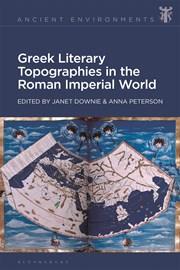
Greek Literary Topographies in the Roman Imperial World
Edited by Janet Downie, University of North Carolina at Chapel Hill, USA & Anna Peterson, Penn State University, USA
Focusing on the Greek world during the high Roman Empire between the 1st and 3rd centuries CE, this edited volume examines the representation of space in literary, rhetorical, and mythographic texts of the period Authors under discussion include major figures such as Dio of Prusa, Aelius Aristides, Arrian, Lucian, and Philostratus Texts by Apollodorus, Alciphron, Aelian, Artemidorus, and Pausanias also receive attention, along with the Alexander Romance and Egyptian apocalyptic narratives Attending to the relationship between mobility and cultural rootedness, each chapter examines how Greek writers of the imperial era constructed and represented the multi-temporal landscapes of their contemporary world
This edited volume contributes to a growing interest in the topographical imagination of the ancient Mediterranean The Roman Empire was a world of vast trade networks, cosmopolitan culture, and high elite mobility, making geography an essential component of the language of power and culture Volume contributors present a composite picture of how imperialera Greek writers constructed and curated topographies of the Greek world – urban, rural, cultic, and monumental – to tell new stories about Hellenic space and its place within the broader empire
Bloomsbury Ancient Politics
UK August 2026 • US July 2026
240 Pages • 3 bw images
PB 9781350358508 • £28 99 / $39 95
HB 9781350358461 • £85 00 / $115 00
ePDF 9781350358478 • £76 50 / $103 50
ePub 9781350358485 • £76 50 / $103 50
Bloomsbury Academic
Bloomsbury Ancient Politics
UK August 2026 • US July 2026
280 Pages • 3 bw illus
PB 9781350358553 • £28 99 / $39 95
HB 9781350358515 • £85 00 / $115 00
ePDF 9781350358522
• £76 50 / $103 50
ePub 9781350358539 • £76 50 / $103 50
Bloomsbury Academic
COLLECTIONS
Bloomsbury Ancient Politics
UK August 2026
• US August 2026
Popular Political Participation From Archaic Greece to the Late Hellenistic Period
The Assemblies of the Greek Cities beyond Athens
Edited by Thierry Oppeneer, Ghent University, Belgium & Arjan Zuiderhoek, Ghent University, Belgium
This volume studies popular assemblies in Greek cities from Homeric to late Hellenistic times Greek poleis were among the most politically inclusive societies in premodern history, primarily because via their public assemblies, most or all adult male citizens beyond the elite could participate in politics In those cities the Greeks called democracies, the assembly even functioned as the chief decision-making institution In this volume, an international team of experts explores assemblies in Greek cities mostly beyond the already well-studied case of Classical Athens, focussing on topics like the origins of assembly politics in Homeric communities, the size of assemblies, assemblies in Classical oligarchic poleis, assemblies in Hellenistic cities (traditionally viewed as no longer fully democratic), and the comparative study of Greek assemblies and participatory institutions in other societies
A companion volume (Popular Political Participation from the Early Roman Empire to Late Antiquity: The Assemblies of the Greek Cities beyond Athens Volume II) explores assemblies in Greek cities under Rome until the late third century CE In both volumes, the emphasis is on the notion that assemblies were an essential contributing factor to the institutional success and longevity of the Greek city Together they suggest that the assembly ought to be a key component of any explanation for the remarkable resilience of the polis as a system of government through more than a millennium of ancient history
240 Pages
PB 9781350473645 • £28 99 / $39 95
HB 9781350473607 • £85 00 / $115 00
ePDF 9781350473614 • £76 50 / $103 50
ePub 9781350473621 • £76 50 / $103 50
Bloomsbury Academic
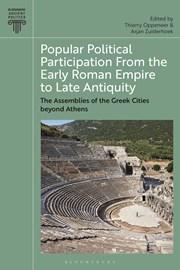
Popular Political Participation From the Early Roman Empire to Late Antiquity
The Assemblies of the Greek Cities beyond Athens
Edited by Thierry Oppeneer, Ghent University, Belgium & Arjan Zuiderhoek, Ghent University, Belgium
This volume examines popular assemblies in Greek cities under Roman rule up to the late third century CE Greek poleis were among the most politically inclusive societies in premodern history, primarily because via their public assemblies, most or all adult male citizens beyond the elite could participate in politics In those cities the Greeks called democracies, the assembly even functioned as the chief decision-making institution In this volume, an international team of experts explores the roles of assemblies amid increasing oligarchic pressures and within the framework of an autocratic empire The chapters explore topics such as civic honours, the collaboration between council and assembly, the differing perspectives preserved in our sources, political discourse, and the impact of Roman conquest, governors and law
A companion volume (Popular Political Participation from Archaic Greece to the Late Hellenistic Period: The Assemblies of the Greek Cities beyond Athens Volume I) traces the institution’s development from Homeric Greece to the end of the Hellenistic age Throughout both volumes, the emphasis is on the notion that assemblies were an essential contributing factor to the surprising institutional success and longevity of the Greek city Together they suggest that the assembly ought to be a key component of any explanation for the remarkable resilience of the polis as a system of government through more than a millennium of ancient history
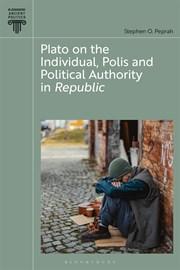
Plato on the Individual, Polis and Political Authority in Republic Stephen O Peprah, University of Cambridge, UK
Offering an in-depth examination of the political philosophy of Plato’s Republic, Stephen O Peprah challenges the prevalent scholarly interpretation that misreads and underestimates Plato’s view of the status and role of nonphilosophical citizens Rather than seeing the ordinary human beings who make up the civic population as servile to the select philosophical elite, the argument is not only that they make an important contribution to the polis based on their moral, epistemic, and somatic competences, but that the political community serves their well-being
Grounded in recent work on Plato’s political philosophy and within Plato’s contractarian commitment (koinonia) in Book II of Republic, this study shows that the individual and the polis have positive, if not equal, standing Each is positively dependent on the other, and political authority of the philosopher-rulers is justified to create enabling conditions to facilitate this mutual interdependence And so, by arguing that Plato’s just society – Kallipolis – evolves from the collaborative efforts of individuals who aim to deal with a common human predicament (insufficiency), Peprah reveals that Platonic political theory is engineered to be a more inclusive system than previously thought This study is an important reassessment that shows the artisans of Republic as possessing individual and political agency
Ancient Commentators on Aristotle
UK July 2026 • US July 2026
296 Pages
• 18 bw imgs
PB 9781350531284 • £28 99 / $39 95
HB 9781350531246 • £85 00 / $115 00
ePDF 9781350531253 • £76 50 / $103 50
ePub 9781350531260 • £76 50 / $103 50
Bloomsbury Academic
Translated by Chiara Militello
Olympiodorus the Younger was perhaps the last non-Christian philosopher to teach publicly in Alexandria In this commentary, he studies Aristotle’s views on topics ranging from the nature of the sea to the causes of winds, halo, and rainbow As a Platonist, Olympiodorus occasionally promotes interesting interpretations, for instance attributing to Aristotle the thesis that the sea is the entirety of water, even though Aristotle had stated the opposite
With detailed notes and supporting contextual introduction, plus Greek and English indices, this translation will be of interest to students of ancient Greek sciences in general and Aristotle’s Meteorology in particular
UK August 2026 • US August 2026
176 Pages • 32 bw illus
PB 9781350572119 • £9 99 / $12 95
ePDF 9781350572133 • £8 99 / $11 65
ePub 9781350572126 • £8 99 / $11 65
Bloomsbury Academic COLLECTIONS
UK July 2026 • US July 2026
288 Pages
HB 9781350358713
• £85 00 / $115 00
PB 9781350358751 £28 99 / $39 95
ePDF 9781350358720 • £76 50 / $103 50
ePub 9781350358737 • £76 50 / $103 50
Bloomsbury Academic
Caroline K Mackenzie, Independent Scholar and Private Tutor, UK
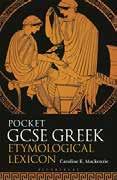
An essential tool for the learning of Classical Greek, based around OCR s GCSE word list (DVL) and that of the ICCG Greek words accompanied by their parts of speech are translated and given a set of derivatives, both the familiar and the fascinating, which act as a helpful aid in memorising vocabulary Space is included for readers to annotate as they learn – and note other derivatives they may come across too!
Lively and accessible, this lexicon will appeal to students, philologists and Hellenophiles An engaging introduction begins the exciting odyssey through 425 word entries, many of which are accompanied by fun, didactic footnotes
The text is imaginatively punctuated with 32 illustrations by Barbarann Lang
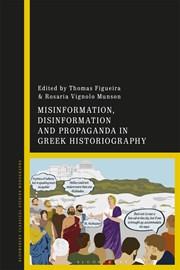
Misinformation, Disinformation, and Propaganda in Greek Historiography
Edited by Thomas Figueira, Rutgers University, USA & Rosaria Vignolo Munson, Swarthmore College, USA
Mindful of the present state of discourse on ancient Greek historiography, this edited volume explores the major themes of pursuing factuality, managing witness/source bias, falling into historical error and creating or confronting propaganda. Even the greatest ancient historians, striving for factuality and truthfulness, must commence from subjectivity Their works, when studied closely, reveal biases and conceptual or ideological distortions – their own and others’ For this reason, Misinformation, Disinformation and Propaganda in Greek Historiography strives to evaluate the issues which stand in the way of factuality in historical texts and records
The contributors, all experts in the field, explore and question the accuracy of the historiography in question; the ancient author ’s fidelity to their sources; and the evidence presented in relation to inherited oral traditions In this way, an ancient author ’s methodology is evaluated in terms of its probability, the awareness of its cultural variation and the influences which we can deduce within the texts This volume presents an important contribution to the study of what constitutes fact and fiction within ancient Greek historiography
UK September 2026
208 Pages
HB 9781350171633
• US September 2026
• £85 00 / $115 00
PB 9781350456020 • £28 99 / $39 95
ePDF 9781350171640 • £76 50 / $103 50
ePub 9781350171657 • £76 50 / $103 50
Bloomsbury Academic
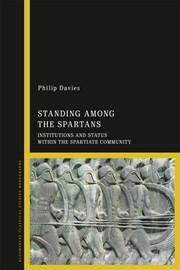
Philip John Victor Davies, University of Nottingham, UK
Conformity, uniformity, institutionality, exceptionality – each of these terms encapsulates an aspect of the common perception of Sparta, both among scholars and in the popular imagination
This volume seeks to interrogate how rightly we may apply these terms to the Spartan citizen community in the classical period (approximately 500-350 BC) and reveals a much greater level of differentiation within this social group than is often assumed
Drawing upon recent scholarship on Sparta, theoretical and methodological discussions from within the wider fields of classical studies and ancient history, and approaches to status and institutions developed in the social sciences, Philip John Victor Davies examines the diverse factors which influenced the standing of individuals within the Spartiate community and assesses how great a role institutions played in determining a Spartiate’s standing and to what extent Sparta was, as ancient accounts would suggest, significantly more institutionalized than other Greek societies Placing Sparta in the context of the renewed interest in institutions and their social significance represented across multiple disciplines by the ‘New Institutionalist turn’, he presents a more dynamic understanding of the internal life of the Spartiate community, with a nuanced appreciation of the dimensions and limits of Sparta’s exceptionality
COLLECTIONS
UK July 2026 • US July 2026
280 Pages
HB 9781350471788 • £90 00 / $120 00
PB 9781350471825 • £28 99 / $39 95
ePDF 9781350471795 • £81 00 / $108 00
ePub 9781350471801 • £81 00 / $108 00
Bloomsbury Academic
The Economics of War in Ancient Greece
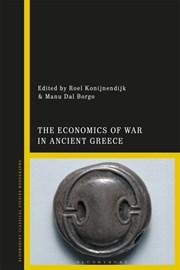
Edited by Roel Konijnendijk, University of Oxford, UK & Manu Dal Borgo, University College London, UK
In recent decades the study of the ancient economy and ancient warfare have both been transformed by ground-breaking new studies and methodological approaches Offering a selection of cutting-edge research on the interlocked themes of economics and war, this edited volume explores how armed conflict affected markets and economic opportunities in ancient Greece From the destruction of cities to the emergence of new fiscal institutions, war prompted massive changes to economic conditions throughout the ancient Mediterranean and beyond – some with lasting consequences for the organisation of states and armies
The contributors look beyond the old paradigms of finance and logistics, and broaden the discussion to address themes such as gender, literary culture and the Persian Empire More specifically, they analyse how ancient rulers and states struggled to mobilise resources and what they did to tackle fiscal challenges to wage war more efficiently, thereby demonstrating how matters of war can be an invaluable source of information on the way ancient economies worked and developed As a result, this book shows how the study of economic factors – too often neglected in works on ancient warfare – allows a deeper understanding of military cultures and events in ancient Greece
Bloomsbury Studies in Classical Reception
UK June 2026
• US June 2026
• 80 bw illus & 10 colour illus
288 Pages
PB 9781350548480 • £28 99 / $39 95
HB 9781350548442 • £85 00 / $115 00
ePDF 9781350548459 • £76 50 / $103 50
ePub 9781350548466 • £76 50 / $103 50
Bloomsbury Academic
Bloomsbury Studies in Classical Reception
UK June 2026 • US June 2026
• 4 bw illus
232 Pages
PB 9781350536050
• £28 99 / $39 95
HB 9781350536012
• £85 00 / $115 00
ePDF 9781350536029 • £76 50 / $103 50
ePub 9781350536036 • £76 50 / $103 50
Bloomsbury Academic
COLLECTIONS

UK July 2026 • US July 2026
320 Pages
HB 9781350574717 • £75 00 / $100 00
PB 9781350574700 £24 99 / $34 95
ePDF 9781350574724 • £22 49 / $31 45
ePub 9781350574731 • £22 49 / $31 45
Bloomsbury Academic
Dickens and the Classics
Christian Lehmann, Bard High School Early College, USA
This book examines Charles Dickens’s underappreciated engagement with Classical knowledge and its role in his cultural commentary By treating his novels as collaborations with illustrators, particularly Phiz, it explores how Dickens drew on Ancient Greek and Roman myths, history and art to engage with 19th-century debates Through detailed analysis of both text and illustrations, the book reveals the complexity of Dickens’s Classical references and their significance in shaping broader cultural conversations
Each chapter pairs novels such as David Copperfield, Bleak House and A Tale of Two Cities with Dickens’s journalism, letters and short fiction, supported by analysis of a range of illustrations Christian Lehmann challenges the notion that Victorian Classics were the preserve of an elite, showing instead how Dickens adapted a demotic Classicism rooted in burlesque, satire, architecture and popular culture He argues that Dickens’s Classical allusions, often dismissed as superficial, form an integral part of his literary output These references are examined alongside historical developments in the ideology of scientific racism, evolving views on sexual violence, and critiques of imperialism, demonstrating how Dickens reshaped Classical traditions to reflect and critique the cultural and political dynamics of his era
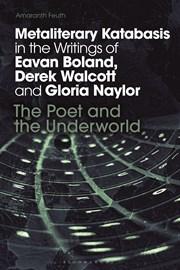
Metaliterary Katabasis in the Writings of Eavan Boland, Derek Walcott and Gloria Naylor
The Poet and the Underworld
Amaranth Feuth, Leiden University, the Netherlands
Focusing on the ancient motif of the descent into the underworld (katabasis), this book examines how three 20thcentury writers – Eavan Boland, Gloria Naylor and Derek Walcott – articulate their poetics and assert their place within the Western literary canon by means of receptions of this motif from Graeco-Roman literature This study examines three key texts published between 1985 and 1990, exploring how these writers – an Irish poet, an AfricanAmerican novelist and a Caribbean poet – employ the allegorical motif of katabasis as a metaliterary instrument Each text is analysed for its receptions of katabasis and its implications for the literary identities of these three authors
Amaranth Feuth also situates these texts within the broader context of each author ’s oeuvre, providing fresh, in-depth analyses of related texts Utilising the methodological framework of Conceptual Metaphor Theory (CMT) and transgeneric narratology, this study compares the deployment of katabasis across different genres and cultural backgrounds In this way, it demonstrates how Boland, Naylor and Walcott use the katabasis motif to challenge and redefine their roles within Western literature This comparative approach reveals how contemporary literature reimagines classical themes to address and expand literary boundaries, while also offering a nuanced exploration of how these authors situate themselves in the history of Western – and world – literature
A Grecian Lad
A E Housman and the Classics
Jennifer Ingleheart
The first book to bring together A E Housman’s poetry and classical scholarship, revealing the deep connections between the two It offers the first full-length study of his Latin elegy for Moses Jackson, including a new translation and commentary on this homoerotic poem’s links to his wider verse The book also provides an original version and close reading of Praefanda, Housman’s little-read yet notorious scholarly article on sexual themes, written in Latin Further, it examines how Tom Stoppard’s The Invention of Love grapples with the tensions in Housman’s dual careers as poet and professor
Housman has long been seen as a man divided the emotional poet of A Shropshire Lad on one hand, and the austere Latinist on the other While he publicly downplayed the classical influences on his poetry, this book interrogates the subtle but intricate classicism woven throughout his work By reading his verse alongside his scholarship, it uncovers a more integrated and complex figure, shedding new light on both his poetry and academic writings
UK January 2026 US January 2026
256 Pages
PB 9781350473386 £28 99 / $39 95
HB 9781350473348 • £85 00 / $115 00
ePDF 9781350473355 £76 50 / $103 50
ePub 9781350473362 • £76 50 / $103 50
Bloomsbury Academic
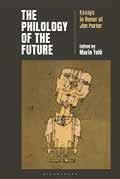
Edited by Mario Telò, University of California, Berkeley, USA
This book gathers a group of scholars whose work has been influenced by the distinctive dialogue between ancient philosophy (and rhetoric) and critical theory promoted by the scholarship of James I Porter A classicist who has pushed classics beyond itself – beyond its traditional boundaries – Porter has demonstrated that antiquity cannot be studied without participating in what is sometimes dismissively labeled “reception ”
The collection here does not simply celebrate the work of a major figure in the field of classics through a series of Porterian writing experiments, but locates the futures of classics in its predisposition to endless transformation, alteration, reconfiguration, and fugitive or exilic deterritorialization Philology is a practice of philosophy in that contact with the ghosts of antiquity and its diachronic manifestations in modernity confronts the interpreter with opportunities for unlearning as well as learning, unthinking as well as thinking, and for engaging with impossibilities as well as possibilities The essays gathered here, unified by these themes, include contributions on ancient philosophy (Democritus, the sophists, Aristotle, and Lucretius); reflections on the sublime, which Porter has pivotally elucidated; interventions on the theme of philology and exile (in Nietzsche, Marx, Freud, and Derrida); and theoretical musings on the “agony of immanence,” the “biomatic,” the “atmospheric,” and the relationship between immigration and classical reception
UK July 2026 • US July 2026
296 Pages • 15 bw illus
PB 9781350548077 • £28 99 / $39 95
HB 9781350548039 • £85 00 / $115 00
ePDF 9781350548046 • £76 50 / $103 50
ePub 9781350548053 £76 50 / $103 50
Bloomsbury Academic
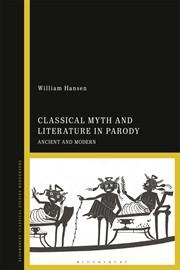
Classical Myth and Literature in Parody
Ancient and Modern
William F Hansen
This book examines the evolution of classical parody, from its origins in ancient Greece and Rome to its resurgence in modern times The book explores two key periods: the first from the sixth century BCE to the second century CE, and the second beginning in the 17th century, continuing today In antiquity, writers like Aristophanes and Lucian parodied their own culture, relying on audiences' deep knowledge of Greek and Roman texts This “insider” parody faded with the rise of Christianity and changes in language
The second era of classical parody emerged during the Renaissance, as classical texts were rediscovered and studied in schools Writers like Charles Cotton in England created “outsider” parody, mocking ancient literature learned in the classroom This book focuses on English-language works, including The Comic Latin Grammar and Victorian burlesque theatre, which drew on classical mythology and history The book also addresses the social and educational changes that shaped classical parody, such as the invention of the printing press and the influence of Renaissance humanism It is the first comprehensive study of anglophone classical parody, revealing how authors through the centuries have reimagined and distorted classical texts for humorous effect
COLLECTIONS
IMAGINES – Classical Receptions in the Visual and Performing Arts
UK May 2026 • US May 2026
288 Pages • 28 bw illus
PB 9781350565890 • £28 99 / $39 95
HB 9781350565852 • £85 00 / $115 00
ePDF 9781350565869 • £76 50 / $103 50
ePub 9781350565876 • £76 50 / $103 50
Bloomsbury Academic
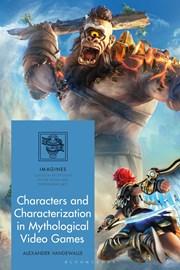
Characters and Characterization in Mythological Video Games
Alexander Vandewalle, Ghent University, Belgium
The first book-length study on mythology reception in video games, this monograph examines how video games characterize mythological characters from the perspectives of classical reception and game studies Characters are vital to most stories, and many video games They allow us to enter the fiction of a game, and facilitate our embodiment in the game world Over time, what are initially blank slates transform into fictional existents with well-developed personalities and goals In this context, narratology uses the term ‘characterization’ to refer to how character traits are ascribed to the entities we call ‘characters’
After establishing a theoretical framework, this book moves to six case studies that each analyze mythological characters in a particular game: Smite, Assassin’s Creed Odyssey, Immortals Fenyx Rising, God of War, Theseus and Asgard’s Wrath 2 The scope of these studies is diverse, incorporating examples from mainstream, indie and virtual reality gaming While the book’s main focus lies with Greco-Roman mythology, it also includes games with Norse and Egyptian settings, or with playable characters from a wide range of international mythological traditions Through these case studies, Alexander Vandewalle leads his readers to an understanding of different modalities or ‘languages’ of mythology reception in games He argues for a striking diversity in mythological games and their characters, and illuminates how the relationship between games and antiquity is fundamentally one of continuous dialogue and play
COLLECTIONS NEW IN PB
IMAGINES – Classical Receptions in the Visual and Performing Arts
UK September 2026
• US September 2026
• 30 bw illus
272 Pages
HB 9781350468573
• £85 00 / $115 00
PB 9781350468610
• £28 99 / $39 95
ePDF 9781350468580
• £76 50 / $103 50
ePub 9781350468597 • £76 50 / $103 50
Bloomsbury Academic
IMAGINES – Classical Receptions in the Visual and Performing Arts
UK August 2026 • US August 2026
256 Pages • 30 bw illus
HB 9781350469860 • £85 00 / $115 00
PB 9781350469907 • £28 99 / $39 95
ePDF 9781350469877 • £76 50 / $103 50
ePub 9781350469884 • £76 50 / $103 50
Bloomsbury Academic
COLLECTIONS
IMAGINES – Classical Receptions in the Visual and Performing Arts
UK August 2026
• US August 2026
216 Pages • 20 bw illus
HB 9781350332416 • £90 00 / $120 00
PB 9781350332454 • £28 99 / $39 95
ePDF 9781350332423 • £81 00 / $108 00
ePub 9781350332430 • £81 00 / $108 00
Bloomsbury Academic
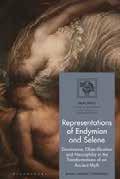
Representations of Endymion and Selene Dominance, Objectification, and Necrophilia in the Transformations of an Ancient Myth
Anna Chiara Corradino, Tor Vergata University of Rome, Italy
A focused study of an ancient myth and its reception, which provokes new consideration of how myth in general can challenge social norms. Analyzing the visual and literary transformations of the myth of Endymion and Selene, Anna Chiara Corradino argues that this myth becomes a valuable tool for understanding the cultural problematization and censorship of female sexuality, as well as the marginalization of alternative forms of male sexuality The myth's key themes, of dominant femininity, reified masculinity and female necrophilia, are shaped through the centuries from the core story of Selene, the goddess of the Moon, falling in love with a mortal shepherd, Endymion, and granting him eternal sleep so she can kiss him every night
In five core sections focusing on the archaeology of the myth in the ancient world, the art of the Renaissance to Baroque periods, and modern art and film, Corradino traces the way the relationship between the two 'lovers' embodies the taboo topic of the eroticization of the sleeping and/or dead male body, and the suppressed desire of female domination and dominance This research breaks new ground by displaying how these marginal desires have always challenged normativity and have had a profound impact on and through multiple receptions
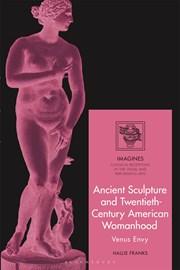
Ancient Sculpture and Twentieth-Century American Womanhood
Venus Envy
Hallie Franks
This book examines the reception of Graeco-Roman sculptures of Venus and their role in the construction of the body aesthetics of the “fit” American woman in the decades around the turn of the 20th century In this historical moment, 19th-century anthropometric methods, the anti-corset dress reform movement and early fitness culture were united in their goal of identifying and producing healthy, procreative female bodies These discourses presented ancient statues of Venus – most frequently, the Venus de Milo – as the supreme visual model of a superior, fit, feminine physique
Venuses had long been symbols of beauty, but the new situation of Venus statues as an aesthetic and moral destination for women set up a slippage between ideal sculpture and living bodies: what did it mean for a woman to embody – or to try to embody – the perfect health and beauty of an ancient statue? How were women expected to translate this model into flesh? What were the political stakes to which this vision of a nation of American Venuses was bound? Who was believed to conform to this ideal, and who was excluded from it? In taking on these questions, Franks engages with physical culture and dress-reform media, modern artwork that adapts Graeco-Roman traditions, anthropological texts, art histories of ancient Greece, film, advertising and medical reporting on women’s health
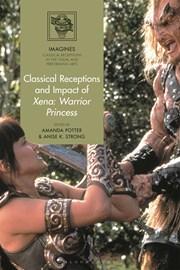
Classical Receptions and Impact of Xena
Warrior Princess
Edited
by Amanda Potter, University of Liverpool, UK & Anise K Strong, Western Michigan University, USA
Presenting a wide range of new scholarly approaches, this is the first volume to critique the highly influential television series Xena: Warrior Princess Based on the online international 2021 conference on Xena: Warrior Princess, this book offers a critical overview of the series' ground-breaking impact and discusses why it has maintained its appeal
Contributors from across the world include perspectives from classical reception studies, queer studies and fan studies to examine the influence of ancient Mediterranean mythology and history in the series and, in turn, how the series shaped the viewer ’s understanding of the classical past Significantly, there are also studies of Xena’s depiction as a barrier-smashing heroine, and an examination of how the series paved the way for portrayals of LGBTQ+ relationships on mainstream television The legacy of the series is seen in how it has continued to shape modern views about classical antiquity and how it laid the groundwork for subsequent series and films representing the ancient world
UK August 2026 US August 2026
288 Pages
PB 9781350583405
£28 99 / $39 95
HB 9781350583375 • £85 00 / $115 00
ePDF 9781350583382 £76 50 / $103 50
ePub 9781350583399 • £76 50 / $103 50 Bloomsbury Academic
COLLECTIONS
UK September 2026
272 Pages
HB 9781350357600
PB 9781350357648
• US September 2026
• £85 00 / $115 00
• £28 99 / $39 95
ePDF 9781350357617
• £76 50 / $103 50
ePub 9781350357624 £76 50 / $103 50
Bloomsbury Academic
COLLECTIONS
Bloomsbury Neo-Latin Series:
Studies in Early Modern Latin
UK May 2026 • US May 2026
224 Pages
PB 9781350330832 • £28 99 / $39 95
HB 9781350330795 • £85 00 / $115 00
ePDF 9781350330801 • £0 00 / $0 00
ePub 9781350330818 • £0 00 / $0 00
Bloomsbury Academic
Akrasia and the Catullan Lover
Resisting Reason in Republican Rome
Leah O’Hearn, Maynooth University, Ireland
Exploring how the Roman poet Catullus portrays erotic desire as a problem of self-control, Leah O’Hearn argues that Catullus presents himself as a lover plagued by akrasia (the failure to act on better judgement) drawing on philosophical models, particularly Aristotle’s, to frame his emotional conflict Offering new insights into Roman masculinity and selfhood in the late Republic, this book follows the full range of Catullus’ collection from the familiar Lesbia poems to the Juventius cycle, friendships, rivalries and mythological narratives
Positioning Catullus within a broader literary engagement with philosophical thought, this book contributes to the growing field of classical emotion studies by tracing how conflicting desires were staged and moralised in Roman poetry In doing so, it reveals how Catullus conflicted speaker resists philosophical ideals of rational self-mastery, offering instead a poetic script for loving too much, regretting it, and doing it again anyway
Lucian and the Atticists
Linguistic Satire in the Second Sophistic David W F Stifler, Independent Scholar, USA
This book focuses on Lucian of Samosata, a Syrian writer of the Greek language in the second century CE, and his engagement with contemporary debates regarding the form and register of language best suited to composing Greek literature in the Roman Empire Many authors of the period practised writing in a revived version of Attic Greek, the dialect used in classical Athenian rhetoric, philosophy and drama of the fifth and fourth centuries BCE However, this book argues that Lucian distinguished himself from other writers, including those who also commented extensively on the linguistic dimensions of classical reception, through his self-aware, humorous approach to sociolinguistics
As Stifler demonstrates, the focal point of much of Lucian’s satire is at the intersection of, on the one hand, vocabulary, syntax and usage, and on the other hand, cultural, racial and political identity In Stifler ’s view, a crucial component of Lucian’s satire is in fact sociolinguistic, constituting a complex but ultimately coherent ideology of Atticism expressed through multiple perspectives, or personae, and comprising a sophisticated commentary on the sociolinguistic imaginaries of Lucian's period The result is Lucian’s approach to integrating and negotiating his authorial persona, as a non-Greek practising Greek sophism, by decoupling linguistic expertise from ethnic identity
OPEN ACCESS
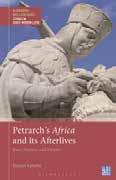
Petrarch’s Africa and Its Afterlives
Race, Nation, and Empire
Samuel Agbamu, University of Reading, UK
This open access monograph sheds new light on the epic by focusing on its importance as a vector for ideas about Africa and Africans between the 14th and 20th centuries In Italy and abroad, the 14th-century poet Petrarch’s Italian verse has secured his place in literary history Yet his greatest triumph was to be crowned in Rome in 1341, ostensibly for his then incomplete Latin epic of the Second Punic War, the Africa However, soon after the poem’s posthumous publication, the Africa fell into relative obscurity The afterlives of the epic remain largely unexplored, particularly with regard to Petrarch’s representation of the Second Punic War and the continent on which Scipio Africanus defeated Hannibal: Africa
The book also explores the contribution of the Africa to early modern and modern discourses of religion, nation and empire
Samuel Agbamu uncovers the role of the Africa in the intellectual archaeologies of nation, empire and race in the modern era and its role as a vector in the transmission and transformation of Roman ideas of empire and identity as reflected in accounts of the Punic War This monograph makes its case through fresh close readings of the Africa, using new methodologies based on Premodern Critical Race Studies and Critical Muslim Studies
Bloomsbury Neo-Latin Series: Early Modern Texts and Anthologies
UK July 2026 • US July 2026
240 Pages
• 3 bw images
PB 9781350551121
• £28 99 / $39 95
HB 9781350551084
• £90 00 / $120 00
ePDF 9781350551091 • £81 00 / $108 00
ePub 9781350551107 • £81 00 / $108 00
Bloomsbury Academic
Bloomsbury Neo-Latin Series: Early Modern Texts and Anthologies
UK July 2026 • US July 2026
272 Pages
PB 9781350588264 • £28 99 / $39 95
HB 9781350588226 • £85 00 / $115 00
ePDF 9781350588233 • £76 50 / $103 50
ePub 9781350588240 • £76 50 / $103 50
Bloomsbury Academic
COLLECTIONS
Bloomsbury Neo-Latin Series: Early Modern Texts and Anthologies
UK July 2026 • US July 2026
240 Pages
HB 9781350261495 • £85 00 / $115 00
PB 9781350261501 • £28 99 / $39 95
ePDF 9781350261518 • £76 50 / $103 50
ePub 9781350261525 • £76 50 / $103 50
Bloomsbury Academic
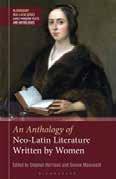
Edited by Stephen Harrison, University of Oxford, UK & Gesine Manuwald, University College London, UK
This anthology showcases Neo-Latin texts produced by women across Europe between circa 1400 and 1800, highlighting their contributions in both poetry and prose Each chapter offers excerpts alongside accessible translations, with introductions and notes that contextualise the texts within their authors’ careers and the intellectual climate of their time The selected works reflect a range of genres and themes, providing insights into women’s lives and their participation in literary culture during the early modern period Examples include letters by Battista Malatesta da Montefeltro and poems by Anna Maria van Schurman
Featuring works from various European countries, including Italy, Spain, Portugal, France, Germany, Scandinavia, the Netherlands and Britain, the anthology is organised chronologically, allowing readers to appreciate the evolution of female voices in Neo-Latin literature The texts presented reflect the diversity of women’s literary contributions and demonstrate the importance of considering a broad spectrum of voices in understanding early modern literary culture
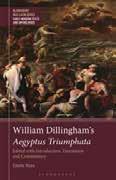
William Dillingham's Aegyptus Triumphata
Edited with Introduction, Translation and Commentary
Estelle Haan, Queen's University Belfast, UK
William Dillingham’s Aegyptus Triumphata (1680) takes as its subject the plagues of Egypt, the crossing of the Red Sea, and Moses’ consequential hymn of thanksgiving to God (Exodus 7–15) This, the first edition of the poem, introduces it to the scholarly community Balancing accessibility with critical and theoretical rigour, it presents the Latin text and a facing English translation, complemented by an Introduction and Commentary that situate the work in relation to: biblical verse-paraphrase; the biblical epic tradition from the late antique to the early modern periods; Dillingham’s Neo-Latin and vernacular corpus; his role as an anthologist and promoter of Neo-Latin verse; and his appropriation of biblical, classical, and Neo-Latin literature
This accomplished, yet hitherto neglected, poem assumes an interesting place alongside late antique and early modern Latin epics inspired by the Old Testament in general and by Exodus in particular Central to the genre is an intertextual engagement with Virgil’s Aeneid Dillingham’s brief epic Romanizes and creatively embellishes its biblical source through authorial commentary, a recourse to epic simile, and, most notably, an experimental engagement with Virgil s poetic corpus and the biblical text’s quasi-Virgilian afterlives
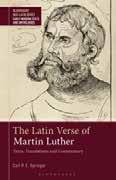
The Latin Verse of Martin Luther Texts, Translations and Commentary
Carl P E Springer, University of Tennessee, USA
Martin Luther wrote a number of Latin poems, mostly using traditional classical metres, over the course of his career He used them to praise friends, insult adversaries and express his faith in times of distress Up until now, Luther ’s Neo-Latin poetry has largely fallen through the disciplinary cracks Literary scholars have traditionally paid more attention to the Latin verse of more celebrated humanist poets such as Petrarch Students of the Reformation have concentrated far more often on Luther ’s prose and his famous German hymns than on his Latin poems Even scholars who are familiar with Luther ’s Neo-Latin poetry have dismissed it as of only marginal significance
As this book demonstrates, Luther ’s Latin verses are valuable cultural products that amply reward scholarly reconsideration Springer ’s volume is the first to provide English translations of all of them It also includes extensive introductions and lineby-line annotations for each of the poems, situating them within their literary traditions and contemporary contexts As such, it enables readers to see that far from being a reformer who more or less repudiated the Classics, or someone who merely dabbled in them, Luther was a confident, even bold, Latin poet, who was serious about working out his own distinctive synthesis between Christianity and the language and literature of the ancient Romans
UK October 2026 US October 2026
232 Pages • 30 colour illus
HB 9781350519404
£20 00 / $27 00
ePDF 9781350519411 • £18 00 / $24 30
ePub 9781350519428 £18 00 / $24 30
Audio 9781350638075 • £16 00 / $21 00
Bloomsbury Academic
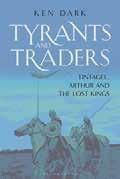
Tintagel, Arthur and the Lost Kings
Ken Dark, University of Cambridge, UK
Discover exciting new research illuminating the most mysterious centuries of British history
How Roman Britain ended is one of the most controversial questions in British history Unique among former Roman citizens in Western Europe, the Britons established long-lived kingdoms, resisting ‘barbarian’ political takeover for centuries Yet so little is known of them from written records that even the names of most of their kings are effectively lost to history
Packed with the latest discoveries and ground-breaking research, Professor Ken Dark brings the fascinating, but mysterious, world of these rulers and their kingdoms to life Archaeological evidence, along with re-analysis of the few existing texts, reveals an unexpectedly sophisticated society, connected to a wider international network of trade and cultural contacts than might until recently have seemed imaginable Ken Dark demonstrates through the latest archaeological discoveries that Tintagel – an eroded coastal stronghold in Cornwall, closely associated with the later legend of King Arthur – was a royal fortress and trading centre of one of the most important British kingdoms of this period
UK July 2026 • US July 2026
288 Pages • 38 bw illus
PB 9781350551077 • £28 99 / $39 95
HB 9781350551039 • £85 00 / $115 00
ePDF 9781350551046 • £76 50 / $103 50
ePub 9781350551053 £76 50 / $103 50
Bloomsbury Academic
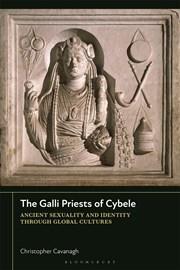
The Galli Priests of Cybele
Ancient Sexuality and Identity through Global Cultures
Christopher Cavanagh, University of Chester, UK
Presenting a study of the Galli priests of the Roman cult of Cybele, the Great Mother goddess, this book examines the archaeological evidence to give a clearer picture of the priesthood The Galli were priests renowned in Antiquity for their crossdressing, mendicant, ecstatic behaviour and their infamous act of self-castration However, most of our understanding of the Galli comes from an incomplete, fragmentary and scathing literary record This book aims to rectify this imbalance by re-assessing them in light of the material evidence, and by comparing them with subsequent cultural groups
Through the use of three comparative case studies from Polynesia, India and North America, this book analyses the ancient social group with these three modern ‘gender variant’ counterparts to highlight the ‘othered’ identity and experience of the Galli The study reveals shared similarities regarding gendered ‘other ’ attire, religious associations and sexual relationships This approach offers a remarkable insight into the Galli cult, and poses questions on how similar human social groups operate, irrespective of time and place
Bloomsbury Publishing Plc
50 Bedford Square
London, WC1B 3DP
UK
T +44 (0)20 7631 5600
F +44 (0)20 7631 5800
E academicsalesUK@bloomsbury.com
Orders & Customer Services
Hachette UK Distribution
Hely Hutchinson Centre
Milton Road
Didcot
OX11 7HH
T +44 (0)1235 759555
E academic@hachette.co.uk
Matthew Emery
Academic & Professional Sales Director, UK and Export
Bloomsbury Publishing Plc
M +44 (0)7979 524704
E matthew.emery@bloomsbury.com
Aline Bischof Sales Administrator
Bloomsbury Publishing Plc
E aline.bischof@bloomsbury.com
Madiha Qureshi
UK & Ireland Sales Assistant
Bloomsbury Publishing Plc
E madiha.qureshi@bloomsbury.com
UK AND IRELAND
Sarah Ailsby
Head of UK & Ireland Sales
Bloomsbury Publishing Plc
M +44 (0)7824 435717
E sarah.ailsby@bloomsbury.com
ADOPTION SALES: South East of England and London
Susannah Spillman
E susannah.spillman@bloomsbury.com
ADOPTION SALES: South West of England, Midlands, and Wales
Francesca Jenkinson
E francesca.jenkinson@bloomsbury.com
ADOPTION SALES: North of England and Scotland
Stephanie Roberts
E stephanie.roberts@bloomsbury.com
EUROPE
Jasmin Atkins
International Sales Manager
Bloomsbury Publishing Plc
T +44 (0)2076 315865
E jasmin.atkins@bloomsbury.com
Scandinavia
Fazi Ramjhun
International Sales Manager
Bloomsbury Publishing Plc
T +44 (0)770 832 4291
E fazi.ramjhun@bloomsbury.com
Central and Eastern Europe
Jacek Lewinson
Nowogrodzka 18m.20
PL-00-511 Warszawa
Poland
M +48 (0)502 603290
E jacek@jaceklewinson.com
Austria, Cyprus, Greece, and Israel
Phil Tyers
Tyers Book Sales Ltd
Kioutachias 7 14231 Nea Ionia, Athens, Greece
T +30 6977 558872
E philip@ptyers.com
Spain, Portugal, and Gibraltar
Charlotte Prout
Iberian Book Services
Sector Islas, 12, 1B 28760 Tres Cantos
Madrid, Spain
T +34 91 8034918
F +34 91 8035936
E cprout@iberianbookservices.com
ADOPTION SALES: Northern Europe
Cristian Vlug
Sales Manager
Bloomsbury Publishing Plc
E cristian.vlug@bloomsbury.com
AFRICA
Middle East and North Africa
Jennifer Ebende
International Sales Executive Bloomsbury Publishing Plc
E jennifer.ebende@bloomsbury.com
Southern Africa (Lesotho, Botswana, Namibia, Republic of South Africa, and Swaziland)
Jonathan Ball Publishers PO Box 33977
Johannesburg 2043
South Africa
T +27 21 469 8900
F +27 21 469 8901
E academic@jonathanball.co.za
Rest of Africa
Tula Publishing Ltd
Wychwood House, 14 Hanborough Business Park
Witney, OX29 8LH, UK
T +44 (0)1993 886719
E julian@tulapublishing.co.uk
ASIA
Chris Cheung
International Sales Manager
Bloomsbury Publishing Plc
E chris.cheung@bloomsbury.com
China
April Zheng
International Sales Representative
Bloomsbury Publishing Plc
T +86 135 2056 3987
E april.zheng@bloomsbury.com
Pakistan
M. Anwer Iqbal
Book Bird
Lower Ground 36B Abdalians Society
Nazaria - e - Pakistan Avenue
Lahore 54770, Pakistan
T +92 42 3595 6161
M +92 313 846 4747
E anwer.bookbird@gmail.com
South Korea
Information and Culture Korea
49, Donggyo-ro 13-gil, Mapo-gu
Seoul 03997
South Korea
T +822 3141 4791
F +822 3141 7733
E cs.ick@ick.co.kr
Philippines
CRW Marketing Services for Publishers, Inc
01 Topaz Road, Greenheights, Barangay San Isidro
Taytay, Rizal, Philippines 1920
T +63 (0)2584 8448 / +63 2660 5480
E crwmarketing@pldtdsl.net
Mongolia
Internom LLC
Inter Office, Amar’s street-4
Sukhbaatar district, 14200 Ulaanbaatar
Mongolia
T +97 (0)6757 77700
E service@internom.mn
LATIN AMERICA AND THE CARIBBEAN
Jim Papworth
itsabook Ltd
T +44 7802848778
E james.papworth@itsabook.com
ADOPTION SALES: Latin America, the Caribbean, and Mexico
Kirby Pendergast
Higher Education Sales Representative
T + 1 212 419 5354
C + 1 646 369 3348
E kirby.pendergast@bloomsbury.com
DIGITAL RESOURCES – INSTITUTIONAL SALES
North and South America
E OnlineSalesUS@bloomsbury.com
UK, Europe, Middle East, Africa, and Asia
E OnlineSalesUK@bloomsbury.com
Australia and New Zealand
E OnlineSalesANZ@bloomsbury.com
BLOOMSBURY OFFICES WORLDWIDE
India, Bangladesh, Nepal, and Sri Lanka
Bloomsbury Publishing India Pvt. Ltd.
DDA Complex, LSC, Building No. 4, 2nd Floor, Pocket C-6&7, Vasant Kunj
New Delhi 110070
India
T +91 11 4057 4957 / +91 11 4057 4954
E academic-in@bloomsbury.com
Australia and New Zealand
Bloomsbury Publishing Pty Ltd
Level 6 387 George St
Sydney 2000 NSW
Australia
T +61 (0)288 204900
E au@bloomsbury.com
USA
Bloomsbury Publishing 1385 Broadway, 5th Floor
New York, NY, 10018
USA
T +1 (0)2124 195407
E askacademic@bloomsbury.com
Canada Login Canada
300 Saulteaux Crescent Winnipeg, MB R3J 3T2
Canada
E custserv@lb.ca
T + 1-800-665-1148
For examination copies in Canada, please contact askacademic@ bloomsbury.com
For all other international queries please contact exportorders@ bloomsbury.com
RIGHTS
Joanna Sharland
Rights Director
E joanna.sharland@bloomsbury.com
Isabel López Ruiz
Senior Rights Manager
China simplified and complex, Spain and Latin America, Portugal and Brazil
E Isabel.LopezRuiz@bloomsbury.com
Alison Faulkner
Rights Manager
Germany, France, Netherlands, Italy, Scandinavia, Balkans, Poland, Czech Republic, Slovakia, Hungary, Greece, Slovenia, Romania, TV and Dramatisation
E alison.faulkner@bloomsbury.com
Isabelle Cowles
Rights Manager
Japan, South East Asia, Central and South Asia, US, Canada and English language globally, Digital E isabelle.cowles@bloomsbury.com
Izabella Pearson
Rights Executive
Turkey, West Asia incl Middle East, Baltics, Ukraine, Africa
E izabella.pearson@bloomsbury.com
Noelle Lee
Rights Assistant
Korea, Permissions and General Inquiries, Rowman & Littlefield
E noelle.lee@bloomsbury.com
Sophie Flint Vázquez
Rights Assistant
Permissions and General Inquiries
E sophie.flintvazquez@bloomsbury.com
We want students to make the most of their time at university; to discover opportunities, succeed in their studies – and to enjoy the journey. Our books and resources support students in developing essential skills and empower them to achieve their goals.






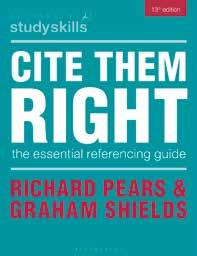



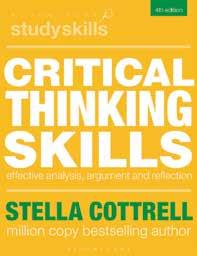

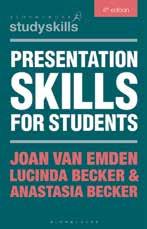
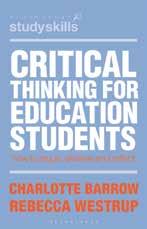


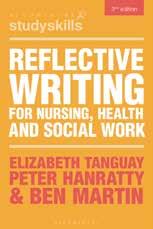




Explore the full series at www.bloomsbury.com/pocketstudyskills



With a new article each Friday, we bring you:
Original thought from our insightful authors
Teaching & research tips
Writing & publishing advice
Book excerpts & interviews
And much more!




There’s plenty to discover including:
Our new Marvel Age of Comics series - why do these stories continue to resonate?
Ruby Cline’s top tips for setting undergraduates up for success
What AI really means for the future of architecture and wider design practices
What’s behind China’s transformation to global superpower bloomsbury.com/academicblog
Bloomsbury