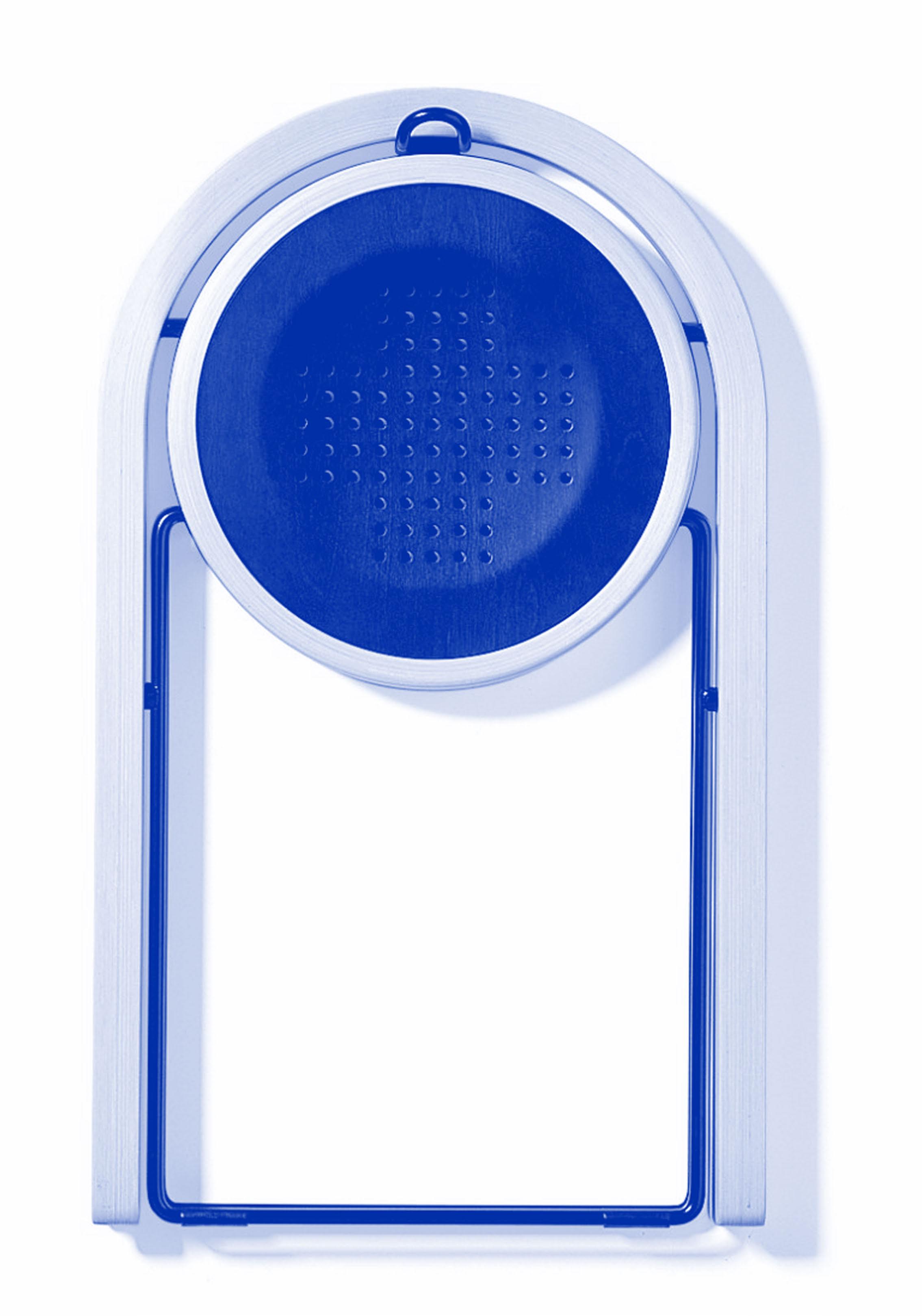
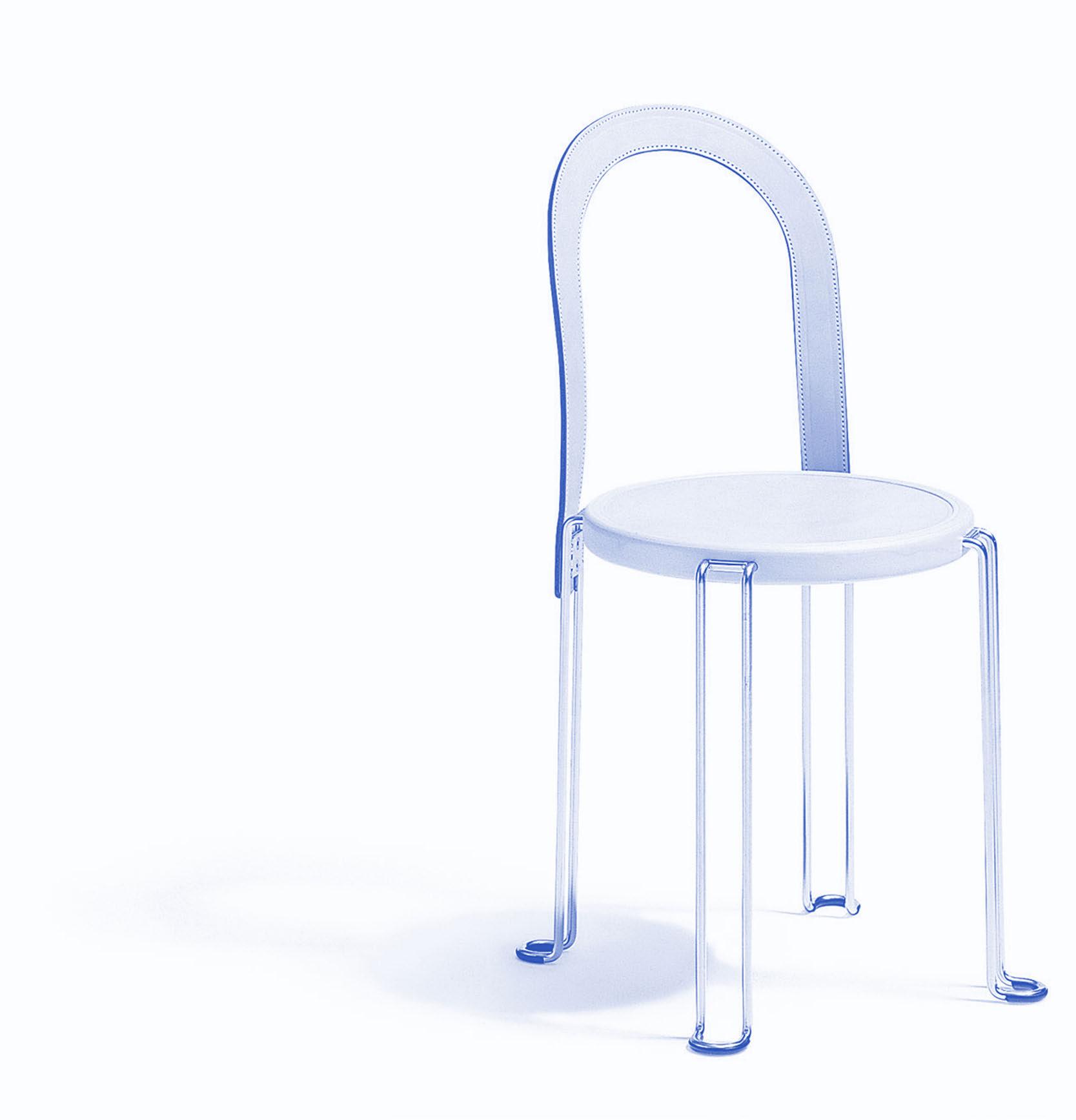
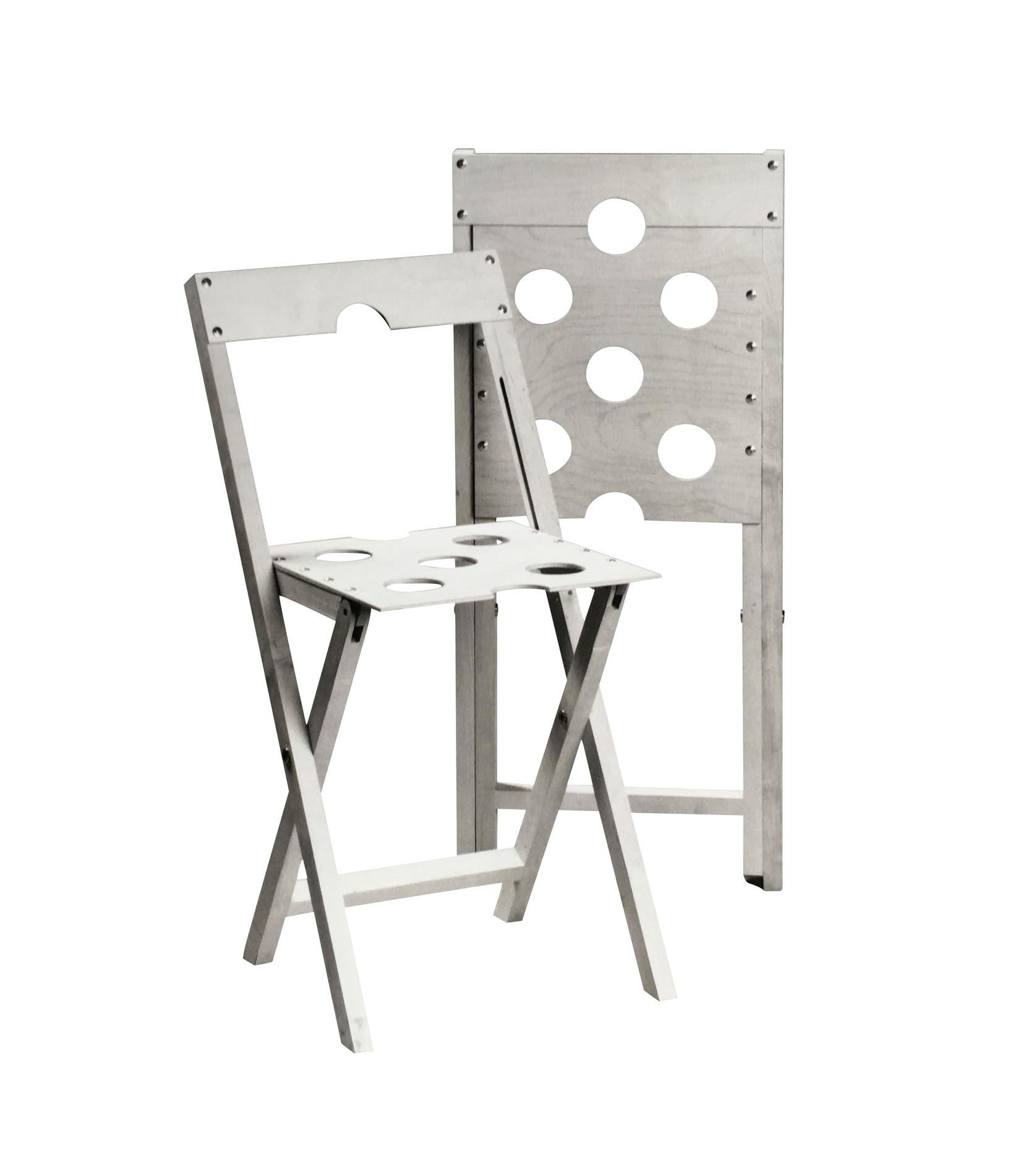
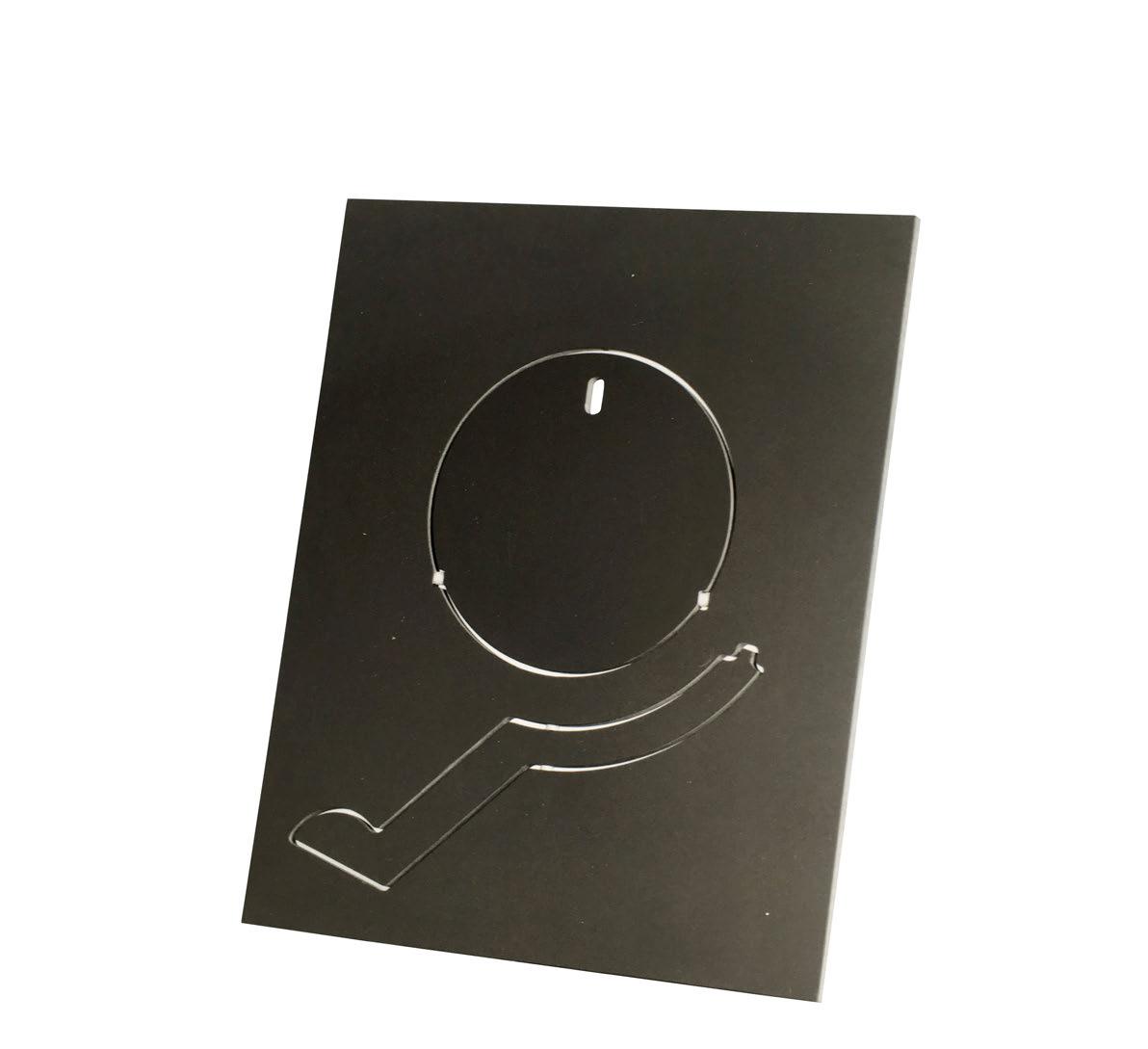
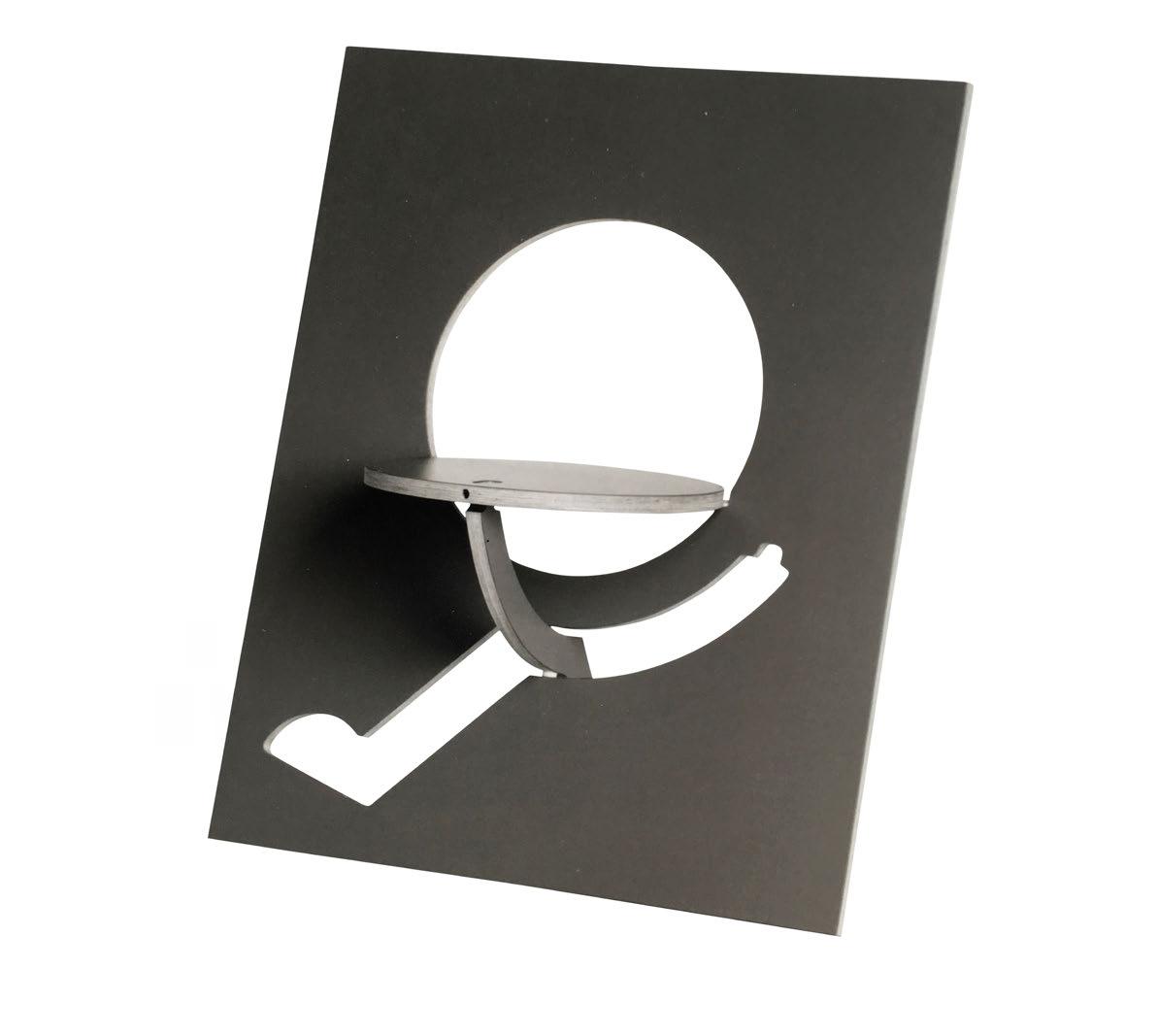
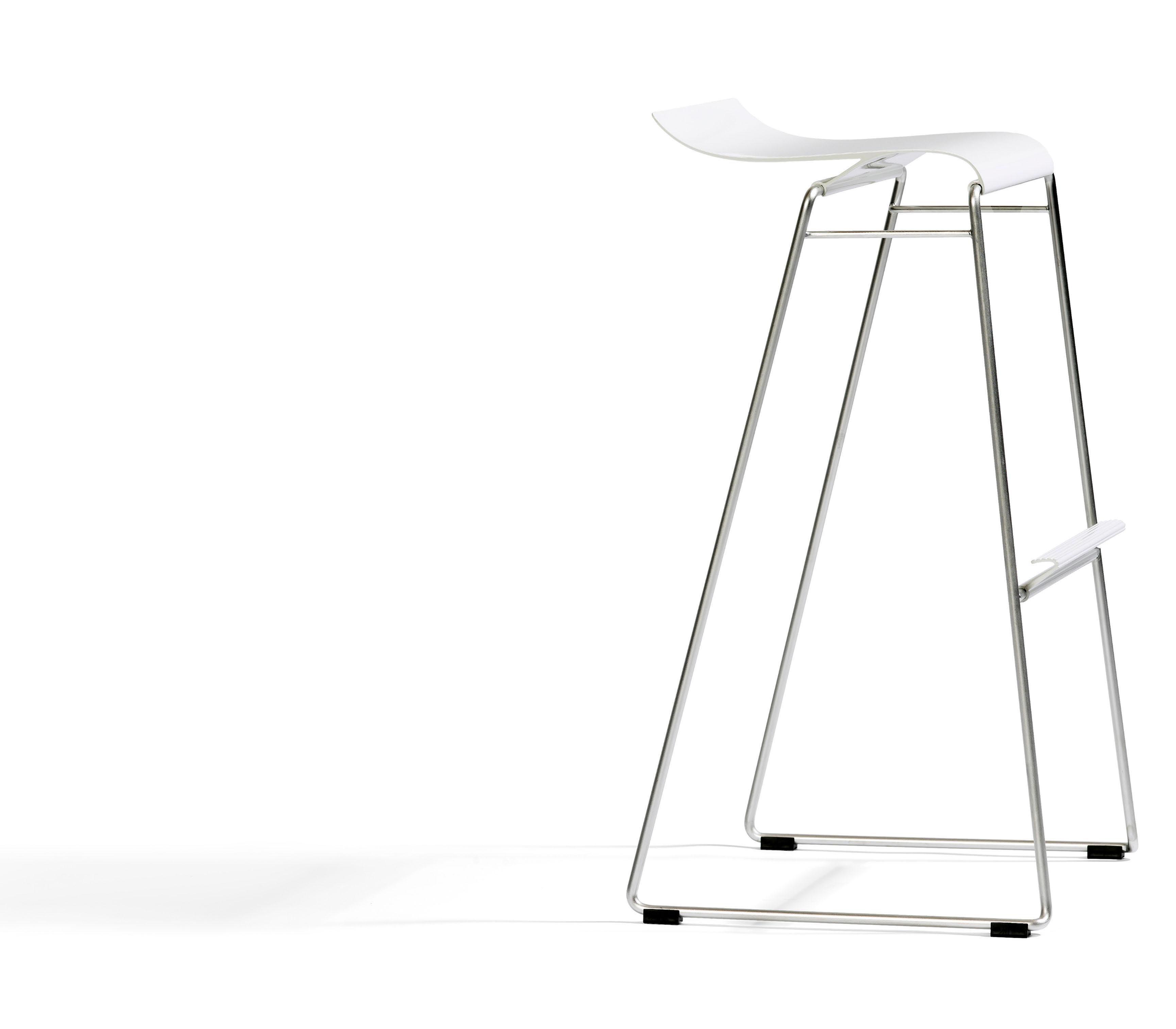
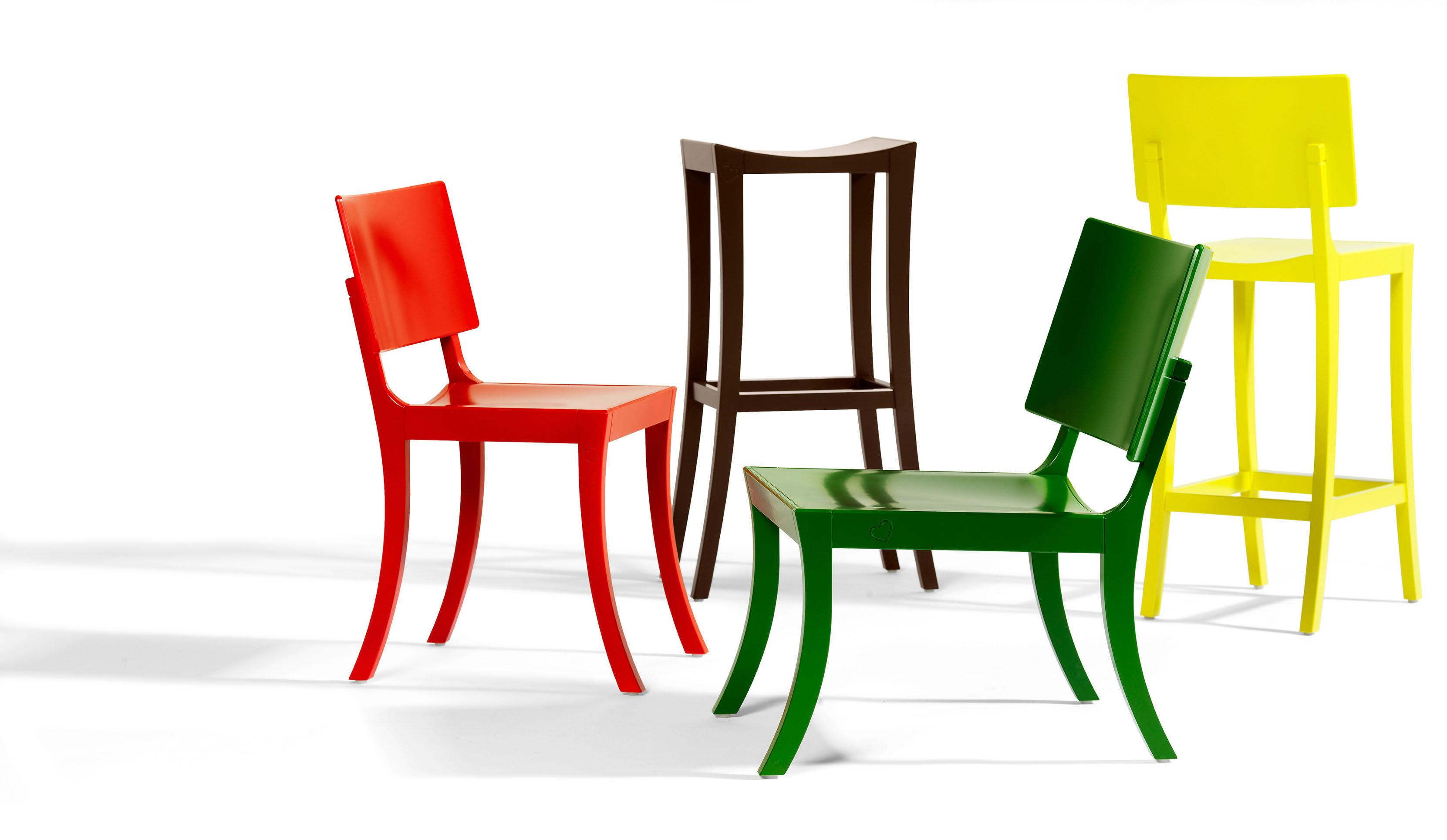
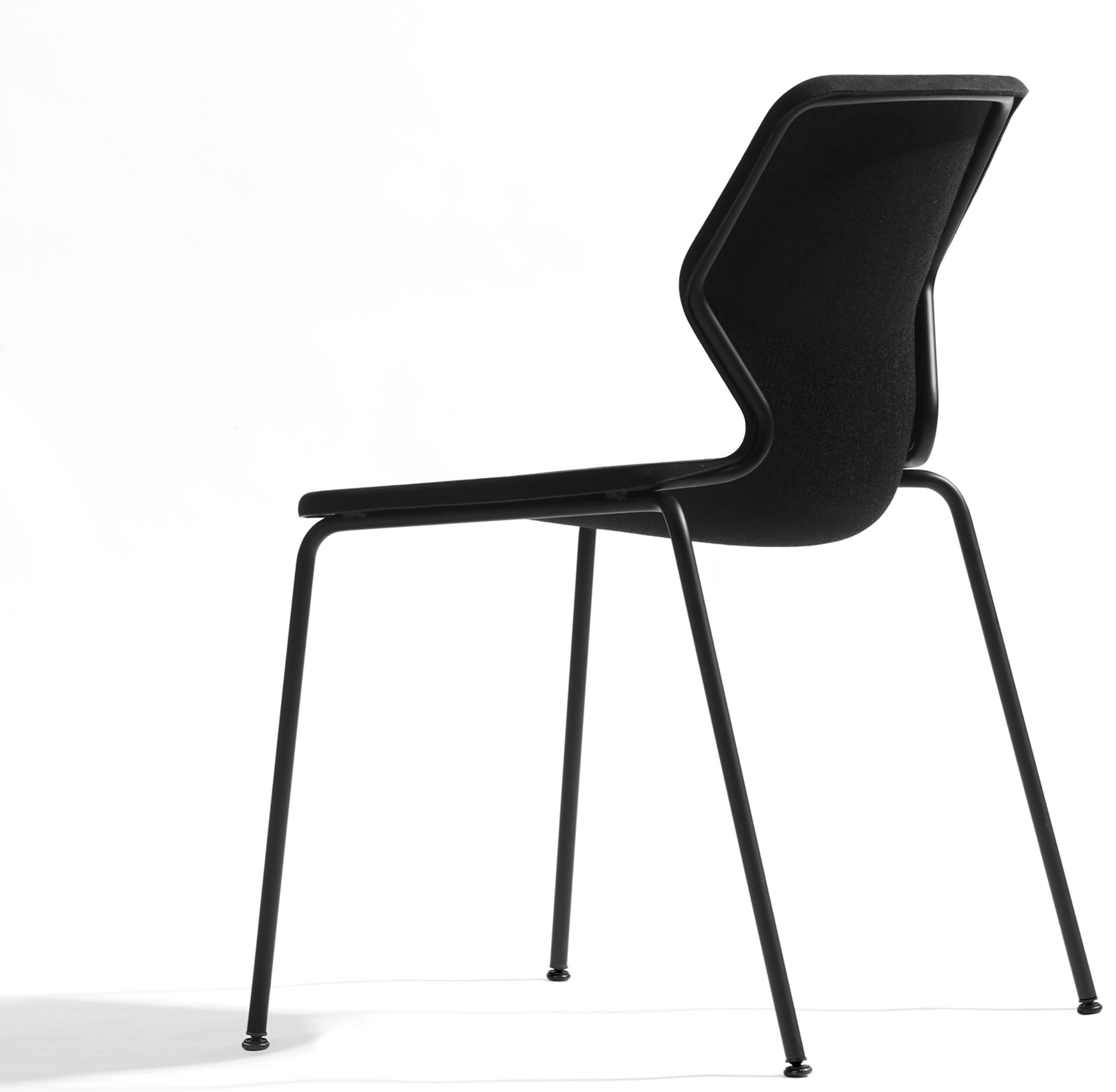
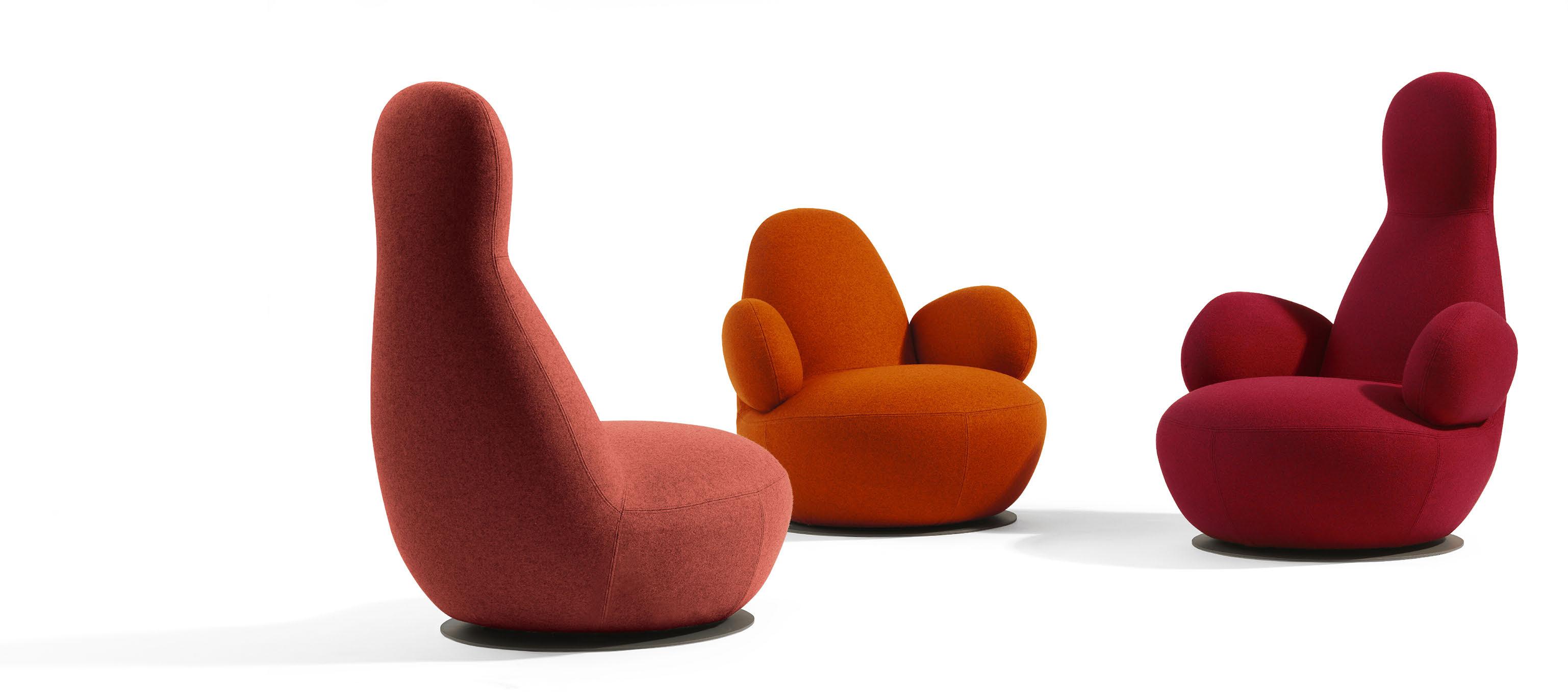
The design team Lindau & Lindekrantz received the Nordic Design Award in 1984 for a furniture series called Duett, created for the furniture company Lammhults. The diploma itself was a perforated chair seat mounted in a yellow frame against a black background. The award triggered something unexpected in Börge Lindau — who had sworn never again in his life to design “just another chair.” Instead, he went home and obsessively began sketching an entirely new furniture series called OBLADO.
The name itself has a story of its own. Together with his son, he developed not only a collection of prototype furniture, but also the entire framework around it: tooling investments, component pricing, suppliers, and production calculations — all to make life easier for the intended manufacturer. The first presentation took place in late autumn 1985 for Lammhults design producer, with whom Börge had worked closely for more than twenty years. The company’s CEO loved the Oblado series, but only wanted to select a few favorite pieces from the much larger system. Börge replied, more or less:
“As usual, you don’t understand anything.”
At that point, Lammhults’ owner, Kenneth Ståhl, stepped in and said:
“Why don’t you just do it yourselves?”
It had genuinely never crossed their minds.
The discussions started immediately after returning home from Lammhults that Friday evening and continued non-stop until after Sunday dinner, when Börge’s wife Karin suddenly said:
“I think it’s a great idea. Just do it.”
At the time, it wasn’t fully clear what she meant. It was only later Börge and his son Johan realized that this project would finally save Karin from cleaning fish and peeling potatoes for the rest of her life. Börge had long carried a dream of opening a restaurant serving every imaginable kind of herring — a place where you could also buy everything from chairs and tables to glasses, knives, forks, and jars of homemade pickled herring. Sometimes, history begins through a perfect accumulation of coincidences.
Blå Station was founded in 1986.
Hövding
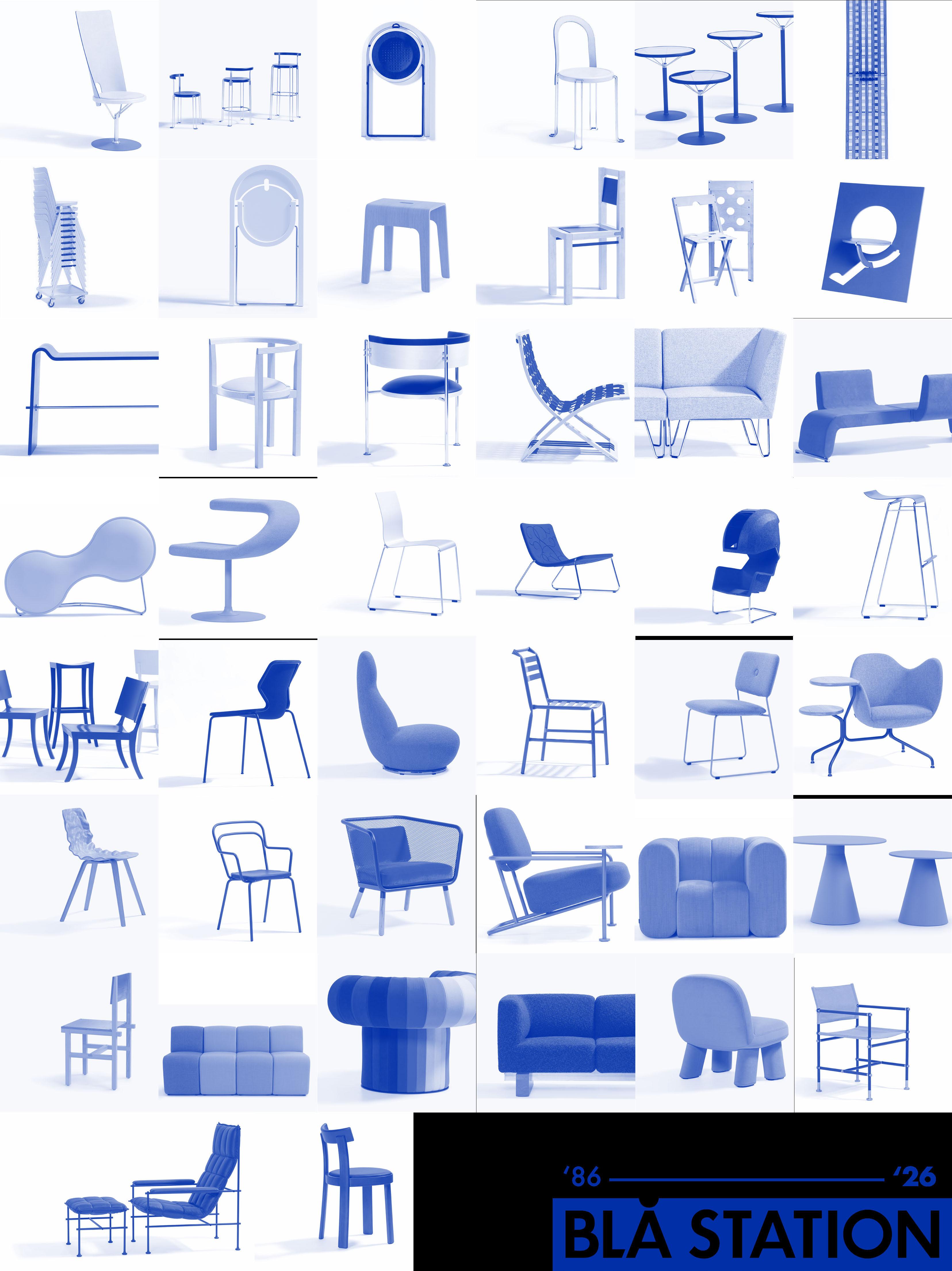
What follows are a few pages of products from the collection we called Oblado, starting in 1986, and its continuation through to 1993.
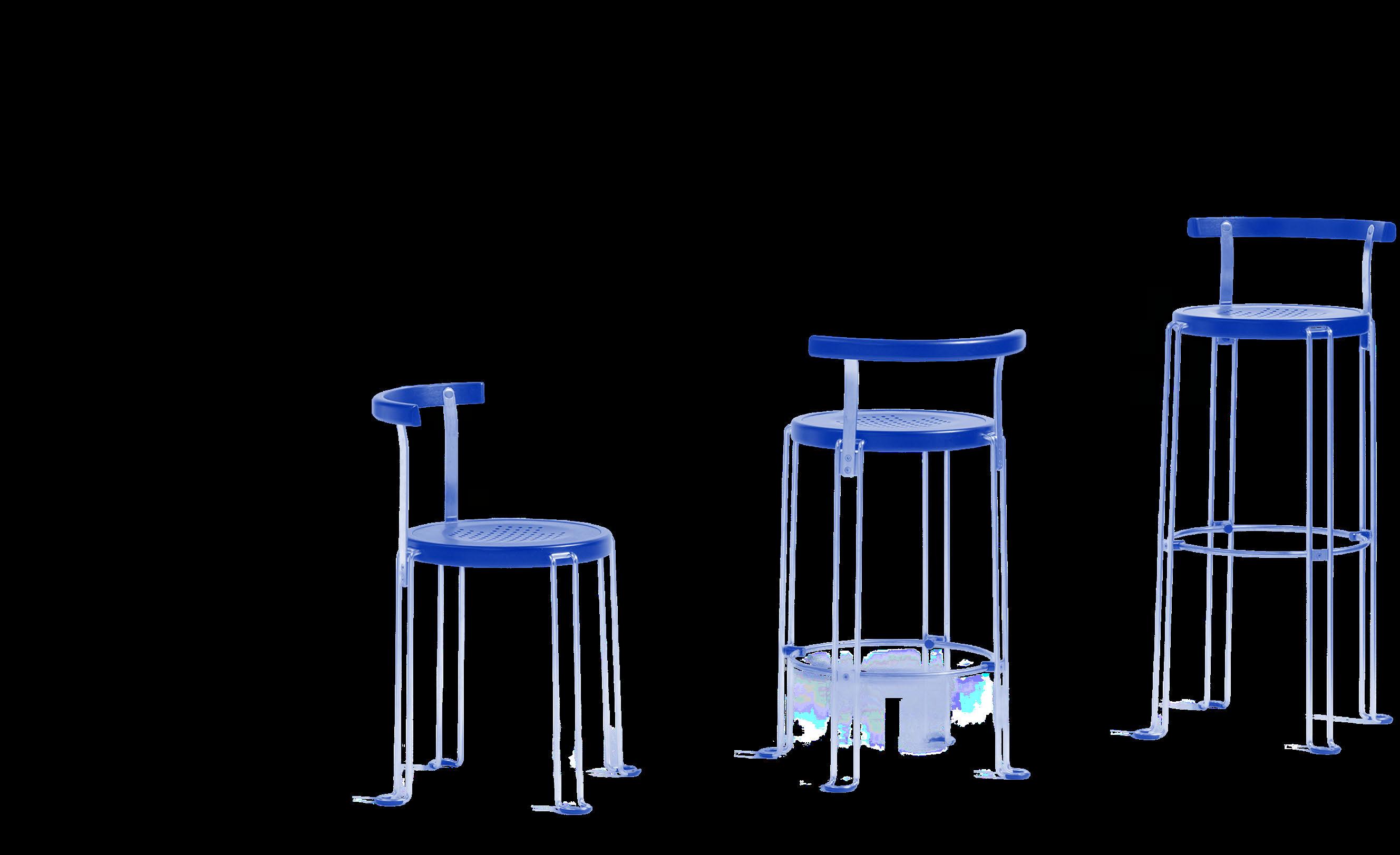
The pieces belong to the same period, although the exact dating is not always correct. What matters is that they all follow the same design methodology — with a few necessary exceptions, of course, the kind you need in order to stay free. The theme was: “around the round ring.”
(1987)
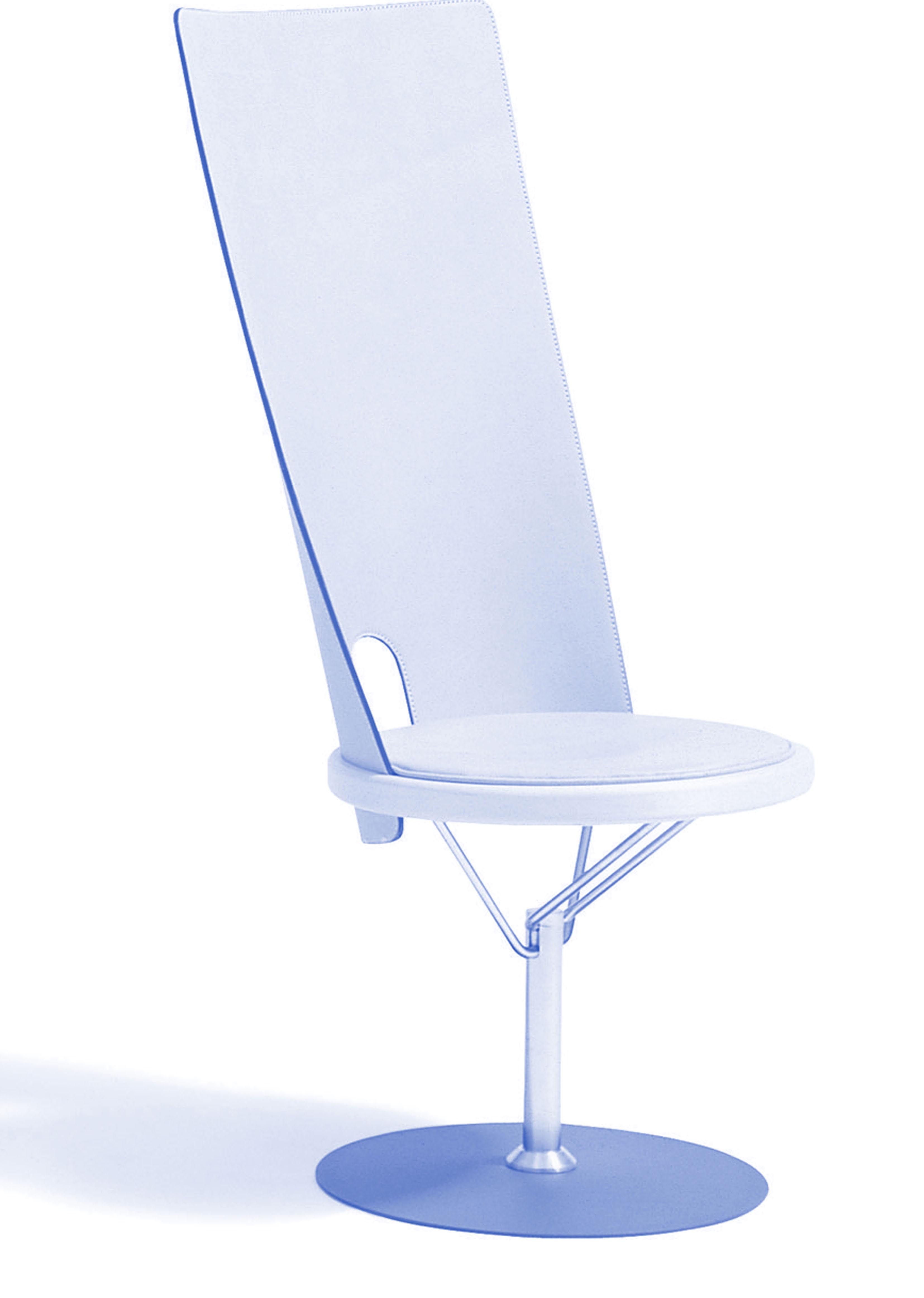
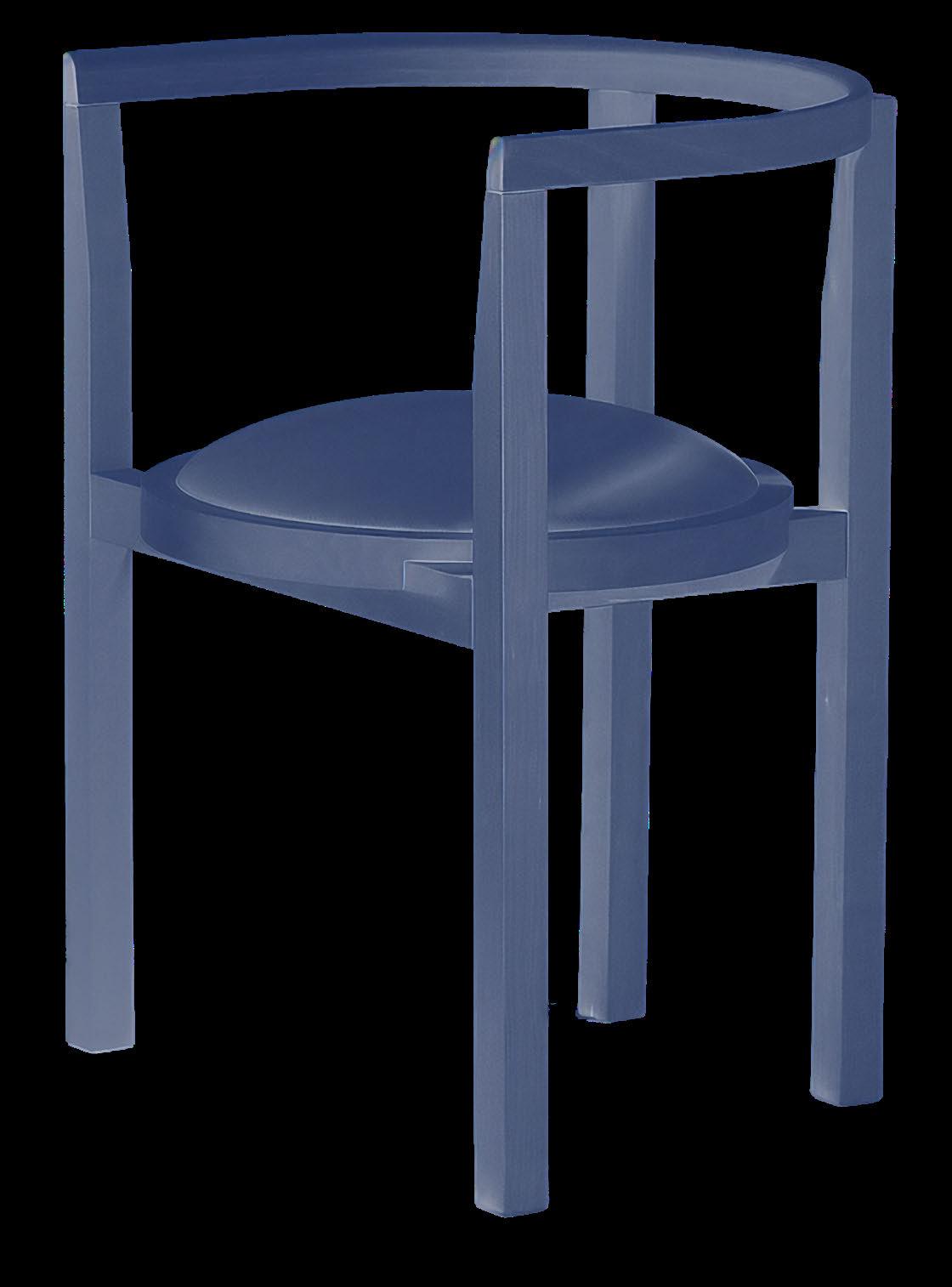
B7 Sessel
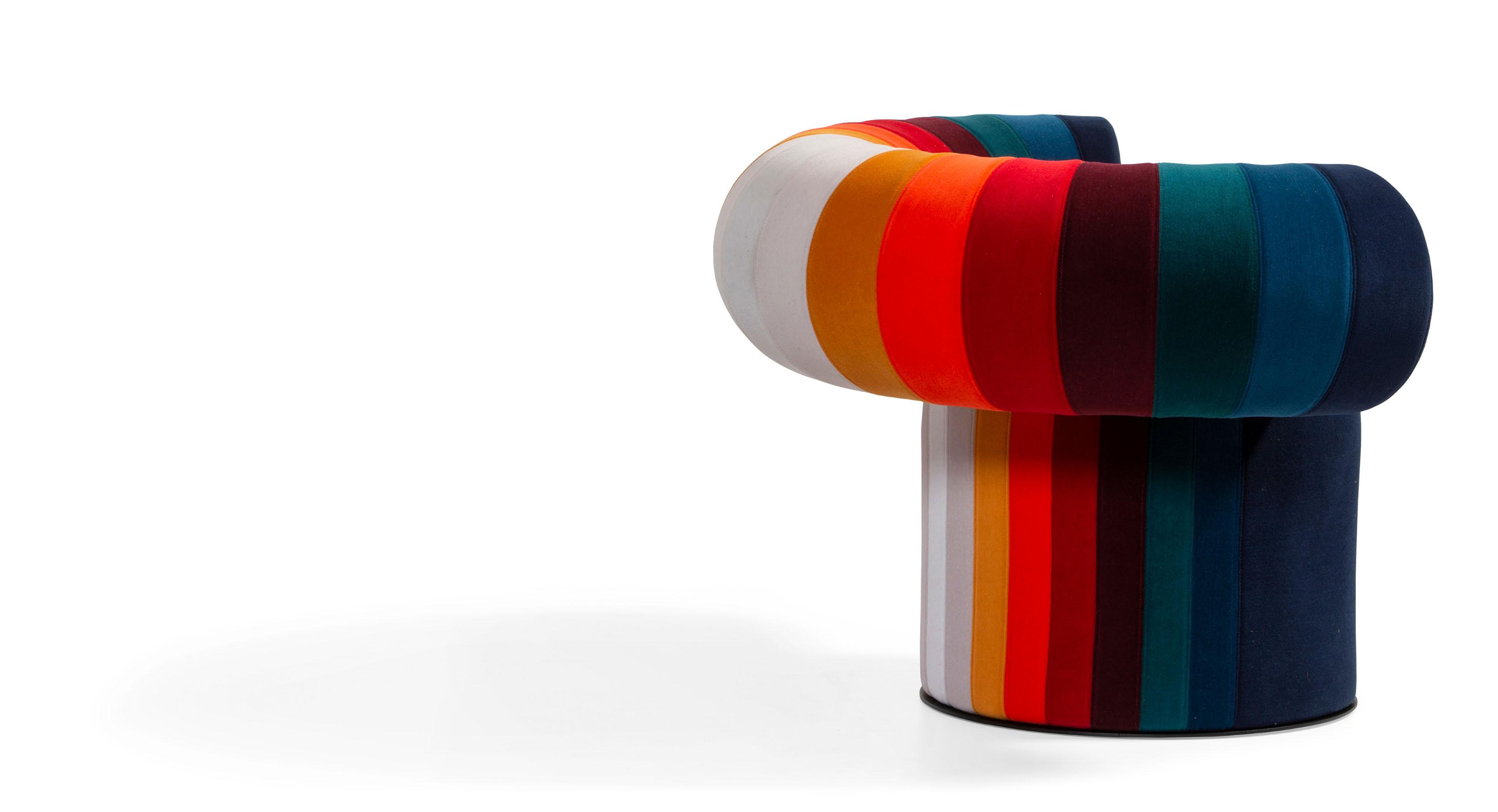
Börge Lindau loved wine — Italian wines in particular, especially those from Chianti. A friend of his had bought a fine woodworking company, and Börge wanted to challenge the craftsmen to combine true cabinetmaking with simplicity. He designed an open cabinet in solid cherry and birch, combined with simple plywood and details in stainless steel, raw rusted steel, and names and numbering in sterling silver 925.
The cabinet was made to hold 80 bottles of Chianti wine — hence the name: Chianti 80. The cabinet was presented at the Milan Furniture Fair in 1991 during the SWD NXT exhibition, inaugurated by Carl XVI Gustaf. The King remarked to Börge that storing 80 bottles of wine in such a beautiful cabinet, in a normally heated room, could potentially become a problem. Börge replied: “Well, not if you entertain properly.”
Chianti 80 became one of the first products Blå Station produced as a numbered “Unlimited Edition.”
Chianti 80
Common 1
1993
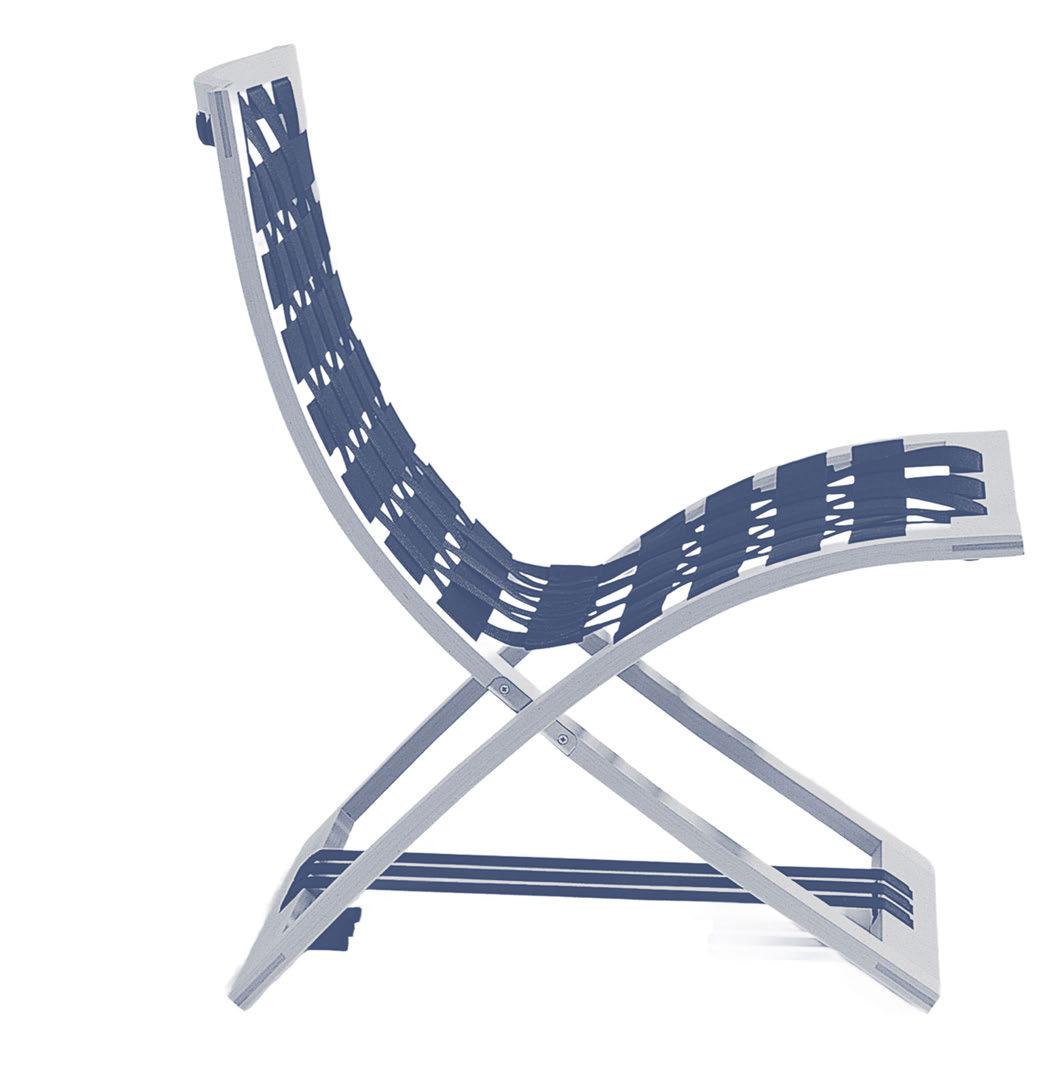
Some years before, Börge Lindau designed the folding chair B+.
Originally introduced as a folding stool, B+ gained unexpected attention for its rather unforgiving backrest.
Börge’s response was simple:
“It’s a folding stool. But if you want, you can lean against the handle.”
Several folding chairs followed, including the more comfortable BA. But they all shared one flaw, discovered during Blå Station’s jazz evenings: people could fold them the right way — or the wrong way.
Sparta
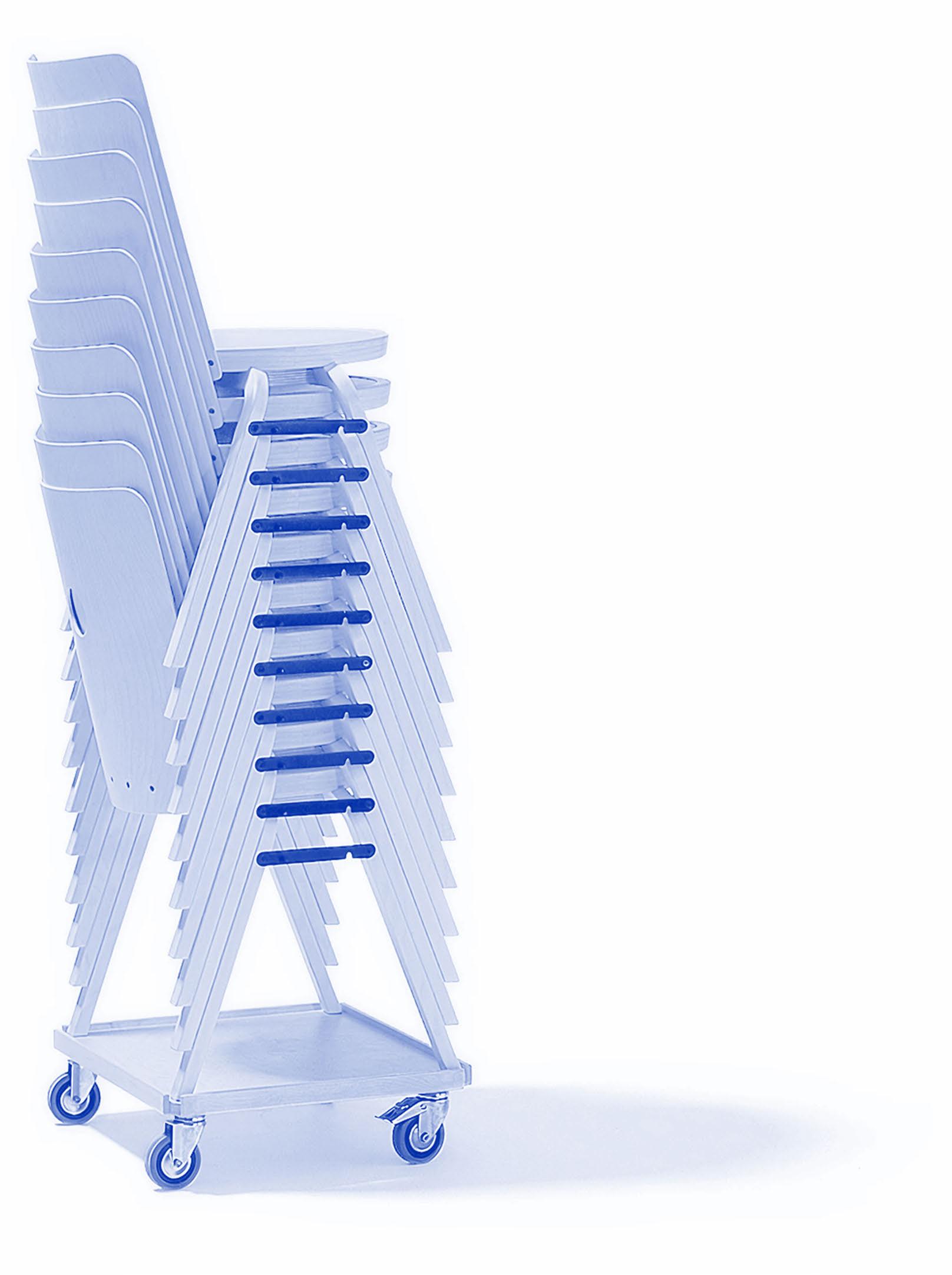
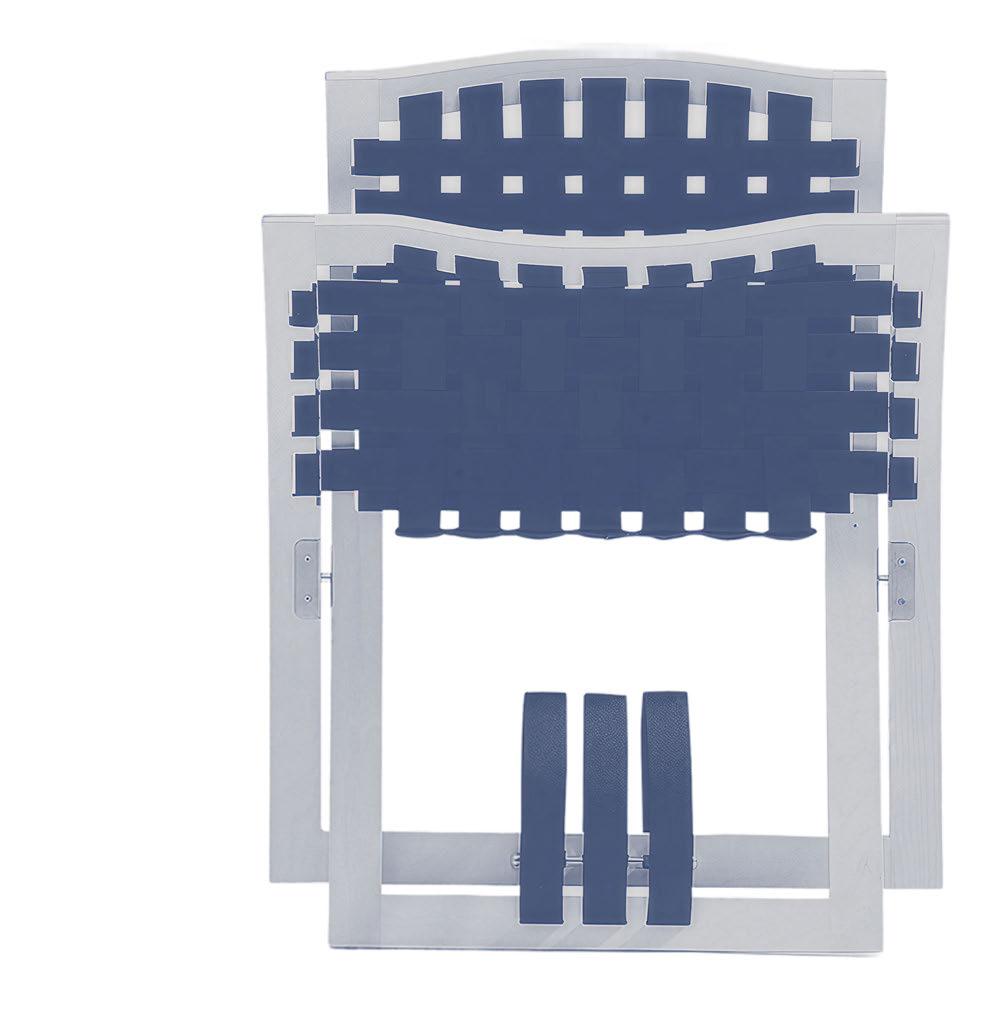
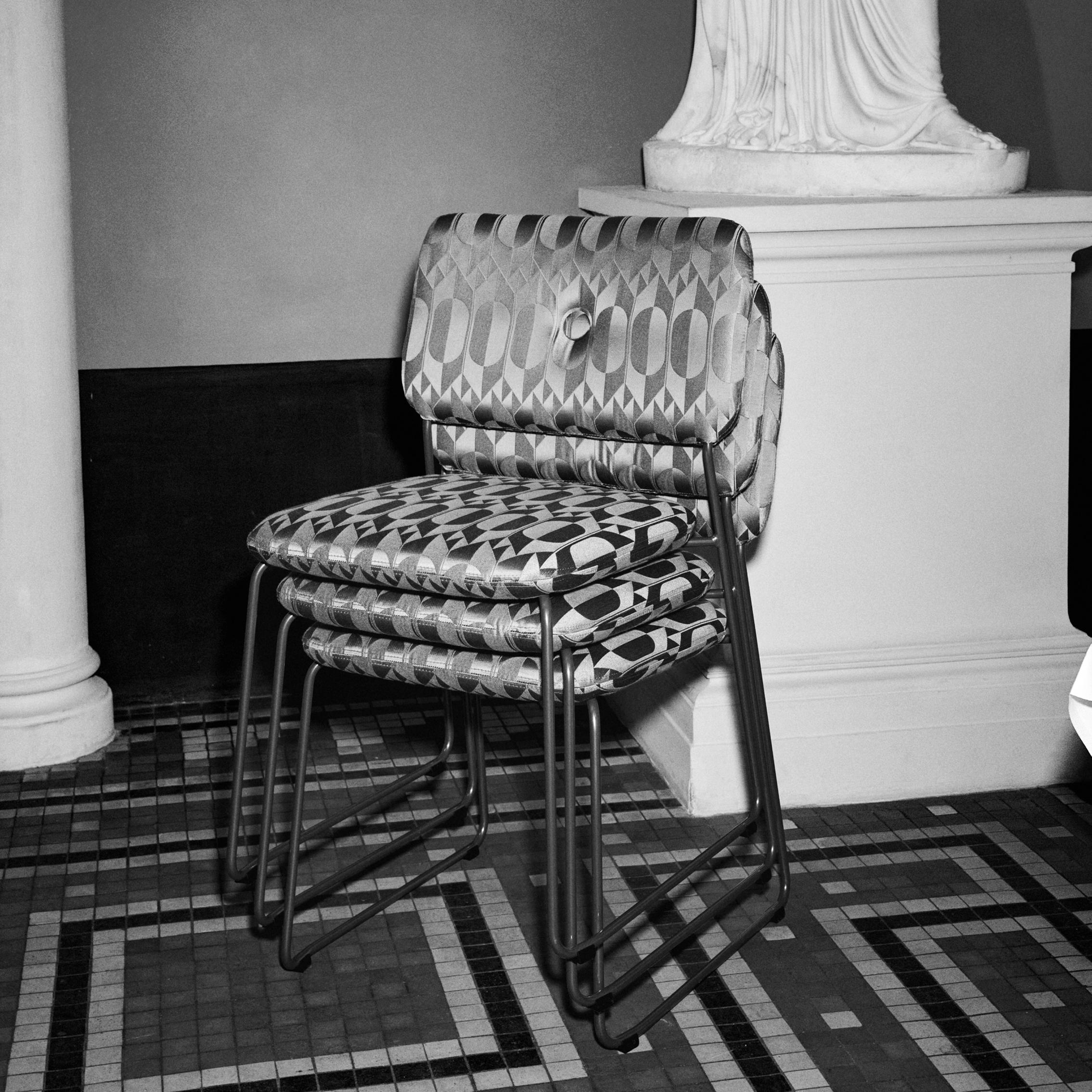
Johan, Börge’s son, kept pointing this out, much to Börge’s irritation. But when Johan eventually presented a prototype that folded correctly from both sides, Börge immediately responded by designing Sparta. Sparta became one of Blå Station’s greatest successes — only 27 mm thin, allowing 37 chairs to fit within a single meter. A detail Börge probably appreciated just as much as the design itself.
Bimbo. Peter Brandt.
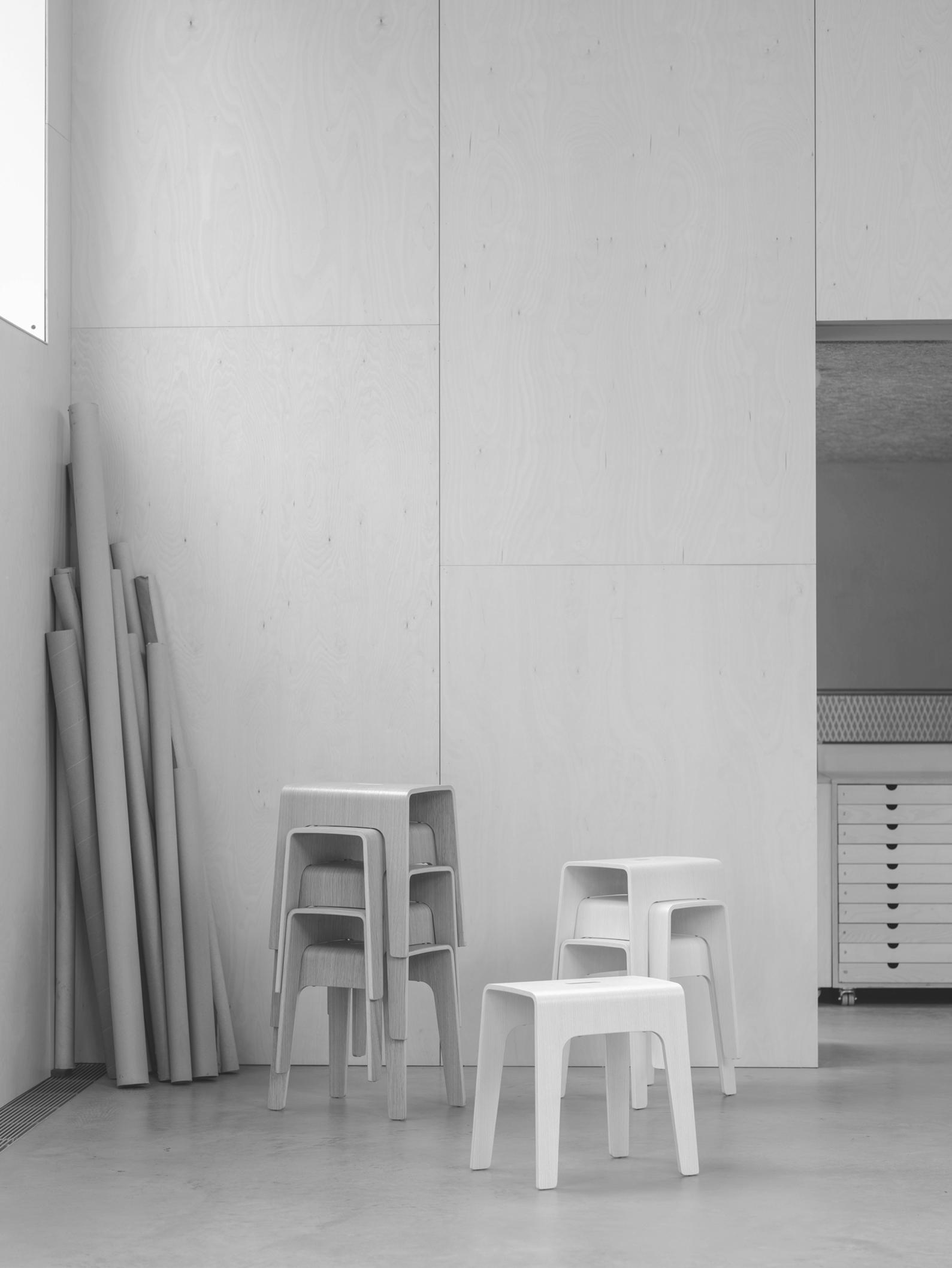
A stool, a table, a step. Stack it high or place it in every corner. Bimbo is the first thing we bring.
Gutang. Johan Lindau.
Small and nimble. Childishly simple and nostalgic.
Cheese.
Josefin Larsson.
We have a thing for folding chairs.
Point. Jesper Ståhl.
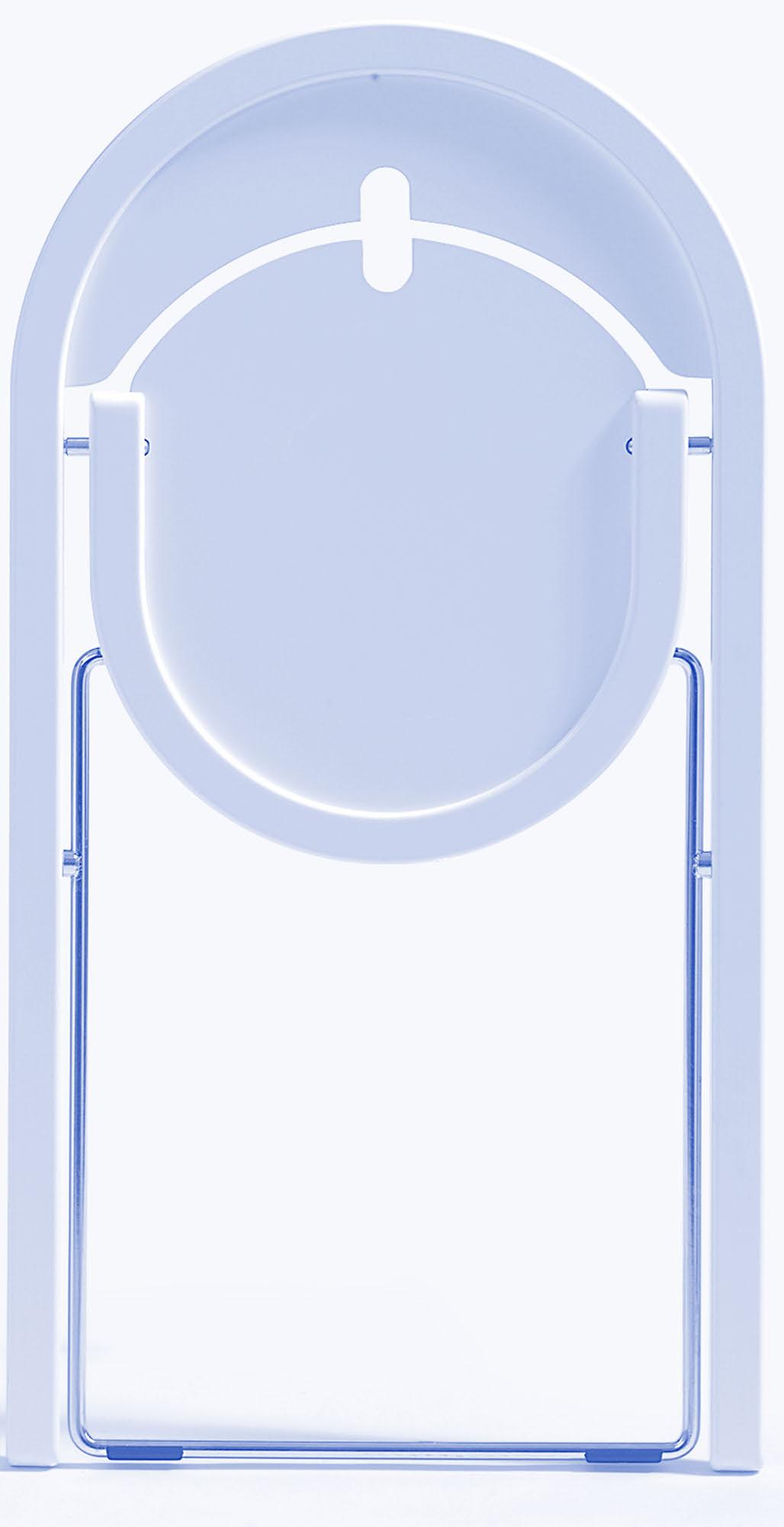
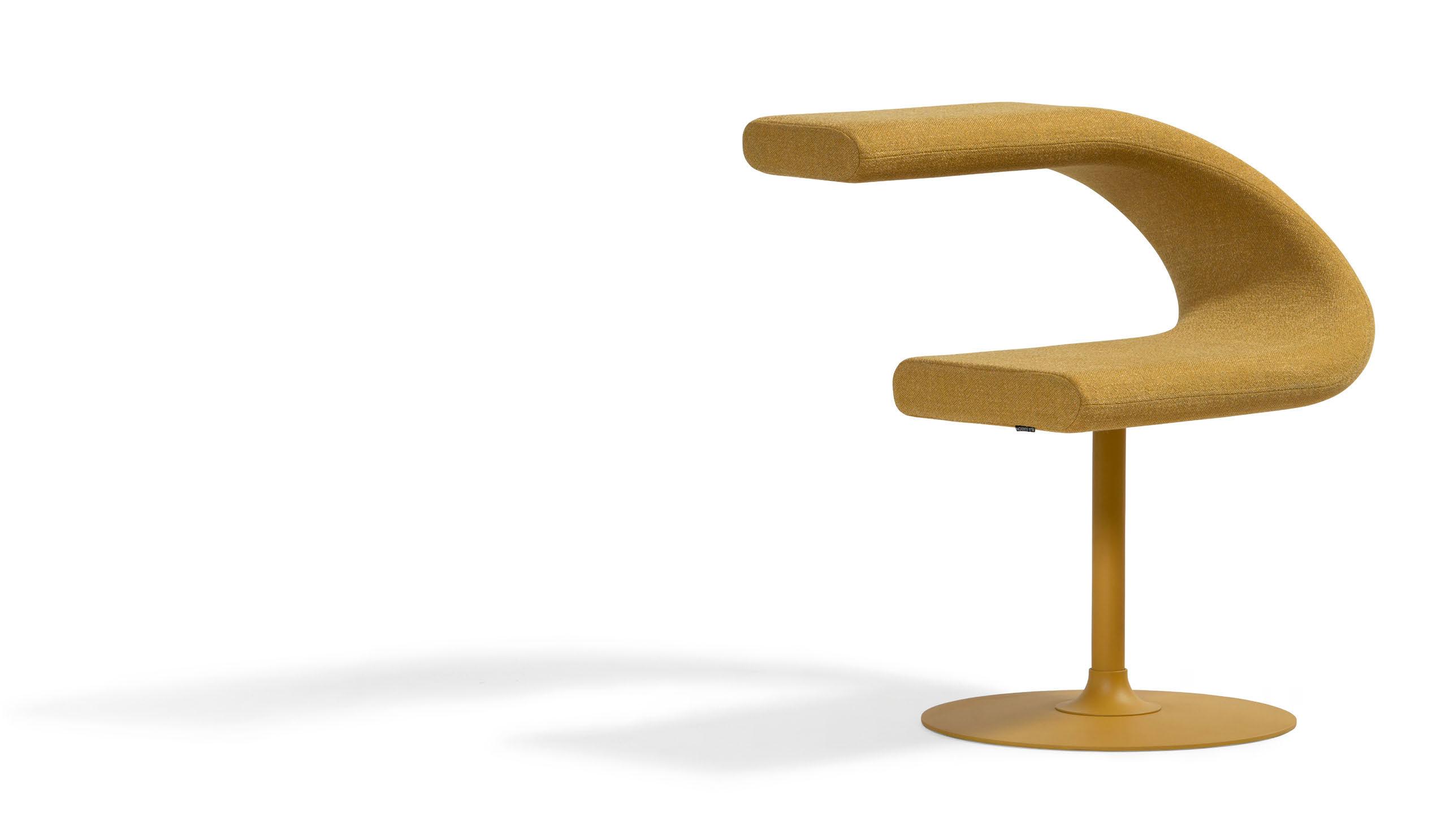
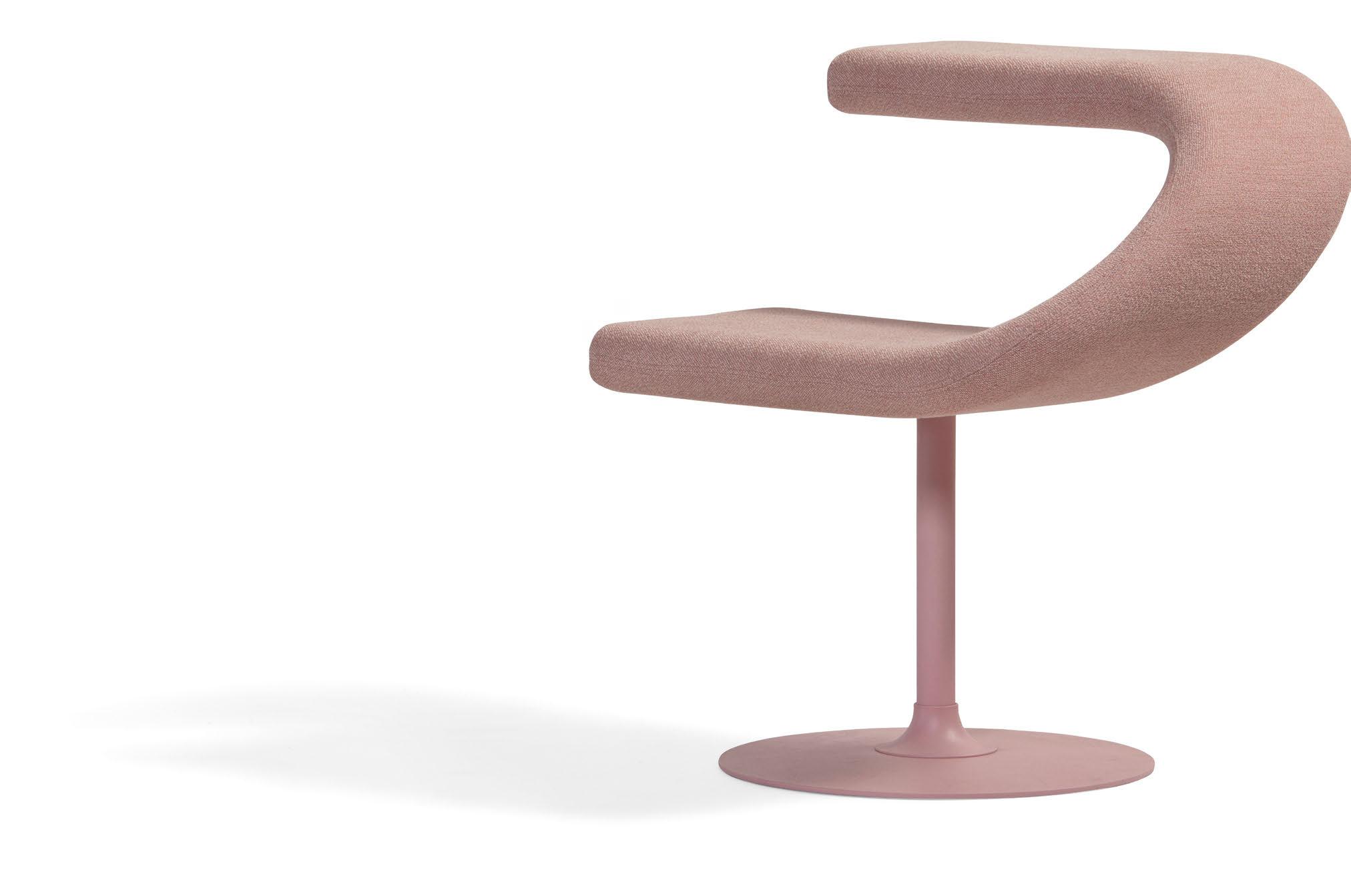
Jesper wanted to create a chair you could enjoy even when no one was sitting in it — hanging on the wall like a painting.
Söndag. Vardag.
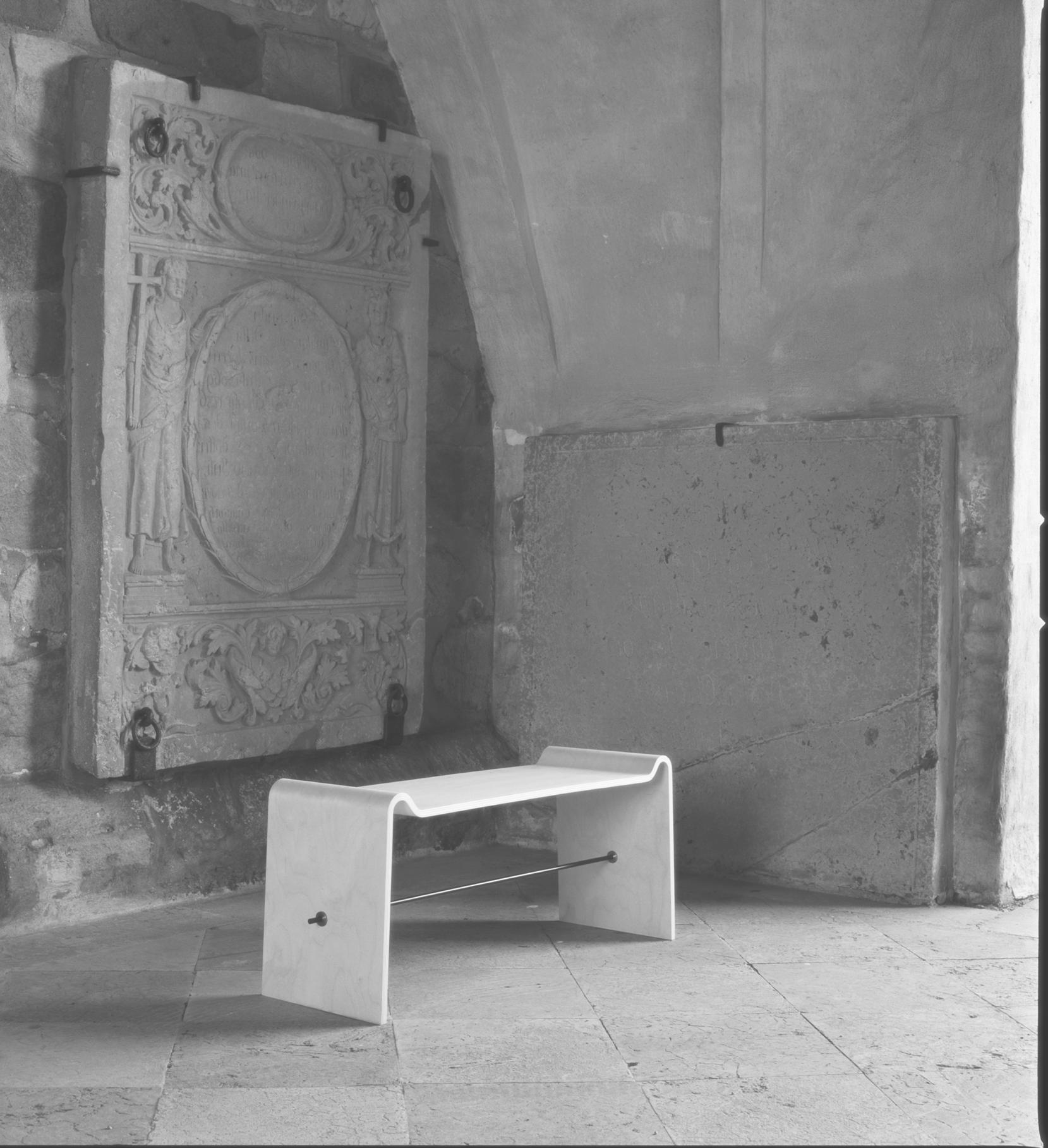
Söndag means Sunday in Swedish, the perfect name for a bench. Where to rest our legs.
Company Wood Börge Lindau
Börge left Mother Earth in the spring of 1999. But, true to his forward-looking nature, he had long before placed the responsibility and future in the hands of Johan and Mimi.
The following pages are a selection from Börge’s creative final chapter.
Company Wood — created in collaboration with The Absolut Company.
MIM 33 Börge Lindau
MIM became Börge Lindau’s final furniture family. He chose the name MIM because, in Latin numerals, it stands for 1999 — the year he knew would be his last.
Ludwig & QvartoBörge Lindau
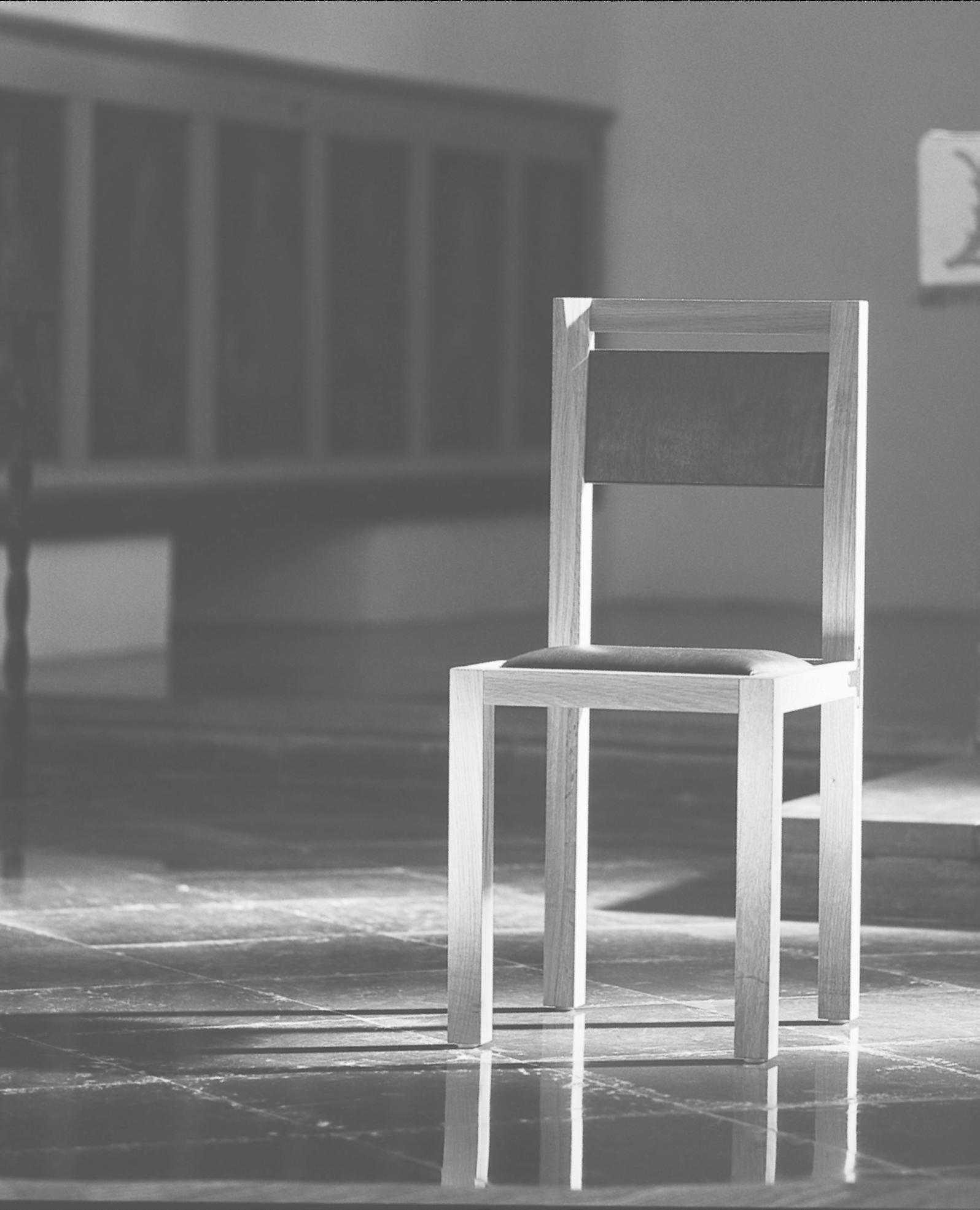
Ludwig was Börge Lindau’s first produced chair from 1962. It began as a student assignment at the HDK-Valand, as a tribute to Ludwig Mies van der Rohe and his Barcelona Chair — the chair that looks foldable, but isn’t.
In 1999 the folding chair was reinterpreted as an homage, shifting the woven seat through the frame rather than wrapping it around it.
Börge took the aesthetic of an earlier sofa and added just one continuous line, a “solid wire,” sketched on the back of a trade magazine in a single stroke. A few days later, we turned that sketch into a sofa system. Börge’s reaction was simple: “Exactly like that, yes.”
Polstergeist
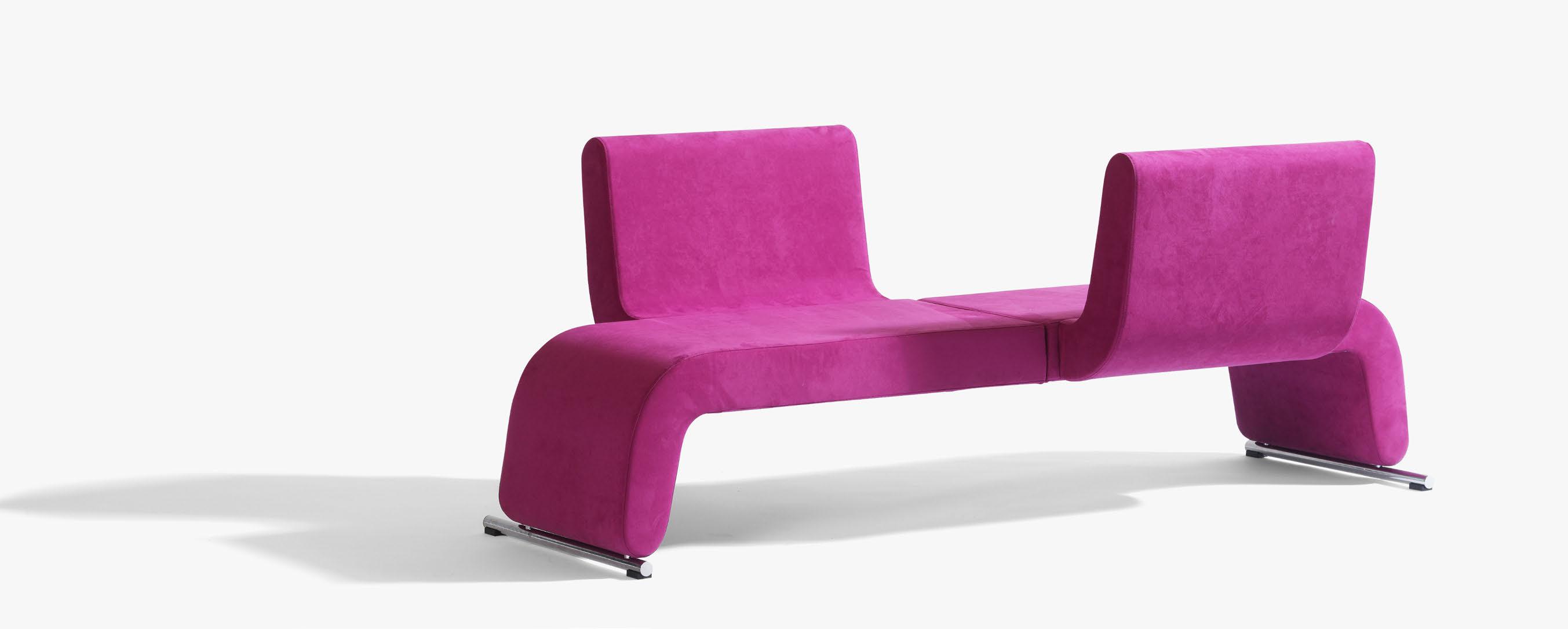
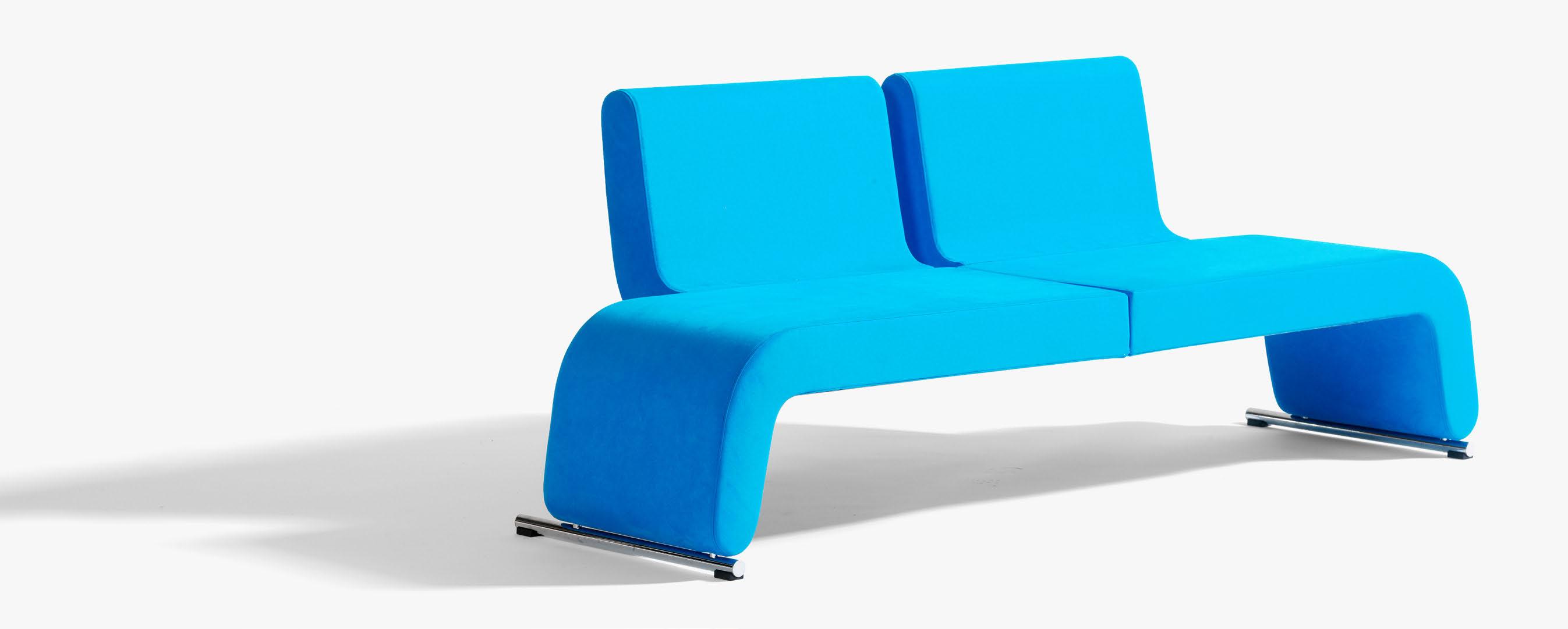
Polstergeist does not mean ghost, it’s rather a play with words. The design student Christine Schwarzer was fascinated by uphostery - “polster” in danish, and “geist” expressed her feelings working with it. Christine believes the most intresting thing with furniture is the meetings between people sitting in them. Polstergeist is a seating system where two parts can be combined into six variantions.
Our first conversation with Tomoyuki was when he was a student at the Royal Danish Academy of Fine Arts. His presentation was beautifully Japanese — refined and precise — but the benches and tables only looked foldable; they weren’t.
That became our brief: design a smart, elegant folding frame that works in all sizes.
C was a student project shown at the Stockholm Furniture Fair in 2001 — and we fell for it instantly. Who, as a design student with zero experience, creates a fully functional multifunctional piece for public space? Fredrik Mattson.
We spoke to him on the spot at the fair. After a bottle of wine, mutual admiration had formed — and a long collaboration began.
Sting Fredrik Mattson & Stefan Borselius
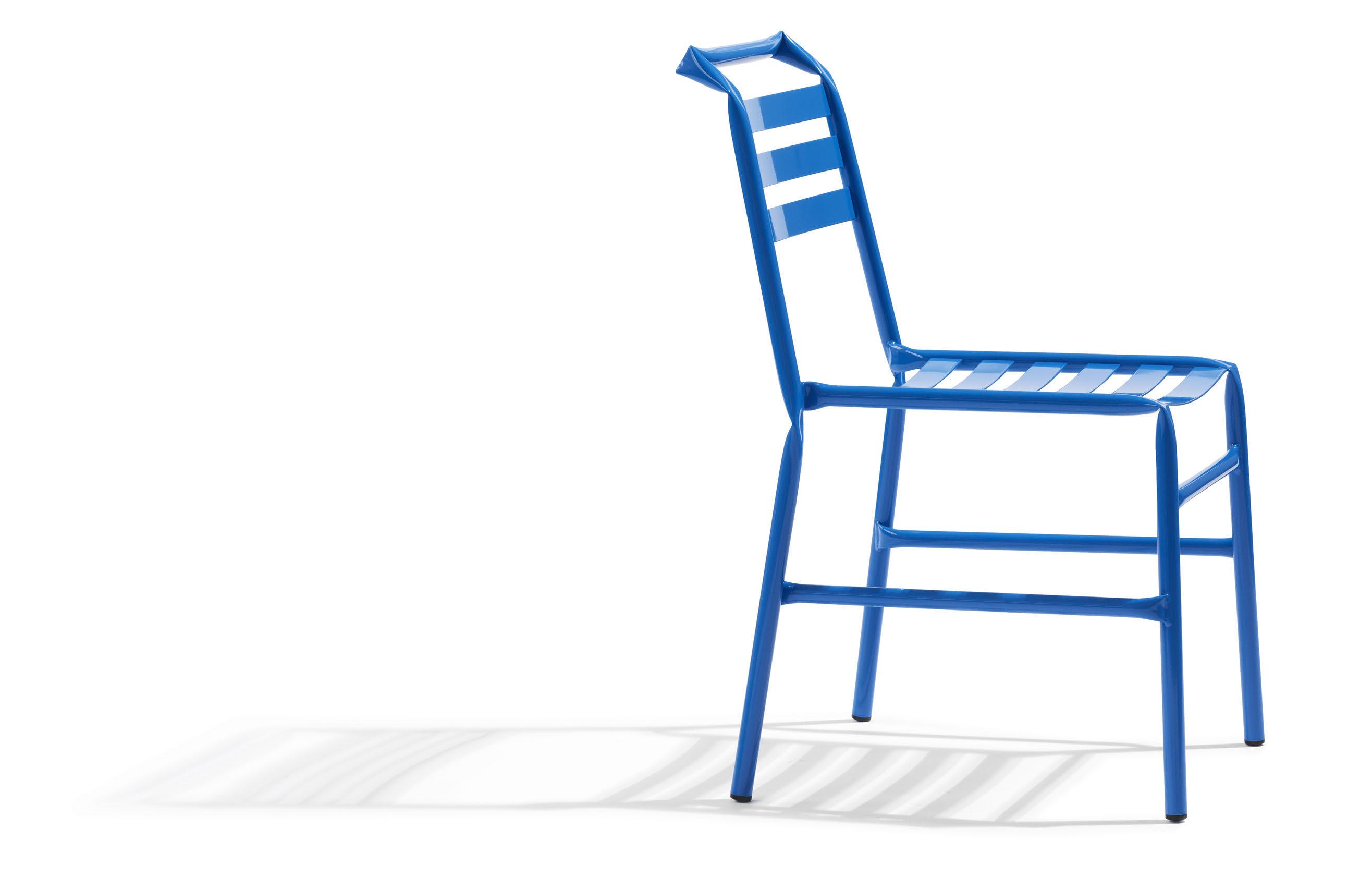
“We want a completely ordinary chair — just made in a completely new way.”
That was the not-so-simple brief given to Fredrik Mattson at the Milan Fair in 2002, then still a student at Konstfack. Together with Stefan Borselius, he solved it, and by February 2003 we were ready to present the product.
Development was so complex it nearly became impossible. Three weeks before the Stockholm Furniture Fair 2003, the manufacturer pulled out.
The rest is a beautiful story.
SNOOZE... probably the most beautiful word on the planet.
To achieve our goal we were forced to flout two fundamental design taboos: don’t focus on the surface, and do not decorate!
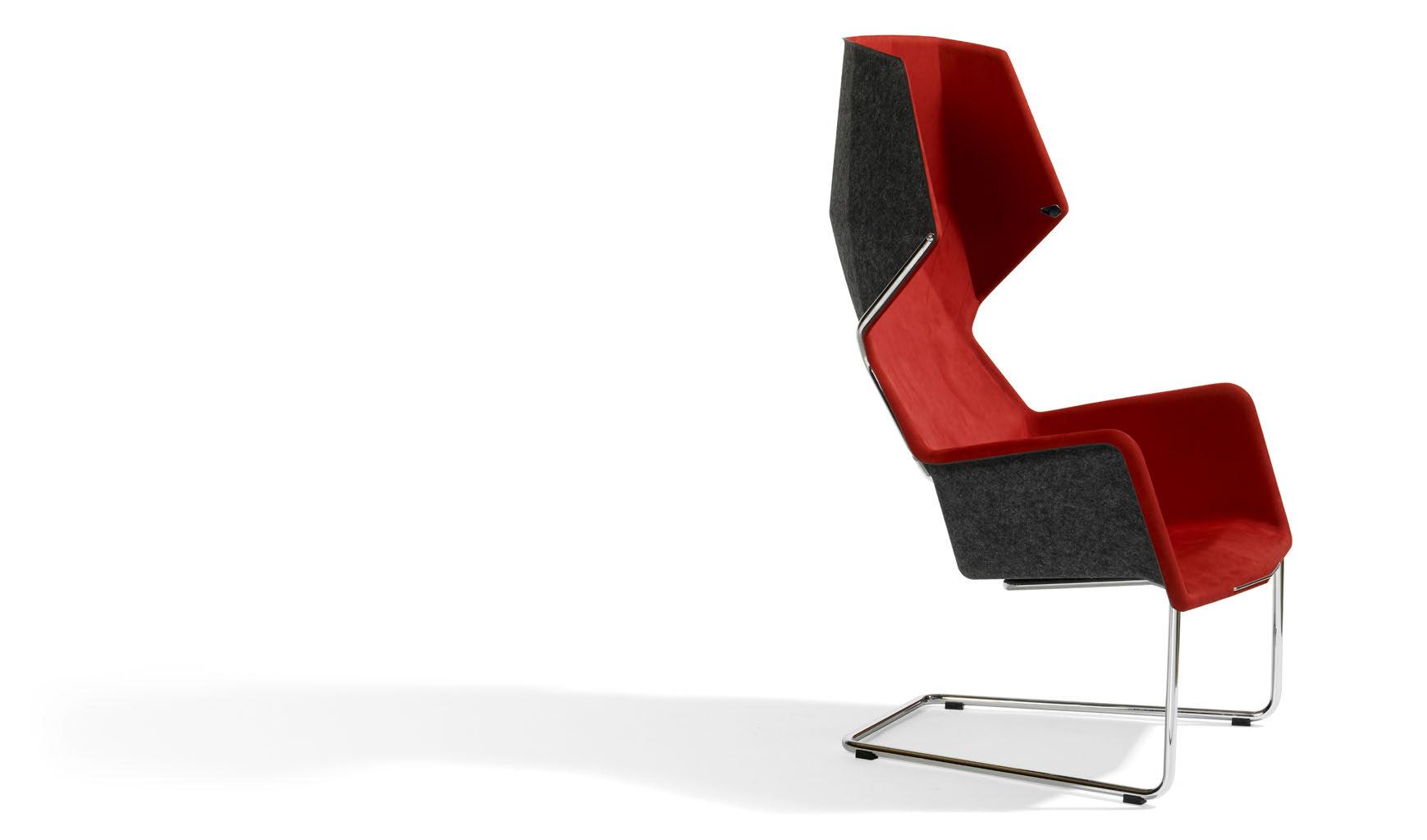
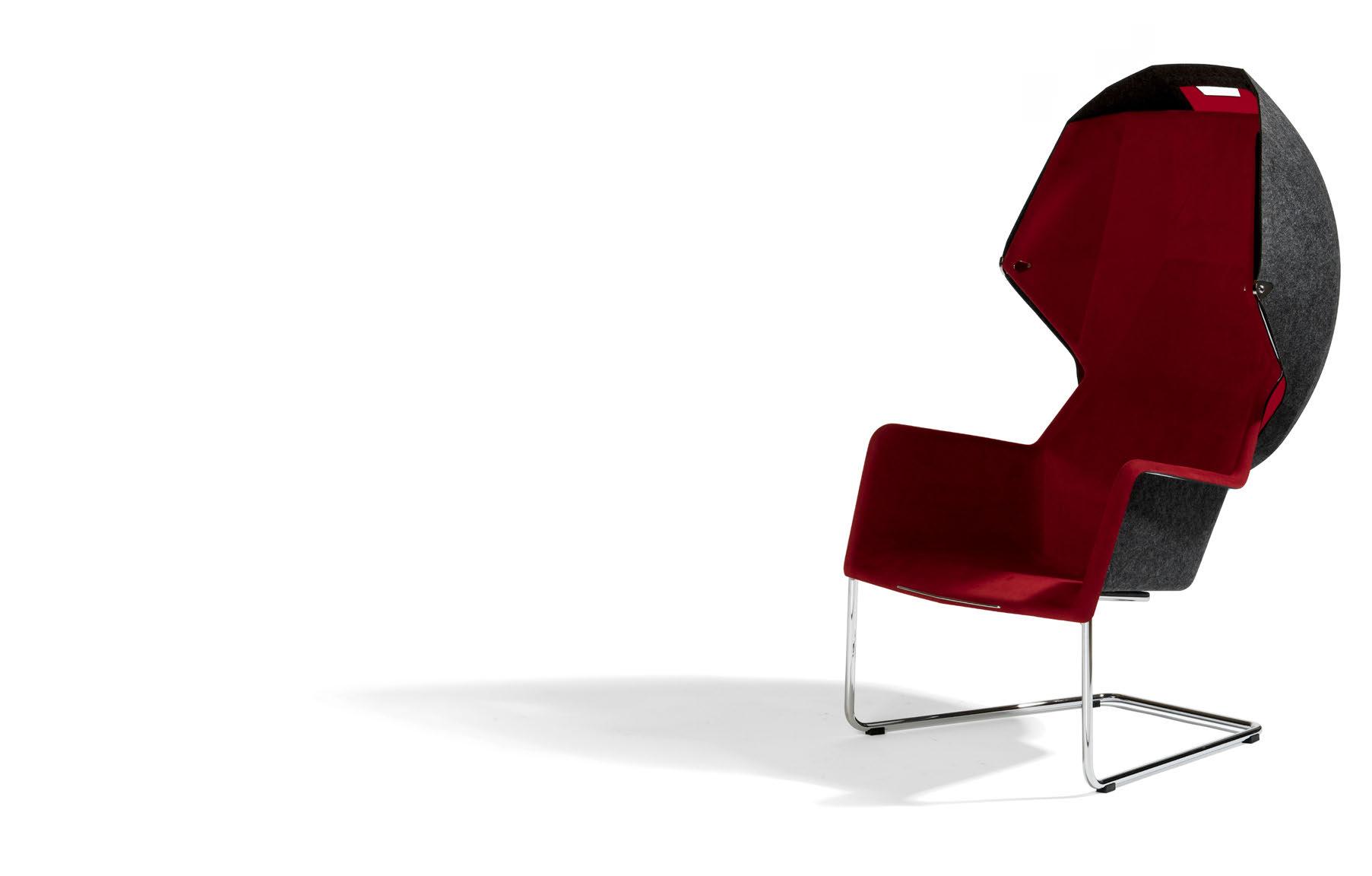
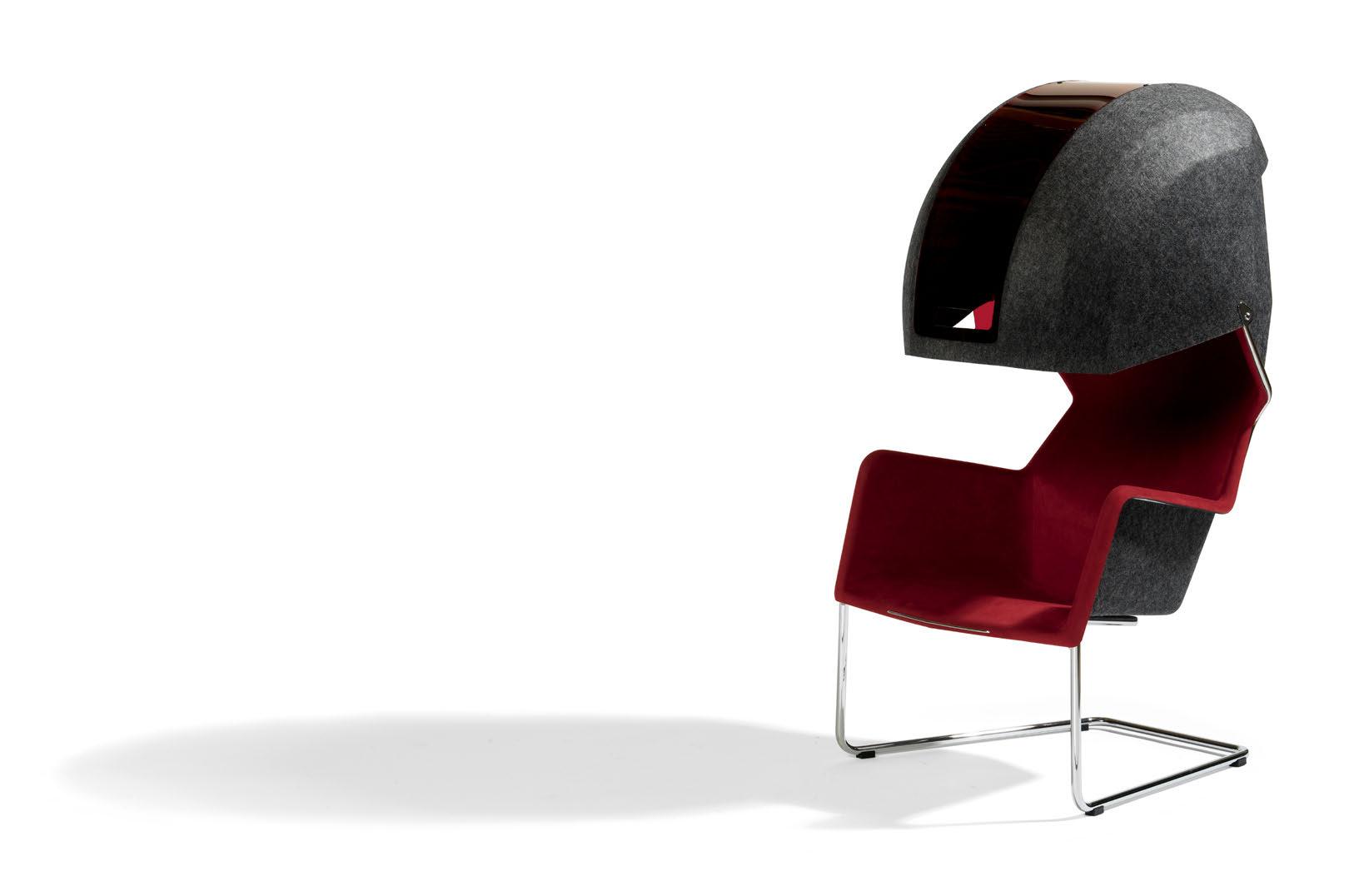
In 2003, Stefan Borselius became fascinated by a mouldable PET material — and we, as producers, were just as struck by how little the furniture industry had explored it. The brief was simple: since it’s soundabsorbing, design a piece where sound becomes part of the function. The result was Peekaboo — a wingback chair, a small room, almost an invention in itself. Even the automotive industry took notice when a small company in southern Sweden managed to laminate textile onto the felt during the same forming process.
Gecco continued our exploration of extrusion after the success of Sting. With Borselius/Mattson, the goal was to give the traditional bar stool its own character while pushing the limits of what extruded aluminium can withstand.
Fredrik Mattson & Stefan Borselius
The Black Chair collection. TBC was launched not merely as a chair collection, but as a quiet manifesto on resource waste and the illusion that we truly live by the values we preach.
Using the ancient Klismos chair as its starting point, the collection retold an old story through the aesthetics of our own time: black surfaces, tattoo-inspired ornamentation, and contemporary identity worn like decoration.
Stefan Borselius
Borselius continued exploring mouldable felt — now with a laminated textile surface no one else had managed to achieve.
Inspired by a remark from our Germanspeaking agent — why can’t a generous, comfortable lounge chair still be stackable without looking like one? — Stefan set out to solve it.
The answer was BOO: a highly comfortable, stackable chair that also absorbs sound in the room.
After a period of “designer’s block,” triggered by an unusually open brief from us, Stefan called and suggested we meet. We met at the Orgatec in October 2008 to figure out what to do next. By chance, we ended up completely alone in an almost empty bar, while others lingered, wanting to stay for a drink.
“What if you could give identity to a piece of furniture — furniture that brings empty spaces to life?”
That idea sparked an intense development process, and just four months later, it was launched in February 2009.
The design duo Osko+Deichmann were invited by the Bauhaus-Archiv to reinterpret the Bauhaus phenomenon — an invitation extended only once every ten years. Instead of celebrating it, they turned it on its head: a series based on early experiments with bent steel tubing that never made it into mainstream furniture design.
When we were invited to show it in Milan, and upon seeing the project, immediately said: we have to do this.
eleven
In 2010, a few of our designers were given the same brief — for a change, and for the first and only time: interpret Blå Station’s 25-year history.
Stefan Borselius chose to interpret one of our clearest ideas of all — building families. More specifically, the Dundra family.
Dundra Stefan Borselius
twelve
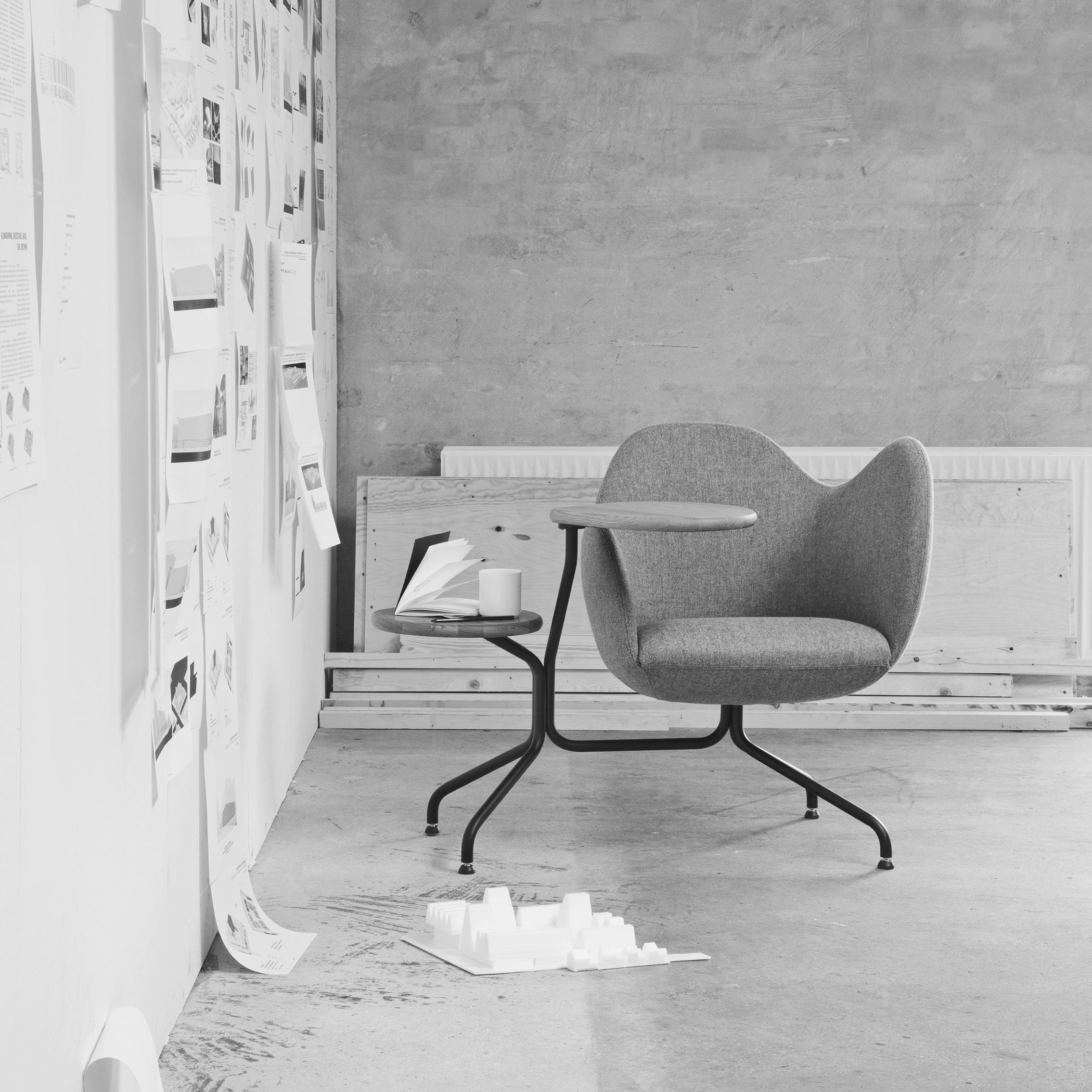
Sometimes, a conversation becomes a product. We were talking about a generation that multitasks its way through life — constantly juggling information, distractions, and endless streams of input, yet somehow still managing to perform.
Could we design a multitasking piece of furniture that supports the way this new generation actually lives?
Wilmer T Stefan Borselius
thirteen
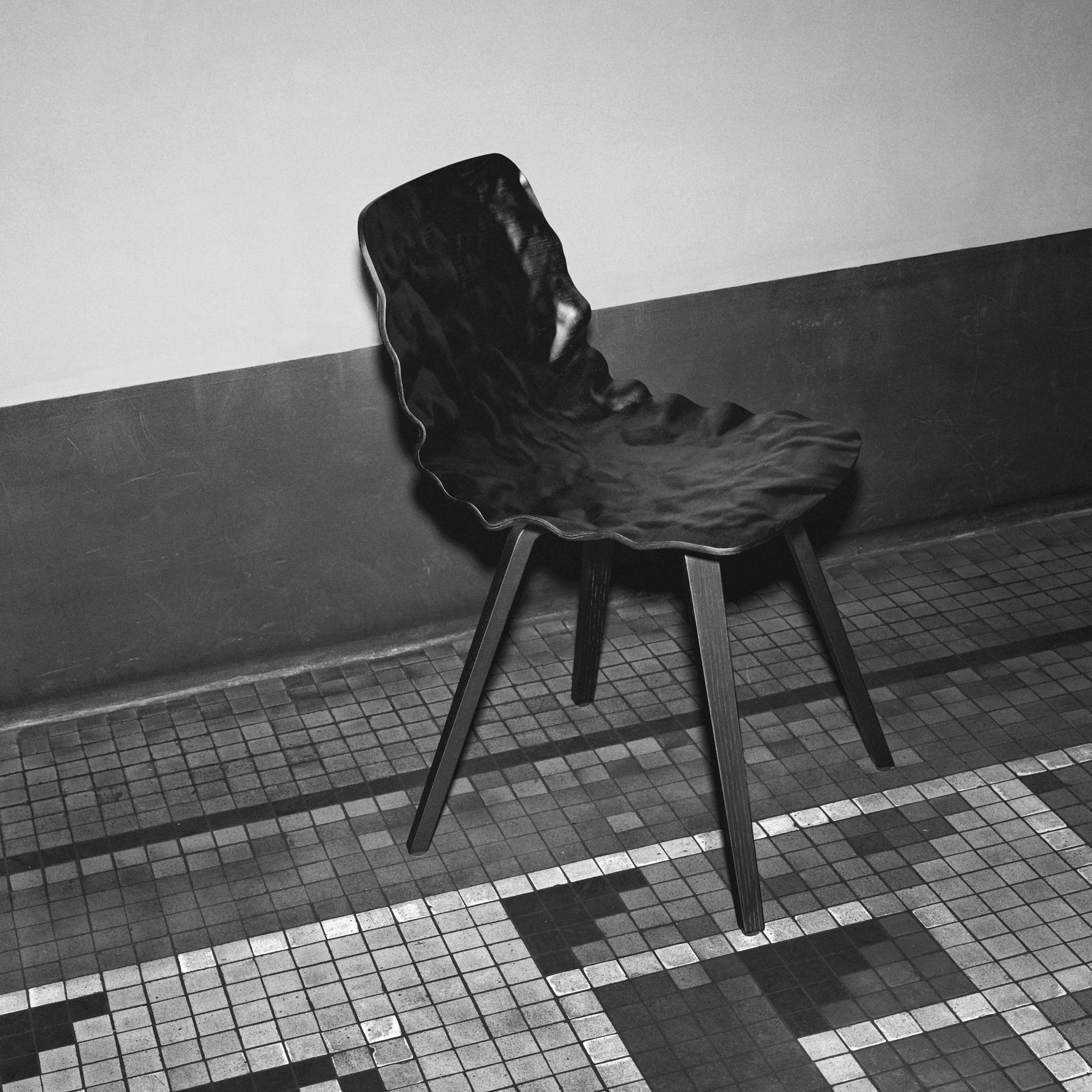
Some rules survive for generations simply because no one challenges them. O4i and designers Jon and Henrik wondered if two opposing theories could meet somewhere in between: bent plywood and crumpled paper. No manufacturer believed in it, but two years later we had together transformed ordinary two-dimensional veneer into a three-dimensional form. No magic. Just stubborn belief that the impossible might be possible.
fourteen
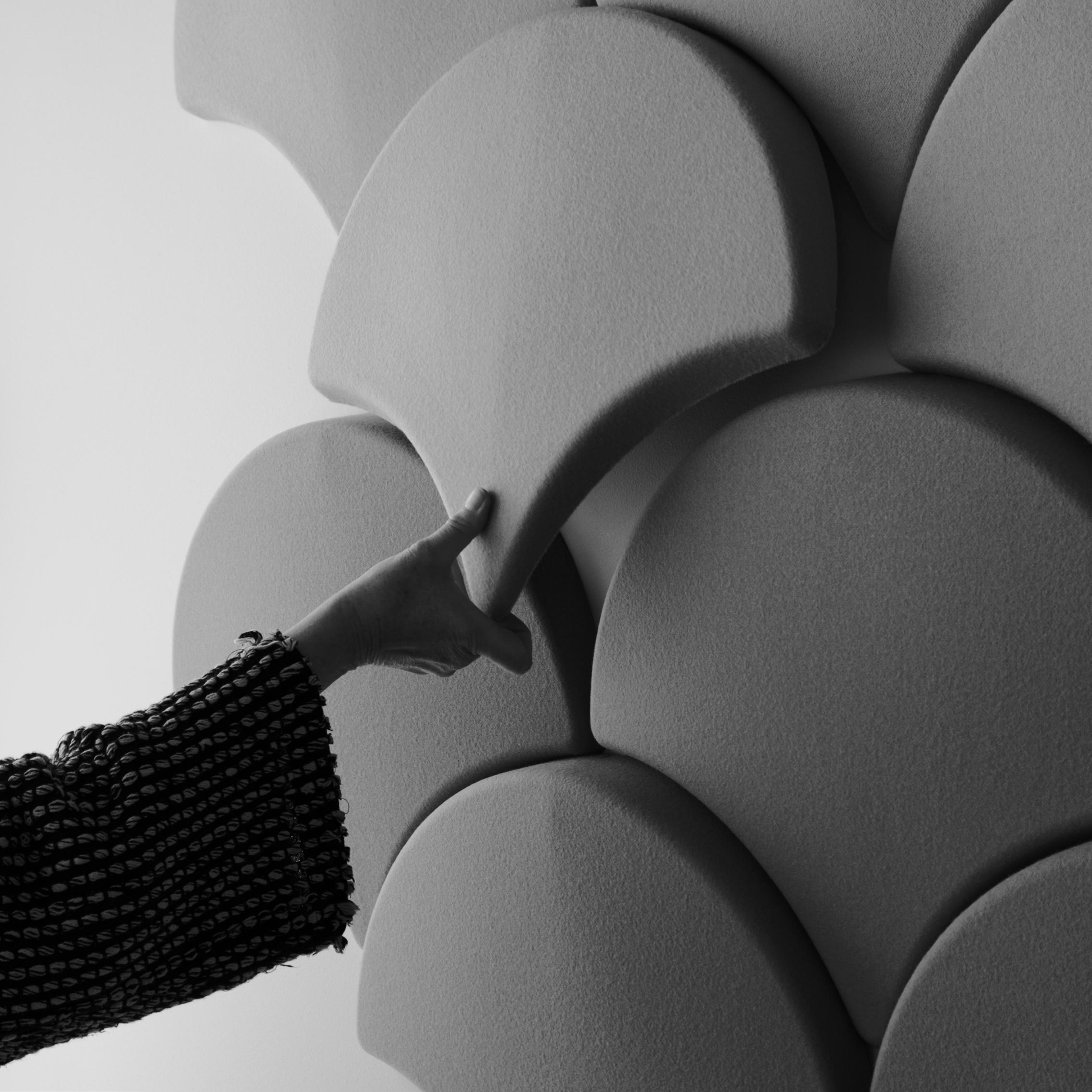
“We will never make sound absorbers — everyone else already does,” we said, convincingly. Then we got a new office and a design proposal at exactly the right moment… and became just like everyone else — only a bit more playful, more colorful, and more modular. And then they kept coming.
Ginkgo Stone Designs
fifteen
In 2014, we grew tired of our own well-functioning design process and decided to disrupt it completely. Three designers — all deliberately different from one another — were brought together and forced into each other’s creative worlds, sharing ideas, resistance, and even royalties. We called it Experiment 2015.
Honken Thomas Bernstrand (Experiment 2015)
The newly formed design team Outofstock often stopped by our stands around the world. One evening, over a few glasses of wine, a great conversation slowly turned into what felt suspiciously like an interview. A few weeks later, an email arrived with a design proposal named Åhus — along with a thank you for the wine and the conversation. After just a few images, our reply was simple: “Let’s start.”
BOB
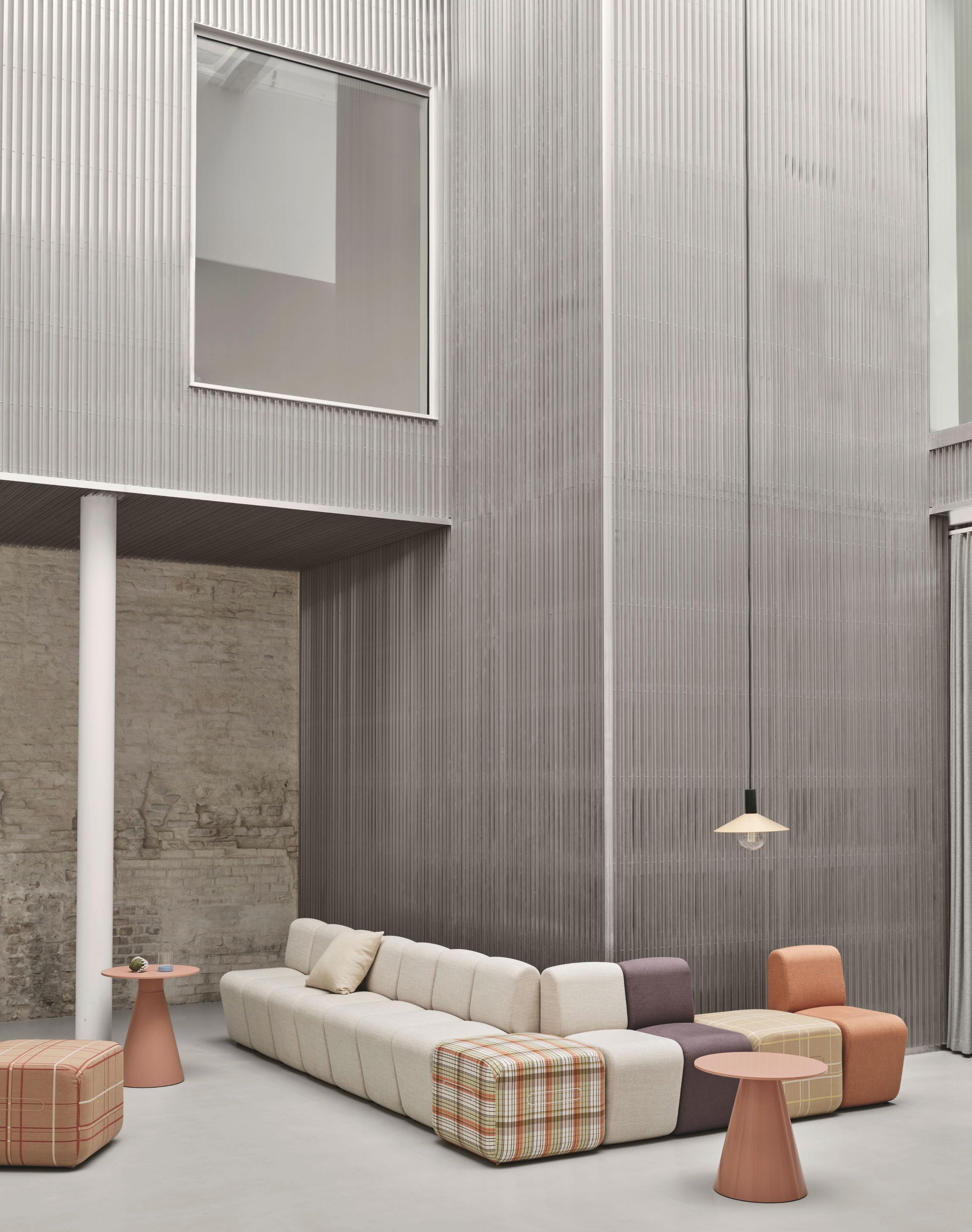
Bernstrand & Borselius created a seating and sofa system with as few components as possible, yet capable of endless configurations. With strict demands on production, logistics, and sustainability, the project became an exercise in reduction and precision. And an icon was born.
Bernstrand & Borselius
Jack & Jackless
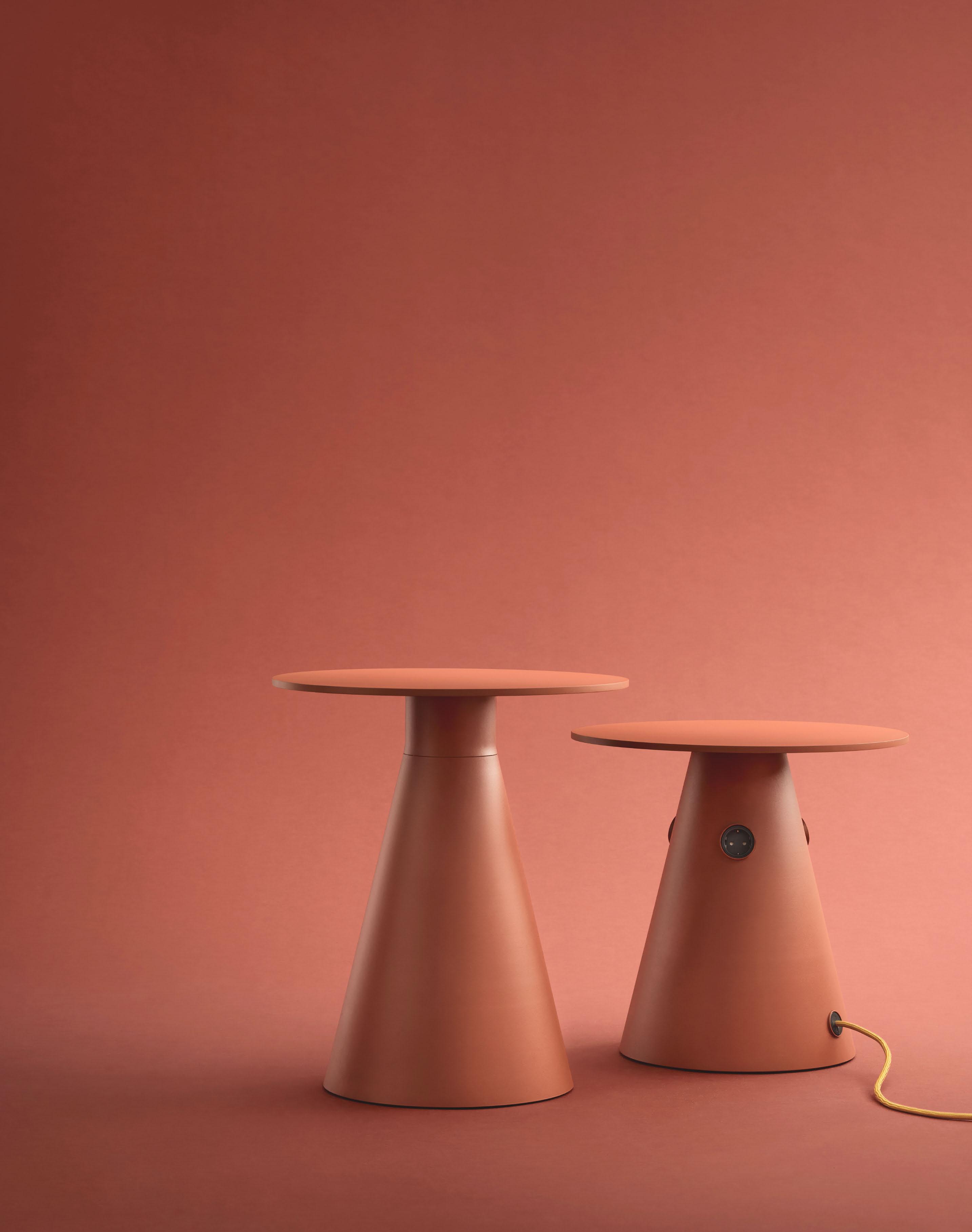
While fully occupied with BOB and a queue of products for the 2018 launch, Bernstrand and Borselius pushed for one more idea: an electric table to showcase the integration of power into BOB. Our response was simple — if it was to be ready for the Stockholm Furniture Fair 2018, our assistant product developer Isaac had to run the project entirely on his own. He did — and the table was finished in time.
Bernstrand & Borselius
Röhsska
When the Röhsska Museum reopened in 2019, its main exhibition was titled Unmaking Democratic Design. Designers were asked to reinterpret “democratic design” through the chair — a concept often reduced to cheap, flat-pack furniture. Fredrik Paulsen’s response aligned with ours, and together we explored what the idea could mean beyond slogans. The result, the Röhsska Chair, is a mass-produced object where every single piece is unique.
Fredrik Paulsen
Bobby
The brief for a major U.S. project was to turn BOB into standalone units no deeper than 62 cm — 26 cm less than the original — while also making them easy to connect and disconnect as both chairs and sofas. We developed Bobby: a lighter, magnetic, mobile system designed for quick reconfiguration.
We lost the project — but they lost Bobby.
Bernstrand & Borselius
BIG TALK
During the pandemic in 2020, 3daysofdesign briefly managed to open a small window of activity.
Scrolling through their fast-moving Instagram feed, we caught a glimpse of a vivid installation at Kvadrat — impossible to miss. On the last day, we went straight to the showroom.
We sank into the prototypes, asked who designed them, and realized we were sitting in work by Adam Goodrum. By Sunday, we had called him across the world. And that’s how it started.
Adam Goodrum
RUT
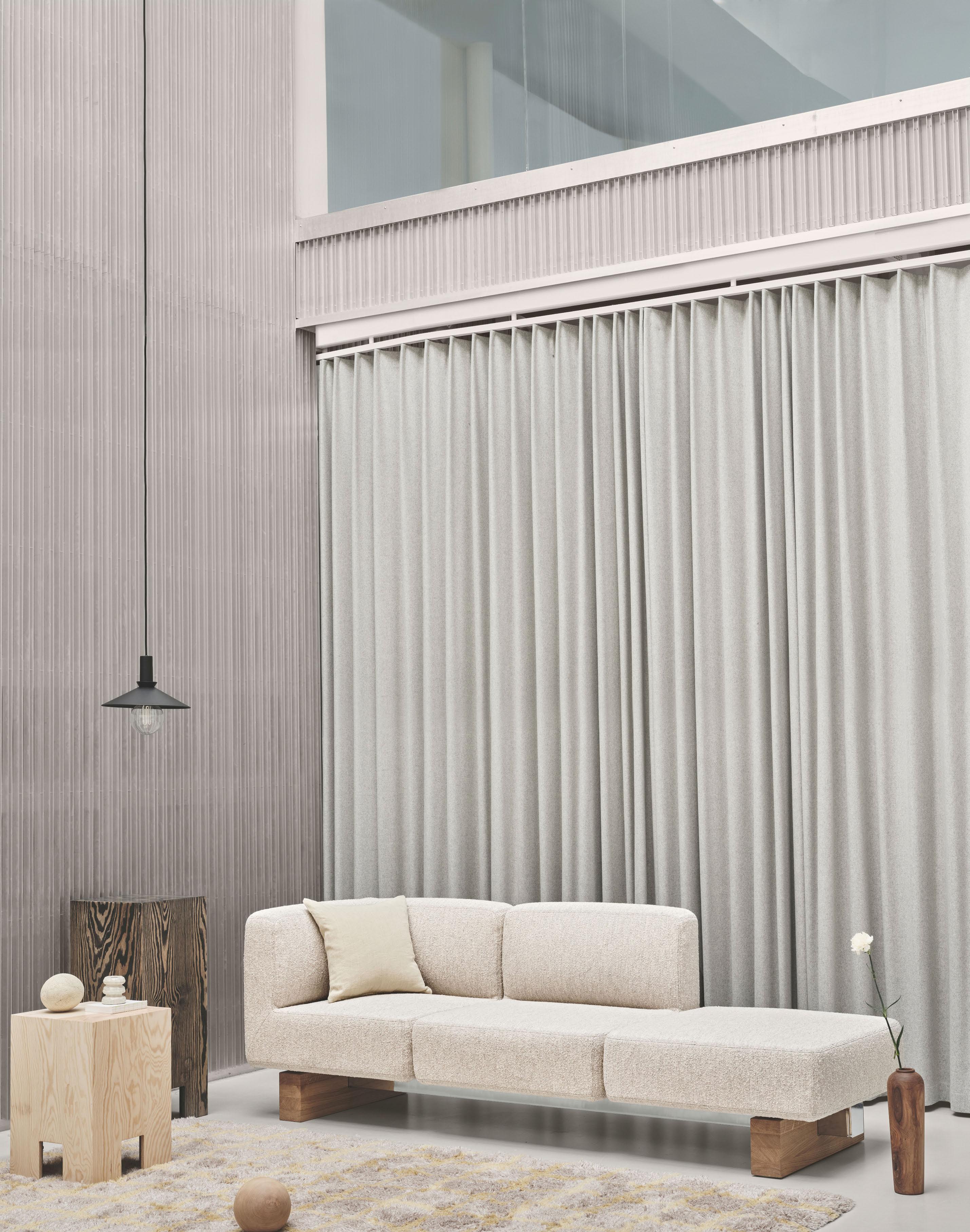
Does BOB have a wife? And if so, what does she look like — how does she balance him out?
These were the questions that emerged once BOB became a success, and we realized it didn’t work for everyone.
The answer became RUT — she floats where she rests on solid wood blocks, allowing straight and strict formations.warm, simple, intuitive, and sturdy on the ground where you place her. She was designed to do everything BOB couldn’t.
Bernstrand & Borselius
Max is a soft transformation of Maximus
Johan Ansander
Sustainable, Changeable, Renewable, Durable, Upgradeable, Adaptable, Separable, Recyclable, LOVEABLE ABLE