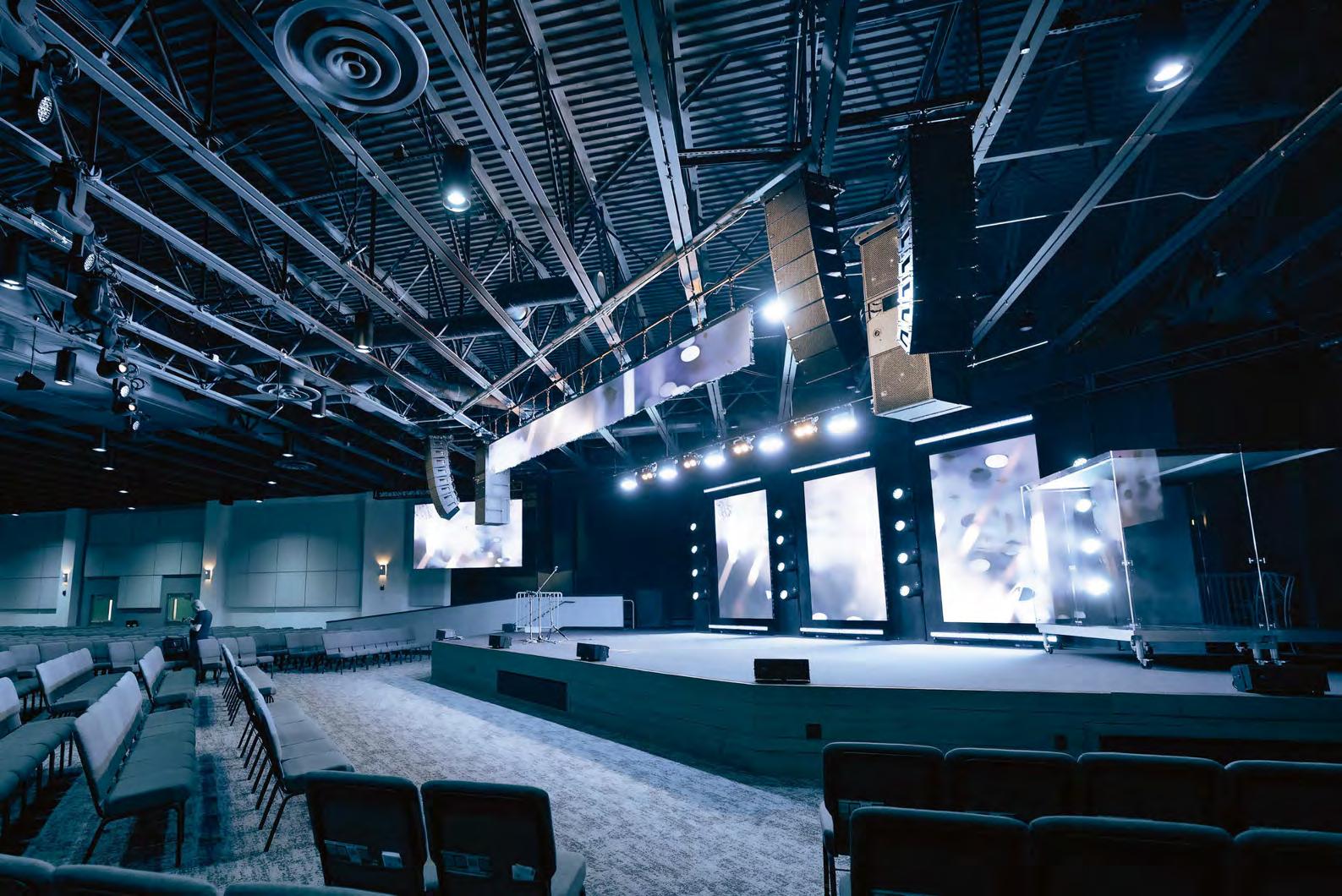


One theme that crops up on a regular basis is the importance of not letting the AVL equipment in houses of worship distract from the main reason people attend services: to worship. If speakers block line of sight to screens, if sound is unintelligible, if lights shine too brightly into people’s faces, then we run the risk of being diverted and sidetracked from the whole point of the exercise. But done in the right way, today’s technology can bring new levels of immersion, new levels of depth to our faith. Churches are increasingly using advanced audio and video technology to eliminate distractions so that the worshipper can just focus on what matters. This is one of the core principles at Crossroads Church in

Disguise media servers, ROE Visual panels and L-Acoustics
L-ISA immersive technology to create a media-rich worship experience.
Despite this, it’s important not to get lost in all this technology and lose sight of the primary goal. Sometimes being able to clearly hear speech is enough. In a remote part of northeast India, Alpha Acoustics has supplied an audio solution comprising line arrays, subwoofers and coaxial speakers to New India Bible Church (p.14). For the church’s worshippers who have never experienced sound through a PA system before, it could be said that their worship experience is being enhanced and improved in just the same way.



Richard Lawn General manager rlawn@worshipavl.com
Nick Smith Digital media manager nsmith@worshipavl.com

Sue Gould Advertising director sgould@worshipavl.com
Chris Yardley Video editor cyardley@worshipavl.com
Carolyn Valliere Sales associate cvalliere@worshipavl.com
Jack Stennulat Digital content creator jstennulat@worshipavl.com
Simon Luckhurst Senior reporter sluckhurst@worshipavl.com
Adrian Baker Production editor abaker@worshipavl.com

Caroline Moss Contributing editor cmoss@worshipavl.com
Jo Pugh-Jones Production manager jpj@worshipavl.com
Bea Meikle News editor bmeikle@worshipavl.com
Marne Mittelmann Circulation manager circulation@worshipavl.com
LICENCES: Singapore: MDDI (P) 067/04/2025 PPS 1644/05/2013(022954)
CIRCULATION: circulation@worshipavl.com
Audio engineer Kevin Yague considers the importance of making mixing decisions more deliberate and less reactive
Over the years, I’ve learned that the biggest shift in my growth as a worship audio engineer didn’t come from better gear, new plugins or more complex workflows. It came from changing how I think about mixing. I stopped asking, “Does this sound good?” and started asking, “What is this mix supposed to do?” That single shift reframed my entire approach to worship audio and forced me to think beyond technical correctness. Early in my journey, I treated mixing like a checklist. Gain was set, EQ was shaped, compression was applied and routing was correct. On paper, everything looked right. In practice, the mix often felt disconnected from the moment. It was clean but not always helpful. That experience taught me that technical accuracy alone does not guarantee an effective worship mix, especially when the emotional and spiritual context of the service is ignored.
One of the most important lessons I’ve learned is that there is no such thing as a neutral mix. Every decision communicates a priority. What is loud feels important. What is clear feels trustworthy. What is buried feels secondary. Whether intentional or not, these choices guide the congregation’s attention and subtly
Technical accuracy does not guarantee an effective worship mix
Over time, I’ve learned to make these decisions more deliberately rather than reactively.
Because of that, I’ve learned to clarify the purpose of each moment before I start mixing. An opening song that invites participation requires a different approach than a reflective response song. Prayer moments need support without distraction, while teaching transitions demand clarity and stability. When I fail to identify the purpose of the moment, I tend to overmix, adding energy or detail where restraint would serve better. Slowing down mentally, even during fastmoving services, has helped me make

There have been moments where simply recognising the purpose of a section of the service changed the outcome entirely. Choosing to pull back instead of push forward created space for the room to respond, even when the band was capable of more intensity. Those experiences reinforced that intentional restraint can often serve worship more effectively than technical excellence alone.
Mixing with intent has also taught me the value of subtractive decisions. My instinct used to be to fix problems by adding more volume, more EQ or more processing. Over time, I learned that clarity often comes from removing elements rather than enhancing them. Turning something down frequently creates more space than boosting something else, particularly in difficult rooms where acoustics already limit clarity and intelligibility.
Another major shift in my approach came from learning to mix for the congregation rather than the band. Worship mixing is not about showcasing individual musicians. It is about supporting congregational participation. Lead vocals must feel
stable and intelligible. Background vocals should support unity rather than compete for attention. Instruments should reinforce emotion and rhythm without pulling focus. When the congregation can sing confidently, the mix is accomplishing its purpose.
Consistency has become a priority in my mixing philosophy. Congregations respond to familiarity and predictability. Even a technically strong mix can become distracting if it changes dramatically from week to week. Reliable gain structure, repeatable starting points and clear communication across the team help create a consistent experience that allows people to engage without distraction and focus on worship rather than production changes.
Modern audio systems provide immense control, but more tools do not automatically produce better results. Every plugin, effect or automation choice should have a clear purpose. If a tool does not support the story being told or solve a specific problem, it usually does not belong in the mix. Technology should serve the moment, not complicate it, and should never draw attention to itself.
Ultimately, mixing with intent has taught me that worship audio is a form of leadership. It requires humility, awareness and discipline. The engineer’s role is often unseen, but the impact is felt throughout the room. When the mix is intentional, the technology fades into the background and the focus shifts where it belongs. Sound becomes a quiet, steady support for worship rather than the centre of attention, allowing the congregation to engage freely and confidently.
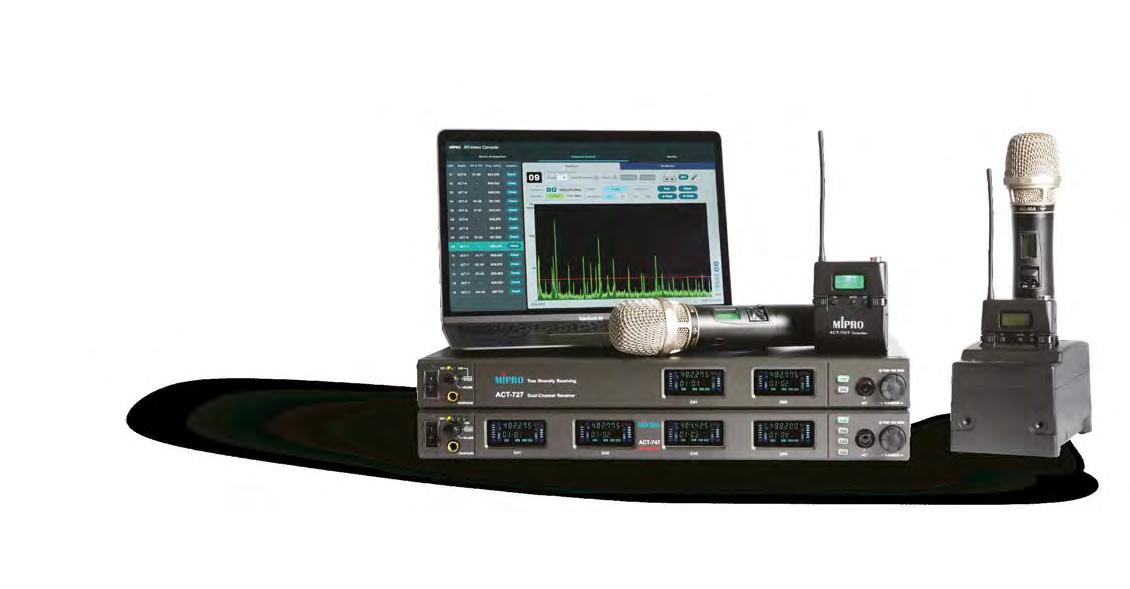
When worship deserves your best, trust the MIPRO ACT-700 Series to deliver.
Engineered with a true diversity receiving circuit, it ensures drop-out-free audio — so every word, every note, and every message reaches your congregation with clarity and power.
The all-new MWC software makes system setup and frequency coordination intuitive and efficient, even in multi-channel environments.
Our dual-power handheld and bodypack transmitters support both 18500 rechargeable and AA batteries, with flexible USB-C or dock charging — ready to serve faithfully in any venue or workflow.
Pair it with our MU-57 Series waterproof headworn and lavalier microphones for extended durability, ideal for long services, active worship, and life on the road.
MIPRO — Professional wireless audio, designed to support your calling.



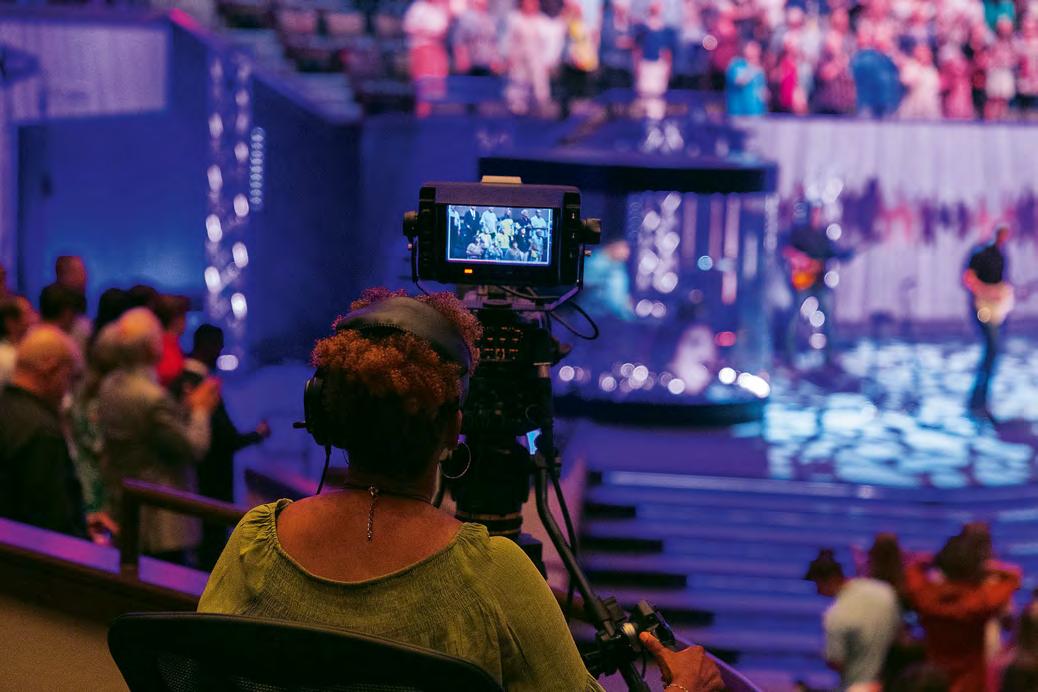
IN MY LAST ARTICLE, I TALKED about volunteers. This time, I am going to explain my experiences with hiring employees. If you are in a large metropolitan area, you probably don’t have a problem finding qualified candidates for hire. Instead, you probably have other issues like competing for those qualified candidates or perhaps even having so many to choose from that it can be hard to select which candidate you want to extend an offer to.
Well here in Tyler, Texas that is not our problem. Our problem is attracting qualified talent to our small market community. Our church is large enough to demand and afford qualified, experienced audio, video and lighting technicians but the issue is, we are located in what would be considered a small market. Generally, nobody wants to relocate to Tyler. When we have found qualified candidates that we were interested in hiring, we ended up in a bargaining war and, if we even won that bidding battle, then we ended up losing the war down the road when they left a year or so after they decided they didn’t like it here for this reason or that. So, we don’t do that anymore.
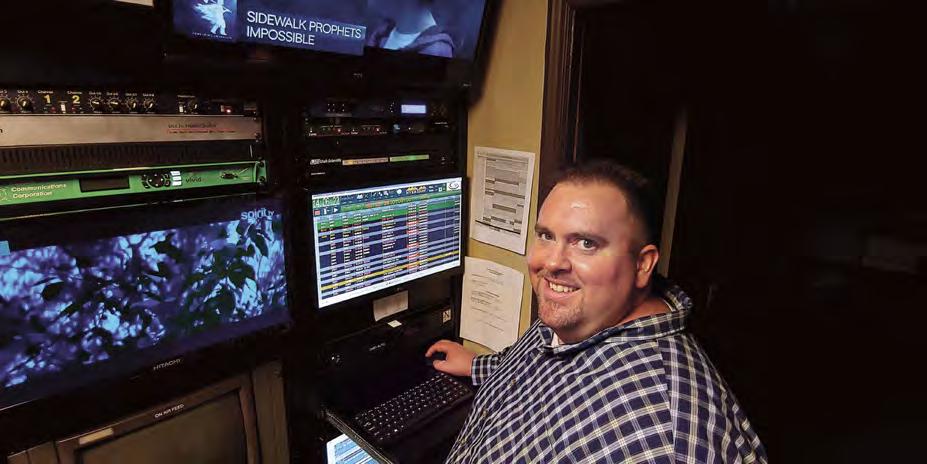
I thought perhaps we were alone on this until I was reading the December 2025 issue of Signal, the bimonthly publication of the Society of Broadcast Engineers of which I am a proud member. In it is an interview by Geary Morrill who talks to Josh Lynch of Draper Media in Delaware, where he has been director of engineering and operations since May 2021.
“There were three of us [engineers], including me,” Lynch said. “We had six TV stations, about to be seven. We were still building the sports network, and were wrapping up the acquisition of three more radio stations. We took ownership of six more stations from Forever Media. We’re a large group in what traditionally is seen as a smaller market. We’ve looked for someone with top 50 market skills willing to come to our small market, and that hasn’t happened to date.”
This caught my eye very quickly! It is exactly our problem at church. So I read on.
technician for a major telecoms company, managing national and international television broadcast signals over a switched fibre optic network. He also owned and operated an independent video production firm in Tulsa, Oklahoma for 10 years before returning to Tyler and Green Acres Baptist Church’s Broadcast Ministry in 2016.
“I said [to management] we need to forge relationships with local colleges and look more inwards to find people with a vested interest in being here. We need to nurture our own. And with good vetting, let’s go a little broader. Someone that might not have a paper degree, but has serious chops in similar competencies, if you will,” said Lynch.
This reminded me of myself and how I grew up in this church, left Tyler and got my real experience. Then 18 years later, I wanted to return home so I came back to Tyler and Green Acres, where my career ultimately began in 1993. I thought about my first hire three years ago, Kaegan and my recent hire, Hunter. Both of those guys were not far out of
high school when I hired them, but they were “vetted” volunteers of our church Broadcast Ministry with outstanding performance history, work ethic, attitude and a willingness and eagerness to learn. In fact just yesterday as I was getting ready for work on a Sunday morning, Hunter texted me that two of our three rear stage confidence monitors were showing “no signal”. I walked him through a few steps via text and before I arrived at work, he had the issue resolved. Plus, he identified a few additional issues related to the cause of the original problem and he resolved those, too. He has worked there for less than three months. Even an experienced video tech from a top 50 market might have needed to ask me a question about the architecture of how those monitors are configured in order to fix them. So now I know that I am not alone in this hiring conundrum, and now that I know that there is a great solution to it, I wanted to share it with all of you. If you are in a similar situation, hopefully you can find value in what Josh Lynch and myself have been repeatedly successful at.
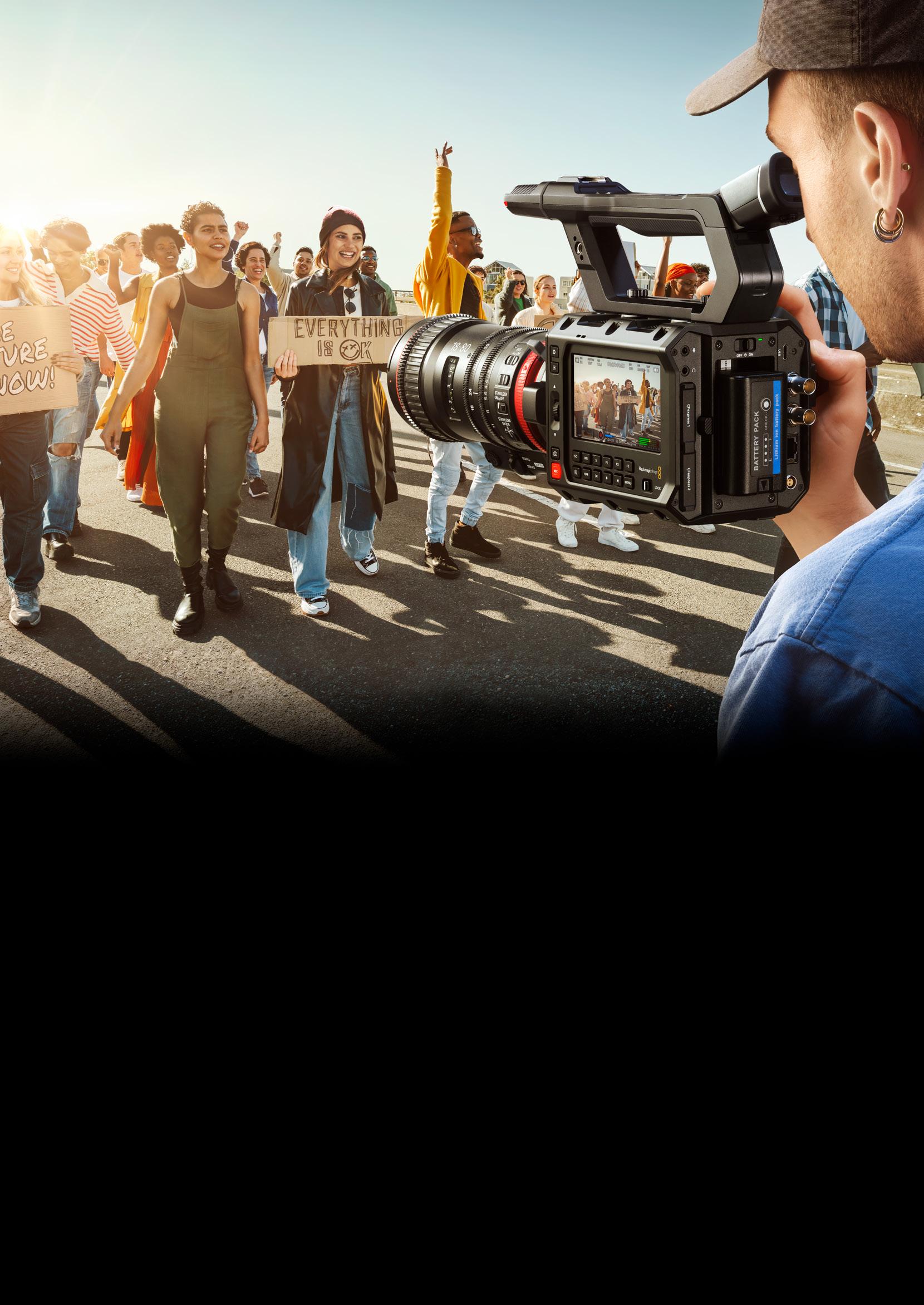
The Blackmagic PYXIS Pro Handle transforms Blackmagic PYXIS into a flexible run and gun camera for ENG and documentary work! The top handle includes an integrated HD OLED viewfinder with precision glass optics, making outdoor shooting easy and accurate. It also features a high quality stereo microphone with an ultra low noise floor for great sound in any location.
Blackmagic PYXIS is a high end digital film camera that produces precise skin tones and rich organic colors. You get a full frame 36 x 24mm 6K or 12K sensor with wide dynamic range with a built in optical low pass filter that’s been designed to perfectly match the sensor. Plus there are 3 models available in either EF, PL or L-Mount.
With multiple mounting points and accessory side plates, it’s easy to configure Blackmagic PYXIS into the camera you need it to be! PYXIS’ compact body is made from precision CNC machined aerospace aluminum, which means it is lightweight yet very strong. You can easily mount it on a range of camera rigs such as cranes, gimbals or drones!
Blackmagic PYXIS has the professional features you need for feature film, television programming and documentaries, however now this same quality can be used to create cinematic content for social media, YouTube videos and more. Imagine shooting with large format digital film on low budget independent films, TV commercials or even corporate video!
Blackmagic PYXIS models feature a large full frame sensor with a native resolution of 6048 x 4032 or a massive 12288 x 8040! That’s almost three times larger than a Super 35 sensor and lets you shoot with a shallow depth of field or use anamorphic lenses uncropped for a true cinematic look. Plus, you can shoot up to 120 fps on the 6K model or 112 fps on the PYXIS 12K.
Blackmagic PYXIS Pro Handle S$1,145
Blackmagic PYXIS From S$3,825

TRADITIONAL SOFTWARE IS deterministic – it follows a strict set of rules and produces the same result every time when given the same inputs. But AI works differently – it learns patterns from large amounts of data and responds based on probability, which means it can adapt to context and nuance rather than just running a script.
That difference matters in ministry. A general-purpose AI tool only sees the words you give it at the moment. It doesn’t know your church, your people or the heart behind a message. So, while it can be useful, the output can feel disconnected from the lived experience of a body of believers. AI can be a huge support for technicians, especially during busy seasons when production work stacks up and the demands feel endless. Yes it saves time, but the deeper value is that it takes care of work that humans shouldn’t have to carry alone.
There are tasks AI can handle far faster and more consistently than a person. It can automatically create transcripts, identify key moments in a sermon, generate clips and captions, organise media and prepare assets for social and weekend recaps. Work that might take hours of manual effort can often be completed in minutes.
That kind of lift gives volunteers and staff the freedom to focus on what only a human can do: creative decisions, pastoral presence and caring for people in the room. AI can accelerate technical work, but it can’t pray with someone behind the scenes, encourage a volunteer who is having a hard day or shepherd a team spiritually. So, the benefit is not only efficiency – it is the opportunity to give time and energy back to ministry and relationships.
However, AI does bring up some philosophical questions, especially in terms of the speed and instant gratification it fosters. Technology like this can shift how we expect results. There’s the concern that over-reliance on AI could potentially take away from the value of patience, reflection and personal engagement in ministry. I think that notion is further reinforcement of why a company should have a human-centred approach to AI and put thoughtful intention to how (and what) products they’re developing.
Cost and complexity are also important to consider, especially for smaller churches. Like any new tool, there is some learning at the start, but modern AI tools are getting simpler to use, not harder. There may be a small
upfront investment of time as your team learns how it fits into your weekly rhythm. After that, the long-term return is usually clear: far less manual work, fewer late nights editing and more space for the relational and spiritual parts of ministry that no technology can replace.
The reality is, most houses of worship today are already using AI in some way. As AI continues to evolve, I expect it to take on more of the repetitive, time-consuming tasks that technicians often handle, such as media editing, content writing and managing workflows. These advancements can help streamline many technical aspects of church media. However, while AI can replace these tasks, it will never fully replace the need for human oversight, creativity and emotional intelligence –particularly in ministry. Only humans can build genuine trust and foster deep, meaningful relationships with their congregation.

on more valuable aspects of ministry. Things like connecting with people, fostering community and supporting the emotional and spiritual needs of the worshippers. It frees up time for ministry leaders to be more present, intentional and engaged with the people they serve.
AI can’t grasp the spiritual depth of crafting a sermon or understand the specific emotional and relational needs of a congregation in the same way a human can. What AI does offer is a tool that enhances the ability to identify gaps and opportunities within the congregation, and focus
In the future, AI may handle some of the more technical or routine tasks, but it will never replace the human touch needed for spiritual guidance, mentorship and the personal connections that make ministry so impactful. Ultimately, AI should be seen as a partner that helps people in ministry do their work more efficiently, not as a replacement for the deeply relational aspects of church life.
www.resi.io
NEW MEXICO’S SAGEBRUSH
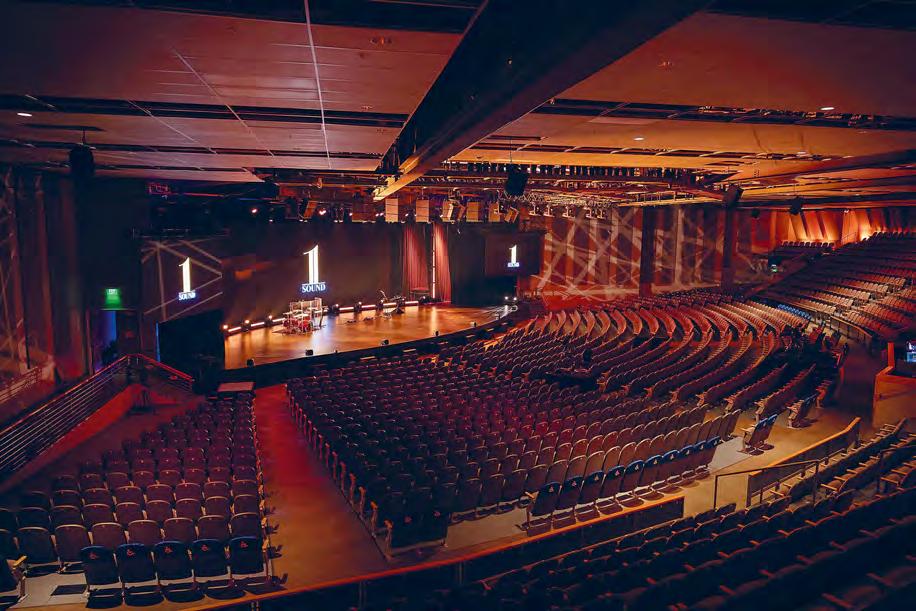
Church has implemented a 1 Sound system, powered by Powersoft amplification, to provide clear and consistent audio for its weekly services, events and livestreamed productions. Regarded as one of the largest churches in Albuquerque, the sanctuary features a full campus and worship centre seating 2,000–3,000 people in a theatre-style layout.
Despite investing in modern LED videowalls and lighting, the church’s existing sound system had reached its limits. “We had a system in the room that wasn’t really performing,” confirms Ryan Peddycoart, production director at Sagebrush. “We started seeing systemic issues like shorts and, tonally, the system just wasn’t giving us what we needed. Even at low volumes, there was distortion in the lows.”
After experiencing 1 Sound Tower Systems elsewhere on campus, the team opted to change their approach. Each system combined three Tower LCC44s stacked on a horizontally deployed CSUB610, positioned just 28cm from the wall. “We both really enjoyed that system and how it feels,” notes Daniel Trillo, systems engineer at the church.
The 1 Sound team worked closely with Sagebrush to troubleshoot the previous setup before exploring a full redesign. “Lou [Mannarino, 1 Sound’s founder and designer] wanted to take care of us more than he wanted us to have 1 Sound,” Peddycoart adds. “Even though it wasn’t his system, he wanted to see if there was any way to resolve our issue first.”
The manufacturer sent a demo system to Sagebrush featuring four Contour CT212 mains and four SUB2112 subs, plus two CT28s to address delay coverage. “The main concern was that it was a point source in a room that needs to throw about 33.5m and still remain clear, intimate and impactful – without overwhelming the front rows,” Peddycoart explains. “We listened to the Contours – it was transparent and really natural.”
He notes a secondary concern being an “odd” low-end buildup in the space that was apparent in the previous system. “This deployment with the SUB2112s really helped us control that and keep the coverage where it needed to go and not excite parts of the room,” says Peddycoart. Utilising multiple Contour point sources allowed Sagebrush to achieve even coverage throughout the space
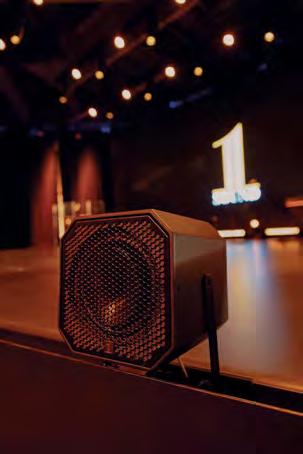
Eight Cannon C8i loudspeakers have been mounted along the front edge of the stage
while keeping the stage and screens unobstructed.
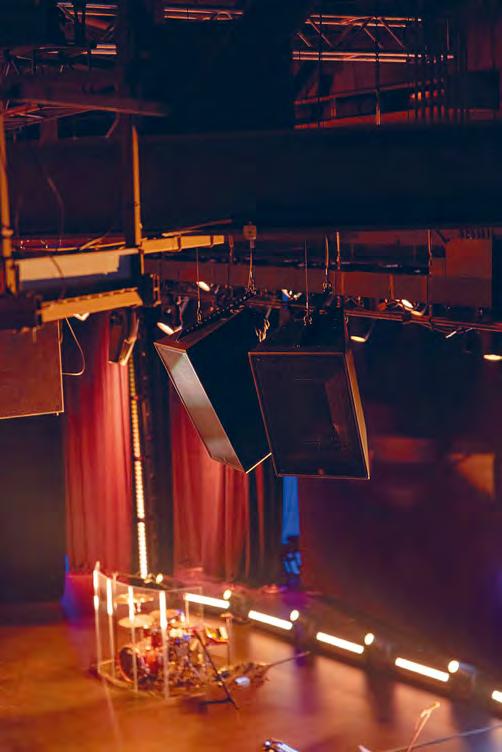
The final design comprises six CT212 flown as main L-C-R clusters, seven CT28s as delay fills and six SUB2112 subs near the stage for low-end reinforcement. Eight Cannon C8i loudspeakers mounted along the front edge of the stage cater to the first rows to ensure that every seat has the
same sonic experience. The system is powered by Powersoft Unica amplifiers. According to Trillo, the new setup is much easier to mix. The 1 Sound solution has also received the praise of pastors, musicians and worship staff. Peddycoart notes that the pastor was impressed by the sonic clarity, while worship staff reported more consistent onstage energy, which makes their in-ears feel better. “We’ve got a lot of compliments saying it’s really nice that we now have coverage everywhere.”
Sagebrush has also deployed 1 Sound’s new Panorama 65 for its live video studio, with the single speaker delivering mono, stereo and sub information across the full field.
“The Panorama 65 has been otherworldly,” Trillo says. “Our video director can pick out individual instruments and hear the full bandwidth of services.”
“Lou has always said the relationship starts now, not ends with the final result,” Peddycoart concludes. “We’re still getting check-ins and support.
This is the only company that’s ever treated us anywhere near this level.”
www.1-sound.com
www.powersoft.com
www.sagebrush.church










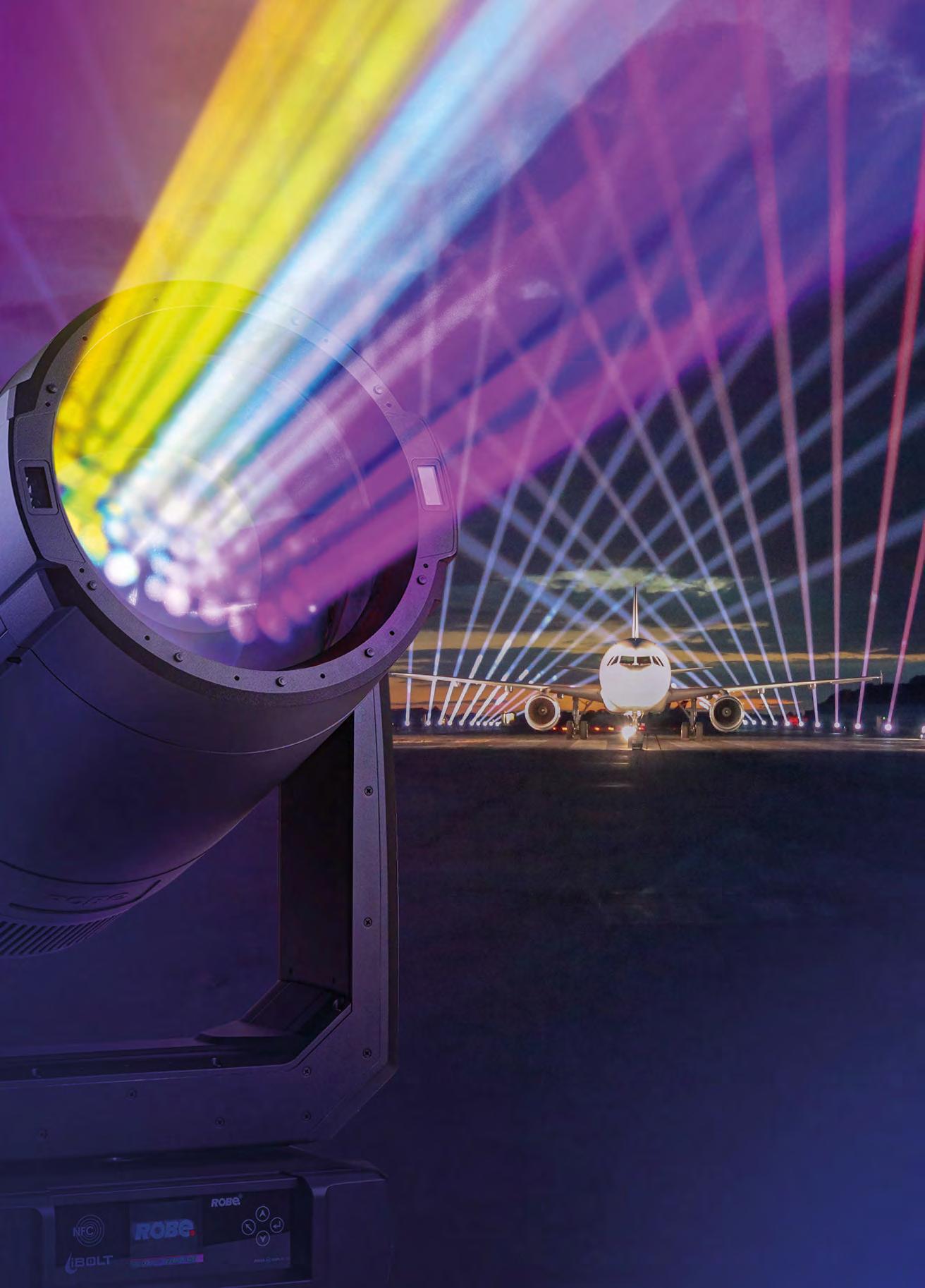
From searchlight to skyower, beams to effects, it does it all!

MARKING THE COMPLETION OF an extensive renovation and facility expansion designed to support a more impactful ministry, GBI Filadelfia Makassar Church has recently inaugurated its Blessing Centre. The project included the installation of a KV2 Audio sound system delivered by the brand’s regional distributor, Goshen Swara Indonesia, to ensure clear spoken word as well as enhance musical reinforcement for both regular worship services and special celebrations.
Located at Bambapuang in Makassar, the Blessing Centre’s main worship hall measures 45m x 22m x 12m (LxWxH) with a wide layout that includes balcony and under-balcony areas, and is designed to accommodate up to 1,500 worshippers.
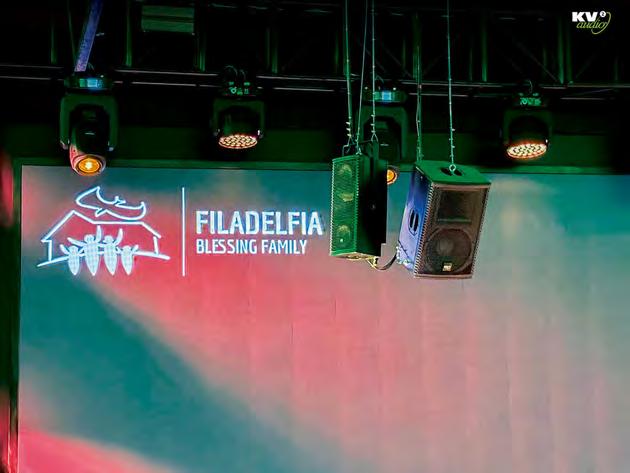
This architectural design presented specific audio challenges, particularly in ensuring that every congregation member can hear the message clearly, evenly and comfortably, both in the main seating area and in the balcony and under-balcony zones. Therefore, the room required an audio system capable of delivering even coverage, high speech intelligibility and a consistent sonic character throughout the entire space.
The church’s primary requirement was to ensure that the spoken word could be heard clearly by every attendee, while accommodating
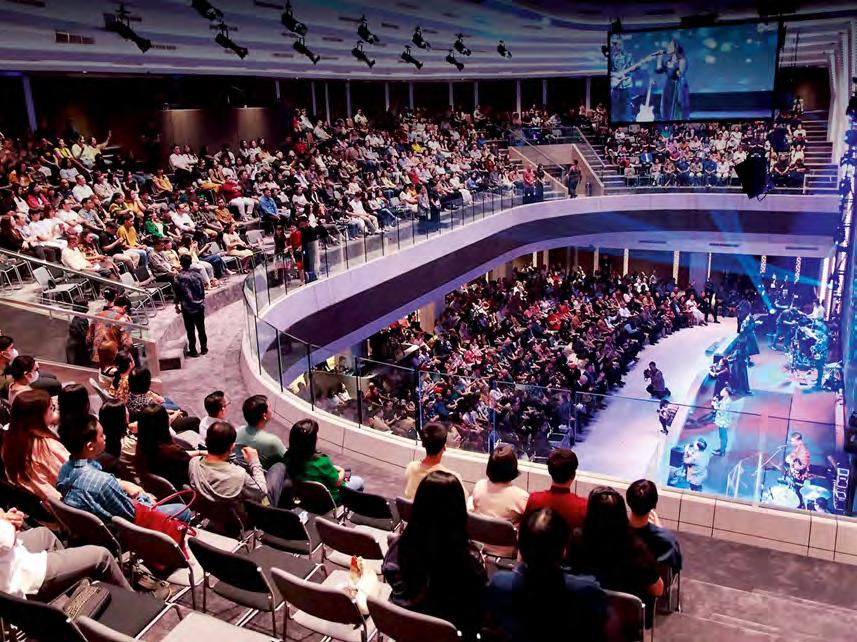
the project installer, Deny C Fadjar, who boasts extensive experience in designing and optimising sound systems for large-scale worship environments.
multiple loudspeaker points without introducing excessive overlap or phase issues. At the same time, the system needed to deliver warm, powerful and non-fatiguing musical reinforcement.
“Our goal was to create a space where every person can clearly hear the message and fully engage in worship, no matter where they are seated,” explains Yosua Wirawan, sound engineer at GBI Filadelfia Makassar.
To meet these requirements, the Blessing Centre selected a KV2 Audio system based on a point source design philosophy. System implementation was handled by
“The wide-format layout with balcony and under-balcony areas required a system that could deliver consistent coverage without unnecessary complexity,” says Fadjar. “KV2 Audio’s point source design allowed us to achieve excellent intelligibility and musicality across the entire space with a clean and efficient system design.”
Rather than relying on a high number of loudspeakers, the system was designed to operate as a unified whole, producing wide, focused and coherent sound coverage throughout the venue. Serving as the backbone of the balcony delay system, four KV2 Audio EX26 units play a key role in maintaining sonic consistency in areas further from the main sources. The EX26 was chosen to preserve vocal clarity and musical definition without sounding strained, even at lower sound pressure levels.
Supporting the main seating area, two EX12 cabinets serve as the main PA, while two EX1.8 subwoofers provide low-frequency reinforcement. In the underbalcony areas, four ESD25 boxes provide intelligibility in acoustically challenging zones, while two EX6 loudspeakers are used as front-fills to help unify coverage in the front rows.
The manufacturer’s SAC2 system amplifiers and SDD3 system processors handle processing and control for the entire setup, enhancing time alignment, tonal balance and performance across all zones.
The team noted that since its inauguration, the Blessing Centre at GBI Filadelfia Makassar has delivered a significantly more immersive worship experience.
“With the new sound system, the spoken word is clear throughout the room and the music feels warm and immersive without being overwhelming,” concludes Wirawan.
www.goshen.co.id www.kv2audio.com
Modular system for customized infrastructure solutions
Wide range of modules for fully networked media technology concepts
Classified cable-bulkware according to EU Construction Products regulation (EU CPR)
Ready made Network and Fiber Optic Systems for mobile and installation applications
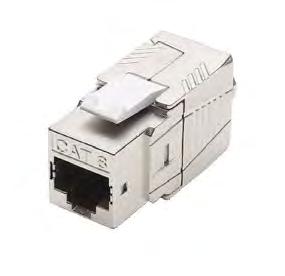
CPR-rated CAT.7 & CAT.8 installation and connection cables
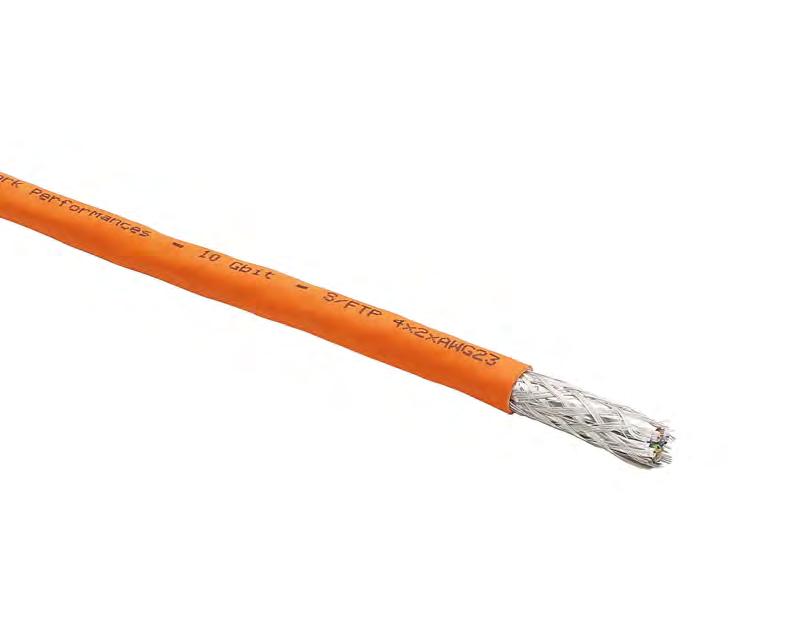

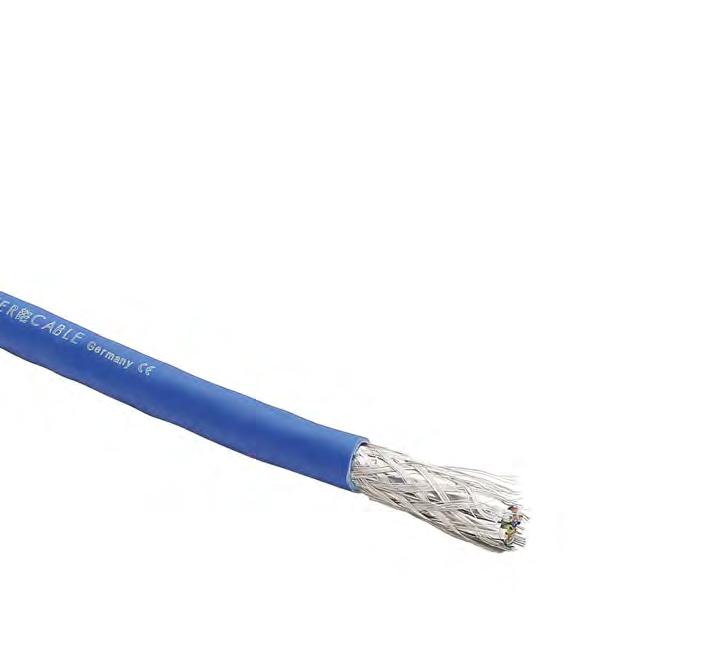
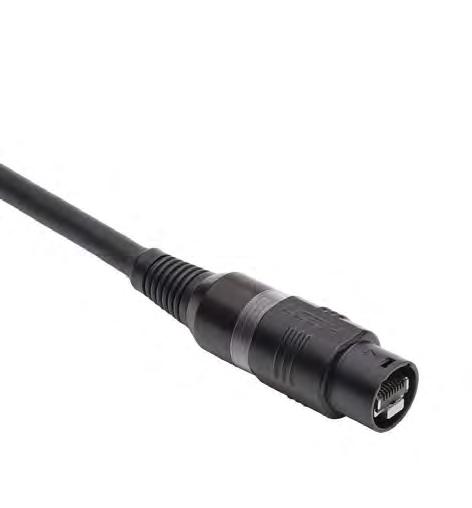
High-quality, certified connection components




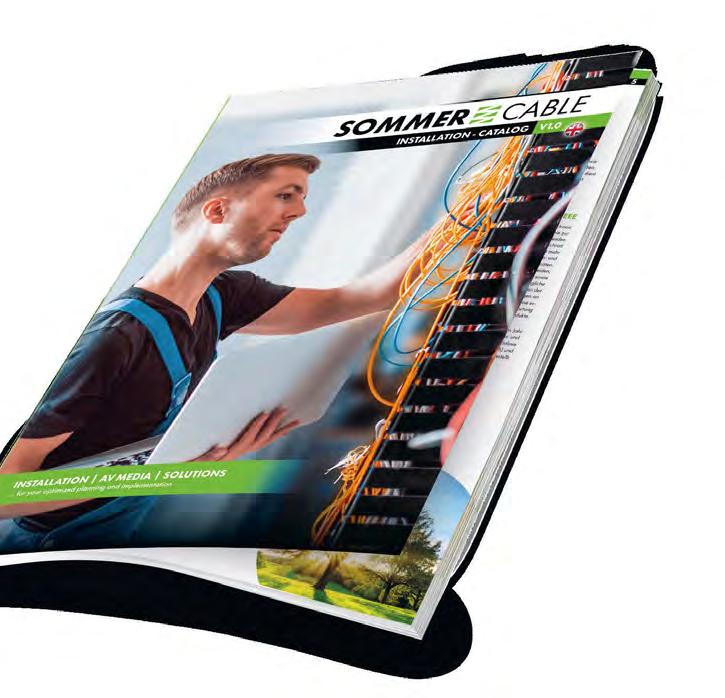
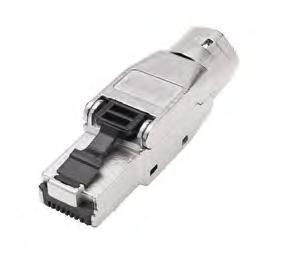



SOMMER CABLE based in Straubenhardt/Germany was founded in 1999 and is now one of the leading suppliers of professional high-quality cable and connection technology with a focus on the audio, video, broadcast, studio and media technology sectors. The product range including the in-house brands HICON, CARDINAL DVM and SYSBOXX covers cable bulkware, connectors, connection cables, individually adaptable distribution systems and electronics. A B2B shop with over 25,000 products is available 24/7.
REQUEST YOUR FREE INSTALLATION CATALOG!
Alpha Acoustics and its long-term integration partner Unisonic have completed a landmark installation at New India Bible Church in the remote city of Purnia in northeast India
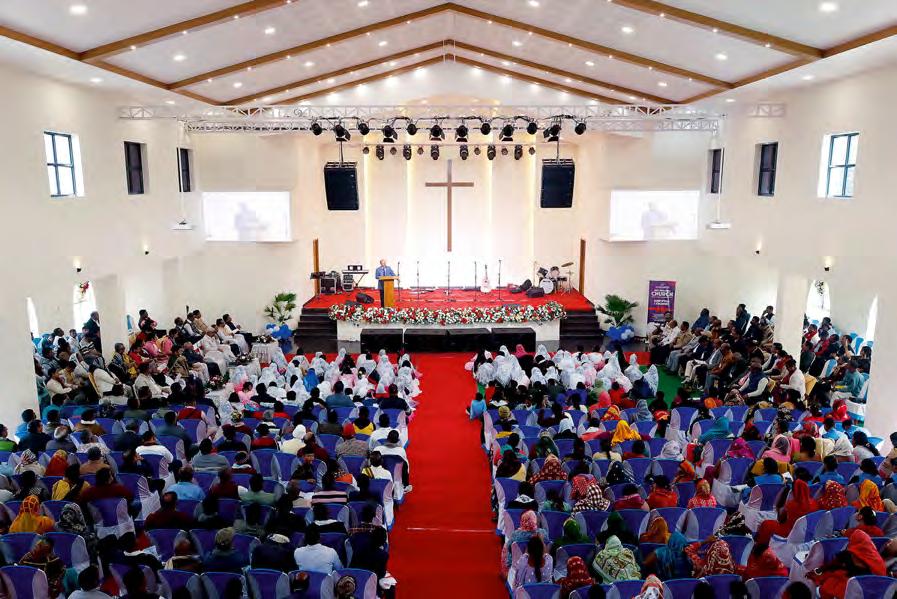
AVL installation, speaker manufacturer Alpha Acoustics, its exclusive distributor in India TSG and house of worship integration specialist Unisonic System have come together to provide New India Bible Church in Purnia with a state-of-the-art audio, video and lighting solution. The newly built sanctuary consists of a large main space with a mezzanine floor at the back and has the capacity to hold 2,000 worshippers for special events, with regular services attracting around 1,000 people. It has become one of the largest and more modern worship spaces in the area.
“We’ve been working on this project for about 18 months,” explains Ashish Vineeth Manuel, product manager at Alpha Acoustics. “We started the planning and consultation before they’d even laid the first stone in the building. The client requested state-of-the-art facilities and equipment. Usually in a venue this size we’d suggest maybe four point source speakers, but they wanted to futureproof the system and get a long-term return on their investment.”
equipment. But even if there’s a problem post-installation, we’re committed to support our customers, however long it takes us to travel there. One of our crew stayed close to the church for the entire installation period.”
The AVL solution was designed and installed by Unisonic System. “We have been Unisonic’s first choice of speaker manufacturer for a very long time,” adds Mathew. “When they were awarded the project, they immediately contacted us and began discussions regarding the speaker layout and acoustics. We’ve had 100% success with all the projects we’ve worked on with Unisonic and we understand how each other works.”
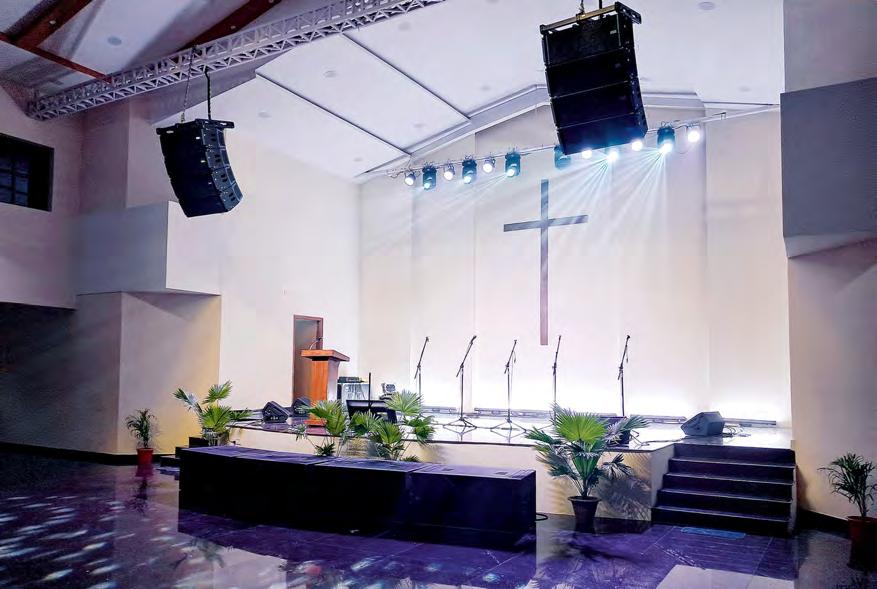
The setup consists of L-R arrays of four Alpha Acoustics KIA 410 units each side along with four KIA 218S dual 18-inch subwoofers placed on the ground in front of the stage. Unisonic has also supplied four KOMPACT 10A 10-inch colour-matched coaxial speakers, with two installed on the mezzanine and two underneath. These can be switched on when the mezzanine is in use by selecting a preset on the KONTROL FIR48 speaker management processor. “There was no option to hang the coaxial speakers from the ceiling, so we had to mount them on the wall,” explains Manuel. “The majority of the space is covered by the line array speakers, but the coaxials complement the KIA 410s at the back of the room.” Four KOMPACT 12A active 12-inch coaxial monitors have also been installed on the stage.
Purnia is the fourth largest city in the state of Bihar, on the northeastern side of India. “It’s very remote,” describes Manuel. “Previously it would’ve been six hours by road from the nearest airport, but with the Indian government investing more in Tier 3 and Tier 5
cities, Purnia now has its own airport. It’s an exciting time for us as a manufacturer to be able to focus on these emerging markets and expand the territories where we work.”
While the new airport has certainly been a benefit, this is still a remote location. “The most modern gadget we had available to us during the
installation was probably a laser!” smiles Joe Mathew, product specialist at Alpha Acoustics. “The Unisonic team planned to complete the installation in four days, but it took almost 10. They knew it would be challenging. Transporting the equipment also proved difficult, with couriers taking a month to deliver some of the
“Feedback is a common issue in churches like this, so one of the reasons we selected our KIA 410 line array modules is that they give us two options – either cardioid or omnidirectional mode,” continues Manuel. “There’s no acoustic treatment behind the stage so in cardioid mode we get controlled directivity and we can reduce any reflections coming from the stage. With other brands you can often hear the speakers when you stand behind them on the stage, but with the cardioid mode in the KIA 410s, this is prevented.”
Another rationale for Unisonic designing the speaker setup in a cardioid polar pattern is to control the
reflections. “There wasn’t much we could do in terms of treatment on the walls, so the solution was to add perforated boards to the ceiling for low-frequency absorption,” explains Manuel. “We added in the delay speakers so that we didn’t have to push the main arrays too much.”
In addition to the speaker inventory, Unisonic has also provided six sE Electronics V7 microphones fitted on stands on the stage, along with a Shure BLX 288/ SM58 wireless microphone system which allows the speakers to move off the stage and into the congregation.
In the rack located in the left corner of the stage are the Alpha Acoustics KONTROL FIR48 4-in/8-out speaker management system, four DAMP 4.1500HD 1,5 00W amplifiers, two DAMP
EB-L530U projectors have also been suspended from the front light truss along with two custom screens on either side of the stage.
“It’s really important that we can support the volunteers at the church, and the Wolfmix looks more like a launchpad than a lighting console, so they can build all their presets. They wanted plug-and-play so we made sure that every service – whether it’s 20, 200 or 2,000 people –can be run with the press of a button. It’s so important that we walk the journey with them as a manufacturer, supported by Unisonic and TSG.”
The brief was clear: to supply a state-of-the-art, futureproof, volunteer-friendly and easy-to-use setup that provides the speech
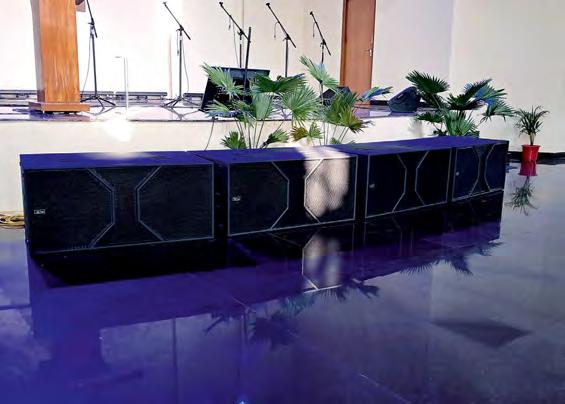
2.2800HD 2,800W amplifiers and a Behringer Wing +S32 stagebox. “Two speakers are looped together so we have four amplifiers for eight speakers, with the two DAMP 2.2800HD amplifiers for the subwoofers. An ST DMX 8 splitter has been provided for the lighting and a Klarity PS 810 power sequencer means that the volunteers don’t have to worry about what order to turn things on.”
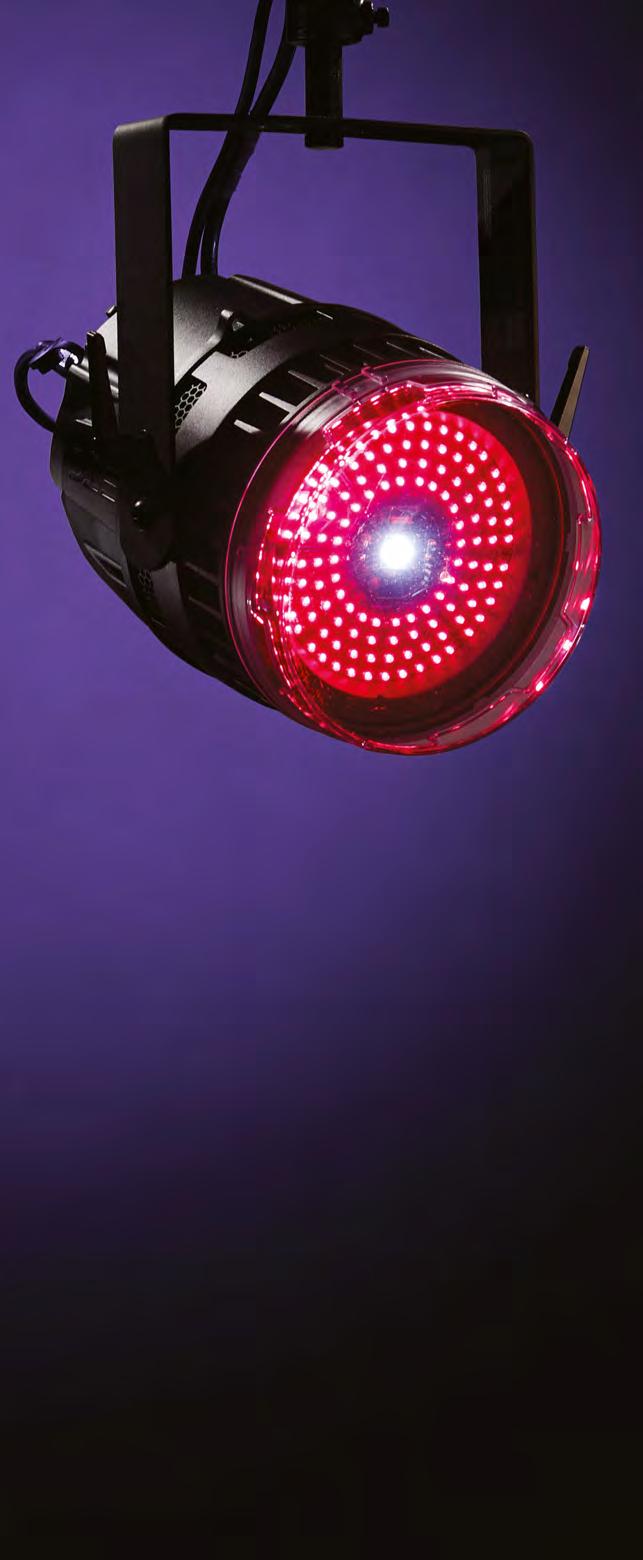
For lighting, Unisonic designed a simple setup, including six Klarity KLA-FOCAL 210 with barndoors, 12 Klarity KLA-RAIN W18 RGBW PAR lights for ambience in the room, six Yellow River YR-295B moving heads, seven ST RGBW strobe lights at the back of the stage and an ST Haze 600 haze machine. Lighting is controlled by a Wolfmix W1 console. Two Epson
intelligibility the church was looking for. “When we were planning the project, we had to consider the fact that no one at the church would know how to use such a modern sound system, so we had to make sure that everything was volunteerfriendly with a simplified workflow,” says Manuel.
“Before the new building was constructed, the church was split in two and meeting at separate locations in slightly more makeshift buildings, so it’s great that they can now worship together in one space,” concludes Manuel. “The client is so happy –they’re hearing and experiencing something new for the very first time. From the front to the back, everyone is now getting the same experience.”
www.alphacoustics.com www.tsgaudioinnovation.com
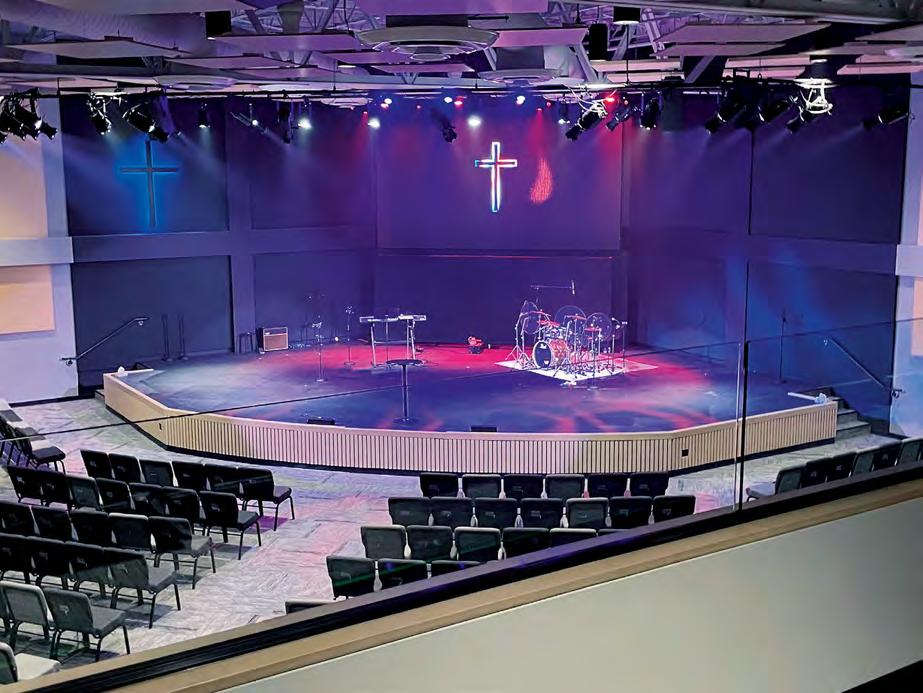
Church in Beaumont, Alberta, recently embarked on an ambitious expansion project, audio quality was high on the list of priorities. With a growing congregation and a vision to create a purpose-built sanctuary, the church leadership understood that clear, natural sound would be essential for both worship and spoken word. The project brought together several key players, including Comtec Associates as the consultant, dbi Systems Integration as the AV integrator and Contact Distribution as the supplier. Central to the audio solution was British manufacturer EM Acoustics.
Prior to selecting the British brand, a group from the church visited other facilities in the greater Edmonton area to listen to installations showcasing other audio systems. “While those other systems were certainly capable and a definite upgrade in terms of clarity and intelligibility, their application in our new facility ultimately lacked the natural, open voicing qualities of the EM Acoustics R10, and the very even sound field coverage of the Reference Series,” noted David Cacka, co-lead of audio at Eaglemont Church.
audio installation began in the gymnasium, which functioned as a temporary sanctuary during the construction of the new auditorium. This space required
The gymnasium’s main PA system features two R10 loudspeakers, complemented by an S-218 dual 18-inch subwoofer for extended low-frequency support and powered by a DQ20 DSP amplifier. As well as serving the church during construction, this temporary setup doubled as a proof of concept for the larger installation to come.
“With the positive experience gained from the Eaglemont Church Gymnasium project, it was a natural choice to consider EM Acoustics for the new auditorium build, maintaining consistency in product selection throughout the venue,” continues Spratt. “The auditorium’s wide fan layout and upper balcony necessitated a comprehensive design approach. When modelled using Reference series and EMS series products through various iterations, the simulations once again instilled confidence to proceed with EM Acoustics products as the preferred installation solution.”
that could support full worship services in a reverberant, acoustically challenging environment. The second phase was the realisation of a new, dedicated sanctuary auditorium, along with several multipurpose spaces and meeting rooms designed to support a variety of ministries and community
“The design was developed by Comtec Associates and we were fortunate to be awarded the project through the tender process,” explains Jordan Van Dyke of dbi Systems Integration.
“From the beginning, it was clear that the church wanted high performance and reliability, and that meant EM Acoustics was a
According to Lance Spratt of Comtec Associates, following the use of EASE modelling and simulation for evaluation, the R10s demonstrated coverage consistency and pattern control in the challenging acoustic environment. “The boxes exhibited good mid-band pattern control and the simulations indicated that interactions between boxes were well-behaved,” he says.
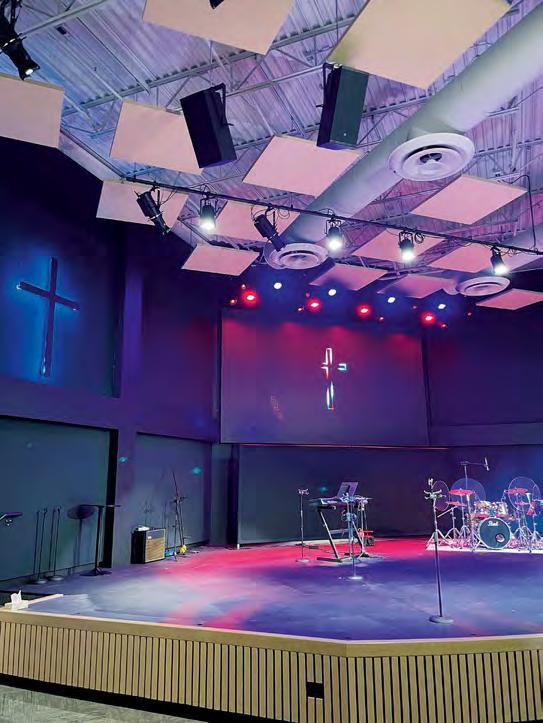
Four R10 loudspeakers serve as the main auditorium system, supplemented by five smaller EMS-61 loudspeakers as balcony fills to ensure consistency across all seating zones. A single ST-218 subwoofer delivers low-frequency content, while two DQ20D DSP amplifiers with Dante onboard control the system.
It was noted that the compact footprint and coverage patterns of the EM Acoustics products combated challenges posed by the auditorium’s architecture such as the relatively low ceiling heights.
“The EM products are remarkably small for what they deliver. That let us position everything exactly where it needed to be without compromising sound quality or visual aesthetics,” adds Van Dyke.
“The result is a great sounding space with minimal visual impact.”
Cacka concludes: “We’ve had many compliments on the room acoustics and loudspeaker system, from local choir directors using the auditorium for a cappella concerts, to other FOH engineers visiting us for a Sunday service. The overall sound system is fun to use and excellent to train new sound volunteers.”
www.eaglemontchurch.ca
www.emacoustics.co.uk


DESIGNING A MODERN SOUND system for historic and acoustically challenging spaces requires not only advanced technology but also experience in installing church sound systems. Sao Mai Audio, a local integrator specialising in religious installations, has once again teamed up with UPSV – the official distributor of Bose Professional and Powersoft solutions in Vietnam – to provide intelligible audio at Bùi Chu Cathedral and Lãng Vân Church.
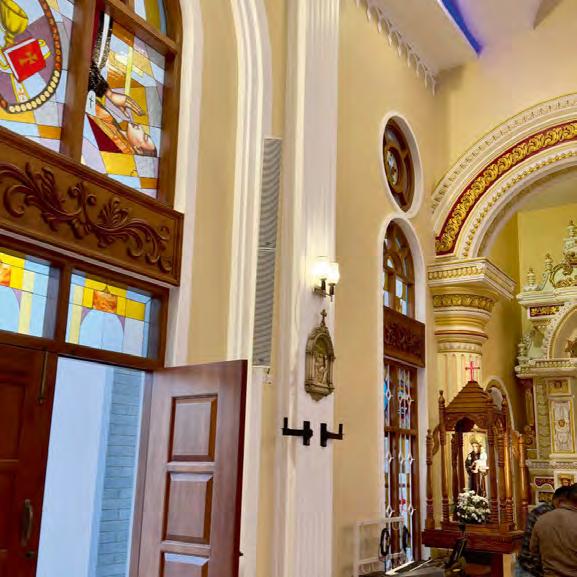
Located in Xuân Trường District, Ninh Bình Province, Bùi Chu Cathedral is the cathedral church of the Diocese of Bùi Chu and one of the oldest Catholic parishes in Vietnam, officially established in 1670. With more than three centuries of history, the cathedral stands as a cultural, architectural and spiritual landmark, serving a large and active congregation. The space is both large and complex, measuring 72.5m x 18m x 18.2m (LxWxH), with two bell towers, each 34.5m high. The interior structure is entirely wooden, supported by 24 solid ironwood (lim) columns. This combination of long reverberation time, reflective wooden surfaces and extended coverage distance placed high demands on speech intelligibility, tonal consistency and system control, especially during major liturgical events attended by thousands of worshippers. From the outset, the parish priest requested the highest possible audio quality, with the aim of ensuring clarity and natural sound throughout

the nave while respecting the historic character of the cathedral.
Sao Mai Audio specified an audio setup combining Powersoft’s Unica amplification platform with Bose Professional loudspeakers, selected
provide controlled low-frequency support for music and ceremonial content without overwhelming the natural acoustics of the space.
“This is one of the oldest and most historic cathedrals in Vietnam, with a
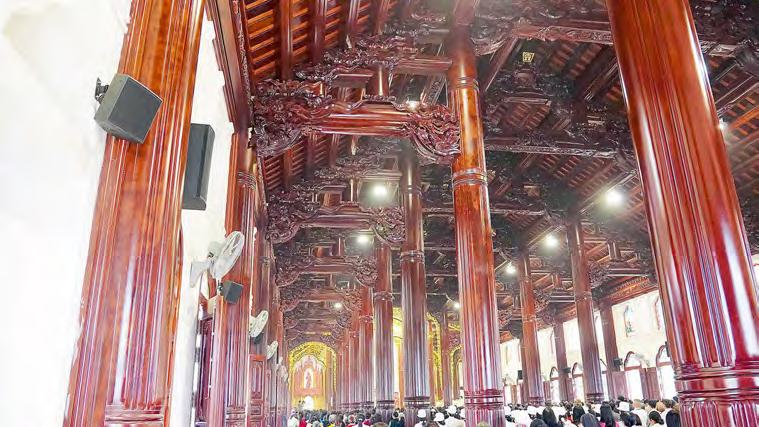
The solution consists of one Powersoft Unica T 8T 10K8, two Unica 4L, one Unica 4L 12K4 and one T904A, along with 24 Bose Professional AMM108 and 14 AMU208 loudspeakers and eight MB210WR subwoofers. The AMM108 units have been deployed along the main nave to ensure even, intelligible coverage, while the AMU208 speakers are being used for additional reinforcement in specific zones. The MB210WR subwoofers
“The parish priest required a truly perfect sound system. That is why we selected the AMM108 loudspeakers and Powersoft amplification, specifically the Unica and Unica T series. After completion, the parish priest, the parish council and the congregation were extremely satisfied with the sound quality. We were also fully confident thanks to the close support from UPSV during the design process.”
“This was the first time Bose Professional AMM108 loudspeakers and Powersoft Unica amplifiers have been deployed in a church sound system in Vietnam,” adds Nguyễn Lương Niệm, technical manager at Powersoft. “While there were initial concerns, the system ultimately exceeded our expectations. With the latest Unica developments, such as cloud monitoring via MyUniverso and multichannel flexibility, we were able to tune and manage the system efficiently
“The successful completion of the Bùi Chu Cathedral project sets a new reference for high-end church sound systems in Vietnam,” he continues.
“It demonstrates how modern audio technology can be seamlessly integrated into historic sacred spaces, enhancing worship experiences while preserving architectural integrity.”
Lãng Vân Church is the largest church in the country, both in terms of architectural scale and congregation capacity. The church accommodates up to 5,000 worshippers and features a cruciform (cross-shaped) layout, with a bell tower rising to 110m, the tallest church bell tower in the country.
The sheer size and geometry of the church presented significant challenges, requiring a carefully engineered sound system that could meet the acoustic demands of the building. The vast interior volume, long sound propagation distances and naturally reverberant surfaces

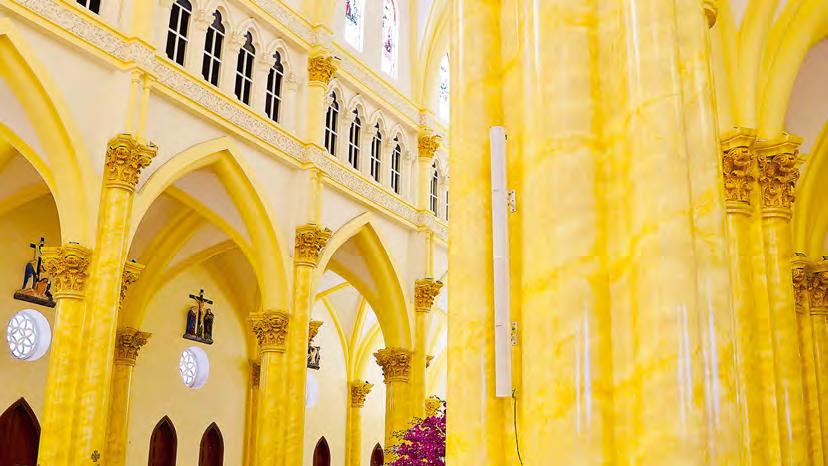
required a sound system capable of maintaining speech intelligibility across the entire worship space, while preserving the solemn and natural character of liturgical sound.
To address these challenges, Sao Mai Audio carried out an extensive evaluation of the space, choosing Bose Professional MA12 column loudspeakers as the primary sound reinforcement solution along with Powersoft T Series amplification. Sao Mai Audio chose the MA12 for its controlled vertical dispersion, high intelligibility and even sound distribution. The final setup consists of 40 MA12 column loudspeakers and five Powersoft T904A amplifiers. The MA12s have been installed throughout the nave and cross arms of the church, with the aim of ensuring consistent coverage while minimising reflections from high ceilings and architectural surfaces. This design approach allows sound energy to be directed precisely towards the congregation, even at long listening distances. The T904A amplifiers drive
the loudspeaker system and were selected for their power efficiency, stability and DSP capabilities. These amplifiers play a crucial role in maintaining consistent performance during daily services as well as large religious ceremonies.
“The combination of MA12 column loudspeakers and Powersoft T904A amplification ensures speech intelligibility, tonal balance and controlled sound dispersion,” explains Trần. “The successful completion of the Lãng Vân Church sound system reinforces the effectiveness of Bose Professional MA12 and Powersoft T Series solutions in large-scale worship environments. The project demonstrates how modern audio technologies can be integrated into religious architecture, enhancing the worship experience without compromising the spiritual atmosphere.”
www.boseprofessional.com www.powersoft.com

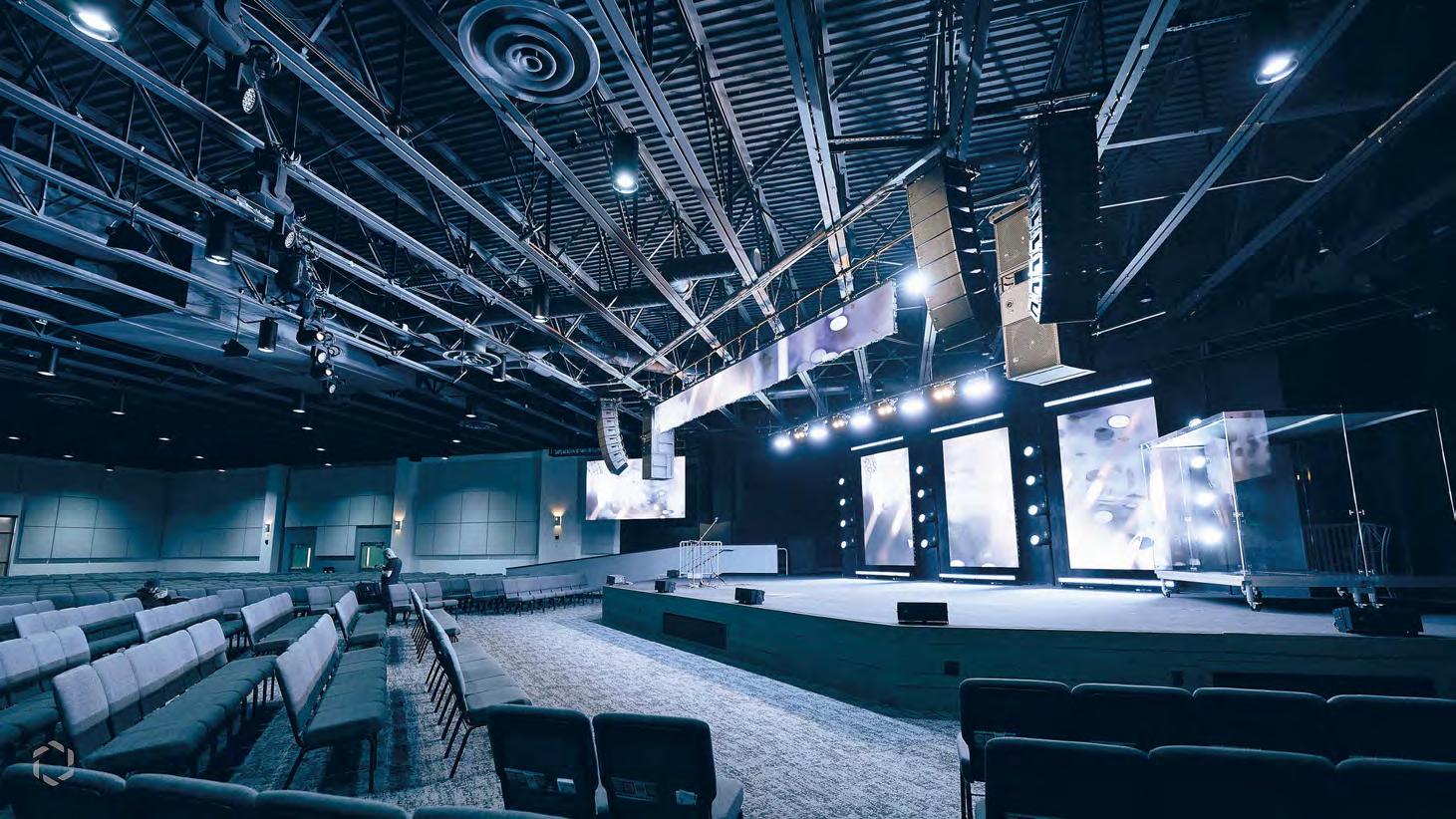
Octane AVL has supplied a Meyer Sound LINA line array solution for Calvary Church’s diamond-shaped sanctuary
WHEN CALVARY CHURCH
approached house of worship integration specialist Octane AVL, it had a clear goal in mind. The Aurora, Colorado HOW needed to replace its 18-year-old PA system that had reached the limits of its performance. “Their sound system was completely throttled and at the end of its life,” explains Thatcher Sanders, Octane AVL’s design lead. “They were running a fine gauge wire so they probably weren’t getting full volume out of their system, which you could tell because they were having to push it to the limits. They had a pretty expansive production system that was still running well in their other rooms, but in the main sanctuary, they were ready to dream big. They wanted to host a full band, record and make sure people could hear clearly from front to back.”
The Calvary Chapel Family of churches began in the late 1960s as a small non-denominational church of 25 people. Fast forward to February 1991, where Ed Taylor
attended his first service in Calvary Chapel Downey in California and spent the next eight years studying, learning and growing in his faith. In July 1999, now qualified as a pastor, Taylor and his family moved to the Denver area, establishing Calvary Church at Columbia Middle School in Aurora in December 1999. The church remained at the middle school for the next seven years, but the desire to expand into its own premises came to fruition with the purchase of land and construction of a new facility in 2007, with the building further expanded in 2010.
With the aim of providing 24/7 worship and Bible study in Colorado, the church established GraceFM in December 2010. The HOW also created the Refresh Conference, which was established to encourage worshippers to refresh their ministry.
“With pastor Ed’s radio presence, a big portion of what they wanted to achieve with the upgrade was improving the quality of the audio
stream of their services to radio along with the in-room experience,” explains Sanders.
After the church had contacted Octane AVL through its website, the company’s owner Greg Sanders invited the pastor and a few of the team to visit its home church in Fort Collins. “My dad, who’s the boss of the company, runs a church as well,” continues Sanders. “He’s a senior pastor, so we’ve always run the church and the business in tandem. We jokingly call the church our showroom, because we love to show people round as it gives them an idea of what we can do. It also has a Meyer Sound setup which is fairly similar to the solution we eventually supplied to Calvary Church.”
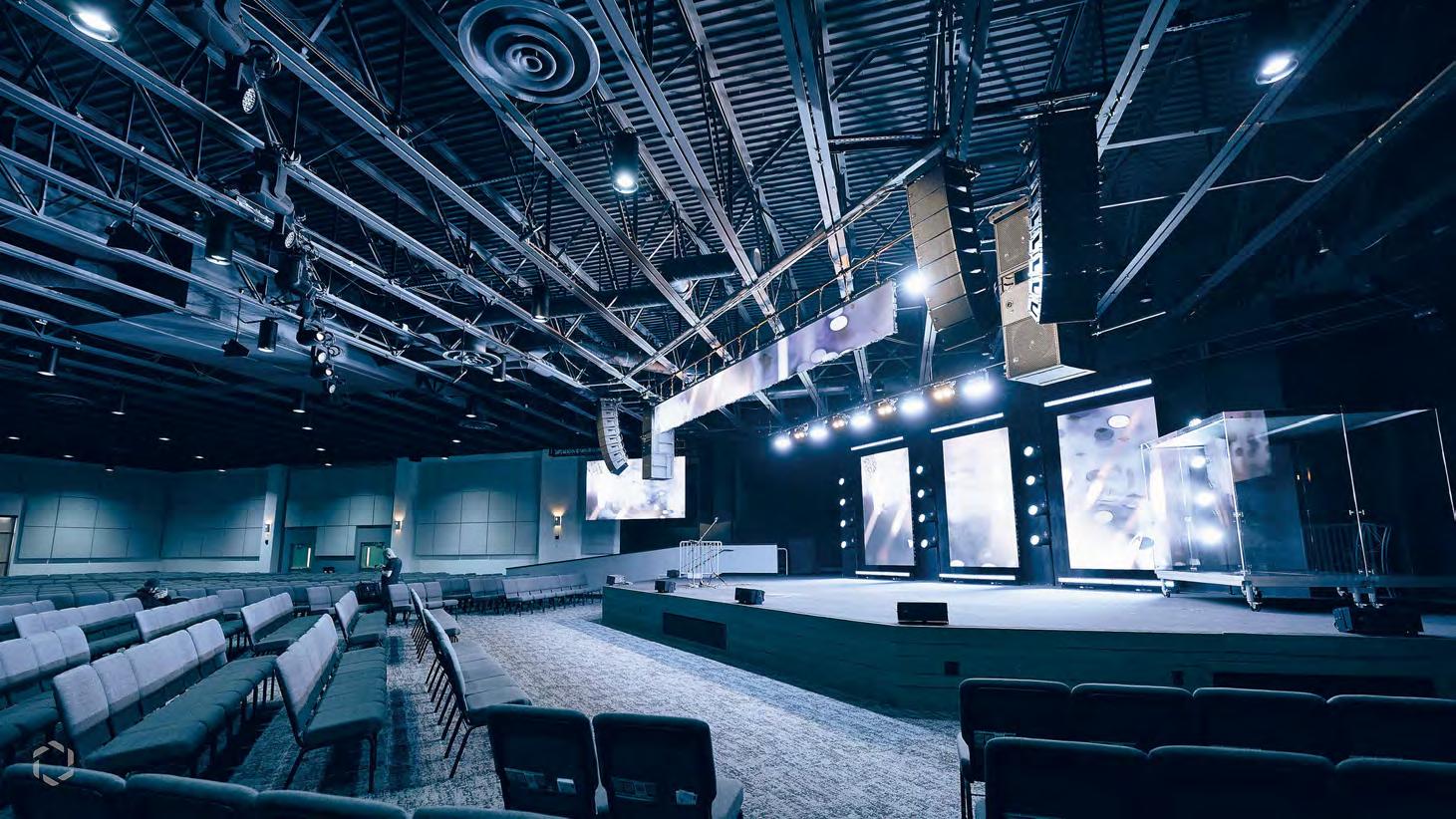
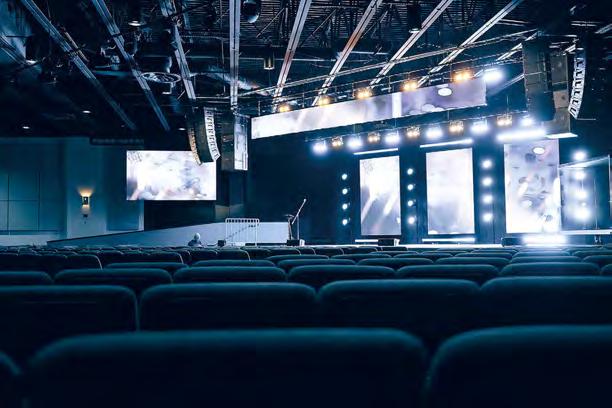
The modern, diamond-shaped auditorium, with the stage at the base of the diamond, has a long throw, parallel surfaces and a low ceiling, so Sanders admitted it was a challenge trying to get the best coverage and deal with the reflections. “We haven’t done a space like this before, so it allowed us to come up with a new perspective,” he says. “They wanted it to look good, feel good and sound good. Their next conference was due to take place in October so there was a big push to get the upgrade completed
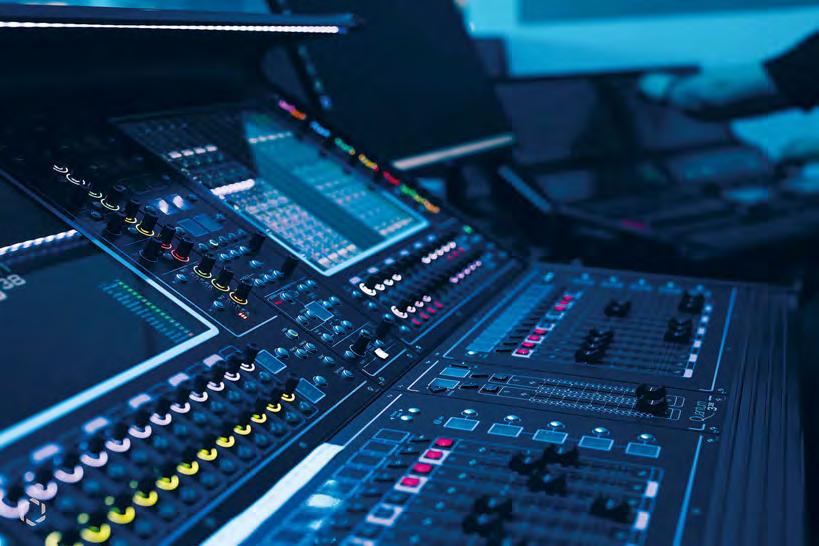
Octane AVL supplied a DiGiCo Quantum338 control surface and 192kHz SD-Rack
before then. In terms of what it looked like, they gave us carte blanche which was really fun as we don’t often get to do that. So, I did some renders with lights, screens and the PA and we only went back and forth once before they said ‘let’s do it!’ – sometimes aligning visions and landing on a specific look takes multiple revisions.”
WAVL_halfpage_quelle XDM-print.pdf 1 15.09.25 13:36
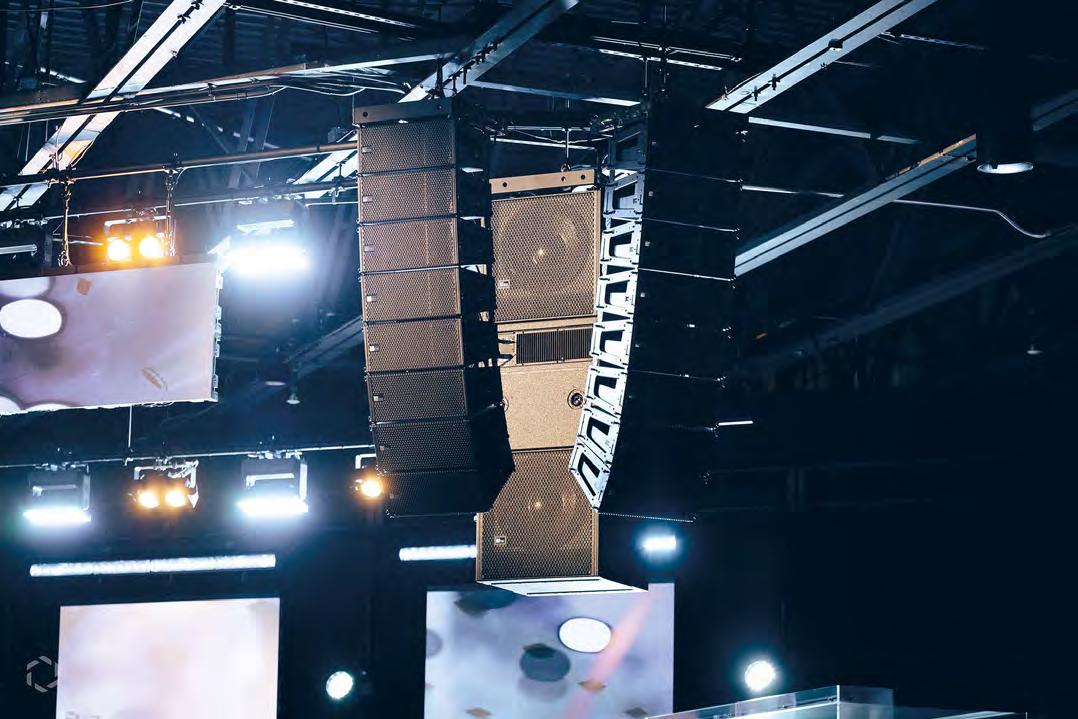
The new system at Calvary Church comprises four hangs of eight LINA very compact linear line array
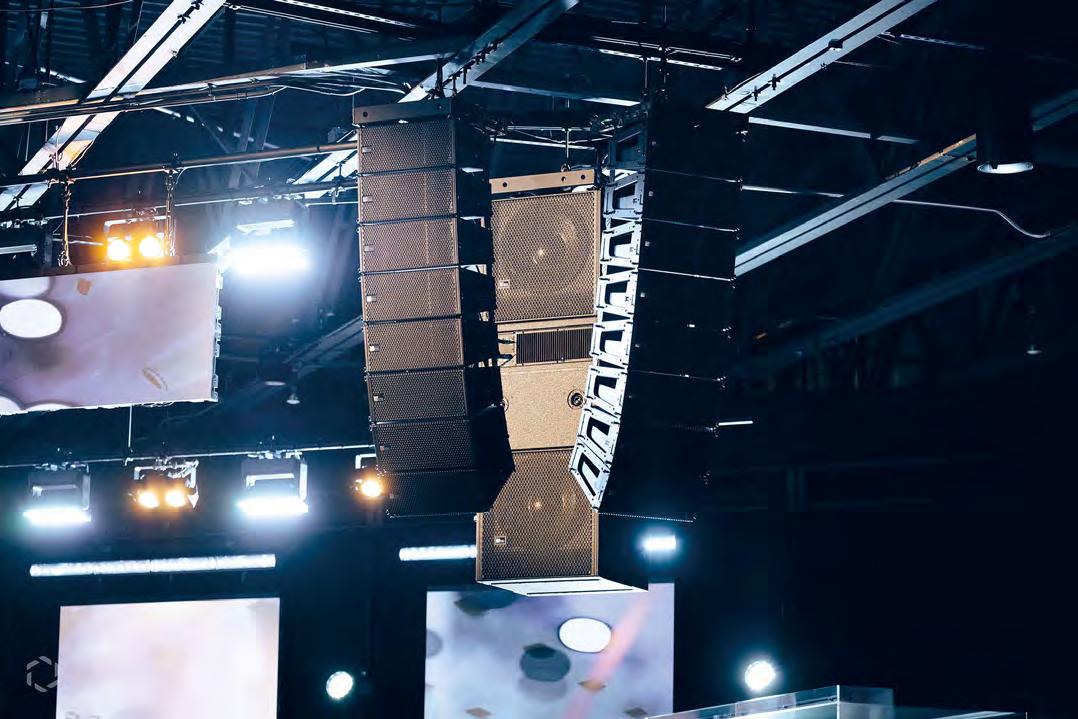
loudspeakers with six ULTRA-X20 compact point source loudspeakers providing front-fill coverage. Low frequencies are powered by six 900-LFC compact low-frequency control elements, three per side in cardioid configuration. System management and optimisation are handled by two Galileo GALAXY 816 Network Platforms –one for the main left and right arrays and one for the side-fill left and right arrays – and one GALAXY 408 Network
Platform for the subwoofers and front-fills. The system was modelled and tuned using Meyer Sound’s MAPP 3D software. An MPS-488X was also specified as a power supply for the ULTRA-X20XP front-fills. The audio setup is completed with one DiGiCo Quantum338 control surface and 192kHz SD-Rack, along with a Waves Audio Titan Soundgrid server. “What really stands out about the Meyer Sound loudspeakers is that our
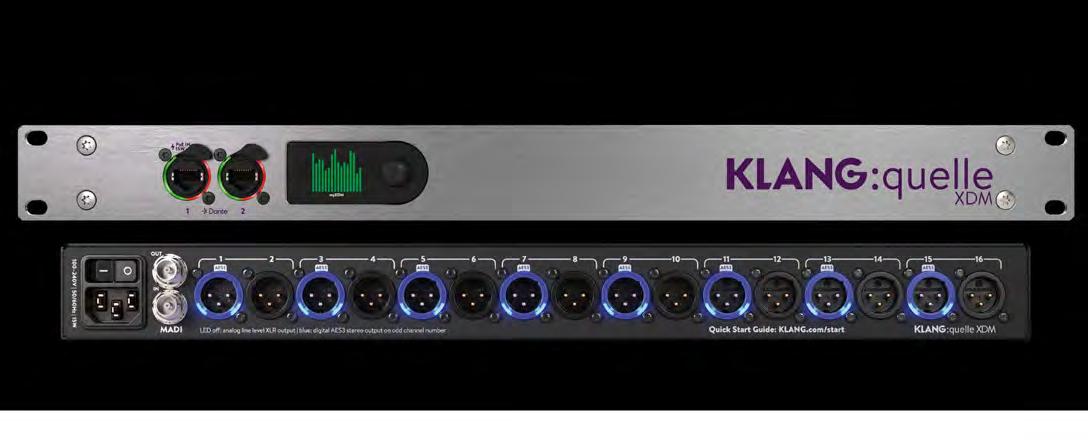
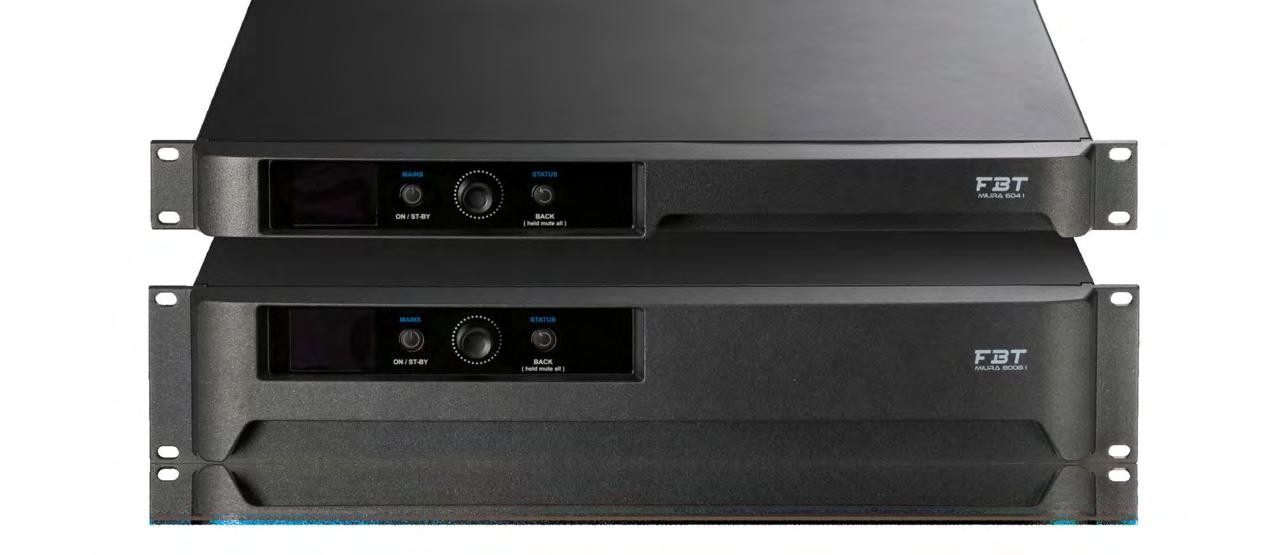
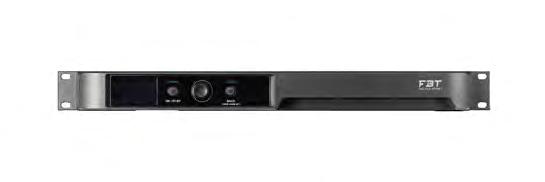
Works with any Dante or MADI system 16 analogue or 8 stereo digital outputs
Built-in redundancy with dual power and backup network nverts both ways: Dante <> MADI, with passthrough
Simple remote control via the KLANG:app
Compact 1U rack design for touring or tight spaces
audio engineer Chris Greely can shape them into exactly what he wants. The amount of clarity and fidelity control they offer allows Chris the ability to work his magic,” describes Sanders. “The biggest thing for me is their GALAXY control software and platform because it’s the GALAXYs that make them sound amazing. Chris can shape them to do whatever he wants using the preamps. The LINAs produce such a great sound for their size and they pair so well with the 900-LFCs. We discussed other speaker manufacturer options, but Chris was confident that a Meyer Sound solution was the right way to go for Calvary.”
The height of the building made the LINAs the best option – the first row is about 5m away from the array but the back row is about 30m away, so Octane AVL had to create a very dynamic array and keep it as short as possible. The integrator also had to be a little more strategic about where the line arrays could be hung. “We couldn’t groundstack because it would’ve been too much weight on their stage, so the structural engineer added six welded reinforcement points so we could hang the PA,” continues Sanders.
While the auditorium had previously been fitted with 1-inch acoustic panels on the back wall, the length of the room led to the decision to install 4-inch panels over nearly every surface. “Even though the church was surprised at how many new panels we had proposed, they have been amazed at the difference they’ve made,” says Sanders. “It’s a long room so this is why we had to treat the walls so heavily because we had to put enough energy in the room to get the sound everywhere without creating reflections. We fitted the panels with 1-inch gaps which helps with how it all looks overall and also helps with diffusion and trapping.”
The stage area has been fitted with two side IMAG screens, three LED columns at the back of the stage and an LED ribbon across the front of the stage which is being used to display song lyrics. Octane AVL specified 107 Thor AV Ridge v2 2.5mm LED panels, with the three LED columns each consisting of 27 panels in a 3x9 format, with the remaining 26 panels forming the LED ribbon in a 13x2 format. On either side of the stage, two LED screens each comprise 36 Ridge v2 2.5mm LED panels in a 6x6 configuration. NovaStar COEX MX40 image processors drive both IMAG LED walls and all stage LEDs, while NovaStar CVT10-S fibre converters provide fibre-to-Ethernet data conversion.
“I really like the split screen rather than one giant screen behind the stage,” adds Sanders. “We went with intentional gapping in between the three columns and then within Resolume, we built it so that there’s a clean sweep across the back so it doesn’t feel like anything is missing.”
and six Rogue R2X wash fixtures, with stage lighting comprising 16 Rogue R2X, 10 Strike Array 2, 12 Strike M V2 and 12 COLORado PXL Bar 16 fixtures. House lighting is made up of 73 TheLightSource 120W RGBW 72° LED pendant lights and 12 TheLightSource 120W RGBW 72° work lights. An MA Lighting grandMA3 Light console, two Chauvet NETX-II DMX notes – one for key lighting and one for stage lighting – two MDG ATMe hazers and two MDG theFAN complete the setup.
“It was such a drastic change from their original setup with the lighting and the LED screens that they were able to use the time between when
then having others that are dynamic and moving. We trust the Chauvet Professional brand – they provide great support and have affordable fixtures. The church now has an expansive MA system that takes a fairly knowledgeable tech to use, so we’ve already carried out several training sessions and the team is keen on the idea of more training in the future.”
With a busy Saturday, Sunday and Wednesday worship schedule, the church requested that the installation take place in two-day increments across about 10 weeks. “We promised them they would never have to cancel a gathering,” describes
Octane AVL also provided an extensive lighting inventory. Key lighting consists of 12 Chauvet Professional Maverick Force S Profile
the conference to explore how they could use different groups of lighting or perhaps just one LED screen at a time. It allowed them to feel the system, learn the system and grow into it,” explains Sanders. “We intentionally gave them a system that allows them to do a lot of dynamic effects while still have quality lighting for the video, having one fixture group that’s creating the lighting and
chunks, but it actually ended up being easier because it forced us to be realistic about what we could achieve during each of the two-day blocks.”
For now, the upgrade has just focused on the main worship space. The church has overflow rooms downstairs with projectors and Crestron control, with distributed audio and video in the lobbies and two youth rooms with mini AVL systems. “We’ve talked to them about potentially helping them update these other spaces in the future and make the building one cohesive space,” concludes Sanders.
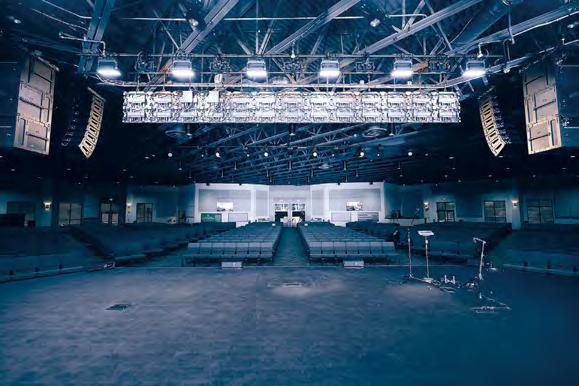
For Calvary Church, the difference was immediate. “It’s night and day,” says pastor and worship leader Ian Dizon. “Our old system had a lot of reflections and dead spots. With the new one, the clarity is remarkable. Every instrument is clear, and the low end through the subs is amazing. The room feels like it’s a different building.”
www.calvaryco.church www.meyersound.com www.octaneavl.com
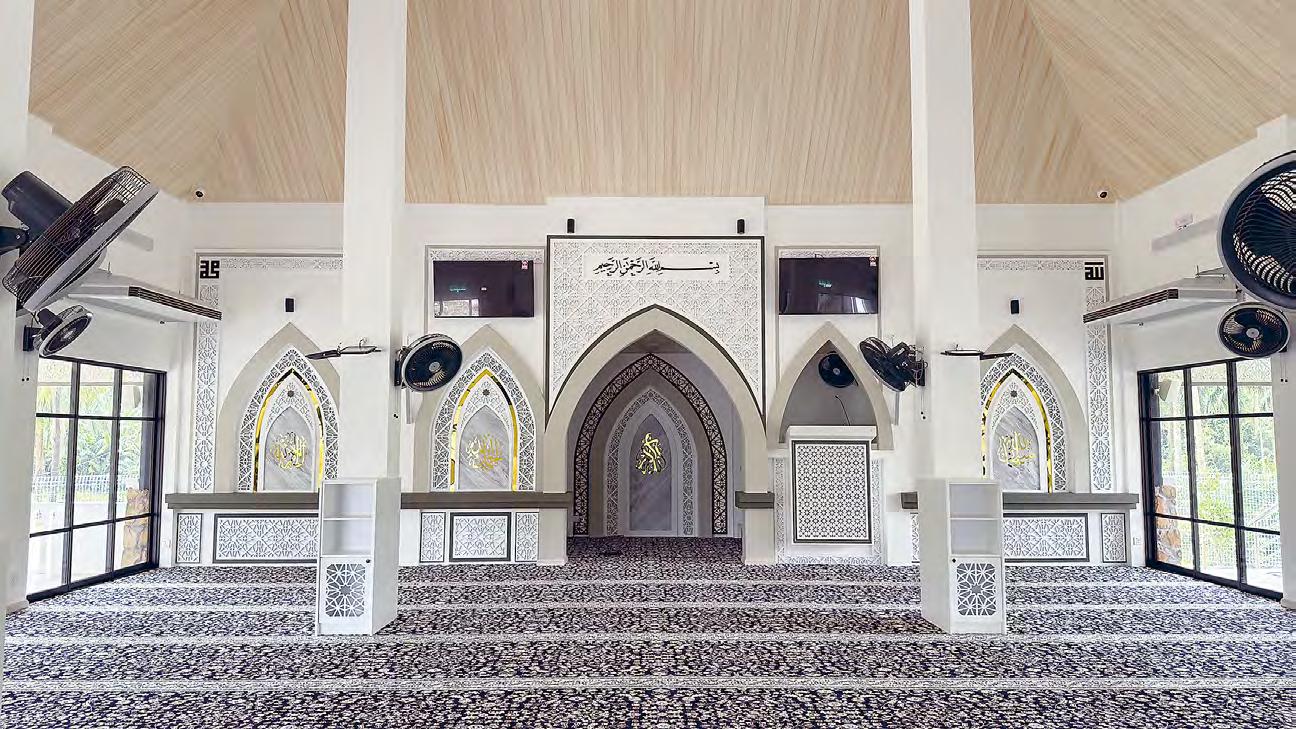
NESTLED IN NEGERI SEMBILAN about 90km from Kuala Lumpur, just a smooth one-and-a-half-hour drive, the newly rebuilt Masjid Kariah Bongek now stands proudly on the very ground where generations once gathered to pray. What was once a familiar landmark of the community has been transformed into a refreshed, welcoming sanctuary designed for comfort, clarity and connection.
Sitting on 4,500m2 of land, the mosque can now accommodate between 600 and 700 worshippers at any given time. Its architecture centres around a spacious main prayer hall complemented by a dedicated women’s prayer hall, an airy corridor area and a striking 14m-high minaret that marks its presence from afar. The reconstruction, which spanned nearly two years, reflects both patience and dedication, an effort made possible through the hands of many.
At the heart of the project were several key contributors. The Public Works Department (JKR) Electrical Engineering Branch of Negeri
Sembilan served as the technical consultant, ensuring every detail met the highest standards. The State Islamic Religious Affairs Department of Negeri Sembilan (JHEAINS) as the client guided the vision to create a mosque that not only serves its community but elevates their experience.
Among the mosque’s most remarkable upgrades is its audio system, a highlight that sets Masjid Kariah Bongek apart. It becomes the first in Negeri Sembilan to be equipped with a full Yamaha audio solution, bringing clarity to sermons and prayers. Even more noteworthy, it is the first mosque in Malaysia to adopt a dual operation control system offering flexibility and reliability that make this installation one of a kind.
“Designing the audio system for Masjid Kariah Bongek came with its own set of challenges,” explains Acousticon founder Azizi Ala. “From the start, we anticipated issues related to high reverberation (RT60) and background noise (NC), both of which could severely affect speech intelligibility inside the mosque.”
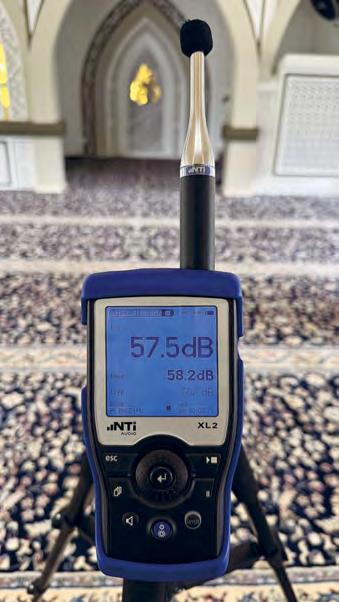
The main and women’s prayer halls feature extensive glass surfaces, around 50–60% of the total area, which naturally increase reflections in the 1,380m³ space. Adding to that, the original cooling concept
proposed the use of 20 20-inch wall-mounted fans, a setup that would drastically raise NC levels. To better understand the acoustic behaviour of the space, Ala turned to EASE simulation software and began exploring suitable treatments. “We found that reverberation could be effectively controlled using ceiling acoustic panels, thick 15mm floor carpets and by switching from 20 noisy wall fans to six 3HP wall-mounted air conditioning units,” he says.
The improvements were significant. After all acoustic treatments were installed, the RT60 dropped to 1.24s and the NC level reached 55, achieved without needing to operate the wall fans. When comparing both cooling options, the noise difference was clear: 57.5dB with the six AC units versus 67.4dB with the 20 wall fans, a nearly 10dB improvement. Operational concerns were another major consideration. Many mosques face recurring system issues, often not because of equipment quality but due to the varying levels of operator competency. In this case,
the client had high expectations and needed a solution that would run smoothly, remain consistent and set a new operational standard. “We took the time to design the system properly, selecting components and workflows tailored to the real needs of the mosque,” continues Ala. “In the end, we delivered a solution that did more than meet expectations, it exceeded them.”
Masjid Kariah Bongek is now the first mosque in Malaysia to use a dual operation control system based entirely on Yamaha hardware and software, fully integrated through the Yamaha Provisionaire Ecosystem. At the centre of this setup are the Yamaha DM3S digital mixer console and the Yamaha MTX-3 matrix processor, linked over a network and capable of being controlled either through a fully customised touchpanel GUI or the digital mixer itself. Both control points stay perfectly synchronised; any adjustment made on the touchpanel instantly appears on the mixer and the same happens in reverse.
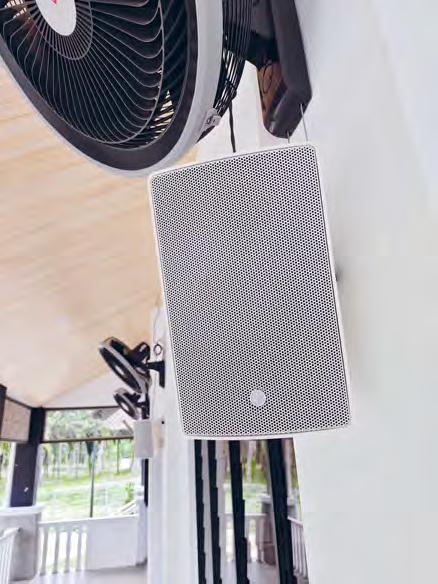
Yamaha VXS5 surface-mount speakers deliver clear coverage throughout the outdoor and corridor areas
At the heart of the entire system is the Yamaha MTX-3 matrix processor which serves as the integration bridge between the touchpanel and the digital console mixer. It also handles matrix processing, signal routing and speaker processing before feeding into the Yamaha PX8 amplifiers.
With intelligibility as a key objective, the system needed to achieve a minimum STI rating of 0.52. “Thanks to the Yamaha VXL1B-16 line array speakers, we surpassed this benchmark,” describes the Acousticon founder.
mosque’s 14m-high minaret is fitted with TOA DH-110 long-throw horn speakers, mounted at all four corners using custom brackets to ensure the call to prayer carries clearly across all cardinal directions.
“It felt incredibly satisfying when we finally managed to develop a new solution for mosques, one that solves long-standing operational issues using technology that has been right in front of me all this time. How could I have not seen it earlier?” exclaims Ala.
“For the microphone lineup, we stayed with proven reliability,” adds Ala. “Shure continues to be
call to prayer, the SM35 for the Imam, the MX418 for sermons and the SLX-D system for wireless use. All microphones run through the DM3S digital mixer where fine-tuning can be done either from the console or via our custom
“Built with 16 1.5-inch full-range drivers and boasting a 360W power rating, the speakers delivered impressive horizontal coverage of 170° and selectable vertical coverage of 25° (normal) or 30° (wide). The result was an average STI rating of 0.56 with ±83dB measured across both the main and women’s prayer halls, each using just two speaker cabinets for the 160m² areas.”
Completing the system, 12 Yamaha VXS5 surface-mount speakers have been installed to deliver clear coverage throughout the outdoor and corridor areas, especially during the Friday prayer
Masjid Kariah Bongek in Negeri Sembilan is not just a rural community mosque, it now sets a new benchmark for mosque audio systems in Malaysia. “We are proud that this project is the first of its kind in Malaysia and that the Public Works Department (JKR) Electrical Engineering Branch of Negeri Sembilan was the first to adopt this concept. The way we operate, control and navigate mosque audio systems will no longer be the complicated experience it used to be,” smiles Aspalela Binti Mohammad Hussin, technical assistant at JKR.
www.acousticon.com.my




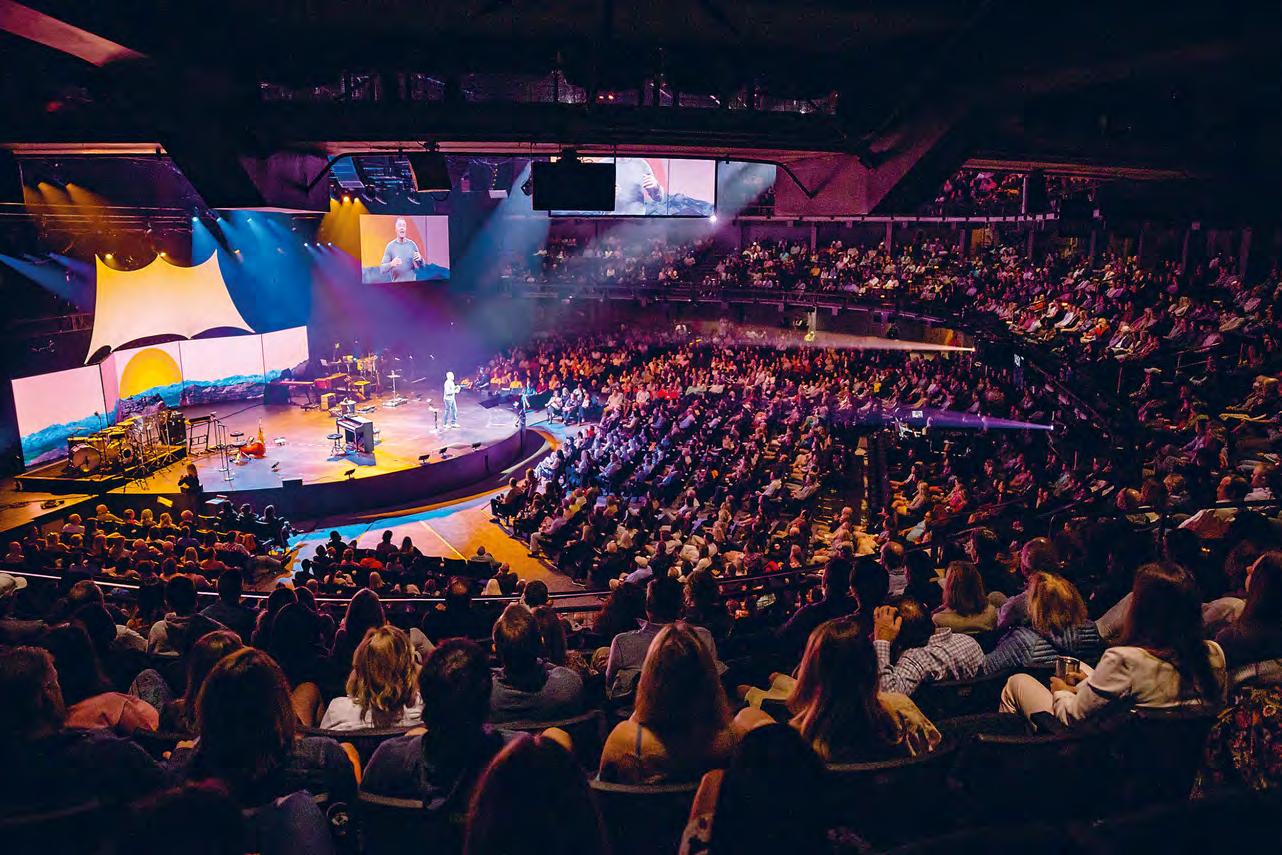
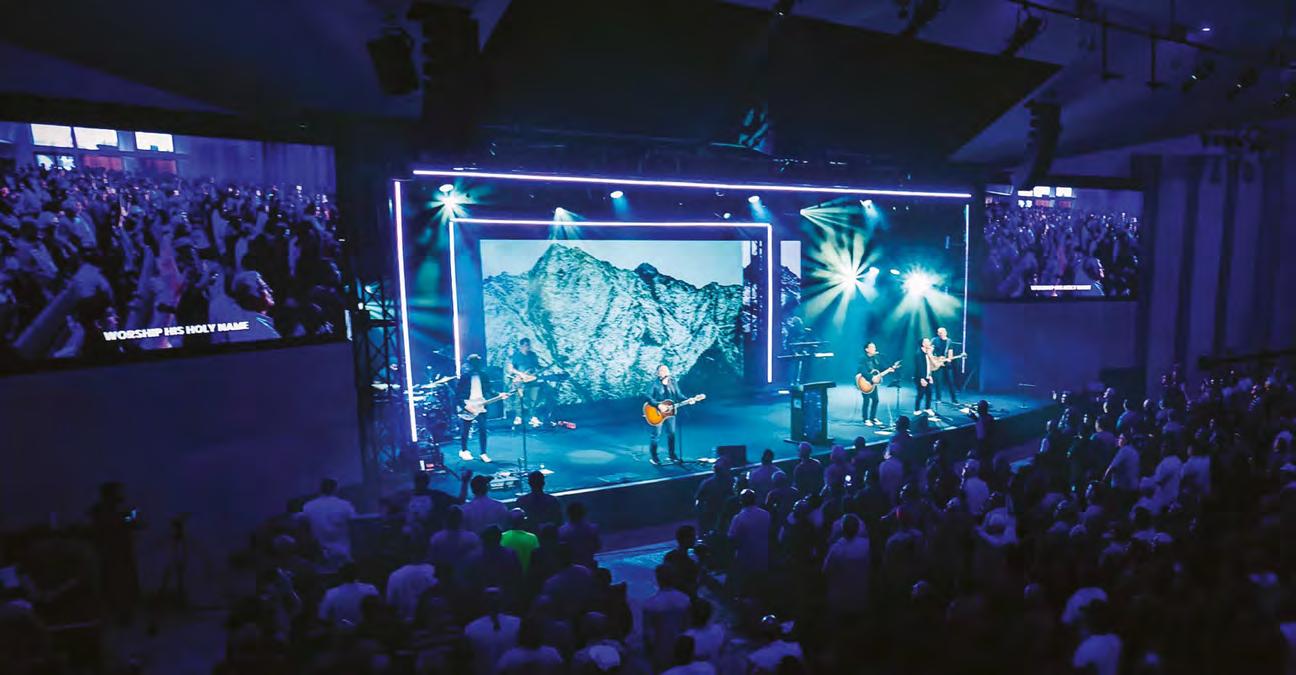
WITH ORIGINS EXTENDING BACK to 1995, Cincinnati-based Crossroads Church has built its reputation on creating immersive worship experiences that draw people deeper into the message of the Gospel. Now, the church has nine campuses and a thriving online community where it’s taking those experiences to a new level.
“Everything we’re trying to do with the technology is to evoke an emotional response that hopefully allows people to really hear what God is saying to them. Just eliminate distractions and get them focused,” says Crossroads’ creative director Craig Dockery. “If someone can be completely focused, then I think that’s a helpful way for us to set the stage for whatever God wants to do.”
That vision comes straight from Crossroads’ leaders. “[Senior pastor] Brian [Tome] wanted to understand what the next generation of the in-room church experience looks like,” adds Crossroads’ technical
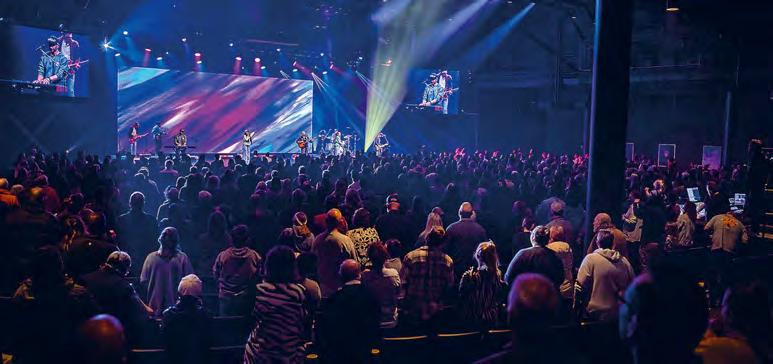
consultant, Ben Nicholson. “So, we went through an exercise of looking at what people were doing on Broadway, in live entertainment, XR, virtual production and gaming to put together a proposal to basically create a media-rich auditorium experience.”
That planning has come to life at two of the church’s nine locations over the last year. Crossroads Dayton opened with a state-of-the-art auditorium in a former Sears building at the Dayton Mall, while Crossroads Oakley – the church’s broadcast campus – has debuted a new LED project.
In Dayton, Crossroads took its audio capabilities to a new level, partnering with HouseRight, a national house of worship integrator, which designed and installed an L-Acoustics L Series concert sound system with L-ISA Immersive Hyperreal technology, creating a true 360° spatial audio auditorium. The solution features five L-Acoustics L2D enclosures as the scene arrays, with far left and right extension arrays of A10i. Six KS28 subwoofers are flown in two cardioid hangs of three boxes behind the centre L2D, bolstered by groundstacked SB15 subs. Thirteen coaxial X8i spread across the stage lip provide spatial front-fill, while A15i systems handle out-fill duties. The immersive experience extends throughout the house with X8i and X12 enclosures serving as surrounds and fills. An L-ISA Processor II and Controller at FOH drive the room’s object-based mix.
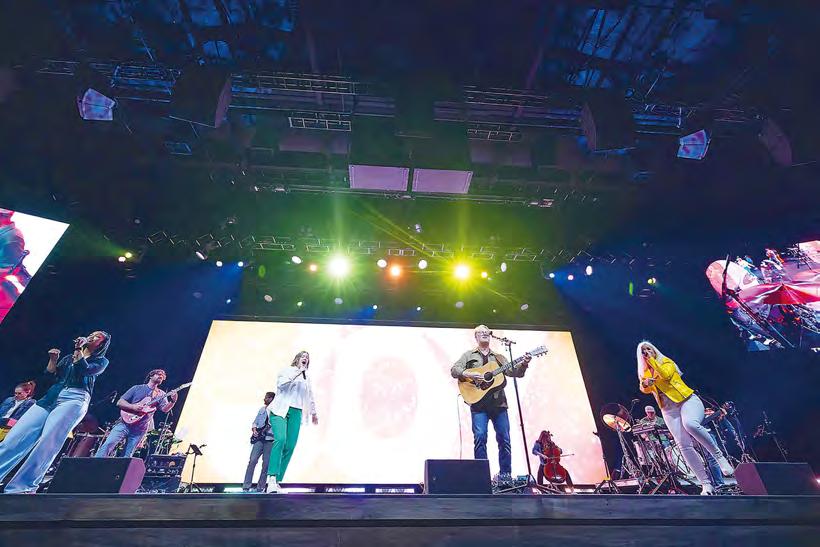
Patrick Buescher, assistant director of the church’s Experience Team Operations, says immersive audio has been part of Crossroads’ DNA from the start. “Since the beginning of Crossroads, we’ve valued immersive experiences,” he explains. “At all of our sites, we deploy surround speakers that we’re able to matrix off the mixer to create a more engaging service.
We’ve always been a firm believer in the value of creating amazing environments where people can experience a sense of wonder.”
Luke Hesher, HouseRight general manager, church relations, says the Crossroads installation was unique in deploying 28 X8i speakers as a comprehensive immersive surround system. “The speakers positioned
beside and behind the audience spread sounds and effects throughout the whole space, creating a very dynamic environment and stretching the sound stage much wider than a traditional house system.”
L-ISA fits another unique aspect of Crossroads’ vision: keeping service content fresh and its delivery impactful each week. Instead of simply delivering
new content through a conventional PA system, the L-ISA system itself becomes part of both the music and the message thanks to its ability to position objects in a sound field. “If one of our creative team members has an idea for a production, such as a script element coming from the left rear, this process before L-ISA was cumbersome and difficult to execute,” explains Dave Kendall, Crossroads’ director of site audio. “What we’ve found now is that it’s just so much easier to achieve almost anything like that.”
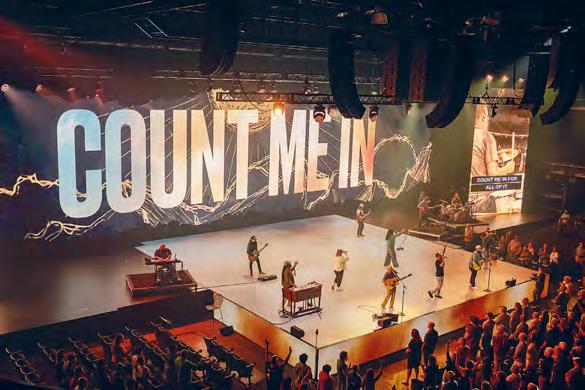
The new capabilities were such a fit for the team that they chose to install another L-ISA system at Crossroads Oakley to complement the LED project. This L-ISA design comprises a scene system of five hangs of one L2 over one L2D, flanked by an extension system made up of 10 KARA II flown to both the far left and right of the main scene arrays. Out-fills use four arrays of eight KARA IIi flown behind the scene arrays, two per side, covering the upper and lower side seating areas. LFE is provided by 21 KS28 subs flown in cardioid groups of three behind the mains, in an arc. Forty-six coaxial X8 speakers are spread out around the three seating levels; 18 on the first two levels (Levels 0 and 1) and 10 more on the top level (Level 2), which are complemented
by three A10i for the centre seats. Overhead and surround speakers use the church’s legacy speakers, while a single L-Acoustics A10i Wide flown above centrestage provides foldback. The system is managed via an L-ISA Processor II and its accompanying L-ISA Controller display, with a P1 processor also in place to offer Milan-AVB signal transport. The audio system is rounded out by a DiGiCo Quantum5 console for monitors and a Quantum7 at front of house.
With an RT60 measuring 0.6, Buescher describes the room at Oakley as almost disorienting because of how acoustically dead it is. “No room that large should sound that incredible,” he says. “We have lapinaries in the ceiling to help reflections, the walls are wrapped in tectum and we have carpet in areas where there aren’t seats. When you put 3,500 people in the room, they absorb so much acoustic energy, you have to push things harder, but it also creates this ability to shape sound how you want it to be without the environment shaping it for you.”
of automation allows these screens to reconfigure dynamically, supporting a wide range of scene looks, transitions and visual narratives throughout worship services and events.”
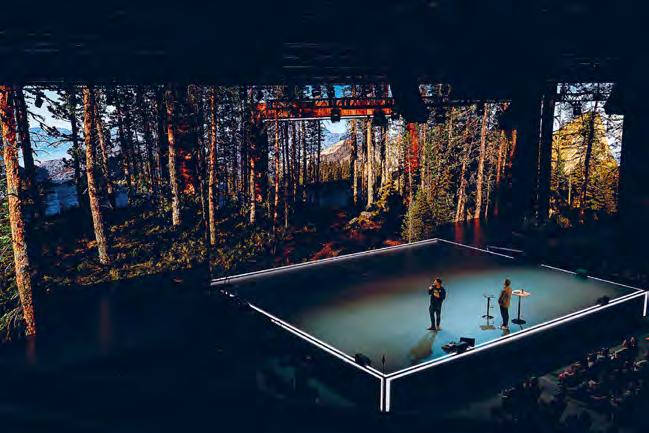
“We could very easily have approached this project and made the entire back wall a high-res LED wall and that would have been fine,” adds Nicholson. “But there was a design choice that we were going to have panels of LED that could be arranged and rearranged so that we can create visual scenery. There’s so much depth to the stage that it feels like we’re actually creating theatrical productions.”
A key technical innovation at Crossroads is the deployment of GhostFrame technology, enabled through Megapixel VR Helios LED
the church to bring generative content to their services. Disguise’s Designer 3D visualisation software manages the entire setup, supported by three Barco E3 image processors, eight RED KomodoX digital cameras and a Ross Video Ultrix FR12 router with four Acuity SPDE cards.
The environment in that space –which broadcasts services to all Crossroads sites in addition to live online and on-demand viewing – is also shaped by the visual elements of what the church affectionately calls the “Wonderwall” created alongside integration specialist Diversified. The team selected Disguise’s GX 3 and RX III media servers for the project. Seventeen GX 3 servers are being used for composting and driving the stage visuals including handling xR and GhostFrame rendering tasks. These are paired with 12 RX III render nodes which provide full volume content rendering across multiple camera inputs. Pairing the GX 3 media servers with the render nodes allows
“There are nine distinct screens and surfaces within Crossroads Oakley,” explains Scott Lau, technical project manager at Disguise. “The stage floor is built from ROE Visual BM4 tiles, while the ‘skirt’ wrapping the proscenium is composed of ROE Jasper 2.6 tiles. Four automated walls, referred to as Doors 1 to 4, are made from ROE BP2v2 panels and are capable of lateral movement. Additionally, two static side walls, referred to as Legs, also use BP2v2 tiles. These surfaces are primarily leveraged for in-room IMAG and visual content delivery. Completing the stage design is a large upstage wall composed of ROE Vanish tiles, used for layered visual effects and lighting blow-through. The integration
explains Sarah Lewthwaite, SVP of customer excellence at Disguise.
“The church is regarded as a leader in the sector in the US and other venues are now starting to think about their spaces differently as a result. At Disguise, we’re currently seeing significant growth in houses of worship seeking engaging, memorable audience experiences.”
Dockery reflects these sentiments. “Crossroads was built for people who are outside the church realm who don’t necessarily have context for what a church experience should be like. But they do have context for what concerts and live sporting events are like, experiences that are immersive and grab your attention, and we want to match that and lead the way. It’s about trying to reach people and everything else stems from that. When you’re immersed in something, you’re not thinking about anything else.”
With such a groundbreaking and influential installation, the church had prepared itself for all the anxiety and stress of trying to achieve their vision.
“Even before we turned it on officially, we thought the Wonderwall would break everything – our processes, our creative approach, even our team structure – but we knew that would happen,” Dockery explains. “We walked into it with eyes wide open, so now we’re living that and experiencing it.”
processing. “GhostFrame allows certain LED surfaces, the stage floor and the upstage Doors 2 and 3 to output multiple slices of content simultaneously at high refresh rates,” Lau adds. “This allows the church to display different content to the in-person audiences and broadcast viewers at the same time, without duplicating physical infrastructure. While GhostFrame has traditionally been used in controlled environments such as broadcast studios, the implementation at Crossroads Oakley marks the largest known use of GhostFrame technology in a live venue with an in-person audience. This approach enables immersive, real-time storytelling while maintaining technical excellence across broadcast and live audiences.”
“Influenced by what’s happening outside of the worship industry in terms of immersive experiences and advancements in broadcast, Crossroads Church has looked outside of the traditional house of worship technologies for their inspiration,”
Immersive technology will continue to play a large part in the long-range technical strategy that will eventually include upgrades to Crossroads’ other locations to offer worshippers a consistent experience no matter where they choose to attend. “I don’t think it’s ever going to be complete,” says Buescher. “We’re always going to continue to innovate.”
The system has been designed to be gradually upgraded, allowing the church to keep pushing the limits of their imagination. “We’re already having conversations about what our strategy is for upgrading the media servers, just so we can keep up with the technology,” says Dockery.
The overall reaction has so far been positive. “It’s not just people in the room that are pleased with the outcome, it’s everyone on the other side of the lens who are benefitting from this project,” Dockery concludes. “We are seeing an increased emotional response and hearing stories of how people are being moved by the experience, which is exactly what we were aiming for.”
www.crossroads.net
www.disguise.one
www.l-acoustics.com
When the service begins, excellence wins.
Luminex solutions are built for reliable, easy-to-use networking for Video, Audio and lighting control in worship and live entertainment environments without the need for IT expertise.
GigaCore switches deliver simple, scalable AV networking with ready-to-use configurations, clear visual feedback, and built-in redundancy. LumiNode and LumiCore provide professional lighting protocol and DMX distribution, advanced networking and merging options, and centralized management that’s easy to operate and future-ready.
With Araneo software, monitoring and configuration are visual and intuitive, making systems volunteer-friendly while giving technicians full control. Built on industry-standard protocols, Luminex products integrate seamlessly with all mixed-brand systems and are designed to protect long-term investments through robust hardware and ongoing software and firmware support.
Church in Carmelaram, Bangalore, is a space where devotion runs deep and congregational participation is central to worship. Since its construction, however, the church had been struggling with major audio clarity issues for over a decade, with speech intelligibility, feedback and uncontrolled reverberation remaining persistent challenges. Despite multiple attempts to improve the situation, poor sound quality continued to affect the worship experience.
The church’s architectural beauty, combined with these longstanding sound issues, demanded engineering discipline rather than compromise. Recognising the need for clarity without disturbing the sanctity of worship, Fr Augustine Puthiyedathuchalil OCD (Bijo Jose), along with the trustees and church committee, entrusted specialist AV integration company Zacs and Phils with reworking the church’s audio system so every prayer could be felt, not just heard.
The church presented a demanding sonic environment: the reverberation time exceeded 4s, severely impacting speech intelligibility; there was no acoustic treatment of any kind; hard reflective surfaces such as tiles and granite flooring dominated the interior; and natural reverberation was amplified by the volume and geometry of the space. “This was not a space where louder sound would help,” explains Manu Philip, business manager at Zacs and Phils. “It required controlled dispersion, precise tuning and disciplined system design.”
Zacs and Phils adopted a precisiondriven, evaluation-first approach. Multiple site visits, detailed listening tests and acoustic measurements were carried out to study reflection patterns, decay behaviour, speech intelligibility loss zones and gain before feedback limits. “The objective was unambiguous: maximum clarity, natural musicality and absolute respect for worship, all within the assigned budget,” adds Philip.
The system is built around HH Audio’s CLS column arrays. Four CL32 units handle main FOH and

delay coverage, supported by two CL32J units for FOH extension and two CL16J units for additional delay fills. The column array format was chosen for its controlled vertical dispersion, significantly reducing ceiling and floor reflections, which is critical in a reverberant, untreated space.
For low-frequency support, the integrator specified two TNA 1800SA subwoofers to provide warmth and body to hymns and liturgy while avoiding unnecessary low-frequency buildup that could excite the room’s natural reverberation. Four TRM1201 stage monitors have also been deployed for choir, altar and sanctuary monitoring. These were selected to deliver clarity at low sound pressure levels.
“System management is handled by HH Audio’s SP48 DSP, which offers precision equalisation, crossover control, time alignment and delay optimisation,” continues Philip. “All processing was tuned specifically to the church’s acoustic response.”
Mixing and control are managed through a Behringer X32 digital mixer paired with an S32 stagebox, providing flexible routing, scenebased operation and consistent tonal balance across services.
Signal distribution is supported by a Behringer MX882V2 splitter, ensuring clean and reliable signal flow.
priest, due to its natural tonality, clarity and consistent presence in challenging acoustic conditions. Power amplification is provided by HH Audio M1500D amplifiers, with system protection via SXDS1611i surge protection. Belden microphone cabling totalling 300m and Belden 2.5mm2 speaker cabling totalling 600m have been installed with careful routing to preserve the visual and spiritual aesthetics of the church.
“Despite the untreated and highly reverberant environment that posed challenges for nearly a decade, the transformed system now delivers clear and intelligible speech
selected due to the highly reverberant environment. Choir and vocal pickup is handled using AKG’s D5S hypercardioid dynamic microphones and D7S condenser microphones, selected for their high gain before feedback and articulate vocal presence. For celebrant and lectern applications, AKG CGN521 STS gooseneck microphones provide focused pickup and clear articulation. Wireless requirements are addressed using an Electro-Voice R300 HD system, which provides stable and interference-free performance. At the altar, the ASTON Microphones Apex Void microphone was chosen for the
that complements worship rather than overpowering it,” says Philip. Mount Carmel Forane Church stands as a testament to what engineering discipline and thoughtful system design can achieve, even in the absence of acoustic treatment and after years of unresolved audio issues. “This project was not about fighting the space – it was about understanding it,” concludes Philip. “Because when prayer rises, clarity must rise with it.”
www.hhaudio.com www.zacsandphils.com

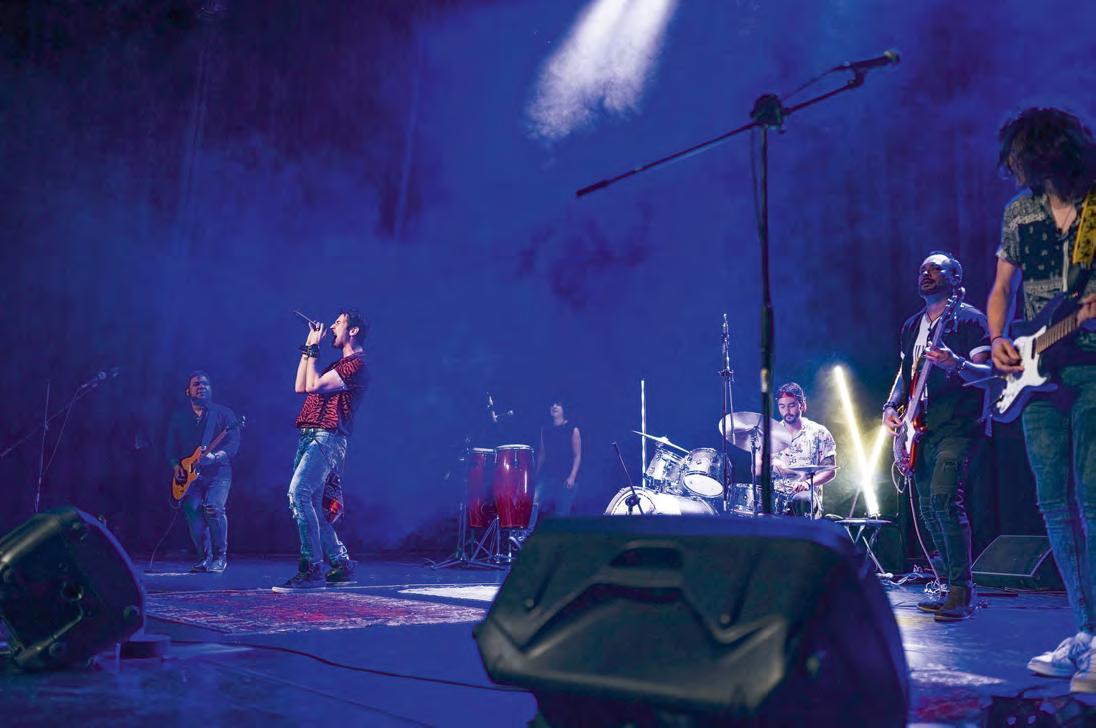
If musicians move around the stage, you might have great reception in one spot but not in another
In part one of a two-part series, RF Venue’s antenna guide looks into remote antennas and how to place them
IN WIRELESS AUDIO, PERHAPS no topic inspires as much uncertainty as antennas and their placement. Novice wireless users tend to either underthink or overthink – even agonise over –their antenna decisions. If you operate or are responsible for a wireless audio system, such as wireless mics, in-ear monitors (IEMs) or both, you need to understand some core antenna concepts.
This article will help you gain confidence when buying and using your antennas; fortunately, it’s not as complicated as you might think. First, we will look at remote antennas and how to place them. Most IEM transmitters and mic receivers come with one or two whip antennas for mounting directly on the device. These are fine for small, single-channel systems, but their range and versatility are limited. For systems with multiple channels or that cover a larger area, you need remote antennas. They are “remote” as they are not mounted on the receiver or transmitter, but instead are placed in a more optimal location and their signals
are conveyed to/from the equipment via coaxial (aka coax) cabling.
No one wants a speaker’s voice to drop out during an event, or a musician to get a blast of noise into their ears during a performance.
That’s why choosing an antenna is important. Fortunately, there are usually several suitable choices, which you can further refine by selecting a few preferences.
Let’s start with a few rules of thumb:
● For wireless mic receivers, you need two antennas (called a diversity pair).
● For multiple wireless mic channels, use distribution to feed the antenna signals to the receivers.
● For IEMs, you need one antenna.
● For multiple IEM channels, use a combiner to sum the transmitter signals into a single feed to the antenna.
● Most situations benefit from using directional antennas instead of omnidirectional or non-directional ones.
● While it is important to choose properly, there is often more than one “right” way to do something.

Modern professional wireless mic systems use a concept called diversity reception, which boosts reliability and performance. A wireless mic system comprises two main components: the transmitter, which can be a handheld unit used by a singer, or a bodypack unit with a lavalier mic worn by a minister, and the receiver. The link in between is a radio wave emitted by a small antenna either on or built into the transmitter. The radio wave carries the audio as a frequency-modulated signal. This is the wireless part of
the setup, because it does the job ordinarily handled by a mic cable. The challenge of wireless audio is getting the radio waves from the transmitter to the receiver reliably and without interruption so the audio will sound good and be free of noise or dropouts. While it’s possible to get pretty good reception with one antenna and a simple receiver, in live production, a worship service or anywhere else we use wireless mics, “pretty good” isn’t good enough. We need perfect reception, or as close to perfect reception as we can possibly get. To make it more interesting, we’re dealing with transmitters that are moving about, so we might have great
reception in one spot but not in others. Diversity reception can help. A diversity receiver uses two antennas and, most often, either switches antennas (switching antenna diversity) or has two RF sections (true diversity, where each antenna and RF section signal path is a backup for the other), and the audio comes from the side with the better radio signal. In either case, we only have a problem if neither antenna can get a good signal. The improvement in reliability is sizeable, which is exactly why we use a diversity pair of receiving antennas.
With its single element, a vertical whip antenna is simple and generally omnidirectional in a horizontal plane around it. That means it picks up (as a receiving antenna) or emits (as a transmitting antenna) in all horizontal directions around it.
This omnidirectionality limits its usefulness for mic reception because it does not focus on where the performance is and cannot ignore interference from other directions. As a transmitting antenna for IEMs, it spreads the RF energy in all directions, which dilutes its coverage of the performers who need the IEM signals.
These differences in directionality are not critical in most applications, but they can be significant in certain situations. If you’re operating IEMs from the wing of a stage, an antenna with a broader pattern would usually work best.
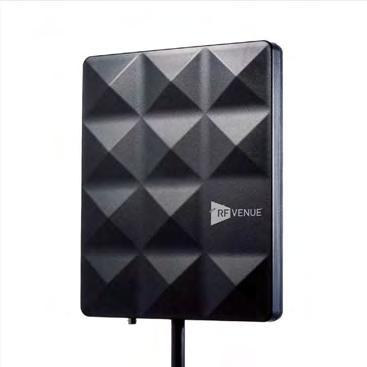
Directional antennas are somewhat more complex because their elements are arranged so that signals will reinforce in certain directions and cancel out in undesired directions (similar to directional microphones that you would use for stage vocals and instruments).
Directional antennas are typically more useful for mics and IEMs because we can aim them so they’re more sensitive where they need to be and less sensitive in other directions. In other words, we can get more of what we want and less of what we don’t want. Directionality can also help increase the range of reception and transmission. Common types of directional antennas used for wireless audio are log-periodic directional arrays (often called paddles or fins), helical antennas and panel antennas with a backplane. Helical antennas tend to be highly directional and more tightly focused, while panel/backplane antennas tend to have broader coverage patterns. Paddles are usually somewhere in between.
Active antennas have built-in amplifying circuitry to boost received signals. Because of this circuitry, they need external power, usually from a plugin power supply or a DC bias voltage provided via coax cable. They are commonly used with mics but can’t be used for IEM transmission. Passive antennas have no amplifying circuitry and do not need external power. They work equally well for transmitting or receiving. It might seem like a no-brainer to opt for active antennas, right? Well, no. If anything, they should rightly be considered as a last resort because they can introduce more problems than they solve. Amplification boosts the noise floor along with the signal, and also unavoidably adds some noise as well. Too much gain can push the amplifier circuitry – and the active circuitry downstream in the distro and receivers – into non-linearity (similar to clipping when you overdrive an audio circuit). This causes intermodulation, which increases the RF noise floor sharply and creates artefact signals that can interfere with the desired signals, causing audio dropouts, noise, and/or severe distortion. It’s usually better to use passive antennas and perhaps have in-line RF amplifiers on hand for those occasions where you need some signal boost. Applications that benefit from active antennas or in-line amplifiers typically involve systems that require a long coaxial cable run (generally over 30–45m). Since coaxial cable is inherently lossy (you don’t get all of the signal out of it that you put in), an active antenna can make up for some of that loss, but with the trade-off of more noise. In the second part, we’ll look at polarisation and coverage.
www.rfvenue.com
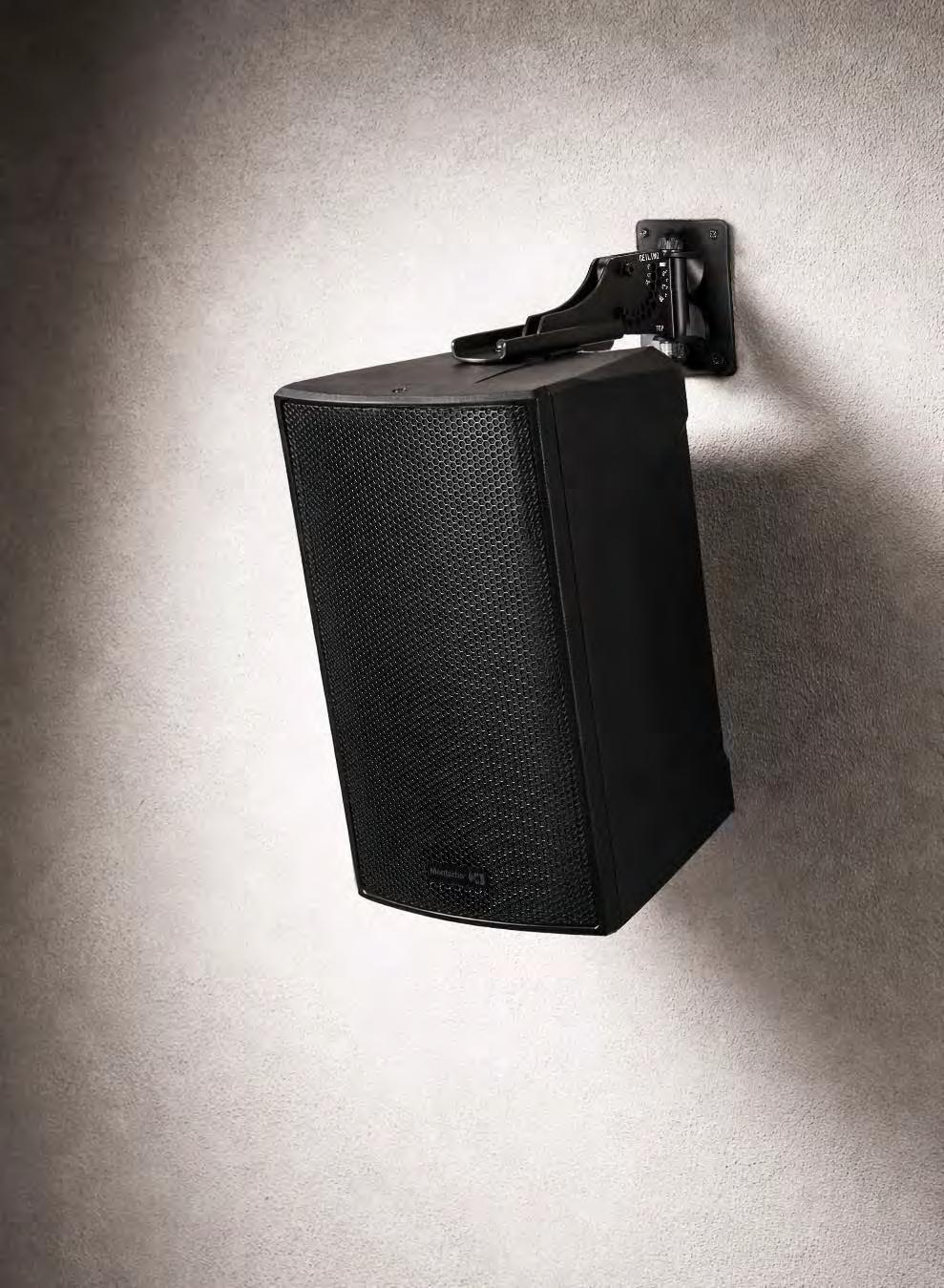

MINIBO-5M delivers Montarbo’s signature professional sound in a compact, versatile design. High scalability, thought for environments where elegance and performance can’t accept compromise. With Bluetooth TWS, and flexible mounting it ensures high quality sound reinforcement in a small, lightweight footprint.
“Every gathering deserves to be heard, and MINIBO-5M helps bring your community together, enhancing every voice.”

Epiphan’s Pearl family of streaming encoders
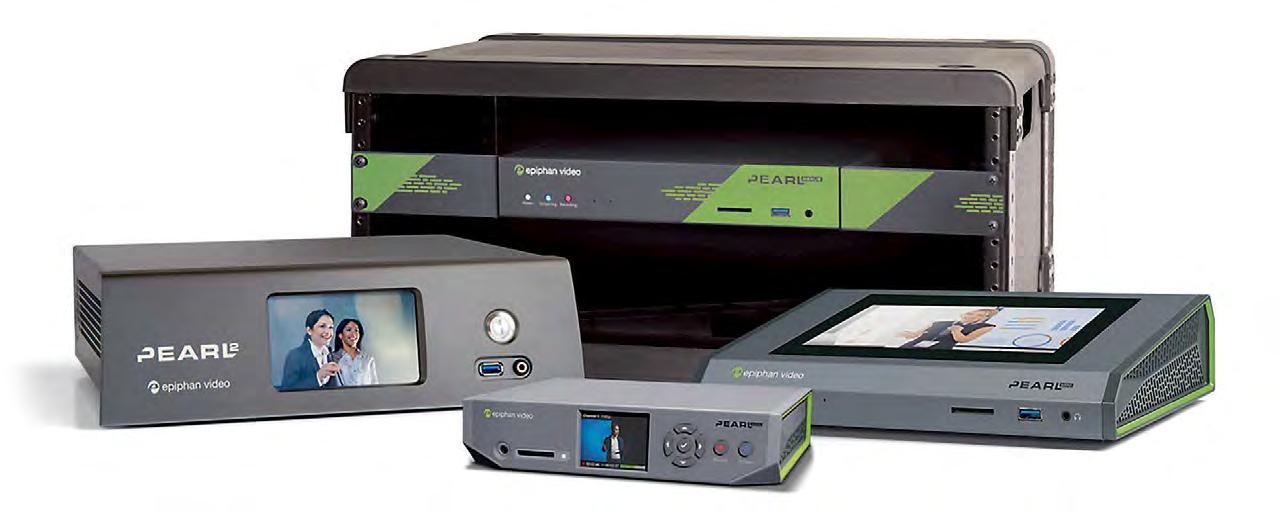
Dan Wallace, director of marketing at Epiphan Video, looks at how cloud technology and remote management can give houses of worship greater visibility and control
PROFESSIONAL VIDEO HAS become accessible to every organisation at every scale; however, complexity and feature demands have also grown. AV hardware and cloud services provider Epiphan is aiming to simplify the integration and usability of these technologies so that anyone can feel confident operating, managing and scaling their video workflows in a consistent and reliable way.
“Epiphan’s focus is simplifying professional video,” explains Dan Wallace, Epiphan’s director of marketing. “Our aim is to make video capture, streaming and recording easy for anyone, scalable and reliable. Livestreaming has become a permanent part of how houses of worship connect with their communities. Industry research shows that the majority of faith organisations now offer hybrid services and regularly livestream their gatherings as part of their core engagement strategy. As the market matures, the focus is shifting from simply going live to delivering reliable, high-quality and accessible hybrid experiences that can be sustained by small teams and volunteers.”
According to Wallace, cloud technology will play a growing role in livestreaming, but it is not the future by itself. For houses of worship, the most effective model is a hybrid approach where critical video workflows remain onsite, supported by cloud tools that extend visibility, control and reach. “The future of livestreaming is not cloud-only –it is cloud-enabled,” he explains.
“The organisations that succeed will be the ones that balance dependable onsite systems, with
cloud capabilities that reduce operational burden and improve long-term sustainability.”
Cloud technology and remote management give houses of worship greater visibility and control without adding staff or complexity. Teams can monitor and schedule systems, confirm streams and recordings, and catch issues early, even when no one is physically onsite. Cloud technology also allows houses of worship to manage and support video systems proactively rather

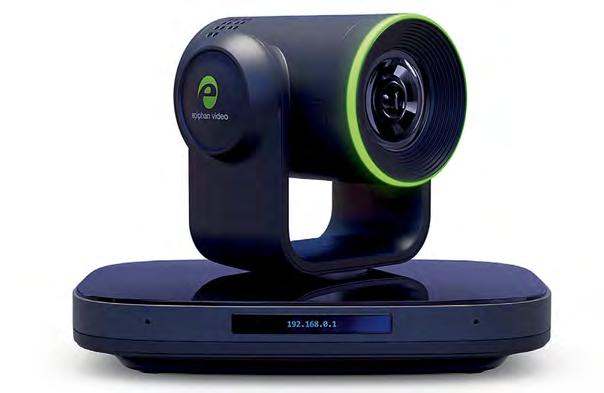
than reactively. It enables small teams to support multiple spaces or locations without requiring highly skilled operators to be in the building.
“Remote management means that houses of worship can streamline workflows, adapt quickly and support multiple spaces or services from a central team,” continues Wallace. “It means faster troubleshooting, shared expertise across locations and more predictable outcomes, even when systems are operated by rotating volunteers. Over the next five years, cloud-enabled management will become more intuitive and more integrated. Systems will provide proactive notifications, clearer insights and more automation to help teams prevent issues rather than respond to them after the fact.”
In the future, Wallace expects cloud tools to become more ubiquitous. They will increasingly focus on visibility, automation and coordination across devices, teams and locations. Rather than adding complexity, successful cloud technology will fade into the background. “As remote management becomes more common, houses of worship will increasingly design their AV systems around centralised oversight rather than onsite expertise. This will drive higher expectations for consistency, simpler workflows and reduced risk, making reliable services easier to achieve for any organisation.”
To manage services remotely, houses of worship need networkconnected AV systems along with a cloud platform that offers both administration and operation. Reliable internet connectivity is essential, as is hardware that can be operated intuitively both onsite and remotely.
“Remote management is already cost-effective,” says Wallace. “When time savings, reliability and operating costs are calculated against traditional workflows, it’s a no-brainer. Even for smaller
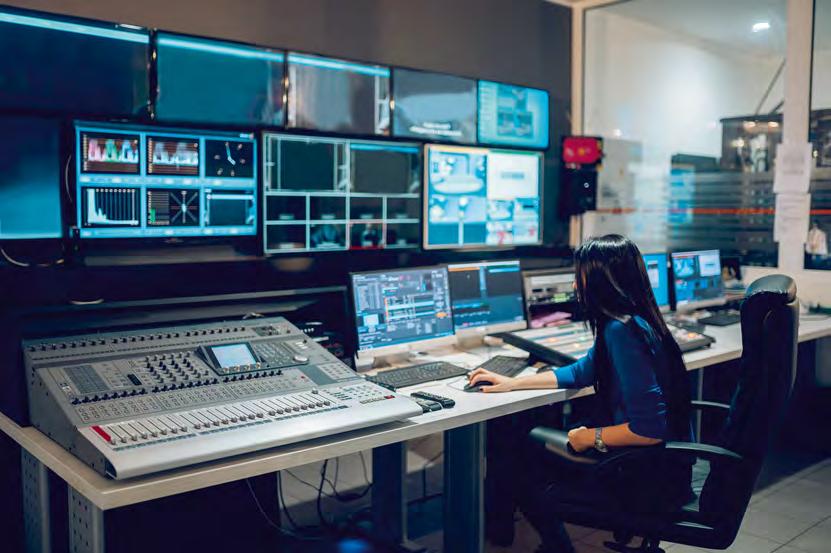
venues. As these tools become more common, remote management will increasingly be seen not as a premium add-on, but as a practical way to operate efficiently with limited staff and volunteer teams.”
While cloud technology can reduce some hardware needs, it does not eliminate the need for onsite equipment entirely. What the cloud does reduce is the need for onsite
control systems, monitoring and management tools, since many of those functions can now be handled centrally through cloud software. The result is a simpler overall system with fewer dedicated devices, even though core onsite hardware like cameras, audio and video encoding remain essential.
“At the end of the day, the purpose of cloud video technology for
houses of worship should not be to add complexity, but to support the people running services and the communities they serve,” concludes Wallace. “When systems are reliable and easy to manage, teams can focus less on equipment and more on the experience they are creating.”
www.epiphan.com
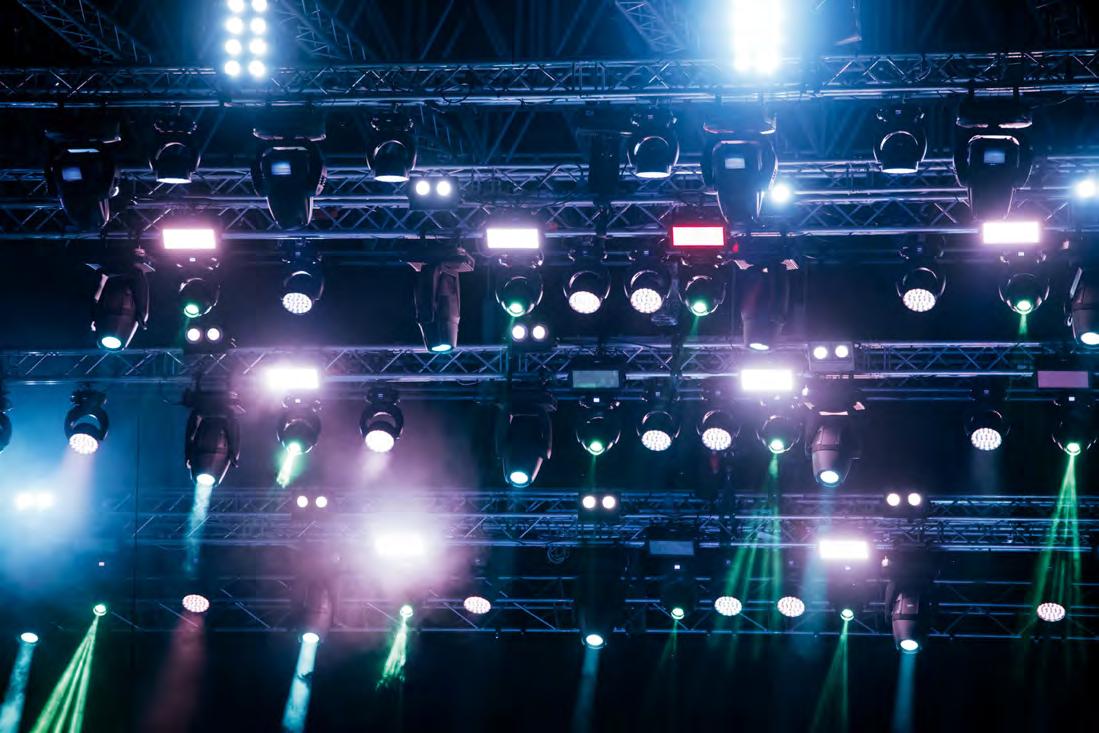
CONTINUING ON FROM THE previous article of caring for your stage lighting equipment, the idea of stewardship extends beyond the instruments themselves. Stewardship doesn’t just relate to the equipment that we have at our disposal for lighting the worship stage, but it also includes the systems and infrastructure that supports those systems.
Stewardship – whether you call it sustainability, green theatre, responsible production or energy efficiency – is no longer a fringe conversation. Many in our industry remember the proposed European Union regulations on lighting efficiency that sparked the #SaveStageLighting movement several years ago. While those discussions highlighted legitimate concerns around creative flexibility and specialised lighting tools, they also helped push the industry towards more thoughtful conversations about energy use, efficiency and long-term responsibility.
Today, sustainability is not just an environmental issue – it is a financial and operational one, which is why I like the term “stewardship”. Reducing power consumption lowers utility costs, reduces heat load on HVAC systems and often increases equipment lifespan. These benefits apply not only to professional theatres, but also to schools, community spaces and houses of worship that rely on similar lighting technologies.
What follows are a few practical, achievable ideas to consider when working with lighting teams and systems in your own venue. This is not an attempt to cover the entire “greening of theatre” movement –there are excellent resources available for that – but rather a starting point. In my experience, stewardship begins with awareness and a shift in mindset. Once we become more intentional about the small, everyday decisions we make, larger and more impactful changes become possible.
In a world filled with batterypowered devices, it’s easy to forget that most stage lighting systems rely on constant incoming power. Lighting consoles, dimming systems, networking hardware, LED instruments and automated instruments all draw energy, even when no light is being emitted. This is especially important to remember with LED and automated fixtures. A common assumption is that if an instrument is dark or not emitting any light, it must be “off”. In reality, most automated instruments remain fully powered any time they are connected to mains power, waiting for control data. Power supplies, processors, cooling fans and network components may all still be running. Develop the habit of fully powering down your lighting system when it is not needed. This doesn’t mean turning everything off during short breaks, but it does mean shutting systems down overnight, during
extended downtime or during long gaps between services and events. Many professional theatres perform system checks and then power down their rigs until shortly before curtain. When multiplied across dozens – or hundreds –of instruments, those hours of reduced standby power add up. Take a look at the system that you have installed for your lighting rig. In my case, I have been updating my dimmer racks with ETC’s ThruPower modules to power LED and automated instruments. These combine a traditional dimmer module, a relay module and a constant current module into a single unit so that I have complete flexibility over the power supply depending on the instrument I have connected. I most often use these in relay mode. Unlike constant current modules, relays will cut the power supply leaving the module when there is no control data. Therefore, when I power down the console, the power will also be cut to my LED and automated
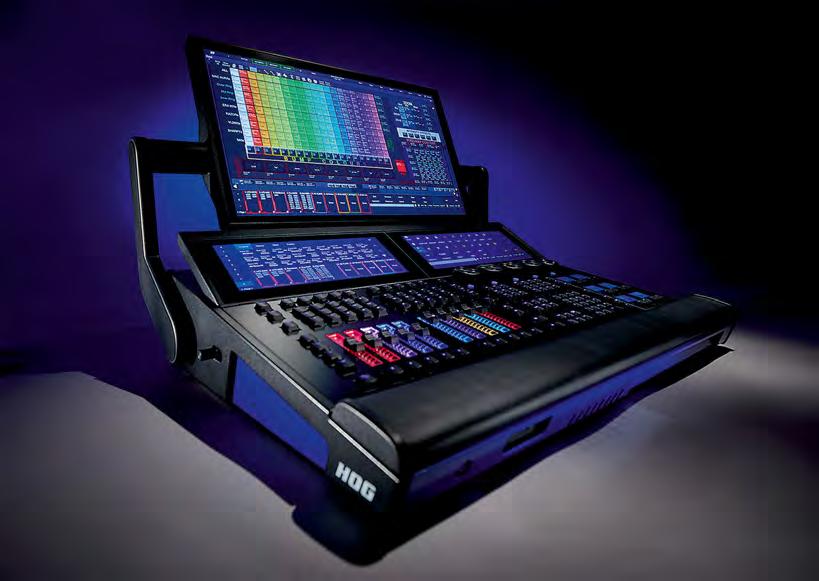
instruments, eliminating standby power consumption.
If your system is not similarly powered, look to see if you are able to turn off or disconnect your lighting rig from power when not in use. Beyond energy savings, regularly powering down equipment reduces thermal stress on electronics, extends component life and lowers maintenance costs. This goes to show that sustainability and system longevity often go hand in hand, practising good stewardship.
Tip 2: improve work light energy efficiency
In many venues, the majority of stage time is not spent with the full theatrical lighting rig running. Non-tech rehearsals, construction, load-ins, load-outs and maintenance all require good visibility, but not show lighting. This means work lights often operate far more hours than performance instruments.
Work lighting comes in many forms: theatrical scoops with high-wattage lamps, fluorescent strip lights, industrial high-bay instruments or general-purpose floods. Regardless of style, nearly all of these instruments now have high-quality LED replacement options available.
In my facilities, work lights are installed over stages, in catwalks and throughout our production shops. Over time, we have converted these systems to LED lamps or dedicated LED instruments. The result has been a significant reduction in
energy consumption, less heat in workspaces and far fewer lamp changes due to the long lifespan of LED sources.
This same thinking should also extend beyond the stage. High-use areas such as lobbies, bathrooms, makeup/green rooms, auditoriums and exterior architectural lighting benefit greatly from LED upgrades. In addition to power savings, LED lighting produces less radiant heat, making spaces more comfortable and reducing HVAC demand.
Tip 3: choose LED thoughtfully when making purchases
LED stage lighting has matured dramatically over the past decade. Today’s instruments offer output levels, colour quality and optical control that rival – and often exceed – traditional tungsten sources. When expanding or upgrading a lighting system, LED instruments should be strongly considered as a default option.
path. Products such as LED retrofit engines for existing instrument bodies allow venues to reuse housings, lens tubes and accessories while gaining the efficiency, longevity and performance benefits of LED technology. This approach significantly reduces waste while modernising the system over time.
For example, I have a large inventory of tungsten ETC Source Four instruments. Over time, I have been converting these to LED using the Source 4WRD retrofit kits. Not only are these less expensive than completely replacing instruments, but they allow me to use the rest of the instrument which, if maintained well, will last forever.
These three ideas represent only a small portion of what is possible
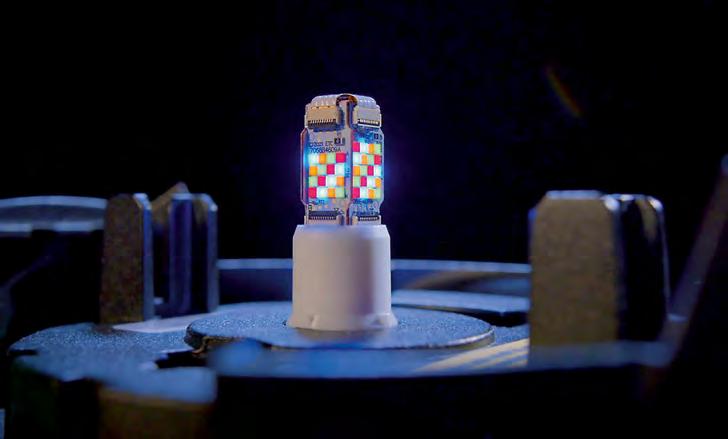
created internally, reducing both consumable costs and environmental impact.
From a stewardship perspective, LEDs draw significantly less power for equivalent output and convert far more energy into light rather than heat. This reduces electrical demand and lowers cooling requirements, an often-overlooked but substantial contributor to a venue’s total energy usage. Colour-mixing LED instruments also eliminate the need for disposable plastic colour media. Traditional gels fade, burn and require replacement, contributing to ongoing material waste. With LED colour engines, colour is
Another benefit is system efficiency. Older lighting designs often required multiple instruments to cover the same area in different colours. A modern LED wash instrument can replace several single-purpose units, reducing the total number of instruments, circuits and accessories needed. Fewer instruments means less power, less maintenance and less material overall.
For venues with large existing tungsten inventories, full replacement may not be immediately feasible. In these cases, LED retrofit solutions offer an excellent transitional
when it comes to stewarding our lighting through sustainable lighting practices. It’s easy to assume that a single venue – or a single lighting rig – can’t make a meaningful difference. But meaningful change rarely comes from one large action alone. It comes from many small, consistent improvements made across many spaces.
Stewardship begins with awareness: understanding how our systems operate, when they consume power and where inefficiencies exist. From there, small operational changes, such as turning systems fully off, improving work lighting and making thoughtful purchasing decisions, can lead to real financial savings and reduced environmental impact.
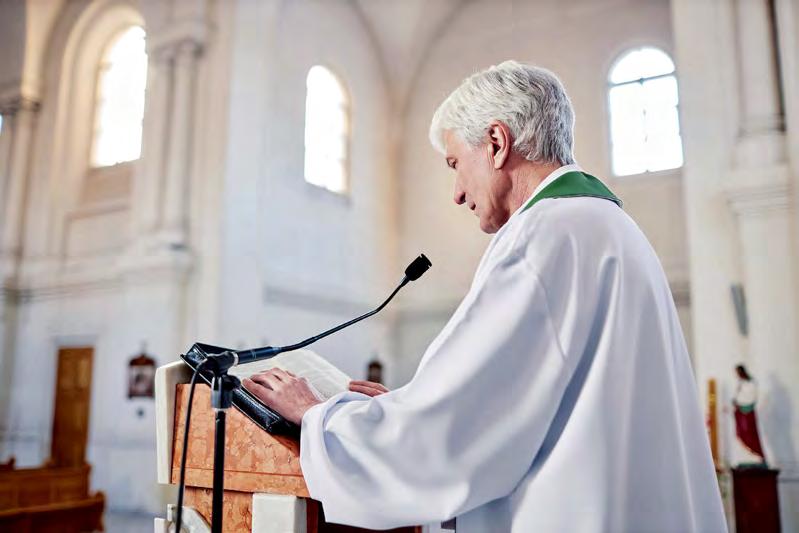
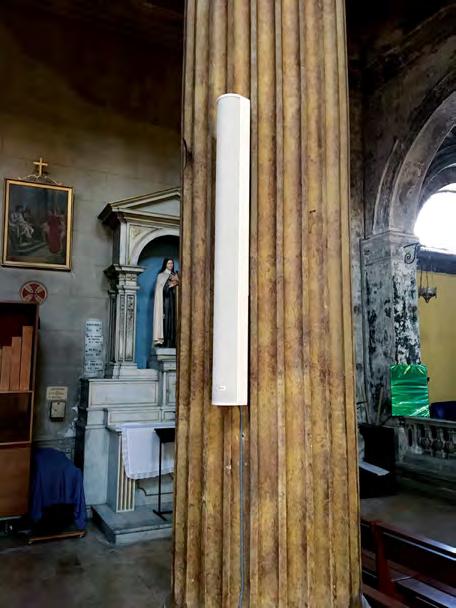
Eric Grandmougin, sales and marketing director at Arbane Groupe, considers how intelligibility of a spoken message depends on a combination of factors
SPEECH INTELLIGIBILITY
refers to the ability of a spoken message to be clearly understood by the listener. It is a fundamental criterion in any sound system –whether the goal is to deliver information, a safety message or the lyrics of a song. For a message to be useful, it must first be understandable. Intelligibility depends on many factors, both related to the message itself and to the environment in which it is broadcast. Much like legibility in written text, intelligibility determines how well the audio content is received. Understanding the factors that influence intelligibility helps optimise sound transmission and ensures the effectiveness of audio communication.
A text is readable when our eyes can clearly distinguish the characters it is composed of. The same applies to an audio message: to be intelligible, its volume must be sufficient for the ear to distinctly perceive the sounds that make it up. This is the first level of perception, that of sensory excitation, which is unique to each individual.
This sensitivity varies notably with age, which affects both hearing and visual capacity.
To capture attention, a text must be visually highlighted, for example with larger or bolder characters than those surrounding it. The parallel with an audio message is straightforward: to be intelligible, it must be broadcast at a sound level sufficiently higher than the ambient noise.
Ambient noise corresponds to sounds generated by the activity in the place where the message is played: machines, traffic, conversations or crowd noise. To ensure good intelligibility in various environments, the NFS 61-932 standard defines minimum sound levels to be reached depending on the type of venue. In practice, measuring ambient noise is often necessary, and it is generally accepted that the message must be broadcast at a level at least 10dB higher than this background noise. The sound level delivered by a sound system mainly depends on two factors: the electrical power
applied to the speaker and its acoustic efficiency (expressed in dB SPL for 1W at 1m). Choosing a high-efficiency speaker not only allows increasing the sound level without oversizing the amplifiers, but also reduces energy needs, cable gauge (and the amount of copper) and the overall system cost. For example, a 3dB gain in speaker efficiency means that, at a constant sound level, the amplifier’s power requirement is cut in half.
The medium on which a text is printed directly influences its readability: poor contrast, distortion or visual obstruction can impair the clarity of the message. The same applies to an audio message: once emitted by a speaker, the sound is affected by the acoustics of the space it travels through before reaching the listener’s ear. Excessive reverberation, reflections off walls, floors or ceilings degrade the clarity of the message and reduce intelligibility. To optimise the intelligibility of an audio message, it is essential
to choose speakers whose characteristics match the acoustics of the space. In acoustically complex environments, controlled directivity speakers – such as column speakers – are used. These help limit unwanted reflections and concentrate sound energy towards the listening area. This approach ensures optimal intelligibility over a wide area, even in challenging acoustic conditions.
For a text to be readable, the letters must be properly designed. Similarly, for an audio message to be intelligible, the sound system must be able to reproduce it faithfully. The signal processing chain – from the microphone to the amplifier – must avoid any distortion: excessive background noise, distortion or colouration of the signal can impair message clarity.
Speakers, for their part, must offer a linear frequency response within the vocal range to avoid distorting the message content. This is particularly critical in safety sound systems, where intelligibility is a
regulatory requirement. EN 54-16 (electronic equipment) and EN 54-24 (loudspeakers) standards define the minimum performance required to guarantee this quality of reproduction. Using products that comply with these standards and have recognised quality is, in a way, like taking care of the form of the message you want to convey: a well-formulated, well-written or well-broadcast message is far more likely to be understood.
Culture and human intelligence allow us to reconstruct incomplete information. We have all guessed a word despite a missing letter: just because an element is missing does not make a message incomprehensible, but it does become harder to read and requires more cognitive effort. The same applies to speech: even if some sounds are not heard, our brain can, thanks to our culture and experience, reconstruct the meaning.
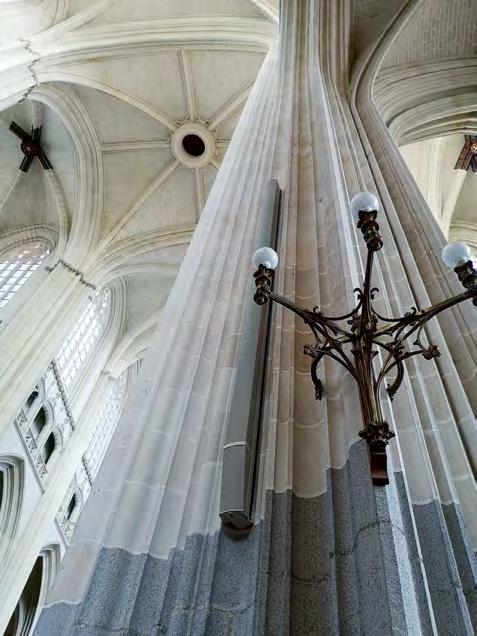
In complex environments such as churches, speakers often adopt a slower pace to preserve message clarity. Conversely, a speed that is too fast, even with a high-performance system, leads to a loss of intelligibility. Recent technologies now allow us to compensate for this difficulty: some electronic systems can slow down the pace of a spoken message without changing its pitch and facilitate comprehension.
The intelligibility of a spoken message therefore depends on a combination of factors: the sound
quality of the sound system; the clarity and pace of the message; and, finally, the listener’s abilities: hearing acuity, native language, culture and level of attention.
All these parameters make it difficult to define a single, universal standard for what constitutes an intelligible message. Yet it is this subtle interaction between the message, the medium, the environment and the listener that ultimately determines the success of any spoken communication.
The first intelligibility tests were conducted in 1929 by Fletcher and Steinberg to evaluate the quality of
intelligibility, whether subjective – that is, involving human speakers and listeners – or objective and predictive, allowing reliable results without direct human intervention.
Among objective methods, the Speech Transmission Index (STI) is widely used today to assess the performance of sound systems. Developed in 1971 by Tammo Houtgast and Herman Steeneken, the STI measures a transmission system’s ability to preserve the essential characteristics of the vocal signal or, conversely, to degrade it.
The principle is based on the analysis of a specific test signal, composed of seven frequency bands representing the vocal spectrum (from 125Hz–8kHz), each modulated by 14 frequencies ranging from 0.63–12.5Hz, simulating the dynamics of human speech. In total, 98 combinations are analysed to determine signal degradation. The result is a single value, the STI, ranging from 0 (completely unintelligible speech) to 1 (perfectly intelligible speech).
The measurement method is standardised, notably by the NF EN 60268-16 standard, and can be applied both with measurement instruments and with acoustic simulation software. Finally, many recommendations and reference tables specify the minimum STI values to be achieved depending on the use case.
While the calculation and measurement of the STI rely on objective and often standardised methods, the actual perception
language, familiarity with the content and auditory fatigue all directly influence the ability to understand a message, even when the STI is technically deemed sufficient. For example, elderly individuals, whose hearing acuity is often reduced, require a higher level of intelligibility to correctly perceive and interpret a spoken message. These considerations make it crucial to choose an appropriate target STI level suited to the intended audience.
High intelligibility is a fundamental criterion in evaluating the performance of a sound system, especially in environments with complex acoustics. To achieve this, several conditions must be met.
Broadcast high-quality messages, recorded or captured by trained professionals using appropriate microphones.
Use efficient signal processing, free from noise and distortion, to preserve message clarity.
Provide sufficient amplification to deliver the message at a sound level above the ambient noise.
Implement highly directional speakers, such as column speakers, to limit the negative effects of reverberation and reflections on intelligibility.
In all cases, achieving a high level of intelligibility requires a rigorous technical approach based on precise acoustic studies conducted by specialists. Because good intelligibility ensures that all the nuances of a message can be conveyed to the
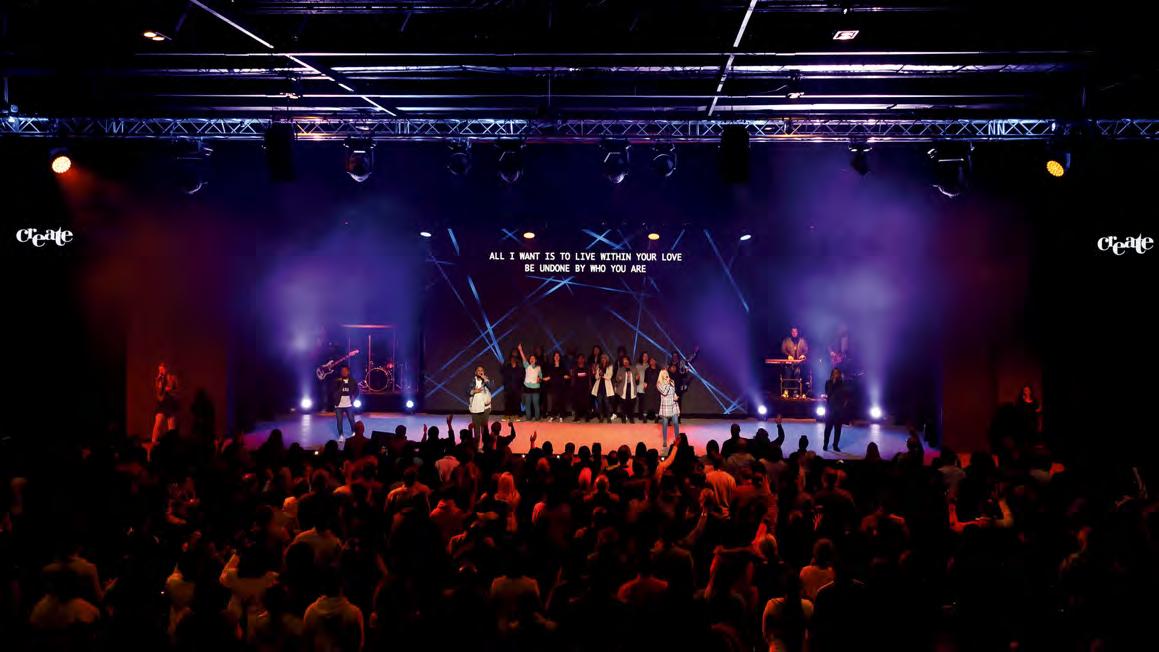

Greg Boren, product marketing engineer at Marshall Electronics, discusses the advantages dual-headed PTZs can bring to houses of worship
DUAL-LENS/TWO-LENS PTZ
tracking cameras deliver enhanced subject auto-tracking, powerful lenses, smoother transitions and comprehensive coverage, making them ideal for houses of worship where consistent framing and reliability are critical. They combine a wide-angle reference lens with a PTZ lens which allows the systems to automatically deliver broadcast-style shots and capture tight, flattering close-ups of pastors, speakers or soloists without a dedicated camera operator. Since the camera movement is driven by AI, rather than manual control, transitions remain smooth and unobtrusive,
models, making them especially valuable for multi-campus churches or centralised production setups.
“Another key advantage is reliability,” explains Marshall Electronics’ product marketing engineer, Greg Boren. “The fixed wide-angle lens of the camera continuously maintains a stable, full view of the stage or altar. This allows the PTZ lens to follow the subjects accurately, even if they move quickly, change directions or are briefly obscured. This makes it possible to use a very close zoom to capture facial expressions or hand gestures without worrying that the shot will drift or the subject will get lost.”
PTZs operating together generally still lack a shared context awareness without additional production logic.
However, for smaller venues, dual-headed cameras can be costprohibitive and, with 25X zoom, are over-lensed for more compact spaces. “Dual lens tracking solutions are most likely being used in medium and larger-scale venues,” adds Boren. “They can reduce overall system costs by replacing cameras, eliminating the need for additional controllers, simplify cabling and routing, and reducing operator costs. Additionally, the advanced production quality means a venue can get professional-
but that doesn’t necessarily eliminate the need for multiple camera angles. If a church requires coverage from different sides of the sanctuary, balcony or congregation, additional cameras will still be necessary. What changes is that each camera position becomes far more capable, reliable and automated.”
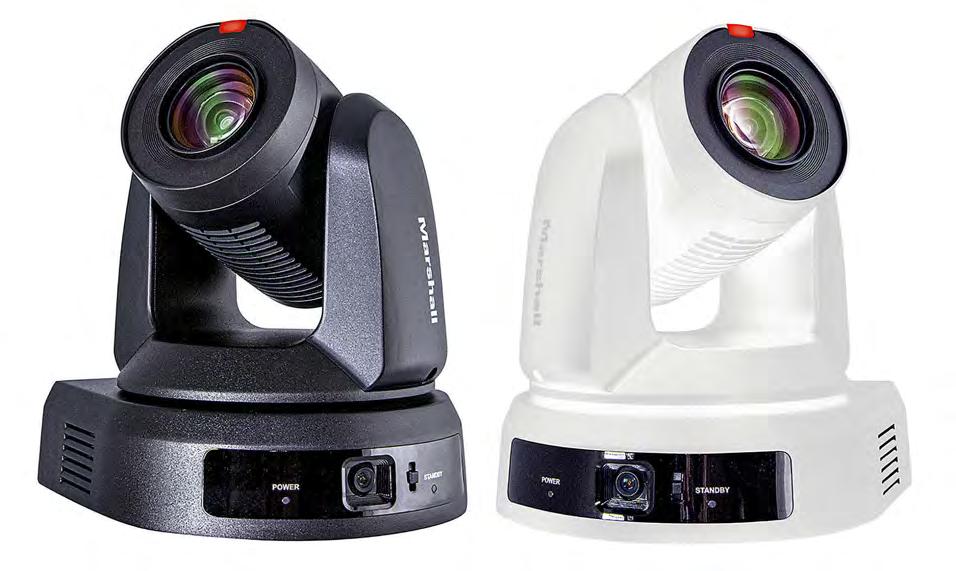
minimising visual distractions and preserving the atmosphere of the service.
Dual-headed PTZs also simplify operations, which is ideal for churches where there are fewer staff and a small budget, with volunteer teams who have limited technical experience. Automated tracking removes the need for highly skilled camera operators, which frees up staff to focus on other critical elements like audio, graphics or service direction. Additionally, with the ability to deliver both wide and tight shots from a single camera, these systems provide a streamlined workflow for remote production (REMI)
PTZ with powerful optical zoom and a fixed, panoramic, wide-angle camera – inside a single unit. Having both imaging functions together dramatically improves tracking reliability, while also unlocking simultaneous multiview outputs. The panoramic reference element of the camera continuously monitors the entire scene and feeds context into the AI tracking engine. The dualsensor design also simultaneously delivers both a close-up PTZ shot and a wide view of the entire space. By contrast, a single PTZ must infer motion and re-acquire targets when they leave the field of view and two
level results without needing to invest in additional training. For venues with very tight budgets, it might still make sense to start with traditional, single-lens PTZs, but venues that want the features available from a dual-lens camera will find that it is a cost-effective and futureproof choice that also provides savings of time, complexity and staffing.”
Depending on how the church is using the cameras, dual-headed PTZs can reduce the total number of units, but Boren believes the real advantage is their ability to do more from each camera position. “In many worship environments, a dual-headed
Yet it’s important to consider that dual-headed cameras may not be the right solution for your venue. Physical constraints can also be a contributing factor. Dual-lens PTZs are typically larger than single-lens solutions, so venues with tight mounting locations or strict aesthetic requirements might prefer smaller form-factor options.
“Dual-headed cameras are designed to solve very specific challenges,” continues Boren. “When those needs don’t exist, a traditional PTZ or fixed camera can sometimes be a better fit. For example, in productions that are driven with experienced camera operators, the added AI tracking and second lens might be unnecessary as a PTZ can deliver excellent results at a lower cost and with simpler configurations. Similarly, if the application requires static framing, a fixed camera might be more appropriate.”
However, over the next few years, Boren expects that the computing power of tracking camera hardware will increase, and algorithms will improve. “In the future, we may be able to use higher resolutions and higher frame rates for classification, utilise more features for planning, reduce tracking loss and make tracking smoother,” he concludes. “We might also look to add gesture control for tracking cameras.” www.marshall-usa.com
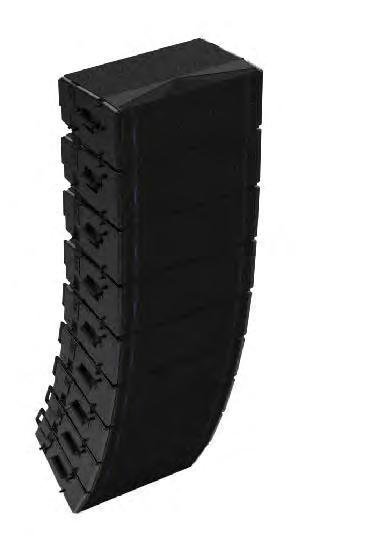
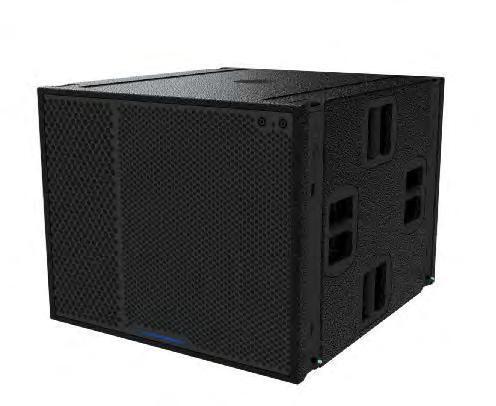

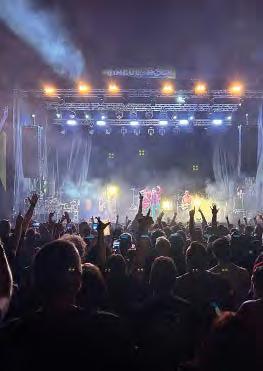
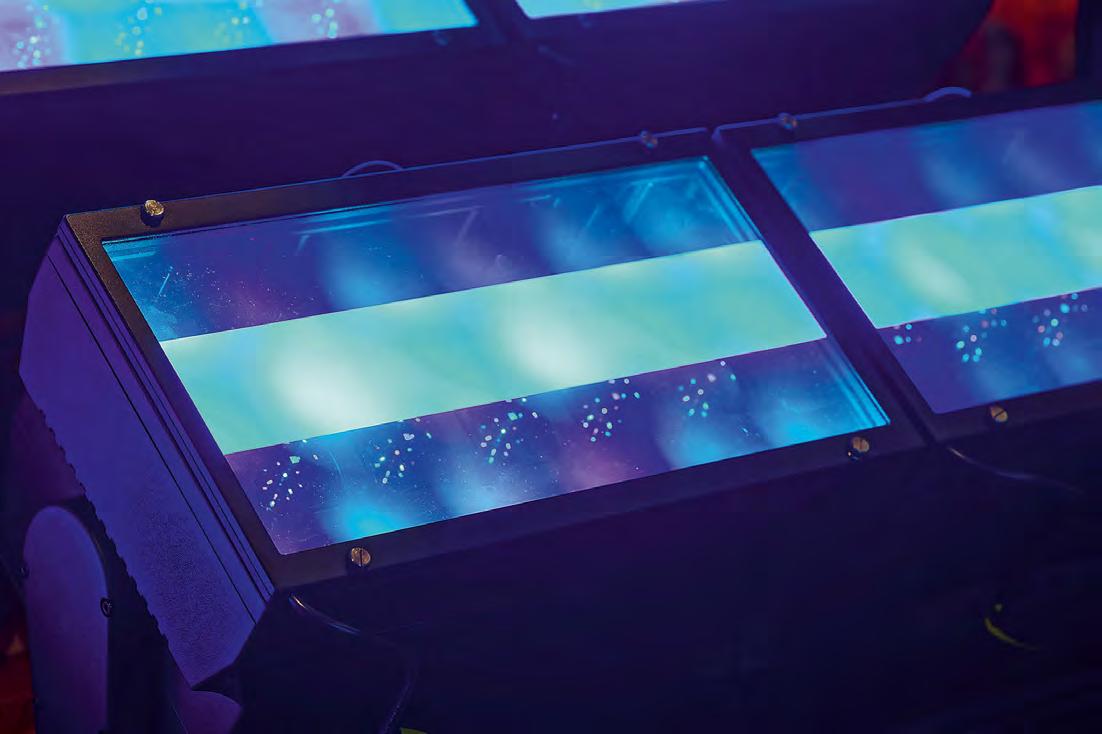
GLP’s director of lighting technology engagement, Brad Schiller, looks at how electronic frost technology is transforming LED fixtures
LIGHTING TECHNOLOGY HAS brought us many amazing advancements over the last 30 years. With the adoption of LED engines, we have seen fixtures change in dramatic and unique ways. From pixel control to super quiet fixtures, the advances have added new levels of creativity and control for lighting designers. Recently, some LED fixtures have begun making use of electronically controlled frost functionalities. This incredible feature dramatically transforms the look and output of a fixture through a scientific process that looks like magic.
This amazing new technology allows lighting programmers and designers to dynamically change the front lens of a fixture from transparent to opaque. This provides a similar effect to applying a frost filter in front of a light source. It will soften the output while also increasing the beam spread a bit. With traditional lighting fixtures, frost was applied either via gel placed in front of the lens or with a frosted glass that was mechanically moved in
and out of the beam. This new electronic frost technology feels like magic as you dial a value on the console and the front of your fixture transitions from clear to fully frosted.
While this feature is new to entertainment lighting fixtures, the technology has actually been around for quite some time. In 1987, Nippon Sheet Glass launched a glass product that could switch between transparent and opaque by simply applying voltage. This became known as smart glass and has been used in windows and signage to provide security, privacy and environmental efficiency. Since then, the process has evolved through various methodologies, but each provides the same basic functionality. Some are built directly into glass, while others are made into a film that can be applied to various surfaces (or made into an accessory).

two electrodes and the entire “sandwich” is basically a capacitor.
magic! With no voltage applied, the liquid crystals are randomly arranged within the droplets, which scatters light as it passes through. If voltage is applied to the electrodes, then the electric field that is created causes the crystals to align, allowing light to pass through with little to no scattering. If you adjust the voltage, you can vary the scattering results as more crystals align with increased
The type of smart glass that we are concerned with is considered a Polymer-Dispersed LiquidCrystal (PDLC) device and the
science behind it is fascinating. To manufacture smart glass, liquid crystals are first dissolved into a liquid polymer. This mixture then goes through a curing process to change the polymer from a liquid to a solid. As this happens, the liquid crystals form droplets within the polymer. Next, the cured polymer is placed between two layers of glass or plastic like the meat in a sandwich. A thin conductive material is added to create
With no voltage applied and all the liquid crystals randomly arranged, the glass will take on a milky white appearance and appear similar to a theatrical frosted gel. When added to the front of a lighting fixture, this technology provides the ability to adjust the frost level from transparent to opaque through DMX values of a lighting controller.
As mentioned previously, we are starting to see electronic frost built into LED fixtures or provided as an accessory. For instance,
E-Frost accessory frame that can be added to the unit. It includes a wire that plugs directly into the fixture’s accessory port so power and control can be applied. When added to a fixture, it allows the designer or programmer to adjust the main lens from transparent to opaque on demand. By simply adjusting a DMX value, they can program the E-Frost function to change instantly or in any amount of time desired.
While several other manufacturers are also adding electronic frost features to their fixtures, the Creos functionality has been broken into three segments. Instead of one big frost on the unit, it is actually three individual frost segments that align with the three rows of LEDs in the fixture. This further allows dynamic blended effects such as sine-wave patterns or pulsing transitions. The programmer can easily individually adjust the frost level and timing of each segment through three DMX channels.
You might wonder why electronic frost lenses are currently appearing
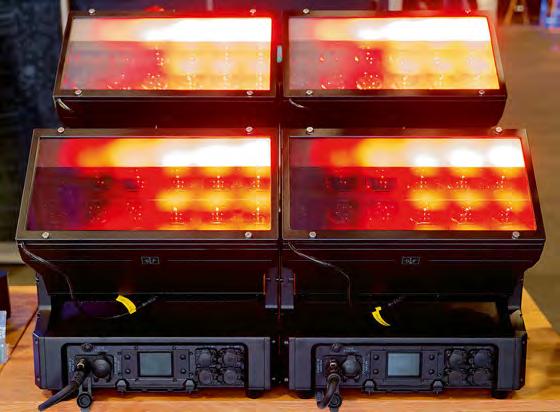
only on the front glass of LED wash fixtures and not more widely adopted across various fixture types such as profiles. The liquid crystals within the polymer react differently to electrical charges depending on their temperature. So, if smart glass were to be implemented within a fixture’s gate (close to the gobos), then it would likely fail or at least look uneven and be unpredictable as to its density.
In addition, the default state for any smart glass when no power is applied is fully frosted. This can lead to difficulties when trying to make fixture repairs and also attribute to higher power usage due to the power having to be on for the lens to be clear. Another pitfall of electronic frost is that it is never 100% transparent. Because there are various layers within the frost and the fact that the liquid crystals
cannot achieve full alignment, only about 75–80% of the fixture’s output passes through the smart glass when transparent. This is why an accessory version is helpful as you can remove the E-Frost when you do not need it.
Beyond simple electronic frost on the front of a unit, we are already seeing dynamic abilities such as segment control. E-Frosts can be available in two models: standard and smoked. The smoked option minimises visible reflections and housing contours which can be helpful in houses of worship, TV studios, theatres and premium event environments.
Electronic frost technology is transforming LED fixtures and providing designers with an exciting new functionality. In time, scientists will discover further possibilities using this technology to allow colour or pattern changes via similar electrical charge-based reactions. It is always exciting to see how our industry adapts new technologies such as PDLC smart glass and applies them to our creative needs.
www.glp.de
3 horizontal segments, individually controllable between clear and full frost
Adaptive range for dynamic fading effects (Sinus- or Pulse effects) Entirely new creative effects











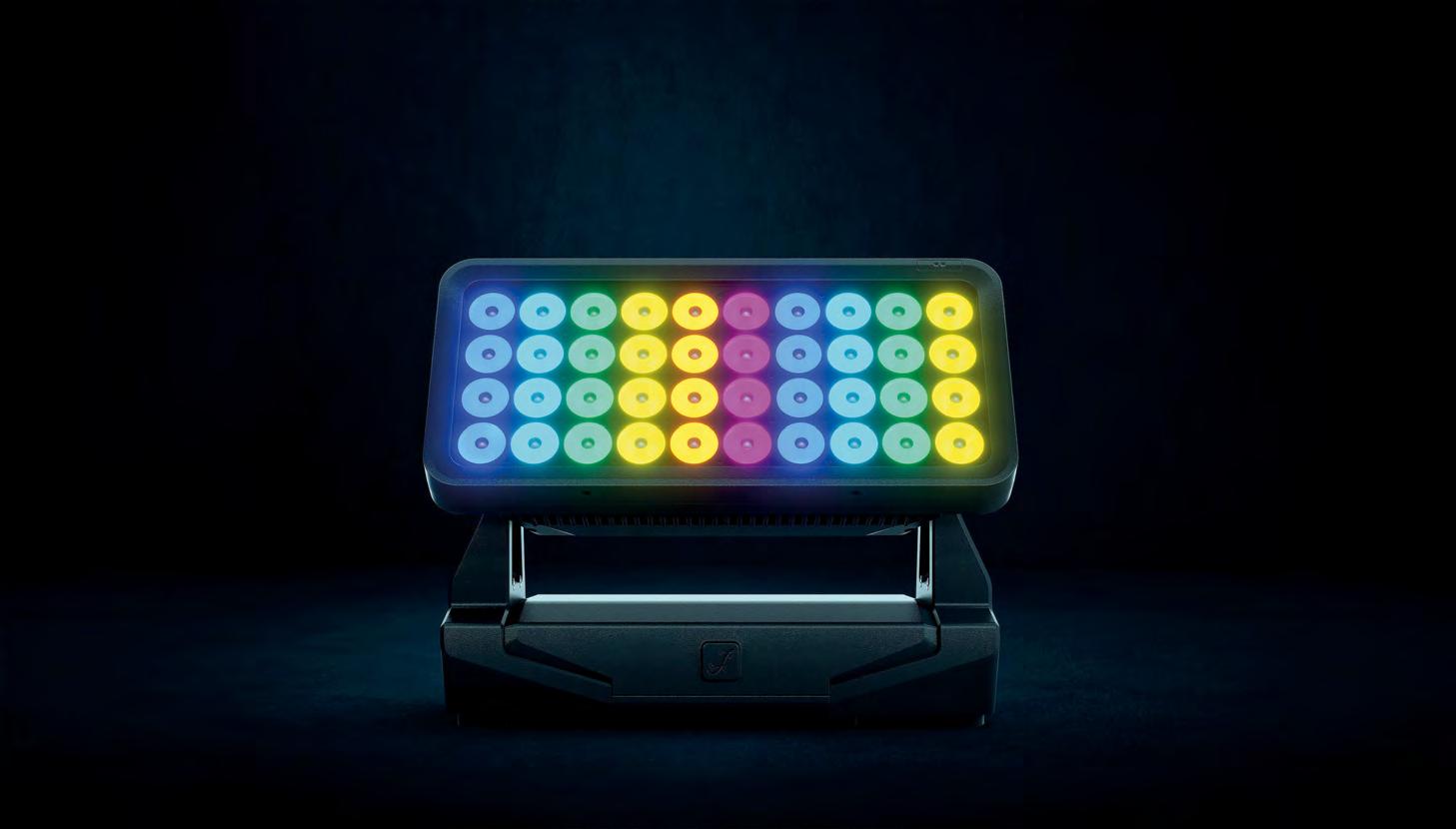
WITH THE ZENIT W600 G2, Cameo has unveiled the second generation of what the company describes as its most successful light to date. The successor to the IP65 LED wash light reportedly offers more light output, an extended colour spectrum and optimised handling in a compact design suitable for houses of worship, large live event stages, touring and outdoor use.
At the heart of the ZENIT W600 G2 is the new RGBALC LED engine with 40 50W LEDs, which delivers a luminous flux of up to 32,000 lumens with a power consumption of 660W. In combination with the calibrated XColour colour mixing technology, the ZENIT W600 G2 produces a seamless, natural colour spectrum (CRI 98, TLCI 95).
In addition, Cameo has expanded the creative possibilities compared to the previous model: thanks to the seamless clustering of multiple units (vertical and horizontal) and the new SnapMag FX electronic frost, which enables fast transitions in the range from 18–54° (beam
angle), the ZENIT W600 G2 “provides creative freedom” in a wide variety of applications.
In addition to increased performance, the development of the ZENIT W600 G2 has focused primarily on the day-to-day user experience.
Based on feedback from numerous lighting designers and technicians, the handling of the wash light has been optimised in a targeted way. New integrated handles, an additional fold-out handle on the head end and optimally positioned safety eyelets are said to make rigging easier and save valuable time during assembly and dismantling. Despite its higher output, the IP65 wash light weighs just 12.9kg, making it easy to handle for everyday events and touring.
Another key feature is the new Cameo Connect app, which is being used for the first time on the ZENIT W600 G2. The app can be used to configure fixtures quickly and easily via an NFC connection – a major advantage for high volumes in large productions. In addition, the Cameo Connect app enables direct access
to the Adam Hall Service Portal, including fault diagnosis, the support function and firmware updates for efficient device management. For existing customers, accessories such as filters, barndoors and mounting material from the ZENIT W600 G1 series remain fully compatible. In addition, the
integrated legacy mode enables the light output and dimming behaviour of the G2 to be adapted to the predecessor model, so that G1 and G2 devices can be used together in a homogeneous lighting design without any problems.
AYRTON HAS released its EagleStrike LT followspot, designed for “maximum output, speed and precision”. The first LED-source followspot in Ayrton’s catalogue, the EagleStrike LT has been engineered for use across long distances, and comes with an optional camera which transforms the unit into a fully automated tracking spotlight. It has an oversized 270mm front lens capable of delivering a 2.9° beam. Its 13-lens optical system with 15:1 zoom ratio provides a working range of 2.9–43°, with dedicated gobo reducers that can narrow the beam to 0.9° or 2.5°. Equipped with a 1,200W LED module, the EagleStrike LT outputs a luminous flux of 55,000 lumens at a colour temperature of 6,500K. It achieves a light output of over 100,000 lux at 10m, and 6,250 lux over 40m. The followspot also introduces a new CMY flag-based colour mixing system, capable of matching the speed of Ayrton’s “Ultimate” series luminaires. A
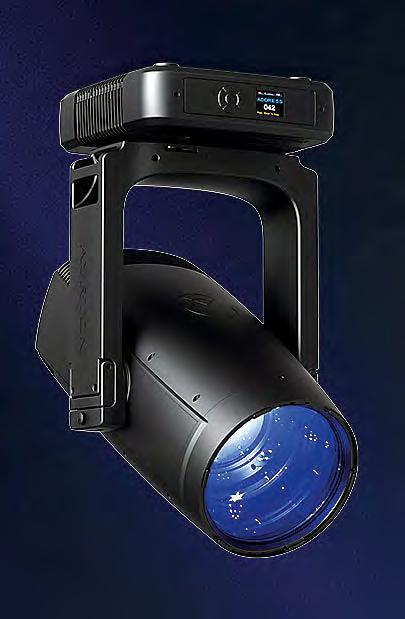
progressive CTO offers subtle tuning from 2,900–6,500K. The colour section includes six complementary colour filters, two CRI enhancement filters, one minus green, one gobo correction and one
The unit also offers a range of optical tools for sculpting the light: precision full-framing across 100% of the file and ±90° rotation, two overlaying rotating gobo wheels, each with seven gobos, a 15-blade iris diaphragm, a single-colour effects wheel and two frost filters, as well as two combinable rotating imagemultiplier prisms: a 4-facet linear and a 5-facet circular. Continuous rotation on the pan axis expands the EagleStrike LT’s use in automatic followspot mode. The design integrates all waterproofing features while maintaining full access to internal components.
www.ayrton.eu
ETC BRAND High End Systems has released the IP54-rated MegaPix and GigaPix, two pixel wash fixtures described as high-impact features in a compact package. Both come with a Fresnel lens system, smooth zoom range, RGBL colour engine and dimming. The units offer the output characteristics of a Fresnel lens, with the power and versatility of a pixel optical system. The patented Integrated Fresnel Lens (IFL) system increases output throughout the entire zoom range, while the fixture is also protected against a buildup of condensation from fog to minimise maintenance requirements.
A custom RGBL LED engine, along with a 2,000–10,000K CT channel, deliver “vibrant colour and elegant white light washes” to any stage. Developed by ETC’s colour scientists, the CT channel
IN CELEBRATION of its 50th anniversary, Claypaky has unveiled its latest additions to the Arolla Aqua series. The Arolla Aqua M-LT has been designed for lighting designers, rental companies and broadcasters requiring uncompromised outdoor performance in a lightweight body. It delivers 28,000 lumens from a custom 550W calibrated white LED engine (6,500K) and combines throw-optimised optics with a 160mm front lens for enhanced beam capabilities. The fixture boasts a 3.8–52° linear zoom, while a centrepeaked hotspot aids gobo projection and mid-air effects. Engineered to balance performance, portability and projection, the Arolla Aqua S-LT brings 21,000 lumens of calibrated output to permanent installations and outdoor productions in a 25.9kg form factor. Inside, a custom 350W cold white LED engine (6,500K) powers an optical system optimised for long-throw brightness and midrange punch. A 140mm front lens and 3.8–52° linear
reportedly delivers the highest TM-30 Preference rating (P1) of the entire range. Macros with built-in colour or flex macros with customisable colours are also included. Each look is highlighted by HaloGraphic Pixel Definition
technology, outlining each cell with a slight diffusion to enhance cell-to-cell visuals. Users can maintain modular control of each pixel with Art-Net or sACN control options.
The MegaPix weighs 9.2kg and has a 10,000-lumen output with a 4.5–50°
zoom facilitate a range of functions from aerials to stage washes. The centre-peaked hotspot has been engineered to provide consistent beam quality, even at long distances. Said to be the most powerful fixture in the Arolla Aqua series, the Arolla Aqua HP is aimed at lighting professionals seeking a versatile, high-performance, allweather moving head. Equipped with a custom 1,400W white LED engine that delivers over 60,000 lumens, it has been designed with brightness, precision and creative flexibility in mind. The fixture comes with a rugged design for use during touring and demanding environments. To aid sharp beams that remain impactful over long distances, it features a 220mm front lens. Its zoom range of 3.6–55° enables transitions from narrow beams to wide washes, making it suitable for key lighting, aerial effects and visual displays.
www.claypaky.it
zoom range, while the GigaPix weighs 15kg and has a 17,000-lumen output with a 4.5–55° zoom range. The manufacturer has also released the Dataflash 5000, a high-energy strobe fixture capable of 52,000 lumens. With both an RGB LED array and a 3,200–7,500K white light centre, the Dataflash 5000 has an IP65 rating and an LED engine that “turns on and stays on”. With the variable white light centre and the surrounding RGB LEDs, designers can achieve both warm and cool strobing while also painting the stage with vivid colour. It also comes with a large collection of strobe modes and macros. Dome accessories include the Reflector Dome which attaches to the fixture face to provide strobes and atmospherics, while the transparent Eye Candy (EC) dome highlights all of the fixture’s bold effects.
www.etcconnect.com
THE FAMILY of architectural luminaires from ETC now includes three brighter display fixtures: the Irideon FPZ Plus, Irideon WLZ Plus and Source Four Mini LED Plus. With new control options and an increase in lumen output, the Plus luminaires reintroduce the ability to mount ETC fixtures on a 230V track, this time using the DALI control protocol and adapters compatible with OneTrack by EUTRAC.
The Irideon Framing Projector Zoom (FPZ) Plus features a 25–50° beam spread and an output of up to 1,600 lumens, said to be notably brighter than its standard predecessor. The FPZ Plus is available with DMX or DALI control, and is compatible with F-Drive, ETC’s centralised remote driver system. The luminaire is available in 2,700K, 3,000K, 4,000K and 5,000K colour
Gallery 90 CRI.
The Irideon Wash Light Zoom (WLZ) Plus includes 9–78° zoom optics and is ideal for softening the appearance of any space. Substantially brighter than the original WLZ, this fixture
outputs up to 2,600 lumens of light.
The WLZ Plus is available in 2,700K, 3,000K, 4,000K and 5,000K colour temperatures in both 80 and 90 CRI, with similar mounting and control
The Source Four Mini LED Plus is available in 2,700K, 3,000K, 4,000K and 5,000K colour temperatures in both 80 and 90 CRI. It comes with either track, canopy and portable mounting, can be DMX or DALI controlled, or used with the F-drive centralised remote driver system.
Finally, the lighting manufacturer has expanded its Response Mk2 DMX Gateway family with two
8-port options: a full-width Gateway with eight XLR connections and a ½-width Gateway with eight terminal connections. These higher-density gateways are said to deliver the same system functionality at a lower price, while using less rack space. With multiple mounting options and repositionable network ports, the Response Mk2 8-port DMX Gateway “fits comfortably wherever it is needed”. The Terminal version is the same size as ETC’s current 4-port Gateway, providing twice the number of 3-position terminal connections into the same amount of space. Using an existing rackmount kit, it is possible to get 16 ports of DMX output into a 1U rack space by mounting two 8-port terminal gateways side-by-side.
www.etcconnect.com
VARI-LITE HAS released the VL3200 LT Profile IP, a compact, long-throw production profile fixture with over 20,000 lumens of output in a small, outdoor-rated format. It includes a 550W monochromatic light engine and a CMY+CTO colour mixing system for a broad range of colours. With a large selection of tools for creating dramatic effects, the VL3200 is suitable for longdistance key lighting and mid-air effects.
The fixture includes fixed and indexing/rotating gobo wheels,
ADDING TO the Rebel Series, Elation has released the Rebel Wash 4 and Rebel Wash 12, two high-powered wash moving head luminaires. Their zoom-lens optical system reportedly ensures a highly homogenised beam with smooth, consistent colour and light distribution. At the heart of the
Rebel Wash is an RGBL LED engine with high CRI and calibrated colour temperature control. The addition of a lime emitter expands the colour spectrum, enhances white light quality and boosts overall output.
A dedicated variable CCT control channel (2,400–8,500K) gives precise colour temperature control, while CMY emulation mode caters to those familiar with classic CMY mixing. The Rebel Wash 12 comes with 12 60W RGBL LEDs delivering 14,000 lumens, while the Rebel Wash 4 incorporates four 60W RGBL LEDs delivering 4,000 lumens.
Designed as a direct upgrade for previous Volt models, the Volt+ PAR L (60W RGBLA+UV LED) and Volt+ PAR S (30W RGBLA+UV LED) come with a total fixture lumen output of 3,600 and 1,975 and a 15° and 20° beam angle respectively. Both provide a CRI of 90.9. The IP65-rated models are both suited for wash and direct-view applications. The Volt+ PAR L comes with integrated power and DMX
an animation wheel, dual prisms, frost, a 4-blade continuous wipe framing system, a 16-leaf variable iris and a 12.5:1 ratio zoom range of 4–50°. Thanks to its V*Track Focus technology, the VL3200 offers an advanced 16-bit focus control that ensures the edge and zoom remain aligned throughout the full zoom range with no need to switch between controls at the narrowest end of the range.
www.vari-lite.com
connectors, while the Volt+ PAR S’s connection-free design eliminates external cabling.
The Fuze Wash 250 and Fuze Wash 500 are automated LED Fresnel wash fixtures. A high-CRI engine uses a five-colour homogenised LED array consisting of red, green, blue, mint and amber sources. The Fuze Wash 250 and Fuze Wash 500 bring a respective output of 8,500 and 17,000 lumens, with both fixtures providing a maximum CRI of 92.
Finally, the X-Laser Triton T-40 is a 40W, IP65 production-grade RGB laser with instant 0.1–45° zoom, fast digital gobos, rich colour and smooth motion. With Mercury laser control, it integrates seamlessly into any lighting rig.
www.elationlighting.com
ADJ HAS been keeping busy with a raft of new product launches. Combining the effects from two of its popular fixtures into one product, the Jolt MFX 360 blends the Vintage Bar – a warm white LED blinder strip – with the Jolt Bar, a white LED strobe strip. A fast motorised tilt reportedly allows near instant transition between the two effects, while 360° continuous rotation unlocks a wide variety of hybrid effects. The fixture comes with preprogrammed effect macros, a lens slot on the Jolt Bar side for optional frost filters and Aria X2 wireless built in.
The Vizi FX7 is a professional moving head luminaire ideal for event production and venue integration. Offering four unique effects in one fixture – a beam, a wash, a multi-coloured kaleidoscope and an LED ring effect – it comes with individual pixel control over the
primary LEDs and a variety of built-in FX programmes. The unit’s four distinct functions can be used individually or combined to create a variety of aerial effects.
ROBE LIGHTING has expanded its T-Series theatrical portfolio with the launch of the T10 Profile with modular PC and Fresnel variants, alongside the T3 PC and T3 Fresnel luminaires. The fixtures have been designed to bring multispectral colour performance and system consistency to spaces of varying scales.
Positioned for smaller venues, the T10 Profile shares the core
Described as ultra-fast, compact and powerful, the Vizi Xtreme is a beam wash moving head that includes optional 360° continuous pan/tilt movement and precise control. It features four individually controlled 60W RGBL colour mixing LEDs surrounded by an additional ring of RGBW “eye candy” LEDs. It comes with a motorised zoom from 3–45° and advanced control connectivity.
an automated luminaire capable of functioning interchangeably as a beam, spot or wash. Powered by a 400W LED engine, it delivers output of up to 14,500 lumens. Its suite of beamshaping tools includes full CMY + CTO colour mixing along with two gobo wheels, two rotating prisms, two frost filters and Aria X2 wireless, as well as motorised zoom (3–52°) and focus.
www.adj.com
maintains colour consistency across the T-Series, supported by a virtually controlled CCT range from 2,700–8,000K, with an extended range down to 1,800K and up to 10,000K.
A 5–55° zoom, CRI adjustable from 80 to 95+ and DataSwatch virtual colour library support accurate colour rendering and fast programming.
A rapid-change front lens system allows the T10 Profile to be converted into PC or Fresnel formats, enabling a single fixture platform to fulfil multiple roles without the need for separate luminaires. The design also addresses noise-sensitive and camera environments through Cpulse flicker-free operation and plus/minus green control.
technologies of Robe’s larger T11 Profile, including a 200W MSL multispectral light engine and TE transferable engine architecture. The fixture delivers 8,300 lumens and
At the higher output end of the range, the T3 Fresnel and T3 PC extend the manufacturer’s multispectral wash offering for larger applications. The T3 Fresnel delivers over 35,000 lumens from a 1,400W MSL light source, paired with a 6–65° zoom and classic softedge beam characteristics. Both T3 variants feature ProFrost progressive diffusion, an 18-bit L3 dimming system, calibrated whites and a 1,800–10,000K CCT range, with additional provisions for broadcast use including Cpulse management and dedicated green correction.
www.robe.cz
ENGINEERED SPECIFICALLY for Creos, GLP’s E-Frost filter introduces segmented Smart Glass technology that allows designers to control beam diffusion using three independently addressable frost
performance is driven by GLP’s iQ.Gamut algorithm with RGB+Lime mixing, offering selectable white points, a CTC range from 2,500–10,000K and tungsten emulation curves.
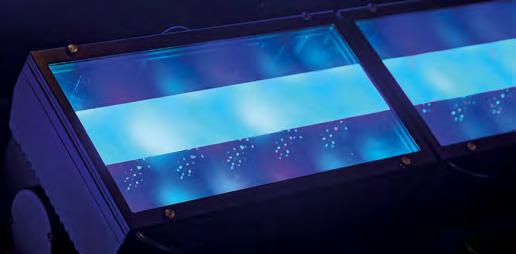
zones aligned with the fixture’s horizontal LED arrays. Each segment can switch from transparent to fully frosted, with smooth transitions between states enabling dynamic effects such as wave patterns, pulses and layered textures. The approach is said to allow seamless movement between beam, wash and atmospheric looks without changing accessories or hardware.
Creos itself combines a narrow 4° beam outputting up to 1.2 megacandelas with a motorised zoom extending to 50°, making it suitable for beam, backlight and general wash applications. When deployed in clusters, multiple fixtures visually merge into a continuous LED bar due to their aligned LED rows and consistent pixel pitch. Colour
The E-Frost is available in White Frost for high-output diffusion and Black Frost for reduced reflections in broadcast and premium environments. Installation is toolfree, with power and data supplied via the GLP FX.Port, and all control parameters integrated into the Creos DMX profile.
Complementing Creos, the impression X5 Compact features seven 40W RGBL LEDs, a 16:1 zoom range from 3.6–66° and GLP’s iQ.Gamut calibration for accurate whites and extended colour control. Weighing 7.5kg, the baseless fixture supports pixel mapping, static front accessories and control via DMX, Art-Net or sACN.
www.glp.de
ROBERT JULIAT has announced the launch of the Morgane, a 13–24° followspot and the smaller sister of the Tristan launched last year. Its 825W LED source is available in tunable white or in fixed cool white. The Morgane has a motorised, fully closing iris that allows the creation and storage of presets for rapid cueing. Accessories include a remote display providing iris and intensity information for operator convenience; the ability to connect external remote
from any position; and an optional version with left-side controls for iris, dimmer, frost and colour changer.
As with other Robert Juliat followspots, the Morgane includes a smooth flat beam, ergonomic design, electronic dimming with single-handed local control, remote DMX control, frost and colour filters, 6-way colour changer and a native CRI >90. The variable white source is said to offer greater versatility and eliminate the need for physical
ATEN INTERNATIONAL has released the CS742H 2-port USB 4K HDMI dual-display KVMP switch, designed for creators, engineers and professionals who require control
visual performance and peripheral sharing. With support for 4K (4096x2160 @ 60Hz) resolution and ATEN’s Video DynaSync technology, the switch preserves display settings,
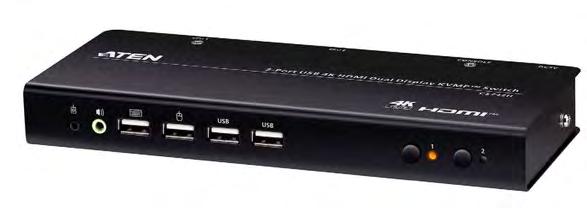
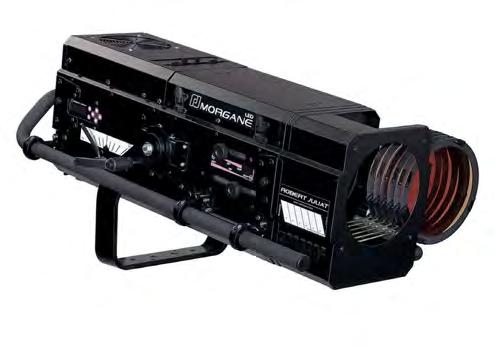
remotely from the console allowing real-time adjustments. The fixture has a built-in electronic flicker-free power supply and is compatible with DMX, RDM, Ethernet, Art-Net and sACN protocols. It also has Advanced Ethernet node functionalities
zeroconf protocols.
Housed within a compact body and offering silent operation, smooth electronic dimming and the benefits of no lamp change due to its LED source, the Morgane is also suitable as a spot for front-of-house, truss and backlight positions.
and icon positions during every port switch for smooth, stable multitasking. It allows users to connect two HDMI computers while outputting to dual 4K displays, making it suitable for content creation, postproduction and applications that require simultaneous visibility and precise control.
To simplify workflow transitions, the CS742H offers flexible switching between computers via pushbutton, hotkey, mouse or the ATEN Remote Port Selector. The unit also features a built-in 2-port USB 2.0 hub that
supports devices such as webcams, storage drives and drawing tablets. Users can share media and data between systems through USB connections, eliminating the need for an additional docking station. The CS742H also supports multi-platform compatibility across Windows, Mac and Linux. All cables are included – the switch comes with four HDMI cables, two USB 2.0 A-to-B cables, one power adapter and one remote port selector.
www.aten.com
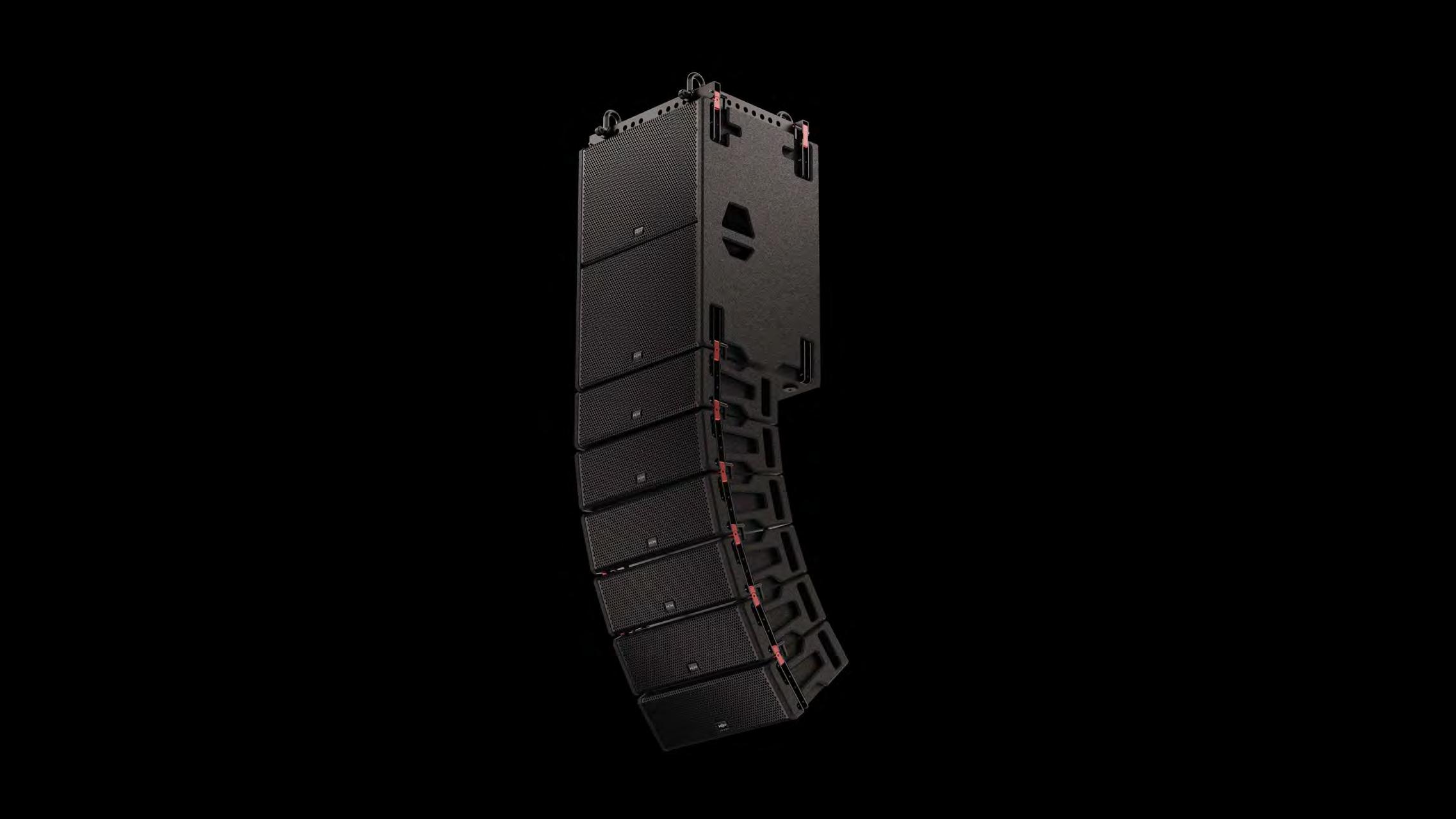
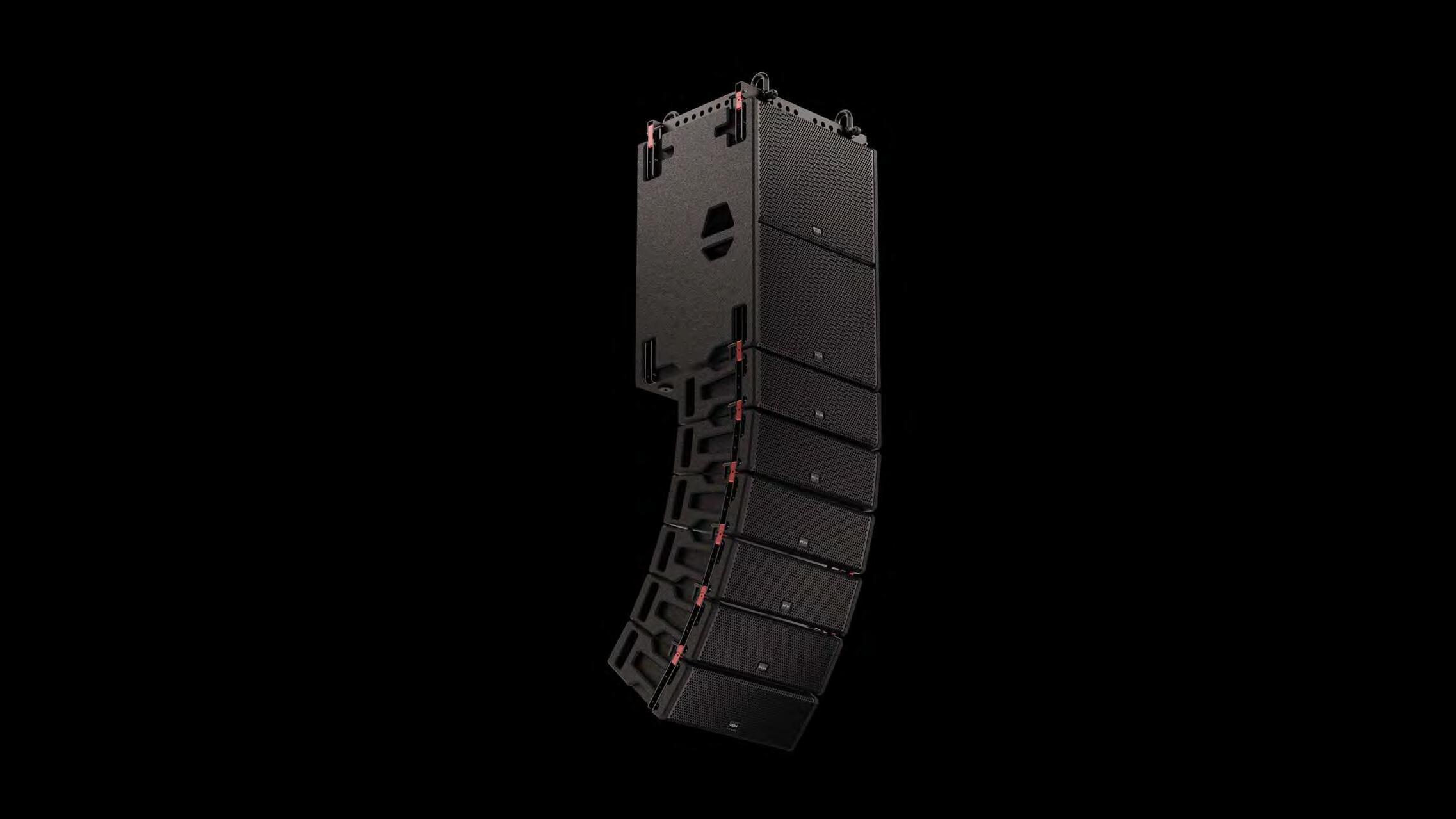
RESI MEDIA has unveiled Studio AI, a proprietary AI-powered feature within Resi Studio that simplifies video creation, boosts content discoverability and streamlines workflows for church production teams. The solution streamlines video content creation by combining AI-driven automation with seamless video editing tools. Powered by proprietary technology, Studio AI transforms video into clips, transcripts and suggests smart metadata enhancements, reportedly
making every video more searchable, shareable and impactful.
Studio AI directly addresses challenges many ministry teams face today, including manual editing of long-form video content, disconnected tools and cumbersome workflows that hinder houses of worship from maximising the value of their content. Studio AI has been designed to remove these barriers by delivering a single workflow that is fully integrated within Resi Studio, eliminating the need for additional
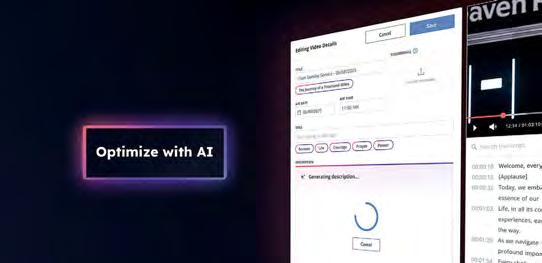
third-party AI solutions and editing tools.
Features include instant transcripts so that users can make content more searchable, editable and accessible; real-time clips for creating socialready and algorithm-friendly clips with captions for Instagram, TikTok and YouTube; and instant discussion prompts which automatically develops group discussion questions, saving
FEATURING TWO compact transmitters with in-built microphones, a smartphone receiver and an on-camera receiver with a 1.1-inch AMOLED screen, the Wireless Micro Camera Kit from RØDE can be used for shooting on a DSLR or as a mirrorless camera or smartphone. The
latest addition to the manufacturer’s Wireless Micro range includes second-generation universal camera connectivity to cater to a broader set of content creators.
Additional features include GainAssist technology for balanced audio, extended battery life with
included charging case and plugin power detection, integrated windshields and Direct Connect which enables seamless connectivity to iOS smartphones via Bluetooth through the RØDE Capture app.
www.rode.com
THE AQUILON Cmini is the latest addition to Analog Way’s LivePremier family and said to be the most compact presentation system in the
range. It delivers the same capabilities as its larger counterparts, including ultra-low latency, 10-bit uncompressed image processing, ease of use, smart
INTRODUCING AI-POWERED capabilities aimed at improving speed and efficiency in media asset management workflows, the latest version of Vizrt’s Viz One MAM integrates with aiconix’s DeepVA sovereign AI platform to automate key stages of logging, search and content discovery. Designed to address the growing pressure on broadcasters and content owners to deliver more content across multiple platforms, Viz
One 8.1 reduces reliance on manual shot logging and archive research. The DeepVA integration enables AI-driven visual recognition, automatically identifying and tagging faces, objects and scenes within video content. According to the manufacturer, AIgenerated metadata can deliver up to a 50% increase in logging accuracy, 10 times faster logging workflows and five times faster search and discovery. Users retain oversight of the
time and enabling ministry teams to focus on strengthening community and deepening spiritual connection. Amart metadata automatically suggests titles, tags and descriptions to boost content discoverability, while a fully integrated workflow allows users to upload, trim, caption and schedule without leaving Resi Studio.
www.resi.io
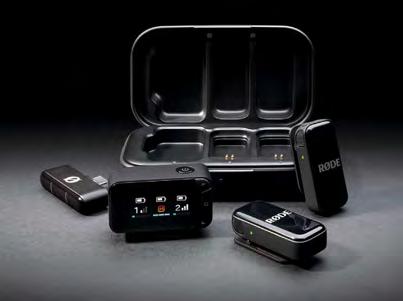
functionalities and the Link feature. It also supports a wide range of modular input and output cards, covering all major baseband formats, including DisplayPort 1.4, ST 2110, NDI, SDVoE and Dante.
With up to 16 inputs, 12 outputs, two dedicated multiviewers and eight 4K layers, the Aquilon Cmini is suitable for applications where reliability, compactness and workflow agility are important considerations. It can be used in scalable productions, where between two and four Aquilon units can be linked to increase inputs, outputs or aux destinations. It is also suited to mission-critical applications
requiring seamless failover between primary and backup media sources to ensure uninterrupted operation. The manufacturer has also introduced an 8-plug SDI input card, offering increased flexibility and density. With eight 3G-SDI or four 12G-SDI ports, all freely configurable by the user, it is ideally suited for applications where workflows remain highly mixed between 3G-SDI and 12G-SDI. It is particularly relevant for users working with 3G-SDI workflows involving between five and eight simultaneous sources.
www.analogway.com
QSC HAS announced the expansion of the Q-SYS Full Stack AV Platform with the NC-90 and NC-Pro15x network cameras, high-density QIO Series audio I/O models, new Space Utilization features for Q-SYS Reflect, the Q-SYS Library and expanded NS Series Gen 2 switches.
The NC Series NC-90 and NC-Pro15x have been built for the Q-SYS Full Stack AV Platform. The NC-90 is a next-gen network ePTZ camera that combines onboard AI with enhanced optics to deliver an automated collaboration experience in smaller, wider collaboration spaces. The NC-Pro15x is a network PTZ camera, built by Canon, that expands Q-SYS video capabilities to high-impact spaces requiring elevated production-grade elements. To meet growing demand for large-scale audio integration, high-
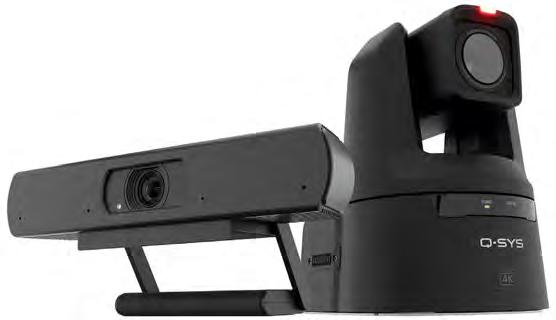
density audio I/O expander models have been added to the existing QIO Series, including the QIO-ML24i, QIO-L24o and QIO-24f.
Each model features support for analogue audio connections, 8x8 GPIO ports and dual network connectors. These expanders are
ENHANCING ITS PTZ camera lineup, Canon has released the CR-N400 and CR-N350, which aim to address customer needs in terms of advanced functionality and streamlined workflows. Designed to fill the space in the manufacturer’s PTZ lineup between the CR-N300 and the CR-N500, the cameras reportedly provide a smooth on-air pan/ tilt performance and high-quality imaging for a broader range of users.
Suitable for live events and houses of worship, both cameras offer 4K60p imaging with a 20x optical zoom, extendable to 40x advanced zoom in Full HD. They come with a 1/2.3-inch CMOS sensor and a DIGIC DV7 image processor. Both cameras also include a vertical crop feature which allows users to simultaneously output a 9:16 crop of the full image.
said to reduce complexity for large installations.
The Q-SYS Library is a one-stop hub for verified ready-to-use assets such as Q-SYS plugins, UCI templates and sample designs. Replacing the legacy Asset Manager, it offers curated, cloud-native resources
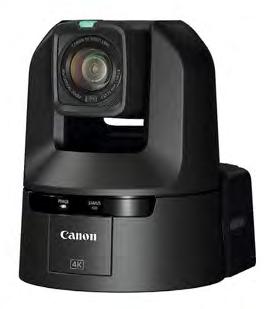
The CR-N400 has been designed for professional broadcasters who require a 4K SDI-based workflow as it features 12G-SDI and 3G-SDI connectivity, Genlock and Timecode
ROLAND HAS released version 2.0 of Graphics Presenter, a titler and motion graphics software solution for select Roland video products. This update introduces remote control support from Stream Deck, Elgato’s hardware control platform for computers. It also includes workflow enhancements such as a remaining time counter and additional template content.
Available as a free download for Windows computers, Graphics Presenter allows users of compatible Roland switchers (V-160HD, V-80HD, V-8HD, VR-120HD and VR-6HD) to create titles and graphics, eliminating the need for third-party graphic
presentation solutions. Setup is said to be quick and straightforward, requiring only a single HDMI connection to send fill and key signals from the computer to the switcher.
Graphics Presenter version 2.0 supports control integration with the Elgato Stream Deck platform through a dedicated plugin. Users can create custom buttons for quick hardware control of templates and many other software functions. The Graphics Presenter Stream Deck plugin is available for free on Elgato Marketplace.
www.elgato.com proav.roland.com
optimised for seamless integration with Q-SYS Designer. With tested assets supported by Q-SYS and partners, organisations can save time, deploy with confidence and access resources anywhere through a streamlined browser-based experience. Q-SYS Reflect-enabled assets further extend monitoring and management, helping IT teams and integrators work smarter and scale deployments more reliably.
The Q-SYS NS Series Gen 2 network switch portfolio now includes the NS26-480+ and NS40-960+, providing modernised networking solutions for Q-SYS systems. These switches reportedly deliver the best out-of-the box experience and add to a robust portfolio of NS Series network switches.
www.qsys.com
support for seamless integration into professional multi-camera setups. The CR-N350 provides a cost-effective solution for users who only require 4K over HDMI/IP or Full HD over its 3G-SDI terminal. With the increasing adoption of IP protocols such as NDI and SRT, both the CR-N400 and CR-N350 provide a versatile solution for direct IP streaming and remote production workflows.
www.canon.co.uk
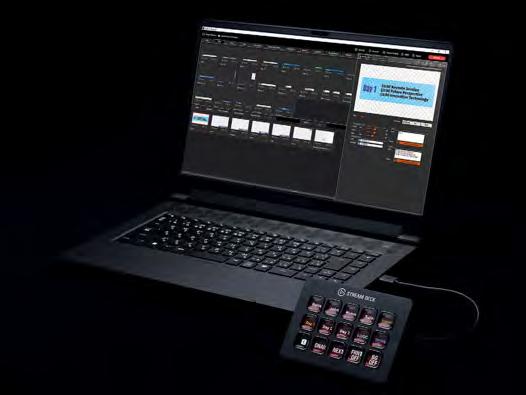
D&B AUDIOTECHNIK has introduced its CCLi compact cardioid line array, designed specifically for installed applications. Building on the success of the CCL system, the CCLi offers the same technical advantages and acoustical properties, while adding distinctive features tailored for fixed installations. The CCLi system boasts compact dimensions (209mm x 593mm x 355mm) and broadband directivity control (down to 60Hz) with low-frequency cardioid behaviour to focus acoustic energy onto the intended audience areas. This reduces unwanted low-frequency reflections from the side and rear walls, minimising reverberation in acoustically challenging spaces. The CCLi delivers extended highfrequency headroom and minimised distortion to reportedly ensure greater perceived intelligibility. Along
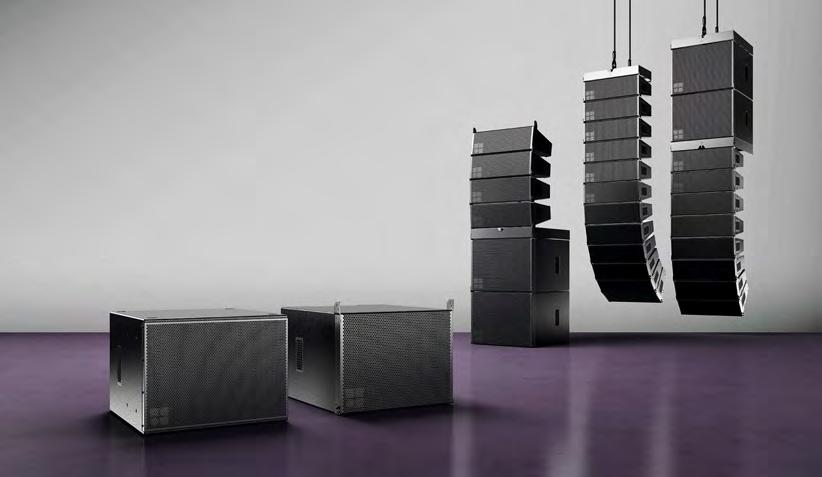
with its single-channel amplifier operation, the CCLi also offers features that cater to the needs of the installation market: an unobtrusive design with a new front grille integrated with less visible rigging elements, side panels that replace the CCL handles with flushed side grilles and an optional Phoenix
ALCONS AUDIO has released the MR10 mid-sized 3-way 10-inch near/ midfield monitor and the MR12 large-format 3-way 12-inch midfield/ main monitor, which join the MR5 micro 2-way 5-inch nearfield/surround monitor to form the M-Series. All models share identical mid/highfrequency transducers to provide consistent voicing and seamless imaging in multichannel and immersive setups.
At the core of every M-Series system is Alcons’ RBN202 pro-ribbon driver, reproducing mid and high frequencies from 1kHz to beyond 20kHz, said to cover a much wider range in the critical mid-band than traditional designs. Thanks to its compression-less operating principle and extremely low moving mass, the RBN202 reportedly delivers a fully linear response at any level, combining transient detail with fatigue-free listening, even during extended sessions.
With a 500W peak power input, the 1:15 RMS-to-peak dynamic range enables the RBN202 to deliver a virtually unlimited headroom. Mounted on Alcons’ new HempHorn waveguide with patented constant 120° horizontal directivity, it is said to provide a wide, stable sweet spot. Complementing the pro-ribbon driver are customengineered midrange
and low-frequency transducers with ActiveCoil motor structures for ultra-low distortion, described as a perfect match with the MHF pro-ribbon technology. The newly developed ScoopVent LF loading design enhances breathing capacity and transient response, maintaining clarity and control even at the lowest octaves.
The M-Series is powered and controlled by Alcons’ ALC amplified loudspeaker controllers, featuring VHIR phase processing, 192kHz AES3 digital inputs and audiophile-grade amplification stages. The remoteamplified architecture eliminates local heat buildup and electronics behind screens or within baffle walls, to reportedly provide a centralised, reliable system operation and maximum performance consistency.
www.alconsaudio.com
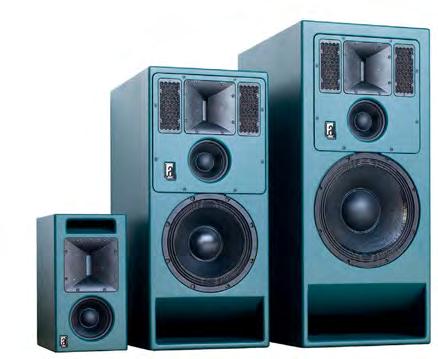
Euroblock connector panel with sealed cable gland.
The CCLi system is available in 80° and 120° horizontal dispersion models (CCLi8 and CCLi12). As with other d&b loudspeaker systems, the package also includes a range of matching subwoofers, such as a dedicated flying subwoofer (CCLi-SUB), the installation
version of the CCL-SUB. The Bi12 multipurpose passive cardioid ground subwoofer has been introduced specifically for installations, while a mobile ground subwoofer version (B12) is also available for the CCL system.
www.dbaudio.com
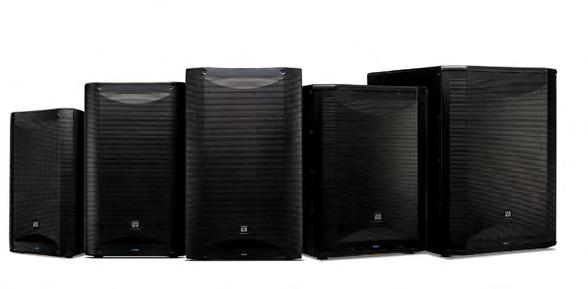
DESCRIBED AS a new generation of loudspeakers and subwoofers, PreSonus has introduced the Air XD Series, designed for mobile and small and mid-sized venues. The models feature Class-D amplification with 1,500W for the speakers and 2,000W for the subwoofers, TWS Bluetooth wireless stereo pairing, onboard mixing and extensive DSP tuning options with onboard EQ. The series is said to offer flexible connectivity for houses of worship, with speakers available in 10-, 12and 15-inch full-range models along with 15- or 18-inch subwoofers.
The Air XD Series is built for mobile performers, venues and systems integrators. They can be flown, polemounted, ground-stacked or installed with the Air XD as a floor wedge. All Air XD models feature True Wireless Stereo (TWS) Bridge Mode, allowing users to pair two speakers via Bluetooth to create a stereo system without any additional cabling.
The speaker models feature custom low-frequency drivers paired with high-performance compression drivers that deliver up to 134dB
SPL with deep low end and detailed highs. The loudspeakers feature enlarged voice coils in the LF drivers to ensure more efficient power handling and extended low-frequency response down to 40Hz, while the PEEK diaphragms in the HF drivers provide a precise, durable performance with clear, detailed highs. Each speaker includes ±10dB EQ and performance tuning modes for speech, music playback, FOH or monitor use. Additionally, a full-colour 2.6-inch LCD screen is said to make metering and system adjustment fast and easy. Air XD speakers offer two mic/line connections and an aux input.
The subwoofers’ DSP includes variable crossover filtering, alignment delay, cardioid and end-fire array presets and the exclusive “Mo’ Bass” enhancement, in addition to the full-colour LCD screen. They feature flexible routing options and come in rugged wood enclosures featuring ergonomic handles, ground-stacking provisions and caster mounts.
www.presonus.com
BOSE PROFESSIONAL has released the DesignMax Luna DML88P pendant loudspeaker system, created for open-ceiling environments and design-conscious spaces. At the heart of Luna is Bose Professional’s proprietary Ring Array configuration, which combines eight precisely positioned 2-inch mid/high drivers and an integrated 8-inch woofer to create a smooth,
articulate listening experience that fills the coverage area without hot spots or dead zones. The design provides clarity and balance down to 40Hz, which eliminates the need for external subwoofers even in open-ceiling spaces. With a maximum SPL of 111dB and consistent 140° coverage, Luna aims to deliver immersive sound with fewer speakers to cover large
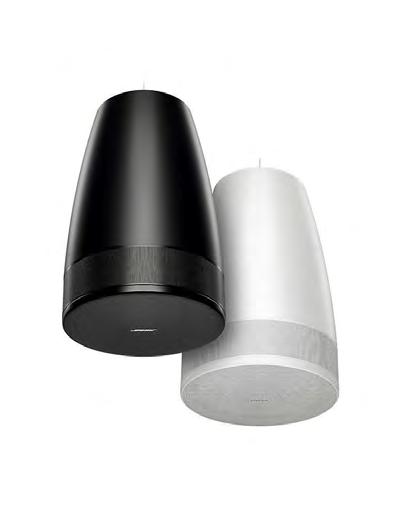
THE VHD7000D subwoofer amplifier is the latest addition to KV2 Audio’s VHD Series. Engineered to drive all VHD, ES and SL subwoofer elements, the VHD7000D is said to provide “uncompromising power and exceptional control”, making it the suitable for large-scale events.
This universal bass amplifier is fully compatible with third-party subwoofers – a first for KV2. Its power management system enables the VHD7000D to deliver short-term power of 7,000W, with peak output up to 14,000W, while operating at a modest consumption of only 3,600W
from a 16A circuit. The peak output power extends beyond the capacity of the mains supply.
The integrated RMS limiter provides long-term protection for loudspeaker components by monitoring average power over time and analysing thermal behaviour to control temperature buildup and prevent overheating, compression or driver damage. Pre-configured within the VHD7000D’s factory presets, it reportedly maximises SPL output, minimises thermal compression at high temperatures and maintains natural sound dynamics even during continuous high-output operation.
Luna was engineered to address installation issues commonly found in challenging open-ceiling spaces and adapt to constraints while remaining balanced. It supports both single- and two-point suspension, with a streamlined profile and concealed wiring. It has been designed to replace the traditional pendant and subwoofer setup, and is described as easy to spec, easy to hang and made to blend in visually.
www.boseprofessional.com
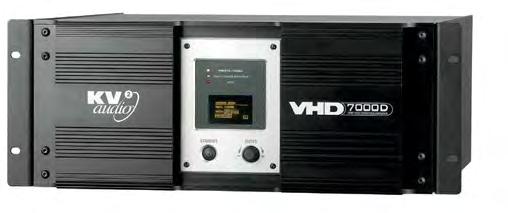
The tunable notch filter for resonance suppression has been added to prevent excessive cone excursion that causes distortion, reduced clarity and shortened lifespan. Instead, it reportedly delivers clear, precise and impactful audio with a balanced low-frequency response and improved definition across the bass range.
The peak limiter provides additional protection, shielding loudspeakers
from mechanical damage caused by excessive signal peaks and ensuring the cones remain within their safe range of motion. This feature prevents smaller loudspeakers from being overloaded. The amplifier also incorporates a high-power switching mode power supply circuit for enhanced power delivery.
www.kv2audio.com













RCF HAS added two subwoofers to its expanding catalogue. The SUB 15-AS is a portable 15-inch high-power active subwoofer for live sound applications. It features a transducer and a 2,200W Class-D amplifier that delivers sound pressure levels up to 133dB. Designed as the ideal complement for 8-, 10- and 12-inch loudspeakers, it includes a Bass Motion Control algorithm for extended bass response at
any volume. The connection panel comes with mono/stereo combo inputs, an XLR stereo link and XLR crossover outputs. Rear panel controls include volume, polarity and low-pass frequency selection. The unit comes in a rugged all-wood cabinet with a scratch-resistant polyurea coating, reportedly making it durable, easy to carry and install securely. It has been specifically designed for small and mid-sized venues and portable applications.
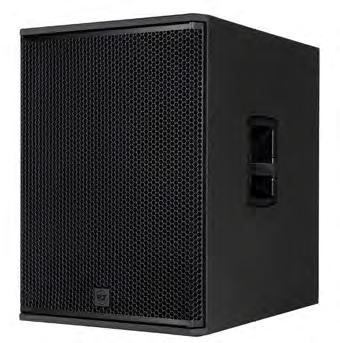
MEYER SOUND has unveiled the USW-121P, the first model in a new range of USW subwoofers. Drawing on the power and low-frequency capabilities of the 2100-LFC but optimised for installations and portable use, it comes in a streamlined form factor and is suitable for houses of worship, spatial sound environments and other non-arrayed deployments. Because the USW-121P was designed from the outset as a nonarrayed subwoofer, it eliminates the rigging hardware and other elements required for flown configurations. Powered by a single 21-inch driver with a wide frequency range of 20–125Hz (–10dB), it delivers extended low end with the same power as Meyer Sound’s other flagship subwoofers. In larger systems, the
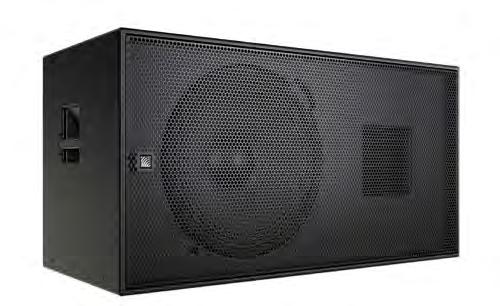
USW-121P can also complement the 2100-LFC, adding ground-stacked depth beneath flown arrays. At just 62cm deep, the USW-121P reportedly provides low-end extension without sacrificing valuable floor or stage space. Its rigid cabinet optimises acoustic volume and features a distinctive corner cut-
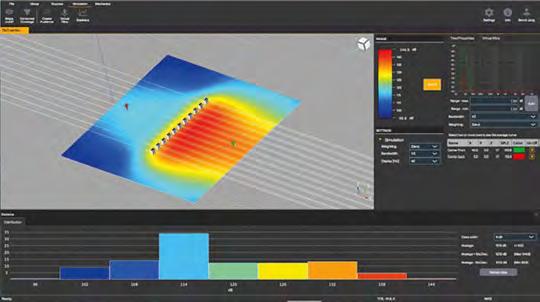
RDSHAPE IS a simulation software, purpose-built for acoustic modelling and system optimisation of TT+ Audio speaker and subwoofer systems. Designed to streamline the design, setup and tuning process, RDShape is described as a versatile
tool for touring professionals, venue designers and sound engineers.
The software allows users to predict SPL and frequency response across audience areas, enabling tuned performance for every seat, while the autosplay feature can be used
out that allows for connector and cable clearance when the cabinet is against a wall or in other tight spaces, including behind screens and in prosceniums. A low-velocity square port minimises noise even at low frequencies.
The USW-121P is also the first Meyer Sound subwoofer to feature
for optimal line array angles and to evaluate subwoofer configurations with virtual microphones. Customers are provided access to detailed rigging data, including load, fly bar strength, pick points and weight distribution, to ensure safe and efficient installations. With 3D Venue Modeling, users can define audience planes and simulate sound propagation with a full 3D venue visualisation, including IR-based virtual microphone measurements. The streamlined workflow can be used to leverage templates, import venue basemaps and export key design elements as STEP (ISO 10303) or PDF files. Users can also fine-tune system performance with FiRPHASE filters, Bass-Shaper and EQ presets directly within the software.
The SUB 18-AS brings all the same functionalities in an 18-inch format but delivers sound pressure levels up to 135dB. Both models come with a 35–400Hz frequency response; the SUB 15-AS has a 3-inch voice coil while the SUB 18-AS has a 4-inch voice coil.
Galileo Extended Networking (GEN-1) technology, which integrates networked audio connectivity and Galileo GALAXY-class DSP directly into the loudspeaker, reducing or eliminating the need for separate system processors. As a result, calibration and deployment are said to be simpler and more scalable across spatial applications. Configuration, control and monitoring are handled through the Nebra software platform and MAPP 3D system design and prediction tool. AES67 and analogue inputs are standard at launch, with Milan functionality planned in a later GEN-1 update, giving designers and integrators a flexible, future-ready workflow.
www.meyersound.com
Meanwhile, the manufacturer has also announced that BIM files are now available for all TT+ Audio products. Each file is compiled with all the product’s technical specifications. The project file includes all the proposed configurations, such as GTX line arrays in both installation and ground-stacking configurations, or GTS subwoofer configurations and combinations of GTS + GTX. For example, if there are 10 possible inclination values between two GTX10 units, the file ensures that any userdefined angle will be automatically adjusted to the closest valid option. Users can also modify the number of elements and the presence of flybars and extension bars, with adjustable positions where applicable.
www.ttaudio.com

SYMETRIX HAS released Composer v9 with added support for the Server D100 and a new Audio Network Tab to System Manager with additional Dante functionality including the
ability to update all Symetrix xIO devices with a single button. Improvements have been made to Super Matrix to support larger sizes, better saving and recall of User
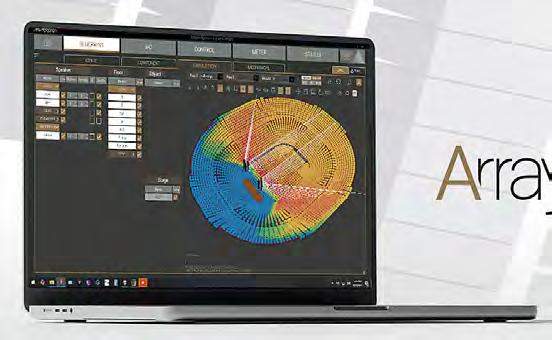
ADAMSON HAS announced the release of ArrayIntelligence V1.3, the latest version of its loudspeaker design and control software. The update is said to bring a wide range of new features developed in close collaboration with the manufacturer’s expanding user community worldwide, with beta testing providing valuable feedback before launch.
Highlights include a Component check, which confirms driver health and connectivity with a silent DC resistance measurement; an improved device browser that allows switch port identification, status and
advanced filtering capabilities along with Component check and Inclinometer calibration; I/O page improvements such as solo-inplace and a pink noise generator; and Milan patching has been expanded to its own page with a wider range of Milan talkers included.
The MG10 speaker is now included as a point source alongside the VGs, while optimisation algorithm updates include a flat average phase response and improved LF beam steering.
www.adamson.ai
THE ARAMID-REINFORCED
110Ω SC-AQUA MARINEX ARAMID
MIKRO14 microphone cable forms part of Sommer Cable’s AQUA MARINEX series and is suitable for permanent installation in water up to 20m or in damp areas. It remains watertight thanks to its special waterblocking tape.
Its precisely fitting 6.2mm cable diameter ensures that the cable fits with the strain relief of Sommer’s HI-MARLIN connectors (HI-X3CMHD-B and HI-X3CF-HD-B) and, when combined, reportedly guarantees dependable waterproofness in accordance with IP67. At the same time, the cable is described as
Matrix Views, improved graphics and additional tool tips. Amendments to large site file handling in Composer include scrolling, selecting and moving modules, and reduced file
size. The ability to keep a device’s existing network name when locating has also been added.
www.symetrix.co
THE AD-58 5GHz 4-channel transmitting antenna combiner is the latest addition to Mipro’s MI-58 Series 5.8GHz digital in-ear monitoring (IEM) system. The MI-58 Series’ products come with a wide frequency response and low latency, and have been designed to meet the needs of live performers, engineers and interpretation professionals.
into a single output antenna with 10dB gain. This is said to reduce antenna congestion and minimise the need for multiple power supplies, making it suitable for complex stage setups and large-scale applications. RF LED indicators per channel clearly show signal presence and overload status, providing real-time monitoring at a glance. By streamlining antenna
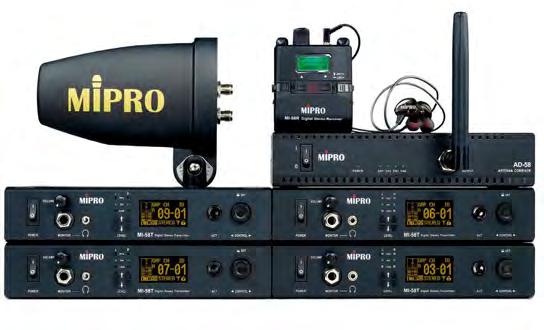
The MI-58 digital stereo wireless IEM system includes the MI-58R/MI-580R stereo bodypack receiver, the MI-58T/ MI-58TD stereo transmitter and optional noise-isolating earphones. The AD-58 operates within the ISM 5.6–5.9GHz band and integrates up to four MI-58T/MI-58TD transmitters
installations and significantly reducing intermodulation interference, the AD-58 has been designed to provide greater stability and optimal performance in demanding multitransmitter environments.
www.mipro.com.tw
particularly easy to work with and does not require any complicated manoeuvres. The outer jacket is resistant to salt water, fresh water, UV radiation and microbes, making it suitable for long-term outdoor use. The internal aramid fibres not only provide a reliable tension relief,
for example when suspending microphones freely, but also offer additional protection against rodents. The cable is abrasion-proof, coldflexible, reelable and ideally suited for demanding applications and developed for professional users who need to rely on their technical equipment even under extreme conditions.
www.sommercable.com
NEUTRIK HAS suite of professional connectivity solutions with the launch of the opticalBAR, a compact, rugged fibre breakout system built for high-performance deployment in harsh conditions.
Designed to interface seamlessly with the manufacturer’s opticalCON Advanced series, the opticalBAR provides IP65-rated protection and a pushpull locking mechanism, delivering an easy-to-integrate fibre option for broadcast and event applications. Available in a variety of I/O configurations and featuring flexible mounting options, the opticalBAR offers greater durability and adaptability compared to traditional fibre breakout solutions. Neutrik claims it has engineered the unit with installer convenience and environmental resilience in mind, positioning it as a go-to solution for challenging outdoor or high-traffic environments where robust data transmission is essential.
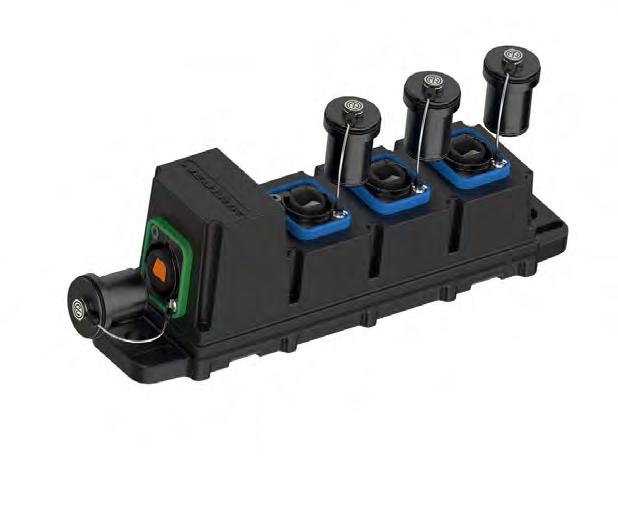
In addition to the opticalBAR, the company has also unveiled two further connectivity products designed to meet the needs of professional AV and event
IP66 and IP67, the connector features CBC (breaking capacity under load), UV resistance and a twist-lock mechanism with integrated strain relief – making it suitable for permanent installations and mobile setups. Finally, the NAUSBC-5G is a USB Type-C chassis connector offering 5Gbps data throughput and up to 100W of power delivery. Part of the company’s new mediaCON series, the NAUSBC-5G features a panelmount design with a robust locking mechanism and integrated fly-lead, enabling secure and efficient data and power transmission in modern AV and IT infrastructures.
www.neutrikgroup.com/en
WITH NEX:T AXIO, Stagetec is adding a futureproof, extendable IP-based audio I/O and processing platform next to its Nexus system. Designed for both smooth transitions into IP workflows and for fully networked infrastructures, the compact system combines audio quality across analogue and digital formats, and includes an integrated 4-way audio split, allowing Avatus, as well as third-party consoles, to access signals simultaneously –without external splitters. Thanks to compatibility with Dante, AES67, ST 2110-30 and more, the NEX:T axio integrates seamlessly into existing setups and scales flexibly. Centralised, browser-based control via Stagenet embedded on the device simplifies routing, monitoring and presets – locally or remotely – and in many cases removes the need for external control software. Whether in broadcast or AV installations, the NEX:T axio seamlessly grows with a
user’s needs and can be used as a quick way to expand and modernise hybrid workflows. Meanwhile, the NEX:T core is a software-defined audio processor that fully virtualises signal processing, routing and DSP – enabling maximum flexibility while maintaining consistently high audio quality. Free from hardware limitations, functions such as EQ, compression or mix-minus can be freely configured and updated remotely as needed. The platform integrates seamlessly into AES67 and ST 2110 infrastructures and reportedly stands out for its low latency, high scalability and triple network redundancy. For broadcasters, postproduction facilities and fixed installations, the NEX:T core provides a futureproof, efficient solution for modern audio workflows of any scale.
www.stagetec.com
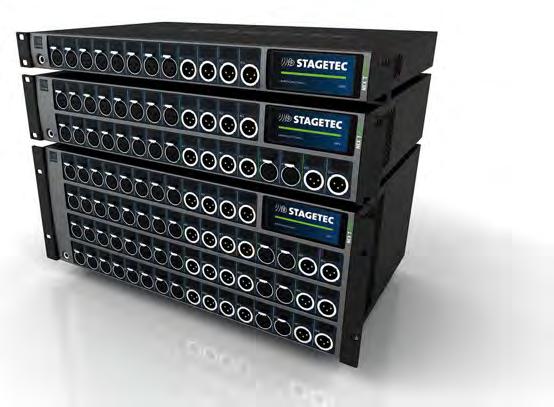
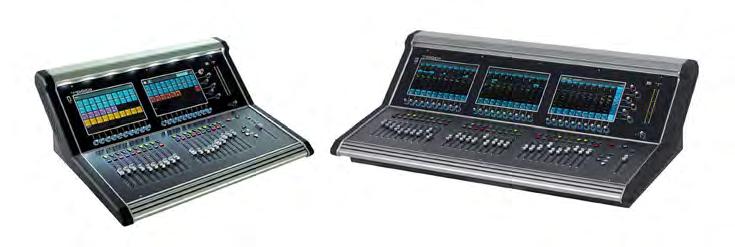
THE SOFTWARE for DiGiCo’s S21 and S31 S-Series mixing consoles has been upgraded to V3.1. As part of the update, the S21 and S31 both fully support DiGiCo’s latest MADI-based stagerack, the MQ-Rack. This unit features 48 microphone inputs and 24 line outputs, with four of these outputs switchable to AES/EBU digital outputs, at 48kHz or 96kHz sampling rates via MADI over BNC connection.
In addition, V3.1 offers User Layouts, allowing multiple operators to have their own favourite way of laying out the console easily accessible – or the ability to change layouts for different bands as a show progresses, containing only the channels needed for that band.
Users can change between layouts by pressing the touchscreen, and the user menu can also be opened from a macro. Loading a new user will not interrupt audio and can be done mid-show.
Meanwhile, Separate Layer Control allows for the left screen of an S21 –or the left and centre screens of an S31 – to view and control a different layer to the one displayed on the right-hand screen. The layer up and
down buttons are added to the top menu bar, meaning they are always accessible. Separate Layer Control is ideal for leaving a set of output controls on the right-hand side while scrolling up and down the inputs on the left-hand side.
Additional new features can also be found on the auxiliary section of the S-Series desks. Link pans allow users to keep effects sends lined up with the master panning layout, while
Reverse Link pans are said to improve mixing monitors from front of house, with no need to manually pan each send inverted to the main mix.
Finally, the auxes on the S-Series consoles are able to take a signal from three positions: pre-mute, pre-fade or post-fade. The aux master can assign a global pick position to all of its sends, and each individual pick point can be changed from on the channel itself. With the latest software update, the number of sends in each position can be seen from the aux master, allowing the user to quickly see the position of all sends at once.
www.digico.biz
HOME AUDIO Shuffler – Lawo’s fifteenth HOME App to date – is a software-based replacement for a traditional baseband audio matrix within an IP-based Dynamic Media Facility. It allows users to repackage incoming audio signals for different applications, to freely compile streams based on audio signals from a variety of sources, and otherwise customise an audio stream’s payload. It is suitable for downstream applications and devices without built-in audio matrix functionality.
Supporting SMPTE ST 2110-30 (24 bits) and -31 (32 bits, Ravenna AM824 payload format with bit transparency), HOME Audio Shuffler conforms to AES67 and ST 2110-30 (Levels A, B and C) with minimal latency, while also providing redundancy options via ST 2022-7
(Seamless Protection Switching) and the HOME App auto restart mechanism, for reliable 24/7 operation.
Incoming audio streams can be reshuffled and routed to the desired transmitters using the HOME
RENKUS-HEINZ HAS launched third-party control plugin modules for Crestron and Q-SYS, developed in partnership with Control Concepts, a specialist in AV software development and API integration. The speaker manufacturer partnered with Control Concepts to develop
saving users hours of valuable time.
Beyond workflow improvements, the plugins are backed by Control Concepts’ official Supported Product Program. Control Concepts’ ongoing support of the plugins gives integrators the assurance that their API integrations are fully
the new third-party plugins to enhance workflow and improve cohesive control across all Renkus-Heinz products. The plugin modules have been designed to eliminate integration hurdles by ensuring full system compatibility, with the aim of
tested, approved and endorsed by the manufacturer, whose indepth product knowledge provides responsive support and quick issue resolution.
www.controlconcepts.net www.renkus-heinz.com
Terminal Routing Matrix. Stream routing, shuffling and many other operations can be controlled via any hardware or software panel of a workflow control system such as Lawo VSM that communicates with HOME Audio Shuffler via the
HOME API. HOME Audio Shuffler is suitable for any audio deployment at scale, such as in master control rooms, and any other application requiring a mix of common (e.g. clean feed) and individually contributed and controllable audio sources.
Supporting up to 16,384 input and output signals and offering symmetrical flow sizes between 64 and 2,048 RX and TX streams, each accommodating up to 64 audio channels, HOME Audio Shuffler’s matrix size can be conveniently selected from six packages. All signal inputs and outputs come with essential DSP functionality: Gain and Phase on the RX side, and Gain, Phase and Delay (up to 5s) on the TX side.
www.lawo.com
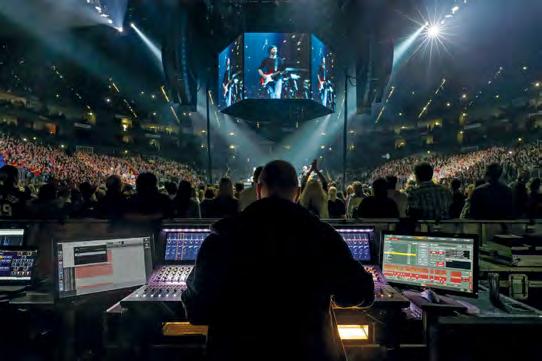
Dante connectivity directly in t o the platform without the need for external interfaces or workflow compromises, Avid has introduced the Dante HD option card for its VENUE | S6L live sound systems. Designed for large-scale touring, installed sound and complex live production environments, the card brings 128x128 channels of Dante I/O at 96kHz into the core of the S6L ecosystem, with support for up to two cards per system for a total of 256x256 channels.
The Dante HD option card enables integration with the audio-over-IP protocol, supporting distributed audio routing in
houses of worship. By operating fully within VENUE’s unified architecture, the card allows engineers to route, mix and manage high-resolution audio alongside AVB, Milan and MADI sources from a single VENUE software environment and show file.
BNC-based clocking is included to ensure stable synchronisation within Dante domains, while full compatibility is maintained across all VENUE | S6L systems. The card also integrates with Avid’s E6LX engines, supporting expanded I/O capacity, up to eight option cards per system and full backwards compatibility.
www.avid.com
Marco Miglioli shares his love of lighting and how it can amplify the emotions of those experiencing the space
Lighting designer Marco Miglioli
Miglioli graduated in architecture from the Accademia di Architettura di Mendrisio where he had the opportunity to study with renowned professors such as Swiss architects Peter Zumthor and Mario Botta. After spending two years in Barcelona, Miglioli studied scenography, collaborating with the technical department of Teatro alla Scala in Milan. It was here he met Marco Filibeck, Teatro alla Scala’s lighting designer, and discovered the expressive potential of light, and from that point it became central to his work. Establishing his own studio in 2010, Miglioli’s current work brings together his interests in architecture, theatre and art.
His first worship project was for the Papal Basilica of Santa Maria di Collemaggio in L’Aquila. The project arose after the major earthquake of 2009 and involved the partial reconstruction of the basilica and an upgrade of its systems. His other notable HOW designs include Milan Cathedral where he was involved in all phases of the upgrade, from concept to final installation. It was here where he experimented with a dynamic approach to lighting inside churches for the first time, which proved fundamental in beginning to develop his theories on light in sacred spaces.
“Light, although immaterial, has the power to radically transform a space,” Miglioli explains. “Through it, emotions are conveyed and stories are told: choosing what is revealed and what remains in shadow becomes a kind of theatrical direction. Light allows space to be perceived in a way that architecture alone cannot achieve. I am reminded of a chapel in Barcelona that was left in semi-darkness and illuminated only by the flicker of candles. Glass panels acoustically isolate it from the rest of the church. In this case, the absence of sound and the predominance of shadow lead the worshipper towards deep inner contemplation. Silence and shadow
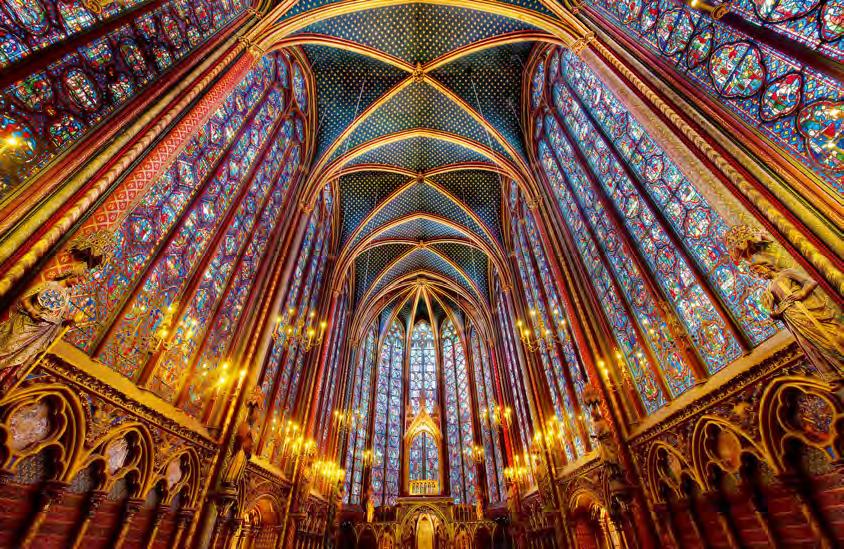
are not absences, but elements as powerful as light in creating emotion.”
The reward for his work comes from accompanying visitors through emotions generated by light. “In a church, for example, it is meaningful to see how lighting, changing in response to the course of the celebration, emphasises what is taking place and supports an emotional involvement,” he explains.
“Moreover, light can engage directly with the more intangible elements of architecture, such as music, sound and the perception of warmth, more than a tangible space can do. Every project is different and requires new approaches each time, both technical and creative. I am also fascinated by the scientific aspect of my work, which demands constant study, research and investigation.”
He believes that lighting should be considered as equally important to video and audio in a church setting. “Light, music and video are not static elements: their dynamism allows them to accompany the rite,
highlighting its key moments and clarifying its meaning, becoming an integral part of the celebration,” explains Miglioli. “Like music, light is a language: it follows the rhythm of the liturgy, varying in intensity and tone and building an atmosphere rich in images and emotions.
“Let us take, for example, two key moments of the Sunday Mass: the Liturgy of the Word and the Eucharist. In the former, light can be used to isolate the reader while leaving the rest of the space in shadow, making the book appear as the source of light (and of the Word): a luminous origin that illuminates the face. In the latter, light moves from the ambo to the altar, preferably changing tone towards a warmer colour, symbolically evoking the Last Supper. In this sense, the church, much like a scenic space, is a place that comes to life not only through gesture and speech; tools such as light, sound and video are also fundamental.”
Churches provide Miglioli with the chance of working on several levels simultaneously: the historic building, the works of art that decorate it and the space intended for celebrations. He describes it as creating several projects in parallel that merge into one, with the complexity of reconciling different visions and lighting techniques that interact with one another. “These buildings are often custodians of centuries of history and collective memory and represent a point of reference for the community,” he describes. “Designing light in such spaces means assessing many parameters: the conservation of works of art, the legibility of the space and support for the religious function. Unlike other projects, a church is not a static environment: its functions change continuously. What also makes working on a church special is engaging with a place that combines spiritual and artistic value.”
www.marcomiglioli.com

sennheiser.com