EAST KOWLOON TAKES CENTRE STAGE


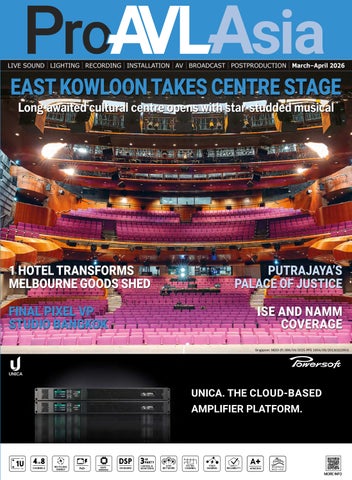

Welcome to our March–April 2026 issue, put together in the wake of ISE. Much has already been written and broadcast about that remarkable show, and you can find our full report on page 66. Now, as the industry catches a collective breath, it’s time to look ahead and, for many, March offers the perfect reboot. For those of us who work with Asian businesses and partners on a daily basis, the impact of Chinese New Year – the world’s largest annual human migration – is felt throughout the entire industry. Hundreds of millions of people across China, East Asia and Southeast Asia travel home, and the ripple effects are significant. Factories, offices and logistics hubs close, sometimes for up to three weeks, demanding careful forward planning and increased activity in the weeks leading up to the holiday.
This also represents a fresh start for many organisations, with new budgets, partnerships and expansion plans beginning after the break. From our perspective at Pro AVL Asia, this is often the time when our contacts across the region re-engage with renewed energy, announcing projects, hires and business deals. In short, Chinese New Year is not simply a cultural celebration, it’s a defining moment in the global business calendar – part cultural milestone, part logistical deadline and part commercial reset. And with the new Lunar New Year ahead being, specifically, the Year of the Fire Horse, we can look forward to a dynamic, fast-paced and energetic period focused on forward momentum, freedom, and action! Xīnnián kuàilè to all our readers.
cmoss@proavl-asia.com



Richard Lawn General manager rlawn@proavl-asia.com
Nick Smith Digital media manager nsmith@proavl-asia.com

Sue Gould Advertising director sgould@proavl-asia.com
Chris Yardley Video editor cyardley@proavl-asia.com
Carolyn Valliere Sales associate cvalliere@proavl-asia.com
Jack Stennulat Digital content creator jstennulat@proavl-asia.com
Simon Luckhurst Senior reporter sluckhurst@proavl-asia.com
Adrian Baker Production manager abaker@proavl-asia.com
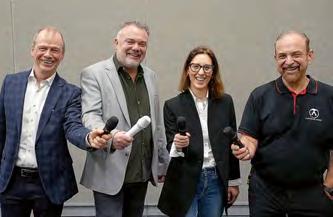

Karen Wallace Editorial coordinator kwallace@proavl-asia.com
Marne Mittelmann Circulation manager circulation@proavl-asia.com
Bea Meikle News editor bmeikle@proavl-asia.com
Sue Su Guangzhou manager ssu@proavl-asia.com
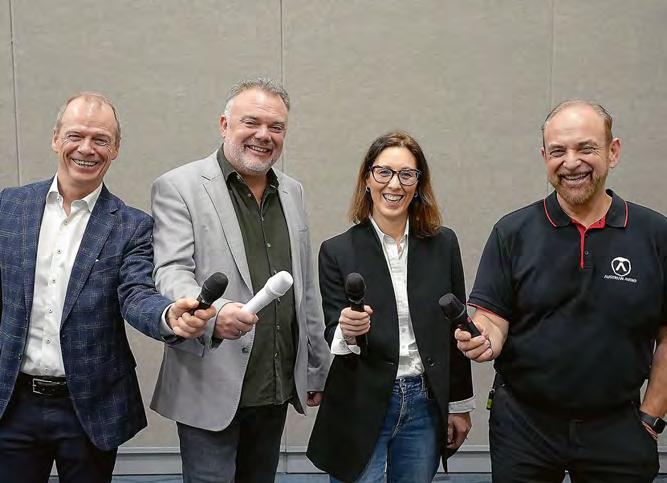
Audiotonix has announced its agreement to acquire three microphone and wireless audio companies to complement its current roster of global technology brands: DPA Microphones, Wisycom and Austrian Audio. The acquisition is now being filed for regulatory approval and should be completed in H1 2026. All three brands now join the growing Audiotonix portfolio.
“With the development work we have been investing in with Sound Devices, it makes technological sense to add Wisycom to the team,” said James Gordon, CEO of Audiotonix. “The next logical step is to move closer to the performer with microphones and DPA as a premium brand is the ultimate choice. Austrian Audio, with their decades of microphone and headset design experience, have immense potential and will help complement our existing and future portfolio. We always aim to work with brands that add value for our customers and the future potential of this trio as part of Audiotonix is not hard to imagine.”
Kalle Hvidt Nielsen, CEO at DPA Microphones, added: “DPA Microphones, Wisycom and Austrian Audio are premium brands known for their strong and visionary product offering, used by many high-end customers who are familiar with all the Audiotonix brands. We share many location
sound professionals with Sound Devices who rely on best-in-class audio quality and top-notch reliability and so by joining Audiotonix, DPA Microphones, Wisycom and Austrian Audio get the opportunity to offer more premium solutions to discerning, quality-focused customers. The synergy across the brands enhances
the group’s capacity to deliver substantial advantages to all professional customers who demand the best.”
www.audiotonix.com www.austrian.audio www.dpamicrophones.com www.wisycom.com
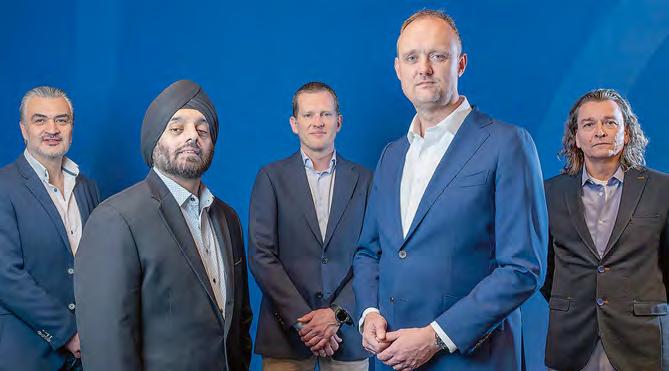
Keenfinity Group’s Audio Business has acquired Avonic, a provider of AI-driven cameras and voice-tracking technologies for the AV conferencing market. The addition of video solutions to Keenfinity Group’s audio conference offering will provide systems integrators and equipment providers with access to an integrated, one-stop audio and video portfolio.
“This acquisition helps to expand our leadership position in the conferencing segment,” stated David Hunter, CEO of the Audio
Business at Keenfinity Group. “More importantly, it supports our mission of delivering exceptional user experience by enabling our customers total, seamless and integrated solutions, whatever the vertical. With Avonic’s AI-driven video capabilities seamlessly integrated into our conference solutions, we will be creating more engaging and natural experiences, where human connection takes centre stage.”
Both companies are suppliers of conference technology serving mission-critical environments
in the governmental market, including councils, parliaments, international institutions and higher education, as well as commercial applications such as corporate boardrooms and international events. Keenfinity noted that, as today’s hybrid meeting landscape increasingly demands video for visual context, the integration of AI-enabled video capabilities with clear, reliable voice communication, will provide a futureproof, intuitive meeting experience for both on-premise and remote users.
Now part of the Keenfinity Group’s Audio Business, Bosch-branded conference solutions build on more than 75 years of expertise in the global conferencing market. The integration of Avonic’s PTZ cameras and AI-powered software aims to deliver the highest-quality standards while providing seamless integration and reliable execution for systems integrators.
“Our cameras are deployed globally in professional, high-impact meeting environments where decisions truly matter,” said Walter Harrewijn, CEO of Avonic. “Moving beyond our long-term technology partnership, this acquisition allows us to collectively grow our offering, delivering more integrated solutions for new applications, use cases and markets.”
www.avonic.com www.keenfinity-group.com
Christie Digital Systems USA and Vista PHX have announced an agreement in principle to sell the Christie broadcast and professional video business to Vista PHX, a new corporation created by former Vista Systems owners and industry veterans, Clark Williams and Jeff Wilson. The transaction will mark the return of some of the industry’s well-known video processing technologies to the innovators who designed, built and championed them. Continuing to operate in Phoenix, Arizona, Vista PHX will acquire the Christie intellectual property and essential operational infrastructure for the Spyder,

Terra, Phoenix and Mastering Gateway product lines. This transition will bring these video processing platforms back to their roots, where the products were originally developed and manufactured. In particular, the transaction will help secure the future of the Spyder brand. The Phoenix-branded distributed content management system, Terra SDVoE platform and Mastering Gateway Series further reinforce Vista PHX’s capabilities in delivering end-to-end, missioncritical video processing solutions.
“Bringing Spyder and the other innovative video processing product lines back under independent ownership is significant,” said Clark Williams, CEO of Vista PHX. “For our customers, this acquisition means continuity where it matters and acceleration where it counts. The same team, the same engineering DNA – now with the clarity and autonomy to move faster and invest deeper in the platform our customers rely on.”
Michael Phipps, president, Christie, commented on the transition: “The divestiture of the broadcast and professional video group reflects our continued focus on our long-term strategic priorities. We believe that returning the video processing family of products to Clark Williams, Jeff Wilson and the Vista PHX team will best position them for sustained growth under owners whose core mission is centred on these products. We are committed to ensuring a smooth and responsible transition for employees, customers and partners.”
www.christiedigital.com www.vistaphx.com
Spectera, Sennheiser’s wideband bidirectional digital wireless ecosystem, is already transforming productions all over the world — and its remarkable capabilities are evolving with regular functionality updates. Now, you can help shape the future of Spectera: Visit the Spectera Lab online to join the conversation and co-create the future of Spectera with us.
Collaborate with us at www.sennheiser.com/spectera-lab
Electronics & Engineering (E&E) marked its 75th anniversary with a gala celebration held recently at Shangri-La Singapore, bringing together more than 500 guests from across the professional AV and systems integration industry.
The event welcomed long-standing clients, global partners, industry collaborators and staff, including team members who travelled from overseas, to commemorate the company’s 75-year journey. Founded in 1951, E&E has grown from its early beginnings into a provider of professional AV solutions and
journey, values and the principles that have shaped E&E over the decades.
In keeping with E&E’s long-standing commitment to community engagement, the book launch was conducted as a fundraising initiative, with proceeds raised during the gala dinner donated to Children’s Wishing Well. The Singapore-based charity supports children from low-income families through education, enrichment programmes and holistic development.
The celebration also highlighted the people behind the organisation, acknowledging
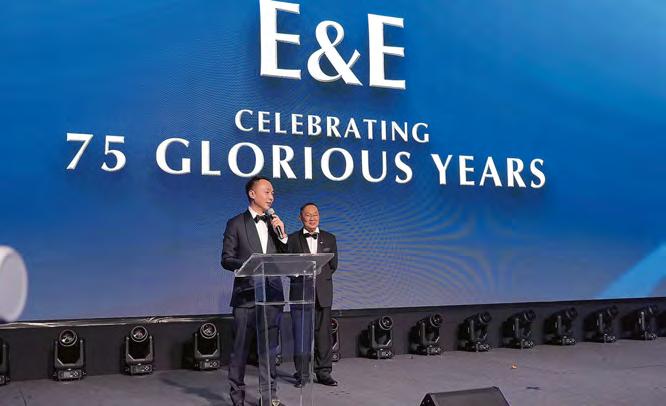
systems integration, serving performance venues, houses of worship, hospitality environments, entertainment attractions and public institutions.
Throughout its history, the company has focused on delivering integrated technology solutions built on precision, reliability and innovation. The anniversary celebration reflected this evolution, highlighting developments in sound, vision and engineering developments across generations of projects.
A dedicated segment of the evening honoured Ronald Goh, chairman of E&E, recognising his leadership and contributions to the company. During the gala, Goh officially launched his biography, Engineering Success: The Ronald Goh Story, which chronicles his
the teams whose technical expertise, craftsmanship and attention to detail support the delivery of its systems and solutions.
Speaking at the event, Gary Goh, CEO of E&E, said: “As we mark 75 years, our focus is not just on how far we’ve come, but on how we grow responsibly – staying true to our principles while continuing to innovate and serve our clients with the same care and commitment. The trust placed in E&E by our clients and partners, and the dedication of our teams past and present, have been central to everything we have achieved. It is a responsibility we take seriously as we look ahead to the next chapter of our journey.”
www.enepl.com.sg
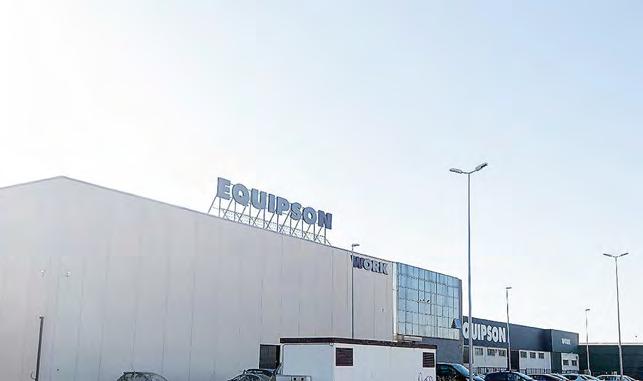
The Equipson Group has acquired fellow Spanish audio manufacturer, Musicson. The move will capitalise on Musicson’s legacy, and extensive manufacturing and R&D experience, to enable Equipson to expand the development of its large-format loudspeaker enclosures. It also aligns with the manufacturer’s commitment to create audio products that are entirely manufactured in Spain.
Based in Valencia, Musicson was established in 1965. Unconventionally to other manufacturers, the company uses wooden waveguides to give its products a warm and natural sound, and it also manufactures its own loudspeakers and compression drivers, enabling it to maintain full control of critical components.
“This acquisition fits perfectly with Equipson’s long-term plan to invest in the people, infrastructure and technology needed to create effective and high-quality solutions for the professional audio market,” said Juan Jose Vila, CEO of the Equipson Group. “Prior to setting up Equipson, my father, José Luis Vila, was Musicson’s sales manager for more than 30 years. As family-owned companies, both are renowned for their high levels of customer service and are committed to
providing comprehensive and immediate support.”
Through the deal, Musicson, which has its own in-house engineering, woodworking and electronics departments, will move all its employees to the new facilities located next to the Equipson site. Additional staff will also be recruited to boost production and manufacturing.
It was also reported that Joaquin Benavent Diaz – son of Musicson founder Joaquin Benavent Pérez and until now CEO and key figure in acoustic design and R&D – will continue to be associated with the brand.
“As the granddaughter of Musicson’s founder and daughter of its CEO, I am very excited about this acquisition, which heralds a new chapter for the company,” commented Ana Benavent, Musicson’s brand manager. “I am confident that, as part of the Equipson Group, we can take this legendary brand and project it into the future without compromising the passion for authentic sound.”
A new brand identity has already been created for Musicson and this will soon be revealed followed by the launch of a new website.
www.equipson.es www.musicson.com
With the aim of offering new market opportunities for both companies, two German pro audio brands Kling & Freitag and Dynacord have agreed on a close cooperation whereby all Kling & Freitag loudspeaker systems will be powered as standard by Dynacord amplifiers. The partnership focuses on Dynacord’s IPX, TGX and IX networked DSP amplifier series, which have been designed to provide high power capacity, energy efficiency and seamless system integration. The decision was based on extensive internal research, where Dynacord amplifiers were put to the test in a wide range of operating conditions.
“Dynacord amps deliver exactly what we expect from a modern system drive – enough headroom, first-class signal processing and maximum flexibility. In extensive tests, the amplifiers powered our loudspeaker systems
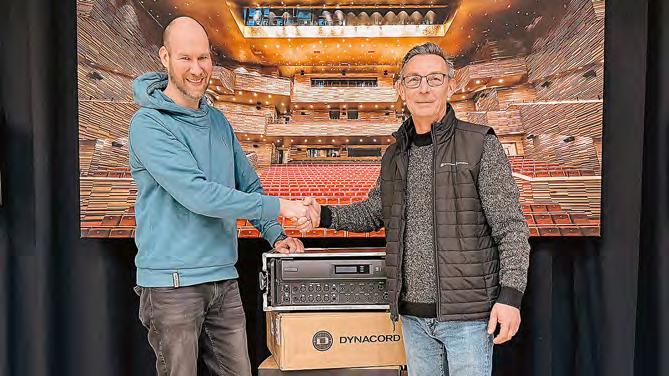
with exceptional precision, dynamics and great handling which convinced us,” commented Christoph Wöhler, product manager at Kling & Freitag.
Fredi Palm, sales field engineer for Dynacord and Electro-Voice, added: “The cooperation with Kling & Freitag confirms that our amplifier portfolio is both technology-leading and ideally suited as a system drive for demanding loudspeaker systems. At the same time, this partnership opens new market opportunities for both companies, offering sound system solutions that provide planners and systems integrators with long-term reliability, energy efficiency and outstanding audio performance.”
www.dynacord.com
www.kling-freitag.com
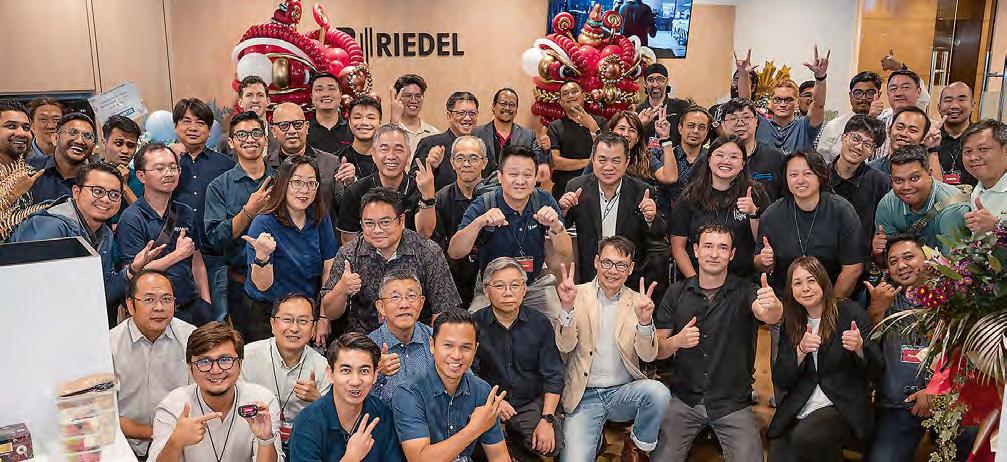
With over 1,000 employees and growing, the German broadcast innovator has been synonymous with the city of Wuppertal since Thomas Riedel founded the company almost four decades ago. The brand that bears its founder’s name has consistently charted growth through multiple acquisitions and a fearless drive to push boundaries, from the most demanding sporting events to record-breaking leaps from space. Looking deeper into its own matrix and addressing the growing needs of its SaaS business recently led to the opening of Riedel’s new Kuala Lumpur location.
The brand’s “Made in Germany” credentials disguise the fact that Riedel operates R&D hubs around the world. Continued investment in new technologies has resulted in R&D centres outside Germany, including Porto, Vienna and Zurich. Riedel’s response to increasing demand for IP-enabled hardware and software solutions across its product range has also created a growing requirement for 24/7 customer

support, particularly for mission-critical broadcast applications.
The concept of establishing an IT software support office was conceived in 2023. The challenge of locating and launching the new
venture fell to Riedel product division’s executive director of customer success, Craig Thompson.
“I arrived in the Malaysian capital in February 2025,” recalled Thompson, who viewed 25 offices in one week. Featuring floor-to-ceiling glazing and impressive cityscape views at Interlink near Jalan Ampang, Riedel secured its latest 350m² home outside Wuppertal.
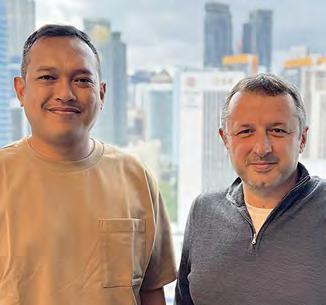
Thompson gained valuable experience establishing similar centres outside California prior to joining Riedel in 2020 from Grass Valley. Managing a global team of solutions architects, head of customer engineering Mustapha Kamal returned from Wuppertal to oversee the new operation in his home city. At the same time, Kamal and Thompson were tasked with recruiting local software and IT engineers, 12 of whom have been hired to date.
“Because the government has invested heavily in higher education and IT infrastructure, the talent pool in Malaysia is excellent,” explained Thompson. “As a result, companies such as
Google, AWS and Microsoft have established bases in Kuala Lumpur. English is widely spoken and, in addition to Malay, many locals speak various Chinese dialects. Finally, the cost of establishing a base here is competitive compared to neighbouring countries.”
As the industry steadily shifts towards softwaredriven and service-based media workflows, Riedel has introduced solutions that bridge today’s operational requirements with tomorrow’s fully virtualised environments. The Virtual SmartPanel (VSP) extends the familiar SmartPanel experience into the software domain, providing secure and flexible access to Artist infrastructures across a wide range of devices and enabling remote operation without reliance on physical panels. Similarly, Riedel’s SAME Smart Audio & Mixing Engine represents a significant step towards virtualised audio processing, bringing scalable, server-based capabilities to modern broadcast audio ecosystems.
“As Riedel continues to develop more softwarebased solutions – including SAME and Virtual SmartPanels – we identified an increasing demand for 24/7 service support for our broadcast customers,” added Thompson. “Our frontline IT software engineers and technicians in Kuala Lumpur work shifts, including weekends, to provide round-the-clock global expertise in deploying, supporting and updating customer applications.”
Having opted to build a new team in a centralised setting rather than creating local support offices across multiple time zones, Thompson is looking ahead. “In essence, we have invested in culture and the team appreciates the environment we have created,” he concluded. “The space has been ‘Riedelised’, and it is safe to say that Thomas Riedel’s values have been reflected. This investment may well be the beginning of a longer-term strategy here in Kuala Lumpur.”
www.riedel.net
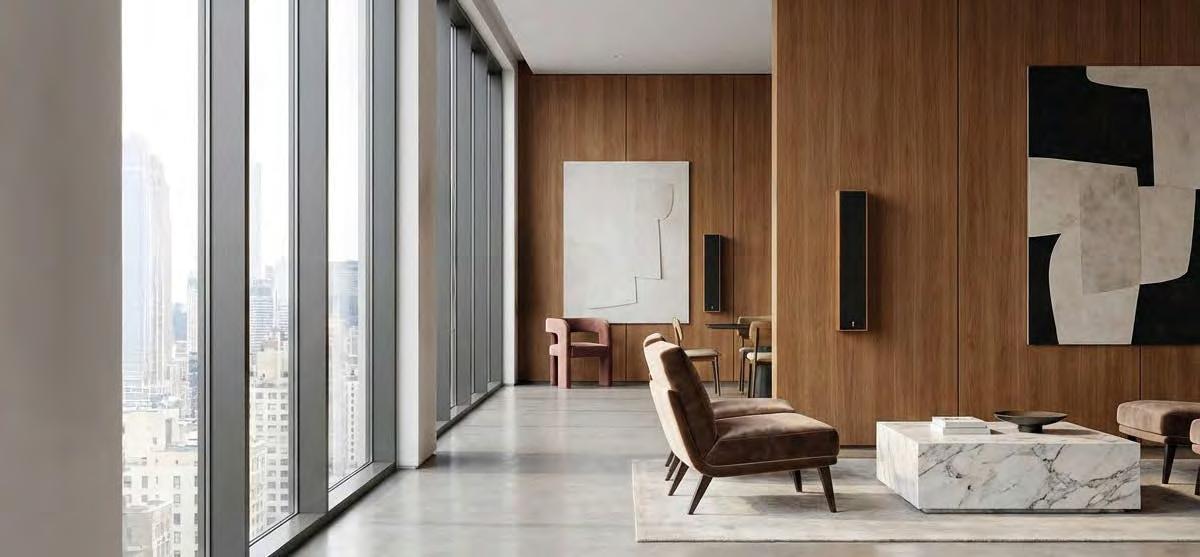
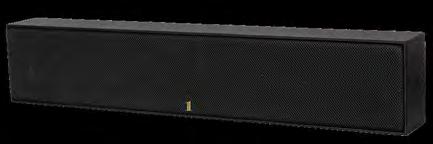
US loudspeaker manufacturer
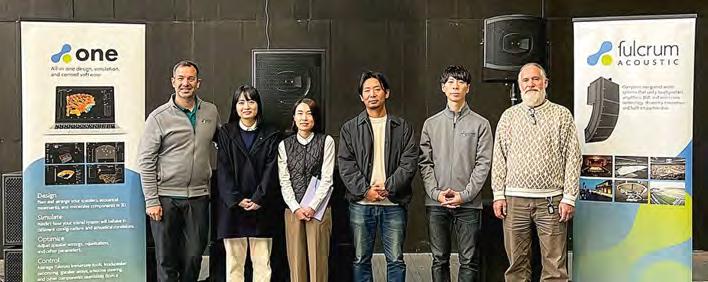
Fulcrum Acoustic is expanding across Asia with a regional strategy focused on long-term partnerships, targeted market development and increased manufacturer involvement in key territories.
Asia has been identified as a priority growth region, particularly compared with more mature markets such as Europe. According to Val Gilbert, international sales director at Fulcrum, the region continues to offer opportunities for manufacturers willing to invest in education and development. “There is still space in many Asian markets for performance-led brands that can clearly demonstrate technical value,” he said.
Fulcrum is taking a phased, partnership-led approach, prioritising distributor capability, training and sustained engagement over rapid expansion. “Setting up a distribution partner properly takes time,” Gilbert explained. “Training and ongoing support are critical if our partners are to represent the brand effectively.”
This strategy is evident in Japan, where Fulcrum recently launched Fulcrum Acoustic Japan, a dedicated operation focused solely on the brand. The business operates as a B2B sales and market development organisation and does not undertake systems integration or represent competing loudspeaker manufacturers.
“Fulcrum Acoustic Japan’s role is to develop the market for our products, and we see them as an extension of our company,” said Gilbert. “The structure aligns with the Japanese market, where distributors are often cautious about adding loudspeaker brands to their portfolios.”
Fulcrum is also represented in the region by Universal Procurement Systems (UPS), covering several APAC countries, including Cambodia, Malaysia, the Philippines, Singapore
Looking ahead to 2026, India has been identified as another priority market, with Fulcrum working with distributor Audio Wizard to build brand presence and technical awareness. “India values manufacturer involvement,” Gilbert noted. “Even with a strong distributor, customers want direct engagement, so education and time on the ground will be essential.”
Fulcrum plans to support its Asia partners through regional demonstrations, webinars, tradeshows and continued investment in training and technical support.
www.fulcrum-acoustic.com



Concept Associates KL (CAKL) recently held an official launch event at its Kuala Lumpur headquarters to celebrate its new distribution partnership with Q-SYS in Malaysia. The event featured an official blueprint presentation and a Connect launching ceremony, as well as exclusive live system demonstrations.
Integrating a comprehensive array of native products, including NL-C4 ceiling speakers, NC Series PTZ cameras and TSC Series touchscreen controllers, the setup demonstrated the platform’s capabilities for workspace environments. Attendees were also able to experience VisionSuite, gaining insight into how AI-driven features
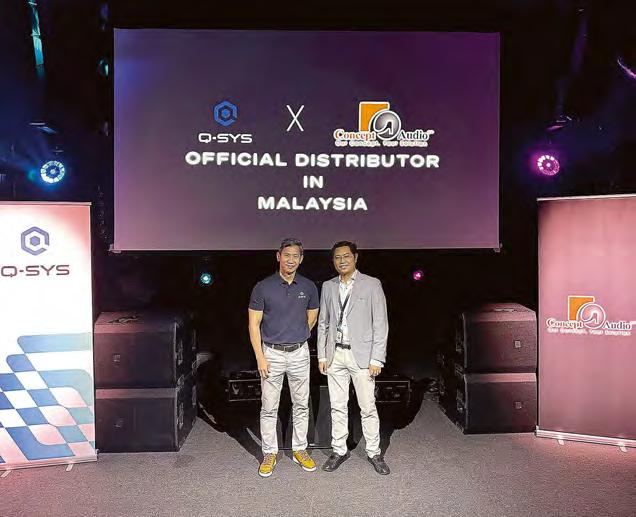
Q-SYS SEA sales director Tony Ang was present and delivered an address emphasising the evolution of the platform. He outlined that the company is not moving away from hardware but rather evolving beyond it. “We are building a software-based AVC platform where hardware, software and cloud operate as one intelligent ecosystem,” said Ang. “This shift requires a distributor who does more than move boxes; it requires a partner who understands platforms, integration and long-term value creation. CAKL has demonstrated that depth of capability and vision, and we are proud to officially appoint them as our distributor as we enter this next chapter of Q-SYS. We look forward to building meaningful collaboration together, driving growth, capability and impact in the market.”
The blueprint presentation detailed the core pillars of the Q-SYS Full-Stack AV Platform, which integrates a cognitive cloud, an intelligent platform OS and multimodal I/O. This native ecosystem is supported by a range of manufacturerdesigned hardware, including processors, amplifiers, loudspeakers and video devices. Furthermore, the platform maintains an open architecture through Q-SYS Open, utilising protocols and tools for third-party development, alongside a network of endorsed partners such as Google Meet, Zoom, Microsoft Teams and Sony. A highlight of the day was the live showcase of a modern boardroom facility powered by the Q-SYS Core 24f processor.
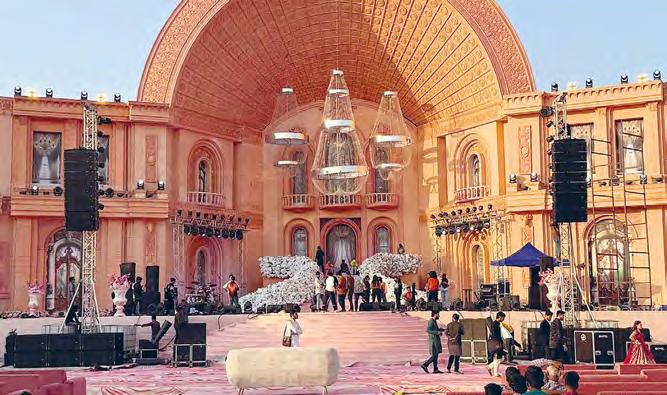
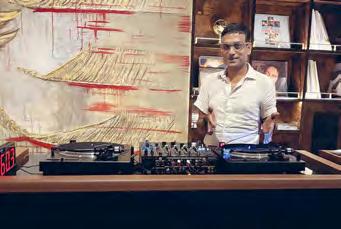
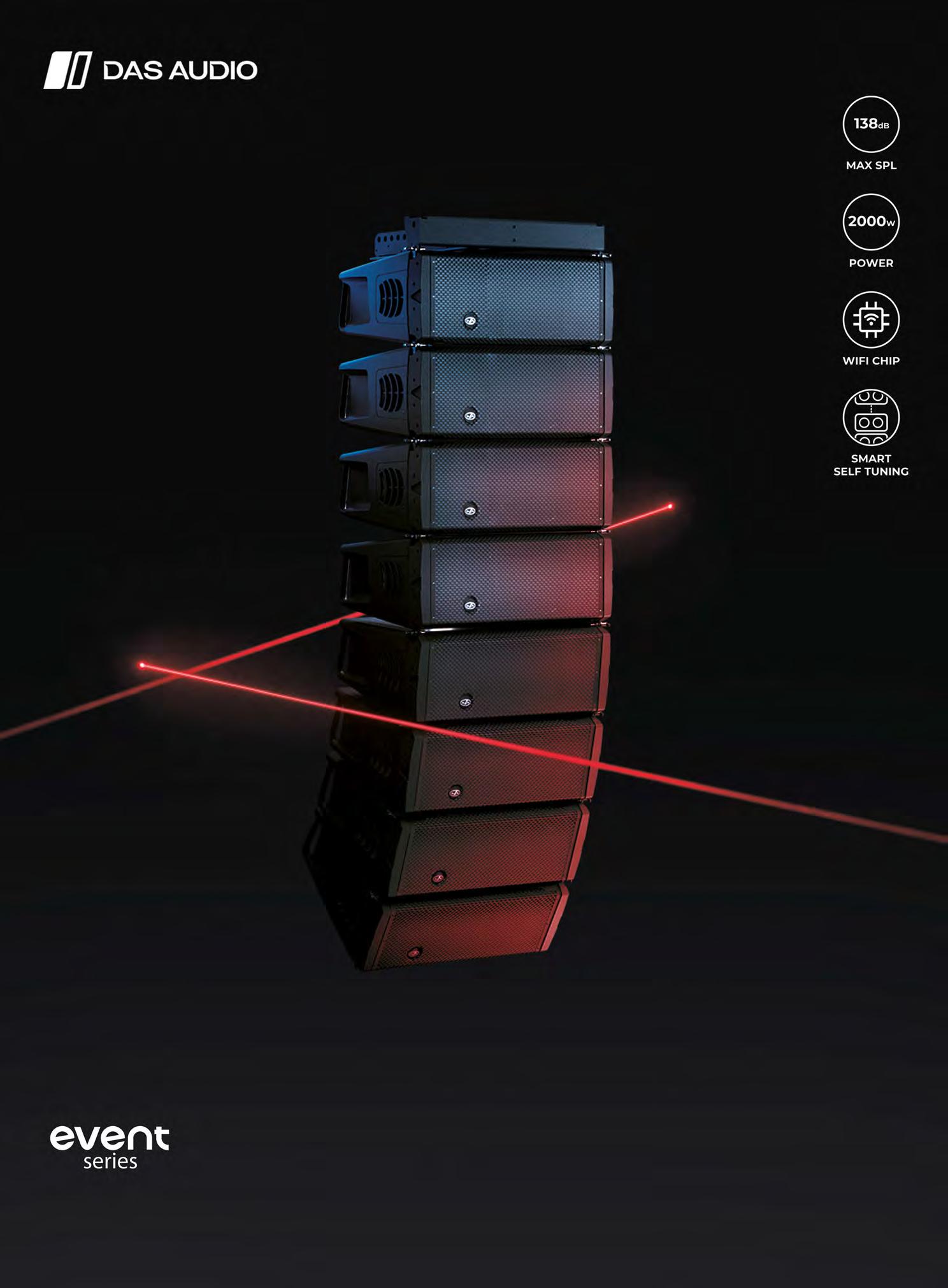
Denish Professional Sound & Light (DPSL) has strengthened its audio capabilities with a DAS Audio LARA system, supplied by Shree Audio & Lighting Solutions via DAS Audio’s official distributor in India, StageMix Technologies. With the aim of raising the standard of live sound in Surat, DPSL hopes that the upgrade will help deliver premium-quality sound for events of all sizes.
DPSL’s new system includes 16 LARA 100 units, 12 LARA subwoofers and two RACKARA-230-MK2 touring racks. The system will be used for concerts, weddings and largescale events across the region.
Dj Denish, owner of DPSL, said: “Our goal has always been to deliver reliable, highquality sound. The DAS Audio LARA system gives us a stronger, cleaner output than ever before, and we’re excited for our clients to experience the difference.”
“The LARA system stands out for its power and consistency,” added StageMix Technologies’ Karan Nagpal. “It’s great to see DPSL adopting technology that truly elevates the audio experience for events in Surat.”
www.dasaudio.com www.stagemix.com
such as Automatic Camera Preset Recall (ACPR), Intelligent Presenter Tracking and Multi-Presenter functionality can enhance collaboration in high-impact spaces. The demonstration also highlighted vision-based room automation, featuring Auto-Wake smart triggers and real-time camera tracking that follows presenters as they move throughout the room.
CAKL reaffirmed its commitment to accelerating technical capability in the Malaysian market by positioning its main showroom as a dedicated experience centre and product knowledge training hub, complete with hands-on technical workshops. The distributor noted that it aims to ensure maximum project efficiency by providing fast service turnaround via an in-house authorised professional repair centre. It also maintains significant local inventory to optimise lead times and offers immediate on-ground support for clients and partners in Malaysia.
“I believe Q-SYS is the best system on the market today because it is the only platform that unifies audio, video and control into one simple solution,” said Castrit Lim, managing director of CAKL. “We are honoured to be the official Q-SYS distributor for Malaysia. CAKL will provide the highest level of local support and technical expertise to maximise the potential of this technology in your projects.”
www.conceptaudio.com.my www.qsys.com
Bergamot Asset Management has acquired a 50% stake in Augspurger, Professional Audio Design and Malekpour Design Partners. Through the move, the three companies will now operate under Augspurger Holdco, a new parent company created in partnership with Bergamot and Dave Malekpour, founder and president of the group.

The partnership combines Bergamot’s capital investment and operational leadership with Malekpour’s entrepreneurial vision, with the aim of positioning Augspurger for new growth and operational efficiencies while maintaining its global reputation.
Bergamot Asset Management’s CIO, Christopher Liong, has been named CEO of the newly created entity Augspurger Holdco while Malekpour will serve as president and chief product officer. According to Malekpour, the partnership will result in increased operational scale and new product development: “Our new relationship with Bergamot opens a new phase of the Augspurger brand, allowing us to continue
delivering the highest-quality products to our customers while significantly increasing our capacity to meet the increased demand for our monitors around the world.”
He added that the new partnership will also enable Augspurger to maintain inventoryready production cycles, while opening up our distribution channels in every region. “These

operational improvements will help make our products more readily available to customers around the world,” Malekpour noted.
Liong said: “Augspurger monitors have been the standard in the pro audio industry for decades when it comes to recording and mixing. We recognise the value and legacy this legendary brand carries and have formed this partnership to facilitate the financial tools and logistical support needed for expansion, while honouring the sonic qualities and design attributes at the heart of the brand.”
www.augspurger.com
www.bergamotam.com
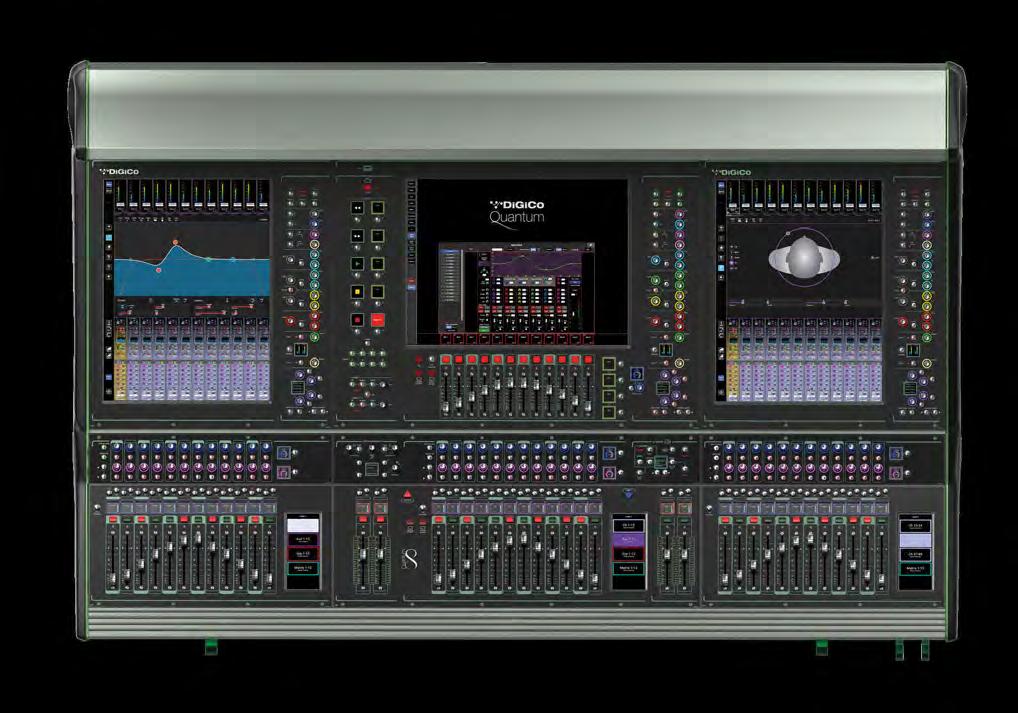
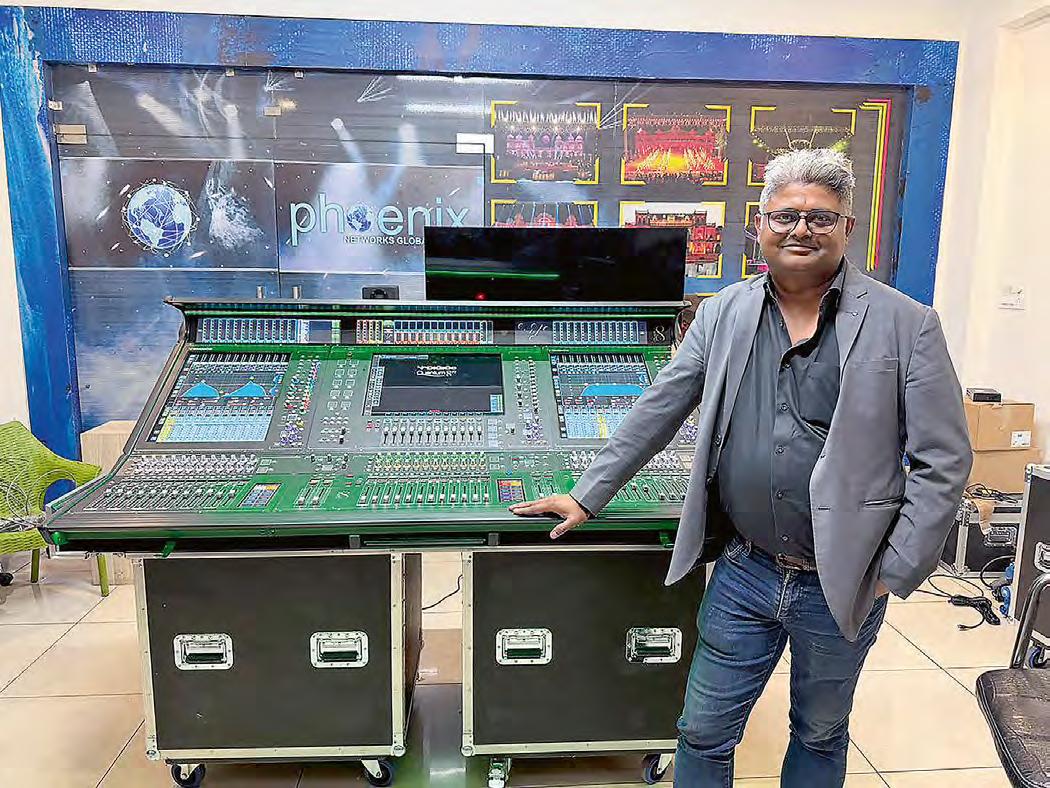
Phoenix Networks Global (PNG) has added the DiGiCo Quantum 852 to its inventory, marking its third Quantum console following two Quantum 338s. In addition, PNG has invested in a Yamaha RIVAGE PM7 sound desk and an Avid S6L-32D digital mixer, which supports up to 256 channels. The move reflects the company’s continued efforts to expand its technical capacity for large-scale live events across India.
“Phoenix Networks’ original investment in the DiGiCo SD10 and Quantum 338 positioned us as one of the providers of large-format DiGiCo consoles in Central India,” said Phoenix owner Animesh Mishra. “Upgrading to the Quantum 852 follows the natural trajectory of scaling up our technical capability to meet growing market demands, including massive shows, multizone mixing and high channel counts.”
The Quantum 852 offers 384 input channels, 192 aux/sub busses and extensive processing power, supporting complex events such as stadium concerts, festivals, high-profile televised productions and corporate events. According to Mishra, the console’s high channel count and familiar workflow make it well suited to both local and international touring productions.
“With the Quantum 852 now in our inventory, we see it becoming the backbone of our largest and most technically demanding productions,” he said. “It strengthens our appeal to international touring artists and production managers, many of whom specify flagship DiGiCo consoles on their technical riders. Combined with our existing Quantum 338, we now have a scalable ecosystem that allows us to deploy the right console for each production size while maintaining consistency and efficiency.”
The decision to upgrade was influenced by several capabilities beyond channel count.
gives us the freedom to design systems for the biggest shows without splitting workflows across multiple consoles,” explained Mishra. “Surface flexibility, control density, advanced processing tools and integration with our existing DiGiCo and Optocore infrastructure were also key factors.”
According to PNG, the new console is the third Quantum 852 in India and the first to be acquired in a non-metropolitan city. The console was supplied by the manufacturer’s Indian distributor, Hi-Tech Audio & Image. Mishra noted that hands-on training was
was extremely valuable. The training was aligned with the kinds of large-scale shows we handle, which helped our engineers gain confidence quickly and ensured the console could be deployed reliably from the outset.”
PNG also sees the Quantum 852 as a means of elevating live sound standards regionally. “The console gives us the ability to deliver audio performance on par with international touring productions,” Mishra said. “It also makes the region more attractive to international artists and production teams, who can now rely on their DiGiCo flagship locally.”
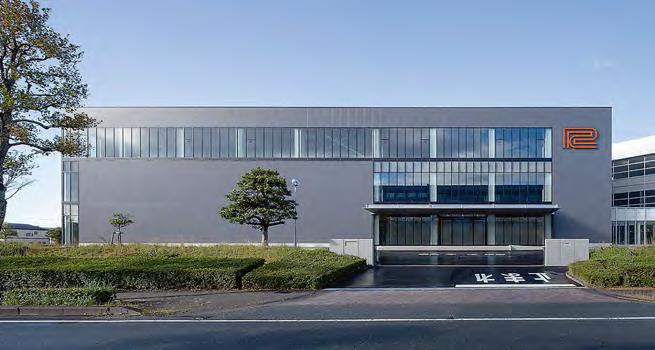
Roland Corporation has completed its new global headquarters in Japan, unveiling an adaptive-reuse campus measuring approximately 20,000m2 designed to support the company’s next phase of music and technology development. Named the Roland Inspiration Hub, the three-storey facility brings together two existing buildings into a
single workplace focused on collaboration, sustainability and experimentation.
Designed by Mount Fuji Architects Studio, construction began in 2024 and was completed late last year. Rather than demolishing the original structures, the project preserves and reframes much of the existing steel-frame construction, unifying
the buildings under a continuous roofline and around a central atrium that visually connects all three levels.
Sustainability was a key driver in the design. Roland said that by retaining large portions of the original building fabric, including air-conditioning and lighting systems, it significantly reduced the carbon impact of construction while creating a flexible interior environment capable of evolving with the company’s needs.
The new headquarters consolidates teams previously spread across three locations into one shared campus, bringing engineers, designers and administrative staff together under one roof. Soundproofed rooms are integrated throughout the building for product testing and collaboration, with dedicated areas near the entrance allowing visiting musicians to try instruments without accessing sensitive development zones.
“Roland has deep roots in Hamamatsu, from our early factory in 1973 to moving our headquarters here in 2005,” said
Madhya Pradesh, while strengthening its position as a regional hub for world-class audio production. “Flagship consoles like the Quantum 852 are often a key decision-making factor for touring artists and production managers,” concluded Mishra. “Over time, this investment will also support the growth of local talent and infrastructure, raising overall competency and professionalism in the region.”
www.digico.biz www.hitechavl.com www.phoenixnetworks.in
Roland CEO Masahiro Minow. “The Roland Inspiration Hub marks a new chapter, uniting our teams under ‘one Roland’ to explore concepts that drive the next generation of musical experiences and inspire creativity.”
At the heart of the building is the Roland Arena, a large atrium nearly the size of two tennis courts. The space serves as a central gathering area and performance venue for meetings, seminars and musical events, with Roland instruments permanently set up and ready to play. Encircling the atrium is the Roland Circuit, a continuous, wall-free circulation path overlooking the arena and connecting open-plan workspaces across all floors.
The building also houses the Roland Experience Gallery, an interactive exhibition space showcasing current instruments, Roland Cloud technologies and experimental prototypes from the Roland Future Design Lab.
www.roland.com
our robust, sporty and long-distance-proven multimedia infrastructure solutions come into play.
Robust, transversely watertight and aramid-reinforced custom-designed cable solutions for outdoor use
Wide range of cable and connection technology products for fully networked installation concepts
Classified cable bulkware in line with the EU Construction Products Regulation (CPR)
Connection-ready media/network/fiber optic systems for robust mobile and installation applications

Transversely watertight, halogen-free, UV- and microbe-resistant Salt and fresh water resistant outer jacket
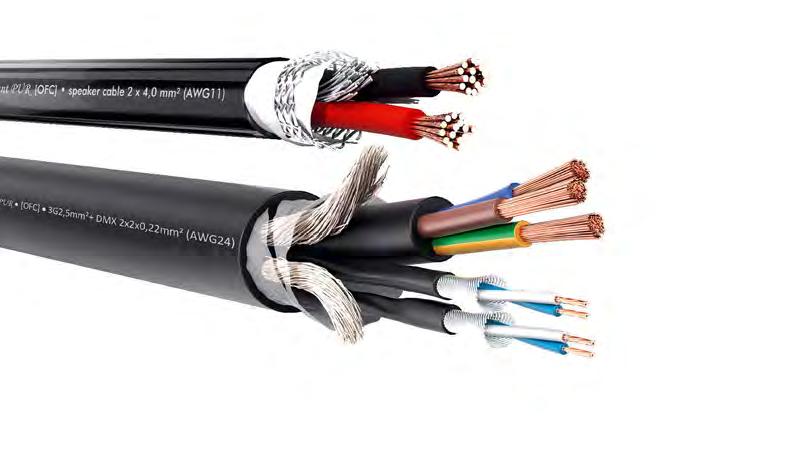



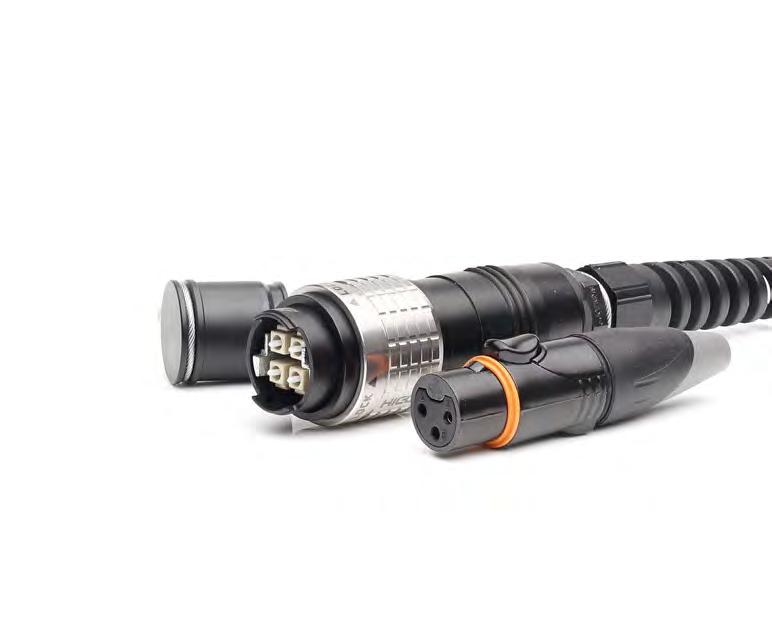


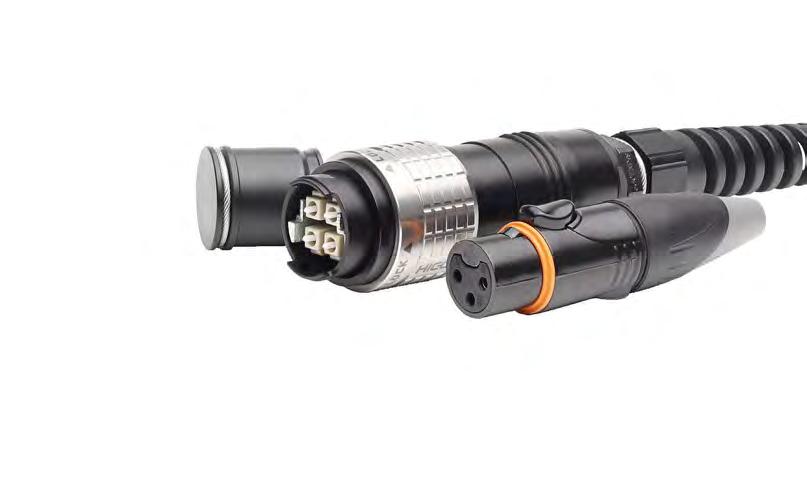





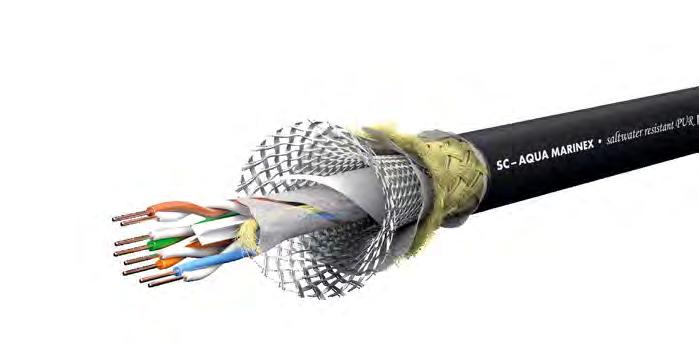

based in Straubenhardt/Germany was founded in 1999 and is now one of the leading suppliers of professional high-quality cable and connection technology with a focus on the audio, video, broadcast, studio and media technology sectors. The product range including the in-house brands HICON, CARDINAL DVM and SYSBOXX covers cable bulkware, connectors, connection cables, individually adaptable distribution systems and electronics.
A B2B shop with over 25,000 products is available 24/7.
TW Audio’s Greater China distributor, Jusheng AV Technology (Guangzhou), recently hosted an outdoor demo to introduce the German manufacturer’s new flagship VERA50 large-scale line array. Following its European debut, this marked the system’s first presentation in Asia.
The event opened with remarks from Jusheng general manager Stanley Yau, who welcomed guests and expressed confidence in the market’s outlook. Industry representatives attended, including TW Audio’s head of support, Tobias Goldmann, and colleague Rostislav Kundik, who travelled from Germany to provide technical support and present the system.
“VERA50 is the largest line array in our range,” said Goldmann. “It is designed for large-scale stadium tours and festivals but avoids the typical bulk of systems in this class.”
Despite its size and output, each cabinet weighs 62kg, supporting easier rigging and transport. Goldmann highlighted the system’s improved low-frequency performance and greater control compared with smaller TW Audio arrays,
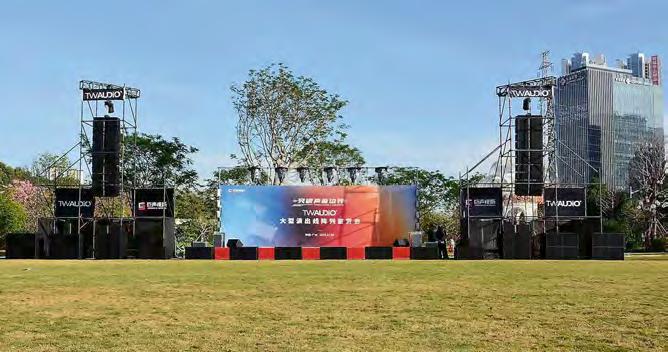
particularly for long-throw applications. He added that the design prioritises efficiency, allowing four VERA50 tops to be powered by a single 4-channel amplifier.
The Guangzhou demo featured a live band to demonstrate the system in real-world conditions.
Following its appointment as the sole distributor of Q-SYS in Indonesia, Goshen Swara Indonesia has opened a new experience centre in Jakarta featuring integrated Shure and Q-SYS demonstration spaces. The facility is designed to give partners and end users hands-on insight into modern conferencing workflows.
manager APAC at Q-SYS, noting that the facility reflects a focus on delivering complete solutions rather than standalone products.
The centre also features a dedicated Shure Experience Room showcasing the Microflex ecosystem for AV conferencing. The space includes ceiling microphones, DSPs and
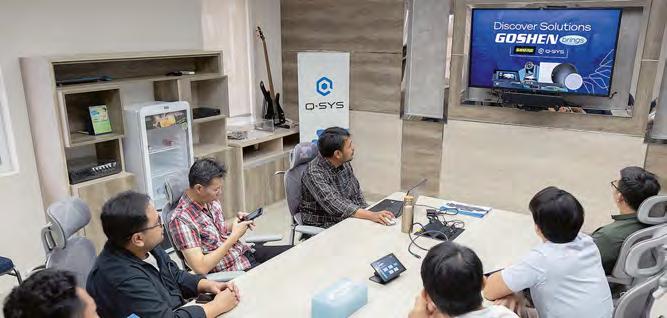
At the core of the centre is the Q-SYS x Shure Integrated Experience Room, a fully automated meeting space powered by the Q-SYS platform. The system controls lighting, curtains, displays and audio. When visitors enter, the room switches from standby mode, activating lights, opening curtains and powering up displays. Connecting a laptop via USB automatically shifts the room into meeting mode, configuring audio, video and centralised controls.
For hybrid meetings, Automatic Camera Preset Recall (ACPR) enables the camera to track and frame active speakers. The setup demonstrates Q-SYS capabilities including audio routing, video switching, sensor integration and room automation.
“Our presence at the Goshen Experience Center demonstrates how Q-SYS enhances collaboration and elevates user experiences,” said Duncan Savage, vice president and general
loudspeakers, highlighting Shure’s networked audio portfolio. Visitors can observe microphone performance across different room configurations and explore features such as automatic coverage and speech enhancement.
The facility supports demonstrations for applications ranging from small meeting rooms to large boardrooms, with Goshen’s technical team providing guidance on system design, DSP integration and troubleshooting.
“The presence of Shure’s solutions at the Goshen Experience Center allows customers to truly experience how Shure solutions deliver unmatched sound quality and reliability across workspaces of every size,” said Eric Ong, sales director for Shure, Southeast Asia and Pacific.
www.goshen.co.id
www.qsys.com www.shure.com
The setup included 24 VERA50 elements, 12 VERA S54 subwoofers and eight BSX subwoofers for extended low frequencies. The entire system, including stage monitoring via two TW Audio M15 loudspeakers, was powered by 16 amplifiers.
According to Goldmann, similar events in Europe generated positive feedback, particularly for speech intelligibility over distance and overall power. He also noted that the VERA50 integrates with the company’s existing product range.
“This system is aimed at large-scale concerts and music festivals, a sector we consider highly important,” said Will Chen, president of Jusheng AV Technology. Chen said that major Chinese tours often deploy systems of 100 speakers or more and that large concerts increasingly contribute to local economies through cultural tourism. The introduction of VERA50 is expected to strengthen TW Audio’s position in China’s live sound market.
Rental companies in China have already invested in the system, with plans to deploy it at large indoor and outdoor festivals and concerts.
www.jsavtech.cn www.twaudio.de
Singapore-based rental company Expo AV has made its largest investment in Martin Audio to date, led by a 36-box WPC line array system. The purchase strengthens a long-standing relationship between the two companies and aims to further raise the British manufacturer’s profile in Southeast Asia.
Founded in 2006 by Gerard Rodrigues, Expo AV has grown into a full-service production rental and staging company serving the MICE sector. Expo AV first invested in Martin Audio with W8LM and W3 systems, later adding MLA. “We are a strong believer in the Martin Audio brand and philosophy,” said Rodrigues. “We’ve always been drawn to its sound quality and heritage. Today, we run almost the entire Martin Audio family in our inventory.”
He also cited the company’s relationship with Dave McKinney, founder of Generation AV, Martin Audio’s APAC representative, as influential in the decision. “The trust and relationship made the move to WPC straightforward,” he said.
In addition to the WPC system, Expo AV has added SHX218, SX218 and flown SXH118
subwoofers, eight XE300 monitors and FlexPoint models including the FP6, FP8 and FP12.
“Choosing WPC was almost a no-brainer,” Rodrigues noted, referencing the performance of the Wavefront series and the support provided during the evaluation process. Since delivery, the system has been deployed across major venues in Singapore. “It’s been out constantly,” noted Rodrigues, adding that invited customers and integrators have responded positively. “Our engineers consistently praise the system’s quality. Customers are happy with the brand and so are we.”
Expo AV plans to actively promote the new inventory through regular product showcases and social media outreach. Rodrigues also highlighted strong technical support from Martin Audio and Generation AV, particularly with DISPLAY prediction software.
www.expoav.sg www.generationav.net
www.martin-audio.com
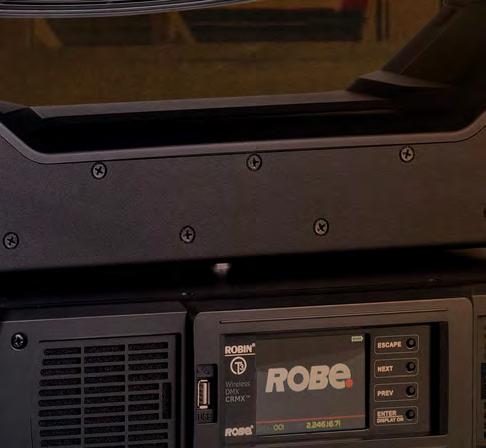
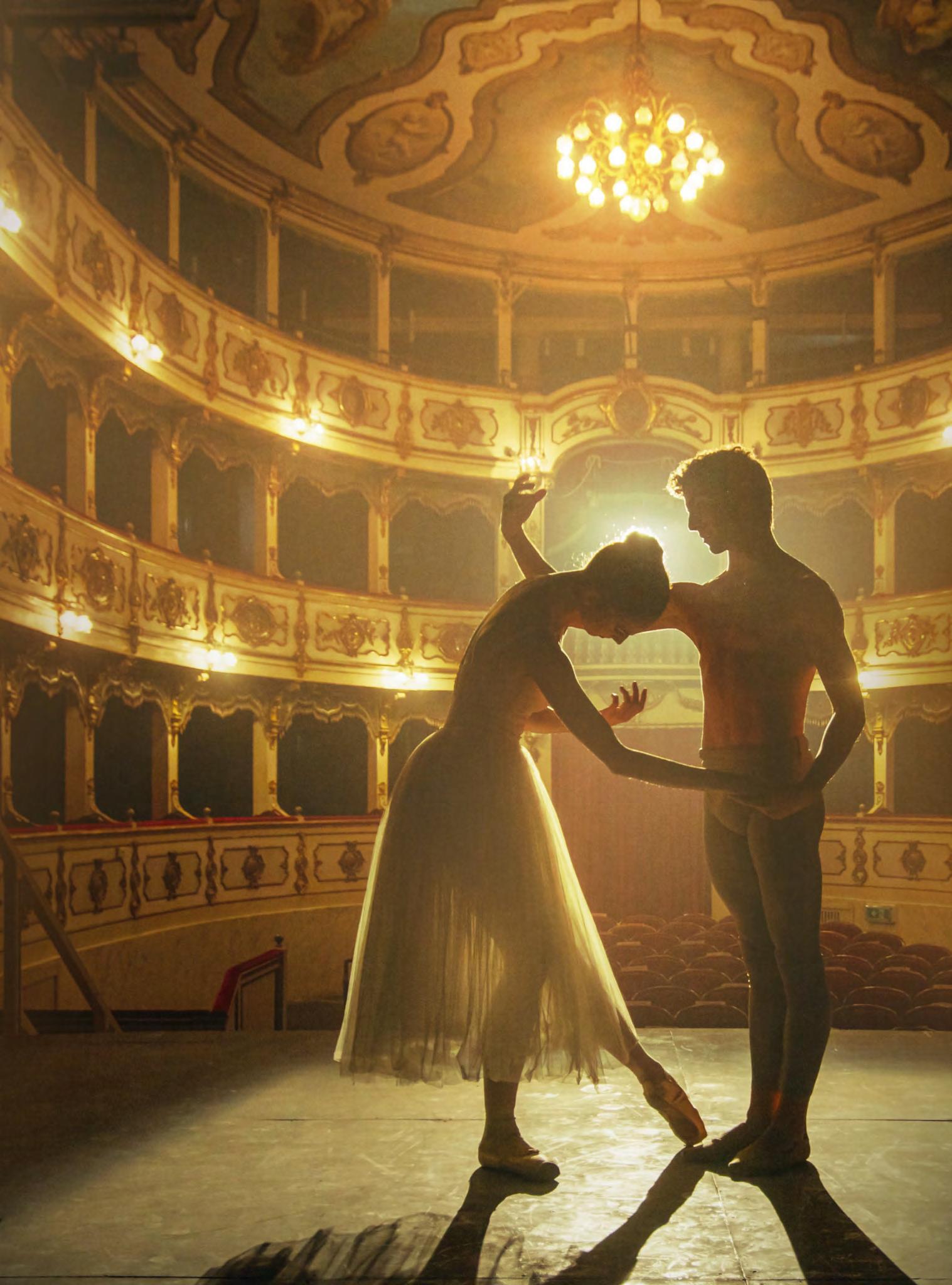






Un dflh



Unprecedented colour consistency and coverage for large theatres, TV studios and venues
nprecedented colour consistency


dBTechnologies has appointed AV United as its official distribution partner for the Malaysian market, formalising a business agreement aimed at supporting long-term growth and market development across Southeast Asia. Headquartered in Puchong, Selangor, AV United has been active in Malaysia’s pro audio sector since 1995, and it is highly regarded for its continuity, market expertise and a pragmatic, hands-on approach to distribution.
According to both companies, the partnership reflects a mutual commitment to substance over short-term visibility as demand in Malaysia continues to evolve towards high-performance, scalable and reliable audio solutions.
Chin Foo Heng, managing director of AV United, commented: “As a brand that delivers innovation, reliability and exceptional sonic performance, dBTechnologies aligns perfectly with our mission of elevating the professional audio landscape in Malaysia. With our established distribution network and deep market knowledge, we are committed to growing the brand’s presence while supporting customers with the highest level of service.”
Patrick Hau, regional sales manager for Southeast Asia at dBTechnologies, said: “We are quietly confident in the ability of our products to earn their place but identifying a partner who
genuinely shares our ambitions and long-term vision was essential. In AV United, we have found that partner. Through the leadership of Mr Chin and his team, we are excited to introduce dBTechnologies’ portfolio to the Malaysian market in the very near future, building a presence grounded in consistency, trust and performance.”
www.av-united.com www.dbtechnologies.com
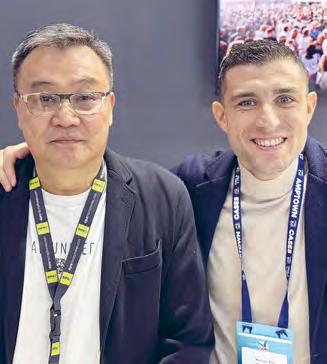
Peavey Electronics has welcomed PRO FX Tech as its new distributor for the Indian market, with a specific focus on the projects and systems integration segment. The agreement covers the entire region, exclusively for Peavey and Crest Audio’s project-focused product lines, while retail distribution will continue to be managed separately.
“With PRO FX’s market leadership and technical depth, we are confident this partnership will showcase the very best of Peavey and Crest Audio solutions to the Indian marketplace,” said Akshay M Vaidya, managing director APAC, Peavey Electronics. Bengaluru-based PRO FX Tech will be responsible for expanding Peavey Electronics’ footprint in India’s growing professional AV project market. The scope of services provided by the distributor includes pre-sales project mapping and design support, sales and marketing initiatives, systems integrator training and certification programmes, plus comprehensive post-sales service and technical support.
PRO FX Tech will offer a curated portfolio of Peavey and Crest Audio products aimed at installation and B2B applications. The focus will be on solutions tailored for fixed
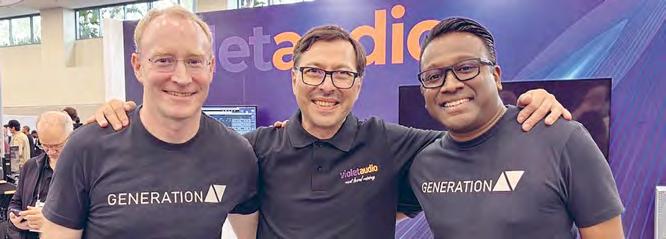
Generation AV has been appointed as the official partner for Violet Audio in the Asia region, covering marketing, sales and technical support.
Effective immediately, the partnership will see Generation AV represent the full Violet Audio product range, supporting customers across professional live sound, broadcast, installation and immersive audio markets throughout Asia.
Based in Singapore, Generation AV brings deep regional expertise, established industry relationships and a strong technical focus, which it will leverage to accelerate Violet Audio’s regional expansion. The agreement has been designed to ensure localised sales engagement, application support and long-term customer relationships for Violet Audio users in Asia, backed by the Singaporean company’s team which is experienced in delivering complex, networked AV solutions.
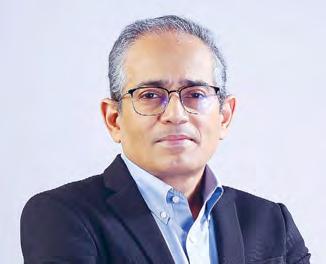
installations and large-scale projects, addressing the requirements of various market segments across the country. The distributor will also showcase the brands’ solutions in its experience centre.
Manmohan Ganesh, managing director, PRO FX Tech, concluded: “Peavey’s legacy in professional audio, combined with PRO FX’s deep market reach, technical support expertise and strong integrator network across India, makes this a very natural and exciting partnership.”
peavey.com www.profx.com
“We are looking forward to working closely with the Violet Audio team on this groundbreaking product range,” said David McKinney, managing director, Generation AV. “dMix128 and the broader Violet Audio ecosystem represent a fresh, forward-thinking approach to professional audio and we’re excited to introduce these solutions to the Asia market.”
“Generation AV’s technical strength and regional reach make them a natural fit for Violet Audio,” said Danny Olesh, CEO of Violet Audio. “Together, we’re focused on delivering worldclass products and support to the Asia market.”
www.generationav.net
www.violetaudio.com
Amber Technology has strengthened its professional audio portfolio with two new distribution appointments.
Following Sonance’s acquisition of Blaze Audio in May 2025, Blaze by Sonance has entered into a distribution agreement with Amber Technology for Australia and New Zealand. The move builds on Sonance’s long-standing relationship with Amber Technology and reflects the consolidation of its global distribution network.
“The addition of Blaze by Sonance amplifiers, loudspeakers and controllers into our portfolio, together with Sonance James Loudspeaker and iPort, is an exciting extension of our existing Sonance business,” said Peter Amos, managing director, Amber Technology. “This
we
Morten Jorgensen, VP of Sonance Professional, added: “Amber Technology has been an exceptional partner for Sonance and we’re confident it will bring the same expertise and dedication to Blaze by Sonance.”
Separately, Prism Sound has appointed Amber Technology as its official ANZ distributor. Mark Evans, international sales director at Prism Sound, said: “We’re thrilled to be working with Amber Technology. Their depth of expertise, nationwide coverage and strong technical culture make them an excellent partner for Prism Sound.”
www.ambertech.com.au
beta.prismsound.com
www.sonance.com
Effective from April, NEXO has announced that distribution of its products will be shared by three existing dealers in the country, each with extensive experience in supplying and supporting NEXO customers working in a range of applications, and now each with direct, distributor-level access to sales and technical support from the brand’s French-based HQ.
“Alongside growing NEXO’s presence in Australia, our absolute priority is to continue the high levels of support that NEXO users there already enjoy, which is why we’re partnering with companies that have a proven track record of supplying NEXO systems with excellent reputations for technical service,” commented the company’s Asia sales manager, Joe White.
The three new distribution partners in Australia are Factory Sound with locations in Melbourne and Sydney, Gold Coast-based Captivate AV and the LSV Group, headquartered in Melbourne.
Factory Sound general manager Artie Jones said: “Factory Sound is very proud to be able to continue the good work started in Australia by Group Technologies and we look forward to continuing to supply and support the many
existing and new potential NEXO customers in Australia in the future.”
Captivate AV MD Chris Lang added: “For the past 10 years, we have used NEXO products exclusively for our high-end audio solutions in both fixed installations and in our rental inventory. We are excited to share our breadth of experience and passion for the NEXO brand with existing dealers and new prospective dealers, integrators and rental houses around Queensland and beyond.”
LSV Group’s brands manager Andrew Stanley concluded: “LSV Group is proud to be appointed as an Australian distribution partner for NEXO and looks forward to working in close collaboration with NEXO HQ and alongside our friends and colleagues at Factory Sound and Captivate AV, to further strengthen NEXO’s long-term presence and customer support across Australia.”
www.captivateav.com.au www.factorysound.com www.lsvgroup.com.au www.nexo-sa.com
VIETNAM
Audiofocus has welcomed pro audio importer and solutions provider Mega Sound, a division of MegaGroup Vietnam, as its new distribution partner. Operating from its Hanoi headquarters, the Vietnamese company will distribute the Belgian manufacturer’s full product portfolio in the region.
expertise, we see exciting opportunities in many vertical markets, scaling from karaoke rooms to theatres and conference venues.” Mega Sound’s director Quang Minh added: “We are excited to introduce the new generation of Audiofocus loudspeakers to our customers. Early reactions suggest
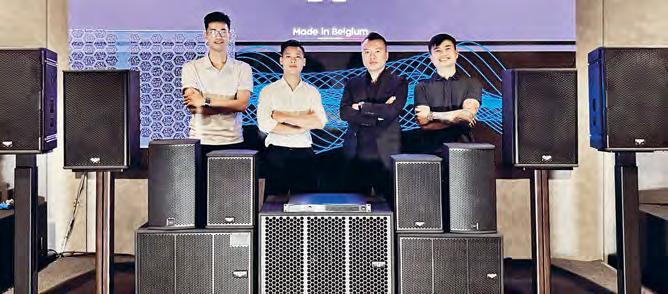
“This new partnership with Mega Sound represents a relaunch of the Audiofocus brand in an important territory,” commented Håkan Sjöö, international sales manager at Audiofocus. “With Mega Sound’s strong customer relationships and project
strong interest in their build and audio quality and I’m confident the brand will soon feature in some prestige projects.”
www.audiofocus.eu www.megasound.vn


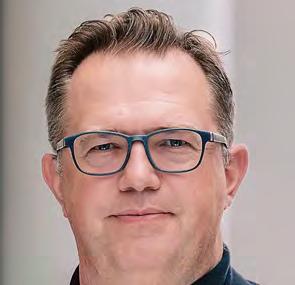
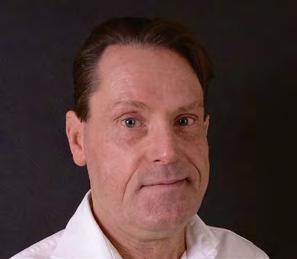


Bringing over 20 years of professional audio experience, with expertise in large venues, touring and international sporting events, Henry Lee has been appointed as sales manager for Korea at d&b audiotechnik. He joins from the brand’s local partner d&b audiotechnik Korea where he served as director since 2018.
“Having worked with d&b as a trusted local partner, I’m excited to join the team directly,” said Lee. “I look forward to working even more closely with partners and being readily accessible to support customers as we deliver exceptional sound experiences across the Korean market.”
In his new role, Lee will focus on growing the local market in close collaboration with the manufacturer’s external partners in the region, including d&b audiotechnik Korea, strengthening customer relationships and ensuring high standards of sound
quality, system performance and reliability. He will also serve as a local d&b point of reference, supporting customers and partners through closer engagement and coordination. As director of d&b audiotechnik Korea, he was responsible for leading sales and technical support and overseeing the design and deployment of loudspeaker systems for venues including LG Art Center, Lotte Concert Hall and Seoul Arts Center.
Anna Kovyza, senior commercial director at d&b audiotechnik APAC, commented: “We are thrilled to welcome Henry to d&b. His expertise and deep understanding of the Korean market make him the perfect fit to drive growth and strengthen collaboration across our partner and customer ecosystem.”
www.dbaudio.com
HK Audio has announced that an experienced internal management team has taken over management of the business, led by company founder and MD Lothar Stamer.
The new team consists of three long-standing executives who have played a key role in shaping and developing HK Audio over many years: Christian Jordan, CSO and CMO, Holger Kartes, CTO and COO, and Stefan Persch, CFO. The management tasks have been transferred to the new leadership
international sales and marketing strategy for many years and has contributed significantly to the global positioning of the brand. Kartes brings technological expertise in production, the global supply chain and the consistent further development of “Made in Germany” product and system solutions. Lastly, Persch brings expertise in the areas of finance, controlling and corporate management and will provide economic stability and sustainable growth.
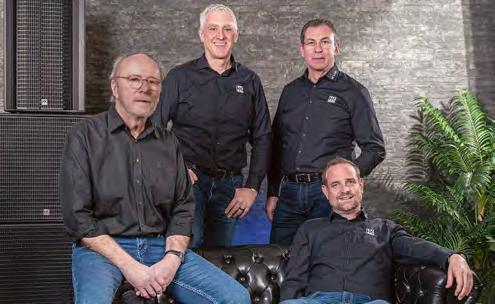
trio gradually and in close consultation since the beginning of 2026.
The management team brings a wealth of combined experience in their respective areas of responsibility, as well as trust both internally and among international partners and customers. Jordan has been responsible for HK Audio’s
Leading independent acoustics, AV, IT and theatre consultancy practice Hewshott has announced a transition in its global ownership. With immediate effect and following many months of careful planning, current UK managing director Daniel Lee assumes the role of global CEO leaving company founder Peter Hunt to retain his position as Australian managing director in addition to his numerous industry association ties.
Since founding Hewshott’s UK office in 2002, Hunt assembled a team of specialist experts in Singapore, Australia, India and the USA. Working alongside architects and project managers, Hewshott has consistently delivered consultancy and design packages for acoustics, AV, IT and theatre projects worldwide.
“The change in leadership will ensure continuity and consistency of the company’s high standards built over almost a quarter of a century,” commented Hunt. “Clients

and stakeholders can expect ‘business as usual’ as Dan builds on these strong foundations, adding new energy and fresh thinking to take the company forward.”
Following an early career in integration, Lee brings over 12 years’ experience in his current position as UK managing director. Fully aligned with Hunt’s values and ready
“With Christian Jordan, Holger Kartes and Stefan Persch, we are handing over responsibility to a team that knows the brand, the market and our values down to the last detail,” said Stamer. “I am convinced that HK Audio is perfectly positioned for the future with this leadership.”
www.hkaudio.com

to unify Hewshott’s global strengths, Lee classifies his leadership style as supportive, facilitative and grounded in trust, whereby high value is placed on individuality within a shared process framework.
www.hewshott.com

Ideal Systems has bolstered its Singapore management team with the addition of industry veterans Mark Goh and Derrick Koh. “As a leading systems integration company in both pro AV and broadcast, our business is ultimately professional services – we have no IP, just skilled people,” commented Ideal Systems CEO Fintan Mc Kiernan. “Having Derrick and Mark join us in Singapore will significantly enhance our management team and accelerate our Southeast Asia growth strategy.”
Goh joins as director of business development, where he will assist with the company’s continued growth in Southeast
Asia. He boasts over 30 years of pro AV industry experience, including working with Sony, Bell & Order, O’Connors, Kramer and Electronics & Engineering.
Koh assumes the position of director of nextgeneration solutions, responsible for steering Ideal Systems’ product and partnering strategies for the next generation of pro AV technologies which will leverage AI and cloud integrations. Koh possesses more than 26 years of industry experience beginning with Highland AV in 1999 and then at Meeting.com, ISPL, NETe2 Asia and Electronics & Engineering.
www.idealsys.com
Olivier Maynard has been appointed into the role of executive director of strategic market development at L-Acoustics. The recently established division regroups three core disciplines – business development, creative engagement and market intelligence.
In his new role, Maynard will spearhead commercial innovation, developing new business models from concept to implementation throughout the organisation. Joining the company’s executive committee, he will work alongside the leadership team and will report directly to L-Acoustics co-CEO, Laurent Vaissié.
“In an industry where detailed market data is scarce, our ability to truly understand our customers, their challenges and their ambitions gives us a decisive advantage,” said Maynard. “Our mission is to support our clients’ business by engaging end users in ways that are inspirational and experiential rather than purely technical. By working hand-in-hand with our sales teams in every territory, we’re creating sustainable demand that benefits our entire partner ecosystem.”
www.l-acoustics.com



As co-founder and managing director of JAA Systems in Kuala Lumpur, Malaysia, I oversee the business and lead our team of 10 engineers and staff. In 2024, we proudly celebrated our 10th anniversary, marking a decade of growth, innovation and commitment to excellence. My role centres on delivering professional solutions across audio, video and IP technologies. We focus on using the latest advancements to design cost-effective systems while providing strong after-sales support. Our core business serves the broadcasting, audiovisual and live sound markets throughout Southeast Asia.
What inspired you to get into hiking?
I owe my interest in hiking to my wife, Ann. She has always been very focused on fitness and encouraged me to get involved. A few years ago, I joined a fitness group and, although I started later in life, it felt natural rather than forced. From there, hiking followed naturally. We now hike regularly, sometimes just the two of us and sometimes with larger groups. Hiking has grown in popularity in Malaysia and what began as a fitness goal quickly became something I genuinely enjoy.

Is there a standout place for you?
My most memorable climb is Mount Kinabalu on the island of Borneo. It’s the highest mountain in Malaysia and one of the highest I’ve climbed. Reaching the summit was a huge achievement and the feeling was priceless. That moment showed me just how rewarding hiking can be. I also enjoyed climbing Mount Yotei in Hokkaido, Japan, last summer. While it isn’t as high as Kinabalu, the sense of achievement was just as strong. Looking ahead, I’d love to take on trail hikes in Nepal and explore more hiking opportunities in Europe.
What kind of preparation do you need before these climbs?
Preparation is essential. You don’t need extreme training, but a good level of fitness is important, particularly to strengthen your legs and avoid injury or fatigue. I usually train by hiking smaller hills regularly and going to the gym to build strength. Overall conditioning is key to an enjoyable hike.
What are some of the biggest challenges you face?
The biggest challenge is mental. Midway through a climb, exhaustion sets in, water may be running low and muscles start to ache. That’s when you have to push yourself and remember that turning back isn’t always an option. Encouragement from fellow hikers is vital. Ann, in particular, is very supportive, and we motivate each other to keep moving forward, step by step.
Why do you find this hobby beneficial outside of your busy schedule?
Hiking is a great way to de-stress from work. It keeps me active and healthy while allowing me to release stress physically. There’s also a strong mental focus – you’re present in the moment and concentrating on reaching the
summit. Staying aware of your surroundings and handling unexpected situations keeps you alert and engaged.
Do these benefits have an impact on your work life?
Definitely. Hiking helps clear my mind and often sparks new ideas. When I reach the top of a summit and take in the view, I feel a strong sense of clarity and calm. Those moments give me space to reflect and think about future plans, both personally and professionally.
Conquering a summit is similar to building a career or business. There are challenges along the way, but perseverance and self-motivation are essential. The only way to succeed is to keep climbing until you reach the top.
Why do you feel it’s important to have an outlet outside of work?
Having a passion outside of work is essential for mental wellbeing. Many of us work too much, which isn’t healthy longterm. Staying active helps maintain both physical and mental health, especially as you get older. After a demanding climb, I feel refreshed, centred and able to think clearly again.
What other activities do you do to stay active?
I’m part of a local fitness group and regularly take part in events such as the Spartan Race and Viper Challenge, which feature up to 50 obstacles testing strength, agility and endurance. Most participants are much younger than me, so completing the course feels especially rewarding and makes me feel young again.
Fitness can be addictive. After completing the Spartan and Viper Challenge, I’ve already suggested to Ann that we try the HYROX fitness challenge next. I enjoy pushing myself and taking on new challenges. Life is too short not to try – as long as my body allows it, why not take on the next one?
www.jaasys.com

Shure examines its DCA901 Broadcast Microphone Array and how it uses digitally steerable lobes to capture precise, high-quality audio for live broadcasts
The DCA901 Broadcast Microphone Array combines 78 internal microphones into eight adjustable pickup zones with integrated DSP, reducing setup complexity and hardware footprint. Benefits include superior isolation, minimal ambient noise and streamlined control via a web interface – ideal for sports and live events.
In today’s fast-paced production environments, capturing high-fidelity audio is essential.
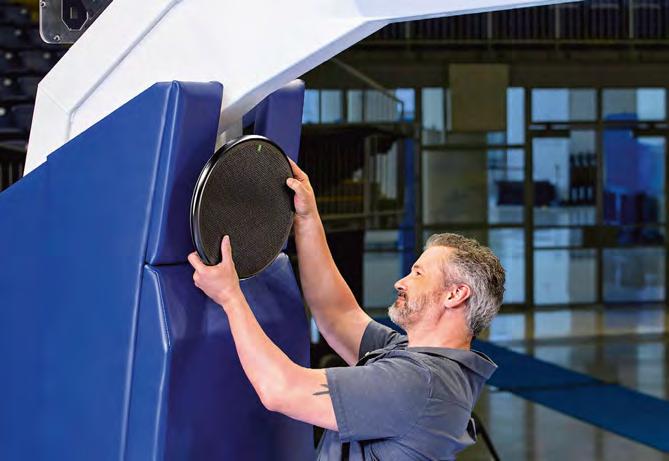
Audiences expect immersive audio in sports and live entertainment that enhances their experience and brings them closer to the action. As audio engineers, you know the challenge: covering wide spaces with precision, while minimising gear and setup time. The DCA901 Broadcast Microphone Array was built to meet that challenge with steerable lobes that deliver clean, focused sound with less hardware.
The DCA901 delivers eight channels of highfidelity audio through a single network cable. Its directional capture is powered by 78 internal microphones, processed individually through eight separate processing chains to form highly directional pickup patterns. This method allows for independent lobe control while maintaining a coherent, immersive experience. The microphone array:
• Captures wider coverage than traditional analogue setups.
• Eliminates spatial aliasing and phase misalignment with synchronised processing.
• Provides eight channels, plus stereo and mono automix outputs and a PFL channel in a single-unit design.
• Streamlines deployment with a single compact unit.
• Offers digital lobe steering to reduce manual adjustments.
• Isolates key audio elements while minimising unwanted crowd or ambient noise.
• Higher directionality captures clearer audio in noisy settings.
With the DCA901, you can shape sound with greater control and deliver an immersive, front-row experience.
The DCA901 stands apart with its digitally steerable lobes, which are controlled through an embedded web-based GUI. A steerable lobe acts as a highly directional pickup zone, formed by the internal processing chains within the array. The DCA901 offers eight individual lobes, along with a single
mono automix, a 2-channel stereo automix and a PFL channel. The PFL channel enables isolation of individual channels for monitoring without affecting automix decisions.
Each lobe can be set to narrow, medium or wide, depending on the desired pickup range. You can steer each lobe independently and even assign multiple lobes to the same target area using different widths for layered coverage. Additional tools like PEQ (parametric equaliser) allow you to refine the sound further and emphasise desired sounds. This setup provides complete independence and flexibility in shaping the sound pickup as required.
The DCA901’s internal DSP is central to its performance, offering advanced tools to shape and refine your mix:
• Beamforming provides precise directional control.
• Automixing balances sources automatically with minimal manual adjustment.
• PEQ fine-tunes frequencies for tonal clarity.
• Noise reduction minimises ambient sound, ensuring clarity in loud environments.
Together these features allow engineers to capture clean, natural audio with less manual intervention.
The DCA901 offers versatile audio capture and opens new possibilities in media
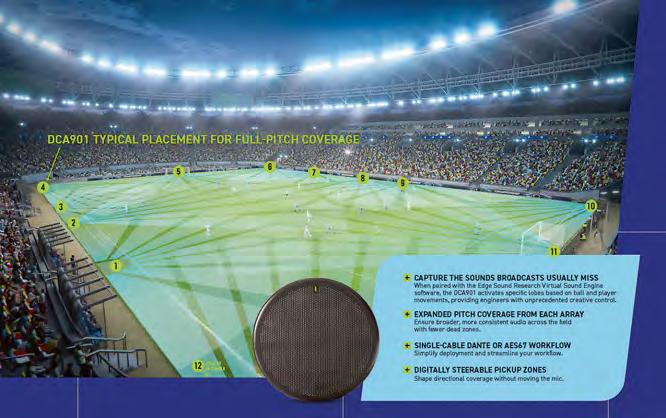
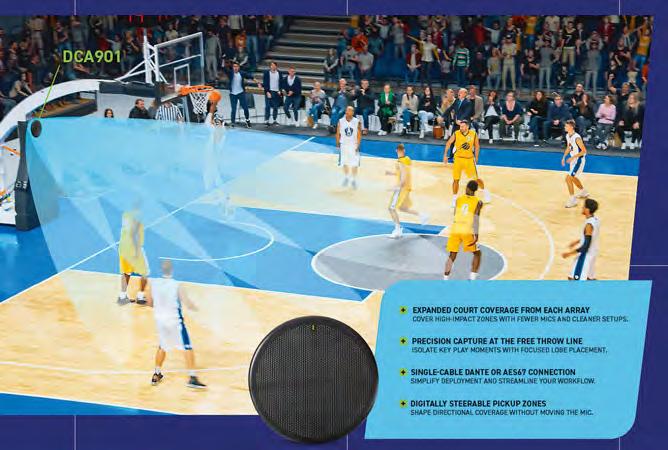
production to deliver exceptional results. Its user-friendly setup and dynamic lobe control streamline workflows and expand creative options. It could be deployed in sports such as basketball to focus on the free-throw and low post zones, or football to capture ball and player movements. There are also occasions where the DCA901 has sparked creative audio moments beyond initial deployments. Engineers are impressed by the dynamic steerability, which allows for quick adjustments such as moving a lobe away from a distracting sound while maintaining overall coverage.
Rethinking broadcast mic strategy with the DCA901
The DCA901 simplifies setup, reduces gear requirements and gives you precise control over what you capture. Whether you’re producing live sports or in-studio broadcasts, it delivers the coverage and flexibility today’s productions demand. Want to see it in action? Visit www.shure.com/ dca901 to book a demo and learn more about how the DCA901 can elevate your workflow.

HONG KONG
The 27th edition of the MAMA Awards recently returned to Hong Kong for the first time in seven years, backed by an Analog Way Aquilon system deployed by LDS to drive the LED stage visuals. Regarded as one of Asia’s largest and most influential music awards ceremonies for both K-pop and global artists, the MAMA Awards showcases K-pop’s continued global expansion through a blend of music, performance and cultural influence.
The show is presented annually by Korean entertainment giant CJ ENM. Taking place at the new Kai Tak Stadium, this year’s edition welcomed a sold-out audience of more than 50,000 international fans over two nights, and featured large-scale staging, production design and performances by leading international artists.
The production team at LDS selected the Analog Way Aquilon RS6 as the primary video presentation processor for the event, powering the main stage LED displays. It
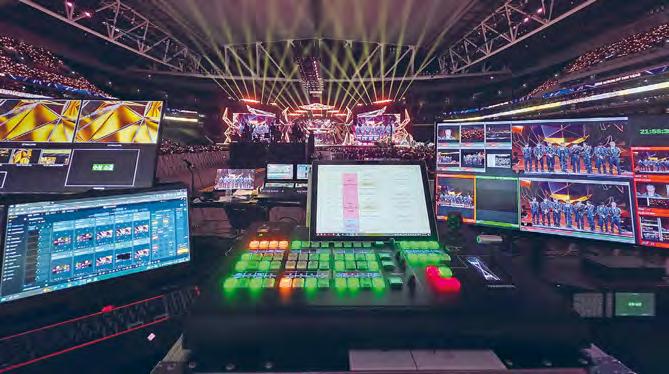
was noted that the system’s stability and high-performance processing were crucial for executing intricate visual requirements throughout the show.
“Analog Way equipment was entirely new to me earlier this year,” revealed Go Choi, head of the operation team at LDS and chief operator for the awards. “But after hands-on
training and using the RS6 across several major events, I have become fully convinced of its performance, stability and ease of use. It delivered exactly what we needed for the 2025 MAMA Awards.”
Throughout the show, the Aquilon executed complex visual tasks, even accommodating last-minute updates from CJ ENM. LDS operators who managed the system onsite reported strong satisfaction with its power, reliability and seamless workflow during installation, rehearsals and both show days.
Jeremy Kim, technical support engineer at Analog Way Korea, has provided continuous support to LDS including product training, onsite assistance and troubleshooting across multiple major events. ITP Hong Kong served as equipment rental house for the event and provided local support for the show.
www.analogway.com
Situated in the entertainment hub of Da Nang, Shanghai Beer Club offers patrons energetic DJ sets and live music performances backed by a Martin Audio system with iKON amplification. The solution was designed and integrated by B-Star Sound & Lighting, with Powersoft amplifiers provided by the brand’s Vietnamese distributor UPSV.
At the heart of the system are Powersoft Quattrocanali 8804 and Duecanali 6404 amplifiers, chosen for their high-power density, efficiency and reliability.
Ita Pham, technical representative of B-Star Sound & Lighting, commented: “With Powersoft’s ArmoníaPlus software, we can easily set up and configure the system in a very
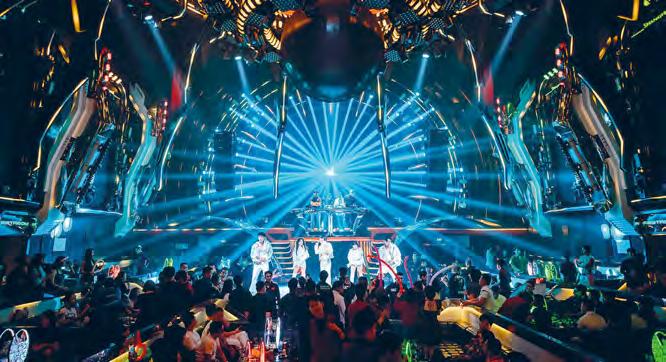
Shanghai Beer Club sets itself apart with its premium beer club-meets-nightclub concept. With a large floor area, high ceilings and demanding SPL requirements, the venue needed an audio system capable of delivering powerful impact while maintaining clarity, balance and long-term operational stability. Taking this into account, B-Star Sound & Lighting built the system around a Martin Audio line array solution which handles the primary sound coverage, while the British brand’s Blackline X15 and X218 units provide additional reinforcement and low-frequency energy. This configuration has been designed to provide wide, even coverage, high SPL capability and the controlled sound clarity essential for a large-scale beer club and nightclub environment.
intuitive way. The integrated DSP and EQ presets for many loudspeaker brands make tuning fast and accurate. Connectivity via Dante or AES67 is also quick and convenient.”
Nguyen Quang Truong, sales representative of B-Star Sound & Lighting, added: “After the system was completed, the client was extremely satisfied with the audio performance. This is a very large beer club with strict requirements for sound quality and output, especially when DJs, singers and live bands perform. The compact design and energy efficiency of Powersoft amplifiers were also highly appreciated.”
www.b-star.vn
www.martin-audio.com proaudio.upsprocurement.com
ASCARO Padel & Social Club has unveiled its flagship facility at TREC Kuala Lumpur, featuring an audio solution from Danish Audiophile Loudspeaker Industries (DALI). The purpose-built system has been designed to enhance both sport and social experiences.
Located within Kuala Lumpur’s entertainment district, the 1,115m² ASCARO TREC flagship integrates professional padel courts with food, beverage and social spaces, requiring a flexible audio system capable of supporting daily operations as well as larger events.
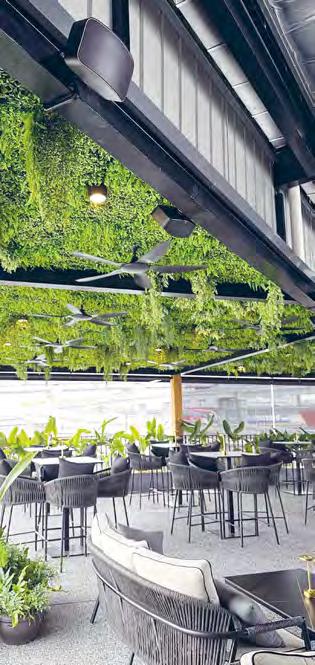
The installation includes 26 DALI GARDIAN outdoor loudspeakers and nine PHANTOM E-80 WR weather-resistant in-ceiling speakers, distributed across indoor, semiopen and outdoor areas.
The GARDIAN outdoor speakers provide wide and consistent coverage across courts and external social zones, while the in-ceiling E-80 WR models ensure balanced sound distribution in covered and semi-open areas. All loudspeakers are driven by a DALI AMP-4750 multichannel amplifier.
The system is configured into eight independently controlled zones, including courts, food and beverage areas, lobby, pool, open areas and amenities, with selectable volume control per zone.
Dual input sources allow flexible routing, including dedicated DJ and wireless microphone inputs for events. Streaming, mixing and source management are handled via WiiM CI streamers and an Allen & Heath GR4 mixer, integrated with DALI amplification.
“At DALI, we believe sound should support how people move, connect and experience a space,” said Raj Tillak Bahadur, regional sales and marketing manager APAC at DALI. “ASCARO’s flagship club is a perfect
example of a modern lifestyle venue and our solution was designed to complement its energy – from intense match play to relaxed social moments.”
Speaker placement and finishes were selected to support architectural integration, with black GARDIAN loudspeakers installed discreetly on walls in outdoor zones and white E-80 WR speakers mounted in ceilings for an unobtrusive appearance.
www.dali-speakers.com

Back on stage. More than ever.
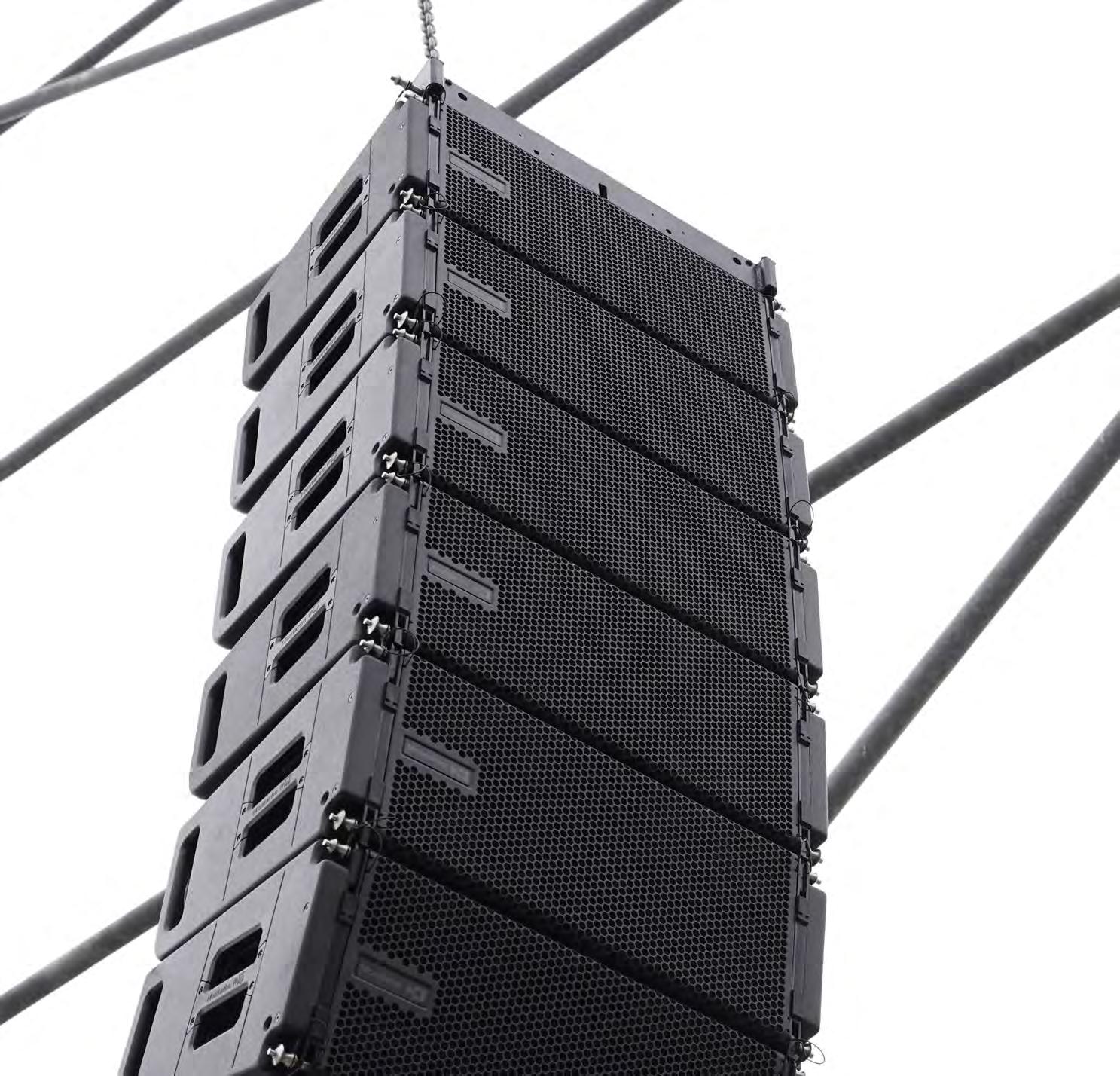
Nettuno L28 marks the Montarbo’s return to the stage with a system engineered for today’s production demands. Its newly designed compact form factor, delivers remarkable output in a versatile and modular architecture that adapts seamlessly to touring environments and fixed installations alike. Offering the flexibility, coherence, and modern performance required by professionals who need a reliable linearray solution that scales effortlessly from small venues to full live events. Adaptive headroom designed to go beyond expectations
Key features:
• 1000 W RMS Class D amplifier
• 135,5 dB SPL
• 2×8” LF transducers + 1.4” HF driver (3” V.C.)
• 100° horizontal dispersion
• Polyurea-coated plywood cabinet
• Weight: 23,4 kg
Scan & Discover

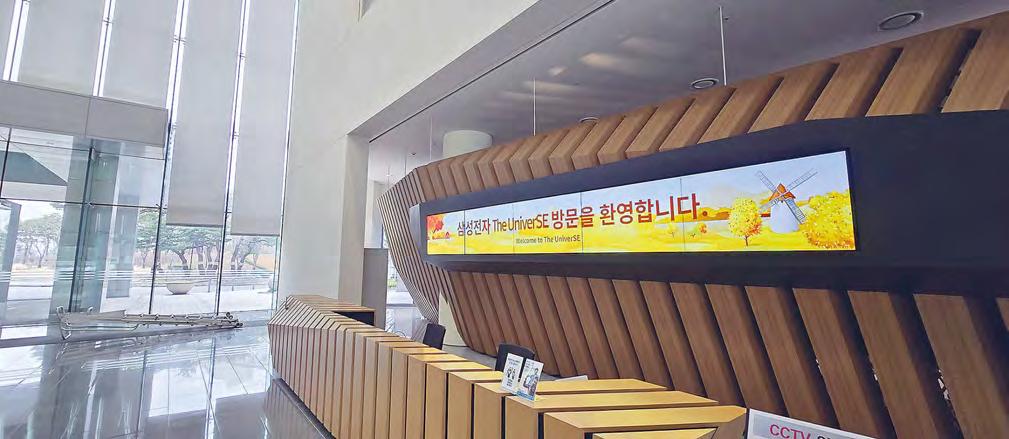
Samsung’s UniverSE Training Center in Yongin-si, South Korea, has completed a major AVoIP upgrade, transitioning from legacy analogue systems to a Dante AV-based networked video infrastructure across more than 130 classrooms and lecture halls.
Originally built nearly 15 years ago, the UniverSE campus comprises a training centre and dormitory building, with approximately 70 classrooms and 60 lecture halls. While considered advanced at the time, the facility
relied on isolated analogue AV systems with limited early digital components. As training needs evolved, the lack of centralised control, room-to-room content sharing and remote management became increasingly problematic.
The project gained urgency when the training building’s broadcasting studio required a network upgrade. Samsung engaged systems integrator Seoul Visual Tech to design a future-ready solution that would enable
centralised monitoring and control while working within strict budget constraints. The team adopted a hybrid strategy of retaining functional legacy equipment where possible and integrating it with new networked AV technology.
Seoul Visual Tech designed a Dante AVbased system to serve as the backbone of the campus-wide AVoIP deployment. Dante AV enables synchronised audio and video transport over standard IP networks with low latency.
GBI Filadelfia Makassar
recently inaugurated its Blessing Centre, marking the completion of an extensive renovation and facility expansion designed to support a more impactful ministry. The project included the installation of a KV2 Audio sound system delivered by the brand’s regional distributor, Goshen Swara Indonesia, to ensure clear spoken word as well as enhance musical reinforcement for both regular worship services and special celebrations.
Located at Bambapuang in Makassar, the Blessing Centre’s main worship hall measures 45m x 22m x 12m (LxWxH) with a wide layout that includes balcony and under-balcony areas, and is designed to accommodate up to 1,500 seats.
This architectural design presented specific audio challenges, particularly in ensuring that every congregation member can hear the message clearly, evenly and comfortably, both in the main seating area and in the balcony and under-balcony zones. Therefore, the room required an audio system capable of delivering even coverage, high speech intelligibility and a consistent sonic character throughout the entire space – from the front rows to the balcony and under-balcony seating.
The church’s primary requirement was to ensure that the spoken word could be heard clearly by every attendee, while accommodating multiple loudspeaker points without introducing excessive overlap or phase issues. At the same time, the system needed to deliver warm, powerful and nonfatiguing musical reinforcement.
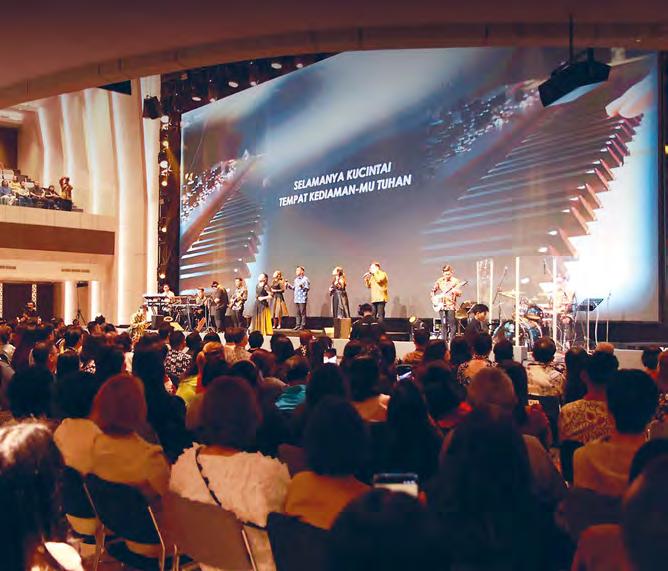
“Our goal was to create a space where every person can clearly hear the message and fully engage in worship, no matter where they are seated,” explained Yosua Wirawan, sound engineer at GBI Filadelfia Makassar.
To meet these requirements, the Blessing Centre selected a KV2 Audio system based on a point source design philosophy. System implementation was handled by the project installer, Deny C Fadjar, who boasts extensive
The system is managed using Dante Domain Manager, which provides network segmentation, device monitoring, security and clock synchronisation across four dedicated VLANs. In the central broadcasting room, a Q-SYS Core 610 DSP functions as the audio matrix, while AMX NMX 2600 Dante AV-A series encoders and decoders handle video distribution between classrooms. Netgear AVLine switches support the network infrastructure and an AMX control system manages classroom power, device control and AV routing. API integration with Dante Domain Manager allows video routing to be controlled externally within the custom control environment.
The completed system delivers centralised, real-time control of audio and video across the entire campus, eliminating the need for staff to physically manage individual rooms. Beyond resolving existing operational challenges, the network-based architecture provides scalability to support future expansion and technology upgrades.
Following the project’s success, Seoul Visual Tech has expanded its use of Dante and Dante Domain Manager across other Samsung facilities, including semiconductor sites, and continues to explore additional large-scale, Dante-based deployments.
www.audinate.com
experience in designing and optimising sound systems for large-scale worship environments.
“The wide-format layout with balcony and under-balcony areas required a system that could deliver consistent coverage without unnecessary complexity,” explained Fadjar. “KV2 Audio’s point source design allowed us to achieve excellent intelligibility and musicality across the entire space with a clean and efficient system design.”
Rather than relying on a high number of loudspeakers, the system was designed to operate as a unified whole, producing wide, focused and coherent sound coverage throughout the venue. Serving as the backbone of the balcony delay system, four KV2 Audio EX26 units play a key role in maintaining sonic consistency in areas further from the main sources. The EX26 was chosen to preserve vocal clarity and musical definition without sounding strained, even at lower sound pressure levels.
Supporting the main seating area, two EX12 cabinets serves as the main PA, while two EX1.8 subwoofers provide low-frequency reinforcement. In the under-balcony areas, four ESD25 boxes provide intelligibility in acoustically challenging zones, while two EX6 loudspeakers are used as front fills to help unify coverage in the front rows.
The manufacturer’s SAC2 system amplifiers and SDD3 system processors handle processing and control for the entire setup, enhancing time alignment, tonal balance and performance across all zones. The team noted that since its inauguration, the Blessing Centre at GBI Filadelfia Makassar has delivered a significantly more immersive worship experience. “With the new sound system, the spoken word is clear throughout the room and the music feels warm and immersive without being overwhelming,” concluded Wirawan.
www.goshen.co.id www.kv2audio.com
Canadian singer and rapper AP Dhillon recently stopped off at the Indira Gandhi Indoor Stadium (IG Stadium) in New Delhi as part of his One of One Tour. For the show, Hertz & Pixelz supplied and operated a d&b audiotechnik GSL system, working alongside the brand’s Indian distributor Ansata on the deployment.
It was reported that the GSL system used for the event is the only one of its kind currently operating in India, owned and maintained by Hertz & Pixelz. Ansata supported Hertz & Pixelz through the end-to-end delivery of the GSL system, followed by structured technical training covering systems design, array processing workflows, amplification, networking and best-practice deployment for large-format touring applications. This training was provided to ensure that the system was not only commissioned correctly, but could be
The audio configuration comprised 32 GSL main arrays, with 40 KSL units deployed for fills and mid-field coverage. Low-frequency reinforcement was provided by 40 of the German manufacturer’s SL-SUBs, while 12 AL90 augmented array modules provided additional sound reinforcement. Onstage, monitoring for Dhillon and his band was handled by six M4 stage monitors.
The team deployed d&b Array Processing to optimise the systems, facilitating uniform coverage, controlled low-frequency behaviour and clarity from FOH to the furthest audience areas.
Purchased from Ansata, Hertz & Pixelz’s SL-Series inventory includes GSL8 and GSL12 line array tops, SL-SUBs and SL-GSUBs units, D90 amplifiers and DN1 system control and networking units, along well as for
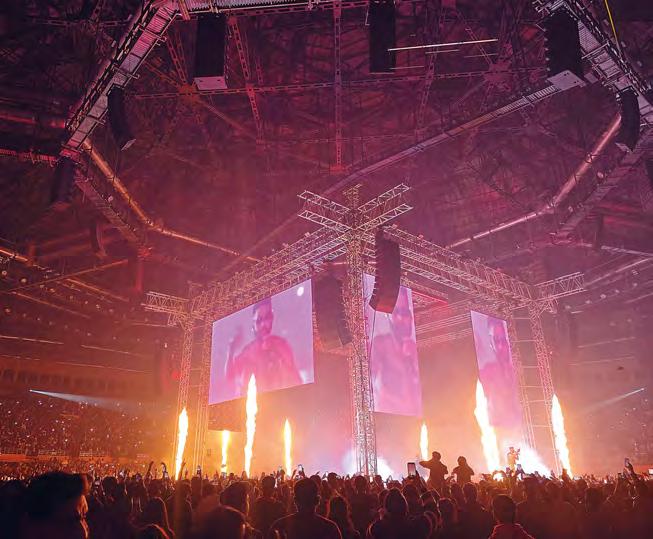
audiences
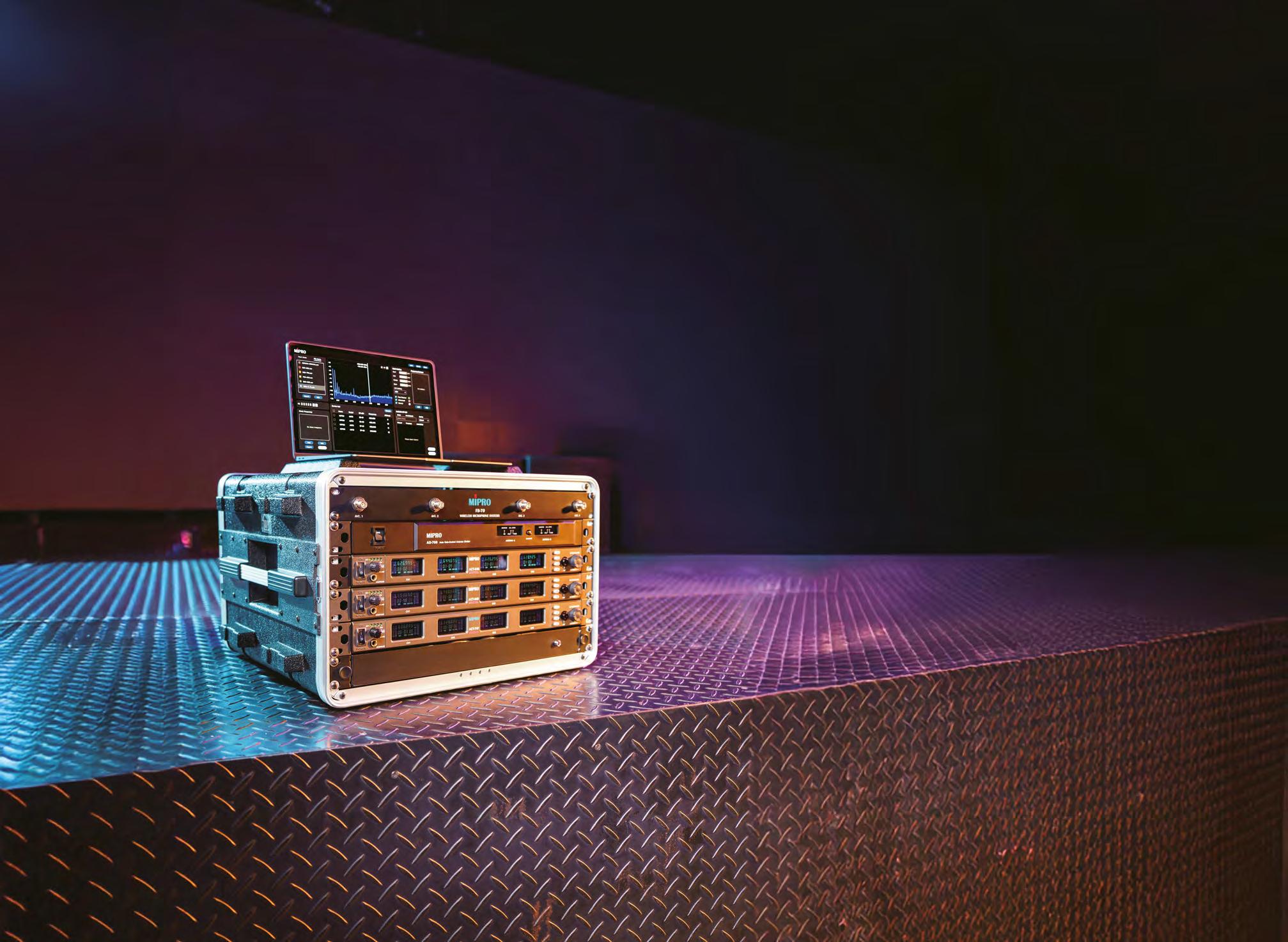
MWC (MIPRO Wireless Control) is your command center for managing multi-channel wireless microphone systems with ease and precision.
From one intuitive interface, monitor all live channels, adjust gain, mute settings, and track frequency and battery status in real time. Whether you're handling a concert, conference, or broadcast production, MWC streamlines your workflow—so you stay focused on what matters: flawless sound.

In what is reported to be the first L2 deployment in Vietnam, Aplus Saigon opened recently with an L-Acoustics L Series DJ sound system for its 1,000-capacity dancefloor. The project represents the second Aplus venue to partner with L-Acoustics distributor ProAVL Vietnam, following the brand’s Hanoi location which opened in December 2023.
The Aplus brand is highly regarded for international DJ bookings and high-quality electronic music experiences. The Ho Chi Minh City venue scales up both capacity and technical complexity from the 800-capacity Hanoi club, featuring a 279m2 single room designed around a front-to-back LED panel axis. The central dancefloor, layered VIP terraces and elevated seating create distinct zones while maintaining sightlines to the DJ booth.
International artists frequent the club’s monthly programming, alongside regional talent, playing tech house, melodic techno
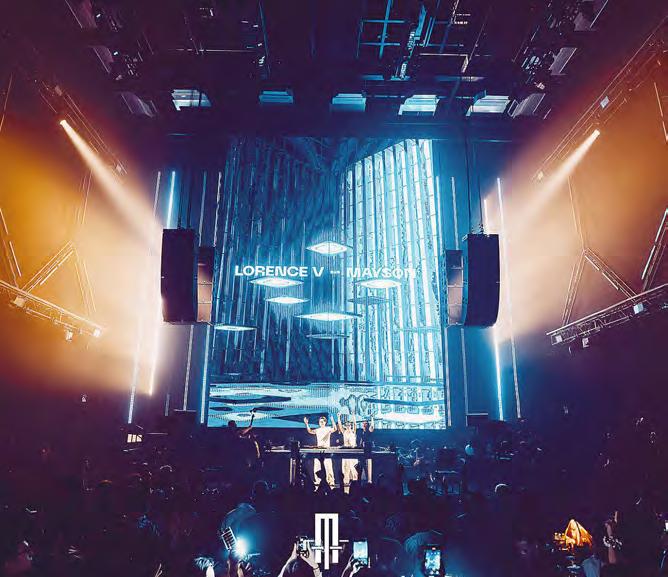
the team optimised coverage across the venue’s elevation changes and dense audience areas.
The main PA features one L2 and one L2D, while four KS28 subwoofers per side form the low-end foundation for electronic music. Two A15 Focus and Wide enclosures cover VIP seating positioned behind the DJ booth and DJ monitoring is handled by a pair of A10 Focus speakers per side. The system is powered by LA7.16, LA12X and LA4X amplified controllers, with P1 processing and LS10 switches completing the ecosystem.
“Soundvision predictions matched the installed performance closely,” noted Vo. “The coherent response across the room and smooth frequency transitions give us the headroom for high-SPL electronic music without distortion.”
audience density and multiple elevation levels
demanded a system capable of delivering high-impact energy while maintaining exceptional clarity and control,” he explained. ProAVL Vietnam used Soundvision to address the primary design challenge of
balancing low frequencies between the front-of-stage area and the back of the room. Working with L-Acoustics application engineers Kim Fai Hep on system tuning and Chung Wah Khiew on systems design,
It was reported that, since opening, engineers have focused on the system’s ability to push volume while maintaining clarity. “The L Series installation supports Aplus’ long-term vision to meet global sound standards while maintaining local identity,” concluded Vo. “It positions Vietnamese nightlife alongside leading international clubs.”
www.l-acoustics.com www.proavl-vn.com
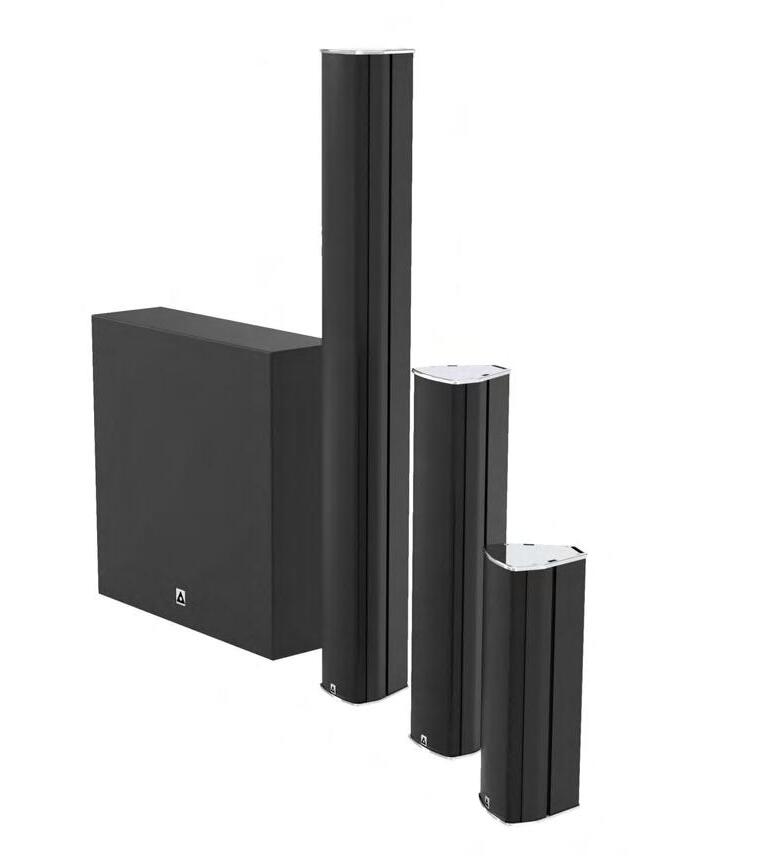
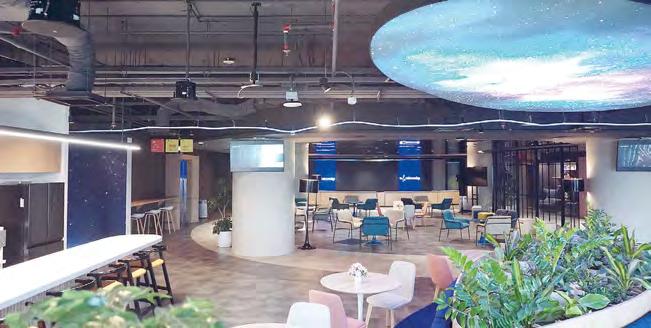
Malaysian network provider
CelcomDigi Berhad’s new training centre in Petaling Jaya, Selangor, has been outfitted with a Yamaha Commercial Installation Solution (CIS). The system was installed by local integrator Hitecindo Kharisma (HIKA) to meet the company’s individual requirements for the divisible training room, tech talk area, immersive space, cafeteria and bowling alley.
Located in the CelcomDigi Tower, CelcomDigi Academy aims to become a new Malaysian landmark. It has been designed as a hub for cutting‑edge engineering and purposeful, people‑first innovation in conjunction with the company’s mission of “Advancing and Inspiring Society – with Technology That Elevates Human Potential”.
Following careful consideration of other brands, HIKA proposed Yamaha solutions
for the facility under CelcomDigi’s objective of providing audio that inspires, not just informs. The setup includes full range speaker systems tuned for vocal clarity, as well as user friendly digital mixing suitable for various applications. The audio design was created to provide consistent coverage across multipurpose spaces, while acoustic treatments preserve intelligibility in flexible layouts.
The final setup features wall mounted VXL1W 16 line array modules and a STAGEPAS 1k mkII portable PA system, with low end reinforcement provided by VXS10S surface mount subwoofers. These are complemented by ceiling loudspeakers, including VXC6 and VXC4 units.
Powering the setup are a range of the manufacturer’s amplifiers, including XMV4140, PX3 and PA2120 units, while a Yamaha MTX3 matrix processor acts as the brain of the system. A Crestron control system was also integrated to manage the loudspeakers.
Yamaha Music Malaysia noted that the project posed various challenges such as
fitting the solution into the training centre’s sophisticated interior design. However, the team highlighted HIKA’s perseverance and hard work which enabled them to overcome this, with the integrator working closely with the interior designer to ensure a smooth project delivery.
Zulkifli Fiqry Aizat, business development executive at HIKA, noted his gratitude for being a part of the project, citing the support provided by Yamaha Music Malaysia’s audio division.
CelcomDigi’s head of commercial, technology infrastructure and security management, Hadie Zakaria, reported that the result is an audio environment that strengthens confidence, amplifies ideas and enhances storytelling, which he regards as the very foundation of impactful communication. “We wanted every voice to be heard clearly, because every idea matters. That’s where real impact begins,” he said.
www.hika.com
www.yamaha.com/2/proaudio
The ancient capital of Kaifeng city is being transformed into a sweeping canvas of light, architecture, landscape and water for the Moon Over Kaifeng’s Southern Courtyard nighttime spectacle. The large scale experience in Henan province incorporates 24 Christie HS Series, Inspire Series and Captiva laser projectors, installed and commissioned by Jianye Display.
The cultural tourism project has been designed to reinvigorate Kaifeng – the ancient capital of eight dynasties – after dark by combining immersive projection and live performances to animate a historic government courthouse and a picturesque lake.
“This project demanded absolute precision at every stage, from structural validation to sub millimetre calibration,” said Zhiqiang Tan, project manager at Jianye Display. “The Christie laser projectors used in the performances provided the brightness, reliability and image consistency needed to transform complex architectural and natural surfaces into a cohesive, emotionally powerful nighttime experience.”
Jianye Display’s technical team worked from concept to completion to navigate complex challenges, from structural verification to fine tuned laser calibration. Tan noted that precise adjustments helped to reduce projection focus variance to within 0.5mm ensuring that history is presented with contemporary clarity and visual fidelity.
Each evening, amidst the echoes of drums through the city gate tower, a
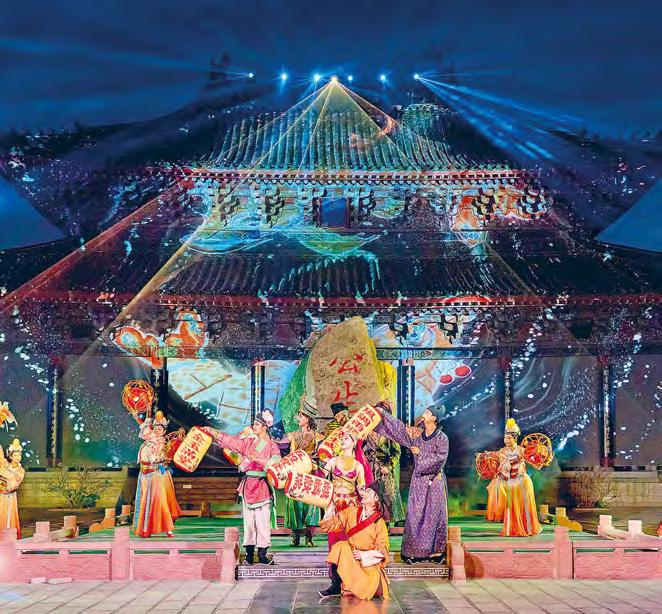
3D countdown signals the start of the performance. A choreographed crescendo of gauze screens, mountain backdrops, a stone tablet and a hall converge to culminate in a performance depicting legendary Song Dynasty judge Bao Zheng, also known as Justice Bao.
The primary performance venue, Heavenly King Hall, features a 31m x 17m (WxH)
projection that transforms the grand façade into a living mural. This visual centrepiece is achieved using six HS Series laser projectors delivering 19,150 lumens each, bathing the structure in imagery that sets the stage for immersive storytelling rooted in Song Dynasty history. Adding further depth and drama to the live performance, vivid imagery flanks
the hall on gauze screens measuring 16m x 3m (LxH). These visuals are delivered via rear projection using 10 Captiva DWU500S short throw laser projectors, enveloping audiences with layered, three dimensional scenes designed to enhance both scale and intimacy.
A stone tablet in front of the Heavenly King Hall also becomes another storytelling surface with a three sided projection featuring two DWU760 iS units to animate the stone with visuals that reveal the Chinese character for integrity, stroke by stroke. The projections measure 3.8m x 3.5m (WxH) across all three sides. The mirror like Mingjing Lake takes centre stage at the rear garden of the historic courthouse. Here, six HS Series laser projectors illuminate a 30m x 14m (HxW) mountain backdrop and a 17m wide water screen. Used in conjunction with live performances, the visuals unfold like an unfurled scroll – merging water, poetry and moonlight to celebrate the works of Su Shi, a revered Song Dynasty poet. “Moon Over Kaifeng’s Southern Courtyard is a powerful example of how projection can bridge heritage and modern storytelling,” said Gene Wang, director of pro AV sales for China, Christie. “By combining multiple Christie laser projectors in a single, large scale deployment, the project showcases how advanced visualisation can elevate cultural tourism and bring history vividly to life.”
www.christiedigital.com
As part of their THIS IS FOR sixth world tour, global K-pop sensation Twice recently took to the stage at the National Hockey Stadium in Bukit Jalil, Kuala Lumpur. Their highly anticipated return to Malaysia featured a specially designed 360° stage with visuals powered by INFiLED’s HL3978 transparent LED display.
The show marked the first time that the group had performed on the unique stage setup, offering fans a new concert experience that broke away from the traditional front-facing configuration. The stage was designed to ensure that every seat in the venue got an elevated
The transparent cubic setup featured four sides of LED structure measuring 17m x 5m (WxH) with a screen resolution of 4352x640 pixels per side. According to the team, the HL3978 proved to be the ideal solution for the project as it has been engineered to provide performance and flexibility in applications such as concerts, music festivals and large-scale events.
Despite the tight five-hour setup window, DC Zon said it executed the installation without any issues. It was noted that the 7.5kg HL3978 cabinets and ergonomic handle design proved
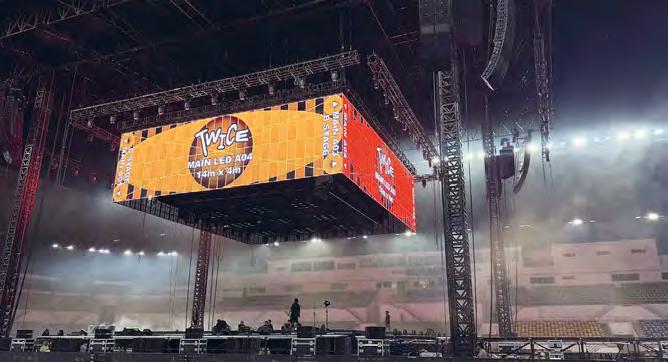
viewing experience, transforming the stadium into an immersive arena where fans could experience the energy of Twice from every angle.
The INFiLED display was provided by DC Zon Productions Malaysia, a specialist in professional audiovisual rental, videography, photography and event production. A total of 340m2 of transparent LED panels formed a large cubic structure, crafted to captivate the audience with visual effects.
particularly useful, enabling quick assembly without compromising precision or quality.
INFiLED said it was proud to have partnered with DC Zon for the event and noted it plans to continue working with the Malaysian company to bring more visual experiences to life in the region.
www.dczon.com.my www.infiled.com
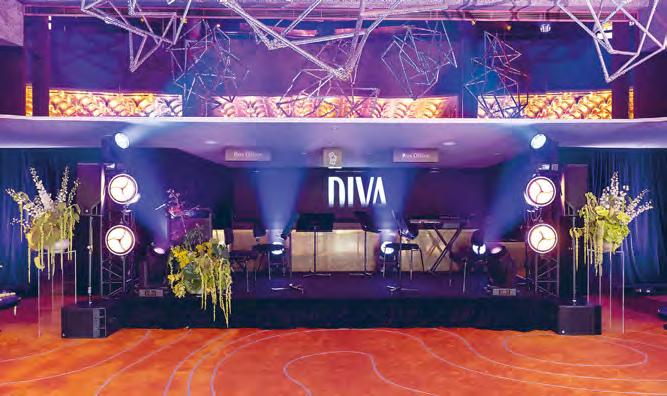
The Australian Museum of Performing Arts (AMPA) has implemented a Quest Engineering sound system, chosen to meet the technical demands of the venue and its high-profile exhibition schedule. Located within Melbourne’s Hamer Hall, AMPA is the newest offering from the Arts Centre Melbourne and has been designed to accommodate international touring exhibitions as well as showcase the Australian Performing Arts Collection – an archive of over 850,000 objects spanning circus, dance, music, opera, theatre and entertainment.
For the project, Arts Centre Melbourne partnered with Melbourne-based Quest Engineering as a preferred audio supplier. It was noted that AMPA’s strong focus on Australian art aligned with the selection of an Australian audio brand for the installation.
Working alongside the arts centre’s technical team and a system design specified by Aston Consulting, Quest supplied a set of its Dante-enabled QXD amplifiers and a fleet of Qi5 and Qi25 loudspeakers, along with Qi12S installation subwoofers.
The loudspeakers are powered by the brand’s Class-D 4-channel QXD amplifiers with DSP which feed the venue’s customised speaker patch system. Integrated by Lume Electrical Solutions, this setup allows for the connections between speaker runs and amp channels to be reconfigured for the unique requirements of each exhibition. Show control software feeds external sources to the QXD amplifiers via Dante, with the amplified signal then being sent onto the patch system.
For the opening night of AMPA’s inaugural exhibition DIVA, Quest collaborated with Arts Centre Melbourne as a technology sponsor, supplying additional PA equipment for a temporary stage. This stage was used for speeches and musical performances by special guests, including Victorian government representatives and major Australian artists. The loadout included HPI110 loudspeakers and HPI12S subs, powered by QX amplifiers.
www.grouptechnologies.com.au www.questaudio.com.au
Media Storm, one of China’s leading digital content creators specialising in filmmaking and technology, has adopted Blackmagic Design’s URSA Cine 17K 65 and PYXIS 6K digital film cameras. The company has also built a new ST 2110 IP live production system using an ATEM Constellation 8K live production switcher and developed a complete end-to-end production pipeline from acquisition and livestreaming to postproduction using DaVinci Resolve Studio and Blackmagic Cloud for collaborative editing. The team at Media Storm had been eagerly awaiting the arrival of the URSA Cine 17K 65 since its launch. “The incredible 17K resolution combined with the 65mm sensor delivers an unmatched level of detail and cinematic depth,” said Media Storm founder Tim Pan. “The 65mm format is perfect for scenes that demand a strong sense of immersion and visual impact, really drawing the audience into the story.
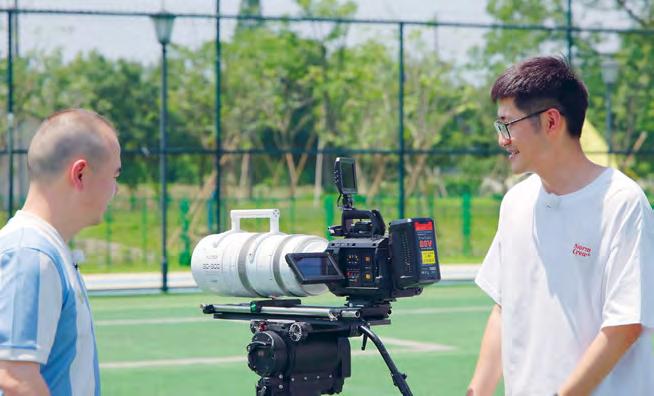
“When shooting vertically, the built-in screen on the PYXIS 6K can serve as a top monitor,” continued Pan. “With its numerous mounting points, it’s easy to attach all kinds of accessories. It’s great
for both creative, non-traditional shooting and live production applications.”
In Media Storm’s new live production building, the entire studio layout follows standard broadcast engineering practices, featuring a
separate studio, control room and equipment room, designed to minimise interference between spaces. “Blackmagic ATEM switchers offer powerful camera control through SDI embedded signals, allowing iris, colour and other remote adjustments directly on our cameras,” Pan explained. “The VISCA-over-IP support added to the ATEM Constellation series lets us control IP PTZ cameras over the network without RS-232/422 cabling.”
Media Storm also uses Blackmagic 2110 IP Mini BiDirect 12G SFP converters as ST 2110 IP gateways, while the live production team enlists DaVinci Resolve Studio, DaVinci Resolve Replay Editor, HyperDeck recorders and a Blackmagic Cloud Dock 2 network storage solution to enable slow motion replay and instant highlight editing during livestreams. Postproduction for Media Storm’s three major channels, Media Storm, One in a Billion and STORMCREW, is fully handled within DaVinci Resolve Studio.
www.blackmagicdesign.com

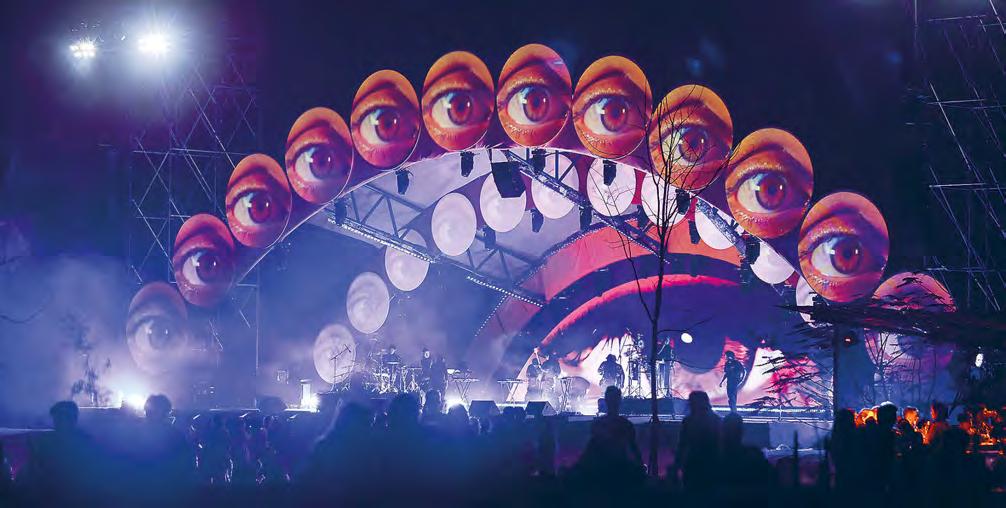
Mr Team Productions delivered audio for Wonderfruit 2025, deploying Martin Audio, DiGiCo, NEXO and Quest systems across one of Asia’s most technically demanding festivals. Held at The Fields at Siam Country Club in Chonburi, Pattaya, the event combined live music with immersive art, wellness and experiential spaces across a vast outdoor site.
Working closely with Fuzion Far East, the Bangkok-based production company provided sound reinforcement for more than 30 areas, including live stages, DJ venues and installations. “It was great to work alongside Mr Team; they put in a huge amount of effort to run this technically demanding festival,” said Joshua Oates, business development director, Fuzion.
According to Mr Team Productions director Pok Sutat Kohkiat, scale remains the primary challenge. “The festival stretches across around 1 million m2 – roughly the size of 140 football pitches,” he noted. “Altogether, there are between 30 and 40 different sound zones across the site.”
DiGiCo consoles were deployed across the main stages. The Creature Stage used a Quantum 328 and SD10, while Ziggurat and Moonlight Lounge each ran an S21. The SOT stage and Solar Village relied on SD12 consoles, Bann Bardo used an SD10, and the Forest Stage and Jungle House incorporated SD12 desks.
Martin Audio formed the backbone of several key areas and was positioned as a live showcase for the brand. The Creature
Stage was equipped with a WPC system comprising eight WPC elements per side, a four-box WPS centre hang and eight SXH218 subwoofers, powered by IKON amplification.
The SOT stage, focused on hip-hop and bass-heavy performances, featured Torus, with each side comprising three T1215 and one T1230, supported by four SXH218 subwoofers and CDD15 front fills. Smaller DJ-led stages including Moonlight Lounge and Sangsom used compact THS systems with SX218 subwoofers and WPM monitors with SX118 subs for DJ monitoring.
Beyond the main stages, NEXO and Quest systems were deployed across ambient and functional spaces. NEXO ID24s were discreetly mounted in trees and structures to create immersive environments, while Quest
QSA 200i systems were used in washrooms and transitional areas.
System choice also reflected Fuzion’s wider strategy. “People here already know what NEXO sounds like, but we wanted to showcase the British engineering rock-and-roll sound of Martin Audio in a festival environment – and there’s no better way than live,” said Oates. Originally, the plan was to deploy WPL on the Creature Stage, but shipping and customs uncertainties led to a last-minute change. Despite this, WPC delivered comfortably. “The headroom and sound quality were excellent, and most of the visiting engineers were very happy,” noted Kohkiat. “With FOH around 40m from the stage, the system was more than powerful enough for a mainstage show.”
For Oates, the event demonstrated performance under real festival conditions. “Most audio works happen in controlled environments,” he said. “Wonderfruit has multiple artists, different engineers every day, changing riders, dust, weather and long operating hours. That really shows how a system performs under pressure. We brought people in specifically to listen to the Martin Audio system and the engineers commented on the clarity, headroom and consistency across different styles of music.”
Over five days, the festival welcomed more than 35,000 attendees, with Mr Team Productions deploying 96 crew members to manage audio. Oates concluded: “Work on the next year starts almost as soon as the current festival ends.”
www.digico.biz
www.fuzion.co.th
www.martin-audio.com
www.mrteam.co.th
www.nexo-sa.com
www.questaudio.com.au
JAPAN
Osaka’s Umeda Club Quattro has upgraded its audio infrastructure with the addition of a Quantum 338. The console was supplied by DiGiCo’s Japanese distributor, Hibino, which also provides maintenance and support.
One of four live venues across Japan, Umeda Club Quattro first opened as Shinsaibashi Club Quattro in 1991 and, after closing in 2011, reopened in 2012 under its current name. Over the years, the hall has hosted major artists including Lenny Kravitz, Nirvana and Linkin Park. With both domestic and international acts regularly performing, being rider friendly was a key requirement for the FOH console.
Having used its previous console for 10 years, the club carried out extensive research before investing.
“Pursuing better sound quality was one of our goals, so the 32-bit SD-Rack cards were a must,” explained venue audio manager Kiyokazu Kanda of Take Five, the audio company responsible for hall management across all four Club Quattro venues. “The higher bit depth delivers the feel of higher resolution, clarity and richness. Separation is improved and the sound image feels closer, giving more depth and making it easier to add contrast and shading. This makes it feel like the canvas for placing sounds in space has expanded.”
The research began in 2023, when Quantum 338s were not widely used in similar venues in Osaka. Over time, the team found many engineers were already familiar with the console and were able to explain features the venue team had not yet explored.
“We were expecting many more operational questions than we received. In fact, we’ve found ourselves learning routing and other details from touring engineers,” noted Kanda. “Ensuring operators could use their touring show-files was another major factor, but the console is very well thought out, too. Visibility is good and the way it minimises the number of actions required makes it a great console.”
According to the venue manager, the console’s design has improved the engineers’ experience. He cited the On/Off switch buttons as being a comfortable size, while encoder colours change when switching functions, improving visibility. “For dynamics, you can choose the COMP behaviour from Hard/Mid/Soft so you can avoid the overly aggressive feel common to digital compressors and dial it in precisely,” continued Kanda. “The Gate opens and closes very naturally. It’s so easy to use that you
often only need to adjust the threshold and can leave the rest alone, which is a huge help.”
Kanda concluded: “Spice Rack displays graphics in real time, making it easy to see how much effect is being applied. The Tube is very useful. It’s great that you can handle everything within the console. It makes our work much more enjoyable.”
www.digico.biz www.hibino.co.jp
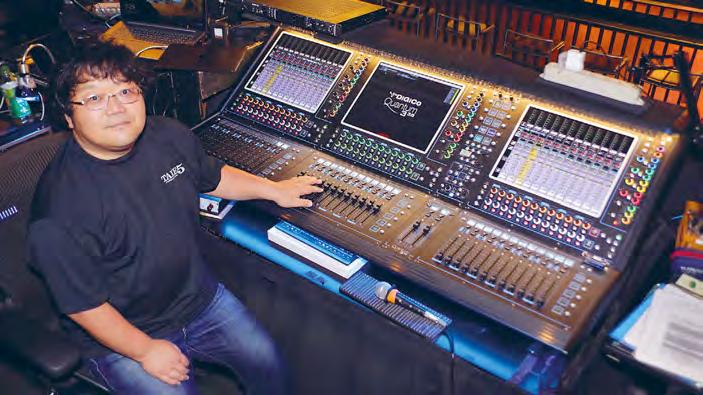
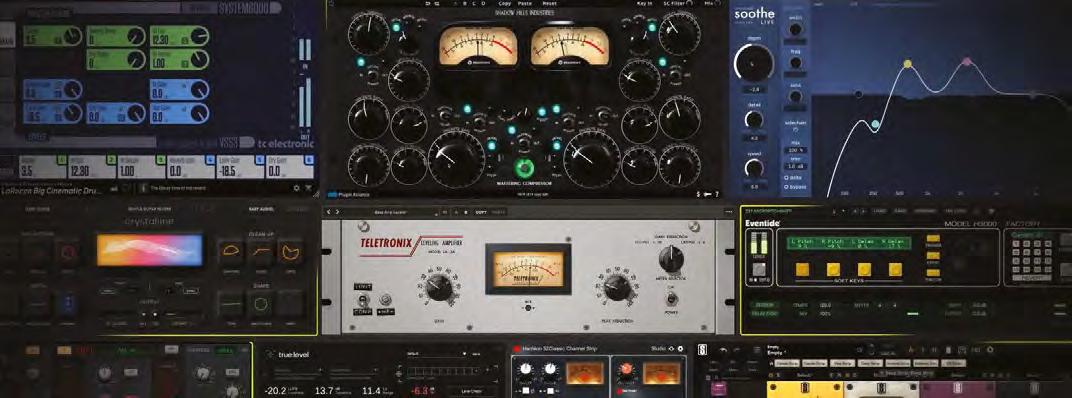
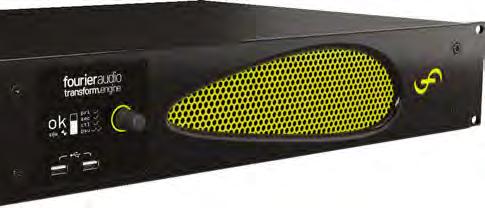
bring the studio to live! $699 for 12 months. key features
- one-click install and activation - manage a fleet of engines with ease online - one annual payment for non stop access - perfect for a rider

ROE Visual, Solotech and Sands China Entertainment have partnered to deliver a large-scale LED installation at The Venetian Macao. The display was created for the return of the NBA China Games and has been built entirely from 2,000 ROE Topaz 2.6 panels covering a total area of 500m 2 With the NBA league absent from China for nearly six years, the 2025 return carried symbolic and commercial importance – not only for the NBA, but also for its partners working to reintroduce professional basketball to the country. Sands China, which manages a portfolio of premier properties across Macao, entrusted Solotech as the supplier for The Venetian Macao. The goal was to create
visuals from all vantage points, including courtside, sideline and upper tiers.
Solotech and ROE Visual adapted to the change, navigating technical and logistical challenges to deliver the expanded solution.
It was noted that as ROE stocked LEDs from the initial binning, it guaranteed a perfect colour match for the expanded second order.
The project also posed various technical challenges, such as designing a dualsurface LED structure that met NBAregulated height requirements. Although the interior and exterior displays were hung on independent truss systems, custom corner solutions had to be fabricated to support the precise, parallel geometry. Equally critical was the development of a detailed
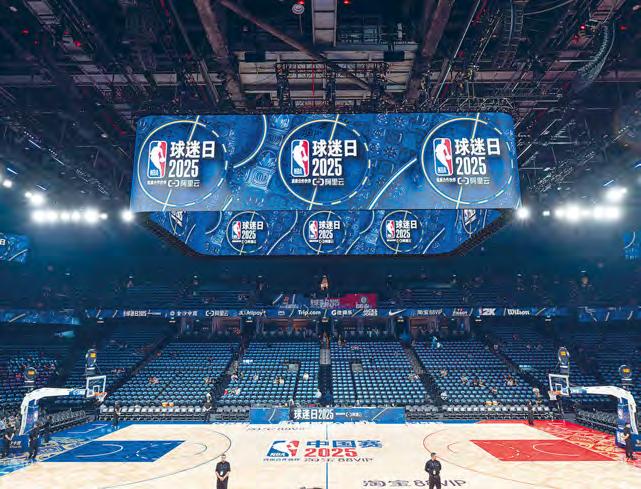
an LED display suspended above the basketball court that could deliver both functional and visually appealing content –including live game stats, player profiles, instant replays, sponsor content and immersive show visuals. For Sands China, the investment extended beyond a single event – the company needed a solution that it could permanently own, redeploy and reconfigure across its portfolio of venues and special events.
The original scope called for a conventional jumbotron-style display, focused primarily on exterior-facing screens for the audience. However, following creative direction and discussions from the NBA Legends Celebrity Game in 2024, Sands China entertainment department management expanded the concept to a dual-surface configuration with both interior- and exterior-facing LED screens – increasing the total display area by nearly 60%. Unlike a traditional jumbotron, which only projects outward in four directions, this setup provides audiences with
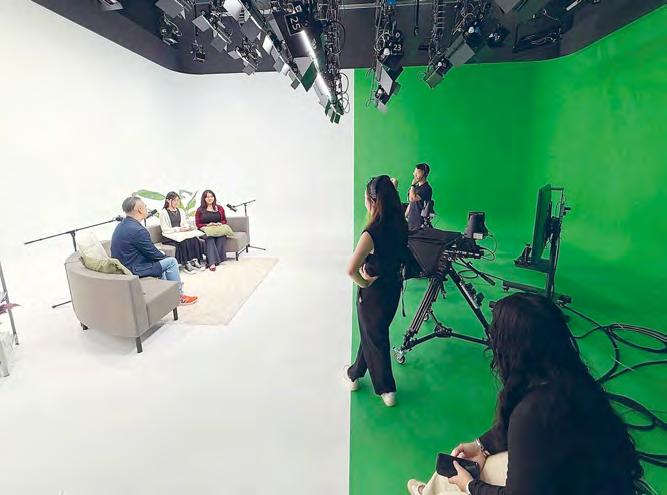
The Singapore Institute of Technology’s (SIT) Punggol Campus recently opened in the Punggol Digital District, which is reported to be Singapore’s first smart and sustainable district. Designed as a living lab for applied learning, research and industry collaboration, the campus serves approximately 12,000 students and 1,200 staff.
At the centre of the campus, within the W1 central library, SIT partnered with Ideal Systems to design and implement a multicamera recording studio. The studio was conceived not just for media students or trained operators, but for the entire university community.
Automation reduces postproduction requirements and simplifies operation, allowing users to focus on content rather than technical setup. The system is suitable for first-time users as well as more experienced operators.
load-distribution strategy that could safely support both LED surfaces while preserving the required 12m clearance above the court.
These solutions were engineered collaboratively by project lead technical director Cormac Veale, technical engineer Craig Burridge and technical head of video Neal Watkins.
“Working with ROE on the project management side has always been consistently professional and highly responsive,” commented Bob Barbagallo, senior VP of international business development, Solotech. “Their communication was the linchpin in delivering an on-time and on-budget solution.”
Jane Liu, account manager at ROE Visual, echoed those sentiments: “Solotech has been an incredible partner for many years. It’s a proud moment for ROE to see Topaz at The Venetian Macao and for it to be used in such a unique design.”
www.roevisual.com
www.solotech.com
The objective was to deliver a professional AV system capable of supporting broadcast production, podcasting, livestreaming, remote interviews and green screen workflows, while remaining intuitive for users without formal media training.
Working closely with SIT, Ideal Systems developed an NDI-based solution that combines broadcast-grade capability with a user-centric workflow. The studio integrates Zoom and Microsoft Teams, enabling faculty, industry partners and overseas collaborators to participate in live interviews remotely without being physically present.
For SIT, the studio serves a broader purpose than content creation. Digital Media Literacy is embedded as a university-wide competency and placing the facility within the library reinforces that it is open to all disciplines.
Students from non-media programmes use the studio to produce videos, presentations, simulations, internship documentation and podcasts, often for the first time.
“We didn’t want something with a very high learning curve,” explained Afida Rahim, digital media specialist at the SIT Library. “It’s not a large virtual production studio, but it’s advanced enough for broadcast, podcast, recording, streaming and live production, while still being manageable.”
The studio features Panasonic AW-UE100 IP PTZ cameras and AG-CX350 broadcast cameras, supported by Kiloview NDI converters and decoders. Audio capture includes Audio-Technica wireless clip-on and handheld microphone systems, Shure microphones, Yamaha powered monitor speakers and Audio-Technica monitoring headphones. Dual teleprompting systems with talent monitors complete the studio setup.
The control room is built around a Vizrt TriCaster TC1 Pro with TriCaster Flex Control Panel, delivering multicamera live production, recording and streaming with native NDI support. A Yamaha DM-3 digital audio mixer provides professional audio mixing, while Microsoft Teams and Zoom integration enables remote participation. Netgear PoE++ and Gigabit switches ensure high-bandwidth NDI transport. Video sources can also be routed to preview and editing spaces via Kiloview NDI decoders.
Rahim highlighted Ideal Systems’ consultative approach during the project lifecycle, noting that the integrator recommended updated equipment models when original specifications became outdated. “That honesty made a big difference,” she said. “The team really listened to what I envisioned and delivered a system that met our needs.”
Early student users have described the facility as professional yet approachable. Even those without media backgrounds found the automated workflows easy to understand, enabling them to focus on content creation.
www.idealsys.com
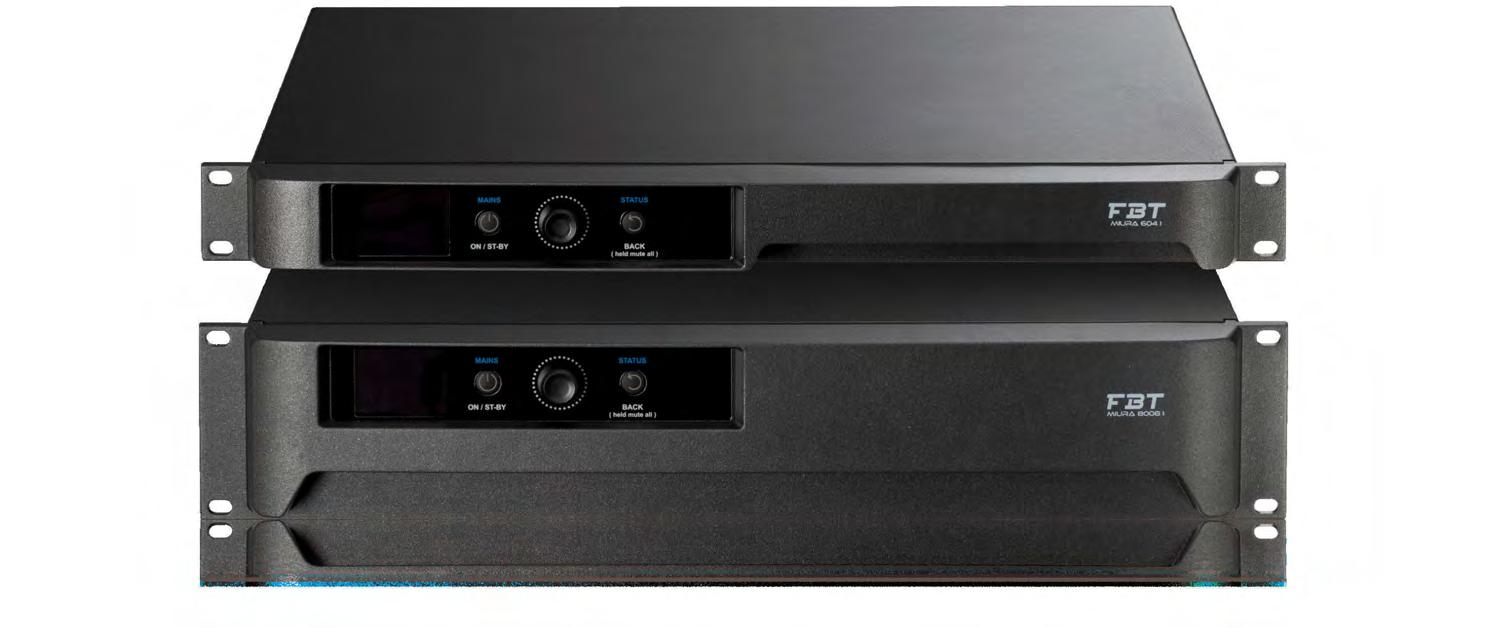

US superstar Post Malone performed his firstever solo headline concert in India, backed by a Meyer Sound system provided and designed by Phoenix Networks Global. Staged at the Khanapara Veterinary Grounds in Guwahati, the show welcomed tens of thousands of fans.
Phoenix handled complete audio production design and commissioning for the expansive open-air site.
“Our objective was not just to make the concert loud. It was about making it emotionally accurate,” said Animesh Mishra, founder director, Phoenix. “Post Malone’s music moves between genres and moods very fluidly, and our sound system had to be capable of translating every nuance with absolute fidelity across the entire audience area.”
SL Communications (SLC) supported the project with system optimisation, while lead tech Shaun Neil provided onsite support. “I loved the opportunity of working with Phoenix and the team,” said Neil. “It was an amazing experience and an inspiring working environment. Animesh’s dedication to detail and quality results made it worth every bit of effort to
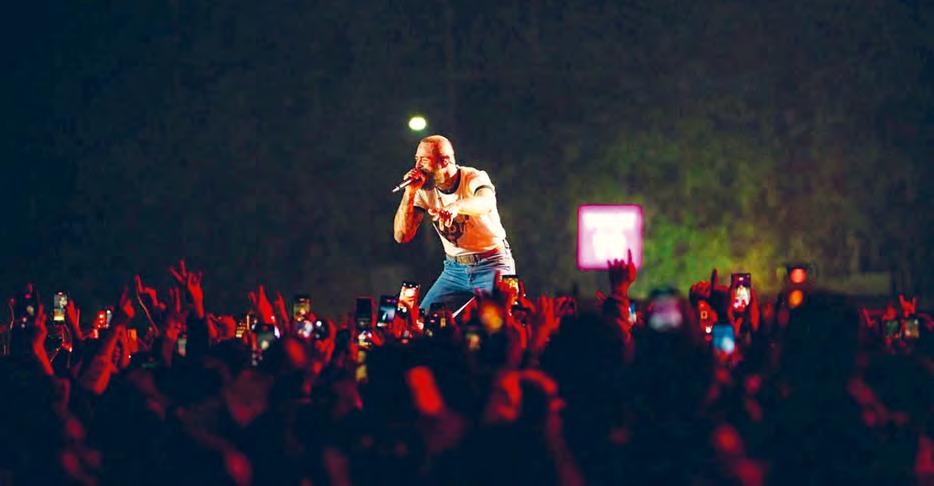
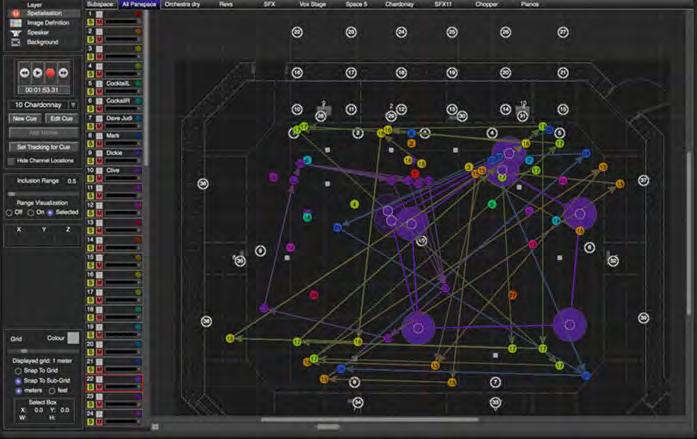

Unlike other systems, TiMax SoundHub gives full visibility and control over every spatial audio parameter, to deliver on any creative spatial immersion demand. It’s time for TiMax Spatial.
Two delay towers, each equipped
system to preserve clarity at the rear of the grounds. “When you’re deploying main PA hangs, out fill arrays, front fill systems and long
Mishra explained. “The care taken in time-aligning the entire system,
is what allowed the sound to feel natural and connected, no matter processors, with audio networking GigaCore 30i switches linking FOH
Malone’s touring team supplied their own RF and console package,
wireless systems and Sennheiser
“Events like this are milestones not just for artists and promoters, but for the entire live production

Mishra. “Our team approached this show with the mindset that every performance rather than competing
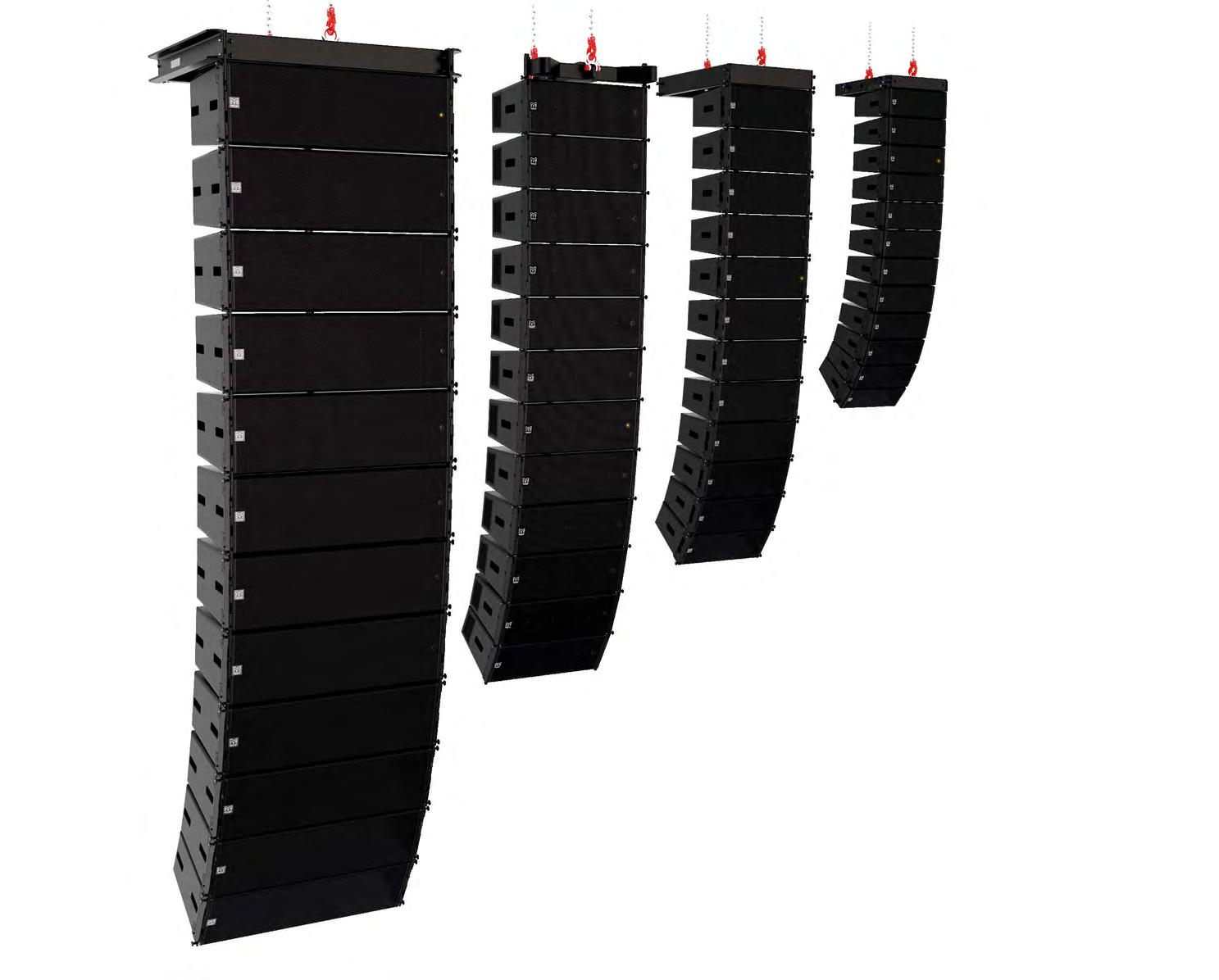
Chitkara University in North India has implemented a WyreStorm AV-over-IP ecosystem across its facilities to provide flexibility, reliability and ease of use. The educational institution has multiple campuses across Punjab, Himachal Pradesh and the Tricity region, as part of its investment in modern learning environments that support collaboration, hybrid education and large-scale events.
The university faced ongoing challenges with its legacy AV systems across auditoriums, large classrooms and executive meeting spaces. These included system instability, limited scalability, inconsistent user experiences and difficulty supporting modern teaching methods such as hybrid lectures, guest sessions and content recording.
In turn, it sought a scalable AV-over-IP platform that could deliver reliable 4K performance, simplify control for nontechnical users and support future expansion without redesigning the entire infrastructure.
Local AV integrator Pro Solution worked alongside WyreStorm to deliver a solution across the institution’s multiple campuses and space types. WyreStorm NetworkHD solutions were deployed at two large
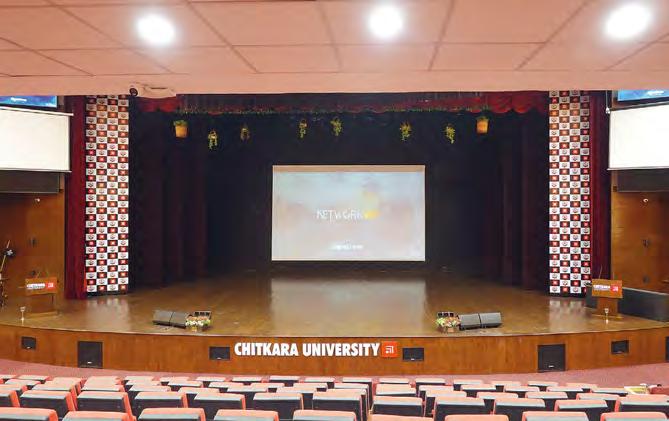
auditoriums – 300-seat and 500-seat respectively – at the Rajpura and Baddi campuses. The systems included
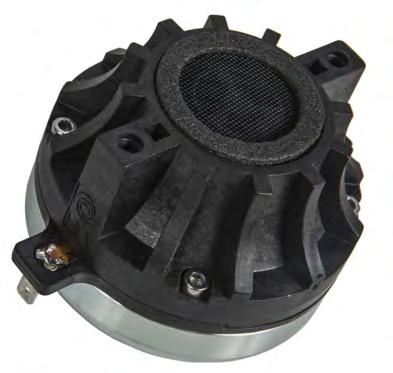
NetworkHD 100 Series encoders and decoders, in-wall NetworkHD transmitters for flexible input access, an NHD-CTL-PRO controller for centralised system management and enterprise-grade network switching. Nine large classroom spaces at the Rajpura campus were upgraded to support seminars, guest lectures and international hybrid sessions.
Each room now features WyreStorm in-wall HDBaseT switchers for USB-C and HDMI connectivity, HDBaseT receivers feeding high-brightness projection systems and CAM-210-PTZ cameras for lecture capture and conferencing.
The result is a flexible environment where multiple presenters can share content simultaneously, rooms can be merged or divided as needed and sessions can be streamed or recorded without additional hardware.
Senior leadership meeting rooms were equipped with WyreStorm’s unified UC and presentation ecosystem, including APO video bars and ceiling microphones, SW-640LTX-W presentation and conferencing switchers and APO-DG2-PRO wireless presentation dongles.
This setup was designed to deliver a cable-light, intuitive conferencing experience, allowing users to switch between wired and wireless workflows, support dual displays and host high-priority hybrid meetings with minimal setup.
www.wyrestorm.com
The Huayrai Eleena Chill #1 festival recently took place at Huayrai Arena in Sakon Nakhon Province, Thailand, supported by an Adamson Vergence Group system. Notably, the event marked the second deployment of the Vergence Group in Thailand, as well as the first full-system deployment in the country.
Adamson’s Thai distributor, Sonos Libra, worked alongside local rental company Team Creation on the audio design, which combined VGt line array loudspeakers with VGs subwoofers to deliver maximum power, control and impact for the festival.
Organised by Kong Huayrai, Huayrai Eleena Chill #1 centred on a laid-back festival concept, inviting audiences to enjoy music in a relaxed, open-air atmosphere. Kong
Huayrai also organised last year’s Nakhon Nan Music Festival, which marked the first VGt deployment in Thailand. That experience prompted the festival organiser to engage Sonos Libra once again to deploy the system for Huayrai Eleena Chill #1.

“This was our second deployment of the Adamson Vergence Group, and this time we were extremely well-prepared,” noted Phoom, sound engineer at Sonos Libra.
“We created system diagrams and user data sheets and sent them
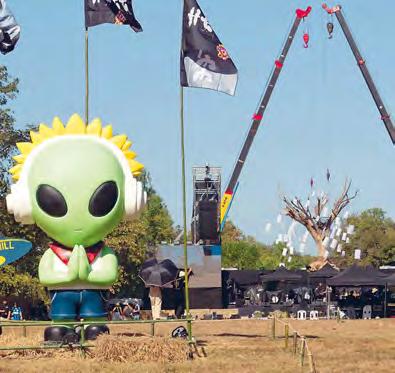
to the rental company in advance. We actually arrived at the venue a few hours later than the crew and, to our surprise, the entire system had already been rigged using Adamson’s AutoLock rigging system.”
The main PA system comprised 16 VGt loudspeakers, complemented by 16 VGs subwoofers for low-frequency reinforcement. Front fills were provided by 10 CS7 units, while two CS10p and four CS119 loudspeakers were deployed as stage side fills.
Phoom added that although the team had designed the system height and angles using Adamson’s
MALAYSIA
The Asia Zero Emission Community (AZEC) conference, held at the Grand Hyatt Hotel in Kuala Lumpur, brought together policymakers, industry leaders and sustainability experts from across the region for high-level discussions on decarbonisation and sustainable development.
With a highly international delegate base, seamless multilingual communication was a key requirement for the event. That requirement was met through a dedicated wireless interpretation and audio system based on Televic technology, fulfilled by event production specialist MD Event alongside Mahajak Trio Electronic, Televic’s authorised distributor in Malaysia.
The setup combined the manufacturer’s Unite wireless platform with Lingua ID interpreter desks, delivering real-time interpretation across multiple language channels. Delegates accessed translations using more than 100 Unite RP-T digital bodypack receivers with talkback
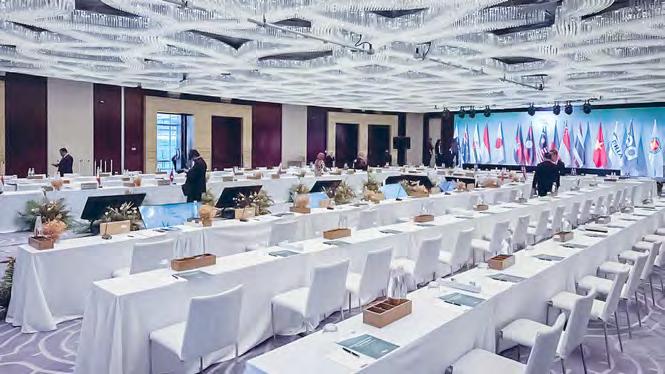
functionality, while interpreters worked from Lingua ID audio-only interpreter desks, each paired with PLM401F GSM-immune gooseneck microphones.
System control and audio distribution were handled by a Plixus AE-R Dante-enabled audio engine, enabling networked audio routing throughout the venue. Wireless coverage was provided via a Unite AP4 4-channel access
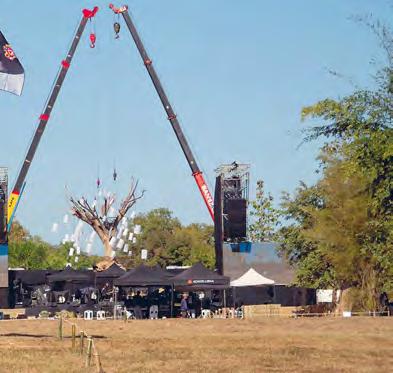
ArrayIntelligence software, further adjustments were made onsite following listening tests.
“We changed the subwoofer configuration, fine-tuned the array angles and heights, and optimised the tuning to maintain Adamson’s signature sound while supporting the local music styles of the performing artists,” he explained.
At FOH, the system was driven by an Allen & Heath dLive DM48 as the main mixing engine, controlled via an S5000 surface and processed through a DirectOut PRODIGY.MP to convert Dante signals to Milan AVB. This enabled integration with the Adamson system via three Adamson CS-Racks. A fully redundant system
architecture was implemented to ensure stable and reliable operation throughout the event.
To maintain consistent sound pressure levels and overall system performance during the show,
Rational Acoustics Smaart Suite was used alongside Earthworks Audio M30 measurement microphones for real-time SPL monitoring and system optimisation.
The Team Creation installation team noted that although it was their first time rigging the Adamson Vergence Group, they found the system easy to install, citing the user-friendly AutoLock rigging system.
“This was my second time mixing on an Adamson Vergence Group system,” said FOH engineer Lumplern “Boss” Wongsakorn. “The first time was at the Nakhon Nan Music Festival using only the VGt line arrays, where I was already impressed by the clarity and transparency. This time, hearing the Vergence Group in its full configuration with the Adamson VGs active subwoofers was truly impressive. The low end was deep, powerful and full of impact. I’m very happy to be mixing again on a worldclass sound system.”
www.adamson.ai www.sonoslibra.com
point, while power management and logistics were streamlined using three Unite CC Cockpit 36-bay charging and carrying cases, alongside Unite handheld transmitters for floor audio.
According to Ronnie Chee Vui Seng, technical director at Mahajak Trio Electronic, operational efficiency was a key advantage of the deployment:
“From a technical operations standpoint, the Televic system at AZEC proved to be a standout performer under tight schedules and high-pressure conditions. Setup was fast, the network stabilised quickly and both interpreters and delegates were able to use the system with virtually no instruction.”
He also highlighted the benefits of Televic’s charging and networked audio design: “The CC Cockpit charging case simplified our workflow by automatically resetting the bodypacks when docked, turning what’s usually a tedious process into a simple park-and-go routine. Integrating Dante via the Plixus AE-R allowed us to move away from complex analogue cabling to a clean, centralised audio backbone with pristine results.”
www.mahajaktrio.com
www.mdeventsasia.com
www.televic.com
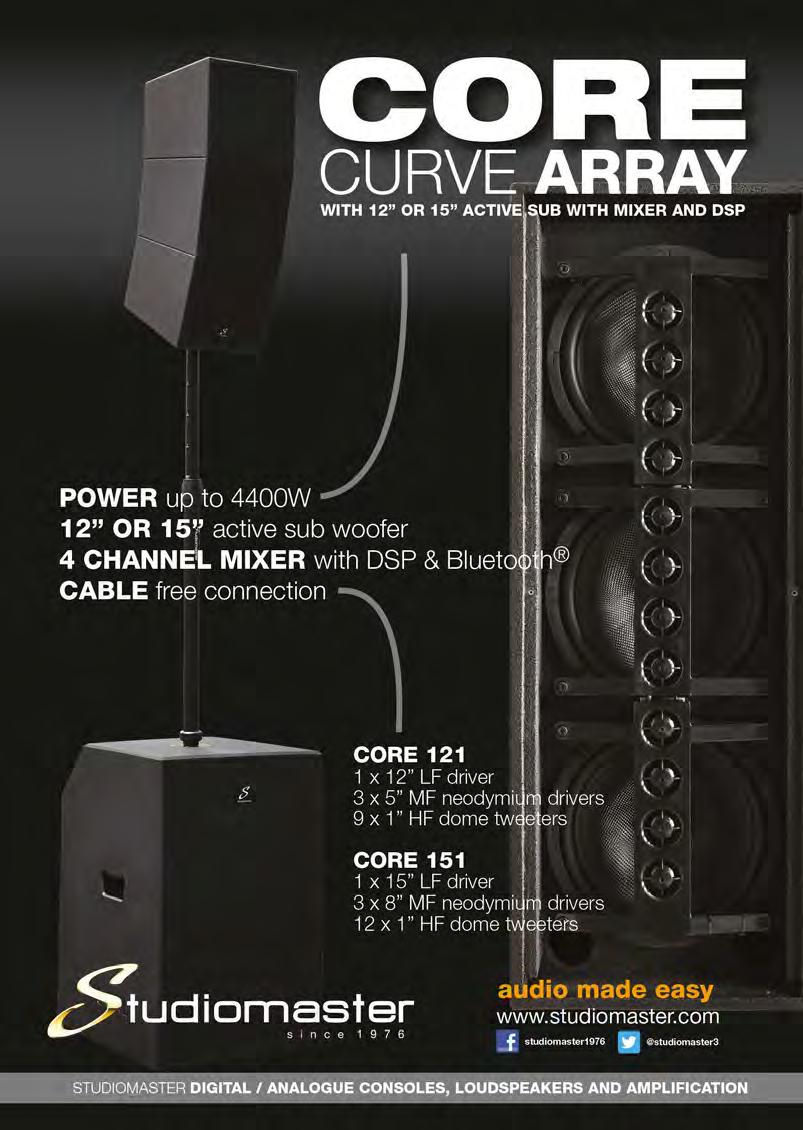
Shanghai Haoyun Intelligent Technology has designed and installed a NEXO sound system for a large conferencing hall at Zhongyuan Medical Science City. The modern development is set to become a flagship international centre for medical innovation, bringing together medicine, education, research, production and funding.
Zhongyuan Medical Science City is already home to various clinical and industrial research institutes and biomedical enterprises, with a 40,000m2 International Exchange Center providing an onsite venue for conferences and exhibitions, along with accommodation, banqueting and office space.
The performance criteria for the sound system at the centre’s large main conference hall were particularly stringent, with a focus on speech intelligibility, sound field uniformity, reliability and versatility.
AV technology specialist Shanghai Haoyun Intelligent Technology opted for a NEXO GEO S12 line array system comprising L-R main clusters of six boxes, with a central three-box cluster and LF extension from two pairs of LS18 subs onstage.
Eight ID84 column speakers are spaced equidistantly to the left and right of the seating area, with ID24 compact speakers used for front fills. Return monitoring for presenters is provided by four P12 point source speakers in a system powered by NXAMP Powered TD Controllers.
“This is a very large conferencing hall in which the ID84 columns supplement the main line array system to deliver excellent speech intelligibility to every corner,” commented NEXO Asia sales manager, Joe White. “Congratulations to the team at Shanghai Haoyun for another highly successful NEXO installation.”
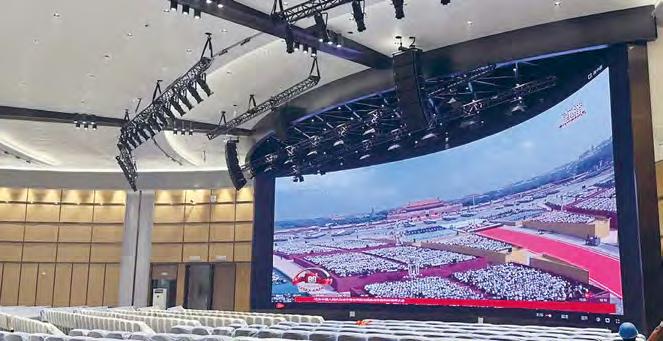
Originally built in 1962 as a French luxury liner, the Ming Hua now stands as a centrepiece of the Sea World cultural and tourism complex in Shenzhen. The now landlocked vessel recently reopened with an immersive physical theatre show titled The Deal featuring ETC lighting solutions.
The reopening show’s lighting design leveragred the ETC Gio console, Ion Xe Remote Processor Unit and the Response SMPTE Gateway. The Gio offers full control of conventional and moving lights, LEDs and media servers, supporting multiple users with partitioned parameter control and full backup. It was noted that this fit the venue team’s requirements and solved issues they had with their previous consoles and fixtures.
The Deal’s local production team ultimately chose the Gio console for mobile programming and the Ion Xe RPU for hot backup and playback. According to the crew, the consoles are ideal for the performance’s format, offering optimum programming and control capabilities for designers.
The lighting system supports eight major performance scenes and has over 10,000 control channels. This includes around 500 professional stage lights and special effects equipment for performance lighting and customised prop lighting featuring over 800 bulbs, 340m of light strips and 39 full-colour light boxes. The console has been incorporated to simplify control of brightness, colour mixing and functions, further enabling designers to achieve their artistic vision. All lighting data is visualised in a dynamic worksheet linked to scene drawings, showing lighting positions and parameters synchronised with actor and audience movement.
During performances, the Ion Xe functions as the main control unit housed in the lighting cabinet. The Gio console manages moving light programming and acts as a backup control station. The Response SMPTE Gateway synchronises audio and lighting triggers, streamlining show operations.
www.etcconnect.com
An LD Systems MAILA compact line array system was recently deployed as the primary sound reinforcement solution for a large-scale cultural event held at Vidhana Soudha, the legislative assembly building of the Government of Karnataka, Bengaluru.
The system was used for the inauguration of Bengaluru Habba, providing audio coverage for a wide audience seated across the venue. Due to its compact form factor, the MAILA system was selected to deliver consistent sound coverage while maintaining clear sightlines and minimising visual impact on the stage and the historic architecture of the venue.
The deployed configuration consisted of 18 MAILA SAT full-range modular line array elements, supported by four MAILA subwoofers and powered by four LD Systems SPA series power amplifiers. In addition, eight MAUI 44 G2 column PA systems were used as fill speakers at the extreme ends of the audience area, as well as for onstage monitoring. The overall system design provided controlled vertical dispersion, consistent horizontal coverage and sufficient sound pressure levels for both spoken word and musical performances.
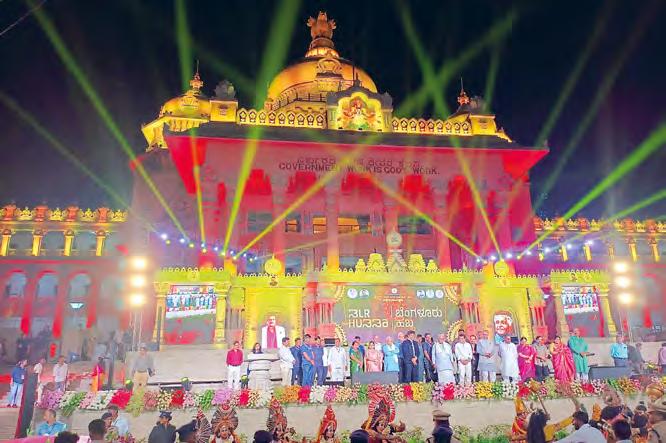
The project was executed for the Government of Karnataka. Laughing Water Productions (LWP) acted as the event production partner responsible for system integration and deployment. According to the project brief, the client required a slim-profile sound
reinforcement system that would complement the ceremonial and architectural environment of Vidhana Soudha while meeting technical demands such as high speech intelligibility, uniform audience coverage, adequate headroom for cultural performances and reliable
operation in large-scale outdoor and semioutdoor conditions.
LD Systems’ MAILA platform was selected due to its modular design, which allows system scaling based on venue size and audience layout. The system’s optimised dispersion characteristics are designed to deliver consistent sound pressure levels and frequency response over long throw distances, supporting uniform coverage across large audience areas. Low-frequency reproduction was handled by dedicated MAILA subwoofers, providing sufficient LF energy for ceremonial music and live performances without compromising clarity. The brand is distributed in India by its local partner, StageMix Technologies. Designed for professional touring and installation applications, the MAILA system’s compact enclosures and discreet mechanical design make it suitable for heritage and government venues where visual impact is a key consideration. The use of LD Systems’ SPA series amplifiers reportedly provided stable output, system protection and efficient power management throughout the event.
www.ld-systems.com www.stagemix.com
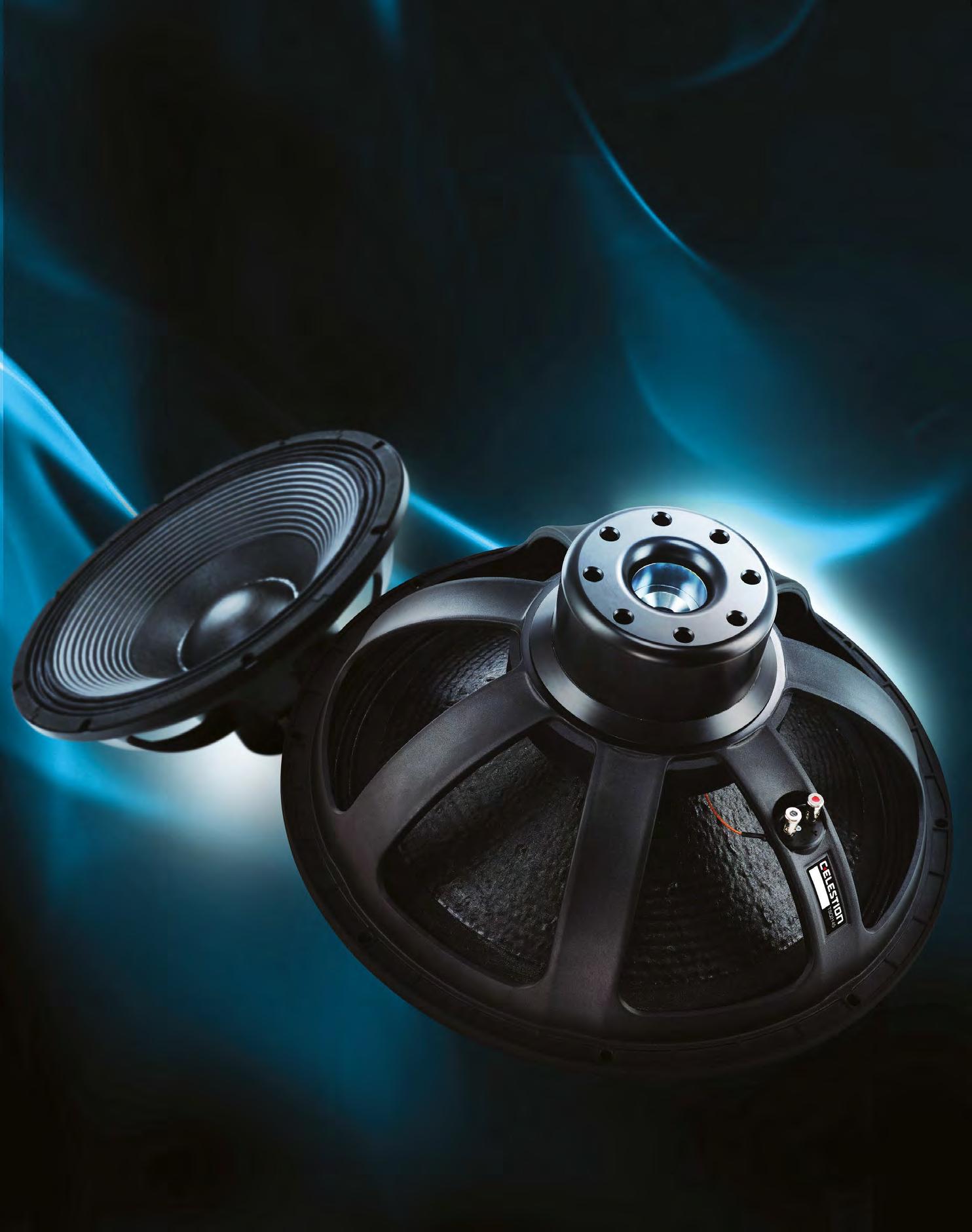
Designed and built in the UK, Ten Squared (Ten2) is a range of premium, low frequency loudspeakers. Engineered without compromise, they deliver consistently superior levels of performance in the most demanding professional sound reinforcement applications. All the time. Every time.
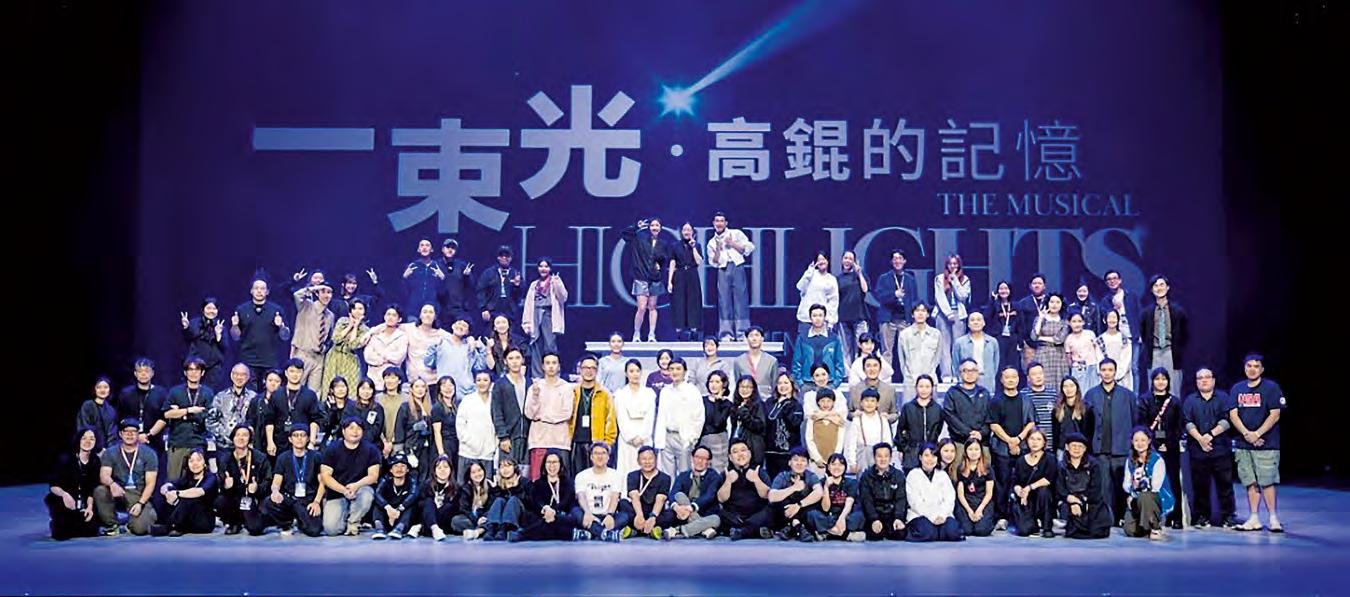
A new musical has celebrated the opening of a long-awaited, world-class performing arts and cultural centre in Kowloon. Sue Su visits
KONG’S EAST KOWLOON CULTURAL CENTRE
(EKCC) is the flagship venue of the Hong Kong Leisure and Cultural Services Department dedicated to promoting the integration of art and technology. It comprises six professional venues including the Hall, the Theatre, the Turns, the Beats, the Lab and Incubators, all equipped with a series of cutting-edge professional stage and AV technology, with d&b Soundscape in four of the venues and also available as a mobile system.
The EKCC’s opening season ran from November 2025 to February 2026. An original musical, Highlights: the Memories of Charles Kao, created and performed by a star-studded Hong Kong lineup, officially opened the EKCC in November 2025. Through the integration of art and technology, the musical showcased the life of the legendary Professor Charles Kao, the “father of fibre optics”, Nobel laureate in physics and former president of the Chinese University of Hong Kong. Tickets for an originally scheduled 10 performances sold out quickly, requiring the addition of five extra dates.
The musical was performed in the EKCC’s largest venue, the 1,196-capacity Hall, which is on two levels and offers both d&b Soundscape and Dolby Atmos sound system configurations. More than 170 d&b loudspeakers have been installed, with the d&b Soundscape frontal system comprising five arrays of six Yi8 and Yi12 compact line array cabinets flown above the stage. Each Yi line array is complemented by four groups of two Yi-SUB subwoofers. Other models include E8, Yi10P, 12S, 10S and 8S speakers for fill systems, balcony delays, ceiling effects and 360° surround sound. Six Bi6-SUB subwoofers further extend the lowfrequency range. The system is driven by a Soundscape DS100 signal engine and powered by 40D, 30D, 10D and 5D amplifiers.
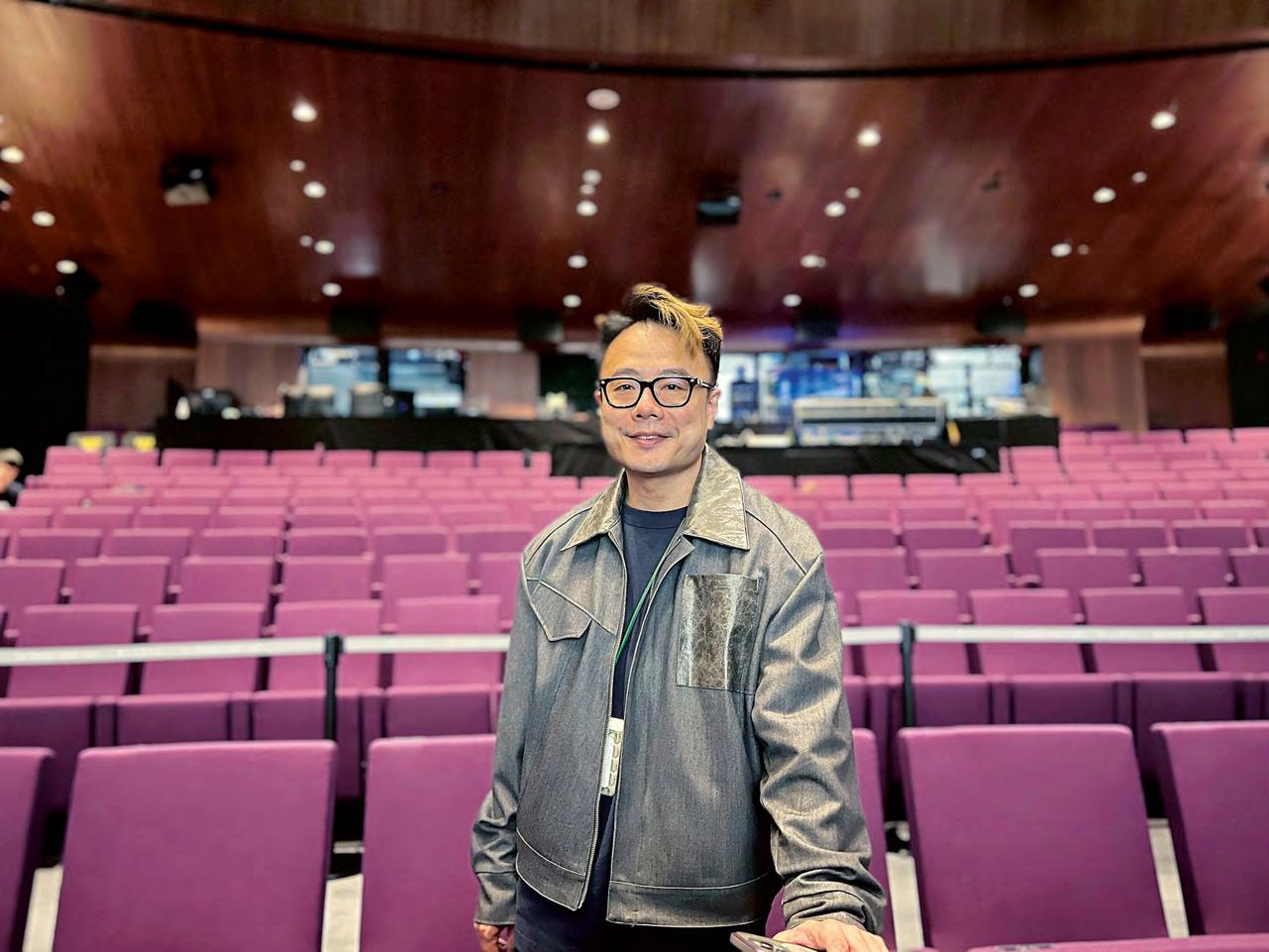
The frontal d&b Soundscape system consists of five groups of Yi8 and Yi12 cabinets and Yi-SUB subwoofers
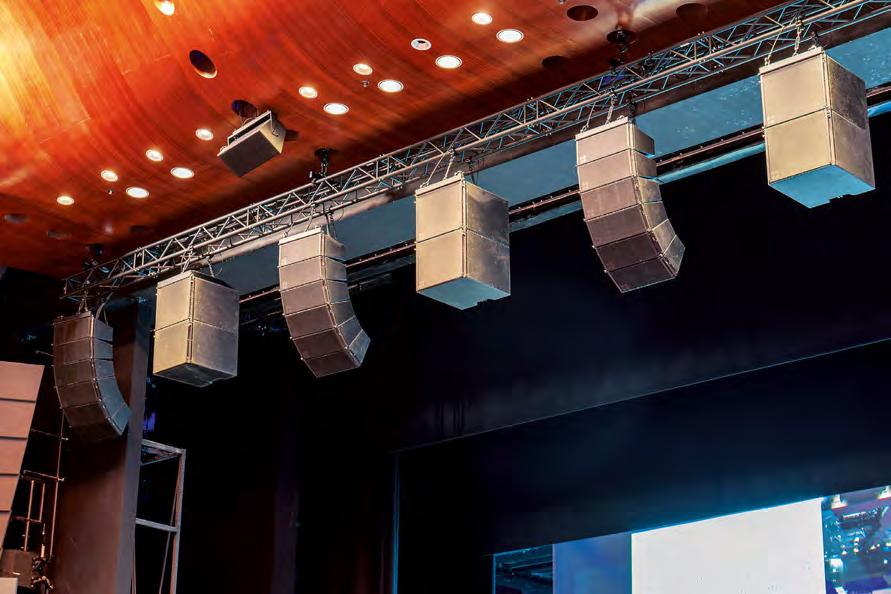
“The difference between an immersive system and stereo and surround sound systems is huge, especially in such a large venue,” says Yim. “Unlike traditional stereo systems, immersive technology
from the Leisure and Cultural Services Department to create a work showcasing the integration of art and technology for the opening of the EKCC, he suggested a musical format, believing that “musicals allow the audience to experience all the functions of the immersive system”. In addition to composing more than 20 original pieces for the best possible sound.
like Soundscape features many speakers distributed throughout the venue. This allows the sound to be conveyed to the audience so that, regardless of the distance between the seats and the speakers or the stage, the listening experience is very consistent. It means we can treat every ear fairly, which is actually very difficult because, physically, more speakers mean more interference, attenuation and delay. The d&b Soundscape processor cleverly solves these problems.”
Although Yim had used an immersive system to create a demo for this production three years ago, the system at the EKCC is much larger, so he visited d&b’s Greater China – Hong Kong headquarters to learn more at the Soundscape demonstration centre. With the help of d&b Greater China’s technical staff, he clarified his ideas and made the bold decision not to use a live band.
“I never thought I would give up using a live band until I discovered that the immersive system produced such a wide image that a live band would actually hinder the audience’s immersion,” he explains. “We have a lot of conceptual elements produced with electronic music at the opening of the show, with a very
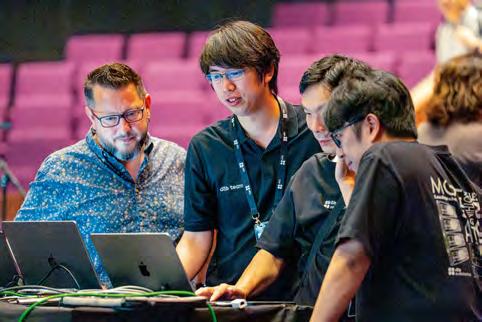
many traditional Chinese instruments operating within narrower frequencies. I think it’s impossible to retain so many instruments onstage when the sound image is so wide, so I preferred to record everything.”
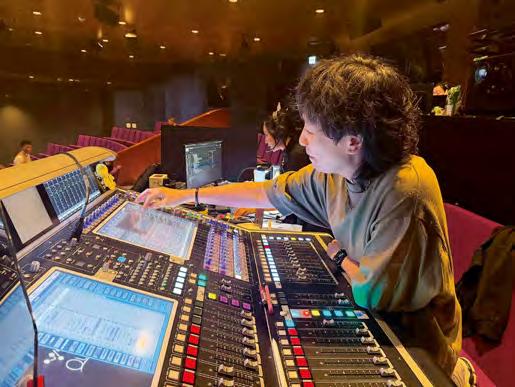
After making this decision, Yim focused on refining the prerecorded audio by travelling to Beijing to record the string section. Ultimately, the prerecorded music was played by a total of 30 people including an orchestra and a band, with the string section accounting for more than 80% of the music. When reproduced using the d&b Soundscape system, the different layers of sound were able to be fully showcased.
“This system has levelled up my production,” he says. “It’s difficult to achieve high resolution with stereo mixing because it only has one plane. Soundscape allows you to adjust the volume in the entire 3D space, easily improving the resolution without doing too much EQ or frequency avoidance. I only need to press a few buttons to solve many spatial problems, whether it’s drums, strings or vocals; you almost feel like you’re living inside the sound.”
Sound designer Candog Ha has won several Hong Kong sound design awards for her work on musicals and has extensive experience of working with d&b Soundscape. “Immersive systems like Soundscape can create a much richer range of effects than before,” she says. “We used Soundscape’s En-Scene to create
because it can simulate the reverberation of different rooms, creating a stronger sense of immersion.”
The final mixing of over 20 songs was completed in the Hall’s auditorium in four-and-a-half days on a DiGiCo Quantum 7T console. Yim was surprised by the accuracy of the venue and the system. “I especially want to commend the acoustics of the EKCC and the engineers from d&b who did the system calibration,” he says. “The entire venue has been calibrated very accurately. I did the balancing for all the songs in a recording studio and then brought them here, and I hardly needed to make any adjustments, which saved a lot of time. And the mix I created here sounded accurate, even when I listened to it in my car.”
Yim’s wife, who plays the erhu – a Chinese traditional instrument –and contributed to the music for the show, did some recording with a Neumann U87 microphone in the centre of the auditorium. “My wife told me she had never enjoyed recording so much because she could clearly hear how much force she needed to use in her playing,” says Yim. “This means the venue can be used as a mixing facility and a recording studio, which is incredible.”
After using d&b Soundscape, Yim has said that he now can’t go back to stereo systems. He even bought a ticket for the first show for his church’s pastor, suggesting that the church upgrade to an immersive sound system. “I hope more venues will install immersive systems, and that more productions of this type will emerge,” he concludes. “In large venues and for large-scale productions, the difference in the audience experience between immersive and other systems can be huge. My colleagues from EKCC and I sat in the last row of the balcony and the vocals were still incredibly clear.”
The EKCC’s opening season encompassed 17 programmes offering a total of 80 performances and events. The completion of the EKCC will reinforce Hong Kong’s position as a hub for cultural and artistic exchange between China and the world, as well as fostering talent development in the region.
www.dbaudio.com
Billing itself “the first and only resort-style event venue in Kuala Lumpur”, a new glasshouse ballroom at Ukay Hills is impressing with its vistas. Richard Lawn
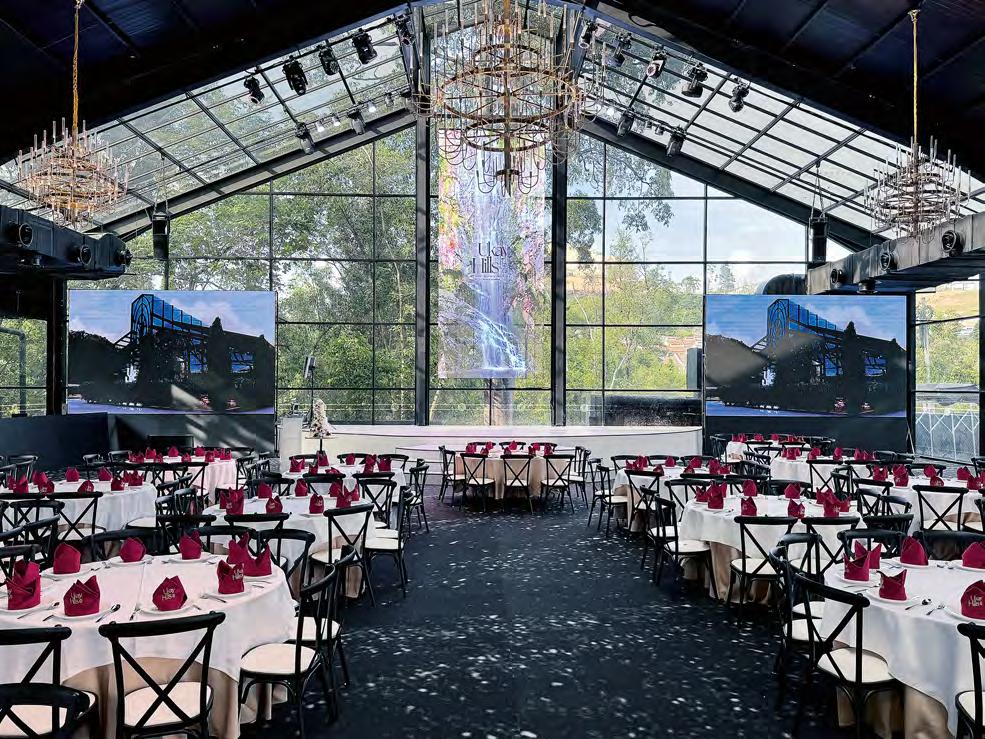
ONE OF KUALA LUMPUR’S MOST ICONIC EVENT
venues, the Ukay Hills Resort, recently revealed its newly constructed Estate Grand Ballroom. With the capacity to seat 550 guests, the glass and steel landmark distinguishes itself from the adjacent Pandora Ballroom and Centrepiece with a scenic 360° vista of the surrounding hills. With three of its six unique selling points listed as the LED screens, multicolour lighting and premium sound system, the latter required a delicate touch.
“Specifically designed for weddings, corporate events and private functions, music and speech are large components of the guest experience in our Estate Grand Ballroom,” assesses venue team manager Danial Amrin. “Ukay Hills is only 15 minutes from the centre of Kuala Lumpur, yet we differentiate ourselves from venues in the city because of our beautiful natural setting. Technically, we are in the city, but it is conveniently located away from the congestion and stress of city life. As such, it was vital that the audio did not distract from the aesthetics.”
Three LED screens provide added visuals to the setting created by Mother Nature. The L-R walls are composed of Unilumen P2.5mm displays arranged in landscape mode. A central transparent glass wall has been erected in a portrait configuration, with a screensaver of a cascading waterfall providing a captivating visual to incoming guests. The stunning displays are further enhanced by a powerful audio system that accompanies video presentations.
Together with his colleague, AV technician Raj Gopal Ooi, and the rest of the management team, Amrin evaluated several loudspeaker systems in the 800m2 ornately glazed ballroom. So that guests could understand speeches and enjoy music without delays or reverberance, intelligibility was a critical requirement. Ultimately, the team concluded that the HK Audio Contour CX 210 LT point source solution would fulfil the precise requirements dictated by the venue’s brief.
Supplied by distributor Page Innovates with installation carried out by SG Production in late August 2025, the loudspeaker design comprises L-R suspended HK Audio Contour CX 210 LT enclosures, capable of producing a maximum SPL of 132dB.
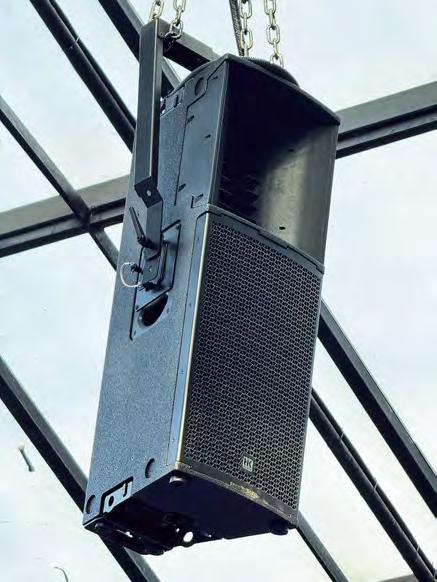
Just two FOH point source speakers are required to fill the space, their long-throw capabilities displaying no audible loss in SPL right to the rear of the venue. In addition, the speaker’s narrow and rotatable 60° x 25° (HxV) dispersion characteristics ensure that the sound waves cannot reverberate with the glass walls and ceiling. Finally, the sleek minimalist footprint of the Contour CX 210 LT seamlessly blends into the interior design of the glasshouse without distracting the eyes of guests.
Low-frequency extension is provided by a pair of floor-standing Fineo FO S218 dual 18-inch 2,000W RMS-rated subwoofers discreetly housed within the plinths of the LED walls. Acoustic modelling revealed a requirement for delay fills. Installed on a metal beam within the lateral glazing, a pair of L-R HK Audio SI Series P10j column speakers with 10 3-inch drivers fire directly into the venue from a height of 4m. A pair of Lab Gruppen IPX4800 2x2,400W amplifiers power the entire system and digital audio mixing is carried out on a Midas M32R control surface. According to Gopal Ooi, the EQ settings of the Contour loudspeaker system have only required simple adjustments between events so far. In addition to their straightforward operability, which is virtually plug-and-play, Gopal Ooi has been impressed by the handling of the diminutive speaker system and the accompanying subwoofers.
“The Contour cabinets are extremely slim and compact, but the long-throw capabilities of the dual 10-inch cabinet ensure left-right configuration can cover the entire venue,” he says. “The addition of two floor-standing dual 18-inch subwoofers provides sufficient low-frequency punch down to 33Hz to the rear of the venue, but the 210s on their own can reach 75Hz, making them perfect for intelligible speech and background music. In speech mode for weddings and corporate events, the clarity is excellent and there is no feedback from the Shure wireless microphone system.” Powerful, long-throw, compact and intelligible; combined with their aesthetic qualities, functionality, convenience and price performance, the Contours ticked all the boxes. Another major factor in the purchase was the reliable “Made in Germany” credential of the 46-year-old pedigree. “This allowed us to place a trust in the brand in addition to the excellent local support we continue to count on,” says Amrin. “Without compromising the performance, amplifying music within such an environment requires a delicate touch. The HK Audio speaker system provides adequate power handling, but with no reverberation.”
www.hkaudio.com
www.pageinnovates.com.my
www.unilumin.com
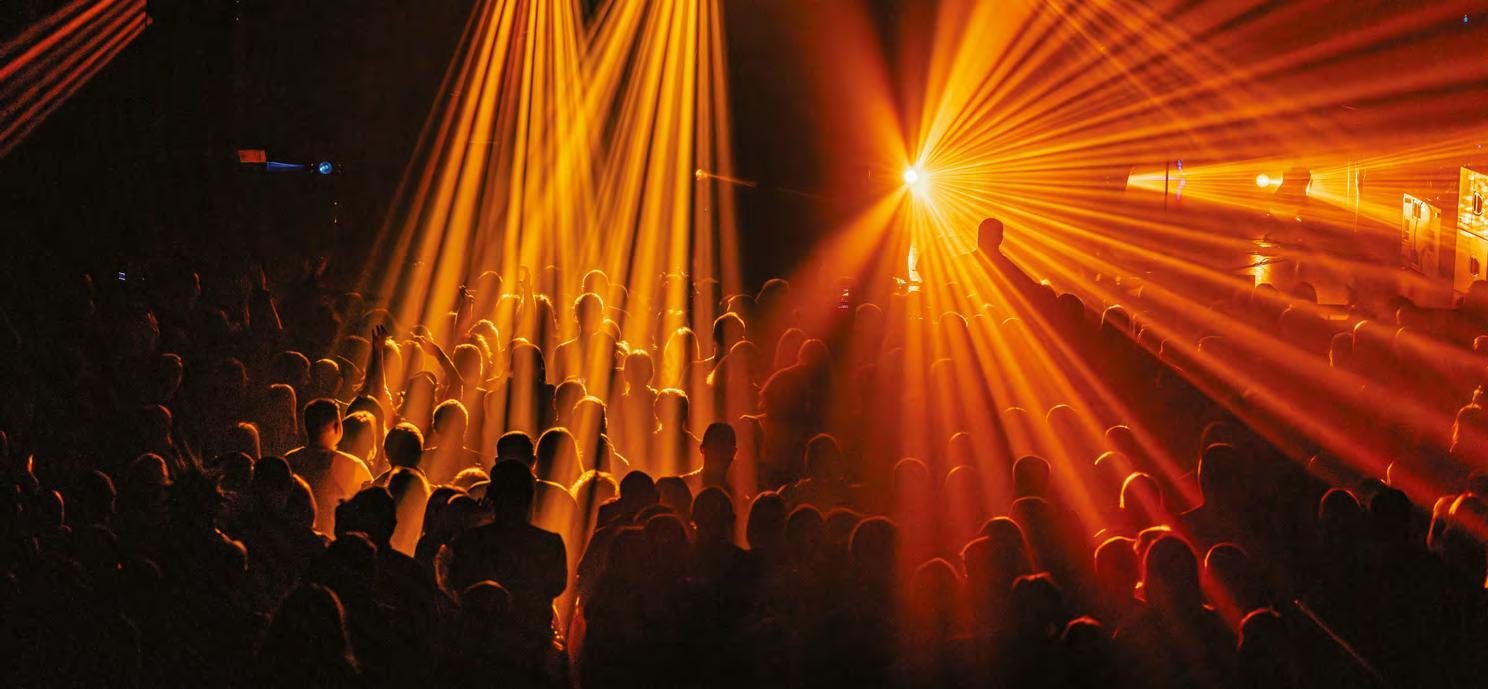
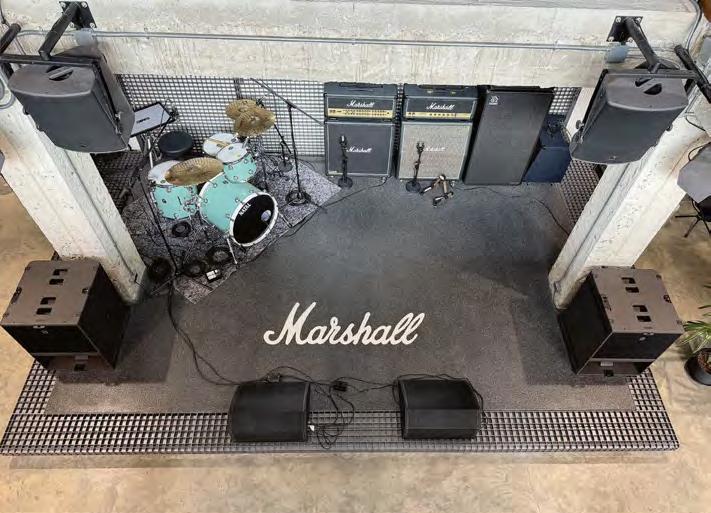
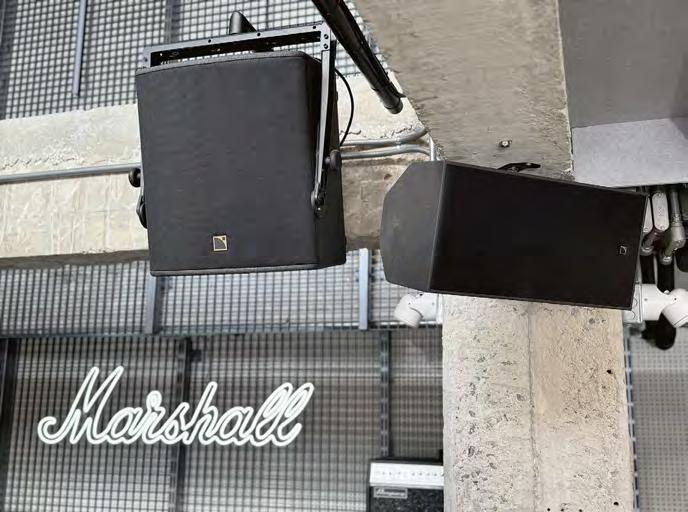
Richard Lawn visits Marshall Livehouse, where an unconventional brand partnership is raising the stakes for musicians and audience alike
CHARACTERISED BY STREET GRAFFITI AND ART galleries, Bangkok’s Charoenkrung neighbourhood added another creative attraction when Marshall Livehouse recently opened its doors. Conceived as a community-first space offering curated gigs, accessible rehearsal studios and cultural programming, the converted shophouse blends local authenticity with global ambition. Located opposite the French Embassy, the performance space showcasing Marshall products also boasts a Parisian loudspeaker system.
A joint vision between Marshall and distribution partner Ash Asia, the collaboration has seen the latter managing local operations, while Marshall provides creative direction, product integration, strategic support and access to global music resources. “While Bangkok has long thrived as a music capital in Southeast Asia, there’s a need for more physical spaces where creators from the community can collaborate and share their craft,” comments Marshall Livehouse head of music and culture, Hataichanok “Pan” Uttaburanont. “It’s about empowering the local music community with tools, space and global opportunity.”
According to Pan, in Thailand, Marshall is more renowned for its consumer electronic products such as headphones and speakers rather than its amps. As such, Livehouse promotes a full spectrum of Marshall products including guitar amps, speakers, headphones, apparel and accessories throughout the building. Within a packed week of programmed events, the ground-level Marshall live stage offers younger, independent artists together with more established acts to connect with new audiences on a weekly basis.
“Having held discussions with the global team for several years, we decided to create a community space which not only focuses on music but also connects to music and creative communities including the arts,” continues Pan. “The low, concrete platform stage was designed to create a closer connection between the performers and the audience. We want the artists to love playing here, and the audience to come away with a sense of unexpected pleasure and a better understanding of the artist.”
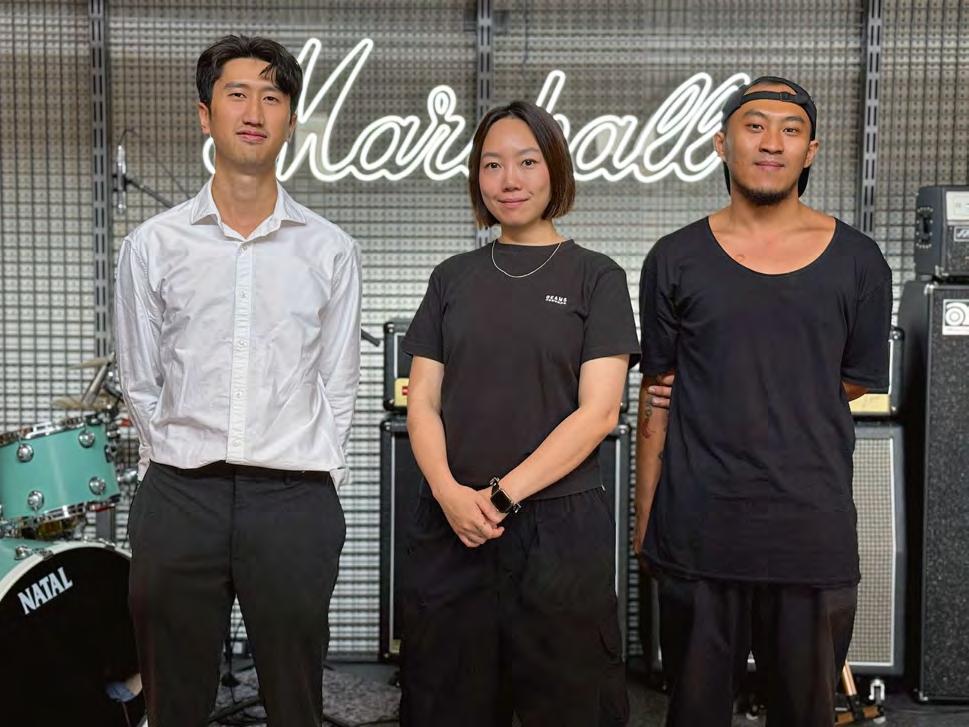
Directly above, the Vinyl Listening Bar and Gear Hub offer locally purchased audio products and include a flexible workshop space. On the third level, two rehearsal studios provide musicians with a creative sanctuary at affordable rates to prepare for touring, or for writing and recording. Finally, a level-four multipurpose space hosts exhibitions, music showcases and community-led events.
“These young artists generally have a great understanding of music production but have limited access to it,” explains Pan.
“As a brand, we wanted to bridge that gap. We’re not professing to be experts, but we can help them connect to record labels and
“The head office artist management team demanded a reliable loudspeaker brand for our small venue, but they did not want to compromise on quality or size,” explains Pan. “In terms of brand vision and philosophy, Marshall and L-Acoustics closely align, because our sonic qualities deliver honest, detailed, accurate sound from a performing artist’s perspective. It’s vital that you align with the right company and, ultimately, it’s a great marketing tool for both brands.”
Deploying a line array was never an option for the venue according to L-Acoustics’ Thai distributor, Vision One. “By adopting Soundvision simulation modelling software, audio uniformity in the space was the main consideration,” elaborates Vision One’s business development manager, Pete Akarat Thitipattakul.
at a small venue with a basic sound system. It’s altogether different for them here, as they can understand the music more, with L-Acoustics providing another layer of sound that was not audible before.”
Scaling down to grass roots for L-Acoustics may be a far cry from the K1 rigs encountered on international technical tour riders. However, by connecting with grateful and aspirational artists, the manufacturer is laying the groundwork for lasting connections with future stars.
www.l-acoustics.com
www.marshall.com/gb/en/marshall-livehouse www.visionone.co.th


























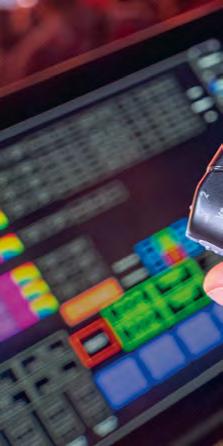

All the wireless power, audio clarity, and seamless integration you expect from Bolero now in a lighter, smaller form. With proven Boleroperformanceinacompactanddiscreet body, Bolero Mini is ready for any challenge inbroadcast,sports,orliveevents.

















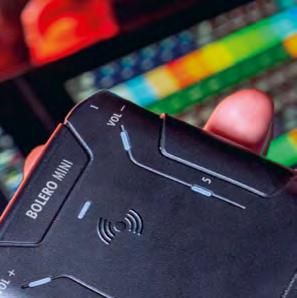
















1.9&2.4GHZ



•165g,28mmthin •Touch&GoNFCbeltpackregistration •Bluetoothconnectivity •Riedel-exclusiveAdvanced DECTReceiver(ADR)




Richard Lawn visits a heritage conversion project that’s created a five-star hotel and hospitality venue from a listed Melbourne cargo shed
SITUATED BETWEEN THE CBD AND DOCKLANDS OF Melbourne’s Northbank, the Seafarers precinct has breathed new life into a long-neglected stretch of the Yarra River and marks the Australian debut of the 1 Hotel brand at Goods Shed No 5.
Constructed at North Wharf in response to a growth in maritime trade, the shed fell into a steep decline during the 1970s as shipping transferred to Port Melbourne. The site would remain empty for 45 years, but the derelict structure, including 4m-high sliding doors, remained heritage-listed. UT Consulting and facility management, in conjunction with maintenance specialist Programmed, were contracted to design and install a high-level AV system into the heritage architecture of the historic shed, with an emphasis on minimal visual impact.
The new mixed-use development delivered by Riverlee includes a 277-room, five-star hotel, 114 residential apartments, 1,000m function centre, dining and spa facilities and retail space. The 18-level 1 Hotel & Homes Melbourne also features extensive public works including a park, wharf refurbishment and local community amenities.
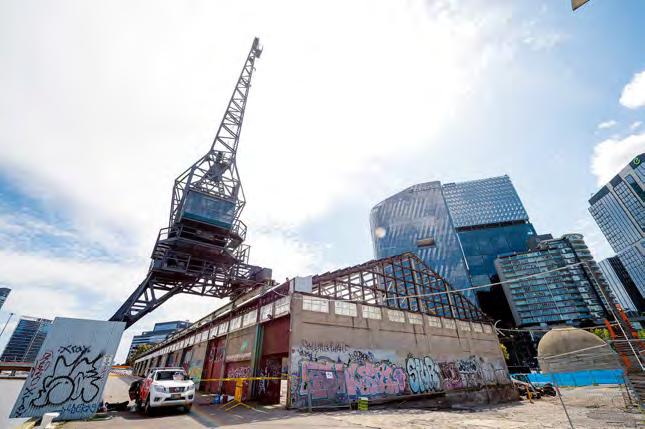
The property blends contemporary architecture with heritage restoration. Engineering consultant WSP was contracted to draw plans including a sustainability strategy for the remedial and preservation works of Goods Shed No 5. This included the “delicate dismantling” of more than 4,500m2 of reclaimed timber and the strengthening of an existing wooden pile supporting the wharf and the existing steel structure. By blending the old with
the new, the shed has been reconstructed as the ground floor of 1 Hotel Melbourne.
The building’s asymmetric façade with its reflective glass panels visually connects the hotel to the waterfront. Adding further appeal, an adjacent industrial crane has been restored and repositioned as a sculptural tribute to Melbourne’s maritime history. Visitors entering the lobby are greeted with a split-faced
granite wall and more than 2,000 salvaged elements of the shed, including original support beams, bluestone paving, steel trusses, timber doors and window frames.
Working closely with interior designer One Design Office (ODO), UT Consulting created performance-based documentation for 1 Hotel Melbourne’s full AV and ICT (information and communication technology) designs. “We enjoyed a very good relationship with ODO,” says UT Consulting’s senior AV consultant, Elena Shchuchkina. “We adhered to their request to reduce the visible AV technology, but not to the detriment of functionality. By discussing the design process with ODO, I found it refreshing that they fully understood what we had to do in the best interests of
During the construction phase, the scope was divided between three parties. Encore, the hotel’s event partner, handled the portable AV equipment and programming in the ground-level Function Centre and level one meeting rooms. For the centralised BGM system, the 1 Hotel chain provides its own Staycast media streaming solution with hardware-based music players. Commissioned as the AV subcontractor and reporting to the main contractor Icon, Programmed delivered the sitewide control and audio system programming which underpins the entire premises, bringing IPTV (Internet Protocol Television), hearing augmentation, system control, background music and staging audio routing into one ecosystem. Programmed was also responsible for nominating the specific hardware models that would best suit the performance-based documentation.
“Unlike more established chains which list preferential brands, the 1 Hotel chain is new to Australia,” explains Shchuchkina. “We simplified the design by not documenting makes and models of equipment for specific areas. We allowed Programmed to propose a speaker design that was going to deliver the flexibility and scalability that our design brief called for. Ultimately, the developer, the architect, interior designer, consultants, main contractor and subcontractors all worked together in the best interest of the client. As a result, clear messaging from the top down meant all parties were committed to delivering the best solution over the entirety of this project.”
At the outset, UT Consulting conducted meetings and surveys to ensure that all the demands of the stakeholders, from the hotel managers to the owners, were met. The amassed information was documented and consolidated over the course of a year. Together with her colleague Duncan Macdougall, Shchuchkina ensured that all stakeholders’ requests were represented in the final blueprints, including those for discreetly hidden loudspeakers, simple touchscreen control and redundancy.
“Because 1 Hotel was very particular about what they wanted to achieve with their multiple stakeholders, it was a challenge to absorb them all,” explains Shchuchkina. “Ultimately, they were all properly heard and had their thoughts reflected in the design. For the client, the interior design was important, and so the audiovisual technologies had to be as non-intrusive as possible. Venue flexibility and ease-of-use features were continually cited by the hotel managers and users. 1 Hotel was very firm on its vision that music should form an integral part of their branding, with the ability to output both background and foreground music in the public areas.”
A Q-SYS Core 610 processor distributes up to 256 inputs and 256 outputs across the Cat6e infrastructure on the Q-LAN network. The 480GB central processor is also connected locally to 15 zones on the ground level via offboard ramps in the form of QIO-ML4i and QIO-L4o network expanders, which provide four source inputs and destination outputs, respectively. Localised control is provided by 5- and 10-inch Q-SYS TSC Series touch controllers in addition to iPads running Q-SYS control interfaces in the iPort docks.
Adhering to the tender document, touchscreen interfaces in the main public zones allow the facility managers to control a host of parameters. These include the selection and levels of various audio sources, lighting, blinds and temperature control. Acoustic isolation between adjacent zones required a detailed analysis to determine the type of loudspeaker and its location.
Melbourne was widely regarded as the world’s most lockeddown city during the pandemic, but Shchuchkina admits that the extended working window it afforded benefitted her AV design: “The whole construction industry was affected by rising prices and scarcities of materials, which led to compressed timeframes and the developer and main contractor having to propose a new budget. Fortunately, the client had no intention of downgrading the design and committed to a quality AV solution.”
Shchuchkina focused her attention on the functionality requirements. “This is the most satisfying and creative part of engineering design,” she continues. “The flexible cabling infrastructure formed the basis of the AV design because it allows future expansion when required. The tender documentation had to clearly stipulate the control functionality and common user interface for all the spaces such as the restaurant, bar and meeting rooms.”
A thorough examination of available DSP platforms ultimately led to centralised Q-SYS processing being specified as the backbone of the AV design. “Q-SYS has become the norm for high-profile hospitality projects,” Shchuchkina continues. “Ultimately, our aim is a happy client, but a gold-standard AV design is not necessarily what the client wants. If 1 Hotel employed a specialist AV technician, the design would have been very different.”
The divisible Function Centre required an AV system to support events, presentations, performances and special events. For enhancing flexibility in the 6.08m-high venue, portable lecterns can connect wired microphone, laptops and other devices via six discreetly installed floor boxes. Simplified Q-SYS zone control can be enabled from the wall-mounted 5-inch touchscreen interface while further features are available in the iPad’s Pro mode.
Nine projectors are paired to Screen Technics motorised screens on three of the Function Centre’s walls. Fixed projector mounts are provided on the customised rigging and exposed ceiling trusses in the room. Content from the projectors can be shared from a variety of different sources including wired HDMI and paired wireless laptop connections as well as IPTV. Meeting rooms on level one feature ceiling panels to facilitate portable projectors, and motorised projection screens can be brought in when required.
The Function Centre’s cabling infrastructure and patch points are specifically designed to facilitate equipment load-ins by third-party operators. “The ease-of-use features designed by UT Consulting, including the digital matrix with its touchscreen view of all the AV digital inputs and outputs, make it easy for both the in-house and
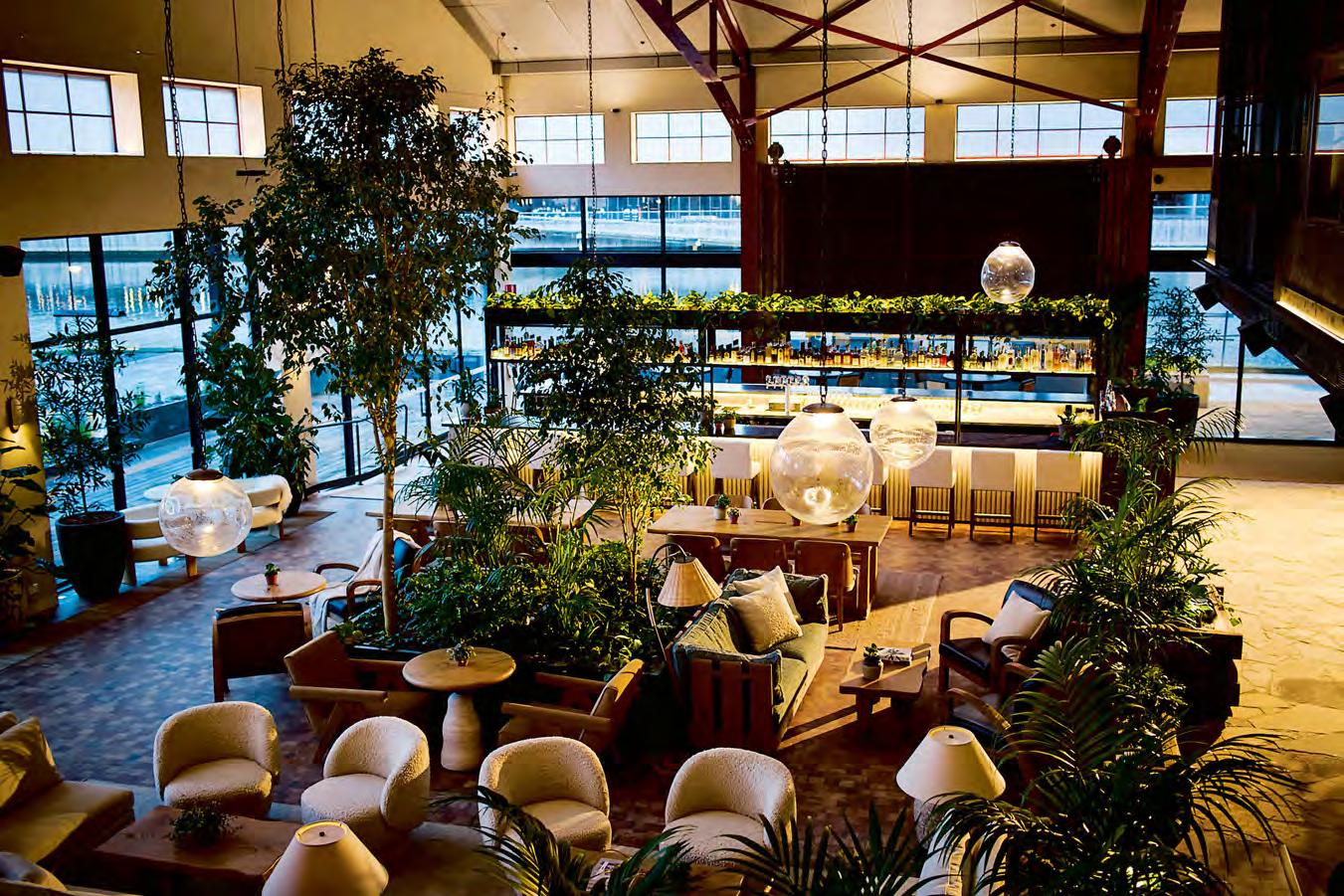
external teams coming in to set up,” comments Programmed AV manager, Blaike Anderson. “It’s virtually plug-and-play.”
The discreetly installed surface-mounted speaker system in the public areas on the ground level supports various configurations. Having demonstrated their acoustic intelligibility and minimal noise pollution properties, Programmed installed flush-mounted JBL Control 16 and 25 ceiling speakers throughout the rest of the hotel’s facilities on the distributed network. However, the slanted roof design of Goods Shed No 5 proved to be a continual challenge when installing the AV component. Heritage and architectural constraints led to a JBL Control 65/PT pendant speaker solution being installed in the Function Centre, with its exposed ceiling timbers and rigging trusses.
“The original trusses were dismantled, reinforced and refurbished before being reinstalled,” explains Anderson. “It was vital that the heart and soul components of the heritage building remained intact in line with the architect’s demands, but this often led to intense coordination and creative design choices to achieve the even coverage demanded of the background music system. Despite not being able to physically install speakers in desired locations, even coverage was our aim for the background music. Ultimately, we achieved our goals in each room.”
“Fortunately, I was invited to attend a Bose EdgeMax demonstration at InfoComm, where I discovered the perfect solution for solving the low bulkhead problems.” Two different models provide either 90° or 180° dispersion outwards from the corners. At 1 Hotel, the 90° version has been flush-mounted into the ceiling’s wood veneer to project outwards, without firing back into glass at the rear.
Located on the third floor along with the spa, the pool serves as a recreational area for hotel guests and 1 Homes residents and also hosts large parties and corporate events. In addition to an audio output for the hotel’s BGM, a DJ booth connection point has been created for events requiring foreground music. The Q-LAN network allows this source to be output throughout other zones of the hotel including the porte-cochère, lobby and park terrace where weatherproof IP-rated loudspeakers are installed.
The pool’s reverberant acoustic environment meant that standard recessed ceiling loudspeakers would not be appropriate. “JBL’s IP-rated Control 60/PS pendant speakers and subwoofers have been installed in harmony with the sculptform [wooden slatted] ceiling,” says Anderson. Volume control enables guests to carry out conversations while also allowing the SPL to be increased for parties.
In keeping with the property’s aesthetics, Programmed appointed an industrial designer to create a matte black enclosure for the
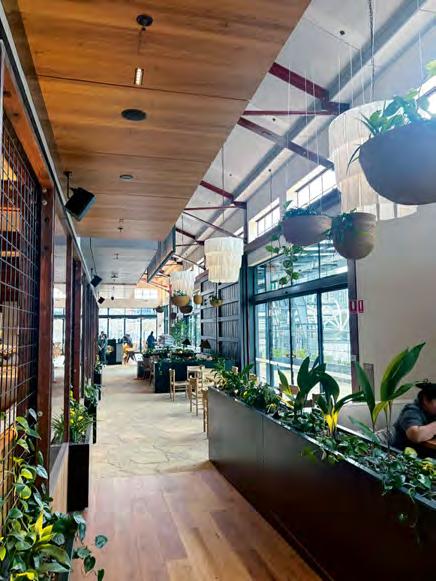
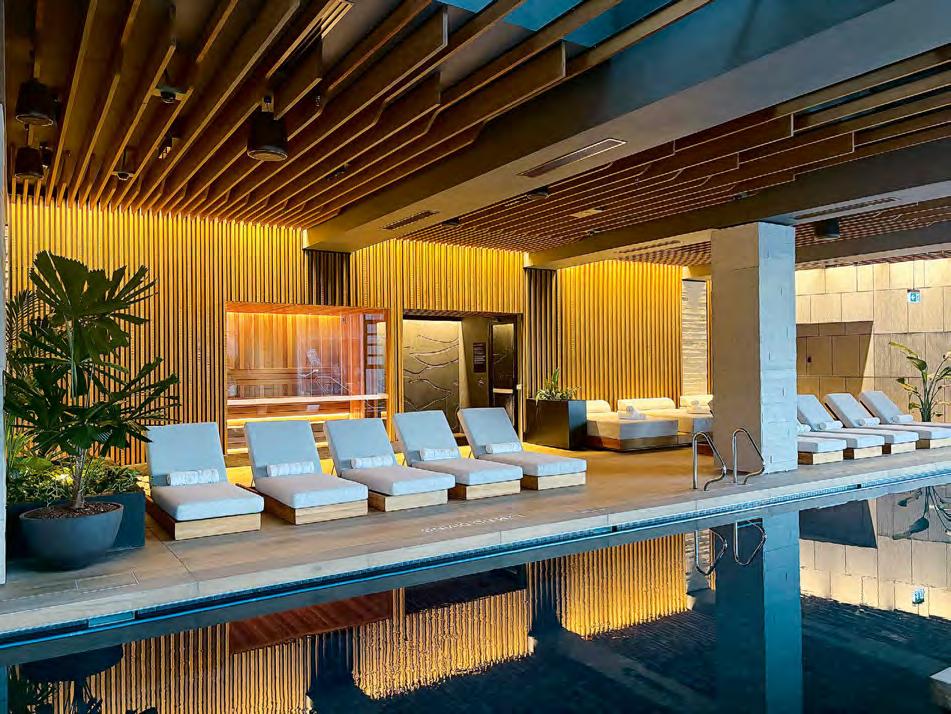
UT Consulting dedicated most of its design and presentation time,” explains Shchuchkina. “The hotel requested background music 90% of the time but wanted to avoid adding subwoofers and extra speakers. Therefore, the installed loudspeakers had to exhibit foreground requirements. For events such as weddings, we designed a portable DJ booth to be patched in when required, and an input provides connection to the hotel’s BGM system.”
A flexible area on level one designed to facilitate meetings, conferences and presentations can be divided as three independent rooms, connected as a single large space or into segments of one third and two thirds of the total area. Individual Q-SYS touchpanel controls support the linking configurations in each room. Located in a centralised AV rack on level one, the Yamaha XMV Series Dante amplifiers and switching and processing equipment remain hidden from view. In terms of projection, podiums, displays, content sharing and other AV functionality, the design mirrors that of the Function Centre. However, the loudspeaker solution posed a challenge before Shchuchkina discovered Bose EdgeMax.
“My original intention was to mount the speakers onto a lighting frame or the beams with specialised clamps that would not damage the heritage structure,” she explains.
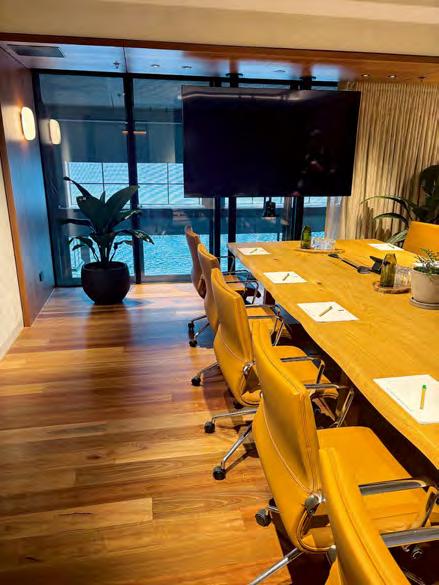
Q-SYS interface touchpanel. The pool manager can view the touchscreen and connect to the Bluetooth wall plate for audio playback.
The IPTV sits on the same converged Cat6e network over the entire building, including the residential component. In addition to reducing the infrastructure load and overall costs, the baseline network can be easily maintained and should not need upgrading for many years. “In terms of hardware, it is important to create a scalable solution with the same processing and control for easily extending sources or inputs as required in future,” explains Macdougall. “For a mixed-use building with a hotel and residences, flexibility is crucial. IPTV technology allows you to add cards as the hotel decides to scale up, so the specified hardware will allow more sources and endpoints to be added.”
When it came to the ICT network, 1 Hotel demanded nextlevel redundancy. Fibre multimode is routed from the main communications room to each floor distributor, with all fibre vessels networked to an individual switch stack. “There will be no circumstances in which a switch or a stack fails,” adds Macdougall. “The client invested heavily upfront in the infrastructure including the added optical transceivers and will enjoy greater savings over the ensuing 20-year period.”
The stakeholder documentation pointed towards a Williams AV system for Wi-Fi hearing augmentation, according to Shchuchkina. “By Australian’s National Construction Code, 1 Hotel required an assistive listening system,” she explains. “A Wi-Fi-based hearing solution was specified on account of its discreet cabling, allowing transmissions over the Wi-Fi network for hearing on not only a receiver but also a personal smartphone. My research concluded that a Wi-Fi-based hearing augmentation adopting Williams AV WaveCAST would tick the construction code box and address all the legal requirements.”
The successful implementation of the specified AV and ICT documentation required stringent communication between UT Consulting and Programmed. “Although Blaike is based in Brisbane, the remote location was never an issue because he was always available,” explains Shchuchkina. “In addition, the team onsite – headed by project manager Andrew Busuttil – proved to be highly flexible during stressful times. Few clarifications were needed during the work because the discussions were always understood, and Programmed endured no problems onsite.”
Combining its heritage with new asymmetrical architecture, the transformed Goods Shed No 5 also boasts an unobtrusive AV system for entertaining a diverse mix of guests.
www.boseprofessional.com www.jblpro.com www.programmed.com.au www.qsys.com www.utconsulting.com.au www.williamsav.com

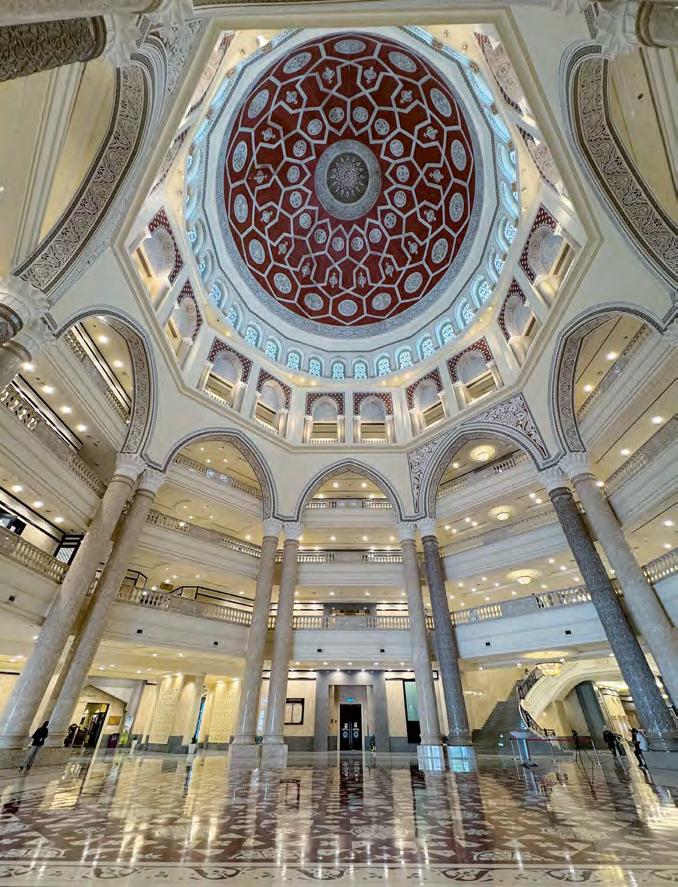

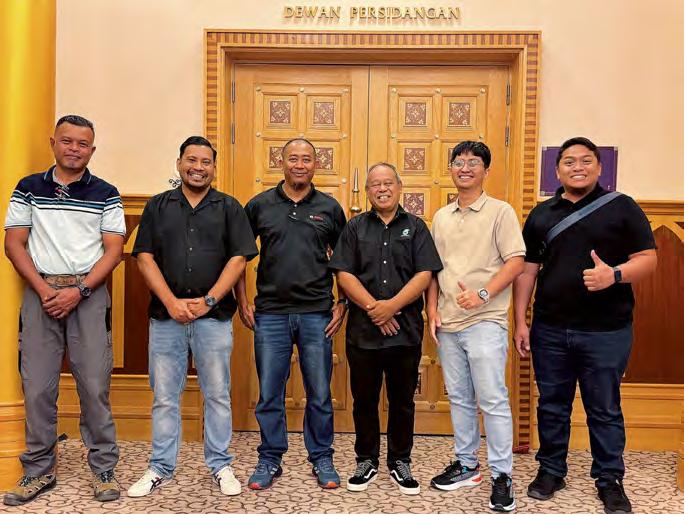
Malaysia’s Palace of Justice has undergone a long-awaited AV upgrade.
FOLLOWING THE FEDERAL GOVERNMENT OF MALAYSIA’S decision to relocate from Kuala Lumpur to Putrajaya in 1999, the seat of judiciary followed four years later. The demand to create a main judicial system office in Malaysia led to the construction of a five-storey building for the judiciary and a two-storey annex for courts and offices within Precinct Three of Putrajaya. Combining elements of classical Islamic, Moorish and Western architecture, the Palace of Justice (POJ) recently commissioned Acousticon to upgrade the inherent analogue conference and PA evacuation systems that had operated faithfully for over two decades.
The judges’ conference meeting room had relied on Philips analogue technology since 2003. In a quest to provide seamless operation and enhanced meeting efficiencies, the upgraded design tendered by Acousticon centres on a Keenfinity Group Dicentis digital IP-based system integrating with centralised Aten control and automatic camera tracking systems.
The installation and configuration of a Dicentis IP- and serverbased architecture, used primarily for discussions and meetings, was central to the upgrade. The main judge accesses meeting content via the touchscreen of the Dicentis Multimedia device and addresses other judges from a dedicated high directive microphone. Automatic camera control allows the main judge to reference the faces of participants and speakers on a large conference screen.
Racked and terminated in a rear control room by Acousticon technician Rahmat Mokhsen, the Dicentis audio processor and powering switch directs audio and power supply to all devices, with the system server running the Dicentis functions. Crucially, Dicentis technology allows third-party integration, and in this case
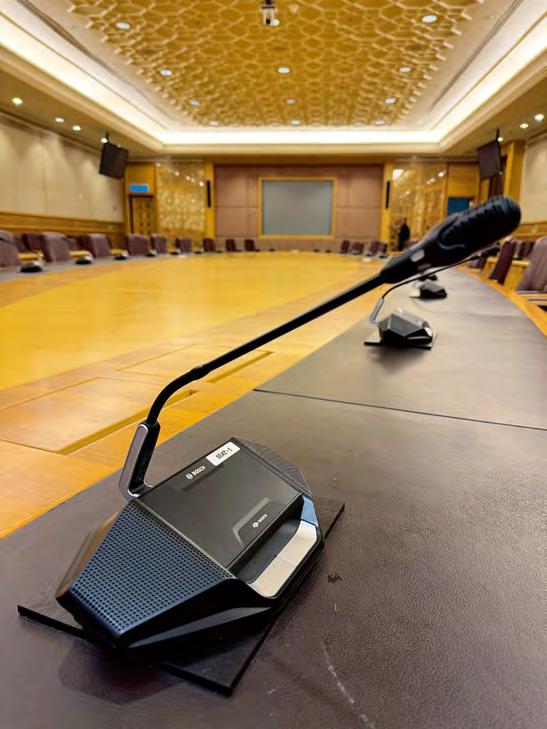
displays into a single system, a WyreStorm MX-0808-H2A-MK2 8x8 HDMI matrix features 5K and 1080p downscalers.
“The configuration for this interface may not be out-of-the-box, but our task was to promote one-touch operations with any input,” explains Acousticon founder Azizi Ala. “With the touchpanel, the online conference is delivered by selecting any of the seven input sources for outputting to the projector, TV displays or chairman’s monitor. In addition to six WyreStorm table-mounted inputs, a PTZ camera serves as a seventh for automatically zooming in on the chairman, unless a delegate is nominated to speak. At that point, the audio automatically picks up when the chairman clicks open a microphone, and the camera focuses on the selected delegate.”
In terms of audio, a Yamaha MG12XU 12-channel analogue mixing console receives microphone and line inputs including three interfaces, a Denon DN-700R audio recorder and Shure BLX4 UHF wireless channels. Two Yamaha PC406-D multichannel amplifiers power the L-R JBL Professional COL800 column array speakers in addition to a network of ceiling speakers.
Paging is the main audio requirement for both buildings together with some traditional background music, while a call to prayer CD is played at set times. Providing network links, mirrored rack rooms in both the main POJ and the annex building are interconnected via a fibre cabling infrastructure. “For most of the time, there’s no operator in the annex, so paging is largely conducted from the POJ because either paging console can be used for both buildings,” explains Ala, who worked closely with Acousticon CEO, Mohamad Nobeli. “Despite the good exercise, this function did not exist with the previous analogue system.”
Both buildings were upgraded with a Keenfinity Group Praesensa IP-based public address and voice alarm solution specified for its reliability, scalability and efficient emergency communications. Connecting all the devices at the heart of the audio routing, the Praesensa system controller is equipped with built-in supervised storage for messages and tone files. Connecting to multiple Praesensa PRA-MPS3 DC power supplies, the controller supports Dante audio networking, AES67 and AES70 protocols, and the Omneo IP multichannel

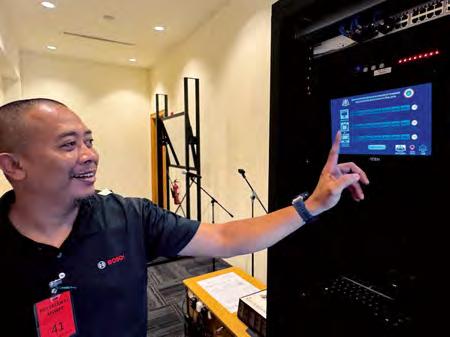
amplifier architecture provides intelligent power allocation across the amplifier outputs.
Software programming led to the development of a GUI interface. A 24V DC evacuation network overrides the PA when the fire alarm is triggered and activated, resulting in the automatic muting of the main PA volume control. “Even with the large amount of zoning in the annex building, we are grouping,” explains Acousticon programmer Saiful Akmal, who worked alongside his programming colleague Ricky Hidhayat. “For example, on level one, there’s a multiple zone, but this has been grouped into one single zone. The POJ relies on the annex for emergency, where every zone can be triggered in separately located panels. Because each room comes with individual volume control, Amperes Electronics ZS5122 speaker zone selectors can override the individual PA volume controls.”
The condensed deadline to install and commission the three venues, two public address networks and conferencing room technology required military-level planning. The responsibility to coordinate the team and ensure that all the equipment arrived onsite fell to Acousticon project manager Mohamad Hadi Aris. “Our main challenge was to ensure that all the equipment arrived at least one month beforehand, because the team only had four weeks onsite to complete and hand over all three projects,” he says. “Ultimately, this was divided by spending two weeks working on the conference room and another two weeks on the PA in the annex and POJ.” Testing and commissioning were carried out during a holiday weekend, during which time the system was taken offline for three hours while transferring over from the old PA before going online with Praesensa.
With over two decades of consistent daily use, the Philips conferencing and PA system proved to be an excellent investment, but the switch to an IP-based system was long overdue. Now that they’ve been exposed to the ease-of-use control of digital systems, the judges could yet decide to further upgrade their workspace with added AV investments.
www.acousticon.com.my www.keenfinity-group.com
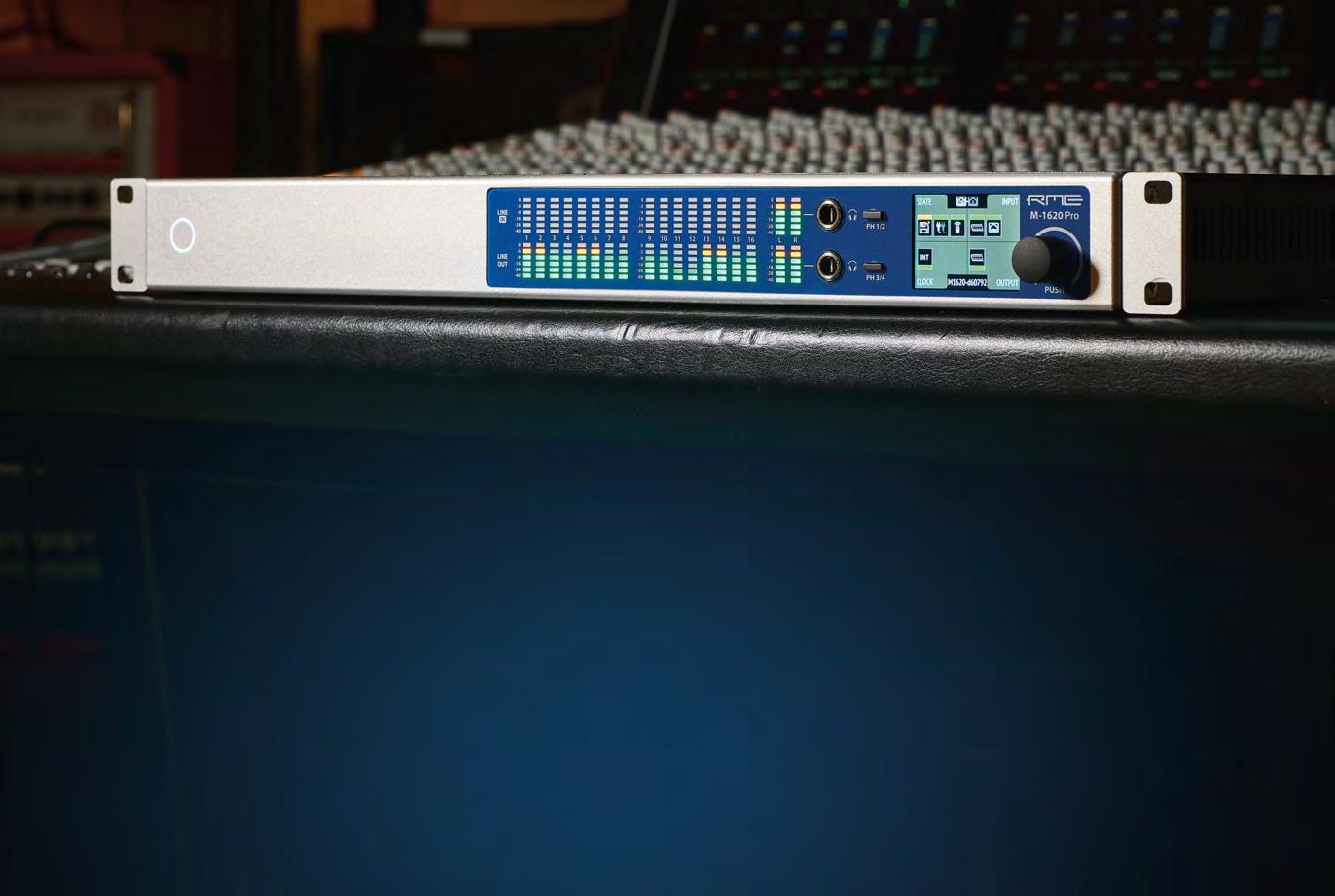

M-1620 Pro
16 Channel A/D, 20 Channel D/A Converter with ADAT, MADI, MILAN® or DANTE®
The most flexible and highest-performing converter on the market. Perfect seamless operation in studio, live and broadcast for recording engineers using a variety of analog effects and instruments.
Add analog, ADAT, Milan® or Dante® to any existing MADI devices. Combined with intelligent channel routing and an innovative user interface, this converter sets new standards in modern audio systems.
A growing concept of teetotal gatherings for professionals has influenced a new multiuse space in central Bangkok, as Richard Lawn discovers
LOCATED IN THE HEART OF BANGKOK’S VIBRANT Thonglor district, Lucca is a calm space designed to handle the rhythm of everyday life. The six-floor premises provides all-day dining, offering healthy breakfast and brunch options and specialty coffee. The soothing ambience extends beyond the two lower dining levels up to the rooftop, providing coworking spaces and a floor dedicated to wellness and yoga. Uniting Lucca’s diverse mix of activities, a low-level BGM system designed by Never2Late adds the appropriate energy to each level.
The five co-owners commissioned Party Space Design to come up with a distinctive interior décor. “We wanted to invoke a beach-like vibe, merging Mediterranean cuisine with Phuket or Bali tones including a bamboo façade which adorns the entire exterior,” explains co-owner and general manager, Kaan. “This is a sea of tranquillity in an urban resort. From the time we open the doors early in the morning, locals come here to enjoy a coffee, join us for yoga or Pilates, return downstairs for breakfast and then work on their laptops upstairs until lunch. In the evening, they can head to the rooftop for pizza and nonalcoholic cocktails and enjoy the DJ.”
a low-level BGM solution where patrons wish to talk to one another,” he says.
Low-frequency extension was only required for the fifthfloor bar, which also serves the rooftop area. As this was a restrictive space, Aura Vision could not easily install a 15-inch subwoofer anywhere. “Because every seat counts in terms of revenue, I needed to create a solution,” continues Goetheer. “Fortunately, Void Acoustics are constantly creating new products to suit varying business needs and so I proposed the ultra-compact Venu 208 subwoofer. Blending in, in a white finish, their dual 8-inch design is ceiling-mounted and unobtrusive to customers or interior designers.”
Wireless control for parameters including source and volume is managed from an iPad or mobile phone touchscreen, and an Allen & Heath CCM wall panel is connected to an AHM-16 matrix. In addition to control, this provides scalability and flexibility should the audio system need extending in future. If a DJ wishes to perform downstairs in the coffee shop, a signal can be patched through to provide simple delay and EQ parameters.
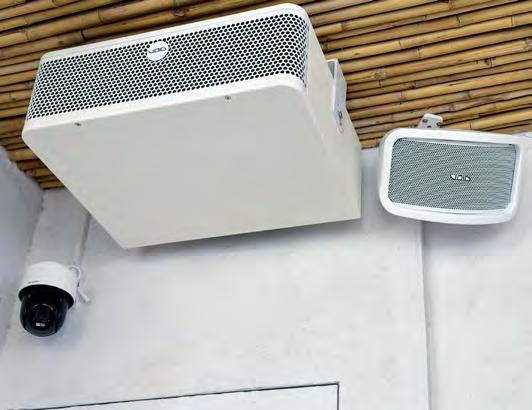
The fifth level is equipped with a Void Acoustics Venu 208 subwoofer and two Cyclone 4 enclosures
Although DJs and live performers appear on the rooftop from time to time, the music generally focuses on zoned BGM. “I was intrigued by Void Acoustics speakers during a visit to Bangkok nightclub, Baccarat,” explains Kaan. “I consulted Never2Late’s Maarten Goetheer to provide an expert analysis for the audio requirements in Lucca.”
A staple among Bangkok’s clubs and sky lounges, Void is rarely specified for low-SPL establishments, and a slightly mystified Goetheer wanted to understand what concept Lucca was aiming for. “The client explained their lifestyle branding and that Lucca was more of an event space than a coffee shop, requiring a versatile audio system to support multifunctional needs,” explains Goetheer. “I could then translate the message to the distributor, Aura Vision, who would ultimately be employed as the systems integrator for the project. Although the small-scale project bypassed the requirement for sound mapping and loudness plots, we had to be attentive to the low ceilings, reflective stone materials and intimate zoning.”
Void’s Cyclone series remains one of its most versatile, and Goetheer had no hesitation in recommending the 4and 5.5-inch models in a white finish, to match the interior décor. “The 4-inch Void Cyclone version is perfect for such
Connected to the AHM-16 matrix, Aura Visual routed a Cat6 infrastructure across all of Lucca’s levels. “The Allen & Heath AHM-16 is both versatile and scalable, and with Dante connectivity we have added systems operation flexibility,” explains Goetheer. Allen & Heath’s Custom Control app allows Lucca staff to easily manage audio settings such as source and volume control from a specially designed interface, in addition to connecting and combining the various zones. “It’s futureproofed,” he continues. “Should one of the levels downstairs wish to host a performing DJ, that source can be transmitted upstairs.”
Designed to keep patrons onsite, Lucca is a venue where locals can work away from the office, eat and partake in healthy pursuits on the same premises, while listening to music in alcohol-free surroundings. “There is a growing trend in southern Europe for coffee parties,” says Kaan. “Lucca is not a typical coffee shop as we like to play a variety of music genres including house, tech house and R&B remixes. Given Void’s dance music heritage, the sonic properties of the brand are a good match for our customers, and we want to see local Thai people dance. With the Void Acoustics system in full flow, it is a pleasure seeing them getting on their feet.”
www.auravisualsystem.com www.never2late.com www.voidacoustics.com
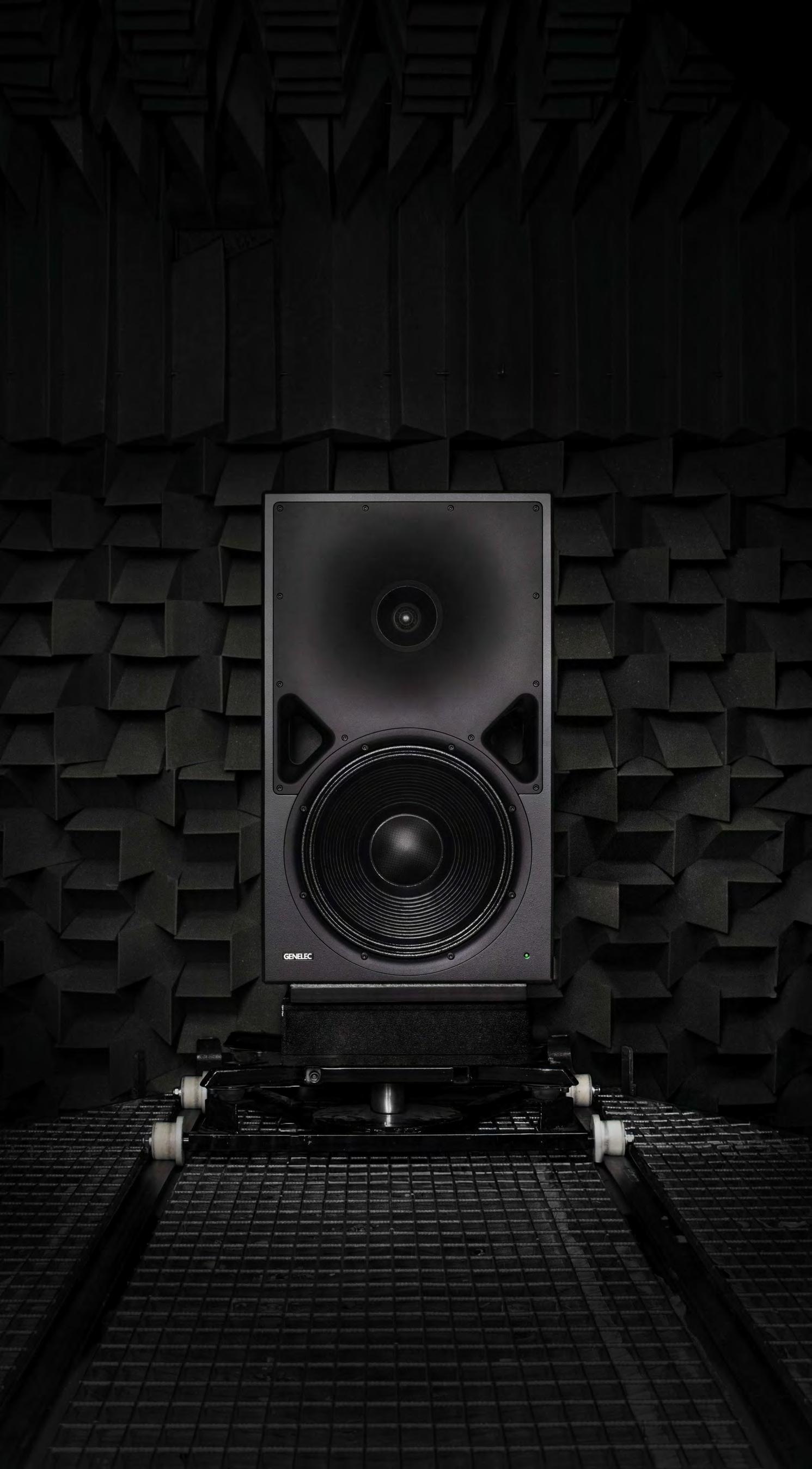

genelec.com/8380a

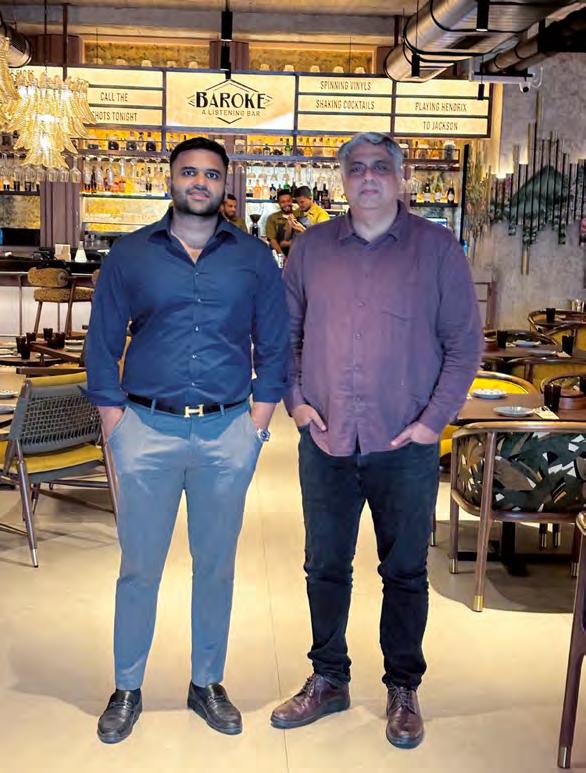
Caroline Moss visits Baroke in Mumbai, which has matured from its previous incarnation as a high-energy club into a sophisticated vinyl listening room
IT’S NO SURPRISE THAT THE CONCEPT OF KISSATTEN is Japanese, like so many inspirational ideas. Prioritising highfidelity vinyl playback, these bars originated in post-WWII Japan, born out of the economic necessity for people wanting to access expensive LPs and good stereo equipment in a shared public space. Created for undistracted musical engagement where acoustics, equipment choice and ambience work together, the concept has spread beyond Japan and found its way to India, where South Mumbai venue Baroke has once again reinvented itself following a makeover.
Baroke is positioning itself as the city’s first bar dedicated exclusively to vinyl playback. Rather than functioning as a typical nightlife spot, the venue approaches sound as the main attraction: every evening is built around analogue records and intentional listening. Its design blends contemporary lounge aesthetics with principles borrowed from classic listening bars –warm textures, intimate lighting and layouts that encourage stillness and attention.
For more than a decade, Baroke was one of Mumbai’s most recognisable nightclubs: a high-energy spot famed for its late-night licence and Bollywood-heavy weekends. But nightlife and tastes change, and long-term owner Saurabh Shetty had eventually outgrown it. “By my early thirties, I was bored of the concept,” he admits. “Nightclubs don’t make sense anymore in terms of real estate – you pay huge rent for a space that works two days a week. I revamped it three times in 10 years. Each time, it was good for maybe two years, and then revenue dropped again. People were chasing something new.”
At the same time, India’s nightlife landscape was shifting, with large-scale concerts booming and younger crowds increasingly demanding new and different musical experiences. The traditional nightclub – especially one reliant on a single genre –no longer promised longevity, so Shetty began searching for an idea with a future. During a trip to New York, he heard about the
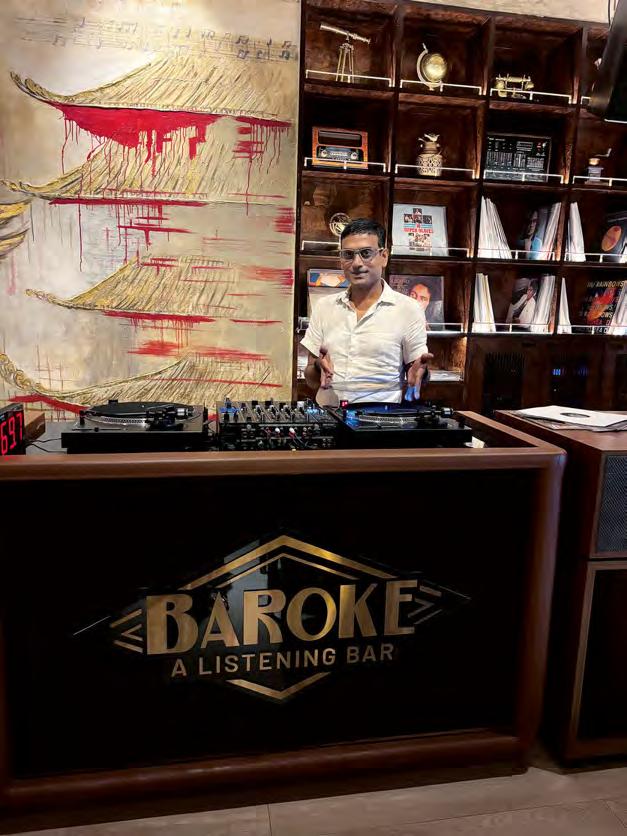
global rise of the vinyl listening bar and it immediately piqued his interest. “I started researching it,” he says. “I wanted a sevendays-a-week bar with personality, not another trend that would
Back in Mumbai, Shetty contacted Soundframe’s Milind Raorane, the audio consultant who had been involved in every previous iteration of Baroke. “This was a completely new concept for all of us, even the architect,” Raorane recalls. “We were no longer designing a nightclub or a lounge.”
On international trips, Raorane visited vinyl bars in places as far afield as Barcelona, Frankfurt and Dubai. He got together with Shetty and the architect Rohit Bhoite for brainstorming sessions, working out how to orient and optimise the space: where the DJ booth should be, how the system would work, what type of speakers to use and where to place them. The layout was completely flipped from the previous club iteration, the DJ booth relocated to where the bar had been and two separate zones – Side A and Side B in reference to the vinyl LP – created for different listening experiences. The original space was gutted to make it bigger, interior walls were taken down and two large windows created to bring in natural light – a stark contrast to the old black box dancefloor. “The nightclub was enclosed; it was a space to dance,” explains Shetty. “People can’t sit for hours in a closed space. This needed to feel comfortable and lived-in.”
One thing that was retained, however, was Baroke’s original system installed over 12 years ago (Pro Audio September–October 2013) comprising 12S and 5S 2-way speakers together with 27S-SUB and B4-SUB subwoofers. These have been refurbished, repositioned and reamplified, and are now being used as surround and fill systems. “d&b were incredibly supportive,” says Raorane. “Many brands wouldn’t touch gear that old. But repairing and reusing it fit perfectly with
The heart of the new system, however, needed something new, and Raorane found the solution at Munich’s High End audio tradeshow: the Klipsch Heritage La Scala AL5 horn-loaded speaker, originally designed in the 1950s, still custom-built in the US in real wood veneer cabinets and signed by the individual maker. “Within a minute of listening, I knew,” he says. “The AL5 has a warmth and presence that instantly transports you to the 1950s and 1960s. It’s basically like travelling back in time.”
The AL5 is a 3-way floorstanding speaker designed for professional use and now popular with audiophiles. Features include a 1-inch compression driver, a 2-inch midrange driver and 15-inch woofer. Two AL5s, one either side of the DJ booth, are driven by a Full Fat Audio FFA-2004 4-channel solid state
amplifier. “It’s ultra-clean – capable of running eight hours a day and delivering a sonic signature close to that of a classic tube amp, but without the fragility,” explains Raorane. Perforated wooden panels with hidden absorption have also upgraded the room’s acoustics. “We needed vintage aesthetics without compromising clarity,” he continues.
In keeping with the vintage ethos, Baroke has a strict policy: no digital playback, no CDJs, no laptops and no streaming. If a track isn’t available on vinyl, it isn’t played. “We politely refuse,” says Shetty. “This concept only works if we stay genuine.”
To shape the weekly programming, Shetty brought in audiophile DJ Wilbur Texeira. “We want people to feel the music; it should be an immersive, emotional experience,” says Texeira, who spins the vinyl on an Audio-Technica AT-LP120-USB direct-drive turntable. Baroke’s collection of carefully chosen LPs – 250 and growing – spans vintage jazz, funk, soul and rock, forming the backbone of its programming.
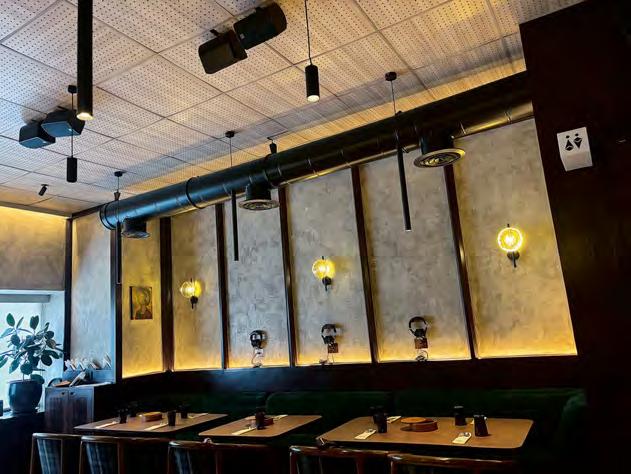
Guests can choose to be seated at tables facing the DJ booth in Side A, or settle into sofas in Side B, which offers personal listening stations with Audio-Technica ATH-M20x headphones connected to a Tascam MH-8 8-channel headphone amplifier to access various musical sources.
Themed nights include Women in Rock and Soul on Wednesdays, featuring soulful female vocals from the likes of Joplin and Bessie Smith; downtempo and ambient music global beats, rare groove and deep house on Fridays. And, in a nod to Baroke’s roots, Saturday nights stay Mumbai’s disco heritage with a blend of classics from the 1970s, 1980s and 1990s.
Walking into the new Baroke, it’s hard to recall its previous incarnation. With its comfortable furniture, a backdrop of warm wood panels and a selection of retro audio artefacts –gramophones, suitcase players and early cassette-vinyl hybrids –it encourages people to sit back, relax and hear the music. “It’s exactly what we wanted,” says Saurabh, “an extension of someone’s home. People can talk, drink, listen, and if they want to dance, they still do – but it’s organic, not forced by volume.”
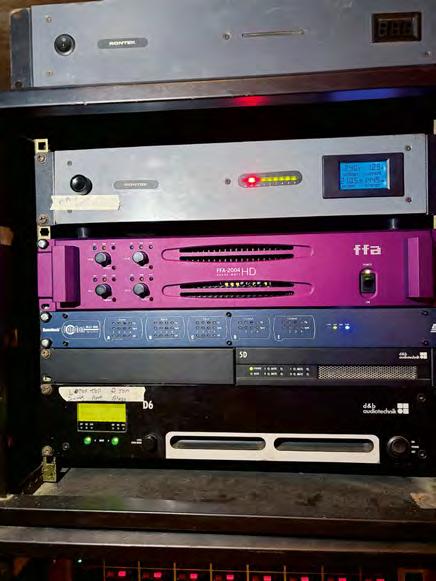
fast for India’s construction and licensing environment. “Other projects that started at the same time still aren’t finished,” Raorane says. “But everyone pulled together – the architect, audio team and distributors. It worked because we were all building something new.”
For Shetty, the new concept resonates with his stage in life. “I partied hard in my twenties,” he says, “but, today, I want interesting conversation, good drinks and music that feels alive. I think a lot of people in Mumbai want the same thing.”
www.dbaudio.com www.klipsch.com

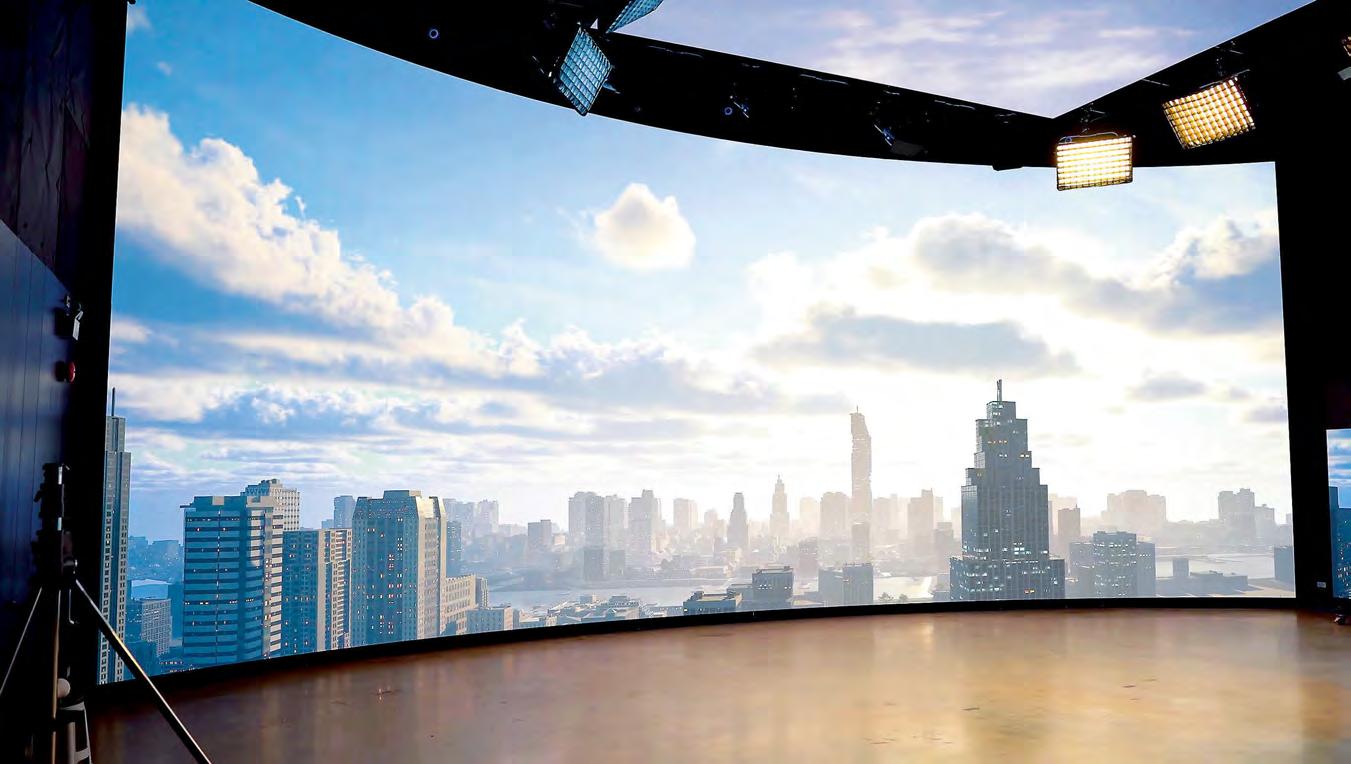
Bea Meikle visits Final Pixel Studio in Bangkok, a purpose-built virtual production facility raising Thailand’s profile on the global VP stage
AS VIRTUAL PRODUCTION (VP) GAINS MOMENTUM
across Asia, expectations around infrastructure, colour accuracy and system reliability are rapidly aligning with global standards. With the region welcoming more high-profile international productions, local studios are increasingly judged against the same benchmarks as their counterparts in the US and Europe. For Final Pixel Studio, meeting those expectations was not an aspiration – it was the foundation on which the VP studio was built. Final Pixel has been designed to attract major international productions while also helping to educate and elevate Thailand’s production market. Led by CEO Rangsi “Sunny” Sarnkingthong, the facility was conceived in response to a clear gap in the local landscape, with the studio featuring a technological infrastructure purposely built to align with those used on established VP stages across the world.
“At Final Pixel, we are essentially a virtual production vendor, but we also support full productions,” he explains. “Clients come to us because they want to shoot virtual and, very often, they haven’t done it before. Our job is to consult them from creative planning to technical execution.”
For Sarnkingthong, that consultation role is closely tied to his experience of seeing how VP operates at scale elsewhere. Inspired early on by The Mandalorian series in the Star Wars franchise, he began thinking about what it would take to deliver comparable results in Thailand. “After watching the show, I had a dream to bring that level of virtual production here,” he says. “But to do that, the technology and the workflows have to support it.”
That ambition has already been tested on the international stage. A key milestone for Final Pixel was its involvement in the US television production Alien, which was shot entirely in Thailand. “That project really showed the world that Thailand can support large-scale international productions,” notes the CEO. “We were lucky to be a small part of it by supplying our LED wall. That exposure helped reinforce our decision to focus on international clients.”
From the outset, Sarnkingthong’s goal was to build a studio that overseas production companies could rely on without compromise. “If you want to attract international clients, you must

L–R: the Final Pixel team consisting of Smith Mo-Aim, Noppon Chaichanatham, Rangsi “Sunny” Sarnkingthong and Panupong Jaingamlertwong
meet international standards,” he says. “That means the same workflows, the same colour accuracy and the same trusted brands.” This philosophy informed every major technical decision at Final Pixel, beginning with the LED volume itself. The main stage features a curved LED wall built from a total of 392 Absen PL2.5 Pro panels, delivering the pixel density and uniformity required for in-camera VFX work. A secondary, mobile Absen LED screen is also available, mounted on a custom movement system to support more flexibility.
Above the stage, 72 INFiLED AR3.9 panels are installed on a ceiling rig delivering consistent colour reproduction across both vertical and overhead LED surfaces. The configuration has been designed to meet the accreditation requirements of ARRI for production, signalling that the stage meets high standards for quality and consistency in VP.
A defining feature of Final Pixel is its ARRI-accredited status, placing it among a small number of studios worldwide to meet
ARRI’s requirements for safety, system design and colour management. “We went through intensive training with the ARRI team to achieve accreditation,” Sarnkingthong recalls. “That training covered colour management from the camera sensor, through the lenses and lighting, all the way to the LED panels. Before we launched, we spent a lot of time learning and refining that workflow.”
In VP, colour accuracy is fundamental to maintaining the illusion. If colour reproduction breaks down at any point in the pipeline, the realism of the virtual environment can quickly collapse. “For high-end clients, colour management is often the first thing they ask about,” he continues. “Studios like Netflix or other major international productions want to know exactly how colour is managed, from the camera to the LED wall. If the colour isn’t right, the reality breaks.”
By adopting ARRI’s colour management system across the studio, Final Pixel is able to speak the same technical language as
leading global productions: “It might be a more expensive setup, but it meets global standards. That was always the goal.”
Lighting throughout the stage is handled exclusively by ARRI fixtures, including 14 SkyPanel S60 Pro, three SkyPanel X and eight Orbiter units, supported by a full range of optics, modifiers and projection attachments. Lighting control is courtesy of a MagicQ MQ50 compact lighting console from ChamSys. Video capture is handled using an ARRI Alexa 35 camera paired with ARRI Signature Prime lenses, ensuring consistency across acquisition, lighting and display.
Behind the scenes, Final Pixel’s technical backbone reflects the same uncompromising approach. LED processing is handled by six Brompton Technology Tessera SX40 processors, with one as a spare, supported by nine Tessera XD distribution units. “Brompton is widely trusted for virtual production and that was important
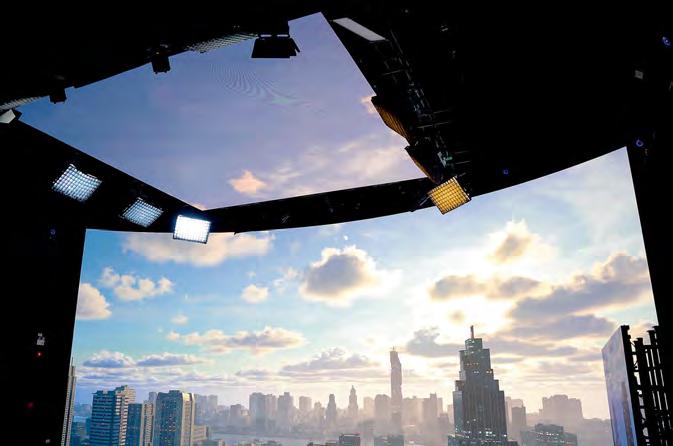
for us,” says Sarnkingthong. “Compared to other manufacturers, they stood out not just technically, but also in how they support their users.”
Signal synchronisation is managed via an Evertz 5601MSC master sync generator, supported by Ambient Lockit timecode and genlock systems to maintain accurate timing across cameras, LED processors and render nodes. Lighting and control networks rely on Luminex GigaCore switches and DMX converters, plus a combination of MikroTik and Cisco hardware. “The reliability of the system is everything,” he stresses. “When you’re shooting, every minute costs money. If something goes wrong, that’s our reputation on the line. Therefore, having a strong network backbone is crucial.”
Rendering for the LED volume is handled by a custom-built Puget Systems configuration comprising five Rackstation Threadripper Pro WRX90 render nodes, alongside dedicated Puget workstations for editing and OptiTrack processing: “With virtual production, one LED wall might be driven by multiple render nodes. If those systems are not perfectly in-sync, you can get tearing or mismatched imagery, which is unacceptable on a shoot.”
Camera tracking is provided by an extensive OptiTrack setup, including PrimeX41 and PrimeX22 cameras, eSync2, CinePucks and full calibration tools, enabling both VP camera tracking and more advanced motion capture workflows. Complementing the stage is a dedicated colour grading suite equipped with a Flanders Scientific XMP310 QD-OLED HDR mastering monitor, Genelec monitoring, Blackmagic Design control
surfaces and calibrated colour measurement tools from Colorimetry Research. Sarnkingthong is also planning to enable livestreaming from the stage to the grading suite, allowing real-time colour evaluation.
Final Pixel’s client base is already international, with productions coming from Europe, North America, Singapore and beyond, alongside local Thai companies. However, Sarnkingthong notes that education remains a key challenge within the regional market: “Many local productions haven’t used virtual studios before. So, we have to educate producers, directors and DPs about what is possible and how to use the technology properly.”
That process often pays off. Many clients begin with short-form commercial projects before returning with more ambitious film or series work.
“Once they see what is possible, they come back with a bigger vision,” he says. “We recently worked on a Thai film that started as a two-day pilot. After seeing the results, they decided to shoot more than half of the film here.”
Sarnkingthong’s international outlook is closely tied to his belief in Thailand’s potential as a global production hub. Long popular for location shooting, the country is now opening new doors through VP, and Final Pixel is at the forefront of that evolution. “Thailand is gaining more acceptance from Hollywood,” he concludes. “We have amazing crews, great locations and strong technical talent. With Final Pixel, we’re showing that Thailand can deliver virtual production to the same standards as anywhere else.” www.finalpixelstudio.co.th

Create your ideal lighting or speaker stand with durable base plates in various sizes and matching extension rods – or choose a complete stand from the K&M Compact Stage series. With smart design, exceptional stability, and optional weight plates, this system offers maximum flexibility for stage, rehearsal room, or studio. Convenient carrying bags ensure safe and easy transport. Discover space-saving stands tailored to your needs.



Dan Daley examines the meteoric rise of K-pop and how it has helped place Korean culture firmly on the world stage
THROUGHOUT MUCH OF THE 20TH CENTURY, MEDIA spread American culture globally. Music, films and later television and streamed content were consumed voraciously, making official efforts like Radio Free Europe seem positively superfluous. A century of American pop music did as much, or perhaps even more, towards making English the world’s lingua franca than 400 years of colonialism.
That phenomenon provides a template for what Korean pop music – K-pop – has been doing to the world for the last decade or so. Just as the advent of radio in the early 20th century gave American music its reach, the Korean wave has risen on the proliferation of social media in the early 21st century. By 2019, South Korea ranked sixth among the top 10 music markets worldwide, with groups such as BTS and Blackpink leading the way. A year later, South Korea’s music business saw a record-breaking 44.8% growth and became the fastest-growing major market of the year globally. Last year that juggernaut continued, as KPop Demon Hunters became Netflix’s most-watched film ever, helping the streaming company grow its third-quarter revenue by 17%, while also stimulating demand for Korean fashion and other consumer goods. K-pop has had to make some compromises along the way, reflecting the transactional environment in which the genre
came of age. For instance, artists have been increasingly using English in their lyrics and even in their band names, like Beast and After School – a strategy to get onto Western airwaves and over cultural speed bumps. That’s a decision made not for the sake of art but rather for commerce. Of course, it’s also paid off handsomely: one economist’s estimate contends that every US$100 increase in music export revenue generates $400 in revenue from related consumer goods including food, clothes, cosmetics and IT products.
More ominously, K-pop artists are notoriously managed by corporations and a handful of dominant record labels, replacing organic career building with carefully calculated marketing campaigns in which band members are often replaceable cogs. It took Sony/Warner/Universal nearly 40 years of predatory consolidation to achieve that kind of economic hegemony. However, there remains a hopeful rebellious spark within K-pop – a small but palpable rock-and-roll ethos that pushes back here and there against those corporate overlords. This is visible when legal battles pop up in the news, like NewJeans vs Ador/ Hybe, highlighting allegations of unfair contracts, mistreatment and the system’s restrictive demands for perfection and gruelling scheduling. Of course, those periodic mutinies can go either
way, earning some artists more creative freedom, or giving a momentary cover of authenticity to K-pop moguls.
But how different is K-pop’s palpable commercialism to how the American model has evolved, becoming one in which artists now actively seek corporate collaborations, selling pickup trucks and beer along with concert tickets and records. The great irony would be an American music industry that started taking cues from its Korean cousins. K-pop’s controversial “trainee” system, which takes as long as three or four years of intense training to develop new acts, often cites Motown Records’ star-making machinery of the 1960s as its model. Perhaps Simon Cowell and Lou Pearlman were even further ahead of their times. Hard to see where one narrative leaves off and the other begins.
A few blocks from my midtown Manhattan flat is West 32nd Street where, in the shadow of the Empire State Building, the Korean version of a Chinatown has taken rapid and expansive root in the last decade. It’s a block of jangly Asian urbanity with a K-pop soundtrack and Hangul lettering emblazoned on cool streetwear. It’s now K-pop’s turn to show how a culture projects itself globally through music. Here’s hoping they don’t have to sell their Seoul to do it.

Phil Ward looks at how the Audio Engineering Society is ensuring that audio is staying relevant in a fast-changing, often virtual, world
THE AUDIO ENGINEERING SOCIETY (AES) DOES exactly what it says on the tin. Over and above being a society where audio engineers meet, it does its level best to engineer audio into society. As our daily lives change, especially in a professional sense, the AES conjures up all kinds of conferences, conventions and symposiums designed to re-tool the community and its chattels for the future – trying to make sure that audio has its say. This is especially welcome in a multimedia bunfight.
The ancient lament of the rental company spec-ing for a tour, or the installer planning for a building or the integrator desperately keen to, er, integrate, is that decisions about where to put the speakers are repeatedly put off until the minute before the last one, while the interior designers, the architects and the experience-builders swan about balancing vases of flowers on a pin. This kind of second-class citizenship seems destined only to continue into the age of virtual and augmented reality and its artificially intelligent icons.
Right on cue, here’s the AES coming to the rescue again. This June and July in Paris, the AES is hosting the International Conference on Audio for Virtual and Augmented
Reality and Immersive Games, snappily condensed into “AVARIG2026”. It will be spread across two venues: the Institut Jean Le Rond d’Alembert (IJLdA), part of the famous Sorbonne University that researches acoustics, signal processing, speech synthesis and all matters concerning audio for VR/AR as well as gaming, spatial audio and human-computer interaction; and IRCAM, the renowned centre for the science and technology of music and sound located beneath the Pompidou Centre.
This is a European debut for a series of conferences already established by the AES on Audio for Virtual and Augmented Reality and takes this opportunity to add Immersive Gaming to the agenda. According to yet another august body of opinion, the AES Technical Committee on Interactive Media and Games, the merging of VR/AR and digital gaming reflects the latest patterns of social change and, just for good measure, drags us into the world of Extended Reality (XR) too. And the key to all this interactivity and reality-bending – the ingredient that the AES quite naturally hopes to keep to the fore – is spatial audio. This is the format that will carry the interests of audio manufacturers and users into this brave new world.

The mission statement from the AESTC-IMG is telling: it is “to advance the science, technology and artistic expression of interactive media with audio”. Note how this statement places audio at the vanguard of how the whole industry will progress, the agent by which it will advance. The entire meld of visual tech and how it connects with human emotion and inspiration is held together by sound, which is quite a bold statement. No one who works in audio would disagree, but it does reveal how the AES is taking the fight to the front line.
It has friends in some high places. AVARIG2026 is also supported by SONICOM, which I promise is the last group of imploded vowels and consonants I’ll throw at you. Funded by the EU, SONICOM is a broader research programme into “the way we interact socially within augmented and virtual reality environments and applications”, including online meetings. Again, the entire field is auditory based, guaranteeing that our imminent plunge into new social interactions will not be silent. As we reshape reality, audio will be moulding the clay – just as SONICOM’s sponsor FET-PROACT (Future and Emerging Technologies Proactive) imagined. Oops, sorry, I lied.
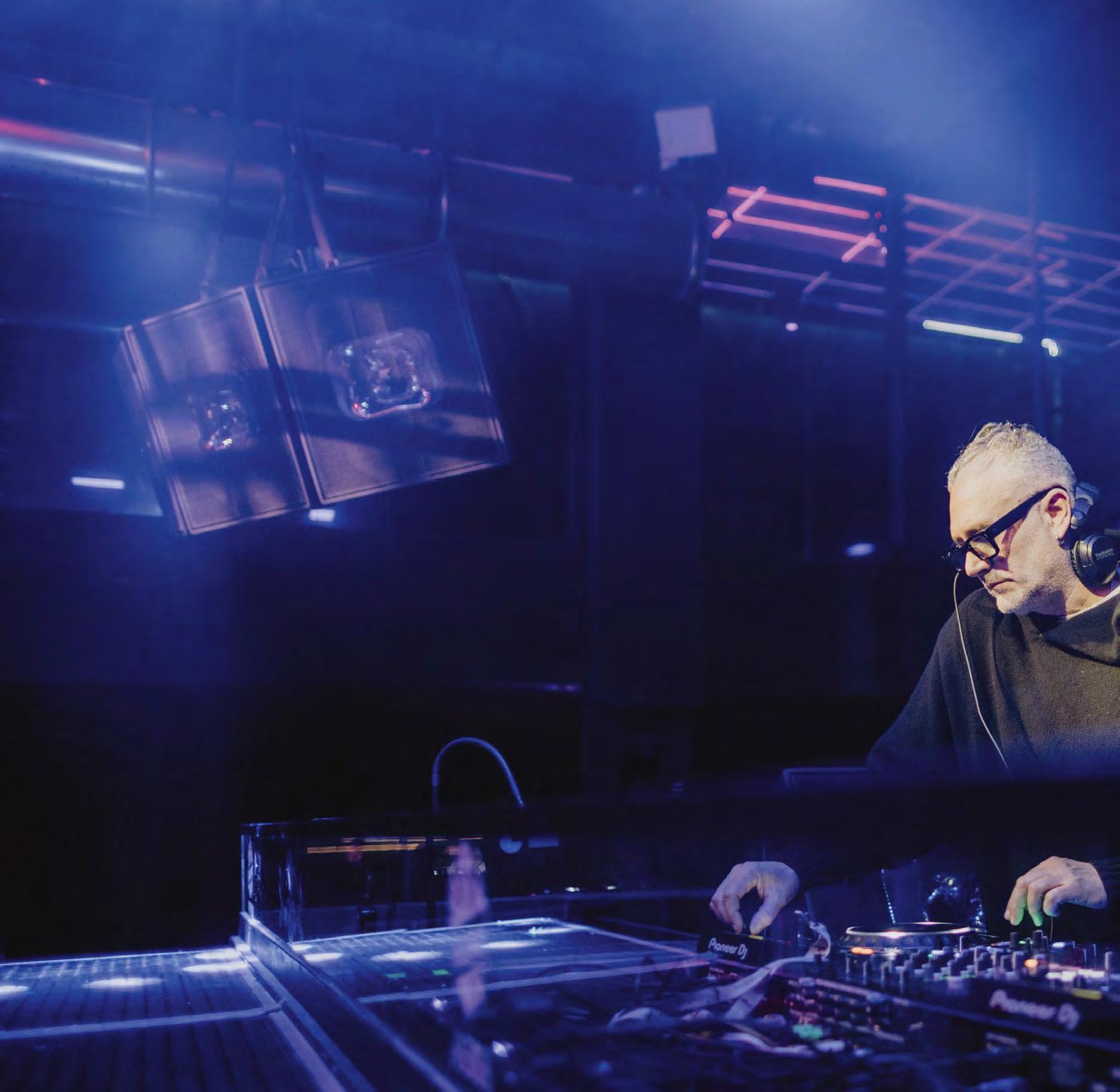
Triaxial full-range point source loudspeaker


Modern nightclub systems demand more than volume. They require control, endurance and precision at extreme SPL. At Tenax, a cornerstone of European electronic culture, K-array delivered a full-system upgrade built around clustered Dragon-KXT18P loudspeakers configured in horizontal arrays for controlled dancefloor coverage and extended headroom.
On the main floor, twelve KXT18 units operate as coherent
clusters, delivering extreme SPL with consistent tonal balance and precise energy distribution. Twelve Thunder-KS4 subwoofers provide deep, tight and controlled low-frequency impact.
Driven by Kommander Amplifiers, the system is phasealigned and optimized for uniform coverage and musical integrity while maintaining clarity and control even at peak levels.
Sue Gould reports from the annual Anaheim gathering, which benefitted from increased exhibitor and visitor participation and improved scheduling
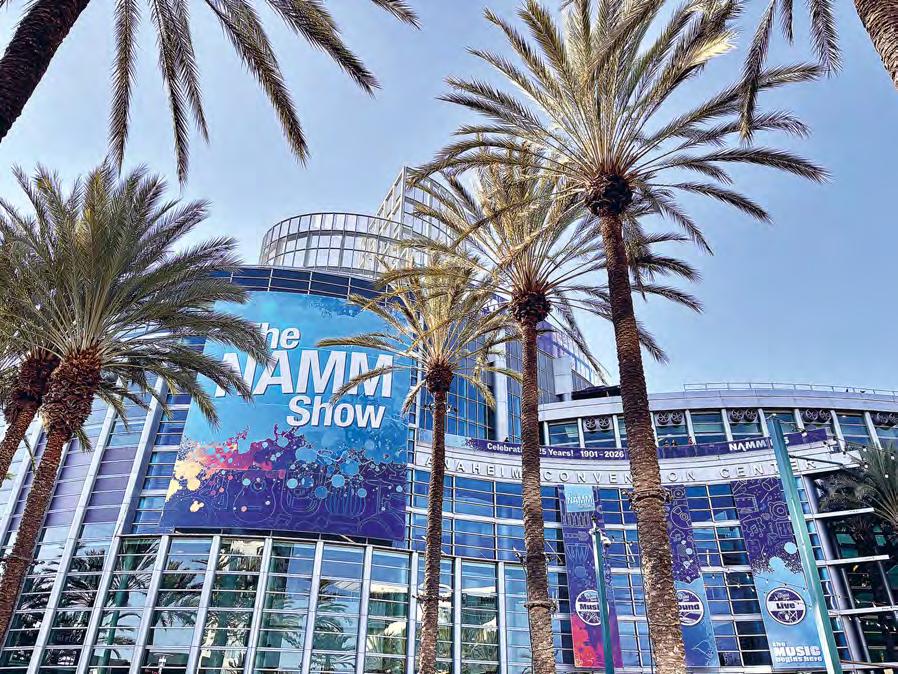
ALTHOUGH THERE WAS AN ABSENCE OF BLUE Californian sky and sunshine to greet visitors on the first day of NAMM 2026, it was nevertheless an opening day to be proud of as the show celebrated its 125th event, 50 of which have taken place in Anaheim. There’s a genuine fondness and passion rarely heard these days when industry professionals discuss NAMM, but the show has continued to struggle to regain its crown following the pandemic and amid shifting timeslots. Coming into play last year, the reduced three-day show format appears to have worked in its favour as an increased number of exhibitors and visitors headed to the Anaheim Convention Centre (ACC) from 20–22 January. But, against a backdrop of geopolitical uncertainty, it would be safe to say that expectations were mixed, with valid concerns about the impact on international visitor numbers and some
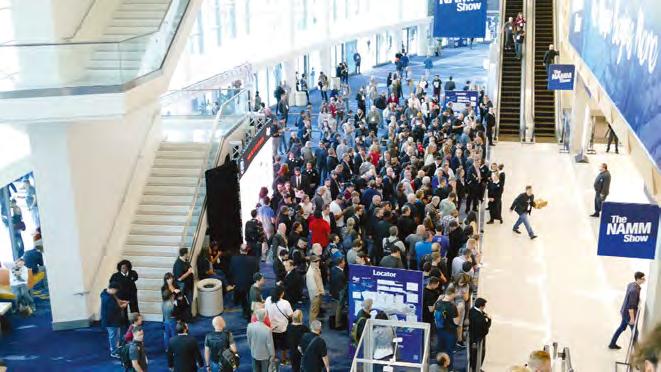
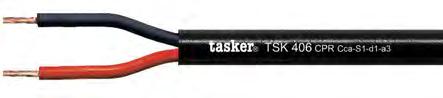
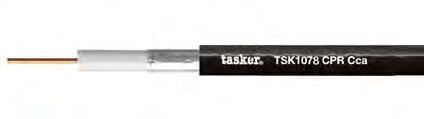
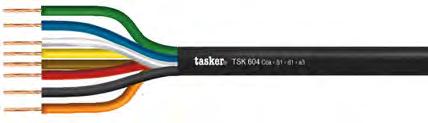

notable names missing from the floorplan. However, the organiser was pulling out all the stops, providing well-attended off-the-floor offerings that encompassed concerts, TEC Tracks and training sessions, seminars, hands-on workshops and immersive demo rooms. There was also a concerted effort to ensure that overseas visitors were supported and welcomed more than ever as several country-specific networking receptions and events with an international focus took place. In a discussion with Pro AVL Asia on the eve of the show, NAMM president and CEO John Mlynczak was keen to stress that NAMM is not an American show but rather a global event welcoming people from all over the world, with a constant reminder that music brings people together.
This year’s show hosted the largest number of demo rooms in its history, flanking the side walls of ACC North’s upper floor, with those exhibitors who had made the substantial investment attesting to a solid flow of traffic through the demo room doors. Among the aisles though, the booth layout felt more compact than in previous years, but footfall appeared consistent and a calm, business-like atmosphere prevailed. As is usual at NAMM, it was the recording and studio exhibits on the lower level where the volume was higher – both in terms of noise levels and visitors on the floor. The markedly different vibe between the two levels undoubtedly benefits those walking the aisles and ensures the widest-possible mix of exhibits. With blizzards hitting the country’s East Coast as the week came to an end, many were heading to LAX earlier than intended to ensure they didn’t get stranded. Ultimately though, the weather may be the least of NAMM’s concerns for next year. The challenge for the organiser in 2027 will be the shift of show dates to later in January, putting it again within two days of ISE in Barcelona. While feedback on this year’s show from the vast majority of people was positive, if forced to choose it will be interesting to see which platform they will opt for.
2026 Dates: 20 – 22 January
2027 Dates: 28 – 30 January
Venue: Anaheim Convention Centre
Total exhibitors: 1,650+
Attendance: 60,000+
Contact: www.namm.org/thenammshow

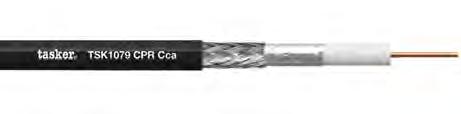
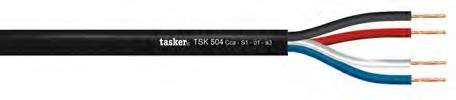
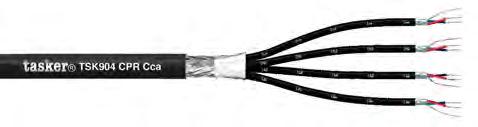
Gianluca Turra, FaitalPRO:
“Rather than being a good show, I’d describe it as a good meeting point. Given the investment, it’s been great for me to see more people at NAMM and I felt like it was getting back to normal. But the date of next year’s event is a bit of a blow, with it coinciding so closely with ISE. I think it’s going be a problem for European companies in general, given the amount of resources, physical distance and effort that’s required to attend this show. Overall, I’m happy we came and our products have been very well received but, for the future, there’s a bit of a question mark.”
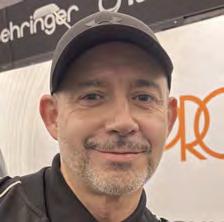
Christian Jordan, HK Audio:
“It’s been a good show for us and the biggest presence for our brand here to date, and we’ve taken our first proper demo room, so we’re quite happy with where we are. There’s room for improvements of course, but step by step. I heard that visitor numbers were down compared to previous years but, in terms of the pro audio areas, I feel it’s very similar to before. There were more of our international distributors here in the past, but I feel that a lot of those from the South American and Asian regions are now gravitating towards ISE rather than NAMM.”
Karen Anderson, Rational Acoustics:
“This NAMM show has felt really good and energetic. It’s always a positive show for our brand because this is where we meet many of the live sound engineers. It’s January and a lot of them are off tour and it’s great for them to be able to come to a show that’s timed specifically for them. It’s also great to see our direct users of Smaart. It feels like everybody’s very enthusiastic; as if they’re in a really good mood. It seems busier than it was a couple of years ago, so all very positive.”
Samantha Kotlicky, Trulli Audio:

“Last year we were here as part of another booth but this year we decided to get a demo room and it’s been incredible. The show has been unlike anything I could have ever expected, and it’s really exciting to bring our new technology here and see everyone’s reaction to it. We’ve seen a huge mix of people at the demos – obviously a lot from California and the US, but also visitors from across Europe, and we’ve had a lot of people looking to talk to us about distribution. We’re working on getting certification to sell overseas so hopefully the show will bring us more business.”
Summer Xu, ROQ Audio:

“It’s our fifth year exhibiting here and the show seems better than last year. There’s been more interest in our in-ear monitors and also for the drum microphone sets we launched this year. We’ve seen a lot of dealers and distributors but also end users. I chose to exhibit in the pro audio hall because I wanted our brand to stand out. I don’t want people to see us as just another manufacturer from Asia or one that just does OEM business. I’m hoping to get a booth on Level 1 next year because it’s more focused on the recording side and gives me that visibility to help grow the brand.”
Oran Moked, Waves Audio:
Stefano Bini, dBTechnologies:

“NAMM is always a good show for us and we get a lot back from being here. This year, we had an incredible launch party offsite at the nearby Grand Theatre for the L1608 line array module, the new product in our Vio family. NAMM was founded and created essentially for the music industry rather than pro audio and what they do really well is keeping that soul of musicality and instruments at the forefront. So, although I feel the internationality of NAMM is perhaps reducing a little on the pro audio side, I don’t see a difference in the musical part of it.”
Dan Zimbelman, PMC:
“It’s been a great show for us, particularly because it’s the 35th anniversary of PMC, and we’ve debuted four new, very large system speakers. We have a purpose-built recording control room on our booth, it’s completely isolated so visitors can experience the products first-hand. We’ve been flooded with people and 15 of our international partners are here; this show has become “the” professional show for the industry around the world. There’s a lot of drama on the world stage today, so I was a little nervous, but it was a false concern because we’ve seen people from all over and the reaction has been overwhelming.”
“We’re very happy with the show this year, especially since we won a Tech Award for the LV1 Classic in the small-format console category. And, of course, a major change for us has been participating up here on Level 2 in the live sound section. It’s a different type of crowd, with more of the higher end, professional visitors as opposed to the musicians and studio market. This is an area of the industry where we are starting out and there’s so much more to gain from meeting and talking to this crowd and getting their reaction.”

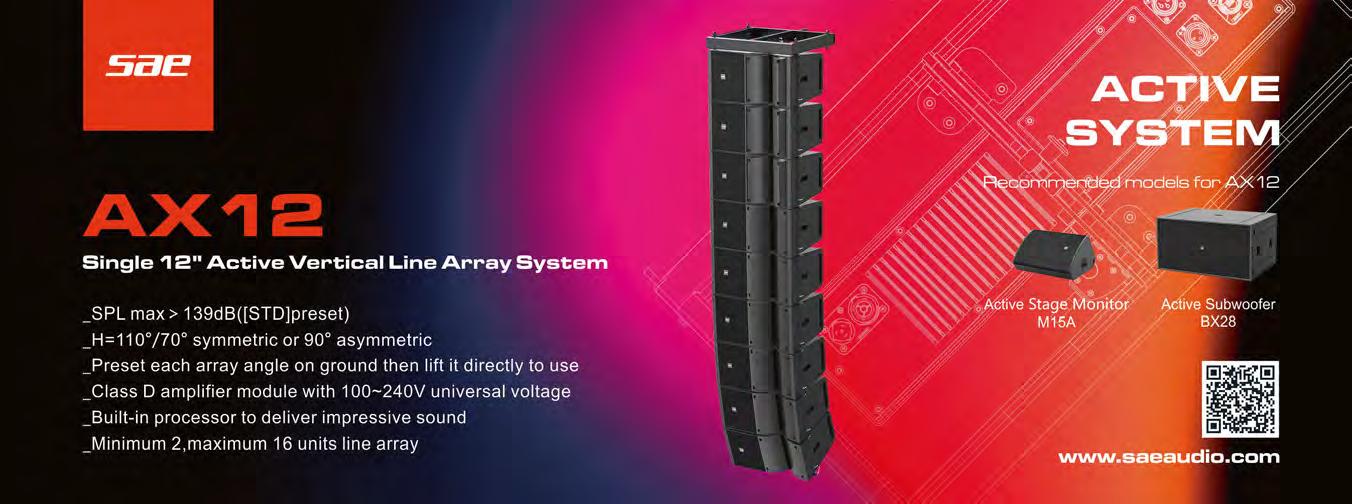
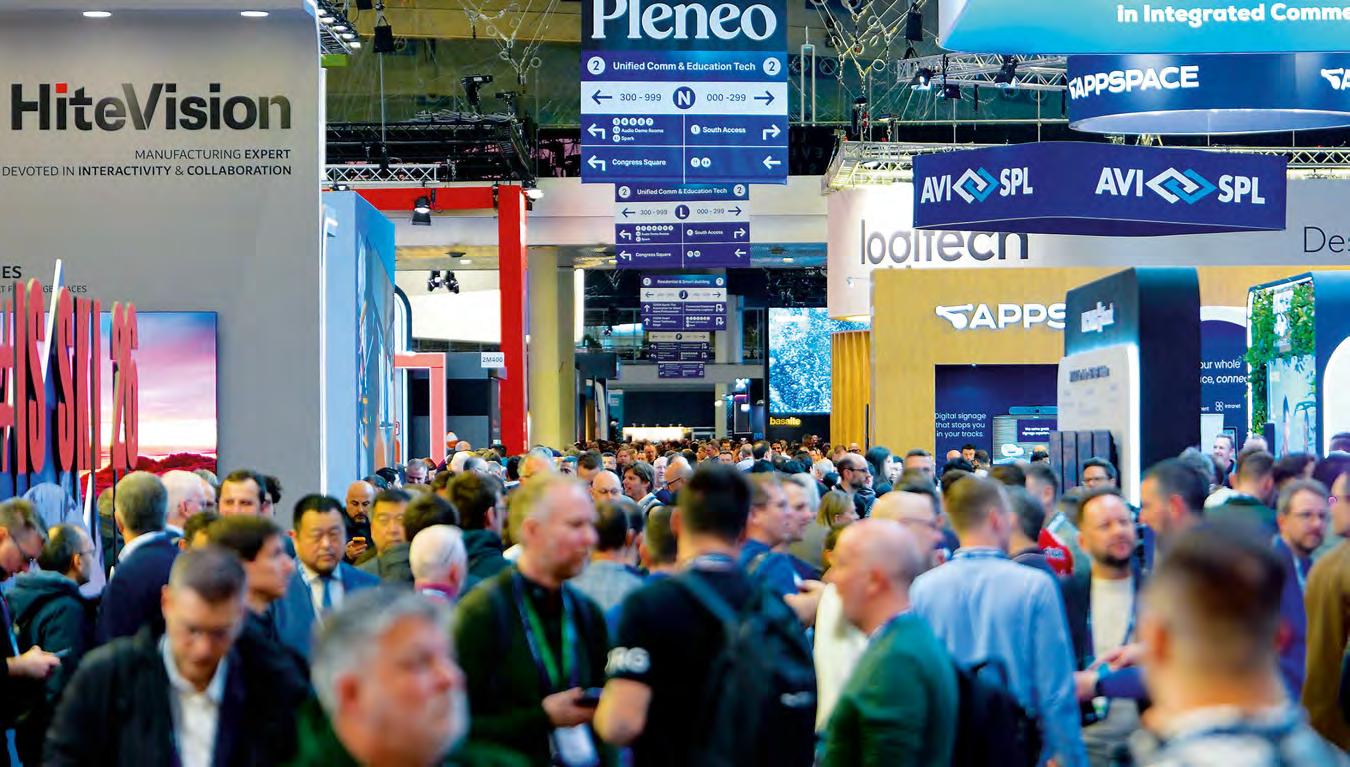
An eight-strong Blank Canvas team was on the ground in Barcelona to assess the scale, ambition and direction of ISE – here’s what defined this year’s show
OH WHAT A CIRCUS. ISE ROLLED INTO BARCELONA IN the first week of February, its four-day presence rippling through the Fira and out across the city, fully delivering on its Push Beyond theme.
Unsurprisingly, records were broken again. A total of 92,170 international visitors represented an 8% year-on-year increase. For those anticipating that number to have extended into six figures, it was unsurprising to learn there were over 212,000 individual visits, a 14% increase, with 64,198 on Wednesday alone. Exhibitors and floor space had also increased to 1,751 and 101,000m² respectively, including 323 first-time participants. Big trends of recent years such as AI and immersive technology have both quickly matured from buzzwords to being a part of everyday life. AI in particular has fast become integral to how we work across a range of disciplines and was in evidence throughout the show, integrated into hardware and software platforms, embedded into displays, cameras and control systems and enabling devices to respond to the requirements of environments and users.
The same is true for AVoIP, which is also becoming a standard offering across infrastructures for audio, video and control systems. Manufacturers consistently highlighted how ISE’s inclusive forum accelerates collaboration between R&D teams, progressing networking capabilities and interoperability.
Advanced display technologies were everywhere on the show floor, particularly in Hall 3, where mesmerising displays on LED walls and screens of varying shapes and configurations caused visitors to stop in their tracks.
The audio contingent in Hall 7 has matured to become almost a standalone exhibition, facilitating meetings between the tight-knit audio community. Immersive and spatial audio platforms and configurable speaker arrays were being shown on stands and activated in demo rooms, underscoring the flexibility of tailoring sound for different environments with the right tools. Meanwhile,
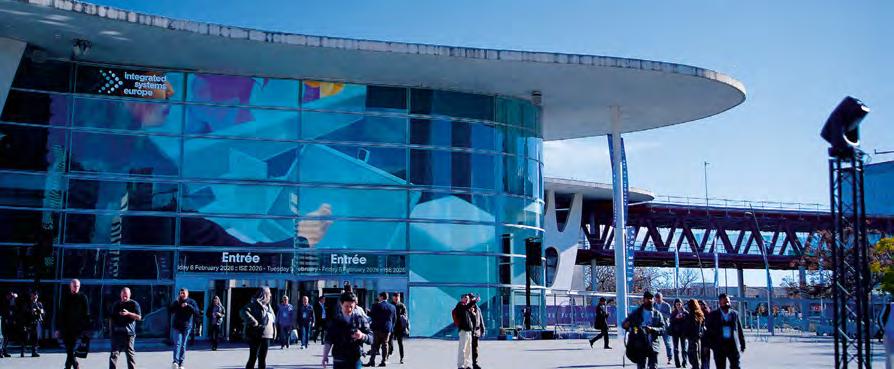
across the walkway in Hall 6, the same could be said for lighting and staging which this year extended into Hall 8.1, offering a cohesive forum separate from the AV, broadcast, audio and signage exhibits.
Although the promised Hall Zero is still under construction, there were plenty of new offerings. The Spark creative hub in Hall 8.1 brought live events, broadcast, gaming, design and marketing professionals together to explore cross-disciplinary innovation. Each day closed with a spectacular, 600-drone show above the Fira. And it would have been easy to skip the exhibition halls altogether and spend four days in thought-provoking seminars, keynotes and panels.
This show has evolved to become all things to everyone involved in AVL. Maybe because of its sheer scope, it was difficult to identify brand-new trends this year, though ongoing themes like the aforementioned AI, robotics, cybersecurity and smart buildings
were very much in evidence, while product launches and updates proliferated as companies increasingly choose this show for their debuts and announcements. But the overall impression coming away from ISE 2026 was one of an industry that is maturing yearon-year, is extremely upbeat about a smarter, integrated future and is collaborating like never before to advance its technology. And that is in no small part due to ISE.
2026 Dates: 3 – 6 February
2027 Dates: 2 – 5 February
Venue: Fira de Barcelona Gran Via Total exhibitors: 1,751
Attendance: 92,170
Contact: www.iseurope.org
Rob Fowler, Brompton
Technology:
“ISE has always been a very international show and if you had to choose one global event, this would be the one everyone comes to. We’ve been exhibiting here for over a decade and making that move to exhibit at a show like this is a significant step for any growing company. It’s how you start to cement yourself in the minds of customers and partners. The [planned] expansion into Hall Zero is simply a reflection of the show’s continued success. While competition for space remains strong, what really matters is committing to the show and letting people know you’re here.”
Sally Yu, Maxhub:
“It’s been very good, the first and second days in particular were nonstop and we’ve seen customers from all over the world, from as far away as Australia. Our booth is bigger this year, and next year we’re taking an even bigger stand of over 200m2. Our brand awareness is growing year-on-year, with more people coming to visit us, so we need more space for meetings. Also, we have more products coming next year so we want to build an immersive conference room and an LED experience centre so people can see our solutions in action.”
Bart Swinnen, Luminex:
“This show brings a lot of elements and the international AVL industry together. For Luminex, as a network infrastructure manufacturer that is focused on AV, we are sitting at the right place here because all these different technologies need to be network-connected. It’s very important to be present here as a brand, to have all our latest technology on display, and it’s been a huge success so far. It’s one of the best shows in terms of both the attendance and quality of people. And it keeps going up a level and growing each year.”
Sergio Molho, WSDG:
“We’ve taken a stand for the first time in Barcelona, although WSDG exhibited at the first ISE in 2004 in Geneva. This is the most exciting show in the world right now in terms of size, calibre, networking, displays and professionalism, and we’ll continue to exhibit. We’re seeing all the people we need to: our friends, manufacturers that we collaborate with on our projects, the media. It’s a great networking event and meeting place – we work day-to-day with all these guys virtually, so to be in the same place at the same time is invaluable. If they want to show us something new, we are here.”
Tomoko Ashizawa, Linear Sound Japan:
“It’s my first time at ISE and the show has been really impressive, it’s very different from InterBEE, our Japanese industry tradeshow. I haven’t seen many other Japanese people so far as it’s a long way to come, but I would definitely recommend that people make the trip. All the brands are here on the show floor, with a lot of the speaker brands also taking demo rooms; it’s rare to see that at other shows. It’s a great opportunity for doing business on an international scale.”

Christian Stumpp, d&b audiotechnik:
“ISE’s development from Amsterdam to here has been phenomenal. I’d just go to the Amsterdam show to meet people from the industry but not many of my customers from Latin America. Moving to Barcelona, all our partners from Latin America are here, plus a lot of end users from the region. All our international d&b offices are present, so I meet the whole company, plus everybody from the industry is coming. The combination of tradeshow floor and good demo rooms helps the audio industry a lot. It’s not just sales people coming – many of our R&D and product management staff are also here and there’s a lot of collaboration with other manufacturers. That’s very interesting for the visitors.”
Anthony Berry, Genelec:

“Hall 7 is the pro audio segment of ISE, but this range of speakers has been developed for integration and installation, so being in Hall 2 with more likeminded manufacturers just makes sense. There are a lot of visitors that know us from the pro and broadcast side and they’re surprised to see that we’ve branched out and are doing smart IP, networking and focusing on integration. The beauty of ISE is that you can find solutions for every problem. It gives systems integrators and designers so many possibilities in one spot that they wouldn’t normally have access to.”

James Godbehear, Cadac:
“We’re mainly here to network and look for new distributors; it’s the only show where we can see so many people in this amount of time. We have the OSC server built into our ecosystem now so we can interface with third-party manufacturers.
It’s not a traditional ‘tradeshow’ anymore, people come to see what everyone is doing so systems can integrate. The show is definitely helping to develop technology – we all talk to people we wouldn’t otherwise meet, and our R&D team get lots of new ideas about how we can take our technology forward.”
Mark Posgay, EAW:
“We’ve had really good attendance, both on the booth and also here in our demo room, focusing on the Adaptive systems and our new NT206L rig. We’ve done six demos a day and we’ve been really pleased with the attendance. We promote it well in advance, and we don’t take preregistrations, people just turn up and walk in. We always take a demo room at ISE and this year we’ve seen a lot more people. We’ve simplified our demos to highlight just a few products, with a lot more listening time for each. It’s been a success and we’ll be back next year.”
Kristof Jeuris, Areal:
“It’s been an amazing show – we’re a new company and we’re really impressed with how well the market aligns with what we do. As a new brand, we’re testing the water and exhibiting for the first time here in the Innovation Park. You try to evaluate what the market’s going to do and how the product is going to fit, and ISE has been spot-on for us, it’s checking all the boxes. We’re doing the right things and we’re seeing all the right people here, but we did put in quite a bit of outreach in advance to make sure that we could talk to the right audience.”

James King, Martin Audio:
“The first two days were utterly magic; I’ve never seen anything like it. The stand was consistently busy across those two days. It’s felt very international, although I haven’t seen much representation from the US. It’s become a default show for anything AV-related, and there’s increasing interaction between brands and technologies. People want to find out about the latest trends, although there hasn’t been anything this year that features in all the new products. With buzzwords like spatial sound, people don’t necessarily understand it so you start digging into it and helping on the educational front. We can get quite blasé about technology, thinking that everyone knows.”
Levente Lavrinyuk, Lightware:

“Lightware has been part of ISE since 2006, and every year proves why face-to-face matters. Our solutions usually live behind the scenes, so showing them in action –letting people hold, touch and understand them – makes all the difference. The show isn’t just about customers; it’s where we meet the partners we integrate with, connect in person and explore how our technologies can work together. ISE brings everyone into one space to collaborate, share ideas and build the relationships that keep the AV industry moving forward every year.”
Jeremiah Karni, Adamson:
“The show has been bustling this year, with things slowing down slightly on the last day offering a welcome respite after a great week. We’ve seen people come through from all over the world, including more from the US than we expected. When you work with distributors and dealers across different regions, having that face-to-face touchpoint once or twice a year helps business move more smoothly. It also gives us the opportunity to look around the floor, see what other manufacturers are doing and get a sense of new products and emerging trends across the industry.”
Ian Cookson, Audio-Technica:
“Our offering at ISE remains firmly focused on the installation market. While we’re an audio company at heart, this show is about demonstrating how our solutions fit into broader integrated environments. The booth design reflects that approach: products at the front to draw people in and dedicated seated spaces for longer conversations. As industry boundaries continue to blur between AV, broadcast and control, it’s increasingly important that we show how our solutions pair with third-party platforms. Interoperability is central to our message.”
Pavel Nemec, Robe:
“The show has been extremely busy for us, we’ve seen a lot of our distributors and team coming to ISE this year, especially since Prolight + Sound announced it will not continue. That shift has made ISE the main show for us in Europe and even worldwide. Our distributors come not only to see our latest developments, but to understand what’s new across the wider industry. As ISE brings together integrated solutions, audio and entertainment, it has become the central meeting point we simply can’t miss.”

Gareth Collyer, NEXO:
“Having received a great reaction to our Sound XR immersive system alongside our colleagues from Steinberg and Yamaha, ISE 2026 has been NEXO’s best and busiest to date. In 2025, we took a demo room for the launch of the new Alpha system. Such an investment is a huge financial consideration and you must measure what the reward is. Last year, the demo room served a purpose but, for our current plan this year with regards to Alpha+, we had to decline. The demo makes the sale, but there are better environments to demonstrate a loudspeaker.”
Jeff Moore, Ross Video:

“ISE represents an amazing opportunity to connect with a broader set of global customers and business partners, including banks and corporations that are adopting high-level, broadcast-quality technology. This has been an extremely successful exhibition, and we will take a bigger stand in 2027. And Barcelona, with its great restaurants, architecture and warmer climate than Canada at this time of the year, further appeals. By meeting so many partners, competitors, clients, integration partners and end users, our team receives a huge amount of input and stimulation.”
Marcel Termeer, BeamZ:

“We’ve had lots of people coming to our booth and getting to know us and our products better. Being here gives us much more visibility and it’s been a great coming together of the industry. We come once a year to reconnect and do business face-to-face. With there no longer being a lighting show in Frankfurt, ISE has become an even more integral platform for us to meet international partners, strengthen relationships and ensure our products are seen by the right people from across the global market.”
Glenn Lightbody, Blackmagic Design:

“Blackmagic is demonstrating end-to-end solutions covering content creation, editing, immersive and ST 2110 technologies rather than focusing on products. Postproduction has been our heritage, but our technology can be used dynamically across varied industries. We’ve spoken to everyone from podcasters to cruise ship builders. We first exhibited here in 2019, but ISE has grown and many attendees are coming to learn rather than simply reconnecting with familiar faces. The high level of interaction and large numbers of attendees justify our continued presence at ISE.”
Arik PK, Sennheiser:
“ISE continues to grow year-on-year, and this edition felt particularly strong, especially in terms of footfall from the Middle East. We saw a healthy mix of familiar systems integrators and a rising number of end users wanting to better understand the technology being specified for their own spaces. That was a positive shift. Rather than just asking what’s new, many visitors were keen to dive deeper into how products work, and it’s probably for that reason that our demo areas were consistently busy, even through to the final day.”

Andreas Hilmer, Lawo:
“ISE has evolved greatly over the years and remains inspiring. Lawo has enhanced its renowned solutions with video processing, audio processing, user interfaces for integrated workflows, multiviewers and monitoring capabilities. Corporations, governments, educational facilities and financial institutions now demand professional communications and that means implementing broadcast quality in AV setups. Our software-based platform helps customers build solutions based on hardware to scale up and maximise their investment potential. The next generation is ready to utilise server- or computerbased processing to cater for requests in video and audio, but the migration of the complete industry will take longer.”

Lee Harrison, Epson:

“The show has clearly become a primary global launch platform for the AV industry. There’s no doubt that ISE’s continued success benefits our business and the return on investment remains strong, particularly in markets such as the Middle East and South Africa, where we’ve seen tangible growth directly following conversations here. There’s also significant value in maintaining a visible and creative presence, and each year we relish devising new ways to demonstrate that projection remains relevant, flexible and capable of transforming almost any surface. Logistically, I think Barcelona works really well. Yes, there were a few learning curves in the early years, but now everything feels settled.”






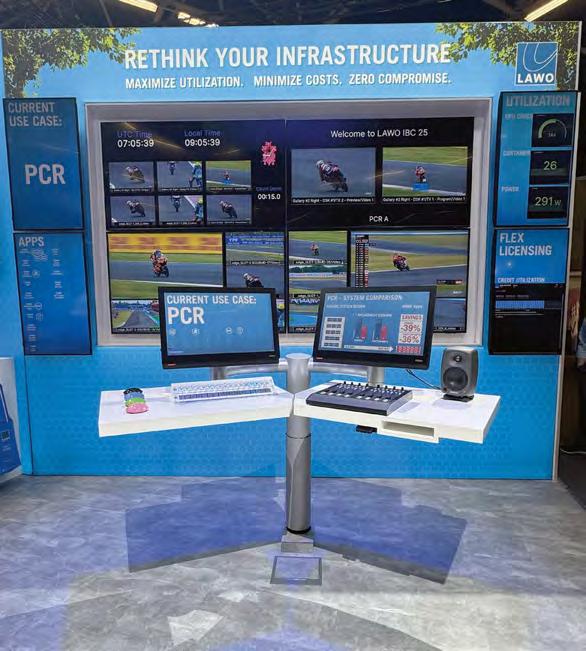


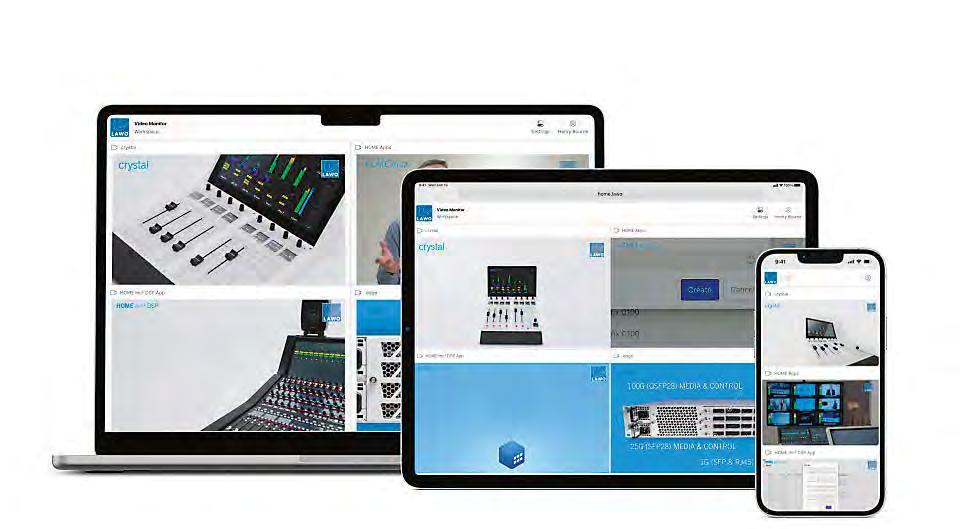





ESCHEWING THE SATURATED CLUB OF INDISCRIMINATE black boxes for 25 years, Void Acoustics continues to set the bar high by designing electroacoustic magnificence within abstract works of art. Cofounders Rog Mogale and Alex Skan may have welcomed Sam Brandon into the fold as managing director, but these teenage friends and audio addicts are hardly stepping out of the spotlight anytime soon.
Coming from a family with very little musical ability, Mogale’s flair for playing drums and the piano at three years old was balanced by his love of drawing circles on shoe boxes that resembled loudspeakers and connecting them to other boxes with string. “I don’t think you pick a career in life, I think it picks you,” he maintains. “I’ve always loved audio from a very young age and audio picked me.”
With an electronic specialist father who worked for a computer company, Skan’s curiosity about technology and records stirred a musical passion and, when the rave scene arrived in the UK in the late 1980s, his time had arrived. Set against a turbulent sociopolitical backdrop, dance music and acid house marked a new era of creative expression and an escape from the norm. As like-minded individuals gathered and the social fabric shifted, Mogale and Skan met and discussed taking on the established world order of professional audio.
Confronted with club systems plagued by inferior design qualities, the duo’s increasing frustration led to them challenging conventional audio. “Both Alex and his business associate would come to my house, and we’d talk excitedly about loudspeakers until the early morning,” recalls Mogale. “Clubs were spending millions on the décor and the lights, but the loudspeakers remained black boxes hidden away
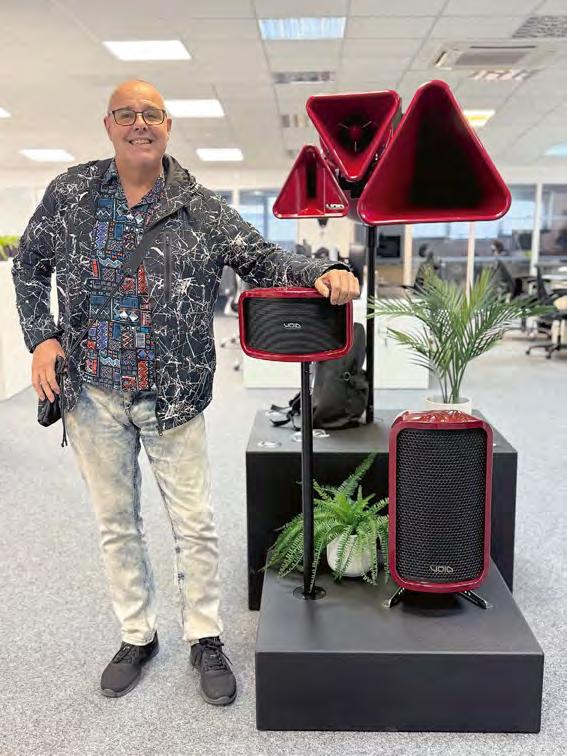
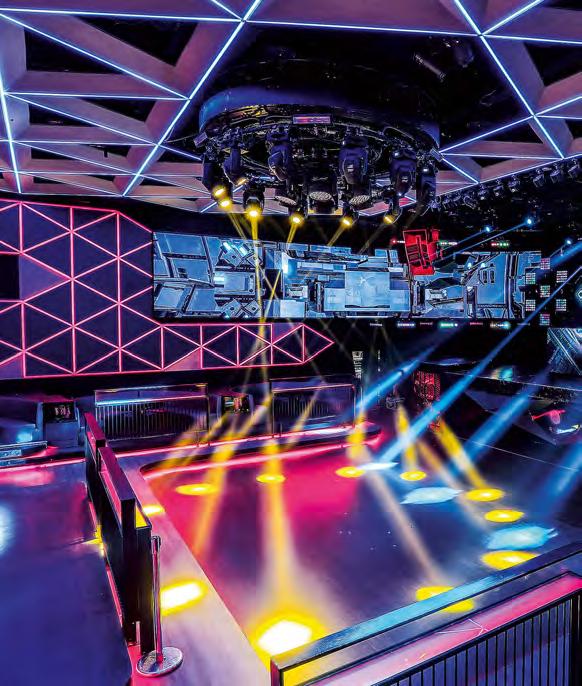
apologetically in the corners. For the loudspeaker to come out, I knew that the design had to mirror the aesthetics of the club. Like hidden sculptures, loudspeakers had always been there, but needed uncovering.”
As Mogale pursued a career in writing, performing and producing music, his enthusiasm for speaker design was placed on hold until 2002. “I was mixing live shows for big artists including George Clinton in addition to writing music for TV and film,” he says. “However, I’d reached a defining moment and just couldn’t carry on in the music industry, so I quit. Suddenly, I was urged to follow my first dream of building speaker systems. It was a natural evolution with Alex because we shared the same vision.”
Driven by an insatiable desire to create a more cohesive experience for venues and their guests, Void Acoustics instantly differentiated itself in the market. “The vision was to make the speakers a part of the whole clubbing experience,” explains Mogale. “There’s no point going to a club and not being able to totally connect with every part of the performance. With established loudspeaker brands not taking risks, Void could make a difference. We didn’t have a business plan because we simply wanted to turn people on and let them have a good time.”
If Mogale’s maverick designer role was to be fulfilled, Skan knew he had to manage the business. Having gained experience of how other brands installed equipment into venues, he confesses: “Rog enjoys designing speakers and creating for venues, but I knew he wasn’t keen on business formalities. Fortunately, I enjoy sales and the business side including administration, purchasing, recruitment and human resources. As we grew, it was important to identify new employees who could fulfil the roles we could not do, freeing up the time for us to focus on what we’re good at.”
During a 14-day visit to Shanghai to attend an exhibition and conduct meetings with suppliers, Mogale opted to extend his stay and work in China, where he remained for over 10 years. “Everything in the UK was either cost- or time-prohibitive and, because I work very quickly, prototyping with metal, wood and fibreglass was a lot easier in China,” he attests. “Several Chinese factories invited me to their facilities. Unlike in the West, they all shared a hunger to learn and move forward. Ultimately, I rented an office and demo room in a factory north of Guangzhou where I was also permitted to create prototypes in their manufacturing facility.”
Several years later, Void Acoustics China established its own R&D lab and fibreglass shop. For this, Mogale recruited two
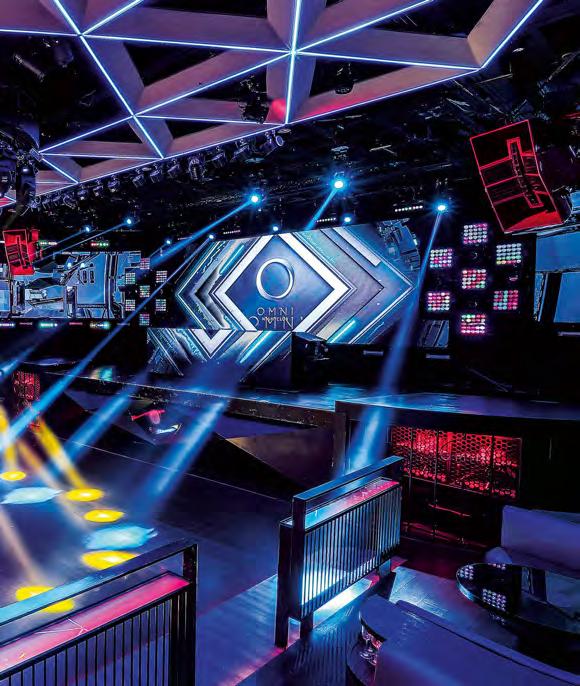
engineers, including a street craftsman he had noticed during his daily walks: “This man could ingeniously make car parts such as bumpers out of anything, including fibreglass. When his business took a downturn, I asked him if he could transfer these skills to create speaker enclosures, and he made the moulds for the first Air Motion in 2005.”
Despite having limited resources, this period marked a highly productive phase for the fibreglass specialist, Mogale and Sheng, who helped with the 3D CAD drawings. “In 2013, we created Venu V1 Series which incorporated 12 models alone, in addition to Tri Motion, Nexus 6, Psyco X and Stasys Xair,” says Mogale. “This would take a normal manufacturer around 10 years to design, produce all the crossovers, cabinets, hardware and transducers, but we did it in a year. The production of these systems continues today.”
The Chinese operation – a manufacturing resource for the fibreglass enclosures portfolio – is overseen by general manager Leo Lin. “It is well-structured, the factory floor
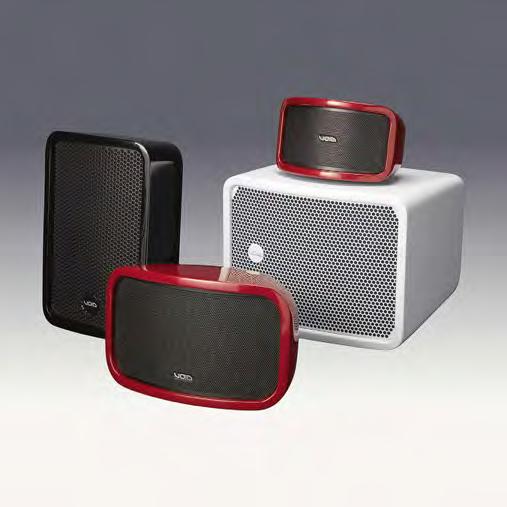
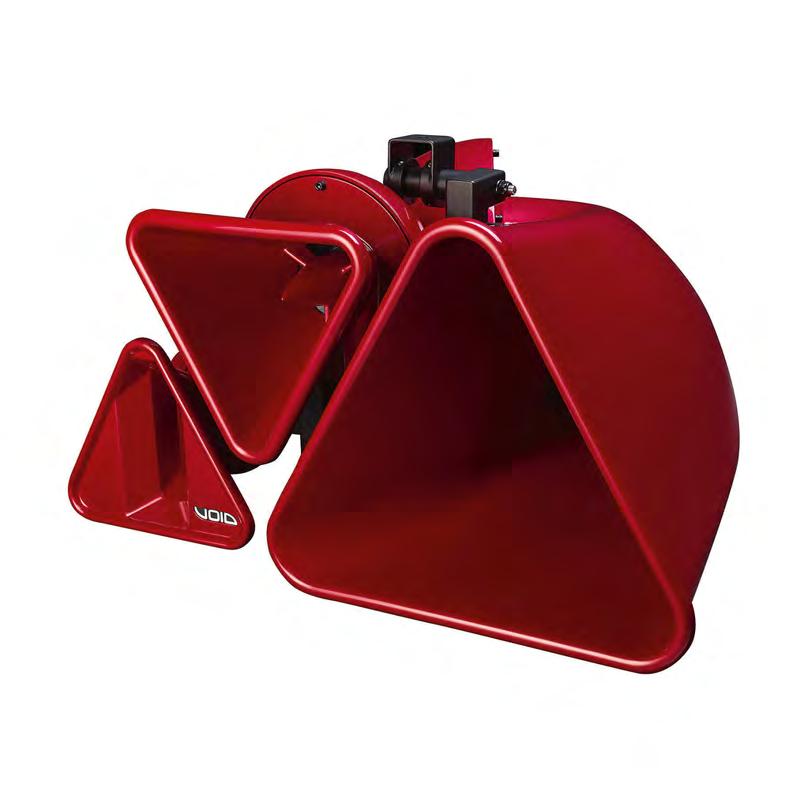
we try not to over-manage from the UK because this setup could not be replicated anywhere else. Many OEMs originally gravitated towards China because they were attracted by cheaper labour, but our ethos has always been different. With their unique mindset, spirituality and incredible work ethic, we knew we could not manually manufacture our fibreglass designs anywhere else.”
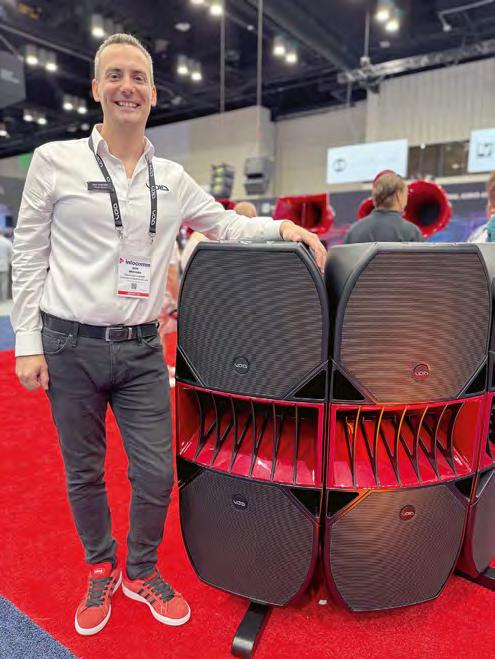
Maintaining a balance, Skan marshalled the upwards trajectory of Void Acoustics in the UK. Increasing turnover generated from the company’s initial industrial unit at 10b Dawkins Road in Dorset demanded expansion into neighbouring units over several years. Simultaneously, the product portfolio permeated into other vertical sectors beyond nightlife. “Nightlife remains our spiritual home, but Void is perhaps renowned for its design aesthetics and amazing sound quality in high-end boutique hospitality,” suggests Skan. “Exclusive residential spaces and the marine market are other interesting sectors for us. It’s no coincidence being here in Poole, Dorset, because the biggest yachting boatyards are very close to our headquarters and we have attracted many employees from this sector over the years.”
The Void Acoustics catalogue partly consists of designs catering to customer demand, but Mogale’s pioneering spirit sees him also creating his own designs. “Fulfilling certain specifications such as weight, output and dispersion for our sales division is commercially astute, but I enjoy creating prototypes without any constrictions as well,” he explains, exemplifying the birth of Tri Motion. “With its cylindrical enclosures, Air Motion is a perfect 3-way format for a club. However, I wanted to substitute this form with asymmetric triangles, so the dispersion pattern could tilt downwards in venues with low ceilings to avoid reflections.”
Following the decade spent in China, Mogale decamped to the Malaysian island of Penang before settling down in his current abode of Gran Canaria, where blue sky thinking helps him create some of his unique designs. “I go through creative cycles, pursuing different interests that all blend together to improve my speaker designs,” he continues. “I may take two months with my photography before I get into hiking around the island, then into motorbikes and fixing old engines and back to speakers and then into my studio to record music.”
A keen artist since he was an infant, Mogale continues to sketch when an idea comes to mind: “I must draw it before translating into CAD, and then run simulations to see if it works. With Incubus, I wanted two stacks to cover 2,000 people in a club, but with some dispersion control, allowing more HF to be thrown into the middle of the dancefloor to combat air absorption. I wanted all 14 drivers in the cabinet
to sum as one point source with less than one wavelength between them, so the distances between the sources are minimised to ensure there is zero destructive interference.”
Combining a group of engineers around the world including Simon Rains in Thailand, the R&D division hosts weekly online meetings, working closely with the product design team. Internally, Mogale’s influence covers a wide spectrum, from conception to packaging the final product. A current peek into the R&D inner sanctum reveals Void ceiling speakers and subwoofers for outdoor applications, incorporating new technology that resists water entering the ports. “Rather than work in isolation, each department combines as one in delivering a new product,” explains Skan. “There is a feeling of ownership, and this is where the family vibe has developed.”
To date, the biggest-selling Void products are the Airten and Cyclone 55 models. However, changing trends in the hospitality market are now witnessing Air Motion speakers being specified in restaurants, according to Skan: “From a development perspective, creating products that are commercially viable is a huge asset. There is no need for
us to design specifically for certain sectors of the hospitality market but, should we do so in future, it will be in our own unique Void way.”
Following the appointment of the highly experienced Andy Rigler as head of sales in 2024, Skan and Mogale revealed Sam Brandon as Void’s managing director in May 2025. While aiming to step away from the managing director role, Skan is not looking for the exit just yet. “I am continuing to support our team and contribute to the vision by playing a continued role in its next exciting chapter,” he says. “We have now reached a point where we’re attracting the best employees. We have collectively done a brilliant job to get us to this point but, to go further, the business demands someone with amazing experience and connections. Sam is that man.”
Brandon enters Void with experience in technical, engineering, commercial and leadership roles across Europe, the Middle East and Africa. Most recently, he served as CEO of the EAV Group and, prior to that, he was director of audio at Harman Professional. “I first came across Void at PLASA in 2008 because they were sponsoring the show, and they definitely stood out,” he recalls. “Having admired the brand from afar since then, I’m incredibly honoured to join as managing director. With a commitment to elevating sound into an art form and a bold design philosophy that sets it apart in an industry often defined by conformity, no other brand looks or sounds quite like Void.”
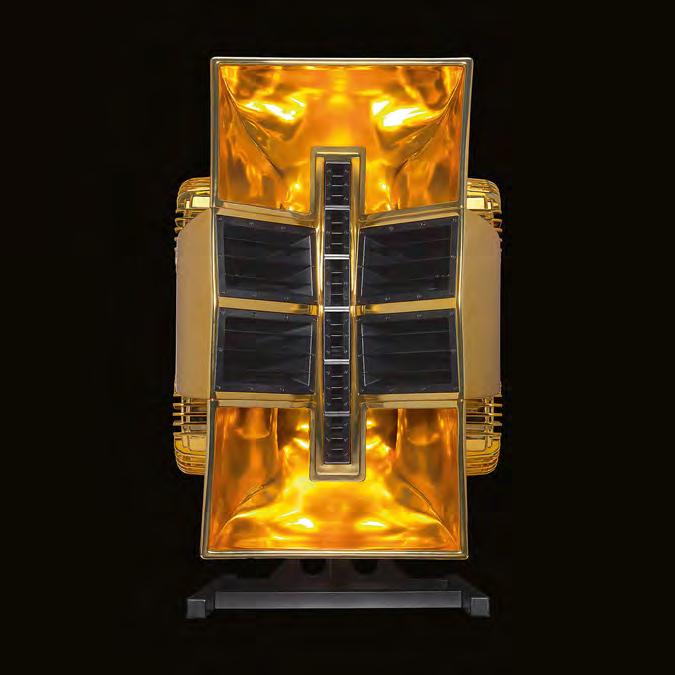
Having taken a year off work to decide and cement the next 20, Brandon was unconsciously gravitating towards a company where the owners retained full control. “When the Void proposition came up and I had a meeting with Alex and Rog, I rediscovered the passion and knew that I wanted to remain in this industry,” he says. “This is one of the massive strengths of Void, as is their speed in making decisions. I know that I can send a message at whatever time I want in our WhatsApp group and they will immediately respond. This contrasts markedly with most other companies today.”
As he hit the ground running, Brandon identified the challenges resulting from unprecedented sales growth each year since 2021. “The company turnover almost doubled in that year, and the upwards momentum has not tailed off,” he explains. Coming out of the pandemic, Void had been very active with its sales and marketing. But, with warehousing, sales, technical and marketing in one building and accounting, planning, operations and manufacturing in the other, this division added to the growing pains.
Coinciding with Brandon’s appointment, Void Acoustics relocated from its previous 900m2 premises to an all-in-one, facility. “By unifying the team under one roof, the dynamic has changed, and the relocation has added to our credibility,” says Skan. “It’s a ‘wow’ building and we can breathe again, with fewer distractions. Over the last 20 years,
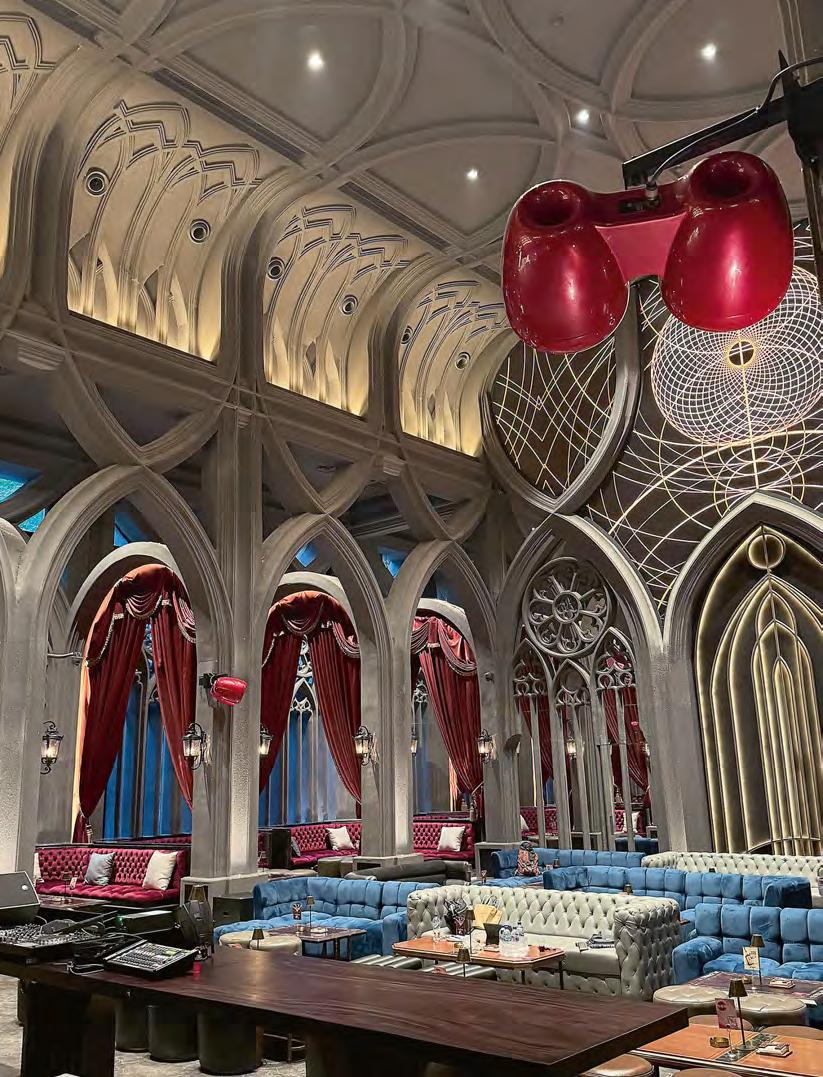
and venues, Brandon agrees that the brand has naturally penetrated hospitality sectors including hotels, restaurants and cafés. “My analysis concluded that our speaker systems such as Cyclone are increasingly specified across hospitality environments, where the design aesthetic remains a critical factor,” he reveals. “There is a revenue benefit for a venue manager investing in something that not only looks great for that space but sounds excellent. It becomes easier to justify that spend because paying guests remember, and return. Ahead of the curve, perhaps, but Void was ready for this increasing demand from boutique, high-end hospitality spaces.” Being a passionate business, Void has continued to expand its pool of dedicated personnel. “Void has attracted like-minded people over the years such as DJs, musicians and performers, who have a big passion for what we do,” says Mogale. “When recruiting a reseller or distributor, you can look into their eyes during a discussion about speakers and, when you see their faces light up, you know they are on your side. If that doesn’t happen, and they’re more interested in numbers and shifting boxes, its generally not going to work. We have always gravitated towards like-minded souls to be a part of the journey.”
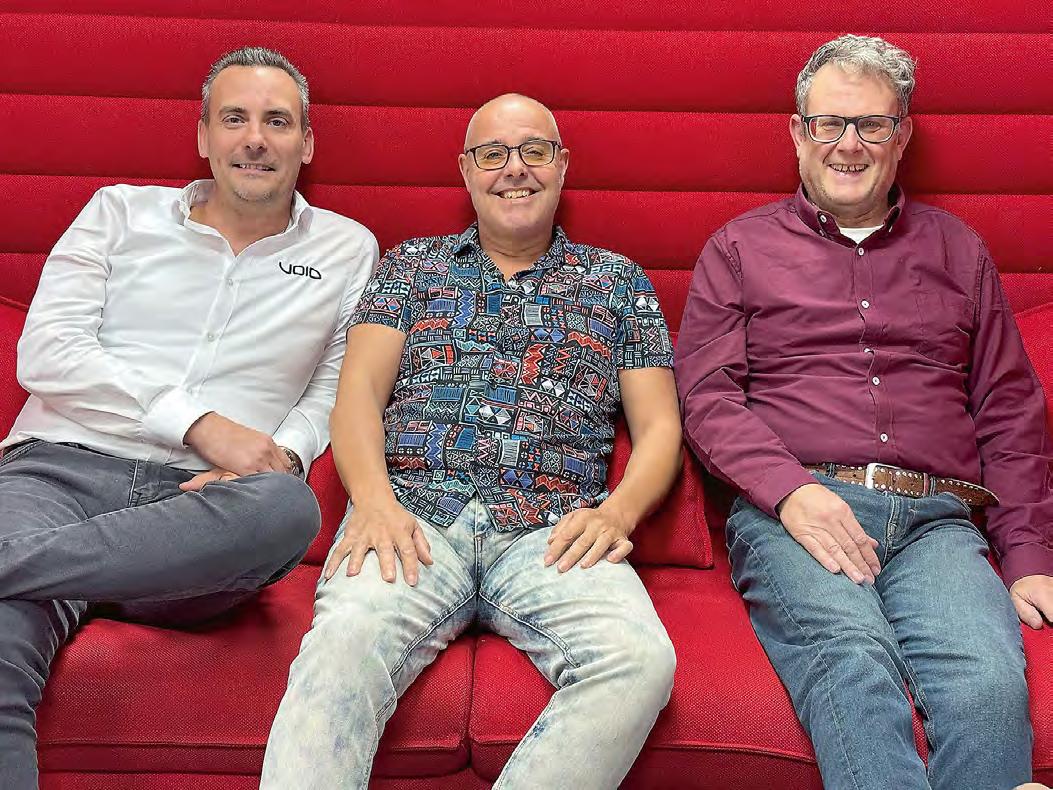
A bemused smile appears on Mogale’s face as he views the various departments processing orders, creating sales leads and discussing projects with clients in the new office space. “I always knew that the business would be successful because I work fast, I’m focused and, once I sink my teeth in, I don’t stop,” he asserts. “Financial success doesn’t motivate me, it’s looking around the world at the most amazing people that work with Void – that’s my motivation. I’m the luckiest man alive to have our staff; everything and everyone is just perfect for the massive growth that’s to come.”
www.voidacoustics.com




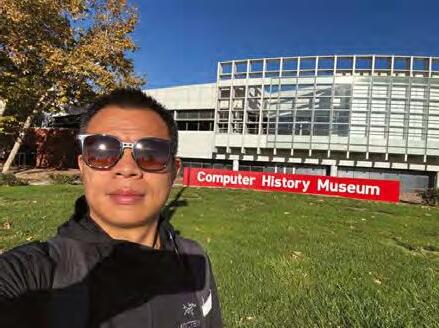
Changbao














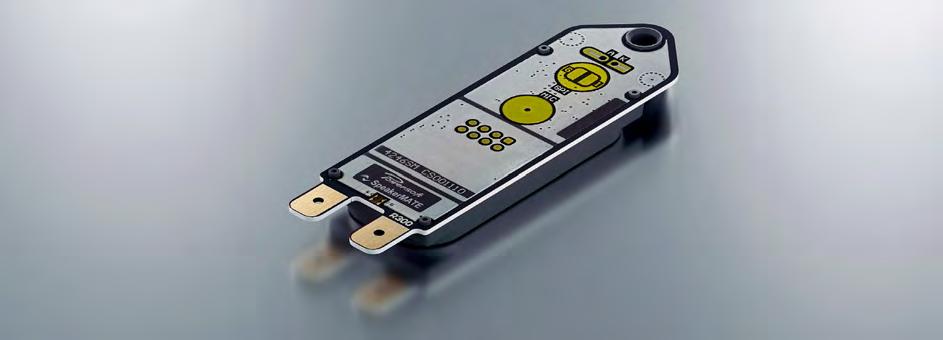
ANYMATE – AND its first implementation, SpeakerMATE – have been developed by Powersoft to come a step closer towards smarter, more connected installed audio systems. The new technologies add identification, monitoring and data exchange capabilities directly to passive loudspeakers, without the need for additional network cabling or external power.
For years, the professional AV industry has focused system intelligence on active devices and IP-based infrastructure, while passive loudspeakers have largely remained disconnected endpoints. AnyMATE aims to address this imbalance by enabling communication over existing speaker lines, allowing the amplifier to act as a communication hub for both audio and data.
AnyMATE is a communication technology based on a proprietary protocol and a patent-pending physical-layer implementation. Rather than relying on Ethernet or wireless connections, AnyMATE exchanges data directly via an amplifier’s output channels. This makes it possible to identify and monitor downstream devices without deploying a separate control network, aligning closely with the realities of installed audio environments that often feature long cable runs, Hi-Z architectures and legacy infrastructure.
Developed within Powersoft’s R&D department over more than a decade,
AnyMATE has been refined through extensive internal testing before being brought to market. Importantly for systems designers and integrators, the technology is not limited to new installations. Where amplifiers have sufficient current-sensing and processing capability, AnyMATE can be introduced into existing systems by adding compatible downstream hardware, making it suitable for retrofit projects in sectors such as transport, retail and large venues.
SpeakerMATE represents the first practical application of the AnyMATE platform. The compact hardware module establishes communication between amplifiers and passive loudspeakers and can be deployed either as an external add-on near the speaker or integrated directly by loudspeaker manufacturers. For retrofit applications, SpeakerMATE connects in parallel with the speaker line via quick-splice connectors and requires no dedicated power supply, simplifying installation and minimising downtime.
Once installed, SpeakerMATE devices are automatically discovered and configured through Powersoft’s Armonía+ software.
Additional data can be written to the device in advance, including speaker brand and model information, enabling the system to suggest appropriate presets and helping to reduce configuration errors during commissioning.
Beyond identification, SpeakerMATE incorporates a temperature sensor, accelerometer and microphone, with the option to interface with an external sensor via a GPI port. These features enable new levels of monitoring and diagnostics for passive loudspeakers, including temperature and tilt measurement, on-demand sound pressure level testing and access to detailed metadata such as installation notes, serial numbers and lifecycle history. When integrated with cloud-based services such as MyPowersoft, accessed via MyUniverso, SpeakerMATE allows system status and anomalies to be monitored remotely. This capability supports faster fault-finding, preventative maintenance and reduced site visits, particularly valuable for large, distributed systems such as shopping centres, airports, stadiums, cinemas and theme parks. Powersoft is introducing AnyMATE as a platform rather than a single product, with the potential for future expansion and licensing to third-party manufacturers. By embedding intelligence into existing infrastructure, AnyMATE and SpeakerMATE can transform passive loudspeakers from silent endpoints into active participants within the networked AV environment.
www.powersoft.com
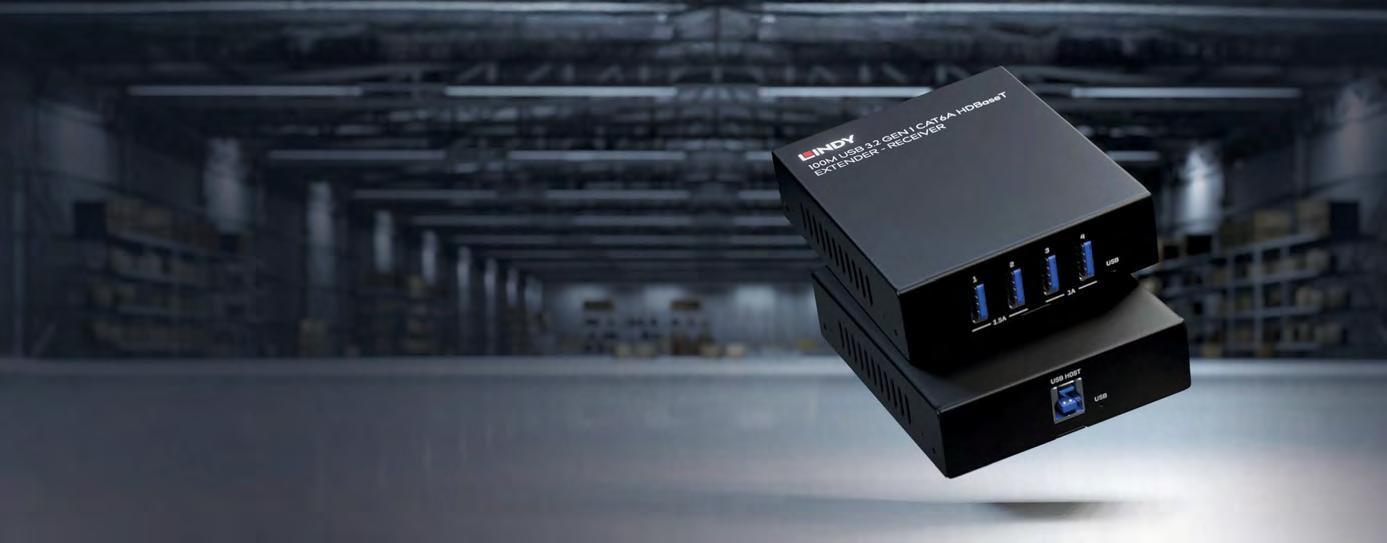



FULL SUPPORT for EASE (Enhanced Acoustic Simulator for Engineers) and CLF2 (Common Loudspeaker Format) data integration has been added to Crest Audio’s CPL+ loudspeaker series. The move gives AV consultants, systems designers and integrators direct access to accurate, manufacturer-verified loudspeaker data for use in predictive acoustic modelling, coverage mapping and design validation.
Designed for both fixed installation and mobile reinforcement, the CPL+ range includes both full-range and subwoofer models, offering
coverage and configuration options for a wide variety of applications. Now EASE and CLF2enabled, each CPL+ loudspeaker ships with comprehensive GLL and CF2 data files, allowing users to perform detailed design simulations within EASE 5, EASE 4 and CLF Viewer, as well as most CLF-compatible simulation software. This provides 3D balloon and polar plots for precise directivity analysis, frequency response and phase plots validated to industry standards, comparative overlays to match CPL+ models against other manufacturers and accurate SPL coverage and STI mapping when deployed in EASE-modelled venues.
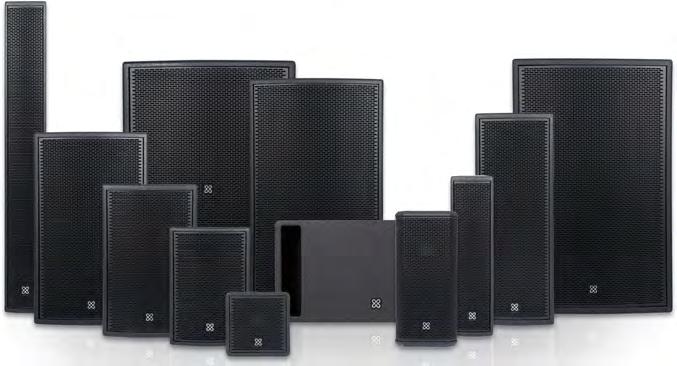
FOLLOWING THE release of the C5 Pro and C6 Pro ceiling loudspeakers, NEXT Audiocom has created what it describes as its most powerful model to date with the C8 Pro.
Providing seamless adaptation to different system requirements, a built-in transformer enables operation on both 100V line systems and low-impedance 8Ω
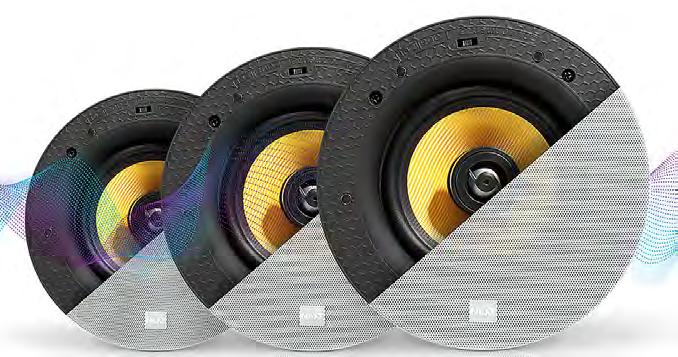
Measuring 80W RMS power with a maximum SPL of 112dB (programme/peak), the C8 Pro has been engineered for applications that demand higher output and enhanced lowfrequency response.
Designed for installation in false ceilings, walls and panels, the low-profile magnetic grille provides a frameless appearance and can be painted to match or contrast with the surrounding surface. For projects requiring a completely discreet look, the detachable logo provides an unobtrusive finish.
HK AUDIO has introduced filter templates for ASHLY AquaControl and FX Control, designed to enable fast, precise and reliable system configuration for selected HK Audio models. The presets have been engineered to work with the brand’s FINEO, SI series and LINEAR 5 series, and can be integrated into existing ASHLY systems, providing a basis for professional audio installations and live applications.
The preconfigured filter settings provide users with optimised sound tuning, enhanced operational reliability and reduced setup effort. The templates are suitable for both fixed installations and mobile sound reinforcement applications. They are available in the download area for the products on HK Audio’s website.
www.hkaudio.com
installations. Additionally, the adjustable tweeter provides control over high-frequency coverage, for directing the audio where required. Promoting automatic sound tuning based on the room, the C8 Pro supports Environment Equaliser adjustment to simplify acoustic optimisation. Increasing long-term reliability, an HF Driver Protection circuit safeguards the high-frequency driver against unexpected audio peaks.
www.nextaudiogroup.com
COMBINING POE++ power and IsoFlare point source transducer technology, AtlasIED has added the Atlas+Fyne FC-D (ceiling) and FS-D (surface) Dante-enabled PoE++ loudspeakers to its growing portfolio. Producing full-bandwidth, high-output performance, the latest models incorporate PoE++ technology via a single network cable. Engineered for phase-coherent summation across the entire passband,
each model incorporates an IsoFlare point source transducer. Providing predictable coverage, its integrated waveguide geometry ensures constant directivity, reduced off-axis colouration and improved time-domain accuracy. Delivering lobe-free dispersion, the mechanically aligned HF/LF centres negate inter-driver latency.
www.atlasied.com
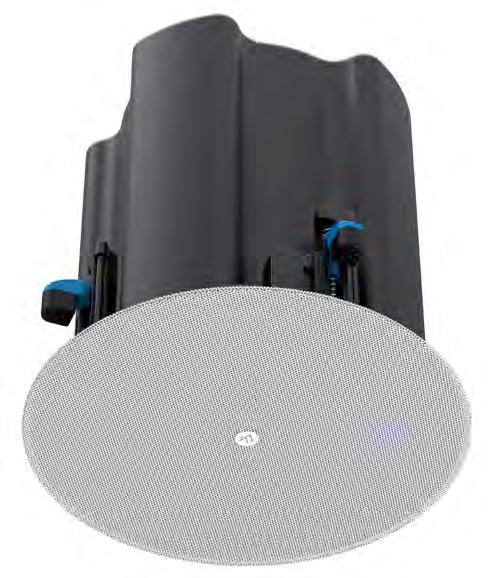
BELGIAN LOUDSPEAKER manufacturer
Audiofocus has expanded its Cyris coaxial loudspeaker range with the introduction of the CX5 and CX8, two compact passive models designed for shortthrow installation and live applications demanding controlled coverage, output and discreet aesthetics.
The Cyris CX5 is the smallest model in the range, built around a 5-inch coaxial transducer and delivering a maximum SPL of 124.3dB. Measuring 144mm across, the enclosure is intended for visually unobtrusive deployment in corporate AV, hospitality and cultural environments. The loudspeaker can be
wall or ceiling mounted using an optional bracket and includes a threaded insert for mic stand mounting, allowing it to be used in portable scenarios.
The larger Cyris CX8 features an 8-inch coaxial transducer with a wide 100° x 100° dispersion pattern, enabling even coverage with a reduced number of loudspeakers. It delivers a peak SPL of 134.4dB and a frequency response of 80Hz–18kHz. Mounting options include wall and ceiling
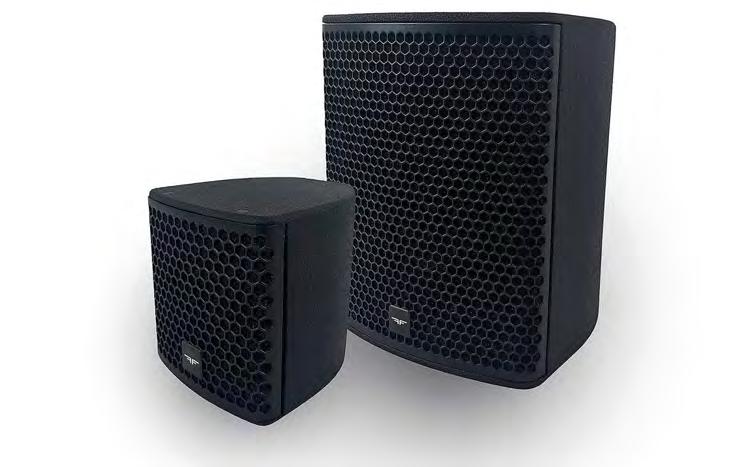
DESIGNED TO deliver seamless system integration, simple installation and high-fidelity networked audio for small and medium-sized meeting rooms, the ATSP-30 speakers from Audio-Technica are supplied as a pair – one active, one passive – that connect via standard speaker cable. Mounting flush in drop or hard ceilings with the included mounting hardware, the 10.4-inch diameter speakers take up minimal space but produce rich, full-bodied sound with a 140° coverage angle. Their low/ mid-frequency reproduction makes them suitable not only for microphone amplification but for playing background music and audio from video sources. For installations in which more than one pair of speakers is deployed, discrete audio signals can be sent to each pair –a helpful option for zone-based sound reinforcement and background music playback.
Featuring Audio-Technica’s AT-Link protocol (allowing for the transmission of uncompressed multichannel digital audio), the speakers form part of a sound reinforcement ecosystem featuring the ATDM-0604a and ATDM-1012 Digital SmartMixers, wireless and ceiling microphones and PC, all tied together by Cat5e or better cable for simple, affordable installation. For planning purposes, the ATSP-30 speakers are compatible with AFMG’s EASE software for convenient 3D sound modelling of the installation space. Audio-Technica also offers its own easy-to-use Speaker Layout Tool, which estimates sound pressure levels for a proposed speaker setup in a given space, along with the Audio-Technica LINK Simulator app which calculates how many power devices (such as the ATLK-EXT165 link extender) are required in a configuration of LINK devices. Once installed, the speakers’ onboard DSP settings, including 4-band EQ, sound
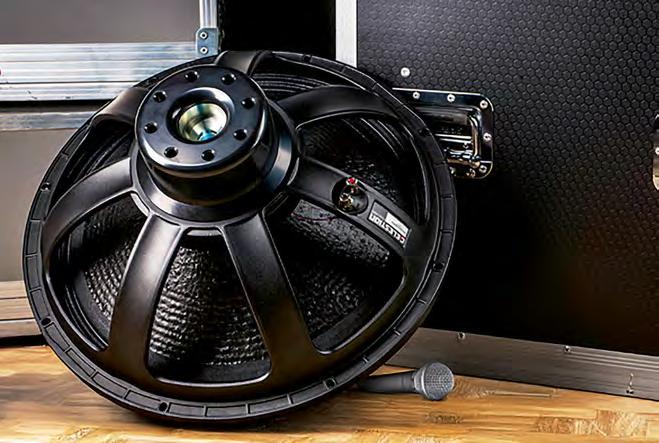
HAS
installation, while the enclosure also incorporates a dual-position polemount socket for flexible deployment. Both models are compatible with the manufacturer’s C210S low-profile double 10-inch subwoofer and A Series 4-channel amplifiers. In applications requiring rapid setup, up to four Cyris loudspeakers can be powered directly from the active C210Sa subwoofer. Both the Cyris CX5 and CX8 are manufactured from birch plywood at the company’s headquarters in Belgium, with custom-coloured cabinets available to suit architectural requirements.
www.audiofocus.eu
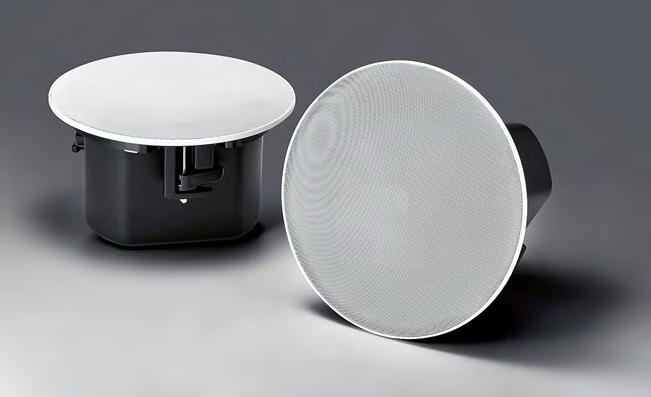
profile presets, delay, power restriction, phase shift and connection status can be adjusted via the ATDM mixer’s Web Remote and Smart Mixer Manager
www.audio-technica.com
large-format line arrays and 2- or 3-way loudspeaker systems.
The TSQ2460 features a 4,800W continuous power rating and achieves 98dB sensitivity. Its high-power handling capability is tied to its 6-inch diameter round copper voice coil, supported by an aluminium chassis, combined with the driver’s magnet cooling technology.
The driver incorporates the Precision Tuned Venting (PTV) system, a 3-channel system that provides constant, efficient cooling across the frequency band. According to the manufacturer, this temperature control enables the voice coil to operate at temperatures typically up to 80°C lower than competing drivers in this class. Further enhancing thermal performance is a proprietary coil structure featuring custom winding done in-house at Celestion. The voice coils use a hybrid multilayer, inside/ outside methodology, using proprietary adhesives and adhesive application methods. This approach maximises cooling
potential by exposing the greatest surface area to free air, synergistically combining with PTV to achieve significant reduction of power compression and thermal stress, further enhancing lifespan. The system employs a Reconfigured Magnet Assembly that allows for greater cone excursion and a high Xprotection level. This capability works in tandem with the driver’s Polysiloxane Laminated Dual/ Triple Suspension design, which takes advantage of a new process that optimises the laminates’ application method and polymer density between suspension rings and prevents the suspension system from losing stiffness under heavy loads. This means that the electrical motor strength (Bl) and mechanical compliance (CMS) reach their defined Xprotection limit at virtually the same point, resulting in consistently low distortion performance even during high excursion.
www.celestion.com
DESIGNED BY dBTechnologies to create a true 3-way system the size of a traditional 2-way dual 8-inch enclosure, the VIO L1608’s dual 8-inch neodymium LF drivers work alongside a coaxial MF/HF assembly powered by a 1,600W RMS Class-D amplifier. An optimised waveguide on the coax assembly and a low crossover point around 600Hz extend part of the midrange into the horn, producing a stable horizontal response and
and a fibrous protective layer behind the grille that helps reduce water ingress. The L1608 also incorporates current-generation VIO technologies, including inclinometer integration, opto-isolated preamps to minimise unwanted noise, NFC-assisted positioning and a bright front ID LED designed for visibility during setup and system verification.
For the first time in a VIO module, A2Net protocol is included, enabling high-resolution
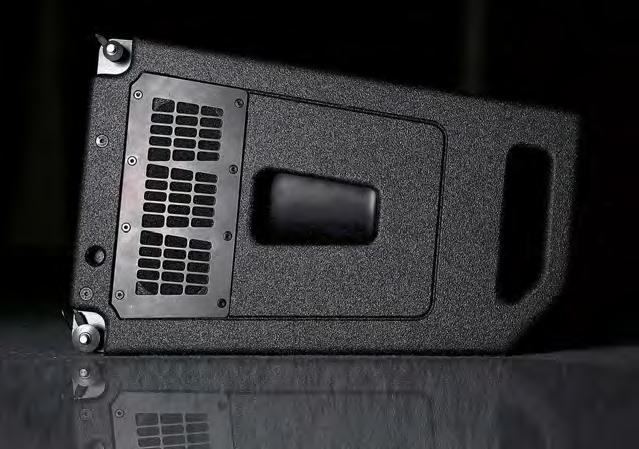
an open, natural midrange character. The manufacturer’s side-firing Bassreflex Port geometry manages airflow through lateral acoustic paths to reduce turbulence, stabilise internal pressure and increase low-frequency efficiency.
Extending its reach into performance spaces and applications traditionally reserved for larger systems, the L1608 exhibits several design principles that shaped the success of the L1610. These include hybrid midrange propagation through both waveguide and horn for improved pattern precision, an enhanced 3-point rigging system that accelerates deployment and increases safety, and improved environmental protections such as sealed electronics, upgraded moisture treatments for transducers
digital audio distribution and complete Aurora Net control. An optional Dante interface remains available for networked environments requiring advanced routing and integration.
As part of the VIO ecosystem, the L1608 benefits from the unified platform established with firmware 2.0. All VIO modules running this firmware share matching phase response, latency and input sensitivity, allowing engineers to deploy different models together. This uniformity lets the L1608 operate as a standalone main PA, as a compact touring system, as a down or side fill for larger arrays such as the VIO L1610 or L212, or as a flexible utility element in complex touring configurations.
www.dbtechnologies.com
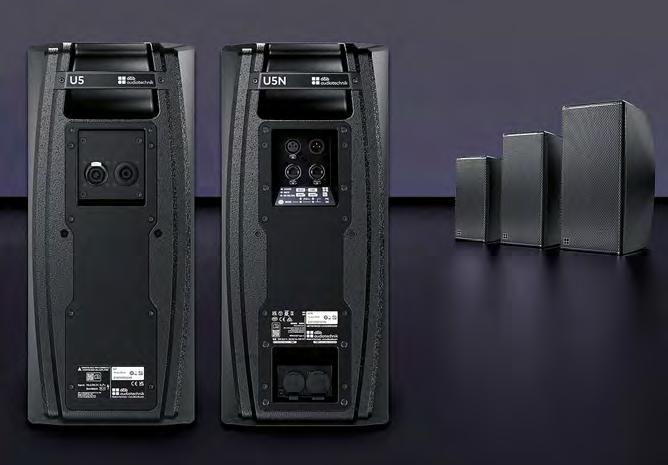
D&B AUDIOTECHNIK has unveiled the U-Series, described as a new approach to compact multipurpose point source loudspeakers. With three models available in both networked and passive variants, the U-Series’ modern, application neutral design integrates into both mobile and installed setups.
The bipolar woofer configuration extends vertical directivity control down to ±500Hz. All variants deliver identical low-frequency performance down to 55Hz and feature the port design technology developed for the SL-Series, ensuring consistency across the range and supporting full-range performance for nearfield applications without subwoofers. Each model features a patent-pending waveguide horn assembly that can be rotated 90° without tools.
The three passive (U3, U5, U7) and three hybrid-topology networked loudspeaker models (U3N, U5N, U7N) are physically and acoustically identical. The passive models integrate into the d&b workflow and amplifier ecosystem and are suitable for applications where cost-efficiency and amplifier channel count are key. The networked variants feature a hybrid-topology networked DSP power module and operate with AC and/or PoE++ power in dual Milan and R1 networks. Complementing the U-Series, the manufacturer has introduced the B10 compact omnidirectional dual 10-inch bass-reflex ground subwoofer, available in both passive and networked variants. The passive version will be offered in two options: a mobile (B10) and a fixed installation version (Bi10). The networked versions include the B10N for mobile applications and the Bi10N for installationspecific use. Both are fully compatible with
DELIVERING A true stereo spatialised sound field from a single, ADA-compliant enclosure, the Panorama 65 self-contained loudspeaker from 1 Sound incorporates the US manufacturer’s proprietary Mono+Stereo Technology. It produces a hybrid mid and sides sonic image with a consistent mono experience throughout the entire listening field. Capable of producing a maximum output of 122dB SPL and extending down to 40Hz, the Panorama 65 delivers full-range, highfidelity performance across a 120° x 70° (HxV) listening plane. Measuring the same width as a standard 65-inch display and 101.5mm in depth when flush-mounted using the included bracket, the shallow profile supports custom recessed installations without compromising down-tilt angles and a stand accessory for isolated free-standing deployment. Designed to operate as a multichannel TV soundbar, standalone listening system or part of a distributed audio solution, the Panorama 65 is available in active plug-and-play or remote powered versions with a Powersoft
Housed in an IP55-rated, saltwater-resistant enclosure, 1 Sound offers custom colours and finishes for indoor and outdoor applications.
Comprising a single 5-inch coaxial, dual 5-inch LF drivers and dual 5-inch passive radiators, 1 Sound has released a full-
the U-Series networked models and share the same system architecture possibilities. Enhancing its Milan-AVB-enabled audio networking portfolio, the manufacturer has also added the DS22 audio network bridge, DS1 USB Milan interface, 5DM Milan amplifier and DN2 AVB switch. Incorporating 16 AES3 digital input channels, four of which can be switched to analogue, the DS22 streamlines input management for Milan-based audio systems. A Milan-enabled 5-port switch and flexible input options promote its use for connecting mixing consoles with Milan-ready amplifiers. Delivering a secure operating environment for mobile and fixed installations, the 1U device extends the d&b workflow to the input side, when placed near the FOH console. The DS1 USB Milan interface enables direct audio playback and recording from PCs and Macs to Milan devices and amplifiers. With firmware updates via Milan Manager, dual network interfaces support redundant audio streaming. Created for use with d&b loudspeaker series, including the E-, xS-, xC-, T- and U-Series, the 5DM is a compact, 4-channel, Class-D installation amplifier. Featuring advanced DSP for loudspeaker-specific configurations, the 5DM includes a wide-range, switch-mode power supply with active power factor correction, together with system management and protection. Specifically designed to integrate with d&b U-Series, the DN2 is a Milan-AVB switch that integrates with d&b R1 remote control software. Designed for use in demanding applications and immersive audio environments, the DN2 includes eight PoE++ ports offering up to 90W per port, which can power networked U-Series loudspeakers via a single cable.
www.dbaudio.com
range architectural enclosure in the form of the Sona 35. The single-channel, 3-way point source output delivers extended bass response to 58Hz (–6dB preset dependent) and can produce 120dB SPL @ 1m with a preset. Housed in a compact 150mm x 820mm x 99mm (WxHxD) form factor, the ADA-compliant Sona 35 can be positioned just 100mm from a wall or ceiling when mounted using the included recessed bracket. Allowing for down tilt or horizontal rotation in either orientation, the 7kg enclosure can be installed horizontally or vertically, recessed into a wall or aimed by adopting an optional swivel mount accessory.
www.1-sound.com
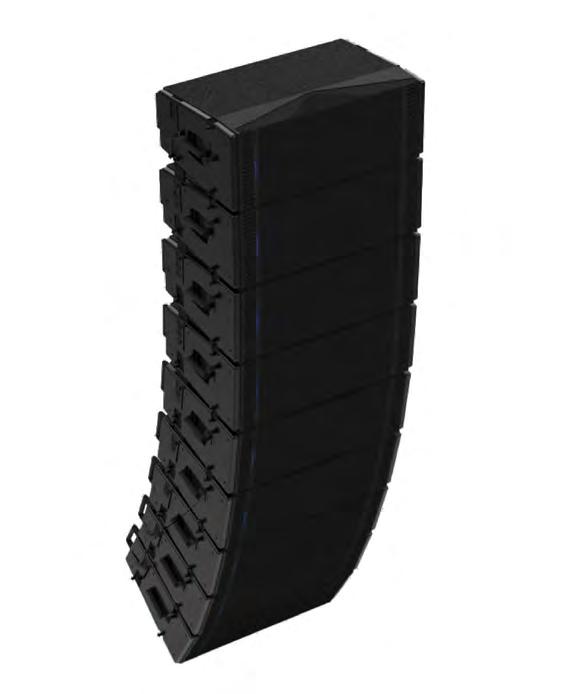
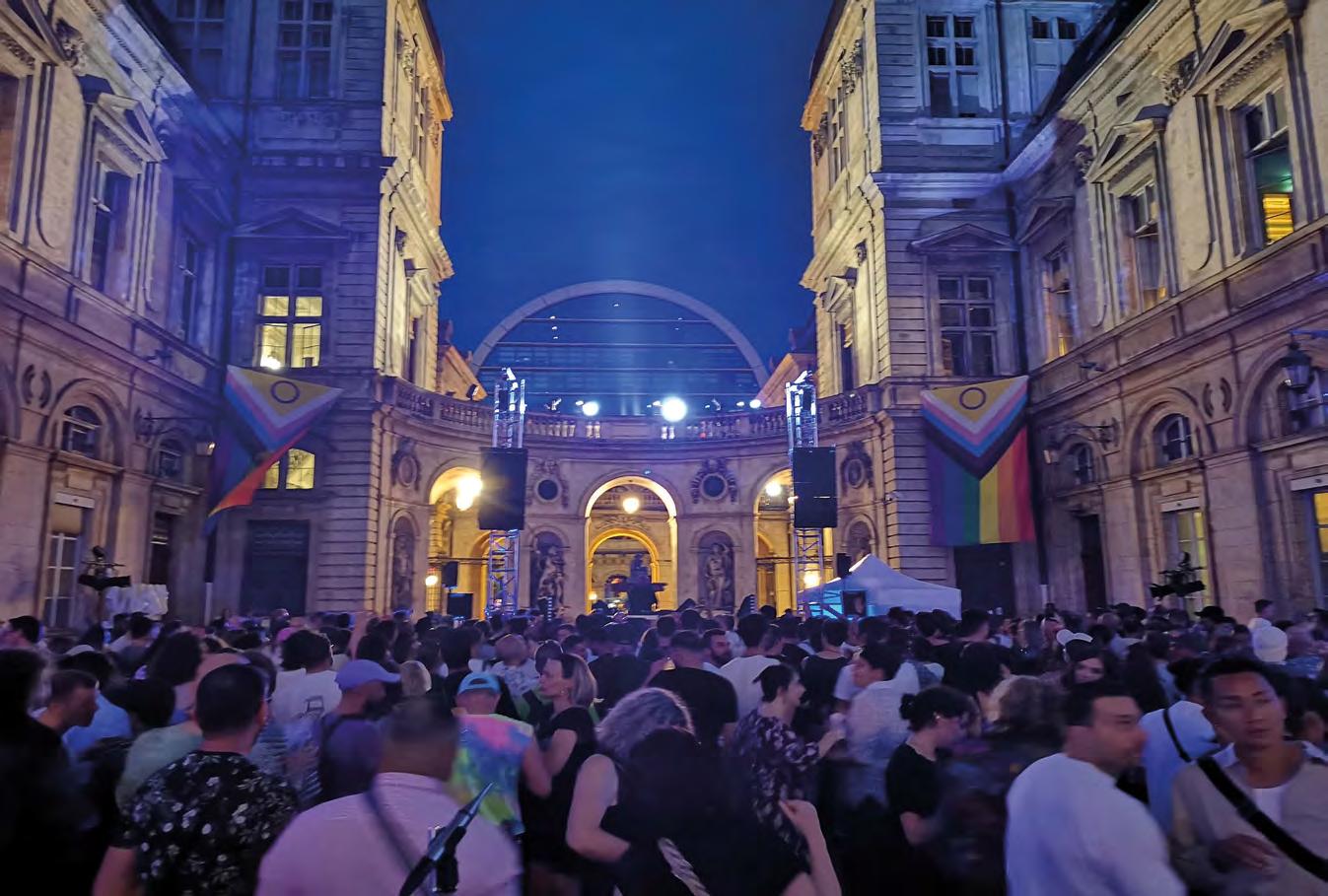
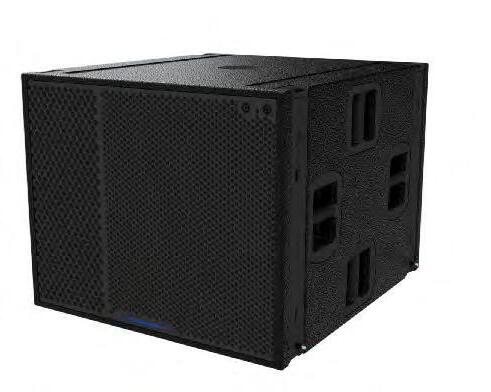
www.apg.audio/fr/
JBL PROFESSIONAL has expanded its SRX900 Series of self-powered scalable loudspeakers with the addition of 12-, 15- and dual 12-inch point source models together with a full range of supporting accessories.
The SRX912M is a multi-purpose, 2-way 12-inch powered speaker that can
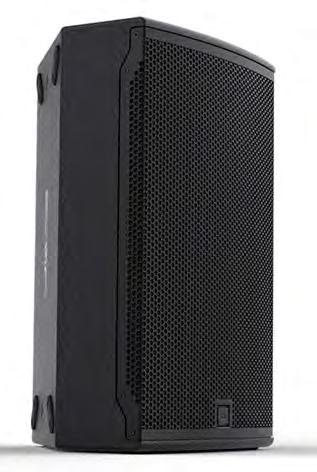
fulfil roles as a low-profile stage monitor, a main PA or as a front fill. Designed for applications that require enhanced lowfrequency extension and greater headroom, the SRX915M is a 2-way 15-inch powered loudspeaker. For applications requiring high output and precise directivity control, the dual 12-inch SRX922 is a 3-way powered point source model which distinguishes itself as a trapezoidal enclosure. Sharing consistent voicing, amplification and DSP, together with common rigging and accessory options, the modular SRX900 platform seamlessly scales. An updated range of rigging, mounting and transport accessories – including horizontal and vertical U-brackets, array frames, truss clamps
ASTRYA IS Meyer Sound’s new flagship cinema screen channel loudspeaker series designed for postproduction mixing studios and premium cinemas. It combines the manufacturer’s self-powered loudspeaker and DSP technologies with built-in processing, system monitoring and networking capabilities.
Leveraging research from Meyer Sound’s Bluehorn technology, ASTRYA provides a “predictable and extremely linear” phase response for precise time alignment. Its driver density, with concentric mid-high drivers, reportedly results in optimal clarity and coverage in a minimal footprint and cohesive behaviour across the loudspeaker’s full range from 30Hz–20kHz.
The first product in the series is the ASTRYA-140, suitable for rooms measuring up to 42.5m from the screen to the back wall. Its digital input removes a digital-to-analogue conversion stage, ensuring a low noise floor. The selfpowered loudspeaker approach allows the manufacturer to implement a fully digital input path supporting AES67 at both 48kHz and 96kHz, which facilitates modern audio-over-IP workflows while also improving the dynamic range of the product. Delivering signal to the loudspeaker and telemetry data back to the user on a single connector results in a simple to install solution.
and carts – supports flexible deployment across fixed and portable applications. Developed for JBL’s touring systems, the SRX900 Series includes Differential Drive dual voice coil, dual gap transducer technology. An extensive DSP toolset includes a 24-band parametric EQ with 2,000ms of delay in addition to an Array Size Compensation (ASC) filter that corrects the tonal effects of varying array sizes and the LevelMax limiter suite. Bypassing the requirement for IP addressing to streamline network setup, Harman’s HControl Ethernet protocol is built on standard networking protocols. The SRX900’s software ecosystem integrates JBL Venue Synthesis for 3D acoustic simulation, JBL
PSI AUDIO has created an extended main monitor system with the A226-MAIN and A326 D-REX (Dynamic Range Extender) models, which can be combined as a column or side-byside. Capable of delivering a maximum 132dB SPL through seven drivers, the combined A226-MAIN and A326 D-REX extension create a classic main monitor experience across the entire frequency spectrum. The A226-MAIN is an active 3-way speaker that combines symmetrically configured 10-inch woofers. It combines an EXD midrange driver with a specifically developed aluminium coil tweeter and the double woofers to cover 20Hz–23kHz, with all the frequencies aligned above 100Hz.
Performance for system management and ArrayLink for onsite deployment and configuration. The line arrays feature a 3-point rigging system, while the point source models include multiple QuickLink M10 attachment points for use with eyebolts. www.jblpro.com
When used in tandem with the A226-MAIN, the three additional woofers in the A326 D-REX add more dynamic bass response in the lower frequencies. For LFE use, the A326 D-REX offers a special mode that opens its frequency band upwards to 160Hz. The combination of the A226-MAIN and A326 D-REX for the main stereo set can easily be enhanced with another A226-MAIN in horizontal configuration as a centre speaker. One homogenous soundfield can be created by adding A21-M models for the surrounds and A17-M enclosures as ceiling speakers.
www.psiaudio.swiss
NOW PART of AEB Industriale, Montarbo has unveiled a compact, active loudspeaker in the form of the MINIBO-5M. Designed for background music, vocal reinforcement and multimedia applications, the combination of a 5.25-inch woofer with a 1-inch compression driver is said to deliver a balanced response.
COINCIDING WITH the company’s 35th anniversary, PMC has introduced a Main Monitor Series. The launch represents the brand’s first complete redesign of main monitoring systems in more than 30 years and covers driver technology, system architecture and software control, with a focus on increased headroom, lower distortion and suitability for current stereo, multichannel and immersive audio workflows.
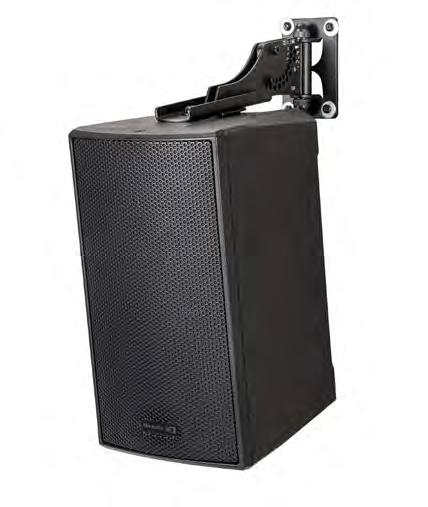
An integrated 2-channel 60W RMS preamplifier with mic/line selection, together with combo and XLR (mix out) connections are included. Measuring 190mm x 170mm x 304mm and equipped with a top handle, the 4.4kg polypropylene cabinet promotes portability and ease of installation. Optional accessories include a WB-5M wall mount and TB-5M tilt mount for installing the enclosure on walls or ceilings, in either horizontal or vertical orientation. For speeches, the MINIBO-5M can be quickly mounted on microphone stands for connection through the built-in microphone input.
www.montarbo.com
Low-frequency performance is based on a new generation of large-format bass drivers working with PMC’s Advanced Transmission Line (ATL) bass-loading system and LaminairX airflow technology. The bass drivers feature heavily vented motor assemblies, dual-spider suspensions and triple-wound voice coils, providing up to 36mm of linear excursion. This is
intended to support controlled low-frequency output at high sound pressure levels.
Midrange reproduction is handled by the PMC75v3 soft-dome driver, which incorporates the company’s a-void absorber. This damped acoustic chamber reduces rearwave reflections behind the dome. The driver is paired with the n-compass dual-profile waveguide, designed to maintain consistent dispersion through the crossover region.
High frequencies are produced by a handbuilt 34mm soft-dome driver with a shallow waveguide and low-distortion motor assembly, aimed at maintaining a neutral in-room response over extended listening sessions. All models in the series are fully active and operate with the manufacturer’s latest DSP and amplification platform. System configuration is handled via the SoundAlign2 software and the master36 controller,
which allows browser-based control of EQ, delay, crossover settings, polarity and presets for up to 32 loudspeakers. The master36 combines 32-bit DSP processing with six Class-D amplifiers delivering a total of 3,600W in a 3U chassis. For larger systems, the power20 provides an additional 2,000W of Class-D amplification for bass sections and XBD configurations.
The series launches with four 3-way models – the PMC10, PMC12, PMC15 and PMC10-4. Each can operate as a standalone full-range monitor or be expanded with matching XBD bass cabinets. Matching subwoofers are also available, allowing systems to be configured for different room sizes and immersive formats using consistent voicing and dispersion characteristics.
www.pmc-speakers.com
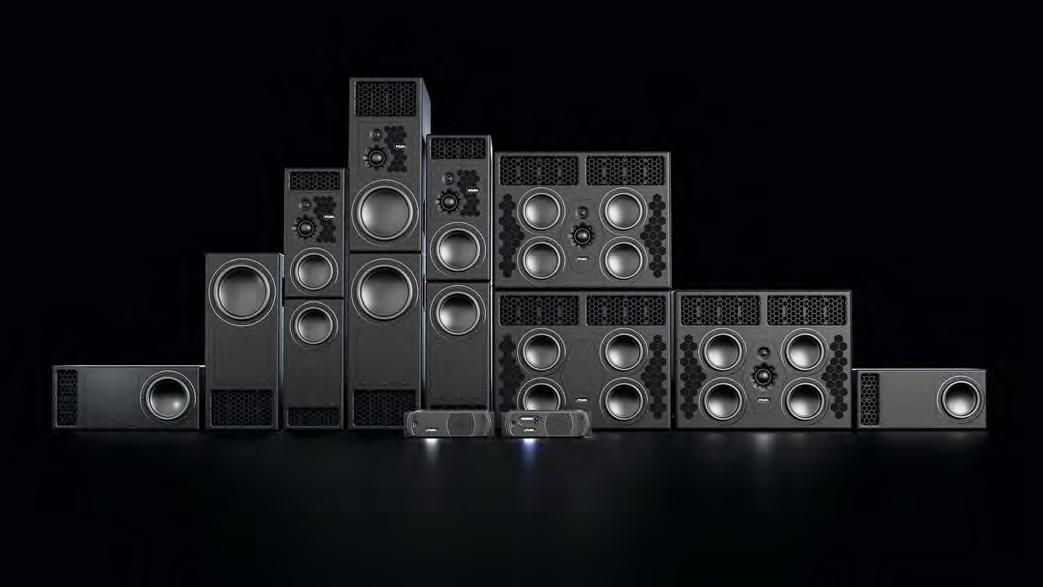
QSC HAS announced the debut of the CB10 compact battery-powered loudspeaker system, the LS218 double 18-inch powered subwoofer and the QSC Loudspeaker Control app for Bluetooth-equipped QSC powered loudspeakers.
The CB10 has been designed for event production professionals, DJs and mobile entertainers, musicians and bands, or any application where high-performance audio is required, with the added portability and versatility of a battery-powered system. The CB10 comes with a 10-inch low-frequency driver and 1-inch compression driver, while the integrated 3-channel mixer allows simple and easy connections for microphones and instruments, as well as streaming Bluetooth music. Input presets and DSP are said to further optimise system performance and ease of setup. Additionally, up to 200ms of room delay makes the CB10 suitable as an extension for distributed PA deployments. The CB10 can operate for up to 12 hours on its battery,
which is user-swappable without tools. It can be mounted on a loudspeaker stand or deployed on the floor via its integrated tilt-back angle. Operating the CB10 is further enhanced by the QSC Loudspeaker Control app for Apple and Android devices. It provides additional fine-tuning of audio and DSP parameters as well as advanced system management for connected devices, including the CB10, KC12 “K Column” and future Bluetooth-equipped QSC powered loudspeakers.
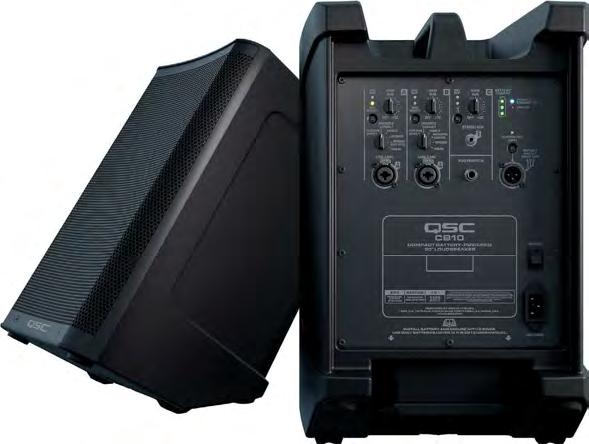
Meanwhile, the LS218 dual 18-inch active subwoofer is powered by a 5,000W Class-D amplifier with Power Factor Correction, providing 141dB peak output. Featuring QSC Acoustic Linear Phase (ALP) design, which permits the combination and deployment of QSC loudspeakers within the same sound system, the LS218 also provides daisy-chain connections for analogue, networked digital audio (Dante) and AC power (powerCON TRUE1). Two or more LS218s can be configured in a cardioid arrangement, maximising low-frequency output in front while minimising unwanted energy around the sides and rear of the system. Offering rugged plywood construction with Polyurea coating for lasting durability, the LS218 can be deployed together with the LA108 or LA112 active line array loudspeakers using either an array frame/ground-stack adapter or loudspeaker poles in both horizontal and vertical orientations. When connected to the QSC SysNav (System Navigator) app, users can design, configure, control, monitor and apply signal processing to individual subwoofers, full arrays or groupings of both.
www.qscaudio.com
THREE ACTIVE column systems have been added to RCF’s EVOX lineup, built around a true 3-way electroacoustic design, a new amplification platform and a clean, neutral aesthetic. All models are available in black or white. Described as a ground-up evolution focused on higher headroom, clearer vocal projection and faster deployment, the EVOX J features a dedicated high-frequency section: a 1.75-inch neodymium compression driver (Kapton dome) loaded by RCF’s True Resistive Waveguide (TRW), engineered to deliver constant 120° x 40° coverage and designed to reduce typical horn harshness. The midrange is handled by an array of 3-inch neodymium cone transducers that integrate the HF section to provide the focused “singlesource” feel associated with point source systems.
Low frequencies come from a high-power 12-inch woofer in a bass-reflex enclosure. A new generation of Class-D amplification delivers 2,100W for the J9 and JMIX9 or 3,500W for the J11, reportedly providing significantly more headroom than previous architectures. The system is managed by
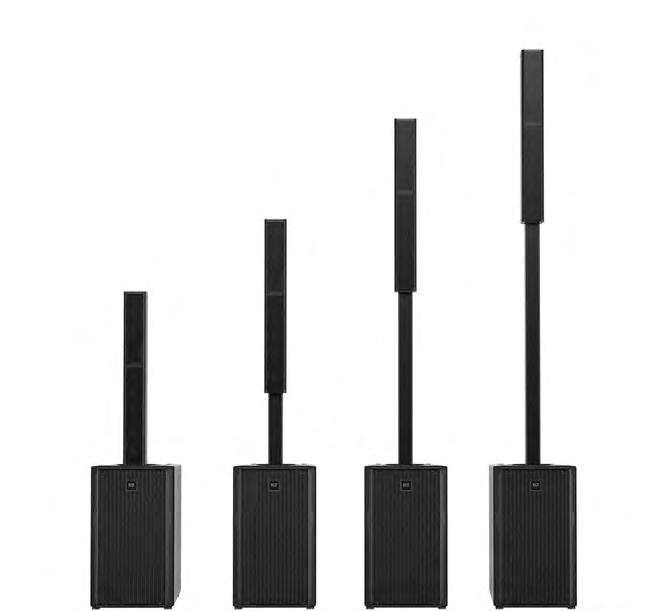
onboard processing that includes FiRPHASE (0º linear-phase response with minimal latency), Bass Motion Control (extended low-end without instability) and protection features. The EVOX J9’s features include 130dB max SPL, six 3-inch mid arrays and three EQ presets (Live/Linear, Club, Voice), while the EVOX JMIX9 adds to the J9 acoustic platform with an integrated 8-channel stereo
ENGINEERED TO deliver an immersive infra-sub performance, Audac has unveiled the Basso Series of ultra-highpower infra subwoofers. Alongside their waterproof, lightweight and durable attributes, the Basso Series subwoofers incorporate a pure carbon fibre cone. Combining clear low-frequency power delivery with minimised airflow noise, an exponential low-noise vent design is a hallmark of AeroVent technologies. Incorporating inner framing for added durability, a host of flexible mounting options ensures flexibility of use in a variety of applications.
The compact Basso112 12-inch model provides low-frequency extension to 26Hz without processing, a maximum SPL of 130dB and 2,000W of programme power. The Basso115 records low-frequency extension down to 31Hz, a maximum SPL of 136dB, with 3,000W of programme power. Finally, the Basso118 can produce low frequencies down to 23Hz, a maximum SPL of 137dB, with a similar 3,000W of programme power. Each model features a robust chassis and inner framing, providing long-term durability and sound integrity.
www.audac.eu
EM ACOUSTICS has expanded its subwoofer portfolio with the CS15 and CS18, two passive cardioid subwoofers developed in response to demands from live event, installation and theatre professionals for high-performance, lowfrequency control without increased system complexity.
The CS15 and CS18 are designed to deliver effective cardioid behaviour while requiring only a single amplifier channel per enclosure. Unlike many cardioid subwoofer designs that rely on bandpass group delay and multiple amplifier channels, the CS models generate their directional performance through a proprietary passive crossover network. According to the manufacturer, this approach was engineered to ensure no reduction in performance compared with actively driven, 2-channel cardioid subwoofer systems, while maintaining consistent behaviour across the full operating range. Rear rejection is a key focus of the series, with the design intended to significantly reduce low-frequency energy radiating behind
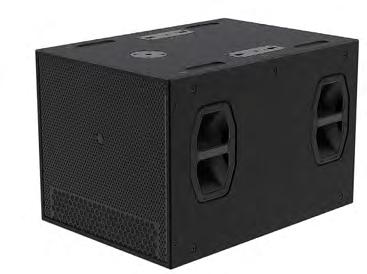
the enclosure, helping keep stages and performance areas sonically cleaner, improving overall system accuracy and providing a more controlled listening environment for both performers and audiences. The single-channel amplifier requirement also offers practical benefits in installations and venues where rack space, cabling or amplifier resources are limited. Both models are available with standard installation hardware or touring flyware options, allowing them to be deployed across a range of fixed and mobile applications. www.emacoustics.co.uk
digital mixer with a 2.4-inch colour touch display, THAT mic preamps, Bluetooth audio, per-channel processing, scene recall, audio ducker, reverb and JMixRemote app control via Bluetooth BLE (with optional security PIN).
The EVOX J11 provides 132dB max SPL and has 12 3-inch mid arrays, four EQ presets (Live, Linear, Club, Voice) and powerCON TRUE1-TOP for more demanding applications.
The KXM Series has been built for highoutput stage monitoring with tour-ready features, internal presets and RDNet network control. The KXM 20-A delivers 131dB max SPL with 2,000W peak power and 90° x 70° constant-directivity coverage in a symmetrical dual 8-inch neodymium configuration. The KXM 25-A steps up to 137dB max SPL, 3,200W peak and a 60° x 60° pattern using a 15-inch neodymium coaxial architecture for coherent summation and a stable listening window. Both models combine a low-profile design, stand-mount versatility and reliable performance over long show days.
Derived from the XPS 16K, the XPS 4K platform is a high-density 2U 4-channel DSP power amplifier delivering 4x1,000W continuous power at 4Ω, with 96kHz processing and extensive routing designed for demanding touring and installed sound. The onboard interface and RDNet remote management enable streamlined tuning, monitoring and scalable deployment, with the XPS 4KD variant providing Dante support for AoIP integration.
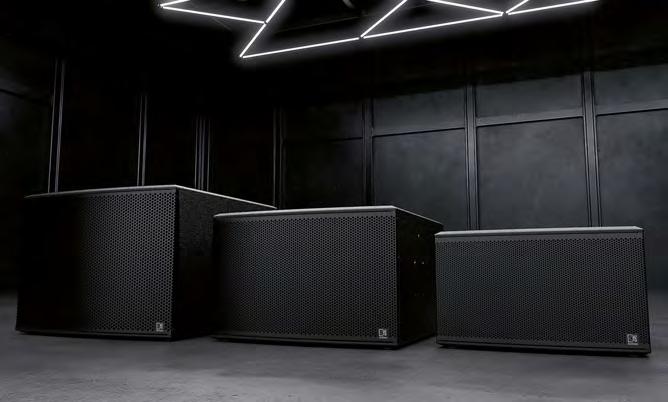
ADAMSON HAS introduced two Milanready networking audio products, the MS8.2 Network Switch and USB Milan Bridge. Designed to simplify connectivity of audio networking while maintaining performance, both systems expand the brand’s ecosystem with flexible tools tailored for live sound and installed applications. The MS8.2 Milan AVBready network switch has been engineered as a streamlined, deployment-friendly solution, compatible with all Milan equipment. Optimised for stage monitors, small arrays and distributed systems, the MS8.2 supports streaming of up to 48 networked loudspeakers while offering road-ready connectivity options. Key specifications include eight Neutrik etherCON Cat5 ports, two Neutrik opticalCON Multimode DUO fibre ports and the ability to connect up to 10 devices.
Housed in a compact form-factor, the USB Milan Bridge has been designed as an all-in-one solution that provides direct Milan network connectivity for macOS and Windows 11. Engineered for stability and performance, the solution has prioritised low latency and high-resolution audio as a significant feature in its design and is marketed at engineers requiring integration between computers and Milan networks. Key product specifications include up to 32 inputs in four streams, 16 inputs and 16 outputs, 96k at 32bit resolution and USB-C bus power.
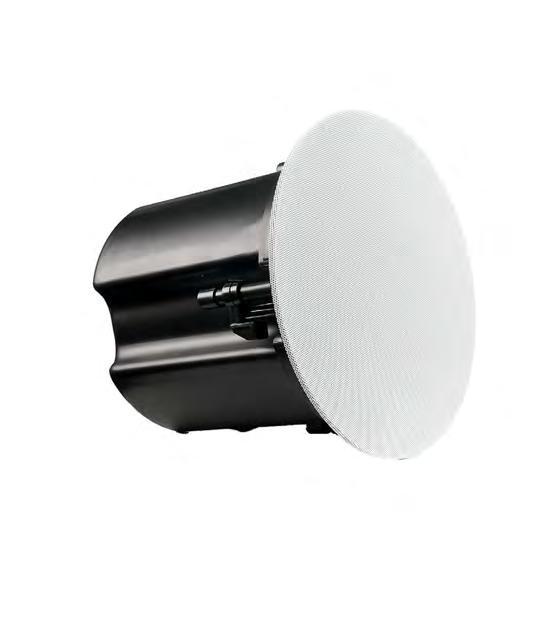
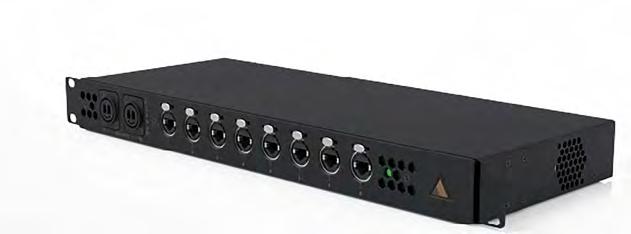

THE NF 4C LP 4-inch ceiling speaker system from Extron has been designed with scalable power, DSP and Dante connectivity. It can drive up to three external passive speakers from its integrated 4-channel amplifier, providing a single - cable solution for individual zones within larger distributed ceiling speaker systems. Leveraging Extron’s DSP Configurator Pro software, the integrated DSP can be set up independently for each amplifier channel with essential processing per zone. Dante Domain Manager and AES67 support enable wide compatibility with enterprise configurations and other network audio devices. Available in packages of two, three or four speakers, the NF 4C LP has been engineered to meet the requirements of complex, decentralised systems with a self-contained PoE-powered speaker solution. The 4-inch full-range driver features a wide frequency range of 110Hz–20kHz and is designed with a 135° conical dispersion.
WITH THE P-ANS-6CW1D (Dante) and
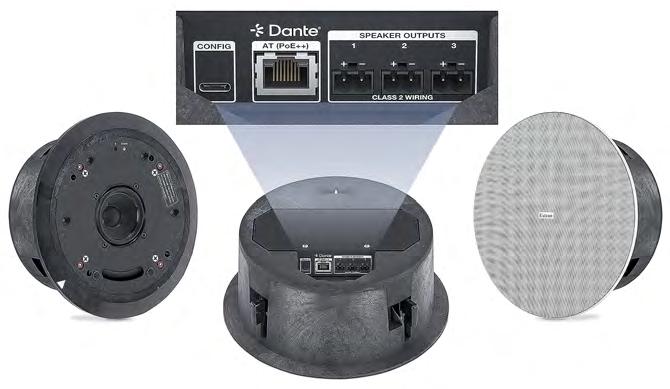
It has also been engineered for enhanced coverage and vocal clarity in voice lift applications.
the manufacturer has also released
products to extend HDMI and bidirectional RS-232 signals up to 100m over a shielded Cat6A cable. It supports video resolutions up to 4K/60 at 4:4:4 colour sampling and complies with HDCP 2.3. For maximum image quality and minimal latency, all supported video resolutions are transported without compression. The one-gang form factor is said to provide maximum space efficiency in wall-mount, floor-box and furniture-mount applications. The wall-mountable design and remote power capability of the DTP3 R 201 D means that output connections can be placed precisely where they are needed. In addition to supporting data rates up to 18Gbps, HDR, Deep Color up to 12-bit, 3D and embedded HD lossless audio formats, DDC communication of EDID and HDCP is continuously maintained between source and display to provide direct compatibility and optimal signal transmission between devices.
BUILDING ON its Taurus UCX product family, Lightware has introduced the HC60 lineup. The product line provides a hardware update to the existing HC40 models, made necessary by recent technological and supply chain developments.
with faster and more intuitive experiences, the manufacturer has also added the ChargeLink (P-AVN-CL100) USB-C onecable connection hub. It provides network access, USB data transferring, video sharing and up to 100W of power delivery.
Providing low-latency, H.264/H.265 streaming, the P-AVN-2E encoder and P-AVN-2D decoder deliver image fidelity at 40Mbps and achieve 33ms end-to-end latency, producing visual performances on bandwidth-constrained networks. With native USB support for KVM routing, the encoder and decoder seamlessly enable interactive workflows.
www.plexusav.com
Phasing out all HC40 models completely, every UCX-HC40 and DCX model will receive a one-to-one replacement for a new HC60 version, with capabilities and functionalities unchanged. However, the HC60 range has been designed to deliver wider product availability, long-term compatibility and improved performance.
The HC60 platform’s key hardware upgrades include improved video handling, a high-speed Gigabit Ethernet switch for faster network performance and modern connectivity with dual, device-side USB-C ports replacing the previous USB-A interfaces. Display Stream Compression (DSC) is also now supported, enabling 2-lane 4K@60 with minimal compression. These enhancements aim to deliver greater bandwidth, reliability and compatibility in AV environments.
Factory defaults have also been improved to streamline setup and strengthen security. All HC60 models now support 5K video output by default, delivering 5120x2160 resolution
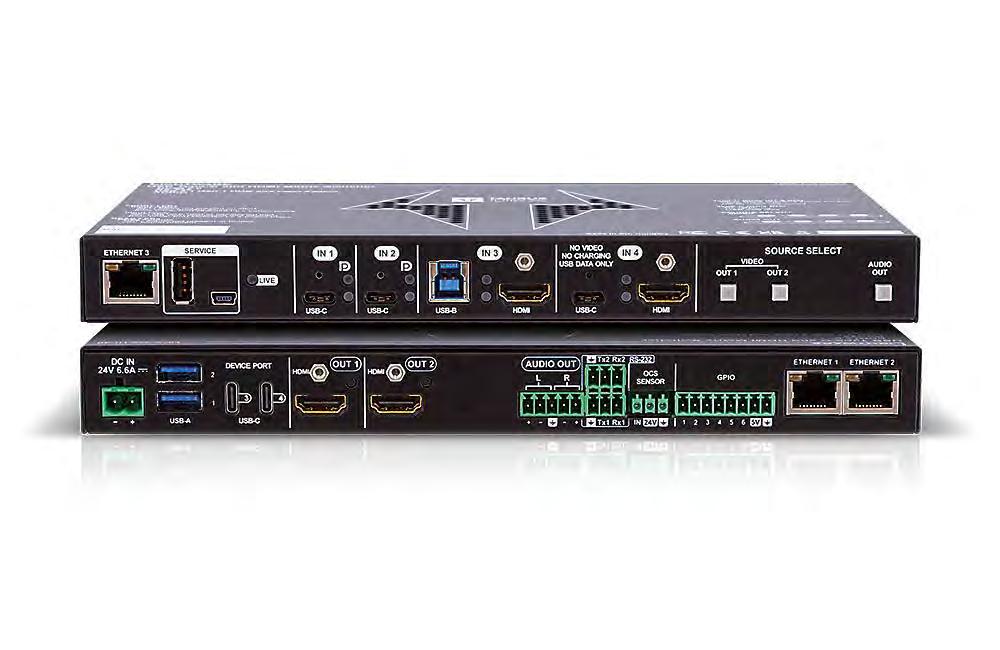
disabled on inputs for simplified integration, plus USB and audio following the active video source. Additional improvements include LARA automation enabled by default and a USB-C BYOD port that now defaults to Power Role: Source for broader device compatibility.
The company has also unveiled its USB-C BOOSTER-V1, a purpose-built, plug-and-play solution which extends USB-C functionality –including USB 2.0/3.2 data and Display Port Alt Mode – up to 12m for greater
need for an additional power brick. Finally, Lightware has launched its TPN MMU Matrix Management Unit for TPN AV-over-IP which offers integrated device discovery, while auto detecting and managing all SDVoE endpoints in the system. The TPN MMU features an interface designed to make complex TPN systems faster to deploy and easier to operate, supported by a Netgear network backbone.
www.lightware.com
DESIGNED TO streamline connections between multiple audio and video source devices, Alfatron Electronics has updated its ALF-UC1 (Gen2) wireless conferencing system. An updated feature for the USB-C and HDMI dongles enables the PC to use a dual screen mode, sharing two screens from a computer to the UC-1. Incorporating all the features of the UC-1 as opposed to the video sharing-only application, the dongle now installs the full software application. As part of the ALF-UC1 (Gen2) update, a USB peripheral can be selected from the software application to switch between two USB cameras or two USB audio devices. The selection is accomplished via the wireless

DESIGNED FOR flexibility and performance, the HALO 80 all-in-one speakerphone features advanced AEC, AGC and ANS for clear audio in remote conferences. With support for USB and Bluetooth connectivity, it adapts seamlessly to various setups – from huddle rooms to large meeting spaces. Equipped with four omnidirectional mic arrays and a full-range speaker, it offers plugand-play convenience and broad compatibility with major operating systems and conferencing platforms.
The NHD-120-RX-S takes the manufacturer’s 100 series “to a new level”. This “S” model has been treated with Sealoc’s Weatherloc technology to resist the elements such as water, moisture, humidity, dust, salt-fog, salt-air and acidic products. With 4K resolution, video transmissions are said to look better than ever and use up to 6x less bandwidth. AV streams are fully secure over the network using
AES 128-bit encryption methods, ensuring any sensitive data cannot be maliciously accessed.
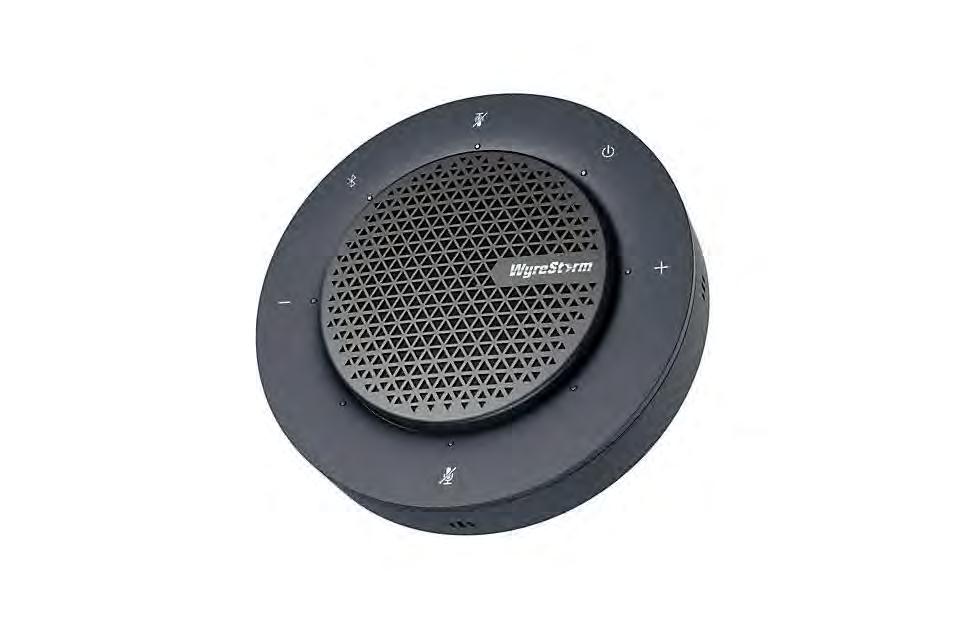
100W PD and MST support for receiving dual video signals. It can also be used as a USB 3.0 switcher, which is further enhanced by support for wireless host through the APO-DG2.
Designed to simplify video switching and integration for conferencing, streaming,
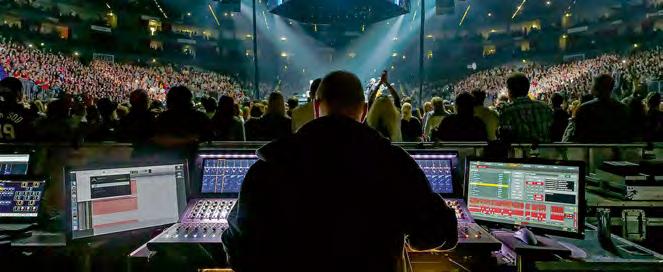
ADDING HIGH-CHANNEL-COUNT Dante connectivity directly into the platform without the need for external interfaces or workflow compromises, Avid has introduced the Dante HD option card for its VENUE | S6L live sound systems. Designed for large-scale touring, installed sound and complex environments, the card brings 128x128 channels of Dante I/O at 96kHz into the core of the S6L ecosystem, with support for up to two cards per system for a total of 256x256 channels.
The Dante HD option card enables integration with the audio-over-IP protocol, supporting distributed audio routing across concerts, theatre, corporate AV and in houses of worship. By operating fully within VENUE’s unified architecture, the card allows engineers to route, mix and manage high-resolution audio alongside AVB, Milan and MADI sources from a single VENUE software environment and show file.
BNC-based clocking is included to ensure stable synchronisation within Dante domains, while full compatibility is maintained across all VENUE | S6L systems. The card also integrates with Avid’s E6LX engines, supporting expanded I/O capacity.
www.avid.com
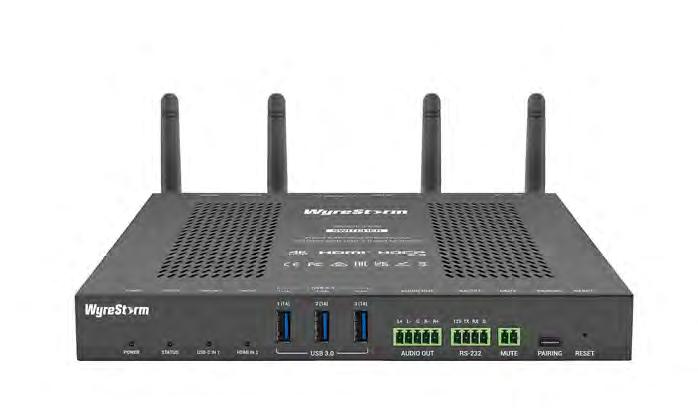
NDI-BRG is a compact, 4K, multi-camera video bridge. Supporting up to two wired HDMI and two wired USB inputs with four networkbased NDI streams, a unified 4K video output can be delivered via USB, HDMI or NDI.
Bridging NDI and NetworkHD ecosystems with bidirectional conversion, the NHD-128-NDITRX gateway allows up to eight NDI streams to be converted into NetworkHD transmitters.
A single NHD channel can be simultaneously output over NDI for integration with platforms such as Microsoft Teams, OBS or vMix.
Enabling remote monitoring, firmware updates and proactive management from anywhere, the PoE-powered NHD-128-NDI-TRX is fully compatible with WyreStorm Sygma Cloud.
Synergy Control Flow is a control platform designed to simplify automation across
variants, the SYN-CTL-FL10 and SYN-CTL-FL20, the system functions as a central control processor capable of managing IP-based devices alongside legacy hardware. Displays, DSPs, matrix switchers, lighting, sensors and environmental systems can be brought together within a single control framework. Finally, the MV-0401-PRO multiview processor has been designed for monitoring applications. The unit supports four simultaneous inputs and outputs multiview layouts in 4K resolution without compression. It provides real-time scaling and supports custom LED resolutions, making it suitable for control rooms, LED walls and presentation spaces.
LAON HAS expanded its Genie intercom range with the launch of the BP950, a multichannel wireless beltpack designed for complex production workflows requiring extended battery life, increased wireless range and intuitive operation. LaON’s matrixless IPbased Genie intercom system integrates wired and wireless intercoms alongside wireless receiver systems, with the BP950 further extending the platform’s flexibility. The beltpack
is positioned for applications including broadcast studios, OB trucks, esports, referee communications, theatre productions and large-scale live events.
Building on the earlier Genie BP850/851 models, the BP950 is designed to operate without a dedicated matrix or licensing
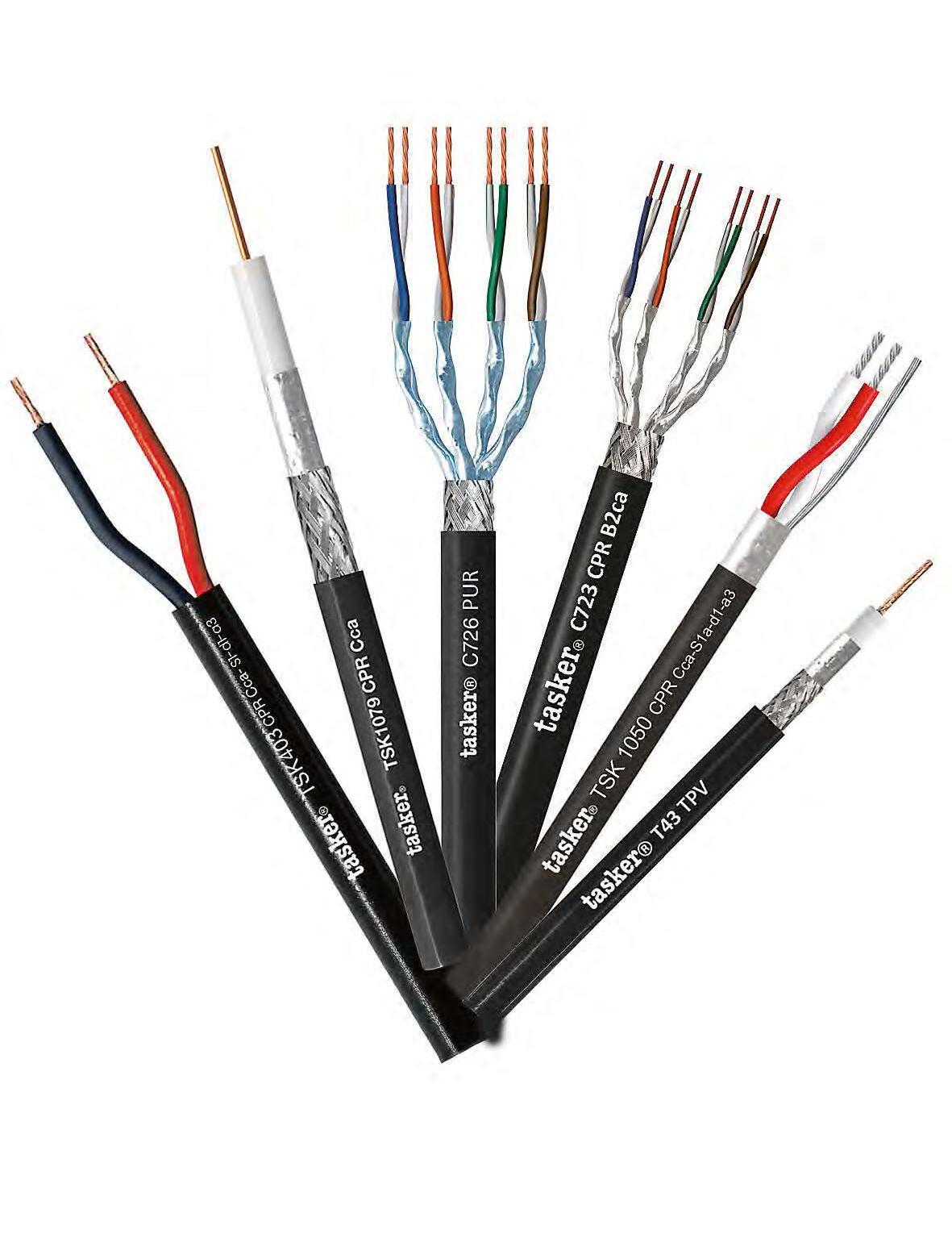
and seven configurable keys. Additional www.laon-tech.com
AVAILABLE AS a free download for its TeamConnect (TC) Bar solutions, Sennheiser has upgraded camera performance, improved security, added further Dante audio outputs and increased network reliability with the release of its 1.3.8 firmware update.
Designed for small and mid-sized meeting rooms and collaboration spaces, the TC Bar S features four microphones and two speakers, while the TC Bar M comes with six microphones and four speakers. Certified for Microsoft Teams, both bars offer ease of setup, brand-agnostic integration, simplified management and control, and added security features.
With the latest firmware update, the TC Bars’ 4K AI-enhanced camera frame movement has
been reduced to create a more natural video when using person tiling and auto-framing.
Fitted with full-range stereo speakers, the TC Bars can now accommodate additional audio outputs and the connection of standalone speakers via Dante. The external speakers can also be used to stream audio to Sennheiser’s bidirectional MobileConnect platform.
To ensure meetings start without delays, the TC Bars’ standby wake-up times have been significantly reduced by optimising the default energy mode and adding an optional “Always On” setting. For more complex applications, including split mode setups, network reliability has been improved through enhanced routing.
www.sennheiser.com
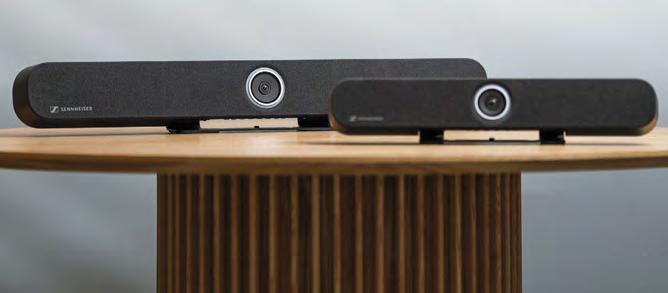


DESIGNED FOR audio professionals who want to push the limits of their audio even further, CEDAR Audio has released APEX, the new flagship model in its range of adaptive and spectral limiter solutions. It offers higherresolution processing at low frequencies, while the Link capability helps users improve the warmth and vibrancy of the audio.
APEX is suitable for a wide range of applications and genres. It can help add richness and power to classical music without affecting transparency, as well as providing extra energy and depth to electronic dance music. A small increase in latency provides significant processing benefits, enabling users to shape audio to their preferred taste without any of the artefacts normally associated with limiter products.
Conventional limiters control the loudness of signals by suppressing peak amplitudes when
they would otherwise exceed user-defined thresholds. Unlike these, APEX uses an adaptive algorithm that calculates continuously varying EQ profiles for each audio channel that constrain the amplitude of the output while retaining the integrity of the input signal. This is said to give engineers precise control over audio, enabling them to increase the apparent loudness in a very transparent fashion without increasing the peak signal level. In addition, engineers can use APEX’s Spectral and Temporal controls to obtain a wide range of “colours” ranging from richer, weightier but undistorted sounds at higher settings, to brighter or smoother sounds. APEX can also limit loud instruments or voices with prominent high-frequency content while leaving the bass end of the track unaffected.
www.cedaraudio.com

AEQ HAS designed the Forum IP Plus digital console for on-air control and versatile production environments. It features automatic muting, fader start, talkback/intercom and external communications management, with direct per-channel control and advanced settings via its 7-inch touchscreen, with the aim of delivering precision, ergonomics and error-free operation. Meanwhile, Systel Max is an incoming call and multi-conference system that reduces costs and enhances audio quality. It can integrate with existing telephone systems, enable multiconferences, support internal coordination and handle VoIP connections. It has been designed as an efficient and practical solution for radio and TV studios, as well as corporate environments.
www.aeq.eu
DEVELOPED TO meet the evolving requirements of professional in-ear monitoring in live production, theatre and large-scale house of worship applications, Wisycom has developed the MPR60 wideband IEM receiver. With RF wideband frequency agility spanning 470–800MHz, 940–960MHz STL in the US and 1,240–1,260MHz in the same device, users can operate across virtually any RF spectrum in the world. By measuring the headphone impedance and intelligently adjusting the output level to the in-ear headphones, the MPR60 incorporates automatic audio power limitation. To maximise frequency use in congested RF environments, the receiver also includes enhanced RF channel selectivity and stereo channel separation of more than 60dB (one channel per every 400kHz).
Additional features include true diversity reception, a readable display and a robust mechanical construction for touring use. Providing a dedicated RF narrow-band mode for even higher-frequency efficiency, the MPR60 can also operate as an IFB bodypack. The receiver is fitted with an enhanced water-resistant 3.5mm connector to the in-ear headphones and is prepared for remote control functionality.
Supporting RF and fibre for demanding multizone wireless infrastructures, the MATF wideband antenna matrix is the manufacturer’s reimagined, centralised RF distribution management solution. Created for challenging theatre, live event, outside broadcast and TV station productions, the MATF consolidates multiple rack-based components into a single, flexible unit. With an ability to combine up to eight RF zones in diversity, delivering either 8:4 or two times 4:2 outputs, the input modules include both pure electrical (BNC) RF inputs and up to six fibre-input modules. Four coaxial RF pairs provide either four equal diversity or two times two diversity outputs. Operating within an RF frequency range of 170–1,260MHz, the MATF delivers configurability for large-scale or complex environments, including Centralised Apparatus Rooms (CAR). The system’s support for Wisycom’s BFL2 M0 and M2 fibre endpoints provides compatibility with the company’s existing ecosystem. Like the combined RF spectrum, the integrated Frequency Spectrum Analyser assesses and observes all inputs, ensuring faults can be avoided before adding a signal to the combined outputs. Including fully remote-controllable antennas for zone-specific gain and filtering, the MATF integrates seamlessly into Ethernet-based networked infrastructures. Available in four versions, users can manage zones, monitor system status and label inputs or outputs from the unit’s full-colour touchscreen.
www.wisycom.com
DESIGNED TO deliver cost-effective, professional-grade sound capture for musicians and modern content creators, AKG has expanded its professional microphone portfolio with the launch of the C-Series condenser microphones. The series comprises three models – the C104 large-diaphragm condenser, the C114 multi-pattern condenser and the C151 small-diaphragm condenser – each developed to combine the manufacturer’s acoustic heritage with simplified operation and a contemporary, sustainability-focused design. Aimed at applications including vocal recording, speech, instruments, podcasting and streaming, the C-Series microphones feature a wide frequency response and are engineered to preserve the full detail and nuance of the source material. At the core of each model is a precision-engineered, transformerless FET circuit, delivering an ultra-low noise floor and broad dynamic range suited to a wide variety of recording environments and sound sources.
According to AKG, this approach ensures consistent clarity and definition across both studio and content creation workflows. Ease of use has been a central design consideration, with the microphones intended to integrate quickly into modern setups without complex configuration. The range supports both cardioid and multi-pattern operation, allowing users to
adapt to different acoustic environments and recording scenarios while maintaining professional audio performance. The microphones have also been designed with on-camera use in mind, and feature a refreshed aesthetic that references AKG’s design legacy while aligning with contemporary visual expectations.
Sustainability plays a significant role in the C-Series design, with microphone bodies manufactured from 100% recycled
to reduce environmental impact, with fully recyclable packaging materials used across the range. This approach reflects a broader focus on responsible product design within the company’s professional audio portfolio.
www.akg.com
first large-diaphragm condenser bass drum microphone, integrating a large-diaphragm capsule into a compact, stageready design capable of handling high SPL while delivering the pure, unprocessed sound of the instrument and the new CKR6-B capsule.
The OC-B6 allows musicians to shape and sculpt the sound to their needs and vision either through drum choice, microphone placement inside or outside the drum, and any desired signal processing. Based on the manufacturer’s original swivel joint design (introduced with the OD5 and OC7), the OC-B6 offers 220° rotation for maximum flexibility and accuracy in miking up any bass drum. The “B” version of the
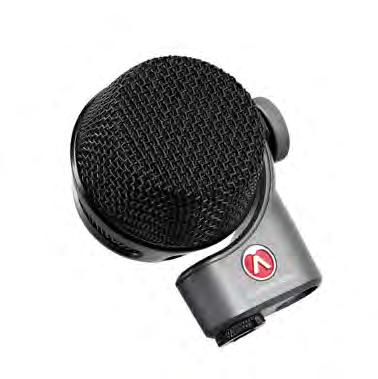
CKR6 capsule doubles the distance between diaphragm and electrode and features a lower-tuned resonance frequency. Meanwhile, the Drum Microphone Kit DMK1 is described as a complete solution for miking an entire drum set, whether onstage or in the studio. The DMK1 features seven condenser microphones –three of which are largediaphragm condensers –and one dynamic mic, all securely housed in a compact, rugged, waterproof case for reliable transport and storage. Included in the DMK1 are one OC-B6, two OC18, one CC8, three OC7, one OD5, four DPH12 drum holders and windscreens for the OC18 and CC8 for outdoor use.
BUILDING ON
MicroBoom Series, Audix has released the Wireless MicroBoom (MBW) condenser as a forerunner of its digital wireless ecosystem. Described as a transformative approach to stage and choir miking, the MBW Series has been developed for a wide range of applications, from choirs and houses of worship to theatre and stage productions, sports and live events. Enabling faster setups, simplified workflows and quicker stage changeovers without cabling, the MBW distinguishes itself by its slim and discreet design. Operating on standard 5V wireless bodypack transmitters, the MBW models promote plug-and-play simplicity and wireless compatibility.
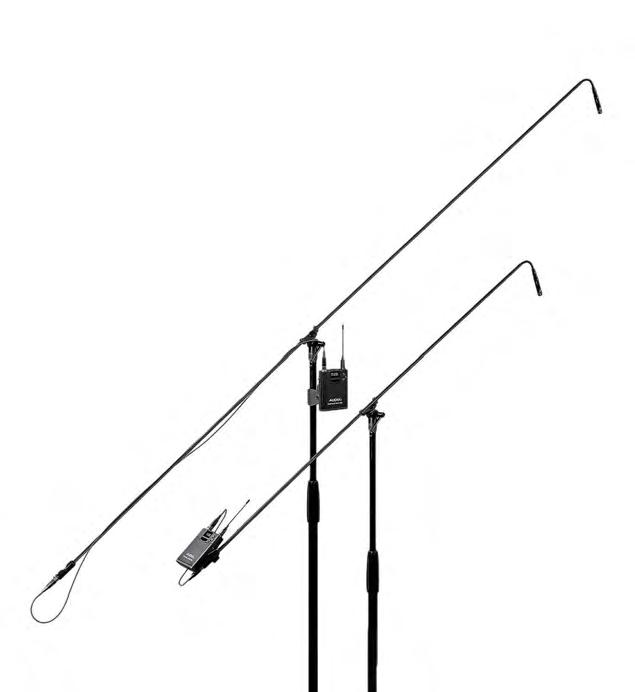
Operating within a frequency response of 50Hz–19kHz with a dynamic range of 95dB, the MBW Series currently consists of the 50-inch MBW50B and MBW50BHC together with the 84-inch MBW84B and MBW84BHC models. The cardioid MBW50B and MBW84B are designed for precision audio capture in environments with minimal environmental noise. Registering superior noise rejection, the hypercardioid MBW50B and MBW84BHC focus their audio capture in acoustically reverberant and noisy environments. Ideal for rooms where mounting from a distance is required, the
MBW84 models can capture larger groups and ensembles with their longer reach. For original MicroBoom customers, the US manufacturer is offering the M1370B Retrofit Kit which provides those models with a costeffective upgrade to wireless. The kit includes the M1370B miniature condenser mic, which requires 5V power and is available in cardioid (M1370B) and hypercardioid (M1370BHC) options. Mounting options include a MBWCLIP for connection to the base of the current carbon fibre boom or a MBWFLEX that can be used on any standard mic stand.
www.audixusa.com
DPA MICROPHONES has added the DPK2015 Piano Stereo Kit to its range of piano miking solutions, alongside the DPK4099 CORE+ and DPK4011 Piano Stereo Kits. The three kits are designed to address different piano miking requirements across live sound and studio applications.
The DPK2015 is built around a stereo pair of DPA 2015 wide cardioid microphones and is intended to support fast and consistent setup. The kit includes dedicated mounting hardware that allows the microphones to be positioned securely inside a piano with
minimal adjustment, accommodating a variety of lid positions. The wide cardioid pattern is designed to provide a balanced stereo image while capturing detail across the instrument’s dynamic range. Supplied components include two GM1500 gooseneck mounts, DAO2015 XLR microphone cables, an SB0400 lightweight stereo boom, foam widescreens and a protective transport case. The configuration is designed for repeatable placement in touring, venue or studio environments.
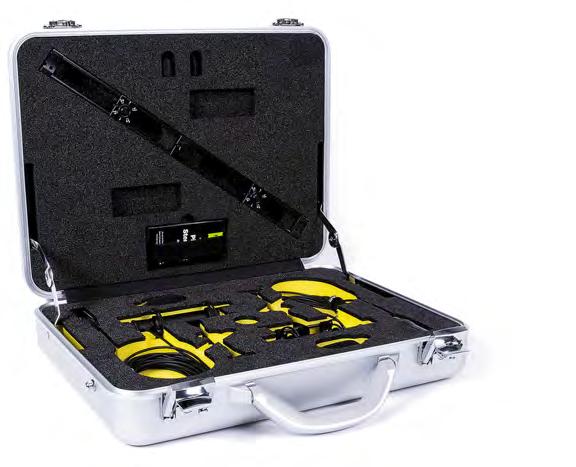
WITH THE launch of the Shure MV88 USB-C stereo microphone, mobile content creators can instantly record professionalgrade audio. Modified to plug directly into a phone or tablet, the revamped MV88 USB-C mixes the original stereo condenser mic with a USB-C connector for recording on the go. The MV88 USB-C pairs straightforward connectivity with simple-to-customise audio processing found in the MV7+ and MV6 microphones. With Auto Level Mode, the MV88 continuously adjusts gain in real time to ensure audio records at the correct level, whereas Real-time Denoiser intelligently removes unwanted background noise. Paired with four selectable polar patterns – adjustable stereo, mono cardioid, mono bidirectional and raw mid-side – the mic can be configured to suit any recording scenario. Building on the legacy of the SLX-D wireless microphone system, Shure has introduced the SLX-D+ platform incorporating a range of advanced and ease-of-use features. Operating across multiple frequency bands, the SLX-D+ includes wide tuning across all components up to 138MHz. ShowLink Ease technology provides 2-way communication between the receiver and the transmitter in real time. Once synced, the transmitter remains paired to the receiver every time it is powered on
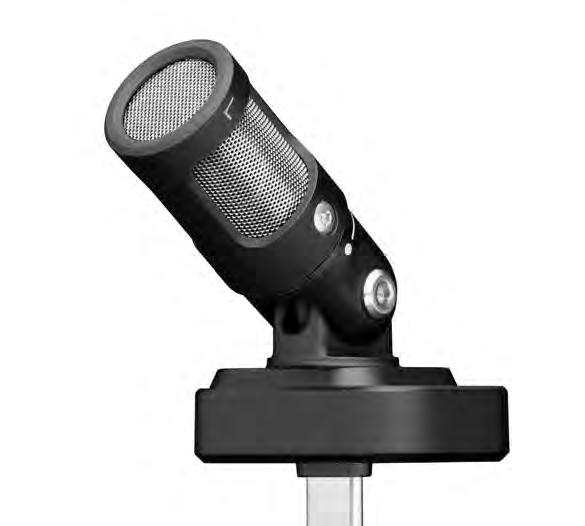
metering. RF cascading allows up to three SLX-D+ quad receivers to be linked together to create a 12-channel SLX-D+ receiver system. Simplifying the management of wireless output levels and receiver outputs to match open mixer channels, the audio summing feature allows the setting and combining of audio levels to one and two outputs on the dual and quad receivers.
The KSM condenser series has been extended with the introduction of the KSM32C, KSM40C and KSM44MP models. Providing off-axis rejection, clarity and flexibility for vocals, instruments and ensembles, the lightweight, metal 0.75- to 1-inch capsules include advanced shock mounts and curved magnetic pop filters.
The KSM32C large diaphragm delivers a smooth, balanced response and low-frequency performance for vocals, instruments, drum overheads and ensemble work, and is available in a stage and studio bundle. Delivering natural, detailed audio with enhanced proximity effect
Alongside the DPK2015, the DPK4099 CORE+ Piano Stereo Kit offers a compact solution based on a stereo pair of 4099 instrument microphones. With clipbased mounting and high isolation, it is suited to loud stages or situations where discreet placement is required.
The DPK4011 Piano Stereo Kit features a matched stereo pair of 4011ES cardioid microphones and a range of mounting accessories to support flexible positioning. It is typically used in controlled acoustic environments where detailed capture and placement flexibility are priorities. Together, the three kits provide different approaches to piano miking, allowing engineers to select a system based on application, space and
www.dpamicrophones.com
and natural high-frequency boost, the KSM40C is a large diaphragm condenser that captures rich nuances in vocals and instruments, guitar amps and kick drums. Ideal for vocals, pianos, stereo techniques, distant miking and ensembles, the KSM44MP dual-diaphragm design maximises sensitivity, stabilises pattern consistency and improves off-axis control at low frequencies. With selectable cardioid, omnidirectional and bidirectional polar patterns, the multi-pattern microphone provides natural clarity and smooth detail.
www.shure.com
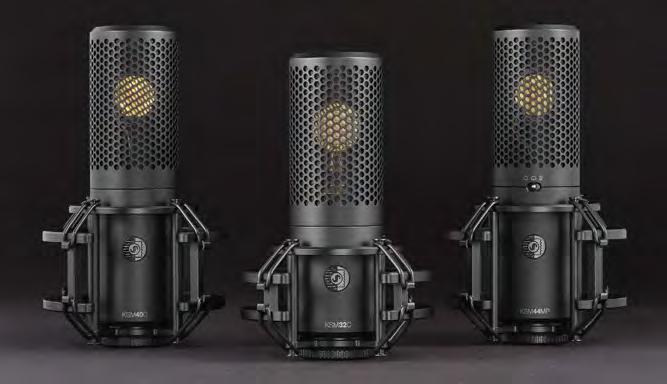
ROLAND HAS added the GO:MIXER STUDIO to its GO:MIXER range. The device is a compact audio mixer and recording interface designed for performance video creators and mobile music production using iPhones, iPads and Mac or Windows computers.
GO:MIXER STUDIO provides 12 input channels and six outputs in a portable form factor, allowing users to capture audio from multiple sources while recording video or producing music on location. The unit supports recording resolutions of up to 24-bit/192kHz and allows mixer configurations to be stored in 16 scene memories, enabling quick recall of setups for repeat workflows.
The input section includes two XLR mic/ line inputs with wide-gain mic preamps for
vocals and acoustic sources, a dedicated guitar or bass input and ¼-inch inputs for stereo instruments such as keyboards, electronic drums or wind controllers. An auxiliary input with TRRS support allows bidirectional audio with mobile devices, extending the mixer’s flexibility for streaming and mobile recording applications.
Monitoring options include a ¼-inch headphone output alongside a mini jack for earbuds or a headset with inline microphone, which
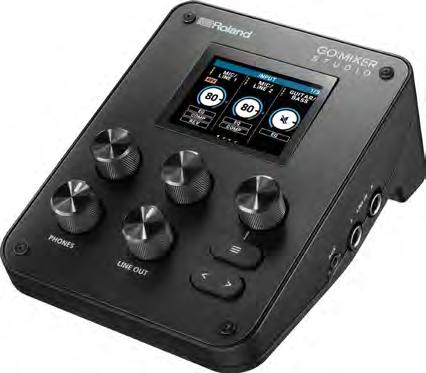
REPRESENTING A clean-sheet approach to networked digital mixing, Violet Audio has released the next-generation dMix 128. Delivering up to 128 channels at up to 96kHz, with sub-millisecond system latency and sonic transparency for mission-critical environments, the dMix 128 has been developed by Violet Audio’s international engineering team.
At the core of the FPGA-centric architecture, the dMix 128 is natively optimised for IP-based audio workflows. Currently supporting AES67 as standard, with plans for ST 2110-30 compatibility, the dMix 128 seamlessly integrates into broadcast and large-scale networked systems. With MADI I/O onboard,
together with three Ethernet ports and support for Dante via an optional expansion card, flexible connectivity allows systems designers to precisely tailor the dMix 128 to current and future infrastructure requirements. Eliminating the need for proprietary software and enabling intuitive PC and dedicated control surface operability, the dMix 128 is controlled via a browser-based user interface. Built to adapt to FOH or monitor mixing, in addition to OB vehicles and fixed installations, the system offers flexible routing, DSP resources and scalable workflows. Equipped with 32 analogue inputs and 24 analogue outputs, the dMix 128 supports a wide range of remote I/O and stagebox solutions.
WITH LV1 Control, Waves Audio has expanded the LV1 fader count via a single USB cable connection. Functioning as a fader expansion for Waves’ LV1 Classic mixing consoles, the control surface also operates as a dedicated fader bank for modular LV1 systems.
Built on the architecture of the LV1 Classic surface, LV1 Control delivers 17 motorised 100mm faders, 17 encoders and 17 minidisplays featuring per-channel LCD metering. Features include Touch-and-Turn mapping for onscreen parameters, Select/Mute/ Solo toggles per channel, eight layer keys, eight utility keys, a tempo pad, a 12V XLR4 lamp connection and 16+2 user-defined keys. The recent LV1 80-channel software upgrade enables LV1 users to handle larger
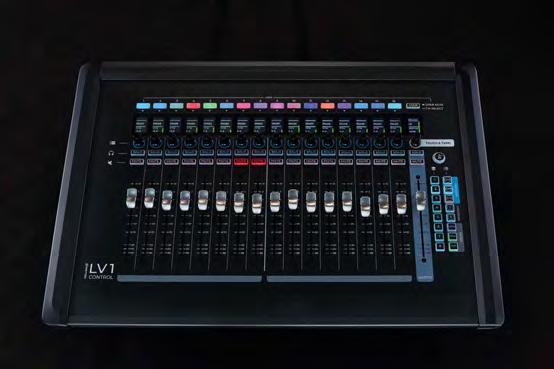
within the LV1 ecosystem now adds more tactile control with enhanced ergonomics. Expanding its custom-shop Magma series, the manufacturer has also added the Magma StressBox as a dynamics tool for shaping musical tension, tone and feel. Providing control over tension and feel in the mix, the Magma StressBox shapes emotion by turning right for compression or left for expansive cinematic depth. Each adjustment unlocks new sonic characters, from soft and spacious to bold and explosive, enabling dynamic movement between song sections. An AutoGain is incorporated for consistent output level. The Magma StressBox has been added to the Waves Ultimate and Waves Essential monthly or annual subscriptions. Finally, the company has added Curves Resolve to its Curves Series, introducing a mixing plugin focused on managing frequency masking between pairs of tracks. Unlike conventional EQ tools that process signals independently, Curves Resolve is designed to analyse the interaction between two audio sources simultaneously, applying processing only where overlapping frequencies create conflicts. The plugin continuously monitors a sidechain input
can also serve as an additional recording source. Two ¼-inch line outputs are provided for connection to external speakers, with level control handled via dedicated front-panel knobs.
Onboard processing includes a 3-band EQ, compressor and reverb, with effects available for recording or monitoring without the need for
external equipment. Power can be supplied via a connected iOS device or computer, an external adapter or a USB battery, with USB-C ports provided for device connection and independent power. An integrated mount allows the unit to be secured to a tripod for accessible operation during shoots or live sessions. The interface is supported by the GO:MIXER Cam App for iOS, which enables multitrack audio capture alongside video recording, as well as export of individual tracks for postproduction.
A dedicated GO:MIXER Editor provides access to all mixer parameters on a computer display, supporting larger sessions and more detailed control when working in studio environments.
www.roland.com
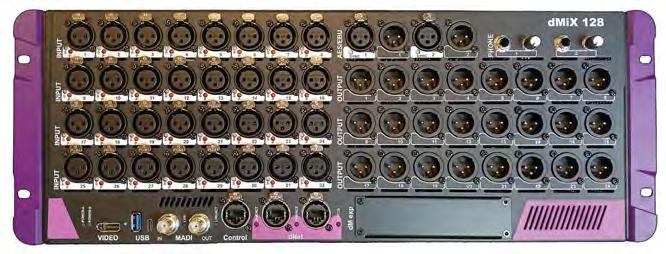
For recording and hybrid workflows, a lowlatency 64x64-channel computer enables DAW connectivity and native plugin integration in live-to-studio, broadcast and virtual soundcheck
while shaping the target signal, dynamically carving space at points of congestion and disengaging when conflicts are no longer present. This track-to-track analysis aims to preserve tonal balance and transient detail by avoiding static cuts or broadbandlevel reduction. Processing is limited to frequencies that are actively colliding, rather than affecting the full spectrum. Curves Resolve provides two core operating modes. In dynamic mode, frequency curves adapt in real time as the audio changes. In steady mode, the plugin analyses a defined passage and generates a fixed response that remains consistent over time. Users can blend between these modes to control the balance between responsiveness and predictability. Additional sidechain filtering and tilt controls allow engineers to focus detection on specific frequency ranges, reducing unintended reactions to non-essential content. For level interaction, the plugin offers both wideband ducking and a frequency-selective Unmask mode. While wide ducking lowers the overall level of a signal in response to another, Unmask mode applies reduction only at frequencies responsible for masking, maintaining overall energy and presence. Snapshot starting points are included for common sources such as vocals, bass, guitars, keyboards, synths and snare.
www.wavesaudio.com
environments. Additional expansion cards and software updates will be available in 2026.
www.violetaudio.com
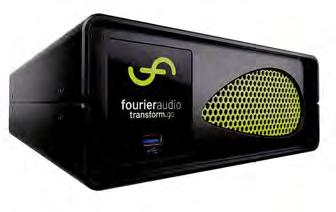
live event applications, Fourier Audio has released the compact transform.go plugin server. Featuring the same features as the larger transform.engine within a 2U, ½-rack, 3.5kg, tour-grade chassis, the transform.go fits into a backpack for fly-pack shows and is suitable for mid-sized productions. When compared to the 64-channel transform.engine, the smaller chassis and re duced I/O count of 16 channels of the transform.go offer an entry level into live plugin hosting for a much larger market segment of live engineers and venues. Like the transform.engine, the transform.go is fully compatible with Fourier Audio’s transform.suite companion 70 plugin bundle with a one-click install.
www.fourieraudio.com

JBL Intellivox - Now with Dante®
In critical moments, clarity can make all the difference. JBL Intellivox with DDS Beam Shaping technology ensures that every nuance is heard—clearly, evenly, and exactly where it’s needed. With redundant Dante connectivity and built-in monitoring, reliability comes standard. Learn more at jblpro.com.
A NATIVE plugin for Bitfocus’s Companion has been released, the outcome of a collaboration between DirectOut, its German distributor sphereo and Dorian Meid, an experienced Companion module programmer. Compatible with Companion 4.0.0 or later, the plugin automatically detects the PRODIGY and MAVEN Series devices. It can be used with any Stream Deck hardware interface to enable greater control with fully programmable presets and parameters.
Companion is an open-source control surface software that can control multiple devices across the live and broadcast industries and can be used with or without a physical interface. Buttons can be programmed with many different outcomes, from simple selections to fully stacked sequences of commands. The result is a customisable
interface that can take the guesswork out of complex commands and manage several hardware devices from a single control panel. DirectOut’s module for Companion allows access to the majority of PRODIGY and MAVEN functions, including in/out routing, configuration and status reporting. Each parameter-control features a learn button, which enables the plugin to read out the currently handled parameter and its value. This is useful if the function is not part of a preset and the user wishes to add a particular command without knowledge of the actual control protocol. The Action Recorder allows the user to capture sophisticated operations for triggering, so a series of actions can be inputted quickly and efficiently.
Companion also benefits from a web-admin emulator, so actions can be triggered without
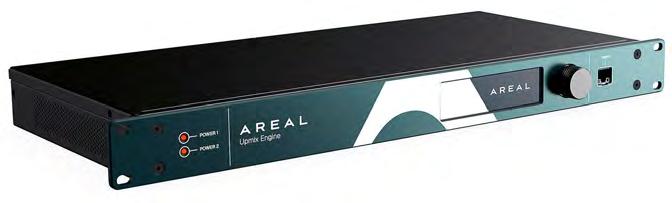
IMMERSIVE AUDIO specialist Areal has unveiled its Upmix Engine stereo upmixing hardware. Powered by the RISE (Realtime Immersive Stereo Expansion) algorithm, the Upmix Engine converts stereo content into immersive audio by redistributing spectral elements across multiple channels. With low latency from input to output, the engine permits real-time upmixing of stereo performances and recordings in live sound, corporate AV and broadcast scenarios.
The Upmix Engine is the first release from Areal, a Belgium-based developer and
manufacturer of immersive audio technologies. It is compatible with all loudspeaker brands and supports 5.1, 7.1, 7.1.4 and custom arrays without needing multitrack stems or objectbased audio. Areal’s FocusField technology allows the spatial image to be defined and steered to fit the application, while LF Warp functionality enhances low-frequency depth and impact. The engine’s I/O includes Dante, AES3, AVB, MADI and balanced analogue connectivity for ease of integration with multiple workflows.
www.areal.world
DEVELOPED TO support supervised multibranch loudspeaker lines, the Praesensa IP-based public address and voice alarm system (PAVA) has been upgraded with the PRA-EOB end-of-branch device. For retrofit and replacement projects compliant with EN 54-16, it targets tree or star loudspeaker topology configurations. The PRA-EOB is connected at the end of a loudspeaker line in a series of looped-through loudspeakers and can also be used to monitor individual loudspeakers. Supporting fault detection across more complex cable topologies, the device can individually supervise individual loudspeakers in applications where existing infrastructure does not allow for straightforward cable routes. By enabling multiple supervised branches on the same speaker line, the device can contribute to reduced
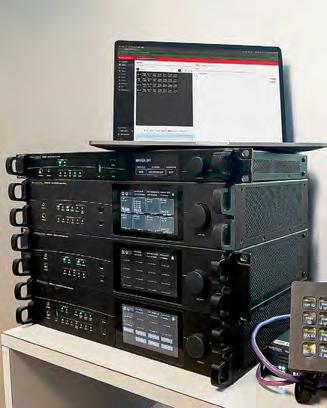
setting up the hardware controller devices. The button position on Stream Deck can be customised and perfected for any application. Pages of buttons can be saved and quickly accessed as required. There is also a list of presets provided within the module, which can be used as a starting point to edit from and adjusted within the module configuration.
Designed in collaboration with RME, DirectOut has created the USB.MADI as a fully fledged computer interface. Reduced in size to an SFP (Small Formfactor Pluggable) module, it can be directly installed in any compatible DirectOut MADI SFP slot for connection via USB-C to computers. Based on RME’s USB core, the USB.MADI delivers 64 channels of I/O at standard sample rate and offers low-latency interfacing between DirectOut devices and DAW software. The interface is compatible with portable devices, such as an iPad, while driverless operation is possible with Class Compliant (CC) firmware.
The USB.MADI adds features from both RME and DirectOut, including EARS (Enhanced Automatic Redundancy Switching) and DirectOut’s continuous audio playback with automatic switching in the event of signal loss. Providing comprehensive control over all I/Os on the computer, RME’s TotalMixFX is also included.
WITH THE latest v1.4 update to the Questra design and management platform, LD Systems is closer to creating a one-stop software platform for specialist planners and installation service providers. In the area of native hardware integration, Questra 1.4
With the NMP Series, the TICA Series has expanded with DSP audio matrices, for integration and control within the Questra network. The NMP8 8x8 DSP matrix comes with four analogue inputs and outputs and 4x4 AES67 channels, while the NMP32 provides four analogue inputs and outputs
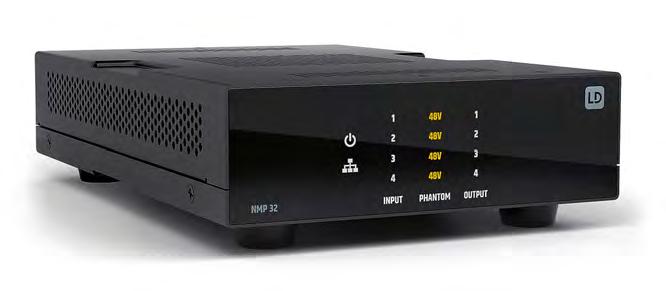
cable lengths. Integrating into the Praesensa system supervision, the end-of-branch devices are supported by an Open Interface API. By adopting addressable smart pilot tone handshake technology across the existing speaker cable network, each device on a branched line can be individually addressed and monitored. Without having to set signal thresholds, the installation process is simplified, and calibration steps are eliminated. Designed to remain stable across varying ambient temperatures and operating above 25kHz, the pilot tone is inaudible to human hearing in sensitive environments such as hotels or office spaces. To ensure compatibility and full functionality, the Praesensa firmware needs to be installed on existing amplifiers.
www.keenfinity-group.com
expands the range of supported, network-compatible devices and enables the centralised integration of audio, video and control components. These include the NMP8 and NMP32 DSP audio matrices, the AMP 205 D Dante mini amplifier, in addition to the MXAV 44 HDMI matrix and SWAV 41 HDMI switcher video solutions, together with the QTP10 10-inch touchscreen display.
Allowing third-party devices to integrate into the system via customised logic functions and user interfaces, Questra 1.4 introduces the concept of virtual devices, including the option of transferring them to the internal library as virtual devices. With the additional support of the OSC protocol – also available for the X-EDAI/X-ECI Ethernet cards in the IPA power amplifier series – Questra 1.4 extends the control of a variety of external systems and applications and enables the control of central parameters, such as level and mute.
in addition to 28x28 AES67 channels. DSP functions including EQ, delay and dynamics processors plus automixing functions are currently standard, with other functions becoming available via software updates. Operating within the Questra platform, the TIVA Series (Tools for Integrating Video and Audio) of AV interfaces now extends beyond the existing SWAV 41 HDMI switch and SGP 42 Ethernet interface. Incorporating audio de-embedding, support for HDMI 2.0, HDCP 2.2/1.4 with resolutions up to 4K60 (4:4:4) and EDID management, the MXAV 44 is a 4x4 HDMI matrix that distributes multiple sources to different displays. Supporting HDMI 2.1 with up to 48Gbit/s, video resolutions up to 8K60 or 4K120, HDR formats including Dolby Vision and HDR-to-SDR conversion, the SPAV 14 is a 1x4 HDMI splitter with audio extractor which suits high-resolution AV setups. Both modules enable separate audio output for the connection of external audio systems.
www.ld-systems.com
DESIGNED FOR the Apple Vision Pro, Neumann has launched VIS (Virtual Immersive Studio), a spatial audio positioning controller application that introduces a three-dimensional approach to immersive mixing within Logic Pro. The platform allows producers to visualise and position audio objects in augmented reality, using hand gestures to move sound sources naturally in space.
According to Neumann, the workflow transforms automation into a physical performance and places creative decision-making at the centre of spatial mixing. The application connects directly to Logic Pro, appearing as a device
DIGITAL AUDIO Denmark (DAD) has launched Junior, a compact hardware controller designed to provide hands-on access to Control | Pack routing within the company’s series of Thunder | Core audio interfaces.
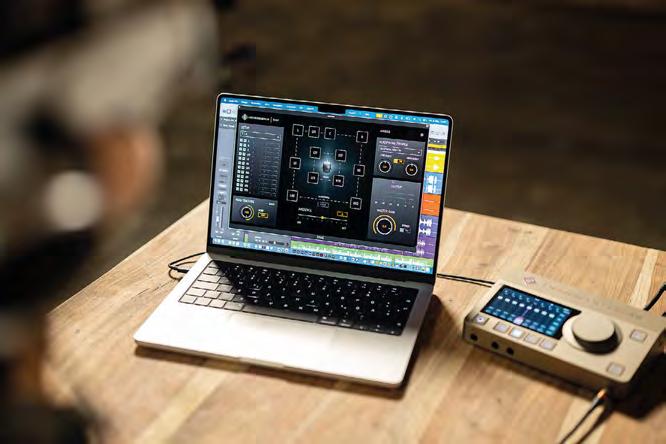
show bucket status and names. Two further buttons are assigned to lock functionality, the engineering menu and routing preset selection. Junior can be powered via PoE or an external power supply. It is
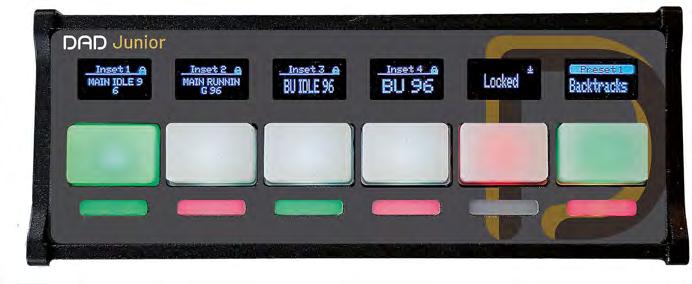
Junior is built to give users real-time, tactile control of preconfigured Control | Pack settings in DADman software. DAD says Control | Pack enables native switching between defined sources and output destinations, adding an additional layer of playback redundancy and show control across the Thunder | Core range. Junior connects to a Thunder | Core device via Ethernet and can be deployed accordingly. The controller provides six RGB LED illuminated buttons, six RGB status LEDs and six character displays for visual feedback. Four buttons are dedicated to switching between Control | Pack buckets, while the corresponding LEDs and displays
supported by DADman v5.8 and Thunder | Core firmware v1.1.0.3 onwards.
The manufacturer has also announced that ST 2110-30 audio-over-IP connectivity is now available for the brand’s audio interfaces via a new ST 2110/Ravenna/AES67 card and free corresponding updates to the brand’s DADman control software and device firmware settings. The release package supports ST 2110 across the Dante SRC Card, Ravenna SRC Card, Thunder | Core, Penta and AX32 product ranges. Functionality is specific to each device or configuration while still providing the same high-quality connectivity, flexibility and control.
www.digitalaudio.dk
within the DAW. Once paired, users can view Logic Pro on a virtual, resizeable screen inside Apple Vision Pro while continuing to interact with physical studio equipment, supported by low-latency passthrough technology. VIS supports both loudspeaker-based monitoring and headphone workflows. For headphone use, it incorporates Neumann’s RIME plugin, enabling spatial audio playback up to 7.1.4 and using Apple Vision Pro head tracking to deliver a realistic monitoring experience outside traditional studio environments.
www.neumann.com
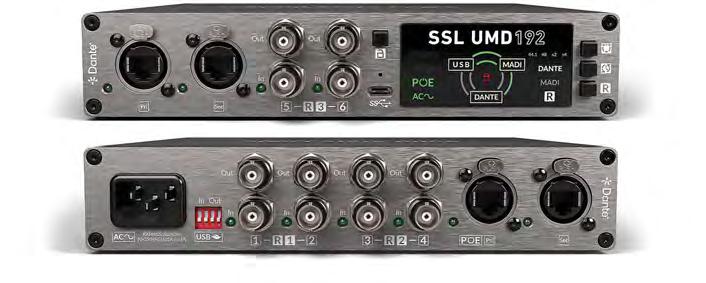
DELIVERING 192 channels at both 96kHz and 48kHz, or 128 channels at 192kHz in a compact and portable ½-rack form factor, the UMD192 from Solid State Logic has been designed for live sound, broadcast and highspec studio environments. With seamless integration across MADI, Dante and USB protocols, the USB audio provides flexible routing possibilities and high channel counts. The UMD192 works reliably in both Mac and Windows environments, and is compatible with any DAW. Whether it is used as a high-capacity interface or a format bridge, it can keep workflows streamlined and future ready.
The UMD192 can support bidirectional audio between any two formats – MADI, Dante or USB – with the third format being able to receive a split feed. This makes it suitable for bridging multiple MADI-connected devices into a Dante network, or for high-channelcount recording and playback via USB 3.0. It delivers fully interoperable Dante AoIP with
AES67 and ST 2110 (with DDM) support and ultra-low Dante latency reaching just 0.25ms. The interface provides flexible clocking options from either MADI or Dante. Additionally, with its six MADI BNC pairs, the UMD192 can be configured in redundant mode, enabling three dual-redundant MADI connections to be provided for mission-critical broadcast and live workflows. Meanwhile, the manufacturer has also launched its autoSeries plugins, combining SSL’s 4000 E modelling with sonible’s AI-assisted audio analysis. The trio of new plugins, which include autoEQ, autoDYN and autoBUS, are the only official SSL 4000 Series plugins on the market that leverage sonible’s AI assistive capabilities. Each AI-assisted plugin analyses the audio’s spectral and dynamic characteristics, suggests adaptive profiles with style-matched settings and instantly delivers fully editable processing.
www.solidstatelogic.com
DESCRIBED AS the next-generation advancement of the 2-channel version, Clear-Com has released its 4-Channel HelixNet beltpack. The solution has been engineered to meet the evolving demands of live productions and broadcast environments, introducing an expanded channel count and improved user interface design.
To provide greater flexibility for multiteam coordination in complex production setups, the 4-Channel HelixNet beltpack allows users to communicate across four distinct channels simultaneously. While fully compatible with the recent updates to Arcadia Central
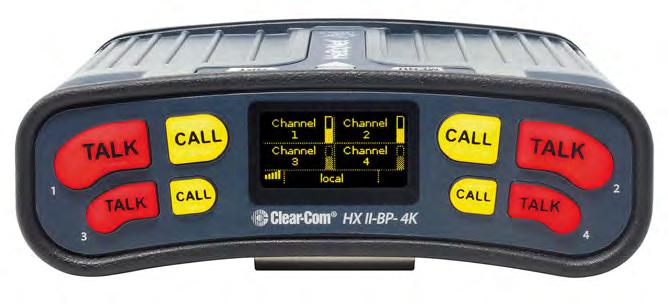
Station, it maintains backwards-compatible, 2-channel functionality on legacy HMS stations and earlier Arcadia versions, facilitating integration for existing users. The current HelixNet product family delivers networked partyline intercom systems built on Clear-Com’s heritage of analogue systems. Powered by the manufacturer’s I.V.Core technology, the existing system manages audio mixing across up to 24 channels, making it suitable for live performances, broadcast productions, theme parks and public safety applications.
www.clearcom.com
THE RØDECASTER Video S is an all-in-one console for video and audio production, giving users control over every aspect of their content. A streamlined version of the RØDECaster Video, it combines video switching, recording and production tools with a fully integrated professional audio mixer,
the Aural Exciter, Big Bottom and Compellor effects; media playback, keying, transitions, multi-source scenes and graphic overlays accessible from the front panel; and support for network cameras (including PTZ operation) with up to four NDI inputs and one output via Ethernet, plus dual-cam streaming with the
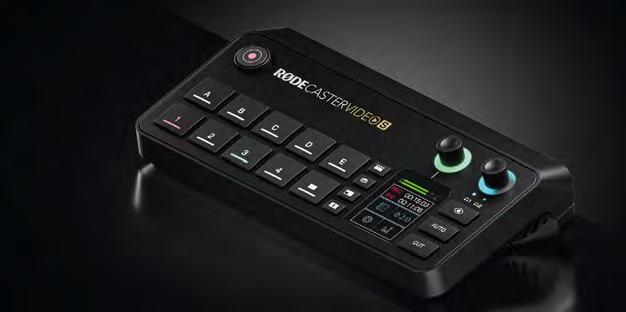
octa-core CPU video and audio processor, along with three HD (1080p) HDMI inputs, one configurable HDMI output and one multifunction USB-C port for connecting webcams and RØDE USB audio devices. Two studiograde Neutrik combo jacks with ultra-low noise, high-gain Revolution Preamps are included for capturing audio from XLR microphones, instruments or any other audio source.
Additional features include APHEX audio processing, including an EQ, compressor, noise gate, high-pass filter, de-esser and
Users can connect an external SSD via USB to record video or output directly to a computer via UVC, while intelligent auto-switching allows seamless hands-free switching of video sources and scenes based on audio inputs. The console features a 2-inch high-resolution touchscreen and versatile rotary encoder for quick configuration and setting adjustment. Dual USB-C audio interfaces provide simultaneous connection to two computers and/or mobile devices, plus customers have access to advanced configuration options via the RØDECaster app, including remote control, user-assignable graphics and media, custom scene building, audio mixing and effects.
www.rode.com
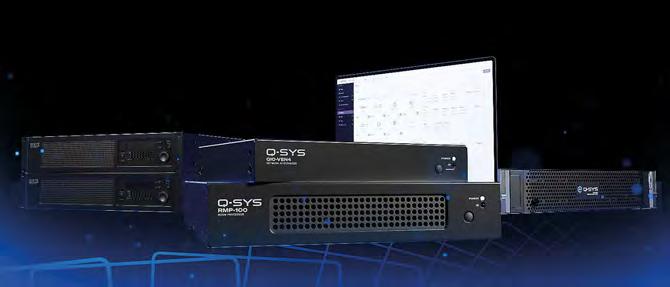
INTRODUCING SOLUTIONS that standardise collaboration spaces within highperformance workplaces, QSC has announced a strategic expansion across its Q-SYS Full Stack AV Platform.
The Q-SYS expansion includes the introduction of purpose-built RoomSuite modular systems for rapid, repeatable configuration and deployment of standardised medium-tolarge spaces. Traditional Q-SYS Core-based systems adopt Q-SYS Designer Software to support customised, high-impact spaces. Q-SYS RoomSuite Modular Systems differ by extending Q-SYS into more standardised collaboration environments through a streamlined, web-based, no-code workflow. Both approaches are unified through centralised cloud management via Q-SYS Reflect. Combining processing with a built-in network switch for native Q-SYS collaboration peripherals, in addition to AV distribution and bridging functionality, the RMP-100 lies at the core of Q-SYS RoomSuite modular systems.
The QIO-VEN4 expansion module enables
DESIGNED TO give operators real-time control of sources using its Aligo AVoIP and KVM platform, Datapath has launched the Aligo Workstation. The purpose-built interface has been introduced as part of an update to the Aetria ecosystem. Operating via a dedicated onscreen menu accessed via the Aligo receiver, the Aligo Workstation combines real-time responsiveness with multiscreen KVM control, and reportedly offers customers more options when creating their control room solutions. With built-in OneControl technology, users can seamlessly switch keyboard and mouse focus across multiple screens simply by moving the cursor, eliminating the need for hotkeys, toggles or additional hardware. In
addition to support for HD and 4K monitors with 16:9 aspect ratios, the Aligo AVoIP solution
DESIGNED TO simplify system design, accelerate deployment and deliver flexible, scalable AV scenarios, Cognio from Symetrix is a software-driven audio, video and control (AVC) platform. Powered by DesignOps software, the wireless Cognio hardware and software platform unifies design, configuration, commissioning, control and operations into unified, streamlined workflows. Systems can naturally scale across rooms, buildings and campuses. A single device can power multiple spaces or multiple devices can support a single space.
Before the addition of the hardware, workflow designs can be based on rooms, zones and signal flows. With true pre-hardware emulation, AV line checks can be run before installation when audio and video signals are detected from a remote location. By generating digital
audio through the design so indicators move, signal paths can be validated and issues detected before any hardware is installed.
Adopting a spreadsheet-like canvas, Cognio automatically connects and routes the processing modules in sequence rather than having to draw them manually as signal paths. When adding, removing or rearranging modules, the signal flow adapts instantly. With offline emulation, designs can be validated and systems deployed rapidly without any loss in quality. Every connected device shares a common firmware foundation within the distributed architecture. This enables signal processing, AVoIP and web-based access to exist throughout the system, rather than being confined to a centralised processor.
The no-code control interface builder bypasses a dependence on external graphics tools
additional localised peripherals to be positioned closer to distributed AV bridging endpoints. Simplifying Zoom Room meeting controls within divisible spaces, Q-SYS Connect for Zoom Rooms is capable of linking all controllers to an active Windows-based device in combinable spaces. The certified Zoom Rooms room controller solution is created by combining a Q-SYS TSC-101-G3 touchscreen panel with Windows software. The MPA-Q Series of network amplifiers has been extended with a mid-power tier of 4-channel (250W or 500W per channel) and 8-channel (125W or 250W per channel) models. Designed for demanding hospitality and enter tainment installations, the X Class Server Core X50r is an AV&C processor which combines the Q-SYS Full Stack AV Platform with server hardware. It supports 10Gbps networking, which enables up to twice the network audio channel capacity of the existing Q-SYS Core 5200.
www.qsys.com
Operators can instantly open any source onscreen using the Aligo Workstation, while multisource layouts can be saved, recalled with ease and assigned to keyboard shortcuts for ultra-fast switching. Layouts can also be pushed to other workstations within the Aetria ecosystem, where permissions allow. The Aligo Workstation integrates fully with Aetria’s User Rights Management, providing fine-grained, permission-based access to sources and videowalls. It connects only to sources within the control room, operating via direct hardware access with no operating system.
and custom programming. Vector-based interface elements scale across devices, and an integrated theme system allows the application of branding, colours and styles. Cognio unifies the AV lifecycle with modes for design and operation, with dynamic switching between the two. These include design mode
for building and editing systems; operation mode for real-time monitoring, logging and diagnostics across the entire site; and seamless switching between modes to instantly troubleshoot, adjust and verify changes.
www.symetrix.co
workflows and seamless control across multiple software applications, Yamaha’s CC1 single-unit USB controller combines control options for DAWs and non-DAW software used in music and video production, streaming and podcasting. The 12 LCD keys with unlimited banks can be customised through the CC1’s Yamaha Control Centre application, in addition to Elgato Stream Deck software. Four multifunctional rotary controls can be assigned to a wide variety of parameters, and a jog/shuttle wheel can operate as an “AI” rotary control for adjusting any parameter at the project’s current position. Working with the OBS Studio video recording/ streaming application and Steinberg audio software, the CC1’s dedicated DAW channel section comprises a 100mm touch-sensitive motorised fader, solo/mute/pan/record and transport controls. For hybrid live performances, a socket for a Yamaha FC5 foot pedal or FC7 expression pedal is included. Combining the legacy of the MG audio mixer range with video capture and streaming, Yamaha has added the latest digital mixers to its digital MGX series. The 12-channel MGX12V

to a PC for recording or streaming, together with the audio. Other features include premium microphone preamps with an 86dB gain range on the mic/line combo inputs, in addition to eight line and Bluetooth audio inputs, two XLR outs, six or eight TRS OMNI outs and four headphone ports. The four mixers in the MGX series feature up to 16 tracks of audio recording and two tracks of playback direct to/from a microSD card. Supplied with a suite of Steinberg music production tools, the MGX mixers also incorporate a noise gate, compressor, EQ, delay, reverb and amp simulator.
www.yamaha.com/2/proaudio
Protégé Series
CONSISTING OF the Protégé XS, Protégé XM and Protégé XL, the Protégé Series from ADJ features 360° infinite pan movement with “lightning-fast speed and smooth precision” from their 3-phase, high-performance motors. The Protégé XS comes with a 250W white LED engine and produces up to 9,800 lumens of crisp, highintensity light. It features motorised zoom and focus, two 8-position colour wheels, two gobo wheels (one rotating and replaceable, the other fixed), two rotating prisms (linear and circular), a frost filter and an animation wheel, and has been designed to replace the manufacturer’s Focus Spot 4Z and 5Z models. The Protégé XM comprises a 350W white LED engine with a native colour temperature of 8,000K and a motorised zoom ranging from 3.8–44°. Features include CMY colour mixing alongside two colour wheels, two rotating gobo wheels, two prisms, two frost filters and an animation wheel. The
Protégé XL delivers 20,000 lumens and is powered by a 450W white LED engine with a 7,000K colour temperature. It has a 4.1–45° motorised zoom range and comes with CMY and CTO colour mixing, a separate colour wheel, two rotating gobo wheels, two rotating prisms (linear and circular), two frost filters (light and heavy) and an animation wheel.
The Hydro Beam CMY is an IP65-rated automated beam luminaire. Comprising an OSRAM Sirius HRI 310W PRO discharge lamp, focused through precision-engineered optics and projected from a high-quality glass lens, the unit is said to generate a razor-sharp 2° beam. Its feature set includes CMY colour mixing, 17 static gobos, two rotating prisms, a frost filter and integrated Aria X2 wireless DMX control and remote fixture management.
www.adj.com
CAMEO HAS expanded its lighting portfolio with a variety of IP65-rated moving light, PAR and blinder fixtures, introducing additions to the OTOS, ZIYA, SUNO and OPUS product families aimed at touring, live production and outdoor event applications.
The OTOS family has been extended with two moving bar luminaires designed for linear and kinetic lighting designs. The OTOS L16 is a 720W LED bar featuring 16 50W RGBL LEDs capable of delivering up to 9,300 lumens
output. It offers two independently controllable zoom segments, a motorised 208° tilt range and an integrated effects strip, allowing it to produce beams, dynamic zoom effects and clustered looks. Alongside it, the OTOS LC12 combines 12 individually tiltable and zoomable 50W RGBL moving heads arranged in a linear format, enabling curved beam effects and kinetic visual designs for both indoor and outdoor productions.
The German brand has also introduced the ZIYA series of IP65-certified LED
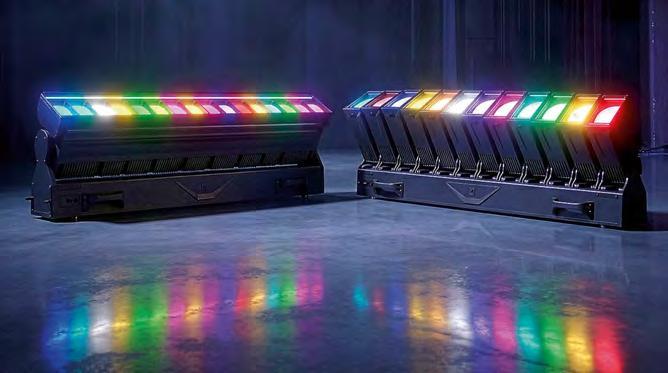
AYRTON HAS released its EagleStrike LT followspot, designed for “maximum output, speed and precision”. The first LED-source followspot in Ayrton’s catalogue, the EagleStrike LT has been engineered for use across long distances, and comes with an optional camera which transforms the unit into a fully automated tracking spotlight. It comes with an oversized 270mm front lens capable of delivering a 2.9° beam. Its 13-lens optical system with 15:1 zoom ratio provides a working range of 2.9–43°, with dedicated gobo reducers that can narrow the beam to 0.9° or 2.5°.
Equipped with a 1,200W LED module, the EagleStrike LT outputs a luminous flux of 55,000 lumens at a colour temperature of 6,500K. It achieves a light output of over 100,000 lux at 10m and 6,250 lux over 40m. The followspot also introduces a new CMY flag-based colour mixing system, capable of matching the speed of
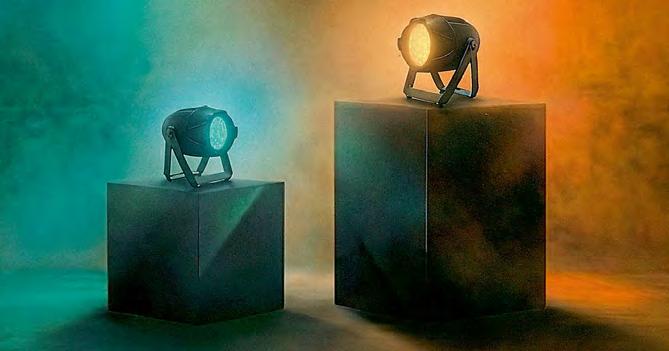
zoom PARs, which have been developed for touring, theatre and corporate lighting applications. The ZIYA 200 models are available with either four 60W RGBL LEDs or as a COB version with RGBALC colour mixing and Fresnel optics, supporting applications that require both tightly focused beams and soft, even washes. For larger stages, the ZIYA 400 and ZIYA 400 COB models increase output using either seven 60W LEDs or a COB engine, while retaining motorised silent zoom, IP65rated housings and the integrated SPIN16 rigging system across the range. In the blinder category, the SUNO series introduces IP65-rated RGBAWW models in 2- and 4-light configurations. Designed for touring and outdoor use, the fixtures
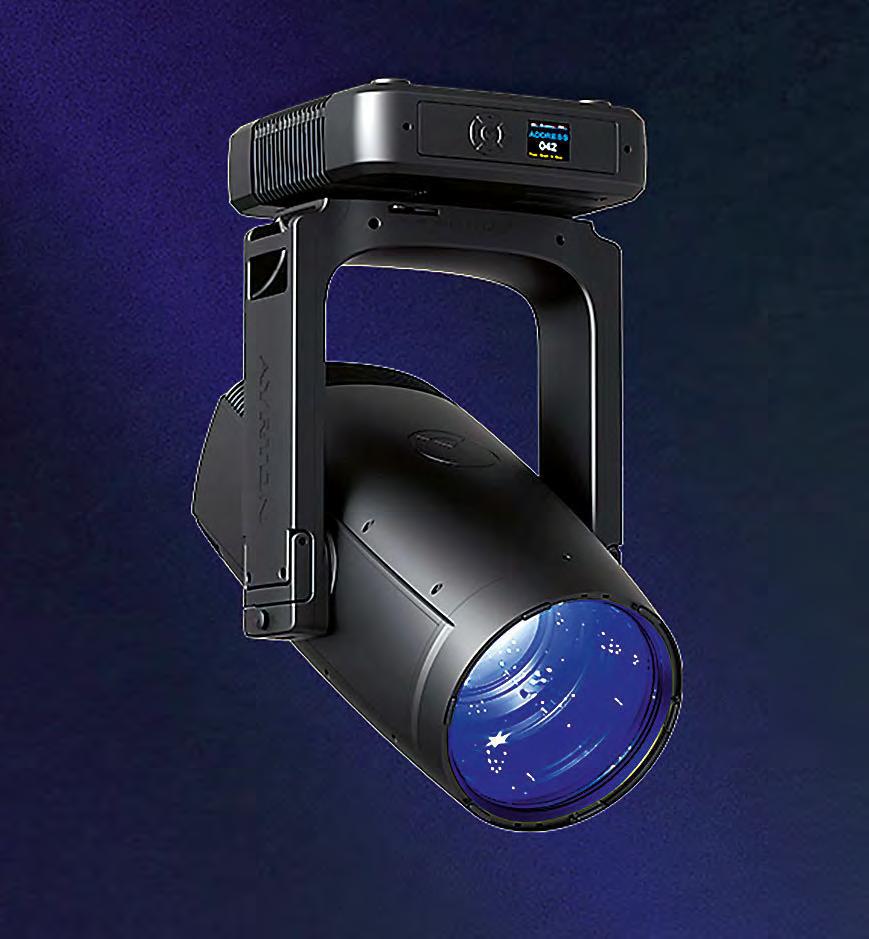
Ayrton’s “Ultimate” series luminaires. A progressive CTO offers subtle tuning from 2,900–6,500K. The colour section
enhancement filters, one minus green, one gobo correction and one multi-colour filter. The unit also offers tools for sculpting the
framing across 100% of the file and ±90° rotation, two overlaying rotating gobo wheels,
filters, as well as two combinable
multiplier prisms: a 4-facet linear and a 5-facet
pan axis expands the EagleStrike LT’s use in automatic followspot mode. The design integrates all waterproofing features while maintaining full access to internal components.
www.ayrton.eu
deliver up to 1,200W of LED power and feature a boost mode capable of producing more than 55,000 lumens, combined with a PAR-36-DWE-style visual appearance. The weatherproof design allows the SUNO series to be used in outdoor environments without compromising output or performance.
Rounding out the announcement, Cameo has unveiled the OPUS X4 IP, the first IP65rated fixture in the OPUS series. The spot profile moving head is built around a 1,400W LED engine delivering 50,000 lumens output, and retains the 5–55° zoom range and colour and effect features found in the standard OPUS X4, while adding weather protection for outdoor and touring applications.
www.cameolight.com
IN CELEBRATION of its 50th anniversary, Claypaky has unveiled its latest additions to the Arolla Aqua series. The Arolla Aqua M-LT has been designed for lighting designers, rental companies and broadcasters requiring uncompromised outdoor performance in a lightweight body. It delivers 28,000 lumens from a custom 550W calibrated white LED engine (6,500K) and combines throw-optimised optics with a 160mm front lens for enhanced beam capabilities. The fixture boasts a 3.8–52° linear zoom, while a centre-peaked hotspot aids gobo projection and mid-air effects. Engineered to balance performance, portability and projection, the Arolla Aqua S-LT brings 21,000 lumens of calibrated output to permanent installations and outdoor productions in a 25.9kg form factor. Inside, a custom 350W cold white LED engine (6,500K) powers an optical system optimised for long-throw brightness and midrange punch. A 140mm front lens and 3.8–52° linear zoom facilitate a range of functions from aerials to stage washes. The centre-peaked hotspot has been engineered to provide consistent beam quality, even at long distances. Said to be the most powerful fixture in the series, the Arolla Aqua HP is aimed at lighting professionals seeking a versatile, high-performance, all-weather moving head. Equipped with a custom 1,400W white LED engine that delivers over 60,000 lumens, it has been designed with brightness, precision and creative flexibility in mind. The fixture comes with a rugged design
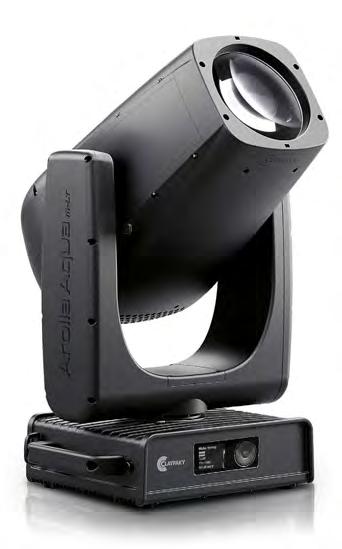
for use during touring and demanding environments. To aid sharp beams that remain impactful over long distances, it features a 220mm front lens. Its zoom range of 3.6–55° enables transitions from narrow beams to wide washes, making it suitable for key lighting, aerial effects and visual displays.
www.claypaky.it
AN UPDATE to the manufacturer’s Dartz 360 LED, the Rebel Dartz from Elation brings four times the brightness with improved optics, an upgraded FX toolkit and full all-weather protection. A 150W RBL engine produces a tight 1.5° beam for smooth, colour-mixed beam effects with an output of 125,475 lux at 5m. It comes with 10 rotating and 16 static gobos, stackable prisms and continuous pan and tilt.
The KL Batten series is a high-brightness colour wash fixture line engineered for
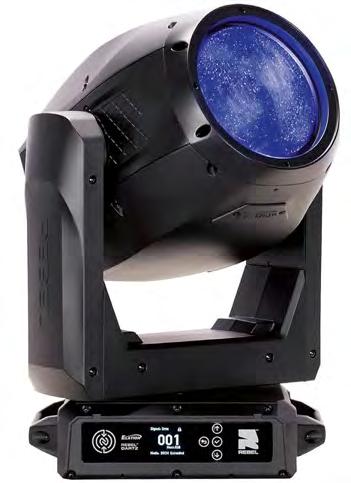
stage and broadcast environments. The KL Batten 12, KL Batten 48 and KL Batten 72 are said to deliver rich, full-spectrum colour with full pixel control, a homogenised beam and built-in CCT control. With their RGBMA engine and integration with the KL Series, the IP65-rated KL Battens come with a high-output 100W RGBMA engine with a CRI of over 94 and deliver 10,500, 46,500 and 71,250 lumens, respectively.
The KL Fresnel 6 IP and 8 IP have been designed for light-critical and noise-sensitive venues. They deliver high-output soft light with precise colour reproduction and adjustable colour temperature. They combine classic Fresnel beam quality with modern RGBMA colour versatility and integrate with Elation’s KL and Fuze families. The 250W KL Fresnel 6 IP and 500W 8 IP have a 7,400- and 15,500-lumen output, respectively, with both models featuring an 8–60° motorised zoom and high CRI for natural colour rendering.
The Rebel Line series of linear tilt bars is available in 0.5m and 1m lengths, with each bar driven by high-output 60W RGBL engines that integrate with Rebel Wash and Limelight fixtures. An uninterrupted linear lens system delivers a continuous beam with no breaks, while a SparkX array of 5W white LEDs creates crisscross aerials over any RGBL background.
The 8-cell Rebel Line 8 and 16-cell Rebel Line 16 deliver 11,548 and 25,355 lumens, respectively. Both models come with a 4–35° zoom and 210° tilt control and are IP65-rated.
www.elationlighting.com
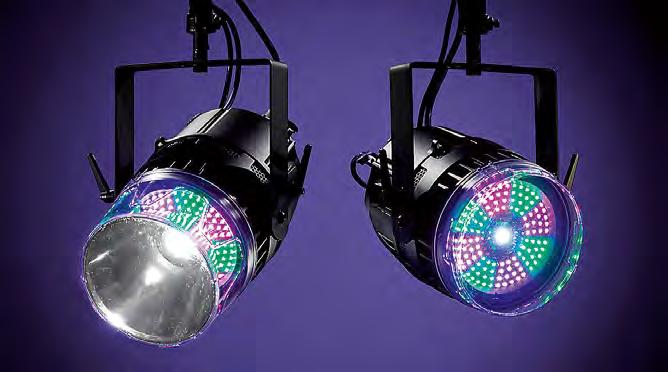
A flash of inspiration
HIGH END Systems has released the Dataflash 5000, a high-energy strobe fixture capable of 52,000 lumens. With both an RGB LED array and a 3,200–7,500K white light centre, the Dataflash 5000 has an IP65 rating and an LED engine that “turns on and stays on”. With the variable white light centre and the surrounding RGB LEDs, designers can achieve both warm and cool strobing while also painting
the stage with vivid colour. It also comes with a large collection of strobe modes and macros. Dome accessories include the Reflector Dome which attaches to the fixture face to provide strobes and atmospherics, while the transparent Eye Candy (EC) dome highlights all of the fixture’s bold effects.
www.etcconnect.com
RoboSpot gets sACN and RDM Net support
GERMAN LIGHT Products (GLP) has launched a range of portable, batterypowered LED fixtures called Nexus Lights that have been designed to meet the growing demand for wireless, app-controlled lighting across professional and semiprofessional markets. The Nexus Lights range consists of fully wireless LED fixtures with IP65rated housings, making them suitable for both indoor and outdoor applications. Designed for mobile and flexible use, the fixtures combine professional lighting output with simplified operation, targeting users who require quick deployment without the need for external power or complex control infrastructure. Each fixture is powered by a high-capacity internal battery capable of delivering up to 24 hours of runtime, depending on usage.
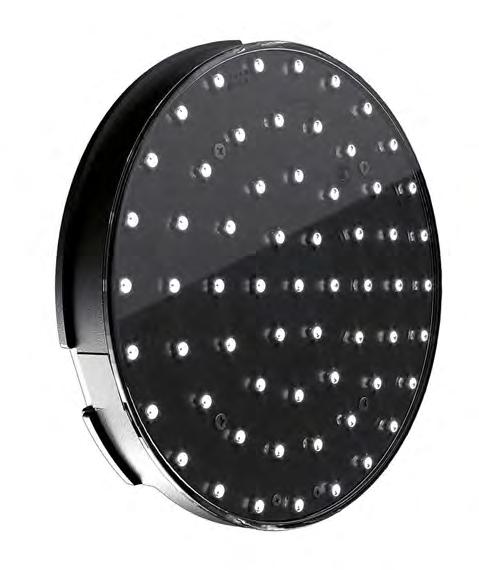
Recharging is via USB-C power delivery, allowing for quick turnaround times between events and supporting modern charging workflows common across touring, rental and installation environments. Control is handled via a dedicated appbased platform, allowing users to configure colours, scenes and effects directly from a mobile device. This approach removes the need for traditional lighting desks in many use cases, while still providing sufficient flexibility for live performance, broadcast and architectural scenarios.
The series is suitable for a broad range of applications, including mobile DJs, weddings, bars, clubs and touring productions, as well as theatres, TV studios, sports venues, cruise ships and houses of worship.
www.glp.de
ROBE HAS announced a suite of software updates for its RoboSpot remote followspot system. Productions can now use RoboSpot and supported devices purely on Ethernet networks, eliminating the need for running XLR-based DMX cables to the BaseStation. XLR DMX and sACN output can be combined within a shared addressing space, allowing some fixtures to run on DMX and others on sACN simultaneously. Device discovery is handled seamlessly via RDMnet.
Operators can now define fade times for position buttons (up to 10s) for smooth automatic tracking between two points. If they need to stop the transition, they can double-press the button for an instant snap to final destination. Additionally, new Channel
Fade Control (up to 1s) for Dimmer, Iris, Zoom and Focus channels eliminate manual jitter, enabling new possibilities when operating in standalone mode without a console. Storage capacity has been increased to four pages of slots for both colours (up to 32 slots) and positions (up to 36 slots), while enhanced colour buttons allow operators to manually select desired colour or directly input precise hue and saturation values. When compatible fixtures like the iFORTE LTX WB, iESPRITE LTL WB or iPAINTE LTM WB are connected, the system automatically detects them and displays a dedicated LT button, allowing for instant mode switching without menu diving.
Additional features include Fixture Reset under the Wrench menu, which reads all connected devices, displays them in a group by fixture type and allows operators to trigger quick, specific feature resets or complete unit resets for an entire group of identical fixtures simultaneously. Dynamic Crosshair is a new setup wizard that allows operators to configure the crosshair to dynamically change its size in real time. The MDC setup has been refined, and operators can now use colours during the MDC setup process. Customers can adjust GUI Transparency to maximise screen real estate and also enable a Value Change overlay to briefly see what channel is changing and its value, while a long-requested feature that shows the RoboSpot is receiving a signal from the console has been implemented.
ATOMOS HAS announced a firmware update that brings integrated camera control to the Ninja TX GO and Ninja TX. The monitor-recorders now incorporate USB-C ports to enable camera control on supported cameras from Canon, Fujifilm, Nikon, Panasonic, Sony, Z CAM and other leading brands. Instead of struggling with the camera’s tiny on-body controls and menu, key camera functions can be easily managed from a much larger touchscreen monitor interface. This includes start and stop recording without reaching for the camera, changing essential settings such as ISO, shutter and white balance, and monitoring and adjusting from a more comfortable position (for example when the camera is mounted in a tight spot).
With a 5-inch, 1,500-nit HDR touchscreen, the Ninja TX GO and Ninja TX offer a more user-friendly monitoring experience than the camera’s built-in display. Both feature professional tools such as EL Zone, waveform, vectorscope and focus peaking, giving content creators control over framing, exposure and colour accuracy on-set.
The Ninja TX series records directly to CFexpress Type B or external USB-C SSD storage and supports Apple ProRes, ProRes RAW, Avid DNx and H.265/H.264 formats. The Ninja TX GO is HDMI-only and can record up to 6Kp30 RAW, while the Ninja TX adds SDI input/output, AirGlu wireless timecode and expanded 8Kp30 RAW recording.
www.atomos.com
DESCRIBED AS the first secure KVM switch to support up to 5K resolution, the PSD PP v4.0 Universal Secure KVM Switch Series from ATEN has been certified to the NIAP PSD PP v4.0 (Protection Profile for Peripheral Sharing Device) standard. Designed for highsecurity environments and financial institutions, the series enables users
workspaces, while retaining a rugged metal enclosure for long-term reliability. To aid operation across multiple security domains, the series introduces configurable port LED colours and customisable port name labels. This enables faster and more accurate switching between classified and unclassified networks without compromising security protocols.
to manage multiple systems securely while maintaining high-resolution visual performance and simplified peripheral sharing.
The range supports DisplayPort and HDMI via a single combo video connector and is available in single- and dual-display configurations, delivering resolutions up to 5120x2880 at 60Hz. Compared with previous generations, the switches feature a more compact form factor to support efficient use in control rooms and secure
RESI MEDIA has unveiled Studio AI, a proprietary AI-powered feature within Resi Studio that simplifies video creation, boosts content discoverability and streamlines workflows for church production teams. The solution streamlines video content creation by combining AI-driven automation with seamless video editing tools. Powered by proprietary technology, Studio AI transforms video into clips, transcripts and
remove these barriers by delivering a single workflow that is fully integrated within Resi Studio, eliminating the need for additional third-party AI solutions and editing tools. Features include instant transcripts so that users can make content more searchable, editable and accessible; real-time clips for creating social-ready and algorithm-friendly clips with captions for Instagram, TikTok and
suggests smart metadata enhancements, reportedly making every video more searchable, shareable and impactful.
Studio AI directly addresses challenges many ministry teams face today, including manual editing of long-form video content, disconnected tools and cumbersome workflows that hinder churches from maximising the value of their content. Studio AI has been designed to
YouTube; and instant discussion prompts which automatically develop group discussion questions, saving time and enabling ministry teams to focus on strengthening community and deepening spiritual connection. A fully integrated workflow allows users to upload, trim, caption and schedule without leaving Resi Studio. www.resi.io
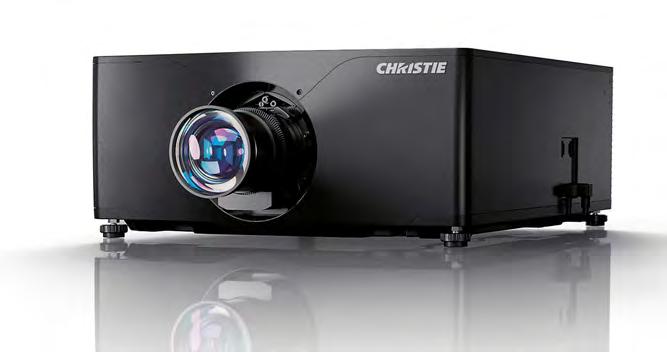
FEATURING THE latest 0.98-inch 4K
Compliance with the PSD PP v4.0 standard provides hardware-based isolation, unidirectional data transmission and always-on tamper protection, preventing unauthorised data leakage between systems. The switches also incorporate peripheral and audio filtering, visual security indicators and configurable CAC port management, allowing a single keyboard, mouse, monitor and peripheral set to be shared securely across networks.
www.aten.com
SST DMD with CineLife+ electronics and Phazer illumination, the CP4415m-RGBH and CP4420m-RGBH cinema projectors from Christie are compatible with existing legacy lenses and accessories from lampbased projectors, to further reduce costs for customers transitioning from lamp to laser. The CP4415m-RGBH and CP4420mRGBH feature 15,000 and 20,000 lumens of brightness, respectively, and a configurable hybrid laser light source that is optimised for postproduction and high-quality visuals on all cinema screen types. The new models are also quiet, at less than 47dBA, making them suitable for small spaces and boothless installations.
Engineered with performance and affordability in mind, the Korus Series of 1DLP laser projectors offer 4K UHD+ resolution in a
compact package. The family features four models, including two TAA-compliant projectors, with brightness up to 14,250 lumens. Powered by 0.8-inch HED DMD technology, the projectors unite 4K UHD+ resolution and 1,500:1 native and 25,000:1 contrast resolution. Furthermore, they have been designed with portability in mind, weighing 17.2kg. The Korus Series has been engineered to simplify space-constrained and complex projects, by combining omnidirectional flexibility and eight interchangeable lenses, including a Z-shaped short throw lens. The series also supports both active and passive 3D, and leverages the built-in Twist feature for warping and blending, optional Mystique for camera-based alignment, plus Christie Intelligent Camera compatibility.
www.christiedigital.com

WOHLER HAS added three SRT capabilities to the feature set of its iVAM2-MPEG Secure Reliable Transport (SRT) monitor: Caller and Listener modes, monitoring of encrypted SRT streams and Stream-ID selection for multistream endpoints. The Advanced MPEG Stream Analyzer is now also directly available via the front panel, in addition to the web interface. The Caller and Listener modes enable operators to initiate or accept SRT connections based on their workflow. The unit can also monitor encrypted SRT streams, giving customers confidence when observing secured contribution and distribution feeds. For workflows carrying multiple SRT streams over
a single IP/port, operators can now select and monitor the desired stream using its Stream-ID, reducing setup friction and simplifying multi-programme confidence monitoring.
The iVAM2-MPEG has long suppor ted viewing and selecting packet identifiers (PID) tables on the web interface. Providing this capability on the front panel gives operators a structured, at-a-glance view of parsed MPEG tables and programmes, and allows the direct selection of specific audio, video or subtitle PIDs for decoding on the fly without having to pivot to the web UI.
www.wohler.com
MAGEWELL HAS unveiled the Pro Convert IP to HDMI multi-format IP decoder, the successor to the company’s Pro Convert for NDI to HDMI decoder. Developed to provide enhanced decoding capabilities, higher input counts, common form factors and an improved web user interface, the decoder is a small, standalone unit that converts up to four IP streams into a single HDR 10-compatible, QHD (2560x1440) HDMI output. Using the integrated multiviewer,
ADDING NEW capabilities for the broadcast AV and sports and entertainment sectors, Ross Video has launched the Vertex control platform. Empowering creators to design, manage and automate immersive experiences, Vertex brings together video, audio, lighting and control within a single, unified system. Strengthening the Canadian brand’s expansion into experiential technologies, the Vertex platform was incorporated into the Ross Video portfolio following the company’s ioversal acquisition. Designed for interactive installations, live entertainment, large-scale productions and advanced projection-mapping environments, the real-time AV production suite offers a simplified workflow for a variety of tasks. Featuring a high number of real-time render engines such as Ventuz or Notch, servers include the Vertex Server 4x4K RT, Vertex Server 4x4K, Vertex
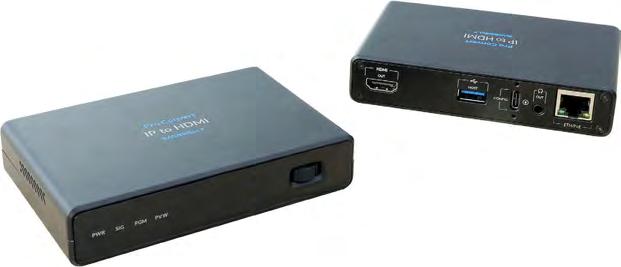
decoded input streams can be displayed in preset single, dual or quad layouts. The
device can decode one input stream up to 2560x1440 at 60fps in single-view mode, or up to four 1080p60 streams in multiview mode. Video preview is provided via realtime stream or MJPEG thumbnails in the new web GUI. The decoder can be powered via
Server 4K and Vertex Workstation. For room control, building automation or show control, Vertex features advanced scripting and node programming functions, in addition to custom control panels that incorporate a proprietary software solution for easy configuration via Vertex. www.rossvideo.com
PoE/PoE+ or USB and is suitable for a range of monitoring scenarios, including security/ surveillance, command and control, and broadcast applications. An additional USB port is reserved for peripherals like keyboard or mouse. A new rotary control dial provides easy menu navigation, while an improved user interface allows easy access to setup, monitoring and troubleshooting tools.
www.magewell.com
THE LATEST evolution in its Polaris Series, Absen’s PL 3.9 Pro V3 has been engineered for both indoor and outdoor use and is suitable for live events, festivals, touring productions and immersive brand experiences. Featuring a unibody dual-layer magnesium cabinet that
matte-black anti-reflective masks. Features include a high dynamic brightness range of 0.1–5,000 nits, 16-bit grayscale and a 7,680Hz refresh rate. The locking systems and tool-free rear maintenance are said to streamline installation and servicing.
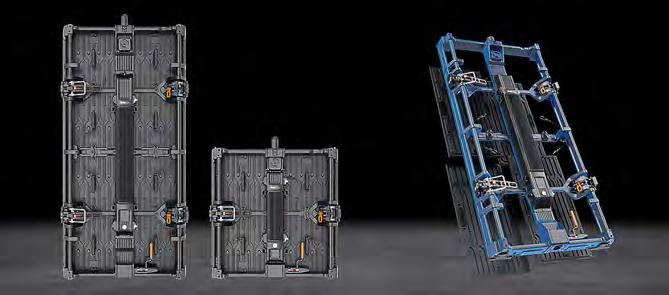
offers both strength and lightness and available in two panel sizes (500mm x 1,000mm and 500mm x 500mm), the system is described as easy to transport and install. Protective features, including triple-guard modules, reinforced corner shields, anti-drop safety ropes and anti-shock locking knobs, reportedly ensure the panels are safeguarded against bumps, drops and impacts. The PL 3.9 Pro V3 delivers deep blacks and high contrast with true black-face LEDs and
The PL3.9 Pro V3 can utilise an optional integrated wind-bracing system with a triple-stable design. When combined with reinforced triangle hanging bars, it supports secure installations up to 20m high and can withstand winds up to Beaufort force 8. Optional climb-assist ladder systems also provide secure technician access for module and power box maintenance.
www.absen.com
SUPERSEDING THE Philips S-Line, PPDS has added the 32:9 Philips Stretch 3150 model to its portfolio of displays. Designed for applications ranging from retail and hospitality to transportation, education, banking and arenas, the 37-inch screen features a 32:9, 1920x540 resolution display.
Offering clear visibility in natural and artificial lighting conditions, the portrait and landscape mountable display provides 700cd/m2 brightness. With the ability to transform spaces deemed unsuitable for conventional-sized displays, including instore shelving or temporary pop-ups within shopping centres, the 7.6kg unit incorporates narrow 7.7mm L/R and 14mm T/B bezels.
The Philips Stretch 3150 displays can be installed as standalone units or as multiple daisychained displays using the HDMI Out and HDMI In ports. For tiled setups, two or more displays can be routed to an external player for single source content management. Representing a significant
ENGINEERED TO address key structural and visual challenges in the transparent LED market, the Vanish Air Rental has been released by ROE Visual. Incorporating the power system directly into its frame, the LED panel’s 92% visual transparency enhances light transmission and onstage sound permeability.
Eliminating the need for a conventional central PSU column, the Vanish Air Rental is reportedly the first rental LED panel to deliver and distribute power through the panel frame. Developed as a 1,000mm x 1,000mm platform, the panel combines a wider viewing area with a more open appearance. To further enhance transparency, the Vanish Air Rental replaces the traditional grille-style LED layout with a refined perforated LED design. The tiny perforations fade from perception as the panel’s structural components visually disappear from 5m away.
upgrade, optional wireless network connectivity and Bluetooth functionality can be added by including a discreetly integrated slot for a CRD32 Wi-Fi module. AV/IT managers can create and schedule content to play on their displays directly from the cloud (centrally and remotely managed), from local memory or via USB.
Enhancing connectivity and security, the Philips Stretch 3150 is powered via the Android 13 System-on-a-Chip, which is also optimised for native Android apps and eliminates the requirement for an external media player. In addition to being monitored and controlled over the display network, the Philips Stretch 3150 units can also receive firmware upgrades, have their playlists managed and power schedules set over the Philips Wave cloud platform. Compared to its predecessor, the display reportedly delivers a 60% reduction in power use, typically consuming 26W.
www.ppds.com
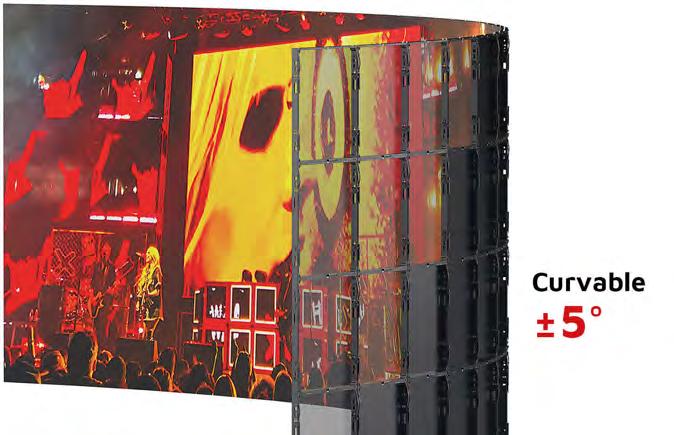
SONY HAS expanded its direct-view LED range with the Crystal LED S Series, a pair of dvLED models positioned as cost-conscious options for corporate, education and commercial environments where high visibility and consistent image quality in brightly lit spaces are required. The series comprises the ZRD-S12G and ZRD-S15G, each promising a maximum brightness of 800cd/m² and featuring pixel pitches of 1.25mm and 1.56mm, respectively. Designed as scalable, modular displays, the two models are intended to address growing demand for mid-market dvLED solutions while maintaining accurate colour reproduction and low reflectivity for use in a wide range of indoor applications. Both displays incorporate the manufacturer’s Anti-Reflection Surface Technology previously
used in its BH Series Crystal LED products. The bezel-free design also enables the creation of seamless videowalls in various sizes and configurations, supporting flexible deployment across different installation requirements. Installation has been simplified through a slim cabinet design with a depth of approximately 45mm, supporting flexible mounting options and compatibility with European Accessibility Act requirements when used with appropriate wall-mount frames. The S Series is also designed to integrate with NovaStar MX30 and MX40 Pro controllers, enabling extended distances of up to 100m between the display cabinets and controller to support more complex installations.
www.pro.sony
With a 6.94mm pixel pitch and brightness levels of up 4,000 nits, the screen can deliver visual impact in high ambient light. Incorporating black LEDs, dark GOB technology and a clean PCB layout, the panel enhances its contrast ratio to create a high-fidelity image. Capable of curving up to 5°, projects requiring a non-transparent display can mount an optional blanking plate to the rear of the panel. Offering a dual-purpose solution across diverse production needs, the addition can transform the screen from transparent to solid. Finally, the Omni Tube is a mappable 360° LED solution that delivers 1,000 lumens of brightness. Users can connect each unit into strips, triangles or cubes using custom connectors, cables and lock pins.
www.roevisual.com
INTRODUCING AI-POWERED capabilities
aimed at improving speed, accuracy and efficiency in media asset management workflows, the latest version of Vizrt’s Viz One MAM integrates with aiconix’s DeepVA sovereign AI platform to automate key stages of logging, search and content discovery.
Designed to address the growing pressure on broadcasters and content owners to deliver more content across multiple platforms, Viz One 8.1 reduces reliance on manual shot logging and archive research. The DeepVA integration enables AI-driven visual recognition, automatically identifying and tagging faces, objects
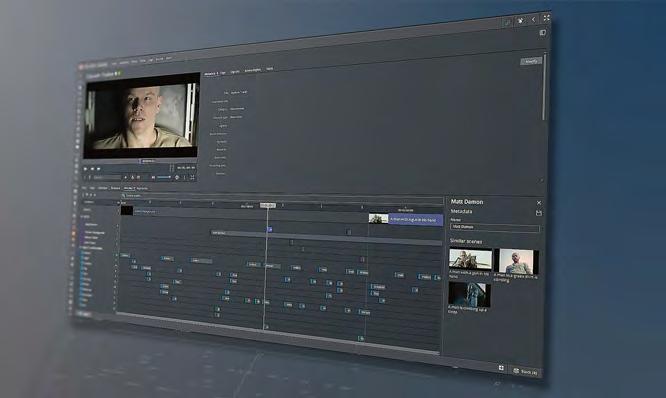
OPTIMISED FOR use with Panasonic’s projectors and ET-FMP50 Series media processors, Panasonic Connect has released its Windows-based Visual Software Suite (VSS) platform. Consolidating separate Panasonic software tools into a single platform, VSS streamlines multiple functions into one fourscreen interface.
Available for free download, VSS gives AV professionals control over multi-projector environments. Its user-friendly design reportedly requires no training and boosts productivity through automated features that reduce time and manual intervention. Projector setup and management is streamlined with auto calibration features, including geometry correction, edge blending, black level adjustment, colour matching and content splitting. Users can also perform
as distortion correction, free-shape masking, and uniformity and brightness control. VSS also allows adjustments to lens shift, zoom and focus, as well as power and shutter management, test pattern display and web browser access. Its content playback and management functionality supports multiple playlists, gapless looping, external UDP command integration and real-time previews on a PC or projection screen. When used with Panasonic’s FMP50 Series of media processors – both the box-type devices (ET-FMP50/FMP20) and an Intel SDM specification slot-compatible function board (ET-SBFMP10) – VSS is compatible with nearly every Panasonic projector and display currently available.
and scenes within video content, with support for trainable custom models. According to the manufacturer, AIgenerated metadata can deliver up to a 50% increase in logging accuracy, 10 times faster logging workflows and five times faster search and discovery. Users retain oversight of the process, with the option to review AI-generated metadata, train models for unknown entities and carry out quality assurance checks where required.
Viz One 8.1 is built on a containerised architecture designed to scale across onpremises, hybrid and cloud environments.
www.vizrt.com
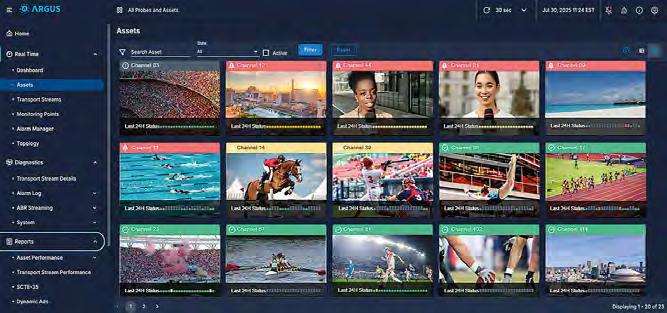
TELESTREAM HAS announced the release of ARGUS v2.3, introducing a feature that enables operators to visually and audibly inspect live and on-demand streams directly within the ARGUS monitoring environment. The Live Look feature has been designed for rapid validation of service health and quality, bringing real-time video playback and audio confirmation to the ARGUS consolidated dashboard, enabling direct inspection for fault validation and triage. Compared to other monitoring systems requiring operators to pivot between dashboards and third-party tools for signal validation, ARGUS Live Look advances the workflow into a single experience. It has been designed to enables users to verify impairment alarms, assess their impact, escalate
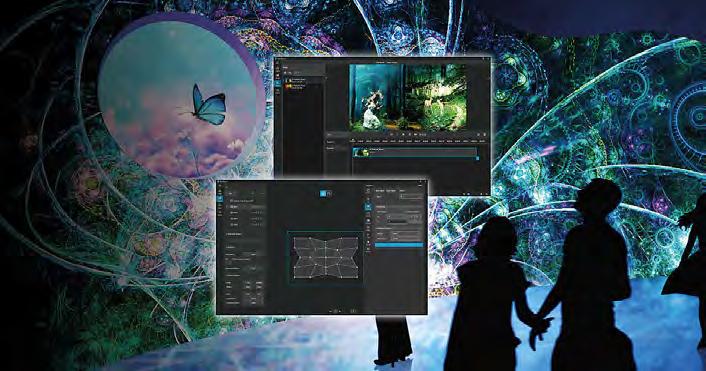
AUDINATE GROUP has announced the launch of Iris, following the company’s purchase of Iris Studio in June 2025. The platform has been designed to transform how cameras are controlled and productions are managed. By turning virtually any PTZ camera into a softwareconnected, remotely controlled device, Iris reportedly eliminates the traditional constraints of camera operation, such as hardware dependencies, inconsistent control and the lack of onsite crews.
The platform’s AI-powered automation handles traditionally manual tasks, like realtime subject tracking and framing, allowing operators to focus on creative decisions rather

than technical adjustments. Its interface is said to allow non-technical users to achieve professional results, democratising access to advanced capabilities that deliver the production quality of larger-budget operations.
Iris can be used to scale operations without proportionally increasing costs or crew size. A single operator can manage multiple cameras across multiple locations, while remote teams collaborate in real time as if
and reduce mean time to repair (MTTR) while improving operational efficiency. Live Look has been engineered in response to the need for visual confirmation at scale, particularly for organisations managing hundreds of linear or OTT channels across distributed operations. Without leaving the ARGUS environment, users can verify audio presence and confirm editorial intent when silence or anomalies are detected. Beyond Live Look, ARGUS v2.3 delivers several updates to streamline management, improve security and optimise monitoring performance. These include enhanced SSO-enabled user management, automated lineup import/export and improved audio PID monitoring.
www.telestream.net
they were in the same room. Through the Iris desktop application, production teams can discover, link to and control over 300 models of cameras on their local network. For those using Iris-enabled cameras, the platform is built directly into the device’s firmware, connecting instantly to the cloud without any additional hardware or complex setup. This direct-to-cloud capability debuts alongside broad support from leading PTZ camera manufacturers, including AIDA, BirdDog, Bolin, BZBGear, Everet, HDKATOV, Lumens, Marshall, NEOiD, Telycam and Z CAM.
www.tryiris.ai
Phil Ward examines the worrying dangers posed by AI-generated music and consequent attempts to raise consumer awareness and promote fair compensation
HER NAME IS AINA SABRINA. SHE’S A DJ AND SHE presents two hours of music a day on Fly FM, based in Kuala Lumpur. She chats with listeners, mixes in real time and has won a huge audience along with a few industry awards. And she isn’t real.
Aina is generated by AI, a product of Media Prima Audio’s creative team. They use data analytics, voice synthesis, digital video and generative AI to build her persona into a live radio show and more besides, including sponsorship citations and even a recording career, placing her alongside the virtual pop stars of South Korea and Japan in a new paradigm for the whole industry.
But while Aina’s arrival is glaringly open, something a lot more subtle is happening to the music she and many of her human counterparts might play. Country rock “band”
The Velvet Sundown has racked up over 1m streams while another – Breaking Rust – topped the Billboard Country Chart with their song Walk My Walk . Both acts are fictitious, the music 100% AI-generated.
In Iceland, Ekfat is doing well in playlists such as Lo-Fi House and Chill Instrumental Beats. We’re told he or she is “a classically trained Icelandic beatmaker who graduated from the Reykjavik music conservatory, joined the legendary Smekkleysa Lo-Fi Rockers crew in 2017 and released music only on limited-edition cassettes until 2019”. There is no such Reykjavik music school, and Smekkleysa Lo-Fi Rockers do not exist, prompting Iceland’s Minister of Culture Lilja Alfreðsdóttir to challenge Spotify to “discuss the proliferation of fake artists posing as Icelandic musicians on the music streaming platform… costing real Icelandic artists a substantial amount of potential revenue,” according to Iceland Review
There are many, many more and the numbers are increasing: streaming platform Deezer estimates that the number of fully AI tracks uploaded per day has gone up from 10% in January 2025 to 34%, arriving at a rate of around 50,000 per day. And it’s good business: AI music software company Suno is estimated to be worth US$2.5bn.

This is another digital wake-up call for the music industry, similar to controversies that surrounded streaming and downloading, and sampling. Protests such as a UK campaign by the Fairly Trained lobby are winning high-profile support, while predicting that about 24% of human income will be lost to AI over the next four years. The lobby’s name exposes the main problem: the unlicensed use of copyrighted material to train AI models. This has been happening with no consent from artists, no indication to consumers and all royalties going to the tech companies. Fairly Trained wants the government to step back from proposed changes to copyright law that will make it legal to train AI models on copyrighted material, so removing the legal framework that is currently supposed to protect rights holders. It seems clear that this policy expresses an ideological faith in growth, especially for tech, without any consideration of the consequences.
Spotify, for example, provides no notification of AI content, so consumers are given no choice. While listeners may legitimately be unconcerned about the use of AI in the studio, which can be genuinely creative, it may
cause concern to realise that the practice also engenders fraudulent chart-fixing, including algorithms to trick streaming data and boost sales. Spotify has also been developing what it calls Perfect Fit Content (PFC) by getting struggling musicians – crucially at a level before they need to worry about registering with PRS or other royaltygathering agencies – to churn out playlist-themed material. There are signs of responsible leadership, however. Deezer is responding with “AI-generated content” warning signs, using new AI-spotting software. It has joined the lobby for permission and disclosure, recognising a shift in 2022 when it first became apparent that AI-generated content was competing with human music – and after surveys revealed that 97% of listeners in a blind test could not tell the difference. CEO Alexis Lanternier reveals that small patterns in the signal can be detected, caused by the apps: every AI tool generates its own signature. Ironically, other AI tools are needed for such digital forensics. Deezer’s new algorithm claims to identify each method currently deployed on the open market. Lanternier believes AI can be a legitimate creative tool if it helps a songwriter who can’t play guitar but
needs a convincing backing track, or a musician who struggles to come up with satisfying lyrics. However, with up to 340,000 new tracks each week, it’s clear that a dangerous proportion are being pumped into the system by fraudsters attempting to inflate royalty figures. The warnings next to individual tracks, he says, dissipate the fraudulent business model and, if combined with support for royalties for content used in AI training, could prevent the industry from sliding into chaos.
Meanwhile, a landmark case has been won against ChatGPT in Munich for breach of copyright. Furthermore, licensing deals are beginning to appear: Warner has partnered with three leading music tech companies that generate remixes, covers and new material using established voices in “original” songs, with opt-in clauses designed to ensure compensation.
Of course, it’s entirely possible for the market to develop a taste for AI-generated music, a process that may have started already. It’s analogous to the genuine taste for synthesised over acoustic sounds, and it won’t really matter, provided everyone involved – from influencer to trainer to creator – gets a fair deal.
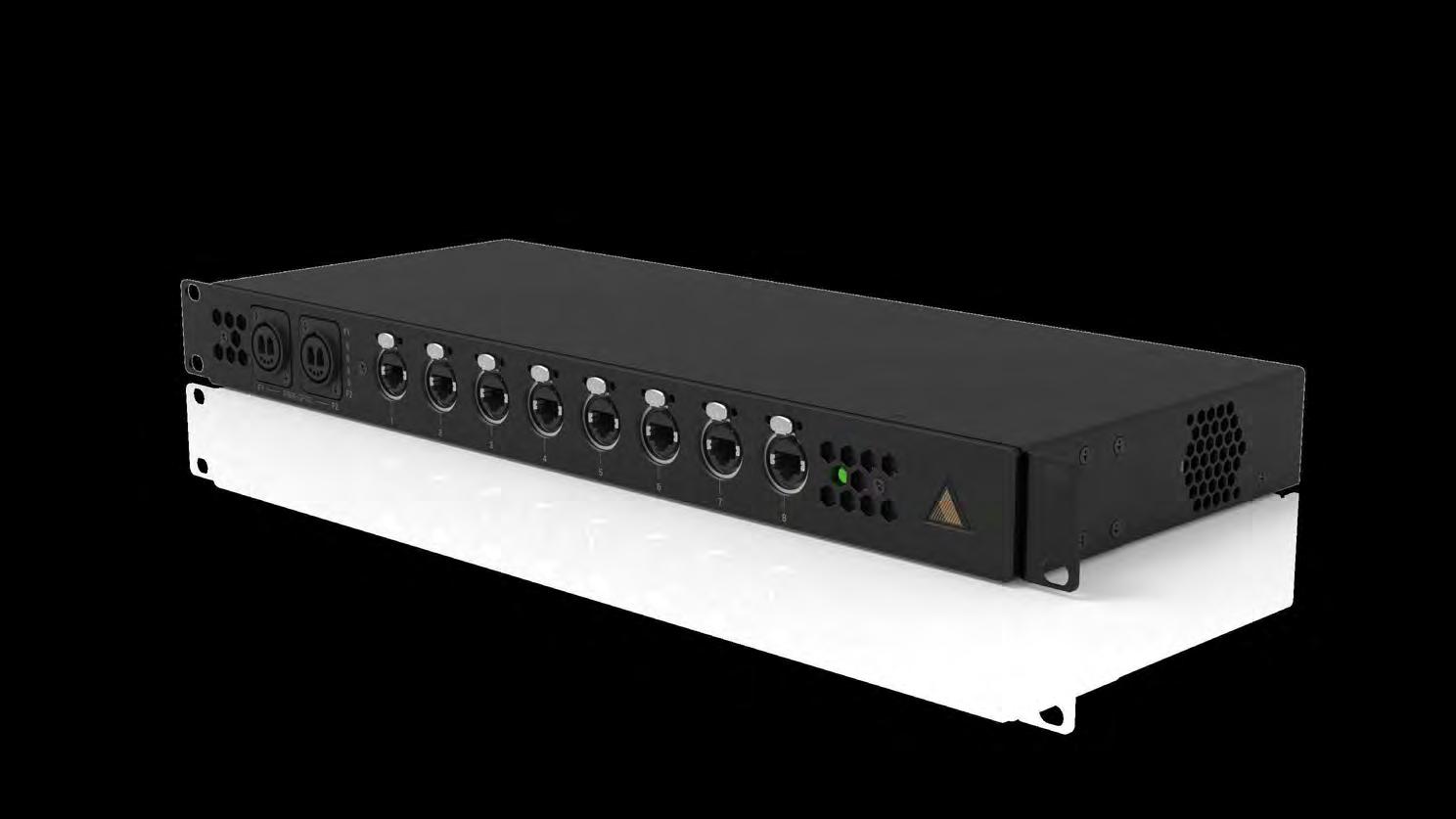
Whether deploying a redundant or primary-only network topology, the MS8.2 Milan network switch is perfectly suited to simplify mobile, installed systems and spatial audio applications.