
March 6 – 8
Stanford University
March 6 – 8
Stanford University
Location
Oshman Hall
Oshman Hall
Oshman Hall
Oshman Hall
Harmony House
Title Presenter
Check-in
Keynote Address: Create Dangerously: Remembering Black Bodies in Motion
Film Screening: BLKNWS: Terms & Conditions
Producer’s Commentary: BLKNWS: Terms & Conditions
Welcome Reception
Location
Oshman Hall
Oshman Hall
Roble Arts Gym: Makerspace
Roble Arts Gym: Classroom
Oshman Hall
Oshman Hall
Harmony House
Michèle Stephenson
Onye Anyanwu
Title Presenter
Check-in
Work-in-Progress: The Age of All Women: The Becoming of Younousse Sèye Lendl Tellington
Workshop: Cinematic Aliveness: How to Edit Like a DJ
Rashid Zakat
Workshop: The Image That Eludes the Conscious Mind Tenzin Phuntsog
Workshop: The Devil Finds Work: James Baldwin’s Cinema of the Mind
Short Film Program: 15 Years of BlackStar: Risable Shorts
Beandrea July + Kendale Winbush
Time 9:30 AM – 10:00 AM 10:00 AM – 11:15 AM 11:30 AM – 1:30 PM 3:00 PM – 4:30 PM 6:30 PM – 8:30 PM
Nehad Khader Party Time 9:30 AM – 10:00 AM 10:00 AM – 11:30 AM 4:30 PM – 6:30 PM 1:30 PM – 3:30 PM 1:30 PM – 3:30 PM 1:30 PM – 3:30 PM 8:00 PM – 12:00 AM
Location
Oshman Hall
Oshman Hall
Braun Geology Corner Building 320: Rm 109
Roble Arts Gym: Makerspace
CCRMA Stage
Pigott Theater
Title Presenter
Check-in
Short Film Program: Filmmaking as Community Care
Workshop: Impact Producing Through A Disability Justice Lens
Workshop: Iran, The Plot of a Cinematic Resistance
Workshop: Before the Image: A Sound Poetics Lab
Artist Talk: Hella Cinematic
Maya S. Cade + Ben Caldwell 10:00 AM – 12:00 PM
Rosemary McDonnellHorita + xana lenore
Homa Sarabi + Yasaman Baghban
Imani Dennison + Sandra Lawson-Ndu
Chinaka Hodge
Time 9:30 AM – 10:00 AM 4:30 PM – 6:30 PM 1:30 PM – 3:30 PM 1:30 PM – 3:30 PM 1:30 PM – 3:30 PM
All programming will take place within a 0.8 mile radius on Stanford University’s campus. The area is mostly flat and connected by sidewalks with curb cuts at intersections. For information on parking with a disability parking placard, please visit this website
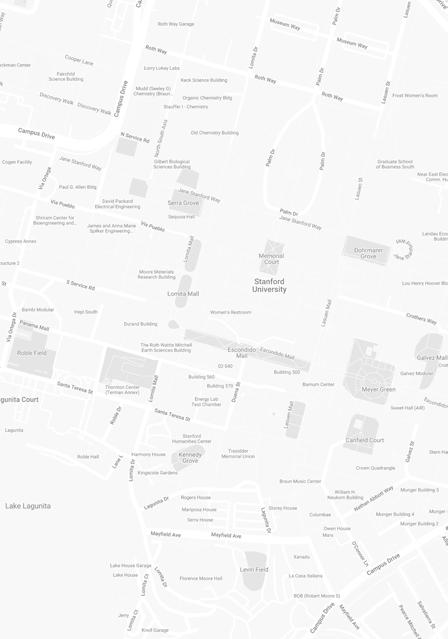
1. Harmony House 561 Lomita Dr Stanford, CA 94305
2. Oshman Hall McMurtry Building 355 Roth Way Stanford, CA 94305
3. Roble Arts Gym 373 Santa Teresa St Stanford, CA 94305
4. Braun Geology Corner (Building 320) Room 109 50 Jane Stanford Way, Stanford, CA 94305
5. CCRMA Stage Stanford Center for Computer Research in Music and Acoustics 660 Lomita Ct Stanford, CA 94305
6. Pigott Theater 551 Jane Stanford Way Stanford, CA 94305
Please visit this site for complete information on Stanford’s parking options. Below are some options specific to the seminar venues.
• Harmony House: Parking is free weekdays after 4pm and all day Saturday and Sunday right next to the Harmony House.
• Oshman Hall: Parking is available in the adjacent Roth Way Parking Garage and is free after 4pm and all day on weekends.
• Roble Arts Gym: Parking is located across the street from Roble Gym in Lot-31 on Santa Teresa Street. Roble Field Garage, adjacent to Roble Gym (west side) is free after 4pm on weekdays and all day on weekends.
Welcome to the 2026 William and Louise Greaves Filmmaker Seminar. This is our third time partnering with the incredible team at Stanford’s Institute for Diversity in the Arts (IDA) and we couldn’t be more grateful to BlackStar alum A-lan Holt’s stewardship as IDA’s Executive Director. We appreciate the opportunity to bring a slice of BlackStar to the west coast with such great company.
This year marks two milestones: IDA’s 25th anniversary and BlackStar’s 15th year as a festival. Amidst the defunding of public media, the anti-DEI policies in place, and the technocracy’s increasing ownership of everything we consume from food to entertainment, we are still here with something to celebrate. IDA was created through student and community collaboration with the goal of providing artists and scholars with a platform for nuanced cultural expression. Blackstar’s mission is to create the spaces and resources needed to uplift the work of Black, Brown, and Indigenous artists outside of the confines of genre. The complementary work of our organizations, among that of many others in our constellation, is constantly threatened with disinvestment, but it has never been more needed.
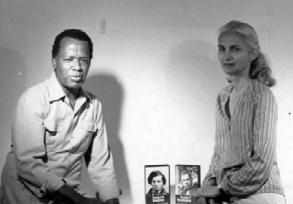
This year also marks a decade since William Greaves’ passing and three years since Louise’s – and the release of a new film by their son, David Greaves and co-produced by their granddaughter, Liani Greaves. The film, Once Upon a Time in Harlem, which just premiered at Sundance, features footage that William Greaves shot in 1972 of a gathering at Duke Ellington’s home with the who’s who of thinkers, writers, and artists of the Harlem Renaissance. The film is mesmerizing and watching it all these years later shows us the community it takes to make good work come to life and the beautiful complexity and contradictions that artists of color possess.
The Greaves Seminar was designed with the hope of bringing artists closer to their creative missions and to their fellow artists. We invite you to ask the difficult questions about your craft, responsibility, and care in an atmosphere where your peers are your sounding boards. In this spirit, the BlackStar team hopes to create an environment that is imbued with togetherness, respect, love, and a challenge to expand our perspectives in the field of visual culture.
Special thanks to our featured artists for your passion and vulnerability— Beandrea July, Ben Caldwell, Chinaka Hodge, David Gaines, Elle Clay, Homa Sarabi, ishkwaazhe Shane McSauby, Kendale Winbush, Imani Dennison, Leilah Weinraub, Lendl Tellington, Mariama Diallo, Maya S. Cade, Michèle Stephenson, Nehad Khader, Onye Anyanwu, Pete Chatmon, Rashid Zakat, Rosemary McDonnell-Horita, Sandra Lawson-Ndu, Tenzin Phuntsog, xana lenore, and Yasaman Baghban. A warm shout out to our wonderful facilitation team of dedicated Stanford students. Finally, we would like to thank our board of directors, funders, corporate partners, and individual donors for believing in the work we do.
Much love and peace, The BlackStar Team
BlackStar is a welcoming space for all to celebrate the achievements of filmmakers from all over the world. We welcome you to the sixth William and Louise Greaves Filmmaker Seminar and hope that you arrive with an open heart and mind, prepared to respect all you encounter.
When participating in BlackStar programs, please abide by the following community guidelines:
• Honor the boundaries of others.
• Refrain from assuming others’ genders and respect stated pronouns.
• Please do not take pictures or record videos of artists, presenters, or fellow seminar attendees without consent.
• Please do not record or share any of the films that you will see during the seminar. The works presented belong to the makers; please respect that.
• Take care of yourself and help to maintain the well-being of those around you.
• Stalking, threatening, homophobia, racism, or any discriminatory behavior are not welcome.
• Engage in direct communication with staff before a public “call-out.” This applies to our staff and also participating artists and fellow attendees.
If you encounter any issues during the course of the seminar, you should feel free to bring it up directly with the person—or if it’s more comfortable, bring the issue to our team’s attention.
Ahead of the seminar you will receive an email from Eventive stating that a pass for the Greaves Seminar has been added to the account associated with your email. You will only be able to access this pass with the email you used to register for the seminar. If you already have an Eventive account associated with that email address, all you will need to do is login. If not, you will be prompted to make a new account.
Your pass will display a unique QR code that you will display to scan into every seminar program. We suggest you take a screenshot for your reference throughout the weekend. This QR code will be used to check into programs and will also be printed on your physical seminar pass, which you should keep with you at all times.
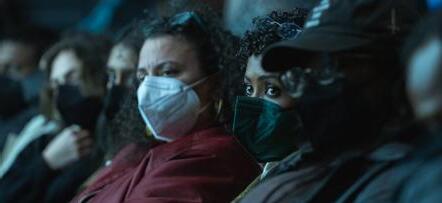
To ensure everyone’s health and safety, masks are required in all indoor locations Presenters can choose to mask while they are actively presenting but will need to mask when re-joining the audience. Seminar staff will be available to guide attendees on the masking policy as necessary, and clear signage will be visible as an additional indicator.
Please keep the following in mind when masking during the seminar:
• For any mask to be effective, it must cover both your nose and mouth.
• KN95 or N95 masks are the most effective masks to prevent COVID-19.
• Please note that you should not layer a mask over a KN95/N95 mask.
If you feel sick or are exhibiting signs of a communicable illness (like COVID-19 or the flu), please stay home.
Thank you for protecting yourself and our entire community!
There are many dining options on Stanford’s campus to choose from that are open to the public. You can find the most updated information on their Dining & Hospitality page. Below are some select options close to our venues:
• Closest to Oshman Hall: Tootsie’s at the Cantor Open for lunch from 11am to 3pm
• Closest to Harmony House: Union Square @ Tressider All eateries open for lunch daily, check hours for dinner.
All programming will take place within a 0.8 mile radius on Stanford University’s campus. The area is mostly flat and connected by sidewalks with curb cuts at intersections. For information on parking with a disability parking placard, please visit this website.
All Stanford facilities, including restrooms, are ADA-compliant and wheelchair accessible.
Much of our programming will take place in theater-style spaces with fixed seating. A limited number of armless chairs can be made available upon advanced request for those who need them. All in-person film screenings will include open captions, with the exception of select clips used during workshops.
Please see below for venue-specific accessibility information:
• Harmony House: This building has a wheelchair ramp to enter the house and gender-inclusive single-occupancy bathrooms on the first and second floors. The second floor is up a flight of stairs and not wheelchair accessible.
• Oshman Hall (inside McMurtry Building): This building is fully wheelchair accessible. Men’s and women’s restrooms are located directly across from Oshman Lecture Hall.
• Roble Arts Gym: The main entrance located along Santa Teresa Street is accessible via a ramp located just to the left of the stairs. It is equipped with a power-operated door. Wheelchair accessible men’s and women’s restrooms are located along the arcade at the back of the courtyard (north side). There are also single occupancy, all gender restrooms located in both wings, once inside the main entrance.
• CCRMA: The Knoll has three accessible entrances. The main entrance is accessible via ramp and is equipped with a power-operated door, which allows you to enter on the 1st floor. Alternative accessible entrances are located on the east side of the building and at the rear of the building and are equipped with power-operated doors. Both entrances lead directly to the 2nd floor. Once inside the main entrance, the elevator is located to the left and provides access to all floors (1, 2, 3).
• Braun Geology Center: The main entrance to Building 320 is located on the Lomita Mall side and is equipped with a power-operated door. Once inside, the elevator is to the left. There is an additional accessible entrance on the east side of the building and classroom 109 can be accessed via exterior entrance on the south side of the building (Escondido Mall).
• Pigott Theater: Pigott Theater is accessible via the side entrance (equipped with a power-operated door) from Jane Stanford Way through the courtyard on the west side of the building. A ramp is also located on the west side of the building, providing an accessible route from the disabled parking on Memorial Way by following the pathway between Lathrop and MemAud and then up the ramp. Wheelchair seating is located inside the theater from the side entrance.
9:30 AM – 10:00 AM Oshman Hall
Welcome to the Greaves Seminar! Check-in and pick up your pass – you’ll need it for the rest of the weekend.
Presenter: Michèle Stephenson 10:00 AM – 11:15 AM Oshman Hall
Michèle Stephenson reflects on diasporic movement—marronage, exile, and fugitivity—as a living tradition of black resistance across the Americas. Drawing from her own family’s journey from Haiti to New York to Quebec, she shows how our personal histories live in the body and unconsciously shape the stories we tell. Using embodied memory as a creative anchor, she reflects on the work of writers such as Edwidge Danticat as well as on aspects of her own film practice and body of work to make a case for storytellers to “create dangerously” and take risks in both content and form to honor our ancestors, refuse erasure, and build otherwise.
Michèle Stephenson
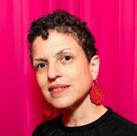
Emmy award winner Michèle Stephenson draws from her Caribbean roots to disrupt dominant storytelling practices. Grounded in a Black Atlantic lens, she crafts form-defying narratives of resistance and healing, centering a Black radical tradition and the lived experiences of the Black diaspora. Her acclaimed works include Going To Mars: The Nikki Giovanni Project (Sundance Grand Jury Prize) and Black Girls Play (Tribeca Grand Jury Prize)- both Oscar-shortlisted, and The Changing Same VR (Tribeca Immersive Grand Prize). Stephenson is a Guggenheim Fellow and Creative Capital Artist, and her latest work, True North (2025 TIFF Premiere) is a hybrid film on the Black Power Movement in Canada.
11:30 AM – 1:30 PM Oshman Hall
Directed by Kahlil Joseph
Conceived as a cinematic experience that mirrors the sonic textures of a record album, BLKNWS: Terms & Conditions is a genre-bending documentary adapted from Kahlil Joseph’s renowned video art installation. The film’s unique soundscape is mastered in stereo, with featured guest artists interwoven across its 21 tracks, each adding their distinct perspective.
Presenter: Onye Anyanwu
3:00 PM – 4:30 PM Oshman Hall
This talk explores filmmaking not as a philosophy, but as a process of creative decision making. Producer Onye Anyanwu walks through how her film BLKNWS: Terms & Conditions was carefully constructed, piece by piece, over time. From early questions of form and authorship, to structuring a long-term, evolving project, to managing creative dialogue, labor, and care, Anyanwu offers a practical look at how the work came into being.
The commentary will center on the cinematic world building process: how collaborator’s roles were defined and redefined, how challenges are metabolized, how rhythm, trust, and constraint shaped the final work, and how a producer can create conditions for artistic freedoms. The talk functions as a guide for building complex, living projects, especially those that resist traditional production models.
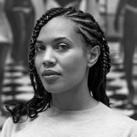
Onye is a writer, producer, and filmmaker whose work bridges cinema and fine art. A graduate of the American Film Institute, she began her career in New York as a casting director. She co-founded Gamma Wave Films with Kahlil Joseph and has produced projects for artists like Arthur Jafa, Sampha, and Beyoncé. Her work has been presented at MoMA, Tate, and the Venice Biennale. A founding board member of The Underground Museum in Los Angeles, she recently produced the feature film BLKNWS: Terms & Conditions.
6:30 PM – 8:30 PM Harmony House
Join participants, presenters, and BlackStar staff to celebrate the start of the Greaves Seminar! You can expect music, food trucks, and a cash bar while enjoying the beautiful indoor/outdoor space of IDA’s Harmony House. Expect music, light bites, and a cash bar
Saturday, March 7
9:30 AM – 10:00 AM Oshman Hall
Come grab a bite and chat with other participants or take a moment to center yourself before the first session of the day. Coffee and light breakfast will be available.
Presenter: Lendl Tellington 10:00 AM-11:30 AM Oshman Hall
Senegal’s first female contemporary artist Younousse Seye, 85, hasn’t had an exhibition in 30 years. When the art world suddenly becomes interested in her repertoire again, she must reckon with the structures that once forgot her. Seye starred in Ousmane Sembène’s films, counted Wole Soyinka among her friends, and schmoozed with Kwame Touré and Miriam Makeba at her restaurant. Yet unlike her male peers, she remains largely forgotten.
Director Lendl Tellington has seen his film, The Age of All Women: The Becoming of Younousse Sèye, generate renewed interest in Seye’s work from collectors, galleries, and museums but he is also navigating what it means for the film to become part of the very art world machinery he’s examining. In this work-in-progress screening, Tellington is looking to answer the following: How to honor Seye’s agency while also retaining editorial vision and how to illuminate African archive sovereignty when so much historical material remains housed off the continent?
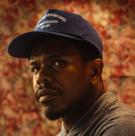
Lendl Tellington is a filmmaker and visual artist who tinkers with time like music— remixing the line between prescribed histories and collective memory. Working across cinema, photography, and installation, his practice illuminates how communities forge their own systems of value beyond institutional recognition. He transforms traditional power dynamics by creating intimate spaces where subjects become collaborators in shaping their own representation. His work has been recognized by the Smithsonian’s Outwin Boochever Portrait Competition and supported by Sundance Institute and Firelight Media Documentary Lab.
Saturday, March 7
Presenter: Rashid Zakat
1:30 PM – 3:30 PM
Roble Arts Gym - Makerspace
This workshop explores cinema as an interactive and living form using Revival!, a public space installation as a case study. Revival! celebrates the visual and sonic frequencies that stage Black social life. Using turntables, video is edited like a DJ, where mixing and re-mixing media from social platforms, internet ephemera, community archives, and documentaries create an immersive experience.
The workshop begins with a demonstration of Revival! before exploring how turntables and other tools enable haptic editing, which allows for the use of the body in the editing process. We’ll examine how sourcing and weaving archival materials creates alternative filmmaking workflows. This session highlights the relationship between DJs and filmmakers as transmitters of memory, offering practical approaches to live video mixing, building digital-first archives, and creating participatory cinema.
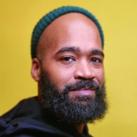
Rashid Zakat
Rashid is a Philadelphia-based multidisciplinary artist whose work cultivates Black social aliveness through film, music, internet art, photography, and creative spacemaking interventions. He’s a cultural archivist, DJ, and technologist who creates immersive experiences that reclaim the generative aspects of the Black Pentecostal tradition, transforming joy, ecstasy, somatic liberation, and fellowship into political acts. His practice spans immersive performances, interactive web-based projects, installations, and ongoing explorations with AI. His work has been presented internationally across the U.S., Europe, Latin America, West Africa, and Asia.
PLEASE NOTE that there are concurrent workshops where capacity is limited and admission will be granted on a first-come basis. Some workshops are intentionally capped at a smaller number to provide the best experience to participants. Review the schedule and plan to arrive at least 10 minutes before the workshop start time to ensure your space.
Saturday,
Presenter: Tenzin Phuntsog 1:30 PM – 3:30 PM
Roble Arts Gym - Classroom
What is the image that eludes the conscious mind? Often our conscious mind is wrapped in ego, disrupted by life events, and distracted by the challenges we’re navigating. How can we be present and find deeper meanings and layers in our creative work?
Drawing from dream practices and unconscious exploration, participants will be guided into a lucid, semi-dream state of mind. Please bring still images or references that are part of the work you are trying to process. Through discussion and sharing, we will find the image that is central for you.

Tenzin Phuntsog is a Tibetan-American filmmaker and artist who works with film, installation, multimedia and performance. He studied Media Arts at the University of California and has an MFA in Visual Arts from Columbia University. His works have shown at Berlinale Forum Expanded, Rotterdam, FID Marseille, Seoul Media City, European Media Arts Festival, BlackStar and many more. He is currently a SFFILM Film House Resident developing his second feature film, Sentient Beings. He is represented by Microscope Gallery in New York.
PLEASE NOTE that there are concurrent workshops where capacity is limited and admission will be granted on a first-come basis. Some workshops are intentionally capped at a smaller number to provide the best experience to participants. Review the schedule and plan to arrive at least 10 minutes before the workshop start time to ensure your space.
Saturday, March 7
Presenters: Beandrea July + Kendale Winbush
1:30 PM – 3:30 PM Oshman Hall
James Baldwin is mostly remembered for his nonfiction and fiction that so powerfully illuminates the intersections of race, sexuality, and the American condition. Lesser known is Baldwin’s work as a film critic—a vocation that began with his first published book reviews and culminated in his book-length essay The Devil Finds Work (1976). Blending memoir and criticism, Baldwin’s text traces his lifelong relationship with cinema, from his childhood encounter with Dance, Fools, Dance (1931) to his searing analysis of The Exorcist (1974).
Marking the 50th anniversary of the book’s publication, this presentation examines The Devil Finds Work as a foundational text in Black film criticism and queer spectatorship. Through a combination of formal lecture, curated film clips and live readings of Baldwin’s work by actor Kendale Winbush, we will explore how Baldwin sees the moving image and how his work remains vitally relevant today.

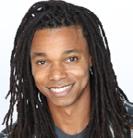
Beandrea July is a Los Angeles–based independent film critic and podcast host and a film programmer at UCLA Film & Television Archive. In 2025, she launched her independent podcast and companion substack, Annotations with Beandrea July—a show that thinks critically about criticism. Her work has appeared in The New York Times, Vanity Fair, The Hollywood Reporter, IndieWire, and Time, and has been featured on NPR. She is a graduate of the University of Pennsylvania and got her start covering public education in Philadelphia.
Kendale Winbush has spent nearly a decade as an educator, including as a paraprofessional for at-risk students, a kindergarten teacher, and, most recently, a director for a middle school performing arts department. An Altadena native, Kendale attended Columbia University in the City of New York and UCLA’s Theater, Film, and Television graduate program for actors.
PLEASE NOTE that there are concurrent workshops where capacity is limited and admission will be granted on a first-come basis. Some workshops are intentionally capped at a smaller number to provide the best experience to participants. Review the schedule and plan to arrive at least 10 minutes before the workshop start time to ensure your space.
Curator: Nehad Khader
4:30 PM – 6:30 PM
Oshman Hall
Some of the most memorable films that we’ve seen over the years at BlackStar Film Festival are those that lean into comedy. They take cinematic world-building to an absurdist, surreal place, and they manage it on a tight budget through creativity, suspended imagination, and grit. By indie means necessary. This program pays homage to 15 years of the BlackStar Film Festival, digging into its archives to re-platform some of the most playful, quirky, and fun films. After the screening, BlackStar Film Festival Director Nehad Khader and BlackStar’s CEAO Maori Karmael Holmes will reflect on the works and the festival’s trajectory.
BlackCard (2015)
Dir. Pete Chatmon
14 min
It would be just another day for Leonard, except that the Commission, a shadow organization tasked with keeping members up to snuff on their “blackness”, is hot on his trail for his latest infraction. An afternoon with the love of his life, Lona, goes off course as a missing ID card escalates into questions of loyalty, life, and love.
Hair Wolf (2018)
Dir. Mariama Diallo
12 min
In a black hair salon in gentrifying Brooklyn, the local residents fend off a strange new monster: white women intent on sucking the lifeblood from black culture.
Happy Thanksgiving (2024)
Dir. ishkwaazhe Shane McSauby
8 min
An Indigenous man takes a “Happy Thanksgiving” wish very, very personally.
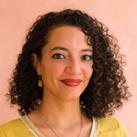
Nehad Khader
The Freedom to Fall Apart (2023)
Dir. David Gaines
25 min
Chase Benjamin accepts an invitation to join a prestigious Black secret society named The Sacred Order of Bucks. Upon entry, he quickly discovers their mission is less charitable than expected and will have to choose between embracing respectability politics and his dignity.
Seek No Favor (2025)
Dir. Elle Clay and Leilah Weinraub 12 min
Low-key, anxiety-managing millennial Monroe Malone is trying to outrun last year’s job loss when she collides with a weave-snatching cartel led by Big Baby. After overhearing his plan to kidnap hair tech genius Camille J. Walker and steal her Infinite Track invention, Monroe jumps into action. The encounter is bound to leave him not untouched by blood.
Nehad Khader is a film programmer, writer, editor, historian and most importantly, a Philadelphia native. Nehad was trained by Black and Palestinian creators to make and champion art that carries aesthetic excellence as well as social and political significance.
Sunday, March 8
PLEASE NOTE: Daylight Saving Time begins on March 8.
9:30 AM – 10:00 AM
Oshman Hall
Presenter: Maya S. Cade
Featured Filmmaker: Ben Caldwell
10:00 AM – 12:00 PM Oshman Hall
This session centers L.A. Rebellion alum and legendary filmmaker Ben Caldwell and discusses his career beyond the narrow prism through which we have publicly understood his work. As a towering figure affectionately called “the mayor of Leimert Park,” Caldwell uses his KAOS Theory practice and South Los Angeles community space of the same name to facilitate the use of cinema as a tool of social change.
The workshop begins with a screening of Caldwell’s I & I: An African Allegory, work from his time as a student at UCLA and continues with a snippet from iFresh, an unreleased work on the hip-hop movement in Los Angeles that Caldwell directed and co-wrote with Charles Burnett. Together, Caldwell, Burnett, and Maya S. Cade are finishing the film’s two missing scenes. Caldwell and Cade will use iFresh to discuss the development of cinema across time, filmmaking’s emotional, social, and spiritual demands, the exploration of a Black artist’s archive, and how intergenerational exchange keeps it alive.
This workshop maneuvers through Caldwell’s stewardship, the power of filmmaking as community care, and how intergenerational exchange is the center of Caldwell’s practice and artistry.
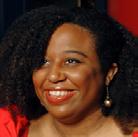
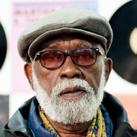
Maya S. Cade is the creator and curator of the award-winning Black Film Archive and the incoming president of Milestone Films, the distribution home of Charles Burnett, Kathleen Collins, Bridgett M. Davis, and countless others across the filmmaking spectrum. Under her leadership, Milestone Films is the largest Blackowned and managed film distributor in the country. The celebrated curator and writer lives in Los Angeles.
Arts educator and independent filmmaker Ben Caldwell grew up assisting his grandfather, who projected movies at a small theater in New Mexico. His passion for the visual arts led him to study film at UCLA and reside in the neighborhood of Leimert Park, epicenter for the African American art scene in Los Angeles. After teaching film and video at Howard University in Washington, D.C. from 1981-84, Caldwell returned to Leimert Park and created an independent studio for video production and experimentation that became the KAOS Network, a community arts center that provides training on digital arts, media arts and multimedia. It remains the only organization of its kind in South Central LA.
Presenters: xana lenore + Rosemary McDonnell-Horita
1:30 PM – 3:30 PM
Braun Geology Corner (Building 320): Room 109
Learn how to expand and queer impact by centering the needs of filmmakers, participants and/or actors throughout the life cycle of a film’s creation. The co-impact producers of Fire Through Dry Grass discuss disability justice and the care roots of this practice. Attendees will learn how to pivot creatively and constructively to minimize harm and thoughtfully address conflict during the filmmaking process.
Drawing from case studies of the impact campaigns behind Crip Camp (2020), Fire Through Dry Grass (2023), and Patrice: The Movie (2024), this workshop will also introduce the approach to UNBRAID: unravel, a short documentary in-post production, which invites an adoptee’s multiple mother figures to make a film about the labor and privilege of raising a family.
Attendees are encouraged to brainstorm impact approaches for their own existing projects and strengthen relationships with fellow participants to seed future collaboration.
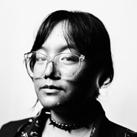
Alexandra Lenore Ashworth (they/ze, xana/Dzana) is a brown, Mad, Filipinxamerican, Jewish filmmaker and writer currently pursuing an MFA in film at UC Santa Cruz. Dzana’s work addresses diaspora, kinship, and collective care. They were Co-Impact and Associate Producer for Fire Through Dry Grass, a 2022 Fulbright-National Geographic Storytelling Fellow, and have produced for Art21, the MET, MOMA, and Brooklyn Museum. Zir poetry appears in YOU ARE HOLDING THIS, an abolitionist zine for and by adopted, fostered, and trafficked people. When they were 18, a reading of their play Wonders appeared off-Broadway. Dzana is a proud member of Writers Guild of America (East), BGDM, and A-Doc.

Rosemary McDonnell-Horita is a disabled Japanese-American woman living in the East Bay of California. She’s been supporting, advocating, and fiercely fighting for disability inclusion for 10+ years. In 2018 Rosemary ran Colorado’s inaugural Youth Leadership Forum for students with disabilities, in partnership with local independent living centers. Rosemary led the Impact Campaign for the Oscarnominated documentary Crip Camp in 2020, Fire Through Dry Grass in 2023 and Patrice: The Movie in 2024. She’s currently an independent contractor and working on writing a cookbook titled Measuring Spoons: A Cookbook for Crips
PLEASE NOTE that there are concurrent workshops where capacity is limited and admission will be granted on a first-come basis. Some workshops are intentionally capped at a smaller number to provide the best experience to participants. Review the schedule and plan to arrive at least 10 minutes before the workshop start time to ensure your space.
Presenters: Homa Sarabi + Yasaman Baghban
1:30 PM – 3:30 PM
Roble Arts Gym- Makerspace
This panel investigates the strategies employed in post revolutionary Iranian cinema to resist the rigorous and unforgiving censorship apparatus imposed after the regime change. Recurring themes and protagonists, such as children, villagers, nomads and working-class urban citizens were not merely evasions of censorship, but a deliberately poetic and allegorical visual language with deep cultural roots. Filmmakers such as Abbas Kiarostami, Bahram Beyzai, Jafar Panahi, Amir Naderi and Majid Majidi developed forms that satisfied the new moral-aesthetic of the Islamic Regime while also retaining space for layered critiques. Drawing from theories of allegory and close readings of five films, this panel will show how films can translate restrictions on gendered representation—especially urban modern womanhood—into ethics of looking, parable structures, and self-reflexive modes, where cinema is a tool and subject of resistance.

Homa is an Iranian-born artist, educator, and curator, living in the U.S. Working across film, installation, and socially engaged practices, her work explores the intersection of personal and political, investigates collective memories, and researches contemporary histories. She teaches media and visual arts, and her curatorial interest spans from experimental cinema to international, independent, and documentary films. Her practice bridges the poetic and the political, often drawing from research, collaborative processes, and her roots in Iranian culture and literature.
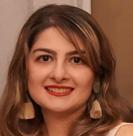
Yasaman Baghban is an experimental and documentary filmmaker, educator, and film programmer based in the United States. She earned an MA in Cinema Studies from Tehran University of Art and an MFA in Experimental and Documentary Arts from Duke University in 2023. Her short films have been screened at international festivals including True/False, the Atlanta Film Festival, the Female Eye Film Festival, Cucalorus, and others. She is currently pursuing a PhD in Visual and Cultural Studies at the University of Rochester. Her research interests include transnational, diaspora, and political cinema, as well as essay films, archival practices, and nonfiction art studies.
PLEASE NOTE that there are concurrent workshops where capacity is limited and admission will be granted on a first-come basis. Some workshops are intentionally capped at a smaller number to provide the best experience to participants. Review the schedule and plan to arrive at least 10 minutes before the workshop start time to ensure your space.
Presenters: Imani Dennison + Sandra Lawson-Ndu
1:30 PM – 3:30 PM
CCMA Stage
At its core, cinema begins with story. This workshop centers the generative stage of media-making, where text and sound meet before production. Participants will explore how rhythm, silence, and improvisation reshape mood, pacing, and emotional arc — long before the camera rolls. In this workshop, participants will develop short narrative texts — poems or story scenes — and build live, improvised sonic scores in response. Working in small interdisciplinary teams, participants will create and record a collaborative sound-text performance that can serve as the foundation for an experimental short film or future media project.
Sound recording equipment will be provided. Participants are welcome to bring instruments, objects, or sound-making tools; additional materials will be available on site. Participants should bring their own writing material.
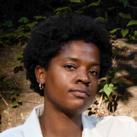

Imani Dennison is a multidisciplinary artist and filmmaker from Louisville, Kentucky, working across film, sound, and installation. Their practice explores personal and reimagined histories through oral storytelling, fragmented narrative, and speculative form. Drawing from family memory and Black Southern geographies, they treat land, water, burial grounds, and domestic space as living archives—sites where history is carried, revised, and imagined forward. Imani is a Tribeca Queen Collective Directing Fellow and Points North/BlackStar North Star Fellow. They are currently pursuing an MFA in Art Practice at Stanford University
Sandra Lawson-Ndu
Sandra Lawson-Ndu works as a composer, vocalist, music supervisor, and producer for podcasts, visual art, film, and dance. Her work over the last few years considers how misrepresentation and exclusion in social storytelling contribute to cultural erasure and an overall disconnection with ourselves and our communities. As a musician, her commitment to movement-building has taken the form of storytelling, archiving, and creating spaces for others to do the same. Her focus has deepened at the intersection of creative expression, mental health, and collective wellness, particularly in how shared practices of sound can reconnect us to our inner and outer ecologies.
PLEASE NOTE that there are concurrent workshops where capacity is limited and admission will be granted on a first-come basis. Some workshops are intentionally capped at a smaller number to provide the best experience to participants. Review the schedule and plan to arrive at least 10 minutes before the workshop start time to ensure your space.
Sunday, March 8
Presenter: Chinaka Hodge
4:30 PM – 6:30 PM
Pigott Theater
A discussion on cinema craft and innovation, this stand-alone lecture by poet, screenwriter, and showrunner Chinake Hodge (Marvel’s Ironheart, Snowpiercer, and The Midnight Club) is a companion to a course being offered Winter ‘26 at Stanford University. Chinaka will break down the fundamentals of three act structure, how she writes dynamic and nuanced characters, how to map out plot and action, and what it takes to create an irresistibly compelling script.
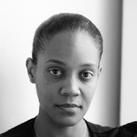
Chinaka Hodge
An accomplished poet, educator and screenwriter Chinaka Hodge is the executive producer of Marvel’s breakthrough series, Ironheart, and is a co-executive Producer on Dan Fogelman’s upcoming UNT. NFL PROJECT. Recently, she was staffed on MGM & Michael B. Jordan’s Creed series for Amazon. Throughout her career, Hodge has worked with Steven Spielberg, Jason Katims, and Ryan Coogler. A touring slam poet, well-known for her TEDx Talk, which has over a million views, her poetry was highlighted at the 2024 Paris Olympics Closing Ceremony.
#GreavesSeminar • blackstarfest.org —
#GreavesSeminar • blackstarfest.org —
#GreavesSeminar • blackstarfest.org — #GreavesSeminar • blackstarfest.org — #GreavesSeminar
Our staff is onsite and here to help you enjoy your seminar experience.
If you have questions about programming or logistics reach out to:

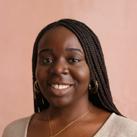
Program Director heidi@blackstarfest.org
Program Manager nyla@blackstarfest.org

Program Manager sydney@blackstarfest.org
If you have questions about Eventive, reach out to:
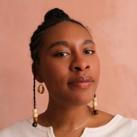
Operations Manager akua@blackstarfes.org
Learn more about BlackStar Projects and our year-round programming at blackstarfest.org.
August 6 – 9, 2026 Philadelphia, PA blackstarfest.org/festival
BlackStar Film Festival is an annual celebration of the visual and storytelling traditions of the African diaspora and global communities of color — showcasing films by Black, Brown, and Indigenous people from around the world. Described as a “revelatory cinematic experience” by The New York Times
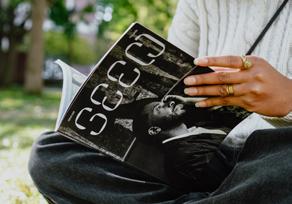
Issue 009 Available Now Issue 010 Coming Soon blackstarfest.org/seenjournal
Seen is our journal of film, art, and visual culture. The journal presents critical cultural discourse from Black, Brown, and Indigenous perspectives to a wider audience of tastemakers, academics, funders, critics, and film enthusiasts.
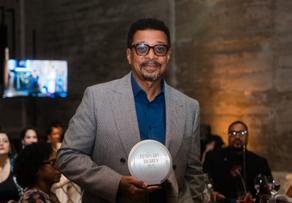
November 20, 2026 Philadelphia, PA blackstarfest.org/gala
The Luminary Gala, BlackStar’s premiere fundraising event, raises crucial resources to further support our suite of year-round programming and honors Black, Brown and Indigenous artists working in moving image.
blackstarfest.org/support/membership
By becoming a member, you help BlackStar sustain our year-round programmatic work, uplift the work of artists of the global majority, and challenge mainstream narratives of erasure. Benefits include discounted submissions, merchandise, festival passes, and much more.
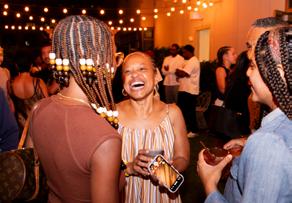

The 2026 William & Louise Greaves Filmmaker Seminar is hosted in partnership with the Institute for Diversity in the Arts (IDA) at Stanford University.
BlackStar Projects and its programs are generously supported by Bloomberg Philanthropies, City of Philadelphia, Color Congress, Department of Community and Economic Development, Ford Foundation, John D. and Catherine T. MacArthur Foundation, Mellon Foundation, NEO Philanthropy, People’s Media Fund, Perspective Fund, The Pew Center for Arts and Heritage, Pop Culture Collaborative, Ruth Foundation for the Arts, Surdna Foundation, Wallace Foundation, William Penn Foundation