

As the film world gathers again in Berlin, the Baltic region begins the year with a steady sense of momentum shaped by recent achievements and new challenges. The past year was clearly successful for Baltic cinema – but also demanding and, in some ways, contradictory. The potential for further development is evident, yet it unfolds alongside global political uncertainty, economic pressures, and a changing audiovisual landscape.
Nevertheless, one aspect has stayed steady throughout the region: a vigorous creative spirit.
Animation continues to stand out in both Estonia and Latvia, confirming the Baltics as an increasingly important animation hub in Europe. At Berlinale, an Estonian short animation features in the Generation Kplus programme, while Latvian animation enhances its recent international profile. Lithuania, meanwhile, premiers at Sundance with a feature film – a clear indication that Baltic stories are reaching audiences far beyond the region.
Talent development is equally visible on the industry side. A Latvian animation project selected for the Berlinale Co-Production Market underlines the growing international relevance of Baltic animation. At the same time, a new generation of Estonian and Lithuanian producers is present at the market to observe, learn and build contacts –an important step in shaping future participation. Baltic professionals are also present at Berlinale Talents, a pattern that should not be taken for granted.
For PÖFF and Baltic Film magazine, this affirms a direction that has developed over several years: emphasising not only films but also the people and structures behind them. Within Discovery Campus, the Frame Within a Frame programme, which introduces young cinematographers to an international context, exemplifies this long-term approach.
Baltic cinema today is increasingly characterised by continuity: projects unfolding across borders, careers built through collaboration, and institutions striving for long-term influence rather than immediate visibility.
Formats will change, but the Baltic voice remains recognisable and steadily more confident.
Eda Koppel Editor in Chief
4 Baltic Cinema: Growth, Challenges and New Horizons
6 NEWS Baltic Animation at EFM
7 TALENT Brigita Beniušytė
8 EVENT Framing the Future
11 TALENT Eeva Mägi
12 ANIMATION Signe Baumane: Diversity is as Important as Healthy Microbiome
16 NEWS Nightborn @ Berlinale
17 TALENT Johanna Maria Tamm
18 ANIMATION Stop Motion Takes Place at EKA
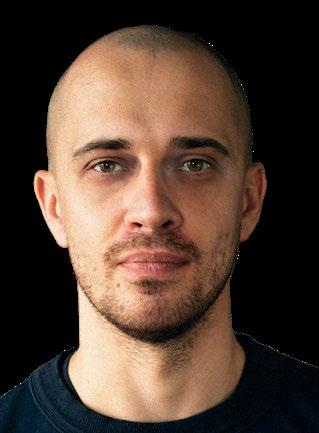
20 DIRECTOR Andrius Blaževičius: Filmmaking as a Response to Reality
26 NEWS Escape Net - Latvian Box Office Hit
28 STUDY CresCine - Learning Between Projects
30 DIRECTOR Playfully Serious Jonas Taul
35 PRODUCER Viktorija Seniut-Strolienė
36 NEWS We didn’t Create Baltic Talent, We Named It
38 CLASSICS The Detectives & the Aliens
43 PRODUCER Laura Raud
44 ANIMATION Focus on Latvian Animation at Monstra in Lisbon
47 PRODUCER Marija Stonytė
48 PRODUCER Daniele Kunčinaitė
49 PRODUCER Inger Põder
50 IN FOCUS Wanted: Baltic Crime
52 EVENT PÖFF Breaks Records and Makes Award History
53 FUND Vilnius Film Fund Boosts International Colaboration
54 FUND How to Find Money in Estonia, Latvia & Lithuania
55 EVENT Estonia as a Testbed For Future Film & Media
56 EVENT AI for Film Leaders
60 EVENT In Short: Lithuanian Films at Lithuanian Short Film Festival
63 NEWS Stand Out, Get Hired, Join Creative Gate
64 EVENT Baltic Poetics: Estonia, Latvia, Lithuania
Baltic Film is published by the Tallinn Black Nights Film Festival
E-mail: info@poff.ee, I poff.ee
Editor in Chief: Eda Koppel
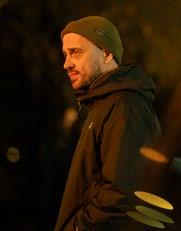
38 20 30
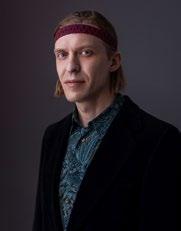
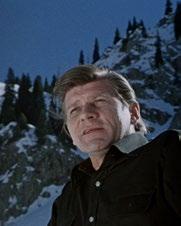
Contributing Editors: Mintarė Varanavičiūtė, Kristīne Matīsa
Contributors: Tõnu Karjatse, Kristīne Simsone, Aurelia Aasa, Egle Loor, Martina Tramberg, Olga Kurdovskaja
Linguistic Editing: Paul Emmet Design & Layout: Profimeedia
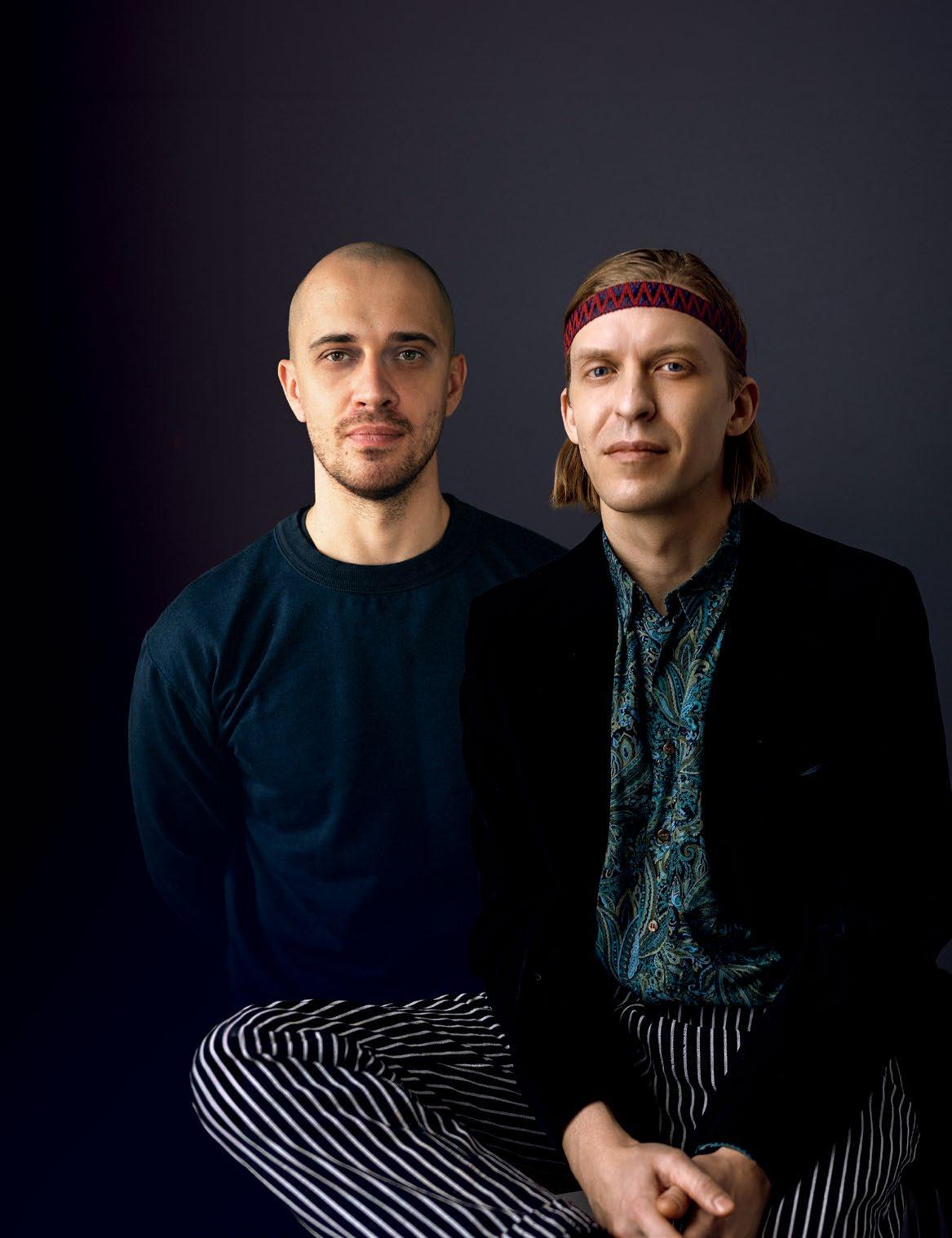
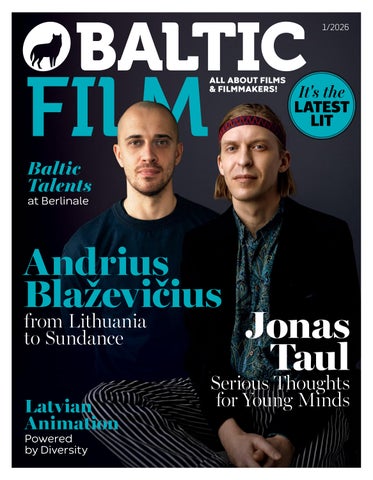
Cover: Andrius Blaževičius and Jonas Taul
Photos by Brigita Beniušytė and Sohvi Viik-Kalluste
Printed by Reflekt
As the Baltic film industries continue to expand their international presence while strengthening local foundations, strategic decisions have become more important than ever. In this Q&A, the heads of the Lithuanian, Estonian, and Latvian film institutions reflect on key achievements, challenges, and future prospects for Baltic cinema.
By Eda Koppel
Reflecting on 2025, what do you consider the most important achievement for your country’s film industry?
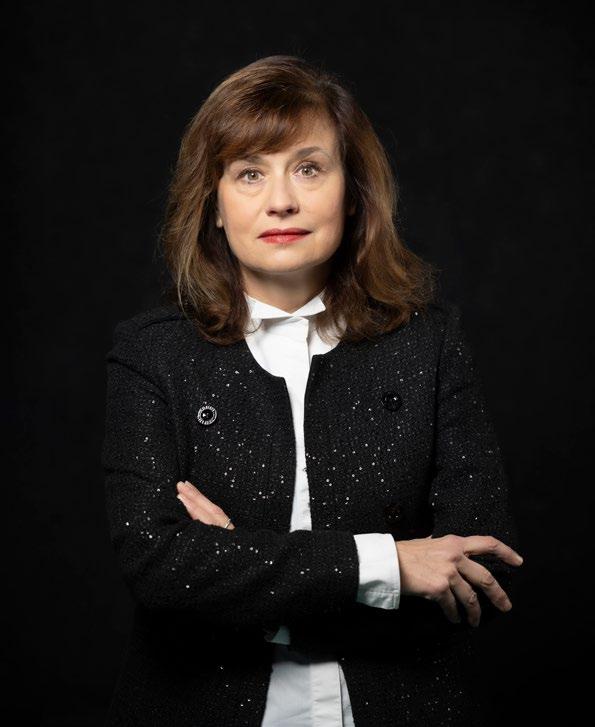
Dita Rietuma, Head of the National Film Centre of Latvia: 2025 was an absolutely exceptional year in the history of Latvian cinema. The animated film Flow achieved unprecedented international success, winning the Academy Award for Best Animated Feature, the Golden Globe, the European Film Award, and nearly 90 international prizes. With a global box office of around €50 million, the film has significantly raised the visibility and prestige of Latvian cinema worldwide. At home, Flow became the most-watched film in Latvia with over 370,000 admissions, contributing to a domestic market share of approximately 20% for Latvian films.
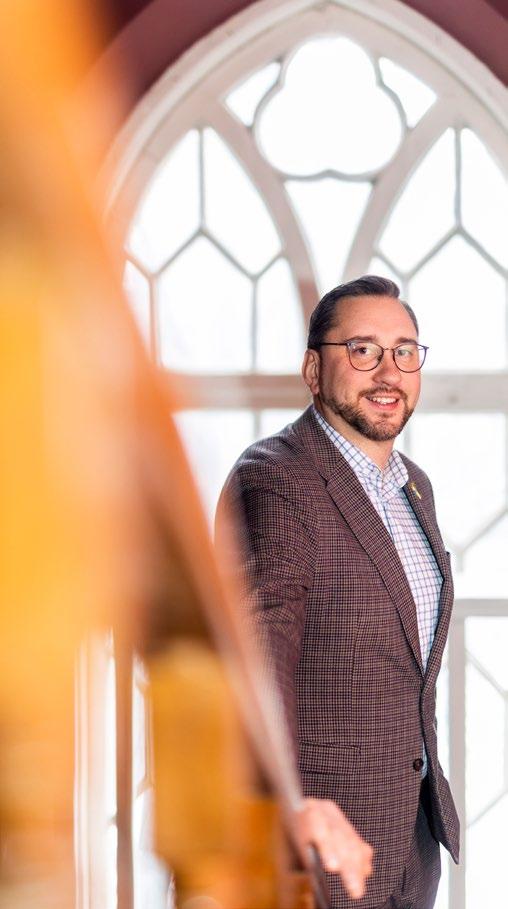
Laimonas Ubavičius, Head of the Lithuanian Film Centre: One of the most important milestones was the record-level utilisation of the Lithuanian Film Tax Incentive. In 2025, film productions received €25.6 million through the scheme, marking a significant increase from the previous year. This highlights Lithuania’s appeal as a creative and production-friendly destination. At the same time, The Southern Chronicles became the most-watched film in Lithuanian history, surpassing major US blockbusters with over 400,000 viewers in a country of 2.9 million.
Edith Sepp, Head of the Estonian Film Institute: In 2025, Estonia’s most tangible achievement was not on the international stage but at home, as our focus intentionally shifted inward. The most significant progress was in strengthening the relationship between Estonian
films and the local audience. One film, Fränk, drew over 112,000 admissions in a nation of just 1.3 million, reflecting a stra tegic decision to prioritise national cine ma and re-engage younger viewers with cinemas.
At the same time, 2025 and early 2026 saw strong international recognition through heritage films, with two restored Estonian classics screening at Berlinale Classics in consecutive years, placing Es tonian cinema firmly within a global his torical context. Overall, 2025 was not so much about outward expansion – it was about deepening cultural roots, building audience connection, and nurturing crea tive recognition that will form the foun dation for stronger future growth.
What were the main challenges faced by the sector in 2025, and how are you addressing them?
L.U: Our main challenge was the rapid


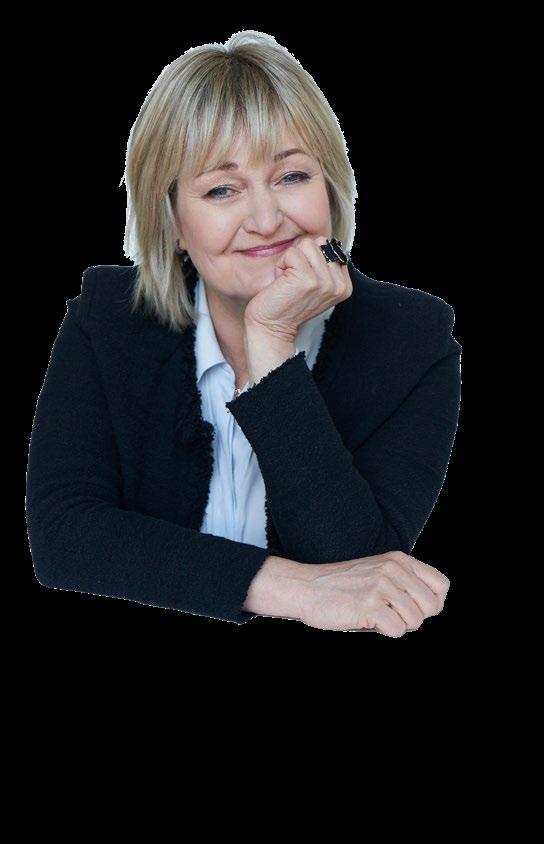
growth of the industry itself. Applications increased sharply, and demand for state support grew by 20–30%. While this strained resources, it also reflected the sector’s vitality. At the same time, increasing international cooperation tested our production capacity, but demonstrated that Lithuanian filmmakers – especially the younger generation – can adapt to international standards.
In 2025, the Estonian film sector faced sustainability pressures typical of small national industries: rising production costs and increased competition for international funding. To address this, EFI is implementing its 2025–2029 Development Plan, with a stronger focus on creator-driven development and earlier international positioning of projects, including more extensive cooperation with France, Italy, the Nordics, and new alliances in the Balkans.
High inflation has also impacted the sector. From 2026, Film Estonia will increase cash rebate percentages to 40%, making it the most competitive incentive in the region. In parallel, construction of Tallinnfilm Studios will begin in 2026, laying the foundation for longterm production infrastructure.
D.R: Our biggest challenge is the overall budget allocated to film, which does not keep pace with industry needs. While Flow helped attract additional funding for animation, Latvian cinema requires significantly more than the current six million euros per year. Since funding depends largely on political priorities, securing greater state investment remains crucial.
Looking ahead to 2026, which initiatives are you most excited about?
E.S: Our focus is on turning strategic frameworks into tangible results, with a stronger presence at key festivals and markets where Estonian films and creators can engage directly with global partners. At the same time, we are expanding talent support programmes to enhance both artistic quality and technical skills.
L.U: We are dedicated to improving sustainability in Lithuanian film production through environmentally responsible practices, while creating ethical guidelines for the use of artificial intelligence, emphasising transparency, fairness, and authorship.
D.R: Our goals include strengthening the animation sector both domestically and internationally, and adopting best practices for environmentally responsible filmmaking.
How do you see your country’s film industry positioning itself internationally in the coming year?
E.S: Estonia’s film industry will be defined by creative ambition and collaborative openness. We aim to combine cultural specificity with global resonance, securing recognition for stories that are uniquely Estonian and universally meaningful.
L.U: Lithuanian cinema is positioning itself as bold and creatively free, with a distinct cinematic voice. Our films are rooted in local experience while addressing universal themes, enabling them to travel well internationally and strengthen our presence at festivals, markets, and co-production platforms.
D.R: Baltic cooperation is vital for promoting Latvian cinema internationally. We will continue initiatives such as the Baltic Film Festivals in Paris and New York, and collaborations like Locarno’s Match Me! programme. Strong films and purposeful Baltic cooperation will remain key to our international strategy. BF
Two Baltic animation projects, one from Estonia and one from Latvia, will be showcased within the CEE Animation curated programme at EFM Animation Days on 12 February, highlighting the expanding diversity of animation in the region.
By Eda Koppel
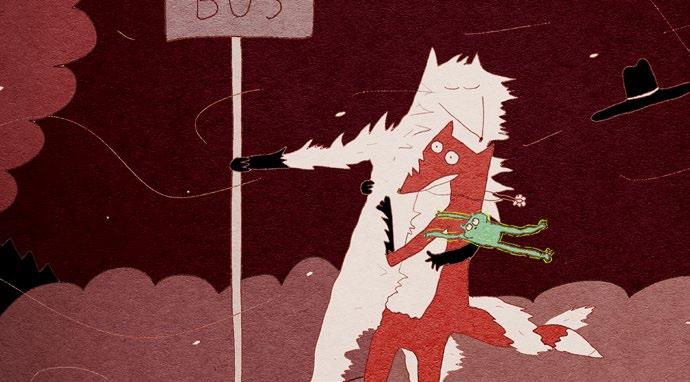
Estonia is represented by the feature project Saima: Scenes from a Midlife Crisis, directed by Chintis Lundgren and Draško Ivezić. The film follows Saima, a 40-yearold judge whose seemingly controlled life starts to unravel when her long-term partner confesses to an affair. What begins as a rational attempt to cope gradually turns into a more psychological, transformative journey, centred on a mysterious wooden frog – a family heirloom that comes to embody Saima’s fear of abandonment.
Blending emotional realism with giallo-inspired horror imagery, Saima uses animation to explore intimacy and vulnerability in a way rarely seen in European adult animation.
The film is produced by Alexandra Film, led by Marianne Ostrat, in co-production with partners Adriatic Animation from Croatia, and Avec ou sans Vous from France. Over recent years, Alexandra Film has become one of Estonia’s most internationally recognised companies,
with titles ranging from Smoke Sauna Sisterhood to Driving Mum
In addition to its presentation at EFM Animation Days, Saima: Scenes from a Midlife Crisis, will also be showcased at Cartoon Movie (March 3–5) in Bordeaux, one of Europe’s key industry platforms for animated feature films.
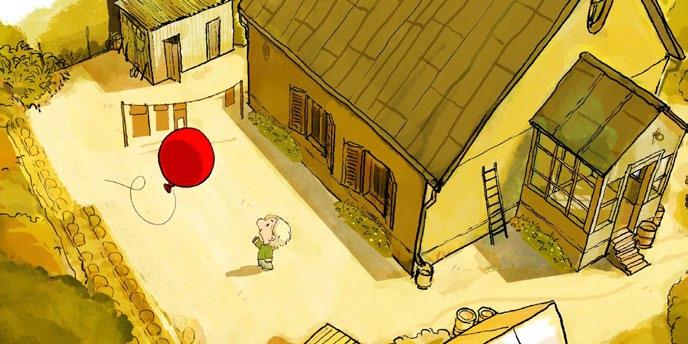
From Latvia comes the animated series Hello, Oscar!, based on Oscar and the Things by Estonian writer Andrus Kivirähk, giving the project a distinctly Baltic cross-border character. Aimed at children aged 5–8, the 8×7-minute series combines 2D and 3D animation in a gentle and imaginative world. Sevenyear-old Oscar, spending the summer at his grandmother’s countryside home, carves himself a wooden toy phone and discovers he can speak to household objects, each with its own small worries and desires. Through these encounters, Oscar learns about friendship, empathy, and the complex world of emotions, while slowly finding common ground with his grandmother.
The series is directed by Edmunds Jansons, one of Latvia’s leading animation auteurs, whose work spans from short films to feature animation and children’s series. The producer is Sabīne Andersone, managing director of Riga-based Atom Art, a studio active for over two decades and known for both children’s animation and internationally recognised auteur projects.
Together, Saima and Hello, Oscar! illustrate the breadth of Baltic animation today — from psychologically daring adult stories to poetic narratives for children. Their presence at Berlinale’s new animation focus confirms that animation from our region is becoming more confident, diverse, and internationally relevant. BF
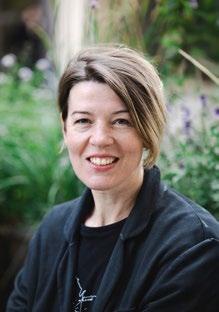
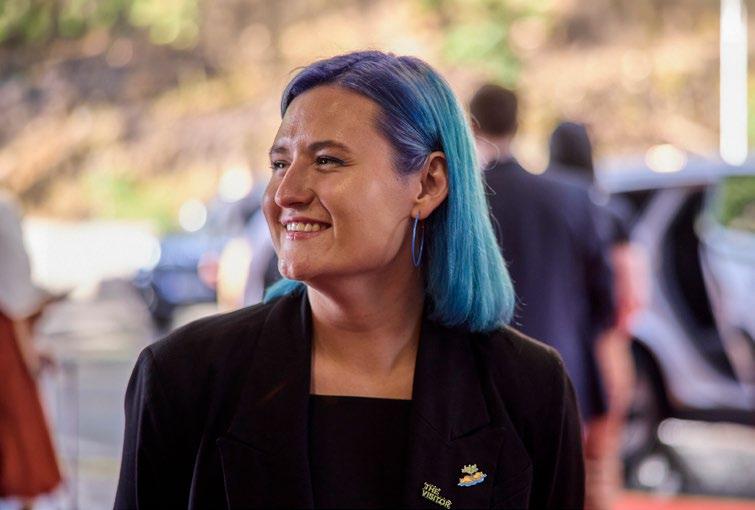
Chosen from more than 3,400 submissions, Lithuanian producer Brigita Beniušytė has secured a place among the 200 filmmakers selected for this year’s Berlinale Talents.
This year’s Berlinale Talents focuses on themes of confusion, chaos, and discomfort. How do these ideas resonate with the kinds of stories you are drawn to as a producer?
Discomfort and chaos are not pleasant states, but I believe they are often the most meaningful ones, as confusion can lead to clarity. The stories I’m drawn to focus on fragile moments where characters are forced to confront things they don’t yet understand about themselves or their surroundings. These situations carry strong emotional or moral tension, and staying with that uncertainty allows a film to feel truthful and resonate with viewers, who can reflect on their own experiences of chaos.
Producing often means holding space for uncertainty – creatively and financially. How do you navigate risk while protecting a project’s artistic integrity throughout development and production?
I’m drawn to stories that begin with uncertainty rather than a clear path, because discovering where a film is going is one
tional stories that allow Lithuanian voices to be understood beyond our borders, particularly in today’s fragile geopolitical landscape.
Being selected among 200 talents from thousands of applicants is a notable milestone. What does it mean for you at this stage of your career, and what are you most curious to learn during the programme?
of the most rewarding parts of producing. At the start of a project, you try to foresee risks and prepare alternatives, but unforeseen situations inevitably arise. For me, one of the most important tools in navigating them is open and honest communication within the team, which helps protect the artistic core of the film and find solutions within the resources available.
Lithuanian cinema has gained increasing international visibility in recent years. How do you see your role as a producer in shaping stories that remain locally rooted yet speak to global audiences?
Lithuanian cinema is gaining strong international visibility, and I’m happy to be part of this moment. As a producer, I aim to create films that add value not only to the industry, but also to society – films that encourage audiences to widen their perspective and ask new questions. I believe locally rooted stories are never truly local: when told with confidence and emotional precision, they become universal. Coming from a small country, it feels especially important to create transna-
Being selected for Berlinale Talents feels like an important milestone at the right moment in my career. I’m still shaping the kind of producer I want to be – defining my values, voice, and the projects I truly identify with – and this selection feels like a reassuring sign that I’m moving in the right direction. I’m curious to immerse myself in the programme: meeting diverse filmmakers, exchanging perspectives, and engaging with current industry questions.
Berlinale Talents is known for fostering lasting global connections. How do you hope this might influence your future collaborations or the types of projects you want to explore going forward?
I’ve seen how programmes like Berlinale Talents create connections that last well beyond the event itself. Being part of a shared community builds trust over time and becomes a network you can rely on. I’m excited to meet filmmakers from different backgrounds and disciplines, and to form relationships based on both professional interest and personal understanding. BF
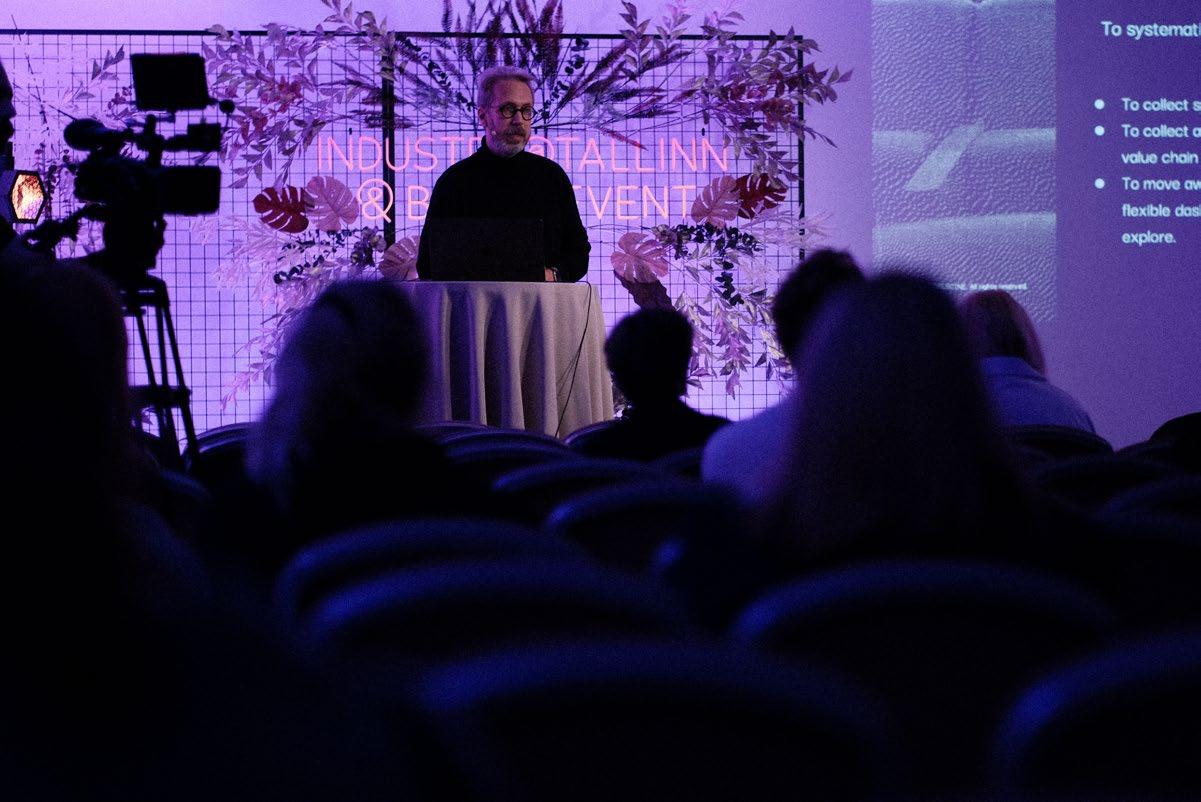
Frame Within a Frame continues to establish itself as one of the most closely watched cinematography programmes within Industry@Tallinn & Baltic Event
By Milani Perera Photos by Kanishka Positha @poshisstudio and Dushan Premawardana @didustudio9
In 2026 FWF is widening its presence by presenting its vision and long-term mission at the 76th Berlinale, positioning Frame Within a Frame as a platform actively seeking new professional and academic partnerships.
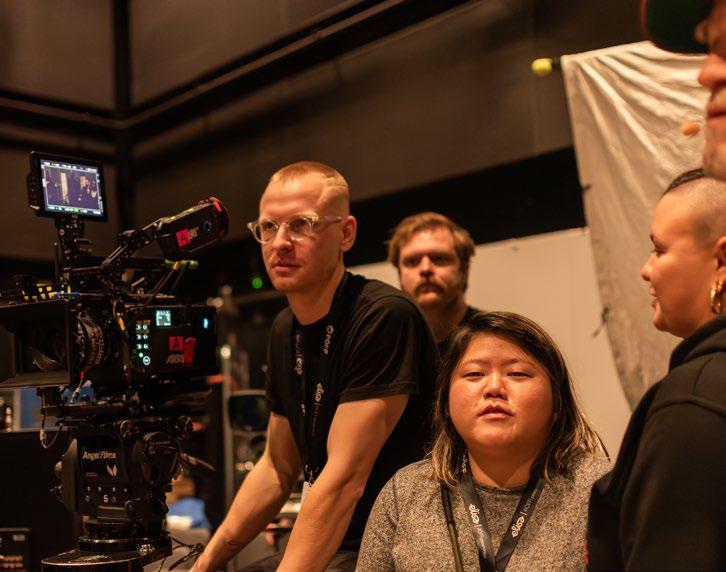
Frame Within a Frame is designed for emerging cinematographers preparing to step into the international arena. The programme combines intensive workshops, screenings and one-to-one mentoring, unfolding across Tallinn and Helsinki through strong industry partnership with Aalto University, IMAGO Technical Committee, International Cinema Lighting Society, Baltic Film Media & Arts School, Team4Set, ARRI, and Camera Nordic. FWF was conceived by Triin Tramberg, Head of Discovery Campus, the educational arm of Industry@Tallinn & Baltic Event, and developed and managed by Dhanushka Gunathilake SLSC
The 2025 edition brought together eight cinematographers from across the globe, guided by an experienced group of mentors including Roberto Schaefer ASC AIC, John-Christian Rosenlund FNF, Rauno Ronkainen FSC, Philippe Ros AFC, and Ville Penttilä ICLS FSC
Their sessions moved fluidly between craft, authorship and career strategy, offering participants rare behind-thescenes insight into contemporary cinematographic practice.
The programme’s awards highlighted its forward-looking focus. The Golden Ticket by Team4Set was awarded to Gemma De Miguel Morell and Tanel
Topaasia, while the ARRI Frame Within a Frame Lens Award went to Jolinna Ang, recognising a distinctive and confident visual voice.
While international in scope, Frame Within a Frame 2025 also highlights the Baltic region’s unique voice, inviting readers to connect with four emerging filmmakers from Estonia, Latvia, and Lithuania – Tanel Topaasia (Estonia), Annika Väljataga (Estonia), Natalija Jakobsone (Latvia) and Vytenis Jankauskas (Lithuania) – and explore how Baltic cinematographers are shaping the future of cinema.
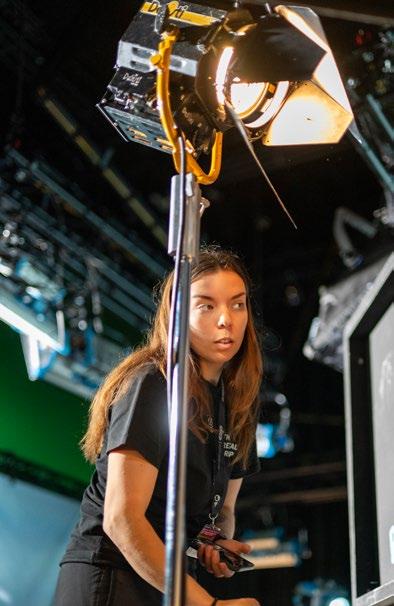
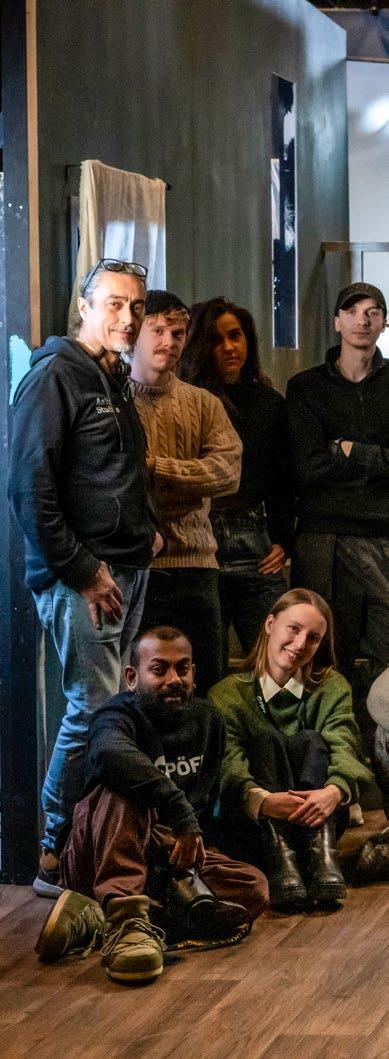
For Tanel Topaasia, cinematography emerges as a process of refinement – a gradual shift from technical curiosity toward understanding the image as a narrative decision. His journey reflects a strong interest in structure and intention, shaped by both academic training and practical exposure.
By contrast, Annika Väljataga describes a more instinctive entry point, where visual sensitivity preceded formal definition. Her relationship to cinematography is
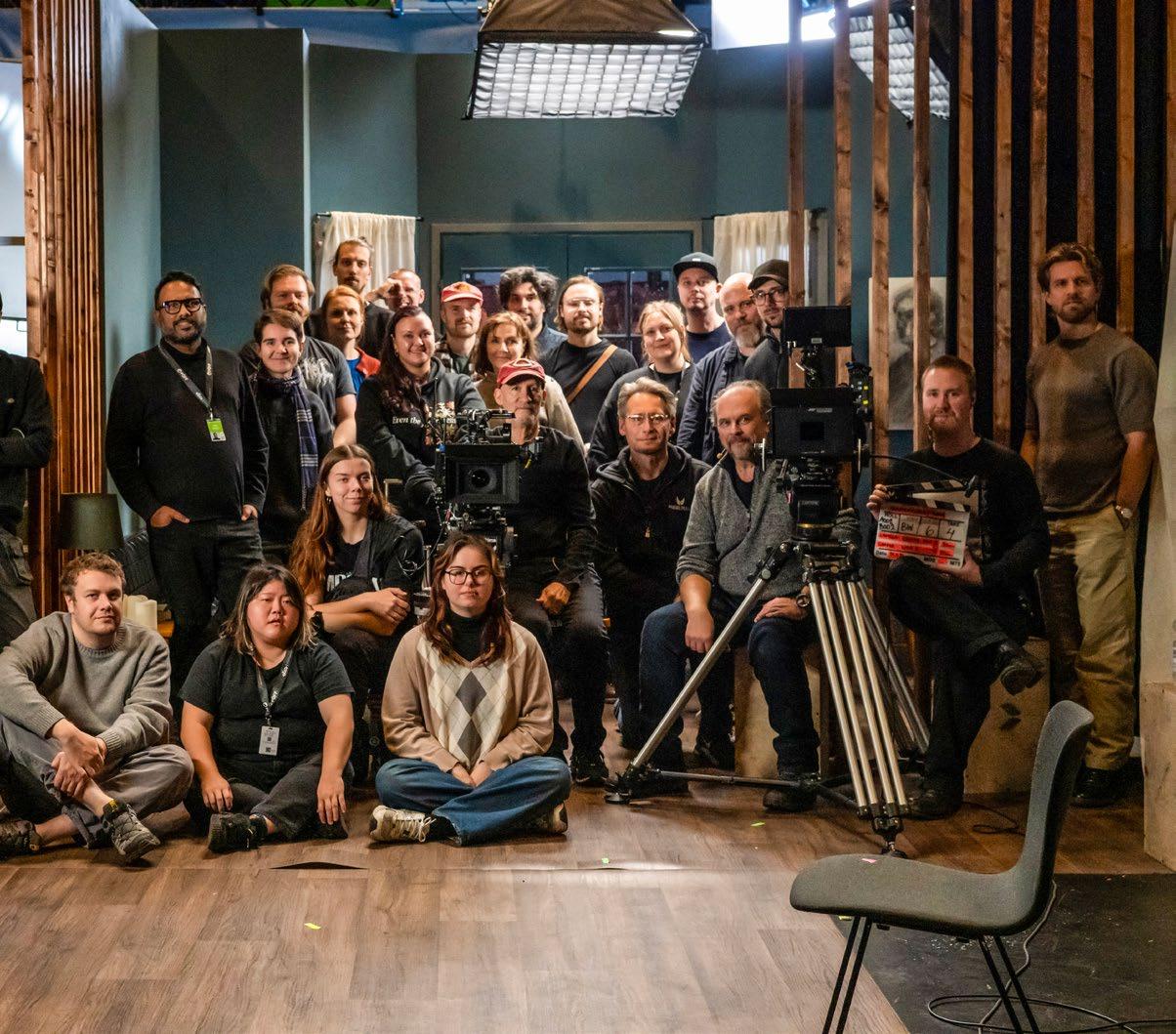
rooted in observation and emotional response, later sharpened through education and collaboration.
Natalija Jakabsone speaks of cinematography as a discipline discovered through experimentation. Moving between formats and roles early on, she highlights the importance of trial, error, and adaptability in finding her visual voice.
For Vytenis Jankauskas, the path is closely tied to storytelling. His interest in cinematography developed alongside visual thinking, with the camera functioning as a tool to shape rhythm, space, and meaning rather than spectacle.
Although they encountered FWF25 through different channels, all four describe the programme as arriving at a moment of professional questioning. Topaasia frames it as an opportunity to measure himself against international standards, while Väljataga emphasises the value of entering a space where dialogue, rather than competition, shapes the experience.
Jakabsone points to the programme’s international environment as a key factor, offering a perspective beyond familiar production contexts. Jankauskas
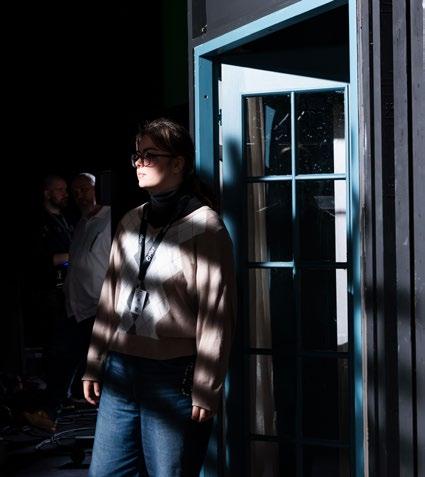
highlights the balance between technical discussion and broader career reflection, seeing it as a space that encourages longterm thinking.
When reflecting on mentorship, distinctions become clearer. Topaasia underscores the importance of discussions about technical expertise, while Väljataga recalls moments when vulnerability and uncertainty were openly addressed, reshaping her understanding of professional confidence.
Jakabsone and Jankauskas value the programme’s emphasis on process over outcome, showing how mentorship conversations can inspire confidence and re-
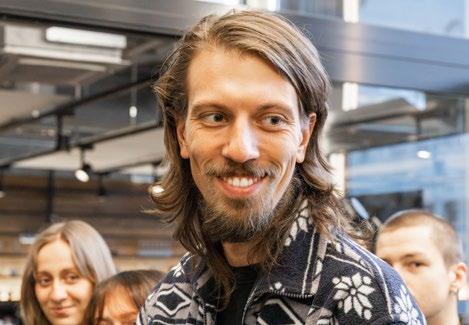
shape understanding of professional development, encouraging readers to see mentorship as a vital growth tool.
Across the conversations, the Baltic region emerges as both a grounding force and a formative professional environment. Working within a smaller industry, Väljataga highlights the advantages of trust-based collaboration and creative continuity, noting how close professional networks foster confidence and longterm working relationships, even as structural limitations remain present. Those limitations surface more directly in Jakabsone’s reflections, particularly regarding budgets and access to equipment. Jankauskas, however, frames these constraints less as obstacles and more as catalysts for creative problem-solving, shaping a working mentality rooted in adaptability rather than scale. For all
four cinematographers, mobility appears not as a departure from the region, but as an extension of it – a way of carrying Baltic sensibilities into broader international contexts.
The transition from education to industry further sharpens this regional experience. Coming from academic backgrounds, the participants speak candidly about the gaps between university training and professional realities. Topaasia views formal educa-
gest that programmes situated between education and industry are not supplementary, but essential – particularly within smaller regions where practical access and international exposure remain uneven.
Future plans reveal both alignment and divergence. Topaasia speaks of developing a strong authorial identity within international productions. Väljataga focuses
Coming from academic backgrounds, the participants speak candidly about the gaps between university training and professional realities.
tion as a necessary framework that must eventually be questioned and, at times, unlearned. Väljataga points to emotional preparedness as a skill rarely addressed within academic settings, despite its importance in collaborative working environments.
Jakabsone notes limited exposure to professional workflows during her studies, while Jankauskas emphasises the role of initiatives like Frame Within a Frame in bridging this divide through lived experience. Together, their reflections sug-
on sustaining long-term creative collaborations. Jakabsone expresses interest in working across formats and borders, while Jankauskas emphasises patience –allowing projects and relationships to evolve organically.
Together, the voices of these emerging Baltic cinematographers illustrate how the ‘FWF25’ program fosters practical technical knowledge, encourages curiosity, and helps them establish a confident presence within the international cinema landscape. BF
Selected from over 3,400 applications worldwide, Estonian director Eeva Mägi is among the 200 participants chosen for this year’s Berlinale Talents, the talent development programme of the Berlin International Film Festival.
By Eda Koppel
This year’s Berlinale Talents theme focuses on confusion, chaos, and discomfort. How does this relate to your own approach to making films?
My filmmaking is closely connected to confusion, chaos and discomfort. After making four feature films, I would describe my process as staying confidently unconfident while moving through chaos. There is no need to create order if there is no confusion to begin with. For me, chaos and uncertainty are at the very core of creativity.
Your work often explores emotionally fragile or transitional states. What role does discomfort play in your storytelling – for yourself as a filmmaker and for the audience?
The creative process can often be uncomfortable, but it is never my intention to make the audience feel discomfort. I keep the process and the outcome separate. What I want the audience to experience is empathy and an emotional connection to the characters and the world of the film. While I work through discomfort, my intuition – that bittersweet sense of life and empathy –guides me and helps bring feeling to the screen. I tend to emphasise feeling rather than story, because for me filmmaking is about inviting people into a shared emotional experience, from which a story can emerge. When we focus only on linear storytelling, we risk limiting how audiences are allowed to feel — and as filmmakers, we should not take that possibility away from them.
Being chosen among 200 Talents from over 3,400 applications is a
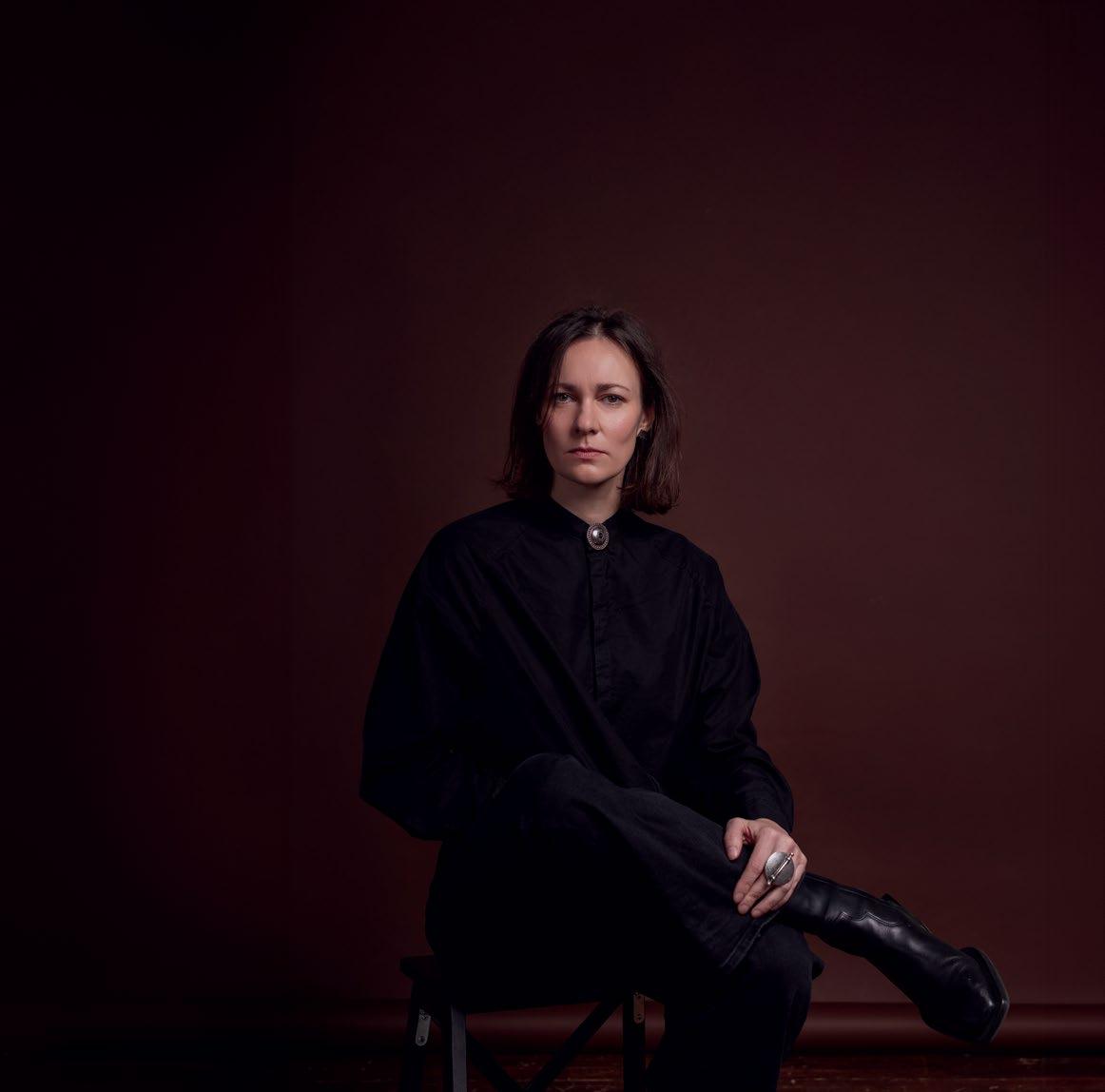
MUAH by Anu Konze
significant achievement. What does this moment mean for you, and what are you most looking forward to in Berlin?
It truly is a major recognition, and I am very happy to be among those selected. I am especially excited about this year’s
Berlinale Talents theme, Creating Confusion, and I look forward to meeting people who share their experiences of how chaos can support creative work.
Berlinale Talents is also about long-term networks and exchange. How important is this international context for your work, coming from Estonia?
The international context is very important to me. Film is a collaborative, global language, and being part of Berlinale Talents allows me to exchange ideas, working methods and perspectives far beyond my own film environment.
Chaos and uncertainty are at the very core of creativity.
Does this selection encourage you to take new creative risks or explore new directions in your upcoming projects?
Yes, it does. Being recognised is very encouraging and serves as a reminder that there is no single correct way to make films. What matters is staying true to your own way of working and continuing to take risks – even when the world around you increasingly prefers clarity, structure and certainty over chaos and confusion. BF
Signe Baumane’s upcoming feature-length animation, Karmic Knot, has been selected this year for Berlin’s European Co-Production Market.
By Kristīne Simsone Photos from publicity materials
The film is Baumane’s third feature and the concluding instalment of a trilogy inspired by her family’s experiences. Set in Soviet-occupied Latvia before, during, and after the collapse of the Soviet Union, Karmic Knot blends comedy, drama, and horror. To tell the story of a tight-knit family that trades their dreams for survival as the country around them collapses into chaos and violence; as its synopsis intriguingly promises. Baumane’s previous work, My Love Affair With Marriage (2022), was nominated for the European Film Award in the category of Best Animated Features. The trilogy’s first film, Rocks in My Pockets (2014), screened at over 130 festivals and received a limited U.S. release.
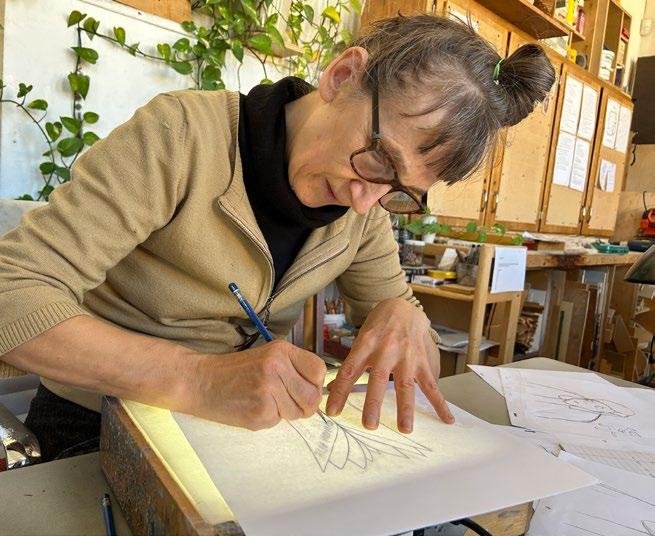
At the moment, Signe is working on Karmic Knot in her New York studio – a light, spacious, industrial-style space with large windows. During our remote conversation, she is happy to show us around the studio; it is

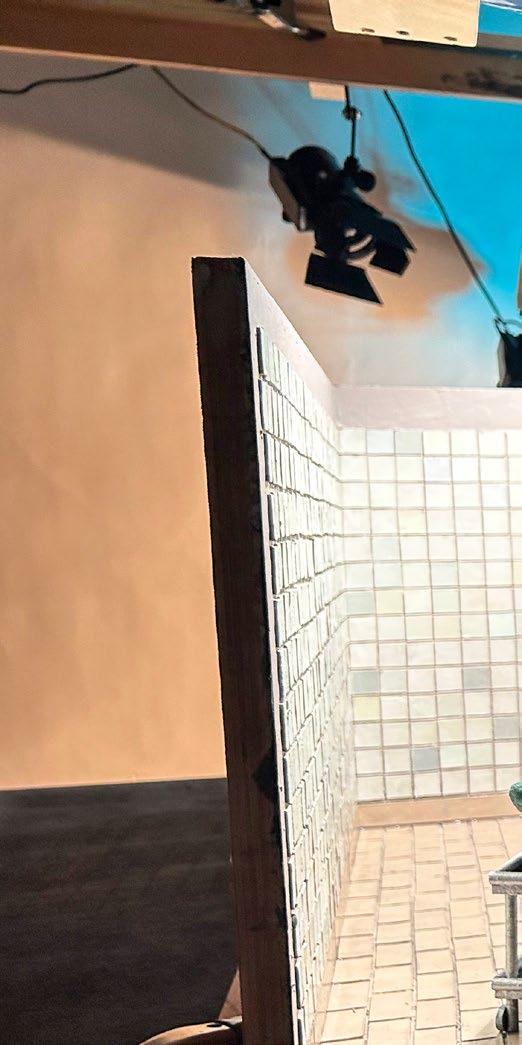
clear that work on Karmic Knot is in full swing. Sets have been built, and drawings can be seen in various places. In one part of the frame there is an enormous Monstera plant, while in the Zoom window behind her a trailing Epipremnum vine. Later in the conversation she says that if you cut off a piece of this plant, it will continue to grow – much like she will continue to strengthen the field of independent cinema by employing people and demonstrating that films can also be made this way: in her own independent studio, creating works that involve animators on both sides of the Atlantic Ocean (Karmic Knot, like her previous films Rocks in My Pockets and My Love Affair With Marriage, is an European co-production).
“We are working very intensively. Sets are coming together and we are filming. There is a huge amount of work! As I always say: if you knew everything that
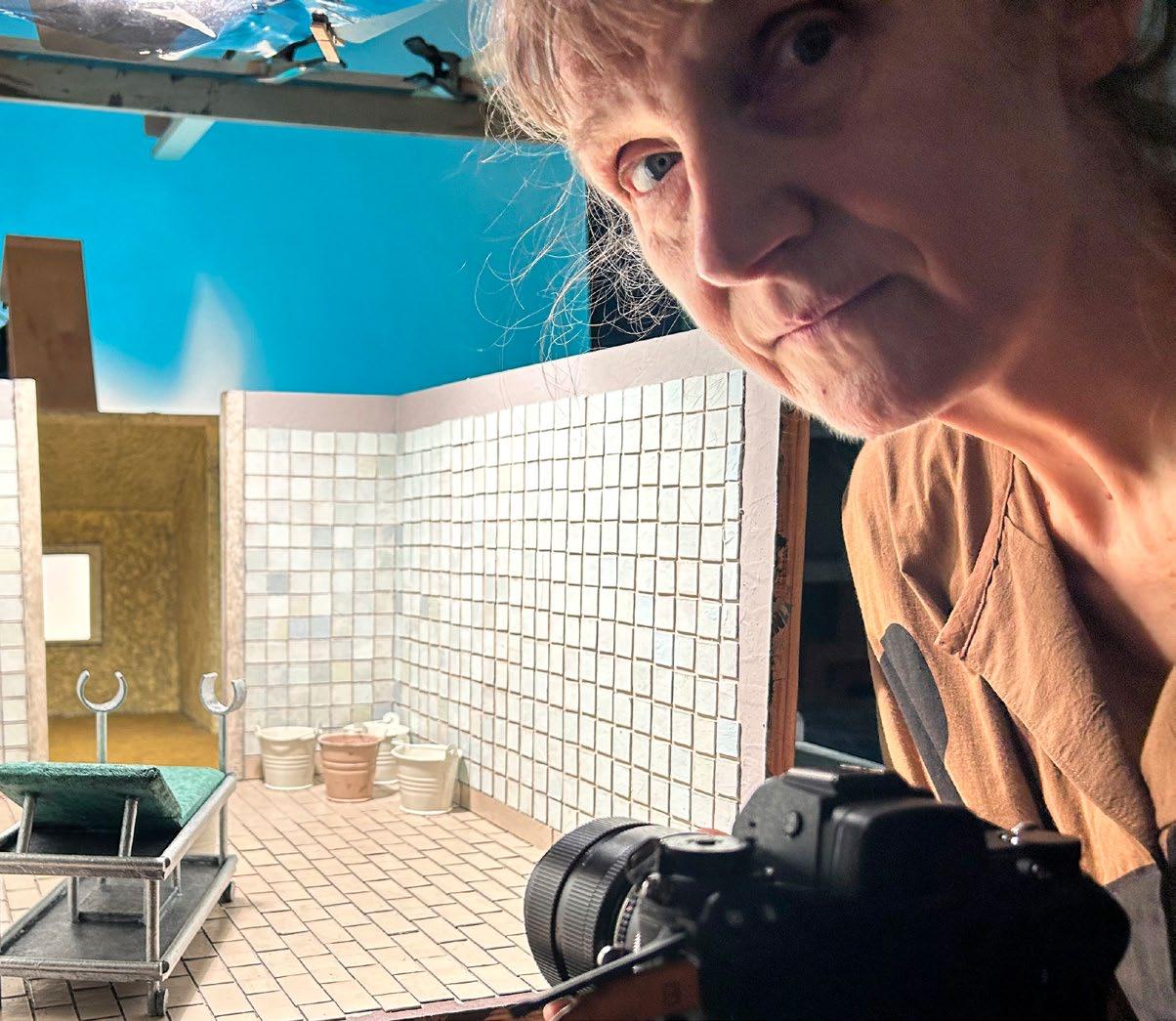
lies ahead and how long it will take, you would never start a project like this,” says a smiling Signe. “Every day, millimetre by millimetre, we move closer to the goal. There will be no more changes to the script, but I don’t have a storyboard – I don’t work with one, because it locks you into a kind of creative prison. I want to keep the creative process like an open door. For example, right now I have to watch hundreds of films for the Academy of Motion Picture Arts and Sciences [Signe is one of its members]. Very often I notice something in these films – an interesting line of dialogue or an editing technique. It’s not that I could borrow something directly from live-action films, but I can feel that inspiration and joy! If I wanted to, I could introduce some kind of creative turn in my own film, in its visual side. I find that very interesting and exciting!”
Considering that a feature-length animated film takes a long time to make - and with each film you essentially create a new world - have the social and political processes happening around us changed the way you perceive the story of the film or how you choose to tell it?
No, not really – nothing really can be changed. There is a script, and I don’t change anything in it anymore. The only thing I can change is the visual approach. For example, I started writing My Love Affair With Marriage in 2015, and at that time I thought that the following year we would have a female president and that a film like this would no longer be necessary – but everything turned out completely differently. Then the Me Too movement emerged, and it seemed to me that it would have been great if my film had been released exactly at that time. But of course, that’s not how it works, you
have to work patiently. If you try to make an animated film so that it hits precisely this moment, this political or cultural situation, it won’t happen.
In my opinion, an animated film has to reflect universal values that connect different times. In my new film, Karmic Knot, this universal value is the feeling that we are living through the “end of time” – a period when something is ending and everything around us is collapsing. And there is this inner panic that your dreams, thoughts, ambitions – what you wanted to achieve in your life – have all collapsed along with the system in which you grew up. I think this is a universal story; we are now living through the end of time – something is ending, and things are changing very quickly, tragically, and violently. When Karmic Knot is released, we don’t know what will remain of the old world in 2028. That’s why I believe animated films often don’t age as quickly as live-action films, because animators understand that you can’t step into this moment, into this river, right now, because the filmmaking process is so long. That’s why the focus is always on fairy tales and metaphors. Stories are told differently, and that’s why they connect with audiences for longer – animated films have a longer, more enduring life.
Your films have been widely shown internationally and screened at festivals all over the world. In a sense, the medium of animation has greater privileges and opportunities to reach international audiences than, for example, live-action cinema. What do you think about such a statement?
Animated films have to strive toward what is universal – toward what connects us as human beings. Live-action films often focus more on cultural specifics and occurrences that separate us from one another.
Very often my usual drawing sessions would begin with me starting to draw body parts and how I feel them.
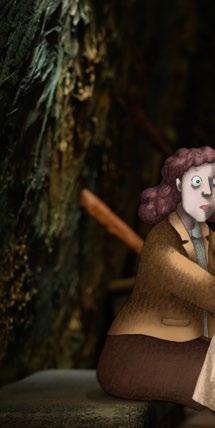
Animation therefore has the potential. It can cross borders and speak to people from other cultures and in other languages – but, on the other hand, any film can do that as well.
Speaking of reaching audiences, there has been a lot of discussion about the success of Flow (directed by Gints Zilbalodis, 2024), and in my own conversations with colleagues abroad, I have also felt that the film has increased Latvia’s visibility. I understand that the effect can’t be measured in the short term, but how do you personally feel - what do you think all of this will bring to Latvian animation?
When members of the Academy, Golden Globe voters, or festival programmers see in the credits that a film was made in Latvia, they do pay more attention because of where it comes from. But we are auteurs, and every film we make will be completely different. A film like Flow can only be made by Gints Zilbalodis. I have no interest in making the same kind of film, and neither does anyone else in Latvia. We make our own cinema, and it is a fact that in Latvia we have original voices and that original films are being made.
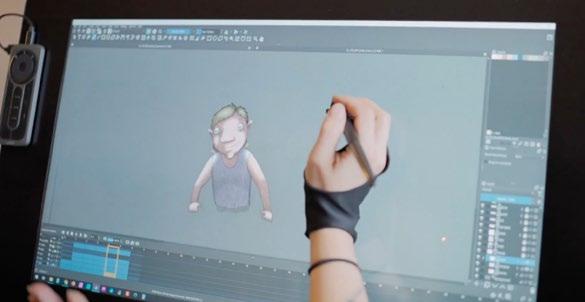
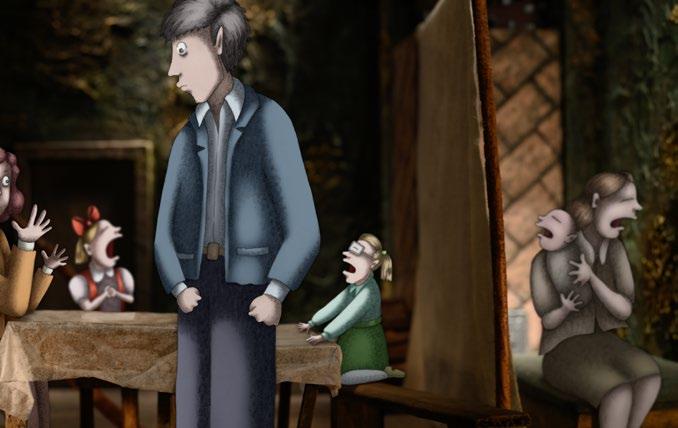
Precisely, the strength of Latvian animation lies in its diversity. From a cultural point of view, it is so valuable that in Europe we are able to sustain this diversity of voices. In Hollywood’s mainstream film environment, however, I feel we are seeing something we moved away from in the Soviet Union - centralisation. How could this tendency of consolidation impact independent cinema and animation?
As they always say: if you have the wrong diet, your gut microbiome changes, diversity disappears, and that’s not good for your health. In my opinion, culture – just like the gut microbiome – needs diversity! Any monolithic culture, as we saw in the Soviet Union, ultimately self-destructs and disappears. Diversity is a necessity, an absolute necessity. In the United States, for example, there is great cultural diversity, but these voices mostly do not make it into mainstream cinema. As an artist, you have to work strictly within the mainstream style and way of thinking in order to receive huge rewards. But if you want to express an original idea, it is quite difficult. Twenty years ago, people were ready to sign the death sentence for European cinema. And yet suddenly European cinema has become the most vibrant, beautiful, and vital cultural force that exists today. Many European films are highly original and have high production value. Of course, there are forces in Europe that want to put an end to all of this. But I feel that my own contribution is that I make films on both sides of the Atlantic, and my mission is to strengthen this idea of independent cinema. Here in my studio, I employ people and show that it can be done this way too. And in Latvia as well, we have a young team that is working very well!
Given how rapidly everything is changing, I can’t help but ask whether, in your opinion, cinema has finally moved closer to addressing gender equality within the film industry.
In Europe the situation is probably different, but in Hollywood all these mythological stories and archetypes are very much skewed toward the masculine side – even when it comes to female characters. There has to be shooting, killing, rushing somewhere, doing something – it is considered adventure. A genuinely female perspective would be very different, because
women experience the impact of violence on their lives differently than men do. If we don’t change the stories we tell and the mythology behind them – who our heroes are – then nothing will change; everything will return to where it has always been: the man is the hero, he beats all the enemies, he is the winner, and he gets the pretty girl as a prize. Culture was not created in a single day; it changes over time. It was created by people in order to reinforce power structures in our society. But it is possible to change culture – it just requires serious, sustained work.
Thinking about cinema made by women - including your own films - themes of the body play a significant role in them.
Very often my usual drawing sessions would begin with me starting to draw body parts and how I feel them; I don’t know why it’s like that. I am very interested in the body, and I think the body is me. My body is part of the world. I am my body, separate from the world, yet it is part of this world. It’s a very interesting way of looking at yourself as part of the world. It’s hard for me to comment on it precisely like that, but this topic interests me.
Bodily sensations - hands pricked by roses - are a motif in Karmic Knot, because the characters grow roses.
“In my opinion, an animated film has to reflect universal values that connect different times,” says Signe.
The image of the rose is very interesting: a cultivated rose grafted onto a wild rose. Sometimes the cultivated part of rose dies because it’s not as strong as the wild rose, and wild rose grows back from the wild rose roots. But somewhere there remain the dreams of the rose that died. A rose (in the film) symbolises the presence of occupation that still sits in our minds. As you asked at the beginning of the interview, do external events in some way reflect in the film? Yes, I suppose they do; some things become clearer. BF
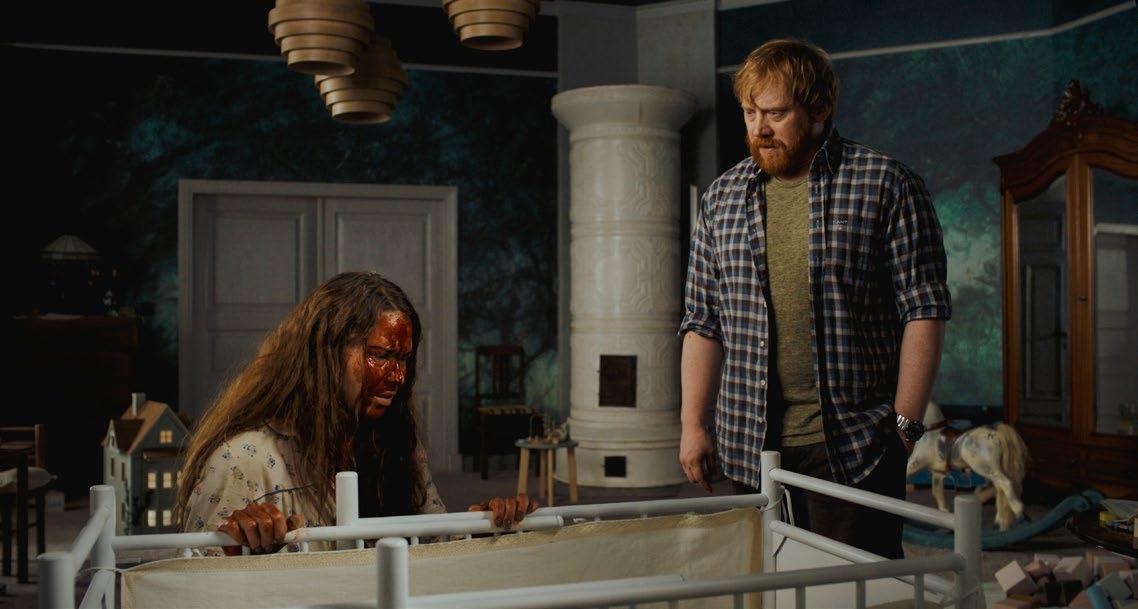
This year, the Finnish–Lithuanian–French–UK co-production Nightborn, directed by Hanna Bergholm, will compete in the Berlinale Competition.
By Mintarė Varanavičiūtė
Lithuanian co-producer Artūras Dvinelis shares his experience of working on the film.
What inspired you to join this project?
I was invited to join the project by Finnish producer Daniel Kuitunen. I was immediately drawn to the story and the well-written script, and it was clear that bringing this film to life would be a real challenge –which is exactly the kind of project I enjoy being part of.
How was the collaboration with the other producers?
A highly professional and experienced team of producers came together for this project. Each producer had a clearly defined area of responsibility, yet everyone was quick to step in whenever support was needed, whether to solve a problem, address a question, or handle shared tasks. It was an extremely efficient collaboration.
What would you highlight about working with the film’s director?
There are many qualities I could point to, but above all, she is highly talented and has a very clear vision. She knows exactly what each scene – and the film as a whole – needs and pays close attention to detail. That level of knowledge, precision and focus leads to great results.
What was Lithuania’s contribution to the making of the film?
The entire film was shot in Lithuania. Lithuanian filmmakers worked closely with colleagues from Finland and the United Kingdom throughout the development, production, and post-production stages. The majority of the crew consisted of Lithuanian film professionals.
What makes this film stand out? Which elements are likely to capture the audience’s attention most?
What makes the film special is how all its elements work together – a compelling story, strong performances, a carefully crafted atmosphere, and sets that feel almost like characters, all brought to life through unconventional technical solutions. BF
Dreaming of a perfect family life, Saga (played by Seidi Haarla) and her British husband Jon (Rupert Grint) retreat to a remote house deep in the forest – a place tied to Saga’s childhood. When their long-awaited child is born, Saga begins to sense that something is deeply wrong. As the child grows, the house becomes the stage for increasingly strange and unsettling events. While Jon struggles to hold their marriage together, Saga guards a terrifying secret about their son – a truth she is willing to protect at any cost, even from the child’s own father.
Original title: Yön lapsi Horror, 92 minutes
Director: Hanna Bergholm
Producer: Daniel Kuitunen (FI)
Co-producers: Artūras Dvinelis (LT), Noemie Devide (FR), Christopher GranierDeferre (UK), Alain de la Mata (UK)
Production companies: Komeetta Oy (FI), Filmai LT (LT), Getaway Films (FR), Bluelight (UK)
Estonian producer Johanna Maria Tamm has been chosen for this year’s Berlinale Talents, joining 200 filmmakers from over 3,400 applicants globally.
By Eda Koppel
This year’s Berlinale Talents theme centres on confusion, chaos, and discomfort. How does this reflect the types of projects you choose to stand behind?
Even though the control freak in me struggles with it, confusion, chaos and discomfort are essential parts of any creative journey – especially when working with socially relevant topics. I recognise this theme less in the projects themselves and more in the process. With every film, I try to firmly hold on to the moment I first committed to the journey: that initial sense of urgency, when everything still feels clear and exciting, and anything seems possible. When things later turn upside down, returning to that moment helps me remember why this story needs to be told.
You emphasise trust-based, longterm collaborations. Why are they so important when working with challenging material?
I deeply value the moments when an author admits they are stuck and don’t know how to move forward. There is something very human and vulnerable in that, and it takes real courage to say it out loud. Making a film inevitably involves struggle, and being able to speak openly about doubts on both sides is fundamen-
tal. Honesty and vulnerability create the trust that allows a project to survive its most difficult moments.
Producers often balance creative ambition with practical realities. How do you protect a film’s emotional core?
One very practical tool is to map out the non-negotiables with the director early on. No matter how much the boat rocks later, there is something solid to hold on to. During development, I also like to stay very close to the material and often create a mood board or pitch deck myself. Once I can visually express the story in a way that aligns with the director’s vision, I know we are sharing the same emotional core and that stays with me throughout the process.
Being selected among 200 Talents worldwide is a significant recognition. What are you hoping to gain from Berlinale Talents at this point in your producing career? It truly feels like a recognition, and I’m
very grateful to be among the Talents heading to Berlin. More than anything, I’m looking forward to building relationships that go beyond professional collaboration — connections based on shared experiences and mutual affinity. Filmmaking means spending a lot of intense time together, so those human connections matter deeply to me.
Coming from a small film country like Estonia, how do international networks influence your work going forward?
Telling local stories and working with our own talent is extremely important to me, and I have never felt the urge to work elsewhere. At the same time, international collaboration has shaped how I approach these stories. It has taught me that cinema can be deeply local while still resonating globally, and that specificity is often what allows a story to travel. Spaces like Berlinale Talents encourage me to think more openly, challenge assumptions, and explore new ways of working across borders. BF
by
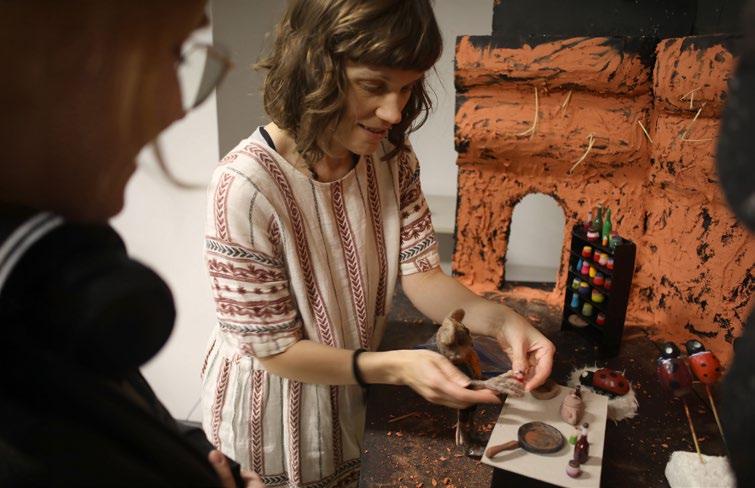
The animation department of the Estonian Academy of Arts has nurtured international talent for nearly two decades.
By Aurelia Aasa Photos by Francesco Rosso
While the school is known for its auteur-centric approach, in recent years its focus has increasingly shifted toward stop motion, a technique many film schools are quietly abandoning citing lack of space and resources.
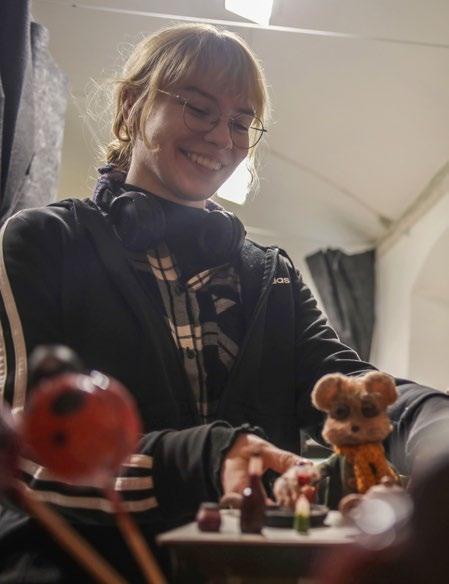
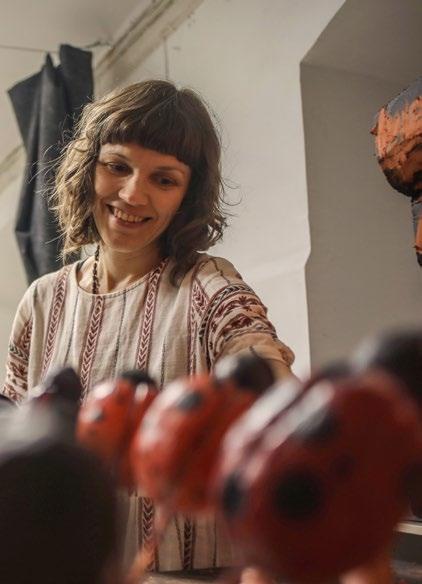
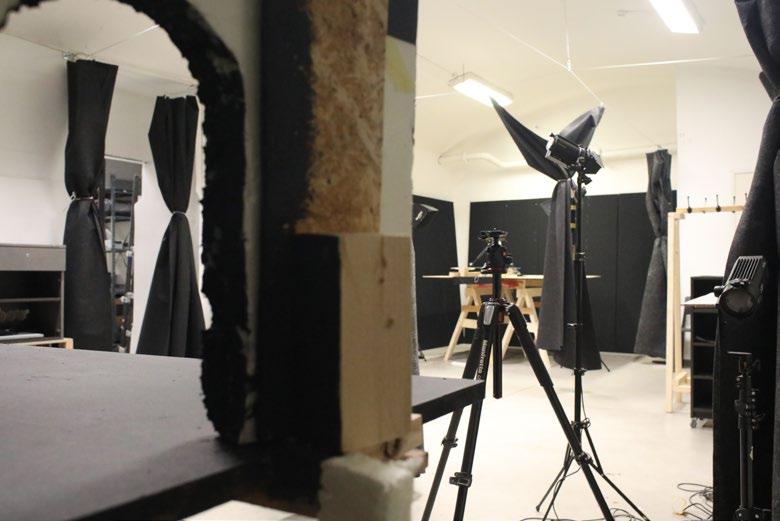
At EKA, however, animation is not shrinking. It is expanding. Quite literally: the department is now renting additional studios to allow students to explore the medium. “We needed a space where you can really work with your hands – where you can saw, build, paint walls, and set up lighting,” says Anu Laura Tuttelberg, a lecturer at the Estonian Academy of Arts. “Stop motion needs room to breathe.”
One of the most notable recent successes
to emerge from EKA is Natalia Mirzoyan’s Master’s graduation film Winter in March, which premiered in the La Cinef selection at Cannes Film Festival and was later longlisted for the Academy Awards. Mirzoyan, an experienced director, joined EKA with a clear intention: to make a stop-motion film.
“It was obvious from the start that a 15-minute stop-motion film was an ambitious choice for a school film,” explains Anu Laura Tuttelberg. “From our side at EKA, we started looking for additional hands, including students who could help with the production. Our technical specialist, Sander Põldsaar, stepped in as director of photography as the film involves quite demanding camera movements.”
As the project expanded, it soon outgrew the school environment. At one
point, producer Kadriann Kibus joined, and what began as a student film developed into an international co-production between Estonia, Armenia, France, and Belgium.
Still, Tuttelberg notes, such a scale is far from typical in an educational setting. “Our students are very different. Occasionally, someone arrives who already has an exceptionally high level and a strong artistic ambition. In those cases,
our role is to support the process rather than limit it.”
In most cases, however, the approach is very different. Especially at the bachelor’s level the emphasis is on shorter, exploratory projects. Students usually create micro-films that allow them to experiment with different techniques, from stop motion to 3D.
“Students mix techniques all the time,” explains Tuttelberg. “They work with cutout and stop motion, and combine these with hand-drawn animation, digital techniques, and sometimes even live action.”
“At EKA’s animation department, we always find a way,” adds Pikkov, the head of the department. He emphasizes that the school’s most defining character-
The Master’s Curriculum at Animation
Admissions
01 February – 02 March 2026 (MA)
Requirements
Must hold a bachelor’s degree.
Duration 2 years
Language
MA / English (English proficiency at least B2)
EKA’s animation department is among the most competitive at the university. At the bachelor’s level, around 50 applicants compete for just eight spots.
istic is its auteur-centric approach, which allows students to grow in their own individual direction.
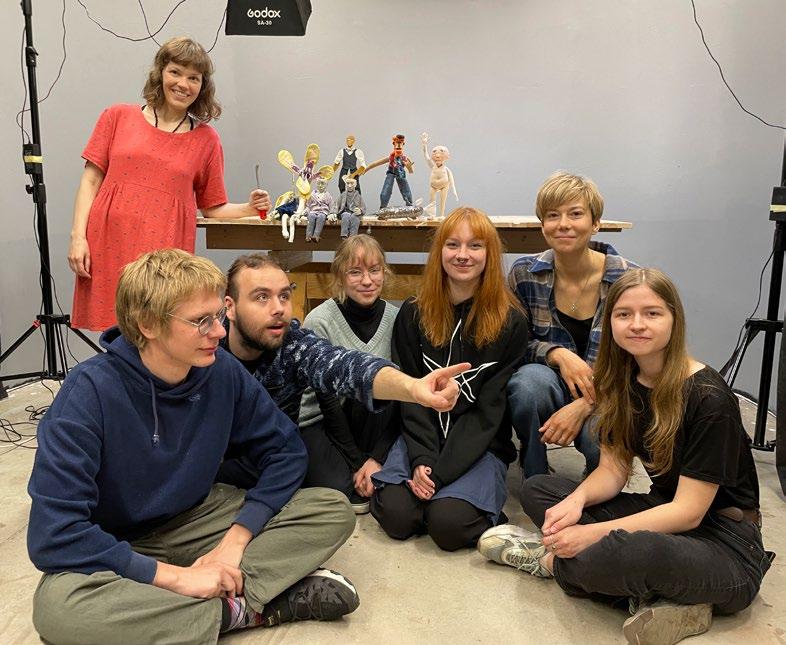
This tailor-made philosophy is reflected in the numbers. Each year, only eight students are accepted into the bachelor’s program, and another eight into the master’s. “When I’m teaching puppet-making or animation, I can’t work with twenty-five students if I want to give each of them real individual attention,” Tuttelberg explains.
At the same time, EKA’s animation department is among the most competitive at the university. At the bachelor’s level, around 50 applicants compete for just eight spots. At the master’s level, the number is slightly lower, but still typically between thirty and forty applicants. Admissions for the EKA animation department are currently open. The Master’s Curriculum is taught entirely in English. BF
by Ülo PIkkov
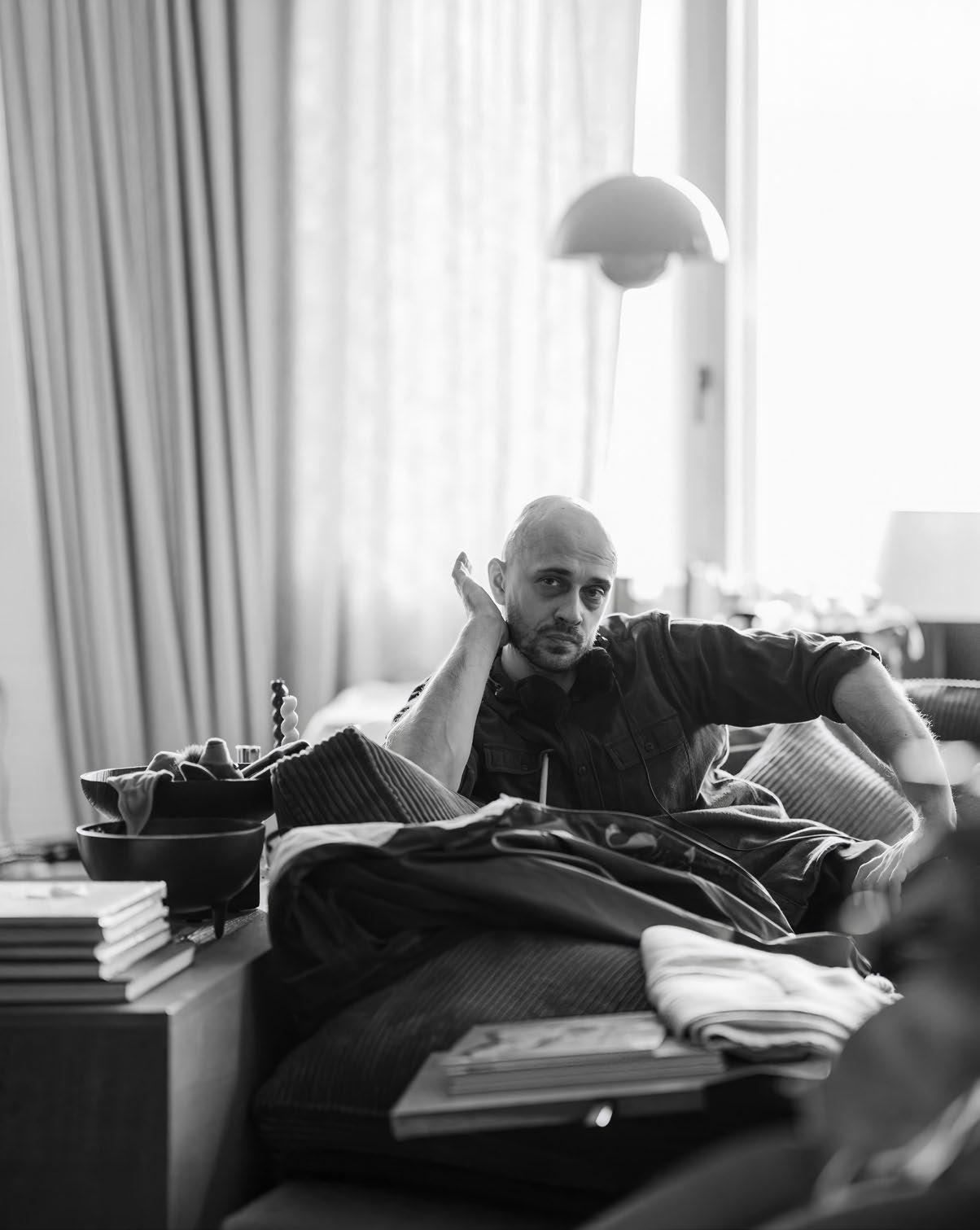
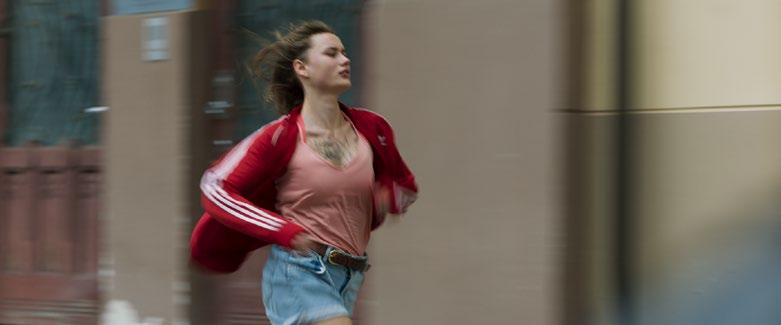
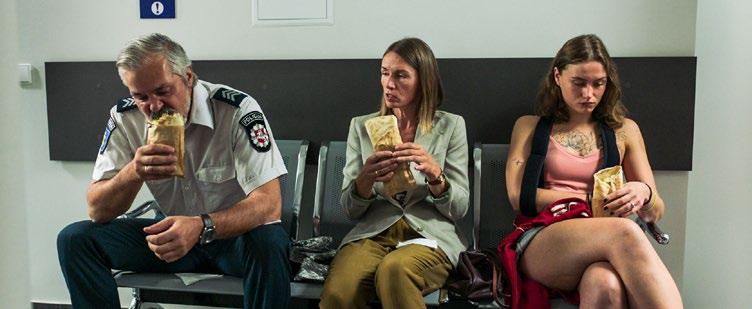
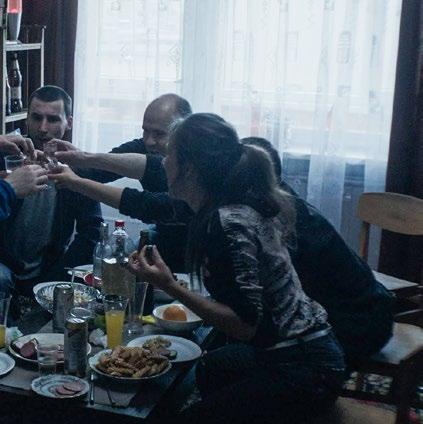
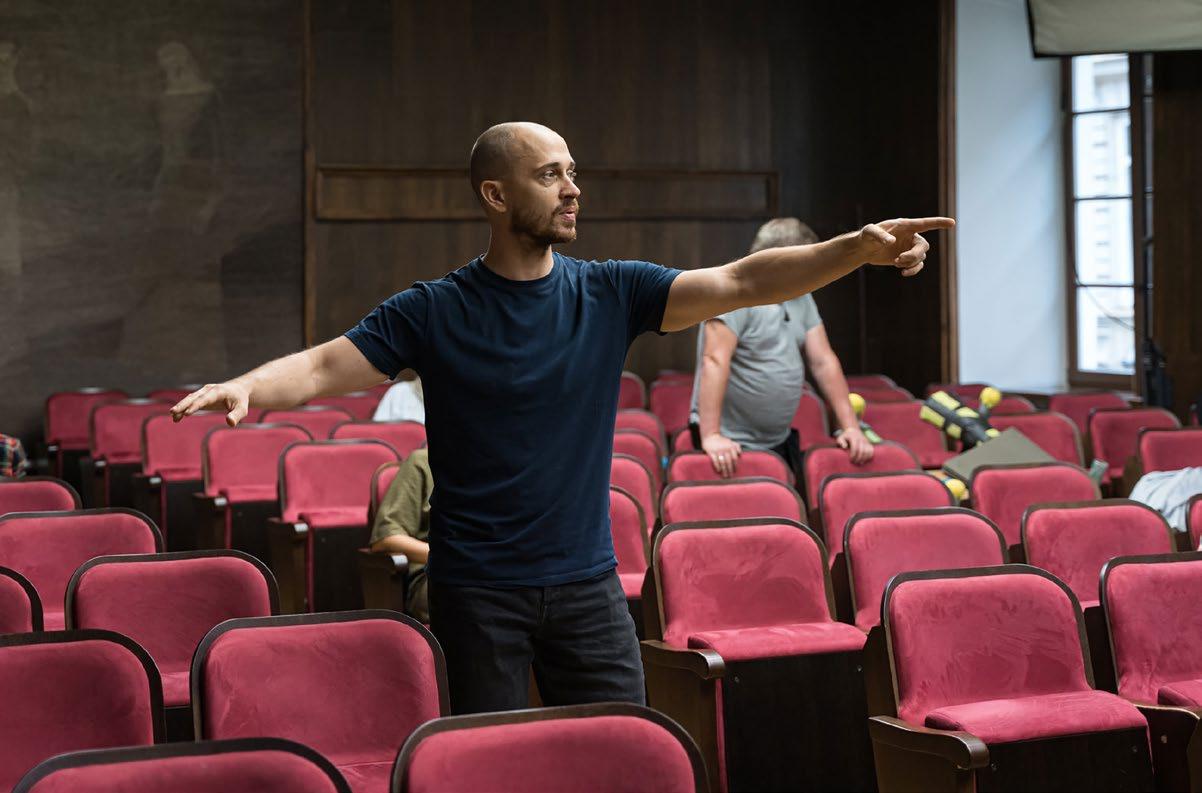
The end of 2025 brought big news for Lithuanian cinema: How to Divorce
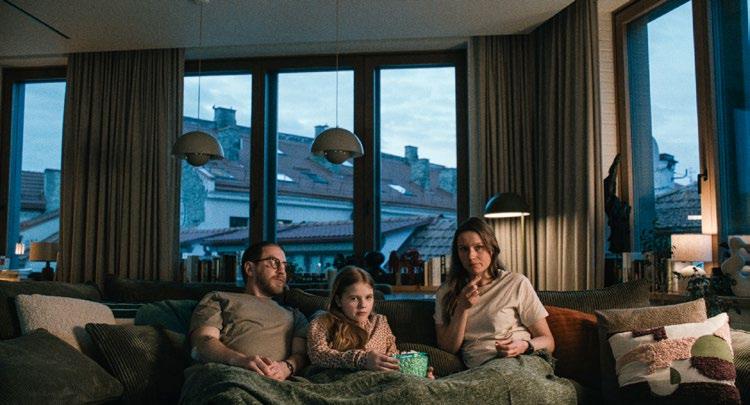
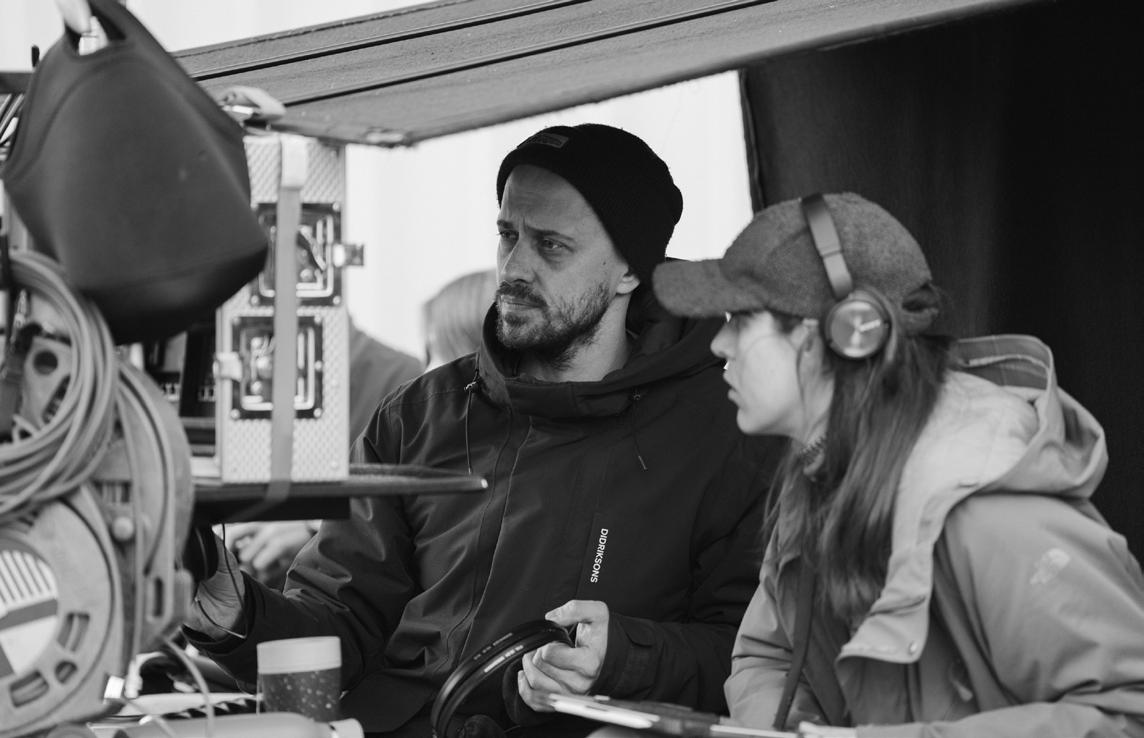
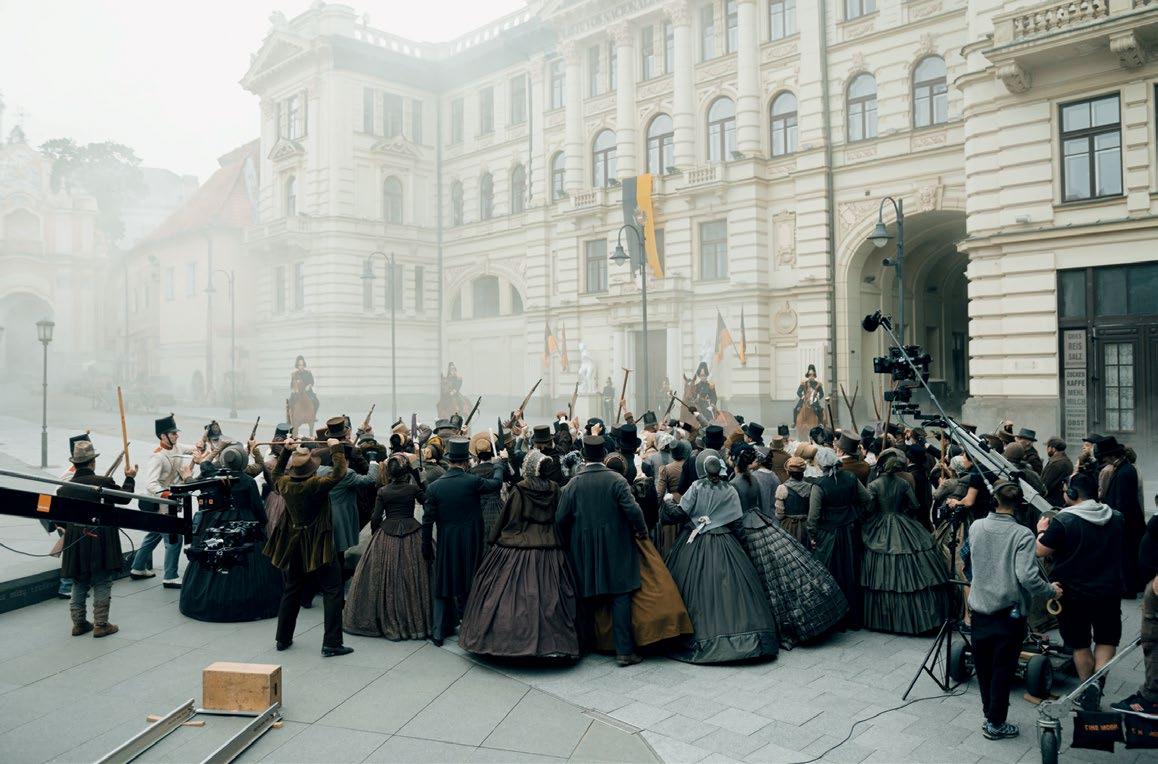
During the War, the latest film by Andrius Blaževičius, was selected for the prestigious Sundance Film Festival. A few weeks ahead of the world premiere, the director took a moment to reflect on his creative process, recurring themes, and the social realities that continue to shape his work.
By Mintarė Varanavičiūtė
Photo by Ieva Jūra
Let’s start at the beginning. Where did your love for cinema come from, and how did you end up in filmmaking?
I can’t say exactly where it comes from, but my love for cinema has been with me for as long as I can remember. Perhaps it has something to do with growing up in the 1990s, when films often depicted a world that felt more beautiful than the one around us. Also, as a child, I was always a storyteller. I remember gathering my cousins and other children somewhere in the countryside and telling them stories. That impulse stayed with me from an early age, and cinema eventually became my main form of expression.
Do you manage to find time to watch new films these days?
To be honest, the past year I barely did. It was something of a personal anti-record, both in terms of books read and films watched. I was working more than ever, which, in a way, is a good thing, especially when I think back to the pandemic years. When I do watch films, it’s largely the same as for most people: I try to keep up with current trends, watch festival selections, and over the course of the year I get the chance to see many short films. This season, Mascha Schilinski’s Sound of Falling made a particularly strong impression on me.
Your third feature is about to be released, following six shorts. How do ideas for your work usually come about?
They almost always begin with something personal – a moment or experience that deeply affects me. At the same time, I don’t want my films to exist solely within my own experience; it’s important to me that they are grounded in a wider social and cultural context. For
instance, The Saint was strongly shaped by the 2007–2008 financial crisis. Runner was more closely connected to personal experiences and a growing sense of an impending war. The idea for the third film came up after Russia’s invasion of Ukraine, when everything around started to shake. I began observing myself and my surroundings more closely, and through that process a central conflict emerged.
Which part of the creative process is the most difficult for you, and which do you find the most enjoyable? They are all difficult and enjoyable in their own way. Take writing, for example: finishing a draft feels great – there’s a real sense of satisfaction. But once editing starts, that’s when the hard work sets in. Then comes financing, the search for co-producers, compromises, and so on. Still, the most psychologically challenging phase comes after the film is released. You start dreaming, hoping to be selected by certain festivals, wondering how audiences will respond. Experiences like these are very effective at deflating your ego – they make you way more humble.
Since 2010, you have been a programmer for the Vilnius Short Film Festival. Is maintaining an active relationship with short films valuable to you as a filmmaker, and why? What trends do you notice?
Short films are often made by younger filmmakers – not always, of course, but most often. There’s a lot of experimentation there, which is incredibly valuable. You can observe what’s coming, what lies ahead. It’s very important not to lose that connection. That said, there aren’t that many directors who have transitioned very successfully from short to feature films. Over the past fif-
teen years, a few names come to mind –most notably Laurynas Bareiša and Vytautas Katkus. It feels like we’re currently in a transitional period, waiting for something to break through again.
In your first feature film The Saint, the lead role was played by the wellknown Lithuanian theatre and film actor Marius Repšys, with whom you began collaborating even earlier and continue working with to this day. In each of your films, his character is named Vytas. Is there something that connects these characters? If they met, would they have anything to talk about?
I don’t know, you’d have to ask them. I tend to reuse other names in my films as well; they move from one film to another. Each time I make a film, I consciously think of it as a story about our country, so the names are very Lithuanian. Another recurring element is working with the same actors. I understand that for some people this might become repetitive, but when a new film appears only every four years, perhaps it doesn’t feel that way. For me, it allows me to capture the passage of time. When I think about the short films Marius appeared in and compare them to the lat-
est one, I become very aware of time itself. There’s an added layer of meaning in that.
You co-wrote the scripts for The Saint and Runner with sisters Marija and Teklė Kavtaradze. You’ve said in the past that you couldn’t imagine writing a script alone, yet How to Divorce During the War was written on your own. What changed?
When we were writing The Saint, we were all much younger, and coordinating our time was easy. By the time we were working on Runner, it had already become more complicated. My ideal way of working was always for the three of us to write together, at the same time, in the same room – and eventually
that was no longer possible. Over the years, we also changed as people, as did our tastes and priorities. That said, we’re still on good terms and remain close. I had long wanted to try writing on my own, but I had hesitations. I spent several years feeling frustrated with ideas, but then this one arrived, and everything fell into place.
How to Divorce During the War is a Lithuanian co-production with Luxembourg, Ireland, and the Czech Republic. How did this collaboration help you, and what did it bring to the film?
The number of co-producers was quite unexpected. But as soon as we started attending film markets, we could already sense that the project was gaining interest. We were selected for the Nordic Co-Production Market in Haugesund, which is a very important forum in Scandinavia and already difficult to get into. Later, we were chosen for the Berlinale Co-Production Market, which felt almost unreal. That’s where we connected with Luxembourg, so it brought very tangible benefits. The Czech collaborators were the same ones that we had worked with on Runner
Working with other countries is always daunting. In Lithuania, I know exactly who’s reliable and performs at a high level. Abroad, you can see people’s CVs, but you don’t know what they’re really like. Thankfully, everything went really well.
At every stage, I was impressed by the people we worked with. They knew exactly what they were doing and could offer valuable guidance. That’s crucial, because carrying a project alone is incredibly difficult. When collaborators
bring their own contributions, the project gains so much more depth and value.
The two lead roles are played by your long-time collaborators –Marius Repšys, whom we’ve already mentioned, and Žygimantė Elena Jakštaitė, who played the lead in Runner. Was this decision made from the start, or did you consider other actors as well?
There was no casting process. I had a few other thoughts along the way, but the original idea stayed the same – and I believe it was the right choice. Here, two protagonists from two different films come together, and now they share the spotlight. And honestly, I really enjoy working with the same people. I think that if I had children, I’d raise them to work with me as well. I want the environment on set to feel as safe and comfortable as possible. The better you know the people around you, the safer you feel, and that’s very important to me.
Did anything about their on-screen relationship surprise you, or did it turn out as you expected?
It turned out exactly as I’d hoped. In real life, Marius was once Žygimantė’s teacher. I needed them to portray two people who don’t particularly like each other, nothing romantic, so that dynamic worked perfectly.
In The Saint, the story took place in a provincial town; in Runner, it was set in Vilnius. For the sake of continuity, one might expect the third film to return to a smaller town – yet it’s once again set in Vilnius. Could the story have been told elsewhere, or does Vilnius itself become a character? It does become sort of a character. The story could perhaps have taken place in another city, like Kaunas or Klaipėda, but it needed to be a major urban environment. The main characters belong to the upper middle class and live in a very specific socio-economic bubble, which would be hard to imagine in a provincial town. That said, I travel a lot
by
around Lithuania, and I know people like this live everywhere. Still, it felt natural and self-evident to set the film in the capital. It would be interesting to imagine how the story might change in a different setting.
The title itself points us toward divorce and war, yet I can assume that there are more nuances beneath the surface. What other questions does the film raise for the viewer?
While writing, I was thinking about the tendencies that I see. One of the central themes is conformism and the everyday compromises we make. The world may feel like it’s falling apart, but life goes on, and in those moments you’re constantly forced to make choices. Another important layer is that while the characters are going through a divorce, there’s also a metaphorical split taking place within society itself. That division began during COVID and was intensified by social media. The film captures a sense of fragmentation – clashes between different views and ways of seeing the world – yet no one really talks to one another, much like in real life.
Working with other countries daunting. Abroad, you can see people’s CVs, but you don’t know what they’re really like. Thankfully, everything went really well.
What is your mindset as you prepare for Sundance? Being selected by a festival of this calibre must bring some reassurance.
Just being selected already feels like a victory. When I learned that around 2,500 to 3,000 films from all over the world apply, and that only 10 narrative and 10 documentary films are chosen, the scale was staggering. Being picked from such a field is incredibly gratifying. I won’t hide it – I was thrilled, but also surprised. For instance, I always imagined that Marija Kavtaradze would make it to Sundance – and she did – but I never thought that would happen to me.
Unfortunately, due to financial limita-
tions, only a small part of the Lithuanian team will be able to attend. Just a few days later, however, the European pre miere will take place at the Göteborg Film Festival, which may allow more people from Lithuania to be there. I’m curious to see how the film will be received in Europe – and whether it will resonate in the U.S., because in my view it’s a very European film.
What’s next? Are new ideas already taking shape? Will Vytas return to the provincial town?
It’s quite possible. I’ve been thinking about it, especially since I spend a lot of time there for work. I’d like that to happen. BF
up to € 30,000
Supporting co -productions between Lithuanian and international filmmakers
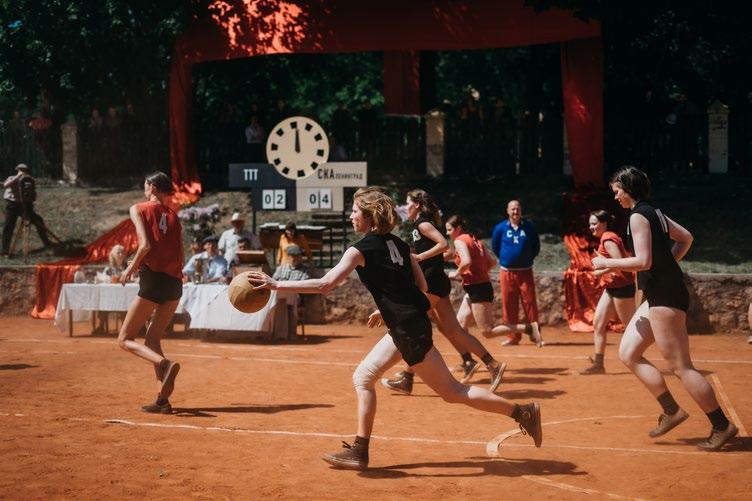
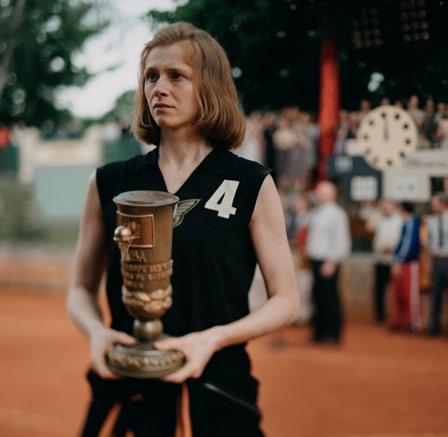
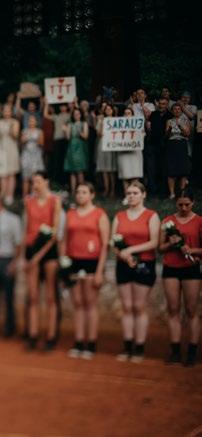
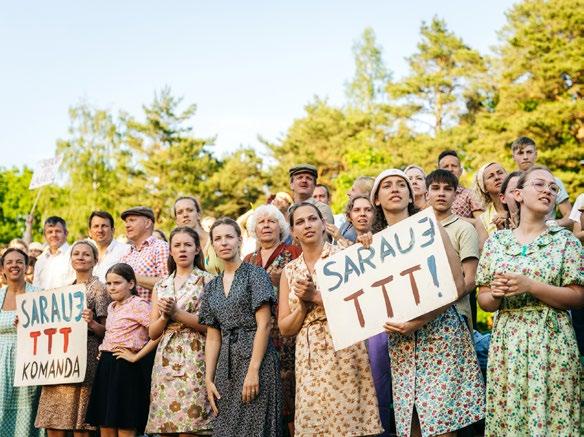
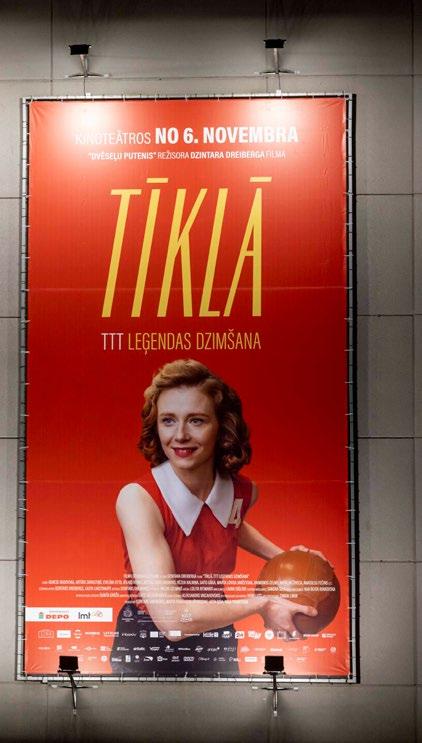
At the heart of the film lies a true story and a real historical figure: Dzidra Uztupe-Karamiševa (played by Agnese Budovska), the first captain of TTT.
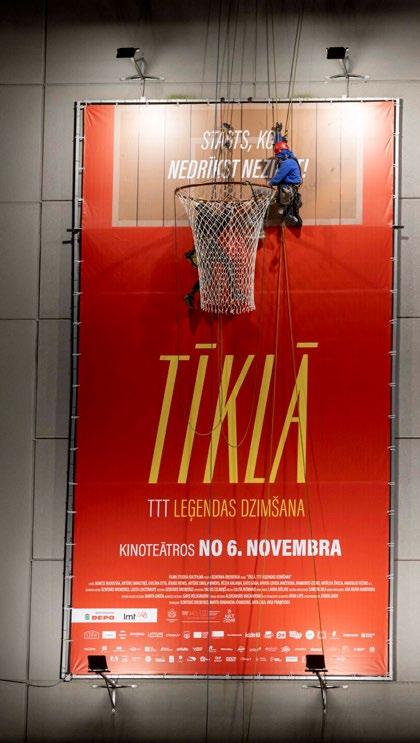
Latvia’s latest box office sensation, the feature film Escape Net, arrives at its market premiere in Berlin after becoming the third most watched domestic live action film of the past thirty years – an achievement reached within just two months of its local release.
By Kristīne Matīsa Photos by Raimonds Birkenfelds and Jānis Konons
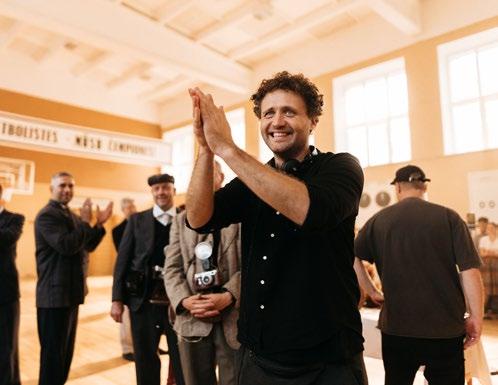
Its popularity is hardly surprising. Director Dzintars Dreibergs had already topped Latvia’s all-time box office charts with his debut feature Dvēseļu putenis / Blizzard of Souls (2019), and might well be regarded as the country’s most prominent and bestloved feature film director. His success is closely tied to his commitment to historical themes. Blizzard of Souls was based on Aleksandrs Grīns’ patriotic novel about Latvian soldiers during the First World War and the subsequent War of Independence. Escape Net shifts to the 1950s, a period overshadowed by Soviet occupation, and tells the story of people who managed to preserve their inner freedom and courage even under oppressive rule – fighting, at the very least, on the basketball court, representing their nation and defeating opponents who could not be
challenged in any other arena. For small nations, sport was one of the few ways to assert themselves as representatives of their own people and republic.
At the heart of the film lies a true story and a real historical figure: Dzidra Uztupe-Karamiševa (played by Agnese Budovska), the first captain of TTT, the women’s basketball team that would go on to become the greatest women’s basketball team of the 20th century. Under her leadership, TTT began its extraordinary rise, ultimately winning 12 consecutive USSR Championship gold medals and 18 European Champions Cup titles (the precursor to today’s EuroLeague), and earning a place in the Guinness World Records. Yet the film is not only about sport. For Dzidra, victory on the court also means a rare opportunity to travel outside the USSR – and to nurture

the hope of one day finding her beloved brother, who fled into exile when she was still a young girl.
“This is a story about resisting fear, about not giving up, and about outsmarting the Soviet system – inspiring others and strengthening belief in oneself. The birth of TTT, the courage of Dzidra Karamiševa and many others shaped our national spirit and helped maintain hope until Latvia regained independence.”
The supporting cast is also rooted in real historical figures – including Dzidra’s husband Aleksandrs Karamiševs (Jēkabs Reinis), an outstanding racing driver and member of the USSR national team; the team’s coach Oļģerts Altbergs (Gatis Gāga), whose innovations still influence modern basketball; and Dzidra’s teammates, including the remarkable Skaidrīte Smildziņa, then only sixteen, later to become one of the most decorated athletes in European women’s basketball. At the 1964 World Championship, she was recognised as the world’s best centre and awarded the honorary title Miss Basketball Mundial.
A particularly inspired casting decision was the choice to invite a real basketball player to portray Smildziņa: Evelīna Otto, already well known in the sports world. She has represented Latvia in every youth national team age group, made her debut with the senior national team, and currently studies in the United States while playing in the NCAA Championship. Cast at the age of eighteen, she has now earned a Best Supporting Actress nomination at the National Film Awards.
Latvian Title: Tīklā. TTT leģendas dzimšana
Studio: Kultfilma / Latvia
Duration: 110 min, feature film
Director: Dzintars Dreibergs
Screenplay: Dzintars Dreibergs, Ligita Lukstraupe
Cinematography: Valdis Celmiņš
Composer: Lolita Ritmanis
Production Designer: Laura Dišlere
Editor: Gatis Belogrudovs
Sound Director: Aleksandrs Vaicahovskis
Cast: Agnese Budovska, Jēkabs Reinis, Gatis Gāga, Artur Smolianinov, Artūrs Skrastiņš, Rēzija Kalniņa, Evelīna Otto, Natālija Živeca, Anatolijs Fečins
Producers: Dzintars Dreibergs, Marta Romanova-Jēkabsone, Arta Ģiga, Inga Praņevska, Ilona Bičevska
International Sales: Begin Again Films
The film’s creative team has attracted significant recognition. Escape Net has received thirteen National Film Award nominations, including Best Feature Film. Agnese Budovska is nominated for Best Actress. She trained intensively for the role, prompting her coach to declare that her choice of acting over sport is a major loss for the basketball world.
Cinematographer Valdis Celmiņš is nominated for Best Cinematography. Working closely with the director, he developed an unusual approach to filming the basketball sequences: instead of observing from the sidelines like a traditional television broadcast, he shoots from within the court, moving among the players in the heat of the game. This gives the audience a visceral sense of the sport’s energy and the intensity of the struggle.
International distribution is handled by the Madrid-based company Begin Again Films. Co-CEO Gloria Bretones comments:
“Escape Net is a deeply moving film with a universal story that resonates beyond cultural borders. The strong response it has received in Latvia gives us confidence in the film’s ability to travel internationally, as at its core it is driven by emotions and human experiences that audiences everywhere can relate to.” BF
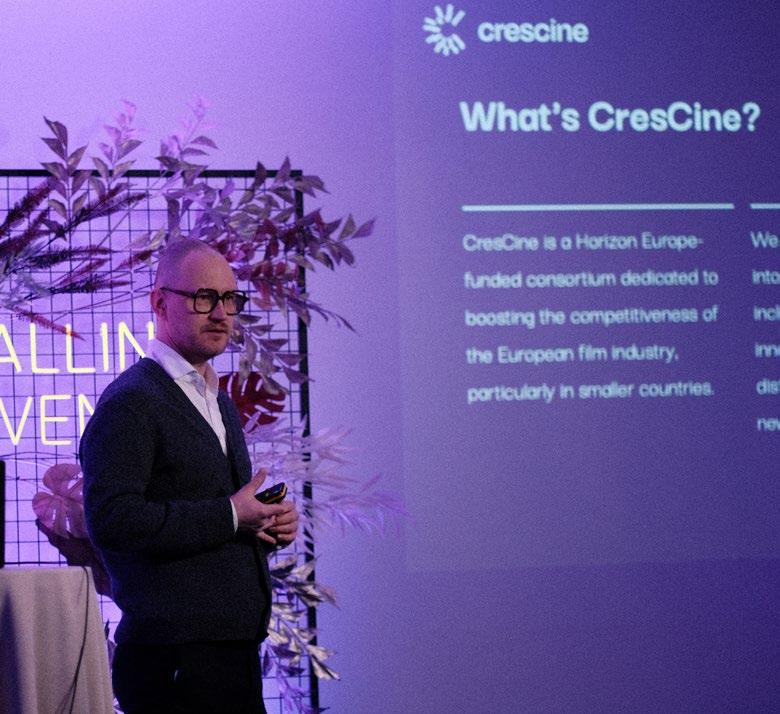
A recent European study conducted within the Horizon Europe–funded CresCine project offers rare empirical insight into learning practices and skill priorities in small European film markets.
By Mikk Granström Photos by Janis Kokk
In the film industry, learning rarely follows a straight or predictable path. Most professionals acquire their skills through projects, festivals, markets, workshops, and peer collaboration rather than formal education.
At a time of rapid technological, economic, and structural change, understanding how filmmakers learn and how learning connects to professional sustainability has become increasingly urgent.
These questions were central to the CresCine research project (Increasing the International Competitiveness of the Film Industry in Small European Markets), which surveyed 355 film professionals across Europe and published its findings in early 2026.
While respondents came from a wide range of countries and professional roles, the findings are particularly relevant for filmmakers working in small and medium-sized markets. In these contexts, project-based employment dominates, and resources are limited. And professionals are often required to combine creative, managerial, and entrepreneurial roles in order to sustain a career.
One of the clearest findings is that film professionals are highly motivated to learn. Almost all respondents expressed a strong interest in developing new skills and agreed that continuous learning is essential for their professional future. At the same time, the study reveals a critical tension between motivation and capacity. While the desire to
learn is widespread, the financial and structural ability to engage in training remains uneven and, for many, fragile.
For filmmakers in small markets, this gap is a familiar reality. Careers are shaped by short-term contracts, irregular income, and long development cycles between projects. Investing time and money in professional development can feel risky when future work is uncertain. Importantly, the study shows that this challenge is not limited to early-career professionals or freelancers. Even producers and company owners report similar constraints, reflecting the dominance of micro-enterprises and small teams across Europe’s film landscape.
Equally revealing is how film professionals prefer to learn. Informal, practice-based, and networked learning environments are consistently valued more highly than formal academic programmes. Workshops, masterclasses, festivals, markets, and peer-to-peer exchange are identified as the most important learning contexts. These spaces matter not only for networking, but
because they enable the transfer of tacit knowledge: how decisions are made, how collaborations function, and how problems are solved under real production conditions. Online courses and e-learning formats are appreciated for
ognise that creative strength by itself is no longer sufficient to sustain a career.
This is especially relevant in small-market contexts, where filmmakers often have to initiate projects themselves, navigate complex funding sys-
Motivation to learn is high, but the ability to invest in training remains uneven.
their flexibility and accessibility, but are seen mainly as complementary. Respondents rate them as less effective for long-term career development than in-person learning.
Another significant finding concerns which skills film professionals believe they will need most in the future. Rather than storytelling alone, respondents most frequently point to business and finance, marketing and PR, and innovation and technology. Storytelling remains fundamental, but many professionals now rec-
tems, manage international co-productions, and actively position their work in global markets. The study shows that these pressures are widely shared across roles and experience levels. Writers, directors, and producers increasingly see entrepreneurial, financial, and technological skills as integral to creative work rather than external add-ons.
Interestingly, the research finds fewer differences than expected between creative and managerial roles, or between early-career and highly experienced professionals. Skill priorities appear to be converging, suggesting that role boundaries are blurring and adaptability has become a shared requirement across the industry. Learning, in this sense, is no longer confined to the early stages of a career or to moments of transition, but is embedded in everyday professional life.
For film professionals working in small markets, the message is both reassuring and challenging. The research validates lived experience: learning happens between projects, through peers, and within industry spaces. At the same time, it highlights a structural problem. Motivation is high, but access remains uneven. Addressing this gap requires not only individual effort but also training models and policies that reduce financial barriers and embed learning more deeply into existing professional ecosystems. Ultimately, the CresCine study underscores a simple but crucial point: in today’s film industry, learning is not a side activity or a temporary phase between productions. It is the connective tissue that holds careers together in an environment defined by uncertainty and change. BF
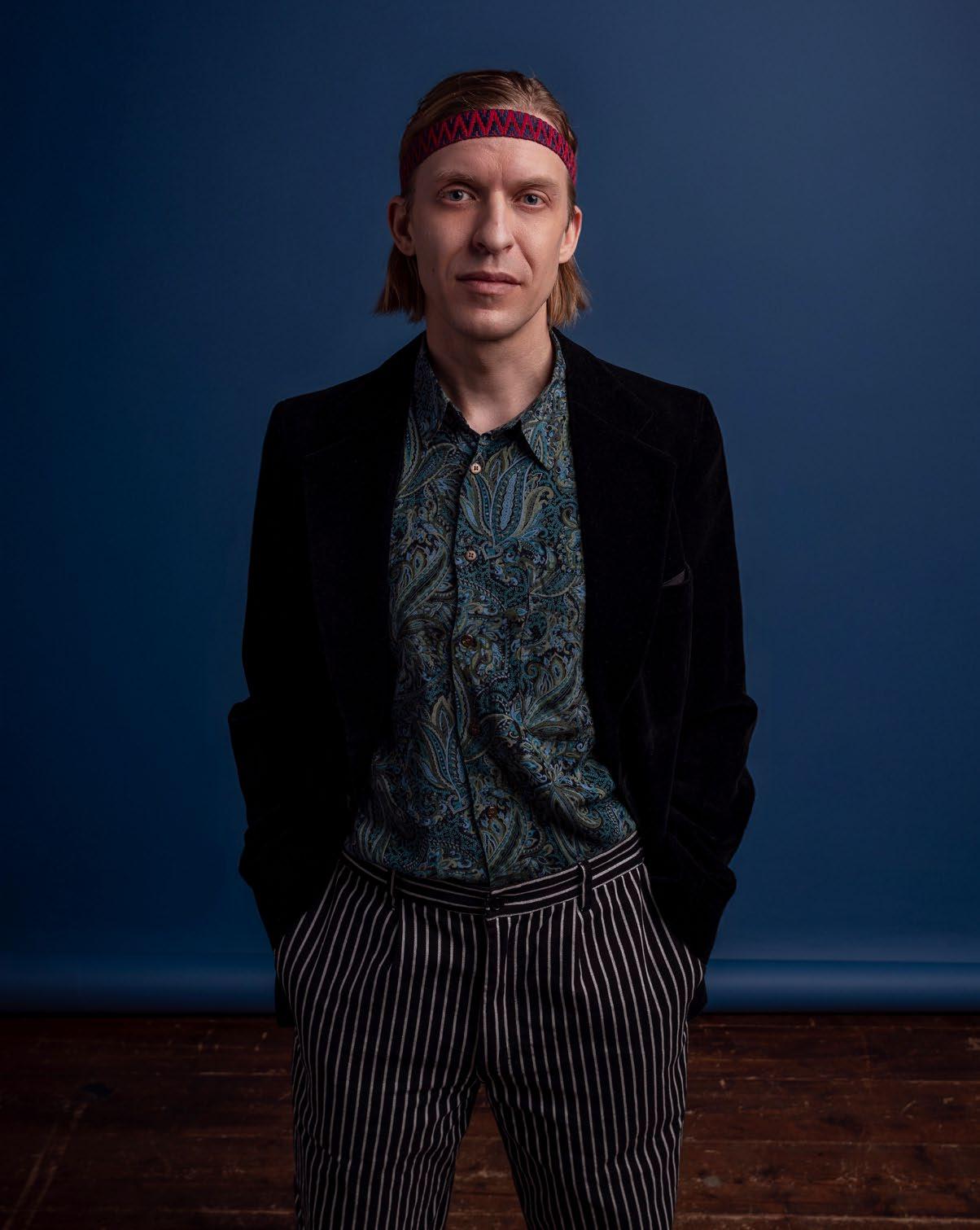
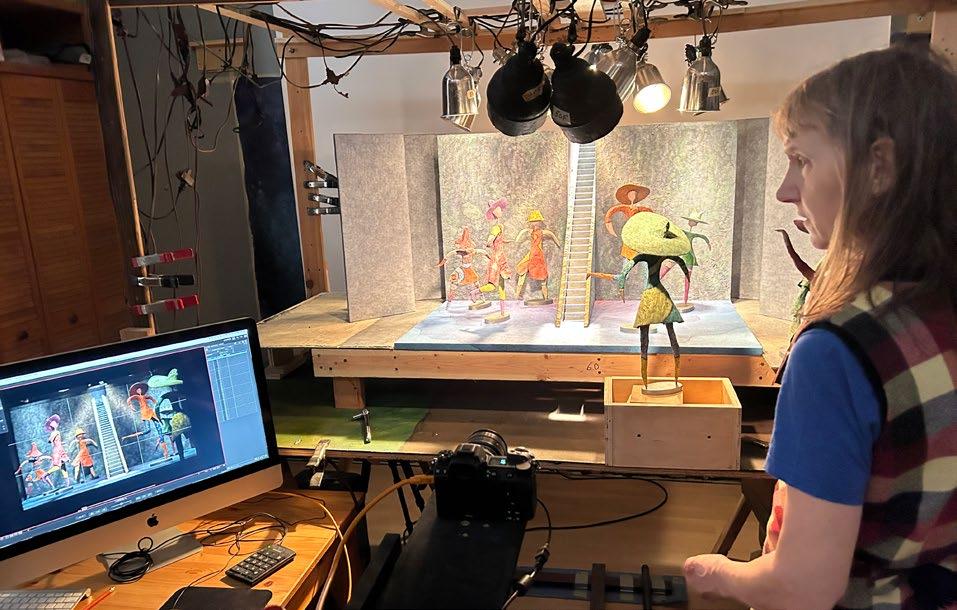
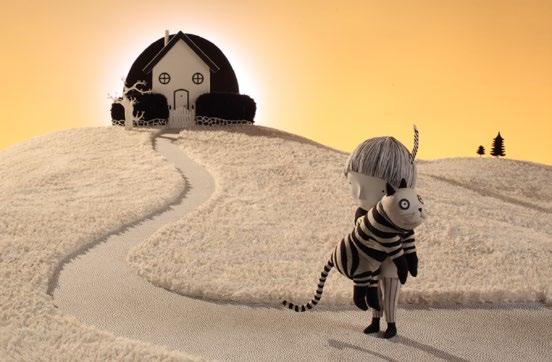
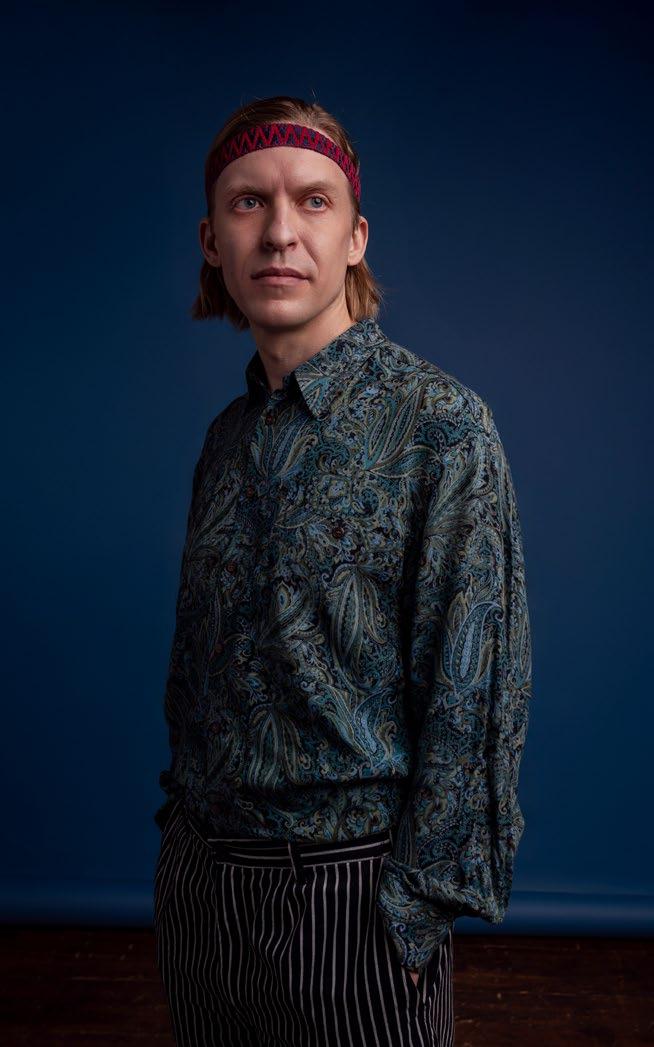
Estonian stop-motion animation has premiere in Berlinale 2026 edition. Generation Kplus competition represents visual artist Jonas Taul (1986) with his latest short
By Tõnu Karjatse
Photo by Sohvi Viik-Kalluste
Jonas studied audio-visual art at the Gerrit Rietveld Academie in Amsterdam, and animation at the Estonian Academy of Art. His competition short is based on his debut picture book that received immediate international and domestic acclaim after publishing.
If we start from the title of the book, if we translate it straight from Estonian, it is called Night Thoughts. Why in the film is it translated otherwise?
Because I had been living away from Estonia for a long time, I actually wrote the book in English. The original title was A Serious Thought, but when I started working with the Estonian publisher, she felt that a direct translation didn’t work. That’s when we came up with the Estonian title instead.
This also isn’t the first book I’ve made. My first book was “Üks imeline mees” (The Most Exquisite Man, 2021), which later became my first film. While that book was already finished, I showed my publisher my sketches for “Öömõtted”. She immediately felt that this project leaned more toward a children’s book and suggested publishing it first. In that sense, the order of the films is chronological but not the books.

So these stories are sort of connected?
Yes, I’ve always thought of them as being connected, almost like a yin and yang. One is about a child experiencing their first existential crisis, and the other is about an adult going through an existential crisis while approaching the end of their life.
And also, The Most Exquisite Man is more about time, and this one is more about space. I also noticed, that if the time is contracting in The Most Exquisite Man, then the space is sort of expanding in A Serious Thought. Absolutely. Perspective is a good word for it. That shift is also something that happens as you age –time starts to behave very differently. It’s always morphing. For a child, time feels endless, but the older you get, the more it begins to feel as if it’s running out. At least, that’s how many people experience it. I think that’s part of the existential dilemma, because time signifies the fact that we are all going to die.
Do you think about some sort of audience writing these stories or is it more a contemplation for yourself?
“Öömõtted” is a biographical book in the sense that its core idea – being a child and having thoughts in the evening – comes from a frightening experience in my own childhood. It was the moment when I first understood that we live on a planet in endless
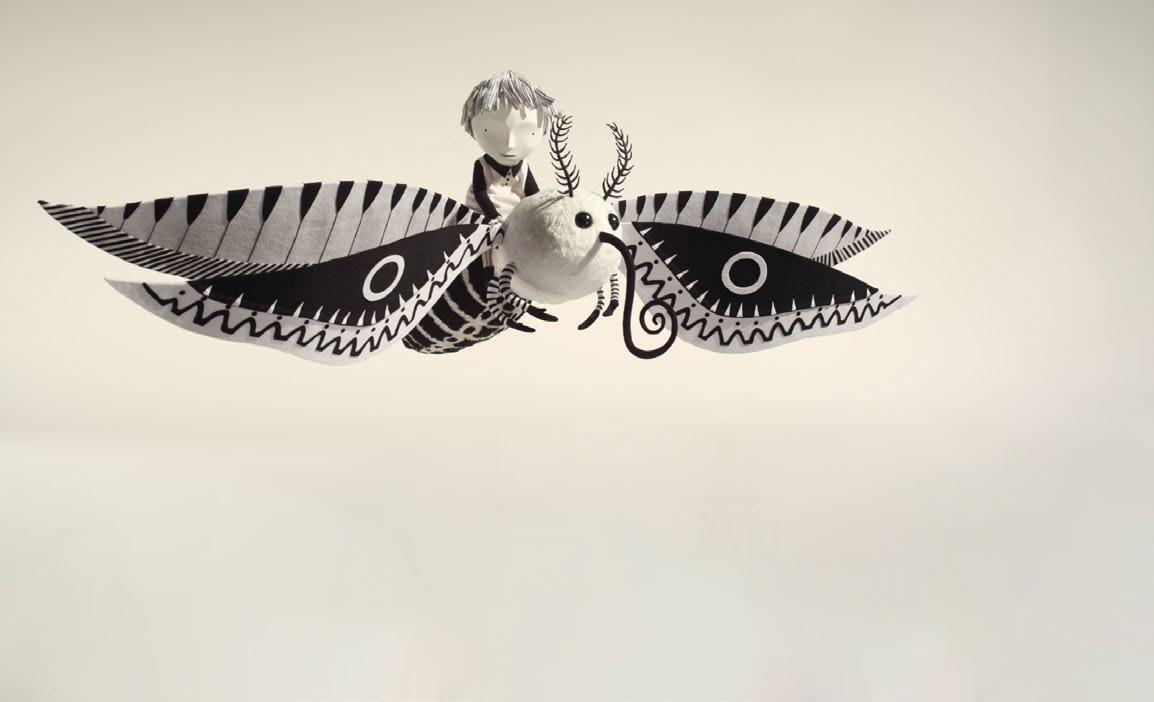

space, and that you are just one among millions of people in the world. For a young child, this was a terrifying realization. I wasn’t able to express it or even talk to anyone about it, and instead had to live with it alone. It was my first experience of existential anxiety. Creating the book became a way for me to find a medium that could offer some answers to other children with similar experiences. It can ease those anxieties by shifting perspective – the size of the universe doesn’t really matter, because it depends on how you look at it. In the end, it is also abstract: we will never see or experience the size of the universe with our own eyes.
I also thought about Antoine de Saint-Exupéry’s Little Prince or Lewis Carrol’s Alice in Wonderland - during certain episodes in the film... Those are classic books. I’ve always been drawn to children’s literature that has an edge. Even as a child, I found those kinds of books deeply affecting. I never liked stories that were made only for children – cute, soft, and warm, with no sense of conflict or danger. That isn’t what the real world is like.
I think it’s important for children’s literature to reflect that – not in order to scare children, but to acknowledge that the world isn’t just made of cute, bubbly things. Through stories and films, we can experience difficult ideas in a symbolic way, without being in real physical danger. In that sense, we get to live through certain experiences and learn how to deal with them.
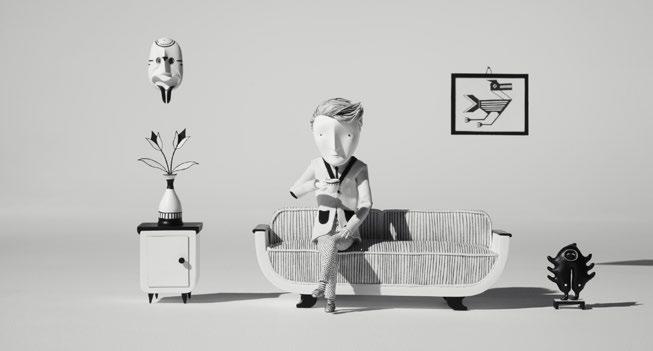
A Serious Thought is going to be screened in Berlinale in the programme of youth and children films, and it’s more children friendly than The Most Exquisite Man.
Yes, definitely. At first, I actually thought The Most Exquisite Man would be a children’s book, but its themes are very adult. There is one part in particular that can be challenging for younger audiences – the ending, where the main character dies and is eaten by animals. For some people, that felt too brutal. For me, however, it is the most important part of the book, because it shows the cycle of life. I don’t see it as violence, but as an acknowledgement of how nature works: animals eat each other, plants grow from remains, and life continues. It isn’t meant to be frightening – rather, it’s as natural as being born.
And also, maybe A Serious Thought is more optimistic, the protagonist is not left alone. The Most Exquisite Man lives and dies in solitude.
Yes, but that solitude is self-imposed. He creates the conditions to be alone rather than being abandoned. In the end, he becomes part of the universe by disintegrating, symbolically transforming into a tree that grows from his remains.
Actually they should be shown together. That’s my hope for the future – that they can be screened together. That was always the idea.
Should it be a trilogy?
I’ve thought about that at some point, but right now I’ve made a new book, ”Leiwamasin” (The Bread Machine), which explores a different theme. I’m already wondering what to do next, and I’m also considering some visual changes.
Right. They both have their own universe and visually distinctive style. What was first – the character or the world around them?
I had developed the style beforehand. But with every book and film I’ve made, the process has been the same: once I have the first drawing of the main character, the story begins to build around it. So I always need to see the protagonist first.
And also you prefer monochrome?
Yes, so far. My last book does include some red colour, though. I think part of the reason is that, as a child, I mostly drew with a ballpoint pen. It always felt comfortable for me, and there were also many books with black-and-white illustrations, which shaped my approach to illustration. I’ve never felt a strong need for colour, but I would like to explore it. Maybe in future projects I’ll add a little more colour each time and eventually create an incredibly vibrant film or book.

There was also a dream sequence in the beginning of the film. How did you develop the logic for it?
Technically, it was the most complicated part to do. Everything was done on the set – you have elements moving on the ground while the puppet on top is very difficult to animate in stop-motion. There was a lot of trial and error, but I already had my book with the illustrations prepared. That was wonderful for me, because it allowed me to focus entirely on directing. The storyboard and visuals were already in place.
Have you ever used artificial intelligence?
I haven’t. I’ve tried it, but I don’t feel any reason to use it. I keep asking myself – why should I?
So you believe, traditional animation will survive, it has a future?
Absolutely. Otherwise, it would have stopped being produced maybe 30 years ago. It’s already a very tra-
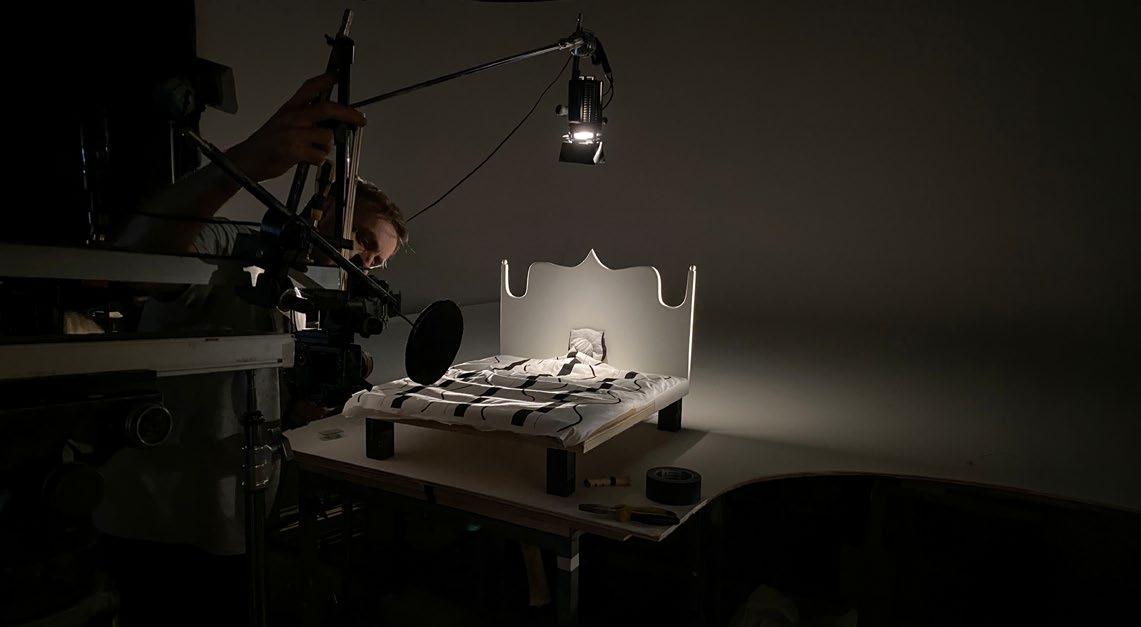
dates back to 1957, when legendary enthusiast Elbert Tuganov shot there the first animation “Peetrikese unenägu” (Little Peter’s Dream). Since then, Nukufilm has grown to be the biggest stop-motion animation studio in Northern Europe. It has produced over 200 animations and cartoons.
Almost each year Nukufilm gains awards from international festivals, Estonian animators give lectures in Scandinavian universities, and foreign universities send their students and animators to Estonia for study and practice.
ditional, old technique – it doesn’t really have a place in the modern world – but people still appreciate handicraft: beautiful handmade furniture, artwork, architecture with craftmanship. These things are important for human experience. If we lose them, I don’t know what kind of world that would be.
How important is for you the subconscious?
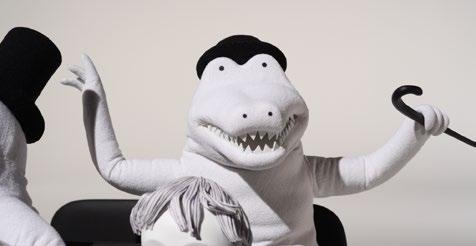
What’s the thing with crocodiles?
Well, these animals appear in both books, but mostly as symbols, so they are interconnected. Crocodiles were common characters in Estonian children’s books, and also in Russian ones during Soviet times. In my books, they symbolize danger or beastly emotions. If we think in terms of the Freudian triangle –Superego, Id, and Ego – the crocodiles would definitely belong to the Id.
Talking about animation for kids, what do you think, what is the state of it nowadays in the global market? There’s a competition between small screens and movie theatres, do animations like yours have a place where they could be presented?
That’s one of the big challenges short animations face today. The market is flooded with technically easier-to-produce films that aren’t very challenging for a child. I’m not really aware of most of them – I can’t even watch them; they feel empty to me. I’m worried about the generation of children growing up with these. To me, the whole point of films should be to inspire. Right now, cartoons are often used to distract children, rather than to educate or give them meaningful experiences.
I think your films and books also help each other reach your audience.
I hope so. At the same time, my work isn’t very traditional, and I’ve received a range of reviews. Often, there are conservative views about what kind of content is suitable for children, and I’ve heard that some people find my books too dark or the themes too complex. Some parents allow their children to read very soft, non-confrontational books, yet at the same time let them consume TV or social media filled with violence, drugs, and sex. Children are exposed to these things anyway.
So, we can say that with your books you actually invite parents to spend time with their kids, looking and contemplating together the stories and the images.
Exactly. It’s not just about leaving children alone with a book – it should spark conversation, like any good art should. You go to the cinema with your parents or a friend and have a cosy discussion afterward, and the story continues. I think it’s wonderful to be able to create this kind of work.
“In my mind the whole point of films should be that they inspire, and don’t just numb you,” says Jonas.
Let’s talk also about the cooperation with Nukufilm. You’ve done two films under their guidance and with the team of Nukufilm. Are you satisfied? Absolutely. It’s an amazing team of talented people. I can’t imagine there are many studios in the world that would trust an artist to follow their vision so freely. Not once did anyone try to push me in a particular direction – they were completely devoted. They worked through challenges and found technical ways to realize my artistic vision. I really enjoyed the teamwork.
Are there any expectations for Berlinale?
Not really. After my experience with the first film at festivals, I don’t have many expectations. I’m just happy that it was selected – it’s a great start for the film.
Good Luck! BF
What are you currently working on?
I focus on producing short and feature-length fiction films, with a strong foundation in national and international co-productions. I am drawn to the stories that explore relationships and family dynamics in all their complexity – from childhood memories to disconnection, from the fragility of parenthood to the unspoken struggles of modern relationships. I love working with emerging film talents and building sustainable, respectful, and long-term collaborations rooted in trust, care and shared growth.
I am currently in pre-production on a feature musical, Concrete Music (dir. Saulius Baradinskas), about a musically gifted teenager, Rokas, who runs away from his mafia family home to use music as a way to take revenge on his father, who is responsible for his mother’s death. In January, the short fiction film Concrete Kids, based on Concrete Music and directed by the same director, began its festival journey at the International Film Festival Rotterdam 2026. New projects exploring family and community morality, the beauty and struggles of maternity, and the father-son relationship are also in development with directors Edita Rudak, Ieva Šiaučiūnienė, and Justas Ramanauskas.
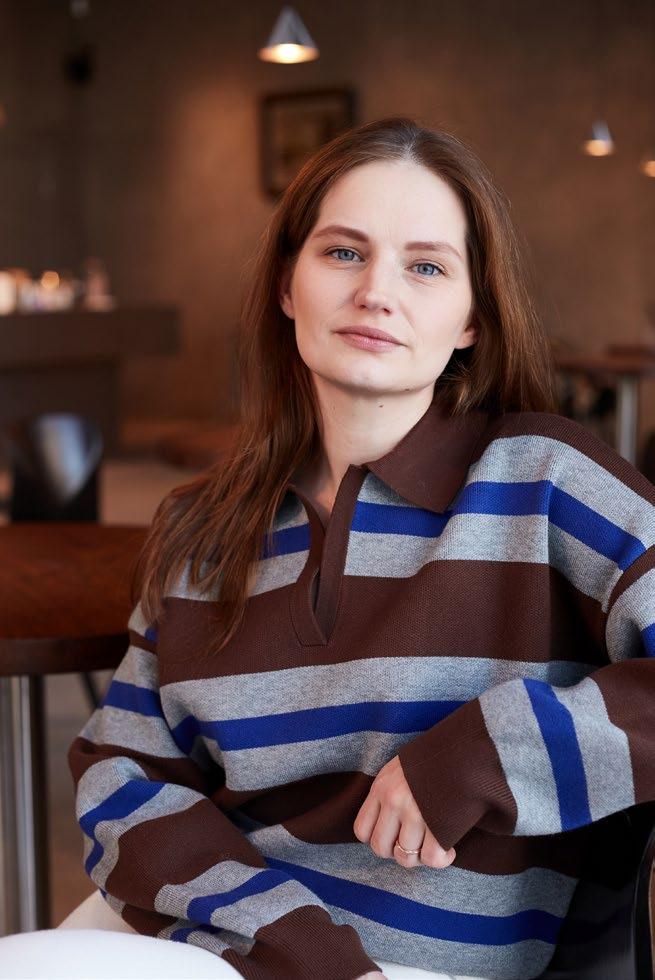
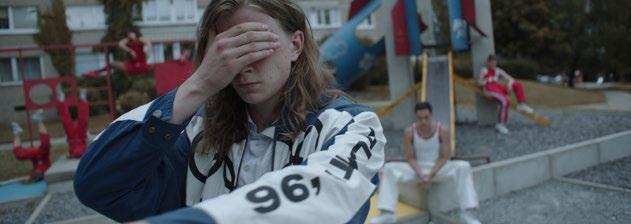
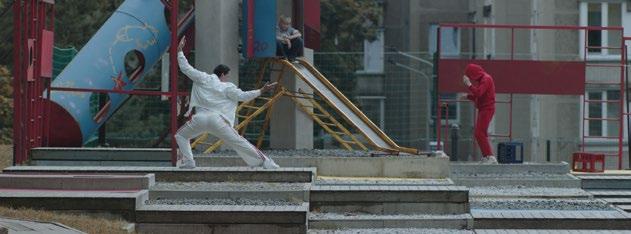
What are your expectations and goals for this year’s Berlinale?
At Berlinale, I hope to meet like-minded film professionals who create films of high artistic value and appreciate independent cinema. To share our ideas and experiences. To connect with other producers, buyers, financiers, and sales agents in order to broaden my horizons and support the realization of my current and future projects.
I also want to gain more knowledge of international co-production structures and possibilities, as well as to find potential co-producers for my current projects in development. Moreover, I am interested in participating as a minority co-producer on projects by other talented filmmakers, and helping bring their ideas to life.
I am curious and open to bold ideas, unexpected voices, emerging talents, and international co-productions that challenge, connect, and inspire. BF


A conversation between Viktorija Cook and Simona Inta, co-founders of Baltic Talent Agency, on people over projects, introverted brilliance, and why the strongest creatives don’t always shout the loudest.
V: What’s something you notice about creatives that others often miss?
S: One thing we noticed very quickly is that many of our talents are quite introverted, even if they appear confident from the outside. They don’t brag about themselves or actively promote their work; they just focus on doing it well.
And then you notice something else: the creatives who are most visible internationally often have strong self-marketing skills. That helps, but it’s not always fair. We’ve followed some talents for years and kept asking ourselves why so few people know their work, despite major brands, films, fashion, and music projects behind them.
V: So often, the loudest voice gets the attention, not the best work.
S: Exactly.And then there are filmmakers like Rasa Juškevičiūtė, creating incredible fashion films with top brands and stars

like Nicole Kidman. Or Vytis Puronas, a sound architect whose music Prada uses for their runways. That’s our Baltic bunch. Just wow.
S: You’ve seen every side of the industry, from festivals to post-production to sales. At what point did you realise that people matter more than projects?
V: Honestly? I think people always mattered more than projects. A project is only as good as the people working on it as their energy is always visible on screen. I don’t believe good work can come from disrespect or abuse.
Real creativity comes from collaboration. And you always feel it when people enjoy working with each other; it shows. When they don’t… Well, that shows too.
V: You worked in fashion for many years. The same or different?
S: In fashion, traditionally, the creative director’s opinion was everything. The rest of us were simply worker ants (laughs). But at the end of the day, we don’t celebrate results with a group of robots. Everything is still made by humans, by touch, emotion, and understanding. Especially now, protecting human connection isn’t optional anymore. We have to represent the human side.
S: What made you say yes to starting an agency instead of staying in safer territory?
V: I wanted to bring everything together. I’d worked across so many areas of filmproduction, post, festivals, sales, I reached a point where I wanted to stand next to people, not just projects. To use what I’d learned to help talent make better choices, and work on projects that actually feel good to be part of. Not just successful on paper. Same for you?
S: For me, it was the only honest answer at that moment. After years in agencies and entrepreneurial projects, coming
back to Lithuania after fifteen years abroad made it crystal-clear: this was the way to give back to my tribe. I never took freedom of choice for granted.
V: How does fashion influence the way you see film and talent?
S: My first encounter with fashion was through fashion film. I worked with the festival A Shaded View on Fashion Film, founded by the iconic Diane Pernet, first in Barcelona and later in Paris.
What stayed with me was meeting the creators, understanding the thought behind the creative process, and then seeing all of that translated into storytelling on a big screen. That experience really shaped how I recognise talent today: authorship, attention to detail, and visual voice.
We see this in our own roster all the time, Baltic creatives working with global brands, major artists, fashion houses… often very quietly. Well, that’s about to change!
right connection can really change a career or a project.
And we’re not interested in quick bookings only. We think long-term. Say, if someone wants to deepen their craft, great. If they want to try something new, we help find the way.
V: What kind of collaboration gives you energy instead of taking it?
S: I’ve had enough collaborations that drained energy, so now I’m very attentive to that. I pull the brakes when I feel it going the wrong way.
Fair, sustainable collaborations, and yes, that includes money. Money is energy. But also watching teams come together and really crack something. When it works, it works.

V: And respect. Clear communication. Everyone, from the client to the talent to the producer on the same page. No using, no abusing. Shared creativity, shared responsibility.
S: What do you hope people feel after meeting you?
S: What do you think makes Baltic Talent feel different, even early on?
V: First of all, focus. We represent talent from a very specific region, Lithuania, Latvia, and Estonia, and that already creates clarity. But more importantly, talent always comes first.
Practically, we represent key creative talent behind the camera working across film, commercials, fashion, and hybrid formats. Many of them are already operating at a high level locally or internationally, but don’t always have the visibility or strategic support to move further.
We work closely with producers, production companies, brands, agencies, and international partners, often stepping in early, at the moment when the
V: Trust. That we’re reliable, that it’s enjoyable to work with us, and that we have good taste. And that when a project ends, it doesn’t really end, it becomes a long-term collaboration. Maybe even a friendship.
S: One of our talents once said something that really stayed with me, and full disclosure, we asked permission to use it. After meeting us, he said: “Finally, there’s someone to drink champagne on our [introverted creatives] behalf.” (both laugh)
Meaning, we celebrate, network, and speak loudly about their work, so they don’t have to.
That’s where we see our role, creating space for talent to focus on the work, while we build visibility, relationships, and long-term opportunities around it. BF
This science fiction film from the late 1970s continues to intrigue artists and film audiences alike. It can still inspire the electronic music scene, and deliver narrative building material for literary autofiction of the contemporary visual artist. Dead Mountaineer’s Hotel by the director Grigori Kromanov has well deserved the screening in the Classics section of Berlinale this year.
By Karlo Funk Photos by Viktor Mentunen and Deaf Crocodile Films / Estonian Film Institute
Science fiction is something fairly rare in Estonian cinema, but that fact alone is not sufficient to explain why Dead Mountaineer’s Hotel is continuously listed among the most valuable Estonian films, casting a ghostly shadow over today’s pop culture. For example, in 2020, a graphic novel was released, based on both the original novel by the brothers Strugatsky, and the fulllength feature film.
Strangely enough, most of the common threads that tie a nationally important film to local culture seem to be missing here. The film is not based on a local literary classic, but the book (and also the original screenplay) written by the sci-fi authors Arkadi and Boris Strugatsky. The story is not about relevant moments in local history, and many key roles are performed by Latvian and Lithuanian actors (although Estonian actors are prominently present too, like Jüri Järvet, Sulev Luik, Lembit Peterson and Mikk Mikiver).

The sci-fi film in question was released in 1979, a decade after the director Grigori Kromanov had made an immensely popular swashbuckler movie set in 16th Century Estonia, during the whirlwind of the complicated power struggles of the time.
The Last Relic, screened in 1969, was the nearest a small film country could get to the dream of global recognition.

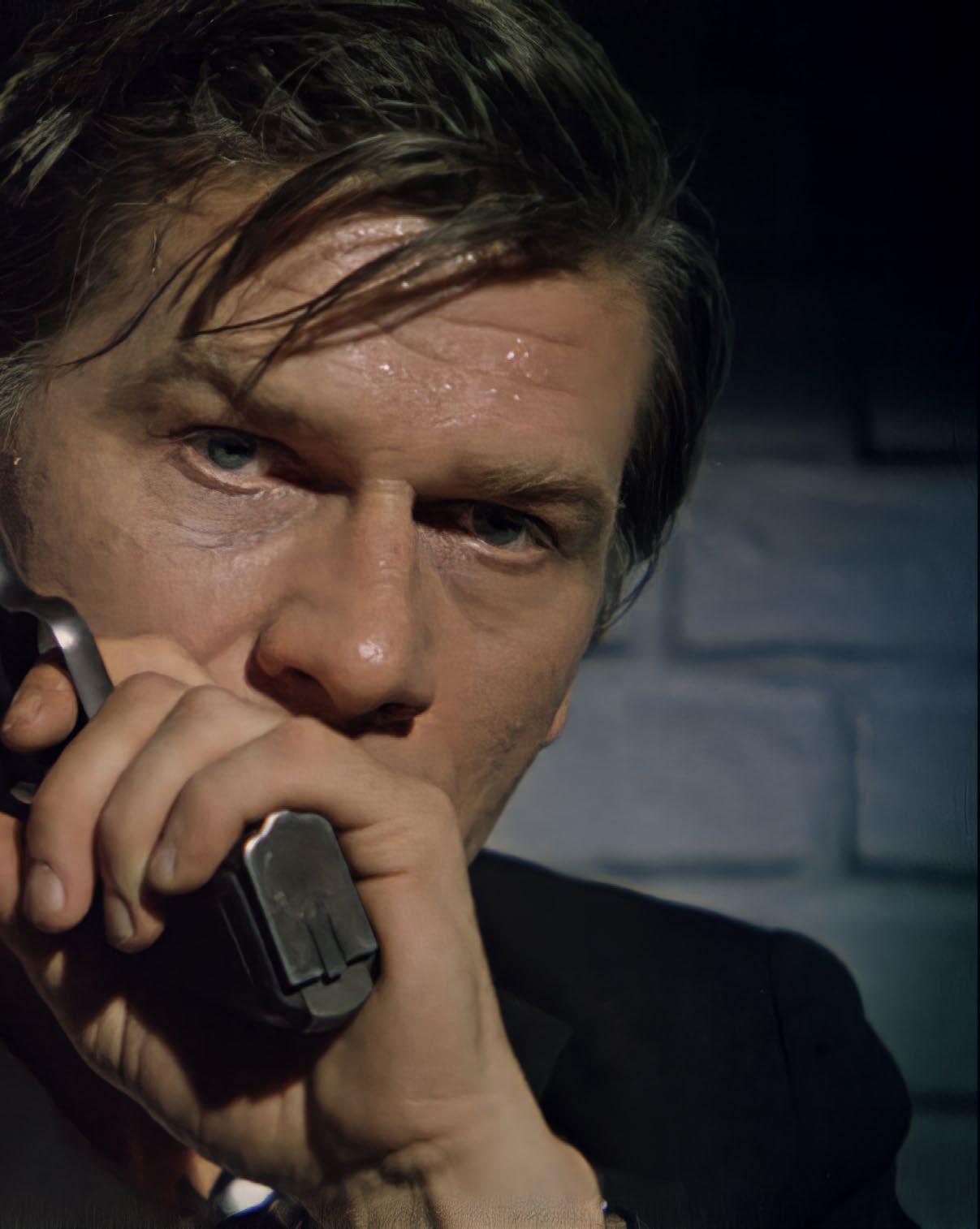
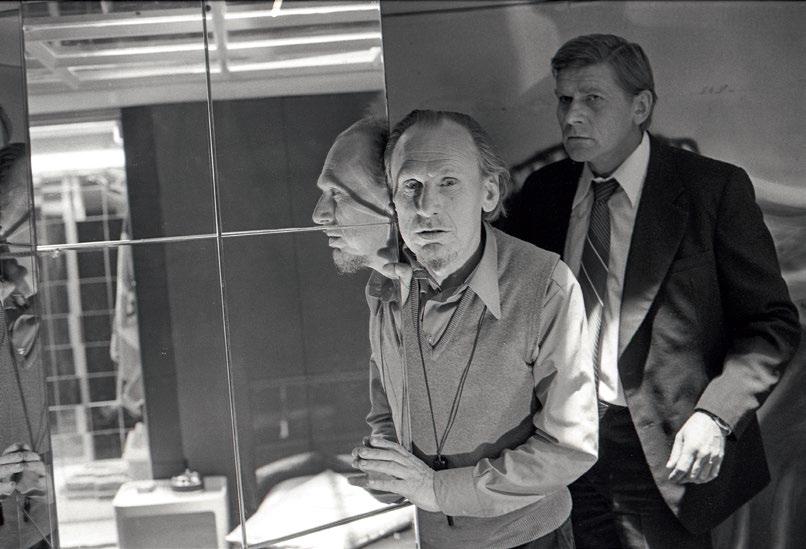
The film, inspired by French adventure movies, was screened in 60 countries, with 40 million viewers.1
Controversially, success brought along less freedom for the director, not more. Several stories developed by Kromanov himself were slowed down or stopped entirely. The Soviet studio system expected the fulfilment of centrally set plans and that’s what Kromanov did, while entwining into the film themes close to his own heart. Diamonds for the Dictatorship of the Proletariat, screened in 1975, was one of Tallinnfilm’s most expensive projects. A thrilling adventure about the inner conflicts of 1920s Russia, a diamond heist, and the spying games of the superpowers in Estonia, reached dozens of millions of viewers as well. In several cases, it was Kromanov’s sense of duty, and his integrity as an artist going against the tide, which prompted the studio to engage his help even when his own ideas were rejected.
EERIE GUESTS OF THE HOTEL
Integrity, restricted by simple rules, became a central idea of his final film. Dead Mountaineer’s Hotel begins with a flashback to an old case that had remained to haunt inspector Glebsky. Years ago, he received a call
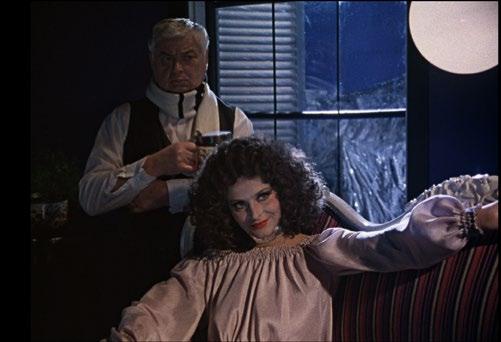
(Estonian: "Hukkunud Alpinisti" hotell, Russian: Отель "У погибшего альпиниста") is a 1979 Soviet era Estonian film directed by Grigori Kromanov (1926–1984). The film is based on the 1970 novel Dead Mountaineer's Hotel by Arkady and Boris Strugatsky, who also wrote the screenplay.
Starring: Uldis Pūcītis, Jüri Järvet, Lembit Peterson, Mikk Mikiver
Music by: Sven Grünberg
Cinematography: Jüri Sillart
Running time: 83 minutes Country: Estonia Language: Estonian
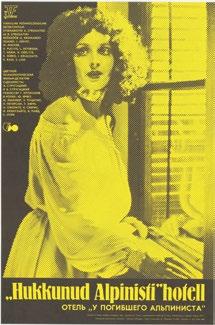
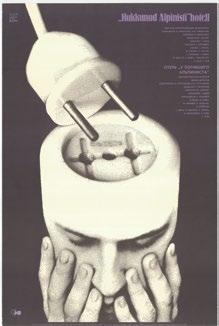
from a mountain hotel that proved to be fake. Glebsky still decided to stay for the night. In the evening, strange events start to unfold, and on top of that an avalanche blocks the roads and cuts all communications. One of the guests, Olaf, seems to have died. But that is only a small part of that other avalanche of mystery that hits Glebsky’s public service orientated mind. He is surrounded by a colourful gallery of characters: traveling businessman Moses with his high society wife; a cybernetic engineer Simonet enjoying his vacation; a young couple in love who seem to have met
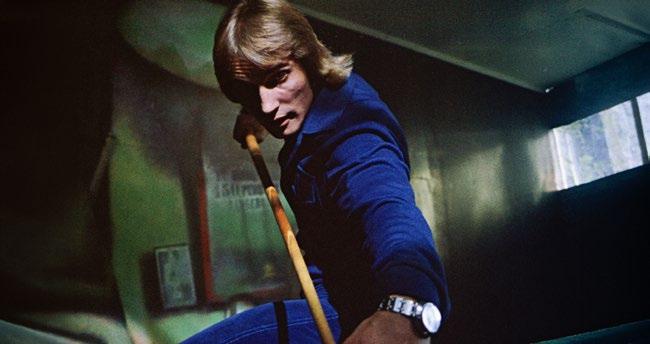

each other not too long ago; and Hinckus improving his health in the mountains.
The murder mystery in a building cut off from the world soon becomes more complex. Some guests seem to have been cloned, others behave erratically. Unlike in a standard whodunit, Glebsky has to solve a more thorough problem, what is happening in the first place, who are these humans and, as we learn, non-humans around him.
The complexity of the situation unfolds quite quickly. The apparently dead Olaf turns out to be a robot for the aliens. The girl is equally shocked because of Olaf’s conditional death, and the fact that he is an android from another civilization. Two characters in this motley crew are extra-terrestrial observers who interfere with events on Earth to protect the principles of justice. Alas, they have been exploited by terrorists. One of the terrorists is ready to get rid of the aliens after the mission is completed.
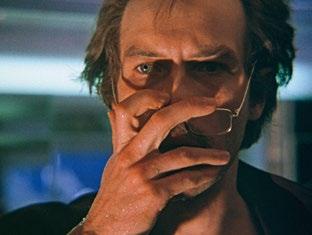
The events of Dead Mountaineer’s Hotel develop rapidly, sometimes leaving the viewer as little time to react as inspector Glebsky. The inspector has gained control of a mysterious suitcase that would allow the recharging of Olaf and Luarvik,
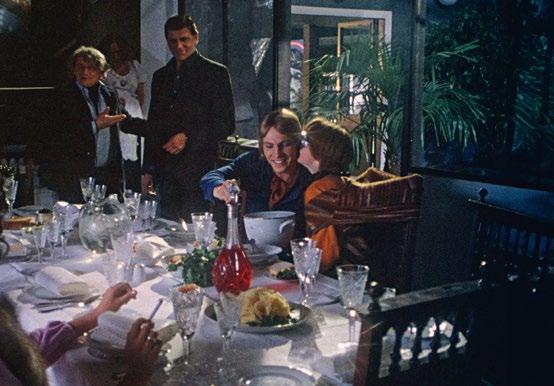
found in the snow after the avalanche. Through these choices and unexpected turns, Glebsky’s character has a chance to reveal itself with all its symbolic limitations.
In the true spirit of detective stories, he denies the supernatural explanations and is only able to see aliens as someone liable for the acts committed together with the terrorists.
The terrorists are already approaching and Glebsky’s principles finally lead to the demise of the guests, although the hotel manager Snewahr with Simonet help them to escape, so that the guests could leave the Earth.
The films luxurious charm is best relayed in the evening party scenes, where the inspector plays billiards with Olaf. The latter cannot comprehend Simonet’s figures of speech, but pockets all the balls flawlessly. Olaf’s accuracy is the reflection of Glebsky’s one-dimensionally rational worldview. The direction and strength of Olaf’s strikes determine the trajectory of the balls, a Newton-like mechanics of ideas establishes the linear relation between cause and consequence.
But Olaf’s accuracy is not admirable, and strips the game of all wonder and anticipation.
The inspector’s loss transforms into a hypnotic dance scene – the film’s only pause for reflection, and a visual tour de force. The camera sometimes moves dynamically along with the protagonist, but stays mostly static on Glebsky’s face, reflecting his adopted rigid stance. The story improvises elegantly on various ideas like the possibility of extra-terrestrial life, guilt and identity, without fear of contradiction. Script-wise, Dead Mountaineer’s Hotel is organized and rational,
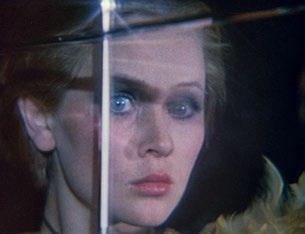
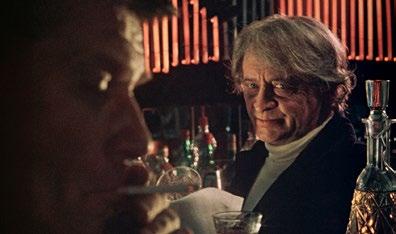
vectoral and consequential, following the protocol of the detective genre.
A sci-fi film is never just a story, it is also an independent visual universe. The location, hotel, amazes with its hypermodernity. Streamlined interior design, reflective surfaces, hotel corridors and intersecting levels are in sharp contrast with the organized story. These environments created a fantastic impression upon release, comparable to the one achieved by the narrative.
The character of Olaf seems to mirror Ziggy Stardust era David Bowie. Costume designer Vyacheslav Zaitsev was one of the most influential Soviet fashion designers. For the shooting, a three-storey hotel room complex was built inside Tallinn Tennis Hall, and a facade of the hotel in the Kazakhstan mountains, 2300 metres above sea level. The latter can be seen near Almaty even today. These visual details carry some additional implications that could not ever fit into the confines of a script.
The same goes for Sven Grünberg’s music. Compared to electronic passages from the likes of Kraftwerk, or Jean-Michel Jarre, Grünberg’s soundscapes liberated from rhythm come off as notably more poetic and experimental. The head official of Goskino
(USSR State Committee for Cinematography in the Soviet Union), an officer of the secret service, was convinced that the authors were using the Soviet film to secretly conceal Pink Floyd’s music.2 But more important than testing the limits of censors, was the soundscape Kromanov wished to bring to the film. The music was supposed to carry those threads of thought that were impossible to depict in pictures and words – the transcendent atmosphere of the music hinted at the possibilities of the future. 3
For the audience, this was a journey to the beyond, in more than one way. Depictions of the West found their way to Soviet cinema primarily through science-fiction. Although the conquest of space was an important motive in Soviet ideology, it was usually done by immaculate heroes, whose image couldn’t harbour any doubt or human dilemmas. More complex, multidimensional characters were not welcome on the screen, and could operate believably only in a foreign environment. The depiction of the West was tolerable as long as the characters conveyed Western vices, doubts and mistakes. Hotel Dead Mountaineer and the terrorists fit that canon. Glebsky’s limited public servant though, was exactly the kind of figure with double meaning to earn the Strugatsky Brothers the notorious image of dissidents later. A guardian of the law who interprets the rules in the most limited manner possible was a very Soviet figure, but in this film here, his restraint was justified with the fact that he operated in the ambiguous West, and therefore represented the blind following of the rules of others, not “ours”. Besides the science fiction genre and visual zeitgeist, an extra dimension was added to the film by the mountains and nature. It is a transition zone between our civilization and the supernatural, as indicated by the word “dead” in the title of the film.
Upon Glebsky’s arrival at the hotel, owner Snewahr introduces him to the legend of the dead mountaineer first thing, telling the story of how the hotel got its name. Later, the mountaineer makes a sinister appearance in Glebsky’s dream. The films universe stands dangerously close to nature and death. Mountains, their irrationality stressed even further by the music, frame this luxurious island of civilization, belonging to the realm of the unexplainable.
The text of Dead Mountaineer’s Hotel was an experiment for the Strugatsky brothers. They had written science fiction that had also been adapted for screen, like Stalker - but Arkadi had a high regard for crime stories, Rex
2 elu.ohtuleht.ee/ 677704/moskvatsensor-utles-seepink-floyd-tulebhukkunud-alpinistihotellist-arakoristada
3 Lavastaja Grigori Kromanov. Compiled by Irena Veisaitė-Kromanova. Tallinn, 1995, p. 191.
4 areviewofbooks. org/article/ well-never-knowarkady-boris-strugatskys-deadmountaineers-inn/ Tallinn, 1995, p. 191.
5 Lavastaja Grigori Kromanov. Compiled by Irena Veisaitė-Kromanova. Tallinn, 1995, p. 186.
Stout, Hammett, le Carré.4 In Dead Mountaineer’s Hotel, they tried to refresh the detective story, using extra-terrestrial forces instead of the usual solutions.
As screenwriters, they developed the story together with the director Kromanov. The film maintains the scripts experimentality, outlining the themes important to the director more clearly. This is all placed in an aesthetically innovative environment, reflecting our idea of Western luxury and lifestyle. Dead Mountaineer’s Hotel still astounds with its chaotic but also functional way of uniting storylines, ideas and connotations, giving off a vibe of liberated and unstoppable energy.
In the final scenes of the film, science fiction transforms into a documentary perspective when the protagonist addresses the viewer directly. Justifying his choices, Glebsky appeals to irrevocable logic, but his need to justify himself as a protagonist becomes apparent in the process. Glebsky understands that the clarity of his choices actually leads to emptiness, closure and a waste of a unique opportunity, much like Olaf’s perfect strikes extinguished the playfulness of the game of billiards in the first part of the film. “And what business do I have with those non-humans disguised as humans,” the inspector finishes his monologue. When Newton-like physics of cause and consequence are set against the supernatural, it only works when it reduces the multi-layered processes to simple signals. This was a strong statement in a country that constructed itself on a model of progress based on scientific and technological innovation.
Dead Mountaineer’s Hotel has remained a mystery between the domains of national film classics and genre entertainment. Like guests in the film, it’s something alien that has assumed a familiar shape, and we do not know exactly what it wants from us.
Dead Mountaineer’s Hotel was Kromanov’s final film. Although the film won recognition abroad, in Trieste, he couldn’t realise his ideas in Tallinnfilm, and he alternated his time between theatre and cinema, his life between Tallinn and Vilnius. Coming from a Russian cultural background of pre-war Estonia, he embodied something other and elusive himself. “He lived in a somewhat different time-space from the others, he didn’t completely fit into the cultural picture of our republic, and had an alienating, not quite comprehensible effect,”5 said the film’s producer Raimund Felt when Kromanov passed away. BF
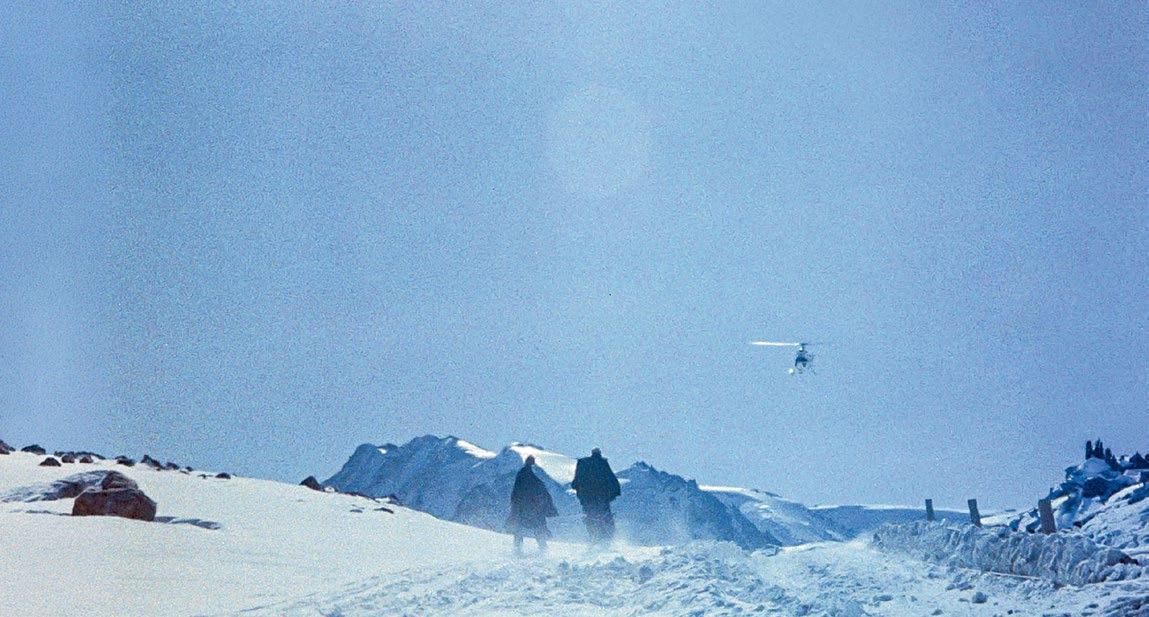
What are you currently working on?
I’m currently working on several projects, but the most advanced is the debut feature The Bicycle Thief by emerging writer-director Elisabeth Kužovnik. Set in the summer of 2009, it is an autobiographical, character-driven coming-of-age story about a 10-year-old girl whose bicycle is stolen the day after she receives it for her birthday, setting off a series of events from this seemingly minor incident. This is our third collaboration with Elisabeth, following the short documentary Sugar, and the short fiction film Stiina, which won Best Short Film at the national competition of PÖFF Shorts in 2025.
Through the everyday world of a bilingual Estonian–Russian family, The Bicycle Thief creates meaning from small gestures, ordinary moments, and emotional contradictions rather than overt statements. What excites me most is its ability to hold multiple layers at once. It is visually colourful and playful, yet engages with complex themes such as identity, class, and parent–child relationships, while remaining rooted in empathy.
As a producer, I’m particularly drawn to stories that combine a strong authorial voice with social relevance without turning into issue-driven cinema or losing sight of the audience. On a more personal level, the authentic portrayal of a bilingual family resonates deeply with my own background, while the film’s emotional universality makes it accessible beyond its local context. It’s a film that trusts its audience and creates space for recognition rather than justification – something I find increasingly rare and valuable.
Your expectations for this year’s Berlinale?
My expectations for Berlinale this year are deliberately quite focused. I’m not coming in search of instant deals or grand revelations, but rather to test how the projects I’m working on resonate in
an international context, to take stock of the insights available to me, and to meet potential collaborators and partners.
At this stage, I value precise and honest conversations over networking for its own sake. Berlinale offers a rare concentration of filmmakers, producers, and decision-makers deeply engaged with author-driven cinema, and my goal is to use that environment to sharpen my thinking about development choices, festival strategies, and the long-term positioning of the projects I’m producing. Perhaps because of my background in screenwriting and a slightly unconventional professional path, it is particularly important to me to form collaborations that grow organically out of the projects themselves, rather
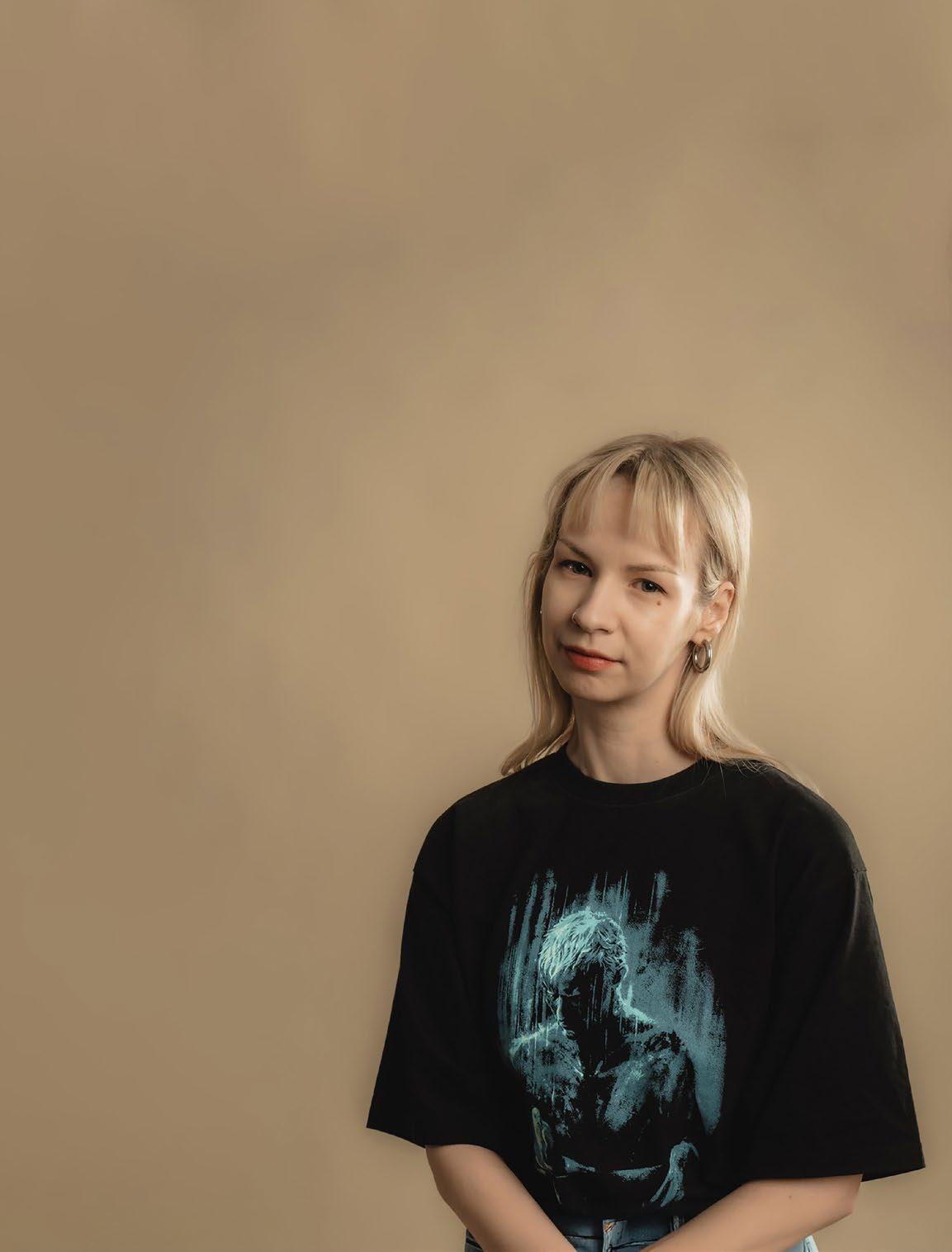
than being driven primarily by financial considerations. In this sense, Berlinale feels like an ideal place to further learn, exchange perspectives and broaden my horizons.
On a more personal level, I also see Berlinale as an opportunity to step slightly outside my usual working bubble — to recalibrate and reconnect with why I do this work in the first place: to support distinctive voices, tell stories that feel necessary rather than fashionable, and build collaborations rooted in shared values. BF
by
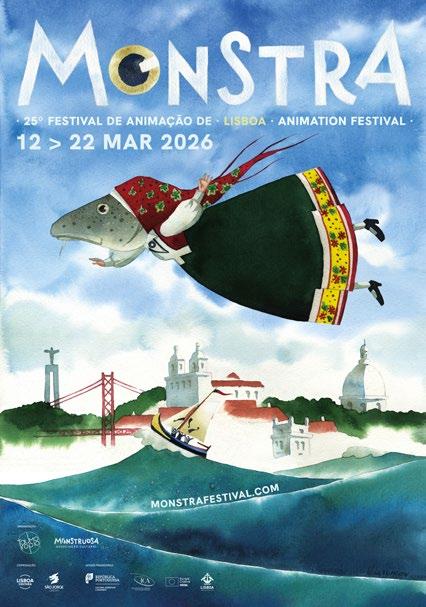
Founded symbolically at the dawn of the 21st century, in 2000, the Lisbon Animation Festival MONSTRA has become the most attended film festival in Portugal. Each year it selects around 400 films from approximately 3,000 submissions and screens them in more than 100 screenings. “The festival celebrates creativity, artistic transversality, encourages encounters between different arts and artists, and reveals new aesthetic perspectives through animated film,” says MONSTRA’s Artistic Director, Fernando Galrito. Each year the festival welcomes a guest country and offers a
For the first time, such a large-scale presentation of Latvian animation will take place abroad: a comprehensive overview of sixty years of history alongside contemporary film programmes for children and adults, retrospectives of individual directors, professional masterclasses and industry meetings. All this will form the Latvian focus at Portugal’s largest animation festival, MONSTRA, taking place in Lisbon from 12 March.
By Kristīne Matīsa


deep and expressive retrospective of its animation. Notably, the annual “focus country” is selected two to three years in advance, and the organisers of MONSTRA proved remarkably farsighted in recognising the potential of Latvian animation even before Gints Zilbalodis’ celebrated film had premiered in Cannes.
“It was deeply moving to see Flow win the Oscar in 2025 and to observe millions of people around the world return to cinemas, touched and inspired by a film deeply different, emotional, sensitive and profoundly human,” says Fernando Galrito. “They were searching for something we have dared to present every year at the MONSTRA Festival. That is why we are especially happy to have Latvia as our honoured country in 2026. We invite you all to discover the richness and beauty of Latvian animation between 12 and 22 March at the MONSTRA Festival in Lisbon.”
Latvian animation will be represented at MONSTRA 2026 across several major areas. Everything begins with a celebration of history: 2026 marks the 60th anniversary of the founding of Latvia’s puppet animation group, and also follows the recently celebrated 110th anniversary of its founder, director, screenwriter and artist Arnolds Burovs (1915–2006). From 13 February to 19 April 2026, the Latvian studio Animācijas Brigāde will
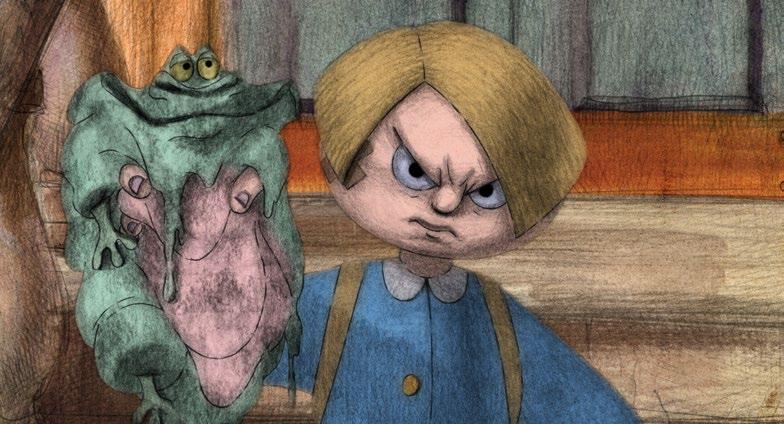
take over the Puppet Museum with an exhibition dedicated to sixty years of Latvian puppet animation cinema. The Latvian studio Animācijas Brigāde is now one of the few remaining islands in Europe where highly valued handcrafted work has been preserved: all puppets and sets for new films are created especially for each production, and after their premieres the “heroes” and “props” become part of the studio’s museum collection. This archive allows for a surprisingly extensive and impressive exhibition, drawing audiences into the captivating world of puppet art. The festival programme will also include a dedicated historical screening of Arnolds Burovs’ short films, starting with the very first, Ki-ke-ri-gū! / Cock-a-doodle-doo! (1966), with exhibition objects brought to life on screen.
Freeride in C (2024) by Edmunds Jansons
The vitality of Latvian animation is further demonstrated by the fact that puppet animation is not merely a matter of history. Today, the successors of Burovs’ tradition at Animācijas Brigāde continue to premiere new short films every year, enabling MONSTRA to present a contemporary programme of Latvian puppet films for children.
The prospects and potential of contemporary Latvian animation are also highlighted by a dedicated student film programme, several of whose works have already received both international and national recognition.
A third contemporary short film programme from Latvia presents a selection of the most outstanding animated works of recent years. It includes a film selected for the Cannes Film Festival short film competition – director Jurģis Krāsons’ Norīt krupi / Swallow a Toad (2010). The films in this programme have also been recognised at Annecy and a range of other major festivals, while the technical approaches span a remarkably broad spectrum, from charcoal drawing to watercolour, from computer graphics to sand animation. Notably, the fascinating short film Brīvais nobrauciens / Freeride in C (2024) even helped its
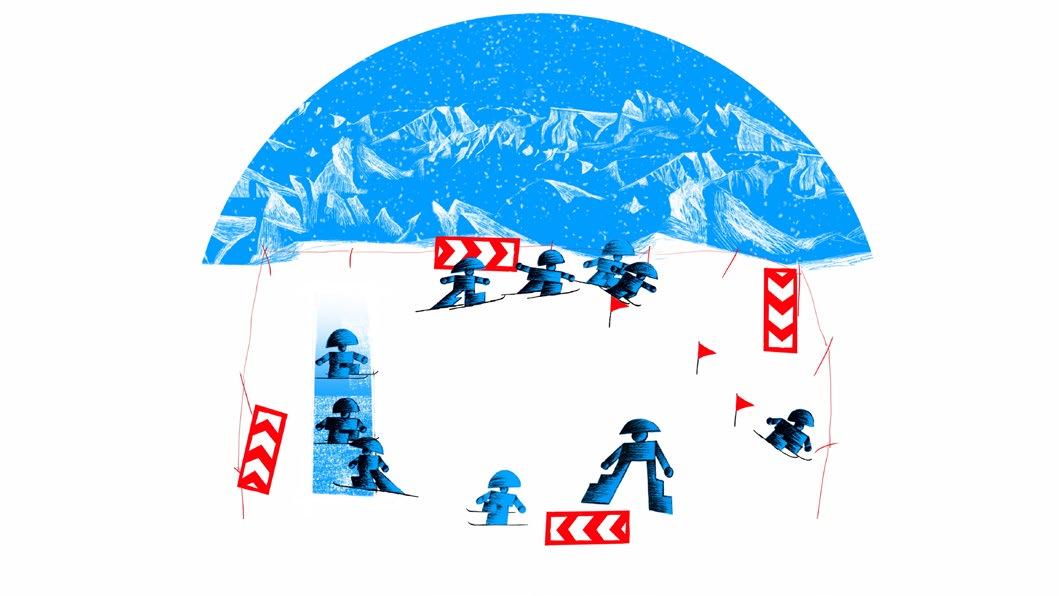
director Edmunds Jansons earn a professional doctorate as part of his dissertation, Repetitions and Loops as Form Elements in Author Animation.
A defining strength of Latvian animation lies in its authors – distinctive creative personalities – and this is demonstrated by five director-focused programmes. MONSTRA’s longest-standing collaboration is with the internationally renowned
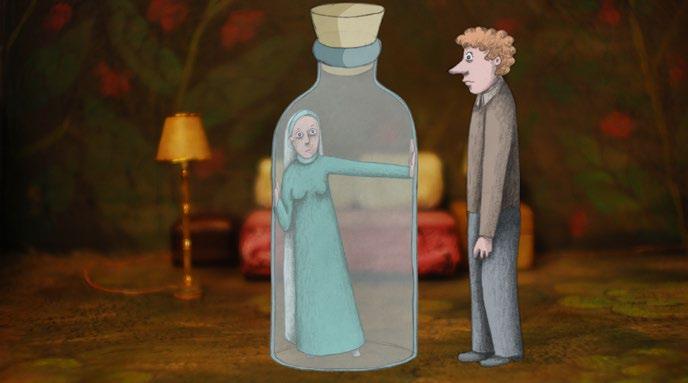
director and artist Vladimir Leschiov, who also designed this year’s festival poster. His retrospective includes ten short films made between 2002 and 2020. Leschiov will also serve on the festival jury and give a masterclass, as will artist Anete Melece, whose debut short Kiosks / Kiosk (2013) became both a national and international phenomenon, inspiring a theatre production and book editions in several languages.
Compared to many other European countries, Latvian animation stands out
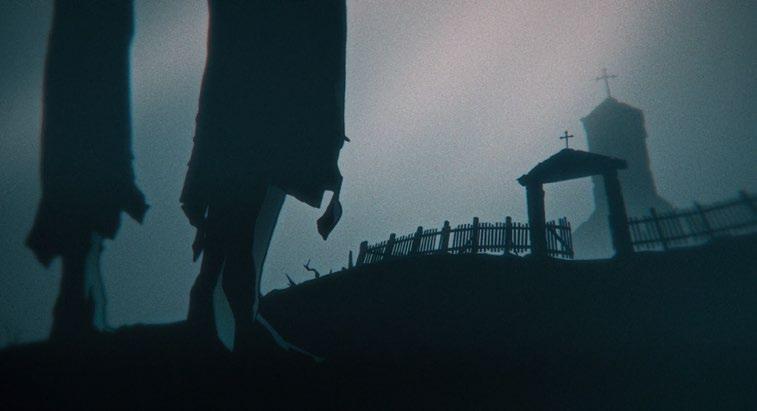
for its volume of feature-length production, and MONSTRA will screen several notable full-length films. These range from Akmeņi manās kabatās / Rocks in My Pockets (2014), the first feature by Academy member Signe Baumane and the opening part of her deeply personal trilogy, to the bold rotoscoping experiment Dieva suns / Dog of God (2025), directed by brothers Raitis Ābele and Lauris Ābele, recently included in the European Film Academy’s selection of nominated films.
The Latvian focus at MONSTRA will also include industry events, opportunities for professional exchange, and the exploration of future partnerships for international co-productions. Creative support for the programme is provided by the Latvian Animation Association (LAA), and production company Animācijas Brigāde, with financial support from the Investment and Development Agency of Latvia (LIAA), and the National Film Centre of Latvia (NFC).
With such a broad and ambitious focus programme, Latvia confirms its position as a significant player in the wider European animation landscape. BF
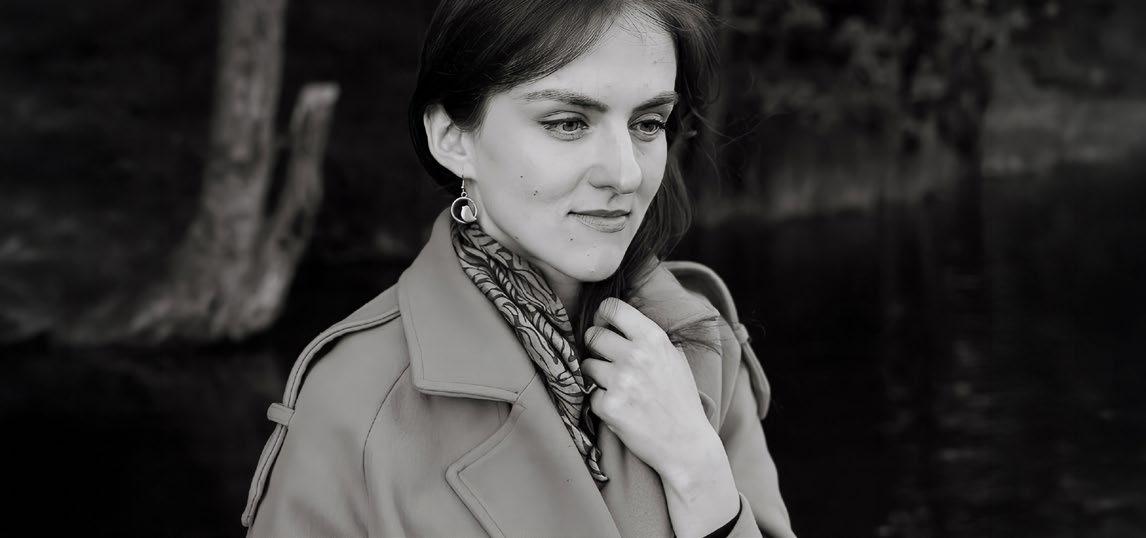
by
What are you currently working on?
At the moment, I’m moving between three films. They differ in scale and form, yet are connected by a shared curiosity about meaning, inner life, and time.
The film closest to me is RepairMan, a feature-length documentary now in post-production, which I am directing and producing. It follows a 32-year-old washing machine repairman, who begins to treat his work as a form of therapy while navigating divorce, inherited emotional patterns, and an intense search for healing. By day, he repairs machines; after hours, he immerses himself in psychotherapy, dance, rituals, and new-age practices. The film is bold, playful, and intimate - observing how vulnerability slowly finds a way into the body, movement, and relationships. It is a deeply personal project for me, rooted in a post-Soviet emotional landscape I know well and questions of modern masculinity, reconciliation, and repair.
Alongside this, I am producing Brides of the Invisible, a new documentary by Audrius Stonys. Quiet and poetic, the film follows two nuns whose lives unfold along radically different paths. One lives close to contemplation and nature; the
other works daily with the dying in a palliative care clinic. They never meet, yet an invisible bond connects them. The film listens closely - to silence, to light, to human presence. As a producer, my role here is less about control and more about care: protecting the director’s authentic cinematic language and building the international partnerships that allow such timeless films to exist without compromise.
The third project is Herz Frank: Life After Death, an international co-production directed by Audrius Stonys and produced by Uldis Cekulis, in which I am a co-producer. Conceived as a documentary oratorio, the film reflects on the enduring influence of filmmaker Herz Frank – not as memory, but as a living force shaping contemporary documentary cinema. It is a film about legacy, ethics, and the quiet transmission of artistic values across generations.
Across all three projects, I am drawn to films that trust the viewer - works that allow space for self-reflection, tenderness, and time.
Berlinale has been part of my inner map for a long time. As a student, I queued early in the mornings for tickets, wanting to see films that shaped my identity as a filmmaker. Returning now as part of the Visitors Programme, I arrive with a different role, but with the same curiosity.
My main focus this year is connection. I want to meet producers whose sensibilities resonate with the projects I am working on – to invite collaborators into RepairMan, Brides of the Invisible, and Herz Frank: Life After Death - and to discover new projects that might align with UKU Films’ vision. My experience in international co-production is still growing, and I see Berlinale as a space to learn through conversation, trust, and shared work.
I am also looking forward to reconnecting with people I met across markets last year - and to staying open to surprise. During Berlinale, anything can happen. BF
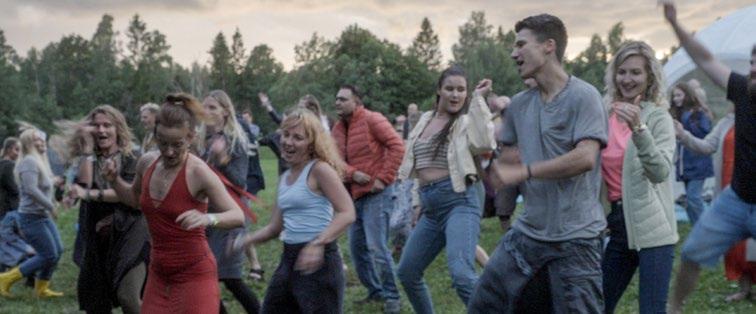
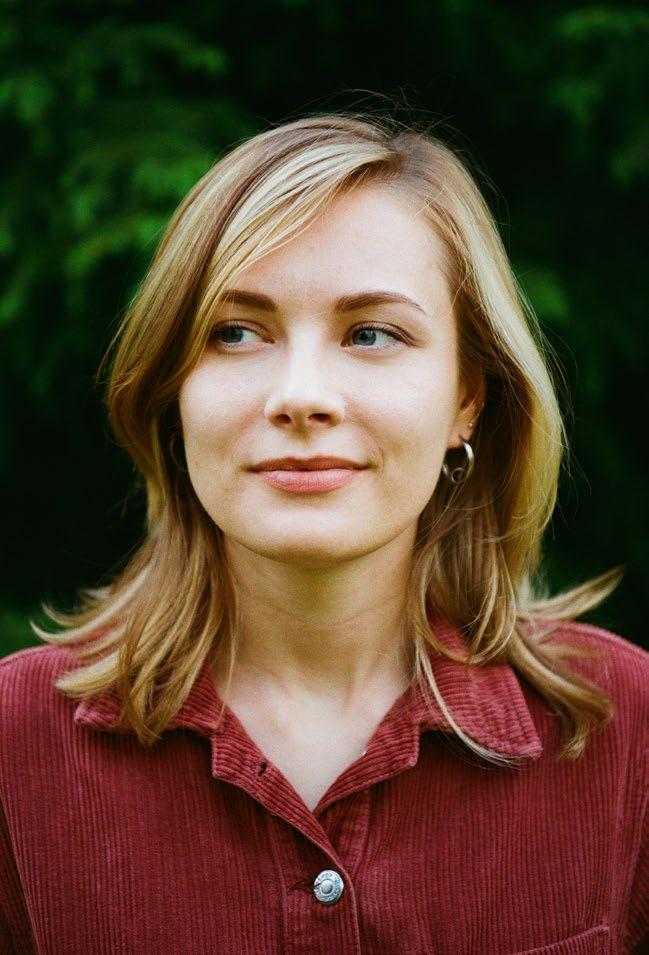
What are you currently working on?
My current line-up consists of various projects, including two feature-length documentaries, two shorts, and an artistic research project. One of the features is a documentary Two of Us by Jūratė Samulionytė and Rūta Dambravaitė, currently in development. It tells the story of a queer couple who lived together for 54 years, enduring Soviet occupation and later fighting for recognition in modern-day Lithuania. The couple came out after telling their story in an award-winning radio documentary, and later gained recognition through a humanist wedding, signed by more than 21,000 witnesses. In the film,
we see that relationships with close family members remain fragile.
Another project is the documentary Maria is on TV by Viktorija Mickutė and Ieva Balsiūnaitė. This film deconstructs narratives brought to Lithuanian women in the early 1990s in the form of a Mexican telenovela. To this day, the phenomenon is remembered by different generations, and the film asks both its protagonists and viewers how these narratives shaped women’s dreams in reality, and whether they are still relevant today. This film is currently in production. We are looking for international partners for both projects. Both films are also jointly produced by Dagnė Vildžiūnaitė, with whom we work together at Just a moment studio. I am currently pursuing a Master’s degree in Producing at the Lithuanian National Film School KIMO, where I am producing two short films. One is a blackand-white drama about two astronomers – a father with dementia and a son attempting to cope with his father’s illness - called Inter by Džiuginta Radavičiūtė. The second is a hybrid film, Excursion Through My Previous Life by Jokūbas Lapinskas, about the director’s own exploration of his brother’s mental health and its ethical depiction on screen.
Lastly, I am pursuing my own artistic research, exploring creative production, and co-writing a feature-length drama about the first Lithuanian female rock band, The Bees, founded in Soviet Lithuania in 1966.
What are your expectations and goals for this year’s Berlinale?
As an emerging producer, I am eager to expand my international network and hopefully find partners interested in collaborating on our projects. I also see Berlinale as an opportunity to connect with other producers at a similar stage in their careers and to develop future colleagues. While I am currently producing the films mentioned above, I am also representing other projects produced by Just a moment and am open to discussing them as well. I would be delighted to connect with festivals or sales agents interested in working with our upcoming films. BF

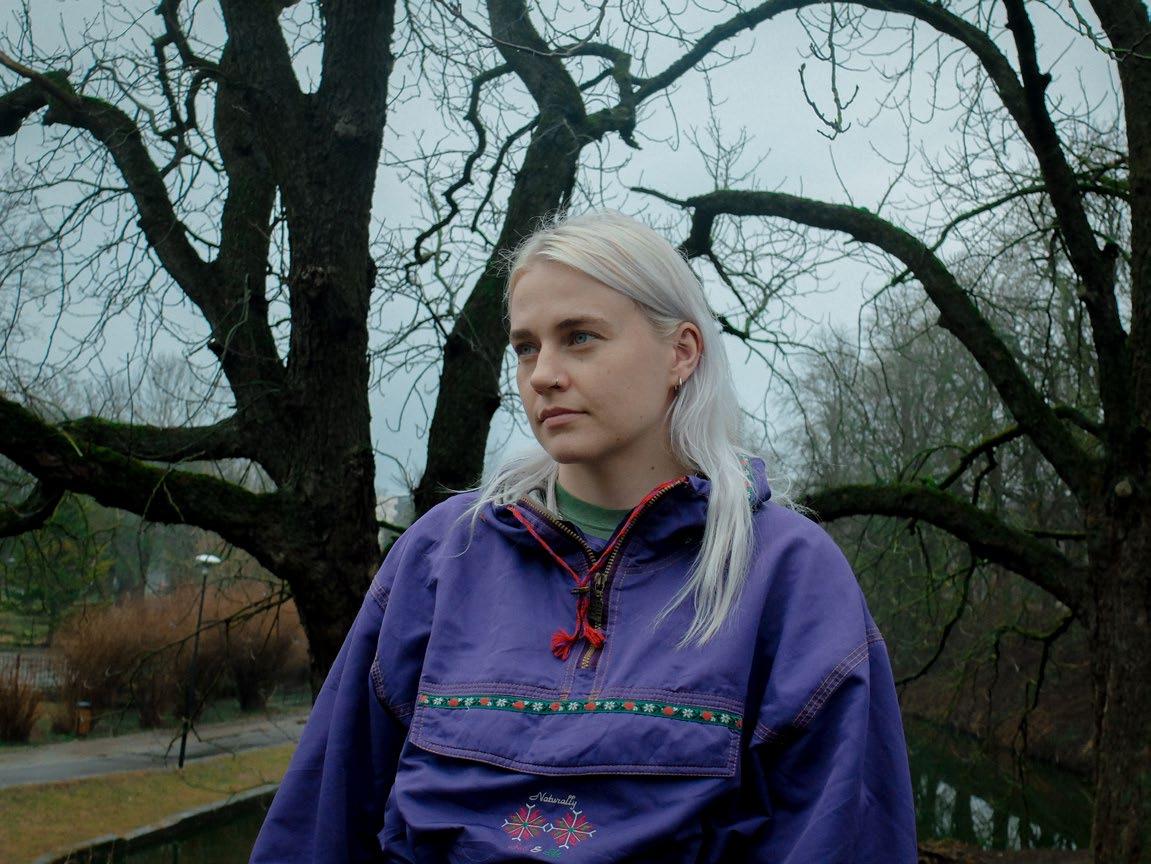
by
What are you currently working on?
I’m working with two emerging female directors on their debut feature films. The first is the debut of actress, writer, and director Jaanika Arum. Titled Beyond the Visible Flowers, it is a story focused on a grown woman dealing with the underlying traumas of having a PTSD-inflicted war veteran father and the recent suicide of her traumatised mother. The second, White Ship, is the debut of writer-director Teresa Väli. A wonderful ensemble story inspired by real-life events of a family gathering at the seaside to welcome back loved ones returning from an around-theworld trip. But when the ship suddenly
stops on the horizon, family relationships become complicated and chaos ensues.
Your expectations for this year’s Berlinale?
I am excited to experience the co-production market for the first time and get to know the people behind it, as it is one of the most important markets for European producers; learning the ins and outs of it is a goal for me this year. I’m also expecting to have great meetings with foreign partners and colleagues also attending the market, as we are always looking for new collaborators and projects. BF
is an Estonian film producer who graduated cum laude from the Baltic Film and Media School in 2020, specialising in film arts and production. Since then, she has worked with Homeless Bob Production, one of Estonia’s leading production companies recognised for its bold contributions to Europe’s art house scene. She is currently developing debut feature films with emerging female filmmakers.
Baltic Crime may be only a year old, but it’s already making international noise. CEO and founder Maarit Mäeveer-Eller talks about buyer expectations, “criminally good content,” and the company’s sharper strategy heading into year two.
By Eda Koppel Photo by Michael Werner
Baltic Crime just turned one. What has surprised you most about launching a new sales company?
What surprised me most was how open the industry has been. We’ve had
straightforward conversations with platforms, distributors and regional agencies, and even competing sales agents have shared unfiltered market realities. That openness helped us map the market much faster.
At the same time, buyer expectations are very clear. In about 90% of meetings, we hear the same thing: traditional drama from small-language territories is very difficult to sell. If such a film succeeds, everything must be perfect – pacing, audience appeal, casting, and length. A slow-paced Estonian-language drama with unknown actors and a long runtime is simply the hardest product to promote today.
Our first-year goal was to listen and map the landscape: understand why Baltic content is – or isn’t – accepted, what has worked, and what might work in the
future. In parallel, we mapped globally sellable content in development and asked producers whether they want to tell stories that travel beyond the Baltics.
Strategically, we narrowed our focus. For now, we don’t represent documentaries or animation, simply because our team is small and we want to give our full attention to every title.
I’m proud that in our first year, we generated revenue, secured long-term partnerships, and represented two Oscar submissions for 2025: The Southern Chronicles (Lithuania) and Rolling Papers (Estonia).
With a name like Baltic Crime, what “crimes” do you want on the international wanted list?
Only criminally good content. That’s the sentence I hope buyers remember and trust.
In other words, we want buyers to know that when they need audience-facing content from the Baltics or Nordics, they can come to us and expect a carefully curated catalogue. We deliberately limit
We’re now increasingly involved earlier in development, shaping projects with the international market in mind .
ourselves to seven or eight titles (films and series) each year so that every project we undertake has genuine international potential and our full commitment.
For producers and filmmakers, we aim to be more than just sales agents. We deeply care about the projects we represent; we fight for them and seek to get involved early as strategic partners. This includes offering honest feedback, helping shape projects for the marketplace, and even supporting the search for financing where possible. Transparency is essential: no hidden terms, no short-term thinking. We are committed to building long-term collaborations.
At the European Film Market in Berlin, we are highlighting titles such as The Eternity Man (Ukraine/Finland), New Money (Estonia), In Darkness (Estonia), Cold Echoes (Iceland), and Dirt in Your Face (Estonia).
Who are your partners in crime, and how do they shape the company?
Baltic Crime was founded by seven partners with sales and production backgrounds: myself; Michael Werner (Eyewell, Sweden); and leading production companies including Nafta Films, Studio Iskra, Apollo Film Productions, Hansa Film, and Tallifornia.
Our active daily team is lean and focused: I handle sales and CEO responsibilities; Paula, our sales coordinator from Lithuania, manages operations and sales/ marketing; and Michael’s strong input is on sales strategy. This structure allows us to remain agile while drawing on a deep pool of production experience and regional insight.
Crime travels – but competition is fierce. What makes a Baltic crime or genre title stand out internationally right now?
We are proud to represent Baltic and Nordic content. In Europe, approximately 2500 feature films are produced each year. We select a maximum of eight films and series combined. Our role is to connect the very best audience-facing pro-
jects with genuine international potential to global buyers.
What stands out today is clarity: a strong genre promise, precise audience targeting, and stories that resonate beyond borders. That focus influences every decision we make.
Our main aim is to attract more viewers to the content created and, of course, to generate revenue for producers. Festival success definitely matters – it boosts visibility and credibility, but every producer who signs with a sales agent ultimately expects their film to make money. That means considering audiences and audience strategies early on.
That’s why our current strategy is deliberately focused. When a project leans more towards arthouse, we’re happy to connect it with agencies that specialise in that area and can serve it better. In the future, we may expand in that direction ourselves. For now, our priority is financial sustainability and a clear identity in the eyes of buyers.
Heading into Berlin and year two, what’s next for Baltic Crime?
Sharper strategy – without question. We started by focusing solely on Baltic content and have since expanded to include Baltic co-productions and Nordic titles. This wider approach enables us to build a stronger, more balanced catalogue, and offer buyers a broader selection of projects while maintaining a distinct regional identity.
We’re now increasingly involved earlier in development, shaping projects with the international market in mind. We’re also collaborating on projects in larger languages to naturally broaden audience reach, while staying true to our core focus.” BF

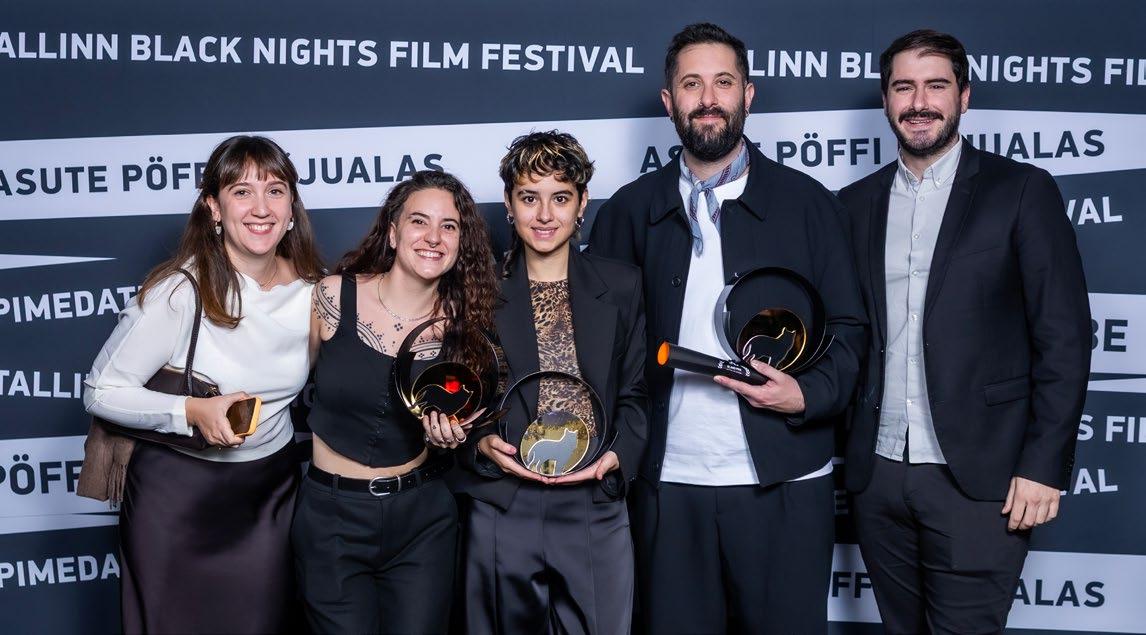
PÖFF’s 29th edition closed with record numbers, wider international reach, and a historic awards outcome.
By Martina Tramberg
Photo by Erlend Štaub
This year’s festival recorded 94,789 visits, welcomed 2,000 accredited guests from 84 countries, and generated 10,300 media mentions across 97 countries — all new records for PÖFF. Compared to 2023, attendance rose by nearly 1,800 visits, international guests increased by 300, and media coverage expanded by 4,000 mentions, marking the most internationally visible edition in the festival’s history.
According to international media monitoring company Meltwater, coverage of PÖFF across print, online media, and social platforms reached an estimated 43 billion potential contacts worldwide. Ticket buyers also came from a record 52 countries, including distant territories such as New Zealand, the Philippines, and Ecuador.
The festival screened 249 feature-length films and 275 short films from 79 countries, across 894 screenings. PÖFF accredited 146 journalists from 30 countries and was supported by 417 volunteers and 103 interns. The festival took place from 7–23 November and was presented by Elisa and Nordic Hotel Forum.
For the first time in PÖFF history, the same film claimed both the Grand Prix and the Audience Award: The Good Daughter, directed by Spanish filmmaker Júlia de
Paz Solvas. The dual recognition highlights the film’s ability to resonate equally with international juries and festival audiences. BF
OTHER MAJOR AWARDS INCLUDED:
Best First Feature Film: Hercules Falling, directed by Christian Bonke (Denmark) Best Baltic Film: The Visitor, directed by Vytautas Katkus (Lithuania, Norway, Sweden)
Critics’ Picks – Best Film: China Sea, directed by Jurgis Matulevičius (Lithuania, Taiwan, Poland, Czechia)
Rebels with a Cause – Best Film: The Baronesses, directed by Nabil Ben Yadir and Mokhtaria Badaoui (Belgium, Luxembourg, France)
Doc@PÖFF Baltic – Best Film: Holy Destructors, directed by Aistė Žegulytė (Lithuania, France, Latvia)
Doc@PÖFF International – Best Film: Days of Wonder, directed by Karin Pennanen (Finland, Denmark, Norway)
This year’s edition once again highlighted PÖFF’s role as a key meeting place in Northern Europe for filmmakers, industry professionals, and audiences. With record attendance, growing international reach, and a strong presence of Baltic and European cinema, the festival continues to be an important platform for both new voices and established filmmakers to be seen and discovered.
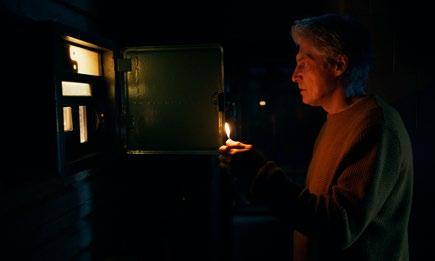
Dice-ching-o-mat
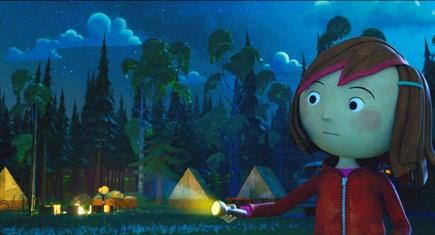
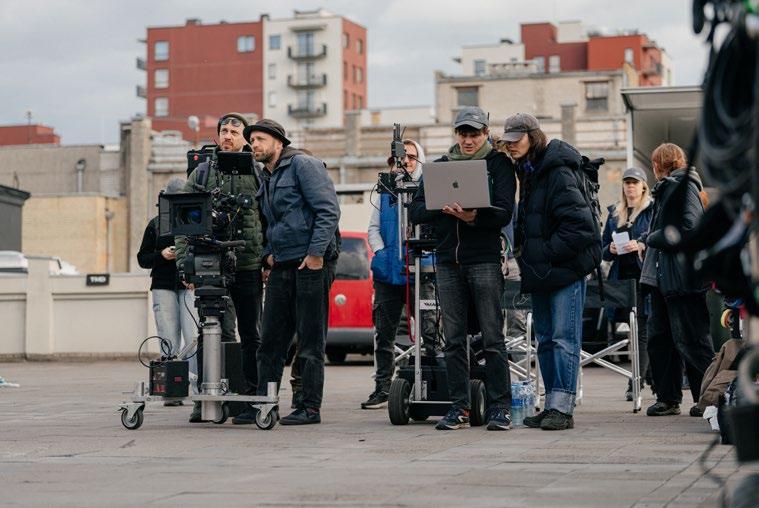
Vilnius Film Fund is the first city-level financing tool in Lithuania, designed to increase Vilnius’ global visibility, positioning the city as an open, dynamic partner for international collaboration.
By Vilnius Film Office
Launched in late 2025, The Fund has already facilitated four international co-productions, including one that premiered at the prestigious Sundance Film Festival. The Fund finances joint documentary, animated, and feature-length film projects developed in collaboration between Lithuanian and international filmmakers. Projects undergo expert evaluation across key criteria of engagement of local film professionals, the narrative significance of Vilnius in the script, budget efficiency, and the use of sustainable, environmentally responsible production practices.
The largest funding allocation was awarded to the Lithuanian–Luxembourg–Irish–Czech co-production How to Divorce During the War (dir. Andrius Blaževičius). Funding was also granted to Lithuanian–French–Latvian co-production Intimacy (dir. Irma Pužauskaitė), Lithuanian–Latvian–Estonian co-production Dice-ching-o-mat (dir. Kristijonas Vildžiūnas), and the Czech–Slovak–Finnish–Lithuanian 3D animated feature Rosa
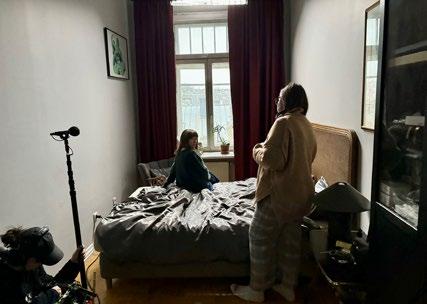
& Dara and Their Great Summer Adventure (dir. Martin Duda).
Together, these four productions employed more than 250 film industry professionals solely from Vilnius, alongside many more international team members.
According to Marija Razgutė, producer of How to Divorce During the War (M-Films), the opportunity to co-produce a film with partners from other European countries is an enriching experience. “They are our creative partners who con-
tribute to the script and the selection of talent. Filmmakers from other countries bring their own cultural, political, and artistic perspectives and serve as the first global audience for your film, helping you assess its relevance beyond national borders. Of course, an international team allows the film to reach wider audiences and gives international sales agents greater confidence. They know that if a film is a co-production, it resonates beyond the producer’s and director’s home countries. After all, someone has invested their talent, money, and time; this means the story truly matters,” says Razgutė.
Distinguished for its remarkable diversity and architecture representing different historical eras, Vilnius serves as a significant filming location for most funded projects, ranging from residential neighbourhoods and the Old Town to Vilnius Airport, city-owned parks, and public buildings, as well as distinctive interiors such as urban wineries, cafés, and restaurants.
The next call of the Vilnius Film Fund is expected in the first half of 2026. More information is available at www.filmvilnius.com BF
If you want to make your film with Estonian partners, these are the film funds ready to finance your project.
MINORITY CO-PRODUCTION
Budget 2026: € 600,000
• For producers from all over the world. Participation of an Estonian co-producer is necessary. Bilateral treaty not necessary.
• Subsidy of up to 70% of the Estonian part of the budget.
• 100% of the subsidy must be spent in Estonia.
• Estonian creative and production related participation in a project should meet the requirements of minority co-production grading table.
• Four application deadlines: February 3 and October 13 for feature fiction and documentary. February 17 and September 8 for animation.
• Decision in 50 days.
CONTACT:
Estonian Film Institute
Viola Salu / Head of Production +372 627 6000 / viola@filmi.ee filmi.ee
Budget 2026: € 9,200,000
Film Estonia cash rebate is a production incentive supporting the incoming production of feature films, feature documentaries, animation films, animation series, high-end TV-drama and the post-production of all previously mentioned works. An application can be made for international production service or co-production to receive a cash rebate up to 40% on eligible production costs.
• Support intensity - 30%–40% of eligible costs
• Deadlines - open call
• Applicant - company registered in Estonia
• Recipient - foreign company
• Decision - in 30 days
• Auditing and payment - in 40 days
The scheme is open for:
• Feature films with a budget of at least € 1 million; minimum local spend € 200,000
• Feature documentary with a budget of at least € 200,000; minimum local spend € 50,000
• Animation with a budget of at least € 250,000; minimum local spend € 50,000
• Animation series with a budget of at least € 500,000; minimum local spend € 50,000 per series
• High-end TV-drama with a budget of at least € 100,000 per single episode; minimum local spend € 50,000 per series
• Post-production; minimum local spend € 30,000
CONTACT:
Nele Paves, Film Commissioner commissioner@filmi.ee / filmestonia.eu
Public agency that supports culture, including audiovisual art, and sport.
In case of minority co-production, the amount of the benefit is up to half of the maximum rate.
• Participation of Estonian co-producer is necessary.
• There are four application deadlines: February 20, May 20, August 20 and November 20
CONTACT:
Liis Viira, Curator of Audiovisual Arts endowment +372 5855 9483 / film@kulka.ee kulka.ee
Type of fund: regional, incentive / cash rebate
TARTU FILM FUND
• Budget 2026: € 150,000
• Support intensity: up to 35%
• Support for the production of feature films, animations, TV-series, documentaries, short films.
• Two application deadlines: in Spring and in Autumn.
CONTACT: fund@tartufilmfund.ee tartufilmfund.ee
PÄRNU COUNTY FILM FUND
• Budget 2026: € 100,000
• Support intensity: up to 25%
• Support for the production of feature films, animations, documentaries, short films.
• No deadlines.
CONTACT:
Association of Local Authorities of Pärnu County pol@pol.parnumaa.ee parnumaa.ee/en/film-fund
VIRU FILM FUND
• Budget 2025: € 200,000 (2026 TBC)
• Support intensity: up to 40%
• Support for the production of feature films, documentaries, TV-series, short films, music videos.
• Two application deadlines: March 1 and October 1.
CONTACT: Piia Tamm piia.tamm@ivek.ee / vff.ee
FILM FUND OF ESTONIAN ISLANDS
• Budget 2026: € 25,000
• Support intensity: up to 40%
• Support for the production of feature films, animations, TV-series, documentaries, short films and film education.
• No deadlines.
CONTACT: filmifond@sasak.ee / saartefilmifond.ee
• National Film Centre of Latvia
• State Culture Capital Foundation of Latvia
• Investment and Development Agency of Latvia (cash rebate)
• Riga Film Fund (cash rebate)
Annual State Support for film industry 2025 (from all 4 key funding bodies) –€ 1 2 904 296
Number of film productions supported by the National Film Centre of Latvia in 2025 – 27 films
Minority co-production scheme
• Budget 2025: € 400,000.
• Supported films: fiction features (over 65 min), documentaries and animation films of any length.
• 80% of the subsidy must be spent in Latvia.
• Call once a year, application time, deadline: March / April.
• Decision: 1 month.
CONTACT:
Inga Blese, Head of Production, inga.blese@nkc.gov.lv
CAPITAL FOUNDATION
A public agency that supports different strands of culture, including audiovisual sector (various kind of projects: film productions, development, research projects, festivals, etc.).
• Supports documentaries of any length, fiction shorts and animation films.
• Funding for audiovisual sector in 2025: € 1 324 143 (no specific amounts indicated for film productions, depends on the competition and available funding).
• Three application deadlines: January, May, September.
• Decision: 1 month.
Film curator Gita Krātiņa, gita@kkf.lv
AGENCY OF LATVIA
Cash rebate scheme Latvia Co-financing programme for foreign productions
The programme is a production incentive supporting the incoming productions of full-length feature films, documentaries and animation films, TV films. An application can be made for international production service or co-production to receive a cash rebate of 30% on eligible production costs. The support can be combined with other public funding sources in Latvia in case if the Co-financing programme’s support together with other funding sources does not exceed 50% of the film’s total expenses in Latvia.
• Support intensity: 30% of eligible costs.
• Deadlines: open call twice a year.
CONTACT:
jautajumi@liaa.gov.lv www.liaa.gov.lv
Cash rebate scheme Riga Film Fund co-financing programme
The programme is a production incentive supporting the incoming productions of full-length fiction features, documen-
Basic facts: Latvia is the member of the EU and NATO. Currency EUR. Latvia covers an area of 64,589 km2, with a population of 1.9 million. Access to high-speed internet in Latvia is among the best in the EU.
Accessibility: Riga, the capital of Latvia, has the largest airport of the Baltics just 20 min drive from the city center. There are more than 100 direct flight destinations. Locations. Latvia and its capital Riga offer a wide

taries, and TV films. An application can be made for international production service or co-production to receive a cash rebate of 20 – 25% on eligible production costs. The support can be combined with Latvian co-Financing programme’s funding.
CONTACT: Aiga Pīķe, aiga.pike@riga.lv www.filmriga.lv
Latvian Television (LTV) is the stateowned public service television company in Latvia. LTV operates two linear channels, LTV1 and LTV7. LTV is part of Public Broadcasting of Latvia, consisting of LTV and radio (6 stations), joint news content and digital access is provided on the broadcaster’s site www.lsm.lv. LTV acquires Free TV and Free VOD rights to drama series, fiction features, documentaries, children’s content, live events, etc. LTV mainly acquires completed films but is also open to considering projects in production if LOC is needed.
CONTACT: Zane Valeniece, Head of Acquisitions, Zane.Valeniece@ltv.lv
variety of locations. Riga city has Northern charm, Medieval, Art Nouveau and industrial architecture, as well as Soviet modernism heritage. The most beautiful Art Nouveau buildings in Riga were built by Mikhail Eizenstein, the father of the iconic filmmaker Sergei Eizenstein. Throughout Latvia there is wide range of castles, palaces, ancient fortresses and manor houses. The most popular shooting location is Rundale – a baroque
palace built in 18th century, 100 km from Riga Pristine nature: There are four distinct seasons in Latvia. Over 500 km long white sand beaches –the coastline of the Baltic sea. Abundancy of rivers and forests, lakes and swamps.
Advantages of filming in Latvia: Internationally experienced technical crews, strong art department and construction teams, competitive costs, stages and backlots, wide range of extras.
Learn more about how to save money while making your dream project in Lithuania come true.
The key funding body:
Lithuanian Film Centre
The Lithuanian Film Tax Incentive came into effect in January 2014 as a new policy measure to foster local and foreign film production in Lithuania. Recently it has been extended until 31st of December 2028. The Lithuanian Film Tax Incentive provides an opportunity to save money on film production budgets through a private investment scheme.
• Save up to 30% of your film production budget.
• Available for the production of feature films, TV dramas, documentaries, and animated films, including domestically produced, co-produced, or service-based films.
As a foreign filmmaker, you must cooperate with one of the local production companies that submit the application. The local company takes the responsibility of finding a local business company willing to support up to 30% of your production budget in exchange for reduced corporate income tax.
The Film Tax Incentive is only available for films that meet the approved production and cultural criteria requirements. For more detailed information on the requirements, visit www.lkc.lt/en.
The project has to meet all of the following production criteria:
• The total amount of eligible spending in Lithuania has to be no less than € 43,000.
• At least three days of shooting take place in Lithuania in the course of the production (except for animation projects).
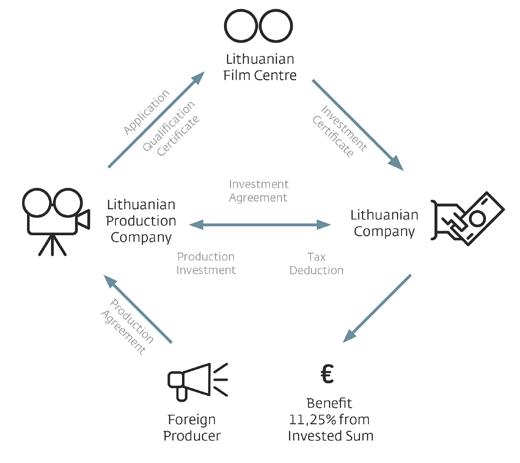
• At least 30% of an animated film’s production costs in Lithuania must be incurred for producing two of the elements: shooting (if it is required by the script); characters and/or backgrounds design; layouts and/or storyboards; visual effects; 2D, 3D, stop-motion and other forms of animation production.
• At least 51% of the crew hired by the Lithuanian production company are citizens of Lithuania or citizens of other European Economic Area (EEA) countries.
The biggest foreign projects that benefited from the Lithuanian Film Incentive in 2025:
• For All Mankind spin-off, TV series Star City (season 1) (USA - SPTV Limited) received € 6,912,264.
• Historical TV series Mozart (GermanyStory House Pictures GmbH) received € 1,517,865.
• Netflix production TV series based on true story Bunt (PL) / Riot (EN) (PolandTelemark Sp. z o.o.) received € 1,135,470.
Requirements to be considered a minority co-production:
CONTACT:
Deimantas Saladžius +370 6586 8822 d.saladzius@lkc.lt
Audrius Kuprevičius +370 6506 6873 a.kuprevicius@lkc.lt
Gabija Trakimavičiūtė +370 6902 0351 g.trakimaviciute@lkc.lt

lkc.lt/en
• Co-production (preliminary) agreement that complies with the provisions of the European Convention on Cinematographic Co-production or other international Co-production Treaties between Lithuania and other countries.
• Production companies must deliver substantial information confirming that the financing for production which makes no less than 50% of the whole budget has already been committed.
• 95% of the financial grant should be spent in Lithuania.
• A script or script treatment in Lithuanian.
Maximum amounts of funding per project (agreements must be provided):
• Up to € 100,000, if the project involves at least one Lithuanian film editor, sound designer, costume designer, supporting actor, senior animation artist, or senior animation frame artist.
• Up to € 200,000, if the project involves at least one Lithuanian main actor, co–author–director, scriptwriter, director of photography, production designer, composer, director of animation, or senior animation character artist.
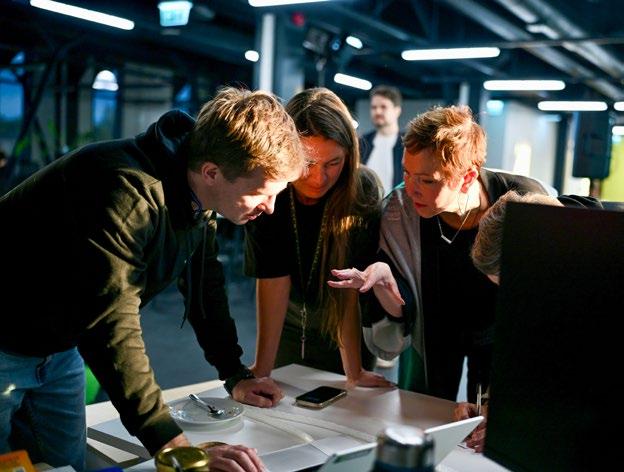
The global film and media industry is undergoing a deep structural transformation. Long development cycles, rigid production pipelines, and opaque licensing systems are increasingly misaligned with how content is created, distributed, and consumed today. At the same time, AI-assisted production, interactive formats, and new storytelling models are scaling rapidly – making experimentation not optional, but essential.
Recent moves by Netflix illustrate this shift clearly. While strengthening its storytelling legacy through iconic IP such as Warner Bros., Netflix is simultaneously investing in future-facing technologies by acquiring the Estonian startup Ready Player Me, focused on digital identity and cross-platform user experiences. Together, these decisions reflect a broader industry logic: the future of film and media is shaped not only by content, but by the tools, platforms, and technologies that redefine how stories are created, distributed, and experienced.
This is where Estonia has quietly become highly relevant. With its strong technology culture, fast experimentation cycles and startup-driven mindset, Estonia offers a practical testbed where new film and media solutions can be developed, tested and validated in real production environments before scaling internationally. What makes this context distinctive is the close integration of creative production and technological innovation.
At the centre of this ecosystem is the Tehnopol Startup Inkubaator Film & Multimedia Accelerator. As part of IDA Hub, a film innovation centre whose unique concept brings together the region’s largest film studios, a film industry incubator training production-support professionals, and a film and multimedia accelerator driving technological innovation, the programme connects filmmakers, technologists, and entrepreneurs working at the intersection of storytelling, production, and technology.
By Olga Kurdovskaja
This approach is already visible in the startups active within the accelerator’s portfolio. Alongside SyncHub, rethinking music discovery and licensing for audiovisual content, and IRIS, an AI-powered casting agent streamlining auditions and feedback loops, teams are also addressing everyday production realities. StudioStack helps filmmakers and freelancers move away from spreadsheets and paperwork. At the same time, FilmLink shows how up to 80% of pre-production can be handled in a few clicks when teams and service providers work on a single platform – giving producers back time, budget clarity, and control. These startups are not optimising legacy workflows; they are redesigning core industry mechanics in close connection with real production environments.
For international studios, platforms, investors, and industry partners, this creates a clear opportunity: direct access to a testbed where new technologies can be piloted, collaborations launched, and future-facing production models explored in practice. BF
Film and Multimedia Tech Hackathon, 12–13 September 2025, with international mentors Kristen Davis and Maciej Žemojcin.
Interested in partnerships, pilots, or collaboration opportunities?
The Tehnopol Startup Incubator Film & Multimedia Accelerator is open for dialogue.
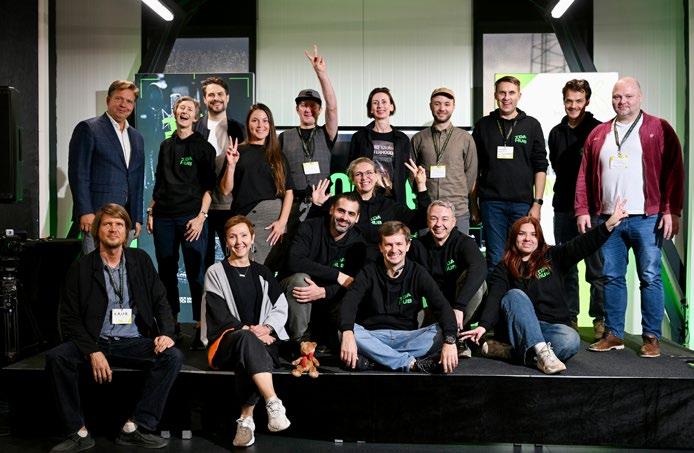
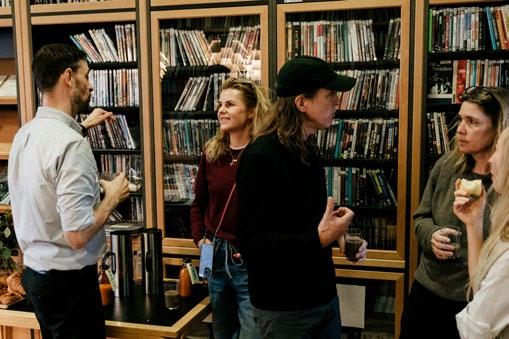
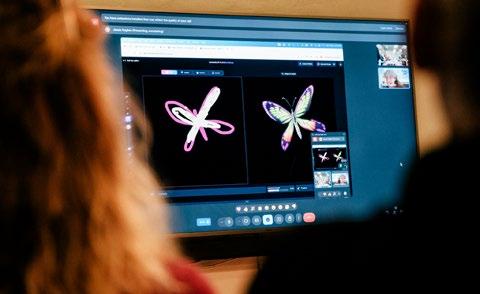

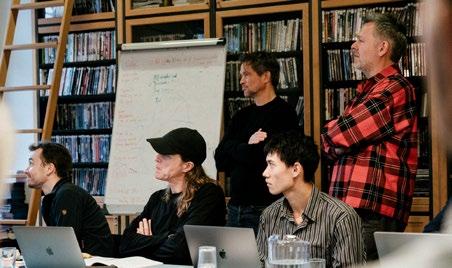
Denmark, the Netherlands, and Estonia are launching Mastering �I for European Film Professionals (MAIEFP), a new annual executive training programme designed to equip Europe’s film decisionmakers with a human-first approach to AI leadership.
By Sten-Kristian Saluveer
by
Over the past year, generative AI has rapidly evolved from short-form experimentation into complex business, creative, analytics and VFX workflows. As studios and streamers roll out AI guidelines, Europe faces a clear adapt-or-perish moment: how to integrate AI in a way that is beneficial, compliant, and aligned with the continent’s strong art-house and independent film tradition.
In response, three industry forerunners – the National Film School of Denmark, Industry @ Tallinn & Baltic Event, and FilmForward – have united to launch MAIEFP, a nine-month programme designed to equip mid- to senior-level film professionals with strategic, company-wide AI knowledge, leadership skills, and change-management tools.
Unlike short, tool-driven AI workshops, MAIEFP provides a comprehensive 142hour executive curriculum running from April to November 2026. The programme combines three on-site sessions in Copenhagen, Amsterdam, and Tallinn with two intensive online weekend modules.
MAIEFP targets producers, directors, executives, and production or post-production professionals with at least five years of experience – participants who are expected not just to use AI, but to lead organisational transformation.
The curriculum unfolds across five progressive modules. It begins with an on-site intensive workshop in Copenhagen midApril 2026, establishing AI foundations, business innovation frameworks, and organisational change strategies. A remote module in late May follows as a creative lab focused on AI-powered storytelling and production pipelines, tailored to European feature and series production.
In mid-June, participants continue online with a dedicated module on Responsible AI, addressing European and international regulation, copyright, ethics and compliance. The cohort then meets in Amsterdam in early September, alongside IBC, to explore AI-driven financing strategies and sustainable revenue models. The programme culminates in Tallinn in mid-November, where participants present their final projects directly to the industry during the Black Nights Film Festival.
MAIEFP brings together leading European AI practitioners, organisational change advisors, legal experts and business strategists, offering participants direct, one-toone access to top-level expertise. The full nine-month programme is priced at €2,500, with up to six scholarships available for professionals from low-production-capacity countries, underrepresented backgrounds and emerging markets. The question for Europe’s film industry is no longer whether AI will have an impact, but whether professionals are ready to stay competitive for audiences’ time and attention. With participation strictly limited to 20–25 places, applications for MAIEFP are now open, with a final deadline of February 18, 2026. The selected cohort will be announced on March 9, 2026, ahead of the programme launch in Copenhagen on April 10, 2026 BF
Master AI – before AI reshapes your market. masteringaiforfilm.eu.
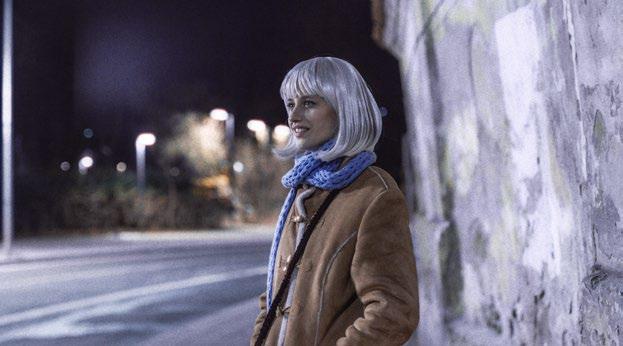

At the end of January this year, the Vilnius Short Film Festival, held for the 19th time, presented audiences with more than 100 films featured in National and International Competition programmes, as well as special themed programmes, and events that broadened the overall festival experience.
By Mintarė Varanavičiūtė and Lithuanian Shorts
As every year, the greatest audience attention was drawn to the festival’s two National Competition programmes, which this year premiered ten of the most prominent short films by Lithuanian directors, reflecting the realities of our times.
The films for the National Competition were selected by the festival’s long-time programmers: director, writer, and educator Andrius Blaževičius; film critic and journalist Ieva Šukytė; and film scholar and curator Mantė Valiūnaitė.
The Vilnius Short Film Festival places special emphasis on accessibility; therefore, all films in the National Competition programmes were screened with SDH subtitles and audio description for people with visual impairments. Discussions with the film crews held in Vilnius after the screenings were also attended by Lithuanian Sign Language interpreters.
In 2024, the Vilnius Short Film Festival became the first Oscar-qualifying event in Lithuania. In 2025, it also became the country’s first festival to receive qualifying status for the European Film Awards.
The first programme opened with Holo-
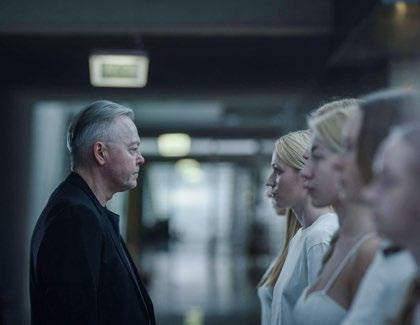
gram by Severina Vaičiūnaitė, a portrait of a young, carefree person in search of self. In the film, Sofija, longing for connection, meets Adomas during a night out in Vilnius, and the two seek closeness without saying much.
In Present Continuous by Goda Januškevičiūtė, a burned-out activist, Noja, shelters a Ukrainian refugee, Yulia. As they try to make sense of everyday life, Yulia loses contact with her boyfriend fighting in the war, and one night under shelling in Ukraine changes their lives forever.
The programme continued with Alike by Adas Burkšaitis, a story of a young actress who, after landing a role, faces an unusual request from the director that blurs the line between art and submission.
In the documentary City Above by Kristina Savickaitė, four friends, seeking a
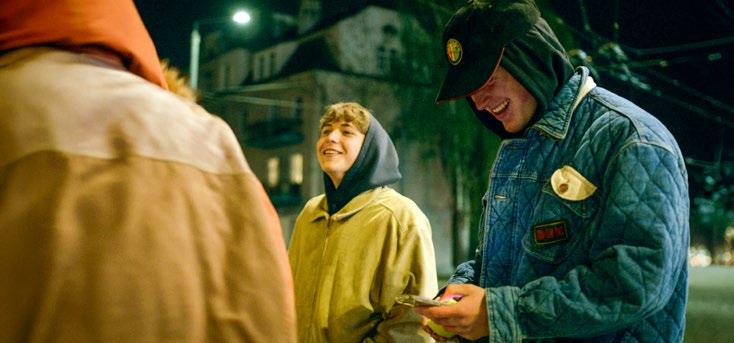

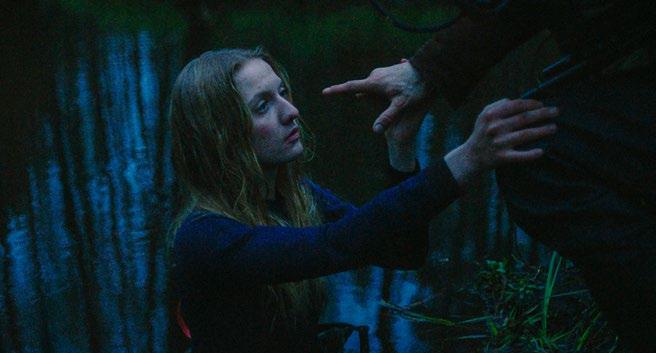
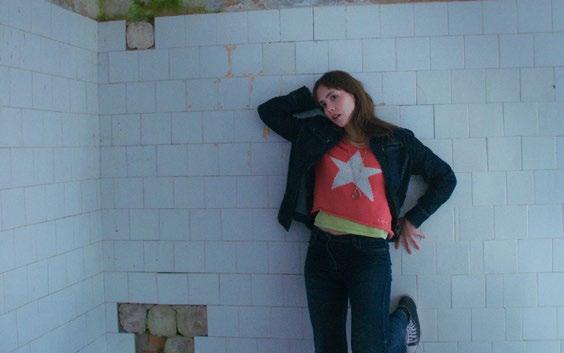

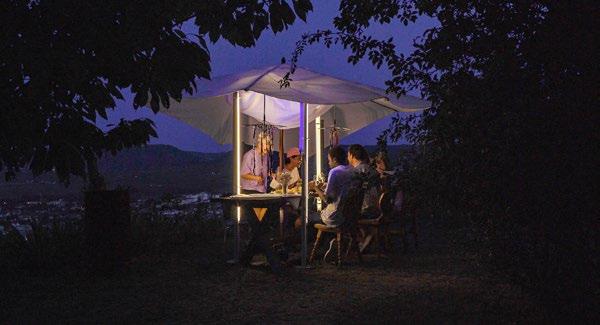
sense of freedom and a break from everyday chaos, wander through parts of Vilnius Old Town that most people never see. Together, they discover a hidden layer of the city where they seem to become invisible, the world feels calmer, and their bond grows stronger.
The first programme concluded with Signal Path by Eglė Razumaitė, a hybrid of documentary and fiction, following Liepa as she moves with her daughter to Germany in search of a fresh start, only to face her family’s disapproval and the challenges of metropolitan life.
The programme began with Liump! Heuriger by Laurynas Skeisgiela, a documentary that brings together a traditional
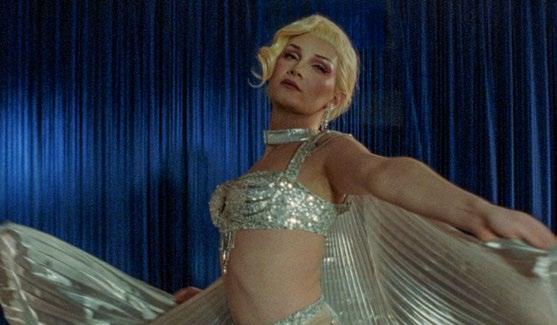
Austrian pop-up wine tavern and a moth-watching setup. The idea of inviting both people and insects to the same table is appealing for its simplicity, its naivety, and its likely failure.
Whirlpool by Linas Žiūra is an engaging story of Jonas and his girlfriend, Nina, who travel to a remote log house owned by a film director, where they are meant to shoot a film. As they spend time together, the boundaries between work and personal life begin to blur: they cook, dance, go to the sauna, and prepare for the film simultaneously. Jonas increasingly feels left out as Nina grows closer to the director, and tension rises as unspoken feelings begin to drive the protagonists apart.
Next in the programme was the documentary After Fentanyl by Rinaldas Tomaševičius. Fentanyl, the most preva-

lent street drug in Vilnius, is merciless to those who use it. The director undertakes a difficult and noble mission: he encounters a group of people addicted to drugs living on the streets and begins visiting them regularly, hoping to save at least one of them, despite the fact that they all live with HIV, hepatitis, and other serious illnesses.
Loving by Vesta Tučkutė presented the story of a couple’s relationship. Adela and Benas fall in love over the summer, but their lives gradually pull them apart.
The programme concluded with Girls Don’t Breathe by Melita Sinušaitė, the story of a shy eighth-grader who encounters an older girl posing nude in an abandoned building. This new friendship offers her a glimpse into the intriguing world of adulthood. BF
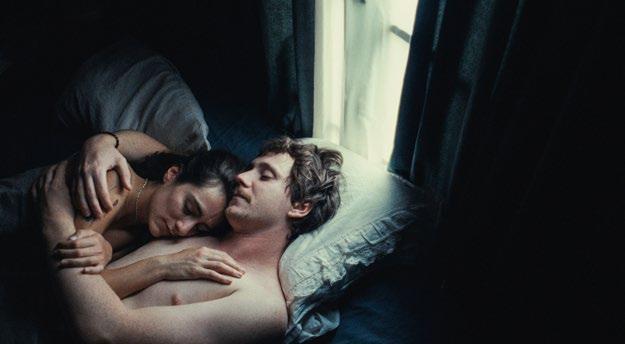
In today’s audiovisual industry, opportunity is driven by visibility and credibility. Whether you’re a director, cinematographer, editor, producer, or actor, your next collaboration increasingly depends on how easily your work can be found, viewed, and trusted online.
Creative Gate is created to answer that need – offering a curated, professional platform for talents and professionals to meet.
Developed by Industry@Tallinn & Baltic Event and Tallinn Black Nights Film Festival (PÖFF), Creative Gate is designed to spotlight film and audiovisual professionals in a focused, industry-specific environment. Since its launch, the platform has received strong and encouraging feedback, particularly from emerging filmmakers seeking greater access to the international film community.

part of the professional identity,” says Egle Loor, Project Manager of Creative Gate.“ Today, a digital footprint often replaces the traditional word-of-mouth introduction. A strong, professional profile helps creatives stand out in a competitive landscape.”

Unlike many other networking platforms, Creative Gate is purpose-built for film and audiovisual professionals. As part of the Tallinn Black Nights Film Festival’s professional ecosystem, it connects creatives, companies, and service providers across the entire production chain – from development and financing to production and post-production.
and showreels in a sleek, cinematic style, providing a single, polished link that reflects their entire creative portfolio. The platform is a verified database aimed at industry professionals, ensuring trustworthiness and visibility within the creative sector.
As the industry evolves from “who you know” to “who can find you,” Creative Gate encourages professionals to take ownership of their professional image. The platform makes it easier to connect with international producers, co-production partners, and decision-makers actively searching for talent.
“In any industry, especially in the audiovisual industry, online presence is
The Creative Gate profile serves as a professional industry calling card – creating a profile is currently free for both individuals and organisations. It allows users to showcase credits, skills,
With hundreds of profiles already live, Creative Gate is rapidly becoming a key reference point for Baltic and Nordic film professionals – with ambitions to connect local talent to global opportunities.
Create your standout professional profile already today – for free – at creativegate.film. BF
Are you ready to transform your ideas into animated worlds? Our 2-year international Master’s programme in Animation nurtures creativity, fosters collaboration and equips you with the tools to become an independent filmmaker, director or artist, shaping the future of a medium that inspires audiences across the globe.
More information: artun.ee/animation vimeo.com/ekaanima
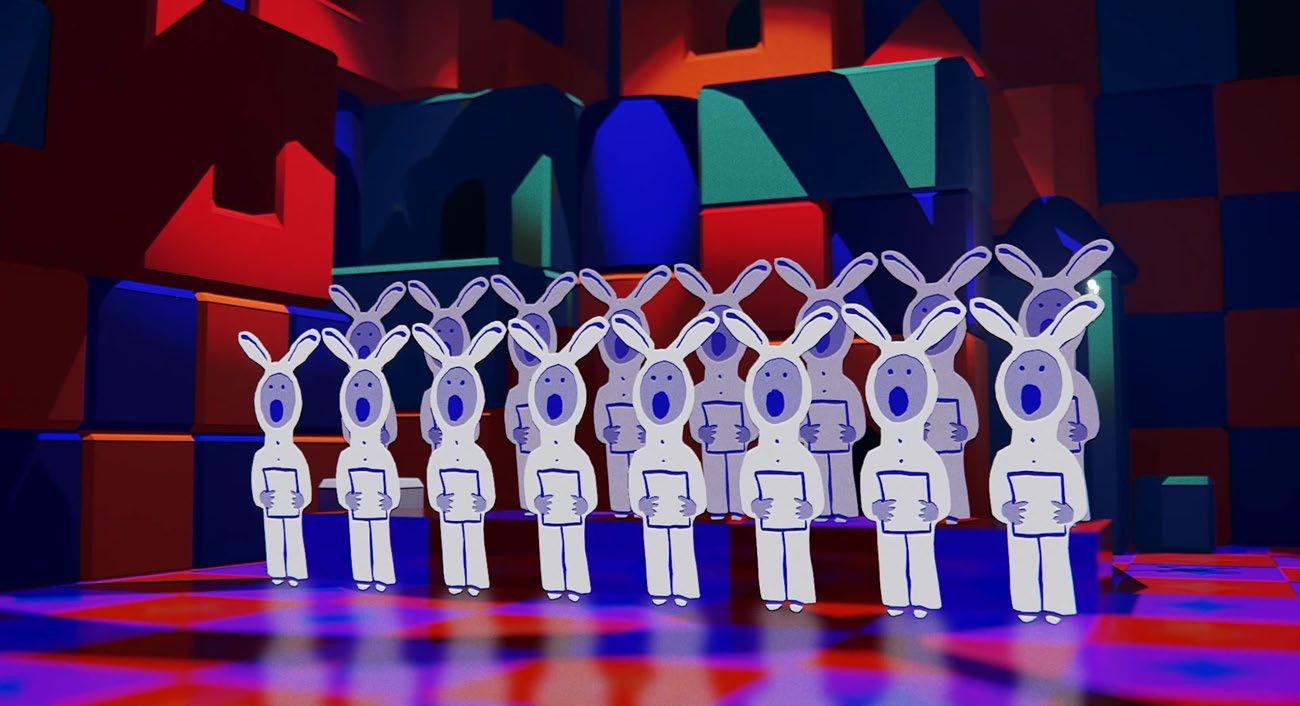
TIn January, the largest special programme ever dedicated to Baltic documentary films launched at the Centre Pompidou in Paris. It will run for nearly three months and includes over 50 screenings.
By Arnaud Hée, Curator of the retrospective
o turn today to the Baltic cinemas of the 1960s through the early 2000s is to enter a fraught and turbulent history: the hard-won independence, the devastating consequences of the German–Soviet Pact and its rupture, and the Soviet occupation beginning in 1944. The presence of these nations – firmly anchored in Europe and within NATO – resonates with echoes of that past, as Russia has never relinquished its imperial ambitions; the full-scale invasion of Ukraine in February 2022 remains a shockwave that continues to reverberate. Cinema lies at the heart of this retrospective, yet it is deep-
ly inhabited by both this past and this present.
Baltic Poetics traces its origins to our past programming. In May 2019, we devoted a retrospective to Latvian filmmaker Laila Pakalniņa. In November 2024, Audrius Stonys was honoured during a significant Lithuanian season in France. We showcased Bridges of Time – a co-production between Estonia, Latvia, and Lithuania – at the opening of this retrospective, a film in which Kristīne Briede and Audrius Stonys create a collective portrait of Baltic documentary cinema. It was then that we met many of the key figures of Baltic Poetics, predecessors of Audrius Stonys, Laila Pakalniņa, and
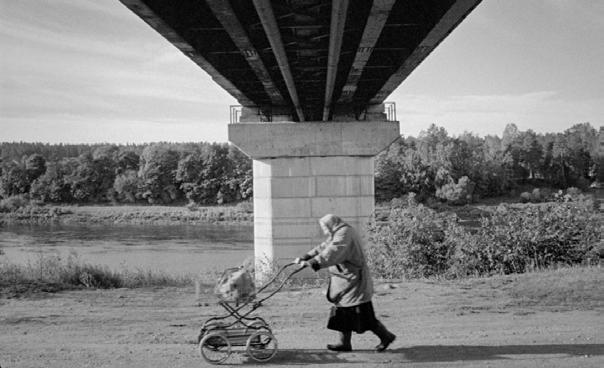
many others: Herz Frank, Aivars Freimanis, Henrikas Šablevičius, Mark Soosaar, Andres Sööt, Ivars Seleckis, and Robertas Verba. While Baltic Poetics is historical in principle, focusing on the 1960s through the 1990s, Pakalniņa forges a link to the present by returning with four documentary films – previously unseen in France – made since her 2019 retrospective.
The short film, which dominates documentary production, naturally takes centre stage here, in programmes organised around themes such as the sea and water, time, the past and different ages of life,
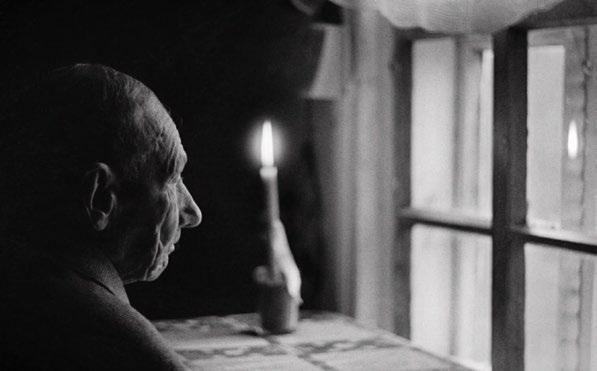
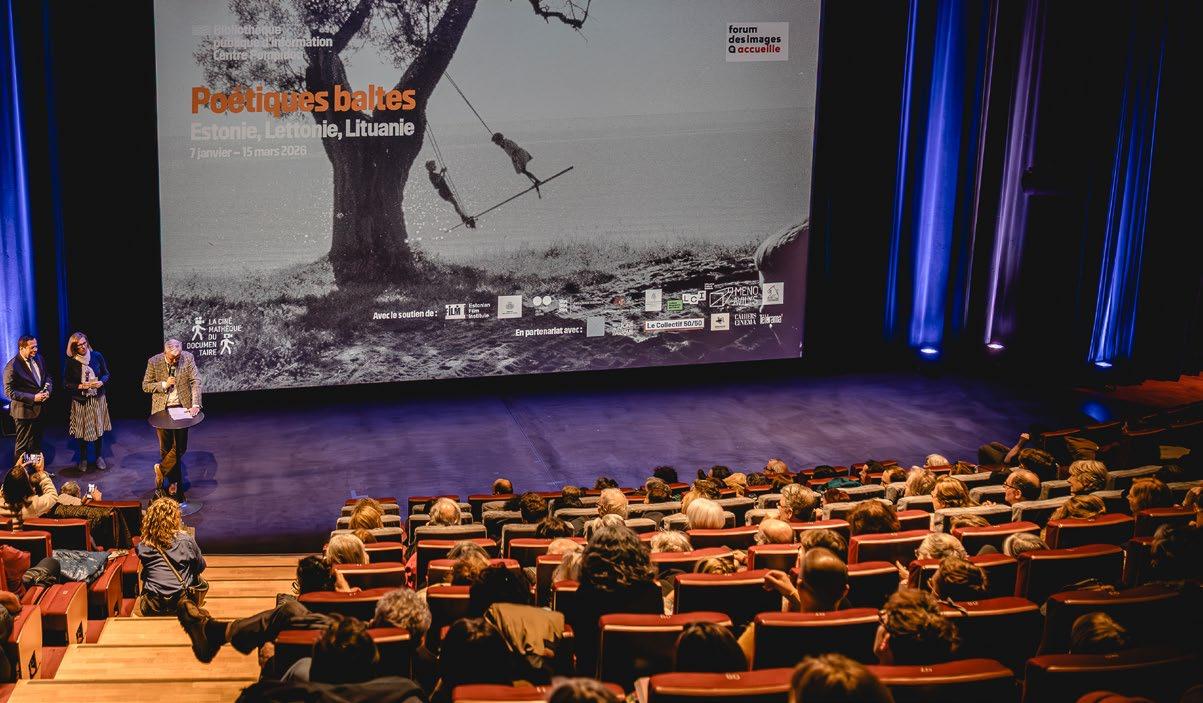
materiality and spirituality, rural life and the city. These moments of stunning formal beauty demonstrate once again that a short film can be a broad film.
This constellation of authors sits alongside a significant number of women filmmakers, although this does not suggest that any form of equality existed within cinematic circles during the communist era. As in other contexts, women remained exceptions, both in directing and in the most esteemed technical positions. The same holds true for training, with Moscow’s S. A. Gerasimov Institute of Cinematography (VGIK) serving as the guiding light at the time.
Nevertheless, some women broke the
lock as early as the Soviet period, becoming filmmakers themselves: in Estonia, Valeria Anderson, Leida Laius, and Heli Speek; in Lithuania, Bytautė Pajėdienė and Antanina Pavlova. They are featured in this retrospective, notably thanks to restoration work carried out in Lithuania in 2025 by Meno Avilys, resulting in the programme First Women Filmmakers in Lithuania.
It is, of course, essential to clarify what is meant by the idea of poetry that underpins this programme. It is definitely a matter of formal exploration, attentive to an expressiveness arising from the very
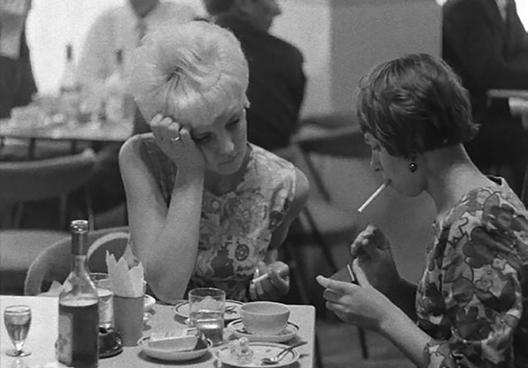
means of the seventh art, appealing to the sensory and the implicit.
This cinematic language is rooted in an image-based tradition of remarkable virtuosity. Poetry also largely exists in the composition of images and sounds, through attention to figures of speech, symbolism, and, of course, rhythm. Editing naturally takes a central role, sometimes engaging directly with the avant-gardes – constructivism, Dziga Vertov, the urban symphonies. However, in terms of montage, a shift occurs towards more contemplative works, in which the act of cutting from one shot to another becomes increasingly rarefied.
The poetic idea resonates with the

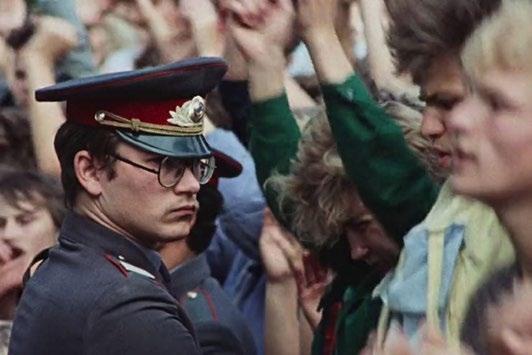
concept of a cinema that would be nothing other than cinema itself, free from the discourses and practices that can sometimes hinder and ossify it. It often manifests as a political, emancipatory act: in this context, the goal is to move away from voices and languages that impose an overarching ideology on the works, like a caption dictating a clear meaning. This “crisis of language” has left a lasting impact on these cinemas well beyond the Soviet Union’s existence, as shown by the remarkable films of Valdas Navasaitis.
Tentative in the interwar years, the Baltic film industry initially developed within the rigidity of Zhdanovite socialist realism and the final decade of Stalinism – terrible, like all the others. When this normative doxa rapidly became obsolete in the second half of the 1950s, the cinema that this retrospective weaves together began to exist.
Under the effects of de-Stalinisation, new perspectives emerged and intensified in the early 1960s: a return to formal experimentation and subjectivity, and an artistically documented reality replacing the crude fictions of propaganda. Filmmakers seized these openings, created frameworks, and formed affinity groups – often trios comprising director, screenwriter, and cinematographer – within the documentary studios of the three Baltic countries. Of
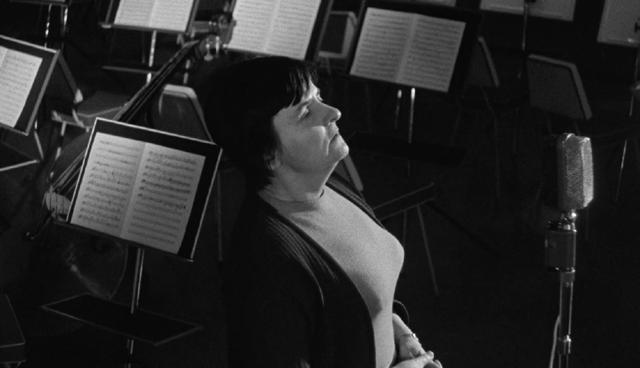
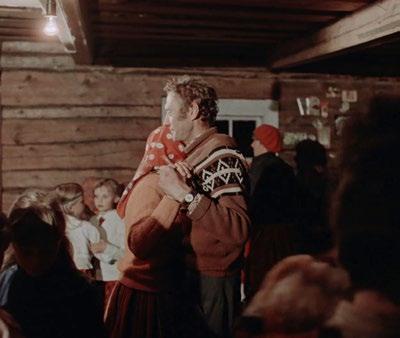
course, it was necessary to maintain appearances and accommodate official discourse. However, this was often a way to free oneself from it more effectively, for instance, by celebrating landscapes and unique identities rather than Soviet uniformity, with its narratives, heroes, and heroines worn threadbare. This tension between art and ideology lies at the core of Baltic Poetics.
There is no question of exaggerating the picture: the vast majority of the films shown were produced within the highly official framework of national studios, where artists and technicians were civil servants working under the influence of the Communist Party of the Soviet Union (CPSU) and its local branches. One must therefore avoid oversimplifying by presenting these films as part of a systematic opposition to the Soviet regime.
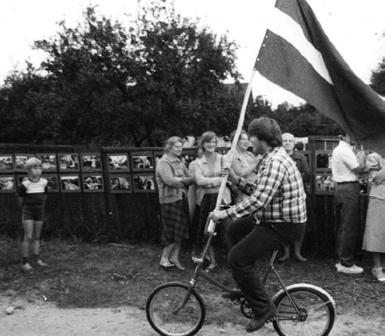
Some artists were indeed opponents. But to work within the system, everyone had to proceed cautiously, to varying degrees accommodating it. Some productions were completed only to be shelved alongside censored films.
Yet, as early as the 1960s, films of remarkable tonal freedom began to emerge. Irreverence steadily grew over time, expanding in scope and adopting a clearly contentious tone during the 1980s, an era marked by glasnost and perestroika. We have chosen to open the retrospective with a formidable and emblematic film from this period, made by Juris Podnieks, who was 35 at the time of filming: Is It Easy to Be Young? (1986). It also poses a question – posed without malice or irony – to the Baltic states themselves, whose most recent independence has yet to reach forty years. BF
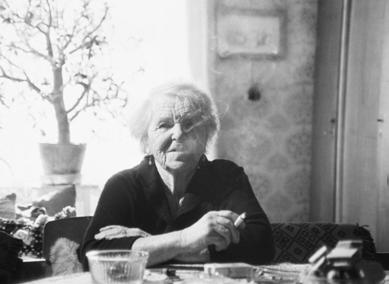
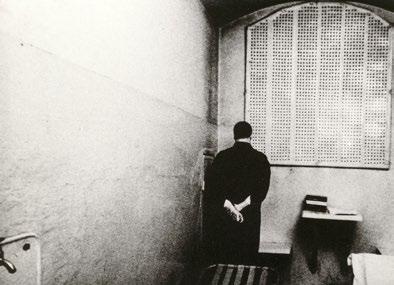
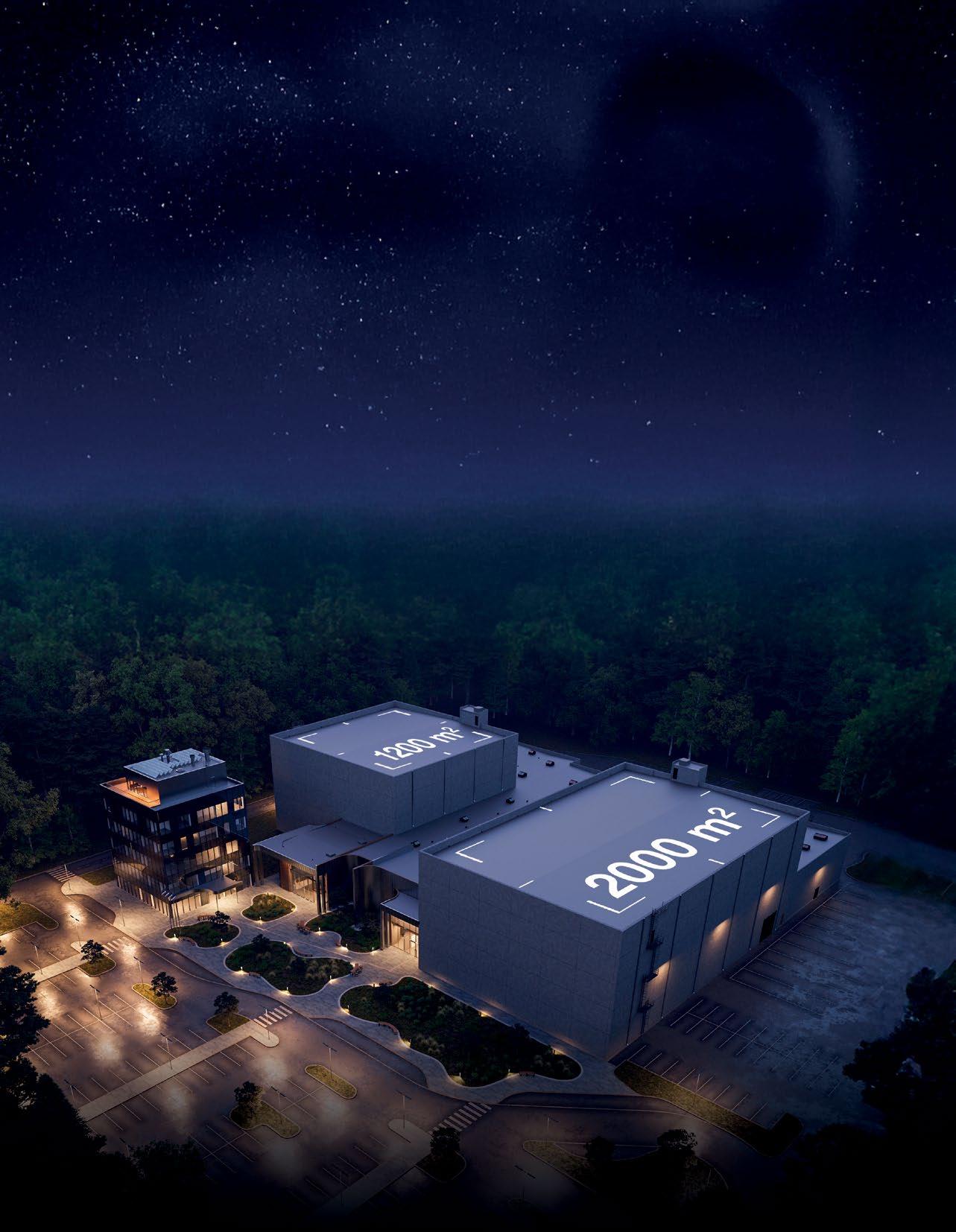

Multi-purpose studios opening Sept 2026 For film industry companies For film & multimedia tech startups