


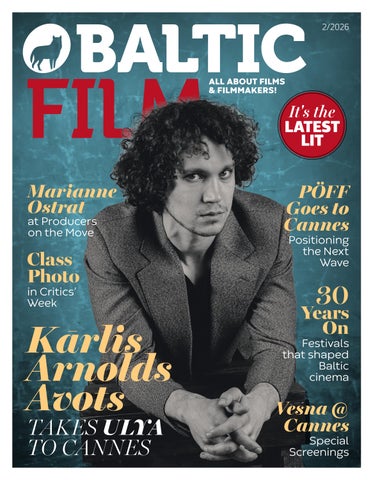
There was a time when a Baltic film at Cannes felt like an exception. This year, it feels increasingly like a continuity.
The Latvian–Estonian–Lithuanian–Polish co-production Ulya appears in Un Certain Regard, while Lithuanian cinema is present across sections — with Class Photo in Critics’ Week and Vesna, a Lithuanian–French–Estonian co-production, in the Official Selection Special Screenings’ section. These are different works, but they share a similar position: stories rooted locally, yet developed with an awareness of the international context.
What stands out is not only the films themselves but also the way they are made. For a younger generation of producers, including Marianne Ostrat, co-production is no longer a strategy to be learned but a natural way of working. The same clarity is evident in projects presented at the Marché du Film, where each film seems to know quite precisely where it belongs.
Animation continues to hold a distinct place. The return of Estonian animated shorts to Annecy’s competition suggests a consistency built over time, while Latvian animation — highlighted in this issue through the work of Edmunds Jansons— confirms a similarly strong and recognisable voice within the region.
At the same time, this is also a year of anniversaries. The Tallinn Black Nights Film Festival marks its 30th edition, alongside the 25th anniversary of its industry platform — a reminder that what now feels established was once built step by step, often without certainty. Across the region, Baltic Sea Docs and the Riga International Short Film Festival 2ANNAS reach the same milestone, each in its own way, shaping the conditions in which Baltic cinema could emerge and develop.
Perhaps this is where Baltic cinema stands today. Not emerging, not arriving— simply continuing. And increasingly, being expected.
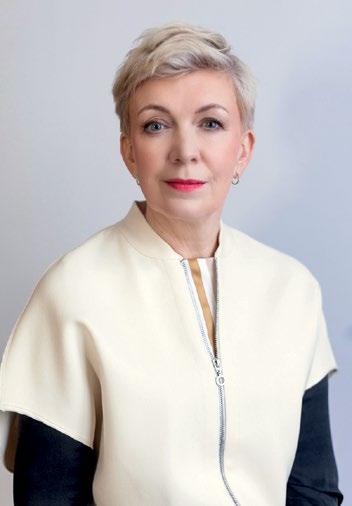
Eda Koppel Editor in Chief
4 EVENT PÖFF Goes to Cannes
6 EVENT PÖFF Calls for Film Submissions
8 DIRECTOR Rostislav Kirpičenko Taking Ukraine to Cannes
12 NEWS Class Photo Goes to Cannes
14 PRODUCER Marianne Ostrat Producing Between Intuition & Strategy
19 STUDIO Estonia’s New Studio Powerhouse
20 EVENT Pitching the Baltics to the World
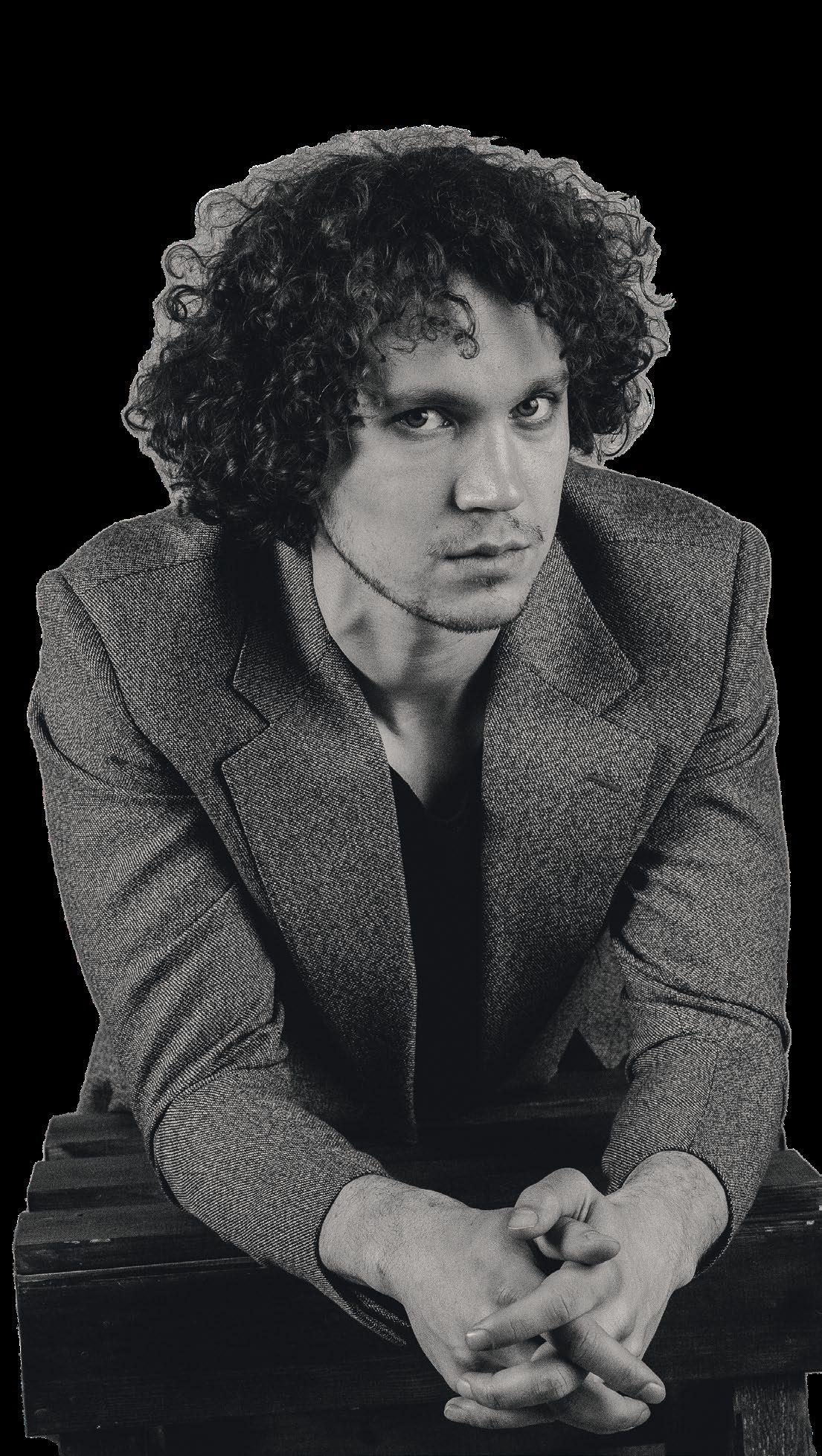
22 COVER STORY Kārlis Arnolds Avots Being Ulya
28 FUNDS Fund of Estonian Islands
30 DOCUMENTARY Aistė Žegulytė: We Selfishly Try to Claim our Place in the Workd
34 DIRECTOR Edmunds Jansons: The Art of Speaking Freely
38 FUNDS Pärnumaa Film Fund
40 FUNDS Vilnius Film Fund
42 DIRECTOR German Golub: From Olympic Tracks to Moral Grey Zones
46 ANIMATION Kaspar Jancis Penguin
49 NEWS PÖFF Introduces New Artistic Leadership
62 IN FOCUS One of the Wonders of the World
54 ANIMATION Henri Veermäe Uka-uka
58 EVENT Baltic Sea Docs
63 NEWS PÖFF Will Host World Conference of Science & Factual Producers
64 NEWS A New Home for Cinema — Regional Cinematheque “Naglis”
66 EVENT The Riga International Short Film Festival 2ANNAS
68 FUNDS How to Find Money in Estonia, Latvia and Lithuania
Baltic Film is published by the Tallinn Black Nights Film Festival Telliskivi 60a/2, 10412 Tallinn, Estonia E-mail: info@poff.ee, I poff.ee Editor in Chief: Eda Koppel
Contributing Editors: Mintarė Varanavičiūtė, Kristīne Matīsa
Contributors: Andrei Liimets, Emel-Elizabeth Tuulik, Aurelia Aasa, Dita Rietuma, Kristīne Simsone, Ieva Šukytė, Egle Loor, Zane Balčus, Laurence Boyce, Katrīna Bērziņa, Laima Graždanoviča
Linguistic Editing: Paul Emmet Design & Layout: Profimeedia
Cover: Kārlis Arnolds Avots Photo by Agnese Zeltiņa Printed by Reflekt
At this year’s Marché du Film, PÖFF Goes to Cannes presents five projects in post-production that are clearly positioned for the international market.
By Eda Koppel
Dark comedy
Director: Stephen Korytko
Producer: Bernard Michaux
Production company: Samsa Film Luxembourg, Belgium
he selection is compact but well-defined, combining established auteurs with emerging filmmakers, and moving between genre-driven storytelling and character-based drama.
One of the key titles in the lineup is Mo Hunt by Eeva Mägi. As her fourth feature, the film confirms a consistent authorial direction rather than introducing something entirely new. The story of a ballerina pushed into an extreme surrogacy arrangement continues Mägi’s interest in physical limits, control and emotional endurance. The “Mo” universe has evolved into a recognisable body of work, a clear advantage in the international con-
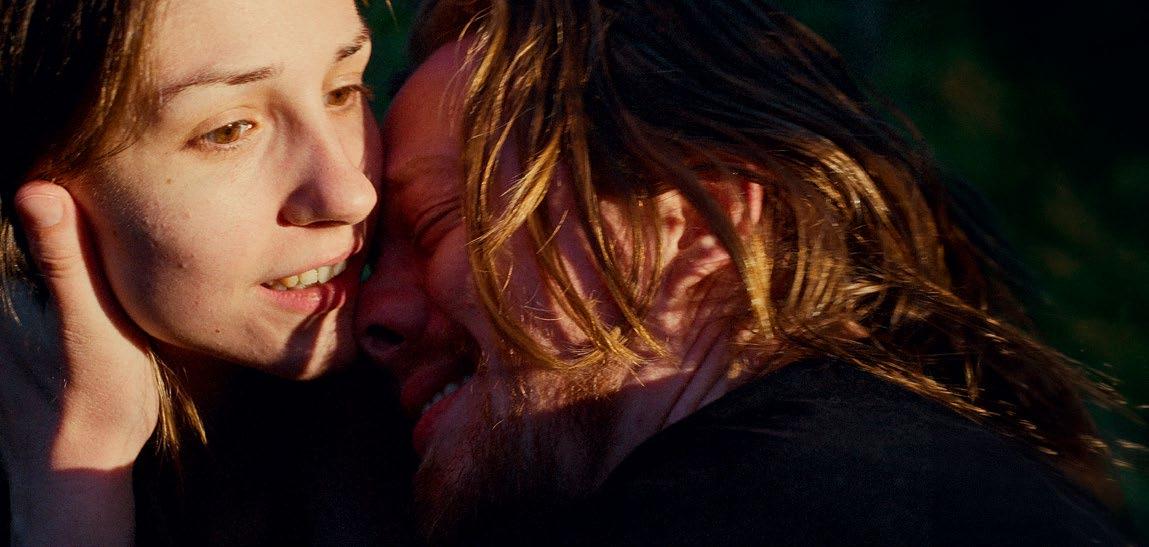
Thriller
Director: Eeva Mägi
Producers:
Sten-Johan Lill, Eeva Mägi
Production companies: Kinosaurus Film, Kultuurikuur
Estonia
text – there is already a framework and audience awareness to build on.
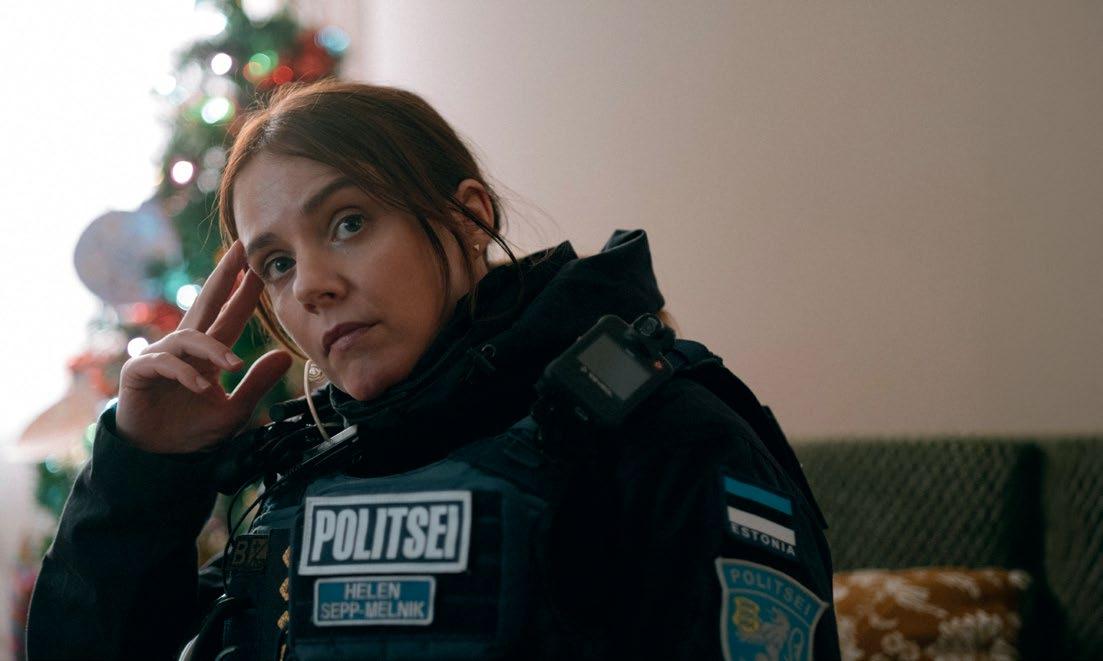
At Your Service by German Golub marks a step forward for a younger director. While not a debut, it firmly establishes German Golub in the feature landscape following his earlier success in short form. The film builds on a strong central conflict – a police officer covering up a personal incident – that gradually expands into a broader moral and psychological situation. Its effectiveness will depend on how well it balances tragic and comic elements, a register that is not easy to control.
Among the first features, Dead Dad Girl by Stephen Korytko is the most concept-driven. The premise is deliberately provocative and designed to stand out. In this case, execution will be decisive –dark comedy can travel well, but only if the tone remains precise and avoids overstatement. It is a project that clearly aims to attract attention and engage its audience through its premise.
Lost Son by Edson da Conceição moves in the opposite direction, relying on a more restrained and familiar dramatic structure. A father grappling with the loss of his son and searching for answers is a well-known narrative framework, so differentiation will come from directing choices and performance. This type of film is typically festival-oriented and depends on emotional credibility rather than concept.
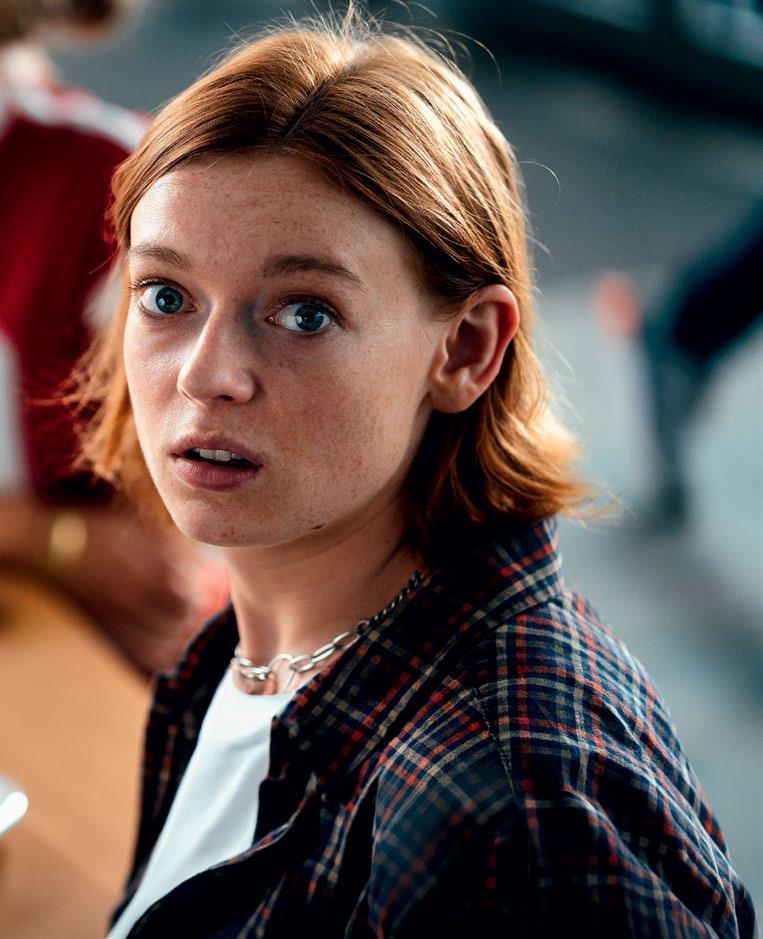
Thriller, Film noir, Drama
Director: Daniel Romero Bueno
Producer: Ferran Tomas Olalla
Production company: HUTZ Spain, United Kingdom, Ireland
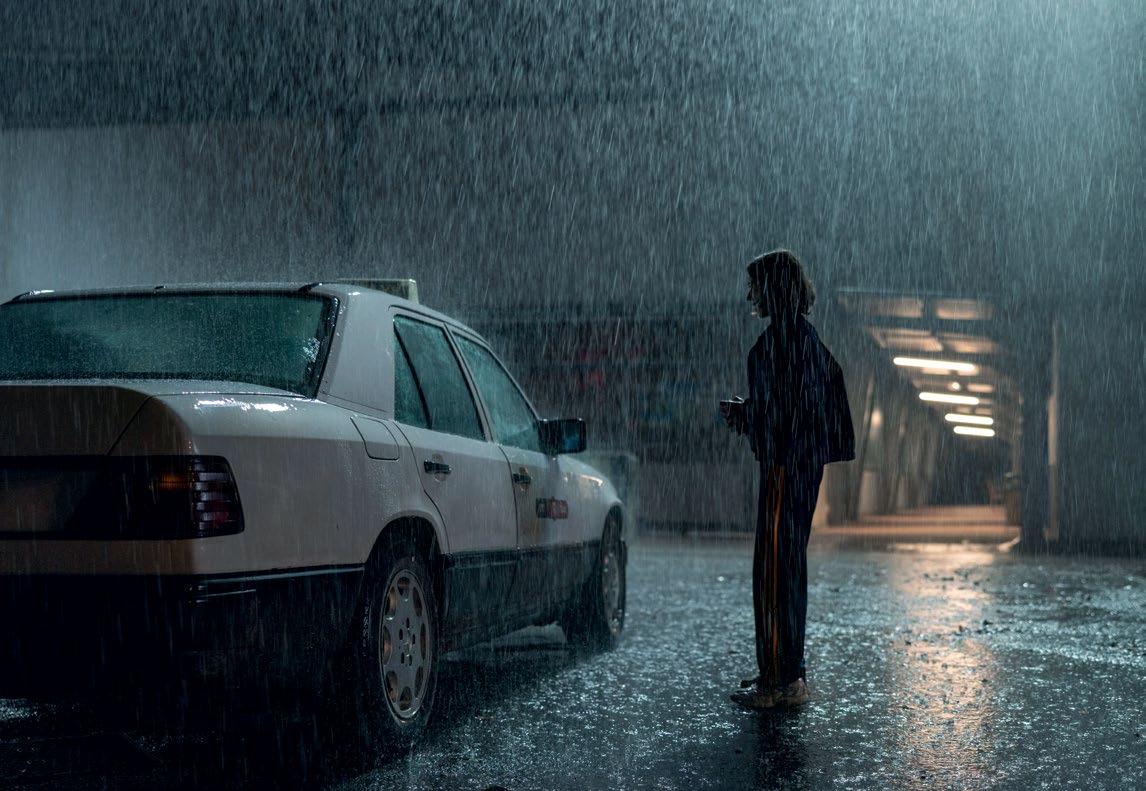
Finally, The Daughters by Daniel Romero Bueno offers a clearer genre angle. Positioned between thriller and film noir, it uses a contained setting and a high-tension premise. From a market perspective, this is the most straightforward project in the selection – genre
Drama Director: Edson da Conceição
Producers: Nicky Onstenk, Marc Bary
Production company: IJswater Films Netherlands, Belgium
Tragicomedy
Director: German Golub
Producer: Evelin Penttilä
Co-producers: Marcos Kantis, Melanie Blocksdorf
Production companies: Stellar Film, Schiwago Film Estonia, Germany
helps with positioning – but it also requires strong control of atmosphere and pacing to meet expectations.
Overall, the strength of this year’s selection lies in its clarity of intent. Each project has a clear direction and realistic positioning – either for festival circulation or for broader audience reach through genre. There is no unnecessary overlap between the films, and each addresses a distinct segment of the market.
That is ultimately where PÖFF Goes to Cannes proves its value. It is less about showcasing volume and more about presenting projects that are ready to move forward and need the right partners to help them do so. BF
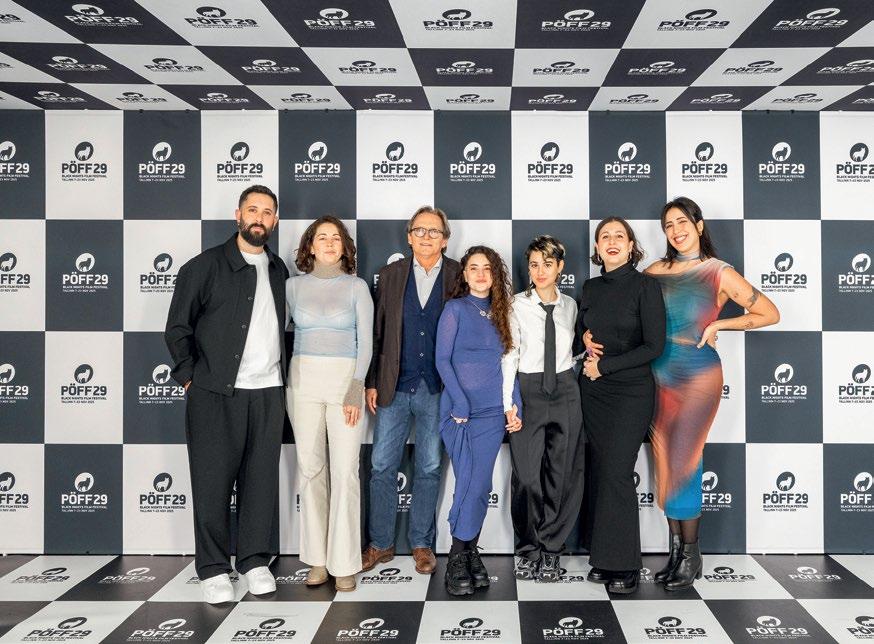
The Tallinn Black Nights Film Festival (PÖFF), celebrating its 30th birthday on 6-22 November 2026 invites filmmakers worldwide to present their latest works across its main programme and affiliated sub-festivals, Just Film and PÖFF Shorts, and Industry@Tallinn & Baltic Event.
By Egle Loor
Photos by Liis Reiman
ecognised as Northern Europe’s only FIAPF-accredited competitive feature film festival, PÖFF is a key platform for international cinema, industry exchange, and emerging talent.
“Filmmakers should submit to the Black Nights Film Festival for its distinctive balance of bold, original voices and audience-driven curation – championing films that are both artistically daring and have the potential to connect widely and travel far beyond the festival circuit,” encourages Triin Tramberg, Artistic Director of PÖFF.
PÖFF Core Competition Programme for feature length films calls for films in four categories. Official Selection Competition presents international feature films over 70 minutes and typically showcases directors’ second or subsequent works. The First Feature Competition is dedicated to debut feature films, offering a platform for emerging filmmakers entering the global stage.
The Rebels with a Cause Competition focuses on bold and unconventional storytelling, highlighting formally daring works across fiction, documentary, and
animation. Meanwhile, the Critics’ Picks Competition offers a tightly curated selection of auteur-driven films that engage with genre and film history, capturing the spirit of contemporary cinema. Both categories feature debut works and films by established filmmakers.
Documentary filmmaking is represented at competition through the Doc@PÖFF International Competition and the Doc@ PÖFF Baltic Competition. Regional cinema is also supported through the Baltic Film Competition, showcasing featurelength films from or co-produced with the Baltic countries.
A key requirement across the main competition sections is premiere status, with several strands requiring world premieres, and the films must be completed after 1 January 2026.
PÖFF’s extensive non-competitive programme offers several entry points for films with at least an Estonian premiere. Sections include Special Screenings, Best of Festivals, Best of Docs, and thematic strands such as Midnight Shivers and the Environmental Film Programme.
Retrospective programming remains an important pillar, with Old Gold: Classic Films Come to Life presenting restored
by Karolin Viikoja

works, with particular attention to Baltic film heritage.
The festival also continues its Country in Focus and Spotlight programmes highlighting national cinemas across the festival’s various strands. In 2026, the festival’s Spotlights takes a close look at Basque Country.
All films submitted to competition or non-competition programmes should be completed after 1 January 2026.
Youth and children film makers are invited to submit their films to Just Film, one of Europe’s leading youth-focused film events.
The programme includes international competitions for youth, children’s, and junior feature films, alongside the #youngfilmmaker competition for short films. Additional non-competitive strands feature curated selections, retrospectives, and special screenings.
Eligible submissions include fiction and documentary films. All films must be
completed after 1 January 2026 and hold at least an International premiere.
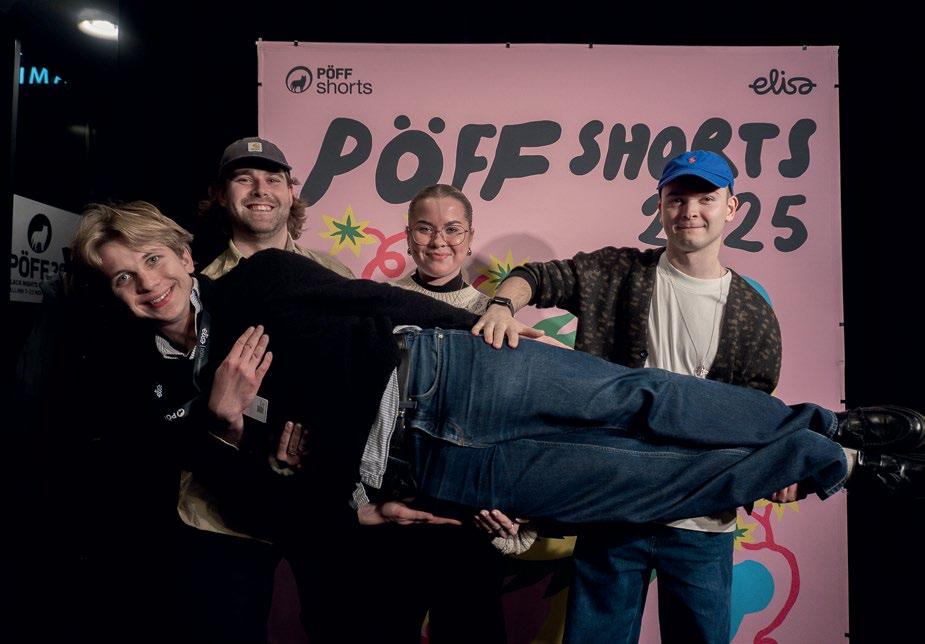
PÖFF Shorts is one of the leading short film and animation festivals in the Baltics, and is recognised as a member of the European Film Academy (EFA), as well as an Academy Award- and BAFTA-qualifying festival.
PÖFF Shorts hosts three internationally recognised competition programmes: the International Competitions for Live Action and Animation, Rebels with a Cause competition and PÖFF Shorts National Competition. The festival also presents an array of out-of-competition short film programmes.
Celebrating its 25th edition, Industry@ Tallinn & Baltic Event, the key business event for the audiovisual sector of North-
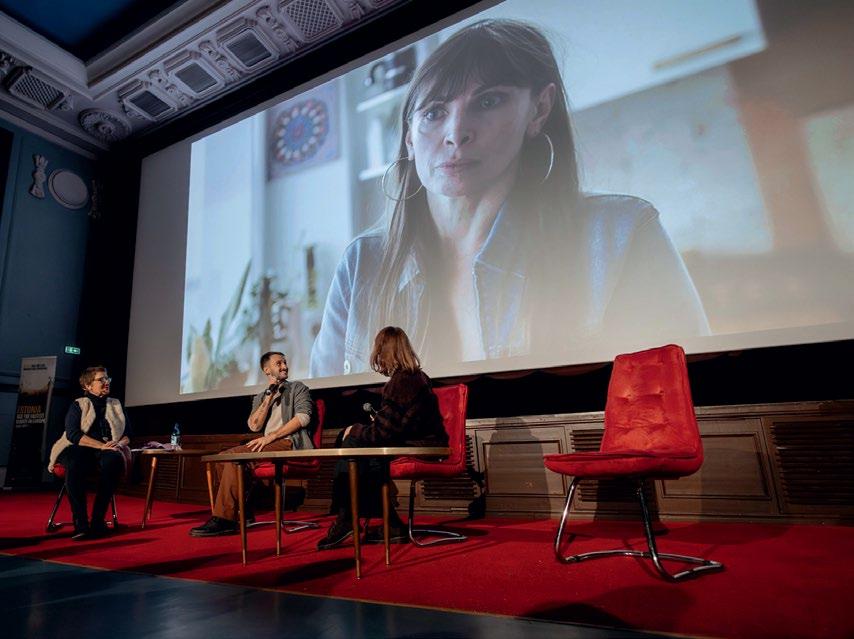
ern Europe, is gradually opening its calls.
The Baltic Event Co-Production Market accepts submissions from 1 May to 10 July 2026. Works in Progress, presenting projects across Baltic, international, and Just Film strands, will open from mid-August to mid-September. Script Pool, spotlighting international projects and their creative teams, opens its submissions from 1-30 June, while the TV Beats Co-Financing Market focuses on high-quality drama series with international potential (submissions open 1 May-14 July).
Discovery Campus brings together several talent initiatives, including Script Pool, Black Nights Stars (actors), Music Meets Film (film music professionals), Black Room (art department), and Frame Within a Frame (cinematographers), with submissions open from 23 April to 31 May. Script Pool opens its submissions from 1–30 June. Tallinn Industry Academy, a training programme for young professionals working in film circulation, and the Breaking Into the Industry mentorship programme for aspiring producers, both open in August. BF
by
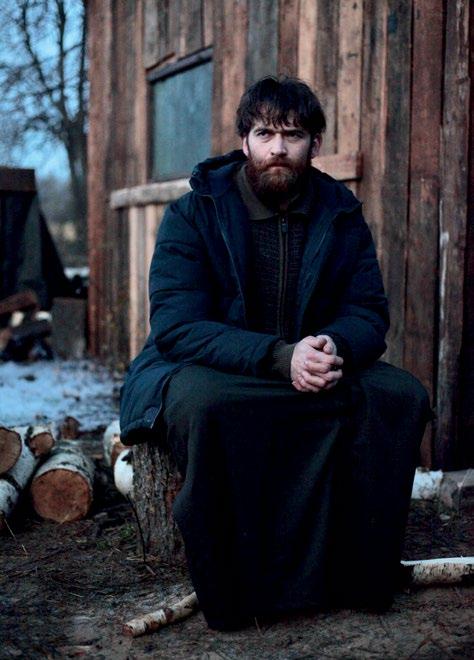
Director Rostislav Kirpičenko talks about his debut feature Vesna, which portrays the effects of the war in Ukraine and is set to premiere at the Cannes Film Festival.
By Andrei Liimets Photos by Helena Pokorny
Congratulations on the amazing news! Being in the official selection at Cannes remains a high watermark for cinema. What was your initial reaction to getting the confirmation?
Of course I was extremely happy about it, especially considering it’s my first film. At the same time, deep inside I would prefer this film wouldn’t exist because of its topic and this terrible war. It’s complicated, like a joy that isn’t completely pure. It’s mixed with some guilt for not being there as my family is Ukrainian, I grew up in Dnipro, but I live in France. It’s a mixture of feelings. I am happy for the crew though, as they were wonderful, and it will be easier to make the next film. At the same time, it still feels like dancing on the peoples’ bones.
This will at least give you the opportunity to get this story out to a large audience. What do you hope they will take away from it?
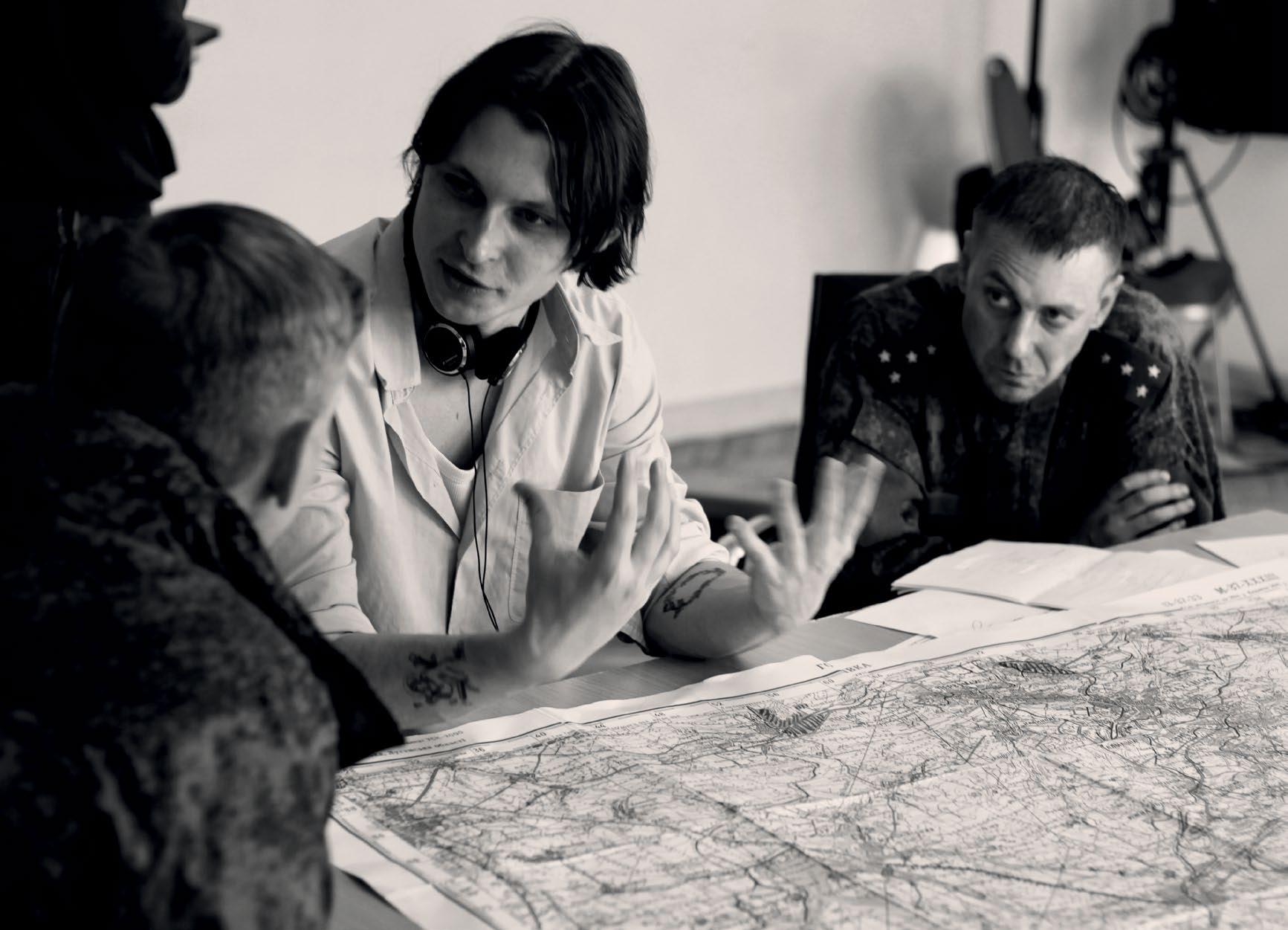
The point was to show people what Ukrainians are going through. I did a documentary about this war, which was released last year, but I could only film in territories that are under the Ukrainian government. The main idea to do a fic-
tional film was to talk about life in the territories under occupation. We have no images from there, so we had to recreate images that don’t really exist.
I think especially in Western Europe people don’t get the level of violence, chaos and cruelty that the Russians have brought. They do bad things in the film, but I think reality is even worse. It was difficult to make a watchable film about human beings but also show at least a bit of what is going on. I didn’t invent any of the stories, they come from interviews and stories from the people that live under occupation.
I hope people will also understand that if Ukraine will fall, all this will come further. It’s been four years since the fullscale invasion, but I also think it’s not too late to support Ukraine. Ukrainians aren’t fighting just for Ukraine. I’m not sure people completely get it, but I don’t judge them either – we live in different worlds and they can’t even imagine how bad it can be.
What kind of background research did you do? Being Ukrainian, you have a very personal connection to the war, yet it’s not first-hand experience.
Last summer I worked as director’s assistant for the film Imago by Déni Oumar Pitsaev which was at Cannes as well. We spent a month and a half in northern Georgia close to the Russian border within Chechen communities. I also spent around 15 days in Ukraine for my own documentary One, Angarskaia Street. I spent every day with people who have so many terrible stories. You need to understand the history, the way people live, and the similarities between occupied territories. The horrors are always the same.
The last thing I read was a conference paper from French and Ukrainian journalists and lawyers, who have documented a lot of war crimes and crimes against humanity. They have proved that they’re not only individual cases, it’s not accidental. Torture and sexual violence are systematic in Putin’s Russia and its army.
And of course, there’s Bucha. I read interviews with a local priest who tried to bury the bodies but couldn’t because it was forbidden. The amount of information is endless from local stories to articles in the New York Times and BBC.
You chose a priest as the centre of Vesna as well. This puts another layer
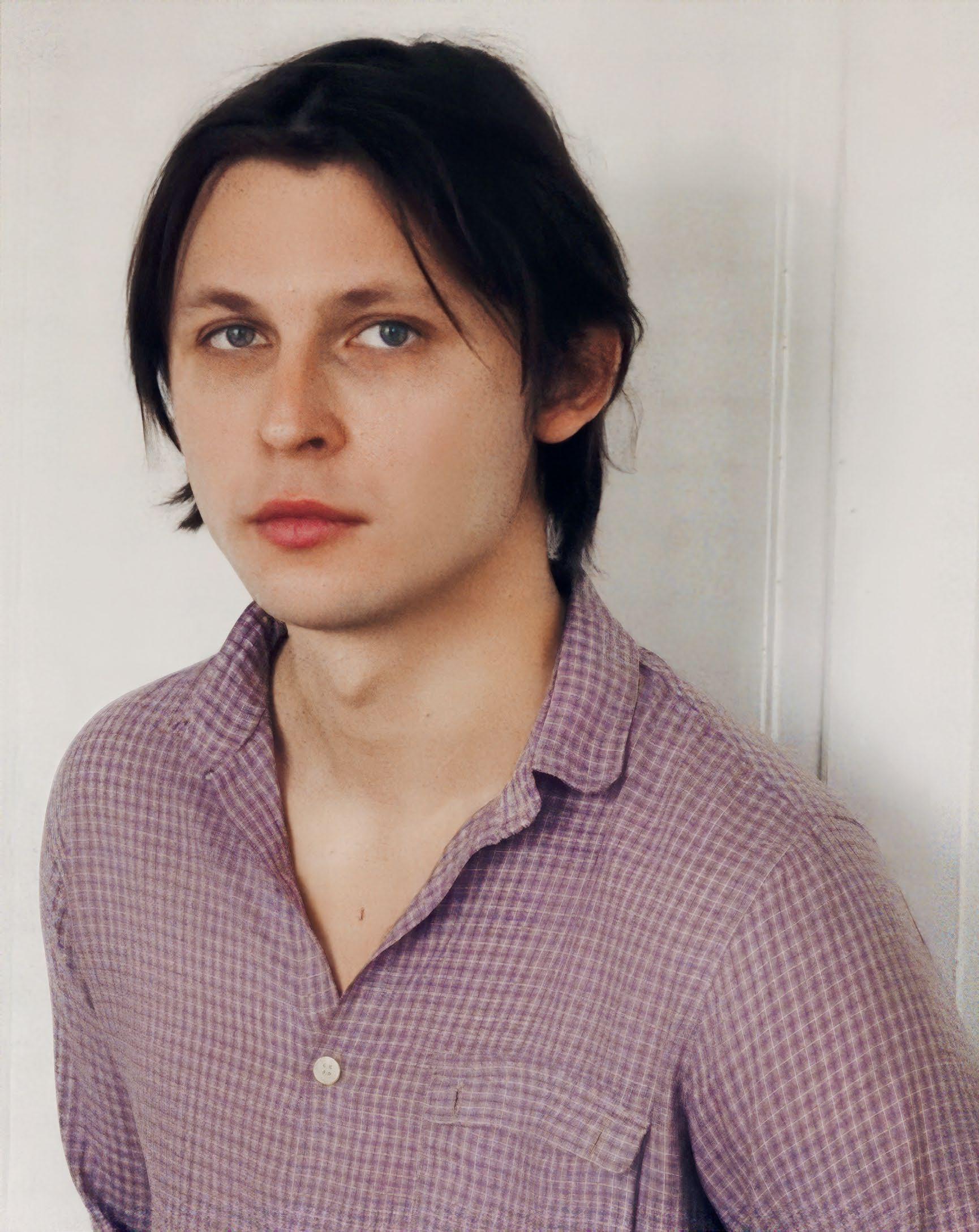
was born in Lithuania. As a child, he moved back to Ukraine with his family. He began a career as a professional football player, which first took him to the Czech Republic and then to Germany. In 2016, Rostislav ended his athletic career and settled in Paris, where he studied Modern Literature before joining the directing department at La Fémis, a Parisian film school. There he met Helena Pokorny, the producer he has continued to work with since graduating. After finishing school, he directed his first feature-length documentary, 1 Angarskaia Street, which won the Humanist Film Award at Cinéma du Réel and was selected for Visions du Réel. Vesna is his first fiction feature.
I think everyone has to make choices every day which are based on our perception of morals.
on an already difficult subject. Why did you want to view the war through the lens of religion and faith?
I think everyone has to make choices every day which are based on our perception of morals. In the context of war, the choices become much harder. Ideally, the figure of the priest is supposed to do good even when everything is going very badly. Morally or spiritually speaking, there should be fewer excuses for this person to stop resisting.
I didn’t really want to speak about faith, this figure just allowed me to push the narrative a bit further. It’s a pretext to speak about different things. I needed someone who is active all the time and is a bit stubborn to show that even in this situation you keep making decisions that lead you to further consequences. By trying to do good, he makes things worse. He believes that he has a quite precise perception of good and evil, but it becomes impossible to be right and stay safe at the same time. The main idea of the film is that in this situation you don’t really have a choice, so the main question is, what remains of a human being without liberty to choose?
So it’s also a question of what makes someone do things that are considered good or considered evil?
Yes. Of course, I chose the point of view of the Ukrainians because that touches me personally. At the same time, when making a film, it’s not my job to judge. Even though I see the Russians as bad characters, I also tried to show the main Russian captain as someone that understands how everyone will end up in the same grave. He is also just cannon fodder. In the end, he understands that in front of death and destruction everyone is equal. There is no good or evil, just death.
Being affected so personally by this war, how difficult was it to feel some empathy towards the Russian characters?
I need to thank my parents who taught my sister and me not to judge generally but take everyone individually. That’s
what I try to do. Similarly, I can’t represent Ukraine. I’m not there. There are a lot of talented filmmakers who have lived under the bombs for four years. I can sleep at night, I don’t freeze in the winter, my parents and closest family left Ukraine years ago, after Donbass and Crimea due to economic reasons. So all in all, it is a huge pain, but I’m not scared every day, so I have a distance to try to see how even in the ocean of shittiest people some are just scared or weak.
That is why I also tried to write a few different Russian characters. The major is doing what he does, but at least he understands the situation. He seems as someone whom you could at least talk to, who lives in the same reality, who can name things by their real names. The same goes for the soldier at the end of the film, who doesn’t want to do the things he does. This is another tragedy – these people have choices, but they choose to be there, to kill and rape.
At the same time, there has been so much written about World War II and about military personnel going crazy with alcohol. I also understand the influence of Russian propaganda on Russian people. They are good at it. Although Russians have brought such destruction and suffering to Ukraine, I don’t think they are monsters. They are humans as much as anyone else. In the film, I try to understand some of the reasons of their cruelty. I wanted to talk about human beings, not make a political statement.
You have the privilege of having experienced different perspectives from different countries. You were born in Lithuania, who is also one of the main producers of Vesna, you grew up in Ukraine, where your family is from, and you studied in France, where your film is premiering. Where is most at home for you? This is a painful question. I think I probably have none. It used to be a burden. Even now, when preparing for the film, it showed to me in a more concrete sense that I don’t really belong to one specific country. I wasn’t considered a French director. Even though I have a passport, I’m not considered entirely Lithuanian. And in Ukraine, I think I’m also not considered Ukrainian anymore. At the same time, this burden has become a freedom, because I have different cultures in me and I get to pick the best of them.
Vesna is also an international coproduction. What was the most difficult stage of putting it all together?
The writing wasn’t that difficult since everything was already there and writing is like therapy. In terms of funding, some possible distributors said that the topic was too harsh and violent. Some thought we needed to show it all honestly, others said there’s already so much violence in the world so why put more on the screen. It depends on how far from the war you are. In Western Europe they feel bad for the situation, but don´t want to talk about what is happening that much. In Lithuania or Estonia, the support is instant.
All in all, the financing went quite quickly and everyone from the crew gave their best. I was so lucky with the actors – everyone got into their characters very deeply and without previous judgement. They had to go to some dark places, but although the topic is difficult, it was also one of the most supportive and happy
experiences I have had in my life. We became a community, even a family.
Now that you have done both your debut documentary and feature film on your roots and the war, are you looking to continue with the same subjects in your future work? My next film is about war as well. We will be shooting this summer. It’s a short film about the end of the war. It’s probably a psychological need to go through the different stages of what is going on. It’s all inspired by true stories.
After that, I would like to write something about love. I couldn’t do it before, because it’s difficult to talk about something else. The more I have worked on the war though, the more I have understood that the only thing that counts is the people that you love. So much besides that is superficial. I would like to write about that love. BF
Screenwriter & Director: Rostislav Kirpičenko
Director of Photography: Vilius Mačiulskis
Production Designer: Iris Morlat
Music: Sten Sheripov
Sound: Marius Blažys
Editor: Marie Vettese
Main cast: Kęstutis Cicėnas, Valentin Novopolskij, Anastasiia Pustovit, Bartas Ždanovičius, Martynas Kukta, Šarūnas Datenis, Daumantas Ciunis, Viačeslav Lukjanov, Jevgenija Gladij
Producers: Stasys Baltakis,Helena Pokorny
Co-Producers: Vitalii Sheremetyev, Oleksii Zhonik, Mariana Novikova, Katerina Skrynska / Esse House in Estonia (EE), Marianne Lenoir & Éric Lenoir / La Femme qui Aimait les Films (FR), Jonathan Lester & Damien Favreau / Lester Film (FR)
Associated Producers: Douglas Choi / Sons of Rigor, Jean Bréhat / Tessalit
Produced by: Film Jam (LT), Matka Films (FR)
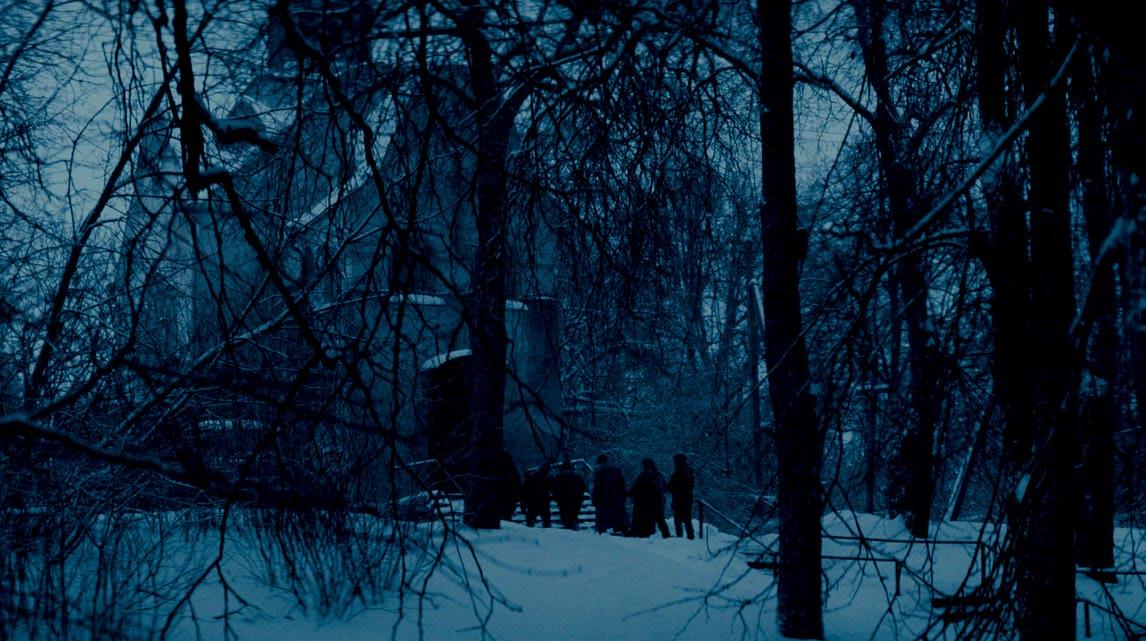
Synopsis: In occupied Ukraine, the Russians are forbidding the burial of executed Ukrainian civilians. Andryi, a 35-year-old priest, sees his church turned into a morgue. Forced to store the bodies of executed civilians there before they are taken away to mass graves, he resists in secret: he identifies the dead, returns them to their families, and gives them a dignified burial. But winter freezes the ground and the threat grows. How will he continue to resist?
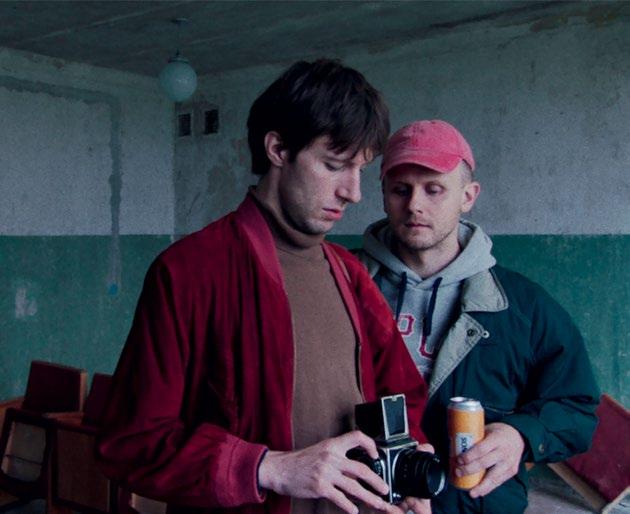
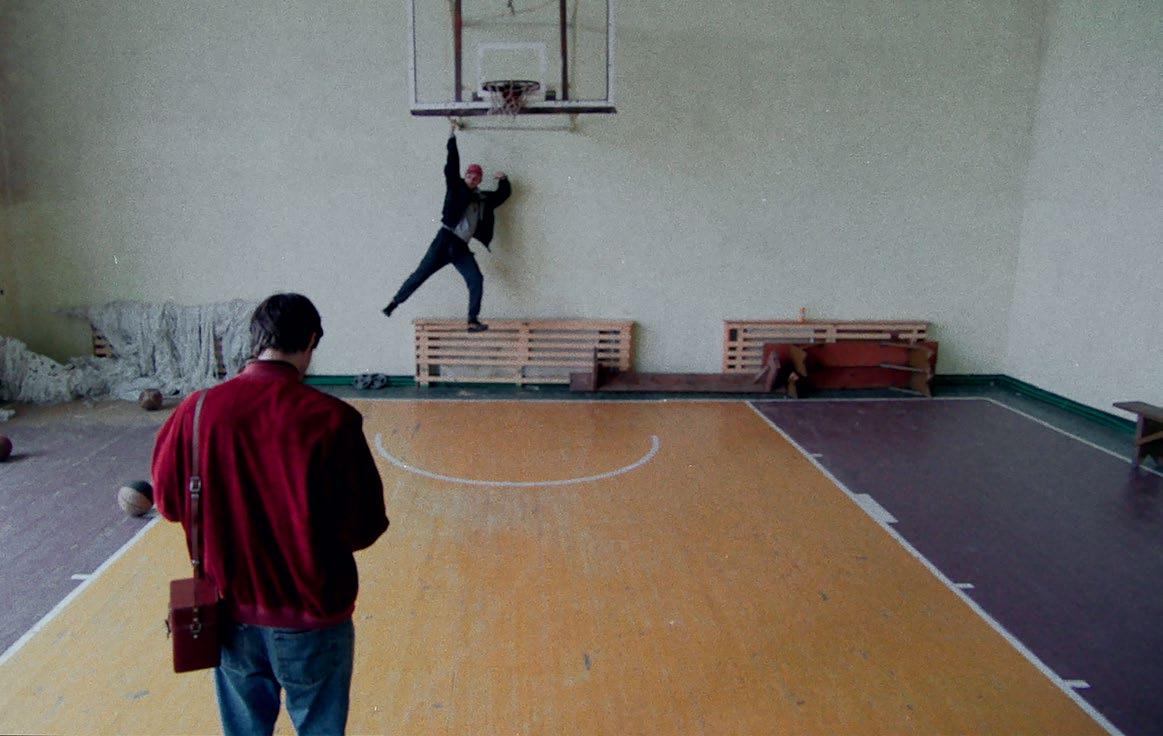
Class Photo, directed by Arnas Balčiūnas, has been selected for the Short Film Competition of the Critics’ Week at the Cannes Film Festival.
By Mintarė Varanavičiūtė
The film will compete alongside nine other short works from around the world, chosen from a pool of 2,400 submissions. Class Photo is Balčiūnas’s master’s graduation film from the National Film School of the Lithuanian Academy of Music and Theatre, and his sixth short to date. His earlier works have already gained international recognition, as well as multiple national awards in Lithuania. Ahead of the film’s world premiere, he reflects on the creative process behind Class Photo and the ideas shaping his work.
What emotions are you experiencing now that your film has received such recognition, and is there a particular feeling from this moment that you hope to hold on to?
The whole team and I are over the moon – it still feels unreal. The creative process is often riddled with feelings of doubt about whether everything will come together coherently and resonate with an audience. That’s why this kind of recognition feels especially meaningful. I’ll remember the feeling of having a wonder-
ful secret I just can’t help but share with my dearest friends, who double as my closest partners in the creative process.
This is already your sixth short film. In what ways was the process of making this one different from your previous works? What is the first image or moment that comes to mind when you think back on the shoot or the creative process?
I wanted to approach this film in a way that would make it feel more alive and distinct from my previous work. I was inspired by the methods of English director Mike Leigh, so I spent a great deal of time with the actors, Džiugas Gvozdzinskas and Mantas Barvičius, developing the characters through improvisation. The script ultimately grew out of one extended session. The first thing that comes to mind is all the absurd situations we placed the characters in, like being put through police questioning or being approached to organize an airsoft game.
Do you draw on other art forms for inspiration when making films? For instance, did you have a personal
Fiction, 17 minutes
Screenwriter and Director: Arnas
Balčiūnas
Cinematographer: Milda Juodvalkytė
Editor: Antanas Skridaila
Sound Designer: Fausta Pilkaitė
Composer: Matas Beržinskas
Production Designer: Rūta Strazdaitė
Starring: Džiugas Gvozdzinskas, Mantas Barvičius
Producer: Morta Verbickaitė
Production:
LMTA National Film School (KIMO)
International Sales and Distribution: M-Films
Synopsis: While revisiting his nowabandoned school, Ignas runs into a former classmate. As they wander through corridors filled with conflicting memories, they try to capture what will soon be gone.
playlist while working on this project? If so, which song would best capture its mood?
I had made a playlist, which we ended up using as inspiration for the film’s ending track. A song that comes to mind is Do Your Thing by Moondog. It has that specific balance between melancholy and whimsy. Džiugas played it in the car when we were driving home from the extended improvisation session, and it became a reminder for me to trust the process and accept the path I’m on – which reflects the themes of the film as well.
What matters most to you in cinema as a viewer? How do these principles find their way into your own work?
I enjoy the portrayal of human connection in cinema – moments where characters interact, through conversation or silence, in a way that feels sincere and without direction. Capturing and elevating the beauty of everyday life is something I’m after and, hopefully, sometimes I come close.
What themes would you like to continue exploring in the future — perhaps in a feature film?
I’m interested in exploring unusual, often unfulfilled relationships – the kind we encounter only rarely, yet that leave a lasting impression. I’m also drawn to subtle layers of mysticism that can only be revealed through cinematic language. BF
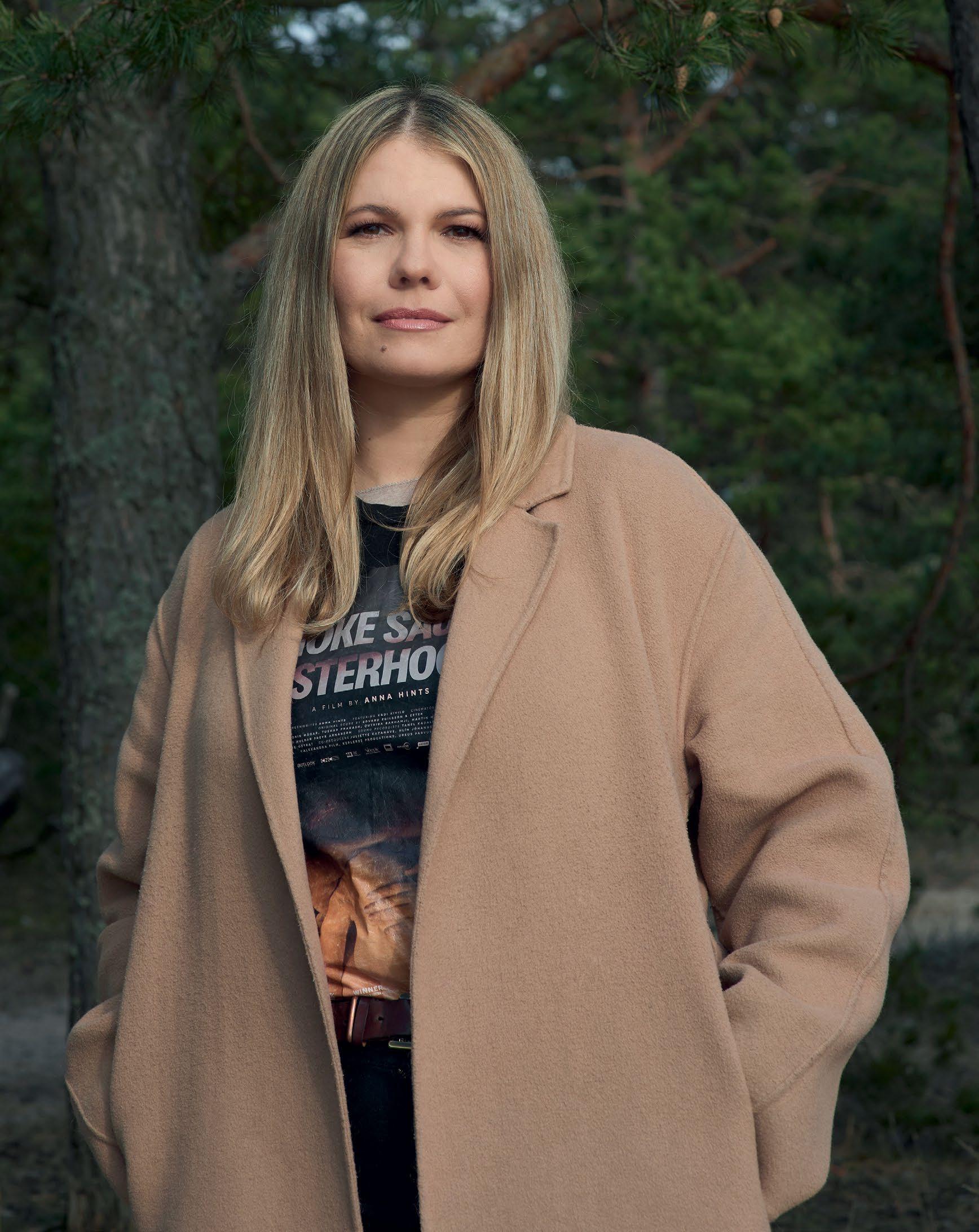
After the global success of Smoke Sauna Sisterhood, Estonian participant of this year’s Producer on the Move Marianne Ostrat is now developing an animated feature Saima: Scenes from a Midlife Crisis for international audiences.
By Andrei Liimets Photos by Virge Viertek
I probably wouldn’t be exaggerating if I called you the most internationally successful Estonian producer of the past couple of years. Do you now approach every project with the international market in mind? Thank you for the compliment – since Alexandra Film is not the largest production company in Estonia, it means a lot. An international outlook comes naturally to me. I graduated from the very first international master’s degree of Film Arts in BFM, so this perspective has come to me through education.
I couldn’t imagine life any other way. Estonia is so small, and international film production is, amongst other things, a lifestyle for me – a way to keep my perspective broad. Next to my own productions, I enjoy co-producing foreign films and occasionally doing service work. For me, producing is bringing together talent, life experience and strategy to create a film that resonates.
With co-productions, there’s sometimes a risk of having too many cooks in the kitchen, each trying to add their own flavour. How do you avoid what is sometimes disparagingly called europudding?
I would like to think that the worst days of europudding belong to the early 2000s.
In the projects I’ve produced so far, the script has usually been firmly in place before entering international co-production, which probably protects against it. One of the producer’s jobs, in my understanding, is to ensure that the artistic DNA of the project is preserved and that international collaboration strengthens rather than dilutes the result.
What kinds of stories or projects are you looking for? What drives you? The subject and the author are always the main starting points. I need to see potential in the author, and the film has to resonate with me thematically. All the films I produce are very personal to me and connected to themes I’m also working through in my own life.
After Smoke Sauna Sisterhood a third factor has emerged: international potential. That’s why I feel that I have been moving rather slowly – I’m now a bit harder to ignite when it comes to taking on feature length film projects as the lead producer. I don’t make films for international success per se, but once you have had a film really reach international audiences, it’s hard to think smaller.
At the moment, animation and documentaries tend to excite me more. I love the playfulness these forms offer, and also it seems it’s easier to break out from
a small country with these forms – maybe because they depend on star power so much less? With Saima: Scenes from a Midlife Crisis, I now have an animated feature for adults in development, and I’m currently looking for the next feature documentary by an Estonian author to work on. At the same time, I continue to co-produce foreign fiction features, and of course am open to finding one to produce myself as well.
European film funding is quite national. In Estonia it’s been discussed what makes an Estonian film, what makes an Estonian story? How do you define these concepts?
If a film is created mainly by Estonian talent or produced in Estonia, then it’s an Estonian film – that’s it. Estonian identity is a living organism that takes shape in the process of creation. It is created by the projects we make. Our uniqueness comes from a Finno-Ugric mentality and sensibility.
Another constantly discussed divide is between so-called audience films and festival films. Where do you place your films?
I aim for the sweet spot where these two meet. As everyone else, I want my films to premiere at major festivals, because in
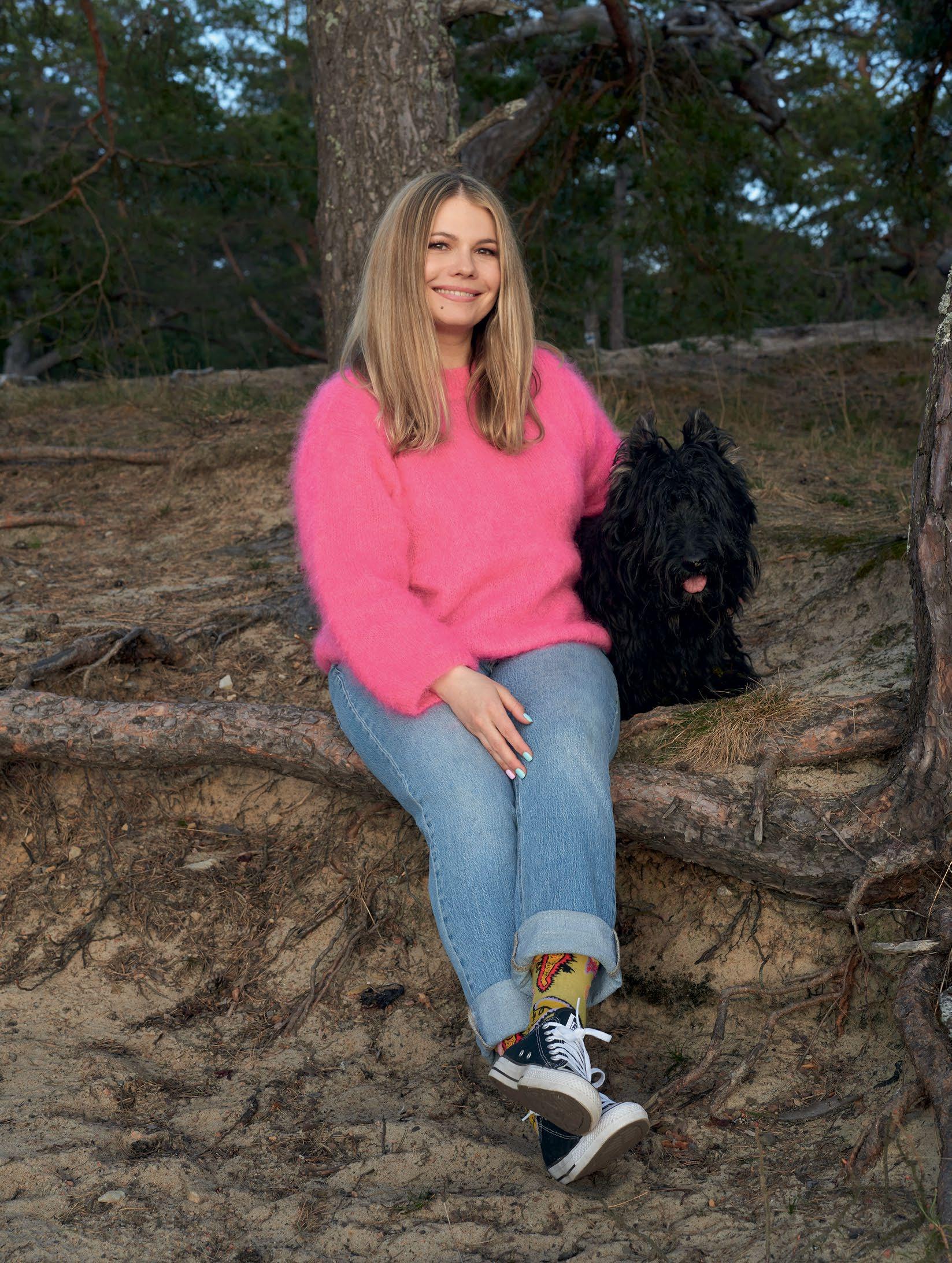
I went to the beach, read the script there, and I remember my mood immediately lifting.
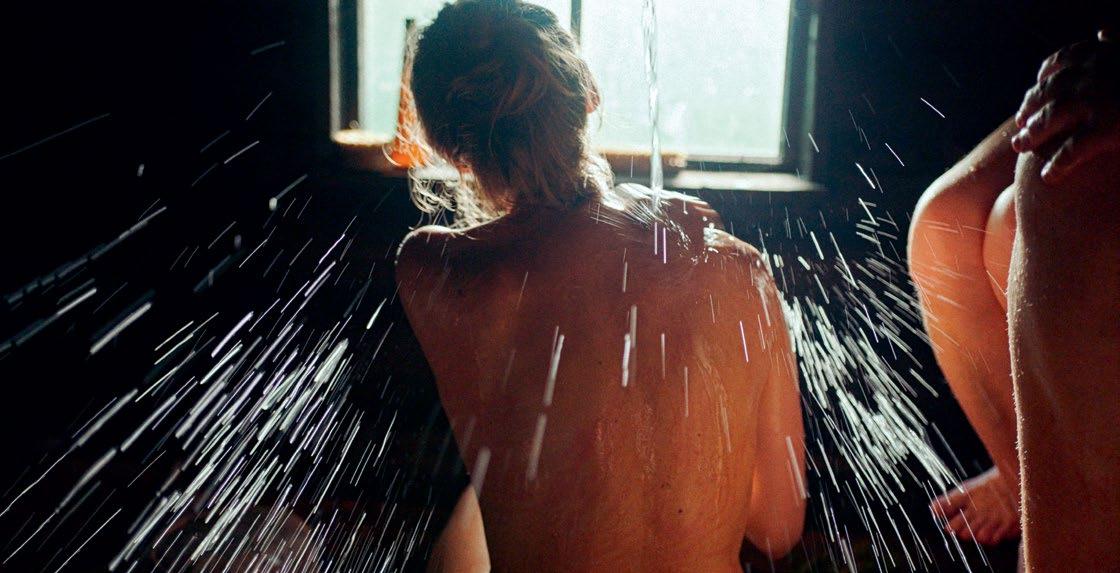
the filmmaking world they verify artistic quality. Then the festival becomes a launchpad to reach a wider audience. That’s what happened with Smoke Sauna Sisterhood
I’m definitely not a film producer who thinks about reaching 100,000 admissions in the Estonian market as the first thing. Of course I want that too, but the international dimension is important to me. With Smoke Sauna Sisterhood, I gained experience with theatrical releases across Europe and entered the US market for the first time. Smoke Sauna Sisterhood broke through to international distribution, whereas Saima is intended for international distribution from the start. Bringing Estonian cinema and filmmakers to the world stage and international audiences is my mission.
A producer’s role, besides ambition, is also to realistically assess risks and opportunities. Which of your films has exceeded your expectations the most, and which has fallen short?
The biggest surprise was an animated short Amalimbo – a Swedish-Estonian co-production in 2016. I thought it would
premiere at some smaller Eastern European animation festival, but it actually premiered in Venice and got nominated for the European Film Award. That was my first breakthrough to be taken seriously as a young female producer. You build your relevance and credibility through these festivals and wins.
The one that fell short of expectations the most was my second feature Kids of the Night. With this one we did expect box office success. Still, we made the film with great creative joy and freedom. Then COVID disrupted its theatrical release. Restrictions were lifted only a week before the domestic release in July 2021. Even so, considering the circumstances, it went relatively well – we achieved about 60% of our initial goal in a market that had fallen by 90%.
Some filmmakers dream their whole lives of the kind of success Smoke Sauna Sisterhood achieved. Was it a life-changing experience for you?
A totally life-changing experience! I’m still incredibly happy and grateful that it happened. I know how tough things are for filmmakers. It’s very rare to realise
your ambitions and goals in such a way that almost nothing is left unresolved. I’m especially glad that it happened with a challenging film that addresses such important themes – and that the success came to a project that wasn’t calculated in advance. I truly believe audiences want to be surprised.
Since then, I have kept working and premiered two shorts – Jungle Law and On Weary Wings Go By – and a minority co-production Wet Monday. But at the same time I have felt slow, because the obvious question was how to move forward from that and I took my time. With Saima: Scenes from a Midlife Crisis, I’ve finally found the right project.
Why has Saima been such a motivation for you?
It was July 2024 – and looking back it actually happened right at the moment things started to slow down. I had just returned home from extensive travelling with Smoke Sauna Sisterhood. I was 40 years old, successful, very tired, childless and single ‒ in a way, in a midlife crisis. So many doors had opened, yet I had no clue what to do next or where to go. It was a strange feeling.
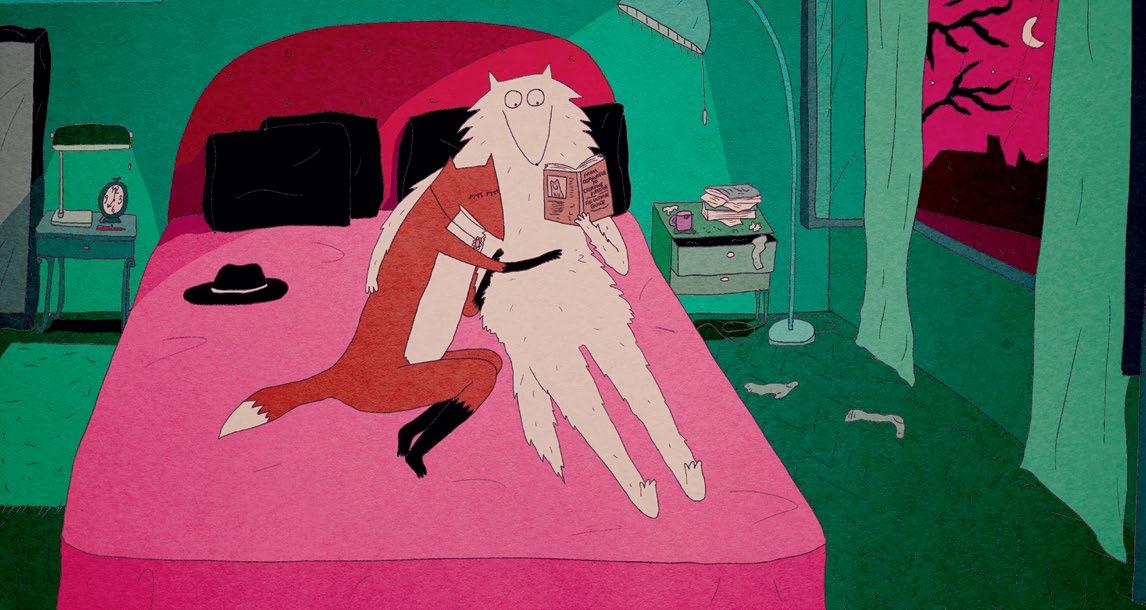
One day, Chintis Lundgren and Draško Ivezić reached out – they were looking for a producer. It was a summer day; I went to the beach, read the script there, and I remember my mood immediately lifting. I felt seen and understood and laughed off my situation. The script resonates with others too – it deals with important themes such as abandonment, control and selfdiscovery in a very visual and creative manner, and has a pleasant dark and dry humour. Chintis has already made a name for herself with earlier short films in the animation world and is also a Sundance alumni. All the factors fitted together and Saima got me going again.
What stage are you at now?
Mid-development, I’d say. We have an advanced draft of the script and are working on the animatic. It’s an EstonianCroatian-French co-production between Alexandra Film, Adriatic Animation and Avec ou sans Vous. We are talking to the sales agents and looking for one more co-producer and distributors.
Smoke Sauna Sisterhood won a lot of awards — are you now aiming for an Oscar?
You know, when you’re dealing with international and North American distribution, those things are simply part of the game. Of course, we aim as high as possible. Flow has paved the way. This past award season I had Anu-Laura Tuttelberg’s porcelain stop-motion short On Weary Wings Go By running for the Oscar. With the difference that this time I had absolutely no budget for campaigning –so I did just some basic PR myself and a few beautiful articles covering Anu-Laura’s creative process got published. I also wish European Film Awards were given more importance in Europe.
What else is taking your attention right now besides Saima?
We just completed the suspense drama Lex Julia by Laura Hyppönen. It’s a Finnish-Polish-Estonian-Swedish co-production with Estonian actress Rea Lest playing the titular role. I’m also looking for festival premieres and sales agents for two freshly finished shorts - Tanno Mee’s Second Trombone and Madli Lääne’s hybrid short documentary Song of Sleepless Nights about the inner life of teenage boys. In addition, I’m co-producing a Danish documentary Direct Me! by Majse Vilstrup, with original music by Erki Pärnoja.
How much of your work consists of
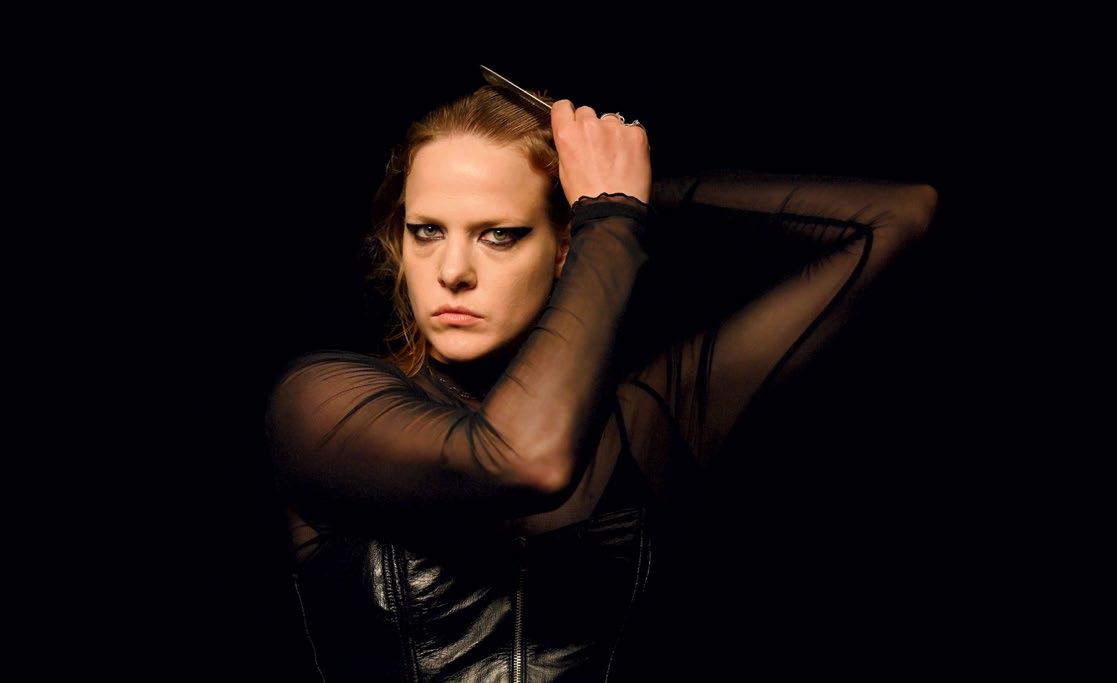
servicing projects?
They are an important part of what I do. I’ve chosen post-production as my niche and work with, in my opinion, some of the most talented people in Estonia – editor Hendrik Mägar, sound designer Matis Rei, location sound recordist Ranno Tislar, and composer Erki Pärnoja. We are a very smoothly functioning team. The Film Estonia cash rebate system was just recently increased to 40%. With the support of this scheme, we worked for Icelandic Ursus Parvus on Driving Mum, which won the Grand Prix at the Black Nights Film Festival in 2022. At the moment Just a Kid – debut feature of another Icelandic director Vala Ómarsdóttir ‒ is in editing and I’m open to new projects.
Editor Hendrik Mägar has received a lot of praise with Smoke Sauna Sisterhood and Driving Mum. It seems to me that Erki Pärnoja could also go very far internationally. What distinguishes him for you as a composer?
Erki’s strength lies in inventing a new musical language for each film. It starts from the DNA of the film and the core creative team. He goes to the location, breathes in the atmosphere of the place
and meets the director early on. He is able to support projects creatively in ways that even the director and producer might not expect beforehand. And he is a fantastic collaborator.
As for Hendrik, he manages and leads the editing process with quiet confidence, without ever placing himself above the director. His studio is like a safe space, in which you can trust the director and the film. Both established and emerging directors are very welcome to work with us.
From your experience, what would you recommend to younger producers? You have to accept that a lot of grit and risk-taking is required in the film industry. What has also helped me is that I spent 18 years attending all kinds of workshops and seminars and case-studies at festivals, absorbing other filmmakers’ experiences and knowledge like a sponge. It’s worth storing all of that somewhere in the back of your head, because then you can imagine what can be done, and have the resources to draw on when needed. It’s like surfing: if then eventually a good wave comes – like it happened with me and Smoke Sauna Sisterhood – you are equipped to react fast and ride it! BF
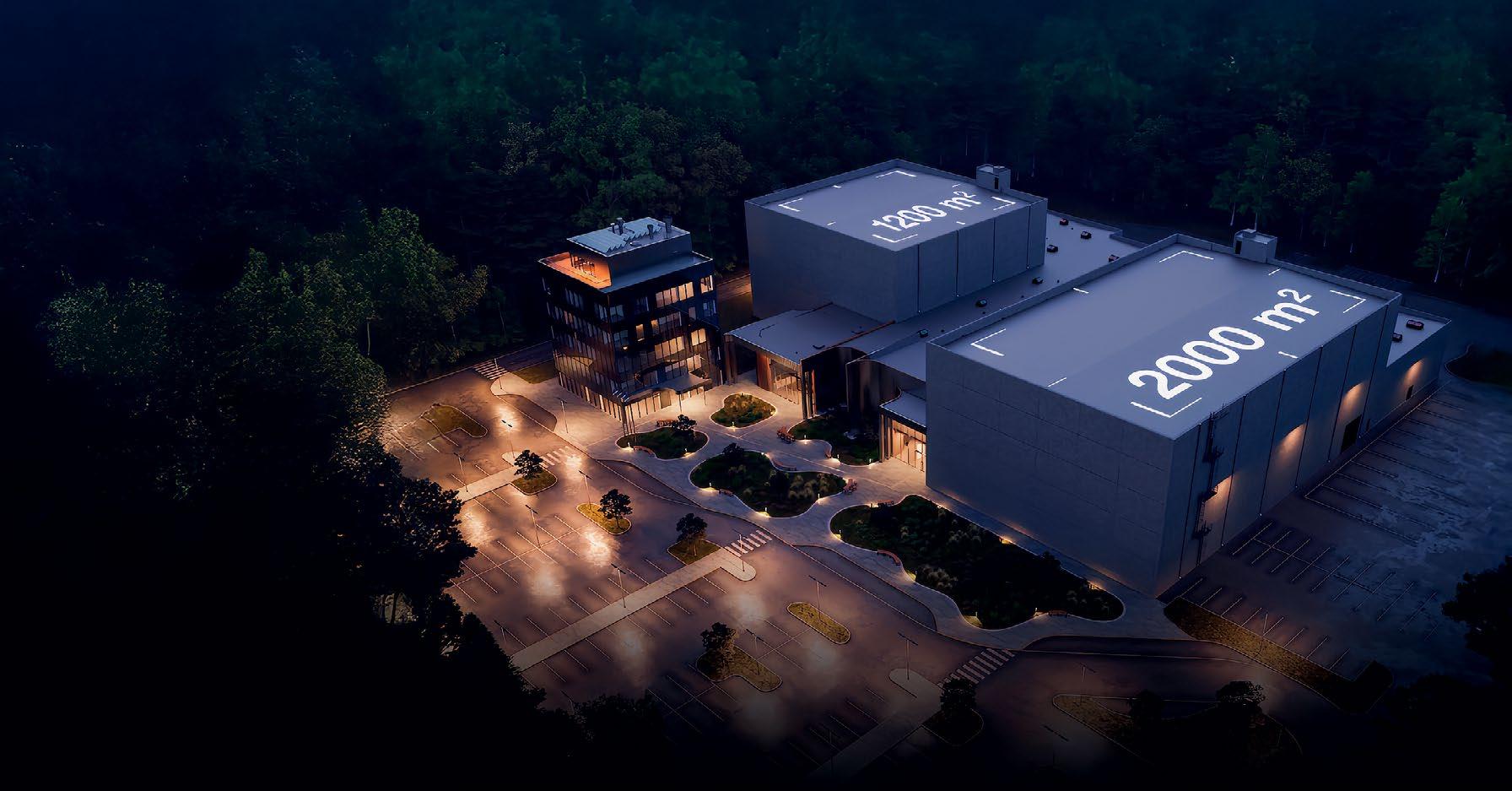
As the global film industry gathers at the Cannes Film Festival, a new production destination is emerging in Northern Europe — one that combines cutting-edge infrastructure, competitive flexibility, and a rapidly evolving creative ecosystem. Welcome to Ida-Viru County, Estonia, home to a next-generation film studio complex designed with international producers in mind.
By Kersti Raja
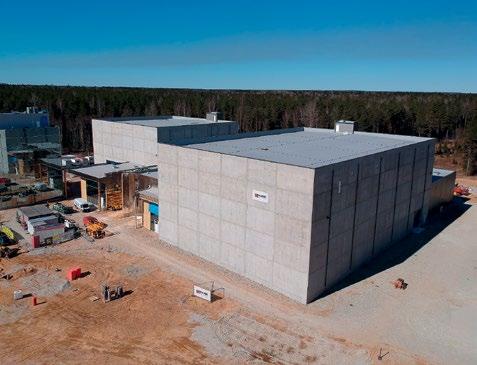
Currently in the final stage of construction and scheduled for completion in autumn 2026, this studio complex represents a bold step forward for the Baltic audiovisual industry. Purpose-built to support film and television, the facility integrates two largescale sound stages – 1200 m² and 2000 m², post-production suites, sound recording studios, office spaces, and storage with workshops – all within a single, highly adaptable environment.
What sets this destination apart is not just infrastructure but ecosystem thinking. The studio is being developed alongside a growing network of local creative companies offering services ranging from set construction and props to costume design, make-up, photography, and high-end post-production services –including editing, sound design, colour grading, and VR effects. For international
Photo by Teet Kuusmik
productions, this means streamlined workflows, reduced logistics, and access to a versatile, cost-efficient talent pool.
Equally important is the studio’s “soft-landing” approach for international productions. From pre-arrival preparation to on-site logistics, productions receive comprehensive support – including space setup, technical coordination, equipment handling, and access to local service providers such as catering, accommodation, and transport. The goal is simple: remove friction so filmmakers can focus on storytelling.
Sustainability and accessibility are also key priorities. The complex is being developed with energy-efficient technologies and is designed to meet modern environmental standards, ensuring that production aligns with increasingly important green production goals.
Beyond infrastructure, the initiative is investing in the future of filmmaking talent. A dedicated creative incubator programme supports local entrepreneurs and micro-companies entering the film industry, offering training, mentorship, and international networking opportunities. To empower state-of-the-art film technology solutions, a film and multimedia tech accelerator supports innovative early-stage start-ups. For producers, this means a continuously growing pool of skilled collaborators, as well as access to new tech solutions for validation.
In a competitive global landscape, producers are seeking locations that offer more than scenery – they want reliability, innovation, and value. The Ida-Viru region delivers all three, along with the unique advantage of being a fresh, uncrowded production hub ready to scale to meet international demand.
As you explore opportunities at Cannes, consider a destination where modern studios meet untapped creative potential. Estonia’s newest film hub is not just a place to shoot – it’s a place to create, collaborate, and bring stories to life, starting in autumn 2026. BF
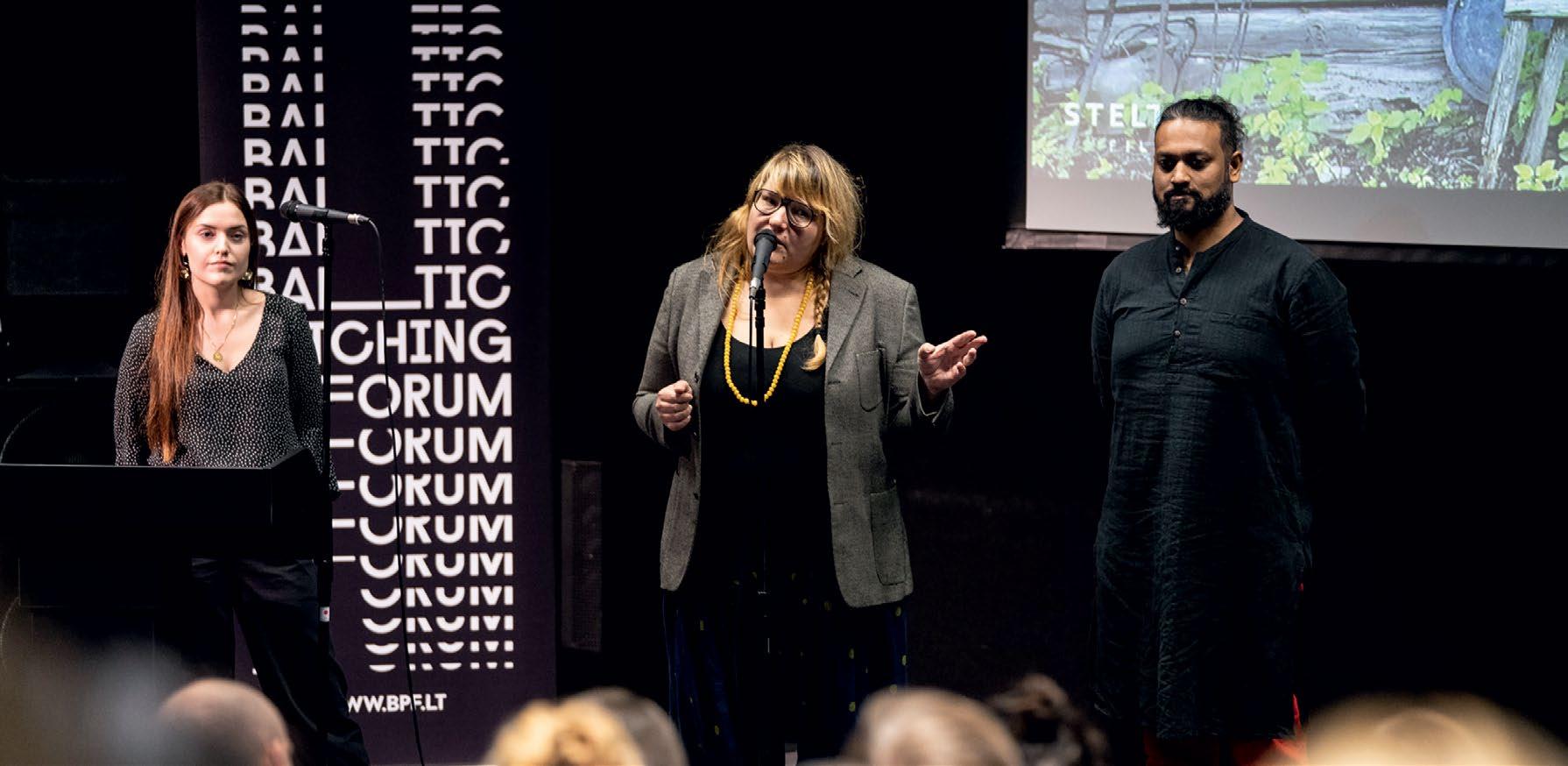
The Baltic Pitching Forum is connecting talent to the international film industry. In an industry proliferate with residencies, workshops and talent labs it is perhaps easy to lose sight of the real and lasting impact which such events have on careers.
By Laurence Boyce
Photos by Tautvydas Stukas
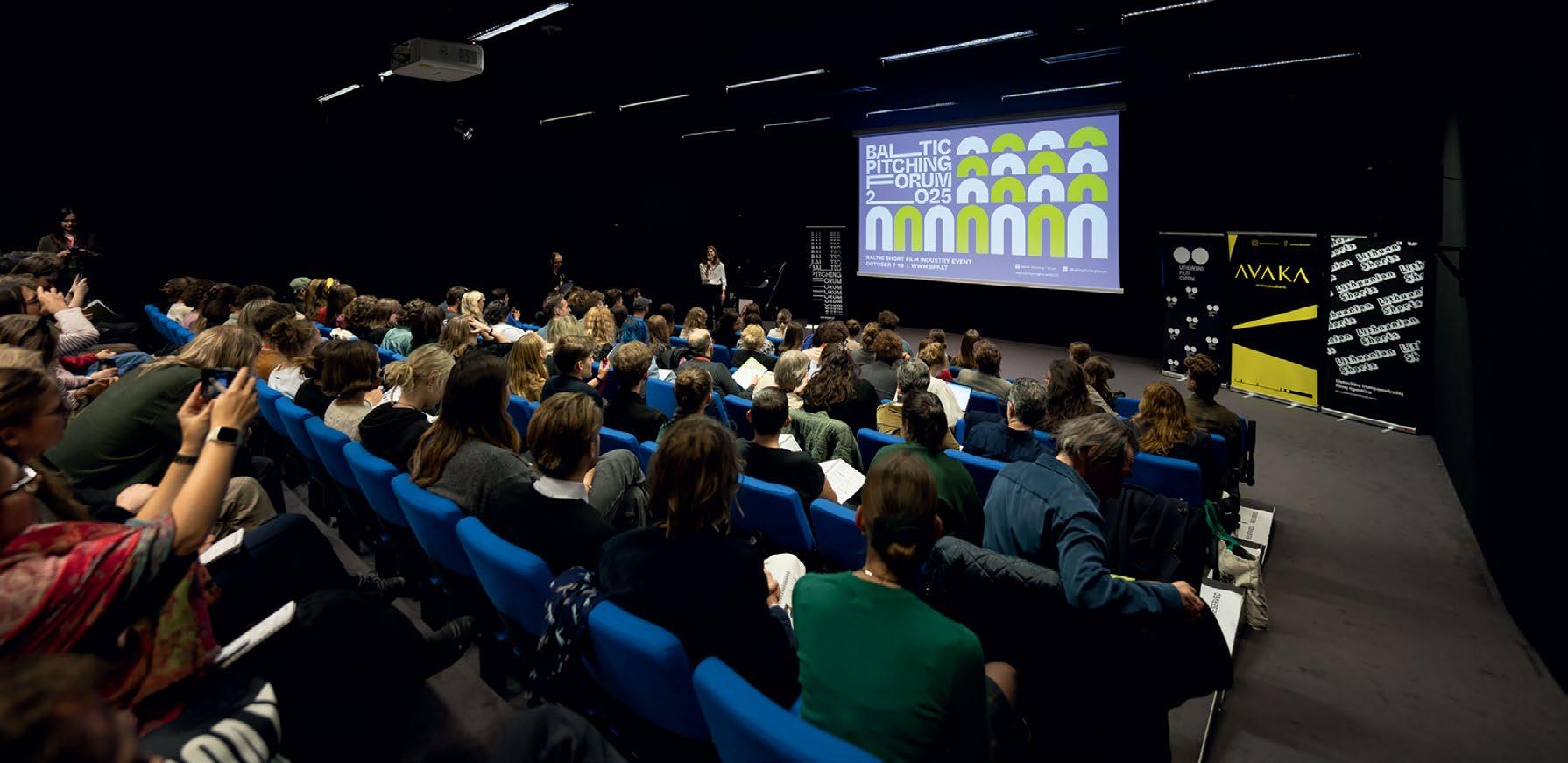
The Baltic Pitching Forum –first established in 2013 – has become an event unique in the Baltics that offers support, networking and the chance for an international industry to discover original short film ideas and scout talents. Over the past 13 years these talents have included the likes of Anna Hints, Laurynas Bareiša, and Raitis and Lauris Ābele – amongst many others –who have gone to have their shorts – and later features – play on the international stage to great acclaim.
Whilst much of the Baltic Pitching Forum has evolved over the 13 years of its existence, its essence remains the same: nine short film projects – three from each of the Baltic countries – are pitched to a panel of industry experts, who have included rep-
resentatives from the likes of Cannes, Venice and Berlin alongside sales agents, distributors and producers. Said experts gave immediate feedback to projects in front of the participants and audience, as well as more detailed feedback in one to one meetings. Add in masterclasses, pitching training and screenings, and the BPF has become an essential ‘industry primer’ for Baltic filmmakers. The BPF has always championed the networking that is the very lifeblood of the business, bringing people together of various degrees of experience to share knowledge and find ways of collaborating in the future.
The BPF’s success has always been predicated on its international impact as much as its importance to the Baltic film community. In 2019 guest countries were introduced, each year bringing three projects to be pitched alongside the nine from the Baltics. Previous guest countries have included Poland, Finland, Norway, Greece, Croatia and Hungary. There has also been a long-lasting partnership with both Clermont-Ferrand’s Euro Connection and ShorTO Film Market, providing guaranteed places at prestigious co-production events and placing them on the international stage.
These opportunities can often have a lasting impact. Lithuanian animation BOBO garnered the opportunity to pitch at European Short Film Coproduction Forum EURO CONNECTION, taking place dur-
ing the Clermont-Ferrand International Short Film Market; after pitching at the BPF in 2025 it soon found itself a French co-producer. In 2015 Lithuanian animation producer Agnė Adomėnė took part in the forum and co-produced her project, Anu-Laura Tuttelberg’s Winter in the Rainforest, with Estonia and Mexican partners, and would premiere the completed film at Annecy
Other successes include Anna Hints and Tushar Prakash’s Sauna Day –pitched at BPF 2022 – which would bow at Semaine de la Critique in 2024 and Laurynas Bareiša’s By the Pool –pitched at the BPF in 2015 –which premiered in competition at the 2017 edition of Venice.
“The Baltic Pitching Forum has been both my window and my doorway into the film world. It was where I first pitched, where I first encountered the industry, and where I began to understand my place within it,” said Anna Hints, a three time alumni of the BPF. “Over the years, it has grown into something much more than a platform – it has become a community, a film family that is deeply precious to me, holding connections that continue to shape my journey.”
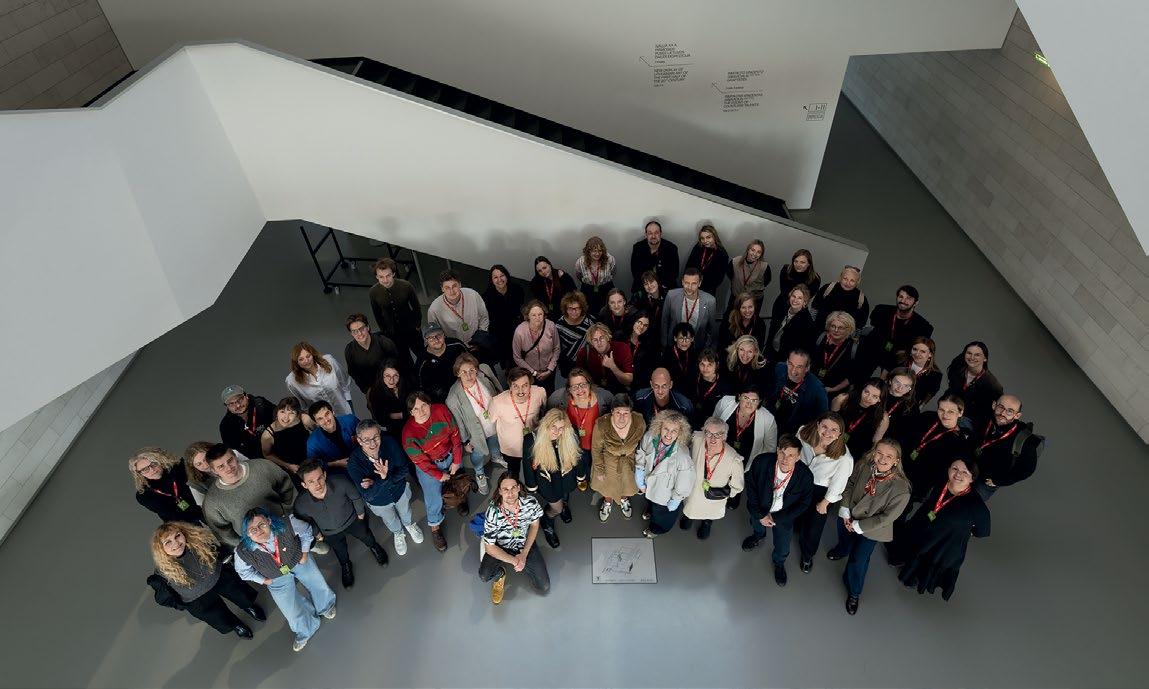
uanian Short Film Agency Lithuanian Shorts, the BPF is organised as a collaboration between PÖFF Shorts (Tallinn Black Nights Film Festival), 2ANNAS Riga International Short Film Festival, and the Riga International Film Festival, alongside the film agencies and MEDIA Desks of all three Baltic countries. This collaboration not only re-iterates the strengths of all three countries working together, but also proves the value of short films and related events as important markers of talent development.
“I do believe that over almost 15 years the BPF has helped to put Baltic countries on the European
The BPF is not only a testament to giving Baltic projects and filmmakers visibility on the international scene, but also shows the importance of the collaboration of the three Baltic states. Led by Lith-
cinema map.” says Rimantė Daugėlaitė, the head of Lithuanian Shorts. “Building sustainable partnerships with colleagues from other European film industry events, production, sales, distribution, TV companies, has helped the Baltics to be more visible and attractive as a region with great talents. For so many alumni, the BPF has helped open doors so that they could establish their names and international network.”
The 14th edition of the Baltic Pitching Forum will be held on 6–9 October 2026 in Vilnius. More information about previous editions, as well as the new call for applications, can be found at www.bpf.lt BF
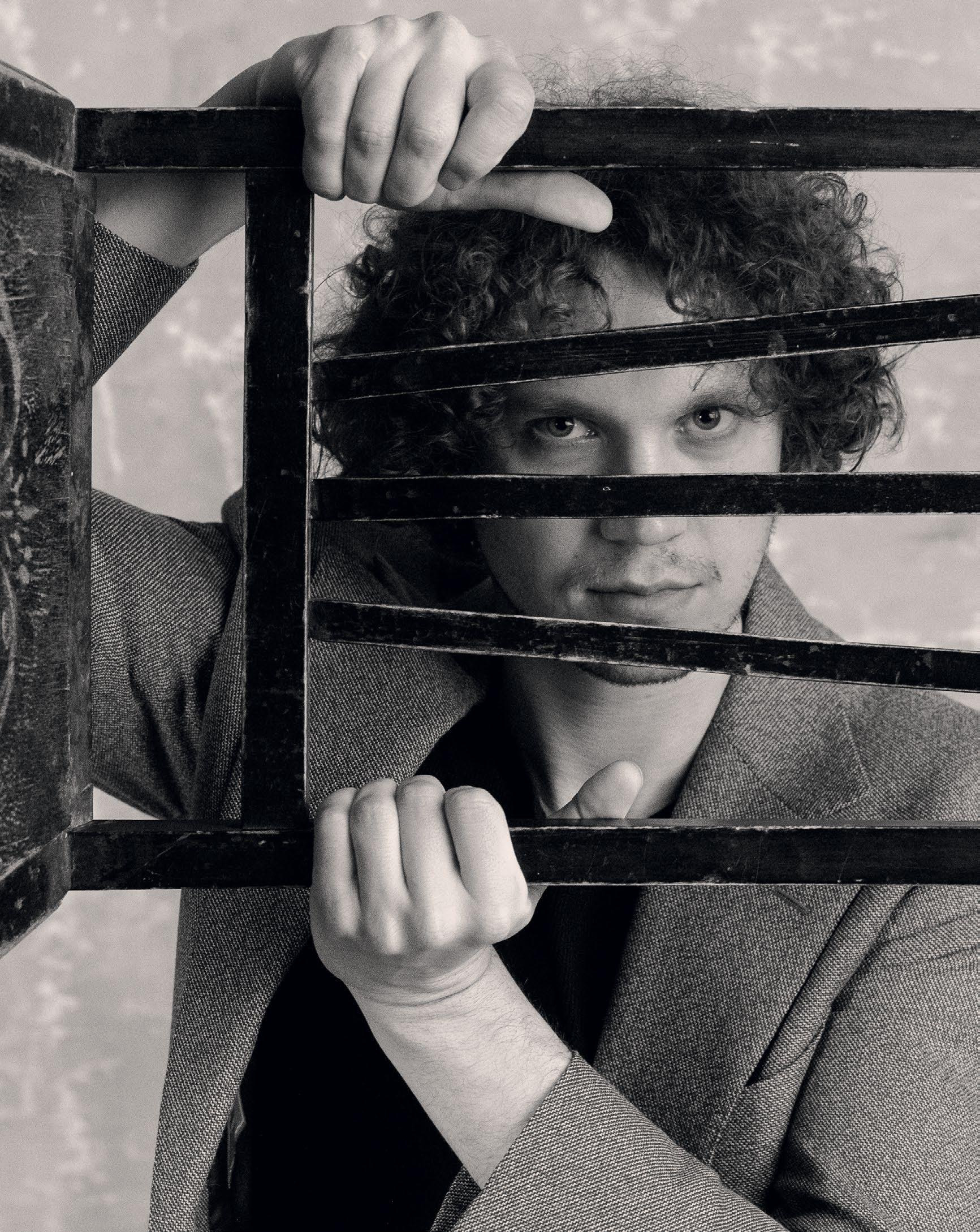

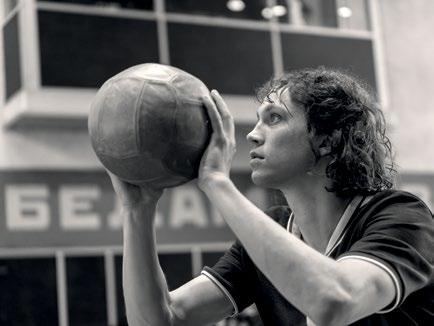
At the Cannes Film Festival, Ulya premieres in the Un Certain Regard competition, marking a key moment for Latvian actor Kārlis Arnolds Avots. Taking on both the lead role – portraying the world-famous basketball player Ulyana Semyonova (1952–2026) and the original concept, Avots brings a deeply personal project to one of cinema’s most prestigious stages.
By Dita Rietuma Photos by Agnese Zeltiņa
The film is directed by Viesturs Kairišs, with a screenplay written by Kārlis Arnolds Avots in collaboration with Estonian colleagues Andris Feldmanis and Livia Ulman. The cinematographer is Polish DoP Vojtěch Staroň, and the film, produced by Ego Media, is a Latvian, Estonian, Lithuanian and Polish co-production.
Kārlis Arnolds Avots marked the news of Ulya’s selection for Cannes with an emotional post on social media, accompanied by a rare photograph of the legendary Latvian basketball player Ulyana Semyonova, taken in 1970s Paris by the Eiffel Tower.
“When Ulya passed away, this photo was published in one of the most wellknown sports newspapers in Europe, L’Équipe. Just three months ago, there was still a chance to ask her whether she had ever been to Cannes. It would have suited her to be on the stage of the Olympic Games of Cinema.
Eight years ago, when this idea was born in me, and I, as a somewhat mad student, ran from one director to another trying to find someone who would realise it with me, I carried a deep conviction that Ulya’s story could move hearts, regardless of occupation, language or gender. I simply had a quiet but ironclad certainty that this story would reach where it was
meant to reach. It may sound like arrogance, but no – it was certainty.
I have not yet seen the film. For the first time in my life, I am utterly afraid of a film. But what I was doing while working on it was learning how to conquer oneself, how to become the champion of one’s inner world and to accept oneself in all the beauty of so-called ‘imperfections’. And to learn to laugh at yourself a little. (…) Ulya! Legends truly live forever. Let’s go to Cannes, dear!”
What were your feelings when you learned that Ulya would have its world premiere at the Cannes Film Festival? And what first drew you to the personality of the basketball player Ulyana Semyonova?
I had already looked up the date when the official Cannes programme would be announced, and as it approached, I be came increasingly feverish. On the night before the announcement, I went outside and paced the street in a kind of frenzy. Then I received a message from the pro ducer saying that our Ulya had been se lected for the Un Certain Regard compe tition. After that came, of course, laughter and tears, and only towards morning did I manage to calm the storm and fall asleep. It meant everything to me.
The idea for Ulya came to me eight years ago and took over my life; I immedi ately understood that this story was my “to be or not to be”. I know what an ath lete’s fate means, what kind of sacrifice it demands. I also know what it means to be different and to be misunderstood. I was convinced that with this story I could be emotionally authentic as an actor, because I have admired Ulyana’s personality since childhood. I was also thrilled by the fact that her story does not speak only locally about us Latvians –the scale of her personality is far more global. Speaking about Ulya, one can address both minorities and the chosen ones in any society; she herself is a widely recognised, legendary figure in the world of sport.
At first, I thought it might be come a theatre production; later I realised it had to be a film. I was not frightened by rejection or by my own shortcomings – the fact that I did not know how to develop a film project, how to write a
screenplay, what story structure, conflict or theme meant. I was not intimidated by the need to find funding, for which all Latvian filmmakers must struggle under the very limited conditions of the industry. Nor was I concerned by the fact that I am not a woman. To be honest, I did not think about any of that at all – instinct simply told me that no one would be able to tell this story more truthfully, on a human level, than I could. And I have always been drawn to stories like Werner Herzog’s Kaspar Hauser or David Lynch’s The Elephant Man – stories about square pegs in round holes.
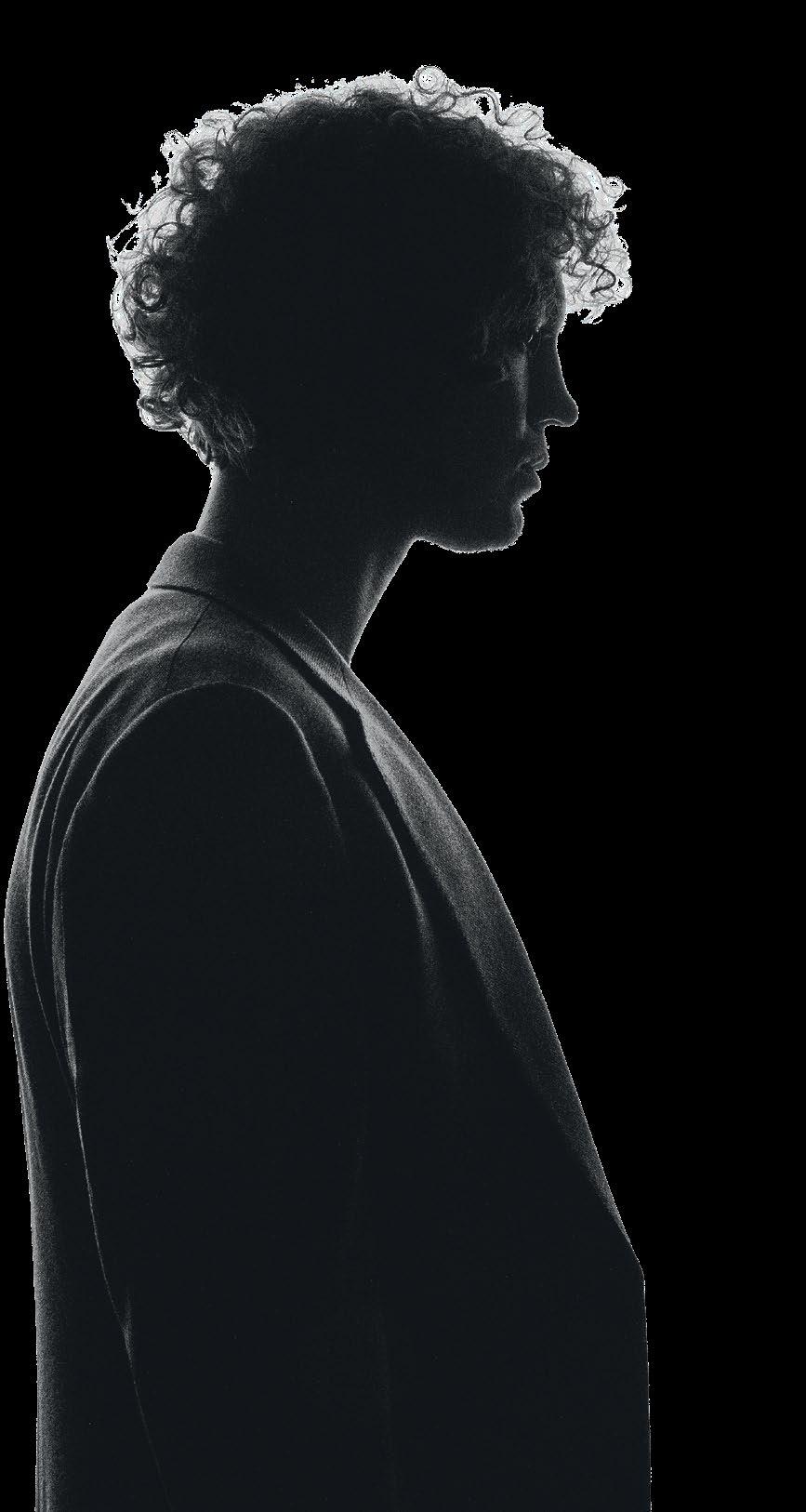
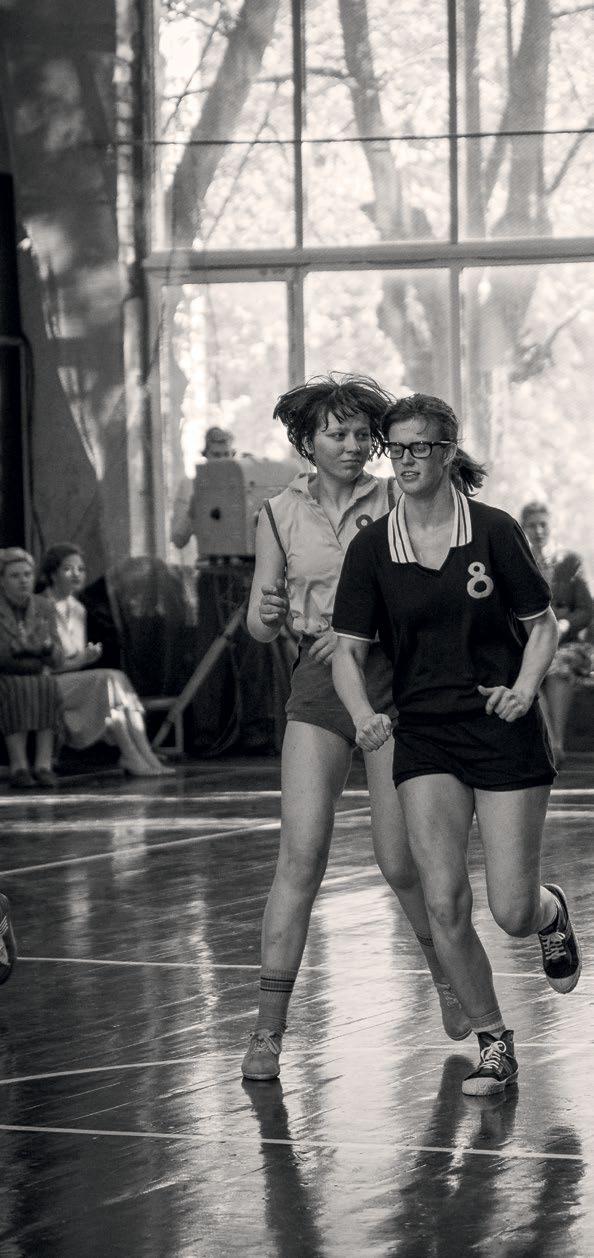
I had an almost insatiable need to prove myself, to show that I was enough, that I was capable.
has already built a diverse body of work across film and television. He gained international recognition for his role in January and appeared in the series Soviet Jeans. His career has also expanded into international productions, including the Amazon/MGM series Bloodaxe, where he plays a central role. Avots is represented by Subtitle Talent Agency, reflecting his growing presence in the global screen industry.
At the beginning of this year, Semyonova passed away. What was your relationship like before the project began, and how did it evolve during
Eight years ago, I delivered a letter to Semyonova’s workplace, handed it in and ran away. In it, I wrote that I wanted to create a theatre production about her, and that there was no one in Latvia who inspired me more. I explained that I, too, had grown up in the countryside and, upon arriving in Riga, had felt lost and out of place,
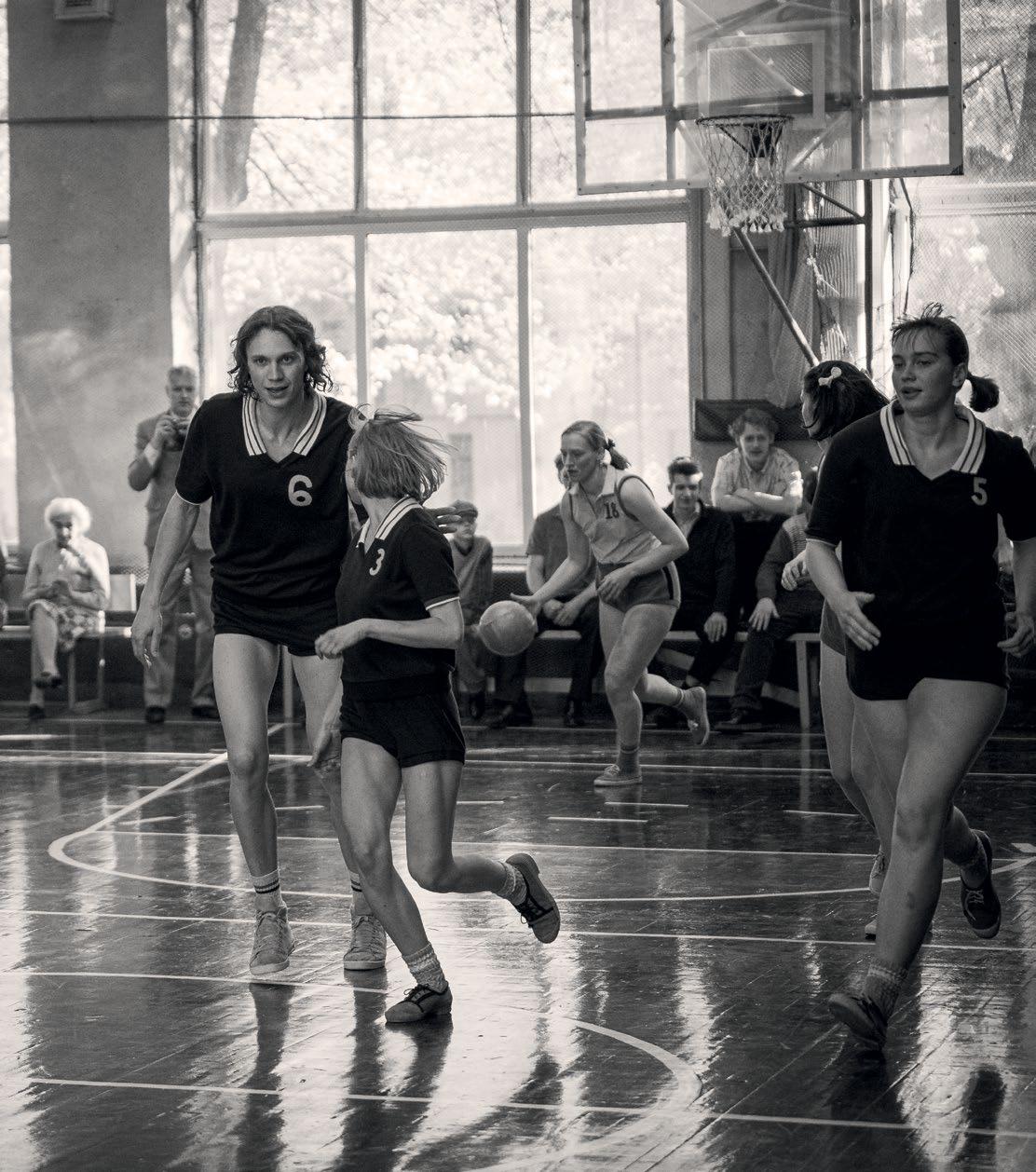
much as she once had. I left my contact details, but Ulya did not respond.
Several years later, after completing my acting studies, I finally managed to arrange a meeting with Ulyana Semyonova – no easy feat; in Latvia, it might be simpler to secure an audience with the president than with Ulya. She told me she had kept my letter, though at first she had thought I must be out of my mind, having delivered it only to run away. From that meeting onwards, and thanks to the generosity of her close friends, we gradually built a genuine friendship. She eventually agreed that I could portray her in the film. She sensed how deeply it mattered to me, how passionately I spoke about her life; later, she even took pride in the fact that a film about her was being made.
Ulya had an enormous heart and a rare warmth. I will always remember how simply she would recount walking five kilometres to school every day ‒ even in winter ‒ carrying her brothers’ bags as well. To her, such hardships seemed almost insignificant.
Coming-of-age drama, 100 min
Original Title: UĻA
Director: Viesturs Kairišs
Scriptwriters: Kārlis Arnolds Avots, Livia Ulman, Andris Feldmanis
Cinematographer: Wojciech Staroń
Production Designer: Ieva Jurjāne
Producer: Guntis Trekteris
Production company: Ego Media (Latvia)
Co-production companies:
Allfilm (Estonia), Staron Film (Poland), Tremora (Lithuania)
Synopsis
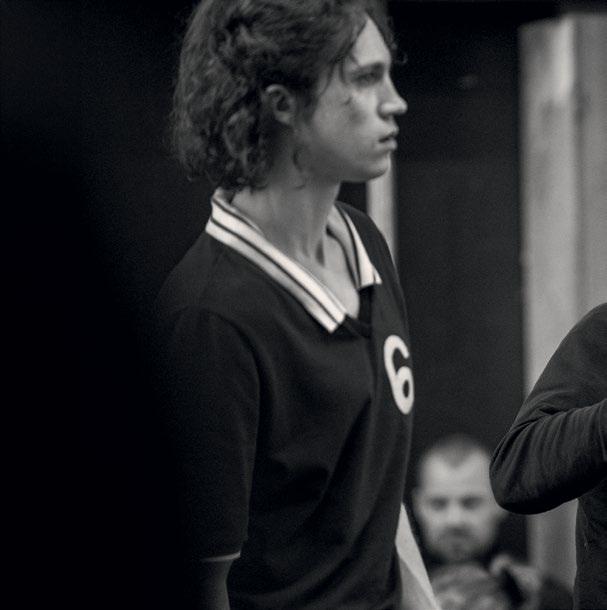
Soviet Union, Latvia, 1964. Ulya, a 14-yearold girl nearing two meters tall, grows up on a faraway country farm. Her unusual height troubles her family, who wonder if there’s a place for her in the world. When her class photo reaches basketball coaches, Ulya is whisked to Riga to join famous basketball team. Struggling with her height and identity, she trains hard, but realizes basketball can’t fulfill her dream of a normal life. After fleeing home, Ulya discovers both village life and basketball see her only for her height. Accepting herself, she faces a choice: hide or aim to be the best basketball player in the world.
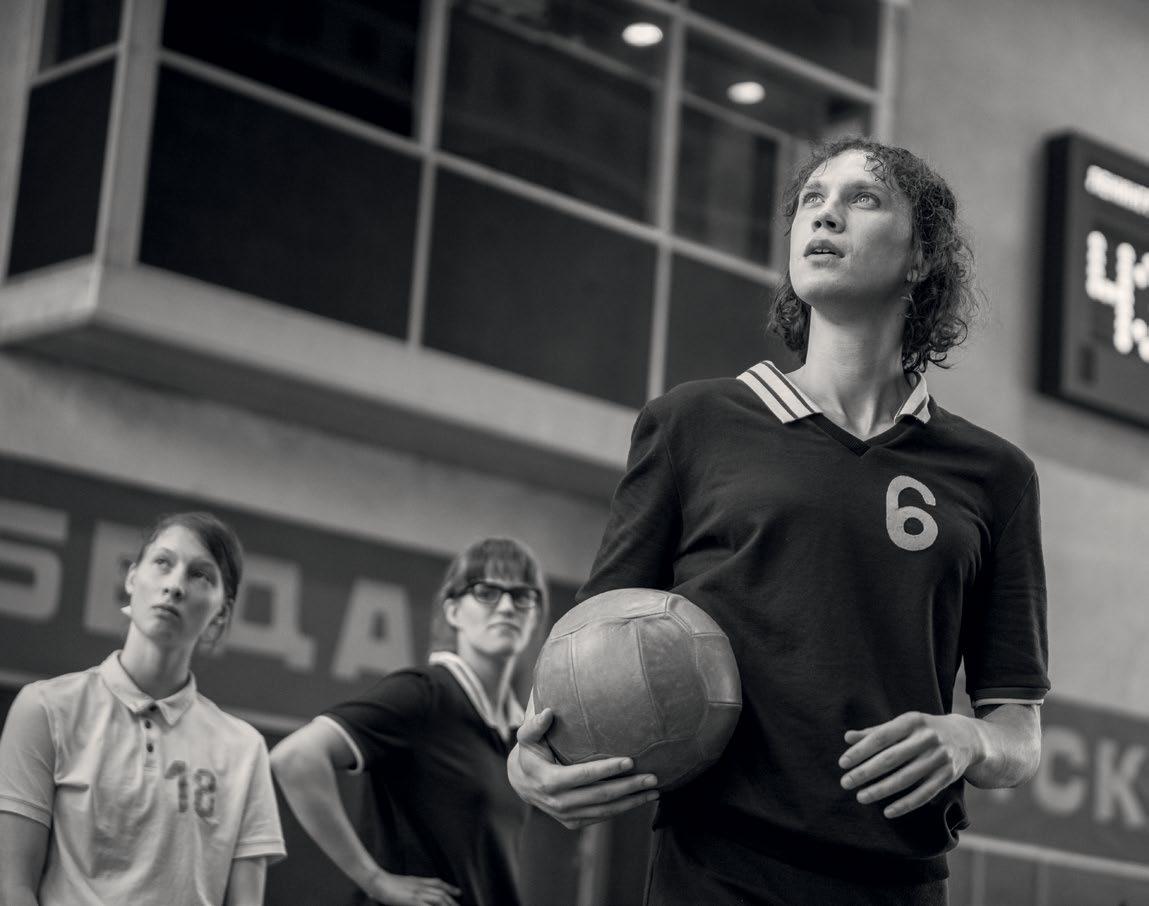
You still haven’t seen the finished film.. Not yet. I want to, but at the same time, I’m afraid. For me, this is an intensely personal work; I have never experienced anything quite like it ‒ a relationship with a film that feels so deeply my own. And I don’t know whether I will ever be given such an opportunity again.
To my mind, Ulya is a universal story, one that resonates far beyond a local context. The way she became a champion –not only in sport, but in finding herself –is something extraordinary. For reasons I can’t entirely explain, I find myself drawn to stories like this.
Ulya, in my view, is a film about being different…
Yes. If it were simply a film about basketball, it would be far less compelling. I think Ulya will remain my most personal role. It is an existential one – the theme closest to who I am.
In 2025, you represented Latvia at the European young actors’ initiative Shooting Stars at the Berlin Film Festival, and in recent years your career has clearly taken on an international dimension. You are also represented by the international agency Subtitle Talent Agency.
Yes, I already have four international premieres to look forward to. The first is Ulya in Cannes; in the autumn, the series Kill Jackie will be released, starring Catherine Zeta-Jones in the leading role. Then, hopefully in winter, will come the premiere of Amazon Prime’s Bloodaxe. I am particularly excited about that project, as I play one of the central roles – the principal antihero, the Viking poet Egil. I have also filmed for the BBC series Honey, and I am now awaiting news about the production of Bloodaxe’s second season.
I joined Subtitle Talent Agency thanks to the Berlin Festival. The series Soviet Jeans was screened at the film market, and the agent of my co-star, the Finnish actress Aamu Milonoff, was attending –that is how we met. Festivals are the key places where that long-awaited call from an agent can happen. In essence, I was fortunate, but I had also been moving steadily towards that moment.
Bloodaxe is your most ambitious project to date — a rare opportunity for an actor from a small country. How many episodes have you filmed?
Eight episodes, with a total budget of 80 million. I believe Bloodaxe will have a considerable impact – Vikings, which is conceptually related to Bloodaxe –remains one of the most searched-for titles in the Netflix catalogue.
The competition and casting process for a project of this scale were intense. During this time, I have come to realise that we have exceptionally strong actors in Latvia. It was precisely through working on the role of Egil in Bloodaxe that I gained the conviction that we can take part in major international productions, if we choose to. The issue has not been a lack of ability, but rather a lack of ambition among actors. I am not speaking about Latvian cinema as a whole, especially not now, after the Oscar won by the animated film Flow, but specifically about actors not always orienting themselves towards international projects that may seem unattainable. In reality, they are not unattainable at all; one simply has to calibrate oneself accordingly. I chose that direction and moved towards it, and it is clear that anyone could stand where I am now.
And what have you gained from this international experience?
Previously, I had an almost insatiable need to prove myself, to show that I was enough, that I was capable. Now, it is about something different: new sensations. I have gained confidence and trust in my work, because I know that no one would take the risk of casting me – particularly in a role like Bloodaxe, for which at least a thousand international actors from professional agencies were competing – if I were not ready. The competition is fierce, and I have always been a sensitive and vulnerable person; even the slightest criticism could unsettle me. Now I have developed a greater sense of composure, along with a stronger belief in what I do.
Recently, I was also in contention for a leading role in an American feature film, but ultimately someone else was a better fit – that happens. What encourages me is reaching the socalled “callbacks”; it means the industry sees me as part of its projects. I simply have to keep going, the right roles will come if I continue to move towards them. BF
Director
One of the most internationally recognised contemporary Latvian film directors, he has received awards at festivals in Rome, Warsaw and Tribeca (USA), and has also staged large-scale theatre productions and operas. He made his first feature film in 2001, earning the National Film Award, and as early as the 1998/1999 season his opera production and several theatre works were already recognised as the finest in Latvia. At the Latvian National Opera, Viesturs Kairišs has staged three of Wagner’s operas from Der Ring des Nibelungen cycle, and since 2020 he has served as Artistic Director of the Dailes Theatre.
In his filmmaking, director Viesturs Kairišs brings an operatic sense of scale and a dramaturgy of passion, shaping narratives that resonate with pivotal moments in Latvian history, refracted through deeply personal stories of fate: the tragedy of Stalinist deportations in The Chronicles of Melanie (2016); the historical upheavals at the outset of the Second World War in The Sign Painter (2020); and the collapse of the Soviet empire in January (2022).
Kairišs’ documentary work is marked by distinctive perspectives and philosophical depth, often blending genres.
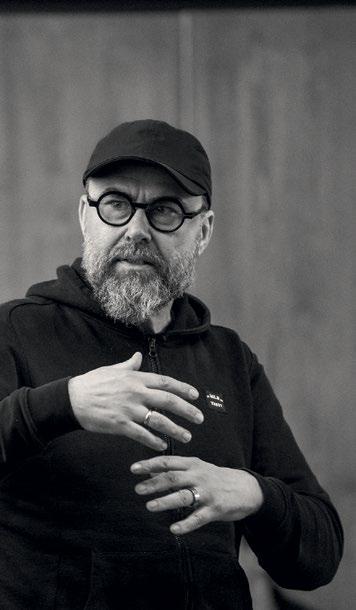
Among these are Romeo and Juliet (2004), which stages West Side Story with non-professional actors with hearing impairments; Lohengrin from Varka Kru (2009), a portrait of luger, Olympic medallist Mārtiņš Rubenis set to Wagner’s music; and Pelican in the Desert (2014), a philosophically poetic reflection on Latvia’s eastern region of Latgale.
The feature film Ulya (2026), which has its world premiere in the Un Certain Regard competition at the Cannes Film Festival, is Viesturs Kairišs’ sixth live-action feature. This time, he turns to a coming-of-age story centred on a historical figure, presenting both an intimate portrait and a demanding performative challenge.
Producer
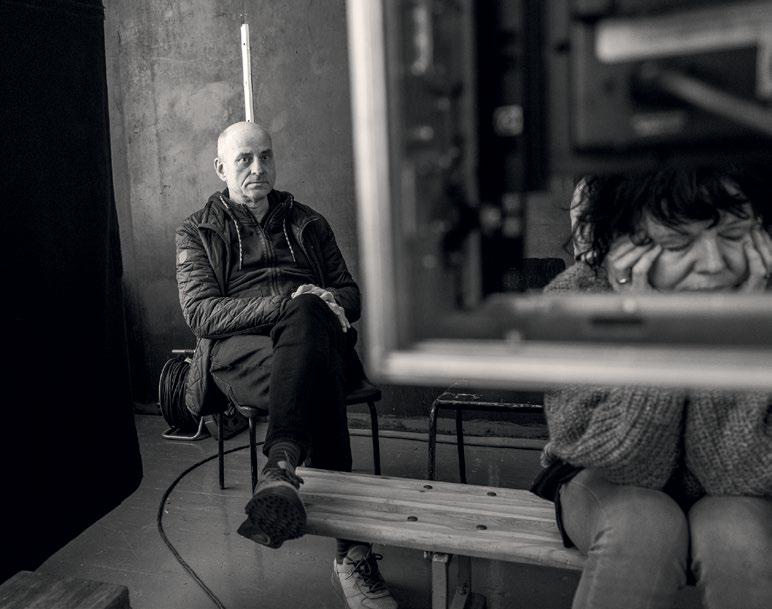
One of Latvia’s first and most experienced film producers, he began working in the industry in the early 1990s, having previously been a journalist with a degree in economics. He started his film career at one of Latvia’s first independent studios, Kaupo Filma, and by the second half of the 1990s had become one of the country’s most active producers, working on films directed by Arvīds Krievs, Jānis Putniņš, Askolds Saulītis, Una Celma, Viesturs Kairišs and others.
At the beginning of the 21st century, he founded his own production company, Ego Media, and has since continued to collaborate extensively with a wide range of directors. Among his notable work, Guntis Trekteris produced the final four films by the documentary cinema classic Herz Frank (1926–2013), as well as the first films directed in Latvia by Vitaliy Manskiy. His ongoing collaborations also include
internationally recognised Latvian directors Dāvis Sīmanis and Ilze Burkovska-Jacobsen, whose animated feature My Favorite War received the Annecy Contrechamp Award in 2020. He is currently producing the director’s next feature-length animated film RoachCoach
Ego Media’s slate also reflects a strong engagement with a younger generation of filmmakers, including directors Alise Zariņa, Liene Linde and Marta Elīna Martinsone, who is currently working on her second feature in collaboration with the company—Latvia’s first full-length musical, The Wedding Day
Guntis Trekteris is also among Latvia’s most internationally active producers, with a wide range of co-productions and collaborative projects involving film studios in France, Germany, the Czech Republic, Sweden, Austria, Poland, Estonia, Lithuania, Spain and beyond.
(1952–2026)
Basketball player
A two-time Olympic champion (1976, 1980), three-time world champion and ten-time European champion, she remains the most decorated player in the history of women’s basketball worldwide. An outstanding centre, she was for many years the leading figure of Latvia’s strongest team, TTT (1967–1987), as well as of the USSR national team (1968–1986). She was inducted into the World Basketball Hall of Fame (1993), the Women’s Basketball Hall of Fame (1999) and the FIBA Hall of Fame (2007).
Ulyana (Ulya) was born in a remote part of Latvia and discovered basketball only in her teenage years, when the exception-
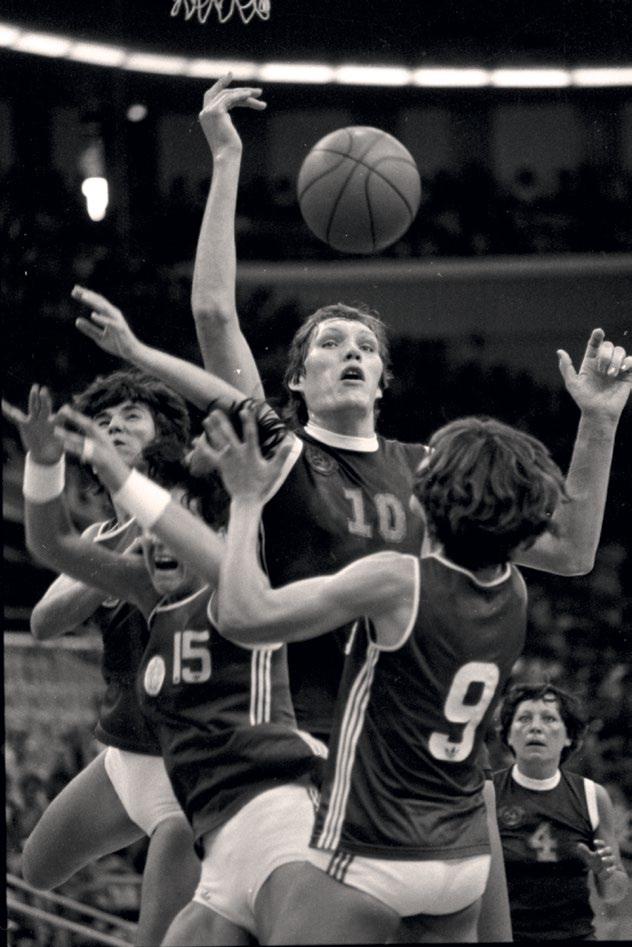
ally tall girl was invited to train in the capital. She quickly mastered the fundamentals of the game and, in the years that followed, developed exceptional technical and tactical skill, enabling her to make full use of her remarkable height (210 cm) and rendering her virtually unbeatable on the court. Her wide technical range and deep understanding of the game allowed Ulyana to play an active role in team strategy; coaches often adapted their tactics to her unique abilities and style. For many years, neutralising Ulyana Semyonova posed one of the greatest challenges for coaches and players of the strongest teams in the USSR and across Europe, and she was frequently recognised as the top scorer in games and tournaments.
After concluding her basketball career, Ulyana Semyonova became actively involved in the work of the Latvian Olympic Committee (LOC), serving as its Vice President from 1988 to 1992. She was also one of the initiators of the Latvian Olympians’ Social Fund, which provides support to retired athletes. From 1991 to 2020 she served as the Fund’s President, and since 2020 she has held the position of Honorary Chair. BF
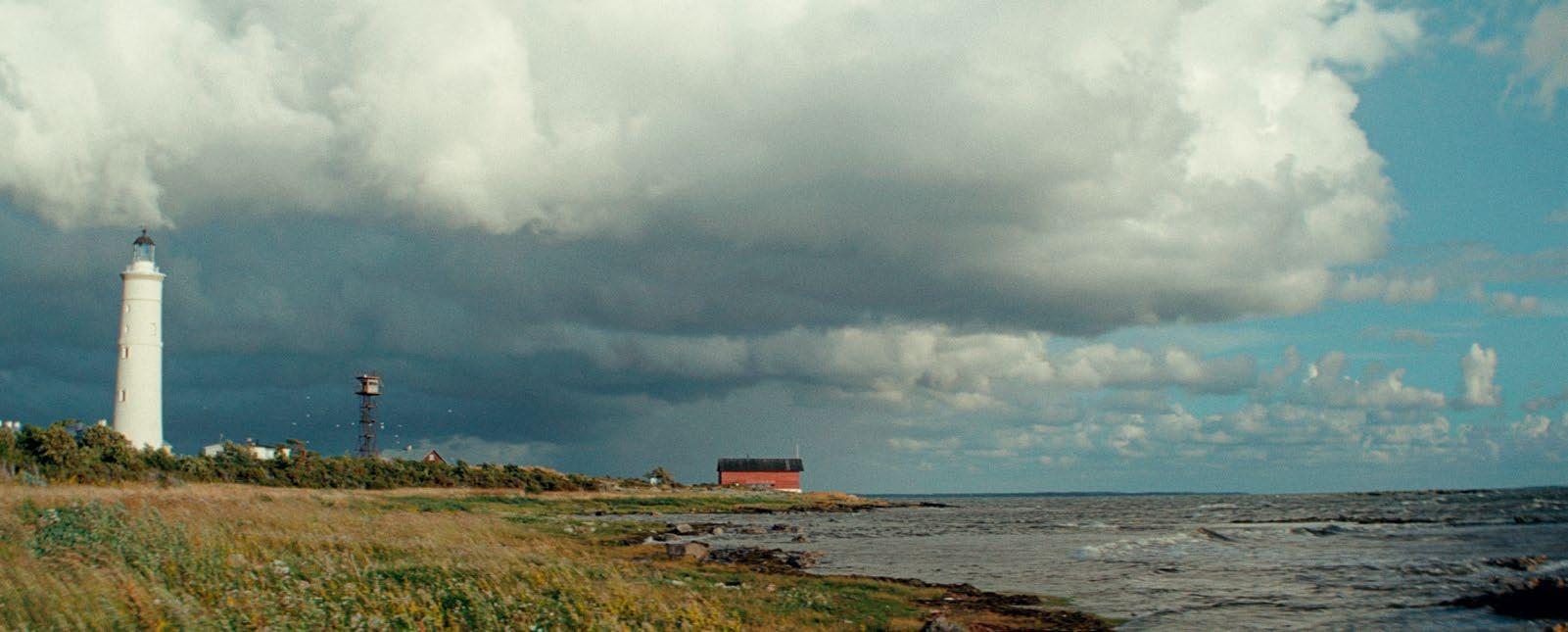
In Estonia’s compact yet dynamic film landscape, the Film Fund of Estonian Islands operates less as a traditional financier and more as a strategic enabler. Its scale may be modest, yet its impact lies precisely in its ability to influence a key decision point: bringing productions to the islands and embedding them in a specific place.
By Eda Koppel
The fund’s importance lies in helping productions decide to come to the islands, spend locally and connect their stories to place,” says its founder, Rainer Paenurk. “Even with a modest budget, it adds value exactly where regional funds matter most.”
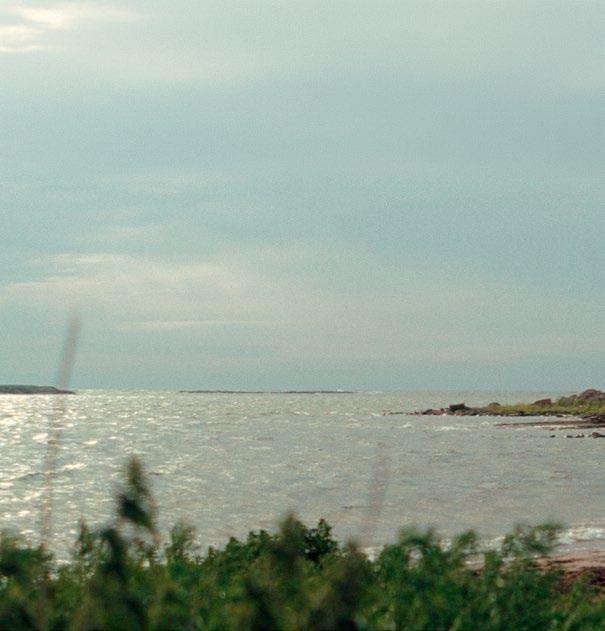
Rather than competing with national financing structures, the fund uses a different kind of leverage. It supports location-based production, encourages the use of local services, and ensures that Saaremaa is not simply framed as a scenic backdrop but is engaged as part of the filmmaking process. In this sense, the island becomes not only a setting but a collaborator.
by
The fund’s criteria reflect a careful balance. On the one hand, projects must generate tangible regional impact – through shooting days, accommodation, transport, catering and local employment. On the other hand, they are expected to engage with the island in a meaningful artistic way. “The most convincing projects are those where artistic and regional value reinforce one another,” Paenurk notes.
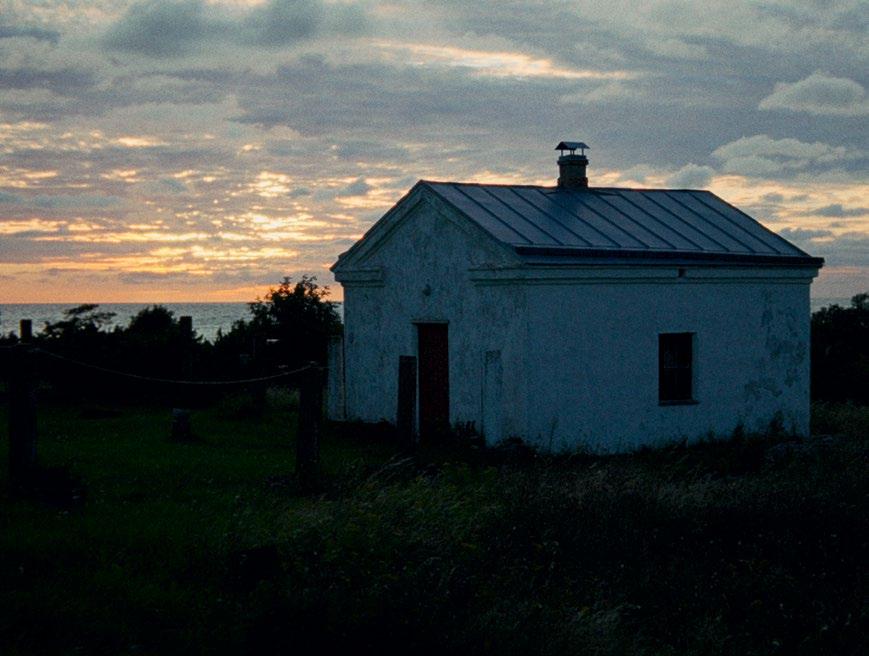
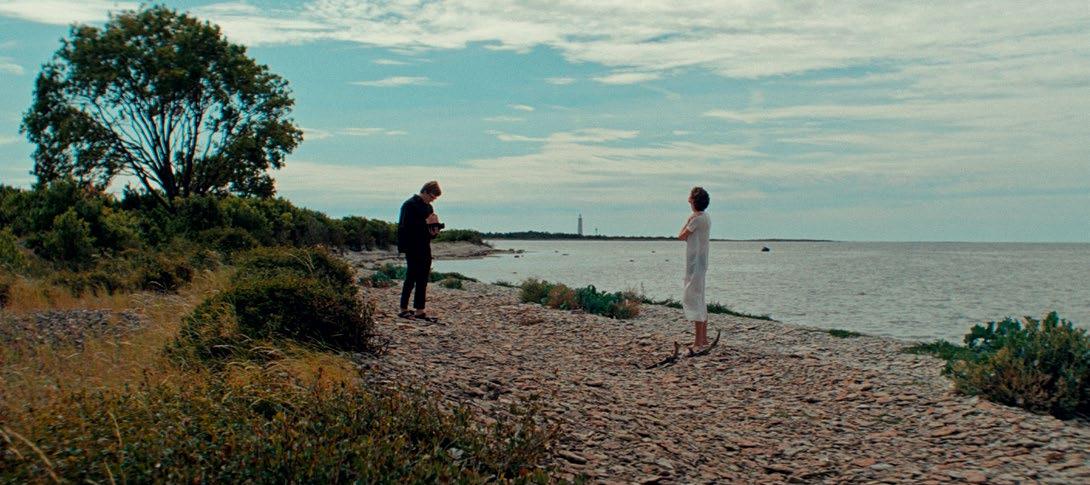
This alignment is particularly evident in the work of filmmaker Eeva Mägi, whose films are closely tied to Saaremaa, especially to Vilsandi. For Mägi, the island is not an external location but an internal landscape – one shaped by memory, experience and long-term creative return. “Saaremaa – and especially Vilsandi –has been part of my life since childhood, so it always feels like returning to my roots,” she says. “The landscape has a
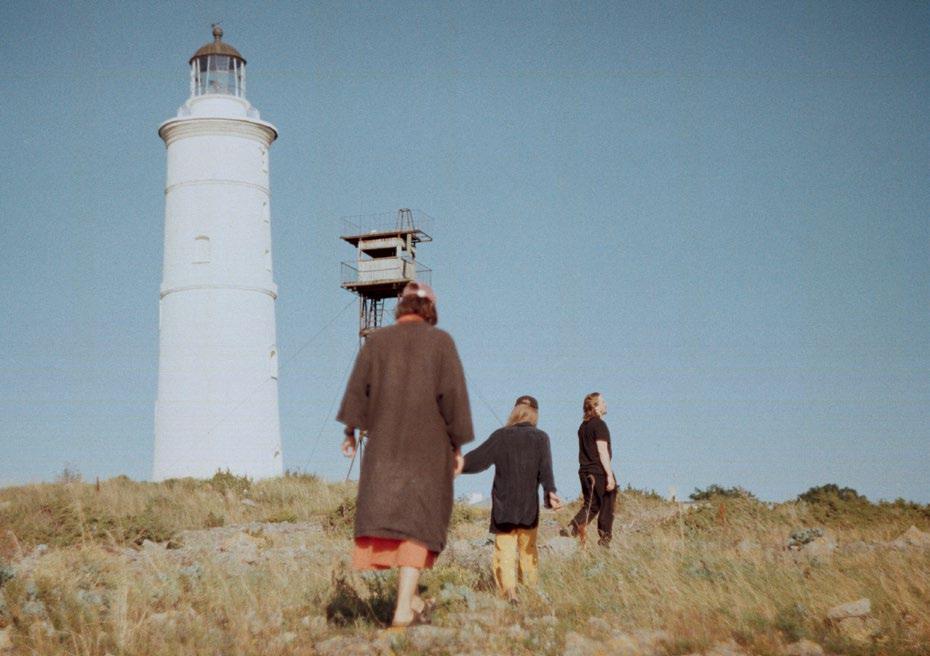
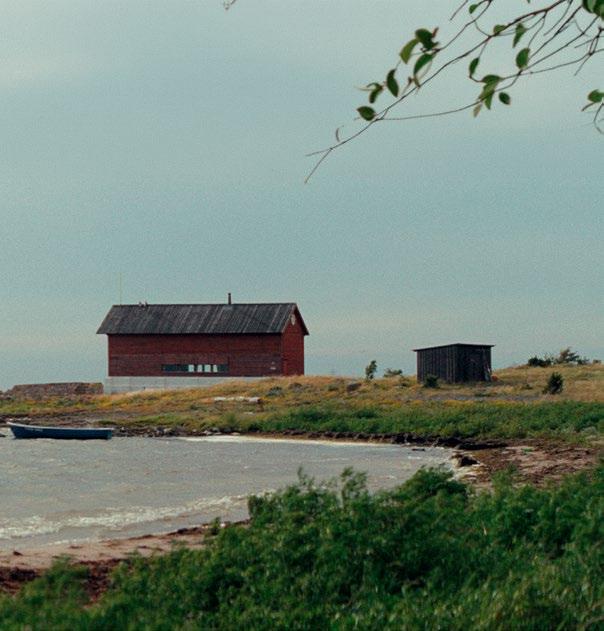
poetic, almost cosmic presence – the shoreline, the light, the openness of the sea. It naturally shapes the mood and visual tone of my work.”
Her recent feature, Mo Hunt, shot on Vilsandi and now presented at PÖFF Goes to Cannes, was made without support from the fund – largely due to timing and availability. The case illustrates a structural reality: regional funding mechanisms, by nature, cannot accommodate every project, even when the connection to place is strong.
At the same time, Mägi’s upcoming feature Mo Amor, which did receive support, demonstrates what even modest regional financing can enable. The contribution did not radically change the scale of production, but it introduced a crucial degree of flexibility – extending the shoot, allowing for a slightly larger team and enabling greater precision in visual decisions.
“The support gave us breathing space – both logistically and creatively,” Mägi
The Film Fund of Estonian Islands operates with a precision that exceeds its scale .
explains. “Instead of constantly compromising, we could focus more on the film’s visual language.”
From the fund’s perspective, projects like Mo Hunt are not exceptions but signals. They point to an existing demand that exceeds current funding capacity. “A regional fund will always operate under budget limits,” Paenurk acknowledges, “but this shows there are productions that want to work here even when we cannot participate.”
The next phase, therefore, is not only growth in volume but in structure. A more stable and predictable funding base would allow the fund to respond more consistently to production needs, while stronger industry visibility could ensure that Saaremaa enters projects earlier—at the level of development rather than latestage location decisions.
Equally important is the longer-term ambition to build a functioning islandscreen ecosystem. This includes developing local service capacity, strengthening ties with municipalities and encouraging returning productions that gradually embed film practice within the region itself. The goal is continuity: a shift from occasional shoots to sustained engagement.
For filmmakers like Eeva Mägi, the role of such funds remains immediate and essential. “They make films possible that otherwise wouldn’t exist,” she says –particularly those operating outside conventional financing systems, where flexibility and trust are as important as the funding itself.
In this sense, the Film Fund of Estonian Islands operates with a precision that exceeds its scale. It works at the intersection of place, production and authorship – shaping not only where films are made, but how locations become part of their meaning. BF
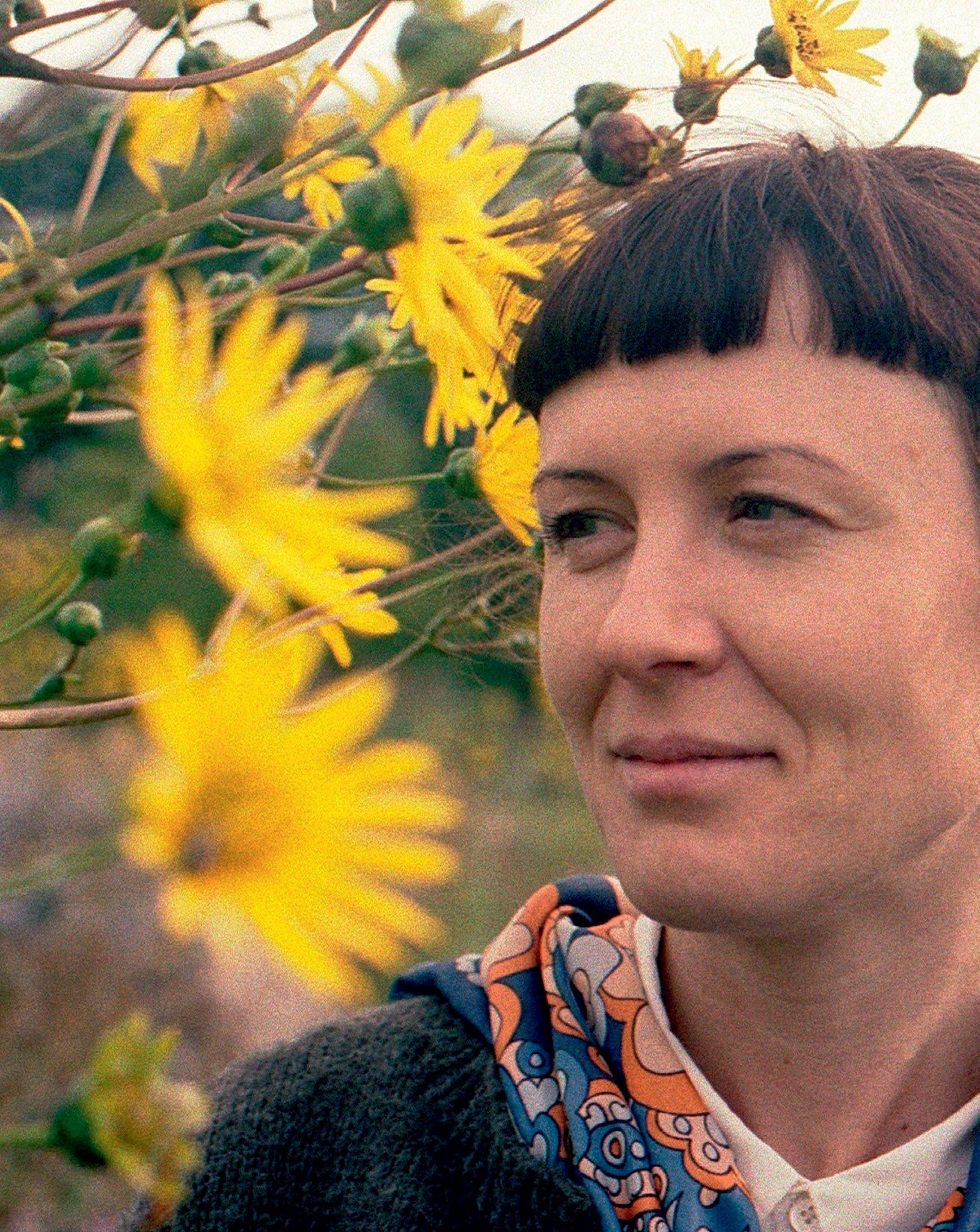
Documentary filmmaker Aistė Žegulytė considers her work a continuation of the poetic cinema tradition in Lithuania. Her films explore the passage of time, the transience of life, and its cyclical nature.
By Ieva Šukytė Photos by Vita Žėkaitė
She examines not only human existence but also that of other life forms – animals and microorganisms – thereby rethinking contemporary human existence and our desire to escape natural processes such as death.
Her second documentary, Holy Destructors, received awards last autumn at the International Documentary Film Festival Amsterdam (IDFA), and the Tallinn Black Nights Film Festival. This spring, it was also selected as the best Lithuanian premiere at the Vilnius Film Festival.
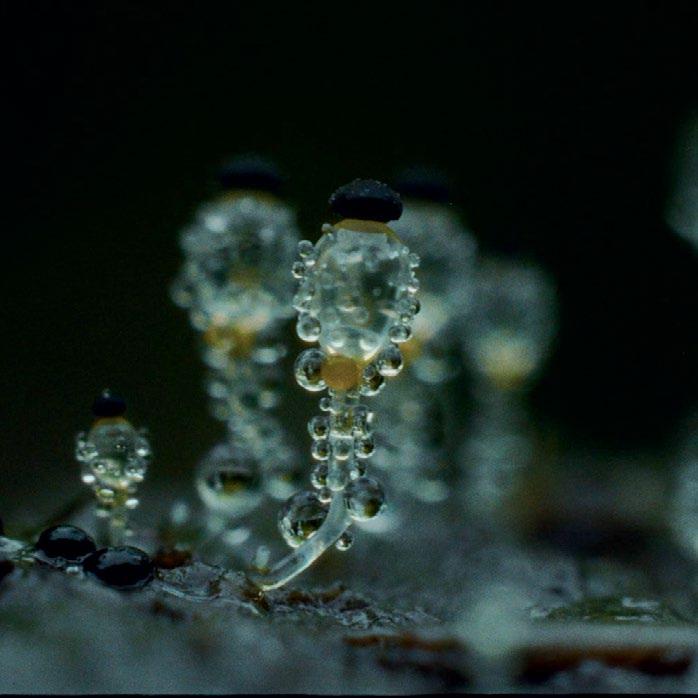
Holy Destructors tells the story of microscopic fungi that gradually decompose paintings and human remains, despite all human efforts to preserve them. In the film, these fungi become both a metaphor and a symbol of new forms of life. The film opens in France on May 27.
Your first feature-length documentary, Animus Animalis (A Story about People, Animals and Things) (2018), began during your master’s studies in film directing. Several years have passed since then. Did you feel more mature as a filmmaker while creating Holy Destructors?
That’s a good question. I think every project requires you to learn a lot from the beginning. For me, creation itself is a process of learning – searching, making, constructing stories. This time, perhaps, I felt a bit more inner calm, simply because I had already told one story. I can’t say I didn’t make mistakes while working on this film, but there were many discoveries along the way.
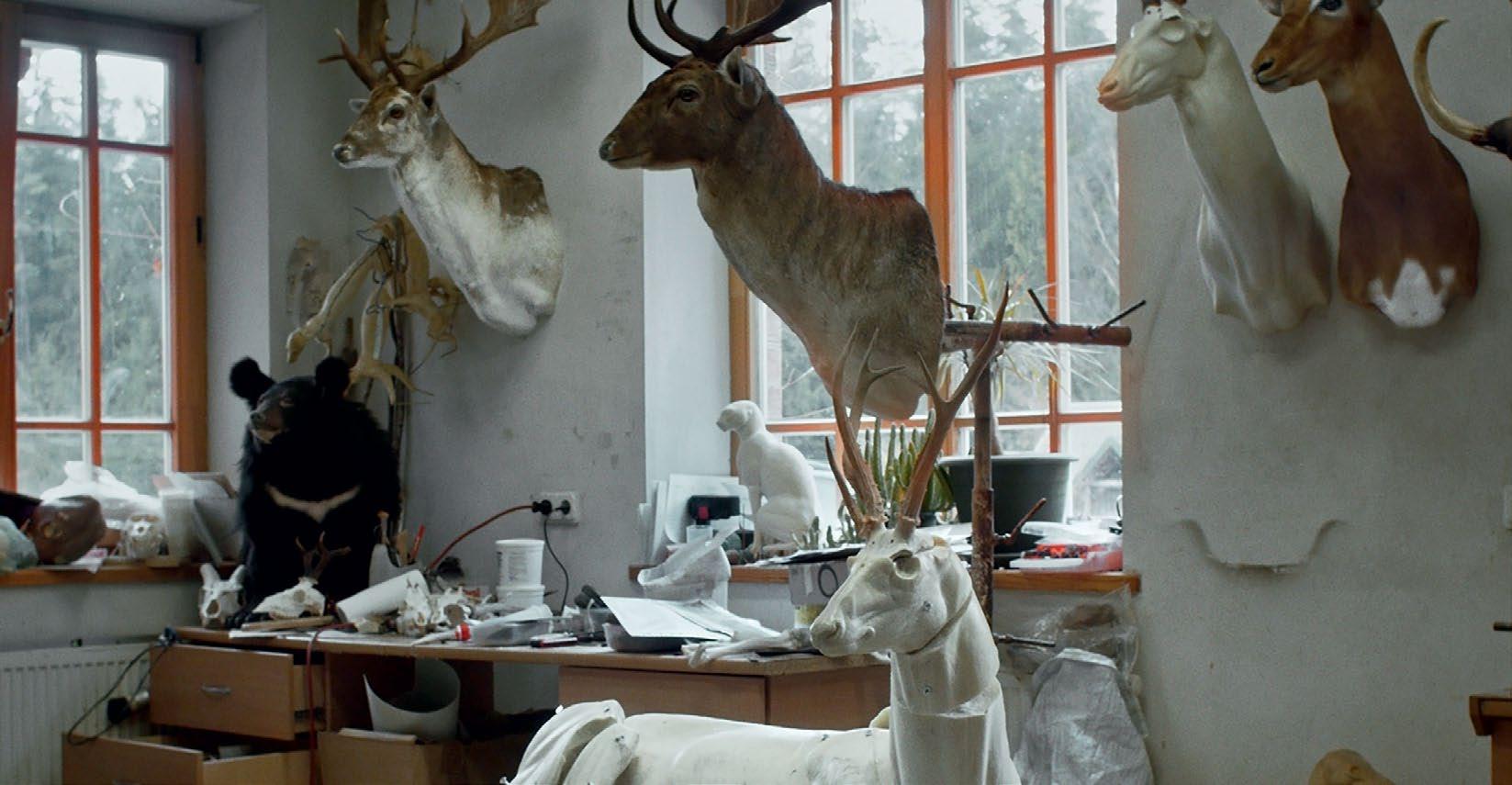
Your latest film seems to continue the themes of Animus Animalis – death, eternity, the transience of life. In the first film, you portrayed taxidermists who “freeze” animals in time, while in the new one we see preserved human bodies. Could Holy Destructors be considered a kind of continuation? Absolutely. These questions and ideas will probably interest me for the rest of
my life: what is alive, what is not, what is life and death, when does one end and the other begin – or perhaps everything exists within eternal cycles of life. I am endlessly fascinated by observing and sensing the vibration, movement, and flow of life.
In Animus Animalis, I focused more on a frozen moment, whereas in Holy Destructors, the emphasis shifts toward flow and movement. At the same time, the film also explores human attempts to preserve what we value. In today’s world, it often feels as though we consume and discard everything within a single day. Restorers, however, take us into a world where we must slow down, look back, and listen to what existed hundreds of years ago – not discard objects, but preserve them and understand the history that shapes how we feel today. Yet there are also absurd situations where it seems we try too hard to preserve what should simply be let go.
Do you think you will continue exploring life cycles in your work, or have you already said everything you wanted on this subject? I don’t know where life will take me. I became close with Patrick, a mushroom grower from Edinburgh whom I worked with on this film. If everything goes well, my next film might be about him and about time – how a person, not fully attuned to biological time, creates fascinating things yet struggles within this fastpaced world. That film would approach time from a more scientific perspective, so it’s hard to say whether it would still be about cycles.
You mentioned consumerism and the fast pace of time. People strive to remain young, trying to “outsmart” the biological body through procedures or lifestyle choices, yet behind all this lies a fear of death. Your work suggests that life and death are natural parts of a cycle. How do you personally see this? The human desire to live forever or to
maintain a perpetually youthful body frightens me a little. We fail to value time or the future – we selfishly try to claim our place in the world, even though others will inevitably come after us. In trying to preserve ourselves, we end up in glass cages and lose our connection with the environment.
To me, a humble awareness of time –the flow that carries us toward old age –allows us to feel part of nature. And in nature, everything changes; nothing remains preserved. Of course, there may be a shark in the Arctic Ocean that lives for five hundred years, but we are human. I don’t want to judge, yet I do view this “preservation” culture and the industry behind it with a certain irony.
As we grow older and mature, it seems society still values youthful behaviour more than maturity. It depends on what kind of youthfulness we mean. If it’s spiritual – like that of Jonas Mekas – then it feels like a celebration of life. But if it’s excessive, focused only on appearance, endless skin tightening and surgeries, it becomes unsettling. Perhaps one day we’ll reach a point where people transfer their brains into other bodies.
At the same time, we can see how elderly people in Western Europe live joyfully, and that makes me happy. It’s important to look not only at the face, but also at the heart.
Your film also includes religious motifs — processions, scenes from Mass, explorations of church basements. Have people become less religious, and therefore less inclined to believe in eternal life after death? We try to live in the present moment and take as much as possible from life. Efforts to delay death are also part of this.
Possibly. Of course, there is a religious dimension here, but through different religions we encounter rituals, and these are profoundly human practices, affirmed over centuries. They allow us to experience time and prevent us from focusing too selfishly on ourselves as individuals.
Processions are powerful rituals where communities collectively experience both sorrow and joy. For me, walking in a procession represents a refusal to remain in a single state. However, the fear of death and the urge to do everything immediately are more closely tied to money and commerce. It feels as though we must constantly be productive, always busy. The pace keeps accelerating, and the amount of work we are expected to complete in a short time grows absurdly each day.
Do you think rituals are losing their original meaning and changing?
Perhaps in Western society. Rituals are quite archaic, but what percentage of the
world does the West actually represent? People will not abandon them; simply a change is happening. The West once dominated much of the world as a colonial power, but that dominance is fading. Because of our inadequate relationship with time and environment, we keep losing something along the way. Change is inevitable. Perhaps one day another civilization will live here – and I believe they, too, will practice rituals.
For Animus Animalis, you spent a year cultivating a fungus that decomposed a dead mouse. Now you show microscopic fungi that existed long before humanity and will continue to exist after us. What fascinates you so much about fungi?
While working on Animus Animalis, I became deeply fascinated by microorganisms because they are the transformers of this world – they enable new life to emerge. It wasn’t difficult to film them in terms of showing adaptation and evolution, as they are structurally less complex than mammals. But they captivated me as a form of life.
There are those who believe that microorganisms came from space on meteorites, settled here, and will likely exist longer than human civilization. By exploring the microscopic world, we glimpse the very origins of life. In a way, we are echoes of these microscopic be-
ings – we can see evolution and the be ginnings of humanity within them. There are even similarities between our neural connections and those found in fungi.
You have been studying microorganisms for years. How has this changed your perception of time and life?
It has calmed me. Engaging with the micro-world helped me come to terms with the loss of loved ones. When you sit at a microscope and observe fungi, you begin to understand how small humans are in the universe. Perhaps my own sense of time has slowed – cells age, but I feel a deeper sense of peace.
Processions are powerful rituals where communities collectively experience both sorrow and joy.
Watching the fungi in your film, I sensed a metaphysical — even Buddhist — perspective. Fungi decompose the body and prepare the ground for new life, while Buddhism teaches that rebirth does not necessarily occur in the same form. Fungi are very much like Buddhists. They transform all matter. While writing the script, we even referred to them as Buddhists – they calmly continue their work, regardless of desires, tragedies, or joys, endlessly decomposing and transforming. Lithuanian culture is also closely tied to the idea that humans return to nature. Trees grow in cemeteries. We plant trees when someone is born – and sometimes when they die. This idea of dissolving into nature and generating new growth can be seen as Buddhist, but it is also deeply rooted in Baltic culture.
For those unfamiliar with art conservation, it may come as a surprise that paintings are restored because of microscopic fungi that slowly destroy them.
I was fascinated to discover how fungal spores can hide within paintings. That’s what led me to the Pranas Gudynas Conservation Centre. It’s important to note
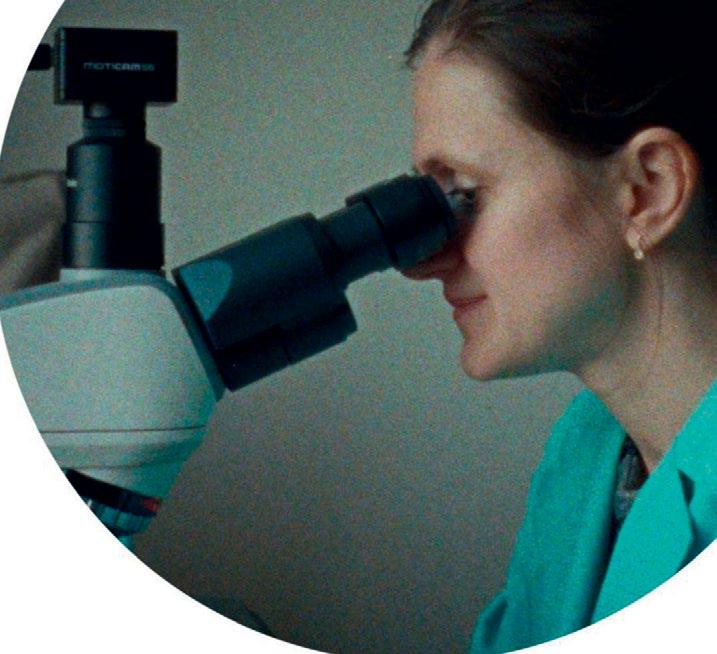
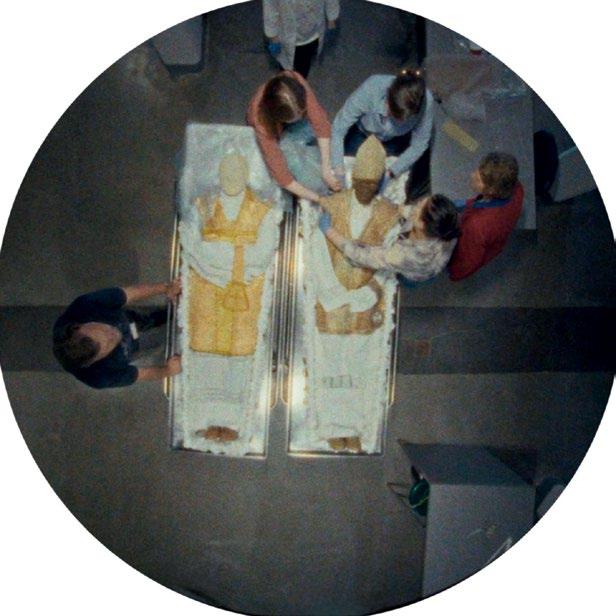
that fungi tend to appear when paintings are neglected – stored in dark, damp spaces or left unprotected, or when some kind of disaster occurs. They thrive under frames where moisture accumulates. When humans forget, fungal “memory” awakens, and they begin to feed.
Seven years ago, when we spoke about Animus Animalis, I asked whether it was difficult to observe hunted animals being dissected. You said that this is simply part of nature, yet in montage it appeared far more disturbing. Why do certain things seem more frightening in cinema than in reality?
Cinema is an illusion – we exaggerate, we construct narratives to engage the viewer more deeply. In this film, fungi are filmed as giants, though in reality they are microscopic. Some may find them frightening, while others may see them as beautiful – even erotic. Cinema is a different, transformative reality.
How do you film something as small as fungi?
It’s very difficult because there are so many species. Some are extremely sensitive to light, so they must be filmed with
minimal illumination. Others are less sensitive, and some even respond positively to light – it can influence their growth direction. Filming takes a long time because it involves time-lapse photography – capturing individual frames and combining them into motion that is perceptible to humans. It’s a complex process.
Lithuanian documentary cinema, especially poetic cinema, has deep roots. Filmmakers like Robertas Verba, Henrikas Šablevičius, and Audrius Stonys focused on symbolism, metaphor, emotion, and visual language. Do you see your work as continuing this tradition?
Absolutely. I’m proud to have the opportunity to do so – that tradition is precisely what drew me to documentary filmmaking in the first place. I feel both happiness and joy in continuing this tradition, exploring emotional states, the absurdity of our existence, and the miracles of life. BF
The interview was originally published in the Lithuanian culture magazine Literatūra ir menas (transl. Literature & Art).
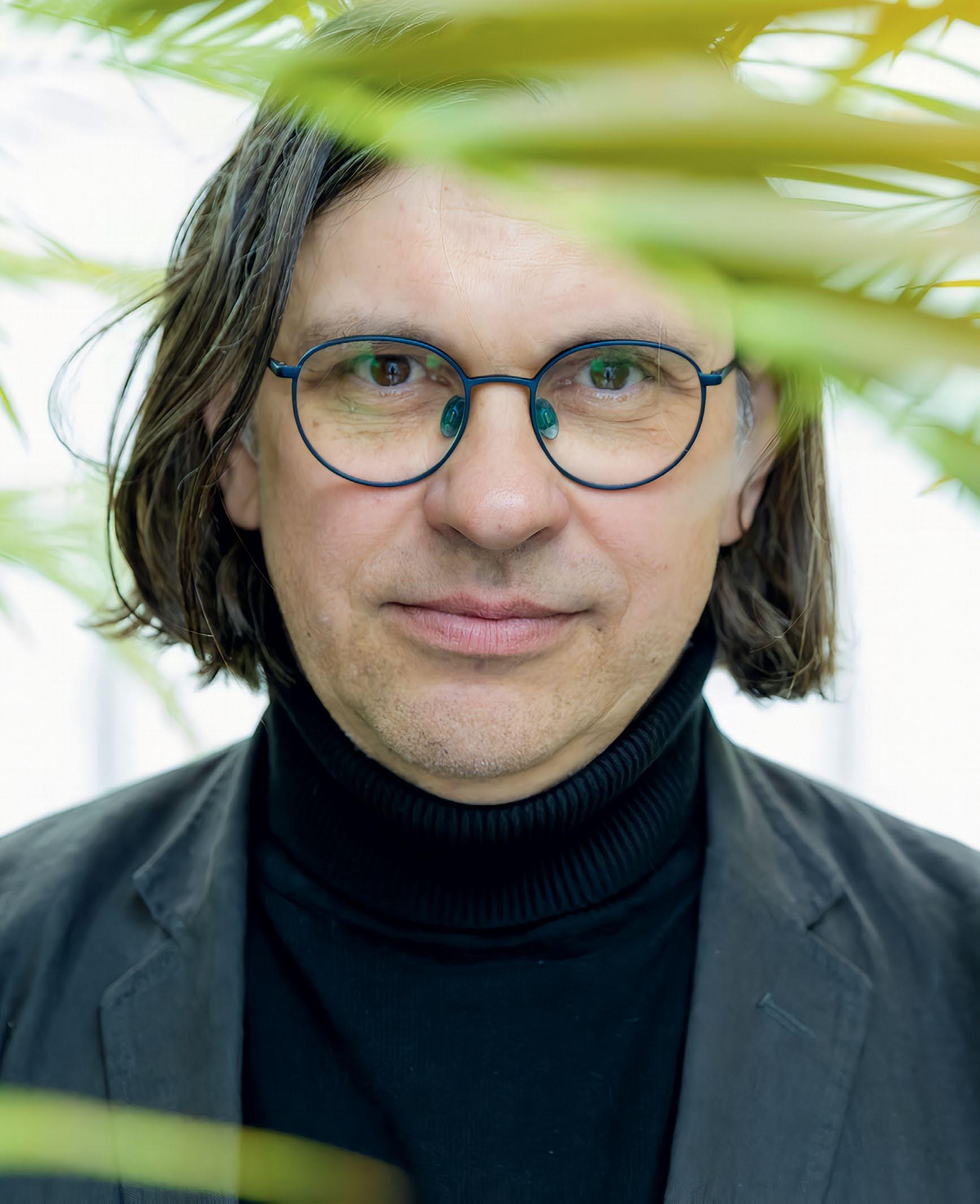
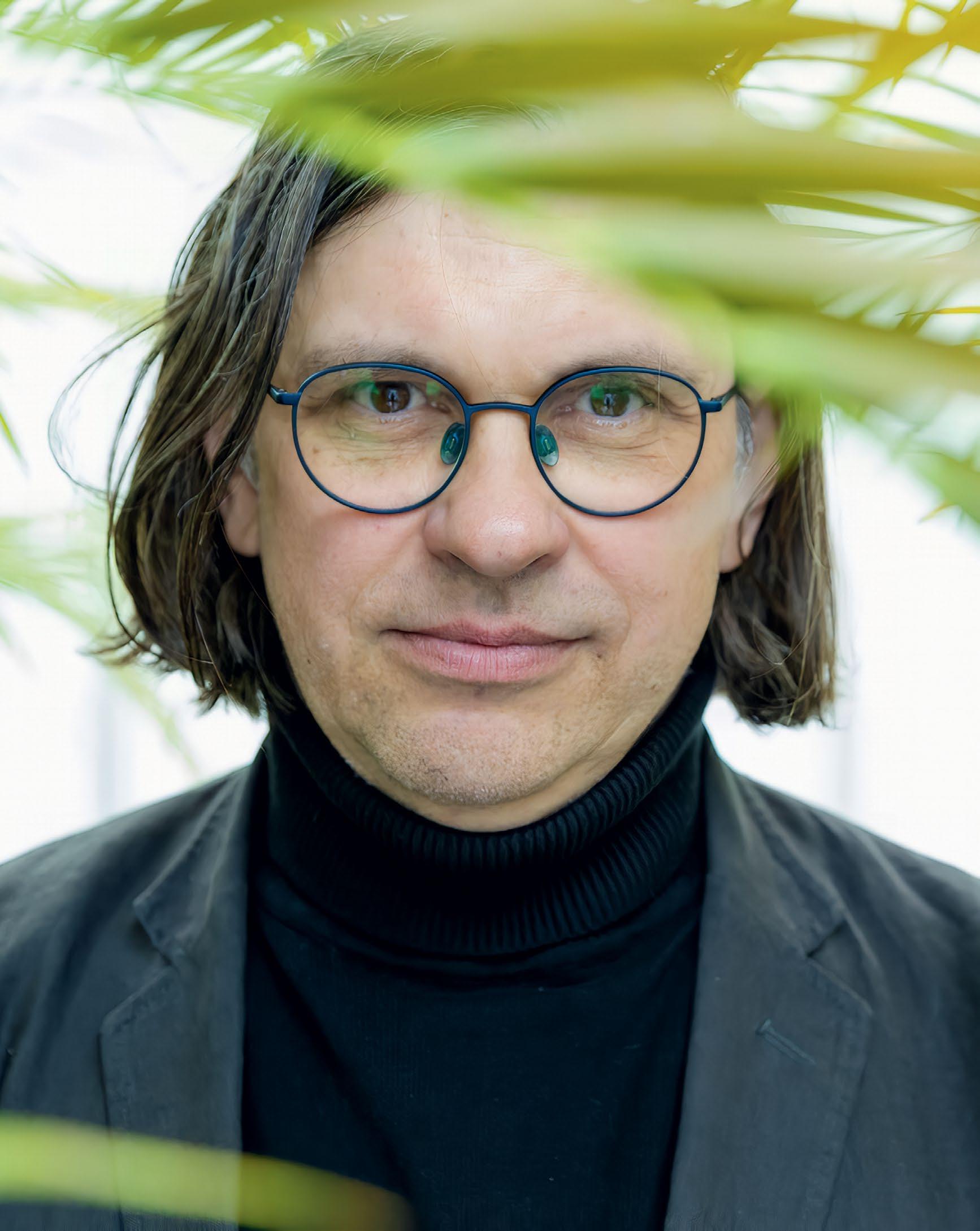

n a historic building in central Riga, overlooking the roof ridges, is the studio Atom Art, founded in 2001. From film posters displayed in the rooms, various characters from the studio’s productions gaze back, while awards received are lined up on the shelves. Like other works produced at the studio – both by Edmunds and other authors – it is a piece full of vibrant warmth, combining rich visuality with a smoothly flowing animation language. The studio is one of the most prolific birthplaces of animated films in Latvia; its productions – created in drawn, puppet, and sand animation – travel widely across festivals and cinema repertoires around the world.
Alongside international audiences, works created under the wing of Atom Art, with equal playfulness and lightness, manage to engage both adult and children’s audiences alike.
Born in the Jungle is your second feature-length animated film at the studio and for you as a director. What has changed while working on your second feature?
For quite a long time, I was convinced that I didn’t want to make feature-length films. Their production process seemed to allow less freedom and therefore felt less interesting. But then came Jacob, Mimmi and the Talking Dogs (2019), which was something of an adventure on our part. Back then we said to ourselves: “Let’s try and see what happens!”
This film, in turn, was an attempt to deal with things that hadn’t been realized in the first film – and may remain unnoticed by the viewer – but were important to us, such as performance quality, animation, and drawing–purely technical aspects. It was also one of my internal challenges: to raise everything to a proper level with the resources we have. And I think we achieved that.
Both this film and other works in your filmography are aimed at children. What do you think is especially important for children? And what do you yourself remember from your own childhood as a viewer?
I felt that with this film I wanted to somehow recall the feeling I had after going to the cinema: the textures and plots, maybe not the moral, but simply the adventure. Going to the cinema meant a lot to me in childhood and youth – the chance to immerse myself in a world infused with a love of cinema. If we talk about values, I would call them slowness; the need to drop the pace, to pay attention, to pause a little and breathe. That is something we are very lacking today.
Continuing with succession – you work a lot with young authors at the studio. It has been a launching platform for many debut animated films. What does interaction with young talent give you as a filmmaker? It prevents you from becoming stagnant, from revolving only in your own world. I would even like there to be more young people – a kind of cauldron where ideas are “boiling”. The main thing is exchange of thoughts – working with young people and students forces you to reconsider any assumption about animation or creative work. It constantly forces you to stay alive! And of course, it reinforces the idea that there is no fixed or final knowledge about anything. Everything is in constant
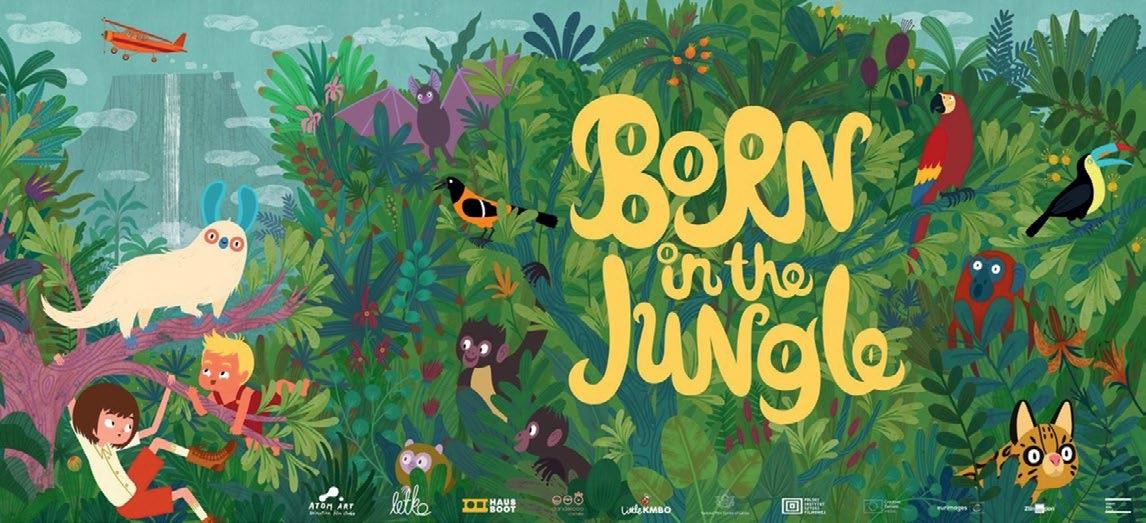
flux – young people bring new ideas and attitudes toward technology, and toward what film is and can be.
Now a generation has entered filmmaking that has been surrounded by audiovisual media since birth. When you compare yourself to when you started in animation, what differences do you see in young animators today?
The most important difference is in how young people think, what they hope for, and what they dream about. Also, the availability and diversity of opportunities. Animation is a very technical art form – technology has always been involved. Now you can go through the entire filmmaking cycle completely free of charge. When I started, it was a different era – completely analogue, tied to film stock – and you ended up in the role of a supplicant. The availability of computers, of course, allowed a breakthrough. Another thing is access to information. I could go through my aesthetic development with maybe 10 books, 10 films, and 10 music albums. Now that field has expanded a thousandfold.
You have a very recognisable visual style in both your films and illustrations. What do you think has defined it?
The formation of a style isn’t so much tied to specific references. In my case, it’s about expressive freedom. I understand my limits – what I can and cannot do. My search for a style is connected to that freedom: being able to express whatever feels necessary to me – plastically, emotionally, or philosophically. It was important to find a language in which I could speak
relatively freely. That was the goal. And if you have a goal, external influences or authors help you articulate and understand it.
Animation is often described as a medium where anything is possible in cinema — even things impossible in live-action. Do you feel that way too? If you mean it in the sense that if you have a flying elephant in your script, animation makes it easy – that may be true, but we’re now in a period where that’s just as possible in live-action or documentary cinema. Animation’s presence there has become invisible – 80% of what
Technological influence will likely grow stronger, but they won’t eliminate traditional filmmaking methods.
you see in films is technically animation. But that’s not what interests me most about animation. There’s no point in telling something completely unreal and unrelated to us. Any good film is about something real.
You once said there has never been a moment in history when we’ve reached a permanently high standard. How does European cinema look today, especially in terms of animation and technology?
Right now, the number one topic among researchers and professionals is generative technologies and artificial intelli-
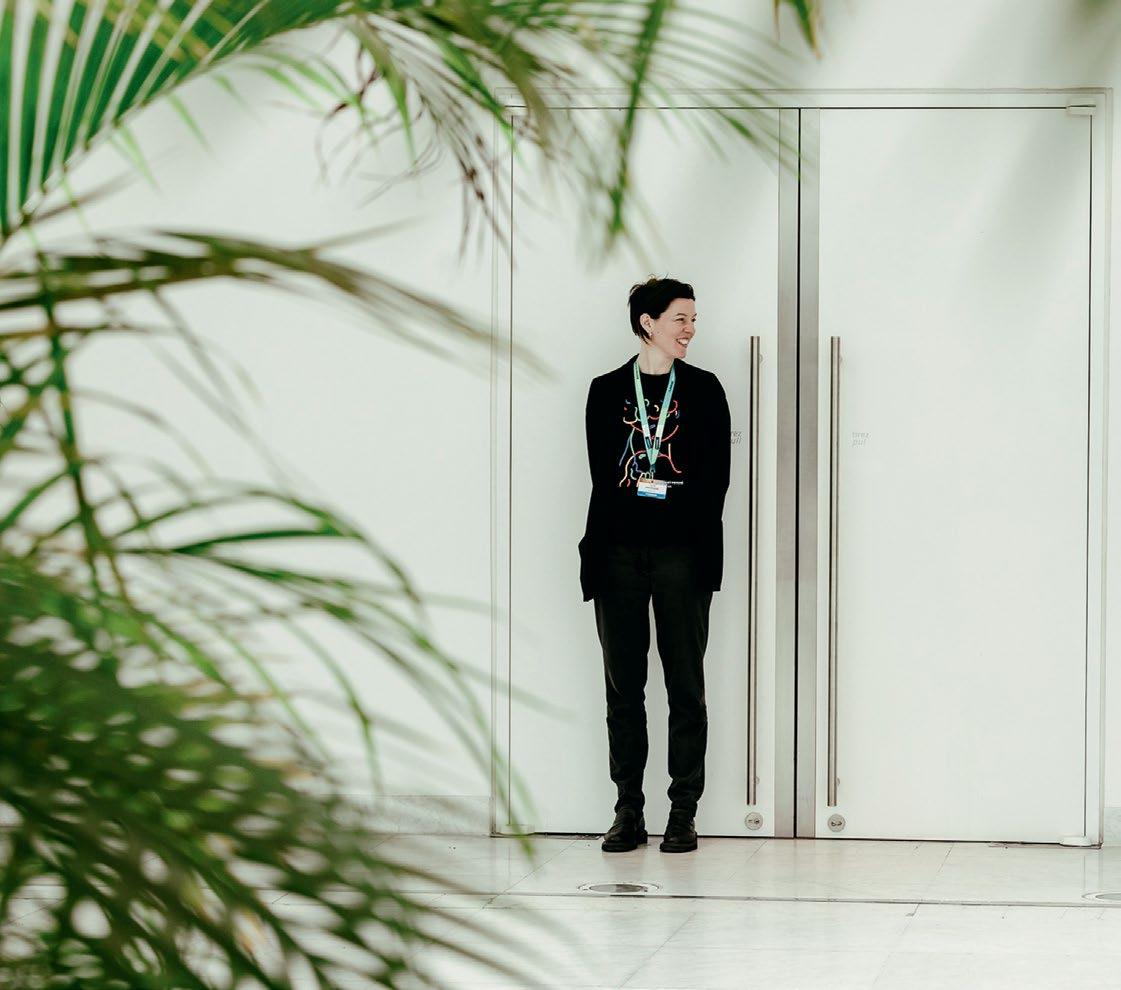
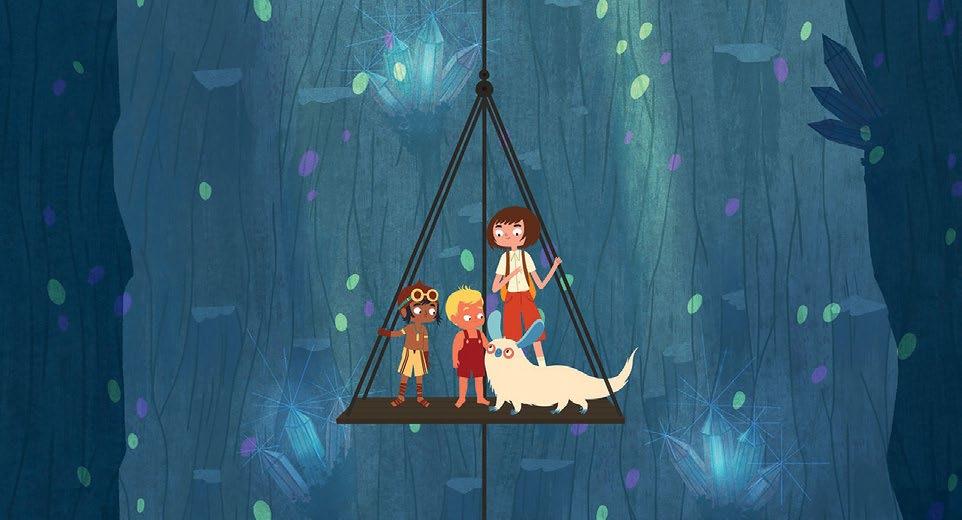
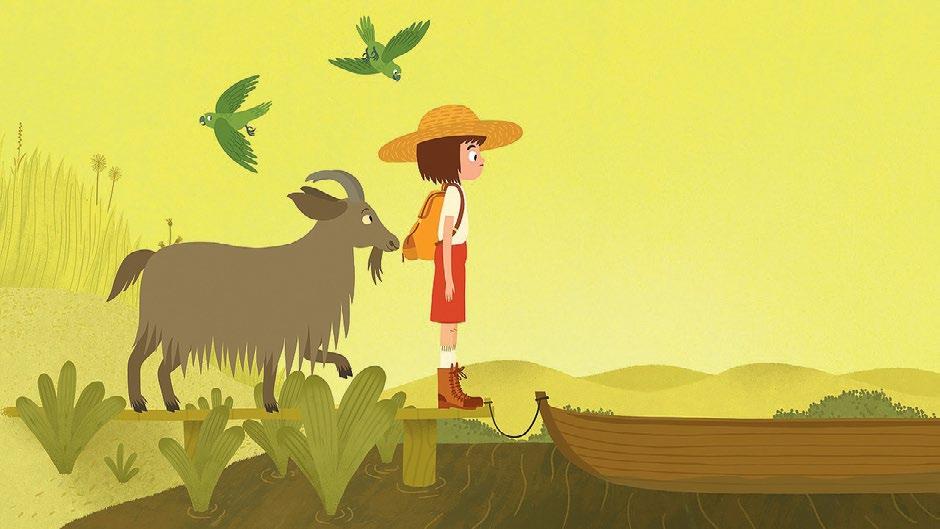
gence in film production. It’s something new and here to stay. But these technologies also make us look differently at what we already have. Puppet and handdrawn films become even more special, because the people creating them do so more consciously. You see not only the story and image, but also the time invested – and that becomes part of the film’s value. These technologies can speed things up, but it’s not just about speed –it’s also about a completely different aesthetic. Technological influence will likely grow stronger, but they won’t eliminate traditional filmmaking methods.
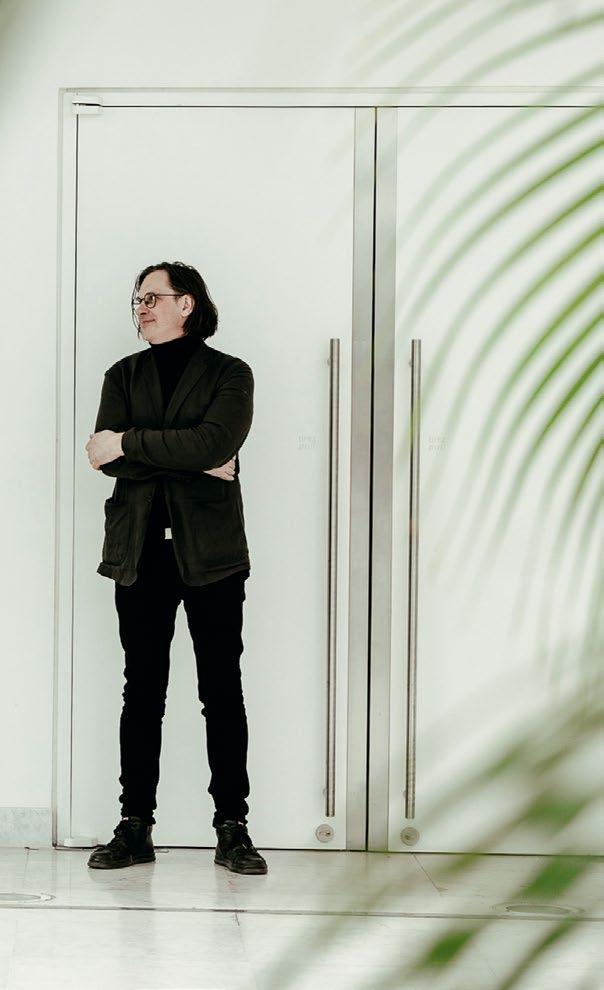
Animation is also very time-consuming. AI can optimise processes — but does it threaten storytelling and its value?
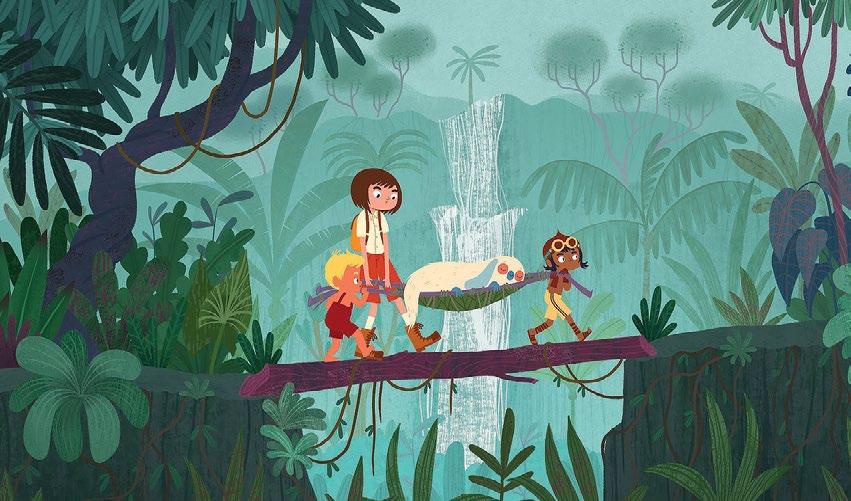
I think over time it will naturally separate itself. I’ve been present in the industry from the arrival of the first computers in animation to today. I remember the same anxiety – that computers would soon do everything for us. Back then the environment was polarized: those who used computers and
Author’s personality determines the film’s quality – the film is like its creator.
those who didn’t. But time passed, and we accepted it. Now we work both by hand and with computers – it’s normalised. The same will happen with these technologies.
I also think about my own position: yes, I could make films by writing prompts, but as an author, the process matters to me. It’s not easy – sometimes even painful – but I enjoy it. Collaboration matters too: we enjoy meeting and working with other artists. They enrich us, and we enrich them. Also, the author’s personality determines the film’s
quality – the film is like its creator. And I’m interested in a film because I’m interested in its author.
Auteur cinema always involves taking risks. Where does Atom Art studio stand on that spectrum?
We diversify our approaches – that’s what sets us apart. There is a clear, structured system and studio-type production, but alongside it we also run completely free, process-driven experimental projects. It would probably be boring to always work within a strict system, but at the same time it’s necessary for larger projects.
You’re part of a working group developing a new animation study program in Latvia. What changes do you hope for?
From the perspective of a studio head, I feel there are far too few young authors. There could be many more, and much greater diversity. One goal is to create a fertile environment where these authors can develop – people who can find their own voice, style, and means of expression. During their studies, they would experiment and be ready to create their own stories. Through the program, they would also gain practical skills and be able to participate in international projects. If we have them, it could really energize the whole ecosystem. BF
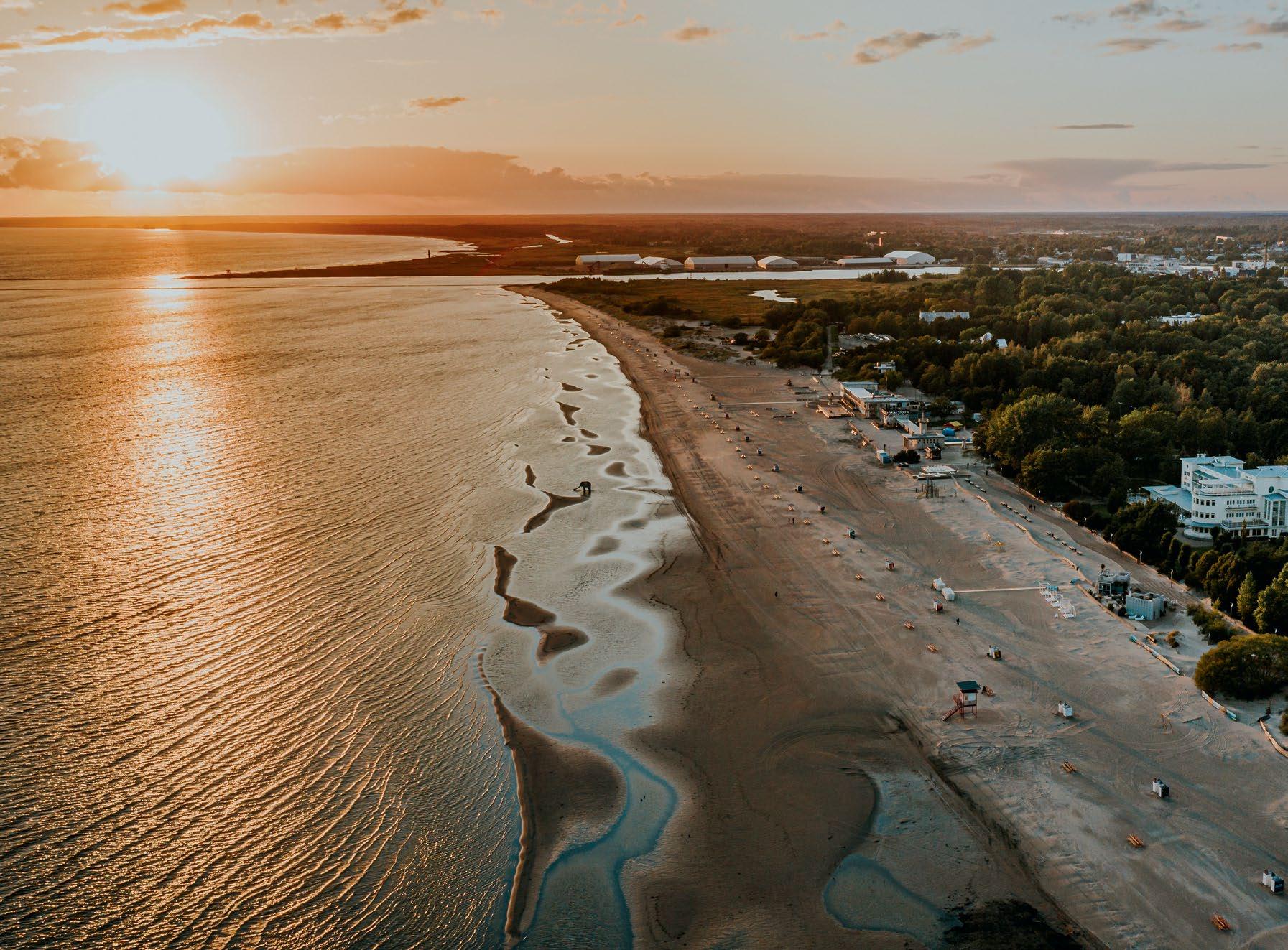
While many regional film funds position themselves through spectacular landscapes and international shoots, the Pärnumaa Film Fund represents a slightly different model emerging on Estonia’s west coastone that prioritises strengthening local production capacity alongside regional visibility.
By Eda Koppel Photos by Viktor Tund, Fidelia Regina Randmäe and Kreete Kitse
Established at the end of 2022, and backed by the municipalities of Pärnumaa, the fund is still in its early phase, but its direction is already clearly defined: supporting professional audiovisual production in the region
while contributing to the local economy and creative ecosystem.
Rather than chasing large-scale international productions, the fund has so far
leaned towards Estonian projects. Among the supported works are the television series A Man in the House, and the feature The Suitors, produced by Taska Film. While differing in genre and scale, these projects point to a consistent focus: relevance. The Suitors, in particular, has proven to be a strong local audience success, underlining the fund’s role not only in enabling production, but in supporting films that connect directly with domestic viewers.
This duality – between audience-driven projects and more artistically ambitious work – suggests that the fund is less interested in defining itself through scale and more through relevance: supporting
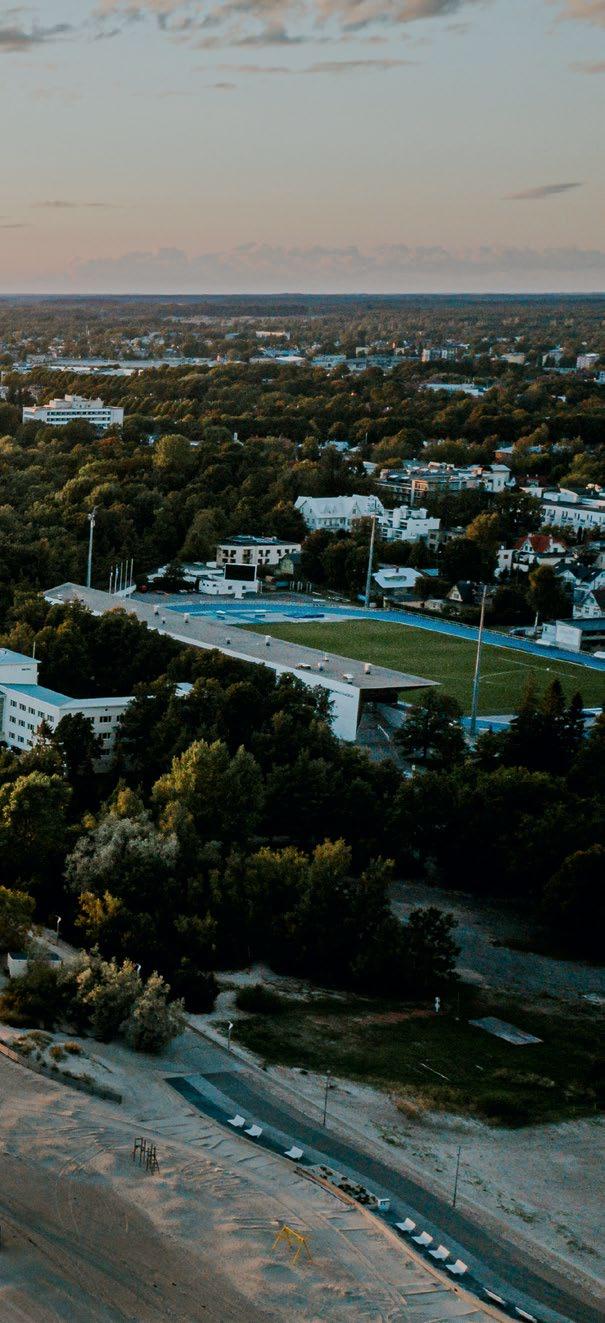
projects that either speak to local audiences or contribute to the broader artistic landscape.
At the same time, the mechanism behind the fund follows a familiar economic logic. By offering a cash rebate on eligible production costs incurred in the region, it incentivises productions to spend locally, creating immediate impact through services, employment and infrastructure use. Yet what distinguishes Pärnumaa is not the mechanism itself, but the context in which it operates.
Pärnu has long positioned itself as a summer capital, but also a year-round hub for festivals, music and visual cul-
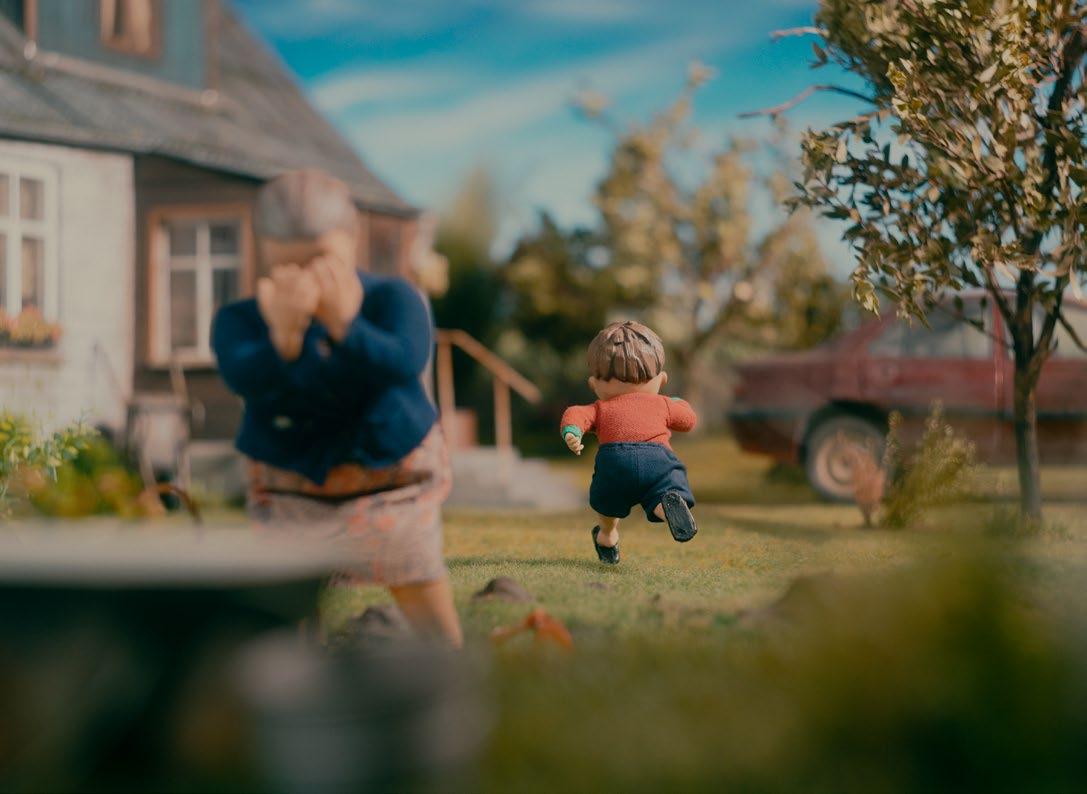
ture. The film fund can be seen as a natural extension of this broader strategy: not an isolated incentive scheme, but part of a wider ambition to strengthen the region’s creative identity and self-sufficiency.
In this sense, the Pärnumaa Film Fund contributes to a gradual decentralisation of Estonia’s film landscape. Instead of concentrating production infrastructure and financing in Tallinn, initiatives like this help build smaller, regionally grounded production nodes – places where filmmaking is not an occasional visitor, but an ongoing activity.
There are already early signs of how this model might evolve in two directions. The upcoming feature Good Times, directed by Pamela Tola and produced by Helsinki-filmi with Aleksi Bardy, brings an international dimension to the fund’s portfolio, with Estonian co-production by Stellar Film and producer Evelin Penttilä.
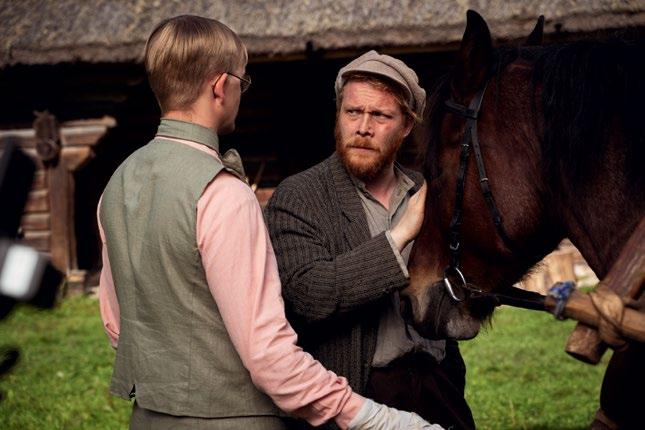
At the same time, locally rooted projects are beginning to travel. The selection of the animated film Uka-uka to the competition programme of the Annecy International Animation Film Festival demonstrates how regionally supported work can reach one of the most important international stages.
Producer Erik Heinsalu adds: “Regional support gives producers more possibilities and flexibility. For animation especially, where development and production often evolve over a long period, this kind of support can be particularly valuable.”
For now, however, the fund’s value lies precisely in this balance: not trying to compete with larger international funds, but building a system where local production can grow and, when ready, move beyond its point of origin. In that sense, the Pärnumaa Film Fund is not simply about bringing productions to the region, but about enabling them to circulate – anchored locally, yet capable of reaching far beyond. BF
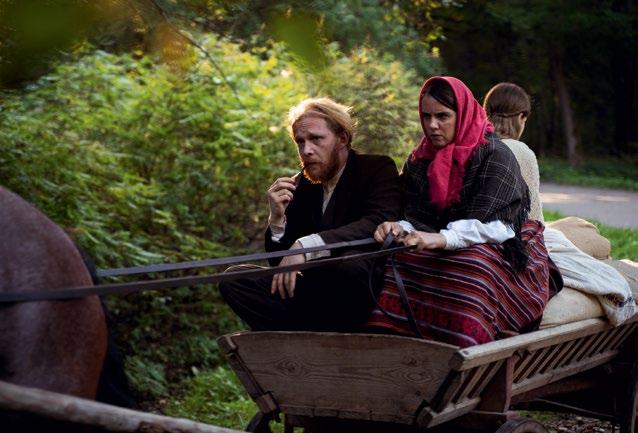
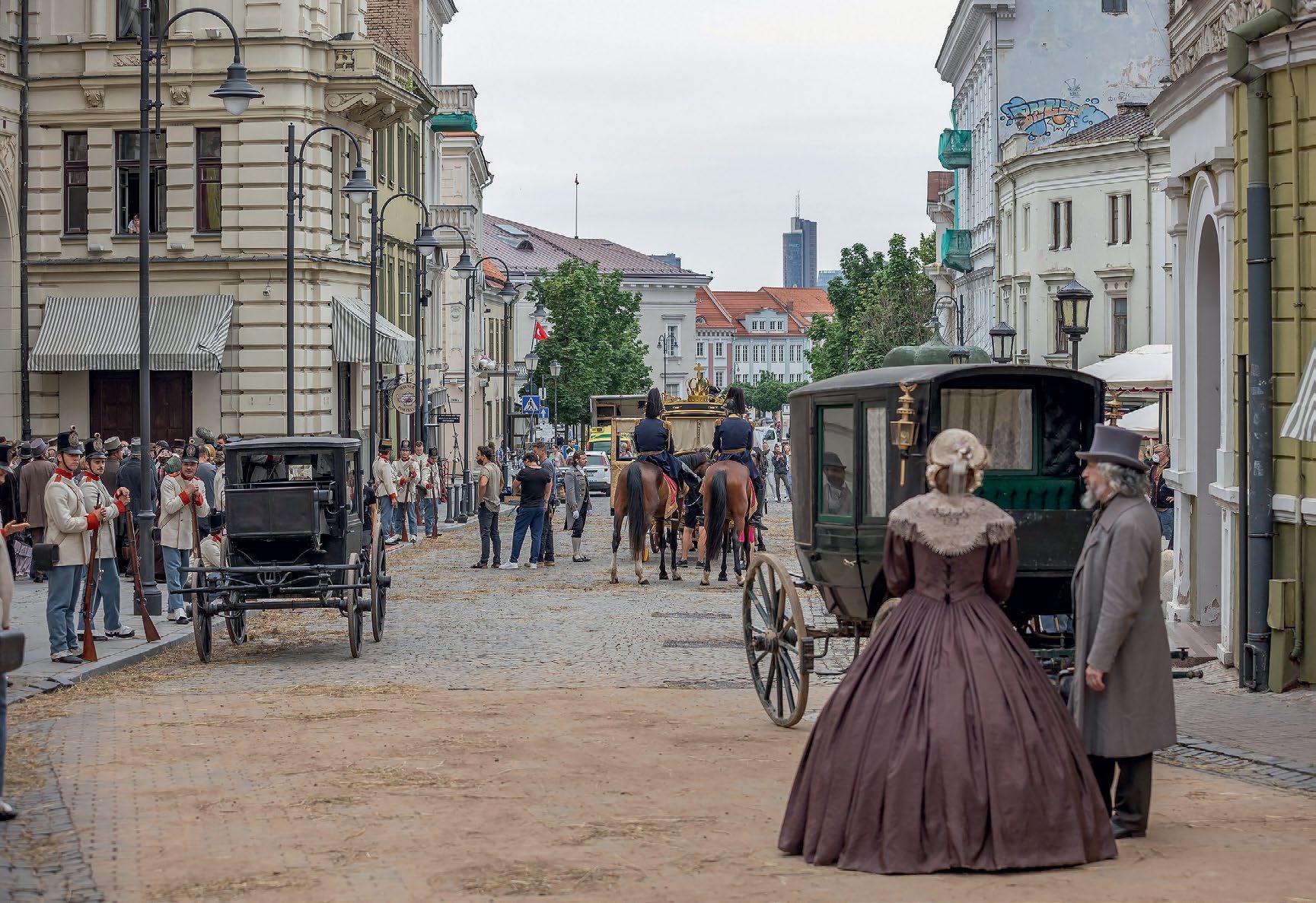
Vilnius is confidently positioning itself as a rising hub for international film production. With the launch of the Vilnius Film Fund and a growing slate of highprofile projects choosing the Lithuanian capital as their backdrop, the city is increasingly establishing itself as a destination for international productions.
By Vilnius Film Office
Established in 2025, the Vilnius Film Fund is the first citylevel film fund in Lithuania, dedicated exclusively to supporting international co-productions and strengthening the capital’s global visibility. In its first year alone, the fund supported four international projects created in collaboration with film-
makers from France, Ireland, the Czech Republic, Slovakia, Luxembourg, Finland, Latvia, and Estonia.
One of these projects, How to Divorce During the War (dir. Andrius Blaževičius), went on to receive the Best Director award at the Sundance Film Festival in 2026 – a significant milestone not only for the filmmakers but also for Vilnius as an emerg-
ing co-production centre. Selected from over 16,000 submissions worldwide, the film competed in the official programme alongside nine other titles, marking a major international recognition.
In 2026, the Vilnius Film Fund received 14 applications from across the world, including projects from Poland, Spain, Ukraine, Estonia, Latvia, Belgium, Ireland, Croatia, Bulgaria, Portugal, Italy, and Brazil, reflecting a growing international interest in Vilnius as a co-production partner.
Building on this momentum, the Vilnius Film Fund has increased its budget by 50% in 2026, reaching €150,000, with up to €30,000 available per project. The
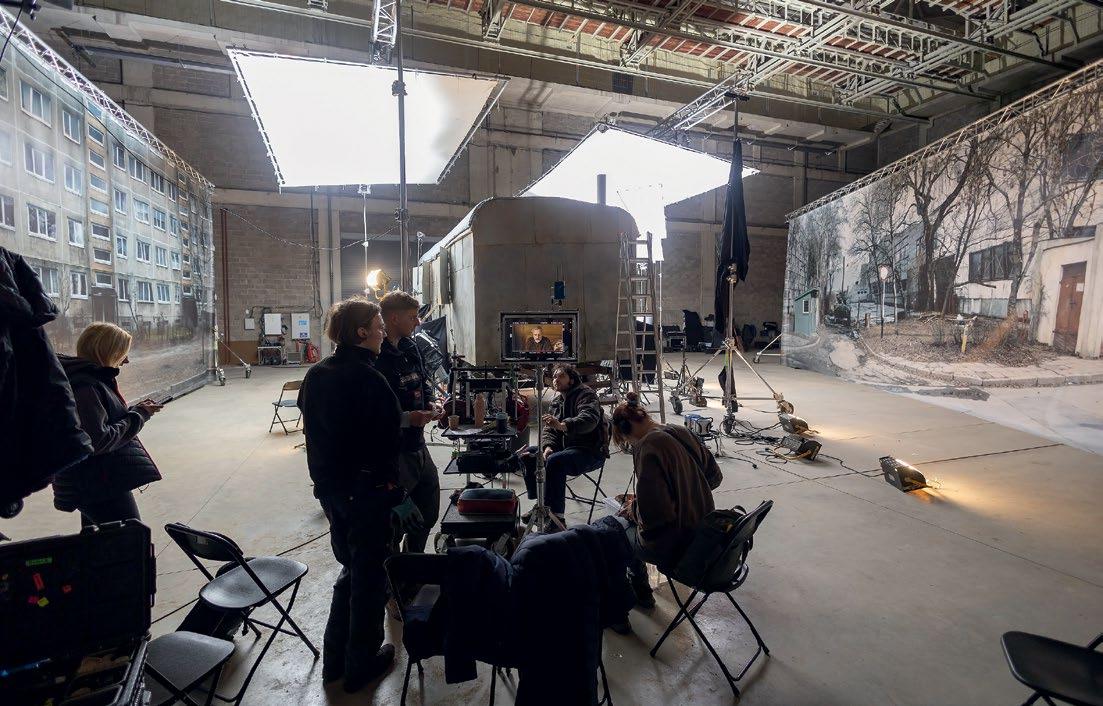
initiative aims to attract even more international collaborations and further establish Vilnius as a key player in the region’s audiovisual landscape.
“Cinema is one of the most powerful ways to tell the story of Vilnius to the world. International film projects not only increase the city’s visibility globally but also strengthen its cultural identity. We aim to see more co-productions being developed here and to position Vilnius as a regional hub for international filmmaking,” says Deputy Mayor Simona Bieliūnė. This strategic direction is already translating into major international productions choosing Vilnius as their filming location.
Shot in Vilnius and set to premiere in 2026, Star City – a new series produced by Sony Pictures Television for Apple TV+ – expands the acclaimed For All Mankind universe. The series revisits the space race from behind the Iron Curtain, exploring the lives of cosmonauts, engineers, and intelligence officers.
For the creators, Vilnius offered more than just logistical advantages. “The cinematic landscape and architecture of Vilnius allow us to tell a gripping and authentic story,” noted showrunners Ben Nedivi and Matt Wolpert, highlighting the city’s unique ability to recreate the atmosphere of the Cold War era.
The production brought together a team of over 130 local film professionals, reinforcing Lithuania’s reputation for highly skilled crews and efficient production environments. With experience ranging from HBO’s Chernobyl, to Netflix’s Stranger Things, Lithuanian production company Baltic Film Services con-
tinues to play a crucial role in delivering large-scale international projects.
Vilnius’ versatility is further demonstrated in the upcoming six-part international series Honey, produced by the UK’s Sid Gentle Films. Set in 1980s East Berlin, the series follows a young British spy navigating a world of political tension, counterintelligence, and complex personal relationships.
Filmed across various locations in Vilnius, the city once again transforms itself, this time into Cold War Berlin. Over 145 professionals worked on the project, the majority of them local crew members.
“We rely heavily on Lithuanian professionals - many of them have worked together before, and their collaboration feels almost like a family,” says producer Christopher Hall.
The series is set to premiere in 2026 on BBC and ZDF, further showcasing Vilnius on the international stage.
Cinema is one of the most powerful ways to tell the story of Vilnius to the world.
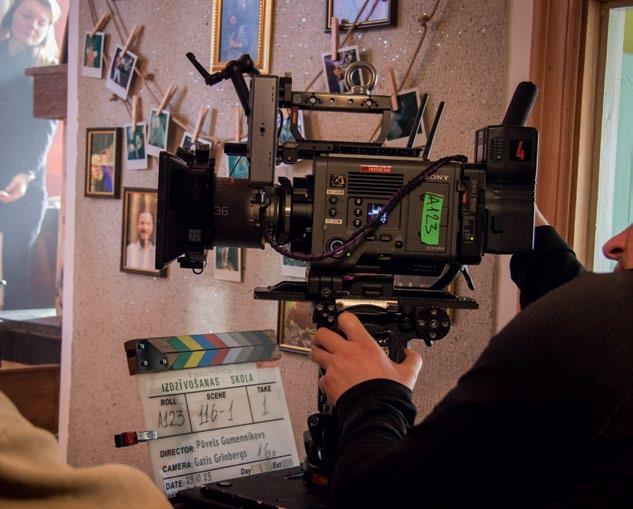
From funding initiatives to globally distributed productions, Vilnius is steadily building a film ecosystem that combines creative ambition with production excellence. What was once a hidden gem for filmmakers is now becoming a strategic choice – a city capable of shaping stories that travel far beyond its borders. BF
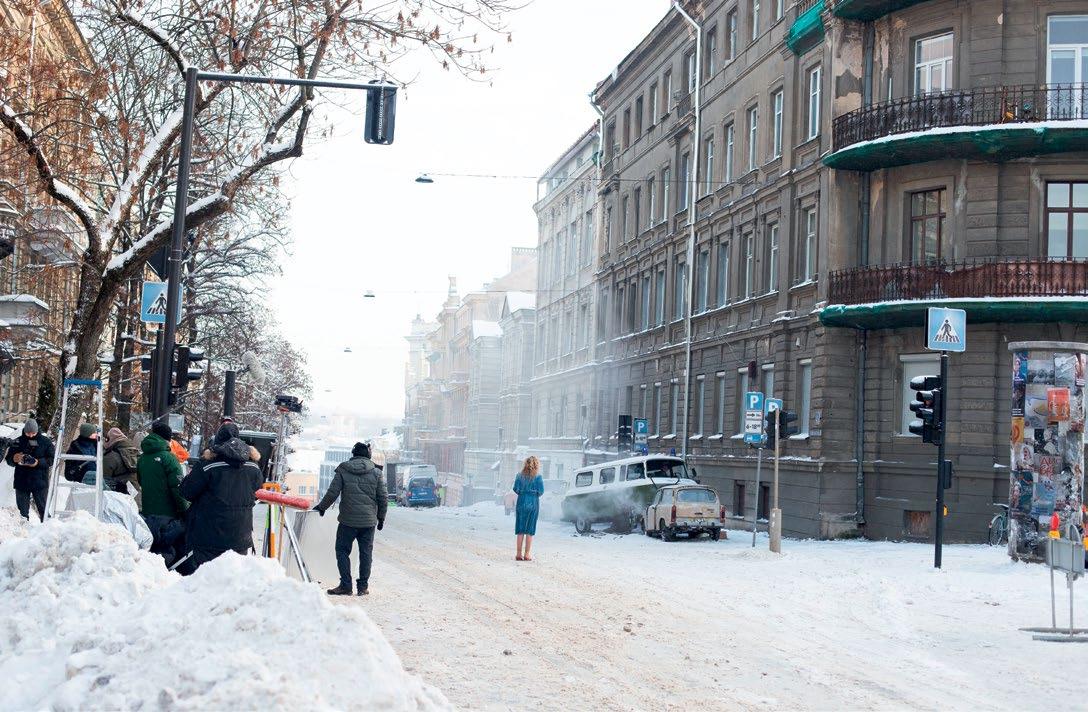
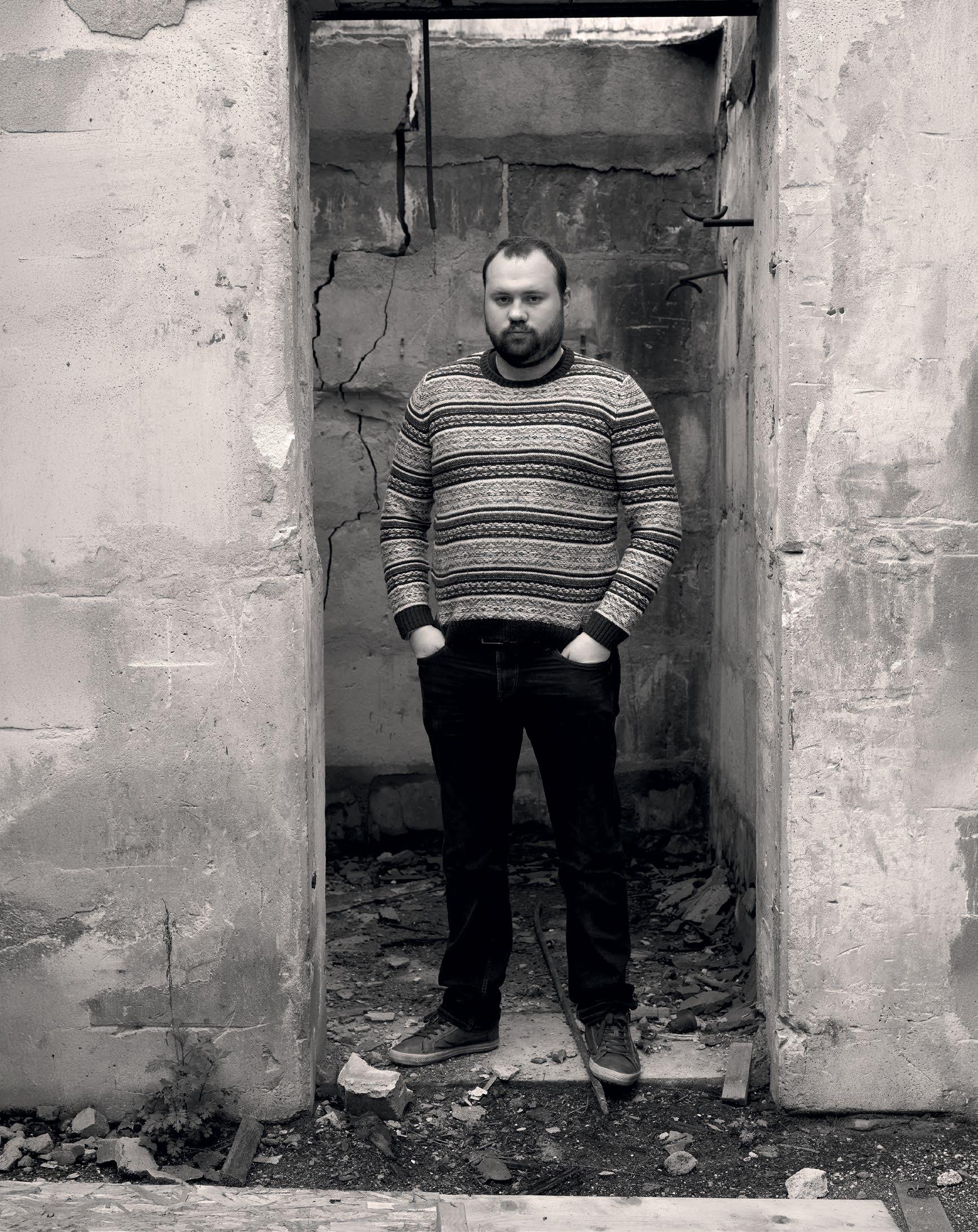
It’s been a busy start to 2026 for student Oscar-winning Estonian director German Golub. Earlier this year, he released the sports epic Our Erika while simultaneously shooting his new feature, At Your Service. Golub’s upcoming tragicomedy At Your Service is currently in post-production and is headed to the French Riviera as part of PÖFF Goes to Cannes.
By Aurelia Aasa Photo by Virge Viertek
Your first feature, Our Erika, follows Estonian track cyclists Erika Salumäe. Many of Salumäe’s achievements, including her first Olympic gold, took place in the 1980s, before you were born. When did you first become aware of her? Was she a topic of conversation in your family growing up? Honestly, not really. I’d heard bits and pieces, like stories about Olympic champions being welcomed at Tallinn Town Hall Square, and her name had come up in history class, but I didn’t have a clear sense of who she was. The idea for the film started to take shape during my university years at the Baltic Film and Media School, while brainstorming diploma film ideas with cinematographer Juss Saska. At the time, genre films, especially sports films, were quite rare in Estonia, so it felt like something worth exploring. I went to
a bookstore and started browsing sections on Estonian athletes. Salumäe’s story stood out right from the first page: she was from a small town, grew up in an orphanage, and had a difficult childhood. It all felt like strong material for a film. That’s when it clicked.
When you came back to the film after graduating, you and co-writer Mehis Pihla brought Salumäe into the writing process. What guidance did she give for the film?
By that point, we had already decided on the main timeline of the story, so there were certain things we didn’t feel the need to ask about. We were more interested in the aspects you can’t easily track down, for example, how it actually feels to stand on the start line before the final race at the Olympics. Besides Salumäe, we spoke with people who had been close to her. Everybody remembers things dif-
ferently, which brings multiple perspectives, but can also get confusing. You start wondering whether something happened that year, or earlier, or later - everything shifts depending on who you ask. So we did a lot of reading and digging in the archives. And of course, track cycling itself is very technical. We had to learn the rules and understand how things work. There are also unwritten tactics, like the socalled “fish tail,” in which one rider destabilises the other rider by hitting an opponents’ front wheel with their back wheel, potentially causing a crash.
I read that Karolin Jürise’s body double, Liisi Alamaa, had a fall when filming one of the scenes. What went through your mind as a director at that moment?
I don’t know if it comes from my time in the military, but my first instinct is always to quickly assess the situation: you imme-
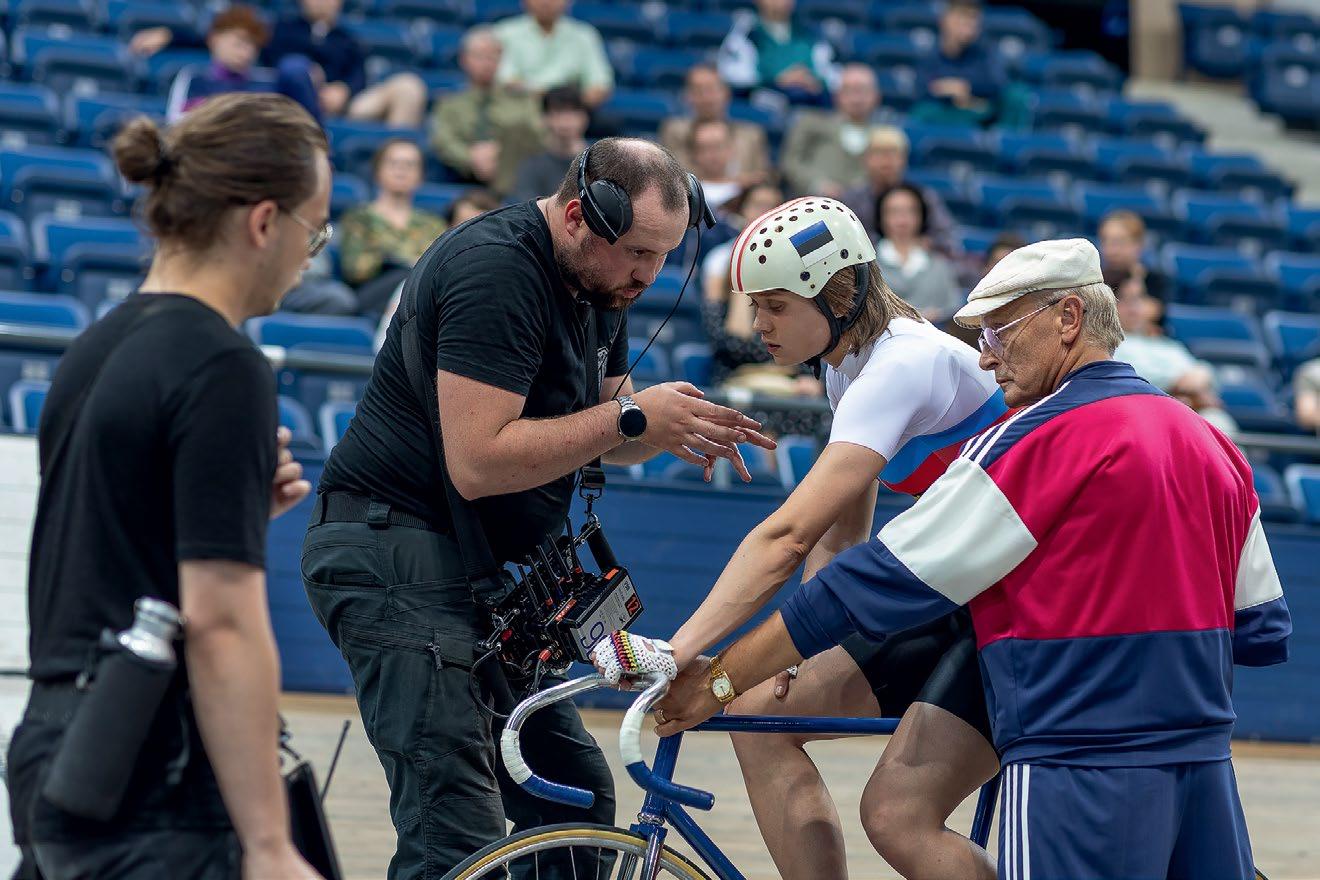
diately try to understand what’s happening and get visual contact to see where the person is and whether they’re okay. That’s the most important thing, because only then can you react properly. Fortunately, she was incredibly tough, full of adrenaline and ready to hop back in the saddle almost immediately. Still, we paused, let the medics check her, and made sure everything was fine.
Our Erika is a co-production between five different countries. Tell us about the filming process in so many different locations.
For us, it was like a puzzle. Karolin steps out of a corridor in Lithuania into Georgia, then ends up somewhere in South Estonia. It was all stitched together across locations in Estonia, Latvia, Lithuania, Finland and Georgia. In a way, the production reflects how athletes live and work, and honestly, filmmaking is similar too. You move from one location to another. You arrive, do the work, and move on.
I get the sense that the sports film as a genre helped you as a writer, because it gave you a certain framework.
It definitely did. A sports film is a very defined genre, and that structure gives you something to lean on. With Our Erika, the goal wasn’t to turn her into a classic hero, but more to present her as a strong, driv-
en figure. Everything in the film is the result of deliberate choices. Nothing just “happens” by accident. It has to be clear and accessible to different audiences, younger viewers, international audiences, and also those who remember these events firsthand. The core idea is simple: it’s about a young woman trying to survive and prove her worth through sport.
How did you arrive at Karolin Jürise as the lead?
I worked with her already while at university. You could feel that she had depth and potential. When it came to casting Erika, the physical resemblance was secondary. The key question was whether the actor could embody her mindset, her willpower, that inner strength. The role spans many years, from a teenager into her mid-twenties, so it also required a certain age range. There weren’t many candidates who qualified. Karolin’s work ethic was incredible, similar to Salumäe’s. She trained extensively, not only in cycling but also in other disciplines like speed skating and high jumping, to get into physical shape. In the end, she was even willing to cut her long hair to match the character.
You seem to have a strong connection with Erki Laur, who played one of the lead roles in your student Oscar-winning short My Dear Corps-
es. Here, he plays Salumäe’s sympathetic first coach. Can you talk a bit about working with him?
With Erki, as with all the actors, everyone brings their own approach. But what stands out is how deeply he commits to the character. He doesn’t just show up and try things out; he wants to be fully prepared and really live the role, giving the characters roots and a sense of self in the deepest detail possible. As a director, my job is to support that process, to help shape who the character is, where they come from, and what their habits are. That’s what makes it interesting. At the same time, the character of Jüri Kalmus isn’t necessarily the type he usually plays. He’s very kind, supportive, and positive, and Erki himself said that it was a bit challenging. In the film, each coach represents a different phase or influence in an athlete’s journey. The first coach is encouraging and supportive, helping you get started. Salumäe’s second coach Sokolov, represents the more negative experiences an athlete can face, not just in sports but in life more broadly. And then there are mentor figures like Leonov, who was also an Olympic champion, and like Erika, had a very difficult childhood. His father died in the Second World War, and after the war his mother abandoned him, so he grew up without parents. Together, these characters form a spectrum of influences that can shape an athlete’s path.
Filmmaking is similar to an athlete’s life – you arrive, do the work, and move on.
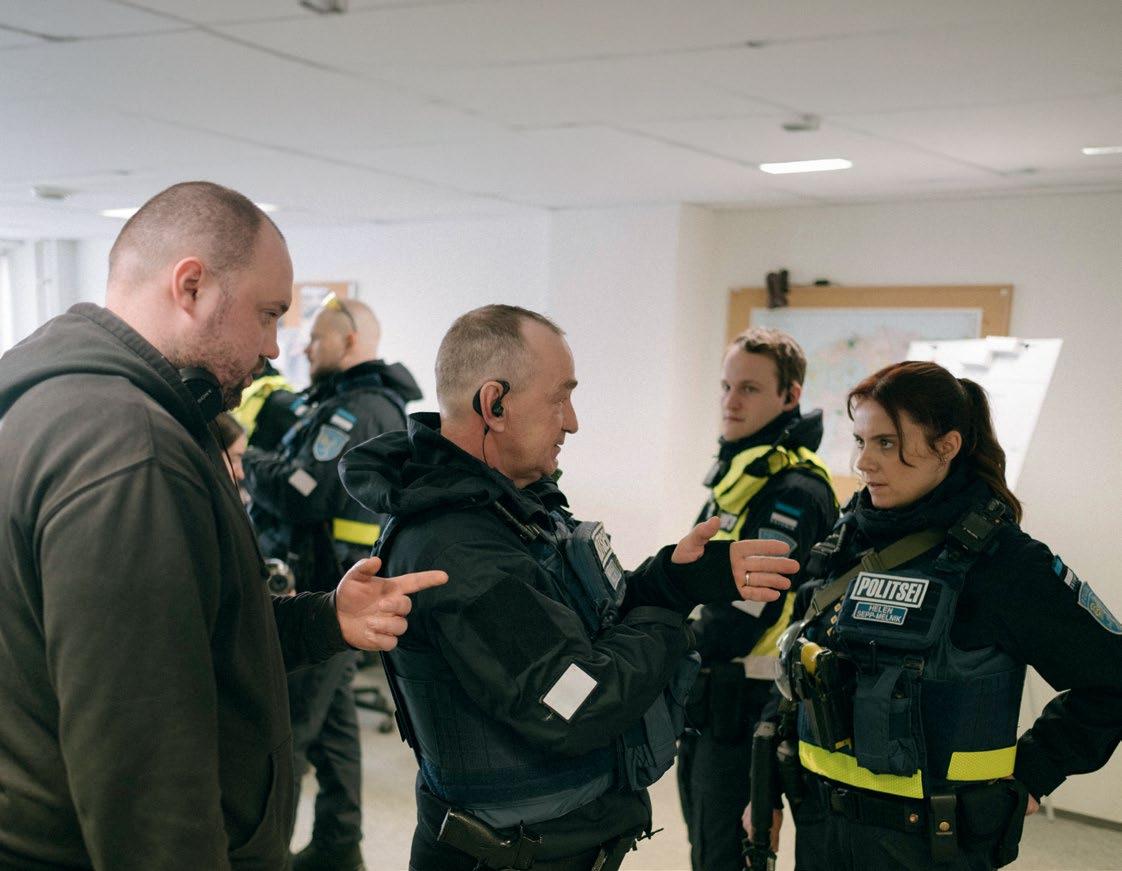
At the beginning of the year, you finished shooting your next feature, At Your Service. You mentioned Our Erika followed rules, is the new one more experimental?
I wouldn’t call it experimental, but it does bend the rules of what a traditional drama usually allows, and sits somewhere on the spectrum of a tragicomedy, with elements of mysticism. The main character is a patrol officer, Helen, who is trying to balance work, family, and everything else. She exists in two roles, as a police officer in uniform and as a mother at home, and those roles often collide. At its core, the film explores complex themes such as control, identity, and relationships. Compared to Our Erika, At Your Service plays more with the line between reality and perception, while still staying grounded in strong, driven female characters, one an athlete, the other a police officer, each shaped by their environment and inner world.
I get the sense that At Your Service
is in some ways a return to My Dear Corpses. Would you say there are similarities beyond just tone?
It’s more of a direct continuation or evolution of that world. After My Dear Corpses, there were discussions about possibly turning it into a feature, but for me, that story was already told. I don’t really believe you can make the same film twice. At the same time, I felt there were still characters in that world worth exploring. One of them is Helen. So in that sense, this project expands that universe. The characters exist in the same space, but as a director, and together with the team, I hope we’ve grown enough to go beyond what was there before.
You wrote the film together with Cannes Grand Prix-winning screenwriters Andris Feldmanis and Livia Ulman, who will return to Cannes this year with Lithuanian sports film Ulya in Un Certain Regard. How was the collaboration with them?
It worked really well. I already had a basic outline, a structure of what the film could be. Livia and Andris began expanding it, especially by adding more layers to the world, including some mystical elements. They did most of the writing independently, and then we came together for a few days to work through the material in detail. I think we all learned a lot from the process.
You filmed near the Estonian-Russian border, in Ida-Virumaa. How important was that location for the film, especially considering the region’s complex identity in Estonian cinema? I think it’s actually quite different from what people might expect. We don’t explicitly present it as a specific city; it’s more of a composite, built from multiple places. We filmed in Narva, Jõhvi, Kohtla-Järve, Ahtme, and also in Tallinn, so it’s not limited to Ida-Virumaa alone. But the environment is very important. Since the film explores boundaries, Ida-Virumaa offers a unique contrast. In recent years, some areas have developed very quickly, so you can have older, unrenovated buildings right next to brand-new state schools. That kind of layering is much harder to find elsewhere and gives visually interesting combinations. There are also unexpected locations, like a nightclub built under a supermarket in what used to be a parking garage. You don’t just come across places like that. A lot of it still feels undiscovered. Visually, the region feels like something out of a film set. And then there’s the snow. Ida-Virumaa usually has the most snow and colder weather, which also shaped the shoot. Some days were extremely cold; our first day was around minus 21 degrees, which made it physically demanding. But the team handled it well.
You are currently in post-production and will present part of the film at the Cannes Marché du film. What are your hopes and expectations for Cannes?
My expectation is to present a clip from the film in as complete a form as possible, so people can really get a sense of it. I hope it shows that something a bit different is coming out of Estonia. The blend of tragic and comic also gives it a slightly different feel. At the same time, I’m also curious to watch as many films as possible to understand what others in Europe are doing. BF
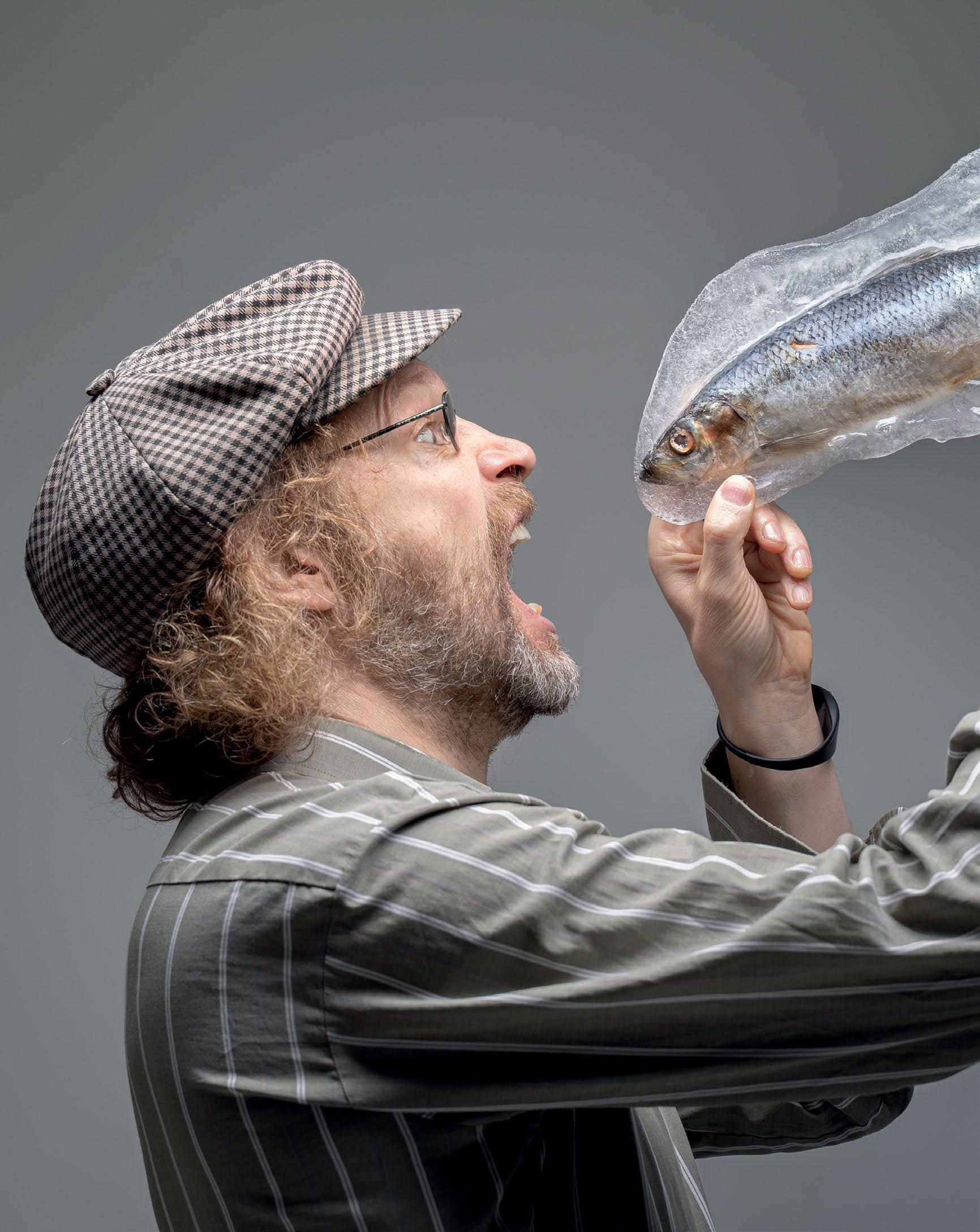
With Penguin selected for the Annecy International Animation Film Festival competition, Kaspar Jancis reflects on the film’s long journey, creative choices, and the challenges of collaboration.
By Emel-Elizabeth Tuulik Photos by Viktor Koškin
Your body of work now includes at least three films with animals in the title, such as Dog and Penguin, as well as the earlier Crocodile. What do animals represent or open up in your work?
is an Estonian animation director, scenographer, and composer. He studied filmmaking at Tallinn University and the Turku Arts and Media School, where he made his debut film Romance (1999). His films have been screened at major international animation festivals, including the Annecy International Animation Film Festival, Animateka, Ottawa, Fantoche, London IAFF and Monstra, and have received numerous awards. In 2010, he won the Cartoon d’O for Crocodile. Jancis is known for his distinctive hand-drawn style, which combines precise visual detail with minimal dialogue and absurdist humour to explore human relationships. Selected filmography: Marathon (2006), Crocodile (2009), Piano (2015), Captain Morten and the Spider Queen (2018), Cosmonaut (2019), Antipolis (2023)
Animals have carried allegorical meaning in stories throughout history. Whether it’s Apuleius’ donkey from ancient literature, or Ionesco’s rhinoceros from the absurdist canon, the Werewolf, or mermaids. “These are animal archetypes manifesting from the deep layers of our consciousness,” a Jungian might say, “spirit animals!” a village mystic might add. I try, however, to avoid leaning too heavily on symbolism, leaving interpretive freedom to the viewer about what a particular animal might mean to them. In the end, it’s all just a game. If an animal creates tension and serves the story, I harness it as a workhorse to pull the film’s cart.
At the level of the idea, Penguin has existed since 2004. What kept it so long before taking its final shape?
Penguin is a combination of different story fragments that came together into a homogeneous whole at the right moment. My uncle in Moscow had a stuffed emperor penguin that left an imprint on my consciousness – and could have left one on my body as well when it fell on my head one fateful night. I almost lost an eye. The absurdity of that
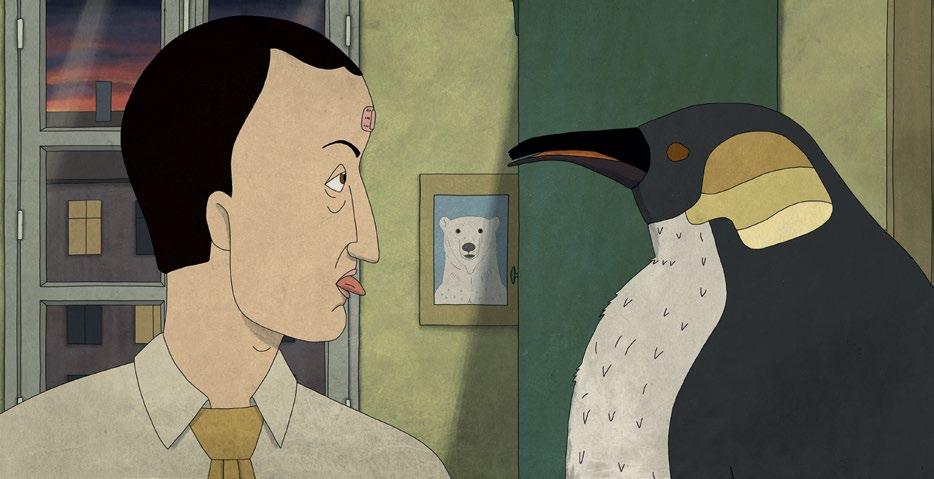
moment stayed with me. There was already a small hint of this theme in my feature puppet film Captain Morten and the Spider Queen
How did Penguin change during writing or development – did you have a clear narrative from the start, or did it emerge later?
The story went through a large cycle, and the whole only came together when I realised the film needed to be about a relationship, rather than the political satire I had long planned. Through continuous reduction, a “bulletproof” whole emerged, though details were refined until the very last moment.
Penguin involved strong international collaboration – how did that affect your control and creative freedom as an author?
Fortunately, my arm wasn’t twisted like with my feature film. There was some friction in both working culture and worldview. Political correctness is more rooted in Western Europe, and there are things you’re not supposed to joke about. Since we were lead producers, I made sure from the start that the final say remained with me, though that sometimes had to be repeated to partners. Arte’s suggestions often had value – the issue was interpretation. Collaboration added clear value, from character shading to orchestral music. The downside is communication, though overall it went smoothly compared to what I’ve experienced or heard. We had a very capable mediator.
In general, do you work on image, sound, and rhythm simultaneously, or do they develop separately?
I begin with the story, move into an initial storyboard, and as I start to break the film down more precisely, sound begins to play quietly in my head. It’s both a joint and separate process — a vague whole becomes clearer and clearer until I can say: clear! done! That moment comes in the final mix, the magical merging of image and sound. Verbally telling the story helps identify weak points and sense the overall rhythm. I often retell the film as if I’ve just seen it, adding sound effects and mimicry.
How do you relate to symbolic or philosophical interpretations of your films? It can be amusing and surprising – and certainly nice.
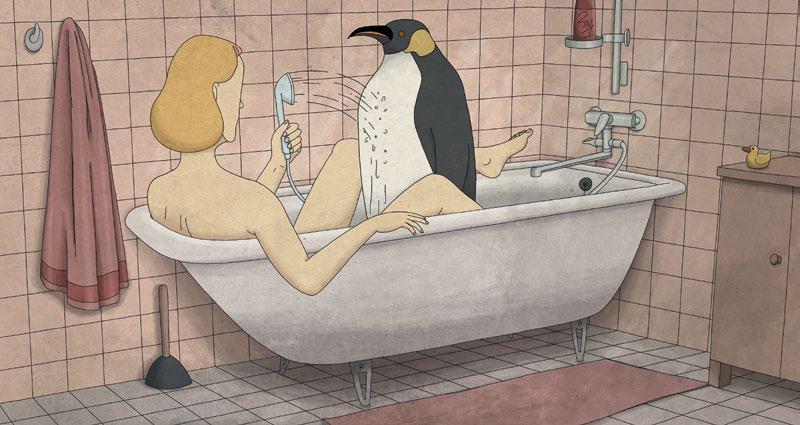
A man returns from Antarctica with a rare gift for his partner. The gift causes a change in their relationship, which is difficult to cope with. Has the man changed? Or is it the woman who has changed, suddenly noticing a change in her partner?
A story about a shift of perspective in a relationship, about letting go, and the responsibility that comes with it.
Sometimes people phrase things better than I ever could. Film is a conversation with the viewer. Hopefully, liberating and healing. But I’m not really a “symbol person.” I avoid over-explaining. My criterion is simple: does it work or not? Lately, I struggle with having to justify my ideas to funders – I don’t always fully believe my own answer to “what is this story about?”.
How do you experience the festival circuit, Annecy, for example? How has it changed over time?
There are periods when it feels exhausting, and others when recognition matters more. Most of the recognition I receive comes from abroad. Over time, festival selections have shifted in a direction I don’t always relate to – animation language has become more graphic, while narrative plays a smaller role, and political discourse and questions of sexual identity have become more dominant. At the same time, quality humour seems to have decreased, as it can easily risk offending someone. I’m glad I can still stand somewhat apart from that trend. BF
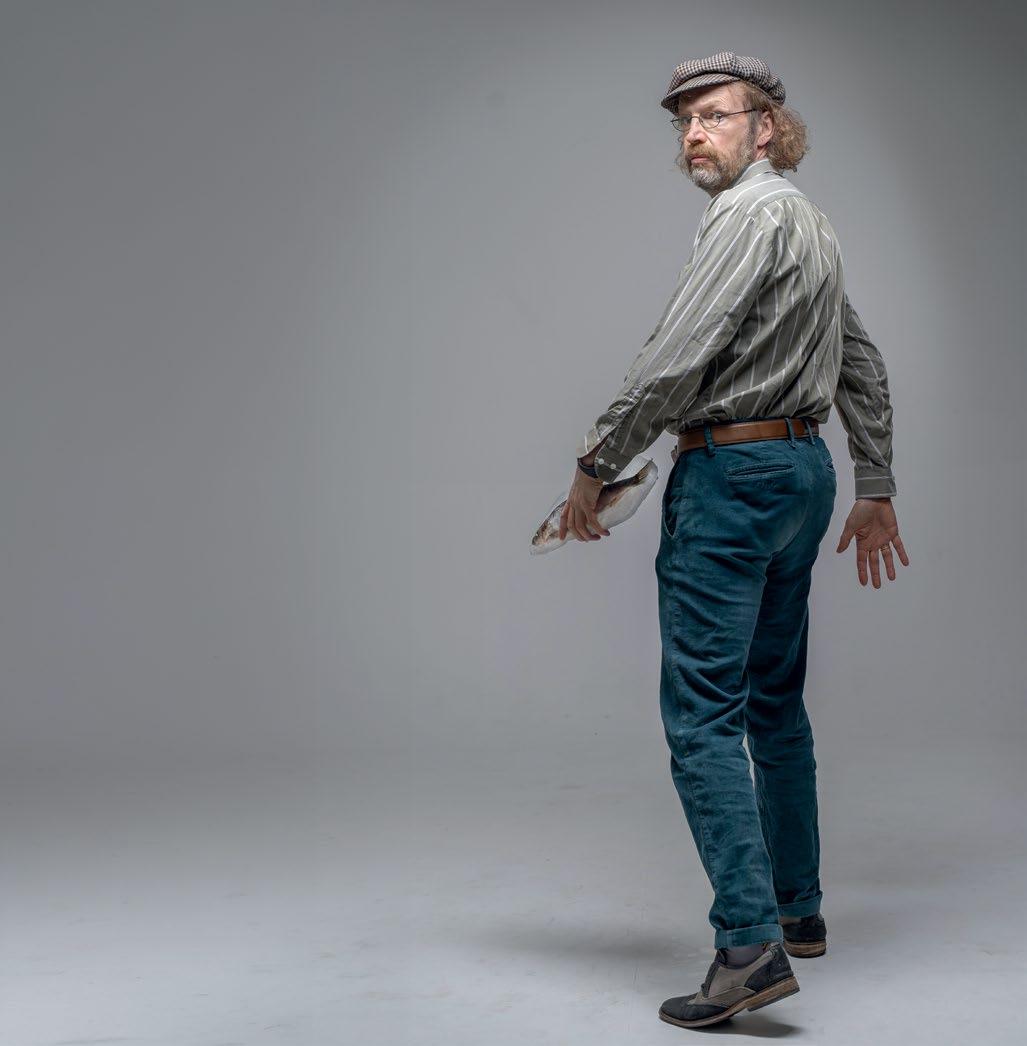
Screenwriter | Director | Kaspar Jancis
Production Designer | Kaspar Jancis
Art Directors and Background
Artists | Vladimir Leschiov | Gyopár-Orsolya Buzási
Lead Animator | Sanni Lahtinen Animators | Nina Ovsová | Piret Potter | Luís Vital | Lucija Mrzljak
Compositor | 3D Animator | Hleb Kuftseryn
Composer | Marc Marder
Sound Designer | Horret Kuus
Voice actors | Juuli Lill, Rebecca Marder
Producer | Kadriann Kibus (Rebel Frame, Estonia)
Creative Producer | Sergo Kibus (Rebel Frame, Estonia)
Co-producer | Claire Beffa (La Clairière Ouest, France)
Associate producer | Olivier Catherin
Produced by Rebel Frame (Estonia), in co-production with La Clairière Ouest (France), with the participation of ARTE France.
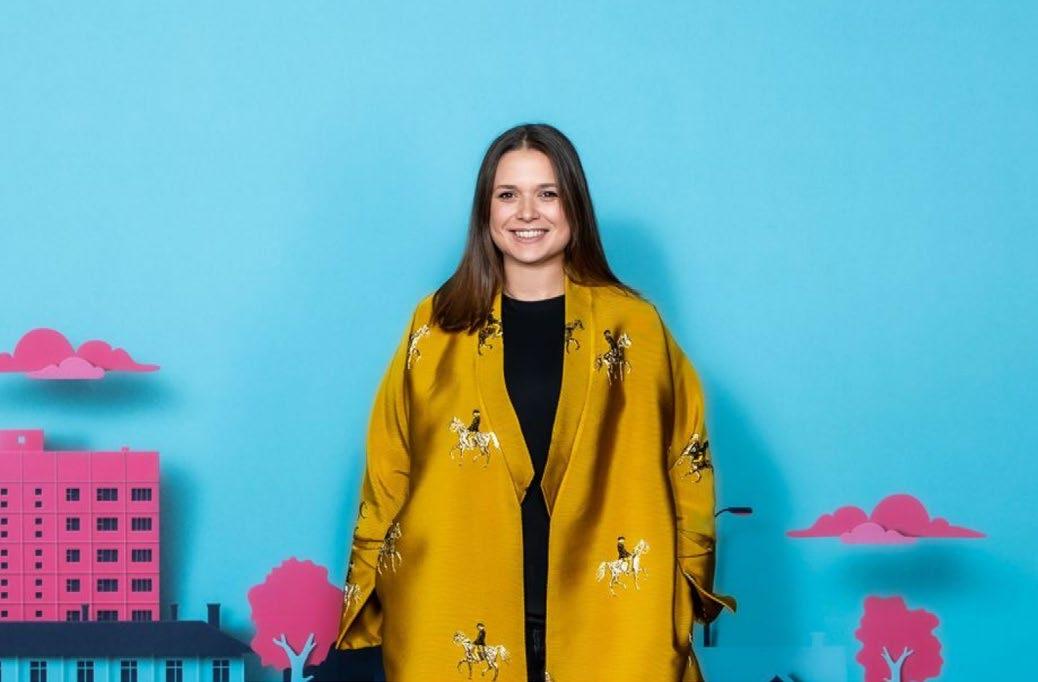
The Tallinn Black Nights Film Festival (PÖFF), celebrating its 30th anniversary, enters a new chapter marked by key leadership changes and a renewed focus on artistic excellence, talent development, and international collaboration.
By Egle Loor
Earlier this year, Triin Tramberg was appointed Artistic Director, while longtime Festival Director Tiina Lokk has transitioned to overseeing the festival’s broader strategic direction as CEO.
Tramberg, a film curator and industry connector, has been part of PÖFF for over 15 years. Starting as a programme assistant and advancing to programme coordinator, she has helped shape the festival’s international profile through initiatives such as Script Pool, Industry@ Tallinn’s Discovery Campus, the First Feature Competition, and PÖFF Goes to Cannes. As founder of Script Pool, she has supported projects that later premiered and won awards at Cannes, Berlinale, Venice, and Toronto. In her new role, she aims to strengthen PÖFF’s cura-
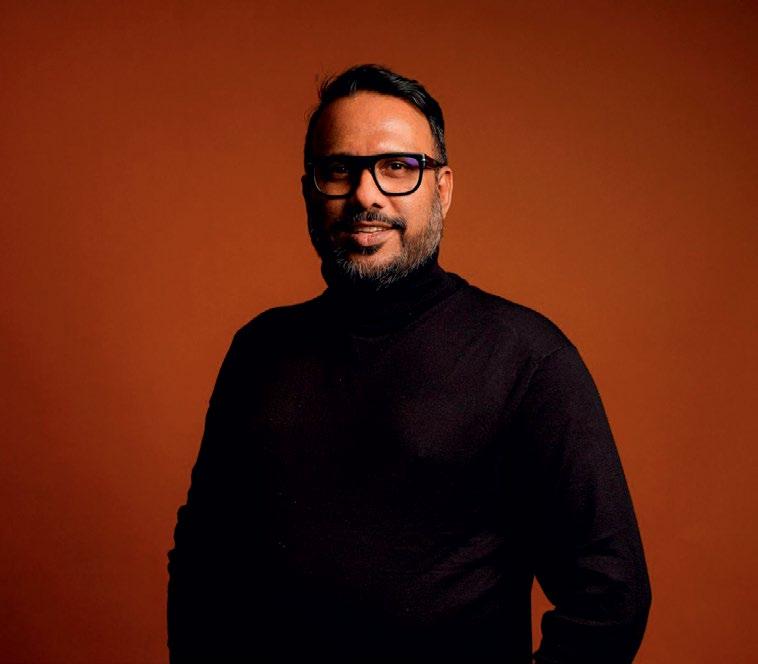
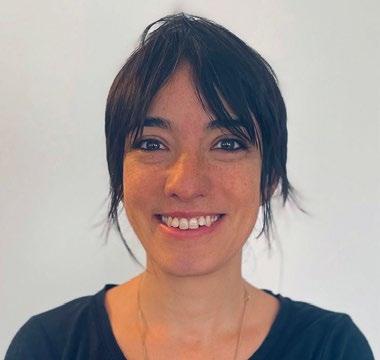
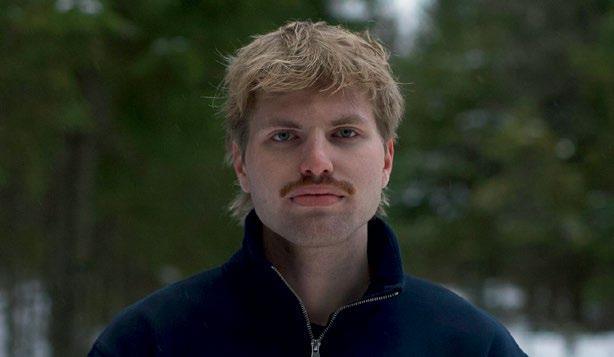
torial identity while championing bold cinematic voices and maintaining close audience engagement.
Dhanushka Gunathilake has been appointed Head of Discovery Campus, PÖFF’s talent and industry platform. An award-winning cinematographer with over 15 years of international experience and founder of Sri Lanka’s first state-supported film school, he brings a strong blend of craft and pedagogy. His debut feature Between Yesterday and Tomorrow earned multiple national awards, followed by The Frozen Fire, Sri Lanka’s first Academy Awards submission, and Dark in the White Light, nominated at Locarno. At PÖFF, he has contributed as a moderator, host, and Project Manager, launching the cinematography-focused initiative Frame Within a Frame.
Malaika Bova joins as First Feature Competition Curator. With over 20 years of experience across major European and UK institutions, she is a former Artistic
Director of Raindance Film Festival and currently a UK scout for PÖFF.
The anniversary edition also marks a transition at Just Film, PÖFF’s Youth and Children’s Film Festival, one of Europe’s leading youth-focused film events. Longtime Programme Director Mikk Granström passes his role to Jan Joonas Pevkur, who has long contributed as a programmer and event producer. Granström will continue as Administrative Manager, ensuring continuity.
These appointments reflect both continuity and renewal, reinforcing PÖFF’s position as a key meeting point for cinema, industry, and audiences across Europe and beyond.
PÖFF is Northern Europe’s only FIAPFaccredited competitive feature film festival, with sub-festivals Just Film and PÖFF Shorts. The 30th edition will take place 6–22 November 2026, with 25th Industry@Tallinn & Baltic Event, running 9–20 November. BF
The Tallinn Black Nights Film Festival, A-listed as one of the 17 best in the world, celebrates its 30th edition this year. Tiina Lokk, the founder and director of the festival, talks about its past, present and future.
By Andrei Liimets Photo by Sohvi Viik-Kalluste
When you organised the first festival 30 years ago, did you dare to dream it would grow this big?
No, I didn’t have such a dream. I didn’t believe the festival would even survive. It was a time when members of parliament asked why anyone should go to the cinema in Tallinn at all – why not go to Helsinki or Paris instead? Under the former Soviet planning economy, cinemas across the union were renovated one republic after another, and Estonia was last in line. They were in terrible condition. For me, Black Nights was a final attempt to decide whether I would stay in my field at all or change careers. I had been thinking about a festival for a long time, because it is a very important part of the film world – it develops audiences, brings films into focus, and provides an international dimension. I did all this out of sheer stubbornness.
The year before, not a single fulllength Estonian film had been released –people were seriously discussing whether Estonia even needed cinema. As a former critic and film theorist, it was very

painful for me to hear this. I wanted to test whether people would actually come to the cinema; whether they wanted auteur cinema. I have nothing against commercial films, but the film world is a colourful palette, and that should also be visible in Estonia.
Everyone predicted we would fail, but when the festival began, there was a long queue at the door. 6,000 cinema visits were an incredible number at the time. Even now, I still can’t quite believe we have such a festival – every year, I wonder whether it will go bankrupt or not. But at least I now know it is necessary.
Do you remember when you realised the festival was viable?
The first festival proved that people needed it. We were also pushed forward by embassies based in Estonia. Ambassadors gathered in the festival office to discuss organising the next edition. I’ve never been good at cuddling up to politicians myself – I’m too straightforward for that. Fortunately, many have helped and supported us, but there are still many who don’t understand how important such a festival is or what A-class status means.
The diplomatic corps helped us breakthrough in domestic politics to secure funding and we are still very good partners.
I essentially made the first festival with money from friends – collecting it in 500-euro chunks. The City of Tallinn also provided some support. Luckily, I had already built a name for myself in the international film industry, as mine was the first distribution company coming from Soviet territory that started to buy licenses from western companies directly. Trust was extremely important. At the same time, new festivals were emerging in Eastern Europe, and they were given strict conditions just to receive films. At the time, there was a great fear of piracy. Similar conditions weren’t imposed on me. I still remember how we received an archive copy of Joan of Arc worth 100,000 kroons back then, guaranteed only by my signature. If anything had happened, I would have had to pay for it myself.
In fact, this uncertainty about how the festival is financed has lasted for 30 years. It creates enormous tension and stress. After all, we are running a major festival and bringing world-class filmmakers to Esto-
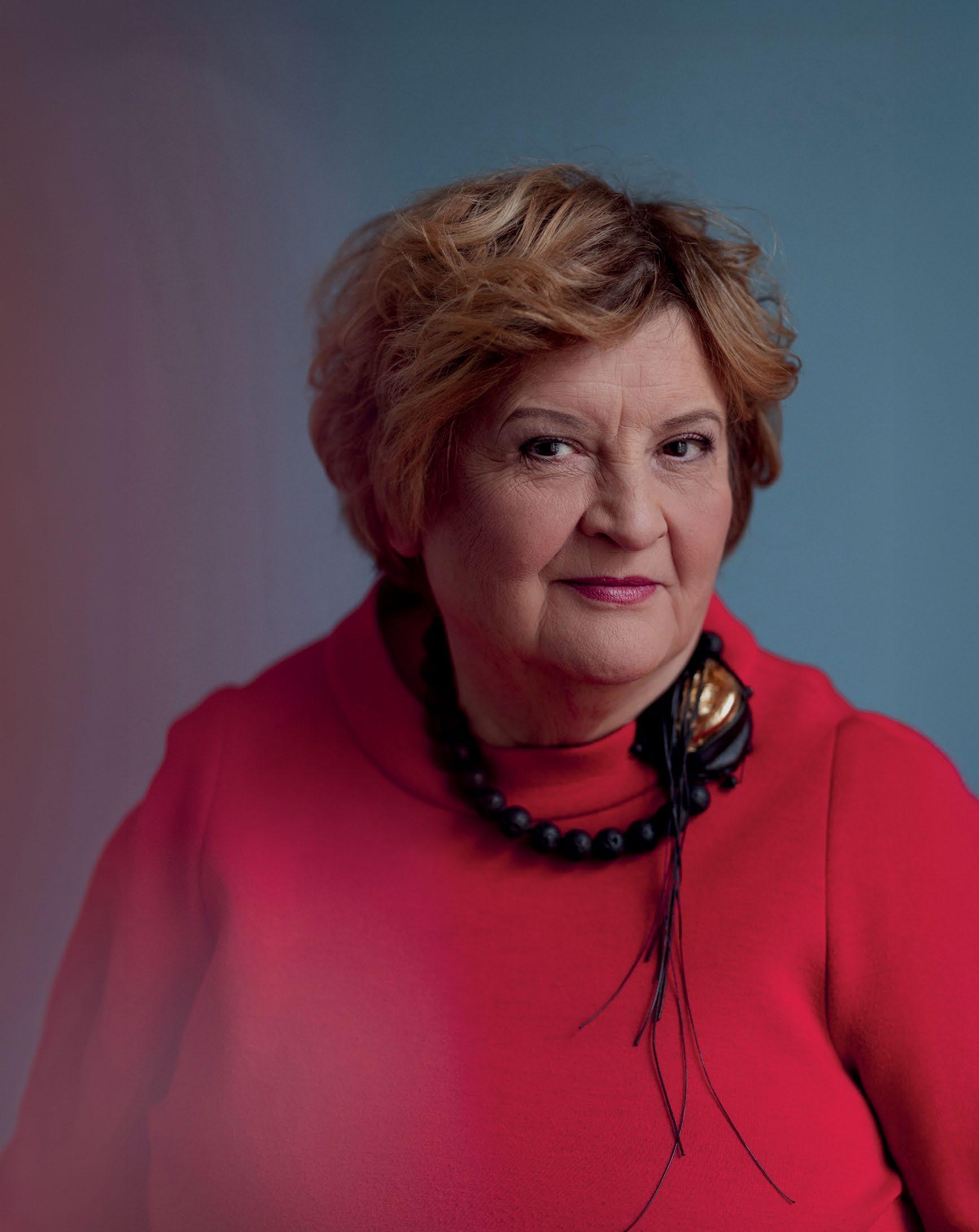
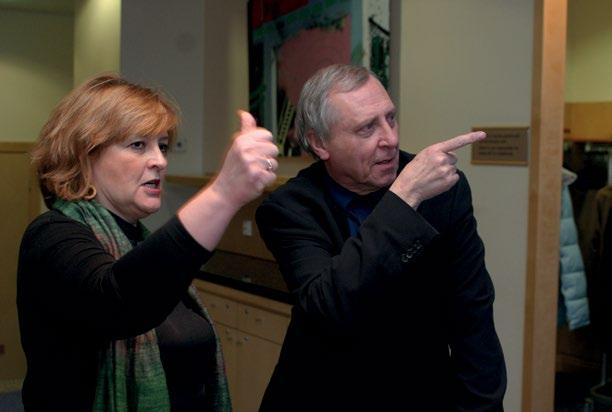
nia. On a public investment of around 1.5 million euros, we create 12 million euros ‘ worth of economic input.
Many festivals don’t survive. What has set Black Nights apart?
I dare to think – perhaps somewhat arrogantly – that alongside having a strong team, my background as a film theorist has given me a distinct advantage. It allows me to see the bigger picture, while a wide network and an instinct for the pulse of the moment have always been essential.
From the outside, my temperament may at times suggest otherwise, but everything I’ve done has been intentional, including the experiments. I’m grateful that the team has embraced this approach and contributed their own ideas. Not all of them have endured, but I believe this shared awareness has helped the festival itself to endure – and ultimately to achieve A-class status.
A-class festivals usually rely on very large markets. Our ability to anticipate what the film industry needs has been decisive in getting there. You have to be present in the region, but also internationally. If that doesn’t work, films won’t come. Films come when there is a strong industry component alongside the festival. And the other way around – it’s twoway traffic.
Another factor is that we have wonderful audiences. Filmmakers often praise people here, and the questions they ask after screenings. Even if the attendance is small at first and the director enters the hall a bit sadly, after the discussion, they leave glowing like the sun. They get a powerful boost and want to return.
And I think we’ve been quite bold in our choices. The program must not get too far ahead of the audience, nor lag behind – it must be carefully balanced. We
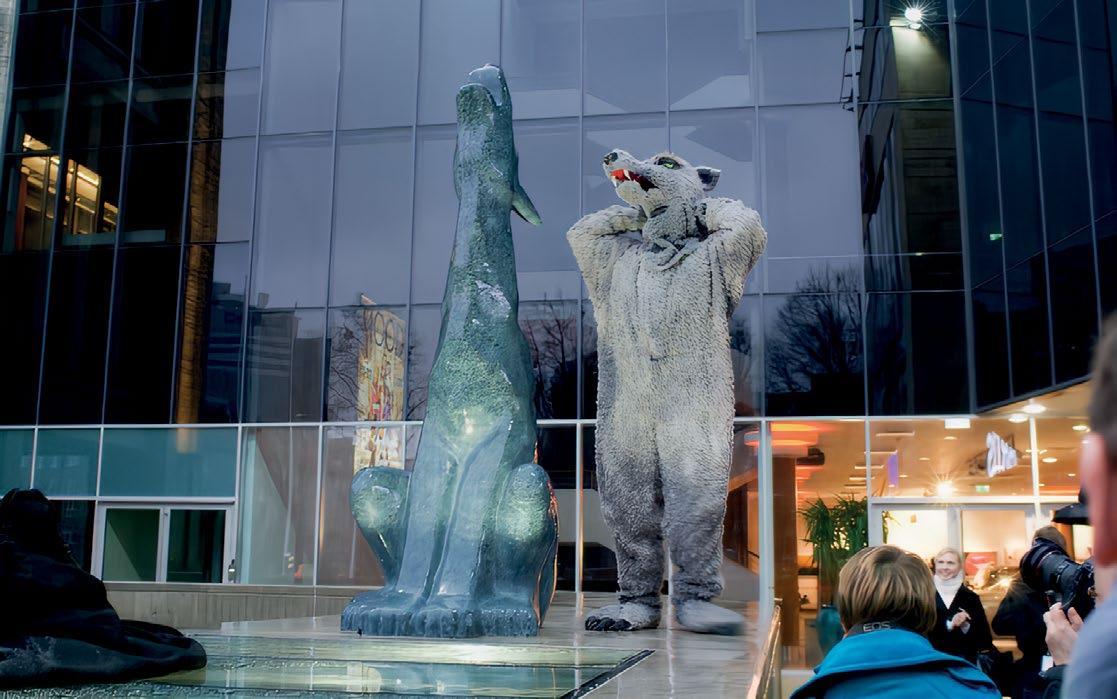
have taken films that others didn’t dare to take, which later won awards. I don’t know whether that’s good or bad, but we don’t select films just because of big names but only based on the film itself. We try to be loyal to our people, but we don’t make compromises like some larger festivals do.
We also don’t want to grow much bigger. Black Nights is like a large boutique festival – A-class, yet still small. We can take care of every single guest. They feel welcomed and invited. We may not offer glamour to stars, but we offer community and a human touch.
The industry side has grown significantly alongside the main festival. Why is that important?
If the festival is the car, the industry is its engine. Over the past 25 years, we have deliberately built the industry platform around what best supports Estonian and Baltic film development. Each component is designed to intersect, giving guests multiple reasons to attend while addressing several needs at once.
Most of our guests cover their own travel costs. In many other festivals, participation is more heavily subsidized, but we simply don’t have those resources. In today’s highly competitive landscape, choosing to come here at one’s own expense is a strong vote of confidence.
We don’t draw rigid boundaries between the industry platform and the rest of the festival. Ideally, filmmakers engage with both – arriving with a film one year and returning to the industry programme the next. Black Nights has also played an important role in bringing Lat-
vian and Lithuanian films to the international stage. At times when they were not yet widely accepted by major festivals, we gave them visibility and support here. This year, we place a particular emphasis on the Baltic region, reflecting the close ties that continue to shape our shared film culture.
You have said you had to build two festivals – first the initial Black Nights and then an A-class version of it. What has A-class status given the festival and what has it taken away? I didn’t actually foresee A-class status. During the 13th festival, when we still had a Eurasia competition program, South American companies began asking why their films weren’t included. I told them they could join if they relocated to Eurasia. They were surprised the festival was so international and hadn’t realised the limitation. Then they started urging us to apply for A-class status.
I thought about it for a long time. On one hand, I didn’t want it; on the other, I feared missing the opportunity. Eventually, I applied – and then forgot about it. Later, I learned that other nearby festivals had been actively pursuing the status at the same time. Then we got the news: our application was well received. Other A-class festivals had to vote, and we were accepted. Internationally, everyone congratulated us – it felt like we had made it.
Then came Cannes, where suddenly someone snapped: “Karlovy Vary and Warsaw already exist—why do we need another Eastern European festival? Do you really think we’ll give you world premieres? Where is your market?” That was
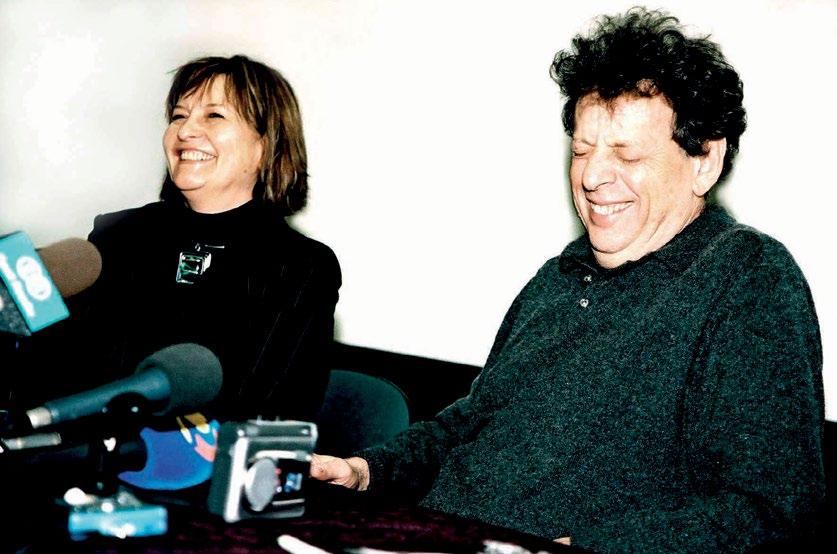
a shock. For a month, we didn’t receive a single film from distributors or sales. Then, suddenly, directors and producers themselves began sending their films. It showed we had done something right before – filmmakers wanted to come.
At one point, the festival had become almost too easy to organise. It was relatively small, with a Eurasian competition of around 150 films and the Baltic Event. Then A-class status changed everything. It gave new momentum, but also forced us to rethink the entire concept – what does A-class actually mean?
At first, international distributors and sales agents were sceptical. They questioned the idea of world premieres, arguing that a market of our size could not sustain them. But securing top premieres requires a whole ecosystem, and that takes time to build. Filmmakers need to feel that coming here is worthwhile – that there is media attention, a strong industry presence, and real visibility. Gradually, the overall quality improved, but this has been the greatest challenge.
What does Black Nights have that the biggest festivals don’t and vice versa?
We have personality – and we can afford to. I often joke that there are only two festivals where everyone pays their own
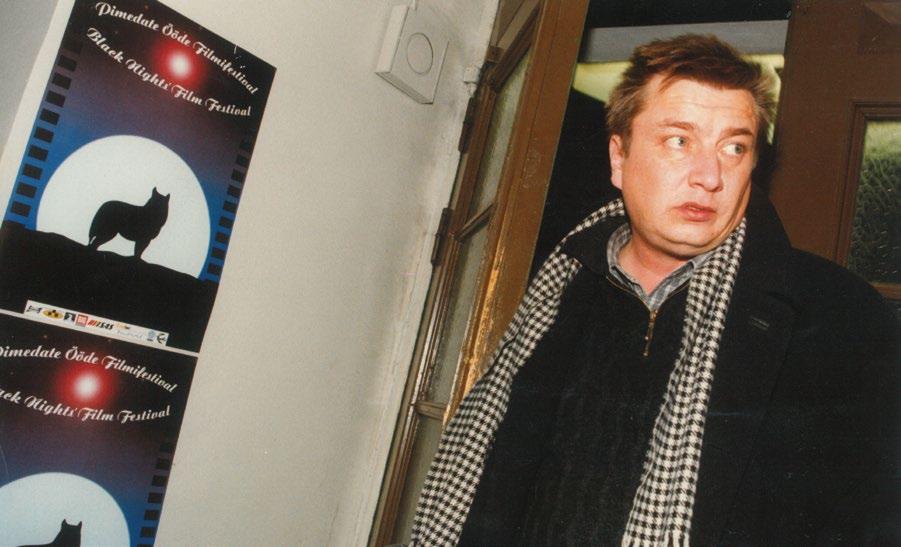
I often joke that there are only two festivals where everyone pays their own way: Cannes, because it’s so big that everyone goes regardless, and Black Nights, which is always apologising for not being able to cover travel costs.
way: Cannes, because it’s so big that everyone goes regardless, and Black Nights, which is always apologising for not being able to cover travel costs.
But we genuinely take care of those who come. We care about filmmakers and their films — and that, ultimately, is what matters most.
What we will never have are the biggest star-studded premieres. Those festivals are backed by huge markets – France, Germany, Spain, Italy. With their tens of millions of people, it’s not realistic for us to compete. It’s purely business. People might even want to come for emotional reasons, but it’s not practical. Business is business.
Still, studios now set conditions that Baltic or Scandinavian premieres should take place at Black Nights. The World Congress of Science and Factual Producers will hold its global congress in Estonia this year – the first time in Eastern Europe. The fact that we have an A-class festival in Estonia is one of the seven wonders of the world.
What are the next goals?
There’s always room for a better program. At the same time, I counted ten A-class festivals in the autumn season – all expecting world premieres. The competi-
tion has always been there and we’ve managed so far, but something will eventually have to change. If there are so many world premieres coming out during such a short time frame, then films can’t get enough promotion and attention.
Some things are limited by funding. I wish politicians would finally understand what the creative economy is and what a unicorn Black Nights is. We don’t need millions, but a bit more funding would help improve quality and allow the team to work without exhausting themselves. Without volunteers, I couldn’t run the festival at all.
Two of my dreams are coming true though. First, a practical film school is being established in Ida-Viru County, with us among its founders. It is the second time for me in such a role, as I was also part of the group that worked on the first Baltic Film School curricula.
Second, for 25 years I’ve been looking for a proper main venue for the festival. Not that the current cinemas are bad, but they differ greatly from other A-class festivals. Now, event organisers, Black Nights amongst them, have joined forces so that Tallinn’s Linnahall could become a representative venue for major cultural events in Estonia. Fingers crossed; this will become reality. BF
Henri Veermäe’s puppet-animated short Uka-uka has been selected to the official competition programme of the Annecy International Animation Film Festival — one of the world’s most prestigious animation events. Blending childhood memory with an uncanny, darker undercurrent, the film explores how imagination and fear intertwine in a child’s perception of the world.
By Emel-Elizabeth Tuulik
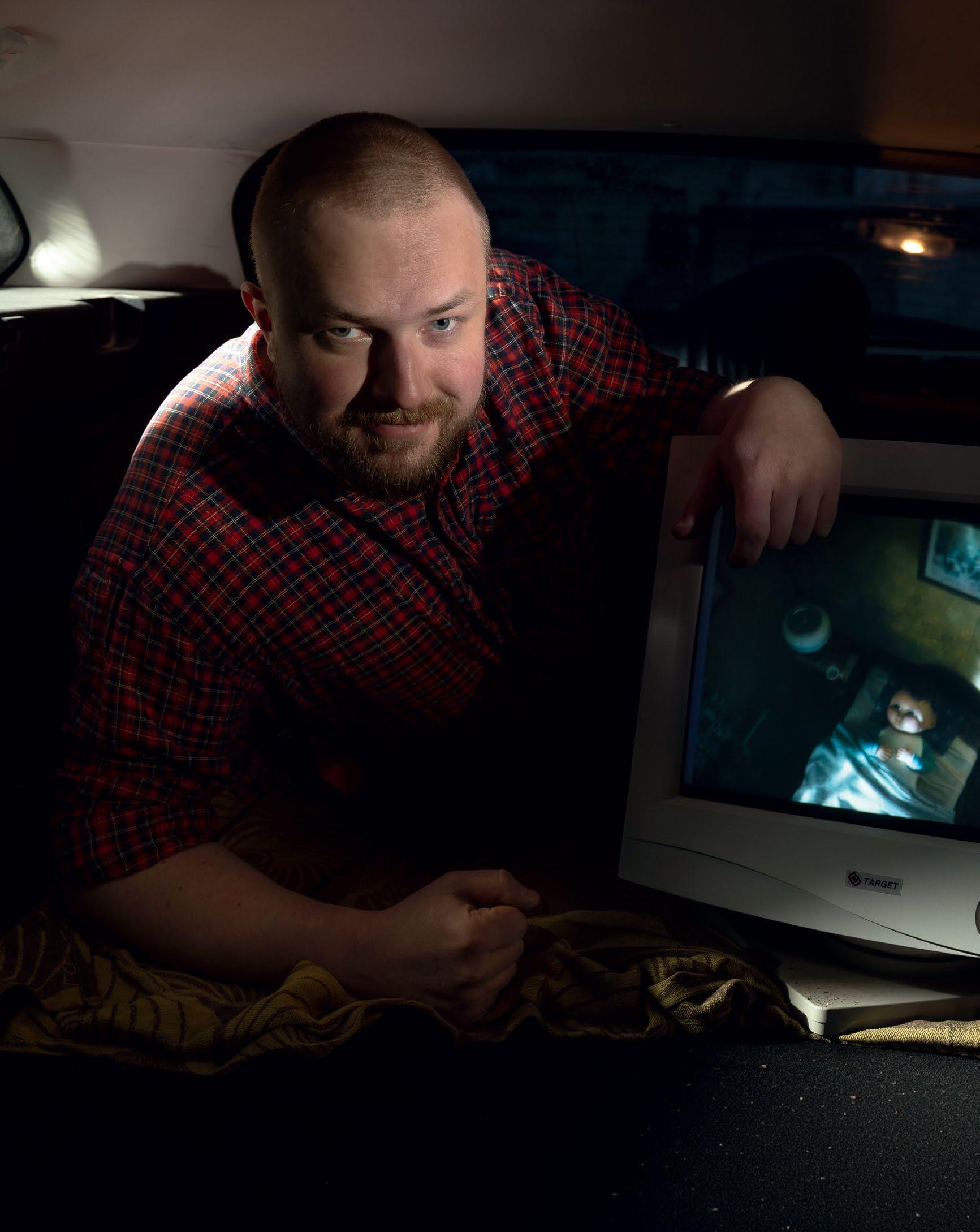
Viktor Koškin
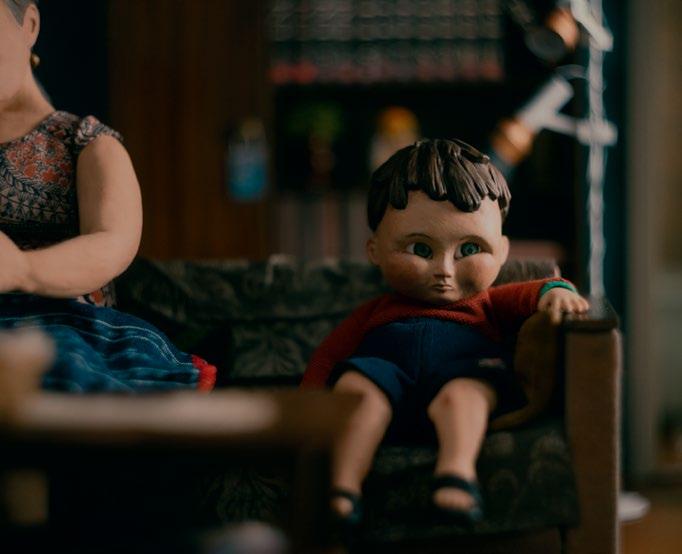
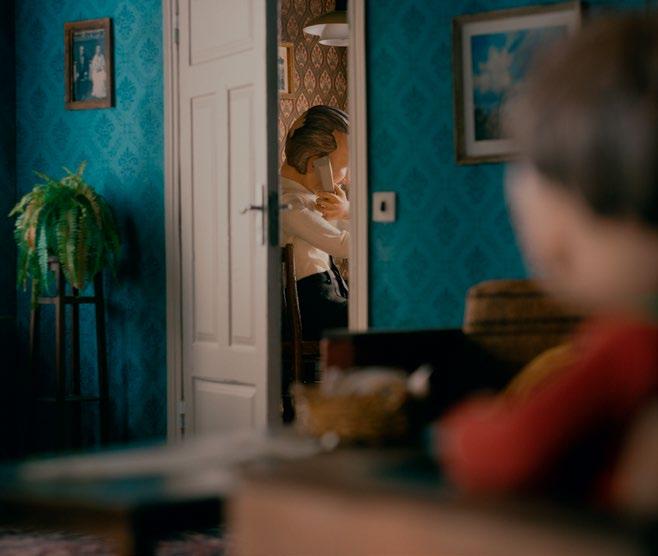
12 min.
Battling boredom, a little boy gets trapped in the boot of a car. When he gets out, he’s no longer the same.
Written and Directed by Henri Veermäe
Cinematography: Fidelia Regina Randmäe
Art Direction: Joanna Juhkam, Triin Paumer, Sander Joon
Animation: Nina Ovsová, Siim Raud, Olga Stalev
Sound Designer: Joonas Taimla
Voice acting: Kõu Suvi, Jüri Lumiste, Marika Vaarik, Maria Ehrenberg, Mall Mälberg
Producer: Erik Heinsalu
Produced by Studio Grafik
How did this story begin for you, and from what impulse or image did it grow?
It grew largely out of my own childhood memories. And maybe also from that specific time and space around them – the early 2000s. There were things back then that maybe don’t really exist anymore. No dialup internet, steering wheel locks, and also that kind of heavy boredom you feel as a kid. Maybe I’m wrong, but I think that kind of boredom is no longer possible today, because everyone has unlimited entertainment in their pocket.
There were also some very specific memories. When I was little, my grandfather worked as a funeral organiser. Once, he had a work call with a client –a relative of the deceased – and was asking questions to prepare the ceremony speech. We had two phones at home, and with the other one, I secretly listened in. I don’t really know why, but the memory felt so strange and uncanny that it pushed me to dig further into those memories. And from there, something else began to grow around it – something quite different.
Uka-uka blends childhood with darker themes –how do you see the use of a child’s perspective in expressing complex emotions?
That darker, slightly horror-like tone came quite naturally. The original memories and sketches were quite bright, but maybe something else emerged subconsciously alongside them. Perhaps because too much nostalgia, or digging too deeply into memories, isn’t always healthy – it can be a bit dangerous.
The child’s perspective interested me because all of this is rooted in memory. Seeing things through a child’s eyes is something animation can express very well. Children do strange, funny things, and maybe they perceive things in a more direct, unfiltered way. So it didn’t feel contradictory to combine a child’s perspective with darker themes. Children do encounter these things – they just have to interpret them in their own way.
How did your collaboration with cinematographer Fidelia Regina Randmäe shape the film’s visual world?
I’m very happy we found Fidelia. We were looking for a cinematographer, and she comes from a live-action background, which is exactly what I was looking for.
I’m very inspired by live-action cinema, and this story also felt like it needed that quality – especially visually.
With puppet animation, you also have a physical space, real lights, and real cameras, so it’s closer to live-action. You can move within that environment and feel its three-dimensionality, which I really like.
We started by exchanging ideas – what the world should look like, what colours and tones it would have. Then we worked through the storyboard together. On set, the cinematographer is always there, shaping the framing and lighting. And what I love about this process is that many ideas emerge on the spot. You can plan everything, but once you’re there, unexpected things happen – shadows, for example – that you couldn’t have imagined, and sometimes they look great.
How does the puppet animation add meaning to the film? What about the craft of it?
From a child’s perspective, puppet animation helps a lot. It allows for things that don’t have to be fully logical. You can simplify, exaggerate, play. It also supports both nostalgia and horror. Some elements feel warm and familiar, while others can feel uncanny. The medium offers many tools for expression.
The craft often encourages playful solutions. For example, we needed a peephole effect in one shot. We tried different things, and in the end, we just used an energy drink can around the lens. It worked perfectly. If something looks right, then it’s not stupid.
Did your relationship to the material change during the process?
Yes, definitely. The script changed quite a lot in the beginning, but once the storyboard was set, it stayed mostly the same. Animation is such a long and demanding process that big changes aren’t easy to make, and in this case, they weren’t really necessary. But the process itself takes you somewhere. Because it’s so long, you spend a lot of time thinking about the story, whether you want to or not. That leads to new interpretations and ideas, even if the film itself doesn’t change.
How did you approach the characters?
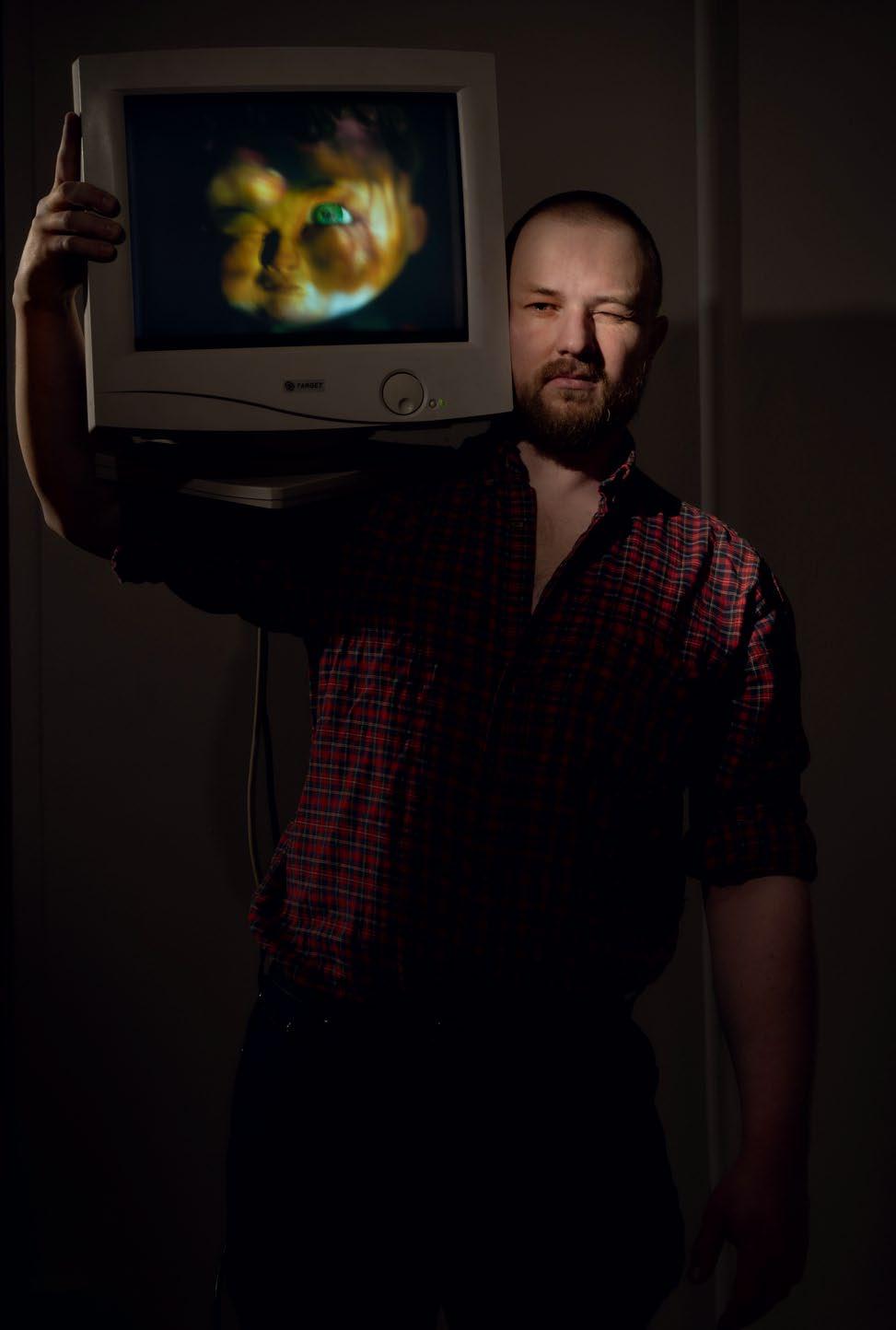
HENRI VEERMÄE (B. 1996)
is an Estonian animation director and animator working across puppet and 3D animation. He studied at the Estonian Academy of Arts and The Animation Workshop in Viborg. Veermäe has contributed as an animator to films such as The Old Man Movie and Sander Joon’s Sierra, which was shortlisted for the Oscars. His latest short film Uka-uka has been selected for the Annecy International Animation Film Festival competition.
The characters were quite clear from the start, and since the film is very character-driven, that helped a lot. They didn’t resist the process; they made it easier.
The main boy, for example, is a bit of a strange, funny character, and that gives a lot of room for visual play – movement, expression. And in a way, the envi-
ronment is also a character. It has a strong presence and conveys a certain state of being.
What influences shaped this film?
Many, probably even unconsciously. In animation, I’ve been influenced by my teachers and colleagues, particularly older Estonian puppet films such as Cameraman Kõps and Bonycrone (Kunksmoor). Live-action cinema has also been very influential. Filmmakers like Jim Jarmusch and Béla Tarr have shaped my taste, especially in terms of atmosphere and character.
How do you see Estonian animation internationally?
It’s very well respected. At festivals, people know Estonia, they know our style and humour. That’s something we should embrace – we have a strong platform to tell our stories. BF
In September 2026, the 30th edition of Baltic Sea Docs will be celebrated in Riga.
By Zane Balčus Photos by Agnese Zeltiņa
Over these three decades, significant changes have taken place in the Baltic countries: the documentary film industry in then newly independent countries has developed, successful international collaborations have been established, and documentaries of lasting historical value have been created. The late 1980s and early 1990s marked a period during which many documentary film festivals that are now important within the industry – particularly those with strong platforms for film professionals – were founded. The International Documentary Film Festival Amsterdam (IDFA) was first held in 1988, followed by Nordisk Panorama in 1990, and slightly later, in 1997, the Ji.hlava International Documentary Film Festival, among others. These were subsequently joined by many other platforms that have since become significant within the documentary film landscape.
THE BIRTH OF BALTIC SEA DOCS
Looking back at the origins of Baltic Sea Docs, it was the time period marked by significant political transformation in Central and Eastern Europe following the collapse of the Soviet Union. In this context, initiatives aimed at fostering international collaboration and professional development became crucial for film-
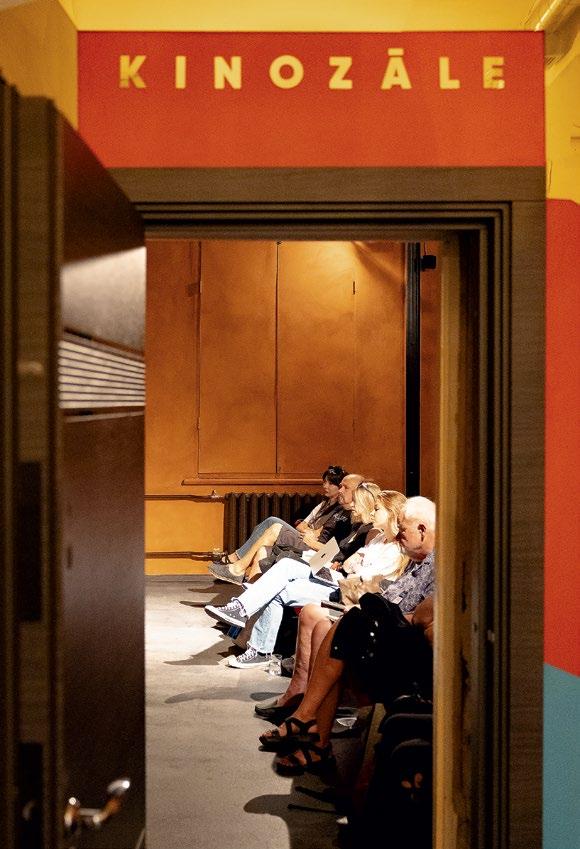
became one of the first major international platforms for documentary filmmakers from the region.
makers from newly independent states, among them Estonia, Latvia, and Lithuania. Denmark was crucial for fostering the first necessary ground for setting the first steps in international industry. One such initiative was the Balticum Film & TV Festival, established in 1990 on the Danish island of Bornholm. The festival focused exclusively on films from countries around the Baltic Sea and quickly
Alongside film screenings, the festival developed a strong educational and industry-oriented component. In 1994, the Baltic Media Center was established and began organizing training programmes for media professionals, including documentary filmmakers. These programmes focused on developing producing skills, fostering knowledge of international co-production practices, and facilitating engagement with Western media industries. Within this framework, a co-production training initiative was intro-
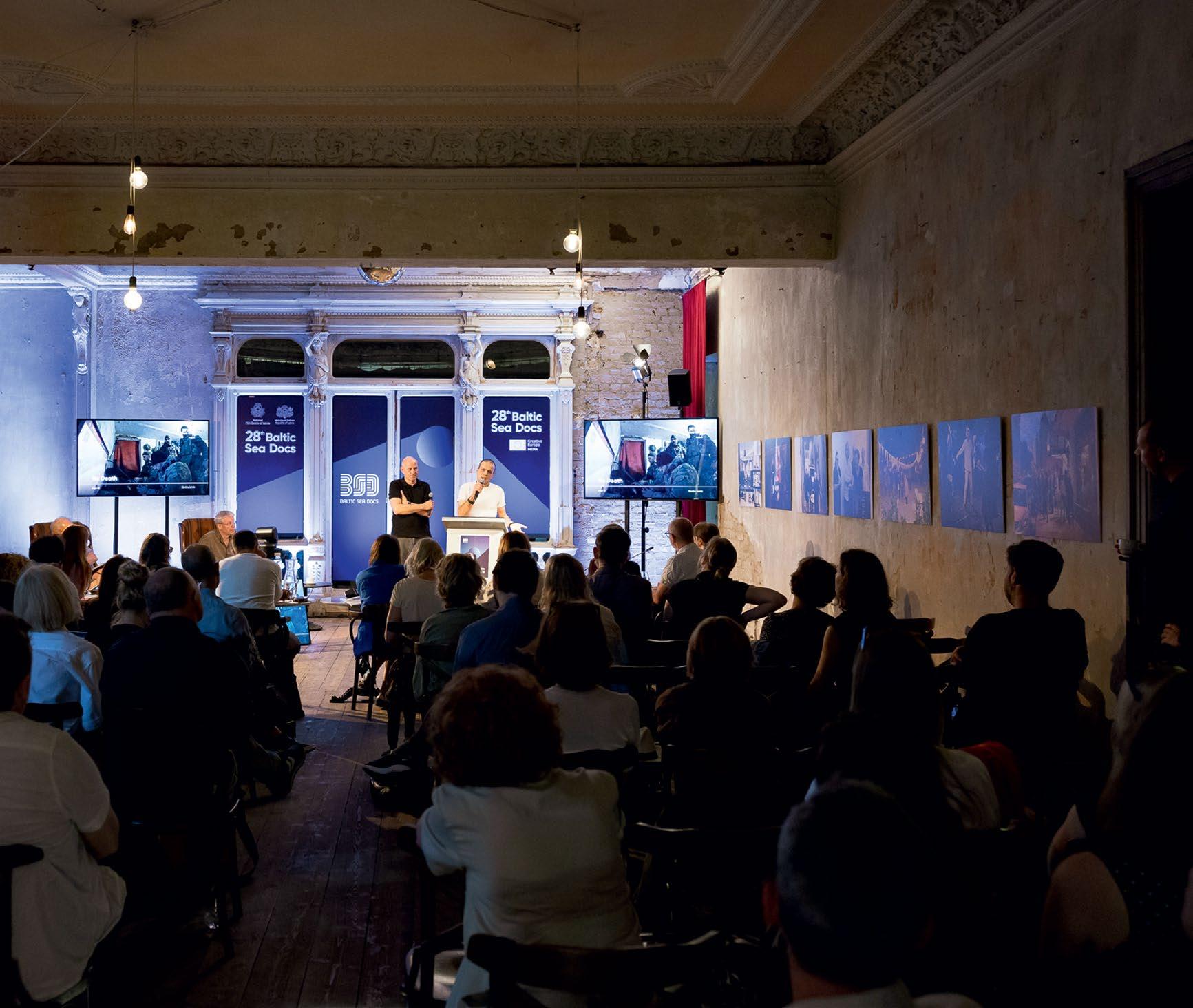
duced in 1997, marking the beginning of Baltic Sea Docs, then titled Baltic Sea Forum for Documentaries.
From its inception, the forum adopted a format that has remained largely unchanged. Participants first underwent a training to prepare for the presentations, after which they pitched their documentary project ideas to an international panel of decision-makers, including broadcasters, commissioning editors, and film fund representatives. This model proved highly successful, receiving positive evaluations from both project participants and industry representatives, and was
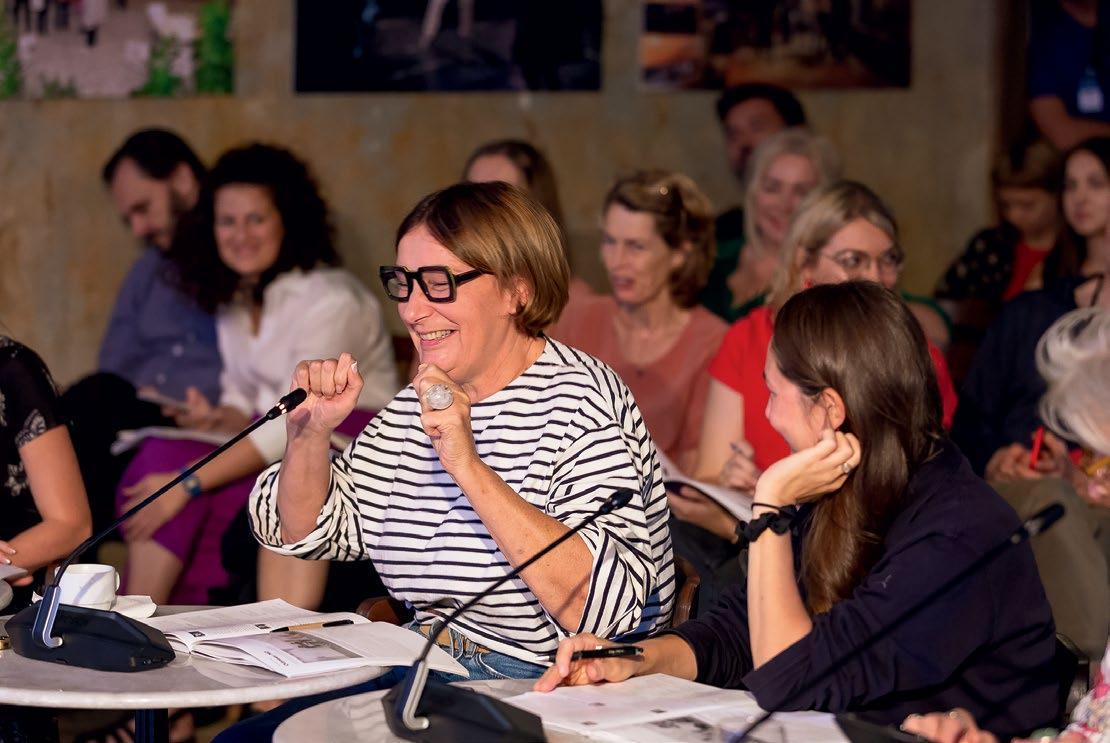
subsequently continued as a re curring event. In the early 2000s, as the political and institutional landscape of Europe evolved and the European Union expanded, Baltic Sea Docs relocated from Denmark first to Croatia to establish cooperation with South European filmmakers, and then to the Baltic states. Initially rotating between Estonia, Latvia, and Lithuania, the forum found a permanent home in Latvia, and is organized by the National Film Centre of Latvia. Since 2006, the forum runs in Riga seamlessly combining the project presentations and other activities aimed at documentary filmmakers and industry representatives, with the film program at the cinemas in the capital and a few locations outside of it; and for several years online to bring the latest international documentary films to audiences in Latvia. To further strengthen the connection between both segments, films pitched at the forum while still at a project stage, are being selected for the program, thus allowing them to return again to the event, and inviting filmmakers back to meet with the audience.
ropean countries may also present their projects, if their subject is on or related to these regions, or if there is already a regional coproducer. More than 20 projects are presented now at the forum to the invited decision-makers, representing a diverse range of European and international institutions, chosen based on their interest in the region and potential for collaboration. Over the years, the forum has proved itself as a perfect networking hub, where in a professional but at the same time informal atmosphere the participants and industry guests can establish new contacts in the form of funding for their films - securing a sales agent, distribution deal, festival premiere, etc.
Today, after three decades of activity, the forum continues to maintain a strong regional focus while operating within a broader international framework. It primarily targets filmmakers from the Baltic Sea region, Eastern Europe, and the Caucasus, although projects from other Eu-
From the outset, Baltic Sea Docs has played a crucial role as a springboard or stepping stone in the careers of many filmmakers from the Baltic region and beyond. Such Baltic filmmakers as Ivars Seleckis, Audrius Stonys, Riho Västrik, Uldis Cekulis, Antra Cilinska, Arūnas Matelis, Marianna Kaat, and Rasa Miškinytė have been presenting their projects since the early years of the forum. And now work side by side with the other colleagues like Jaak Kilmi, Liis Nimik, Giedrė Žickytė, Ivars Zviedris, Dagnė Vildžiūnaitė, Gints Grūbe, and many others. Among
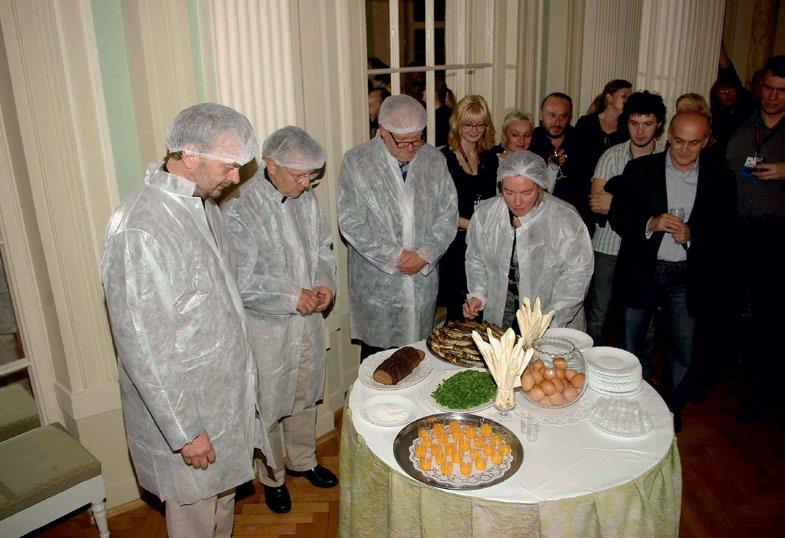
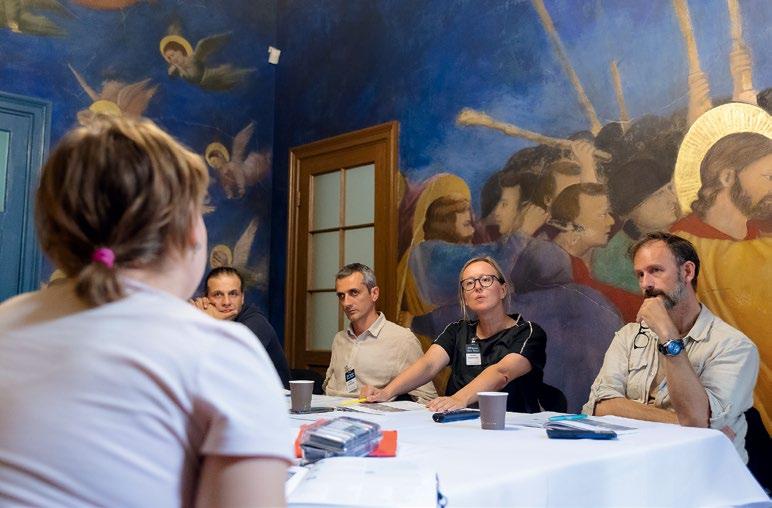
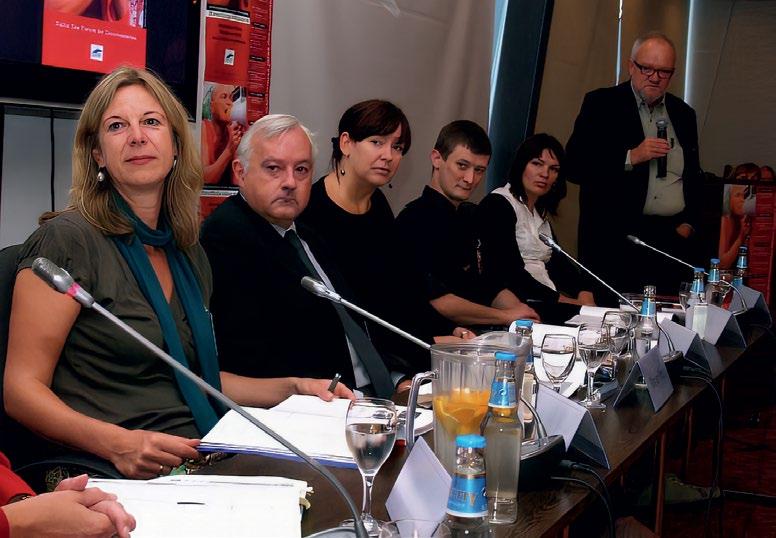
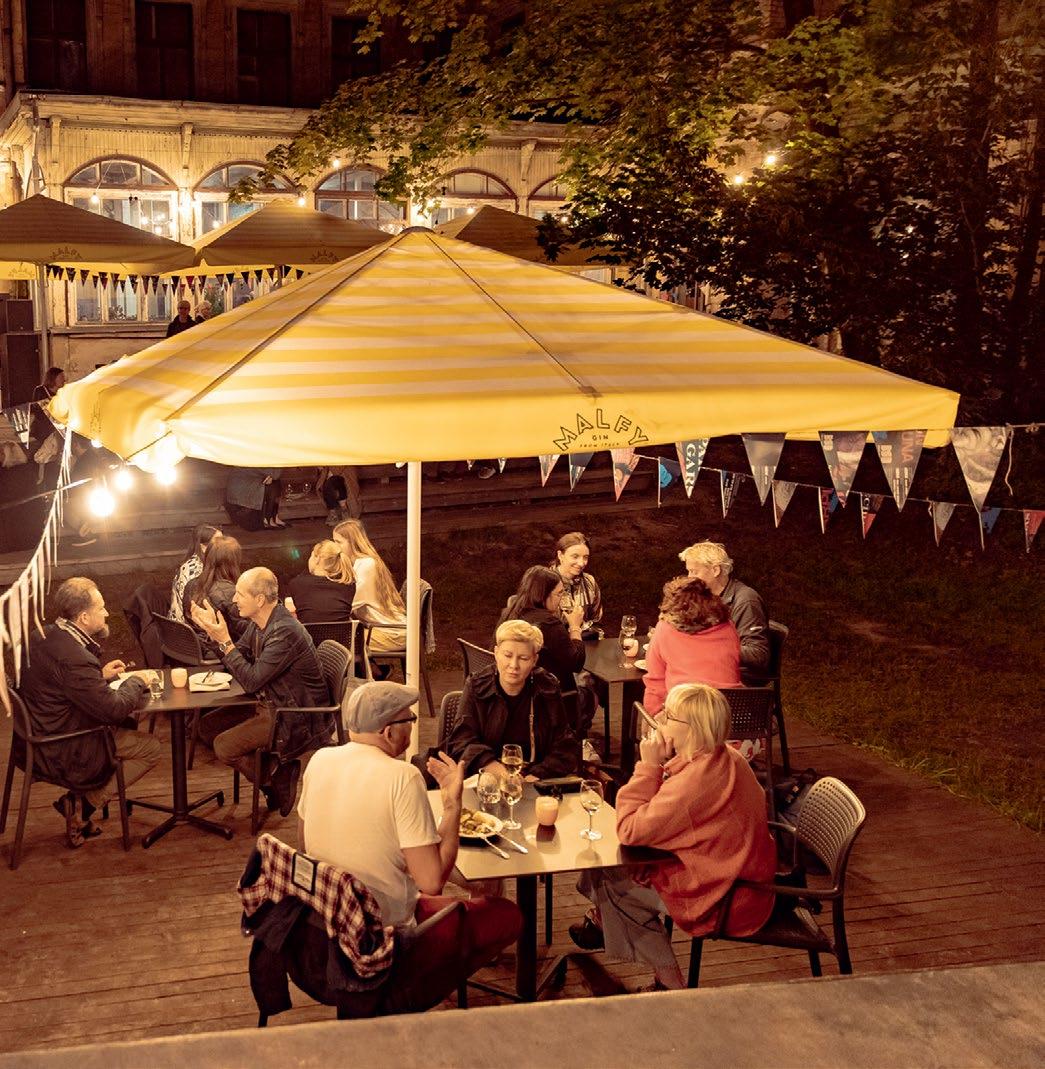
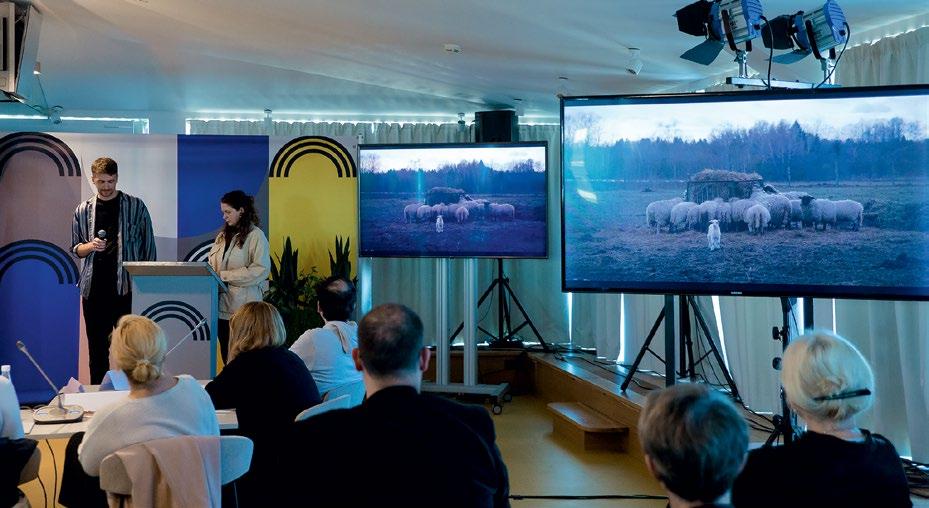
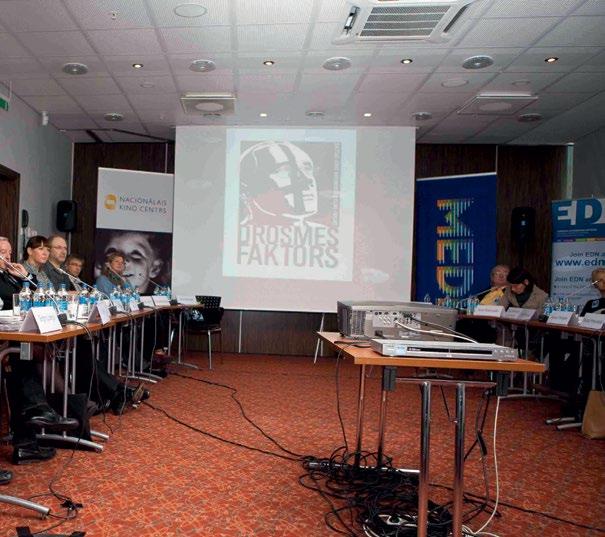
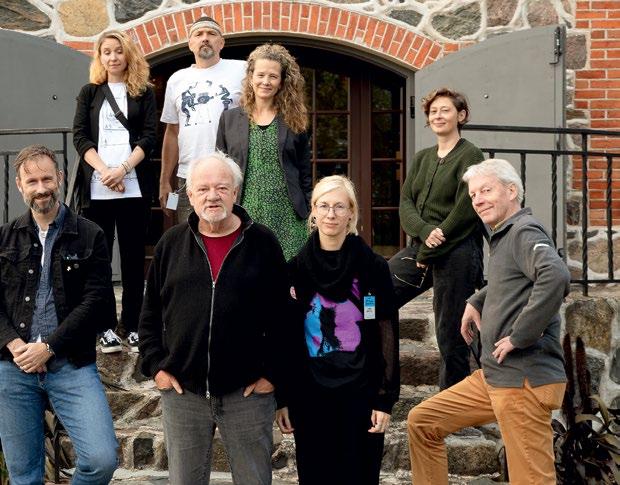
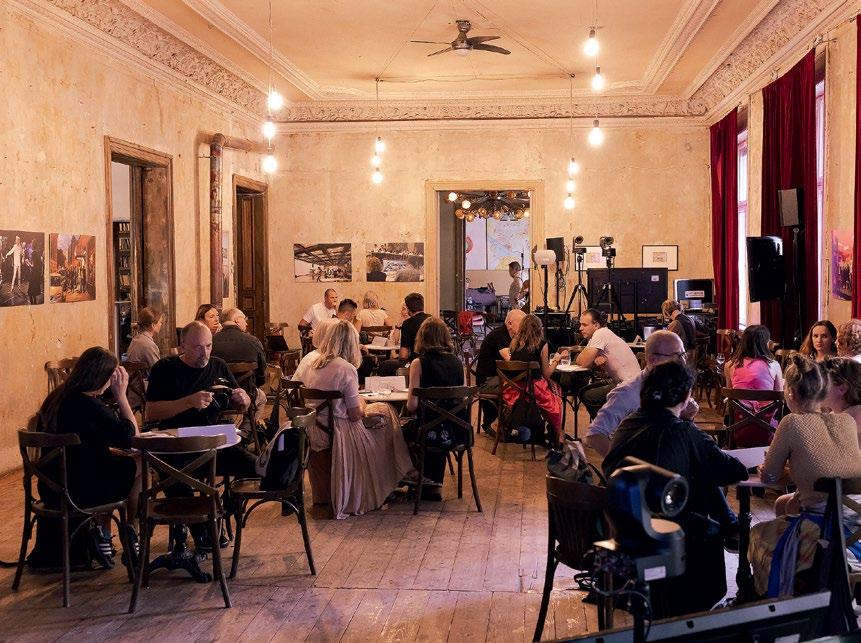
Over the years, the forum has proved itself as a perfect networking hub.
the films that have been pitched at Baltic Sea Docs, many had premiered in major festivals in the last years: 9-Month Contract by Ketevan Vashagashvili (Georgia, Bulgaria, Germany, 2025), Special Operation by Oleksiy Radynski (Ukraine, Lithuania, 2025), Letters from Wolf Street by Arjun Talwar (Poland, Germany, 2025), My Family and Other Clowns by Heilika Pikkov and Liina Särkinen (Estonia, 2025), Scarecrows by Laila Pakalniņa (Latvia, Lithuania, 2025), and Murmuring Hearts by Vytautas Puidokas (Lithuania, France, Norway, 2024).
Through strong artistic visions – ranging from observational approaches to per-
sonal storytelling and performative forms – filmmakers engage with pressing contemporary issues in the social, political, and economic spheres, as well as intimate family histories. Their works address topics such as Russia’s full-scale invasion of Ukraine, political turmoil in Georgia, migration, and intergenerational trauma; among many other topics. All these stories and films allow us to reflect on the transformations that have been happening during these 30 years since the very first edition of Baltic Sea Docs, and to express joy that the forum has been a support for these stories to be told, careers to develop, and the industry to grow. BF

Multi-purpose studios opening Sept 2026 For film industry companies For

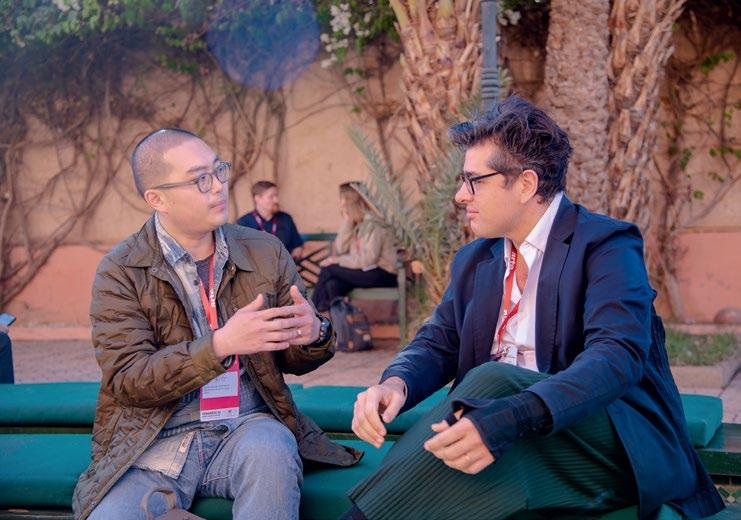
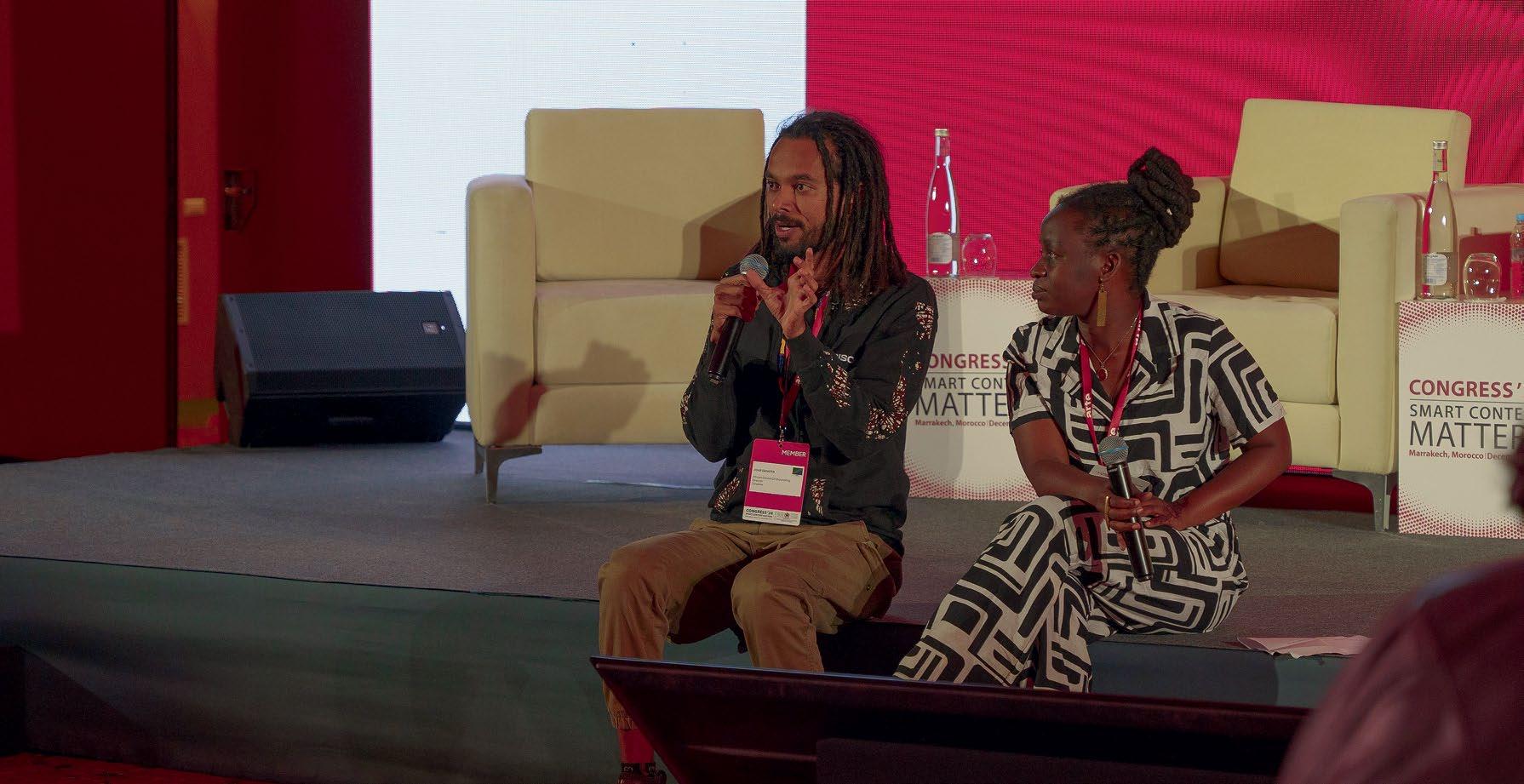
As part of its 30th anniversary celebrations, the Tallinn Black Nights Film Festival (PÖFF) will host the World Congress of Science and Factual Producers (WCSFP) from 9–12 November 2026 in Tallinn, Estonia.
By Egle Loor
Recognised as one of the world’s leading gatherings for science, history, and factual storytelling, WCSFP brings together nearly 600 professionals from more than 30 countries each year. The congress attracts producers, broadcasters, commissioners, distributors, streamers, scientists, and digital creators, alongside decision-makers from major international organisations including BBC Studios, National Geographic, Netflix, TikTok, and YouTube.
“As we mark our 30th anniversary, we are proud to partner with WCSFP to connect global industry leaders with our national creative sector,” said Tiina Lokk, Director of the Tallinn Black Nights Film
Festival (PÖFF). “As part of its extensive programme, the festival presents Doc@ PÖFF’s International and Baltic Competitions alongside outstanding documentaries. We hope WCSFP delegates leave with new partnerships, fresh perspectives, and ideas that resonate globally,” Lokk adds.
The editorial vision for WCSFP 2026 will be led by a recently appointed Editorial Director Sara Ramsden addressing key challenges facing the industry – from the impact of AI to tightening budgets and schedules. The programme will bring together established voices alongside leading YouTubers, podcasters, and a new generation of digital creators, exploring innovative ways to develop and
deliver impactful factual stories. “Our industry is at a turning point, and we need honest discussion to inspire fresh thinking. I want to attract the next generation of creators and explore new ways of telling important stories. WCSFP should be the place where we take creative risks and make storytelling truly unmissable.”
The World Congress of Science and Factual Producers is a not-for-profit organization dedicated to science, history, and natural history storytelling. Previous editions have been held in cities including Rio de Janeiro, Marrakesh, Seattle, Glasgow, Tokyo, and Melbourne, among others. More information is available at www.wcsfp.com.
Now entering its 30th edition, Tallinn Black Nights Film Festival remains one of only 17 FIAPF-accredited A-list festivals worldwide. The 2026 festival will run from 6–22 November, alongside its industry programme and sub-festivals Just Film and PÖFF Shorts. BF
A long-awaited vision is coming to life in the seaside town of Palanga, where the Regional Cinematheque “Naglis” is set to open by the end of this year.
By Mintarė Varanavičiūtė
Developed by the Lithuanian Film Centre, the project is aimed at restoring a historic cinema theatre and transforming it into a contemporary hub for film culture in western Lithuania. The renovated venue is anticipated to become a regional cultural landmark, uniting professional creators with local talent within this multifunctional space.
The cinematheque will house two professionally equipped screening rooms and a terrace designated for open-air cinema screenings, alongside educational and exhibition spaces and a media library. It
will also offer dedicated facilities for film professionals, including a film digitization and restoration lab, editing and work studios, and three film residencies with accommodation, as well as a café. The venue is expected to attract around 67,000 visitors each year.
“While Lithuania’s film output continues to grow in both scale and diversity, with films earning significant international recognition, access to cinema remains uneven across the country’s regions. The cinematheque aims to address this gap by operating year-round as an open cultural space, giving wider audiences regular access to high-quality cinema. It will also provide a platform for international projects, residencies, and the


development of film art, and we hope it will become an important hub for both Lithuanian and international film professionals,” says Laimonas Ubavičius, Director of the Lithuanian Film Centre.
The cinematheque will take a comprehensive approach to film heritage, covering everything from digitization and restoration to long-term preservation and public access. Its programme will include curated screenings, festivals, retrospectives, exhibitions, and other film-related events, introducing audiences to film culture in the broadest sense, with auteur and experimental cinema alongside classics and significant commercial films. It will also host educational activities for both children and adults, aimed at fostering a deeper interest in cinema and filmmaking, providing attendees with practical know-how in filmmaking as well as tools for viewing films in a comprehensive and contextual manner.
Residents will have access to film heritage digitization and restoration facilities, as well as editing equipment and filmmaking tools, enabling them to develop educational projects, contribute to reintroducing Lithuania’s film heritage to contemporary audiences, and collaborate with local communities. These activities will not only strengthen the cultural
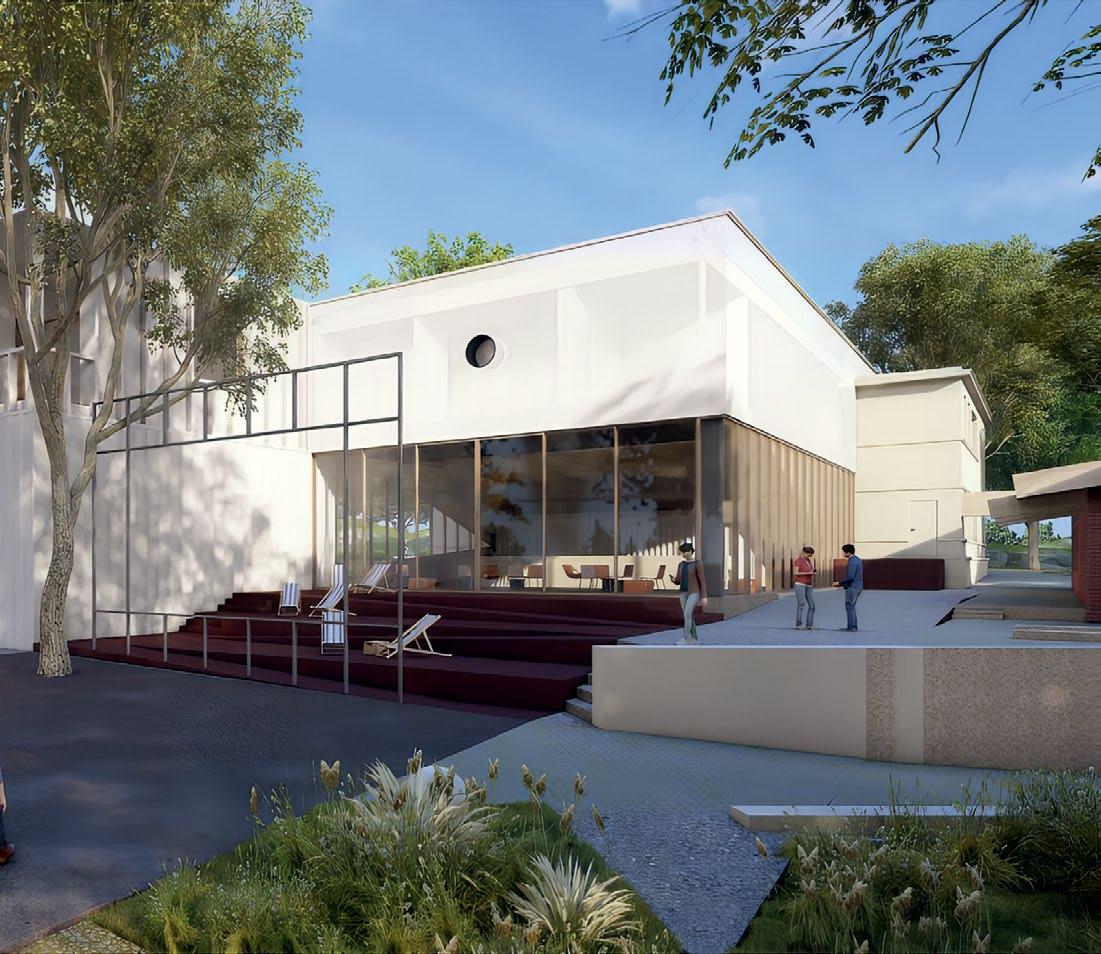
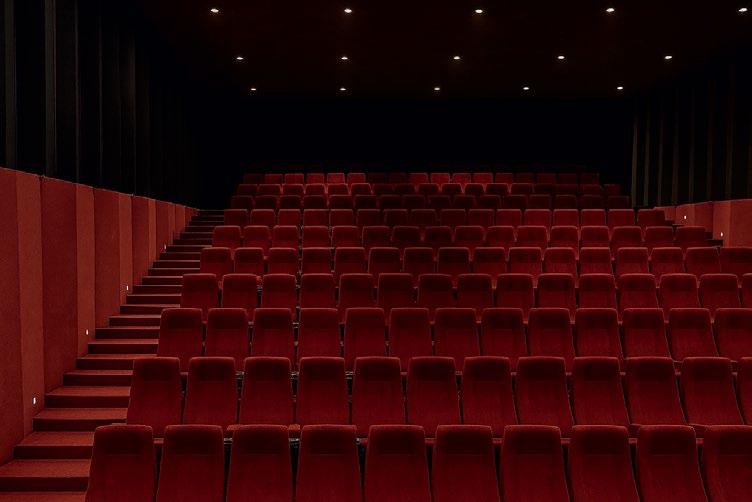
potential of western Lithuania but also enhance the international profile of Lithuanian cinema.
ACROSS SCREENS AND BORDERS
“The development of the Regional Cinematheque “Naglis” enables us to become an active member of the international circuit of film preservation institutions and to begin systematic work with the extensive film collection owned by the Lithuanian Film Centre. With the establishment of a film digitization and restoration lab, an editing studio, and film screening facilities ranging from digital to analogue formats, as well as film residency programmes, we will be able to strengthen collaboration with international archives
“Naglis” is being developed as a branch and pilot project of the National Cinematheque based in Vilnius.
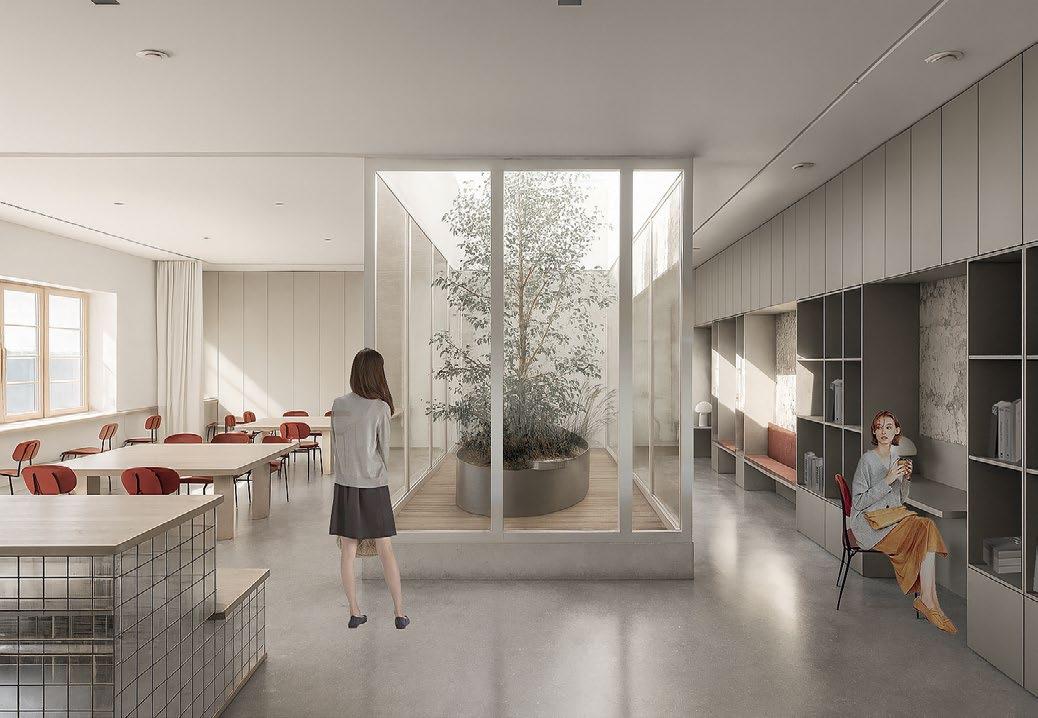
and cinematheques. This infrastructure will also allow us to place the rich heritage of Lithuanian cinema within an international context, identifying and bringing forward works of significant value for international exposure”, comments Giedrė Simanauskaitė, Head of the newly established National Cinematheque Department at the Lithuanian Film Centre.
The Regional Cinematheque “Naglis” is being developed as a branch and pilot project of the National Cinematheque based in Vilnius. While the main National Cinematheque infrastructure is yet to be realised, one of the key objectives of “Naglis” is to address the cultural and professional needs of western Lithuania while implementing the core functions
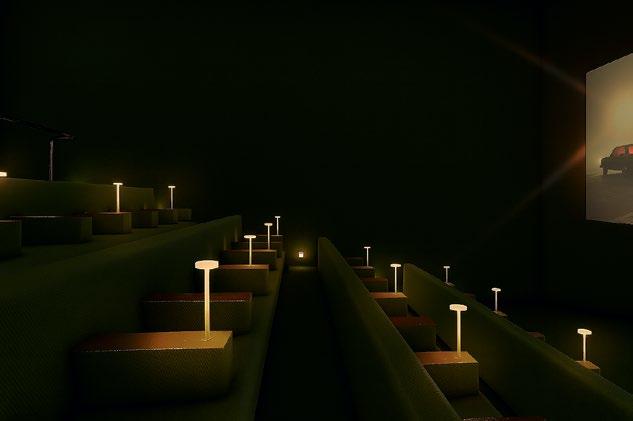
of the National Cinematheque. Guided by the vision, it is conceived as an open and inclusive platform that safeguards the vitality of film culture and heritage while bridging the film community with the wider public. BF
The Riga International Short Film Festival 2ANNAS celebrates its 30th anniversary this year. Over three decades, it has grown into one of the most important short film platforms in the Baltic region.
By Katrīna Bērziņa, Laima Graždanoviča Photos by Ričards Zaļmežs
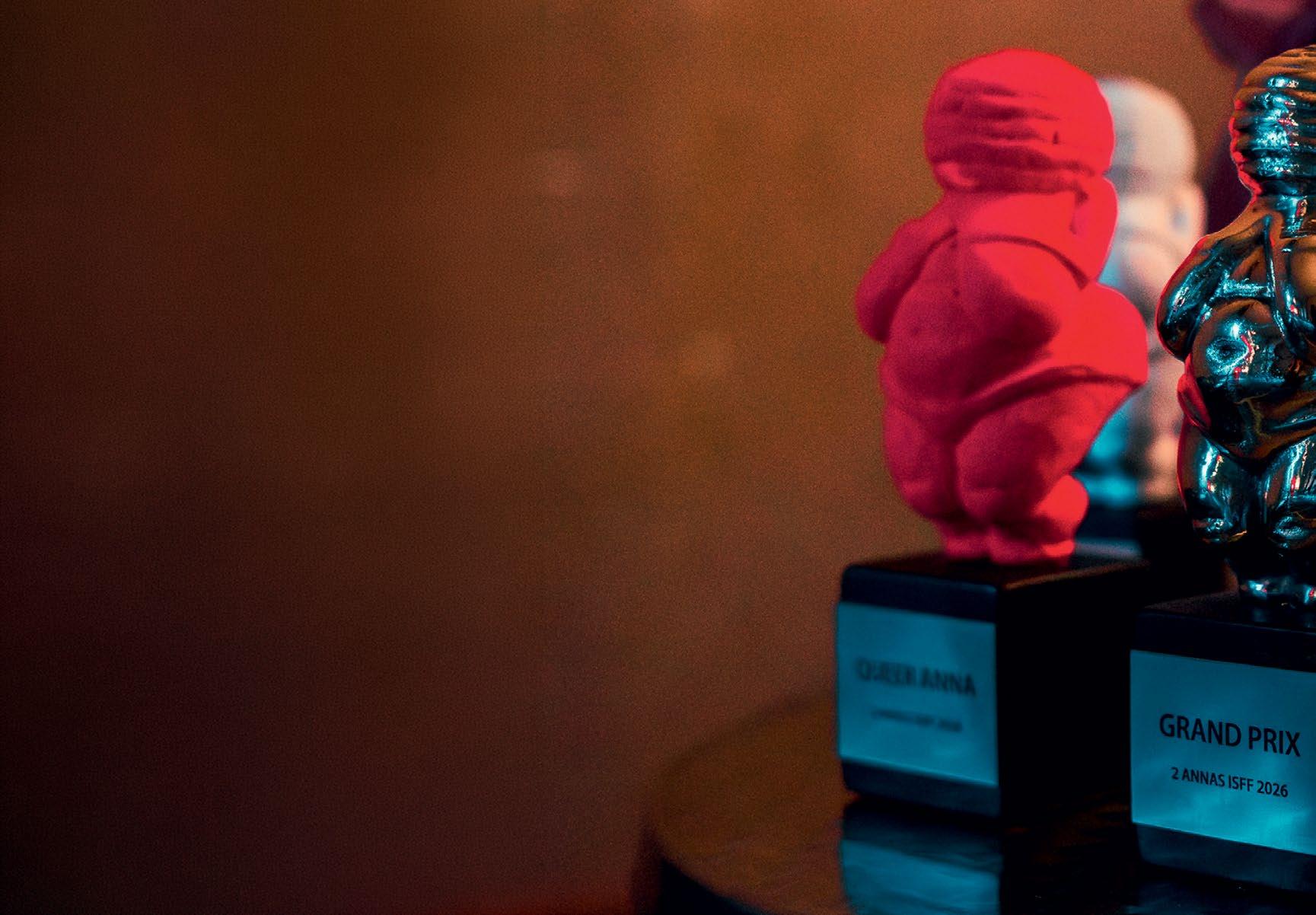
This is a story of holding on to identity, resisting the easy route, and continually reminding audiences that cinema can be free, experimental and productively uncomfortable.
The festival began in 1996 in the basement of the Technical Youth Centre Annas-2, where Latvia’s first festival for youth and experimental films was held. It was a space where cinema did not yet have to conform to institutional frameworks. What mattered was the impulse to create, to test boundaries and to find one’s own language. That independent spirit remains palpable at the festival today.
In its early years, 2ANNAS was a modest local event with only a handful of films. It expanded internationally in 2005 and, by 2006, had defined its focus on quality, openness and innovation. New sections followed, including the Baltic competition and youth programme in 2007. By 2012, it had established itself as the Riga International Short Film Festival 2ANNAS—the first major independent
festival in the Baltics dedicated to short films and audiovisual art. A key shift came in 2013, when thematic programmes marked a move towards a more curatorial approach. Its history is explored further in the anniversary essay collection Unrest, available on the festival website.
The 2ANNAS programme serves as both a curated selection and a conceptual whole, engaging with social, aesthetic and political questions while emphasising interdisciplinarity. This year’s anniversary exhibition, ALTERNATĪVA: Traces from the Underground, opened the festival’s archive to audiences. The central theme, Alternative, extends this approach and nods to Latvian film history – recalling the 1980s experimental forum Alternatīva, which created space for cinema beyond conventional frameworks.
One of 2ANNAS’s defining features is its consistent Baltic perspective – the Baltic competition has become a vital plat-
form for the region’s short film-makers, revealing both shared tendencies and distinct creative approaches.
Astra Zoldnere, curator of the Baltic competition: “Baltic filmmakers have, in recent years, asserted themselves ever more strongly on the international scene, and in short films we also hear many powerful voices – choosing films for the Baltic competition is becoming increasingly difficult. Baltic directors have traditionally been very strong in animation, but in recent years we are seeing more original live-action shorts and documentaries. This is clearly demonstrated by the fact that the 2ANNAS Grand Prix in 2026 was awarded to Ildze Felsberga’s short film Where Does the Sun Sleep at Night? – a work rooted in Latvian folklore that embodies a distinctive perspective characteristic of the Baltic region.”
This year, the industry programme also centred on the theme Alternative, exploring it as an approach to both the creation and the distribution of cinema. It featured lectures, discussions and masterclasses that

addressed these questions from both theoretical and practical perspectives.
The forum stood out as a platform that strengthened the presence and collaboration of Baltic film voices, both regionally and internationally. This was evident in initiatives such as the Young Critics’ Workshop and the presentation Baltic Circuit: Inside the Region’s Film Festivals, which brought together the most significant Baltic short-film festivals. Also notable was the lecture The Right to Be Loud: Why Baltic Voices Are Exactly What the World Needs Now, led by Baltic Talent Agency. The programme was complemented by networking events, including one organised in collaboration with Lithuanian Shorts – highlighting what the region does best: supporting one another and sharing ideas.
The development of 2ANNAS has never been isolated from socio-political processes; on the contrary, the festival has strengthened its role as both a platform
for cinema and a space for reflecting on society. Short film festivals function as seismographs, detecting shifts in moving-image culture long before these tendencies emerge in the broader cinematic landscape and the political sphere.
Following Russia’s full-scale invasion of Ukraine in 2022, the festival began an ongoing collaboration with the Kyiv International Short Film Festival, committing to highlight Ukrainian filmmakers and their work each year until the end of the war. In 2024, the festival also introduced, for the first time in Latvian film history, a dedicated section titled Pure Queer, focusing on LGBTQ+ filmmakers and queer cinema. In 2026, this evolved into the Pure Queer competition, which focuses on Eastern and Central Europe. The inaugural Queer Anna award was presented this year to Andrejs Brīvulis for the animated short Cleanliness.
An anniversary year invites reflection on what has been achieved, but the festival is equally focused on what lies ahead. The theme Alternative returns to the roots of 2ANNAS while marking a trajectory that will lead towards Revolution, the thematic focus of 2027.
2ANNAS has lost none of its curiosity or its capacity to remain distinct. From its beginnings in a basement space, it has grown into a major Baltic film platform – one that continues to champion independent thought. BF
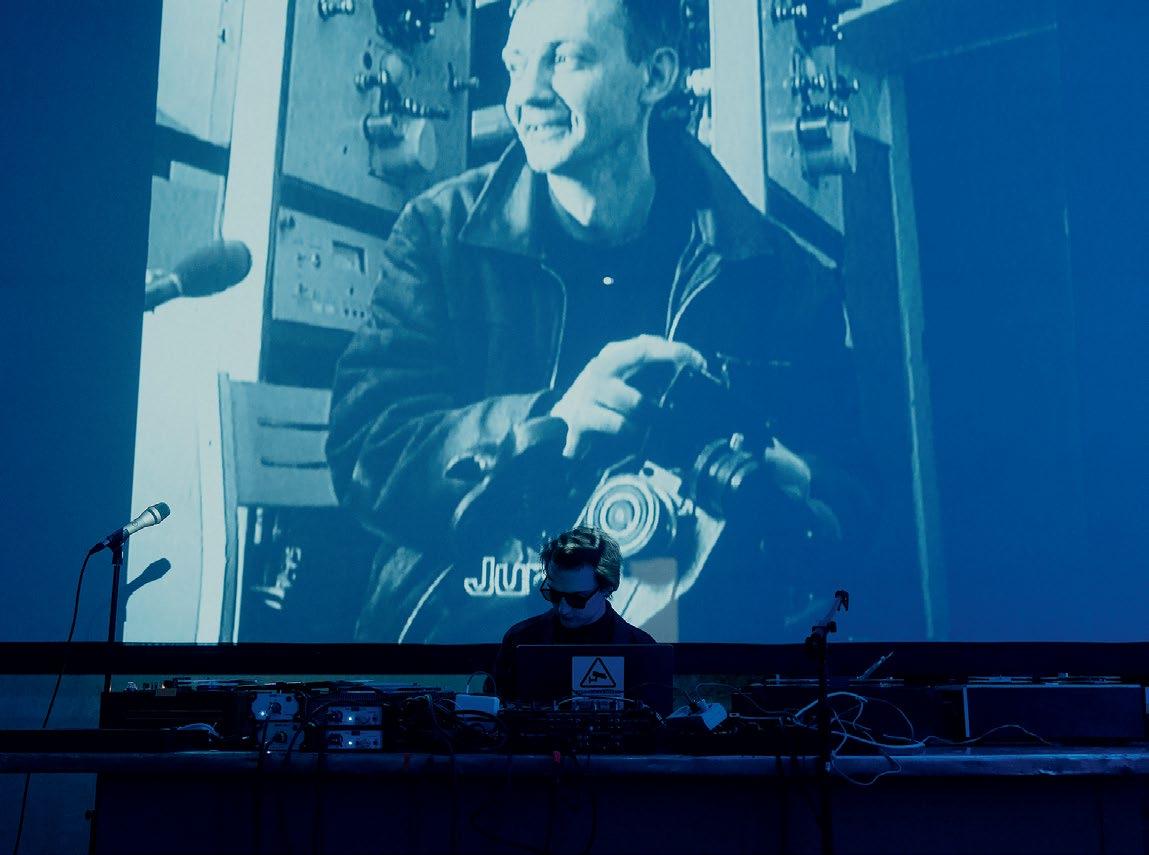
If you want to make your film with Estonian partners, these are the film funds ready to finance your project
Budget 2026: € 600,000
• For producers from all over the world. Participation of an Estonian co-producer is necessary. Bilateral treaty not necessary.
• Subsidy of up to 70% of the Estonian part of the budget.
• 100% of the subsidy must be spent in Estonia.
• Estonian creative and production related participation in a project should meet the requirements of minority co-production grading table.
• Four application deadlines: February 3 and October 13 for feature fiction and documentary. February 17 and September 8 for animation.
• Decision in 50 days.
CONTACT:
Estonian Film Institute
Viola Salu / Head of Production +372 627 6000 / viola@filmi.ee filmi.ee
Budget 2026: € 9,200,000
Film Estonia cash rebate is a production incentive supporting the incoming production of feature films, feature documentaries, animation films, animation series, high-end TV-drama and the post-production of all previously mentioned works. An application can be made for international production service or co-production to receive a cash rebate up to 40% on eligible production costs.
• Support intensity - 30%–40% of eligible costs
• Deadlines - open call
• Applicant - company registered in Estonia
• Recipient - foreign company
• Decision - in 30 days
• Auditing and payment - in 40 days
The scheme is open for:
• Feature films with a budget of at least € 1 million; minimum local spend € 200,000
• Feature documentary with a budget of at least € 200,000; minimum local spend € 50,000
• Animation with a budget of at least € 150,000; minimum local spend € 50,000
• Animation series with a budget of at least € 500,000; minimum local spend € 50,000 per series
• High-end TV-drama with a budget of at least € 100,000 per single episode; minimum local spend € 50,000 per series
• Post-production; minimum local spend € 30,000
CONTACT:
Nele Paves, Film Commissioner commissioner@filmi.ee / filmestonia.eu
Public agency that supports culture, including audiovisual art, and sport.
In case of minority co-production, the amount of the benefit is up to half of the maximum rate.
• Participation of Estonian co-producer is necessary.
• There are four application deadlines: February 20, May 20, August 20 and November 20
CONTACT:
Liis Viira, Curator of Audiovisual Arts endowment +372 5855 9483 / film@kulka.ee kulka.ee
Type of fund: regional, incentive / cash rebate
TARTU FILM FUND
• Budget 2026: € 150,000
• Support intensity: up to 35%
• Support for the production of feature films, animations, TV-series, documentaries, short films.
• One application deadline: March 31
CONTACT: fund@tartufilmfund.ee tartufilmfund.ee
PÄRNU COUNTY FILM FUND
• Budget 2026: € 100,000
• Support intensity: up to 25%
• Support for the production of feature films, animations, documentaries, short films.
• No deadlines.
CONTACT:
Association of Local Authorities of Pärnu County pol@pol.parnumaa.ee parnumaa.ee/en/film-fund
VIRU FILM FUND
• Budget 2025: € 200,000
• Support intensity: up to 40%
• Support for the production of feature films, documentaries, TV-series, short films, music videos.
• Two application deadlines: March 1 and October 1.
CONTACT: Evelin Saarmets evelin.saarmets@ivek.ee vff.ee
FILM FUND OF ESTONIAN ISLANDS
• Budget 2026: € 16,000
• Support intensity: up to 40%
• Support for the production of feature films, animations, TV-series, documentaries, short films and film education.
• No deadlines.
CONTACT: filmifond@sasak.ee / saartefilmifond.ee
• National Film Centre of Latvia
• State Culture Capital Foundation of Latvia
• Investment and Development Agency of Latvia (cash rebate)
• Riga Film Fund (cash rebate)
Annual State Support for film industry 2025 (from all 4 key funding bodies) –€ 1 2 904 296
Number of film productions supported by the National Film Centre of Latvia in 2025 – 27 films
Minority co-production scheme
• Total budget 2026: € 500,000.
• Call twice a year, application time, deadline: 1st call - April, 2nd call September/October
• Supported films: fiction, documentaries and animationfilms of any length.
• 80% of the subsidy must be spent in Latvia.
CONTACT:
Inga Blese, Head of Production, inga.blese@nkc.gov.lv
CAPITAL FOUNDATION
A public agency that supports different strands of culture, including audiovisual sector (various kind of projects: film productions, development, research projects, festivals, etc.).
• Supports documentaries of any length, fiction shorts and animation films.
• Funding for audiovisual sector in 2025: € 1 324 143 (no specific amounts indicated for film productions, depends on the competition and available funding).
• Three application deadlines: January, May, September.
• Decision: 1 month.
Film curator Gita Krātiņa, gita@kkf.lv
AGENCY OF LATVIA
Cash rebate scheme Latvia Co-financing programme for foreign productions
The programme is a production incentive supporting the incoming productions of full-length feature films, documentaries and animation films, TV films. An application can be made for international production service or co-production to receive a cash rebate of 30% on eligible production costs. The support can be combined with other public funding sources in Latvia in case if the Co-financing programme’s support together with other funding sources does not exceed 50% of the film’s total expenses in Latvia.
• Support intensity: 30% of eligible costs.
• Deadlines: open call twice a year.
CONTACT:
jautajumi@liaa.gov.lv www.liaa.gov.lv
Cash rebate scheme Riga Film Fund co-financing programme
The programme is a production incentive supporting the incoming productions of full-length fiction features, documen-
Basic facts: Latvia is the member of the EU and NATO. Currency EUR. Latvia covers an area of 64,589 km2, with a population of 1.9 million. Access to high-speed internet in Latvia is among the best in the EU.
Accessibility: Riga, the capital of Latvia, has the largest airport of the Baltics just 20 min drive from the city center. There are more than 100 direct flight destinations. Locations. Latvia and its capital Riga offer a wide

taries, and TV films. An application can be made for international production service or co-production to receive a cash rebate of 20 – 25% on eligible production costs. The support can be combined with Latvian co-Financing programme’s funding.
CONTACT: Aiga Pīķe, aiga.pike@riga.lv www.filmriga.lv
Latvian Television (LTV) is the stateowned public service television company in Latvia. LTV operates two linear channels, LTV1 and LTV7. LTV is part of Public Broadcasting of Latvia, consisting of LTV and radio (6 stations), joint news content and digital access is provided on the broadcaster’s site www.lsm.lv. LTV acquires Free TV and Free VOD rights to drama series, fiction features, documentaries, children’s content, live events, etc. LTV mainly acquires completed films but is also open to considering projects in production if LOC is needed.
CONTACT: Zane Valeniece, Head of Acquisitions, Zane.Valeniece@ltv.lv
variety of locations. Riga city has Northern charm, Medieval, Art Nouveau and industrial architecture, as well as Soviet modernism heritage. The most beautiful Art Nouveau buildings in Riga were built by Mikhail Eizenstein, the father of the iconic filmmaker Sergei Eizenstein. Throughout Latvia there is wide range of castles, palaces, ancient fortresses and manor houses. The most popular shooting location is Rundale – a baroque
palace built in 18th century, 100 km from Riga Pristine nature: There are four distinct seasons in Latvia. Over 500 km long white sand beaches –the coastline of the Baltic sea. Abundancy of rivers and forests, lakes and swamps.
Advantages of filming in Latvia: Internationally experienced technical crews, strong art department and construction teams, competitive costs, stages and backlots, wide range of extras.
Learn more about how to save money while making your dream project in Lithuania come true.
The Lithuanian Film Tax Incentive came into effect in January 2014 as a new policy measure to foster local and foreign film production in Lithuania. Recently it has been extended until 31st of December 2028. The Lithuanian Film Tax Incentive provides an opportunity to save money on film production budgets through a private investment scheme.
Key information
• Save up to 30% of your film production budget.
• Available for the production of feature films, TV dramas, documentaries, and animated films, including domestically produced, co-produced, or service-based films.
As a foreign filmmaker, you must cooperate with one of the local production companies that submit the application.
The local company takes the responsibility of finding a local business company willing to support up to 30% of your production budget in exchange for reduced corporate income tax.
The project has to meet all of the following production criteria:
• The total amount of eligible spending in Lithuania has to be no less than € 43,000.
• At least three days of shooting take place in Lithuania in the course of the production (except for animation projects).
• At least 30% of an animated film’s production costs in Lithuania must be incurred for producing two of the elements: shooting (if it is required by the script); characters and/or backgrounds design; layouts and/or storyboards; visual effects; 2D, 3D, stop-motion and other forms of animation production.
• At least 51% of the crew hired by the Lithuanian production company are citizens of Lithuania or citizens of other European Economic Area (EEA) countries.
The biggest foreign projects that benefited from the Lithuanian Film Incentive in 2025:
• For All Mankind spin-off, TV series Star City (season 1) (USA - SPTV Limited) received € 6,912,264.
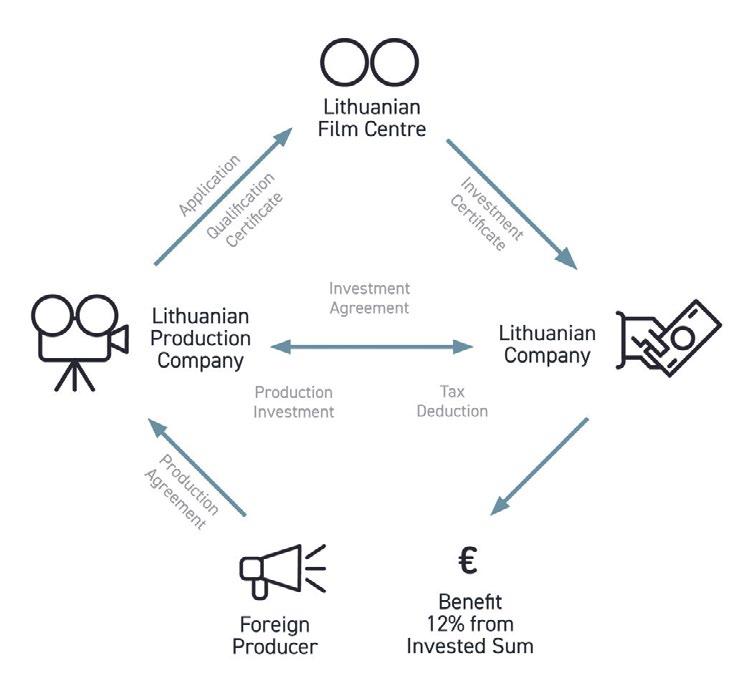
• Historical TV series Mozart (GermanyStory House Pictures GmbH) received € 1,517,865.
• Netflix production TV series based on true story Bunt (PL) / Riot (EN) (PolandTelemark Sp. z o.o.) received € 1,135,470.
Requirements to be considered a minority co-production:
• Co-production (preliminary) agreement that complies with the provisions of the European Convention on Cinematographic Co-production or other international Co-production Treaties between Lithuania and other countries.
• Production companies must deliver substantial information confirming that the financing for production which makes no less than 50% of the whole budget has already been committed.
• 95% of the financial grant should be spent in Lithuania.
• A script or script treatment in Lithuanian.
Maximum amounts of funding per project (agreements must be provided):
• •

• • • • Jūratė Pazikaitė, film@vilnius.lt


JOIN CREATIVE GATE - A NETWORKING PLATFORM BUILT SPECIFICALLY FOR THE FILM AND AUDIOVISUAL INDUSTRY

CONNECT WITH NEW PEOPLE OF BALTIC AND NORDIC REGIONS AND BEYOND FIND BUSINESS OPPORTUNITIES & BRING STORIES TO LIFE TOGETHER
GET UP TO DATE INFO ON FILM MARKET’S OPEN SUBMISSIONS AROUND EUROPE